8 Sonoma Wines to Try Right Now

With the holidays in the rear-view mirror, Linda Murphy recommends wines that suit Sonoma’s winter season and the foods local typically enjoy during this wet, chilly time of year.

shutterstock_393410824

CHARDONNAY

If you like…

Olivet Lane Vineyard 2014 Russian River Valley Chardonnay ($65)
From owner Bob Pellegrini and winemaker Lynn Krausmann comes this elegant, perfectly balanced and finely textured wine that has the succulence and firm acidity to match local Dungeness crab in many preparations, including crab cakes and creamy crab pasta. It’s also a delicious sip on its own, with a touch of vanilla on the finish.

Then you may also like…

Jordan Vineyard & Winery 2014 Russian River Valley Chardonnay ($32)
This gently oaked, citrus- and greenapple- based wine is minerally, crisp and mouthwatering, and has a track record for evolving in the cellar. Yet it’s superb now with steamed Dungeness crab and a squeeze of lemon or a dunk in drawn butter. Bright and racy, with or without food.

ZINFANDEL

If you like…

Ridge Vineyards 2014 Pagani Ranch Sonoma Valley Zinfandel ($40)
Howl at the full moons in January and February with this Zin, which is blended with Alicante Bouchet and Petite Sirah. It’s an intense, powerful, full-flavored wine with briary raspberry and blackberry fruit flavors. Bold yet polished, it begs for service with rib-eye steak and spicy ribs.

Then you may also like…

Pedroncelli Winery 2013 Mother Clone Dry Creek Valley Zinfandel ($18)
It delivers vibrant plum, blackberry and raspberry flavors and hints of spice, smoky oak and black pepper, all at a great price. It’s not as layered and complex as the Ridge Pagani, but makes up for that with generosity, vibrancy and excellent value. It’s a keen match for sausage pizza and meatballs in tomato sauce.

MERLOT

Lambert Bridge Winery 2012 Sonoma County Merlot ($60)
Silky and supple, it offers a mouthful of red and black cherry fruit, accented by spice, cola, tobacco leaf and a subtle chocolate note on the finish. Sumptuous and supremely satisfying, it’s a classy wine suited for company, with Pozzi Ranch roast leg of lamb or Sonoma Mountain Beef Co. tenderloin with mushroom sauce.

Then you may also like…

Dry Creek Vineyard 2013 Dry Creek Valley Merlot ($26)
Juicy plum and black cherry flavors are enhanced by spicy oak and a hint of vanilla. This straightforward, rewarding wine is youthfully tannic and solidly structured, making it a great mate with roast chicken liberally seasoned with rosemary and garlic, and Penngrove’s Liberty Ducks bird with hoisin sauce.

PINK FIZZ

If you like…

Iron Horse Vineyards 2012 Russian River Valley Wedding Cuvée ($44)
This predominantly Pinot Noir sparkler has a delicate pink hue that makes it a smart substitute for a dozen roses — and also proposal-worthy. It’s remarkably dry and balanced, with raspberry, blood orange and ruby grapefruit aromas and flavors, brioche character in the background and a tight bead of bubbles. He or she will say, “I do.”

Then you may also like…

Gloria Ferrer Caves & Vineyards Blanc de Noirs Carneros ($22)
Bright, fragrant and juicy, this nonvintage bubbly offers a pretty pink color, crisp raspberry, strawberry and lime flavors, and subtle hints of baked bread and spice. Often discounted, it’s a good-value sparkler for everyday drinking and impressive enough for special occasions.

5 Must-Stops for Cheese Lovers in Sonoma County

The Marin French Cheese Company Petite Breakfast Cheese was the original for the 150 year-old cheese company. This year the cheese is packaged under the label 1865 to commemorate the anniversary. (Photo by John Burgess

In Sonoma County, you don’t have to wait until Valentine’s Day to get real cheesy – just make a stop at one of these local cheese shops!

The Marin French Cheese Company Petite Breakfast Cheese was the original for the 150 year-old cheese company. This year the cheese is packaged under the label 1865 to commemorate the anniversary. (Photo by John Burgess
The Marin French Cheese Company Petite Breakfast Cheese is the original cheese for the 150 year-old cheese company. (John Burgess)

Bohemian Creamery in Sebastopol is a small shop offering a quick, inexpensive treat for cheese aficionados. Bring a group of friends and enjoy your cheese samples and the view on the outside patio overlooking the Laguna de Santa Rosa. They are open Friday through Sunday 10 a.m. – 6 p.m. 7380 Occidental Rd, Sebastopol 95473, bohemiancreamery.com

Lisa Gottreich, cheesemaker of Bohemian Creamery, who makes some very creative cheeses from goat, sheep and cow's milk in a former milking barn in Sebastopol.
Lisa Gottreich, cheesemaker of Bohemian Creamery, makes creative cheeses from goat, sheep and cow’s milk in a former milking barn in Sebastopol. (Chris Hardy)

Just off the beaten path in Santa Rosa is Matos Cheese Factory. With its farm-like charm, this cheese shop creates a fitting atmosphere to enjoy their freshly-made cheeses. The public is welcome to stop by for a sample  9 a.m. – 5 p.m. Monday through Friday. 3669 Llano Road, Santa Rosa 95407, 707-584-5283, visit on Facebook

Petaluma is no stranger to cheese. Petaluma Creamery, with a variety of Spring Hill Jersey Cheese, is a great to bring the family as it offers more than just cheese — handmade ice cream is also on the menu for anyone with a sweet tooth. They open bright and early at 6 a.m. Monday through Sunday and close at 7 p.m. 621 Western Ave, Petaluma 94952, 707-762-3446, petalumacreamerycheeseshop.com

After viewing the cheese-making process at Marin French Cheese Factory west of Petaluma,visitors can picnic with a view of scenic rolling hills next to the cheese factory's pond.(PRESS DEMOCRAT/MARK ARONOFF).
After viewing the cheese-making process at Marin French Cheese Factory west of Petaluma, visitors can picnic with a view of scenic rolling hills next to the cheese factory’s pond. (Mark Aronoff)

Another popular spot in Petaluma is Marin French Cheese. Founded in 1865, this retail shop is a go-to for those looking to grab a bite to eat, a bottle of wine and a take home cheese treat. A picnic by the cheese factory’s pond is highly recommended. They are open rain or shine Monday through Sunday from 8:30 a.m. – 5 p.m. 7510 Pt Reyes Petaluma Rd, Petaluma 94952, 707-762-6001, marinfrenchcheese.com

Vella Cheese Co., located in a small, brick building in downtown Sonoma, sells their cheeses at affordable prices fit for anyone’s budget. Their famous variety of Monterey Jack cheeses are a hit among locals. The shop is open Monday through Friday from 9:30 a.m. – 6 p.m. and Saturday 9:30 – 6 p.m. 315 2nd St E, Sonoma 95476, 800-848-0505, visit on Facebook.

Zagat Names Best Restaurants in Sonoma County

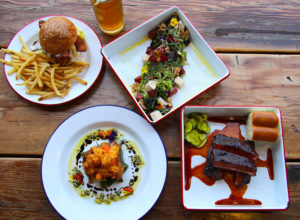
Beets with goat cheese and hazel nuts, and steak frites at Boon Eat + Drink in Guerneville. (Chris Hardy/Sonoma Magazine)

National restaurant review and ratings guide Zagat has released a list of eight top-rated restaurants in Sonoma County.

he Salsiccia Pizza, containing house sausage, red onions, and pecorino, at Diavola Pizzeria & Salumeria, in Geyserville. (Christopher Chung/
The Salsiccia Pizza, containing house sausage, red onions, and pecorino, at Diavola Pizzeria & Salumeria, in Geyserville. (Christopher Chung)

Presented under Zagat’s “Best of Neighborhood” section, each establishment on the list has been rated within three categories – food, decor and service – receiving top scores from diners and experts alike. The list includes Michelin-starred Terrapin Creek in Bodega Bay, California cuisine destinations Boon Eat + Drink in Guerneville and Valette in Healdsburg, and pizza/salumi-lovers favorite Diavola in Geyserville.

Zagat’s top rated restaurants in Sonoma County (including descriptions by diners):

TERRAPIN CREEK
Californian, Bodega Bay
Ratings Food: 4.7, Decor: 4.1, Service: 4.7
Description It’s “worth the drive out to Bodega Bay” to this “real jewel” that “brings in the crowds” thanks to “utterly charming” chef-owners who “work the floor” and prepare “exceptional”, “adventurous” Californian dinners with “none of the pretension” or tabs you’d expect; it’s a “relaxing” setting with a small patio, and all “so good it’s almost a pleasure to pay”; P.S. closed Tuesday-Wednesday.

Apricot tart at Terrapin Creek restaurant in Bodega Bay, on Thursday, June 18, 2015. (BETH SCHLANKER/
Apricot tart at Terrapin Creek restaurant in Bodega Bay. (Beth Schlanker)

CUCINA PARADISO
Italian, Petaluma
Ratings Food: 4.7, Decor: 4.3, Service: 4.5
Description “Regulars come back” often to this “homey” white-tablecloth trattoria in Downtown Petaluma for “to-die-for” pastas from an “authentic”, midpriced Italian menu “that shows impeccable attention to detail” (as does the “educated wine list”); the “cozy” digs can get “a little loud”, but “personal service” from both the “eager-to-please” staff and an owner who “does it all” compensate, whether you’re having “lunch with friends” or celebrating “special occasions.”

DIAVOLA PIZZERIA & SALUMERIA
Pizza, Geyserville
Ratings Food: 4.7, Decor: 4.0, Service: 4.3
Description “Unreal pizzas”, “don’t-miss” salumi and other “simple yet extraordinary” dishes “wow” guests at this “worth-the-schlep” Geyserville Italian set in an early-1900s building; given the “reasonable” prices, it’s a “wine country bargain”, just “expect to wait” because it’s small and “always crowded with locals.”

OSAKE
Japanese, Santa Rosa
Ratings Food: 4.6, Decor: 4.3, Service: 4.4
Description Chef-owner Gary Chu crafts “artistic” sushi that “could not be fresher” at this longtime Cal-Japanese in Santa Rosa; add a “relaxing” setting, “reasonable prices” and premium sakes, and regulars wonder “who could ask for more?”

Beets with goat cheese and hazel nuts, and steak frites at Boon Eat + Drink Chris Hardy
Beets with goat cheese and hazel nuts, and steak frites at Boon Eat + Drink in Guerneville. (Chris Hardy)

BOON EAT + DRINK
Californian, Guerneville
Ratings Food: 4.6, Decor 3.7, Service: 4.3
Description This Guerneville “must visit” makes diners “feel very spoiled” with the “attention to detail displayed” in its “exceptional” seasonal Californian cuisine (organic ingredients are sourced from its own gardens) and list of “fine” Russian River wines; the setting “feels like a locals’ hangout” with a “foodie vibe”, and though it draws “big crowds”, the “innovation” is “well worth” the no-reservations hassle.

CAFE LA HAYE
Cafe, Sonoma
Ratings Food: 4.6, Decor: 4.1, Service: 4.4
Description Said to rival “some of the more recognizable names” in wine country, this “tiny gem” off Sonoma Square gets a “wow” from fans who “can’t believe” the “scrumptious”, “farm-fresh” Californian fare that emerges from its “postage-stamp-sized kitchen” as the “gracious” owner and his “helpful” staff make “great recommendations” from the “well-thought-out wine list”; while “cheerful”, the dining room contains only a dozen or so “tightly packed” tables, but most agree it’s “well worth” the “challenge” of making reservations.

Tagliolini pasta with pine nut pea shoot pesto with morel mushrooms, baby artichoke, prosciutto, and English peas at Scopa in Healdsburg, on Thursday, April 7, 2016. (BETH SCHLANKER
Tagliolini pasta with pine nut pea shoot pesto with morel mushrooms, baby artichoke, prosciutto, and English peas at Scopa in Healdsburg. (Beth Schlanker)

SCOPA
Italian, Healdsburg
Ratings Food: 4.6, Decor: 3.9, Service: 4.3
Description “If you want to feel like a local in Healdsburg”, make tracks to this “boisterous” Italian hidden “under an old barber shop sign” for “absolutely wonderful” “pizza, pasta and starters” that will “put a smile on your face”; the “tiny, tiny” quarters mean it’s “always packed” (so “make a reservation well ahead”), but a “delightful staff” smooths over any bumps; P.S. area vintners pour their latest on Winemaker Wednesdays.

VALETTE
Californian, Healdsburg
Ratings Food: 4.6, Decor: 4.3, Service: 4.6
Description The “first-class” Californian menu meets “high expectations” at this Healdsburg “shining star”, thanks to “outstanding”, locally sourced dishes and a “marvelous wine list” presented by an “excellent” staff; it’s “not cheap”, but the “beautiful” space’s rustic nod to wine country includes a custom redwood bar and “comfortable” vibes that make it a “hit” with the “local vintners.”

Don’t Miss: 3 Beer Events Coming Up Thursday and Friday

Local Barrel in Santa Rosa. (Tim Vallery)
Bartender Jeff Russell serves beer fasat Beercraft. (Photo by Tim Vallery)
Bartender Jeff Russell serves beer fans at BeerCraft in Rohnert Park. (Photo by Tim Vallery)

There is a lot of beer buzz in Sonoma County right now. The RateBeer Best festival is coming up this weekend, with 50 popular and hard to find brews pouring into Santa Rosa. And, as if that wasn’t enough to make any beer geek excited, there are three free (no admission) beer events leading up to this weekend’s festival: 

Tomorrow, January 26Local Barrel in downtown Santa Rosa will have a semi-tap takeover with Arizona Wilderness from Gilbert Arizona. They’ll be pouring Refuge IPA, Superstition Coffee Stout, Old Growth Forest Sour, Tabletop Saison, Sycamore Canyon Saison, and New Brood Belgian Quad. All pints are $5 only, and there’s no admission fee. These folks make ridiculously delicious beers and the Local Barrel taproom is the ONLY place in California to have Arizona Wilderness beers on tap! The event starts at 7 pm, 21+ only.

Local Barrel, 490 Mendocino Ave #104, Santa Rosa, CA 95401, visit on Facebook, @Local_Barrel

Local Barrel in Santa Rosa. (Tim Vallery)
Local Barrel in Santa Rosa hosts a semi-tap takeover with Arizona Wilderness on Thursday, Jan. 26 (Tim Vallery)

On Thursday and Friday, BeerCraft in Rohnert Park is putting on a two-day event, “Dude, Such Good Beer,” featuring brews from across the nation. To spread the love among guests, each beer will be served in 5 ounce pours. The event will take place behind the Rohnert Park bottle shop (which will be closed during the event), where guests can enjoy more seating and standing space, while the good folks of BeerCraft pour brews from beer trailers. Foodie Farmhouse will be serving up tasty, comfort foods like Korean BBQ pork tacos, buttermilk fried chicken and bacon sandwiches, Cajun Jambalaya, and more. Parking is limited, carpooling and ubering is recommended. This is a 21+ only event.

The following beers will be on tap at the BeerCraft event:

Thursday, Jan 26th, 5-10 p.m.

Cellarmaker: Das Trent Pale Ale and Wagoner Porter

Sante Adairius: OH, Sara (collab with Other Half), Capitola Sunset, Saison Bernice, and West Ashley

The Rare Barrel: Soliloquy, Apropos of Nothing, and Shadows of Their Eyes

Trillium: Double Dry Hopped Fort Point Pale Ale, Congress Street IPA, and Mosaic Cutting the Tiles DIPA

Other Half: Galaxy/Motueka DIPA, Double Dry Hopped Suparillo DIPA, Green Diamonds DIPA, and Double Dry Hopped Mylar Bags DIPA

Cloudwater: DIPA – v11

Tired Hands: Technicolor Spendor, Science Experiment, and Enhanced Sincerity

(Tim Vallery)
(Tim Vallery)

Friday, Jan 27th, 1-9 p.m. 

Cooperage Brewing: Storm Cooper Session IPA, Curt Diggler Pale, and Smelly Things IPA

Great Notion: Juice Box DIPA and Mandela IPA

Alvarado Street Brewing: Mai Tai IPA, Contains No Juice DIPA, Haole Punch Berliner Weiss, Super Dry (Rice Lager), and City Club (Malt Liquor)

At 5 p.m. (Friday) they will tap these brews:

Toppling Goliath: Double Dry Hopped pseudo Sue, King Sue Citra DIPA, and Sosus Mosaic DIPA.

J Wakefield: Phat Bottom, Gimme S’more, and Upper Body Strength.

BeerCraft, 5704 Commerce Blvd, Rohnert Park, California 94928, (707)206-9440, beercraft.com, @Beercraft

Sonoma County Town Makes List of Top 5 Main Streets in the West

petaluma - 1

Sunset, the monthly lifestyle magazine covering 13 western states, has released a list of the West’s best main streets as part of its “Show Us Your Main Street” contest — and Petaluma made the cut. 

“Every town has a story, and we believe that story begins at the street level: the main street; the heart and soul of the town,” said Sunset.

McMinnville, Oregon, was named the best main street in the West for its indie shops, farm-to-table restaurants, “real-deal” Oregon breweries and charming quirks. Petaluma, one of four runner-ups, won Sunset’s heart with its 150 year-old main street (Petaluma Boulevard North), mixing old and new and, as an added bonus, featuring communal sidewalk pianos.

Petaluma+history

Some of our favorite main street stops in Petaluma include The Seed Bank; a 1926 Sonoma County bank that now houses 1,800 varieties of heirloom seeds, Tall Toad Music; home to fine vintage guitars and mandolins, Della Fattoria; one of the country’s finest bread bakers, famous for its Meyer lemon rosemary boule, Central Market; farm-to-fork Californian-Mediterranean fare, Speakeasy; small tapas bistro with tasty late night eats and Water Street Bistro; French-inspired food in jewel-box restaurant.

Carlsbad (CA), Sheridan (WY) and Vancouver (WA) also made the Sunset list. Read the full article here.

The Seed Bank in Petaluma. (Photo by Conner Jay)
Della Fattoria in Petaluma. (Photo by Beth Schlanker)

Sonoma County City Named One of The Best Value Towns in the West

santarosa - 1

Where can you find the right house at the right price, a reasonable salary, and maybe a decent restaurant for date night? According to Sunset Magazine, in Santa Rosa.

On Monday, the leading lifestyle magazine announced a list of “20 Best Value Towns in the West” and Santa Rosa came in as the runner up in the Northern California category, topped by Nevada City. Ventura, CA, was named the best value town in Southern California, while Boise, ID, took home the Mountains category, Prescott, AZ, the Southwest and Vancouver, WA, the Northwest.

In the Sunset article, Santa Rosa is described as a top choice for Westerners wanting to leave expensive urban areas for smaller cities and towns that offer a mix of culture, beauty and affordability. Sunset highlights that the city’s median home price (stated as $460,000 in the article) comes in lower than the state average, while household income is higher than the national average, and also mentions the spring inauguration of the SMART train. Russian River Brewing’s February release of Pliny the Younger is noted as an added bonus: “if you lived here, you might actually get a taste.”

In contrast to Sunset’s statements regarding the median home price in Santa Rosa and the relative affordability of housing, The Press Democrat Housing Report states that the annual median single-family home price in Santa Rosa was $535,000 in 2016. According to the same report, Santa Rosa had a median home price of $575,000 in November of last year. The California Association of Realtors reports that the median home price for California was $501,710 in November. Based on these numbers, Santa Rosa’s median home price is not “lower than the state average,” as reported in the Sunset article. More information here.

See full list, with runners up, here. What do you think? Does Santa Rosa offer a mix of affordability, culture and beauty?

A mural of a steam engine on the side of Whistlestop Antiques serves as the defacto entrance to the Historic Railroad Square district in Santa Rosa. The area is undergoing a transformation as wine bars, restaurants, furniture stores and the new SMART rail system are serving as a draw to an eclectic and diverse clientele. (Kent Porter
A mural, painted by DS Gordon, of a steam engine on the side of Whistlestop Antiques serves as the defacto entrance to the Historic Railroad Square district in Santa Rosa. The area is undergoing a transformation as wine bars, restaurants, furniture stores and the new SMART rail system are serving as a draw to an eclectic and diverse clientele. (Kent Porter)
Beer lovers from around the world stood in line for their chance to taste Pliny the Younger at Russian River Brewing Company in Santa Rosa on Friday. (JOHN BURGESS
Beer lovers from around the world stand in line for their chance to taste Pliny the Younger at Russian River Brewing Company in Santa Rosa. (John Burgess)

50 Reasons Not to Miss the RateBeer Best Festival in Santa Rosa

One of the most popular beer events in Sonoma County is coming up. Here are 50 reasons why you should get your tickets now.

Beer maker Cory King of Side Project holding one of his brews during RateBeer Best International Beer Festival held at Kaiser Air Inc. private hangar Sunday in Santa Rosa, California. January 31, 2016. (Photo: Erik Castro/for The Press Democrat)

The second annual RateBeer Best Festival and Awards Ceremony will take place over the course of two days, January 28-29, in Santa Rosa. This year’s event will feature a grand tasting experience with beers from 50 of the world’s top breweries and honor the top 100 beers selected by RateBeer reviewers.

The RateBeer Best awards began in 2002 as a series of online announcements during RateBeer’s second year as a public beer review and rating website. Attracting international attention, the online awards evolved into a live show in 2016. The event, produced by Fat Dogg Productions/NorCal Beer Geeks, raises funds for Sonoma County local charity Ales For Autism.

Ratebeer Best attendees cheers at the 2016 festival. (photo by Tim Vallery)
Ratebeer Best attendees say cheers at the 2016 festival. (Tim Vallery)

The Ratebeer Best Grand Tasting takes place on Saturday, January 28th at 1:30 pm at the Sonoma County Fairgrounds, with VIP entrance starting at 12:30 pm. Food from various Sonoma County vendors (lineup not yet released) will be available for purchase at the event. VIP attendees will enjoy early access to top notch brewers and will also be treated to fine farm-to-table fare from Peloton Culinary & Catering, known for epic beer pairings.

Hop Salt popcorn made by Peloton Catering. (photo by Tim Vallery)
Hop Salt popcorn made by Peloton Catering. (Tim Vallery)

Here are the 50 breweries that have confirmed their participation at RateBeer Best:

SONOMA COUNTY

Moonlight  · Lagunitas · Bear Republic · Cooperage  · Fogbelt · 101 North · Third Street Aleworks · Plow  · Henhouse  · St. Florian’s · Stumptown · Seismic

UNITED STATES

Hill Farmstead Brewery · Sante Adairius Rustic Ales · Tree House Brewing Company · Jester King Brewery · Monkish Brewing Company · Side Project Brewing · Great Notion Brewing · Blackberry Farm · Toppling Goliath · Prairie Artisan Ales · Tired Hands Brewing Company · Cellarmaker Brewing Company · Jackie O’s Pub & Brewery · Cycle Brewing · Other Half · Three Floyds Brewing Company · Superstition Meadery · Russian River Brewing · J Wakefield Brewing · Arizona Wilderness Brewing Company · De Garde Brewing · Trillium Brewing Company · American Solera · Evil Twin Brewing

BELGIUM

De Struise Brouwers · Cantillon · 3 Fonteinen ·  

BRAZIL

DUM Cervejaria · Cervejaria Dogma

CANADA

Brasserie Dunham · Bellwoods Brewery

JAPAN

Kiuchi Brewery

SWEDEN

Omnipollo

UNITED KINGDOM

Cloudwater Brew Co · Beavertown · Buxton

Bottles of Buxton Brewery, United Kingdom beers during RateBeer Best International Beer Festival held at Kaiser Air Inc. private hangar Sunday in Santa Rosa, California. January 31, 2016. (Photo: Erik Castro/for The Press Democrat)
Bottles of Buxton Brewery, United Kingdom beers during RateBeer Best International Beer Festival held at Kaiser Air Inc. private hangar in Santa Rosa, 2016. (Erik Castro)

The RateBeer Best Awards Reception takes place on Sunday, January 29, at 11 am at the Flamingo Hotel in Santa Rosa. At 1 pm, following the Awards Ceremony, there will be a reception and bottle share, offering opportunities for beer fans to meet some of the world’s best brewers and taste even more beers from around the world. The event is planned to coninue at guest rooms throughout the hotel and finish by 3 pm.

Attendees from left, Tim Redmond, of Los Angeles, Daniel Lyons, of Orange County and Brook Phelps, of Los Angeles, during RateBeer Best International Beer Festival held at Kaiser Air Inc. private hangar Sunday in Santa Rosa, California. January 31, 2016. (Photo: Erik Castro/for The Press Democrat)
Attendees from left, Tim Redmond, of Los Angeles, Daniel Lyons, of Orange County and Brook Phelps, of Los Angeles, during RateBeer Best International Beer Festival held at Kaiser Air Inc. private hangar in Santa Rosa, 2016. (Erik Castro)

“RateBeer Best Awards Ceremony is largely for industry but enthusiasts are also invited to attend. The big draw for the everyday beer lover is the ability to taste some of the best beers in the world without having to leave the country, and meet the brewers behind these great beers in a one of a kind world class beer event.” said Founder & CEO of Ratebeer, Joe Tucker.

So whether you are a brewer, home brewer, beer geek, casual beer consumer, or entirely new to beer, this event is for you and is not to be missed. Get your tickets now, while they last! You’re guaranteed to leave this event with a smiling face!

Heather Wacker, left and Daniel Baggett both from Santa Rosa, California during RateBeer Best International Beer Festival held at Kaiser Air Inc. private hangar Sunday in Santa Rosa, California. January 31, 2016. (Photo: Erik Castro/for The Press Democrat)
Heather Wacker, left and Daniel Baggett both from Santa Rosa, California during RateBeer Best International Beer Festival held at Kaiser Air Inc. private hangar in Santa Rosa, 2016. (Erik Castro)

RATEBEER BEST 2017

RateBeer Best Festival
Saturday, January 28, General Admission 1:30 pm, VIP 12:30 pm.
Sonoma County Fairgrounds, 1350 Bennett Valley Rd, Santa Rosa, CA 95404
Tickets, General Admission, $80 per person, purchase your tickets here, VIP Tickets: sold out.

RateBeer Best Awards Ceremony
Sunday, January 29, 11 am.
Flamingo Conference Resort & Spa, 2777 4th St, Santa Rosa, CA 95405
Tickets, $25 per person, purchase your tickets here.
More Info: ratebeerbest.com (@Ratebeer)

Zach Shollenberger of Denver, Colorado, right, pouring Silly Cybies beer during RateBeer Best International Beer Festival held at Kaiser Air Inc. private hangar Sunday in Santa Rosa, California. January 31, 2016. (Photo: Erik Castro/for The Press Democrat)
Zach Shollenberger of Denver, Colorado, right, pouring Silly Cybies beer during RateBeer Best International Beer Festival held at Kaiser Air Inc. private hangar in Santa Rosa, 2016. (Erik Castro)


This New Wine Center in Windsor is a Hidden Treasure

La Crema’s splendid new wine center honors Richard and Saralee Kunde’s love for the place they long called home.

KP1118_LA_CREMA_VERT_805454

The lush, flowering plants that line Slusser Road in Windsor, approaching La Crema Estate at Saralee’s Vineyard, offer just a hint of the agricultural and botanical wonders beyond the entrance. They were planted by former owner Richard Kunde as a nod to his love for Butchart Gardens in British Columbia, a botanical wonderland where he proposed to his wife, Saralee. Kunde’s Windsor neighbors were so pleased with how the plants looked, they asked for cuttings so they could extend the love even farther down the road.

Opened in August 2016, La Crema’s newest tasting facility is only a short distance from where its soughtafter Chardonnay, Pinot Noir and Pinot Gris are made. The winery’s estate vineyards are all located in cool-climate, coastal regions, from Oregon’s Willamette Valley to Monterey. There are four wines made from the Chardonnay and Pinot Noir grapes grown in Saralee’s Vineyard, and each offering the winery produces reflects a true sense of place.

KP1121_BARN_INSIDE_805455
The historic barn that was once home to Richard and Saralee Kunde has been converted to a tasting and wine education facility for La Crema winery. (Kent Porter)

La Crema, which is part of Jackson Family Wines, bought the 200-acre estate in 2012 from the Kundes (Saralee died in 2014). The Kunde family has deep agricultural roots in the area; Richard comes from a Sonoma Valley grape growing family, while Saralee’s family were dairy ranchers in Two Rock. The couple bought the property in 1988, and the vineyard was planted in 1989.

“When Richard and Saralee Kunde decided it was time to sell their property, they chose my family because they felt confident that we would carry their legacy forward,” says Katie Jackson of Jackson Family Wines. “In addition to cultivating an iconic vineyard, Richard and Saralee often opened up their property to give back and foster a sense of community here in Sonoma County. My family is committed to continuing this tradition.”

An old oak tree towers over Chardonnay and Pinot Gris vines at La Crema. (Kent Porter)

The estate’s main tasting area is in the Kundes’ former home — a restored, four-story barn, although the word “barn” doesn’t really do the space justice. It’s more like a hidden treasure. Built in 1900, it’s gone from housing hops and horses, to serving as Richard and Saralee’s family home, to its current incarnation. The comfortable and beautifully appointed structure also showcases a permanent collection of artwork throughout, as well as a revolving exhibit that changes seasonally.

The inspired art collection highlights a diverse selection of local artists, including James Armstrong, Elaine Greenwood, Chris Henry, Cari Hernandez, Dušanka Kralj, Benjamin Owen and Paula Strother. The revolving exhibit currently features paintings by Marsha Connell, through the winery’s partnership with the Healdsburg Center for the Arts. In a top-story room called Saralee’s Salon, Strother’s series of paintings called “Bovine Buddies” reflects Saralee’s intense love for the land, agriculture and especially cows.

Upstairs tasting room. (Kent Porter)

Additional nods to Richard and Saralee’s legacy are found throughout the building. Take a ride on the elevator and you’ll discover the couple’s quirky personalities right off the bat. There are different animal sounds that announce each floor, a feature the Kundes dreamed up and one that Richard is thrilled the Jackson family chose to retain.

“The Jackson family has been extremely gracious in honoring our legacy and preserving the character of the historic barn that was our home for so many years,” says Richard. “I know Saralee would be very happy with the conference room called Saralee’s Salon, where beautiful paintings of Holstein cows hang on the walls.”

Visitors sample La Crema wines in Saralee’s Salon, where the fourth-floor setting offers sweeping vineyard views. (Kent Porter)

The primary tasting area is on the second level, where the main entrance is located. Visitors are welcomed with a splash of rosé of Pinot Noir upon arrival. The entrance area has a small tasting bar, comfortable seating and a retail area. Toward the back is the main tasting bar and a deck, where guests can choose one of three flights (Chardonnay, Pinot Noir or a mix) and enjoy the flavors while taking in the surroundings and outstanding view of the sustainably farmed property.

Downstairs is where Richard’s kitchen was located (it was also where bootleg brandy was produced during Prohibition). Now remodeled, it also features a cellar where guests can taste the winery’s limited selection of Nine Barrel wines by appointment. There are picnic tables outside, to the immediate west of the barn, which guests — including dogs — can enjoy for as long as they’d like.

The walking tour path at La Crema takes visitors past an old vineyard truck Richard Kunde tucked into the lush landscape. (Beth Schlanker)

The barn’s third level now houses the wine club lounge. A wide, winding wooden staircase connects it to the top floor. Each level has indoor and outdoor seating (there are decks on all sides) where guests can enjoy their wine. Several VIP experiences are also available by appointment. Probably the most enticing of these is Saralee’s Tasting Vineyard Tour, which gets up close and personal (via golf cart) with the 11 different types of wine grapes grown on the property, including Chardonnay, Pinot Noir and several Rhone varieties. The tour allows for deeper exploration of the property’s vistas, lush growth, two lakes, botanical gardens, multiple fruit trees (jujube and pawpaw among them), a 400-year-old black walnut tree, an amazing array of microclimates and all sorts of wildlife.

The new pavilion at Richard’s Grove will host wine and culinary events and community fundraisers. Pavilion photo by Jessie Whitesides, Architect, Asquared Studios, © 2015
The new pavilion at Richard’s Grove will host wine and culinary events and community fundraisers. (Jessie Whitesides, Architect, Asquared Studios, © 2015)

One of the stops on the vineyard tour is Richard’s Grove, where a beautiful new pavilion designed by Santa Rosa architect Jessie Whitesides overlooks the tranquil scene where wine education, culinary and other community gatherings are planned.

The grove is a grassy meadow surrounded by oaks that’s been home to agricultural events since the early 1990s. The Kundes used it as a space where local organizations could host benefit events, raising millions of dollars for agricultural causes and programs benefitting Sonoma County.

La Crema is continuing this tradition of support for local organizations including 4-H, Future Farmers of America and Sonoma County Farm Bureau’s Love of the Land. The estate also will host the 2017 Sonoma Harvest Wine Auction in September.

lacrema.com/russian-river-estate/

Welcome to Cannabis Country: How the Green Rush Will Reshape the North Coast Economy

Following the collapse of the North Coast timber industry, the isolated Mattole River Valley in Humboldt County became a center for marijuana cultivation that is now key to its economy. (Kent Porter

The Mattole Valley is almost heartbreaking in its beauty, a green and fertile vale along the pristine Mattole River, buttressed by the steep, dark and forested mountains of the King Range.

Following the collapse of the North Coast timber industry, the isolated Mattole River Valley in Humboldt County became a center for marijuana cultivation that is now key to its economy. (Kent Porter

It is a long, arduous drive to the valley from the Highway 101 exit between the towns of Garberville and Rio Dell, the road narrow, potholed and punctuated by abrupt hairpin turns. The approach from the north, reached by driving south from Eureka and Ferndale, is even longer and more circuitous.

Isolation is perhaps the most salient characteristic of life in this part of Humboldt County, long shrouding the marijuana cultivation that is the engine of the regional economy. It has been that way for a generation, ever since the timber industry collapsed and Humboldt emerged — along with Mendocino and Trinity counties — as the notorious Emerald Triangle, the largest cannabis growing region in America.

When California voted in November to legalize recreational pot use, the industry stepped from the shadows with purpose. Its promise of short-term profit and long-term growth potential has triggered a “Green Rush” that will reshape the North Coast economy and upend the fortunes of growers.

Jessica Rockenbach and her partner, Kris Schuster, came to the Mattole Valley a decade ago and worked as tenant cannabis farmers. They saved their money, maintaining a frugal lifestyle that ultimately allowed them to buy a 60-acre parcel of gently rolling hillside land. It is here, in the heart of the Emerald Triangle, where the couple plan to realize their long-held dream. They’ll build a home, tend fruit trees, hike the woods, and fish for steelhead in the Mattole River. They are determined to spend their lives in this chosen place.

“It’s not going to be just a cannabis operation,” says Schuster. “That’s going to be a very small part of it, actually. We’re going to produce a broad range of organically grown crops. There’s an old orchard on the place, and we’re rehabilitating it. We plan to have a cidery. First and foremost, we see ourselves as stewards of this very special place.”

For years and for obvious reasons, Rockenbach and Schuster have lived and worked on the periphery of civil society. Cannabis cultivation existed in a legal gray area at best, pinned between a state that sanctioned medical pot 20 years ago and the federal government, which still considers the drug illegal in all cases. Though enforcement by government agents has been spotty in the Mattole Valley during the past decade, it was an omnipresent threat. The couple never knew if or when the black helicopters would descend, disgorging heavily armed officers in tactical gear intent on arresting them and confiscating their plants.

But that’s all changed through the combination of two landmark state laws. The first was passed by the Legislature and signed by Gov. Jerry Brown last year to regulate and tax medical cannabis. Then the second — Proposition 64, approved in November — legalized the recreational use of cannabis by adults.

Jessica Rockenbach and her partner, Kris Schuster, came to the valley as tenant cannabis farmers but plan to grow a range of crops, including marijuana, on a 60-acre parcel they bought. (Kent Porter)

For thousands of small pot growers like Rockenbach and Schuster — there are an estimated 3,000 alone in Sonoma County, gateway to the Emerald Triangle — California now comprises a bonafide business landscape free of the legal clouds that previously loomed over the state’s multibillion dollar pot industry. That sanctioned market is expected to quickly expand. By 2020, legal medical and recreational pot will generate $22 billion in economic activity — equivalent to two-thirds of the state’s retail wine sales — according to ArcView Market Research, an Oakland-based firm that studies the cannabis industry.

With such rich prospects for growth, a bevy of big investors based in New York, Chicago, Seattle and the Bay Area are hurrying to cash in on the new cannabis economy.

The contrast between such heavy money and Rockenbach and Schuster’s operation is stark, and the financial stakes for the couple are clear. Their vehicle is a battered Toyota 4×4 truck. They’re refurbishing an old sheet metal shack on their property for short-term living quarters. They plan to fell and mill some of the conifers on their land to build their home. With a go-ahead from state and county regulators, the duo will grow up to 15,000 square feet of marijuana in 2017 — the first crop under the new rules for their ultra-high-end enterprise, terravida farms.

While the couple’s plans are moderately ambitious by Mattole Valley standards, they’re nothing compared to those of the big players moving in. Under Proposition 64, no limits will be imposed on vertical integration, meaning a few huge operators could corner much if not most of the market. Opponents of Proposition 64 are thus haunted by the specter of gigantic Central Valley pot farms linked with wholesale and retail ventures, all of it pouring profits into the coffers of a corporate few at the direct expense of the existing small farmers and processors of Cannabis Country.

“Candidly, the future for many current growers isn’t bright,” said Joe Rogoway, a Santa Rosa attorney specializing in cannabis issues. “The new marketplace requires a degree of capitalization and sophistication that inevitably will leave people behind. It’s capitalism. There will be winners and losers.”

The transformation is already opening new agricultural and industrial sectors that are likely to have profound and far-ranging impacts on the state’s economy, environment and culture. Farflung communities like Garberville in Humboldt County that have flourished in the cannabis trade because of their isolation may find themselves edged out by places like Santa Rosa, with better access to capital, urban populations and a skilled, stable workforce.

“Most of California’s cannabis is produced on the North Coast,” said Tawnie Logan, the executive director of the Sonoma County Growers Alliance. “Mendocino, Humboldt and Trinity counties are the breadbasket. Then it moves south to major markets in the Bay Area and Los Angeles. Highway 101 handles a very large percentage of that traffic, and Santa Rosa is the logical capture point. We can handle not only growing, but processing and distribution. And I think we’re heading that way.”

In the Mattole Valley, Schuster and Rockenbach acknowledge the uncertainty they face. “We’re going to just have to wait and see,” Rockenbach said. “Frankly, we don’t know how it’s all going to play out, or what it’ll mean for us in the long run. Before, all we had to be was farmers. Now we have to be marketers, brand experts, designers, processing experts, and even lawyers to a degree. We’re dealing with issues we never faced before.”

We’re only going to have one chance to get this right, and we need to proceed carefully.” Tawnie Logan, left, Sonoma County Growers Alliance. (Alvin Jornada)
We’re only going to have one chance to get this right, and we need to proceed carefully,” Tawnie Logan, Sonoma County Growers Alliance. (Alvin Jornada)

The mood inside the old, ramshackle house that serves as the studio of radio station KMUD was not celebratory on election night. The FM station is based in Redway, a seven- minute drive north and west along the Eel River from Garberville, for decades a gritty redoubt of the region’s renegade pot economy. KMUD serves as a main information and entertainment source here, with hosts overseeing everything from lengthy Grateful Dead retrospectives to call-in shows on local politics. And on the evening of Nov. 8, the hosts and most of the callers were in shock.

By 10 p.m., Donald Trump had built up a lead in electoral votes that seemed certain to make him the next president of the United States, a result so unforeseen in this ultraliberal swath of the state that it had largely sidelined the evening’s other historic result — California voters’ overwhelming decision to legalize recreational pot.

“Where’s the bourbon? Did anybody bring bourbon?” howled one stunned KMUD staffer.

The three counties that form the Emerald Triangle have long existed as a promised land for the cultivation of high-grade bud. Marijuana is the economic foundation here, and Emerald Triangle cannabis is considered the ne plus ultra of the trade. Much of it is trafficked out of state and under Proposition 64, the market will only swell, possibly tripling the national trade in legal cannabis products. Twenty-six states now allow some mode of marijuana consumption, and in the November election, Massachusetts and Nevada followed California in sanctioning recreational use. Colorado, Washington and Oregon were first among the states to greenlight recreational pot use.

In the Emerald Triangle, thousands of small growers, many of them multigenerational cannabis families, serve as the backbone of the economy. And their general outlook explains why the reaction at KMUD to Proposition 64’s election night approval was muted at best. The law is widely seen as a threat as much as an opportunity, said Isabella Vanderheiden, one of the station’s two co-news directors. North Coast growers consider themselves producers of an artisanal product, said Vanderheiden, and Proposition 64 wasn’t necessarily written with their interests in mind.

“They’re small farmers, they’re independent, representatives of a unique culture,” Vanderheiden said. “Proposition 64 could easily change all that, shift the cannabis economy to corporate growers, distributors and processors. The people here feel they have a lot to lose.”

Proposition 64 will allow growers to emerge from the black market into a legal and regulated economy. That process had already begun with last year’s passage of the Medical Cannabis Regulation and Safety Act (MCRSA), which established detailed regulations for the expanded production, distribution and processing of medical marijuana. Under the still-evolving protocols of the MCRSA, farmers — like Rockenbach and Schuster — who bring their operations into compliance can grow their product openly and sell it to distributors for a fair and stable price.

But for growers, that takes money, — often hefty amounts — to build proper water systems, shore up roads, roll out safeguards for workers, curb erosion, and comply with rules for pesticide use and organic certification.

“They’ve also been adjusting to the reality of taxes,” said Sydney Morrone, a KMUD news director. “Under the MCRSA, substantial taxes can be imposed by the counties. But they also have to deal with income taxes. For decades, people haven’t been paying direct state or federal income taxes on their cannabis. They may pay taxes indirectly — many of the businesses here were started and are supported by cannabis money. But they haven’t paid on their crops. Now that’s changing. If your operation is compliant, you will pay income takes.”

Similar government regulation and taxation will occur under Proposition 64, meaning rules for medical and recreational pot will exist on twin tracks for the foreseeable future.

The result is certain to trigger a fundamental economic and cultural shift in the marijuana industry, and especially in the Emerald Triangle, where money generated by the off-books pot trade supports Main Street businesses and nonprofit groups and has even underwritten political campaigns.

On the streets of Garberville in Humboldt County, young men from Spain, Argentina and Honduras pass the time as they look for work harvesting marijuana. (Kent Porter)

In Garberville, businesses along the main drag have long functioned, purposely or not, as cash laundromats for the marijuana economy.

The town of fewer than 1,000 full-time residents bears the marks of a love-hate relationship with the pot culture and workforce that sustains it. The community has become an international magnet for the seasonal workers or “trimmigrants” who flock to the Emerald Triangle each harvest season, looking for employment processing dried flowers. Others are simply here to smoke as much dope as possible and squat on the street with newfound friends, playing guitars, often poorly. They are tolerated, but barely. A sign on the window of the Blue Room Lounge features a marijuana leaf in a circle and a slash mark through it with the words, “No Work Here — Move On,” and another sign on the door declares, “Absolutely No Patchouli.”

“The people who live here, they want to have their cake and eat it too,” said a man in his 40s with slicked-back hair who identified himself as Richard. He was standing on the street with an acquaintance, another longtime Humboldt County resident who was dressed in a trench coat, shirt and tie, holding up a copy of The Watchtower.

“They created this situation, but then they get upset with all the homeless kids here, sucking off society,” said Richard. “And at this point, it’s too late to change. And that has a lot of people worried, because there’s nothing else. Also, no one knows what full legalization will bring.”

“It [marijuana] does support this county, that’s a fact,” said the Jehovah’s Witness, who declined to give his name. “I’ve lived here for 40 years. Several of the businesses on this street are owned by one guy, a grower, a millionaire. A lot of the retired people here, they grow some plants to make ends meet.”

But there are no guarantees the storefronts will remain open once cannabis is regulated and taxed, so residents and merchants here and throughout the Emerald Triangle find themselves in an economic limbo.

“The California cannabis industry consists of 60,000 independent business people,” said Hezekiah Allen, executive director of the California Growers Association, which lobbies on behalf of marijuana cultivators. “About 50,000 are growers and 10,000 are retailers, manufacturers or own support enterprises. We provide well-paying jobs in small communities. But some folks want massive wealth. They look on us as an inefficient industry that needs to be captured.” Recent history provides a cautionary tale for the cannabis industry, Allen said.

“We saw the mindset that’s playing out now with another North Coast resource-based industry. Pacific Lumber was a sustainablyoperated redwood company. Then Charles Hurwitz took it over, determined to liquidate the resource. We’re still suffering the effects of that tragedy. Rural communities have a hard time asserting themselves under these kinds of pressures. Cannabis provides California with the opportunity to create a multibillion dollar sustainable marketplace. But we have to be careful about our choices — industrial agriculture and sustainable agriculture are mutually exclusive.”

Dona Frank opened one of Sonoma County’s first medical marijuana dispensaries and now runs multiple dispensaries stretching from Oakland to Hopland. (John Burgess)

If Garberville is Old Cannabis, a rural North Coast community that always has relied on natural resources — first timber, now pot — to survive, then Santa Rosa is emerging as the New Cannabis hub: a sizable, economically diversified, strategically located city, with a robust private sector, abundant capital, good infrastructure and skilled workforce.

Sonoma County already supports about 9,000 marijuana-associated businesses, according to the New York Times, and with Proposition 64, that figure inevitably will grow.

Those with an early foothold include entrepreneur Dona Frank, who opened one of the county’s first dispensaries, OrganicCann, and now runs a veritable empire of cannabis-associated enterprises, including multiple dispensaries stretching from Oakland to Hopland and a distribution company that offers members a wide choice of exotic marijuana strains from Emerald Triangle growers. She has built a loyal customer base through direct marketing, including a quarterly community-supported agriculture box, a farmers market and collaboration on product lines with celebrities ranging from international hip-hop artists to porn stars.

“I have been following the winery model for eight or nine years,” Frank told The Press Democrat a week before the vote on Proposition 64, which she supported.

Others looking to set up shop include Privateer Holdings, a Seattle private equity firm with principals that include Silicon Valley venture capital superstar Peter Thiele. It picked Santa Rosa as the headquarters for its expansion into California’s cannabis market, with plans, approved by the city, to manufacture, process and distribute a line of bud varieties, hemp-oil body-care products and smoking materials dubbed Marley Natural.

Another figure drawing notice is Ted Simpkins, the founder of Sonoma County’s Lancaster Estate winery and the former CEO of Southern Wine & Spirits, the nation’s largest wine and liquor distributor. Simpkins, who owns a home off Chalk Hill Road in Healdsburg, recently established River Collective, a cannabis distribution firm based in Sacramento.

Simpkins has played an active role behind the scenes in shaping the distribution plan favored by the state’s taxing authorities under last year’s medical marijuana law. According to a report by the Los Angeles Times, he pushed successfully for the model used in the alcohol industry, with growers dependent on distributors to sell their product. Many veteran North Coast growers opposed the policy, concerned that it will strip them of both autonomy and revenues.

“The larger growers in particular didn’t like the distribution clause,” said Allen of the California Growers Association. “They feel they can do better on their own.”

Simpkins did not respond to interview requests. But Rockenbach and Schuster are among those who favor his involvement, saying they’re eager to work with partners, especially savvy and well-funded distributors who can help them gain a foothold in the increasingly competitive market.

“People like Ted can really help us develop our brands, establish market share, and provide growers with stable and fair prices,” said Rockenbach. “As it stands, we’re completely at the mercy of the [medical marijuana] dispensaries. They exploit growers as a matter of course. We recently were guaranteed a price of $1,500 for some of our product. It was top-grade, organic flowers produced under best environmental practices. But when we delivered, we were told we’d only get $1,000 a pound. When we complained, the owner told us that he had ‘10 Mexicans’ a day coming in, offering to sell at $500 a pound, so take it or leave it.”

Like many cannabis farmers, Rockenbach and Schuster are leery of Proposition 64, worried that it will allow big players to consolidate all sectors of the trade — cultivation, processing, transportation, secondary product manufacturing and retail sales — driving out all smaller stakeholders. They’re also worried about something else: the incoming Trump administration.

Some of Trump’s cabinet selections are eliciting particularly sharp fears on the North Coast. Alabama Sen. Jeff Sessions, Trump’s nominee for attorney general, is deeply problematic for legalized cannabis advocates. During a Senate hearing earlier this year, Sessions called cannabis “a very real danger,” and declared that it shouldn’t be legalized.

“The day before the election we were optimistic, certain that we’d have no major problems from the federal government,” said Schuster. “Now? We just don’t know. We don’t know what Trump will do. But we’ve already committed. We filed all the paperwork. We’ve on the record. So we can only move forward.”

But Rogoway, for his part, remains moderately optimistic about Trump.

“He’s indicated he wants to leave it to the states, and he has made some supportive comments about medical marijuana,” said Rogoway. “Further, [Silicon Valley venture capitalist] Peter Thiele has Trump’s ear, and he’s a principle in Privateer Holdings, one of the biggest cannabis hedge funds. So I don’t anticipate a major disruption from the federal side. We are advising our clients to stay calm, don’t panic and proceed with compliance.”

“J,” a worker at OrganiCann, prepares young mariuana plants at the company’s facility in Santa Rosa. (Beth Schlanker)

They were just a snapshot in time, but the satellite images of several North Coast watersheds beamed back to state water and wildlife scientists in 2012 shocked even veteran regulators of the cannabis trade.

Hundreds of marijuana farms had popped up in places they had never been, or never been detected. In graphics produced from the satellite data, they showed up as dots — red for outdoor gardens, green for greenhouses — and in places they covered the blue lines demarcating streams for miles.

The records were evidence of a sharp increase in pot cultivation that scientists said poses a serious threat to imperiled salmon and steelhead runs, the North Coast’s original, natural bounty. In the teeth of California’s historic drought, water consumption by pot farms could effectively stanch the seasonal flow of many small creeks in the region, leaving young fish stranded.

“Essentially, marijuana can consume all the water. Every bit of it,” Scott Bauer, a state Fish and Wildlife senior scientist, told The Press Democrat at the time.

Stormer Feiler, a State Water Quality Control Board environmental scientist who participated in the same multiagency study, notes that any citizen can get a sense of the problem from a computer or smartphone.

“Just go on Google Earth and look at, say, southern Trinity County,” Feiler said. “It’s a patchwork of marijuana plots. We estimate there may be 50,000 grow sites in California. We’re seeing massive erosion from illegally graded roads. We’re seeing streams drying up and salmon and steelhead dying. The watershed impacts from marijuana cultivation are huge. We’re doing what we can, and along with other state and federal agencies and the counties, we’ll enforce the new regulations. But we all have limited staff. Right now, (the Water Board) is dealing with about 800 cultivation permits for the North Coast, and that number is only going to grow. So our job is going to stay pretty challenging for a while.”

Increasingly, both regulators and compliant farmers agree on the necessity of reining in the guerrilla cultivators growing on public land or operating irresponsibly on private land. Such enterprises are widely blamed for the massive environmental impacts associated with the industry.

Mattole Valley residents have long been terrorized by federal and state agents swooping in on helicopters to raid pot farms, said Kris Schuster, but landed growers may welcome such operations on neighboring public lands as private farms move toward compliance.

“No one who is a legitimate member of our community likes the [guerrilla] growers,” Schuster said. “Some of them are armed. They contaminate our water supplies and kill our wildlife. We’ll be glad when they’re gone.”

But it’s not going to be easy to bring the farmers yearning to be legal into environmental compliance, let alone the growers who are determined to remain outlaws. There aren’t enough regulators, and there are far too many pot plots.

Furthermore, a legal market is unlikely to end certain malignant issues associated with the cannabis trade. Like violence. That’s the main concern of Sonoma County Sheriff Steve Freitas, who observed the North Coast has witnessed some particularly horrendous cannabis-associated crimes in recent years.

“A grower just was murdered near Willits,” said Freitas, a bald, powerfully built man of middle height who assays the world with the flat, unwavering gaze of the veteran lawman. “In October, there was a double murder in Sebastopol that was marijuana related. And we had a triple murder near Forestville in 2013 when a marijuana deal went bad.”

Such incidents can be expected, said Freitas, as long as marijuana is legal in some states and illegal in others. The states where cannabis is illegal function as a kind of regulatory low pressure area, drawing in large quantities of high-grade weed from the legal states.

“In basic terms, people can get more money for marijuana in areas where it remains illegal, so a lot of legally produced marijuana inevitably will find its way to illegal markets,” Freitas said. “That brings bad guys here to Sonoma County and the North Coast, where it’s produced. All of the murder cases I just cited involved perpetrators from out-of-state. And I don’t think that’s going to change unless or until we see marijuana legalized and regulated at the federal level.”

Sonoma County Sheriff Sonoma County Sheriff Steve Freitas, right, and Assistant Sheriff Robert Giordano. (Christopher Chung)

The conceit that cannabis use is universally benign also is faulty, said Robert Giordano, a Sonoma County assistant sheriff who recently traveled to Colorado to assess the impacts of recreational cannabis legalization in that state. Giordano said the Colorado state poison control center received 400 calls on marijuana-induced psychosis since pot was declared legal, a sobering figure considering the agency fielded no such calls for the five years preceding legalization.

“The main problem is the edible products, and the extracts like ‘wax’ and ‘shatter,’” said Giordano. “It’s hard to control the doses with edibles and the extracts are astronomically high in THC. You can get an extremely large dose with a puff or two, much, much more than you could by smoking dried flowers.”

Still, Proposition 64 is now state law, and Freitas confirms he and his fellow officers will uphold it.

“I think this department will back totally away from enforcement in regard to marijuana” as long as other crimes are not involved, said Freitas. “Our role will be more administrative — making sure regulations are implemented properly, that permits are in order, and so forth.”

Even the legislators who helped reform some of California’s cannabis laws are less than enthusiastic about Proposition 64.

“Smaller growers are very concerned about the license category that allows grows of unlimited size in five years,” said Assemblyman Jim Wood (D-Healdsburg), a co-author of the MCRSA. “When we crafted the MCRSA, we adopted measures to ensure that larger players couldn’t grab multiple licenses, and get bigger and bigger. Proposition 64 just kind of throws that out the window.”

But like Freitas, Wood has adjusted to the consequences of Nov. 8.

“I didn’t support Proposition 64, but it’s now up to the Legislature and proponents to ensure that the intent of the proposition is [upheld],” he said. “There will be challenges and unintended consequences, so it’s really important that we all work together to solve those issues as they [develop].”

kp0617_Bud

Among cannabis cultivators, Jennifer Bruce’s stance on Proposition 64 puts her in the clear minority. She supported the ballot initiative. She believes medical marijuana isn’t sufficient to assure a stable cannabis trade, one that’s large enough to support California’s 50,000 cultivators. To survive, she says, small farmers must get behind a regulated recreational market.

“Is [Proposition 64] perfect? No,” said Bruce, who has been cultivating cannabis for about 20 years in Arcata, on the Humboldt Coast. “But it’s at least a start, and it gives people an opportunity to become part of a new industry in new ways.”

Bruce said she “still grows some flowers,” but she is shifting her focus from smokables to edibles. Her appetizing and decidedly psychoactive treats took two first-place prizes at the 2016 Hempcon, which bills itself as the nation’s largest marijuana convention-cumfestival. She has invested heavily in equipment to produce and package her goodies — marketed under the brand name Sarkara —and is entertaining offers from venture capitalists.

“I’m a single mother, so it’s a way for me to ensure a secure future for my family,” said Bruce, “but I support Proposition 64 for reasons other than personal opportunity. I know most people up here oppose [it] because they want to maintain exclusivity, which they think helps maintain decent prices. There’s something to that. But this is also a social justice issue. I want to be able to provide good living wages for the people who work for me, and I can only do that with a thriving legal business. And people still go to jail and prison for cannabis, especially people of color. The only way we’re going to really stop incarceration is with a fully legal marketplace.”

While some aspects of Proposition 64 kicked in immediately after passage — it is now legal for adults to possess an ounce of dried flowers or eight grams of concentrate and grow up to six plants — recreational cannabis outlets won’t appear until at least 2018. But it’s all coming: ambitious indoor and outdoor grows, certainly, but also edibles and extract processors, perhaps even bud pubs and organized tours of Cannabis Country. And it’s not just a matter of psychoactive cannabis. Hemp — low-THC cannabis variants that provide superb textile fiber and valuable seed oil — also has tremendous commercial potential, said Craig Litwin, a cannabis industry consultant and former Sebastopol mayor.

“It yields high-quality cloth and paper, the seed can be used for food oil and animal feed or processed for fuel and solvents, it doesn’t require pesticides, and its cultivation would work against deforestation,” said Litwin. “It’s an untold part of the cannabis story, but it could ultimately be worth billions.”

Logan, the Sonoma County cannabis advocate, said Sonoma’s carefully cultivated sustainability ethos should serve the emerging legal trade well. The county has adopted rigorous regulations that will require all indoor growers to purchase energy from sustainable sources, and environmental compliance for outdoor grows and manufacturing enterprises will also be strictly enforced.

“That may seem like a burden to some businesses, but it’s also a powerful branding tool,” said Logan. “If you have, say, stamps on your cannabis confirming that it’s from Sonoma and that it’s produced by solar power and that it’s salmon-safe, you automatically appeal to a large segment of consumers.”

Still, Logan is no starry-eyed Pollyanna, convinced all will go well simply because the cause is just.

“Industrialization and consolidation are inevitable,” she said. “It can all be done sustainably, and it can be done equitably. But it’s going to take a lot of work. For example, we’re helping small farmers form co-ops. We think that’s the only way they’ll be able to survive with the big money coming in. We’re only going to have one chance to get this right, and we need to proceed carefully.”

Back in the Mattole Valley, Schuster and Rockenbach are doing everything possible to get it right. They’ve filed for the necessary permits, and they’re spending a lot of money to bring their operation into compliance. They’re designing logos and packaging for their products, and they’re developing cannabis strains uniquely suited to the valley’s microclimates.

If they’re concerned they could still be undone by government and market machinations beyond their control, they’re tamping down their fears, showing visitors nothing more than a steely resolve to persevere. Come hell, high water, or a return of the black helicopters, they’re not leaving their verdant home.

“We’re not in the Mattole Valley to grow cannabis,” says Rockenbach. “We’re growing cannabis so we can live in the Mattole Valley.”

kp1109_MJ_hands

California’s Path to Legalized Pot

More than 60 percent of Americans now support legal cannabis, a trend that began 20 years ago with the passage of California’s Proposition 215, the country’s first medical marijuana initiative. California was a cannabis policy outlier back in 1996, but now legal pot — medical and recreational — is a social and economic juggernaut. Colorado and Washington both approved legalized recreational marijuana in 2012, and California reasserted itself as the leader in legal weed with the passage of Proposition 64. The state has the agricultural base, the industrial and marketing infrastructure and the workforce needed to supply branded, top-quality cannabis products to the nation — and ultimately, the world.

Currently, legal cannabis in California is governed by two different laws. The Medical Cannabis Regulatory and Safety Act addresses the use of cannabis by people with a physician’s recommendation, while Proposition 64 pertains to adult recreational use. Requirements for cultivation and distribution differ for each law, and there may be compliance conflicts for producers and administrative difficulties for regulators as they try to reconcile the different statutes. Major differences between the MCRSA and Proposition 64 include the size of sanctioned operations. The MCRSA caps the size of outdoor grows at 1 acre and indoor grows at 22,000 square feet. Proposition 64, on the other hand, authorizes various levels of cultivation under a tiered and timed system, concluding with permits that will allow operations of any size in five years.

The MCRSA also stipulates that growers must sell their products to distributors, but generally forbids vertical integration: You can be a grower, or a distributor, or a processor, but you can’t be all three. Proposition 64 doesn’t require growers to sell to distributors and allows cannabis entrepreneurs to wear multiple hats. If they have the requisite ambition and capital, they can grow pot, distribute it, process it, test it and sell it retail.

If there are risks to the legalized cannabis trade, there could also be significant social benefits. A 2016 analysis from ArcView Market Research estimates legal medical and recreational pot will generate $22 billion in economic activity by 2020, and a lot of agencies and public service organizations will be in line for the tax revenues those sales will generate. Under Proposition 64, about $450 million could go annually toward funding youth drug avoidance and treatment programs; $150 million could be devoted to the California Highway Patrol, local law enforcement and fire response programs and public health initiatives; another $150 million would be used to remediate waterways damaged by cannabis operations and protect public lands from illegal growing activities; and $25 million would support ancillary education, law enforcement and health programs.

Santa Rosa Artist’s Work, Unseen for Decades, is Revealed and Celebrated in Local Exhibits

St. Philip’s Church Termite Wrap, (2002) 22×16”, watercolor on paper, by William F. Taylor.

William F. Taylor paints for the love of painting. He paints the way a Zen practitioner meditates, the way a musician composes: as a daily creative practice. Now 89, the shy and nearly deaf Santa Rosa artist has painted almost every day of his adult life, yet never sought to make himself known.

His art was virtually unseen until last fall, when the Sebastopol Center for the Arts, supported by RiskPress Foundation, gave him a solo exhibition. A major group of his paintings of Occidental and its environs is featured in a three-man show opening January 20 at the Occidental Center for the Arts.

BillTaylorBill Taylor’s subject matter is the urban landscape.

He paints seated in his car in front of the subject he has chosen. (He likes the mobility and privacy.) A master draftsman who worked as a graphic artist for two decades in Los Angeles, he draws and paints precisely and at leisure (if he’s not asked to park elsewhere), working in watercolor, pen and ink, acrylics or oils.

When he can’t finish on the spot, he will develop the painting further at home.

Taylor may know Occidental more intimately than anyone alive. For decades he has studied its historic structures and verdant setting, its plays of light and color, its small shifts and transitions. Through the mindful act of painting, he reveals how deeply attached he is to the place. Iconic buildings such as St. Philip the Apostle Church, rendered from different angles at different times of the year (once, shrouded in a striped tent during termite extermination), pop up frequently, like old friends.

His straightforward and elegant images suggest a depth of understanding that can only come from a lifetime of practice. “Their intimacy is compounded and magnified because of the insularity of his deafness,” says his friend Charlie Pendergast of RiskPress. “His paintings are vivid evidence of meticulous insight.”

When he was younger, Taylor learned taxidermy and prepared bird specimens of such high quality that the California Academy of Sciences accessioned them for their collections. His paintings similarly preserve what is beautiful and unique in the region he loves.

“Onsite: Landscapes by Charles Beck, Dave Gordon and Bill Taylor” is on view at Occidental Center for the Arts January 20 through March 13, with an opening reception January 21, 4–7 p.m.