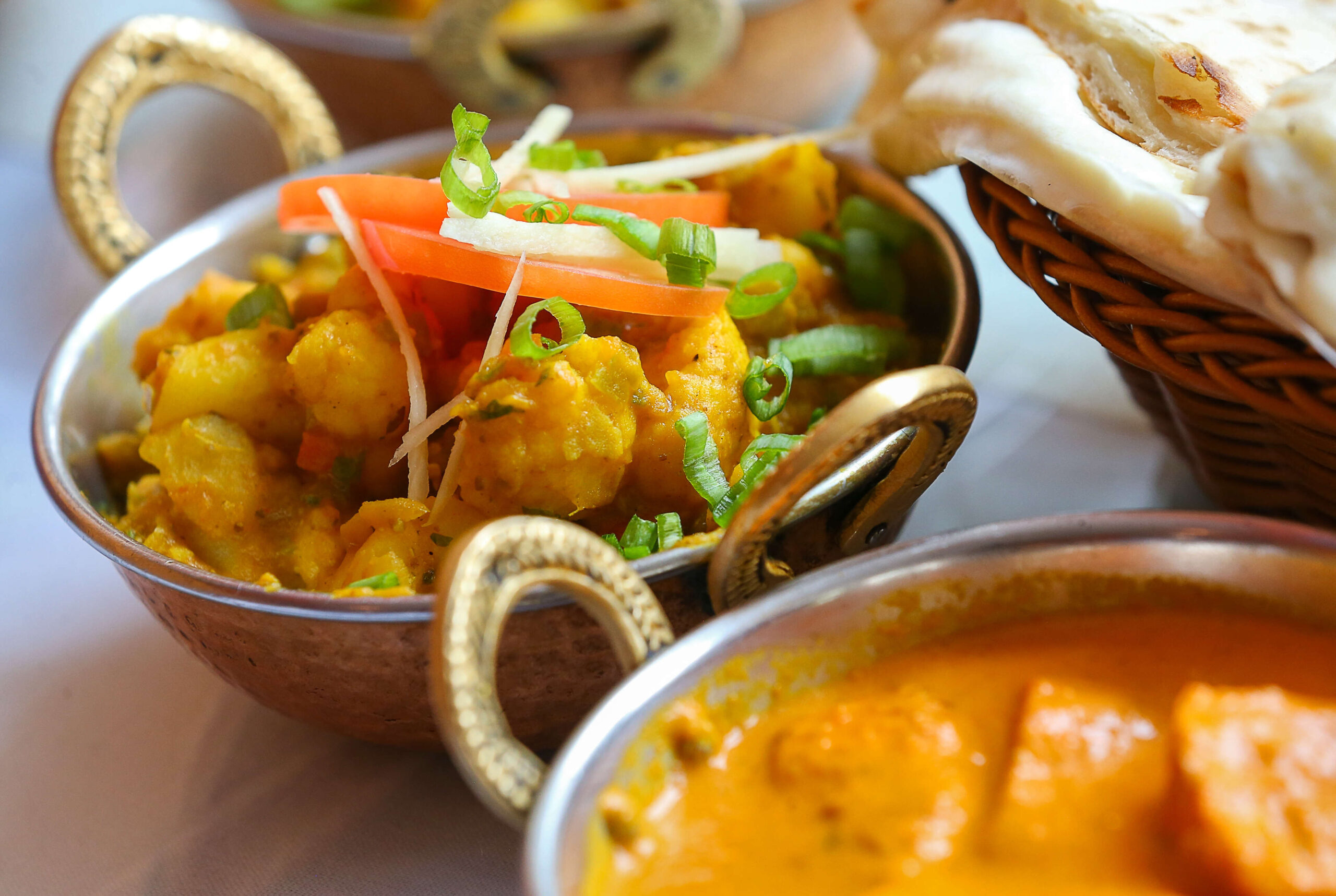
Aloo Gobi served at Himalayan Restaurant in Windsor, Friday, Aug. 18, 2023. (Christopher Chung / The Press Democrat)
Get out the stretchy pants and clear your calendar, because more than 100 restaurants are setting their tables for the 17th annual Sonoma County Restaurant Week (Feb. 23 through March 1).
With an eye toward approachable prices — from $6 sweet treats and $15 lunches to $30-$60 prix fixe dinners — you can usually score a delicious deal while supporting local restaurants during the slow winter season.
After perusing the listings at socorestaurantweek.org (yes, all 109), I’ve picked the 10 best bets based on the available menu previews.
Keep in mind regular menus are typically available throughout the event, and reservations are highly recommended. No tickets are required and the event is free, so eat, drink and be deliciously Sonoma County this week.
$6 Sweet Perk
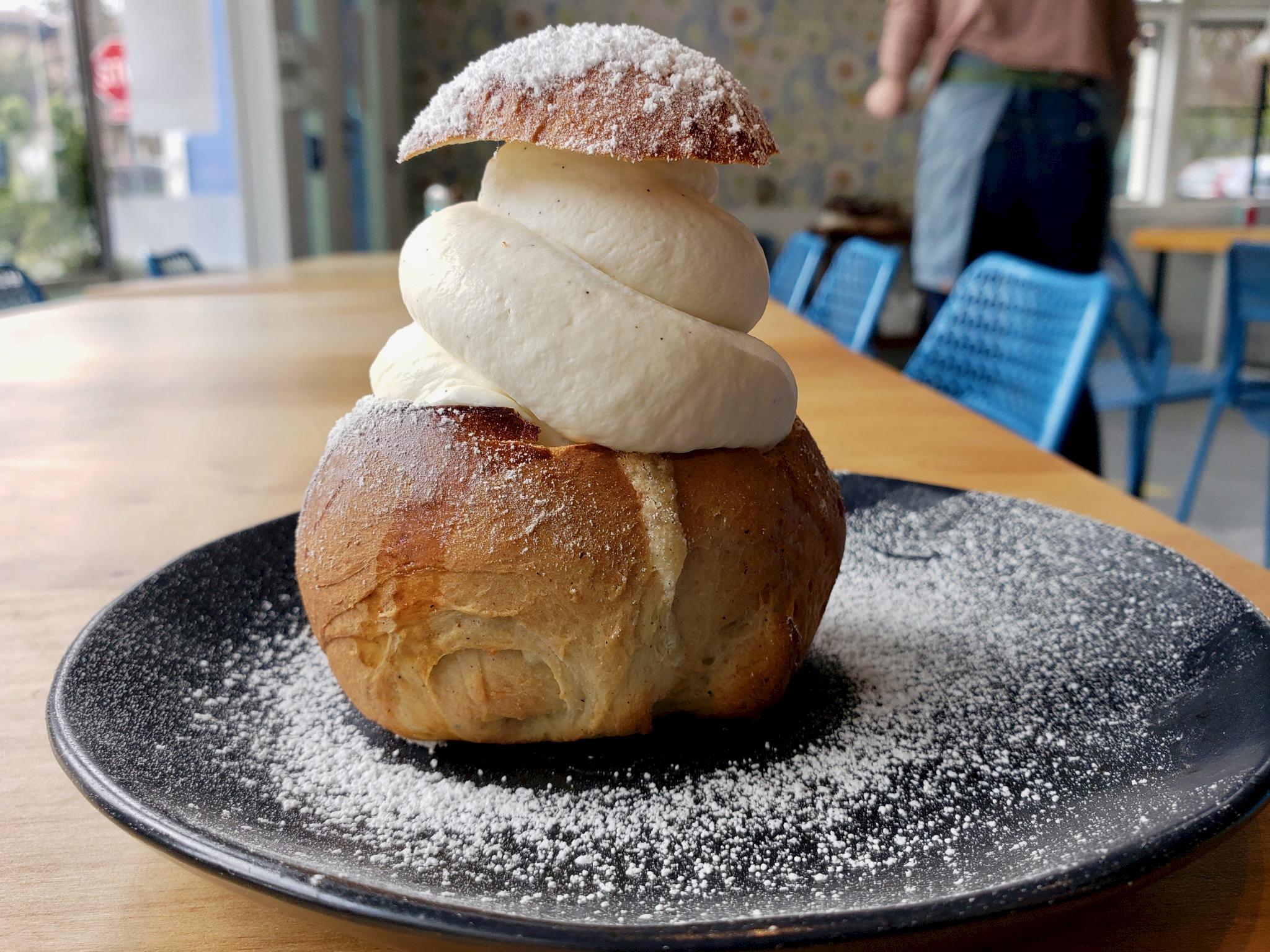
Semla, Stockhome: It doesn’t get sweeter than this holiday and pre-Lent treat made from a cardamom-spiced bun, filled with almond paste and whipped cream. 220 Western Ave., Petaluma, 707-981-8511, stockhomepetaluma.com
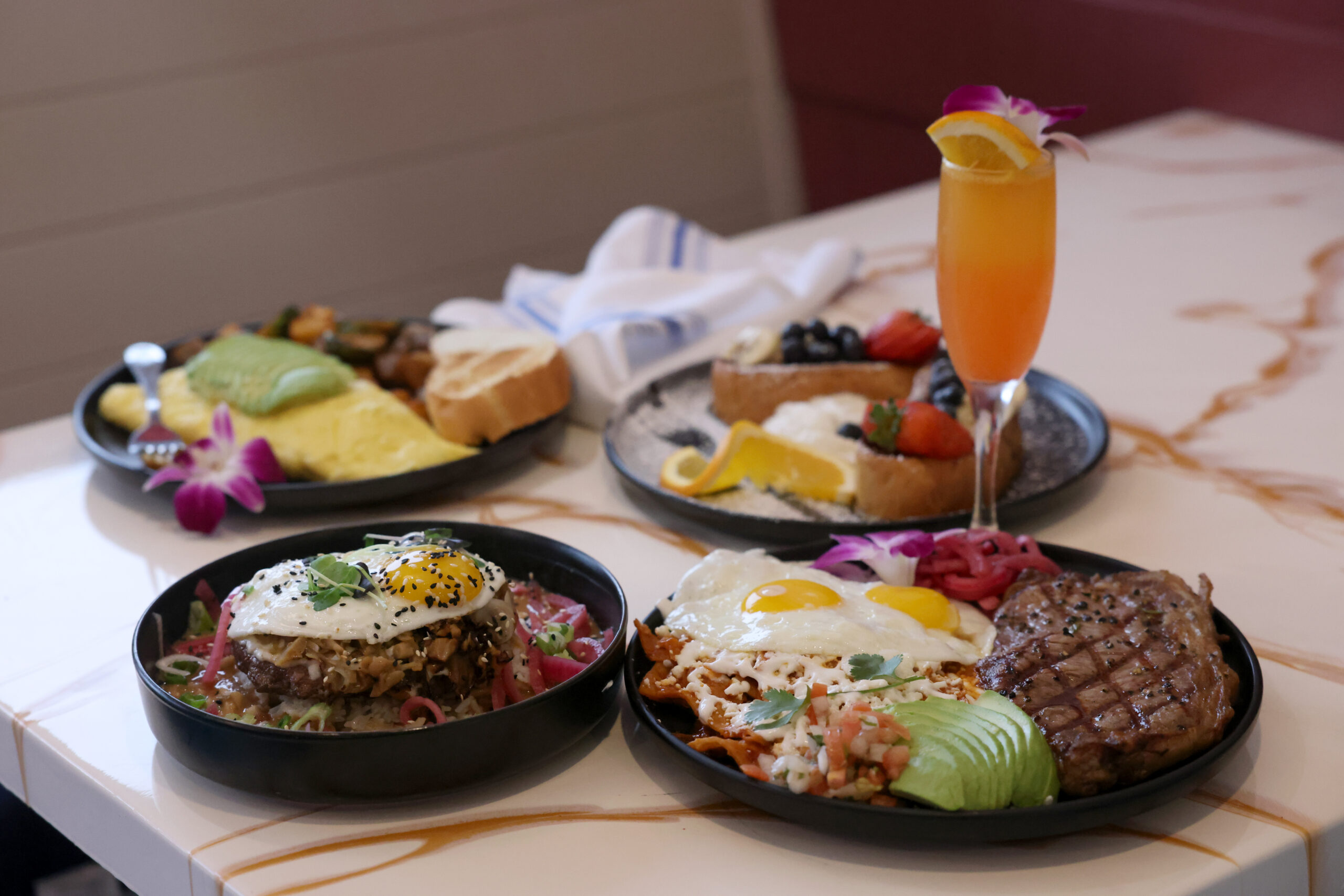
Semla at Stockhome restaurant in Petaluma. (Heather Irwin / The Press Democrat)A variety of dishes at Bubbles and Delights Cafe in Petaluma Sunday, Dec. 21, 2025. (Beth Schlanker / The Press Democrat)
$15 Breakfast
Enfrijoladas, Bubbles & Delights Cafe: A brand-new breakfast and brunch spot is all about global flavors, with its housemade Oaxacan enfrijoladas (corn tortillas in black bean sauce, topped with queso fresco and crema), along with Caribbean huevos Motuleño (eggs, tortillas, sweet plantains) or biscuits and gravy, all featured on the Restaurant Week menu. 359 E. Washington St., Petaluma, 707-243-3245, instagram.com/bubblespetaluma
$25 Breakfast
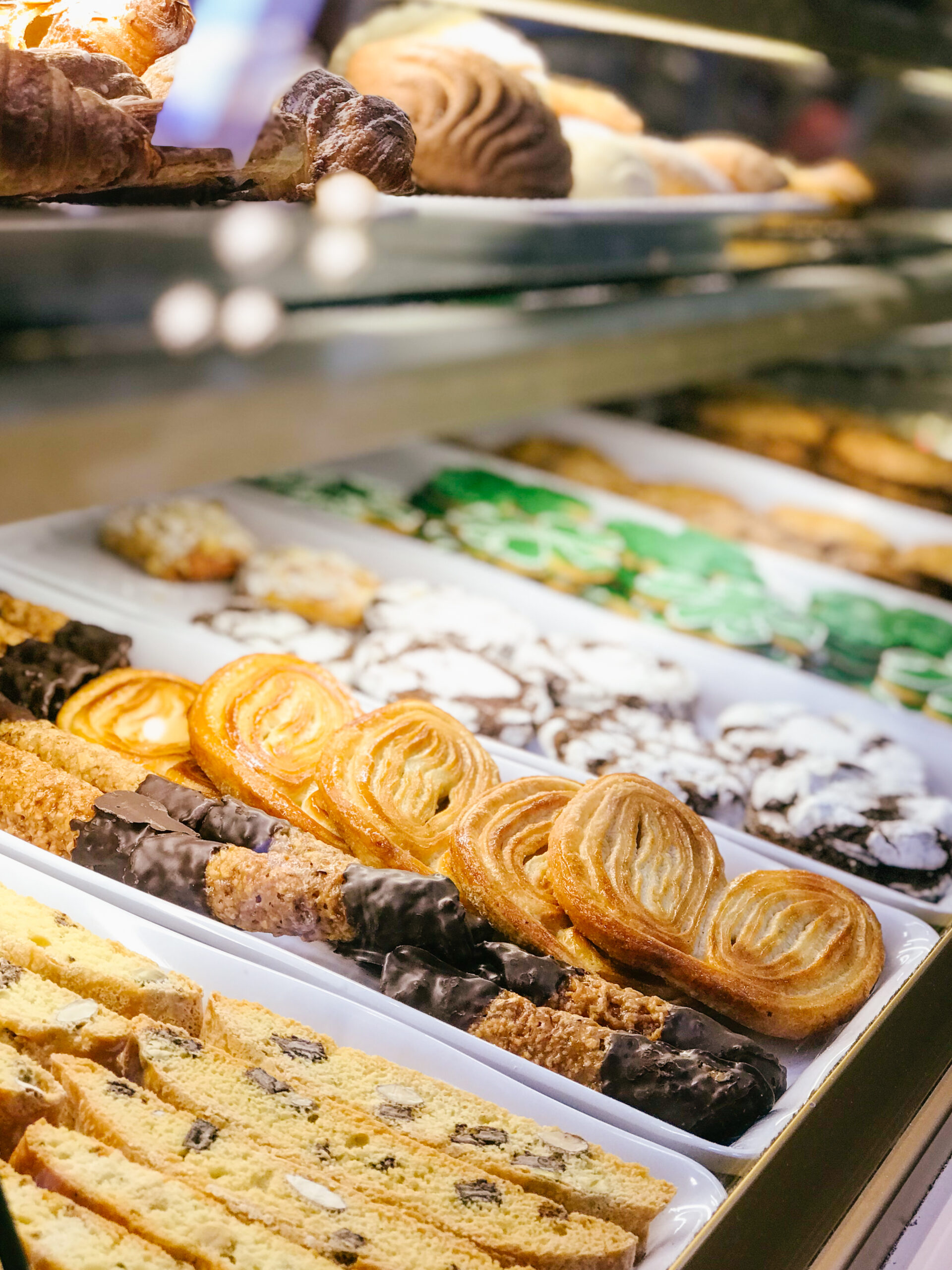
Short Rib Hash, Costeaux Bakery: Meaty short ribs, onions, green peppers and piles of potatoes are a bakery specialty. On the way out, grab some sweets for later. 417 Healdsburg Ave., Healdsburg, 707-364-8663, costeaux.com
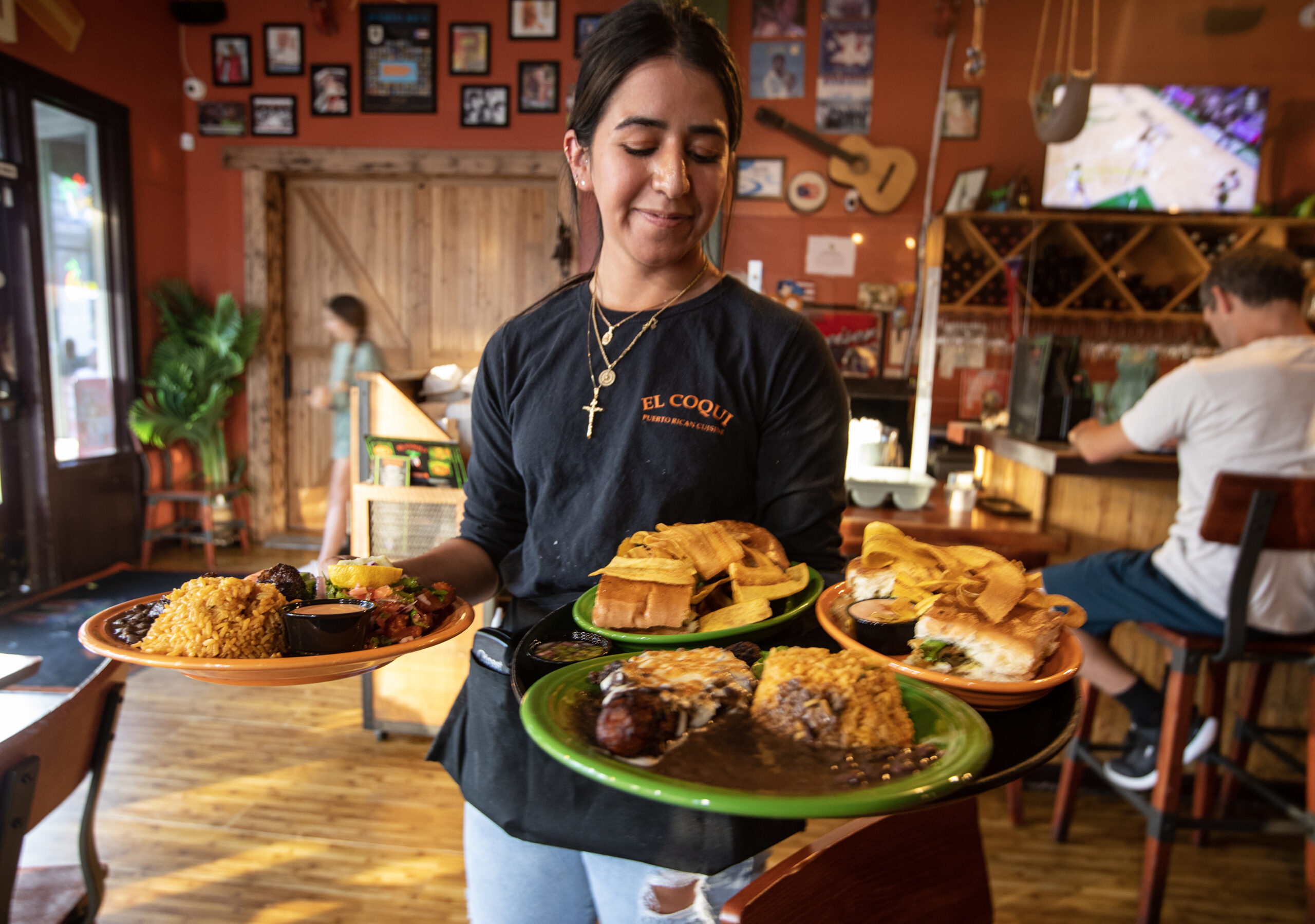
Treats at Costeaux French Bakery in Healdsburg. (Mariah Harkey / Sonoma County Tourism)An employee of El Coqui takes plates to guests in Santa Rosa on Wednesday, April 26, 2023. (Chad Surmick / The Press Democrat)
$15 Lunch
Bad Bunny Bowl, El Coqui: You’ve seen the Super Bowl performance, now meet the bowl. Yellow rice, pork belly, sweet plantains and an avocado on top? Tastier than a halftime salsa. 400 Mendocino Ave., Santa Rosa, 707-542-8868, elcoqui2eat.com
$25 Lunch
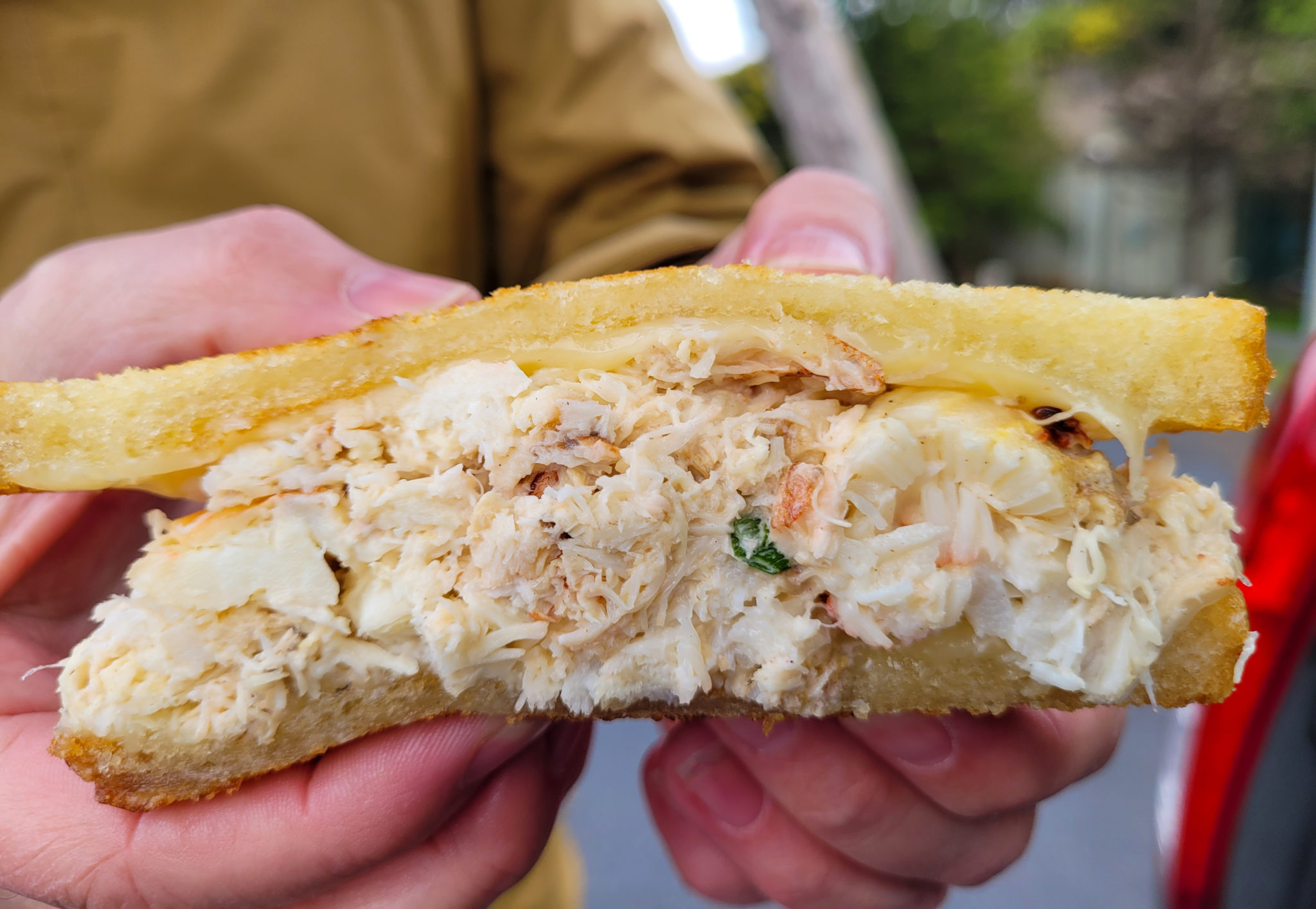
Crab sandwich and chowder, Ginochio’s Kitchen: Take a ride out to Bodega Bay to celebrate Dungeness season with this buttery, over-the-top grilled crab sandwich served with their clam and scallop chowder (one of my top chowder picks). 1410 Bay Flat Road, Bodega Bay, 707-377-4359, ginochioskitchen.com
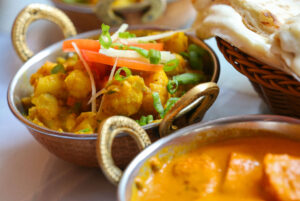
Buttery Dungeness crab sandwich from Ginochio’s Kitchen in Bodega Bay. (Heather Irwin / Sonoma Magazine)Aloo Gobi served at Himalayan Restaurant in Windsor, Friday, Aug. 18, 2023. (Christopher Chung / The Press Democrat)
$50 shared lunch for 4
Soup, pakora, curry and naan, Himalayan Restaurant: Food for a crowd includes three courses, with a family-sized vegetable and chicken curry, naan, rice and chutneys. 810 McClelland Drive, Windsor, 707-838-6746, himalayanrestaurantwindsor.com
$30 Dinner
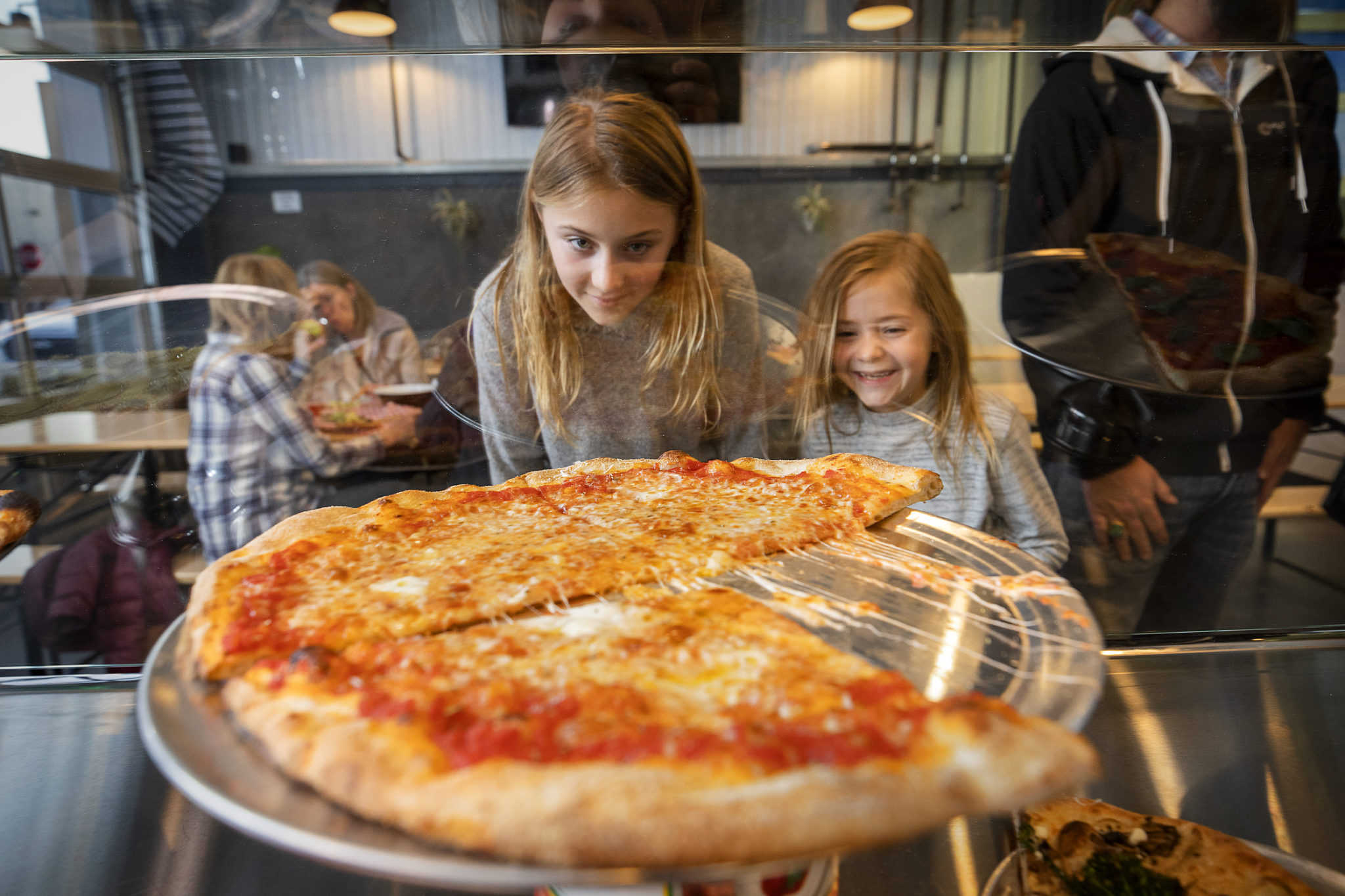
Pizza, salad and cookies, Acre Pizza: A steal of a deal includes a 16-inch pizza (cheese, pepperoni or mushroom), arugula salad and two chocolate chip cookies. 6761 McKinley St., Suite 150, Sebastopol; 1080 Petaluma Blvd. N., Petaluma; and 8175 Highway 116, Cotati, acrepizza.com
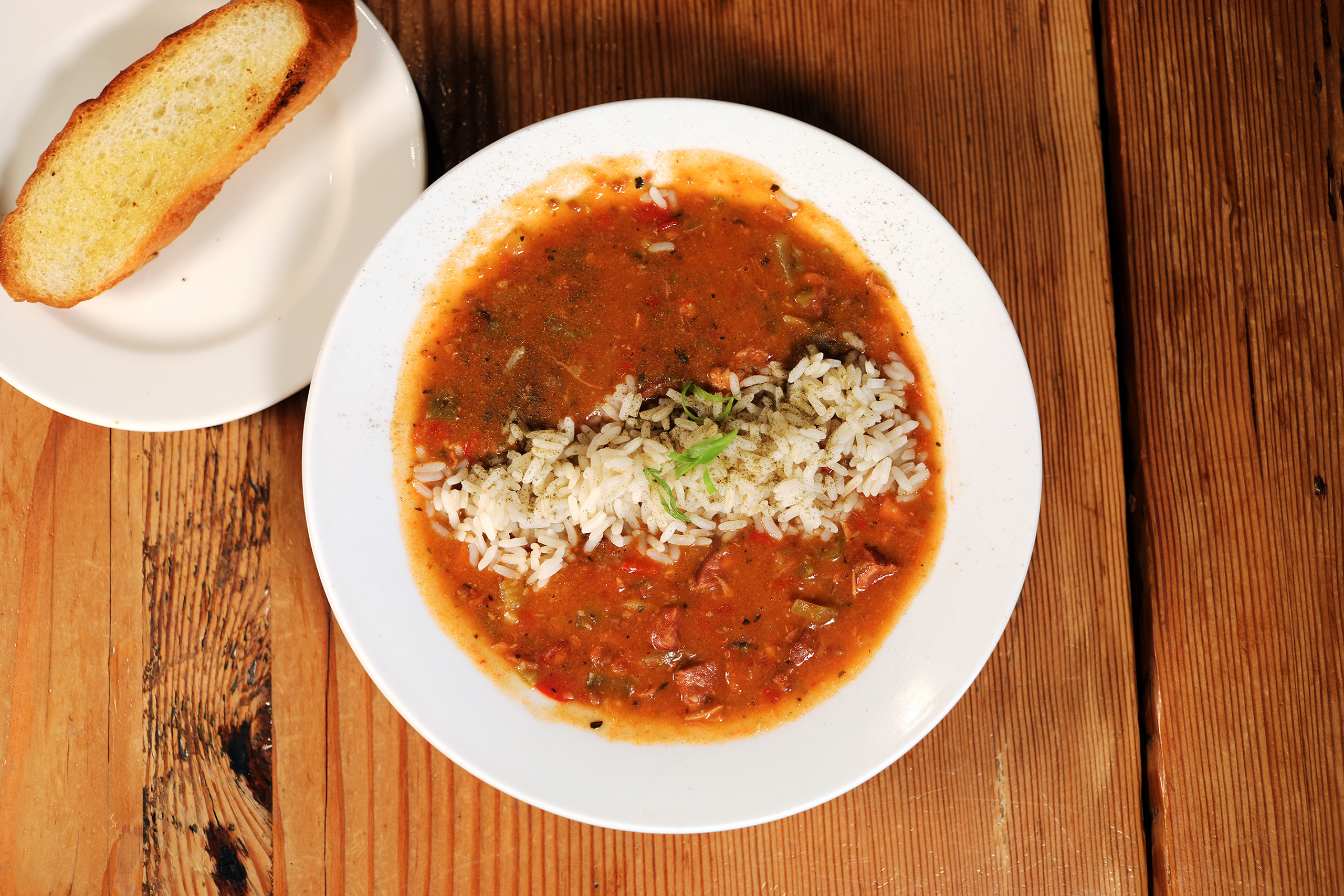
Sailor, left, and Lila Burt of Sebastopol check out the pizza varieties while their parent order at Acre Pizza in Sebastopol’s Barlow district. (John Burgess / The Press Democrat)Gumbo and rice at the Parish Cafe in Healdsburg. (Parish Cafe)
$40 Dinner
Gumbo, fried chicken and beignets, Parish Cafe: Plenty of choices for your Cajun cravings, but here’s what you’re after — gumbo (or jambalaya), the famous double-brined fried chicken plate, and beignets (or pecan pie) for dessert. 60 Mill St., Healdsburg, 707-431-8474, theparishcafe.com
$60 Dinner
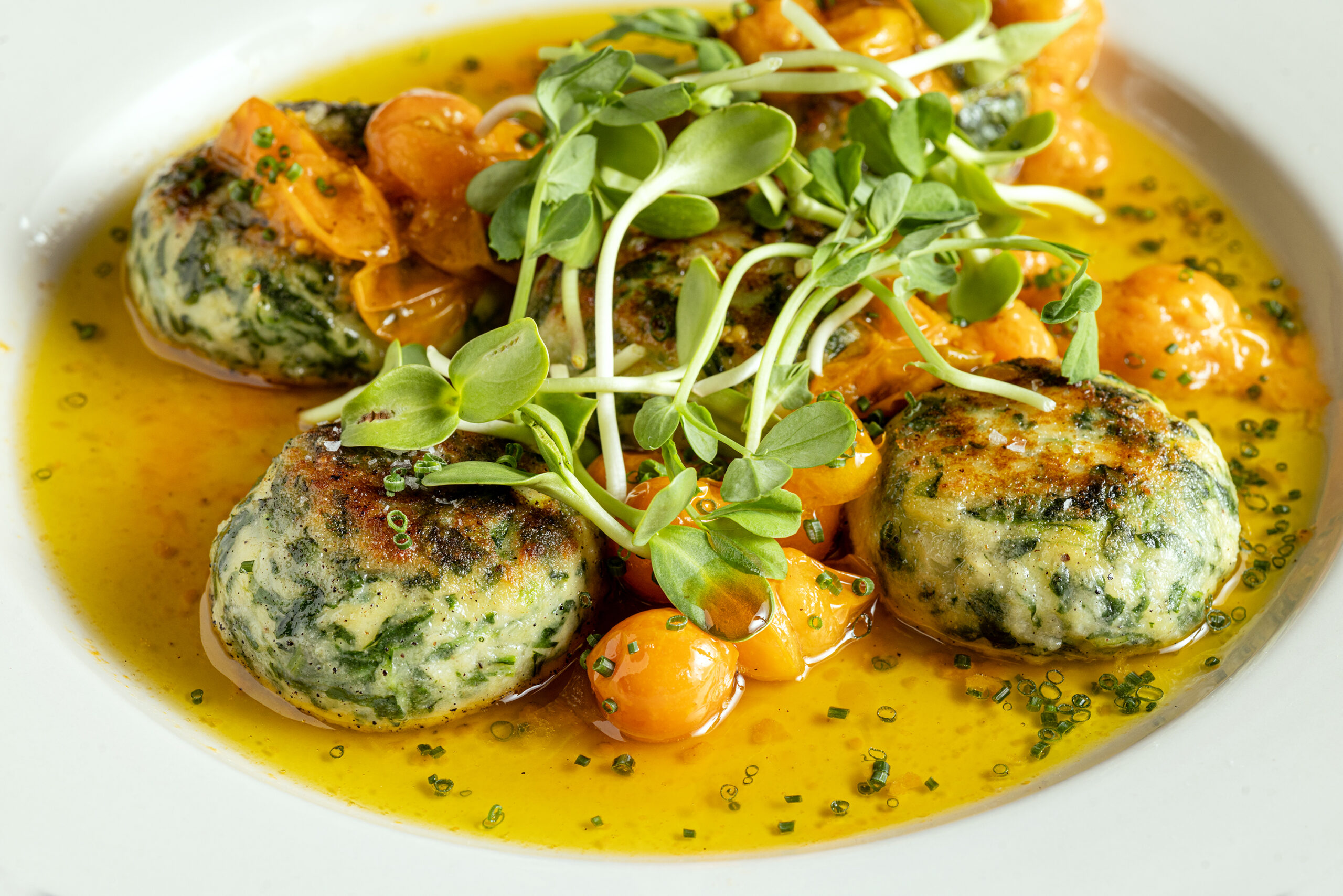
3-course prix fixe, Songbird Parlour: Elegant but unstuffy dining with hyperlocal ingredients. Choose from a beet-and-blue-cheese salad, pan-seared duck breast and chocolate cake with whipped coffee ganache, cocoa-nib streusel and warm caramel. A vegetarian-friendly option includes a salad, hand-rolled ricotta-and-lemon gnudi, and vanilla ice cream with olive oil and fennel pollen. 14301 Arnold Drive, Suite 3, Glen Ellen, 707-343-1308, songbirdparlour.com
Ricotta and arugula gnudi, oil-cured Oak Hill cherry tomato, red onion confiture from Songbird Parlour Thursday, Nov. 21, 2024, in Glen Ellen. (John Burgess / The Press Democrat)Saucy Mama’s in Guerneville on June 12, 2024. (Chad Surmick / The Press Democrat)
$70 shared meal for 4
3-course family-style meal, Saucy Mama’s Jook Joint: Treat your friends (or family) to a soulful meal of boudin dip, gumbo and Cajun pasta with blackened chicken. 16632 Highway 116, Guerneville, 707-604-7184, saucymamasjookjoint.com
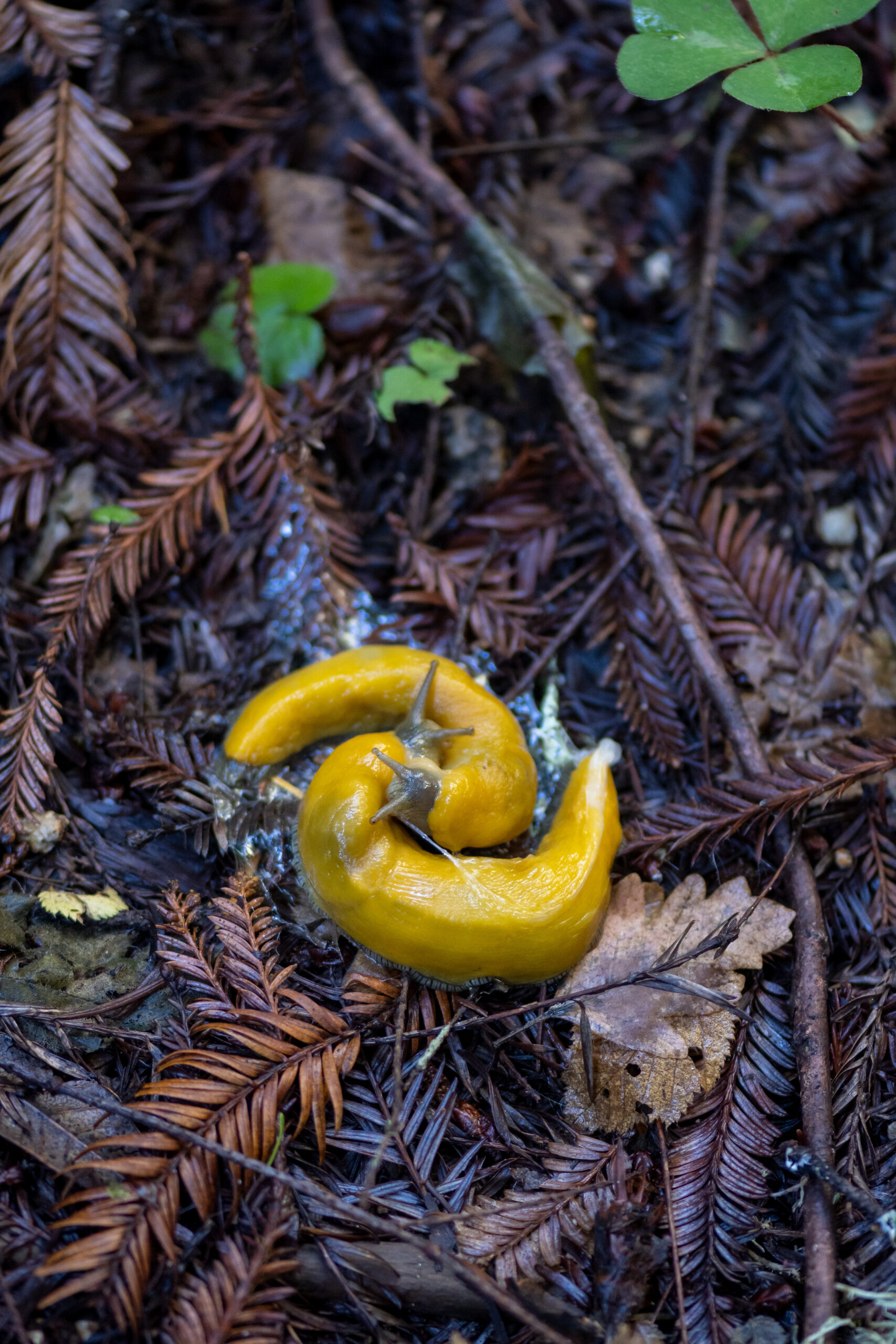
Large yellow banana slug sliding along the forest floor. (Lee Holbrook / Getty Images)
Winter is time for banana slugs to shine — literally — since wet conditions allow them to produce the mucus that is essential to their survival, explains Santa Rosa naturalist Sarah Reid.
“They need moisture to create slime, which they use for locomotion. It also protects them from dryness in soil and contains pheromones that attract other slugs for mating,” she says.
This “slime” or mucus is technically a liquid crystal, meaning its structure is more ordered than a liquid but less rigid than a solid. Slugs excrete sugar molecules and mucin proteins as dry granules that expand hundreds of times upon absorbing water.
During summer and fall, banana slugs may hunker down like a newt, trying to stay as cool and moist as possible. With winter rains and cooler temperatures, especially in our coastal forests but also on some inland slopes and ravines, more moisture at ground level means more banana slugs out feeding and mating.
With winter rains and cooler temperatures, more moisture at ground level means more banana slugs out feeding and mating. (AlessandraRC / Getty Images)
“It’s their prime getting-together season,” Reid says. Enamored banana slugs will curl around one another like a yin-yang symbol, nibbling on each other’s bodies as they go. Then, from a hole in the top of their head called a genital pore, each will extend a penis — stay with us here — that can be as long as the slug itself. The dance and ensuing exchange of genetic material takes hours.
As anyone who heads out into banana slug habitat this time of year can quickly appreciate, there are a lot of slugs in the proverbial sea — but if they don’t successfully pair up, no worries, mate. Banana slugs possess both male and female parts (which explains the dueling phalluses) and can reproduce asexually. They lay clutches of 20 to 30 tiny, bead-size white eggs at a time. (Please save these factoids for friends and family on your next redwood hike.)
Another thing to know about banana slugs: They are not a single species, but rather six, inhabiting the West Coast of North America from San Diego to Alaska. All six can be found within California. Our local species, Ariolimax buttoni, has a yellowish-tan hue and can present with or without black spots — depending in part on dietary and environmental factors, Reid says.
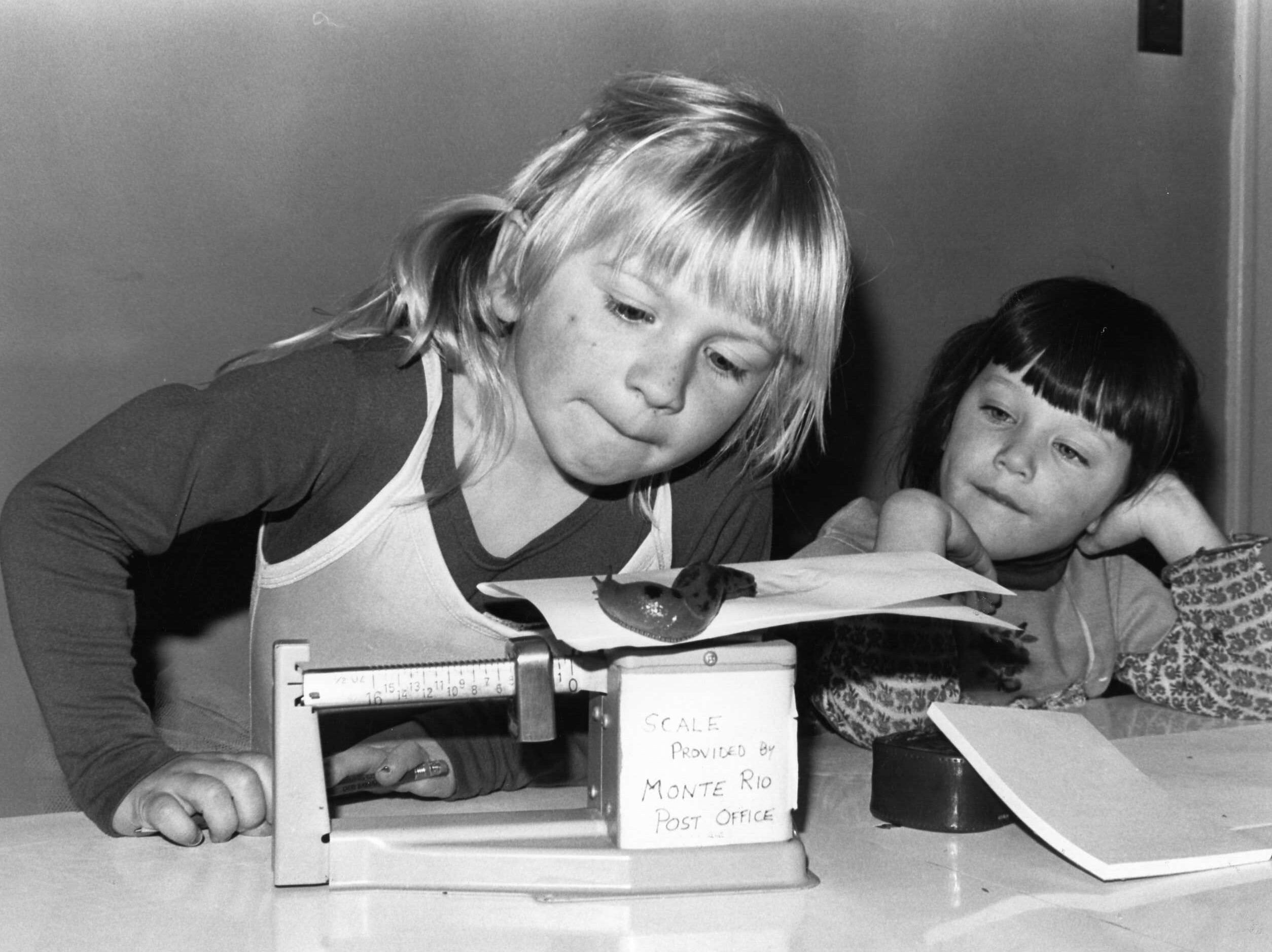
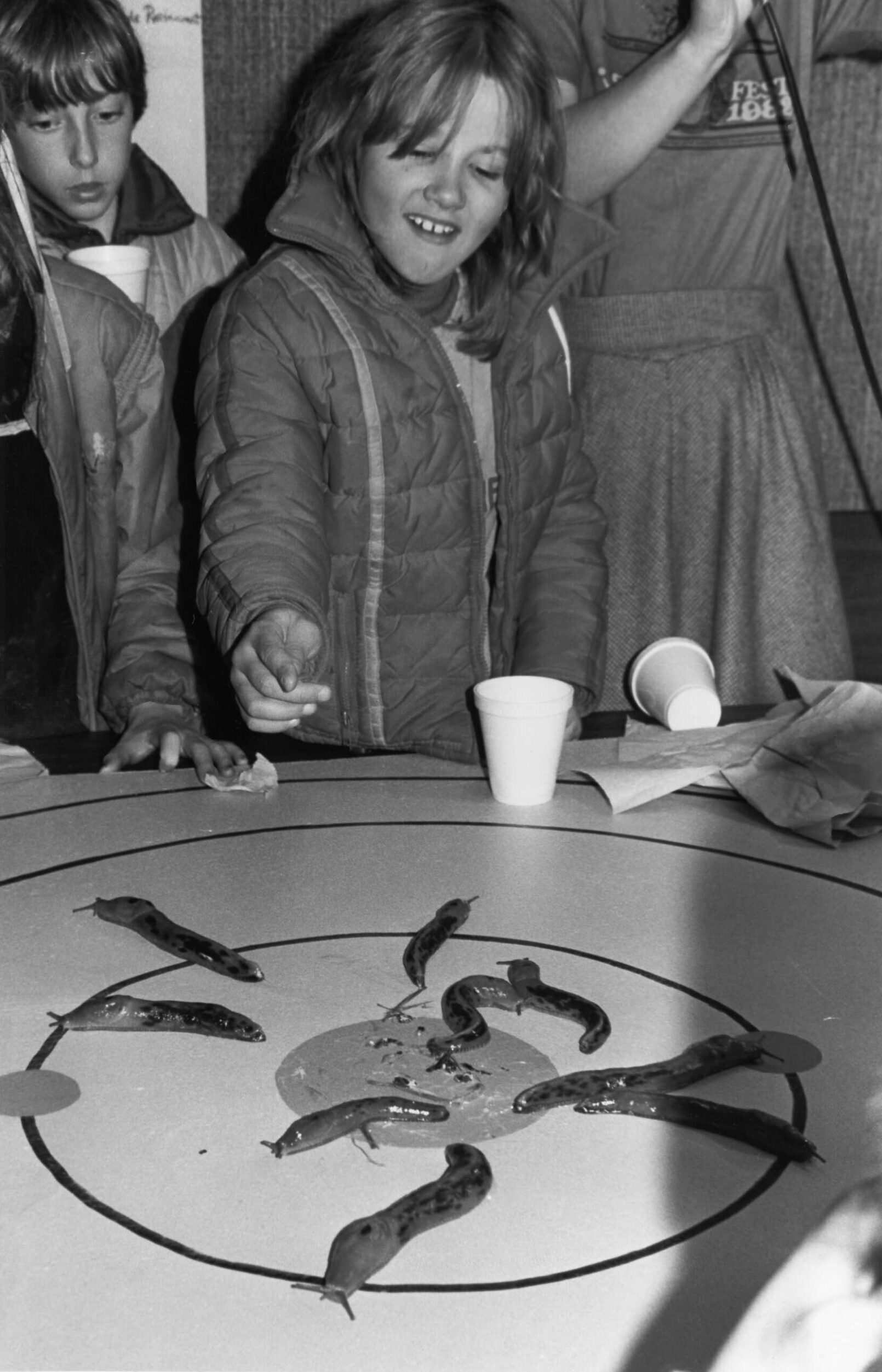
Weighing in their slug “Nana” for the second annual Slug Fest are Lyric Smith, from left, and Danielle Graham, both 4, on March 9, 1981. (The Press Democrat, file)Slug racers slither away from the center starting point during the slug derby at the third annual Slug Fest on March 14, 1982. (Eileen Klineman / The Press Democrat, file)
Sonoma County has celebrated the banana slug since well before it was named California’s state slug in 2024. From the early ’80s through 1991, Guerneville hosted Slug Fest, an event that featured slug races, a heaviest-slug contest, and a slug-cooking competition. Uncooked, banana slugs’ pheromone-laden slime-crystal is also an anesthetic, meaning it will make a predator’s tongue or throat go numb.
We recommend just letting them be and marveling at nature’s ingenuity.
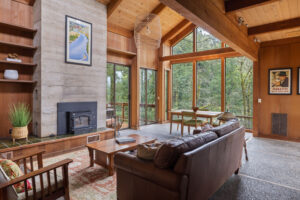
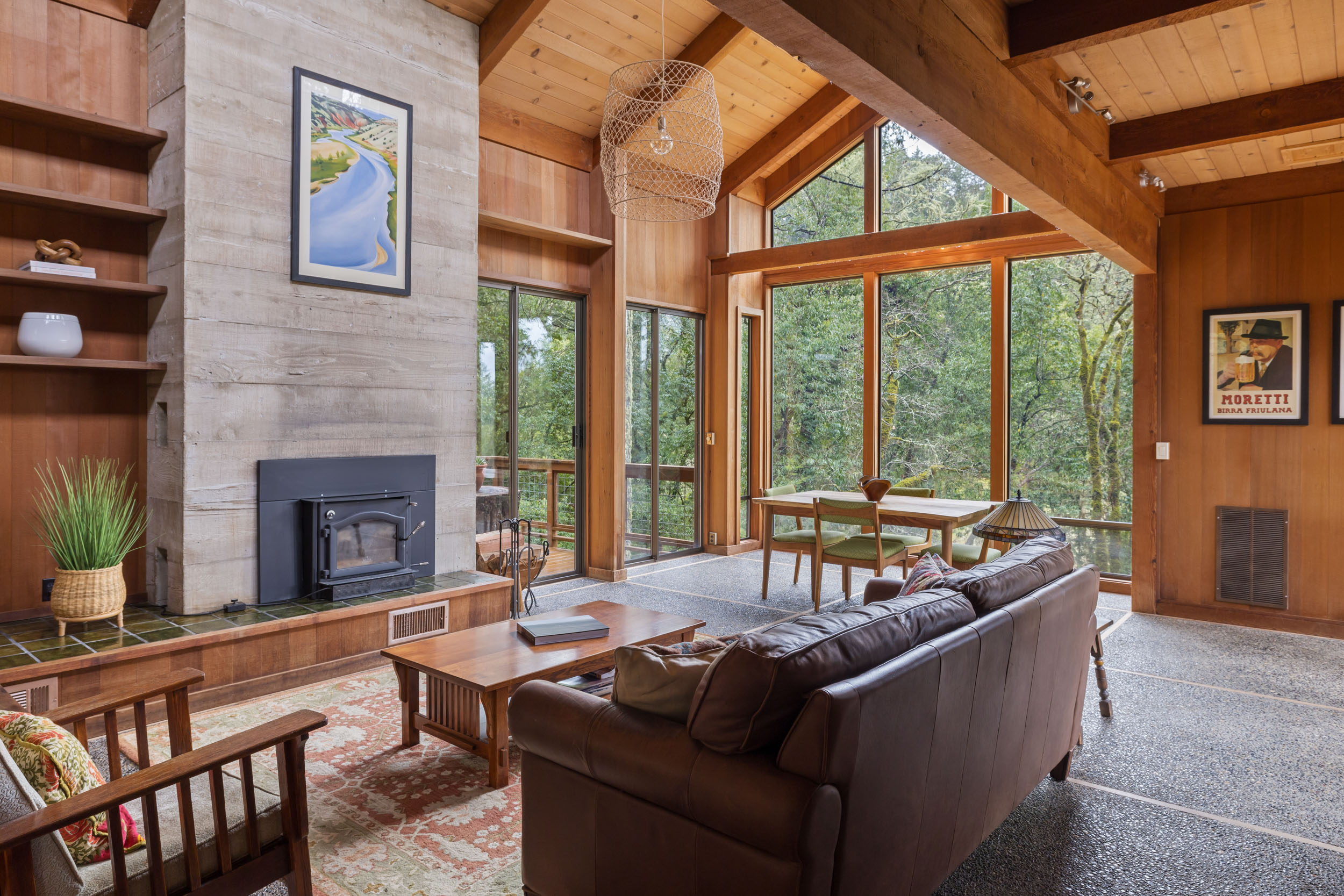
A well-preserved 1970s-era home nestled among redwoods in Forestville is currently listed for sale. The four-bedroom, two-bathroom dwelling with floor-to-ceiling views is seeking $1,860,000.
The work of architect John U. Clowdsley Jr., the 2,994-square-foot home’s design is an interplay with the forested surroundings. The interior is clad in clear redwood paneling and accented with elements of slate and exposed aggregate. The ruddy interior contrasts with the vibrant perennial green of the outdoors.
The great room features a wood-burning fireplace with lounging and dining areas that merge with the kitchen and outdoor patio. The interior is also warmed with solar, radiant and forced-air heat.
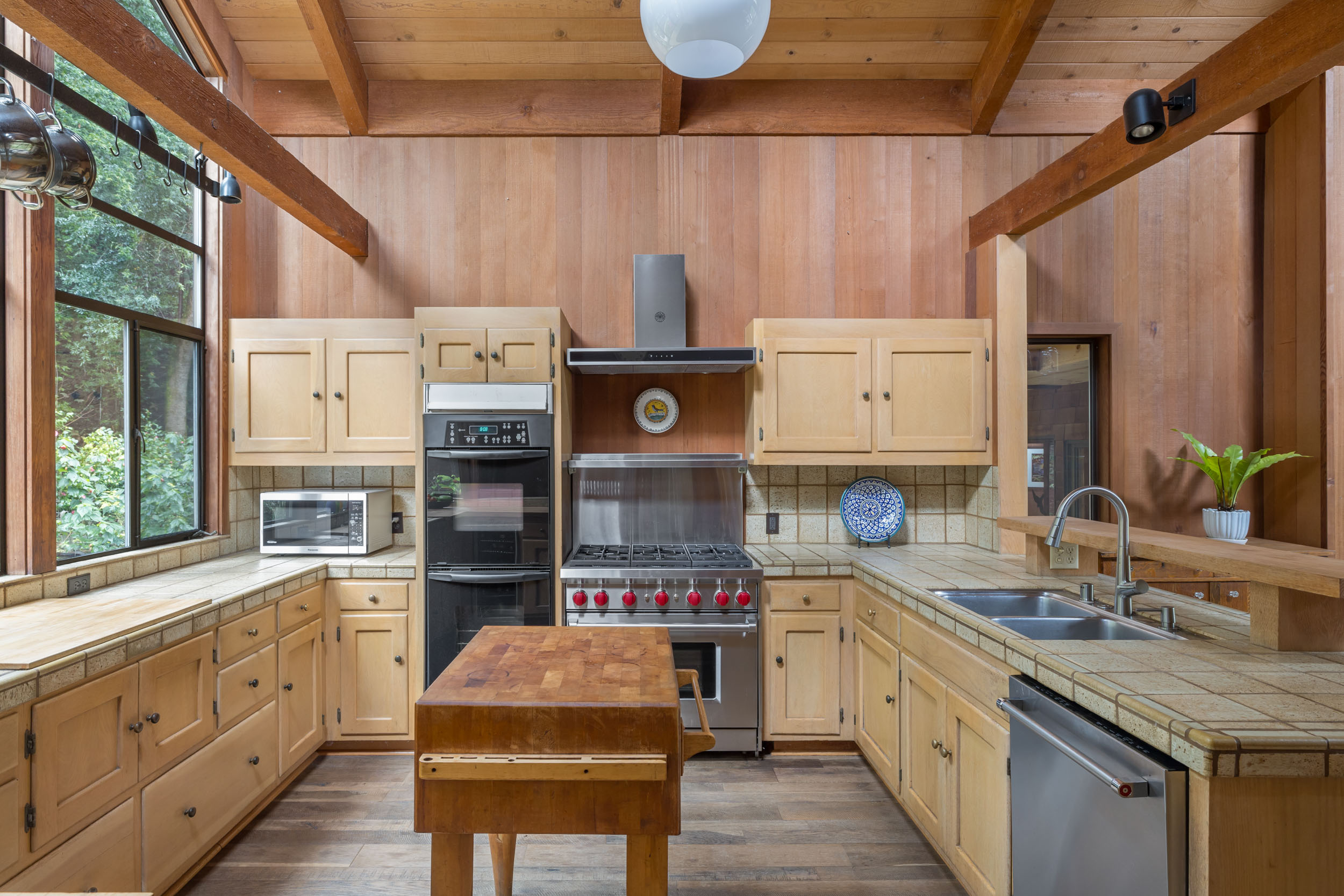
Great room. (Peter Lyons Photography)Kitchen. (Peter Lyons Photography)
It’s easy to envision cooking on the Wolf Range accompanied by a flood of daylight or the twinkle of starlight thanks to towering windows that run along the angle of the room’s single-pitch roof. There’s a Thermador fridge and original solid-wood cabinetry topped with marvelously modern tile.
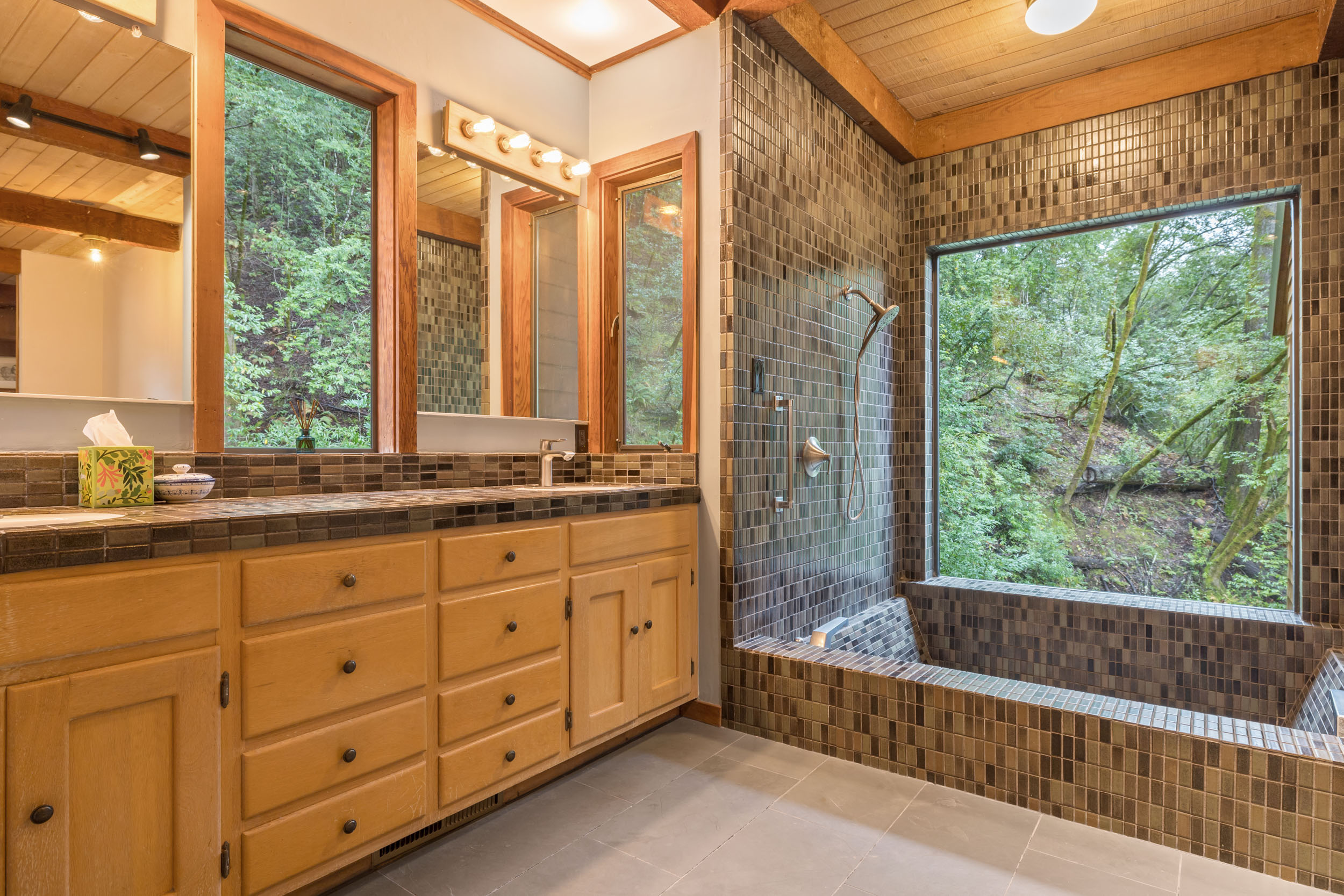
In the bathroom, the new vertical tile of the Roman-style bathtub radiates alongside the original cabinetry. Multiple windows allow nature to steal the show.
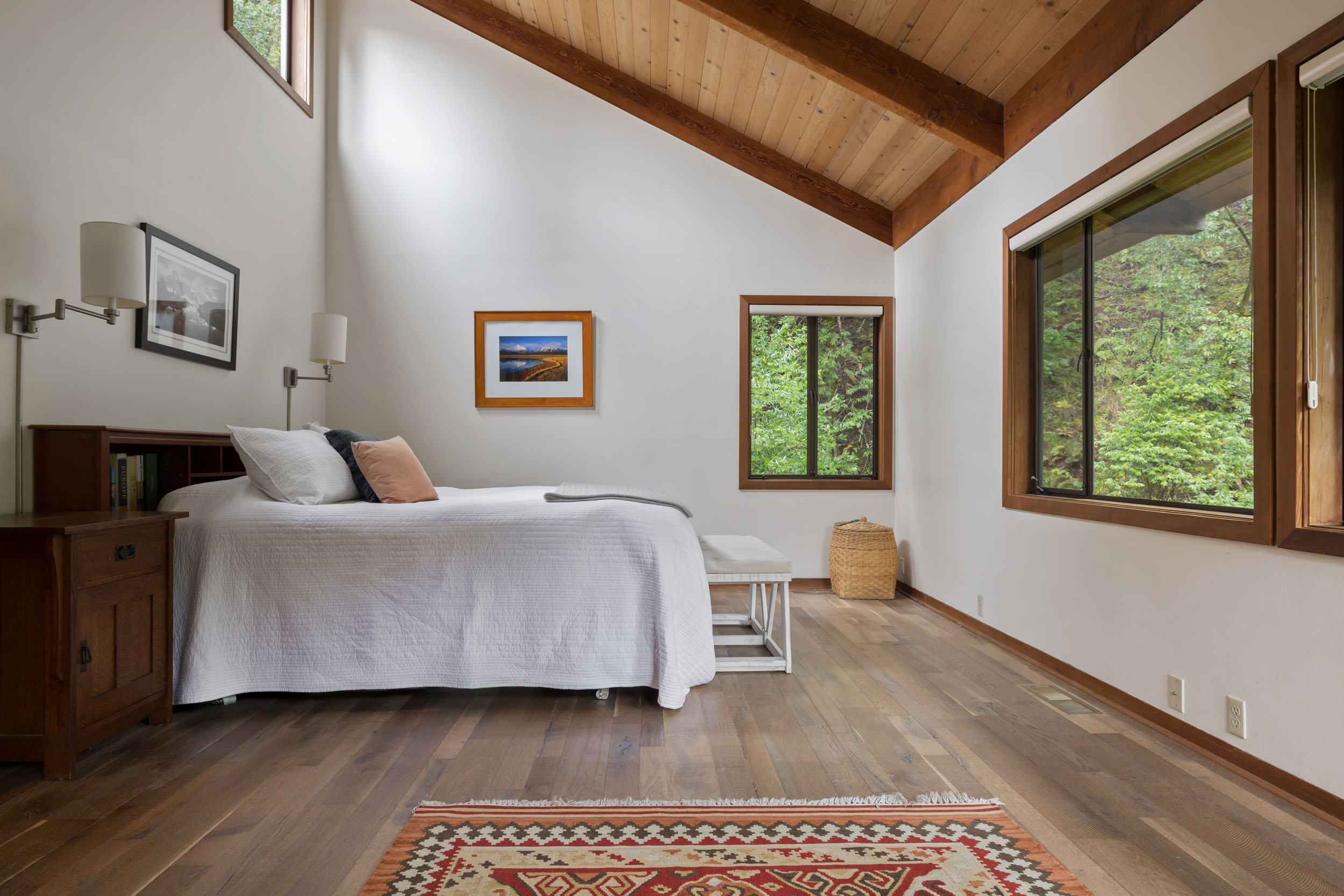
En-suite bathroom of main bedroom. (Peter Lyons Photography)Bedroom. (Peter Lyons Photography)
All bedrooms enjoy the same redwood aesthetic inside and out via windows and patio access.
The dwelling is part of a homeowners’ association of 12 homes in an 80-acre enclave along Forestville’s Green Valley Creek. The secluded community, featured decades ago in the Los Angeles Times, shares numerous amenities including a clubhouse, a pool and spa, a pickleball court and — in perfect Sonoma fashion — raised garden beds, a barn and chickens.
For more information on this home at 6764 Giovanetti Road in Forestville, contact listing agent Sandy Spring, 510-333-2559; Hedge Realty, 707-559-8990, 103 H St., Suite B, Petaluma, hedgerealty.com/properties/giovanetti
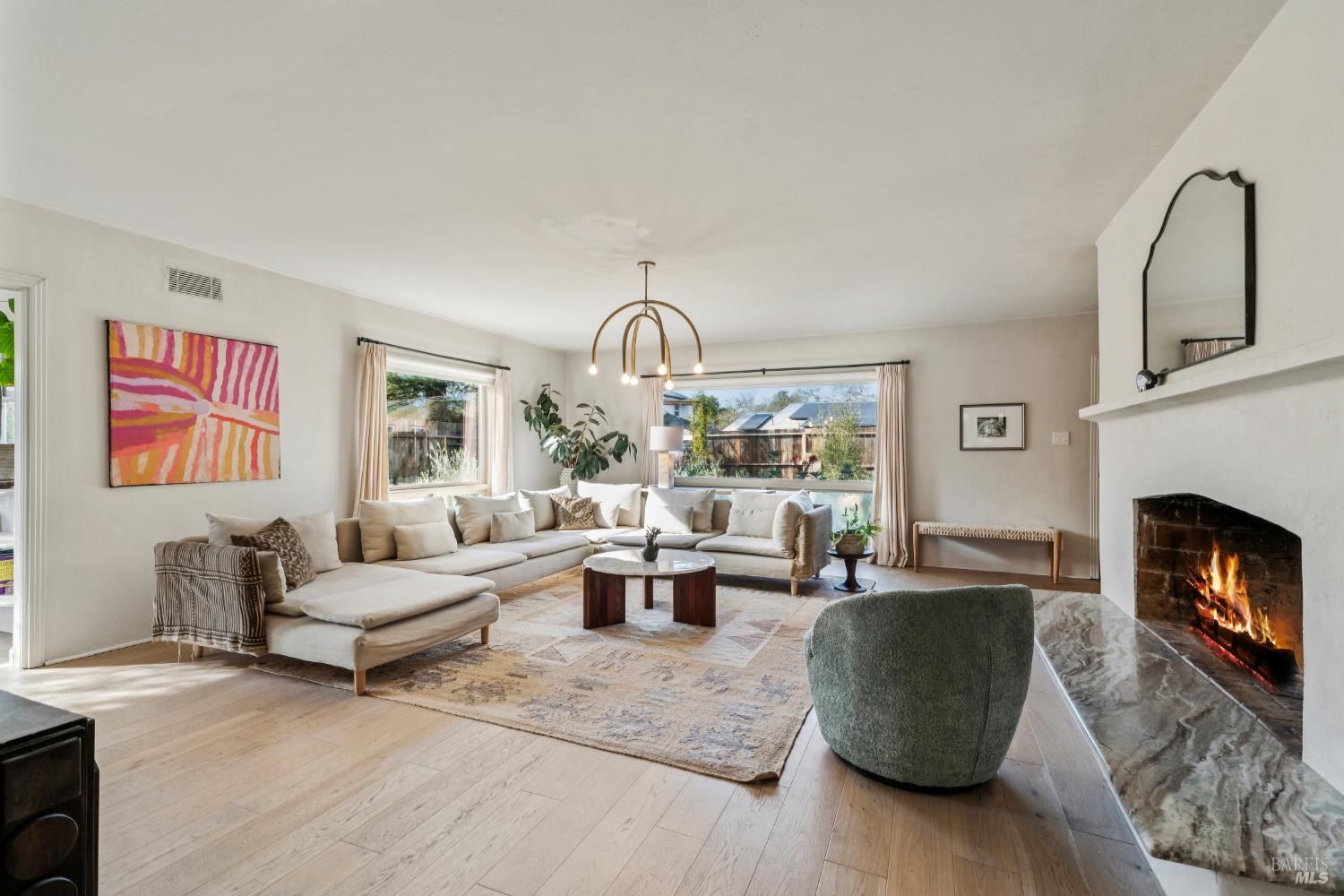
A renovated, 1950s-era Sonoma home is currently listed for sale. Full of charm and sharp upgrades, the two-bedroom, one-bathroom home with an office is priced at $795,000.
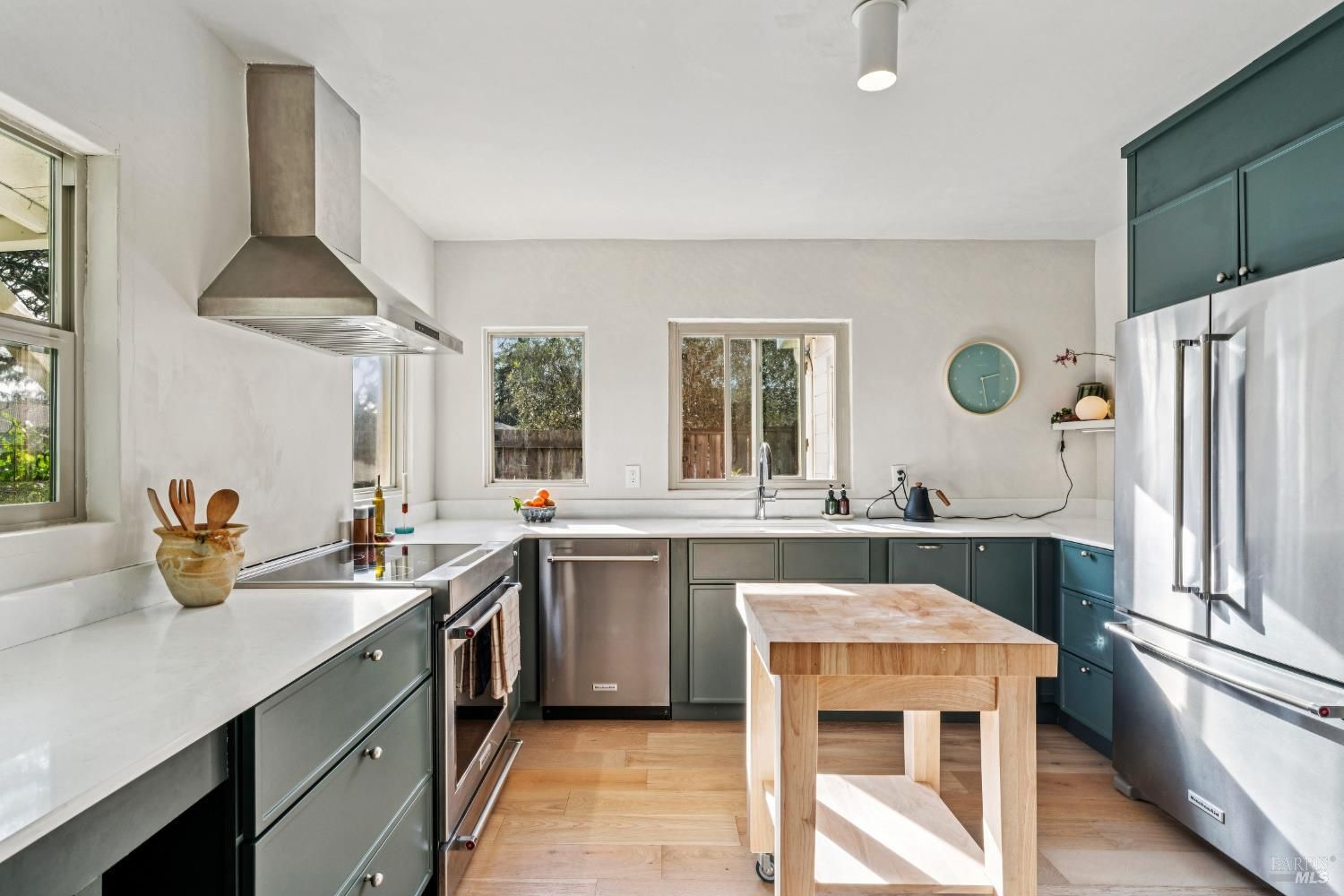
The dwelling retains its vintage lines, but renewed elements — starting at the knotty-pine front door — make the space shine. The kitchen and bathroom feature quartz countertops as well as premium cabinets, which are painted a vibrant teal in the kitchen. Wide-planked white oak floors run throughout.
The great room includes dining and lounging areas and centers around a wood-burning fireplace with a uniquely arched opening. The open layout and generous windows offer light and spaciousness that visually expand the home’s 1,500 square feet.
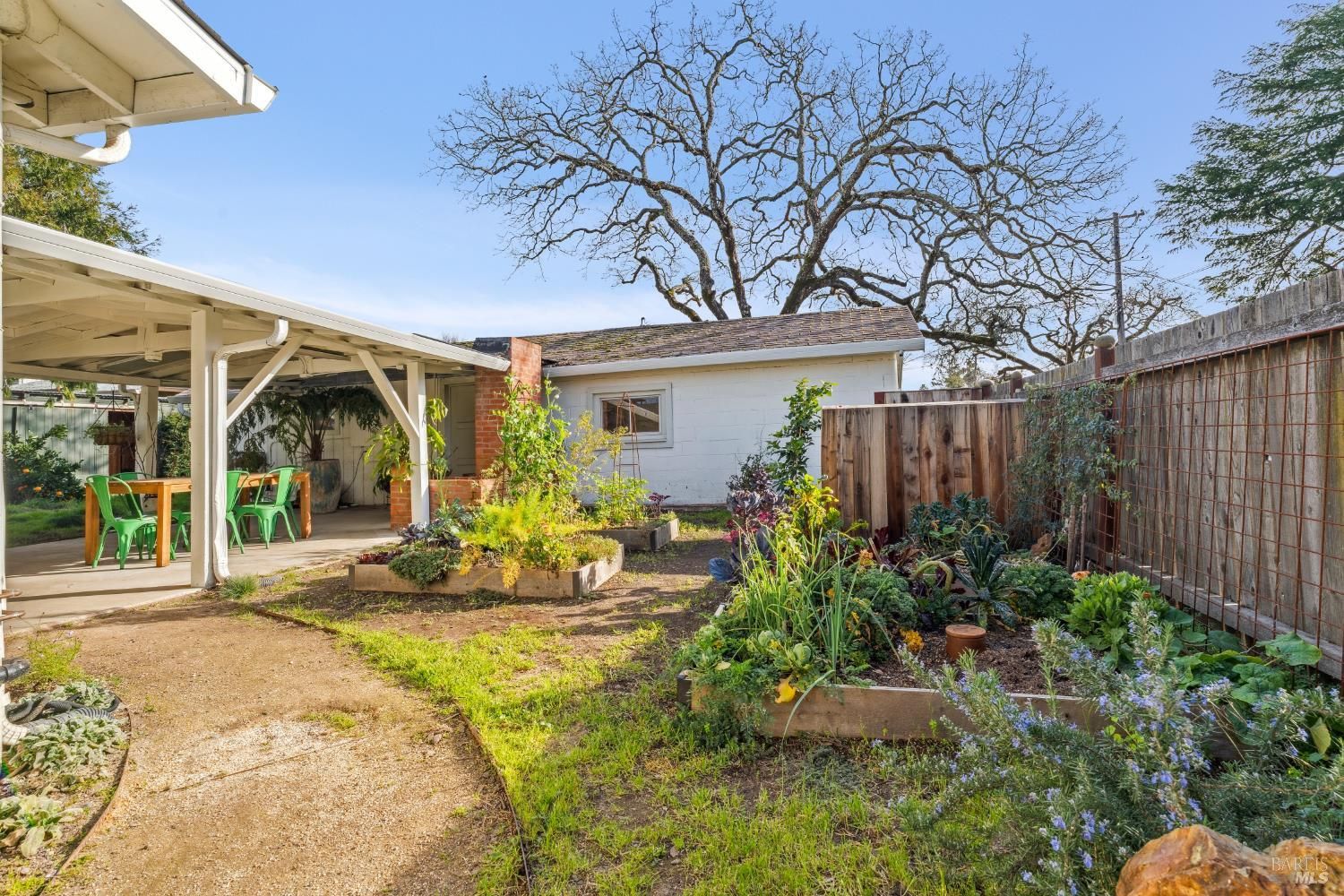
Living room. (Open Homes Photography)Kitchen. (Open Homes Photography)Raised beds in yard. (Open Homes Photography)
Modern light fixtures add a playful finish. Inspired choices of plants, artwork, textiles and furnishings beautifully alchemize the home’s transitional style.
The yard offers a covered patio for dining, raised garden beds and fruit trees.
Lord Sandwich, a shaggy Goldendoodle with more than 70,000 social media followers and his own nonprofit, died Feb. 10, 2026. Photo taken in Healdsburg, Monday, Dec. 11, 2023. (Christopher Chung / The Press Democrat)
Lord Sandwich, a shaggy Goldendoodle who helped transform a small Healdsburg winery into an international community — and inspired the donation of more than 60,000 pairs of socks — died on Feb. 10. He was 13.
“Every single time somebody said his name, they said it with a smile,” said Alison Smith Story, co-founder of Smith Story Wine Cellars. “He was put on this planet to do something bigger than just be a dog.”
Years earlier, Smith Story began posting reflections in Sandwich’s voice, dispatches about butter and “pizza bones” (pizza crusts), long days in the car delivering wine and her own battle with breast cancer. The posts were playful and unpolished, chronicling the uncertainties of building a family winery from the ground up. They found an audience of more than 70,000.
When the family announced his death on Tuesday, thousands of messages poured in from around the world.
“You brought so much joy, comfort and pure love everywhere you went, and we were better because of you,” one woman wrote on Instagram.
“I think there were thousands that felt like Sandwich was also part of their family. What a special boy,” another wrote.
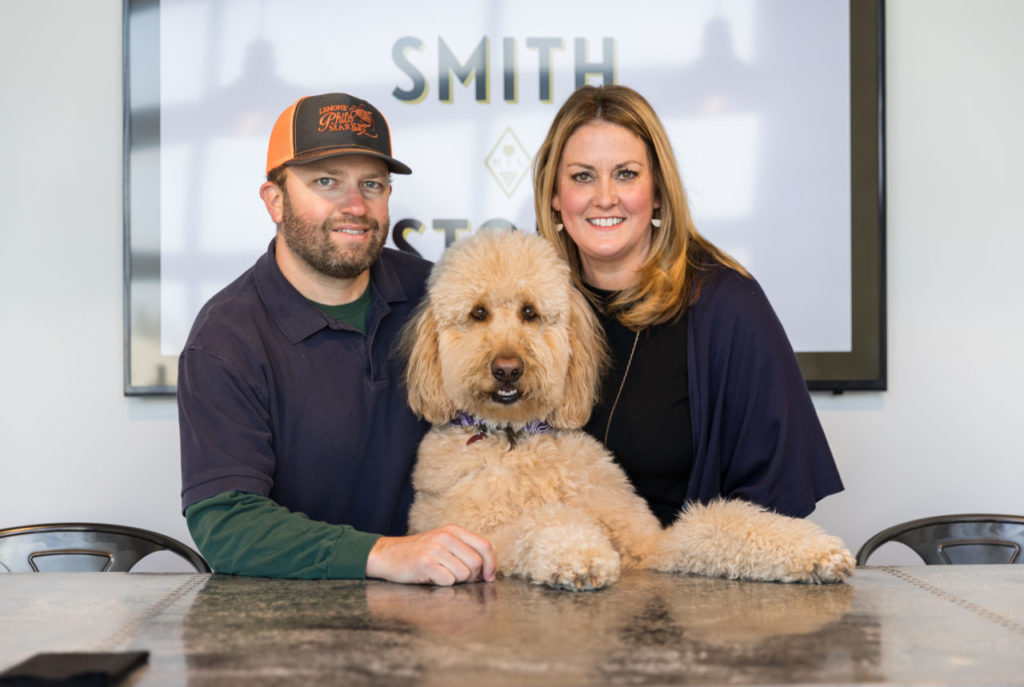
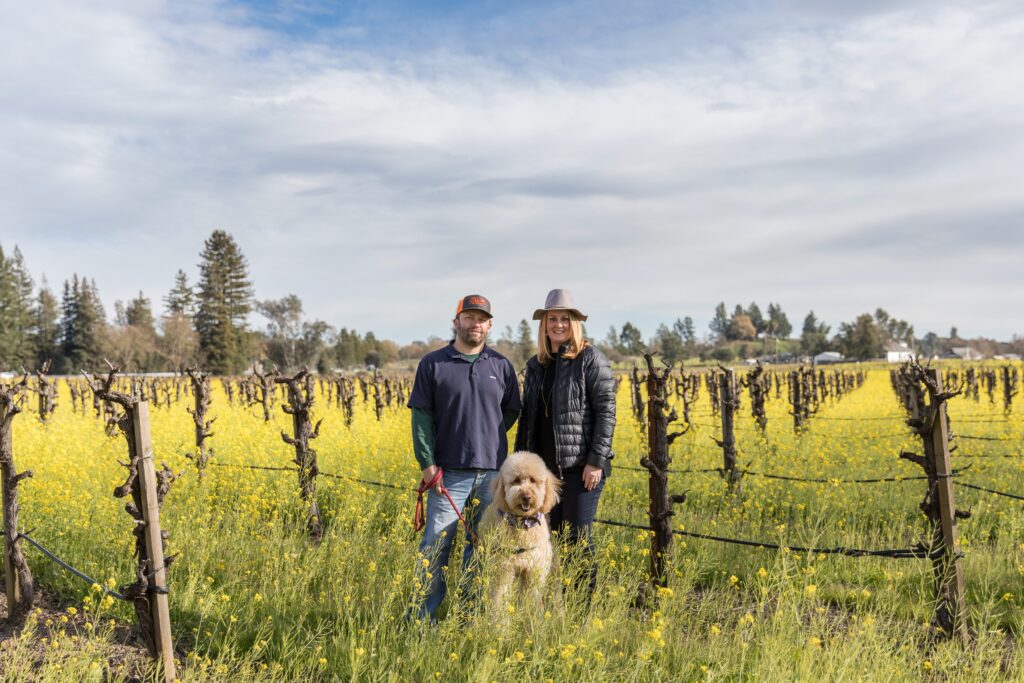
Lord Sandwich, a shaggy Goldendoodle with more than 70,000 social media followers and his own nonprofit, died Feb. 10. Photo taken in Healdsburg, Monday, Dec. 11, 2023. (Christopher Chung / The Press Democrat)Eric Story, Lord Sandwich and Alison Smith Story of Smith Story Wine Cellars. (Courtesy of Smith Story Wine Cellars)
Fondness for stealing socks became good cause
What began as a lighthearted social media account evolved into something more tangible. Socks for Sandwich, a nonprofit inspired by the dog’s fondness for stealing socks, urged followers to donate new pairs to people in need. “Giving is fun,” the account would remind readers. “Don’t eat the socks.” Volunteer “sock drawer captains” now help distribute donations worldwide.
“We stopped counting, but we’ve given over 60,000 pairs of socks because of this sweet guy,” Smith Story said. “We had no idea that this dog would be such a connector for our own family business and to help us with the charity.”
Eric Story, Lord Sandwich and Alison Smith Story of Smith Story Wine Cellars. (Darren Loveland)
A media darling
Sandwich had his own wine label, and more than half of the winery’s club members first discovered Smith Story Wine Cellars through him, according to the family. Admirers traveled from across the country and beyond to meet the dog they knew online. He was featured in The Washington Post, Garden & Gun and The Press Democrat. In May, more than 100 dogs and their owners gathered at the winery to celebrate his 13th birthday.
On Thursday morning, a social media post appeared: a letter from Sandwich to his younger Goldendoodle brother, Sir Royal Soup, passing along advice with characteristic wit. “Cheers to meeting the nicest people and loads of dogs!” the post read. “Make sure they buy wine though, this is how the humans pay the bills!”
There were practical reminders, too, including how to angle for extra treats, and why long tails and wine glasses do not mix.
“We have a heart full of gratitude, not a heart full of sadness,” Smith Story said. “What this dog has given to us and the world — we are astonished. We just have to lean into that gratitude to get us through this.”
Ricotta Gnocchi with browned butter, tomato and sage from Ca’Bianca Wednesday, Jan. 28, 2026 on Second Street in Santa Rosa. (John Burgess / The Press Democrat)
The era of white tablecloths, free bread baskets and the ritual crumb sweep between courses has largely faded from American restaurants. Once shorthand for fine dining, starched linen gave way to wipeable tabletops and the efficiencies of modern service. Pandemic sanitizing protocols seemed to deliver the final blow.
But as diners seek more experiential dining — weighing service, hospitality and the feel of a room as heavily as the food — the formality of white tablecloths may be inching back.
At Santa Rosa’s Ca’Bianca Italian Ristorante, it never left. And if co-owner Karin Hoehne Diana has it her way, it never will.
“We pay tons of money for linens, but I’m not going without. It just gives it a different feel,” said Hoehne Diana, who has run the restaurant with her husband, Marco Diana, for 30 years.
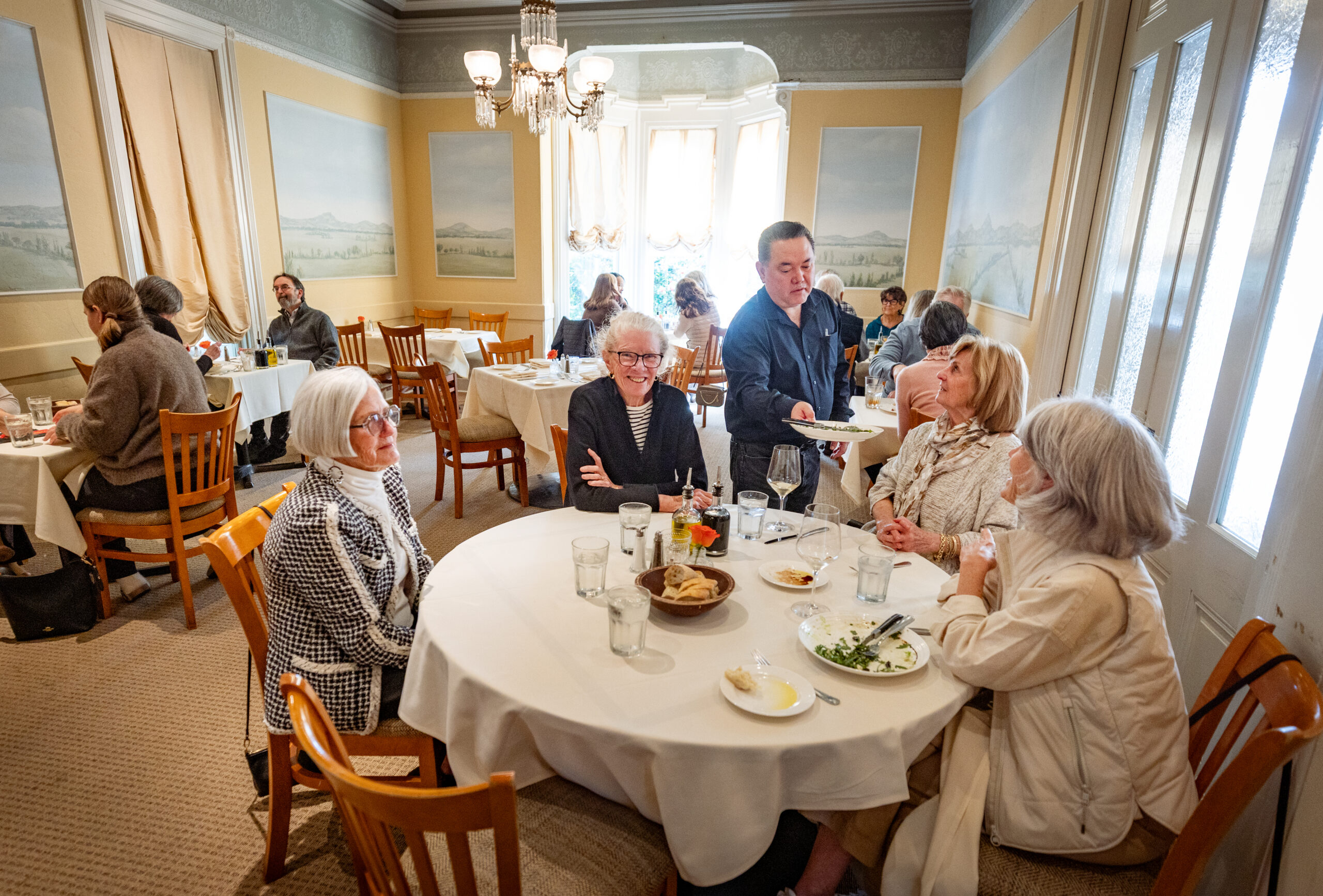
Old friends have lunch in the main dining room at Ca’Bianca Wednesday, Jan. 28, 2026, on Second Street in Santa Rosa. (John Burgess / The Press Democrat)
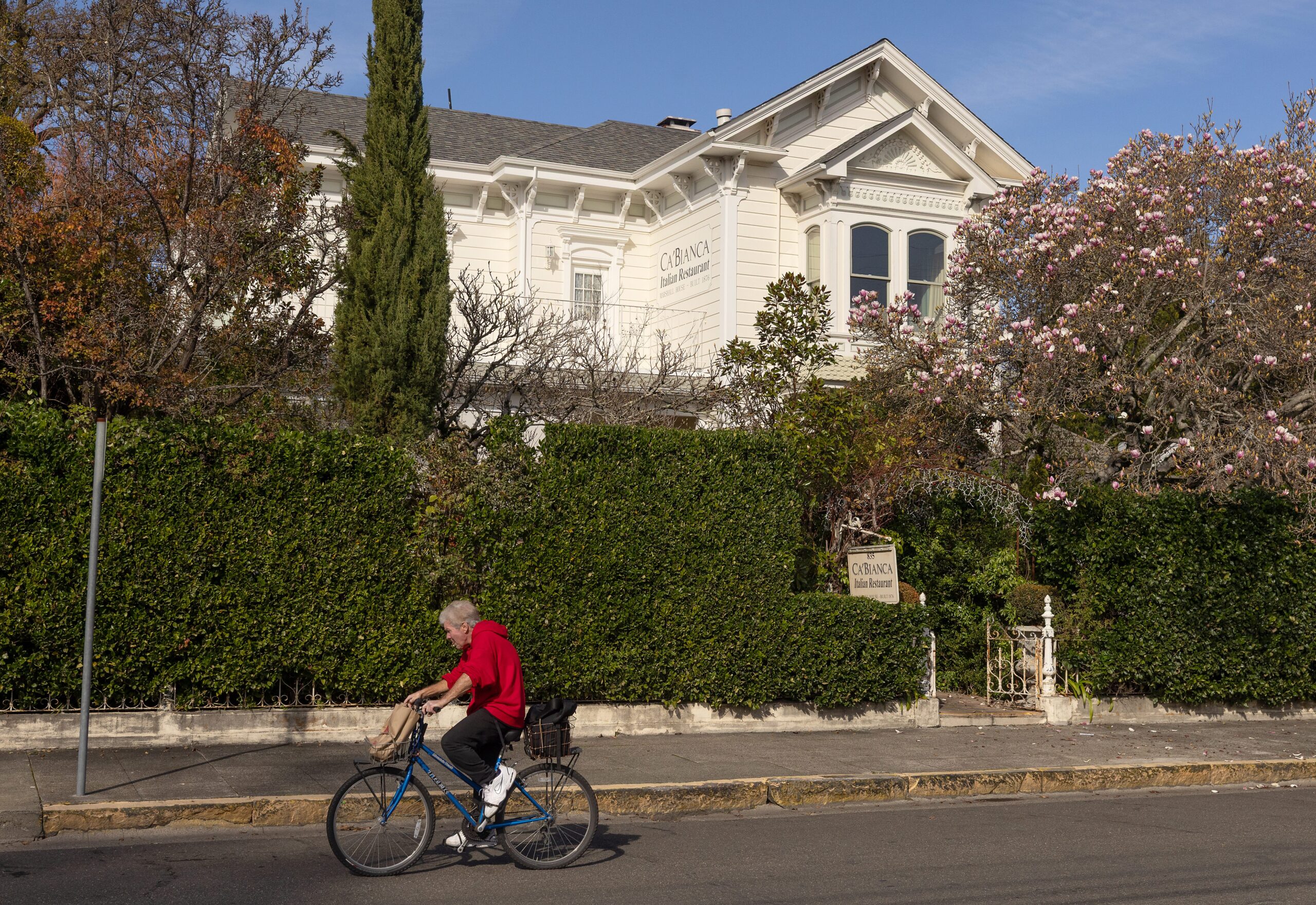
Instantly recognizable, the white Victorian on Second Street has long been a destination for business lunches, anniversaries and candlelit dinners. Tucked behind a well-tended garden of trellises and secluded nooks, the restaurant makes no bid for trendiness.
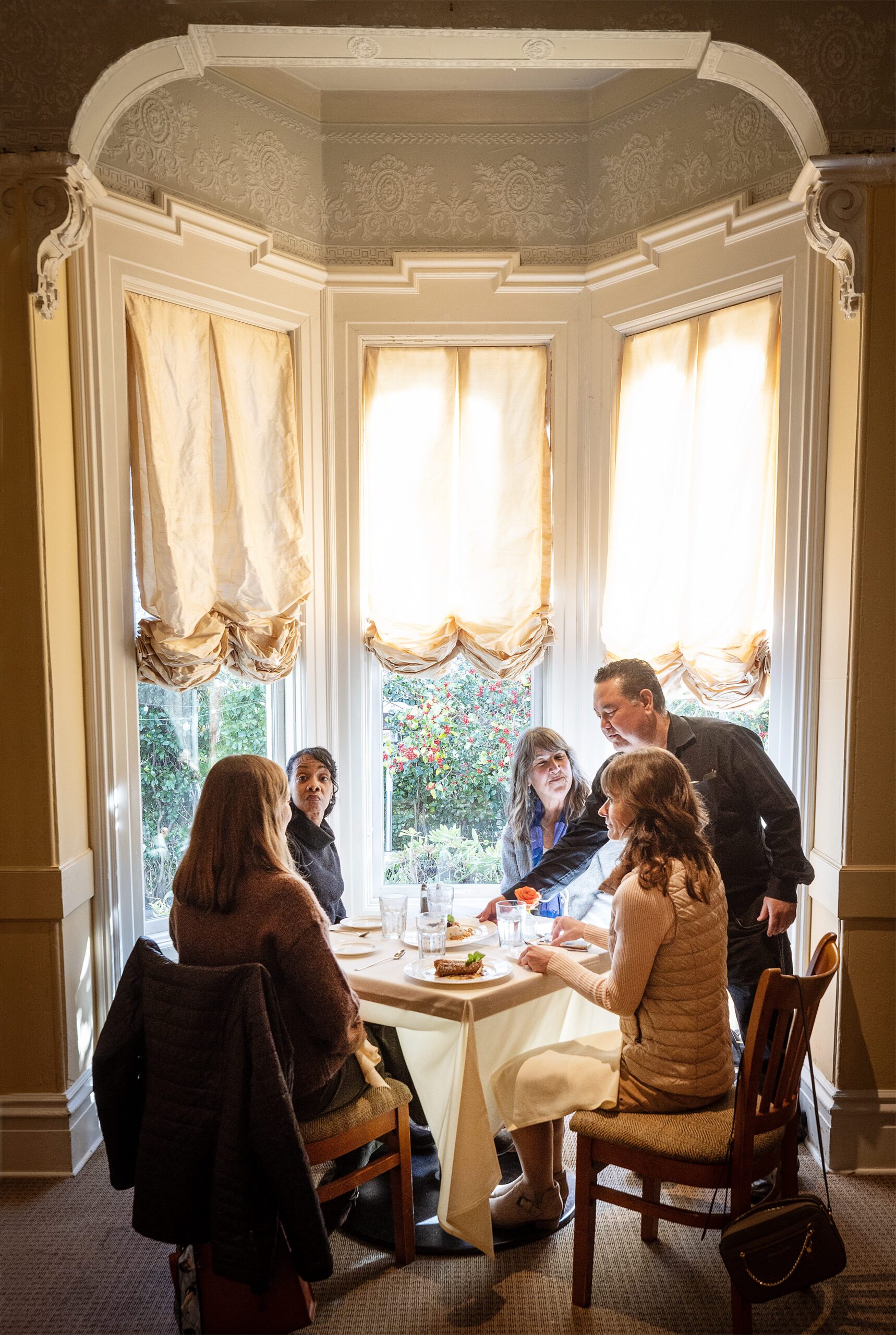
Crystal chandeliers catch the light above carved moldings and wood-mantled fireplaces. Soaring ceilings amplify the hush. Nothing feels dusty; everything feels deliberate. Veteran servers move with the unhurried confidence that once defined fine dining — and complimentary bread still arrives at the table, warm and without ceremony.
Connected to Santa Rosa’s beginnings
The Queen Anne Victorian that is home to Ca’Bianca (“white house” in Italian) was built in 1876 by pioneer James Marshall. Over the decades, it has served as a private residence, social hub and library, remaining in the original family for generations. When the Dianas took over the property in 1995, it was operating as a German restaurant. Both seasoned San Francisco restaurateurs, they were looking for a slower pace for their young children.
Ca’Bianca Wednesday, Jan. 28, 2026, on Second Street in Santa Rosa. (John Burgess / The Press Democrat)
In the three decades since, the house has become part of their family story. Hoehne speaks of it less as a building than as a presence.
“There is the energy of wonderful people in this house,” she said. “There’s warm kindness, and the house hugs you.”
Charged with much of the upkeep, an ongoing battle against time, she regards the home almost as another child.
“Restaurants are a way of life, not a job,” she said.
It’s a sentiment shared by her son Nico, who spent his childhood exploring the rambling rooms and is now a partner and manager of the business.
The food
Ca’Bianca is celebrating 30 years of great Italian food Wednesday, Jan. 28, 2026, on Second Street in Santa Rosa. (John Burgess / The Press Democrat)
Marco Diana, an Italian immigrant whose career has been rooted in fine dining, keeps the menu close to tradition. Italian chefs Vincenzo Cucco and the late Angelo Zicaro helped develop many of the original recipes, which remain anchored in housemade stocks, handmade pastas and carefully prepared sauces.
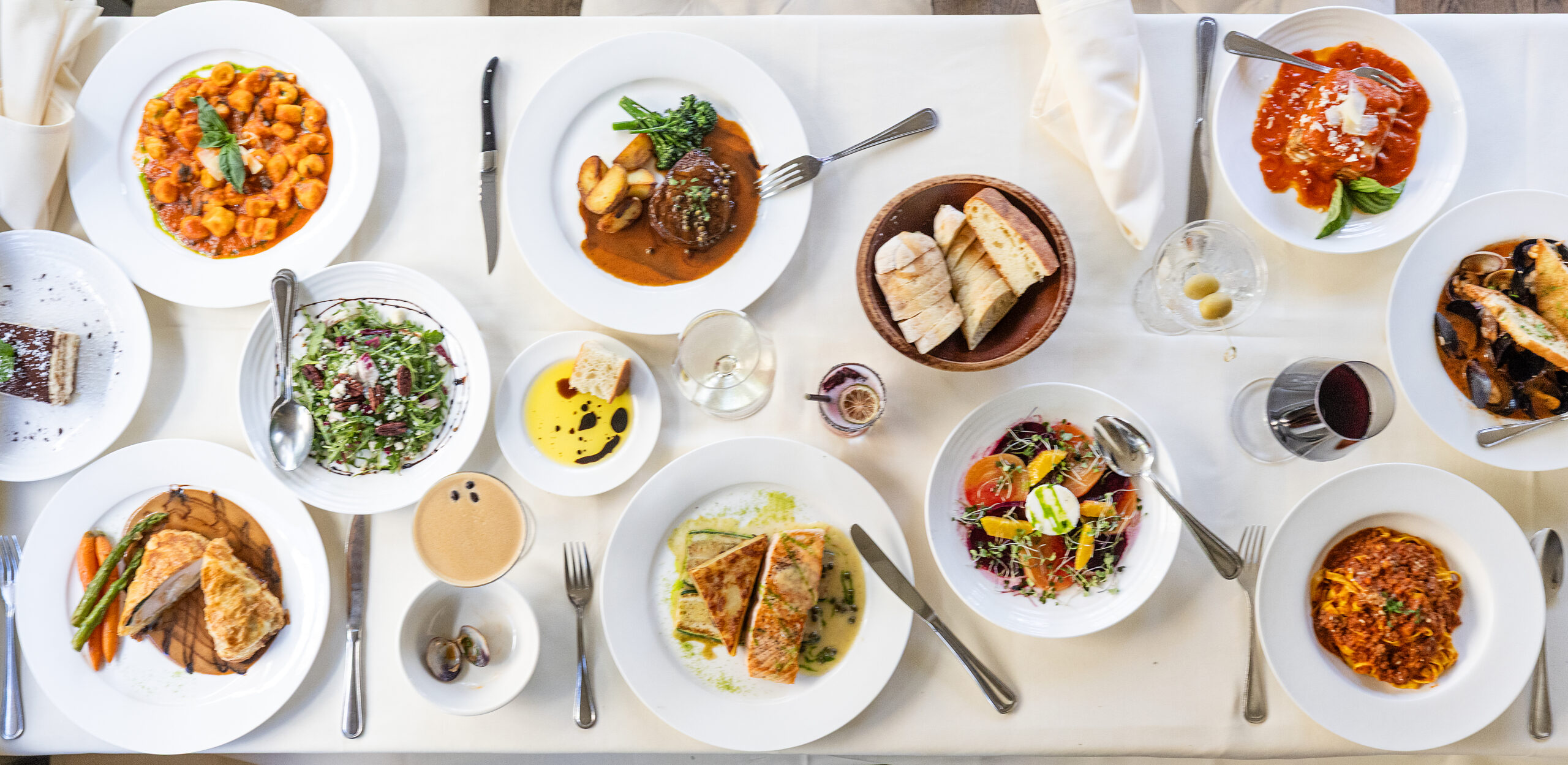
Today, chef de cuisine Arturo Cardenas oversees the kitchen, maintaining consistency across longtime favorites such as Gorgonzola gnocchi, rigatoni with peas and sausage, fettuccine Bolognese, and rack of lamb.
“People get mad when we make changes,” Hoehne Diana said, noting that while the core menu rarely shifts, frequent specials keep things fresh.
Best bets
The menu follows a traditional four-course Italian format, but diners may choose their own progression.
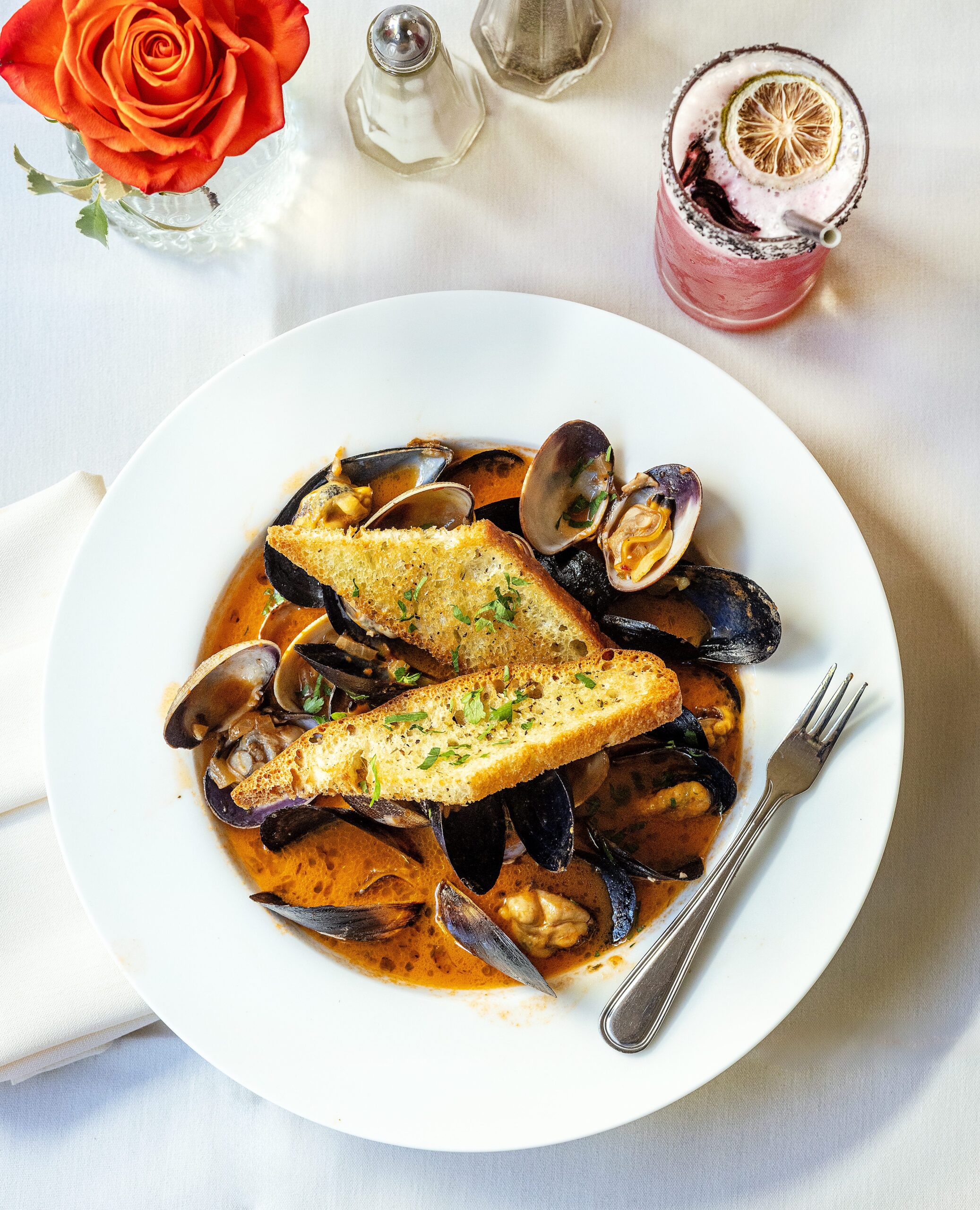
Impepata ($20): Clams and mussels in a saffron-laced tomato base, fragrant with garlic and leeks. The deeply aromatic sauce is the star, so order extra bread to capture every drop. Pair it with the soft pillows of potato gnocchi ($16) in creamy Gorgonzola sauce, a perennial favorite.
Impepata with clams and mussels sautéed with garlic, leeks and saffron in a tomato-based sauce from Ca’Bianca Wednesday, Jan. 28, 2026, on Second Street in Santa Rosa. (John Burgess / The Press Democrat)Parmigiana with baked layers of eggplant, mozzarella and tomato from Ca’Bianca Wednesday, Jan. 28, 2026, on Second Street in Santa Rosa. (John Burgess / The Press Democrat)
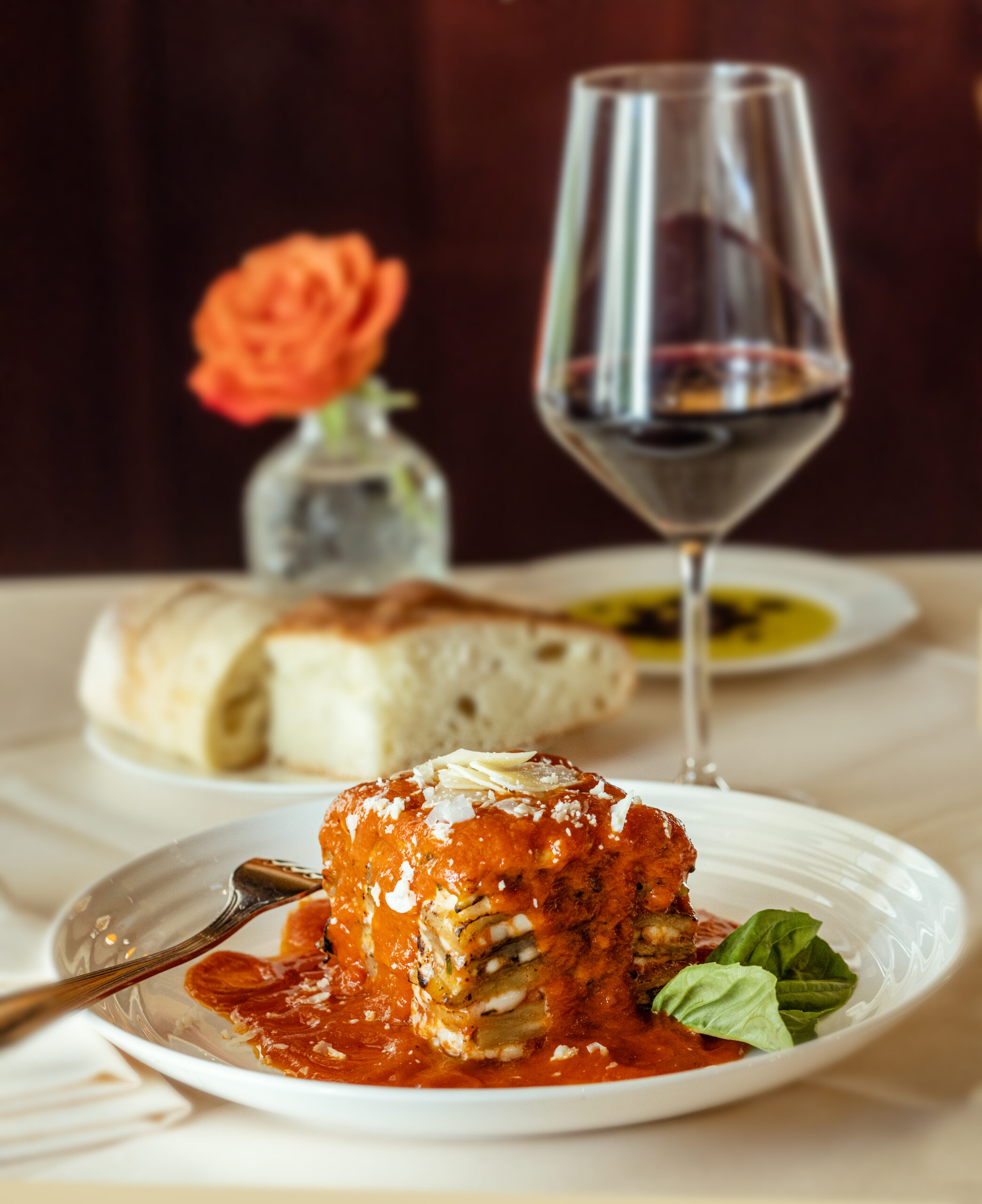
Parmigiana ($17): A layered stack of eggplant, mozzarella and tomato arrives surprisingly light and is easily shared.
Funghi ($25): Seasonal foraged mushrooms and zucchini crown ribbons of housemade tagliatelle in a crème fraîche sauce. A vegetarian standout.
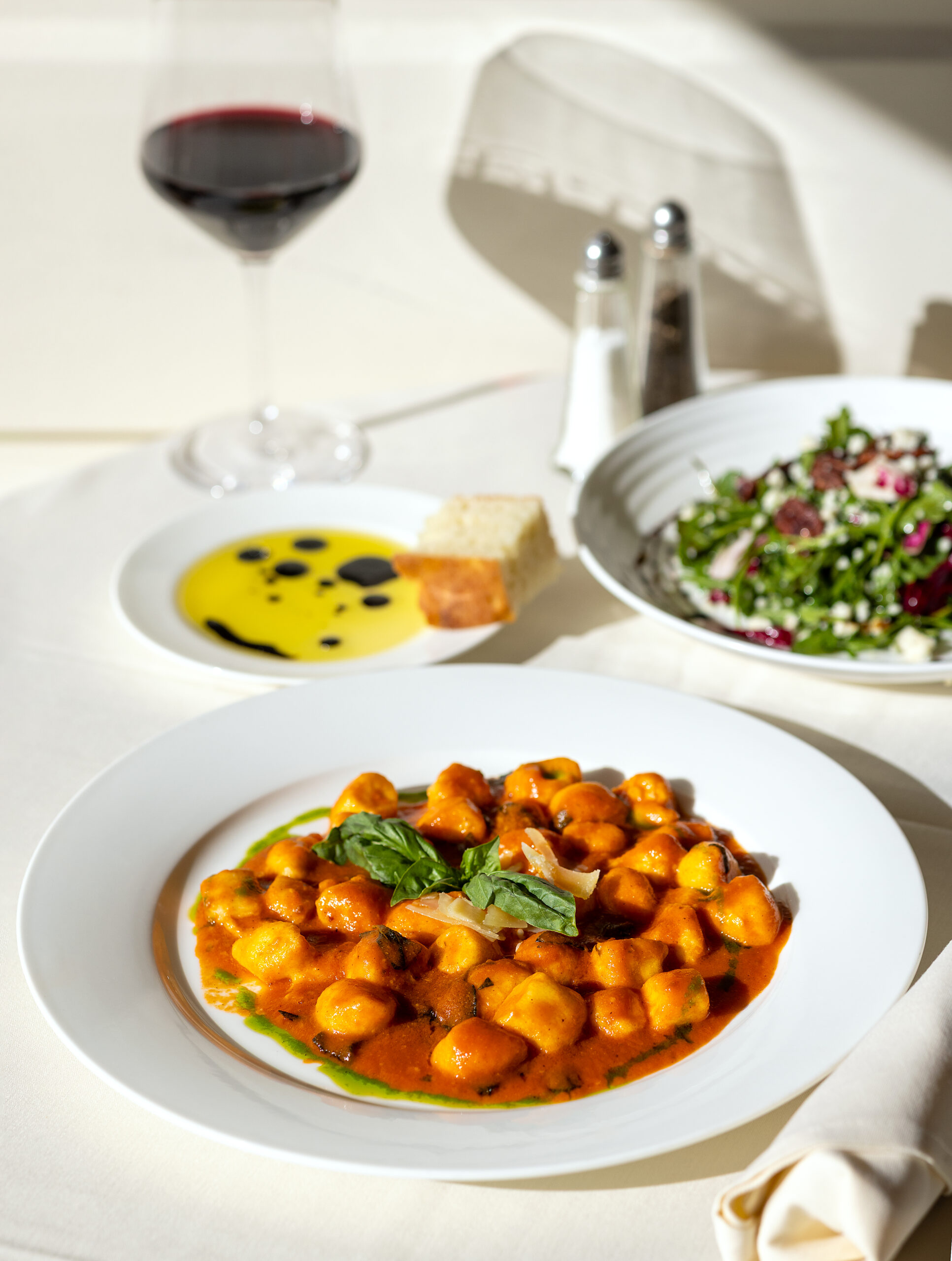
Ricotta gnocchi ($24): Delicate dumplings carry brown butter, sage and tomato with restraint and balance.
Cotoletta di Maiale ($39): A thick, French-cut, bone-in pork chop finished with pistachio and port wine reduction. Simple, elegant and timeless.
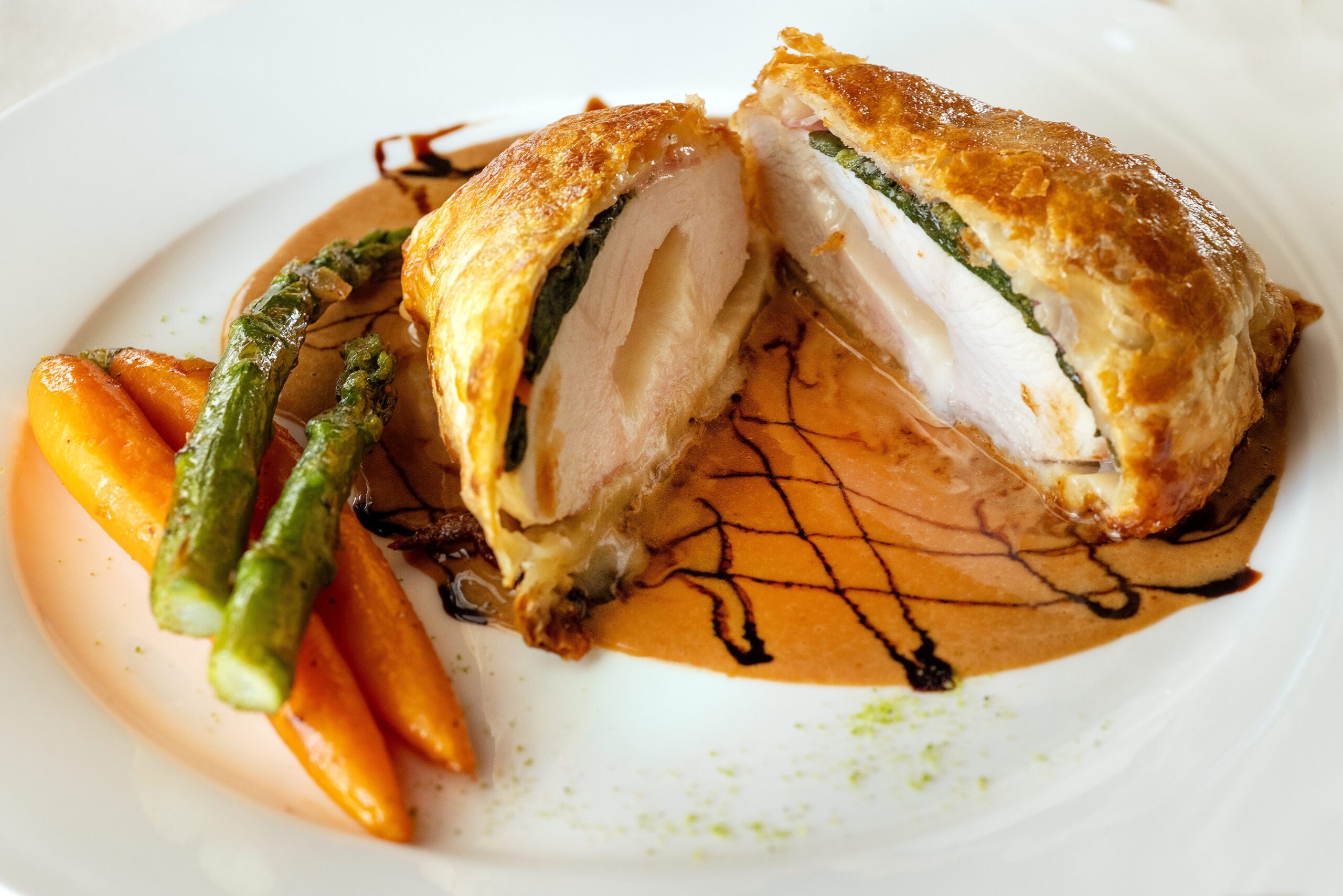
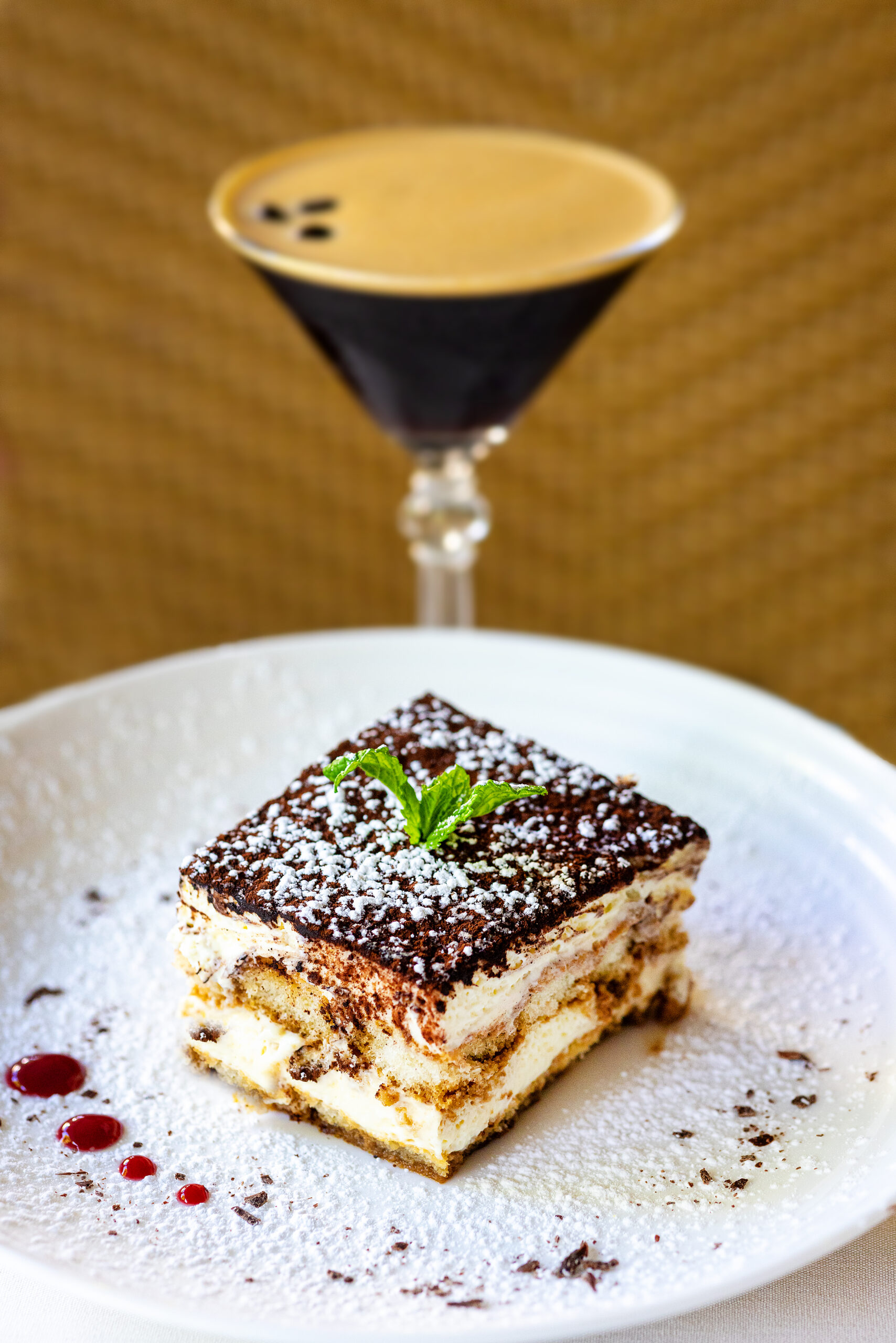
Pollo Ripieno stuffed with prosciutto, spinach & mozzarella wrapped in puff pastry from Ca’Bianca Wednesday, Jan. 28, 2026, on Second Street in Santa Rosa. (John Burgess / The Press Democrat)Tiramisu with layers of mascarpone cheese and ladyfingers soaked in espresso & rum from Ca’Bianca Wednesday, Jan. 28, 2026, on Second Street in Santa Rosa. (John Burgess / The Press Democrat)
Desserts ($11-$13): Tiramisu (layered mascarpone and espresso-soaked ladyfingers) is hard to resist. So are the vanilla bean panna cotta with berry sauce, apple strudel and Delizia di Cioccolata, a flourless Belgian chocolate amaretto mousse cake.
Vegetarian options are plentiful, and the kitchen accommodates gluten-free and vegan requests with ease.
The drinks
The wine list features roughly 350 bottles, largely local, alongside a full bar.
Ricotta Gnocchi with browned butter, tomato & sage from Ca’Bianca Wednesday, Jan. 28, 2026, on Second Street in Santa Rosa. (John Burgess / The Press Democrat)
The price
At a time when $20 fast-casual salads are commonplace, Ca’Bianca’s prices feel reasonable. Appetizers range from $14 to $18, with the Impepata at $20 substantial enough to serve as an entree. Pastas range from $23 to $29 and come in generous portions. Main courses range from $32 to $44, with market prices for some fish and specials. Desserts range from $11 to $13.
The perks
White-glove service, without the gloves. Veteran servers know the menu by heart, guide diners with confidence and anticipate needs before they’re spoken. Exactly what you’d expect from fine dining. The full menu is available at lunch, along with entrée salads, a burger and a grilled chicken sandwich.
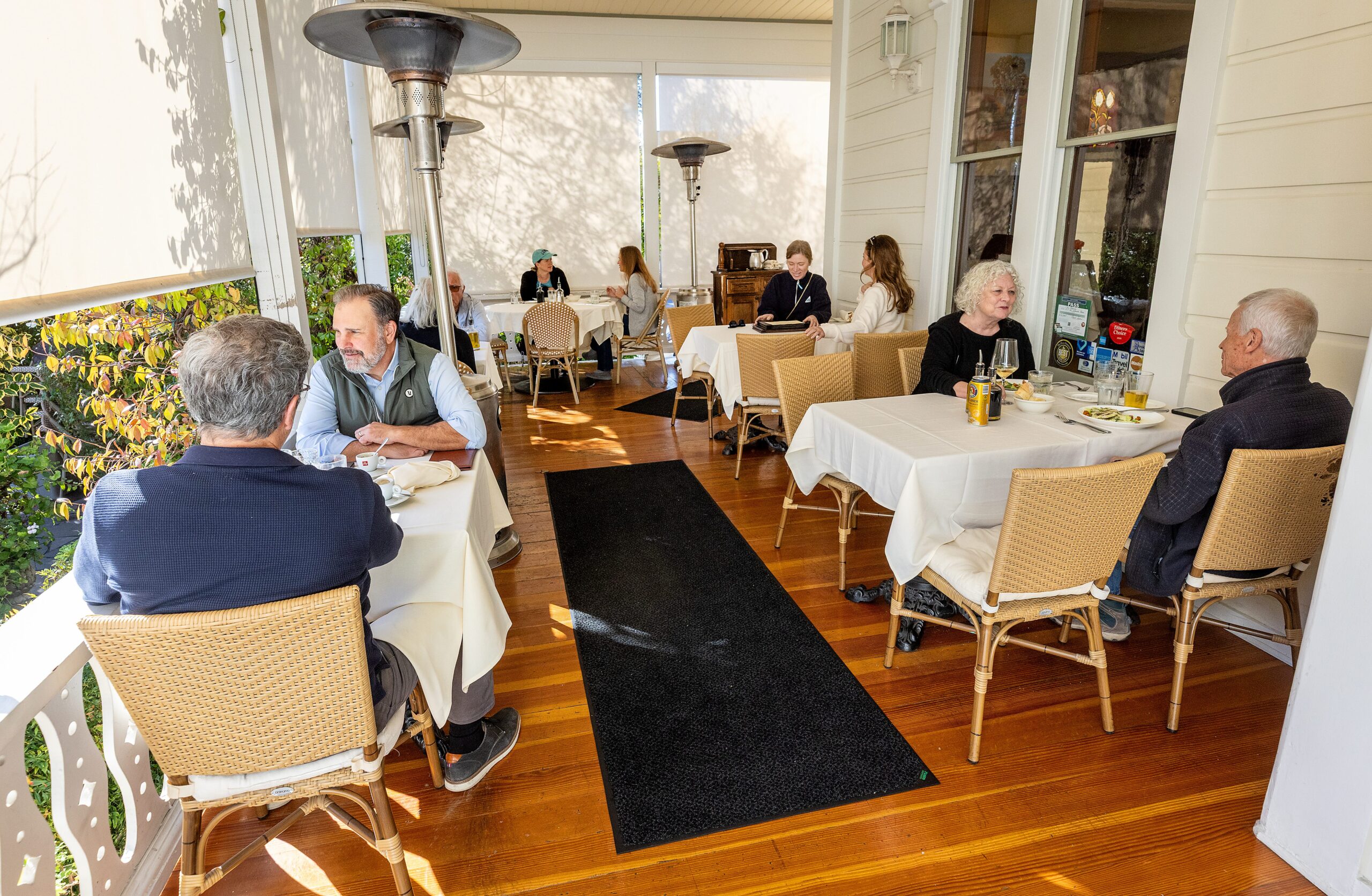
Frank Centano, who has worked for Ca’Bianca since they opened 30 years ago, serves up dessert for friends at lunch Wednesday, Jan. 28, 2026, on Second Street in Santa Rosa. (John Burgess / The Press Democrat)The massive porch for outdoor seating at Ca’Bianca Wednesday, Jan. 28, 2026, on Second Street in Santa Rosa. (John Burgess / The Press Democrat)
Dining rooms are notably and unusually hushed, thanks in part to linen-draped tables and carpeting that muffles sound. The carpeting also protects the original hardwood floors, inlaid with eight types of wood, visible in the entryway, a glimpse of the craftsmanship beneath. In nice weather, the garden and porch are excellent options.
Overall
Ca’Bianca isn’t reserved solely for milestone celebrations, though it excels at them. It remains one of Santa Rosa’s most enduring Italian restaurants, a place where the tablecloths are pressed, the bread is free and the rituals of old-school hospitality endure.
The spot
835 Second St., Santa Rosa, 707-542-5800, cabianca.com
Lemon pancakes with cottage cheese and syrup from Verano Cafe Thursday, June 13, 2024, in Sonoma. (John Burgess/The Press Democrat)
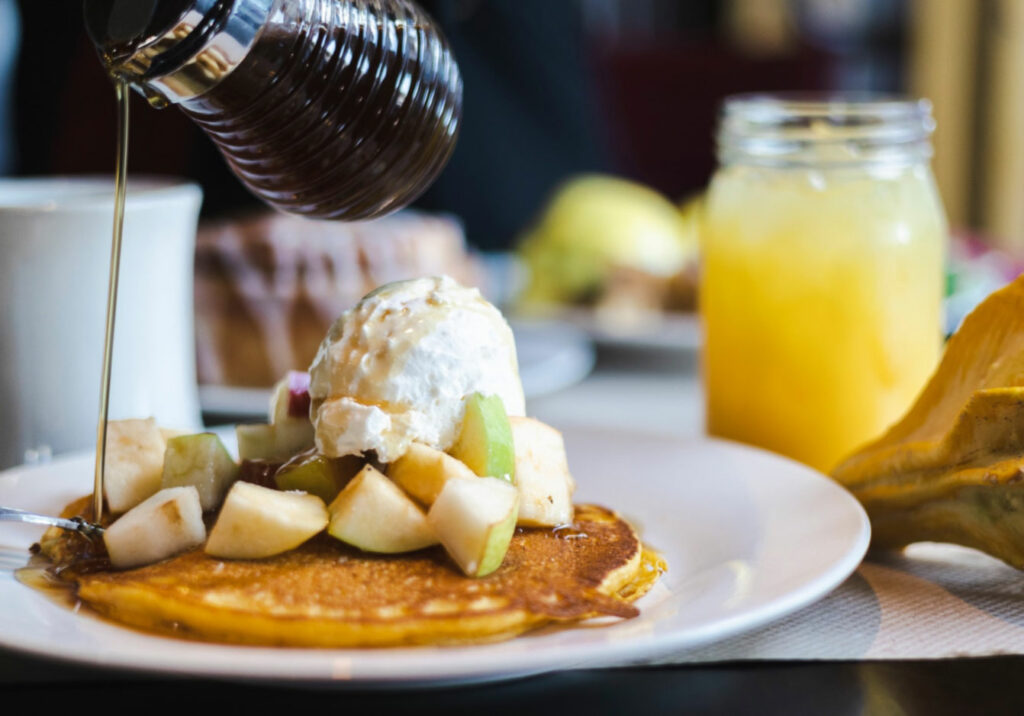
From ancient Romans to millennial brunchers, pancakes have long been a favorite breakfast-time tummy-warmer — and mimosa accomplice.
Pancakes are so popular, in fact, that there are several holidays that celebrate the dish. Shrove Tuesday (Feb. 17), also called Pancake Day, is a Christian holiday that falls between February and March and involves a feast before the start of Lent. Also in spring is IHOP’s pancake day (March 3), on which customers receive a free short stack of pancakes, a tradition the breakfast chain started in 2006. And then there’s National Pancake Day on Sept. 26, just for fun.
Chefs all over Sonoma County are whipping up their own delectable versions of the breakfast classic. Here are some of our all-time favorites to enjoy on Pancake Day or any time of year.
The Classic
Dierk’s Parkside Café, Santa Rosa: Simple, fluffy pancakes served up with eggs and bacon at one of Santa Rosa’s fave breakfast spots. 404 Santa Rosa Ave., Santa Rosa, 707-573-5955, dierksparkside.com
Sleeper Hit
Fandee’s Restaurant, Sebastopol: Rich, fluffy buttermilk pancakes are one of my favorites, served with fresh berries. Add bananas and chocolate chips for a sweet start to the day. 7824 Covert Lane, Sebastopol, 707-829-2462, fandeesrestaurant.com
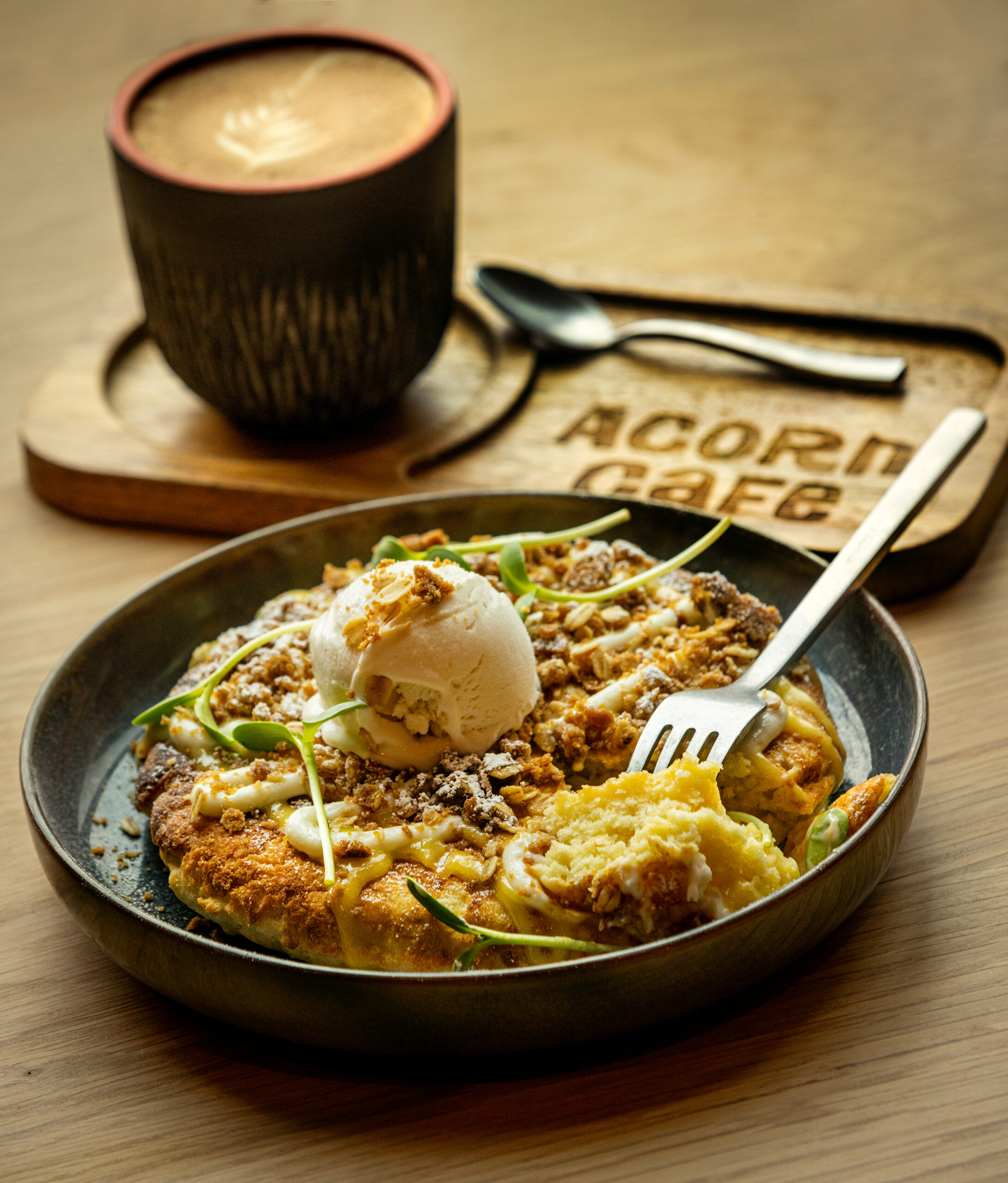
Acorn Cafe owner Beryl Adler’s Lemon Ricotta Hotcake with house lemon curd, ricotta, oat crumble and lemon lavender ice cream Wednesday, Feb. 19, 2025, in Healdsburg. (John Burgess / The Press Democrat)
Best Newcomer
Acorn Cafe, Healdsburg: The Acorn Cafe, opened in 2024 in Healdsburg’s former Oakville Grocery, features a vegan lemon ricotta hotcake on its menu, served with house lemon curd, whipped ricotta, oat crumble and topped with a scoop of lemon lavender ice cream. 124 Matheson St., 707-955-7001, Healdsburg, acornhealdsburg.com
Big and Buttery
Jeffrey’s Hillside Cafe, Santa Rosa: Buttermilk pancakes as big as dinner plates, served with two eggs and choice of bacon, sausage or ham. 2901 Fourth St., Santa Rosa, 707-546-6317, jeffreyshillsidecafe.com
Brunch Favorite
Verano Cafe, Sonoma: Plate-size lemon pancakes are fluffed up with cottage cheese, eggs and lemon for a unique take on the traditional stack at this favored Sonoma cafe. Grab a fresh mimosa (passion fruit is a favorite) or a well-made cup of coffee while you wait. 18976 Sonoma Highway, Sonoma, 707-931-6837, veranocafesonoma.com
Paula Ledesma serves up pancakes to a family on a road trip from Georgia at the Verano Cafe Thursday, June 13, 2024, in Sonoma. (John Burgess / The Press Democrat)Dutch Baby, a German-style pancake with caramelized sugar, apples and a hint of nutmeg, at Brothers Cafe in Santa Rosa. Photo taken Thursday, April 27, 2023. (John Burgess / The Press Democrat)
Bavarian-Style
Brother’s Cafe, Santa Rosa: The owners behind Sebastopol’s popular Hole in the Wall opened twin restaurant Brother’s Cafe in 2022. The Santa Rosa cafe serves a similar breakfast menu to the Sebastopol outpost (all day). Don’t miss the Dutch Baby German pancake with caramelized sugar and apples. 3135 Cleveland Ave., Santa Rosa, 707-541-6345, brotherscafesr.com
Swedish-Style
Thin, crepe-like pancakes from Sweden aren’t hard to find in Sonoma County.
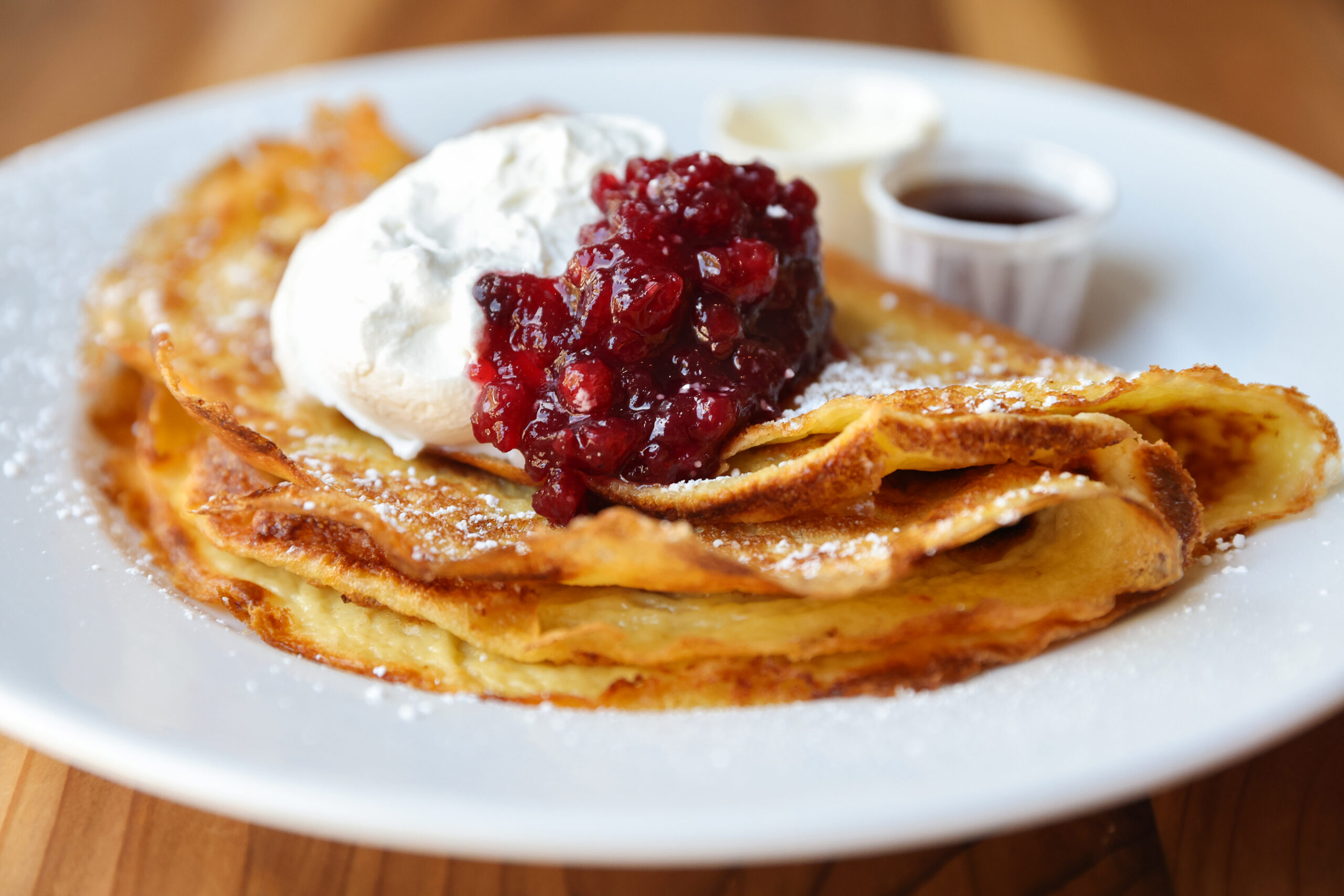
Pancakes from the North, features thin Swedish pancakes, lingonberries and vanilla cream, maple syrup, and butter, at Baked on the River in Guerneville on Thursday, Aug. 7, 2025. (Christopher Chung / The Press Democrat)
Baked on the River: Pancakes from the North ($18) are a must-try. These thin, folded pancakes are served with a hearty dollop of vanilla whipped cream, lingonberry jam, butter and syrup. 16390 Fourth St., Guerneville, 707-865-6060, bakedontheriver.com
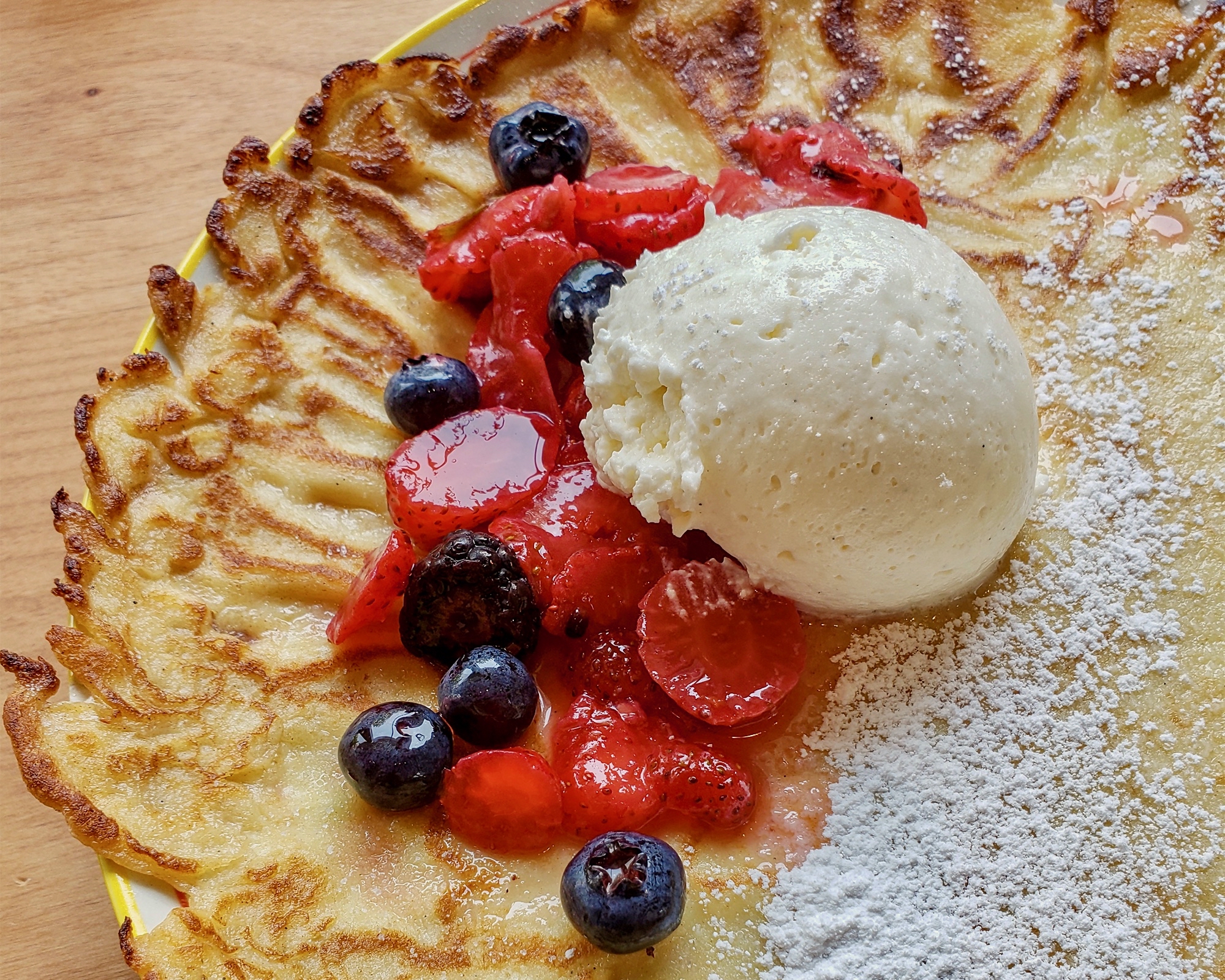
Stockhome: Plate-sized pancakes with crisp edges and a hint of sweetness. Served with a scoop of vanilla whipped cream and berries, they’re indulgent. 220 Western Ave., Petaluma, 707-981-8511, stockhomepetaluma.com
Swedish pancake with berries and whipped cream at Stockhome Restaurant in Petaluma. (Heather Irwin / Sonoma Magazine)
Fill ’Er Up
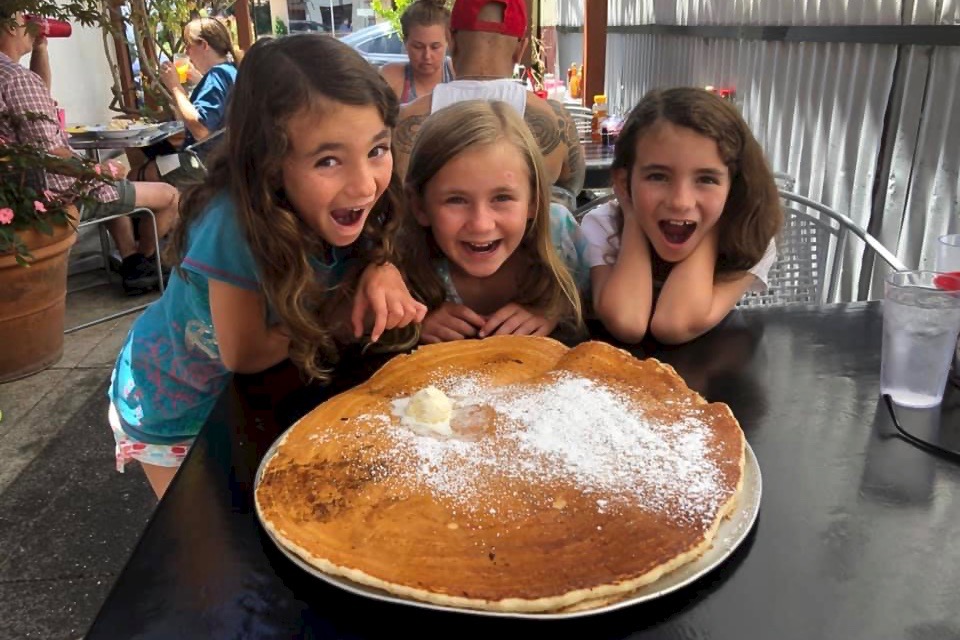
Sax’s Joint, Petaluma: Open wide for a pancake the size of a pizza. Using a half-gallon of batter, it’s any child’s dream. 317 Petaluma Blvd. S., Petaluma, 707-559-3021, saxsjoint.com
Open wide for a pancake the size of a pizza at Sax’s Joint in Petaluma. (Courtesy Sax’s Joint)Pancakes at Americana, which has locations in Santa Rosa and Sebastopol. (Americana)
Farm-to-Table
Americana, Sebastopol and Santa Rosa: Pancakes hot from the griddle are top-notch. Choose from classic, blueberry or chocolate chip pancakes, served with housemade vanilla cider maple syrup, whipped cream and seasonal fruit. 162 N. Main St., Sebastopol, 707-827-3309; 205 Fifth St., Suite A, Santa Rosa, 707-755-1548, americanasonomacounty.com
Best with Your Dog
Howard Station Cafe, Occidental: This dog-friendly, locomotive-themed cafe offers stacks of buttermilk, blueberry and banana walnut pancakes. 3611 Bohemian Highway, Occidental, 707-874-2838, instagram.com/howardstationcafe
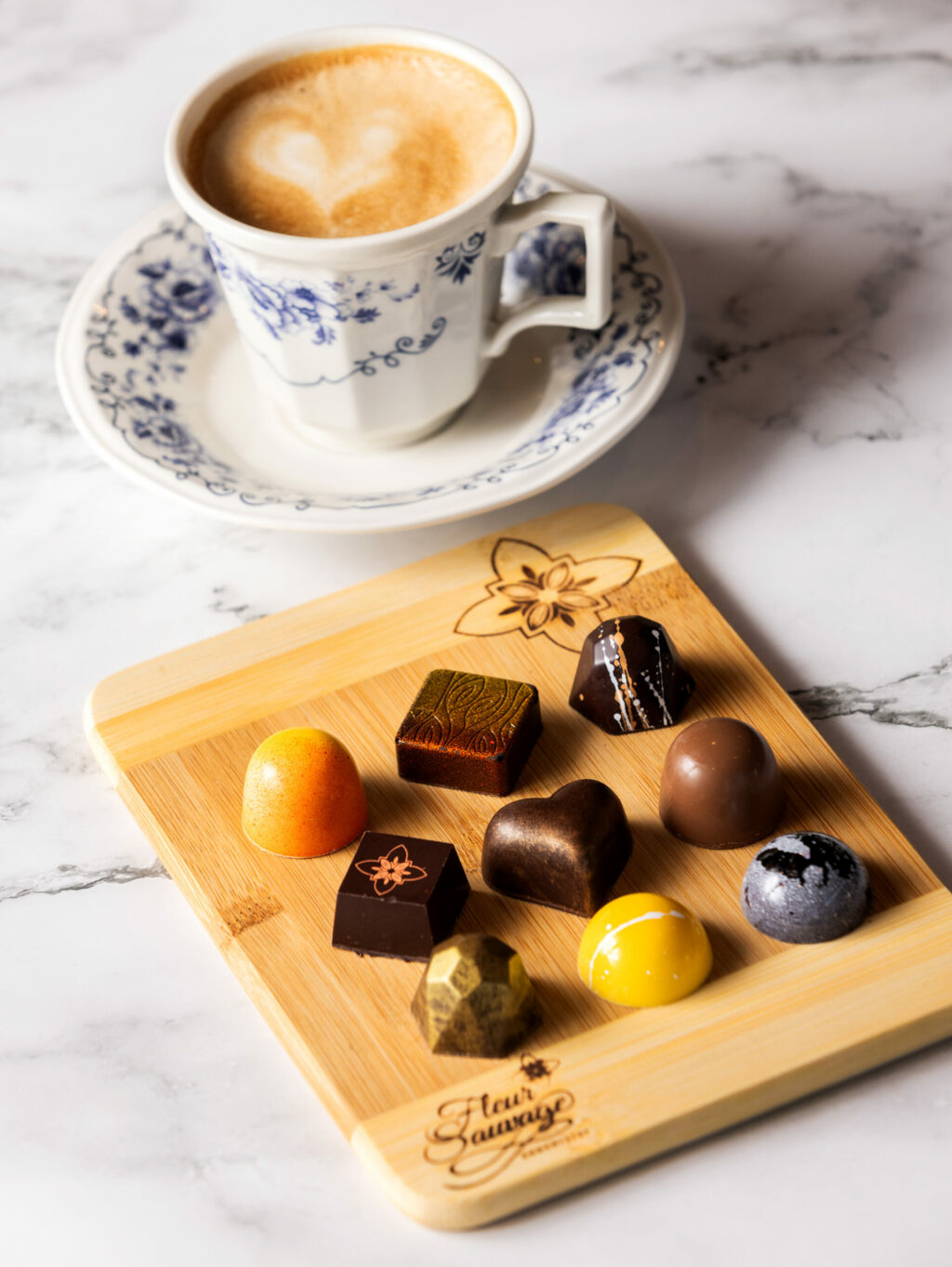
Assorted bonbons from pastry chef Robert Nieto, owner of Fleur Sauvage Chocolates in Windsor, Wednesday, Sept. 18, 2023. (John Burgess / The Press Democrat)
Sonoma County is home to a group of artisan chocolatiers who are making small-batch chocolates with a Wine Country flair. Many of them are housed in an industrial area of Windsor, which they call “The Windsor Chocolate Block.” More than just candy bars, their creations are delicious works of art that are as lovely to look at as they are to eat.
Scroll on below for the sweet deets, and click through the gallery for a peek at some of the lovely local chocolates.
You’ll find most Sonoma County chocolates in specialty grocers like Oliver’s, Fircrest or Pacific Market unless otherwise noted.
Our Dining Editor’s Top Picks
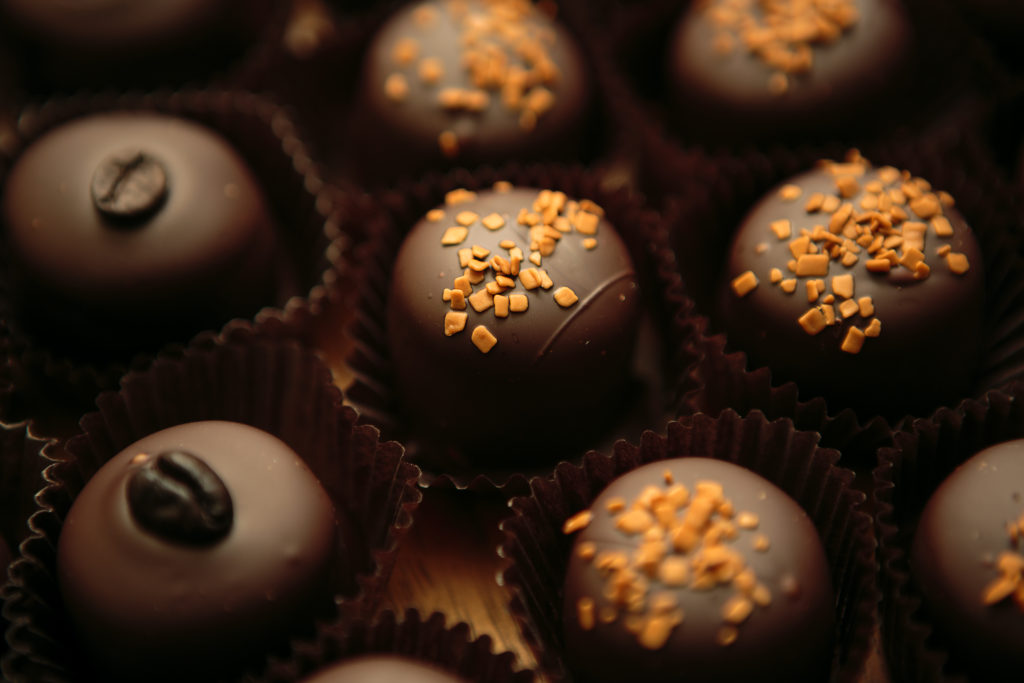
Assorted bonbons from pastry chef Robert Nieto, owner of Fleur Sauvage Chocolates in Windsor, Sept. 18, 2023. (John Burgess / The Press Democrat)
Fleur Sauvage
Fleur Sauvage, run by husband-and-wife team Robert and Tara Nieto, specializes in artistic artisan chocolates. The couple opened a storefront in Windsor in 2021. Robert, who previously worked as pastry chef at Madrona Manor, Thomas Keller’s Bouchon Bistro and Jackson Family Wines, crafts the chocolates while Tara runs the front of the store, where you can order espressos, lattes and hot chocolate to warm up on cold winter days. 370 Windsor River Road, Windsor, 707-892-2162, fleursauvagechocolates.com
Volo Chocolate
Jeff and Susan Mall, of Volo Chocolate, discovered their passion for chocolate while living and working as chefs in Mexico. They started experimenting with flavors, created a “bean-to-bar” craft chocolate recipe and, when they returned to Sonoma County, launched their own chocolate business. They use sustainable chocolate from farmers in Guatemala and Haiti for their handmade chocolate bars. Find their chocolates in a variety of local stores and online. 707-536-6764, volochocolate.com
Sonoma Chocolatiers & Tea House
European drinking chocolate from Sonoma Chocolatiers. This isn’t even in the same universe as Swiss Miss. Made with chocolate shavings and hot milk (plus optional chile or almond milk), it’s a liquid candy bar made for sipping slowly and paging through Proust on a rainy day. They also have a huge selection of chocolate bars from artisan makers using small batch cacao. 6988 McKinley St., Sebastopol, 707-829-1181, sonomachocolatiers.com
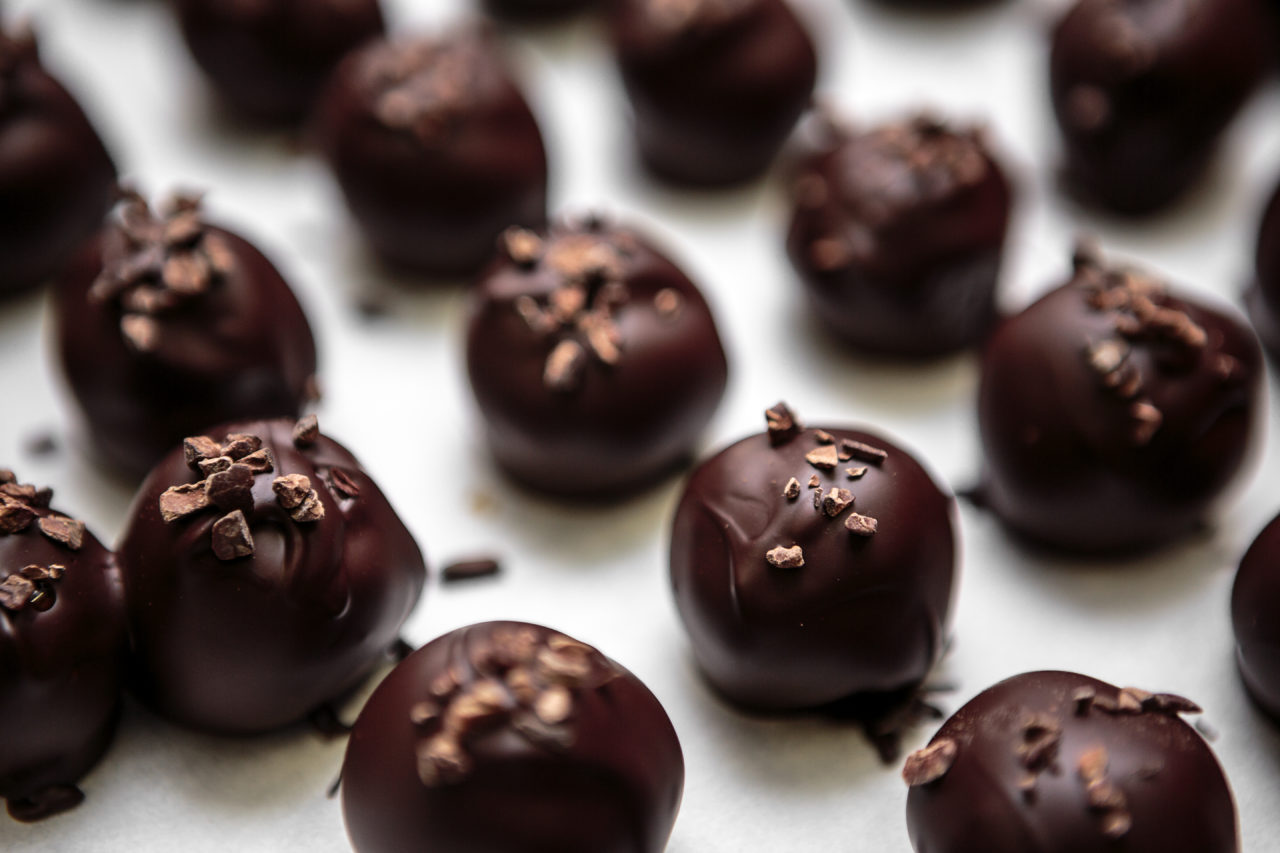
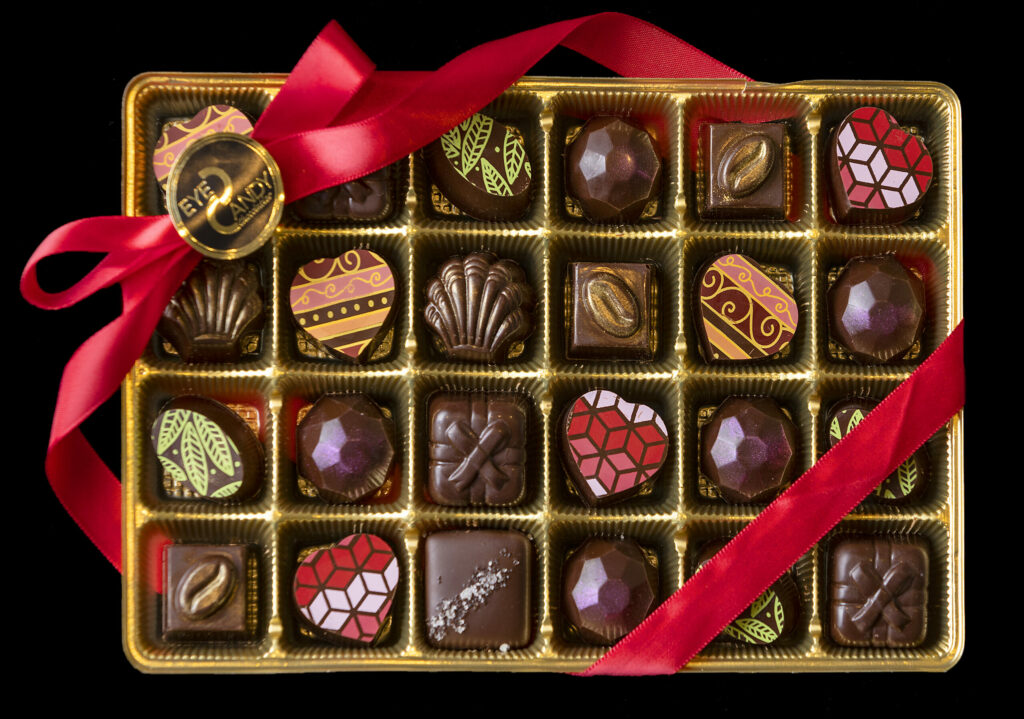
Just-made butter creme chocolates with cocoa nibs from Sonoma Chocolatiers in Sebastopol. (Sonoma Chocolatiers)Assorted chocolate truffles from Eye Candy chocolatiers in Sebastopol, Tuesday, Oct. 18, 2022. (John Burgess / The Press Democrat)
Eye Candy Chocolatier
Eye Candy’s chocolates are made by local ophthalmologist and master chocolatier Sonja Schluter, who is particularly passionate about truffles. Schluter launched her chocolate business in 2016, after years of making chocolate for friends and colleagues. She received her culinary training from the Cambridge School of Culinary Arts, Ecole Chocolate in San Francisco and Callebaut Chocolate Academy. Find her caramels and assorted truffles online or at her Sebastopol store, plus at the self-serve kiosk outside the shop, open daily. 6761 Sebastopol Ave., Sebastopol, 707-888-0568, eyecandychocolatier.com
Honorable Mentions
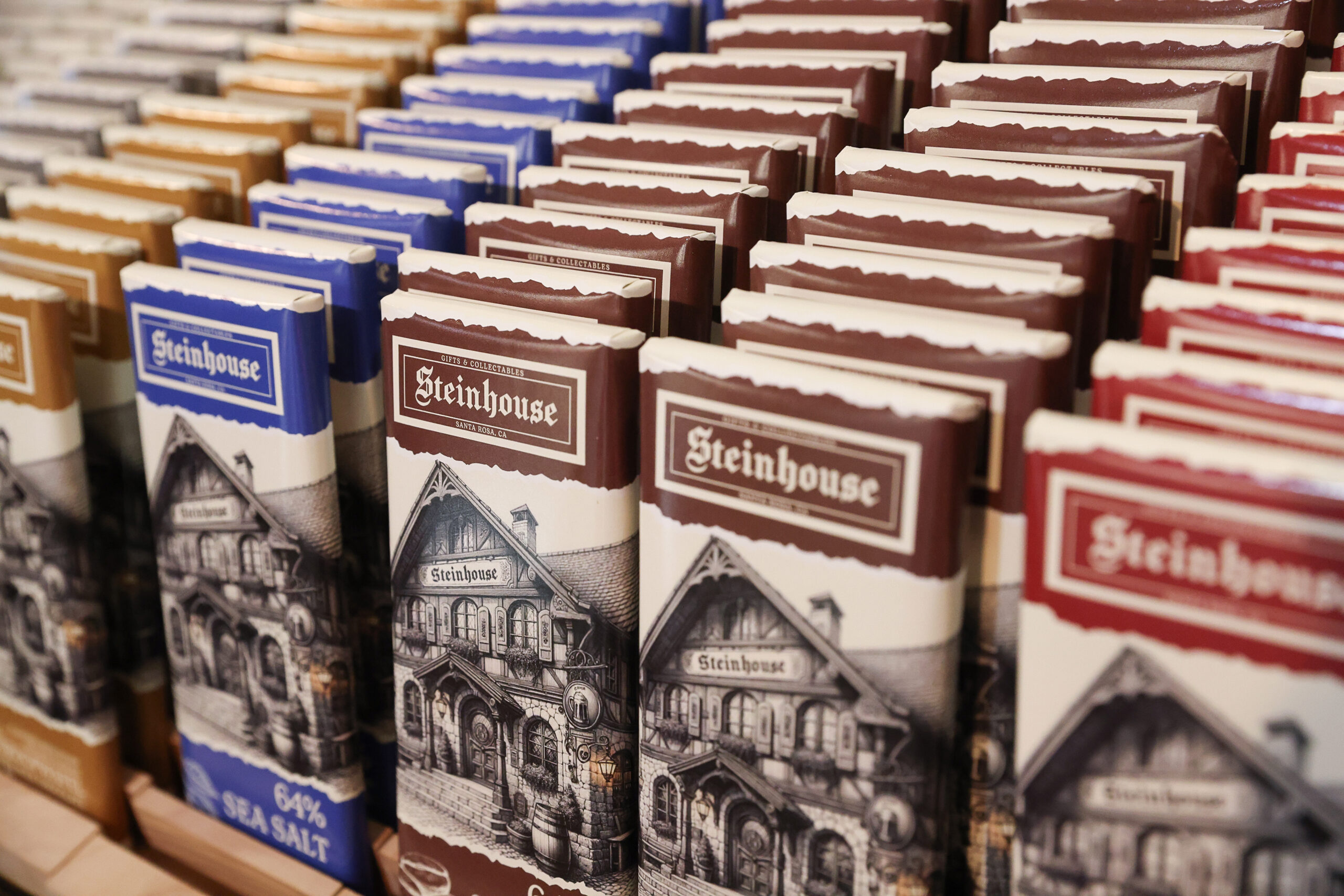
A variety of Belgian chocolates for sale at Steinhouse in Santa Rosa on Friday, Feb. 7, 2025. (Christopher Chung/The Press Democrat)
Steinhouse
Eric Dewit was a contractor for over two decades after working at the Côte d’Or chocolate factory in Brussels as a teen. He eventually manifested his chocolate passion into a shop in Mendocino, specializing in locally made truffles and imported morsels from Belgium. Now, Dewit sells his famous Belgian chocolate and other candies in a quirky, European-inspired shop in downtown Santa Rosa. In addition to chocolate, find an odd yet charming assortment of pantry items, from French jams and Napa Valley honey to unique, vintage-looking beer steins. 631 Fourth St., Suite 18, Santa Rosa, 707-852-4083, steinhousechocolates.com
Wine Country Chocolates
Wine Country Chocolates, run by mother-and-daughter team Betty and Caroline Kelly, create truffles and other chocolates made with local wines (Zinfandel, Cabernet Sauvignon and Port) and local fruit. Fan favorites include Cappuccino-Tiramisu, Fresh Orange and Dulce de Leche. 14301 Arnold Drive, Suite 2, Glen Ellen, 707-996-1010, winecountrychocolates.com
French mocha and cappuccino chocolates from Wine Country Chocolates in Glen Ellen. (Chris Hardy / Sonoma Magazine)Ceremonial cacao from Ora Cacao in Graton. (Ora Cacao)
Ora Cacao
Ora Cacao (formerly Firefly Chocolate) sources cacao from farmers around the world to create ceremonial cacao (or drinking chocolate) based on ancient traditions. The company, based in Graton, offers a variety of 100% cacao, with names like Boundless Belize and Glowing Guatemala, and cacao enhanced with spices and mushrooms such as reishi, chaga, cordyceps, maitake and shiitake. The drinks can be mixed with nut milks and consumed as part of a ritualized community gathering. 9101 Graton Road, Suite 102, Graton, 707-861-8504, ceremonial-cacao.com
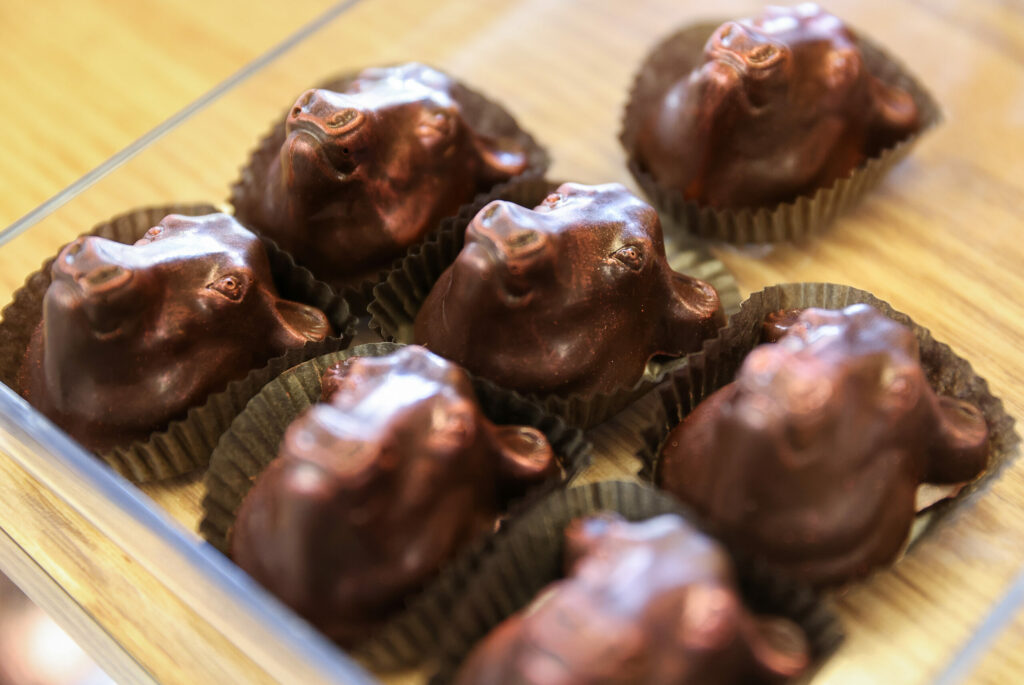
Truffles in the shape of cows at The Chocolate Cow in Sonoma on Wednesday, Aug. 3, 2022. (Christopher Chung / The Press Democrat)
The Chocolate Cow
The Chocolate Cow, a family-run business in the town of Sonoma, has served housemade truffles, fudge, ice cream and other sweet treats for more than 30 years. Located in the Mercato shopping center. 452 First St. E., Suite F, Sonoma, 707-935-3564, thechocolatecowsonoma.com
Rainy Day Chocolate
Rainy Day Chocolate makes award-winning nib-to-bar chocolate and now hosts weekend chocolate tastings and factory tours at its new west county facility. Also find at select local farmers markets and available for delivery in Sonoma County and shipping across the country. 6492 Mirabel Road, Forestville, 707-366-0420, rainydaychocolate.com
See’s Candies
See’s Candies has been a Bay Area favorite for chocolate lovers for over 100 years. Find local stores at Montgomery Village and Coddingtown Mall in Santa Rosa, Lakewood Village in Windsor, Mountain Shadows Plaza in Rohnert Park and Washington Square Center in Petaluma. sees.com
Heather Irwin and Maci Martell contributed to this article.
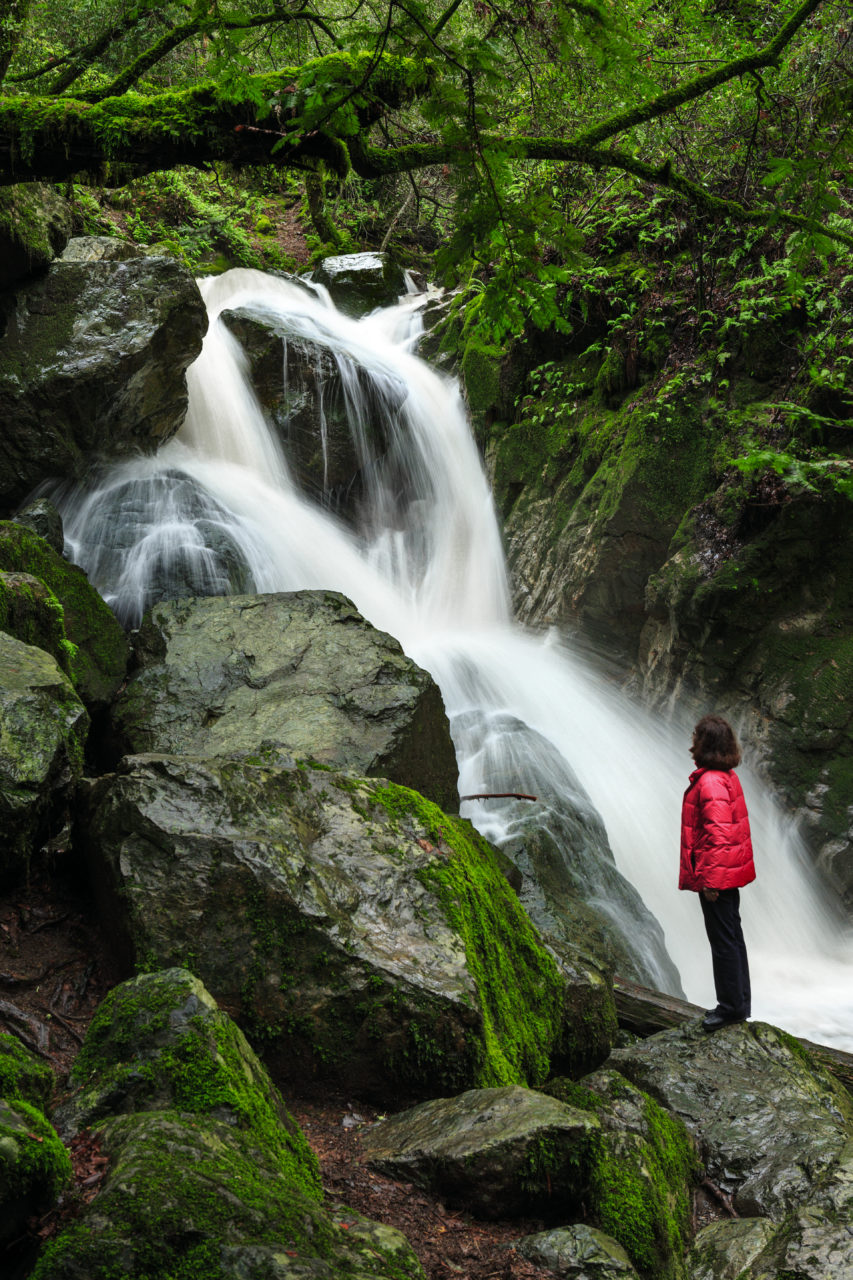
A waterfall awaits those who hike the easy 3.3 mile falls loop trail in Russian Gulch State Park just north of the town of Mendocino. (John Burgess / The Press Democrat)
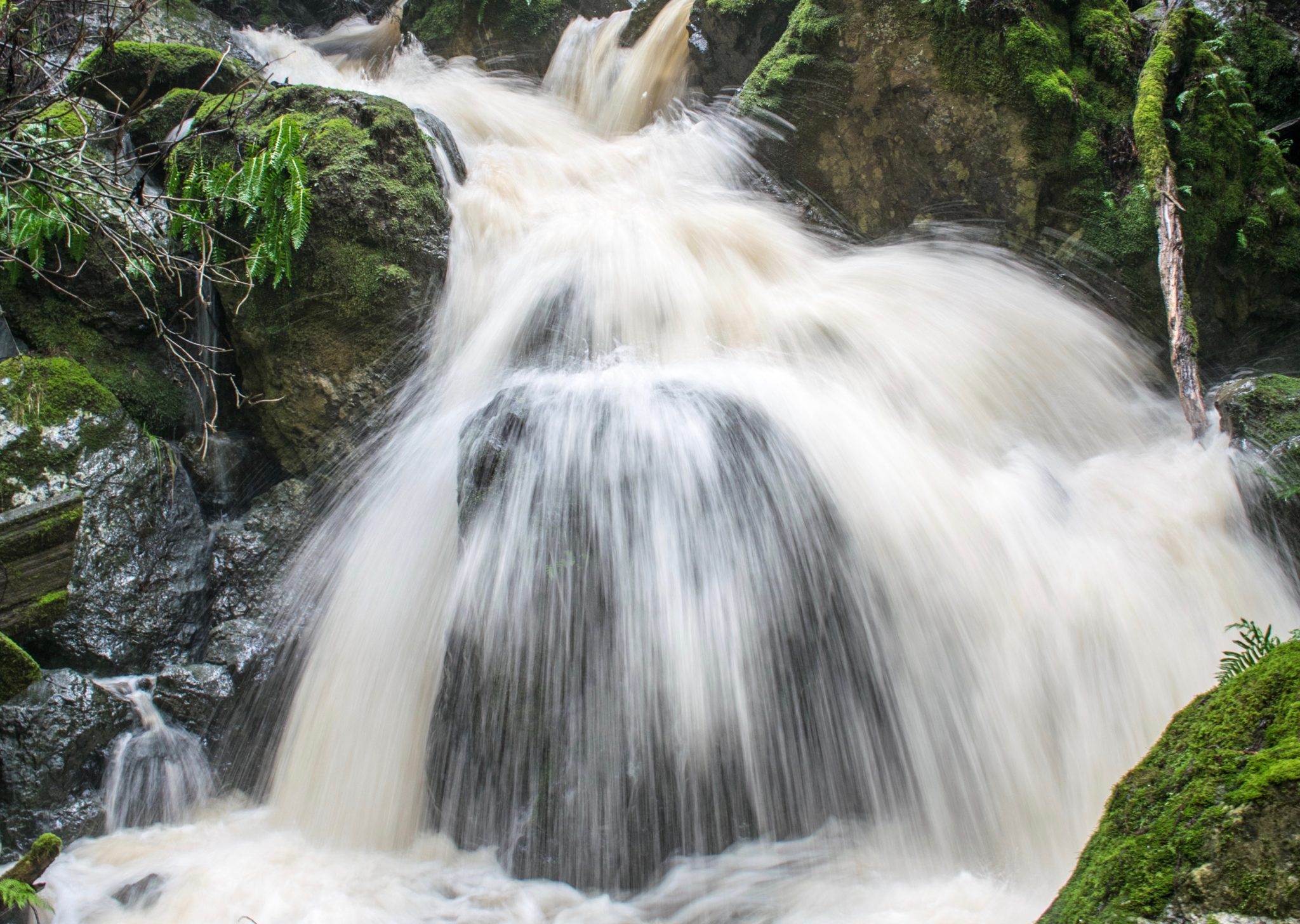
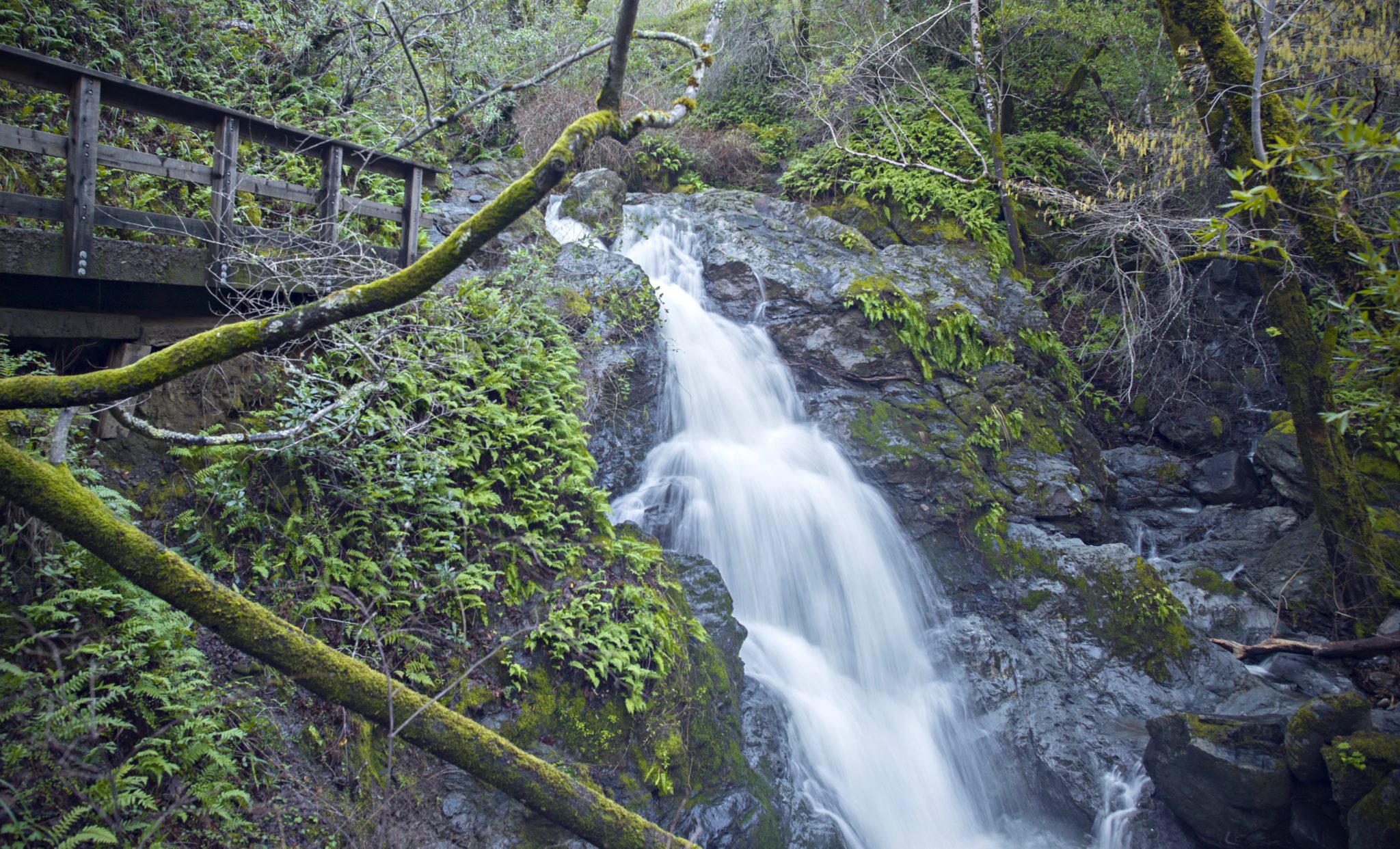
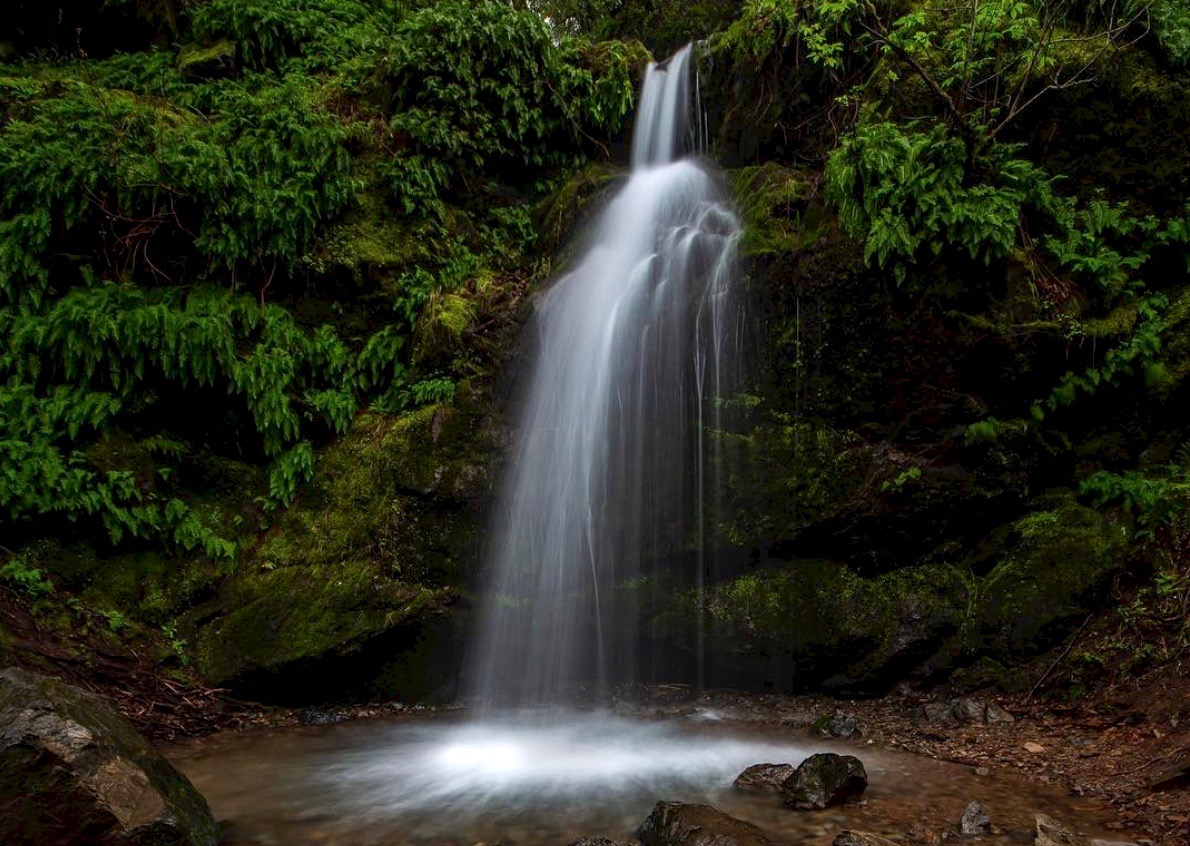
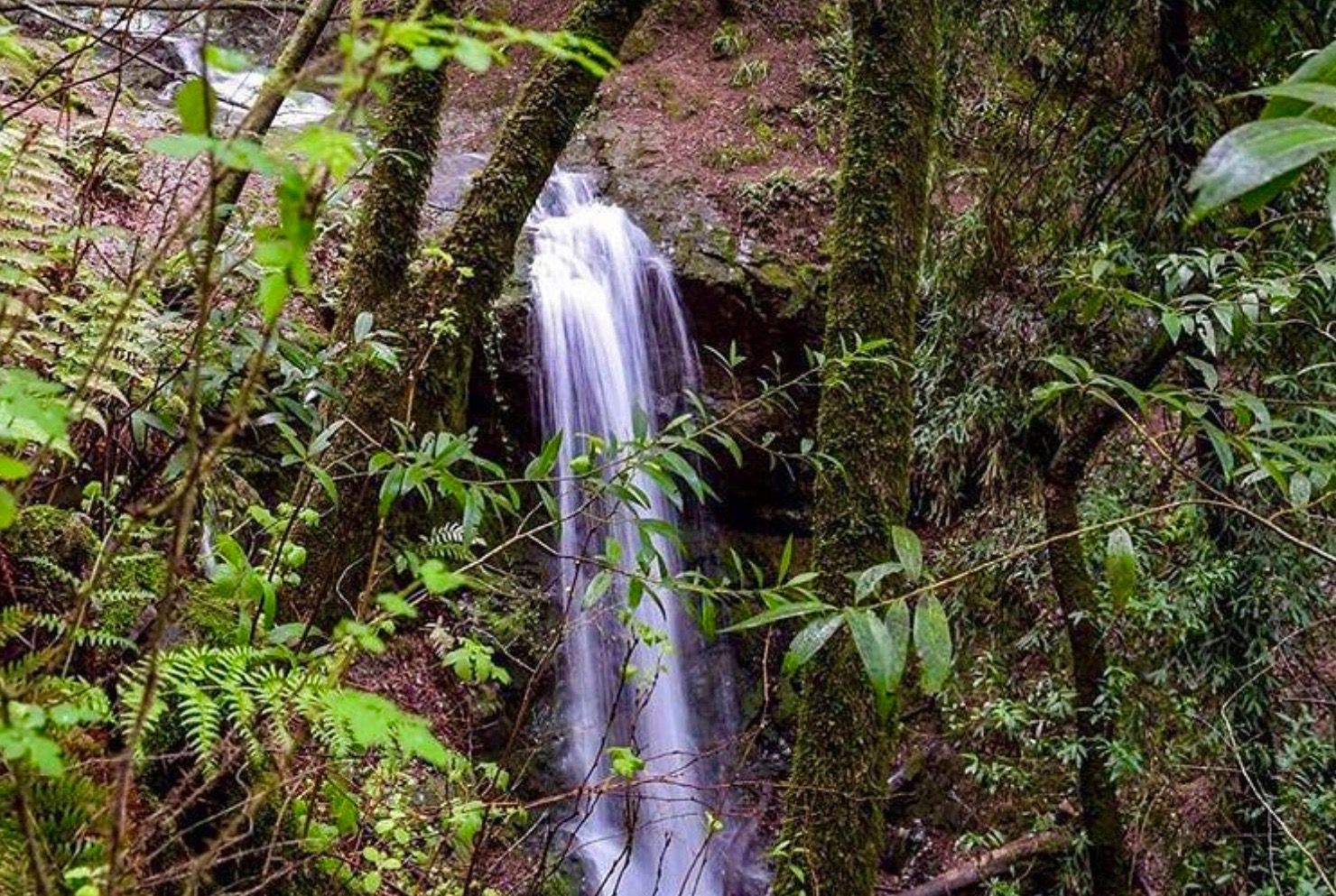
With its abundance of public parkland and open space, the North Coast is too full of gushing streams and cascading creek flows to mention them all. We’ve listed a few of our favorite waterfall spots in Sonoma, Marin and Mendocino counties to enjoy the best of the rainy season.
Trails are subject to close for maintenance or protection of the area’s flora and fauna. Be sure to check with park staff regarding current conditions and possible closures. Use caution around wet, slippery rocks as well as when hiking steep bluffs and other areas prone to erosion.
Sonoma Creek Falls, Sugarloaf Ridge State Park, Kenwood
For an easy-access, quick fix, there’s no better choice than the sweet canyon waterfall at Sugarloaf in Kenwood that gushes forth during winter rains amid huge boulders and greenery. The 25-foot waterfall draws weekend crowds who revel in the refreshing results of a wet season.
The Sonoma Creek Falls can be reached in as little as a third of a mile via the lower Canyon Trail. It’s a mostly level path to and from the falls. More parking is available up top, near the park visitor center, where the upper Canyon Trail offers a 450-foot drop down to the falls. The walk is just under a half-mile in each direction, though the return trip is a fairly steep climb up.
Those who prefer a longer trip through the redwood canyon on their way to Sonoma Creek Falls can take a 2-mile loop that starts down the Pony Gate Trail for a little over a mile before it links up with the Canyon Trail and aligns with Sonoma Creek, taking visitors up into a rocky canyon from which the waterfall springs. The hike takes about an hour.
Sugarloaf Ridge State Park, 2605 Adobe Canyon Road, Kenwood, 707-833-5712, sugarloafpark.org
The Sonoma Creek Falls at Sugarloaf in Kenwood. (Chris Hardy / Sonoma Magazine, file)The waterfall at Phillips Gulch at Salt Point State Park in Jenner. (Leslie Wells / Shutterstock)
Phillips Gulch and Stengel Beach, Sonoma Coast
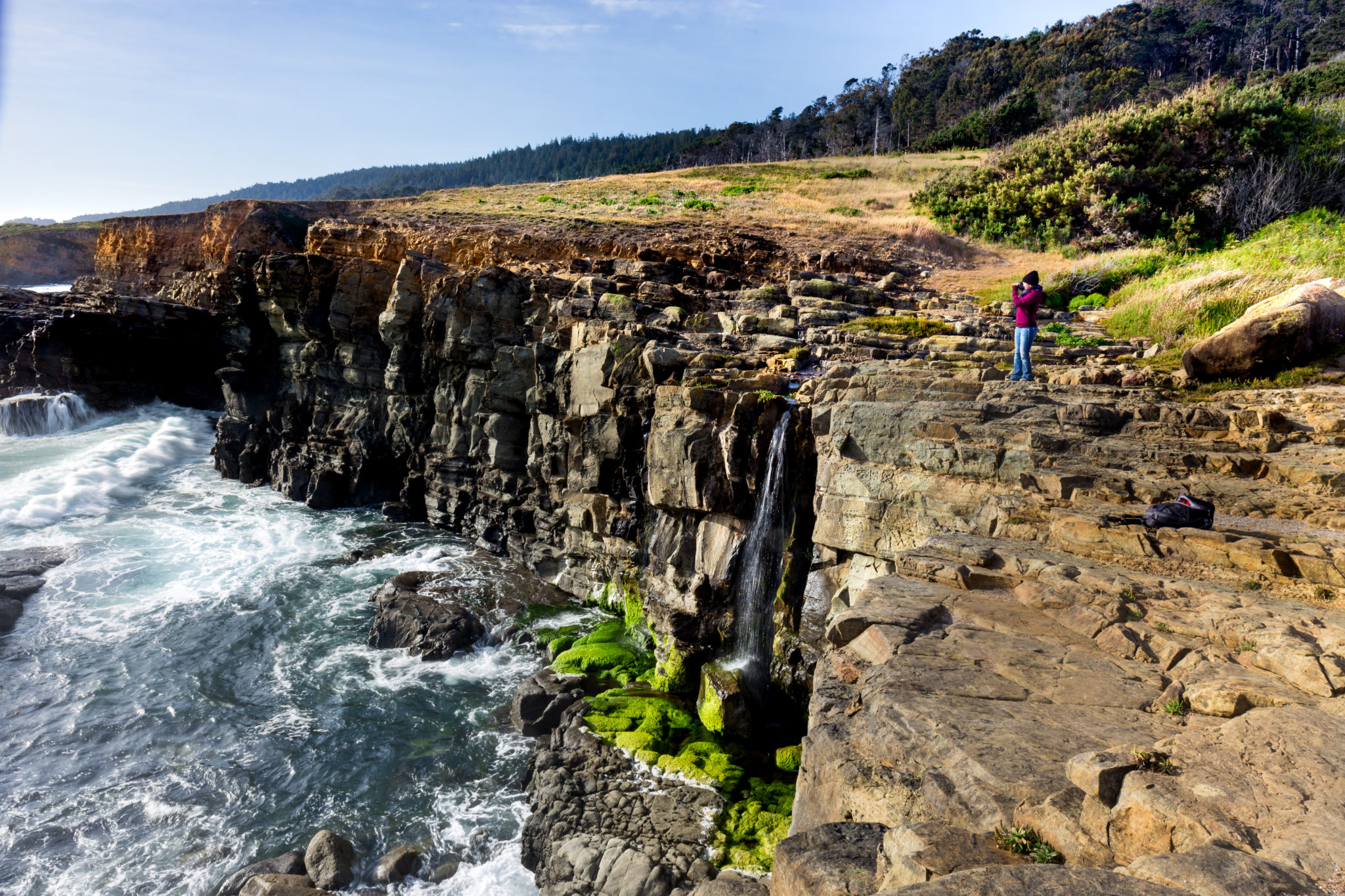
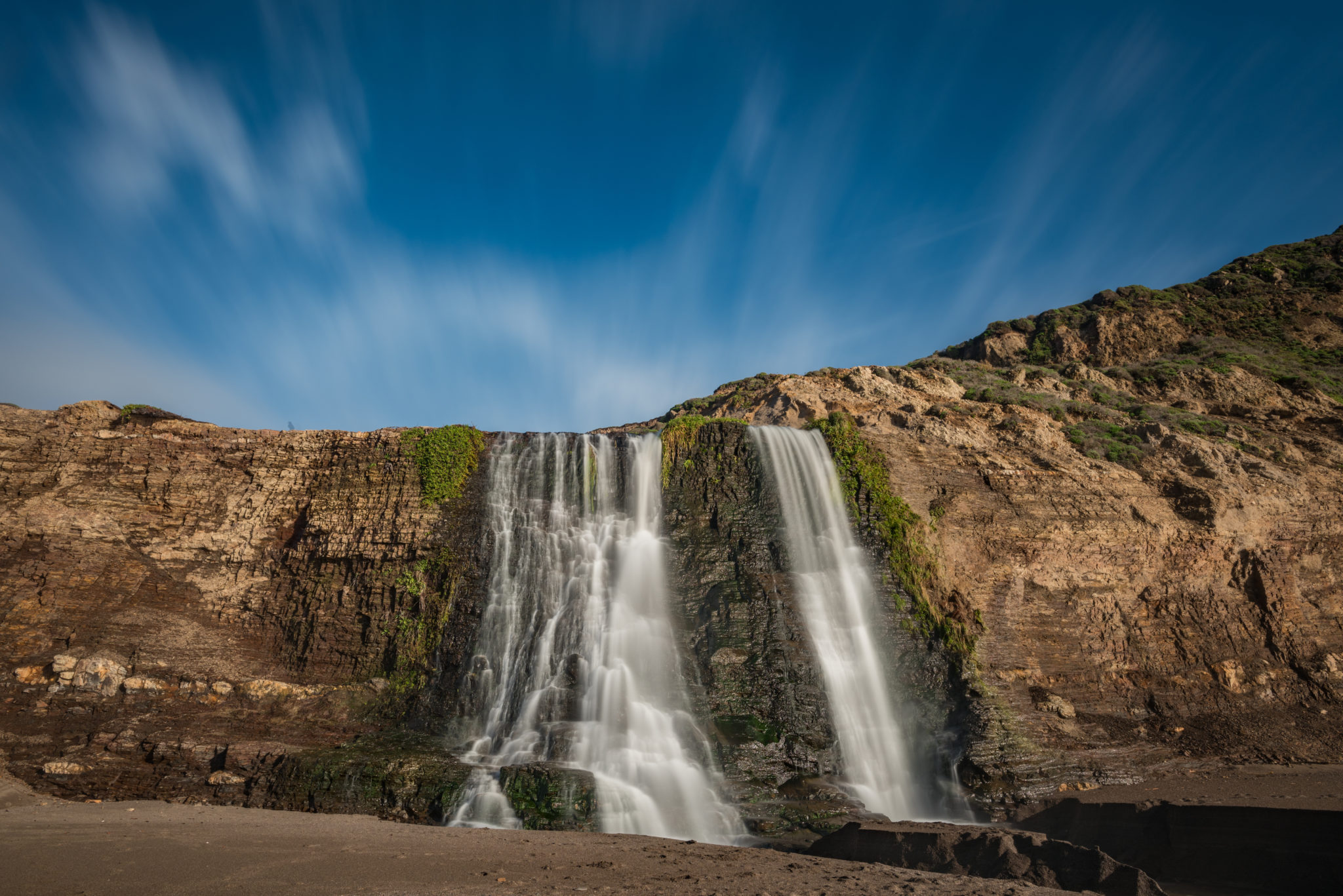
The Sonoma Coast is characterized by steep bluffs fronting beaches or coves. Small ravines that traverse the coastal forest and grasslands transport water seasonally. The water spills directly over the cliffs, creating lovely beach waterfalls. Two of the best ones are Phillips Gulch at Salt Point State Park and Stengel Beach at The Sea Ranch.
Take Highway 1 north of Jenner to the Stump Beach Cove parking lot at Salt Point State Park for Phillips Gulch Falls, and to the Stengel Beach lot for that site’s eponymous falls. Parking at both lots is free and access to each fall is easy. (Editor’s note: Stengel Beach access is temporarily closed to replace the wooden stairway to the beach.)
Waterfalls on the Sonoma Coast are most impressive when the water volume is highest — during storms. This can create something of a dilemma from December through March or beyond, because the seas are often tempestuous at such times. Visiting the falls post-storm and during a low tide, when the beaches can be strolled, is the wisest plan.
Salt Point State Park, 25050 Highway 1, Jenner, 707-847-3221, saltpoint.org
Alamere Falls in Point Reyes National Seashore. (Jeremy Borkat / Shutterstock)
Alamere Falls, Point Reyes National Seashore, Marin County
Alamere Falls is a cascading coastal falls that bleeds over a slick, shale bluff onto an ocean beach. It is a rare “tidefall” that crests the edge of the continent near the southern end of the national seashore, also offering gorgeous coastal views that, on clear days, take in the Farallon Islands.
National park personnel ask all hikers to reach the Alamere Falls via Wildcat Campground, a bluff-top campground about a mile north of the falls. Hikers must traverse a mile of Wildcat Beach to get to the falls and then return to the trail, requiring careful consideration of tide and surf conditions. Do not go at high tide.
For North Coast residents, the most efficient and least crowded route to Alamere Falls starts inside the park at the Bear Valley Visitor Center at Point Reyes Station. Head coastward along the Bear Valley Trail to the Coast Trail, and then south to Wildcat Camp, a trip of about 6 1/2 miles. It’s another mile south on the beach to reach the falls.
Bear Valley Visitor Center, 1 Bear Valley Road, Point Reyes Station, 415-464-5100. nps.gov
Scott Wall, top, Chris Hatfield and Lawrence Hernandez of Benicia took the day off to explore the Cataract Creek Trail on the northern flank of Mt. Tamalpais in Marin. (John Burgess / The Press Democrat, file)
Cataract Falls, Mount Tamalpais Watershed, Marin County
The Mount Tamalpais Watershed houses a number of waterfalls, with one of the most popular being the picturesque cascades of Cataract Falls. The Cataract Falls Trailhead begins on Fairfax-Bolinas Road, hugging the southwest end of Alpine Lake. Follow the trail uphill past East Fork Cataract Creek and the Laurel Dell picnic area, after which the trail descends to the falls (approximately 3 miles).
For a longer but mostly flat hike, begin at the Rock Spring Trailhead off Ridgecrest Boulevard and travel north on Cataract Trail, which crisscrosses the creek several times. Just before you get to the waterfall on this trail, you’ll pass the junction of Cataract and Helen Markt trails where there’s a decent-sized pool to relax at. *Note: The Azalea Hill Trail to Cataract Falls is currently closed. Call the Mount Tamalpais Watershed or check online for more information on trail closures.
Carson Falls, Mount Tamalpais Watershed, Marin County
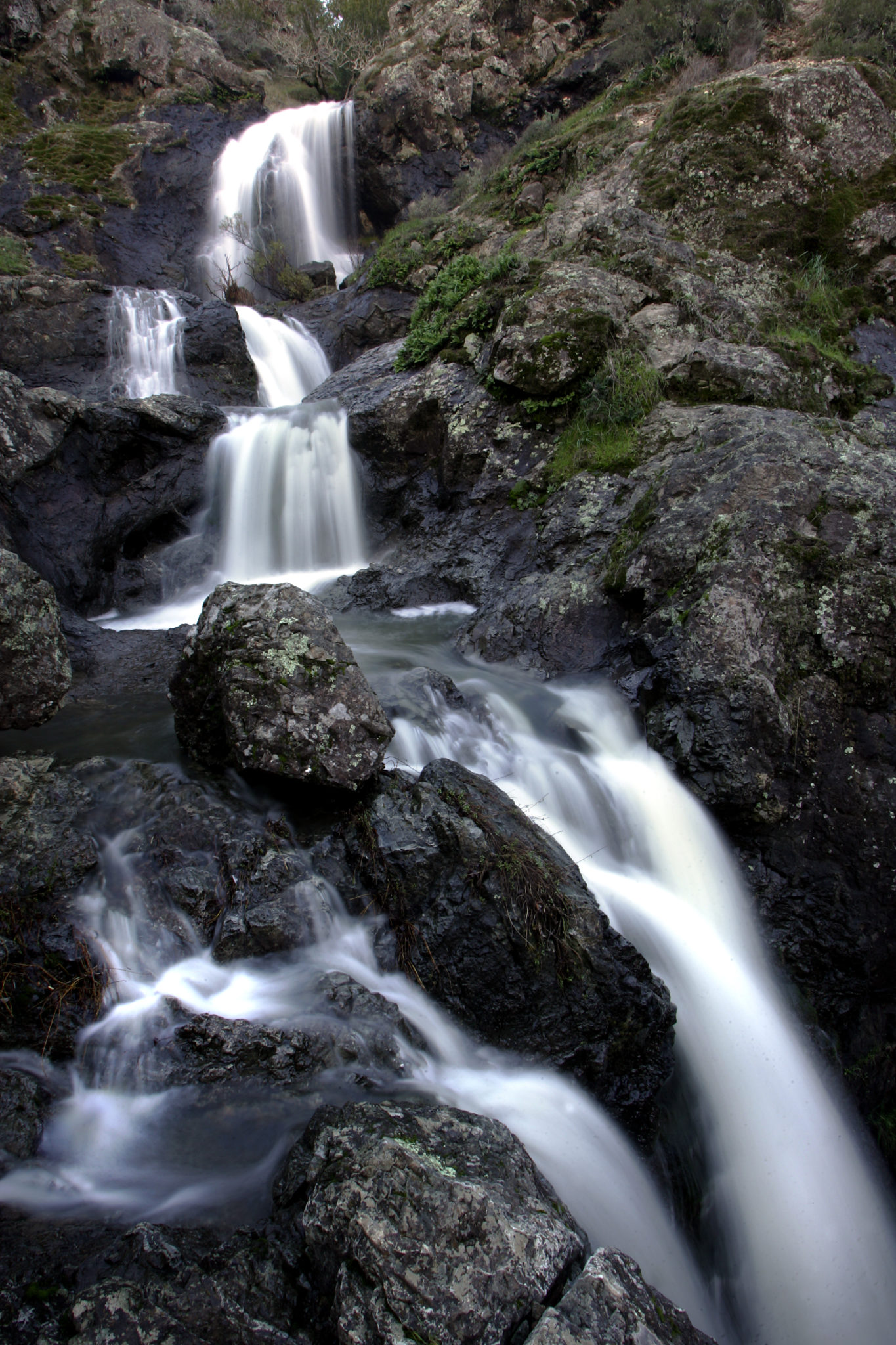
This gorgeous, multi-tiered waterfall is just under 5 miles west of Fairfax and has multiple simple routes to get there. The most popular path consists mainly of fire roads and begins at the junction of Fairfax-Bolinas Road and Pine Mountain Fire Road. Follow the rocky Pine Mountain Trail from the parking area for about a mile and turn left on Oat Hill Fire Road, which you walk for about 150 yards until you reach Little Carson Trail on the right. Travel down that trail for about a half mile to the falls.
Carson Falls at Mount Tamalpais Watershed in Marin County. (John Burgess / The Press Democrat, file)Steep Ravine Falls at Mount Tamalpais State Park in Mill Valley. (Alex Gotz / Shutterstock)
Steep Ravine, Mount Tamalpais State Park, Mill Valley
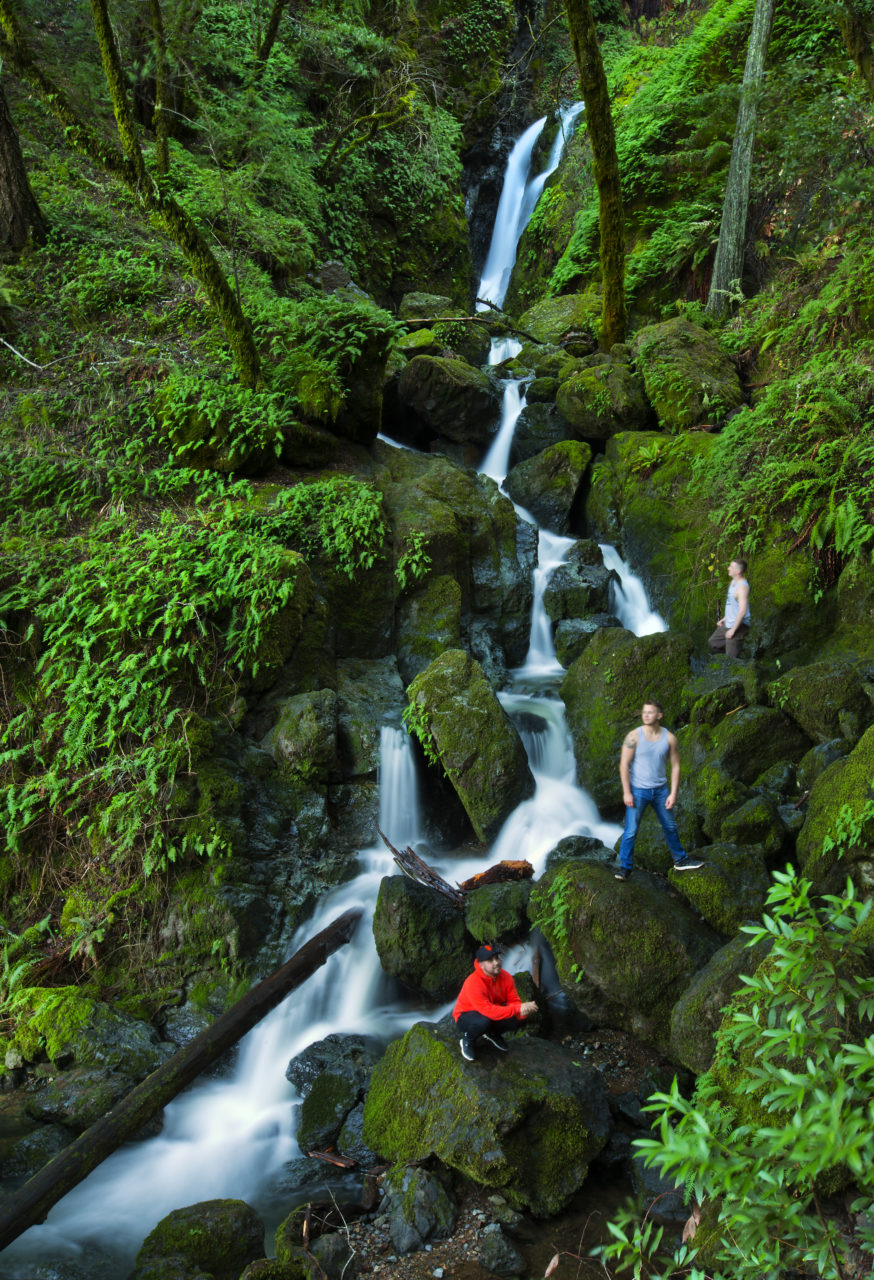
Three miles east of Marin’s famed Stinson Beach, Webb Creek flows through Mount Tamalpais State Park’s wooded Steep Ravine, creating a number of modest, tranquil waterfalls surrounded by foliage. The rugged Steep Ravine Trail — the only trail in Marin that features a ladder (nearly 15 feet in length) — begins at the Pantoll Campground on Coastal Fire Road off Panoramic Highway and meanders southwest along the creek. The full trail stretches about two miles down to Highway 1 near Rocky Point Road, but this trail can be combined with the Dipsea and Old Mine trails to create a 3.5-mile loop that has spectacular views of both the redwood canyon’s waterfalls and the city skyline.
Mount Tamalpais State Park, 3801 Panoramic Highway, 415-388-2070, parks.ca.gov
Cascade Falls, Cascade Canyon Open Space Preserve, Fairfax
The trout-laden Cascade Creek flows through the lush evergreen forests of this preserve and spills down the serene Cascade Falls. The 1.5-mile out-and-back hike to the falls is easy, lightly trafficked and accessible year-round, making it an ideal waterfall hike for the whole family. From the crook in Cascade Fire Road near Middle Fire Road, simply walk along Cascade Falls Trail for about six minutes to reach the falls. *Note: There is a second, smaller Cascade Falls in Marin at Mill Valley’s Cascade Park, a short and simple hike (about a quarter mile) near some suburbs.
Cascade Falls at Cascade Canyon Open Space Preserve in Fairfax. (Lucy Autrey Wilson / Shutterstock)Buck Gulch Falls at Ignacio Valley Preserve in Novato. (Courtesy of Andre Gregoire)
Buck Gulch Falls, Ignacio Valley Preserve, Novato
This rippling, fern-encased waterfall lies at the northernmost edge of the preserve, which is easily accessible starting from the end of Fairway Drive. Saunter west on the Buck Gulch Falls Trail, which begins paved then narrows and turns into a dirt path, for a little over half a mile to reach the falls. This short, beautiful waterfall hike is great for kids as well as dogs (on a leash).
Ken Harth Waterfall, Indian Valley Open Space Preserve, Novato
Wander through Indian Valley Preserve’s nearly 560 acres of oak, bay and madrone forests during the rainy season and you’re sure to stumble upon Ken Harth Waterfall, a rushing, 10-foot cascade down a sleek, mossy rock face. The Waterfall Trail can be accessed easily from the Indian Valley Fire Road that extends from the College of Marin’s Indian Valley campus off Ignacio Boulevard, a hike just under a mile. If you want to make the most of your falls trek, walk the fire road south past Pacheco Pond and traverse the switchbacks along the loop of Ken Harth Waterfall Trail (and maybe take a detour on Susan Alexander Trail to check out some wildflowers and black oaks).
Indian Valley Preserve, from Indian Valley Campus at 1800 Ignacio Blvd., Novato. parks.marincounty.gov
Ken Harth Waterfall at Indian Valley Open Space Preserve in Novato. (Courtesy of Rob Mirante)Dawn Falls at Baltimore Canyon Open Space Preserve in Kentfield. (Courtesy of Dawna Mirante)
Dawn Falls, Baltimore Canyon Open Space Preserve, Kentfield
A few miles west of Larkspur sits this 193-acre preserve’s blissful, babbling Dawn Falls. The easiest way to get there is to start from the western edge of Madrone Avenue where it meets Valley Way and follow Dawn Falls Trail along the redwood-lined Larkspur Creek for just over a mile to the falls. You could also access the waterfall from the falls trail entrance on Southern Marin Line Fire Road — a 10-minute walk starting from the Crown Road trailhead that’s a half mile north of the falls.
Baltimore Canyon Preserve, from Madrone Avenue at Valley Way, Larkspur, or 415 Crown Road, Kentfield. parks.marincounty.gov
Tucker Trail Falls, Mount Tamalpais Watershed, Kentfield
Phoenix Lake, on the east side of the watershed, feeds into Bill Williams Creek below with canyons forming several small waterfalls flowing between the flora and foliage around the route that hugs it: Tucker Trail. The best way to access this trail is from the Harry Allen Trail on Phoenix Road (off Crown Road west of Kent Woodlands), walking down the path for about a quarter of a mile and turning left on Tucker Trail. The route intertwines with the creek a few times and ends at Eldridge Grade Fire Road; a moderate, 3.4-mile out and back trail. For a more varied hike on the way back, take Bill Williams Trail, which runs along the other side of the creek and is spotted with several wooden bridges.
Mount Tamalpais Watershed, from Harry Allen/Tucker Trailhead at 9 Phoenix Road, Kentfield. marinwater.org
Tucker Trail Falls at Baltimore Canyon Open Space Preserve in Kentfield. (Courtesy of Scott Smith)A waterfall awaits at Russian Gulch State Park just north of the town of Mendocino. (John Burgess / The Press Democrat, file)
Fern Canyon Trail, Russian Gulch State Park, Mendocino
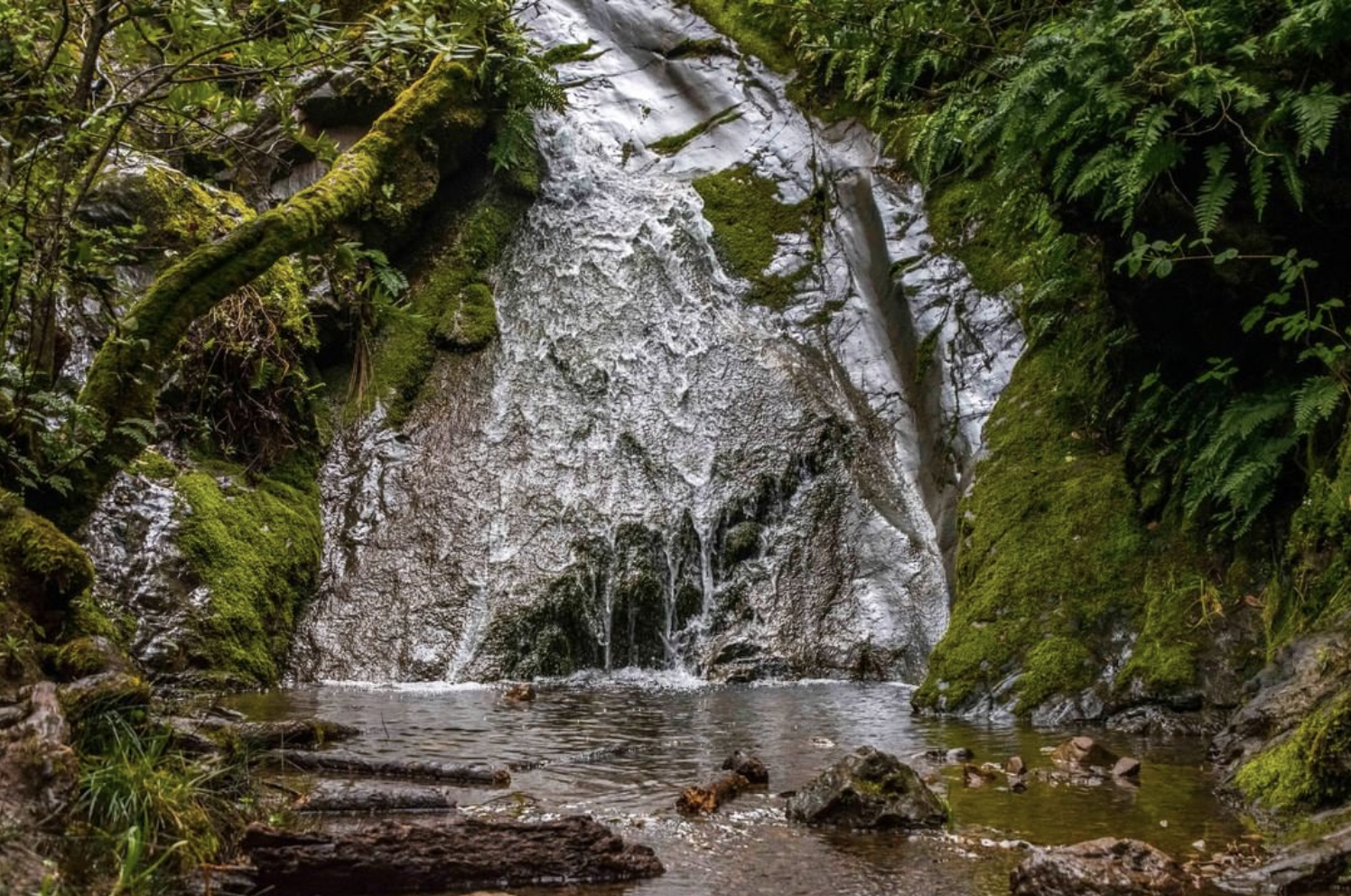
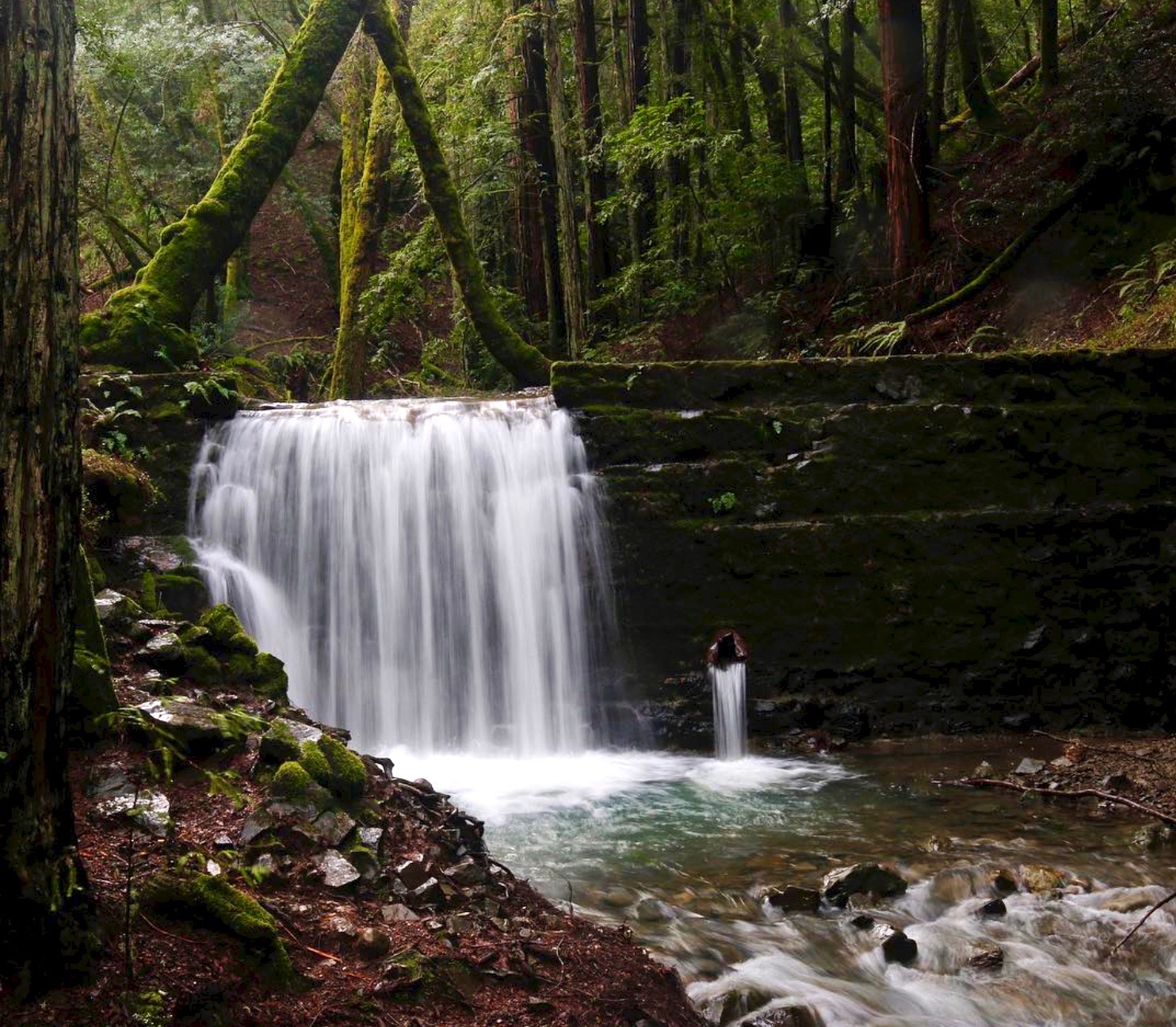
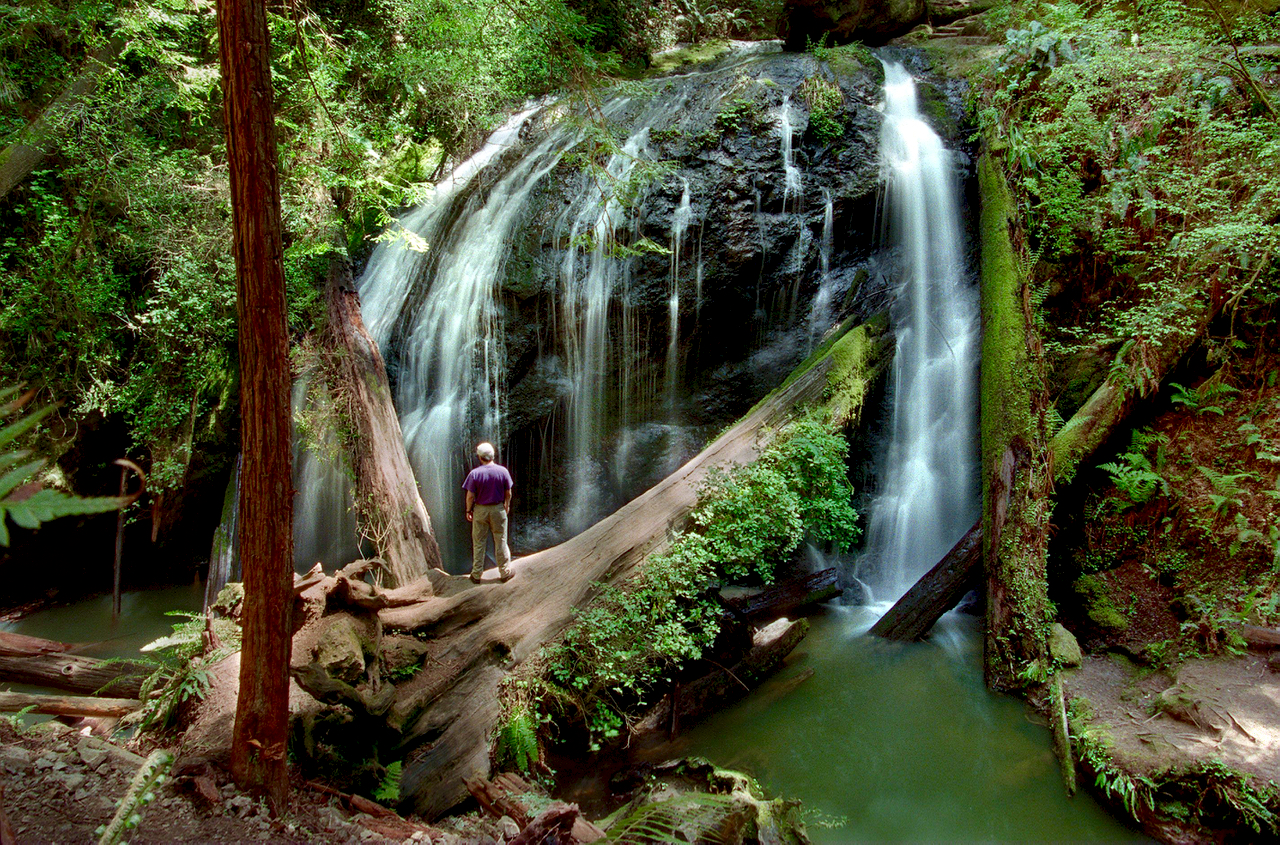
Though a popular Mendocino Coast walk, there is nonetheless something intimate about the hike up Fern Canyon to the 36-foot waterfall in Russian Gulch State Park. Delicate ferns line the canyon and woodland trees and draw visitors onward as they follow the meandering creek along the canyon floor. You can get right up close to the broad stone face of the waterfall and stand amid fallen trees, or hike above the falls, taking care not to slip on wet rocks.
Russian Gulch State Park is located at 12301 North Highway 1, about 2 miles north of the town of Mendocino. The trail starts at the east end of the campground and follows an old logging road with crumbling asphalt for the first 1.9 miles. A bike rack marks the point where the flat, paved trail starts to incline, offering two alternate, hiker-only routes to the waterfall — one a straight, out-and-back leg 0.7 miles long, for a 5.4-mile round-trip, and the other a 1.6 mile loop, for a total 6.3-mile walk.
Russian Gulch State Park, 12301 North Highway 1, Mendocino, parks.ca.gov
Chamberlain Falls at Jackson Demonstration State Forest in Mendocino County. (John Burgess / The Press Democrat, file)
Chamberlain Creek / Waterfall Grove Trail, Jackson Demonstration State Forest, Fort Bragg
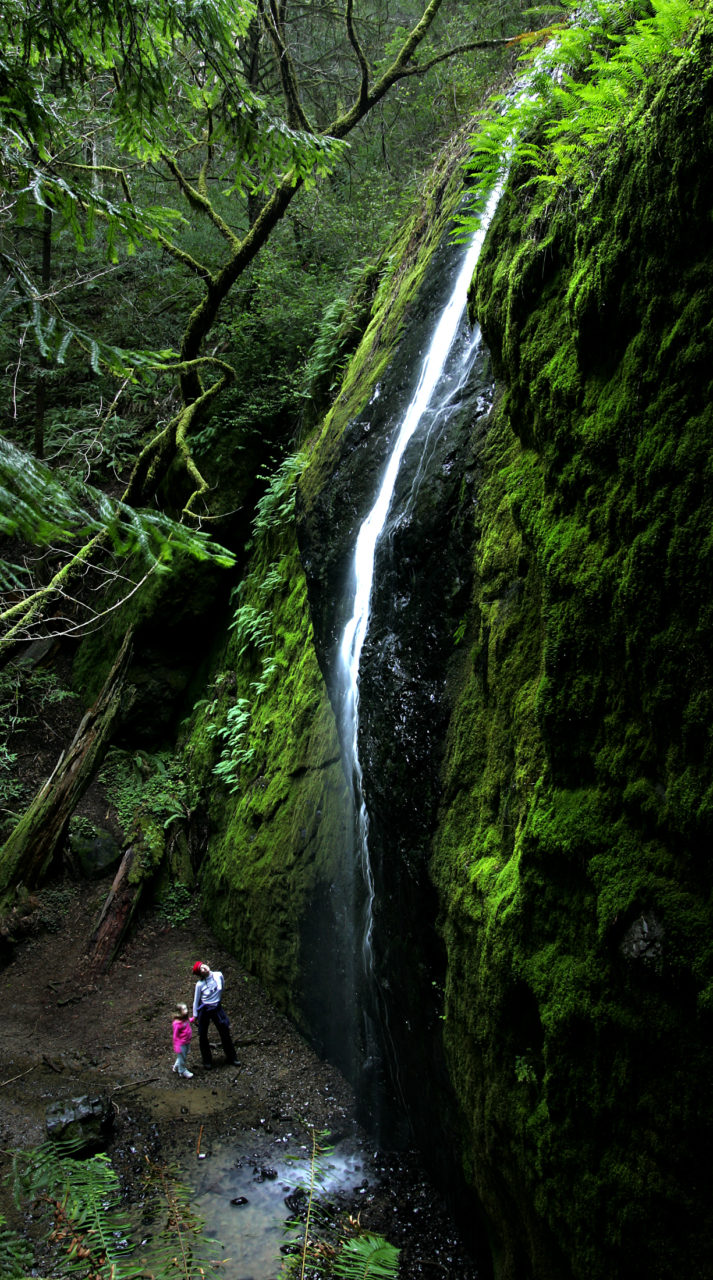
This remote, narrow waterfall east of Fort Bragg draws visitors deep into Jackson State Demonstration Forest off Highway 20. Even if there were no waterfall to see here, the short hike into virgin redwood forest is like a trip into an enchanted land, where brilliant green moss coats the rocks and fallen timber amid majestic redwoods that have stood tall for centuries. To get to the Chamberlain Creek Waterfall, start on West Chamberlain Road 4.5 mils north of Highway 20 and head down the out-and-back Waterfall Grove Trail for about 2 miles.
Jackson Demonstration State Forest, 802 N. Main St., Fort Bragg, fire.ca.gov
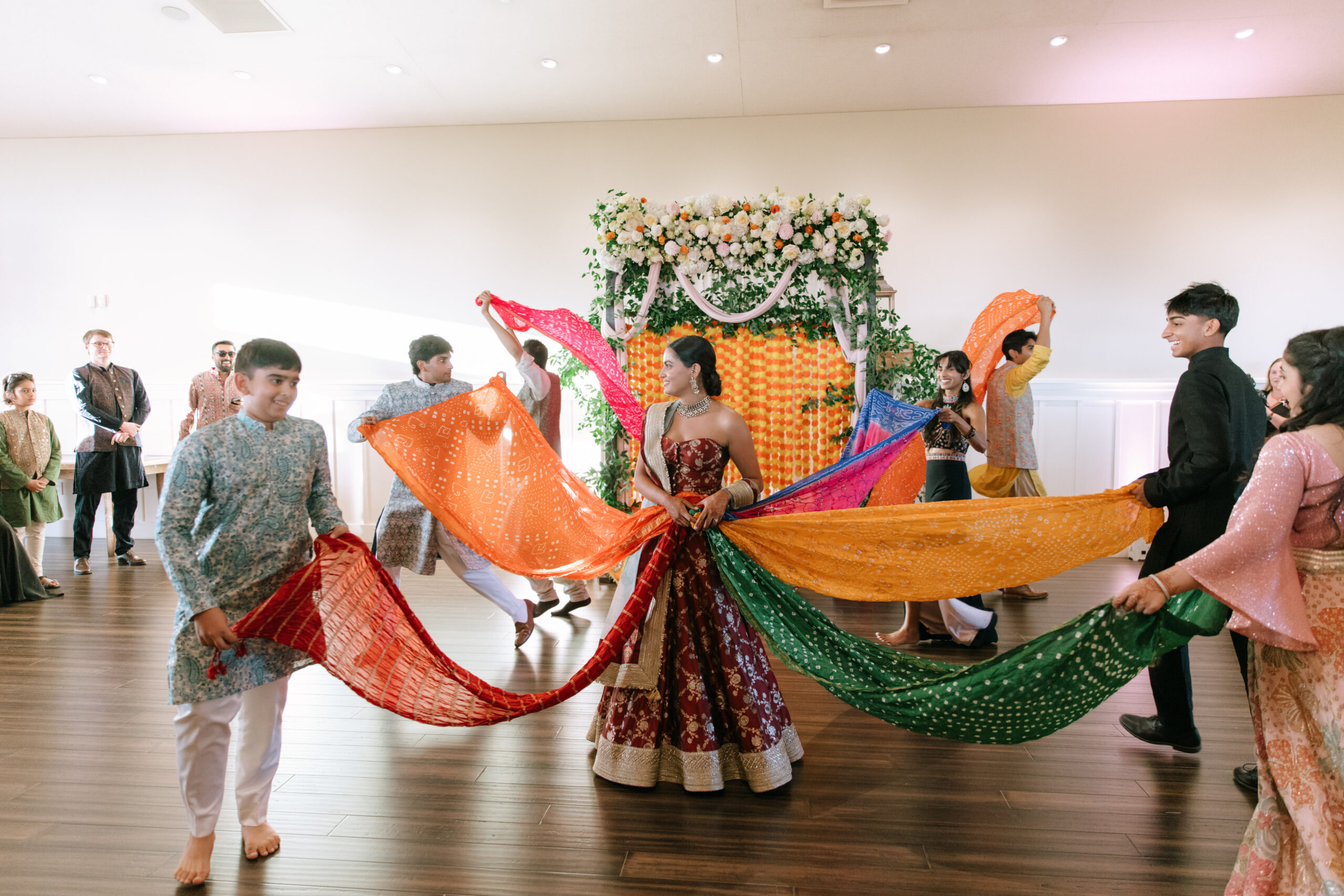
Family and friends dance around Sanjana at a sangeet held at Paradise Ridge Winery two days before her wedding to Evan. (Katie Miller)
It wasn’t fate that brought Evan and Sanjana together — it was their roommates who were best friends. The two had happily anticipated their introduction at a friend’s Chicago housewarming. Evan recalls that meeting Sanjana “exceeded all my expectations.” To Sanjana, Evan “felt very natural.”
After two dates, they began enjoying city adventures and frequent trips to Sonoma County. The couple moved to Denver in July 2023 to pursue their careers with tech firms (he a senior architect, she an associate creative director), but Wine Country was never far from their minds. The following May, when Evan proposed at the Japanese garden at the Denver Botanic Gardens, plans for their wedding led them back to Sonoma County.
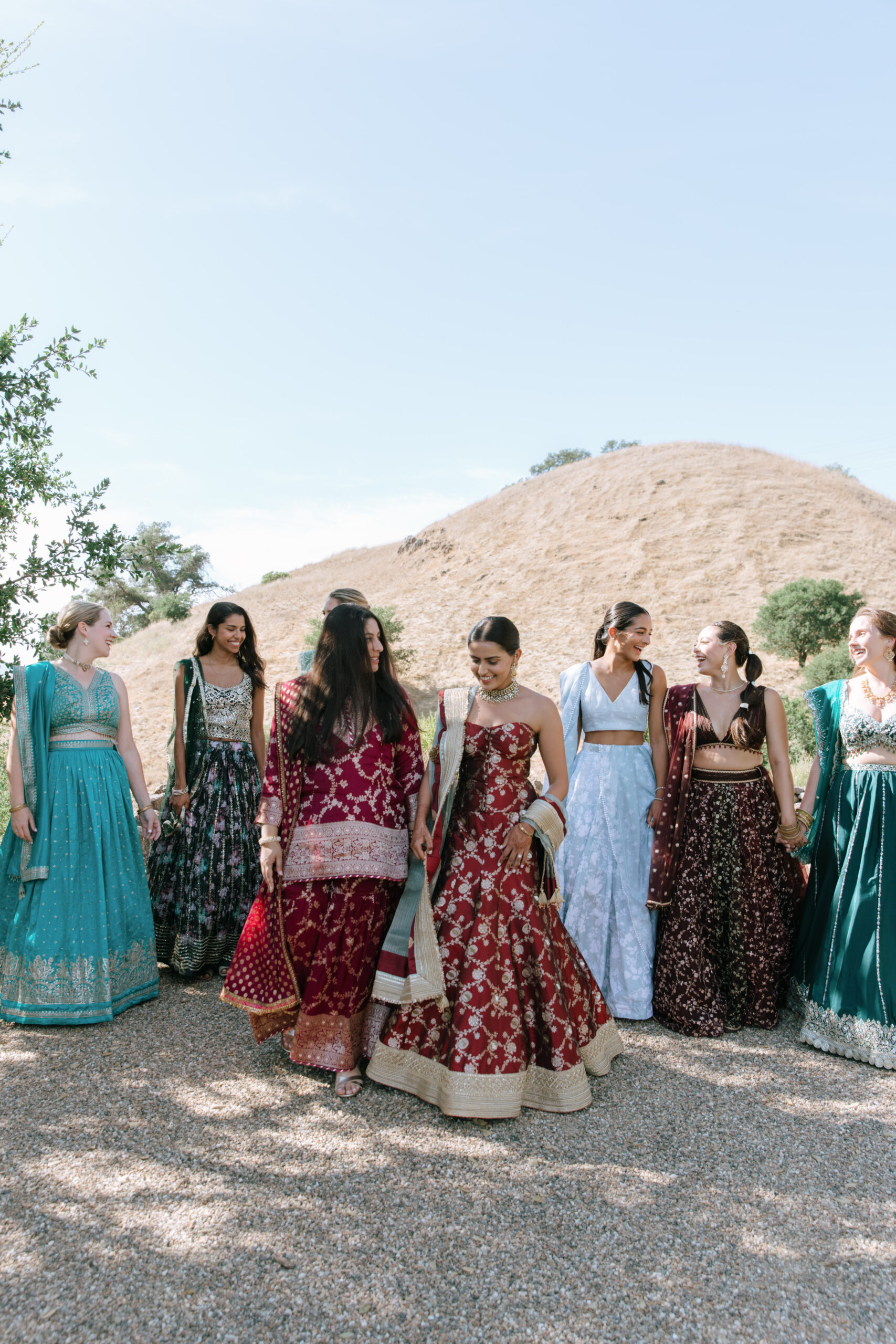
After growing up with Indian weddings, Sanjana knew she wanted to include some pre-celebration events. They decided to make their wedding weekend a blend of both worlds, with traditional ceremonies called sangeet and mehndi on one night, and a Western-style wedding another day. “There were too many cultures to celebrate to have one event,” says Evan.
Sanjana dressed in a red dress called a lehenga for her sangeet. (Katie Miller)Family and friends dance around Sanjana at a sangeet held at Paradise Ridge Winery two days before her wedding to Evan. (Katie Miller)
Guests flew in from all over, including India, to attend the sangeet held at Paradise Ridge Winery in Santa Rosa. The couple arrived at the colorful pre-wedding celebration dressed in traditional attire: Sanjana in a red dress called a lehenga, Evan in a long, dark blue sherwani, or jacket.
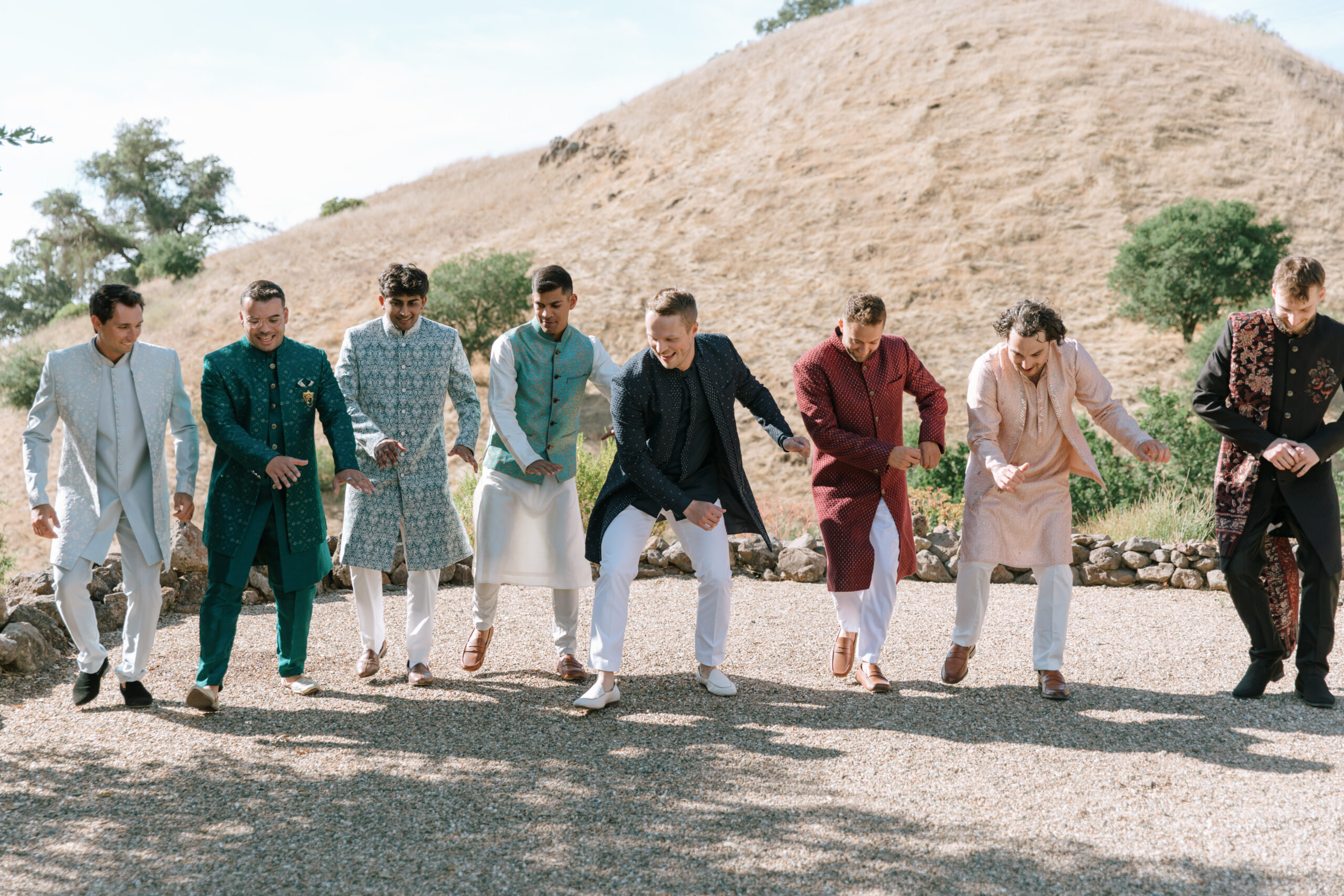
The evening was filled with festive dancing and singing. Many guests had practiced Bollywood-style dances together over Zoom before the August event. The day also included mehndi, with Sanjana receiving henna tattoos symbolizing her journey. While the wine flowed, guests also enjoyed food and drink such as samosas and mango lassis, and the couple distributed copies of The Wedding Times, a tabloid Sanjana designed detailing their love story.
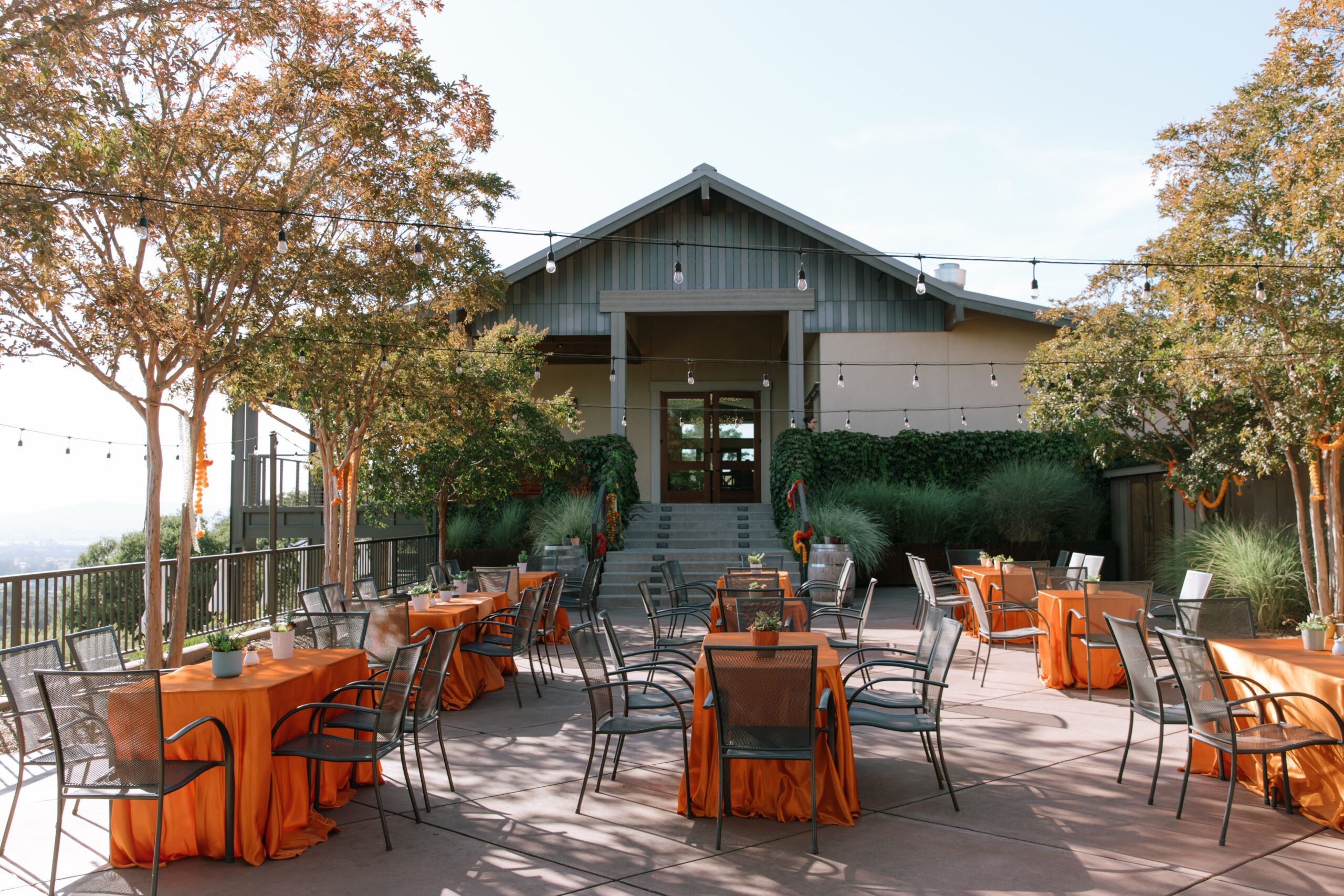
Sanjana and Evan’s wedding was filled with festive dancing and singing. Many guests had practiced Bollywood-style dances together over Zoom before the August event. (Katie Miller)Sanjana and Evan’s wedding took place among the lush ivies and vines at Trentadue Winery in Geyserville. (Katie Miller)
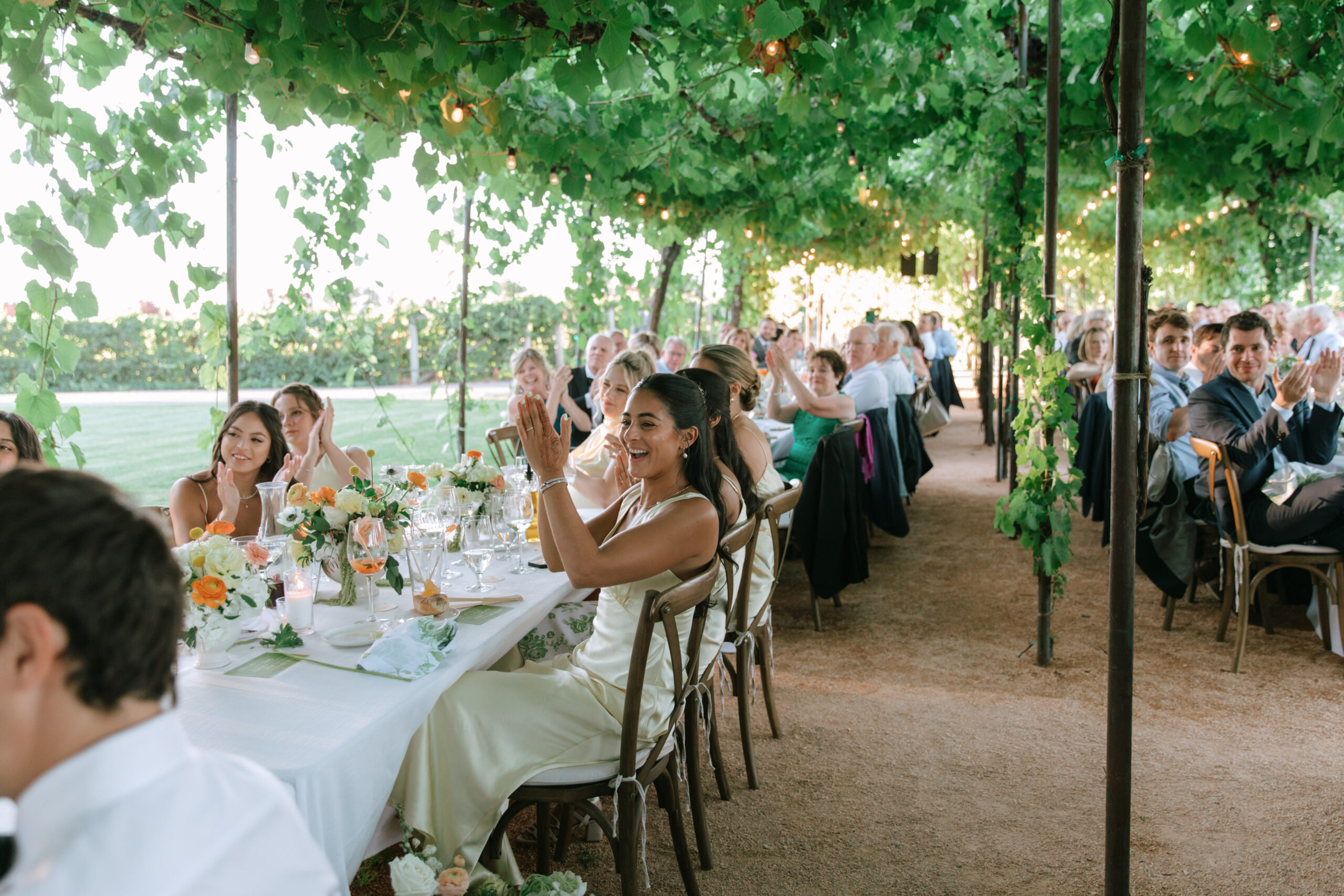
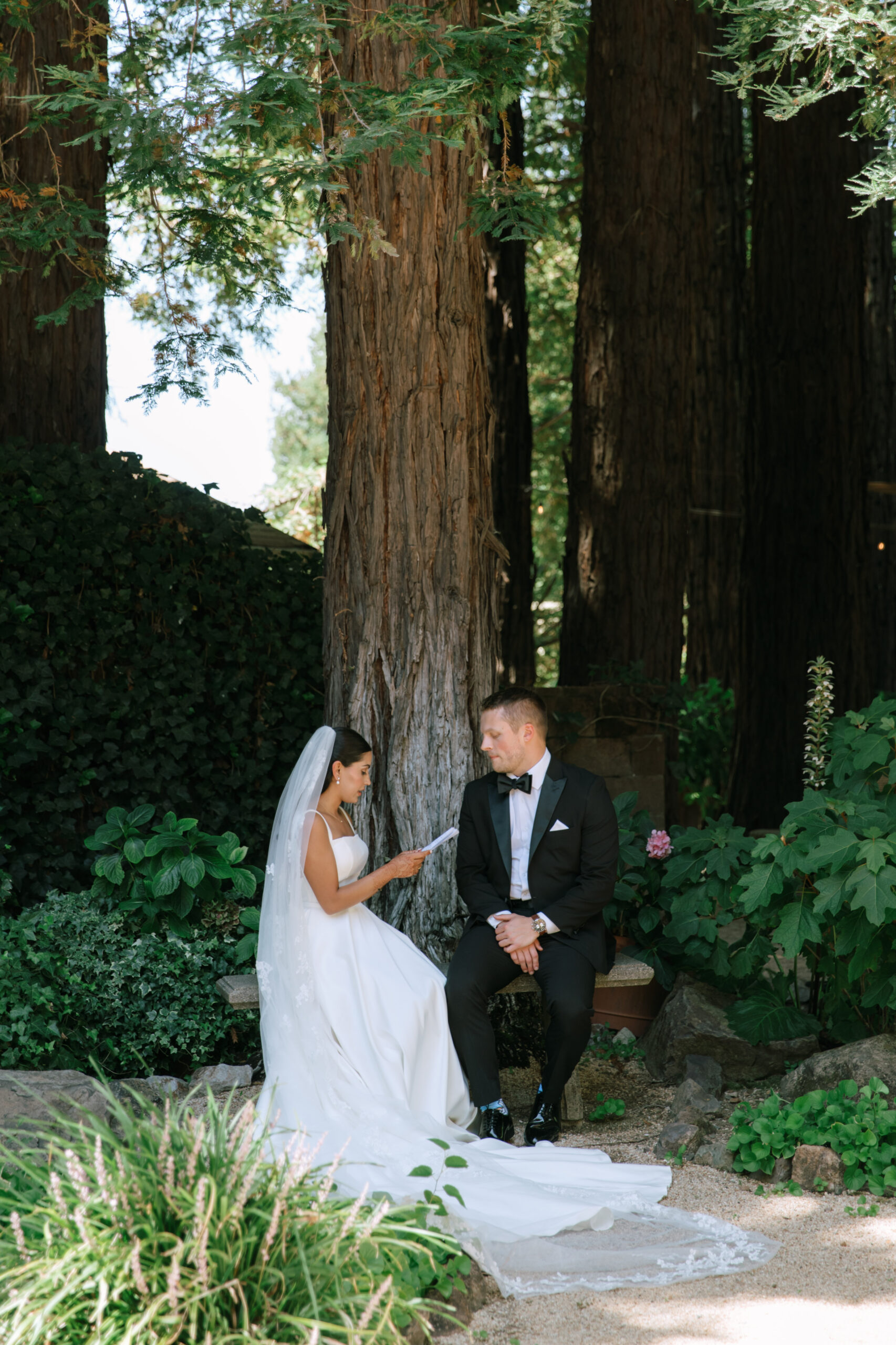
Two days later, the wedding took place among the lush ivies and vines at Trentadue Winery in Geyserville with its picturesque grape arbor. Before standing in front of all their guests, the couple took part in a “First Look” ceremony in which they exchanged private vows beneath a stately grove of redwoods.
“We’re a little more private,” Sanjana explains of their desire to spend a few precious moments alone. “I was pretty emotional seeing Sanjana in her dress,” says Evan.
Sanjana and Evan’s wedding took place at Trentadue Winery in Geyserville. Before standing in front of all their guests, the couple took part in a “First Look” ceremony in which they exchanged private vows beneath a stately grove of redwoods. (Katie Miller)
After taking vows in front of the gathered crowd, the couple celebrated with guests at a cocktail hour featuring old-fashioneds — Evan’s drink of choice — and Aperol Spritzes followed by a meal of summer pasta and Parmesan-crusted chicken.
“It turned out to be the most special weekend,” Sanjana says. “And Sonoma made it even more magical.”