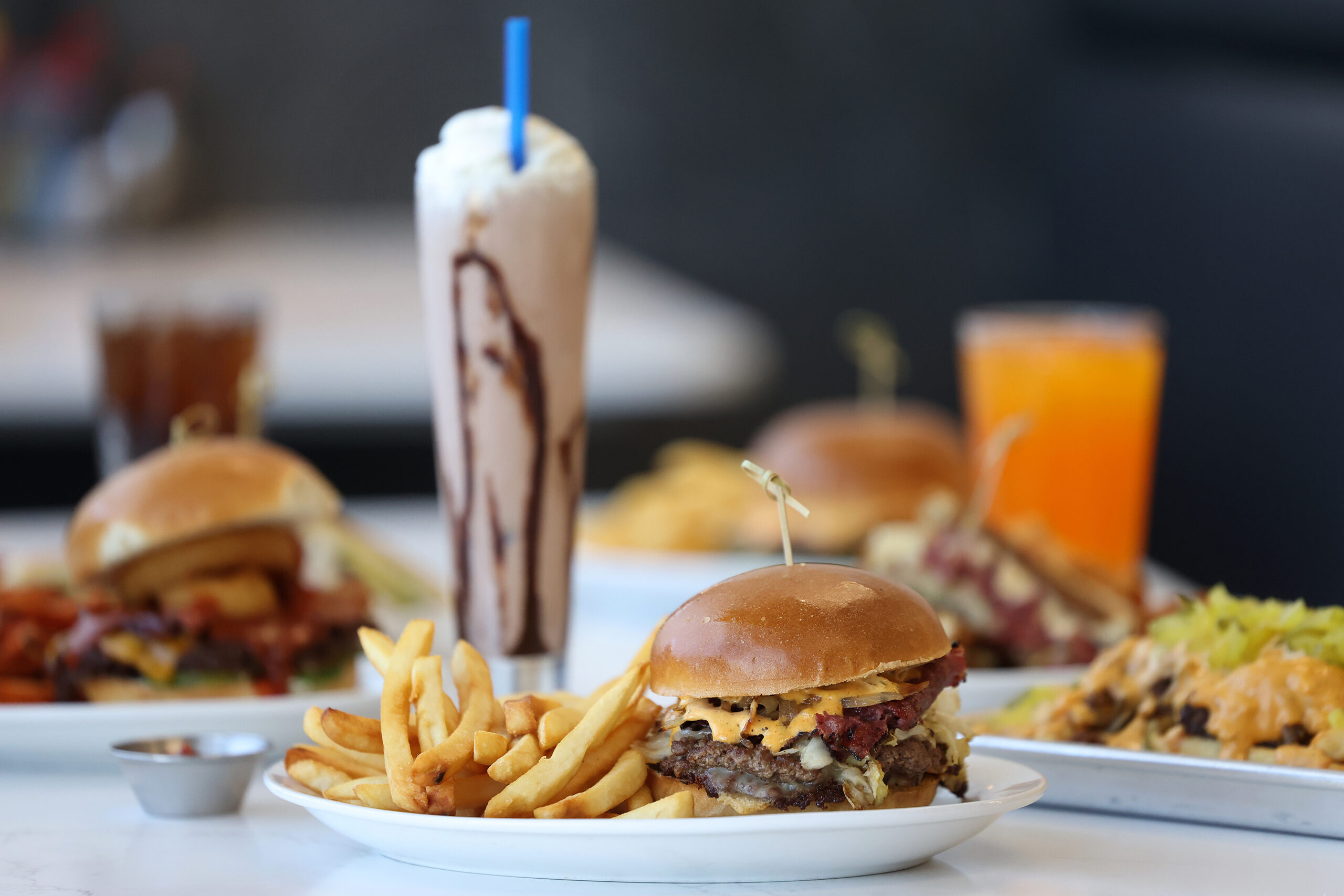
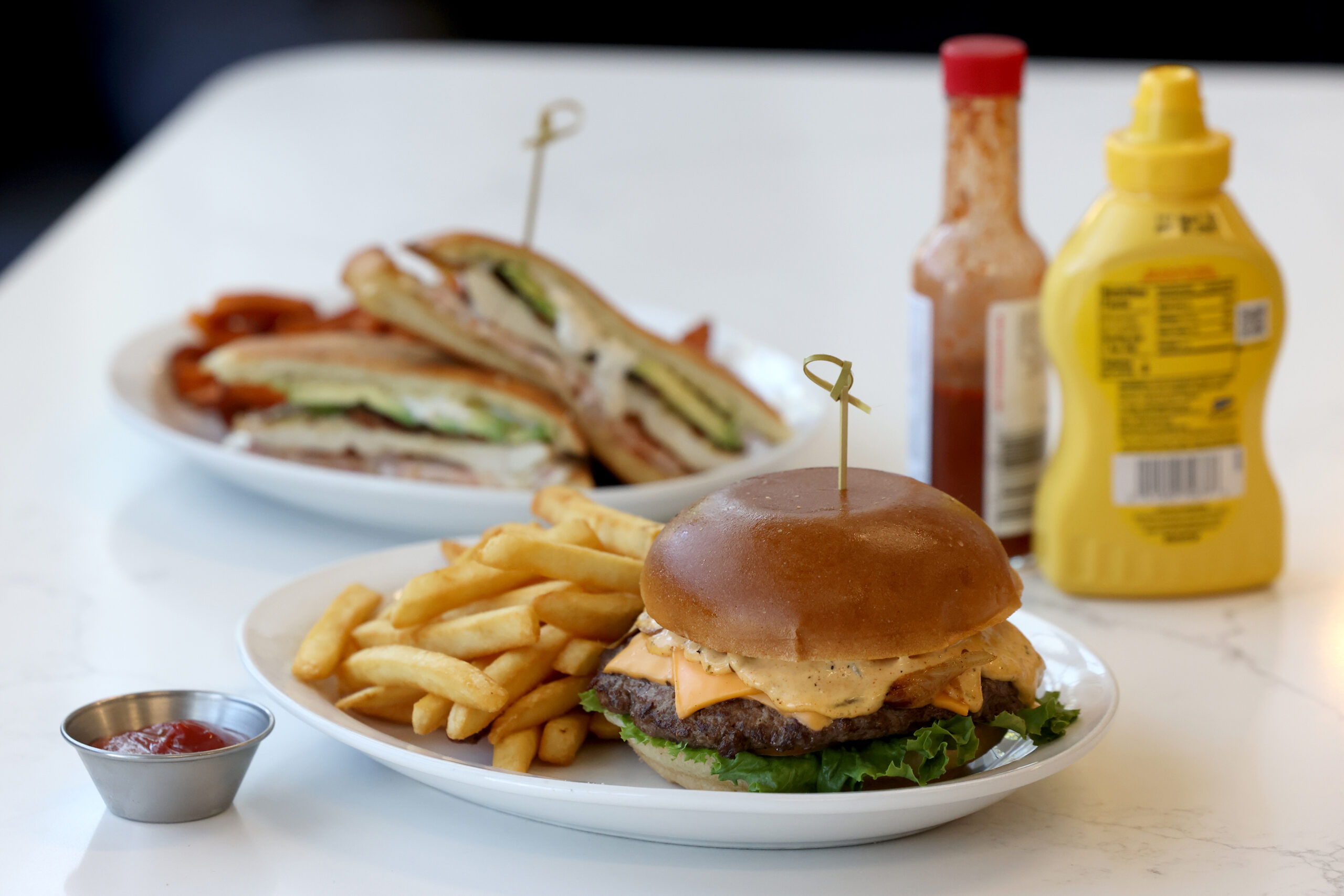
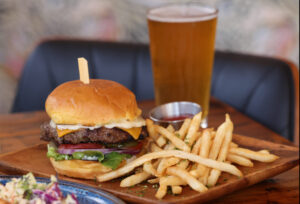
The P & B, made with two beef patties, pastrami, Swiss cheese, sauerkraut, grilled onions, pickles and house-made Pressed sauce, with a side of fries at Pressed in Rohnert Park Friday, April 17, 2026. (Beth Schlanker / The Press Democrat)
Social media has always been a mixed bag for restaurateurs.
Anonymous reviews from questionable “critics” can sink a restaurant overnight, but a few well-placed raves can just as quickly pack a dining room. At Rohnert Park’s Pressed, owner Maen “Eric” Alkfof swears the glowing buzz around his smashburger cafe isn’t the result of a calculated marketing campaign, but of Sonoma County’s food-obsessed social media crowd.
For more than a year, members of the Sonoma County Foodies Facebook group, along with Reddit fans and Instagrammers, have gushed over the $9 smashburgers at this suburban strip mall spot.
“I have never ever ever ever ever had such a good burger. Ever. Seriously,” read one Facebook post, followed by “It lived up to the hype” and “Very generous portions. Very delicious burgers.”
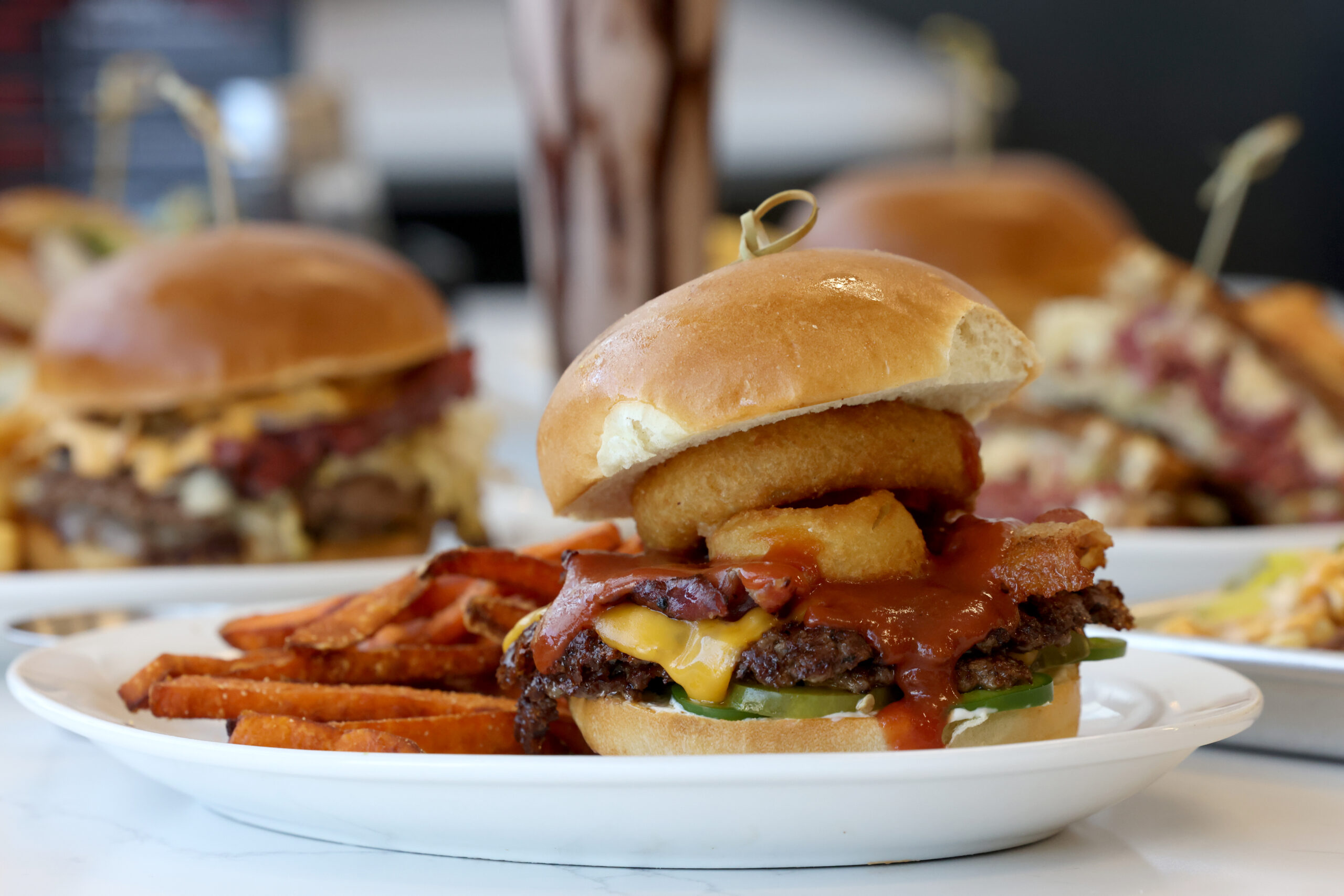
The P & B, made with two beef patties, pastrami, Swiss cheese, sauerkraut, grilled onions, pickles and housemade Pressed sauce, with a side of fries at Pressed in Rohnert Park Friday, April 17, 2026. (Beth Schlanker / The Press Democrat)The BBQ Burger, made with two beef patties, onion rings, bacon, jalapeno, pickles, cheddar cheese, barbecue sauce and mayo, with a side of sweet potato fries at Pressed in Rohnert Park Friday, April 17, 2026. (Beth Schlanker / The Press Democrat)
Still, social media can only take you so far. The proof is in the patty.
Pressed sat on my to-do list for months, slipping further down until a text from a friend bumped it back to the top.
“If you want a story about a good, cheap burger, Pressed in Rohnert Park,” he wrote. “I go all the time.”
The words “good, cheap burger” are a dog whistle to a food writer. Immediately my ears perk up and I’m on the hunt.
Simple but satisfying
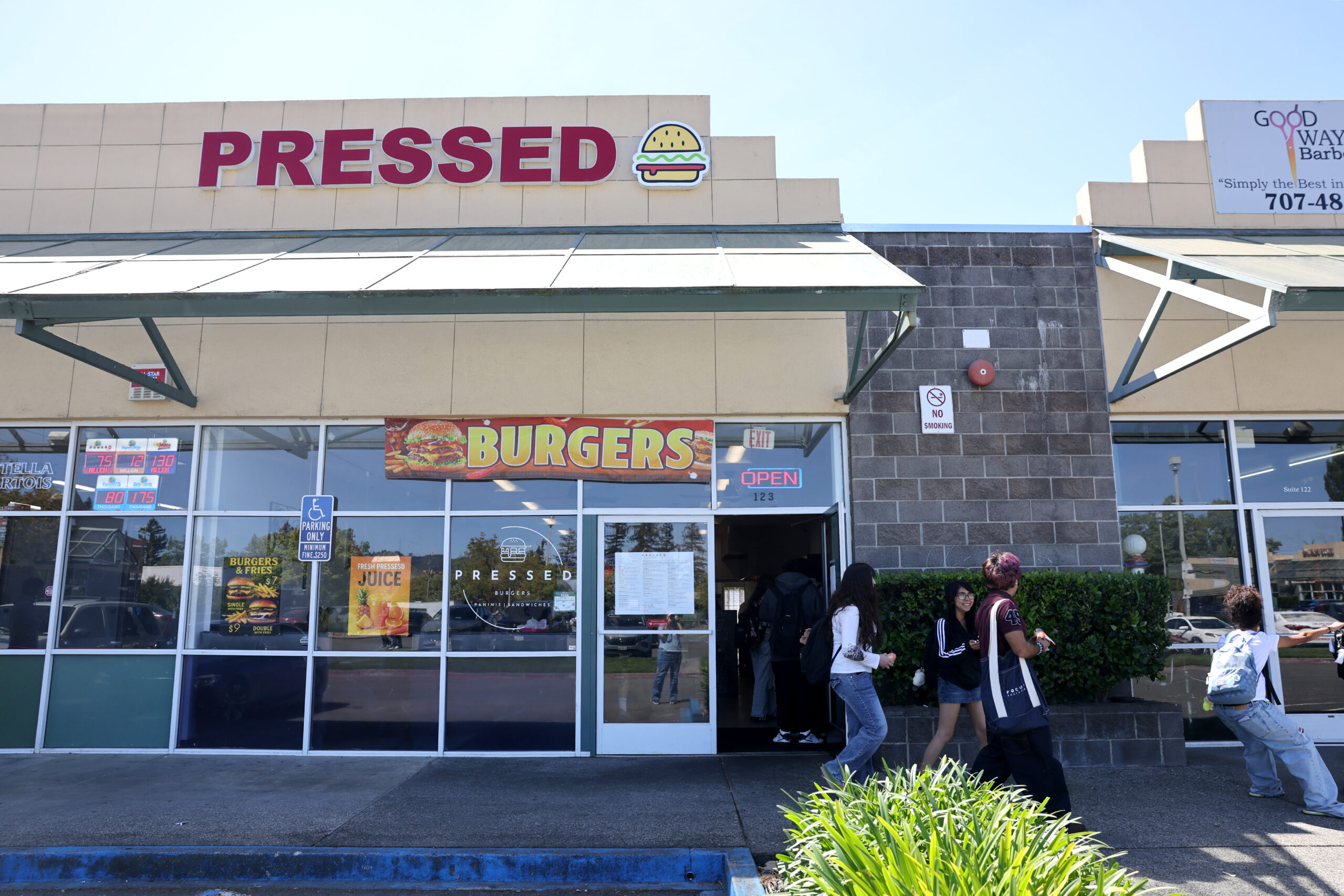
Like any hidden gem, you sometimes have to look for the sparkle behind vinyl signs and a neighboring liquor store. Pressed isn’t about expensive decor or vibey touches.
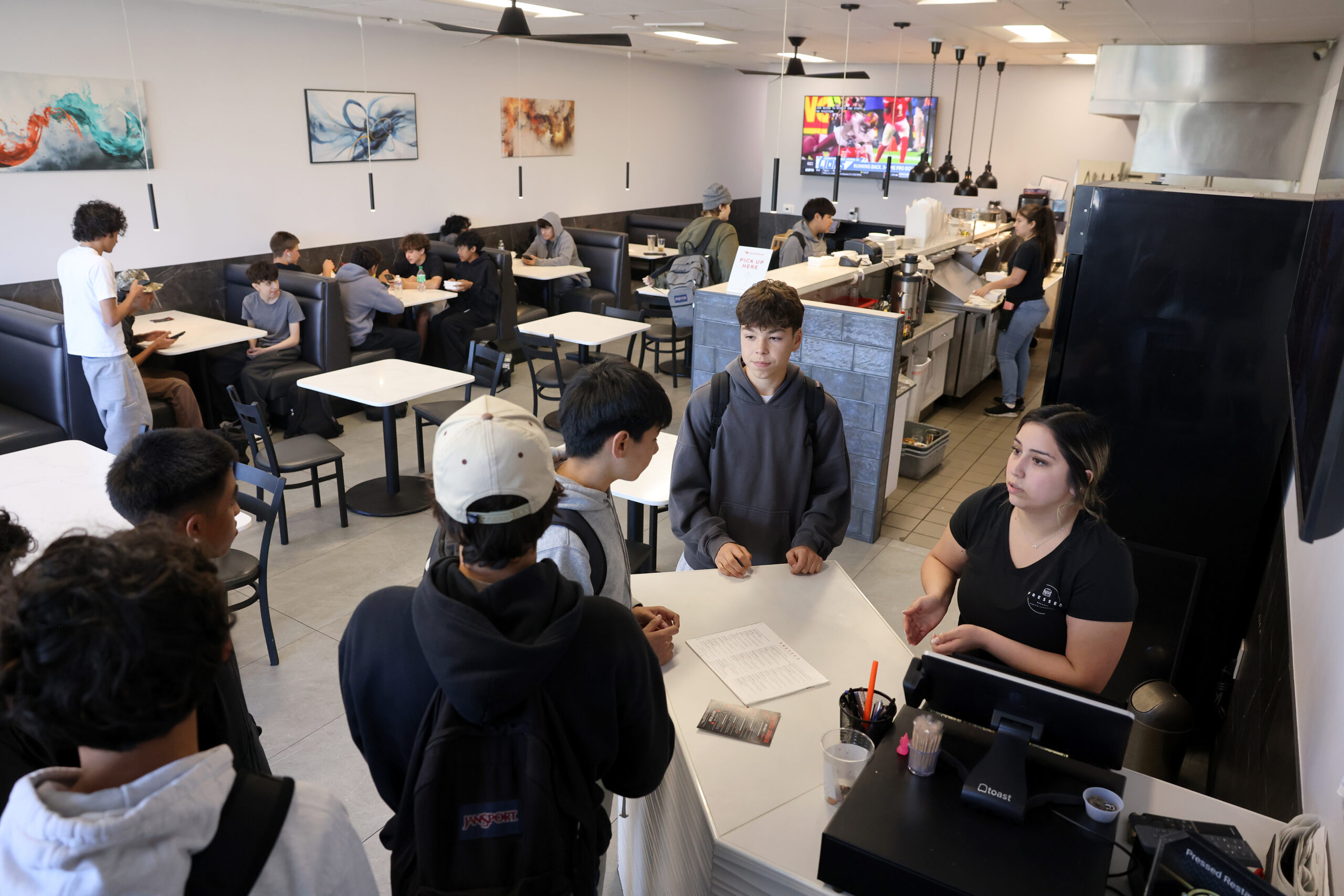
Rancho Cotate High School students wait in line for food on their lunch break at Pressed in Rohnert Park Friday, April 17, 2026. (Beth Schlanker / The Press Democrat)
Inside, the former Pepper’s Cafe has a restaurant-supply-catalog feel — vinyl booths, laminate tabletops and bright lighting that leans more “efficient” than intentional. A muted “Friends” on loop above the register offers a welcome distraction from doomscrolling or a slow date. From the open kitchen, the fryer occasionally burbles to life as tater tots hit the oil, while pickup orders move out at a brisk clip. It could be any strip mall cafe, anywhere.
Alkfof makes every sauce in-house. His smash patties are thin with crisp, lacy edges; the buns are soft and squishy; the loaded fries are piled high. Milkshakes are rich and creamy, produce is fresh, and the servers are friendly.
Pressed is solid across the board, with every item I tried well-crafted and satisfying. It’s not trying to be a Michelin-starred restaurant or a once-in-a-lifetime meal, just good food at a good price.
On the side
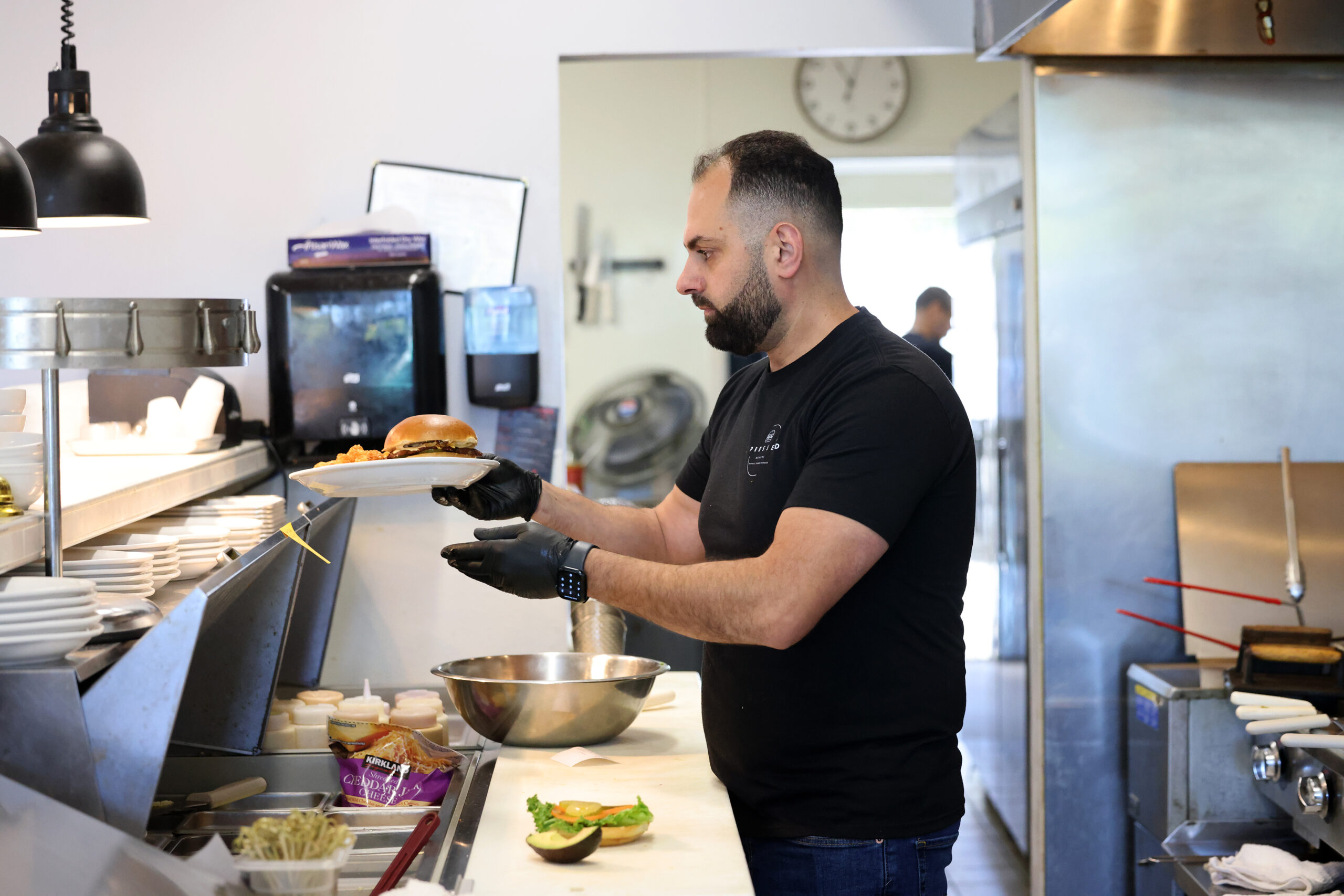
Pressed co-owner Eric Alkfof works in the kitchen at Pressed in Rohnert Park Friday, April 17, 2026. (Beth Schlanker / The Press Democrat)
Alkfof’s busser-to-boss experience is a significant part of the Pressed story. The Jordanian immigrant arrived in 2007 speaking no English and needing work. A cousin in the restaurant business hired him as a dishwasher, and from there he learned the language and mastered the American diner menu. In 2016, he bought his first restaurant, Pepper’s Cafe, a much-loved breakfast and brunch spot. After COVID-19, business slumped. In 2024, he reimagined the space as Pressed, reopening a few months later as a burger and sandwich shop.
Alkfof got the timing right — smashburgers are having a moment, and Pressed struck while the griddle was hot. But trends are fickle. It’s the burgers that bring locals back, along with family-friendly prices that make Pressed an easy after-work dinner, while Rancho Cotate High School and Sonoma State students keep things busy during the day.
Pressed isn’t trying to be a Michelin-starred restaurant or a once-in-a-lifetime meal, just good food at a good price — and sometimes that’s the kind of advertising you can’t buy.
Best bets
The Classic burger with American cheese, onion, pickles, lettuce, and house-made Pressed sauce, with a side of fries, and the Chicken Ranch sandwich, rear, at Pressed in Rohnert Park Friday, April 17, 2026. (Beth Schlanker / The Press Democrat)
The Classic ($7 single/$9 double): I love a deal, especially when you can get fries and a cheeseburger for roughly what you’d pay at In-N-Out ($6.80) or McDonald’s ($8.58). Price-wise, the single is hard to beat, but the double has the better meat-to-bun ratio, with two patties, cheese, pickles, onions and housemade Pressed sauce (a sort of Thousand Island-meets-ranch situation). Keep in mind, this is a smashburger, so the patty is thin, well-done and nicely crisped.
The Original ($12): A half-pound burger with some heft. Cooked to order (I’d recommend medium) with grilled onion, American cheese, lettuce, tomato and sauce.
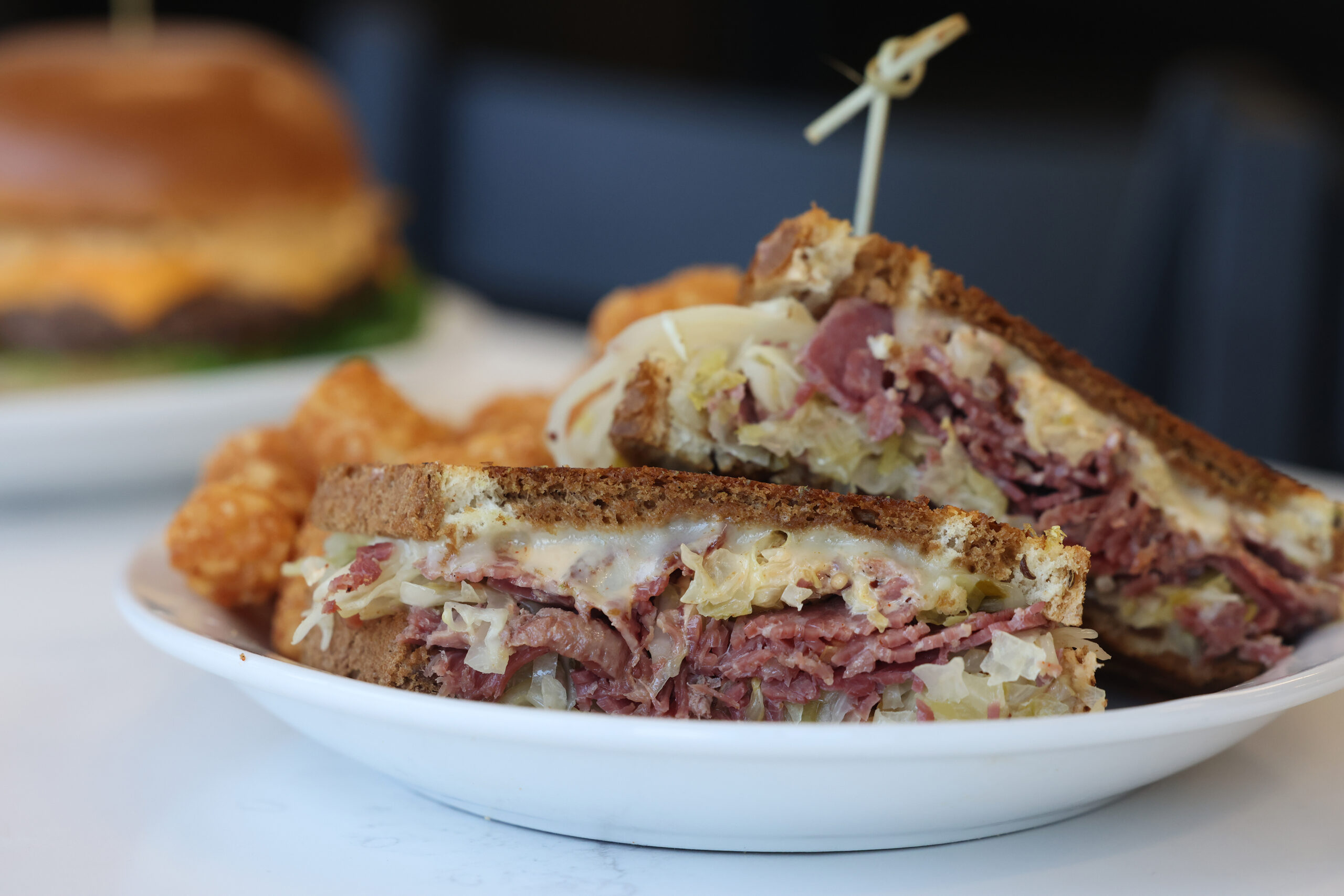
The Rueben sandwich with tater tots at Pressed in Rohnert Park Friday, April 17, 2026. (Beth Schlanker / The Press Democrat)
Reuben ($14): The zippy horseradish aioli is what sets this classic sandwich apart. Made with corned beef, sauerkraut and Swiss on toasted rye. Ask for a side of Pressed sauce for extra sauciness.
French Dip ($14): Skip the tri-tip and substitute in thinner “Philly steak” for a more authentic version. Griddled with red and green peppers and onions on a toasted French roll. The au jus is perfectly salty and dunk-worthy.
Loaded fries, The Classic ($9): Tots (rather than fries) are the best move here, keeping their crispiness while topped with ground beef, melted American cheese, pickles, grilled onions and Pressed sauce. Heat up the leftovers in the air fryer for a late-night snack. Bacon and cheese loaded fries with creamy cheddar sauce are also an excellent choice.
Chocolate and vanilla milkshakes ($6): Happy-making, if not life-altering.
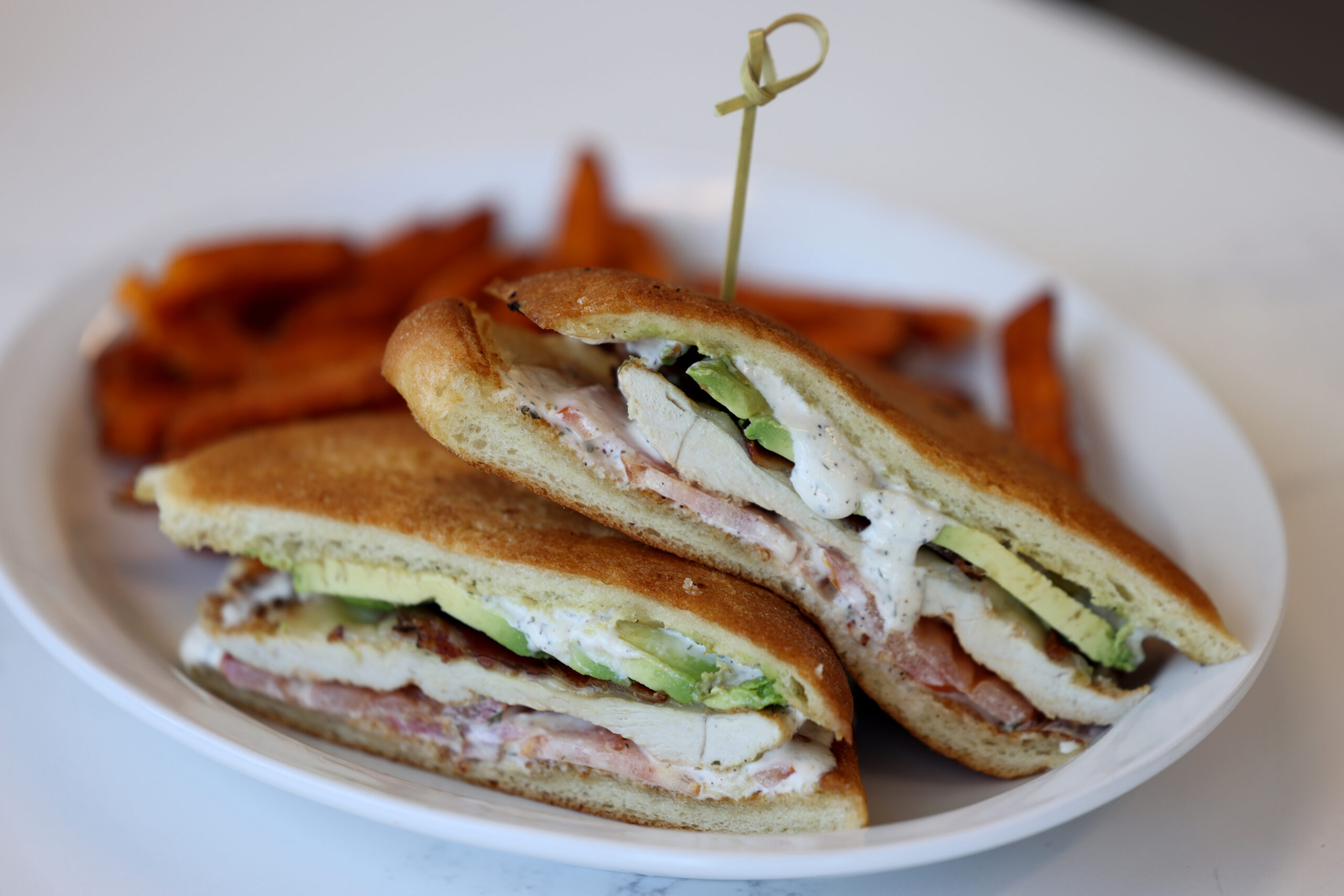
Chicken Ranch ($14): A satisfying sandwich, with a slim but flavorful piece of marinated chicken, thick slices of bacon, avocado, pepper jack cheese and housemade ranch on a ciabatta bun.
The Chicken Ranch sandwich made with marinated chicken, bacon, avocado, pepper jack cheese, tomato and house-made ranch on a ciabatta bun, with a side of sweet potato fries at Pressed in Rohnert Park Friday, April 17, 2026. (Beth Schlanker / The Press Democrat)Pressed in Rohnert Park Friday, April 17, 2026. (Beth Schlanker / The Press Democrat)
If you go
Weekday specials include a chili burger (Tuesday) and Shaka Burger with pineapple bacon jam on Friday. Vegetarian Beyond Burgers are available, gluten-free buns are not currently available, but burgers can be wrapped with lettuce. Beer and wine available. Open 8 a.m. to 2:30 p.m. Sunday through Tuesday; 8 a.m. to 8 p.m. Wednesday through Saturday.
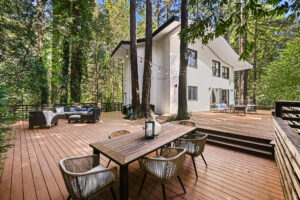
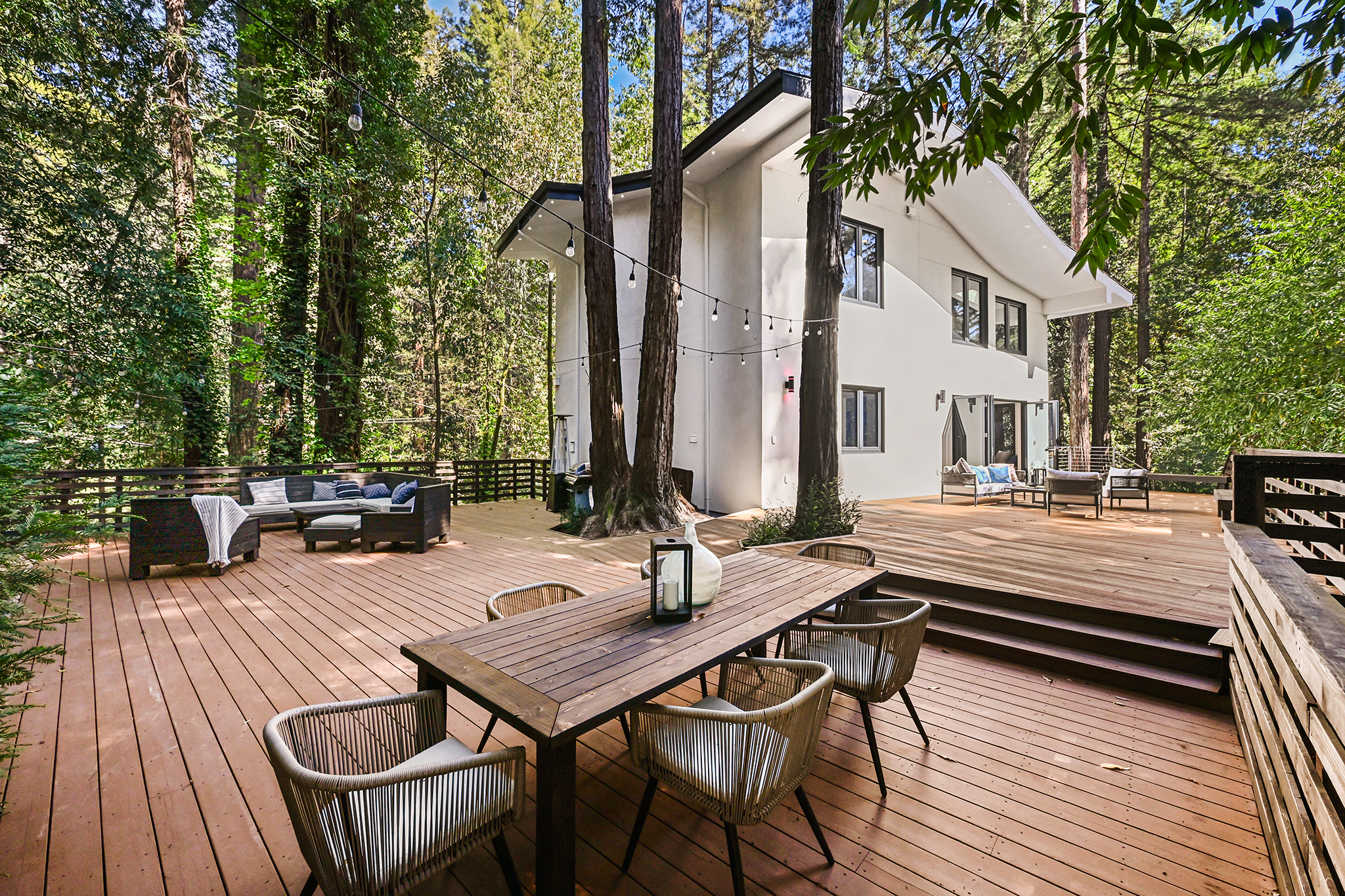
A newly built home in Rio Nido brings modern design and sought-after amenities to the Russian Riverredwoods. The three-bedroom, three-bathroom home is listed for $1,650,000.
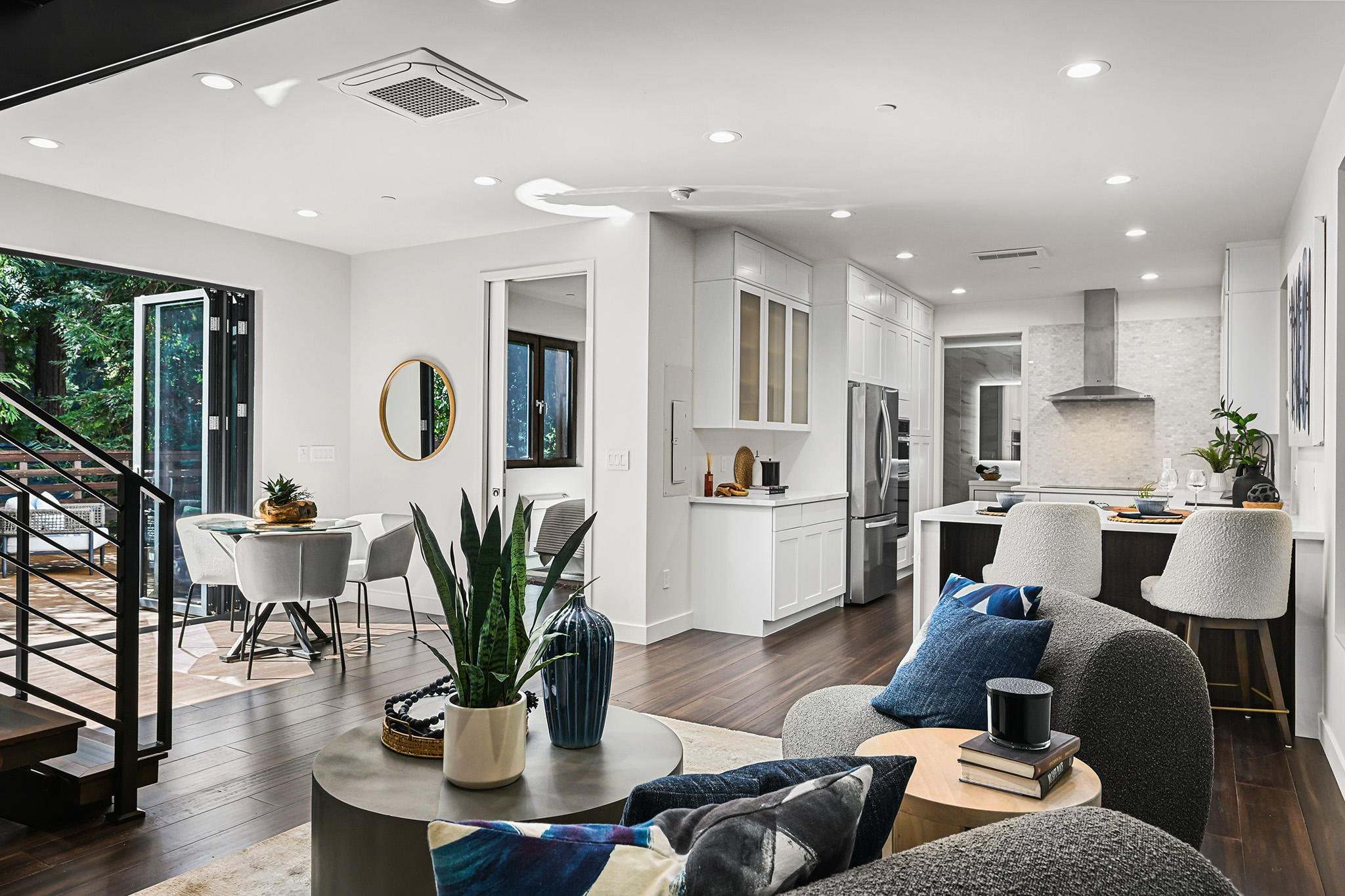
The dwelling’s 2,557 square feet of living space extends over three levels. The main level has a great room with a kitchen and dining, lounging and office areas. Plentiful windows and folding glass doors open to views and a substantial patio.
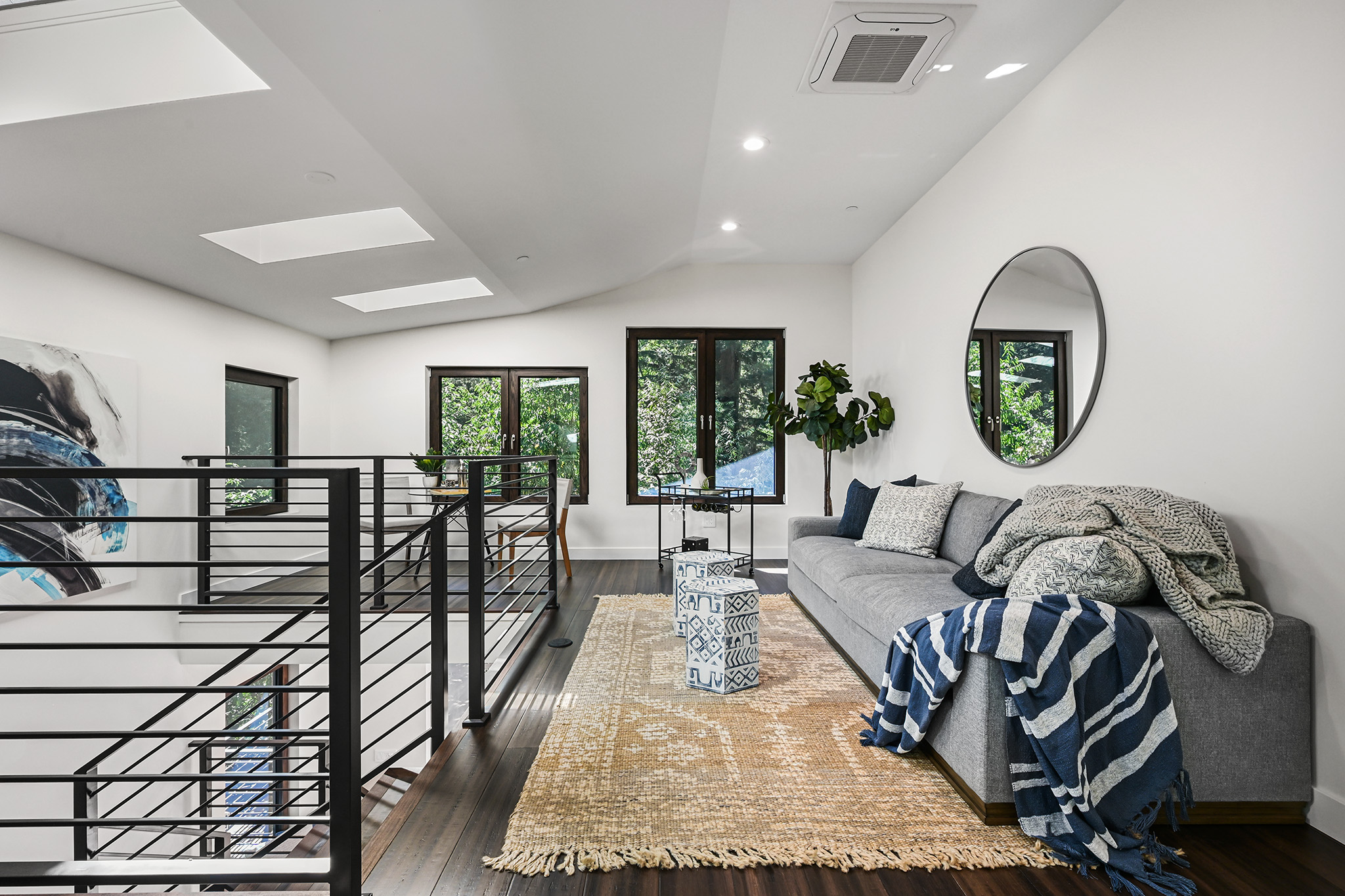
The top level enjoys tree-top views in the main bedroom, an en suite bathroom, and flexible work and lounging areas. The bottom level includes an apartment with its own entrance.
Great room on the middle level. (Jesse West / West media)Lounge area on top-level landing. (Jesse West / West media)Deck. (Jesse West / West media)
The open staircase with windows and skylights connects the levels and provides a well of light and views that emphasize the home’s height alongside the towering trees.
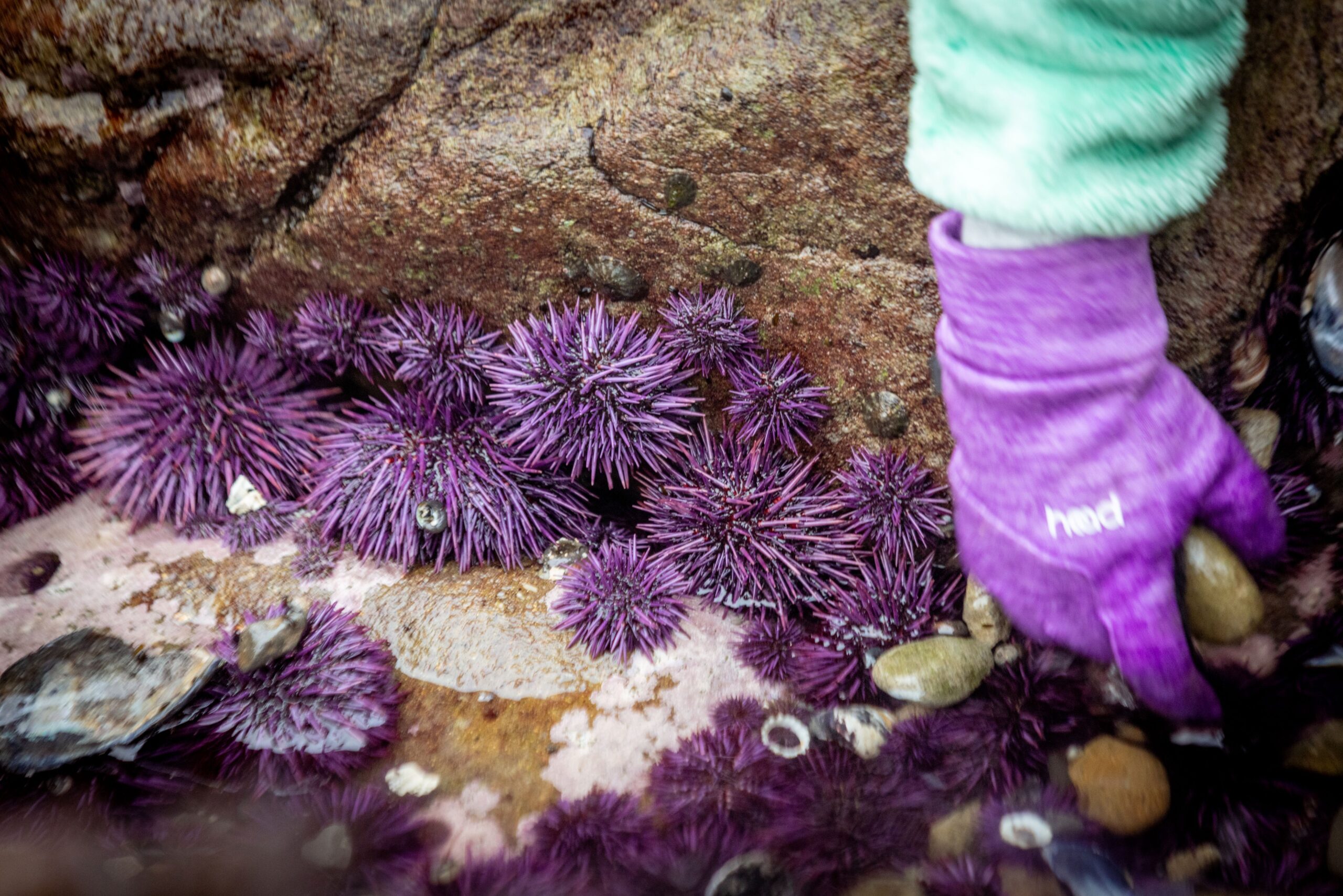
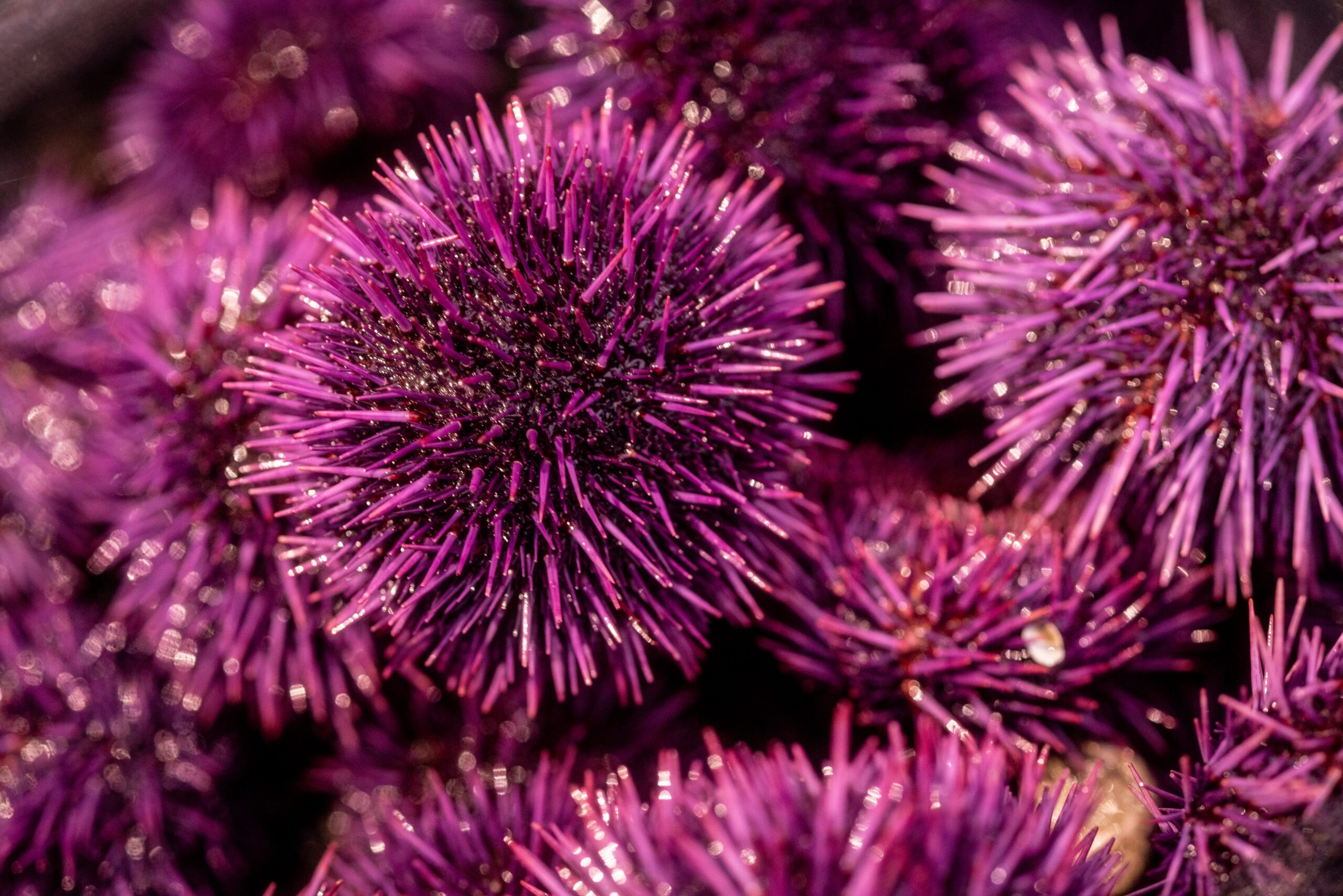
Purple sea urchins gathered during a sea urchin uni foraging class with Fork in the Path tours Jan. 18, 2026 at the Sand Beach Cove at Fort Ross State Historic Park on the Sonoma Coast. (John Burgess / The Press Democrat)
At first glance, it hardly looks like the beginning of a sea-urchin foraging expedition: a circle of 40 people on the grass pretending to be kelp, feet rooted to the ocean floor, swaying from the knees up in the current, arms elastic like stalks, heads bobbing. It could be a flash mob reviving the ’60s dance sensation “The Swim.”
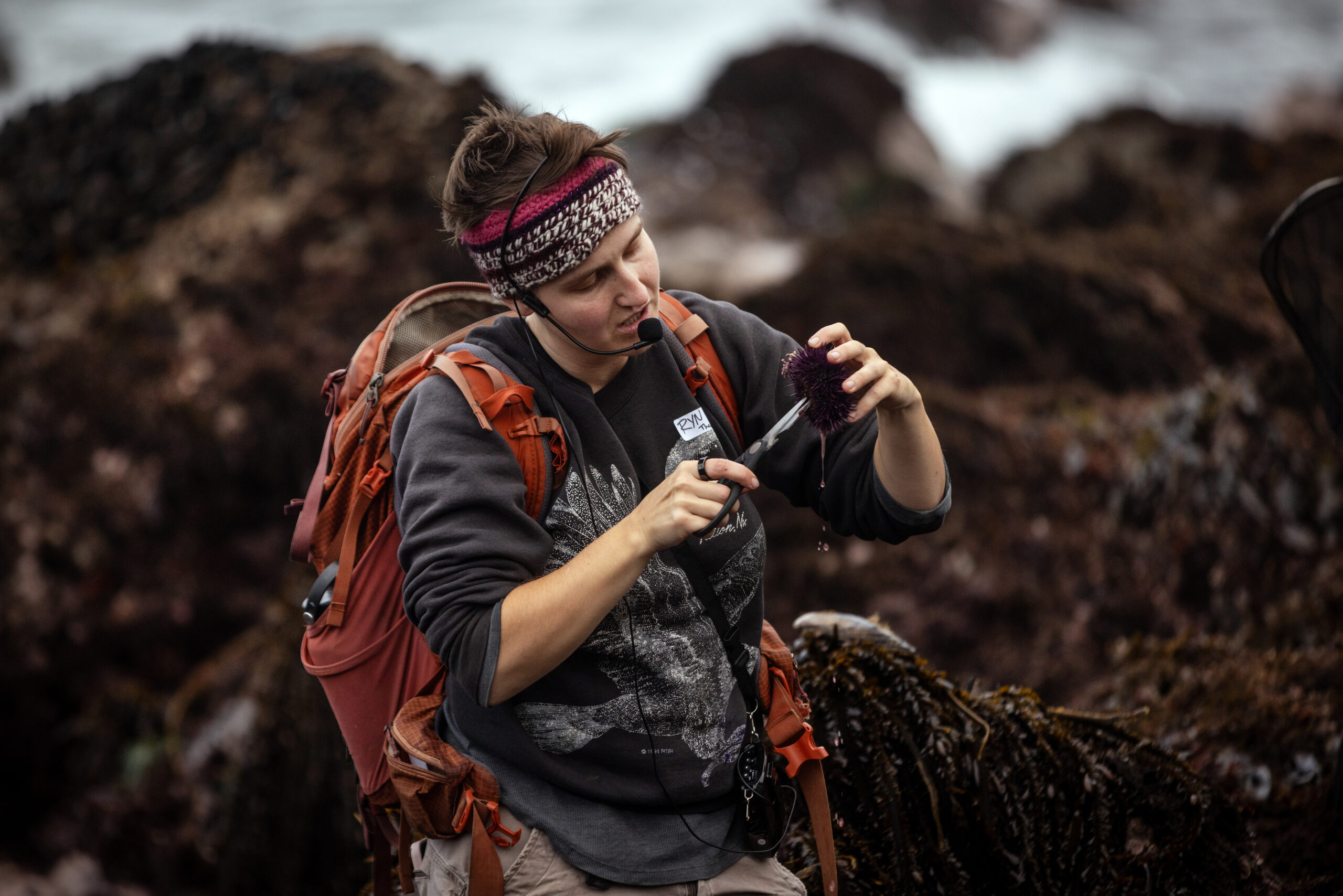
“Wave your kelpy arms all around as your back warms up and your arms warm up,” says teacher Ryn Sullivan, who, along with colleague Ricardo Romero Gianoli, leads curious landlubbers into the ocean for Fork in the Path, a Berkeley-based company that curates wild-food foraging adventures throughout the Bay Area.
It’s a late Thursday afternoon alongside the Fort Ross State Historic Park parking lot, not far from a sheltered cove where briny treasure awaits at low tide. “Now we are sea urchins,” Sullivan beckons, encouraging everyone to squat down on the sea floor of grass.
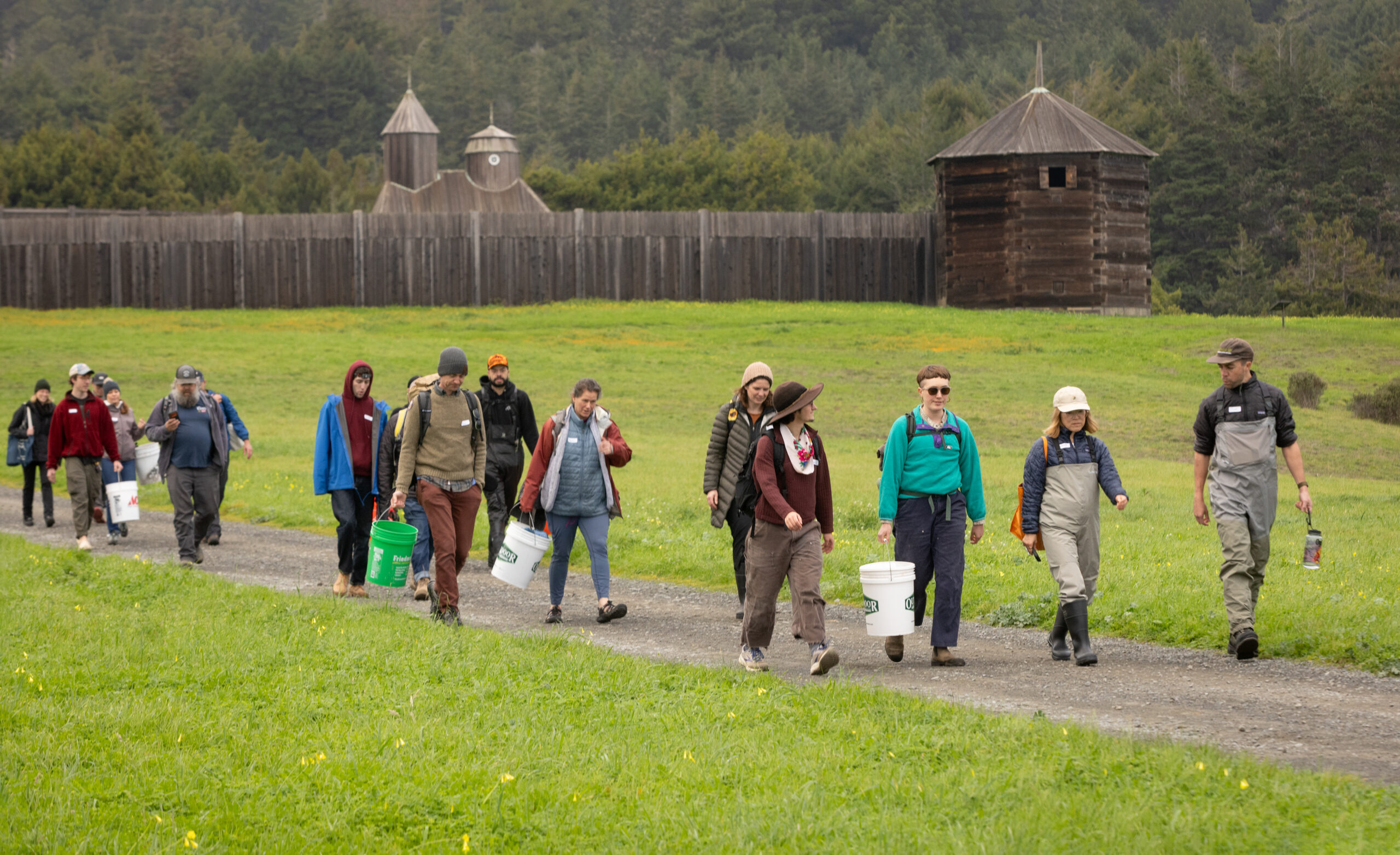
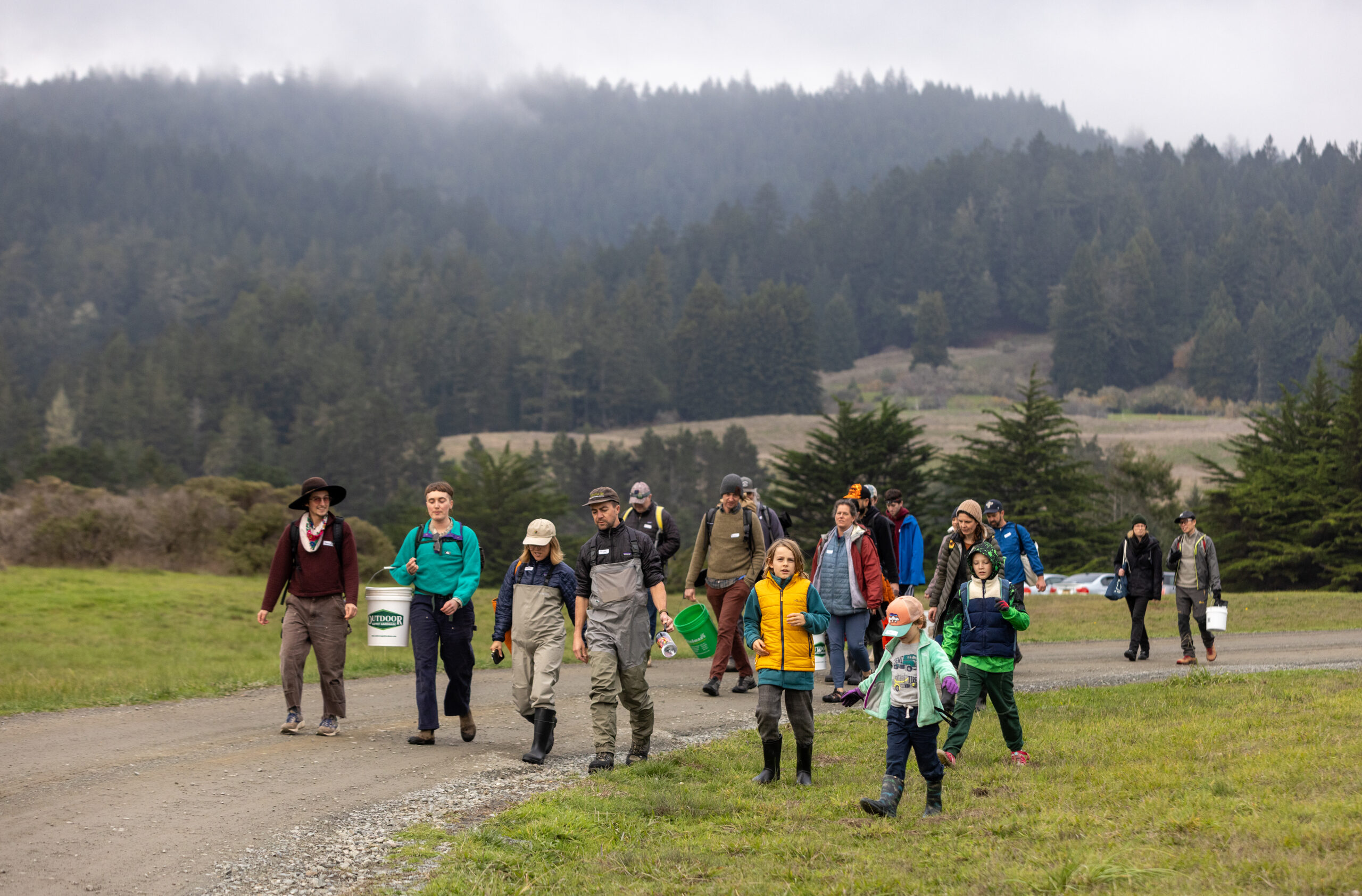
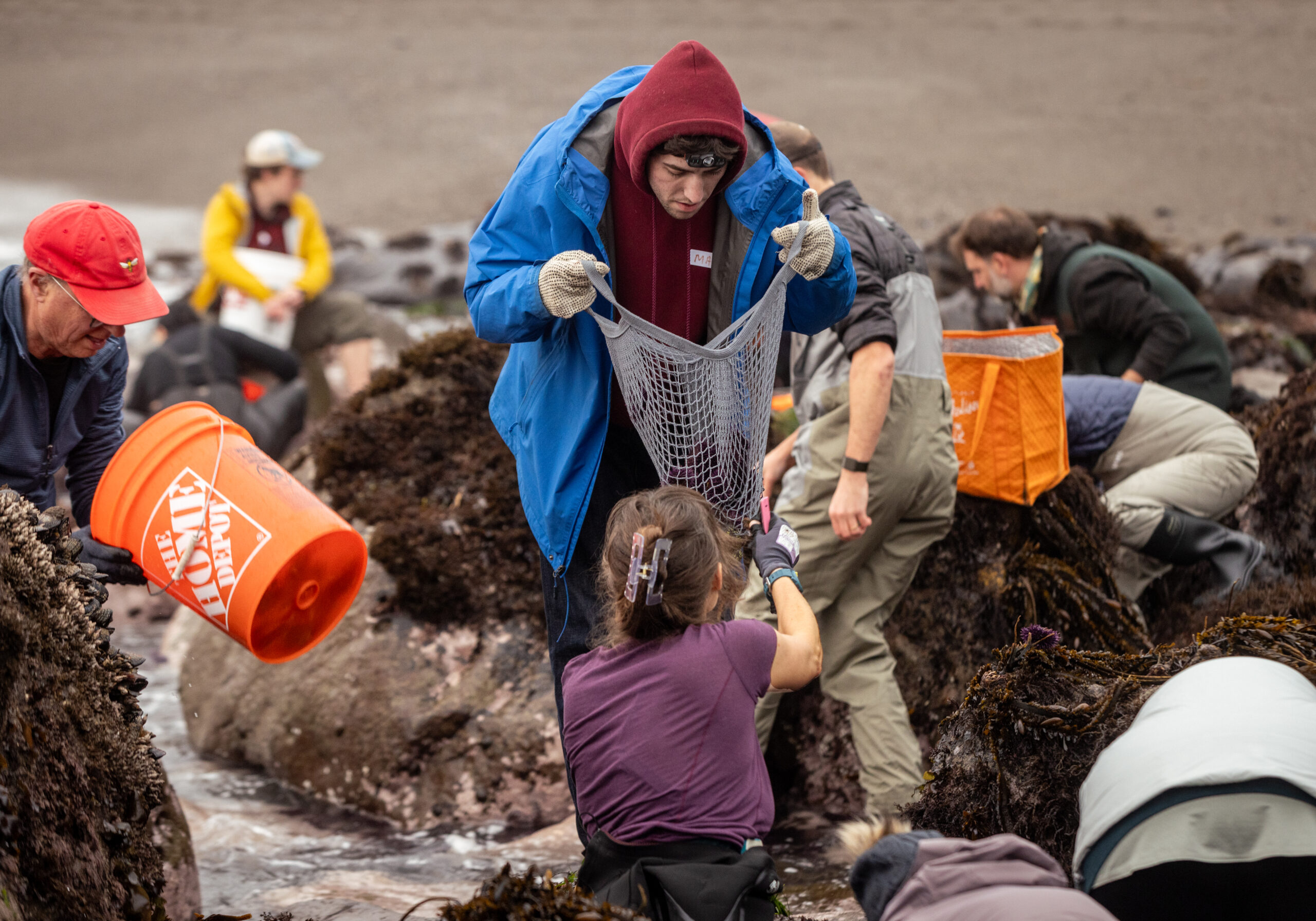
With their buckets and waders, participants in a sea urchin uni foraging class with Fork in the Path tours head to a beach near Fort Ross on the northern Sonoma Coast for the harvest Jan. 18, 2026. (John Burgess / The Press Democrat)
Earlier, a puzzled park ranger stopped by to take in the scene. “You guys have a pretty big group—what’s going on?” he asked a would-be forager.
They’ve come from miles around—some as far as Connecticut and Los Angeles, others as close as Occidental and Sebastopol—a ragtag band of foragers all in search of the notorious purple sea urchin. Martin Wobig drove over an hour from Santa Rosa to learn to harvest a creature he’s never actually tasted, although he’s seen uni on the menu many times at sushi restaurants. “I’m curious to see what they taste like. I mean, they’re gonads, so that’s the initial thought,” he says, grimacing slightly. “But they’re supposed to be a delicacy.”
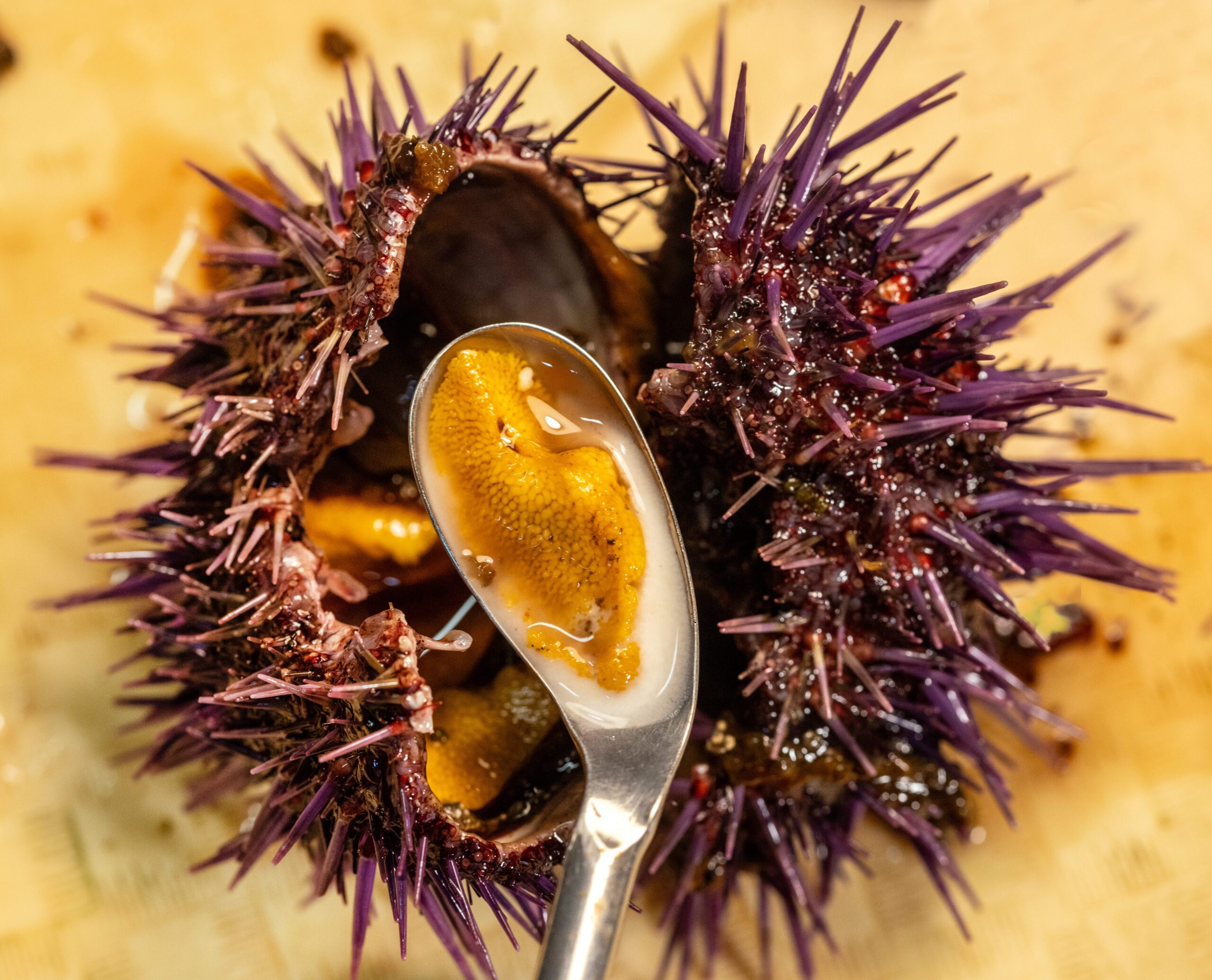
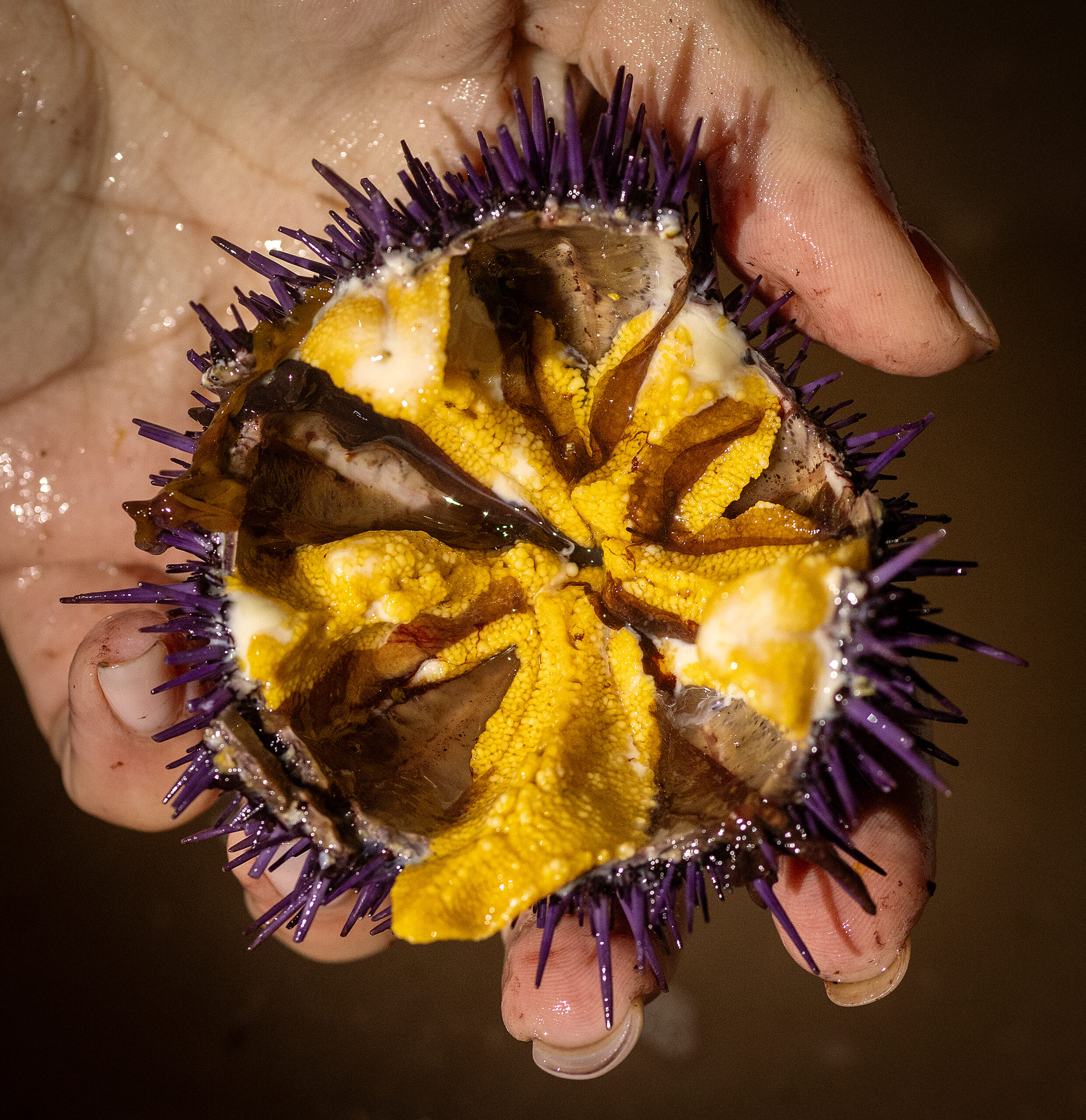
The dissected purple sea urchin reveals the gonads, the edible uni, with the sperm that makes them such prolific breeders along the Sonoma Coast. (Courtesy of Maya Munstermann)Bodega Marin Lab PhD candidate Maya Munstermann studies urchins and the effects of climate change and marine heatwave events on kelp forest ecosystems. (Courtesy of Maya Munstermann)
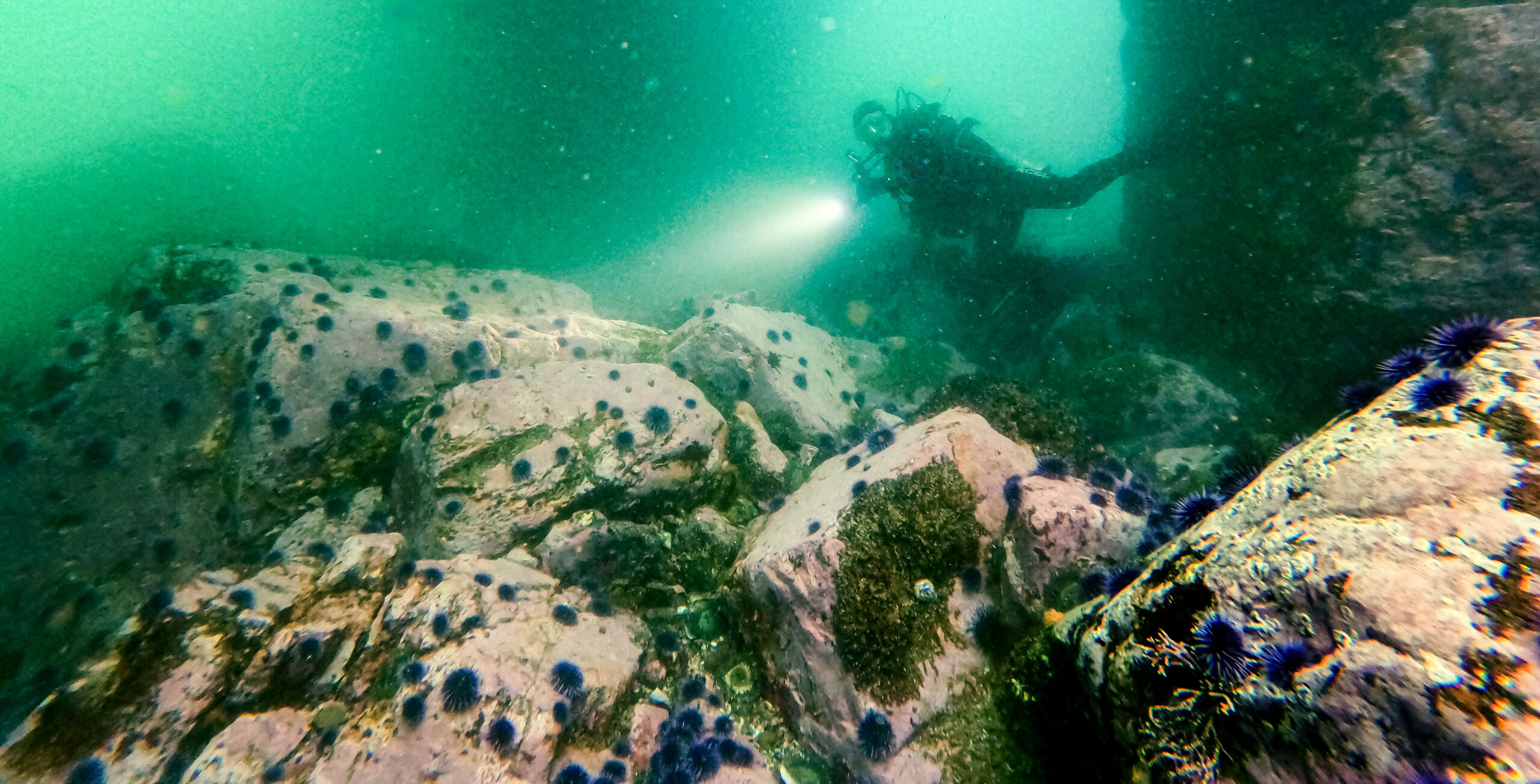
There’s something about the spiny, round marine invertebrate that draws people in. Maybe it’s the forbidding exterior or the salty sweet interior that is the roe. Or maybe it’s the hard-to-fathom stories of how this seemingly innocuous little creature is directly responsible for the destruction of more than 95% of the kelp forest along the North Coast. It turns out climate change and the centuries-long mass hunting of sea otters have left the hungry sea urchins without any natural predators. To convey the impact, Sullivan asks people to imagine a similar outcome on land. “What if the redwood forests just disappeared overnight? That’s kind of what happened with the kelp forest. But people can’t see beneath the water, so we’re trying to give them that same kind of scale and understanding.”
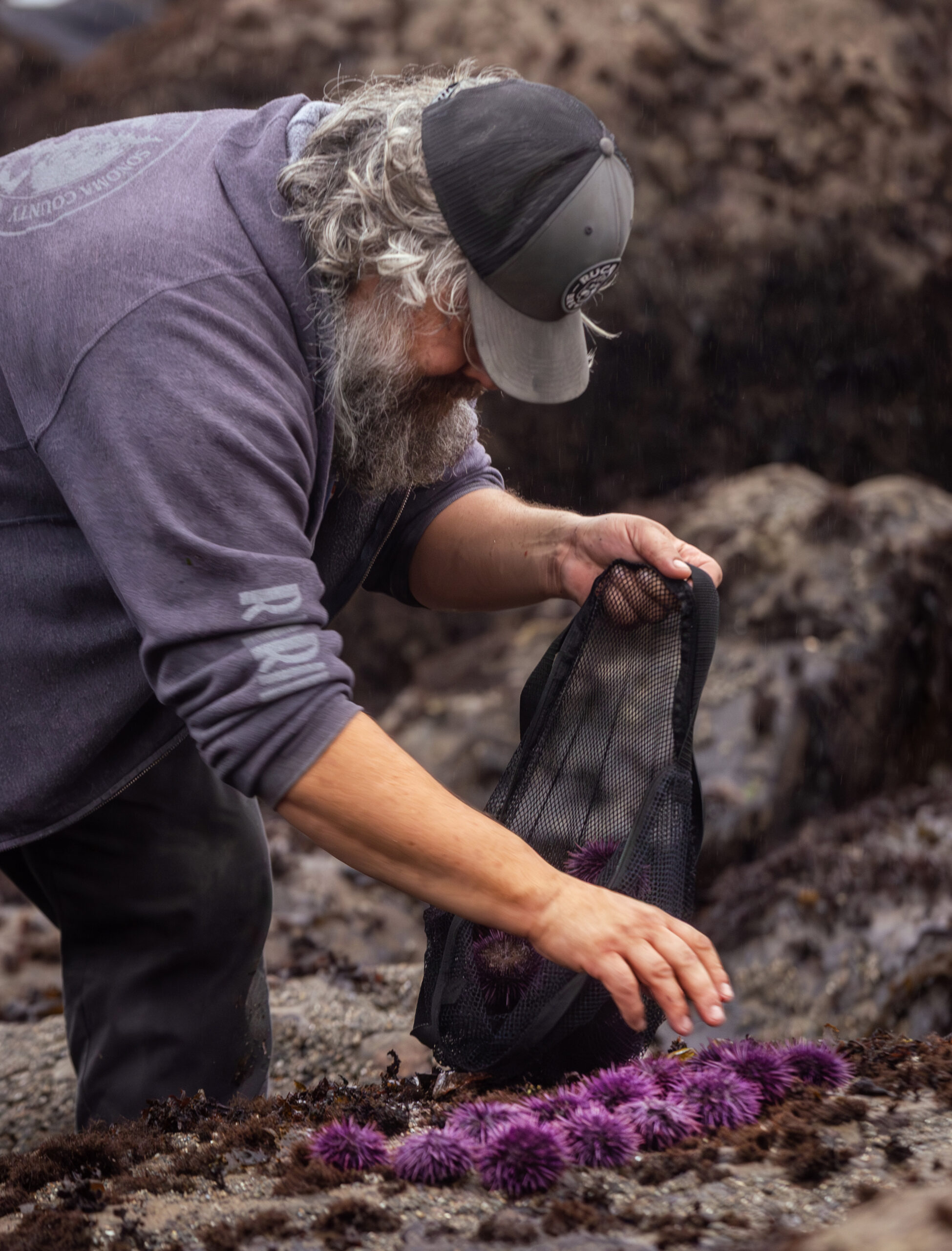
The marching orders are clear as Sullivan, who uses gender neutral pronouns, tells everyone, “We can take 35 sea urchins per person today. All together in our 40-person class, that is 1,400 urchins removed from this tidal ecosystem, which takes some pressure off the reef.” Their hope is that starving urchins off the coast, where the kelp once grew, will come in and fill the void, and the next round of foragers will remove them, creating a continuous cycle of population reduction.
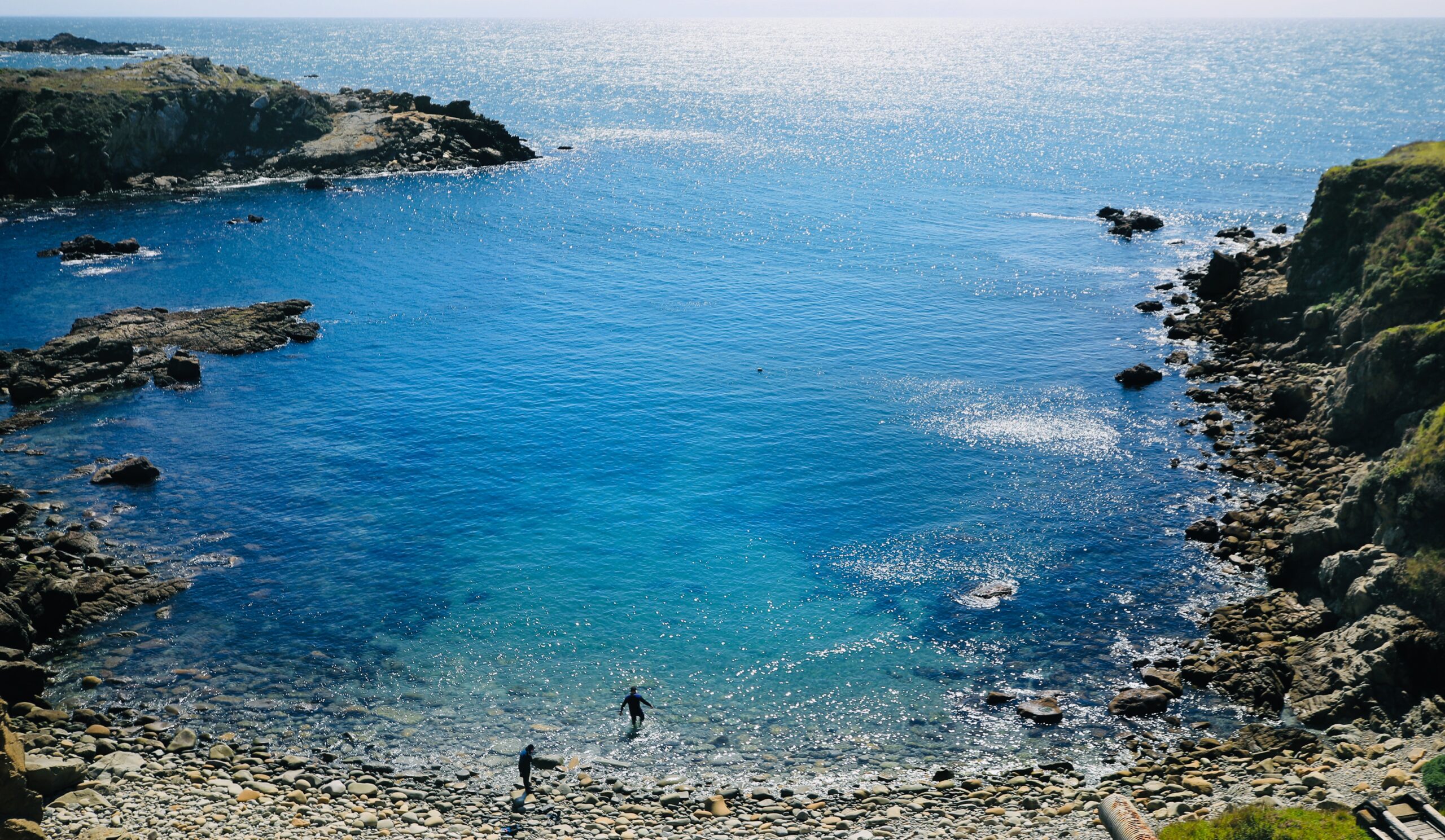
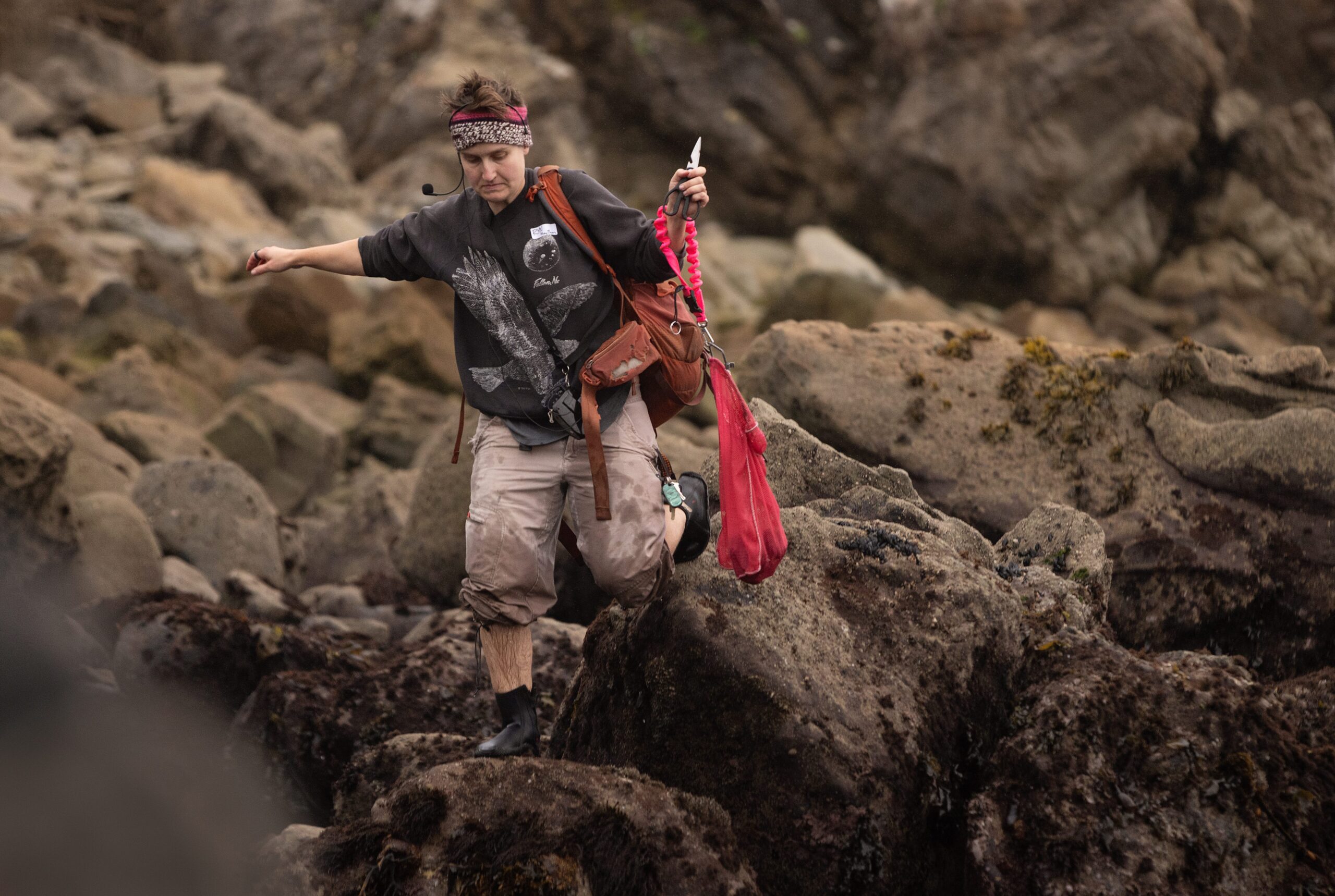
On a mission, the harvesters—some decked out in expensive waterproof gear from head to toe, others in jeans and hiking boots—gather their bags and makeshift tools, and off they go, hiking down to a cove where a minus tide has exposed glistening tide pools rich with aquatic life.
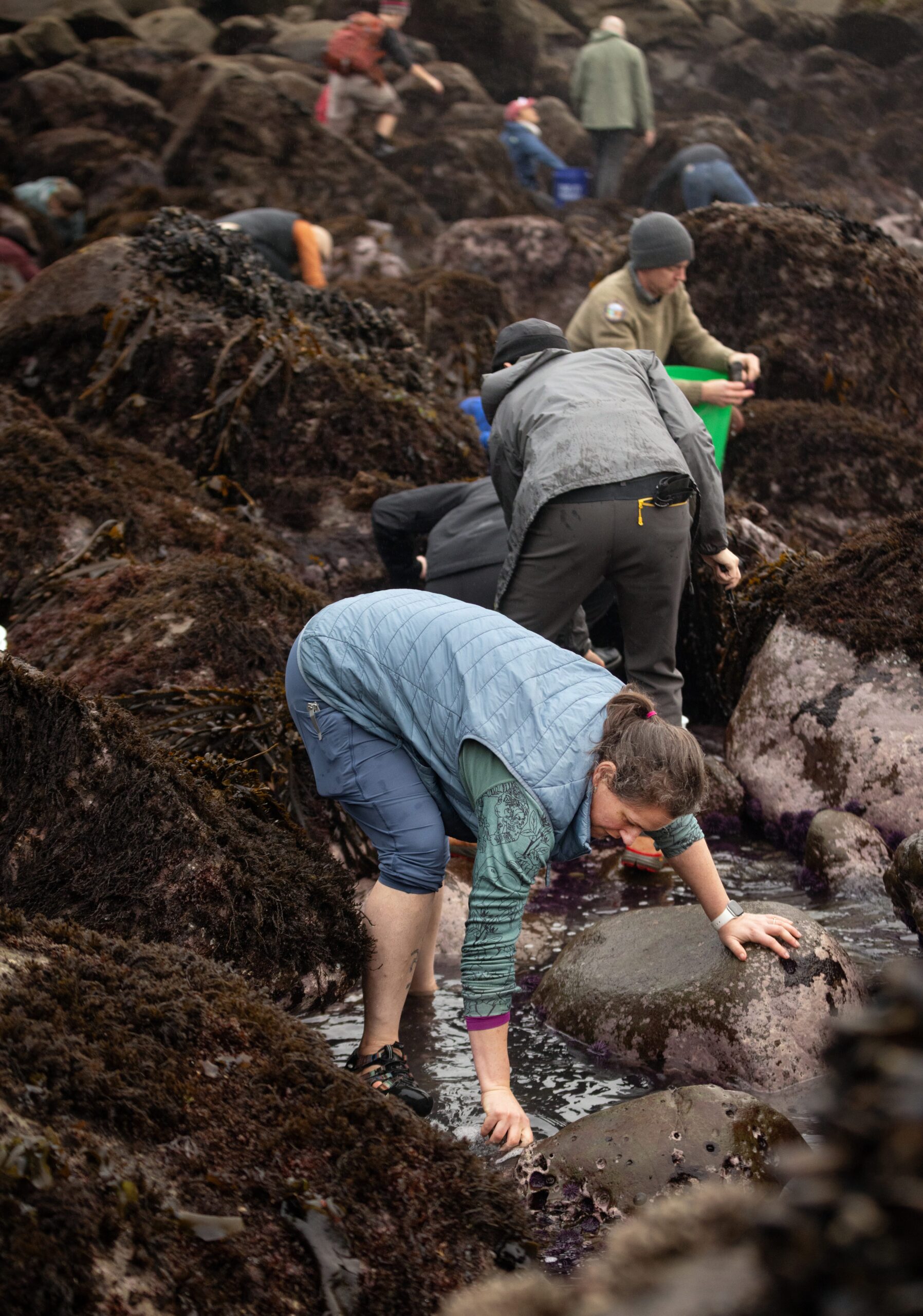
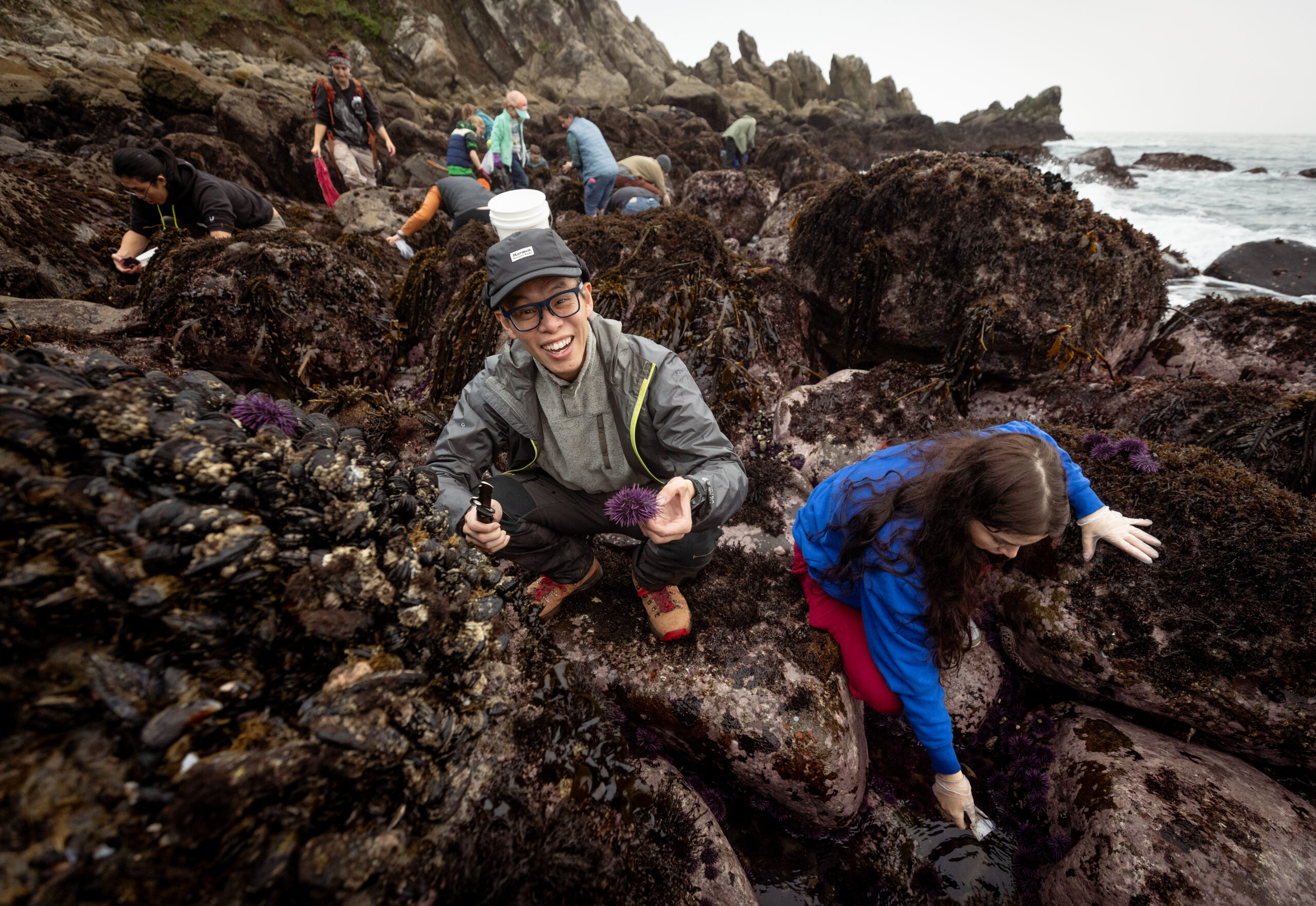
With their buckets and waders, participants in a sea urchin uni foraging class with Fork in the Path head toward a beach near Fort Ross for the harvest Jan. 18, 2026, on the Sonoma Coast. (John Burgess / The Press Democrat)Delicacy seeking foodies comb the rocks for purple sea urchins during a foraging class with Fork in the Path Jan. 18, 2026, at a beach near Fort Ross on the Sonoma Coast. (John Burgess / The Press Democrat)
Long before the Russians ran aground in this same inlet in the late 1700s, later building Fort Ross trading post in 1812, the Kashia Pomo harvested sea urchin and abalone here for as long as anyone can remember. Their nearby village of Metini moved every few years so they didn’t deplete natural resources in one area. At the time the Russians settled, Metini was a little to the east of the fort, closer to Highway 1.
“For Kashia, we are from the ocean,” says Anthony Macias, Cultural and Tribal Preservation Officer for the Kashia Band of Pomo Indians of the Stewarts Point Rancheria. “We have a lot of contact with the ocean. It’s been with us since the beginning, you know, since Creator made us.”
Most often, they ate sea urchin raw. Occasionally, they would dry it by curing the roe over a fire and saving it for a snack later. They also used urchin roe in fish traps made from willow branches.
But that all changed when the Russians arrived. Driven by greed and an endless demand for hats and coats, fur traders nearly wiped out the entire North Coast population of sea otters by the end of the 19th century. According to tribal lore, the Pomo tried to warn them about driving the sea otter to regional extinction. “To this day, everything we have said has come true,” says Macias.
As a boy he pulled abalone from the sea, many more than a foot long. “Now we can’t hunt our abalone because of what happened to the ocean—how it got depleted, how we lost the kelp forest, how we’re even losing seaweed.”
Dan Furr and his daughter Chelsea, 13, of Woodland, prepare to snorkel in Gerstle Cove on the Sonoma Coast at Salt Point, Saturday, March 13, 2021. Very little bull kelp remains in the cove. (Kent Porter / The Press Democrat)
In 2015, when the Kashia Pomo regained nearly 700 acres of their ancestral land near Stewarts Point, it was the year after what many scientists call “a perfect storm” was set in motion. In 2014, an El Niño heat wave raised water temperatures around 10 degrees above average. Soon after, a lethal bacteria began infecting sea stars—especially the sunflower sea star, the only other major predator of sea urchins after the sea otter. The sea star wasting disease spread quickly, from Mexico to Alaska, destroying around 99% of the sunflower sea star population in Sonoma County. Left unchecked and without predators, purple sea urchin populations exploded, increasing to around 60 times their average number, voraciously devouring more than 95% of the bull kelp forest along the Northern California coast.
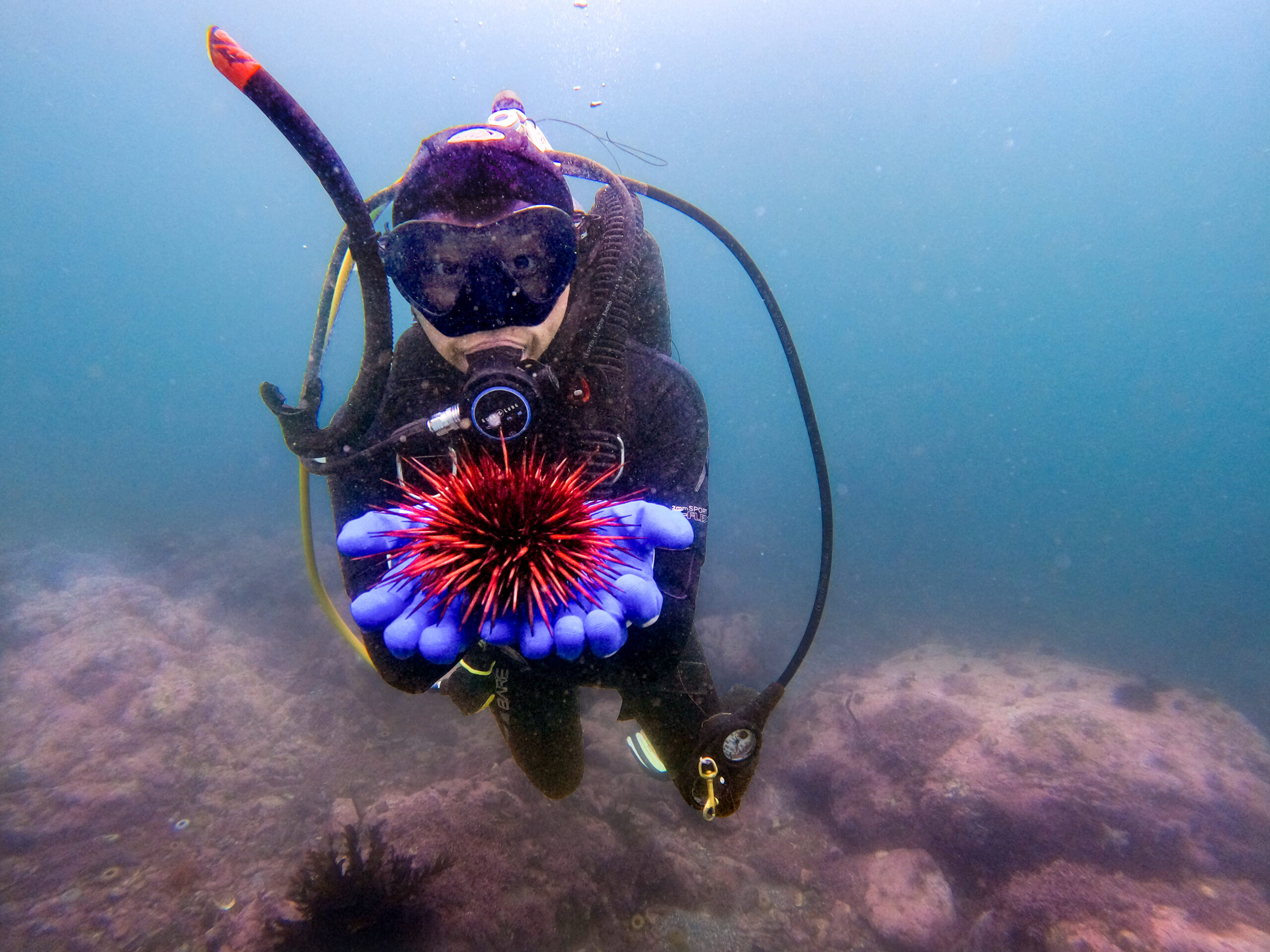
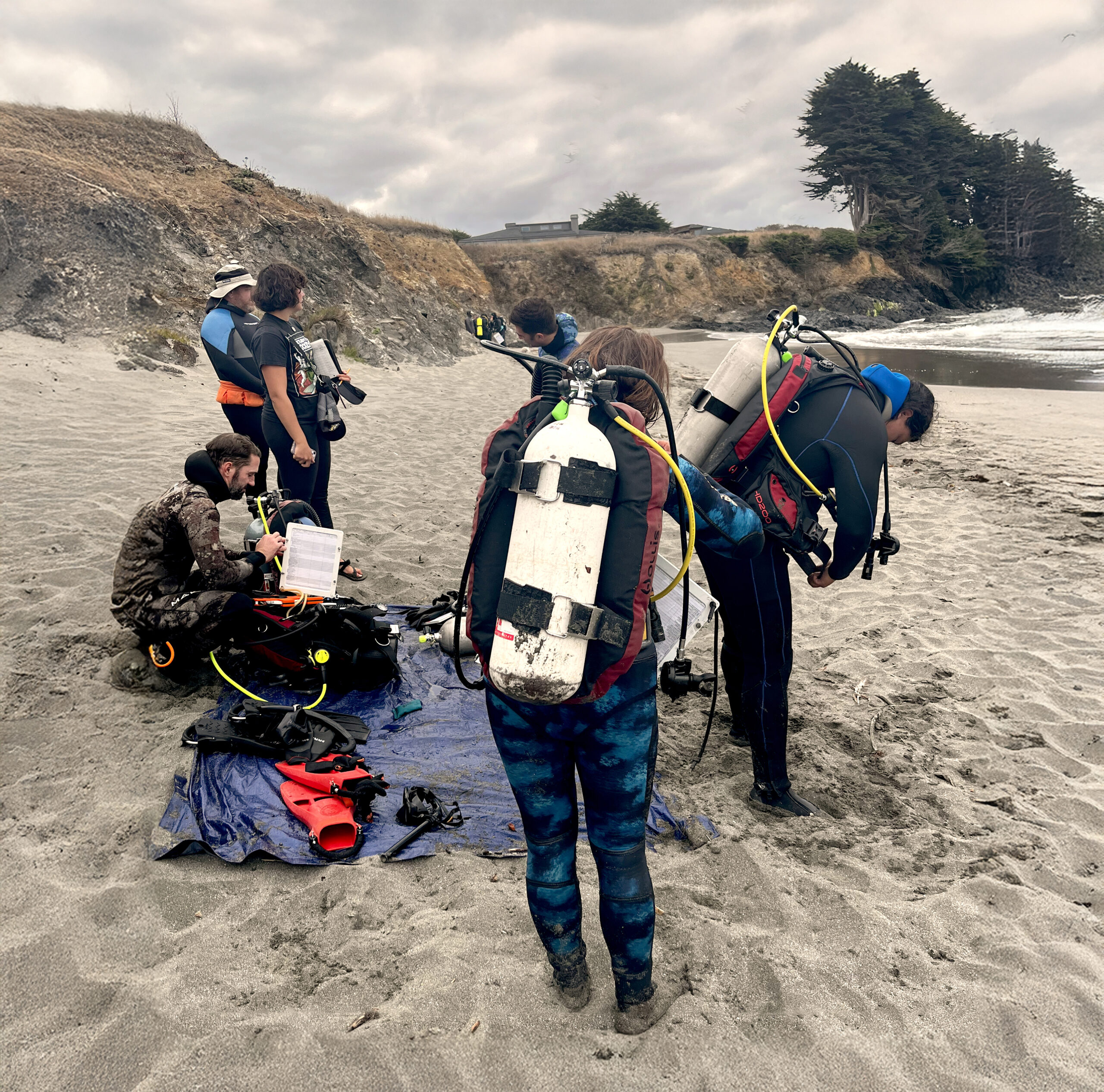
Over the past decade, myriad volunteer groups have taken to the ocean to try to curtail the rampant spread of urchins. Sullivan, the Fork in the Path guide, volunteers with the Purple Urchin Removal Project (PURP), free diving to collect and remove urchins in Stillwater Cove, 4 miles north of Fort Ross. And Gianoli is a member of the Caspar Cove Project, a team of divers who have an emergency permit to destroy purple sea urchins in designated waters off the Mendocino coast.
Fork in the Path instructor Ryn Sullivan heads to the beach with a bag of harvested purple urchins Jan. 18, 2026, near Fort Ross on the Sonoma Coast. (John Burgess / The Press Democrat)Bodega Marin Lab Ph.D. candidate Maya Munstermann studies urchins and the effects of climate change and marine heatwave events on kelp forest ecosystems. (Courtesy of Maya Munstermann)
“Diving underwater, all you see is just this barren landscape like Mars or like a deforested plain,” says Maya Munstermann, a marine ecologist working toward her Ph.D. while studying purple sea urchins and kelp forest restoration at the UC Davis Bodega Marine Laboratory. “It’s weird because there’s no shade. The bull kelp provided all the shade. Now, under this wide-open bright light, you see urchins all over the ground, all these purple spines and nothing else.”
Urchins typically gnaw away at the kelp’s base, the holdfast that roots its long trunk or stipe (often 100-150 feet long) to the seafloor. Once detached, kelp plants drift away to die, leaving vast urchin barrens covered with starving “zombie urchins,” barely sustained by algae and seaborne nutrients. Without much food, their roe shrivels up—to the point where unlucky harvesters crack open the shell to find hardly any food inside.
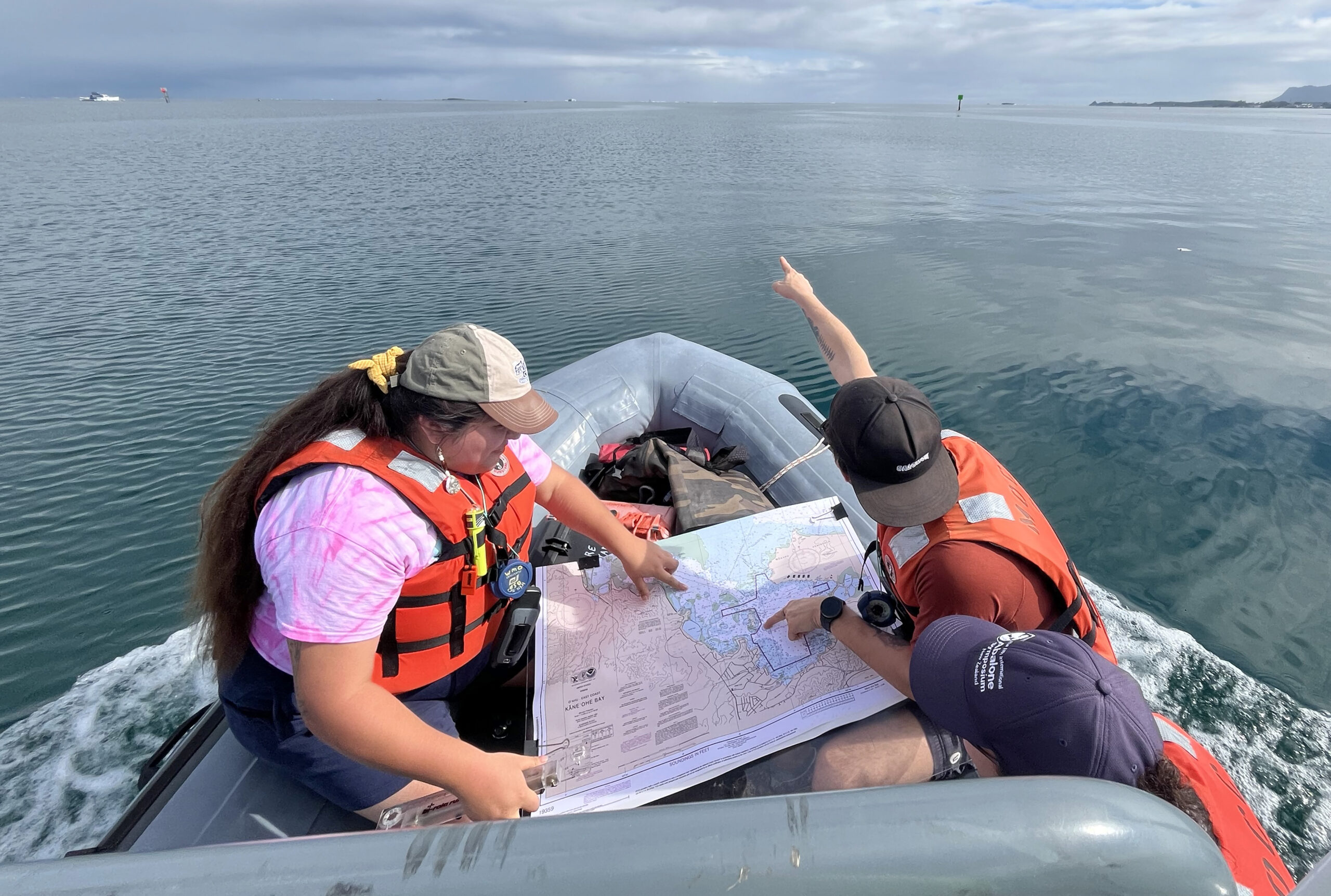
Dan Swezey, left, leads a group of Kashia tribal members on a diving and ocean skills course in Hawaii this January. (Courtesy Dan Swezey)Dan Swezey leads a group of Kashia tribal members on a diving and ocean skills course in Hawaii this January. (Courtesy Dan Swezey)
But Munstermann is working with fellow marine ecologist Dr. Dan Swezey on an “urchin ranching” project that will hopefully create a rich uni pipeline for restaurants and provide jobs for the Kashia Pomo, a non-gaming tribe. Last year, as part of a grant to restore the kelp forest, the tribe teamed up with commercial divers and several marine science organizations to remove tons of sea urchins off the coast near Shell Beach in The Sea Ranch. A team of Pomo divers is currently in training. For now, they’re turning the high-calcium urchin remains into compost for farmers. But, by next year, they hope to have an aquaculture facility in place to farm both urchins and abalone—a shellfish of great cultural and spiritual importance to the Pomo. Eventually, the goal is for tribal divers to collect tons of empty, starving urchins from kelp forest restoration sites, fatten them up in about two months with a special diet (including kale, carrots, and cabbage), then sell them to local chefs.
“The big vision is for it to support the ocean restoration and to also be that critical piece that’s missing, which is traditional food,” says Swezey, director of oceans and aquaculture for the Kashia Pomo. “This is something that is valuable to the people. If we’re going to be removing tens of thousands or hundreds of thousands of urchins year after year to restore kelp forest, the tribe feels a lot better about making use of that resource for food rather than just compost.”
Delicacy seeking foodies comb the rocks for purple sea urchins during a foraging class with Fork in the Path tours Jan. 18, 2026, at a beach near Fort Ross on the Sonoma Coast. (John Burgess / The Press Democrat)
Back in the Fort Ross tide pools, the class of newbie urchin wranglers are trying to do their small part in the restoration process, hoping to reach their limit in the last hour of daylight. Sullivan’s advice to “sneak attack” the urchins and come at them from the side, seems to be working. “You want to twist,” they tell everyone. “You don’t want to pull it off. You want to push to the side. Straight off is how they’ll suction themselves back to the rock.”
Adam De La Montanya, of Healdsburg, makes the most of a stainless steel frosting spatula to pry urchins off the rocks. “I snagged it without my wife knowing,” he says, later explaining how one of his daughters wrote a long letter to the California Department of Fish and Wildlife encouraging them to focus more on reintroducing sea otters along the North Coast.
Delicacy seeking foodies comb the rocks for purple sea urchins during foraging class with Fork in the Path tours Jan. 18, 2026, at a beach near Fort Ross on the Sonoma Coast. (John Burgess / The Press Democrat)David Chew and Megan Harclerode comb the rocks for purple sea urchins during a foraging class with Fork in the Path Jan. 18, 2026, at a beach near Fort Ross on the Sonoma Coast. (John Burgess / The Press Democrat)
Nearby, Serena Ingre is using a three-pronged garden rake to claw urchins from the rocks. She drove up from Berkeley with her husband, Sean Gibson, who has memories of melt-in-your-mouth uni in Tokyo sushi bars. But after tasting one mid-harvest, he declares, “It’s best fresh out of the ocean.”
How would he describe it for the uninitiated?
“Silky, a little buttery, but also salty at the same time.”
But Kenny Guay from San Francisco isn’t so sure. “It’s not as strong as I thought it would be coming right out of the ocean,” he says, after cracking open an urchin.
His girlfriend, Jen Goza, seems unfazed. This day has been on her bucket list for years. “Honestly, I started eating more purple sea urchins because of the overpopulation,” she says. Goza is hoping to raise awareness by sharing tales of her adventure. “I’m telling everyone, ‘Look what I did. It’s fresh from the California coast.’ This is a way to be more mindful of our surrounding habitat and how we as humans can try to help.”
Frank Rolle of Fremont gathers his harvest of purple urchins during a uni foraging class with Fork in the Path tours Jan. 18, 2026, at a beach near Fort Ross on the Sonoma Coast. (John Burgess / The Press Democrat)Purple sea urchins gathered during a sea urchin uni foraging class with Fork in the Path tours Jan. 18, 2026 at a beach near Fort Ross on the Sonoma Coast. (John Burgess / The Press Democrat)
It’s the same philosophy that inspired the Mendocino County Purple Urchin Festival. A conscious effort to rebalance the coastal ecosystem is also behind everything from branded Urchinite marbled table- and countertops made from crushed sea urchins to fabric workshops, titled “Help the Kelp: Create Natural Dye with Sea Urchins,” led by artist Margaret Seelie.
Also trying to do their part, local chefs up and down the North Coast often forage for purple sea urchin to bring back to the kitchen, or specifically order purple instead of red urchins from their seafood distributors. Traditionally, the prized uni at sushi restaurants—which can fetch more than $200 for an extravagant uni rice bowl at fish markets in Japan—comes from the red sea urchin, not the purple. But there’s been a push over the past decade to get the purple urchin on local menus. Part of the trick is finding chefs willing to tell the story and come up with creative ways to encourage their guests to try it.
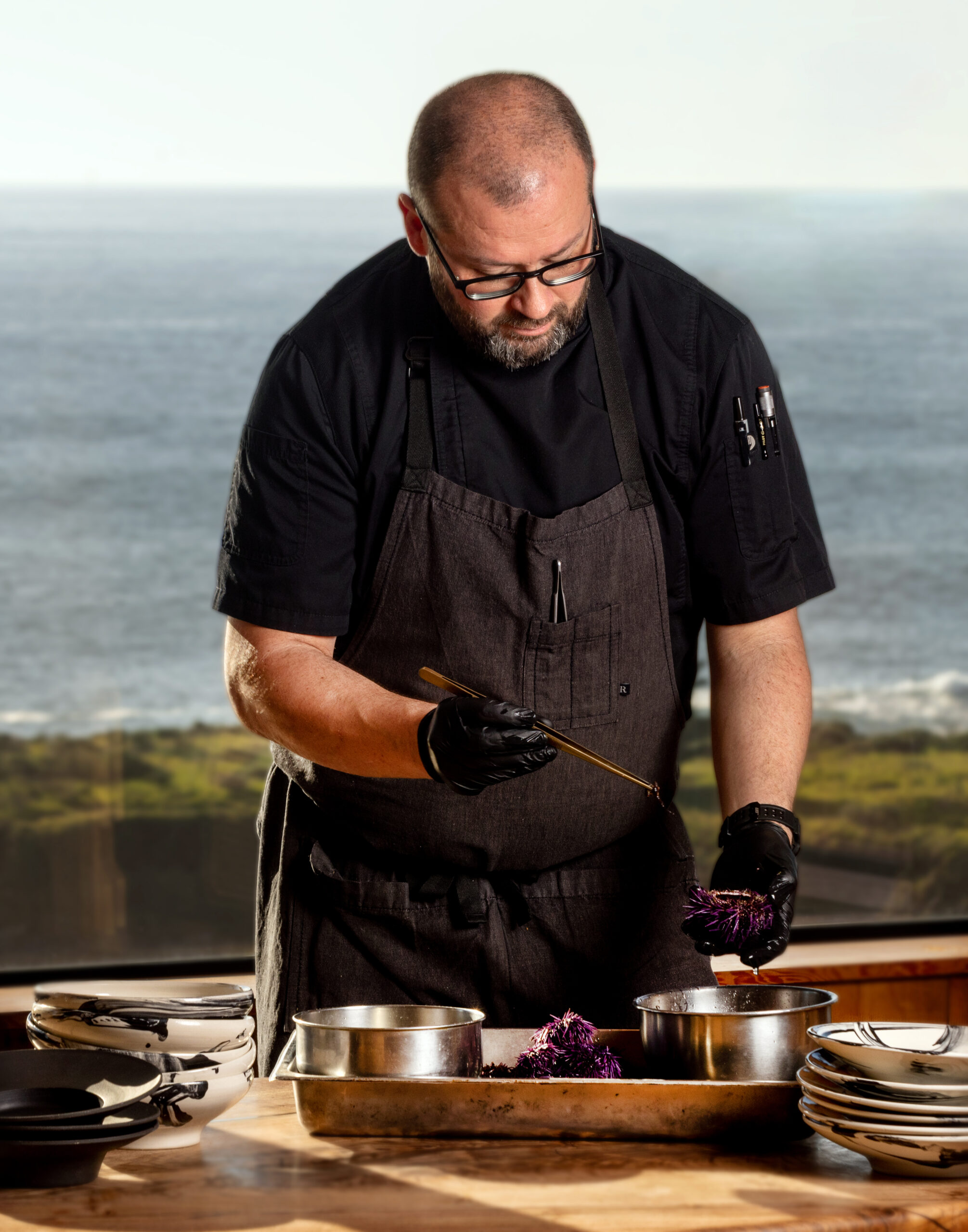
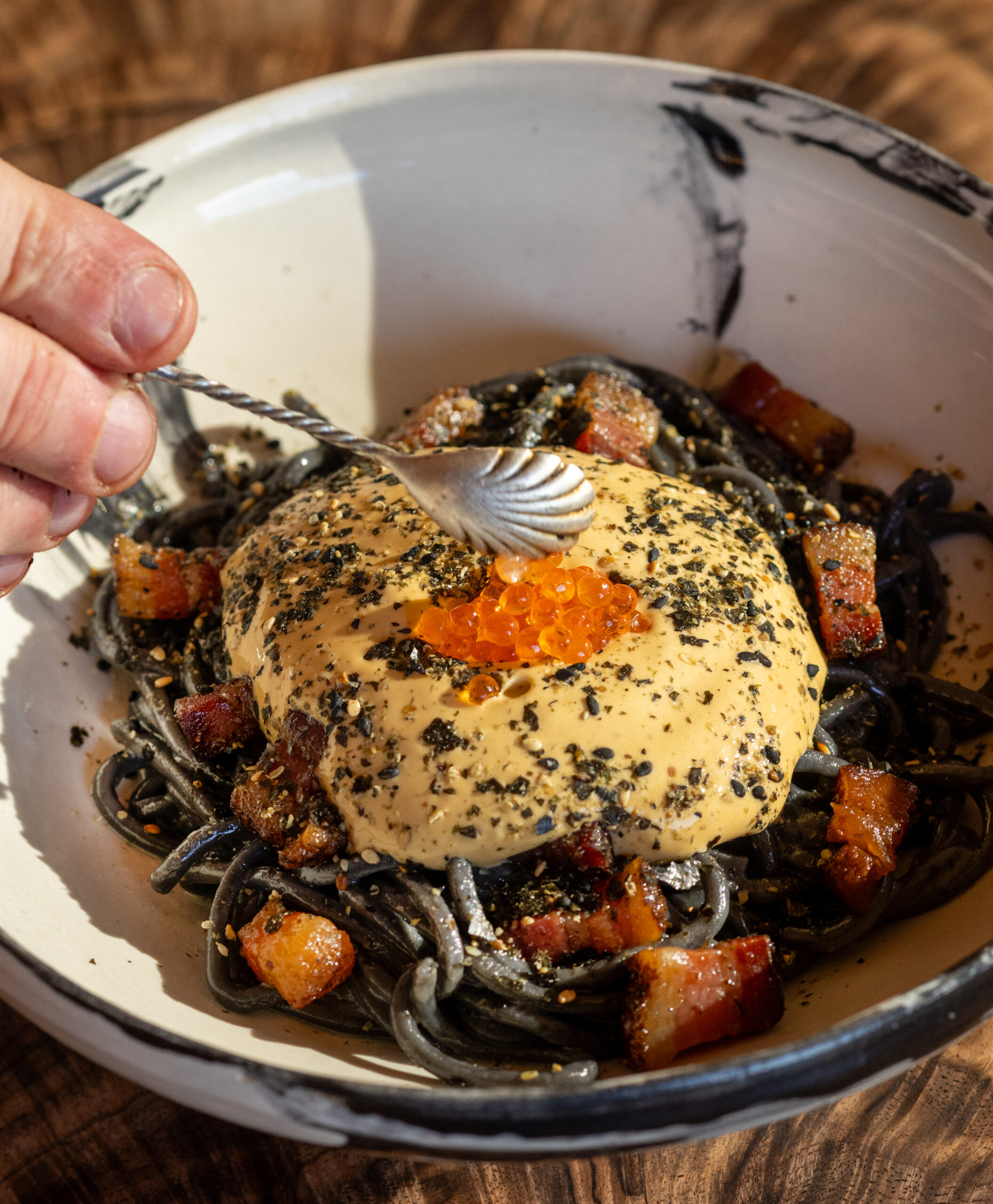
Sea Ranch Lodge chef Ryan Seal makes uni carbonara with squid ink chimaera pasta, pancetta, furikake and the uni from local purple sea urchins Thursday, Feb. 6, 2026. (John Burgess / The Press Democrat)Uni carbonara with squid ink chimaera pasta, pancetta, furikake and the uni from local purple sea urchins from Sea Ranch Lodge chef Ryan Seal Thursday, Feb. 6, 2026. (John Burgess / The Press Democrat)
At The Sea Ranch Lodge, not far from Shell Beach where the Kashia Pomo are hauling out urchins by the ton, executive chef Ryan Seal makes a popular uni carbonara with purple sea urchin foam, pancetta, and squid ink pasta sprinkled with katsuobushi (skipjack tuna flakes). The kitchen goes through nearly a pound of uni roe—around 60-80 urchins—every night it’s on the menu.
“We’re not using it because it’s weird. We’re using it because we should and need to, to keep the other sea life around us growing and happy,” says Seal, who foraged for purple urchin when he was cooking at the now-closed Sacred Rock Inn in Elk. A mile down the coast, chef Matthew Kammerer has been known to pluck urchin from local waters for his two-Michelin-starred Harbor House Inn, making tempura-fried maitake mushrooms and fried crispy mustard leaves topped with purple sea urchin roe.
Executive chef at the Michelin-starred Harbor House Inn, Matthew Kammerer was the co-organizer of the Mendocino Coast Purple Urchin Festival in 2022. (John Burgess / The Press Democrat)Sea Ranch Lodge chef Ryan Seal prepares a dish using uni from local purple sea urchins Thursday, Feb. 6, 2026. (John Burgess / The Press Democrat)
But Seal might win the prize for most creative and unlikely urchin dish: Behold “the Banuni”—a surprise starter with roasted banana sorbet, conjuring notes of caramel, but also slightly savory, similar to a plantain, topped off with what he describes as “the fresh ocean taste” of uni.
At a recent conference in San Francisco, Swezey talked with seafood industry experts about challenges they face marketing purple urchin to new customers. “Many people think it tastes sweeter,” he says. “But the market sort of wants this mango, yellow-orange color and purple urchin roe sometimes looks like that, depending on what they’re eating, but it also looks a little bit different sometimes.”
Purple urchin can display more of a light yellow, he says, and sometimes less desirable “gray twinges” depending on diet. Red urchin are also more meaty and larger in size on average, and hold their shape a little better.
“If we can kind of get over this size thing—like maybe you could combine a couple gonads from a purple urchin and make a bigger piece that is as appealing—the flavor is there,” Swezey says.
Cutting open purple sea urchins to reveal the edible uni at a foraging class with Fork in the Path tours Jan. 18, 2026, at a beach near Fort Ross on the Sonoma Coast. (John Burgess / The Press Democrat)
When David Hopps, chef and owner of Izakaya Gama in Point Arena, gets a batch of purples with less than perfect roe, he often uses the uni as a thickening agent in pasta sauce, blitzing it down with cream and shallots and serving it over thicker noodles sprinkled with chives.
When he’s not serving it raw as sashimi, Hopps likes to wrap it in a shiso leaf, fry it in tempura batter, and serve it with a dipping sauce. But his favorite uni dish might be layered on top of chawanmushi, a savory egg custard. “It’s the counterbalance of the sweet umami to a really savory umami of the egg custard itself,” says Hopps, who tries to keep purple urchin on the menu about half the year.
The problem with foraging, he says, is the often unpredictable yield. “I’ve had great days where you go out and get like 50 sea urchin and you crack them and they’re all perfect,” says Hopps. On other days he says he can crack 100 and get less than what he could purchase from a seafood purveyor with much smaller investment of time. Occasionally, he wanders down to the Point Arena pier when a dive boat is offloading excess urchins and they’re giving them away.
“When you do get great purple sea urchin, I think it’s just as good, if not better, than the red sea urchin. It’s sweeter,” says Hopps, who often fields questions from tourists curious about the latest news on purple urchin and the local ecosystem.
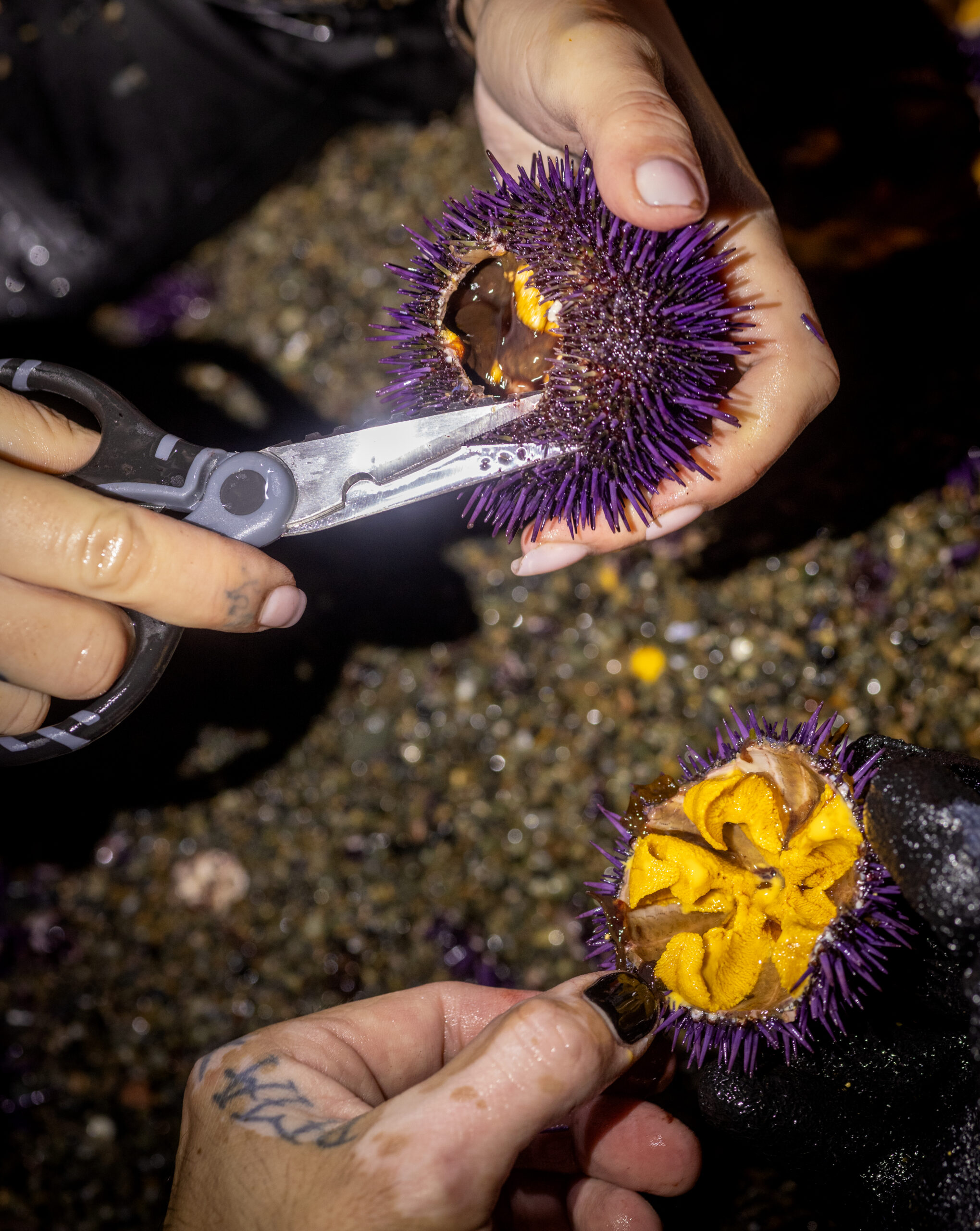
Fork in the Path instructor Ryn Sullivan shows participants how to open and remove the uni from purple sea urchins during a foraging class Jan. 18, 2026, at a beach near Fort Ross on the Sonoma Coast. (John Burgess / The Press Democrat)Cutting open purple sea urchins to reveal the edible uni at a foraging class with Fork in the Path tours Jan. 18, 2026, at a beach near Fort Ross on the Sonoma Coast. (John Burgess / The Press Democrat)
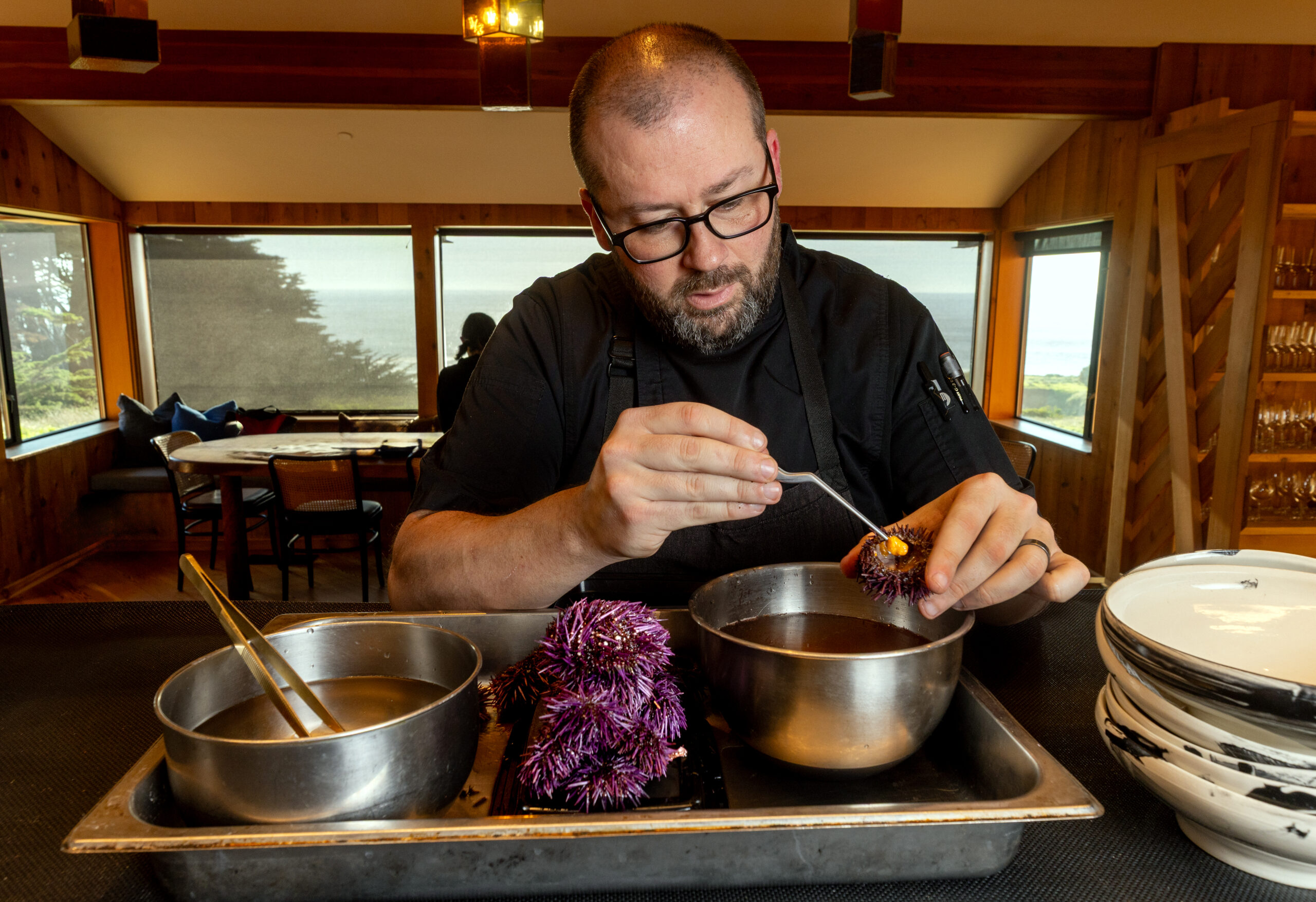
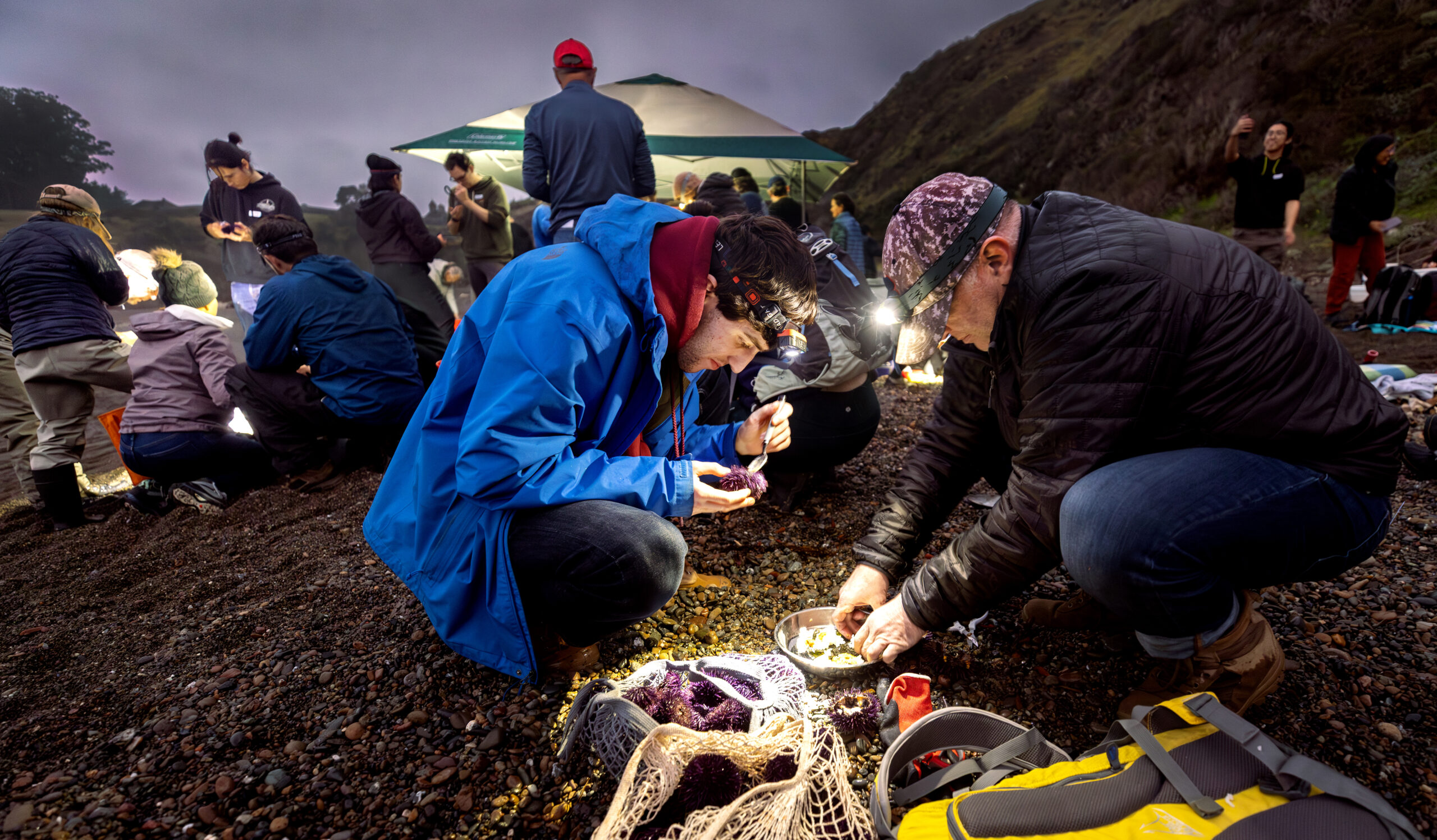
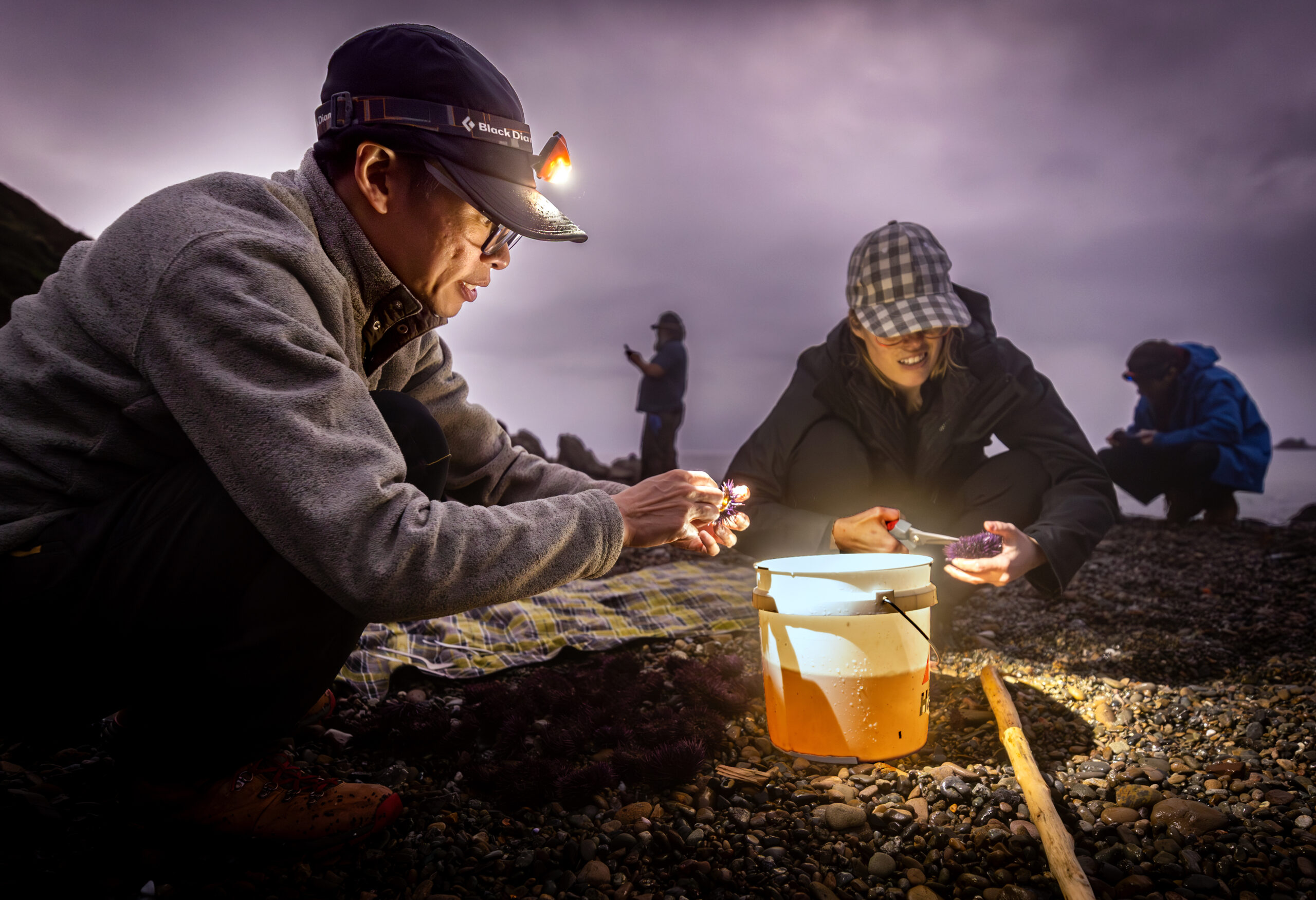
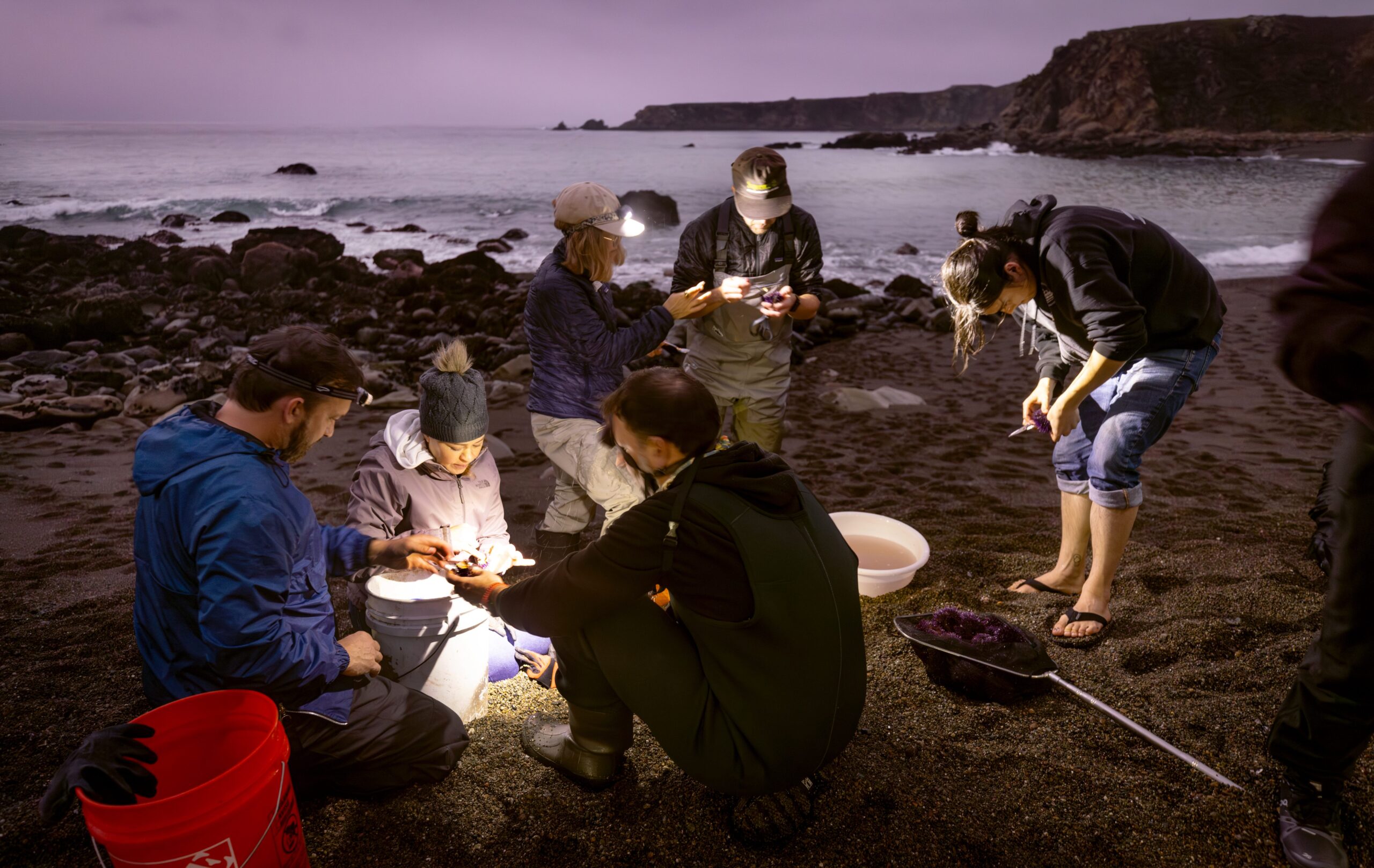
As night falls on the cove near Fort Ross, the class gathers on the beach beneath the spotlight glow of headlamps to learn how to clean their urchins. Gianoli teaches them to use small scissors to remove the hard five-toothed mouth on the bottom, known as Aristotle’s Lantern, to gain access to precious urchin innards. Then he demonstrates how to run a finger along the inside lip of the shell to dislodge any other teeth gripping the uni flesh. After making a smaller, circular cut around the opening of the shell, and a little more finger prying, he dunks it in a small bath of seawater, then shakes the uni into his hand—something that’s easier said than done.
Under a beach tent, the instructors fire up a hearty miso soup over a gas burner, chopping green onions to sprinkle on top. They offer handrolls of seaweed and rice so guests can top it with fresh uni, and Sullivan explains how to make uni butter at home.
After a low-tide harvest of purple sea urchins, participants gather to crack open and eat the delicious uni during a foraging class with Fork in the Path tours Jan. 18, 2026, at a beach near Fort Ross on the Sonoma Coast. (John Burgess / The Press Democrat)David Chew and Megan Harclerode open their harvest of purple sea urchins for their delicious uni during a foraging class with Fork in the Path tours Jan. 18, 2026, at a beach near Fort Ross on the Sonoma Coast. (John Burgess / The Press Democrat)
Amid sounds of cracking and grunting, people try their best to wrestle open the brittle shells and unearth the gooey prize. Finally, the moment of truth—the first slurp everyone has been working toward. But not everyone agrees on the taste.
“It’s interesting, but I’m not sure I would go, ‘Wow!’” says Martin Wobig, a first-time harvester and taster from Santa Rosa. He compares it to a soft cheese, more sweet than salty.
A few feet away, Max Aukes is celebrating his 6th birthday with his family. After straining to “take out the mouthpiece” and open the shell, how would he sum up the taste?
“Slimy, yet satisfying,” he says with a big grin.
Another way to size it up: “It’s salty, ocean-flavored butter,” says Keeley Waite, who drove up from Sausalito for the day. “But if you don’t like oysters, you’re not gonna like this.”
After a low-tide harvest of purple sea urchins, participants gather at a beach near Fort Ross to crack open and eat the delicious uni during a foraging class with Fork in the Path tours Jan. 18, 2026, on the Sonoma Coast. (John Burgess / The Press Democrat)
No matter what they think about the taste, everyone in the class can agree on one thing: The cautionary tale of the sea urchin, the sea star, and the kelp forest is impossible to ignore. It makes you want to join in and lend a hand, even if it’s just pulling three dozen sea urchins from the millions of spiny invertebrates blanketing the ocean floor.
“It’s nice to engage in a way that doesn’t feel extractive,” says Vanessa Wilbourn. The singer and bass player in the popular folk-rock trio Rainbow Girls is back for her second time, bringing along a friend visiting from Connecticut. “I feel like we’re actually working to bring some measure of balance, or at least that’s what I hope is happening.”
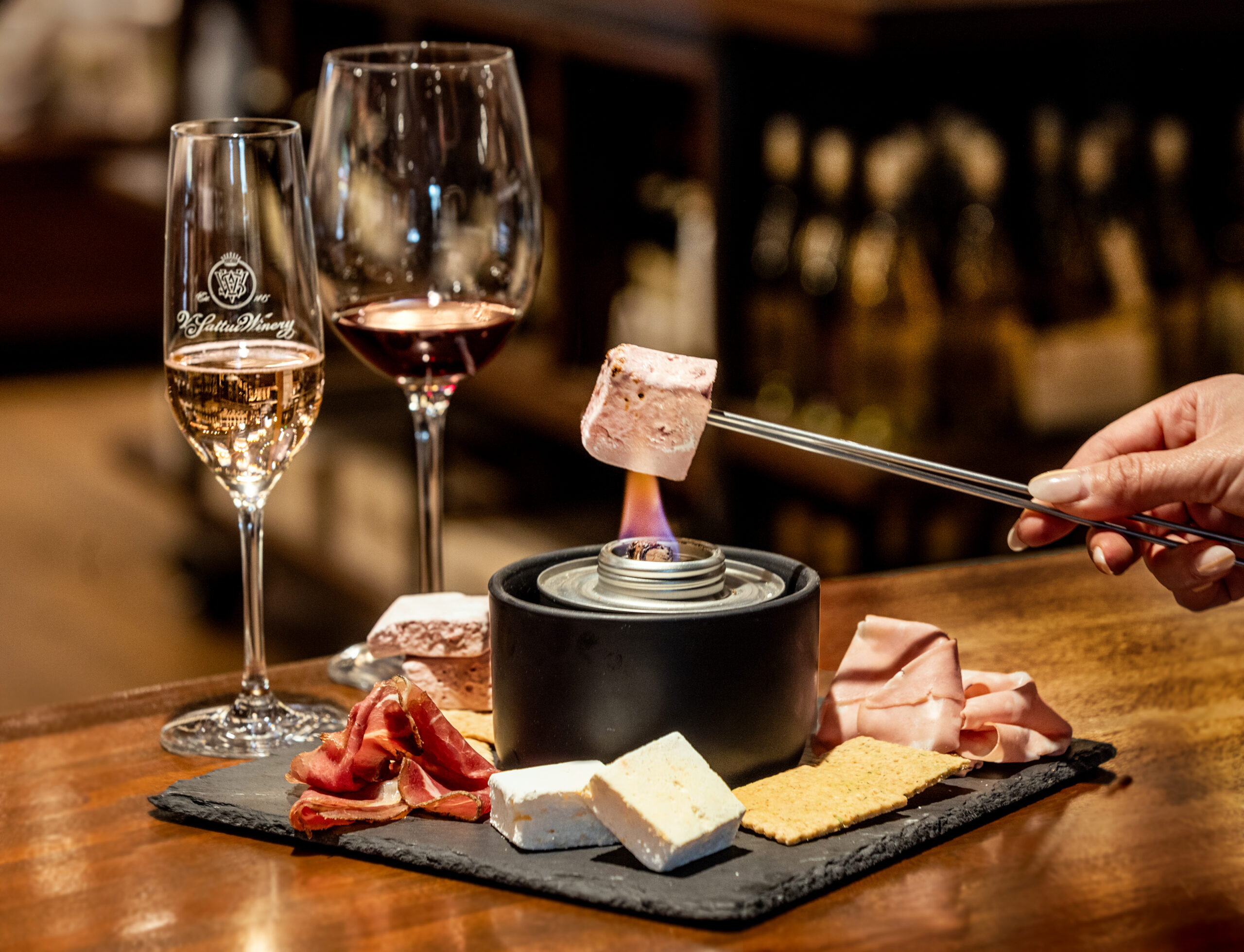
The V. Sattui Winery chef Katryana Zide reimagined s’mores as a savory course with infused marshmallows roasted tableside and layered with housemade crackers and cured meats paired with wines Thursday, April 23, 2026 from one of the oldest wineries in the Napa Valley. (John Burgess/The Press Democrat)
Tired of the ritualized sip and swirl? In Sonoma County and Napa Valley, wineries and tasting rooms are rethinking the formula.
As wine consumption evolves, so, too, does the experience around it. Increasingly, vintners are inviting guests to loosen the rules — to treat wine not as something to decode, but something to enjoy alongside whatever happens to be on the plate. The old pairings — Cabernet with steak, Pinot Noir with duck — are giving way to a more playful sensibility. Across Wine Country, tastings now feature unexpected companions: shortbread and s’mores, beignets and elaborate brunch boards.
Here are a few favorites.
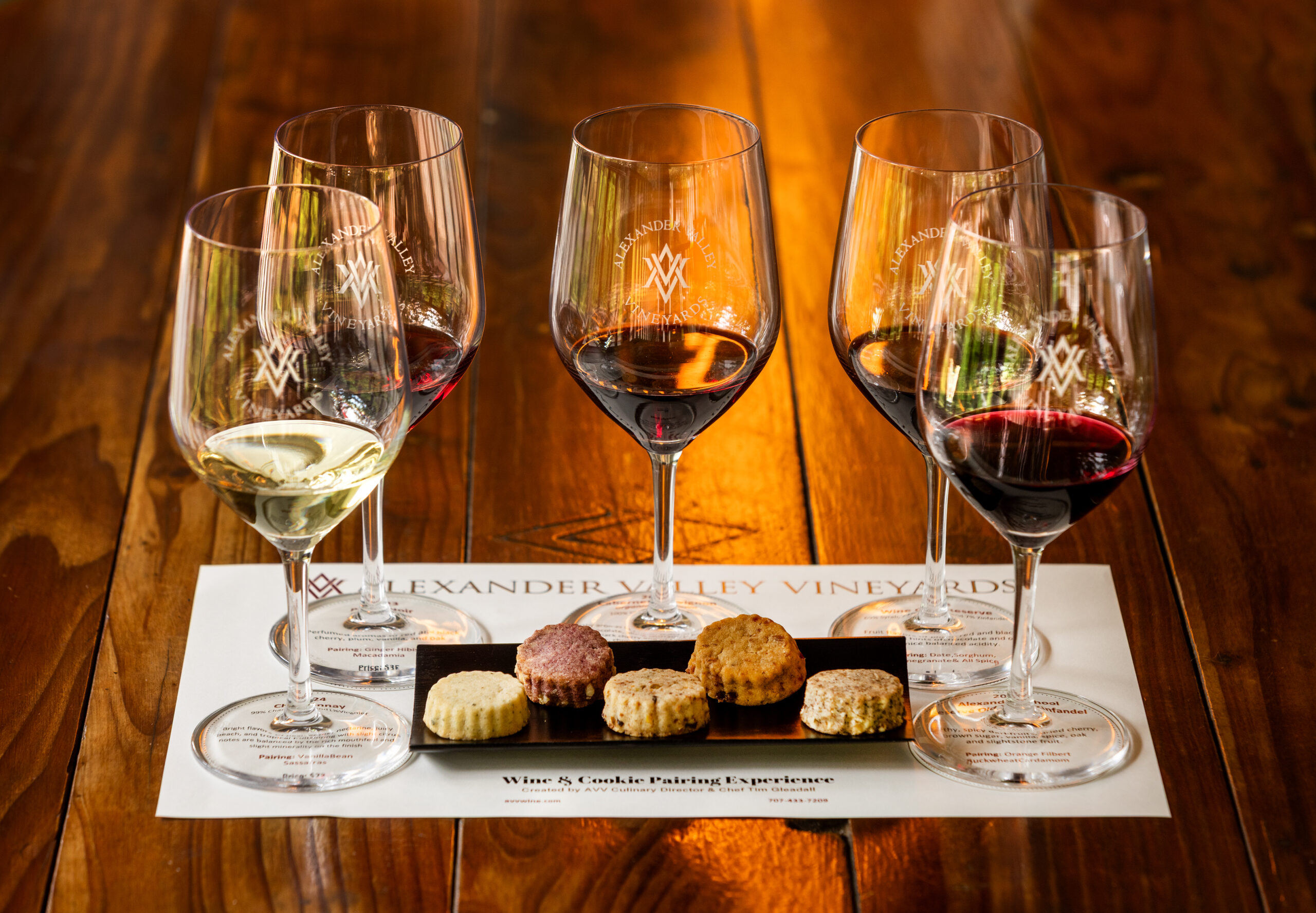
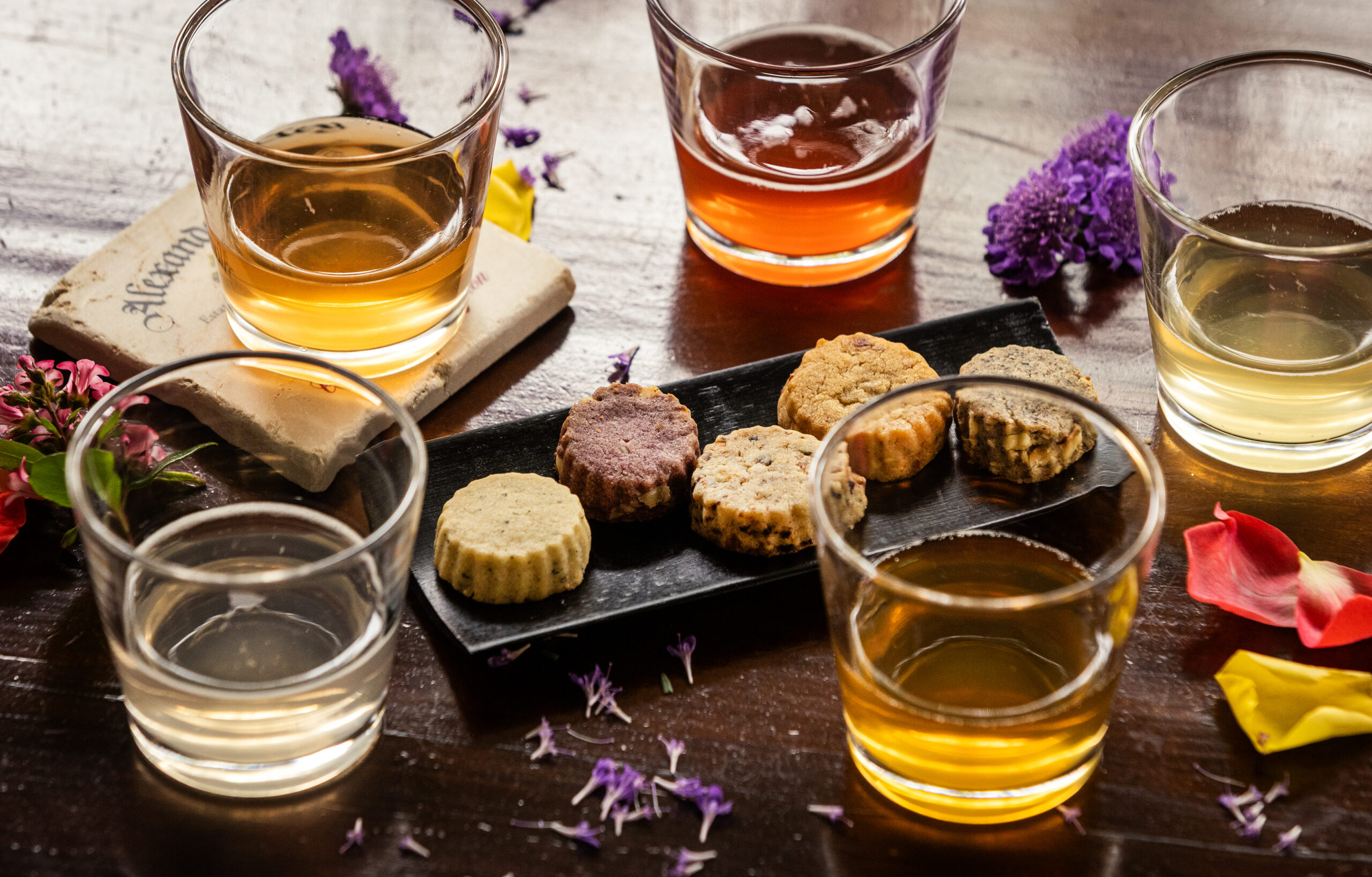
Alexander Vineyards culinary director Tim Gleadall created flavored shortbreads to pair with their wines for a “Wine and Cookie Pairing Experience” Wednesday, April 22, 2026. (John Burgess/The Press Democrat)For the designated driver, Alexander Valley Vineyards culinary director Tim Gleadall pairs nonalcoholic shrubs with flavored shortbreads for the “Wine and Cookie Pairing Experience” Wednesday, April 22, 2026. (John Burgess/The Press Democrat)
Sonoma County
Cookies and Cabernet at Alexander Valley Vineyards
What started as a holiday treat at Alexander Valley Vineyards has turned into a year-round favorite. Each tasting flight arrives with five housemade shortbread cookies, thoughtfully paired with different wines from the estate.
The pairings range from classic to delightfully unexpected: think vanilla bean and sassafras shortbread with Chardonnay, or fig-pistachio with Cabernet Sauvignon. Culinary director Tim Gleadall crafts each cookie in-house, often reaching into the estate gardens for inspiration.
For those skipping alcohol, the kitchen offers a parallel experience of nonalcoholic shrubs — including fig, ginger-hibiscus and sorghum — designed with the same attention to pairing.
$30 per person. Reservations are required and can be made on Tock.
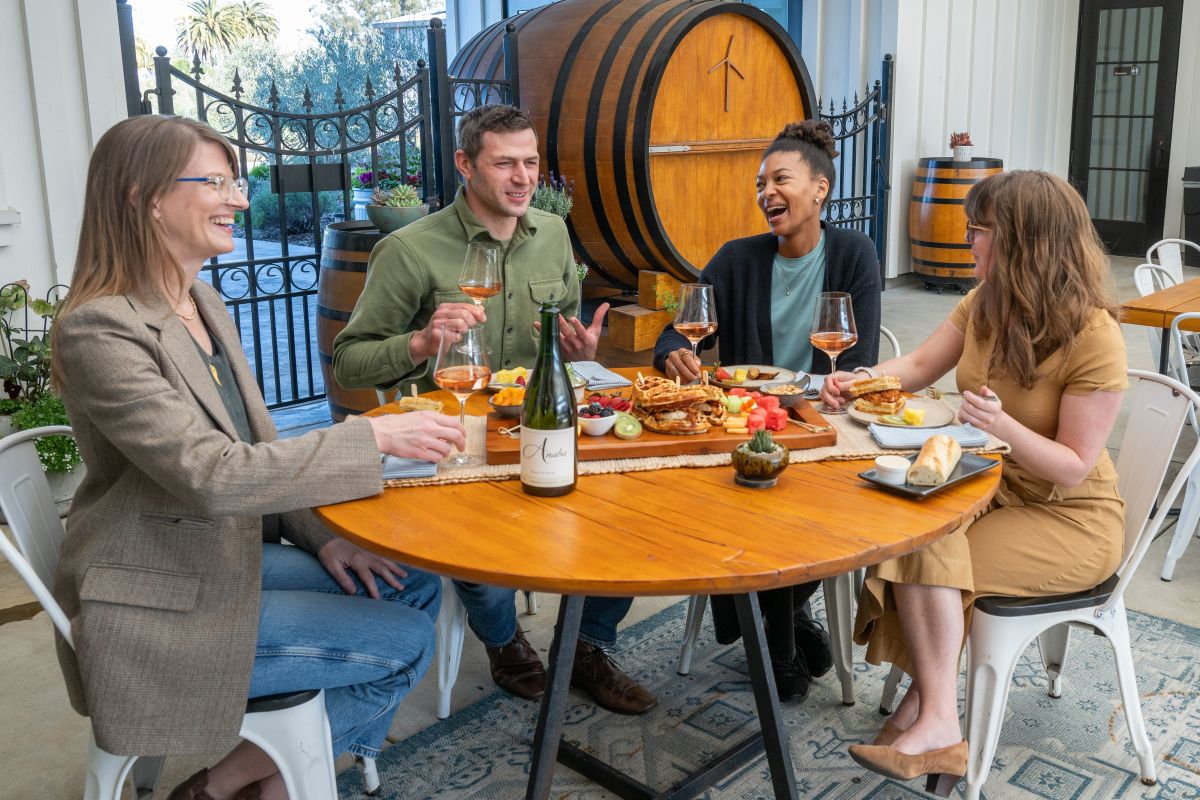
Available on Saturdays and Sundays, brunch boards can be added to any wine tasting flight at Anaba Wines in Sonoma. (Richard Wood Photography)
Weekend Brunch Boards at Anaba Wines
At Anaba Wines, weekends are made for lingering. Guests can add a seasonal brunch board to their tasting — fried chicken and waffles, just-picked strawberries from the Watmaugh stand next door, and Carmody cheese from Bellwether Farms in Petaluma all make an appearance.
The boards change with the seasons, giving you a reason to return. The staff offers pairing suggestions for each pour, making the experience feel more like a leisurely meal than a formal tasting.
Tastings range from $45–$65; brunch boards are $48. Reservations are recommended and can be made on Tock.
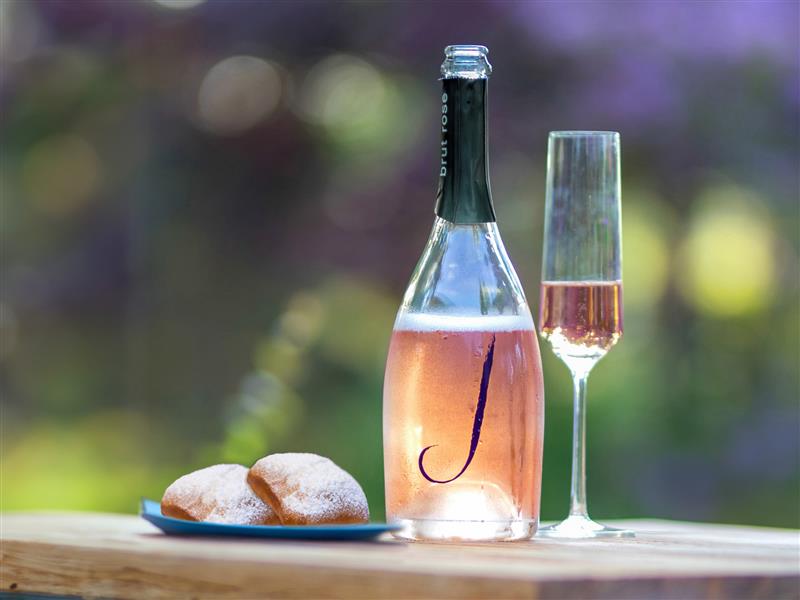
Bubbles & Beignets will be offered at J Vineyards & Winery in Healdsburg on on May 17 and July 5. (J Vineyards & Winery)
Bubbles and Beignets at J Vineyards & Winery
On select summer days, Sonoma Wine Country gets a taste of The Big Easy. Fresh, pillowy beignets dusted in powdered sugar are served alongside pours from J Vineyards’ sparkling library, with live music setting the mood.
Scheduled for May 17 and July 5. $60 per person. Reservations are recommended and can be made on Tock.
11447 Old Redwood Highway, Healdsburg, 707-431-5430, jwine.com
Napa Valley
The V. Sattui Winery chef Katryana Zide reimagined s’mores as a savory course with infused marshmallows roasted tableside and layered with housemade crackers and cured meats paired with wines Thursday, April 23, 2026, from one of the oldest wineries in the Napa Valley. (John Burgess/The Press Democrat)
Savory S’mores at V. Sattui Winery
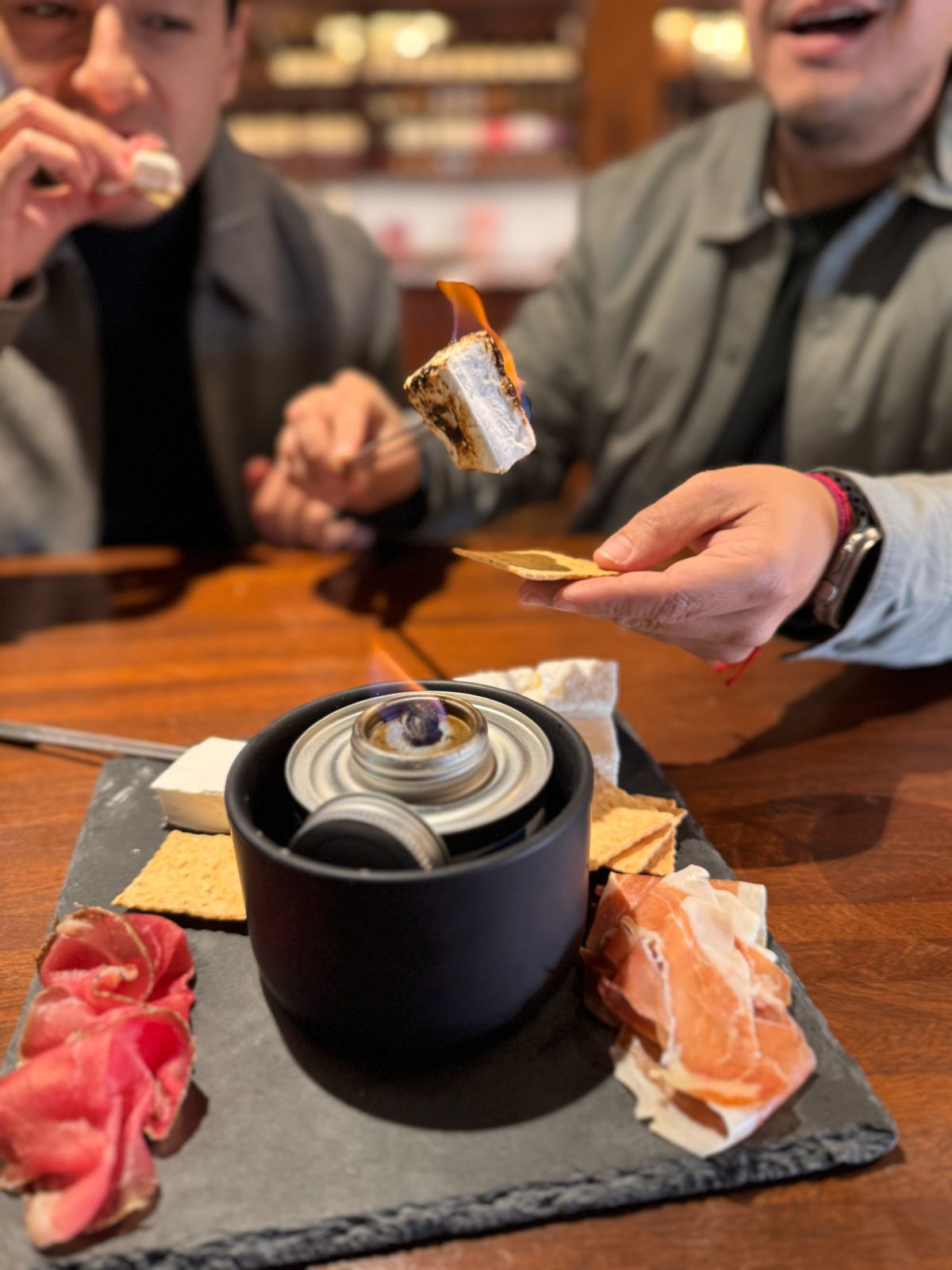
At V. Sattui, the campfire staple is reimagined as a savory course. Marshmallows infused with flavors like cherry-thyme or aged Gouda are toasted tableside and layered with housemade crackers and cured meats such as Italian mortadella and bresaola.
Chocolatier and pastry chef Katryana Zide keeps the pairings fresh, but the spirit is always the same: familiar treats, surprising flavors. The s’mores experience is part of the tasting flights at the newly revamped Mercato del Gusto.
$20, plus tasting. Reserve a tasting on CellarPass.
1111 White Lane (at Highway 29), St. Helena, 707-963-7774, vsattui.com
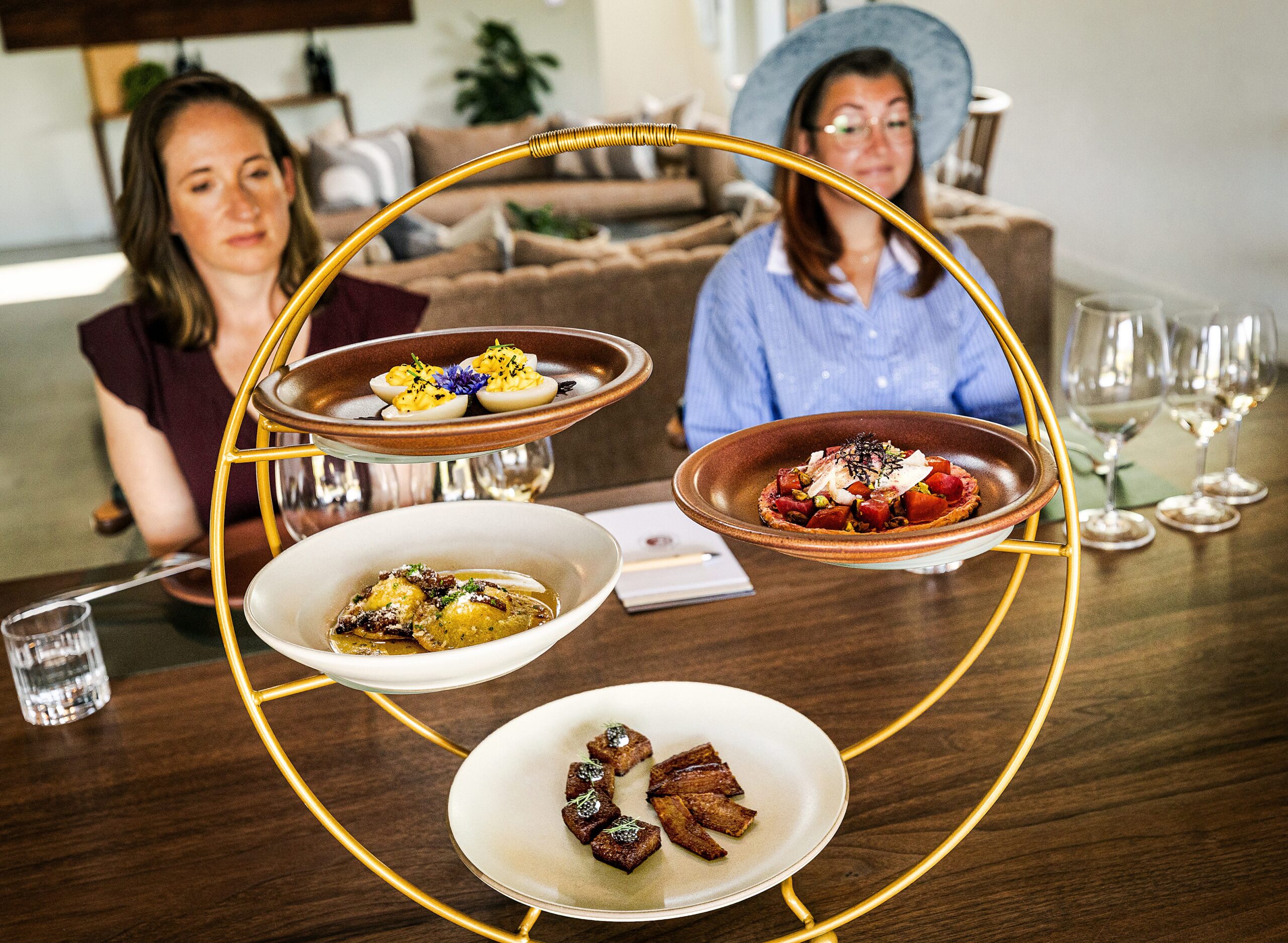
Tableside s’mores at V. Sattui in St. Helena. (V. Sattui Winery)Carli Baxter, left, and Jacey Ohlinger taste Clif Family Winery & Farm wines paired with seasonal dishes crafted with ingredients harvested straight from their organic farm and local sources during the “Farm to Brunch Tasting Experience” Friday, April 24, 2026 in St. Helena. (John Burgess/The Press Democrat)
Farm to Brunch at Clif Family Winery & Farm
This multicourse tasting is a love letter to the region’s farms and fields, with ingredients sourced from the estate and neighboring producers.
It starts with Clif Family’s own buttermilk-cheddar biscuits, English muffins from The Model Bakery and Mt. Tam cheese from Cowgirl Creamery. From there, the menu unfolds into seasonal dishes such as charred asparagus with sauce gribiche and fresh herbs; hash browns topped with crème fraiche, caviar and vanilla-cinnamon bacon from Journeyman Meat Co.; and egg yolk ravioli with greens and ricotta in a rich bacon jus.
$125 per person; reservations required. Seatings are at 10 a.m. daily. Vegan pairing menu or mocktail flight available on request. Reserve a tasting on Tock.
1334 Vidovich Lane, St. Helena, 707-968-0625, cliffamily.com
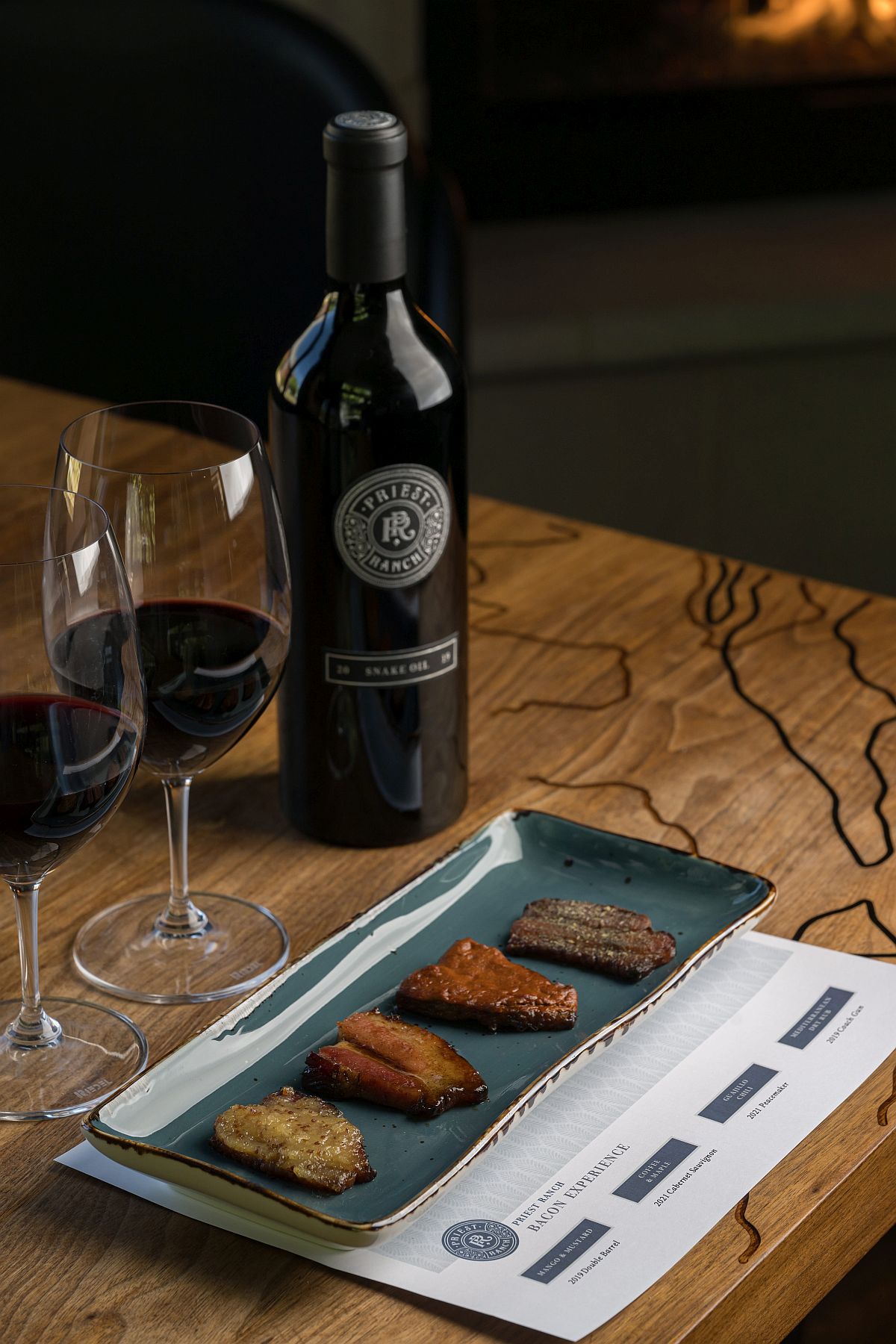
The Bacon & Wine Experience at Priest Ranch in Yountville includes four cuts of uniquely seasoned pork belly with four estate wines. (Priest Ranch)
Bacon & Wine Experience at Priest Ranch
If you believe everything is better with bacon, this wine tasting is for you. Four cuts of pork belly, each with its own seasoning, are matched with estate wines in a tasting that leans unabashedly rich. Recent iterations have included strawberry-rhubarb bacon with Merlot and ras el hanout — glazed pork with Zinfandel.
$85 per person. Reservations are required and can be made on Tock.
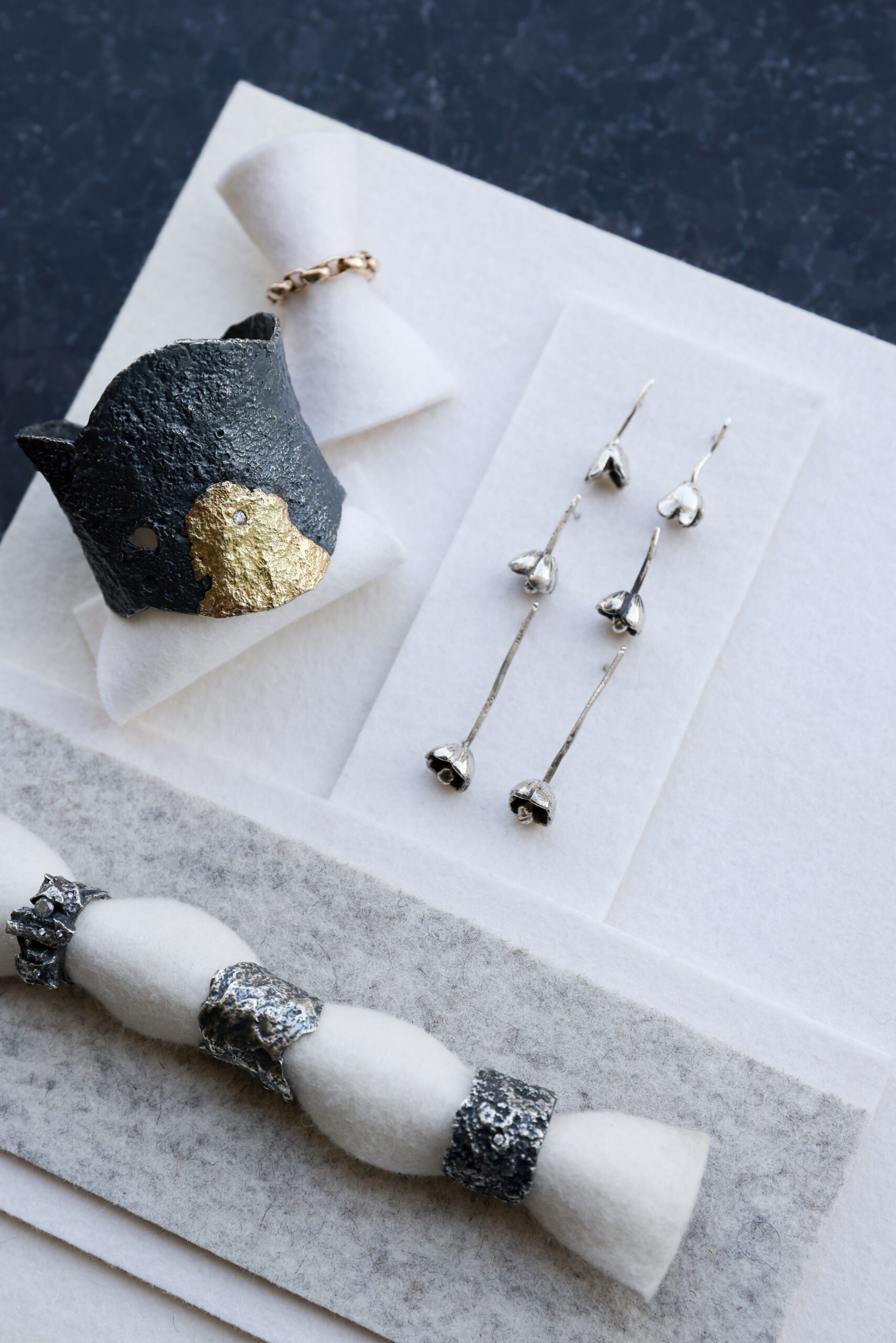
Jewelry at Gallery Lulo that was used by the stars in the movie The Devil Wears Prada 2. Photo taken in Healdsburg on Friday, February 6, 2026. (Christopher Chung/The Press Democrat)
One of the year’s most anticipated movies is “The Devil Wears Prada 2,” but the sequel is already a blockbuster in the eyes of Healdsburg’s Gallery Lulo.
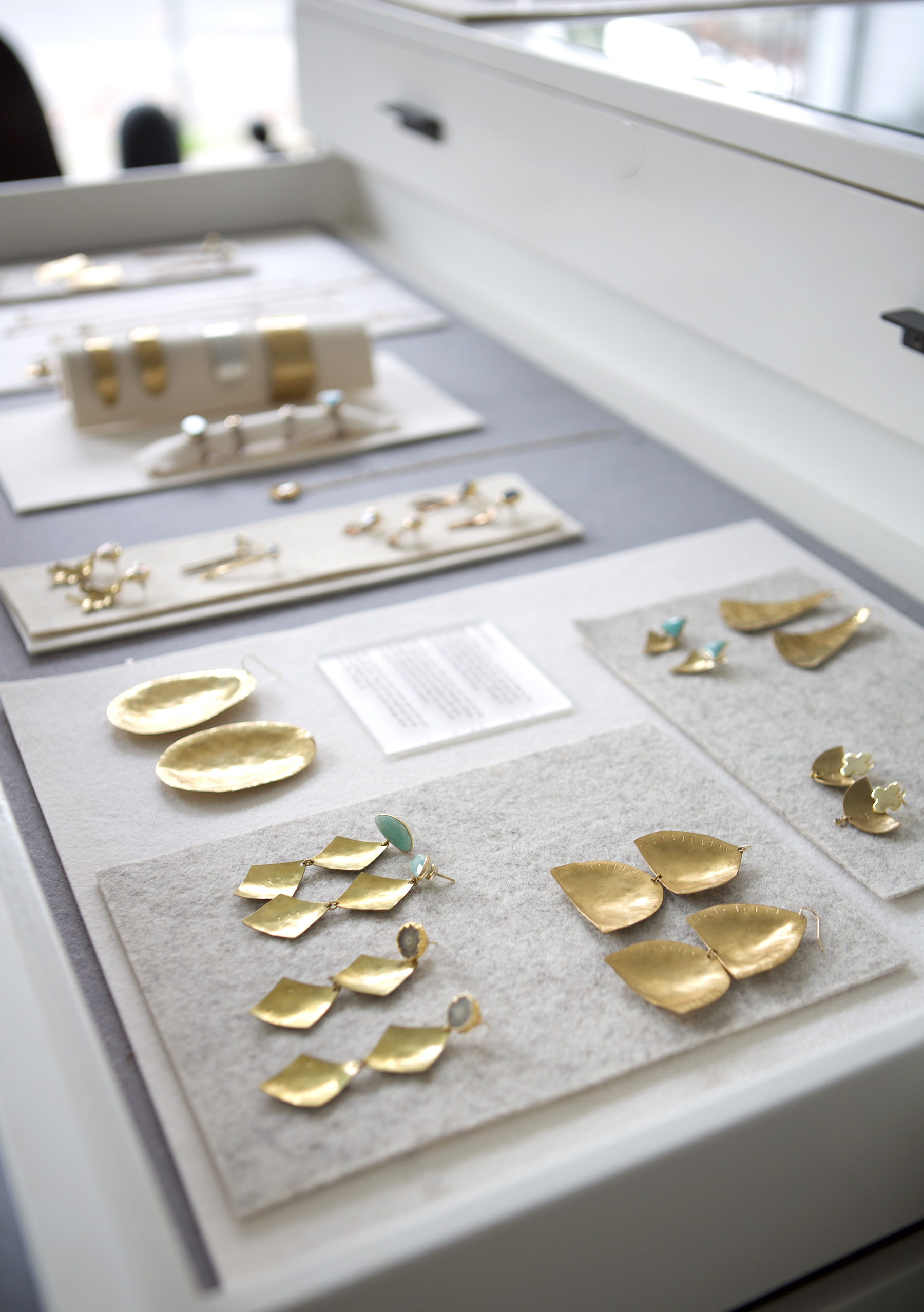
The gallery, which specializes in independent jewelry, art, and design, lent 150 pieces of jewelry for the fashion-forward film that reunites cast members Meryl Streep, Anne Hathaway, and Emily Blunt.
Gallery Lulo’s co-owner, Anne Kathrine (Katrina) Schjerbeck, has been following social media posts and movie trailers and, so far, has spotted at least 10 of the gallery’s accessories on cast members, including a pair of earrings custom-made for Blunt’s character and a gold chain ring worn by Hathaway’s character from Petaluma-based designer Siri Hansdotter.
Jewelry at Gallery Lulo that was used by the stars in the movie The Devil Wears Prada 2. Photo taken in Healdsburg on Friday, Feb. 6, 2026. (Christopher Chung / The Press Democrat)
Fans and fashionistas will want to save the May 1 movie release date to check out the one-of-a-kind statement pieces, which range in price from approximately $200-$2,400.
“We’ve held them back because we want the originals to be available when the movie comes out,” says Schjerbeck. The devil may wear Prada, but locals get first dibs at Gallery Lulo.
Gallery Lulo and True West Film Center have teamed up for a preview screening of The Devil Wears Prada II at 4:15 p.m. on Thursday, April 30. A ticket includes a small popcorn, bubbles and wine, and a commemorative True West Film Center wine glass. Guests can enjoy a cocktail party from 5:30-7 p.m. in the courtyard, where they can meet some of the artists whose designs are featured in the film and see the jewelry in person modeled by clients of Gallery Lulo. Tickets for the screening are $50 and can be purchased at truewestfilmcenter.org.
The Parkside cheeseburger with garlic aioli and fries at Parkside Eats in Santa Rosa Monday, April 13, 2026. (Beth Schlanker / The Press Democrat)
For years, the unassuming taqueria at Montgomery and Mission was a neighborhood fixture, perfectly wedged between Rincon and Bennett Valley and just steps from Howarth Park. Lepe’s was the go-to for post-hike takeout on a Wednesday night, beloved for its simplicity and affordability. Its closure in early 2026 left a real void for locals.
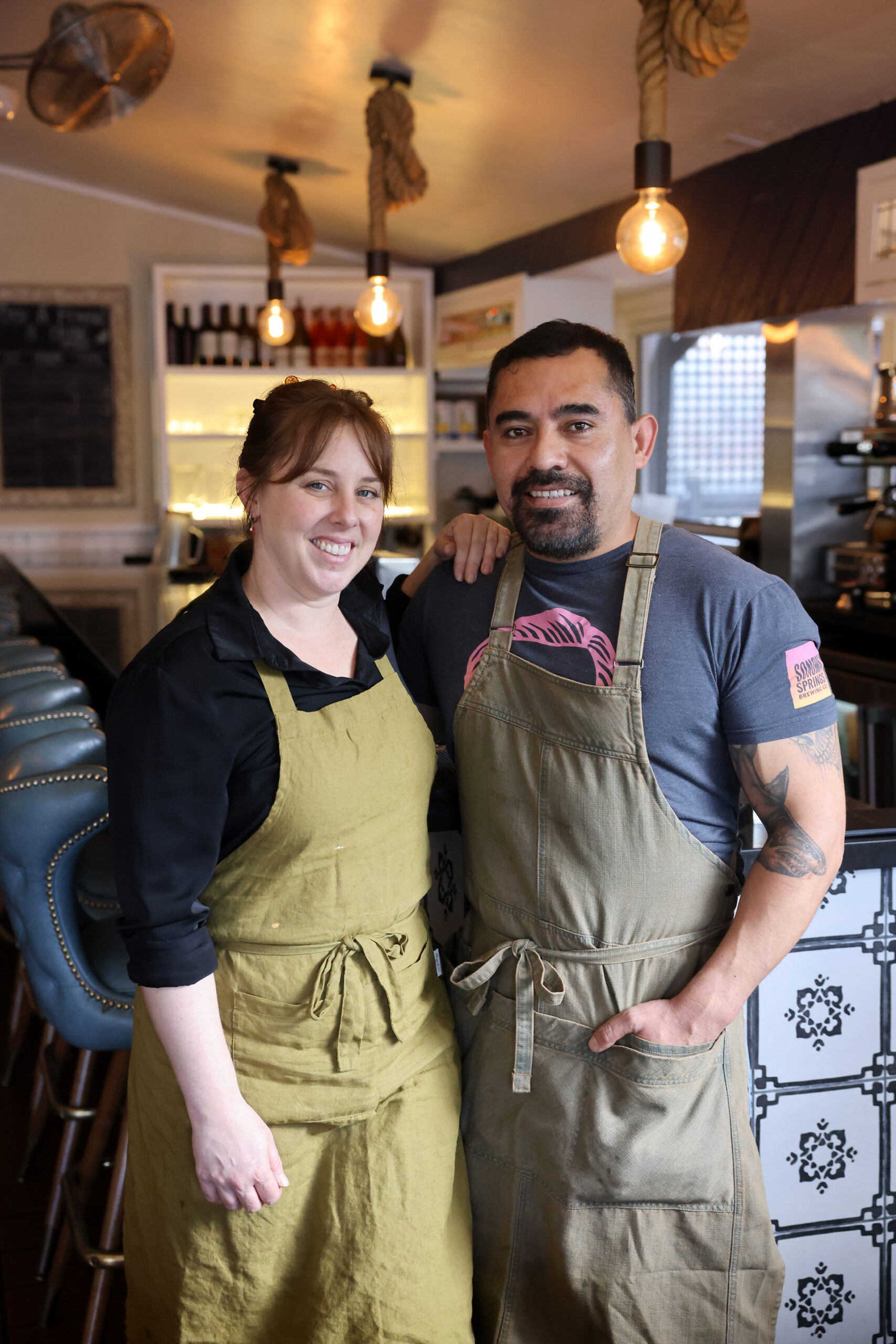
Restaurateurs Hayley Cutri and Efrain Balmes felt the loss as much as anyone. Balmes, a regular after long bike rides through the park, knew the corner well. When the space became available, they saw the chance to bring back a neighborhood gathering spot, this time with a casual menu of American and Mexican comfort food. After a quick spruce-up, Parkside Eats quietly opened its doors in early April. Locals wasted no time — news spread quickly and so did the appetites.
The vibe
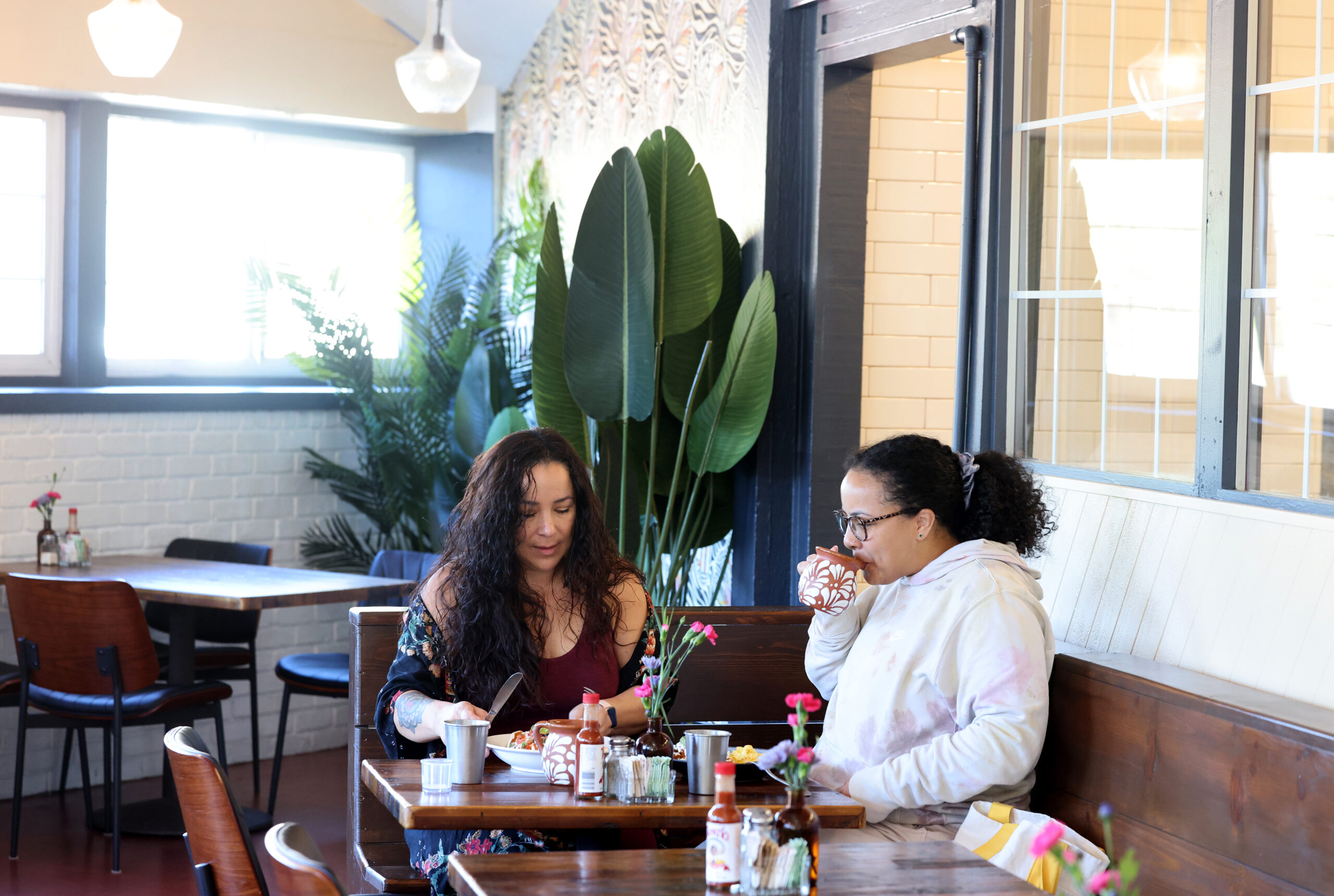
By late Sunday morning, as breakfast blends into brunch, the dining room and bar fill with families and couples easing into the day.
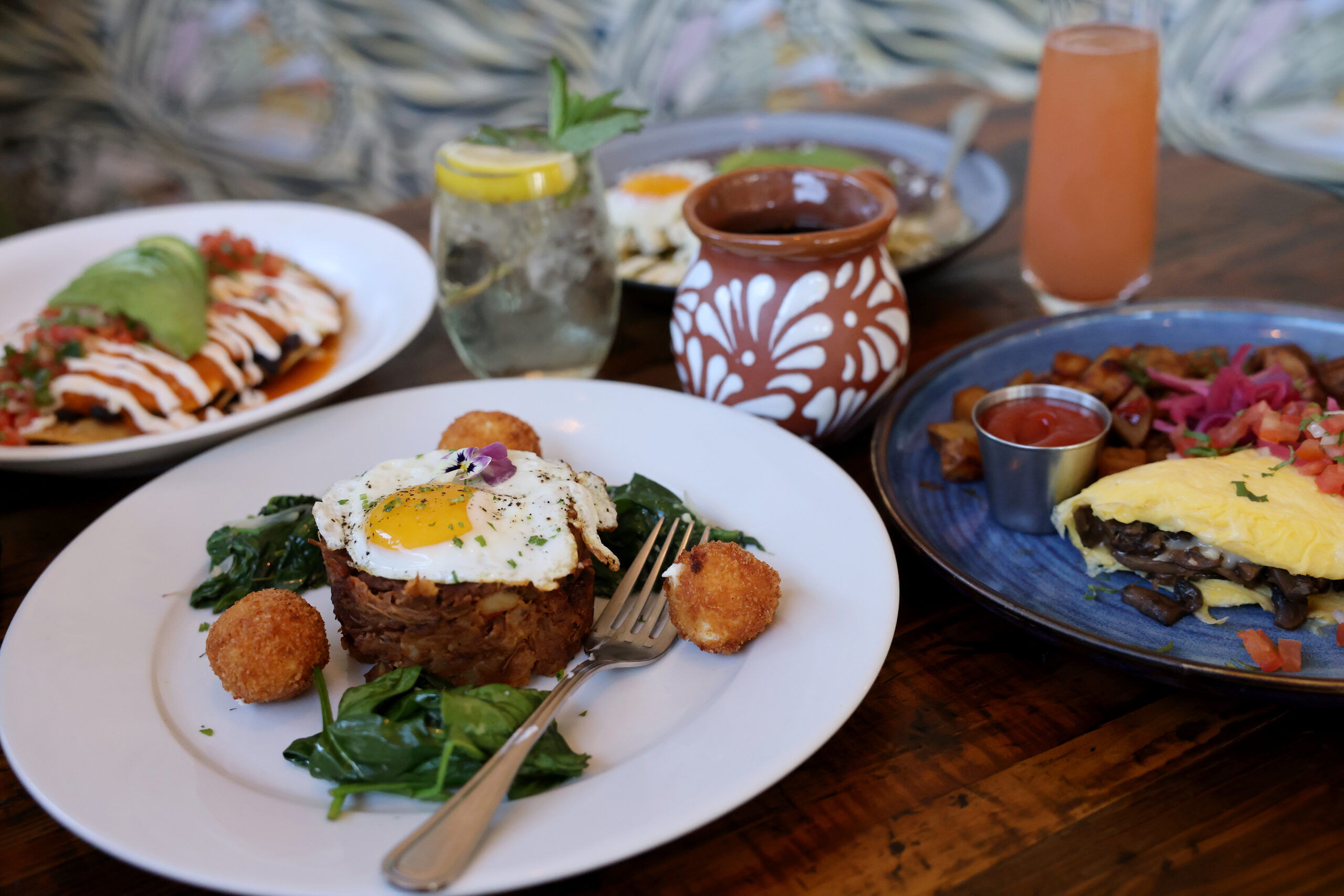
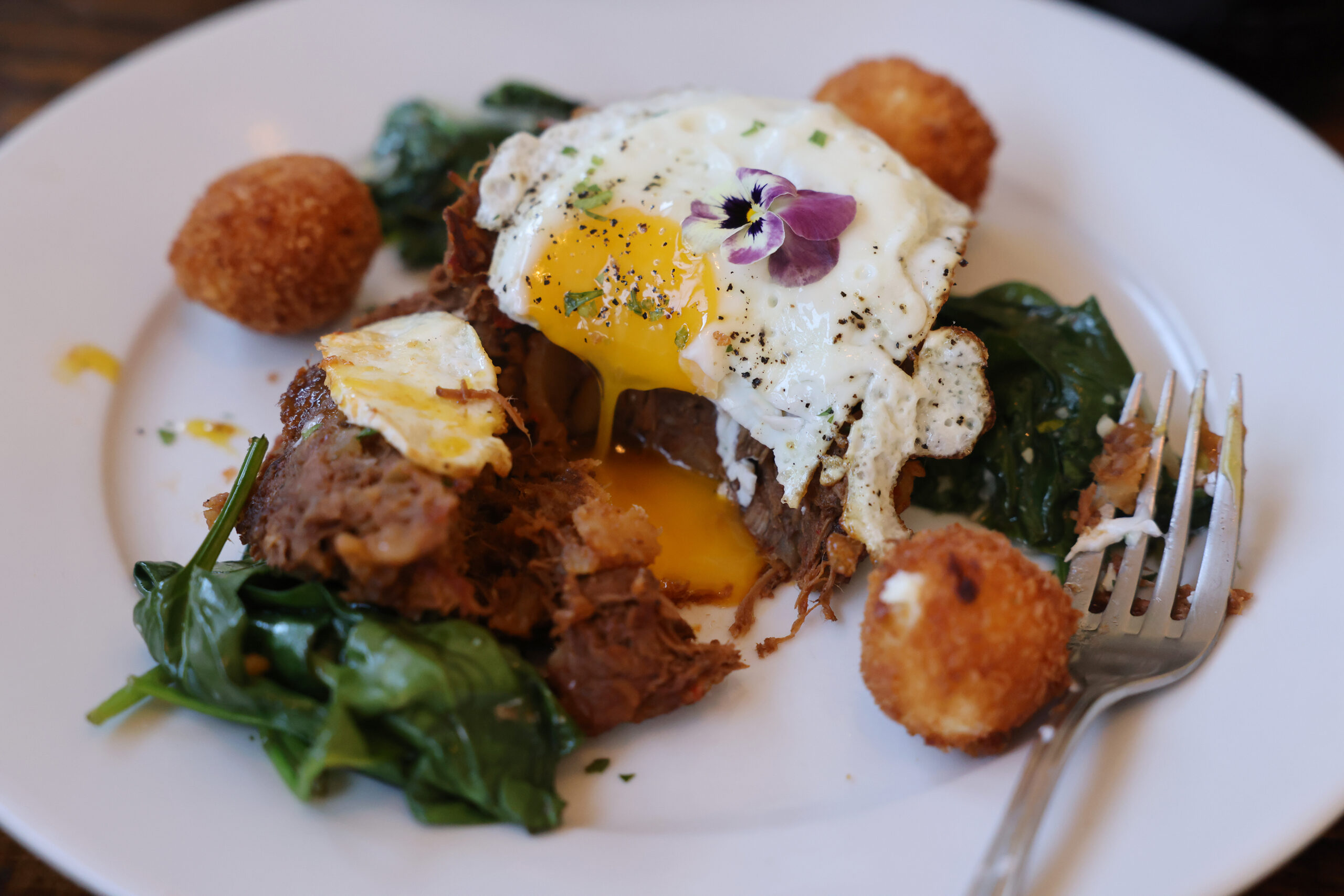
Andrea Quintana, left, and her daughter Destiny Thompson eat breakfast at Parkside Eats in Santa Rosa Monday, April 13, 2026. (Beth Schlanker / The Press Democrat)Birria hash with fried eggs, spinach and goat cheese balls at Parkside Eats in Santa Rosa Monday, April 13, 2026. (Beth Schlanker / The Press Democrat)
The kitchen hums with activity: chilaquiles, huevos rancheros, birria, pancakes and tres leches French toast filled with cream. Sturdy Mexican clay mugs are filled with coffee, café de olla and Mexican hot chocolate, while the bar pours mimosas and tangy-sweet jamaica.
Colorful butterfly wallpaper brightens the room and an enclosed patio sits ready for sunny days ahead. The staff is friendly, if a little stretched in these early weeks, but it’s clear Parkside Eats is in experienced hands.
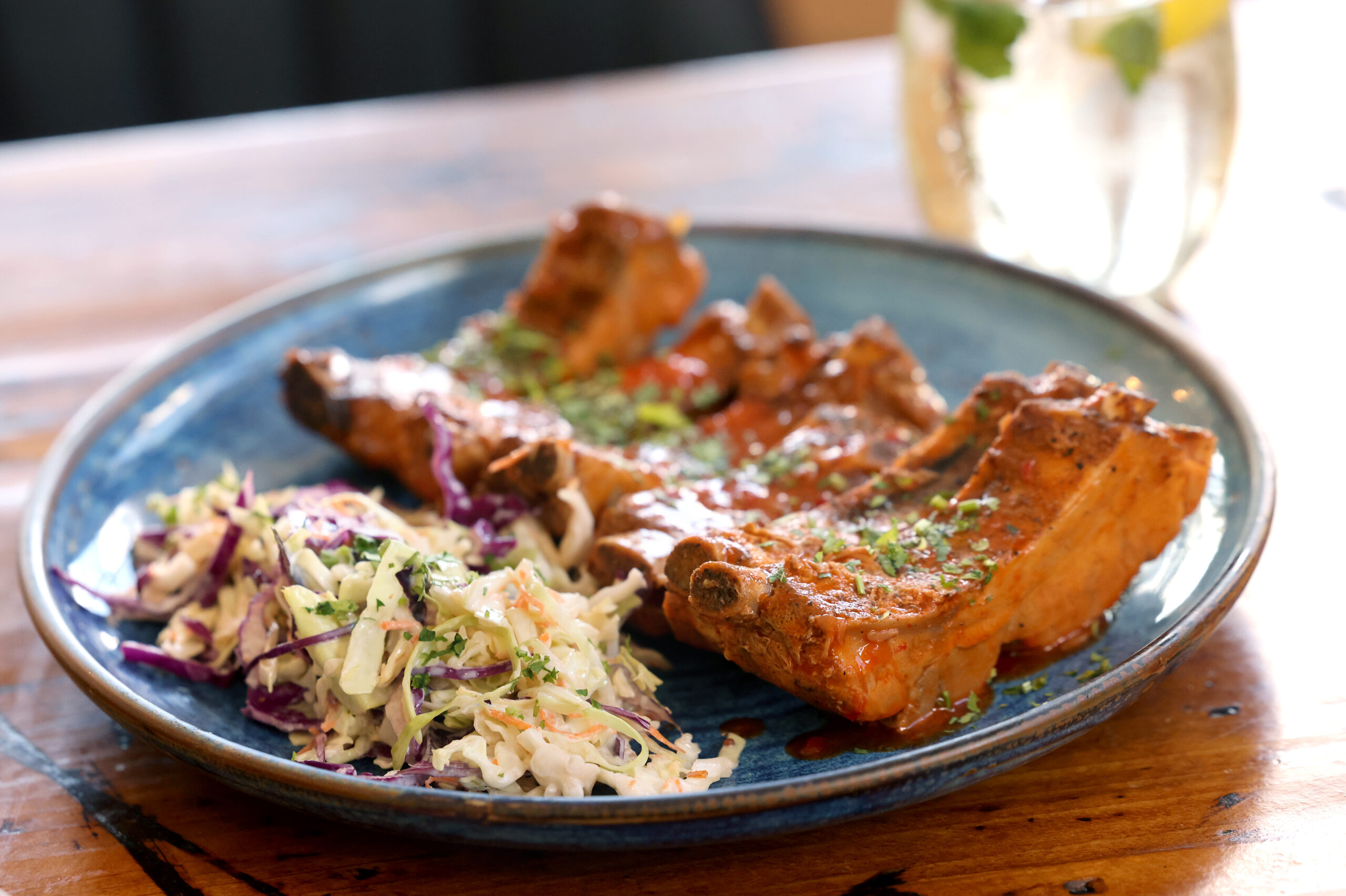
Lunch brings a quieter pace, with scrambled eggs making way for burgers and burritos. By dinner, the room fills again for heartier plates: pan-roasted rosemary chicken, wild sea bass in tomato broth, baby back ribs and a rib-eye with white truffle fries.
Baby back ribs with housemate barbecue sauce and a side of slaw at Parkside Eats in Santa Rosa Monday, April 13, 2026. (Beth Schlanker / The Press Democrat)Owners Hayley Cutri and her husband Efrain Balmes at Parkside Eats in Santa Rosa Monday, April 13, 2026. (Beth Schlanker / The Press Democrat)
Door closed, window opened
Parkside Eats was meant to be a second act for Cutri and Balmes, who also ran Sonoma Eats in Agua Caliente. When rising rents shuttered that spot just as Parkside opened, it became an unexpected blessing. Loyal regulars followed them north and new faces quickly filled the seats. With a small but dedicated crew — including Cutri, Balmes and new chef-partner Gerardo Reyes — the restaurant’s reputation grew fast on social media.
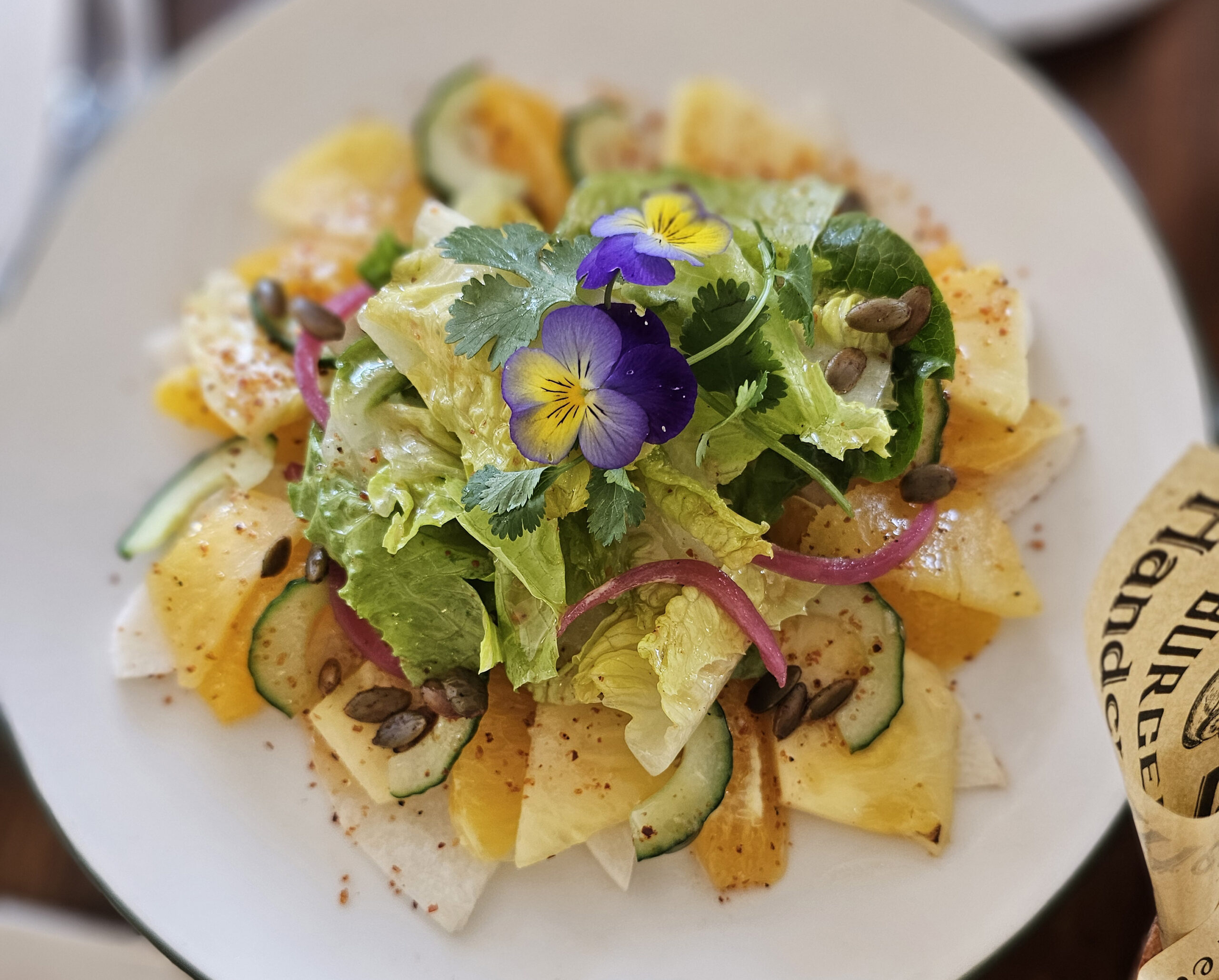
Chef Reyes brings serious chops from his time at Michelin-starred Auro in Napa, and it shows. Birria hash arrives neatly pressed in a ring mold; jicama salad is layered with pepitas, little gem lettuce, Tajín vinaigrette and edible flowers. The food isn’t fussy, but there’s clear attention to ingredients, flavor and presentation.
Birria hash with fried eggs, spinach and goat cheese balls at Parkside Eats in Santa Rosa Monday, April 13, 2026. (Beth Schlanker / The Press Democrat)
Cutri and Balmes hope to eventually reopen Sonoma Eats, with its focus on Balmes’ Oaxacan recipes intact. In the meantime, a few favorites have made the trip to Santa Rosa.
Best bets
Roasted Brussels Sprouts, $14: These sprouts had a shaky debut, but they’ve found their groove. Tender inside, crisp outside, with a drizzle of Dijon honey and a kick of chorizo.
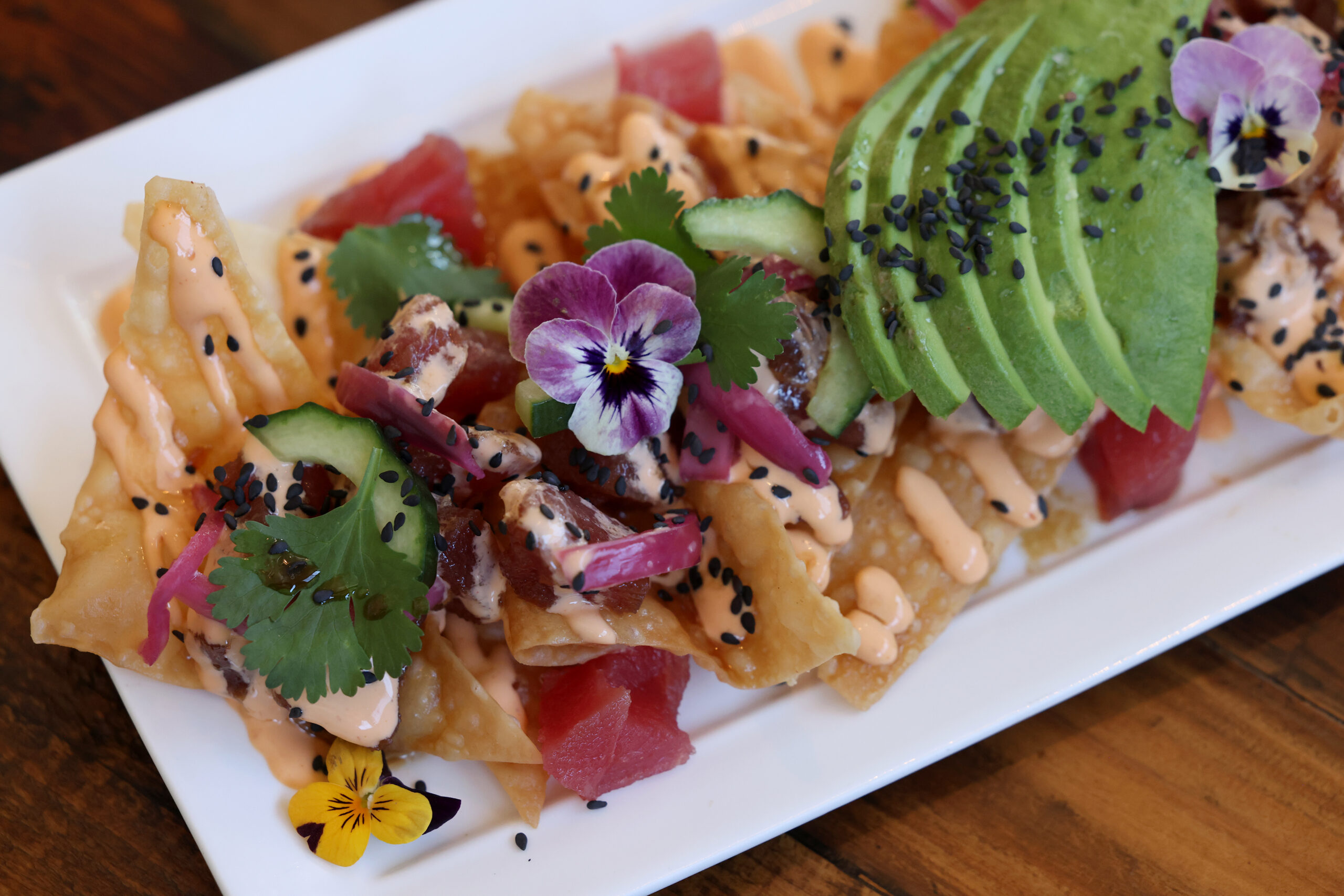
Ahi tuna poke nachos at Parkside Eats in Santa Rosa Monday, April 13, 2026. (Beth Schlanker / The Press Democrat)
Ahi Tuna Poke Nachos, $24: Yes, it’s a splurge, but the quality of the tuna and the bright toppings — pickled onions, cucumber, avocado — make it worth the extra dollars. Presentation is spot on.
Jicama Salad, $16: Crisp jicama triangles, orange segments, cucumber, and pineapple are layered in a wreath and topped with leafy lettuce and a Tajín vinaigrette. It’s as refreshing as it looks.
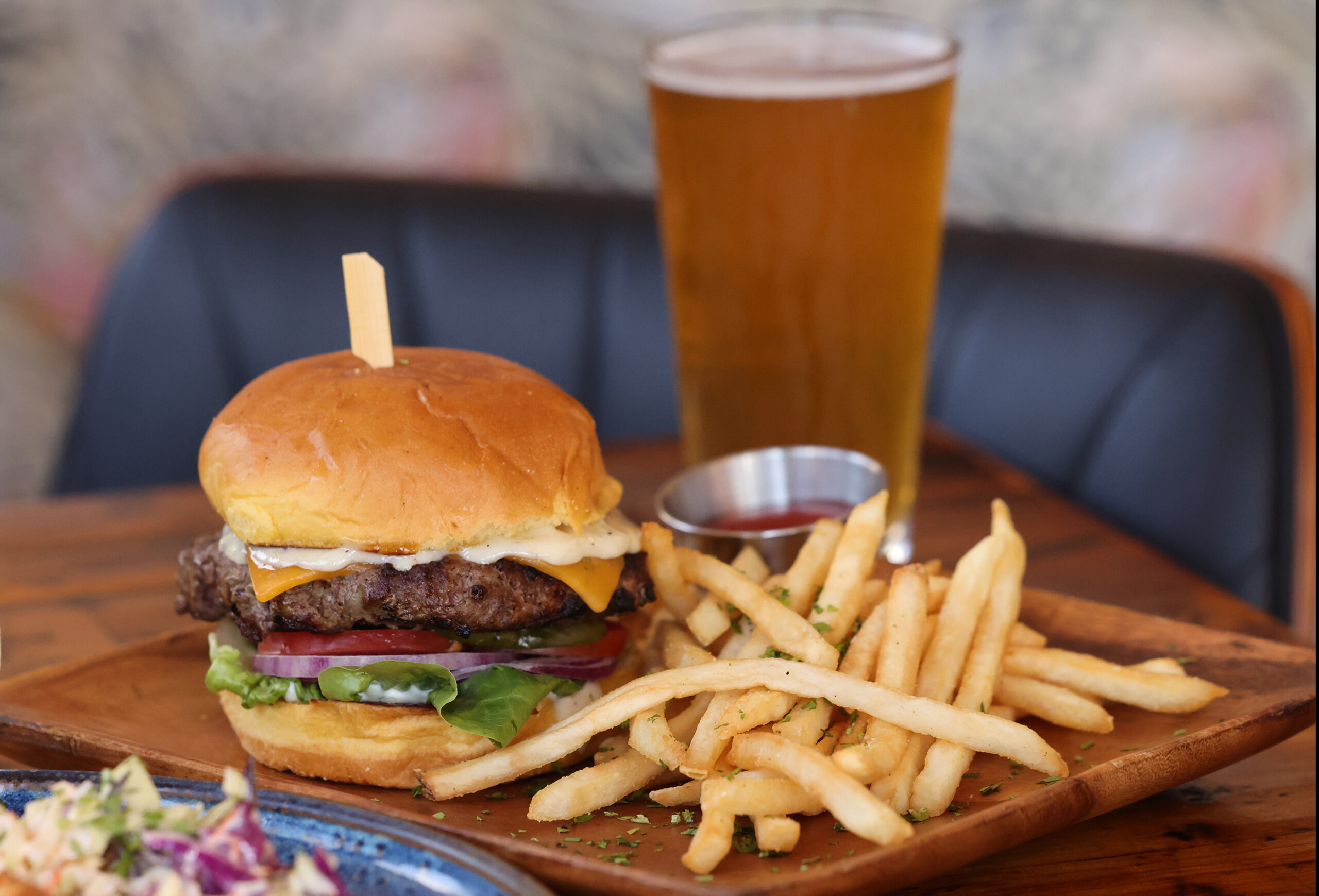
Jicama salad at Parkside Eats in Santa Rosa. (Heather Irwin / Sonoma Magazine)The Parkside cheeseburger with garlic aioli and fries at Parkside Eats in Santa Rosa Monday, April 13, 2026. (Beth Schlanker / The Press Democrat)
Parkside Cheeseburger, $21: I don’t hand out burger praise lightly, but this one earns it. A half-pound of house-ground Angus, fresh produce, red onions, cheddar, garlic aioli, and a pillowy brioche bun. It’s a two-hander — save the fries for after.
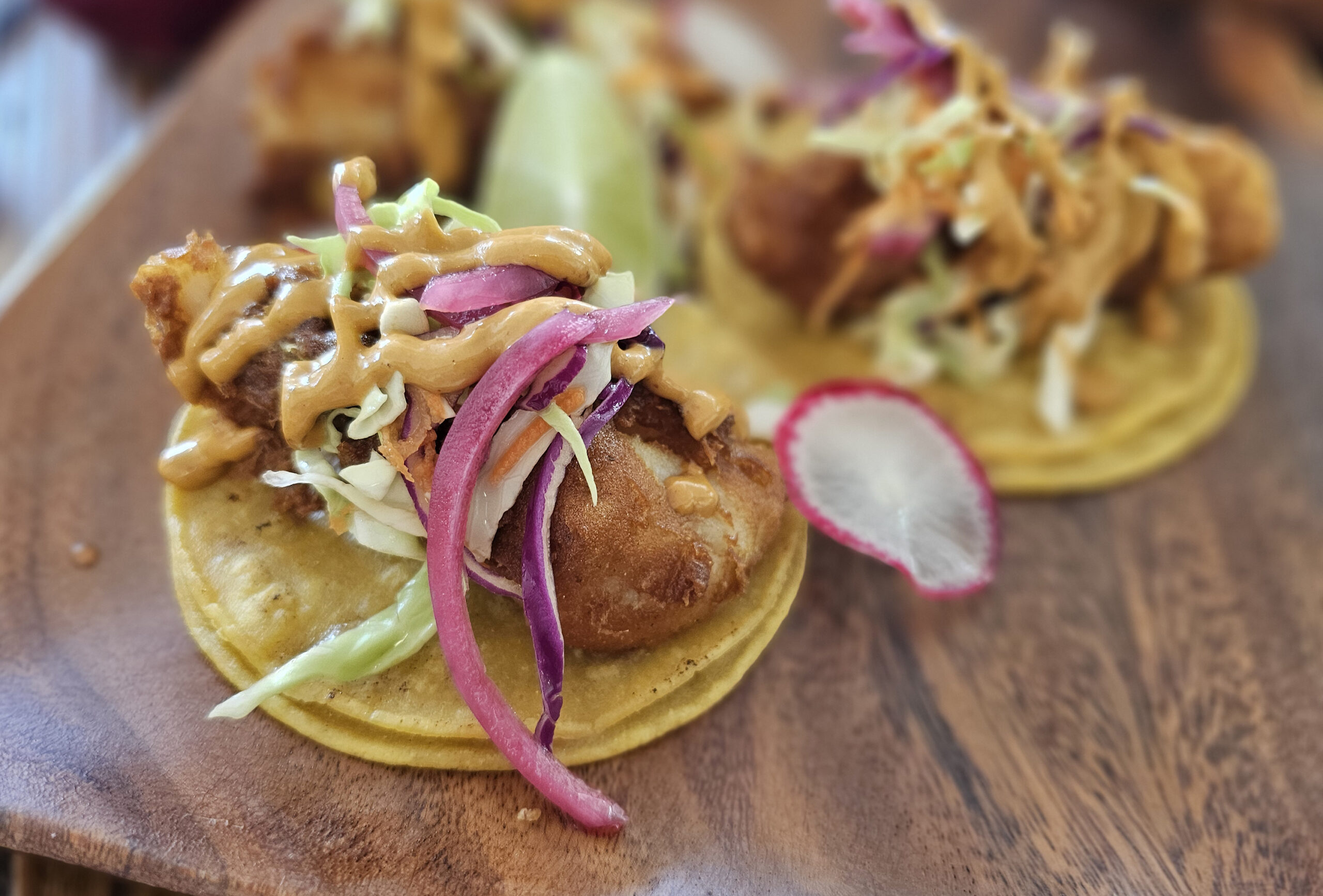
Baja Fish Tacos, $14: Lepe’s fish tacos set the standard, and Parkside’s version rises to the challenge. Beer-battered fish with a sweet kick of chipotle aioli — worthy of the legacy.
Baja fish tacos at Parkside Eats in Santa Rosa. (Heather Irwin / Sonoma Magazine)
Cauliflower Steak, $28: I veered off my usual path for this vegetarian plate. A thick, golden slice of cauliflower sits atop creamy garlic mashed potatoes, brightened with chimichurri and pickled onions. Worth every bite — garlic breath be damned.
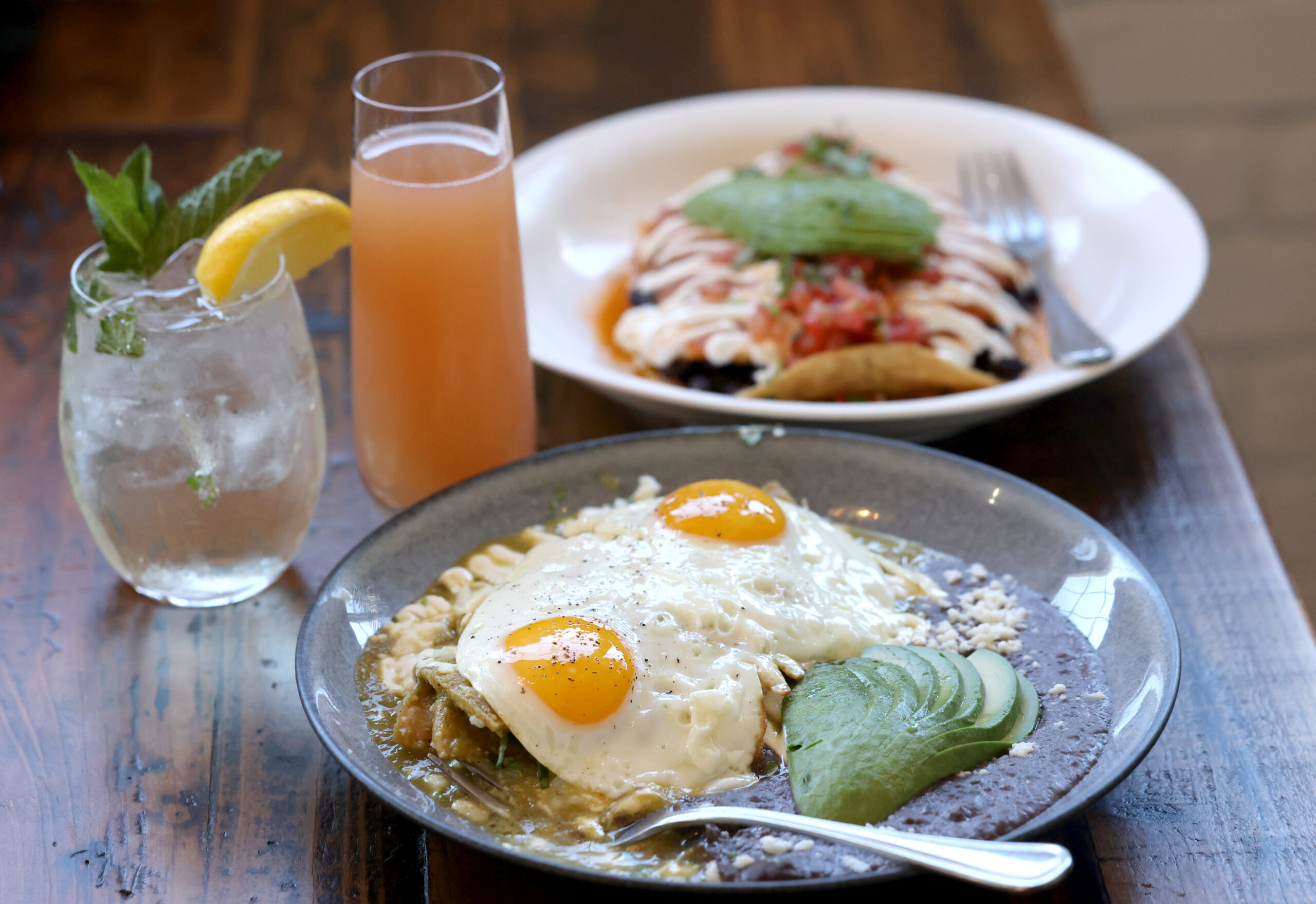
Chilaquiles, $16: Huevos rancheros may be the crowd favorite, but the chilaquiles with their bright, tart verde sauce are the sleeper hit. Sautéed tortilla chips, black refried beans, eggs and avocado round out the plate.
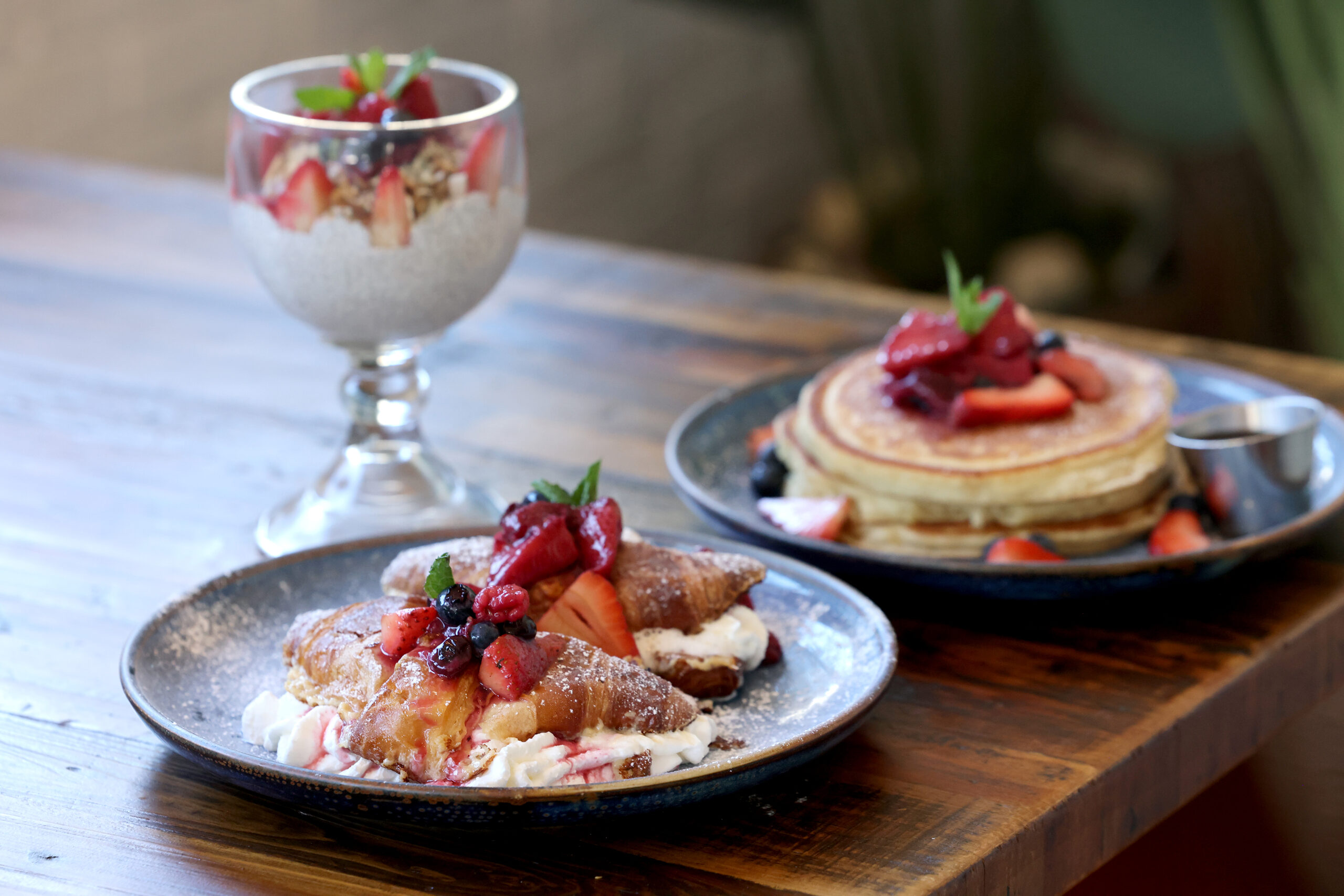
Chilaquiles verdes topped with fried eggs at Parkside Eats in Santa Rosa Monday, April 13, 2026. (Beth Schlanker / The Press Democrat)Tres leches French toast made with croissants, the coconut chia parfait with housemate granola and berries, and the buttermilk pancakes with fruit at Parkside Eats in Santa Rosa Monday, April 13, 2026. (Beth Schlanker / The Press Democrat)
Tres Leches French Toast, $16: Sweeter than abuela’s kisses. Croissant slices get a soak in tres leches batter, fried crisp, then filled with whipped cream and berries.
Birria Hash, $22: I’m somewhere between love and obsession with this one. Birria, potatoes, and red peppers are pressed into a tidy ring for a composed plate — not the saucy birria I usually crave, but delicious all the same. Fried goat cheese balls on the side are a bold move. It’s not what you expect, but sometimes that’s the point.
The price
Prices are on par with other casual spots in town, but this is no fast food joint. Starters and salads are $12 to $16, tacos (three per order) are $14, and burgers or sandwiches (with fries or salad) run $18 to $22. Larger plates range from $26 to $28, with the rib-eye at $42. Breakfast is $14 to $21, brunch $16 to $22. There are plenty of gluten-free, vegetarian and vegan options. Taco Tuesday is an all-day affair: five tacos for $14, or two tacos and a draft beer for $10.
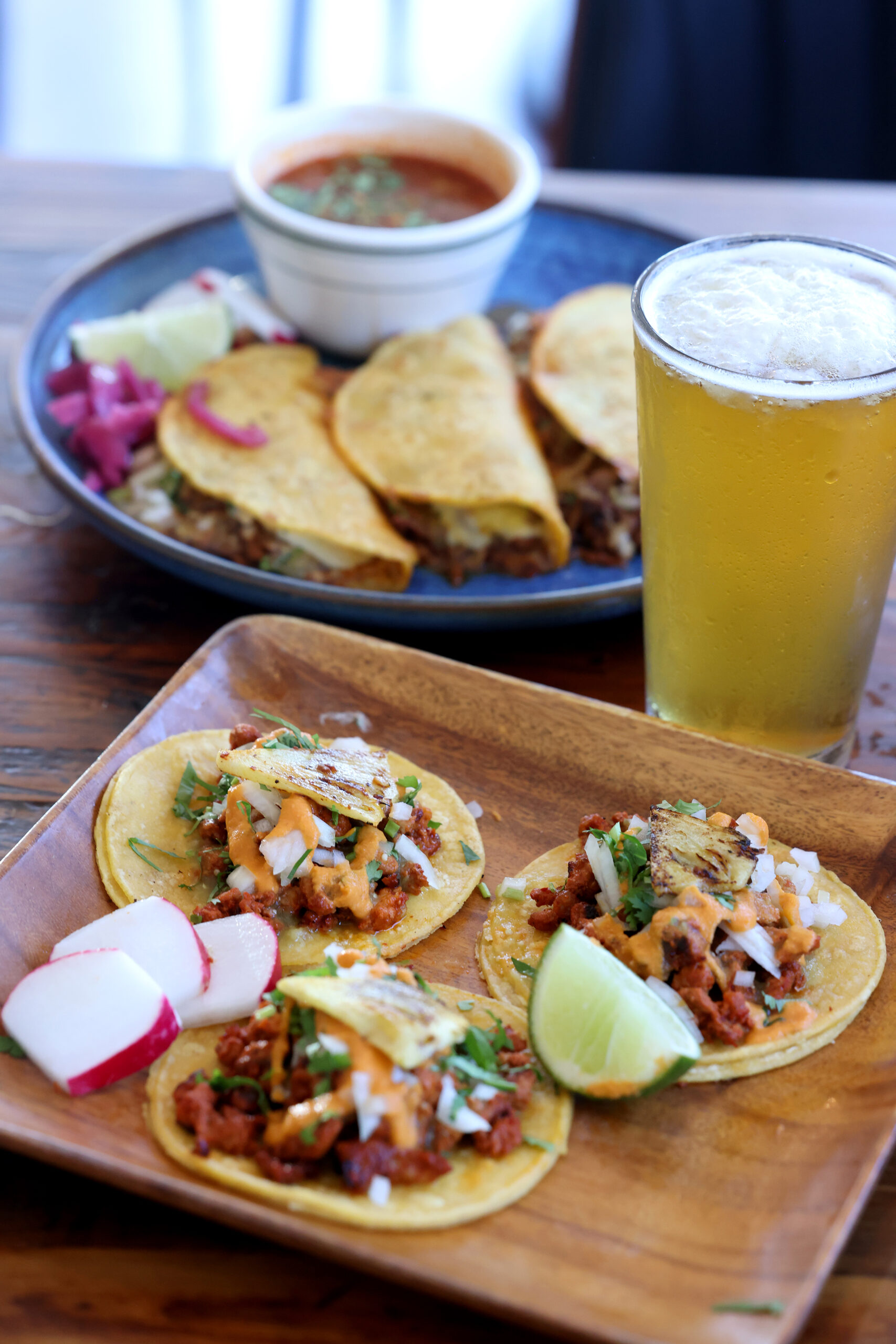
Al pastor tacos with grilled pineapple, front, and birria tacos, rear, at Parkside Eats in Santa Rosa Monday, April 13, 2026. (Beth Schlanker / The Press Democrat)Owner Hayley Cutri delivers food to a table at Parkside Eats in Santa Rosa Monday, April 13, 2026. (Beth Schlanker / The Press Democrat)
What to expect
Parkside Eats is already drawing crowds, so expect a wait on weekend mornings and Taco Tuesdays. Parking can be tight in the lot, but there are usually spots in back. Like any new spot, there are still a few kinks to work out. And just to clarify: Parkside Eats is not connected to Dierk’s Parkside Cafe on Santa Rosa Avenue.
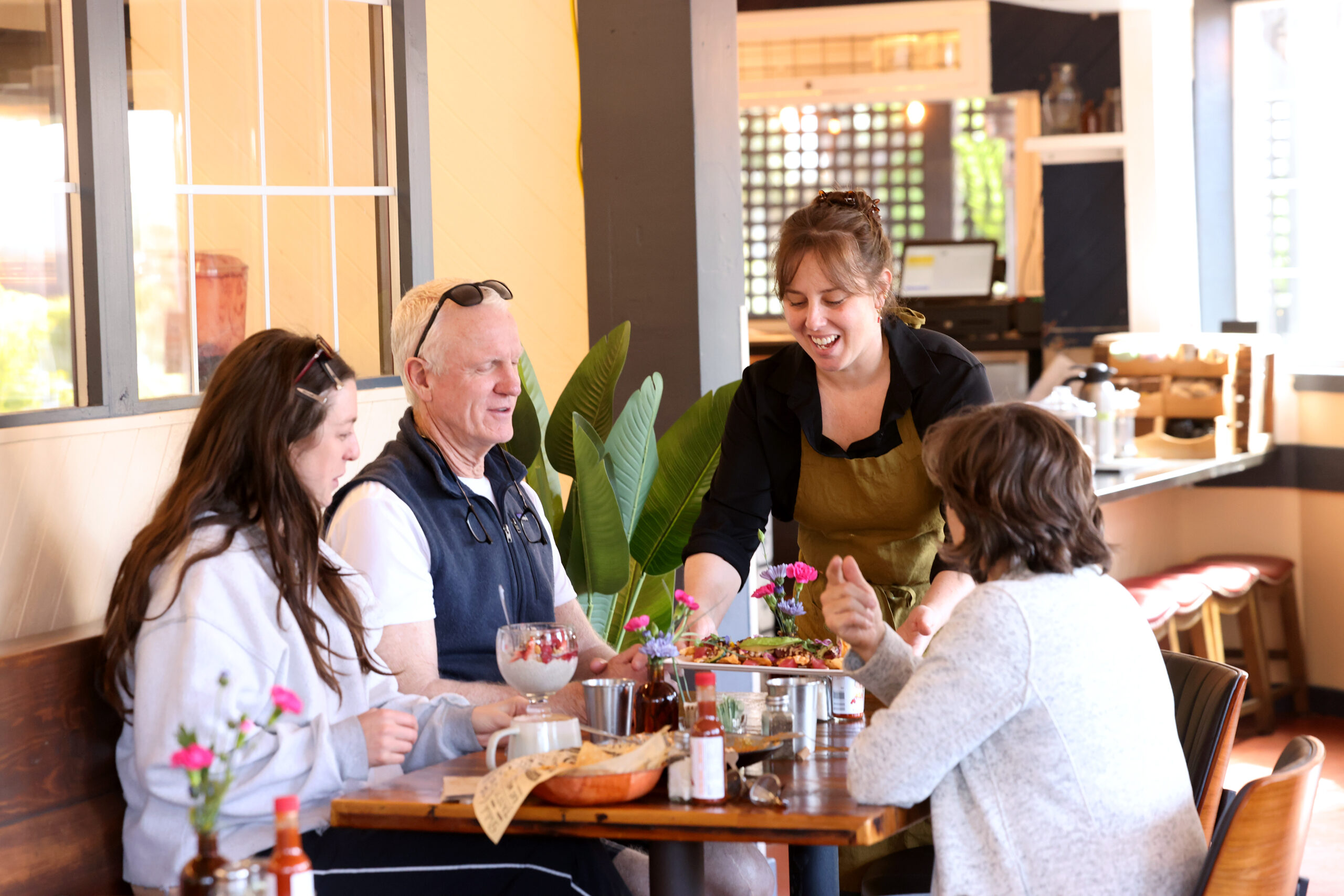
Paul Haddorff, director of food services for Redwood Gospel Mission, serves coffee to Archie and Chris Cates of Santa Rosa, as they dine at the new Redwood Gospel Baking Company cafe in Santa Rosa, Friday, April 10, 2026. (Darryl Bush/For The Press Democrat)
Faith isn’t a prerequisite to stop in for coffee and pastries at Redwood Gospel Mission Baking Co. — but you might just leave praising the holy trinity of flour, butter and sugar.
The North Bay nonprofit opened its new coffeehouse and bakery Tuesday, April 14, offering housemade croissants, kouign-amann, scones, sandwiches, salads and espresso drinks. The venture also serves as a culinary training program and pathway toward future employment for people in the gospel mission’s residential programs.
Tucked into a quiet medical park that houses the mission’s Family Campus, the cafe is a bright, cozy space with a large redwood community table and plenty of room to sip a morning coffee while checking emails or contemplating a warm chocolate chip cookie.
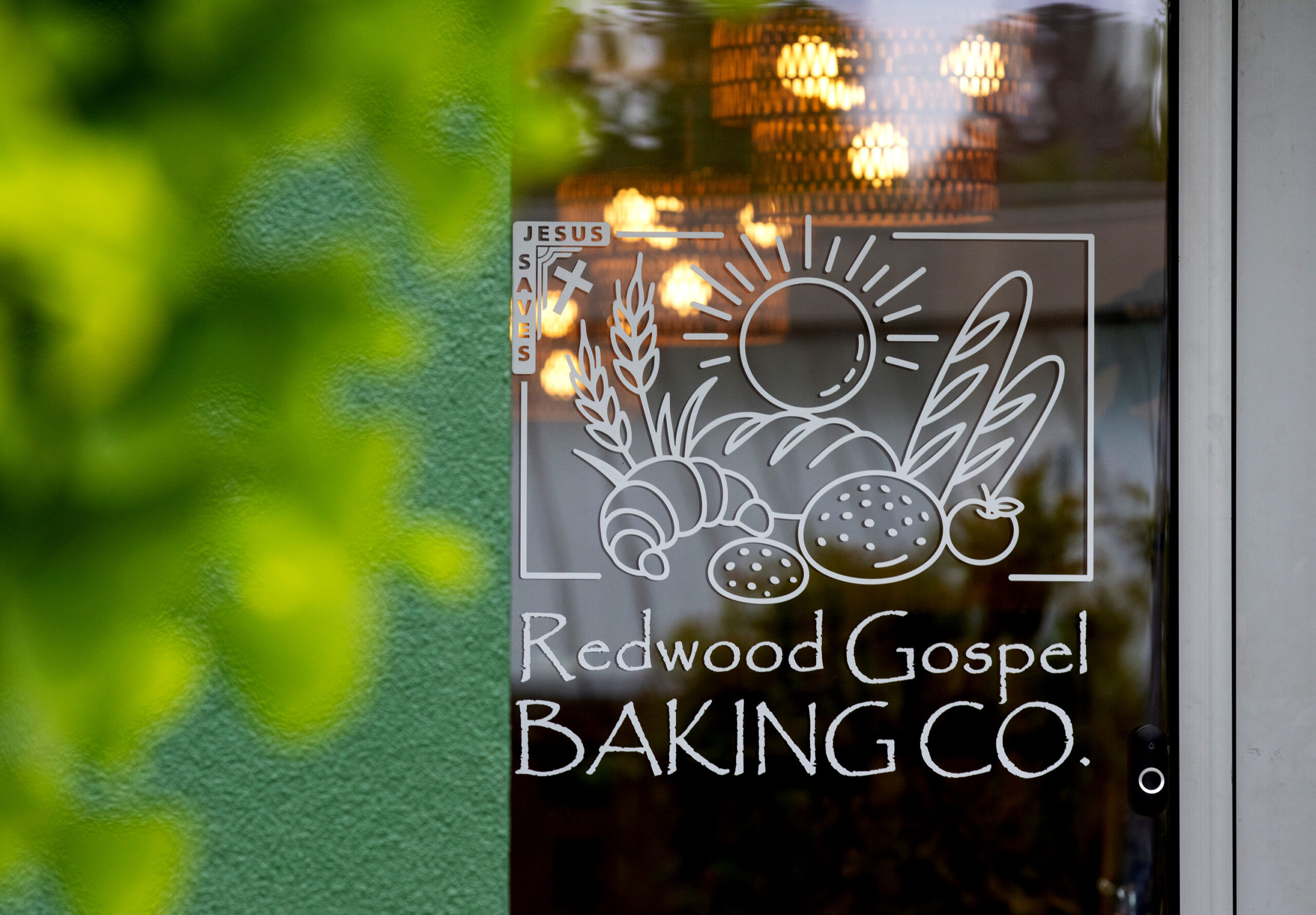
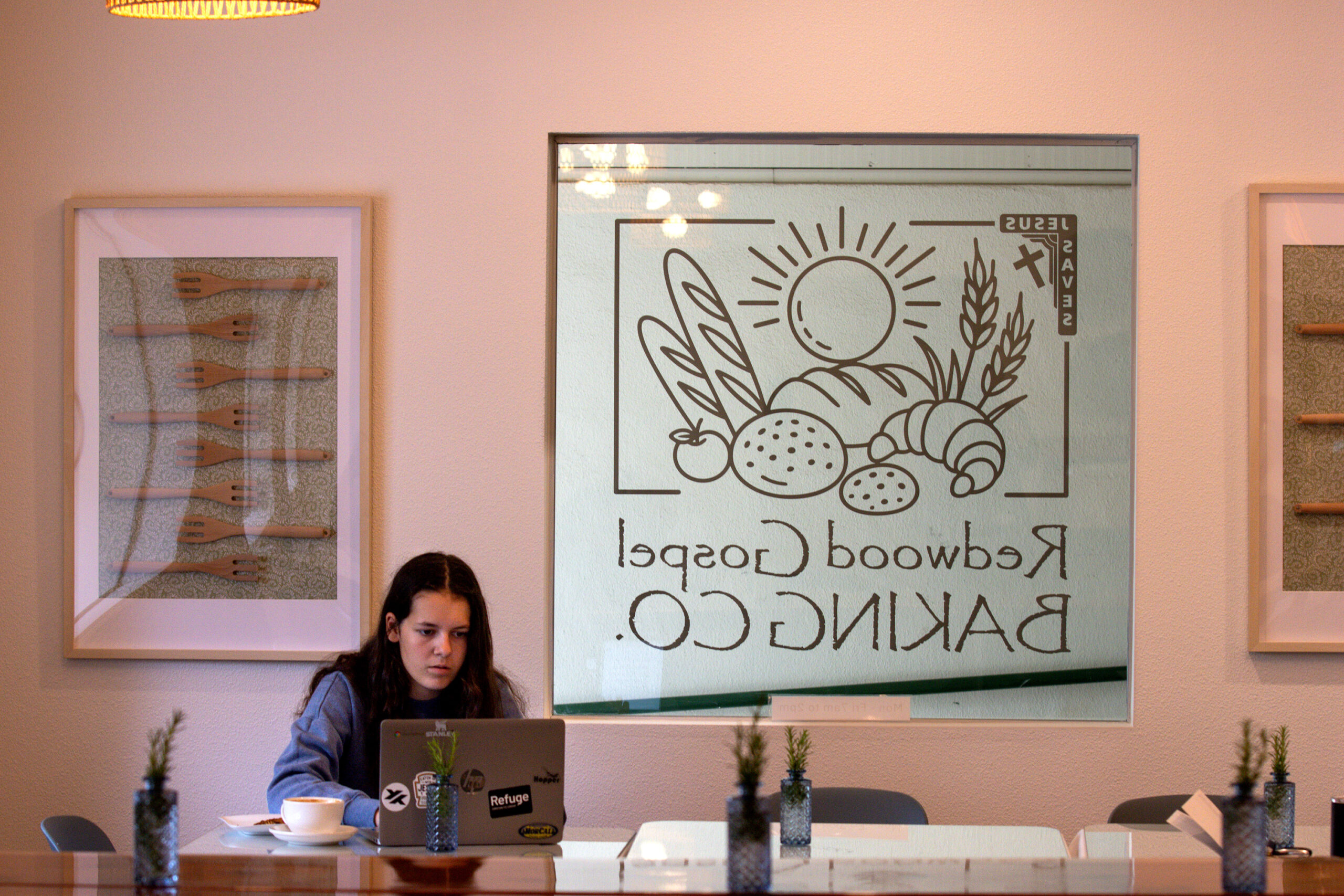
The new Redwood Gospel Baking Company’s sign is displayed on the front door entering the cafe in Santa Rosa, Friday, April 10, 2026. (Darryl Bush/For The Press Democrat)Customer Abby Fisher, of Santa Rosa, enjoys coffee as she works on her computer in the dining room at the new Redwood Gospel Baking Company cafe in Santa Rosa, Friday, April 10, 2026. (Darryl Bush/For The Press Democrat)
“We want to see transformation in the lives of our students and measurable impact on the community,” said Paul Haddorff, the mission’s director of food services.
A graduate of Santa Rosa Junior College’s culinary program and a former fine-dining chef, Haddorff oversees the kitchen alongside Doug Cavaliere, a longtime bakery owner whose guidance has helped students produce glossy, well-laminated pastries, fresh breads for toast and sandwiches and a rotating selection of galettes.
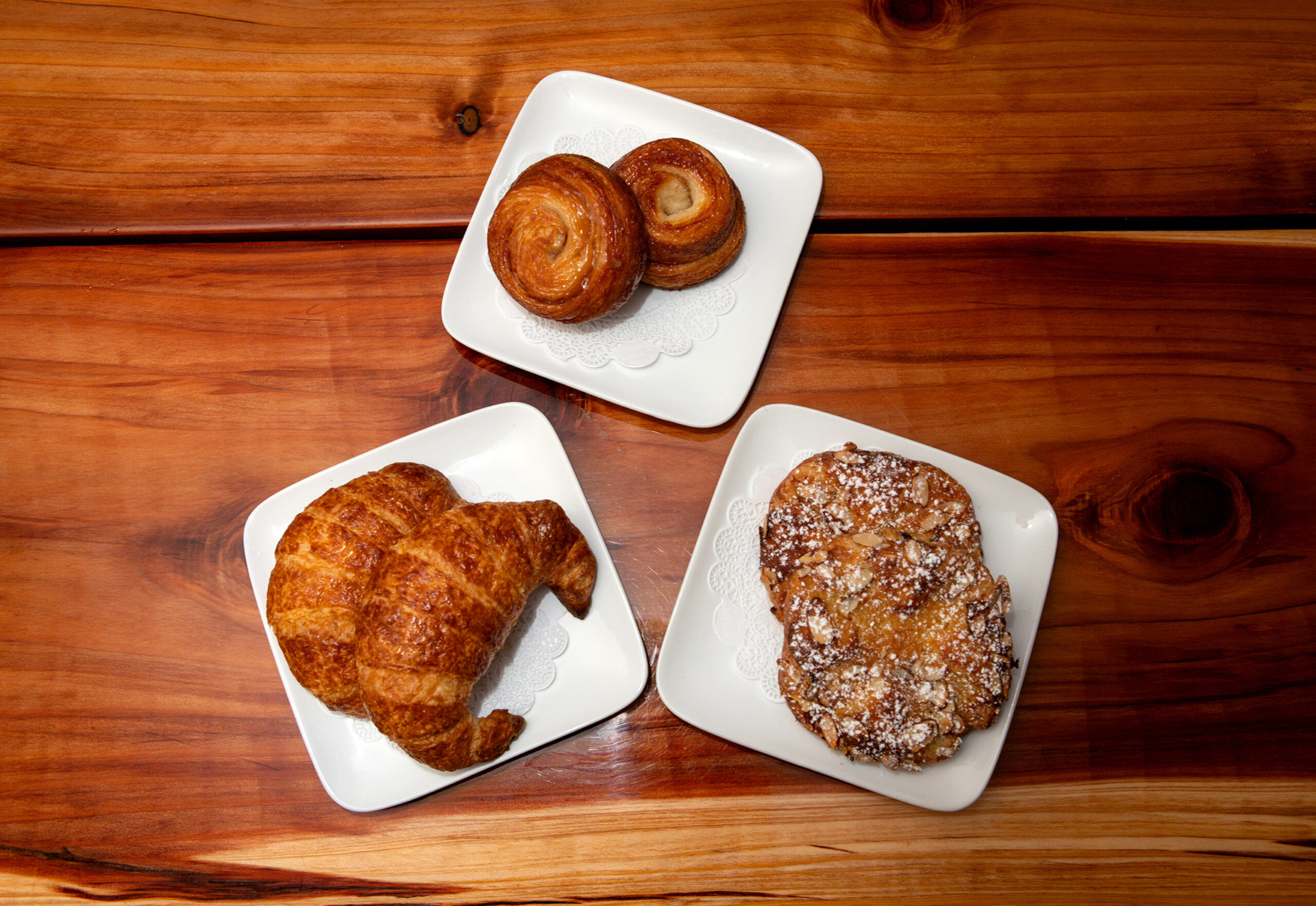
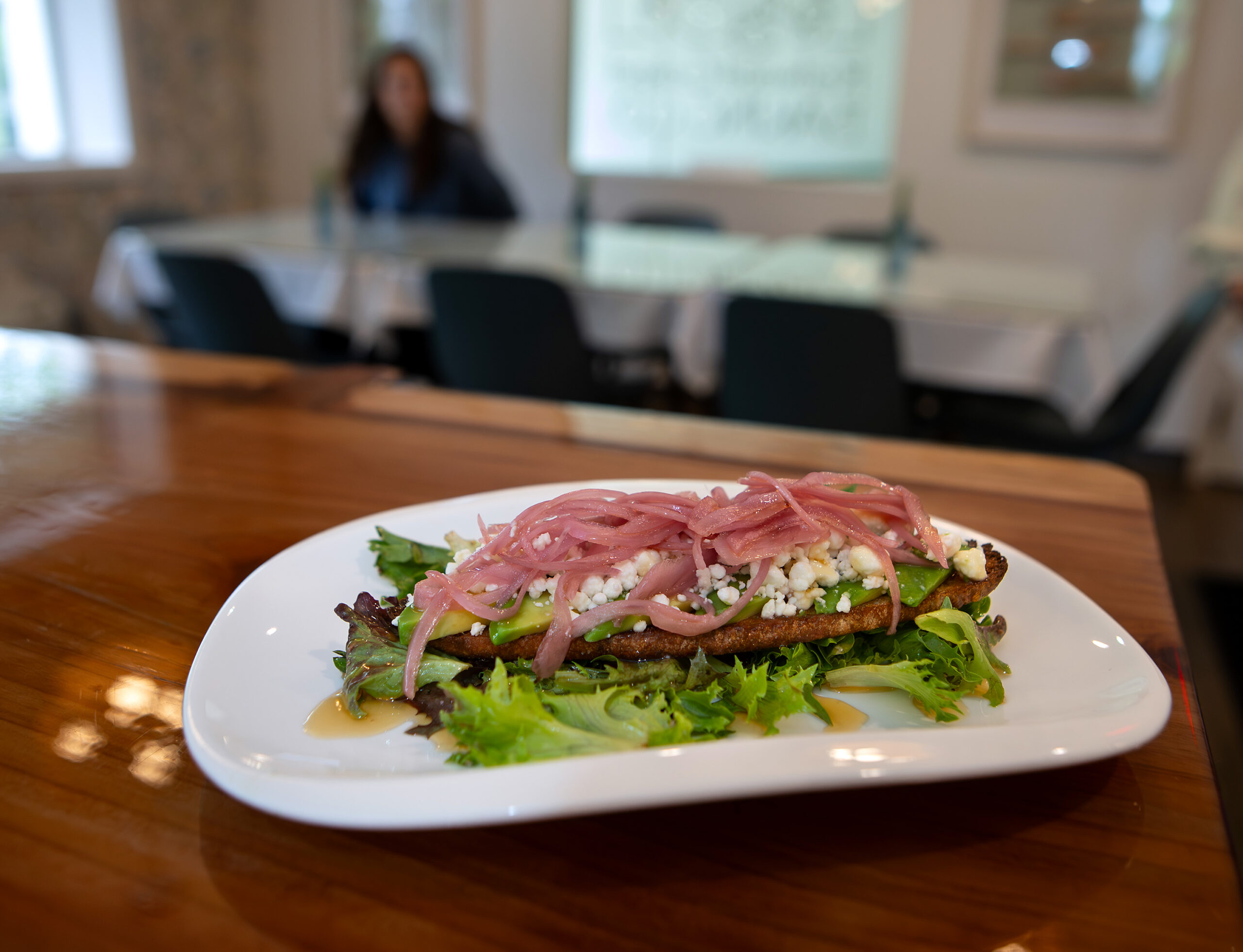
Clockwise, showing a few of the pastries served are: plain croissants, kouign-amann pastries, and almond croissants, at the new Redwood Gospel Baking Company cafe in Santa Rosa, Friday, April 10, 2026. (Darryl Bush/For The Press Democrat)Avocado toast is served at the Redwood Gospel Baking Company cafe in Santa Rosa, Friday, April 10, 2026. (Darryl Bush/For The Press Democrat)
Only days into its soft launch, the menu is impressively executed. There’s no shortage of butter in the croissants ($4.50 to $5.50), the glazed lemon scone is a favorite ($4.50), and the kouign-amann is caramelized and crisp with a soft center ($6.50). The avocado toast with goat cheese, pickled onion and hot honey ($6) is worth a return. Sandwiches come with greens, roasted potato salad or chips, making the half chicken caprese ($10) a deal.
Food service manager LaDonna Lane completed the Gospel Mission’s program more than 30 years ago and now helps guide participants through the same process.
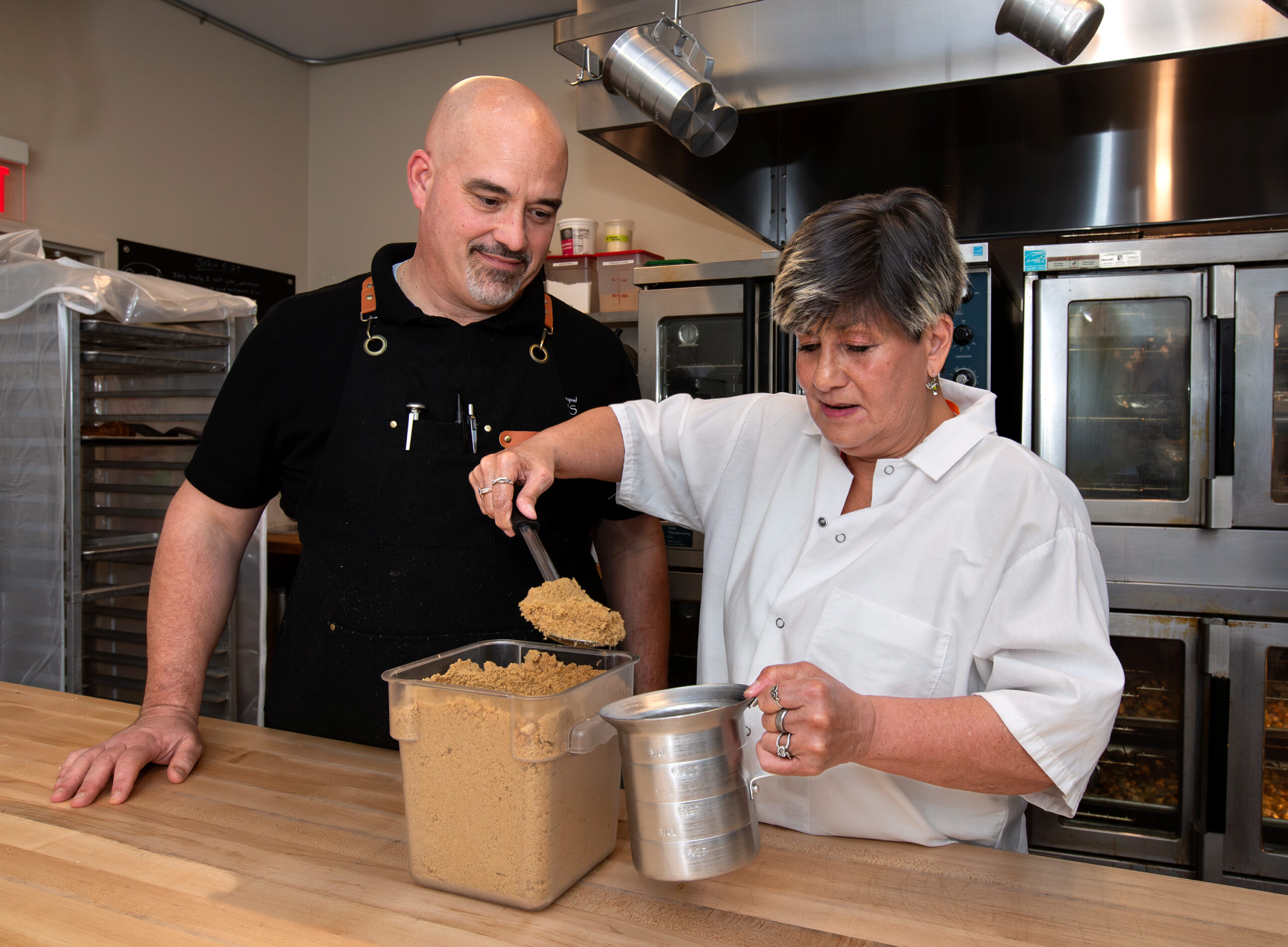
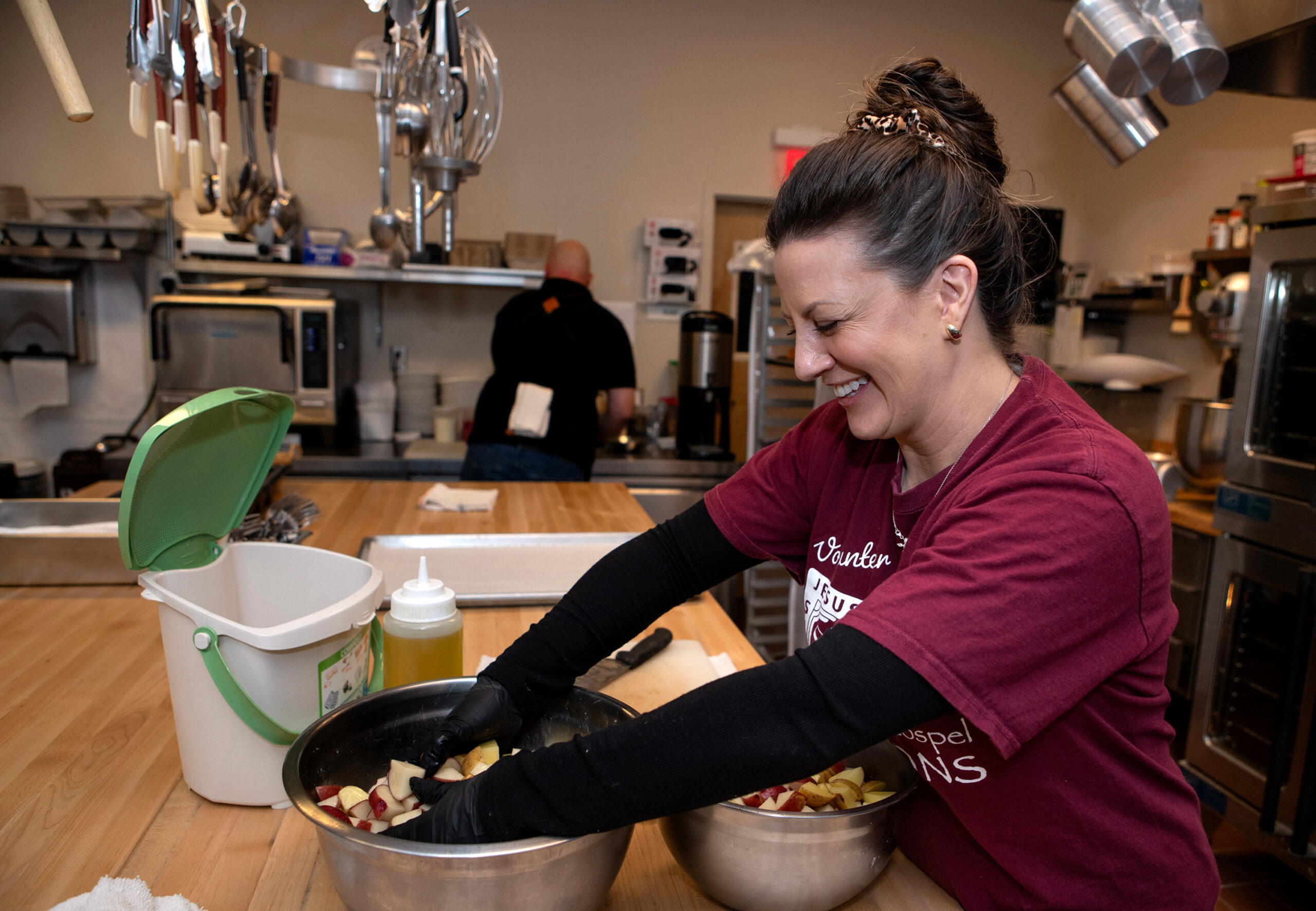
Paul Haddorff, director of food services for Redwood Gospel Mission, helps student Allison Spears, of Santa Rosa, as she spoons sugar for a muffin mix, at the new Redwood Gospel Baking Company cafe in Santa Rosa, Friday, April 10, 2026. (Darryl Bush/For The Press Democrat)Volunteer Robin Pistorio, of Santa Rosa, makes potato salad in the kitchen at the new Redwood Gospel Baking Company cafe in Santa Rosa, Friday, April 10, 2026. (Darryl Bush/For The Press Democrat)
“These women come through the program and get a job,” she said. “And hopefully they launch and do what they’re really good at.”
The Baking Co. is part of a growing network of social enterprises operated by Redwood Gospel Mission, which also includes a coffee roastery, a catering business and a thrift store. The organization provides shelter, meals, recovery programs, job training and spiritual support for people experiencing homelessness or seeking stability.
The cafe is open 7 a.m. to 2 p.m. Monday through Friday, with lunch service starting at 10:30 a.m.2447 Summerfield Road, Santa Rosa, rgm.org
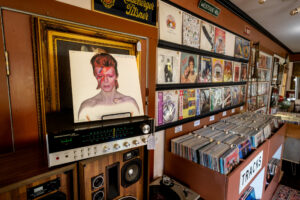
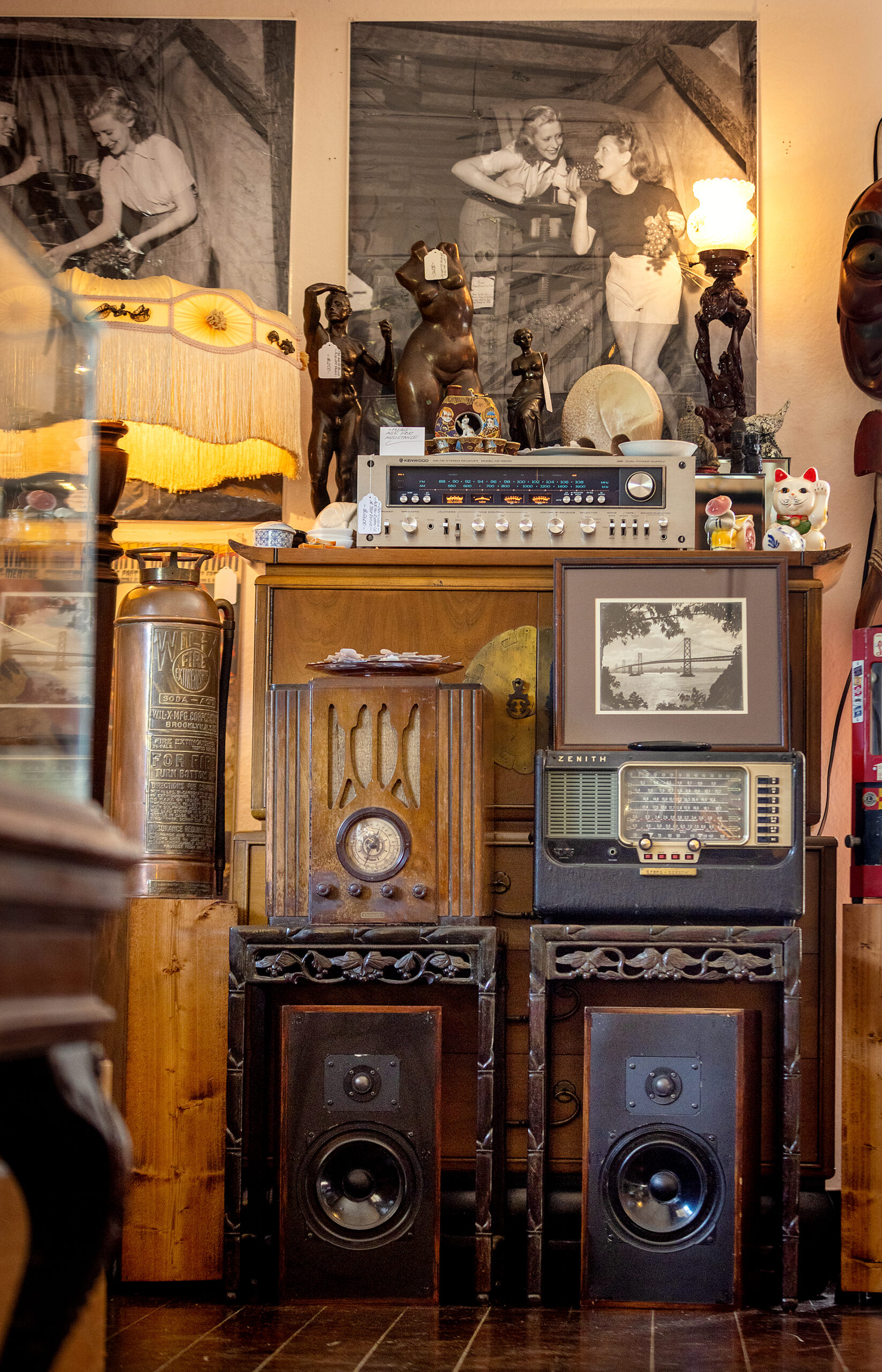
Rare albums, magazines and vintage stereo equipment at Revolution Vinyl in Duncans Mills. (John Burgess / The Press Democrat)
On Saturday, April 18, independent record stores across the country will open early, spin exclusive releases and welcome lines of collectors for Record Store Day, an annual ritual that has become both a celebration of vinyl and a testament to its endurance.
Conceived in 2007 as a way to spotlight the culture of independently owned record stores, the first Record Store Day was held in 2008, when the band Metallica spent hours meeting fans at Rasputin Music in San Francisco. What began as a modest promotional effort has since grown into an international event that champions brick-and-mortar shops and the communities that sustain them.
Its success reflects a broader shift in listening habits. In an era defined by streaming and instant access, a growing number of listeners have returned to analog formats. While music itself has remained constant, the ways people consume it have evolved rapidly over the past two decades, from Walkmans to iPods to smartphones. Now, an older technology — the record player — is drawing renewed interest.
First popularized in the early 20th century by the Victor Talking Machine Company’s Victrola, the device has evolved in both name and form, from phonograph and gramophone to record player and, more recently, turntable. Though late-20th-century formats like compact discs and cassettes once pushed vinyl toward obsolescence, records have staged a steady comeback. In 2022, vinyl albums outsold CDs for the first time since 1987, according to the Recording Industry Association of America.
Vinyl remains a niche within the broader music landscape, but its resurgence has proved durable. Independent record stores continue to cultivate loyal audiences and, increasingly, a new generation of listeners.
Here are some of our favorite places to purchase records in Sonoma County.
The Next Record Store
A mainstay of the local music scene, The Next Record Store has served as a hub for vinyl collectors since its founding in 1983 as The Last Record Store. Renamed after co-owner Hoyt Wilhelm’s retirement in 2021, the shop carries records alongside CDs, turntables, speakers and apparel. It has also hosted hundreds of live performances over the years. For Record Store Day, the store will open at 8 a.m. with DJs, a storewide sale and a selection of exclusive vinyl releases. 1899 Mendocino Ave., Santa Rosa, 707-525-1963, the-next-record-store.square.site
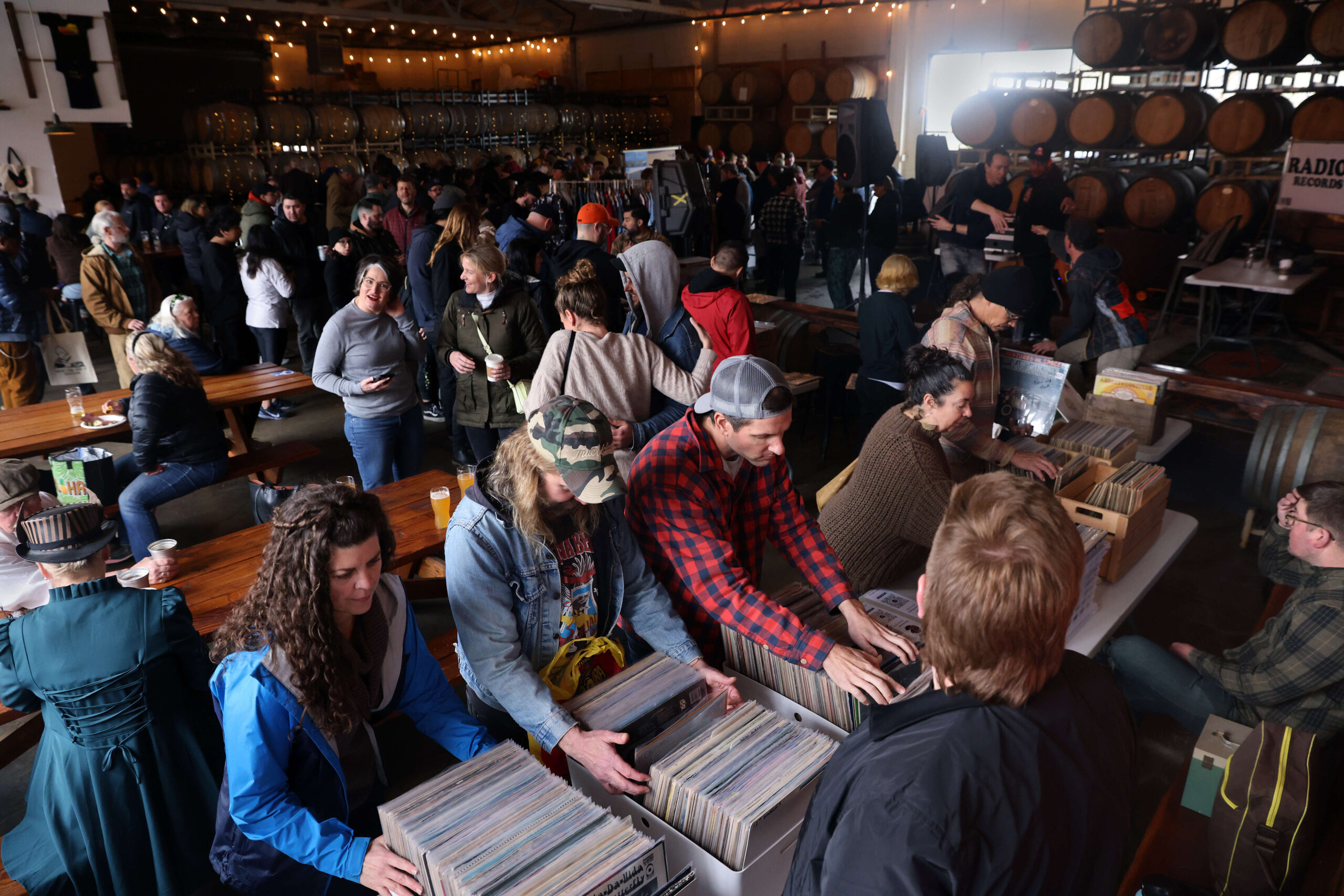
Rob Testorelli browses the selection at The Next Record Store in Santa Rosa on Tuesday, June 8, 2021. (Christopher Chung / The Press Democrat)People attend the Sonoma County Record Show, organized in partnership with RadioThrift and The NorCal Vinyl Society, at Shady Oak Barrel House in Santa Rosa, Sunday, March 19, 2023. (Beth Schlanker / The Press Democrat)
RadioThrift
Part thrift shop, part community gathering space, RadioThrift specializes in affordable vinyl and hosts regular swaps and live shows around the county, often at local breweries such as Shady Oak in Santa Rosa. On Record Store Day, the shop will be open from 10 a.m. to 5 p.m., with records priced between $2 and $5. 1005 Cleveland Ave., Santa Rosa, instagram.com/radiothrift
Rain Dog Records
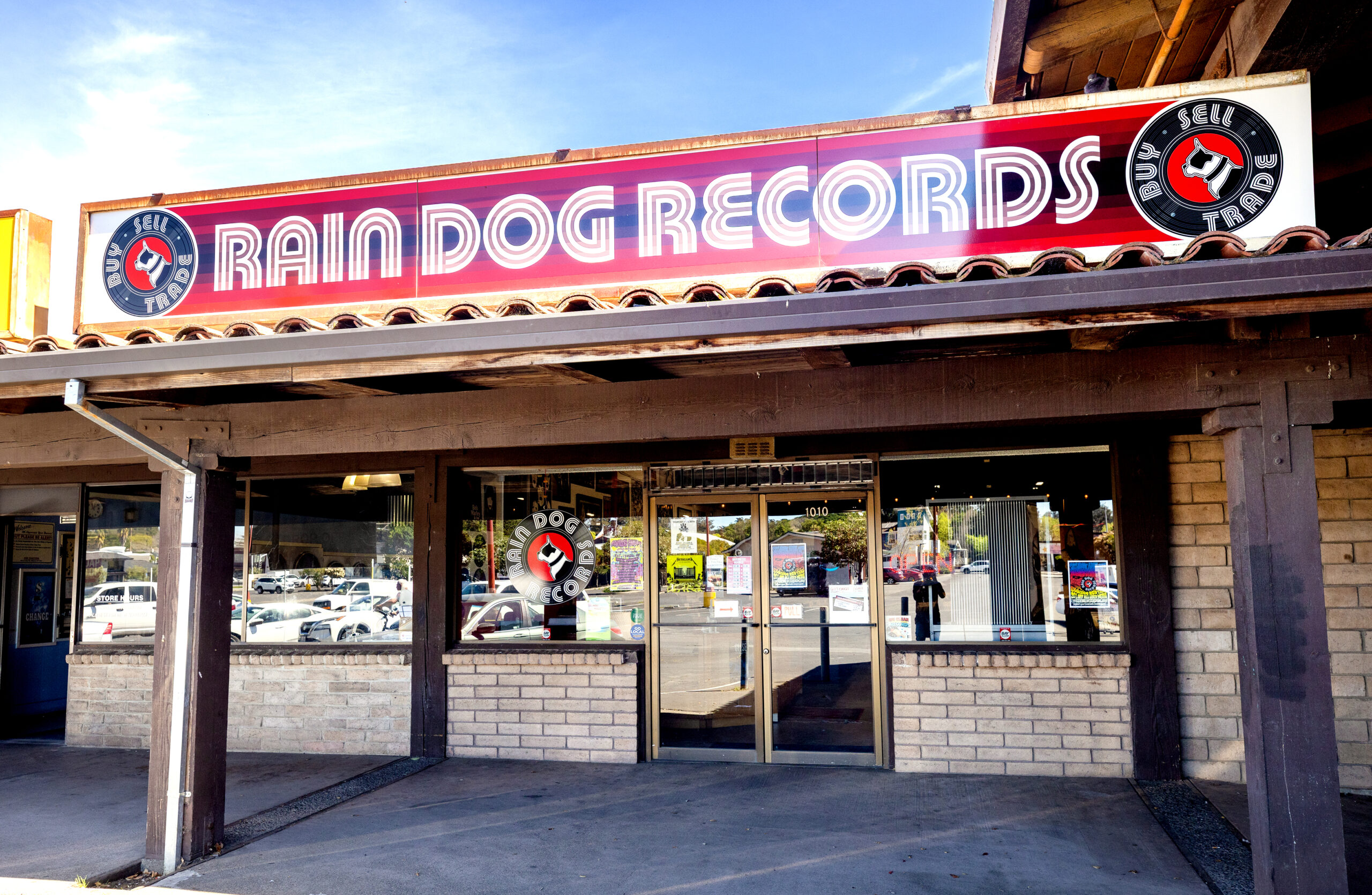
What began as a small mobile operation has grown into a brick-and-mortar shop since opening in 2021. Rain Dog Records offers a mix of new and used vinyl, CDs, cassettes and merchandise, and regularly hosts all-ages live music events. The store plans to open at 8 a.m. on Record Store Day with free coffee and doughnuts, exclusive releases and discounts on used inventory. 1010 Petaluma Blvd. N., Petaluma, 707-776-6187, raindogrecords.net
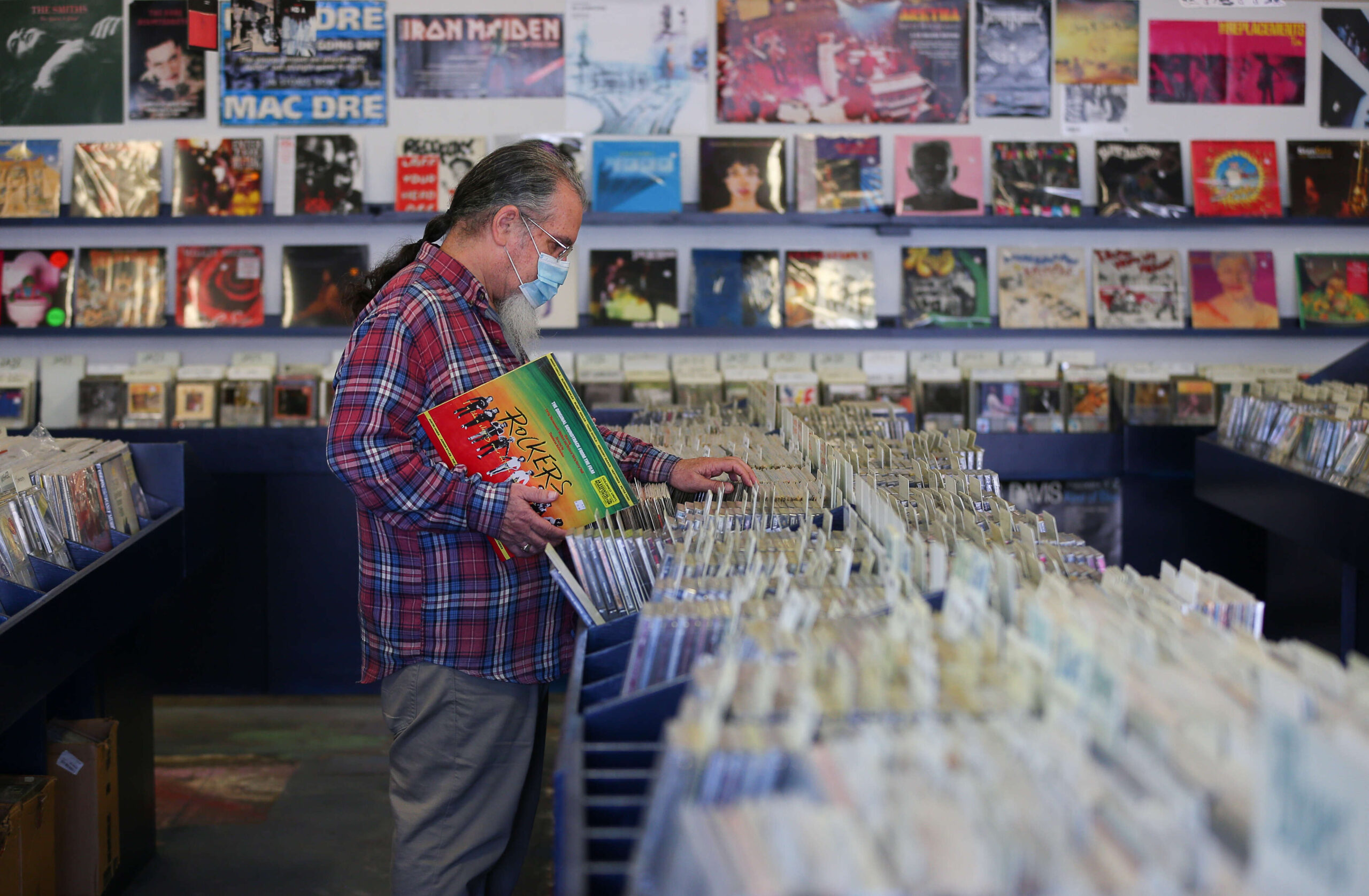
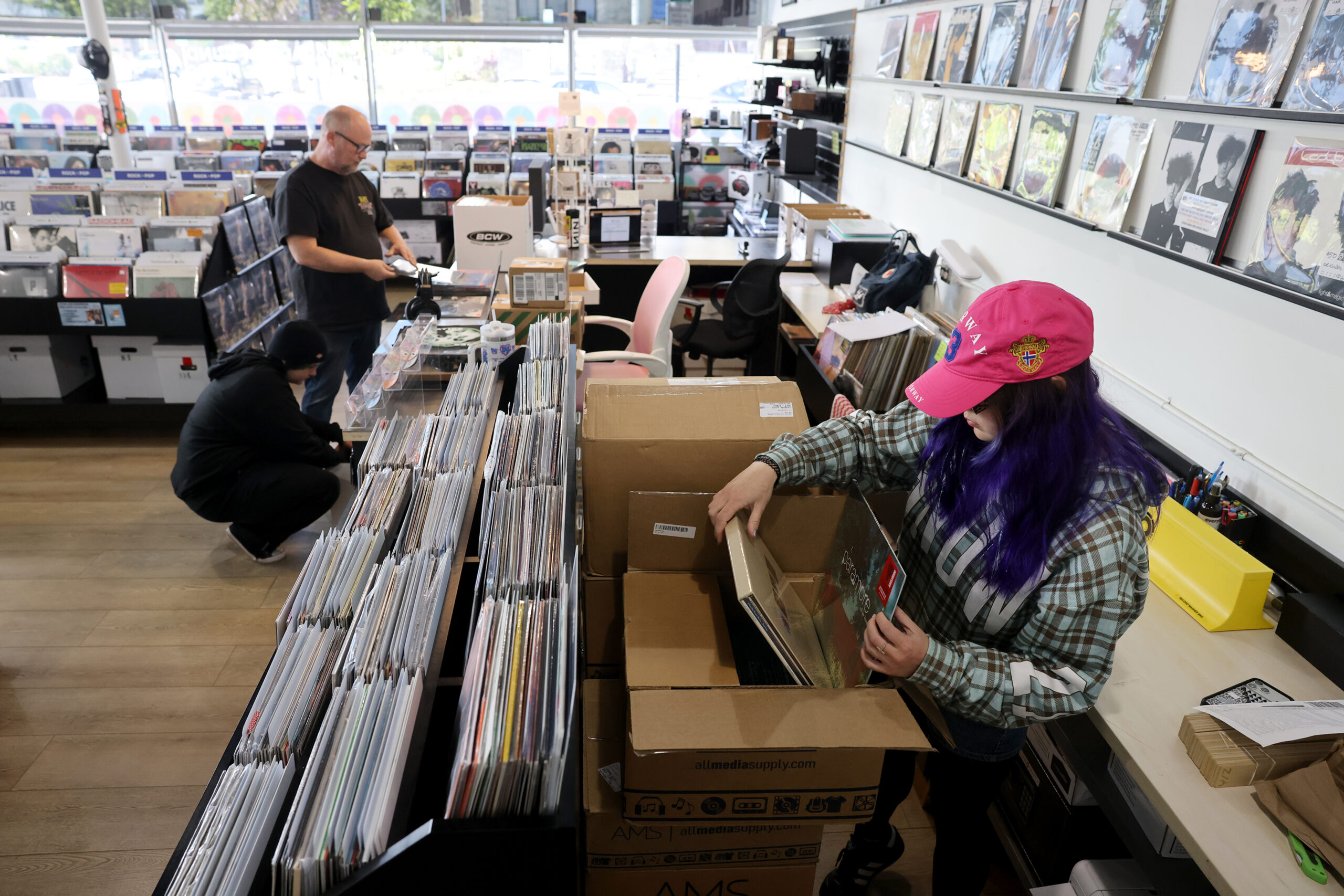
Rain Dog Records Monday, March 23, 2026, in Petaluma. (John Burgess / The Press Democrat)Store manager Justice Richie, right, opens boxes of newly delivered records for the upcoming Record Store Day at Paradise Found Records and Music in Petaluma Tuesday, April 14, 2026. (Beth Schlanker / The Press Democrat)
Paradise Found Records & Music
Opened in 2023, Paradise Found has quickly established itself as a downtown destination for collectors. Its inventory ranges from new releases to classics, including a section devoted to Rolling Stone’s list of the 100 greatest albums. On Record Store Day, the store will open at 7 a.m. with free pastries, promotions at nearby businesses and live DJ sets from 4-7 p.m. with no cover charge. 316 B St., Petaluma, 707-658-6944, paradisefoundrecordsmusic.com
Montagne Russe Winery & Record Lounge
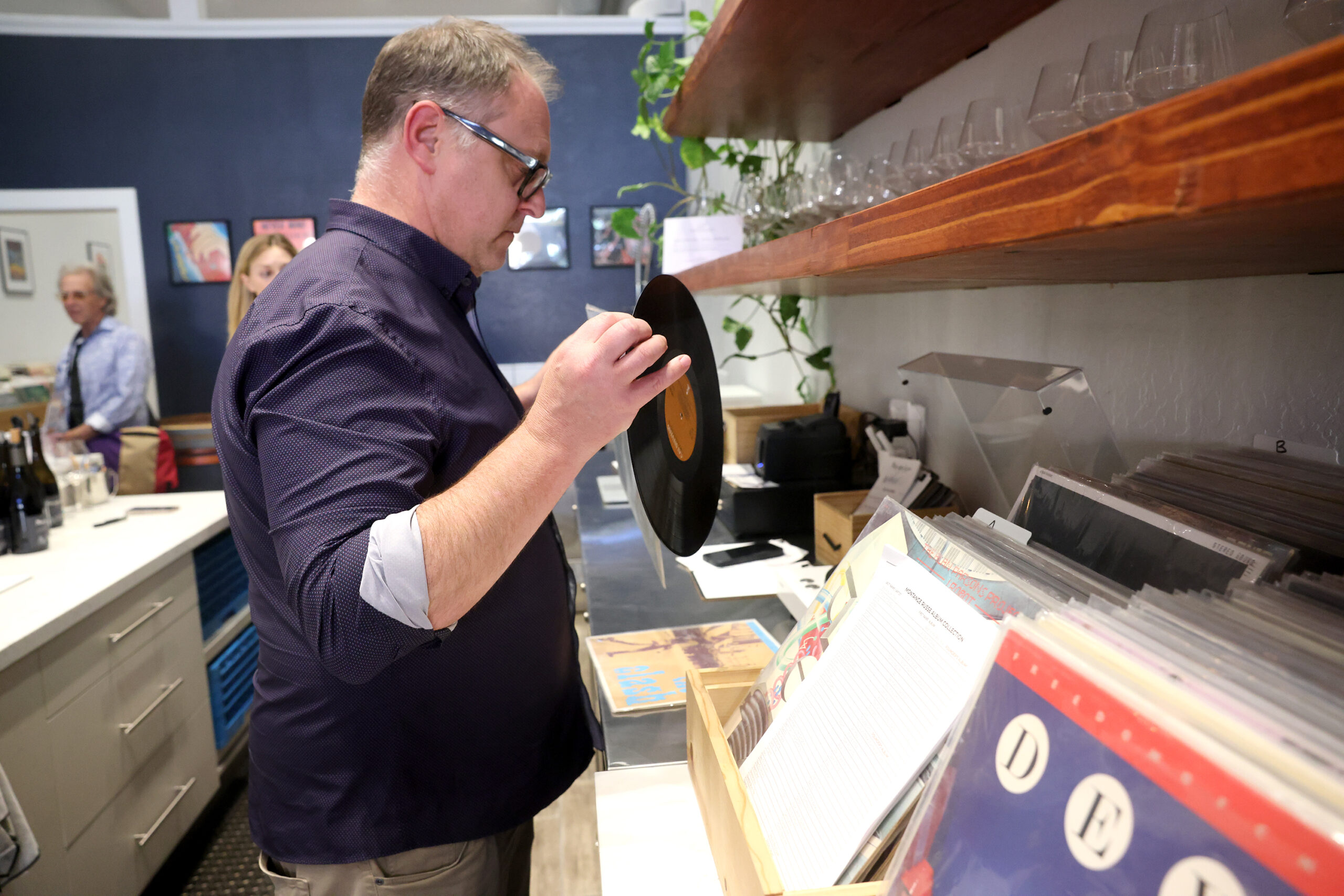
Blending a tasting room with a record shop, Montagne Russe offers wines from the Petaluma Gap alongside thousands of albums. Owner Kevin Bersofsky curates a personal vinyl selection, plays it in-house and often takes requests. The space hosts weekly live music and will hold a free Record Store Day after-party following the Butter & Eggs Day Festival (also on Saturday), featuring a performance by local musician Dan Durkin. 155 Petaluma Blvd. N., Petaluma, 1-855-467-8773, russewines.com
Owner and winemaker Kevin Bersofsky puts on a record at the Montagne Russe Winery and Record Lounge in Petaluma Thursday, July 31, 2025. (Beth Schlanker / The Press Democrat)Rare albums, magazines and vintage stereo equipment at Revolution Vinyl in Duncans Mills. (John Burgess / The Press Democrat)
Revolution Vinyl & Vintage
Set in the small town of Duncans Mills, this vintage shop offers a mix of used records and retro audio equipment. Its selection includes everything from accessible finds to rarer pieces for dedicated collectors. 25191 Main St., Duncans Mills, 707-721-2358, revolutionvinylvintage.com
More places to find vinyl:
Fatty’s Threads: 1290 Sebastopol Road, Santa Rosa, 707-578-6916
The Thrifty Hippy: 218 Petaluma Blvd. N., Petaluma, 707-241-6748, thriftyhippythrift.com
Trove: 423 First St. W., Sonoma. 707-231-1210, trovesonoma.com
Spicy Plum Sauce Pork sautéed with vegetables from Osake Japanese restaurant Thursday, April 3, 2026 in Santa Rosa. (John Burgess / The Press Democrat)
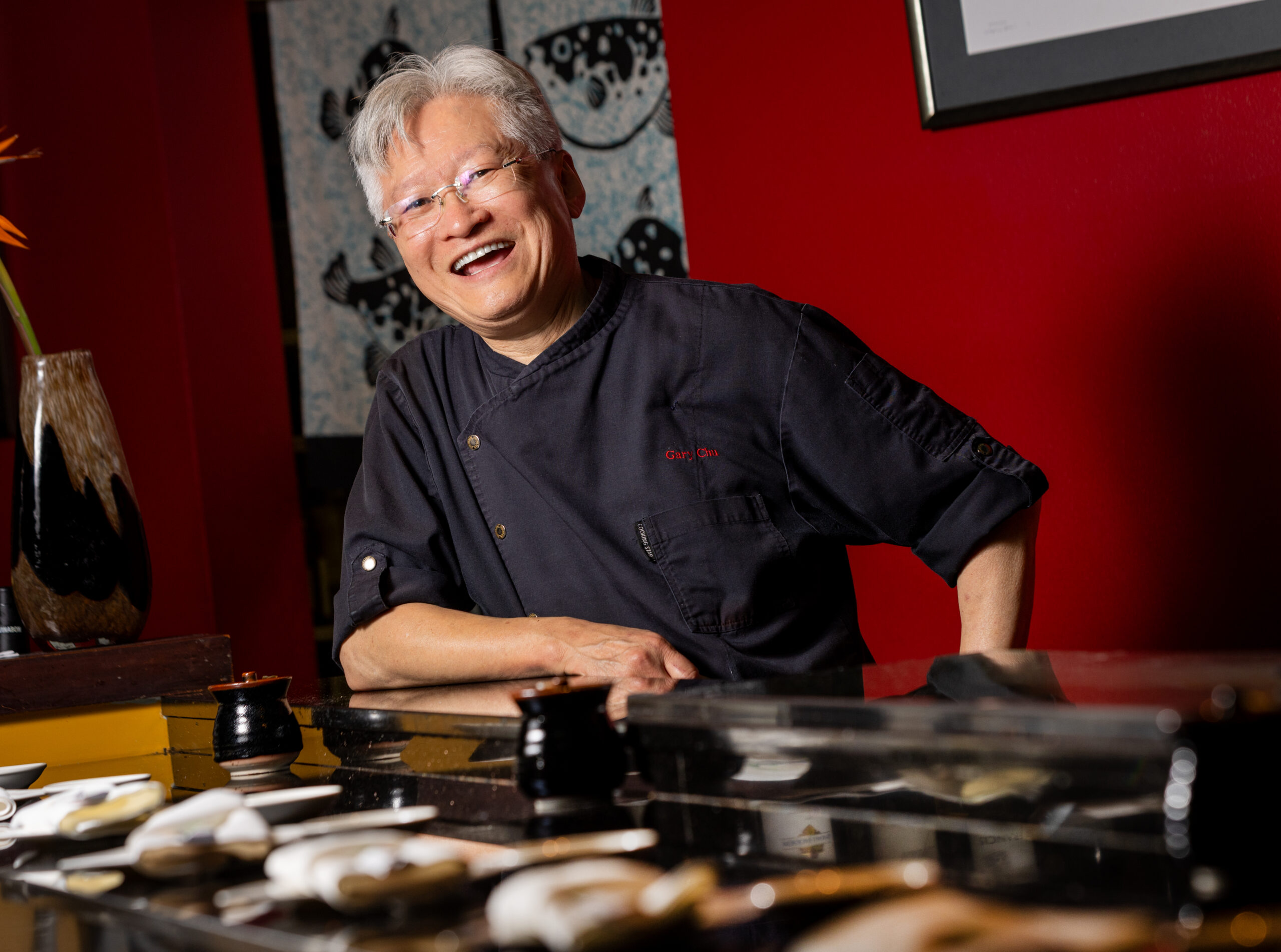
After 43 years in the restaurant business, chef Gary Chu has only one regret. “I have no hobbies,” he said, sitting inside his longtime restaurant Osake in Santa Rosa on an early Saturday morning.
With a mug of coffee in hand, Chu looked back on decades spent in his family’s Chinese restaurants and later building a local restaurant empire with Gary Chu’s and Osake in Santa Rosa and Sake’O in Healdsburg. Now, as he considers a future without 14-hour days, he can’t help but grin at how deeply the restaurant world still calls to him.
“I love what I do. Whatever happens outside, when I come through these doors, I forget everything,” he said. The smile rarely leaves his face, making it easy to believe.
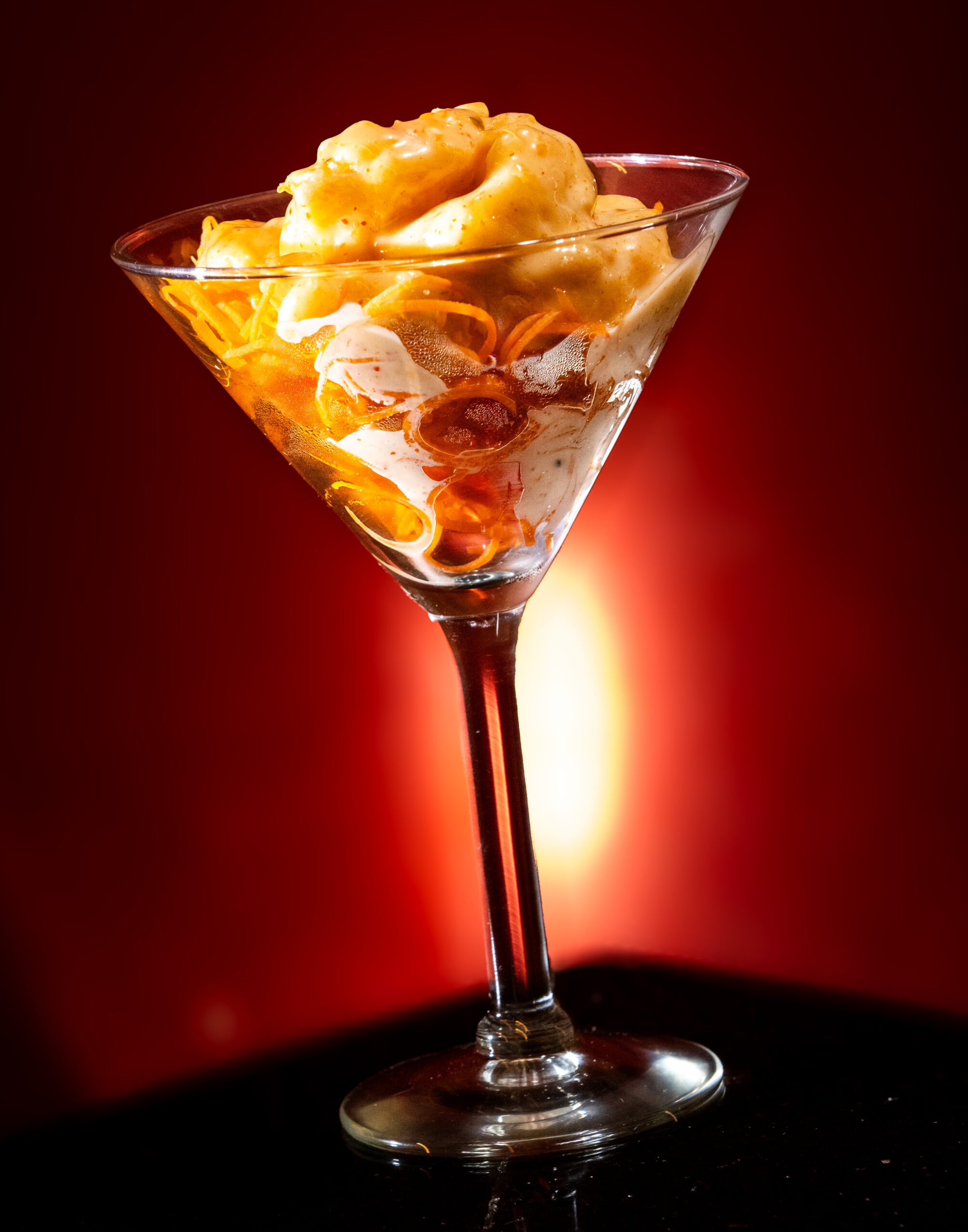
Gary Chu opened his first restaurant in Santa Rosa when he was 24 years old and his Osake Japanese restaurant in 1998 in Santa Rosa. Photo taken Thursday, April 3, 2026. (John Burgess / The Press Democrat)Martini Prawns, crispy prawns in a spicy aioli sauce, from Osake Japanese restaurant Thursday, April 3, 2026 in Santa Rosa. (John Burgess / The Press Democrat)
At 68, Chu is woven into the fabric of Sonoma County dining. In the 1980s and ’90s, his namesake Chinese restaurant in downtown Santa Rosa stood out as a rare destination north of San Francisco for elevated, California-influenced Asian cuisine. Szechuan lamb, tea-smoked duck and Champagne scallops shared the menu with crowd-pleasers like lemon chicken and the now-iconic Martini Prawns, a dish that’s been imitated across the region.
Today, Osake is Chu’s last remaining restaurant, a cozy, low-lit spot he opened in 1998 that endures while others have come and gone. The menu leans Japanese, but longtime fans will spot a handful of Chu’s Chinese classics. Through economic ups and downs, shifting tastes and even a pandemic, Osake has held steady, a testament to the staying power of well-crafted, timeless Japanese and Chinese dishes and genuine hospitality.
And his fans have aged with him, something Chu doesn’t take for granted.
“People have been following me for the last 30 to 40 years,” he said. Like many of his patrons, Chu’s once-dark hair is now mostly gray and his children are grown, bringing their own children and grandchildren to the restaurant.
Chef Chris Chu runs the kitchen at Osake Japanese restaurant, while brother Gary entertains guests at the sushi bar and runs the front of the house Thursday, April 3, 2026 in Santa Rosa. (John Burgess / The Press Democrat)
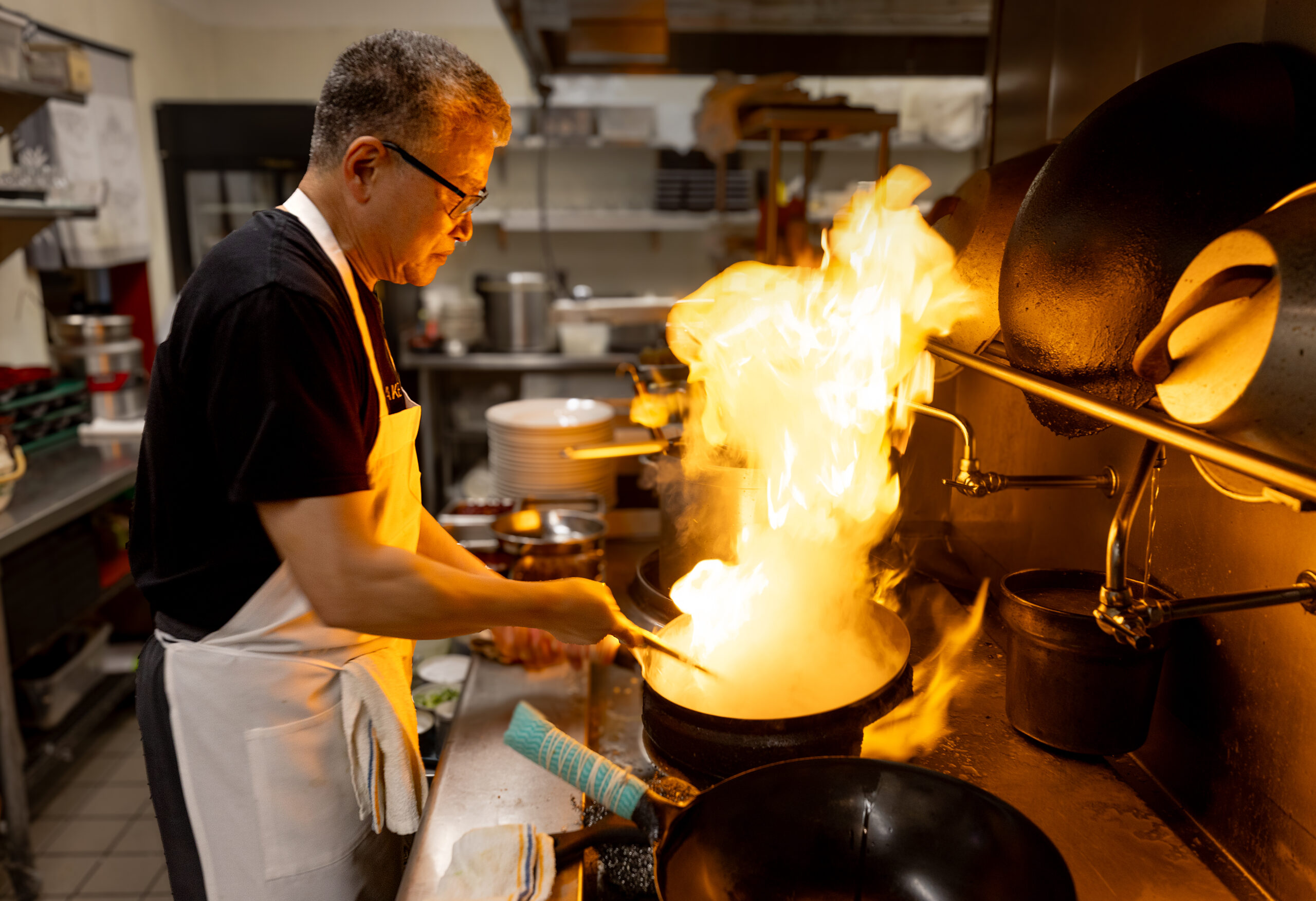
Still, it takes more than loyal regulars to keep the lights on. Osake, tucked near Montgomery Village, may not draw attention with flashy decor, but the kitchen consistently turns out excellent food. Chu’s brother, Christopher, has been at the stove for decades, while Gary is a fixture behind the sushi bar, entertaining guests and expertly slicing salmon and tuna throughout the day.
Chu is always the first to arrive in the morning and the last to leave at night. Over the years, he’s earned a Michelin Bib Gourmand, a shelf full of ‘best of’ awards, and a reputation as one of Sonoma County’s most dedicated restaurateurs. He says he’s achieved nearly everything he set out to do, though another Michelin mention would be a fitting capstone.
Lately, he’s started to imagine a slower pace: fewer hours at the restaurant, quiet mornings over coffee with his wife, and maybe, finally, time for a hobby.
The inspiration
Chu, who spent much of his youth in South Korea, worked in his parents’ restaurants for many years, including the restaurant they originally owned on Fifth Street in Santa Rosa. His experience working in Japan inspired the menus for Sake’O and Osake. The name Osake (pronounced oh-SAH-kay) is a nod to Japanese rice wine, with the honorific “O” prefix, though most people default to calling it Osaka, like the Japanese city.
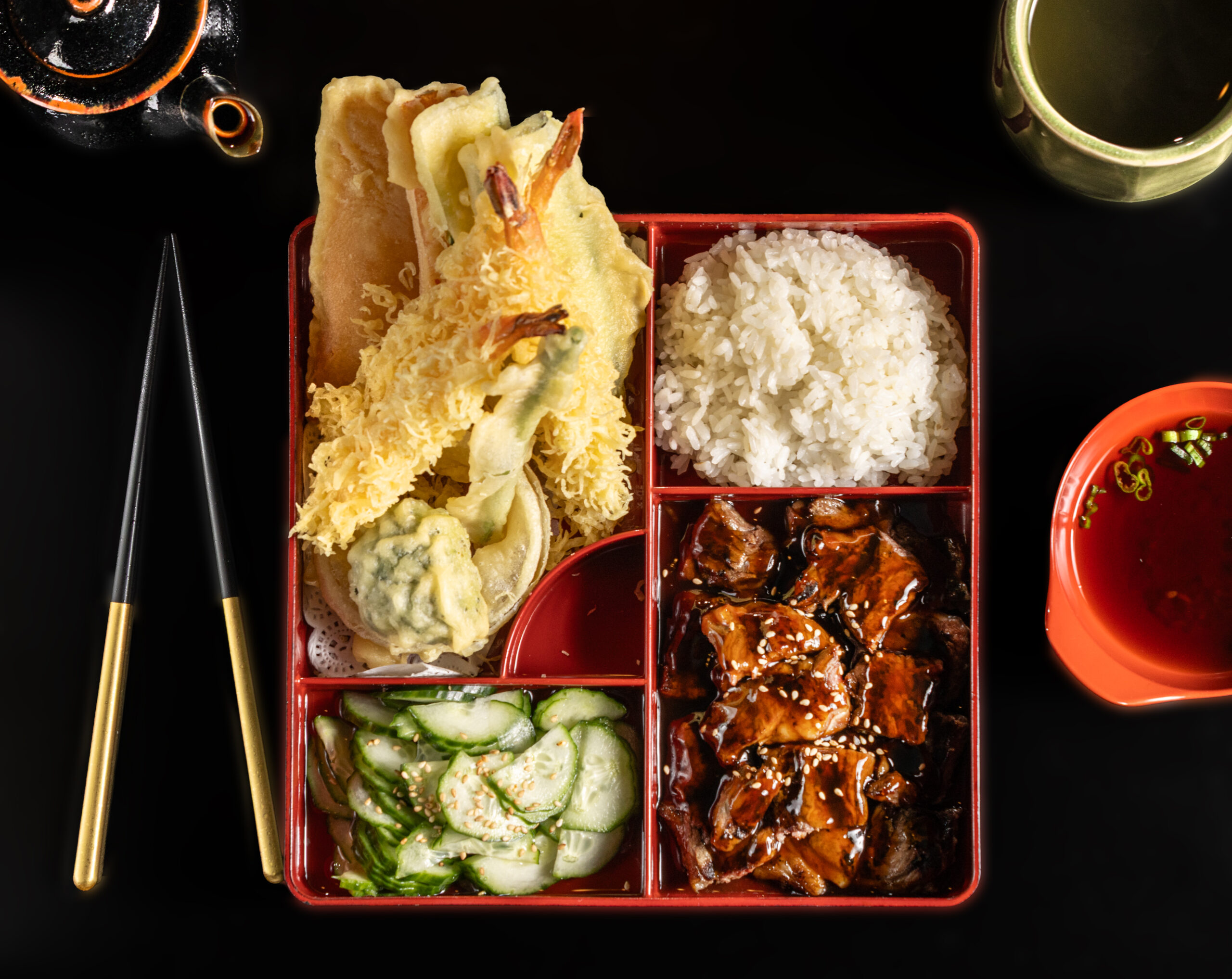
The Osake Executive Bento Dinner with tempura and teriyaki chicken, miso soup, salad and rice from Osake Japanese restaurant Thursday, April 3, 2026 in Santa Rosa. (John Burgess / The Press Democrat)
The vibe
Step inside and you’ll find a dining room that feels like a time capsule, with dark wood, carpet and soft lighting that harken back to another era. There’s a bit of wear around the edges, but everything is spotless and the welcome is as warm as ever. The sushi bar, where you’ll often find Chu, is the best seat in the house. Spacious tables and banquettes make it easy for groups to gather, while cozy two-tops offer a more intimate setting. Near the entrance, a large fish tank draws curious glances — the residents, it should be noted, are not on the menu.
The food
Most popular dishes: Martini prawns, Szechuan wonton, lemon chicken, Utah roll.
The menu spans Japanese classics — bento boxes, nigiri, wood-grilled yakitori, sukiyaki, and sushi rolls — alongside a takeout selection of Chu’s favorite Chinese comfort foods: kung pao chicken, walnut prawns, Szechuan prawns, and fried rice. Even at lunch, plates arrive artfully arranged, with bold sauce swirls and vibrant, fresh ingredients.
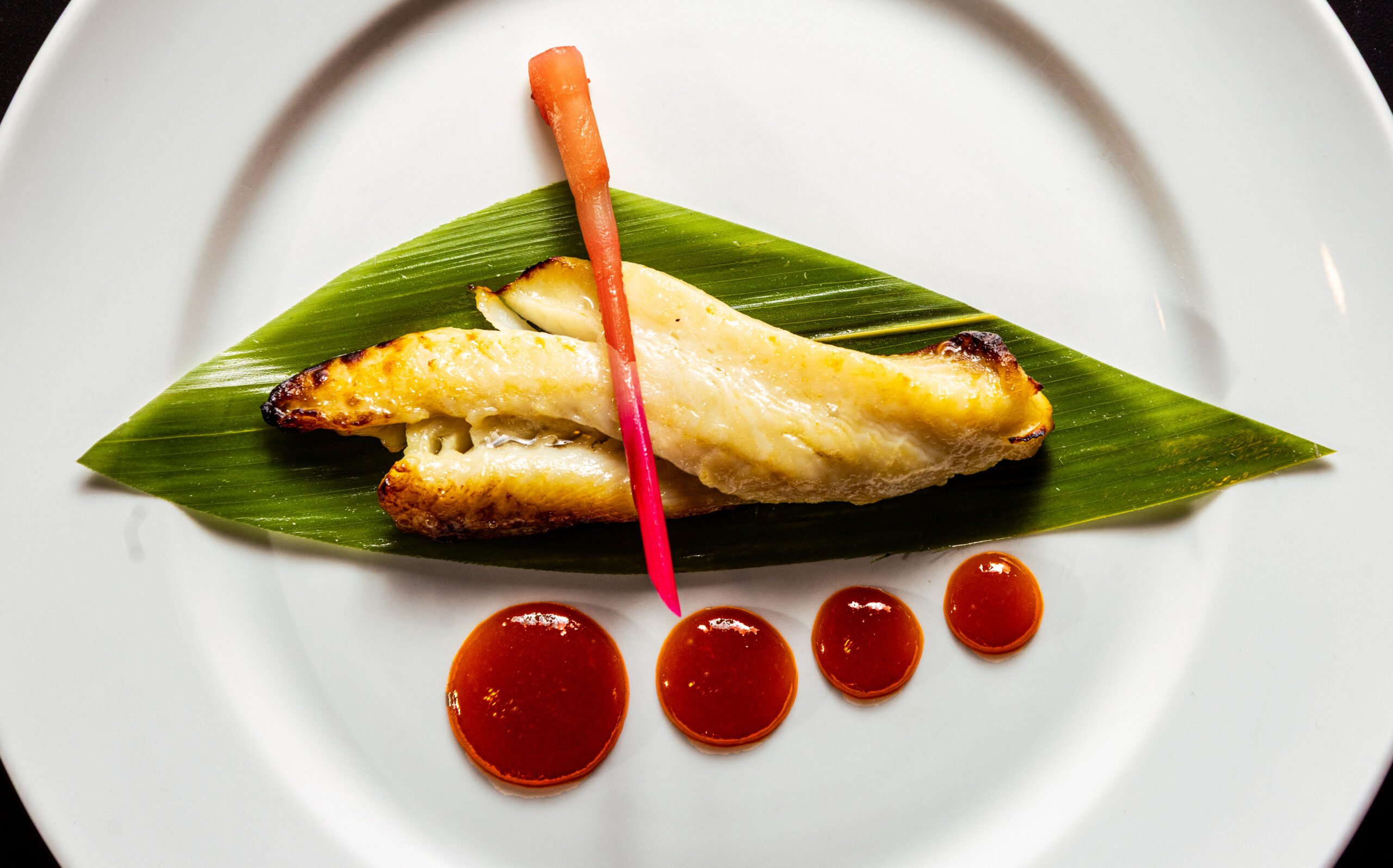
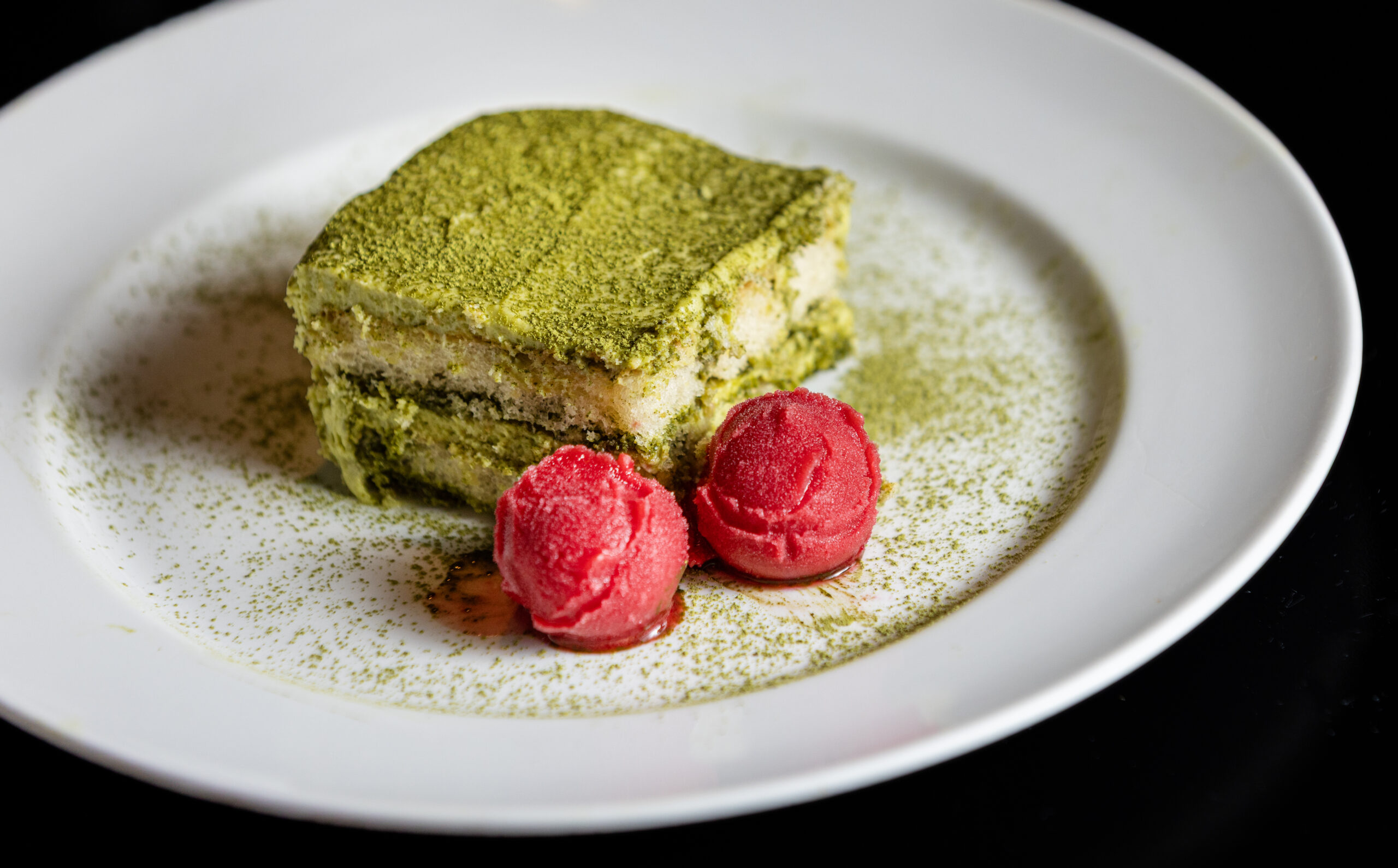
Saikyo Miso Black Cod appetizer with crispy pork wonton with tomato, onion and melted cheese from Osake Japanese restaurant Thursday, April 3, 2026 in Santa Rosa. (John Burgess / The Press Democrat)Matcha Tiramisu from Osake Japanese restaurant Thursday, April 3, 2026 in Santa Rosa. (John Burgess / The Press Democrat)
Don’t miss the spicy Szechuan wontons, silky black miso cod, tuna carpaccio with soy truffle oil or the well-crafted nigiri and sashimi. For takeout, classics like wor wonton soup, spicy plum pork, kung pao chicken and fried rice are always a hit.
Fun fact
The Martini Prawn is a Gary Chu original, a dish now found on menus all over Sonoma County. One hectic night at his downtown restaurant, Chu improvised a quick appetizer, riffing on walnut prawns with a spicier sauce and serving them in a martini glass — simply because it was handy. A sprinkle of grated carrot finished the sweet, crispy dish, and a signature was born.
Open for lunch and dinner Tuesday through Sunday, closed Monday. 2446 Patio Court, Santa Rosa. 707-542-8282, osake-sushi.com
A Mother’s Day brunch from Spoonbar at h2hotel in Healdsburg. (Spoonbar)
Moms deserve all the best things in this world — and a Wine Country brunch is a good start. Restaurants and wineries across Sonoma County are pulling out all the stops to make this Mother’s Day special.
All Mother’s Day brunches will take place on Sunday, May 10, unless otherwise noted.
Santa Rosa
Flamingo Resort & Spa: Seatings available from 10 a.m. to 3:30 p.m. for Flamingo’s annual Mother’s Day buffet-style brunch. $70 for adults and $35 for children under 12. Reserve on Tock. 2777 Fourth St., 707-545-8530, flamingoresort.com
At John Ash restaurant at Vinarosa Resort & Spa in Santa Rosa. (Sonoma County Tourism)
Iron & Vine: Seatings at 9:30 a.m. or 12:30 p.m. for the Mother’s Day brunch buffet at the Bennett Valley Golf Course restaurant. $59 per adult, $20 per child ages 3-12 and free for children under 3. Reserve online. Moms golf for free (with another paying golfer) on Mother’s Day. 3330 Yulupa Ave., 707-852-1162, bennettvalleygolf.com/ironandvine
Safari West: Mother’s Day brunch at 11 a.m. and 2 p.m. on the Sonoma Serengeti. $55 for adults, $35 for children ages 4-12 and free for children 3 and under. Reserve online. 3115 Porter Creek Road, 800-616-2695, safariwest.com
Kenwood
Salt & Stone: Seatings available from 9-11:30 a.m. for Mother’s Day brunch. Reserve on OpenTable. 9900 Sonoma Highway, 707-833-6326, saltstonekenwood.com
Glen Ellen
Songbird Parlour: Short-rib stroganoff dinner from 5-9 p.m. for Mother’s Day. Dinner is $42. Reserve on Toast. 14301 Arnold Drive, Suite 3, 707-343-1308, songbirdparlour.com
Sonoma
Chateau Sonoma: Mother’s Day celebration from 10 a.m. to 2 p.m., May 9, at the Chateau Sonoma Farm. Includes Champagne, a hands-on floral design class and farm-fresh brunch prepared by chef Kyle Kuklewski. $350 per ticket, plus fees. Purchase tickets on Eventbrite. 20730 Fifth St. E., 707-309-1993, chateausonoma.com
Santé at Fairmont:Mother’s Day brunch from 9:30 a.m. to 2:30 p.m. at the Fairmont Sonoma Mission Inn & Spa restaurant. $125 per adult, $39 per child ages 6-12 and free for children under 5. Reserve on OpenTable. 100 Boyes Blvd., 707-938-9000, fairmont.com/sonoma
El Dorado Kitchen: Mother’s Day brunch from 9:30 a.m. to 3:30 p.m. at the El Dorado Hotel restaurant. Entrees will range from $25 to $50. There will be an a la carte menu for children under 12. Reserve on OpenTable. 405 First St. W., 707-996-3030, eldoradosonoma.com/el-dorado-kitchen
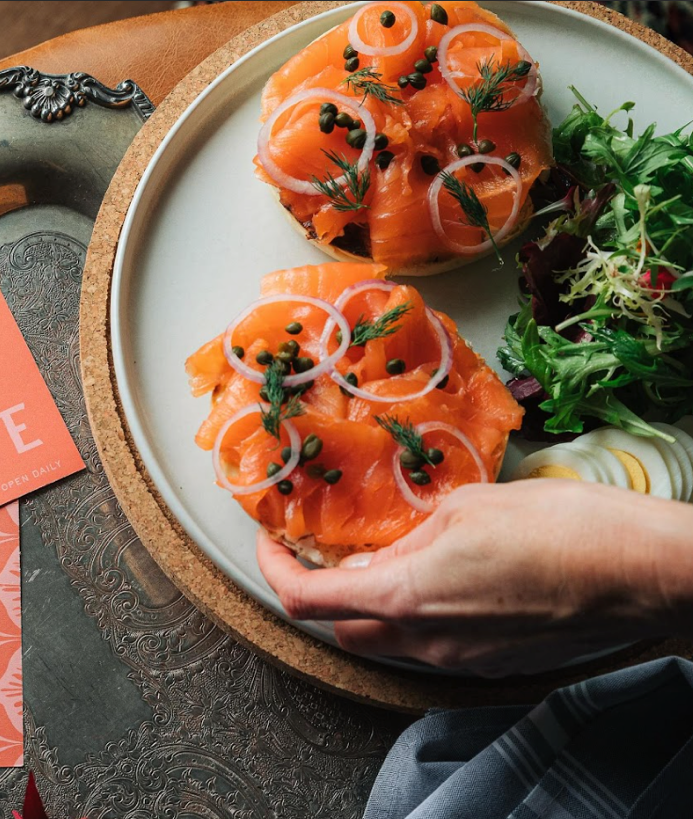
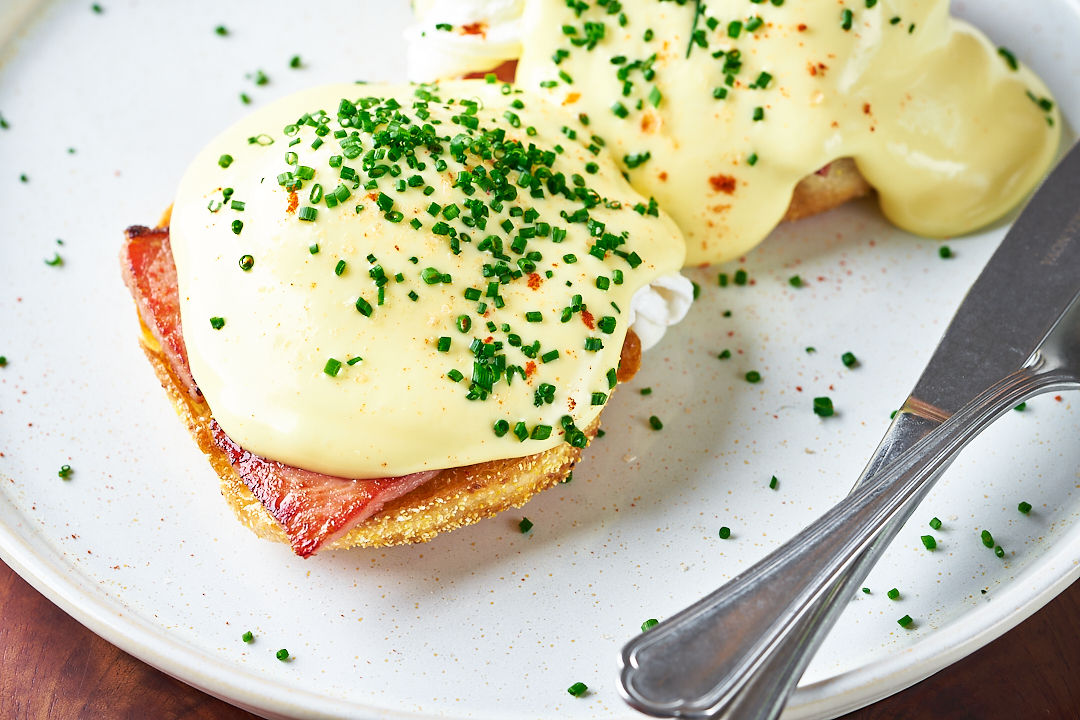
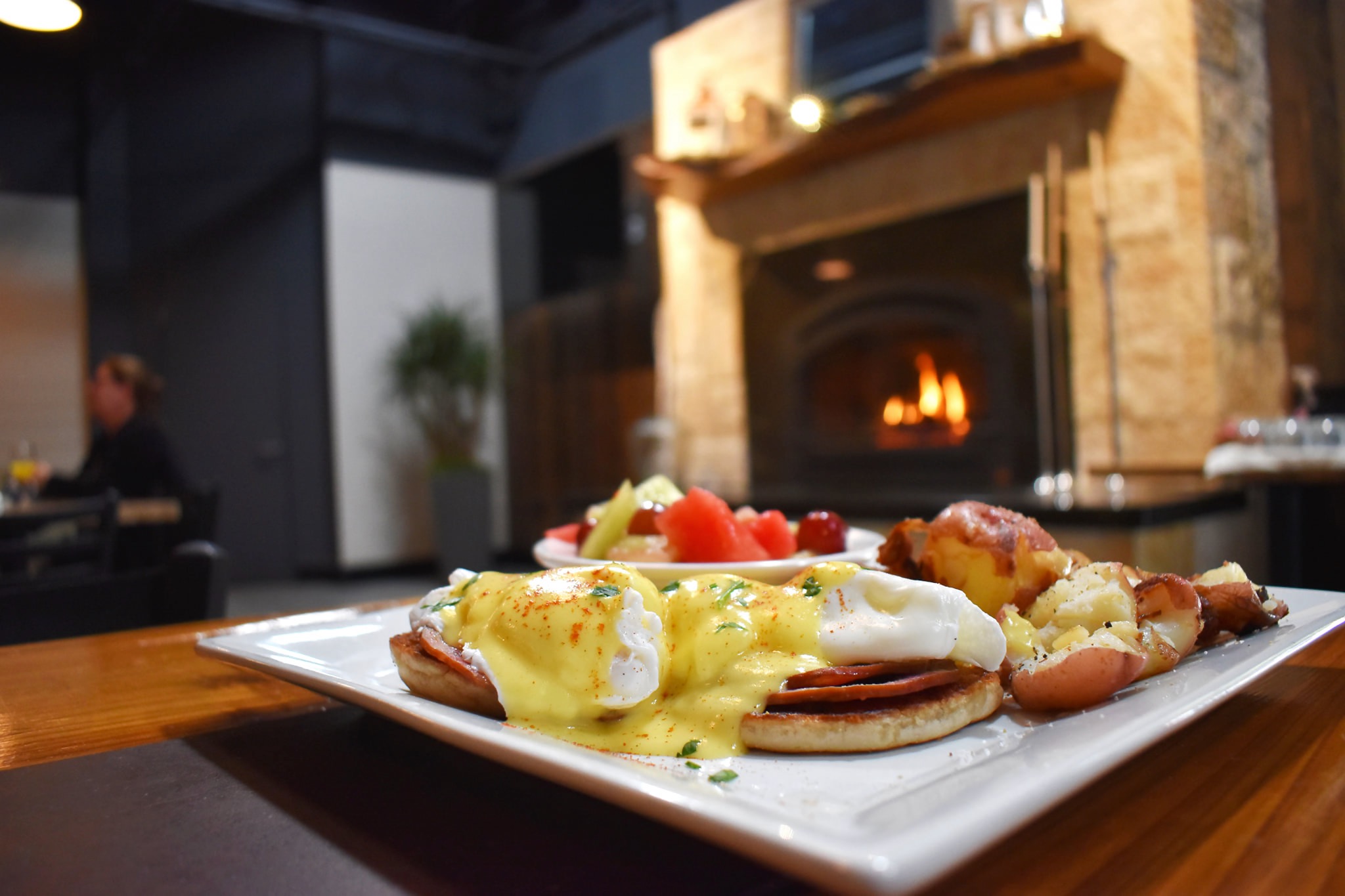
Bagels with lox for brunch at El Dorado Hotel + Kitchen in Sonoma. (El Dorado Hotel + Kitchen)Eggs Benedict from Wit & Wisdom in Sonoma is on the Mother’s Day brunch menu. (Wit & Wisdom)
Wit & Wisdom: Mother’s Day brunch from 10 a.m. to 3 p.m. with a three-course, prix-fixe menu at The Lodge at Sonoma Resort restaurant. $75 per person. Reserve on OpenTable. 1325 Broadway, 707-931-3405, witandwisdomsonoma.com
Roche Winery & Vineyards: Mother’s Day brunch from 11:30 a.m. to 2:30 p.m. $95 per adult, $80 for wine club members and $20 per child ages 3-13. Reserve on CellarPass. 22097A Bonness Road, 707-935-7115, rochewinery.com
Bartholomew Estate Winery: Mother’s Day picnic brunch from 11:30 a.m. to 2 p.m. featuring wine and flowers to bring home. Catering by Preferred Sonoma Caterers and florals by Cassidy Ranch. $150 per person, $130 for club members and $35 for children ages 3-10. Reserve on Tock. 1000 Vineyard Lane, 707-509-0540, bartholomewestate.com
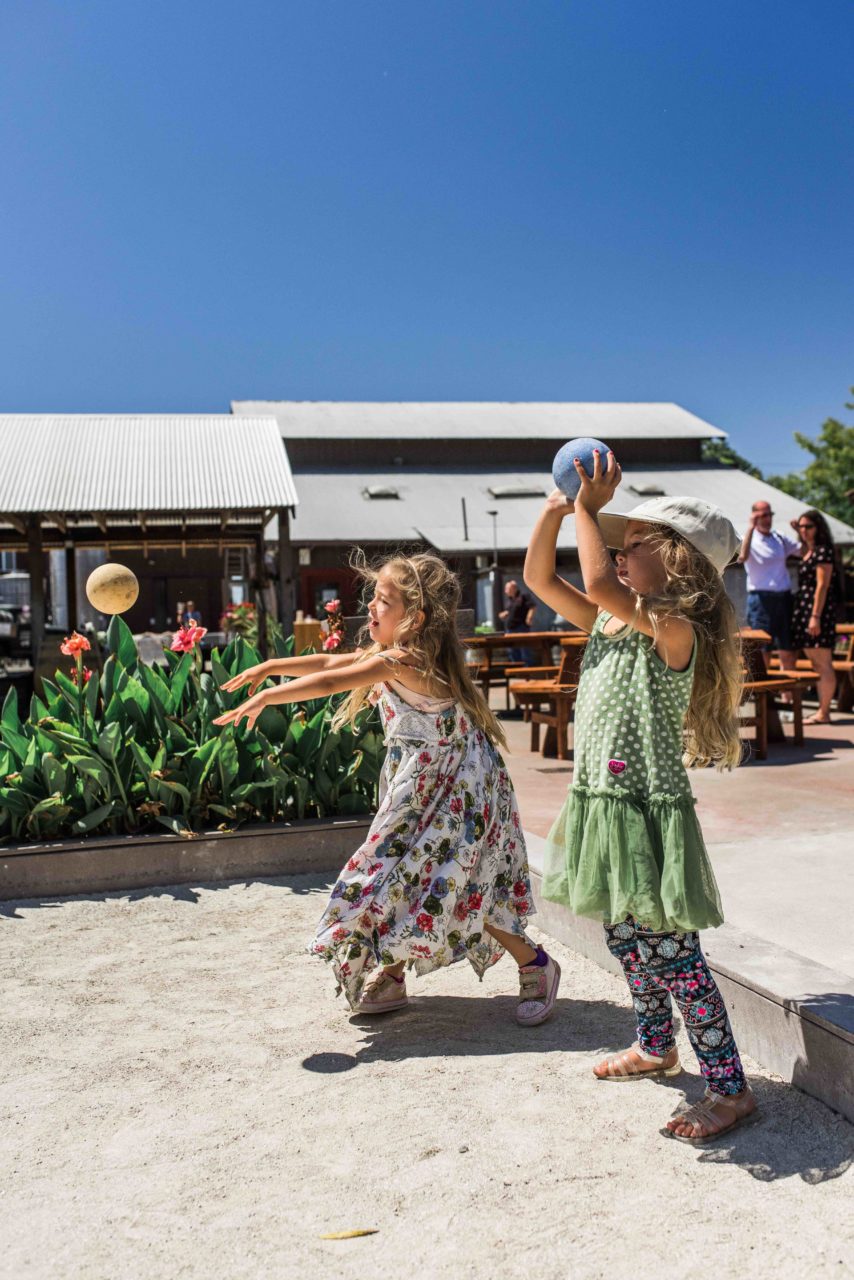
Bartholomew Estate Vineyards and Winery in Sonoma will host a catered picnic brunch for Mother’s Day. (Steven Krause)Kids at the bocce ball court at Larson Family Winery in Sonoma. (Rebecca Chotkowski)
Larson Family Winery: Catered brunch with live music from 11 a.m. to 1 p.m. at the Sonoma winery. More details to come. 23355 Millerick Road, 707-938-3031, larsonfamilywinery.com
Honrama Cellars: Brunch and bubbles from 10 a.m. to 1 p.m., including a special experience for moms. 22985 A Burndale Road, 707-628-2743, honramacellars.com
Petaluma
McEvoy Ranch: Mother’s Day tea service from 11:30 a.m. to 2 p.m. at McEvoy’s historic Victorian. $95 per guest and $65 for children under 12; members get 15% off. Reserve on Tock. 5935 Red Hill Road, 707-769-4138, mcevoyranch.com
Sally Tomatoes: Annual Mother’s Day Champagne brunch starting at 10 a.m. featuring a buffet and bottomless mimosas. $32 for adults and $16 for children. Endless sparkling mimosas are $20. Call 707-665-9472 to RSVP. 1100 Valley House Drive, 707-665-9472, sallytomatoes.com
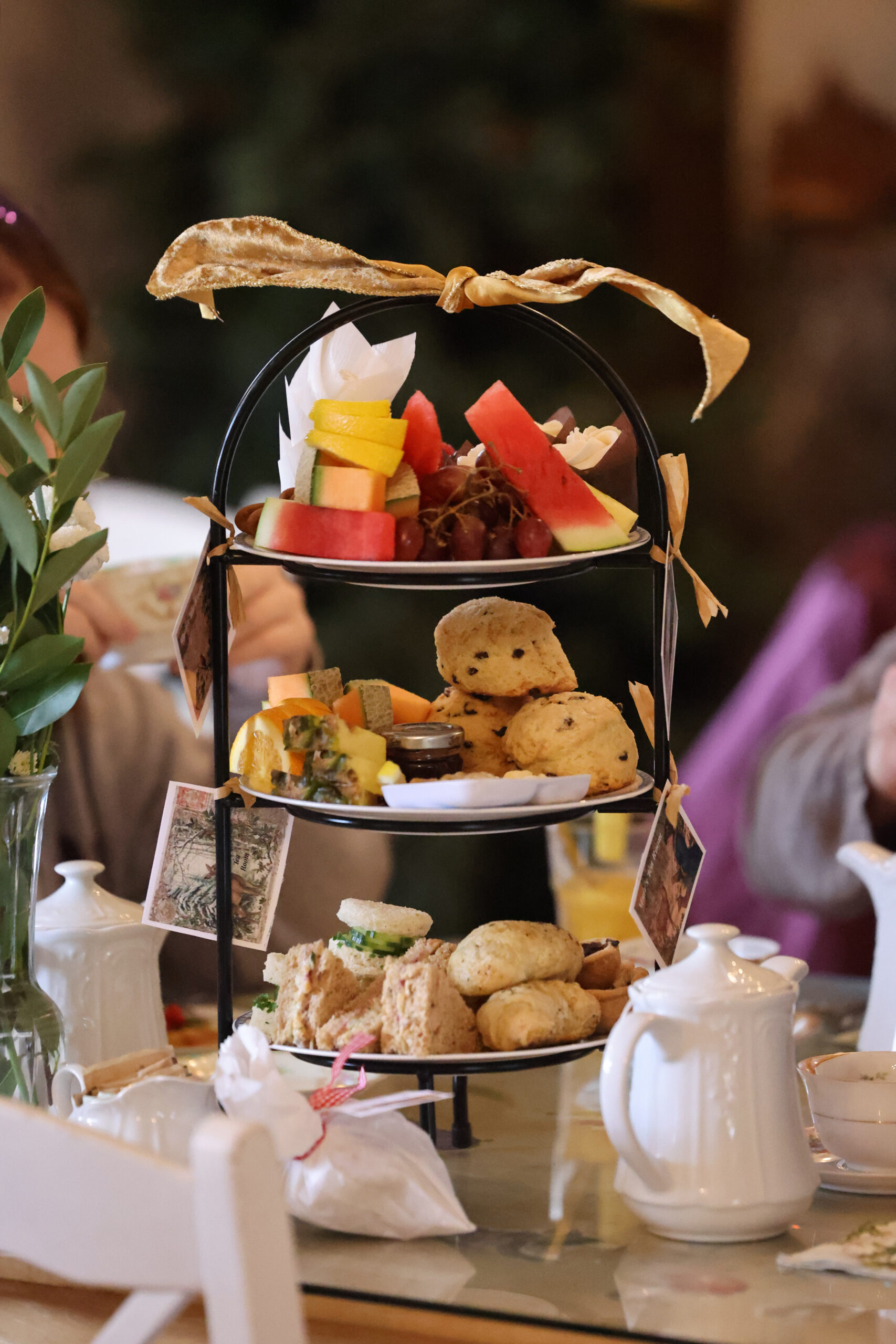
Brunch from Sally Tomatoes Catering and Events in Rohnert Park. (Sally Tomatoes)A tower of sweet and savory vegan delicacies at Muir’s Tea Room in Sebastopol Tuesday, Dec. 30, 2025. (Beth Schlanker / The Press Democrat)
Sebastopol
Muir’s Tea Room: Mother’s Day high tea served May 9-10. $82 for adults on Saturday, May 9, and $86 for adults on Sunday, May 10; $42 for children both days. A gluten-free menu is also available. See menu and reserve online. 330 S. Main St., 707-634-6143, muirstearoomandcafe.com
Windsor
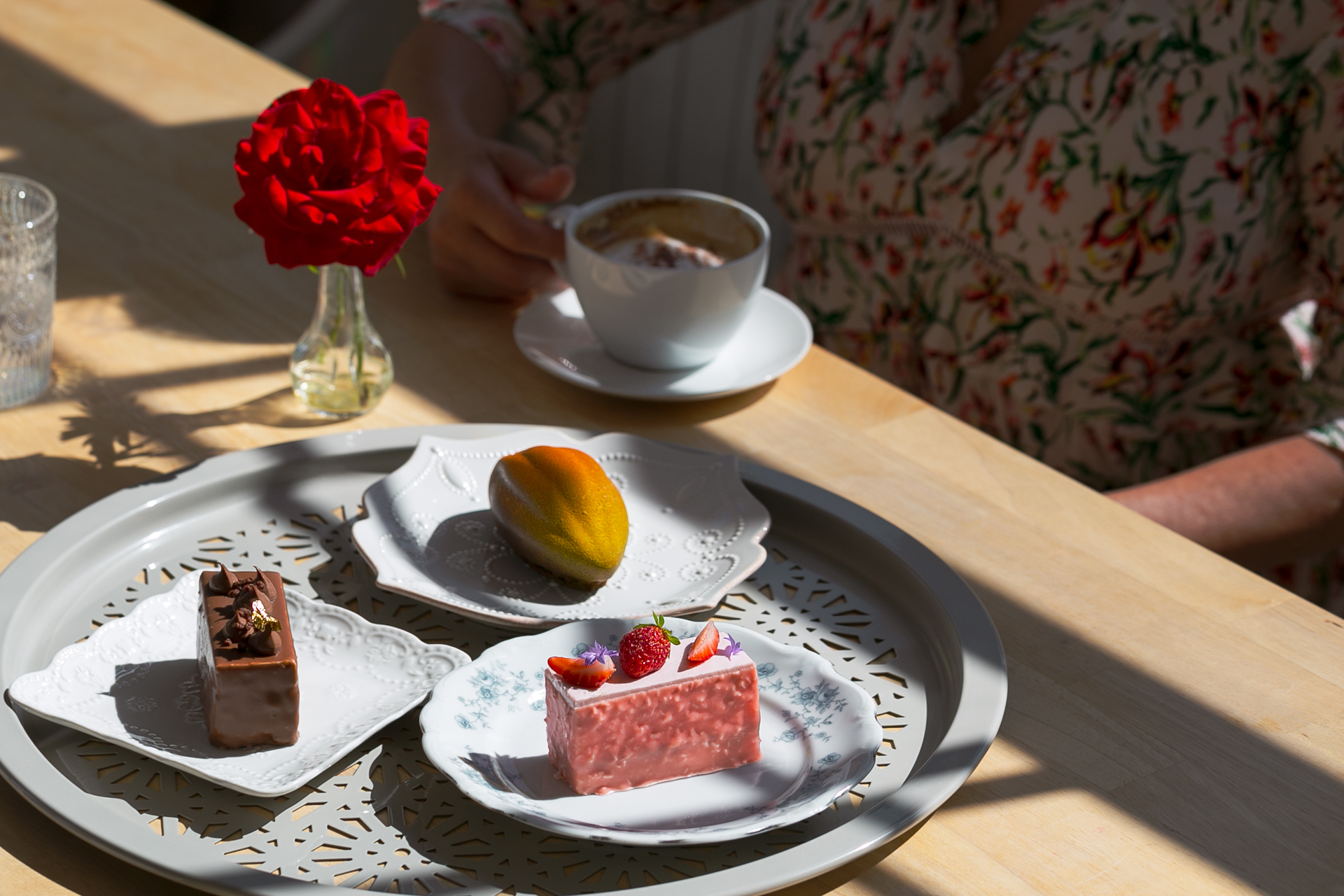
Fleur Sauvage: Mother’s Day “Petit & Sweet Tasting” — a European-inspired dessert tasting experience — with seatings available from 11:30 a.m. to 3 p.m. at the Windsor chocolate shop. $40 per person. 370 Windsor River Road, 707-892-2162, fleursauvagechocolates.com
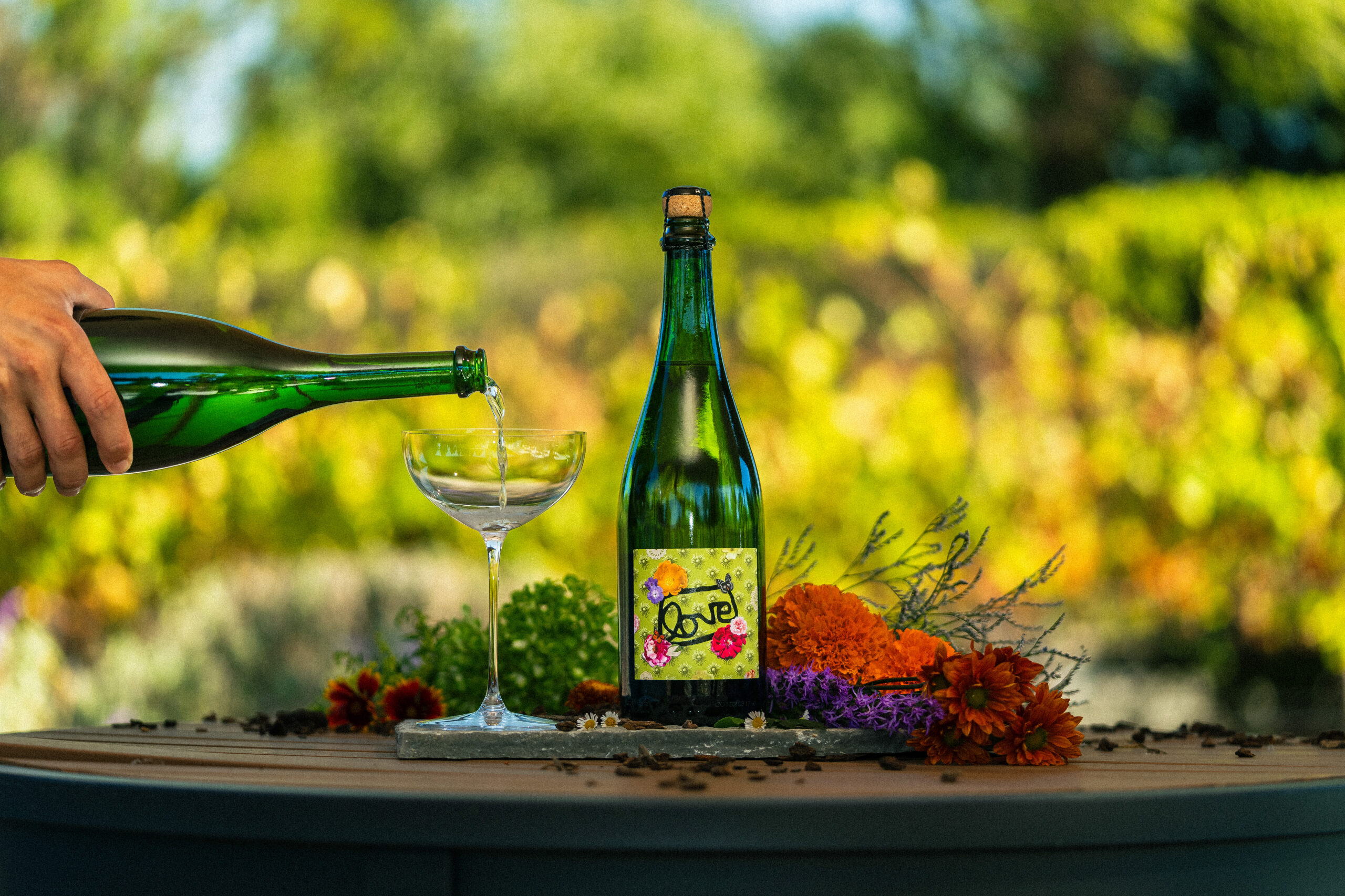
Desserts from artisan chocolatier Fleur Sauvage in Windsor. (Sonoma County Tourism)J Vineyards & Winery’s sparkling Love Wine Brut Cuvée, crafted with a mix of Chardonnay, Pinot Noir and Pinot Meunier grapes from across the Russian River Valley, Monterey County and Mendocino County. (J Vineyards & Winery)
Healdsburg
J Vineyards & Winery: Mother’s Day weekend brunch at 11 a.m. and 1 p.m., May 8-9, in the Bubble Room, and at 10 a.m., 11:30 a.m. and 1 p.m., May 10, on the Terrace. $125 per person and $110 for wine club members. Reserve on Tock. 11447 Old Redwood Highway, 707-431-5430, jwine.com
Jordan Vineyard & Winery: Mother’s Day afternoon tea from 3:30-5 p.m., May 8-9. $95 per person. Limited availability; reserve online. 1474 Alexander Valley Road, 707-431-5250, jordanwinery.com
Convene by Dan Kosta: Mother’s Day weekend wine tasting from 11 a.m. to 5 p.m., May 9-10, at Convene by Dan Kosta at Bacchus Landing. There will be popcorn and Chardonnay, including a complimentary glass for mom. Reserve a free ticket on Tock. 14210 Bacchus Landing Way, Suite 300, 707-861-8199, convenebydankosta.com
Tisza Bistro: Mother’s Day brunch from 10 a.m. to 2 p.m.; limited seating. Reserve a spot on OpenTable. 165 Healdsburg Ave., 707-291-5193, tiszabistro.com
Folia at Appellation:Mother’s Day brunch from 10 a.m. to 2 p.m. with a three-course menu. $110 per person and $25 for children 6 and under. Reserve on OpenTable. 101 Dovetail Lane, 707-723-2130, foliabarandkitchen.com
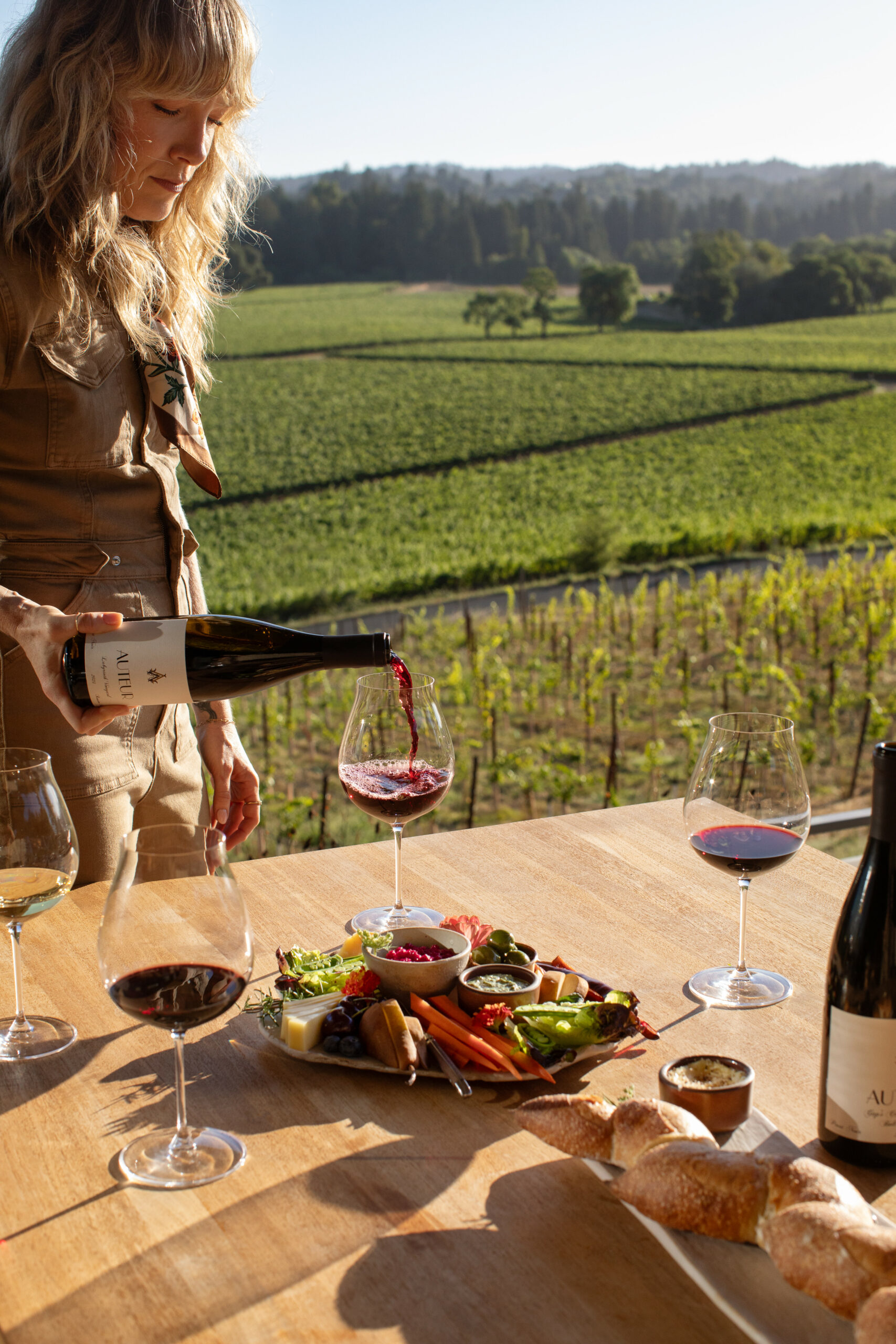
Auteur Wines: Mother’s Day brunch starting at 10 a.m. with a five-course menu and a perfumery sensory experience. Brunch includes debut of estate’s sparkling Blanc de Noir Rosé. Florals by Zannah Farms. $103 per person. Reserve on Tock. 10520 Wohler Road, Healdsburg, 707-766-0222, auteurwines.com
At Auteur Wines in Healdsburg. (Eileen Roche / Sonoma Magazine)A bottle of bubbly from Breathless Wines in Healdsburg. (Breathless Wines)
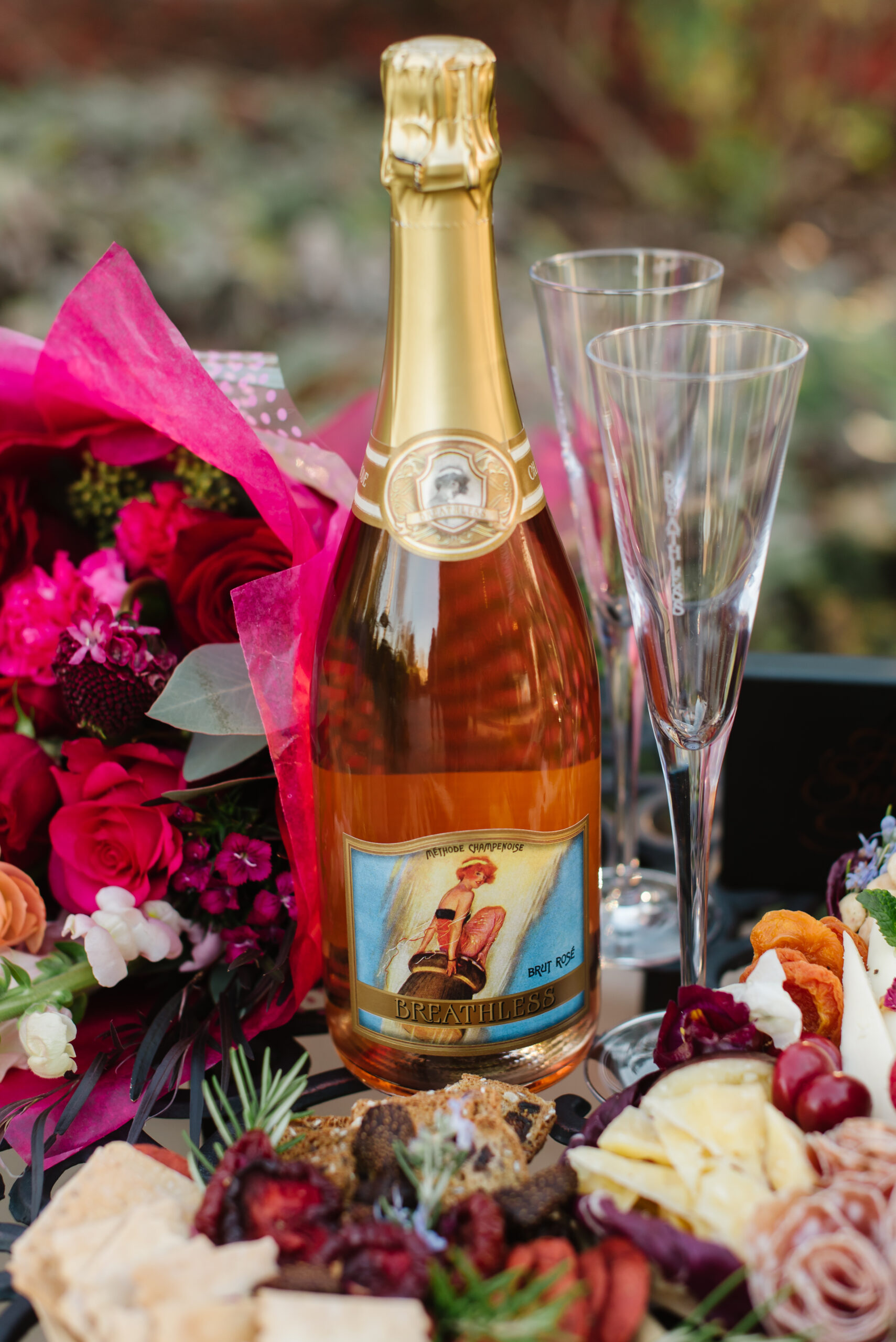
Breathless Sparkling Wines: Mother’s Day brunch from 10:30 a.m. to 1 p.m. featuring live music and sparkling wine. Children welcome. $30 for wine club members and $38 for non-members. Reserve on Tock. 499 Moore Lane, 707-232-5976, breathlesswines.com
Spoonbar:Mother’s Day brunch from 10:30 a.m. to 2 p.m. at the h2hotel restaurant. $75 for adults and $35 for children 12 and under. Reserve on OpenTable. 219 Healdsburg Ave., 707-433-7222, spoonbar.com
Dry Creek Kitchen:Mother’s Day brunch from 11:30 a.m. to 2 p.m. with a three-course, prix-fixe menu. $110 per guest and $55 for children 6 and under. Reserve on OpenTable. 317 Healdsburg Ave., 707-431-0330, drycreekkitchen.com
Hazel Hill at Montage:Mother’s Day brunch from noon to 3 p.m. with a prix-fixe menu. $175 per guest ages 13 and over; $75 per guest ages 4-12. Reserve on OpenTable. 100 Montage Way, 707-979-9000, montage.com/healdsburg
Geyserville
Francis Ford Coppola Winery: Mother’s Day celebration starting at 11 a.m. More details to come. 300 Via Archimedes, 707-857-1400, francisfordcoppolawinery.com
Roses and vineyards at Francis Ford Coppola Winery in Geyserville. (Francis Ford Coppola Winery)A pasta dish at Coast Kitchen at Timber Cove Resort in Jenner. (Timber Cove Resort)
West County and Sonoma Coast
Coast Kitchen: Mother’s Day brunch from noon to 3 p.m. at the Timber Cove Resort restaurant. Dishes range from $12 to $38. Reserve on Resy. 21780 Highway 1, Jenner, 707-847-3231, timbercoveresort.com
Drakes Sonoma Coast: Mother’s Day brunch from 7:30 a.m. to 2 p.m. at The Lodge at Bodega Bay restaurant. Brunch is a la carte and the Mother’s Day special, a Dungeness crab Benedict, is $30. Reserve a spot on OpenTable. 103 Coast Highway 1, Bodega Bay, 707-875-3525, drakessonomacoast.com
Nom Nom Cakes: Mother’s Day specials for pickup or delivery. Desserts range from $24 to $95. Order online. 390 Calle del Sol, Bodega Bay, 805-350-0680, nomnombaking.com
Multiple locations
See’s Candies: Mother’s Day treats for pickup or delivery. Spring and holiday-themed boxes of chocolate range from $20 to $53.75. Other springtime confections, such as jelly beans, lollipops and shortbread bites, are also available. Purchase online or visit locations in Petaluma, Rohnert Park, Santa Rosa and Windsor. sees.com