
The Hottest Restaurants in Sonoma County Right Now, January 2020

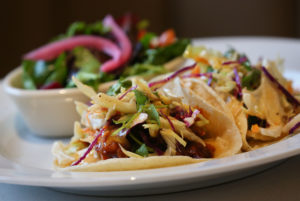
Pulled Pork Tacos, at Picazo Kitchen & Bar, feature home braised puled pork, coleslaw, cilantro, red pickled onions, and is served with baby salad. (Christopher Chung/ The Press Democrat)

Once you’ve fallen off the wagon of ridiculous New Year’s promises to lose weight and work out daily, reward yourself with some of these delish dishes from around the North Bay — and the world. From hot wings to hwe dup bap, it’s all about flavor and fun after doubling down on celery and eschewing carbs. You can keep that promise to eat more plant-based dishes on many of these menus that use meat sparingly or not at all, if that’s your 2020 jam. Dine on!

Click through the above gallery for photos.
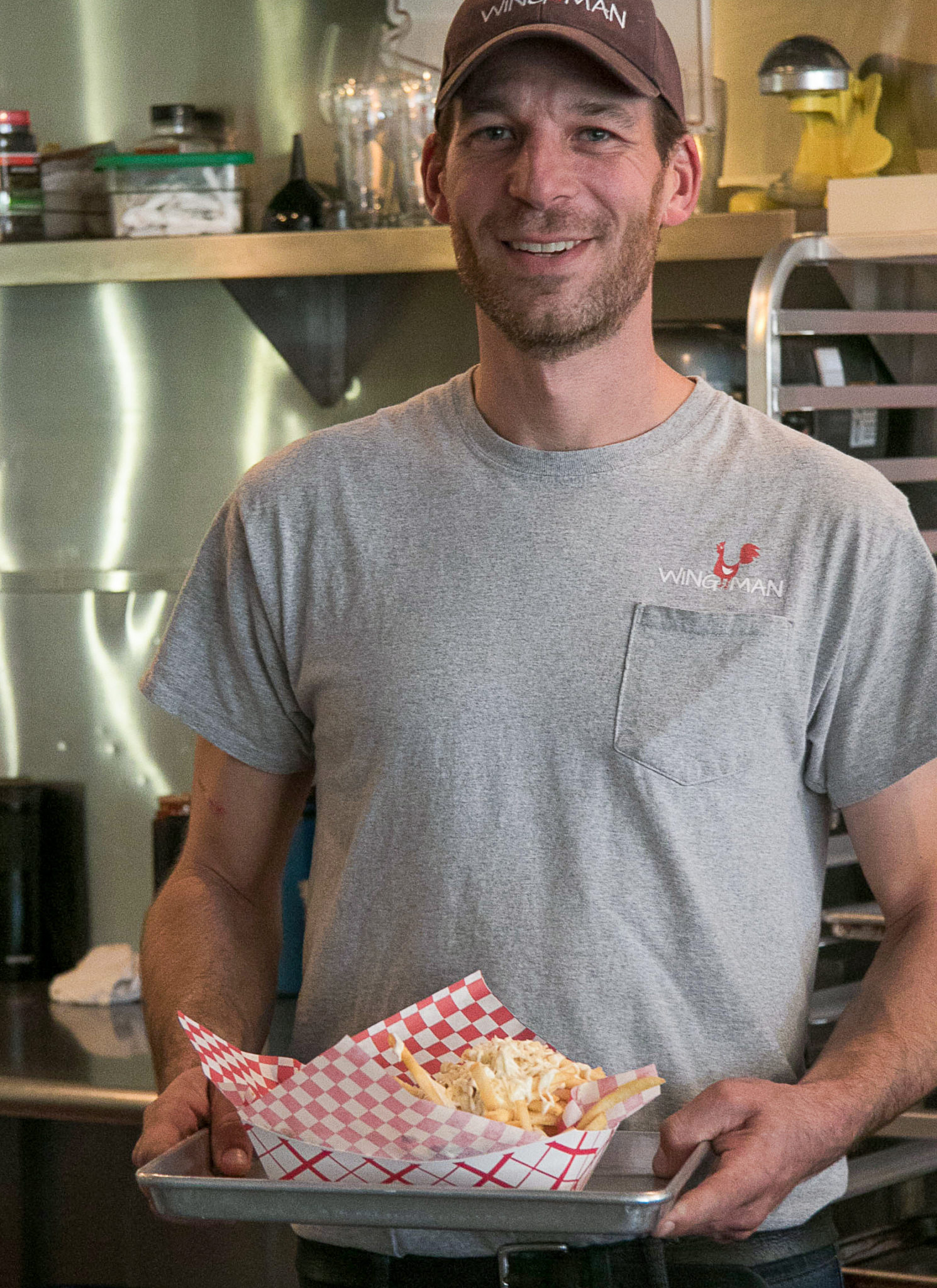
Joe Trez of Wing Man in Cotati. (Heather Irwin / Sonoma Magazine)
Joe Trez of Wing Man in Cotati. (Heather Irwin)

Wing Man

Chef Joe Trez is not the man you expect to see walking out of the kitchen with a tray of chicken wings and hot sauce. Tall and thin, wearing a tidy Wing Man apron and faded jeans, he personally delivers trays of crispy French fries covered in aioli and Parmesan cheese, ribs, and delicately fried chicken wings to rustic farm tables at his Wing Man headquarters in Cotati.

But it’s a chef coat that’s been his daily uniform for years, rather than an apron. And a food truck rather than a firmly rooted kitchen.

“This is my first casual place,” he says, a little shyly. An alum of Thomas Keller’s Bouchon restaurant in Yountville, his path has been one of carefully composed plates for highend restaurants and wineries in Napa after attending culinary school.

The North Carolina transplant has been a familiar face for several years on the food truck scene, operating throughout Sonoma County and San Francisco in his Wing Man truck. Trez decided to specialize in the humble chicken wing — a staple of lowbrow bars and fast-food joints — because he couldn’t find the kind he craved from home. Most wings in Sonoma County, he says, were premade, frozen, and smothered in Frank’s Hot Sauce.

“I couldn’t find any good wing places, so I decided to start my own,” says Trez.

The truck was a success, and when a restaurant space opened in Cotati, he decided to create a simple family-style place with his signature wings, eight taps, and a lengthy list of beers ranging from $3 PBRs to local ales, stouts, ciders, and hard seltzers. He also has an impressive (but small) hand-picked list of favorite small-producer wines including Quivira Sauvignon Blanc, Iron Horse Wedding Cuvée, and Paul Hobbs Malbec.

“We don’t sell a lot of wine, but I figure if people don’t drink them, I will,” he says.

It’s the wings, however, that are his bread and butter. They are fried in oil; he uses local chicken for his bonein wings. His so-called boneless wings are fingers of chicken breast breaded with panko crumbs.

There are also vegan “wings” of tempura-battered cauliflower that are every bit as delish as the regular wings.

Sauces are truly what set Wing Man apart. Each is made in-house and served on the side so as not to get the wings too soggy (plus, it’s a lot less messy).

Some are more of a dare than others, with Orange Fury topping the list of burn-your-faceoff sauces. Made with Carolina Reaper peppers, the hottest pepper known, you’ll want to make sure you’ve got a stomach lined with steel before embarking too far on that journey. Double Dog Dare You is an extra-hot Buffalo sauce, and Atomic Fireball is for those who simply like a good tongue burn.

More approachable are the more-flavorfulthan- fiery sauces like Spicy Green Goddess (medium-heat jalapeño), or Crazy Uncle Kim, a Korean-style chile sauce that’s only got a hint of heat.

If you’re mild rather than wild, Southern Brother, a Carolina sweet mustard sauce, is especially tasty with boneless chicken wings. There’s also Tokyo Town Teriyaki with soy sauce and a hint of sweetness. House-made ranch sauce is a lovely sunset orange, made with a touch of smoked paprika. Don’t limit yourself to wings alone. Porky’s Revenge is a heckuva sandwich made with root-beer-braised pulled pork, spicy slaw, pickles, and bacon with smoky barbecue sauce ($10). Truffle Parmesan fries are a good way to go if you’re doing the whole fry thing. Just ask for a little extra sauce.

On Fridays, Wing Man has fall-off-the-bone ribs with just the right amount of crispy bark and tender meat inside.

Open Tuesday through Sunday, closed Monday. Lunch and dinner Friday through Sunday. Open 4-10 p.m. Tuesday through Thursday, noon-10 p.m. Friday through Sunday.

101 E. Cotati Ave, Cotati, 707-794-9464, wingmanfoodtruck.com.
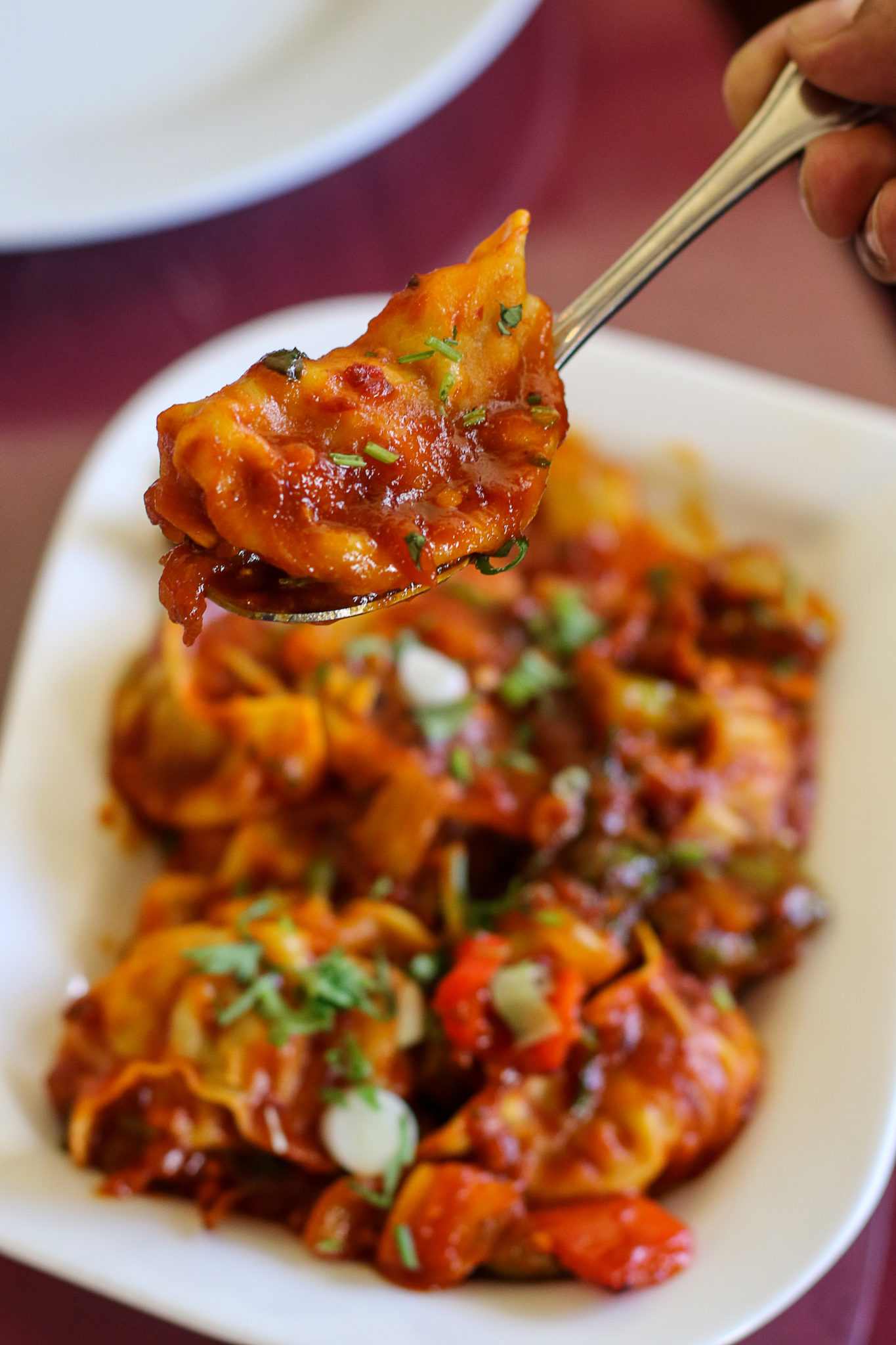
Chili chicken momo at Cumin Restaurant in Santa Rosa. (Heather Irwin)

Cumin

If you’ve ever wondered what the difference is between butter chicken and chicken tikka masala, here’s where you can do a proper head-to-head comparison. We ended up on the side of the slightly more complex butter chicken, but that’s just the beginning of this extensive menu. There are the familiar flavors of palak paneer, aloo gobi, naan, and tandoor along with more exotic outliers such as goat biriyani, lamb curry, and slow-cooked carrot pudding. Don’t leave without trying their Chilli Chicken Momo, little handmade Nepalese dumplings topped with a not-ridiculously-spicy sweet chile sauce. Lamb is also a draw, with tender pieces nestled into a rich brown gravy with peppers and onions. Plenty of vegan and vegetarian options add pizazz to the far-away flavors of Cumin.

170 Farmers Lane, Suite 8, Santa Rosa, 707-771-8336, cuminsantarosa.com.

Third Street Aleworks

After a change in ownership, the menu at this downtown Santa Rosa has gotten a few meatless upgrades. Usually that’s not the kind of thing we go nuts about, but the Aleworks Beyond Burger is worth a mention. The plant-based patty is topped with melted Gouda cheese, pickled onions, a pickled pineapple slice, chutney mayo, and baby spinach between a hearty pretzel bun. We’re still thinking about that tasty non-burger.

610 Third St., Santa Rosa, 707-523-3060, thirdstreetaleworks.com.
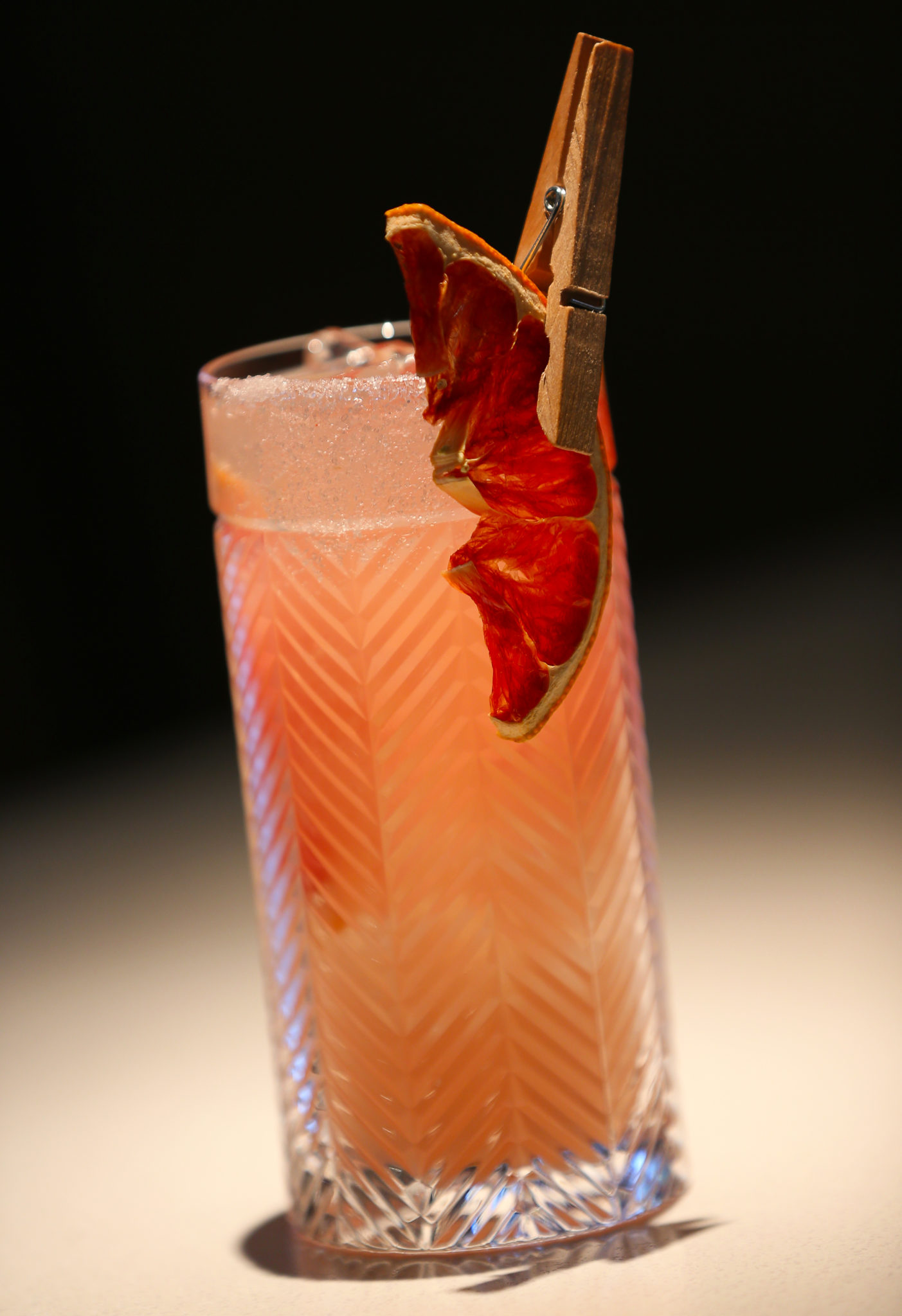
Palomita served at Picazo Kitchen & Bar, in Sonoma. (Christopher Chung/ The Press Democrat)
Palomita served at Picazo Kitchen & Bar, in Sonoma. (Christopher Chung)

Picazo Kitchen & Bar

Everyone is family at Sonoma’s “modern diner” in the Maxwell Village Shopping Center. Literally.

Kina and Sal Picazo Chavez have taken the reigns at this revamped diner with a menu that extends their burger and comfort food menu from nearby Picazo Cafe — an Arnold Drive institution founded by Sal Chavez Sr. All of the tasty pastries and sauces, crave-worthy burgers, and açai bowls are on the menu, adding to a dinner lineup of hearty, family-inspired recipes like Kina’s mother’s mole, chicken piccata, steak frites, and ramen in the evening.

One of our favorite dishes is the Morning Pizza, made with thinly sliced potatoes, guajillo sauce, bacon, chorizo, mushrooms, onions, and melty mozzarella. You won’t miss the dough, with crispy potatoes serving as the delicious base. The Don Chava Burger, made with both beef and pulled pork, is a can’t-miss.

We love that there are loads of vegetarian and health-conscious options like cauliflower tacos, smoothies, wraps, and salads, should you not want to go the burger-and-fries route.

Overall, great for families with plenty of cozy booths, kid-friendly menu items, and some tasty tipples for Mom and Dad.

19101 Sonoma Highway in Maxwell Village, Sonoma, 707-935-3287, picazokitchen.com.

Kamura Sushi

It worries me to see an explosion of cheap sushi and poke spots popping up around Sonoma County (seriously, there about six) as we face ongoing issues with overfishing and species-devastating drag-netting in our seas. Sustainable fish shouldn’t be cheap. Thing is, we all love sushi and paying $200 for a great plate of fatty tuna and wild salmon also isn’t reasonable.

That’s why I’m impressed with Kamura Sushi, which seems to split the difference between super-high prices and a menu that’s really pleasing to sushi fans. Chef Andy You offers the usual lineup of salmon, tuna, yellowtail, mackerel, and octopus, but there is so much more on this menu to explore.

Thin slices of hamachi (yellowtail) are drizzled with olive oil and ginger-garlic sauce that don’t mask the flavor of the fish. Although I’m not sure what the sliced tomato really adds, a nip of jalapeño gives it a really pleasing finish. The menu doesn’t go on for weeks with everything-but-the-kitchen-sink rolls, but has a healthy variety, along with more traditional Japanese rolls (maki) made with pickled radishes, dried gourd, or cucumber.

The best bet, however, is the Kamura Don, a Korean-style mixed sashimi bowl (hwe dup bap). Raw fish (tuna, salmon, escolar) tops mixed greens and warm brown rice with a side of chojang, a sweet, spicy Korean sauce. It’s super-filling and delish, but with fish as the supporting actor rather than a one-man show. There’s also excellent bulgogi (thinly sliced beef in a soy-ginger sauce), and a terrific tonkotsu ramen made with black-garlic-infused pork broth. Served with all the fixings (soft-boiled egg, bamboo shoots, wood ear mushrooms, nori), you can substitute kale ramen noodles for $2 extra.

3800 Sebastopol Road, Santa Rosa, 707-526-2652, kamura-sushi.business.site.

Rosen’s 256 North

Someday a book will be written about Jan Rosen’s incredible life, from delivering her famous cheesecake to Frank Sinatra and his Beverly Hills friends to the historic wheeling and dealing that happened at her notable Santa Rosa restaurant, J.M. Rosen (where Jackson’s Bar & Oven now resides).

But until that happens, it’s simply worth saying that her latest venture in Petaluma is worth checking out, not only for the wild mushroom risotto, fried cheesecake, and savory “I’m not sharing a single bite of this” short rib tortellini, but just to get a story or two from Rosen, who is usually working the room when she isn’t chained to the stove.

It wouldn’t be fair to pigeonhole Rosen’s as a tasty throwback kind of restaurant where prime rib, chicken marsala, shrimp cocktails, chicken pot pie, and iceberg wedge salads rule the menu (along with a Rosen-approved lineup of stiff cocktails). There are plenty of more modern takes to keep it current, like a cheesy chicken keto plate, wagyu burger, and fried Brussels sprouts with togarashi.

With so many restaurants feeling the need to put microgreens and a laundry list of exotic ingredients on everything, Rosen offers a comforting mix of old and new, with tried-and-true classics that she has honed into a delightful lineup that just about anyone can appreciate.

256 Petaluma Blvd. N., Petaluma, 707-766-0799, 256north.com.
New Restaurants Coming to Sonoma County in 2020

Hamburgers Twisted Horn Ranch Burger, Estero Cafe, $13: 14450 Hwy. 1, Valley Ford, 707-876-3333, facebook.com/esterocafe.

Just when you think Sonoma County can’t possibly get any more delicious, a spate of new restaurants are on the horizon for 2020. Some are just days or weeks away, others we have to wait for until summer or next fall. Click through the gallery for 14 new Sonoma County restaurants to put on your radar this year.

10 Sonoma Finds for Plant Lovers

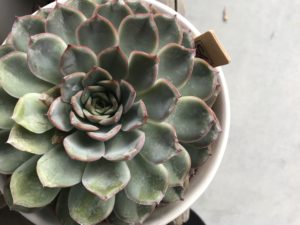
Nature is so pretty, how can we refrain from hauling it inside? And in cool, ho-hum and newly “un-decked” January, you might find your mood and space in need of a perk-up. Plants are the answer. They’re the ultimate decorating accessory: gorgeous, waste-free and they clean the indoor air. Sonoma County stores are full of plants that can thrive in your space right now—click through the above gallery for details.

Make Your Own Ramen With Products From Sonoma County Stores

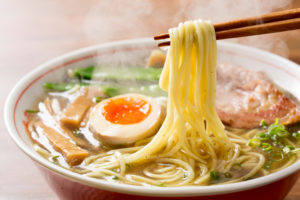
Ah, ramen. Beloved, delicious, and obsessed about. Whether you make the pre-packaged version or have your own recipe, “you can always make a better bowl,” says “Let’s Make Ramen!” author Hugh Amano. Here are a few tools for those on a quest to create perfect, flavor-loaded ramen — click through the above gallery for details.

These Sonoma County Bars Make ‘Dry January’ Fun

Sipsong-infused drinks at Duke’s Spirited Cocktails in Healdsburg. In this photo, nonalcoholic cocktails Delicate Flower, Green Business, Sipsong Indira Tea & Tonic, and Hibiscus Sorrel. (Courtesy of Duke’s Spirited Cocktails)

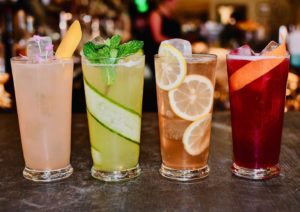
Going dry can be fun! Here’s a holiday-hangover cure: “Dry January.”

Though it sounds Draconian to daily drinkers, the month-long collective abstinence movement is trending as drinkers put down the whiskey, wine and cocktails and “reset” their alcohol intake after a boozy holiday season. But hanging out with friends after work doesn’t have to be a bummer.

(Find more local bars serving up mocktails and non-alcoholic drinks here.)

In fact, a surge of herbal elixirs, shrubs and alcohol-free botanical spirits are giving sobriety a good name by impressing temporary teetotalers with their complex flavors.

Throughout the month, Fern Bar in Sebastopol (6780 Depot St.), which has made a name for creative low- or no-ABV (alcohol by volume) drinks, is celebrating with an extended list of sober cocktails and libations.

On Jan. 30, they’ll host a hands-on free-spirited cocktail class with instructions for infusing non-alcoholic spirits, shrub and spirit-making and mixing a perfect cocktail.

Sipsong Spirits, a locally-made herbal Indira Gin, has released a tea made with juniper, coriander, cumin, bay leaf, sweet orange, star anise and pink peppercorn (among other botanicals) that mimics the perfumed flavor of gin but has no alcohol.

Mix with tonic for a flavorful alternative. Order at sipsongspirits.com or try it at Duke’s Spirited Cocktails in Healdsburg (111 Plaza St.). Duke’s is also offering up some great boozeless drinks, like Jamaican spiced hibiscus tea with ginger beer or grapefruit soda with lemon and yuzu. Pair with their poutine fries, Korean chicken sliders or daily special “Family Meal.”

There’s a New Girl Scout Cookie Flavor and It’s Coming to Sonoma County

Lemon-Ups, a lemon-flavored cookie sporting motivational messages like “I’m a go-getter” or “I am a leader,” are the newest entrant into the Girl Scout cookie program.

The good news for us: Sonoma County will likely be getting them, while the East Coast and other states won’t. The bad news: We haven’t been getting the good “S’mores” cookies covered with chocolate, while Maine has.

The not-so-secret-secret of those adorable Brownies and green-clad girls: There are two different bakeries that make Girl Scout cookies, and not all cookies are alike!

Most of the West is served by Little Brownie Bakers (though California, Nevada New Mexico and parts of Texas are split), so you’ll know that those little peanut butter chocolate cookies are Tagalongs, not Peanut Butter Patties. You’ll know the caramel coconut Samoas vs. their lookalike Caramel deLites made by ABC Bakers, which serves much of the Midwest and East Coast. Don’t get us started on calling Do-si-dos a Peanut Butter Sandwich, as most Georgians and West Virginians know them.

Our suggestion: Maybe it’s time to bring together this great nation rather than dividing us along dessert lines. Let’s start with the chocolate-covered S’mores for everyone and Lemon-Ups for everyone.

Cookie sales start Jan. 25, so watch for booths to start popping up or your neighbor’s daughter to come knocking. Online at gsnorcal.org.

Best Napa Valley Wineries and Tasting Rooms for Fun and Unique Experiences

Compared to laidback Sonoma County, Napa Valley is sometimes perceived as a little pretentious or snooty (as parodied in Amy Poehler’s Wine Country movie). But while you may come across snobby restaurant- or tasting room staff here and there, many local businesses are now trying to change the Napa narrative by creating fun and unique experiences. For a taste of this more casual and easygoing version of the famous winegrowing region, we’ve lined up 12 wineries that offer something a little different to visitors. Click through the above gallery for details.

One of the World’s Most Notable Graffiti Artists Leaves Her Mark on Napa Valley Train Car

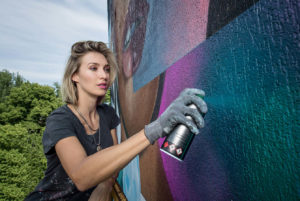
One of the world’s most notable graffiti artists has returned to her native Napa to add her work—legally, this time—to the growing number of public art pieces that comprise the town’s Rail Arts District.

The artist, known only as ELLE, unveiled a new untitled piece last fall, which depicts several women against a backdrop of colorful patterns drawn from Mexican folklore and textiles.

The artwork covers all sides of a railroad car that is parked along the route of the Napa Valley Wine Train and, according to ELLE, it perfectly captures the mission of her art: To use bold colors and eye-catching images to promote strong women.

“It’s important for me to represent powerful females who are kicking ass and breaking glass ceilings,” said ELLE, who uses a pseudonym because so much of her early work was technically illegal. “When I started, very few women were doing graffiti and the world of street art was predominantly male. My whole career has been about changing that.”

ELLE’s ties to Wine Country and the North Bay run deep. She attended a local catholic elementary school. She graduated from Napa High School. She attended the University of California, Davis. She has nearly a dozen family members who live and work in the Napa Valley. She still has friends in the area.

ELLE has also drawn inspiration from people and places in the Napa Valley. During her younger years, she admired the work by local artists such as Gordon Huether, and she loved visiting the modern art collection at Hess Collection, a winery on Mount Veeder. She said she also was influenced by her Napa High school art teacher, Chuck Svendsen.

All these connections make coming home even sweeter.

“It’s pretty neat to finally have a piece in my hometown,” she said, noting that the women on one side of the train are pinky-swearing, a reference to her youth. “To be honest it’s really great to see the city of Napa embracing street art in general.”

ELLE certainly is no stranger to the spotlight; the graduate of Napa High School has been creating public art for more than a decade.

In that time, her work has been exhibited in the prestigious Saatchi Gallery in London, Urban Nation Museum in Berlin, and as a 200-foot-tall projection onto the facade of the New Museum in New York. ELLE painted a 120-foot wrap around the Nike Headquarters building in Melbourne, and Vogue Australia featured ELLE’s art in a story about 32 pieces of Melbourne street art to see before you die. Her graffiti is even featured in the Tom Clancy video game, The Division.

The young artist has also engineered multiple collaborations with the sportswear brand Reebok, including the ELLExReebok graffiti legging and the ELLExReebok yoga capsule collection.

In 2019 alone, ELLE visited Melbourne for a solo show inside the prestigious Rialto Towers; Amsterdam for a joint solo exhibition with Vroom and Varossieau Gallery; and Neuf-Brisach, France, to paint inside the MAUSA Museum.

Few of those accomplishments meant as much to ELLE as returning to Napa.

The city’s Rail Arts District–RAD for short—has become a hotspot for cutting-edge public art. Established in 2016, the group is a nonprofit organization led by the Napa Valley Vine Trail Coalition, the Napa Valley Wine Train and the local arts and business communities, and it spans a 1.7-mile section of an industrial neighborhood that parallels the Wine Train tracks through downtown Napa.

Along this stretch, artists have turned the backs of warehouses and signal boxes into canvases for murals of varying size. ELLE’s piece is the first to appear on a train car itself; though the car can move, it will be parked in its current location indefinitely.

Some of the other artists with work in the RAD include Mikey Kelley, Fintan Magee, Felipe Pantone, and bumblebeelovesyou.

For the latest pictures of ELLE’s work, follow her on Instagram.

This Napa Valley Hotel Is One of the Most Sustainable in the United States

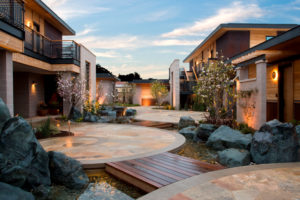
Bardessono Hotel and Spa in Yountville. (Courtesy Bardessono Hotel)

Trying to be kind to the planet and make eco-friendly choices can be challenging when you’re at home but it seems next to impossible when you pack up for vacation.

Thankfully, many wineries, restaurants and hotels in Sonoma and Napa Wine Country are going above and beyond to make it easier to travel with good conscience. Among the hospitality businesses that stand out in this regard is  Bardessono Hotel & Spa in Yountville, recognized as one of the greenest properties in the United States.

Bardessono is one of only eight LEED Platinum hotels in the country, the highest certification for green buildings. From office buildings to schools, any type of building can seek LEED certification. Hotels are unique: since they’re occupied around the clock, they consume resources at a higher rate.

Built on land farmed by the Bardessono family after they arrived from Italy in 1926, the Yountville hotel has always made sustainability a priority — from construction through the 2009 opening to today.

“Sustainability was at the core of Bardessono’s inception, before many of the environmental initiatives we’re familiar with today gained the momentum they have now,” says Stephanie Leavitt, Director of Sales and Marketing at Bardessono.

The hotel was built using 100,000 square feet of salvaged wood — Monterey Cypress, California Bay Laurel, Redwood, Eucalyptus and orchard Walnut trees –- obtained from a nearby stretch of the original Bardessono homestead that was cleared to make way for residential development. The wood is used in everything from custom-designed bedside tables and guest room desks to flooring, dining room tables, and exterior siding.

Proof of the Bardessono’s commitment to sustainability can be seen throughout the property: The atypical flat rooftops house photovoltaic solar collectors, which provide about 20 percent of the hotel’s energy supply. Low emissivity glass in guest rooms let in a generous amount of natural light, cutting the dependency on daytime lighting. Low water flow fixtures and dual flush toilets are the norm and all of the hotel’s bed linens, towels and robes are made with organic cotton.

“As a pioneer of this effort in the hospitality industry, maintaining a sustainable environment within our operations has not only been necessary but a constant source of inspiration to our team, and even our guests,” says Levitt. “[We want to] give back in every way we can.”

Click through the gallery above to see other ways Bardessono makes sustainability a top priority.

Do you know a local hospitality business that is leading the eco-friendly charge in Wine Country? Let us know.

Could Climate Change Mean an End to Cabernet in Napa Valley? This Winemaker Thinks So

Cabernet Sauvignon is king in Napa Valley. 51 percent of the area’s 46,000 acres of wine grapes are devoted to the varietal. Chardonnay grapes, which come in on number two, occupy just over 6000 acres, and while more than 30 other wine grape varieties are grown here, none of them come with the kind of bragging rights that the coveted “cab” does. 

But as secure as the reign of Cabernet Sauvignon may seem, some think we shouldn’t take it for granted.

“I think you’d be foolish to believe Napa Valley is going to look exactly like this 30 years from now. I don’t think Sonoma is going to look like Sonoma 30 years from now,” says Dan Petroski, winemaker at Larkmead Vineyards in Calistoga.

Petroski, along with other Napa Valley winemakers, thinks climate change  — rising temperatures, droughts, extreme weather — might dramatically alter the local winegrowing landscape. To prepare for such a scenario, he is now looking at grapes from warmer regions around the world and thinking about how they might be implemented in Napa Valley 20 to 30 years from now.

To get a better idea, he’s about to start experimenting with some of these warmer-climate grapes in Larkmead’s vineyards. The Calistoga winery is currently dedicating three acres out of their 110-acre estate to a “viticultural research block.” The experimental vineyard will initially be planted with seven red grape varieties and one white.

“My number one objective for these seven red grape varieties is that they have the ability to blend well with Cabernet, as a supporting actor until Cabernet can’t be used anymore,” says Petroski. “We’re trying to get a head start on this whole process. I don’t want 2040 to roll around and we’re sitting on our heels going ‘alright, what are we going to plant now, when it’s too hot for Cabernet?’”

The three-acre plot will be planted in the late spring or early summer of 2020 with Chenin Blanc, Petite Sirah and Zinfandel, alongside varieties such as Aglianico, Tempranillo, Touriga Nacional, Charbono and Syrah.

But planting, growing, harvesting, aging, bottling, and finally seeing what customers think of the wines will take time.

Expected to last 21 years, the project will be divided into three phases — the upcoming planting is part of the first phase. Every seven years, Petroski hopes to find one or two grape varieties that will do well at the winery.

Founded in 1895, Larkmead will celebrate its 125th anniversary in 2020. This isn’t the first time the winery has been involved in viticultural research. In the 1940s, a Cabernet Sauvignon clone commonly known as the “Oakville selection” was developed here by UC Davis viticulturist Dr. Harold Olmo.

A newly installed walkway leads the way to the winery’s research block. It’s a path Petroski hopes will encourage conversations with visitors about the future.

“It’s hard to tell people Cabernet is going to die. It’s hard to say it’s over because it’s still our lifeblood. It’s the beating heart of what we do and we do it really well,” says Petroski. “Some of the best wines in the world are made here in the Napa Valley, so it’s hard to have that conversation. But I think the other side of that conversation is that we’re forward-thinking. We are evaluating, we’re looking to the future.”