We’ve now said goodbye to one of the most difficult years that anyone can remember. And we begin 2021 in a place of deep uncertainty, likely months away from any semblance of normal in our community. With the cascade of overlapping challenges Sonoma faces — the pandemic, economic impacts, continued wildfires, racial and social inequity — how does our region now move forward? To wrap our minds around these issues, we convened a group of local thought leaders in a roundtable forum. Their task: To visualize the change called for in this unprecedented moment and the alliances that will make that change happen — and to forge a deeper understanding of what lies ahead.
Moderated by Abigail Peterson and Brett Wilkison
The Participants
Laura Alamillo, Sonoma State University
Crista Barnett Nelson, Senior Advocacy Services
Jeff Bundschu, Gundlach Bundschu Winery
Jennifer Fish M.D., Santa Rosa Community Health
Daniel Kedan, Restaurateur, Backyard Forestville
Anita Maldonado, Social Advocates for Youth
Chris Rogers, Mayor of Santa Rosa
Rubin Scott, NAACP Sonoma County
Veronica Vences, La Luz Center
Jeniffer Wertz, Russian River Alliance
A Moment of Clarity
The shared challenges of the past year are staggering. The pandemic has been the dominant crisis, infecting thousands here and claiming over 160 lives, but we’ve also faced a sudden and deep recession, a public reckoning over racial inequity that spilled out into our streets and reshaped local government, and another series of destructive wildfires that destroyed nearly 500 homes.
Can each of you share a moment from the past year that crystallized the weight of these overlapping crises and traumas?
Daniel Kedan, restaurateur: From a business-owner’s perspective, there wasn’t just one moment, but it started when we had to lay off all of our employees back in March. Then, as we started to bring them back and we were getting going again, finding our groove, we had shut down again in August because we were evacuated for the wildfires. We’re trying to maintain our staff and give them jobs and feed people and make sure that we have food for the people most in need.
Rubin Scott, NAACP Sonoma County: One of the moments that crystallized this time for me would have to be the Black Lives Matter movement, when we started seeing our young children flooding the streets with their voices. We have never seen anything like that before. I believe that was the moment that we decided we had to step up and try to take charge and leadership because there were so many factors, so many underlying layers to that onion that we had to deal with. And so when we looked at all the different factors in the community, that’s what we said, ‘Hey, we have to do something.’
Crista Barnett Nelson, Senior Advocacy Services: I had a couple of moments. The first one was just seeing all the deaths due to Covid. Those are my residents. Those are the 5,000 people that I work with every day. And they’re the ones who are dying. They’re 75% of the deaths in this county, and I’m asking, ‘Why can’t we do better?’ And then the second one happened at 3:00 a.m. on the first night of the Glass fire. I was at the evacuation shelter in Petaluma, and there were ambulances lined up outside to evacuate these people. And that was not supposed to be their plan. So just, to look at the buses lined up filled with seniors who needed something.
The shelters are just not designed for that kind of response, for elderly people in that condition, that health level. And so just picture — it was darker than night, and the blue lights were blinking and then the lights inside of the buses with seniors, just sitting there, just waiting. It is so poignant; it’ll be with me forever. Where were they going to go?
Anita Maldonado, Social Advocates for Youth: For me, the crystallizing moment was also during the Glass fire, when we realized that our Dream Center evacuation was imminent. And I remember asking myself, ‘Where will our youth go when the only place they call home may not be here when they return?’ Just driving away, not knowing where we were going to go. We had about a dozen or so young people evacuating with us that night. The staff were with the youth all night; they were by their side the entire time.
Chris Rogers, Santa Rosa Mayor: I’m fixated on a time around last July when the Santa Rosa City Council was able to actually end our emergency declaration for the Tubbs fire. And it should have been a moment where we were able to celebrate and talk about the progress we’ve made. And yet all I could think about was that we were still under five other emergency declarations at the same time. So getting rid of one of six was something to celebrate, but it also illustrated just how much work we had to do.
And around that same time, we were doing our budget, and we were showing a $72 million shortfall over six years. And that’s because we’ve been doing fire recovery, responding to public safety power shut-offs, and responding to the Walbridge fire and the Kincade fire. So that city council meeting was really a moment where we should have been able to reflect — and instead, we were looking forward to the next couple of years and trying to figure out how to help float our community through it.
The depth of need locally is definitely a topic of discussion. Dr. Fish, was there a moment for you this year that brought these crises together?
Jennifer Fish, Santa Rosa Community Health: In May, our county numbers started going up, and 90% of the cases were in the Latinx community. And that is the community that we serve at our clinics: 78% of our patients are at or below the federal poverty line, and 61% of our patients are in the Latinx community. And so the crystallizing moment for me was just seeing all of the disjointed pieces of our response. You have the county and the elected officials and the clinics and the hospitals and the business community and the community organizations — and none of them are working together. We were trying to fight for PPE, for worker protections, for testing and isolation support.
Healthcare professionals are lauded as heroes, and yet we felt powerless and not heard. The primary care voice wasn’t brought to the table, and we’re now seeing the effects of that response. We’re not able to move through the tiers to re-open because of the health equity measures and the fact that we’re still not serving our most vulnerable communities. Covid shines a light on how the whole community is at risk.
Veronica Vences, La Luz: We primarily serve the Latino population in Sonoma Valley. And I would say that during the first couple of weeks with Covid, we weren’t hearing a lot of questions coming up, but the minute that the shutdown of the economy happened, that’s when the phone calls started coming in. So initially, what we started with was a relief program. And that was a good initial Band-Aid.
Covid is definitely highlighting inequities. I think that we need to be careful not to stigmatize the Latino community once again. Not to simply say, ‘They’re the ones that are sick’ and instead look at the root cause and effect.
Jeniffer, the west county is one of the per-capita poorest communities in Sonoma. How do you reflect on that crystallizing moment?
Jeniffer Wertz, Russian River Alliance: I started doing relief work after the floods in 2019 because bureaucracy takes a while. When you just lost your house and your job and all your stuff, you can’t wait for the Red Cross to start handing out money next week. You need food today. Back then, I raised a little bit of money to help, and I said ‘Anybody that needs emergency food, just meet me at the Safeway, and we’ll give you a gift card.’ And I went there with 27 $50 gift cards. And when I got there, there were 50 people in line, and it was heartbreaking. And that’s when I started recognizing how much poverty there was in our community.
And we’ve now had disaster after disaster after disaster, and it’s almost become routine with the response to it. We have a lot of Latino people in this community who are working poor, and they get overlooked way too much. During Covid, these folks aren’t getting unemployment. Everybody else eventually started getting unemployment, but they’re not.
If you raise the quality of life of the working class in your community, I think you raise everybody’s quality of life. If we can keep the employees healthy and safe, then that helps business owners too, and everybody across the board benefits.
Jeff Bundschu, Gundlach Bundschu Winery: The day I remember is September 9th, the red day. It was the darkest red. And I was ironically doing an online wine tasting, and the whole time, I’m looking outside at the sky getting darker and darker. That physiological darkness really hit me then.
But I also had a super-bright spot. Speaking to the BLM movement, I got a call that there was going to be a protest and that I should get on a tractor and drive down to Sonoma and get in on this parade. And when I got down there, all these farmers and their tractors were lined up. These two 18-year-old girls walked up to me and said, “Thanks for coming.” And it turns out they were the organizers. I am a big believer in looking to the youth for leadership. Those kids inspired me.
Laura Alamillo, Sonoma State University: Some of you may know that I’m new to Sonoma County; I just moved here in July from Fresno. And when I first arrived, the faculty in the School of Education said, ‘Wildfire season is coming.’ And yes—sure enough, I was evacuated.
What I learned is that these issues are so multilayered. There’s a lot of need on college campuses. The CSU campuses serve mainly first-generation college students. When I came to Sonoma State, I saw this whole other level of trauma that our students are dealing with. We are unique because of these wildfires, and we’re trying to address students’ needs as best we can.
And then there is this other level because of the pandemic. I’m in the School of Education, and we prepare teachers, we prepare educators. So we had to really consider how can we be proactive and help these future teachers work in remote learning, which is something that is very new for many teachers.
The Political Divide
We know that our nation as a whole remains deeply divided. Do you believe that’s true locally? And how does that impact the approach you take with your work in the community?
Daniel Kedan: Our community is definitely very divided. It’s always been divided, but at least we’ve been able to work with each other and find common ground because we live in Sonoma County. Recently, the tensions and issues that have needed to be addressed in all of our communities are finally coming to light. It makes people have a very short fuse. We’re noticing that a lot in the hospitality industry, where you’re not able to make that little mistake, you’re not able to have that conversation that disagrees with somebody without wondering how intense it’s going to get. At least here in Sonoma County, we can focus on finding that common ground. We have tons of issues that we need to deal with, but we have to start respecting each other. We really need to find that common ground again.
Jeniffer Wertz: Well, in the west county, nobody can agree on if the sky is blue or not. We’re pretty lucky, but the stuff that’s happening on a national level has polarized people here locally. The mask issue is political. If you’re a Republican and you like Trump, you don’t want to wear a mask. And if you’re a Democrat, then you don’t like that they don’t want to wear a mask, so you make a really big deal out of wearing a mask. So yeah, I think that we see that stuff trickle down, but our local leaders, I think in general are pretty good.
Chris, did you see that on the campaign trail? How would you assess the division?
Chris Rogers: It’s a really interesting conversation topic specifically, because I think people are predisposed to not trust government when they’re not participating in it. And I know that one of the hallmarks of Covid has been everybody trying to figure out how to engage the community when we can’t be together.
In Santa Rosa, we’ve been working for a long time on open government. We have our new sunshine ordinance coming across the finish line. And a hallmark of my time on council has been to reach out to folks, literally set out lawn chairs at the farmers market and just talk to people as they come by. But you can’t do that in a pandemic.
I think that people’s trust in the decisions that are being made is diminished when they can’t be there to see it. How do you join a city council meeting, for example, if you don’t have Internet access and the meeting is on Zoom? The pandemic itself is exacerbating and highlighting a lot of the divisions that already were there.
This past election, we had 24 city council seats open across the county, and 14 of those seats flipped to new people. And it’s partially because people are not feeling heard. And it’s partially because the folks who were in these seats were feeling exhausted from repeated disaster after disaster.
I do see the division — it’s there. And like I said, I think it’s been exacerbated because people don’t have the ability to get together and have that face-to-face conversation and to find that common ground.
Rubin Scott: Yes, when we look at these political times, and the social divide locally, it does exist. There’s always been a divide. There’s always been a rift. We get that. The point of the matter is right now, we’re looking for dialogue. So we can go ahead and come together as a community, to make sure we can bridge some of these disparities and inequalities that we all face.
There is a divide. We recognize that, but we shouldn’t use that to oppress each other. We should use that to get together and build, so we can go ahead and move forward together in the future.
Jennifer Fish: I think Sonoma County is kind of a microcosm of the country. There’s definitely the left-right political divide. There’s also a huge wealth disparity and resource disparity in our community. The patients that I care for are the ones who suffer the most from systemic injustice, in healthcare and law enforcement, and environmental justice. I agree people feel unheard, and Covid uncovers a lot of that. And so people are rising up. People are trying to become more engaged because they feel unheard, and yes, we need to come together and have that dialogue.
But I think the basis of that dialogue has to come from acknowledging and addressing the inequity that’s in our community that really affects the health of our community. As a physician, I can say that health lies at the intersection of all the things we care about. So when we talk about environmental justice and we talk about racial justice, and we talk about housing insecurity and food insecurity and all of that, we care because it affects the health of our community.
Rubin Scott: Yes!
Jennifer Fish: And as a group of community leaders, if we’re going to really move forward and come together, we have to address those inequities within our systems. Because that’s where the divide comes from. And that’s where the divide plays out.
A Growing Imbalance
In Sonoma County, Latino residents have accounted for more than 75% of coronavirus cases, even though they make up 27% of the county’s population. What has that disparity revealed, and are you convinced that enough is being done to rectify those imbalances?
Veronica Vences: It’s easier to answer the second part. I don’t think enough has been done. One of the first things that I think about is the wealth gap. I’ll use myself as an example. I was basically born and raised here — my parents came to this country when my mom was five months pregnant with me. And that distinction of me being born here has now opened up so many doors. But I have cousins and other family members who weren’t as fortunate, and honestly, their life has been the complete opposite.
There’s a push towards having more conversations, but there’s also a resistance to really looking at the issue. And I’m going to call it out and say racism. It’s unconscious bias. It’s not where you’re being racist to someone else. But for a very long time, I didn’t feel comfortable speaking up because I thought, it’s not my place. It’s not how I was raised. And a lot of self-reflection had to happen in order for me to be able to overcome that.
Now, I was fortunate. I had resources, I had a supportive family. I had great mentors, but not everybody has that opportunity. And if you’re talking about really making a shift, then we have to uncover all of that. At La Luz, our whole trajectory is meeting people’s basic needs so that then they can actually open themselves up to thinking about skill-building and jobs. It’s about the hierarchy of needs. If you don’t know where your next meal is going to come from, we can’t expect you to run for office.
More has to be done, and we can’t do it alone. So bringing more partners to the table, having more honest conversations, and calling things out, what is not being seen or being talked about. It’s going to be necessary.
Crista, how can we can do better by our vulnerable elders during this continued pandemic crisis?
Crista Barnett Nelson: One of the things we have to look to is the fact that the people who are giving care to most of our seniors are from these communities that are being impacted. We haven’t done a good enough job of supporting the people who are caring for our seniors. Look at the example of the St. Francis care home, where 100% of the residents and 100% of the caregivers had Covid, and they could not find staff to come in and provide care. Those caregivers lived in that facility. So when they started getting Covid, initially, they did not reach out and seek help. They continued to work while sick and consequently spread it to everyone in the facility. But who were they going to reach out to? They lived at the facility, so if they complained, it meant they might lose their job and their home. It’s a dark secret of this county. The pandemic has brought it to light.
Racism and Police Violence
Our nation has been convulsed by a sharp reckoning with racism, including the deep inequities that are faced by people of color and the sustained anguish over cases of police violence. Do you see signs of progress, and what more needs to be done to make sure this isn’t just a moment?
Rubin Scott: We’re looking at ways that we can go ahead and create a dialogue for engagement, so we can move forward together. We’ve got to remember that everything that we’re talking about — seniors, Latinos —this is our community. We navigate through this together.
We see a huge need in creating legislation, creating social policies, governing policies that allow us to understand the inequalities that we’re dealing with. When we sat down with the sheriff’s department and started looking at their structure and policy, we realized that they put more time and energy toward gun training and learning how to handcuff an individual than they did to learning how to communicate, learning about different ethnicities and races.
I feel like there are a lot of good, positive things that we are introducing into our community, which will allow us to go ahead and move forward together. But this isn’t just a one-off fix-all. These are things that we’ve got to keep up and we’ve got to continue to practice. We got to create spaces that all of us can feel that we can come and we can have a dialogue and conversation. I am optimistic. I do feel positive and passionate about where we’re going in our community. But I know there’s more to come.
Anita, Laura — our local youth have been on the front lines of many protests. What does that tell us as we look forward?
Anita Maldonado: Well, first of all, I would say that I’m just totally encouraged from the youth perspective. They’re engaged, they’re leading our social justice efforts, and they’re, in fact, educating the older generations on the importance of acceptance — diversity, equity, and inclusion. They’re really the champions of today’s social justice movements. So I’m proud of that. And I remain optimistic about the young people and their voices being heard on the front lines. Our young people, they have a lot to say, and we need to make sure that we make spaces for them to hear their voices.
Laura Alamillo: And to that I would just add that yes, our young people are leading these movements. But it’s systemic. It takes a whole restructuring of the curriculum: who’s represented, who are the teachers. In the CSU system, we are looking at the lack of black males in classrooms, and what we are doing to recruit black males into teaching positions. We’re also looking at STEM education as a possible vehicle for more change within education, because that’s an area that’s really lacking in racial diversity. So I do see progress. I want to be optimistic to a certain extent, but I think it really takes leaders like us to ask those critical questions and call for change.
Chris Rogers: I’ve got to jump in here to point out Measure P. It was the only law-enforcement reform measure on the ballot outside a major city in the United States. And it passed by almost 70% in Sonoma County. A lot of our youth were marching in the street one day and then writing policy the next day, taking that passion and that energy and finding a way to translate it into a political victory that not only shows that this community cares, but that it will sustain that movement and keep folks engaged as they move forward.
Daniel Kedan: We can’t have this conversation without mentioning [chef and nonprofit leader] Evelyn Cheatham. She showed the impact of what can be done when we reach out to the youth, the most in need. That’s one of the ways that we keep this progress going and let people know that they’re heard.
A More Diverse Government
In addition to Measure P, we had some fairly notable results out of city council races across the county, with more diverse councilmembers elected in Santa Rosa, Healdsburg, and Rohnert Park. What does that mean for the future of local leadership?
Chris Rogers: Well, I think first and foremost, it means that district elections are working. So many of those cities you mentioned are places that have just switched to district elections. Part of that is bringing politics back to the neighborhood level, for folks who are already ingrained in their community, who are able to talk to their neighbors and articulate a vision for their district and for the city. District elections make it so that those candidates can compete and win.
That’s what I saw in Santa Rosa. That’s what I saw in Rohnert Park. Giving people an opportunity and the space to have their voices heard and become those leaders.
Jennifer Fish: I’d like to bring those two questions together, your direct question about deep racism, and hope for the future and the elections. I keep coming back to talking about systemic injustice and systemic racism, which are highly prevalent in all of our systems, including healthcare. When we talk about social determinants of health, and we talk about housing and food and economic opportunity and educational opportunity, it’s all shaped by racism. It’s racism that causes health disparities and those health discrepancies. And so how do you address that? You address that by empowering the people who are most affected — not just bringing them to the table and checking a box, but giving them power and agency to lead the conversations. So I feel like the results of the elections that we’ve had locally — Measure P and the increased diversity in our local city councils — is the one thing that has given me the most hope this whole year.
Jeff Bundschu: In the last six months, we’ve had more dialogue internally in our company about inclusion, about diversity, about leaning into it. And within the context of the whole wine industry, it’s been an ongoing discussion. I think my biggest concern is to not let this fade. I don’t want to wake up 30 years from now and have things be the same. As a community member, I was extremely excited about the police oversight vote. But I was just as discouraged that the sheriff was opposed to it. So that says to me there’s a lot more work that needs to be done. I echo what Anita said: the kids are really leading it in ways that are so powerful that we just have to respond and pay attention.
Economic Challenges
We know that small and large businesses in Sonoma County have been affected by the pandemic: 39,000 people in Sonoma County lost their jobs in March and April, and our unemployment rate reached 15%.
Jeff, Daniel — is calamitous too strong a word to use to sum up what’s happening in our wine and hospitality industries? And do you think recovery is possible in 2021?
Crista Barnett Nelson: While you’re thinking of an answer, Jeff, I just want you to know I’ve been doing my part, drinking your wine.
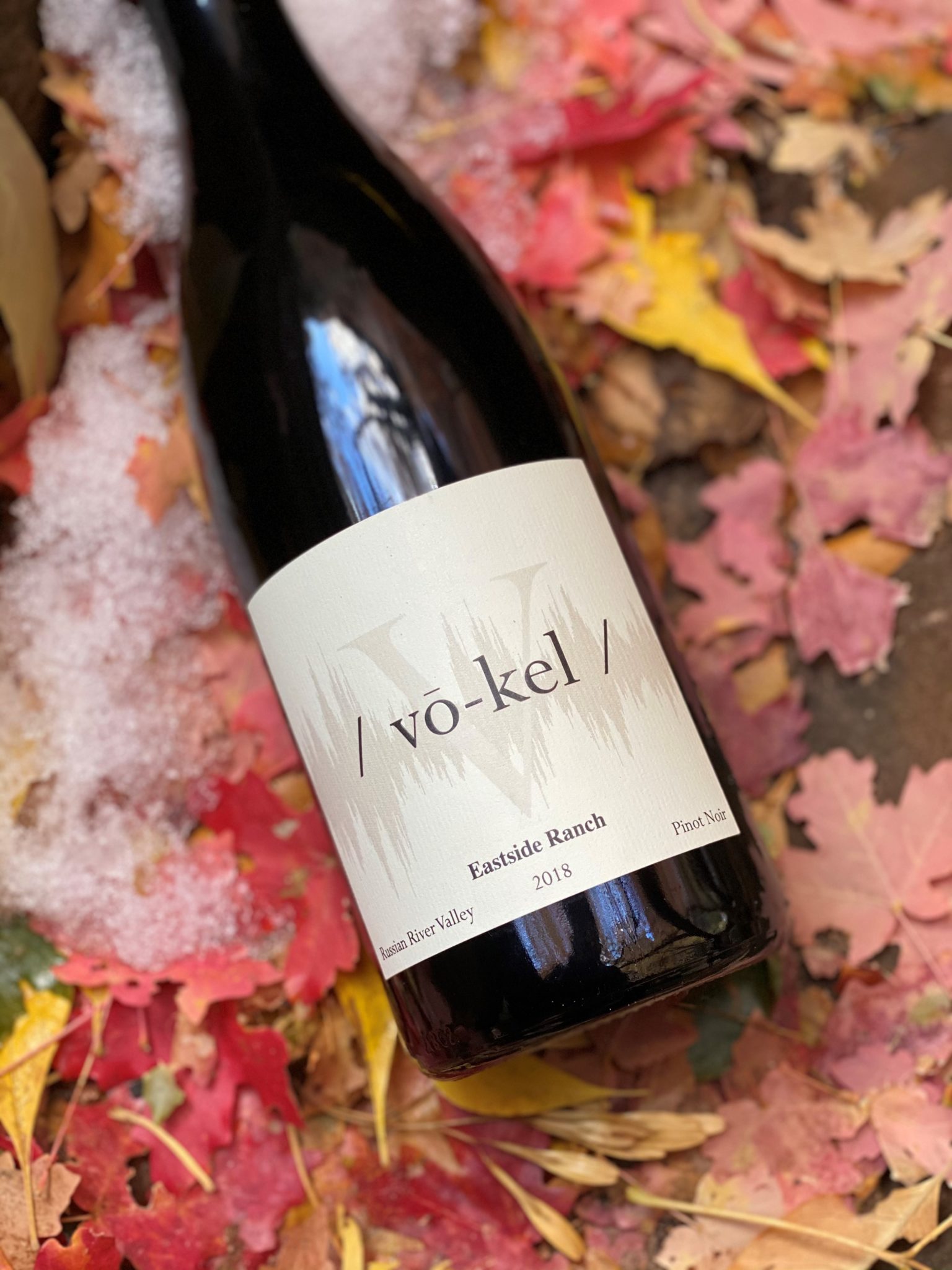
Jeff Bundschu: Thank you — that’s that’s good to hear, in moderation of course. We’re a relatively small wine company. We farm, we produce the wine, we sell the wine in our tasting room, we sell it to distributors, retailers, and to great restaurants like Daniel’s. And half of that business went away, just dried up immediately. It was incredibly disconcerting for us. What I started to do, just in terms of survival, was to project out what a recovery might look like. We’ve already blown past what I hoped would have been a return point. So I’m recognizing there are parts of our business, the events in particular, that are not going to come back in 2021.
In the context of our hospitality, it’s just meant a pivot as to how to reach customers. We’re doing well, but it’s been really hard for wineries that rely on restaurants for the primary portion of their business. The bottom line is our county really depends on tourism and visitors.
Have restaurants reached the bottom?
Daniel Kedan: We’re finally getting a taste of how volatile the hospitality industry as a whole is. This has given people a true sense of what we deal with and how small of a margin we really do live on.
It’s mind-boggling to think about how we get through this one. And, like Jeff said, what the return looks like.
What might our restaurant scene look like by the end of 2021?
Daniel Kedan: It’s going to be as diverse as this conversation is right now. You have a lot of restaurants that are very desperate to get back open and don’t have the community support. We’re very lucky in the partnerships that we have, working with Sonoma Family Meal and the Ceres project, where we’ve been able to find alternative sources of revenue, but a lot of restaurants don’t have that.
So it’s a very scary industry. There is no crystal ball answer because nobody really knows. In all honesty, it’s going to be a long, hard process to get through this. And if we don’t have support from our local and national government, there’ll be many restaurants that don’t survive.
Let’s talk about Sonoma’s strengths. Our continued ability to pull together and support our community in times of crisis is the envy of many in our state. But with such deep needs and such limited resources after the challenges of 2020, are our nonprofit organizations up to the task?
Veronica Vences: The outpouring of support this year has been amazing. And it was something unexpected because we knew people were suffering and we weren’t sure if we would get similar investments as we did after the 2017 fires. One thing that has worked for La Luz is leaning more into institutional funding. This is the first year La Luz has gotten a chunk of money from Sonoma County, because of the Cares Act funding that came through.
It is possible, but it’s going to take us working together and exploring completely different sources of revenue. I’ll also say that we’re thinking about earned revenue. As much as it’s not the best time to launch a new business, the barriers to entry have been lowered.
Anita Maldonado: We provide supportive services to youth and their families in crisis. So we’ve been open throughout Covid. Fortunately for us, we were able to take advantage of a PPP loan that helped us keep people on payroll. We have not had to lay anybody off, but I think the biggest issue is how to deal with unearned revenue. If your budget relies on fundraising events, you have to think differently about how to bring that revenue in.
And donor fatigue is real. And so it becomes difficult. We have to cast a wider net as it relates to donor relationships and cultivations. And I agree with Veronica, we’ve got to find ways to collaborate and partner so that we can have a greater impact in the community.
Crista Barnett Nelson: The one thing about nonprofits is we’ve never had any money. I mean, let’s face it, we never have enough. But we can do this. You give me a dime, and I can make it a dollar.
We lost our major fundraising event, which we’d been doing for 32 years. Hopefully, we’ll bring it back and we’ll pivot. To look at things from a positive place, we know how to do this. We know the budget’s going to be a mess. But we’re resilient and we can make this happen; I don’t doubt that. We’re amazing in Sonoma County. We’re unlike anywhere else.
Jeniffer Wertz: I’m a volunteer and my organization is very grassroots. When I started, I had no clue how to do any fundraising at all. I applied for a county grant, and I had no idea how to write a grant, so I just literally Googled grant templates, started writing. Eventually, the grant got funded and we started paying emergency rent for workers, because there was nothing aimed specifically at working people.
Our program has become really successful and very financially efficient. We’ve prevented 30 working households from becoming homeless for $50,000.
Pitching this forward, what do you need most in your community?
Jeniffer Wertz: Well, there’s always more need. One of the reasons that I’m participating in this forum is because I’d like to see other communities establish a similar model for their workforces using volunteers.
We want to prevent working people from becoming homeless, and it’s as simple as providing emergency rent or utilities and more disaster relief. It’s super-cost-effective. I’m convinced that the solution to homelessness is prevention. It’s really difficult and expensive to try to solve after the fact. If you can keep people on track and prevent them from becoming the next chronically homeless population, I think it’s a way better way to go. Not only financially, but morally. We do what we do in our community on a small scale, but it’s been very effective.
A 2021 Wish List
We’d love to hear from each of you about your hopes for the year. What do you look forward to in 2021, and what new alliances are you trying to forge?
Chris Rogers: We’ve got the PG& E settlement funds that we’re trying to figure out how to allocate. It’s an opportunity for us to get some projects that had been languishing across the finish line, and then potentially put some dollars into places where we know we have a lot of need. Last September, we passed the community wildfire protection plan. And to me, that’s one of the things that I’m looking forward to, because we just can’t lose three months of our year, every year, to wildfire. Being able to implement the community wildfire protection plan will make our community more resilient and pay dividends in a number of different ways. It’s going to trickle all the way through our economy and through every single issue that we’re trying to work on.
Daniel Kedan: For us in the hospitality industry, let’s make the changes now that that need to be made. Let’s get people paid a proper wage. Let’s move away from the reliance on tipping and make that shift in our industry as a whole.
I also want our community to come together. I’d like to see restaurateurs getting more involved with the youth, getting the youth trained and giving them opportunities to grow, helping to change our industry and make it a lot more sustainable.
Rubin Scott: My wish list for 2021 is to work more with more governing officials, such as the city manager, and just become more unified between the city, governing officials, our schools, and our families. I think the biggest thing is that we need to become more inclusive. We have to create a culture. If we can go ahead and make sure that all children in the community feel accepted, don’t feel isolated, that would be my wish list. I hope that we are able to work more on bridging the gap between our children and our governing officials. I’ve been working hard on that. The wisdom of our young people is beyond their age; it’s phenomenal.
Jennifer and Veronica, you both had very strong critiques to kick us off. Jennifer, you talked about systems not being in place to safeguard us from the pandemic. And Veronica, you talked about health being a privilege for the working-class community. What’s at the top of your wish list?
Veronica Vences: First, as we walk out of this forum, I would wish that that we all understand the true value of our workforce. Just a paycheck is not enough, just a living wage is not enough. I’m thinking about our vineyard workers, I’m thinking about our hospitality workers and all of the different jobs that are the backbone of our economy.
And the other wish — it’s a big wish. It’s an immigration shift. I think a lot of our community needs that pathway to citizenship. Many are missing out on that safety net. To me, that’s going to be a big push for our new presidential administration. I’m keeping my eye on that because it could really shift the social determinants of health that Jennifer spoke to. It’s a clear way to change people’s lives.
Jennifer Fish: I absolutely agree. Covid unveiled a lot of the disparities within our community, and my wish is that as a community, we prioritize the health and well-being of our workers, the low-income people in our community, our homeless community, all of those that who feel ‘less than.’ We have a lot of wealth in our community. My hope is that we center all of our work as a community together on those vulnerable people, because if we really invest in the health of our workers, the health of our community grows and can become sustainable.
What are one or two tangible examples of that?
Jennifer Fish: Part of it has to do with mobilizing financial resources. Very specifically for Covid, for example — people don’t stay isolated because they can’t afford to. Let’s give them the resources to stay home and provide them with the funds and services, the food and resources to isolate.
If we don’t invest in the workers, businesses will not flourish because we’re going to be in the same position that we’re at right now, where our numbers won’t go down because we’re not focusing on taking care of those vulnerable populations.
It also means investing in primary care and preventive health and building alliances with organizations that know the communities and can do on-the-ground work. Investing in health and our community is, in my mind, the only way forward. And, and to do that by empowering and giving voice to people from those communities and to the BIPOC leadership and the youth that are coming up, bringing them to the table and making them leaders.
Jeff Bundschu: Fundamentally, housing is a huge issue. Even before Covid, finding reasonable housing to support our workers has been less and less possible. And with the flight from the city, and people buying up property, it’s exacerbated the problem. It becomes incumbent on people in my position to educate the new arrivals to our community, to help them understand that one of the reasons they love living here is because these people are around to help do work. It’s something that our Sonoma Valley vintners association has focused on pretty heavily, trying to figure out a way to tackle that, because it’s impacting workers at all levels and in all positions. So that’s what I hope we can keep tackling this year.
Crista Barnett Nelson: My wish is less philosophical, more tangible. We’ve just started working on healthcare career pathways. The need for seniors, as I said earlier, is that we don’t have enough certified nursing assistants to provide care, so we’re starting a CNA training program for youth, with the idea that that’s a first step into a health care career, and then we can offer wraparound services, helping stabilize at-risk youth, making sure they have food and transportation to get to their new CNA job that we’ve trained them for. So that’s my 2021 wish.
Anita, that’s a pretty good segue to bridge the generational divide. If you had a wish list for Sonoma County youth, what would that look like for 2021?
Anita Maldonado: My wish for Sonoma County youth is that we lead the charge and leave the place in better shape than what we found it. And we do that by opening up the doors and spaces for them to have a voice. We mentor them. We create spaces for them as decision-makers, we create spaces for them to lead the charge.
The pandemic forces us to reflect on really important things. And I think it’s shifted our priorities. So my hope is that we continue to reflect upon that. We create better allies within the community, we recognize privilege, and we open those spaces for people who have not had privilege.
Laura Alamillo: What I would hope is that we can train good teachers who can afford to live in this area. We’re working really hard to make sure that we recruit future teachers who are from this community, but what I’m finding is that once they get their credential and they’re ready to go back to their community, they’re unable to stay. So I think my wish is that we are able to grow our own in this community and that our teachers, our educators, see themselves when they step into those classrooms, and that they can sustain their own families and be able to live here and be healthy.
Jeniffer Wertz: I agree with Jeff, I agree with most of the people here about helping the working class. And housing is a big deal. It’s easy to say, ‘We want more affordable housing.’ It’s a lot harder to accomplish. But we know that hotels want to build here, so I wish we could create a countywide ordinance mandating that hotels include on-site affordable workforce housing. It would work for some people, not everyone — but it would free up housing stock for families, and it would cost taxpayers nothing. If we could get every jurisdiction in our county to work on that collectively, I think that could be one of the solutions to the housing problem for everybody.