

A couple relax in a hammock at Wildhaven Sonoma near Healdsburg. (Sonoma County Tourism)
Connections are intentional for husband-and-wife duo Chris Schultz and Anne Driscoll.
In 2021, the Healdsburg residents founded Cosmico, an independent music festival designed to introduce music lovers to up-and-coming bands across multiple genres. They also run the nonprofit Launch Pad Foundation, which is dedicated to supporting people who build community through creativity and collaboration.
Most recently, Schultz published “Analog: How To Love Your Work, and Not Wait for Retirement To Live the Good Life,” a book about what it means to live and work with intention, a theme Schultz says is a throughline in the couple’s collaborations.
“Whether it’s a festival, a book, or a local project, our mission is the same: help people find their path, trust their calling, and choose themselves,” he says.
This year’s Cosmico — now called Analog Reunion — is scheduled for May 15-17, and Schultz and Driscoll have already announced early additions to the weekend lineup, including folk rock artist Alex Amen and soul rocker Maggie Koerner. Tickets on sale now at cosmi.co.
Chris Schultz and Anne Driscoll, founders of Cosmico Fest, Thursday, Nov. 5, 2025, in Healdsburg. (Kent Porter / The Press Democrat)
The Cosmico difference
Chris: A lot of festivals aim for the same things: the biggest bands, the most commercial success. We are, by design, smaller and more independent. We are more discovery-focused; people trust us to introduce them to new music. We work hard to book awesome bands you’ve never heard of. We want you to be able to see a show at Cosmico, then see the same band years later and say, ‘I saw them at Cosmico first.’ That’s the goal.
Changing venues
Anne: We are moving locations. Last year we had the festival at Dawn Ranch in Guerneville. This year we’re bringing it back to Healdsburg, to Wildhaven Sonoma, a glamping spot on the Russian River on the north end of town. We’re also calling it a reunion this year, because of the idea that people keep coming back to it.
A couple relax in a hammock at Wildhaven Sonoma near Healdsburg, where Analog Reunion will be held in May. (Sonoma County Tourism)
All about connection
Chris: The book is an effort to reflect on the things in life that have been important to me. It’s about putting your hands on the wheel of your life. Finding joy through analog experiences is the way I describe it. It’s really about connection. Connecting with people in the community; being connected with your family. The title also references the disconnection we feel in our digital lives. Ultimately, I think the path to meaning is through service and helping people. That’s a big part of what we try to do with Cosmico.
Calling Sonoma County home
Anne: We are so lucky to live somewhere where people are creative and constantly thinking of ways to celebrate the incredible resources we have at our fingertips. Between the two of us, we’ve seen a lot of the world. There’s no place quite like this one.
3/20/2014: B1:
PC: Malisa Bruno turns a cartwheel while frolicking in a field of mustard at the Brown Farm, in Santa Rosa on Wednesday, March 19, 2014. (Christopher Chung/ The Press Democrat)
Following winter rains, mustard flowers blanket vineyards and valleys across Sonoma County in vibrant yellow, adding a seasonal splash of color to the landscape and to countless Instagram feeds.
If you’d like to take in the scenery or capture it with a camera or smartphone, here are several public spots known for mustard flower views. In true Sonoma style, we’ve also noted nearby places to stop for a bite or a glass of wine.
As always, be mindful of plants and wildlife and respectful of private property. No trespassing.
A vineyard workers sprays back mustard weed at the Alexander Valley Vineyards, Saturday, Feb. 11, 2023. (Kent Porter / The Press Democrat)
Alexander Valley
Sonoma County’s Alexander Valley abounds with mustard flowers in late winter and early spring. Just after turning from Alexander Valley Road onto Highway 128, both sides of the road are lined with fields of bright yellow flowers.
Sonoma Valley
The iconic “mustard flower hill” at B.R. Cohn Winery turns yellow and white each spring, creating a striking view along Highway 12 in Sonoma Valley. Just be sure to keep your eyes on the road while passing. Stop in afterward for a glass of Chardonnay. 15000 Sonoma Highway, Glen Ellen, 707-938-4064, brcohn.com
Early morning sun filters on to the B.R. Cohn vineyards fronting Highway 12 in Glen Ellen. At left is Sonoma Mountain. (Kent Porter / The Press Democrat)An old vine at Kunde Family Winery in Kenwood is surrounded by mustard in bloom. (Rebecca Gosselin / for Sonoma Magazine)
Mustard flowers also surround Kenwood’s Kunde Family Winery in February and March. Afterward, head to Palooza Gastropub for craft beer and pub fare on its spacious patio. 9825 Sonoma Highway, Kenwood, 707-833-5501, kunde.com
Santa Rosa and Russian River Valley
The Joe Rodota Regional Trail, which runs between downtown Santa Rosa and Sebastopol, borders mustard fields in late winter and early spring. It’s a popular route for cyclists and walkers. Note that the properties bordering the trail are private. Ride the trail to Sebastopol and stop at The Barlow for a snack or drink.
At Paradise Ridge Winery, outdoor sculptures are often framed by mustard blooms. Visitors can enjoy wine and small bites on the veranda overlooking the vineyards. 4545 Thomas Lake Harris Drive, Santa Rosa, 707-528-9463, prwinery.com
A portion of the art installation Empyrean, by Laurence Renzo Verbeck and Sylvia Adrienne Lisse, on a mustard-covered hillside at Paradise Ridge Winery in Santa Rosa. (Christopher Chung / The Press Democrat)
Imwalle Gardens, a small family-run market on Third Street in Santa Rosa, is surrounded by homes and, during spring, fields of mustard flowers. Pick up picnic supplies or flower starters for your garden, but remember that the surrounding fields are private property. 685 W. Third St., Santa Rosa, 707-546-0279, facebook.com/p/Imwalle-Gardens-100057055376943
Another viewing spot is the Laguna Environmental Center, off Occidental Road near Sebastopol. During heavy rains, the area tends to flood, but across the street from the Laguna de Santa Rosa, the mustard flowers shine brightly. The mustard fields surrounding the center are private property and fenced with barbed wire. Viewing the flowers is permissible, but public entry is not. 900 Sanford Road, Santa Rosa, 707-527-9277, lagunadesantarosa.org
After admiring the blooms, head to Balletto Vineyards for a glass of sparkling Brut rosé on the patio.
Mustard highlights the sunset at the Laguna Center near Sebastopol. (Kent Porter / The Press Democrat)At Gloria Ferrer Vineyards, you can enjoy sparkling wines and Spanish tapas on a terrace overlooking mustard fields. (Gloria Ferrer Vineyards)
Carneros Valley
Carneros Valley has a cooler climate than much of Sonoma County, ideal for both Pinot Noir and mustard flowers. One of the best vantage points is the terrace at Gloria Ferrer Caves & Vineyards, where visitors can sip sparkling wines and enjoy Spanish-style tapas while overlooking mustard-covered vineyards. 23555 Arnold Drive, Sonoma, 707-933-1986, gloriaferrer.com
Petaluma Gap and Sonoma Coast
For a scenic drive, head toward Dillon Beach on the Sonoma Coast. Along Tomales Road near Petaluma, rolling countryside is dotted with dairy farms and mustard flowers.
Before heading to the ocean, stop in downtown Petaluma at Petaluma Creamery (711 Western Ave.) to pick up some Spring Hill cheese curds.
Storm clouds hang over a field of mustard blooming along Hardin Lane in Petaluma. (Beth Schlanker / The Press Democrat)Mounts Family Winery vineyard worker Maria Santian prunes wine grapes in the west Dry Creek Valley amid a cover crop of mustard near Healdsburg. (Kent Porter / The Press Democrat)
Dry Creek Valley
West Dry Creek Valley Road offers a quieter, more intimate drive than its parallel, Dry Creek Valley Road. In late winter and early spring, mustard flowers brighten the roadside, and lighter traffic makes it a pleasant route for cyclists.
Stop by Quivira Vineyards & Winery to taste wine and learn about pollination in the winery’s organic gardens. Continue to Martorana Family Winery & Vineyards for a glass of Zinfandel, or head to Mounts Family Winery for sweeping valley views paired with a pour of Grenache.
Martha Stoumen Wines just opened its first tasting room, an inviting spot just steps from the Healdsburg Plaza. (Courtesy of Elli Lauren)
After more than a decade of cultivating a fervent following for her exuberant wines through pop-ups and events, winemaker Martha Stoumen finally has a tasting room to call her own.
A darling of the natural wine space, Stoumen opened her new tasting room last fall in downtown Healdsburg. It’s an intimate location that’s open late and ready to lure in both longtime fans and new customers.
For the Sebastopol native, a tasting room was a dream that seemed out of reach, but that changed last summer when Stoumen joined The Overshine Collective, a sextet of wine brands led by founding partner and investor David Drummond.
From left, Noah and Kelly Dorrance, Sam Bilbro, Martha Stoumen and David Drummond at Overshine Wine Co. in Healdsburg Wednesday, July 9, 2025. (Beth Schlanker / The Press Democrat)Michael Richardson, hospitality manger for the Martha Stoumen Tasting Room, looks over the event list for the upcoming opening of the tasting room in Healdsburg, Wednesday, Oct. 1, 2025. (Kent Porter / The Press Democrat)
“I’m really excited to have this huge container for creativity,” says Stoumen, who calls the work to refurbish the space, previously home to other tasting rooms, a “home-grown effort” that included input from team members Alyssa Julian, who worked on design, and hospitality manager Michael Richardson, doing much of the buildout. Stoumen’s parents pitched in, too.
When envisioning her new tasting room, Stoumen drew on her own life experience, where sensory details are at the heart of her craft.
“I thought about the experiential side of drinking wine — not the taste or smell — but the textures, the lighting, the sound of the room,” she says, noting the goal is “to make people feel sexy and relaxed.”
Martha Stoumen Wines just opened its first tasting room, an inviting spot just steps from the Healdsburg Plaza. (Courtesy of Elli Lauren)
Stoumen, who spent years abroad working harvest, yearned to create an environment where guests feel transported — whether to a European café or a place that she calls “intangibly familiar.”
“I love spaces that feel both comfortable and familiar, even though you’ve never been there,” she says.
Ambition achieved. The tasting room is undeniably inviting, with cozy seating areas grounded by redwood trim, burlap, and cork paneling. The copper tabletops, which gleam like new pennies, will develop a patina over time, yet it’s a detail Stoumen embraces.
Unlike many tasting rooms that close before the dinner hour, Stoumen’s tasting room offers something for night owls, taking tasting reservations until 9 p.m. on weekend nights.
Martha Stoumen Wines just opened its first tasting room, an inviting spot just steps from the Healdsburg Plaza. (Courtesy of Elli Lauren)
Wines are offered by the glass, flight, and bottle. Flights feature six tastes which might include Italian varietals such as Nero d’Avola and fan favorite Vermentino, as well as blends of both French and Italian varietals with cheeky — sometimes romantic — names like Post Flirtation Red and Honeymoon, a marriage of Colombard and Chardonnay. Stoumen makes nearly two dozen wines each year, so guests can expect something new and interesting on each visit.
Ready-to-serve food items are also available, with a menu that changes regularly.
“In the beginning, we’ll offer a little bit of ‘choose your own adventure’ to see what people gravitate towards,” says Stoumen. “We want to see what the community wants and needs. That’s most important.”
Eggs Florentine at Bijou Restaurant in Petaluma Sunday, Feb. 22, 2026. (Beth Schlanker / The Press Democrat)
Somewhere between 2025’s egg shortage and the great butter spike, eggs Benedict went from brunch staple to splurge.
Last March, as egg and butter prices climbed amid national shortages, restaurants faced a difficult choice: trim breakfast menus or raise prices. Most opted for the latter. Eggs Benedict, lavish in both butter and eggs, drifted into luxury territory, landing at $24 or more.
A year later, the landscape has shifted. Egg prices have fallen nearly 35% from a national wholesale high of over $6 per dozen during the avian flu outbreak to just over $2.50, according to the U.S. Department of Agriculture. California’s prices, which soared to $13 per dozen at one point, have also eased. Butter costs have moderated as increased production steadies the market.
So why, as brunch-goers scan menus across Sonoma County, are Benedicts still clocking in at $19 to $25?
Restaurants face many financial pressures, including rent, utilities, labor and insurance. Nearly everything costs more than a few years ago. Hollandaise, made properly from scratch, requires skill and a steady hand. Even so, the math doesn’t always add up.
Customers have brunch at Bijou Restaurant in Petaluma Sunday, Feb. 22, 2026. (Beth Schlanker / The Press Democrat)
“Although food costs have gone up significantly over the last few years — and like everyone else, we feel that — we’ve always made a conscious decision to keep our prices fair and approachable while maintaining our level of standard,” said chef Stéphane Saint Louis.
Finding one of the county’s best Benedict values at a year-old bistro known for polished French cooking, silken sauces and meticulous Parisian desserts was not on my bingo card.
Especially for $16.
Brunch favorites
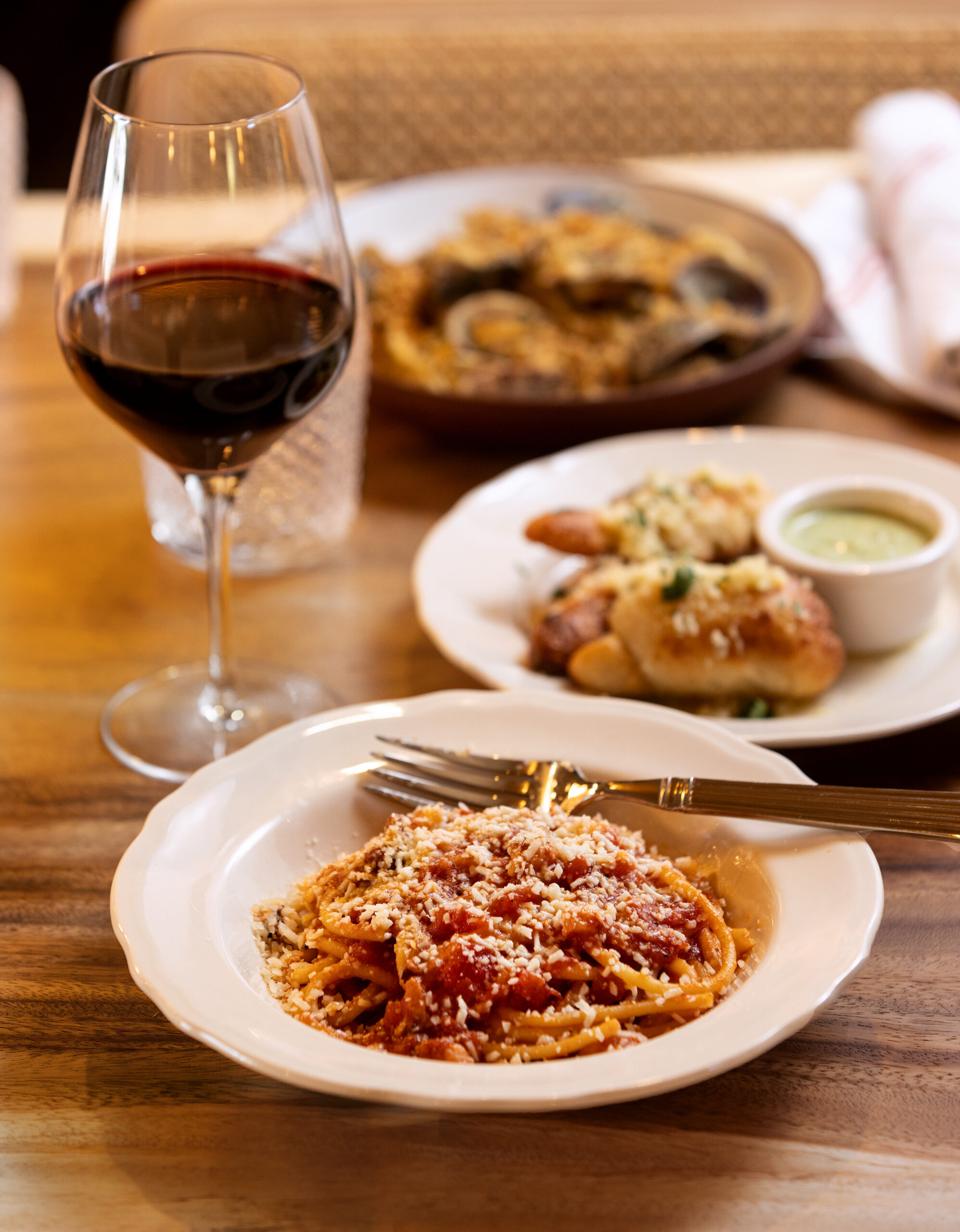
Opened in late 2025, Bijou is the more casual sibling to Saint Louis and Steven Vargas’ Michelin-noted Table Culture Provisions. While the latter focuses on an elegant, multicourse prix fixe, Bijou offers a looser, neighborhood feel. Dinner might include boeuf en croûte, red wine-braised oxtail, grilled Cornish game hen, or savory French onion soup, each prepared with precision. Pastry chef Sylvain Parsy completes the picture with neatly layered opera cakes and delicate tarts.
Opera cake at Bijou Restaurant in Petaluma Sunday, Feb. 22, 2026. (Beth Schlanker / The Press Democrat)
“Bijou is meant to be a neighborhood restaurant with serious cooking behind it,” said Saint Louis, who is often framed in the pass-through window, expediting plates.
Brunch at Bijou feels easygoing but thoughtfully executed. Granola with Straus yogurt and fruit ($9) and a three-egg omelet with Gruyère and ham ($15) are polished versions of diner standards. Heartier plates — Saint Louis’ fried chicken and biscuit ($18) and a tidy Croque Madame ($17) — justify the drive.
“We want guests to feel comfortable ordering freely, without feeling like they are committing to an upscale dining experience,” Saint Louis said. “Our goal is to make sure the pricing reflects that balance.”
The dining room reflects the same mix of sophistication and down-to-earth style, with warm woods, an uncluttered design and natural light streaming through wraparound windows. Service is attentive without fuss. A full bar offers creative cocktails, including an elegant riff on the mimosa to start or finish the weekend deliciously.
Eggs Florentine at Bijou Restaurant in Petaluma Sunday, Feb. 22, 2026. (Beth Schlanker / The Press Democrat)
Best bets
Eggs Florentine, $16: Crisp English muffins topped with smoked salmon and blanched baby spinach are capped with properly poached eggs and a glossy, well-emulsified hollandaise. There is no reinvention here — and none needed.
Croque Madame, $17: Petite and neatly trimmed, the sandwich makes an appearance from the dinner menu and layers creamy béchamel, sharp Gruyère and Black Forest ham beneath a fried egg, served with a modest pile of greens.
Fried Chicken and Biscuit, $18: Saint Louis built a following selling fried chicken by the order during the pandemic at Table Culture Provisions. Here, it arrives in brunch form, paired with a buttery biscuit and surrounded by hot sauce, gravy and honey.
Fried chicken and biscuits at Bijou Restaurant in Petaluma Sunday, Feb. 22, 2026. (Beth Schlanker / The Press Democrat)Chris Arntz pours cocktails at Bijou Restaurant in Petaluma Sunday, Feb. 22, 2026. (Beth Schlanker / The Press Democrat)
Bubbles a L’Orange, $15: You’ll never look at a mimosa the same way again. This classy cocktail is a mix of fresh orange juice, dry Curaçao, vodka and Champagne. Anything else is barbaric.
Bijou Burger, $18: As close to burger perfection as I’ve come recently. A soft brioche bun cradles a well-seared patty with honey bacon and cheddar. Shoestring fries arrive hot and crisp. Order the extra aioli and thank me later.
The Bijou Burger with fires at Bijou Restaurant in Petaluma Sunday, Feb. 22, 2026. (Beth Schlanker / The Press Democrat)
Opera Cake, $12: Precise layers of chocolate ganache, coffee buttercream and sponge cake rest atop vanilla cream.
If You Go
What: Brunch at Bijou
Where: 190 Kentucky St. in Petaluma.
Bijou Restaurant at the corner of Washington Street and Kentucky Street in Petaluma Sunday, Feb. 22, 2026. (Beth Schlanker / The Press Democrat)
When: Brunch is served from 9 a.m. to 1 p.m. Saturday and Sunday. Dinner is served from 5-8:30 p.m. Thursday through Monday. A new happy hour, 4-6 p.m., features $10 appetizers, and lunch is offered from 11 a.m. to 2 p.m. Thursday, Friday and Monday.
Good to know: A 5% service charge is added to cover staff costs. Reservations are recommended.
A 1950s-era ranch home that has undergone a truly artful transformation is currently listed for sale in Sonoma. The renovated 1,543-square-foot dwelling is enhanced with several outdoor spaces as well as premium and fine art finishes that create an intriguing modern aesthetic. With three bedrooms, two bathrooms and a pool, the home’s list price is $1,700,000.
Geometry is a central tactic of the design. Symmetrical and organic patterns in black, white and gray create a sense of movement and define the home’s spaces.
At the door is a sleek fence with thin slats in varying widths. The angular style is echoed in repeating rectangular door lites and concentric squares in the outdoor floor tile.
Living room. (Open Homes Photography)Pergola. (Open Homes Photography)Pool and lounge area. (Open Homes Photography)
The living room has a circular pattern play. Spheres are neatly stacked in the fireplace, which features a cement-and-plaster finish created by fine artist Tricia Rissmann. Her artwork hanging above the sofa and mantel features abstract circles. A rounded pattern circles back to the yard via floor tile under the pergola. The tile continues around the lap pool.
The design transitions to edgier abstract angles on the patio around the outdoor bar. This space is accessible via a glass roll-up door that connects to the “wine den,” currently styled with a black accent wall for a moody vibe in which to sip, lounge or listen to music.
“Wine den.” (Open Homes Photography)Outdoor bar. (Open Homes Photography)
A linear pattern wows in the bathroom shower. The repeat of humble, hand-drawnlines on Italian tile are designed by artist Kasia Zareba.
Classic elements like French doors and a generous quartzite kitchen countertop blend with the modern elements to create a pleasing transitional feel in the vintage home.
Farmhouse and ADU overlooking the valley at sunset. (Clear Shot Creations)
Offering a farmhouse fantasy, a modern home with an accessory dwelling unit has hit the market in Healdsburg. The home, completed in 2023, epitomizes farmhouse style with an all-white, board-and-batten exterior, black accents and airy, open-concept interiors. With a total of six bedrooms and six bathrooms set among an expansive countryside, the estate is listed for $6,495,000.
The home and similarly styled ADU sit atop a hill in the Chalk Hill AVA, the high point of a 100-acre property full of mature trees, a pond with docks, and a private bridge extending over a seasonal creek. All rooms in the 5,132 square feet of living space have panoramic views of the Mayacamas, Mount St. Helena, vineyards and valleys.
The main home has a light-drenched great room with a kitchen that sparkles with quartzite countertops and premium appliances. The room’s dining and lounging areas enjoy forever-views through large sliders that lead to a deck and bocce ball court.
Great room. (Clear Shot Creations)Kitchen area of great room. (Clear Shot Creations)Covered patio with bocce court. (Clear Shot Creations)
The two-bedroom, two-bathroom ADU hasa great room with a fireplace and more views. It’s located above a six-car garage and workshop.
The fenced-off property also includes boat docks and an RV by the pond, plus an orchard and gardens.
For more information on this property at 9110 Chalk Hill Road, Healdsburg, contact listing agents Brooklyn Nordby, 707-321-3106, 707-939-2230, Sotheby’s International Realty; or Richard A. Frank, 707-322-8849, Sterling California Properties, brooklynnordby.com/sale/listing-details/b079102e-a034-4b6b-bc1e-87e850931c53
With their wrists bound together, artists Pamela Holmes and Winston Gourley draw with handmade charcoal on a canvas at Stranger Worth studio in Cazadero Thursday, Nov. 20, 2025. (Beth Schlanker / The Press Democrat)
Standing before a blank, wall-sized canvas, Pamela Holmes holds out her right arm as Winston Gourley unravels a tattered gray Ace bandage that looks as though it was scavenged from a battlefield. Around their wrists, he winds it tightly until the two of them are bound in solidarity.
“I’m the designated wrapper,” Gourley says, his British accent easing into a laugh.
In the background, The Clash tear through the opening track of “London Calling.” The couple are cocooned in a large tent studio outside the DIY house Pamela built with her ex-husband more than 30 years ago. The wooded 15-acre property above Timber Cove might as well be perched on the edge of the world, it’s so remote.
Artists Pamela Holmes and Winston Gourley bind their arms together before working on a painting at Stranger Worth studio in Cazadero Thursday, Nov. 20, 2025. (Beth Schlanker / The Press Democrat)
With their free hands, they rummage through a box of charcoal — dead, dried grapevines they cut and burned themselves — to find the right tool, their fingers turning sooty in the mix. Then, as if cued by something in the music, they start to move — an awkward tango at first, each one pushing and pulling as they find a rhythm, bodies lurching and swaying, their hands traveling across the canvas leaving a trail of black scrapes and lines in flurries. When the charcoal breaks under the pressure, they grab a new one.
“It’s a bit of a dance,” says Gourley. “And there are those moments where part of you really needs to go to the top left-hand corner, but the other person really needs to go to the bottom right-hand corner.”
There’s an athleticism to it, magnified by their breathing, like two prisoners bound on a chain gang, their work detail to render a painting instead of pounding out a road.
Next, they pick up a homemade wax stick, adding white streaks that resemble chalk marks. Then they re-tie their hands so they can both hold a brush and splatter jet-black India ink across the 80’’x 92’’ canvas, pausing only to dunk the splayed brush in fresh paint. Still bound, they walk outside and bring in two chairs to reach the highest corners of the nascent work of art.
With their arms bound together, artists Pamela Holmes and Winston Gourley draw with bars of pigmented beeswax on a canvas at Stranger Worth studio in Cazadero Thursday, Nov. 20, 2025. (Beth Schlanker / The Press Democrat)
“It’s all about dismantling one’s ego,” says Holmes.
Gourley likes to call it “a shared imagination,” something they never knew existed.
It could easily be a gimmick — the art world is full of them — but instead, it opened a portal into an entirely different way of making art for both of them.
“It’s really freeing,” Holmes says. “Neither of us make these paintings. The work that comes out of it is never predictable, and it’s not anything like either of our own works.”
Both are lifelong artists. She grew up in Pasadena, graduating with an MFA from Otis College of Art and Design in Los Angeles. Gourley was raised on the British island of Guernsey off the coast of France, graduating from Emily Carr University of Art + Design in Vancouver, Canada. Her work is more textural, sometimes coming to life in cement plastered on wood boards — almost an extension of the Holmes Wilson custom cement furniture business she founded years ago before recently retiring. Gourley, who has shown his art internationally in the past as Patrick Gourley, is drawn to both color field paintings and encaustic works that play with melted wax and resin. When he moved in with Holmes several years ago, they tried creating their own works in the same studio, but “it didn’t make any sense,” he says. “It felt weird.”
Artist Pamela Holmes mixes oil paints at Stranger Worth studio in Cazadero Thursday, Nov. 20, 2025. (Beth Schlanker / The Press Democrat)
Inspired to collaborate, they tried a few drawings where they both added layers. But they realized “the problem with doing this is I’m just laying my (stuff) on yours,” Gourley says. “But if we’re tied up together, who’s in charge? Who’s in control? And then to have anything good happen, you have to give up those things. You have to give up all your habits.”
After the first painting they’ve never looked back. In this alternate universe, she adopted the alter ego “Ivy Stranger” and he became “Ernst Worth.” Together they are Stranger Worth, signing paintings “ISEW.”
They’ve even dreamed up their own vocabulary; words and phrases such as “Do the Dusinki” and “Lewst” and “Emerlink” are scribbled on scraps of paper and pinned to the studio walls as reminders. One imaginary word,“Eachin,” helps anchor their artist’s statement that reads like a manifesto: “Eachin steps away from the personal and opens up to the collective…Eachin welcomes surrender over resistance…Eachin carries no suitcases.”
Artists Pamela Holmes and Winston Gourley paint with their arms bound together at Stranger Worth studio in Cazadero Thursday, Nov. 20, 2025. (Beth Schlanker / The Press Democrat)
But abandoning your ego, and surrendering old habits and artistic tendencies, is often easier said than done.
“In the beginning, I would cry,” says Holmes, still wistful, but able to look back now and laugh. “It was that hard.”
As they struggled to paint together, it was “hard not to feel protective of something in the painting that you liked,” she continues.
Gourley remembers the time Holmes undid the bindings and ran out the door, screaming, “I’m never painting again!”
Even on this day, midway through the session, tension lies just beneath the surface. When asked what they’ve learned about the other person through this process, Gourley replies immediately, “I love her and I hate her.”
They both laugh as she adds, “That’s very accurate. There are times when I just despise him.”
With each abstract work — there are a handful hanging around the studio, each one very different — they keep coming back to the canvas daily, adding more layers. Any discussion of what shapes or themes might be materializing is delayed for many sessions to keep the work somewhat dreamy and unpredictable.
With their arms bound together, artists Pamela Holmes and Winston Gourley draw with bars of pigmented beeswax on a canvas at Stranger Worth studio in Cazadero Thursday, Nov. 20, 2025. (Beth Schlanker / The Press Democrat)
A week after they embarked on the painting with the charred vines, they’re finished. Layered over the early black and white scars is a splash of green paint and a bright red flourish, almost like a smoke cloud of blood floating in a green sea. After coming back to it multiple times, even flipping the canvas upside down at one point, Holmes says they finally started talking about symbols they saw in the work “about the same time we started hating each other.”
“It’s been a tough one,” adds Gourley.
“This was an extremely challenging piece to make, for some reason,” she says. “Sometimes trying to break through your identities is an ambition. It’s not always easily achieved. Sometimes we butt heads more than we do other times.”
In many ways, it sounds like any couple — artistic or otherwise — working through their issues on any given day.
With their arms bound together, artists Pamela Holmes and Winston Gourley draw with bars of pigmented beeswax on a canvas at Stranger Worth studio in Cazadero Thursday, Nov. 20, 2025. (Beth Schlanker / The Press Democrat)A pot of rabbit skin glue sits on a table before being used by artists Pamela Holmes and Winston Gourley at Stranger Worth studio in Cazadero Thursday, Nov. 20, 2025. (Beth Schlanker / The Press Democrat)
So far, they’ve only shown Stranger Worth paintings at the Gualala Arts Center, and hope to reach a larger audience. They’ve also thought about what it would be like to facilitate sessions for other couples trying to work through their issues, tying them together before the canvas and seeing what takes shape.
A few of their friends have tried the technique. One couple, the wife an artist and the husband a physicist, were working on their first painting and “she was just leaving the guy completely behind,” Holmes recalls. “All of a sudden, she stood back and looked at us, and said, ‘I’m such a control freak.’ The next piece they made was mind-blowing. He was finally able to come alive.”
Holmes and Gourley both bristle at the concept of couples’ art therapy, but if they were to market it, Holmes has a pitch.
“Come and try the tie-up,” she says in a way that makes it sound almost like a dance or the chorus to a song — something so catchy you can’t resist.
“I think that’s really what it boils down to,” Gourley says. “We’re doing something that’s so primal. That act of making marks together on a surface connects us directly to our ancestors.”
Husary Olive Oil owner Mousa Husary looks over a load of olives from the Central Valley he will mill at his Sebastopol Olive Oil Company Friday, Oct. 30, 2025 this home business west of Graton. (John Burgess / The Press Democrat)
Walk into the Union 76 gas station at the corner of Gravenstein Highway and Occidental Road near Sebastopol, and you’ll see the usual convenience store fare: bags of chips, chilled drinks, motor oil. Then you might notice something out of the ordinary: a countertop wine fridge filled with slender, green-glass bottles of locally made olive oil — some of it from a small grove of trees on a gently sloped plot of land just a few dozen yards north of the busy intersection.
The station’s owner, lifelong Sonoma County resident Mousa Husary, comes from a Palestinian family with deep roots in the Middle East. While visiting Jerusalem’s Mount of Olives during a family trip to the Holy Land in 2009, he came across a grove of ancient trees.
“It was just awe-inspiring. Palestinians are all about olives and olive oil, but I wasn’t into olives before. I really wasn’t,” says Husary. “I looked around at these old trees with these big, burly trunks, and I got this vision from God. I was really struck by it. Something told me I had to come home to California and plant as many olive trees as I could.”
Husary Olive Oil owner Mousa Husary and his wife Yara get their hands dirty planting some of the 1500 Nabali and Souri Palestinian olive trees grown by UC Davis from Palestinian stock Tuesday, Nov. 10, 2025, on 8 acres in Larkfield. (John Burgess / The Press Democrat)Husary Olive Oils, Wednesday, Nov. 26, 2025, near Graton. The Husary family’s extra-virgin olive oil has won gold medals at agricultural fairs. (Kent Porter / The Press Democrat)
That epiphany profoundly changed Husary and altered the course of his family’s life. What began as a passionate hobby has become a business. The Husary family’s extra-virgin olive oil has won gold medals at the California State Fair and Sonoma County Harvest Fair. More important, cultivating olives has deepened the family’s appreciation of their roots.
“Our Palestinian heritage is so special, and olive oil, olives, harvesting, all of that is so big within the Palestinian tradition,” says Mousa’s 20-year-old daughter, Talia Husary. “That’s what ties us to our land.”
Cultivating these traditions in Sonoma County is important to them, and becomes more so with each passing year, she says. “The more we grow, the more we see it.” The “it” is how producing olive oil links the family to their Palestinian identity. Because that work connects the family to their history, Talia says that for her dad, making olive oil is “something he loves to do. It’s not something that feels like work.”
Olives destined for the mill for Husary Olive Oil Friday, Oct. 30, 2025. The west county company is owned by Palestinian-American Mousa Husary. (John Burgess / The Press Democrat)
Hard-working and curious, Mousa Husary, 47, began learning about different olive tree varieties after he returned from his transcendent visit to Jerusalem. Olive trees are a symbol of freedom for Palestinians he explains, and “a big part of what gives the Palestinian people their identity.”
As he prepared to plant his orchards, he wondered: “What kind of olives do we have in Palestine?” He learned about the Nabali and Souri varieties and called nurseries across the United States to try to find them. They only had trees that originated in Greece, Spain, or Italy.
His search culminated at UC Davis; through the U.S. Department of Agriculture, the university had access to trees that originated in the Middle East and agreed to send a few cuttings to Husary. When they arrived, he wasn’t sure how to plant them, so he called a gardener he’d employed who cultivated them and soon learned how to do this himself.
Meanwhile, he planted nearly 60 Italian, Greek, and Spanish olive-tree varieties next to his gas station. Within a couple of years, the trees began bearing fruit. His sisters and three children helped pick the olives. His wife, Yara, would brine them in jars, sometimes with lemon or jalapeños. “That’s all we did,” he says, suggesting he hadn’t thought about making olive oil.
Husary Olive Oil owner Mousa Husary looks over a load of olives from the Central Valley he will mill at his Sebastopol olive oil company Friday, Oct. 30, 2025, at his home business west of Graton. (John Burgess / The Press Democrat)
In 2021, Husary, who has served as a football coach at local high schools and at Santa Rosa Junior College, was hosting a barbecue for his son’s football team and spoke with a coach who’d also planted olive trees. The coach said he took his olives to the Figone Olive Oil mill in Sonoma. It was a lightbulb moment for Husary. “Oh my God, maybe I should do that,” he recalls thinking.
That autumn, he and his family picked the organic olives while they were still green — a tactic to avoid damage from fruit flies — and took 1,500 pounds of the hard fruit to Figone’s. Because of the early harvest, they didn’t end up with much oil — only about 10 gallons, as Husary recalls, but what they got was intensely concentrated with a piquant, grassy flavor.
“People loved it. What’s not to love? It’s super-potent olive oil,” he says.
Husary bought cases of empty bottles for the 2021 harvest, made labels on his computer, and shared that first batch of olive oil with friends and family. By 2022, Husary says, “I was kind of on a mission.” He sought to produce a few cases of oil to sell. “That’s how it started.”
Husary Olive Oil owner Mousa Husary mills tons of olives for oil Friday, Oct. 30, 2025, at his Sebastopol olive oil company west of Graton. (John Burgess / The Press Democrat)
When he began making olive oil, Husary would share it with his uncle, a brother to his late father. One day, after pouring some of the golden oil onto his plate, Husary recalls his uncle looking him in the eye and telling him something about the family that floored him: “You know, we had olive trees in Palestine — we had an orchard in Lidd.” The city, now known as Lod, is in Israel between Tel Aviv and Jerusalem. Husary confirmed this with another uncle who told him the family had indeed cultivated olive orchards in Palestine for generations.
“I felt like, ‘God, this is meant to be.’ Obviously, those properties… they lost them,” says Husary, referring to Palestinians who were forced to leave their homes and land in the late 1940s, when Israel became an independent state and prevailed in the first Arab-Israeli war. “But that was cool for me to find out; it’s coming full circle.”
Husary, who was born in Santa Rosa, says he and his family are “super proud” to be Palestinian Christians, a minority within a minority. “Our orthodox church goes back to the beginning. We’re Antiochian. All of our bishops trace back to one of the apostles from Jesus’ time,” says Husary, who serves as president of Rohnert Park’s All Saints Antiochian Orthodox Christian Church.
It’s a faith handed down to him by his late father, Khader Husary. A barber by trade, Khader emigrated to the U.S. during the late 1960s when he was in his early 20s. During his first years in the U.S., he cut hair and worked in grocery stores and as a janitor to support his wife and five children. He later opened a small store of his own, sending money back to Palestine to help support family members left behind.
After saving for years, he built the gas station at Gravenstein Highway and Occidental Road, Husary 76, and opened it in 1997. As Khader’s only son, Mousa was enlisted to work alongside his father at the station, first part time while in high school, then full time after graduation while his friends attended college.
“I put in a lot of time at the station as a young man while a lot of kids were out partying, but I wouldn’t do it any different way. My life’s turned out pretty good,” he says. Mousa credits his father with teaching him about business, “So he’s a big part of this, whether he saw it or not.”
Husary Olive Oil owner Mousa Husary pulls a full container of freshly pressed olive oil for a customer at his Sebastopol olive oil company Friday, Oct. 30, 2025. Husary mills tons of olives from Sonoma County and the Central Valley at his home business west of Graton. (John Burgess / The Press Democrat)
Husary now works with his three children, ages 17 to 20. Continuing the family tradition with them “means everything,” he says. “That’s the best part of the whole business, having the boys help me, because that’s what I did with my dad.”
His daughter, Talia, a senior at San Jose State, manages social media for the company and staffs booths at events such as the annual Palestine Day in Redwood City. She plans to go to law school after graduating from San Jose State. “The family needs a lawyer,” she says.
Yara Husary pours Husary Olive Oil for her children Talia, left, George and Jake at their home, Wednesday, Nov. 26, 2025, near Graton. (Kent Porter / The Press Democrat)Husary Olive Oil owner Mousa Husary watches his son unload bins of local olives for a customer Friday, Oct. 30, 2025 at the Sebastopol olive oil company west of Graton. (John Burgess / The Press Democrat)
Her brother, George, a 19-year-old electrical engineering student at Sonoma State, describes himself as his dad’s right-hand man, helping to mill, bottle, ship, and deliver oil to local stores. His younger brother, Jake, 17, an Analy High School student, helps out, too, and has even learned how to operate a forklift when most kids his age are just learning how to drive.
Mousa Husary plans to pass the business on to his children. George seems especially ready to carry on the tradition, proudly wearing his Husary Olive Oil T-shirt while working at the family gas station. He loves it when people tell him how much they enjoy the oil and believes his father was meant to make olive oil.
“It took him so long to start, but now that he’s got this thing going, man, he really, really loves it,” says George.
Husary’s wife, Yara, a native Palestinian, is a key player in the business too, suggesting ideas and bringing everyone lunch during the long workdays of autumn when the olives are being milled.
The whole endeavor began with a love for olives, she says. “We gave it (the olive oil) to friends and family, and everybody was telling us, ‘Oh my God, your oil is so good. And not just because of the oil, because of you, too.’”
The Husary family, from left, Mousa, Talia, Yara, Jake and George, sample their Husary olive oils at their home, Wednesday, Nov. 26, 2025, near Graton. (Kent Porter / The Press Democrat)White cheese with Husary olives and Husary Olive Oil, Wednesday, Nov. 26, 2025, near Graton. (Kent Porter / The Press Democrat)
To Yara, cultivating olives is about “being rooted in the land.” The message she and her husband hope to impart to their children: “This tree is part of your roots.”
Husary has planted 4 acres of Palestinian Souri and Nabali olive trees on a property he owns in Santa Rosa and intends to plant another 4 acres for a total of about 1,500 trees. It will take time, typically three to five years, but up to 10 years, for the trees to mature and come into full production.
“When I have my own bottle of (Sonoma-grown) Nabali olive oil, that’s going to be unique because it’s one variety that you won’t see on any other shelf. I’m excited about that,” Husary says. “Sonoma County is home. This is where we work, where we were born, where we have our future. So, it means a lot.”
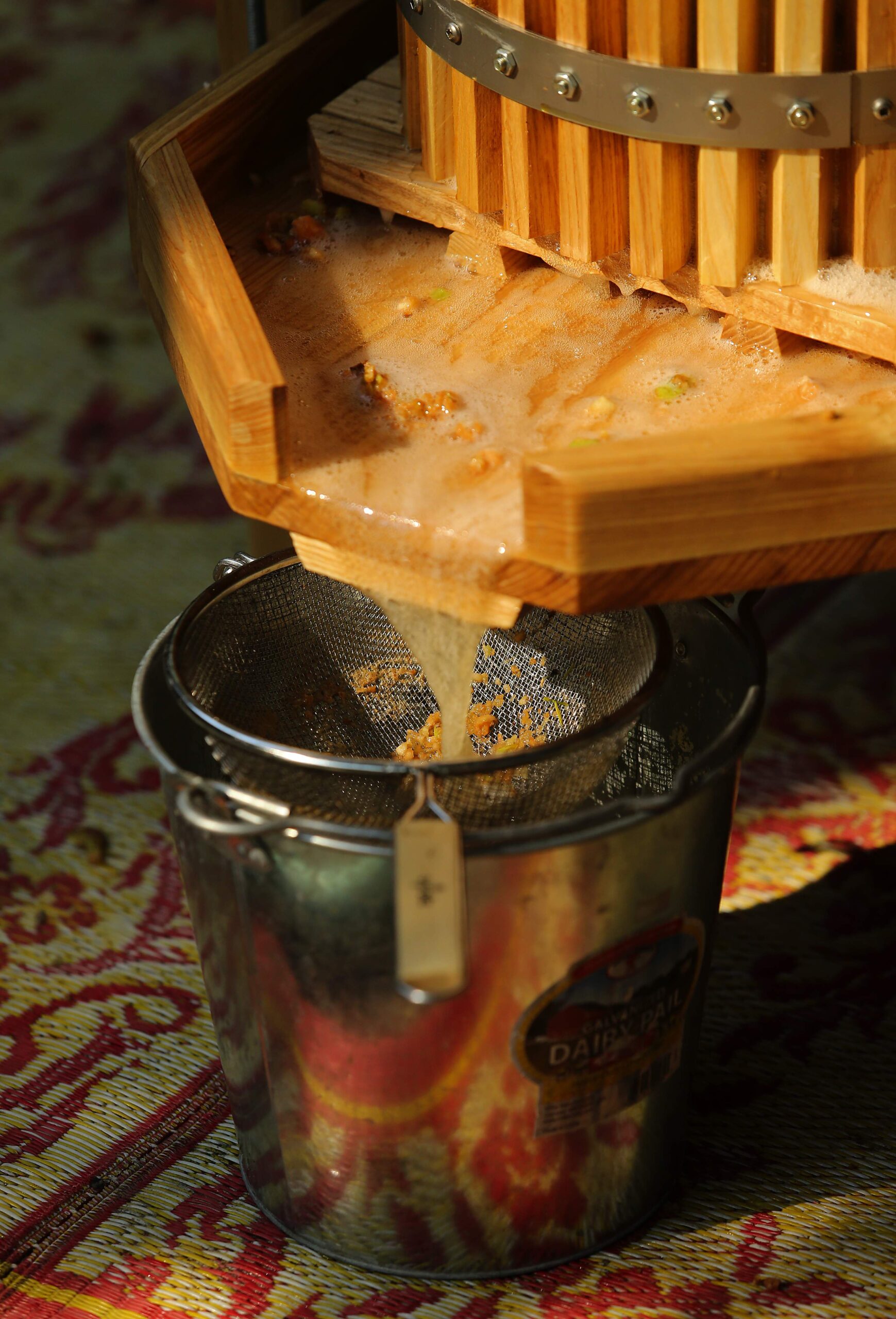
While waiting for his Palestinian trees to mature, Husary uses olives from other sources, such as Keller Estate a few miles southeast of Petaluma, where, on a morning last autumn, he watched a crew of pickers whack trees using long sticks to harvest the fruit. They collected the olives in big, blue tarps spread under the trees, then poured them into large crates to be hauled in pickup trucks to a mill at Husary’s home. The olives are milled within 24 hours of being harvested, which is essential for freshness and taste.
Workers use long poles to knock olives from trees at Keller Estate Winery Wednesday, Oct. 22, 2025, in Petaluma. (John Burgess / The Press Democrat)Workers use tarps to collect olives knocked from trees using long poles at an orchard in Larkfield Friday, Oct. 30, 2025. The olives are destined for Husary Olive Oil owned by Palestinian-American Mousa Husary. (John Burgess / The Press Democrat)Mousa Husary checks the progress of olives in a mill at his Sebastopol 0live 0il company Friday, Oct. 30, 2025, at his home business west of Graton. (John Burgess / The Press Democrat)
The family imported the $190,000 state-of-the-art mill, made in Italy by Mori-Tem, two years ago and spent another $150,000 on the building to house it. Having his own mill enables Husary to control the process to his exacting standards. He keenly monitors the temperature in the milling room, and once the oil is bottled, he makes sure it stays cool. Talia, his daughter, says her father has an “eye for precision,” which ensures a quality oil.
One of Yara’s great joys is seeing people’s reactions when they first taste her family’s olive oil, which she uses in her family’s treasured recipe for za’atar, a spice blend that’s an important link to the Palestinian culture. She cherishes the smiles of delight, even surprise; the exclamations about how delicious it is; and for some, how it reminds them of home. “That’s what we’re waiting for,” she says.
Husary Olive Oil owner Mousa Husary and his two sons work the olive press where his Sebastopol olive oil company mills tons of olives from Sonoma County and the Central Valley Friday, Oct. 30, 2025 this home west of Graton. (John Burgess / The Press Democrat)
The company’s olive oil production has grown from approximately 1,000 liters in 2022 to about 5,000 liters in 2024. The 2025 harvest was expected to produce about 12,000 liters — most of the oil is bottled, but some goes in large tins to restaurants such as Mazra in Redwood City, which buys hundreds of gallons each year.
Husary Olive Oil produces three main oils: Sonoma Grown, California Grown, and a California-grown Tuscan blend. The company also imports Holy Land olive oil from Palestine, which it sells in 750-milliliter bottles, 3-liter boxes, and 15-liter tins, but was unable to import any this year due to a scarcity of oil amid the ongoing Israel-Palestine conflict. Once his Palestinian trees mature, Husary says he’ll use those to make Palestinian oil rather than importing it.
The Husary family also share their rich heritage through a nursery business, propagating and selling Palestinian Souri and Nabali varieties of olive trees in 1- and 2-gallon pots, shipping them throughout the U.S.
Husary Olive Oil owner Mousa Husary removes weeds from Nabali and Souri Olive trees grown by UC Davis from Palestinian stock Tuesday, Nov. 10, 2025 at his home west of Graton. (John Burgess / The Press Democrat)
“A lot of people jump at the opportunity to buy one,” says Talia. The Nabali trees are widely cultivated in the part of Palestine where her family originated. “The fact that we’re able to propagate and successfully grow (those trees) is just so cool.”
Mousa Husary has been amazed at how olive trees evoke Palestinians’ sense of home. “Everybody we talked to that’s Palestinian or even Middle Eastern has a connection to olive trees,” he says. “I don’t know anybody else that’s Palestinian (who) has a mill and makes their own olive oil around here. It makes us feel good, like we’re doing something unique.”
Husary Olive Oil owner Mousa Husary and his wife Yara get their hands dirty planting some of the 1,500 Nabali and Souri Palestinian olive trees grown by UC Davis from Palestinian stock Tuesday, Nov. 10, 2025, on 8 acres in Larkfield. (John Burgess / The Press Democrat)
The Husary family recently started the Husary Family Foundation in honor of Mousa’s late father, who died in 2020, and donates 25% of profits from the olive oil business to local organizations, such as the Boys & Girls Clubs and Redwood Gospel Mission. They also donate to groups providing aid in Palestine, though not through the olive oil company.
“The goal is to give back,” explains Yara. “There’s a lot of people there in need. We’re trying to help people to survive.”
For Mousa, it all goes back to his father. “The whole business was inspired by the old man,” he says. “We’re close to a nice profitability, but this is never a business we’re going to get rich from. It’s just a cool way to honor him. I’m just trying to spread a little bit of joy.”
Aperture Cellars tasting room in Healdsburg. (Sonoma County Tourism)
The stream of accolades for Healdsburg continues, the latest arriving from geography-focused website WorldAtlas, which recently named the northern Sonoma County city the friendliest small town in California, citing its welcoming vineyards, lively jazz festivals, charming 19th-century inns, art scene, unique lodging options and wine tasting experiences.
Set at the confluence of the Russian River, Dry Creek and Alexander valleys, Healdsburg has earned its reputation as a polished yet approachable base camp for exploring Wine Country. For travelers planning a return — or a first visit — the following stops offer a well-rounded introduction.
Wine Tasting in Healdsburg
Outdoor tables for wine tasting at Bacchus Landing in Healdsburg. Housing five tasting rooms and six boutique wineries, Bacchus Landing is a great choice for those who want to try a variety of wines in one place. (Sonoma County Tourism)
With three renowned wine regions converging at its edges, the town presents an embarrassment of riches for oenophiles.
Bacchus Landing (14210 Bacchus Landing), a contemporary compound just minutes from the Healdsburg Plaza, is home to multiple boutique producers — including Aldina, Comstock, Convene by Dan Kosta, Dot Wine, Solo Nostro and Smith Story Wine Cellars — making it possible to compare styles without moving the car. The central piazza often hosts live music and community markets, giving the experience a festive air.
Patio at Convene by Dan Kosta, one of the five tasting rooms and six boutique wineries at Bacchus Landing in Healdsburg. (Convene by Dan Kosta)Medlock Ames pairs organically farmed Bordeaux-style wines with an immersive sound experience at the the 338-acre Bell Mountain Ranch. (Dana Rebmann)
Medlock Ames (13414 Chalk Hill Road) pairs organically farmed Bordeaux-style wines with an immersive sound experience. Guests can wander the 338-acre Bell Mountain Ranch while listening to an audio program, recorded onsite, that culminates in a guided tasting of five wines that underscores the winery’s sustainability ethos.
At Aperture Cellars, Jesse Katz, named Winemaker of the Year in 2025 by Wine Enthusiast, focuses on meticulously crafted blends and single-varietal bottlings. The sleek tasting room doubles as a gallery space for large-scale photography by his father, Andy Katz, adding a visual counterpoint to the wines in the glass from labels Devil Proof, Collage and Aperture.
Aperture Cellars tasting room in Healdsburg. While wine tasting, guests can view the work of winemaker Jesse Katz’s father, professional photographer Andy Katz. (Aperture Cellars / Sonoma County Tourism)Pizza and cocktails at Roof 106, located on the third floor at chef Dustin Valette’s The Matheson in Healdsburg. (The Matheson)
Where to Eat in Healdsburg
Restaurants here reflect the surrounding farmland, with menus shaped by the seasons.
Across from the Plaza, The Matheson(106 Matheson St.) houses two restaurants under one roof. On the ground floor, the main dining room presents refined, ingredient-driven plates. Upstairs, Roof 106 offers a more casual experience with pizza, small plates and cocktails, as well as an open-air vantage point over town. The location has special meaning to chef Valette; his great-grandfather operated his first Sonoma County bakery here almost a century ago.
Cocoa trifoglio from the pasta tasting menu at Dry Creek Kitchen in Healdsburg on Wednesday, Aug. 27, 2025. (Christopher Chung / The Press Democrat)
Executive chef Shane McAnelly has built a dedicated following since taking over the reins at Dry Creek Kitchen (317 Healdsburg Ave.). Guests can opt for a three-course seasonal menu or a lengthier tasting progression, including a pasta-focused option. Whichever you choose, save room for dessert crafted by pastry chef Taylor Kelley.
It’s Oktoberfest every day at Tisza Bistro (165 Healdsburg Ave.), a German-Hungarian restaurant that turns out excellent Bavarian pretzels, housemade bratwurst and a variety of schnitzels. Open for lunch and dinner; closed on Tuesday and Wednesday.
Schwäbisch-style pretzels from Tisza Bistro chef/owner Krisztian Karkus, July 4, 2025, in Healdsburg. (John Burgess / The Press Democrat)Jeff Ubben, standing, owner of Little Saint, visits with Jason Cirimele, left, Sam Doores, Mike Vanata, Desiree Cannon Doores, and Howe Pearson as they sit down for dinner at Little Saint in Healdsburg on Thursday, Nov. 13, 2025. (Christopher Chung / The Press Democrat)The Deslondes band members Sam Doores, left, Dan Cutler, Riley Downing, and Howe Pearson perform at Little Saint in Healdsburg on Thursday, Nov. 13, 2025. (Christopher Chung / The Press Democrat)
Little Saint (25 North St.) showcases the range of plant-based cooking in a sleek, spacious building that also houses a coffee bar, a wine lounge and a cocktail bar. Its intimate events space is fast becoming one of the hottest music venues in the country, with performances by artists such as Beck, Rufus Wainwright, and Phoebe Bridgers, Lucy Dacus and Julien Baker of boygenius; plus, an upcoming show by St. Vincent. Programming includes free live music every Thursday night.
Arts and Culture in Healdsburg
Wine and food may draw visitors, but the arts help persuade them to linger.
During the True West Film Center grand opening, patrons wait for a short film to premiere in the main theater, Saturday, Oct. 25, 2025, in Healdsburg. (Kent Porter / The Press Democrat)
The recently opened True West Film Center(371 Healdsburg Ave.) screens new releases and classics, as well as special programming carefully curated by John Cooper, the former director of the Sundance Film Festival.
At The Harris Gallery Art & Wine Collection (320 Healdsburg Ave.), paintings by M.C. Harris and his son, Alexander Harris (who goes by A3l3xzand3r), are displayed just steps from the Plaza, often accompanied by pours from the family’s wine label.
The Harris Gallery Art & Wine Collection features the art of M.C. Harris and A3l3xzand3r Harris on the labels. (Christopher Chung / The Press Democrat)Maria de Los Angeles’ art piece “Mi Healdsburg-My Healdsburg” spans four stories on the Harmon Guest House in Healdsburg on Monday, Sept. 16, 2024. (Christopher Chung / The Press Democrat)
In Healdsburg, even hotels participate in the creative exchange. Harmon Guest House (227 Healdsburg Ave.) integrates rotating works by local artists throughout its public spaces, inviting guests and passersby alike to treat the hotel as an informal gallery. The property’s Art Walk website serves as a handy guide. Head to The Rooftop for bites, cocktails and views of the Sonoma hills, Fitch Mountain and downtown Healdsburg.
Stay the Night in Healdsburg
If a day trip feels rushed, check into one of Healdsburg’s charismatic hotels.
The Cottages at Little Saint (425 Foss St.) comprises four vividly redesigned guest cottages, courtesy of creative director Ken Fulk. Tucked into a quiet neighborhood near downtown, they extend the ethos of its sister restaurant into residential form.
The Deslondes manager, Mike Vanata, left, and band member Riley Downing relax in a room at The Cottages at Little Saint before the band’s performance in Healdsburg on Thursday, Nov. 13, 2025. (Christopher Chung / The Press Democrat)The entrance to the dining room at Folia, the restaurant at chef Charlie Palmer’s Appellation Healdsburg, Friday, Sept. 19, 2025, in Healdsburg. (John Burgess / The Press Democrat)Classic Cheeseburger from the lunch menu at the bar/lounge from Folia Friday, Sept. 19, 2025, in Healdsburg. (John Burgess / The Press Democrat)
Appellation Healdsburg (101 Dovetail Ln.) is the flagship property of chef Charlie Palmer’s new hospitality company. Here, the emphasis is culinary from the outset, with an on-site restaurant upon entry and a rooftop bar with expansive views. In addition to its 108 rooms and suites, the property features a spa and a fitness center.
The Contra-Tiempo Activist Dance Theater performs “joyUs justUs.” The troupe will visit the Green Music Center in March. (Courtesy John Michael Kohler Arts Center)
Imagine the offbeat in music — the ever-elusive beat between the beat. That’s the concept of “contra tiempo.”
“It’s the part of the music that makes it sound delicious,” says Ana Maria Alvarez, founding artistic director of Contra-Tiempo Activist Dance Theater that emerged from the streets of south and east Los Angeles more than two decades ago. “It gives it that sabrosita drive.”
Beyond obvious rhythmic inspiration, there’s a deeper meaning. “It’s the concept of being from the ‘in between.’ Many of us in the company have parents who are immigrants, or us ourselves have been born in other places, or come from mixed families. And it’s this idea of existing in these spaces of the ‘in between.’”
And just like many of the contagious dance forms they explore — salsa, hip-hop, capoeira, Afro-Latin rumba — resistance is the key, she says. “Resistance is actually what makes the music work, what makes the dance work, and that resistance is rooted in love.”
Performing their first ever Bay Area show at the Green Music Center in March, the dance troupe stages the road-tested “joyUS justUS,” a defiantly celebratory work that premiered in 2018 during Donald Trump’s first presidency.
“It’s the kind of piece that just keeps being more relevant,” says Alvarez. “I always say to people, ‘I look forward to a world where this piece actually feels like the past.’ But we keep getting invited to perform it in many, many places all over the country, because it does feel like it’s really speaking to the now.”
The Contra-Tiempo Activist Dance Theater performs “joyUs justUs.” The troupe will visit the Green Music Center in March. (Courtesy John Michael Kohler Arts Center)
Brought to life by six dancers, spoken word passages, and electrifying music, “joyUS justUS” draws from very personal stories “to look at joy as a birthright, as a mechanism for change, as a practice, as a weapon, as a tool,” she says. “There’s a lot happening all over our country that is really rooted in separation and rooted in fear, that to really take on joy in this way, it gives us access to power and hope.”
That joy is contagious, which is why everyone in the audience will find a scarf at their seat that they’ll learn to wave around at all the right moments. By the end of the night, as the desire to get up and move becomes almost overwhelming, the audience earns its rhythmic release.
“We end the show with a big dance party. The audience gets to actually jump up on stage and be a part of moving and dancing with us,” says Alvarez.
“It’s this beautiful dissolving of the fourth wall, where the audience really is a part of the performance.”
Details
What: “joyUS justUS” by Contra-Tiempo Activist Dance Theater
When: 7:30 p.m. Thursday, March 5
Where: Weill Hall, Green Music Center, Sonoma State University, 1801 E. Cotati Ave., Rohnert Park