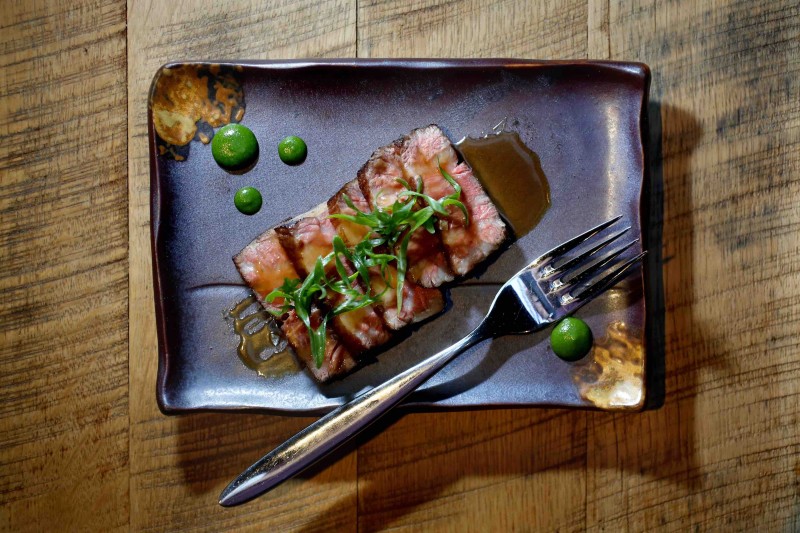
Korean barbecue Wagyu short ribs with scallions at Two Birds One Stone in St. Helena, on Sunday, November 6, 2016. (Photo by Beth Schlanker)
Korean barbecue Wagyu short ribs with scallions at Two Birds One Stone in St. Helena, on Sunday, November 6, 2016. (Photo by Beth Schlanker)
For Wine Country dining, it’s the year of yakitori and designer ice cream. Call it coincidence, but four of our most significant new restaurants for 2016 boast a Japanese theme, with three of those four offering the skewered meats plus the dessert that’s immensely popular in Japan.
I’m referring to Sebastopol’s Ramen Gaijin, which opened its izakaya in March; Napa’s Miminashi, which debuted in May; and St. Helena’s Two Birds One Stone, which rolled out in June. (If, after Single Thread Japanese restaurant opens Dec. 2 in Healdsburg, we discover charcoal-grilled meats and soft serve on its menu, too, we’ll be in for a perfect quadfecta.)
That’s all great for me, since I love Japanese cuisine and could eat it every day. Yet even less addicted fans have good reason to visit all the new places. Each chef takes a different approach to the Asian cooking style, with varying techniques and ingredient twists.
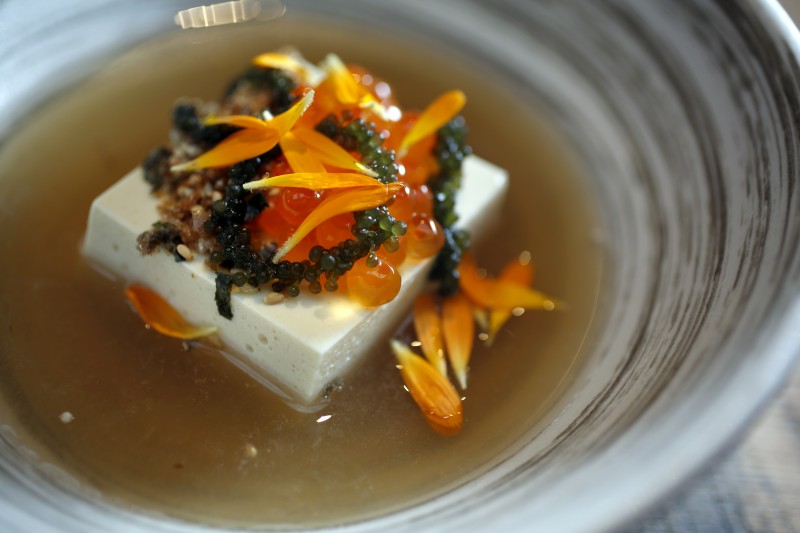
The silken tofu in a chilled shiitake broth, topped with sea grapes, and salmon pearls at Two Birds One Stone in St. Helena. (Photo by Beth Schlanker)
So far, Two Birds is the most inventive of them all. Credit its talent, chef Douglas Keane of Healdsburg’s former two-Michelin-star Cyrus and his partner Sang Yoon, of the acclaimed Father’s Office American gastropub and Lukshon Asian Fusion in Los Angeles. Yes, you can get charcoal- and wood-grilled teriyaki chicken thigh here, served in sweet shiitake sauce ($12).
But surely no Tokyo restaurant offers chips ‘n’ dip of fried wontons dusted in liquid nitrogen-frozen togarashi spice, dunked in Kewpie mayonnaise ($6), or deviled eggs kicked up with wasabi, sprinkled in red chile shichimi togarashi and scattered in gribenes (chicken skin cracklings).
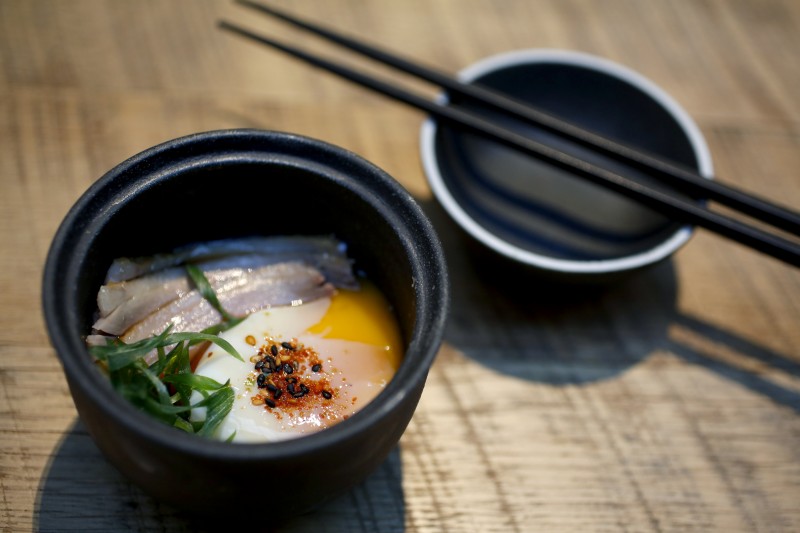
Smoked duck ham and an onsen jidori egg on top of a warm savory custard at Two Birds One Stone in St. Helena. (Photo by Beth Schlanker)
Inventive recipes
In short, leave your assumptions at the door. The idea is to appreciate inventive recipes reflecting fine dining, California seasonality and just an undercurrent of Japanese tradition.
The menu lists one dish as a “savory Japanese pancake,” for example, instead of classic okonomiyaki ($16). That’s because okonomiyaki usually is a rather thin, crisp edged but moist, golden, egg-flour pancake laced with shredded cabbage, any of a wide variety of meats or seafood, and a finishing drizzle of mayonnaise and tangy Worcestershire-like sauce.
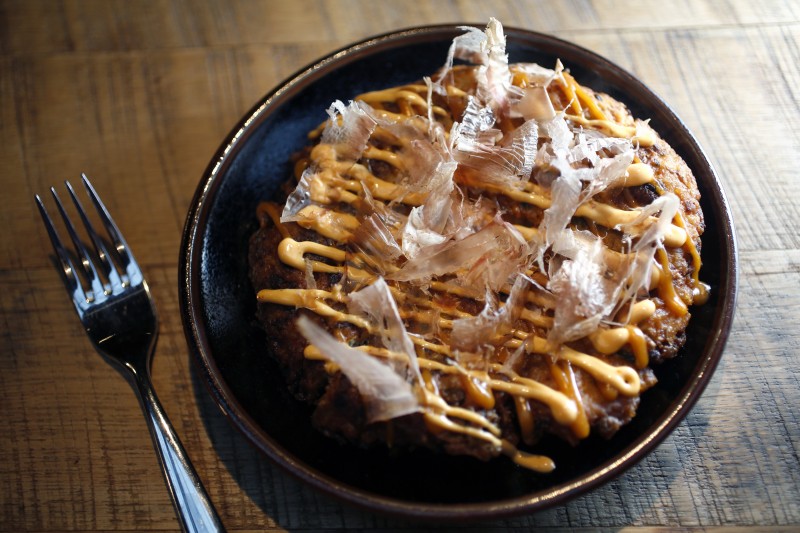
The savoy Japanese pancake with green onion, sambal mayo and topped with bonito flakes at Two Birds One Stone in St. Helena.
This version makes me think of brioche — the rust-brown pie is thick with crunchy edges and a custardy interior, dotted with lots of green onion and ginger and capped in thick squiggles of sambal mayo plus a caramel-like spicy sauce. Bonito flakes dance across the top as the heat dissolves the whisper-thin fish leaves, and it’s so remarkably flavorful in its black pottery dish that I don’t miss the salty duck ham that was included in another visit.
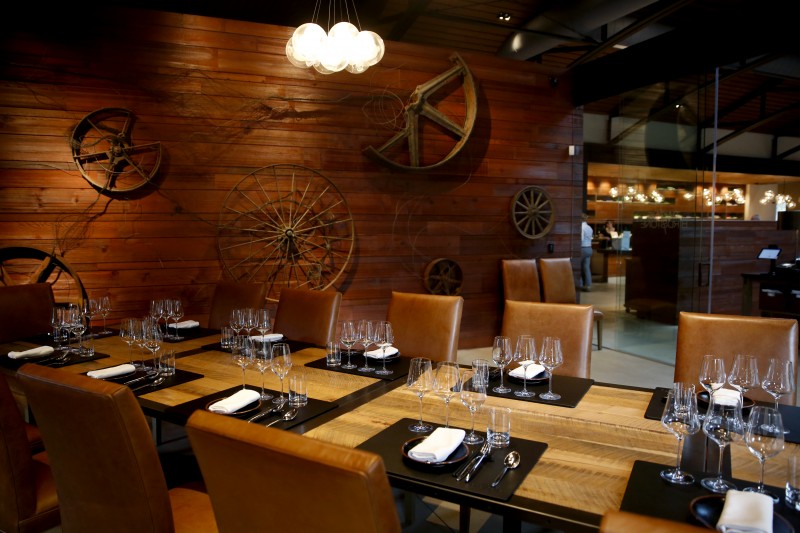
The interior at Two Birds One Stone in St. Helena. (Photo by Beth Schlanker)
Radishes and butter are a popular Wine Country snack, and these chefs compress the crunchy vegetables with dashi for a swipe through roasted nori goat milk butter ($7); it’s a terrific flavor marriage. A spin on chawanmushi is sumptuous, as well, presented as “ham & eggs” of warm, savory custard layered with highly smoked duck ham, scallion greens, togarashi and silky, poached-in-shell onsen jidori egg ($16).
Head-on prawns are difficult to eat, though, with little meaty reward for dismantling the sudachi-salted, charred lime-spritzed shell. Our server explained that the crustaceans were slit down the back for easy enjoyment, but ours weren’t.
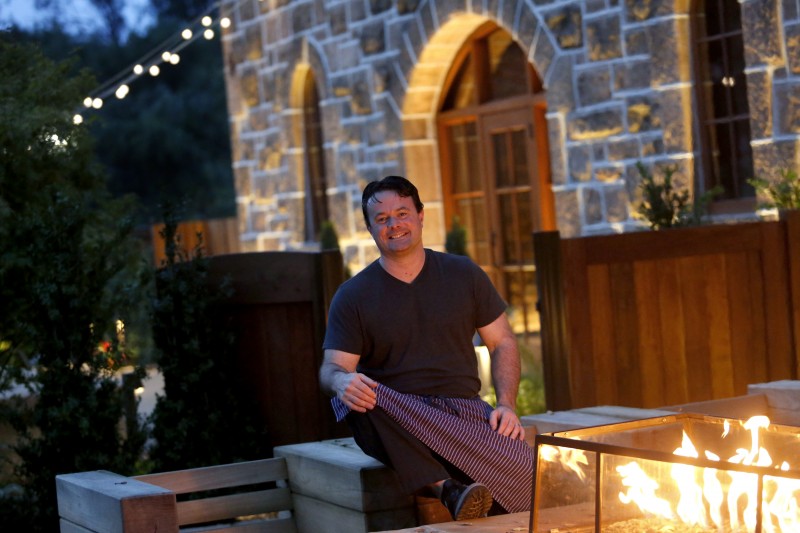
hef Douglas Keane at Two Birds One Stone in St. Helena.
When ordering, keep in mind that while Asian dining often showcases lighter, cleaner flavors, here, the chefs lean toward rich, opulent dishes. Portions are ample enough for sharing, and with such full-bodied recipes, it’s best to focus on just a plate or two at a time and see how your appetite keeps up.
Six small slabs of Wagyu short rib ($22) look rather plain on the plate with nothing other than dollops of pea puree and a coat of thin, mild Korean barbecue sauce. But generous fat marbling and a soft, sous vide texture makes a very lavish dish. With a side of lotus root kimchee ($6) to spark your palate or chilled sesame noodles brightened with pickled beech mushrooms and cucumber ($14), it’s a full meal.
On the more delicate side, the kitchen sends out beautiful silken tofu, awash in chilled shiitake broth and dressed in furikake seasoning, salmon roe and two thin tendrils of tiny, succulent sea grapes ($11).
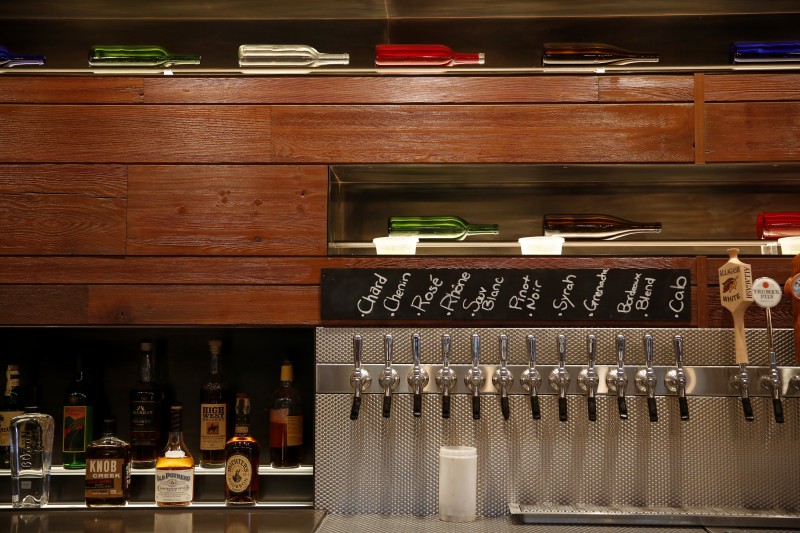
A variety of wines on tap at Two Birds One Stone in St. Helena.
Little nibbles
I also like the chicken meatballs, simple and satisfying in hoisin glaze. The little nibbles feel glamorous, enjoyed in the drop-dead beautiful setting within the newly renovated 130-year-old Freemark Abbey Winery. Spanning 4,000 square feet, the 80-seat dining room is open and airy, while the 35 patio seats offer pretty views.
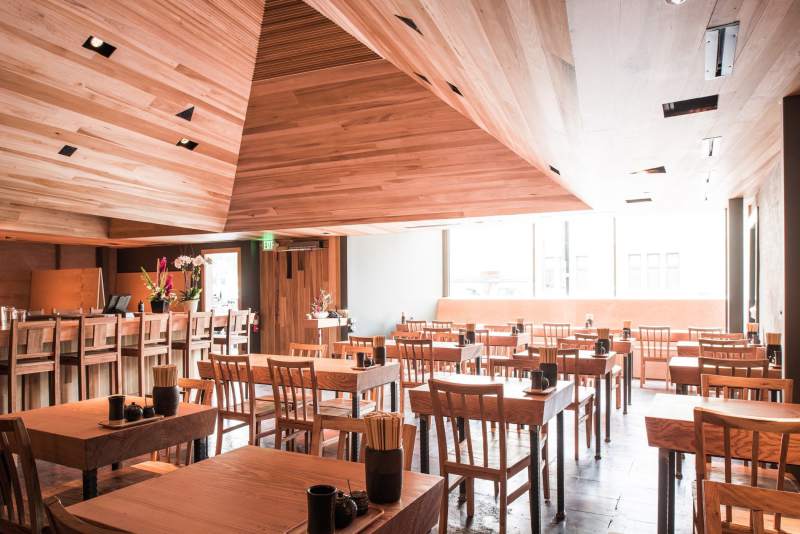
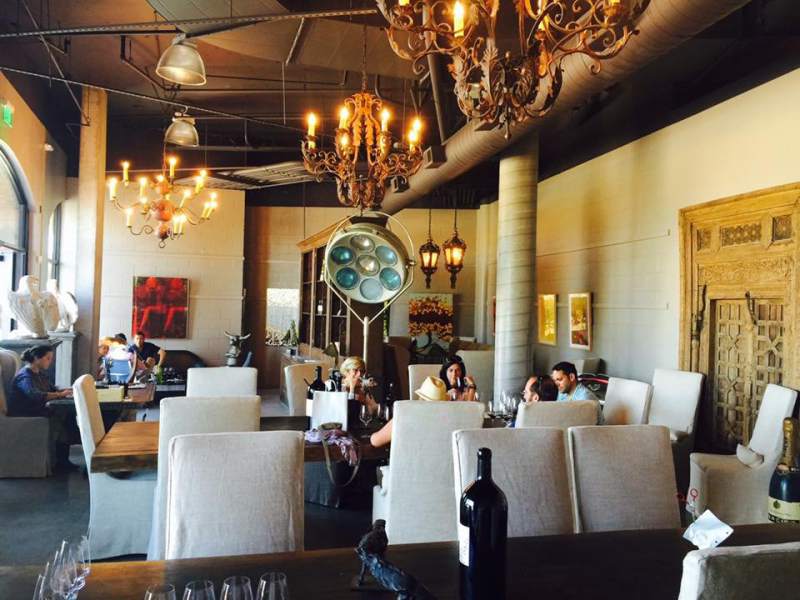
No stereotypical Japanese look for this interior, but rock walls, a concrete floor, a backlit entry wall of wine, tufted couch booths and well-spaced wood tables for a feel as modern as the food.
To sip, Keane and Yoon put a stamp on wine and cocktails fitting the fancy space. Ten wines are on tap for 5-, 13- or 26-ounce pours, and they’re made exclusively for the restaurant by notable local winemakers such as Steve Matthiasson (a lovely 2015 Grenache, Syrah, Mourvedre Rosé, $10, $25, $49). Beyond the impressive stable of American and Japanese whiskeys, the bar crafts signature drinks like a potent gimlet, made hot-and-sour with Monopolowa vodka, Thai chile, lime, Thai basil and shiso ($12).
And while the food bill admittedly can quickly get pricey, in a very friendly touch, corkage is complimentary for one bottle of Sonoma or Napa wine per guest (not table).
The creative journey continues at dessert, where alongside the green tea soft serve ice cream sprinkled in ginger ($7), we can savor a bunch of quite sweet peony grapes, dressed in pickled ginger with shards of shattered white miso custard ($7). It’s unusual, and perhaps a bit too unusual, I decided, with so many flavors and textures.
It remains to be seen if everyday diners will embrace the more eclectic dishes. On one visit, I asked my server, a cheerful young lady, what her favorite dishes were. “Fried chicken,” she said immediately.
It turns out that on Sundays, the kitchen adds a special supper, serving a whole, local bird that’s been kimchee-brined, battered and fried crispy golden, then tossed with sweet-spicy Korean barbecue glaze ($65). Served with pickled lemon cucumbers, kimchee and compressed spiced watermelon, it’s different, but delectable.
Carey Sweet is a Santa Rosa-based food and restaurant writer. Read her restaurant reviews every other week in Sonoma Life. Contact her at carey@careysweet.com.
Just as hearty stews, soups and roasted meats soothe the body in late fall and winter, summer’s piña coladas, margaritas and gin and tonics yield to cocktails with warmth and complexity.
The traditional thinking has been that clear spirits are for sunshine, brown spirits for gloom. But this is Sonoma, where winters are relatively mild, so it’s not so much about the color of spirit in the cocktail as it is about its ability to ward off a chill and offer emotional comfort.
Sonoma distillers consider seasonality when it comes to their spirits, as much as chefs do. We turned to several of them for ideas on winter warmers.
Give these cocktails a try!
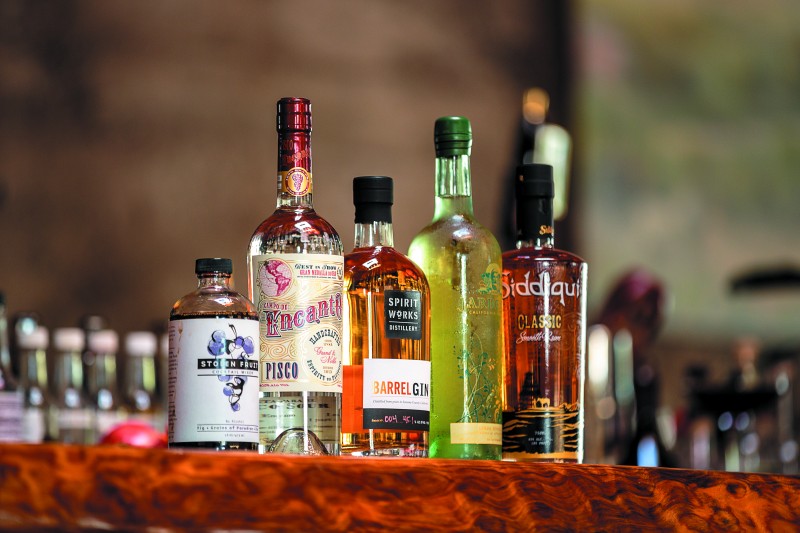
CAMPO DE ENCANTO PISCO
Named for a port in Peru, Pisco has a long legacy in California, where before the Gold Rush it was a staple spirit within the wilds of San Francisco’s Barbary Coast. A clear, distilled fortification of grapes, Pisco is made to be enjoyed right away, without additions of water, sugar or caramel, and spends no time in oak.
A collection of Northern California bartenders and friends, including Walter Moore of Healdsburg, produce Campo de Encanto in the Ica Valley of Peru, working with local distiller Carlos Romero to blend small-batch eaux de vie (fruit brandies) from five types of old-vine grapes. The result is a smooth combination of peaches, almonds and mint.
San Francisco bartender and Encanto partner Duggan McDonnell said the true test of superior Pisco is to swirl the spirit before drinking it, then watch to be sure the bubbles dissipate quickly. If they don’t, it means the spirit has been diluted, and thus isn’t real Pisco.
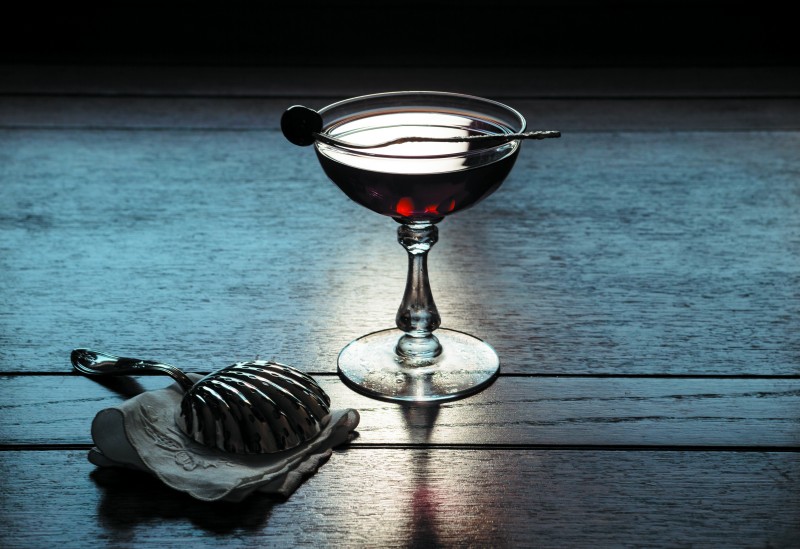
Enjoy Pisco neat, with a twist of lime, or in a range of cocktails. One of the most popular is the sour, which is shaken with an egg white. This Campo de Encanto Pisco gets its power, grace and smokiness from aged Scotch. encantopisco.com
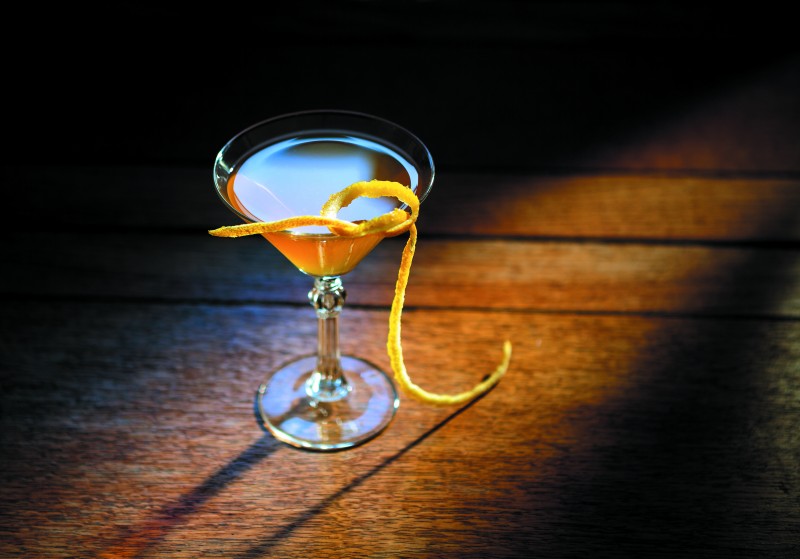
Campo de Encanto Vice & Virtue:
1½ ounces Encanto Grand & Noble
½ ounce Laphroaig 10 Year Old Islay Scotch Whisky
¼ ounce yellow Chartreuse
¼ ounce honey syrup
2 dashes orange bitters
Place the ingredients in an Old-Fashioned or martini glass, stir thoroughly, and garnish with a lemon peel.
JARDESCA
Jardesca, a lovely aperitif spirit made in Santa Rosa, combines sweet and dry white wines from California with a proprietary eau de vie that’s double-distilled into a fortified wine. A garden’s worth of botanicals are added for complexity.
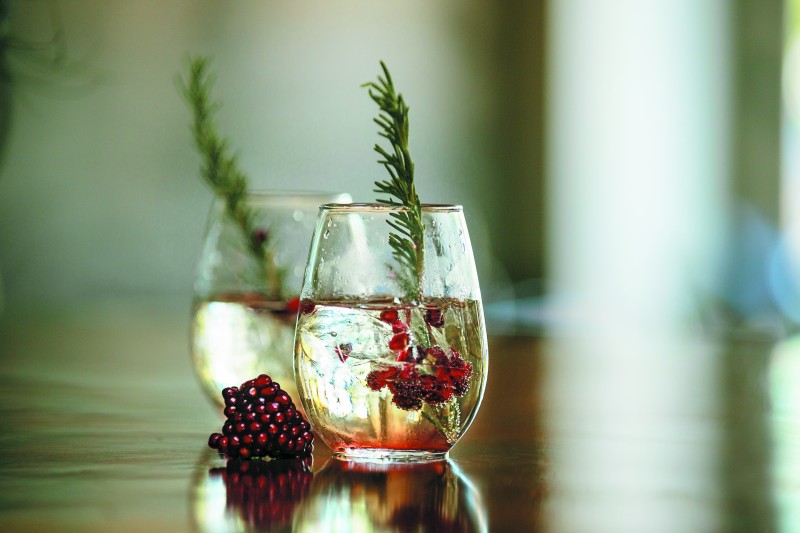
Intended to be sipped on the rocks, Jardesca also works as a mixer, adding bright citrus notes and aromas of peppermint, orange blossom and cardamom. This cocktail gets its festive look and feel from sparkling wine.jardesca.com
In a stemless wine glass over ice, add the Jardesca and pomegranate. Top with the sparkling wine and garnish with the rosemary.
SIDDIQUI RUMS
Siddiqui Rums was inspired by the moonshining culture of the Middle East, where owner Nigel Brown grew up. There, families distilled their own spiced rums, never allowing them to get overly sweet.
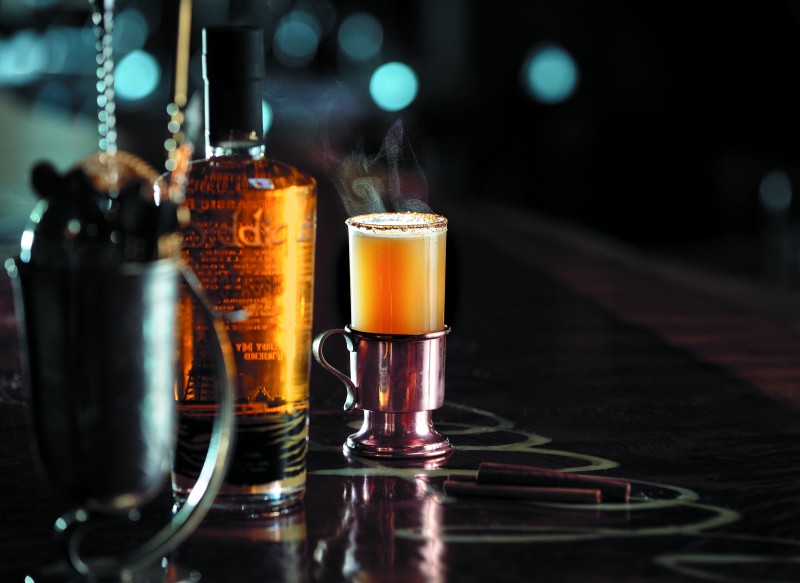
Inspired by Hot Buttered Rum, a Bay Area bluegrass band, this warm, sweet cocktail from the Windsor distiller brings two worlds together to form something new. As the cinnamon, vanilla and caramel meld perfectly with the oaky flavors of Siddiqui Classic Brown Rum, a bold new flavor is created. The sweetness of the ice cream pairs with the strong rum with excellent balance. This decadent drink is the perfect remedy for a chilly evening. Prepare and freeze the batter at least two hours in advance.siddiquirums.com
In a mixer, add the butter, sugars, ice cream, vanilla and cinnamon and blend well. Transfer the mixture to an airtight container and freeze until set.
To serve, place two tablespoons of batter and two ounces of rum in a heated mug. Pour 4 to 5 ounces of boiling water into the batter and rum and stir until blended.
SPIRIT WORKS DISTILLERY
In Sebastopol, Ashby and Timo Marshall do everything in-house, including milling the grain, creating the mash and distilling its gin, vodka and sloe gin, aging some spirits in wood barrels. Their gin is made from hard red winter wheat infused with juniper berries and a mix of botanicals, some of them traditional, others inspired by what’s available in California. Coriander, citrus and cardamom are in the propriety blend, for sure. With its Barrel Gin, wintery overtones of oak add depth and complexity to the citrus-tinged botanicals. It goes down easy, over ice and with bitters, and makes a great Old-Fashioned. spiritworksdistillery.com
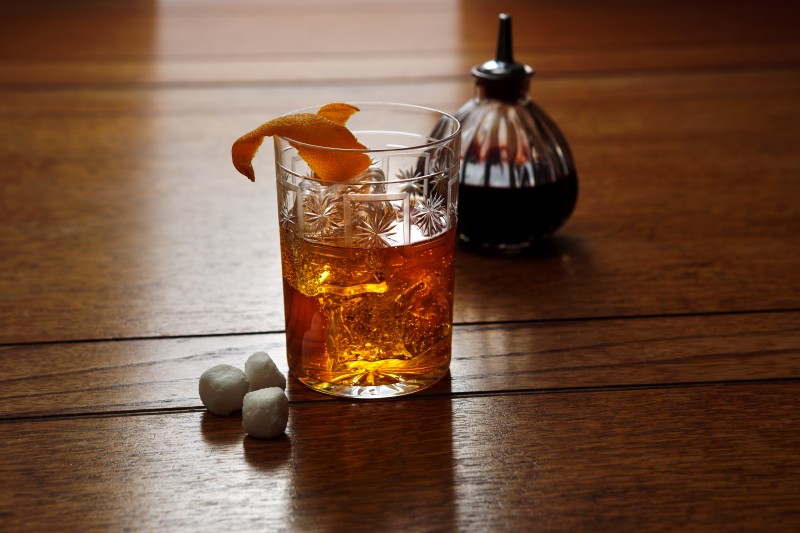
Spirit Works Barrel Gin Old-Fashioned:
1 sugar cube
2-3 dashes Angostura bitters club soda
2 ounces Spirit Works Distillery Barrel Gin orange peel
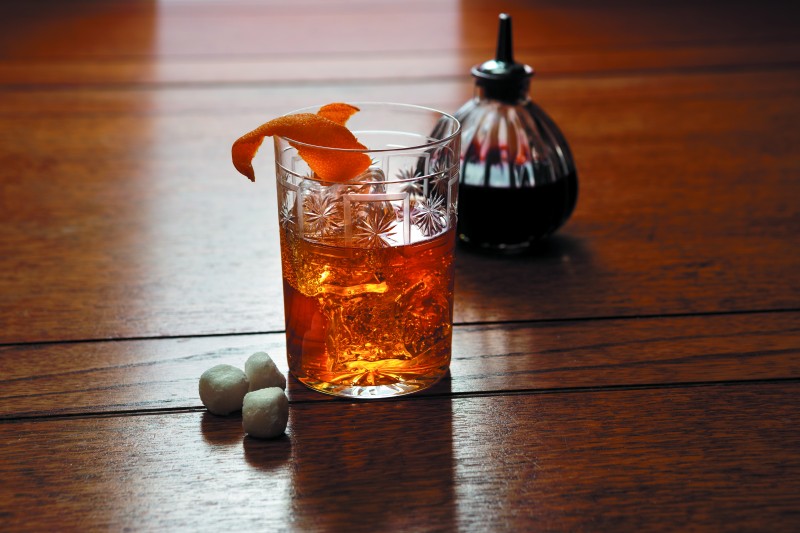
In an Old-Fashioned glass, place the sugar cube and bitters. Add a splash of club soda and muddle the ingredients in the glass. Add ice and gin, and garnish with an orange peel.
STOLEN FRUIT
Stolen Fruit’s new line of grape-based cocktail and mocktail mixers comes from Dry Creek Valley grape growers Susan and Doug Provisor of Provisor Ranch, and Healdsburg chef Peter Brown. In addition to the sultry Fig Grains of Paradise Zin mixer, Stolen Fruit offers Jasmine Juniper Viognier, Lemongrass Ginger Sauvignon Blanc, Blood Orange Muscat and Hibiscus Grenache, all meant to show off seasonal ingredients and flavors. The founders partner with local wineries for the grape juice, verjus and dried grape skins that go into each bottle.stolenfruit.com
Stolen Fruit Fig Grains of Paradise Zin:
2 ounces Stolen Fruit Fig Grains of Paradise Zin mixer
2 ounces bourbon dash of bitters maraschino cherry
Shake the mixer, bourbon and bitters over ice, then strain into a chilled martini glass and garnish with a cherry.
Eating, drinking, staying and playing in Napa Valley is as popular as ever, and wineries, restaurateurs, and developers are taking advantage of the boon in tourism to open new establishments and expand existing venues.
Although commercial permits issued in Napa are slightly down in 2016 — 126 compared to 129 in 2015 — the overall valuation of permits are up by $3 million, to $20.3 million.
“Businesses related to the wine industry are sustainable and are always growing and expanding,” said Robin Klingbeil, senior project coordinator, Economic Development Division in Napa. “The past couple of years we’ve seen chefs with businesses elsewhere looking to expand or test the waters in downtown Napa.”
According to Visit California, a state tourism agency, visitors to Napa spent $1.27 billion in 2014–2015, a 9 percent growth rate over the previous year. That’s the highest of any tourist region in the state, the tourism booster said. Spending included $355 million for accommodations (up 15 percent over 2014); $331 million for food (up 10 percent); and $224 million in retail sales (up 7 percent).
Here’s a sample of recently opened and upcoming restaurants, wineries, hotels and other venues:
The Mansion at the Silverado Resort and Spa in Napa, Calif. (AP Photo/Rich Pedroncelli)
HOTELS
In fall 2017, Silverado Resort and Spa (www.SilveradoResort.com) expects to open 30,000 square feet of outdoor space includes vineyards, stage and a 5,000-square-foot pavilion, located adjacent to the resort’s conference center.
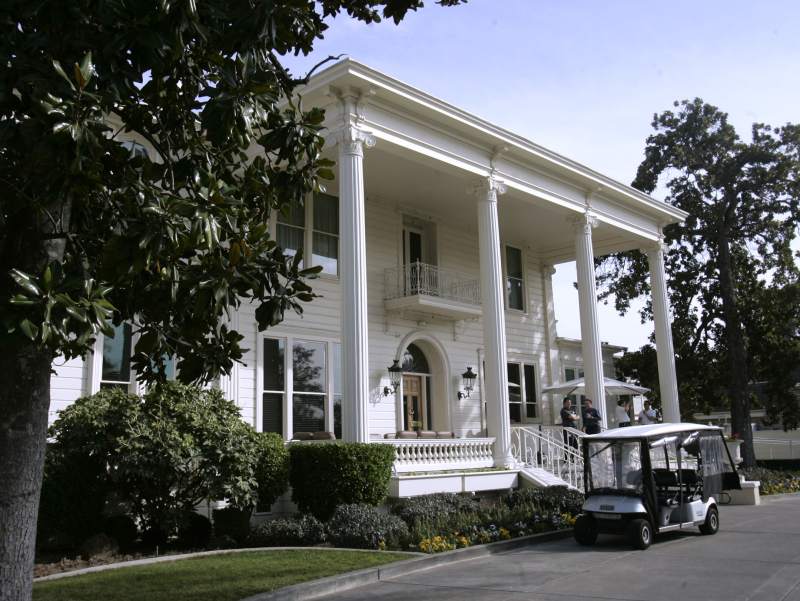
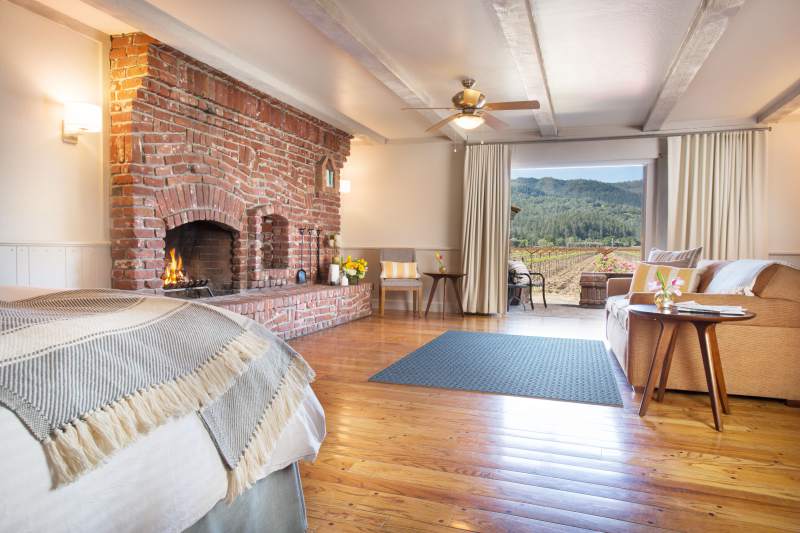
Harvest Inn by Charlie Palmer (www.harvestinn.com/stay/vineyard-view-collection) in St. Helena launched its revamped Vineyard View Collection rooms in September. The new tier of 22 recently renovated guest rooms and suites offer western-facing views of vineyards and the Mayacamas Mountains.
Harvest Inn by Charlie Palmer in St. Helena renovated 22 suites facing the vineyards. (Harvest Inn)
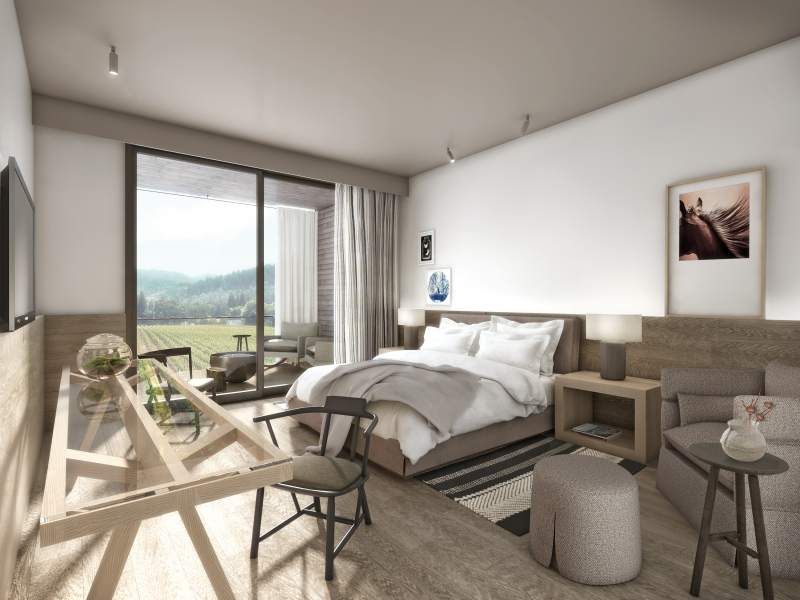
Las Alcobas (www.LasAlcobasNapaValley.com), a Luxury Collection Hotel, will open in St. Helena in late 2016 as a sister property to Las Alcobas in Mexico City. Las Alcobas will feature 68 guest rooms and suites with terraces and outdoor fireplaces; Acacia House, a signature Chris Cosentino restaurant; Atrio, a 3,500 square foot spa; an outdoor swimming pool; and meeting and event facilities.
Las Alcobas in St. Helena is set to open in November. (www.visitnapavalley.com)
Archer Hotel Napa (www.archerhotel.com/napa) in downtown Napa is set to open in spring 2017. The five-story hotel will feature 143-rooms and 40 suites with balconies, 15,000 square feet of indoor and outdoor event space. The rooftop will feature a spa, fitness studio and ledge pool with cabanas and fireplaces.
The 183-room Archer Hotel in downtown Napa is scheduled to open in the spring of 2017.
RESTAURANTS
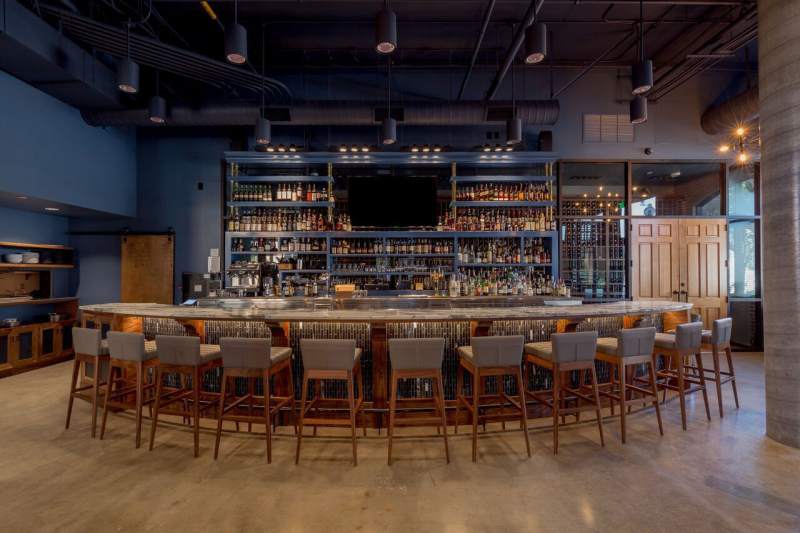
The Corner Napa restaurant and bar (www.cornerbarnapa.com) opened in downtown Napa in July. The restaurant features a large wine list, craft cocktails, and more than 200 whiskeys. The restaurant features American cuisine and local producers.
The Corner Napa restaurant and bar, stocks more than 200 whiskeys. (The Corner Napa)
Kenzo Tsujimoto (www.kenzoestate.com) will open his authentic Japanese sushi restaurant in downtown Napa on Nov. 16. The restaurant will feature a fixed menu for Kaiseki and sushi featuring fresh fish delivered from world-renowned Tsukiji Fish Market in Tokyo, paired with wines from Kenzo Estate along with an array of Japanese sakes.
The Charter Oak restaurant (www.thecharteroak.com) in St. Helena will open early 2017, owned by Chef Christopher Kostow and Nathaniel Dorn of the Michelin-three starred The Restaurant at Meadowood. The Charter Oak will be centered on a casual dining experience.
Charlie Palmer Steak (www.charliepalmer.com) by chef Charlie Palmer, owner of Harvest Inn and Harvest Table in St. Helena, will open at the upcoming Archer Hotel in downtown Napa in spring 2017. Palmer and team will also oversee the culinary direction of the rooftop bar, poolside and in-room dining, as well as private events for the Archer Hotel.
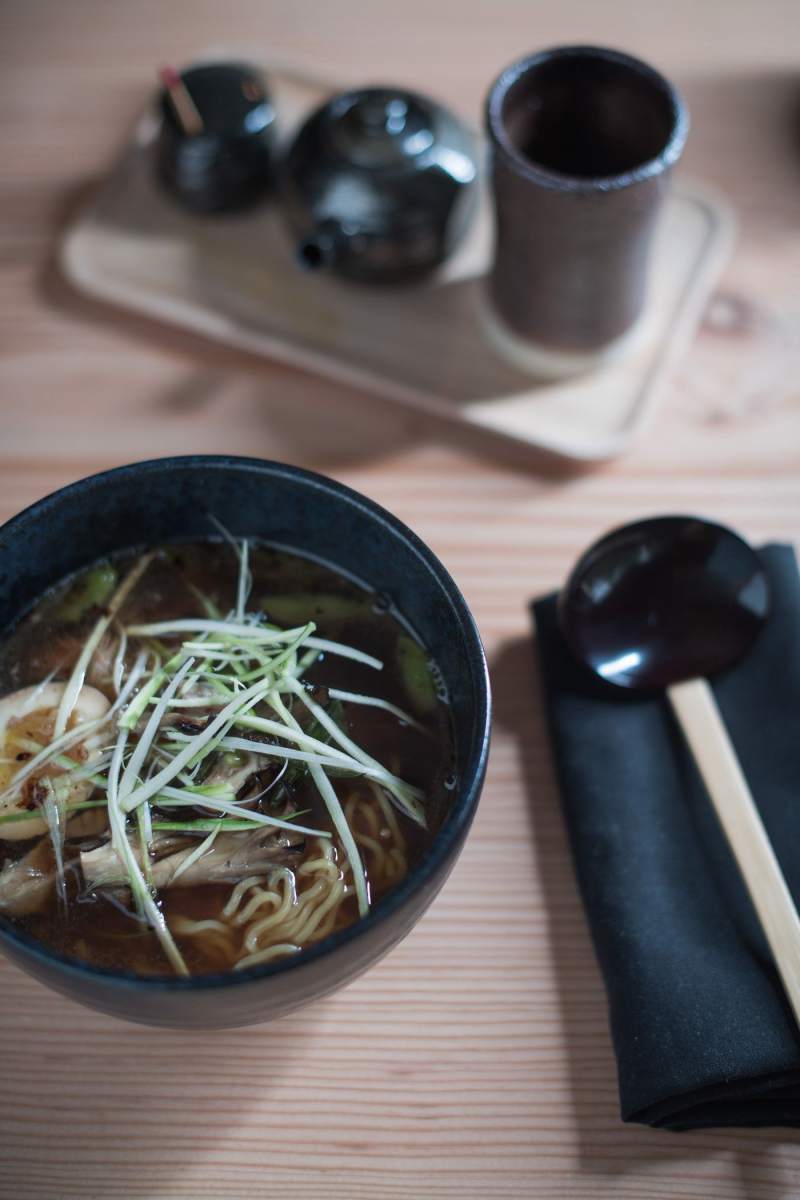
Miminashi (www.miminashi.com), Napa Valley’s first and only Izakaya-style Japanese pub opened in downtown Napa in May. Chef and owner Curtis Di Fede’s menu features a variety of ramen bowls and a large selection of yakitori. Miminashi offers Japanese beer, local and international wines, a diverse sake selection, and classic cocktails.
Miminashi in downtown Napa offers Japanese beer, local and international wines, a diverse sake selection, and classic cocktails. (Miminashi)Ramen bowls at Miminashi, Napa Valleys first and only Izakaya-style Japanese pub. (Miminashi)
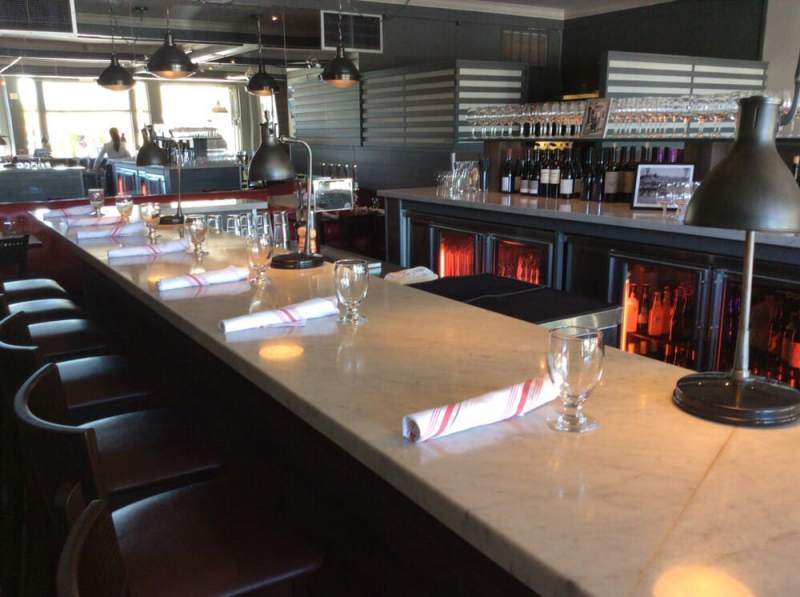
Basalt (www.basaltnapa.com) opened in April in the Riverfront in downtown Napa. Chef Esteban Escobar’s seasonal California cuisine draws influences from the earliest traditions of Mexican and Spanish cooking.
Basalt opened in April in Napa. (www.facebook.com/basaltnapa)
Johnny’s Restaurant & Bar (www.johnnyscalistoga.com) opened in March in the Mount View Hotel & Spa in Calistoga. The new restaurant is loosely modeled after the 1919 restaurant that was originally there. The new Johnny’s is open for breakfast, lunch and dinner.
Johnny’s Restaurant & Bar opened in March in the Mount View Hotel & Spa in Calistoga. (www.yelp.com)
WINERIES
Covert Estate (www.covertestate.com) opened in the Coombsville area of Napa in spring 2016. Covert produces cabernet sauvignon and cabernet franc on its 12-acre estate.
Covert Estate opened in the Coombsville area of Napa in spring 2016. (www.facebook.com/covertestate)
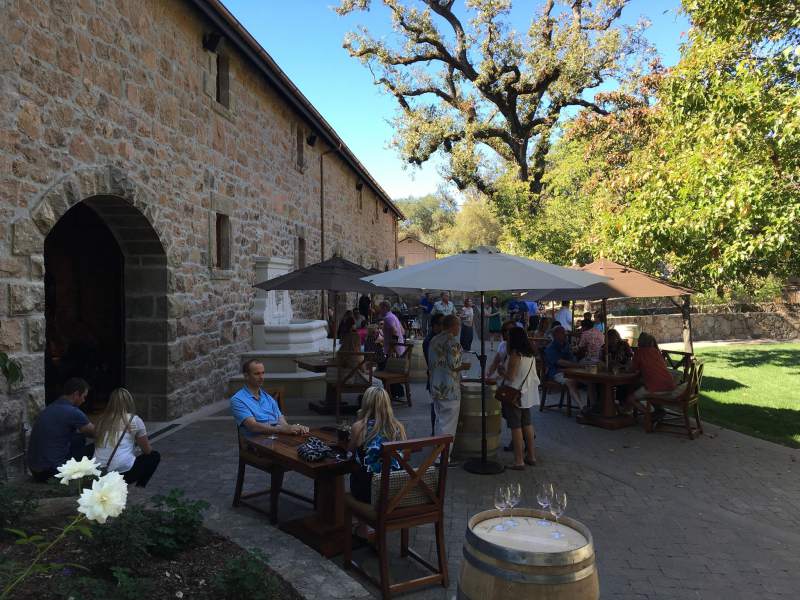
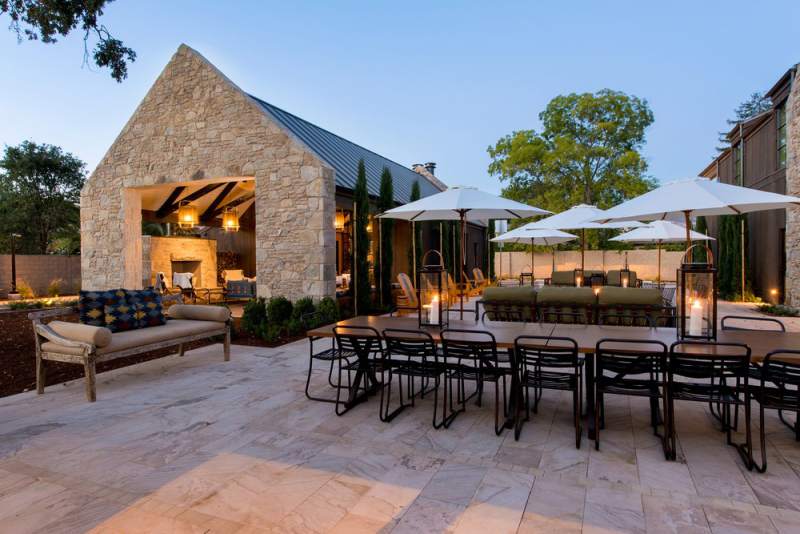
Freemark Abbey (www.freemarkabbey.com), which has been in its original location since 1886, completed an extensive renovation in July, including a revamped patio courtyard. The historic winery building now offers a variety of educational visitor experiences and a new restaurant, Two Birds One Stone, a California-inspired yakitori restaurant by chefs Douglas Keane and Sang Yoon.
Freemark Abbey in St. Helena, which has been in its original location since 1886, completed an extensive renovation in July. (www.facebook.com/freemarkabbey)
RiverHouse by Bespoke Collection (www.bespokecollection.com/riverhouse/) opened in September in downtown Napa with Blackbird Vineyards, Recuerdo, and Resolute wine tastings, and a curated selection of fine art, antiquities and objects by ÆRENA Galleries & Gardens.
RiverHouse by Bespoke Collection opened in September in downtown Napa. (www.yelp.com)
Stewart Cellars’ new tasting salon and café (www.stewartcellars.com) opened in Yountville in August. Arcanum Architecture designed the space and Ken Fulk Inc. designed the interior. Gather Café is a fast-casual eatery with a fresh juice of the day, greens, grains and breakfast.
Stewart Cellars’ new tasting salon and café opened in Yountville in August. (www.yelp.com)
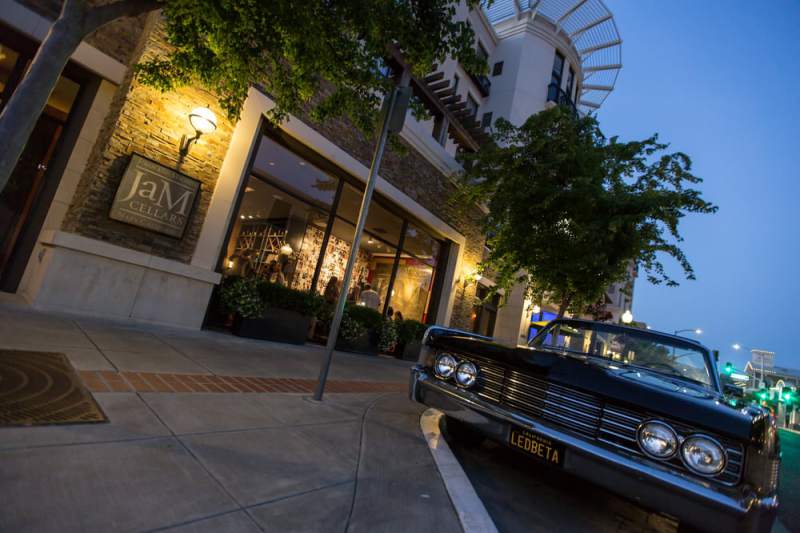
JaM Cellars (www.jamcellars.com/JaMwithUs) opened in downtown Napa in May, offering wine flights, by-the-glass and by-the-bottle for Butter Chardonnay, JaM Cabernet and Toast Sparkling. They are also featuring a number of guest wines and special releases only available at the downtown tasting room.
JaM Cellars opened in downtown Napa in May. (www.yelp.com)
Davis Estates Winery’s (www.DavisEstates.com) tasting room in Calistoga opened in May.
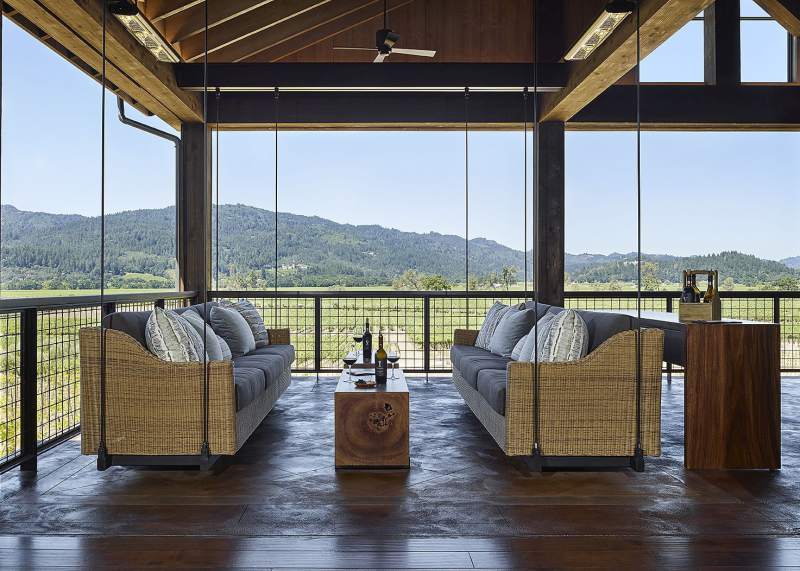
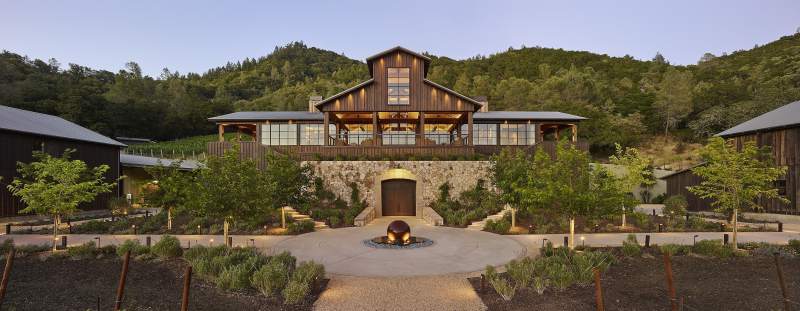
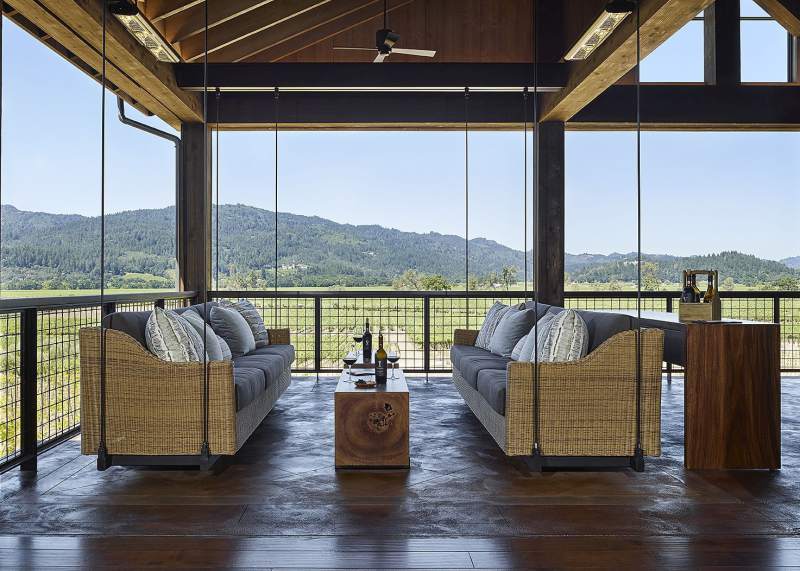
Davis Estates winery in Calistoga opened in May. (Davis Estates)Swinging couches overlook the new Davis Estates winery in Calistoga. (Davis Estates)
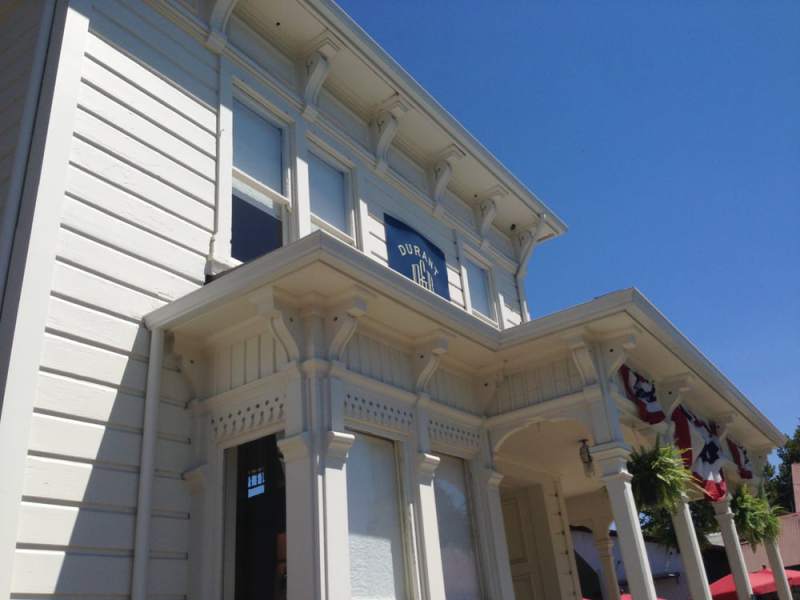
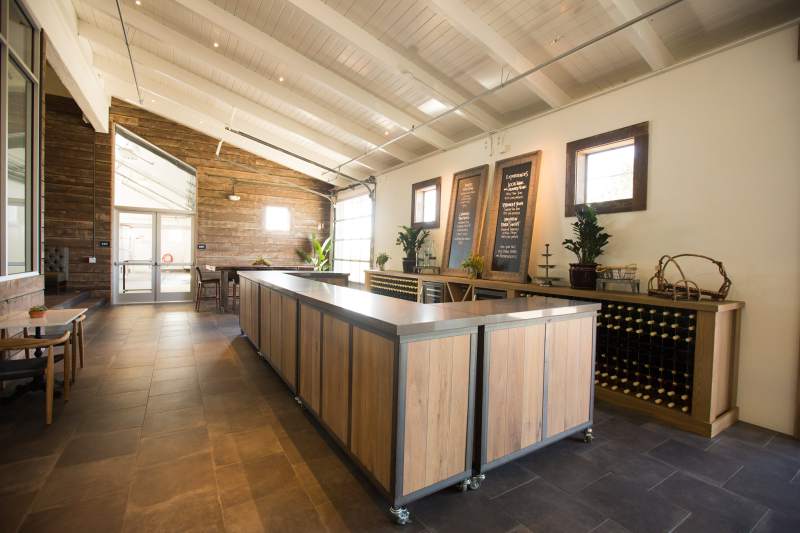
Durant & Booth (www.durantandbooth.com), a tasting room located in the restored historic Victorian building adjacent to Oakville Grocery. The wine program highlights blends that incorporate less common varietals, including Friuilian favorite Ribolla Gialla and Rhone varietals Roussanne and Grenache.
Durant & Booth is a tasting room located in the restored historic Victorian building adjacent to Oakville Grocery. (www.yelp.com)
Liana Estates (www.lianaestates.com), from the family behind Peju Province Winery opened Oct. 1 in the Carneros region in south Napa. The winery offers experiences and culinary programming such as “Brunch and Yoga” overlooking the San Pablo Bay.
Liana Estates opened Oct. 1 in the Carneros region in south Napa. (www.facebook.com/lianaestates)
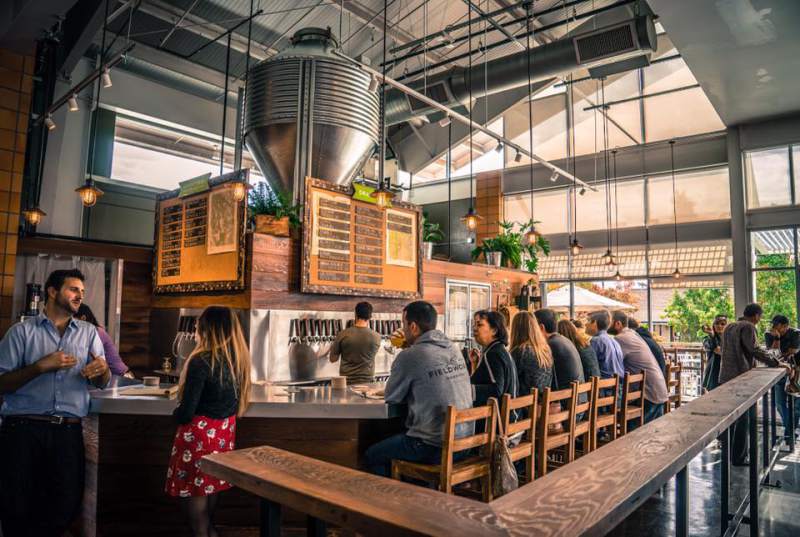
Fieldwork Brewing Company (www.fieldworkbrewing.com) opened a taproom in Napa’s Oxbow Public Market’s main market hall in October, with an ever-changing tap list of new releases.
Fieldwork Brewing Company opened a taproom in Napa’s Oxbow Public Market’s main market hall in October. (www.facebook.com)
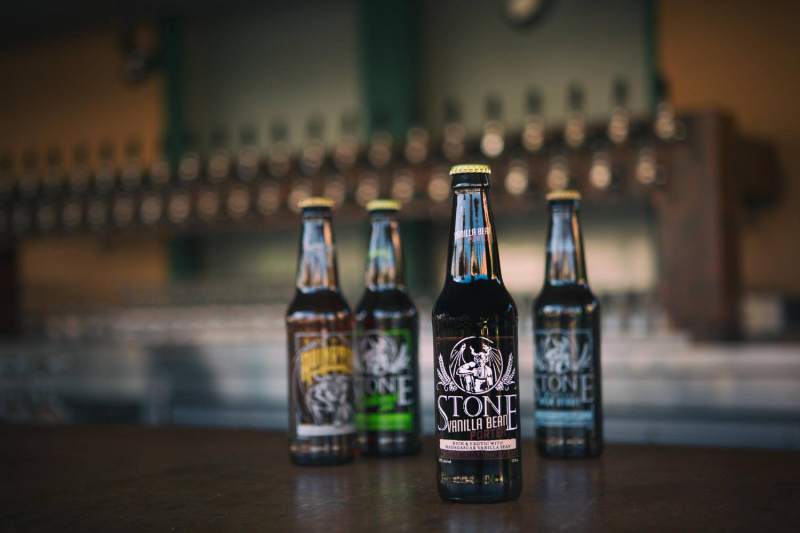
Stone Brewing (www.stonebrewing.com) is set to open a downtown Napa Tap Room and Pilot Brewery in the historic Borreo Building in spring 2017. The new tasting room will include a pilot brewing system, restaurant and Stone merchandise.
Stone Brewing is set to open a downtown Napa Tap Room and Pilot Brewery in the historic Borreo Building in spring 2017. (www.facebook.com/stonebrewingco)
NEW THINGS TO SEE AND DO
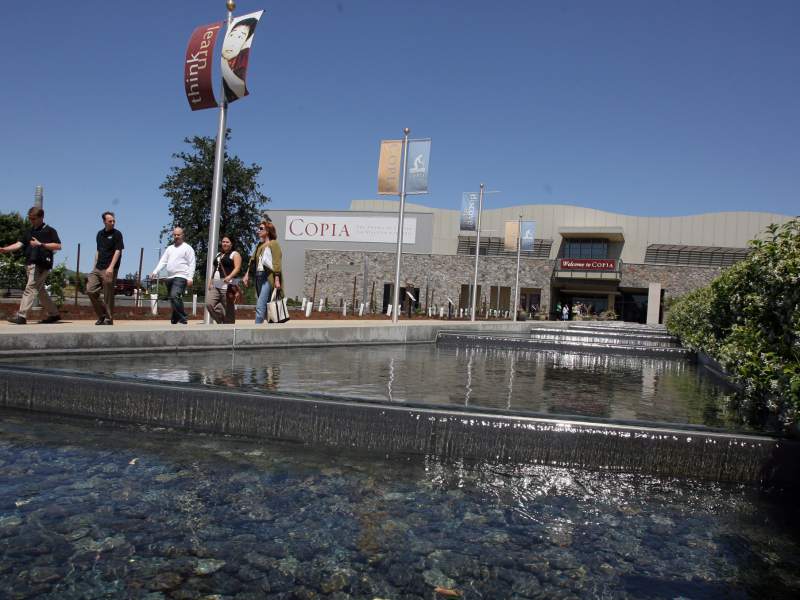
The Culinary Institute of America at Copia (www.ciaatcopia.com) is opening in stages this fall in downtown Napa with wine tasting, culinary demonstrations and classes, world-class dining, shopping, community events and more.
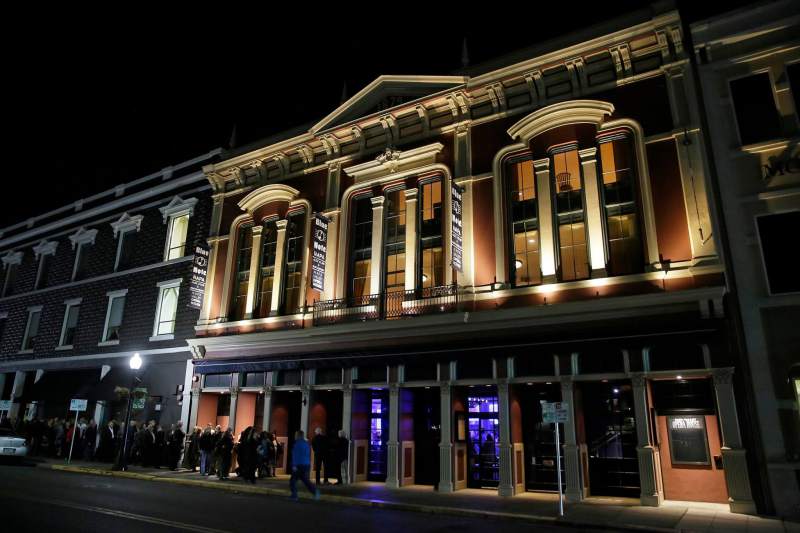
The Culinary Institute of America at Copia is opening in stages this fall in downtown Napa. (PD file, 2008)Blue Note Napa opened on Oct. 25 offering live music seven days a week in downtown Napa. (www.facebook.com/bluenotenapa)
Blue Note Napa (www.bluenotenapa.com) opened on Oct. 25 offering live music seven days a week in downtown Napa. The club occupies the first floor of the historic Napa Valley Opera House, and will present national and international artists, Bay Area and regional favorites, and the region’s wines, craft brews, cuisine, and classic cocktails.
The Kitchen Collective (www.kitchencollective.club) is a cooking club that is scheduled to open Nov. 1 in downtown Napa. It will provide resources for members to cook meals in a shared kitchen and the intimate environment of a social club to bring people together and share their passion for good food and wine.
Feast it Forward (www.feastitforward.com), the online network and lifestyle brand, will open its headquarters in downtown Napa across from the Oxbow Public Market in early spring 2017. It will offer live studio events with national chefs and musicians. It will feature a cultivated garden and outdoor entertaining in partnership with Sunset Magazine, musical entertainment with Gibson Guitar, a retail lounge, demonstration kitchen, tastings and educational events by 16 wineries.
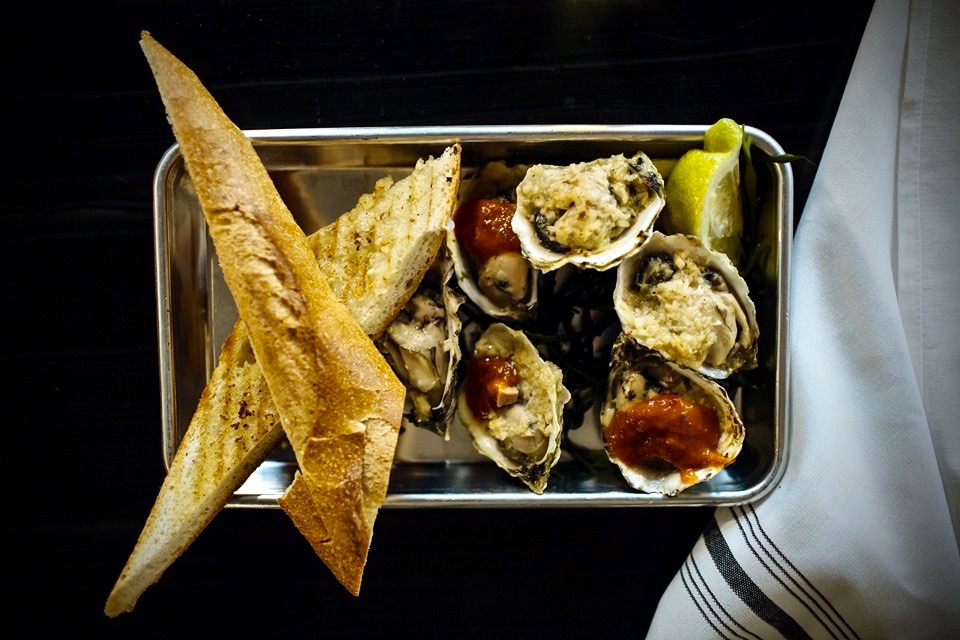
Baked oysters (choice of classic chipotle BBQ, salsa verde, tasso herb) served with lemon & grilled baguette at the Shuckery in Petaluma. (Photo Courtesy: The Shuckery)
With friends and family gathering during the holiday season, it’s an ideal time to try new and reinvented restaurants. These local spots serve up temptations that run the gamut from haute cuisine to hearty burgers.
Baked oysters (choice of classic chipotle BBQ, salsa verde, tasso herb) served with lemon & grilled baguette at the Shuckery in Petaluma. (Photo Courtesy: The Shuckery)
THE SHUCKERY
A project of the Oyster Girls (sisters Aluxa and Jazmine Lalicker), oysters obviously get top billing at this new Petaluma restaurant, each bivalve hand-shucked behind the bar. Ranging from Humboldt Gold Kumamotos and New Brunswick St. Simons to British Columbia’s Fanny Bay and nearby Tomales Bay Miyagis ($3 each), the menu also includes an amazing ceviche of cod, orange, lemon, lime, cilantro and piquillo pepper coulis ($12). A signature is the relleno ($25), made with a pounded calamari steak, Dungeness crab stuffing and creamed corn. Baja-style fish tacos ($14) are top-notch, and it’s worth saving a little room for the “dueling budinos” ($9), which include dark chocolate and salted caramel going head to head with peanut butter, bacon and banana. Meat-free dishes include tempura avocado tacos and cauliflower “hot wings” ($14). Reservations are strongly recommended, since the space inside the Hotel Petaluma is cozy.
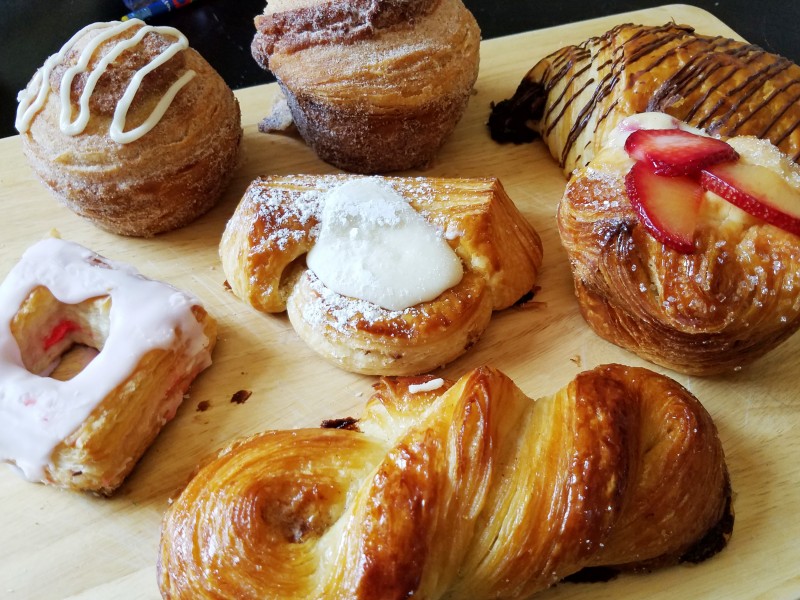
Cronuts, morning bun, croissants, and other pastries from Bright Bear Bakery in Petaluma. (Photo by Heather Irwin)
BRIGHT BEAR BAKERY
The buzz about this incredible little bakery began immediately after it opened, when news of its cream-filled cronuts (a cross between a croissant and a donut that’s too decadent not to eat), morning buns and fresh breads made the rounds. It’s not easy to find, but a pilgrimage is worth the effort, as long as you get there early. The vegan chickpea scramble with sweet potatoes and harissa is great no matter what your dietary requirements, and a breakfast focaccia with ham, egg and cheese is perfect when paired with a chocolate croissant, luxe cream-cheese Danish or a cranberry scone. You’ll go overboard, but when exactly have your co-workers turned up their noses at leftover fresh muffins and coffee?
2620 Lakeville Highway, Suite 350, Petaluma, 707-291-1018, visit on Facebook
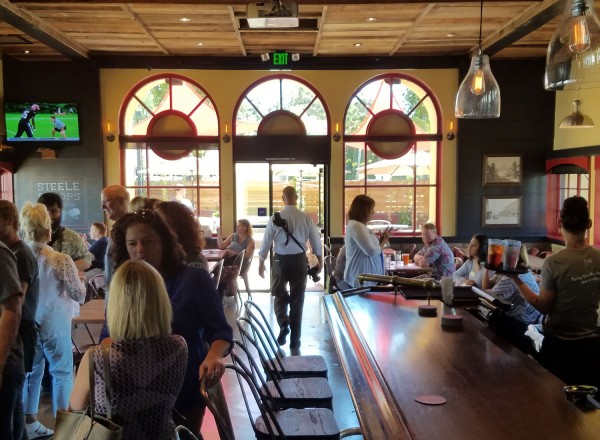
Steele & Hops Public House in Santa Rosa. (Photo by Heather Irwin)
STEELE & HOPS PUBLIC HOUSE
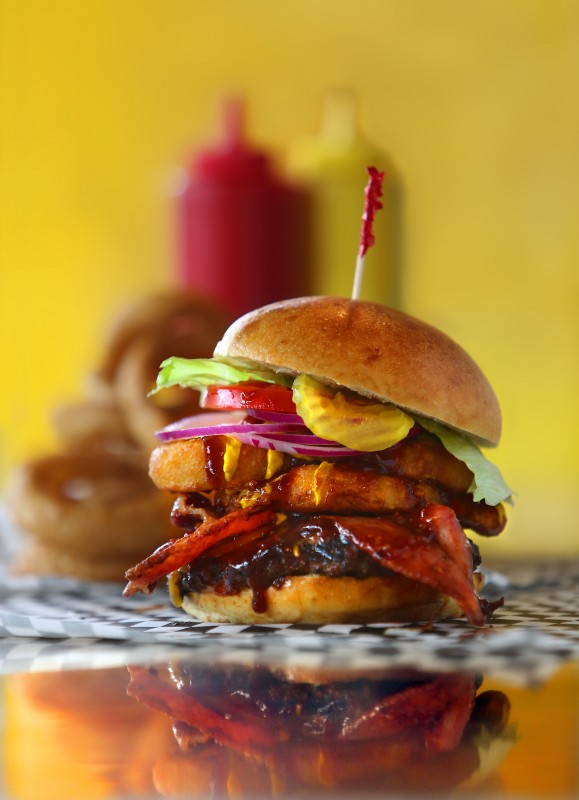
This family-friendly Santa Rosa brewpub is off to a good start, with an ever-evolving list of beers and solid pub grub. Best bets include brisket “cigars” (think egg roll with melted cheese and smoked brisket, $7); chicken-fried onion rings with mushroom gravy ($6), and an excellent Caesar salad with boquerones (anchovies) ($9.50). The S& H Signature burger ($13.50) with onion jam, and the fried-chicken sandwich ($11.50) are also excellent. Less wowing: the brick-oven pizzas (even a teenager turned her nose up at the burnt crust) and the hangar steak ($17.50). We’ll be back, though, for the fish and chips ($14) and incredible strawberry shortcake.
Save room for dessert at the Depot Hotel Restaurant in Sonoma. (Photo by Beth Schlanker)
DEPOT HOTEL RESTAURANT
Although rooms haven’t been available since 1922, “hotel” remains in the restaurant’s name. Constructed in 1870, the building’s offthe- plaza location makes it a bit of a sleeper, but it’s worth a visit for the Ghilarducci family’s classic Italian and Wine Country cuisine. Michael Ghilarducci and his wife, Gia, founded a cooking school here in 1987, and now their son, Antonio, is the executive chef of the restaurant. The Depot Hotel is perfect for dining with guests during the holidays, and it sells full trays of lasagna, garlic bread, penne and salads for takeout.
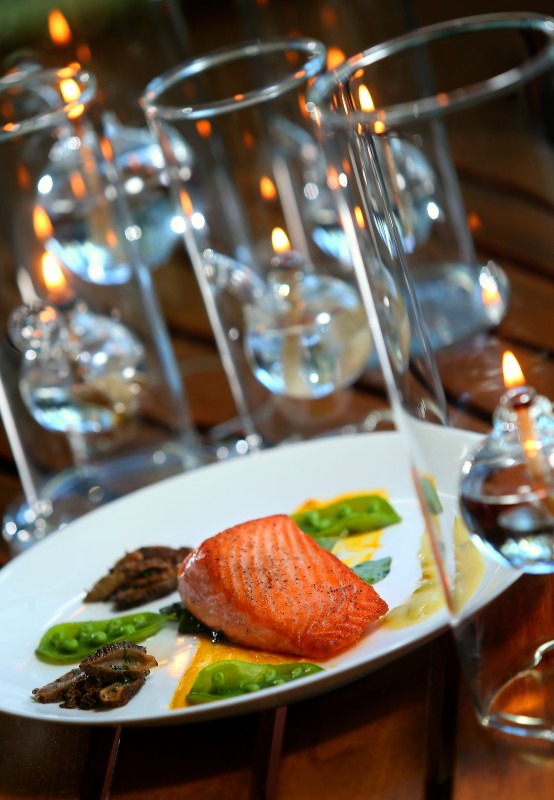
King Salmon, with morel mushrooms, sugar snap peas, and green garlic vinaigrette, by Dry Creek Kitchen executive chef Andrew Wilson. (Photo by Christopher Chung)
DRY CREEK KITCHEN
Charlie Palmer is looking back to move forward at Healdsburg’s Dry Creek Kitchen. After a couple of chef shuffles following the departure of Dustin Valette last year, Palmer Group veteran Scott Romano was tapped as executive chef. In addition to working at five Palmer restaurants, including Aureole in New York City, Romano’s friendship with Palmer spans two decades, giving him an ease with the multi-Michelin-star chef that’s reassuring to continued relevance of the restaurant at Hotel Healdsburg. The two are working to reimagine some of the restaurant’s signature dishes, such as the Oz Family Farm rabbit tortellini, Dry Creek Peach and heirloom tomato salad with Bellwether ricotta, and sauteed sea bass with sweet corn puree. “We’re looking back at iconic dishes from all the restaurants,” said Palmer, who owns 17 locations, with at least one more on the way at the Archer Hotel in Napa (opening 2017). “And we’re adapting them to California.”
The St. Helena Ave. Burger at Superburger in Santa Rosa. (Photo by John Burgess)
SUPERBURGER
For decades, Superburger has been a fixture on Fourth Street in Santa Rosa, eventually expanding to Cotati. A new Superburger has opened next to the Oliver’s Markets store in Windsor, making its beef/lamb/chicken burgers available to northern Sonoma folks. There are fancy burgers as well, including the Montecito Avenue (with Monterey Jack cheese, applewood-smoked bacon and guacamole) and the McDonald Avenue, with blue cheese, garlic mushrooms and “gartichoke” sauce. Dogs, fries, onion rings and shakes, too. Classic.
Update November 18: Revival has unexpectadly, and unfortunately, closed – but might be revived as a series of pop-ups, learn more here.
One of the best reopenings of 2016 is Applewood Inn’s revered restaurant. The newly minted Revival by Applewood is guided by Guerneville hospitality maven Crista Luedtke (Big Bottom Market, boon eat+drink, boon hotel+spa, El Barrio) and chef Ben Spiegel (New York City’s Skal, and The Willows Inn on Lummi Island, Washington). And what a difference a year makes. Since the purchase of the inn by hotelier Ric Pielstick, the gardens have been reclaimed from the weeds, the interior was given a warm, contemporary redesign, and Spiegel has a clear vision for the cuisine. Having spent several years in Scandinavia, he’s a devotee of foraging, hunting and sustainable seafood, passions he brought to Sonoma. Preservation, smoking and pickling are keys to his menus, which change daily based on what’s available. Early dishes include Liberty Duck liver mousse ($11), grilled romano beans with Japanese cucumber and goat’s milk cheese cream ($10), and ricotta dumplings with shiitake and lobster mushrooms and arrowhead spinach ($23).
A food-friendly pinot is the best present for the chef on your list. The typical profile of a pinot that pairs well with food is one with bright, tangy red fruit, coupled with crisp acid. Chefs love to have these bottlings around, whether they’re planning a serious feast, or simply rustling up an impromptu dinner. In either scenario, you’ll have a better chance of being invited if you’re a savvy gift giver. Here are five tasty pinots with chef appeal and most are $25 or under.
Davis Bynum, 2014 Jane’s Vineyard, Russian River Valley, Sonoma County Pinot Noir, 14.5%, $35. A lovely pinot noir with a range of flavors — cherry, plum, cranberry and a touch of toasty oak. Bright acidity, a steal for the quality.
Foursight, 2013 Anderson Valley Unoaked Pinot Noir, 14.1%, $25. This pinot has generous, layered red fruit, bright acid and it finishes dry. It’s bright and refreshing.
River Road, 2014 Stephanie’s Cuvee, Green Valley of Russian River Valley, Sonoma County Pinot Noir, 14.3%, $25. This is a bright and tangy pinot noir has striking red fruit — cherry, raspberry and strawberry jam. It’s also layered with notes of tobacco and cedar. But what makes it a standout at this price point is its pitch perfect balance.
Saint Gregory, 2013 Mendocino County Pinot Noir, 13.5%, $20. This Burgundian styled wine has notes of cherry, plum and toast. Bright acidity. Nice length. Elegant.
La Follette, 2013 North Coast Pinot Noir, 13.8%, $24. Aromas of bright strawberry, give way to concentrated flavors of dried cherry, cracked black pepper and mushroom. This earthy pinot has depth, surprising at this price point.
This article is part of a series called “Hidden Sonoma.” To see the full list of 80+ things to do in Sonoma County, click here.
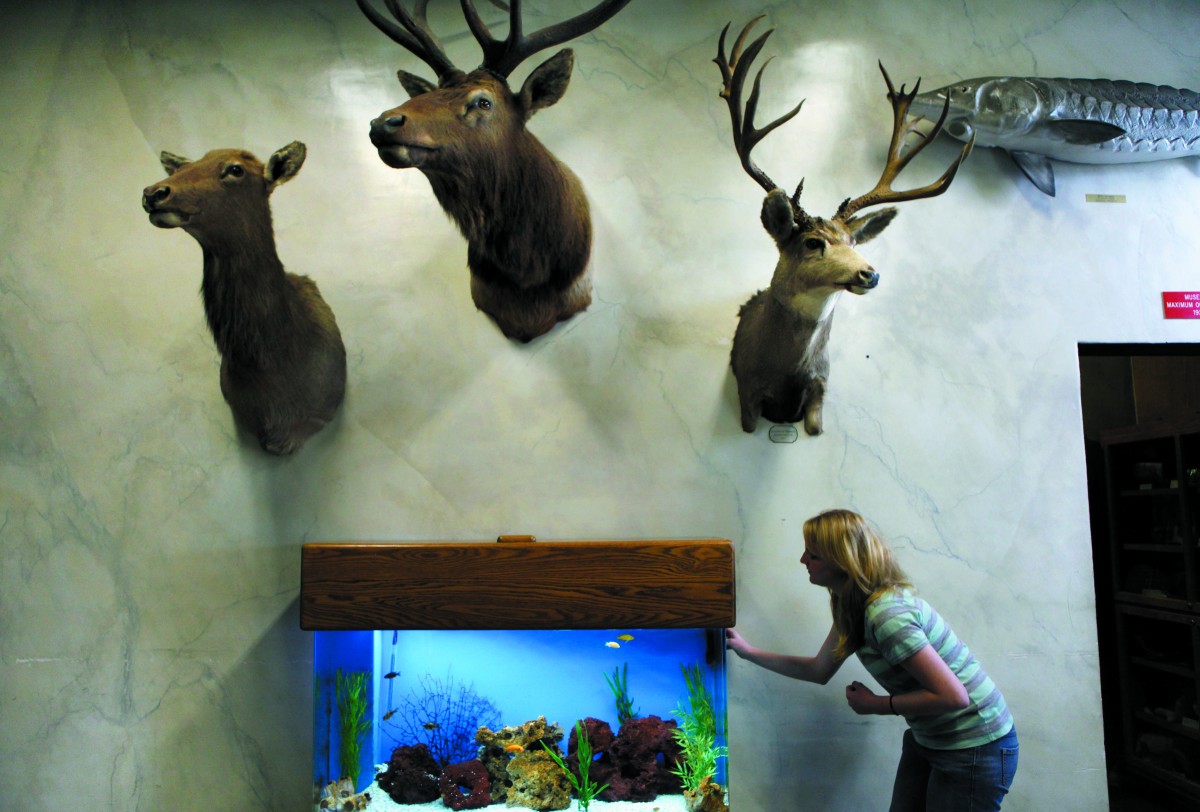
Petaluma Wildlife Museum. (Photo by Beth Schlanker)
Animal Adventure for Kids: Petaluma Wildlife Museum
Tucked into a quiet neighborhood on the edge of the Petaluma High School campus is a place where giant snakes slither, iguanas prowl and dinosaurs may have once roamed. Kids love the Petaluma Wildlife Museum for its hands-on reptile room and lifelike dioramas featuring lions, wolves and even a polar bear. Normally accessible only to students on field trips, the museum opens to the public on the first and third Saturday of every month, from 11 a.m. to 3 p.m. Don’t miss the T. Rex skull in the fossil room.
Freshest of the Fresh: Green String Farm
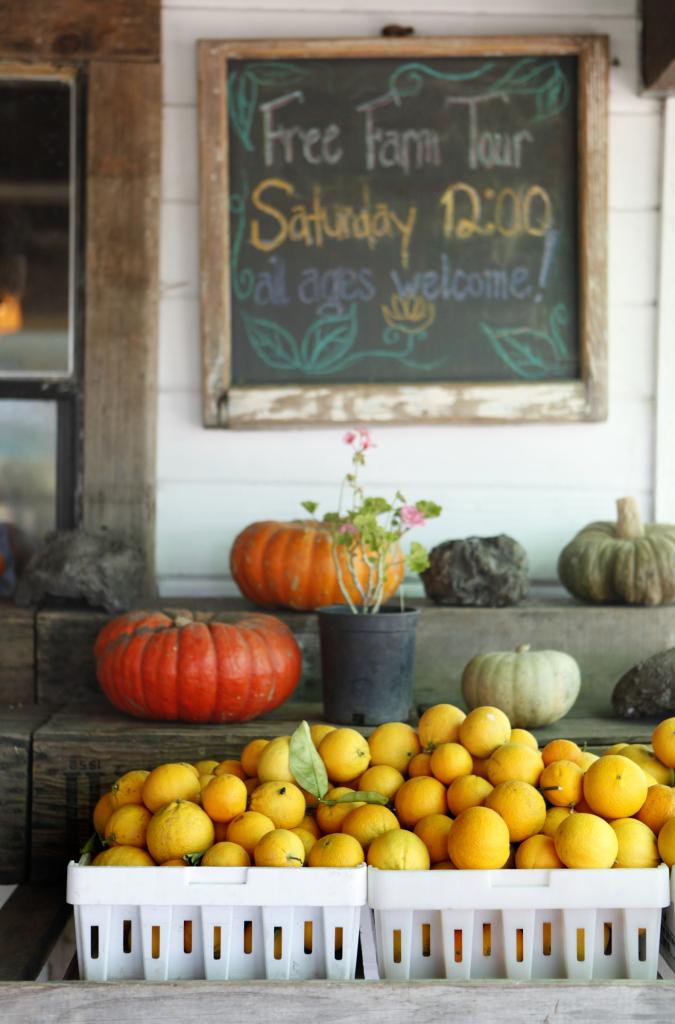
Farmers market produce not fresh enough for you? Then go directly to the farm. At Green String Farm, you can see your kale and radishes harvested from the Petaluma soil. Take a free tour of the farm on the first Saturday of each month at noon and learn about its sustainable farming practices, then hit the produce stand for more just-picked fruits and veggies, eggs, cheese, honey and nuts.
Green String Farm, 3571 Old Adobe Road, Petaluma, 707-778-7500, greenstringfarm.com
Green String Farm in Petaluma offers free tours on the first Saturday of each month.
Where the Wild Things Heal: Sonoma County Wildlife Rescue
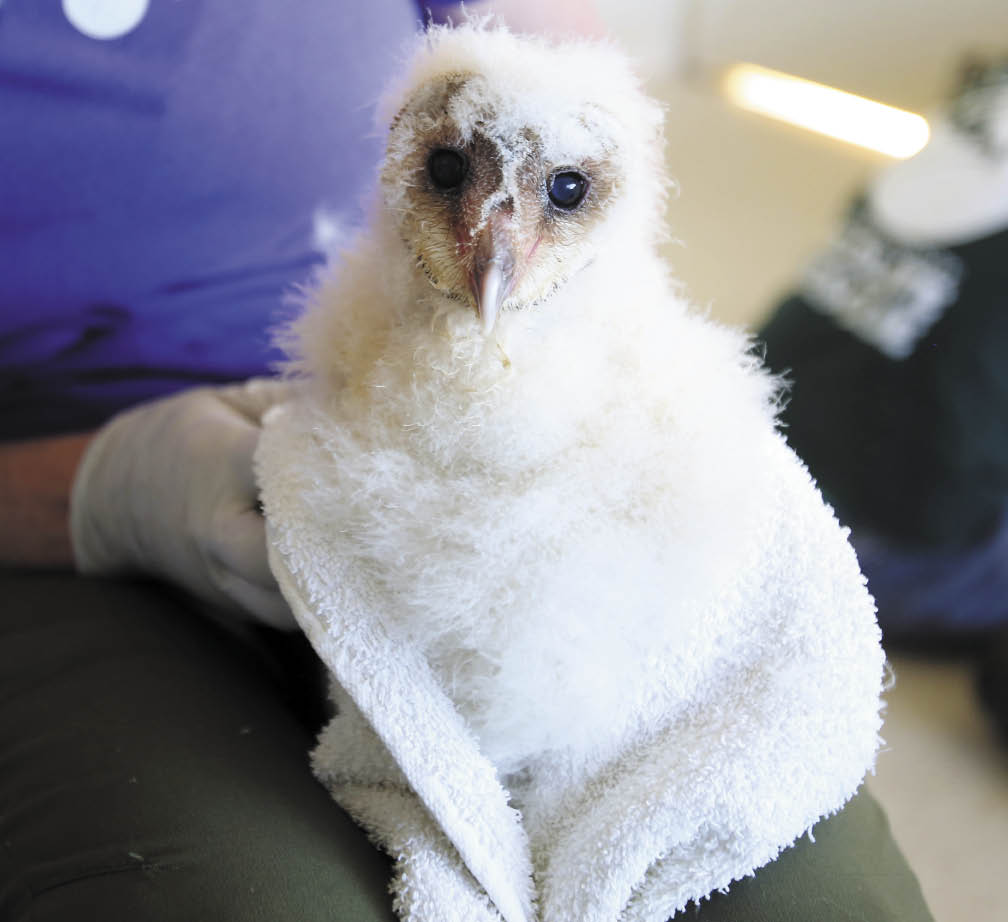
Atop a hill on Mecham Road sits a ranch house with a million-dollar view and no full-time inhabitants. None that are human, anyway. The former ranch is home to Sonoma County Wildlife Rescue, a nonprofit whose volunteers take in all manner of injured, ill or orphaned mammals and birds, then treat and release them ASAP. Take a tour at noon or 2 p.m. on a Saturday (reservations appreciated) and you’ll be wildly happy you did.
Sonoma County Wildlife Rescue. (Photo by Crista Jeremiason)
Swimming Pools of Our Youth: Morton’s Warm Springs
Remember the public pools when you were a kid? A big lawn, shrieks and splashes, a wading pool for tots, picnic benches where you ate sandwiches you made yourself? That’s Morton’s Warm Springs, an endearing, old-fashioned swimming pool (actually, there are two) fed by mineral springs and set against a backdrop of forested hills. It’s been keeping people cool since 1946. There is also a baseball field, volleyball court and horseshoe pit.
A Kid’s Kind of Fish Shop: Ceasar’s Tropical Fish
No one will mistake it for Sea World, but Caesar’s Tropical Fish in Santa Rosa is nearly as much of a kid thriller as a splash by a killer whale. In darkened display rooms, little ones go eyeball to eyeball through aquarium glass with audaciously hued saltwater exotics, bug-eyed goldfish and a resident Madagascar cichlid that seems to want to nibble at noses.
Hear That Whistle Blowin’: Train Town
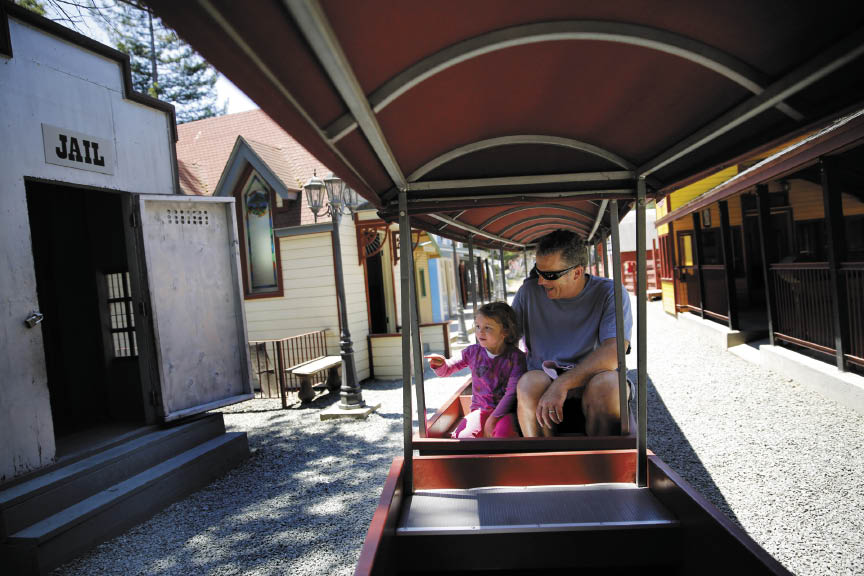
TrainTown chugs along on the margins of Sonoma, well off the upscale tourist routes. The quarter-scale steam train and track were built by the late Stanley Frank in 1968. Generations of kids have since thrilled to the 20-minute journey through the trees, over bridges and into tunnels, including a short layover in a miniature town complete with petting zoo. Near the station are more kiddie rides, including a Ferris wheel, carousel and dragon coaster. It’s for the kid in all of us.
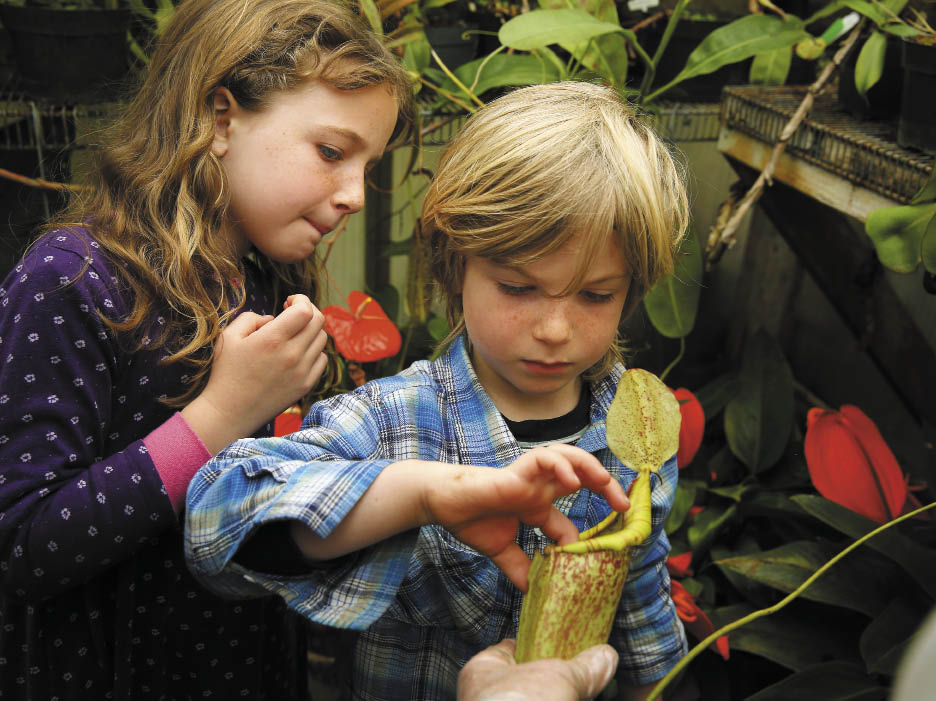
Little Shop of Horrors: California Carnivores
California Carnivores is the largest retail carnivorous plant nursery in North America, with Venus flytraps, sundews, butterworts, bladderworts and tropical pitcher plants chowing down on yellow jackets … well, you just have to see it. The nursery is on a side street behind farm plots south of Sebastopol, yet it’s worth the hunt for the fascinating education and the beauty of these natural pest-control plants. The curators are very serious about the plants, but with a wicked sense of humor, so the shop is decorated with skulls and spiders and the occasional severed (rubber, we hope) hand.
Birds and Burros
Odd animals are the attraction at the Bird Exchange and Honkey Donkey Farm, a popular stop for families on Hall Road in Santa Rosa. The Bird Exchange, a bird store and supply shop, has one of the largest selections of exotic avians in Northern California, hundreds at any given time. Next door, the Honkey Donkey Farm is home to more than 100 miniature Sicilian donkeys, pint-sized beasts that grow to an average 30 to 32 inches tall, making them a favorite among young kids who are about the same size.
“I am begging you now, with all my heart, not to let the world forget that he laid his hand upon the hills of California with the biggest writing of all his writing and imagination and wisdom … Just don’t let all who listen and read and run, forget Jack London’s biggest dream.” – Charmian London, December 1916
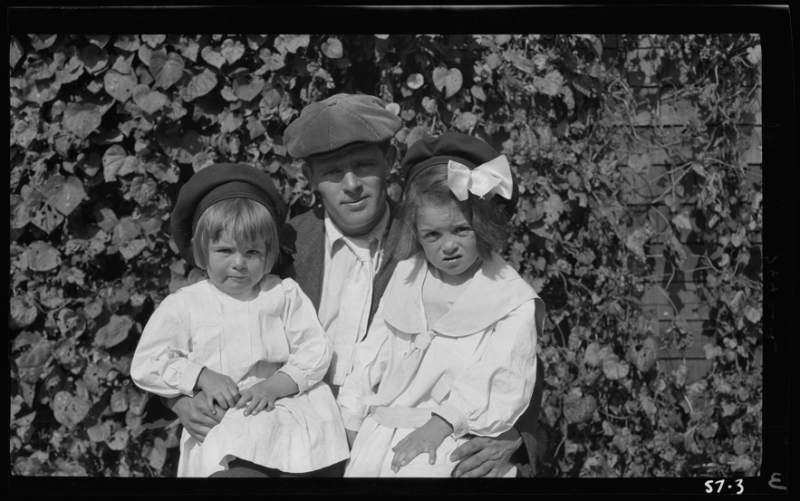
Jack London and his two daughters, Joan and Becky, 1905. (California State Parks, 2016)
She spent just 13 years with Jack London, yet the wife of one of America’s most beloved writers, bravest adventurers, earliest environmentalists and infatuated lover of Sonoma Valley devoted nearly 40 years, until her death in 1955, to protecting and polishing his legacy. This year marks a century since London’s 1916 death at the young age of 40, and Charmian London would likely be pleased that so much of his Glen Ellen ranch, his accomplishments and his memory have been maintained.
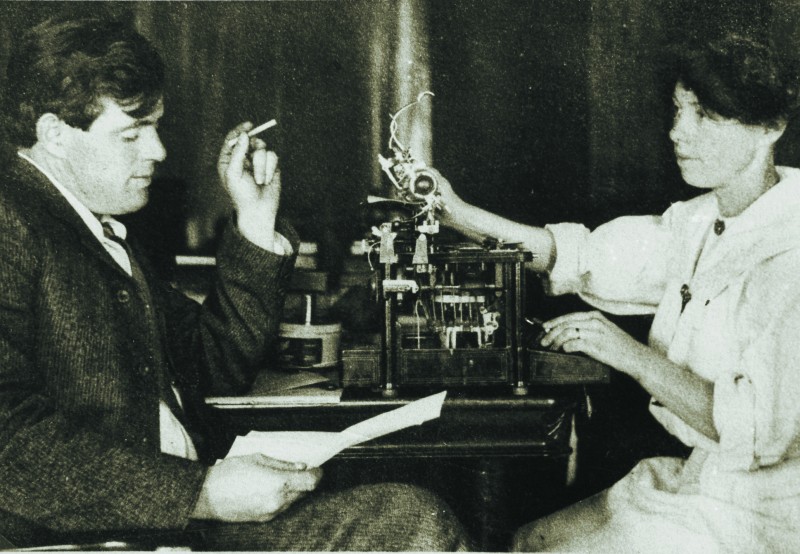
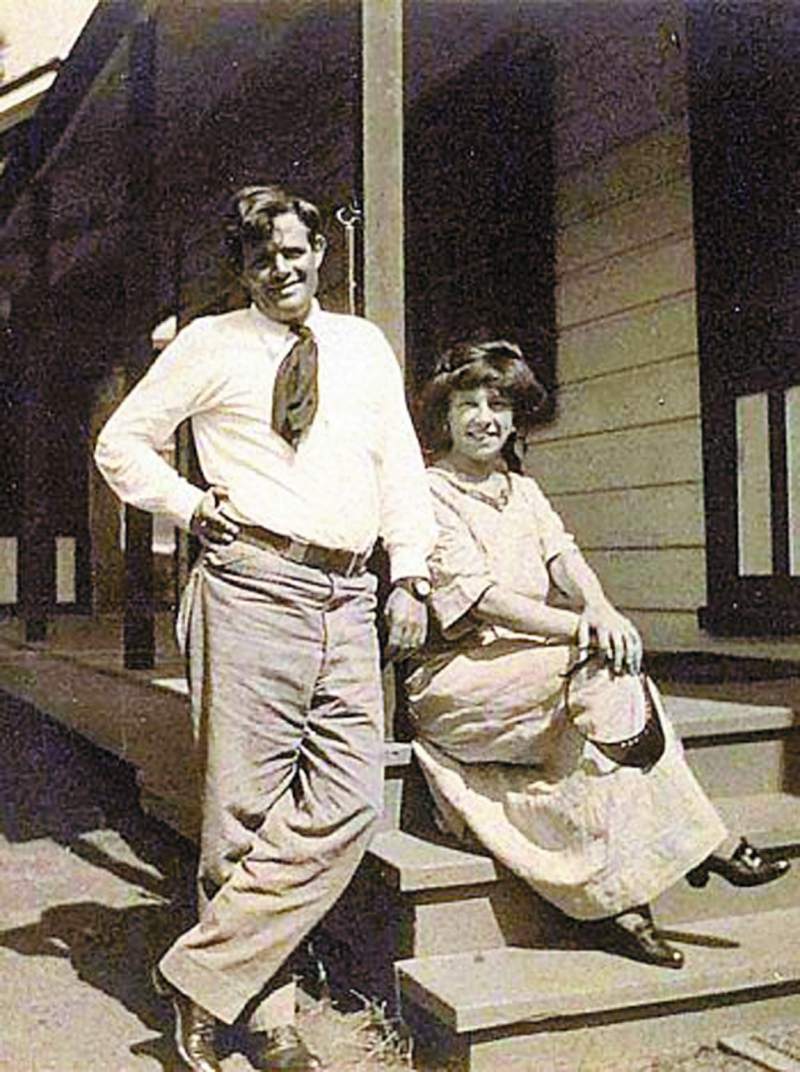
Jack London and Charmian London working together at their Beauty Ranch, a portion of which is now Jack London State Historic Park in Glen Ellen. (California State Parks, 2016)
“Mate Woman,” as London called her, spent decades tending to his copyrights, writings and legacy, a prolific output of more than 50 works of fiction and nonfiction, and hundreds of short stories, essays, newspaper and magazine articles, speeches and letters translated into as many as 70 languages. And with London’s stepsister, Eliza Shepard, she struggled through the Depression and World War II to preserve his beloved mountainside and keep his Beauty Ranch going. ”
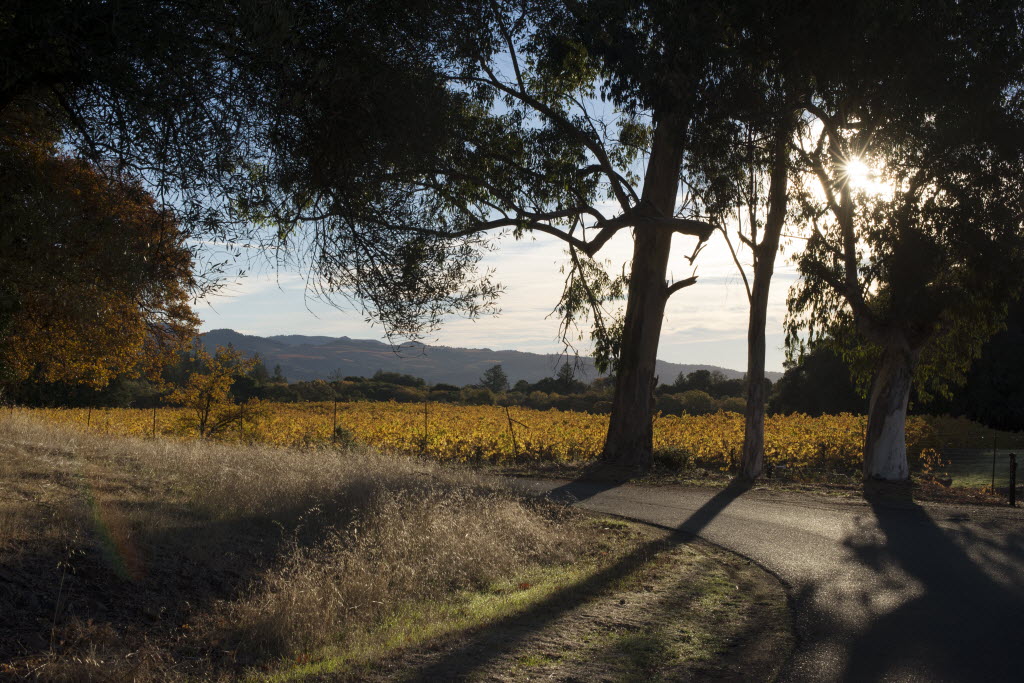
Road leading to Jack London State Historic Park in Glen Ellen. (Photo by Erik Castro)
Jack London loved Sonoma, and in an important way he was one of the first people to put Sonoma on the map and in the international imagination,” said Kevin Starr, a state librarian emeritus and author of a book series on California, “Americans and the California Dream.” “He sought the redemptive life on the land in Glen Ellen and as a rancher. Collectively, within the 50-plus books he wrote, are guide maps of Sonoma places that later became famous.”
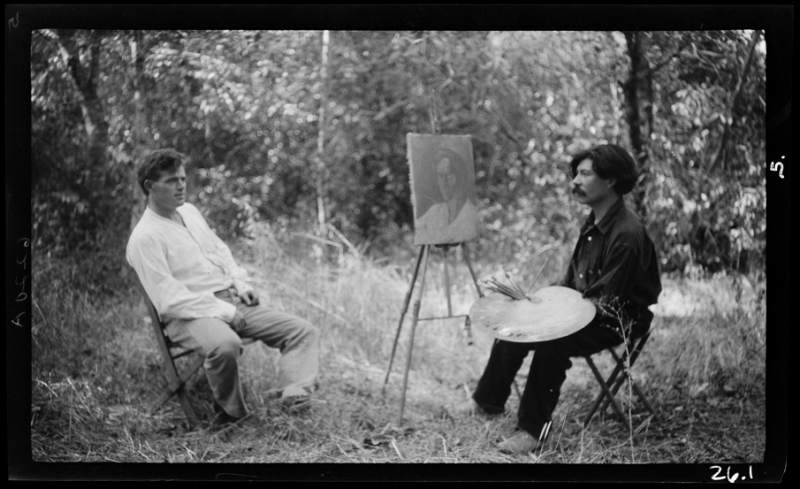
Jack London has his portrait painted outside Wake Robin Lodge by artist Xavier Martinez. (California State Parks, 2016)
This is a watershed year for Jack London State Historic Park, which occupies a portion of the original Beauty Ranch. The Jack London Park Partners group is dedicated in 2016 to celebrating London’s enduring legacy. Special events and activities kicked off on Jan. 12, London’s birthday, and will culminate Nov. 22 with a memorial at his graveside on the centennial of his death. Fittingly, London died on his ranch and is buried there.
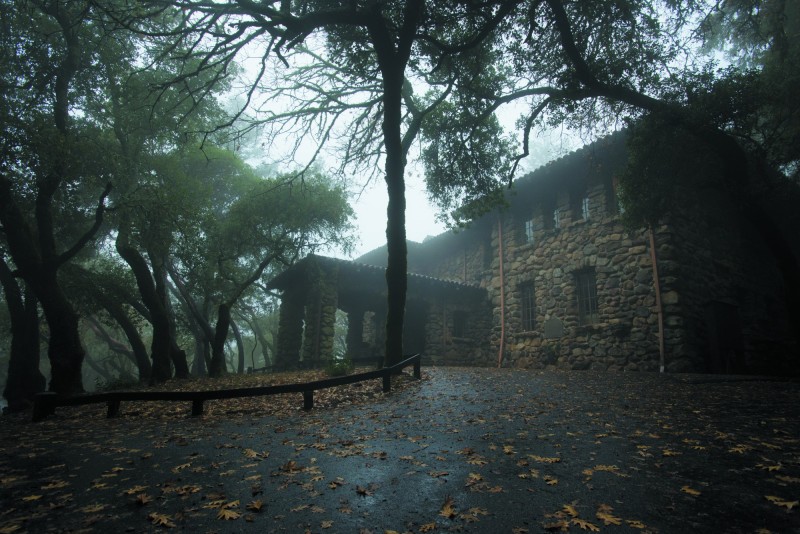
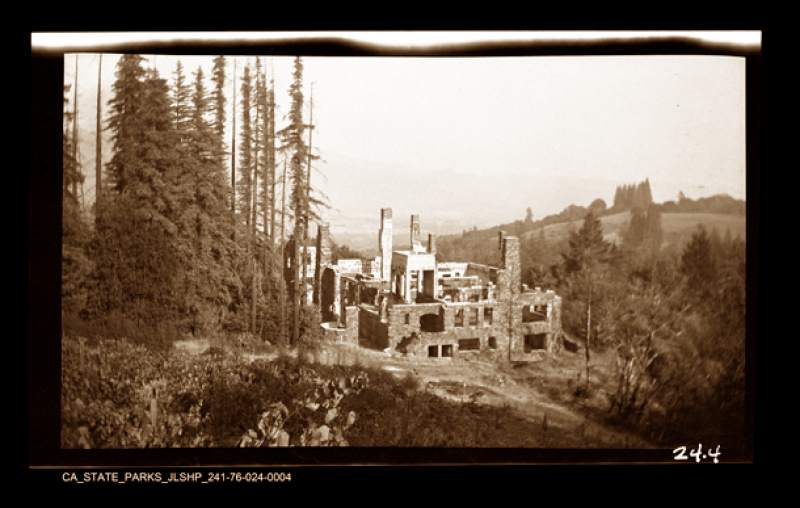
To honor her husband, Charmian London built a sturdy stone lodge she called the House of Happy Walls, a smaller version of the magnificent Wolf House that mysteriously burned to the ground on a hot August night in 1913, weeks before the couple were to have moved in.
Like Wolf House, Happy Walls was designed by eminent Bay Area architect Albert Farr to eventually serve as a Jack London museum. The first public visitors streamed under the portico in 1960, finally fulfilling Charmian’s wishes. Nearly 100,000 people a year now come to Jack London State Historic Park, and he is remembered by readers around the world.
House of Happy Walls in Jack London State Historic Park, Glen Ellen. (Photo by Erik Castro)
Source of Creativity
As a writer, London’s creative fire was stoked by social revolution. Far more than a manly writer of popular adventure stories such as “The Call of the Wild” (1903) and “White Fang” (1906), he also exposed the plight of the underclass and the working poor. His dystopian “The Iron Heel” described the rise of a tyrannical oligarchy that some observers find relevant today. He dressed in rags and lived in the impoverished East End of Lond to research “The People of the Abyss.” His unfettered range took in everything from astral projection to prize fighting to penal reform.
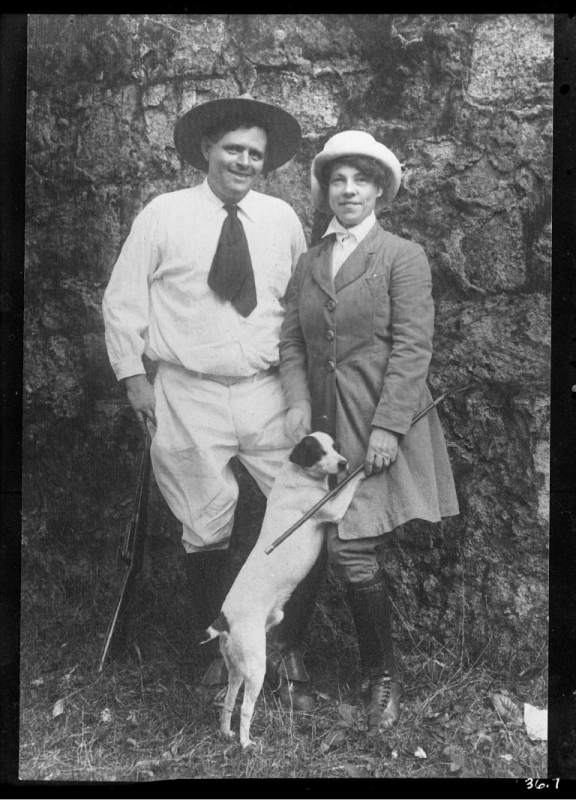
Jack and Charmian London pose for a portrait on Beauty Ranch with their dog, Possum. (California State Parks, 2016)
London scholar Earle Labor, an emeritus professor at Centenary College in Louisiana and author of the recently published “Jack London: An American Life,” recalled meeting a young man from the Congo at a seminar. The man confided that his father had been killed in a jungle village, yet the son later learned to read French and discovered “The Call of the Wild,” which has been in continuous print since it was published. The story of Buck, a tenacious sled dog, inspired the young man’s own survival.
On a winter day in the state park, Tony Holroyde, visiting from England, paused on the porch outside London’s restored cottage and reflected that the rugged American writer lit a fire under him when he was a youth.
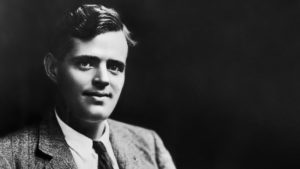
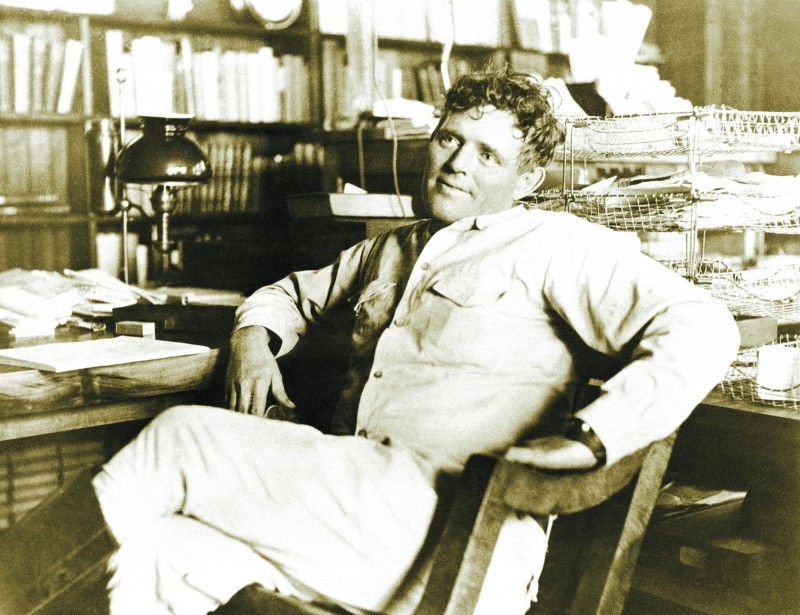
Jack London photographed in 1916, shortly before his death. (California State Parks, 2016)
“He brought adventure alive in my imagination,” he said. “I don’t think I otherwise would have left the U.K. and spent two years running around the world. But I didn’t do it on horseback, and I didn’t do it on a leaky ship.”
And yet in the last years of his life, London claimed to produce 1,000 words a day, largely in service to his 1,400 acres overlooking what he romantically referred to as the Valley of the Moon.
The most highly paid writer of his day, London pumped out the prose to pay for Beauty Ranch, his “biggest dream,” which started out as a refuge from urban grime and became a grand experiment in sustainable agriculture. Ridiculed in his time for experiments like the costly piggery dubbed “The Pig Palace, he’s now regarded by many as a visionary.
Mike Benziger, who planted his family vineyard nearby on the same well-drained volcanic soil, said London was struck by the overgrazed and degraded condition of the Hill Ranch when he purchased the first 130 acres in 1905 and set out to make “the dead soil live again.”
“He felt he was in a position to save it. That was his life-altering experience the day he set foot on Beauty Ranch,” Benziger said. “That became literally his mission for the rest of his life, to find respite in this place and make it healthier and make it an example for future generations.”
Jack and Charmian London pose for a portrait on Beauty Ranch with their dog, Possum. (California State Parks, 2016)
Family Preservation Efforts
Credit for London’s enduring legacy goes to the early efforts of his widow and several generations of heirs, including members of the Shepard family, who inherited the ranch from Charmian and made most of it available to the state for parkland, and the offspring of Jack London’s two daughters, Joan and Becky, many of whom share his passion for the outdoors and carry on his commitment to social equality and justice in their own ways.
But London also has been embraced by a multitude of other acolytes and academics who approach him from a kaleidoscope of perspectives. They include literary scholars, historians, agriculturists, preservationists, naturalists, teachers and outdoor enthusiasts who roam the more than 30 miles of trails that crisscross what is now Jack London State Historic Park.”
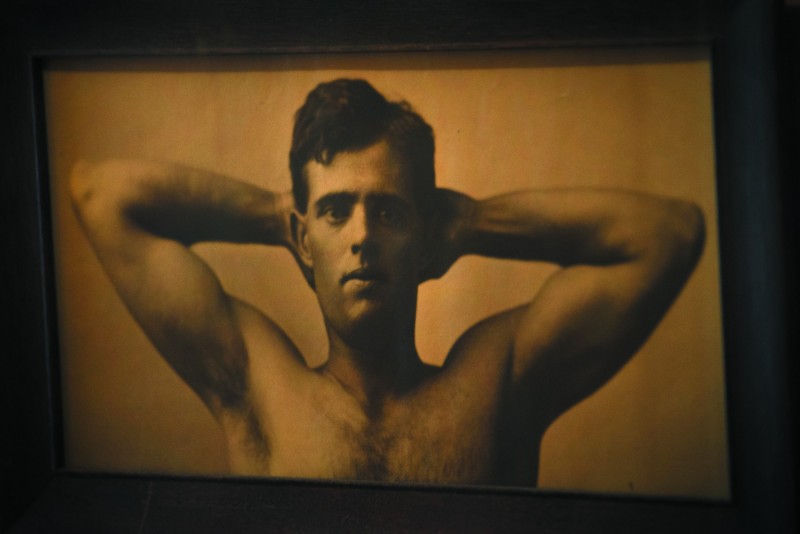
A photo portrait of a young Jack London hangs in a small room on the second floor of the House of Happy Walls museum at Jack London State Historic Park.
“He wrote books kids used to read and still have to read. That’s how many people get exposed to Jack London, and it’s pretty much all most people know about him,” said Chuck Levine, a director of Jack London Park Partners, which took over management of the park three years ago after the state threatened to close it because of budget constraints.
“The reason we should care about Jack London is that he was deeply concerned about the human condition,” Levine said. “And the fact he was a writer allowed him to express that concern and his views about how the world could be changed to help the state of mankind.”
Jack London was fond of sitting in the shade of a large oak tree that still looms over his writing cottage in Jack London State Historic Park. (Photo by Connor Jay)
A meadow and a screen of trees separate his property from the park, a piece of land sold off decades ago to help keep the ranch going. Levine crosses over almost daily. Since moving to Glen Ellen in 2002, the former Sprint CEO has spent more than 300 hours exploring the park on horseback, just as London did a century earlier. He declares himself a pragmatist but admits, almost apologetically, that when he first crossed a wooden bridge onto what was once London’s land, “in my heart it felt magical.”
Little Changed in 100 Years
Levine is typical of the passionate volunteers who lead nature and historic hikes, give tours, work in the cottage and Happy Walls museum, patrol and maintain the trails, help with special events and staff the parking kiosk. The partners also are launching a $1 million capital campaign to modernize the museum in the House of Happy Walls with more high-tech and multimedia presentations; the exhibit has changed little in decades.
Wolf House ruins, photographed after 1913. (California State Parks, 2016)
If London were to return today, he would have no trouble finding his way around. Aside from the 160 acres that the Shepards held back in a family trust, little has changed in 100 years.
Some 700 feet up the slope of Sonoma Mountain, his ranch still has the old fieldstone barns, the elaborate piggery called the Pig Palace by scornful observers, the concrete-block silos and the picturesque ruins of the Kohler and Frohling winery destroyed in the 1906 earthquake and now the backdrop for the Transcendence Theater Co. At the core of Beauty Ranch is the mid-19th-century cottage where Jack lived with Charmian and wrote in a study outfitted with a Dictaphone, Gramophone and Remington typewriter, high-tech at the time.
Jack London State Historic Park in Glen Ellen. (Photo by Erik Castro)
Above the working farm is wild land thick with oaks, broad-leaf maples, manzanitas and madrones, Douglas fir and redwoods, the eldest a sapling at the birth of Christ. The mountain is etched with canyons and creeks, and the year-round Graham Creek (Wild Water Creek in London’s day) is a spawning ground for steelhead trout. High meadows break out with golden poppies in spring and offer unbroken views of Sonoma Valley and beyond. Bobcats, mountain lions, gray foxes, hawks and falcons scour the mountainside for prey.
At the center of any mention of London is the larger-than-life persona that makes him a magnetic character even now. He was a dashing man’s man with a face for the camera, and courted danger in exotic places, from the Klondike to the South Seas. He was, among many things, a prospector, oyster poacher, seaman and hobo who in the 1890s rode the rails to Washington, D.C., as an idealistic member of the Industrial Army of the Unemployed.”
“The greatest story Jack London ever wrote was the story he lived,” said Matt Atkinson, who led tours for years as a ranger at Jack London State Park. He is now the fire chief of Glen Ellen, where the name of its favorite son carries on with a hotel, saloon and rustic retail center across from what for years was the World of Jack London Bookstore. It’s now a wine-tasting room. London crammed far more living into 40 years than most people would or could in 80 years, said Atkinson.
At the same time, he was a bundle of contradictions. His writing ran from pedantic to brilliant. He was cared for by partially raised by an African-American wet nurse, and yet threaded through his writings are racist tones that make the modern reader wince.
He was the highest-paid American writer of his day, the first to earn $1 million, which he spent as fast as he made it, often in service to his ranch. He lived well while serving as a voice of the proletariat and, like John F. Kennedy, projected a charismatic virility, yet privately suffered from health problems exacerbated by a lifestyle of hard drinking, smoking and poor diet.
In his day, London was an international celebrity, as famous as a movie star. His death of reported uremic poisoning brought on by kidney failure rated front-page notice in the New York Times.
As one journalist wrote in the days after his death, “No writer, unless it were Mark Twain, had a more romantic life than Jack London.”
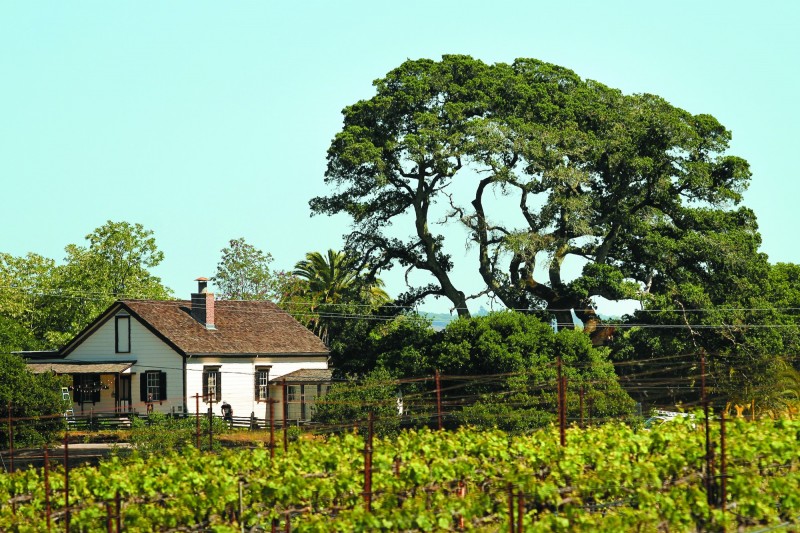
Neil Shepard’s great-great uncle was Jack London, and he has lived in houses on various parts of the ranch his entire life. (Photo by John Burgess)
“I like to say that if Jack London were alive today he would probably have a reality show, because he really organized his life that way,” said Bay Area filmmaker Chris Million, who is working on a documentary called “Jack London, 20th Century Man.”
“He knew the value of publicity. Once he became a famous writer and had developed a persona, he exploited that persona for all it was worth, and in particular, to help boost his book sales.”
Among London’s most audacious stunts was to promote his book, “Cruise of the Snark.” He and Charmian set sail on the South Seas with crew members who had never sailed before. It resulted in some memorable writing and boosted his star. But along the way London contracted yaws, a hideous tropical infection. Some scholars believe his self-treatment with a mercury-based ointment led to the kidney problems that contributed to his death.
That London was even born is a sort of miracle. The San Francisco Chronicle reported in June 1875 that a pregnant Flora Wellman tried to shoot herself after astrologer William Chaney, with whom she was living, disavowed the baby and tried to force Wellman to have an abortion. She gave birth to Jack six months later. When Jack was an infant, she married Civil War veteran John London and gave him her new husband’s name. London was a young man when he discovered that Chaney was possibly his biological father and sought him out, only to be rejected again.
The facts of his life provide endless fodder for researchers and enthusiasts who comb over writings that were often a mixture of truth and fiction. “Martin Eden” and “John Barleycorn,” an anti-alcohol tract exploited by Prohibitionists, were semi-autobiographical. London had periods on the wagon, but he never gave up the drink for good.
“He’s a very complicated person. He’s got a lot of layers to him. I take him not always at his word,” said Tarnel Abbott, 62, London’s great-granddaughter. Her father, Bohemian longshoreman Bart Abbott, was a social activist in Richmond and the only son of Joan London.
The eldest of Jack’s two daughters, Joan was a radical in her own right who wrote about the plight of farmworkers, fought for labor and aligned herself with Trotsky, activities that brought her under the scrutiny of the FBI. Joan had a complicated relationship with her father, stuck in the middle between two warring parents. Her mother, Bess, embittered that London left her for Charmian, kept her daughters away from Beauty Ranch.
But parsing fact from fiction misses the broader message, Abbott said. “There are things he has said or written that have meaning for me, that make me feel like I do try to carry on the way he might approve.”
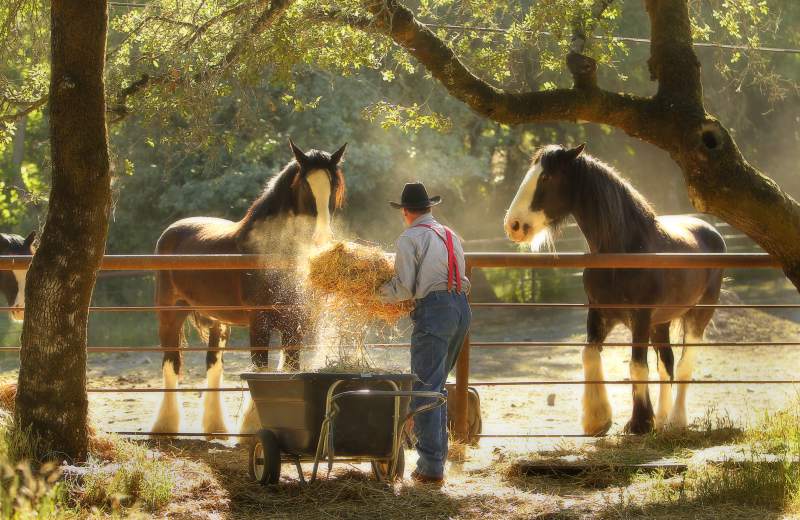
Neil Shepard feeds his Clydesdale horses on his property, adjacent to the Jack London State Historic Park. (Photo by John Burgess)
Of London’s seven great-grandchildren, Abbott has emerged as the most outspoken keeper of the London legacy, and last summer presented an adaptation of London’s “The Iron Heel” with music and giant puppets at the state park. Older sister Chaney Delaire — named for her great-grandfather’s absent father — lives in a modest house in Santa Rosa and worked 15 years in planning and community development for the nonprofit Burbank Housing. If there is any common thread through the generations, she said, it’s a deep appreciation of “the earth, the land and how important it is.”
But it fell to the offspring of London’s stepsister, Eliza, to steward the land London declared the most beautiful in California. When Charmian died, she left Beauty Ranch to Irving Shepard, Eliza’s only son. He tried to make a go of it as a guest ranch and dairy farm, but when Irving’s children Milo, Jill and Joy inherited the property, it came with a $1 million tax debt.
Brian Shepard, a Jack London heir, walks through his vines at Jack London State Historic Park. (Archival photo)
Milo, who died in 2010, adapted by planting wine grapes and selling all but 160 acres of Beauty Ranch to the state in 1979.
His son, Brian Shepard, and Shepard’s cousin, Steve Shaffer, oversee the Jack London vineyards for a family trust. The cabernet sauvignon, merlot, zinfandel and syrah grapes have been sold exclusively to Kenwood Vineyards for 40 years.
Brian’s brother, Neil, is the owner and driver of the Jack London Ranch Clydesdales and lives on the ranch, as does Shaffer.
They are committed to the same ethos of sustainability set by their great-uncle 100 years ago. Inspired by the farming practices he saw in the Far East, where farmers managed to keep land productive for centuries, London became an agricultural innovator. He terraced the land to protect the topsoil from washing down the mountain in rainstorms. He made his own compost, running a cable car from his mare barn to a manure pit outfitted with a concrete floor to keep in the nutrients. He tilled by horse, not tractor.
“I just came to wonder at how London landed here, on this truly great piece of property. The soils are really deep and varied,” said Brian Shepard, a laconic, 6-foot-4 man with the weathered hands of a farmer. “I appreciate the foresight, the good luck, whatever, that London realized this was a special place.”
“I’m blessed,” added Shaffer, almost sheepishly. “I didn’t do anything to deserve any of this. I just want to do my best to preserve it.”
London is experiencing a bit of a revival, with a new generation of scholars examining his life and his work, shining a light on a writer who has not always been taken seriously. Some say readers may overlook London because they miss the underlying layers of what appear to be simple adventure stories.
But that was a good measure of his genius: He was able to write stories that were page-turners but also had complexity for those who read deeper. Sonoma Valley educators are trying to engage young readers in Jack London, whose legend is still alive in the Valley of the Moon.
Jack London heir Brian Shepard manages the vineyards at Jack London State Historic Park in Glen Ellen. (Press Democrat archive)
“Students are often surprised he had such modern ideas for being a guy who was ‘back in the day,’” said Alison Manchester, an English teacher at Sonoma Valley High School and a board member of the Jack London Foundation, which sponsors an annual writing contest that draws submissions from young authors from around the world.
“I would call him America’s storyteller,” said Jay Williams, who just completed the second of a three-volume biography of London while on break from his work at the Huntington Library in San Marino, where most of London’s papers are stored.
“That was how he was regarded in his time. We’ve lost that sense of Jack because we’ve been pigeon-holing him as a socialist or a traveler or an adventurer. When you look at him as a storyteller, it encompasses everything he did, and that ultimately will be his legacy.”
Aerialist Cola Claret performs on a static trapeze during Le Cirque de Boheme at Cornerstone Sonoma, in Sonoma. (Alvin Jornada / The Press Democrat)
Ernest Hemingway wrote: “the circus is the only ageless delight that you can buy for money. Everything else is supposed to be bad for you. But the circus is good for you. It is the only spectacle I know that, while you watch it, gives the quality of a truly happy dream.”
If there’s one person in Sonoma County who’s with Papa on that one, it’s Michel Michelis. Michelis is the mastermind behind Le Cirque de Bohème, an old-fashioned “circus holiday spectacle,” which has enthralled local children and adults for the past three years during a series of sold-out performances. On Friday, Nov. 25, Michelis’s circus will welcome guests at Cornerstone Sonoma for the premiere of this season’s show, “Somewhere.”
Echoing the style of 1920s nouveau-cirque performances and the French Christmastime circus tradition, Le Cirque de Bohème blends traditional circus acts — clowns, mimes, trapeze artists, tightrope walkers, contortionists and jugglers — with a captivating storyline and live music. Last year’s show, “Stolen Moonlight,” told the story of Jack London’s daughter who, saddened by the sudden death of her father and the subsequent silence of the moon, travels to Paris and encounters a mysterious man called “The Bohemian.”
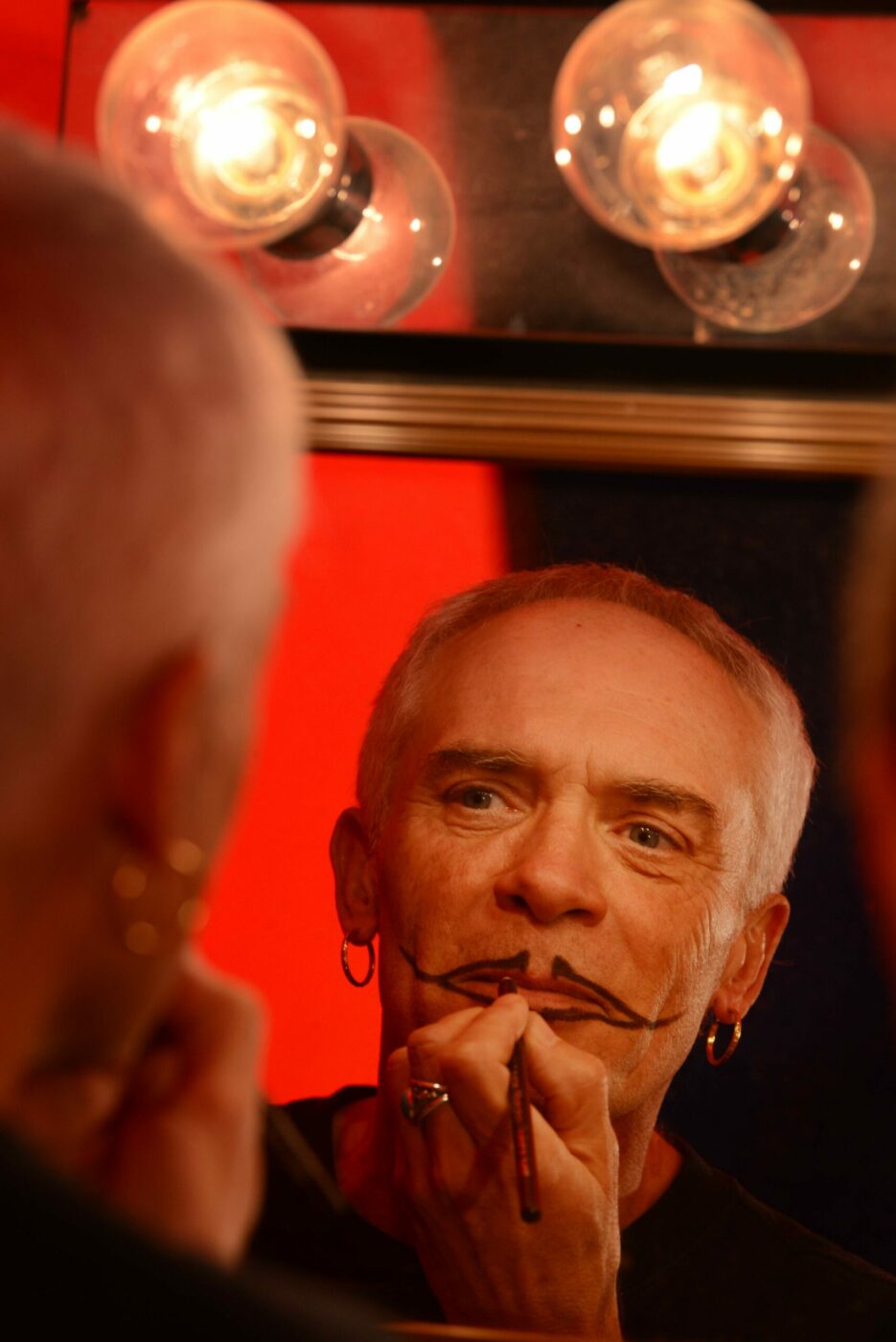
Backstage circus performer and show writer/producer Michel Michelis prepares his makeup before a performance of Cirque de Boheme, an old style circus based on the French tradition of the 1920’s held Sunday at Cornerstone Sonoma. (Erik Castro/for The Press Democrat)
The story of Michelis’s Sonoma circus began in Paris nearly 100 years ago. Having returned from the trenches in the first world war, Michelis’s grandfather, Gabriel Michelis, and his childhood friend Armand Pascal saved enough money to buy a circus in the heart of Montmartre. Le Cirque de Bohème then became a magical refuge for Parisians between the wars, a safe haven for the resistance movement during Nazi occupation, a popular hangout for American GIs following liberation, and a free spirited place to be in the ‘60s. When Gabriel and Armand passed away in the late 1960s, Le Cirque de Bohème died with them.
Revived 50 years later in Sonoma, Le Cirque de Bohème now carries with it the history, the spirit, and the ethos of those four decades in Paris.
With each show, Michel Michelis transports the audience to another, perhaps simpler, time far from the distractions of modern technology. “At the beginning of each show we tell the audience that time doesn’t exist anymore,” said Michelis, “when you say that to people they say, ‘yeah right,’ but at the end of the show many of them come up to me and say that it did happen; that they traveled away from the everyday.”
Michelis, who grew up in Montpellier in the south of France, is an energetic, enthusiastic and eccentric artist who you might expect to encounter in a fanciful French comedy, like Amélie. His accent is thick, his blue-eyed gaze intense, he gesticulates wildly and moves nimbly from one topic to the next as he relates a life-story filled with fascinating twists and turns.
Growing up, Michelis was deemed the class clown in school. The future performer left home at 17 (not to join the circus, but to attend the prestigious Le Cours Simon drama school in Paris). Michelis then traveled to Italy, starred in several theater and film productions before returning to Paris to host a radio show, perform on stage at the Festival d’Avignon, and join in an improvisation theater troupe.
Michelis next traveled to America with Le Cirque de Soleil where he fell in love with the Bay Area and started playing the blues. He subsequently bought an antique barrel organ during a sojourn in Paris and founded a gypsy jazz band in San Francisco. He even found time to voice one of the characters in the Pixar movie “Cars 2.” In 2012, Michelis brought Le Cirque de Bohème back to life in Sonoma.
“I always say my life is a series of accidents,” said Michelis, “I arrive at projects because someone suddenly left, or had a fight with the boss and got fired. I’m the rescue guy, the one they call in on short notice.”
What Michelis brings to each new artistic project — be it music, theatre or the circus — is a bohemian mindset. He believes that when it comes to art, you can’t worry with obeying rules; you need to be free. With the use of poetry, music and artistic performances, Michelis encourages the audience to experience something a little different and to realize there are no boundaries for the imagination.
“Many grandparents bring their grandchildren to see Cirque de Bohème. These grandchildren are of a generation constantly on computer or iPhone. Seeing the circus, they discover something different; that you can do art without a computer, by simply using your imagination.”
This year, the Cirque de Bohème audience at Cornerstone Sonoma can expect an eclectic lineup of circus acts and, according to Michelis, a “secret surprise.” At a time of turmoil, this particular “circus holiday spectacle” is a rare treat — an opportunity to escape everything everyday, if only for an evening.
When: Shows daily, 3 p.m. and 5 p.m. Nov. 25, 26, 27, and Dec. 3, 4, 10, 11, 17, 18. Where: Cornerstone Sonoma, 23570 Arnold Drive, Sonoma Tickets: Adults $30, kids (15 years and younger) $22, book tickets here. More information:cirquedeboheme.com/home
The much anticipated CocoaPlanet factory, chocolate tasting room and café have finally opened after months of construction and all sorts of the usual inspector delays.
But the result is spectacular for a small gluten-free French café and chocolate factory. Check out the blue background lighting, glass table tops, white marble walls, tasteful stone and total wheelchair accessibility as testified by Jeanne Allen of Incredible Accessible on Facebook. And when the weather turns sunny again, the large flower-surrounded patio in back will be perfect for sipping, nibbling and even entertaining.
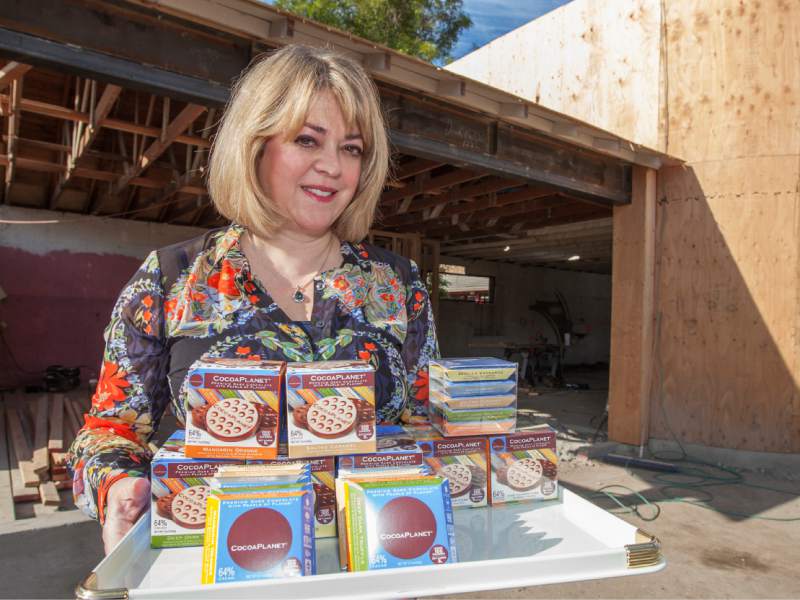
Sonoma resident Anne McKibben’s CocoaPlanet produces her healthy chocolate candy and French delights on Broadway in the building that housed Sonoma Print Shop for decades.
Anne McKibben with CocoaPlanet products.
McKibben grew up in Paris, London and Tucson, and became an international marketing executive for Hewlett-Packard, traveling to 40 countries.
She eventually developed fabulous chocolate candies that her now-late French mother could enjoy after she developed diabetes.
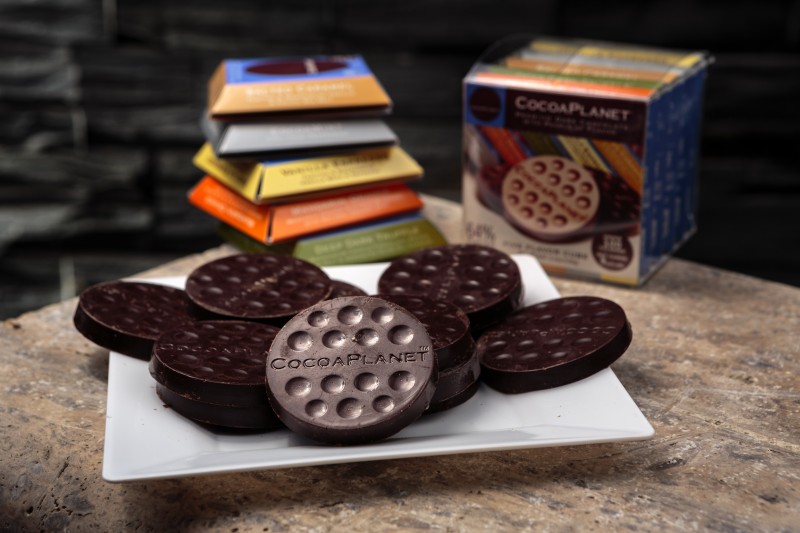
With a background in manufacturing and marketing, McKibben visited her Los Angeles chocolate manufacturer, took apart their machines so she could add her “pearls of flavor” such as mandarin orange, deep dark truffle, vanilla espresso, salted caramel and CocoaMint. In her new CocoaPlanet factory on Broadway she makes chocolates on state-of-the-art machines she has designed and patented.
The entire building is a gluten-free facility, even the Parisian-style café where guests can indulge in quiches, charcuterie, cheeses, salads, soups, sandwiches and occasional cassoulet and other stews in the tasting room or on the elegant patio.
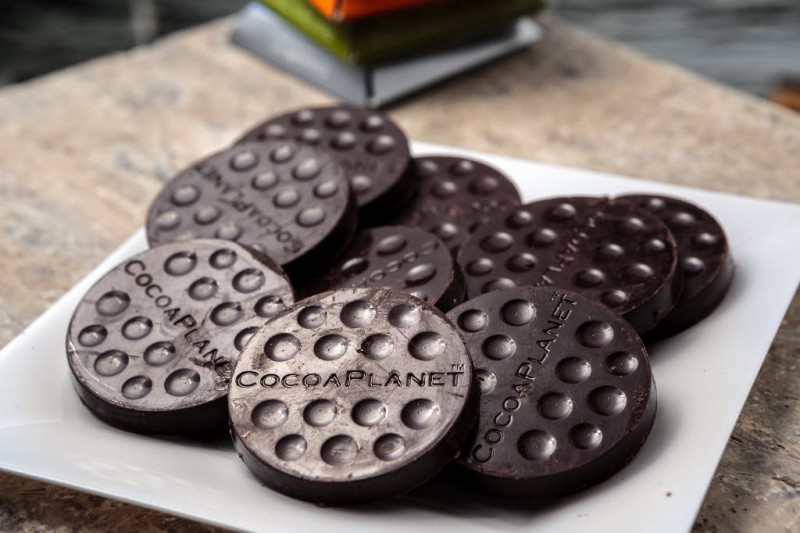
McKibben’s CocoaPlanet chocolates are 64 percent cacao dark chocolate, under 100 calories with net carbs of 9 grams or less and only seven or eight grams of sugar. They are all non-GMO, gluten-free, vegan and free-trade certified.
McKibben says you can put a wafer in a cup, add heated milk, and have great hot chocolate, which servers will do in the café.
For chocolate tastings, you can try individual tastes, a mini flight of morsels of each taste, or a “Power Nibble” with two chocolates, almonds and sharp white cheddar cheese.
Don’t miss the gluten-free desserts such as mandarin orange chocolate almond cake, Edible Dirt, apple walnut tarts, Deep Dark Chocolate brownies and Sweet Scoops vegan sorbets. All of the pastry recipes were converted from conventional flours to gluten-free by Kathy Gori.
Also on the menu are charcuterie and cheese platters, a hummus plate, gougères, Castelvetrano olives, warm tomato soup, grilled cheese sandwich, Paul’s Produce Little Gem salad with Cypress Grove goat cheese, a Sonoma Chef’s Salad, Quiche Sonoma with a salad, pizza Provençal, crêpes, and a quinoa bowl – all gluten-free. $6 to $18.
921 Broadway, Sonoma. 343-7453. cocoaplanet.com
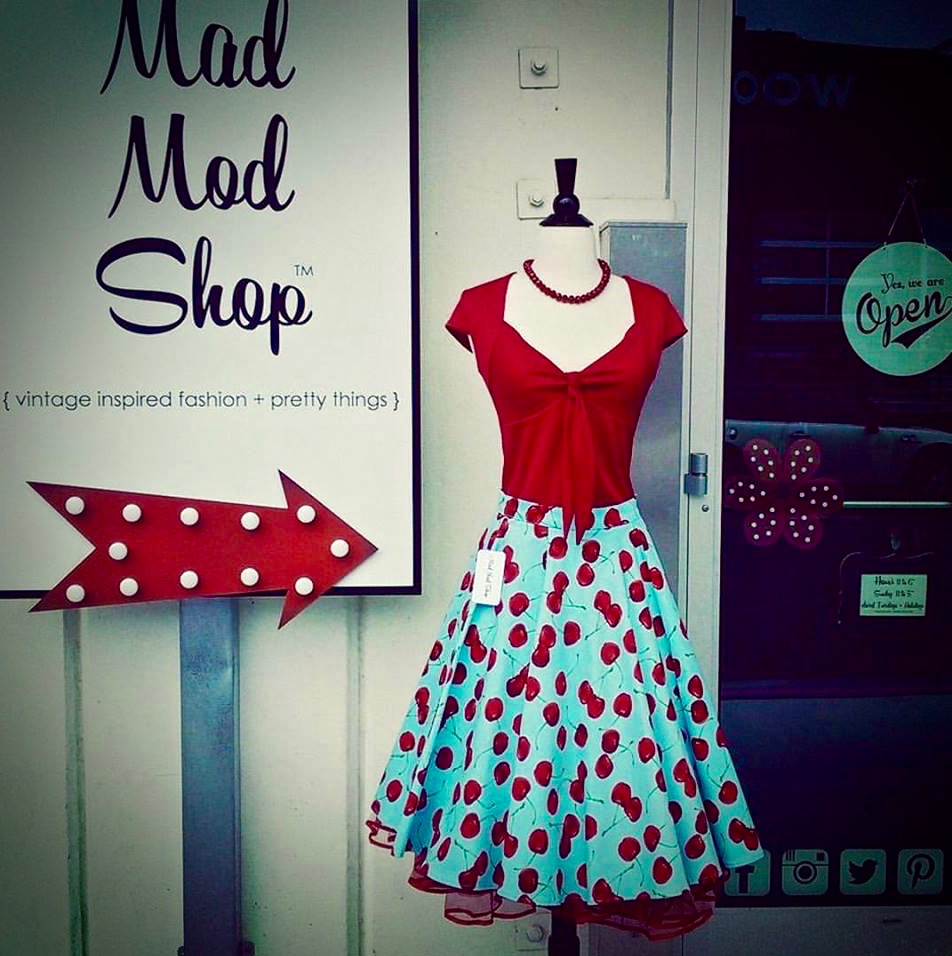
Fans of vintage-inspired clothing should make a mad dash to Andrea DeTrindad’s Sebastopol boutique Mad Mod Shop in The Barlow. Filled with carefully curated items —clothing, accessories, even some home décor items — shoppers step back in time to an era when women’s clothing was designed to flatter figures of all sizes.
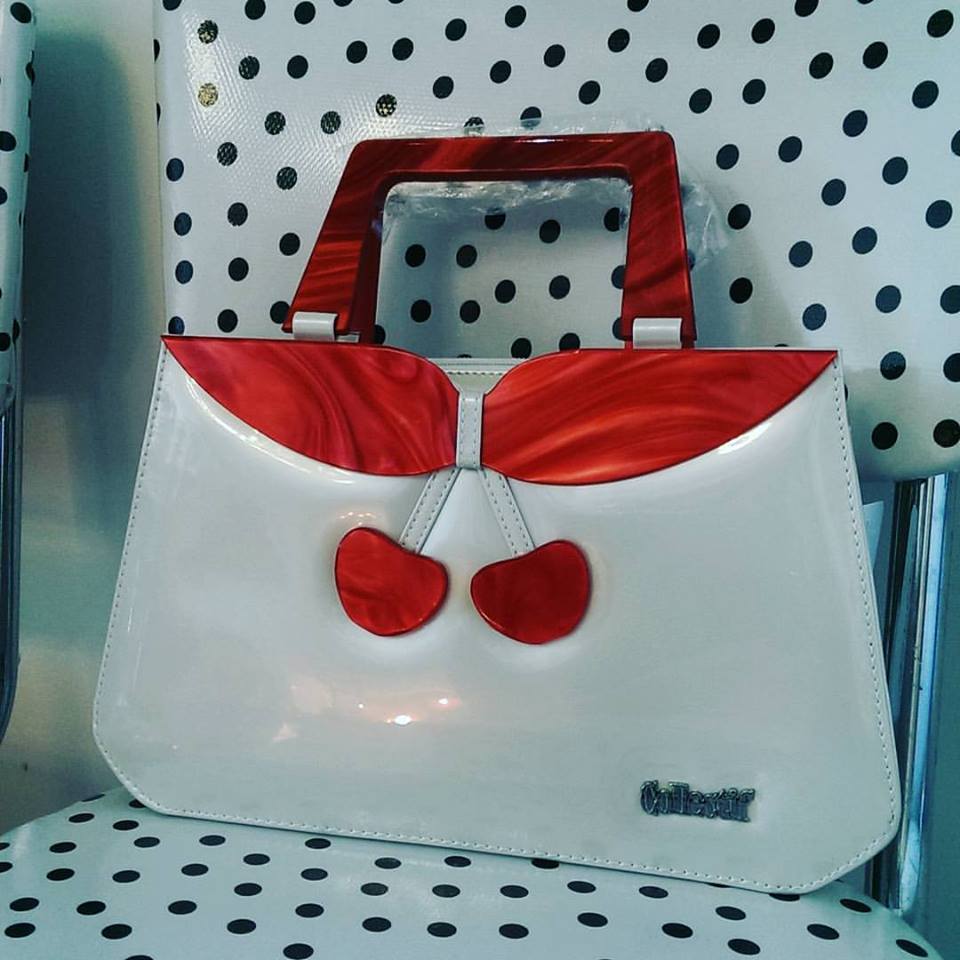
Cute cherry purse at Mad Mod Shop at the Barlow in Sebastopol.
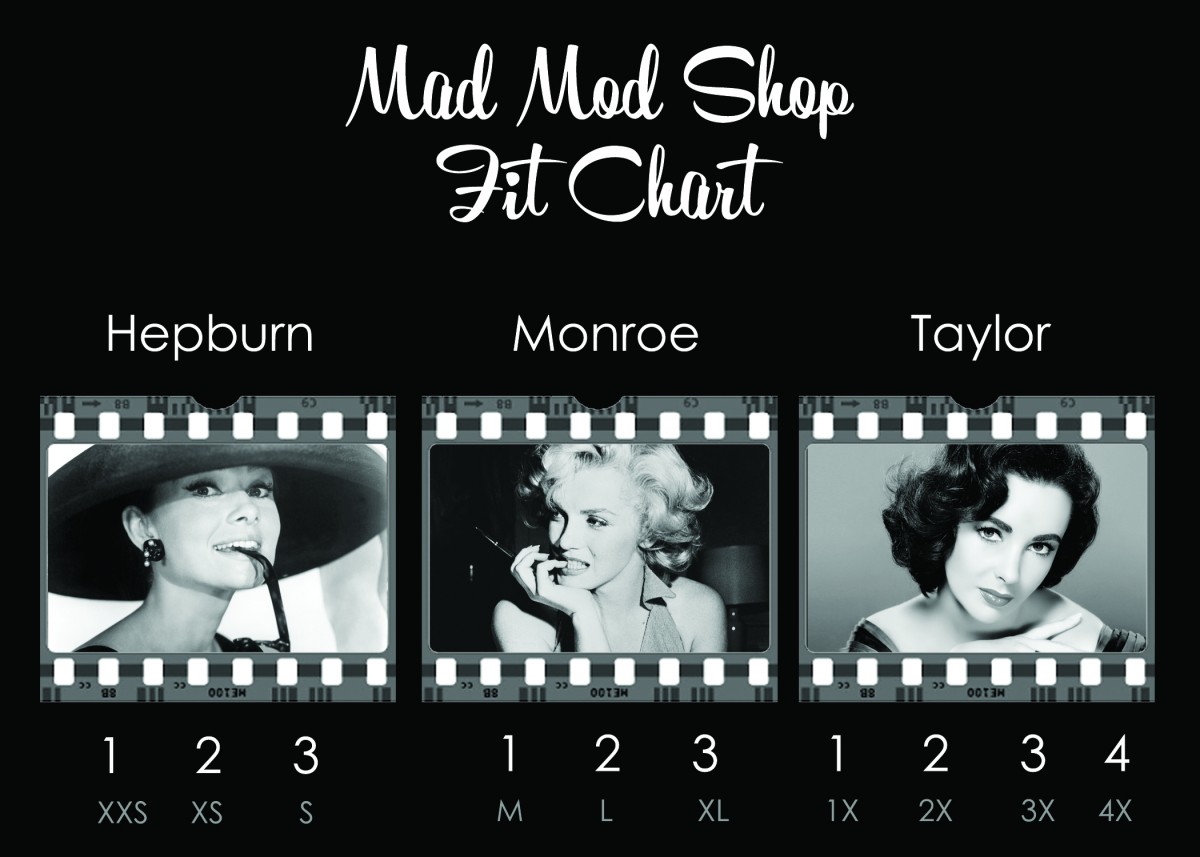
Carrying well-known brands Laura Byrnes and Stop Staring, as well as pieces from local retro-chic designer Nikki Marie Apparel, the common theme is classically tailored silhouettes that range in size from XS-4X.
But what’s really exciting is that Andrea just launched her first in-house label under the store’s name. Her first design is a sweet little black dress with fun details including a collar, 12 buttons and my favorite feature; pockets!
Owner and designer Andrea DeTrindad wearing the first dress from her new line.
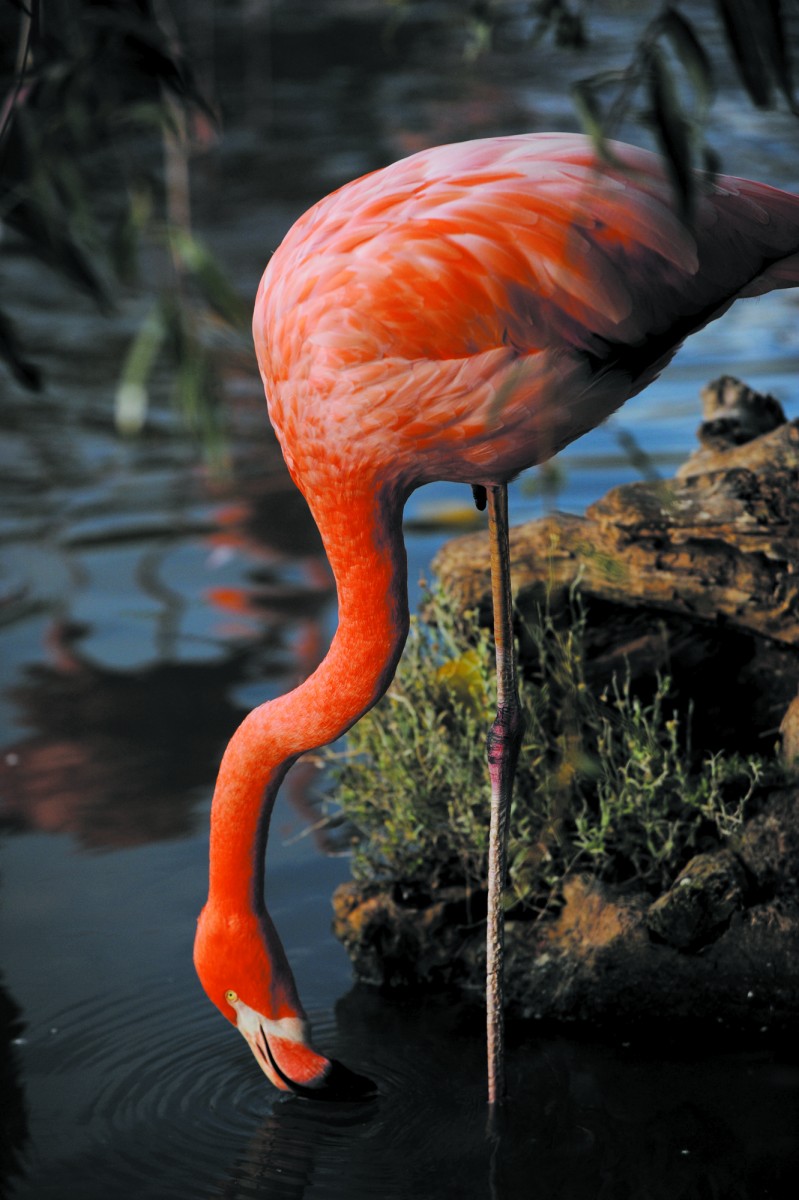
An entrepreneur at heart, Andrea has always been passionate about fashion. When her imagination became filled with images of garments she couldn’t source, she realized she needed to bring her ideas to life. Next on her list is a second dress that will be introduced later this summer in…wait for it…a flamingo fabric! Be still my retro-loving heart.
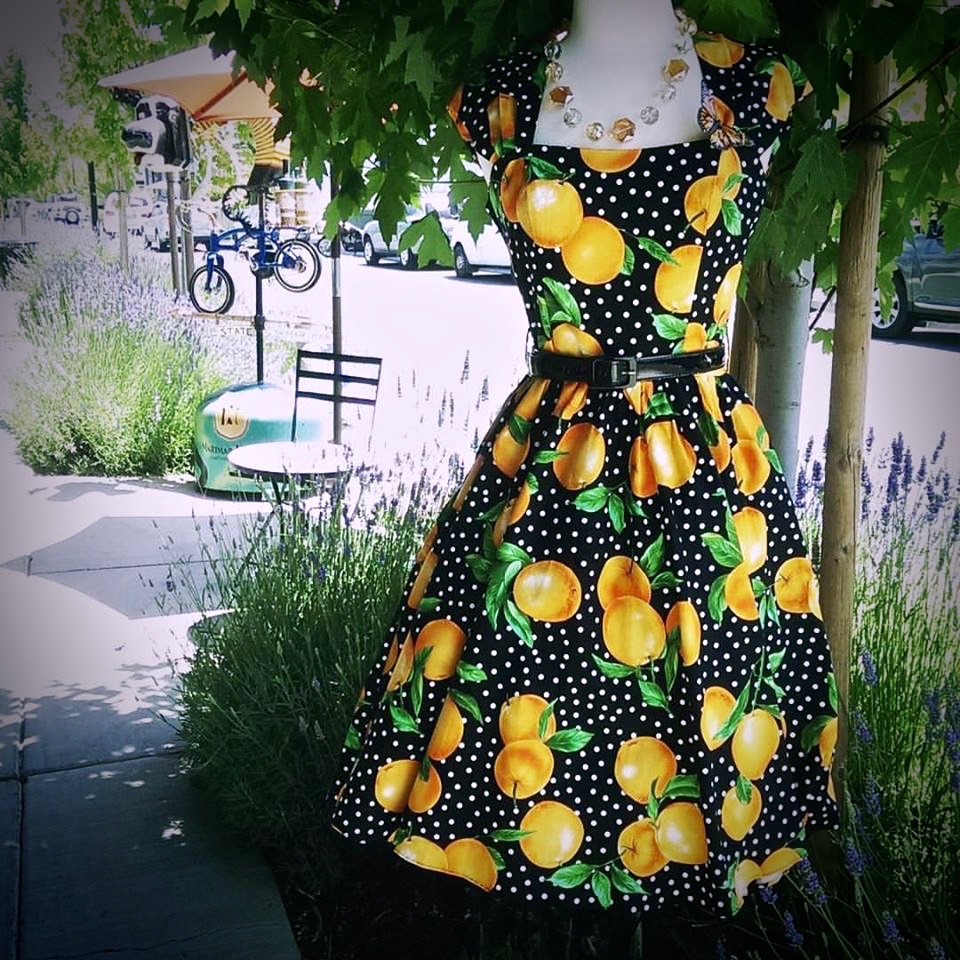
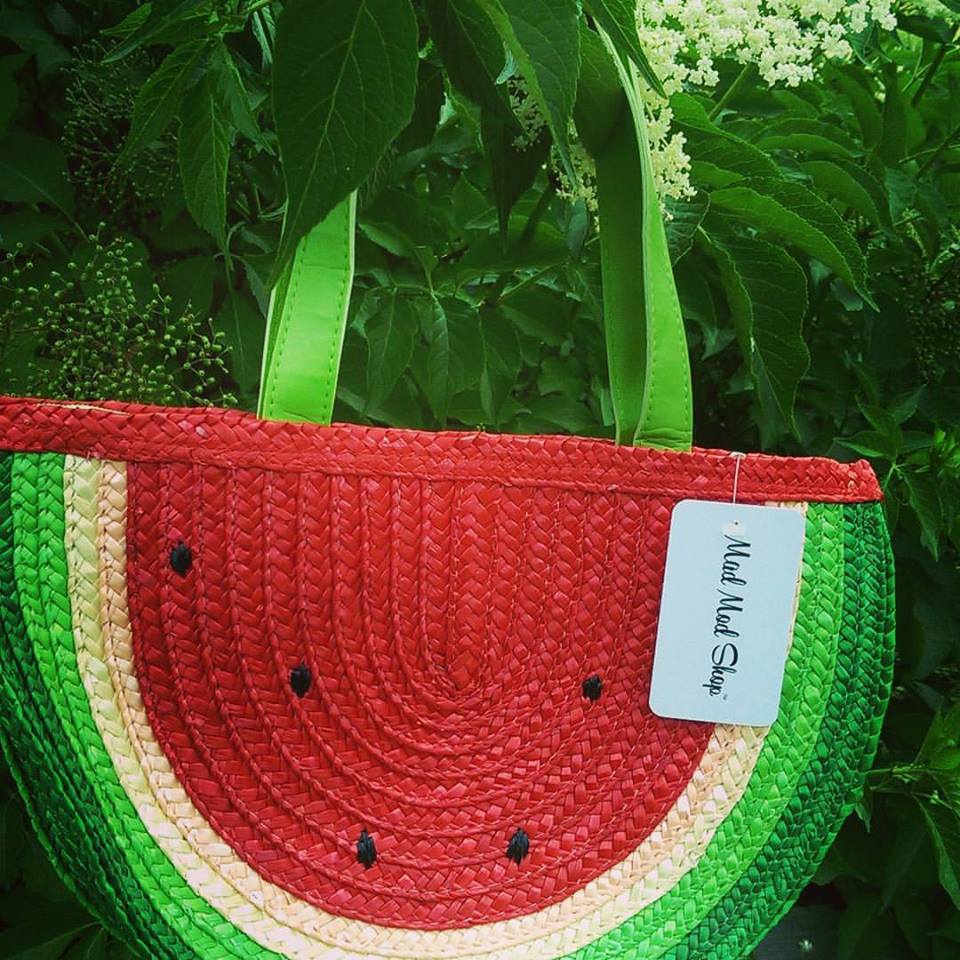
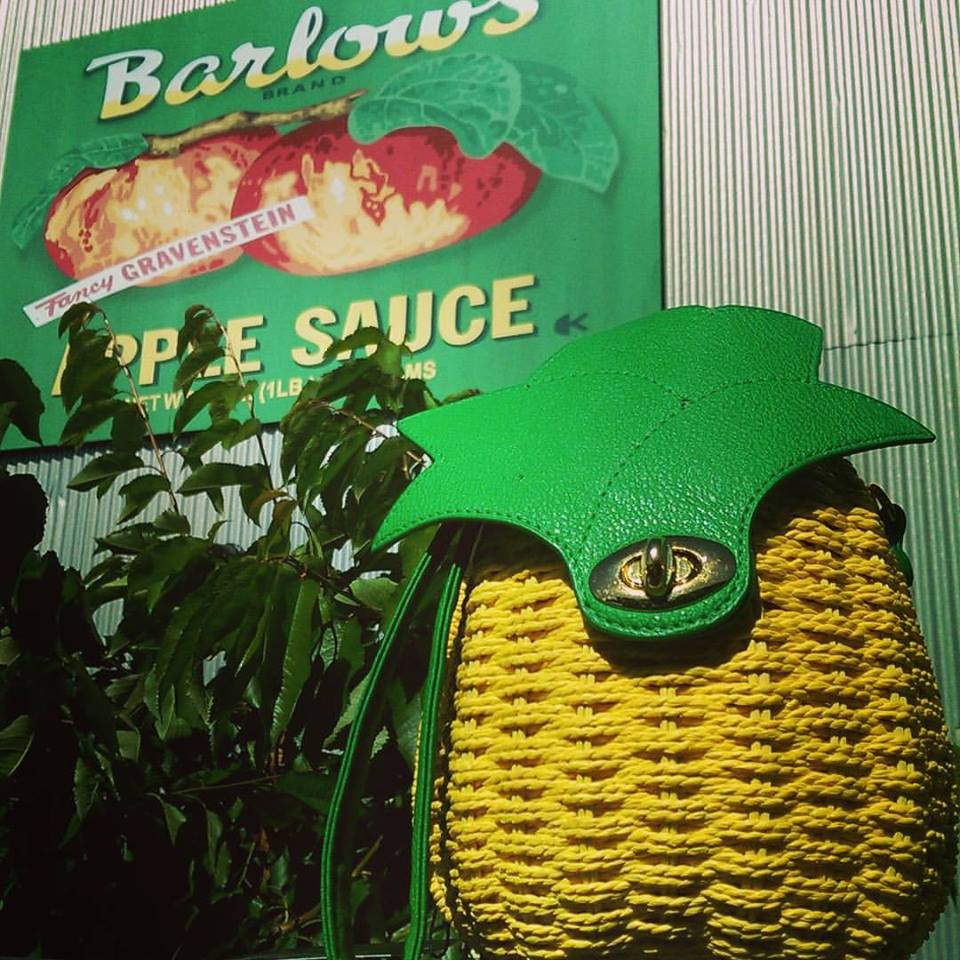
Fruit inspired clothing and accessories are really popular this summer.
What does the future hold for the Mad Mod Label? Shoe design! 15 years ago Andrea secured a provisional patent on a shoe design that she’s eager to launch in the store, along with separates and of course, more dresses (with pockets, I hope!).
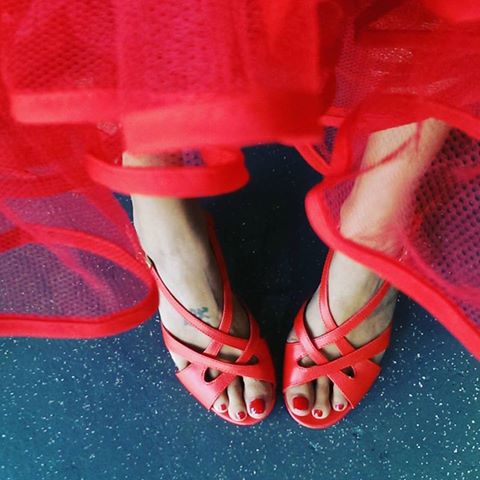
Brightly colored petticoats add extra oomph to dresses and skirts.
Why Vintage-Inspired?
Figure Flattering – classic silhouettes flatter all shapes and sizes (XS-4X)
Stylish – skin may be in for romper-wearing millennials, but the rest of us want to be chic (and not necessarily trendy)
New to You – for those who love the look of vintage, but prefer to purchase new clothing in easy-to-care for fabrics
High-waisted swimwear is in. Ruching details on side are very forgiving and flattering.
Cue up some tunes from The Rat Pack to get in the mood, and swing by the shop for all of your summer needs, including high-waisted swim suits reminiscent of Hollywood bathing beauties of the 40s and 50s.
Mad Mod Shop, 6780 McKinley Street #140 Sebastopol CA 95472 | 707-329-6113
Check out the gallery below for inspiration.
Be the hit of the farmer’s market when you stroll the streets with this life-size watermelon straw purseMad Mod Shop Size Chart.Pineapple purse with retro latch.Hand painted locally, these butterflies are wearable art.