Additional Sonoma County luxury establishments that were recommended by Forbes include Farmhouse Inn (pictured) and Farmhouse Inn Restaurant in Forestville and Hotel Les Mars in Healdsburg. (Farmhouse Inn)
Valentine’s Day 2021—the Farmhouse Inn’s 20th anniversary—found the Forestville boutique hotel long ranked among the best in the world. Its restaurant had maintained its Michelin star for 14 consecutive years, since first receiving it in 2007.
When siblings Catherine and Joe Bartolomei first came upon the 1873 vintage farmhouse and its early-20th-century adjoining cottages—then a B&B, it had seen better days. Located in “Apple Country,” where apple orchards far outnumbered vineyards, it seemed an unlikely place to open a luxury “Wine Country Hotel.” But Catherine and Joe, fifth-generation Sonomans, saw potential—and possibly the future. They bought the property and got to work.
“We’ve had the tremendous opportunity to take this little bed and breakfast to something that really has achieved international recognition,” said Catherine Bartolomei.
It has taken creativity, perseverance and more than a few coats of paint for the sister and brother entrepreneurs to get here.
“It was a lot of paint in those early days,” said Joe Bartolomei, who recalls painting every room on the property at least once. In support of his sister’s quest for just the right shade of blue for Cottage 8, he painted it four times.
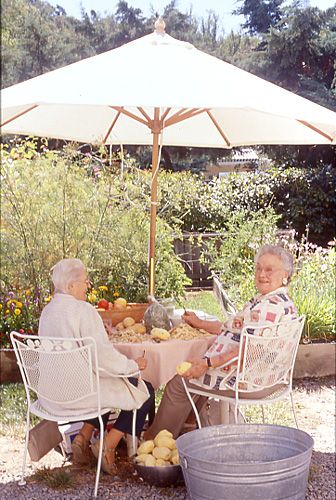
Grandmas at work peeling potatoes. (Courtesy of Farmhouse Inn)
As the years passed, the sister-and-brother team checked off their list of upgrades and to-dos, one by one. The avocado green and peacock blue bath tubs have been replaced with jetted tubs and steam showers. The original card tables are a thing of the past and family members no longer need to peel potatoes for the restaurant, but chef Steve Litke’s acclaimed “Rabbit, Rabbit, Rabbit” dish remains a popular menu item. In 2015, the inn added an onsite spa. A few years later, a fancy food truck — Farmstand — was installed, offering casual outdoor dining in the courtyard and by the pool.
Never content to rest on their laurels, the Bartolomeis have continued to raise the bar of the Farmhouse Inn experience. Guests can now reserve luxury cars for complimentary drives, book a Wine Country adventure with a driver, or splurge on a sommelier-led wine tour. This program picked up speed last year with the acquisition of three new Volvo XC90 SUVs equipped with T6 engines.
A changing landscape
Over the past two decades, the landscape surrounding Farmhouse Inn has continued to change. Some two dozen wineries now dot the countryside and the Russian River Valley attracts wine enthusiasts from around the world.
“The destination has grown up around us in a way that we didn’t really anticipate. We kind of hoped that would happen but we had no crystal ball,” said Joe Bartolomei. “I’d like to think that we had a part in that; that maybe we helped put this region on the map. But it wasn’t anything that we had planned for.”
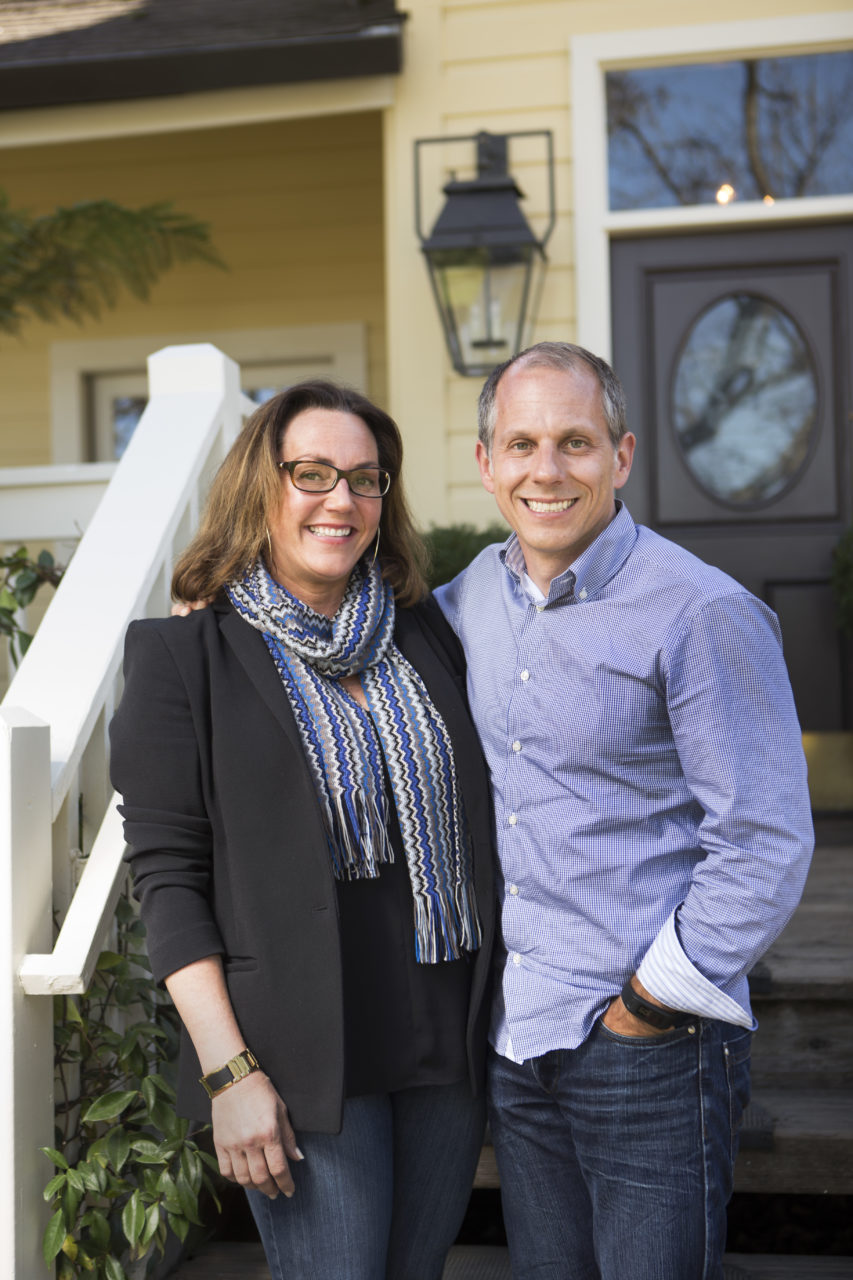
Sister-and-brother team, Catherine and Joe Bartolomei, owners of Farmhouse Inn in Forestville. (Charlie Gesell)
Through the years, as Catherine and Joe Bartolomei have watched the area change and grow, they have adapted to changes—and to challenges.
In recent years, fire, flood and pandemic have presented the Farmhouse Inn and the Sonoma County tourism industry with a trifecta of unprecedented challenges. In February 2019, the Russian River overflowed its banks and brought its waters to the door of the Farmhouse Inn’s restaurant. Before the waters subsided, three guest cottages and two offices stood waist deep in water.
In 2020, the sister and brother entrepreneurs faced fire and pandemic. The Walbridge fire, the third major wildfire incident in Sonoma County in three years, burned across the hills north of Guerneville and westward toward Healdsburg in August. The Farmhouse Inn was included in the evacuation order. Fortunately, the flames did not cross the Russian River.
Visitors remained sparse for weeks after Farmhouse Inn weathered floods and fires. Then, as the pandemic began and stretched on, the inn was forced to furlough employees and close temporarily, in compliance with stay-at-home orders.
“The last few years have been really challenging,” said Joe Bartolomei. “In some ways it’s like, ‘Oh my god, how did we get to 20 years?’ In other ways, I feel like I can’t believe it’s only been 20 years.”
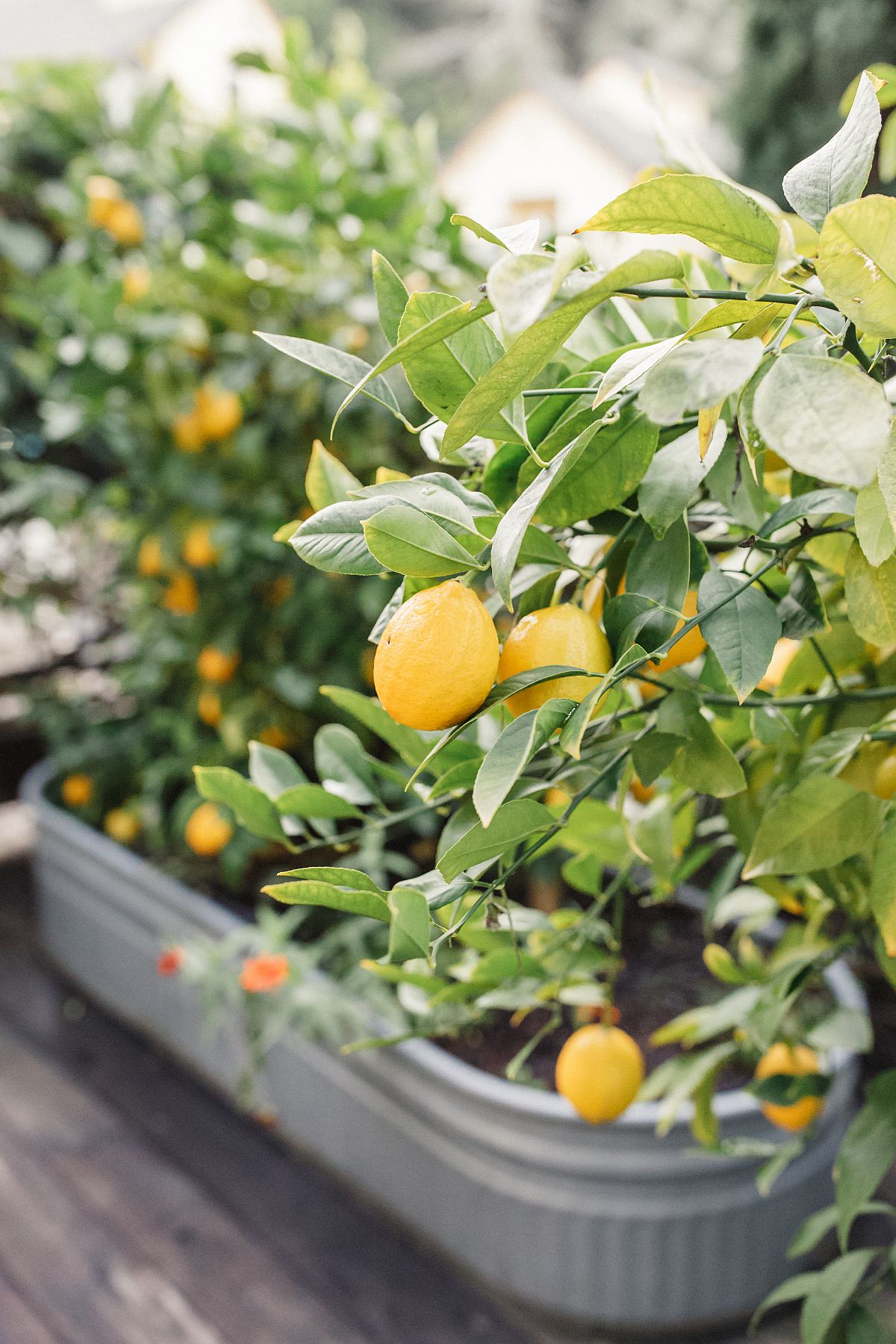
A lemon tree grows at Farmhouse Inn in Forestville. (Courtesy photo)
Embracing change
Despite the trials of the last few years, Catherine and Joe Bartolomei remain optimistic. Farmhouse Inn, like other Sonoma County hospitality businesses, has creatively adapted to meet the pandemic’s challenges.
“I think we’re better and stronger than we’ve ever been,” said Catherine Bartolomei. “Things are looking good. Things are looking up.”
The inn now serves Michelin-starred dining alfresco and also offers exclusive outdoor spa treatments. As activities have relocated to the outdoors, the Bartolomeis have found new innovative uses for the property’s beautiful grounds, including morning yoga sessions and evening wine tours hosted by the siblings’ favorite local wineries. Guests, excited to be out and about and eager to test out new experiences, seem happy to provide positive feedback to the inn’s staff.
Catherine and Joe continue to discover new ways to fine-tune guest offerings and evolve their business. New pool and patio furnishings are in the works, along with further enhanced in-room amenities. Next month, the property’s reimagined spa (with a new manager at the helm) will launch new programming, including a wellness-focused dining menu. Twenty years after opening, the Bartolomeis are hard at work innovating, creating and augmenting the Farmhouse Inn experience.
“We have so many ideas, so many things we want to do,” said Joe Bartolomei. “We’re still nowhere near completed with this thing.”
Sonoma Beef Burger with onion rings, fried chicken burger, chili fries and Cajun fries at Acme Burger in Cotati. (Heather Irwin / Sonoma Magazine)
Adios Taco Tuesday, it’s Takeout Wednesday! But today’s meal is extra special, because it’s the annual Great American Takeout Day, an annual event that benefits CORE (Children of Restaurant Employees) and the National Restaurant Association Educational Foundation. So get your online ordering or dialing fingers ready and order a takeout or delivery meal from a restaurant you’d like to support. Take a picture of your meal and post it on Instagram or Twitter using the hashtag #TheGreatAmericanTakeout and event sponsors will donate $10 to CORE and the NRAEF.
Seniors are returning to dining in and out… (Shutterstock)
Vaccinated and raring to return to life, a tsunami of seniors are dining out — and in — at restaurants throughout Sonoma County.
“I am finding a lot of excitement from our regulars who feel a sense of relief from being vaccinated,” said Sarah Piccolo of Fork restaurant in Sebastopol.
After more than a year of takeout and limited outdoor dining, the county lifted its most restrictive regulations in mid-March, allowing indoor dining at 25% capacity. That, along with a drop in COVID-19 cases and increasingly mild weather, has seniors cautiously venturing out.
“They are sitting on the patio, excited to be back in our seats! Some of them have either done takeout or just cooked since March. It feels great to have them back,” Piccolo said.
With more than 82% of the over-65 age group vaccinated in Sonoma County, according to the California Immunization Registry, and a long year of missing family, friends and favorite restaurants, elders are ready to get out.
“One thing I’m really enjoying is seeing our older generation back out again … and celebrating with family,” said Guerneville restaurateur Crista Luedtke of Boon Eat + Drink. “It makes me realize we’re on the right path.”
Even anecdotally, the senior boom in restaurant patronage has been obvious throughout the county. On a recent visit to Willi’s Wine Bar in Santa Rosa, we couldn’t get a reservation for the limited indoor dining, and elders were noticeably en masse at the few tables. Our server confirmed that they were seeing a trend of recently vaccinated seniors coming out to eat after a long absence. It was the same at Taub Family Outpost, where long-absent elders were enjoying brunch.
It’s a national trend, apparently. The New York Times recently reported that those 70 and older are drinking cocktails, meeting up with grandchildren and “filling restaurants” since receiving their full vaccination.
Even my own parents, who’ve been hibernating for nearly a year, are now a month past their second vaccination and cautiously eager to get back to life beyond limited grocery store visits and essential appointments. They dined outdoors at Blue Ridge Kitchen last weekend, thrilled to finally be eating with family somewhere other than at home.
Welcome back! Now if the rest of us could just get vaccinated…
Opening a retail business can be a daunting experience under normal circumstances. Imagine adding a pandemic into the mix. Jorge Martinez, a Lake County woodworker and furniture maker, decided to take a leap of faith after he noticed an empty storefront on Sonoma Highway.
Martinez had previously sold his rustic furniture pieces in a Napa Valley consignment store. After fires and pandemic shutdowns, the store had closed permanently and he had moved his furniture into storage. As he kept passing by the empty storefront on his way to a construction job, he thought to himself, “I think God is trying to show me something.” He decided to give it a try, signed the lease, fixed up the storefront and, in February, opened Wine Country Decor.
In between customer visits, Martinez can now be found on the patio outside his store where he cuts wood with the help of an assistant and works on new furniture pieces, which can be customized using different materials — a wood vanity in the store, for example, is topped with a stunning double sink made out of copper. Martinez uses mostly recycled wood for his furniture (98 percent of the wood is recycled) and slabs of wide and wavy-grained wood are finished with wax instead of shellac for outdoor use.
Running a new retail store while also creating its inventory is hard work, but Martinez doesn’t complain. “My life is working hard,” he said. “This is my passion.”
Martinez grew up in Mexico in a family of artists. His mother was a painter, his father made furniture and when Martinez was around 7, he began learning painting, pottery and woodcraft together with his 11 siblings. He’s been wanting to bring the furniture designs of Mexico to the United States for some time. In addition to his own furniture pieces, he now imports oversized terra cotta pots that he embellishes with paint, metal-framed mirrors which he paints to create a patinated look, as well as paintings, sculptures and other decor.
Customers are starting to take notice of Martinez’ meticulously crafted furniture and unique decor offerings and he’s enjoying seeing the momentum build.
“It makes me so happy,” he said of opening the store. “(It’s) opening my eyes. It makes me feel stable, like a rock.”
Wine Country Decor, 6001 Sonoma Highway, Santa Rosa, 707-843-7619, 707-495-8487, winecountry-decor.com
We tend to think of our dining tables as simply utilitarian pieces of furniture. But the dining table is often the focal point of the room so it’s a good spot to infuse some extra style to your home. While we may not be entertaining guests for a while yet, it can still be nice to elevate your dining experience. Click through the above gallery for a few fantastic pieces for the tabletop. All are available in Sonoma County stores.
Glamping has soared in popularity over the last few years, bringing a wave of luxe camping destinations to Sonoma County and the surrounding Bay Area, from AutoCamp in Guerneville to Mendocino Grove. A newcomer to this list of glamping spots is Sonoma Zipline Adventures (formerly known as Sonoma Canopy Tours), which recently upped their game with brand new treehouses.
Located among the redwoods in Occidental, Sonoma Zipline Adventures combines chic above-ground accommodations with an exciting, blood-pumping zipline course. After a tough year with few (good) adrenaline kicks, spending a night among the trees and then flying through the woods sounded like a good and safe way to lift the spirits. It turned out to be one of the most unique and memorable overnight stays I’ve experienced as a travel writer.
Sleeping in the Trees
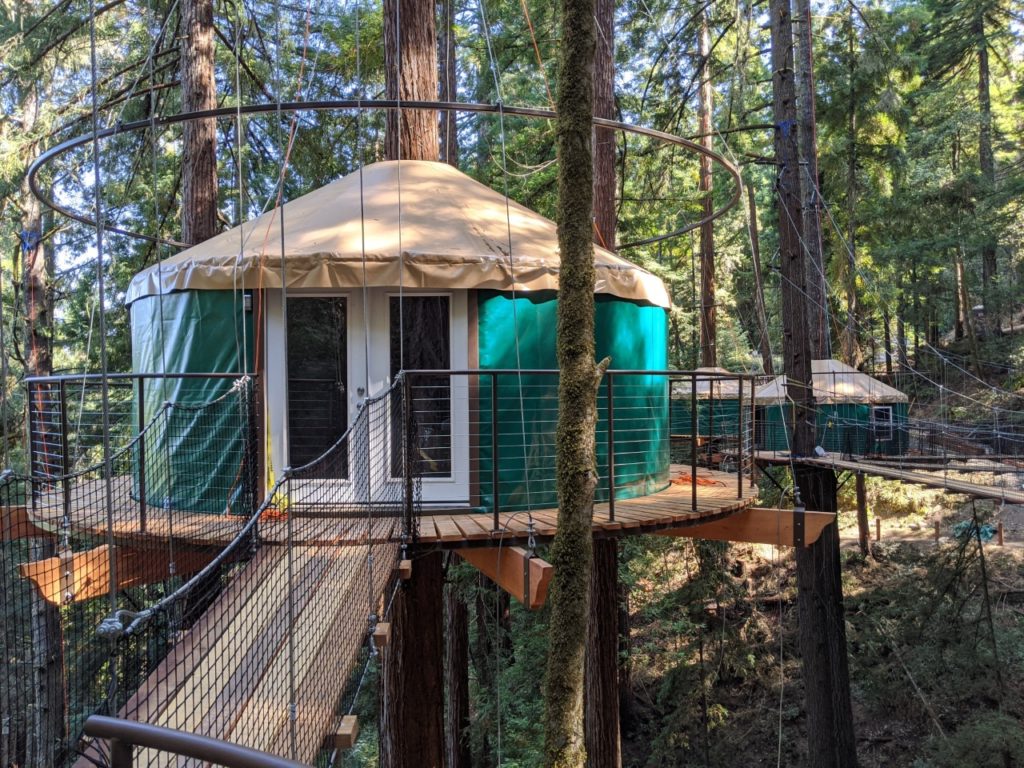
Sonoma Zipline Adventures has constructed five treehouse yurts for overnight stays. (Courtesy photo)
After driving through Sonoma West County and into the woods, my friend and I arrived at Sonoma Zipline Adventures’ treehouse village — a collection of five green yurts suspended high above the ground. The yurts were surrounded by narrow wooden decks and connected by lightly swaying suspension bridges. I was impressed by the meticulous construction of the treehouses, which I later learned were built with the help of the zipline staff (a pretty scary undertaking, judging from this video).
Each treehouse has its own name and theme. Ours was called Ocean, which turned out to be a suitable name as it rocked gently like a cruise ship whenever a staff member walked across our bridge. The interior of the treehouse was cozy and surprisingly large — it fit a queen bed, bunk beds, a small table with chairs, a compost toilet, and a kitchenette area — making it a good size for a couple, a small group of friends, or a family with children. A giant huggable tree extended right through the middle of the yurt, and while it was a pretty chilly night during our stay, the heater did a good job of keeping us warm.
The treehouse did lack two things: a shower and WiFi. But if you’re going to sleep in a treehouse in the woods, it seems appropriate that you’d use this as an opportunity to unplug. And you certainly don’t need to look your best for the zipline tour — in any case, the helmet will mess up your hair.
After settling into the treehouse, my friend and I did some easy-to-moderate hiking around the 125–acre, heavily forested property and then spent the rest of the evening chatting, stargazing and playing Jenga.
During our stay, we had two generous meals delivered to our treehouse — it was quite impressive to witness how the staff carried these meals across the swaying suspension bridges without dropping anything. Dinner featured a charcuterie plate with bread to start, followed by steak, potatoes, asparagus, and a s’mores-like treat for dessert. The next morning, we received breakfast before our zipline tour; a menagerie of brunch items: eggs, sausage, potatoes, french toast, fruit, and orange juice.
While I’ve stayed at several glamping spots throughout Northern California, this one is definitely the most unique, checking the boxes for childhood nostalgia, natural beauty, and modern-day conveniences. It also is the only one that included meals.
Flying Through the Trees
The Sonoma Treehouse Adventures experience includes two zipline tours. (Emily Blake photo)
After breakfast, we geared up (literally) for our zipline adventure. I’ve been ziplining several times but it was a first for my friend, who was pretty nervous. Luckily, our guides were outgoing and fun, which helped lower her heart rate a little. As part of our tour, called the Tree Tops Tour, we got to learn about the different trees we were ziplining from and between. The Sonoma Treehouse Adventures experience typically also includes a zipline course upon arrival, but the Forest Flight Tour is currently being renovated.
The Tree Tops Tour features seven ziplines in total, including the longest and fastest ziplines at the park. You start small and work your way up to the longest one, which provides scenic views of the canyon. After that, there are some shorter but especially speedy ziplines. It was raining lightly during our experience, but we barely felt it (especially with our masks on, which are required during the pandemic).
This zipline course stood out from others I’ve tried before. In addition to the ziplines, there was a spiral staircase to descend, two sky bridges (suspension bridges) to traverse, and at the very end, a rappel from 45 feet off the ground. Leaving the platform for the rappel was definitely the scariest part of the course but once I was on my way, it was easy, fun, and not too fast.
I had an absolute blast and while my friend felt a little shaky throughout, afterward, she called it “exhilarating” and “freeing,” and added it was something she never thought she would do. It’s the kind of experience that leaves you with a major adrenaline rush and feeling as if you can overcome all of your fears.
Sonoma Treehouse Adventures costs $550 per person with a minimum of two guests. Additional children and household members are $275 a person with a max occupancy of four.
two glasses of white wine on table overlooking California wine country on sunny, cloudless day (Shutterstock)
After 12+ months of pandemic living, we could all use a fresh start right about now. How about relocating to Healdsburg for a $10,000-per-month job, rent-free living and a 12-month supply of free wine?
Sonoma County winery Murphy-Goode has launched a four-month-long nationwide search for one person to “live out their ultimate dream job” in Wine Country. There are no required qualifications for “A Really Goode Job,” as the winery calls the new position. Instead, Murphy-Goode wants applicants to create a short video resume in which they explain their ideal role in the wine industry and what they would bring to the winery. The video should be uploaded to the application page by June 30, 2021.
While people from all over the U.S. can apply for the position, the winery is welcoming local applicants, too.
“Wine Country locals are the heartbeat of our community; an eclectic, diverse group with a variety of skills,” said Rick Tigner, CEO of Jackson Family Wines, the family-owned wine company that includes Murphy-Goode Winery. “Tell us about your favorite places and activities as a local; I’m sure we will be able to relate,” he said.
The Murphy-Goode gig starts this August and runs through July 2022. But, if everything works out well, the lucky employee might be able to continue working for the winery.
The new hire will spend the first 90 days on the job shadowing winemaker Dave Ready Jr. and will then be tasked with a variety of assignments depending on their interests, including “developing working relationships across functions of the winery” and “effectively promoting Murphy-Goode wines through various channels and events.”
During their employment, the winery will work with the new employee to help them pivot their career and choose their path in the wine industry.
“Our job is to help guide their path in the wine business, support their passions and provide a platform to achieve their dream job,” said Tigner. “The job could include anything from winemaking to viticulture, hospitality, culinary, digital marketing, and beyond. The sky’s the limit!”
Murphy-Goode ran a similar campaign in 2009. The winner that year, Hardy Wallace, landed the job by creating a viral marketing campaign and became a winemaker in Napa after his time at Murphy-Goode. He now operates Dirty and Rowdy Family Winery with his wife, Kate, and their friends Matt and Amy Richardson.
If you’re looking for a new career, love wine and like to live life “one sip at a time,” apply here. Job applicants must be 21 years of age or older and must be authorized to work in the U.S. For more information and tips on how to make your application stand out, click through the gallery above.
Prosciutto di Parma and housemade mozzarella on housemade focaccia served alongside Caesar salad at Citti Cafe in Kenwood. (Chris Hardy / Sonoma Magazine)
We’ve heard some super-sad news from Sebastopol: Food Mechanic is closing. The cafe, owned by Shane Dykhuis and Anne Zuelke, served healthy soups and salads, along with some darn good cookies and collagen “jigglers,” made with juice and beef gelatin. To say that their smoked chicken salad was my very, very favorite in the whole wide world is not an exaggeration. On one of my hard days as I worked to get food to first responders and evacuees during the Kincade fire, that salad pretty much saved my bacon and my sanity.
“We’ve muscled through major challenges like wildfires and the ongoing pandemic, but these slowed down our momentum during critical growth periods and we’ve simply run out of time and resources to continue on in this capacity,” the couple said on Facebook in an announcement about the closure.
I’m heartbroken that they’ll be moving on, but we hope they’ll pop up soon in another spot. Open until March 26, 980 Gravenstein Hwy., Sebastopol, foodmechanic.com.
Madrona Manor makeover
The historic Healdsburg mansion and its restaurant will be closed for several months for a remodel after being acquired by an investment group headed by designer Jay Jeffers of St. Helena, Kyle Jeffers and Cory Schisler (see renderings of the remodel in the above gallery). What we’re interested in is the Michelin-starred restaurant run by Chef Jesse Mallgren, who will stay on when the property reopens under a new name, The Madrona. The restaurant will be a more casual spot than its former white-tablecloth incarnation, Jay Jeffers said.
Cafe Citti update
After months of waiting, Cafe Citti has received its much-anticipated building permit and hopes to open soon in its new location at 2792 Fourth St. in Santa Rosa. Luca and Linda Citti, owners of the popular Italian eatery, said last fall they planned to move for several reasons, including the need for renovations at the Kenwood building, power outages and the Glass fire that burned through parts of Kenwood.
Finally open
Of course, the biggest news is that Sonoma County has reached the much-anticipated red tier, which means restaurants can have indoor dining at 25% of their capacity. While we’re still quite happy outdoors in this lovely weather, it’s nice to know that we’ll be able to head inside — especially after getting our second vaccine dose!
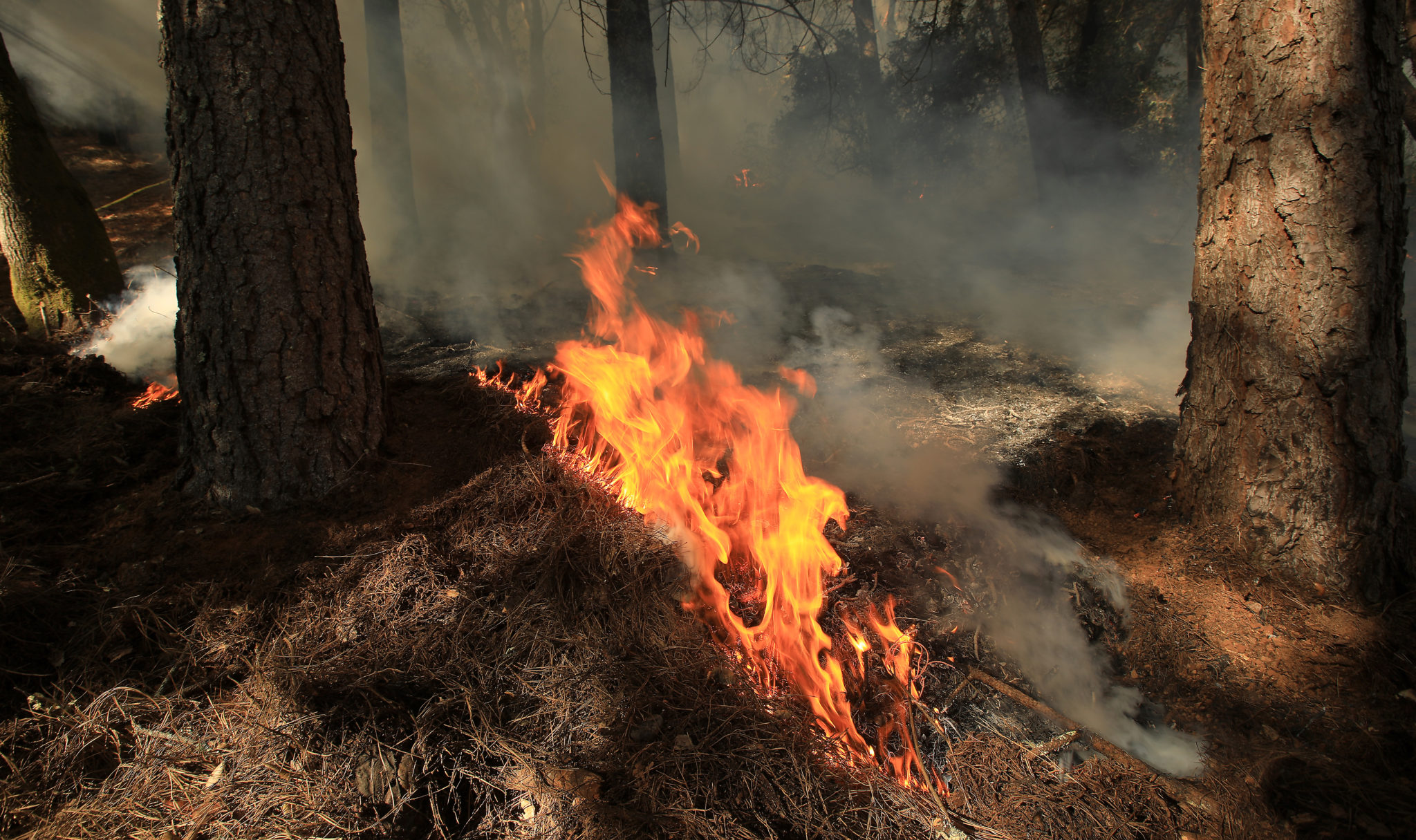
Prescribed fire is used to thin the forest floor in the hills above West Dry Creek Nov. 29, 2020. The Walbridge fire burned very close to the area of the prescribed fire. (Kent Porter / The Press Democrat)
After a more than a century of no-fire-shall-pass land management, the movement to reintroduce small-scale controlled burns has taken a promising hold in Sonoma County. More landowners than ever are teaming up with ‘burn bosses,’ scientists, and a growing corps of enthusiastic volunteers to restore ‘good fire’ to the landscape — and make us safer and more resilient for the wildfires to come.
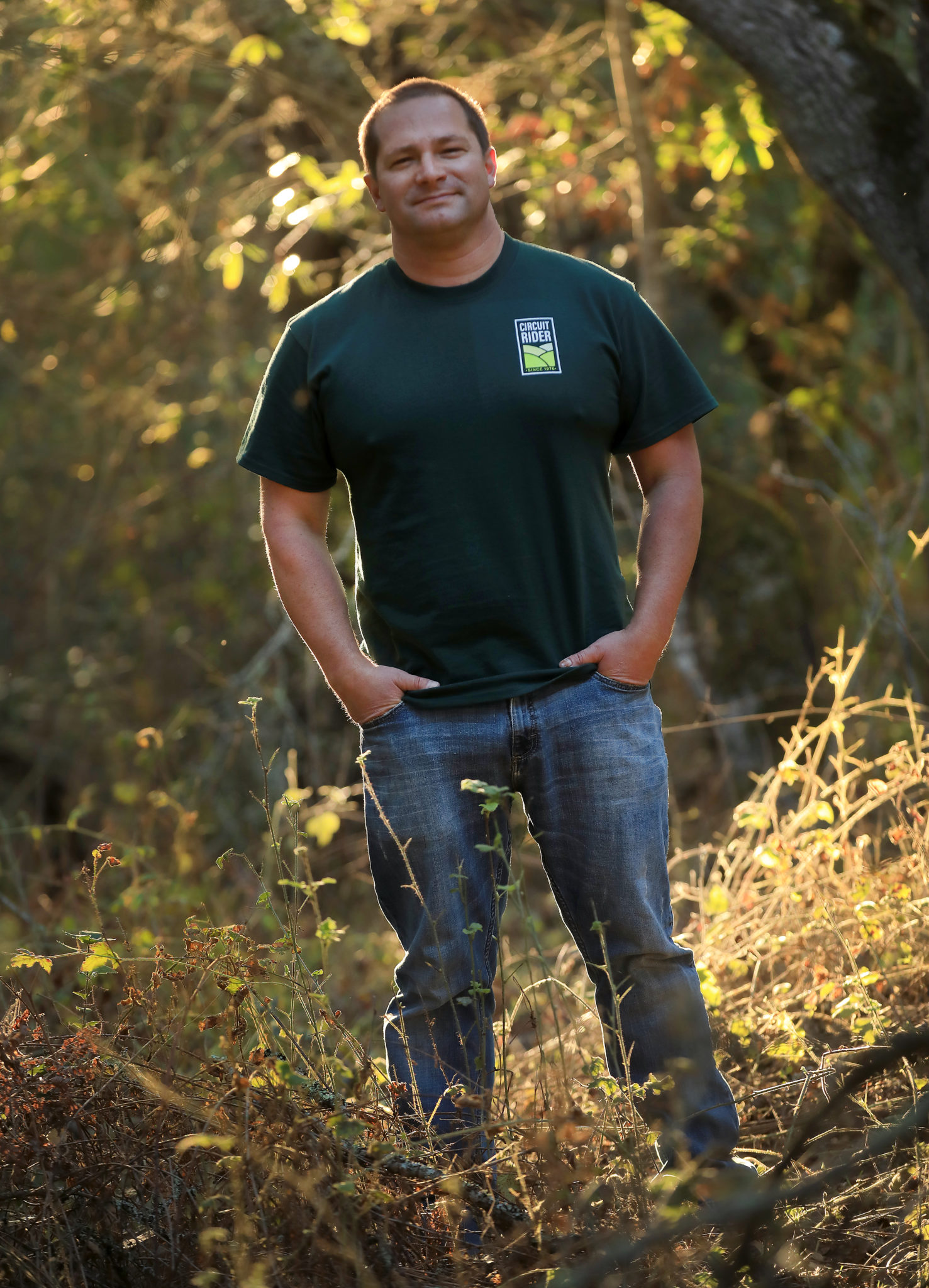
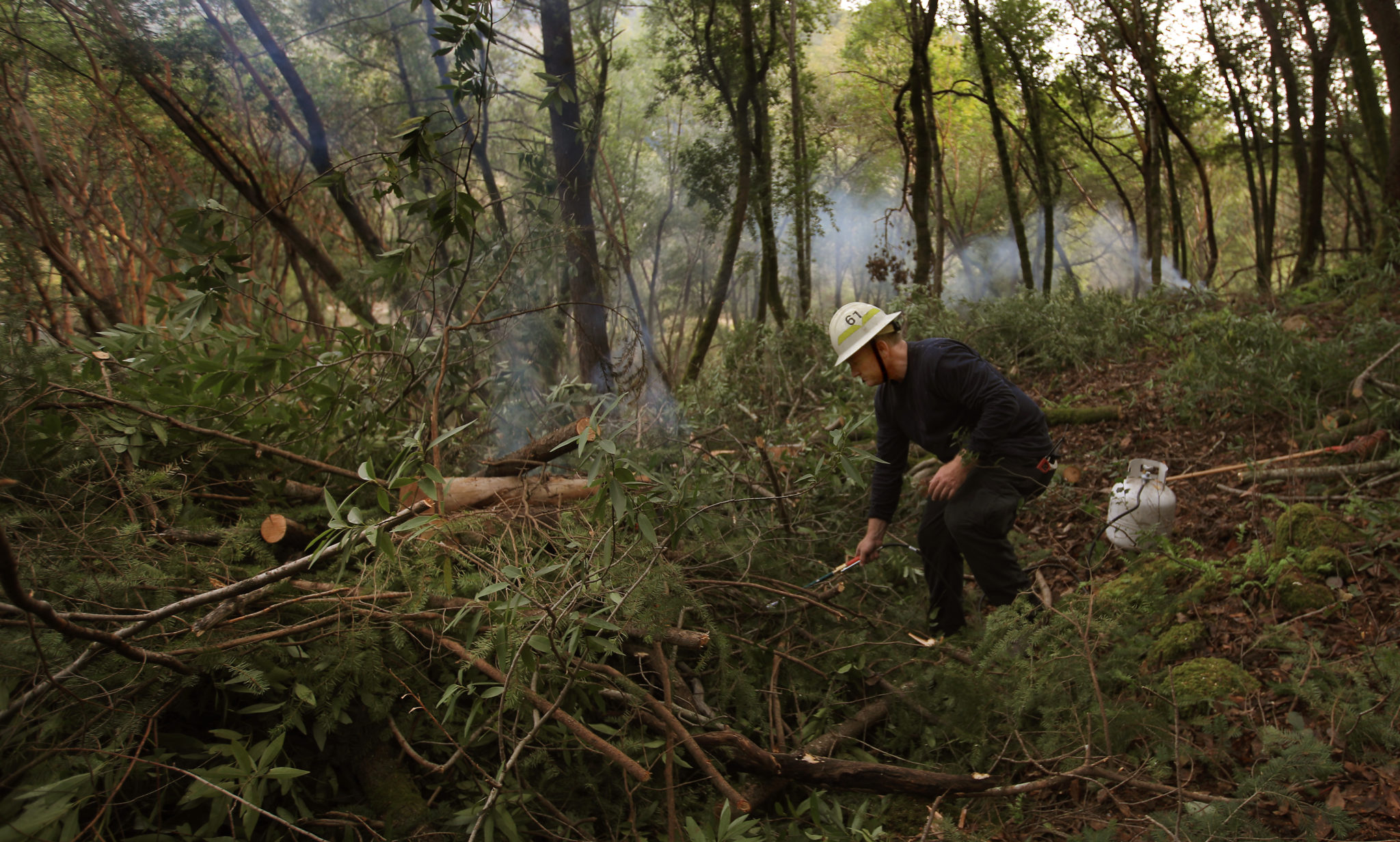
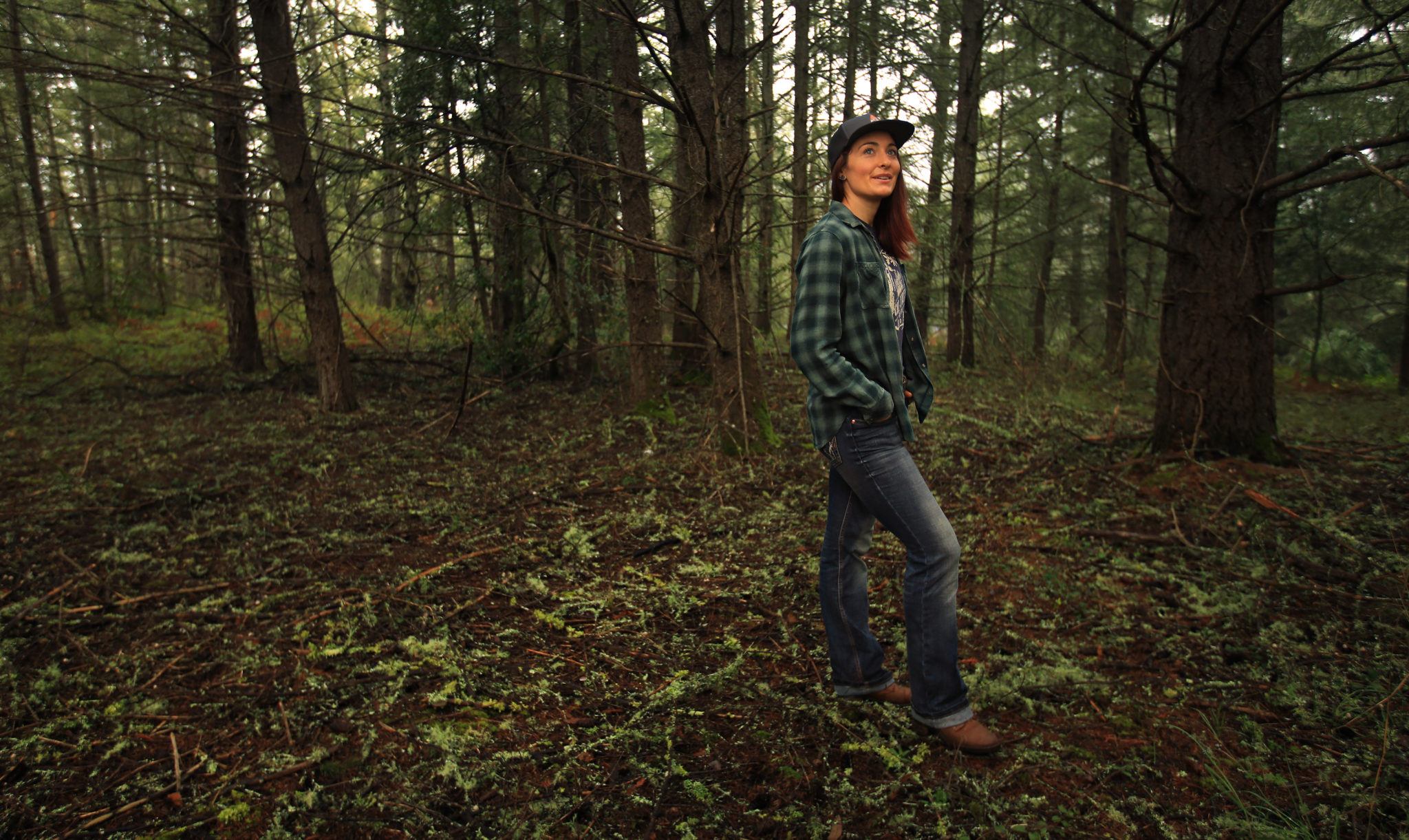
Che Casul, a seventh-generation Sonoma County rancher, badly wanted to see his woods on fire. With three others, he walked along the edge of a 33-acre patch of oak woodlands on his family’s Bodega Highway ranch. They carried drip torches filled with diesel fuel and gasoline. As they paced their way through the forest, they released small flaming droplets meant to coalesce into a wider curtain of flames creeping along the earthen floor — a prescribed fire.
But it was a damp December day, with light rain falling by afternoon across this corner of southwestern Sonoma County, so the flames that did spread were subdued, producing a blue smoke that hovered just above the ground, swirling around the two dozen men and women clad in yellow firefighter gear and spread throughout the woodland.
Casul, 34, had invited the firefighters onto the property, part of a controlled deployment of fire that had been in the works many months earlier — as catastrophic wildfires once again overtook California, burning a record 4.2 million acres, including more than 290,000 acres of Sonoma and Napa counties.
For Casul and the team of firefighters and volunteers assembled on his 213-acre spread just inland from the Sonoma Coast, conditions were less combustible, partly by design.
Rancher Che Casul. (Kent Porter)
Casul employs a variety of tools to reduce wildfire risk on his ranch. Prescribed burning is just one of them. The weather has its say, too.
“Honestly, for me it didn’t burn as hot as I wanted it to,” he later said.
Yet, after a full survey of the treated acreage, Casul professed to being amazed by the skillful approach with which the crews had targeted the most obvious hazard fuels: dead trees, towering stick dens for wood rats, and the limbs hanging down from oak and bay trees — dangerous for their ability to draw flames up into the canopy and cast embers that spark more wildfire.
“Even in the most challenging conditions to do a burn, they were able to burn epic amounts of these big trees and big rats’ nests and big jackpots,” says Casul, who carries his cheery demeanor above a set of broad shoulders on a stocky frame — one rooted in a family that has raised cattle and other livestock in this part of the county since 1851. Across Bodega Highway from the family ranch stands the historic one-room Watson School, built by Casul’s great-great-great-great-grandfather.
In a sense, the prescribed fire lit on the ranch that winter day—one of four controlled burns happening simultaneously across the county on Dec. 11 — is part of another tradition that landowners, fire officials, local tribes and ecologists are reviving to blunt the rising risk of rampant wildfires in a warming climate and provide other landscape and cultural benefits.
Cal Fire Division Chief Ben Nicholls, who oversees Sonoma County, says it’s a must-have campaign — a way to create defensive buffers around and between developed areas and establish strategic fire breaks in increasingly fire-prone regions like the Mark West Creek corridor north of Santa Rosa.
That’s where the wind-whipped Tubbs fire raced out of the canyon in October 2017 and into flatland neighborhoods, leveling thousands of homes on both sides of Highway 101. Some of the same ridges dividing Napa and
Sonoma counties proved vulnerable again last summer, when in a matter of hours, the Glass fire sped west over the hills and into Santa Rosa, wreaking more destruction.
“When millions of acres burn and the skies turn orange for days on end, clearly we need to do something different,” Nicholls says.
A growing movement
Harnessing wildfire for human use is nothing new. Across California and much of the western United States, native people have used flames to clear out cluttered forests, promote plant growth and flush game.
But after more than a century of fire suppression on public and private lands, with sometimes disastrous consequences, the push for greater use of “good fire” has grown stronger in recent decades, especially in the face of a new, more explosive era of mega fires.
Civilian volunteers are enlisting in large numbers for prescribed fire training, seeking a proactive alternative to waiting in dread for the next major blowup.
And Cal Fire, the state’s forestry and firefighting agency, has committed to putting more controlled fire on the landscape, and making it easier for landowners and community organizations to do so, as well.
The movement may not stop the next Tubbs fire — or the sequels of last summer, the Glass and LNU Complex fires that rampaged across Wine Country. But it might at least reduce the intensity of the flames hurtling helter skelter toward communities in their path.
The movement also offers a choice, given changing conditions in the western United States that experts say mean fuel-loaded areas are going to burn eventually, one way or another.
Cal Fire Battalion Chief Marshall Turbeville. (Kent Porter)
“Do we want to burn it on our terms, where we can?” says Cal Fire Battalion Chief Marshall Turbeville, who also heads the Northern Sonoma County Fire Protection District. “Or do we want it to burn during a wildfire?”
It’s taken generations to reach this point, with stiff political and institutional resistance at nearly every step. And the campaign still faces a wide set of obstacles, among them the calculated risks taken when employing a force this powerful across a wide swath of the nation’s most populated state.
Cost is another. Gov. Gavin Newsom’s 2021-22 budget proposal includes an additional $1 billion toward wildfire resilience and forest health programs. Among them are efforts to widen the network of fire and fuel breaks, where vegetation is strategically thinned or eliminated to help slow a wildfire’s advance.
To treat that acreage, manual and mechanical work can run up to $4,000 per acre, meaning it would cost up to $2 billion — twice Newsom’s entire fire prevention budget for the state — to address all of the more than 500,000 acres of coniferous forest and oak woodlands covering Sonoma County.
“The scale of what we need to do is not going to happen overnight. It’s going to take years, even generations. This is the biggest issue facing our generation.”
~ Cal Fire Battalion Chief Marshall Turbeville
Prescribed burning is cheaper, and though nothing on the order of a countywide plan is in the works, Sonoma is emerging as a hot spot for the revival of the smaller-scale prescribed burns that together aim to reduce a century of accumulated fuels. Fire agencies gearing up to put more flames on the land and new cooperative efforts are gaining steam, drawing volunteers eager to help.
“We’re lucky in Sonoma County that we have a lot of talented, creative people that are interested in this,” said ranch manager David Katz, who is working to plan some burning for the 1,600-acre ranch he runs near Stewarts Point on the Sonoma coast.
Katz, a former executive director of the Sonoma Land Trust, says he’s particularly taken with the ability of grassroots organizations and local leaders to engage “a wide cross section of people — everybody from Cal Fire to the livestock industry, to forest owners, to ecological and conservation activists, on down. And there’s a bunch of forums and lots of positive intervention among these parties who, in the past, were at loggerheads in dealing with some of this stuff.”
Not a ‘one and done’ solution
For landowners, hosting a beneficial burn is not nearly so easy as calling up firefighters and lighting a match. While private landowners have wide latitude to conduct beneficial burns on their own property between the declared end of wildfire season and May 1 of a given year, they still must obtain an air quality permit and bear responsibility on rare occasions when a problem might occur.
Burns conducted by Cal Fire, with a Cal Fire permit, or by public agencies, also require time-consuming biological and archaeological reviews of the area before they are authorized.
There are bird nesting seasons, weather variations and shortened winter days to consider when planning burns, as well.
Some areas, particularly where wooded or forested landscapes are concerned, may require substantial pre-fire thinning and pruning work before any flames are ignited.
It’s also not a “one and done” solution, either. Plants regrow.
“It’s an easy idea—not an easy fix,” said Tony Nelson, the Sonoma Valley program manager for the Sonoma Land Trust.
Prescribed burning has a long history in Sonoma County, where tribes have long used flames to manage and maintain diverse landscapes for food production and other beneficial uses — until European settlers quashed those traditions.
Father Jose Altimira, who founded the California mission in Sonoma in 1823, wrote in his diary of seeing burned and blackened hillsides on his passage through the North Bay and Sonoma Valley.
The practice continued in places with ranchers, who used flames to clear brush and improve rangeland.
Bob Cooley, whose 19,000-acre family ranch straddles the Sonoma-Mendocino county line, hosted some of the earliest, large-scale Cal Fire burns in the region a few decades back. He figures he was probably 5 years old when his dad, Crawford, had him running up and down the canyons all day long with a drip cannon, lighting small burns.
“It was one of our summer activities,” just as it had been for his father, Bob Cooley said. The family and a few friends would burn as much as 4,000 acres before they were done.
But prescribed fire still remained largely unfamiliar to the masses for most of the 20th century, even anathema to generations raised under the tutelage of Smokey Bear and policies that called for putting out flames as quickly as possible wherever they appeared.
Even amid mounting evidence of fire’s sometimes beneficial role, it took decades for government agencies and fire professionals – what the Nature Conservancy’s fire training coordinator Jeremy Bailey calls the “fire industrial complex” — to get on board, and then only in a limited way.
When prescribed fire did occur in California, for many years it tended to be federal agencies doing specific projects focused primarily on ecological benefits in a very narrow, siloed fashion, says Lenya Quinn-Davidson, Eureka area fire advisor for the UC Cooperative Extension.
As a result, mass accumulations of ready forest fuel have become both a practical and political problem in the age of extreme fire behavior and increasingly frequent and destructive firestorms across the west. Recall former President Donald Trump slamming California for poor forest management as wildfire raged last year across the state. A counter chorus was quick to note that nearly half of the state, and much of the land then ablaze, is under federal ownership.
A new alliance, a shift in attitudes
As Quinn-Davidson recalls, however, it took inspiration in the form of regular people in “blue jeans and cowboy hats” conducting huge burns in Nebraska to kickstart the first of a growing network of grassroots organizations that are now driving the return of fire to a wider span of the state, Sonoma County among them.
She co-founded that pioneering group, Humboldt County Prescribed Burn Association, three years ago, paving the way for a dozen others. They include the Sonoma-based Good Fire Alliance, one of several robust collaborations built around the North Bay’s surplus of homegrown and university-trained experts, ecological stewards, nonprofit land managers, and fire service partners.
The loosely organized Good Fire Alliance provides opportunities for landowners to learn how to manage vegetation and to get help conducting prescribed burns — from both volunteer crews and one another, says Jared Childress, a Sonoma County prescribed burns specialist who was instrumental in its creation.
Landowners who want to host a broadcast burn in their pasture or on a brush-covered hillside, or even incinerate piles of old wood and branches collected from a wooded area or shaded fuel break, can put out the word to folks willing to come help out on a given day.
The alliance allows volunteers to gain field experience, many of them through the Fire Forward program operated by Audubon Canyon Ranch, a 60-year-old environmental conservation and education nonprofit that owns land preserves in Sonoma and Marin counties. ACR also is a founding member of the Bay Area Prescribed Fire Council, an umbrella group for organizations collaborating on controlled burns.
“If we’re actually going to see a real mindset change, we need to be doing this where people are, and have it be front and center where people are aware and learning about it and experiencing it.”
~ Fire ecologist Sasha Berleman
Firefighter and fire ecologist Sasha Berleman. (Kent Porter)
One of the hardest-charging leaders in the local movement is Sasha Berleman, a 31-year-old wildland firefighter with a doctorate in wildfire science from UC Berkeley. She leads ACR’s Fire Forward, which is spreading the gospel and capacity for prescribed burns among landowners and everyday recruits alike.
In a short span of time, Berleman’s program has helped Sonoma County become a leader in community-based fire — a not altogether predictable role, given the area’s large suburban population and mixed pattern of land ownership. Many others in her field flock to wilder locales in the west.
“For many years there was a very strong statement being made that you cannot do prescribed burning in places that have people, and you can only do prescribed burning way out in the wilderness where no one can smell it or see it,” Berleman says. “That doesn’t seem like a real solution. If we’re actually going to see a real mindset change, we need to be doing this where people are and have it be front and center where people are aware and learning about it and experiencing it.”
Berleman has taken the lead on proactive burns around the region and, in a big step, last year worked with Turbeville and fellow Cal Fire officials to arrange for more than three dozen trained volunteers to rotate through mop-up duty on the 55,209-acre Walbridge fire in west Sonoma County while attached to the Northern Sonoma County Fire Protection District’s rare fuels reduction crew, a model many hope can be replicated elsewhere.
Berleman says the shift in societal attitudes toward prescribed fire has been “really drastic” over the past several years, but “exponential” in the past 12 months.
“Just in 2015, if I told someone I was a fire ecologist, they thought I was an arsonist or a pyromaniac,” she says. “But now when I tell someone what I do, they can’t help but lecture me on the value of prescribed burning in California.”
200,000 of 1 million acres burned
Berleman’s colleague, Brian Peterson, a fire ecologist with Fire Forward, says he likes to bring observers to prescribed fires so they can see how organized and safe it is when conducted properly. He calls it the “aha moment.”
“Quite often, a prescribed burn is boring,” he says.
Participants using fuel torches paint flames in a band or “black line” around the edges of the area to be burned, or use fire roads or other wide areas as borders, walking in staggered lines as they drag flames into the wind to slow the spread. Sometimes they paint circles of flames on the ground around a tree to keep encroaching fire away and, on a slope, burn downhill so the flames burn at low intensity.
Berleman likens fire on a hillside to a flaming match, burning slowly down when held upright, but exploding in a fiery flash when inverted.
“We manage a fire for short flame lengths by starting at the top and moving down,” she said. “We’re not letting that fire build energy. We’re forcing that fire to move the direction we want it to burn.”
The program she and Peterson lead provides blended online and in-person training that offers participants federal certification in basic wildland firefighting, qualifying them to participate in prescribed burns.
To date, 180 people have completed the program through Fire Forward, with 90 more scheduled to finish in March, and another 85 on a waiting list, as more and more people learn of the training and sign up. Since last fall, all of the two-day training sessions have sold out.
The program draws people who work in land management, conservation, environmental stewardship and fire science – as well as people with desk jobs seeking a way to make a difference and assume shared responsibility for the future.
“If we want California to be a habitable place for human beings, we need to engage with the environment around us in a more active way,” says one alum, Santa Rosa resident Peter Nelson, a professor of ethnic studies and environmental science at UC Berkeley. Nelson is also a tribal member of the Federated Indians of Graton Rancheria, and notes that California tribes have worked to varying degrees to hang onto their traditional use of fire.
The Central Coast Amah Mutsun formed a nonprofit land trust and job corps focused on indigenous land management and cultural burning. The Kashia Band of Pomo Indians in Sonoma County is similarly working to reintroduce fire on its tribal lands, including a nearly 700-acre coastal property acquired with the help of conservation groups in 2015.
Nina Hapner, the tribe’s director of environmental planning, says there remain among Kashia elders memories of cultural burning but that there is still some fear associated with fire among newer generations, though that is changing in the wake of recent disasters.
She notes that the Meyers fire near Fort Ross slowed last year when it encountered an area that had been burned proactively.
“When you haven’t really been able to utilize [fire] as a tool, people dismiss it. You kind of just file it away,” Hapner says. “But now the opportunity is there.”
More burning also is coming through the Sonoma Valley Wildlands Collaborative, a group of six conservation and land management organizations that oversee 18,000 acres of open space.
The organization includes Audubon Canyon Ranch, California State Parks, Sonoma County Agricultural Preservation and Open Space District, Sonoma County Regional Parks, the Sonoma Land Trust, and the Sonoma Mountain Ranch Preservation Foundation, which combined manage 11 sites in the region. The group came together after many of those properties were charred by the Nuns fire, one of the series of historic and deadly 2017 wildfires, including the Tubbs, that erupted around the North Bay amid hurricane force winds, killing 24 people and destroying 5,300 homes in Sonoma County.
The firestorm served as a tragic pivot point in the public and policymakers’ understanding of the nature of wildfire in the modern west. The years since have only driven that point home.
Wildfires have now charred about 200,000 acres of Sonoma County’s roughly 1 million acres just since 2017, Cal Fire’s Nicholls said. In Napa and Lake counties, the share of recently burned ground is even higher.
“We’ve had at least three years now where we’ve had wildfires that have touched everybody that lives in Sonoma County,” Turbeville said. “I would assume almost everybody knows somebody who lost a house or was affected.”
Creating defensive barriers
The most coordinated effort to reintroduce fire in Sonoma County is taking place in Sonoma Valley, where the Glass fire besieged rural neighborhoods in late September 2020, burning more than 330 homes, including 34 inside Santa Rosa city limits.
Already, a $1 million Cal Fire grant is helping to fund fire breaks and fuel reduction work on sites governed by the wildland collaborative, much of it quite costly hand work, says Nelson, with the Sonoma Land Trust.
The collaborative is working with Cal Fire on a 10-year vegetation management plan that will include about 200 acres of prescribed burning a year across the agency sites involved. Outside of that arrangement, Audubon Canyon Ranch’s Bouverie Preserve off Highway 12 has hosted prescribed fires in different areas three times since 2017, spanning more than 60 acres. Across the highway, Sonoma Valley Regional Park has hosted at least two burns, spanning 50 acres.
Nicholls says the idea is to create a crescent-shaped buffer from about Hood Mountain to Sonoma Mountain that would help stall a wildfire trying to cross Highway 12, shielding a critical travel route, while also giving firefighting crews a place to operate from, should wildfire arrive.
Further north, up to 400 acres of the 3,200-acre Pepperwood Preserve northeast of Santa Rosa is slated for controlled burns over the next year or two, as is 265 acres of the 5,600-acre Jenner Headlands Preserve on the Sonoma Coast.
In an ideal world, Nicholls and Turbeville say they wish they could substantially scale up burning, ringing communities on the edge of wildlands with fire-treated landscape and creating broad barriers across windy ridgetops north of Santa Rosa, Sonoma Valley, and Cazadero, for instance, or tying together large, undeveloped properties that could slow or curb flames before they reach homes.
“I don’t know if Santa Rosa agrees with me,” Turbeville says, “but, like areas near Fountaingrove or Montecito or Wikiup, managing the wildlands that abut residences in the urban development, to basically create a buffer.”
The two officials highlight strategic ridgetops around the county, including Mt. Barham at the top of the Calistoga Grade, above St. Helena Road, which could be part of a defensive barrier if another fire were to come across Mark West Canyon.
Turbeville also talks of extending existing fire roads, ridgetop burns and bulldozer lines in wildfire scars, to take advantage of what’s already available.
Nicholls cited regional parks and other protected spaces as natural starting points, saying a burn is slated for Shiloh Ranch Regional Park east of Windsor as the beginning of an effort to “connect the dots between large landholdings” from there to Pepperwood to Calistoga Road.
“The scale of what we need to do is not going to happen overnight. It’s going to take years, even generations,” said Turbeville. “This is the biggest issue facing our generation.”
And that issue is not reserved for firefighters or volunteers alone.
Tom Knecht, the “prefire” division chief for Cal Fire’s six-county Sonoma-Lake-Napa Unit, says even with his agency’s pledge to increase the scale and pace of its landscape work, there’s a role for everyone – whether it’s ensuring defensible space around their own homes and working out ways to harden their home construction, or collaborating with a prescribed fire association to reduce fuel around their community.
“What I see in my career is no one wants to do anything until a fire runs through their neighborhood, and then all of a sudden, people say, ‘Oh my God, Cal Fire, what are you going to do for me next time?’ “Cal Fire can’t do it all, even with all of our stakeholders. We can’t do it all,” Knecht says.
A sense of purpose and hope
Since taking over the family ranch in west county after college, Che Casul has looked for every opportunity to mitigate fire risks. He grazes shaggy Angus and Scottish Highland cattle because one breed keeps down the grass, the other, the brush.
He also has 100 head of free-range goats whose appetite for anything under five feet high may be one reason it was so difficult to get a fire going in the oak woodlands last winter. Still, those woods remain too densely packed with bay trees and Douglas firs to walk through freely, the way he did as a child.
From that same era, he remembers wandering along beside his grandfather, who used a match and a shovel to set fire to his pastures, regenerating them for the following year.
It took until this past year for Casul to host his first prescribed fire.
Several initial attempts were called off because it was too hot or dry or windy. When December 11 came, it was a bit too wet, but the results were still gratifying.
“If we want California to be a habitable place for human beings, we need to engage with the environment around us in a more active way.”
~ Environmental science professor Peter Nelson
So Casul is now one of Berleman’s adherents, planning with his wife, Angela, to take the basic wildfire training through Fire Forward this year.
As chief executive of newly renamed nonprofit Circuit Riders — formerly the Center for Social and Environmental Stewardship — he’s also been keen to promote fuels management through the organization’s vocational training and work programs.
Casul says there are no fire fuels contractors in the county right now, and he imagines young people developing expertise and finding rewarding careers that satisfy an urgent community need.
“A lot of these pieces can fit hand in glove,” he says. “It creates a healthier ecology and it makes our community safer, and it puts money in the pockets of at-risk youth who are learning new skills.”
Turbeville makes a similar point, noting that it may take generations to catch up after allowing so many years of fuel to accumulate.
In northern Sonoma County, he oversaw five burns spanning about 170 acres last fall, until his crew just ran out of days. They were at it again come January.
“I still tell people that my dream job is to go to work and stop a fire. Or go to work and start a fire,” he said.
Berleman says that her line of work runs the risk of bearing a message to people who do not want to hear it.
But in Sonoma County, she’s found a ready audience, one in which a growing number of people understand that a landscape under threat requires the stewardship of those who evolved with it.
“There are so many problems in the world that feel unsolvable, and this one feels like there’s such a great solution right there if we just seize it,” Berleman says. “In a world full of problems, it gives me a sense of purpose and a hope for a better future in this one sliver, and I think we’re seeing a lot of the community feel the same way.”
Flames chew through thick forest floor duff during a prescribed burn in the hills above West Dry Creek. (Kent Porter)
Barriers to Broader Burning
How to scale up to put more prescribed fire on the ground?
That’s the dilemma facing experts and volunteers, as the state pushes to employ more controlled burns to combat increasingly extreme fire danger.
Such burns are an efficient, inexpensive option in many cases, compared to labor-intensive manual thinning and mechanical treatments, which can cost $2,500 to $4,000 an acre and up, depending if equipment like a wood chipper or pile burning is needed.
An equivalent per-acre cost for prescribed fire is hard to come by as weather, topography, fuel type, and a variety of other factors enter in. Manual work may be required in advance of some while other fires may be accomplished with a $250 air district permit and lunch for a crew of hearty volunteers.
But where larger obstacles exist — say liability or insurance, or even available workforce — Cal Fire, California’s chief firefighting agency, has pledged to work to reduce barriers.
That includes streamlined permitting for public agencies or other qualifying entities, increased training opportunities, and new certification standards for “burn bosses” — the individuals who take command of prescribed fires.
Lenya Quinn-Davidson of the UC Cooperative Extension and Jeremy Bailey, director of fire training for the Nature Conservancy’s North American Fire Team, say a critical hurdle would be eliminated if California adopted a gross negligence standard for prescribed burning liability, like some other states have.
There’s also need for providers to develop insurance options for certified burn bosses — a kind of insurance for which, so far, there’s just not been much demand, says Quinn-Davidson.
“We need all hands on deck,” says Quinn-Davidson. “If we’re really going to scale up this work, we need to be lifting up and funding and supporting anyone who wants to be involved in this work. We need to really be thinking about, ‘How can we get the most people trained and involved and feeling supported?’”
Tour Sonoma County with dining editor Heather Irwin in honor of the richly filmed and mouthwateringly inspiring Netflix show, Taco Chronicles.
Most people find it hard to imagine that I didn’t try my first taco until the age of about 30 — and even then with much trepidation and disbelief. Those tiny corn tortillas had no business being unfried and doubled up like that, I thought. It didn’t contain cumin-overloaded seasoning from a packet. It didn’t even have hamburger or sour cream. One bite, however, of a simple carnitas soft taco with onions and fresh cilantro, a little dab of hot sauce and — hold-the-guacamole, this is a taco?!
Even years later, after eating thousands of tasty tacos from throughout California, I still don’t fully understood the subtleties of this ancient, beloved street food of Mexico. But I’ve made progress after devouring two seasons of Netflix’s series The Taco Chronicles, which schooled me in the culture and history of al pastor and lesser-known local taco fillers like suadero (fatty beef) and cabrito (goat), buche (pork stomach) and cabeza (head).
So whether you end up going on a Taco Chronicles adventure of your own, exploring out-of-the-way taquerias specializing in barbacoa, or you just want to challenge yourself to get out of a burrito rut, there’s a lifetime of tacos out there just waiting to be discovered. And you don’t even have to wait until #tacotuesday. Click through the above gallery for details.