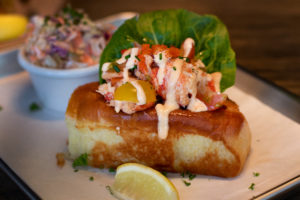
LGBLT Lobster Roll at Tony’s Galley in Santa Rosa. (Heather Irwin/Sonoma Magazine)
New restaurants, new dishes, and favorite spots at harvest time. Click through the above gallery for “best bets” at each restaurant.
Burdock
Burdock, the newly opened sister eatery to Duke’s Spirited Cocktails, is Healdsburg’s version of Harry Potter’s Platform Nine and Three-Quarters, existing only to a self-selecting crowd. Once inside, you see there’s a bit of magic about it. Wedged between Duke’s and the former Brass Rabbit, the restaurant is in an impossibly long and narrow passage, a secret alleyway edged in brick where wanderers discover a secluded market for top-shelf bourbon, tiki drinks, and caviar puffs.
Last April, Duke’s was left rudderless when its founders left the business over a dispute with their investor. The founders had been slated to open Burdock soon after, but the debut was pushed back to late June, when it opened with chef Michael Pihl and beverage director Michael Richardson. Both are ridiculously overqualified for the gig: Pihl with stints at the former Michelin-starred Cyrus and Napa’s Mustards Grill, and Richardson of Frankie’s Tiki Room in Las Vegas.
We went wild for Richardson’s custom tiki drinks. These aren’t the farm-to-glass cocktails you’ll get next door at Duke’s, but more serious mixed drinks that show off Richardson’s hefty experience. And each bite from the menu was truly, truly stunning. It’s rare to be moved by such minuscule portions, but sometimes less is absolutely more.
Best Bets
Crispy Pork Belly, $14: Fatty, meaty, crispy squares of pork belly with soft pineapple and the lasting flavor embrace of a sweet-savory mole. A steal of a deal.
Akaushi Beef Carpaccio, $26: It’s perhaps a splurge, but so memorable: Whisper-thin slices of premium raw beef, gooey egg yolk, and the earthy note of mushroom and tangy pecorino cheese. If swagger had a flavor, this would be it.
Ahi Tuna Tartare, $17: Three little spoons with barely a bite of raw tuna had us snorting in disbelief. Really? Then we ate them. Oh. A flavor bomb of clean and briny tuna with a zing of sweet-tart Meyer lemon and a crunch of popped farro. The richness would have been overpowering in a larger portion.
Baked Oysters Cubano, $4.50: Plain and simple little oysters get a mink stole of mustard butter, Gruyere, and Serrano ham. Lucky little oysters.
109A Plaza St., Healdsburg. 707-431-1105, burdockbar.com
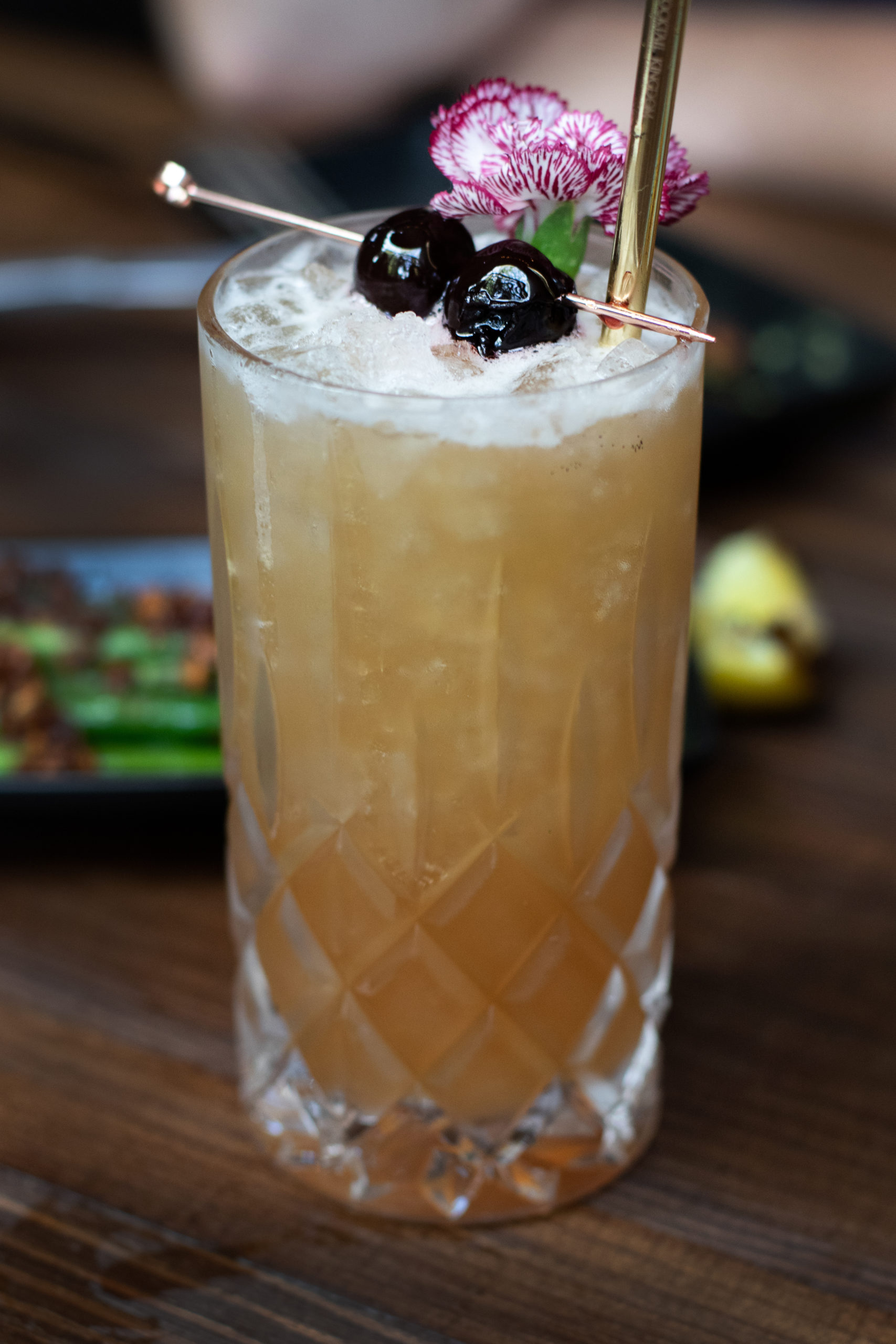
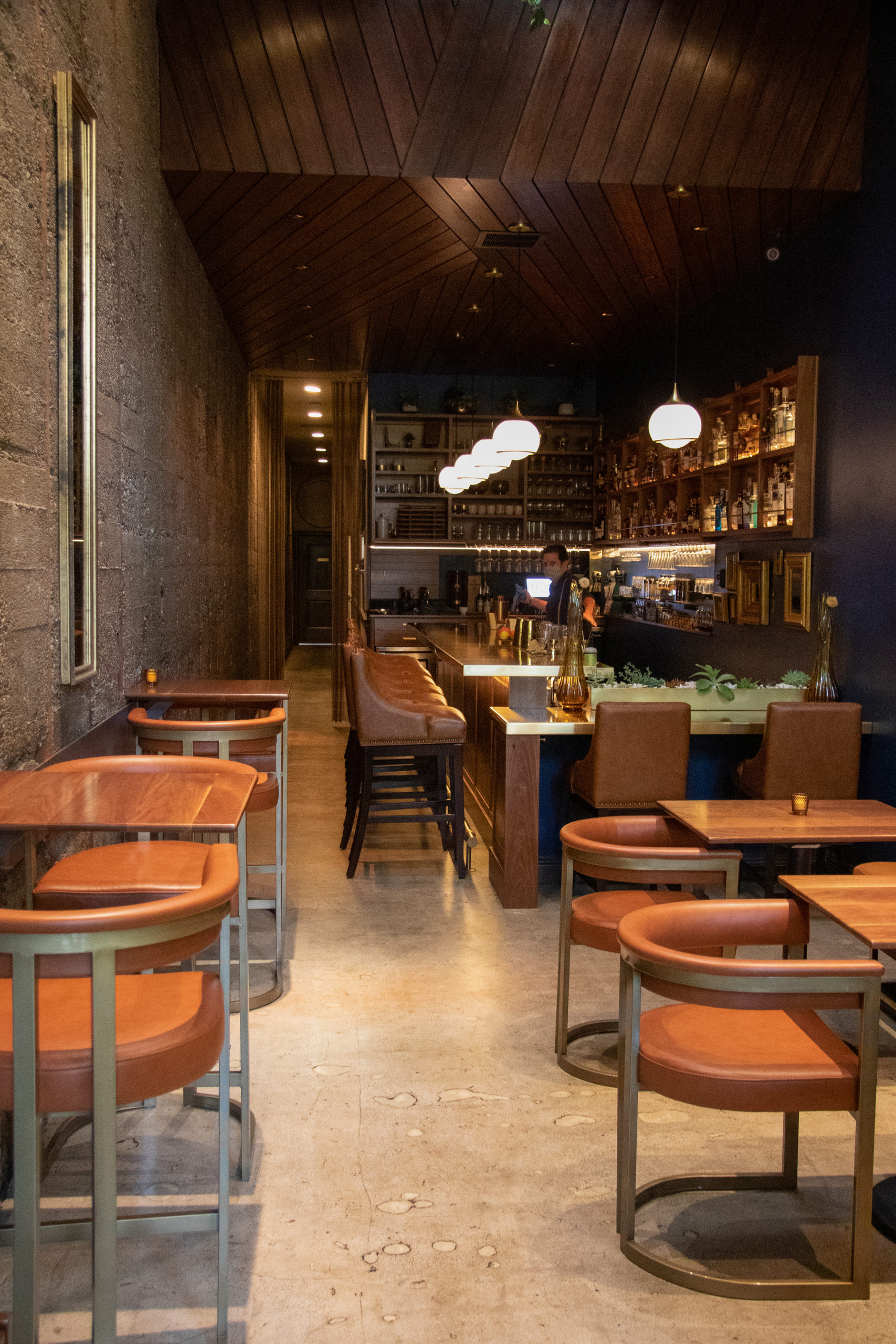
Custom rum drink with warm spices at Burdock Bar in Healdsburg. (Heather Irwin/Sonoma Magazine)Interior at Burdock Bar in Healdsburg. (Heather Irwin/Sonoma Magazine)
Central Market
Within the overall food landscape of our county, it’s a mistake to overlook the restaurants that succeed year after year, the dining rooms that become part of our lives day after day. Such it is at the iconic, beloved Central Market, where chef/owner Tony Najiola has spent 18 years of his life.
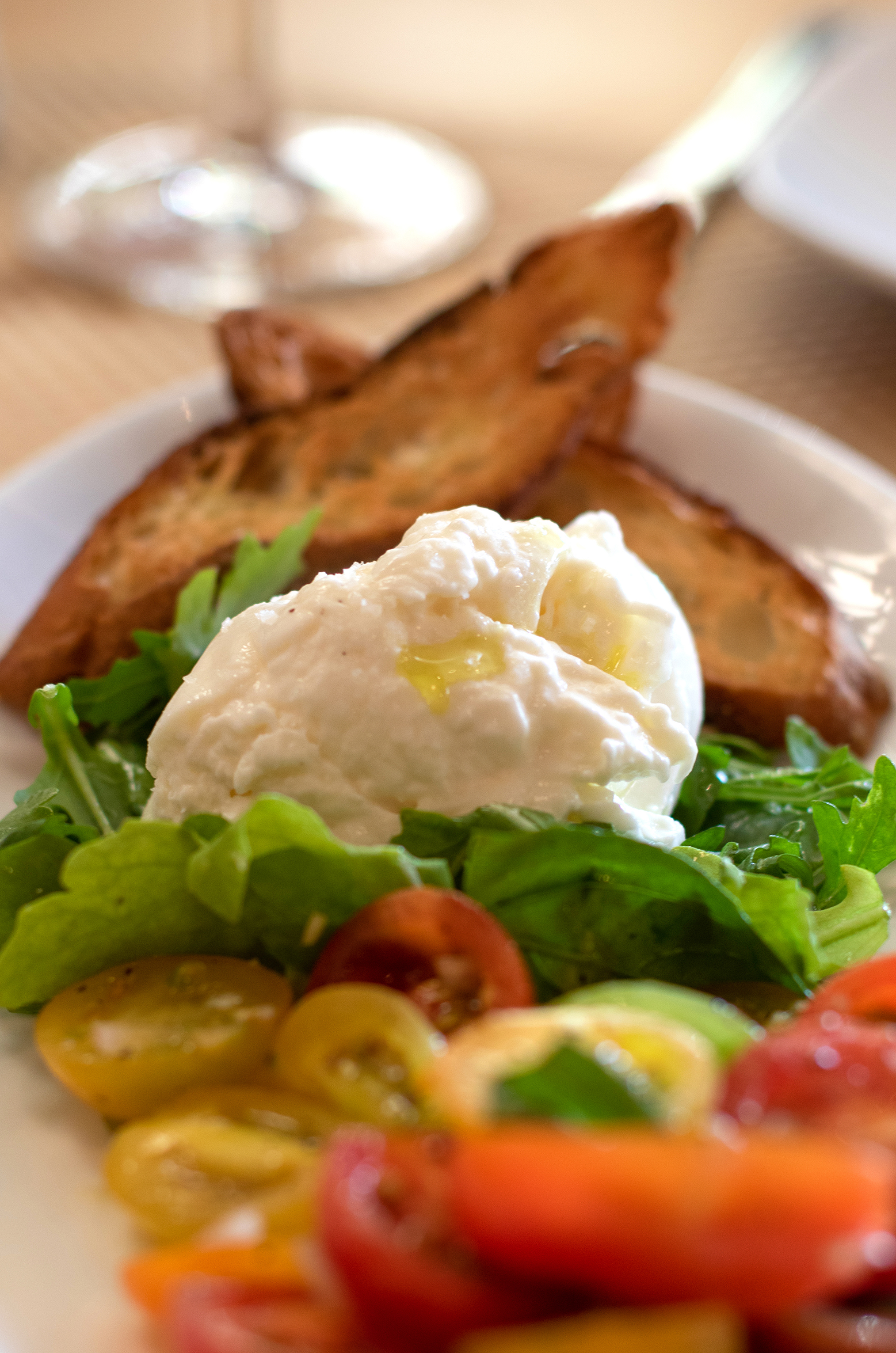
The signature entrée is Najiola’s slowcooked Angus Short Ribs ($32), with meat that falls to pieces at a mere touch of the horseradish gremolata and leek potato gratin. Fresh burrata ($16) is so simple it’s ridiculous, with buttery cream-stuffed mozzarella, cherry tomatoes, capers and crostini. Batter-fried Alaskan Halibut ($18.50) features pieces of delicately fried whitefish nestled into butter lettuce cups with fresh herbs and gribiche (a vinegary sauce with hard-boiled eggs), eaten in a couple of dainty bites. The menu changes frequently, so you’ll likely see some alterations as the seasons pass. Just don’t wait 18 years to get there.
Burrata at Central market in Petaluma. (Heather Irwin/Sonoma Magazine)
Dillon Beach Coastal Kitchen
Windblown cypress jut into the horizon line just above Dillon Beach. Standing on a bluff above one of of the state’s only private coastal beaches, you can see children playing below, birds flying above and silver ripples reflecting the evening sun. And at the Dillon Beach Coastal Kitchen, new chef Jennifer McMurry, formerly of Viola Café and The Pharmacy, makes food as satisfying as the view. The food’s beautiful not just visually — most dishes are dressed with pretty edible flowers and greens — but also in the flavors each one incorporates. McMurry always has known how to balance her creations delicately, adding a pop of citrus, a hint of salt, a little crunch, or a surprising sweetness.
If you’ve never been out to Dillon Beach, this is an ideal opportunity to get to know the resort, which owns the kitchen, along with cottages and a general store/surf shop. Though the beach is private, visitors can get a day pass for $10, and the resort is very dog-friendly. Looking out the picture windows onto the vast blue ocean and even bluer skies, it’s hard not to sing an off-key rendition of “Perfect Day” (you know, the early 2000s song by Hoku on the “Legally Blonde” soundtrack). Dillon Beach Coastal Kitchen is, no doubt, the place to finish off your perfect day.
Best Bets
Fried Chicken Sandwich, $18: This is my new favorite, with a thick and juicy slab of white meat, spicy pickles, a mound of shredded cabbage, aioli and greens.
Fish & Chips, $21: The rock cod is super fresh, with a lovely flake and mellow taste. After sampling so many dishes, I was dreading a big bite of fried fish, but was pleasantly surprised at how light and yielding the breading was, after a squeeze of lemon.
Beet & Avocado Toast, $13: People who dismiss avocado toast as millennial frippery do themselves no favors. A thick (but not too thick) slice of airy pain de ville from Santa Rosa’s Goguette Bread is topped by a generous schmear of fresh avocado, thin-sliced pickled yellow beets, greens, and edible flowers. It’s a work of art with enough nourishment to get you through an afternoon of surfing or sandcastle-building.
Clam Chowder, $12: “ This is the best chowder I’ve ever had,” my dad said. “And you can quote me on that!” We’re not throwing any shade by saying that Bob Irwin likes his food simple, flavorful, and mostly uncomplicated. He knows what he likes, and the chowder was a hit. What impressed him, as well as the rest of us at the table, were the briny clams and applewood-smoked bacon, with lots of chunks of potato and leeks mixed in. Even though the bacon does overpower the chowder a bit, we’ll still go with Bob’s take on this seaside staple.
Open Fri. through Sun., 12 p.m. – 7 p.m., 1 Beach Ave., Dillon Beach. 707878-3030, dillonbeachresort.com
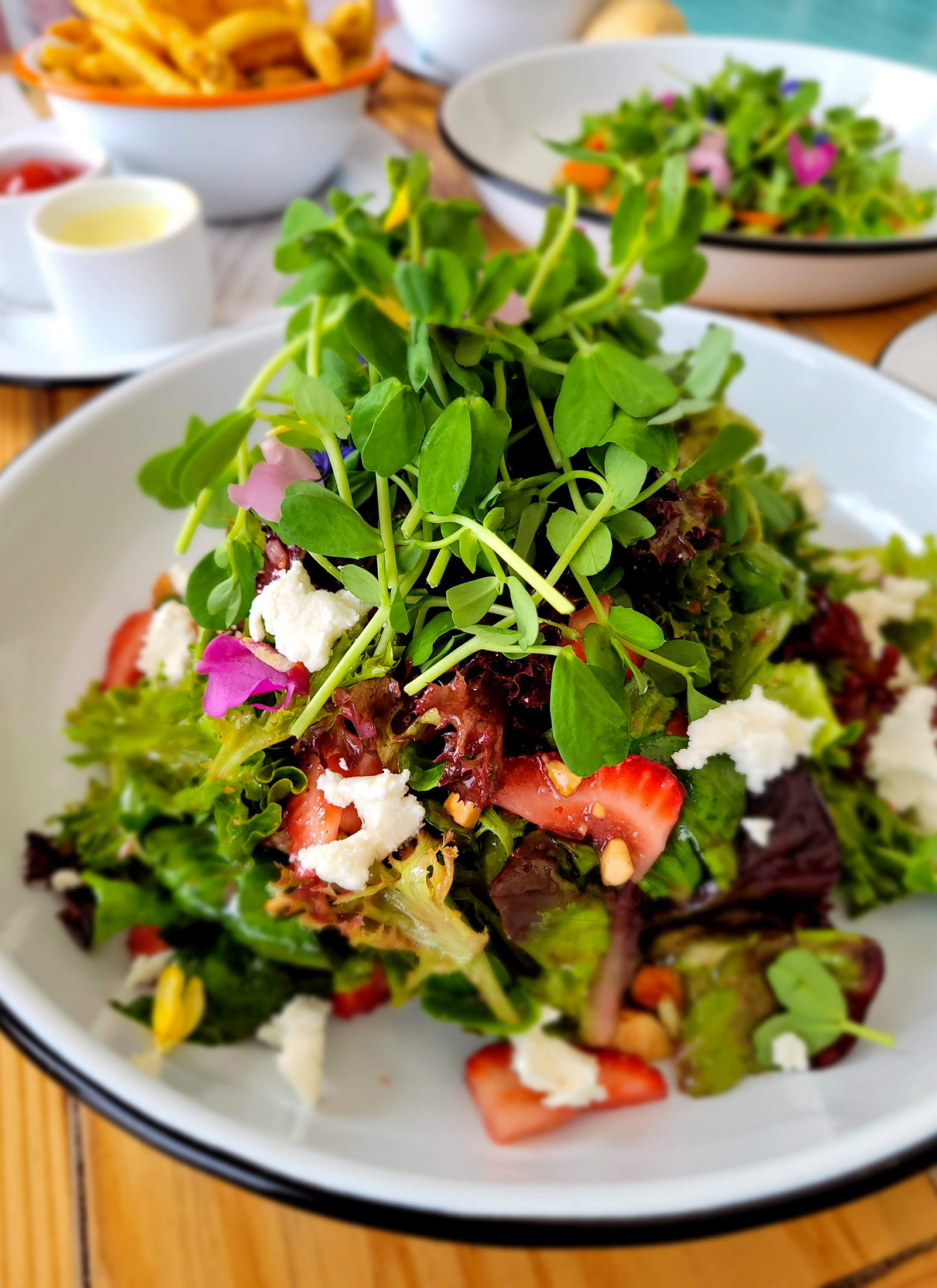
Strawberry goat cheese salad at Dillon Beach Coastal Kitchen in Dillon Beach. (Heather Irwin/Sonoma Magazine)
Ferrari-Carano Vineyards & Winery
Deep in the Dry Creek Valley is a place to reclaim inner quiet at a series of special Sunday fall brunches, running through the end of October. Enjoy a meal and wine tasting on the patio at the Italian-inspired winery estate, Villa Fiore, surrounded by meditative gardens, fountains, and meandering paths. Dishes include a prosciutto Benedict made with eggs from the estate’s own chickens, a brunch pizza with Journeyman bacon, or a delicious herbed porchetta sandwich on ciabatta bread with truffle aioli and pecorino cheese.
Seatings on Sundays from 10:30 a.m. – 1:30 p.m., reservations required. $85 per person. 8761 Dry Creek Road, Healdsburg. 707-433-6700, ferrari-carano.com
4th Street Social Club
Earlier this year, chef Jeremy Cabrera decided to reinvent his entire plant-based menu, bringing a fine-dining feel to this pint-size downtown dining room. You pretty much can’t look away from his Instagram feed @4thstreetsocialclub, featuring tweezer-rific plating in eye-popping rainbow hues. Cabrera is clearly a tinkerer, for example, using blue pea flower to color strawberries sourced from owner Melissa Matteson’s gardens and his own foraging.
The food is astounding, including the “Zuke” ($14) with roasted and torched asparagus, fermented chiles, cherry relish, mint aioli and a shoyu-cured egg yolk. Cracking the purple yam lace and releasing the salty umami yolk onto perfectly cooked asparagus is so enjoyable. It’s this kind of precision and attention that recently won the restaurant the Slow Food Snail of Approval in recognition of sustainable, slow food practices.
Open 6 p.m.– 10 p.m. Thurs. – Sun., and 11 a.m. – 2 p.m. Sat. and Sun., reservations recommended. 643 Fourth St., Santa Rosa. 707-978 3882, 4thstreetsocialclub.com
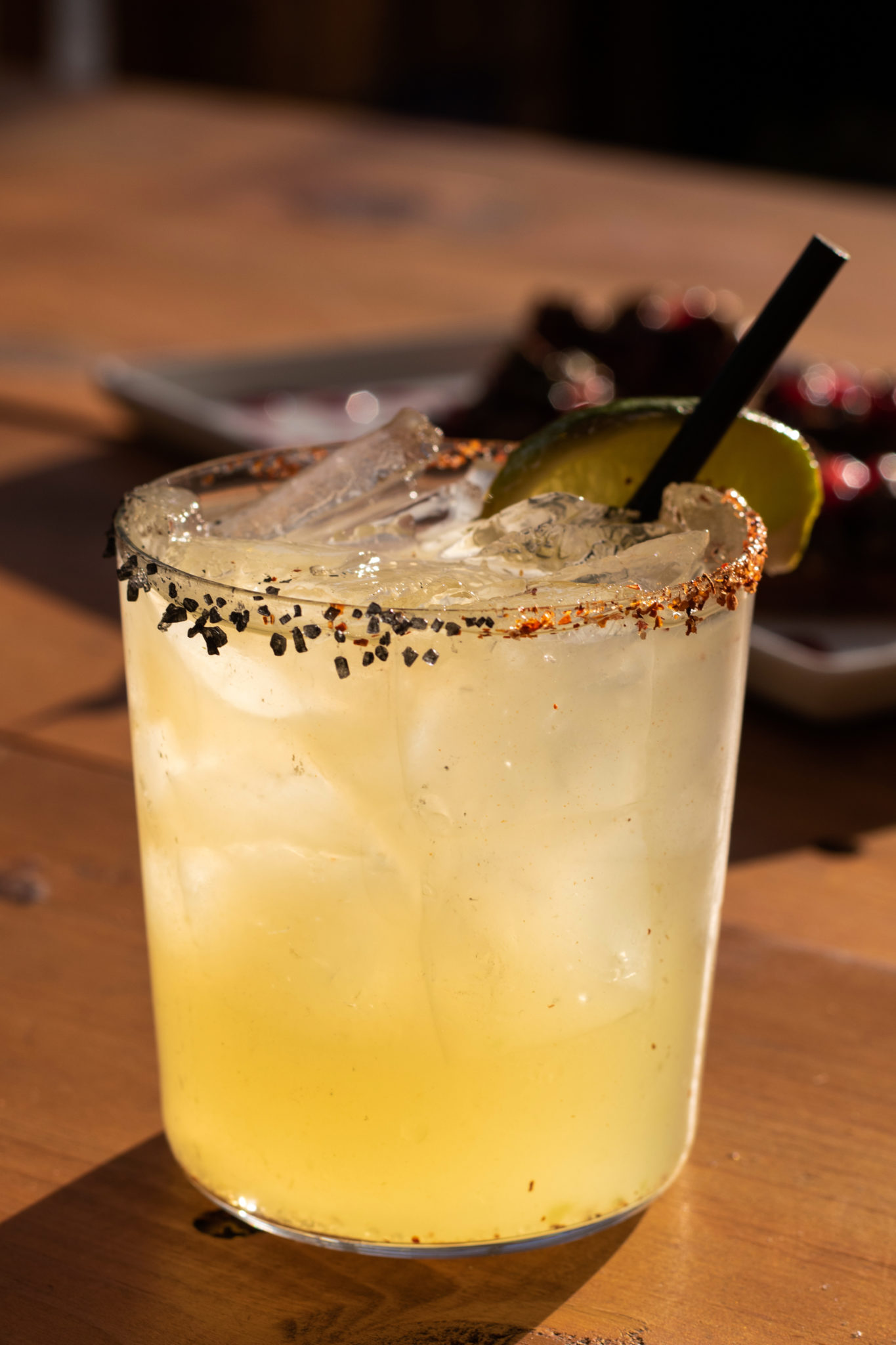
Jalapeño margarita at Fourth Street Social in Santa Rosa. (Heather Irwin / The Press Democrat)
Sushi Rosa
There’s an extra set of hands, er, a chargeable wait-tron, helping out at the new Sushi Rosa restaurant on Fourth Street. Excuse us for the childish glee in getting a plate of nigiri deftly rolled to us from the sushi bar by a friendly roving robot that guides itself right to our table. The sushi here is solid, if not Hana Japanese level, with page after page of rolls and nigiri, including a vegetarian “nigiri” plate as well as more traditional dishes like dried squid with vegetables (ika sansai), Japanese pickles (tsukemono), a whole mackerel with fried bone and pickled vegetable maki.
Open 11:30 a.m. – 2:30 p.m. Tues. through Sun. and 5 p.m. – 9 p.m. Tues. through Sat. 515 Fourth St., Santa Rosa. 707-843-5132, sushirosa.com
Tony’s Galley Seafood & Bar
Tony Ounpamornchai, executive chef and co-owner of SEA Thai Bistro and three other local restaurants, has been thinking about opening a seafood-centric spot for years. Now, the chef has fulfilled his briny ambitions with Tony’s Galley Seafood & Bar. The menu is a mix of Ounpamornchai’s familiar Southeast Asian flavors and chef de cuisine Hunter Bryson’s American take on classic dishes like lobster rolls, steamed mussels, fish and chips, clam chowder and, of course, surf and turf.
Highlights include the LGBLT lobster roll ($26), with Village Bakery rolls, garlic butter, bacon, tomatoes, and a pop of tobiko. Bryson’s favorite dish is the crab poutine ($16), with hand-cut fries as a carrier for creamy lobster gravy and fresh crabmeat. And the steamed mussels ($16) feature the gentle heat of a light, flavorful Panang curry with onion, fennel, and garlic. Overall, it’s another win for Ounpamornchai and a chance to see longtime local Bryson show off his culinary chops.
Open 3 p.m. – 9 p.m. daily. 722 Village Court, Santa Rosa, 707-3037007, tonysgalley.com
As wildfires once again rage in California and smoky skies return to Sonoma County, many might be considering what they can do to help protect their homes. While you can’t create a completely fire-proof home, certain home materials and garden landscapes are more fire resistant than others. Getting rid of excess clutter can also help prevent the spread of fire. Here are a few ideas on how to make your home more fire resistant.
Explore different kinds of materials
In the aftermath of the 2017 North Bay Fires, it was determined that wooden fences were one of the conduits that allowed fire to spread between properties. This prompted the recommendation that fences should be installed at last five feet from buildings, or that they be made from fire-safe materials.
Michael “Bug” Deakin of Heritage Salvage in Petaluma responded to this recommendation by creating FireBreak faux wood panels made from a proprietary blend of nearly 70% recycled materials that can be used for fences and siding. The panels are formed from moulds that are a relief of the salvaged lumber Heritage Salvage is known for via their shop and DIY Network show Heritage Hunters.
“I tested (the FireBreak faux wood) with a 50,000 torch for an hour and I have video. The non-combustible test by Intertek (a multinational assurance, inspection, product testing and certification company) is still pending,” said Deakin.
Deakin has applied his design skills to his FireBreak project and a variety of styles and stains are offered, from faux wood with “salvaged” details to modern stone-looking pieces with abstract patterns made from impressions of reeds from the Petaluma River and even garbage bags.
A house’s exterior can also be more or less flammable. Shou Sugi Ban, a Japanese exterior siding technique that dates back to the 18th century and preserves wood by charring it with fire, has recently been making a comeback in home design. At the time of its inception, Japan was plagued by wildfires. By charring the wood before it is installed, the highly flammable cellulose layer can be neutralized, which in turn increases the wood’s resilience and reduces its flammability. The burned wood, with its dramatic and modern look, has recently been used by many Sonoma and Bay Area architects.
Embrace new landscaping trends
Garden landscapes are dramatically changing as we continue to battle droughts and wildfires. There’s lots to consider when it comes to creating a fire-resistant garden. Stay on top of current recommendations and research with the UC Master Gardeners of Sonoma — they offer helpful guidelines here. A few takeaways:
Keep plants, wood and organic materials at least five feet from buildings, especially windows, vents, chimneys and combustible siding. Use rock or hardscaping in the zero to five-feet zone.
At five-feet out, plants are okay in small “islands,” separated by non-combustible paths to disrupt the chain of ignition.
Trim tree canopies off the ground so there’s no ladder of ignition.
Make sure trees and plants are green and healthy. Cut away wooded or dead plant material.
Do not use shredded bark mulch.
Remove clutter
Decluttering can make your indoor and outdoor spaces more relaxing to spend time in. It can also help prevent the spread of fire and keep exit paths clear in case of a fire. Donna Roses of Santa Rosa-based Donna Declutter works with clients on home-purging projects large and small. She says that many of her clients have collected items or paper piles that fill garages and rooms, including hallways and doorways. These items and piles of paper add extra fuel in the event of a fire.
“People don’t do their paperwork and mail. It accumulates in piles and they never process it out of their space. Then that’s a big fire hazard,” she says.
On her blog, Roses outlines a method for managing paper clutter. She suggests keeping a recycle bin or shredder near the spot where you typically leave your mail so you can get rid of junk mail daily. To process and purge bills or papers requiring action, she recommends making a weekly appointment with yourself for about 30 minutes.
During the pandemic, as gyms closed, many turned to virtual workout sessions to stay physically and mentally healthy. Although recreation facilities have now reopened, the at-home workout has become a mainstay in personal fitness. Working out at home comes with a range of benefits. It’s convenient (you don’t have to go anywhere as many local gyms and yoga studios bring exercise to your home via online classes), it’s cheaper than a gym membership (some health care providers offer access to free or reduced-cost online video classes) and it’s flexible (you can decide when and how you would like to work out). Being able to exercise at home is also helpful when the air is too smoky to venture outdoors.
If you’d like to start an at-home exercise routine, or take your YouTube workout sessions to the next level, we asked two Sonoma fitness experts to share ideas on how to create a workout space at home, whether you have access to an entire room or just a few square feet.
Make it appealing
Kevin Coady, coach at TriForce Triathlon Team in Healdsburg, says consistency is the most important tactic when it comes to improving fitness: gentler workouts done regularly are more effective than intense workouts that aren’t maintained. A well planned at-home workout space can help create and maintain that routine.
As a change-up from swimming, biking and running workouts, Coady uses a variety of tools that help inspire him to get regular exercise. He has installed a pull-up bar in his backyard and keeps a row of kettlebells underneath. He also uses TRX suspension trainers that offer a variety of exercise opportunities. By keeping these items neatly in view, he is encouraged to exercise more frequently. Cool down areas are important, too: The artificial turf in his yard is a nice place to rest after a workout.
Keep it simple
It’s easy to get overwhelmed by all the different workout videos and tools that are available to us now. Coady suggests keeping it simple in order to stay focused. He uses a weighted battle rope to get his heart rate up in just a few minutes. He also recommends having items like jump ropes or resistance bands on hand for quick and easy workouts. Keeping things simple allows people to access exercise daily, regardless of reduced focus or fatigue.
A weighted battle rope will get your heart pumping in no time. (Shutterstock)
Create a “pain cave for the apocalypse”
A “pain cave,” or indoor bike setup, is an at-home workout space many triathletes use as they prepare for the challenge ahead. Coady has created his own “pain cave for the apocalypse” that allows workouts through gym closures and injuries (Coady jokingly adds that not even zombies should be an impediment to his apocalyptic exercise routine). When a hip injury prevented him from running and biking for two weeks, and pools were closed due to the pandemic, he added a a Vasa swimming machine to his pain cave. Not working out for two weeks was not an option, he says.
Coady also uses this space to coach clients remotely using Zwift, an app that gives cyclists access to a virtual cycling world with multiple courses, group rides and even races to help keep them motivated.
Set up your pain cave or workout space “so you don’t have to be the best version of yourself” in order to get a workout in, advises Coady. Again, remember to keep things simple: you want to create a workout space that “your regular old mediocre self can use.”
Create a dedicated yoga space in your home. (Shutterstock)
Yoga at home
Anna McLawhorn, an instructor at Three Dog Yoga in Santa Rosa, agrees that consistency is key when it comes to workout success. The yoga studio where she works has been leading yoga classes on Zoom for the last year and a half. After briefly reopening for in-person classes, they returned to Zoom after the indoor mask mandate was issued in August amid a surge in cases and the Delta variant.
While McLawhorn misses the social element of practicing yoga together with other people, in person, she notes that online yoga classes have allowed many people to maintain greater consistency in their practice, due to the convenience of being able to workout at home. And McLawhorn and her fellow teachers at Three Dog Yoga have still managed to create a sense of community on screen, she says. With cameras turned on, each participant offers a window into their space that gives the class a sense of “we’re all in this together,” she adds.
Here, McLawhorn shares Three Dog Yoga’s tips for creating a tranquil yoga space.
Have a dedicated spot
In order to make it to the mat more often, keep everything you need for your practice in one space. If you can’t keep your yoga items — mats, blankets and blocks — in the same space where you practice, keep them close by and in view to remind you “it’s ready to be transformed when you are,” advises the Santa Rosa yoga studio.
Work with what you have
A wall can be used for stretching, a chair can be used for twisting and a sofa is good for propping up legs. Your practice can take place at a corner in a hallway or even in a galley kitchen. Hard floors are the best surfaces to practice on but low-pile carpets and rugs can work, too, as long you can keep your balance on those surfaces.
Create serenity
Look for a spot with plenty of natural light or a source of soothing artificial light. Add a plant. Hang art that creates a sense of peace, joy or harmony. Choose a mat in a color you love.
Keep it clutter free
A clean space will free you of distractions and Three Dog Yoga suggests tidying the area where you practice as part of your yoga ritual. “Consider the front and back view from your mat. You’ll spend a fair amount of time looking back in downward-facing dog!”
Keep it near an outlet
If you are taking classes on a computer, phone or tablet, make sure to set up near an electrical outlet so you can keep your devices charged and working for the duration of the practice.
Let the space serve the ritual
Practice in a space where you can close the door or otherwise separate from distractions. Let those you live with know when you’re planning to do a yoga session. Use a candle, meditation book or essential oils to create a soothing ritual to help you settle in for practice. “Once you get in the habit of going to your yoga space, it can feel a lot like you’re stepping into the serenity of a studio,” says the studio.
Laura Mederos, with the Charro Negro food truck, holds up their Aguachile de Camarón, left, and Ceviche de Camarón in the Roseland area of Santa Rosa. (Christopher Chung/The Press Democrat)
I’ve been gushing about best bets for food at the Mitote food truck park in Roseland for more than 18 months. Ironically, this ambitious project hasn’t even officially broken ground.
I recently spoke to Octavio Diaz, the Healdsburg restaurateur leading the project, about where things stand and the upcoming groundbreaking in late September.
Over the last year or so, the food truck park has been a gathering spot in the heart of Roseland for several Latino-owned food trucks, including Charro Negro, Lucha Sabina, Gio y Los Magos, La Victoria and Diaz’s own truck, Maria Machetes.
The busy Sebastopol Road location in front of the former Dollar Tree store, now Mercadito Rosaland, has made it a destination for those seeking some of the best birria, tacos, tamales, aguachiles and tlayuda around. Tents and tables with colorful tablecloths serve as the communal dining area, allowing eaters to sample different trucks.
“There’s much more to come,” said Diaz, who was selected from a group of restaurateurs to organize and build out Mitote. He owns Healdsburg’s Agave restaurant, as well as a sister restaurant in Oakland. The Diaz family also operates Tu Mole Madre, El Gallo Negro and Mole Diaz Bros., under which Diaz’s mother makes a signature Oaxacan sauce sold by the jar at their Healdsburg market, Casa del Mole.
“I’ve been working on this for three years,” said Diaz, pointing to construction fences that only recently went up in the asphalt parking lot — a sign that the envisioned cultural heritage spot is finally moving forward.
The idea for Mitote is to create a colorful, family-friendly gathering place featuring food trucks; a bar fashioned from a shipping container; a large seating area; and a stage.
“I want to have everyone here. We want to have a mole festival, tamales festival and taco festival,” Diaz said.
He’s also considering wine and beer pairings with the Mexican food truck cuisine. He hopes visitors from all over Sonoma County will be enticed to come to Roseland to experience a modern take on the vibrant food culture of Mexico.
While Diaz and I talked, I made myself at home with a chicken and rice plate with his family’s signature mole sauce. It’s a classic Oaxacan recipe painstakingly made using dozens of ingredients. Served with roasted vegetables, it’s not fancy, but it is hearty and comforting.
I also tried a plate of tacos overflowing with grilled onions and meat as well as a tlayuda, a large tortilla topped with beans, queso fresco and meat. Both included a drizzle of mole, adding to the depth of flavor.
The surprise favorite, however, is something I profess to hate: a hot dog.
It’s not just a hot dog, but Diaz’s “famous hot dog.” I’m not a purist, so putting bacon, mayonnaise, queso and whatever other mystical ingredients on this split and griddled hot dog had me deliriously eating bite after bite.
While there, I also grabbed birria tacos from Gio y Los Magos food truck. They claim the tacos are made with a “touch of magic” (un toque de magia); the crispy fried tortillas, velvety stewed meat and melted cheese put regular tacos to shame. Dipped in consumé, they’re divine.
Though the trucks are a bit hard to find right now (on the east side of the Mercadito), it’s worth witnessing the inclusive evolution of Roseland’s food scene — tacos in hand — as bare asphalt becomes a destination food park well worth the trip.
Expect a spring-ish opening of the completed park at the intersection of Sebastopol Road and West Avenue.
Checking into a nice and comfortable hotel is something to look forward to — especially when you haven’t traveled in a while due to the pandemic. But if you’re planning your first vacation in a long time, or you’re tired of the regular hotel room, you might want to consider booking accommodations that offer something a little different.
In addition to its many excellent hotels and resorts, Wine Country is also home to some pretty unique vacation rentals, treehouses, glamping tents and other interesting places to stay. How about spending the night in a gingerbread house after a trip to the Sonoma Coast? Or sipping some pinot by a yurt with a vineyard view? Here are a few ideas that will make your next Wine Country vacation, or staycation, extraordinarily out of the ordinary. Click through the gallery for details.
Kaila Bohler, Sofia Englund and Dana Rebmann contributed to this article.
Haven’t made plans for the long weekend ahead? Enjoy three days of work-free bliss with our list of things to do in Sonoma County this holiday weekend. Click through the above gallery for details and don’t forget to tag us on Instagram (@sonomamag) when you share your weekend highlights.
King and Queen, 1987, by Keith Herring at The Donum Estate in Sonoma. (Anthony Laurino)
Creativity reigns supreme in Sonoma County. Although our world-class winemakers and award-winning chefs tend to take center stage, the region also is home to a diverse range of artists, who display their works in open studios and galleries. Art can also be enjoyed outside of galleries and museums in Wine Country — in hotels, restaurants, even vineyards. We’ve listed a few favorite artsy destinations in the gallery above. Did we miss one of your favorite spots? Leave a comment below.
Sofia Englund and Abigail Peterson contributed to this article.
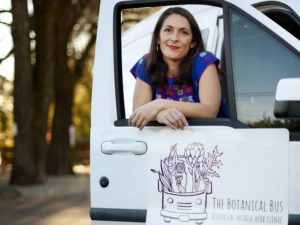
Jocelyn Boreta, executive director of The Botanical Bus with the organization’s mobile clinic in Kenwood, California on January 16, 2021.
(Photo: Erik Castro/for Sonoma Magazine)
In 2017, community organizer and activist Jocelyn Boreta cofounded the Botanical Bus, an innovative bilingual mobile herbal medicine clinic that promotes healing in Sonoma’s Latinx community. Boreta, who has studied both herbalism and cultural anthropology and previously worked with indigenous women in Guatemala and Peru, says the nonprofit’s efforts are needed more than ever, as Sonoma’s Latino population continues to suffer disproportionate health impacts during the coronavirus pandemic.
In response to Covid last spring, Boreta and her colleagues distributed 500 herbal care kits for immunity, stress relief, and respiratory health.
This year, they will continue their outreach with mobile health services for farmworkers at more than two dozen worksite clinics. The Botanical Bus also sponsors a promotora program, which engages community leaders to organize culturally relevant, bilingual wellness workshops.
Here, Boreta shares some thoughts on the healing power of plants.
Healing Plants
I see through my work and in my personal life that our connection to herbal medicine is extraordinarily empowering.
The idea that all of us have a deep knowledge of how to care for ourselves, our families, and our
communities, with plants that are surrounding us—and that we actually have instincts, and that we have co-evolved with the plants that surround us—is a really powerful thing to learn and to embrace.
From Wildfires to Pandemic
Those first fires identified a deepening health disparity in Sonoma County. And it’s not a surprise that housing density, access to medical insurance, and workplace safety affect Covid infection rates. We’ve seen these social determinants of health affecting the Latinx community here, so that’s really the foundation of why we wanted to take action.
Indigenous Knowledge
It’s alive and well, and we’re there to support it. We’re growing a group of advocates who have deep knowledge and want to share. There’s an indigenous woman who’s joined us from a village outside of Oaxaca, and her knowledge of herbal medicine is really strong. She’s rediscovering it through our community, because it’s not necessarily valued in other in other realms of her life here.
Herbal Medicine and Covid
Our practice at the clinic is often about nourishing the nervous system so that people can restore healthy sleep cycles and manage their stress in what are often very stressful circumstances, and also
bolster immunity. There’s no magic plant that’s going to stop people from getting Covid, but there are definitely wellness remedies that will build our resilience. And that’s what we’re focused on.
Sunflower Love, Petaluma: Amy Streckfus and Curtis Garlick fell for each other while acting on the set of Netflix’s “13 Reasons Why,” and now the community has fallen for their upstart sunflower business, CA Sunflower Farm (CA stands for Curtis and Amy). They’re open on Sundays in rural west Petaluma, and can deliver cheery bouquets or bring sunflower pop-ups to parties. “Each day is different,” says Streckfus. “It’s exciting to continue meeting the community.” Open Sundays and by appointment. 3365 I St., Petaluma, casunflowerfarm.com-Luke J. Straub.
Flamingo Resort Transformed, Santa Rosa: The landmark neon sign hasn’t gone anywhere, but after a $20 million renovation, the Flamingo is once again a place to be seen. A new, dramatically flared porte cochère hints at the stylish, Palm-Springs-meets-Wine-Country vibe inside, including a lineup of contemporary art, plenty of jungalow and flamingo accents and mint-green Trimline phones. The biggest draw remains the hotel’s heated pool, which boasts new dining options, and soon, a vintage trailer repurposed into a hip bar. From $189 per night. 2777 Fourth St., Santa Rosa, 707-545-8530, flamingoresort.com-Dana Rebmann.
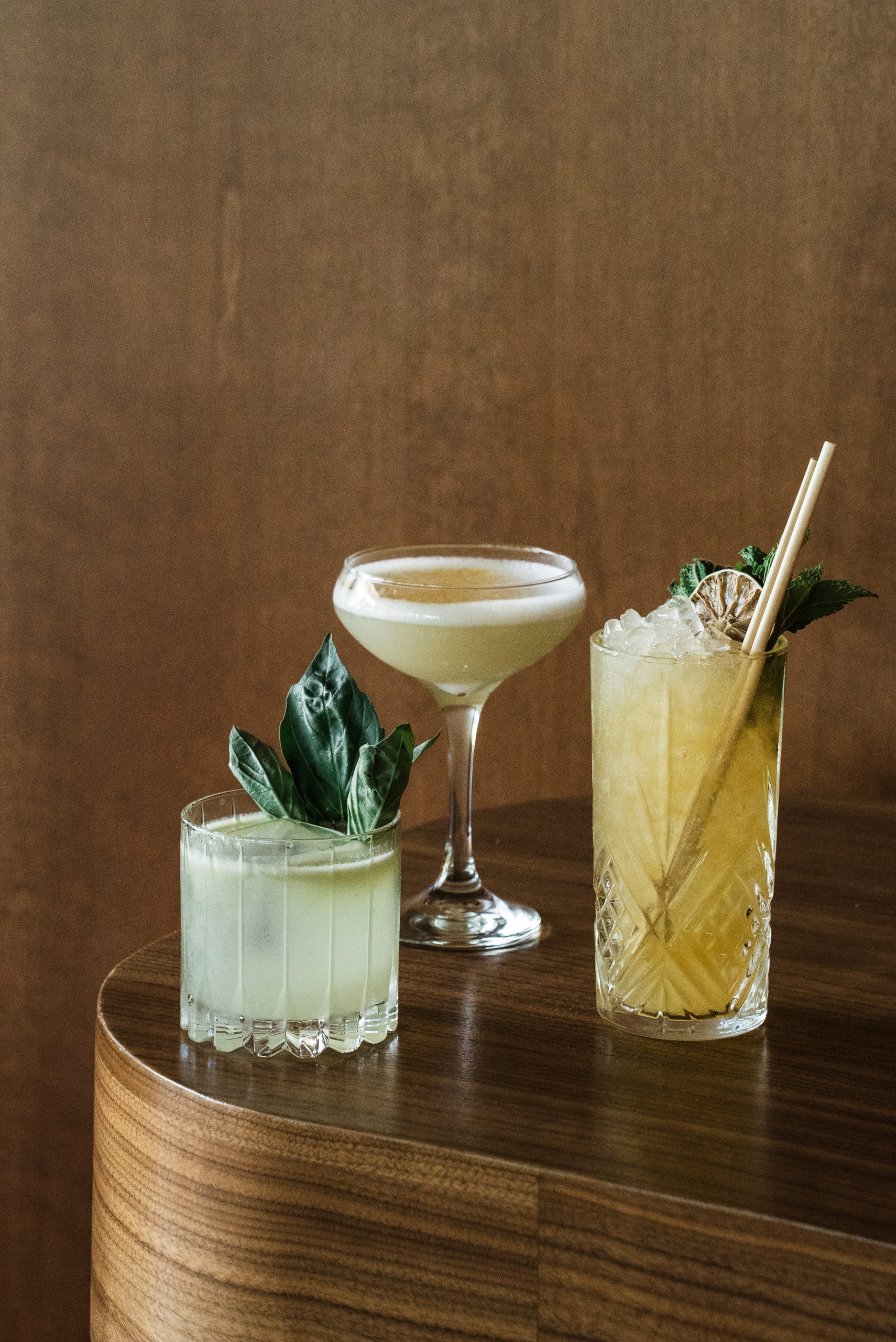
Trio of cocktails at Flamingo Resort’s Lazeaway Club. (Courtesy of Flamingo Resort)
Winery Baseball, Santa Rosa: Balletto Vineyards & Winery cares about their workers — so much so that back in the 2000s, when employees proposed dedicating a section of prime Russian River Valley vineyard land to an employee baseball park in the early 2000s, owner John Balletto gave an immediate thumbs up. It’s the only ballfield of its kind we know of: Instead of a cornfield, the first baseline runs alongside a block of Chardonnay, and “it’s outta here” home runs land right in the vines. Winery guests are welcome to visit the field, which is near the main tasting room, and watch practices—perhaps with a glass of the winery’s excellent rosé. 5700 Occidental Road, Santa Rosa, 707-568-2455, ballettovineyards.com
Vintage Ice Cream, Petaluma: Son of an ice cream vendor, Dan Sager has redone his father Oscar’s vintage 1963 Ford ice cream truck, drawing on his dog, Freddie, to headline a new Oskey’s Ice Cream logo done in cheery mint-and-white paint. “I added some strawberry and chocolate trim, too,” Sager jokes. He stocks old-school novelties like Rocket Pops and Choco Tacos, hitting birthday parties and events along with a regular route through Petaluma. This summer, look for Oskey’s new “ice-cycle”—a Harley Davidson paired with Oscar’s classic sidecar. 707-235-1439. Daily schedules on Instagram @oskeys.icecream-Luke J. Straub
New Doughnuts, Santa Rosa: Do a friend a favor this summer and pick up a couple of salted caramel old-fashioneds from the new Johnny Doughnuts. Or a raspberry Bismark, a brown-butter glazed, or a few of Johnny’s famous croissant-doughnut hybrids, called crodoughs. Johnny’s, which recently opened in the former City Garden space just east of downtown, uses a recipe from the 1920s with potatoes as a key ingredient, for a deliciously pillowy bite. Cult-favorite status reached in record time. Open daily, 1200 Fourth St., Santa Rosa. 707-308-4836, johnnydoughnuts.com-Heather Irwin
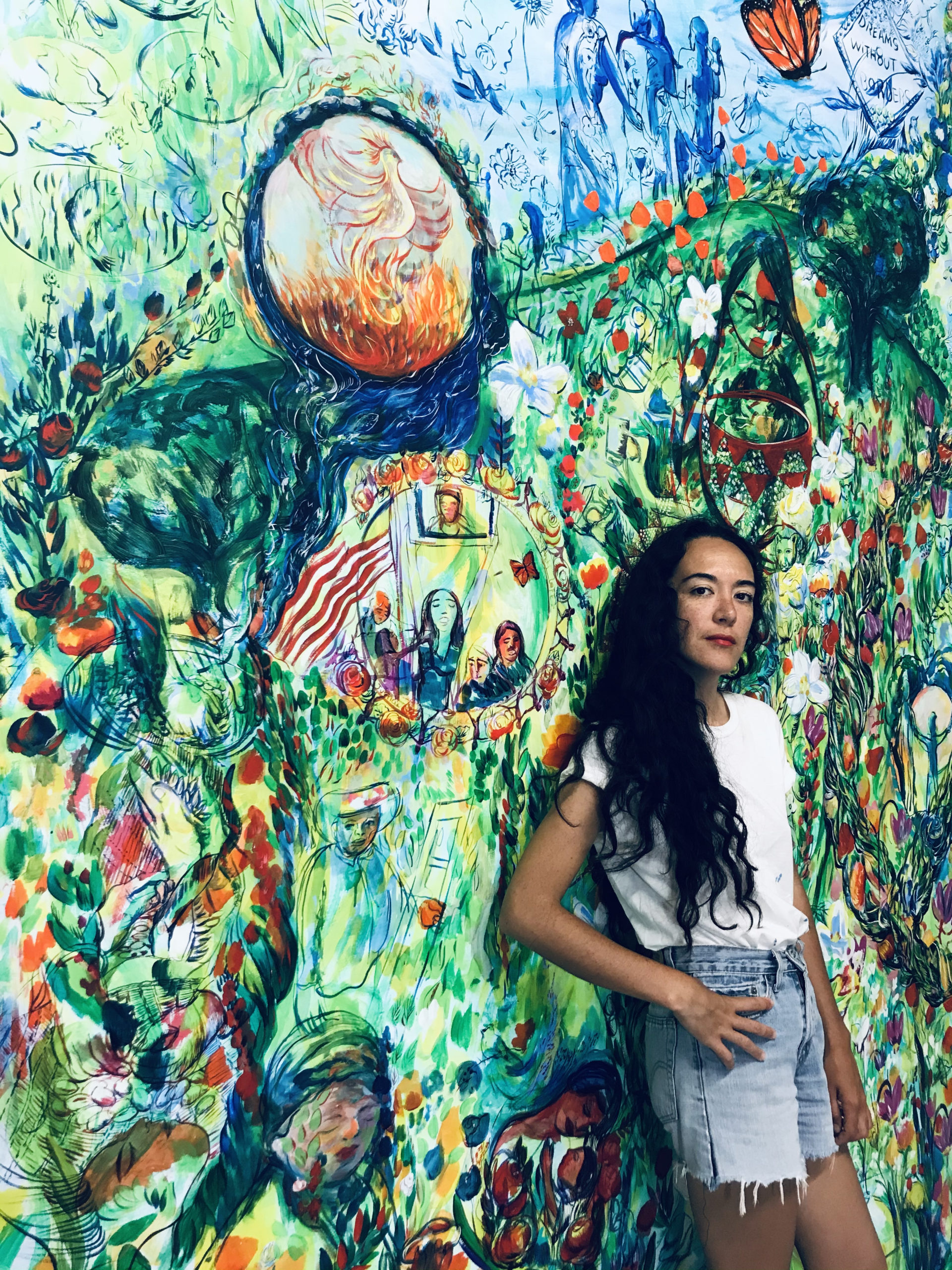
Artist Maria de los Angeles. (Ryan Bonilla)
Art That Unites Us, Glen Ellen: Multidisciplinary artist Maria de los Angeles, who grew up in Santa Rosa before moving to New York City for art school at Pratt and, later, an MFA from Yale, is returning to Sonoma to help install two new murals. Commissioned through the Sonoma Valley Museum of Art, the works shine light on Sonoma Valley’s diverse cultural heritage through a kaleidoscope of color and deep symbolism. “It’s a public work to promote conversation about shared experience—what we’re proud of, who we want to be, what we want to protect,” says de los Angeles. “When I first started planning this mural, I thought about looking at a map. But the map is just a history of how we have divided everything; I want to think about what unifies us.” Located at the corner of Arnold Drive and Carquinez Avenue. svma.org
Wet-hopped beers made with fresh hops are available only in early fall. In this picture, beer from Fogbelt Brewing Company in Santa Rosa. View photos to learn more. (Courtesy of Fogbelt Brewing Company)
In 2013, when Paul Hawley transplanted a few wild hop plants he found growing along a fence in a vineyard near the Russian River, he had no idea it would spark the revival of a crop that once made Sonoma County famous with brewers around the world. “In the beginning, I just wanted to see what would grow,” says the co-owner of Fogbelt Brewing Company, who grew up the son of a winemaker, farming grapes outside Healdsburg.
Hawley had already planted a few rows of the industry-standard hop varieties Cascade, Chinook, and Centennial. But the row of wild California Cluster hops he discovered along the river outproduced them all, he says. “They just blew away everything else.” At the time, Hawley’s quarter-acre was the largest hopyard he knew of in Sonoma County, while in Santa Rosa, Moonlight Brewing Co. also had a quarter-acre hopyard that had been rescued from Korbel.
A beer-drinking buddy of Hawley’s who shares his love of hops, Mike Stevenson planted his half-acre Warm Spring Wind Hop Farm in Sebastopol a year later. When Stevenson joined with Hawley to form the NorCal Hop Growers Alliance in 2016, they were hoping to dig up anything they could find out about the heyday of hops in Sonoma County. They knew hops had first been planted near the Laguna de Santa Rosa in 1858, and the county’s hopyards reached more than 2,000 planted acres by 1899. By the 1930s, around 3 million pounds were harvested annually. But for a number of reasons, the crop had largely faded away by the 1960s.
“I kept thinking if only I could find an old-timer who used to grow hops, they could answer all my questions,” Hawley remembers. “But I couldn’t find anyone.”
Click play to watch”The Dance of the Bines” by John Beck
As more farmers joined the hop collective, they shared hard-won tips learned from trial and error along with information gleaned from research. The group saved on bulk orders and pooled money together to buy new equipment. Guest speakers from UC Davis and the hop mecca of Yakima, Washington, dropped by to share the latest in industry news.
Now, about a month into this year’s abundant hop harvest, as fresh wet-hopped brews are getting chalked up on local beer boards, a half-dozen tight- knit commercial growers are mounting a hop revival, marking a tradition that dates back 160 years.
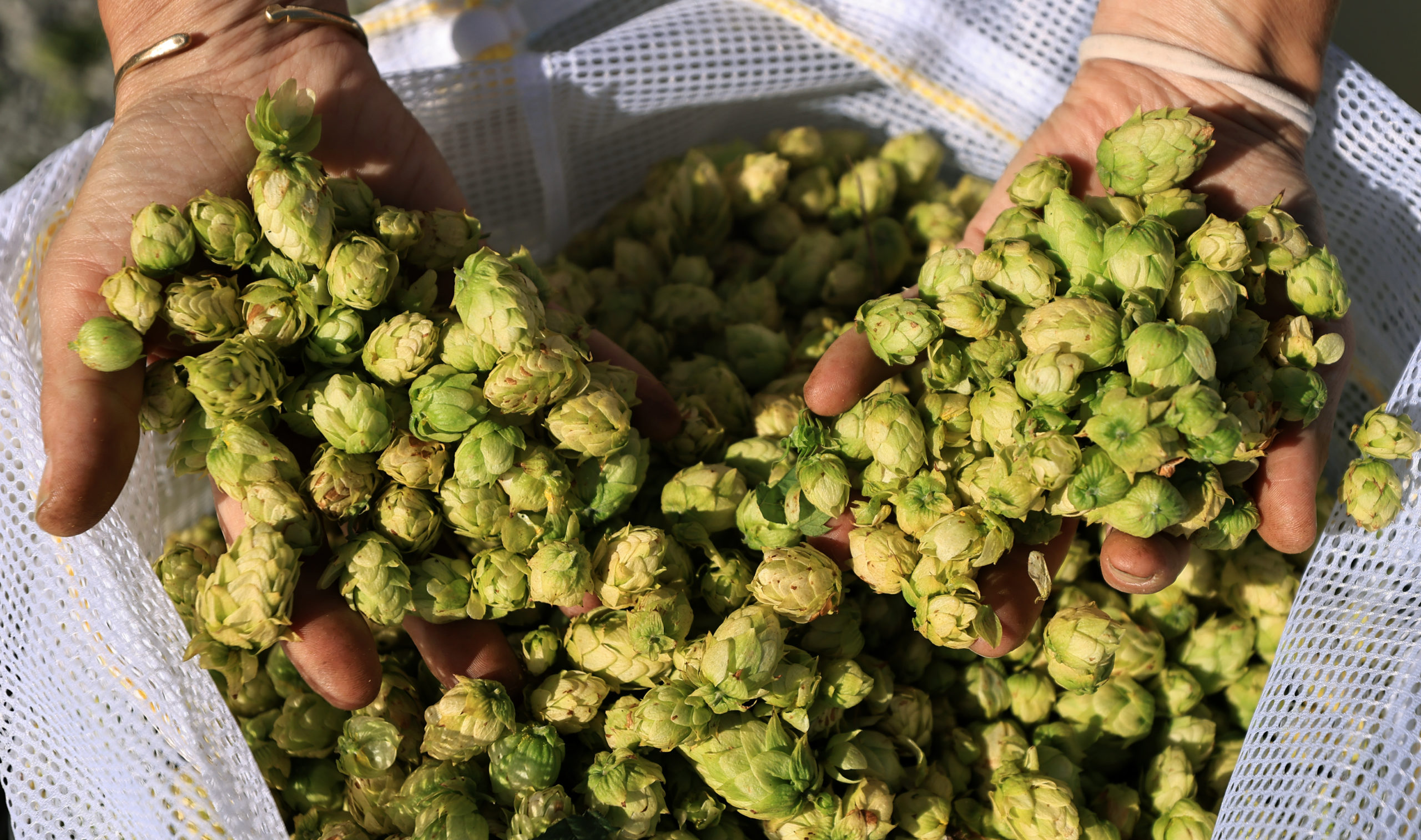
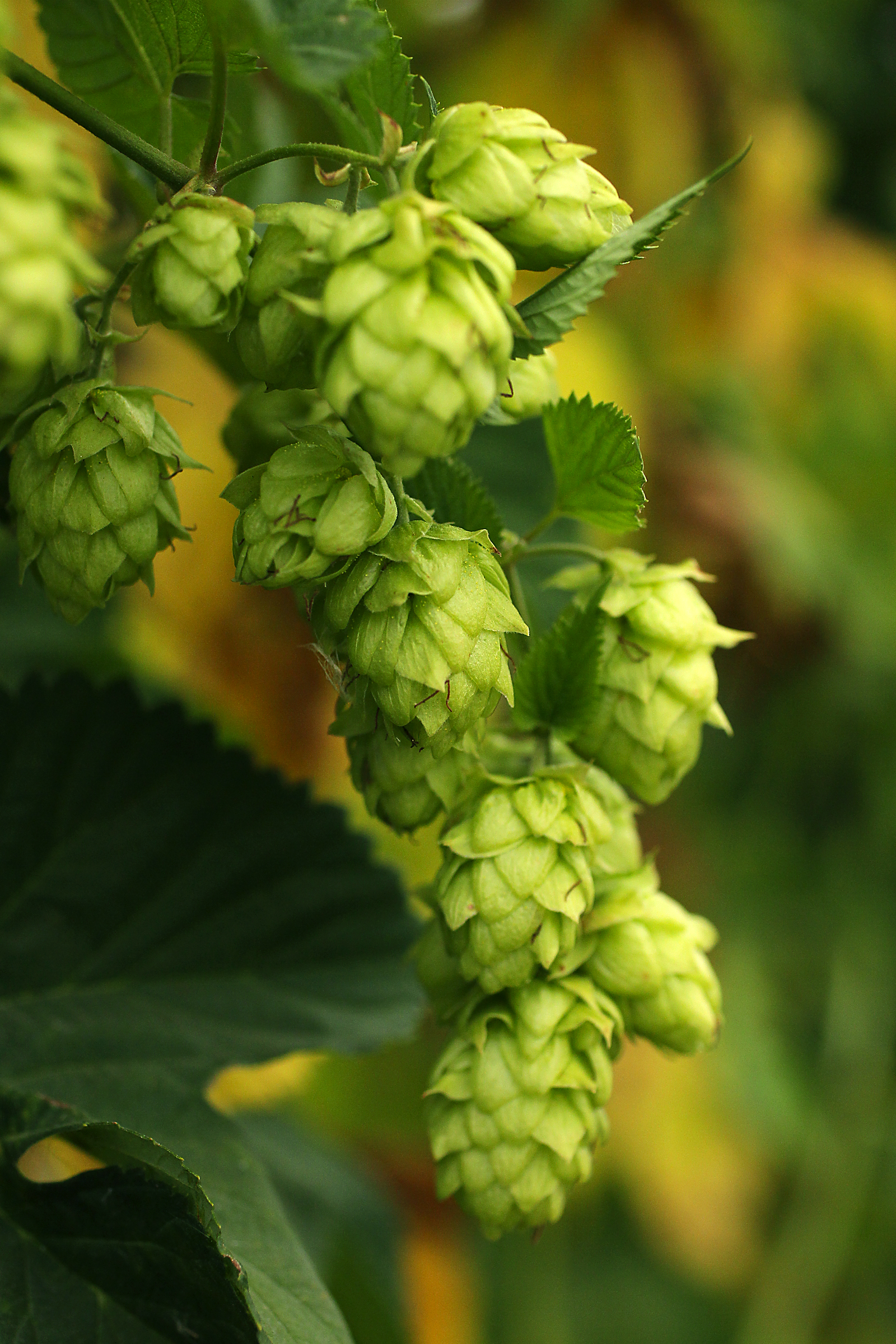
These freshly harvested Sonoma hops are headed straight to the brewery. A wet-hopped beer is one made with fresh whole cones harvested only hours before they’re dropped into the brew kettle. It’s a seasonal tradition, available only in August, September, and October. (Kent Porter/Sonoma Magazine)A hop vine is called a “bine.” A close cousin of cannabis, the hop flower, or “cone,” is what gives beers like IPAs and pale ales their beautifully bitter aromas and delicate floral notes. (Kent Porter/Sonoma Magazine)
In Rohnert Park, Ron and Erica Crane are embarking on their second harvest at Crane Ranch Hops, where sheep help with pruning and fertilizing on a family farm first settled in 1852. The couple is building a kiln to dry some of their hops this year.
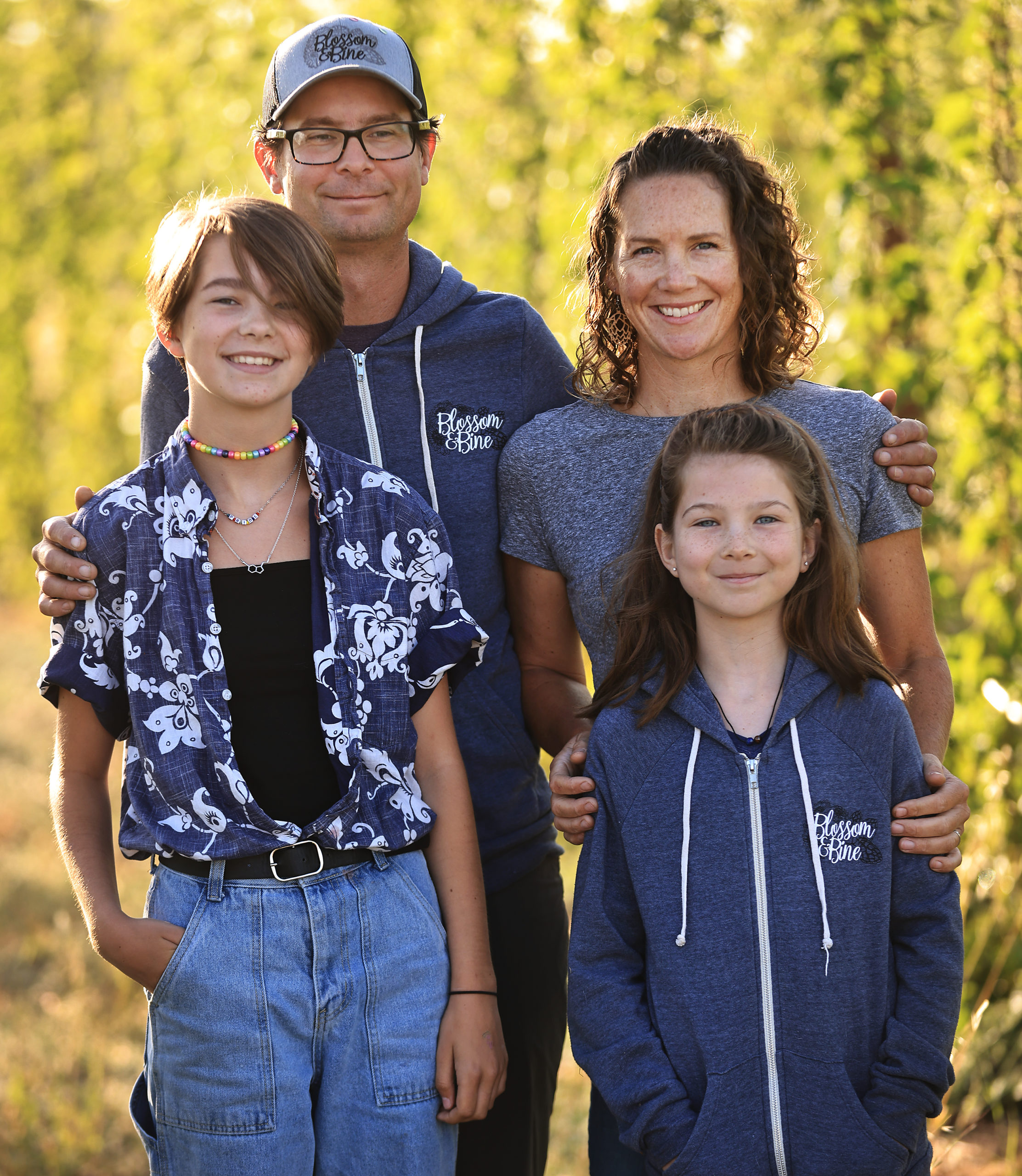
In west Santa Rosa, Erin Shea and Mike Sullivan at Blossom & Bine are growing a little-known variety with hardly any bitterness called Teamaker, along with the usual suspects like Cascade, Chinook, and Cashmere. Last year, the couple picked their first crop entirely by hand — something they’ll never do again.
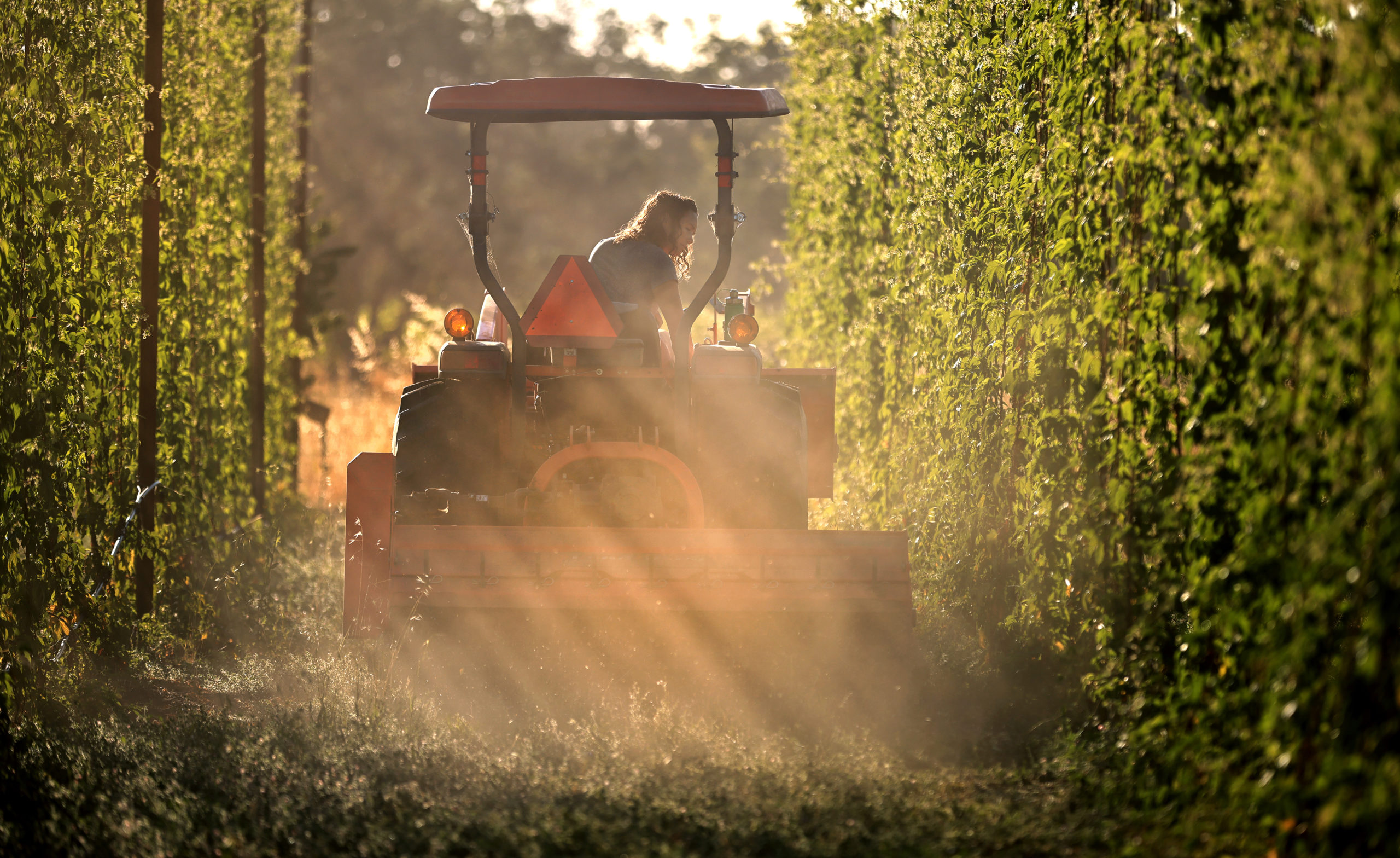
North of Healdsburg, in Alexander Valley, Melissa Luci feeds her Alexander Valley Hops a healthy mushroom compost, so tasty it attracts raccoons. To keep critters out of her 1.5-acre hopyard, which is surrounded by a sea of Cabernet vines, she often blasts live Giants baseball radio broadcasts into the night.
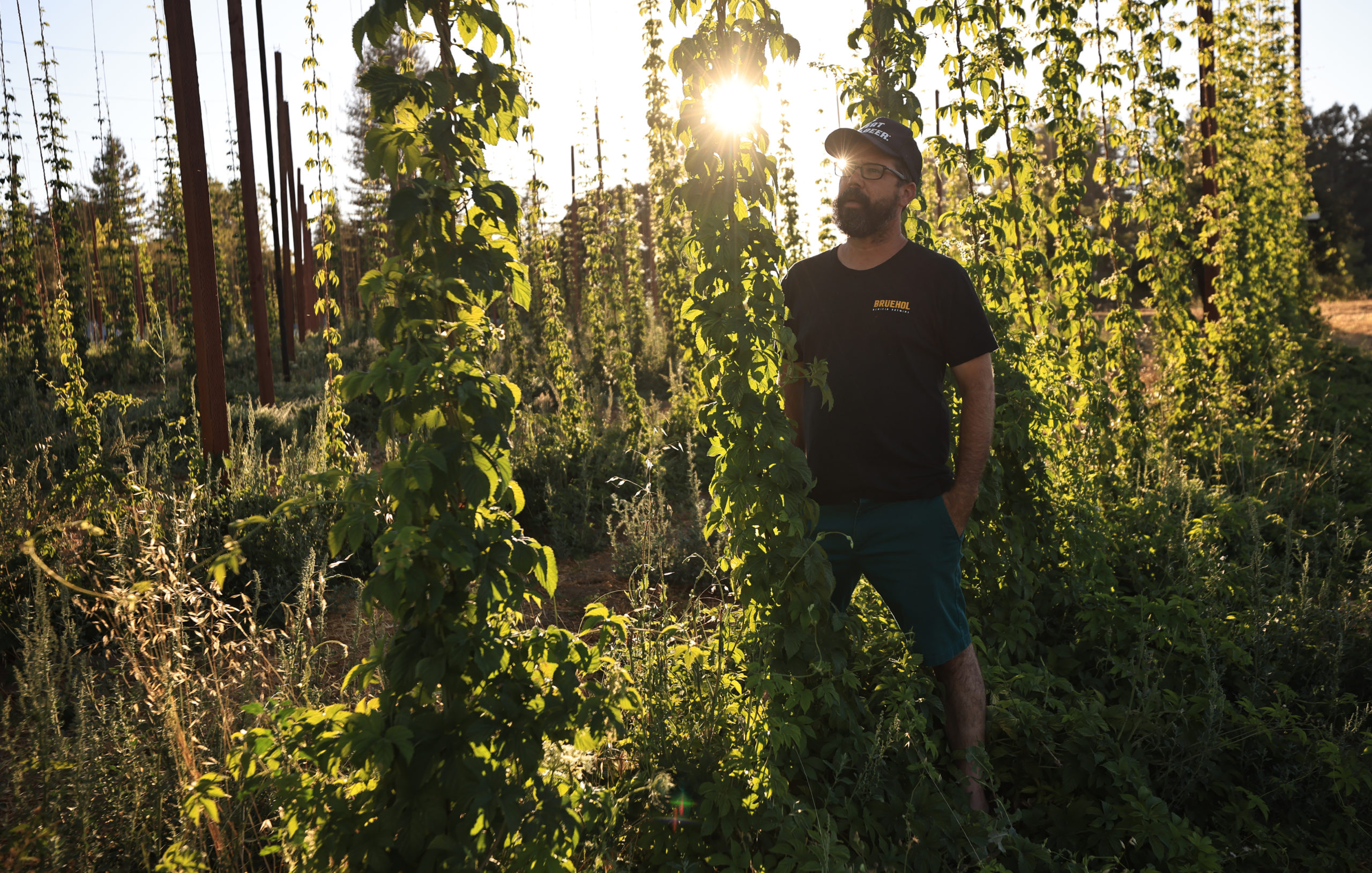
In Sebastopol, at Capracopia and Redwood Hill Farm, Scott Bice fertilizes his hops with goat manure from his dairy. Every hop grower in the area will drop by his farm at some point during harvest to feed their bines through “The Wolf,” a reconstituted 1973 German hop harvester that Bice and the Cranes imported for $50,000 for the hop growers collective.
Keeping it local this fall, these growers’ hops will flavor beers at Russian River, Fogbelt, Crooked Goat, Barrel Brothers, Steele and Hops, Old Possum, Pond Farm, and Mad Fritz breweries, among others.
Scott Bice in his Sebastopol hopyard. Every hop grower in the area will drop by Bice’s farm at some point during harvest to feed their bines through “The Wolf,” a reconstituted 1973 hop harvester that Bice imported from Germany. (Kent Porter/Sonoma Magazine)
Erin Shea and Mike Sullivan of Santa Rosa’s Blossom & Bine with their two children. The couple grow a little known but highly prized variety called Teamaker, along with the usual suspects like Cascade, Chinook, and Cashmere. Last year, the couple picked their first crop entirely by hand — something they’ll never do again. (Kent Porter/Sonoma Magazine)
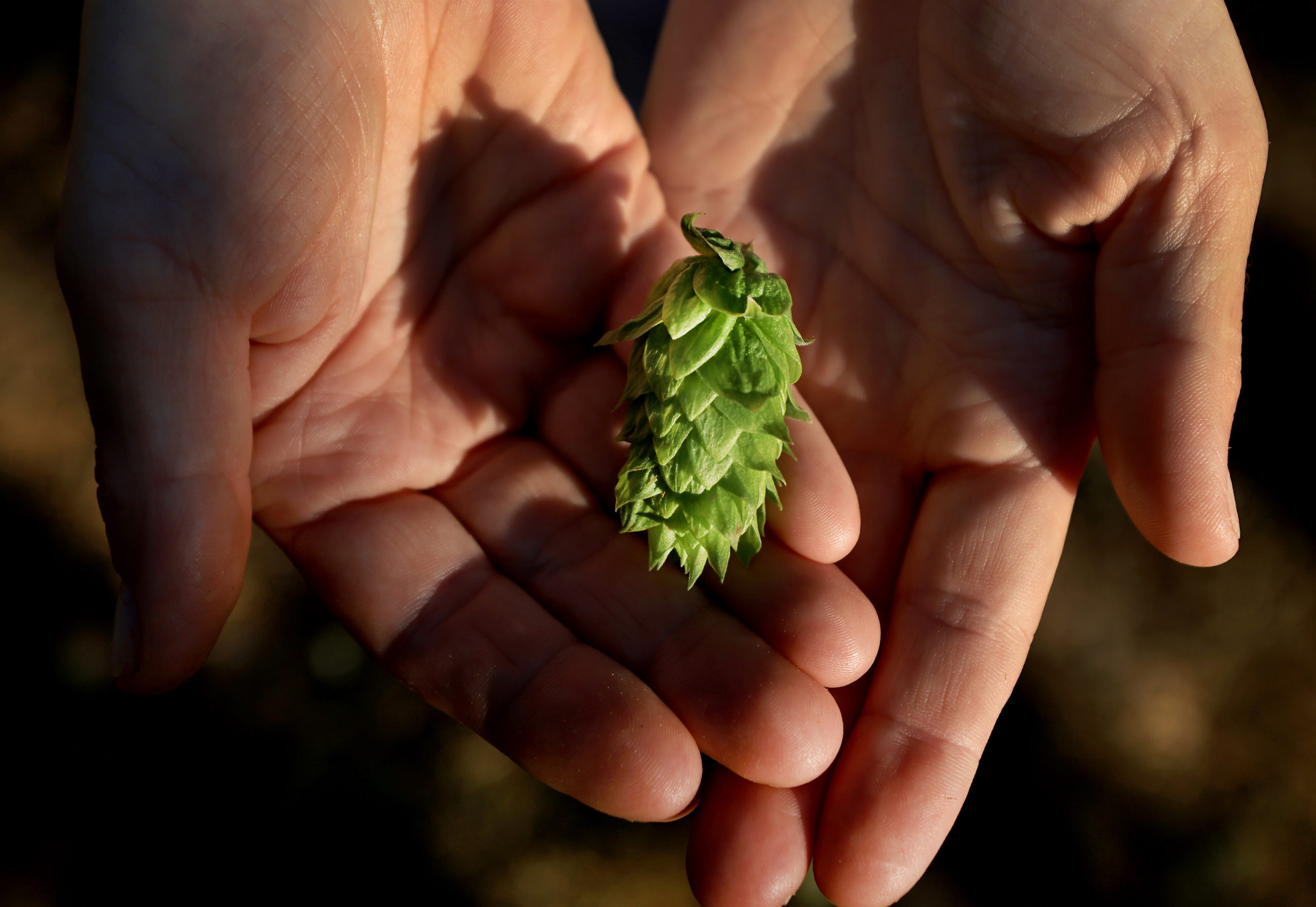
If you’ve never seen a hop harvest, the first thing to know is a hop vine is called a “bine.” A close cousin of cannabis, the hop flower, or “cone,” is what gives beers like IPAs and pale ales their beautifully bitter aromas and delicate floral notes. More jargon: A beer’s bitterness is measured in IBUs or International Bitterness Units. And when hops have gone “O.G.” they have not turned “Original Gangster” but “Onion-Garlic” — a dreaded off-flavor that can plague certain varieties.
Fresh, wet-hopped beers are what get many beer lovers going this time of year. A wet-hopped beer is one made with fresh whole cones harvested only hours before they’re dropped into the brew kettle. It’s a seasonal tradition, available only in August, September, and October, making it the Beaujolais Nouveau of beers. Most beers are dry-hopped, with cones that are heated and dried in a hop kiln and often pelletized and refrigerated before being added to the beer. The difference between a fresh, wet-hopped beer and a dry-hopped one, people like to say, is the difference between cooking with fresh basil from the garden and dried basil from the spice rack.
“Some days when you’re out here, it’s almost like you can see the growth process in action, because they’re growing so fast,” says Erin Shea of Santa Rosa’s Blossom & Bine. (Kent Porter/Sonoma Magazine)
To see and smell a young hop flower coming to maturity on the bine, you begin to understand the allure for any brewer looking to make the freshest, locally sourced beer available. Standing in the middle of her hopyard on a baking-hot afternoon, Melissa Luci of Alexander Valley Hops plucks a flower and pulls it apart to expose tiny, yellow lupulin glands inside. “That’s what flavors the beer,” she says, pointing to the bright resinous beads before letting the flower fall to the ground, which is composted with bark from trees burned by the 2019 Kincade fire.
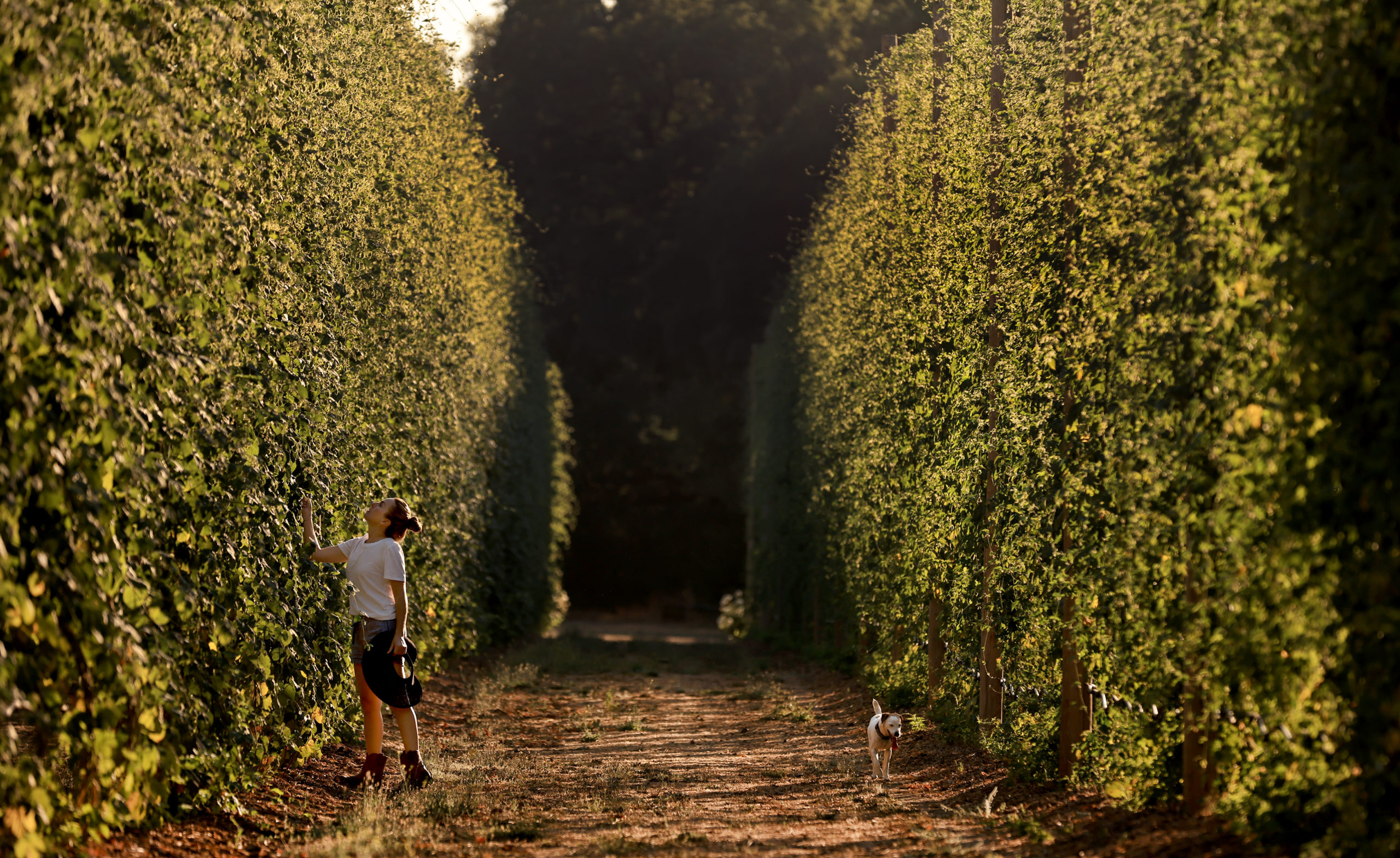
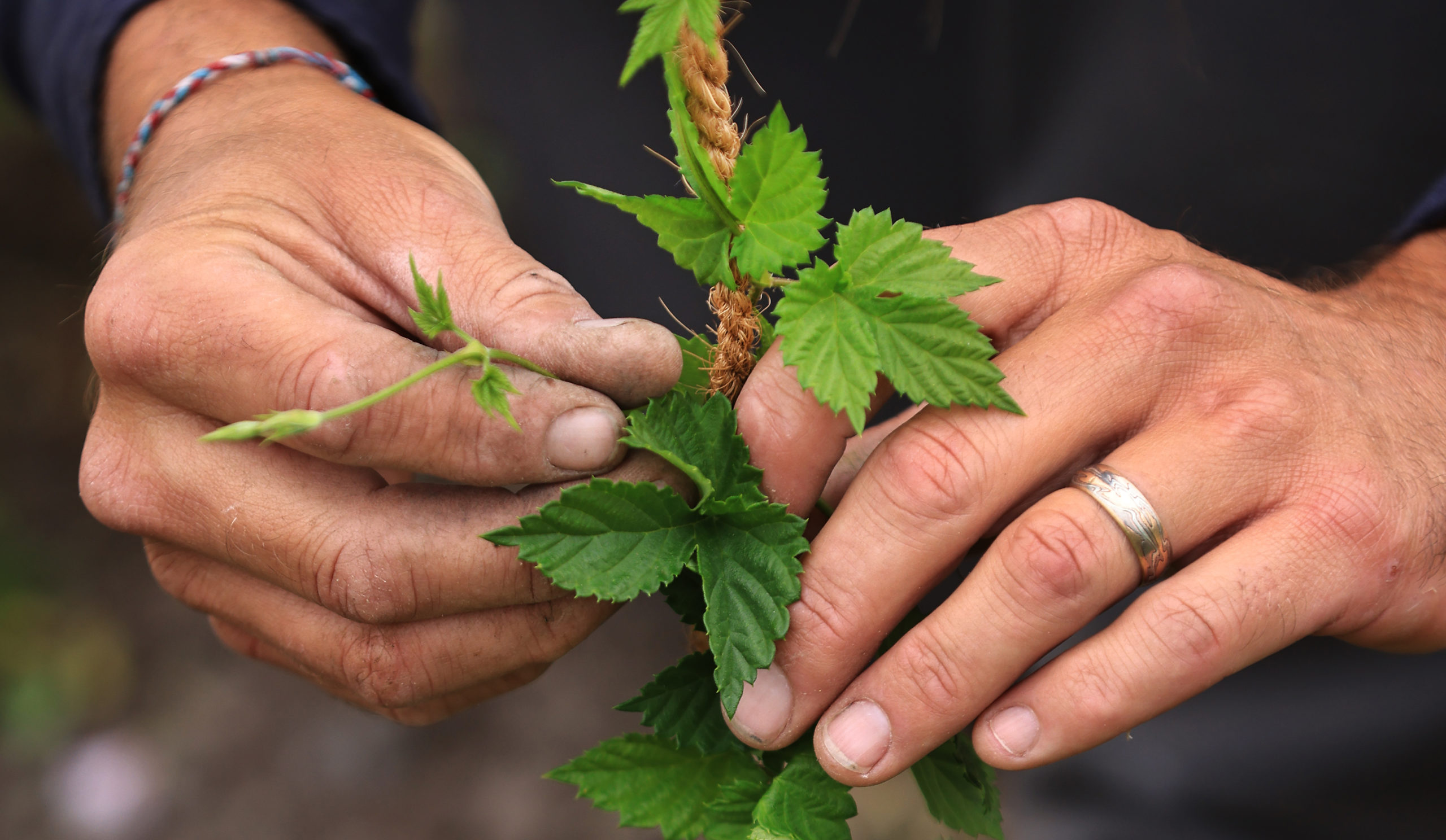
Luci, who has a degree in art history, came to hop- growing on a whim. One day, as she was looking at the long, narrow fairway where her father would drive golf balls every evening before dinner, “it occurred to me to go up,” she says — literally 18 feet in the air. She began researching and poring over archival photos and erected a hopyard on wooden poles she sourced from Washington. “You want them to reach the top by the summer solstice,” she explains, looking up at the climbing tendrils, which always wrap clockwise around the coconut-husk twines. On this day, most of her 1,500 bines of Cascade, Triumph, Chinook, and Cashmere have met the challenge and are touching the top wire as they dance in the breeze, undulating in waves down each row.
Luci’s family has grown Cabernet grapes since the ’70s in the surrounding Peline Vineyards. She’s a farmer, but very much a Cali farmer. When you ask what it was like to taste the first beer flavored with her own hops, she says, “It was bitchin.’” One of the most memorable was a Barrel Brothers concoction called “Hop Cones of Dunshire,” inspired by the TV show “Parks and Rec.”
The difference between a fresh, wet-hopped beer and a dry-hopped one, people like to say, is the difference between cooking with fresh basil from the garden and dried basil from the spice rack. (Kent Porter/Sonoma Magazine)
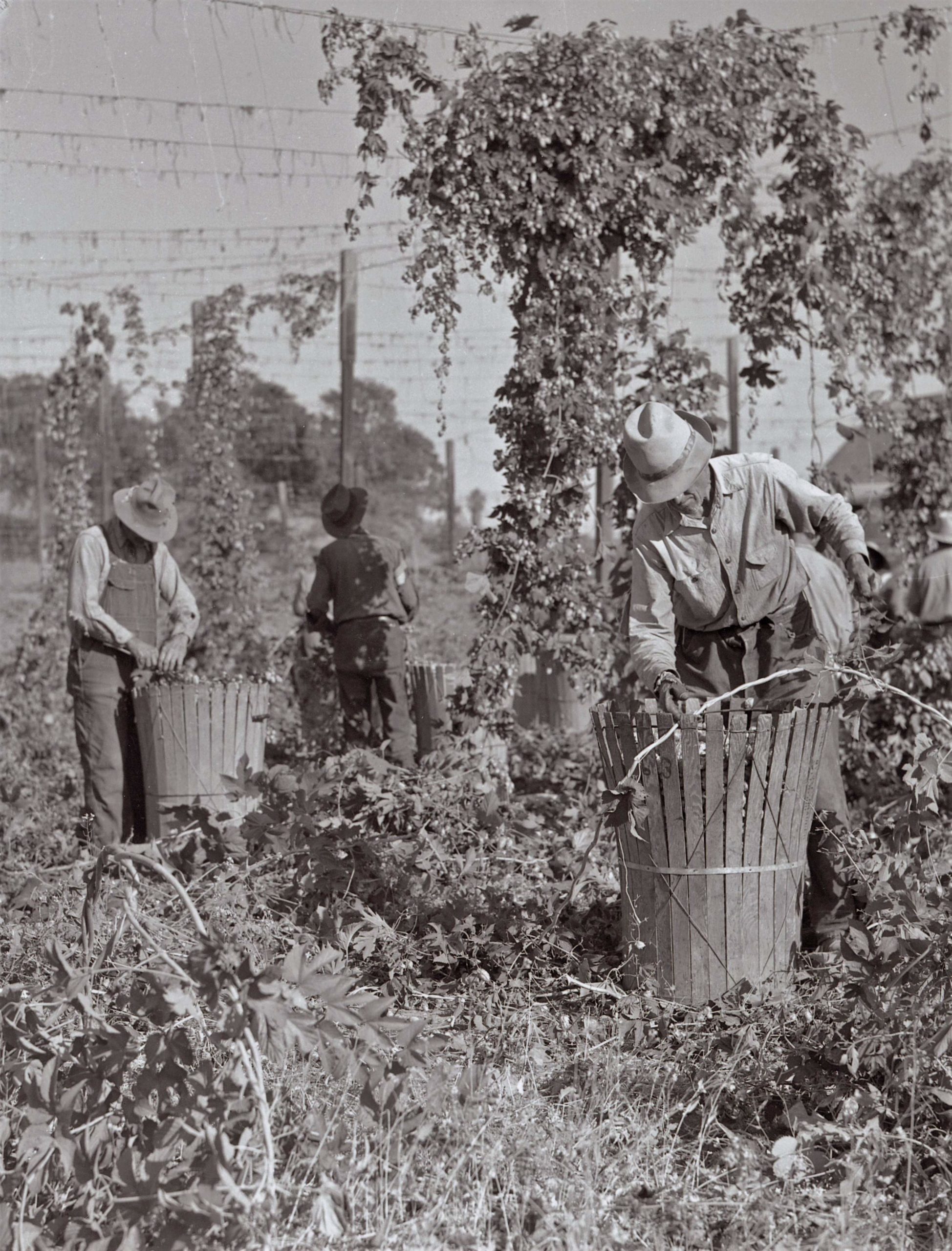
A hundred years ago, hops were huge business in Sonoma County. In this photo, farmworkers are stripping the hop vines near Wohler Road in Healdsburg in the 1920s. (Courtesy of Sonoma County Library)
Luci had an early harvest this year. Early or late, the annual hop harvest was always big news around the turn of the 20th century. “During the period of about four weeks from September to the early part of October all the way from 15,000 to 30,000 men, women, and children were busily engaged from sunrise till sunset picking the blossoms from the great hop fields of California,” reads a 1900 story from the San Francisco Chronicle. It estimated at least 7,500 acres of hops were planted in Sonoma, and neighboring counties, totaling 9 million bines.
Every fall, migrant workers would camp along the banks of the Russian River, as entire families pitched in for the harvest. Paul Hawley’s 97-year-old grandmother tells stories of picking hops as a little girl for a few seasons, always adding how “it wasn’t much fun at all.” Back then, hop harvesters walked on stilts to pick the upper reaches of towering bines. They wore thick wool suits to protect themselves from scratchy bines and what newspaper stories called “hop poisoning” — a severe rash on the face and arms from the “nettle-like fuzz on the stalks of the hop vine.” And their hands would end up stained dark from hop resin — something that could be “removed by rubbing with the crushed green leaves of the hop.”
By the early 1900s, when Grace Brothers Brewery in Santa Rosa was selling its “Special Brew” (and later “Happy Hops” lager), the local crop flavored much lighter, less hoppy beers than the double and triple IPAs that score raves on Beer Advocate today. Back then, a variety called California Cluster was king — the same one Paul Hawley later found growing wild in a vineyard off Eastside Road. A London hops broker who visited both Yakima and Sonoma County hopyards in 1892 told the Sonoma Democrat that Yakima hops were very rich in lupulin and “altogether of the finest quality for the European market.” But “they are excelled by the Sonoma hops in only one essential. The Yakima hops lack softness to the touch, silkiness, which the Sonoma product possesses in a high degree.”
By the ‘60s, the crop had all but died out when one of the last big harvests took place at Bussman Ranch near Windsor. Post-World War II fertilizers had introduced “downy mildew” into the soil, decimating hopyards, which were then replanted with prunes and grapes. New trends and drinking preferences favored lighter, less hoppy beers. With more daylight hours (hops need 16 hours a day) and soil conditions more resistant to mildew, Yakima, Washington offered better growing conditions for hops. The area now grows around 75% of the hops in the U.S., which produces nearly half of the hops in the world, about the same amount as Germany.
But local hops have a huge advantage when it comes to seasonal wet-hopped beers: They can be picked in a hopyard a few miles from the brewery and dropped in the kettle within hours. Wet-hopped brews also require about five times the amount of hops when wet, which at $8 to $9 a pound (compared to the 81 cents per pound that pioneer farmers Otis Allen and Amasa Bushnell got for their 1,100 pounds of inaugural Sonoma County hops in 1858) makes for a decent payday for local growers. To make a wet-hopped beer with Northwest hops — and some Bay Area brewers actually do it—you need to overnight the hops by mail, paying a premium for what is mostly water weight.
“During the period of about four weeks from September to the early part of October all the way from 15,000 to 30,000 men, women, and children were busily engaged from sunrise till sunset picking the blossoms from the great hop fields of California,” reads a 1900 story from the San Francisco Chronicle. (Kent Porter/Sonoma Magazine)
For now, the next step in the rebirth of Sonoma County hops will be reaching and maintaining a consistent level of quality that brewers can count on every harvest, says Vinnie Cilurzo, owner-brewer at Russian River Brewing Company. Cilurzo grew hops at Korbel in 1997, where his brewery was first started, and now buys 50,000-60,000 pounds of whole cone hops a year from growers in the Northwest.
“Just because it’s local doesn’t mean that the quality is there,” says Cilurzo, who pitched in $5,000 so the NorCal Hop Growers Alliance could purchase its first harvester — a modern update of the first hop- picking machine invented in 1940 by Santa Rosa farmer Florian Dauenhauer. “So we need to make sure these growers are doing the best they can and have the best practices they can to have the highest quality hops that are at least coming close to what we can get up in the Northwest.”
A lot of it comes down to timing, Cilurzo says — knowing when to prune, when to add nutrients, when to train the bines up the line, how much to water, and ultimately, when to pick so the hops don’t come in underripe or overripe.
“If people aren’t harvesting at the right time and they’re just doing it for convenience — like, say the brewer says, ‘We have to do this the second week of August or we can’t do it.’ And the grower needs the money — then the hops aren’t going to be as good and then the beer won’t be as good,” says Scott Bice, who started farming a quarter-acre in 2015 on a neglected apple orchard at his Redwood Hill goat dairy and now grows about 1.5 acres.
Fresh hops from Melisssa Luci’s Alexander Valley hopyard, all packaged up for the trip to the brewery. In September, wet-hopped IPAs, pale ales, and pilsners start showing up on beer boards all over the Bay Area. The seasonal brews are often available for just a day or two, or a week at most. (Kent Porter/Sonoma Magazine)
When it comes to locally sourced beer, there’s one final ingredient that’s been missing all these years: Barley. On a hot, dusty June afternoon, Ron Crane of Crane Ranch Hops, who comes from a longtime local farming and ranching family, pulls up to a farm on Lakeville Highway, southeast of Petaluma, where he grows hay and runs sheep on 1,000 acres along the Petaluma River. His pickup truck is loaded down with spent grain from Russian River Brewing Company, a trail of juice dripping out the back of his tailgate onto the dirt road. While some ranchers are spending a fortune on feed during the drought, Crane keeps his sheep alive on the mealy brewing byproduct that he gets for free.
It was his wife Erica’s idea to plant hops. “I wanted to find something that could be our legacy,” she explained a few days before, wearing a “Don’t Worry Be Hoppy” T-shirt while touring their 2.5-acre hopyard. Last year, the couple got to belly up to the bar at the Russian River outpost in Windsor to toast their very own R&D Crane Ranch Pale Ale. For Ron, who flew Apache helicopters in the second Iraq War and CALSTAR rescue helicopters, it marks a new adventure, inspiring him to build a hop kiln this year to extend the life of his hops.
But today, he’s eager to check on his barley crop. If a lab test confirms the protein levels are suitable for malting, it will be one more step toward his dream of making a beer from entirely local ingredients — the holy grail for farm-to-bottle afficionados — all sourced and made within a 30-mile radius.
Back in 2017, Nile Zacherle at Mad Fritz in St. Helena, who specializes in origin beers, made an all-Sonoma County beer with hops from Bice’s Capracopia hopyard and barley from Front Porch Farm in Healdsburg.
But in a county that prides itself on homegrown ingredients, this new all-local brew will be special, with barley grown by the same farmer who grew the hops. Crane’s plan is to malt the barley at Grizzly Malt in Rohnert Park, and brew the beer in batches at Russian River Brewing Company and Old Caz Beer.
Taking a four-wheeler out to his field of Genie barley, Crane picks a few spikes and pulls off the golden barley berries, turning them over in his hand. They’re still at least a few days away from harvesting. “I’m hoping in a few months, this will go into a fresh- hopped batch of beer,” he says, smiling. “How cool would that be?”
Fogbelt, Russian River, Pond Farm, Crooked Goat, Barrel Brothers, Steele and Hops and Old Possum are among the local breweries serving wet-hopped beers. (Kent Porter/Sonoma Magazine)
Where to Drink Wet-Hopped Beers
Sonoma’s version of Oktoberfest arrives in September, as local farmers wake before dawn to harvest ripe hops, delivering them to breweries hours after they’re picked. “You really get the essence in the beer of what the hops smell and taste like hanging on the bine,” says Russian River Brewing Company owner-brewer Vinnie Cilurzo. “Our goal is to have the hops picked from the bine and into the kettle in 5 to 6 hours.”
Drinking a wet-hopped beer is the best way to sample Sonoma’s terroir. Instead of being dried in a kiln and pelletized, home-grown hops are dumped whole-cone into wet-hopped beers. This month, wet-hopped IPAs, pale ales, and pilsners start showing up in pastel chalk on beer boards all over the Bay Area. It’s a wild time of year for beer lovers: The seasonal brews are often available for just a day or two, or a week at most.
Fogbelt Brewing Company
Owners Paul Hawley and Remy Martin plan to brew four to five wet-hopped beers this harvest, releasing them in a Wet Hop Week celebration, with hopped-up food pairings, most likely in the first or second week of September. “These are the most exciting beers for us to brew, because you only brew them once a season,” says Hawley, who is also petitioning the county to create a new “farm brewery” designation that would give breweries similar tax and ag benefits as wineries, a model that’s already been adopted in New York, Oregon, and Placer County.
Fogbelt will once again make an Alliance IPA using hops from any NorCal Hop Growers Alliance members (commercial and non- commercial growers) who want to add their cones to the mix.
This past spring, Hawley helped prune the bines at Scott Bice’s Capracopia hopyard and used all the cuttings to make pickled hop shoots, which will be served during Wet Hop Week. In the past, they’ve also served salad with hop-oil dressing, hops chimichurri on lamb, and sausage made with hops alongside their wet- hopped beers.
Even Pliny can’t compete with the freshness of a wet-hopped beer. “It’s one of my favorite beer styles,” says Vinnie Cilurzo. In 1998, Russian River Brewing became only the second brewery in America (in modern times) to make a wet- hopped beer — with Cascade and Chinook hops Cilurzo grew at Korbel Winery.
Last year, Cilurzo and his wife, Natalie, helped bring in the harvest at Crane Ranch Hops, buying a few hundred pounds of Cascade, Chinook, Triumph, and California Cluster to make HopTime Harvest Ale and R&D Crane Ranch Pale Ale. Look for more Crane Ranch hops, and possibly other locally farmed hops, in RRBC wet-hopped beers in early to mid-September.
The San Rafael brewery, which takes its name from the west county artist colony located near where owner-brewer Trevor Martens grew up, is planning on brewing two wet-hopped beers in mid-September: a Pils and an IPA. Last year, they made a pilsner from Blossom & Bine’s barely bitter Teamaker hops. “While it leaves some things up in the air regarding the brew schedule,” says Martens, “it’s really exciting for us to work with a local hop farmer and be waiting for this natural product to hit its peak.”
Other local breweries that love to make wet-hopped beers are Crooked Goat, Barrel Brothers, Steele and Hops, and Old Possum. Check their beer boards and social media for the latest, and hurry — these special brews don’t last long.