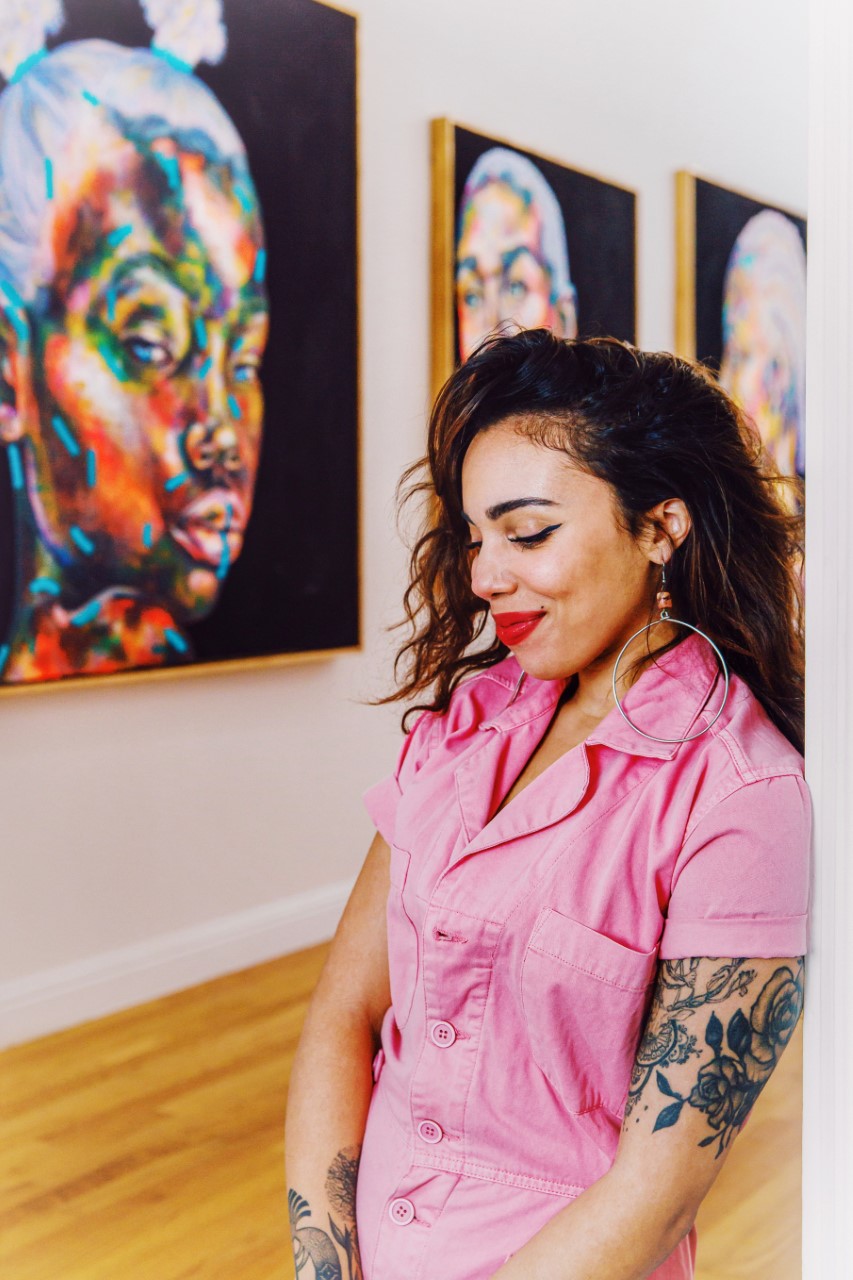
Owner Sydney Pfaff of Healdsburg’s Legion Projects is bringing new energy to the town’s art scene with exhibits of works by emerging contemporary artists. “I don’t want to do what’s expected,” explains Pfaff, who says she’s excited to introduce fresh voices to the Sonoma community.
Pfaff, who worked as a fashion journalist before launching an art career in 2013, curates contemporary shows that rotate about every six weeks. The newly bright, streamlined gallery space, with a line of skylights uncovered during recent renovations and a huge mural on the wall outside, is tucked into a cluster of modern gray studios, north of the Healdsburg Plaza.
Legion Projects exhibited works by San Francisco artist Anoushka Mirchandani in August. (Hillary Jeanne Photography)Legion Projects exhibited works by Oakland artist Taylor Smalls in August. (Rachel Rothstein)
Pfaff has quickly plugged into the local scene, exhibiting the work of artist and educator Jessica Martin and collaborating with winemakers like Alice Warnecke Sutro of SUTRO Wine Co. and chefs like Ploypailin Sakornsin, formerly of SingleThread, for openings and events, which spill out onto a sunny, pea-gravel patio and adjacent greenbelt. On view through September 11 is Jellying, a solo show of “bold, abstract paintings in striking colors” by LA artist Dennis Foster.
Legion Projects, 711A Healdsburg Ave., Healdsburg. Open Thursday- Saturday 12-3 and by appointment. legionsf.com
Acme Burger at Acme Burger in Cotati. (Heather Irwin/Sonoma Magazine)
The dearth of kitchen and dining room workers in Sonoma County is continuing to make life difficult for local restaurateurs. But somehow new restaurants continue to pop up all over the county. Here are some recent openings.
Now Open
Acme Burger, Santa Rosa: Dying for a fat burger on a squishy bun with all the fixings? The popular Cotati destination for tasty patties, fried chicken, rock cod and barbecue pulled pork in a bun has opened a second location in the former G & G Shopping Center at 1007 West College Ave. The menu is the same as at the original location. We highly recommend ordering the soup with truffle fries on the side.
Sonoma Beef Burger with onion rings, fried chicken burger, chili fries and Cajun fries at Acme Burger in Cotati. (Heather Irwin/Sonoma Magazine)
Asahi Ramen and Izakaya, Healdsburg: The owners of the top-notch Asahi Sushi & Kitchen in the Healdsburg Plaza have expanded their offerings with a second location serving ramen and izakaya (Japanese bar snacks). The menu includes nibbles like shumai dumplings, gyoza (potstickers), tempura, fried potato croquettes, furikake French fries and karaage (Japanese fried chicken). The guiltiest of pleasures is the takoyaki: little fried balls of octopus slathered with mayo and topped with flakes of salty dashi. The ramen family is well represented with miso, shoyu, pork, kombu and vegetarian broths topped with pork char siu, seafood or vegetables. Larger entrees, including teriyaki and katsu, are also available. 1047 Vine St., Healdsburg, asahiramenandizakaya.com
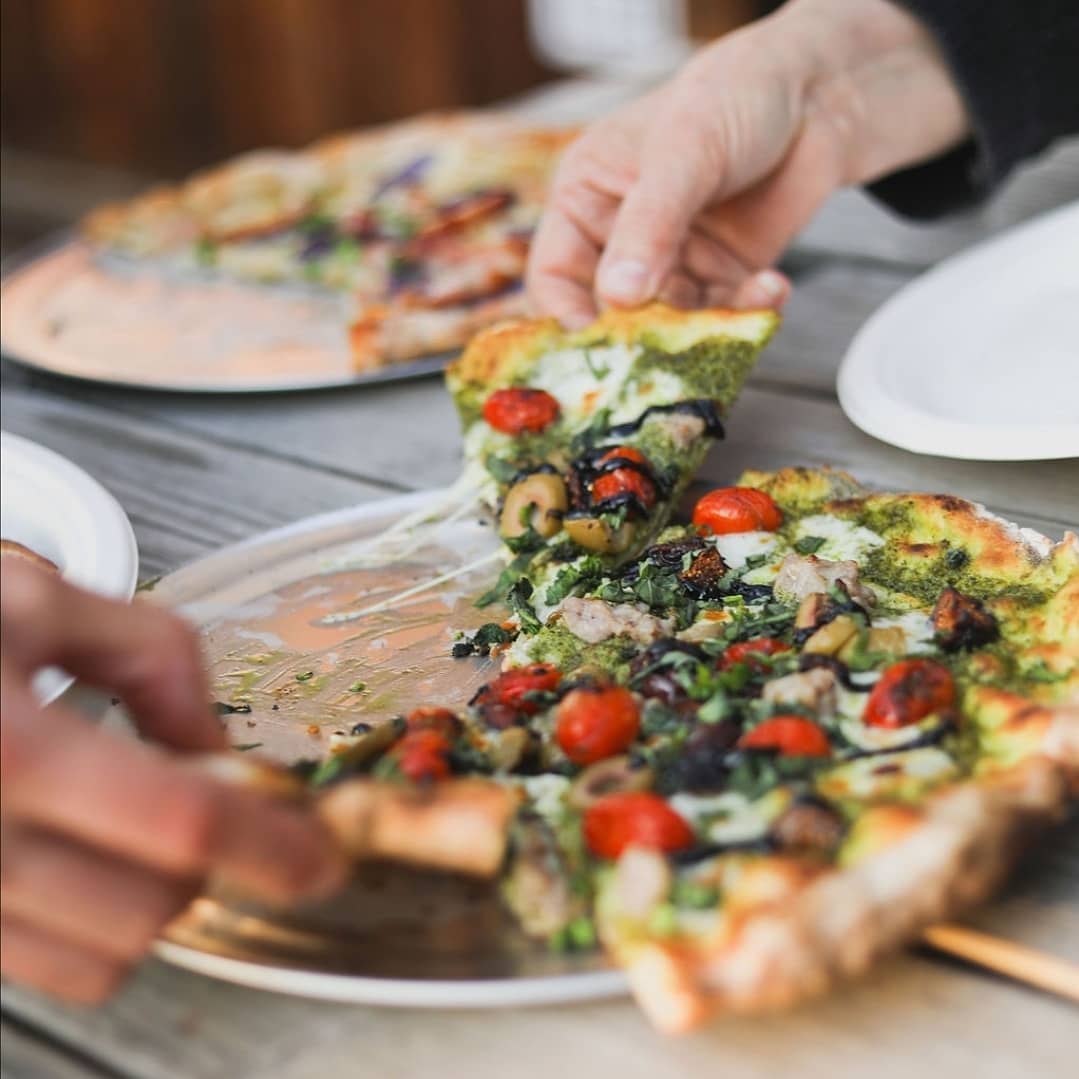
The Kratos with pesto sauce, mozzarella, fire-blistered cherry tomatoes, spicy Italian sausage, olives and figs, finished with fresh basil and balsamic glaze at Zimi Pizza at The Block in Petaluma. (Courtesy of Zimi Pizza)
Coming Soon
Zimi Pizza: Owner Dino Moniodis has announced a second location, in Rincon Valley, for his Petaluma-based wood-fired pizzeria. Moniodis said it will serve pizzas, calzones and desserts along with gyros and spanakopita. The pizzeria will replace Urban Pizza, which recently closed. Moniodis also recently said he’ll be opening a Greek restaurant, Taverna Lithi, in 2022 in Sebastopol’s forthcoming food hall, The Livery on Main.
Wine and food pairing at St Francis Winery & Vineyards in Santa Rosa. Click through the slideshow for more fabulous foodie wineries in Sonoma County. (Timm Eubanks/St Francis Winery & Vineyards)
This is part two in a series on local wineries with stellar wine and food experiences.
In 2015, St. Francis Winery & Vineyards in Sonoma Valley was declared the No. 1 restaurant in the U.S. — for the second time in three years — by OpenTable.com, based on reviews by users of the online-reservations company’s website and app.
Funny thing is, St. Francis isn’t a restaurant and isn’t licensed to be one. It’s a winery that happens to serve restaurant-quality small dishes to accent its wines. Unlike at a restaurant, guests cannot order from a menu at St. Francis, instead accepting the wines and bites selected by the winemakers and chef. There is no dinnertime service. No takeout. No kids. One price fits all.
These limitations don’t detract from the experience for fans of fine wine and food, their lack of choice offset by vineyard views, expert matching of wines to in-season ingredients and deliciously casual education on the provenance of the drink and food.
St. Francis may garner the most publicity for its pairings program, yet a handful of other wineries in central and southern Sonoma County do an equally exceptional job of ensuring tasters don’t walk away hungry by serving more substantial “non-meals” than simple cheese and salumi plates.
Contrastingly, EDGE, in the town of Sonoma, is a restaurant that happens to be connected to a winery. Stone Edge Farm Estate Vineyards & Winery owners Mac and Leslie McQuown grow and produce sophisticated cabernet sauvignons and sauvignon blancs in the Moon Mountain District AVA above Sonoma. Hard-core tasters are welcome to visit the McQuowns’ Silver Cloud Vineyard hospitality center. Many then continue their experience by driving down the mountain for dinner (or Sunday lunch) at EDGE, which the McQuowns operate as a separate entity, although executive chef Fiorella Butron uses produce from the McQuowns’ 16-acre organic garden for many of the restaurant’s dishes and their wines are prominent on the wine list.
Most of these south-central Sonoma wineries provide stellar wine and food experiences Thursday through Sunday, all by reservation and all outdoors for now. Visit their websites for specific days and hours of operation, as well as menus du jour. Picky eaters and salad nibblers might want to stick to restaurants. For those with adventurous palates and interest in near-perfect pairings, these spots are for you.
EDGE from Stone Edge Farm Winery
Sonoma locals might remember Rin’s Thai Restaurant on East Napa Street. Leslie and Mac McQuown purchased the Victorian home that was Rin’s and kept its historic bones but gutted the interior and installed a state-of-the-art kitchen. This is where culinary director/executive chef Fiorella Butron works, making EDGE the culinary home of the McQuowns’ Stone Edge Farm Estate Vineyards & Winery.
Established as a private dining club for members of the Collectors Cellar (with John McReynolds as culinary director), EDGE morphed into a fine-dining restaurant open to the public during the pandemic. McReynolds semiretired and protege Butron took over, focusing on fresh-from-the-farm ingredients from the McQuowns’ 16 organically grown plots. Service is Thursday-Saturday, dinner only, and Sunday lunch.
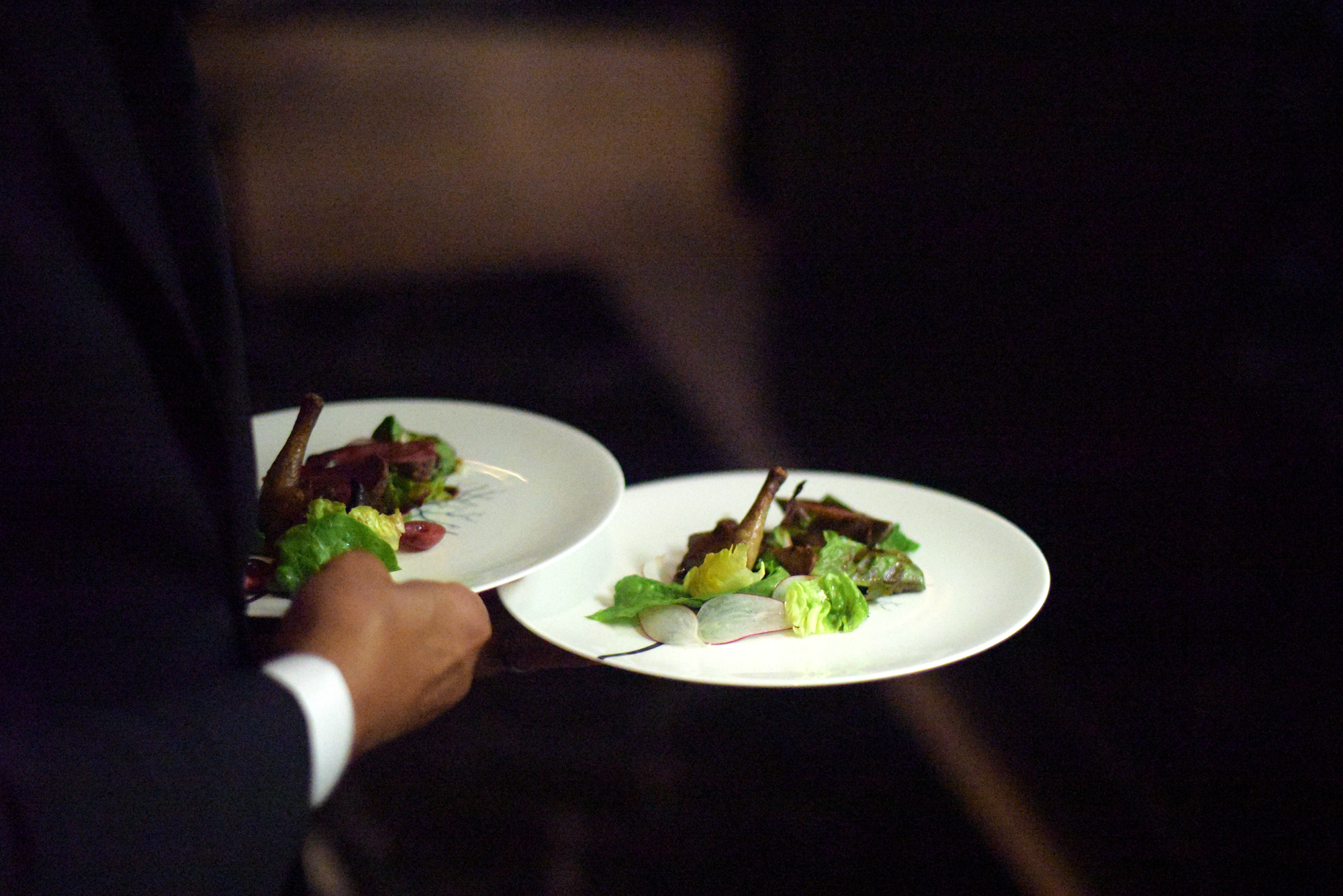
Dishes served at Stone Edge Farm Estate Vineyards & Winery’s EDGE restaurant in Sonoma. (Courtesy of Stone Edge Farm Estate Vineyards & Winery)
The menus, which change weekly, are prix fixe, (multiple courses for a fixed price). For example, the Aug. 26-29 menu ($195) offered five courses, among them cured king salmon with cucumber and crème fraîche with Stone Edge sauvignon blanc; tomatoes, ricotta, basil oil and baby lettuces with Stone Edge Surround red Bordeaux-style blend; and heritage pork loin and shoulder with zucchini and eggplant tian and beet mole, paired with Stone Edge cabernet sauvignon. Butron has a knack for turning notoriously difficult-to-pair vegetables and herbs into elegant, wine-friendly dishes.
“We’re a cabernet producer, first and foremost,” said Dorothe Cicchetti, Stone Edge Farms’ director of sales and marketing. “Cab can be challenging to pair with vegetables, but Fiorella makes it happen.”
Pam and George F. Hamel Jr. opened their high-end and eclectic Sonoma Valley winery in 2014, with food service a major component from the get-go.
“In our family’s home, food and wine have always been celebrated together,” said managing director George Hamel III. “We knew we wanted to offer a tasting experience that thoughtfully paired our wines with food, but we wanted to go beyond the expected and put our own unique spin on it. Not only (do we) have access to top-quality grapes, but also vegetables, proteins, cheeses and more, and we felt that our Reserve Experience should reflect what this region has to offer.”
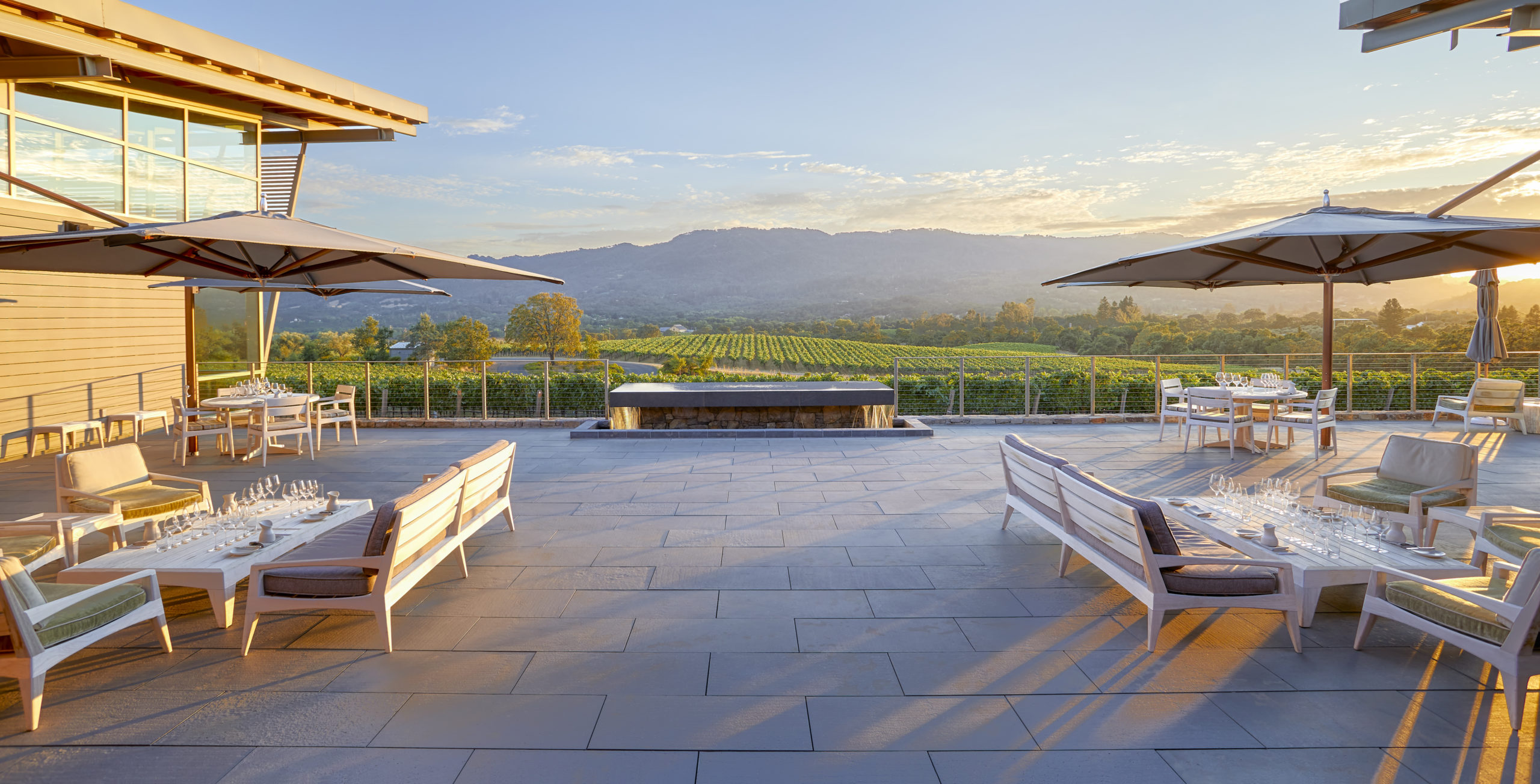
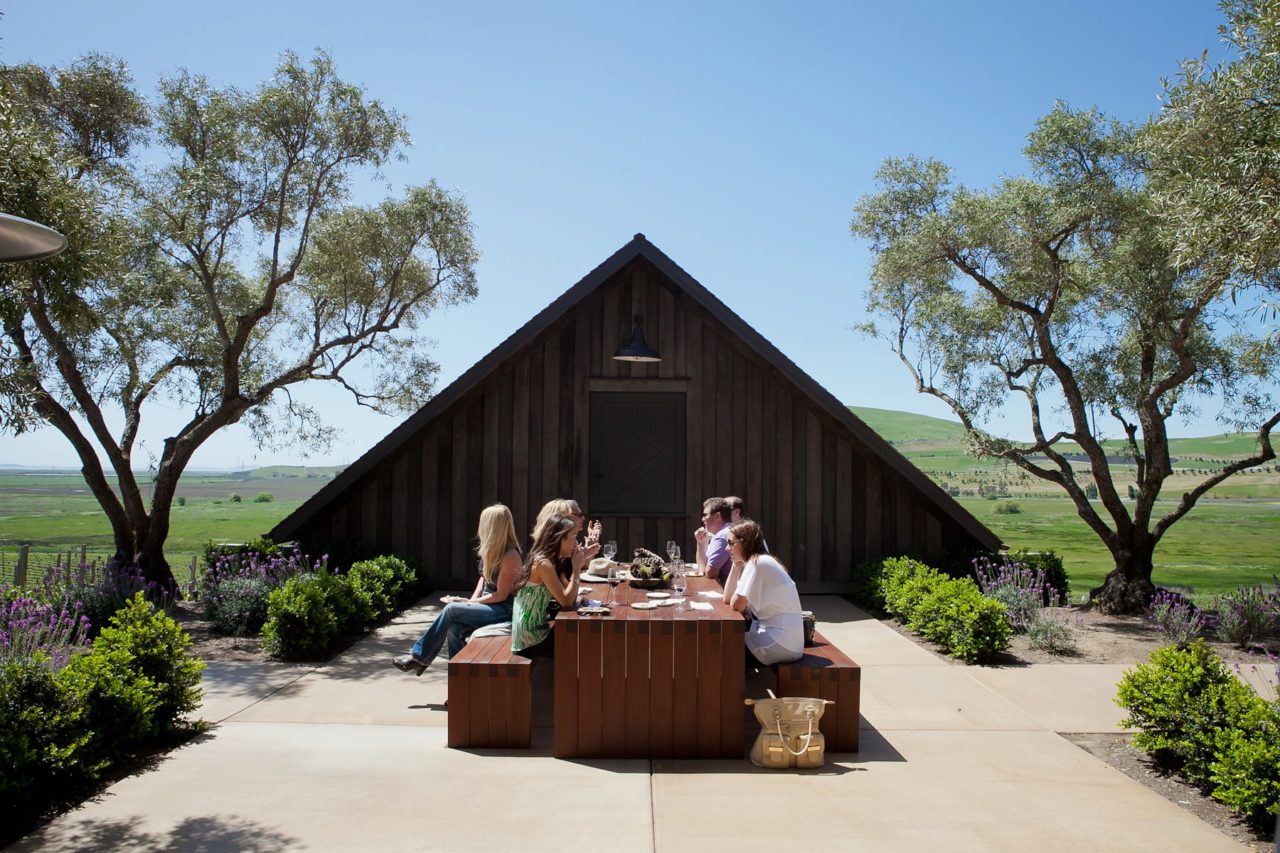
Outdoor dining area at Hamel Family Wines in Sonoma. (John Bedell)
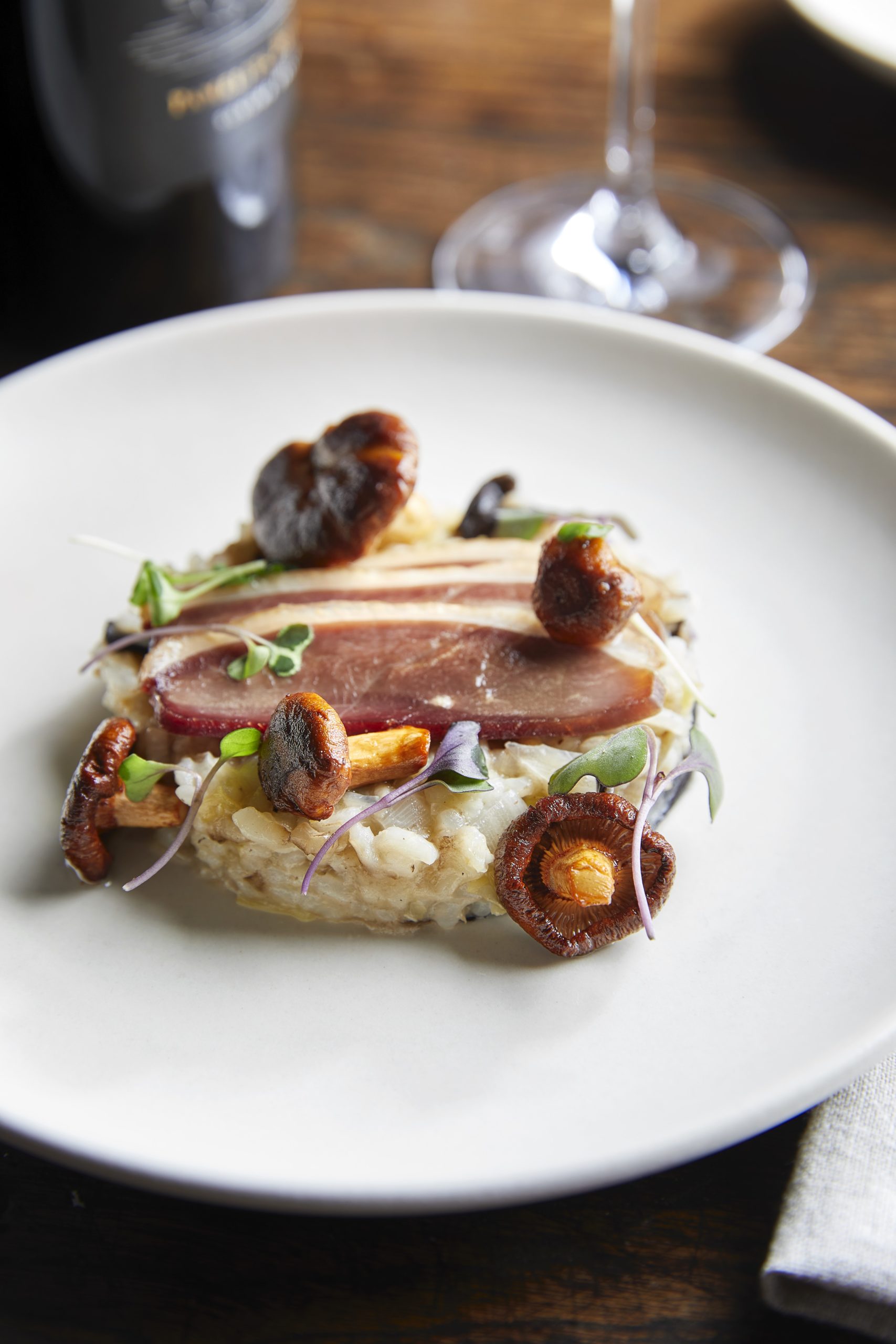
Duck breast served at Hamel Family Wines in Sonoma. (John Bedell)
The Reserve Experience ($150), created by executive chef Clinton Huntsman, is seasonally inspired, as are the menus of the other winery chefs mentioned here. It begins with a sip of sauvignon blanc and a tour of the ranch and caves, moves to a tasting of cabernet sauvignon still maturing in a barrel and is followed by a four-course pairing of Hamel’s cabernet-centric blends to Huntsman’s small-plate dishes. Pan-roasted rib-eye might be accompanied by a celery root and black truffle cabbage roll. Short rib raviolo can gain complexity from radish, popped sorghum and black-garlic foam. Morel mushrooms might be stuffed with duck sausage, fresh chickpeas and horseradish. All are designed to complement cabernet sauvignon-based wines.
Jeff Mayo owns two tasting rooms in Sonoma Valley, the first in Sonoma, the second in Kenwood. He created the latter for the express purpose of pairing his reserve-level wines with appropriate small bites. Seven wines are matched with seven seasonal dishes prepared by executive chef John Locher (formerly of the General’s Daughter, Chateau St. Jean Winery, Prelude at the Green Music Center and more). A recent Locher tasting menu ($70) featured Laurel Hill Vineyard Brut Rosé with watermelon salad, feta, red onion and raspberry-champagne vinaigrette; Reserve Laurel Hill Chardonnay with prawn “samosa” with corn chutney; Reserve Ricci Vineyard Zinfandel with Moroccan chicken and herbed couscous; and Kunde Ranch Late Harvest Gewurztraminer with Meyer lemon tartlet, strawberry coulis and basil oil.
Not so hungry? Visit Mayo’s original tasting room in Glen Ellen (13101 Arnold Drive, 707-938-9401).
Outdoor tasting at Ram’s Gate Winery in Sonoma. (Courtesy of Ram’s Gate Winery)
Ram’s Gate Winery
It seems like yesterday that this Carneros winery (formerly the site of Roche Winery) near Highway 37 and Sonoma Raceway opened to rave reviews for its comfy indoor and outdoor tasting spaces, farmstead and modern-barn feel, view-worthy perch atop a hillside and culinary offerings that complemented the bold, richly flavored wines. Now, 10 years later, the visitor experience is similarly satisfying (though, for now, only outdoors) and executive chef Stacey Combs’ dishes for the Five-Course Wine and Food Pairing program ($160) artfully emphasize local, seasonal ingredients.
When Joe Nielsen became director of winemaking in 2018, the Ram’s Gate wines began taking on a different — and, to my taste, more pleasurable — personality: more freshness and verve, less oak and buttery malolactic influence and a refinement that gives Combs more options for matching her food to Nielsen’s multiple small-production chardonnays and pinot noirs (his pinot blanc and sauvignon blanc are also food-friendly all-stars).
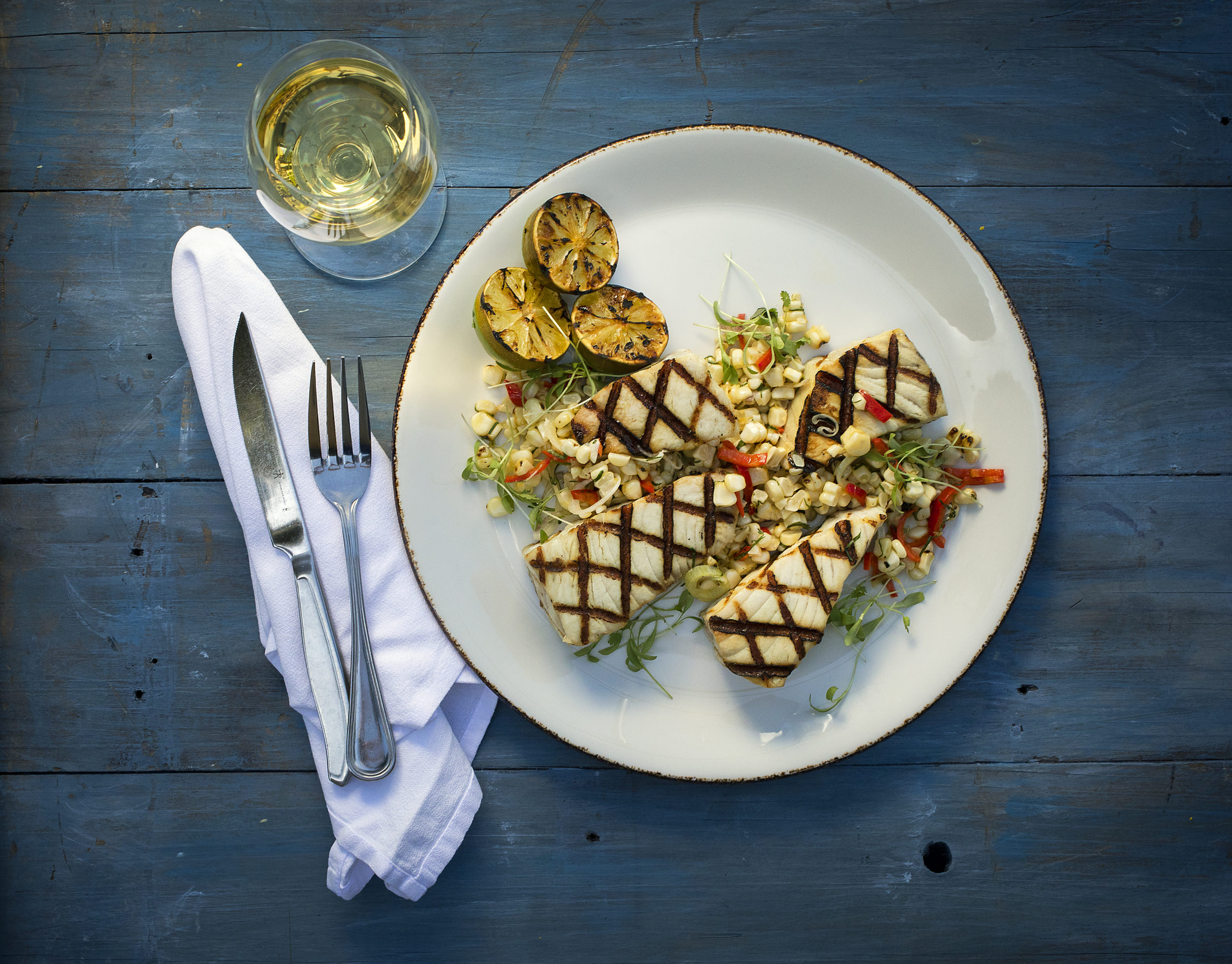
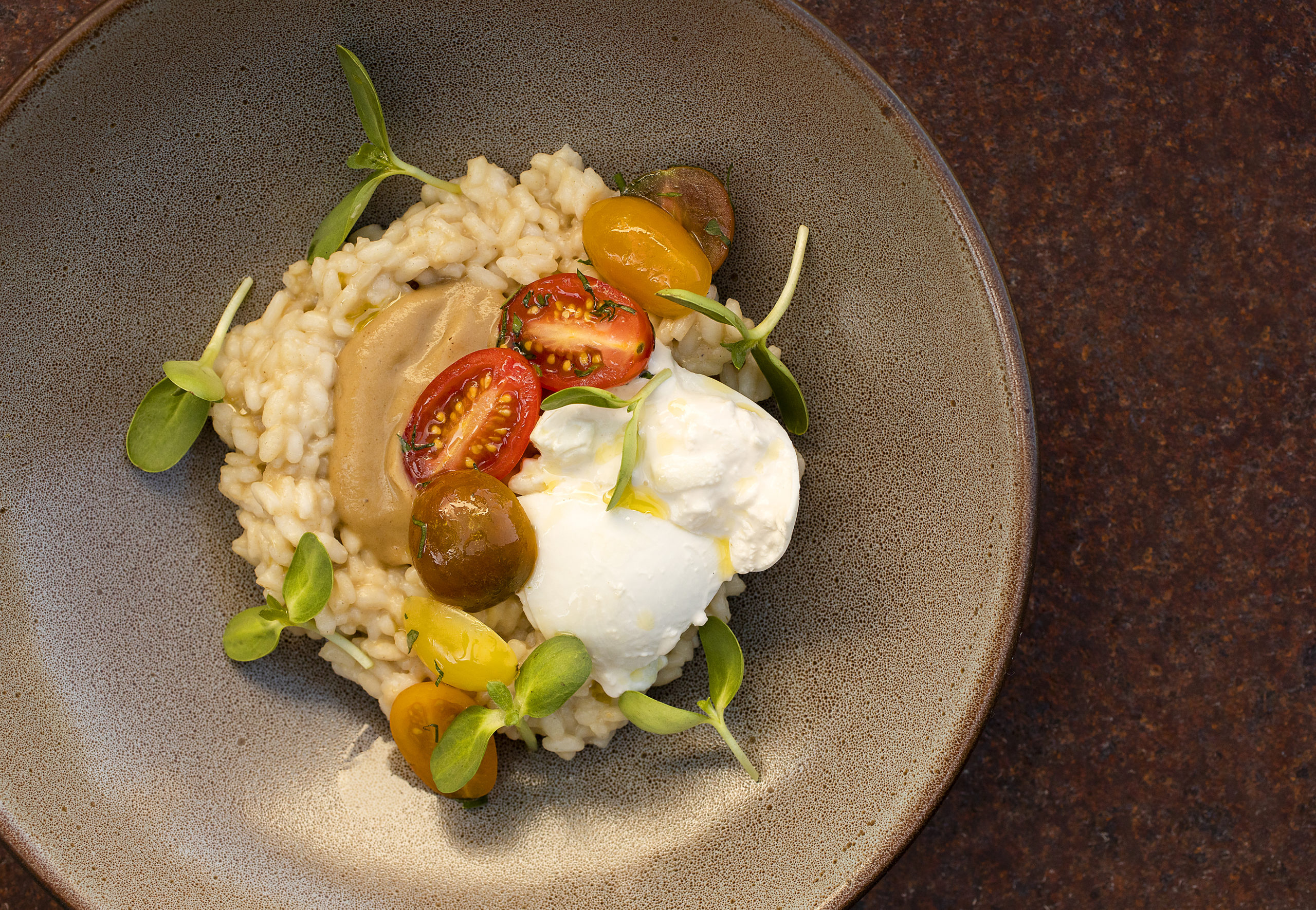
Grilled Albacore Tuna, Charred Corn, Pickled Chilis, Cilantro and Lime from St. Francis Winery executive chef Peter Janiak. (John Burgess/The Press Democrat)Smoky Eggplant Risotto with Burrata, Cherry Tomatoes and Sunflower Shoots from St. Francis Winery executive chef Peter Janiak. (John Burgess/The Press Democrat)
St. Francis Winery & Vineyards
The pandemic stalled this eastern Santa Rosa winery’s much-publicized and truly exceptional wine and food pairing experiences, but now they’re back. Although less communal than when OpenTable reviewers made it the nation’s top-rated “restaurant,” the twice-a-day seatings are more intimate, allow servers to keenly focus on each guest’s needs and answer questions and help everyone stay safe from COVID-19 transmission.
Celebrating its 50th anniversary in 2021, St. Francis and its executive chef, Peter Janiak, present a five-course experience outdoors, with Mt. Hood and the estate’s Wild Oak Vineyard as backdrops ($95). A recent menu included Wild Oak Vineyard Chardonnay with seared scallop and bacon-ginger marmalade; Banti Vineyard Zinfandel with port-glazed Liberty Duck breast; and Wild Oak Vineyard Cabernet Franc with petit tender au jus with chickpea and roasted pepper puree. There is also an Estate Pairings experience ($60), which serves four wines with such dishes as shrimp tostadas and pork belly sliders.
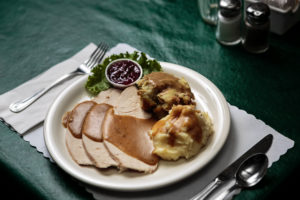
Plate of sliced turkey with all the fixings at Willie Bird restaurant in Santa Rosa. (Chris Hardy/Sonoma Magazine)
Willie Bird’s on Santa Rosa Avenue served up Thanksgiving dinner 52 weeks of the year for nearly 40 years. The original restaurant has now closed but, good gravy, The Bird has risen from the ashes at a new location (4776 Sonoma Highway, Santa Rosa) with the same gritty authenticity turkey lovers have come to expect.
Joe Castro purchased The Bird in 2020 and made a few attempts to open in the original spot during the pandemic but ultimately moved to the Montecito location with a revamped turkey-centric menu and full bar. The tables are wobbly and the banquets are worn and ripped in spots (this is early days, still), but the vibe is welcoming, especially at the bar. It’s a fun neighborhood watering hole for live music on Tuesdays, Fridays and Saturdays (check the website, thebirdrestaurant.com).
Expect to go down a tryptophan rabbit hole, with a surprisingly addictive Turkey Dip, a no-nonsense turkey salad with homemade potato chips ($9.50); the Mama Bird sandwich ($16.25) that’s like a Thanksgiving dinner with turkey breast, stuffing and cranberry sauce between two slices of toasted bread; or Turkey Scaloppini ($23.95), a homely plate of sauteed turkey breast and mushrooms in a Marsala wine sauce with creamy mashed potatoes that’s cozier than a pair of slippers. The Turkey Pot Pie ($17.95) is a hangover miracle or marathon fuel.
The Bird has added barbecue on Fridays and pulled pork appetizers and entrees throughout the week. 4776 Sonoma Highway, Santa Rosa, 707-542-0861.
Jalisco Mole Rojo at El Meson de los Molcajetes. View photos for more dishes to order. (Heather Irwin/Sonoma Magazine)
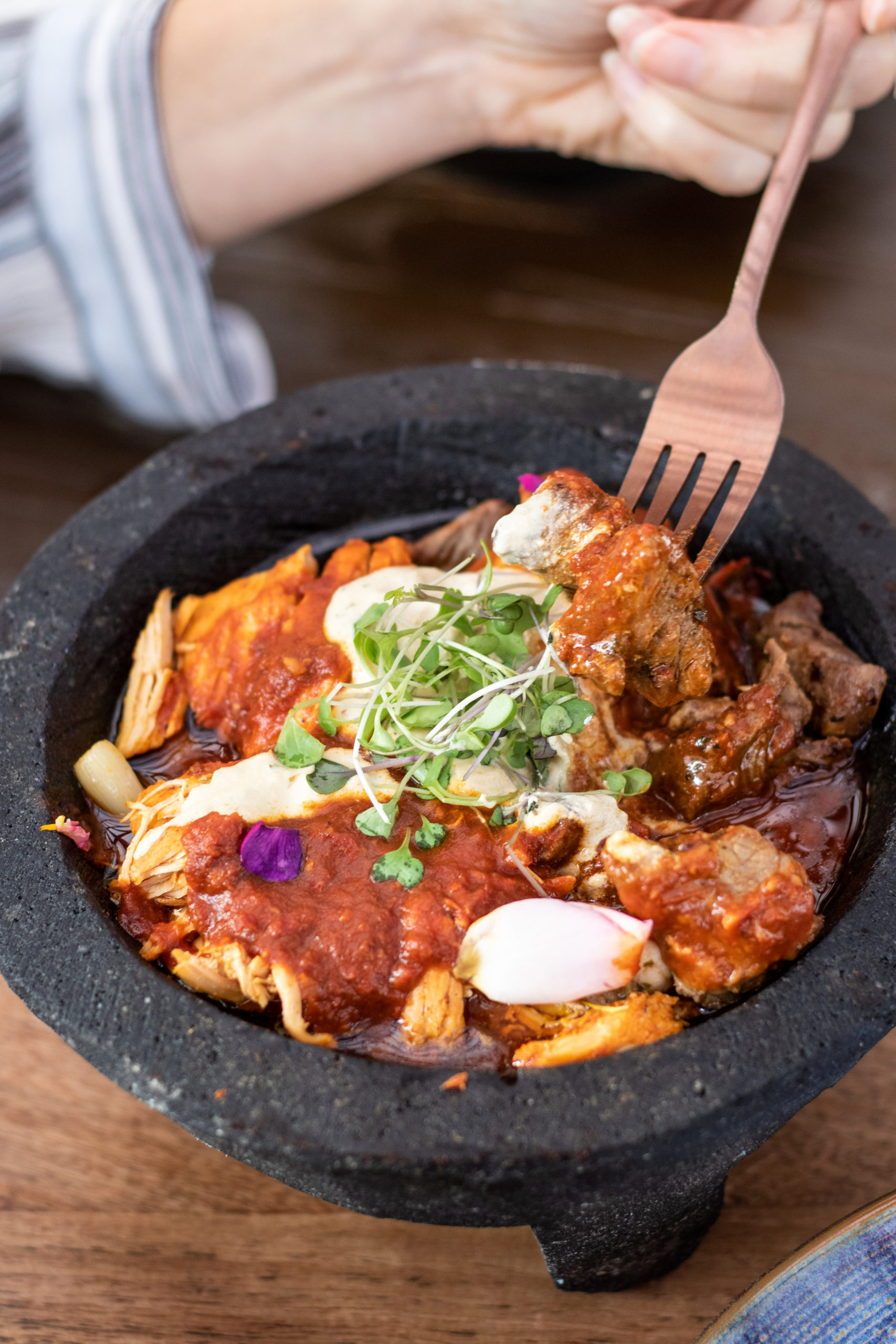
Sonoma County has struggled to attract high-end, regional Mexican cuisine, which is a tragedy considering the number of talented chefs and cooks who have immigrated here from Oaxaca and Jalisco. These coastal western states, renowned for their food, are home to flavorful seafood dishes, a variety of mole and, of course, sizzling molcajete stew, made with a volcanic stone mortar and pestle of the same name.
In other words, there’s a lot more to Mexican cuisine than burritos and street tacos, just like there’s more to American cuisine than burgers and fries.
The owners of new Santa Rosa restaurant El Meson de los Molcajetes want to fill the gap by introducing diners to the rich and diverse cuisine of Mexico. The menu, delivered with graceful service, includes thoughtfully prepared regional dishes such as their signature molcajete and two types of mole, luxurious cocktails and well-sourced ingredients. It strays a bit with fusion preparations, like chimichurri filet mignon and salmon with tropical pico de gallo, but generally stays close to its Mexican roots.
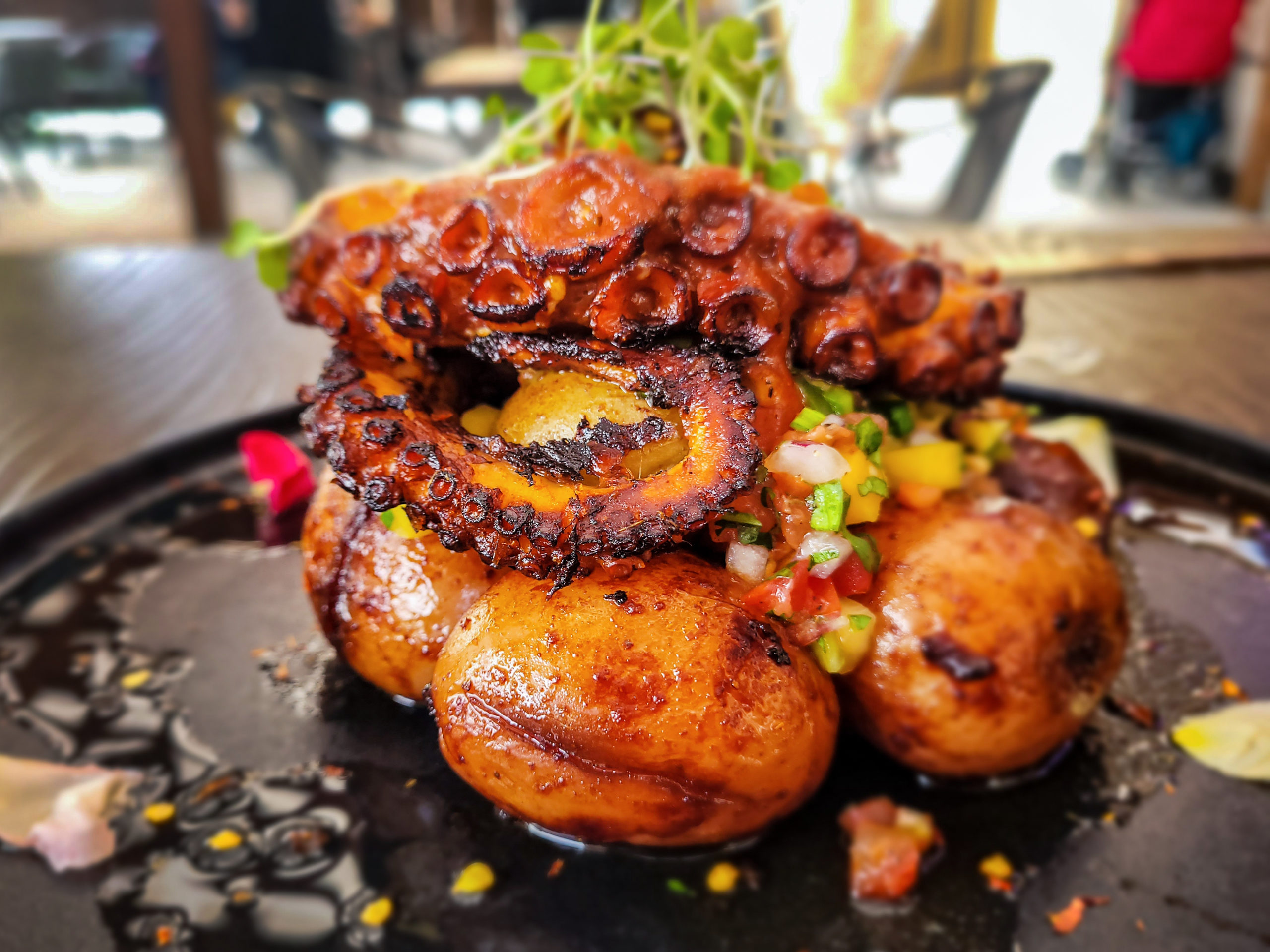
Octopus with potatoes at El Meson de los Molcajetes. (Heather Irwin/Sonoma Magazine)Molcajete at El Meson de los Molcajetes. (Heather Irwin/Sonoma Magazine)
There are missteps in the dining experience — from the impossible-to-find front door (it’s hidden on the side) and sticker-shock prices to the gratuitous use of microgreens and sprouts and the woeful lack of seasoning. With a new restaurant this ambitious, a few faux pas are to be expected and hopefully will be rectified quickly, because there are also lovely moments of transcendence with dishes like Jalisco Mole Rojo ($26) and Grilled Octopus ($29) with lime-chile salsa.
The Piner Road restaurant, owned by Zacarias and Diego Martin, is sister to the family-friendly sit-down Los Molcajetes Bar and Grill in Rincon Valley and the quick bite, value-priced Taqueria Molcajetes on College Avenue, also in Santa Rosa. There’s a clear evolution from the original taqueria, which rose to fame after being featured on Guy Fieri’s “Diners, Drive-Ins and Dives,” to the upscale neighborhood bar and grill (which opened early in the pandemic) to this new, well-appointed fine-ish dining experience.
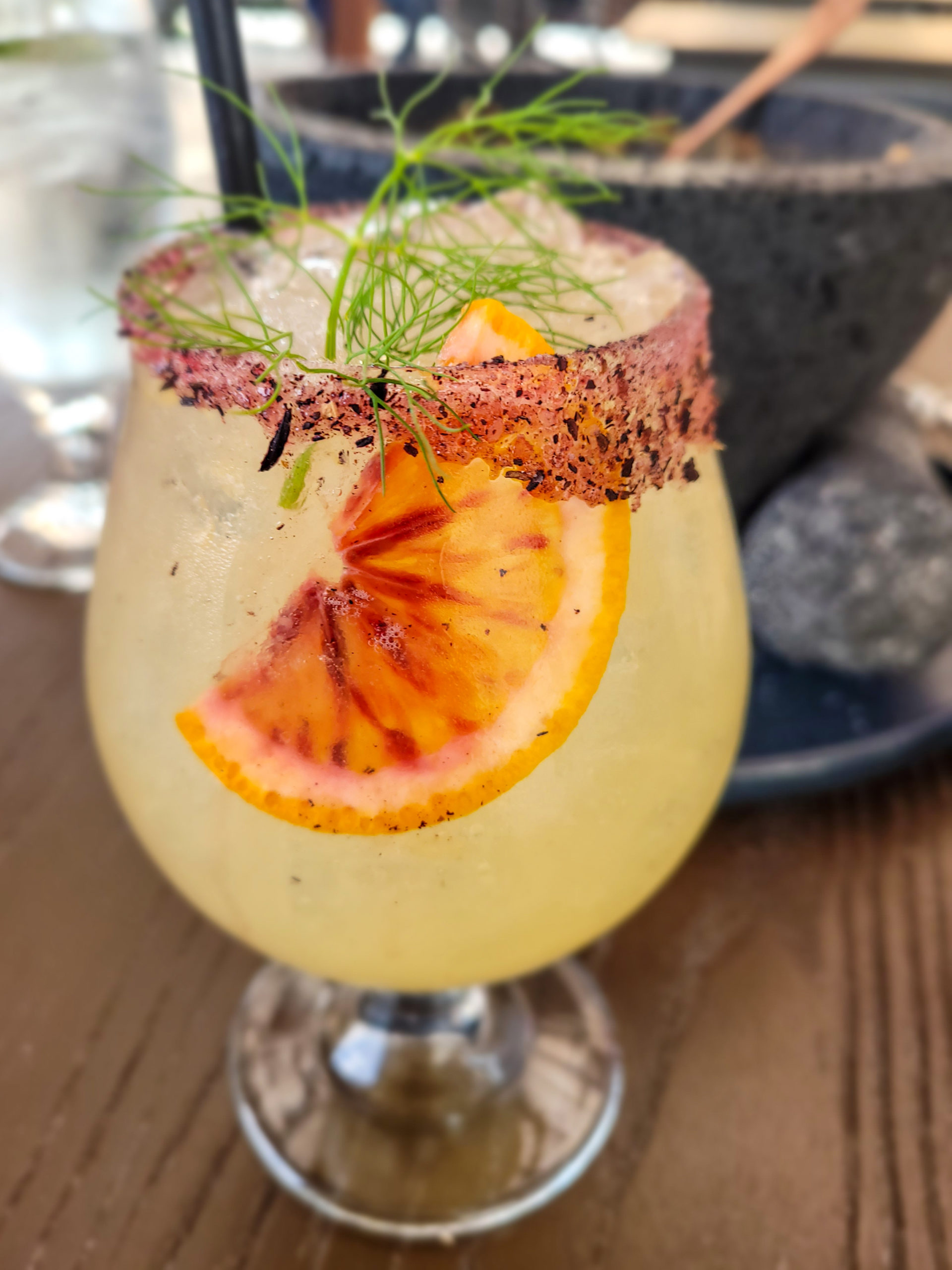
As restaurants struggle to recruit competent staff throughout the county, it’s a luxury to receive the kind of attentive, friendly and helpful service we enjoyed on multiple visits to El Meson. A full bar with well-crafted cocktails ($14-$16) is another perk. Opt for the tequila and mezcal mixes, like the Smokin’ Mule with chile- and peppercorn-infused mezcal, lime, guava puree, ginger beer and mole bitters. The Viaje Astral with tequila, absinthe, lime and passion fruit is also delightful. Considering the artisan prices, we’d much rather see the use of craft spirits instead of mass-market brands like Captain Morgan and Smirnoff.
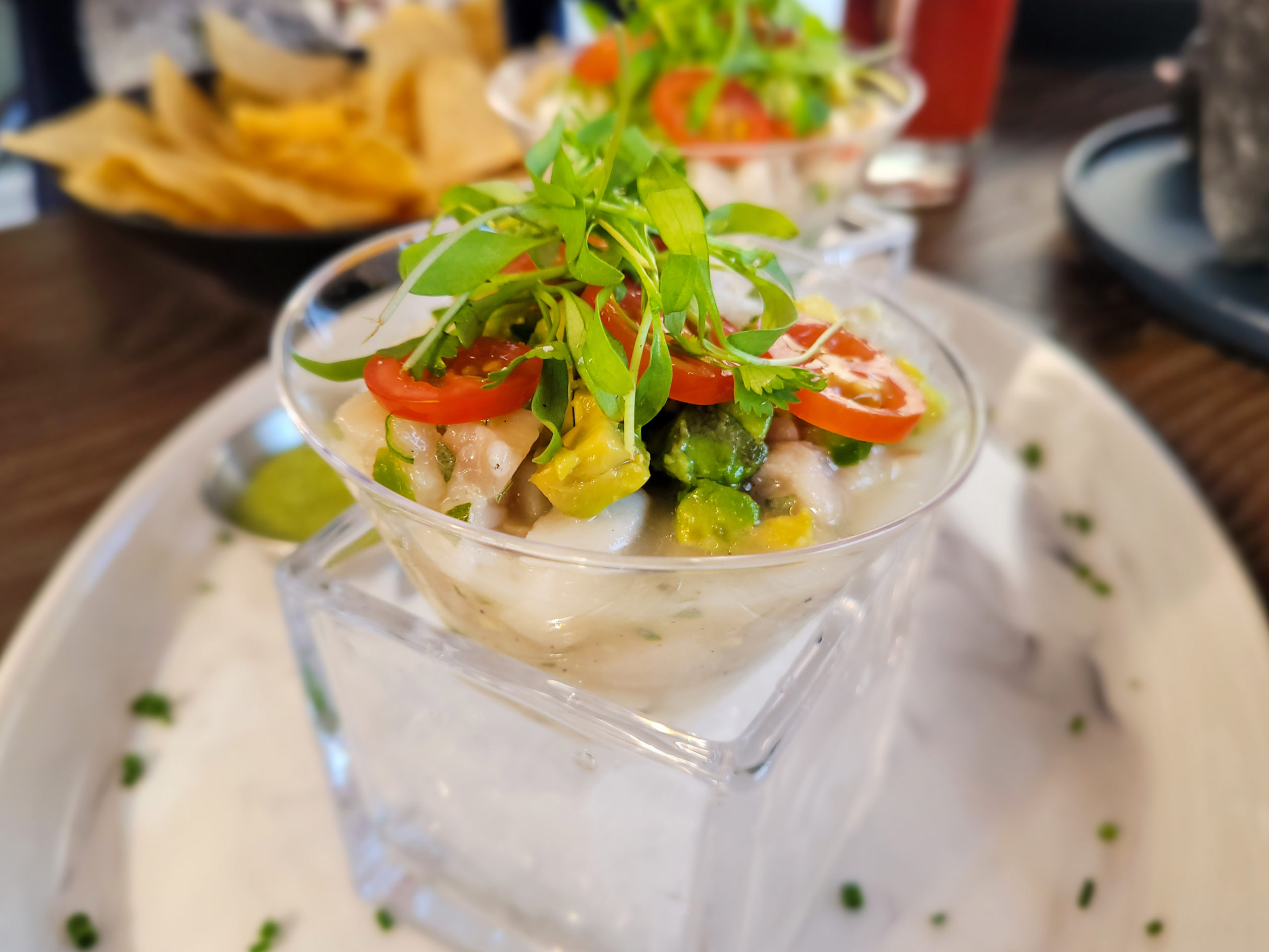
Ceviche at El Meson de los Molcajetes. (Heather Irwin/Sonoma Magazine)Smoky mule at El Meson de los Molcajetes. (Heather Irwin/Sonoma Magazine)
Other great dishes
Mexican Fresh Ceviche, $18: A cocktail glass of raw fish marinated in citrus isn’t overpowered by too much heat or acid. Instead, it is nicely balanced with avocado.
Mexican Cinnamon Donut, $14: This is less a traditional doughnut and more a sweet bread (pan dulce). A layer of cajeta (Mexican goat’s milk caramel sauce) is slathered in the middle for a sweet dessert.
With some recipe tweaking and a steadfast commitment to presenting unapologetic, authentic Mexican cuisine, El Meson has the potential for greatness.
1950 Piner Road, Santa Rosa, 707-843-4716.
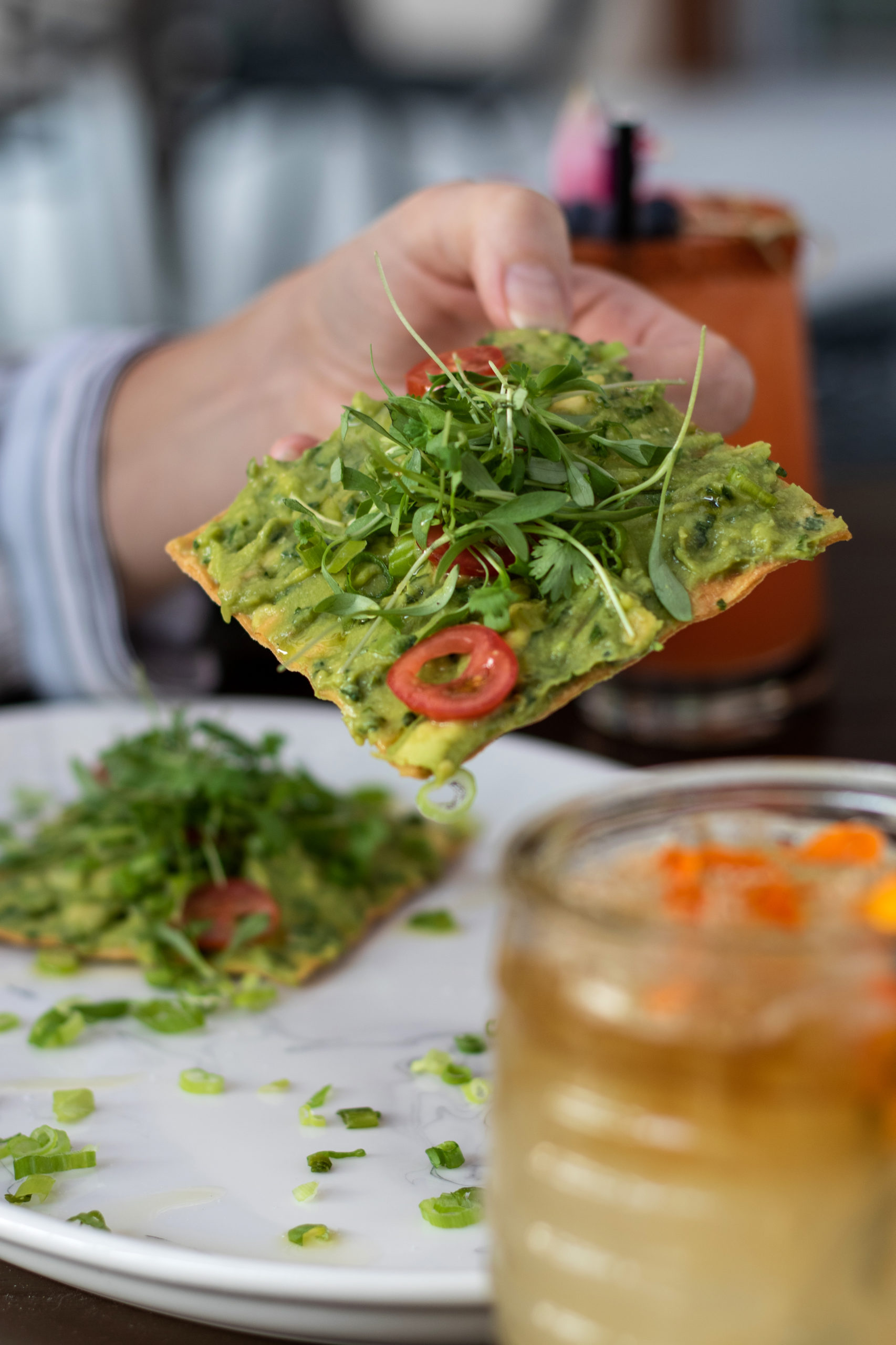
Donut with cajeta cream at El Meson de los Molcajetes. (Heather Irwin/Sonoma Magazine)Guacamole tostada at El Meson de los Molcajetes. (Heather Irwin/Sonoma Magazine)Top shelf margarita at El Meson de los Molcajetes. (Heather Irwin/Sonoma Magazine)
Cashew nut chicken at Little Thai and Sushi in Santa Rosa. (Heather Irwin/Sonoma Magazine)
It’s Thai food. It’s sushi. It’s both? We’re rarely fans of disparate cuisines trying to be all things to all people, but we’re willing to be a bit flexible in the case of Little Thai and Sushi because it’s a takeout dream for picky families. The food is solid, if not stunning, as long as they put the hot entrees in a different bag than the cold sushi for your takeout or delivery order. Because no one likes a melted California roll.
Best bets include Basil Chicken ($12.95) with anise-flavor Thai basil and oyster sauce; Cashew Nut Chicken ($12.95) that has fried chicken bits and a generous amount of cashews; and Pineapple Fried Rice ($12.95) with chunks of pineapple, cashews and raisins.
Nigiri and hand rolls don’t fare well during delivery, but the California Roll ($7.95) and Super Crunch Roll ($13.95) with shrimp tempura, mayo and unagi sauce were tasty.
Papaya Salad Laos Style ($13.95) is divisive. Made with a fermented Laotian crab and fish sauce, it’s an intensely stinky, muddy-colored mess with crunchy green papaya, green beans and lime sauce. Unlike Thai green papaya salad, which primarily uses a lighter, saltier fish sauce, this version will arm-wrestle your taste buds and perfume your refrigerator for weeks.
The extensive menu includes poke bowls, stir-fried noodles, grilled pork, egg rolls, tempura, Tom Yum soup, stir fries, curry, ramen and wackier rolls, making it hard to decide. We suggest sticking to more straightforward items, especially for takeout and delivery.
1791 Marlow Road, Unit 4, Santa Rosa, 707-541-6242.
Colin and Rizza Celio were considering relocating to Sonoma County for a few years. When the pandemic hit, and remote work became a viable option, the couple found a house to rent in Santa Rosa. They hope to eventually buy a home in the area and raise a family. Click through the gallery for more stories. (Christopher Chung/The Press Democrat)
Inside a crowded auditorium in southwest Santa Rosa, Greg Basurto heard his name called and stepped up to a raffle drum filled with hundreds of numbered cards. The stakes were high. In all likelihood, his selection would determine whether he and his wife, Stephanie, could finally afford to set down roots in Sonoma County, or if they would have to pick up and move their young family away from their hometown of Healdsburg.
It was October 2019, and the couple was living with relatives on the west side of town after being priced out of an apartment in Rohnert Park years earlier. Greg was working in the warehouse at the Russian River Brewing Company, while Stephanie was enrolled at Santa Rosa Junior College and held down a job at O’Reilly Auto Parts.
With a six-month-old daughter, Shelby, and a son, Erich, approaching elementary school age, the couple was ready for a home of their own. But rising housing costs kept that plan out of reach. They considered moving out of state — Montana, or maybe Oregon — though Stephanie hated the thought of leaving behind the kids’ grandma and their aunts and uncles.
At the auditorium, Greg needed to pull a 48 or lower—the number of affordable townhomes planned for an empty plot of land south of Roseland in Santa Rosa. If he did, one of the properties was his to buy. He picked a card and immediately called Stephanie.
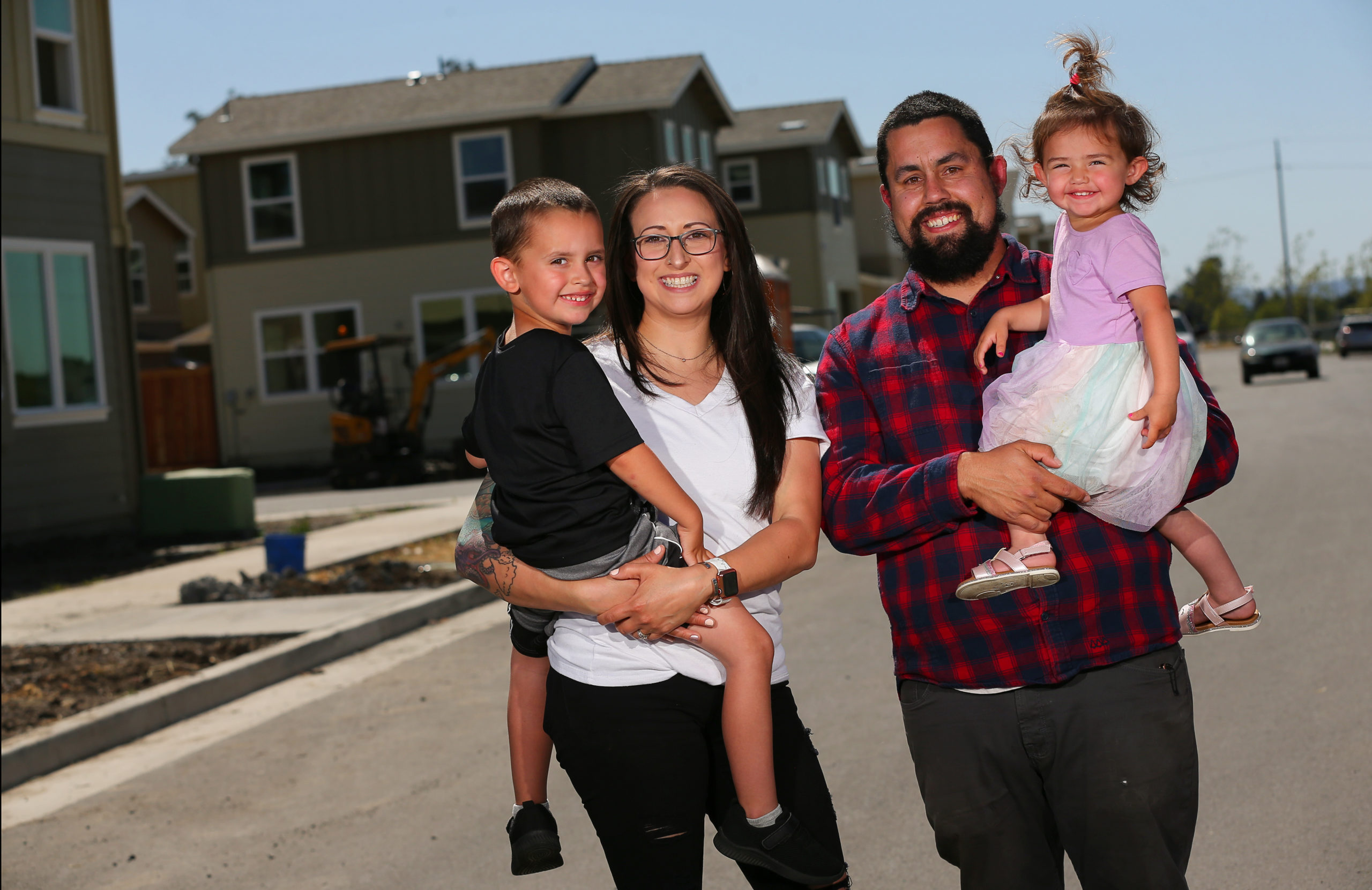
Stephanie and Greg Basurto, with their children Erich, 4, and Sheby, 2, purchased a duet style single family home at the Lantana Homes community by Burbank Housing Development Corporation in Santa Rosa. (Christopher Chung/The Press Democrat)
When the coronavirus pandemic upended everyday life in early 2020, scores of residents from across the Bay Area and California, now liberated from the office by remote work, eyed more living space and a retreat from costly urban centers. Sonoma County — with its natural beauty, slower pace of life, and relatively cheaper real estate prices — proved a prime destination. By summertime, a wave of new residents began pouring into Wine Country, sending home values soaring.
That heavier pressure on the local market has only grown as the pandemic drags on, exacerbating the county’s long-standing housing shortage as it continues to rebuild after a string of devastating wildfire seasons. And it has called into question whether the county can again be a place where working families like the Basurtos are able to afford to own a home, or whether they find themselves squeezed out.
“We’ve had an affordability crisis in the North Bay now for some time, and the pandemic is making it worse,” says Larry Florin, CEO of Santa Rosa nonprofit developer Burbank Housing. “It’s putting home ownership further out of reach for the workforce in Sonoma County.”
In March 2021, the median price of a single-family home in Sonoma County hit $767,000, according to data from real estate agent Rick Laws. That represents a 13% spike from $678,910 in March 2020, the last month before the pandemic took full hold in the region. By May 2021, it was up to $780,000.
At the same time, local rents stayed relatively flat last year, suggesting new homebuyers outpaced arriving renters. But the county’s rental market may not be spared for long, as listings have begun to tick up in price in 2021. In May, the monthly cost of a two-bedroom apartment reached $2,010, a 3% increase since January, according to rental site Apartment List.
Early migration data, meanwhile, sheds light on the scope of the influx of new arrivals to Sonoma County. Last year, nearly 13,200 new households moved here, while around 9,900 households moved out, a net increase of about 3,330 families or individuals. That’s an almost 300% jump over 2019, according to change-of-address figures from the US Postal Service. Still, the influx came in the third straight year of overall population decline in Sonoma County following the 2017 fires — an unprecedented swing for the region.
Robert Eyler, an economist with Sonoma State University who compiled the data, found that Marin, San Francisco, San Mateo, Los Angeles, and Contra Costa, respectively, were the top counties from which people moved to Sonoma County in 2020.
The new households make up just a fraction of the 189,000 in total in the county, Eyler noted. But if that influx continues years beyond the pandemic, he says, it could have profound impacts on the region’s population and workforce. Census reports coming next year could begin to illuminate those potential demographic shifts.
“Are we losing service workers and gaining professional workers, who’ve got a master’s degree and are coming here to work from home?” Eyler says. “Even if we knew who these people are, we don’t know what their intentions are — whether they are workers, or retirees, or people with kids.”
Colin and Rizza Celio had been considering a move to Sonoma County for a few years by the time the pandemic hit. The couple, both in their early 30s, was living in a cramped apartment in Burlingame, south of San Francisco, near their jobs in the tech industry. Once it seemed likely that remote work was here to stay, Rizza scoured Zillow and found a two-bedroom house for rent in the stately McDonald Avenue neighborhood in Santa Rosa.
The couple was instantly taken by the home’s extra space and the neighborhood’s historic charm. On top of that, it was listed for thousands of dollars less than similar properties in Burlingame. They moved in last July, furnishing the home with antiques found on trips to Healdsburg and Sebastopol.
“The apartment wasn’t home — it was just, this is where we are,” Colin says. “This has become much more of a home.”
Colin grew up in the northern Napa Valley region, where his parents still live. He remembers coming to Santa Rosa for birthday parties at Snoopy’s Home Ice skating rink and trips to Goat Rock Beach on the Sonoma Coast. Rizza, who was born in the Philippines and grew up mainly in San Francisco, fell in love with the area after she and Colin started dating.
“I used to be a city girl, just gallivanting around San Francisco, being close to everything,” she says. “And then when we met, he was like, let’s go hiking, let’s explore. So we ventured out a lot in the North Bay. …It was like, okay, he’s easing me into the country life. Now, I’m like, do we have to go to San Francisco?”
The pair hopes to eventually purchase a house and start a family in the county, though they know they could be up against a crowded field of buyers like themselves.
David Rendino, a real estate agent in Cotati, says he’s never seen the local home market in such turmoil. Record low interest rates, combined with a severe lack of available properties and well-heeled buyers willing to pay hundreds of thousands of dollars above the asking price are fueling an ever-intensifying rush for homes.
“There’s a lot of anxiety in the real-estate community right now,” Rendino says. “Agents feel it coming from their clients, and they internalize it … Buyers get to the point where they’re going to just write an offer on the next property, sight unseen — they don’t really care about value. They just want to be done. They want to be in their home.”
With the work-from-home revolution appearing permanent, Rendino sees few signs the area’s home market will stabilize any time soon. And he expects the higher sale prices may well be here to stay.
The Celios are willing to wait and see. For now, they’re enjoying getting to know their new neighborhood, going for drinks at Willi’s Wine Bar and taking walks along the wide streets lined with ginkgo trees that turn a brilliant yellow in fall. Colin recently joined a bocce league in St. Helena with his dad, and Rizza has made friends at the recently reopened Cal Skate rink in Rohnert Park, her new “pandemic hobby.” Once they do set down roots, the couple looks forward to their children calling Sonoma County home.
“I feel like you have a community up here that’s a little bit closer-knit than you get in certain areas of the Bay Area, where it’s so widespread, and everyone’s doing their own thing,” Colin says. “You don’t really get that feeling as much [elsewhere], and I like that small-town feeling.”
Santa Rosa Mayor Chris Rogers aims to put a dent in the region’s housing shortage by reimagining that small-town atmosphere for his city’s downtown. Since he was elected to the City Council in 2016, Rogers, 33, has become a leading local voice calling for more home construction. In Santa Rosa, that includes throwing his support behind a half-dozen proposed multi-story apartment buildings, amounting to nearly 700 new units in the downtown area.
Rogers foresees these developments as home to a diverse community of young professionals, who can meet for dinner after work, then walk to a nearby art exhibit or concert. It’s a future that could be accelerated by the pandemic, he says, as companies embrace remote work and those in their 20s and 30s seek out a more affordable alternative to North Beach or the Mission District.
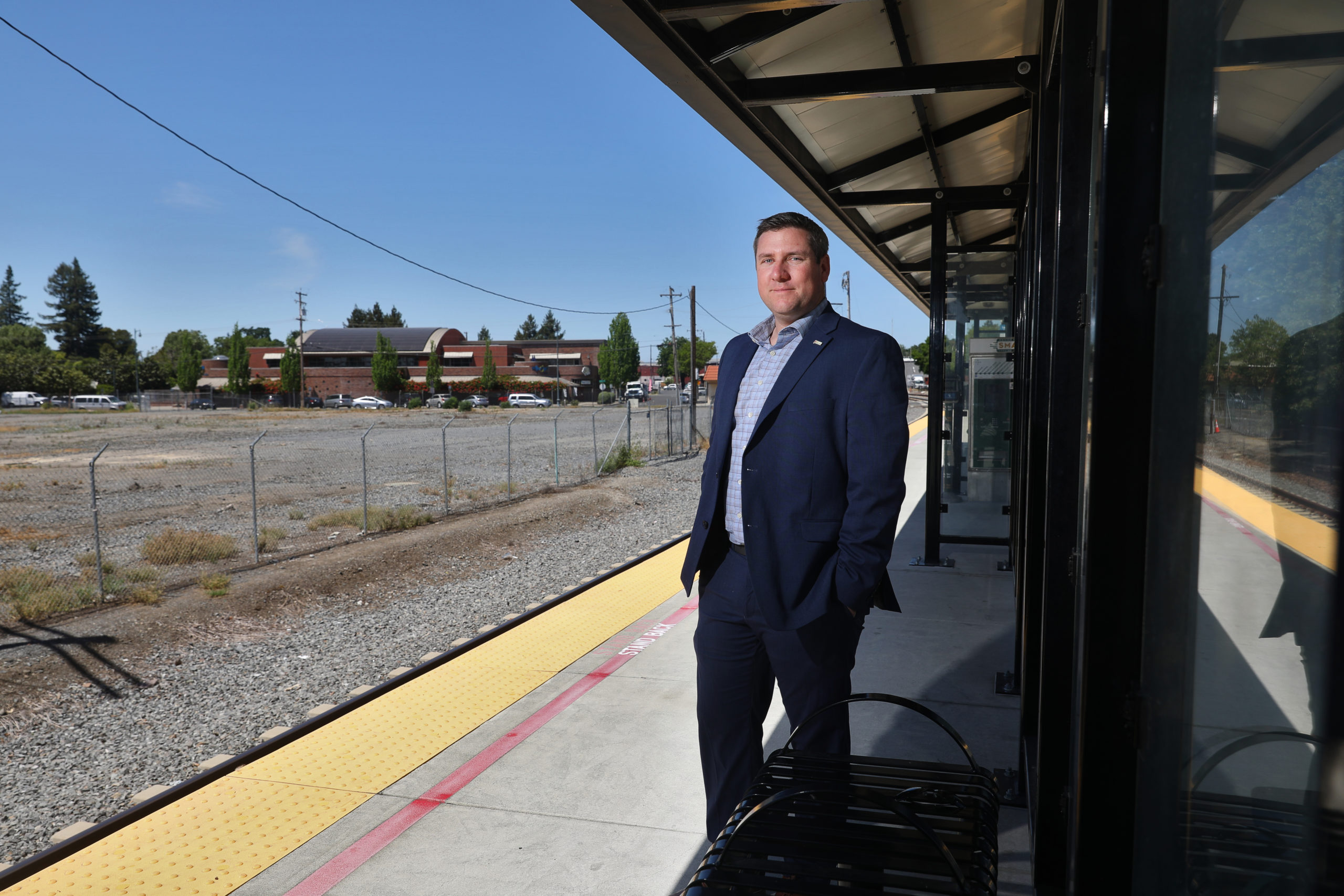
Santa Rosa Mayor Chris Rogers stands on the SMART platform in Railroad Square. SMART has sold the land on the west side of the tracks for future housing development. (Christopher Chung/The Press Democrat)
“Santa Rosa is very well-positioned to catch many of those tech employees that can’t afford to live in San Francisco, or want a higher quality of living coming out to an area where they’re a stone’s throw away from both the beach and some of the best hiking trails,” Rogers says. “I think if I can use one word to describe what we’re looking for, it’s vibrancy. We’re trying to create vibrancy and attract people into our community.”
Walking from Old Courthouse Square down Mendocino Avenue one afternoon in early May, Rogers pointed out a few of the projects that could remake the city’s modest skyline, including a proposed 8-story, retail and residential development planned for a city-owned parking lot just off Mendocino Avenue.
Rogers is quick to use wonky jargon like “catalytic project” and “adaptive reuse,” to advocate for the need for environmentally-friendly developments and building near public transportation. He highlighted a handful of projects slated to go up near the SMART tracks by the city’s historic Railroad Square neighborhood, as well as Catholic Charities’ Caritas Village development, which will include 128 affordable units and a multiservice homeless center to serve the city’s roughly 1,500 unsheltered residents.
I think if I can use one word to describe what we’re looking for, it’s vibrancy. We’re trying to create vibrancy and attract people into our community. — Santa Rosa Mayor Chris Rogers
To realize the more urban vision of the city’s future, Rogers says, officials first need to do their part to make it easier for developers to build. Last year, the city council aimed to do that by loosening height restrictions in the downtown area, allowing additional units on a single lot. The city council also put $48 million in federal disaster aid and PG&E wildfire settlement funds toward housing construction.
California developers have complained for years about the challenges of getting a project across the finish line, citing the burden of permitting fees, the high cost of labor and materials, limited available land and stringent environmental reviews.
In the North Bay, that means it can be difficult to find investors who believe they can make a project “pencil out” — developer-speak for turning a profit. The problem for Sonoma County is also one of the main draws for new residents fleeing from costlier parts of the Bay Area — home prices and rents here are well below much of the rest of the region, and financers stand to see lower returns after recouping building costs. Instead, they might turn to downtown Oakland or Mountain View.
“We’re in competition with the rest of the Bay Area that’s hungry for housing,” says Keith Woods, chief executive of the North Coast Builders Exchange, a Santa Rosa-based trade group.
Neighborhood opposition to new development is arguably an even taller obstacle to home-building in Sonoma County. Enter Generation Housing, a fledgling advocacy group with the goal of convincing local leaders and residents that more housing, even in their own backyards, is in everyone’s best interest. “People show up at city council meetings and supervisors’ meetings to say no to things. People show up when they’re upset,” says Jen Klose, Generation Housing’s executive director and a former Santa Rosa City Schools trustee. “People don’t often show up to say yes.”
The nonprofit aims to replace entrenched narratives about housing construction, such as concerns about urban sprawl and preserving neighborhood character, with arguments for green projects that teachers, nurses, firefighters and farmworkers — the backbone of the local community — can actually afford. The group works to survey various local industries, create pro-growth marketing campaigns, and put pressure on elected officials to adopt its policy recommendations and follow through on housing goals.
“I think most of our elected and appointed leaders are with us; I think they understand the importance of this,” Klose says. “But they do need political cover, they need folks backing them up and making decisions that might be unpopular with a particular loud group of people.”
One metric Klose keeps a close eye on is Sonoma County’s housing construction targets under a state framework which requires each municipality to permit a certain number of units for different income levels by 2023. According to an online tracker created by Generation Housing, just three of the county’s nine cities — Healdsburg, Petaluma and Rohnert Park — have so far met their upcoming permitting goals.
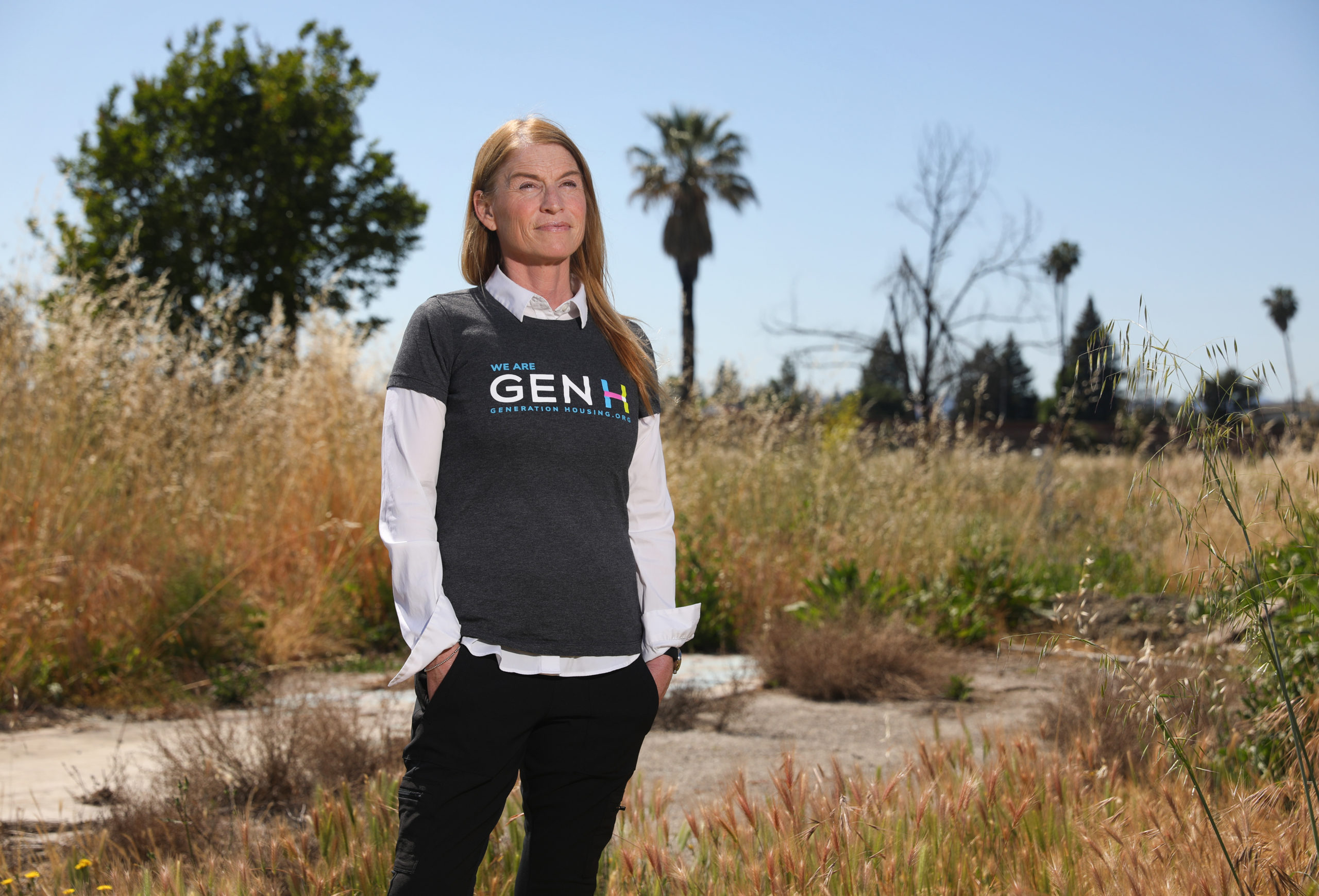
Jen Klose, executive director of Generation Housing, stands at the site of the former Journey’s End mobile home park, which will be developed into affordable housing. (Christopher Chung/The Press Democrat)
As most of the county has fallen behind reaching those targets, Rohnert Park in particular has pushed even further ahead, permitting a mix of nearly 1,500 new affordable and marketrate units, about 65% above its goal. A large chunk of that development has come in Rohnert Park’s University District, which is slated for 1,645 new homes and apartments by 2025.
In that expanding neighborhood, on former farmland east of Sonoma State University, Rohnert Park’s largest affordable housing project is under construction — a 218-unit complex with rents starting at $1,149 for a two-bedroom apartment. Just down Petaluma Hill Road, signs tucked among still-empty fields of mustard grass advertise rows upon rows of future single-family home developments.
“We have been really working hard to make sure that every single angle of our community is represented,” says Rohnert Park Vice Mayor Jackie Elward on the city’s push for housing. “I want other cities to look into what Rohnert Park is doing and take it as an example.”
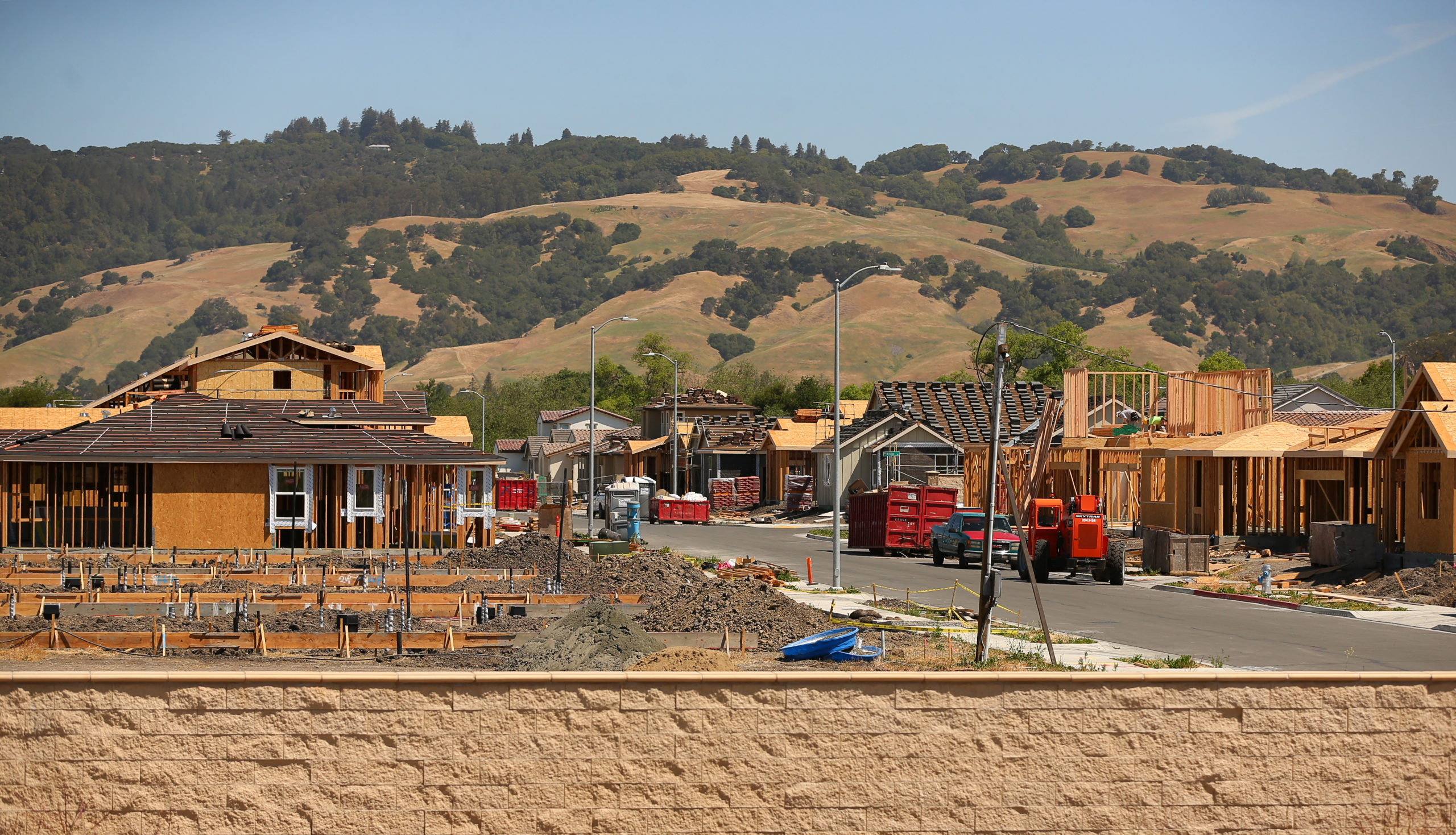
Single family homes in the Live Oak development by KB Home in Rohnert Park.(Christopher Chung/The Press Democrat)
Santa Rosa’s newest residential blocks, meanwhile, are taking shape in the city’s southwest corner, in the form of 48 affordable “duet-style” townhomes on a small network of freshly-laid cul-de-sacs.
Greg and Stephanie Basurto first learned of the Lantana Homes project after hearing about an affordable home program by Burbank Housing, the nonprofit developer behind Lantana and many other income-limited projects in the county. The Basurtos found they met the income requirements to enter a lottery for the right to put a down payment on one of the units. Each of the 3-bedroom, 1,200-square-foot homes would be offered for around $250,000 to $350,000, less than half the cost of most properties in Sonoma County.
“The average home price is way out of our price range,” Greg says. “You can buy something that’s kind of reasonable, but then you can drop all this money just to fix it up.”
Latino homeownership rates continue to lag behind whites here in Sonoma County. And that is important because homeownership has been the single most important vehicle to build wealth. — Oscar Chavez, Chairman of Sonoma County’s Community Development Commission
Burbank Housing finances its affordable developments — projects whose renters or buyers typically make less than 60% of the North Bay’s median income — through a mix of federal tax credits and other public grants or subsidies. Its developments are currently home to almost 10,000 people spread across more than 70 rental communities and 1,000 townhomes in Napa and Sonoma counties. But many more homes are needed, as surging demand has forced the developer to cap its rental waiting list at 15,000 applications.
“There just simply isn’t enough funding,” says Larry Florin, Burbank’s chief executive. “And it doesn’t go as far when it costs more to build a single unit,” which can average $500,000 in Sonoma County, he said.
Roseland, the predominantly Latino neighborhood just to the north of Lantana Homes, has in recent years seen growing numbers of new and planned projects, including many homes and apartments for lower income workers. Oscar Chavez, Sonoma County’s assistant director of human services and chairman of the county’s Community Development Commission, the chief local housing agency, says those kinds of affordable projects, particularly homes for families, are needed for communities of color in the North Bay.
“Latino homeownership rates continue to lag behind whites here in Sonoma County,” Chavez says. “And that is important because homeownership has been the single most important vehicle to build wealth.”
Even so, new development in Roseland has sparked fears of gentrification for some. It has also raised concerns about why more affordable developments aren’t being built throughout the region.
Stephanie Manieri, director of programs at the nonprofit Latino Service Providers, says people who move into price-restricted homes in poorer parts of the county can end up locked into those living situations. As housing costs continue to rise, those residents often aren’t able to build enough equity to eventually move to areas with more opportunity, creating “pockets of poverty in neighborhoods that are already economically impacted for a lot of different reasons,” Manieri says.
The Basurtos felt they didn’t have the luxury to consider such long-term implications. Time was running out to find a home in Sonoma County.
“We just knew that if we didn’t get one of these homes, that we would have to have a serious talk as to where we were going to move our family,” Stephanie says. “And that would be a struggle, because my lifeline is here.”
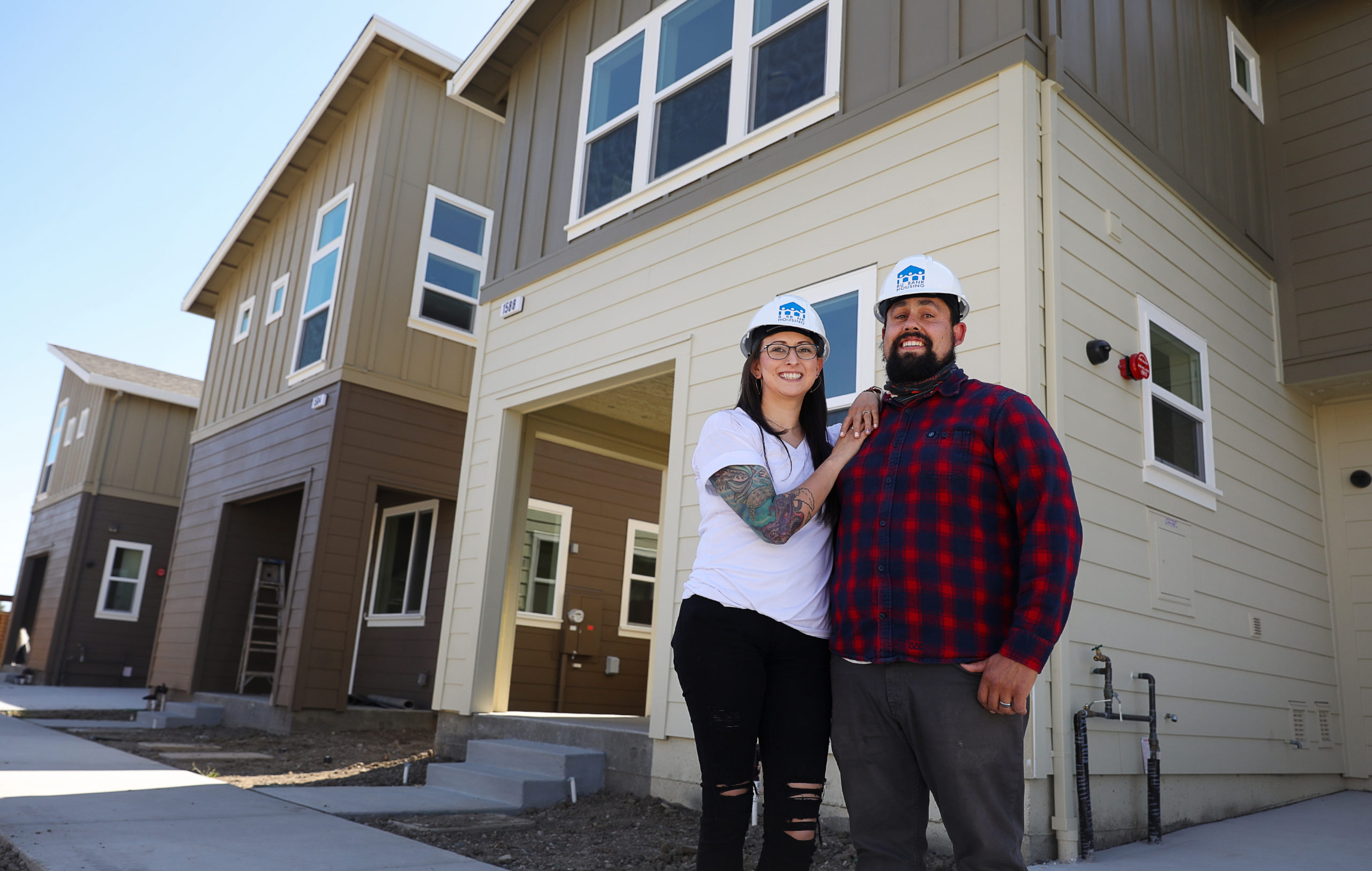
Stephanie and Greg Basurto were able to purchase a duet style single family home in the Lantana Homes community by the Burbank Housing Development Corporation in Santa Rosa. (Christopher Chung/The Press Democrat)
The struggle of growing numbers of local families seeking to buy homes, and the steady stream of work-from-home émigrés flocking to the North Bay, could serve as powerful motivation for officials to approve more housing of all kinds throughout the county. But just how much is needed remains an open question.
County officials have in the past put that number at 30,000 units between 2018 and 2025, while the state is ready to set the county’s next housing goal at 14,500 units from 2021 to 2031.
Generation Housing estimates the county needs at least 58,000 more units over the next 10 years, a seemingly daunting benchmark the group acknowledges would likely require widespread changes to current housing policy and significantly more funding to achieve.
We just knew that if we didn’t get one of these homes, that we would have to have a serious talk as to where we were going to move our family. And that would be a struggle, because my lifeline is here. — Stephanie Basurto, new homeowner
Jesús Guzmán, policy and advocacy director with Generation Housing, remains optimistic, pointing to the historic local building sprees in the ‘70s and ‘80s despite periods of inflation and stagnant economic growth. “It’s been done; we have a precedent set,” Guzmán says, noting he’d prefer to see denser, greener projects than those from decades ago.
Rogers, the Santa Rosa mayor, is confident builders will increasingly line up behind developments once the large-scale projects planned for the city’s downtown start to come online. But he was unable to say for certain whether such a flurry would meaningfully bring down housing costs across the board.
He points to disaster-relief funds earmarked for affordable developments, low-income unit requirements on new projects, and permitting changes making it easier to build in-law units as markers of progress on affordability. And he says he and his fellow council members are open to other ideas to spur cheaper housing options, such as potentially allowing duplexes in areas currently zoned for single-family homes.
“On the city council, you have seven voices that are really showing the political will of needing to build housing, needing to be welcoming to folks who are not currently in our community, and finding a way for the people who want to stay in our community to stay in our community,” Rogers says.
When Stephanie Basurto picked up her husband’s call after the housing lottery, she knew he wasn’t being serious when he said that he had “some bad news.” She told him to cut the act, and Greg informed her they were actually one of the 48 households out of more than 400 applicants who had won the right to buy a townhome at Lantana. “I mean, I was stoked,” Greg says.
With the Sonoma County housing market heating up during the pandemic, some of the Basurtos’ friends and relatives are now thinking of moving out of Healdsburg and other parts of the county. The couple counts themselves fortunate they won’t have to make that same choice. “It’s just a huge relief,” Stephanie says.
Florin with Burbank Housing stresses that townhomes like Lantana, which are cheaper to build and allow for much more density than single-family homes, are but one tool to address the local affordable housing shortage. He also sees options like in-law units and prefab, modular construction techniques as key potential solutions. But he admits it’s hard to overstate the impact of handing over the keys to the owners of a new townhome, most of whom are North Bay locals.
“People will start crying, and they’ll say things like, ‘I never in my wildest imagination believed I could own a home in this community,’” Florin says.
The Basurtos are set to move into their new home in July. They’re excited to enjoy the small backyard and happy that their kids each get to have their own bedrooms. Just as important, they’ll get to stay close to family, who will be on hand for move-in day.
“Get a barbecue and a big bottle of beer from work, three liters — everybody can have some,” Greg says.
“We’ll have somebody out here cooking up steaks or something, as a thank-you for helping us move in,” Stephanie says. “We’ll break it in right there.”
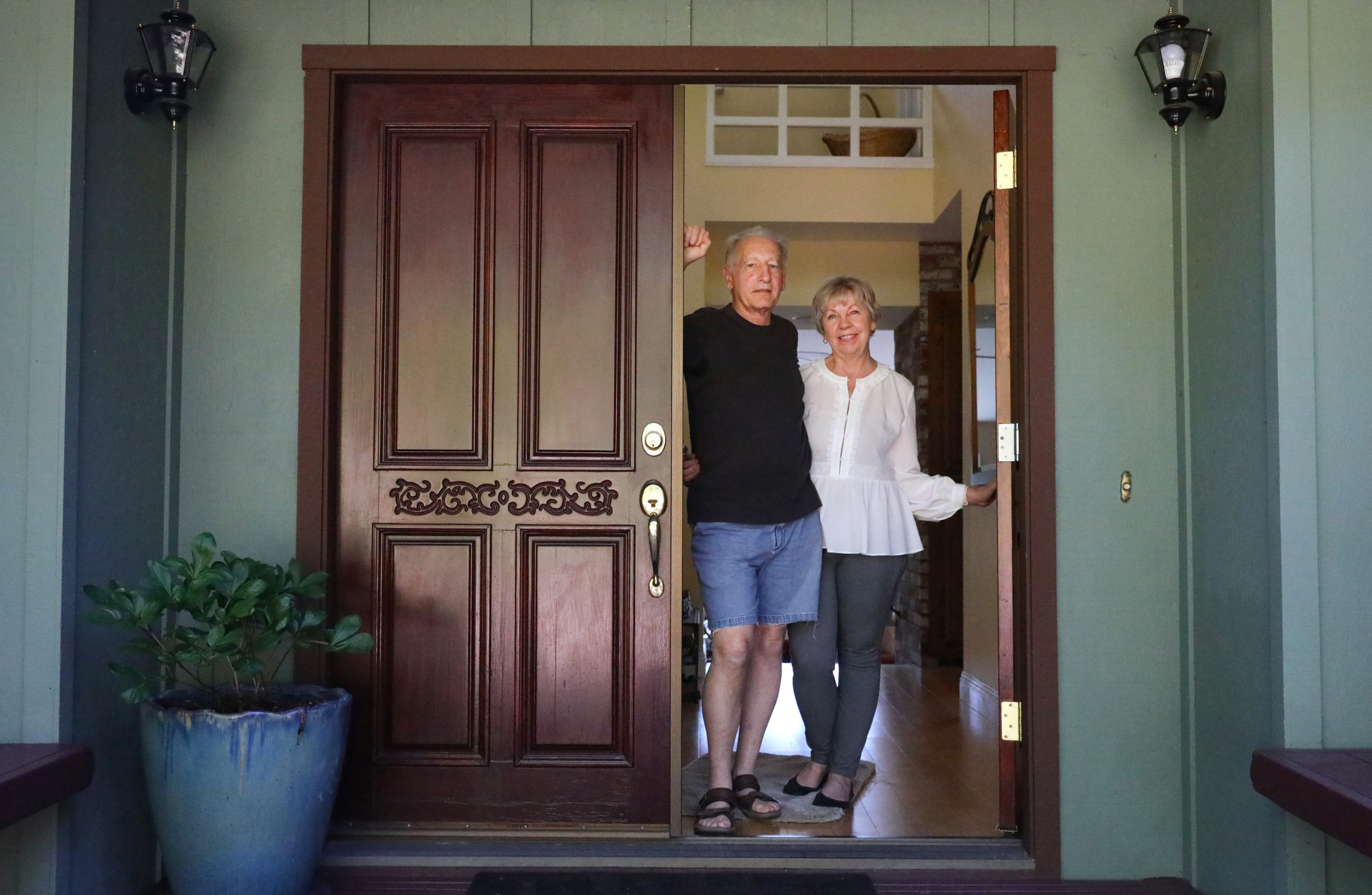
Rich Steiner and Jan Cregan are selling their Santa Rosa home to move to Tennessee, due to wildfire danger and the high cost of living in Sonoma County. Steiner has lived in Sonoma County for 46 years, and Cregan has been here for 31 years. (Christopher Chung/The Press Democrat)
Leaving Sonoma County — and California
Jan Cregan lived in Sonoma County for nearly three decades before she ever considered leaving. Then came the 2017 blazes. Two of her daughters lost homes in the Tubbs fire, which also destroyed about two dozen houses in her own neighborhood above Rincon Valley in east Santa Rosa.
Even then, Cregan, who’s 67, counted it as a freak disaster. But 2019 brought the Kincade fire, forcing her to evacuate with her husband, Rich Steiner, 72. The next year, she was at home painting when a news report came on about yet another blaze that had ignited in Napa County and could be headed her way.
“I’m sitting here thinking about that and how we may have to evacuate again in the next day or two,” Cregan says of the 2020 Glass fire. “And it just kind of got to me that I don’t know as we age, that I have the stamina to be worried about that every year.”
Before peak wildfire season arrives this year, Cregan has convinced her husband to put their home on the market. They plan to move to Tennessee, where real estate is cheap and fire risk is low. But the couple is saddened to leave their friends and to sell the three-bedroom home, which overlooks acres of vineyards at the north end of Sonoma Valley. “I thought this was going to be my last house,” Steiner says.
In the wake of the 2017 North Bay fires, which destroyed some 5,300 homes in Sonoma County, the region’s population has fallen into a multiyear decline. That’s in large part due to those fed up with yearly evacuations and smoke-filled skies, as well as fire refugees whose homes were destroyed. Of the roughly 6,000 homes leveled by fire in the county since 2017, only about half have been rebuilt. That’s left a continued drag on the local housing supply, while also raising concerns about the risk of rebuilding in fire-prone areas.
In 2020, Sonoma County’s population again fell, this time by 1.5%, according to latest estimates, reflecting a broader trend throughout California. But officials cautioned last year’s dip could be an outlier, reflecting excess deaths and lower birth rates during the pandemic, rather than a mass outward migration.
Still, as interest in moving to Sonoma County is at a high, there remain plenty of people wanting out. Cregan says leaving for the South, where she was raised, will make it easier to afford retirement. She hopes her three kids and ten grandchildren in the North Bay will eventually join her in Nashville. On top of worsening fires exacerbated by climate change, she’s worried that California’s cost of living will only increase for future generations.
“It’s almost some kind of stroke of fortune that you can buy a house, and I don’t want that for the grandkids,” she says. “I want them to be able to go to school, get a job and buy a house like it’s normal. And it’s not here — it’s a feat.”
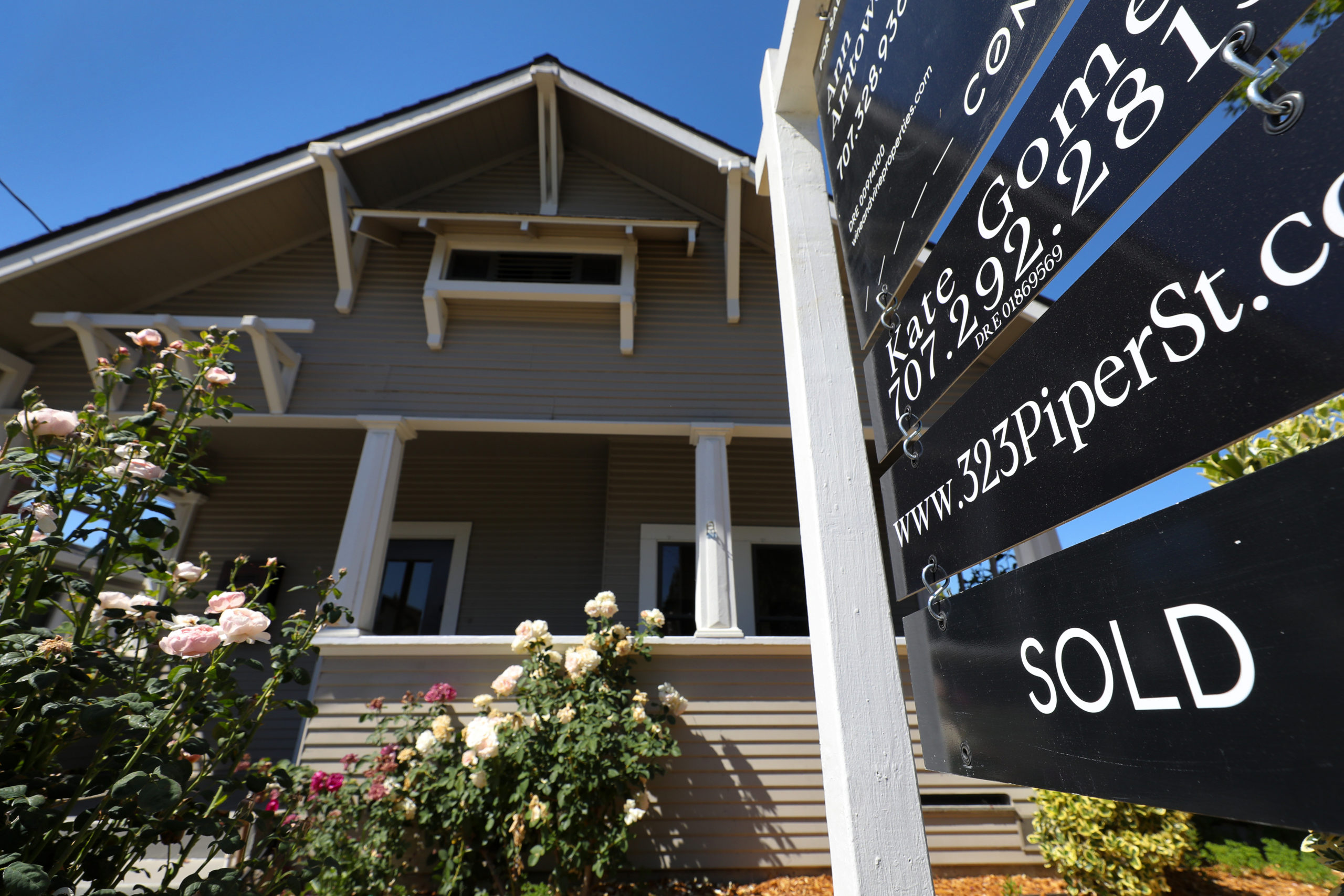
In few other North Bay cities is it costlier to buy a home than in Healdsburg, where the median price of a single-family house hit $1.45 million in May 2021. (Christopher Chung/The Press Democrat)
Too charming for its own good?
In few other North Bay cities is it costlier to buy a home than in Healdsburg, where the median price of a single-family house hit $1.45 million in May 2021. Situated at the heart of three of the region’s premier wine-growing regions, Healdsburg has long attracted moneyed visitors. But now, without an office to report to, many are happy to make the Wine Country destination a permanent home.
Jim Heid, owner of CraftWork Healdsburg, a new coworking space just north of the Healdsburg Plaza, says about a third of his customers since reopening under coronavirus restrictions are newcomers to the area. At CraftWork, many of these ex-urban professionals have found a flexible office not unlike the ones they left behind in the city.
On a Thursday afternoon in late April, around a dozen “solopreneurs” sat before laptops across a semi-open floor plan with tastefully minimalist decor. A small kitchen was stocked with a healthy selection of canned sparkling water, while an outdoor backyard accented by strings of patio lights sat ready for happy hour.
Heid, a landscape architect who has advised the city on municipal development projects, said the newcomers have brought a new energy to the city as it recovers from the pandemic. He highlighted new shops moving into once-empty storefronts along the leafy downtown plaza, as well as an upcoming dining and events center backed by upscale farm-totable restaurant SingleThread and the owners of San Francisco arts incubator Saint Joseph’s Arts Society.
“Young, entrepreneurial people are fixing the homes up, they’re taking an investment in the community and bringing in fresh ideas and energy,” Heid says. “I joke about what I call my barometer stroller index — how many strollers are on the street on a daily basis, and it’s just phenomenal. We see strollers, skateboards, electric bikes; it has a very European feel.”
Stephen Sotomayor, Healdsburg’s housing administrator, is quick to acknowledge opportunities for economic development as new demographics move to the area. But he says an increasing pressure on the local home market may be unavoidable, especially in light of a voter-approved ordinance limiting market-rate development to 90 total units every three years.
A remote-work future could also further drive demand for vacation rentals and second homes in the area. That in turn may incentivize property owners to take more homes off the market and potentially spur a run on the few available properties by outside investors, concerns raised by residents and officials in other North Bay cities that have become tourist hot spots, including Sonoma.
“One of the things that can be challenging for a town like Healdsburg is that you can almost become a ghost town in the sense that the charm that made you a destination is also pricing out the locals that live there,” Sotomayor says.
Cookies and sweets for sale at Plank Coffee in Cloverdale. (Beth Schlanker/The Press Democrat)
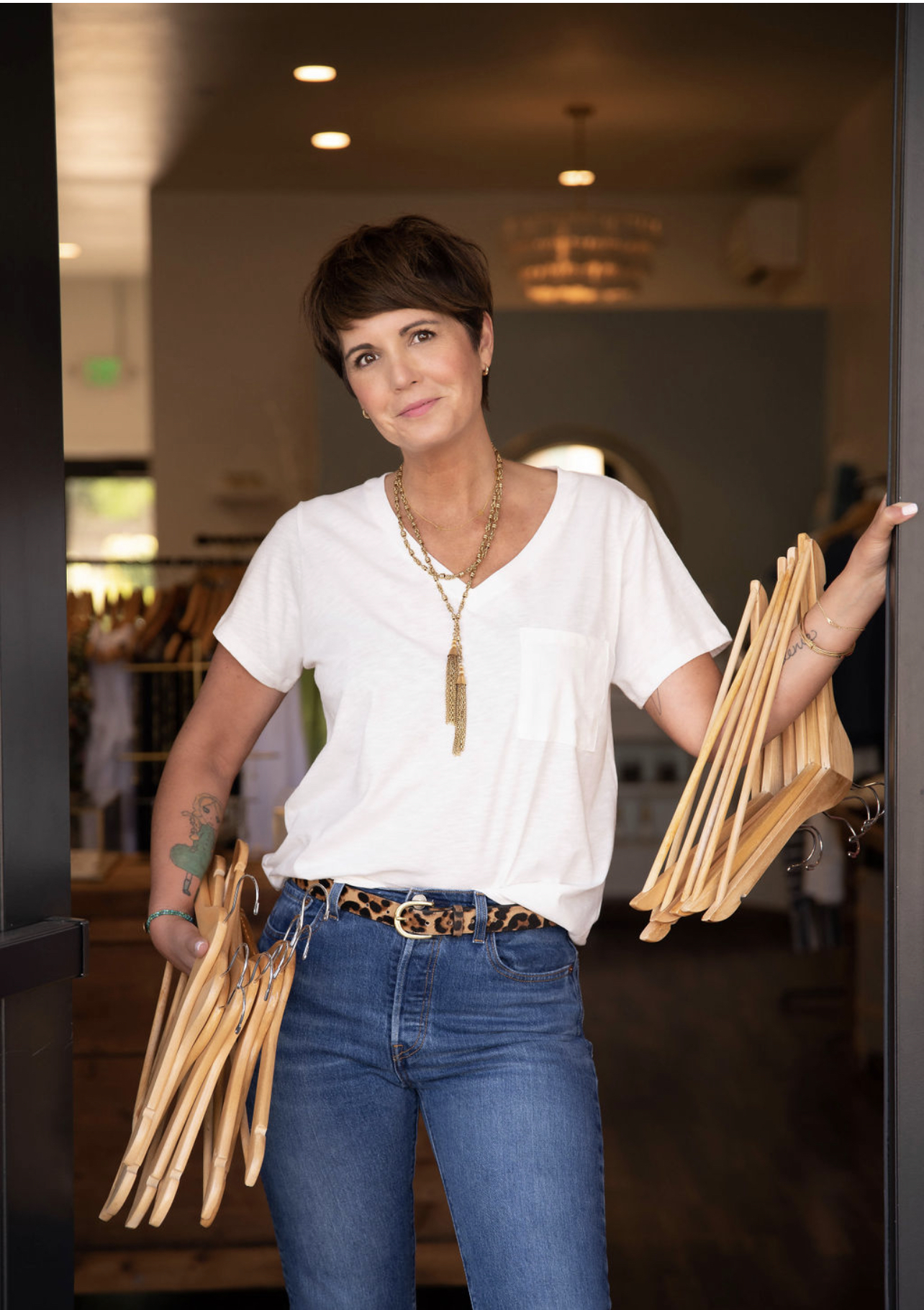
Erin Mavis owns two Cloverdale Boutiques: Erin Mavis Clothing, which focuses on independent small-batch clothing brands, and Heart City, a cheery shop with gifts, candy, and Mrs. Grossman’s stickers.
Mavis, who worked in “big retail” in Los Angeles and New York and co-owned Ethical Clothing in Petaluma for years, says she’s found her true home in Cloverdale. Mavis often starts the day sipping tea in the gardens of the circa-1862 Gould-Shaw House, a Gothic-Revival Victorian that’s home to the town’s historical society. “It’s absolutely the most special spot,” she says.
Stylist Erin Mavis. (Yvette Wendt Photography)
With all the tiny-town quaintness, one can forget Cloverdale also boasts easy access to the Russian River, plus jumping off points for both Anderson Valley and Alexander Valley wineries.
Tuesdays are farmer’s market days, and summers boast Friday Night Live music concerts. Being a bit smaller than other Sonoma destination towns has perks, like the casual vibe of people gathering on the single downtown street. Click through the above gallery for Mavis’s favorite spots in Cloverdale.
When Kelsey and Mike Sheofsky dreamed up their business nearly a decade ago, “glamping” wasn’t quite the buzzword that it is today. “It was kind of still getting its legs here in the U.S.,” Kelsey remembers. The couple, who also run Shelter Co., a group that stages elaborate camping events for weddings and retreats, recently expanded to offer a new line of camping gear and accessories called The Get Out.
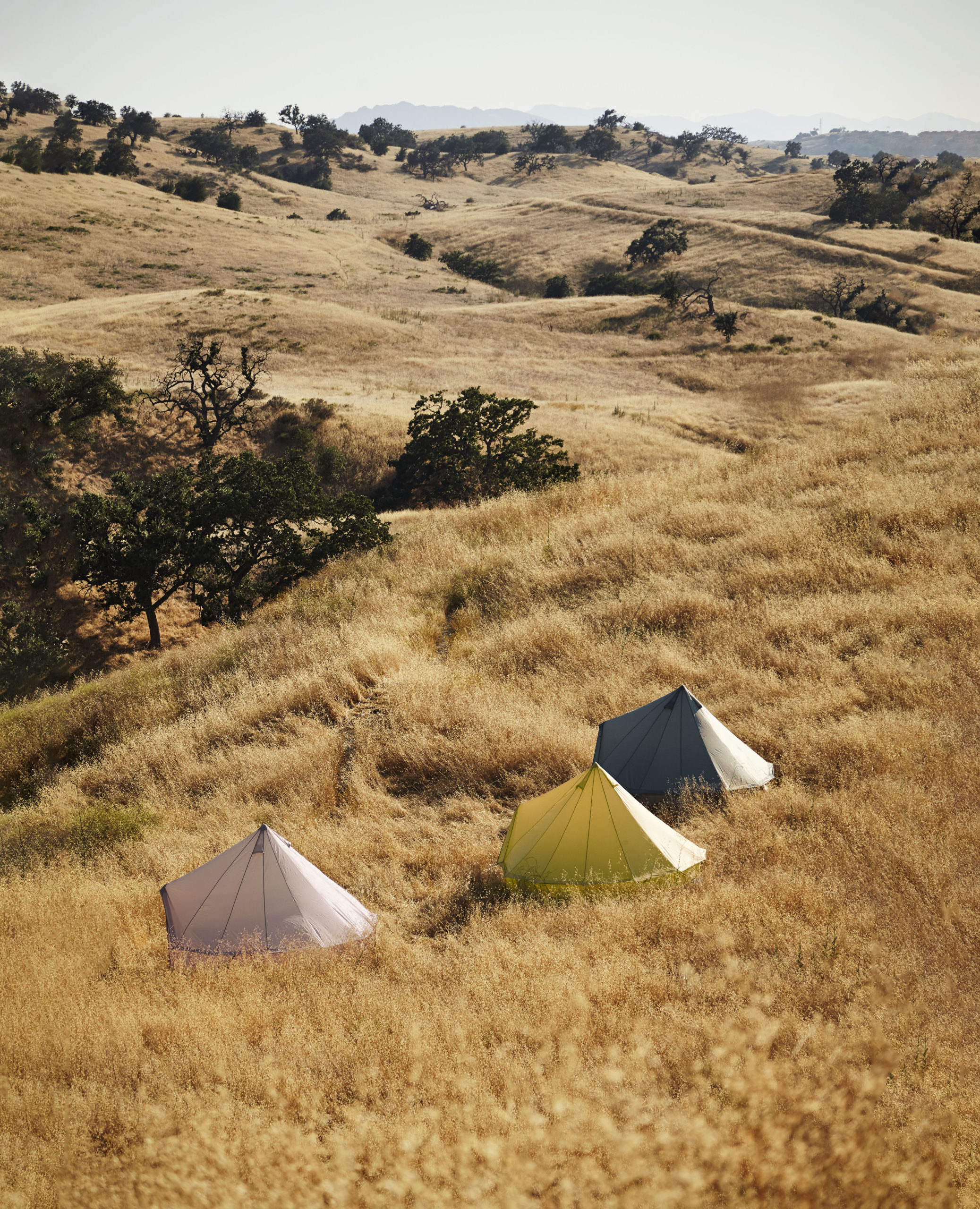
Kelsey and Mike, who moved with their children from San Francisco to rural Sebastopol just as the pandemic started, found they were bored with the technically oriented, heavy-on-the-orange tent designs already on the market. Instead, they’ve found their niche in updated color palettes and elegant shapes based on traditional walled canvas tents. The Get Out’s 13-foot diameter Lite Bell Tent ($650) comes in moss, pink, mustard, and fog. The standard Bell Tent ($1195), at 16 feet in diameter, trends more prairie- schooner chic in khaki or cream canvas. Throw in the Anywhere Rug ($120) and one of the company’s Turkish towels ($45) and the only thing missing is an outdoor shower dangling over a tree branch.
Sebastopol-based The Get Out offers its Lite Bell Tent in an unexpected array of colors, including pink and mustard yellow. (Rob Williamson)
“This idea that you’re not a true outdoor lover unless you’re suffering is a sad angle to come from,” explains Kelsey. “Why not throw your down comforter in your car when you’re going to a campground you can drive to?” The Get Out, thegetout.shop, or on Instagram @thegetout.
Designer Kelsey Sheofsky’s favorite camping spots
Salmon Creek Ranch, Bodega: “Book the redwood camp. It’s nestled in a redwood grove and is super-private, with a short walk to the seasonal creek.”hipcamp.com
Bullfrog Pond Campground, Austin Creek State Recreation Area: “It’s closed from the fire still but hopefully will reopen soon. We try to snag all three sites across the pond for an epic group site which is near the restrooms, too.”parks. ca.gov, hipcamp.com
Parker’s Resort, Guerneville: “It’s right on the river and close to town. This spot is not only great for small family campouts, but you can also buy out the whole resort for larger groups.”
Flower farmer Meagan Major understands the art of beauty. Last year, the one-time makeup artist took over the former Aztec Dahlias outside Petaluma, changing the name of the four-acre property to The Happy Dahlia Farm, and planting 25,000 new blooms this year in anticipation of creating a summer wonderland. “I’m the owner and the crazy visionary lady,” Major says excitedly.
Major knows the personalities of each of the different varieties and talks about them almost as if they’re people. ‘Café Au Lait,’ with its large, ruffled, pale peachy-pink blooms, is by far the most popular with the farm’s visitors. “She’s a total diva,” says Major. Other favorites include ‘Break Out,’ a soft, romantic pale pink, and the vibrant, dark-purple ‘Ivanetti.’ The operation is a family affair.
Major and her husband, Tony, share the daily chores, often enlisting the help of their two young daughters. “It’s like our little utopia,” she says.
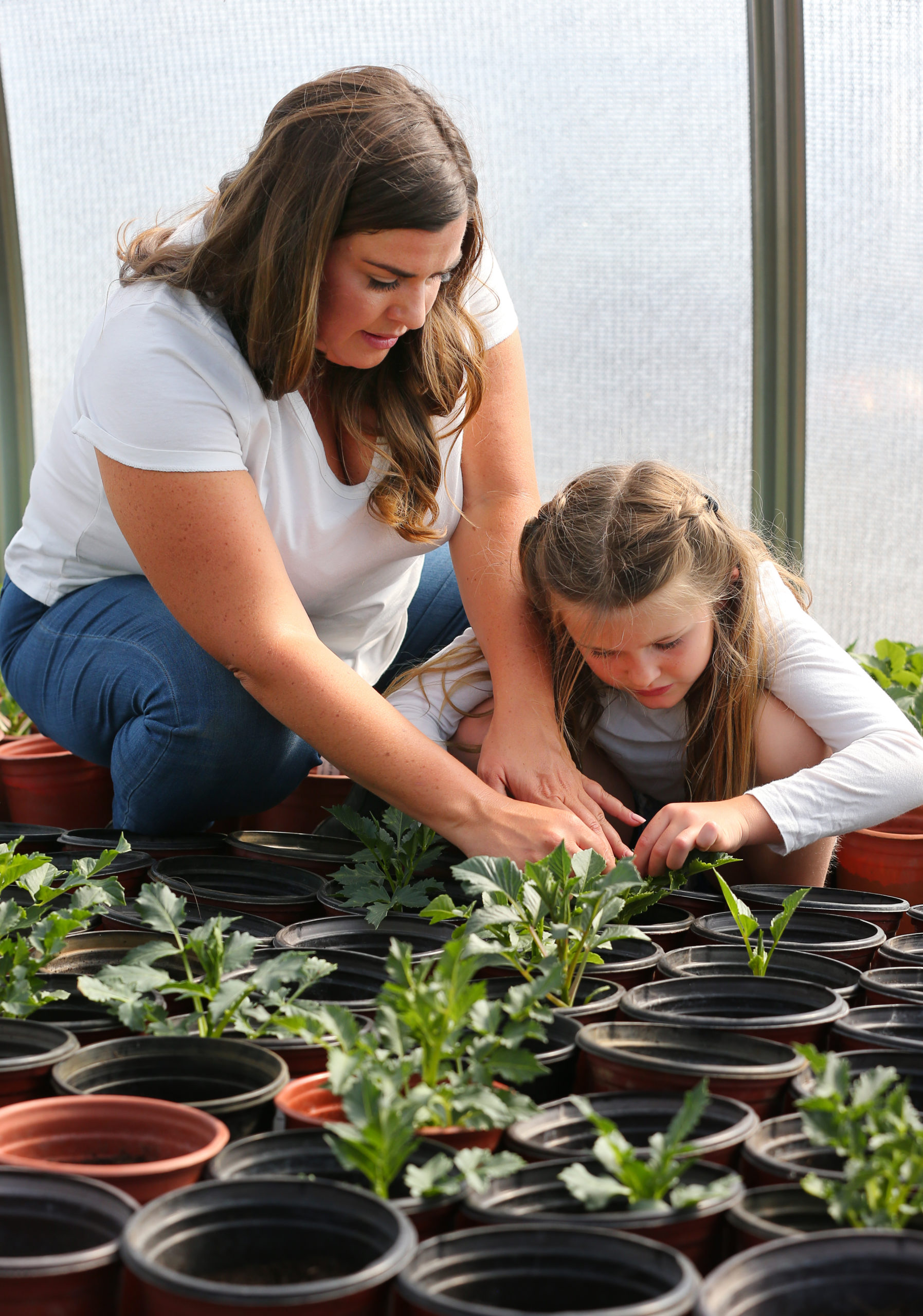
Dahlias at The Happy Dahlia Farm in Petaluma. (Courtesy of The Happy Dahlia Farm)Meagan Major shows her daughter, Georgia, 6, how to tend to a dahlia plant at The Happy Dahlia Farm in Petaluma. (Christopher Chung/The Press Democrat)
A day on the farm
5:00 a.m. In bloom season, Major arrives at the farm before dawn, puts on her headlamp, and gets to work. Harvesting solo is Major’s favorite part of the day. “I get to get intimate with each bloom, and that’s when I get to look at all of them.” As the sun rises, Major says she’s often compelled to stop what she’s doing and take pictures, because the early-morning blooms are so beautiful.
7:00 a.m. The rest of the farm crew arrives. Major continues harvesting until all the sale buckets are filled with dahlias—in rainbow order. The growing fields are divided up by color. “I’m usually more drawn to the pinks and the purples, so my favorites are all on the right side of the field. But my cousin Poppy, who does the farmer’s market, loves the yellows and the oranges. When we go out to harvest, she always loves to go to the left side of the field.”
10:00 a.m. The farm opens for visitors, some stopping at the coffee station, others heading straight out into the fields to wander around.
Shoppers can choose from containers of cut flowers at the farmstand or walk the rows and choose from the growing beds, though staff members do the actual cutting of the flowers.
12:00 p.m. Time for lunch, often a takeout farro salad from Lunchette. If she’s not too dirty, Major likes to head to Cucina Paradiso. “It’s my favorite restaurant in all the land,” she says. “I love the fish, and the gnocchi is out of this world.”
1:00 p.m. There are buckets to replenish with blooms, and more flowers to cut for guests walking the fields. “I always say to look around and enjoy everything first, and then pick your flowers before you go home. The dahlias don’t like to be left out in the sun once they’ve been cut,” Major says. As visitors wander the fields, they’ll notice basil and other smaller plants interplanted with the dahlias—a way of attracting ladybugs, lacewings, and other beneficial insects. “I have seen so many ladybugs this year and I’m really excited,” says Major.
4:00 p.m. The farm closes, and Major’s team turns to getting ready for the next day’s farmers markets, sorting blooms by color so people can look through the buckets and choose from complementary textures and styles. After 12-plus hours in the field, Major winds down the day with dinner and family time, before an early night to get ready for the next day’s harvest.
When you go: “We want this to be a magical place,” says Major. In addition to cut flowers, The Happy Dahlia Farm also offers picnic tables, live music, activities for kids, and full-moon ceremonies. The dahlias begin blooming in July, peak in August, and continue through early October. Visit the website for updated bloom-season hours.