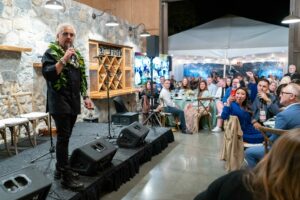
Guy Fieri speaks to event guests about the importance of supporting fellow members of the restaurant industry in Hawaii. (Chefs for Maui)
Over $1.5 million was raised at celebrity chef Guy Fieri’s Chefs for Maui fundraiser Saturday in Sonoma County.
The exclusive auction, dinner and live music show for 150 invitees was held at a private residence, according to organizers, and cost $2,500 to $5,000 per person. Funds will benefit restaurant workers and residents affected by August’s devastating wildfires on Maui, Hawaii.
“I was taught that you help take care of the community, and our community, specifically here in Sonoma County, has been through horrific wildfires,” said Fieri, whose Guy Fieri Foundation has raised millions for first responders, disaster relief, culinary students, and the Special Olympics. “So, when I saw my other community, which is my brothers and sisters in the restaurant industry in Hawaii, were facing this horrible tragedy that we had to do something about it.”
Proceeds from Saturday’s event will benefit the Hawaii Restaurant Association and the Salvation Army’s Hawaii resident and Pacific Island Division, organizers said.
The night’s highlight was an 18-course dinner created by 38 of Fieri’s chef friends, including Food Network stars Rocco DiSpirito, Michael Voltaggio, Maneet Chauhan, Tiffani Faison and Brian Malarkey, Bay Area culinary luminaries and some of Sonoma County’s best restaurateurs.
For Fieri, a group text was all it took to gather the support of well-known chefs, including Ming Tsai, Iron Chef Jose Garces and local chefs, including Duskie Estes, Nate Appleman, Domenica Catelli, Crista Luedtke, Michael Mina and Dustin Valette.
“I sent a text to my circle of celebrity chef friends, and there was an overwhelming response wanting to help. Last night, we had a collection of chefs turn up for a once-in-a-lifetime dinner to show the same love and energy to those in the industry who have welcomed us in Maui,” Fieri said.
Estes, who lost her restaurant, Zazu, in the 2019 Sebastopol flood, said she felt the pain of restaurateurs who lost everything in the Lahaina fires.
“We in Sonoma County know the ravage of fire all too well and losing everything you know in an instant. We also know that the people matter more than any possession,” she said.
As a friend of “Top Chef” star Lee Anne Wong, who lost her restaurant in the Maui fires, Estes said, ”I would do anything for her. I know that loss.“
Chef Tracey Shepos of Jackson Family Wines served vegetables from the winery farm with local cheese and oyster leaves with Tsar Nicoulai Caviar. She said the event was “crazy fun with so many talented chefs.”
Shepos was one of five women chefs from Sonoma County, including Estes, Catelli, Luedtke and Liza Hinman, who offered a five-course dinner for 10 people as an auction item called “Wonder Women of Wine Country.” The package sold for $25,000 each to three different bidders for a total of $75,000.
“I felt a tremendous amount of pride that this event was held in Sonoma County and how the greater chef community showed up to help support Maui,” she said.
Other dishes on the Chefs for Maui menu included short rib pizza with bacon onion jam from Jose Garces and Fieri’s son, Hunter; tomahawk steaks from “Yellowstone” creator Taylor Sheridan’s 6666 Ranch made by Fieri and Valette; fontina-stuffed gnudi with white truffle from chefs Michael Mina and Adam Sobel; and pineapple bread pudding chocolate “ravioli” and passion fruit pie in a jar from Estes, Leudtke and Catelli, who have all been featured on Fieri’s Food Network shows.
“When Guy calls, we all say yes. His heart is always in the right place,” Estes said.
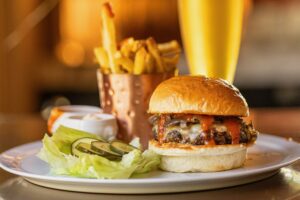
The Madrona Burger with roasted onions, white Cheddar cheese, spicy ketchup and beef fat fries from the weekend brunch menu at The Madrona in Healdsburg, Friday, July 14, 2023. (John Burgess / The Press Democrat)
New restaurants, new dishes, and favorite spots for fall. Click through the above gallery for a peek at some of the dishes to order.
Molti Amici
Molti Amici owner Jonny Barr is likely the only certified sommelier/former pro wrestler you’ll ever meet.
Long before Barr was sommelier and general manager of SingleThread, a three-Michelin-star restaurant in Healdsburg, he performed as part of the Empire Wrestling Federation, home to chair-breaking, smack-talking, WWEesque entertainers. (One of the many Easter eggs at the former Campo Fina space is a bathroom with tiny wrestlers printed on the wallpaper.)
Barr’s collaborators at Molti Amici (Italian for “many friends”) include fellow SingleThread alum Sean McGaughey, who developed the menu with Barr, along with chef de cuisine Matthew Cargo and bar director Danielle Peters. It’s a winning combination, with an Italian-influenced menu that reflects the seasonal moment. At harvest time, this includes late-season tomatoes and corn, squash, and pears.
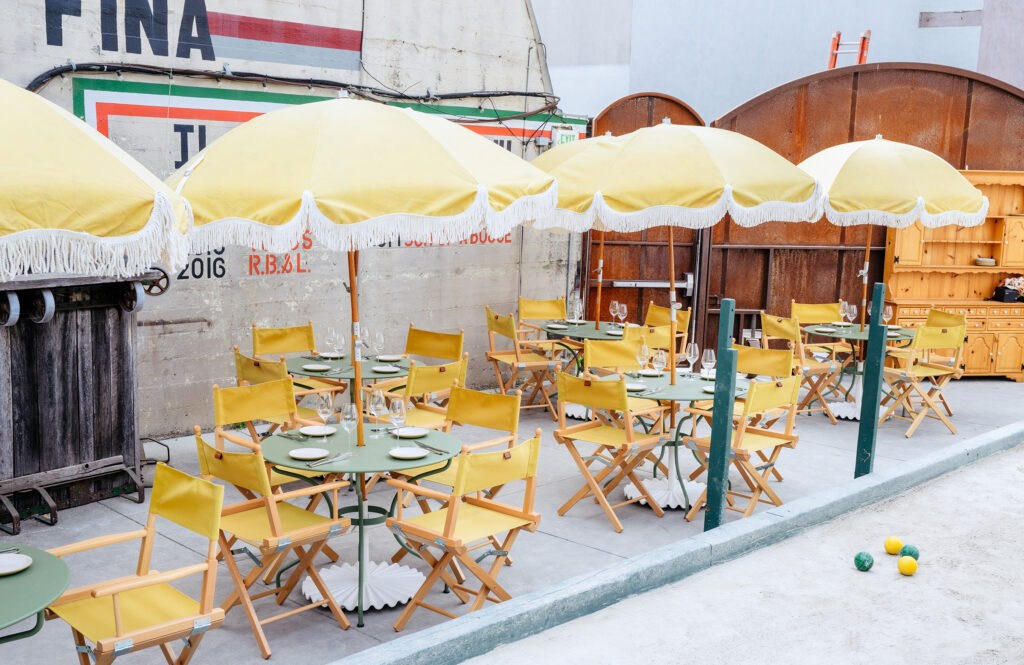
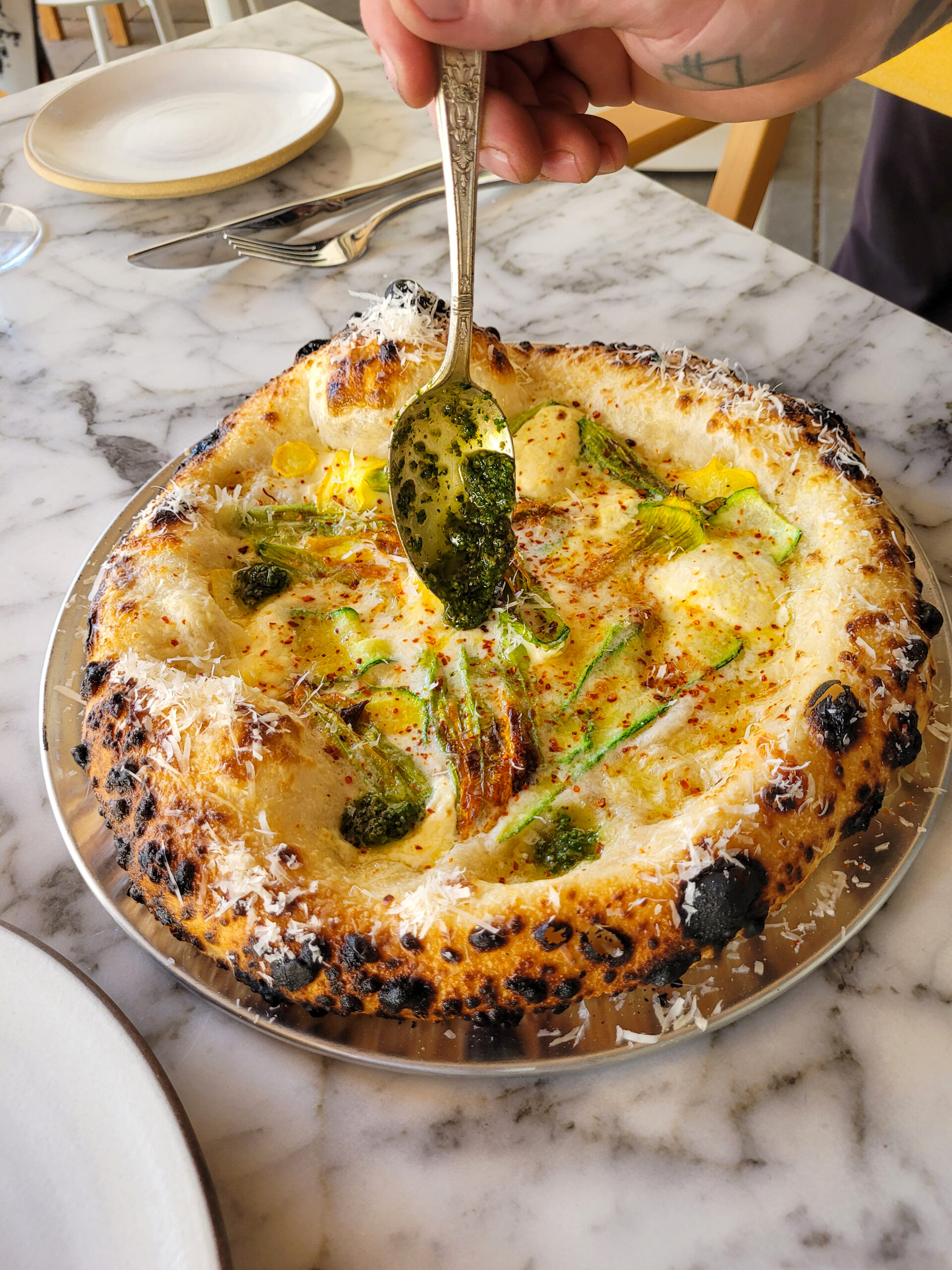
At Molti Amici in Healdsburg. (Adahlia Cole and Colin Peck)At Molti Amici in Healdsburg. (Heather Irwin/Sonoma Magazine)
There are more evergreen items, too, like a whole spatchcocked chicken with potatoes and mushrooms ($65) or a 20-ounce Wagyu strip steak ($120) meant for sharing, as well as wood-fired pizzas, either with seasonal items (corn, zucchini, tomatoes) or more traditional Margherita or sausage pizzas.
The slim interior of the restaurant is charming, but it’s the patio where all the action happens. Fringed yellow umbrellas rim the bocce court, and banquettes with lime-striped cushions add a pastel Wes Anderson vibe.
Molti Amici is a seersucker-suit-and-straw-hat moment with a little WrestleMania thrown in — just what you’d expect from a guy who can pour a bottle of Dom Pérignon with all the panache of Randy Savage.
Best Bets
Bar bites: They’re more than just an afterthought here. The gnoccho fritto ($11) are triangles of fried dough paired with Mortadella ham and fresh Parmesan. The focaccia with garlic butter ($10) is also a savory carb to fill you up.
Housemade pasta: Deft hands are working the dough here. Try casoncelli, a type of giant ravioli, and tortellini en brodo with smoked eggplant and tomato confit ($26-28).
Pizza: Half the fun of sitting outside is watching the speed of pizzas going in and out of the wood-fired oven. They’re not overdressed and have just a handful of ingredients atop the bubbling dough, like a red pizza with hen-of-the-woods mushrooms and sweet onion or our absolute favorite, the green pizza with fresh basil, onion, frilly mustard greens, and lemon zest ($23-25).
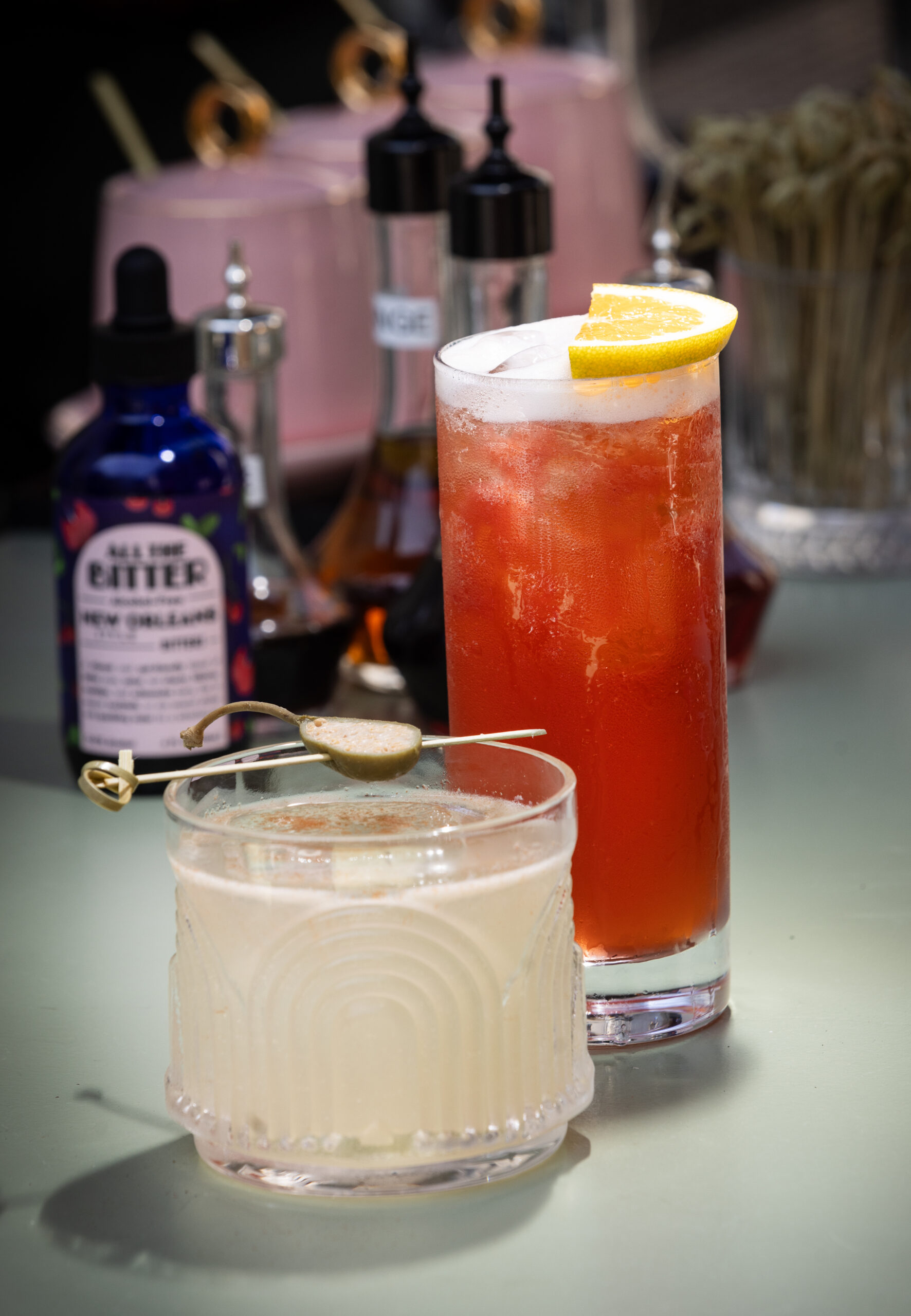
Cocktails: The Campari and Prosecco with orange (no name, just an emoji of a hand making a very Italian gesture) is required. We also loved the Roman Around—a mix of tequila, caramelly Averna, sweet Cocchi Americano liqueur, and fresh basil, peach, and lemon ($15).
All Patched Up with Lyres Aperitif Rosso, Giffard Aperitif, Strawberry-Balsamic Shrub and Bitters with a Capriccio with Gin, Aquavit, Tomato Water, Lemon, Caperberry and S&P Bitters from the bar at Molti Amici in Healdsburg. (John Burgess/The Press Democrat)
Goodnight’s
Sonoma County has never had a love affair with clubby steakhouses, those manly, dimly lit, leather-scented altars of aged beef and expensive whiskey. While expensive steaks are certainly on high-end local restaurant menus, local steakhouses are rarer than a properly cooked filet mignon. The new Goodnight’s Prime Steak + Spirits, backed by wine mogul and entrepreneur Bill Foley, is precisely that kind of old-school, tufted banquette kind of destination restaurant that no one particularly asked for, but everyone’s talking about.
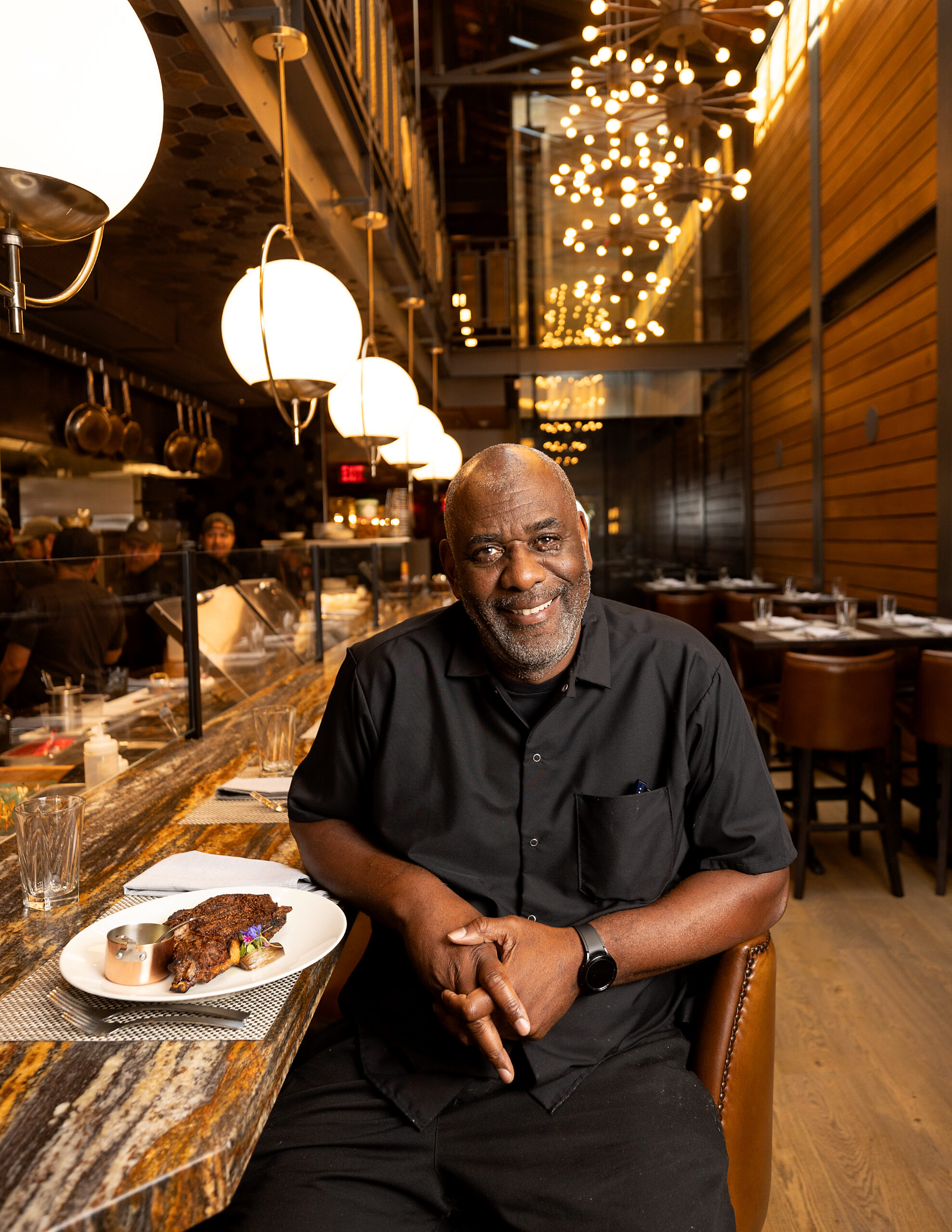
But this steakhouse has a Western twist. The two-story restaurant is inspired by Charles Goodnight, a rough-and-tumble Texas Ranger, cattle herder, and inventor of the chuckwagon. Diners eat under modern chandeliers that evoke a starry night on the plains, and glowing moons of incandescence move the eye to the open kitchen. From there, chef David Lawrence oversees the dishes and chats with guests acquainted with his work at restaurants 1300 on Fillmore and Black Bark BBQ. The steakhouse is a return to a familiar format for the Brit, who cut his chops at London steakhouses with his Jamaican-born father.
There’s no question steak is what you’re here for, and the 25-ounce ribeye is unctuous and perfectly seasoned. The menu also includes seafood and well-crafted vegetarian options, like the exceptional Muhammara roasted cauliflower. Seasoned heavily with za’atar seasoning, it’s a nice departure from beef.
Mixologist Devon Espinosa heads a lighthearted beverage program. Cocktails lean on whiskey and bourbon, but an extensive menu of high-end American, Japanese, and other international liquor selections is aimed at connoisseurs.
Star emblems throughout the restaurant, reminiscent of a Western sheriff’s badge, make it clear there’s a new steakhouse in town—one with a trigger finger itchy to impress.
Chef David Lawrence from Goodnight’s Prime Steak + Spirits in Healdsburg. (John Burgess/The Press Democrat)
Cozy Plum
There’s now a second outpost of Santa Rosa’s popular vegan comfort-food restaurant. At the new Sebastopol location, the menu includes crossover dishes inclusive of vegans, vegetarians, and omnivores. As the latter, I’ve always appreciated chef Charles White’s approach to plant-based dishes that are flavorful.
The revamped menu has been abbreviated to include the best-of hits from the Santa Rosa location, such as stuffed jalapeños, burgers, bowls, and wraps. Best bets include the new Israeli couscous salad ($16.50) with large pearls of the pasta/grain (even foodies argue what category it belongs in) atop fresh greens and seeds, with an almond-chipotle dressing. The Green Chile Cashew bowl ($17.50) is a heaping bowl of lettuce, rice, beans, salsa, cashew cream, quinoa, and avocado tossed with housemade ranch dressing.
It’s always the burgers I return to, like the fat Mushroom Gouda ($19.50) with crispy onions, pickled jalapeños, trumpet mushrooms, vegan Gouda cheese, and a soft sourdough bun that’s been waved over the grill for a toasty munch. Virtuous and delicious.
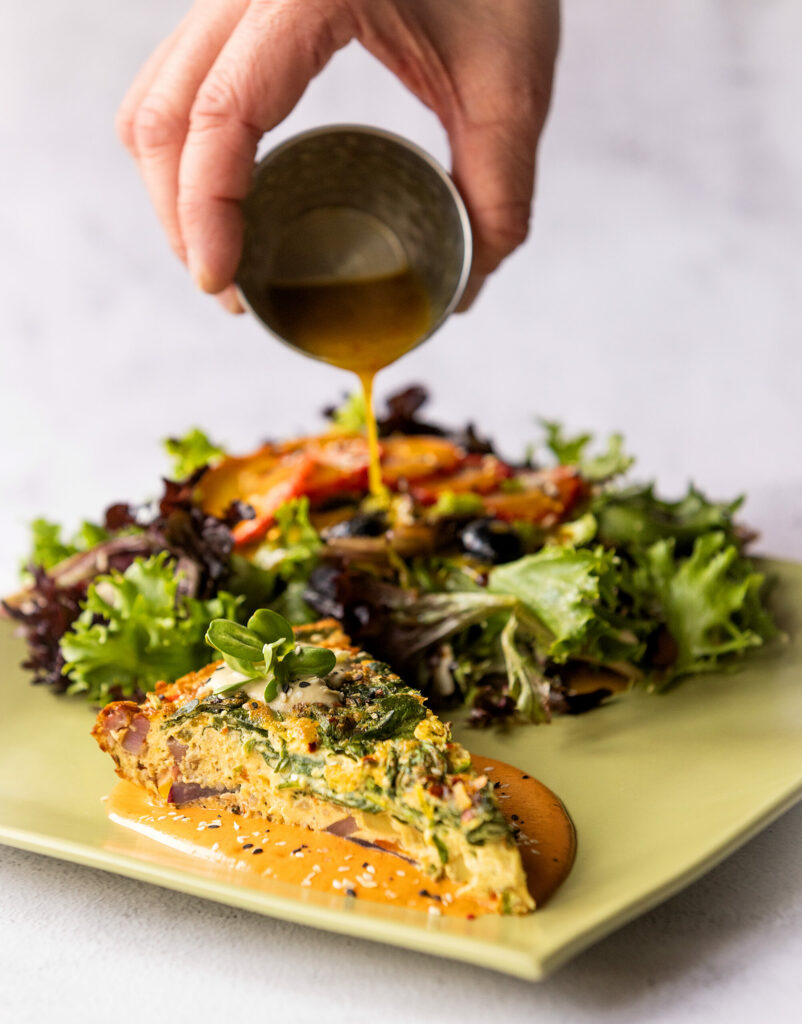
Vegan Frittata with a Cozy Plum Salad with strawberries and blueberries from the Cozy Plum Bistro. (John Burgess/The Press Democrat)
Iggy’s Organic Burger
With just a handful of tables, this new combination burger joint and ice cream shop is best enjoyed to-go, joining the hordes of families enjoying a family-friendly night around the Plaza—messy burgers and dripping cones are best consumed outside anyway.
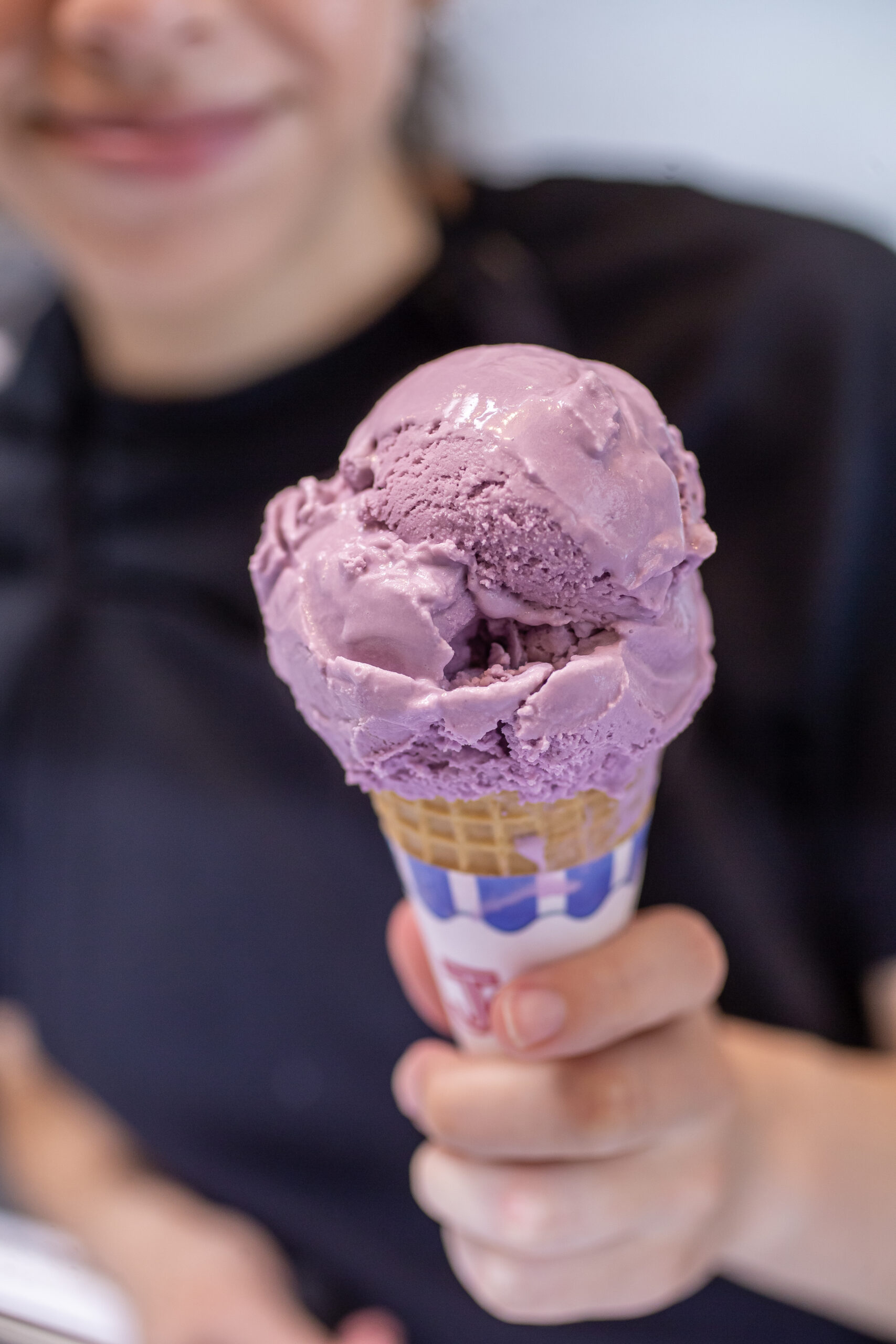
On the ice cream side, there are droolworthy flavors like Lemon Curd and Dulce de Leche Brownie from cult-favorite Angela’s Organic Ice Cream out of Petaluma, plus thick slices of cheesecake from the College Confectionista, Anamaría Morales.
The burgers are quite grown-up, though kids will like them, too. My favorite is the Biggy ($12), made with two duck-fat-and-beef patties, cheddar, “Million Island” dressing (like Thousand Island), caramelized onions, secret sauce, pickles, and not two, but three buttery brioche buns. Take that, Big Mac. You’ll need a pile of napkins to eat this gooey mess of a burger with thin patties, dripping cheese, and sauce. We’ll never eat one of those thick, half-pound monstrosities again. OK, we will—but this burger is truly astounding.
109 Plaza St., Healdsburg. On Instagram @iggysburger.
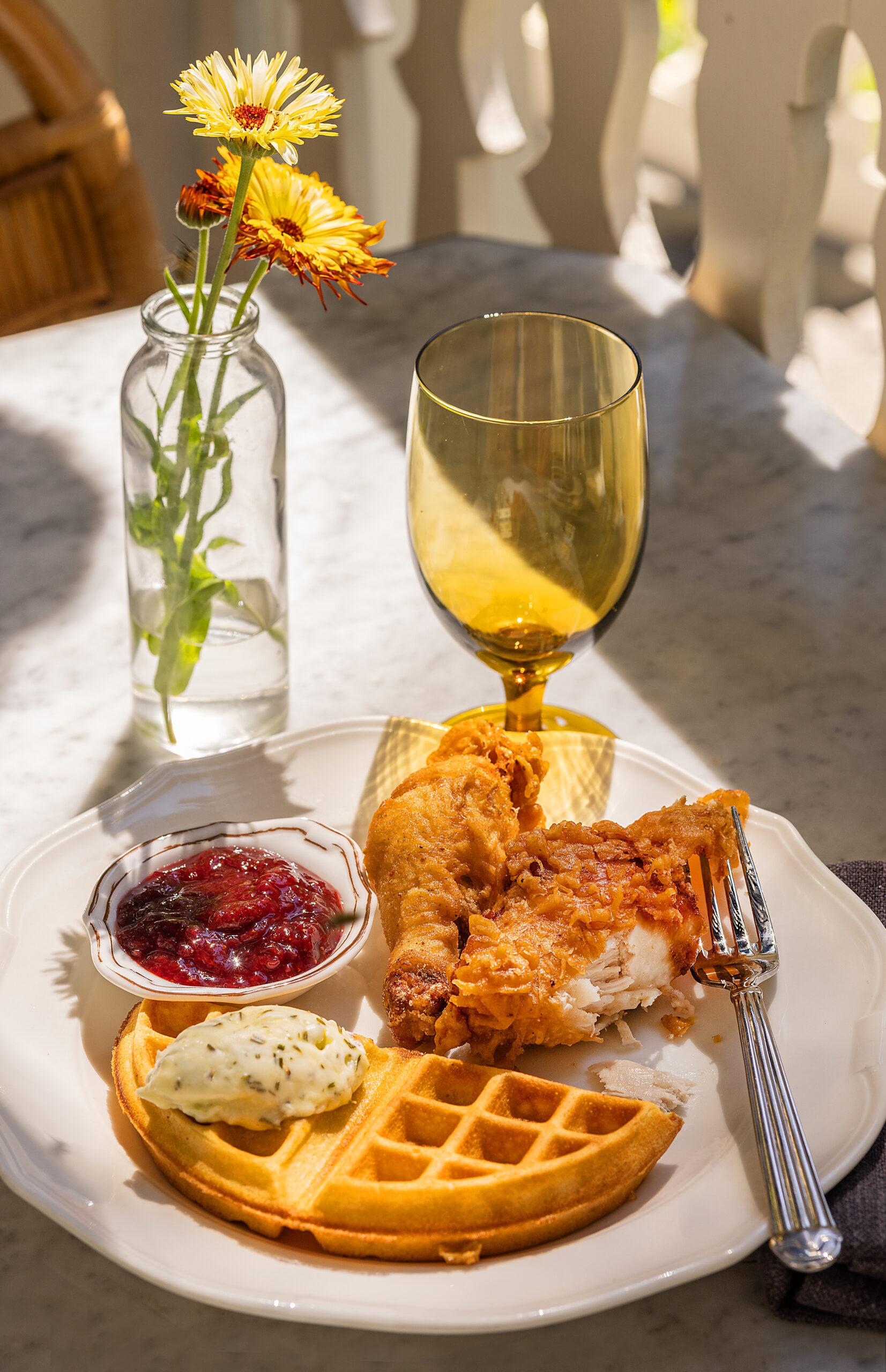
Lavender Angela’s Organic ice cream is served in a sugar cone at Iggy’s Organic Burgers in Healdsburg. (Chad Surmick/The Press Democrat)Fried chicken and waffles with strawberry jam and rosemary butter from the weekend brunch menu at The Madrona in Healdsburg. (John Burgess / The Press Democrat)
The Madrona
Chef Patrick Tafoya has taken over the lead at the high-profile restaurant at The Madrona. Previously, he was executive estate chef at Round Pond Estate Winery in Rutherford, where he curated a four-course wine and food pairing for intimate groups of diners.
Tafoya has largely maintained the more casual, approachable menus former chef Jesse Mallgren instituted after new owners took over the resort last spring, adding lunch and brunch. Now that the property’s culinary gardens are overflowing with early fall bounty, he has plenty of new ideas to make the most of tomatoes, chiles, eggplant, and more. “Our goal is to utilize everything we grow and allow the gardens to continuously inspire our menus,” says Tafoya.
The Madrona’s new brunch service, offered Saturdays and Sundays, is a treat. Lazing on the 1881 Victorian mansion’s terrace overlooking lush flower gardens, emerald lawns, and towering trees is like gently ushering the world away. Sip a Madroni of herbaceous Botanivore gin, blood orange, apricot-kissed Brucato Orchards Amaro, and sweet vermouth and see if life isn’t immediately better. The edamame spread is a chunky, pleasingly gritty mash sprinkled with gremolata, tart rose hip crumbles, and wilted microgreens and served with puffy, buttery herbed pita bread ($17). A half-waffle comes with fried chicken, the poultry breast, and drumstick so crisp that the crust audibly crackles as it breaks to reveal the juicy interior ($24).
You gild it with strawberry jam and rosemary butter.
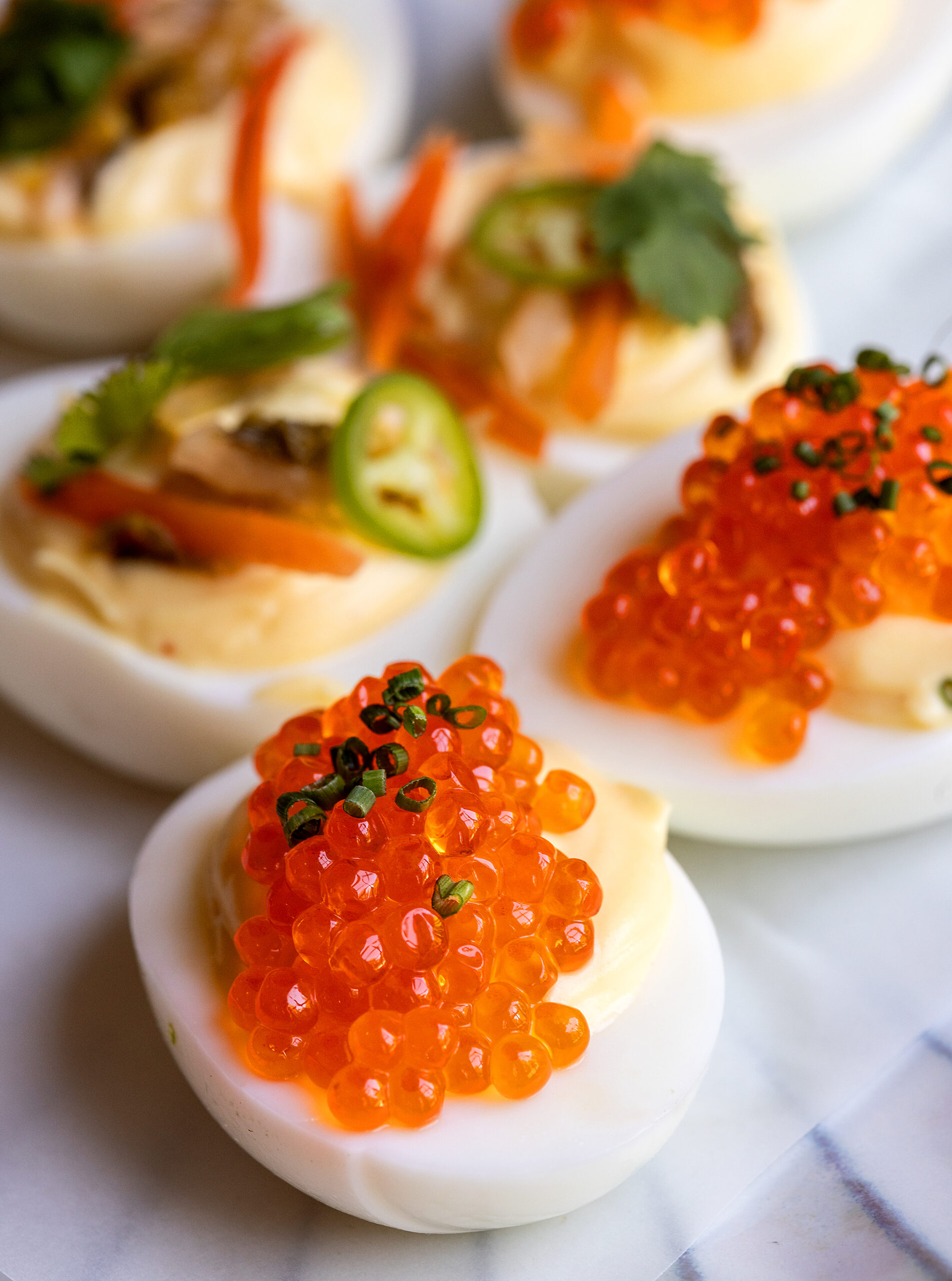
There’s some adventure at brunch, too — a satisfying okonomiyaki pancake is stuffed with pork and rock shrimp under a shower of salty bonito flakes, Japanese pickles, and scallions ($24). Duck confit is a rich, elegant take on hash, topped in slow-cooked eggs and spicy tomato-pepper piperade sauce and served with grits ($28). And gravlax pizza ($27) is a whimsical play on a lox bagel, the lacy smoked salmon draped over a bed of crème fraîche then dotted in diced pickled red onion, capers and dill fronds atop a thick, puffy crust sprinkled in “everything” seasoning. Go all out and add two poached eggs ($6) and trout roe ($15).
Tafoya is probably tired of being asked about regaining the restaurant’s Michelin star, after Mallgren earned and kept the coveted award for 13 years. “I think it’s every chef’s goal to earn a star,” he said.
“With so many of our neighbors being recognized recently, I am inspired to continue the pursuit.” – Carey Sweet
Deviled eggs with trout roe and chives from the weekend brunch menu at The Madrona in Healdsburg. (John Burgess / The Press Democrat)
Pascaline
The Forestville French-style bakery Pascaline recently opened a new outpost in Santa Rosa.
Chef Didier Ageorges and new pastry chef Lea Schleimer make croissants so flaky they threaten to shatter into crumbs if you even look at them hungrily. Lunch begins at 11 a.m. with soups, salads, and sandwiches, like iconic French onion soup, and a classic croque monsieur with ham, Swiss cheese, and béchamel on crispy Pullman bread. The opening menu is abbreviated but is expected to expand as the staff gets up to speed.
The new location is in the former space of Worth Our Weight, a beloved nonprofit culinary training program for at-risk youth directed by Evelyn Cheatham, who died in 2019. We can’t help but think Cheatham would be happy to see such sweet joy once more.
With a self-serve wall of 39 taps serving beer, cider, and cocktails, Barrel Brothers Kitchen & Cocktails in Windsor offers little-kid DIY thrill. Just try not to snicker at taps labeled The Snozberries Taste Like Snozberries sour beer or Dad Pants Pilsner.
The food is equally playful, with simple but well-executed nibbles, bowls, skewers, and baskets. The Moroccan Spiced Lamb skewer ($5) is perfectly seasoned and served with a pool of tart tzatziki. And pupusas ($14) filled with roasted pork, cheese, black beans, and potatoes are a real winner. They’re a shareable dish with richness from the fried El Salvadoran griddle cakes and freshness from the pile of cabbage salad and salsa on top. Southern Fried Chicken ($17) is also excellent, served with pickles and a creamy ranch dip.
The popular bakery and breakfast/ lunch spot Baker & Cook now serves dinner on Friday and Saturday nights. Owners Nick and Jen Demarest (he’s the cook, she’s the baker) met in culinary school and formerly headed up Harvest Moon Café in Sonoma.
Their new prix-fixe dinner menu offers a choice of three courses for $75 per person. Previous dishes have included a baby beet and celery salad with smoked trout, chilled corn soup with a jalapeño-tomato relish, and a pairing of frozen honey mousse and apricot sorbet served with pistachio cookies. Call 707-509-9225 for reservations.
Opened in early summer in the former Jack & Tony’s, 19Ten is already a Railroad Square destination. JC Adams and Brad Barmore, owners of KIN Windsor and KIN Smoke in Healdsburg, opened up the cavernous space and spun off a mix of new concepts. There’s plenty to love on the menu—nothing stuffy or plain here.
It’s a light-hearted celebration of food and fun.
Start with one of their craft cocktails and Smoked Brisket Elote Tacos ($18) with tender Texas-style smoked brisket, roasted corn, cotija cheese, and pickled red onion. Scallop Crudo ($16) is a great plate to share, with thin slices of fresh scallops marinated in a tart-spicy chile-oil vinaigrette.
Entrées are harder to choose. Here you’ll want to invest in hearty dishes like the Beef Duo ($40) with a hangar steak and beef cheeks or the Smoked Baby Back Ribs covered in a bourbon Dijon glaze. Our favorite was the simple 19Ten Burger ($19) with a crisp Parmesan skirt around two burger patties.
Sonoma County is ready to enjoy a little eater-tainment again, and Barmore thinks his twinkling Princess Cake is a fun idea for dessert.
I couldn’t stop laughing, because, while delicious, it gives the overall impression of something a magical unicorn might have left behind. Our snort-worthy question: Does the glitter dissolve after you eat it, or will it reappear? Fact: Edible glitter dissolves in the digestive system.
115 Fourth St., Santa Rosa. 707-791-7494, 19Ten.com
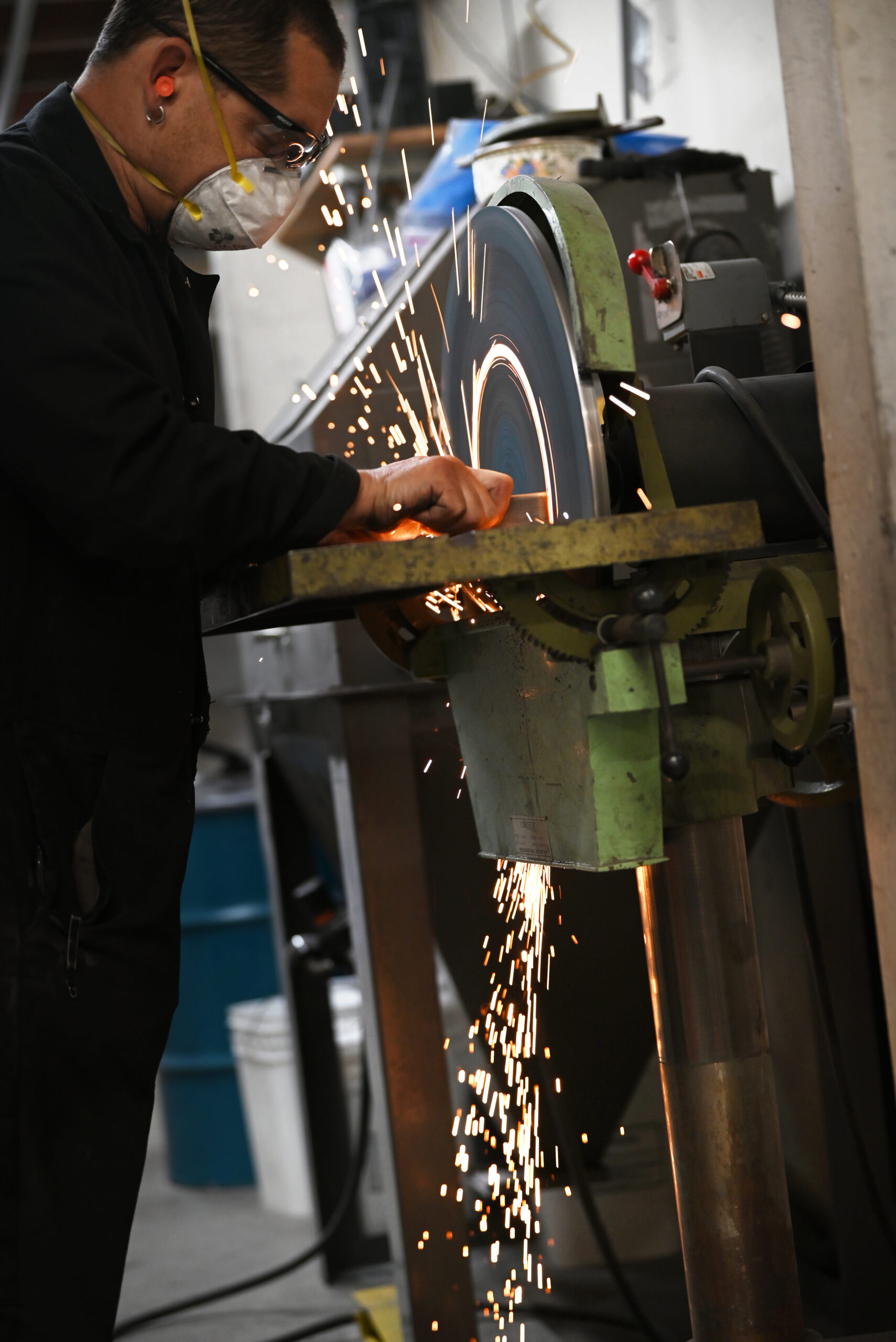
Harvey Gonzalez, 47, working on a Europress at Punchdown Cellars in Santa Rosa, Calif. on July 11, 2023.
(Photo: Erik Castro/for Sonoma Magazine)
Nothing much surprises mechanic Harvey Gonzalez of Europress as he criss-crosses Sonoma County each harvest, not even a wayward bird’s nest found inside a wine press during a tune-up.
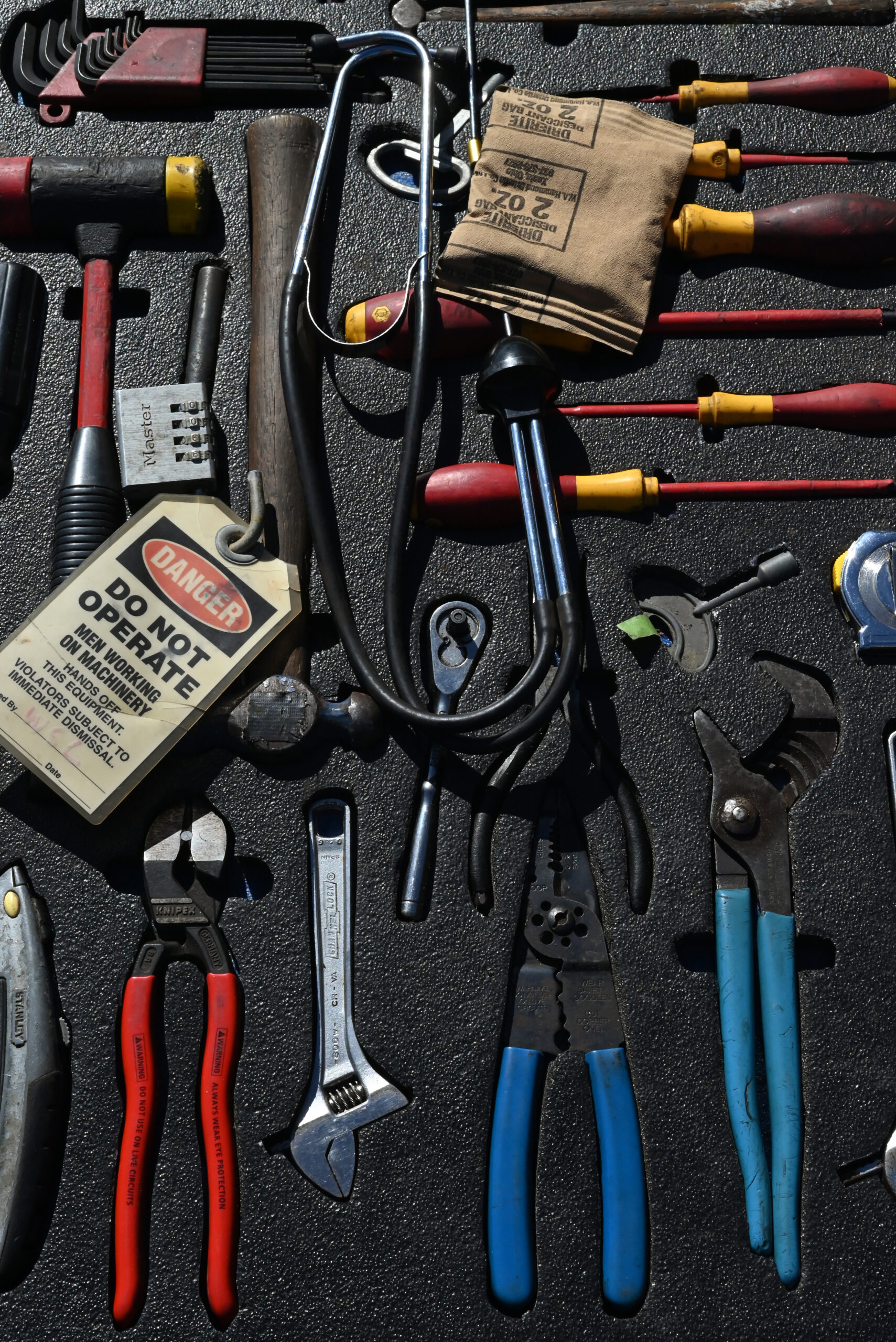
Dave Peritore, the one-man show at Winery Service Connection, earned the nickname “Equipment Jesus”— presumably for acting as the savior of the day’s fruit many times over.
And at Carlsen & Associates, a family-owned business in Healdsburg that builds and maintains winery equipment, the phone pretty much doesn’t stop ringing from August through November, says head of service Tony Tchamourian.
Superman has nothing on these folks, ones who put in long hours on the road to get the job done at a critical time of year for the county’s most iconic industry, one that brings in over half a billion dollars annually.
Because when the heat is on and the equipment isn’t working, the wine will suffer.
“The sting can be real for a winemaker,” says Peritore. “When it’s 89 degrees out and the machine is down, it can hurt harvest in a big way—it can be exactly the wrong kind of failure at the wrong time.”
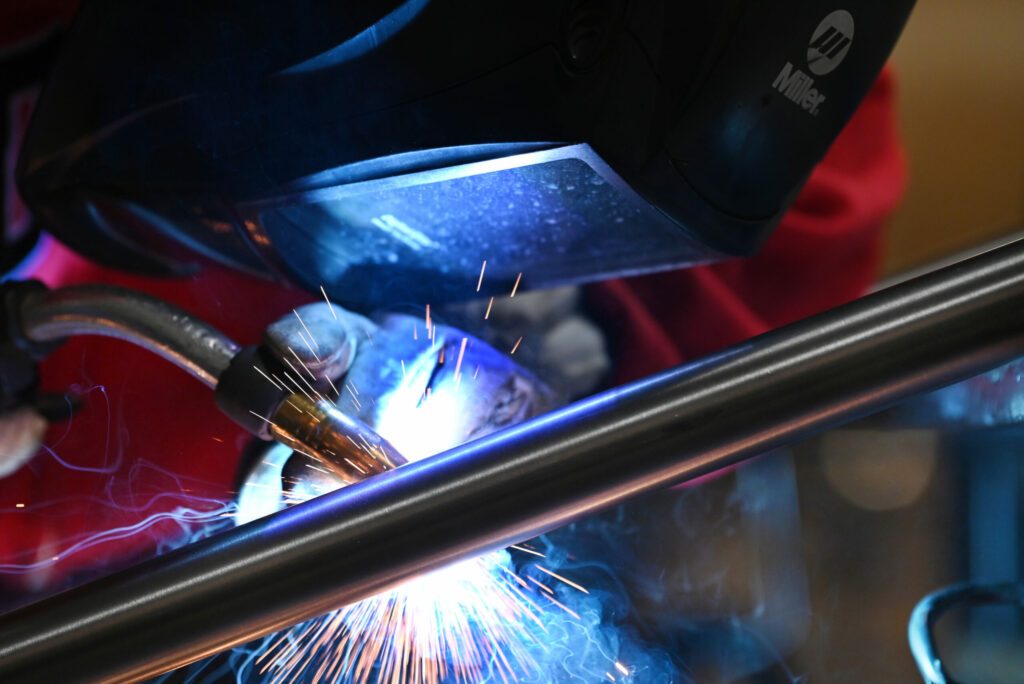
Jair Urincho making winemaking equipment at Carlsen and Associates in Healdsburg. (Erik Castro/for Sonoma Magazine)Leo Autuori making winemaking equipment at Carlsen and Associates in Healdsburg. (Erik Castro/for Sonoma Magazine)
Winegrapes can’t just hang around. After they’re harvested, they need to be brought to the winery and processed as soon as possible; they’re not going to keep for a day or two until a broken piece of equipment can be brought back up and running.
The best mechanics have the mindset of trauma surgeons, explains Jeff Hinchliffe of Hanna Winery. “While you’re freaking out about your grapes, they remain almost uniformly nonplussed. They’re able to think a problem through dispassionately, despite the urgency of the situation.”
“I understand there’s a lot of pressure—harvest happens just once a year,” says Parker Borg, who answers the phone in the service department at Carlsen & Associates and is often at the receiving end of anxious calls from winemakers. Like a 911 operator or an emergency room triage nurse, Borg and his colleagues have learned to gauge the seriousness of the situation by the tone of the caller’s voice.
“Everyone calls in a panic,” says Tchamourian. “We have to do a quick assessment over the phone. A lot of times, the first question we ask is, do you have grapes? And if you don’t have grapes, when are you getting your grapes? And depending on what that answer is, is how we’re going to react to that emergency.” Often, a technician is able to talk through a fix over the phone.
If not, someone will be on the way to figure out the fastest solution to get things running. “It takes a good crew—people who are willing to put their personal lives aside and are willing to help,” says Tchamourian. “A lot of time, we get calls in the middle of the night, like ‘I know it’s 1 a.m., but are you available?’ Because the customers know we will always answer our phone.”
“It gets stressful for sure for us in the service department,” says Borg. A dirt bike racer and grandson of Carlsen’s founder, Borg “grew up wrenching” and started hanging out in the service shop when he was in his early teens. It’s the only job he’s ever had.
Dave Peritore’s tools rest in custom foam cutouts, so he’ll know if anything is missing, left behind after a job. (Erik Castro/for Sonoma Magazine)
Harvest season is incredibly hard on winery equipment, including tractors, forklifts, presses, pumps, conveyers, and crusher-destemmers—complicated, medievallooking machines with stainless steel barrels and rotating paddles that separate the berries and crush them into juice, spitting off the unwanted stems through a side chute. It gets stuck quite a bit.
Many of these machines are stored away eight or nine months of the year, until August rolls around. Then it’s go time. “Once the winemakers start getting their grapes in, it starts really picking up,” says Tchamourian. “All the people who never fired up their equipment all year, or never checked anything, they’re the ones calling us, saying, ‘We need you here, we need you here now.’”
Technicians encourage winemakers to have them come out for a pre-harvest service, to give equipment the once-over. Even better, says Tchamourian, is to make sure all of the equipment is carefully cleaned, oiled, and serviced at the end of the previous year’s harvest, before it’s stored away.
The crushpad environment is unforgiving, after all. Grape juice and water aren’t great for electrical machinery, and neither is all the sun and the heat. Sticky grape skins and tiny grapeseeds find their way into the tiniest of cracks, and grape stems seem perfectly designed to jam up the destemmers. Moisture condenses inside electrical panels, corrosion wears away housings or controls. A small rock mixed in with the fruit and carried up the conveyer can wreak all kinds of havoc, as can a wrench left behind inside a press. People are tired. Mistakes happen.
And yet, Tchamourian says the technicians are usually able to get things up again the same day. “I’ve literally zip-tied a control box to a piece of equipment just to make it go, until I could get back out there to fix it properly. Emergency methods—it’s not ideal. But when you’ve got 10 or 20 tons lined up, you have to, especially with what grapes are costing this year. It’s crazy. It’s thousands of dollars.”
In the rare cases where they can’t fix it, they’re often able to sub it out temporarily with another piece of equipment. “The one thing that stumps us is parts,” he explains. “If the part isn’t available or it’s an older machine, then we have to think on the fly to fabricate it or replace it with something else.”
Smart winemakers know it’s good to stay on the good side of the ones who keep their gear up and running, whether it’s a tractor repairperson, a press technician, or an equipment manufacturer. “There are so many wheels that turn this engine,” says winemaker Ellie Ceja of Heirs of My Dream, a winery and custom crush operation in Sonoma.
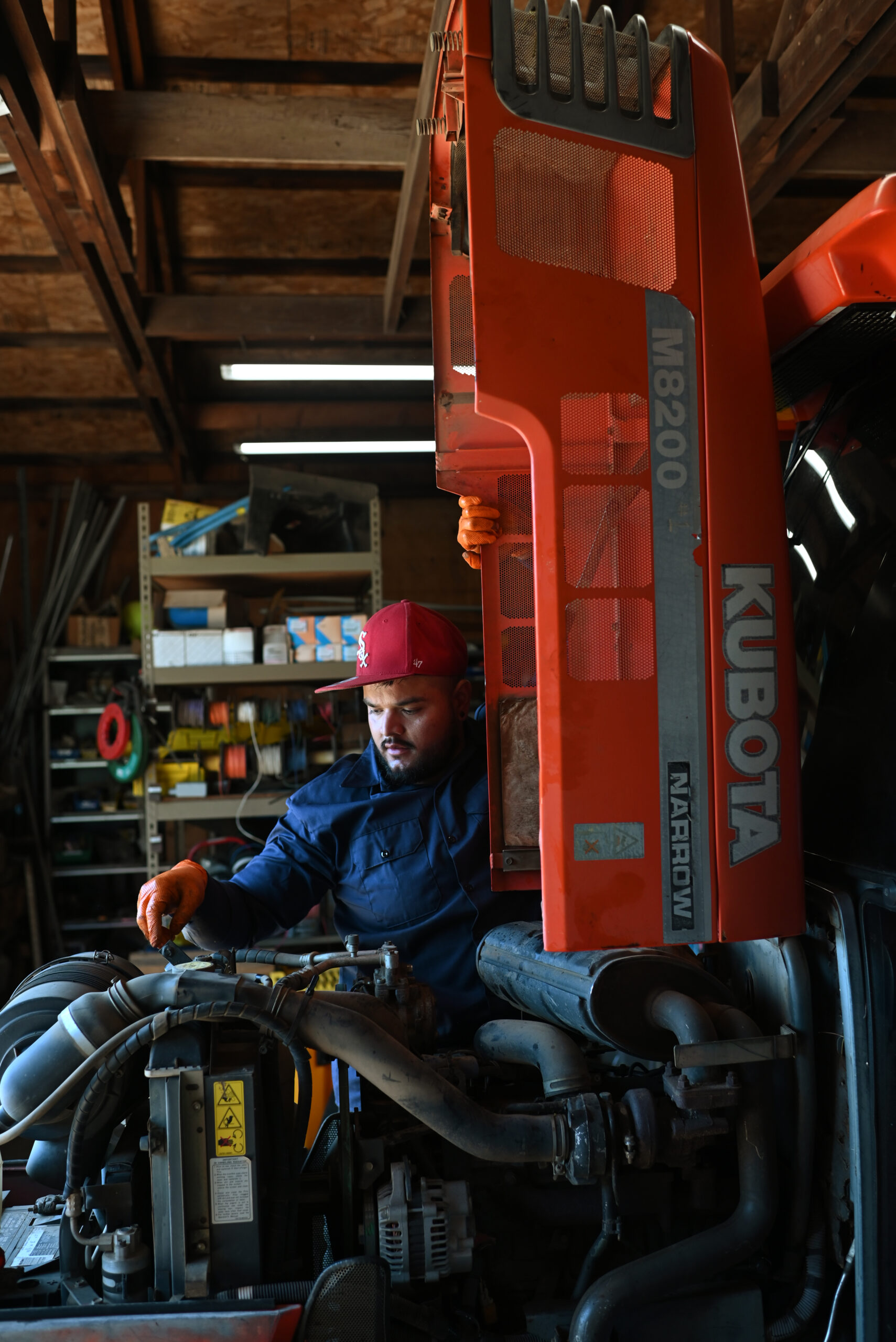
Morgan Twain-Peterson, winemaker at Bedrock Wine Co. in Sonoma, is “very cognizant” of the many who play a role in getting a bottle of wine into a customer’s hands. He’s worked for years with Alejandro Arellano, a self-taught mechanic (who also plays mariachi on the side, though not so much during harvest). Arellano grew up in the vineyards, the son of a local foreman. When a tractor is down during harvest, he’ll get it up and running to make sure the middle-of-the-night picks don’t slow down, even for a few minutes.
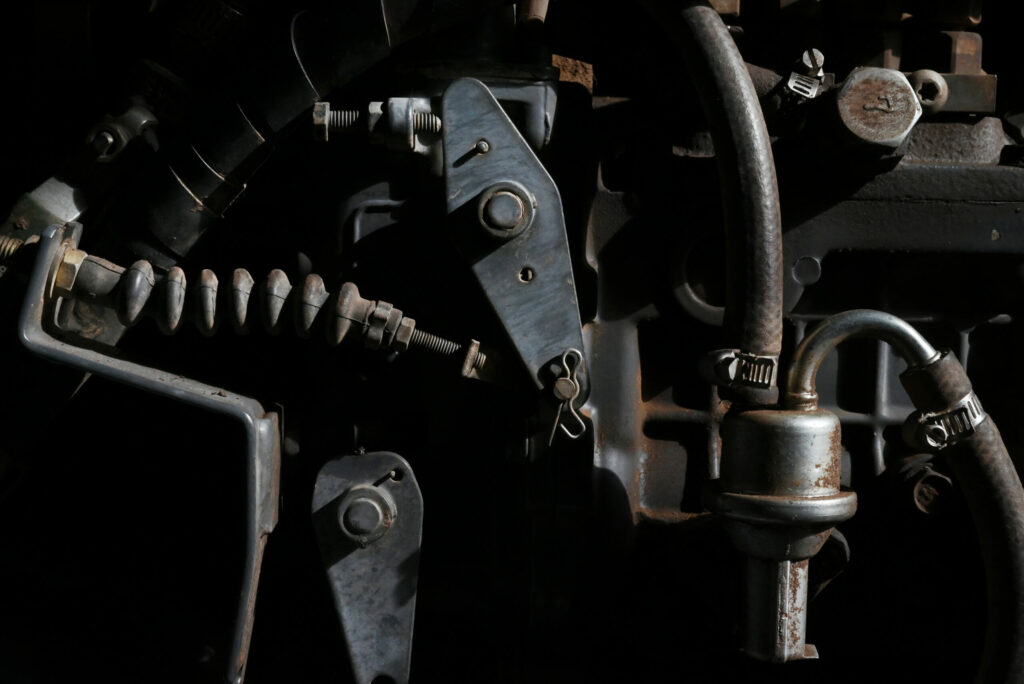
The inner workings of a Kubota tractor. (Erik Castro/for Sonoma Magazine)Alejandro Arellano works on getting a Kubota tractors ready for harvest season at Bedrock Vineyard in Glen Ellen. (Erik Castro/for Sonoma Magazine)
But how do you thank the person who’s saved your harvest? A nice bottle of wine left on the seat of the truck, sure. A home-cooked meal would be nice, or even a few moments to sit down with a cold beer. Unfortunately, these professionals don’t have time for that—they’ve got other service calls to make, a family to get home to. Leo Artuori, who has worked at Carlsen for 21 years, says being able to help someone out at a stressful time keeps him going through the season. “You’re the hero. When everyone’s waiting on you and you fix that machine, you walk away feeling 10 feet tall.”
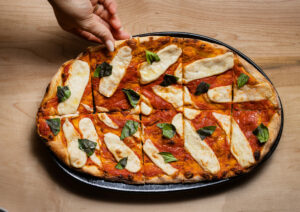
Tomato Flatbrred with San Marzano tomatoes, basil and cashew milk cheese from Luma Bar and Eatery in Petaluma Thursday, Feb. 16, 2023. (John Burgess/The Press Democrat)
Petaluma’s Luma restaurant opened last winter with a novel but somewhat confusing menu of primarily vegan dishes with meats like brisket or duck as a side dish. It didn’t quite work, though the concept was forward-thinking.
Now the menu has been revamped, with a focus on California-Mediterranean cuisine and larger plates like a Stemple Creek burger, a mixed grill of Andouille and brisket with polenta, McFarland trout with roasted carrots and duck leg confit with fingerling potatoes among the meatier dishes.
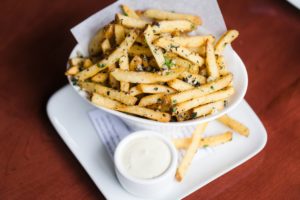
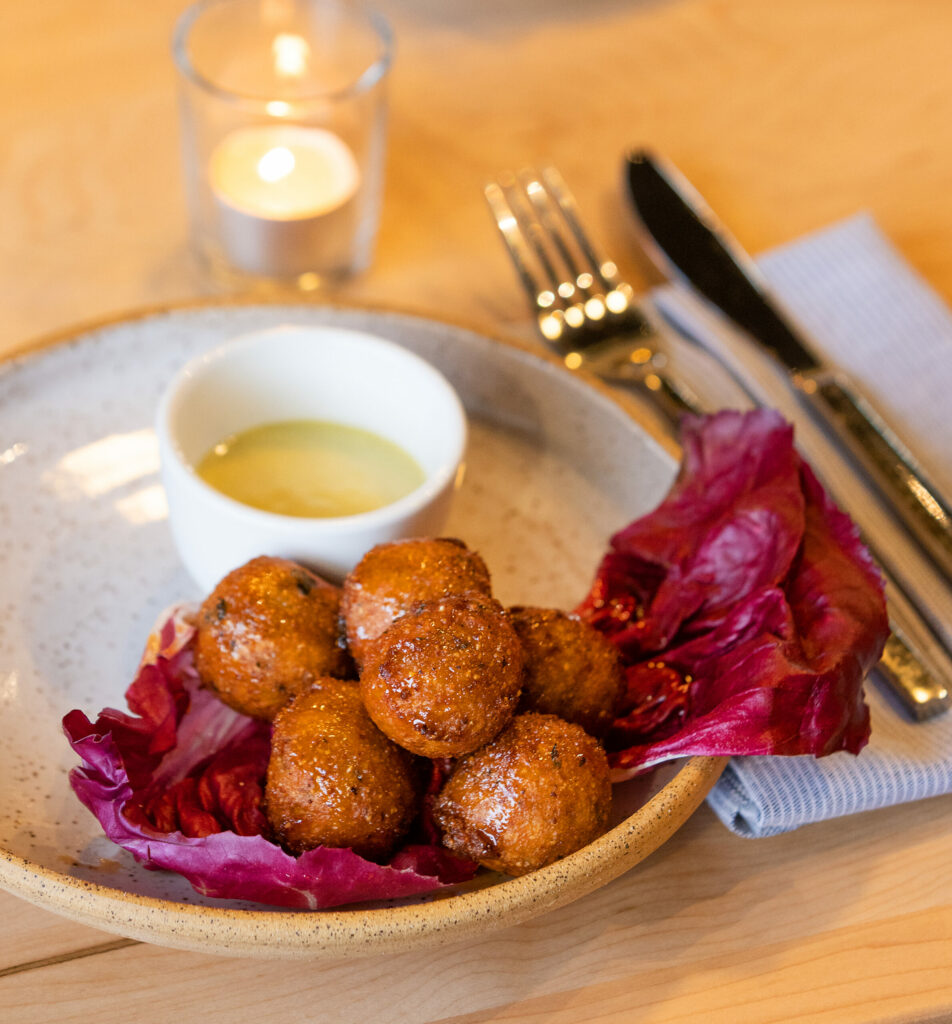
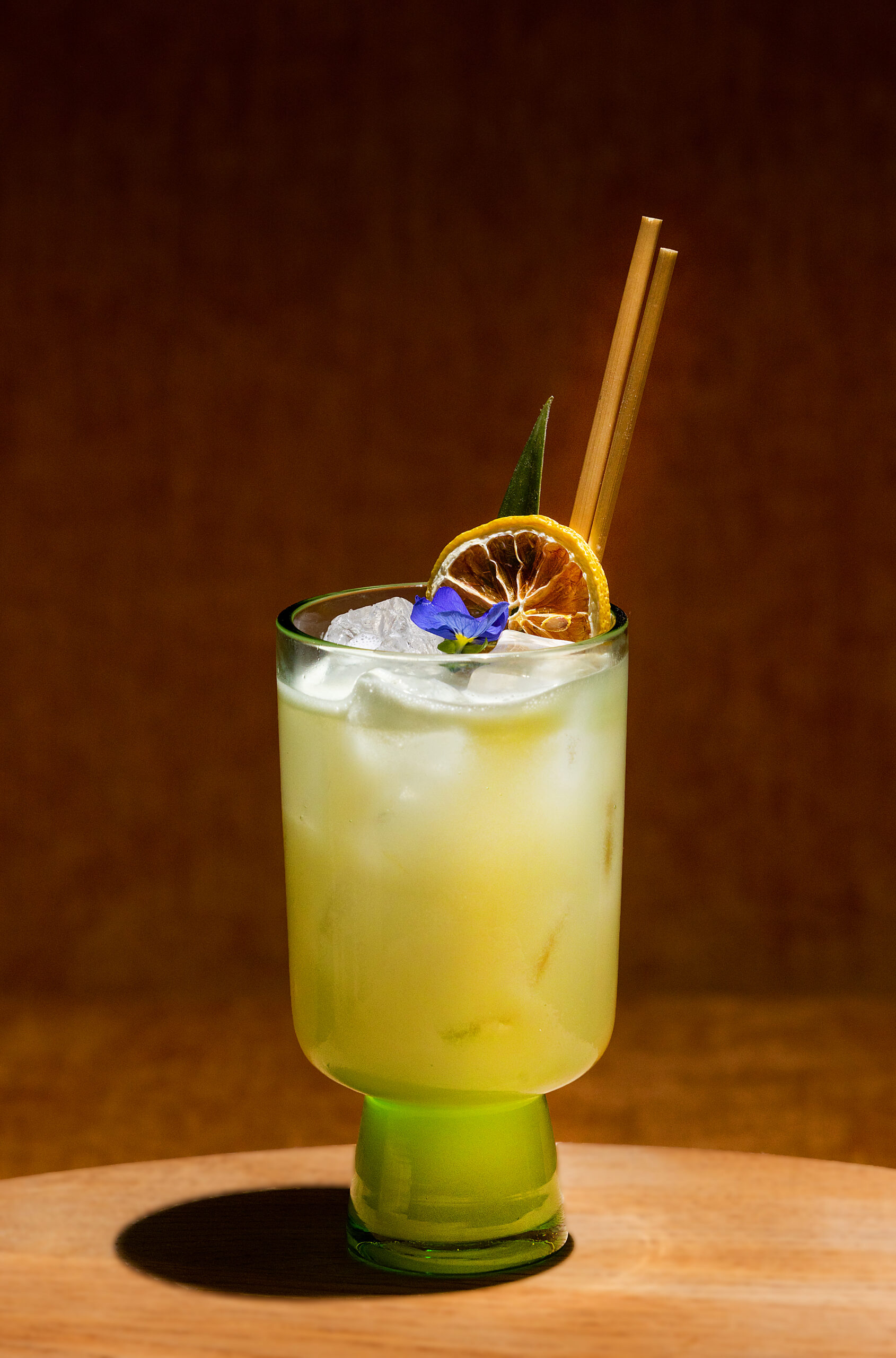
Hushpuppies with roasted apple and remoulade from Luma Bar and Eatery in Petaluma Thursday, February 16, 2023. (John Burgess/The Press Democrat)The Changeling cocktail with Aquavit and gin from Luma Bar and Eatery in Petaluma Thursday, February 16, 2023. (John Burgess/The Press Democrat)
The restaurant still offers vegan and vegetarian options, including patatas bravas (potatoes in a remoulade sauce), excellent hush puppies, black-pepper cavatelli with fennel cream and seasonal flat breads and gluten-free dishes.
Open for lunch 11:30 a.m. to 3 p.m. Tuesday through Sunday and dinner 4 p.m. to close Tuesday through Sunday. 50 E. Washington St., Petaluma, lumaeatery.com
I had my doubts about vegan barbecue. Despite glowing reviews of Vegan Mob’s plant-based soul food and barbecue by USA Today, Food & Wine Magazine and actor Danny Glover (who did an impromptu review of the walk-up restaurant in 2020), how good could it be? How could wheat gluten imitate fried chicken or brisket?
I won’t lie; it can’t exactly — at least not to the degree die-hard barbecue fans would consider authentic. But that’s not the point of the Vegan Mob barbecue truck, which recently arrived in Santa Rosa. Owner Toriano Gordon has made it his mission to celebrate the meat-based barbecue culture of his youth, but with absolutely no meat or dairy.
Just over a week after Gordon arrived in Santa Rosa, we rolled up on the lime-green truck parked at 13 W. Third St. for a meat-free feast of fully loaded Mob Fries, greens, candied yams, fried chicken drumsticks, Smackaroni and Soul Mob Rolls that were not just good, but lick-your-fingers and smack-your-lips decadent. The fries, loaded with vegan hot links, nacho sauce, guacamole, Mob Sauce and sour cream (all vegan), didn’t stand a chance against our flying forks.
The secret is in the seasonings, sides and sauces more than in the “meat” itself. Gordon understands that most plant-based proteins — seitan, konjac (a root vegetable that mimics the texture of shrimp) and other vegetables and starches that imitate meat — disappear into the sauces and crispy coatings.
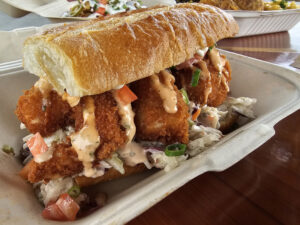
The Da’Renz shrimp po’boy ($12) on a soft French roll is filled with breaded and fried “shrimp” that are hard to differentiate from the real thing. Topped with vegan mayo, creamy Cajun sauce, green onions and diced tomatoes on a bed of coleslaw, it’s a gut-buster that could stand up to any seafood sandwich competitor. Smackaroni ($7) is a worthy side, baked with gooey vegan cheese. Even the Southern-style collard greens ($7) are loaded with flavor despite pork not being a key ingredient (we did miss the bacon).
Vegan Mob is part of the newly minted Culture Experience Center, an indoor-outdoor entertainment hub with food, Mossed Juicery and Mocktail Bar, a boutique, kids’ space and an event venue that brings a much-needed community vibe to the area. Steven Anderson’s multicultural murals are another highlight.
The Vegan Mob food truck is open at 13 W. Third St. 11 a.m. to 8 p.m. Wednesday through Sunday. veganmob.biz
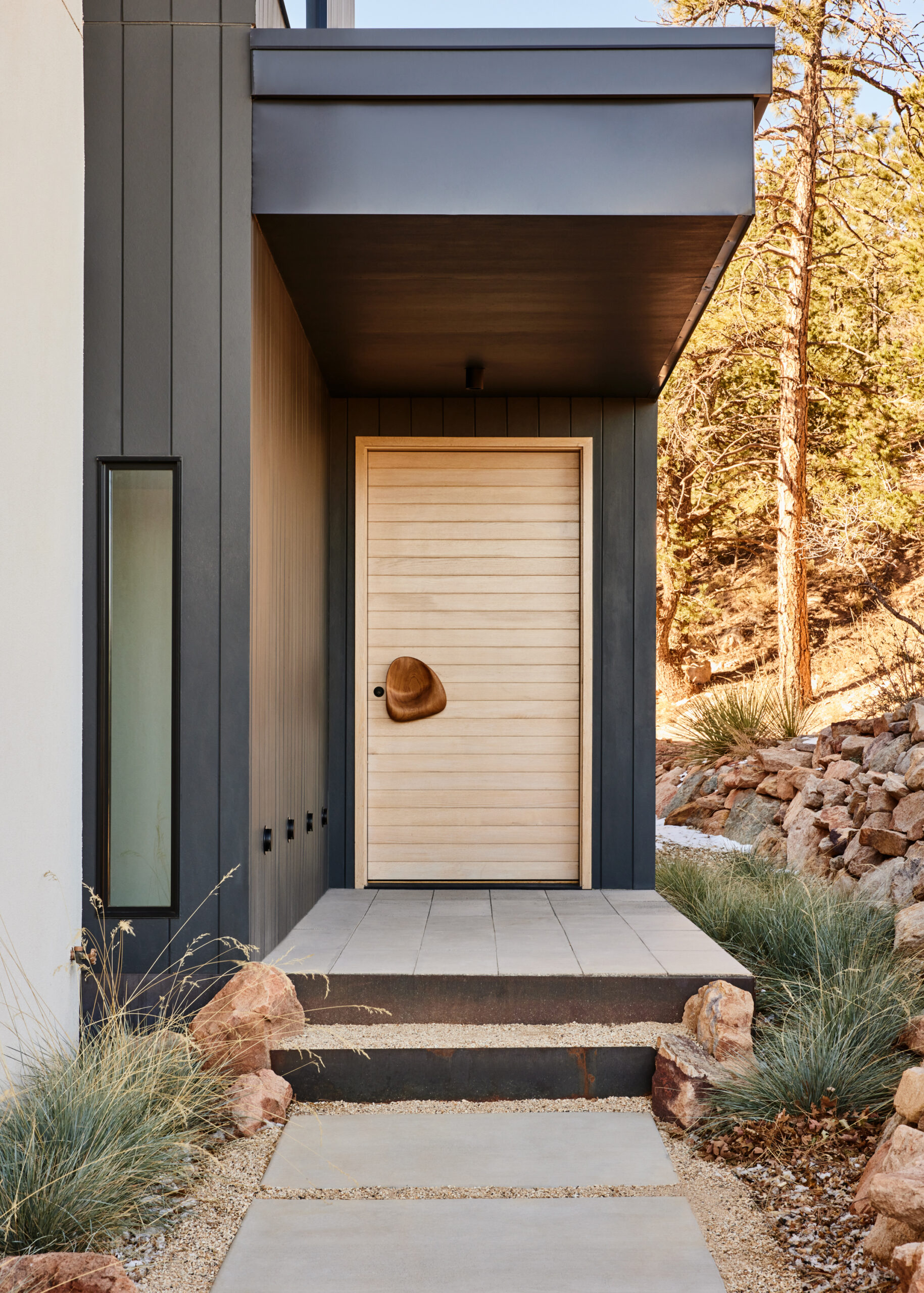
Sonoma-based architect, Brit Epperson—founder of design firm Studio Plow—created this home at the foot of the Rocky Mountains for a very special client: her parents. (Nicole Franzen)
Sometimes, what’s beautiful about Sonoma can be found outside of Sonoma. Consider, for example, all the local bottles that grace dining tables and wine cellars around the world.
An elegant and modern Colorado home, designed by Sonoma-based architect Brit Epperson, is another example of a locally designed gem found outside of this region.
Epperson, along with the team at her design firm Studio Plow, created the dwelling at the foot of the Rocky Mountains for a very special client: her parents. She says that her design firm’s ethos is to”tell our client’s story, not our own.” To design her parents’ home, she spent several holidays perusing architectural plans together with her family.
Epperson also attempts to the tell the story of the place through each design project. The “place” in this case was the base of a 14,000-foot mountain range. The 3000-square foot home sits on a forested ridge and has views of snow-capped peaks, ancient red rock formations and Colorado Springs’ skyline.
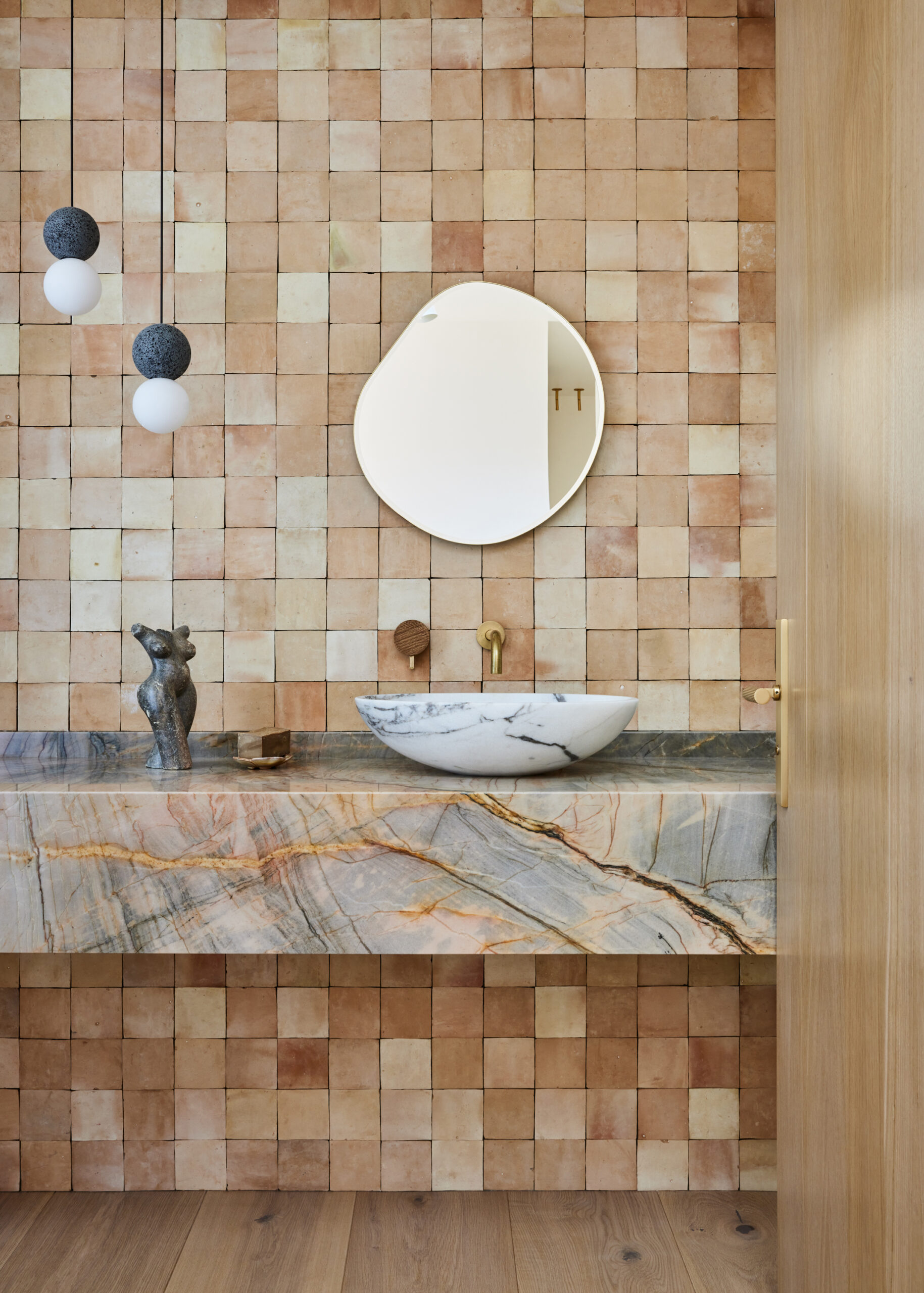
The home has exceptional design details, like this organically shaped wood doorknob. (Nicole Franzen)A bathroom stunningly rich in shapes and textures. (Nicole Franzen)
“The rolling hills and dramatic sunsets of Sonoma Wine Country play differently than the pines and granite, quartz, and mica of Colorado,” Epperson says, adding, “We actually had the client gather rock from the site and mail them to us in San Francisco.”
The interior color palette takes inspiration from the hues of the natural setting. Epperson lists the “soft greens of the native junipers and sagebrush; the fall colors of the aspen trees; and the soft pinks, browns and ivory of the native limestone and sandstone.”
The result is an impressive property that is a study in contrasts. The warm-white exterior, clad in slate-colored vertical siding, is both soft and angular. The interior offers additional contrast; it is at once serene and plush. It is nature-focused and authentic, yet in spots it is saturated in colors and patterns.
Light-filtering linen curtains create a diffused glow from the floor-to-ceiling windows, which allow the views to be the star of the home, while the rich design also catches the eye, including low-hanging lamps, skillfully placed plants, organically shaped design elements and heavily patterned wallpaper.
Click through the above gallery for a peek inside the home.
Interiors and architecture by Studio Plow, studioplow.com
A five-bedroom, six-and-a-half-bathroom home perched in the hills between Glen Elen and Santa Rosa is available for $15,000,000. (SeaTimber Media / Sotheby’s International Realty)
A five-bedroom, six-and-a-half-bathroom home perched in the hills between Glen Ellen and Santa Rosa has hit the market for $15,000,000.
The home is expansive in size—at almost 7,300 square feet on 13 acres—but also in its design vision, with modern amenities and thoughtful design details.
Tesla batteries and a solar field provide an off-the-grid living option. Thermally efficient windows with UV-filtering keep the sun out, but also retain the warmth inside during cold months. 1-inch thick walls provide added insulation and an ionized filtration system creates cleaner indoor air.
The home, which was built in 2000, was designed to showcase sculptures and numerous large 19th century French lithograph prints and watercolors collected by the homeowners.
Clean architectural lines and a neutral palette help highlight the art. Ample wall space is broken up only by large windows and sliders which frame views of the Mayacamas Mountains, Sonoma Mountain and Mount Diablo.
Lush gardens and trees surround the home. Two full-time employees have cultivated citrus, apples, figs, strawberries, plums, tomatoes, nectarines and other fruit and vegetables, much of which has been turned into jams, jellies, pesto, ice cream and dehydrated foods.
The gardens are protected by a surrounding stone wall, there is no flammable mulch near the home and surrounding trees have their own sprinkler systems.
The property includes a pool and two guest houses. Click through the above gallery for a peek inside.
For more information about this home at 2900 Wild Turkey Run in Santa Rosa, please contact listing agent Holly Bennett of Sotheby’s International Realty – Wine Country Brokerage, 793 Broadway, Sonoma, 707-484-4747, 707-935-2500, sothebysrealty.com
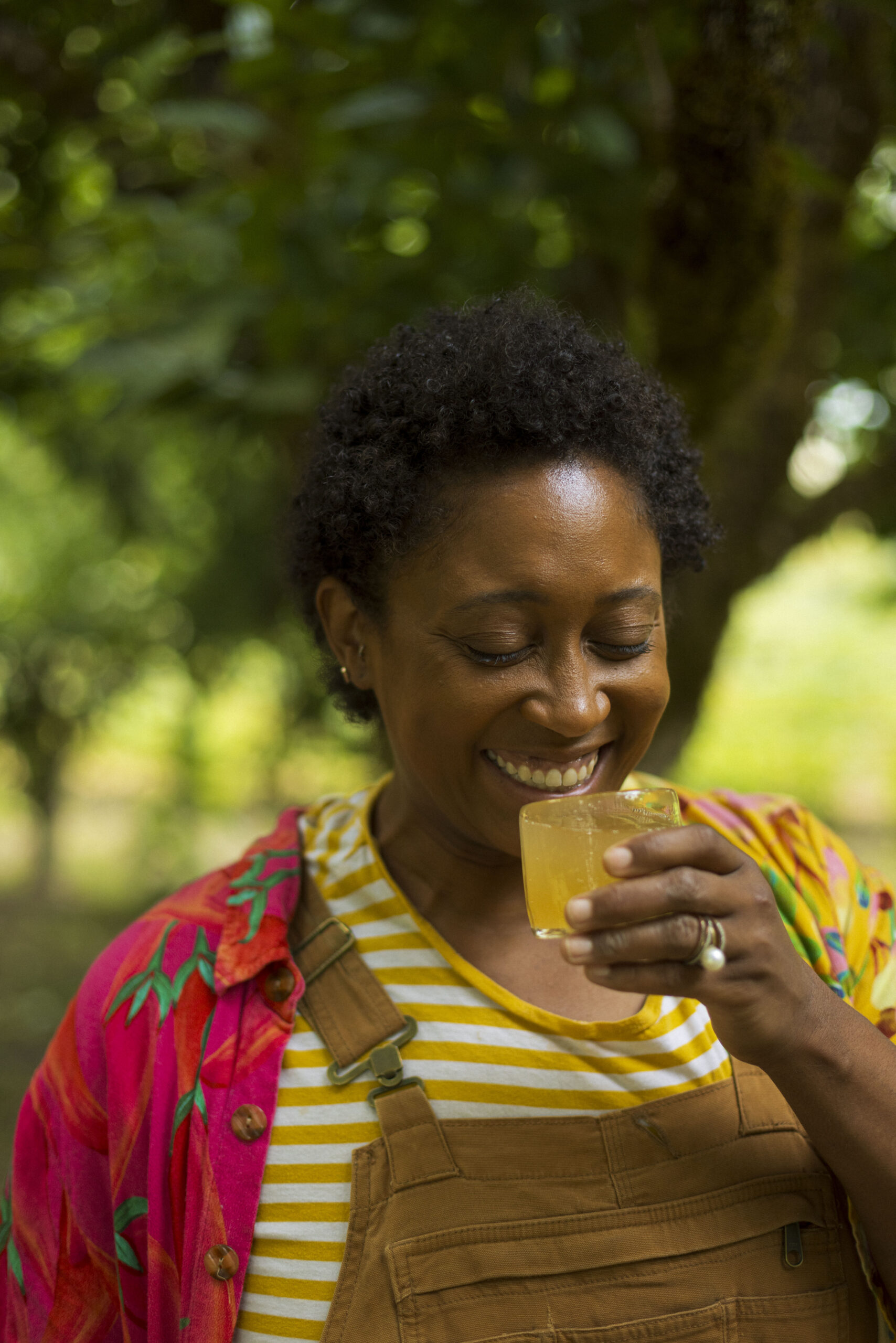
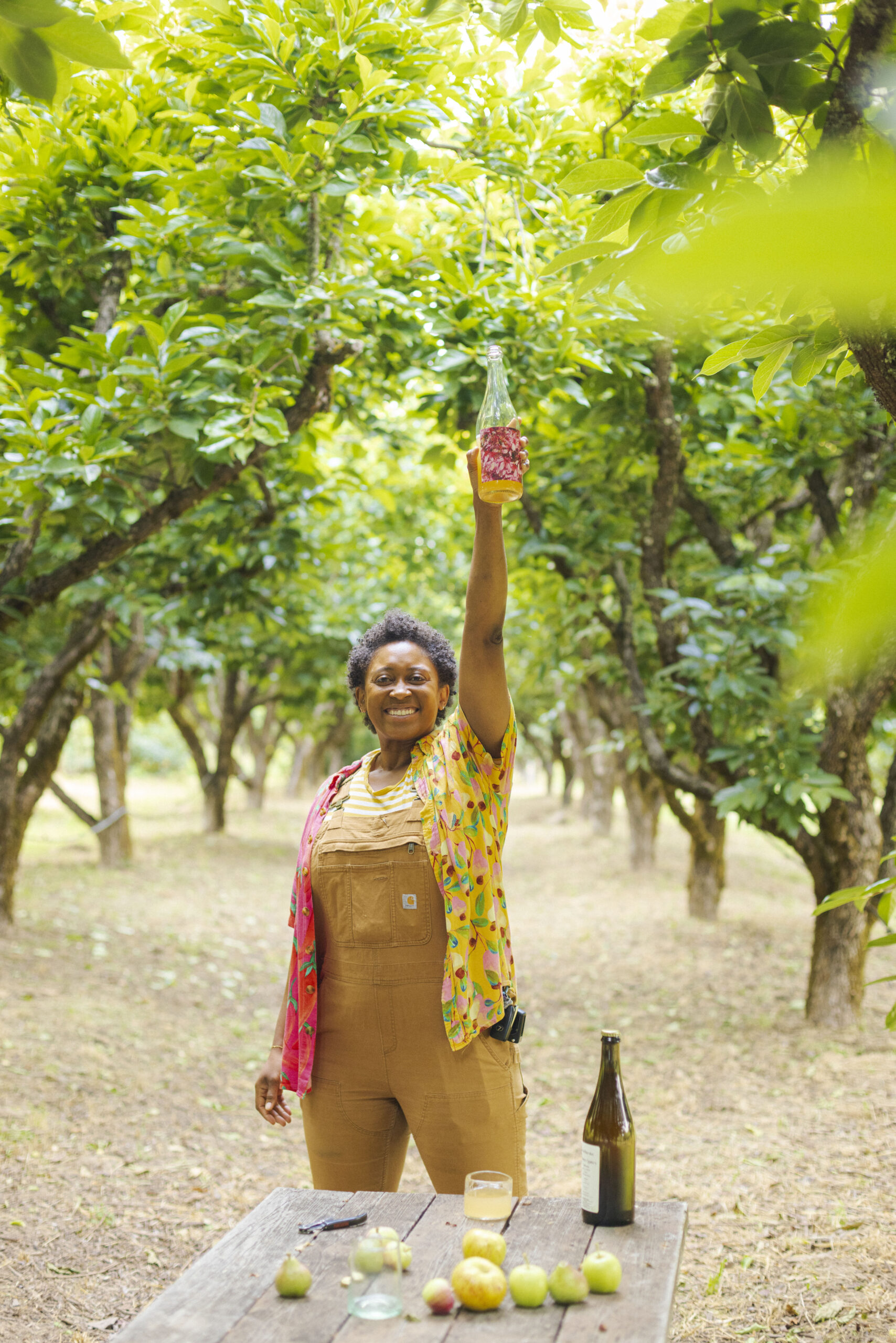
Marreya Bailey of Mad Marvlus uses apples, grapes, and other botanicals to make fermented alcoholic beverages that are neither strictly wine nor cider, but the best of both. (Conor Hagen)
Winemaker Marreya Bailey has an affectionate name for the otherworldly libations she concocts with apples, wild hybrid grapes, pears, quince and honey, often infused with botanicals such as jasmine and lemon verbena.
“I call them my creatures,” she says with a cheeky smile. “They all have their own personalities and they’re ever-evolving and transforming. They literally are my children.”
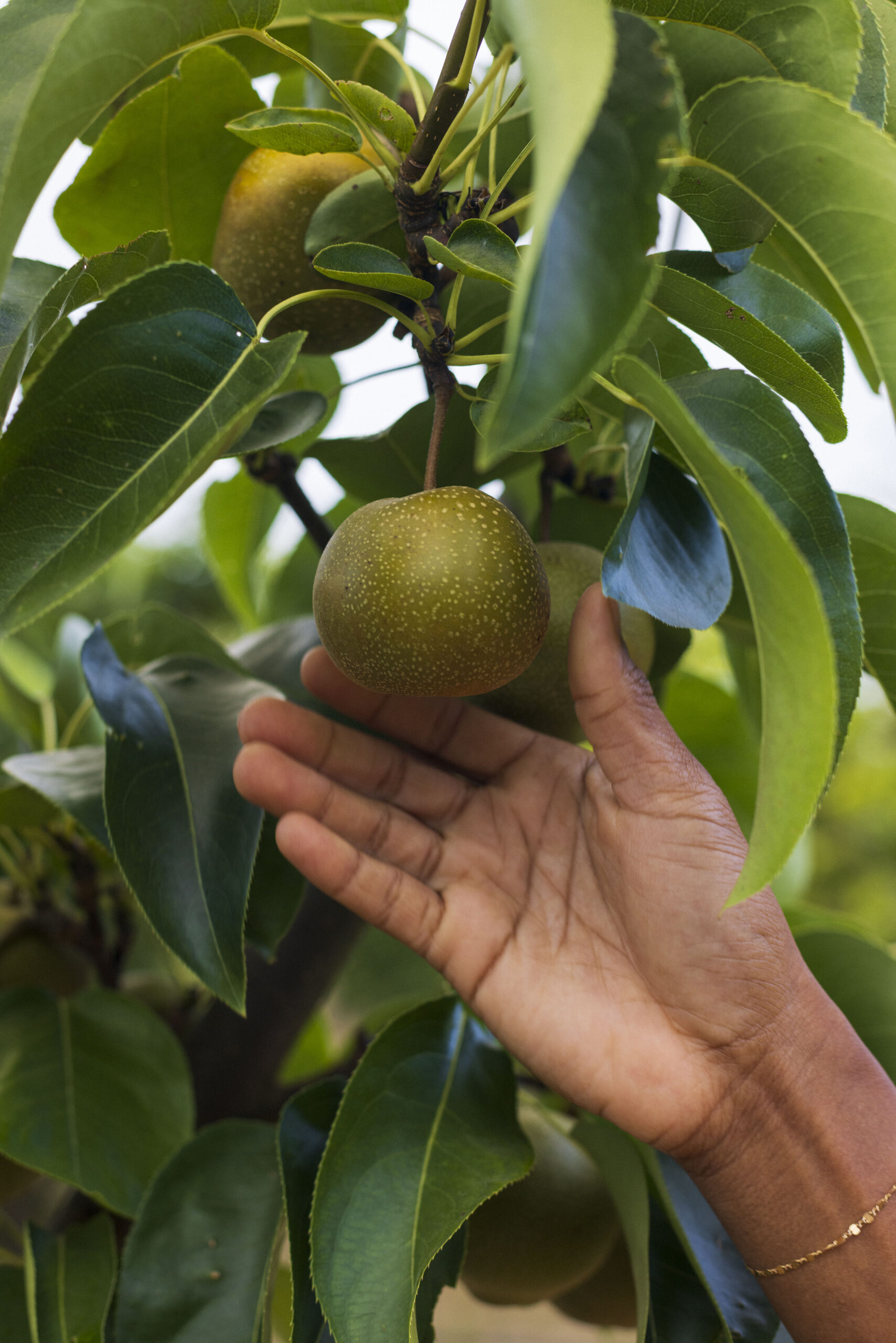
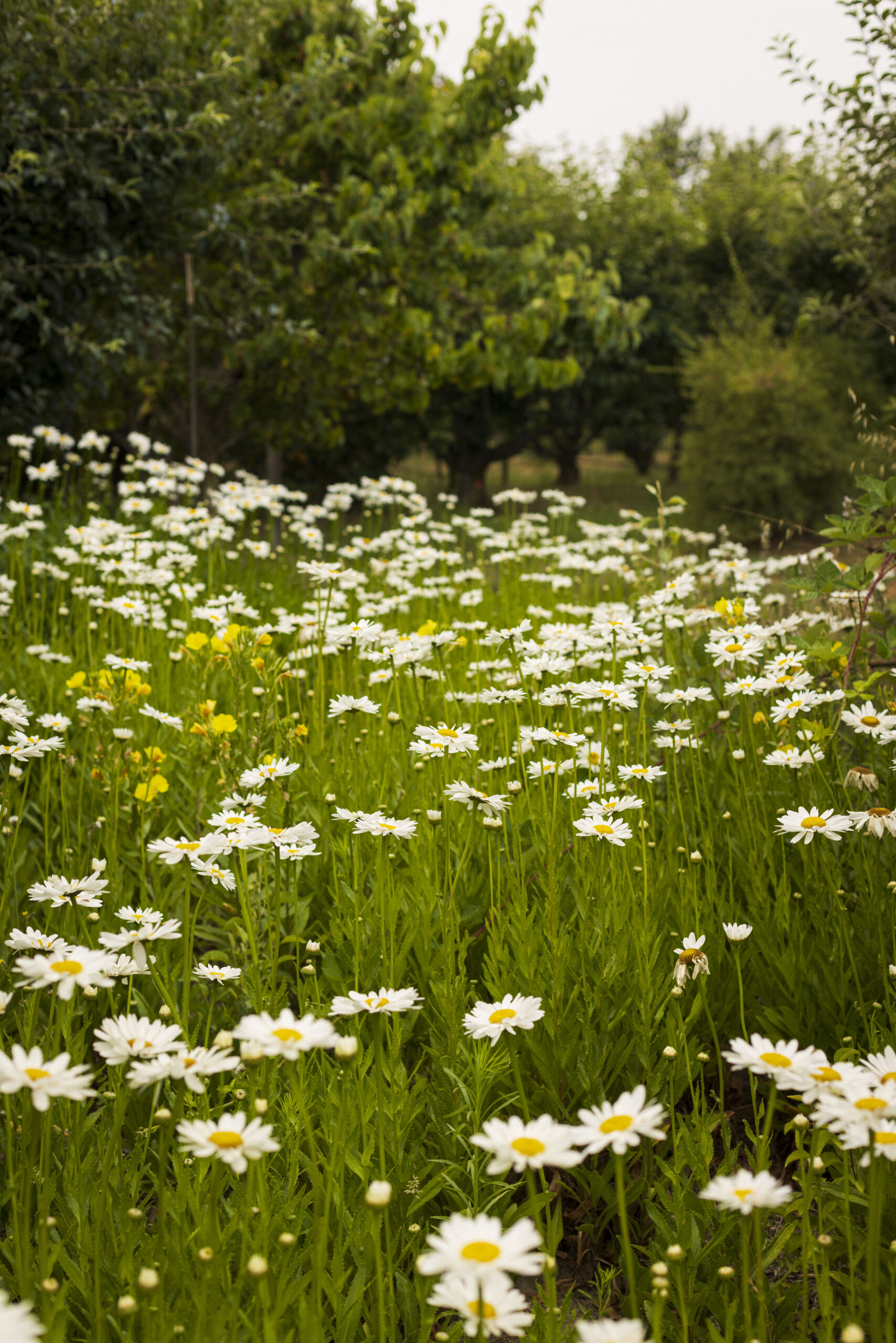
Walking through lush apple and pear orchards at EARTHseed Farm in Sebastopol, Bailey is sizing up fruit for the upcoming harvest. The wooden sign at the entrance—“Welcome Black to the Land”—sums up everything you need to know about where she stands.
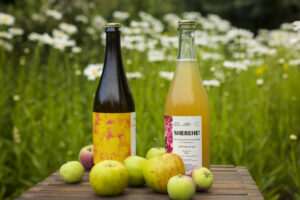
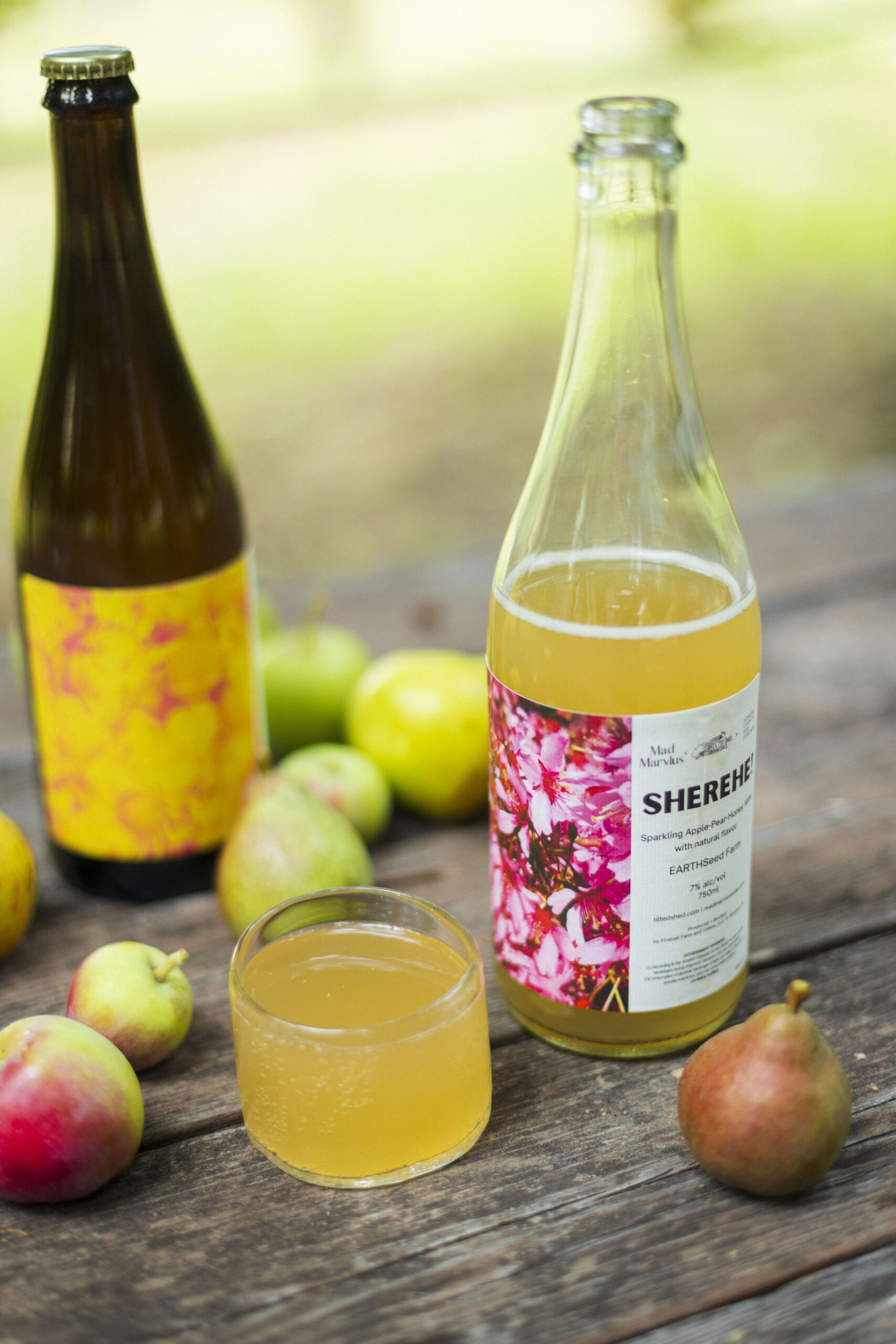
The first Afro-Indigenous farm in Sonoma County is where Bailey harvests Asian pears and apples, tapping into her Ethiopian roots to make a drink inspired by tej , the popular Ethiopian honey wine. The result is Sherehe! (Swahili for “celebration”), a sparkling wine co-fermented with Asian pears, apples, and raw wildflower honey, and infused with foraged pink jasmine flowers.
On a hot day, Sherehe might be the perfect picnic wine, or cider, or something entirely all its own, unlike any elixir most people have ever tasted.
Marreya Bailey of Mad Marvlus uses apples, grapes, and other botanicals to make fermented alcoholic beverages that are neither strictly wine nor cider, but the best of both. (Conor Hagen)
Bailey is part of a renegade band of local co-fermenters pushing the boundaries of what it means to make wine and cider today. Luther Burbank would be proud of this new batch of rule breakers, who refuse to see Sonoma County as a sprawling monoculture but instead a place where the bounty of the county thrives and everything is welcome in the fermentation bin.
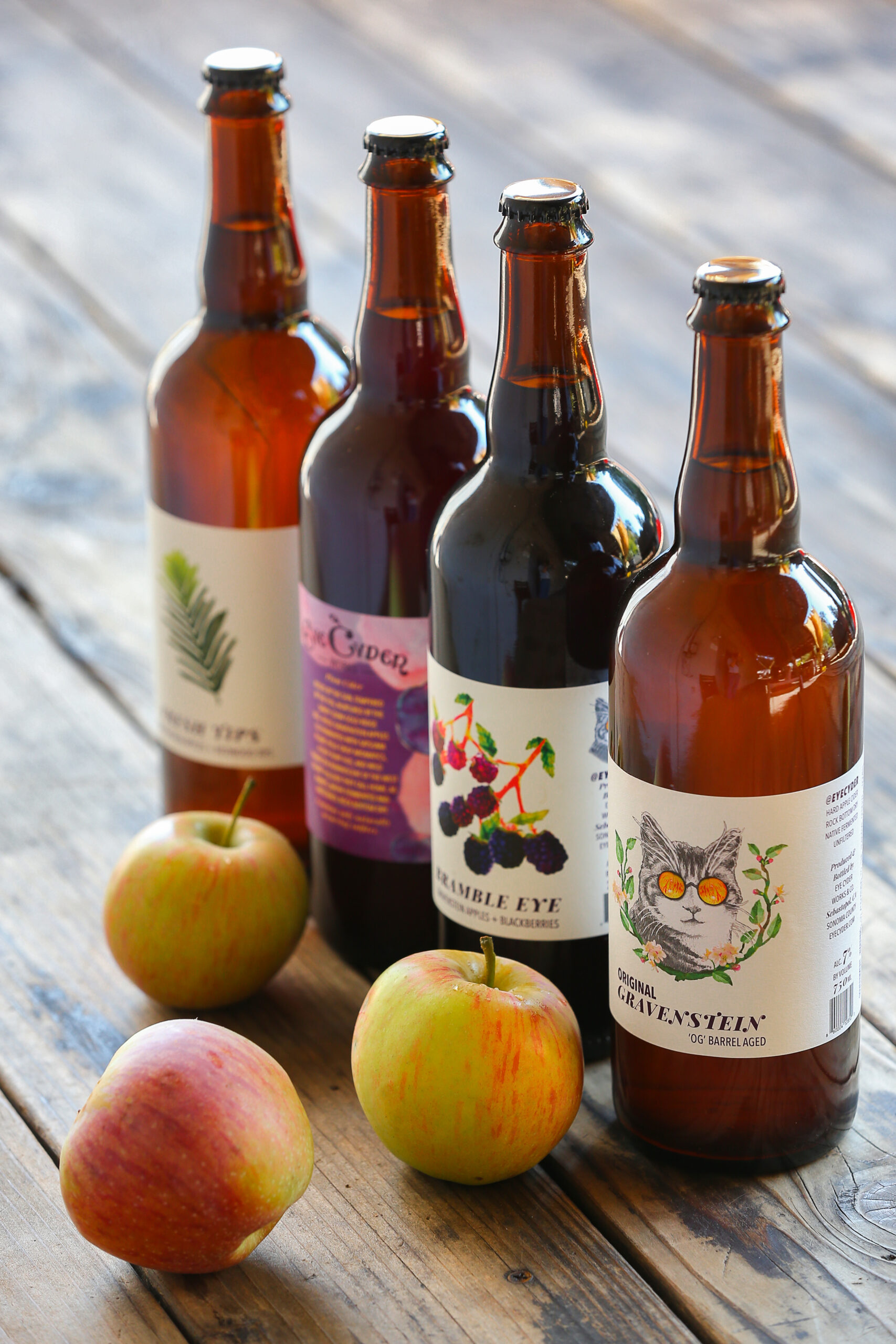
At Eye Cyder, Eric Sussman prizes fruits with a similar ripening window, whether it’s wild blackberries with Gravenstein apples or quince with pineapple guava. “The cool thing about these seasonal co-ferments is they’re actually happening at the same time and we’re harvesting them together,” he says. Other times, he’ll mix seasons, like fall and spring, spiking apple juice with green redwood tips.
Likewise, Matt Niess at North American Press loves co-fermenting wild California grapes with Gravenstein apples for his Wildcard cider. Aaron Brown and Colin Blackshear at Bardos Cider coaxed their Saint Cabora into being by pouring aged cider over leftover grape pomace. At Tilted Shed, husband-and-wife team Scott Heath and Ellen Cavalli blend apples with elderberries and blackberries. And Chenoa Ashton-Lewis and Will Basanta at Ashanta are big fans of co-fermenting elderberries with French Colombard grapes or taking abandoned Oakland feijoa (pineapple guava) for a trip to the country and marrying them with Occidental apples.
With harvest beckoning, Bailey strolls the 14-acre, solar-powered EARTHseed Farm with manager Brent Walker, who points out that many of the 4,000 fruit trees are unlabeled varieties, often decoded by taste.
The last time she harvested here, Bailey walked from tree to tree, biting into pear after pear, looking for the right balance of tannins, aromatics, and flavors. With 30 varieties of Asian pears to choose from, she’s thinking about making a sparkling pear cider (aka perry) this year.
Sometimes she goes by feeling as much as taste: “It’s a matter of getting in touch with the ancestors, and imagining how things were before colonization,” she says.
Walker lights up when he hears this. “Being a farmer, it makes me so happy to hear what people are doing with the fruit and the connection they have to it,” he says.
Marreya Bailey’s Sherehe! co-ferment was insipired by tej, the fermented honey wine from Ethiopia. It includes Asian pears, apples, honey, and jasmine from EARTHSeed Farm in Sebastopol. (Conor Hagen)
Everything Bailey makes is organic, naturally fermented, unfined, and unfiltered. She only adds a minimal amount of sulfur if absolutely needed. Equal parts science and art, co-fermenting appeals to her love of puzzles and chemistry experiments.
“I love challenges—and that’s the greatest part of working with underrepresented fruit like this,” she says.
It’s a far cry from her past life, toiling at a desk for over a decade in corporate human resources departments. Realizing her soul wasn’t satisfied, she moonlighted on weekends, working as a wine seller and cheesemonger. Born in Wisconsin, she grew up in Minnesota and lived in Georgia, North Dakota, and Ohio before moving out to California in 2020 to work as a harvest intern with natural wine guru Martha Stoumen.
Armed with a bachelor’s degree in forensic anthropology and a master’s degree in psychology, she was now a cellar rat, working long hours to breathe life into other people’s wines. But she took notes and learned every step of the process.
Hooked after the Sonoma County harvest with Stoumen, she lit out for Vermont to work a later harvest at ZAFA Wines. In 2021, she enrolled in the Two Eighty Project’s Apprenticeship Program, a six-month endeavor that targets underrepresented communities often excluded from the wine industry, partnering with winemaker Steve Matthiasson and UC Davis at Alemany Farm in San Francisco.
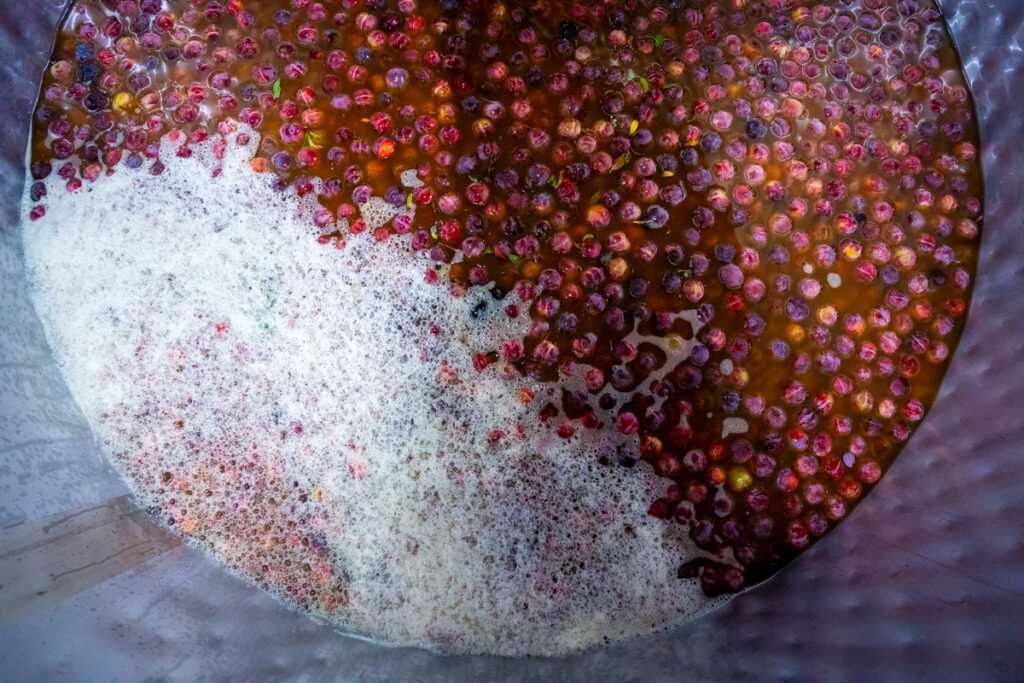
Wine- and cider-makers exploring co-fermented beverages often like to combine fruits and botanicals that ripen in the same season.
After paying her dues as an intern, Bailey drew up a business plan and pitch deck. Starting with $25,000 from investors, she founded Mad Marvlus, combining her “Mad” scientist tendencies with the nickname “Marvlus” that an encouraging friend gave her years ago.
“I tell people when they first meet me, ‘I’m a scientific mind with an artistic heart.’ This is art for me, and I just love sharing an extension of myself. Mad Marvlus is an extension of me. It’s literally my alter-ego.”
It’s a story she’s proud to tell. Hoping to bring diversity in taste and race to the Bay Area winemaking scene, she’s done her research. At EARTHseed, when she says, “I feel like I can talk to my ancestors here,” she’s conscious of standing on the shoulders of early BIPOC cider makers, like Jupiter Evans, an enslaved person owned by Thomas Jefferson, who pioneered cider making in America in the 1700s. She also knows less than 1 percent of the more than 11,000 wineries in the U.S. are Black-owned or have a Black winemaker.
“I grew up in the Midwest, so I’m used to being the only Black person in the classroom,” she says. “I’m used to it, and I can handle that, but it shouldn’t be like that. We need to diversify this area.”
When it comes to raising debt-free capital, “We know for women in this industry it’s already challenging,” she says. “It’s even more challenging for women who look like me.”
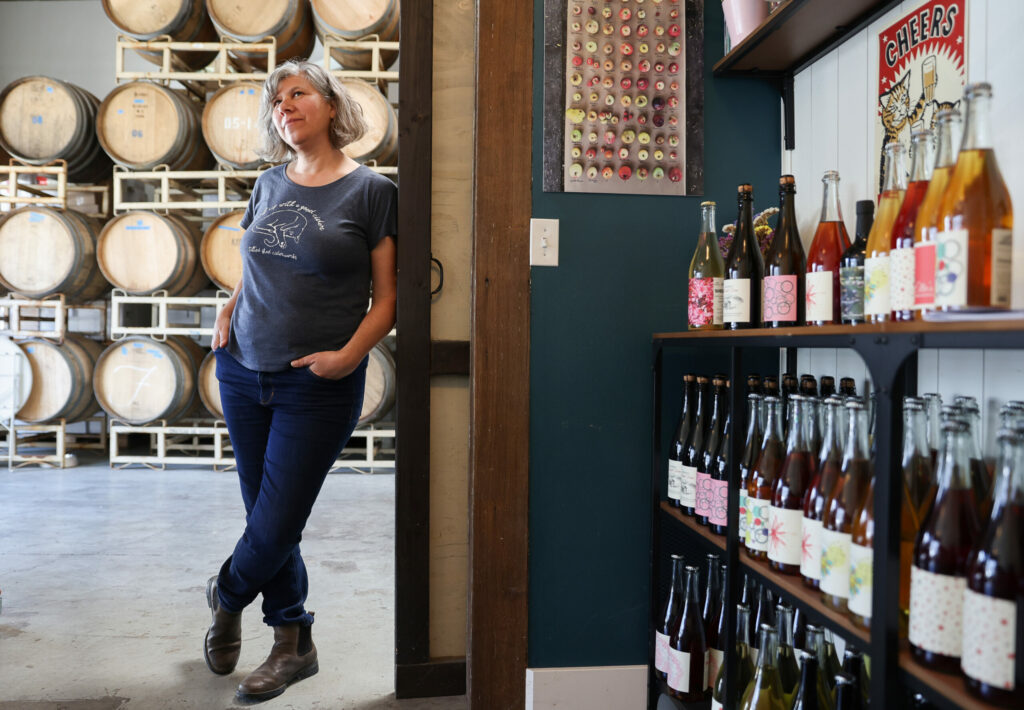
Eric Sussman is the wine grower and proprietor of Radio-Coteau, which produces cider under the Eye Cyder label. His coferments include ingredients like apples, grapes, plums, citrus peel, and fir tips. (Christopher Chung)
After walking the land, Bailey finds a seat in the shade and uncorks a few of her delectable creatures. There’s Pomme Quincy, a co-ferment with two varieties of quince from Filoli Farms in San Mateo and an assortment of apples—Arkansas Black, Black Twig, Sierra Beauty, Rome, Wickson Crab—from Mendocino. Because she likes to mix things up, she infused it with chamomile and lemon verbena, literally “tea-bagging it” in the barrel. Named for her grandmother, Janet D Lyte is a “new age rosé” with Newtown Pippin and Rhode Island Greening apple juice rehydrating once-pressed grapes. And there’s the apple-pear-honey sparkling Sherehe!, which contains only 7 percent alcohol.
As Bailey pours and tells stories, her love of wine is infectious. The phrase “bone-ass dry” is her favorite way to describe her co-fermentation style, something she will repeat a handful of times—almost as many times as she says “porch pounder” or “glou glou” to describe relatively low-alcoholic beverages that go down easy like lemonade.
Part of the appeal is working with more climate-friendly fruit that was here long before Europeans introduced Chardonnay and Pinot Noir. “That’s not where the future is going,” she says. “We’re going through a revival right now. We need to come back to basics and look at, how did the original people, who lived here before it was colonized, make wine or their own version of fermented beverages? They were working off what the land was providing them.”
Tipped off by a friend who knew the landowner’s daughter, Bailey stumbled on a feral, dry-farmed field blend outside Sacramento, mixed with wild, red hybrid grapes crossed with native Vitis californica grapes and abandoned Alicante Bouschet grapes. Surrounded by blackberry brambles, many of the vines were climbing trees like kudzu. Picking the grapes for free, she used them in her Mad Maxine red blend and then rehydrated the skins in her Janet D Lyte.
Last year, she co-fermented pineapple guava with rehydrated Ribolla Gialla grapeskins, adding in niitaka Asian pears, quince, and apples. It was a collaboration with Colombian winemaker Sabrina Tamayo, a fellow Two Eighty Project graduate who owns Ruby Blanca Wines.
Always looking for more botanicals and herbs to infuse, Bailey recently found a source for hibiscus flowers. She’s even toying with an infusion of butterfly pea flowers, which impart no flavor, but turn any liquid a magical blue. She’s also planning to release a non-alcoholic Muscat wine soon.
“Crazy, to me, would be creating something non-alcoholic and you’re blending more than co-fermenting,” she says. “You’re blending different fruits like watermelon, pineapple guava, and rare apples like Kingston Blacks.”
As she’s leaving EARTHSeed, Bailey runs across a mulberry tree that looks like it’s been grafted with other berries. She plucks a mulberry and tastes it. Not quite ripe, it hints at how sweet it will become. You can almost see the wheels turning in her head as she pulls out her phone and takes a photo for future reference.
“Berries are probably next on my list of things to work with,” she says.
In other words, it won’t be long until they’re swimming around in a tank with other fruits, a welcome addition to her evergrowing family of “creatures.”
More from the cutting edge of co-fermentation
Along with eclectic palates and little regard for rules, the most common thread Sonoma County co-fermenters share is a low- to no-intervention philosophy, which often means wild fermentation, no filtering or fining, and working with organic and biodynamic fruit that is often dry-farmed and occasionally foraged.
“The Burgundians have this saying, ‘The hardest thing to do is nothing at all,’” says Eye Cyder owner Eric Sussman. “That happens when you understand how these fermentations happen and how the fruit reacts. With the apples, it’s much less analytical and more sensorial—smelling and tasting to figure out timing.”
Here’s a look at a few Sonoma County co-fermenters who will be sensing their way through this year’s harvest.
Eye Cyder
Owner Eric Sussman, who also owns Radio-Coteau winery, freely admits the winery is the cash cow and the cidery is the passion project. But follow the passion and you’ll find a mouthwatering array of farm-to-lab creations.
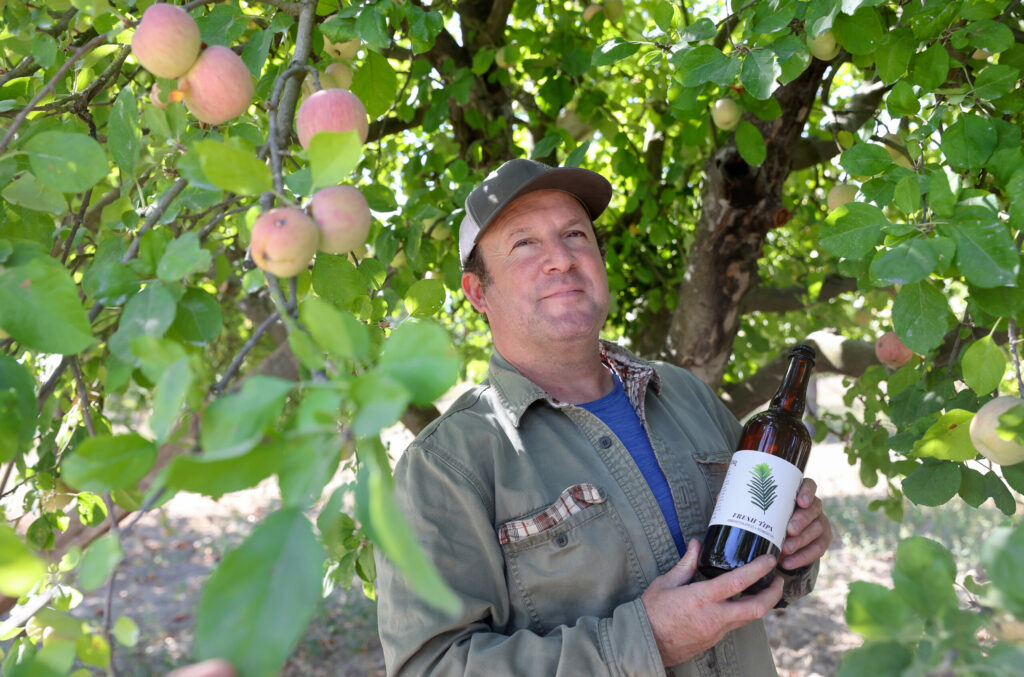
The Oro Blanco blends citrus peels with hops and apples. The Skins and Stones coferment is made with Satsuma plums and Gravenstein apples. But quite possibly the most simple and unusual is Fresh Tips, a cider infused with green redwood tips and then barrel aged.
Consumed by a passion for indigenous grapes, Matt Niess makes his Wildcard co-ferment with wild native grapes picked from around California and organic Sonoma County Gravensteins.
And remember the old adage, “It takes a lot of beer to make good wine”? Well, maybe it applies to co-ferments as well. In an Instagram post, Niess points out he had to borrow extra bench cappers from Moonlight Brewing while bottling his ’22 Wildcard vintage.
Tilted Shed Ciderworks co-owner Ellen Cavalli, below, and her husband, Scott Heath, make a Gravenstein apple cider co-fermented with foraged, wild elderberries and blackberries—a delicious fall elixir. (Christopher Chung)Bottles of Eye Cyder in Sebastopol. (Christopher Chung)
Tilted Shed Ciderworks
Owners Scott Heath and Ellen Cavalli like to call their coferments “foodshed ferments.” It goes back to the classic idea that “things that grow together go together.”
Their Loves Labor cider may be the best example, combining wild blackberries handpicked at their Sebastopol farm, with native elderberries foraged near the Russian River and organic dry-farmed Gravenstein apples from Vulture Hill Orchard.
Filmmakers Chenoa Ashton-Lewis and Will Basanta got a chance to experiment with winemaking in 2019 when they salvaged what was left of Ashton-Lewis’s grandparents’ Glen Ellen vineyard, which had been partially burned in the Nuns fire.
Since then, they’ve sourced fruit all over the state, foraging elderberries in the San Gabriel Mountains, finding derelict feijoa in an Oakland park and picking abandoned vines near Dodger Stadium in L.A.
Whether it’s Gravensteins and Carignan (Sidra ’22) or elderberries and French Colombard (Brutal ’21), they’re throwing paint against the wall and seeing what sticks. So far, it’s working.
Two filmmakers (notice a trend here?) on a quest to rescue abandoned apple orchards and celebrate them with cider, Aaron Brown and Colin Blackshear are the team behind this experimental operation.
Paying homage to a healer known as “The Mexican Joan of Arc,” their Saint Cabora “apple and grape wine” breathes new life into recycled grape pomace from Bucklin Old Hill Ranch and Bedrock wineries.
Starting small with less than 200 cases of Sherehe!, Pomme Quincy, Janet D Lyte, and the Mad Maxine red blend in 2021, Marreya Bailey is continuing to grow and experiment this harvest.
Look for new releases of a non-alcoholic Muscat and a coferment collaboration with Ribolla Gialla grapeskins rehydrated with the juice of niitaka Asian pears, quince, and apples. Bailey is also fundraising for a future winery/ cider co-op called the Bathing Collective.
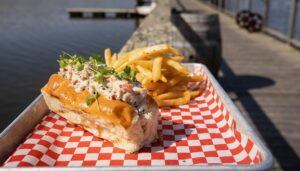
Lobster Roll with mayo, lemon, chives, tarragon and extra crispy fries from Nick’s Cove Restaurant on Tomales Bay Monday, September 18, 2023. (John Burgess/The Press Democrat)
The drive to Nick’s Cove restaurant, just a few short miles southwest of the tiny town of Tomales, is a windy and wonderful adventure through roadside groves of eucalyptus and over estuaries, with expansive coastal views in the background.
The nearly century-old roadhouse and cozy cottages that are Nick’s Cove have been renovated and revamped many times, most notably by restaurateur Pat Kuleto, who sold the complex back to one of its original investors in 2011 after a multimillion-dollar renovation project that lasted seven long years.
A series of chef shuffles, staffing challenges and bland menus that overpromised but underwhelmed have stifled its ability to become a destination seafood restaurant, despite some solid chefs at the helm. Former San Francisco Chronicle critic Michael Bauer delivered an especially harsh review in 2013, saying it was no longer worth a special trip. Even Yelpers seem to run hot and cold on the experience, with reviews ranging from ebullient to downright angry.
Suffice it to say, I haven’t been to the restaurant in at least a decade.
But news in late August that “Top Chef Masters” winner Chris Cosentino revamped the menu at Nick’s Cove stoked immediate interest from naysayers. The San Francisco chef, who envisioned groundbreaking restaurants like Cockscomb and Incanto, seemed to be going all in on seafood, including dishes that reflected his childhood in Rhode Island.
The resulting menu isn’t wildly different than previous iterations and includes Nick’s Cove standards like fish and chips, cioppino, raw and barbecued oysters, a Stemple Creek burger and a classic Louis salad. But updates include a classic lobster roll, as well as Rhode Island clam chowder (a more brothy version of its cousin, creamy New England chowder, is also available), Fries with Eyes (whole fried smelt), steak frites with Point Reyes blue cheese butter and smoked black cod dip with fried Saltines.
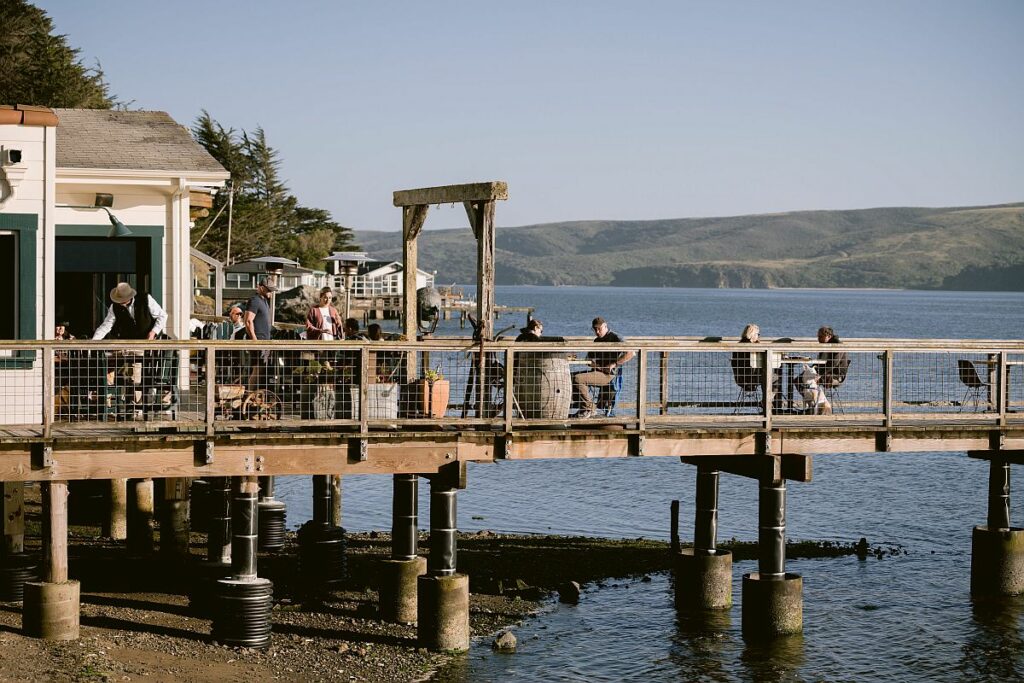
Dining on the pier at Nick’s Cove in Marshall. (Kristen Loken)
On a sunny Saturday afternoon, I dove into the experience with high hopes — maybe unreasonably high. While every dish we tried was perfectly fine, nothing was transcendent. I’ve had meals at Cosentino’s other restaurants, and nothing at Nick’s Cove reminded me of the passionate, seasonal cooking he’s known for.
But unrealistic expectations have long been the bane of many coastal restaurants. Beach-bound diners often have hard-and-fast expectations for seaside menus: chowder, fish and chips and crab sandwiches, regardless of seasonality. It’s understandable but a shame, because it binds chefs to public expectations rather than creativity and the chance to use the most of-the-moment ingredients. Anyone suffering through gluey chowder or flaccid fish and chips at coastal restaurants knows breathtaking views don’t always mean great food.
When you enter the roadhouse, you won’t immediately see that traditional table service has switched to a more casual walk-up style, requiring diners to order and pay before sitting down. Certainly, it’s a more cost-efficient service model that diners should expect to see more frequently as restaurants continue to be beleaguered by staffing woes. Remote coastal locations have always had trouble attracting high-quality staff due to distance and seasonal business cycles, which makes this model even more understandable at Nick’s Cove.
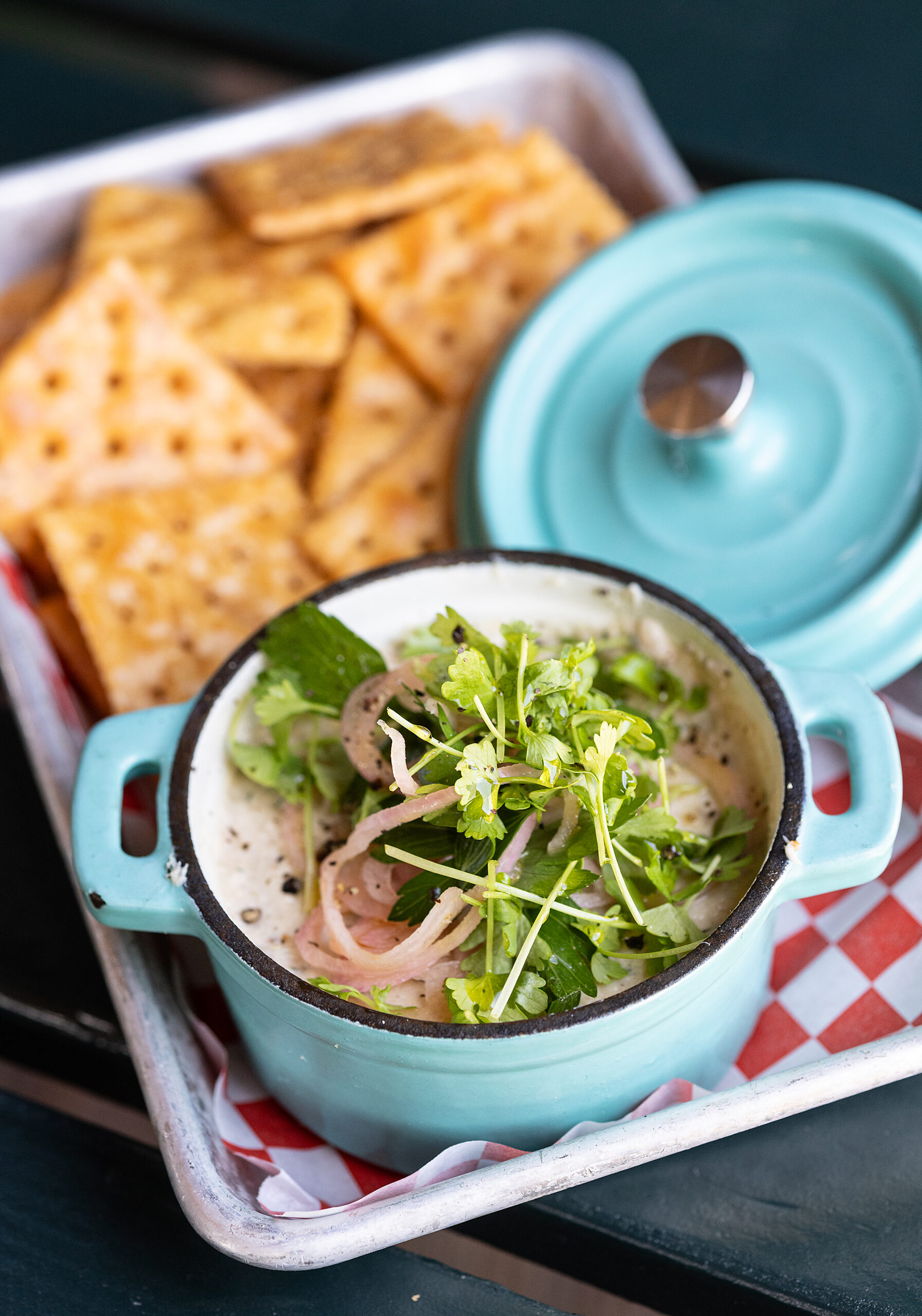
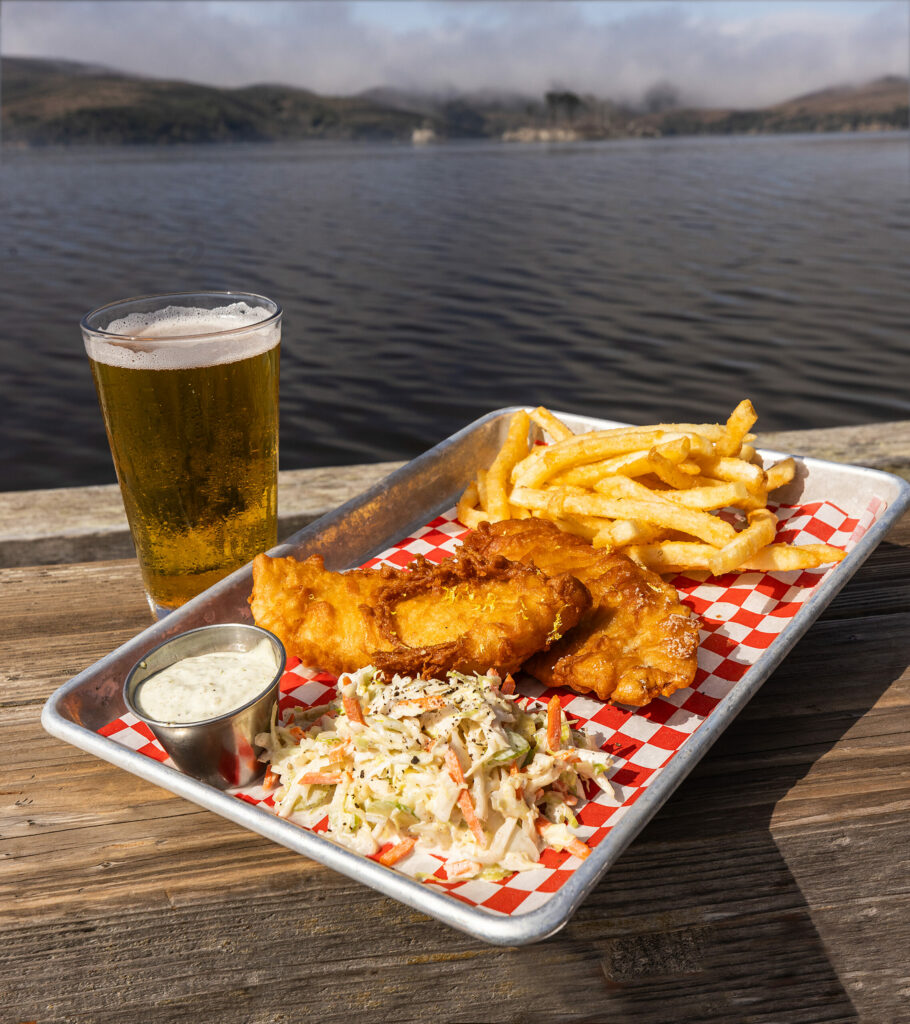
Smoked Black Cod Dip with celery, pickled shallots and fried saltines from Nick’s Cove Restaurant on Tomales Bay Monday, September 18, 2023. (Photo John Burgess/The Press Democrat)The crispiest Famous Fish & chips with cole slaw and fries from Nick’s Cove Restaurant on Tomales Bay Monday, September 18, 2023. (Photo John Burgess/The Press Democrat)
On the plus side, every dish is picture-perfect, and the kitchen excels at plating. Take the Nick’s Cove Louis salad ($19), which has been on the menu for years. The Little Gem lettuce was crisp and delicious, with snappy green beans, a spot-on six-minute egg and lovely boiled potatoes. Unfortunately, crab isn’t included in the price (an extra $10), and in September, Dungeness crab isn’t in season locally. Locals know the plump and sweet crustacean is best bought directly from a fishing boat in December or January (recent seasons have been short and challenging, which means there’s even less reason to have it on the menu). Despite a generous serving of crab added to the salad, it just wasn’t the experience I’d hoped for. Adding bay shrimp for $6 might have been a better bet.
The lobster roll ($32) comes stuffed into a split-top bun and is perfectly tasty but not mind-blowing. We couldn’t even find the sea urchin aioli ($4) we added to the roll because it was buried beneath the already-creamy lobster salad.
A bowl of cioppino ($30) with mussels, snow crab, calamari and rock cod seemed a bit paltry, with a slab of grilled bread and aioli dominating rather than complementing the seafood. Overall, it tasted fine, but the snow crab was mealy rather than juicy. Fish and chips ($24) was underwhelming in portion size, but crispy and far from the worst I’ve had.
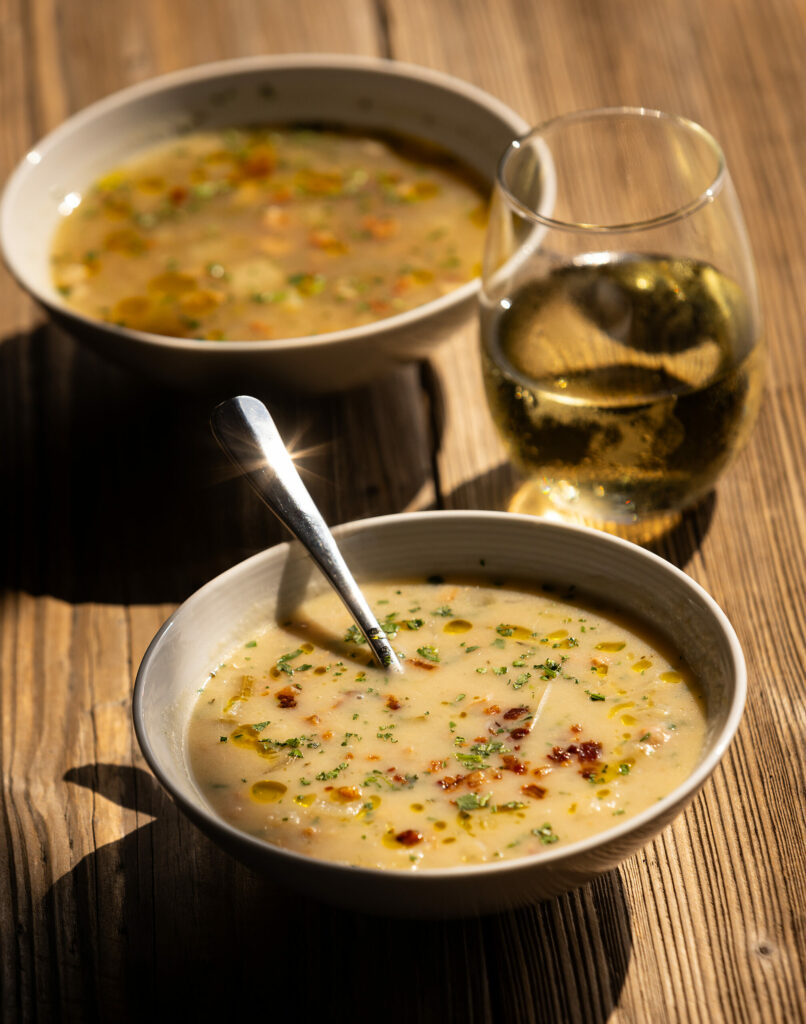
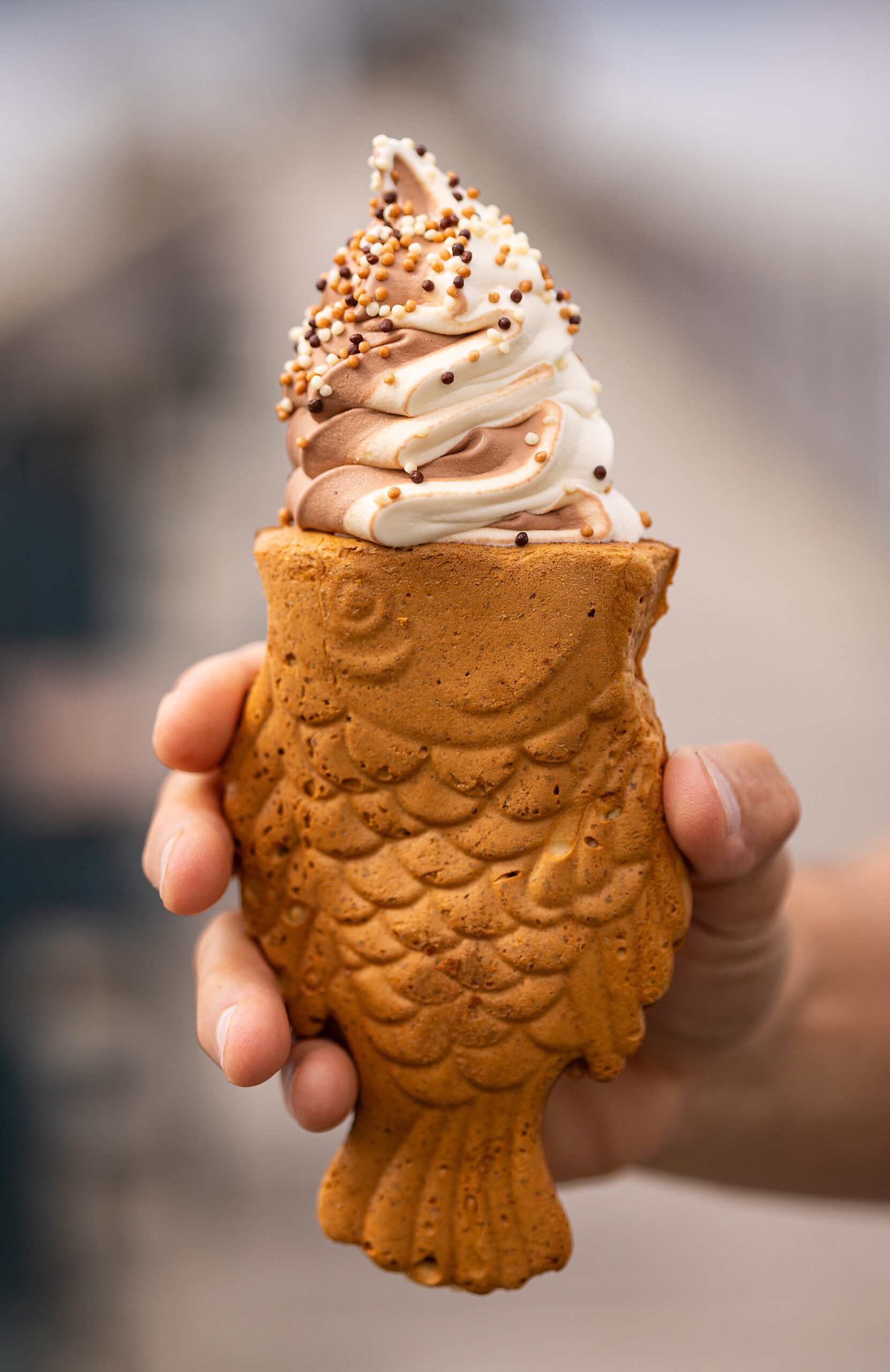
Rhode Island Clear, top, and New England Creamy Clam Chowders from Nick’s Cove Restaurant on Tomales Bay Monday, September 18, 2023. (Photo John Burgess/The Press Democrat)Soft Serve Straus Family Creamery in a Taiyaki Fish Cone from Nick’s Cove Restaurant on Tomales Bay Monday, September 18, 2023. (Photo John Burgess/The Press Democrat)
We did like the Fries with Eyes ($10), whole smelt battered and served with tartar sauce, but the coating could have been crispier. A Big Baked Oyster ($9) from nearby Hog Island Oyster Co. was subjugated to bits of spicy nduja sausage and a pile of green onions. Again, it was perfectly good, but the oyster seemed like more of an afterthought than the star of the plate.
At the end of the meal, feeling like the wind had gone out of our sails, my dining partner and I tried the Straus soft-serve ice cream in a taiyaki fish cone ($12), a waffle-style cone in the shape of a wide-mouthed fish, stuffed with creamy swirls of chocolate and vanilla. It’s hilarious and novel and topped with a toupee of “Neptune’s Beard” (threads of twisted sugar piled atop the fish’s head). It’s downright snort-worthy, and we couldn’t stifle peals of giggles.
Maybe that’s why I still can’t entirely quit Nick’s Cove — the drive, the view, the good company, a plate of fresh oysters and a fish-shaped ice-cream cone with a sugar wig isn’t a bad way to spend a Saturday afternoon at the coast.
23240 Highway 1, Marshall, 415-663-1033, nickscove.com. Open 11 a.m. to 7 p.m. daily.