Best Happy Hours in Downtown Petaluma

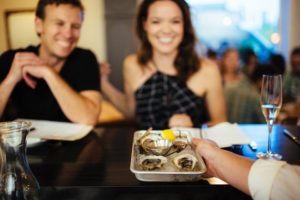
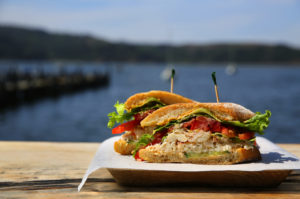
Happy hour is a great time to explore Petaluma’s vibrant dining scene, without committing to a full meal. There are dozens of worthy options around town, but we’ve managed to whittle down the list to six downtown stand-outs. Click through the above gallery for details.

Home With a View: A Young Family Builds Their Dream House in Sebastopol

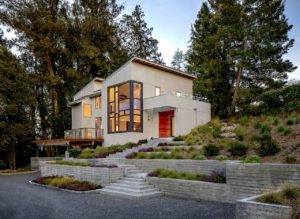
Turn off a quiet street in an older residential neighborhood in Sebastopol brings you upon a hillside home of towering freshness, as emblematic of the future as the young family that built it.

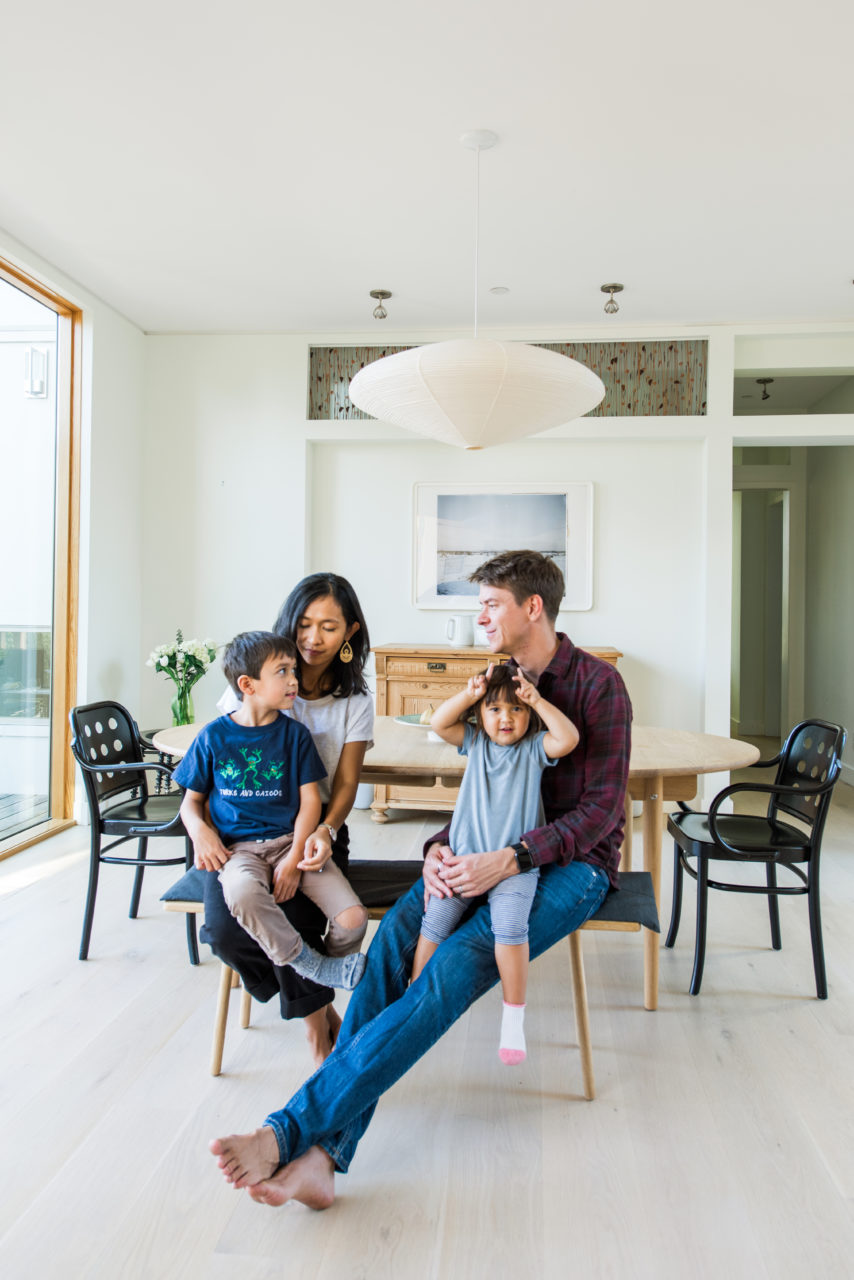
A 16-light window fronts both floors of the 2,250-square-foot contemporary home, highlighting an expansive view. Inside, the white walls and high ceilings shimmer with the reflection of the sky. “I like this house so much,” says Juna, 6, holding his favorite Lego helicopter and beaming with pride as his little sister, Runi, 2, jumps up and down in joyful agreement. This is clearly a happy home.

Their parents, Stephen and Wina Leander, have accomplished the seemingly impossible, creating a home with airy sophistication that’s also family-friendly. The monochromatic decor of white and a medley of grays has a pop of fun in the great room: a bright-green free-form sofa. Two leather beanbag chairs sit in front of a low-hanging flat-screen television. Beside it a thin sheet of quietly elegant gray marble surrounds a gas fireplace. Stephen recalls that getting it to hang properly turned out to be an unexpected challenge.

On the deep landing between the two flights of stairs that lead to the upper level sits a child-size tepee outfitted with a toy telescope for peering out the mid-flight window. Encountering it there is as wonderful as it must be to play inside. When the children are older, it will be replaced with a daybed.

In 2008 Stephen, a California native, took a two-year teaching assignment in Indonesia, where he met Wina, who was teaching English to adults in her native land. When Stephen returned to America to finish his degree in social work at Wheelock College in Massachusetts, he and Wina knew they couldn’t live without each other. She moved, too.

They were married in 2011 and had their wedding reception at the Carneros Resort. After enduring New England’s “snowiest winter in 150 years” in 2015 they knew their long-term plan to return to California needed to happen quickly. They had bought their Sebastopol land in 2014, and it was time to call Amy Alper, the Sonoma-based architect they admired because she was on the team that designed the Carneros Resort. “We interviewed her and liked her so much we never even called anyone else. She was with us from beginning to end — and beyond,” says Stephen. The couple now consider her a friend.

Sawyer Construction built the home, which was a challenge to design and build because of the steep grade of the one-third-acre site and restrictions for not blocking the neighbor’s view. The drought-friendly, understated landscape design is by Merge Studio, and Rochelle Silberman Designs did the interiors.

The Leander family moved in in February 2017, and will be hosting Thanksgiving dinner in their new home for the second time.

The family eats fresh-cooked, mostly vegetarian meals, and they use the kitchen constantly. “With two little kids you don’t get out a lot,” Wina says. Their sleek, PentalQuartz island gives them ample space, and the GE Monogram cooktop is set into the countertop behind it. The other appliances, along with the washer/dryer, are hidden in a pantry-like room off to the side, contributing to the serene feel of the open kitchen.

Off the great room’s dining area, a massive deck flanks the front of the home and is frequently used for outside relaxation. In the rear there is a secluded courtyard, where their first lemongrass is blooming, and above it there’s a small lawn area and a play set for Juna and Runi.

The Leander family moved in in February 2017, and will be hosting Thanksgiving dinner in their new home for the second time.

The family eats fresh-cooked, mostly vegetarian meals, and they use the kitchen constantly. “With two little kids you don’t get out a lot,” Wina says. Their sleek, PentalQuartz island gives them ample space, and the GE Monogram cooktop is set into the countertop behind it. The other appliances, along with the washer/dryer, are hidden in a pantry-like room off to the side, contributing to the serene feel of the open kitchen.

Off the great room’s dining area, a massive deck flanks the front of the home and is frequently used for outside relaxation. In the rear there is a secluded courtyard, where their first lemongrass is blooming, and above it there’s a small lawn area and a play set for Juna and Runi.

A guest room and bath on the first floor transforms into a private suite with the pull of a hallway pocket door. Upstairs, Juna’s bedroom has shelves full of books and a high window where three porcelain elephants peer down at him from their perch. Stephen and Wina’s master has endless views and a private deck. The room is pristine white with pops of blue provided by the bedding and accent tile. The view-graced family room on the upper level holds the electric piano Juna is learning to play and the family’s computer station.

Wina had never seen snow before she moved to Massachusetts, and doesn’t miss it at all. The family is thrilled to be in Sonoma County, and just may live here forever.

New Mint and Liberty Diner in Sonoma a Tasty Road Trip Across America

When Chef Michael Siegel set out to make the menu for Sonoma’s Mint and Liberty Modern Diner, his question was, “If I was at a diner in Louisiana, what would be on the menu?”

His answer: Shrimp gumbo with fried okra and Andouille sausage for one. He then moved on to traditional comfort food served in homey diners around Sonoma County — Chicago, New York, California or his home stomping grounds of Arizona. Each answer was a little bit different, resulting in an ambitious menu that spans the gamut from sprouted lentil salad to enchiladas, homemade challah, matzah ball soup and pierogis.

“What does a modern diner mean? It’s a melting pot of cuisine,” said Siegel, who recently relocated to the town of Sonoma after his San Francisco deli, Shorty Goldstein’s closed.

The good news is that some of his Jewish deli favorites (inspired by his great-grandmother, Shorty) make it onto the Mint and Liberty menu. As does my favorite thing on the menu — “Christmas Style” enchiladas. With both green and red chile sauces (hence the Christmas name), they’re a stunning looker with a fried egg on top and richly spiced chicken enchiladas done as only a Southwesterner can. It was literally an “I’ll have what she’s having” moment as I saw the enchiladas arrive at the table next to mine.

Siegel was hired by the diner’s new owners James Hahn and Mila Chaname, who also own Sunflower Caffe, Honey & The Moon Bakery and Chename wines in Sonoma. The couple purchased the former Breakaway Cafe, did a quick remodel to brighten and update the space and reopened within weeks. Just a few days after opening, the place is packed to the gills, everyone waving to everyone and the town’s grand dames holding court at corner tables.

“We had crossed paths during the fires, and we were coordinating things not really knowing each other. It was funny that we hadn’t met before, but we’re very like-minded,” said Siegel of the owners. That includes a passion for making (almost) everything in house.

Schmaltz in the matzoh balls? Check. They make it with rendered chicken fat. Pie? They make them two at a time. Enchilada sauce? They roast the green chiles each year. Lebnah? Yup, the Israeli cream cheese is made there. Zatar spices? That too.

“I know my limits. It’s ambitious and broad,” says Siegel. Unlike most places, he says, “I’m the brakes and the owners are the gas” when it comes to a diverse menu that includes more than 30 dishes. One of the few things he doesn’t make — bagels. They’re complicated and need a lot of oven capacity. “We have big plans, but if I can buy better, I do,” he said.

Not everything has worked, and Siegel said he’s listening to feedback. Family-style meals like a New England Clam Bake, cioppino and whole chickens weren’t a huge win at launch, but already he’s pivoting to some other choices (expect steak soon) — though the cioppino now appears on the all-day menu.

The breakfast menu is also worth a look, with special items like Buttermilk Persimmon Pancakes ($14) and a Sweet Dutch Baby ($11) — a cross between a crepe and a pancake that comes with lemon marmalade and clotted cream.

Are you getting that the menu is kind of endless? Like any good diner, it has to be longer than really necessary. We aren’t complaining.

Best Bets

Sprouted Lentil Salad, $9: I’m a world of contradictions at the table. I’m just as thrilled to eat a delicious lentil, beet and sunflower salad as I am a plate full of fries. Especially when its paired with warm za’at spices, homemade lebnah and a light vinaigrette. At the very least it offsets the fries, right?

Chopped Chicken Liver, $13: Not for the faint of heart, but a classic if you grew up on the stuff. With fresh challah, mustard, pickles and caramelized onion jam, it’s a twist on a New York deli favorite. Also, don’t think too much about how much chicken fat and butter makes it taste so magical.

Rachel Sandwich, $17.50: If there’s a signature dish, this is it. The little sister to the Rueben, Rachel skips the kraut and is made with tender Wagyu beef pastrami, coleslaw, Swiss and Russian dressing on rye. It’s a better sandwich than anything Carnegie ever made — something I don’t say lightly.

Matzoh Ball Soup, $10: Happy Hannukah, we found a schmaltzy matzoh soup that’s Bubbe-approved and sure to cure what ails you. Shredded chicken, big chunks of vegetables and beautiful rich broth.

Do I like mine better? Yes. Is this a solid second? Yes. Maybe a titch salty, but who doesn’t have an opinion?

Mac N Chz, $8: Oh, hello Gruyere, fontina and white cheddar all melty and delicious as you cling to perfectly cooked pasta. With a cape of buttery breadcrumbs, I had to wrestle this one out of my friend Fran’s hands. She’s tiny, but strong. Fran won the day.

New Mexican Enchiladas, $16: My favorite dish on the menu. But I already told you that.

Pork Belly Steamed Buns, $9: Chewy bao buns stuffed with crispy pork belly, tart pickled carrots and housemade hoisin (plum) sauce. Pure happiness in each bite. A small plate to share, but required.

Boozy breakfasts: Judge all you want, but a little morning buzz ain’t the worst way to start the day. If you agree, pick from Irish Coffee, blood orange mimosas, a pitcher of Bloody Marys or a port-spiked milkshake. Our little secret.

You decide

Loaded Baked Potato Pierogi, $10: I can’t give this a thumbs up because pierogi should be boiled, not fried. Sorry, but I know my pierogi. Raviolis can be fried, but pierogis are best slippery and soft according to this midwesterner.

Liberty Burger, “New York,” $20: A straight up Wagyu beef burger will cost you a steep $16, but it’s a really, really good burger. If you’re going to go all out, the New York is topped with pastrami, coleslaw, Swiss and Russian dressing. It’s a lot of a lot. I’m not sure I think that a great burger needs all that much dressing up, especially when its freaking Wagyu. But I applaud the enthusiasm. If you want a whole lot of goodies on your burger, this is the way to go.

But wait, there’s more

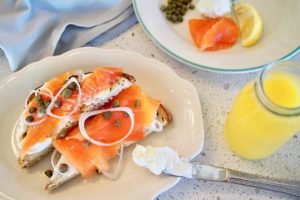
The menu just keeps going, and there are some seriously delicious dishes we never even got to including Braised Rancho Gordo baked beans with smoked mushrooms, BBQ baby back pork ribs done in Carolina and Texas style, glazed carrots with black garlic and honey, smoked salmon with creamed cheese and capers on toasted rye, turkey pot pie and mini Chicago dogs with pickled green tomato. Best to go with a few friends, because you’ll want more than you can possibly eat at one sitting.

Overall: An ambitious menu that pulls from diner classics from around the country. What’s so surprising is how well it all works — especially the southwest and Jewish deli favorites that Chef Siegel pulls from his own family recipes. Every meal is a new adventure, and every meal just as delicious as the last.

Mint and Liberty Modern Diner: 19101 Highway 12, Sonoma. Open daily from 8 a.m. to 9 p.m. mintandliberty.com

Peek Inside the Gold Leaf and Velvet Clad World of Jean-Charles Boisset

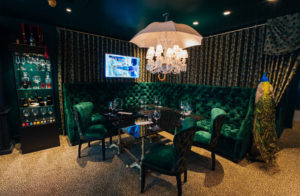
I'm stuffed: Twin peacocks, peacock wallpaper and curtains adorn the JCB Tasting Room in Healdsburg. Photo: Alex Rubin.
I’m stuffed: Twin peacocks, peacock wallpaper and curtains adorn the JCB Tasting Room in Healdsburg. Photo: Alex Rubin.

Click through the gallery above to walk through the nouveau rococo, peacock-covered, gold leaf and velvet-clad world of Jean-Charles. 

Wine magnate Jean-Charles Boisset’s family-owned portfolio of historical wineries, lifestyle and gourmet retail destinations are legendarily over the top…and that portfolio is growing again with the recent purchase of the 140-year old Oakville Grocery this week. 

The grocery was slated to close in 2019 following the death of Leslie Rudd, who purchased it in 2007. Boisset purchased the specialty store which has locations in Oakville and Healdsburg.

“I have always adored the Oakville Grocery for what it represents for Napa Valley, for California and for America,” says Jean-Charles Boisset, Proprietor of Boisset Collection. “I have fond memories of visiting from France with my parents and sister when I was 11 years old,” said Boisset.

Boisset, who is married to Gina Gallo, has seemingly been on a spending spree recently, opening a new luxe tasting room in Healdsburg complete with stuffed peacocks, a golden tree dripping with his jewelry line, velvet banquettes and plenty JCB wines for tasting and purchasing. Boisset has also recently opened Atelier Fine Foods in Yountville, a curated mercantile and dropped a hammer — literally — on the former Windsor Brewing Company as he begins renovations for his own brewing company. There’s also a new line of spirits, JCB Spirits, that includes a truffle-infused vodka, caviar-infused vodka and gin.

The Boisset family’s holdings also include Buena Vista, DeLoach, Raymond Vineyards along with many others in France (Le Clos Vougeot, Domaine de la Vougeraie and Bouchard Aine & Fils among them), Canada and England.

A Peek Inside Sonoma Valley’s Most Picturesque Party Barns

In Sonoma Valley, a handful of repurposed barns give local charities a place to party for good. Read the article below and click through the gallery for photos. 

Take a drive along virtually any Sonoma County highway, backroad, or byway, and you’ll see them scattered about the landscape: barns of all shapes and sizes. Most give a nod to the area’s rich agricultural history, some are long abandoned, and some have been reimagined. Yet many have one thing in common: They’re the quintessential Wine Country venue in which to celebrate community and family, share stories, entertain guests, and, increasingly, hold events that raise money for charities and nonprofits. Here’s an insider’s peek into some of Sonoma Valley’s most picturesque party barns. Oh, if these walls could talk.

Atwood Ranch, Glen Ellen

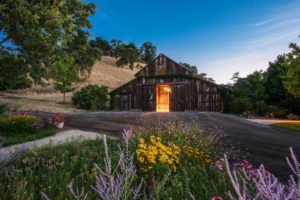
Julie and Tom Atwood’s Glen Ellen property was settled and owned continuously by the Weise family starting in the 1850s. The site of one of the first bonded wineries in the county, the original barn was lost to a fire in the 1950s. After the Atwoods purchased the ranch in the mid-1980s, their first project was to rebuild the barn.

“It was designed for horses and the ranch machine shop,” explains Julie, noting that when the shop outgrew the space, it became a meeting place for the agricultural community and has since hosted multiple fundraisers. All the lumber is reclaimed Port Orford cedar, which is native to Oregon and Northwestern California, sturdy, and pest-resistant.

Last year, the Atwoods sheathed the barn’s south end with steel siding, which helps protect the wood, and they’re adding that same metal skin to the east side this year.

The first fundraiser at the barn was held around 1990 for a Glen Ellen student — a local football star who’d been diagnosed with aggressive cancer. “He qualified for an experimental treatment, and we held a neighborhood party to support him. He survived and became an advocate for childhood cancer patients and families,” says Julie. “That first barn party had a huge impact, because it planted the seed that grew dozens of events that have helped local charities.”

Since then, the barn has been a favorite venue for myriad agricultural and nonprofit groups, family gatherings, and holiday parties. It was almost lost in last year’s Nuns fire, which started only 380 yards away and tore through the property twice, destroying more than 100 trees as well as several structures — but the house and barn were spared.

Says Julie, “So many local event venues were destroyed, but we saved our barn and it became the home for displaced parties.”

In December, the Glen Ellen Firefighters Association invited all the Sonoma Valley firefighters to the barn to celebrate the fire’s end. It was the first time they’d all been together in one place and served to foster a continued bond. “It felt great to get back into party mode,” says Julie. “A happy thing to do.” —J.F

Larson Family Winery, Sonoma

The Larson family’s ranch dates back to 1823, when sloops and schooners transported passengers and freight to Sonoma Creek in the North Bay, where they transferred at the creek’s northernmost navigable point to horse-drawn carriages at the ranch’s property line (now the “ghost town” of Wingo, which is still part of the property).

The ranch’s “Captain’s House” and barns were built beginning in 1865. A racehorse training center opened on the property in 1910 and operated through the 1950s, even hosting one of the sport’s most famous champions, Seabiscuit, for a six-week training session. The family also raised rodeo stock including cattle, polo, and work horses, and stunt horses used in Hollywood Westerns.

They also produced and hosted the Sonoma Rodeo and Wild West Show, the longest-running and largest rodeo in Northern California, from 1929 through the 1950s.

In 1978, Tom Larson and his father, Bob, planted their first block of grapes and began making wine for personal use within a few years’ time. The barns served as the ideal place to throw parties and enjoy the fruits of their labor. In 1985, as their production significantly increased, they founded Larson Family Winery — with the revealing motto “We drink what we can and sell the rest.”

Today, the largest barn is the winery’s production facility, while the smallest houses the tasting room and serves as the family’s venue for holiday and other gatherings, including events hosted by local agricultural and nonprofit organizations like Sonoma Valley 4-H and the Italian Catholic Federation. Two long bars in the tasting area are made from eucalyptus and pecan trees, and the barn’s wine barrel tables and displays are made from used barrels by the family’s handyman and ranch manager, Mike Doyle. —J.F

Mo property, Sonoma

In 2005, when Doug Mo and Marcia Charles-Mo designed and built the Sonoma property they now call home, one of their first projects was the construction of a barn to use as a garage. Inspired by Steve Lanning Construction’s versatile metal and steel building designs, they hired his company to make it happen. But once the new barn was up and functioning, it became obvious the space could be used for much more.

“All the storage shelves within the barn are on wheels,” says Doug of the 3,200-square-foot structure. “So we can move them to a corner or outside during events. It’s a great party space.”

The barn has hosted two family wedding receptions and once had the Bay Area’s renowned soul and funk band Pride & Joy as the live entertainment.

The Mos are also big supporters of Transcendence Theatre Company, having housed about 15 performers on the property since the company’s inception. So it made sense to engage the troupe for Marcia’s surprise 60th birthday party in the barn. “It was tough to keep it a surprise, but it worked,” recalls Doug of the black-tie event, which included about 100 of Marcia’s friends and family members. “We told her we were planning ‘something fun’ and to get dressed up. It was a big success.” —J.F

Vadasz property, Sonoma

“It was in really bad shape but we wanted to keep it,” says Judy Vadasz of the dirt-floored barn on her property that was built in the late 1800s. In 2011 Judy and her husband, Les, decided to undertake a pristine renovation of the barn — raising it up, pouring a cement foundation, using rocks from their property along the barn base and structural beams, and reusing as much of the original wood as possible.

The barn has since housed a birthday soiree for Les, a Fourth of July post-parade picnic when the Vadaszes were honored as alcaldes in 2013, and as the wedding photo backdrop for their property manager and his wife, who were married on the vineyard estate. Although they would never consider renting out the barn, the Vadaszes were happy to have the Sonoma Valley Education Foundation hold a Barn Talk fundraiser on-site, and the Sonoma Valley Museum of Art has held a fundraising dinner in the barn as well.

Prior to the 2011 restoration, pumpkins were planted in front of the barn, and for several years that became the location for the Vintage House Senior Center’s pumpkin patch fundraiser.

Judy is especially fond of the barn because it was special to her father. “He always loved the barn. He told me ‘Whatever you do, always keep that barn.’” And they always will. —C.K.

Vintage Kennel Club, Sonoma

Donors gathering to dine at the Paws for a Cause fundraiser are greeted by camels, piglets, ponies, and critters galore — an apropos way to raise money for Pets Lifeline, an animal rescue shelter in Sonoma. The annual event, held in the Vintage Kennel Club barn since 2011, started out as a dinner for the board of directors and has grown into a 300-person party that’s raised nearly $750,000.

Brian Ness and Mike Weiss launched Vintage, a dog ranch and spa, in 2000.

They love dogs, of course, and have Wheaten terriers and an Irish wolfhound — but having both grown up on farms in Minnesota and Wisconsin, they truly enjoy all animals. Brian especially wanted their barn to house unique animals and took pains to acquire Friesian horses, Angwin goats, a black swan, and his favorite, Sahara the dromedary — an Arabian camel he adopted as an infant and bottle-fed. His vision, since realized several times over, was to have Sahara appear in a live Nativity scene at St. Andrew Presbyterian Church at Christmastime.

The couple had the 3,350-square-foot barn built to house their pets, and quickly offered its use, gratis, to Pets Lifeline, where Ness is a board member. Weiss plants a huge flower garden, which blooms with sunflowers, bachelor buttons, and zinnias right on cue at party time each year, as an extra welcoming touch. Guests are encouraged to take selfies with the animals, or alongside the pristine 1939 International Harvester pickup or 1941 Cadillac Fleetwood that once belonged to Ness’ parents. —C.K.

A Dramatic Open-Plan Home in a Sebastopol Apple Grove

The family enjoys spending much of their time in the outdoor living space designed and executed by landscape architects Merge Studio Inc.

If not for an old-fashioned newspaper story, Dan and Sue Hirsch might never have found their dream home. Four years ago, Dan saw the San Francisco Chronicle’s weekly “Walk Through” feature, which showcased a dramatic open-plan home and historic apple orchard on 14 acres in Sebastopol. Intrigued, he called his broker. “The style of the house just spoke to us, with its big, open living spaces,” says Dan, a consultant.

“The first time I came up, it was bright and sunny. I remember I walked out back and there was a coyote right there staring at me and running off. The plum trees were going, and we spent as much time walking around the orchard as we did inside.”

Now the family, including Dan’s wife, Sue, a psychotherapist; their young daughter; and their dog, Messi (named for the soccer star), spend weekends cooking with friends, swimming, and exploring the organic orchard.

“We think there are about 2,000 trees. I keep encouraging my daughter to do a tree counting project — go through the rows and multiply,” says Dan.

With at least six apple varieties and mature, dry-farmed specimens dating back 75 years, the orchard is a constant source of inspiration for the family. Dan makes delicious rustic apple galettes summer through fall, and guests from the city never leave without a huge bag of fruit to take home.

Dan and Sue have always been thrilled with the design of the main house, with its 22-foot ceilings and open kitchen and breezeway, but shortly after moving in, they decided to remodel the landscape to forge a deeper connection to the surrounding hills.

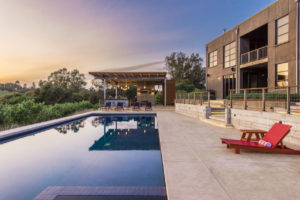
They worked with Cary and Amy Bush of Sebastopol’s Merge Studio to add a pool, pavilion, outdoor kitchen, and additional decks while celebrating the rural character that keeps the modern home feeling grounded. Cary made a key decision early on to site the pool parallel to the orchard, stepping down the hillside, as if a swimmer could just reach across and pluck fruit straight from the trees.

Sue loves how the character of the landscape, both old and new, changes with the seasons. “The look of the orchard becomes the opposite. Instead of fruit and leaves, in winter the rows become grassy and green and the trees are bare, like shapes you might see in Joshua Tree.”

Summertime’s morning fog is a welcome transition into warm, breezy afternoons and evenings by the pool, with lights glowing from the new pavilion. “I love that it’s never fully socked in here, like in the city. The fog eases me into the day,” says Sue.

She and their daughter spend most of their days reading, exploring with the dog, and swimming, while Dan is an ambitious gardener and host. (“He’s not so into relaxing. We all relax and he’s the bartender!” laughs Sue.) Last year, Dan grew yellow raspberries, pluots, asparagus, kale, and a 65-pound giant pumpkin whose seeds were saved to plant again. This summer he has plans for a new pickling garden — hot peppers, okra, cucumbers, and bush beans.

The family’s ongoing goal is to slow down and savor these next few years with their daughter. “Now’s not the time to lock myself away in an office. I know I’m not going to be able to redo this period of her life,” says Dan. “The way of the land has really struck us, and the sunset can be so spectacular. … We love it more and more with every day we spend here.”

Glen Ellen Farmstead Blends Multigenerational Living with Country Bliss

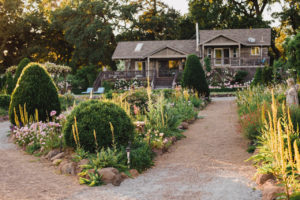
Early spring sunshine warms the front garden at Ron and Chris Mickelsen’s weekend home in Glen Ellen. Chris, who owns a plant nursery with her husband, is fond of formal boxwood shapes and lush climbing roses. (Rebecca Gosselin)

Ron and Chris Mickelsen’s days sound pretty idyllic, growing olives for artisan olive oil and living with extended family on a small farmstead in the heart of Sonoma Valley. And yes, in many ways, it’s an enviable lifestyle. But make no mistake, it’s also a huge amount of work. “We say all the time, ‘Are you ready yet for that low-maintenance condo in the city?’” jokes Chris. “But if we lived in the city, we’d need better clothes.”

Jeans and muck boots are standard springtime gear for the Glen Ellen family, which also includes Chris’ grown daughter Katie Shinn, Katie’s husband, Todd, and their two children, Norman, 10, and Louise, almost 3. The kids have never lived anywhere but the farm, where they play pingpong in the barn, chase soccer balls in the rows of olives, feed chickens, pick veggies and in general have the kind of deep-rooted, rustic upbringing that can feel all too rare these days.

The Mickelsens got into olives 20 years ago, after Chris traveled to Geyserville for a weekend seminar on making oil and decided to look for some land in Sonoma, where the growing climate is ideal. The couple was well-equipped for the undertaking: Ron is a lifelong plantsman with a degree in horticulture from Cal Poly, and he and Chris own Half Moon Bay Nursery on the coast south of San Francisco.

After buying the Glen Ellen farm from the founder of nearby Quarryhill Botanical Gardens (the farm’s main house used to be home to the garden’s director, while Katie and Todd’s family dwelling served as a guesthouse), they traveled to Italy to source their olive trees. They returned with 1,500 tiny rooted cuttings from Frantoio and Leccino trees, then grew the cuttings to planting size under quarantine at the nursery in Half Moon Bay. The high-density, highly productive olive groves are 18 years old this spring, and Ron and Chris still choose to prune and pick by hand alongside a local crew.

Traveling back and forth from their nursery day jobs in Half Moon Bay up to Sonoma provides a welcome change of pace for Ron and Chris, particularly now when the wisteria is blooming and the olives are preparing to flower. “Things move forward so quickly in spring. The bulbs are first, and then the wisteria hits, and everything is so lush and green,” says Chris. The couple loves getting to garden in a climate so different from that of their nursery. For the first few seasons, they were surprised at how quickly things grew — roses and other perennials doubled in size in a single year, and peppers and tomatoes went gangbusters in the summer warmth.

As befits two lifelong professional plant lovers, the gardens in Glen Ellen are in constant improvement mode. The couple recently interplanted some of the olive trees with grapevines. (“You live in the suburbs, you put in a lawn; you live up here and you put in a vineyard,” says Chris.) Two years ago, they added a small orchard and a fragrant rose garden for scented olive oil soaps. And there are always new seedlings from the nursery to test out. “We laugh, because in the spring, a bunch of plants get put in and then by fall they all get moved around again,” says Chris’ daughter Katie.

This spring, the farm will enter a new stage as Ron, Chris and the rest of the family continue to put things back together after last October’s wildfires, which heavily affected this close-knit area. On the farm, one of the barns and a guest cottage burned to the ground; incredibly, the fires were stopped just feet before they reached the family’s homes. Bottling equipment, tractors and a few olive trees were also lost, but the rest of the groves are healthy.

It’ll be a busy spring for sure, with a barn to rebuild, new plants to get in the ground and water lines to troubleshoot. “Every year when the irrigation gets turned back on, Ron spends the next few weeks on his hands and knees, looking down a muddy hole to find where the leaks are,” says Chris. It’s a true labor of love for the couple, who hold this land deep in their hearts and see that connection taking hold in their grandchildren. And they won’t be downsizing to a condo in the city anytime soon.

Vote in Sonoma Magazine’s Cutest Dog Contest

It’s time to pick the most adorable pooch of 2018. The submissions to our annual Cutest Dog Contest are in and all that’s left to do is vote for your favorite.

Simply click the heart icon on the picture of the dog you think is the most irresistible. You can vote for as many dogs as you like, however you can only vote for each dog once.

With close to 100 pooches to pick from it won’t be an easy decision. So take your time and throw your favorite dog a bone, or a like.

Voting will end on December 17th, 2018 at 11:59pm. To vote, visit our contest page: sonomamag.com/contest/2018-cutest-dog-contest

The winner of the Cutest Dog Contest will be chosen from among the top 10 vote earners by a panel of judges from Sonoma Magazine and our beneficiary, Pets Lifeline.

The winning dog will get:

A professional Sonoma Magazine photo shoot.

A full-page photo in Sonoma Magazine with dog’s name and bio.

A lot of treats from their proud owner.


Favorite Sonoma Dungeness Crab Dishes and Recipes

Dungeness Crab Sandwich at The Marshall Store. (Christopher Chung / The Press Democrat)

In the spring, swarms of baby Dungeness crabs float through the protected, shallow waters of North Coast bays like so many tiny stars in a far-off galaxy. But when winter arrives, the mature, male crustaceans fattening up in the eelgrass off the coast become the region’s true culinary stars.

After being steamed and cleaned, the crabs’ hard shells are eagerly cracked open, exposing mounds of moist and delicate flesh whose subtle sweetness pairs well with butter and tomato sauce. Those flavor pairings have been immortalized in such Bay Area classics as Crab Louie Salad and Crab Cioppino.

Here in Wine Country, many of the region’s best chefs grew up on other shores enjoying other tasty crustaceans. But once they taste the meaty Dungeness, caught in the chilly waters off Northern California, Oregon, Washington and Alaska, they’re hooked. Find a few favorite recipes from Sonoma County chefs below, and click through the above gallery for local places to enjoy the winter treat.

THE RECIPES

Kendall-Jackson Cracked Dungeness Crab

Justin Wangler, Executive Chef at Jackson Family Wines, makes this recipe for boiled, cracked crab at home, alongside a chili sauce and the traditional melted butter. “It’s just a nice, Sonoma County wintertime meal,” he says. “Sharing it with friends spreads the work around, and you can all crack it together and drink wine and have fun.” The sweetness of the crab, especially when dipped in butter, goes perfectly with the rich texture of the Kendall-Jackson Vintners Reserve Chardonnay. “That’s a no-brainer,” he says. Wangler prefers to start with live crab — the fresher the better.

“You want to make sure they are feisty and moving around,” he says. “You don’t want one that’s slow.” When serving the crab, he uses Joyce Chenscissors to cut through the shells, for easier eating.

Makes 4 servings

2½ gallons water
4 stalks celery, large dice
2 carrots, large dice
1 onion, large dice
1 fennel bulb
1 bay leaf ¼ bunch parsley
2 tablespoons kosher salt
2 cups white wine
2 lemons, halved
1 cup white vinegar
3 (1½-pound) Dungeness crabs In a large stock pot, add water, vegetables, bay leaf, parsley and salt and bring to a rolling boil; reduce heat to a simmer and cook for 20 minutes.

Add the wine, lemons and white vinegar; cook for 10 minutes. Add the crabs, return to a boil and cook for 13-15 minutes. Carefully remove the crabs from the stock pot and shock in an ice water bath. If serving the crabs warm, skip the ice water bath and serve with melted butter.

Homemade Chili Sauce for Dungeness Crab

Josh Silvers of Jackson’s Bar & Oven in Santa Rosa makes a homemade chili sauce for dipping crab that can also be upcycled into a Crab Louie Salad dressing. “For the salad, you get butter lettuce and build it up with tomatoes, hard-cooked egg and crab meat,” he says. “Then just spoon the dressing over it.”

Makes 1 cup

1 14.5-ounce can whole tomatoes
2-inch piece of horseradish, peeled and grated ⅓ cup sugar ⅓ cup champagne vinegar
Pinch of salt
Juice of 1 lemon

Put the first five ingredients in a heavy-bottom pan and reduce until thick. Add the lemon juice and blend together.

Josh’s Crab Louie Dressing
Makes 3 cups

¼ cup sweet pickle relish
1 cup mayonnaise 1 cup homemade chili sauce (see above)
1 cup heavy cream ½ ounce brandy
Handful of chopped parsley Salt and pepper to taste

Mix relish, mayonnaise and chili sauce in a bowl.
Whip cream with brandy until it forms soft peaks.
Combine whipped cream with the mayonnaise mixture, chopped parsley and salt and pepper.

LaSalette’s Crab Stew

For as long as Manuel Azevedo, chef/owner of Sonoma’s LaSalette, can remember, his mother (also named LaSalette) has been making this dish on New Year’s Day. Although she always lays out a veritable smorgasbord, he opts for a simple bowl of crab stew accompanied by a glass or two of red wine, a romaine salad, a bowl of garlic-buttered penne pasta and some garlic bread. “We set a big table and roll up our sleeves,” Azevedo says. “I figure my hands are going to be a mess, and there’s a point where it’s useless to grab a fork.”

Makes about 4 servings

3 large Dungeness crabs, totaling 6 pounds
1½ cups onion compote (see recipe below)
1½ teaspoons fine sea salt
2 teaspoons Portuguese spice blend (see recipe below)
2 tablespoons Hungarian paprika ½ piri piri pepper, chopped, or pinch of red pepper flakes
3 bay leaves 1½ cups dry white wine
½ cup chopped flat leaf parsley

If the crab is purchased live, bring a large pot with enough water to cover the crab to a boil. Using large tongs, carefully place the crab in the pot and boil for 15 minutes. Pull them out of the pot and place in an ice water bath to cool quickly.

Once cooled, twist off the legs and claws and then pull away the apron (the underbelly). Now separate the carapace (the main shell of the body) from the body to reveal the spongy gills and crab butter — the innards of the crab including the fat attached to the carapace. Remove and discard the gills.

Scoop out and save the crab butter. This is essential, as this butter imparts a rich crab flavor to the stew. Squeeze the collected crab butter through a fine-meshed strainer. Clean each crab body under running water and cut it into 6 pieces.

Crack the legs enough to create a little space for the sauce to penetrate the shell. Collect the body, legs, claws and butter and set aside. Discard the carapace and strained-out material. Heat the onion compote, sea salt, Portuguese spice blend, paprika, piri piri, bay leaves, wine and parsley in a medium pot with a lid. Add the cooked crab, including the strained crab butter, and steam in the covered pot for about 5 minutes to heat through, gently stirring often.

If the stirring is too vigorous, the crab tends to fall apart and look messy. Turn off the heat and allow the pot to sit covered for at least 30 minutes before serving, to ensure the crab absorbs all the flavors. Give the stew a gentle stir every 15 minutes to coat the legs and claws with the other ingredients.

Onion Compote
Makes 1½ cups

4 cups yellow onions (about 3 whole onions), diced into ¼-inch pieces
3 tablespoons extra virgin olive oil
2 cloves garlic, minced Pinch freshly ground white pepper
2 teaspoons fine sea salt
2 teaspoons white wine vinegar

Sauté all the ingredients in a medium pan over low heat until the onions are a light golden color, sweet and void of pungent onion flavor — approximately 1 hour. Store up to five days in the refrigerator.

Portugese Spice Blend
Makes 1¾ cups

6 tablespoons cumin seeds
4 tablespoons allspice berries
1 tablespoon whole cloves
3 Ceylon cinnamon sticks, broken into ½-inch pieces
¾ cup Hungarian paprika ½ nutmeg seed, freshly grated

Place the cumin, allspice and cloves in a sauté pan over medium heat and cook, stirring, until fragrant and lightly smoking — about 5 minutes. Allow to cool, and grind in a spice grinder. Add the cinnamon and grind again. Combine the ground spices with the paprika and grated nutmeg, mix well and store in an airtight container for up to six months.

Dungeness Crab Salad

Every holiday season, Madrona Manor Executive Chef Jesse Mallgren celebrates 18 days of Christmas with a popular series of Dickens Dinners featuring a traditional English menu of Beef Wellington and Christmas Pudding. Mallgren also provides a taste of the Sonoma Coast with an elegant Dungeness Crab Salad made with winter greens like frisée and radicchio, plus mandarin oranges grown in the Healdsburg inn’s garden. The crab is gently napped with Green Goddess dressing, which adds an herbal flavor, while the greens are dressed in a fresh orange vinaigrette.

Makes 8 servings

For Vinaigrette
1 cup fresh orange juice, reduced over heat to ½ cup
2 tablespoons champagne vinegar
Salt to taste
¾ cup extra virgin olive oil

For Green Goddess Dressing
1 cup mayonnaise
1 teaspoon chopped fresh chervil
2 teaspoons chopped fresh chives
1 teaspoon chopped fresh tarragon
1 tablespoon tarragon vinegar (or apple cider vinegar)

For Crab Salad
1 pound cleaned Dungeness crab meat
1 head frisée lettuce, sliced (white leaves removed)
¼ head radicchio, chiffonaded
½ cup mandarin orange segments
¼ cup toasted sliced almonds for garnish

For orange vinaigrette: Whisk reduced orange juice, vinegar and salt until salt is incorporated. Slowly whisk in the olive oil.

For Green Goddess dressing: Whisk together the mayonnaise, herbs and vinegar.

For crab salad: Mix the crab meat with the Green Goddess dressing and divide on 8 plates. Toss the frisée, the radicchio and the orange segments with 2 tablespoons of the orange vinaigrette and place on top of crab. Sprinkle toasted almonds on top. taste

Crab Eggs Benedict

Chef Lisa Lavagetto of Ramekins Culinary School always makes Crab Eggs Benedict during Dungeness season for brunch for family and friends. As a shortcut, she learned how to make a hollandaise sauce in a blender, which helps streamline this labor-intensive dish and get it to the table with less stress.

Makes 6 servings

12 large eggs
Hollandaise sauce (recipe follows)
Large sprig dill weed
6 English muffins
6 tablespoons cream cheese
4 ounces smoked salmon, chopped
2 large tomatoes, thinly sliced into 12 slices
2 fresh lemons (1 for garnish, sliced into 6 wedges)
1 pound crab meat tossed with juice of a half lemon
12 spears of asparagus for garnish, stemmed and blanched until tender

Poach a dozen eggs in advance in a segmented poaching pan to a hard-white/soft-yolk stage and place them in a cool water bath in fridge; you’ll reheat them before serving (instructions below).Prepare the hollandaise sauce and add about 1 tablespoon of the fresh dill, chopped finely. Set aside. Preheat the oven to broil. Halve the English muffins, place them on a baking sheet and lightly toast them under the broiler. Remove muffins and reduce heat to 350 degrees.
Place the cooled eggs in the 350-degree oven to heat them through (about 10 minutes).

Meanwhile, mix the cream cheese with the smoked salmon and then spread the mixture over all 12 muffin halves evenly. Top with a thin slice of tomato and a 12th of the drained crab meat and place the baking sheet in the oven for about 5 minutes to heat through only (not cook) as the eggs finish heating. When all are warmed through, top the muffins with a poached egg and spoon hollandaise sauce over the top. Garnish with the asparagus.

Blender Hollandaise Sauce
Makes 8 servings

6 egg yolks
½ teaspoon salt
Dash of cayenne pepper
2 tablespoons heavy cream
1 pound unsalted butter, melted until bubbly but not brown
2 tablespoons lemon juice or white wine vinegar

Place egg yolks, salt, pepper and cream in blender and blend for a few seconds at high speed until you have a smooth, frothy mixture. Still going at high speed, start adding hot butter in a thin, steady stream, not too slowly. As you add butter, the sauce will thicken. When half the butter has been added, add the lemon juice or vinegar. Then continue blending until the rest of the butter has been added.


Santa Rosa Theater Company Receives $150,000 to Produce Play on Gun Violence

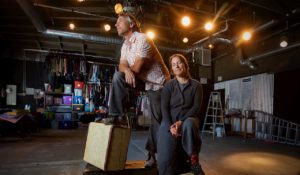
Imaginists Theater founders Amy Pinto and Brent Lindsay have bought the building that houses the theater and small artists studios in the South A district of Santa Rosa. (photo by John Burgess/The Press Democrat)

Santa Rosa theater company the Imaginists has been selected as a recipient of a Hewlett 50 Arts Commission, a program of the William and Flora Hewlett Foundation. The theater company, founded by artistic directors Amy Pinto and Brent Lindsay, is among ten San Francisco Bay Area nonprofits to receive $150,000 to “create important and unique work that facilitates discussions around the most pressing local issues.” 

The Imaginists will use the grant to commission internationally acclaimed Hungarian theater director Árpád Schilling to produce The Gun, a new work that will incorporate Schilling’s outsider perspective on the role of guns and gun violence in American society. 

Barbara Lanciers, Director of the Trust for Mutual Understanding and a longtime supporter of Hungarian artists, states, “Often times, it takes an outside eye holding up a mirror to allow us to truly see ourselves. Working closely with collaborators from other cultures and backgrounds helps us to more firmly understand our own contexts. Schilling will combine his well-honed, community-based practices with those of the Imaginists to find a new way to examine violence as it relates to national identity.”

Schilling has previously collaborated with the Imaginists and shares Pinto’s and Lindsay’s vision of “theater as instigation and provocation.”

“Art gives the freedom of thinking and self-expression, and social activism helps to get to know the reality,” said the Hungarian theater director.

Schilling’s numerous awards for his work include the Stanislavski Prize from Moscow in 2005, the Légion d’honneur from the French Ministry of Culture in 2008 and the Europe Theatre Prize in the New Theatrical Realities category in 2009.

“I am honored to be invited by such dedicated artists, teachers, activists and civil rights fighters like Amy Pinto and Brent Lindsay,” said Schilling.

The announcement of the $150,000 grant comes on the heels of a successful fundraising campaign by the Imaginists that allowed the theater company to buy their longtime rehearsal and performance space on Sebastopol Avenue in Santa Rosa.

The experimental theater company, based in Santa Rosa for thirteen years, continues to explore the intersection of art and community. In all of their productions, the act of inclusion is central to the artistic directors’ vision. The Imaginists produce bilingual plays and collaborate with people often excluded from the stage: day laborers, undocumented youth, social justice groups, artists across disciplines and community members with little or no acting experience are included in the theater company’s productions. They also extend this philosophy of inclusiveness to their audience by offering sliding scale ticketing.

“We are thrilled to be selected as a recipient of the Hewlett 50 Arts Commissions and honored to be in the company of such distinguished artists and organizations. We’re especially happy to be developing this project in our community,” said Amy Pinto.

The Gun will preview in Sonoma County and premiere at Z Space in San Francisco in 2020. Additional performances will be held in Sonoma County and beyond following the premiere. The Imaginists will work with youth organizations and hold community conversations surrounding guns and gun violence throughout the development and premiere of the play.

Other current and upcoming the Imaginists performances include Spin Off, an alternative theatrical take on the TV sit com (new episodes every Friday, December through January); The 16th, a “Borgesian noir and meta-theatrical satire that examines the extent to which an organization will go to get funding” (premieres in April 2019); and the 11th annual Art is Medicine Show, a free, bilingual, bicycle- powered summer tour (July 2019).

The Imaginists, 461 Sebastopol Ave, Santa Rosa, 707-528-7554, theimaginists.org