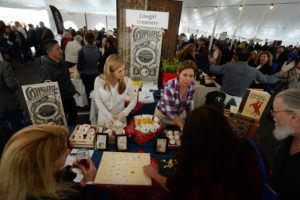
Jennifer Anakar, left, and Cindy Kennedy working the Cowgirl Creamery booth during the 11th annual California Artisan Cheese Festival held at the Sheraton Sonoma County in Petaluma Sunday. March 26, 2017. (Photo: Erik Castro/for The Press Democrat)
One of the first big food events to be canceled due to coronavirus concerns: The 14th Annual California Artisan Cheese Festival, which was set for March 27-29.
“As this health crisis expands, we believe it is prudent to proactively acknowledge and react to the warnings by health officials about attending large gatherings,” said Judy Groverman Walker, executive director of the California Artisan Cheese Festival.
“As much as we are deeply saddened that our beloved festival will not happen this year, we know that the most important thing is to keep our community and the public safe and healthy.”
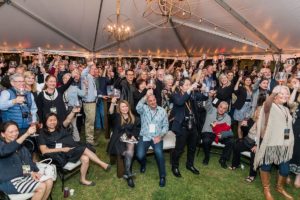
The festival, which attracted more than 2,500 people last year, brings together the state’s best cheesemakers, farmers, educators, authors, chefs, cheesemongers, brewers, distillers, winemakers, and cheese fanatics.
Due to coronavirus concerns, Pigs & Pinot has been postponed.
Message from event organizers regarding coronavirus on Thursday, March 12, at 1 p.m: Following advisory from Sonoma County’s public health officer on Wednesday, March 11, out of an abundance of caution, Chef Charlie Palmer will postpone his 15th Annual Pigs & Pinot scheduled for March 20-21 at Hotel Healdsburg. New dates will be determined as the path to containment unfolds. With well-being as a crucial ingredient to conscientious hospitality, it was a difficult but clear choice.
Charlie Palmer’s annual Pigs & Pinot event, pairing pork dishes with great bottles of vino, is one of the hottest tickets in Wine Country. Now in its 15th year, the event benefits a variety of local charities. This year, it will take place March 20-21 in Healdsburg and feature bottles from more than 60 wineries and 20+ chefs. Click through the above gallery for a taste of the upcoming event.
Every day on the mountain was different, but each started out in the same way. First, in the utter blackness of pre-dawn, I’d be roused from sleep by the distant strikings of the gong at the Zen center a mile or so up the road summoning acolytes to zazen, the Buddhist practice of meditative sitting. I’d drift back into semi-slumber and vivid dreams, to be reawakened a short time later by the faint but exuberant crowing of scores of fighting cocks, the wards of a grape grower living across the way. Depending on the season, songbirds would vocalize with the waxing day, or there’d be silence. Maybe the sun would burst suddenly through my windows, or the light would be indirect and opalescent from fog or rain. But the gongs and roosters were the same, constituting a dependable and reassuring anchor to my life.
I lived on Sonoma Mountain for 15 years, and it’s been longer than that since I left. But I can still recall how it felt –not just to live there, but to be a part of it, to be sheltered and virtually subsumed by the place.
The mountain is a terrestrial lodestar for Sonoma County, albeit one hiding in plain sight. It’s not a mountain, in the sense that Mount Shasta and Mount St. Helena are mountains. It doesn’t rise spectacularly from the landscape, forming a symmetrical cone. It’s more of a long and mounded ridge. Located east of Petaluma and immediately west of Highway 12, it’s the first thing you see approaching the Petaluma River bridge on Highway 101 from the south. It looks like the rumpled form of a great beast sprawled prone and sleeping under the earth, its flanks and back covered with groves of oaks and grasslands.
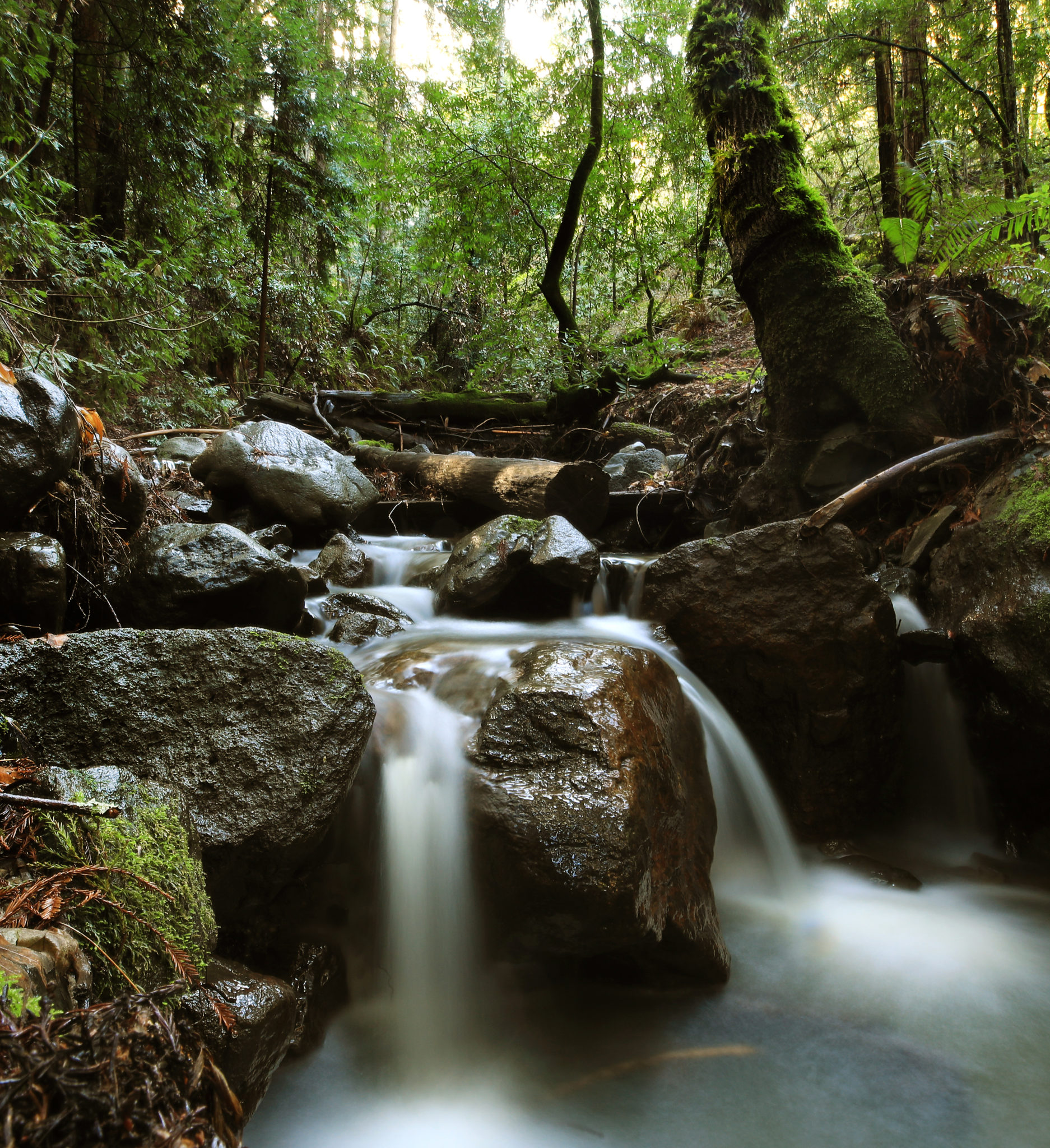
Waterfall on Sonoma Mountain. (Kent Porter)Historian and author Arthur Dawson. (Kent Porter)
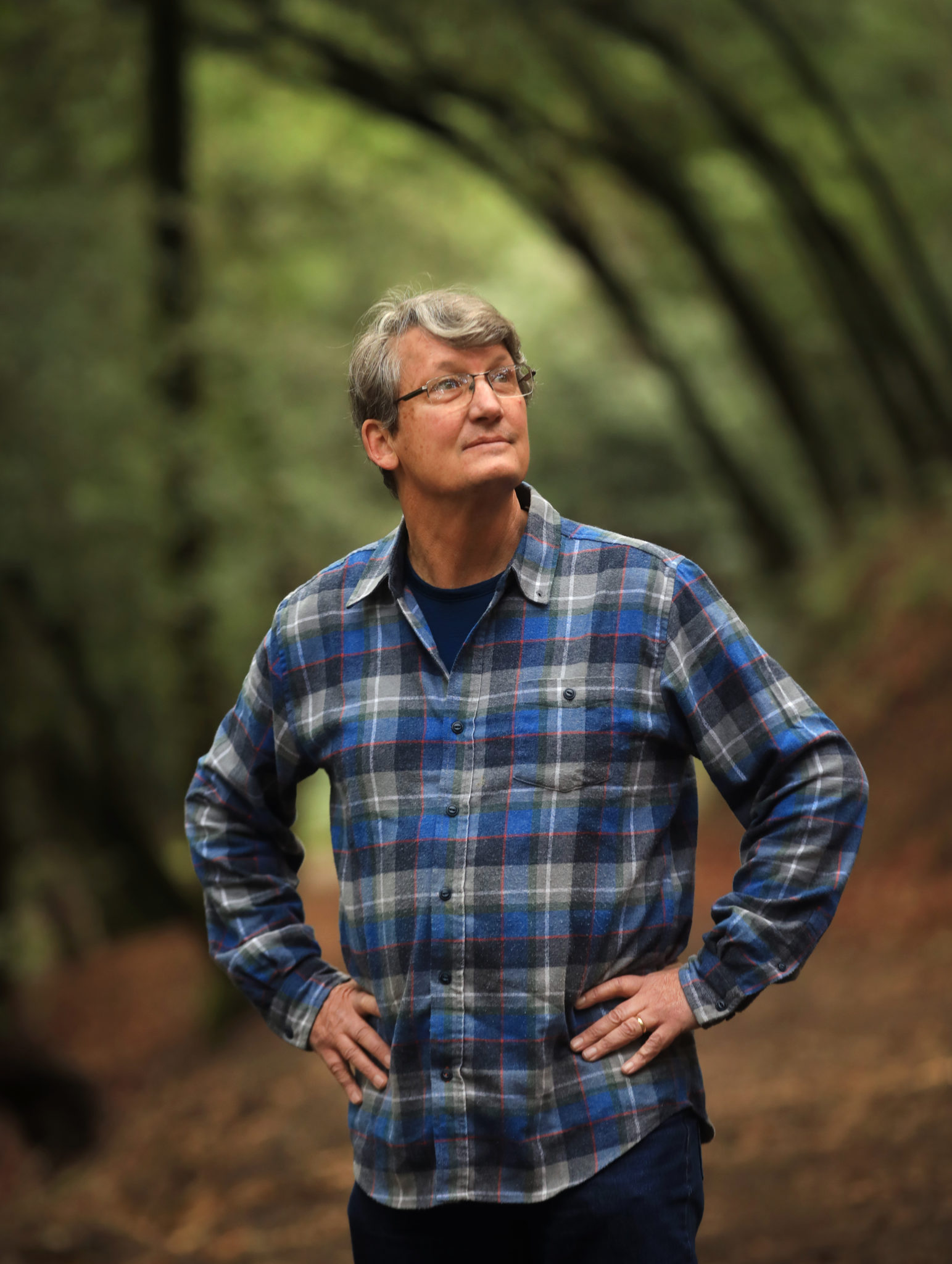
“It’s our mountain,” said Arthur Dawson, a Glen Ellen author who wrote the definitive book on the mountain. “There’s an intimacy about it. It’s not a peak. It’s a landscape, the headwaters for three watersheds. When you start familiarizing yourself with it, you realize how complex, how intricate it is.”
Sonoma Mountain has been a working landscape since the first people filtered into the Sonoma Valley region 12,000 years ago. They hunted game and harvested acorns and pinole – native grass seed – from its slopes.
The mountain was included in the land grant of Sonoma’s founder, Gen. Mariano Vallejo, and was used as a grazing commons. Jack London, one of the most prolific and famed authors of the early 20th century, inhabited a sprawling ranch on the mountain’s eastern slope — now one of the North Bay’s most popular state parks. The mountain has been logged repeatedly, fattened countless thousands of cattle on its meadows and seen vineyards come and go – and come again.
“Human habitancy, human history, is a big part of the story of Sonoma Mountain,” Dawson told me. “It always has been.”
And that deep-rooted history of settlement means that perspectives on the mountain change from one generation to the next. When I lived there, it was a place of private enclaves, of sheltered and isolated bowers.
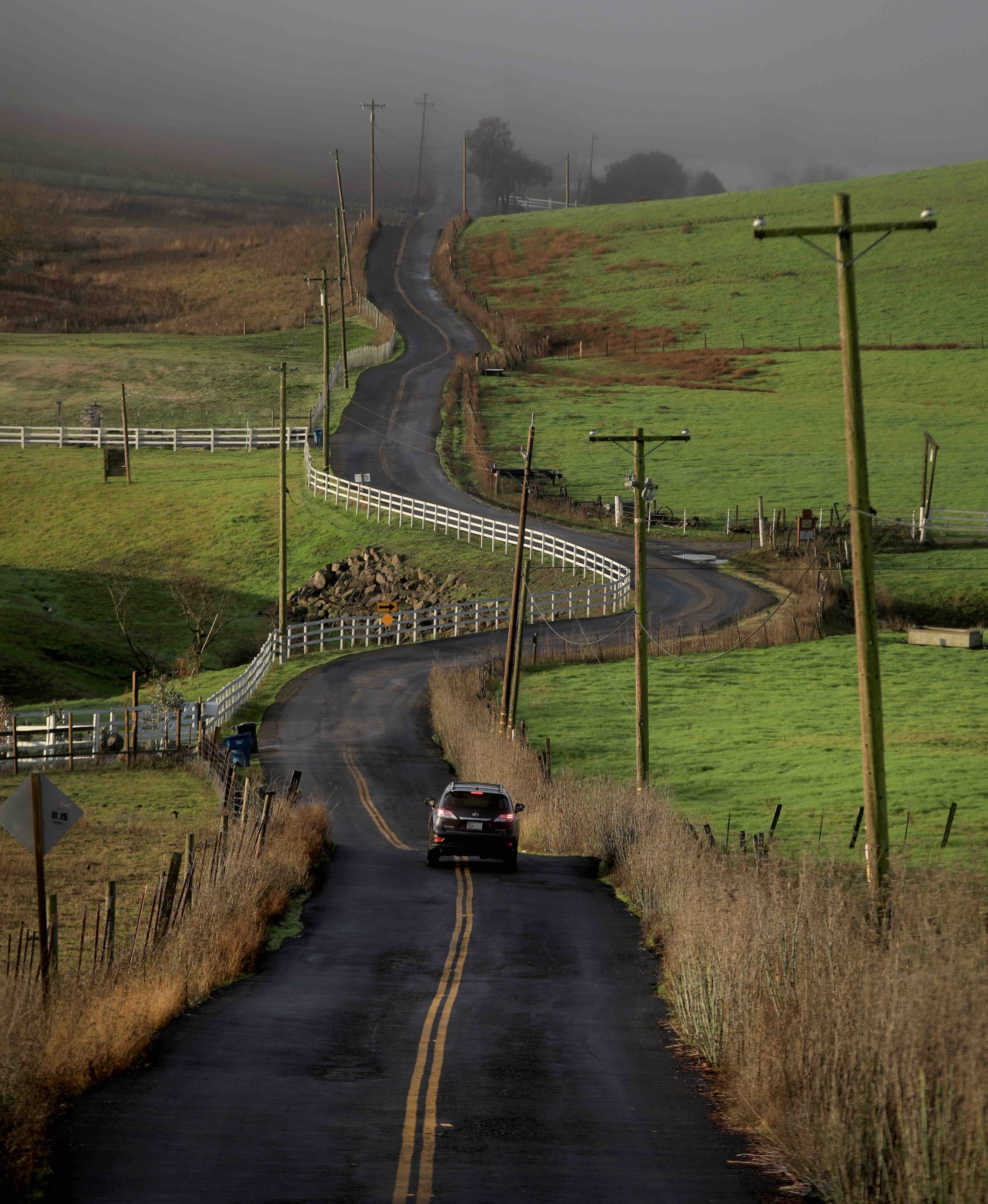
On Sonoma Mountain road. (Kent Porter)
A 10-minute drive from downtown Santa Rosa would deliver you to a sylvan redoubt where civilization seemed distant, sometimes nonexistent. There are more vineyards now, more homes, a new public trail and park. A new winery and creamery promises to draw increasing numbers of visitors over Sonoma Mountain Road, the mountain’s main access route — a narrow and winding, and frankly, dangerous, strip of macadam.
I’ve wondered about these changes, wondered whether some tipping point between untrammeled nature and inexorable development had been reached, and how much of the green and bucolic mountain of my salad days remained. And so I set out, intent on exploring the evolving identity of a place unique in Sonoma County.
I began at North Sonoma Mountain Regional Park, an 820-acre public open space sandwiched between Rohnert Park and Glen Ellen. The regional park, opened in 2015, has afforded public access to a significant portion of the mountain, including a 4-mile trail that connects to Jack London State Historic Park, allowing visitors to experience the serenity and sense of well-being that residents have long treasured. When I lived there the mountain was wild and lush, a place with a great diversity of wildlife, from apex predators like mountain lions to rare and retiring amphibians. Bird populations were particularly robust and varied. Nearly all of it was cordoned off as private property, inaccessible to the public. The park atop the mountain changed that; but prior to setting out on the trail I was worried it wouldn’t be for the better.
I was heartened, however, when I drove to the park’s northern trailhead, located at the former property of the late Bill Jacobs. I knew Jacobs, a rancher who had extensive holdings across the mountain; I’d helped him put up hay.
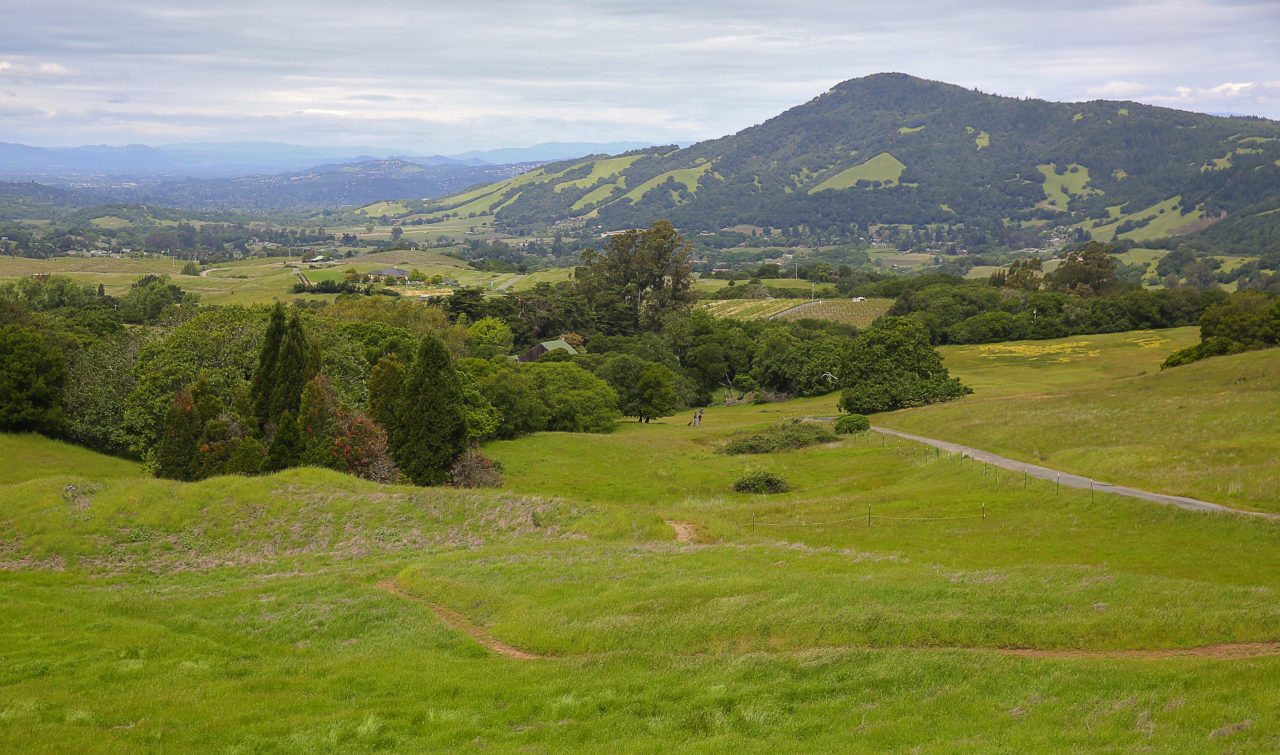
The North Sonoma Mountain Trail winds through North Sonoma Mountain Regional Park and Open Space Preserve, with a view of Bennett Valley, in Santa Rosa. (Christopher Chung)
He was a huge man with hands the size of catcher’s mitts and a booming, stentorian voice that reminded me of the Warner Bros. cartoon rooster, Foghorn Leghorn. He’d occasionally slap me on the back when making a point, sending me sprawling. He was politically conservative, but the mountain was holy ground to him, as it was to most of us who lived there; he wanted to keep it open, green and agricultural. The sale of his 169-acre ranch in 2003 to the Sonoma County Agricultural Preservation and Open Space District kicked off the accumulation of parkland on the mountain, a $20 million taxpayer-funded effort that culminated in wide public access — a fitting tribute to the man, his vision, and his life’s work.
My hiking companions for the day were Dawson and Kim Batchelder, a natural resources planner with the open space district. The trail led us through a rich diversity of ecosystems: black oak groves and copses of enormous bay trees, bunchgrass meadows and stands of large redwoods. But this was not primeval territory. Breaks in the forest gave way to spectacular views of vineyards and pastures and the distant estates of Bennett Valley.
We passed through woods that had been repeatedly logged over many generations, and through clearings that have long been grazed. We crossed overgrown roads and abandoned fence lines, and there were far older traces of human occupancy available to a discerning eye. Some of the oak groves, Dawson said, show signs of cultivation — or husbandry, at least — from the Pomo who inhabited the mountain for millennia. Indigenous people periodically burned and cleared brush in oak groves and pruned the trees to maximize the acorn crop, the primary staple of their diet. I mentioned a large Pomo mortar, hewn from volcanic stone, that my landlord had discovered twisted in the roots of a giant bay tree near the mountain’s summit.
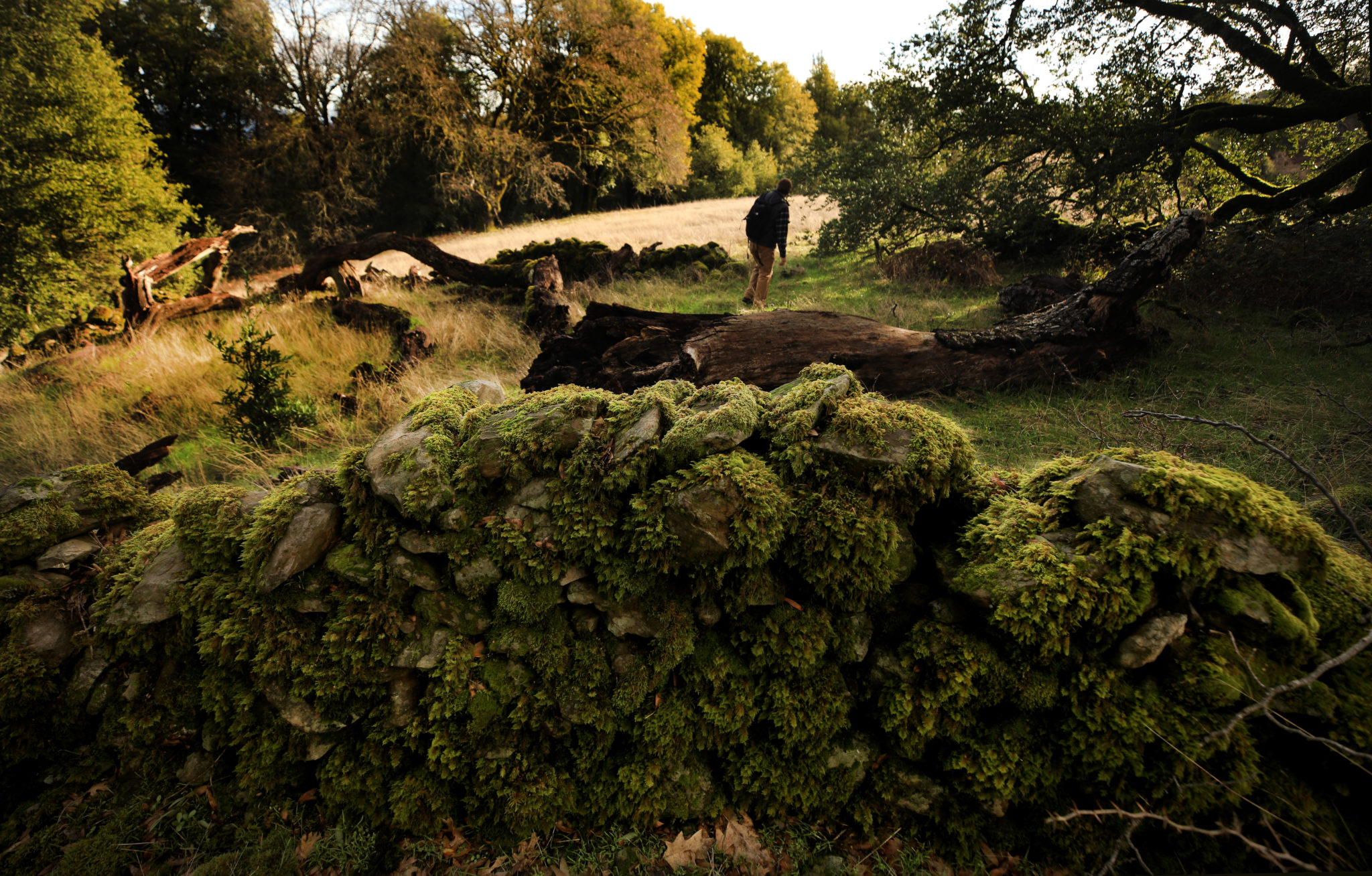
We hiked a bit farther, coming to a rough quadrangle of crumbling stone walls. “We know this was probably a livestock corral,” said Dawson, “and it probably dates from Vallejo’s time. It’s certainly earlier than the 1880s, when barbed wire came into general usage.” We sat down and contemplated the rock ruins, which remained strangely beautiful in their decay, as the wind soughed through the branches of a nearby bay tree.
A crumbling stone wall on Sonoma Mountain. (Kent Porter)
The mountain’s geographical prominence and natural abundance made it a regional cynosure for native people, says Greg Sarris, the chairman of the Federated Indians of Graton Rancheria and a professor of Native American Studies at Sonoma State University. Sarris lives on a 3-acre property on the west side of the mountain; the Rohnert Park casino owned by his tribe is visible below on the Santa Rosa Plain.
“There were so many nations in this area,” he said. “And that was the case for thousands and thousands of years. We [Pomo and coastal Miwok] were here when San Francisco Bay filled up after the last ice age. We watched that. And this mountain was a marker, a place shared by everyone. With so many nations, boundaries were very important. But Sonoma Mountain was an intersection for multiple boundaries, a magical place that all shared. I think the tremendous diversity of landscapes and the spectacular overviews helped confirm its sacredness to the people. They didn’t fight on it or for it, as they sometimes did down on the flatlands.”
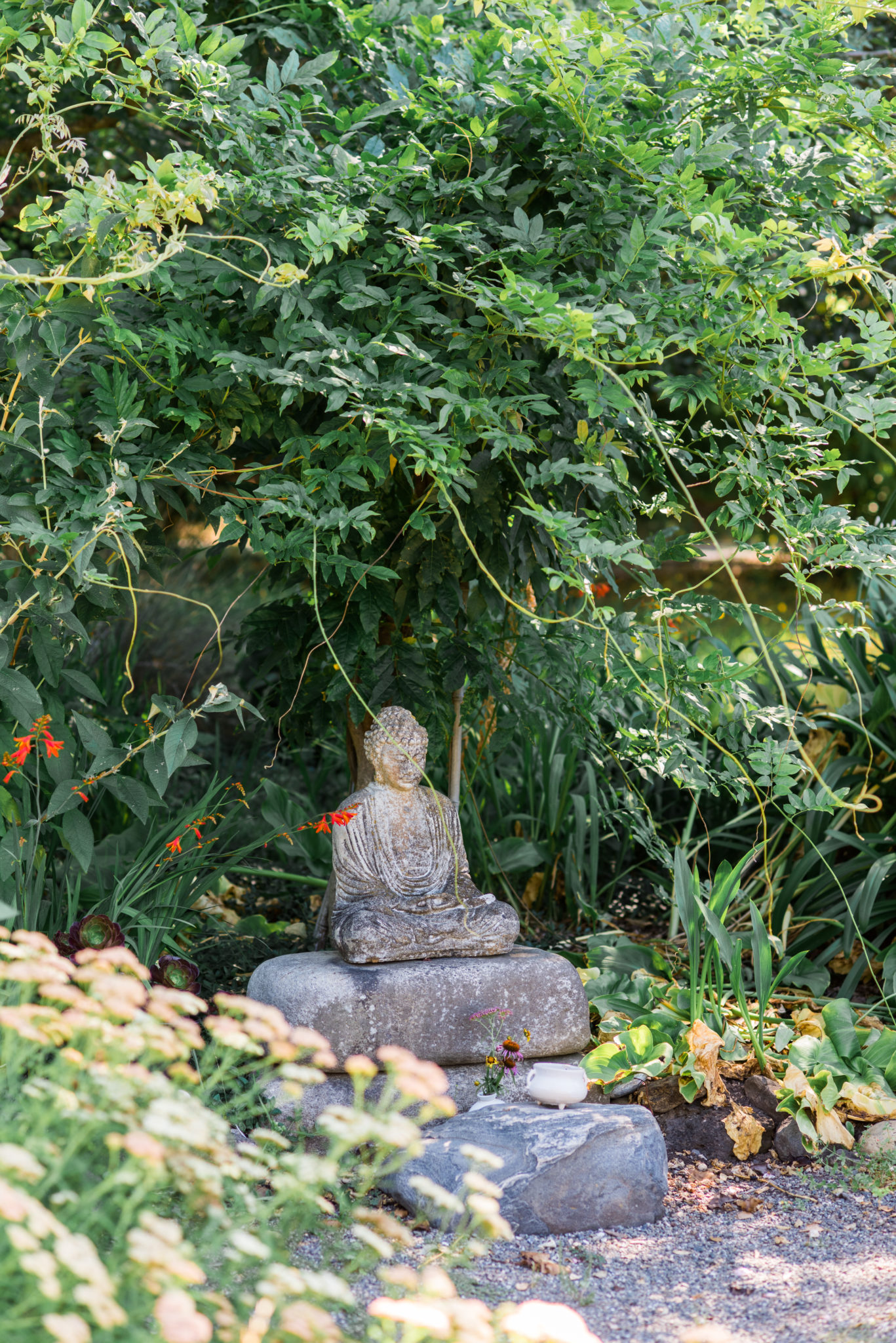
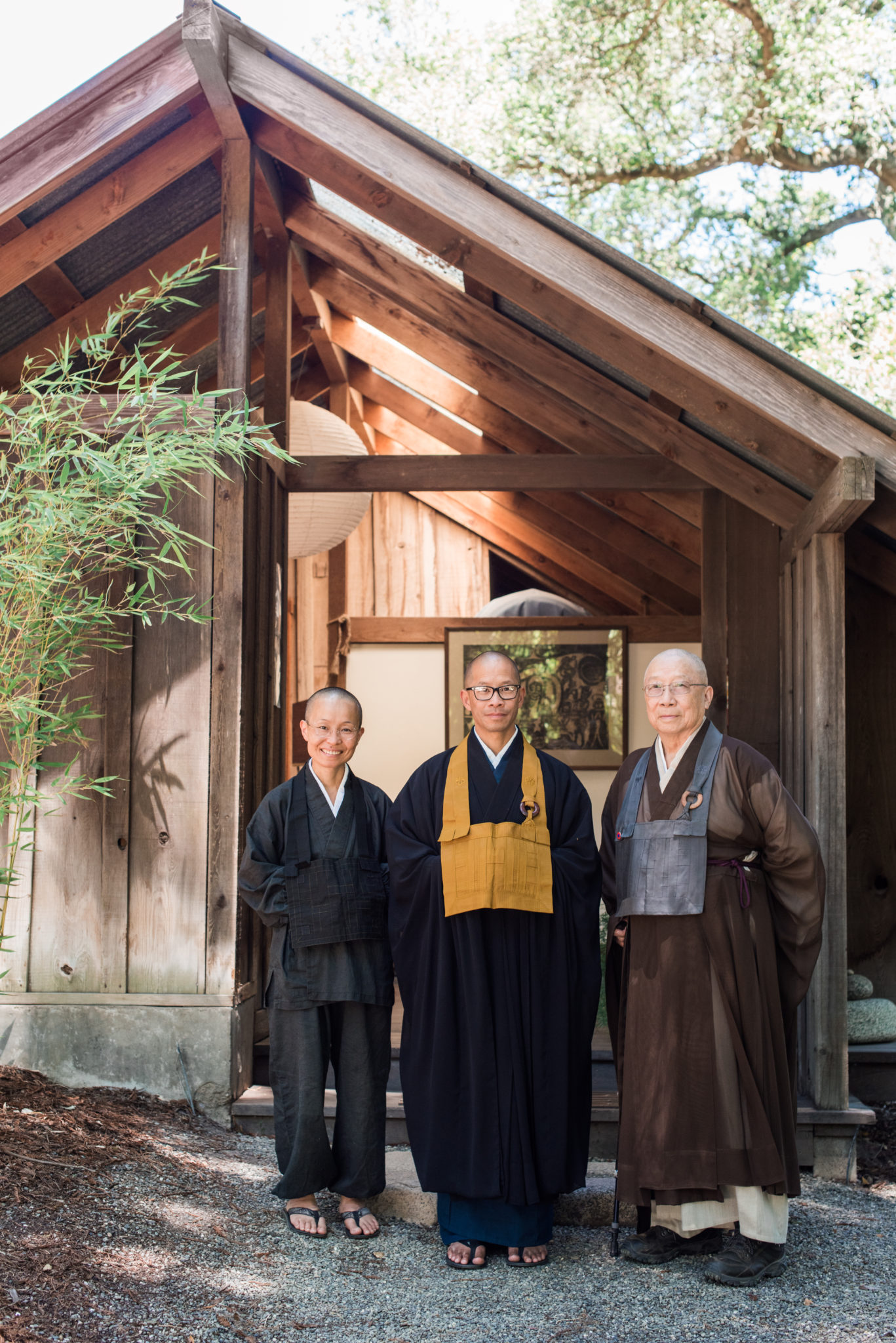
Buddha statue in the garden of the Sonoma Mountain Zen Center. (Rebecca Chotkowski)From left to right – Kashin Kwong, Nyoze Kwong, and Jakusho Kwong. (Rebecca Chotkowski)
Sonoma Mountain has been a spiritual focal point for subsequent residents as well. The Sonoma Mountain Zen Center, founded on 80 acres of woodlands in 1973, draws Zen Buddhist acolytes from around the world, and its location is central to its mission. Nyoze Kwong Fukojushok, vice abbot of the Zen Center and son of founder Jakusho Kwong-roshi, grew up on the mountain and observed that his community’s primary spiritual practice — zazen, or meditative sitting — is sustained by the center’s locale.
“The mountain sits through and endures all conditions, rain, snow — it doesn’t matter,” said Kwong. “It doesn’t move. It remains still, grounded to the entire universe. That concept is central to zazen. We connect ourselves to the mountain — and the universe — when we sit.”
And few if any observations on the spiritual mana of the mountain have been more apt and widely repeated than a passage from Jack London’s “John Barleycorn.” It’s been used, appropriately enough, on the back labels of wines bearing the Jack London Ranch appellation:
“I ride over my beautiful ranch. Between my legs is a beautiful horse. The air is wine. The grapes on a score of rolling hills are red with autumn flame. Across Sonoma Mountain wisps of sea fog are stealing. The afternoon sun smolders in the drowsy sky. I have everything to make me glad I am alive. I am filled with dreams and mysteries.”
The mountain still holds that power, making you feel glad to be alive, exerting its force on current residents. Among them is David Best, an artist renowned for his construction of stunning edifices from found materials — including elaborate temples that anchor the annual Burning Man celebrations in Nevada. Best has lived on the west side of Sonoma Mountain for five decades, and when he first moved to his property, he felt more aligned with the local ranchers than the art community. “I can’t claim to be a gentleman farmer because I’m not a gentleman, but this land — it does have a hold on me.”
As Sonoma County’s population has swelled, environmental pressures on the mountain have grown in lockstep. I saw it when I lived there. Best has seen it in the increasing volume of trash strewn along the mountain’s roads, and he noted that a kind of “neighborhood watch” mentality has gripped some of his neighbors over trespassing, littering, and vandalism. He understands their concerns, he says — he devotes a significant amount of time to simply picking up trash along Sonoma Mountain Road — but he refuses to adopt a territorial view of the mountain.
“This is one of the last places around here that people can just drive up and see a beautiful view,” he said. “People need to see these places. We don’t own this land. We’re just taking care of it for a while.”
Best’s observation speaks to the perennial problem of balancing public access with land conservation. That dilemma wasn’t really relevant for Sonoma Mountain until relatively recently, when a vision for both preservation and public recreation came to fruition.
The vision was promoted by the late conservationists Ted and Pat Eliot. Ted, a career U.S. diplomat, and Pat, who had worked as a teen at Jack London Ranch resort, bought a 50-acre parcel on the mountain in the 1970s and became involved in efforts to preserve the mountain’s landscapes and expand public access, co-founding Sonoma Mountain Preservation in 1993. Soon after its formation, the group stopped an ambitious development project planned for the southern portion of Sonoma Mountain’s summit. It then arranged the transfer of 600 acres of the Sonoma Developmental Center to Jack London State Historic Park and drew up a set of development guidelines that ultimately was approved by the county.
The Eliots established a conservation and trail easement on their land, and spent their later years cajoling neighboring landowners to take similar steps, resulting in North Sonoma Regional Park, which now ends at a loop at the former Eliot property on the mountain’s east slope. The process was seldom if ever antagonistic, says their daughter Wendy Eliot, conservation director of the Sonoma Land Trust.
“It took 17 or 18 years, but they accomplished what they set out to do,” said Wendy Eliot. “Nature was essentially my father’s religion.”
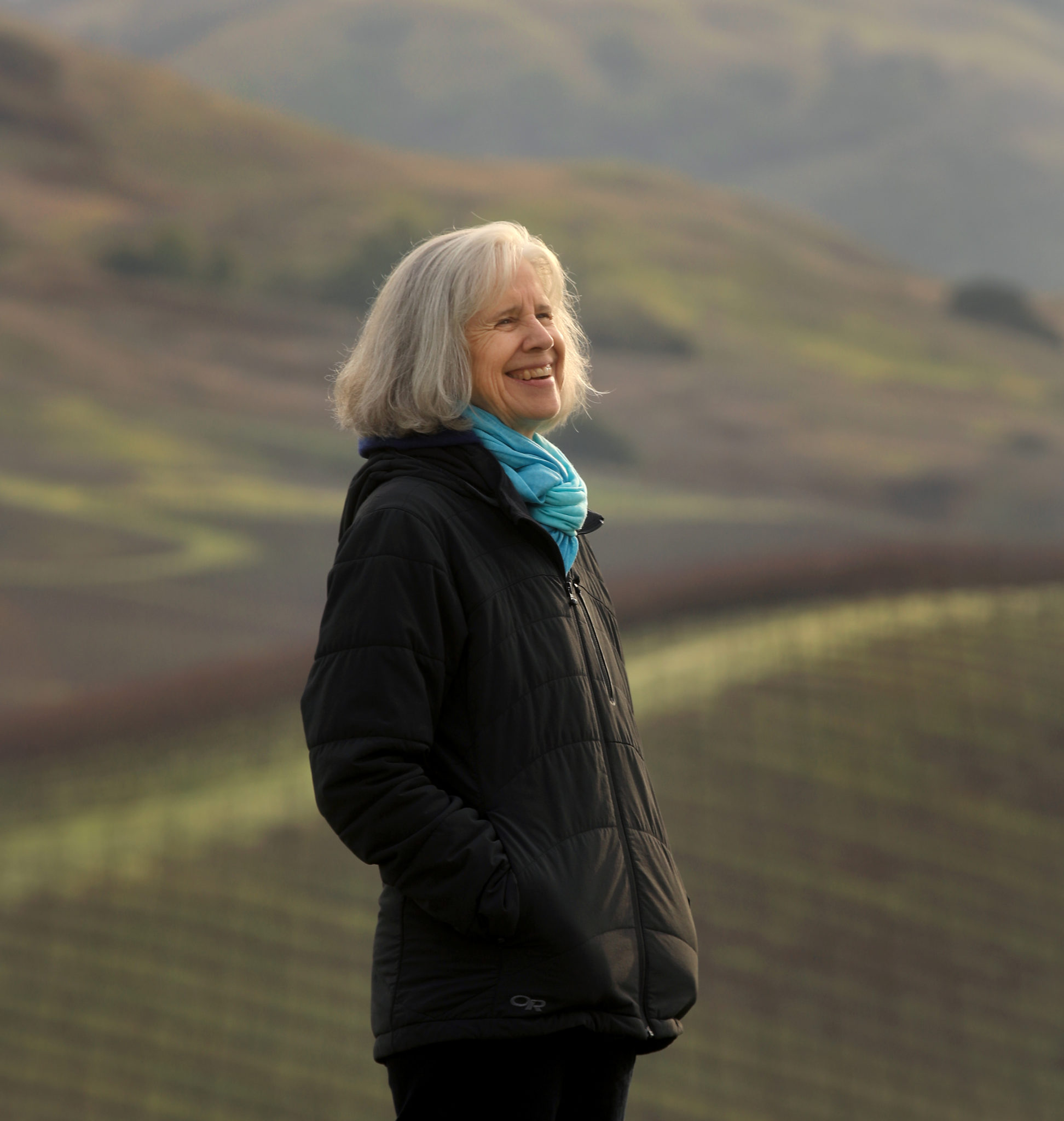
Wendy Eliot, conservation director of the Sonoma Land Trust. (Kent Porter)
Sonoma Mountain has entered a new era with the establishment of the regional park. Residential subdivisions are no longer a threat, but the danger the mountain could literally be loved to death by visitors is real. So what’s the best way forward?
“It’s a matter of balance,” says Steve Ehret, project manager for Sonoma County Regional Parks and a lead figure in the design of the North Sonoma Mountain open space. Ehret’s charge is to implement the vision promoted by the Eliots and their allies — a vision that placed equal emphasis on public access and preservation. Sonoma Mountain needs a public constituency for effective preservation, Ehret says, and the new North Sonoma Mountain open space — along with a network of other public lands, including Jack London State Historic Park, Crane Creek Regional Park, and the Fairfield Osborn Preserve east of Rohnert Park — provide that.
“We have to manage the mountain so the resources aren’t degraded, and direct experience through public access is the best way to accomplish that,” Ehret said.
Mickey Cooke has a far longer perspective on the mountain’s evolution than most people alive today. She was close friends with Pat Eliot and worked with her to found Sonoma Montain Preservation. She knew Charmian London, Jack London’s widow, and was also pals with Milo Shepard, London’s grand-nephew. Now 88, she lives in a small but airy home tucked into the flank of the mountain near Glen Ellen.
For much of Cooke’s early life, the mountain was mainly divided among large ranches, and horses were a preferred means of transport. As a young woman, she’d often ride her horses along the mountain’s trails and ridgetop meadows from Glen Ellen to Petaluma and back. The memories of those rides and her beloved mounts remain vivid. “Sometimes I wake up and I can still hear them talking to me,” she said, “just like they’re outside my window.”
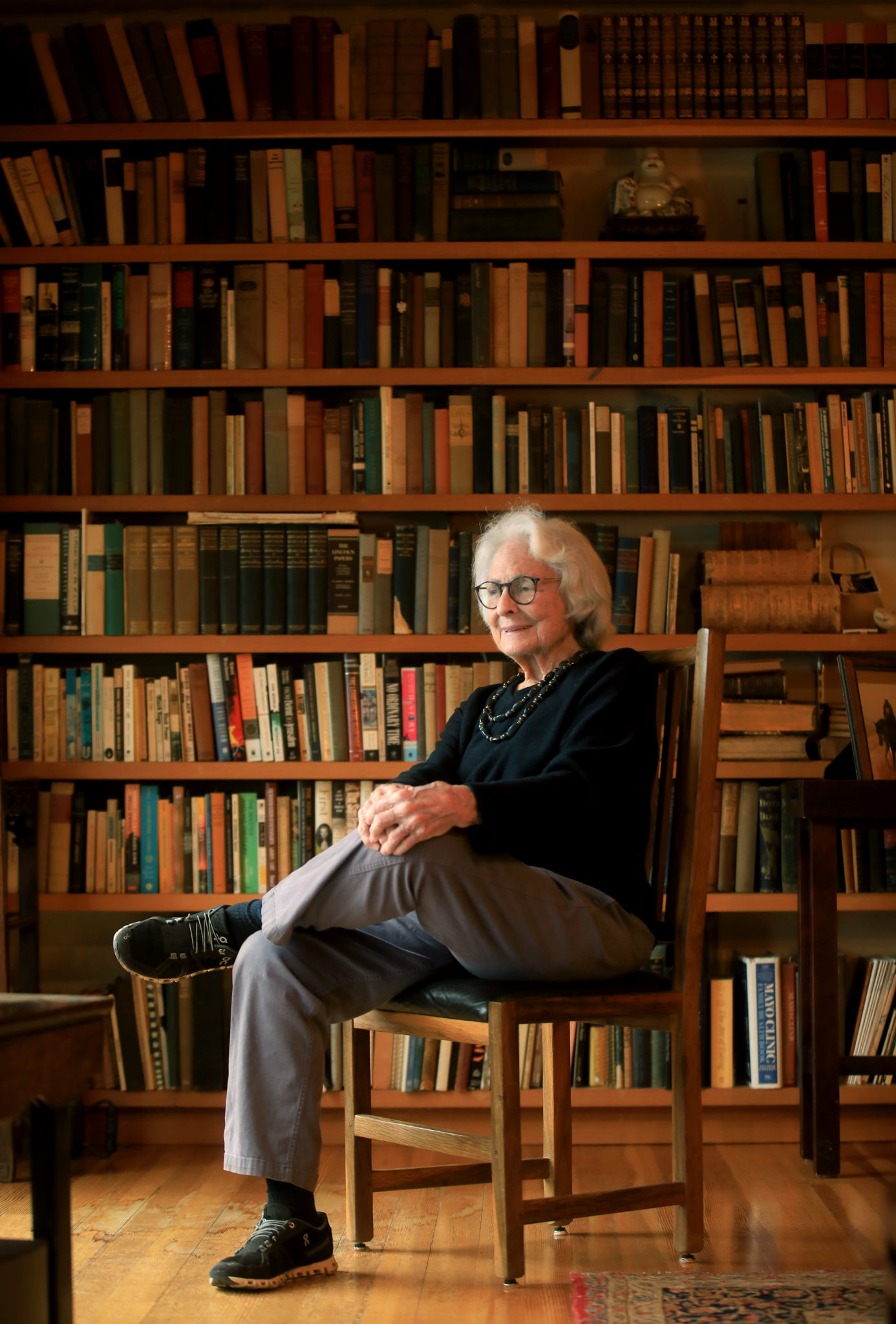
Mickey Cooke, 88, has witnessed generations of change on Sonoma Mountain. (Kent Porter)
As the mountain’s large holdings were broken up into smaller parcels, long horseback transits became impossible, and these days, horses are a relatively rare sight on regional park trails. An era has passed, an issue of considerable poignancy for Cooke. She grew up during a period when people had strong community and working roots in the mountain. They were ranchers, grape growers, local businesspeople, artists.
And now?
“This street used to have bunches of kids on it, running around, exploring the woods,” Cooke recalled. “Now it’s all just people coming up from San Francisco to stay for weekends at short-term home rentals. Who can afford to live here now? Not working people.”
She doesn’t know how long she’ll stay on the mountain. “It’s been tough. It still is, really. But there’s something about this place. It just makes you want to stay.”
Tensions between established customs and new priorities, between longtime residents and newcomers, constitute a baseline narrative for the mountain, one that continues to play out. That’s obvious at Belden Barns, a combination grape ranch and farmstead near the junction of Pressley and Sonoma Mountain roads. This property has particular significance for me: It’s where I lived for 15 years, back when it was Steiner Vineyards. Long before that, it had been a resort called The Highlands with tennis courts and a dance hall that was turned into a speakeasy during Prohibition. In the 1940s, it produced sheep and prunes before my friend David Steiner planted it with cabernet sauvignon vines in the early ’70s.
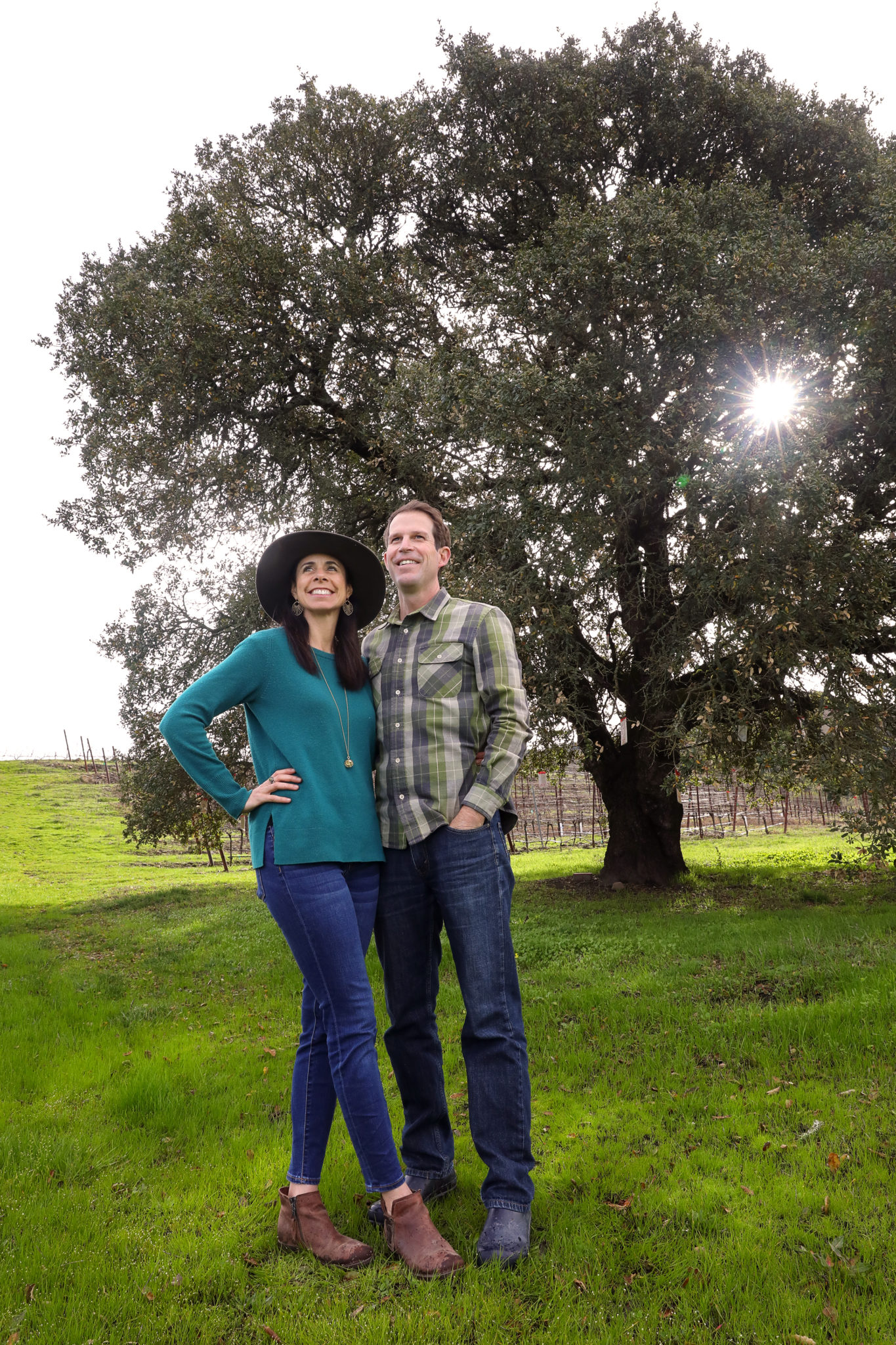
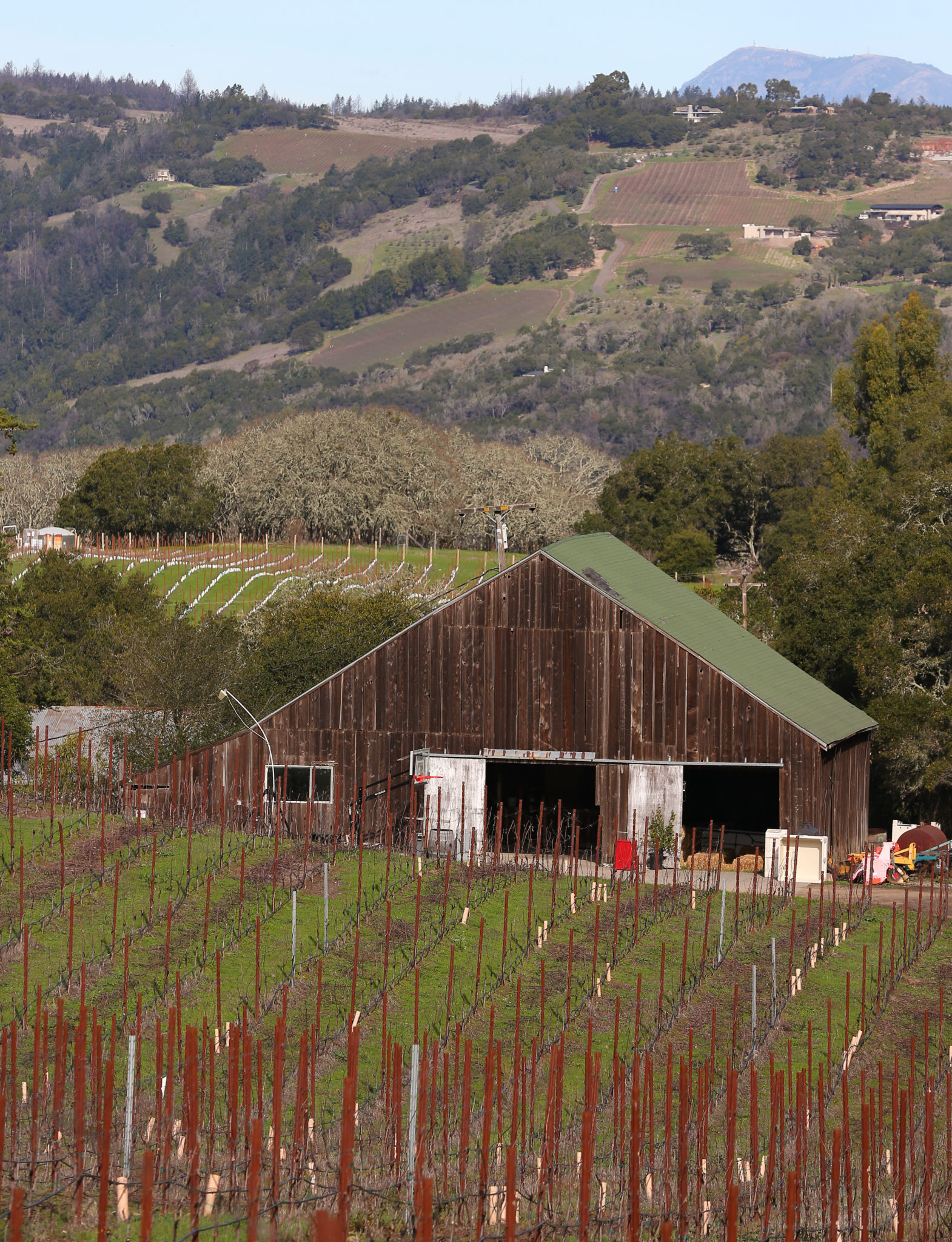
Nate and Lauren Belden at the Wishing Tree on their Belden Barns property, on the northwest shoulder of Sonoma Mountain, near Santa Rosa. (Christopher Chung/ The Press Democrat)The barn nestled among the vineyards on the Belden Barns property. (Christopher Chung)
It’s now the property of San Francisco residents Nate and Lauren Belden, a couple with backgrounds in finance and marketing who bought the 55 acres in 2005 for $3 million.
Nate Belden had grown up with sets of grandparents who owned a Montana cattle ranch and a farm in western Nebraska. When he moved to San Francisco with his family he became interested in grape growing and winemaking, taking enology, viticulture, and organic farming classes at UC Davis and Santa Rosa Junior College.
He and Lauren shared an expansive vision for their property: a small farm producing a variety of comestibles from wine to truck crops and cheese, a campus for the teaching of sustainable farming techniques, and a destination for Wine Country tourists. In 2014, the couple filed plans with the county to build a 10,000-case winery, a creamery, farmworker housing, and a tasting room and hospitality complex; they also wanted a permit to hold special events at the property, including weddings and harvest parties.
County planning commissioners unanimously approved his project, but a group of neighbors, worried about increased traffic and disruption of the area’s bucolic atmosphere, balked and appealed to the Board of Supervisors. A long legal and political tussle followed, with hard feelings developing on both sides. Finally, an agreement was reached that allows the couple, parents of two young kids, to build a small winery and a creamery that will produce up to 10,000 pounds of cheese a year. The Beldens also will be allowed to conduct a limited number of special events and conduct wine tastings by appointment.
I dropped by the former Steiner Vineyards property to revisit old memories and appraise the Beldens’ operation. I was met by Nate in the ranch’s parking area. He’s a lanky, fit, cheerful man who seems wellsuited to his new agrarian life. As we shook hands, I looked around and was somewhat startled by what I saw. The vineyards were well-maintained but all the giant eucalyptus trees that had lined the long driveway to the main compound had been felled. “Some of them came down across the road, and we decided they were too dangerous to stay,” Belden said.
Other trees — some huge cypresses and several old pear and prune trees — also had been removed, as had a lovely European chestnut that had shaded my porch. For that matter, the porch was gone. As was my old cabin. And the same was true for Steiner’s house: Just a lone wall fragment remained. The lower pasture where I had grazed my sheep had been worked over and compacted by heavy equipment and vehicles.
Nearby, a dirt driveway had been carved out and a modular building put up on adjacent flats. Behind the main compound, a marshy meadow that had supported a variety of birds had been plowed and cultivated, growing specialty vegetables, orchard fruit and berries — the work of a young couple who lived and farmed on the property. Construction materials, farming equipment and industrial oddments were piled up here and there. I recalled the old ranch as a shaded, cool, and green place. Now everything looked jumbled and naked beneath a beating sun.
But Belden was proud of the changes, and as he talked, I could understand — if not fully appreciate – his perspective. He acknowledged the long dispute with some of his neighbors had left some bruised feelings. Now, however, “Relationships are generally cordial. Many neighbors took the time to come and visit the site and discuss our intentions. Those folks went away impressed. Other neighbors that publicly spoke out against the project at county hearings have since come up to us and apologized. In the end, you find that you’re just not going to be able to make everyone happy, which is hard for Lauren and me because we feel we have the best of intentions.”
Talking to Belden, I couldn’t help but feel this was a conversation that had been rehashed many times on the mountain over the last 150 years — perhaps including at that very site.
And Belden Barns remains a work in progress, not a realized dream. When the hospitality complex, farmworker housing, creamery, landscaping, and agricultural plots are fully developed, it’ll all likely look as bucolic and appealing — if different — as the ranch of my memory. I had no right to feel proprietary about the place; I had been a mere tenant, not an owner. Yet, it all somehow gnawed at my heart. For me, the mountain is a hallowed place. And, as David Best intimated, even its owners are mere caretakers, placeholders in the flow of geologic time.
But maybe that’s the greatest solace. Change may be inevitable, but the specific impacts of change are not necessarily immutable. The mountain has been logged. The trees grew back. Houses were built. Crumbling foundations are all that remain. It’s clear to me that we can make our marks on the mountain — but in the fullness of time, they will prove superficial. The mountain will endure.
Jewelry maker Siri Hansdotter thrives on the “scattered” nature of her work, like shaping new pieces, dreaming and researching, and picking the work of other artists to sell at her Petaluma store, In the Making.
Hansdotter says she’s typically good at forging ahead with work, but a late-January break-in and theft at In the Making brought her momentum and morale to a halt. “I just wanted to push it away,” she says.
When Hansdotter arrived at her store in the early morning of January 29 to meet with police and the shop’s co-owner, Jenn Conner, she discovered the smashed glass of her newly acquired custom oak display cabinet. All her handmade jewelry inside had been stolen. A collection worth about $30,000.
“I couldn’t look at it,” she says. Conner and a friend later cleaned up the loose shards of glass.
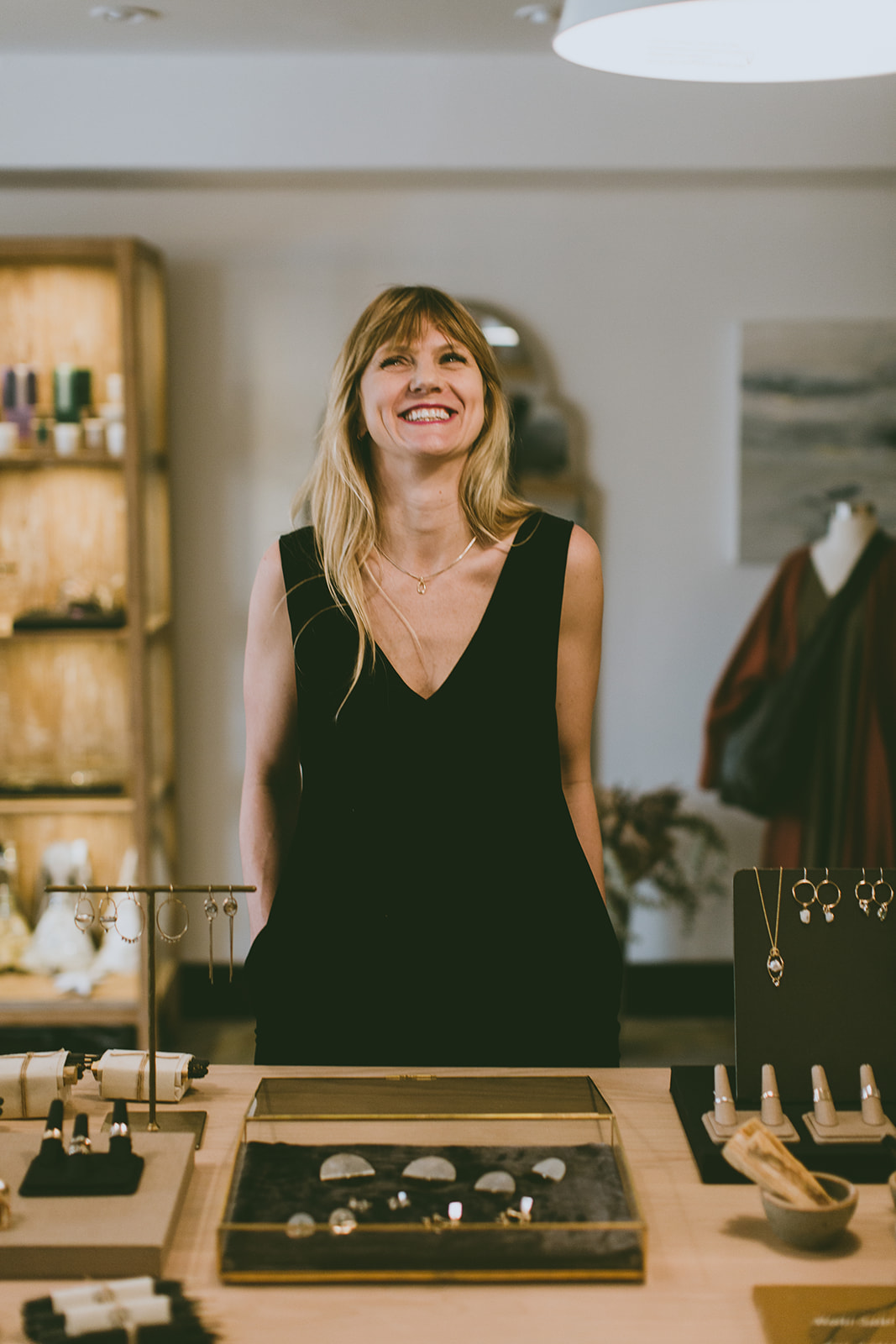
Siri Hansdotter, a Petaluma jewelry maker, works in the shop she co-owns, In The Making. (Courtesy of Siri Hansdotter)
Hansdotter’s shoestring-budget business—for which she never took out a business loan—didn’t have insurance to cover the loss, and she felt overwhelmed by the prospect of having to start over. She describes the weeks since the theft as a “slow rebirth.” People encouraged her to start a GoFundMe campaign but “it didn’t feel right,” she says. Instead, she has resolved to get to work replacing her stolen inventory.
The process for making a single piece of jewelry can take weeks, and includes a number of steps that require great precision and skills. The lost wax method Hansdotter employs involves pouring molten metal into a wax cast that melts away as the jewelry cools into shape.
She calls the casting process terrifying. “You spend so much time working on a (wax) model. If you have a casting failure, it’s gone,” she says.
In the next step, Hansdotter takes a hammer to her pieces. Distressing her work is a crucial part of her process that yields her signature “organic” look.
A successful late February sale helped lift Hansdotter’s spirits and boost her business. Then, Hansdotter says, “the next incredible thing happened.”
Following an Argus-Courier article about the theft, people came into the store to give Hansdotter precious stones they had acquired but weren’t using. She reluctantly, but gratefully, accepted the gifts.
“It’s the Minnesota in me,” she says. “I want to be on the other side of that exchange.”
Getting the display fixed also helped. Customers had been asking if the oak-framed case with shattered glass was an art installation—not necessarily an odd question considering the innovative modern styles In the Making offers, like pretty raw edge purses by Jenn Conner and the irregular, organic shapes that make up Hansdotter’s jewelry.
Hansdotter is approaching the rebuild of her collection with a particular focus on what kind of pieces she is going to reproduce. She’s opted for 14k gold and sterling only, instead of the vermeil she had been using to expand her audience. She says a piece made from precious metal “really feels like something special—I would save up to afford it.” She will also expand her collection of men’s jewelry.
Most importantly, she wants to focus on creating the kind of pieces that make her happiest.
Maybe this is the “good” Hansdotter hoped would come out of this bad situation. “I’m working hard and maybe I’m more excited than I’ve ever been about the new work,” she says.
For a creative artisan like Hansdotter, a silver lining that can’t be found can certainly be cast.
Does your desire to save money compete with your desire to be a bit more stylish? Do you have boutique taste with a big box budget? Enter outlet shopping. We’re not talking giant label designers in expansive shopping malls — in Sonoma County, we’re lucky enough to have a few boutique-sized outlet options from local companies and more. Click through the above gallery for details.
We only meant to find a few of our favorite things at Oliver’s Market. We ended up with more than 100 because, well, it’s Oliver’s and every aisle has a few more surprises.
From Princess cakes and a ridiculous array of cheeses to organic sauerkraut and every local brand of bacon we can think of, it’s always been one of our favorite spots to find gourmet local items (and not so local).
Sofia Englund, digital editor for Sonoma Magazine, and me (dining editor for Sonoma Magazine) spent a leisurely morning walking through Oliver’s at Stony Point snapping pix of our must-haves (or want-to-haves). Click through the above gallery to see our favorite things.
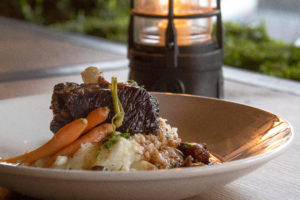
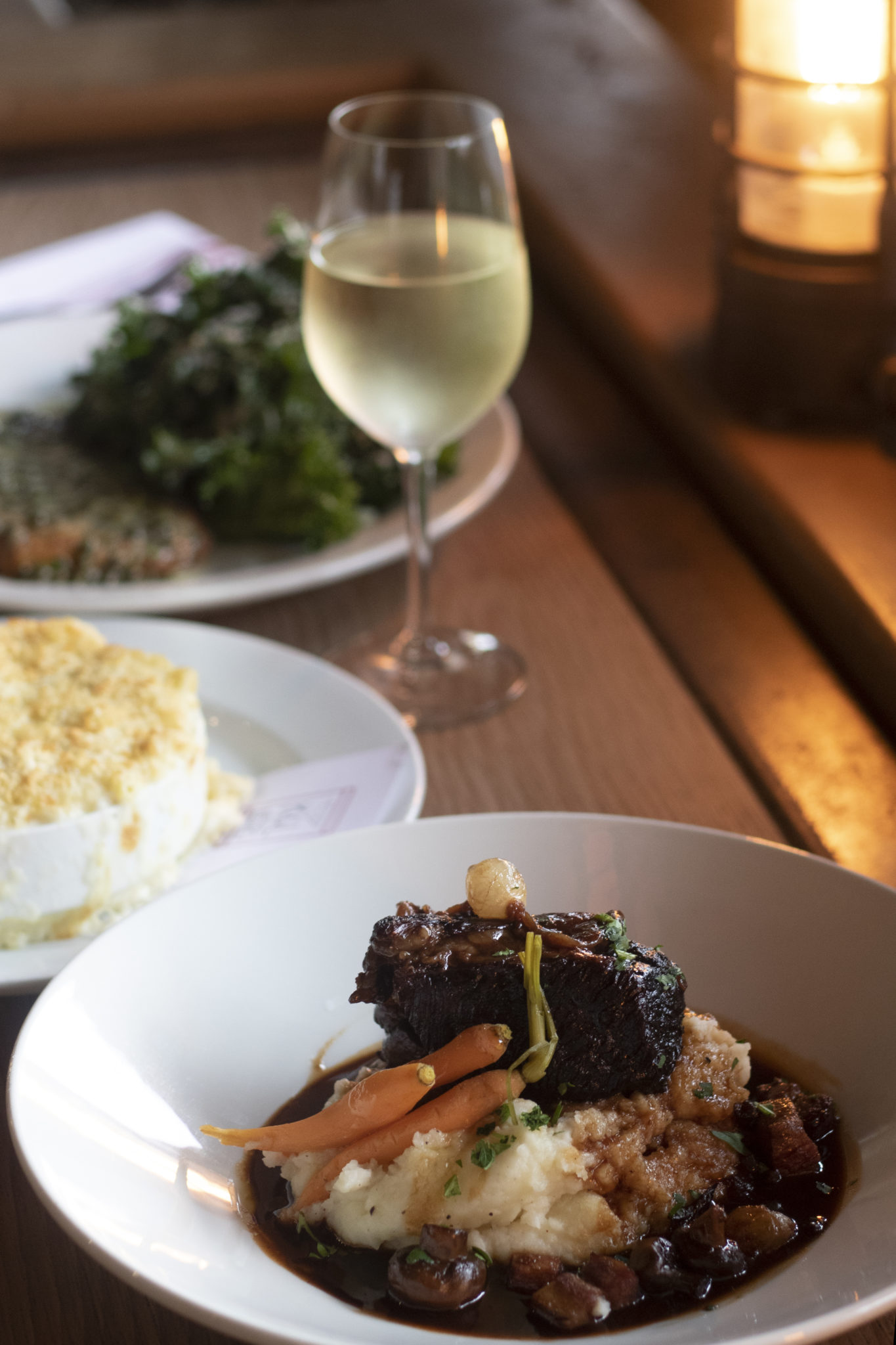
Short ribs at K&L Bistro in Sebastopol. (Heather Irwin)
Truly, spring is one of the most beautiful times to be in Wine Country. Hills are still green and we’re all ready for longer days and shorter nights. Though plenty of restaurants have opened in the last few months, I’ve had a wave of nostalgia for some classic spots that have either changed significantly since my first visit, opened a new location, or just drew me back in for another look. So get out and enjoy yourself this spring — and that’s an order!
Click through the above gallery for photos.
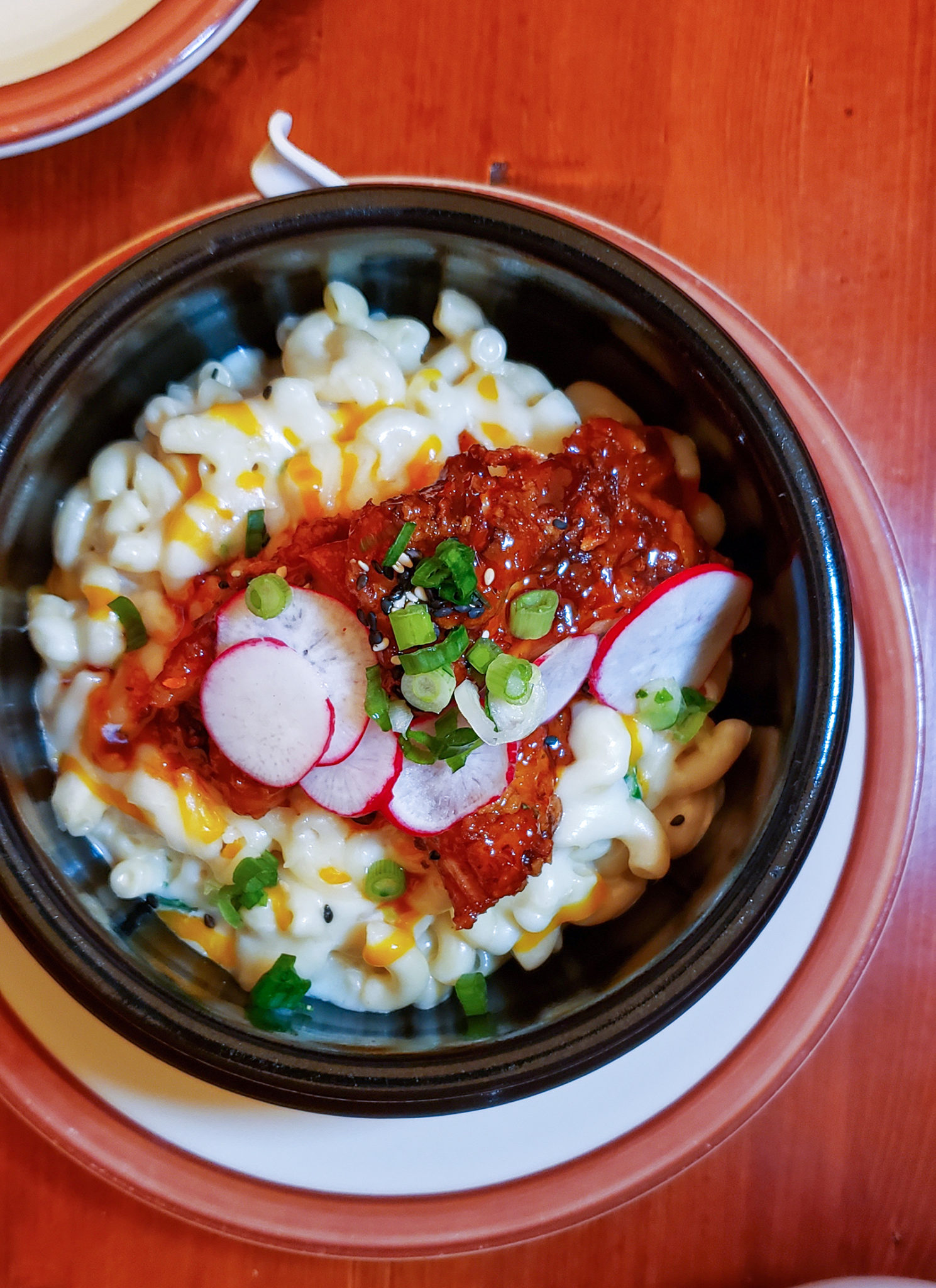
Mac and Crack: KFC (Korean Fried Chicken) and macaroni at Pat’s International in Guerneville. (Heather Irwin)
Pat’s International, Guerneville
For nearly 80 years, Pat’s Cafe quietly persisted in downtown Guerneville. With a focus on breakfast and lunch, meals were hearty workaday diner standards with family- friendly prices and fisherman-friendly hours. And for three generations under the ownership of the same family, not much changed.
Time meandered by like the nearby Russian River as salmon runs came and went. Floods came and went. Lazy Bear weekends, summer resort-goers, and Sisters of Perpetual Indulgence came and went.
Then came David Blomster and his Korean Fried Chicken.
Six years ago, Blomster began quietly hosting an evening pop-up at Pat’s that featured Asian-inspired dishes with California flair. It’s messy, saucy, cram-it-in-your-face kind of food, with his sweet-savory fried chicken as the star. It stuck.
Now, Blomster is heading the whole Pat’s show, taking ownership of the restaurant, removing the old bar, creating a new menu, and changing the name to Pat’s International to refl ect the gentle mashup of cuisines he’s featuring.
You can sit at the retro-cool diner counter or pad into the dining room with wall-to-wall green carpeting and wooden picnic tables. Napkins, silverware, and jam are already on the table.
Though you can certainly stumble into Pat’s with blinders on, it’s the journey into the town’s history and Blomster’s quirky design sensibility that’s a huge part of the appeal.
To take anything at Pat’s at face value is to miss everything. Every surface tells a story, from the mottled “pecky cypress” wood on the walls to the geometric plastic ceiling tiles that are actually an art installation by artist Jim Isermann, to a meticulously detailed 1950s Russian River map made by Bill Schaadt, considered one of the world’s greatest fly fishermen.
Everything at Pat’s comes with a side of history. Or fried chicken. Your choice.
Cinnamon donut at Pat’s International in Guerneville. (Heather Irwin)
BEST BETS
The KFC Sandwich, $10: The classic fried chicken sando comes with slightly spicy sweet and savory sauce, vanilla slaw, aioli, and a brioche bun. Or skip the chicken and get a fried KFT, made with tofu.
Mac and Cheese, $17.50: You can go with the plain mac, made with cheddar, Gruyere, and Parmesan cheese, but why not sex it up a little and throw some Korean Fried Chicken on top? If you can eat the whole bowl, I salute you and your powerful appetite.
Ham Benedict, $15: Why hasn’t everyone thought to make eggs benny with cheesy Mornay sauce instead of hollandaise? Details. Truly a triumph of yum.
Huevos Rancheros, $14: The classic made with layers of crispy tortilla, black beans, a thick disc of scrambled eggs, salsa, and sour cream.
Chicken Pozole, $16: A heaping helping of mild green chile and shredded chicken soup with hominy. Guaranteed to cure your winter blues.
Also check out: Tofu scramble, biscuits and gravy, hot cakes and syrup, a grass-fed burger, a vegan soba noodle bowl, “Catch of the Day” fish and chips, or the Reuben.
Short ribs at K&L Bistro in Sebastopol. (Heather Irwin)
K & L Bistro
When this tiny Sebastopol bistro won a Michelin star in 2013, it was an honor as well as a curse for owners Karen and Lucas Martin.
“We never had aspirations for that. We were just cooking and doing what we loved. We just wanted to be this little bistro,” according to Lucas, who runs the front of the house while Karen tackles the busy kitchen. “I mean, at one point we had a crib in here,” said the father of two. “We just wanted to enjoy what we did.”
Though they lost the star in 2009, the food has only improved over time, with an expanded menu and an expanded restaurant. It’s changed up its Parisian focus to a more diverse and contemporary menu that includes their son’s ode to In-N-Out’s Animal-Style French fries, ramen, mussels marinière, chicken piccata that honors Ralph’s Bistro (a favorite, now-closed Healdsburg cafe), lush ravioli, and Brussels sprouts.
A full bar, hopping happy hour, and desserts worth saving room for make it one of the few places where I think the prices are worth every penny. K&L isn’t cheap, but I’m betting you won’t walk away disappointed. Or hungry. After several cringe-worthy meals at local restaurants at the same price point, K& L was like settling into a warm bubble bath — comforting, decadent, and worth savoring each delicious moment.
119 South Main St., Sebastopol, 707-823-6614, klbistro.com.
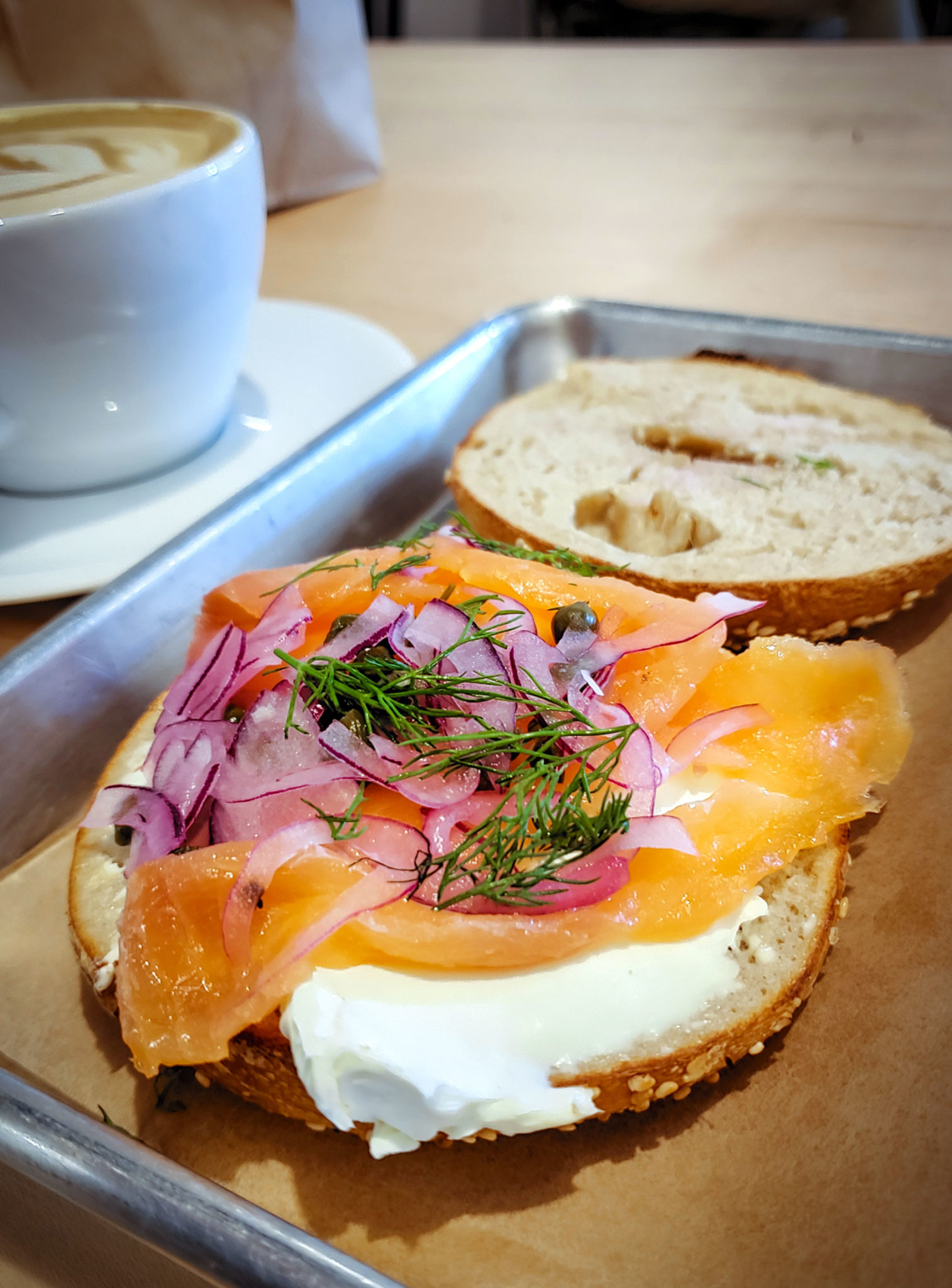
Lox and cream cheese sesame bagel at the Bagel Mill in Petaluma. (Heather Irwin)
The Bagel Mill
I am one of those tedious ex-New Yorkers who moan about how terrible the bagels are in California. We also gripe a lot about crummy pastrami and your ridiculous little pizzas. But mostly, it’s the bagels, people. They’re like puffy dinner rolls. It’s crazy. The Bagel Mill in Petaluma is the first local baker to even get close to perfection, both boiling and baking these ancient carbo-loaders into chewy, snappy rings of goodness — but with a Sonoma twist: farm-to-table sourdough whole-grain bagels.
Fresh oysters at Santa Rosa Seafood in Santa Rosa. (Heather Irwin)
Santa Rosa Seafood Raw Bar & Grill
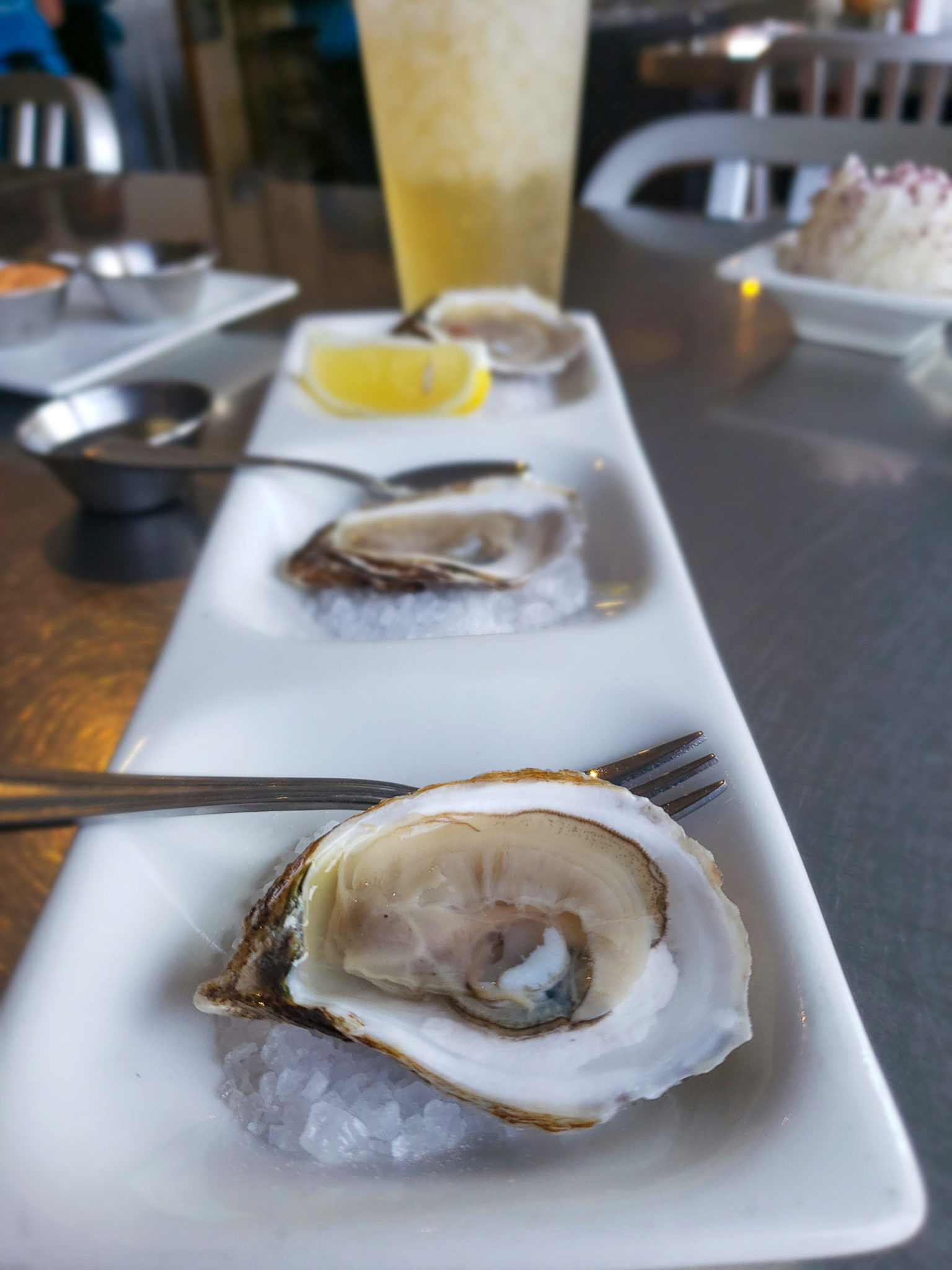
I don’t get the chance to do repeat dining at a lot of restaurants while in search of new experiences, but I happened to hit up Santa Rosa Seafood’s cafe the other day while searching for oysters. In many ways, it was bittersweet, having last been at the joined restaurant/fish market tasting oysters with owner Mike Svedise, who died unexpectedly in 2017. His presence still looms large. I was really impressed, however, to see that everything was as fresh and delicious as when it opened years ago. It’s really not much to look at, and parking is dicey, but fresh ahi poke is so good that they put the sauce — a smoky sesame oil or spicy mayo — on the side. Truthfully, it’s almost a shame to cover it up. The fish and chips are outstanding, as are the cioppino and the fresh oysters. The only thing missing was Mike, a bottle of vodka, and a little hot sauce to wash it all down.
John McGinnis, who runs the beekeeping business Buzz Off Honey, at his home at Goah Way Ranch in Petaluma. (Erik Castro)
After a career selling Harley-Davidson motorcycles, driving trucks for Clover Stornetta Farms, and managing the vehicle fleet for a local plumbing supply company, John McGinnis became enchanted with honeybees.
Suffice to say the fit 70-year-old grandfather of three isn’t really retired. From a 60-acre ranch on the western slopes of Sonoma Mountain outside Petaluma, he now builds and sells high-quality beehive components, captures and relocates wild swarms (45 swarms last year alone), and raises bees of his own: a dozen healthy hives at present. And from the insects’ bounty, he and his wife, Darlene, produce and sell honey, candles, soaps, and lip balm. “It’s an interesting hobby. I always tell everybody, ‘It’ll change your life,’” McGinnis says. “It definitely changed my life. It’s an amazing thing.”
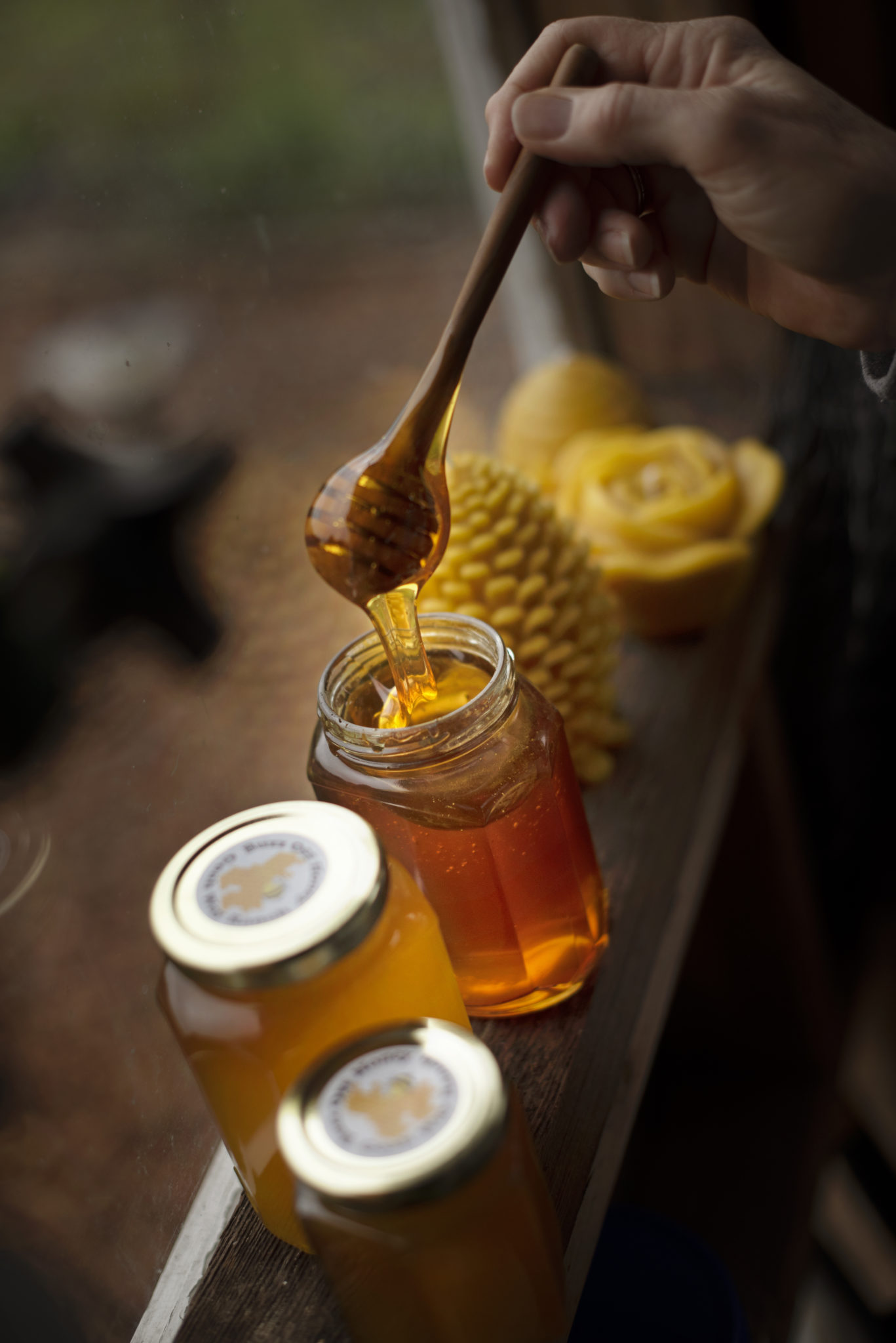
Darlene Gambonini-McGinnis dipping into honey created by Buzz Off Honey. (Erik Castro)
The land on which he and Darlene live and work, overlooking the Petaluma Valley straight to the bay, is dubbed Goah Way Ranch. That’s ironic, it turns out, given how friendly they are.
Set on a larger parcel owned since 1959 by Darlene’s father, who at age 82 also helps build hives, the ranch is in fact the best place to pick up the McGinnises’ various locally and lovingly handmade hive parts and bee products. That’s by appointment only, assuming one doesn’t take to heart the name of the couple’s honey brand, Buzz Off. Also sold in neat little jars at the nearby Penngrove Market, Buzz Off Honey is pure and natural to the utmost degree.
But it’s the affordable, made-to-order hive components for which John and Darlene are better known. Their catalog features a full range of wooden parts beekeepers need, including follower boards, wired frames, screened bottom boards, vented top covers, top feeders, telescoping covers, and hive stands. Everything is built from scratch except the frames and the hive boxes, which come unassembled.
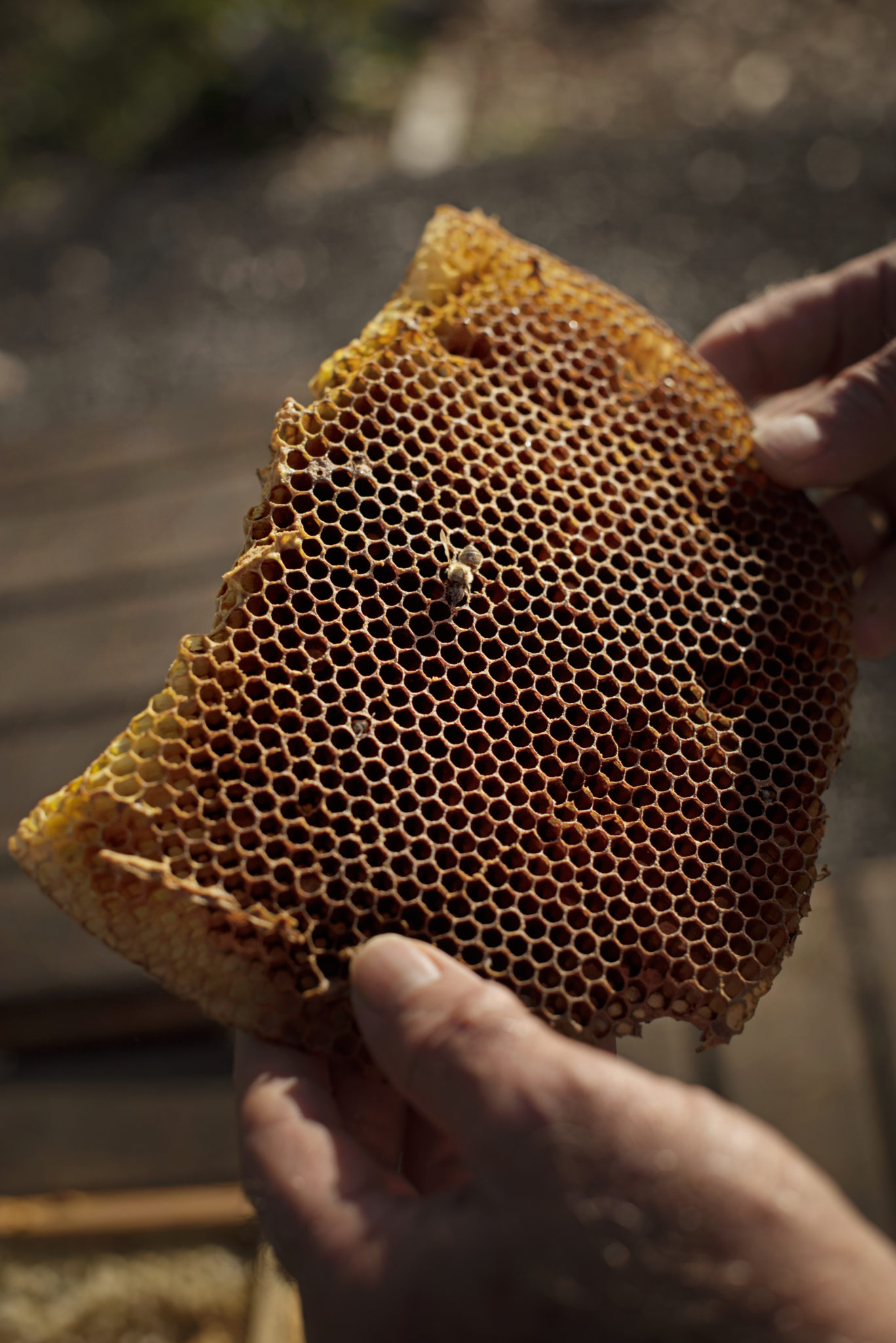
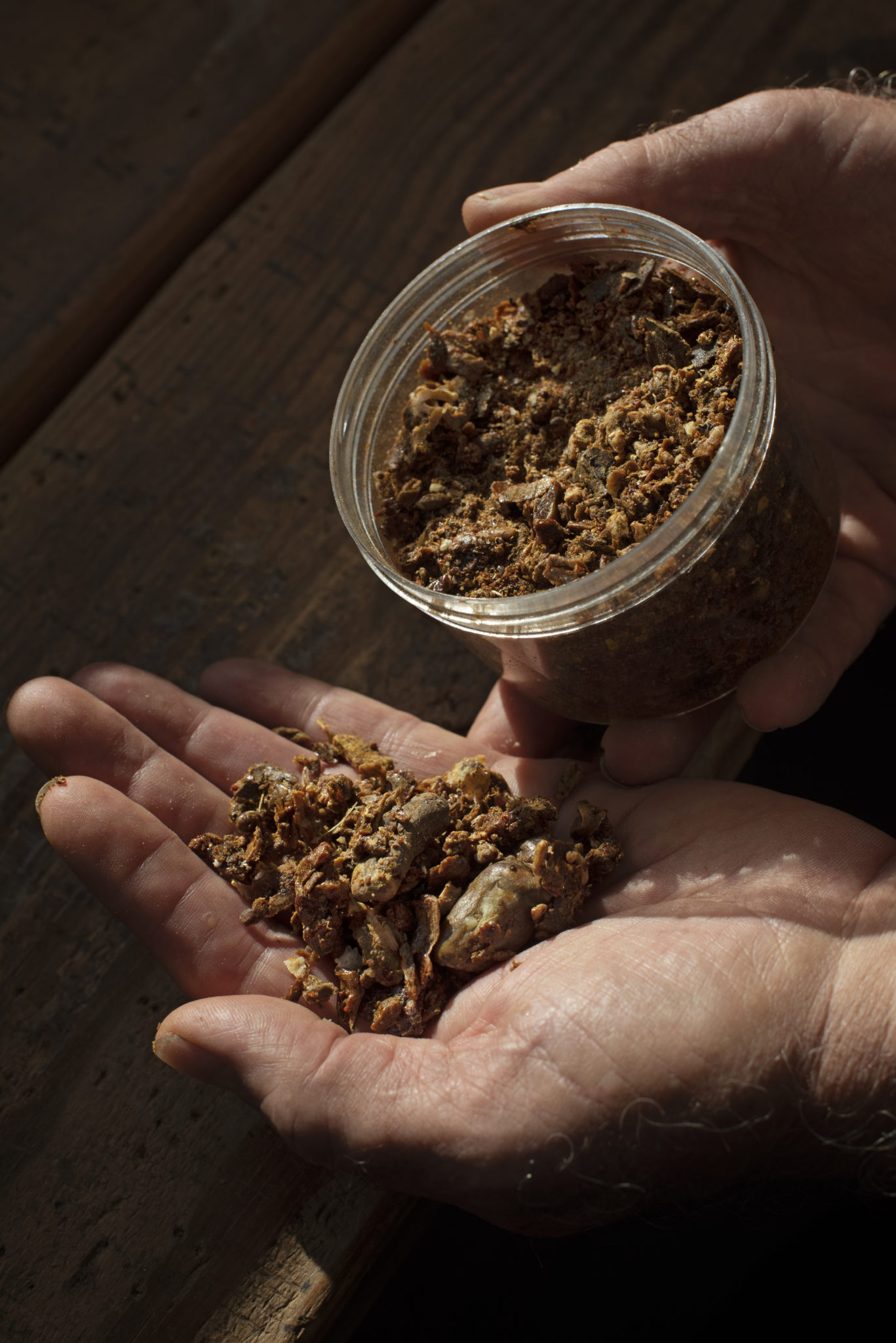
John McGinnis holds a honeycomb at Goah Way Ranch in Petaluma. (Erik Castro)John McGinnis holding a pile of propolis, the resinous material collected by bees from the buds of trees and used as a cement in repairing and maintaining the hive at Goah Way Ranch in Petaluma. (Erik Castro)
Many of these components, most notably the bee-friendly “double deep” hive, are constructed according to designs developed by local beekeeping legend Serge Labesque, whose classes at Santa Rosa Junior College have taught generations of Sonoma County beekeepers. It was Labesque’s classes that first inspired McGinnis to build his second act around bees. “They’re amazing creatures,” McGinnis says, “and we want to keep them going.”
To purchase hives, buy local honey, or get help with a spring swarm, contact Goah Way Ranch, 707-478-9787 or goahwayranch.com
Dutton Goldfield Winery in Sebastopol. (Courtesy of Dutton Goldfield)
There is an especially sweet slice of pinot noir and chardonnay heaven in Russian River Valley, on a short stretch of Gravenstein Highway North between Forestville and Sebastopol.
The legendary Mom’s Apple Pie shop is nearby, a reminder this relatively flat, grapevines-as-far-as-the-eye-can-see area once was overwhelmingly planted with apples. Today’s cash crops are pinot noir and chardonnay, and there is no better place than this 1.7-mile stretch of highway to sample wines from outstanding producers.
From north to south (Forestville through Graton to Sebastopol), five tasting rooms demonstrate the wide range of pinot noir and chardonnay styles that come from the Russian River Valley AVA and its cooler subset AVA, Green Valley of Russian River Valley. Luscious, juicy, fruity, savory, earthy, minerally, toasty, hedonistic, scintillating and intense … all variations of pinot and chardonnay are offered to those who cut through this swath.
As is a bit of history. The emergence of Russian River Valley and Green Valley as vital viticultural regions is largely attributed to Warren Dutton. His family’s Graton-centered ranch was planted predominently to apples — a viable business until the 1980s, when Washington state began taking command of the domestic category and demand for local Gravenstein apples and their juice dried up. Dutton began planting wine grapes, first chardonnay and later pinot noir, while shooing away naysayers who said the region was too cool to ripen wine grapes.
Gosh, were they wrong.
Dutton’s sons, Steve and Joe, took over the ranch after their father’s death in 2001. They now farm more than 1,200 acres of vineyards (and apples, too), keeping some of the grapes for their own wines and selling the rest. Refreshing natural acidity is a hallmark of wines made from Dutton-grown grapes, as they hail from sites cooled by the fog and breezes drawn in by the Russian River. That and a powdery, well-drained soil called Gold Ridge promote intensity in the grapes, with green apple and citrus characteristics typical in chardonnay and dark cherry, berry, cranberry and pomegranate notes in pinot noir.
Many others followed the Duttons to the Russian River and Green valleys for chardonnay and pinot noir production, and there are dozens of wineries to visit along Gravenstein Highway and its side roads. But it’s easy as pie to take this particular tasting route, less than two miles long and so very wide in intriguing wines.
From north to south…
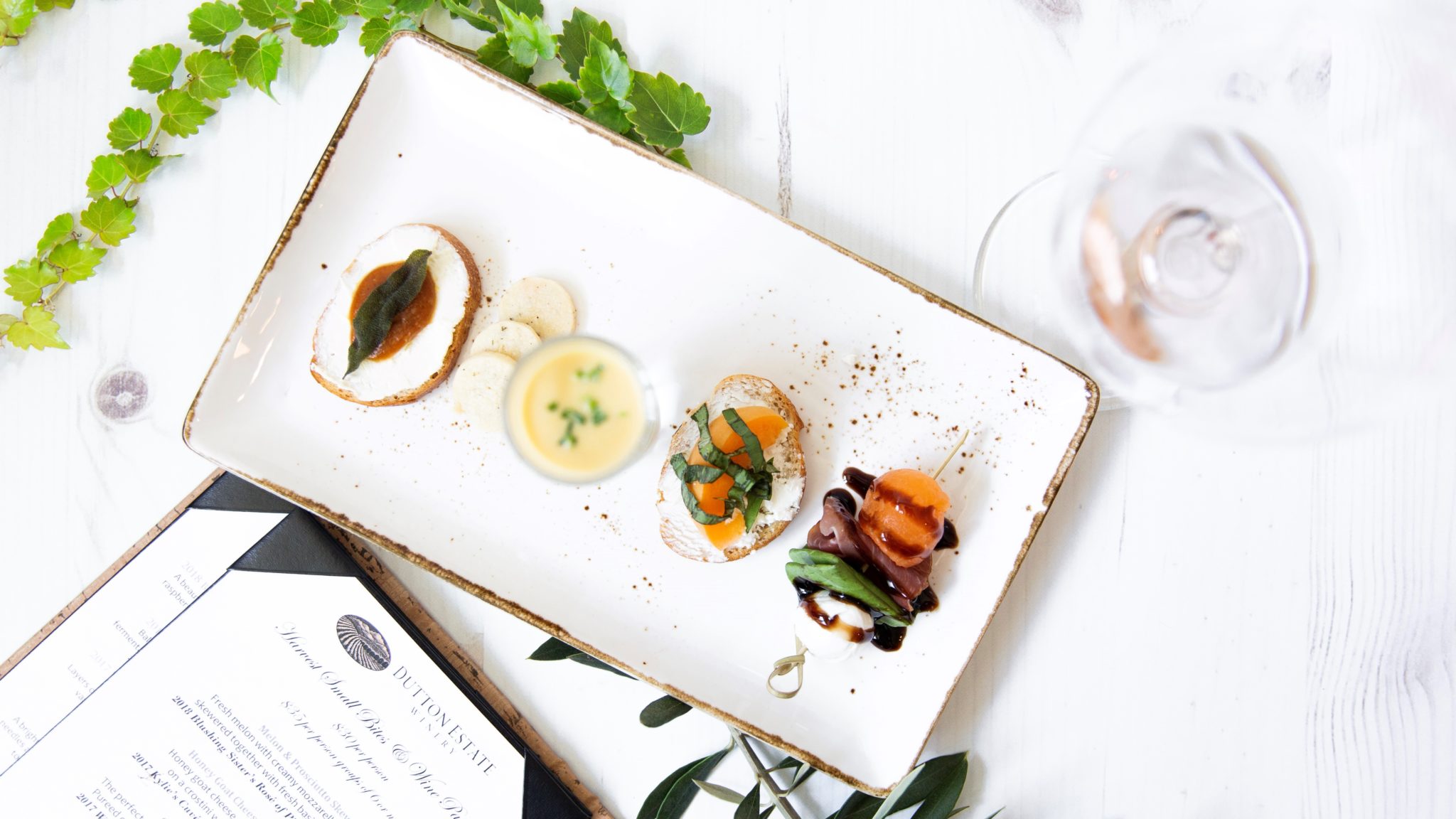
Small bites at Dutton Estate Winery in Sebastopol. (Courtesy of Dutton Estate Winery)
Dutton Estate Winery
Joe Dutton, with his brother Steve, co-owns Dutton Ranch and each owns his own winery. Several chardonnays ($42-$55) come from Dutton Ranch grapes, all of them balanced and vibrant.
For pinot noir, there is the Karmen Isabella ($46) and several pricier bottlings with familial connections. The Kylie’s Cuvee Sauvignon Blanc ($27), named for Joe’s daughter, is a like breath of fresh air on the palate.
The Casual Wine Tasting Experience at the tasting bar or garden can be upgraded to a wine and chocolate pairing, small bites with wine and a 90-minute experience including a visit to a chardonnay vineyard and cellar, followed by a tasting paired with cheeses.
8757 Green Valley Road (at Gravenstein Highway North), Sebastopol, 707-829-9463, duttonestate.com.
Dutton-Goldfield Winery
Steve Dutton joined former La Crema winemaker Dan Goldfield to establish this winery in 1998. Cherry-picking grapes from Dutton Ranch’s best sites, they bottle elegant, restrained chardonnays and pinot noirs. This is also one of the few area tasting rooms to offer riesling, gewurztraminer, pinot blanc, zinfandel and syrah, from not only Dutton vineyards, but also those in Marin and Mendocino counties.
The Discovery Tasting includes six wines, with appointments appreciated yet walk-ins welcome, based on availability. Reserve the Pinot Noir Road Trip or Classic Wine Experience; do the same for the wine and sushi and wine and cheese flights. If given the opportunity, be sure to taste the remarkably intense Rued Vineyard Chardonnay ($55) and exotic Fox Den Vineyard Pinot Noir ($62).
Carroll Kemp, Mark Estrin and Richard Crowell founded this brand, whose tasting room shares a parking lot with Dutton-Goldfield, in 2000. Their first wine was a syrah, and while syrah remains on the menu, chardonnay, pinot noir and a dynamite rosé of pinot noir have grown in production and stature.
Grapes from the estate vineyard in the Fort Ross-Seaview AVA, north of Bodega Bay, get the cold shoulder during the growing season, shuddering as they ripen. Somehow they do, retaining their crackling natural acidity and minerality in chardonnay and heady floral and forest-floor notes in pinot noir. Fruitiness and savoriness are in balance; these aren’t fruit bombs by any means. Estrin died in 2005 and Kemp left in 2017 to pursue personal projects. He turned winemaking over to his assistant, Tanner Scheer, and the wines are better than ever.
A new label and redesigned tasting room add sparkle to the visitor experience, which includes walk-in and elevated tastings, the latter requiring appointments. The wall of rosé bottles is a selfie slam dunk.
8400 Graton Road at Gravenstein Highway North, Sebastopol, 707-829-8500, redcarwine.com.
The wall of rosé bottles at Red Car Wine Co. in Sebastopol. (Courtesy of Red Car Wine Co.)
Merry Edwards Winery
It’s been all change lately at this venerable pinot noir production house. Founder/winemaker Merry Edwards sold the winery and brand in early 2019 to the Louis Roeder Champagne house and officially retired in February 2020. Yet her influence runs deep with Heidi von der Mehden, who worked under Edwards for five years and became the head winemaker before the sale to Roederer.
The pinots, at least for now, are concentrated, intense and firmly structured. The Sonoma Coast ($48) and Russian River Valley ($51) blends and single-vineyard bottlings from the estate and purchased grapes ($63-$68) are standouts. The Russian River Valley Sauvignon Blanc ($36) will please those who don’t favor assertive, herbal styles.
Visits are by appointment, with a new experience recently added: The Library Collection (six vintages of a single-vineyard wine). Or start with the more informal, stand-up Appellation Tasting or the seated Estate Tasting.
When he owned Sonoma-Cutrer Vineyards, founder Brice Jones focused on chardonnay and built a brand found on restaurant lists throughout the country. After 25 years, he sold the winery in 1999 and created Emeritus as a pinot noir producer, relying on estate-grown grapes. His daughter, Mari Jones, is at the helm these days, with Brice in retirement.
The pinot noirs are on the sumptuous side, mouth-filling yet energetic. Highly recommended are the Hallberg Ranch ($45), Pinot Hill East ($75) and Pinot Hill West ($75) pinot noirs, from estate vineyards. If it’s available, try the Hallberg Blanc ($40), an intriguing, textured white wine made from pinot noir grapes.
Walk-ins are welcome at Emeritus; appointments are suggested and are required for experiences that include tours, tastings of single-vineyard and library wines and small bites.
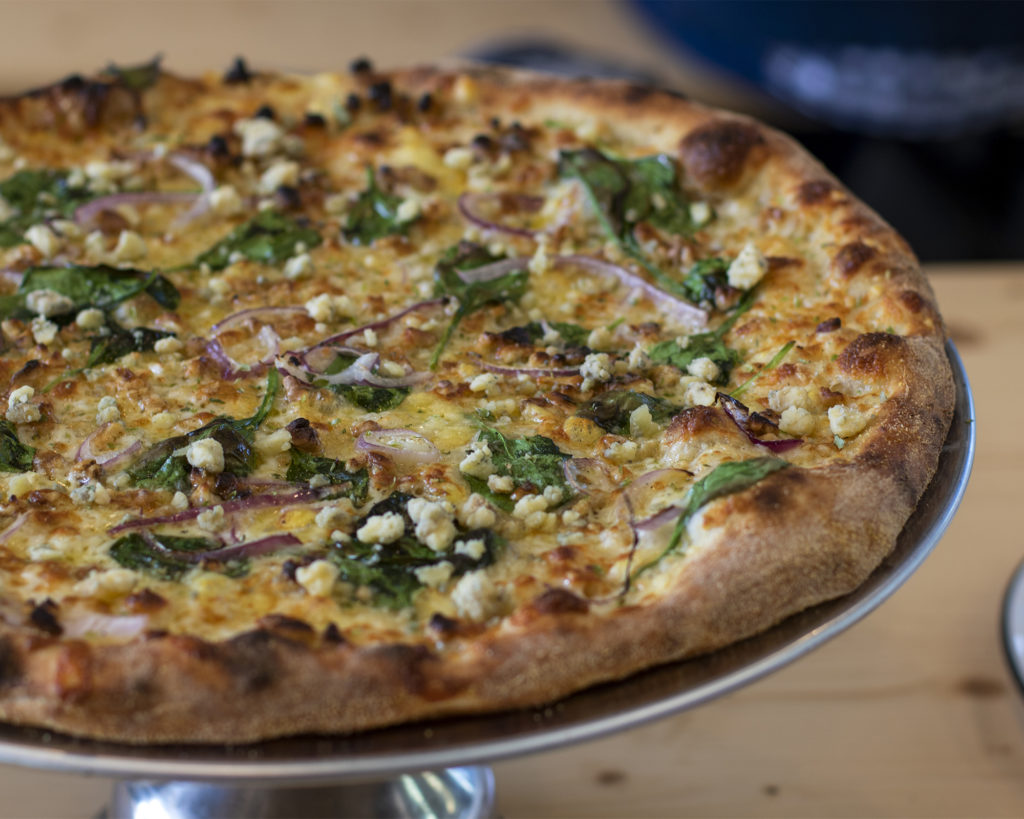
Detroit-style pizza from Acre in Sebastopol with broccoli raab, whole milk mozzarella and WM Cofield blue cheese. (Heather Irwin / Sonoma Magazine)
Acre Pizza has since expanded to several locations including Petaluma, Cotati and Sebastopol. Their pies remain one of the best in Sonoma County, something that owner Steve DeCosse has worked hard to maintain. -HI
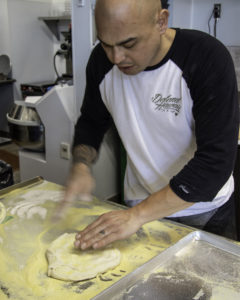
Alastair Hannmann talks about the glutinous fibers of pizza dough with the reverence of a theology student. After years passionately studying yeast, water and flour he is a true devotee of the art and science of pieology.
Working the ovens as the opening pizzaiolo of the new Acre Pizza in at Sebastopol’s Barlow market, he can turn a simple ball of fermented dough into a cheesy, crusty, bubbling masterpiece in a matter of minutes, then do it again and again and again as customers stream in.
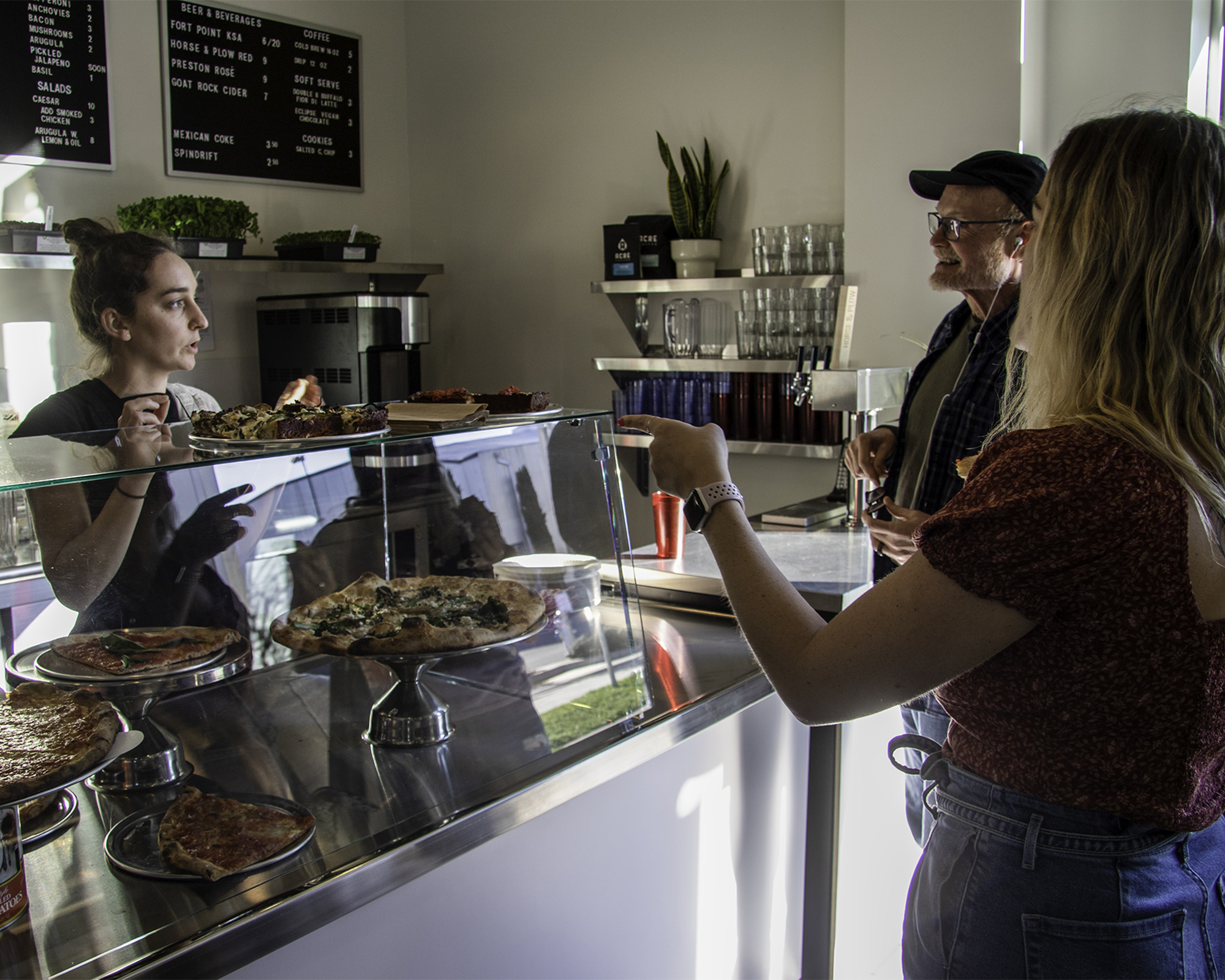
Customers at Acre Pizza in Sebastopol. Heather Irwin/PD
In February, former Acre Coffee owner Steve Decosse opened his newest venture at the former Village Bakery location. He’s sharing the cavernous space with Red Bird Bakery, with just a few hundred feet carved out for serving up slices of New York- and Detroit-style pizza. Decosse saw in Hannmann the same kind of nerdy dough obsession he has, along with an array of pizza tattoos covering his arms, and the deal was done.
Alastair shows how he works the dough at Acre Pizza in Sebastopol. Heather Irwin/PD
If you’re scratching your head about why a coffee entrepreneur would pivot to pizza, the answer is pretty simple. Decosse loves pizza and has spent more than a year traveling the country to find out how to make the absolute best. Inspired by a seminar on pizza making with gluten guru Peter Reinhart (the founder of Brother Juniper’s Bread), Decosse went down the rabbit hole of pizza styles, landing on the popular New York-style thin crust and the trending Detroit style, a thick crust pizza baked in a cast-iron square pan with caramelized Wisconsin “brick cheese” (a semi-soft cheese that’s sold in a brick shape) as a key component. And oh, is it key.
This is California, so of course there is a lot of hand-wringing about ingredients other than cheese. Acre uses bespoke produce from FEED Sonoma, meat from SoCo Meat, California tomatoes and water buffalo mozzarella from Double 8 Dairy along with the bags of organic wheat from Utah piled against the walls. So that must be crazy expensive, right? You would be wrong.
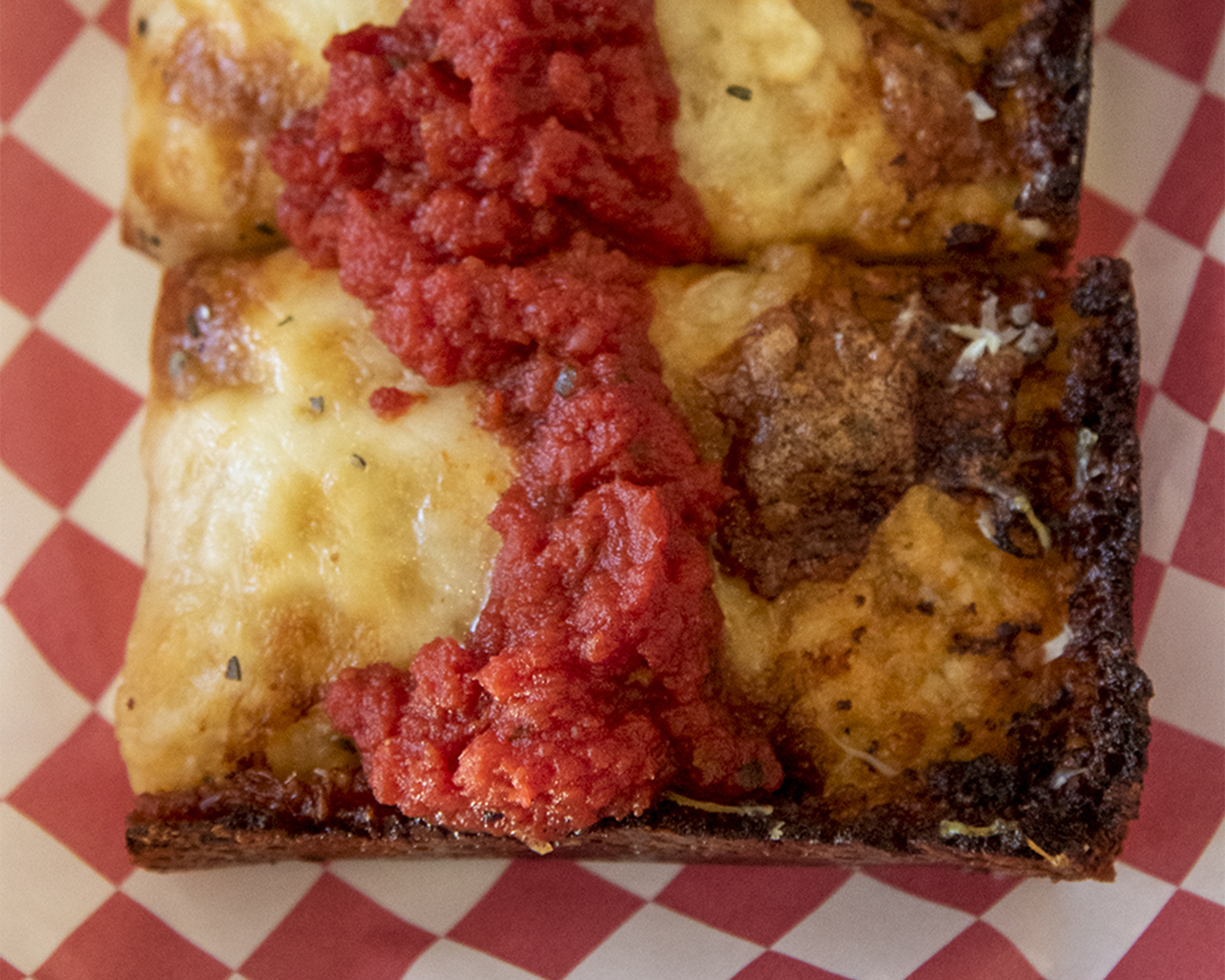
Detroit-style pizza at Acre PIzza in Sebastopol. Heather Irwin/PD
A slice, which is a quarter of a 16-inch pizza, ranges from $4.50 to $5.50. Whole pies are between $18 and $20. That’s a dang good deal, in my book.
Like most good pizza places, the restaurant isn’t fancy but has large communal tables and benches inside. In good weather, it’s more fun to head outside where there are common tables for the neighboring businesses and kids scramble around in the grass.
Kinda the perfect way to eat the perfect slice.
Best Bets
Detroit-Style Pizza: Yes, it’s deep dish. No, it’s not Chicago-style. As the story goes, it was invented at a Detroit restaurant called Buddy’s Rendezvous in 1946. Owner Gus Guerra decided to put a Sicilian-style dough (which is more like focaccia) into a rectangular blue steel pan like those used for spare parts by Detroit auto workers.
Specialty pizza at with broccoli raab, whole milk mozzarella and WM Cofield blue cheese. Heather Irwin/PD
Like a good lasagna, the melty cheese gets all crispy and brown and sauce is typically put on top for extra punch. Like St. Louis or New Haven-style pizza, it remained mostly a regional thing until some Brooklyn hipsters got ahold of the idea. You know the rest of the story, but make no mistake, we’re pretty glad they did. The Detroit slices (which are actually square) at Acre stay pretty true to their roots, with cheese or pepperoni and cheese.
Cheese Slice: You gotta do a good cheese slice or fuggettaboutit. They do. Please properly fold it and don’t eat it with a fork. We’re Americans. We don’t eat pizza with a fork. Add Zoe’s pepperoni if you’re feeling crazy.
Potato Pizza: Sounds weird, tastes amazing. Super thinly sliced potatoes are layered atop whole milk mozzarella, Pecorino Romano, Gruyere, olive oil and rosemary.
Soft serve ice cream at Acre Pizza in Sebastopol. Heather Irwin/PD
Special Pizza: Each week, there’s a new spin on the traditional pizza toppings. We loved the gourmet mushroom pie, and recently they introduced a pie with WM Cofield blue cheese.
Buffalo Milk Soft Serve: Cow milk’s richer cousin, buffalo milk is often used in Italy but rare in the States. It’s got a slightly wilder flavor than straight-up milk, but it’s well worth trying this creamy treat.
Add a little Mike’s Hot Honey for some pizzazz. Vegan soft serve also available.
Caesar Salad: Lightly dressed with plenty of flavor on lovely romaine. We like throwing a little on our cheese slice to make an impromptu piadine.
Service is quick, and you can order online. Beer and wine is available, but no there’s no Acre coffee brewing. Gluten-free crusts are also an option. Hannmann said the high-quality flour they use is much gentler on the system. Pizza can be delivered to Barlow wine tasting and tap rooms like Crooked Goat or Seismic.
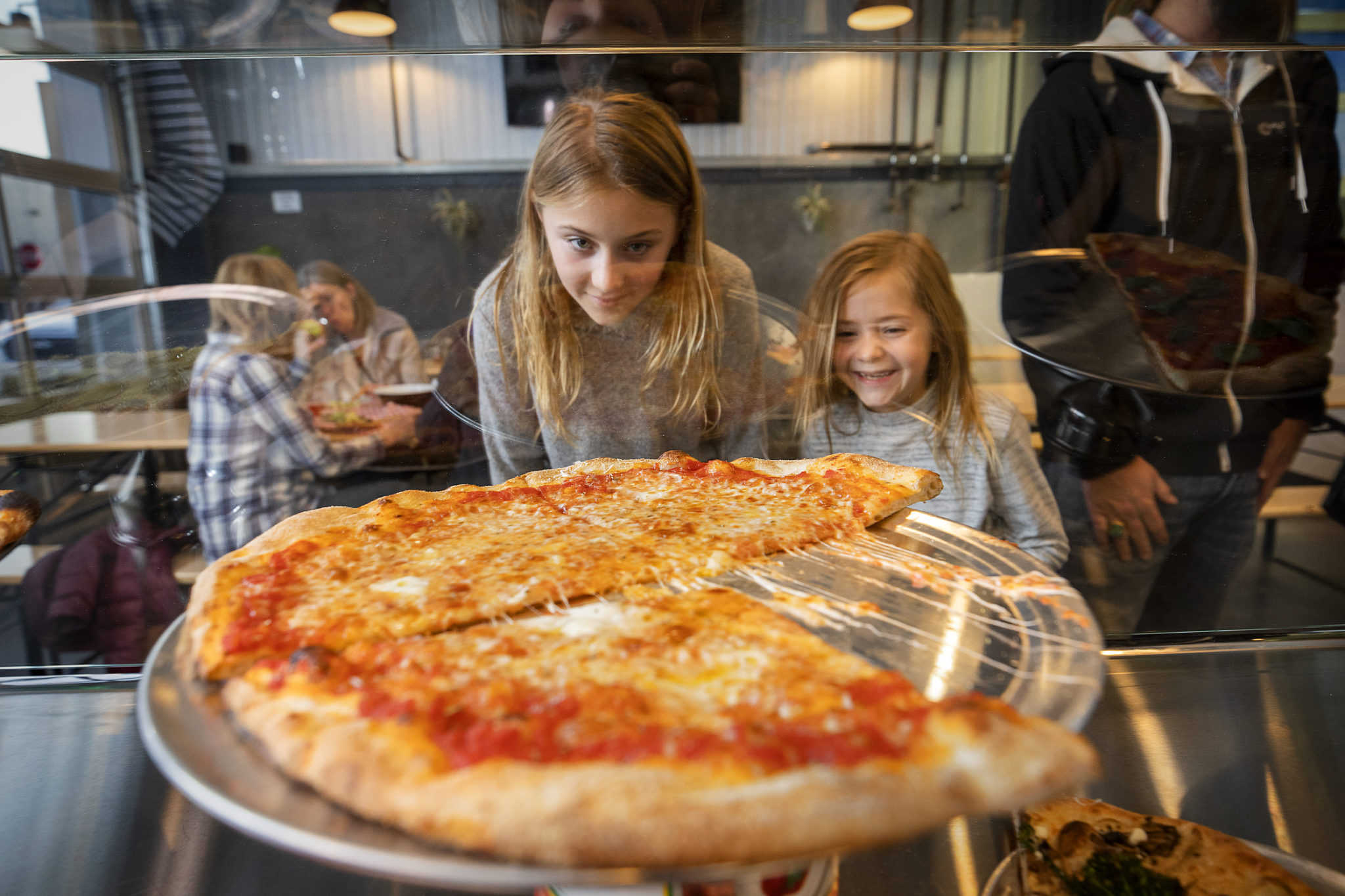
Sailor, left, and Lila Burt of Sebastopol check out the pizza varieties while their parents order at the new Acre Pizza in Sebastopol’s Barlow district. (John Burgess/The Press Democrat)
Decosse is still futzing with the lineup to see what folks like best, but cheese and the weekly specialty pizza are always available.
Though you’ll want to stuff some ’za right into your face, take a second to appreciate the beauty of the soft air pockets in the crust, the sweetness of the sauce, the crispy curl of the pepperoni, the perfection of the melted cheese for a moment. Ahhh. Then commence stuffing.
6760 McKinley St., Suite 150, Sebastopol. Open 11 a.m. to 8 p.m. daily, 707-827-3455, acrepizza.com