Facing challenging times, many local businesses — restaurants, bars, food producers and coffeehouses — are setting up GoFundMe pages to help staff and small business owners stay afloat. Included below are a few of those initiatives.
As with any fundraising campaign, please spend some time reading the information and looking into where the funds are going before donating. We’ve done our best to verify these as legitimate with GoFundMe staff. Want to add a fundraiser? Let us know in the comments below.
Amid the coronavirus pandemic, California has relaxed some of its alcohol laws to allow restaurants to include beer, wine, even cocktails with food delivery and take-out orders (win-win!). We’ve rounded up a few local favorites that are adding a little extra cheer by serving to-go drinks. Click through the above gallery for details. And yes, we missed some! So tell us in the comments and we’ll add even more.
Note: To order alcoholic drinks for delivery or takeout, you also must order food.
The coronavirus has dramatically changed our lives. But it has also changed little things in our everyday existence. Who would have thought only a few weeks ago that toilet paper would one day be trending on social media? Click through the above gallery for a few everyday things that have changed in these past few weeks and let us know in the comments the things you’ve noticed.
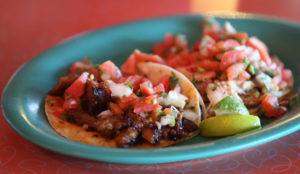
Al Pastor and Chicken Tacos served at Juanita Juanita on Arnold Drive in Sonoma, Wednesday, November 26, 2014. (Crista Jeremiason / The Press Democrat)
Burritos, enchiladas, posole, street tacos — life without them seems, well, bland. Click through the above gallery for some of our favorite Mexican restaurants in Sonoma County, along with dishes we love.
Contagion, isolation, shutdowns and job losses — in just a few weeks, the coronavirus has dramatically changed our lives. And, with no quick return to normality in sight, the virus has started taking a toll on our mental health.
Nearly 40% of Americans are feeling anxious about the coronavirus pandemic, according to a recent survey from the University of Southern California. Another survey, conducted by Axios-Ipsos in March, reported that nearly a third of American adults said their mental health had worsened because of the coronavirus. Continued social distancing will only increase the emotional toll, the survey concluded.
How can we care for our mental health in these unprecedented times, while also supporting those around us? We asked local therapists Carmen Schmidt Benedetti and Doreen Van Leeuwen for advice.
Acknowledge your feelings
First, know that any feelings you’re having are OK and that anxiety is a normal response to something stressful, Benedetti said.
Carmen Schmidt Benedetti (Courtesy photo)
“With uncertainty, there can be feelings of hopelessness and helplessness. People may become depressed from being isolated at home and being out of their usual routines.”
Frustration, irritability and denial also are common responses, Van Leeuwen said. Stress, anxiety and depression might show up as an inability to fall or stay asleep, changes in appetite, increased heart rate, restlessness, lightheadedness, fatigue, muscle aches and pains, headaches and stomach trouble.
While all feelings are appropriate, it’s our reactions to our feelings — our behaviors — that can create problems, Benedetti said.
“In stressful situations, we often turn to coping strategies we have used in the past,” she said. These strategies might include drinking and drug use, binge eating, watching TV, playing video games, shopping online, spending time on social media and other activities that allow us to “check out” or avoid our feelings.
Of course, sometimes distractions are beneficial. But anxiety and depression can build up and intensify if we keep ignoring or avoiding these feelings.
Alcohol use can temporarily relieve negative feelings but lead to increased anxiety and depression the next day, Benedetti said. And spending a lot of time watching TV or looking at screens can be stimulating for our nervous system, rather than relaxing.
Focus on what you can control
“With so much of this situation being out of our control, focus on what you can control,” Benedetti said. “The only thing you can truly control is your own actions and behaviors. You will not able to help others if you are not taking care of yourself.”
She advised that you “check in with yourself” every day, first in the morning and then several times throughout the day, using a scale from zero to 10 (10 being the worst) to gauge how you’re feeling.
“Ask yourself: How am I feeling right now? What do I feel in my body? What do I need? How can I best take care of myself today?”
Be gentle on yourself.
“It’s ok to not feel ok. Practice self-compassion and self-care,” Benedetti said. “It’s ok to give yourself time to rest. Don’t beat yourself up if you aren’t doing all the things you said you were going to do, or compare yourself to others in terms of what they are doing.”
Practice mindfulness
“The more you can stay in the present moment, the easier it will be to manage and not get caught up in catastrophic thinking,” Benedetti said. “One of the best ways to do this is to focus on your breath.”
Here’s how: take deep breaths, pulling from your belly, and extend your exhale longer than your inhale. This helps activate the parasympathetic nervous system, which works to relax your body.
Another way to be mindful is to acknowledge your feelings, Benedetti said.
“Notice where you feel the emotions in your body. Remind yourself the feelings are temporary. This situation is temporary.”
And, to be mindful with your thoughts, notice worries as they arise.
“Try letting them go rather than going further down the path of those negative thoughts. Imagine setting them on a conveyor belt, or into a river and being taken away.”
Establish structure, routine and boundaries
Routine can help create a sense of normalcy in an abnormal time, Benedetti said. Have a set bedtime and wakeup time, identify tasks to accomplish in the morning, then shower, get dressed and have breakfast.
Benedetti recommended that people working at home set a work schedule, including a lunch break, to get yourself in the work mindset.
“Establish a work area and set boundaries around that, including the timeframe, and let others know what those times are and what you need from them in order to respect that.”
While spending a lot of time at home, often together with other family members, it can be helpful to find a time of day that is just for you, even if it’s just 10 or 15 minutes, she said.
Asking your family or spouse for space or a “time out” also can be a good way to prevent conflicts from escalating.
“Tensions can be high when anxiety levels are increased overall, and we can often say things we regret or don’t mean,” Benedetti said.
You can come up with words or phrases beforehand, rather than in the heat of the moment, to signal to others that you need time to yourself to calm down. Make a commitment to revisit the conversation at a later, specified time.
If it’s not possible to take some space in your home, Van Leeuwen recommended a walk or even a short break in your car.
Take care of your body and mind, stay physically active
Our physical health has a large impact on our mental health.
“If you neglect how you take care of your body, such as not getting enough sleep, being stagnant, not eating enough or eating things that don’t feel good to your body, your mind will not be able to operate at its optimum level,” Benedetti said.
Physical activity is key. “Movement is helpful for your nervous system, as we hold emotions in our bodies and movement is a way to release them.”
Movement — jumping, dancing or “shaking it off” — also can help children express or manage their feelings, she said, as can coloring, drawing and journaling.
She suggested doing whatever feels best for your body: yoga, walking, running, biking, dancing, stretching, strength training, meditation — any movement or self-soothing activity you can do while also maintaining social distancing.
Many local gyms and yoga studios are now offering online classes. Free workout videos and guided meditations can be found on YouTube and other sites.
Benedetti and Van Leuween also suggested taking breaks from the news and social media. Overdoing it while you try to keep up with every bit of news can heighten anxiety.
Connect with friends and family and offer support
Maintaining social connections is crucial for our emotional wellbeing under normal circumstances and even more so when sheltering in place at home.
“Use this time as an opportunity to connect with those in your household,” Benedetti said. “Ask thought-provoking questions, play games together, create crafts or art projects. All of these activities can help with boredom and staying engaged.”
Van Leuween recommended volunteering as a way to “keep your mind off yourself, while doing good for others.”
During the coronavirus pandemic, volunteering opportunities could include picking up and delivering meals to homebound residents and delivering supplies to assisted living facilities. The Center for Volunteer and Nonprofit Leadership, for example, is in immediate need of volunteers.
Benedetti suggested making time to communicate regularly with friends and family on the phone, via text or video messages and services like Skype and FaceTime.
Reaching out to people is also a good opportunity to offer support. “Ask them what they might need,” she said. “This is a difficult time for us all. We need to stay connected and support one another.”
Carmen Schmidt Benedetti, MA, is a Licensed Marriage and Family Therapist and EMDR Certified Therapist based in Santa Rosa. 707-331-4578, carmenschmidtmft.com.
Doreen Van Leeuwen is a Licensed Marriage and Family Therapist based in Santa Rosa. 707-202-6202, doreenvanleeuwen.com.
More Resources
211 Sonoma County: A free, confidential, 24/7 information and referral service and online database. Dial 2-1-1 or text your zip code to 898-211 for more help. 211sonoma.org/mental-health
NAMI Sonoma County: To reach the Warmline, call 866-960-6264 or email warmline@namisoco.org. Support groups soon available online, email info@namisoco.org for information
Sonoma County Crisis Stabilization Unit: 707-576-8181
Crisis Text Line: Text HOME to 741741 (for those who are more comfortable texting than talking)
Suicide Hotline: 1-800-273-TALK (8255)
Psychology Today Therapist Finder: Look up therapists in your area and filter by your insurance and/or type of issue you are dealing with. Most therapists are offering phone or online sessions during this time. psychologytoday.com/us/therapists
National Domestic Violence hotline: Staying home may not be the safest option for those experiencing domestic violence. Call 1-800-799-7233 or text LOVEIS to 22522 for support. thehotline.org/2020/03/13/staying-safe-during-covid-19.
Headspace and Insight Timer: Meditation apps with guided meditations for all levels, including meditations focused on dealing with feelings related to coronavirus.
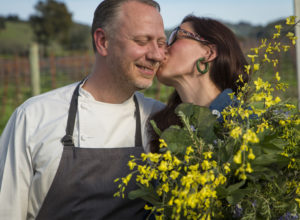
Kyle and Katina Connaughton of Single Thread Farms Restaurant in Healdsburg at their farm. Photo: Jason Jaacks
There’s no roadmap on how to keep a restaurant open during a pandemic. There aren’t even signs. Instead, Sonoma County restaurateurs are blindly trying to find viable routes to keep themselves on life-support as shelter-in-place orders loom for weeks ahead, slim restaurant margins slip to zero and much-hoped-for delivery and pickup menus struggle to gain traction.
In the midst of the chaos, we’ve found four restaurants taking very different tacts in response to the coronavirus outbreak. Some may work, some may not, but it shows the ingenuity and persistence happening as the local hospitality industry fights for its life.
Closed to Open: The Girl and The Fig
Sondra Bernstein, a Sonoma restaurateur and caterer, was one of the first to announce the closure of her two restaurants, catering operations and food truck on March 16, a day after Gov. Newsom urged bars and brewpubs to shutter. Though there were no orders for restaurants to close at that time, Bernstein said she saw the writing on the wall.
“I was really scared. I was just freaking out because we really didn’t have a way to control people coming in and out,” she said of her popular eateries. She was forced to layoff most of her staff, put purveyors on hold and retrench.
Consolidating her food, looking at the restaurant’s cash outlay and modeling what they could realistically accomplish with herself, her executive chef and five salaried staff, she re-opened with a pre-order drive-up operation on Monday.
Offering a small selection of daily specials — from ramen and fried chicken to hangar steaks, soup, mac and cheese and fresh-baked cookies — she received around 100 orders in the first 24 hours. Though that’s a drop in the bucket compared to the $500,000 in catering and restaurant income she’s already lost, it’s a start.
“This doesn’t sustain us, no way, but it’s keeping us busy and we’re learning what people want,” she said.
To keep her staff and customers safe, the outdoor drive-ups are staggered, staff bring out bags one at a time, then step back for customers to take the items. It’s critical, she said, to make sure people feel safe.
What works, however, and what doesn’t is a crap-shoot.
“It looks like people want things they can’t make at home,” she said. That means salmon and steak are less popular than ramen and fried chicken so far. The biggest surprise, her cookies aren’t big seller either.
“I thought we would sell more cookies and we’re just not. It’s interesting to see why people are doing what they’re doing,” she said.
Making It Hilarious: Ausiello’s
Who can resist a guy with a blonde mullet doing the running man and holding a box of burgers? No one.
“Biff” from Ausiello’s Fifth Street Bar and Grill in Santa Rosa is the lip-syncing, Dougie-dancing delivery guy who’s making food fun again.
The alter-ego of general manager and co-owner Matt Kane has been a long-time inside joke that’s getting some serious video love on Instagram.
“It started as a Halloween costume and I met my wife in that mullet. He has a good run every time he comes out,” said Kane. That same wife suggested “Biff” become the restaurant’s delivery guy, and a meme was born.
Kane does the character from 4 to 8 p.m. most nights, dropping off boxes of burgers, sandwiches, appetizers and even cocktails to homes in Santa Rosa. State laws were recently relaxed to allow restaurants with full liquor licenses to sell cocktails, beer and wine to patrons who order food.
“The bloody mary mix is huge,” he said. Though the restaurant will close for a few days early next week for construction, Biff will be back on the road soon, Kane promises.
“People just say it makes them smile and laugh. People need that now,” said Kane.
Finding A Patron: Single Thread Farm & Inn
Fifteen-course meals don’t exactly translate to takeout. So what’s a three-Michelin star restaurant to do? Create meals for seniors and families facing food insecurity.
Internationally-known restaurateurs, Kyle and Katina Connaughton know a few people. So, even before shelter-in-place orders were handed down, they began contacting patrons about donating to a special fund that would help them keep essential staff in place and support the restaurant while offering hundreds of meals to charities each day.
So far, they’ve raised nearly $50,000 with this unique model and have served more than 1,000 meals to agencies like Council on Aging and Corazon in the first week of operation. They’re working with gleaning operators to bring in fresh produce from the gardens of Kendall-Jackson and offering to help other restaurants, like Mateo’s Cocina Latina, set up a similar structure.
“We want to help our community and we have a way to make it a win-win,” said Connaughton.
The restaurant is also selling daily family-style takeout pre-orders from $75 to $95 with dishes like pork, shrimp and scallop gyoza hot pot, hearth-roasted lamb saddle with roasted potatoes, or an upcoming “Homage to Chez Panisse” dinner for four with roasted chicken, pureed potatoes with truffle butter and a chicken stock soup “kit” for the leftovers.
Open to Closed: Franchetti’s
John and Gesine Franchetti of Franchetti’s restaurant in Santa Rosa tried just about everything to keep their restaurant open in the days leading up to the shelter-in-place. They distanced tables, they offered a full take-out menu, the offered a limited take-out menu, they made lasagna. It didn’t work.
“It went from not much business to less and less,” said John Franchetti. It quickly became apparent that nothing they were doing was catching on. Laying off their small staff, he and his wife tried to handle things on their own for a time, but with food just sitting in the walk-in, he decided it was time to throw in the towel.
“The coffer is bare. Easter isn’t going to happen, and it’s tough to even figure out what to do next,” he said. Right now, he’s spending time filling out paperwork for small businesses relief which may take months to come, if ever, and worrying about summer catering gigs.
“Reopening without a safety net is just wishful thinking. If we do reopen, it will be streamlining our streamlining. It’s just very unclear,” he said.
(Full disclosure: Heather Irwin is the founder of Sonoma Family Meal, a disaster-based non-profit collaborating with local restaurants and farms to distribute chef-made meals to seniors and local families facing food insecurity.)
Safari West is spearheading efforts to improve emergency preparedness in the Mark West Valley including the evacuation of animals in a future wildfire. Safari West keepers care for five cheetahs on the preserve. (photo by John Burgess/The Press Democrat)
While most of us are social distancing and sheltering in place to minimize the local impact of COVID-19, animal keepers at Safari West in Santa Rosa are doing exactly what they always do: caring for the more than 1,000 creatures and critters that call the park home.
“Our job doesn’t go away because of a pandemic,” says Marie Barbera, animal collection manager. “The animals still need to eat. We still need to make sure they’re OK.”
While the wildlife preserve is closed to visitors, all 23 staff members are still hard at work and none of them has seen much change to the day-to-day routine.
Depending on the day, keepers receive their daily assignments in the morning, then fan out to the park’s 400 acres to tend to the animals that represent nearly 100 different species. The first step in that process is a morning well-check. Does each animal look healthy? Does the exhibit pose any dangers to them? Has anything happened to the animals overnight? Keepers ask these questions and assess the situation. When intervention is warranted, they intervene.
This process usually takes a few hours. Next comes lunch.
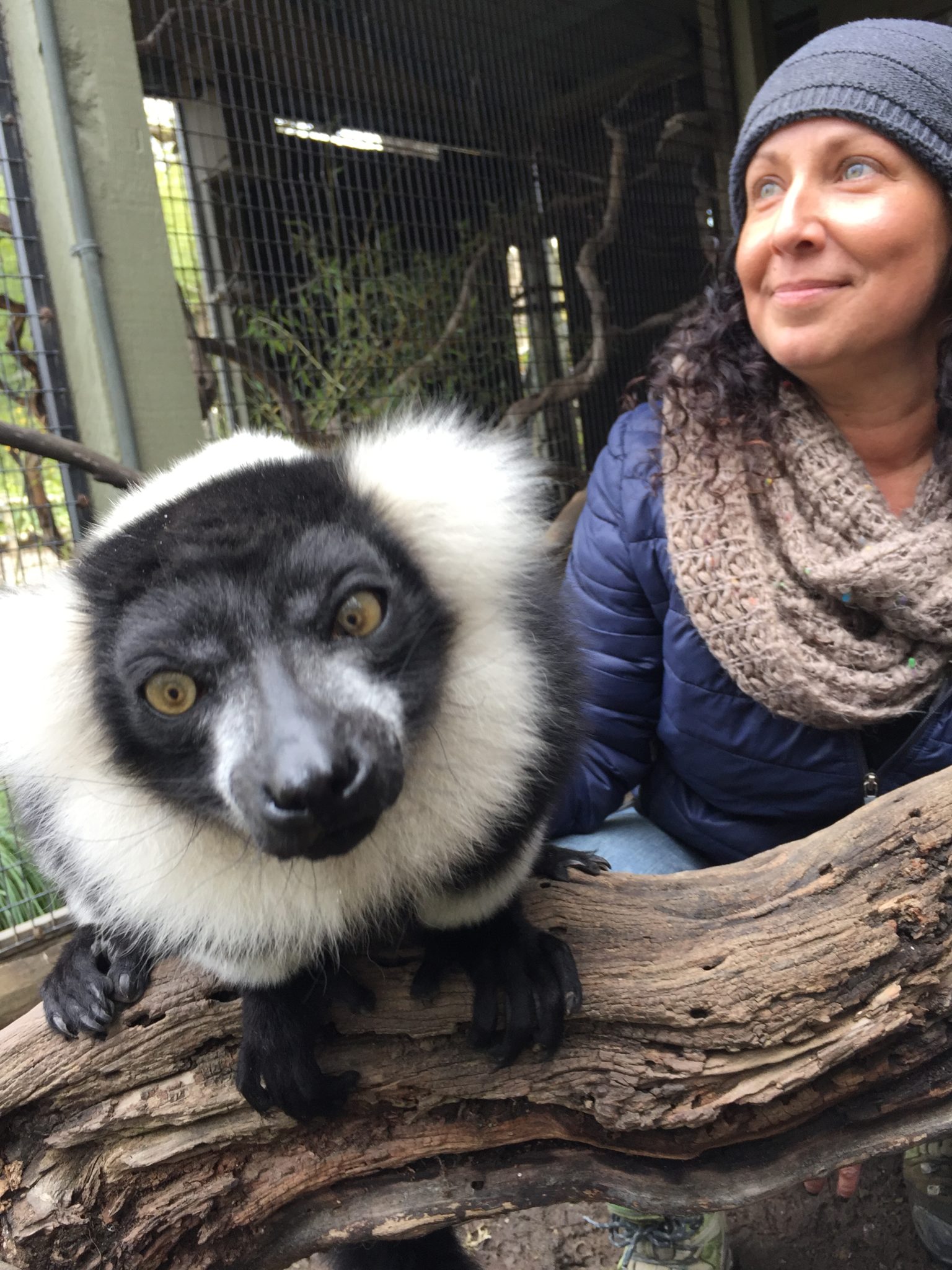
Animal keeper Marie and Black and White Ruffed Lemur Skye at Safari West in Santa Rosa. (Courtesy of Safari West)
To initiate mealtime, the keepers make their way to the kitchen food storage area and prepare different diets for each of the animals. The feeding process usually takes 2-3 hours as well.
After lunch, before keepers go home for the night, they head back out to the park to perform another wellness assessment. This time, they pay close attention to how the animals handled their food. If any of the animals is showing signs of discomfort, the keepers intervene.
“Whether we’re [dealing with coronavirus] or it’s just a normal day, our schedule entails keeping the animals safe, assessing their health, feeding them, then assessing them again,” Barbera says. “It’s constant monitoring, and that’s a critical part of making sure all of our animals are as healthy as they possibly can be.”
In some cases, keepers make special return visits to certain animals to deliver what they call “enrichment items.” For example, keepers might complete rounds, then head back to the primate area to give a monkey a toy.
Sometimes, Barbera adds, she also might swing back by the hyena habitat to watch what she describes as one of her favorite animals in the park.
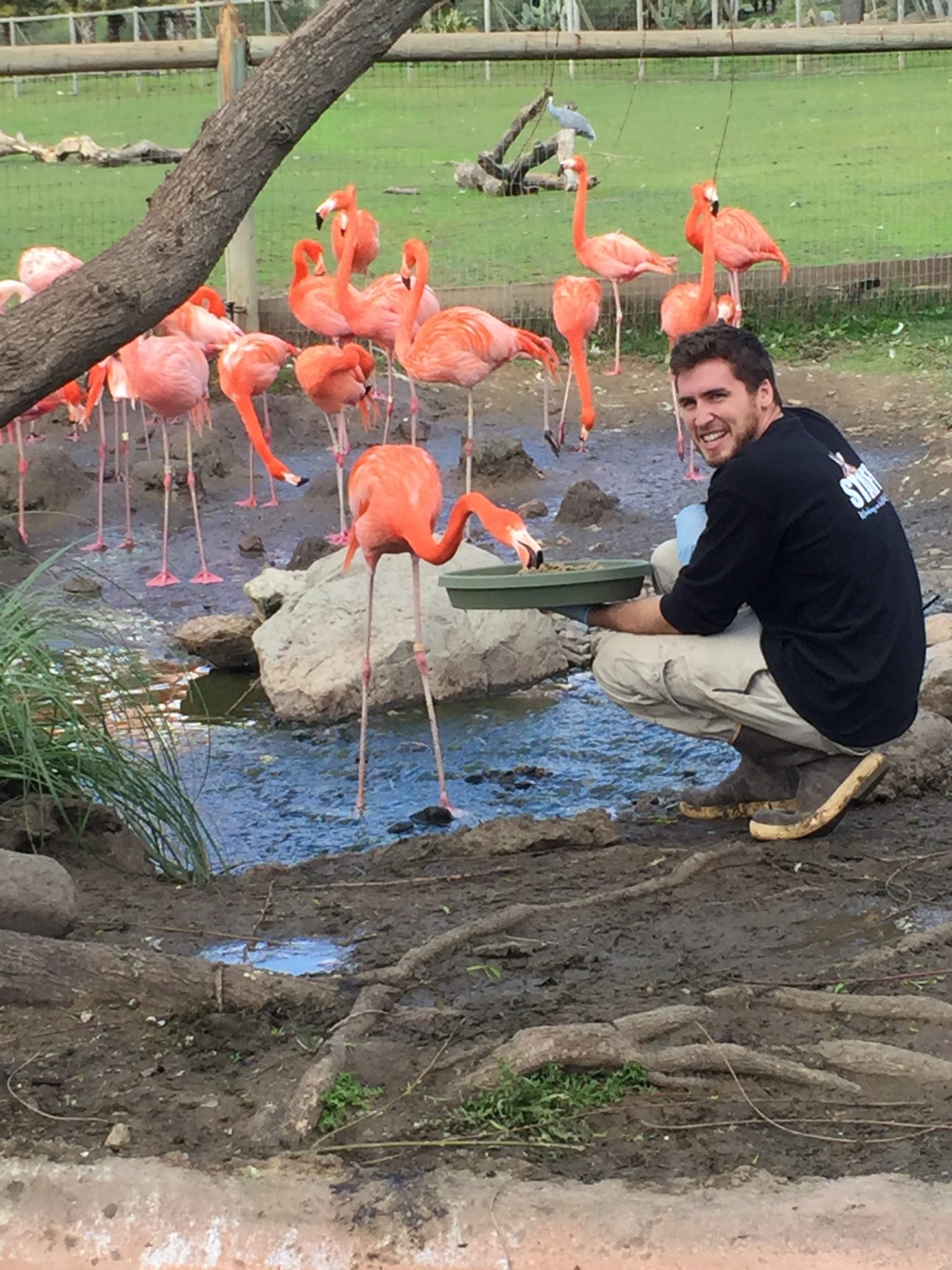
Animal keeper Daniel feeding Pink Floyd, the flamingo. (Courtesy of Safari West)
Hygiene precautions are always of paramount importance at Safari West. Keepers always wear gloves, and as they move from one task to another, they’re also very careful to wash their hands. Many specific coronavirus-related precautions really don’t apply; because most of the keepers work solo, they haven’t had to worry about social distancing on the job.
“It’s actually pretty nice to come to work and be able to forget about all the new rules and regulations outside,” Barbera says. “Here, for the most part, it’s just us and the animals.”
Perhaps the only difference at Safari West these days is the fact that there are no visitors at the park. Barbera says this makes the place a little quieter. She adds that while many humans might be inclined to believe the animals miss them, most of the animals probably do not.
The lone exception to this rule: A patas monkey whom Barbera describes as a show-off.
“When guests are around, I think that one monkey hams it up a bit more,” she jokes. Barbera adds that because Safari West is spread out over more space than most zoos, many animals go entire days—or weeks—without really interacting with guests. “To be totally honest, I’m not sure the absence of guests fazes them at all,” she says.
For this reason, Barbera isn’t too worried about the animals during the current pandemic; they can’t catch the virus, and their lives really aren’t being impacted at all.
The park itself? Now that’s a different story. With no outside revenue from day-trippers, overnight guests or corporate groups, Safari West like all local businesses is feeling the pinch. The best way to reverse these effects: follow instructions from authorities and flatten the curve.
“The sooner we get through it, the sooner visitors can return,” Barbera says. “The animals are waiting.”
Social distance and shelter-in-place orders are crucial to our community’s physical health right now. However, it is also important that during this period of isolation, we are mindful of our individual mental health and wellness beyond COVID-19. Here are some ways Sonoma County folks can connect to one another digitally for fitness, massage, meditation, art-making and more. Click through the above gallery for details.
Enjoyment of wine is an essential part of life for many who live in Wine Country, though we can’t now justify — as the governor of California has made clear — visiting tasting rooms to sample and purchase wine. Not during a pandemic, even if the pantry has run out of pinot noir.
Those blessed with stocked wine cellars and cooling units can drink up. What better time than now to pull the corks on those bottles you’ve been hoarding for a special occasion? It’s here.
For everyone else, there are options for buying wine without hitting the tasting room trail. Grocery stores are the most obvious choice. As providers of “essential” services, they have stayed open during the coronavirus closures. From the chains (BevMo, Costco, Safeway, Lucky’s, Trader Joe’s and Whole Foods among them) to the locally-owned gourmet grocers (such as Oliver’s Markets, Big John’s in Healdsburg, Petaluma Market and Sonoma Market), wine selection is typically diverse and covers all price points, although virus-related delivery and restocking slowdowns might occur.
Supporting local wineries
The best way to support Sonoma County’s small wineries, many of which don’t produce enough vino to place their wines in stores, is to order directly from the producers and have the bottles delivered to you while you’re hunkered down.
According to Rob McMillan, executive vice president of Silicon Valley Bank’s wine division, the typical small winery gets roughly 30% of its business from tasting-room activity and another 30% from wine-club sales. With tasting rooms closed and special events for wine club members canceled, the “little guys” are struggling. Wine lovers can help.
In the two-day gap between the closure of California tasting rooms on March 17 and Gov. Gavin Newsom’s shelter-in-place order on March 19, wineries scrambled to get wines to their fans via self-delivery and curbside pickup. Now that staying at home is the prudent thing to do, ordering wine to be shipped to your door not only reduces risk of coronavirus exposure, it’s a boost to small businesses.
As an example, Serena Lourie and Alan Baker, proprietors of Cartograph Wines, have a hefty rent for their downtown Healdsburg tasting room space and sell most of their wines direct to consumers through the tasting room, wine club memberships and online ordering. After two days of curbside pickup and hand-delivering wines themselves, they moved to shipping via UPS to keep the bottles flowing. Those phoning the tasting room have their calls forwarded to the couple’s cell phones so they can assist with orders and answer questions.
The Mariani brothers at Scribe Winery in Sonoma recently offered free shipping on four selected wines ($198) as part of their “Hacienda at Home” program and included recipes and a link to the Hacienda tasting room and farm playlist. Others, such as Comstock Wines and Gary Farrell Winery, both in Healdsburg, are offering virtual tastings. Customers order a specific set of wines and taste them, via Zoom or Skype, along with the winemaker at an appointed date and time.
Shipping deals
The cost of having wine shipped to homes and businesses through common carriers such as UPS and FedEx is prohibitive for many consumers. A 12-bottle case of wine can cost up to $60 for two-day delivery, in addition to the purchase price of the wines inside. Ground rates are less expensive but come with no guarantees on when the box will arrive or the travel conditions for the bottles. One afternoon of high heat can “cook” wines as they sit on shipping docks or in delivery trucks. Time of year is everything with ground delivery.
To lessen the shipping-cost impediment, the Sonoma County Vintners association created the “Sip from Home with Sonoma County Wines” program, where dozens of local producers post shipping deals and bottle discounts. Some include portions of the proceeds being donated to charitable causes.
Balletto Vineyards in Santa Rosa offers free deliveries within Sonoma County and 1-cent shipping on six or more bottles. Westwood Estate Wines in Sonoma Valley offers a 10% discount on wine purchases and complimentary shipping on three bottles or more. In Alexander Valley, Stuhlmuller Vineyards charges 1 cent for shipping and offers a 15% discount on wines. Ram’s Gate Winery in Carneros has complimentary shipping and 15% off wine purchases.
These are online offerings only, short-term solutions to what vintners hope is not a long-term problem. The pandemic situation is fluid, regulations can change in an instant and so can winery’s offerings to consumers.
Retail options
On the retail store side, Willibees Wine & Spirits owner Vikram “Sunny” Badhan said his two locations, in Petaluma and downtown Santa Rosa, are able to remain open because they have restaurant licenses. Alongside the to-go food sold at the store, Willibees’ wines, spirits and beers are sold for takeout. Scheduled tastings and special events are off the board for now.
Bottle Barn in Santa Rosa, a popular warehouse-style store with a vast selection of wine, beer and spirits, closed on March 17 and announced March 19 that it would resume fulfilling online orders, shipping them via common carriers. On March 22, it initiated a program for same-day, local deliveries through the app Drizly, available in the Apple app store.
Sonoma Wine Shop, on the plaza in Sonoma, is closed, though its sister site, La Bodega in Sebastopol, is open for takeout food and wine sales.
It should be mentioned that wine shipping is not guaranteed to continue through the pandemic. UPS, FedEx, Golden State Overnight and other shippers could postpone operations at any moment, making now the time to order the chardonnay you can’t live without.
Note: Someone 21 or older must be present to sign for all alcoholic beverage deliveries, no matter which delivery service is used.
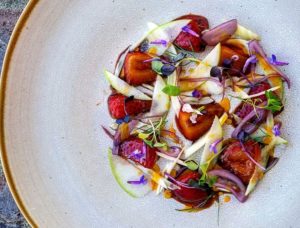
Pickled strawberry salad with green apple, pickled shallots, micro radish, passion fruit white balsamic and chili oil. Photo: Steve Roybal
You can have your virtual museum tours. Steve Roybal’s leaning tower of double beef brisket patties with gooey melted American cheese, fry sauce, pickle chips, and a toasted everything bagel barely holding the whole thing from certain collapse is my kind of vicarious entertainment.
Though he’s neither photographer nor chef, Roybal’s Instagram feed, The Roybal Supperclub (@the_roybal_supperclub) is a haunting, mouth-watering collection of painstakingly-plated dishes the Santa Rosa hobbyist makes just for fun.
“It’s a creative outlet,” said Roybal, who works as an internal investigator for a pharmacy company. That means he spends his days doing anything but thinking about food.
“I get rules and structure all day. This is my way of relaxing and unwinding with no rules, no instruction, and no direction,” he said.
The self-taught cook who says he hates the structure of cookbooks uses nothing but his cell phone and a $15 LED light to take his social media followers on a passionate culinary journey.
Using mostly local products he finds at grocery stores (Oliver’s is a favorite) and farm markets around Sonoma County, Roybal gets a lot of his elaborate plating ideas from local restaurants and chefs including “all the Stark’s restaurants”, Shawn McAnelly (formerly of Chalkboard and Brass Rabbit), Dustin Valette and Dry Creek Kitchen.
“I’d just see one thing, try to focus on one thing, like how to replicate how that sauce is swirled on the plate,” he said.
Another inspiration is color. “I’ll just see something or look at the color, like the romanesco or sunchokes right now. They’re just beautiful to cook with,” he said.
He’s clear that his success has been hard-won. “If you could have seen my dishes ten years ago, you’d be like ‘This is a disaster’. I had no idea what I was doing,” said Roybal. He particularly loves cooking “sous vide”, a culinary technique of low-temperature cooking using vacuum-sealed bags placed in water.
He uses it so often in fact, he’s become something of an expert. Two of his recipes were recently featured in “Champions of Sous Vide”, a cookbook focused on immersion cooking.
Roybal is still gobsmacked at any attention he gets. “I’m a nobody. I feel like I’m faking it, I feel like I don’t belong,” he said of his attention as a cook and photographer. “I guess I credit this all to the Internet. You don’t have to be a well-credentialed person if you can cook well.”
As for whether the food actually tastes as good as it looks?
Roybal has hosted several small “underground” dinners as fundraisers for local charities and hopes to do more soon. He said he welcomes people to weigh in on his efforts.
For now, however, he’s content with having his wife as the barometer of his success. “It always feels good when she gives me the thumbs up,” he said.