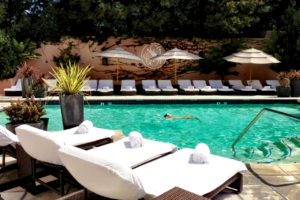
One of the pools at Fairmont Sonoma Mission Inn and Spa. (Fairmont Sonoma)
Cooling off on warm summer days while staying socially distanced can be tricky. The beach is of course an option, but what if you dream of lazy descents into cool turquoise waters or a few laps in a pool? Outdoor public and hotel pools are now allowed to be open in Sonoma County and are deemed safe by the CDC as long as you stay at least 6 feet away from people you don’t live with — in and out of the water. But spending the day poolside requires a little more planning in these pandemic times. Cleaning routines are more strict and rigorous than ever, hotels only allow guests at their pools, and there are other things you need to think about before you go.
Click through the above gallery to find out about new pool safety protocols and where you can take a dip this summer.
The Black Lives Matter protests and national discussion about systemic racism have led to a surge of interest in books and films about race relations and the Black experience in America.
We asked Sonoma State University professors Dr. Kimberly Hester Williams and Dr. Christina Baker for their advice on books to read and movies to watch right now. Many titles are available in local bookstores and from the Sonoma County Library.
‘Good books can help foster empathy’
Dr. Kimberly Hester Williams, Professor of English literature and American multicultural studies, has received many requests for her reading recommendations in the past few weeks, including from K-12 teachers.
“As a professor of literature, that’s a hard one because, frankly, antiracist scholarship and fiction has been in play and circulating since the 17th century, at least in the ‘Americas’ context,” said Dr. Williams.
In response to the many requests she gets, her reading list continues to expand. High on it are the works of Nobel and Pulitzer Prize winner Toni Morrison.
“Her facility with language is extraordinary and provokes the deepest empathy in students that I have seen in the classroom,” she said.
Other books high on the professor’s list are Ibram X. Kendi’s “How To Be An Antiracist,” which Hester Williams calls a “phenomenal and crucial work;” Michael Eric Dyson’s “Tears We Cannot Stop;” Octavia Butler’s “Kindred” and James Baldwin’s essays.
Dr. Kimberly Hester Williams (Courtesy photo)
Hester Williams decided to become a literature professor in part because she believes reading good books can help foster empathy in the reader and that empathy is crucial to our survival.
To help people understand how racism and environmental issues overlap, she co-edited “Racial Ecologies” with University of Washington professor Leilani Nishime. The book of essays examines how “environmental threats and degradation disproportionately affect communities of color” and covers the water crisis in Flint, Michigan, and the Dakota Access Pipeline controversy.
Hester Williams wants Americans to learn about the history of racism. For that, she suggests works by activists and writers from Frederick Douglass and Harriet Jacobs to the Grimké sisters and Henry David Thoreau.
“We need to know how much force has been levied against racism so that we can have the strength to continue that work,” she said.
‘Viewing works of marginalized voices is crucial for change’
If books can engender the empathy needed to bring about progress toward ending racism, film also has an important role to play.
As a film lover, Christina Baker, said she knew she needed to create a book on Black women filmmakers when, year after year, her film students couldn’t name Black film directors other than Spike Lee, Tyler Perry and John Singleton. With that in mind, she authored “Contemporary Black Women Filmmakers and The Art of Resistance.”
Baker believes the most effective way to combat racism is to fight on two fronts: the cultural and the structural.
“If we focus only on our laws and policies, we’re neglecting the power of our ideas, beliefs, and creativity … Our ideas, words, and art can change people’s minds and hearts in ways that no law can ever do,” she said.
Dr. Christina Baker. (Courtesy photo)
Baker’s book is an in-depth look at the work of five Black women filmmakers and their influence on the art form. These films present authentic, nuanced Black female characters unlike the distorted Black female mischaracterizations prevalent in Hollywood, even in widely praised films, from “Gone with the Wind” to “Monster’s Ball” to “Precious.”
While most people know the movie “Selma,” fewer know it was written and directed by prolific Black cinematic artist Ava DuVernay. One chapter of Baker’s book is called “Unicorns,” a metaphor DuVernay used to describe the perception of women or people of color in Hollywood.
Baker believes films should not only address racism head-on, as in DuVernay’s “Selma” and “13th,” but that there is also a need to see the nuanced portrayals of relationships and social connections depicted in, for example, Stella Meghie’s films “The Photograph” and “Everything, Everything.”
“We need both of these — social justice and social connection — as we attempt to create a more positive future, and DuVernay and Meghie convey this beautifully through their films,” Baker said.
Viewing works of marginalized and excluded voices, like those represented by DuVernay’s independent film company Array, is crucial for cultural change, she added.
Below is Dr. Williams’ anti-racist reading recommendations, followed by Dr. Bakers’ viewing recommendations.
Books to Read
Stamped From The Beginning by Ibram X. Kendi
How To Be An Antiracist by Ibram X. Kendi
White Fragility by Robin DiAngelo
Dying Of Whiteness by Jonathan M. Metzl
Between The World And Me by Ta-Nehisi Coates
Tears We Cannot Stop by Michael Eric Dyson
Beloved by Toni Morrison
The Bluest Eye by Toni Morrison
Kindred by Octavia Butler
Race Matters by Cornel West
If They Come In The Morning by Angela Davis
The Fire Next Time by James Baldwin
Notes of a Native Son by James Baldwin
Letter From a Region in My Mind by James Baldwin in The New Yorker (read here)
A Talk to Teachers by James Baldwin
Citizen: An American Lyric by Claudia Rankine
Heavy: An American Memoir by Kiese Laymon
White Like Me by Tim Wise
The Possessive Investment in Whiteness by George Lipsitz
How Racism Takes Place by George Lipsitz
Racial Ecologies co-edited by LeiLani Nishime and Kim D. Hester Williams
So You Want to Talk About Race by Ijeoma Oluo
Me And White Supremacy by Layla Saad
Mindful of Race: Transforming Racism From The Inside Out by Ruth King
Movies to Watch
13th by Ava DuVernay
A Litany for Survival: The Life and Work of Audre Lorde by Michelle Parkerson and Ada Gay Griffin
Beyond the Lights by Gina Prince Bythewood
Everything Everything by Stella Meghie
Eve’s Bayou by Kasi Lemmons
Harriet by Kasi Lemmons
Losing Ground by Kathleen Collins
Love & Basketball by Gina Prince Bythewood
Middle of Nowhere by Ava DuVernay
Night CatchesUs by Tanya Hamilton
Pariah by Dee Rees
Selma by Ava DuVernay
Something New by Sanaa Hamri
The Photograph by Stella Meghie
The Watermelon Woman by Cheryl Dunye
When They See Us (miniseries) by Ava DuVernay
Whose Streets? by Sabaah Folayan
More Movie Resources
ARRAY, also known as ARRAY Now, is an independent distribution company launched by film maker Ava DuVernay. The company is dedicated to “the amplification of independent films by people of color and and women filmmakers.” arraynow.com.
Contemporary Black Women Filmmakers and the Art of Resistanceby Christina Baker
Kasi Lemmons Interviews edited by Christina Baker (due out in January 2021)
After staying indoors for months to slow the spread of COVID-19, many of us are longing for a change of scenery. And while that does not mean a return to “normal” is near and we still need to take every precaution to keep ourselves and others safe, a day trip could be an opportunity to get outside in the fresh air without putting anyone at risk. We have rounded up four day trips with outdoor activities that allow for plenty of social distancing. And remember: wear that mask! Click through the above gallery for details.
Remember when masks were new, and we weren’t even sure if were supposed to wear them? Patterns popped up on Youtube and we fumbled our way through them, using stashes of unused fabric—loud plaids, puppies and outdated holiday prints. The result: not so pretty.
How we’ve changed since March!
Now that masks are required nearly everywhere, they’ve become the stand-in for your favorite lipstick or, well, your nose and mouth. They definitely give a sense of mystery to one’s appearance, some even think they make us look better. Local designers have got the mask engineering down and are perfecting their styles — so mask up and check out the latest in pretty protective essentials in the gallery above.
Sonoma County may be a mecca for lovers of wine, beer, cider and spirits, but there’s plenty more local craft beverages to enjoy — minus the hangover. According to those in the know, no- and low-alcohol drinks are having a moment right now. In Sonoma County, more and more restaurants and bars are staying on trend with mocktails and no-booze beer. In addition to these alternatives, there are also the classics: like herbal tea and plain ol’ milk; drinks that stand out in their own right, without trying to be something that they’re not. Click through the above gallery for some of our favorite Sonoma-made, non-alcoholic beverages.
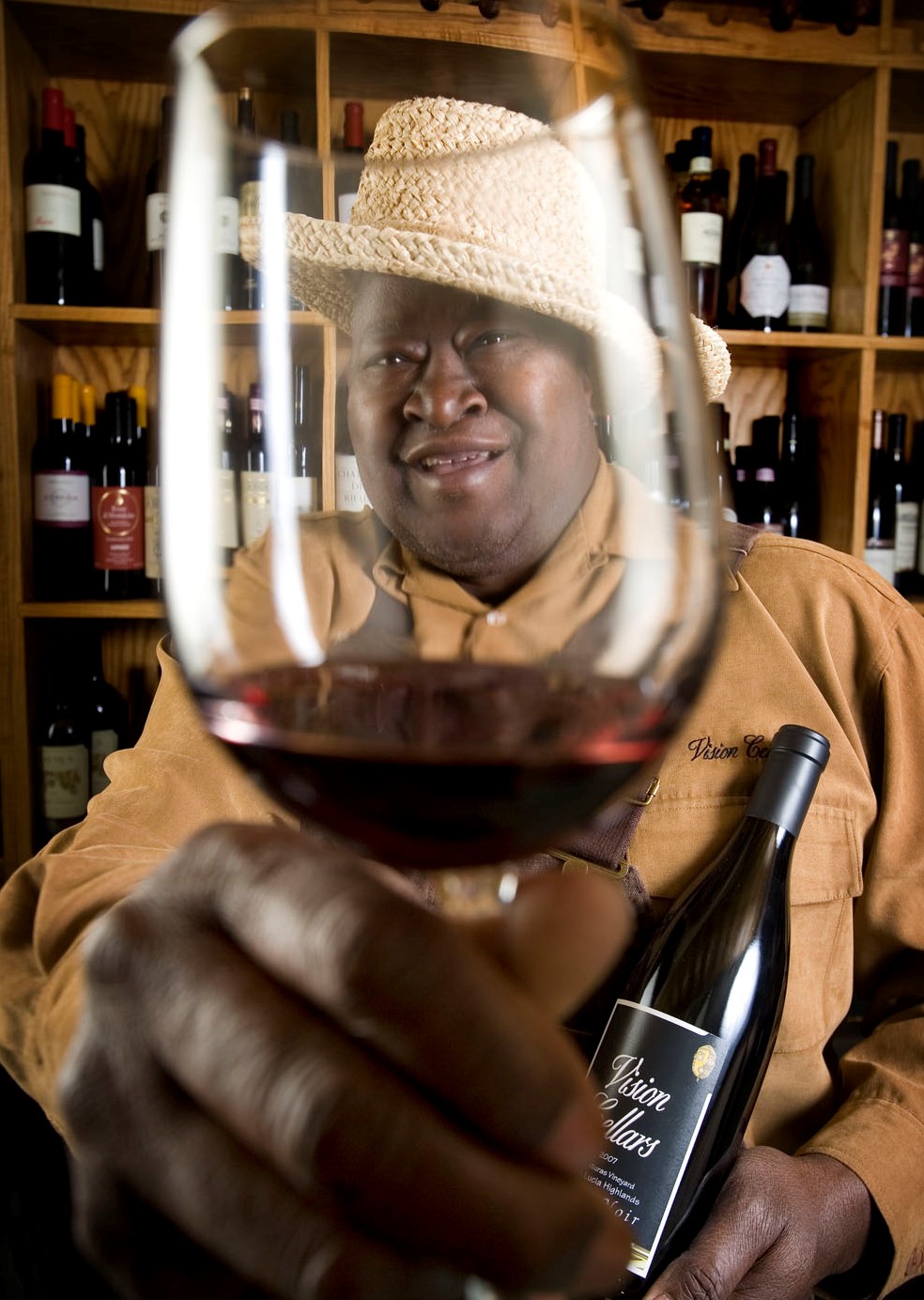
Windsor resident Mac McDonald founded the Association of African American Vintners in 2002, not long after he launched his Vision Cellars wine brand, proudly displaying an African mask on the label. Cultivating African Americans’ appreciation of wine and proving to all that Black winemakers can be as talented and skilled as others were AAAV’s chief goals. Encouraging people of color to seek careers in wine’s very white world was another.
Eighteen years later, McDonald is still mistaken for a hospitality employee at wine events at which he’s pouring. He’s often ignored when attempting to show his wines to retailers and challenged on his wine knowledge.
Nearly two decades after the creation of AAAV, fewer than 60 wineries in the country are operated by African Americans, according to Statista. A handful are in Sonoma and Mendocino counties, but one has had to look long and hard to find them.
Until now.
The U.S. wine industry is as white (and often wealthy) as they come, with Black faces rarely seen among producers, sommeliers, distributors, retailers and marketers. Yet the recent Black Lives Matter protests and national discussion about systemic racism have empowered African Americans to speak out about the disparity and demand inclusion, and their efforts are drawing trade and media attention.
Theodora Lee, owner and winemaker at Theopolis Vineyards in the Yorkville Highlands of Mendocino County, has seen sales of her 800-case-production petite sirah and symphony wines soar.
For the first time, being a Black vintner is a benefit.
“Since June 1, I’ve had more than 800 orders,” said the self-titled Theo-patra, Queen of the Vineyards, who is also a partner in a San Francisco law firm (Littler Mendelson) and a trial attorney focused on employment law. “It’s what’s in the bottle, but also media coverage. The burden of the Black vintner is real, but the focus is now on supporting Blacks. Finally, it’s less of a burden. I’m getting calls from retailers and restaurants (instead of me calling them). For the first time, being a Black vintner is a benefit.”
Dan Glover, a Santa Rosa-based winemaker, said sales of his L’Objet Noir wines jumped 200% in June. Chris Christensen, owner/winemaker of Bodkin Wines, also in Santa Rosa and with the wines produced at custom-crush facilities in Russian River Valley, said, “The response from the public has been overwhelming and humbling about what I’m doing. Our social media following doubled, and wine club and online orders increased.”
Like his African American winemaking colleagues, Christensen is not happy about the reason for this newfound attention on his wines. “I want to be known for my work, my wines,” he said. “I want to be viewed outside the context of my race. But with all that’s happened, a force is ignited in me in how I can give back to the community, how I can help more people, to get African Americans into the wine business.”
As a start, he has a wine project in the works, in which profits from the sales of the wines will go to the United Negro College Fund. A recent Instagram post: “The BEST Way to support a Black-Owned Winery is to JOIN THE WINE CLUB. Support on that level helps us keep our presence and wines flowing vintage after vintage.”
Locally, most Black-owned wineries have lacked visibility to consumers because they are small in production quantity, don’t own vineyards or winemaking facilities and don’t have tasting rooms. Lloyd Davis is an exception, as a partner in a New York hedge fund company who came to Sonoma to pull Viansa Winery out of bankruptcy in 2008.
“Within six months of moving to Sonoma, I’d fallen in love with the place and the wine business,” Davis said. “The cooperation of people in the industry is a beautiful thing. I haven’t experienced any obstacles (as an African American); it’s a very open, accepting community.”
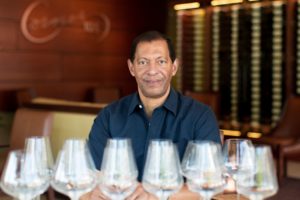
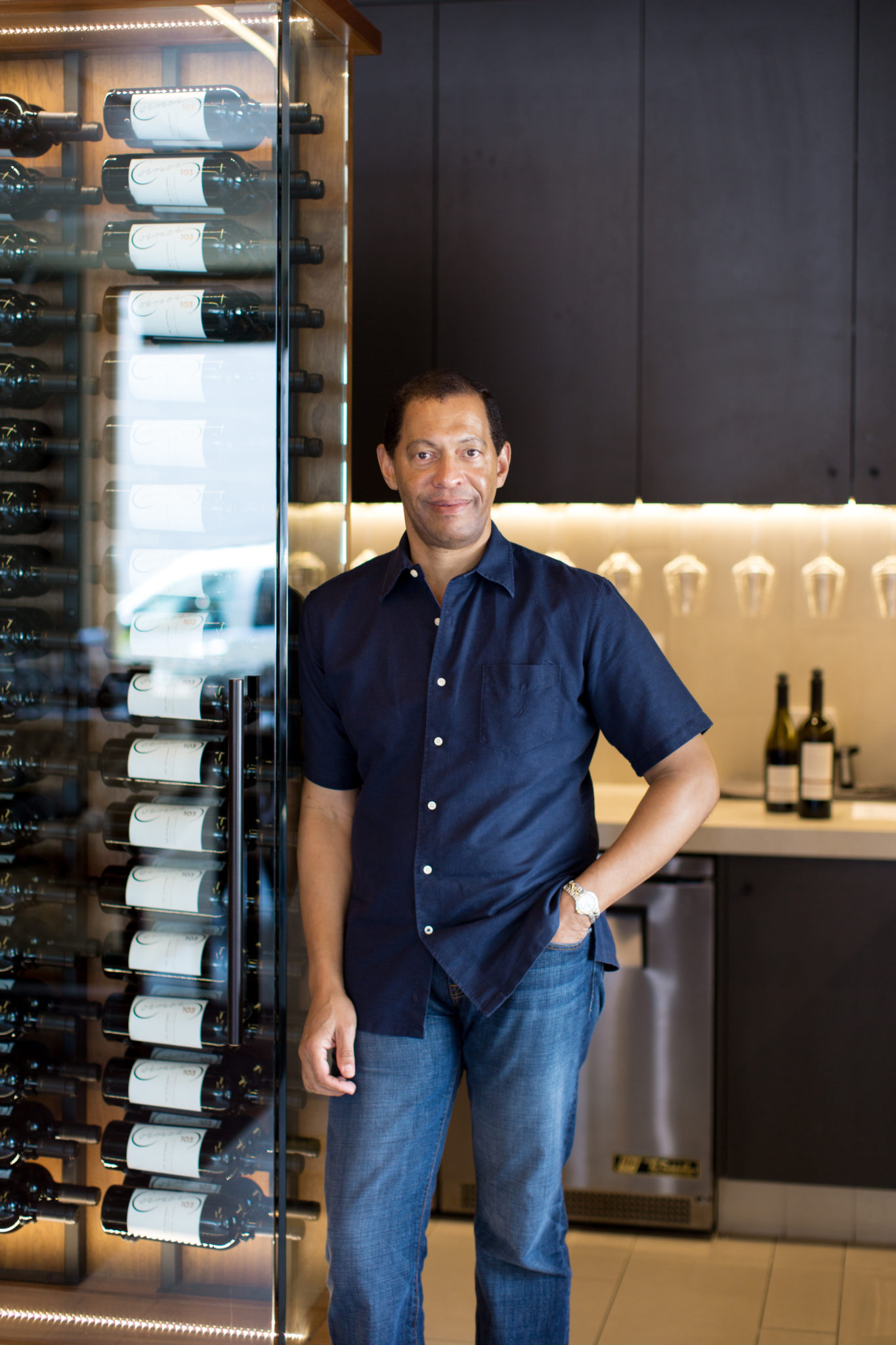
Granted, Davis had the financial means to found Corner 103: A Sonoma Tasting Experience in 2015, after Viansa was sold to Vintage Wine Estates. He and his staff pour the Corner 103 wines and, until the pandemic shutdowns, made matching the wines with food a priority (pairings will resume in the future).
Davis, an AAAV member, said he’s found very little expressed discrimination toward him as an African American winery owner.
“I experienced more racial issues in finance than I have in wine,” he said with a chuckle. “Black, Hispanic, female, male, people come to Corner 103 to taste wine and have a great experience. They don’t know if I’m the owner or the janitor, and most don’t care.
“We’re 100% direct to consumer. In the tasting room environment, if a person doesn’t like Blacks, they don’t come in. I don’t have to deal with distributors or retailers, and that’s a different perspective.”
McDonald, Lee and others have seen the discriminatory side of that perspective, the exclusionary one, and welcome the day when the color of the winemaker is far less important than the hue of the wine.
Here are six local Black-owned wine businesses worth a look and taste:
Bodkin Wines
Native Iowan Chris Christensen moved west to study at Stanford University, where he was introduced to wine. He learned to make vino from the ground up at Sonoma wineries including Mauritson, Meeker and Medlock Ames. He went out on his own in 2011, starting Bodkin Wines and gaining instant attention with his sparkling sauvignon blanc, Cuvée Agincourt, the name referencing a battle during the Hundred Years’ War. Most of his grapes came from Lake County back then, as they were more affordable than those from Sonoma. Christensen has increasingly added more Alexander Valley and Dry Creek Valley fruit for his various other sparkling wines, sauvignon blancs, gewürztraminers, zinfandels and white and red dessert wines.
Lloyd Davis took what he learned from retooling nearby Viansa Winery and opened Corner 103, an intimate, stylish tasting room in downtown Sonoma. There, he and his staff pour wines Davis began making as he positioned Viansa for sale to Vintage Wine Estates. Wine and food matching has been the strong suit of Corner 103, and while coronavirus health measures have put the pairings program on hold for now, visitors (by appointment) can taste five wines for $20 per person. Winemaker Ron Goss, who Davis brought over from Viansa, excels at producing wines from throughout Sonoma County: Carneros chardonnay and pinot noir, Alexander Valley grenache, Sonoma Mountain zinfandel and more.
103 W. Napa Street, Sonoma, 707-931-6141, corner103.com
Fog Crest Vineyard
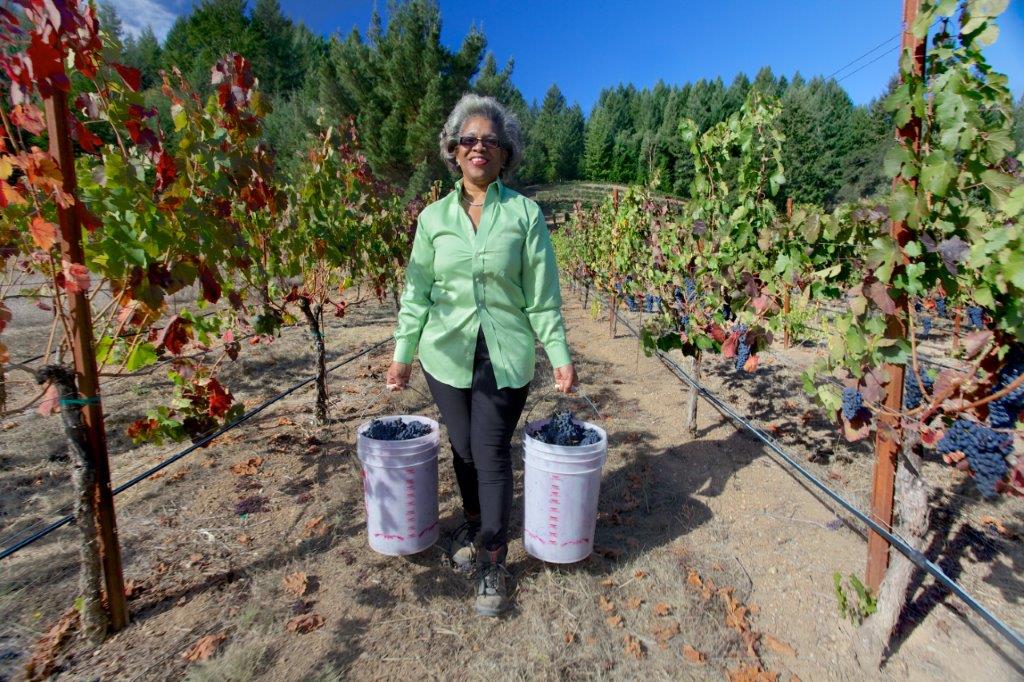
African American Rosalind Manoogian and her husband, James Manoogian, own this Russian River Valley vineyard, winery and tasting room, where former Saintsbury (Napa Valley) winemaker Jerome Chery produces their chardonnays, pinot noirs and rosés. Rosalind, the vice president of marketing, is often the host for visitors to this winery. Call ahead for appointments.
Danny Glover (no relation to the actor) was a songwriter and producer in Los Angeles when the wine bug bit him – specifically, the pinot noir bug. He moved to Sonoma, worked at wineries including Armida, Clos du Bois and Dutcher Crossing, then launched L’Objet Wines a decade ago, selling most bottles to his wine club. Glover’s current-release L’Objet Noir is a pinot noir from Russian River Valley’s Oehlman Vineyard; a Comstock Vineyard Sauvignon Blanc from Dry Creek Valley is also in the fold. Glover produces 600 cases or so a year of wine. Bodkin’s Chris Christensen calls him “Lethal Weapon;” Glover’s Twitter handle is #pinotnoirdude.
No tasting room; order wines by phone or online, 707-235-3153, lobjetwines.com
Theodora Lee of Theopolis Vineyards. (Courtesy photo)
Theopolis Vineyards
Labor law attorney Theodora Lee planted her 5-acre Yorkville Highland vineyard in 2003, selling the grapes to others, including Carlisle Winery & Vineyards in Santa Rosa. She made her first commercial vintage in 2014, and ever since, her petite sirah, symphony (a white wine made from a grape variety bred at UC Davis of muscat of Alexandria and grenache gris) and petite sirah rosé have won fans – and competition gold medals, with two golds won at the 2019 North Coast Wine Challenge in Santa Rosa.
“My idea is to help others appreciate wine,” said Edward Lee “Mac” McDonald. “It’s all about education.” McDonald, the son of an East Texas moonshiner and retired PG&E supervisor, founded Vision Cellars with his wife, Lil, after trying his hand at homemade wines. He’d made friends with Caymus Vineyards owner Charlie Wagner in Napa Valley and spent a lot of time there sampling the wines. Charlie and his son, Chuck, convinced McDonald that he was suited for the wine business, and they provided space in their cellar for Mac to make his wines. A gift bottle of Burgundy he received back in Texas stuck in his mind, and McDonald, now living in Windsor, decided to make pinot noir from top vineyards in California. The first vintage was 1997, and the couple has crisscrossed the country multiple times since, pouring at events and showing wines to the trade. McDonald continues to produce his wines at Caymus, though the grape sourcing is now focused on Sonoma County and the North Coast.
No tasting room; order at 707-836-4002 or online at visioncellars.com
Indoor dining at Sonoma County restaurants, only restored weeks ago, may be off the table as soon as early next week as the region’s surging coronavirus caseload sets in motion new restrictions that will likely mark another round of economic hardship for the already devastated hospitality industry.
It’s a bitter pill for restaurateurs who have spent weeks anticipating some semblance of normalcy, painstakingly training staff to comply with the complex maze of state and county protocols required for socially-distanced indoor dining. That’s after months of reworking business plans — sometimes on a daily basis — just to stay afloat and adapt to a business landscape upended in ways few could have imagined.
For most restaurant owners, indoor dining represents the bulk of their business. If it remains off limits for for a prolonged period ‒ and the state default is three weeks to begin with ‒ the make-or-break factor for much of the industry may come down to access to outdoor seating.
That’s daunting for restaurants like Ramen Gaijin in Sebastopol, which has a large indoor space, but only a handful of patio seats in its downtown location.
“It’s like picking and choosing winners,” said Matthew Williams, chef and co-owner. Pointing to restaurants like Petaluma’s Brewster’s, Bravas in Healdsburg or nearby Hopmonk, which have expansive outdoor spaces and ostensibly would be able to stay open, he said that he just can’t compete.
“We have like maybe 30 outdoor seats, and if it’s 90 degrees and there’s no shade, I don’t know if it’s worth it,” he said.
Hundreds of Sonoma County restaurants are facing the fight of their lives amid the pandemic and public health orders meant to curb the spread of a deadly contagion. After being battered by years of wildfires, power shutoffs, floods and the resulting lackluster tourism, it’s surprising that only a handful of restaurants have succumbed during the latest crisis.
But many restaurateurs who have stuck in the game this long are saying they’re not sure if they can hold out much longer, especially as federal aid and loans that have sustained them in the past several months may soon run out.
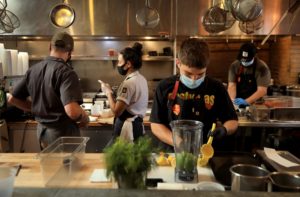
To survive, most have had to blend unsustainable and often conflicting plans that require outlays of time and money. Many have built patios, redesigned interiors, created entirely new menus and switched to takeout while immersing themselves in creative ways to enact new safety and sanitation requirements.
For Williams that meant spending several weeks transforming his indoor space to seat 75 people in multiple rooms. Opened just a week for indoor dining, the numbers were promising, allowing him to pay staff and keep the lights on.
But now Williams is facing the prospect of having to once again darken his dining room and pencil out how to keep the restaurant going while making no money and pouring cash into the next pandemic pivot.
“This is our family’s paycheck. I just don’t know how long I want to keep pushing if it’s going to deplete everything,” he said.
It’s a similar story for Kyle Connaughton of Healdsburg’s Single Thread Restaurant and Inn. A rising star in the restaurant world with a coveted three Michelin stars, Connaughton’s bespoke dining experiences rely on personal attention to every detail — from the edible centerpieces to custom-made furniture and an open kitchen experience. That’s not something easily done on a windy rooftop patio.
Since April, he’s relied on upscale takeout meals and partnerships with nonprofit groups to keep much of his large staff working and paid, but he estimates that his business is down 70% since last year.
With eased restrictions announced in June, he dedicated himself anew to preparing the restaurant to welcome guests with an entirely different menu and a well-rehearsed protocol for sanitation. Tables this weekend were booked, but he’s girding himself for another dropoff in customers and having to close up again.
“The reality is that closure has deep financial costs, and reopening is a massive investment. The stop-start nature of this (situation) has a deep impact on restaurant businesses and the people who work within them,” said Connaughton.
“We’re all moving from one short-term solution to the next and each just gets more difficult,” he said.
Even outdoor dining isn’t a silver bullet, according to Sondra Bernstein, owner of Girl and the Fig in Sonoma, Fig Cafe and a large catering business. Her California-French cuisine has gained a substantial following in the Bay Area over the past 23 years, and typically she would have about 240 people on staff and $10 million in annual sales, she said.
Now, she’s doing grab-and-go meals, running a food truck and trying to set up picnic tables in a corner of the Sonoma Plaza to keep her business alive.
The town has allowed restaurants to be creative, using the grassy plaza, alleys and walkways for outdoor dining. But Bernstein found part of her walkway space taken over Thursday by PG&E maintenance workers, underscoring the pitfalls of staking out a business on ground she doesn’t control.
By Bernstein’s estimation, she’s spent about $5,000 putting up screens, stanchions, spaced picnic tables and even setting up a remote kitchen that has to be assembled daily to serve diners outside.
“This is money, time and resources we just don’t have. Every day is something else and the rules keep changing,” she said, adding that the business has lost at least $800,000 in the last four months.
“Some days I’m crying my eyes out saying how did I get in this place. Other days, I’m like we got this and we’re great. But this isn’t the business I envisioned having. Serving grab-and-go sandwiches isn’t what we were about. But right now, we’re just trying to make money and keep people employed,” she said.
Some are simply holding their breath and waiting to see what happens next before reopening at all.
Samantha Ramey and her husband opened Americana in Santa Rosa’s Railroad Square just weeks before shelter-in-place orders came down in March. They attempted to focus on takeout, but just couldn’t gain traction and closed the restaurant.
They’re currently working out of their original restaurant, Estero Cafe in Valley Ford. The tiny farm-to-table spot is doing well feeding pent-up city dwellers escaping to the coast for a breath of fresh air.
It’s homey interior has taken a back seat to the outdoor fast-casual experience that many customers now find more suitable if they are to eat out. Diners order at the door and sit on scattered tables outside. But the farm-to-table vision Ramey fostered at the restaurant just isn’t the same, she said, when everything is served on disposable plates and plastic cups.
“I just keep focusing on the fact that this isn’t forever, but it sure doesn’t feel like it’s going to be over quickly,” she said.
With just six indoor tables, Petaluma’s Street Social closed soon after the initial stay-home restrictions, but Marjorie and Jevon Martin are staying afloat selling fried chicken to go. Outdoor dining just wasn’t an option.
“We’ve been watching the rising cases carefully. Better to err on the side of caution rather than to risk staff and guests,” Marjorie said.
That means constantly restrategizing, finding income where they can. The couple have found some support recently as the Black Lives Matter movement has brought them guests who want to support the Black-owned business. Still, it’s not always enough.
“It feels like we’re paddling upstream everyday, but at least we still have a paddle,” she said.
Sonoma Canopy Tours’ Sonoma Treehouses are still under construction. The grand opening is set for August 3, 2020. Five treehouses, very similar to yurts, form an aerial village in redwood treetops on the Alliance Redwoods property in Occidental. (Courtesy of Sonoma Canopy Tours)
In these pandemic times, day trips and staycations are fast becoming popular ways to spend a summer holiday as people look to stay closer to home while also practicing social distancing.
A local zipline company is now taking the close-to-home vacation to new heights. Starting next month, Alliance Redwoods Sonoma Canopy Tours will invite guests to stay above the ground in five yurt-like treehouses in Occidental. The company, which has offered zip line experiences among the redwoods for a decade, had been planning the opening of their Sonoma Treehouses aerial village long before the pandemic. Now, policies are put in place to ensure guests can safely zip off the grid and into a queen bed.
The treehouse village is still in the works, click through the above gallery for more information and a sneak peek.
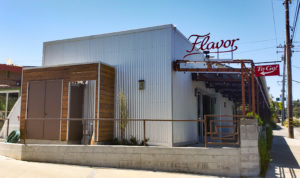
The popular downtown Santa Rosa eatery shuttered in November 2016 as construction on the Square lagged to the consternation of many who considered it a “go-to” for business lunches, happy hours and family gatherings.
After four years, the owners are reopening in a small bistro that formerly housed a Caribbean restaurant on Healdsburg Avenue (near the former Peter Lowell’s).
We heard lots of buzz on social media about the spot, which already has signage, and stopped by to talk with longtime employee Jorge Pedroza, who said they are hoping for a mid-August opening. Outdoor seating will be on the back patio and facing the street, with some limited indoor seating possible — depending of course on how things go over the next few months with social distancing requirements.
Expect a slightly reduced menu, but most of the old favorites. As for parking, which is in limited quantity around the cafe (and has always been a difficult issue), Pedroza sees the glass half full, saying that there are plenty of spots on streets nearby so you can walk off that big dinner or last glass of wine. Fair enough.
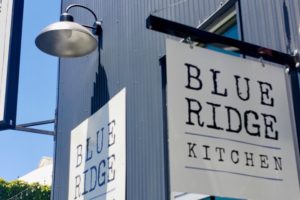
Blue Ridge Kitchen will soon be opening in the former Zazu space in the Barlow.
Describing the menu as “California comfort food with a Southern drawl,” General Manager Eric Zahra (Real Restaurants group, Piatti) heads up an all-star cast that includes Virginia native Jared Rogers (Guesthouse, Picco) as consulting chef and Matt D’Ambrosi (recently of Spoonbar, Harmon Guesthouse and Pizzando). The restaurant is undergoing a makeover, which includes a showpiece J&R live fire grill but maintains the open, airy vibe of the space.
Barlow founder Barney Aldridge is currently a minority partner in the project and said he brought together the team to create a friendly, seven-day-a-week, “heart of the community” destination like Marin’s iconic Buckeye Roadhouse or Napa’s Rutherford Grill.
“I want it to be one of those timeless gathering places,” Aldridge said.
Blue Ridge Kitchen is hoping to open — with a full liquor license — in the next several weeks. Though the menu is still evolving, it currently includes Southern standards like fried green tomatoes, shrimp po’ boys, fried chicken platters, collard greens, pecan pie, shrimp and grits and smoked ribs, but also veers to NorCal faves like avocado toast (with crispy ham), smoked Mt. Lassen trout salad, roasted cauliflower steak and ahi tuna tartare. If you’re craving some meaty meats, try a tomahawk steak, rigatoni sugo with braised pork cheek or hardwood smoked prime rib. A little something for everyone.