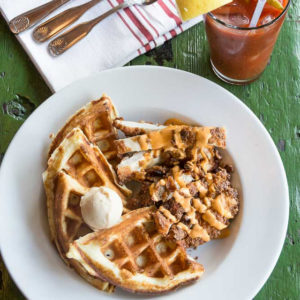
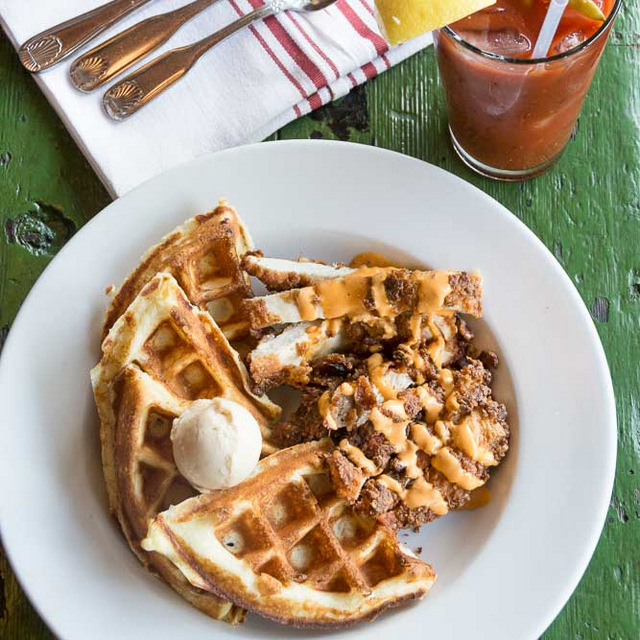
Chicken and Waffles at Gypsy Cafe in Sebastopol. Courtesy photo.
Restaurateurs are a plucky lot. Often unfazed by even the worst circumstances, they forge ahead to feed us through flood, fire and pandemic. But opening (and reopening) right now? That’s for the truly brave, and we’re here to salute their fearless fortitude.
Corner Project Ales and Eats
Opened in May, this family-run brewpub in Geyserville has one brother brewing and the other manning the kitchen. More than just fried pub grub, Chef Tom Adamian’s menu includes lots of comforting dishes like meatball sandwiches, grilled veggie sandos, gem salad and tomato salad. Locally sourced, the menu changes up weekly, but I’m hoping to get one of their sometimes-on-the-menu Geyserville cheesesteaks, chocolate beer brownie and house-fermented pickle plates. Open Thursday through Sunday.
Asian food featuring mostly chicken dishes. I’m fascinated by this approachable newcomer to the Marlow shopping center in Santa Rosa. Daily pickup and delivery of simple, but hearty, dishes like chicken curry puffs, tangy tamarind chicken rice bowls, curry rice bowls, poached chicken and rice and grilled chicken and rice. Most entrees are $12.95. Open 11 a.m. to 9 p.m.
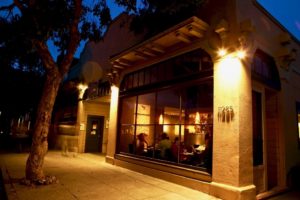
These folks got the serious short end of the stick, planning to open at the former Harvest Moon location in Sonoma just as the pandemic hit. At this bottle shop and restaurant, they’re currently offering a limited menu that includes tinned seafood and chips, half chicken with potatoes, trout with tomatoes and aioli, beet caponata and more.
At Valley Bar + Bottle in Sonoma. (Courtesy photo)
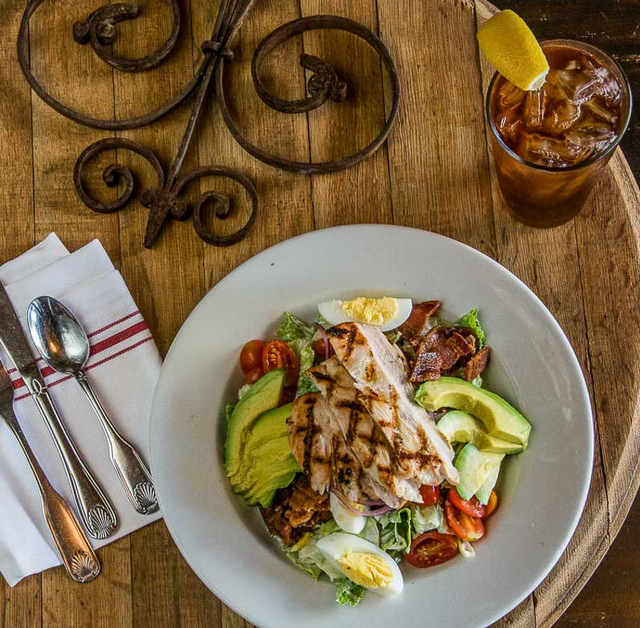
Chicken and Waffles at Gypsy Cafe in Sebastopol. Courtesy photo.Cobb salad at Gypsy Cafe in Sebastopol. Courtesy photo.
Gypsy Cafe Reopens
It’s been a long haul for this homey spot in Sebastopol that’s been hit by the double whammy of COVID-19 and a Caltrans project that blocked much of the sidewalk area for months. They’ll be back in action on Aug. 5 for takeout with their signature chicken and waffles, chilaquiles, heirloom BLT and burgers along with family dinners.
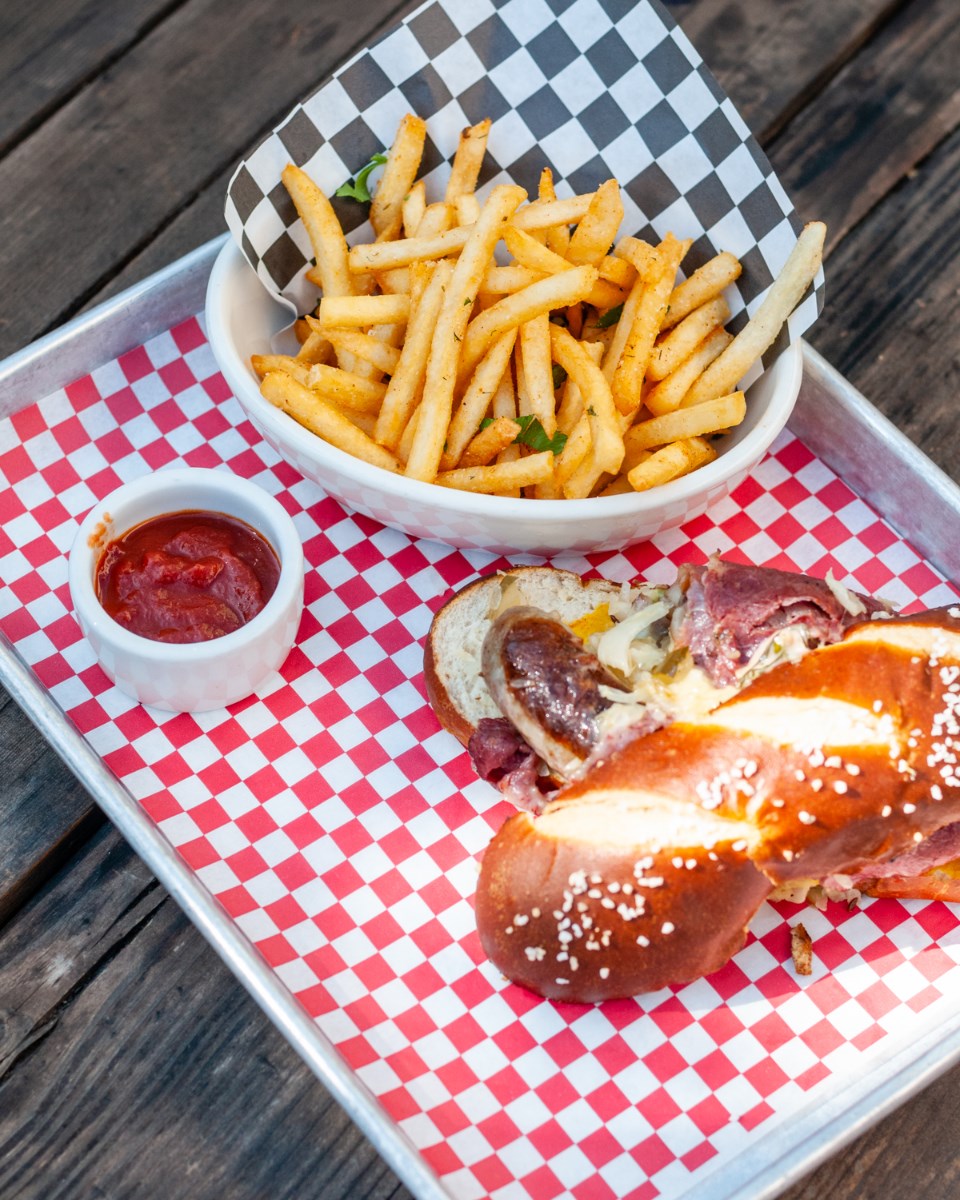
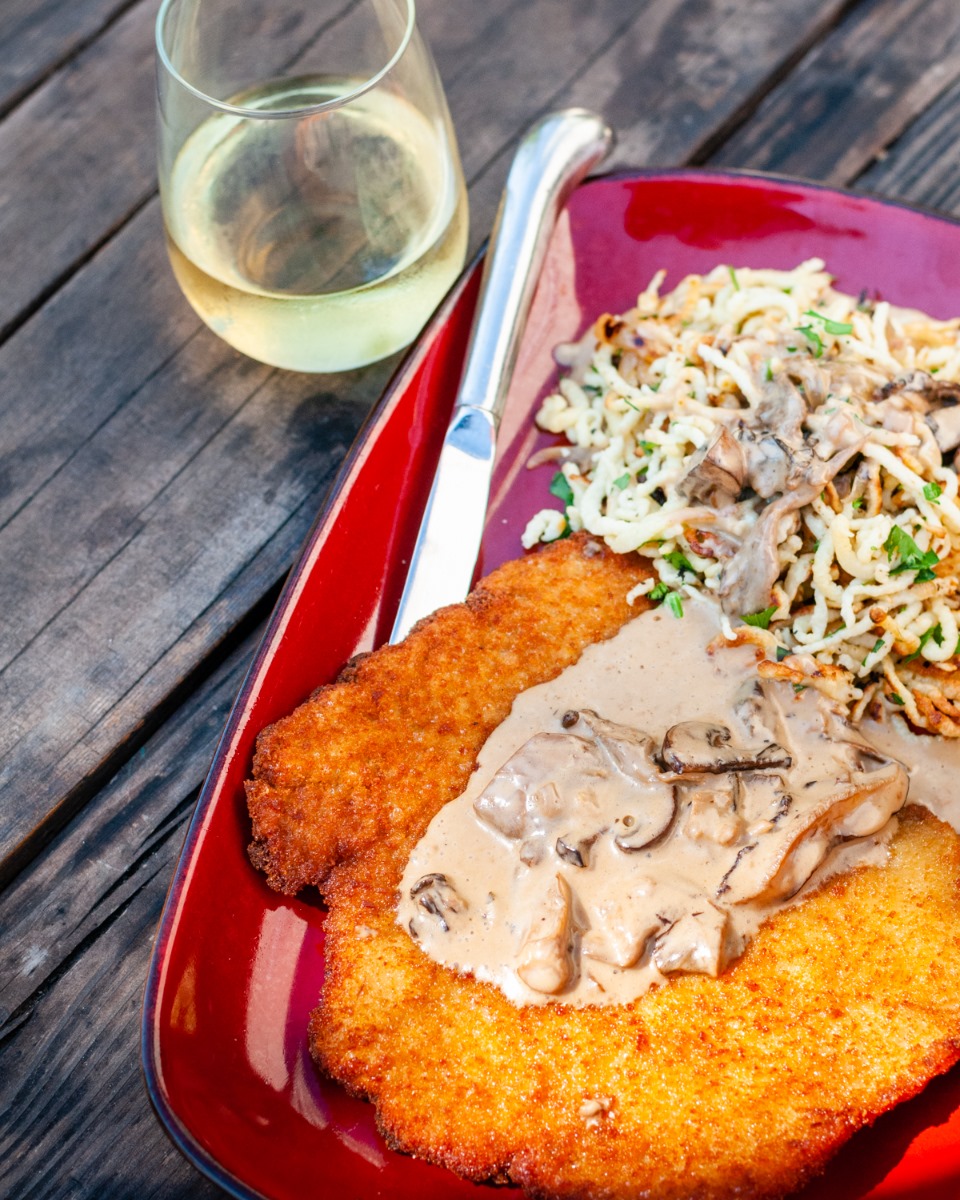
At Franchetti’s in Santa Rosa. (Courtesy photo)At Franchetti’s in Santa Rosa. (Courtesy photo)
Franchetti’s Reopens
German meets Italian at this fun eatery offering a small outdoor space, along with takeout and delivery. Best bets include housemade burrata with roasted summer fruits, summer BLT with Flugger’s bacon on ciabatta bread and wood-fired pizzas like their killer rosemary mushroom pie.
A once-controversial Petaluma farm known mostly for its cannabis program is stoking a different kind of high these days, doling out pounds upon pounds of free produce to Bay Area chefs.
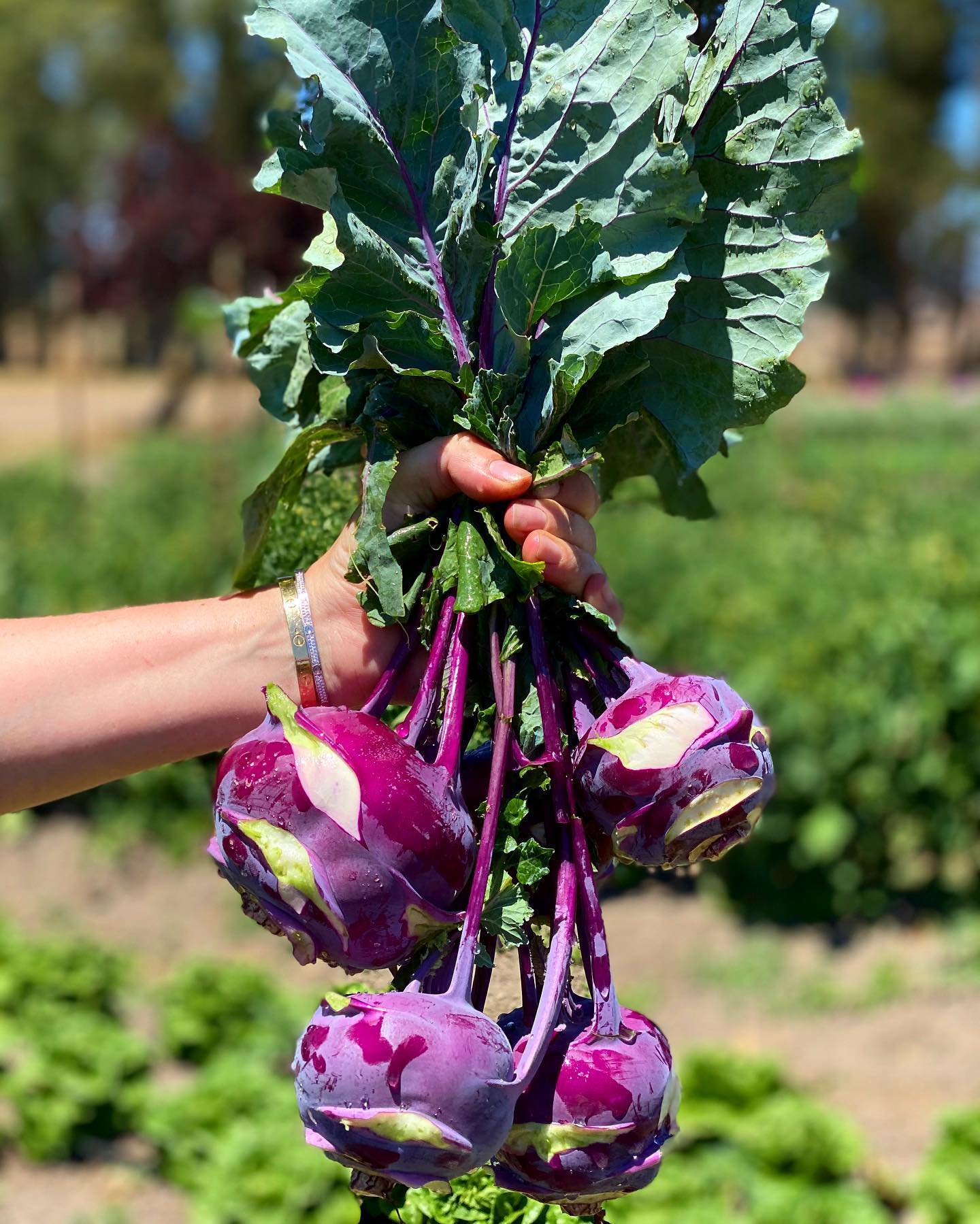
Gardeners at the Sonoma Hills Farm planted a 3-acre produce garden earlier this summer and have started sharing tomatoes, lettuces, beets, kohlrabi, and other vegetables with chefs in San Francisco and Napa and Sonoma counties.
Dubbed Chefs’ Ranch, the program aims to help chefs and restaurateurs get through financial hardships caused by the coronavirus pandemic.
Every box of goodies is totally free.
Head farmer Aaron Keefer said the program is both an effort to give back to the industry and to introduce Sonoma Hills as a viable source of fresh produce from the North Bay.
“In times like this we have to come together as a community,” said Keefer, whose title technically is vice president of cultivation and production. “We’ve got the food. They’ve got the need. If we can provide a boost to local restaurants by giving them our produce, all of us win.”
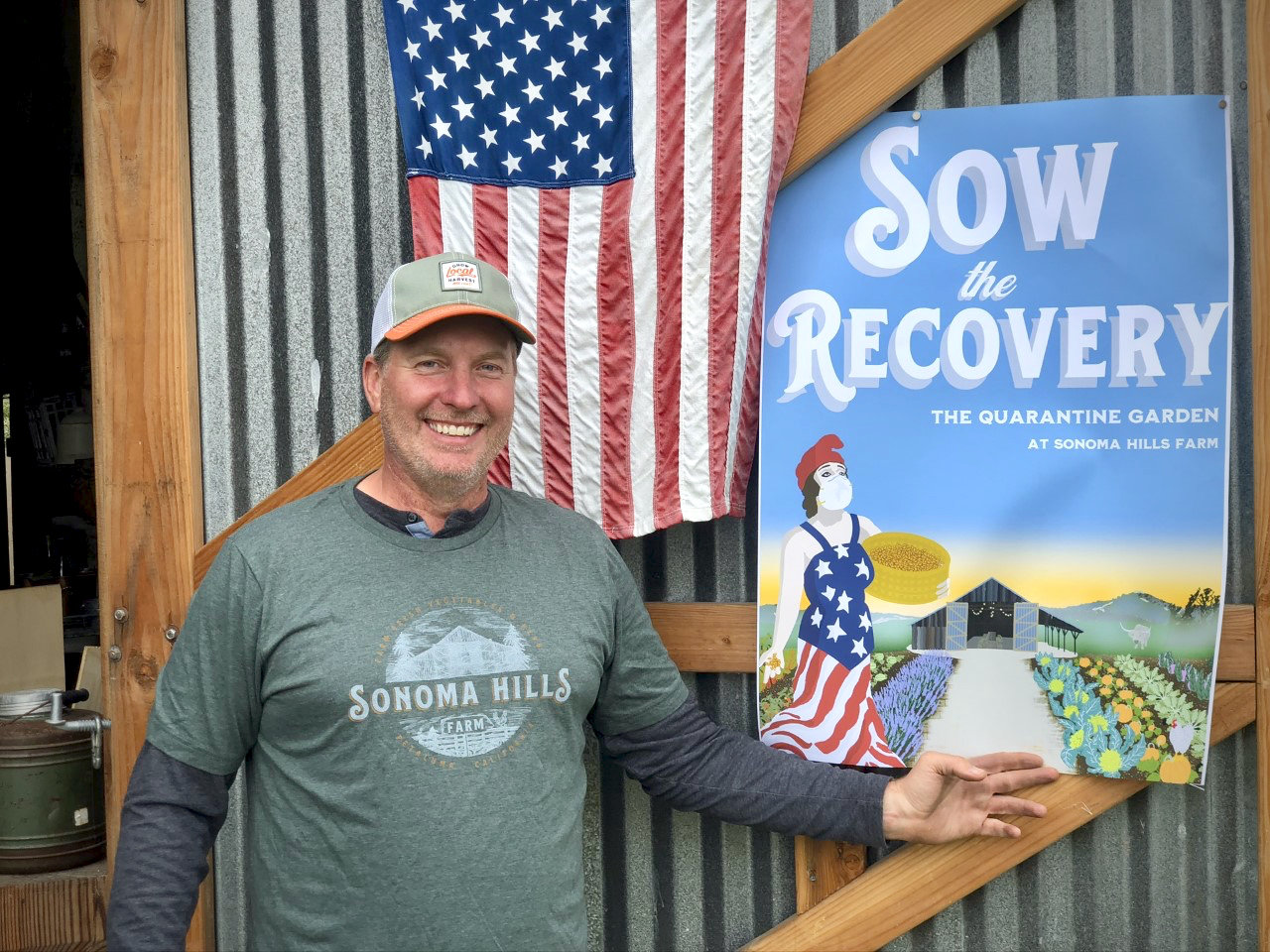
Aaron Keefer is distributing produce from Sonoma Hills Farm to local chefs for free. The initiative’s decals are a modern take on victory garden posters. (Courtesy photo)Victory garden poster, “Will you have a part in victory,” by James Montgomery Flagg, c.1918. (Library of Congress)
If anybody understands how to grow produce, it’s Keefer; he ran the culinary garden at The French Laundry in Yountville for 10 years before taking over at Sonoma Hills in February.
Keefer was hired because of his vision for cannabis—as he described it then, his goal was to “source the best genetics and consistently create the best cannabis.” In addition, Keefer hoped to create a 1-acre produce garden to serve local chefs who could subscribe for regular deliveries.
So Keefer and his staff of three got to work. They expanded the garden to 3 acres. They planted dozens of different types of potatoes, squash, corn, and other veggies.
Kohlrabi at Sonoma Hills Farm in Petaluma. (Courtesy photo)
By early July, their “quarantine garden” started producing in abundance. The farm began packing boxes for a select group of chef friends. Keefer himself engineered most of these deliveries, driving his personal pickup truck to restaurants all over the region. As the program became more formalized, Sonoma Hills invested in specific stickers for the boxes. These decals, a modern take on the victory garden posters of WWI and WWII, depict lady liberty as a female farmer, wearing a face covering.
Chefs certainly have been appreciative of the bounty.
Katina Connaughton, co-owner of Single Thread restaurant in Healdsburg, said she has been incorporating some of the lettuces and tomatoes into dishes the restaurant is donating to Sonoma Family Meal, a local nonprofit that gives free meals to residents in need.
Earlier this month, Connaughton said Single Thread was donating between 200 and 400 meals a day.
“We’ve created this wonderful outlet for surplus in our community and they have a surplus, so we are delighted to be able to incorporate the beautiful produce they’ve been giving us,” said Katina, who oversees operations at Single Thread’s farm in a hidden valley north of Fitch Mountain. “Having them be part of the community is a valuable addition.”
Phil Tessier, chef and partner at PRESS in St. Helena, also has received produce from Chefs’ Ranch, and has incorporated it into meals the restaurant has donated as part of a different philanthropic effort.
This program, named Feed Our Families, is a partnership with other Napa restaurants and the local Boys and Girls Club. Much like Sonoma Family Meal, this program distributes meals to residents in need. It also has raised money to support these families—at last check, the effort had raised more than $200,000.
Tessier said he also planned to use some of the Chefs Ranch produce on his regular restaurant menu.
“It allows us to elevate what we do here,” he said. “They do a lot for us just by getting better product into the restaurant.”
To be clear: Restaurant produce from Chefs’ Ranch at Sonoma Hills Farm won’t always be free. Keefer said that, eventually, he hopes to revert to the original plan and charge restaurants for access to the veggies he grows.
For now, however, there’s no timetable for that switch.
“Eventually this garden has to break even,” he said. “Until then our priority is helping chefs get through this [pandemic] as best we can.”
Dry Creek Valley can get very dark at night. Homeowner Lisa Malloy says it’s so dark she can easily see the Milky Way from her stargazing tower, a weathered metal edifice tucked at the edge of her backyard: a field of tall, feathery grass and agave.
“We wanted a stargazing dynamic because we just love to look at the stars,” says Malloy, a designer who moved to the dreamlike property with her husband John and their Newfoundland dogs four years ago.
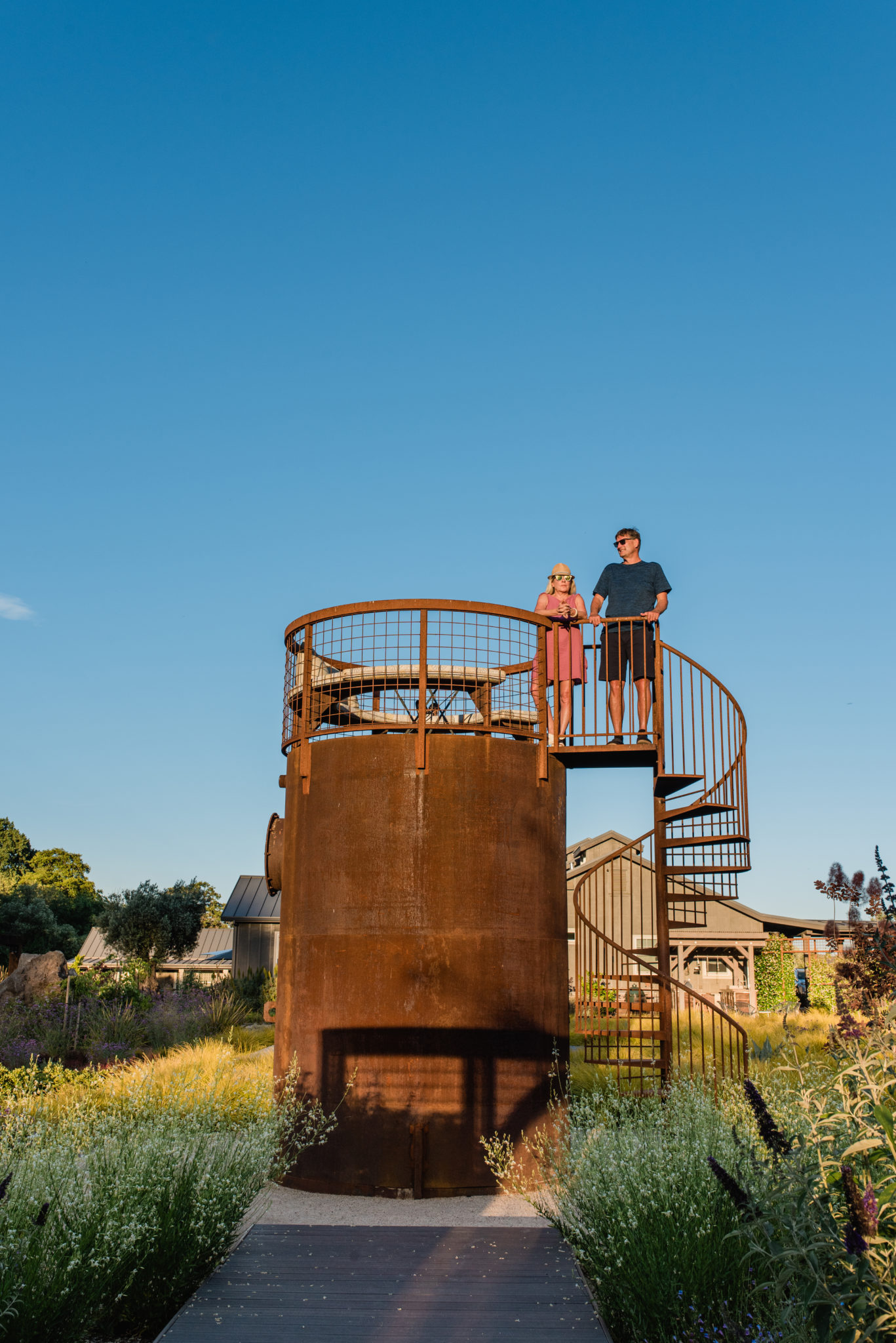
Lisa and John Malloy in their stargazing tower. (Rebecca Gosselin)
When they bought the home, Malloy knew the empty, dirt-packed backyard would need imagination and a sense of surprise. She found a like mind in Healdsburg landscape designer Jake Moss, of DIY Network and HGTV fame, and hired him to reshape the space.
Soon after, Moss, who is known for an inventive use of salvaged materials and a somewhat madcap approach to design, came across a rusty water tower that had been sitting around for years. Relocating the structure to the Malloy home, he repurposed it as a stargazing tower, with a staircase spiraling around the outside for a custom, steampunk-style look. Now the Malloys can ascend the stairs and take their seats at the top for a bird’s-eye view of the night sky — a view so fine they feel no need for a telescope.
Much of the acre-and-a-half area Moss worked with is set aside as the Malloys’ septic field. Moss had the idea of turning it into a meadow of tall, tufted perennials, punctuated by an occasional agave and smoke tree. For the meadow, he selected Lomandra, an Australian native which looks like a grass but is actually a member of the asparagus family. It grows in clumps to about 3 feet tall.
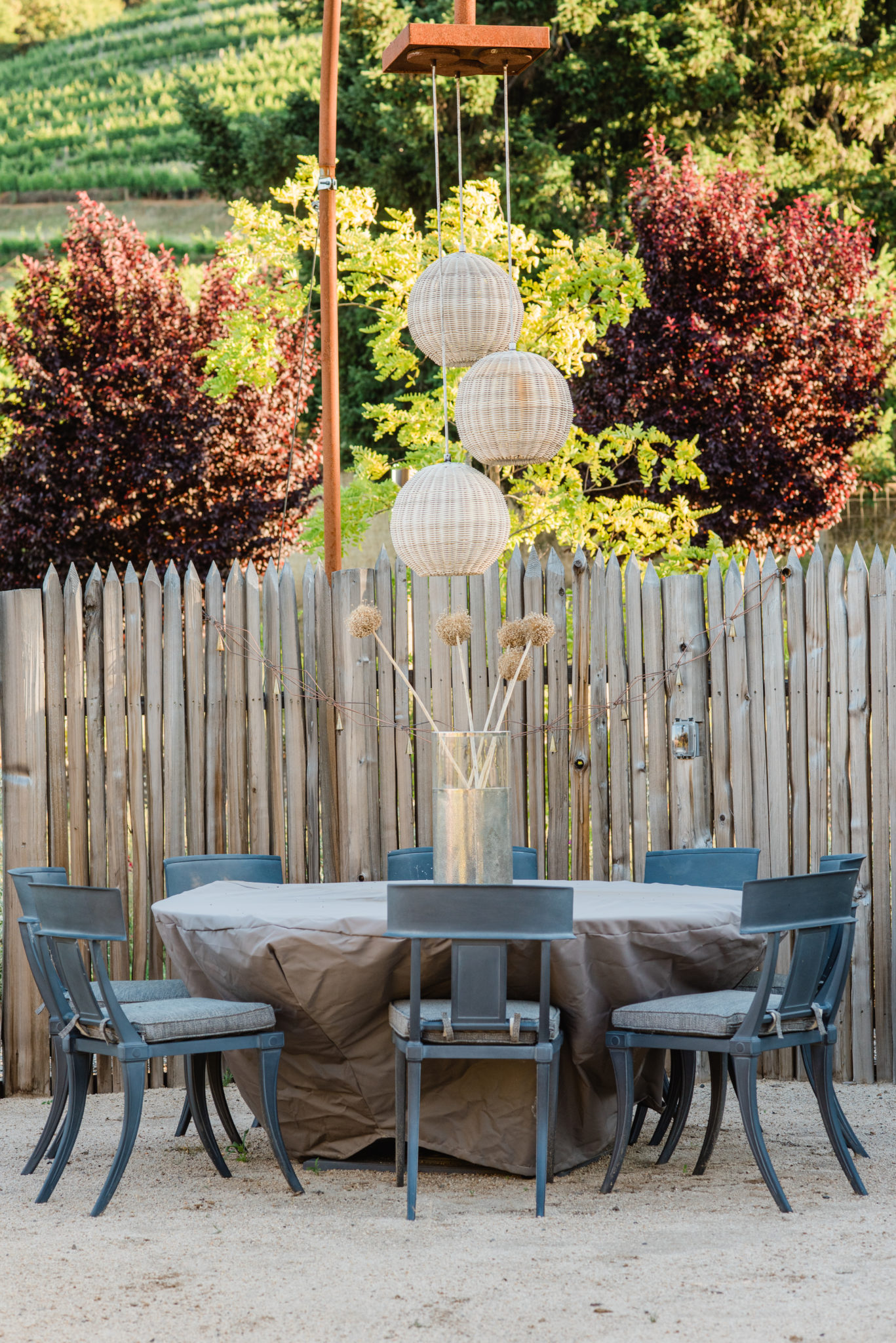
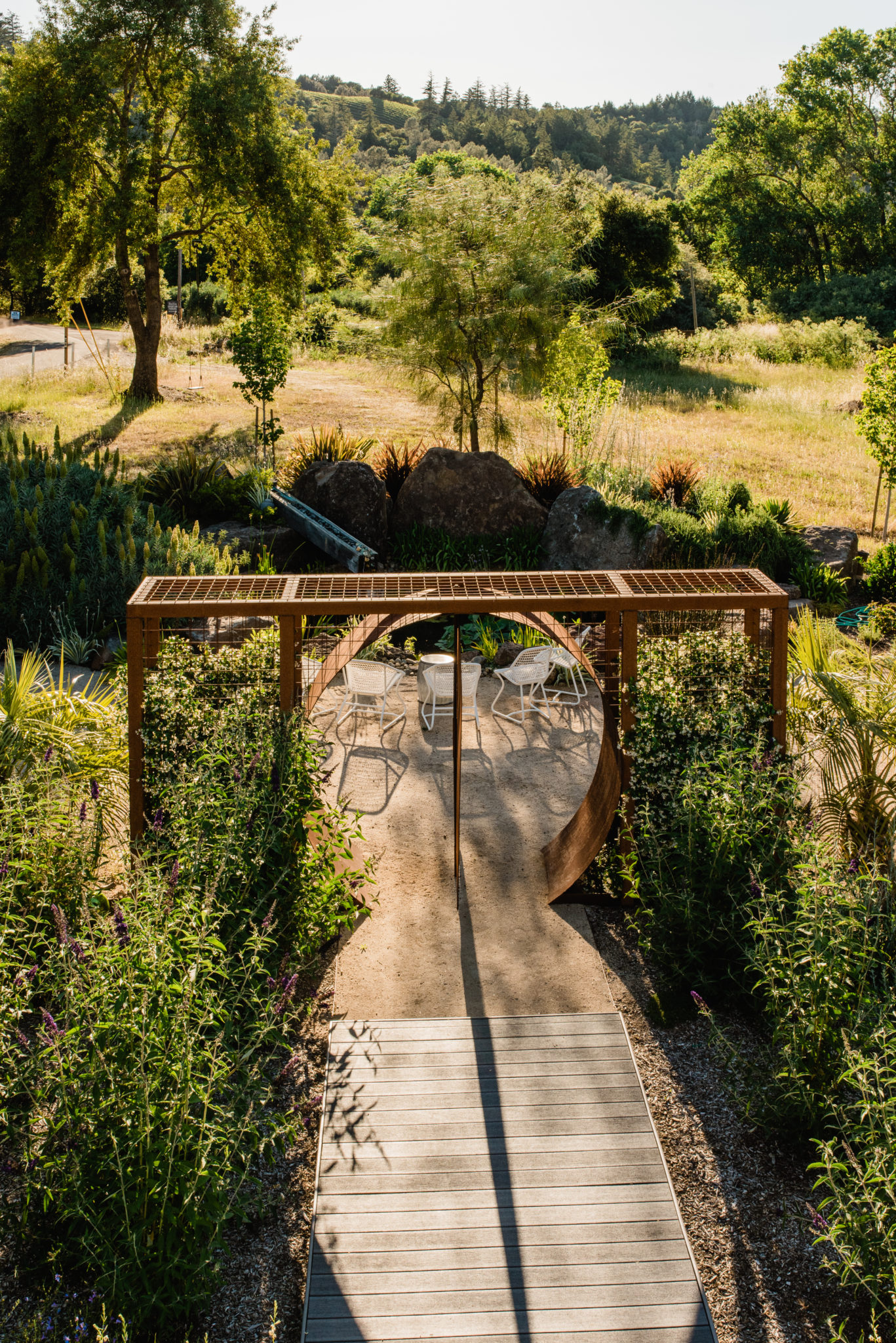
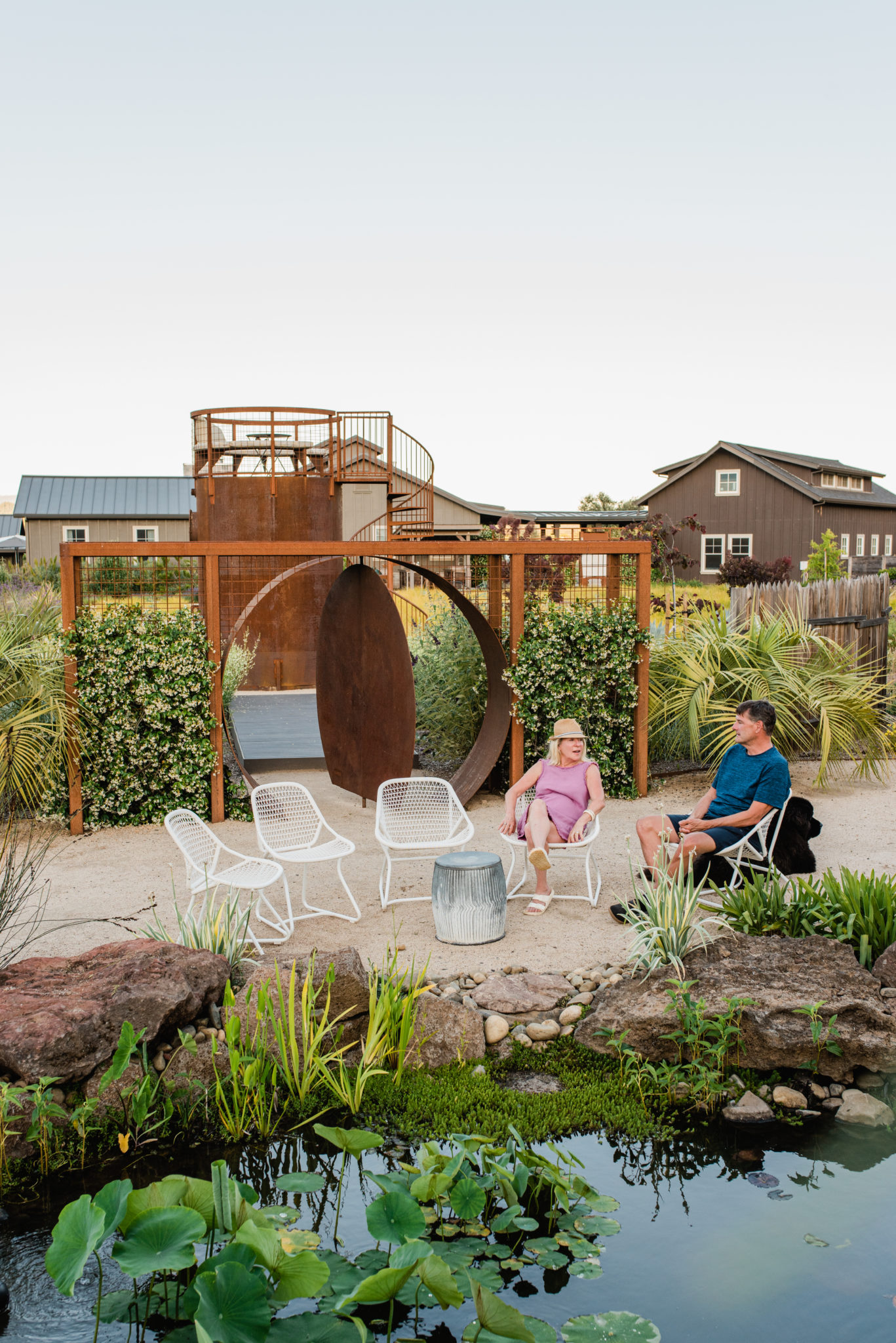
Outdoor dining area. (Rebecca Gosselin)The 15-foot tall circular gate that leads to the water garden. (Rebecca Gosselin)
“It’s just a nice open swath of texture, and it’s evergreen,” Moss says. “That’s one of the reasons I wanted to use it. And it’s a very hardy plant. If you’re going to plant 300 or 400 of them, you want to make sure they’re really hardy.”
Through the sea of grass, he built a long, wide boardwalk. And set within the middle of the boardwalk is a sunken firepit that places guests deep within the grassland. Lisa and John have packed as many as 25 people around the firepit at night for stargazing parties.
“The cool thing about this is, when you’re sitting in here, you’re grounded to the landscape around you,” Moss says. “It puts you into a different perspective.
Moss loves nothing more than to salvage weathered old pieces of wood and dream up new uses for them. At the Malloy home, he used large reclaimed timbers for a pergola that runs along one side of the landscape and repeated the look with a series of floating benches with concealed legs. At one time, the timbers had been used to help transport heavy machinery over mud and other unstable surfaces while building tunnels for BART.
“They have holes where the nuts and bolts used to go through. They have an interesting story and have kind of a cool, beat-up look to them,” Moss says with obvious enthusiasm.
The extended pergola is a great space for outdoor dining, long enough for a massive table to accommodate a large number of friends and family. “It’s such a fun visual to have a great big long table,” says Malloy.
More surprises come at the entrance to the garden, along the side of the house. A small, private courtyard is set along a curved copper wall, surrounded by fragrant star jasmine, with openings that provide a hint of the magic beyond. A wall of water falls serenely down the middle. “This is a very windy zone,”
Malloy said. “We wanted a little protection, and then to create something interesting beyond.”
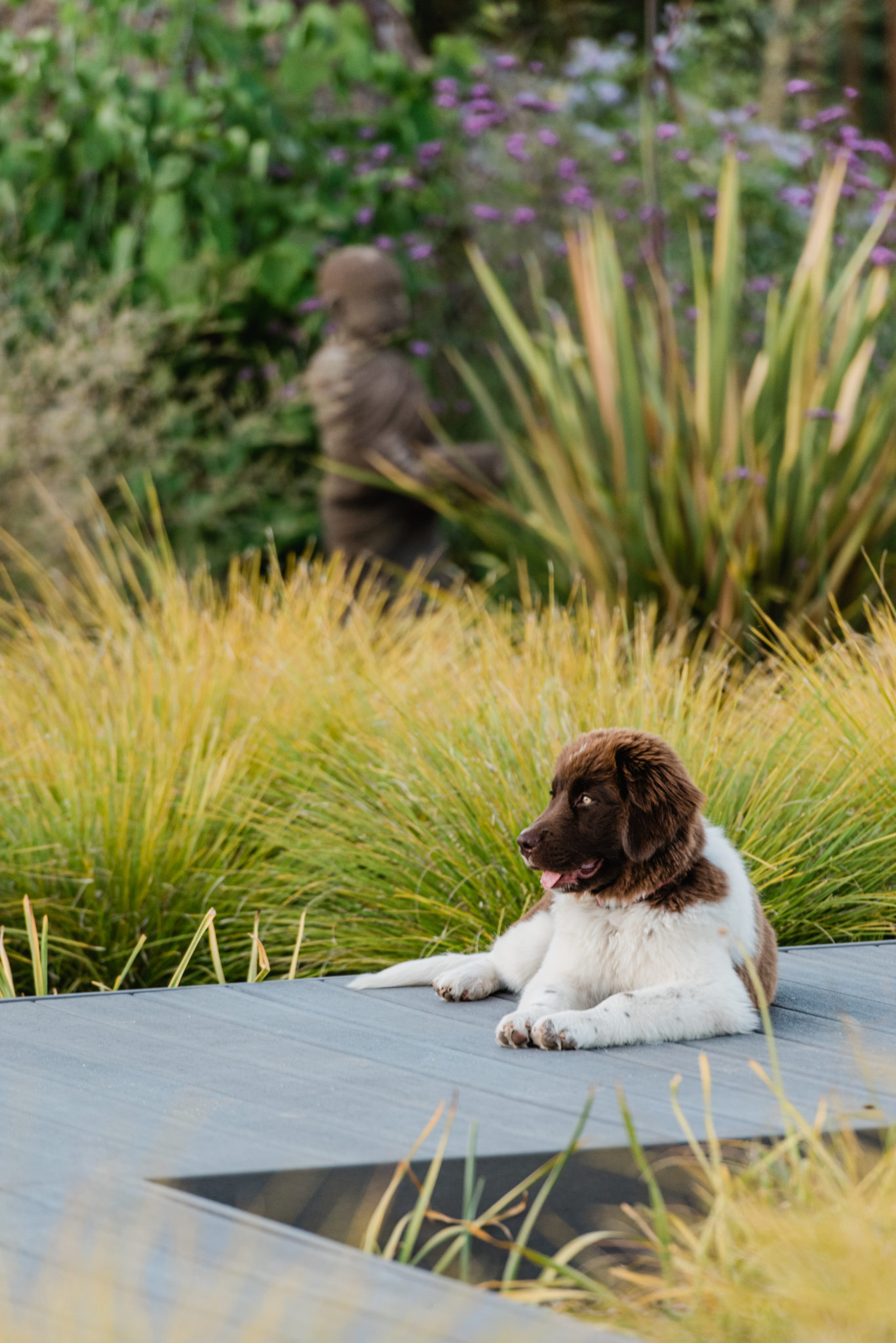
5-month-old Olive watches over the garden. (Rebecca Gosselin)
Tucked into a niche between the pergola and the grassland is an outdoor shower — perfect for people and for the couple’s two Newfoundland dogs, 9-year-old Rosie and five-month-old puppy Olive. The shower gets plenty of use hosing down the dogs after they’ve been wading and splashing in Dry Creek, which borders the home. Around the shower, Moss carefully selected lava boulders to fashion a natural wall that gives the feeling of being under a waterfall somewhere in the Southwest.
Moss used reclaimed metal panels to create doors to the Malloys’ new vegetable garden. He sketched the door design himself and had it laser-cut. Behind, a series of Cor-Ten steel veggie planters repeat the rusty metal patina of the stargazing tower.
The bottom disc of the water tank used for the tower was cut out and used to fashion a round, 15-foot swiveling door that leads from the tower area into yet another secret garden — a pond complete with lotuses and other aquatic plants.
The pond is a meditative spot, rich in wildlife, such as frogs and dragonflies. (Rebecca Gosselin)
Moss brought in massive boulders, some as heavy as 10,000 pounds, to border the water garden.
This is John Malloy’s special place, a place that conjures up memories of time he spent in Thailand. “He gets in there and tends it,” Lisa Malloy says. “We have frogs and toads like you can’t believe. It’s so much fun.”
If you’re lucky enough to have some outdoor space, make the most of it this summer and fall. After all, more time at home will allow more time to escape to the balcony, garden or patio. Shop Sonoma County stories for pieces — big and small — that will add interest to your outdoor space with the added bonus of keeping your spending local. Click through the above gallery for details.
While outdoor dining, in-store shopping and other activities have become accessible again in recent weeks, many of us are likely to continue spending most of our time at home for the weeks and months to come. To make life at home more enjoyable and fun, we’ve rounded up a few items from local stores that will help spruce up any space. Click through the above gallery for details.
Point Reyes’ Osteria Stellina, an ambitious farm-to-table restaurant that garnered national praise for its regional Italian cuisine will close at the end of August.
It’s a warning siren for what will likely be a tsunami of closures in the next three months as forgivable federal loans and savings dry up, employees seek other careers, customers remain wary and restauranteurs who’ve pivoted a hundred times say this new “normal” just isn’t sustainable.
Though there are glimmers of hope on the horizon — like the Restaurants Act, a $120 billion fund that could generate $24 billion for California, save 822,700 jobs for the state’s independent restaurants and bars, and assist the 55,350 small farms in California — it may be too little too late.
For Osteria Stellina’s owner Christian Caiazzo it was simply time to cut his losses. He explained his painful decision in a heartfelt letter saying that it was “a smart move” after muddling through years of ups and downs. Acknowledging that his restaurant “built on food politics” faced an uphill battle even in the best of times — buying expensive locally-sourced food, paying for employees’ health insurance and being located in a remote corner of Marin — he said he had zero regrets.
“As cruel as it is that Stellina will disappear, that we will retain absolutely nothing tangible to take away from this, that we will exist only in memory, I’d do it again in a heartbeat,” said Caiazzo.
So far, only a handful of local restaurants including Bistro 29 and Whole Pie have announced closures due to the pandemic.
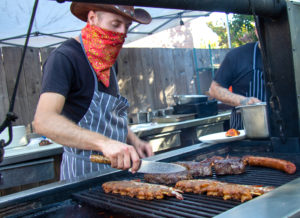
Stark’s Steak and Seafood has transformed its outdoor parking lot into a churrascaria from 5 to 8 p.m. Thursday through Sunday each week. Like at the churrascaria grills in Portugal and Brazil, you’ll need to bring a big appetite to this one.
Stark’s “Big Red” mobile rotisserie will be firing up all-you-can eat mesquite-grilled New York steak, ribeye, filet mignon, lemon herb chicken, smoked pork belly, barbecue salmon and tamarind-glazed grilled shrimp along with hot garlic dill bread, crispy calamari, potato skin fondue, tomato salad with blue cheese and Caesar salad. The meal is served family-style and includes a berry crisp with sweet corn streusel and s’mores pie.
Dinner costs $49 per person and seating is limited. Reservations are strongly encouraged. Details at starkrestaurants.com; 521 Adams St., Santa Rosa.
More dining news
Spoonbar’s Moroccan Menu: Head to North Africa with a special family-style meal featuring chermoula Moroccan chicken with couscous, beet salad with oranges, brie and pistachios and Casablanca cheesecake. Take-out only. The three-course meal serves four, $75. Details at spoonbar.com; 219 Healdsburg Ave., Healdsburg
The Salt You Need: I’m currently obsessed with Black Truffle Salt from Sonoma Spice Queen. So obsessed I’ve put it on everything from scrambled eggs to avocado toast. I’ve used it to zhuzh up beet salad and even rim a glass of merlot (OK, that was actually not delicious). Unlike cheap truffle oils that are a pale imitation of truffle, this version is a serious hit of real truffle — the umami, the earthiness, the hint of creaminess. You’ll be a believer. We also love her hibiscus sugar, sweet and tart, on popcorn, in cocktails and as a margarita rimmer. sonomaspicequeen.com; 407 C St., Petaluma
No travels to Europe? No problem. You can get a taste of the good life in other parts of the world right here in Sonoma County. Dreaming of a trip to Italy? We’ve rounded up a few local ideas in the above gallery. Remember to social distance and to wear that mask!
Where do you go for a taste of Italy in Sonoma County? Let us know in the comments.
Tomato season begins as a waiting game. Plants that went into the ground in the spring grow to maturity, with hundreds of starlike flowers and green globes of all sizes. Suddenly, come mid-to late July, there it is: a glint of bright color that in a few days encompasses an entire tomato, and then another and another. Soon, the garden explodes into frenzy of yellow, orange, and red — even purple. And then you taste your first of the summer, plucked from the vine and heavy in your hand, overwhelmingly delicious as you devour it right there in the garden, seeds spurting everywhere.
The tomato is a seasonal creature that will not yield to human attempts to shake it loose from summer. A tomato grown in its own true season has a pleasingly pungent aroma. It yields easily to a sharp knife and inside, the flesh glistens. The taste is rich, sweet and tangy, the texture luscious and silken. People who complain that they can’t get tomatoes “like they used to taste” are simply looking in the wrong place. Fortunately, in Sonoma County, the right places are everywhere, in our own backyards and farmers markets. For the next three or four months, tomatoes will be in glorious abundance. And then, the season of longing begins all over again.
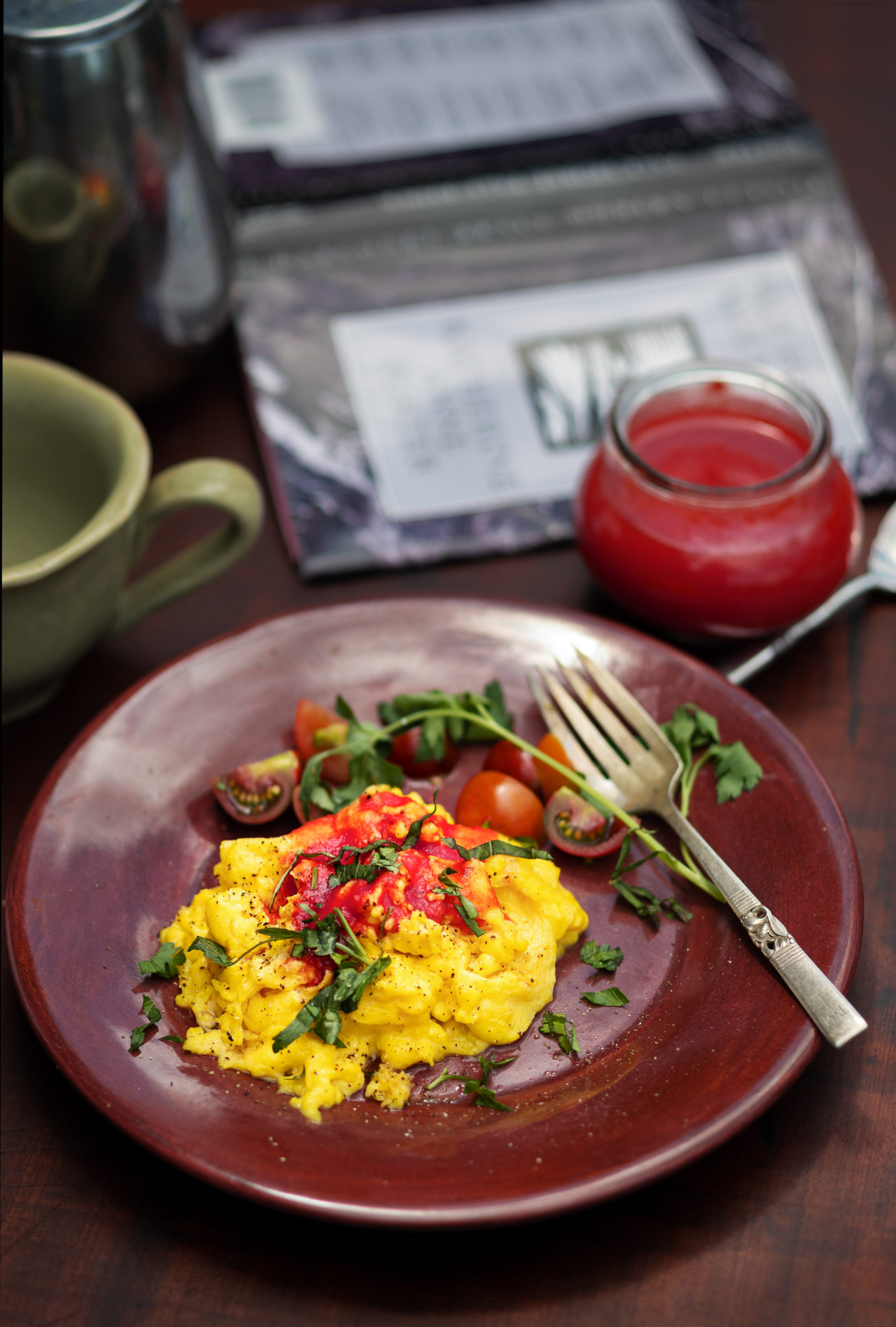
Fermented tomatoes on scrambled eggs. (Chris Hardy)
Fermented Cherry Tomatoes
Makes 2 quarts
At peak season, it can be hard to keep up with even one cherry tomato plant. Here’s an easy way to preserve cherry tomatoes; the recipe can easily be doubled or tripled to take advantage of the bounty your garden offers.
Put the tomatoes into a two-quart glass canning jar. Add the garlic and herb sprigs, if using, tucking them here and there between the tomatoes.
Leave about an inch and a half of head room at the top of the jar.
Put the salt into a large pitcher, add 8 cups of water, and stir until the salt is dissolved.
Pour the water over the tomatoes until it covers them completely.
Set a glass fermentation weight or glass lid on top of the tomatoes to keep them submerged.
Add a silicone fermentation lid and close the jar with canning rings.
Set it in a warm, dark area, such as a pantry or cupboard that has a steady temperature in the high 60s. Check daily and remove the lid now and then to release pressure.
Ferment for 5 days to 10 days, until you like the taste of the tomatoes. The longer the time in the brine, the tangier the taste. Tomatoes that are finished with fermentation can be stored in their brine in the refrigerator for up to a year.
To use, drain off the fermentation liquid and pass the tomatoes through a food mill. If you do not have a food mill, set a medium strainer over a deep bowl. Put a handful of the tomatoes into the strainer and use a heavy wooden spoon to press the flesh through, leaving the skins behind. Discard the skins and continue until all the tomatoes have been strained.
Put the fermented tomato puree into a glass jar and use within a week.
SUGGESTED USES
• Top French fries or oven-roasted potatoes.
• Stir into homemade salsa.
• Spoon over gently scrambled eggs.
• Drizzle over plain whole-milk yogurt. Enjoy with chips or sliced radishes and celery.
• Drizzle swirls over chilled soups, such as cucumber, avocado, vichyssoise, or gazpacho, or over hot soups such as potato, bean, or pasta.
• Spread on a thick slice of toast topped with crème fraîche.
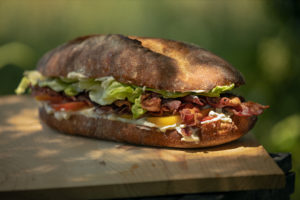
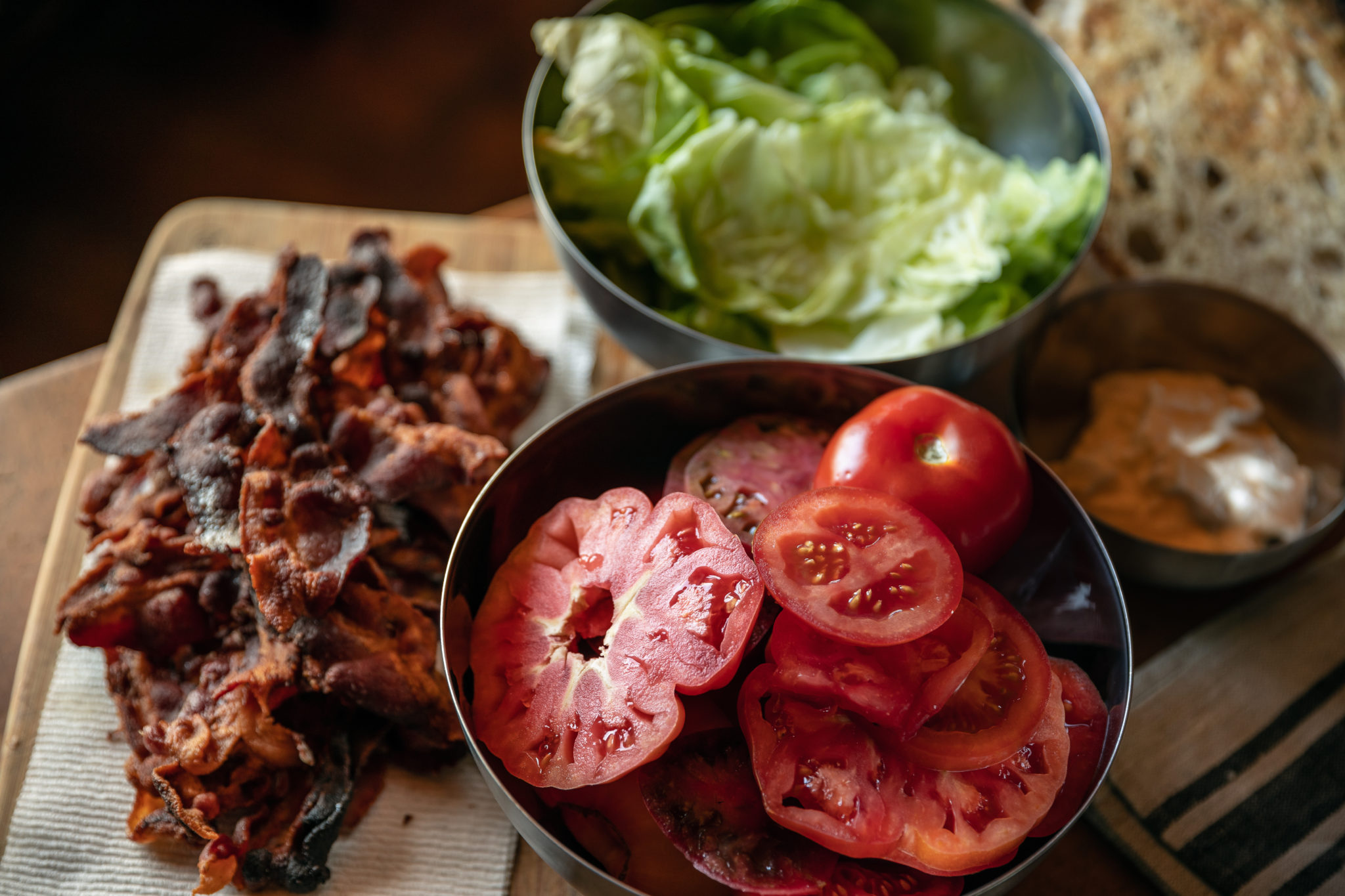
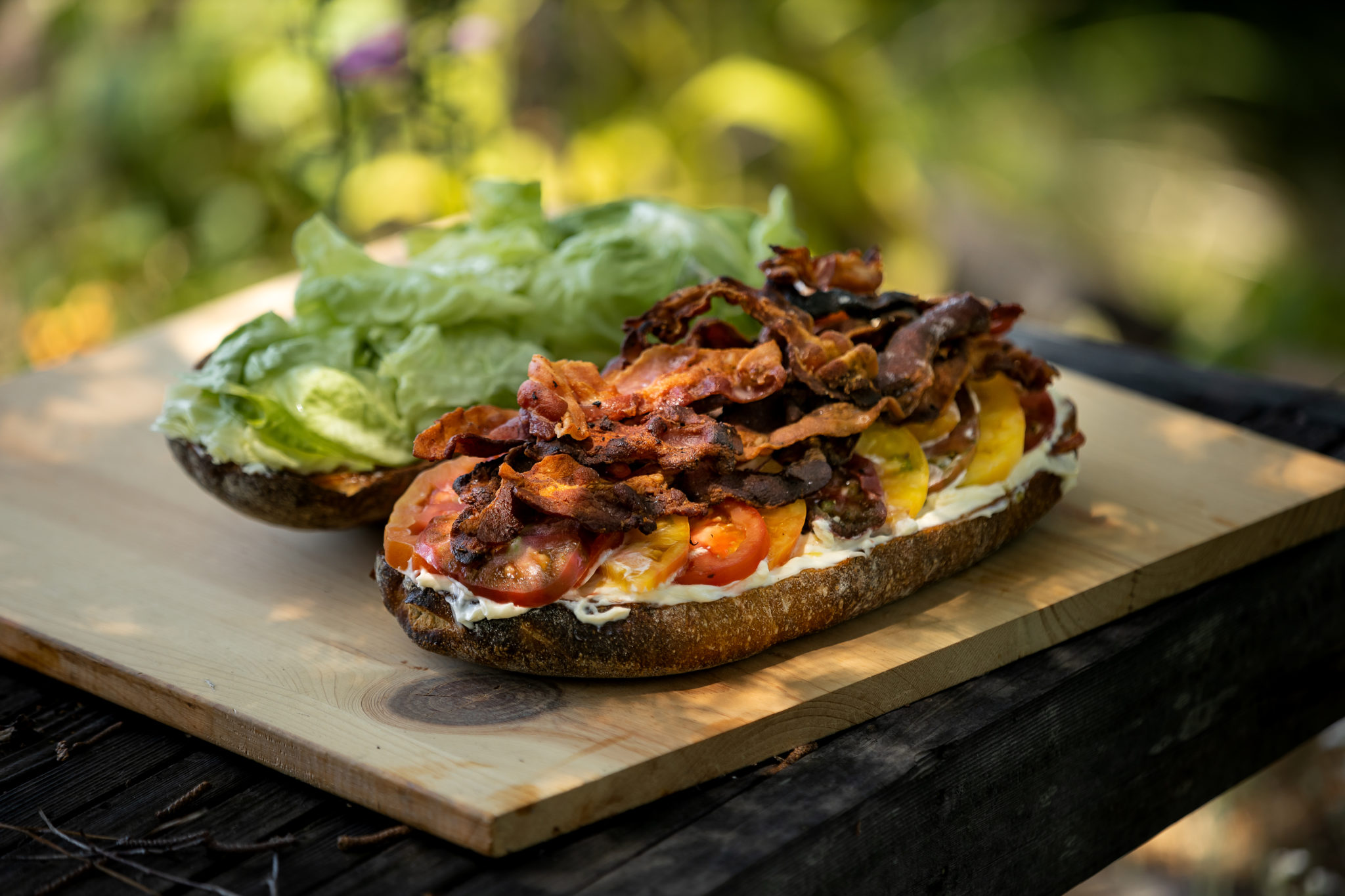
Preparing the BLT. (Chris Hardy)Big loaf BLT. (Chris Hardy)
Big Loaf BLT
Serves 5 to 6
As far as rituals go, the BLT is right up there with summer traditions like fireworks and watermelon. This shareable sandwich is everything a BLT should be: gooey, drippy, and sloppy to eat. It has plenty of bacon, too, cooked all-the-way crisp for that essential snap between the teeth.
• 1 pound thinly-sliced bacon
• Loaf of sourdough hearth bread, sliced in half lengthwise
• 3/4 cup mayonnaise
• 5 to 6 ripe beefsteak tomatoes, cored, cut into 1/4-inch-thick crosswise slices
• Kosher salt
• Black pepper in a mill
• 1 head butter lettuce, outer leaves discarded and inner leaves torn into pieces
Preheat the oven to 375 degrees.
Fry the bacon in a heavy skillet until it is very crisp; transfer it to absorbent paper to drain. Set aside.
Set the bread on the middle rack of the oven, heat through, and remove from the oven when the exposed surfaces of the bread are just starting to take on a bit of color. Set the hot bread on a work surface.
Slather the mayonnaise over the cut surfaces of the bread in one swoop; do not rub it in.
Tile the tomatoes on the bottom half of the bread, overlapping them slightly. Season generously with salt and several turns of pepper from the mill.
Pile the bacon on top of the tomatoes and put the lettuce on top of the bacon.
Sprinkle the lettuce lightly with salt.
Set the top half of bread on top of the sandwich and press down gently so that it stays in place.
To enjoy right away, cut into crosswise slices. To serve later, wrap in paper or foil and enjoy within an hour or two.
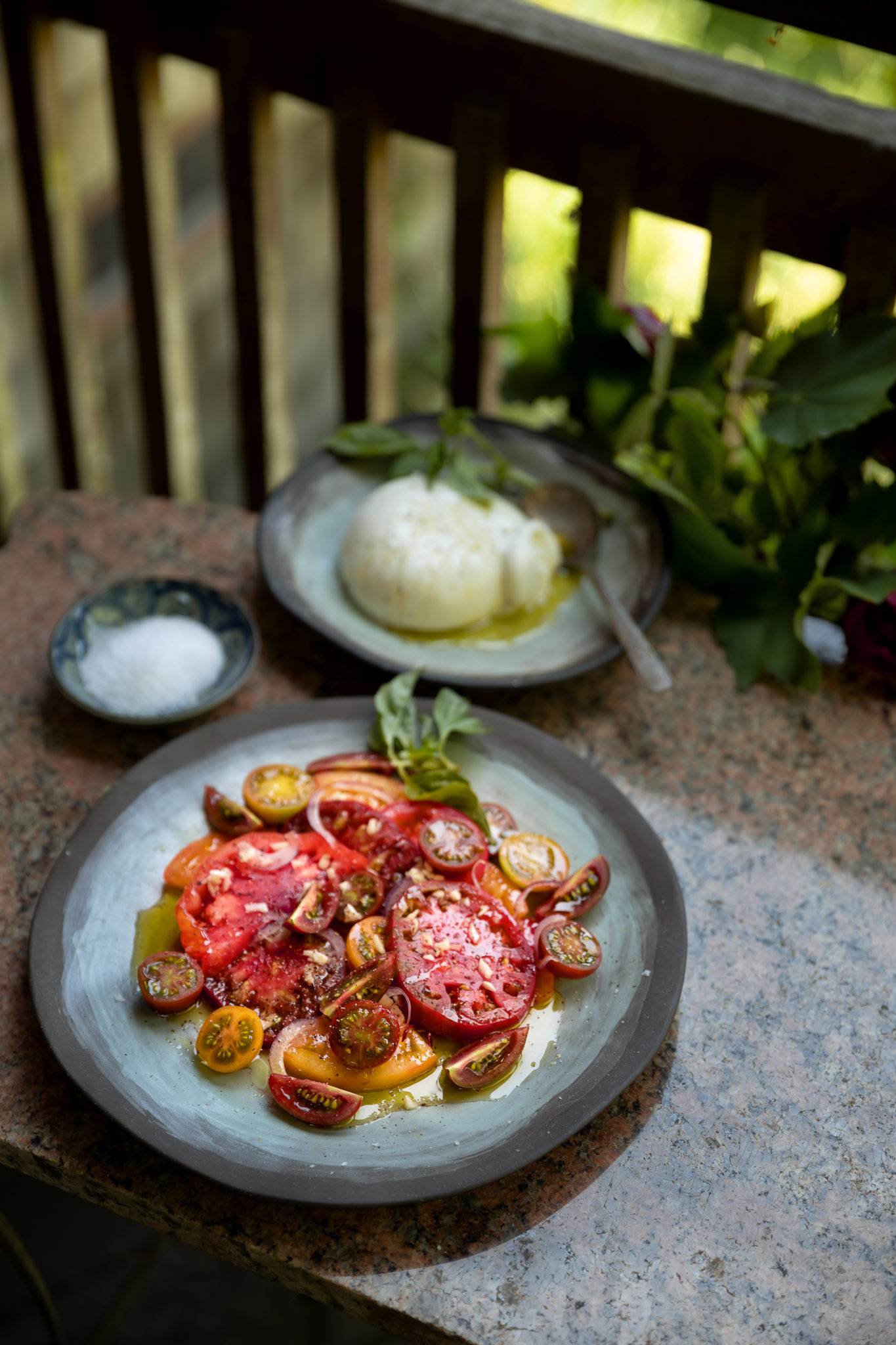
Tomato salad. (Chris Hardy)
Tomato Salad
Serves 3 to 4
A great tomato salad does not need much more than just-picked tomatoes and a bit of salt, along with whatever additions engage you. The most important element, other than the tomatoes themselves, is how you slice them. They must be cut through their equator, not their poles, which is to say crosswise, not lengthwise.
• 3 or 4 medium tomatoes of various colors, cored
• 8 to 10 cherry tomatoes of various colors and sizes, quartered
• 1 very thin slice of red onion, rings separated
• 2 garlic cloves, crushed and minced
• Extra virgin olive oil
• 2 small basil sprigs
• Kosher salt
• Fresh-ground black pepper
• 1 burrata cheese, preferably Italian, about 8 ounces
Cut a slice off the blossom and stem ends of the large tomatoes; set the ends aside for another use. Cut the tomatoes into ¼-inch-thick rounds; if the tomatoes are particularly large, cut the slices in half.
Arrange the tomatoes on individual serving plates, alternating colors and overlapping them slightly. Scatter the quartered cherry tomatoes on top. Tuck pieces of red onion here and there between the tomatoes, and scatter the garlic on top.
Drizzle with olive oil and add the basil sprigs. Season with salt and pepper.
Set the burrata on a another plate, drizzle with olive oil, and season with salt and pepper.
Enjoy right away, with a big spoonful of burrata on top of each serving.
Deb Rock guarantees she has never eaten a dish without a chile pepper, much like her grandfather, who bit into a fresh jalapeño at every meal. She also believes she may be the only Latina in the United States producing her own line of hot sauce. Her brand, Sonoma Hot Sauce, has been on the local market for six years.
Rock says she grew up dreaming of having the opportunity to harvest her own food. Her parents were originally farmers from Nuevo León, Mexico. After coming to the U.S., they became a military family, and Rock spent some of her childhood at military bases in Louisiana, where the famous Tabasco sauce was created. “It was on every table,” she says.
After arriving in Sonoma County in 2013, Rock enrolled in an entrepreneur program at Santa Rosa Junior College and developed her plan for Sonoma Hot Sauce. Her recipe is organic and vegan, and has just a few simple ingredients: peppers, salt, garlic, and vinegar — no water added. “I use a blend of peppers, everything from sweet to a medium hot. It’s not a super-hot hot sauce, but it’s not moderate. It’s hot sauce!”
Rock says the high-quality peppers she grows outside Rohnert Park have improved the recipe. She’s even experimenting with her own pepper hybrids, after noticing her peppers would cross-pollinate in the field. “Because of the closeness to the ocean, we have this slow maturation of the peppers, just like the local wine grapes,” she said. “Moving here improved the flavor of my hot sauce dramatically because of the Mediterranean climate and the incredible soil that this farm has.”