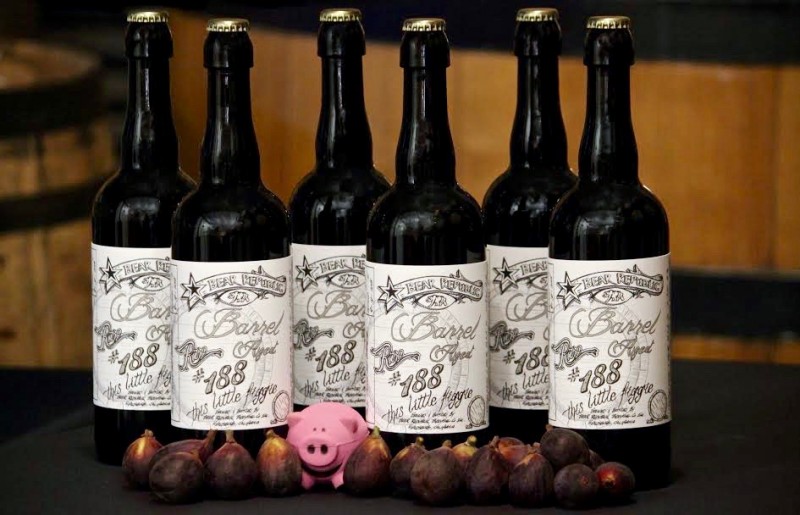
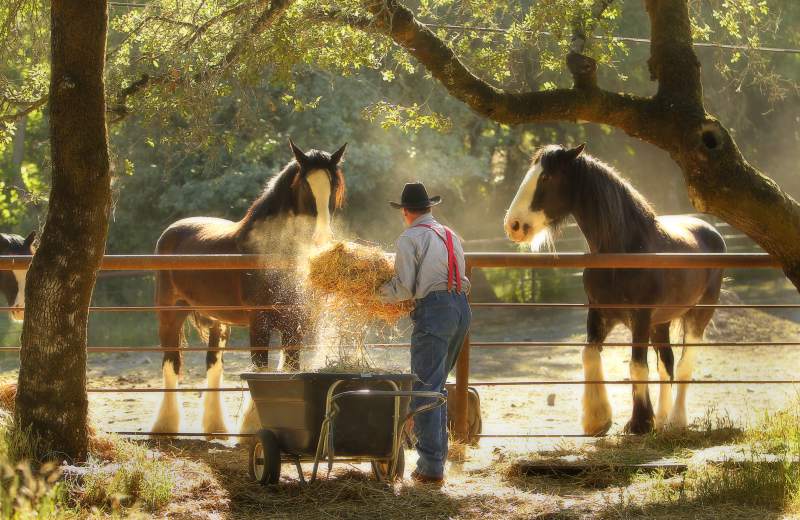
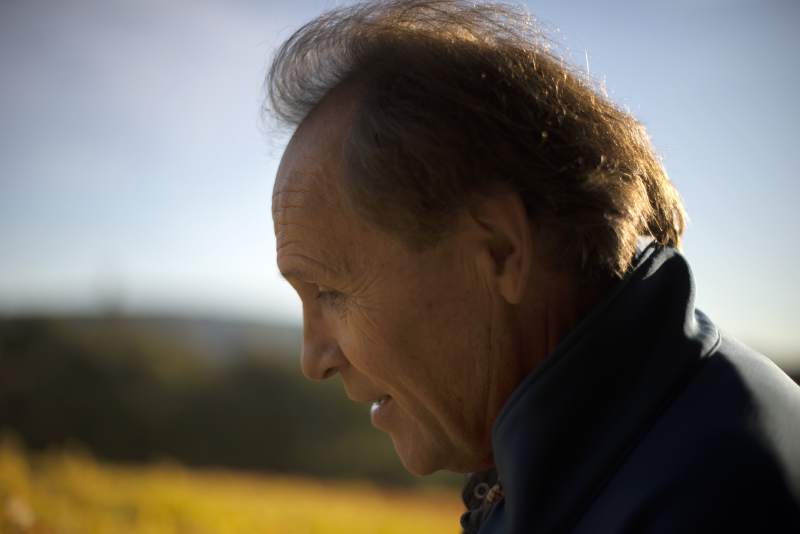
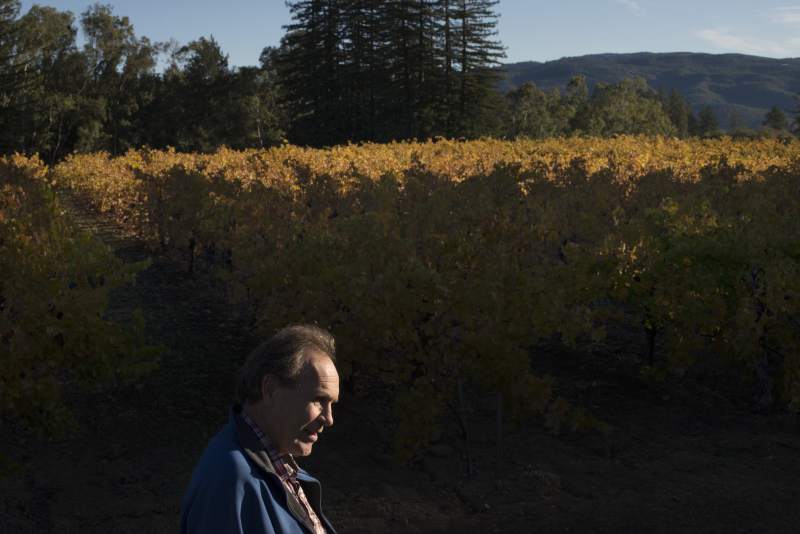
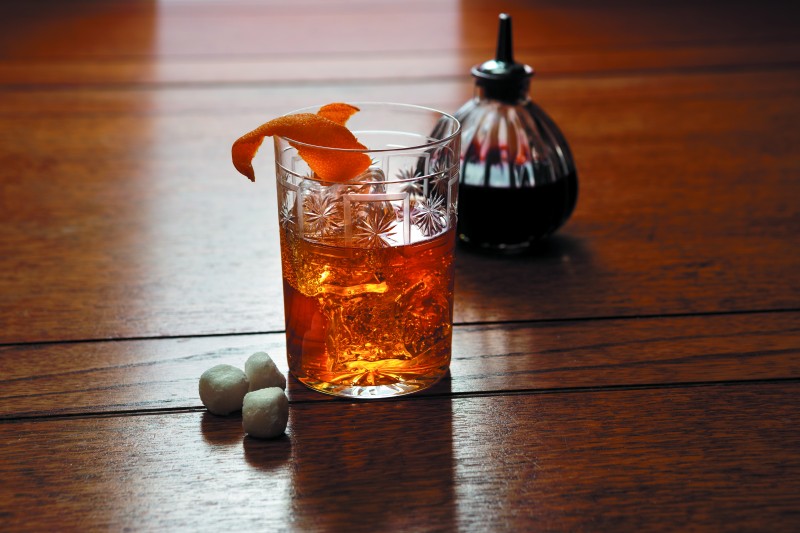
Bear Republic’s Wild Club beers. (Photo Courtesy of Bear Republic Brewing Company)
Bear Republic’s Wild Club beers. (Photo Courtesy of Bear Republic Brewing Company)
Bear Republic Brewing Co. has been brewing popular beers for over 20 years. The Healdsburg brewery, which paved the way for west coast IPA with their Racer 5 , has won a series of prestigious awards and recently took home a silver medal for their session IPA Pace Car Racer at the Great American Beer Festival (GABF) competition. Delving into the barrel aged beer scene, the brewery has now launched an exclusive beer club, the Wild Club, serving up hand-crafted beers limited edition beers to members.
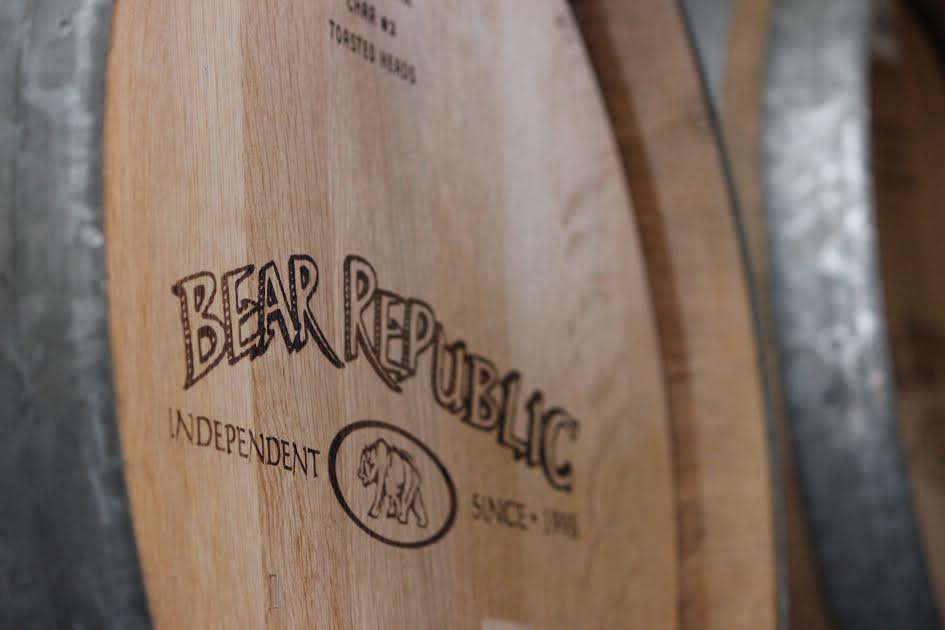
The barrels for the wild club beers. (Photo Courtesy of Bear Republic Brewing Company)
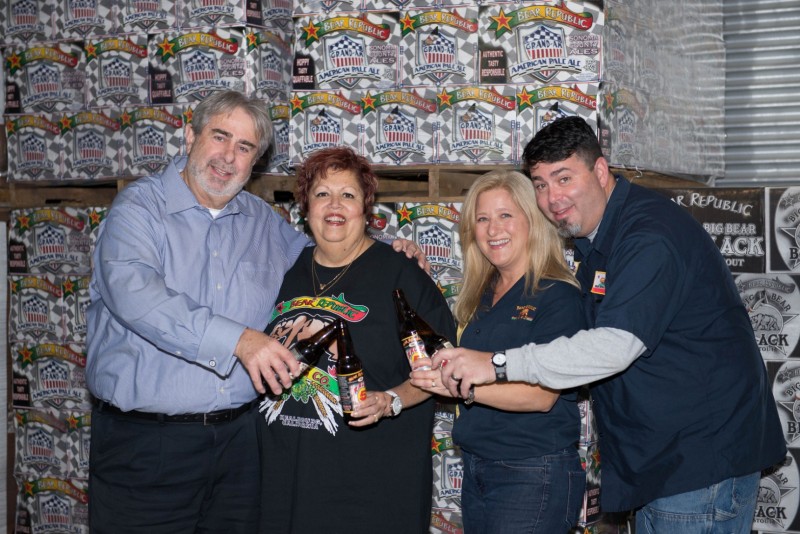
Bear Republic is a family owned business run by founder Richard Norgrove Sr. (CEO), his son, Richard (Rich) Norgrove Jr. (Owner and Head Brewer), and daughter-in-law Tami (CFO). Rich Norgrove, a.k.a the “Captain Brewer,” has a passion for traditional hops and the flavors they lend to beer, which is apparent when sipping on most of the Bear Republic lineup – their flagship Racer 5 is brewed with “4C’s” old school hops: Columbus, Centennial, Chinook, and Cascade.
Family friend and long time brewer Peter Kruger is the Bear Republic brewmaster and his wife, Frances, a previous wine club manager at Mauritson Wines in Dry Creek Valley, is now taking the lead on managing the Wild Club.
“Richard [Jr.] had always wanted to embrace customers’ love of unique, hand crafted beers. With my background in the wine industry, I’m hoping there will be a certain amount of crossover in the way we manage the customer service…” said Frances Kruger.
Richard Norgrove Sr., (left), Sandy Norgrove, Tami Norgrove and Richard Norgrove Jr. at Bear Republic Brewing Company. (Photo courtesy of Baydevco.com)
Peter Kruger and Barrel Master Jordan Lancer will be in charge of the barrel aged project. Peter and Frances met Jordan at the Cloverdale coffeeshop Plank, where they had become hooked on “Jordan’s Shrub,” a mix of sour and sweet flavors.
“Peter knew Jordan would be a great asset to the team at Bear Republic and I believe that shows in the product!” Frances said.
The Bear Republic story began with home-brewing, sparked by a passion to create quality beers. The Wild Club program will allow their brewers to further test the waters, be creative and learn more, while connecting with the old tradition of barrel aging beers.
“We want our members to fall in love with the passion and creativity of our team and their expression through their art form: the beer,” said Francer Kruger.
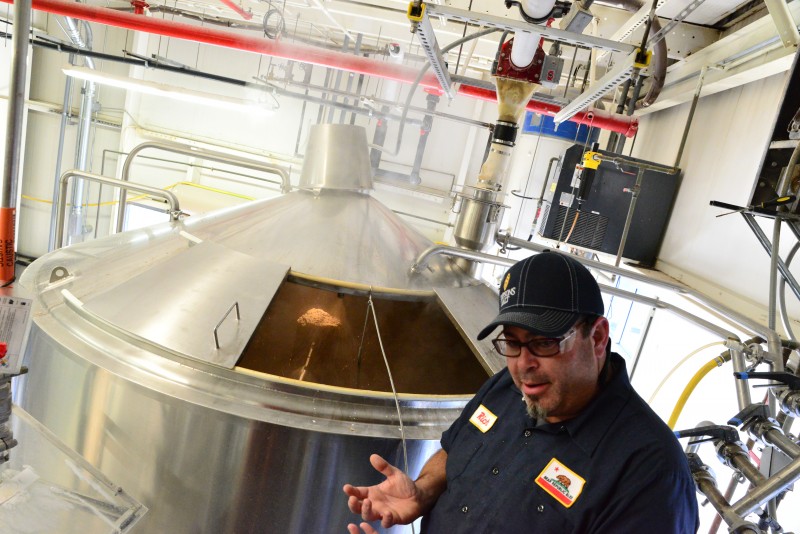
Richard Norgrove Jr. of Bear Republic Brewing Company speaking about brewing process at their facility in Cloverdale. (Photo by Tim Vallery)
The Wild Club selections will go out four times per year: February, April, September, and December. The brewers carefully choose the beers based on the season. Here are the beers awaiting release in the December club shipment:
Barrel 188: This Little Figgie, “Soda pop cola sweetness, creamy mouth-feel, brandy booziness, huge malt and fig sweetness.”
‘Twas the Beer Before Christmas, “Peanut butter roast malt character, dried apricot dustiness, clean tartness, cognac from Old Baba Yaga.”
Goat Rock Funk (A VIP Club Member Exclusive), “Lemon/lime tartness, citrus and pineapple notes, very fruity and estery nose with a woody tannic backbone. Briny and gose like.”
(The Bear Republic Wild Club is the only way to get your hands on these special beers.)
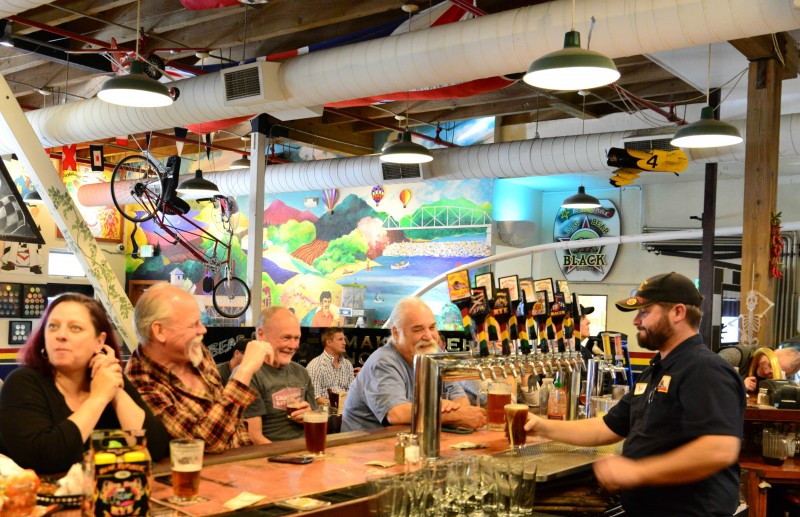
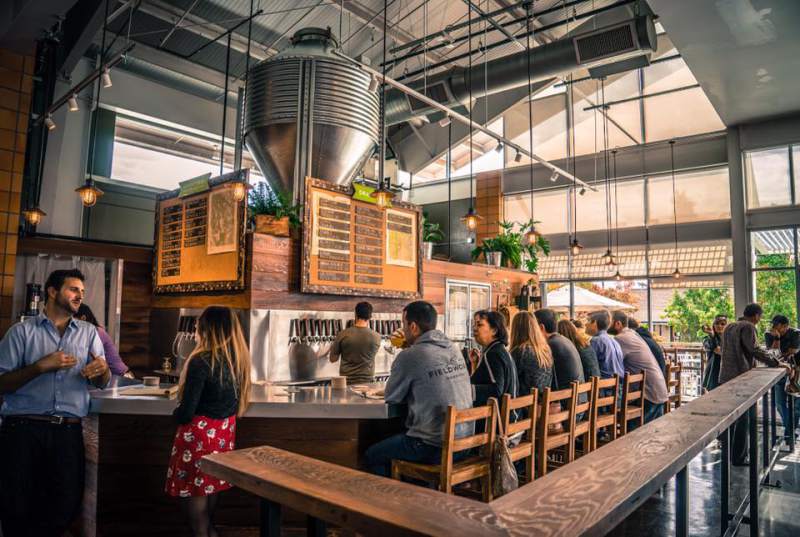
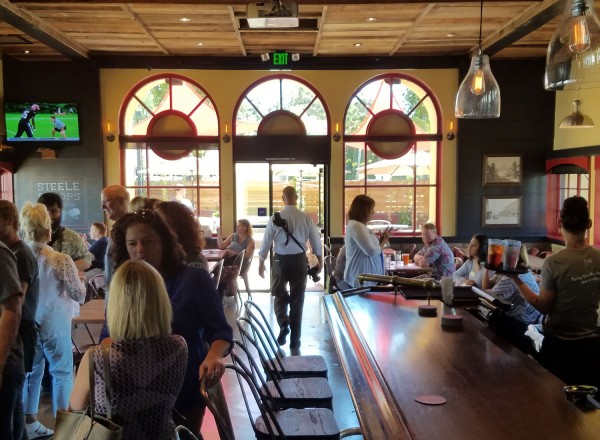
Patrons enjoying pub fare and hand-crafted beers at the Bear Republic Brewpub in Healdsburg. (Photo by Tim Vallery)
There are two club levels, Wild Club and Wild VIP, which feature different membership benefits. (To join either of these clubs, click here). The Wild Club is only shipping to California addresses at this time, but you can contact Frances and the Wild Club via email at wild@bearrepublic.com to inquire about your state. The Bear Republic plans to be shipping out of state in the near future. Live locally? You can pick up at the brewpub!
Your time in Yosemite National Park very much depends on the time of year you go.
Visit Yosemite National Park on July 4, and you’ll encounter what can only be described as the hordes. In Yosemite Valley you’ll battle for parking places, bump elbows with other hikers on the trails, stand in long lines at the visitor center and dodge selfie sticks as you try to take in the sights.
Visit Yosemite on Nov. 4 and . . . it may just be you on the roads, on the trails, on the valley floor, alone with the soaring cliffs, whispering pines and meandering Merced River. If you are lucky enough to visit after the first rainfall or snowstorm of the season, you may also watch the waterfalls recharge.
The dates that bookend Yosemite’s off-season are not set in stone (so to speak). But if you visit any time in October, November or early December, you’re likely to find the park quiet and contemplative. Things pick up once the snow starts to fly in earnest, with winter bringing an uptick in visitors exploring the valley and backcountry on cross-country skis or snowshoes.
The weather will dictate much of what you can do in the park as the season drifts toward winter, but that’s OK. The suggestions listed below include activities suitable for rainy or snowy days as well as days full of sunshine.
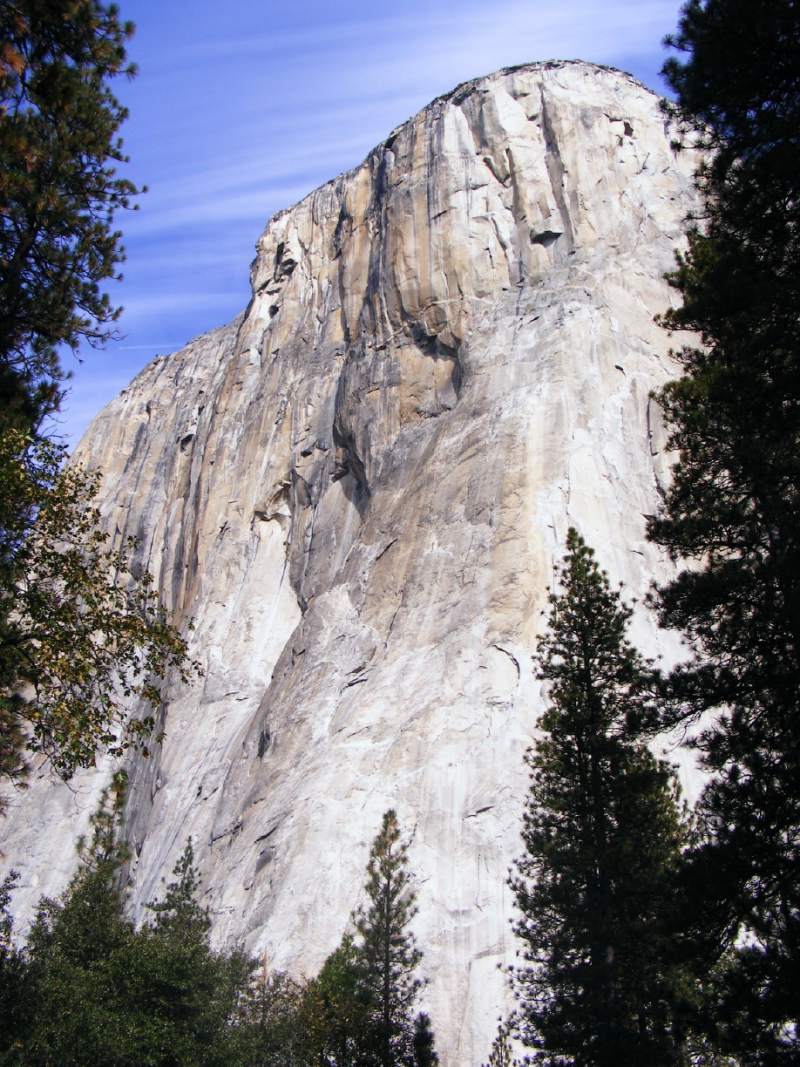
The Nose of El Capitan from the Valley Loop Trail.
Visit the Yosemite Museum
The oldest in the national parks system and celebrating its 90th birthday this year, Yosemite’s museum is small but artifact-rich. Among the permanent exhibits are items created by tribes indigenous to the park and surrounding areas prior to the arrival of prospectors in the 1850s.
The basketware is stunning, and often a park docent is on hand to demonstrate techniques used by the Ahwahneechee to create baskets, tools and other necessities of life. The current rotating exhibit, “Why Yosemite Collects,” is open through Nov. 1, and includes everything from fine art to taxidermied rodents and John Muir’s sierra cup. The museum is located in the heart of Yosemite Village.
Hike Through the Tuolumne Grove
While the more famous Mariposa Grove of Big Trees remains closed for rehabilitation until summer 2017, Yosemite boasts a pair of smaller giant sequoia groves well worth visiting. The Tuolumne Grove is the larger of the two, accessed via a 2.5-mile round-trip hike from the Tioga Road near Crane Flat. The grove contains about 25 mature sequoias, examples of the some of the oldest and most massive living things on the planet. The giant sequoias of Mariposa Grove, along with the monolithic architecture of Yosemite Valley, comprised the original park as preserved by Yosemite Grant Act in 1864. The smaller Tuolumne and Merced groves also played a role in the park’s history, serving as attractions along the wagon roads travelers braved to reach the valley floor in the early days.
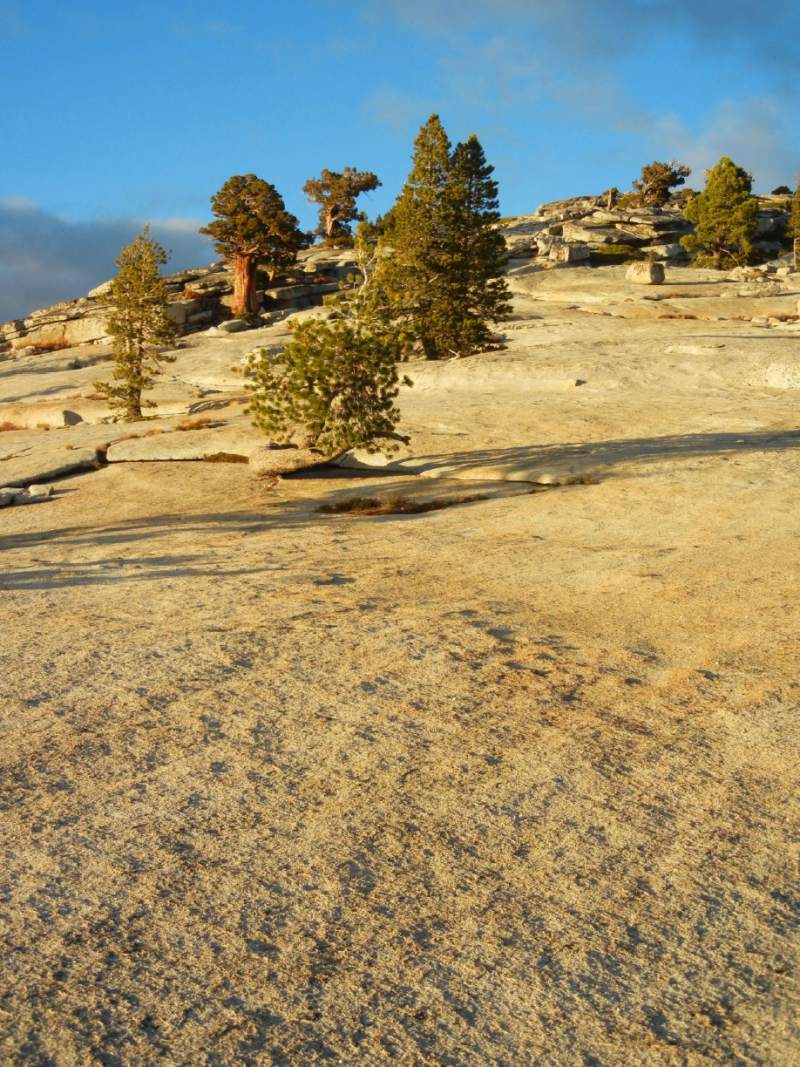
Sunset paints the domes around Olmsted Point in hues of peach and orange.
Visit Hetch Hetchy
Located off the beaten path, Hetch Hetchy doesn’t see the crowds that Yosemite Valley does, regardless of the season. But it’s worth making the drive out Evergreen Road near the Big Oak Flat entrance to this second “yosemite,” for its beauty and its history.
The battle for Hetch Hetchy is widely acknowledged as the impetus behind the creation of the National Park Service and the modern conservation movement. It pitted wilderness advocates including John Muir against the city of San Francisco, which lobbied hard to dam the Tuolumne River at the mouth of the valley and won. The city erected the O’Shaughnessy Dam and a gravity-fed pipeline to funnel the Tuolumne into the city’s taps; San Franciscans still drink from the Tuolumne today.
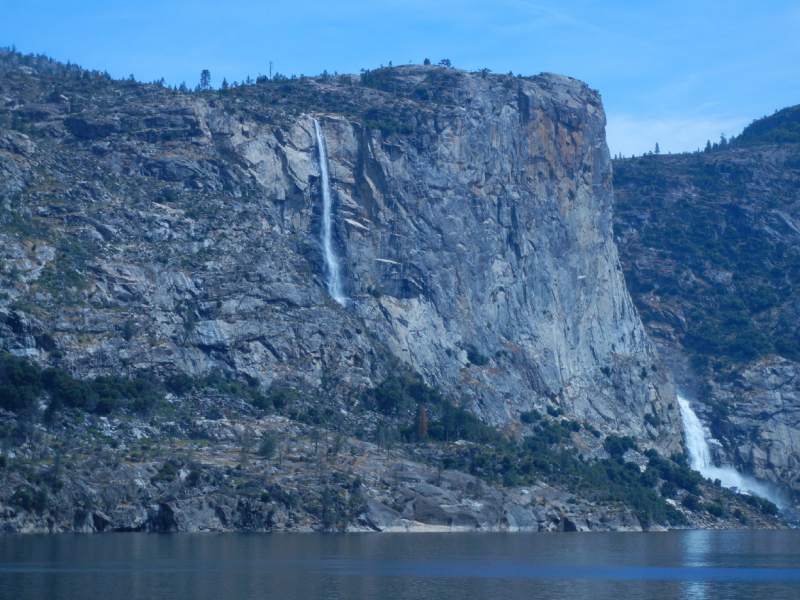
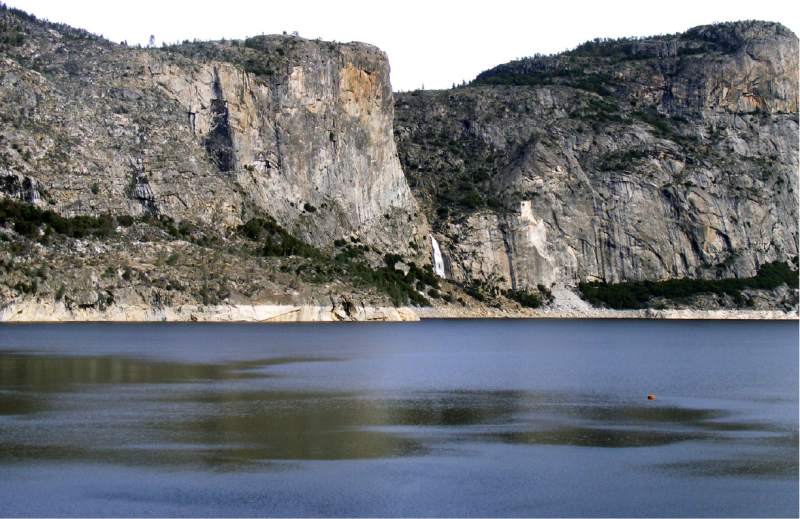
You can walk across the dam and beyond, all the way to Wapama Falls, which flows year-round, tumbling 1,400 feet from the valley rim into Hetch Hetchy Reservoir.
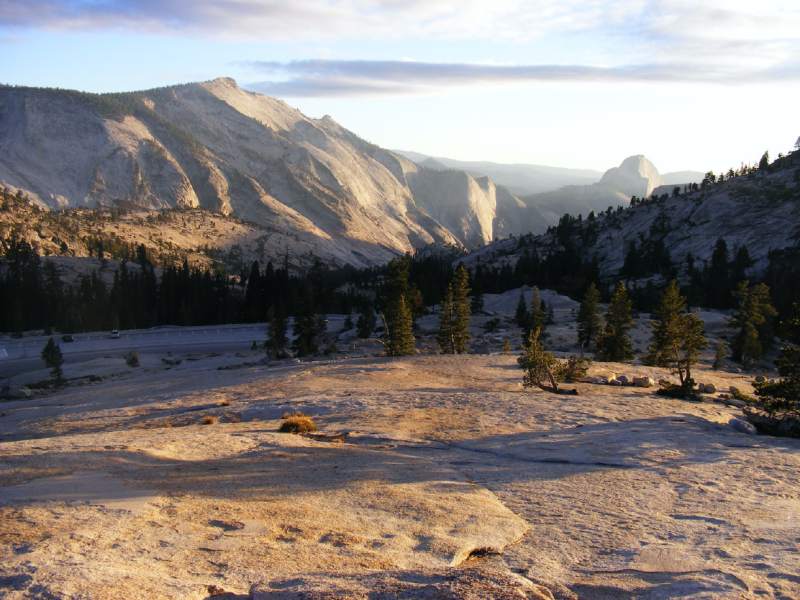
The peach hues of alpenglow paint the high points of Yosemite. (Tracy Salcedo / For The Press Democrat)
Explore History on the Yosemite Valley Floor
Yosemite Valley is dotted with historic sites, some still visible on the ground, some slowly reverting back to nature. Much of the park’s history is contained in clusters of development bunched on the floor, each a hub of hotels, studios and other enterprises.
The Yosemite Chapel, Yosemite Cemetery and the LeConte Memorial Lodge (now the Yosemite Conservation Heritage Center) are picturesque examples of early development; other sites are harder to find, like pioneer settler James Lamon’s orchard and the remnants of the huge incense cedar that anchored the Big Tree Room in the old Sentinel Hotel.
A park map will show you how to link the boardwalks and trails in the heart of the valley to explore the sites, though you may have to ask an interpretive ranger for advice on where to find the big tree and orchard. The LeConte lodge/heritage center is only open in summer.
Check out the Climbing Walls
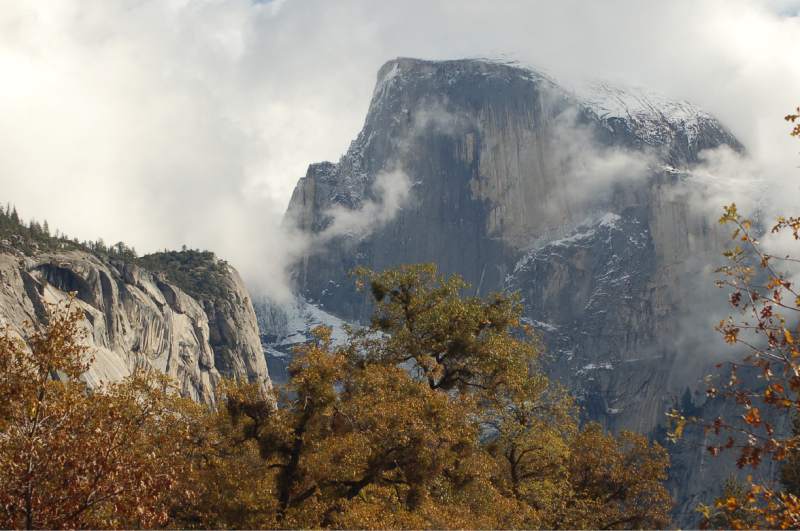
Yosemite’s rock-climbing season peaks as the weather cools in fall, when the exposed faces of monoliths like El Capitan and Half Dome aren’t baking in summer sun. The paved Valley Loop Trail, which makes a 13-mile circumnavigation of the valley floor, leads past Camp 4, Yosemite’s climbing “hostel,” where you can watch athletes hone their skills on boulders and short, vertical rock faces.
A couple of miles beyond the camp, the paved trail threads through rockfall at the base of what is arguably the valley’s premier big wall: El Capitan. You can follow climbers’ trails north through the woods to the base of the Nose of El Cap, which has been the scene of numerous climbing firsts. Staring up 3,000 sheer feet toward the invisible summit offers a provocative look into a daredevil culture that is integral to Yosemite’s identity.
Tueeulala and Wapama Fall spill into the Hetch Hetchy Reservoir, before Tueeulala dries up for the summer. (Tracy Salcedo / For The Press Democrat)
Visit the Falls
A handful of Yosemite’s waterfalls flow year-round, and though the volume is low in the off-season, trails leading to the cascades won’t be clotted with visitors. Climb the fabled stairs of the Mist Trail past Vernal Fall to the top of Nevada Fall, then descend via the John Muir Trail, completing a lovely, popular, day hike of nearly 7 miles round-trip. Or head up to Glacier Point, where chances are you’ll find parking and have the aptly named Panorama Trail to yourself as you travel 5.4 miles out-and-back to an overlook of Illilouette Fall. And if you are lucky enough to arrive after the season’s first storms, Yosemite Falls might begin to spill, adding drama to a peaceful ramble to the bridge across Yosemite Creek at the base of the lower fall.
Drive the Tioga Road to Olmsted Point at Sunset
The slanting light of a setting sun fires the polished granite of the domes at Olmsted Point a soft orange. Views from the point open south and west toward the Yosemite Valley, featuring the rounded backside of Half Dome, and eastward across the Tenaya Lake basin. It was the last refuge of the Yosemite Indians in their battle to hold their homeland, and later an environmental battleground pitting conservationists, including famed photographer Ansel Adams, against the National Park Service, which would blast through more polished granite to improve the Tioga Road as part of its Mission 66 development plan.
f you time it right — that is, if the road is open and you start early — you can drive the length of the former wagon road, through Tuolumne Meadows and down the east side of the Sierra to Mono Lake and back. Just be sure to catch that amazing autumn light.
Wapama Fall spills into Hetch Hetchy Reservoir; the stain of Tueeulala Fall (ephemeral) is to the left. (Tracy Salcedo / For The Press Democrat)
Climb Sentinel Dome
Views from the top of Sentinel Dome are panoramic and easily accessible. From the Sentinel Dome/Taft Point trailhead on Glacier Point Road, an easy 2-mile out-and-back hike deposits you on top of a flat-topped expanse of glacier-polished granite. Look north and west across the chasm of Yosemite Valley to take in all the landmarks: El Capitan, Yosemite Falls, Half Dome, the staircase of the Merced River and the crest of the Sierra Nevada.
Equally stunning views sprawl to the east and south. A marker on the summit identifies the highlights. If you want to add more mileage, follow the Pohono Trail from Sentinel Dome along the valley rim to Taft Point, then hitch back to the trailhead in a moderate 4.5-mile loop.
Visit Wawona
This is the quiet side of Yosemite, even in the high season. The historic Big Trees Hotel (formerly the Wawona Hotel) anchors the site, once the base camp for Galen Clark, Yosemite’s longtime guardian and pioneer among the giant sequoias. Though there’s no access to the nearby Mariposa Grove, the historic hotel and its grounds are worth exploring, and you can take a short or long hike on the nearby Chilnualna Fall trail.
Cocktails in Ahwahnee
The Majestic Yosemite Hotel may have been stripped of its historic moniker, the Ahwahnee, in an ongoing and controversial trademark battle, but no corporation or person can strip away Ahwahnee, which is what the Yosemite Indians called the Yosemite Valley before the arrival of the white man. In summertime, it may be impossible to find a seat on the patio of the upscale hotel’s patio, or in its dining room, but there’s a good chance you can end a day of off-season exploration in Yosemite National Park sipping a refreshing beverage and enjoying the iconic views.
Yosemite National Park in the Off-Season
The National Park Service typically closes some high-country facilities in winter, including Tioga Pass and the Glacier Point Road beyond the Yosemite Ski and Snowboard Area (formerly known as Badger Pass). But the off-season typically begins before that happens, so you may still be able to enjoy those amenities.
Check the park website, nps.gov/yose, for the latest. It also is a rabbit hole of information about the park, so cruise around and check out the options, including the video archives for Yosemite Nature Notes.
Tracy Salcedo is a Sonoma County-based outdoor travel writer. Contact her at laughingwaterink@gmail.com.
Chad Harris opened the Fremont Diner in Sonoma for breakfast and lunch so he could be home to pick up his kids from school.
John Burgess
It may be a hole-in-the-wall eatery down a remote country lane. A delightful surprise tucked into a routine destination. The best little (fill in the blank) nobody else seems to know about. Or a great place to visit, right there in plain sight, yet never before noticed. These hidden things give Sonoma County its texture, its, substance, its je ne sais quoi.They’re what you find if you stay awhile, allow yourself to sink below the surface. And they’re yours for the seeking.
We’ve listed 85 brilliant off the beaten path treasures, carefully compiled with both seasoned locals and first-time visitors in mind:
FUN & ADVENTURE
Just because you’re making a trip to wine country doesn’t mean you have to spend all your time in tasting rooms. Here are a few fun alternatives.
Zip-A-Dee-Doo-Aah: Sonoma Canopy Tours
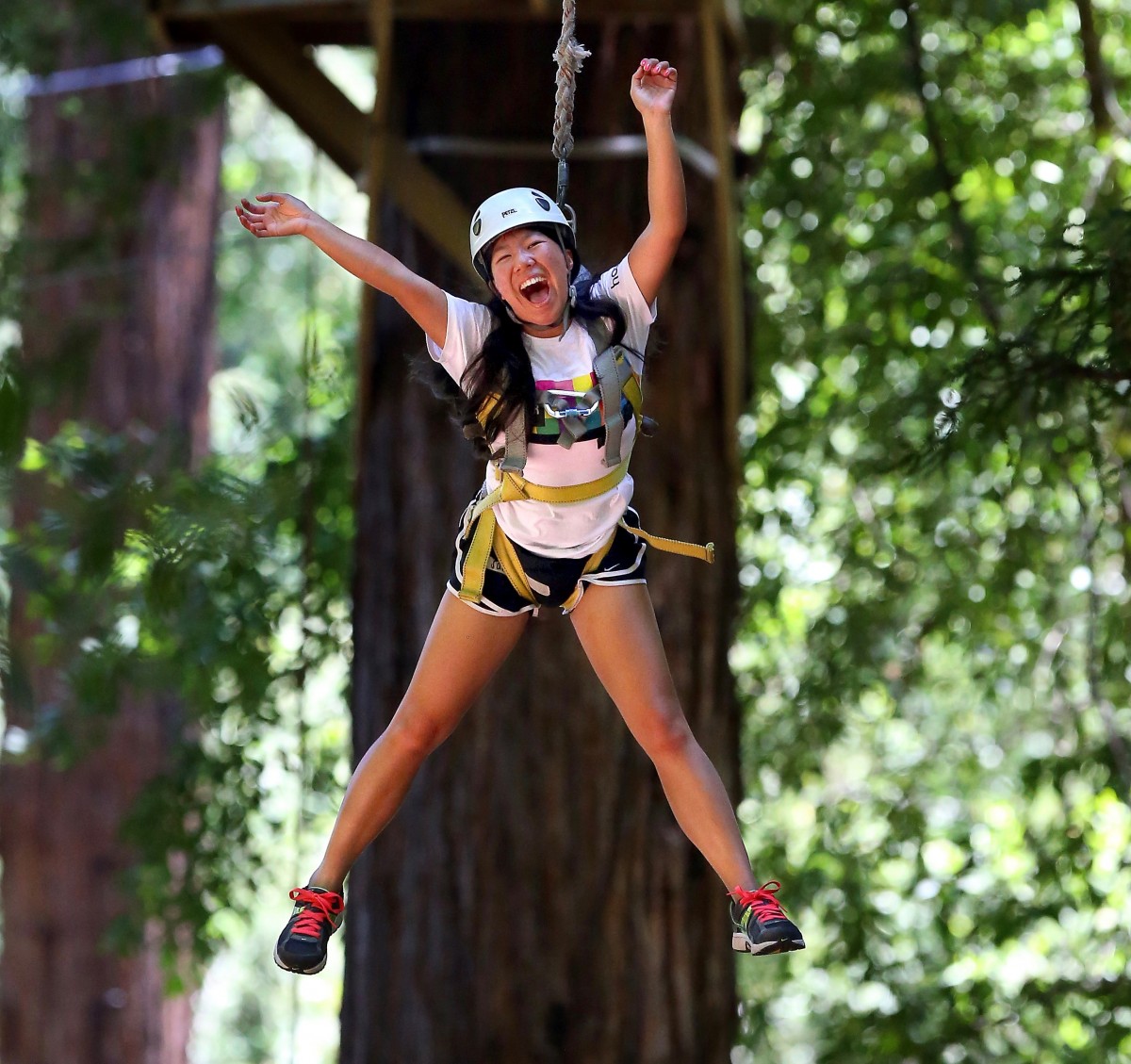
With your harness attached to a pulley on a heavy steel cable, soar above ancient redwoods and deep ravines at up to 25 mph on the zip lines at Sonoma Canopy Tours near Occidental. The seven lines are connected by platforms, two skybridges and a spiral staircase, providing an eco-friendly workout and thrill ride that ends with a rappel to the forest floor. Look down if you dare. $99-$109; discounts for ages 10 to 17 and seniors.
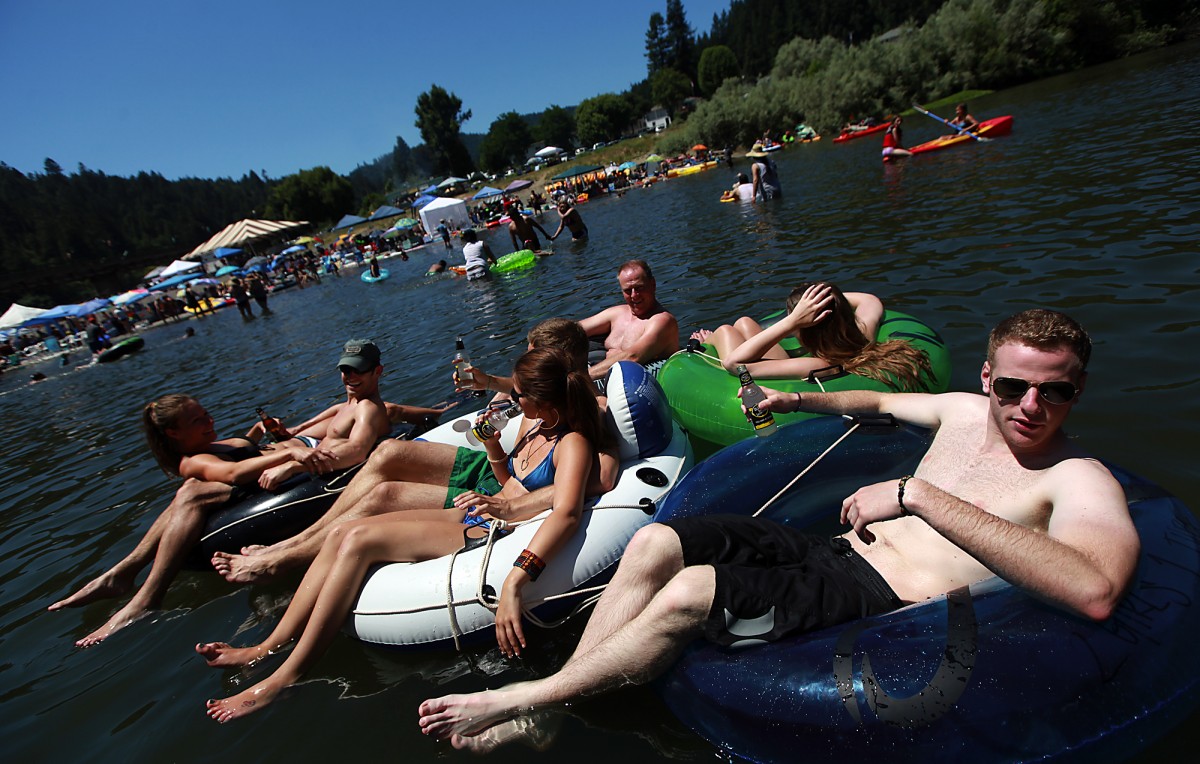
In summer, the cool water of the Russian River at Monte Rio is always a local favorite. (Photo by Kent Porter)
Johnson’s Beach Alternative: Monte Rio Beach
Guerneville’s Johnson’s Beach may have the history, yet Monte Rio Beach on the north side of the Russian River below the bridge in Monte Rio is a favorite spot for frolicking families and kayakers looking for a soft, shallow spot to put in for a paddle. The concession stand and boat-rental facility are located in the parking lot. In summer, when river levels drop, the Monte Rio Recreation and Park District installs a wood boardwalk that connects these facilities to the water’s edge.
Cut the Rug with Flamingos: Dancing at the Flamingo Lounge
Sunday nights are salsa (and bachata) nights in The Flamingo Lounge, the retro bar inside the Flamingo Conference Resort & Spa in Santa Rosa. Every week, local salsa bands take over the lounge and crank out live music for smartly dressed dancers. The party usually starts at 7 p.m., when dance pros offer an hour of salsa lessons ($10 a person). Open dancing ($8) begins at 9 p.m., and usually stretches late into the evening. Order food before 9 p.m. and get 10 percent off.
A Man of Many Faces: Actor & Historian George Webber
Sonoma’s George Webber isn’t really a defrocked Mexican generalissimo, though he plays one. Webber has for years made appearances at Sonoma events as the famous Gen. Mariano Vallejo, and expanded his “George Webber experience” to the Gen. Vallejo Walking Tour of the Sonoma Plaza. Webber’s got more than a beloved 19th-century land baron up his sleeve. He also brings to life Mark Twain, enologist Professor Vine and Count Agoston Haraszthy.
George Webber plays Count Agoston Haraszthy for Buena Vista Winery. He is the ambassador for the winery, bringing the founder of the winery to life. (Photo by Jeff Kan Lee)
Lawful Speeding: Sonoma Raceway
Wednesday night is a drag, we know. But this time it’s in a good way. The Wednesday Night Drags at Sonoma Raceway is a safe (and legal) opportunity for teenagers and seniors alike to channel their inner Jeff Gordon and drive their vehicles fast and furious down the raceway’s quarter-mile strip, supervised by Bay Area law enforcement officers. The season runs March through November, 4 to 10 p.m.
29355 Arnold Drive, Sonoma, 800-870-7223, racesonoma.com
Beer and Burlesque
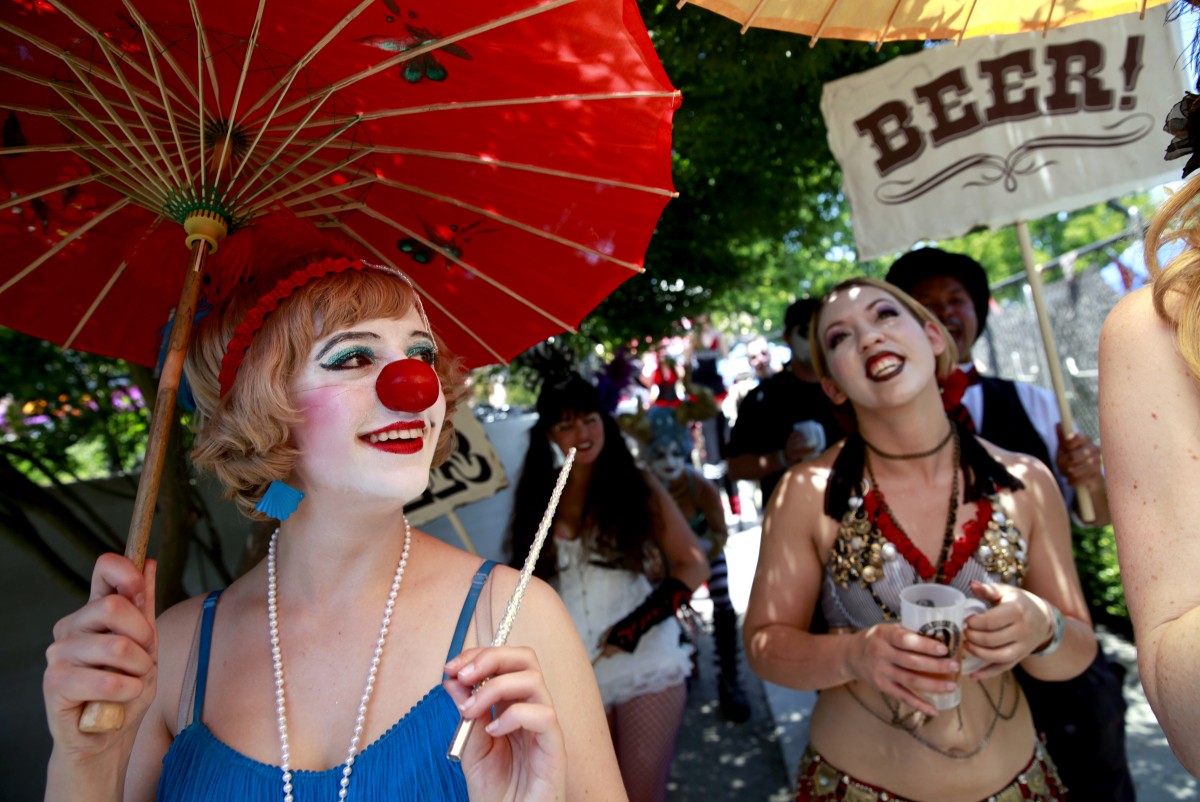
What pairs well with a Lagunitas Imperial Stout? How about a sword swallower? The Daytime IPA goes great with a contorting burlesque dancer on a trapeze. Every August, Lagunitas Brewing’s Beer Circus in Petaluma celebrates steampunk weirdness, vaudeville spectacle and, of course, beer. More than 200 artists and performers, food purveyors and dozens of regional microbrews make this a can’t-miss festival, on Aug. 15 this year. Tickets sell out fast.
It’s You and Not the Sky That’s Falling: NorCal Skydiving
The beauty of the Sonoma landscape takes on an even more precious quality from above, when you’re falling from the sky toward the Alexander Valley at 120 mph. This is the experience with NorCal Skydiving, an outfitter whose planes take off from the Cloverdale Municipal Airport. Once you jump and your chute deploys, the experience is eerily quiet. On clear days, you can see Mount Shasta and the Pacific Ocean on the way down. Prices start at $179.
Lawful Speeding
Wednesday night is a drag, we know. But this time it’s in a good way. The Wednesday Night Drags at Sonoma Raceway is a safe (and legal) opportunity for teenagers and seniors alike to channel their inner Jeff Gordon and drive their vehicles fast and furious down the raceway’s quarter-mile strip, supervised by Bay Area law enforcement officers. The season runs March through November, 4 to 10 p.m.
29355 Arnold Drive, Sonoma, 800-870-7223, racesonoma.com
Groovy Racing: Slot Car Raceway
Slot-car racing didn’t die with America’s innocence in the 1960s. It’s alive and well in Rohnert Park, where Slot Car Raceway welcomes hobbyists to race their miniature model cars on slotted tracks, steered by hand-held controllers. While most enthusiasts leaped to more sophisticated iRacing on computers, Slot Car Raceway does it old school with its in-shop track and cases full of parts and equipment for home hobbyists. If you fondly recall your 1967 orange Manta Ray and spring-loaded plunger, this place is for you.
305 Southwest Blvd., Rohnert Park, 707-795-4156 scrhobbies.com
RESTAURANTS
A selection of locals’ favorite restaurants around Sonoma County. Bon Appétit!
The Fremont Diner in Sonoma. (Photo by John Burgess)
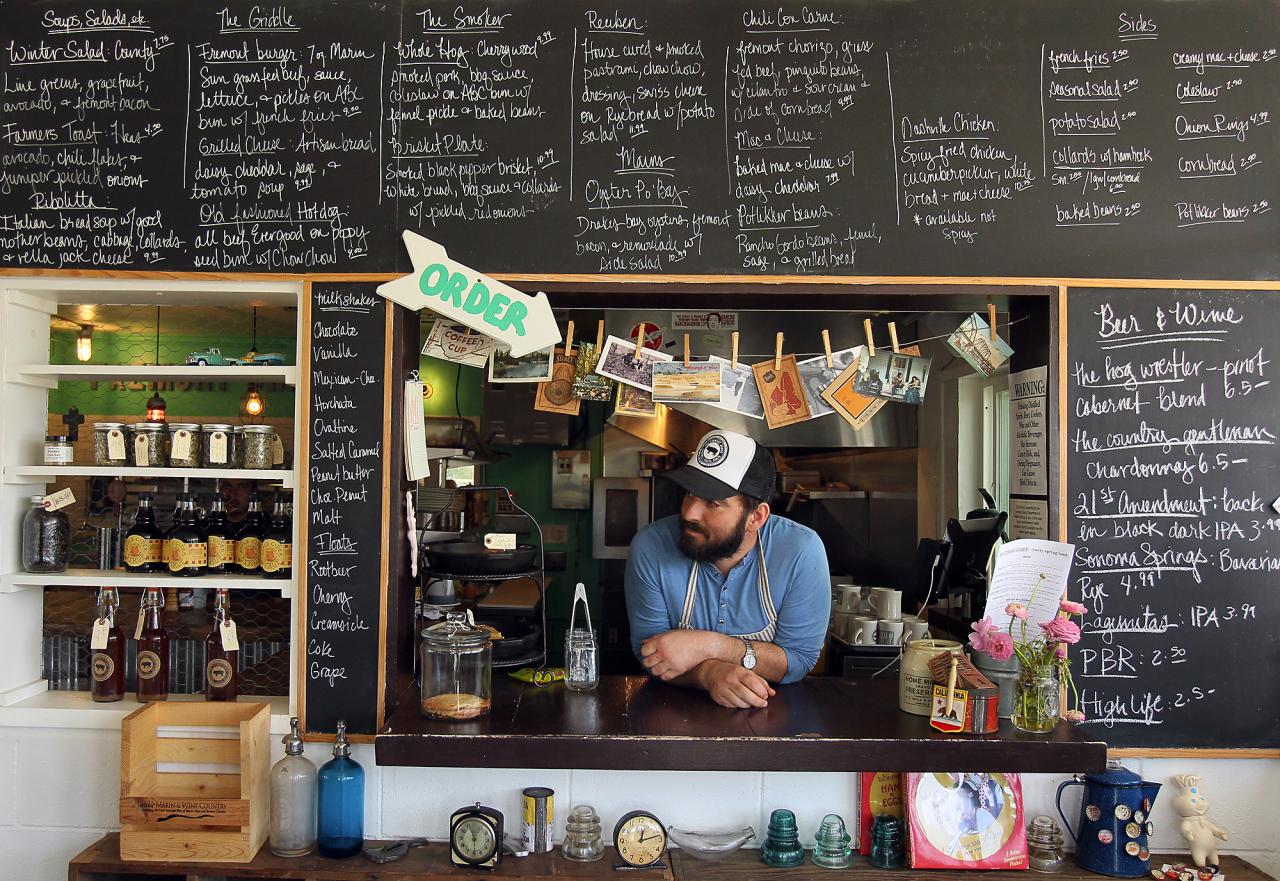
Chardonnay with Biscuits & Gravy: The Fremont Diner
Oozing Southern decrepitude, a heavy dose of John Deere chic and the irresistible lure of a butter-and pork-soaked menu that would bring a tear to grandpappy’s eye, the Fremont Diner in rural Sonoma is easy to miss, yet shouldn’t be. It’s everything good about, well, roadside diners; this one happens to be surrounded by vineyards. Here, “Praise the Lard” isn’t just a quirky tagline, it’s a mission. Open 7 a.m. to 4 p.m. daily. And don’t miss the fried pies.
Pasta Passion: Canneti Roadhouse
Blink and you might miss Canneti Roadhouse, a tiny eatery in tiny Forestville. If you did, it would be a loss. At the heart of this Italian eatery is a pasta-making machine, which Italian-born chef Francesco Torre masters for handmade ravioli stuffed with hand-pulled mozzarella in clam sauce, and fresh-made pennette pasta with slow-braised rabbit ragout and porcini mushrooms. There’s even gluten-free pasta made from chickpeas or eggplant. Don’t believe there’s much difference between lovingly made noodles and store-bought? One bite of this al dente bliss will set you straight.
Fish AND Cut Bait: Hana Japanese Restaurant
One of the best restaurants in Sonoma is tucked into an unlikely spot in the DoubleTree Plaza shopping mall in Rohnert Park. For the past 25 years, Hana Japanese Restaurant owner Ken Tominaga has sourced the best and freshest raw fish in the world to create mouthwatering nigiri, sushi and makimono rolls. The menu also includes a wide range of traditional Japanese dishes. Wash it all down with sake chosen by one of the few sake sommeliers around.
101 Golf Course Drive, Rohnert Park, 707-586-0270, hanajapanese.com
A Pie for the Ambivalent: Jackson’s Bar & Oven
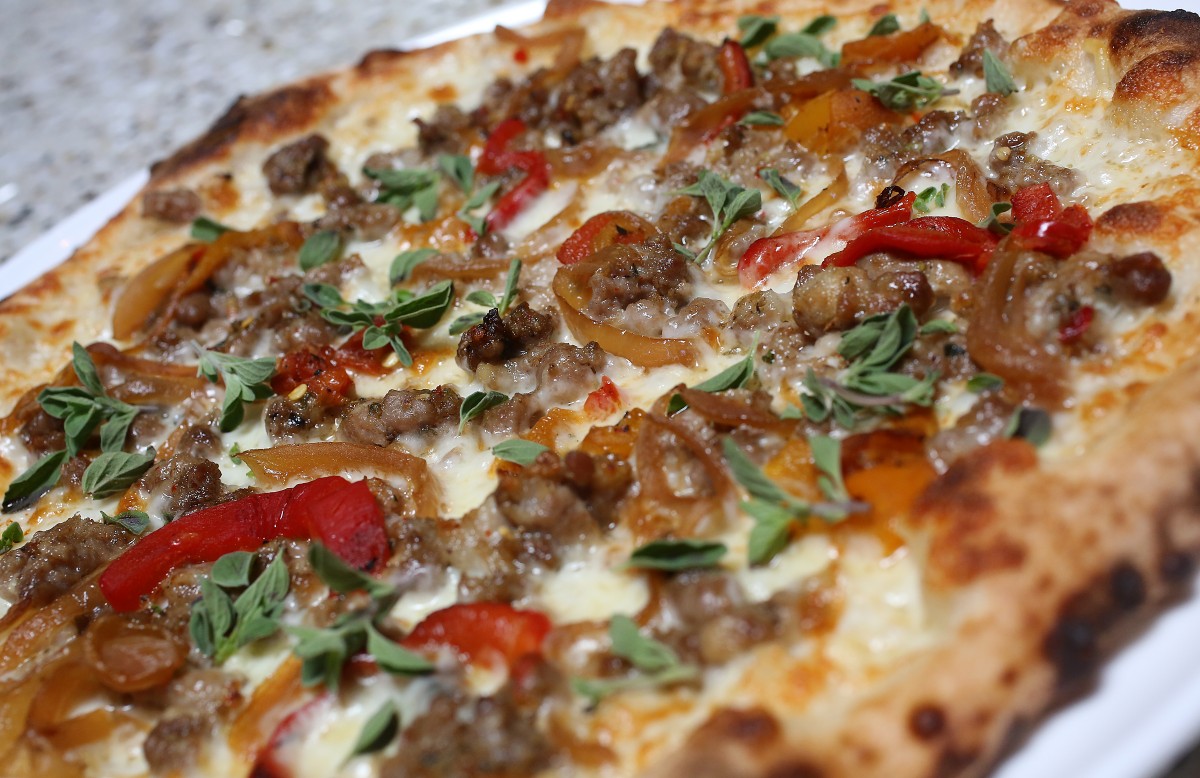
There’s a certain feeling of trust when you walk into Jackson’s Bar and Oven in Santa Rosa and order the “Undecided” from the wood-fire pizza menu. It’s always made with undisclosed ingredients that could include heirloom tomatoes, wild mushrooms, chorizo and clams. Sometimes there’s red sauce, sometimes it’s white, and sometimes it’s olive-oil-based. The pizza is not quite as popular as the margherita and house-made sausage versions, but the “Undecided” has gained a following among folks who just want to have fun. Trust the chef.
Italian Sausage Pizza at Jackson’s Bar and Oven in Santa Rosa. (Photo by Crista Jeremiason)
Meatville Outside of Eggtown: Angelo’s Meats
Drivers typically zip a thousand times past Angelo’s Meats, a workmanlike compound on pastoral Adobe Road east of Petaluma, before finally obeying the impulse to pull up to Angelo Ibleto’s shop. So many opportunities lost! Angelo’s is an unadorned gastronomical paradise of sausage, bacon and other smoked meats. Accept a taste of one of Ibleto’s jerkies, made with flank steak, and see how long you can go before stopping by again.
Succulent Ceviche: Sazon Peruvian Cuisine
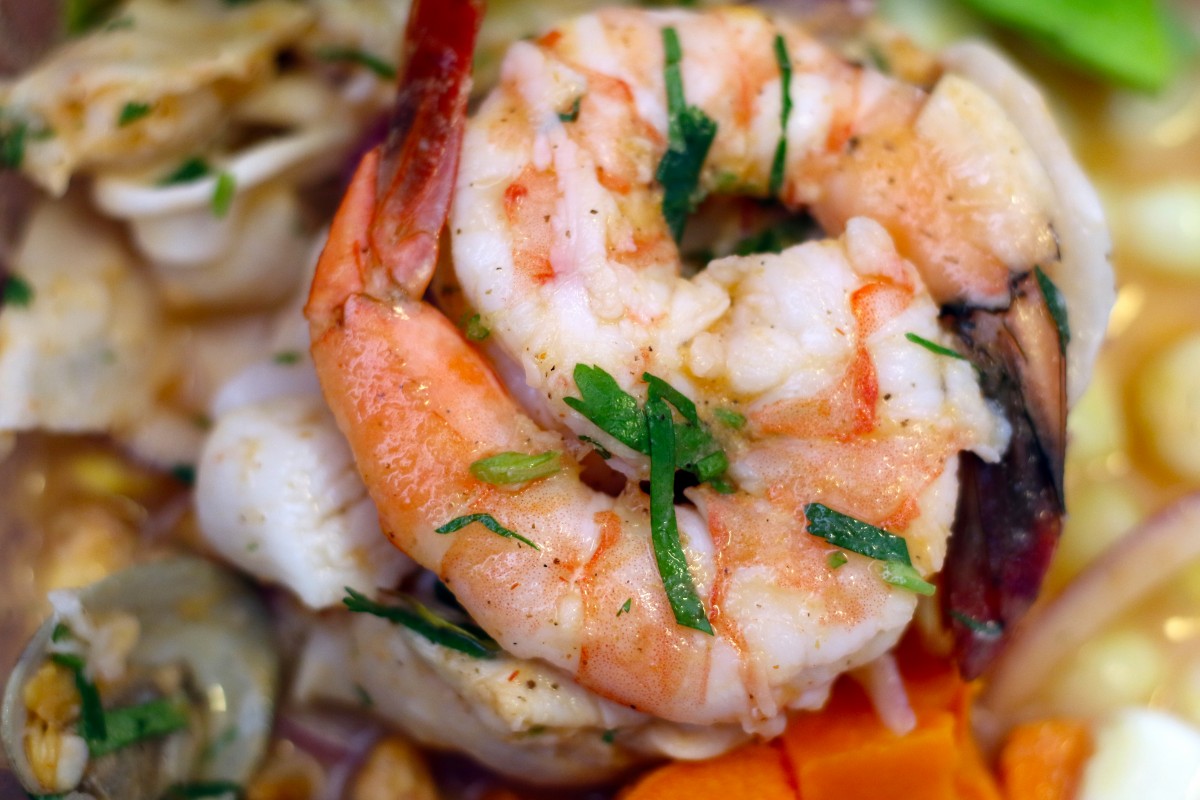
You’ll have to keep a sharp eye out for Sazon Peruvian Cuisine, a cocina secreted away on Sebastopol Avenue in southwest Santa Rosa. The beef-heart skewers, lomo saltado (Peruvian steak frites) and aji de gallina (pulled-chicken stew) are fantastic, but it’s the ceviche we crave. Leche de tigre (tiger’s milk) is the tart, briny, magical citrus marinade that “cooks” the raw seafood in ceviche. Packed with eye-popping flavor, it’s considered by Peruvians to be both aphrodisiac and hangover cure.
1129 Sebastopol Road, Santa Rosa, 707-523-4346, sazonsr.com
Ceviche mixto with leche de tigre from Sazon in Santa Rosa. (Photo by Heather Irwin)
Hansel & Gretel Bakery: Raymond’s Bakery
Hidden away amid the old-growth redwoods in the Russian River area, Raymond’s Bakery is a magical addition to the tiny Elim Grove bed-and-breakfast cottages. Baker and owner Mark Weiss crafts tantalizing rustic baguettes, Pugliese loaves, seeded sourdough, garlic-rosemary and Kalamata olive-rosemary breads, plus muffins, cinnamon rolls, buttermilk blueberry scones, croissants … anything, really, our hungry heart could desire. Friday night is party night, with wood-fire pizza, drinks and live music in the forest next to the creek.
Grilled Cheese, Please: Bergamot Alley
Hipsters adore the Bergamot Alley hideaway for its international wines and funky, live-music vibe contained by brick walls and bottle vaults. But you might never guess what else beckons: a delightful lineup of “gourmettish” grilled cheese sandwiches, with playful names such as Pigs in Space and the Miso Hungry. Try the vegan and dessert grilled cheeses, too, and be sure to ask about the perfect wine pairings for all that gooey goodness.
Bergamot Alley in Healdsburg. (Photo by Erik Castro)
Wiener Wonderland: Roy’s Chicago Doggery & Italian Beef
It’s a tiny, sit-at-the-counter joint remotely located on the grounds of the Petaluma Livestock Auction Yard, but Roy’s Chicago Doggery & Italian Beef offers more than 1,000 variations of Vienna Beef franks for aficionados of the meat form. Consider the traditional all-beef wiener, a half-pound “Home Wrecker,” a spicy fire dog or a Polish dog. Then load up with the 50 topping options, such as homemade pineapple mustard, Hell Fire sauce, shaved pastrami, chili, onion rings and blue cheese. Also worth howling about: homemade pies and deep-fried Oreos.
Itty Bitty Bakery: Wild Flour Bread
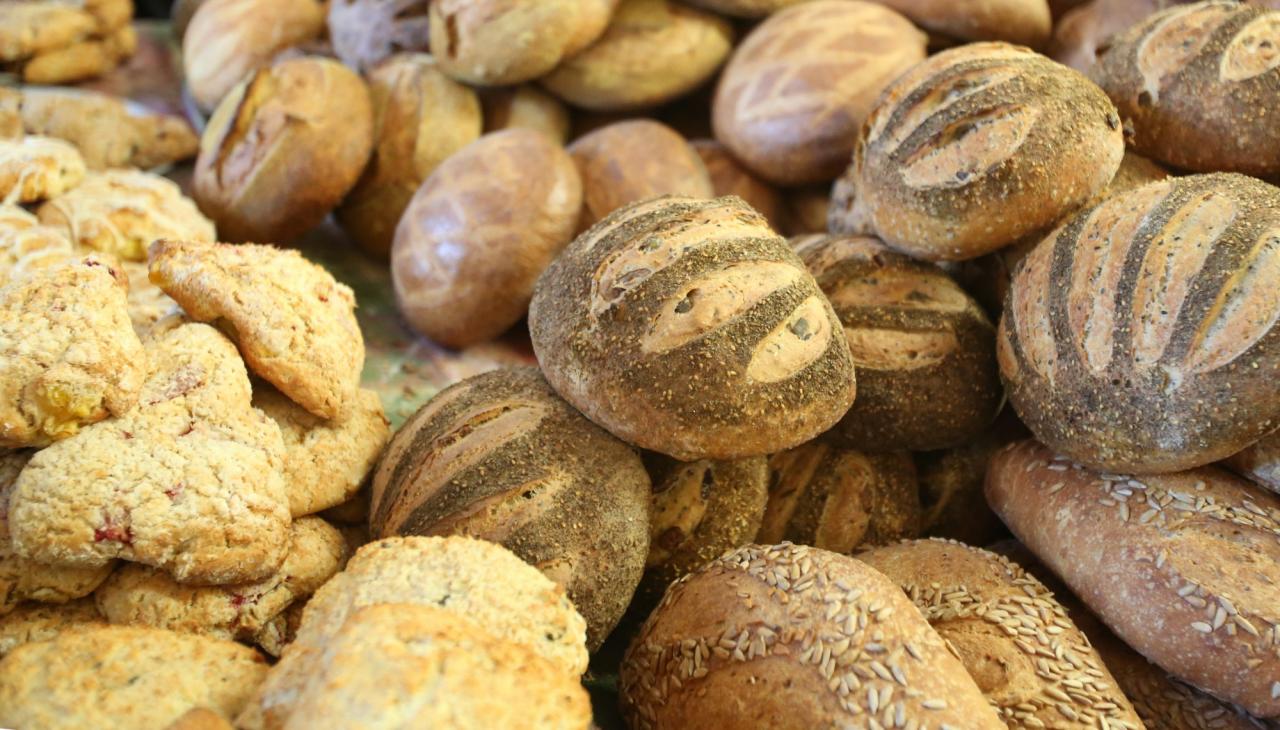
Man can live on bread, water and cheese, if that bread is the organic, sourdough-based loaves Jed Wallach fires in tiny Wild Flour Bread’s wood-burning brick oven. The water is pumped from the fresh spring wells surrounding the charming bakery’s gardens, and the cheese comes from Freestone Artisan Cheese next door. Cheesemonger Omar Mueller specializes in hyper-local, small-batch cheeses made from milk from local creameries. They’re divine with Wallach’s baguettes, goat-cheese flatbread and the Bohemian loaf studded with apricot, orange and pecan.
Wild Flour Bread in Freestone serves up a different selection of breads every day. (Photo by Crista Jeremiason)
A Farmer Takes a Stand: Paul’s Produce Farmstand
Paul Wirtz has been quietly growing an array of crops in the Sonoma Valley for nearly a quarter of a century, from tasty padron and shishito peppers to tomatoes and melons. Following organic practices, he farms 10 acres of leased land on the former Romberg Dairy property, nurturing lettuces such as the Little Gem and Red Butter varieties highly prized by local restaurant chefs. His Paul’s Produce Farmstand is open on Saturday mornings, June through Thanksgiving.
Big-City Seafood at Small-Town Price: Seaside Metal
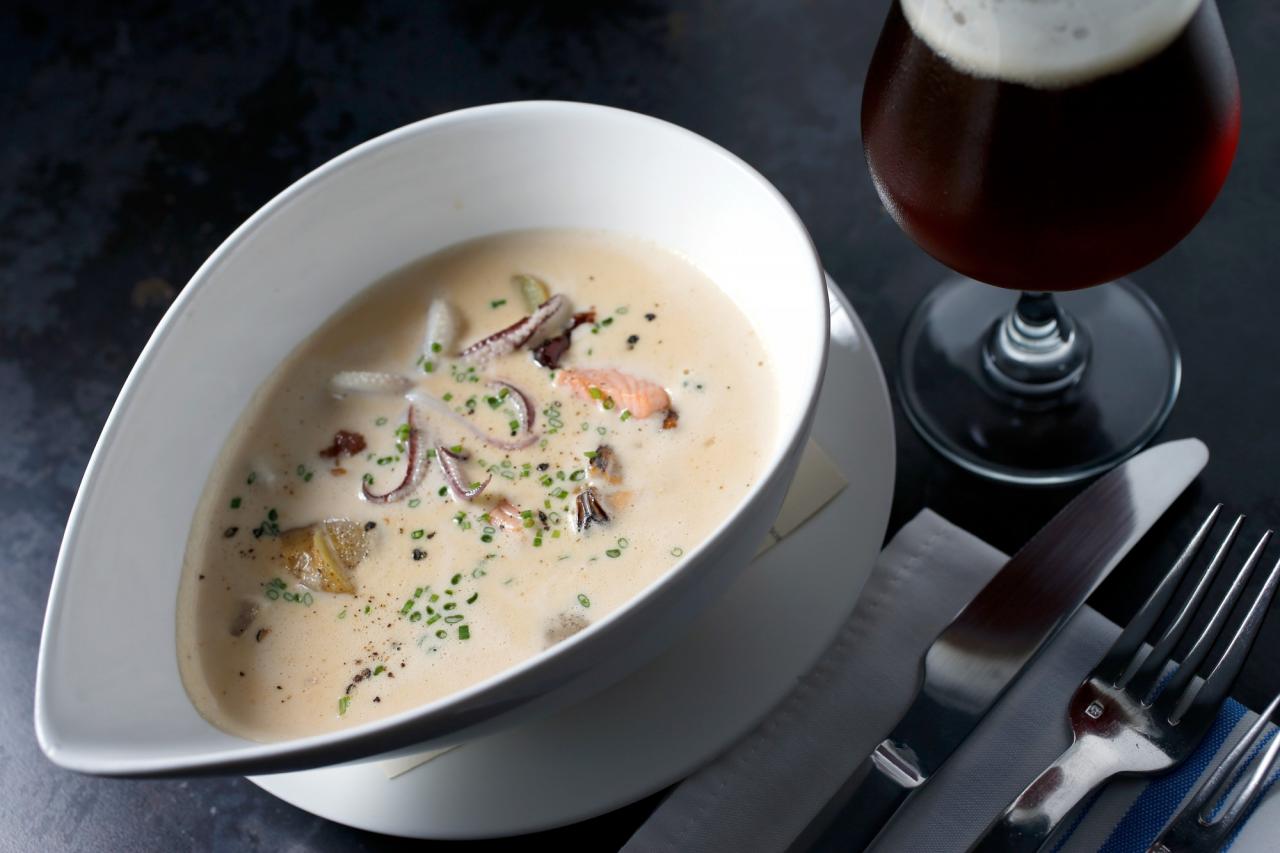
You had us at $1 oyster happy hour. Seaside Metal, an intimate little seafood salon and raw bar, is a treasure brought to Guerneville by the owners of San Francisco’s Bar Crudo, with the same top-notch cuisine. Think oysters from all across the Northwest; silky butterfish laced with Serrano ham, melon and salmorejo puree; lobster burrata salad, and creamy, bacon-stocked seafood chowder. Since it’s in this quiet river town, there are no big-city prices. Eat up.
Craving a chowder? Seaside Metal serves up superb seafood. (Photo by Alvin Jornada)
Fine Feast with Fido: Howard’s Station Cafe
Ask four-legged Fifi where she wants to go for breakfast and she’ll likely bark out, “Howard’s Station Café.” Sure, many Sonoma restaurants are dog-friendly, but how many offer a by-request, canine-only menu? Pups will drool over the doggie delights served on the restaurant’s porch, wagging as they scarf the bow-wow burger ($2.95), kibbles and sausage gravy ($2.25), a frozen Kong toy stuffed with peanut butter ($5.95) or an organic brown rice bowl with carrots and zucchini ($2.50) for vegetarian dogs. Hit the ATM first: Howard’s is cash only.
Sweet and Savory Buns
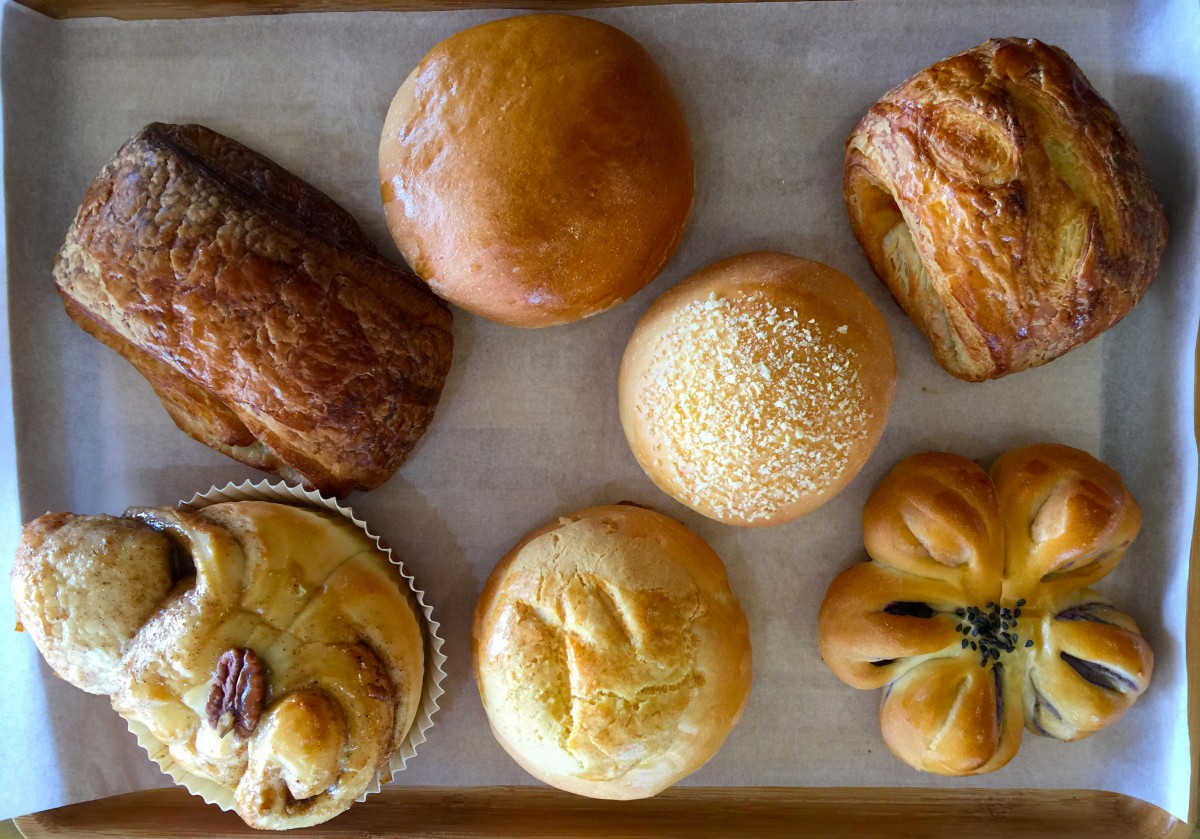
Pastry worlds collide at East Wind Bakery, an off-the-beaten-path patisserie in west Santa Rosa, resulting in kimchee- and Chinese sausage-stuffed croissants, garam-masala-spiced sweet buns, Thai chicken pot pies and Japanese milk bread studded with Earl Grey tea. This beautiful little bakery owned by Doug Quick and Tony Tam is an East-meets-West labor of love. Go with a sense of adventure and a hungry belly, and don’t miss the “Sea Foam” coffee, made with a sweet, salty whipped cream and Asian spices.
Baked bao, kimchee sausage croissant, garam masala bun at East Wind Bakery in Sebastopol. (Photo by Heather Irwin)
For the Birds, and You: The Birds Cafe
Just off the western edge of Highway 1 in Bodega Bay is a perch, a charming roost on which to rest a spell and savor the scents and sensations of the ocean breeze, and the lofty view of Bodega Harbor. It’s the dining deck at The Birds Café. Order a beer and the fish tacos or artichoke fritters and let time, like the gulls, glide by.
Mangia, Mangia: Mamma Tanino’s Ristorante
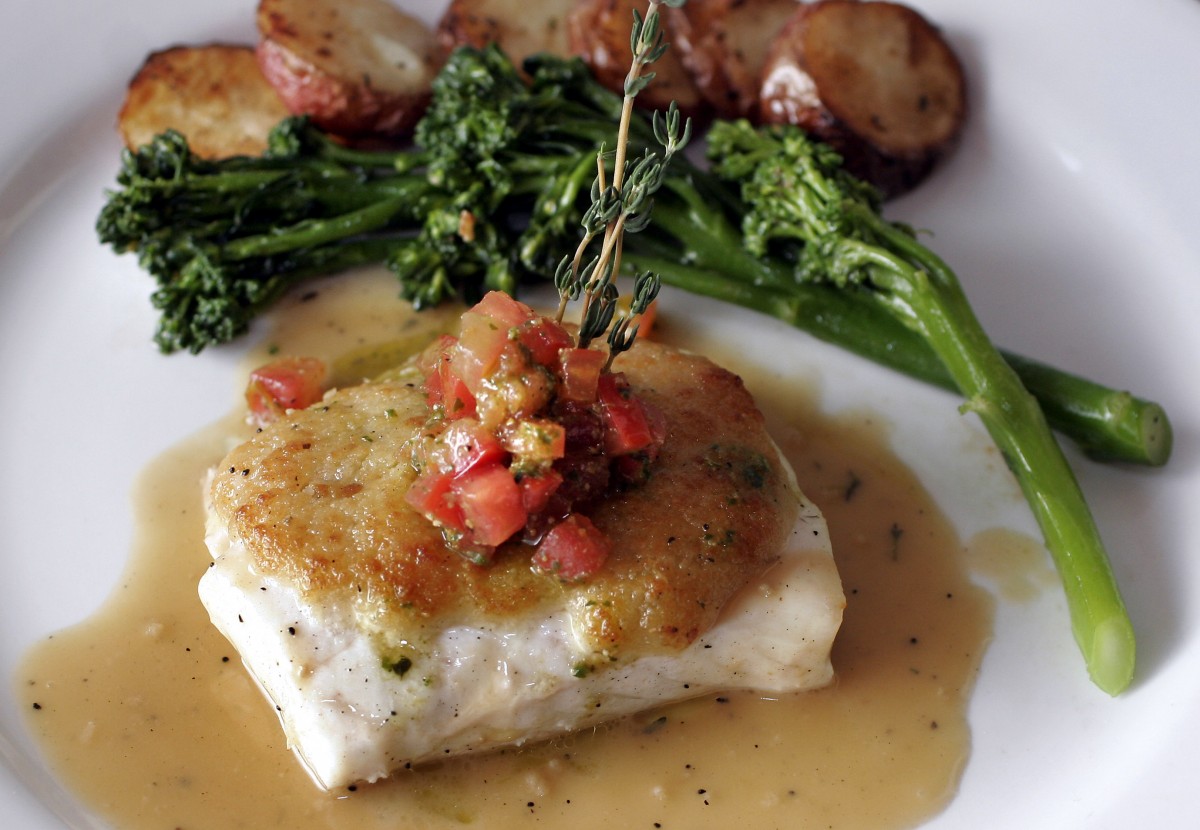
Good old spaghetti and meatballs from Gaetano and Kim Patrinostro await in an unlikely location, Mamma Tanino’s Ristorante in the Valley Mart Shopping Center in Sonoma. Chef Gaetano brings his Sicilian flavors to the strip mall, presented in a simple, cozy trattoria with a straightforward menu of classics such as chicken Marsala and linguine in clam sauce. The cheerful spot oozes charm and honest good flavors, and the $15 dinner offered from 5 to 5:30 p.m., Tuesday through Saturday, is an early-bird’s dream bargain. Choices might include prawns, chicken and stuffed pasta, served with salad and homemade bread.
500 W. Napa St., Suite 512, Sonoma, 707-933-8826, mammataninos.com
Halibut at Mamma Tanino’s in Sonoma. (Photo by Jeff Kan Lee)
Taco Trucks
Taco trucks have served up authentic street food in Sonoma since long before the first wave of hip, urban food trucks reached our byways and back roads. Here are a few perennial favorites, serving authentic tacos and tortas with a side of rice and beans.
Tacos La Bamba
Parked on an auto repair shop lot on Highway 12 in Boyes Hot Springs, Tacos La Bamba usually draws a long line of loyal customers for its lengua (beef tongue) tacos, carne asada burritos and gorditas de chicharron. It’s cheap and addictive, though you may have to wait a little during the late-night rush.
18155 Sonoma Highway 12, Sonoma
Taqueria Guanajuato
After a morning of wine tasting, hit the Taqueria Guanajuato truck parked at the gateway to Alexander Valley, at the junction of Healdsburg Avenue and Alexander Valley Road. Here is taco truck heaven: excellent food, good prices and friendly service of favorites such as tacos al pastor and chilaquiles with chorizo.
Alexander Valley Road and Healdsburg Avenue, Healdsburg, 707-478-8931
El Roy’s Mexican Grill
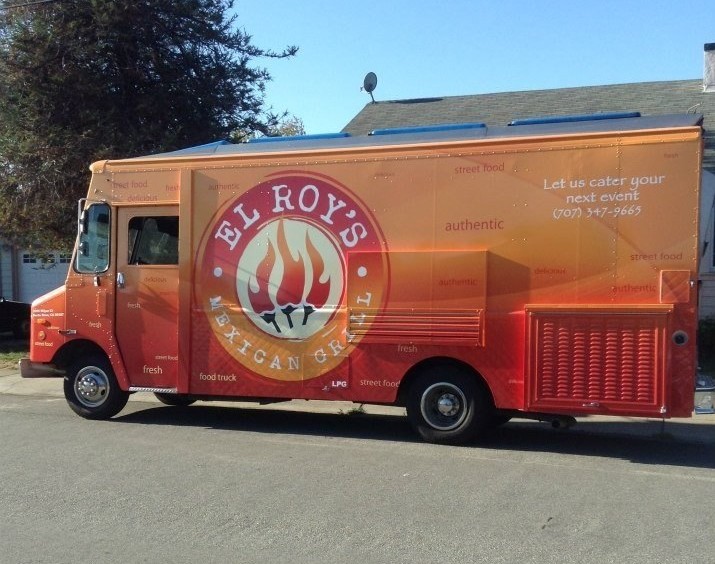
The popular El Roy’s Mexican Grill trucks can be found in Petaluma, parked at the intersection of East Washington Street and Lakeville Highway, and in Santa Rosa, on Sebastopol Road. There are tables and benches to sit and chow down, and customers rave about everything from the fish and shrimp tacos to the horchata drinks.
760 Sebastopol Road, Santa Rosa, 707-843-2166; E. Washington Street and Lakeville Highway, Petaluma, 707-241-6534.
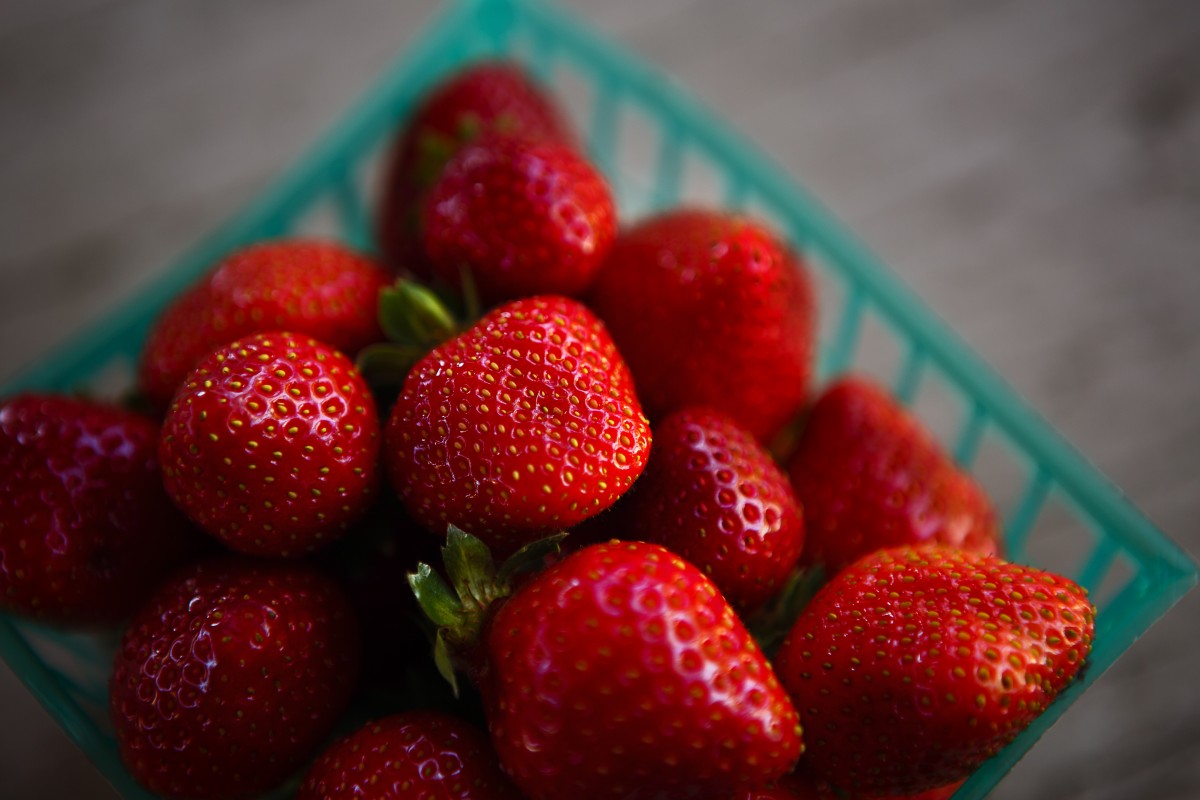
Sonoma strawberries. (Photo by Chris Hardy)
Berry Stands
Summer brings a bounty of berries to Sonoma’s cultivated fields and back roads, there for the picking or purchase. Pluck and pop them in your mouth, or bake them into your favorite summertime desserts, from crisps and cobblers to pies and shortcakes.
Watmaugh Strawberries
In Sonoma, Watmaugh Strawberries sells sweet, just-picked berries that are ripe all the way through and still warm from the sun. Its stand just south of town has become everyone’s favorite stop.
Arnold Drive at West Watmaugh Road, Sonoma, 916-207-2870, visit on Facebook
Sonoma Swamp Blues
Sonoma Swamp Blues is a certified organic blueberry farm tucked into the Laguna de Santa Rosa at Occidental and High School roads in Sebastopol. There’s always a line at the roadside stand in the summer. The plump, juicy blueberries hit their peak of ripeness in mid-July, and the farm has also planted organic strawberries this year, doubling the berry joy.
Berry sweet….
The wild blackberry bushes so ubiquitous in Sonoma are courtesy of famed horticulturalist Luther Burbank, who introduced the hardy Himalaya blackberry here in 1885. These bushes grow like weeds and thrive in any soil, with prime pick-your-own locations including “blackberry island” in Santa Rosa’s Spring Lake Regional Park, and Coleman Valley Road above the fog line outside of Occidental. Use tongs or gloves to harvest, and watch out for the thorns.
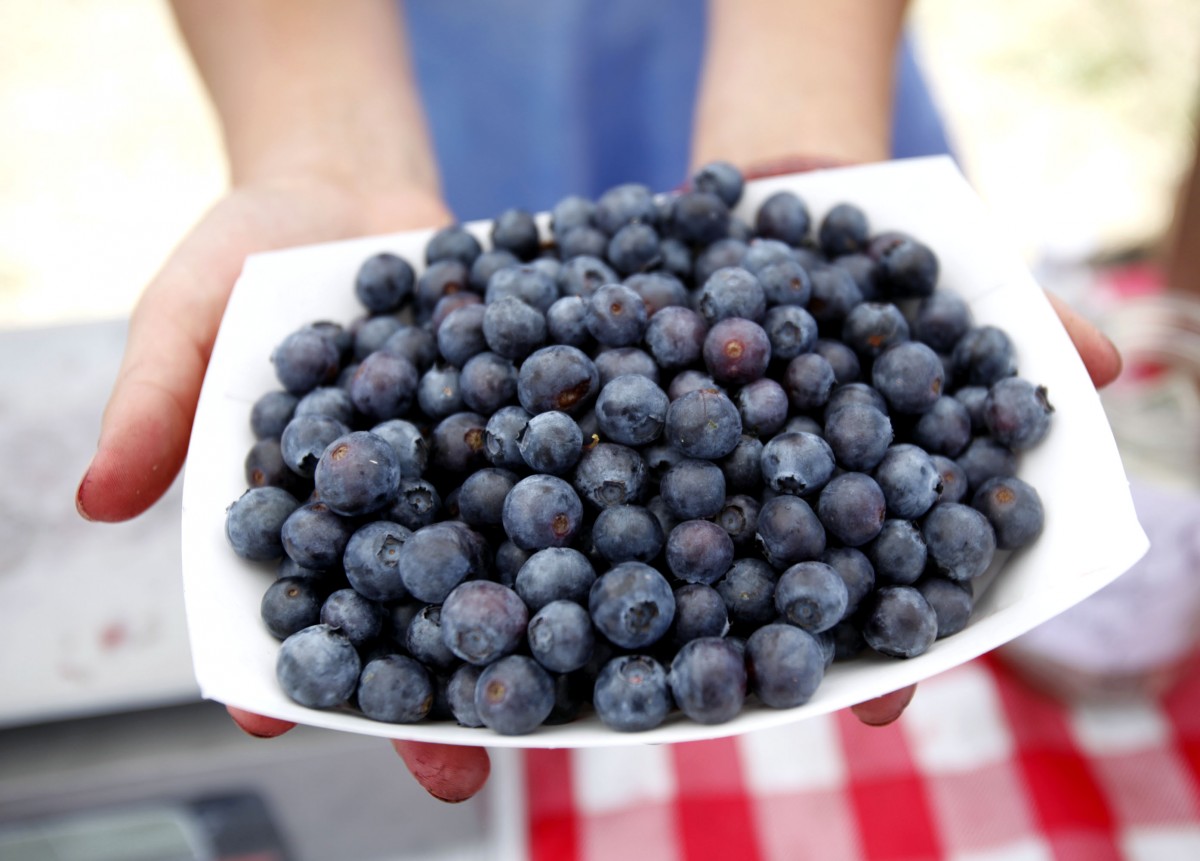
Fresh picked blueberries at the Sonoma Swamp Blues farm stand. (Photo by Crista Jeremiason)
Off the Menu
In-N-Out Burger’s secret menu isn’t anymore, now that the fast-food chain has added the previously unlisted, word-of-mouth items to its website. At many Sonoma eateries, secrets are still being kept, though now we’re telling.
Ricardo’s Bar & Grill: Ricardo’s Special
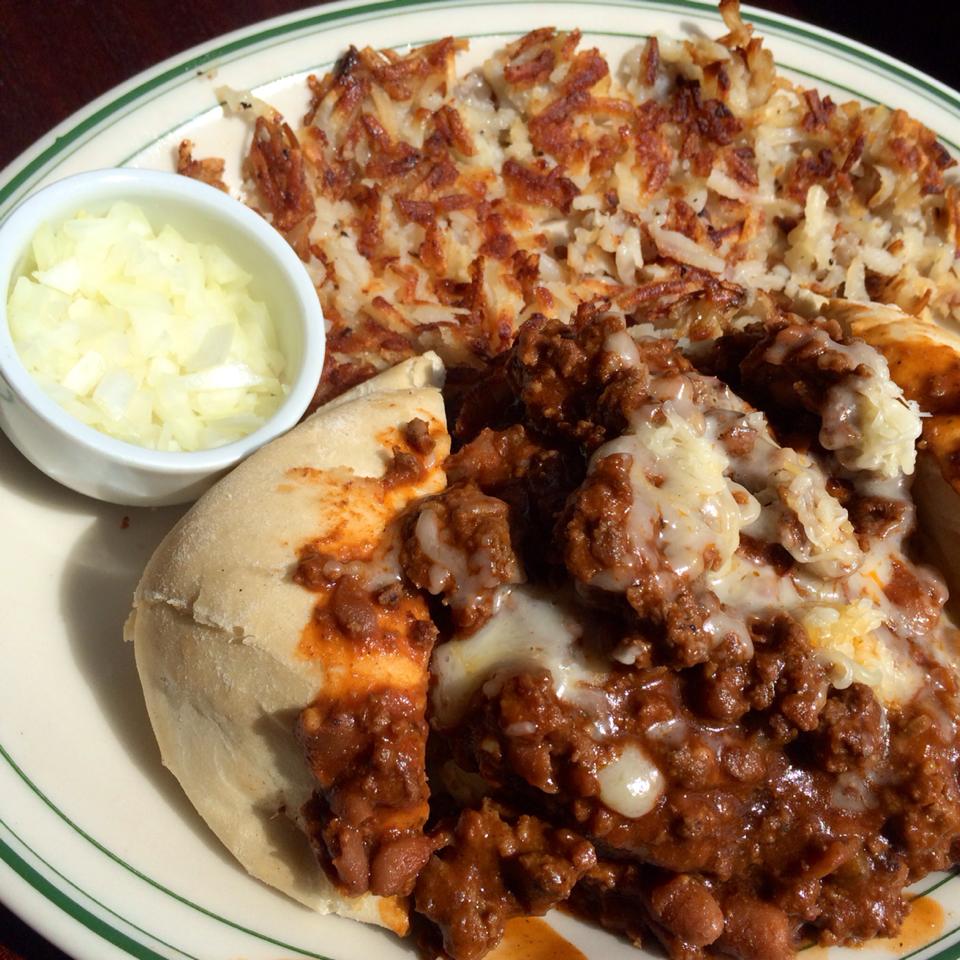
Inspired by the long shuttered Ingram’s Chili Bowl on Old Redwood Highway in Santa Rosa, Ricardo’s Bar & Grill serves Ricardo’s Special to in-the-know customers, an open-faced burger topped with chili and cheese and surrounded by hash browns.
Shhhh! ‘El Ricardo’s Special’ open-faced chili cheeseburger w/hashbrowns & chopped white unions, off the secret menu. (Photo by Ricardo’s Bar & Grill)
Healdsburg’s Scopa Trattoria: Lady & The Tramp
Why you’d want spaghetti and meatballs when there are so many other amazing dishes at Healdsburg’s Scopa Trattoria, we don’t know. But locals say “Lady and the Tramp” is a favorite off-menu dish. Best shared by two.
Sprenger’s Tap Room: The Man Slaw
The Man Slaw at Sprenger’s Tap Room in Santa Rosa is coleslaw with hot sauce and chopped pieces of bacon. Women can order it, too, though it’s not on the menu. When the restaurant has salted caramel ice cream, it will also make a salted caramel beer float.
Brickyard Center Shopping Center, 446 B St., Santa Rosa, 707-544-8277, sprengerstaproom.com
The Pullman Kitchen
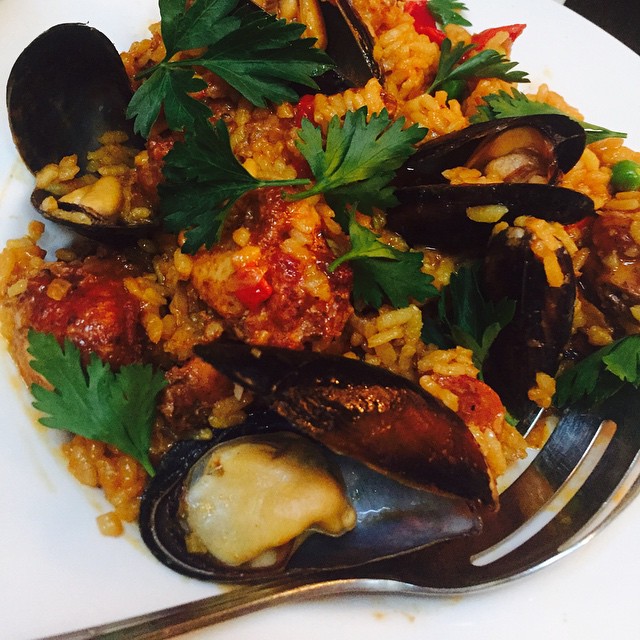
A giant pan of paella goes on the stove Tuesday afternoons at Santa Rosa’s The Pullman Kitchen, and it keeps sizzling through the evening. It’s all you can eat, but when it’s gone, it’s gone.
Shhhh! Paella at The Pullman Kitchen in Santa Rosa. (The Pullman Kitchen)
Healdsburg Bar & Grill: Fluid BLT
Drink your dinner by ordering a BLT at the Healdsburg Bar & Grill: Bulleit bourbon, lemon juice and tonic, an off-menu cocktail that’s a summertime quencher.
Kick back with a tall one at one of these unsung watering holes.
Iron Horse Winery. (Photo by Christopher Chung)
Cool Climate, Cool View: Iron Horse Vineyards
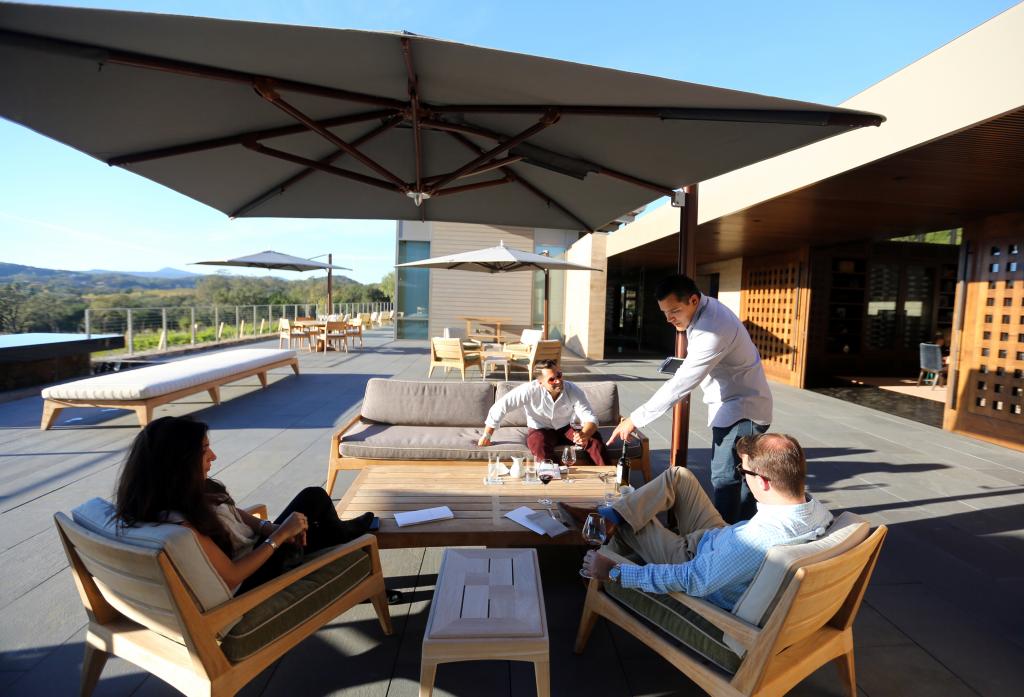
Isn’t it enough to make some of the best sparkling wines in America? Iron Horse Vineyards near Sebastopol is doubly blessed in that it also has one of the best tasting room views in the country. Sip in front of a lovely hillside vista of grapes overlooking the Green Valley of Russian River Valley. The sparklers deliver nuanced flavors and brisk freshness; also try the lesser-known but just-as-good Chardonnays and Pinot Noirs.
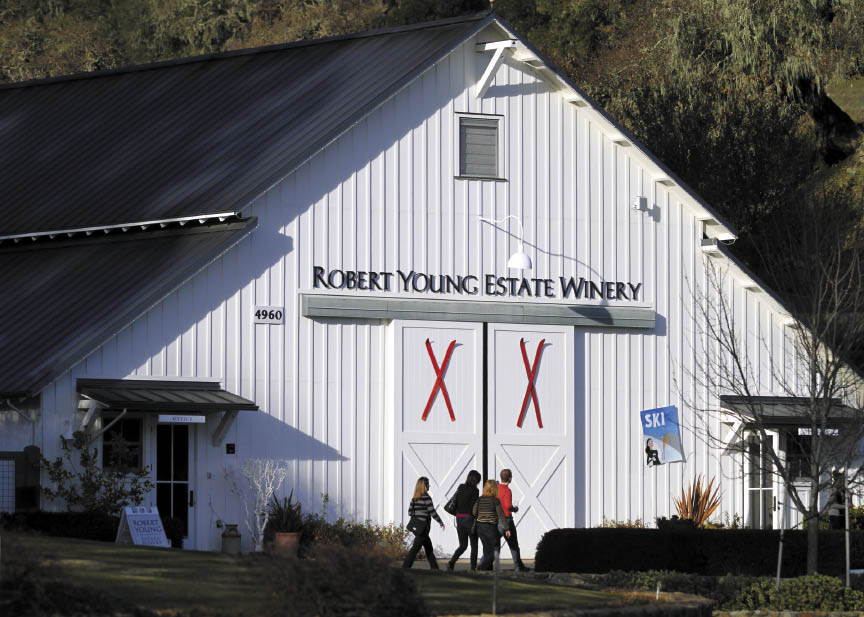
Robert Young Estate Winery. (Photo by Crista Jeremiason)
Secret Side of Alexander Valley: Robert Young Estate Winery &Garden Creek Winery
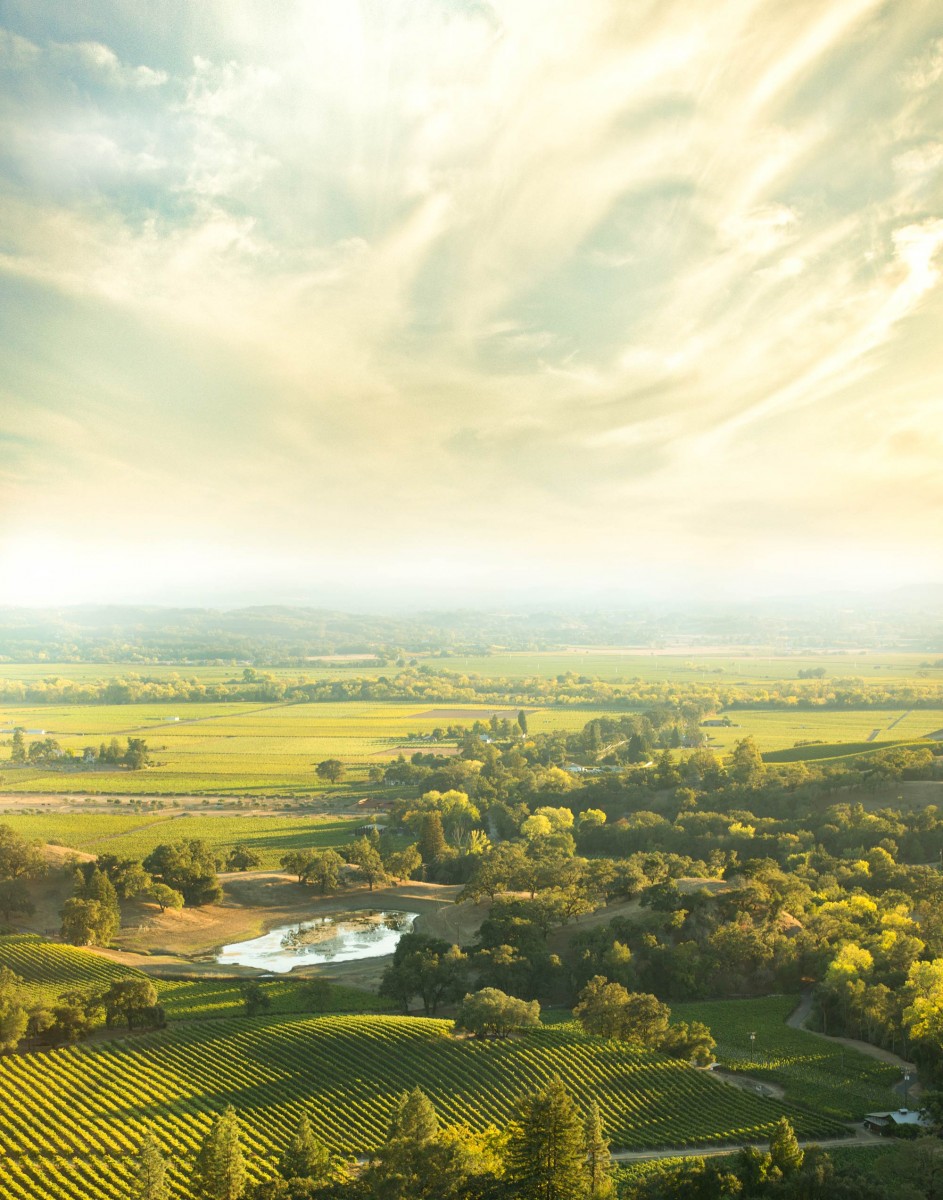
While most visitors to the Alexander Valley stick to Highway 128 as they visit wineries and vineyards, the quieter northeast corner of the valley is home to producers with deep winegrowing roots, tucked beneath Alexander Mountain.
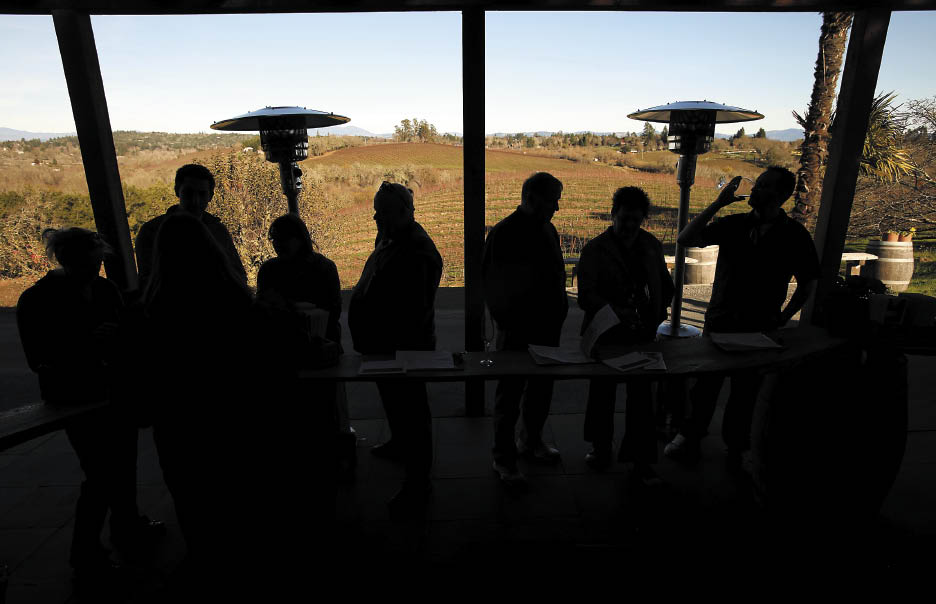
The bucolic, manicured grounds of Robert Young Estate Winery are open to the public daily. Visitors can enjoy the picnic area and cave tours, on request, and taste the winery’s famous Clone 17 (also called the Robert Young clone) Chardonnays and its Cabernet Sauvignon. Tasting is $10, refundable with purchase.
4960 Red Winery Road, Geyserville, 707-431-4811, ryew.com
Just around the corner from Red Winery Road on Geysers Road, Garden Creek Winery is open by appointment only, Monday through Friday. The small estate run by Justin Miller and Karen Warnelius-Miller grows Chardonnay and Bordeaux grape varieties for its red blend, Garden Creek Tesserae. The two-hour tour includes a candlelit tasting in the barrel room, a cheese and charcuterie pairing, and a walk through the vineyard. $30 a person.
View of Garden Creek Vineyards in Alexander Valley. (Photo courtesy of Garden Creek Vineyards)
Sound of Music: Spirit Works Distillery
Spirit Works Distillery in The Barlow center in Sebastopol is hidden in plain sight. If you haven’t visited, you haven’t experienced where Sonoma’s finest gin is produced, as well as excellent vodka, whiskey and sloe gin. The distillery tour and tasting details how these spirits are made. Take a peek into the barrel room, where spirits age in casks to the sound of tunes emitted from iPods. It’s a vibration thing.
Wine Whisperers: Hamel Family Wines
Inside the immaculate wine caves of Hamel Family Wines near Glen Ellen is a beautifully appointed private tasting room that looks like it was created as a corporate board room. The ceiling is coffered so that if two people stand at opposite corners of the room, they can whisper sweet nothings and be the only ones to hear them. Better still is the outdoor deck overlooking the Valley of the Moon, within spitting distance of historic Zinfandel vineyards belonging to the estate.
The Sun Also Sets: Redwood Bar at River’s End Restaurant
Do we seek out bars with pretty views to soften the need for conversation? Or after days on end staring at screens, are we humanly in need of some natural beauty? Either way, the Redwood Bar at River’s End Restaurant & Inn is a choice spot for a drink, presided over by a French Culinary Institute-trained bar chef, with room to sit on the outdoor patio as the sun touches down. The wine list is good, too.
On the Rocks in Roseland: Whiskey Tip
One particular block of Sebastopol Road in Santa Rosa, near Stony Point Road, is a destination mostly for souls seeking motor oil, a garden-hose bib or a laundromat. Yet here also flourishes a newish tavern that ably pairs two of life’s greatest gifts. The place is called Whiskey Tip Bourbon & BBQ, and it has a spacious patio with games out back and sports on the telly inside. Just add a glass of distilled artistry and one single, great cube of diamond-clear ice.
Sit back and relax.
1910 Sebastopol Road, Santa Rosa, 707 843-5535, whiskeytipsr.com
Barndiva Gallery Bar in Healdsburg. (Photo courtesy of Barndiva)
Arts & Craft-Cocktails: Gallery Bar at Barndiva
Barndiva is beloved for the substantial torch it carries for garden-sourced cocktails, but now it’s taken things to a whole other level with its Gallery Bar next door, open Wednesday through Sunday from 3 p.m. until closing. An art gallery during the day, the space invites late-afternoon art-minded drinkers to mingle, chat and dine from the farm-to-table bar menu.
Brewpub in a Grocery Store: Tap Room at Whole Foods Coddingtown
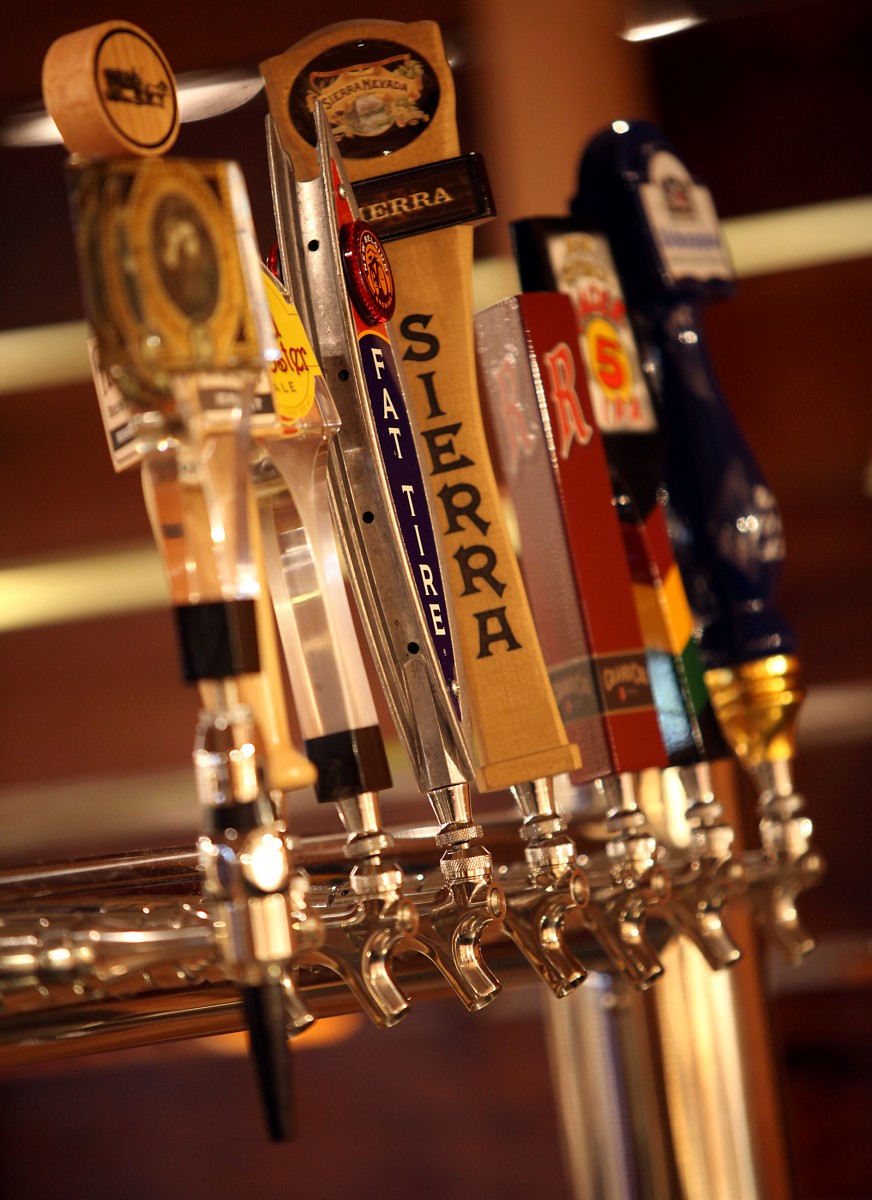
Why didn’t someone think of this before? The Tap Room at Whole Foods Market in Santa Rosa is a respite from the chore that can be grocery shopping, thanks to its island of beer-a-tude. Craft brews on tap, appetizers and pizzas are served, and dozens more bottled beers are in the cooler. Would-be home brewers will be inspired by the beer-making kits and fresh hops for sale.
Some of the beers on tap in the Tap Room at Whole Foods Market at Coddingtown Mall, in Santa Rosa. (Photo by Christopher Chung)
Lug a Jug: VJB Cellars
Before Prohibition, it was common for folks to take empty jugs to wineries and have them refilled. Not only did the practice reduce the use of glass, corks and labels, the wine was cheaper by the ounce. After Repeal, jug-filling largely disappeared, but it’s slowly coming back. At VJB Cellars in Kenwood, a 1-liter (33-ounce) logo bottle of Family Blend red wine costs $24. Bring the empty back (clean, of course) and
a refill is just $12, about 36 cents per ounce.
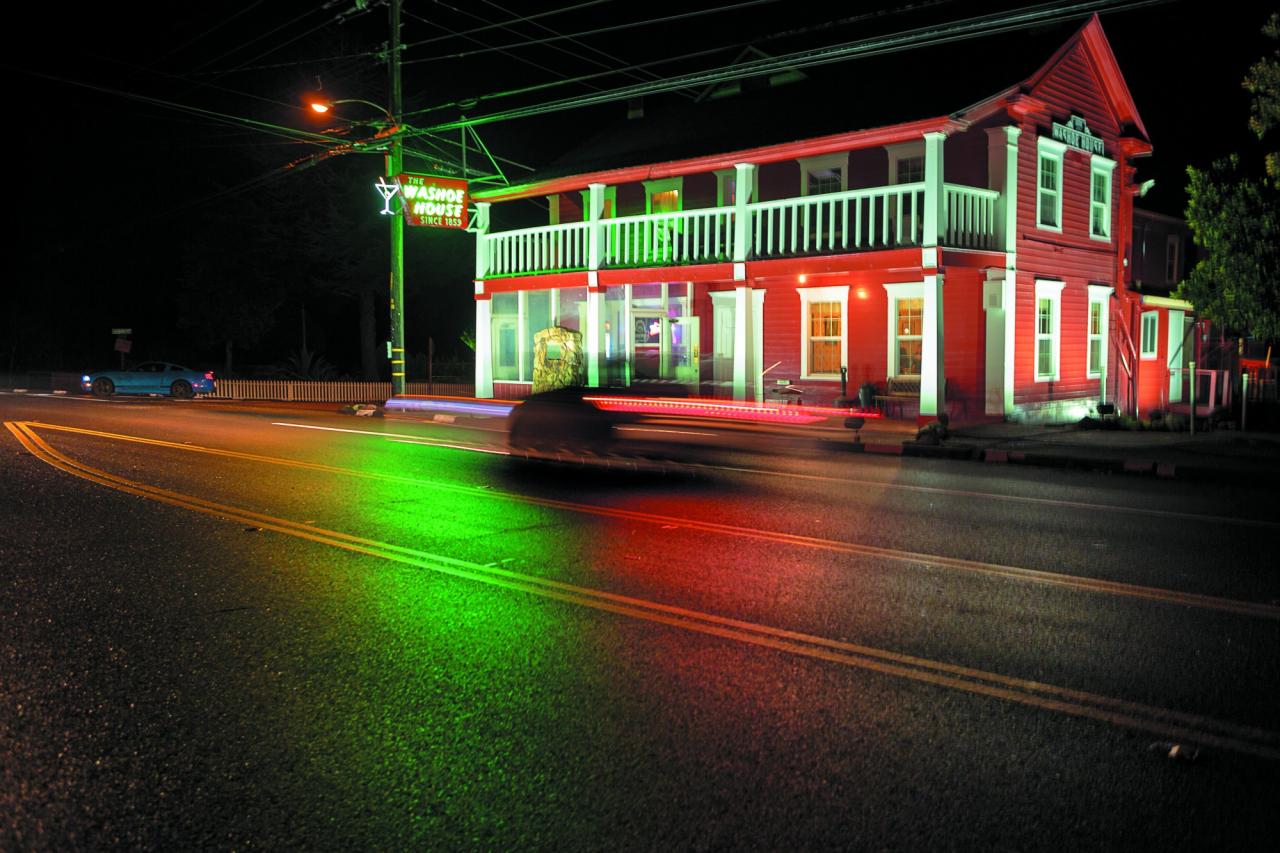
865 Watering Hole: The Washoe House
Credit the Washoe House with preventing what might have been California’s only Civil War battle. In 1865, a group of Petaluma militiamen set off for Santa Rosa intent, the story goes, on trashing the offices of the southern-sympathizing Santa Rosa Democrat newspaper. But thirst overcame them on the stagecoach route now known as Stony Point Road and they never made it to Santa Rosa. And the Washoe roadhouse, just as it has since 1859, continues to beckon with adult libations and hearty comfort food. Over the decades, patrons have left cards, photos, notes and bills covering every square inch of the ceiling.
The Washoe House in Petaluma. (Photo by Chris Hardy)
Happy Hour Revival: The Villa Restaurant
Perched atop a hill overlooking eastern Santa Rosa, the Villa Restaurant & Bar is a traditional Italian eatery that has long been a favorite hangout of the older bocce set. But it’s quickly gaining traction as a kitschy happy-hour haunt by a new generation. With special drinks and apps available from 3 to 6:30 p.m. daily, selected beers and wines are just $2; value-priced tummy busters include $2 fried zucchini, fried polenta and hot dogs, $4.50 steamed clams, small pizzas for $5 and a petite plate of spaghetti and meatball for $4.
Old-School Italian: Volpi’s Ristorante & Bar
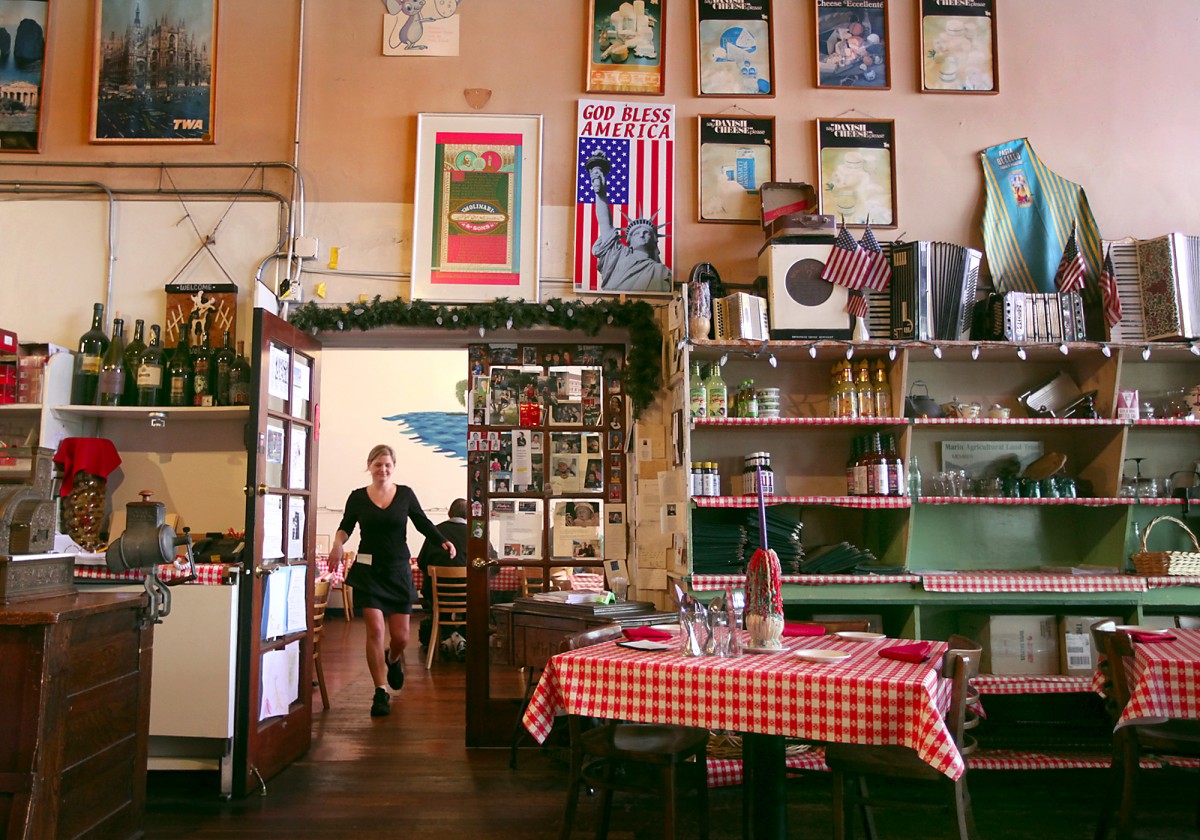
During Prohibition, ranchers bringing their eggs and milk to town would stop at a little Italian grocery, hand over their shopping lists and then head to the back room for a bit of lubrication. That the dining room was once a speakeasy speaks to the appeal of Volpi’s Ristorante & Bar in downtown Petaluma. With old-fashioned Italian food served on red-checked tablecloths, the occasional accordion serenade by owners John and Sylvia Volpi, and strong drinks, it remains a comfy place for conviviality.
Jamie Spaletta, prepares to take an order at Volpi’s Ristorante and Historical Bar in Petaluma. (Photo by Kent Porter)
Soup, Sandwich and Syrah: Ancient Oak Cellars
Downtown Santa Rosa isn’t known for winery tasting rooms, so it might come as a surprise to wine lovers that there is an excellent one, Ancient Oak Cellars. The winery is joined by seven other drinks producers, giving tasters the rare opportunity to sample wine, cider and mead at one location. In March, Ancient Oak relocated from Corrick’s Stationery Store on Fourth Street to the former Downtown Deli space down the block, taking advantage of the outdoor patio and kitchen, from which sandwiches spring forth daily and small plates are served by night, Friday through Sunday.
Oenophile’s Paradise: Sonoma County Wine Library
One of the nation’s deepest collections of wine-related books, oral histories, magazines, journals, photographs, maps, labels, posters and videos is right here, at the Sonoma County Wine Library. Taking up one-third of the Healdsburg Regional Library, this enological treasure trove is open to the public and overseen by Wine Librarian Jon Haupt. (Who knew such a title existed?) Oldest among the 6,000 books: “Libri de re Rustica,” published in 1514. The library also hosts speakers, authors and tastings.
Art and entertainment in Sonoma County you may not know about…but should.
Graton Gallery in Graton. (Photo by Christopher Chung)
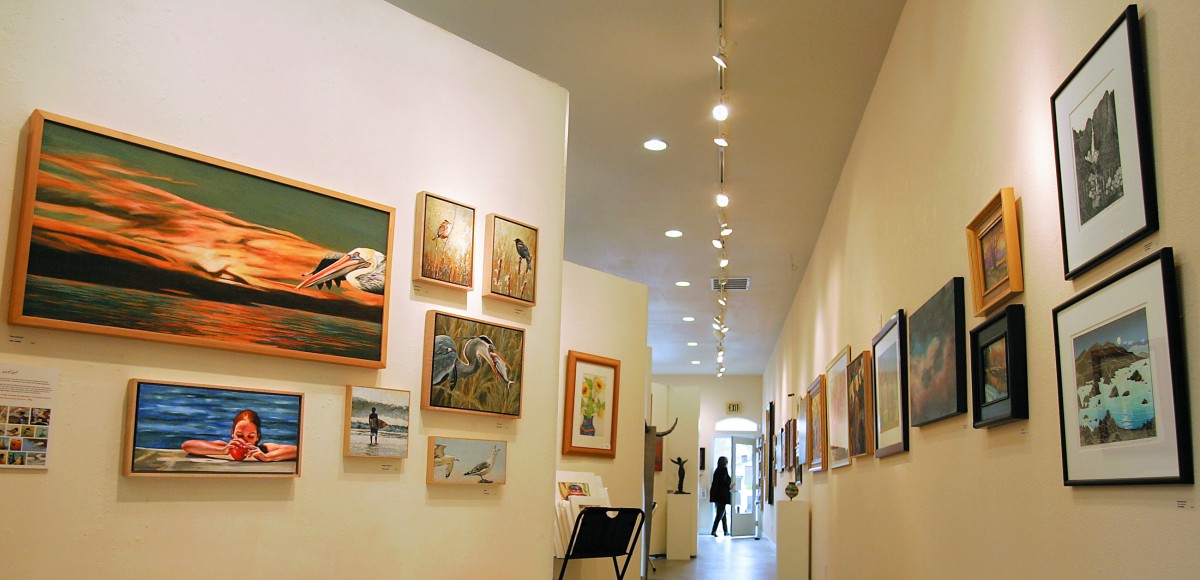
Art in an Unsuspecting Place: Graton Gallery
There isn’t much to the tiny town of Graton, yet the long, narrow Graton Gallery and its adjoining sculpture garden are worth exploring. The gallery showcases original fine art, paintings and prints, as well as jewelry, pottery, textiles, glass and woodcrafts from more than 50 artists. Sculptures and fountains abound in a fenced-in garden area. New shows debut every six weeks, and if the timing is right, wine flows and snacks are served.
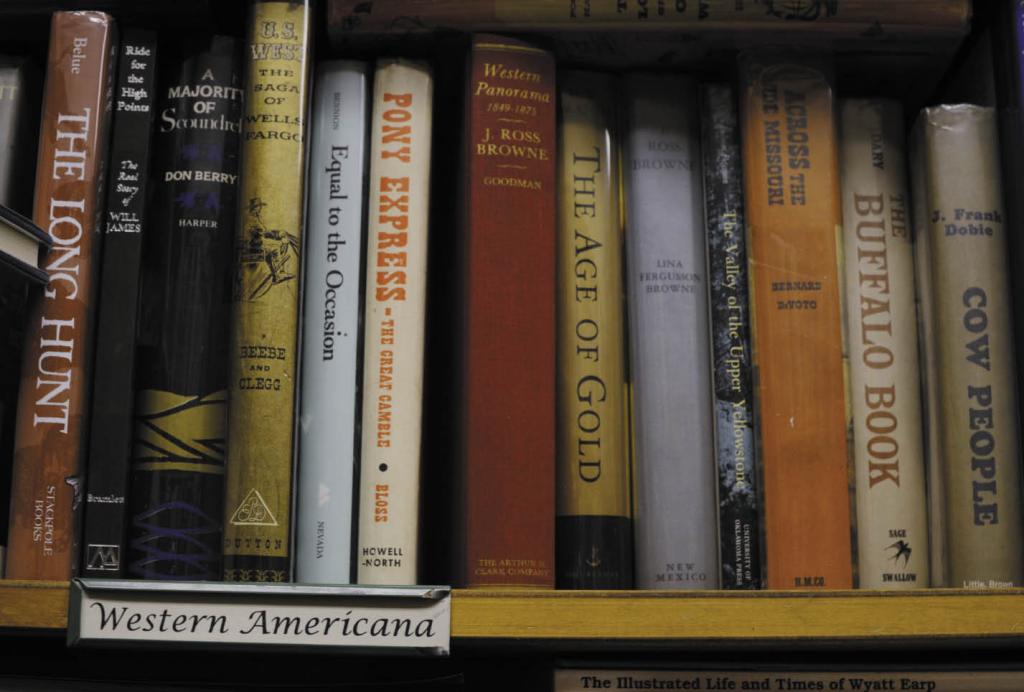
Covers You Covet: Treehorn Books
Remember books? Before Kindle? The folks at Treehorn Books love tomes so dearly they celebrate them in a mishmash clutter of new and used treasures, at bargain prices to encourage us to read more. Row after row, shelf after shelf (plus ladders to reach them), there are all kinds of inventive categories such as the Sixties, Fire & Disasters, Counter-Culture, Earthquakes & Floods, Drama, first editions (including signed) and lots of rare gems, plus the more expected History and Children’s Literature sections.
Treehorn Books in Santa Rosa. (Photo by Erik Castro)
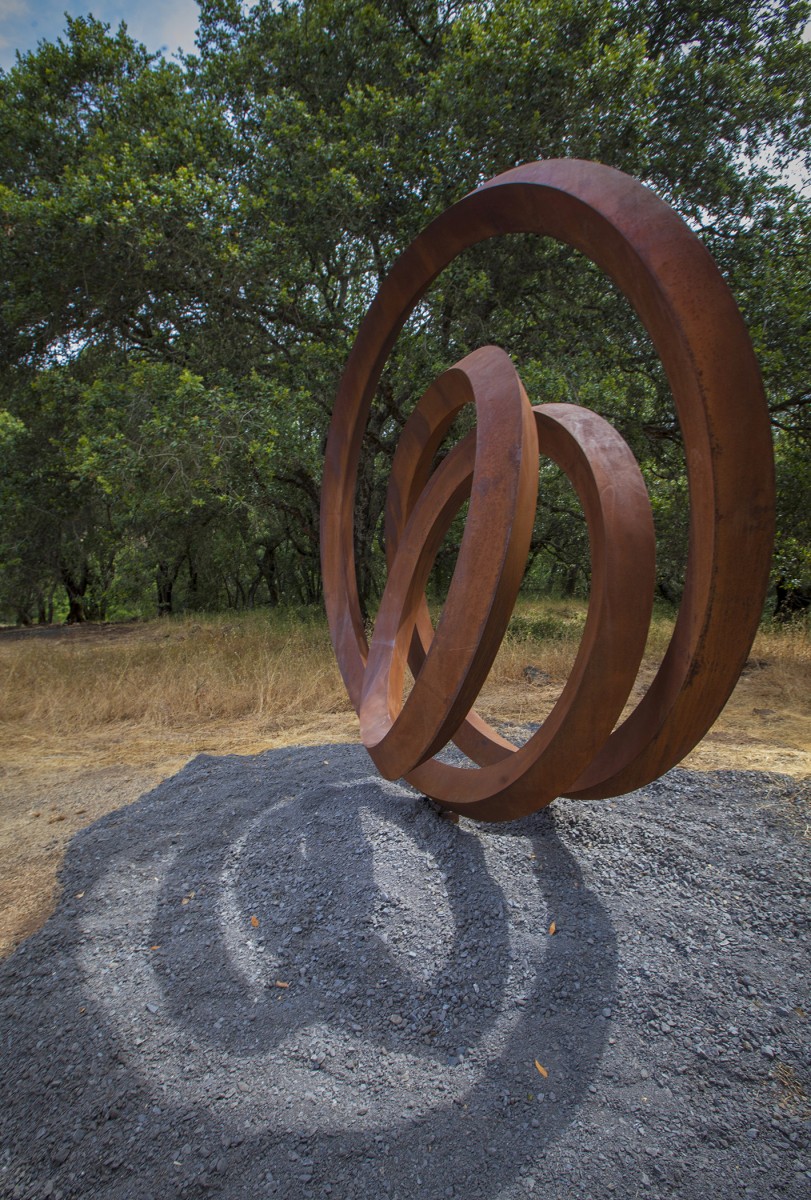
Burning Man Without the Desert: Paradise Ridge Winery
The giant “LOVE” sculpture at Paradise Ridge Winery was created for the Nevada festival in 2007 and now has a permanent home in the winery’s secluded meadows. Every year, other Burning Man pieces are installed for rotating shows curated by the Voigt Family Sculpture Foundation. That might mean temples (the ones that don’t get burned), towers and wind machines placed along paths amid the groves. Most of the pieces are interactive: feel free to crawl and clamber.
4545 Thomas Lake Harris Drive, Santa Rosa, 707-528-9463, prwinery.com
A work by Roger Berry is one of the sculptures currently on view at Paradise Ridge Winery. This show, ‘Geometric Reflections,’ curated by Kate Eilertson, will remain open until April 30, 2017. (Photo by Robbi Pengelly)
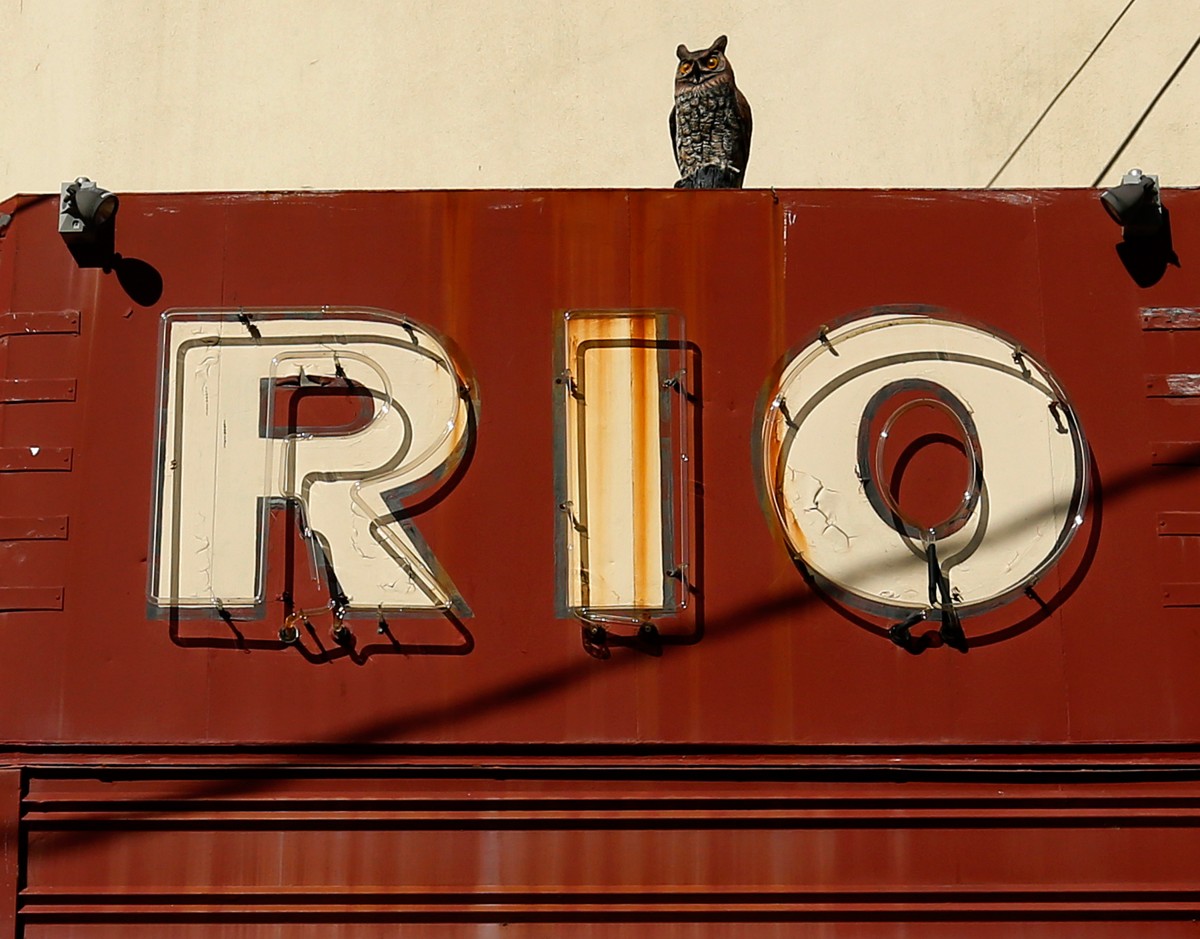
Java and the Hut: The Rio Theater
On the Russian River, alongside the no-nonsense bridge at Monte Rio, sits a most unusual movie house. The films screened in the historic Quonset hut fronted by a marquee are just one feature of the Rio Theater, in its 65th year. The breakfast-and-lunch cafe and coffeehouse on the elevated deck out back is a second reason to go. The third: the weekend outdoor market.
20396 Bohemian Highway, Monte Rio, 707-865-0913, riotheater.com
The Rio Theater in Monte Rio. (Photo by Alvin Jornada)
Theater Without a Marquee: Camp Rose Players
On four weekends in October, the Camp Rose Players perform at an unlikely location: Healdsburg’s Fitch Mountain, an extinct volcano dotted with humble cabins and the occasional high-end home. Camp Rose, an early-1900s recreation site on the Russian River, had an inn that was remodeled in the 1970s as a restaurant, bar and theater. It’s now a private residence, but Suzanne Webb, daughter of the theater’s founder, Jane Moore, continues to stage plays in the Camp Rose theater on the first floor. It has 30 red velvet seats, professional sound and lighting, yet no marquee, as tickets are sold by word of mouth and a mailing list. Bonus: There’s parking.
SOFA, So Good: South of A Street
The South A Street district concealed on the back side of Santa Rosa’s Juilliard Park is an old-fashioned cluster of small shops, galleries, artist studios and eateries refreshingly free of anything close to a chain. No Starbucks, just Atlas Coffee Co. down an alley with a hodge-podge of found furnishings, a record player and great java. Denizens have dubbed it SOFA and it’s full of surprises, including one of the city’s top restaurants (The Spinster Sisters), one of its finest bakeries and cafes (The Criminal Baking Co. & Undercover Noshery) and the edgy Imaginists theater company.
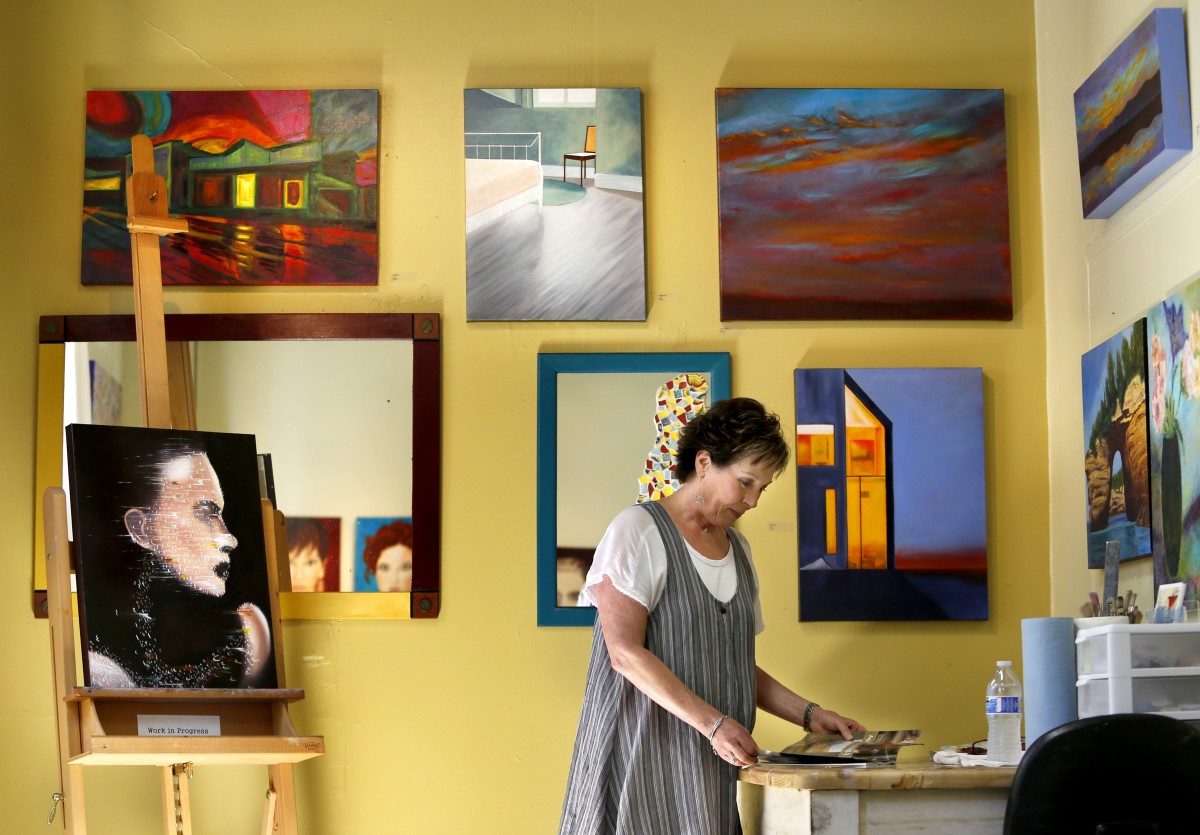
Artist Taunee Callahan flips through a magazine as she waits for people to visit her gallery during the SOFA Artwalk in Santa Rosa. (Photo by Beth Schlanker)
Dinner with the Show: Green Music Center
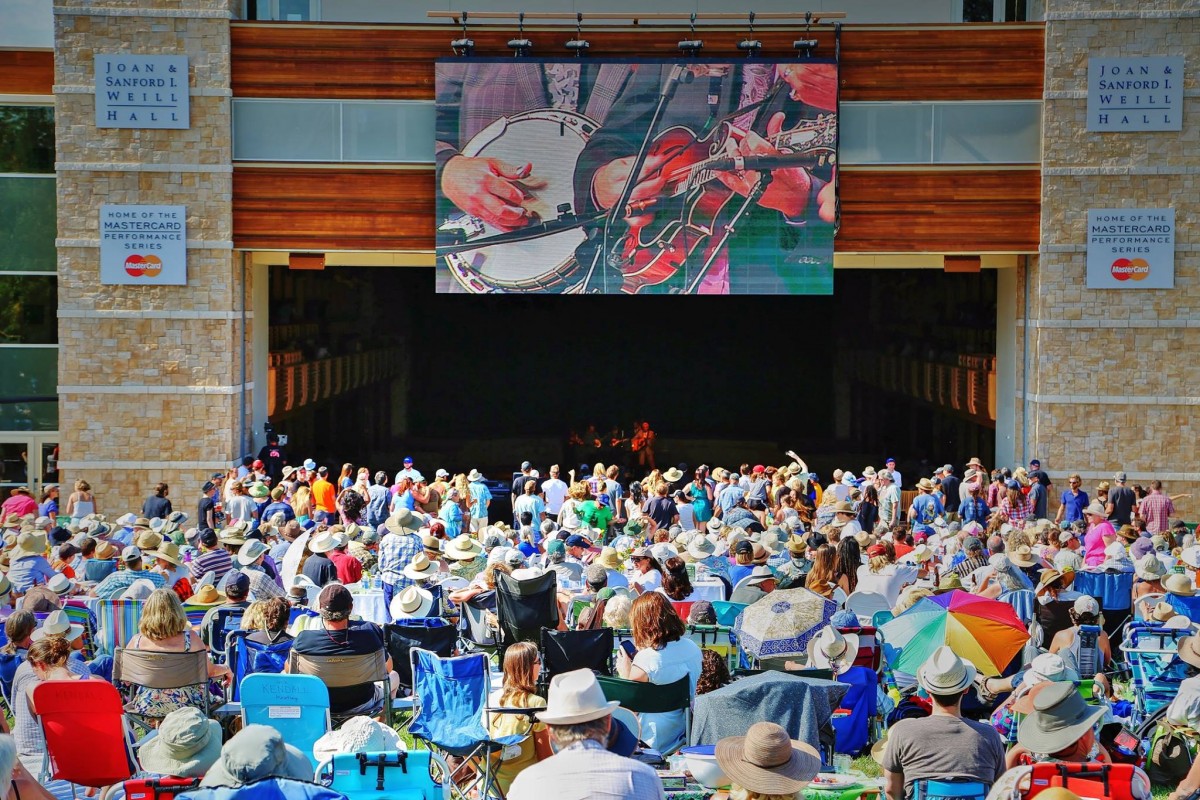
Dine before one of the indoor/outdoor shows at Green Music Center in the summer. For roughly $100 to $140, attendees are greeted with a glass of sparkling wine, seated on the front row of the Dining Terrace — one of the best outdoor seats available — and served a three-course meal, followed by the show. Wine and beer are available for purchase and you can pre-order a boxed salad or sandwich from Boudin Bakery and a bottle of wine. They’ll be waiting for you when you arrive, whether you’re seated at a table or on the lawn.
Green Music Center on the Sonoma State University campus, 1801 E. Cotati Ave., Rohnert Park, 866-955-6040, gmc.sonoma.edu
Concert goers to the Green Music center enjoy the music on the lawn during a bluegrass concert. (Photo by Will Bucquoy)
Way Off Broadway: Transcendence Theatre Company
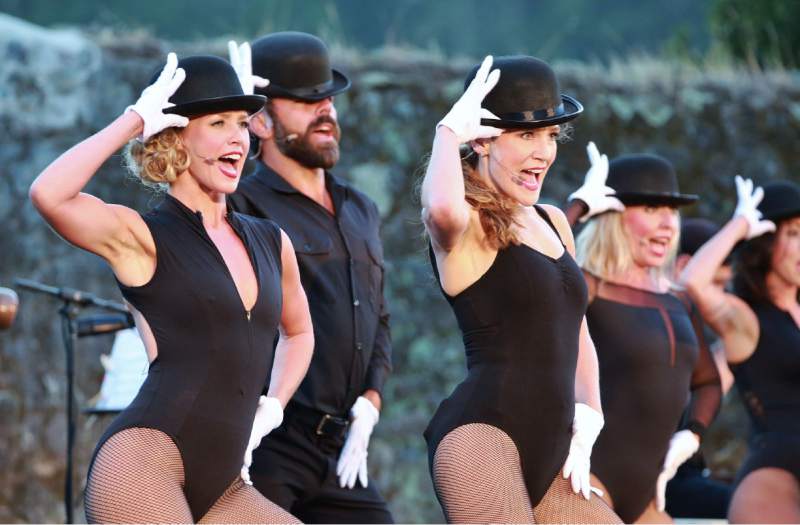
The Great White Way meets the Milky Way when the Transcendence Theatre Company transplants the best of Broadway to an unlikely stage beside the romantic ruins of an old winery. Professional actors who have appeared on Broadway or in the touring companies take the stage in the middle of Jack London State Historic Park in Glen Ellen for a summer of “Broadway Under the Stars.” The remoteness adds to the magic. Gourmet food trucks and local wines make for an unforgettable dinner show. $42 and up.
The Transcendence Theater Company on stage at Jack London State Historic Park in Glen Ellen.
Buddhism at The Barlow: Tibetan Gallery & Studio
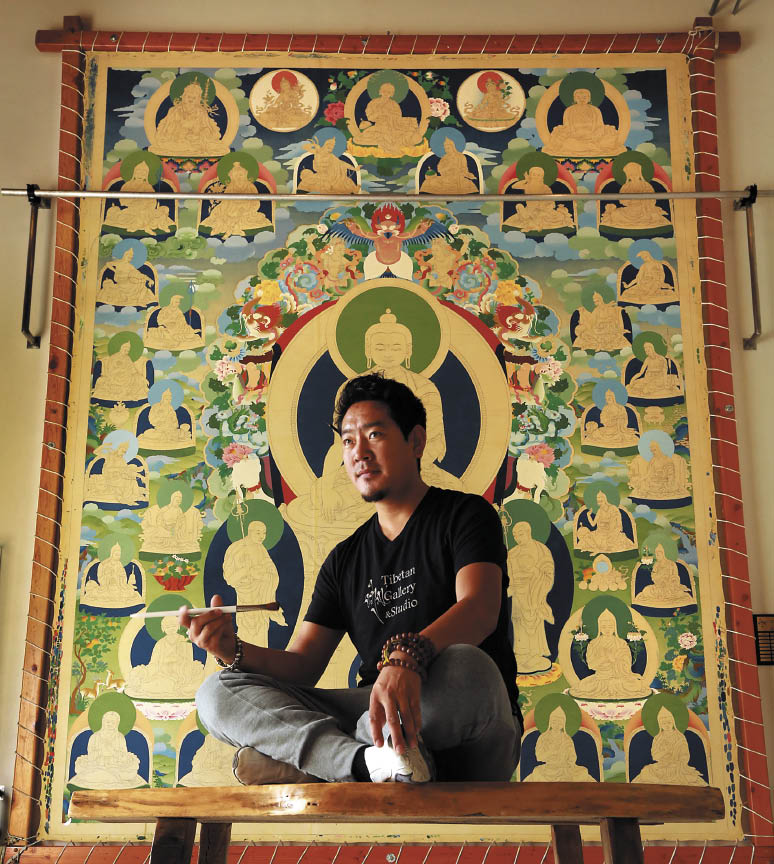
With an endorsement from the Dalai Lama and financial backing from a retired Silicon Valley executive, Tashi Dhargyal is at work in Sebastopol on an art piece unlike any other. He is creating a two-story-tall traditional Tibetan scroll painting he hopes will travel the world before it comes to rest in a Tibetan monastery. Watch Dhargyal at work on the thanbhochi at the Tibetan Gallery & Studio at The Barlow center, where he uses traditional materials such as hand-ground mineral pigments and 24-karat gold. His gallery also features small prints, silk scarves and other one-of-a-kind items.
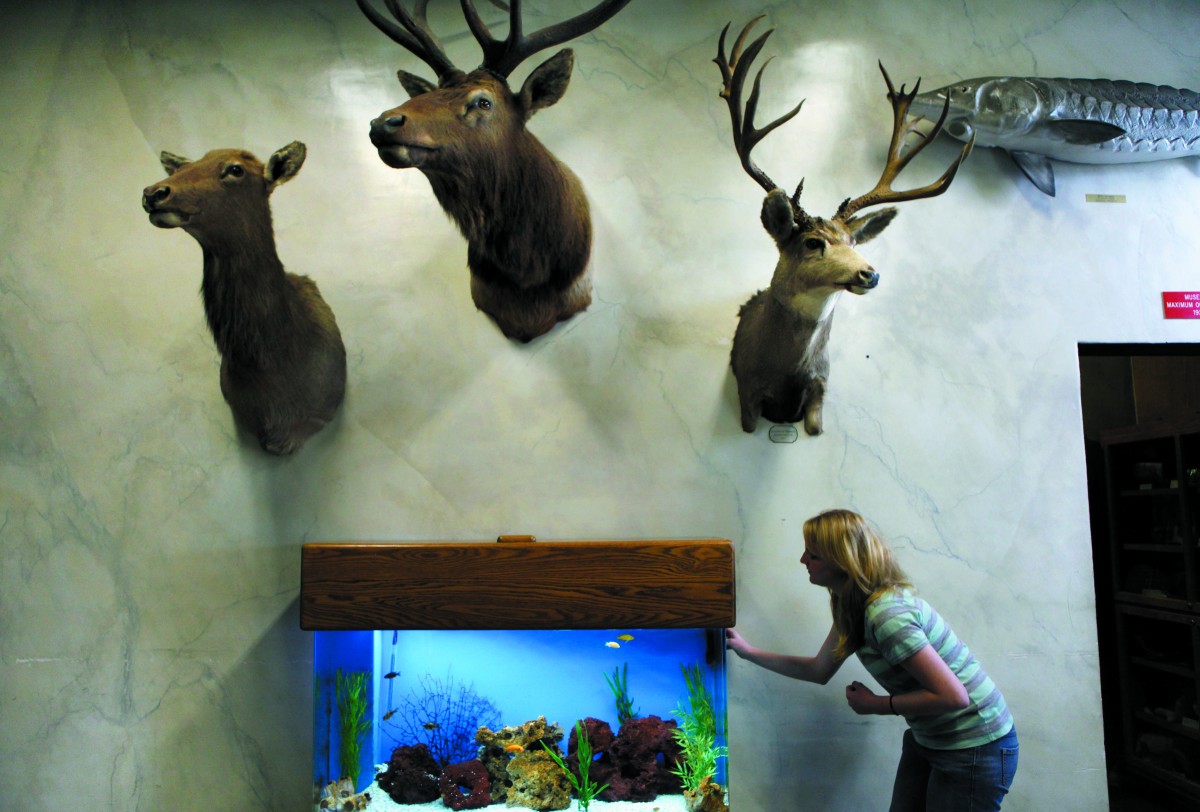
Tucked into a quiet neighborhood on the edge of the Petaluma High School campus is a place where giant snakes slither, iguanas prowl and dinosaurs may have once roamed. Kids love the Petaluma Wildlife Museum for its hands-on reptile room and lifelike dioramas featuring lions, wolves and even a polar bear. Normally accessible only to students on field trips, the museum opens to the public on the first and third Saturday of every month, from 11 a.m. to 3 p.m. Don’t miss the T. Rex skull in the fossil room.
Petaluma Wildlife Museum. (Photo by Beth Schlanker)
Freshest of the Fresh: Green String Farm
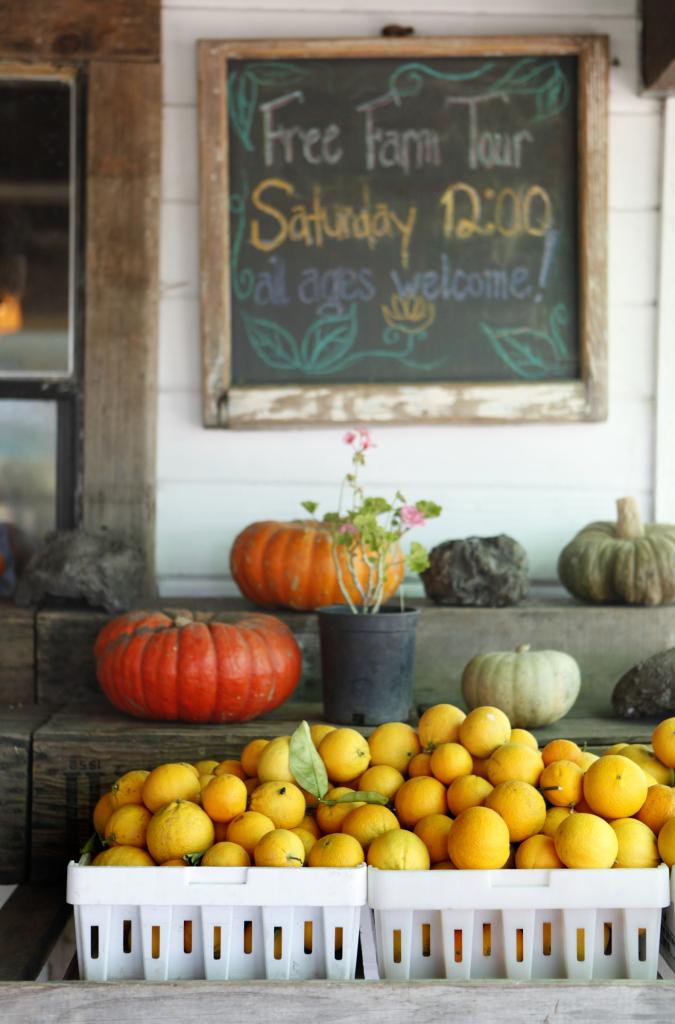
Farmers market produce not fresh enough for you? Then go directly to the farm. At Green String Farm, you can see your kale and radishes harvested from the Petaluma soil. Take a free tour of the farm on the first Saturday of each month at noon and learn about its sustainable farming practices, then hit the produce stand for more just-picked fruits and veggies, eggs, cheese, honey and nuts.
Green String Farm, 3571 Old Adobe Road, Petaluma, 707-778-7500, greenstringfarm.com
Green String Farm in Petaluma offers free tours on the first Saturday of each month.
Where the Wild Things Heal: Sonoma County Wildlife Rescue
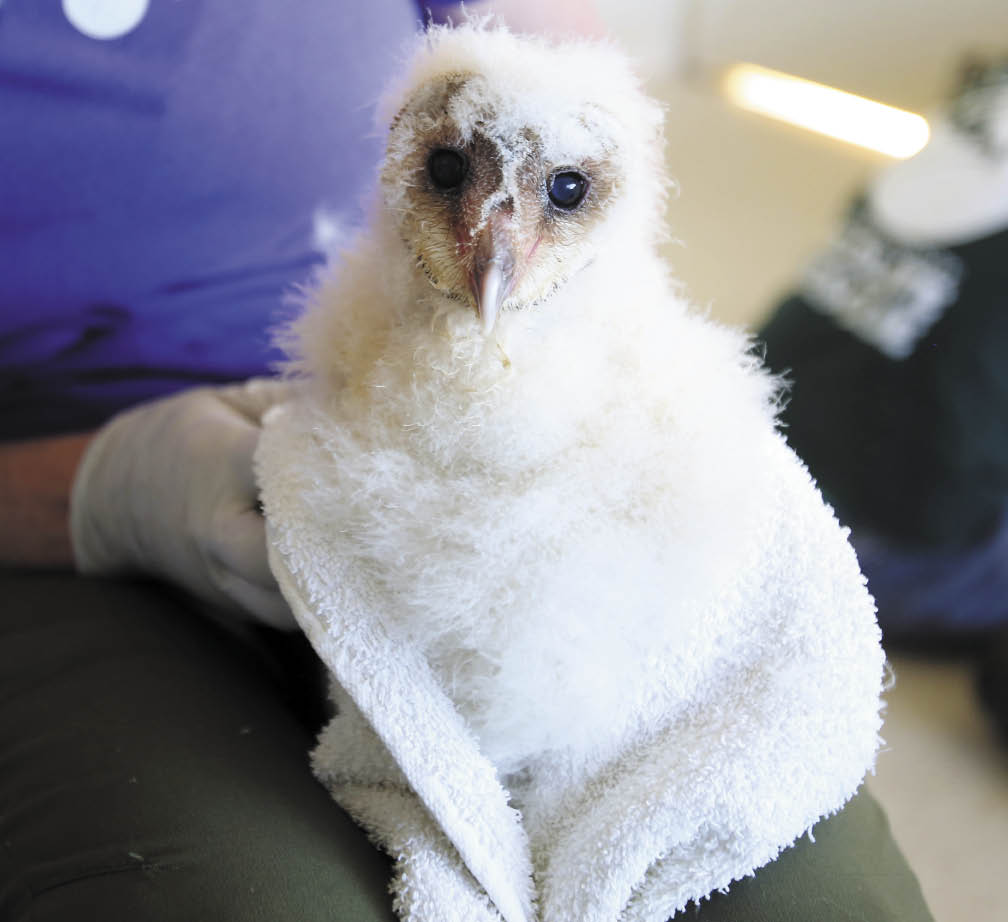
Atop a hill on Mecham Road sits a ranch house with a million-dollar view and no full-time inhabitants. None that are human, anyway. The former ranch is home to Sonoma County Wildlife Rescue, a nonprofit whose volunteers take in all manner of injured, ill or orphaned mammals and birds, then treat and release them ASAP. Take a tour at noon or 2 p.m. on a Saturday (reservations appreciated) and you’ll be wildly happy you did.
Sonoma County Wildlife Rescue. (Photo by Crista Jeremiason)
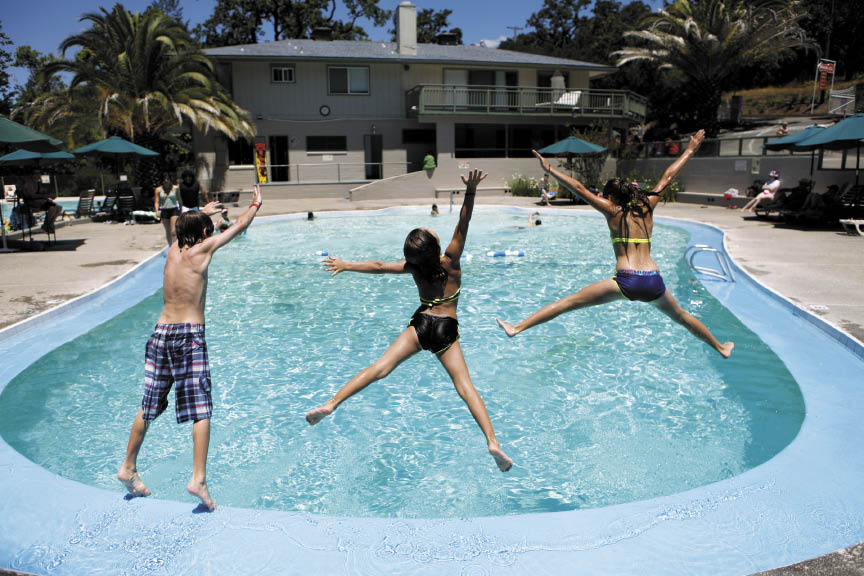
Swimming Pools of Our Youth: Morton’s Warm Springs
Remember the public pools when you were a kid? A big lawn, shrieks and splashes, a wading pool for tots, picnic benches where you ate sandwiches you made yourself? That’s Morton’s Warm Springs, an endearing, old-fashioned swimming pool (actually, there are two) fed by mineral springs and set against a backdrop of forested hills. It’s been keeping people cool since 1946. There is also a baseball field, volleyball court and horseshoe pit.
A Kid’s Kind of Fish Shop: Ceasar’s Tropical Fish
No one will mistake it for Sea World, but Caesar’s Tropical Fish in Santa Rosa is nearly as much of a kid thriller as a splash by a killer whale. In darkened display rooms, little ones go eyeball to eyeball through aquarium glass with audaciously hued saltwater exotics, bug-eyed goldfish and a resident Madagascar cichlid that seems to want to nibble at noses.
Hear That Whistle Blowin’: Train Town
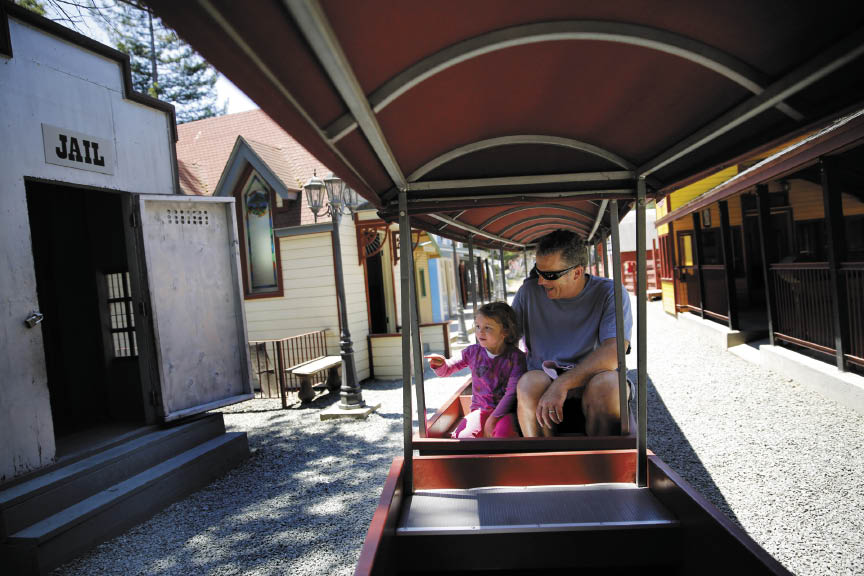
TrainTown chugs along on the margins of Sonoma, well off the upscale tourist routes. The quarter-scale steam train and track were built by the late Stanley Frank in 1968. Generations of kids have since thrilled to the 20-minute journey through the trees, over bridges and into tunnels, including a short layover in a miniature town complete with petting zoo. Near the station are more kiddie rides, including a Ferris wheel, carousel and dragon coaster. It’s for the kid in all of us.
Little Shop of Horrors: California Carnivores
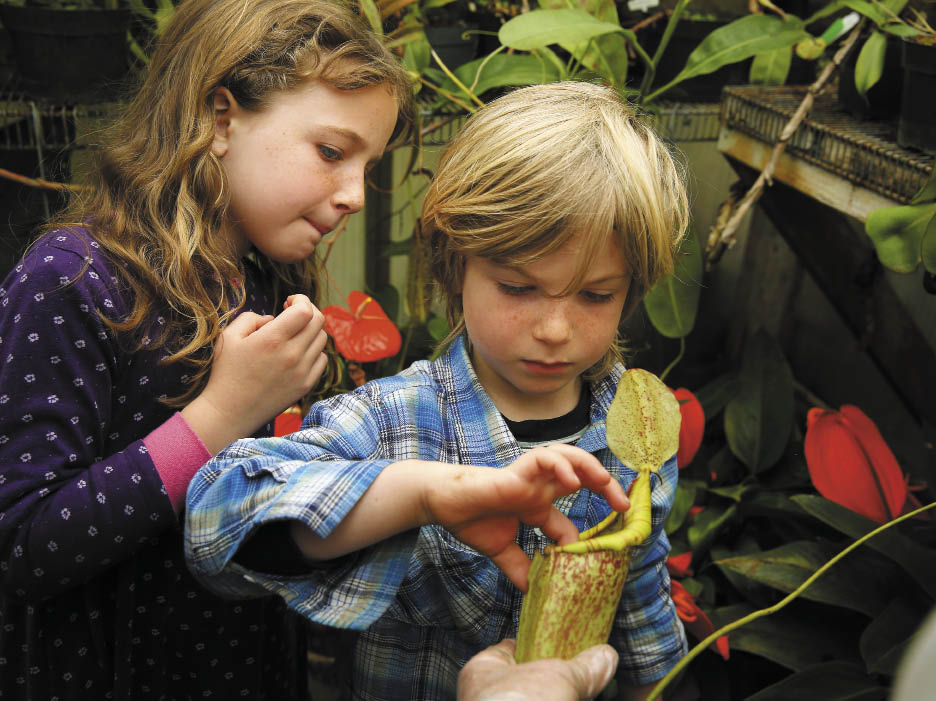
California Carnivores is the largest retail carnivorous plant nursery in North America, with Venus flytraps, sundews, butterworts, bladderworts and tropical pitcher plants chowing down on yellow jackets … well, you just have to see it. The nursery is on a side street behind farm plots south of Sebastopol, yet it’s worth the hunt for the fascinating education and the beauty of these natural pest-control plants. The curators are very serious about the plants, but with a wicked sense of humor, so the shop is decorated with skulls and spiders and the occasional severed (rubber, we hope) hand.
Birds and Burros
Odd animals are the attraction at the Bird Exchange and Honkey Donkey Farm, a popular stop for families on Hall Road in Santa Rosa. The Bird Exchange, a bird store and supply shop, has one of the largest selections of exotic avians in Northern California, hundreds at any given time. Next door, the Honkey Donkey Farm is home to more than 100 miniature Sicilian donkeys, pint-sized beasts that grow to an average 30 to 32 inches tall, making them a favorite among young kids who are about the same size.
A few little-known treasures in the great outdoors of Sonoma County.
Roadway to Heaven: Coleman Valley Road
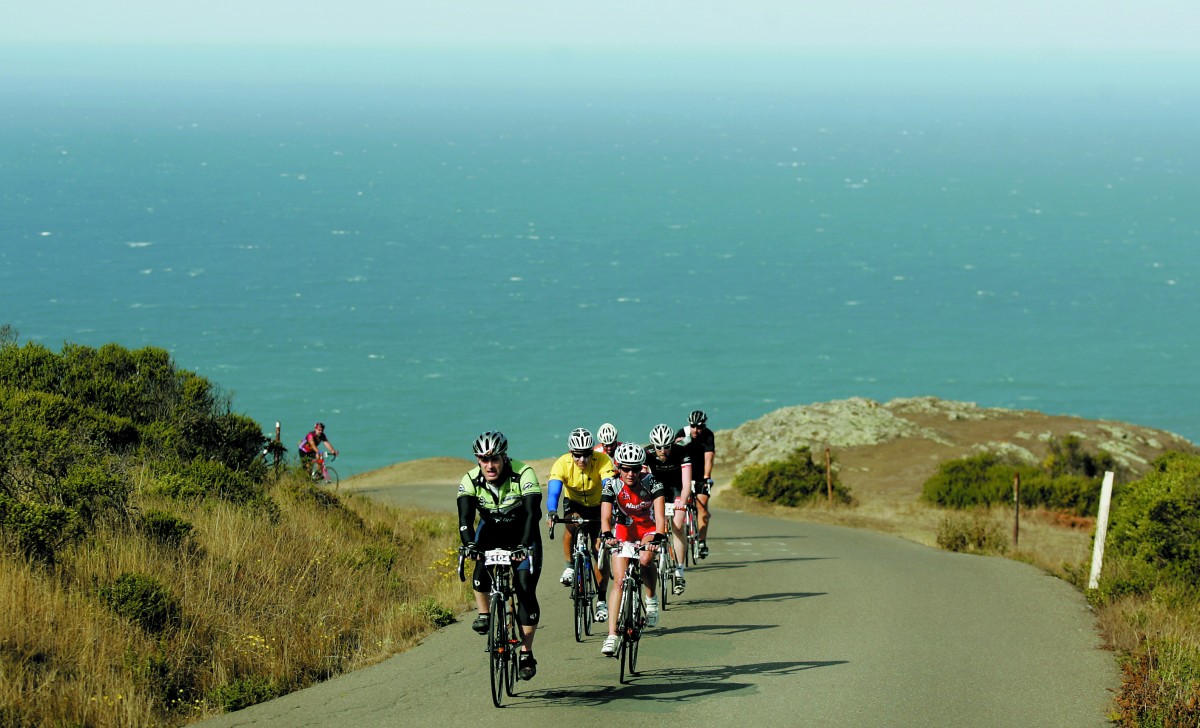
Pity all who’ve yet to discover that the start of Coleman Valley Road in downtown Occidental is the gateway to one of the planet’s most gorgeous routes up-and-over to the ocean. By car, bicycle or motorbike, climb up and up through woods and pastures. Pause for as long as you like at the zenith, to infuse your soul with the majesty of the elevated coastal panorama, then glide down, down to Highway 1 at Coleman Beach, between Bodega Bay and Jenner. Breathtaking.
Coleman Valley Road. (Photo by Kent Porter)
Full-Moon Kayaking on the Russian River: Suki Waters’ Watertrek
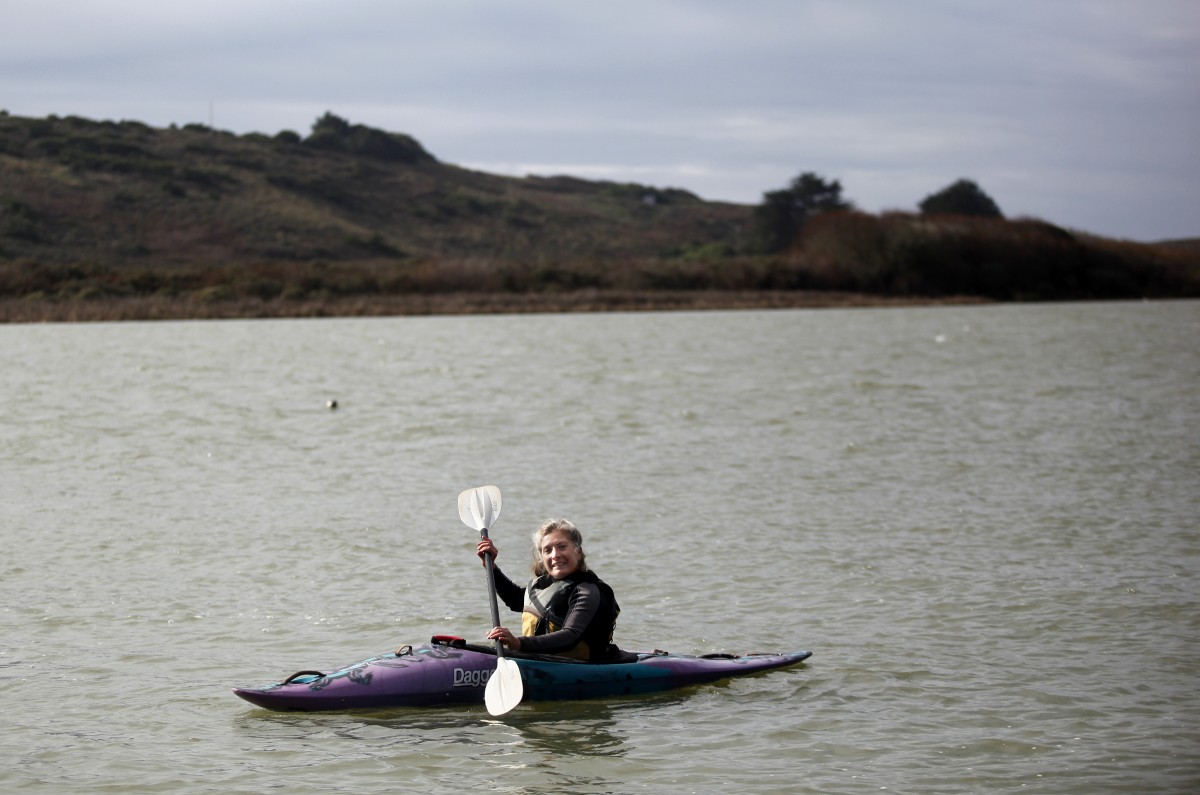
Joining one of Suki Waters’ full-moon night paddles in the estuary of the Russian River is like taking a crash course in local ecology. Waters regales paddlers with local history (her parents were Miwok and Pomo) and explains the importance of the phases of the moon to Native Americans throughout time. She also teaches participants about zooplankton and phytoplankton, some of which glow in the water at night. The three-hour tours are for all ages; reservations are recommended.
Suki Waters of WaterTreks EcoTours in Jenner. (Photo by Beth Schlanker)
A Hint of Healdsburg History: Exploring Old-Fashioned Alleys
Tucked between the streets of downtown Healdsburg is a handful of old-fashioned alleys well-marked by street signs. Walking them will send you skidding back to the town’s founding in 1867, 10 years after Harmon Heald laid out the town grid. Created as narrow frontages for barns, stables and carriage houses, the alleys today are quiet, tree-lined lanes. In Alleys 1 and 2 are historical barns now used as garages and studios.
Chasing Waterfalls: Sugarloaf Ridge State Park
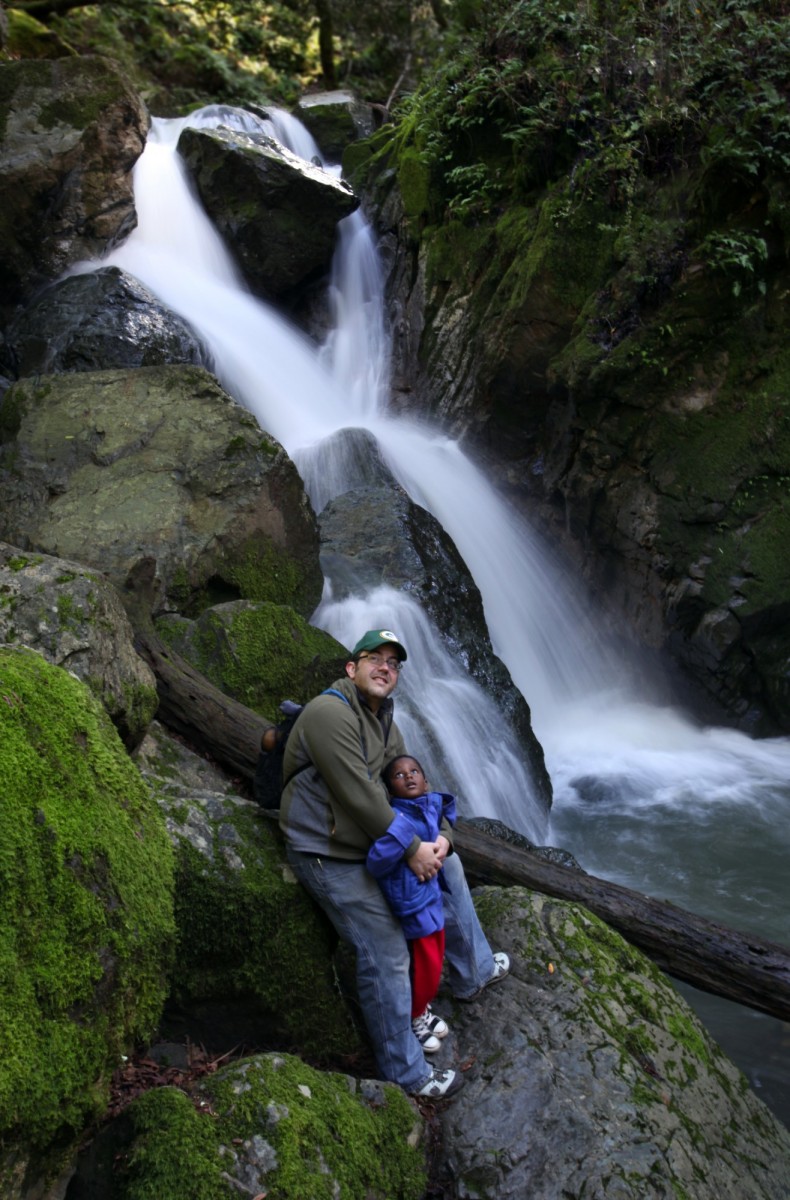
After several days of a good, hard winter rain, venture to Sugarloaf Ridge State Park in Kenwood to view one of Mother Nature’s magnificent seasonal waterfalls, a 25-foot cascade rushing between giant boulders cloaked in green moss. Take the Canyon-Pony Gate Loop and prepare to climb: How better to burn several hundred calories than to ascend 400 feet on the 2-mile loop for what has to be one of the best “selfie” spots in Sonoma.
Waterfalls at Sugarloaf Ridge State Park. (Photo by John Burgess)
Hug a Tree: Sonoma Plaza Self-Guided Tour
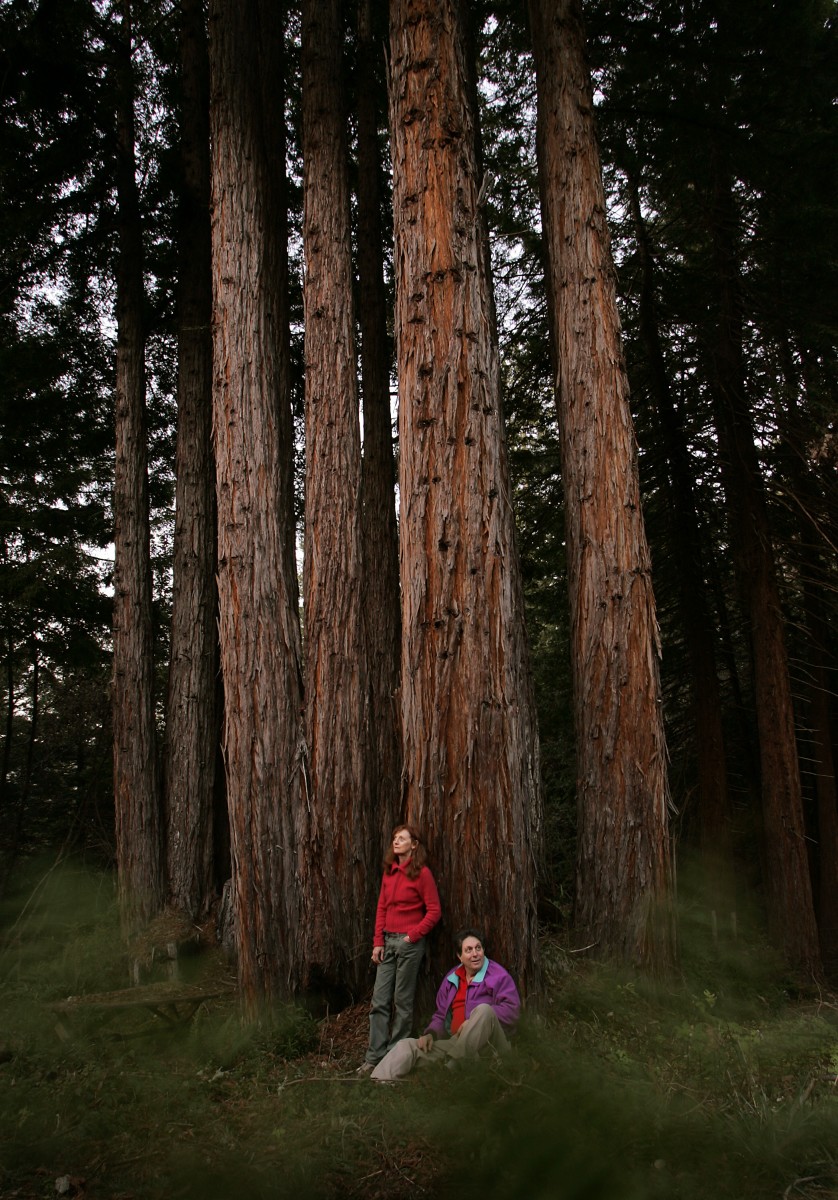
Native plants may be all the rage, but non-native plants can make for intriguing tree exploration. Imagine redwoods, Douglas firs, Norway spruces and southern magnolias all rooted within a few pristine acres on the Sonoma Plaza. Take naturalist Tom Rusert’s self-guided tour with his tree map and see that this is one time where there’s no such thing as barking up the wrong, er … you know.
Sonoma Valley Visitor’s Bureau, 453 First St. E., 707-996-1090, sonomavalley.com
Hit it Stiff: Northwood Golf Course
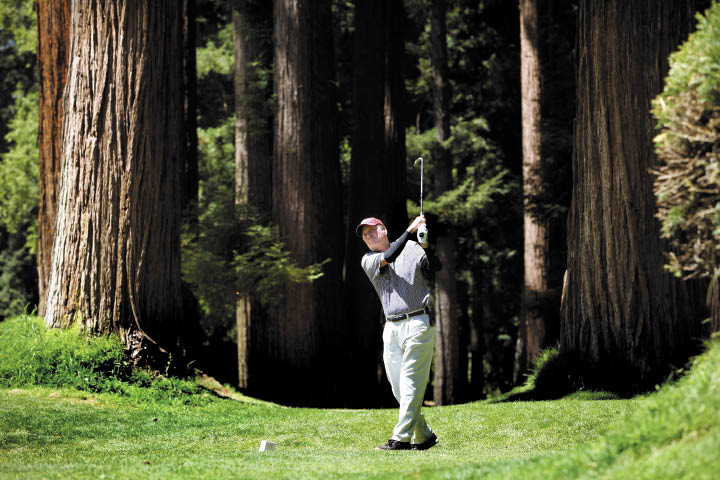
Golf among towering redwoods at the nine-hole Northwood Golf Course along the Russian River in Monte Rio. The course was designed by Alister MacKenzie, the landscape architect behind the Augusta National course in Georgia and a handful of other legendary links. Views from the greens are nothing short of amazing, especially in the morning, when mist clings to the treetops like a shroud. The course is best known for its challenging holes and affordable rates; all tee times cost less than $50.
Northwood Golf Course, Monte Rio. (Photo by John Burgess)
Sculpture Off The Main Drag: Foss Creek Pathway
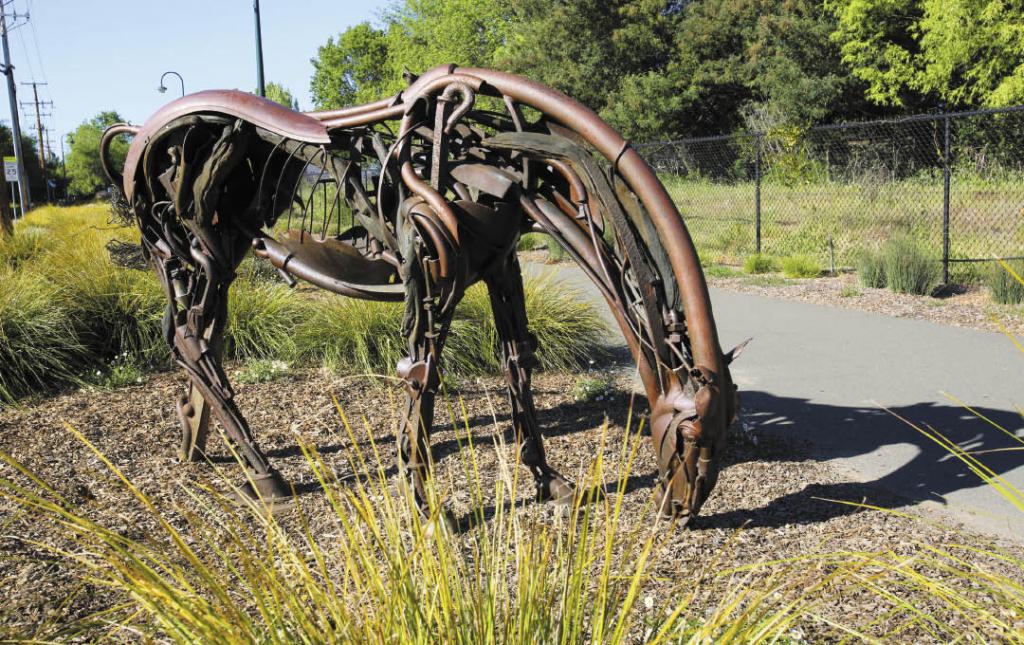
Some of Healdsburg’s best public art can be found along the Foss Creek Pathway, an in-progress paved walkway that runs on the west side of Foss Creek, from the Vineyard Plaza/Safeway shopping center on Vine Street to the skate park on Grove Street. Along the two-block stretch in front of City Hall, passersby can marvel at a number of ornamental benches and art pieces provided by the Voigt Family Sculpture Foundation. A complementary audio tour package is available from the city’s Parks and Recreation Department office.
Public art along the Foss Creek Pathway in Healdsburg. (photo by John Burgess)
A Meandering Trail: Willow Creek Trail
A permit is required to hike the 8-mile Willow Creek Trail that connects the hills behind Duncans Mills with Sonoma Coast State Park, but the effort is well worth it. The trail meanders up hills and down dales, through forested ravines and past fish-bearing streams, all the way to Shell Beach. Portions of the tromp follow trails used by Native Americans, settlers, traders and loggers of yesteryear. The Islands in the Sky loop wanders through redwood and Douglas fir forests to an incredible ocean overlook.
Access from Freezeout Road, Duncans Mills, 707-544-7284, landpaths.org
Untouched by Logging: The Grove of Old Trees
In an unusual location for the remaining old-growth redwood stands in Sonoma, the Grove of Old Trees is perched high on a remote ridgetop, hidden along narrow, twisting Fitzpatrick Lane off Joy Road in Occidental. The grove is owned and managed by the land conservancy group LandPaths and includes 28 peaceful acres traversed by a network of wide, easy-to-walk trails. Access is free, but be forewarned: There are no amenities, save for a picnic table.
Grove of Old Trees, Occidental. (Photo by John Burgess)
Historical Resting Place: Mountain Cemetery
Local history lives on at the Mountain Cemetery, a short walk north of the Sonoma Plaza, where the likes of Gen. Mariano Vallejo, Ernest Boyes and other town founders were laid to rest. Sonoma historian Fred Allebach’s self-guided Mountain Cemetery Walking Tour brochure, available free at the kiosk in the parking lot, includes a map of one of the oldest cemeteries in California and gives details about 42 gravesites, forever occupied by some of Sonoma’s most memorable characters, among them ranchers, winemakers, bootleggers and murderers.
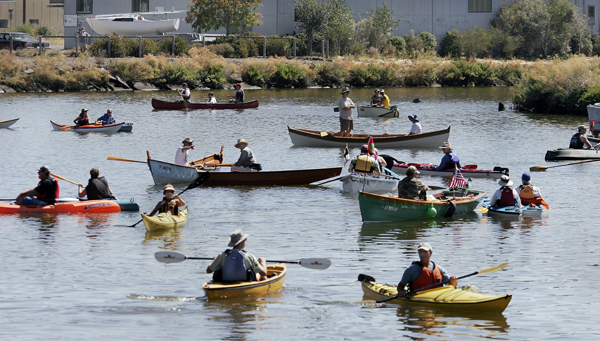
Free Paddling in Petaluma: David Yearsley River Heritage Center
Petaluma is shaped by the river that runs through it, and a boat trip down the Petaluma River is a great way to experience the city. The folks at the David Yearsley River Heritage Center send folks out on complementary rowboat, canoe, kayak and sailboat excursions every Sunday from 10 a.m. to 1 p.m. That’s just enough time to paddle into downtown for lunch at one of the city’s riverside restaurants.
Free paddling in Petaluma. (Photo by Mark Aronoff)
A Flipping Good Time: Lake Sonoma Disc Golf Course
The nine-hole Lake Sonoma disc golf course, set amid the grassy, rolling hills at the edge of the Warm Springs Recreation Area picnic spot, has become a favorite among local disc-sailing players. The course is set in a manicured park and has restrooms and free parking — and it’s just off the beaten path enough to make it special. Purchase provisions at the Dry Creek General Store (3495 Dry Creek Road) on the way there. The first tee is on the north side of the main parking area.
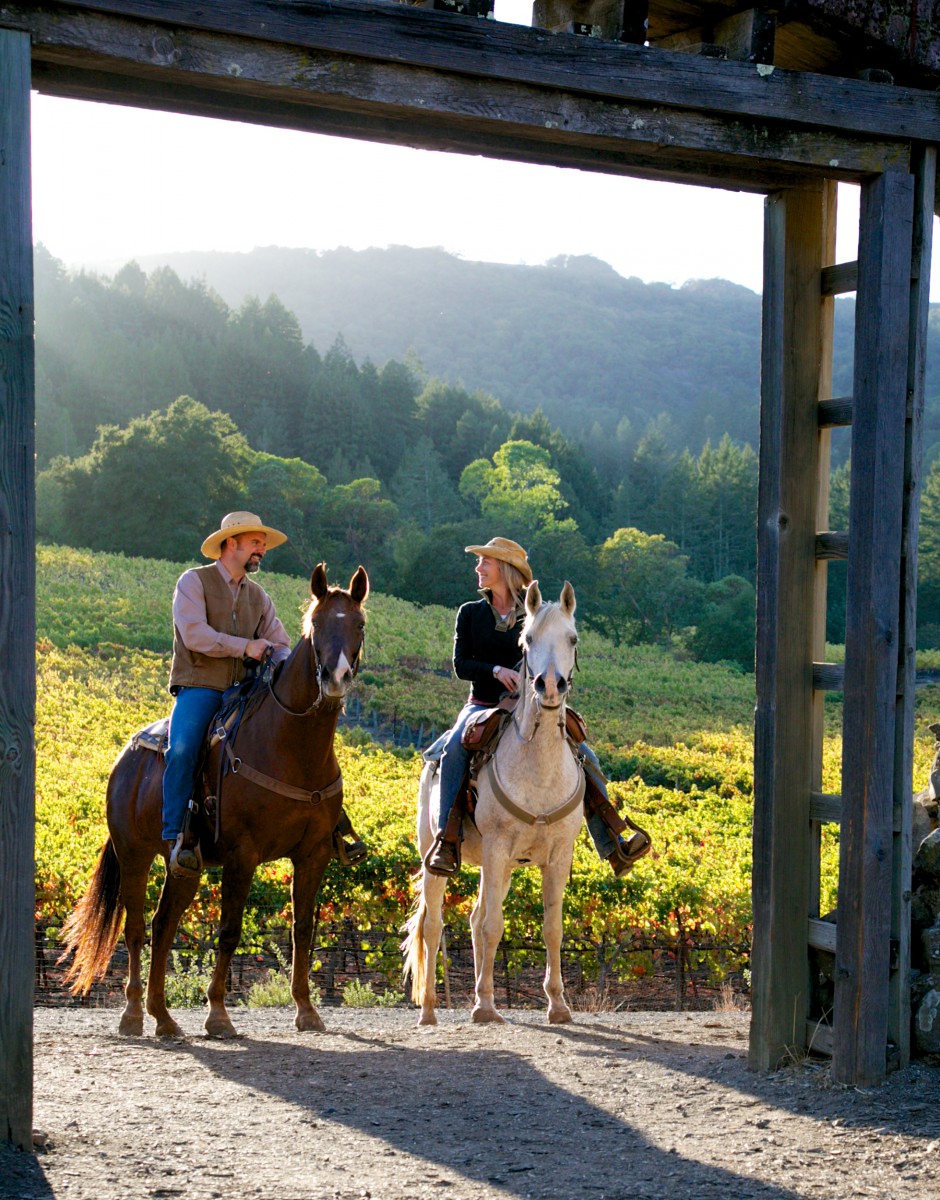
Jack London State Park from Horseback: Triple Creek Horse Outfitters
Triple Creek Horse Outfitters leads trail rides through Jack London State Historic Park that offer the same vantage point author Jack London himself had as he explored the rugged, 1,400 acres of his beloved Beauty Ranch. Erin Ellis, who runs the rides with her husband, Dominic Bettinelli, employs rescue horses and has been riding through Glen Ellen since she was a child. Hour-long rides are $75 for small groups, $140 for a private tour. All rides include a tour of Jack London’s writing cottage, as well as tickets for complimentary tastings at Benziger Family Winery.
Triple Creek Horse Outfitters leads trail rides through Jack London State Historic Park. (Photo courtesy of Triple Creek Horse Outfitters)
Zip-A-Dee-Doo-Aah: Sonoma Canopy Tours
With your harness attached to a pulley on a heavy steel cable, soar above ancient redwoods and deep ravines at up to 25 mph on the zip lines at Sonoma Canopy Tours near Occidental. The seven lines are connected by platforms, two skybridges and a spiral staircase, providing an eco-friendly workout and thrill ride that ends with a rappel to the forest floor. Look down if you dare. $99-$109; discounts for ages 10 to 17 and seniors.
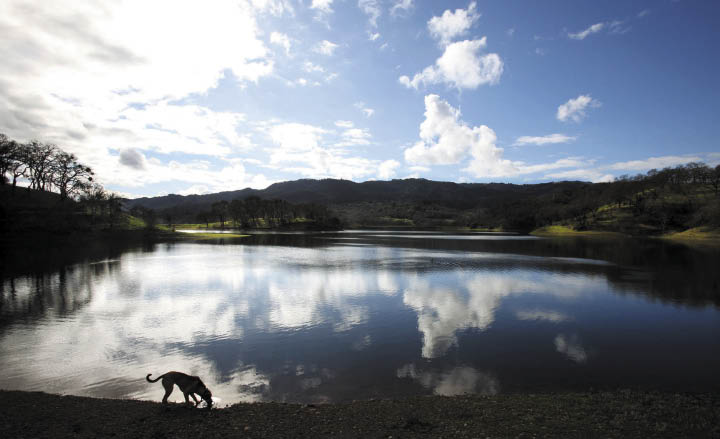
Off-the-Map Lake: Lake Suttonfield
Peel off the 1.2-mile, paved main path through Sonoma Valley Regional Park and make your way to Glen Ellen’s secret sweet spot. Lake Suttonfield, cradled in the hills surrounding the town, is a wee bit of England’s Lake District hidden in Wine Country. The 2-mile trail ringing the lake offers plenty of spots to lean back against an oak or dip your toes in the water. Because the reservoir is part of Sonoma Developmental Center, it doesn’t appear on maps of the regional park, leaving it largely unexplored except by locals. To get there from the main park path, take the East Sutton Lake Trail, to your left from the parking lot on Highway 12.
13630 Sonoma Highway, Glen Ellen
Lake Suttonfield, Glen Ellen. (Photo by Crista Jeremiason)
A Vision from Above: The Sea Ranch Chapel
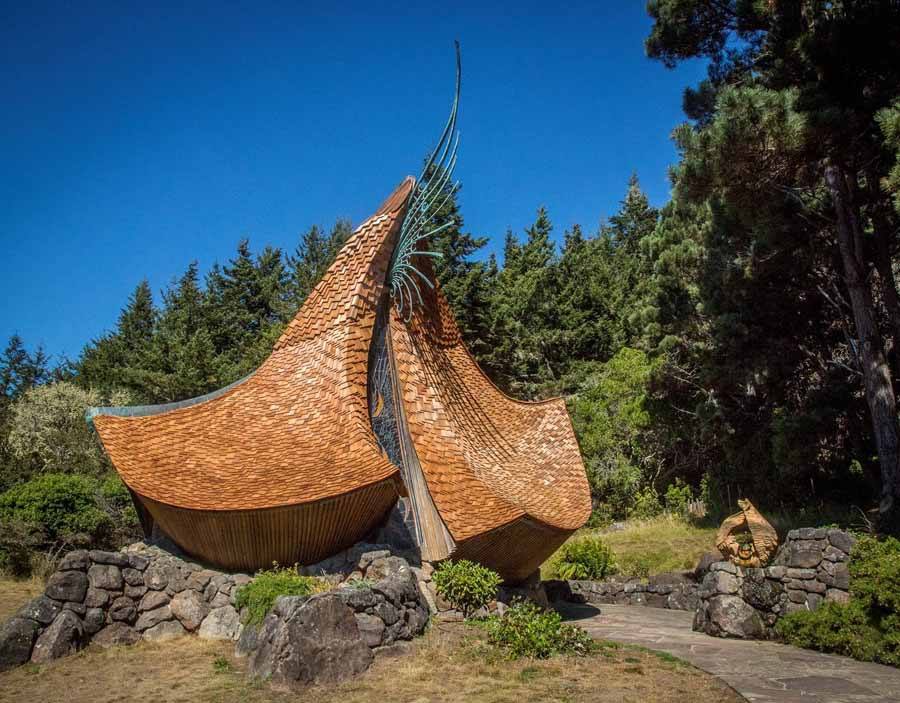
The hobbit-size Sea Ranch Chapel in Gualala looks like it soared down from the clouds, landing with its wings spread on a private, tree-studded meadow off Highway 1 and overlooking the Sonoma Coast. Designed by James Hubbell in 1985, the volunteer-maintained structure is graceful, Gaudian and somewhat bizarre. Just 360 square feet, the chapel seems to dance with its beautiful roof plumes, shell-curved wood siding, ceramic accents and stained glass spilling light to the mosaic tile floor. Open daily for tours and meditation.
Highway 1 at Sonoma Mile Marker 55.66, across from Bosun’s Reach Street, 707-785-2444, thesearanchchapel.org
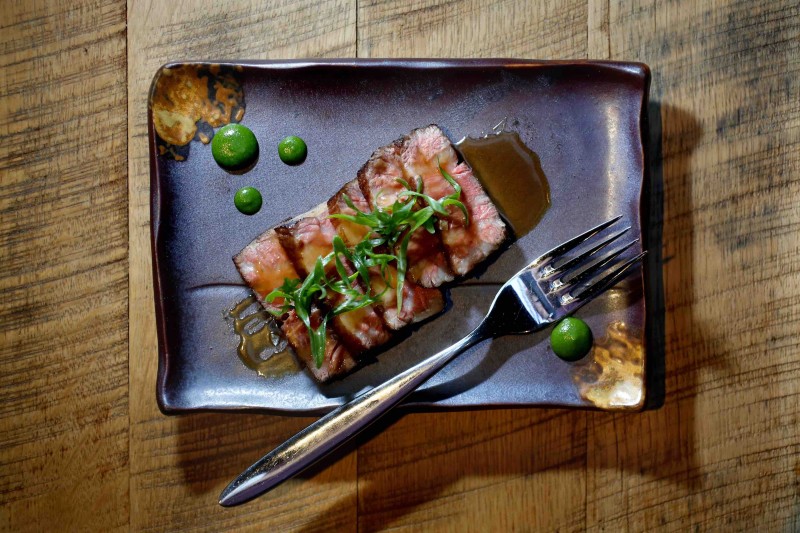
Korean barbecue Wagyu short ribs with scallions at Two Birds One Stone in St. Helena, on Sunday, November 6, 2016. (Photo by Beth Schlanker)
Korean barbecue Wagyu short ribs with scallions at Two Birds One Stone in St. Helena, on Sunday, November 6, 2016. (Photo by Beth Schlanker)
For Wine Country dining, it’s the year of yakitori and designer ice cream. Call it coincidence, but four of our most significant new restaurants for 2016 boast a Japanese theme, with three of those four offering the skewered meats plus the dessert that’s immensely popular in Japan.
I’m referring to Sebastopol’s Ramen Gaijin, which opened its izakaya in March; Napa’s Miminashi, which debuted in May; and St. Helena’s Two Birds One Stone, which rolled out in June. (If, after Single Thread Japanese restaurant opens Dec. 2 in Healdsburg, we discover charcoal-grilled meats and soft serve on its menu, too, we’ll be in for a perfect quadfecta.)
That’s all great for me, since I love Japanese cuisine and could eat it every day. Yet even less addicted fans have good reason to visit all the new places. Each chef takes a different approach to the Asian cooking style, with varying techniques and ingredient twists.
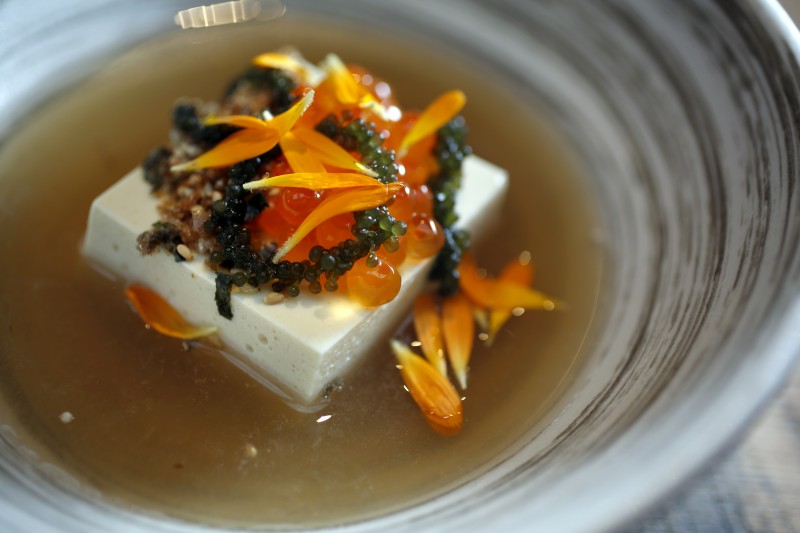
The silken tofu in a chilled shiitake broth, topped with sea grapes, and salmon pearls at Two Birds One Stone in St. Helena. (Photo by Beth Schlanker)
So far, Two Birds is the most inventive of them all. Credit its talent, chef Douglas Keane of Healdsburg’s former two-Michelin-star Cyrus and his partner Sang Yoon, of the acclaimed Father’s Office American gastropub and Lukshon Asian Fusion in Los Angeles. Yes, you can get charcoal- and wood-grilled teriyaki chicken thigh here, served in sweet shiitake sauce ($12).
But surely no Tokyo restaurant offers chips ‘n’ dip of fried wontons dusted in liquid nitrogen-frozen togarashi spice, dunked in Kewpie mayonnaise ($6), or deviled eggs kicked up with wasabi, sprinkled in red chile shichimi togarashi and scattered in gribenes (chicken skin cracklings).
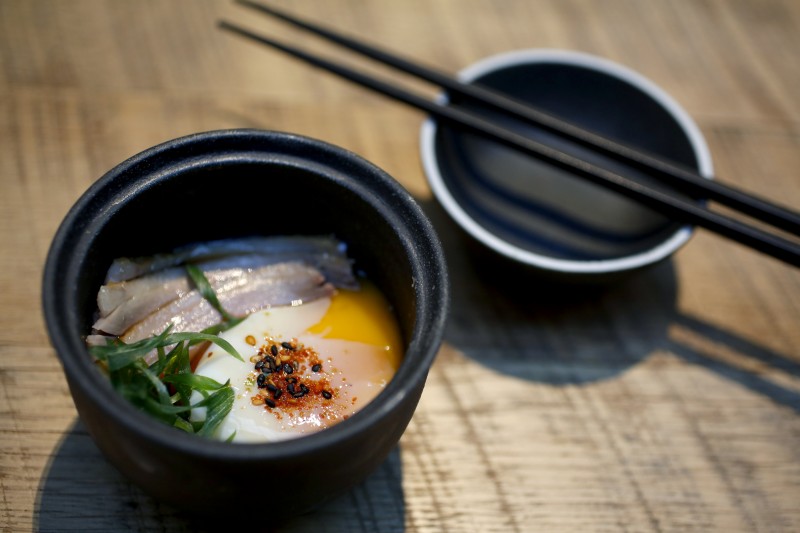
Smoked duck ham and an onsen jidori egg on top of a warm savory custard at Two Birds One Stone in St. Helena. (Photo by Beth Schlanker)
Inventive recipes
In short, leave your assumptions at the door. The idea is to appreciate inventive recipes reflecting fine dining, California seasonality and just an undercurrent of Japanese tradition.
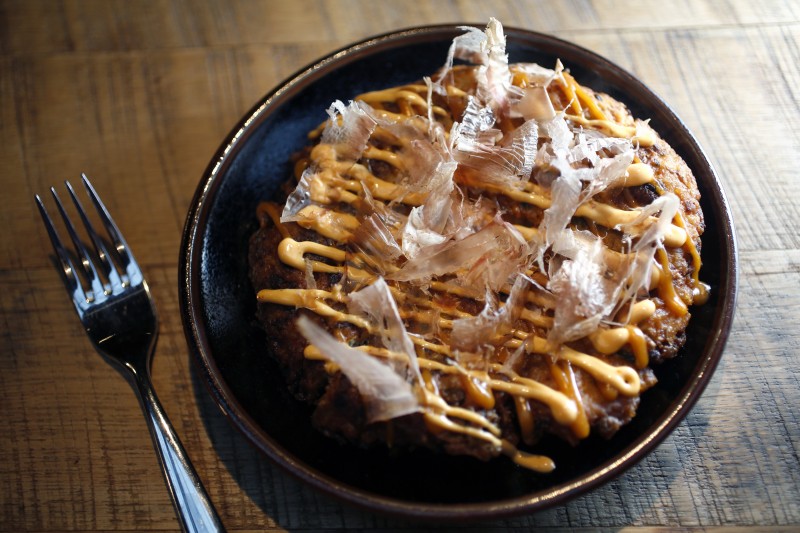
The menu lists one dish as a “savory Japanese pancake,” for example, instead of classic okonomiyaki ($16). That’s because okonomiyaki usually is a rather thin, crisp edged but moist, golden, egg-flour pancake laced with shredded cabbage, any of a wide variety of meats or seafood, and a finishing drizzle of mayonnaise and tangy Worcestershire-like sauce.
The savoy Japanese pancake with green onion, sambal mayo and topped with bonito flakes at Two Birds One Stone in St. Helena.
This version makes me think of brioche — the rust-brown pie is thick with crunchy edges and a custardy interior, dotted with lots of green onion and ginger and capped in thick squiggles of sambal mayo plus a caramel-like spicy sauce. Bonito flakes dance across the top as the heat dissolves the whisper-thin fish leaves, and it’s so remarkably flavorful in its black pottery dish that I don’t miss the salty duck ham that was included in another visit.
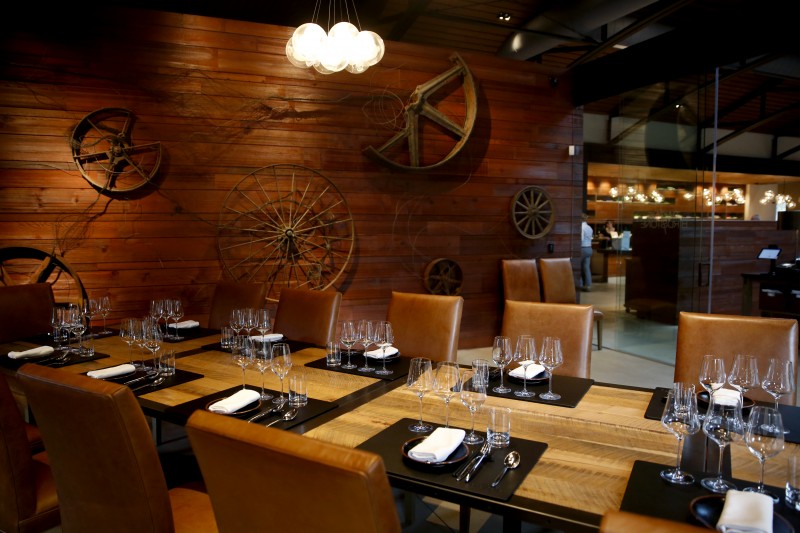
The interior at Two Birds One Stone in St. Helena. (Photo by Beth Schlanker)
Radishes and butter are a popular Wine Country snack, and these chefs compress the crunchy vegetables with dashi for a swipe through roasted nori goat milk butter ($7); it’s a terrific flavor marriage. A spin on chawanmushi is sumptuous, as well, presented as “ham & eggs” of warm, savory custard layered with highly smoked duck ham, scallion greens, togarashi and silky, poached-in-shell onsen jidori egg ($16).
Head-on prawns are difficult to eat, though, with little meaty reward for dismantling the sudachi-salted, charred lime-spritzed shell. Our server explained that the crustaceans were slit down the back for easy enjoyment, but ours weren’t.
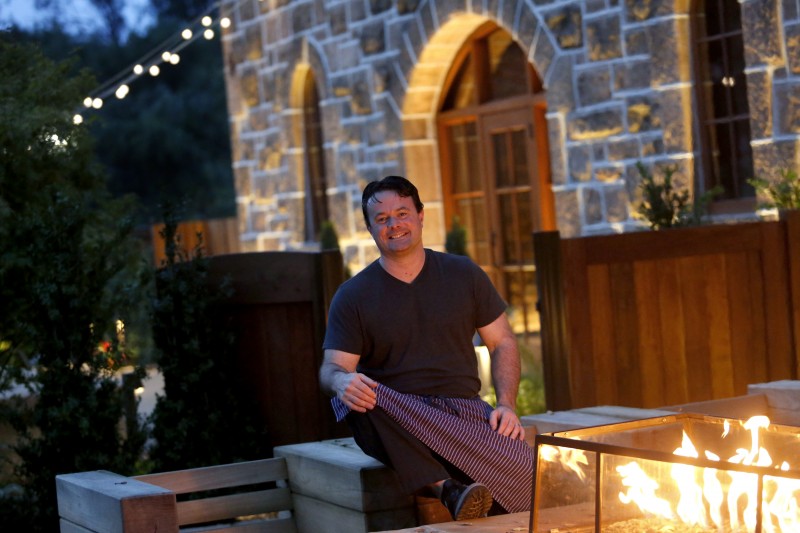
hef Douglas Keane at Two Birds One Stone in St. Helena.
When ordering, keep in mind that while Asian dining often showcases lighter, cleaner flavors, here, the chefs lean toward rich, opulent dishes. Portions are ample enough for sharing, and with such full-bodied recipes, it’s best to focus on just a plate or two at a time and see how your appetite keeps up.
Six small slabs of Wagyu short rib ($22) look rather plain on the plate with nothing other than dollops of pea puree and a coat of thin, mild Korean barbecue sauce. But generous fat marbling and a soft, sous vide texture makes a very lavish dish. With a side of lotus root kimchee ($6) to spark your palate or chilled sesame noodles brightened with pickled beech mushrooms and cucumber ($14), it’s a full meal.
On the more delicate side, the kitchen sends out beautiful silken tofu, awash in chilled shiitake broth and dressed in furikake seasoning, salmon roe and two thin tendrils of tiny, succulent sea grapes ($11).
A variety of wines on tap at Two Birds One Stone in St. Helena.
Little nibbles
I also like the chicken meatballs, simple and satisfying in hoisin glaze. The little nibbles feel glamorous, enjoyed in the drop-dead beautiful setting within the newly renovated 130-year-old Freemark Abbey Winery. Spanning 4,000 square feet, the 80-seat dining room is open and airy, while the 35 patio seats offer pretty views.
No stereotypical Japanese look for this interior, but rock walls, a concrete floor, a backlit entry wall of wine, tufted couch booths and well-spaced wood tables for a feel as modern as the food.
To sip, Keane and Yoon put a stamp on wine and cocktails fitting the fancy space. Ten wines are on tap for 5-, 13- or 26-ounce pours, and they’re made exclusively for the restaurant by notable local winemakers such as Steve Matthiasson (a lovely 2015 Grenache, Syrah, Mourvedre Rosé, $10, $25, $49). Beyond the impressive stable of American and Japanese whiskeys, the bar crafts signature drinks like a potent gimlet, made hot-and-sour with Monopolowa vodka, Thai chile, lime, Thai basil and shiso ($12).
And while the food bill admittedly can quickly get pricey, in a very friendly touch, corkage is complimentary for one bottle of Sonoma or Napa wine per guest (not table).
The creative journey continues at dessert, where alongside the green tea soft serve ice cream sprinkled in ginger ($7), we can savor a bunch of quite sweet peony grapes, dressed in pickled ginger with shards of shattered white miso custard ($7). It’s unusual, and perhaps a bit too unusual, I decided, with so many flavors and textures.
It remains to be seen if everyday diners will embrace the more eclectic dishes. On one visit, I asked my server, a cheerful young lady, what her favorite dishes were. “Fried chicken,” she said immediately.
It turns out that on Sundays, the kitchen adds a special supper, serving a whole, local bird that’s been kimchee-brined, battered and fried crispy golden, then tossed with sweet-spicy Korean barbecue glaze ($65). Served with pickled lemon cucumbers, kimchee and compressed spiced watermelon, it’s different, but delectable.
Carey Sweet is a Santa Rosa-based food and restaurant writer. Read her restaurant reviews every other week in Sonoma Life. Contact her at carey@careysweet.com.
Just as hearty stews, soups and roasted meats soothe the body in late fall and winter, summer’s piña coladas, margaritas and gin and tonics yield to cocktails with warmth and complexity.
The traditional thinking has been that clear spirits are for sunshine, brown spirits for gloom. But this is Sonoma, where winters are relatively mild, so it’s not so much about the color of spirit in the cocktail as it is about its ability to ward off a chill and offer emotional comfort.
Sonoma distillers consider seasonality when it comes to their spirits, as much as chefs do. We turned to several of them for ideas on winter warmers.
Give these cocktails a try!
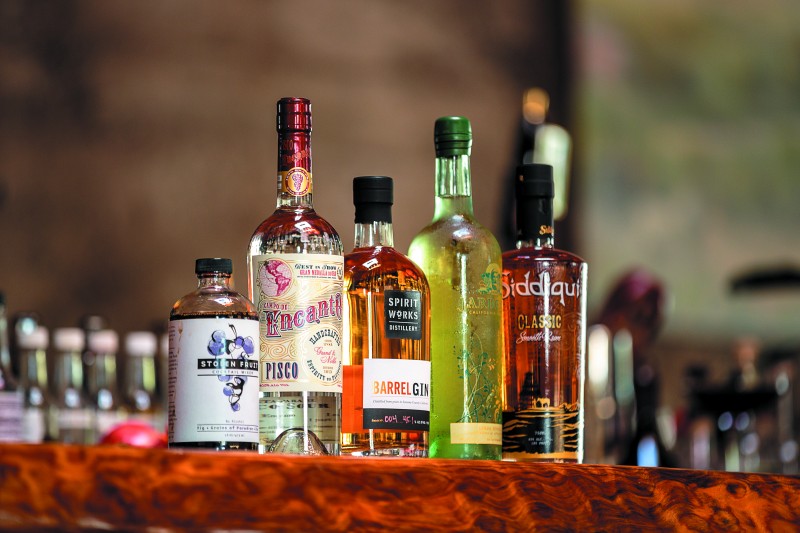
CAMPO DE ENCANTO PISCO
Named for a port in Peru, Pisco has a long legacy in California, where before the Gold Rush it was a staple spirit within the wilds of San Francisco’s Barbary Coast. A clear, distilled fortification of grapes, Pisco is made to be enjoyed right away, without additions of water, sugar or caramel, and spends no time in oak.
A collection of Northern California bartenders and friends, including Walter Moore of Healdsburg, produce Campo de Encanto in the Ica Valley of Peru, working with local distiller Carlos Romero to blend small-batch eaux de vie (fruit brandies) from five types of old-vine grapes. The result is a smooth combination of peaches, almonds and mint.
San Francisco bartender and Encanto partner Duggan McDonnell said the true test of superior Pisco is to swirl the spirit before drinking it, then watch to be sure the bubbles dissipate quickly. If they don’t, it means the spirit has been diluted, and thus isn’t real Pisco.
Enjoy Pisco neat, with a twist of lime, or in a range of cocktails. One of the most popular is the sour, which is shaken with an egg white. This Campo de Encanto Pisco gets its power, grace and smokiness from aged Scotch. encantopisco.com
Campo de Encanto Vice & Virtue:
1½ ounces Encanto Grand & Noble
½ ounce Laphroaig 10 Year Old Islay Scotch Whisky
¼ ounce yellow Chartreuse
¼ ounce honey syrup
2 dashes orange bitters
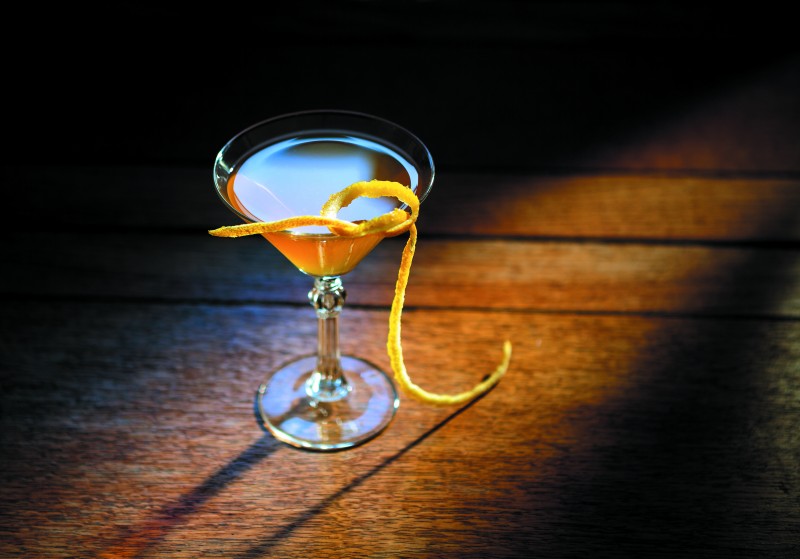
Place the ingredients in an Old-Fashioned or martini glass, stir thoroughly, and garnish with a lemon peel.
JARDESCA
Jardesca, a lovely aperitif spirit made in Santa Rosa, combines sweet and dry white wines from California with a proprietary eau de vie that’s double-distilled into a fortified wine. A garden’s worth of botanicals are added for complexity.
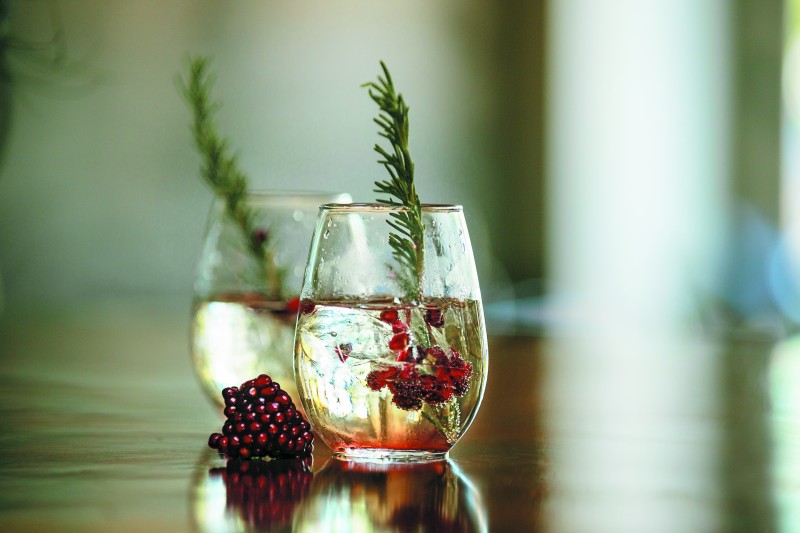
Intended to be sipped on the rocks, Jardesca also works as a mixer, adding bright citrus notes and aromas of peppermint, orange blossom and cardamom. This cocktail gets its festive look and feel from sparkling wine.jardesca.com
In a stemless wine glass over ice, add the Jardesca and pomegranate. Top with the sparkling wine and garnish with the rosemary.
SIDDIQUI RUMS
Siddiqui Rums was inspired by the moonshining culture of the Middle East, where owner Nigel Brown grew up. There, families distilled their own spiced rums, never allowing them to get overly sweet.
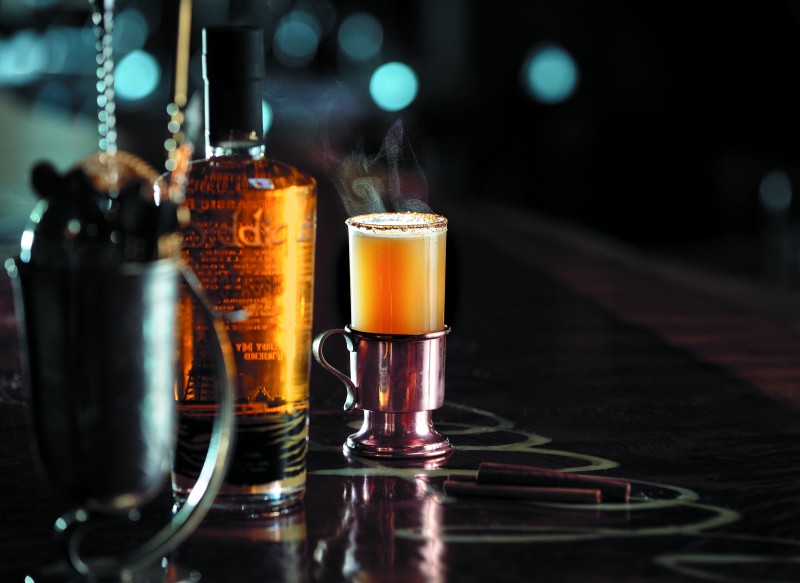
Inspired by Hot Buttered Rum, a Bay Area bluegrass band, this warm, sweet cocktail from the Windsor distiller brings two worlds together to form something new. As the cinnamon, vanilla and caramel meld perfectly with the oaky flavors of Siddiqui Classic Brown Rum, a bold new flavor is created. The sweetness of the ice cream pairs with the strong rum with excellent balance. This decadent drink is the perfect remedy for a chilly evening. Prepare and freeze the batter at least two hours in advance.siddiquirums.com
In a mixer, add the butter, sugars, ice cream, vanilla and cinnamon and blend well. Transfer the mixture to an airtight container and freeze until set.
To serve, place two tablespoons of batter and two ounces of rum in a heated mug. Pour 4 to 5 ounces of boiling water into the batter and rum and stir until blended.
SPIRIT WORKS DISTILLERY
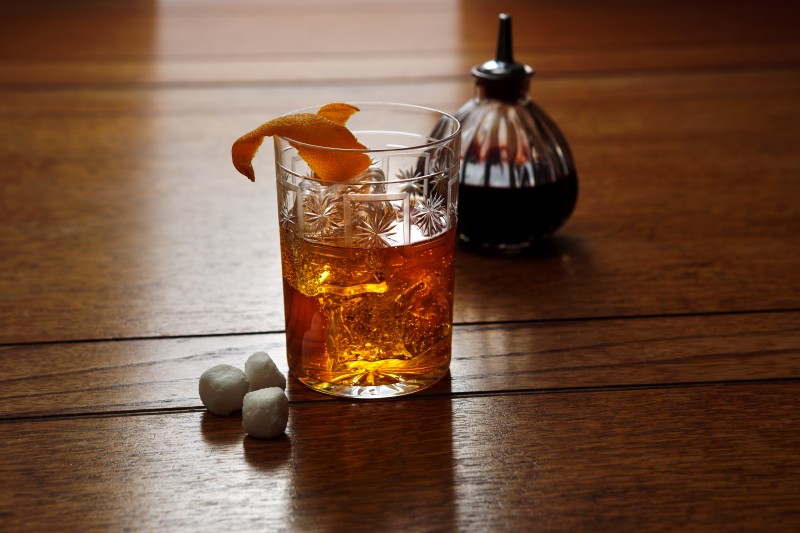
In Sebastopol, Ashby and Timo Marshall do everything in-house, including milling the grain, creating the mash and distilling its gin, vodka and sloe gin, aging some spirits in wood barrels. Their gin is made from hard red winter wheat infused with juniper berries and a mix of botanicals, some of them traditional, others inspired by what’s available in California. Coriander, citrus and cardamom are in the propriety blend, for sure. With its Barrel Gin, wintery overtones of oak add depth and complexity to the citrus-tinged botanicals. It goes down easy, over ice and with bitters, and makes a great Old-Fashioned. spiritworksdistillery.com
Spirit Works Barrel Gin Old-Fashioned:
1 sugar cube
2-3 dashes Angostura bitters club soda
2 ounces Spirit Works Distillery Barrel Gin orange peel
In an Old-Fashioned glass, place the sugar cube and bitters. Add a splash of club soda and muddle the ingredients in the glass. Add ice and gin, and garnish with an orange peel.
STOLEN FRUIT
Stolen Fruit’s new line of grape-based cocktail and mocktail mixers comes from Dry Creek Valley grape growers Susan and Doug Provisor of Provisor Ranch, and Healdsburg chef Peter Brown. In addition to the sultry Fig Grains of Paradise Zin mixer, Stolen Fruit offers Jasmine Juniper Viognier, Lemongrass Ginger Sauvignon Blanc, Blood Orange Muscat and Hibiscus Grenache, all meant to show off seasonal ingredients and flavors. The founders partner with local wineries for the grape juice, verjus and dried grape skins that go into each bottle.stolenfruit.com
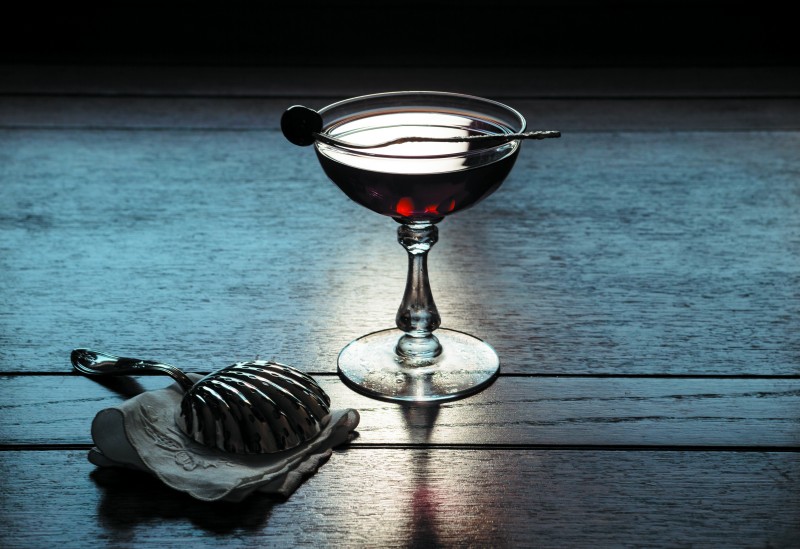
Stolen Fruit Fig Grains of Paradise Zin:
2 ounces Stolen Fruit Fig Grains of Paradise Zin mixer
2 ounces bourbon dash of bitters maraschino cherry
Shake the mixer, bourbon and bitters over ice, then strain into a chilled martini glass and garnish with a cherry.
Eating, drinking, staying and playing in Napa Valley is as popular as ever, and wineries, restaurateurs, and developers are taking advantage of the boon in tourism to open new establishments and expand existing venues.
Although commercial permits issued in Napa are slightly down in 2016 — 126 compared to 129 in 2015 — the overall valuation of permits are up by $3 million, to $20.3 million.
“Businesses related to the wine industry are sustainable and are always growing and expanding,” said Robin Klingbeil, senior project coordinator, Economic Development Division in Napa. “The past couple of years we’ve seen chefs with businesses elsewhere looking to expand or test the waters in downtown Napa.”
According to Visit California, a state tourism agency, visitors to Napa spent $1.27 billion in 2014–2015, a 9 percent growth rate over the previous year. That’s the highest of any tourist region in the state, the tourism booster said. Spending included $355 million for accommodations (up 15 percent over 2014); $331 million for food (up 10 percent); and $224 million in retail sales (up 7 percent).
Here’s a sample of recently opened and upcoming restaurants, wineries, hotels and other venues:
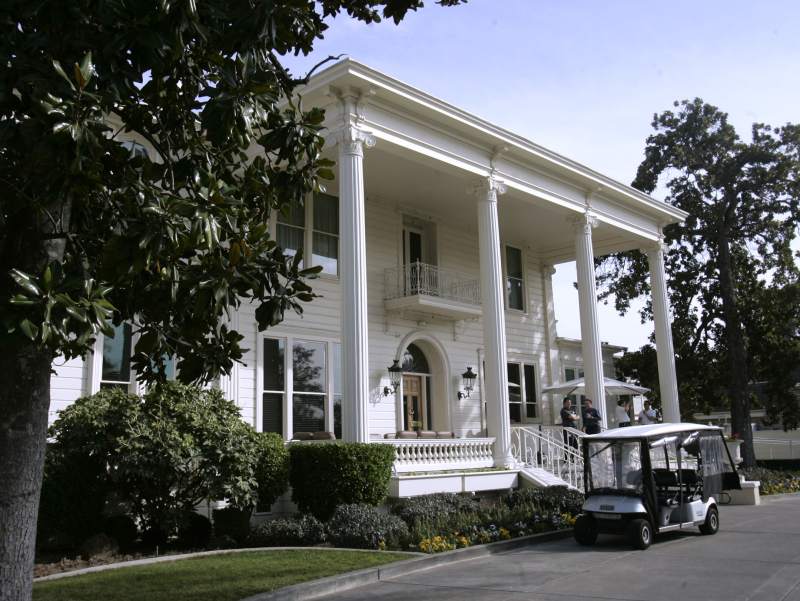
The Mansion at the Silverado Resort and Spa in Napa, Calif. (AP Photo/Rich Pedroncelli)
HOTELS
In fall 2017, Silverado Resort and Spa (www.SilveradoResort.com) expects to open 30,000 square feet of outdoor space includes vineyards, stage and a 5,000-square-foot pavilion, located adjacent to the resort’s conference center.
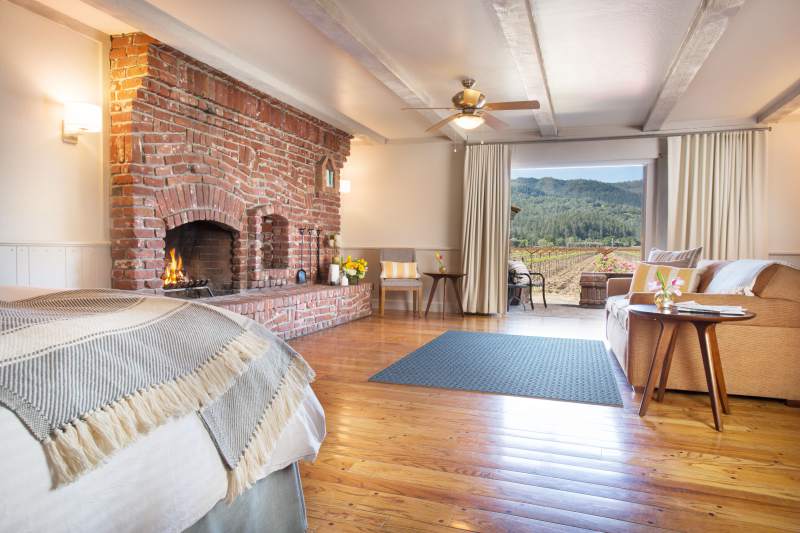
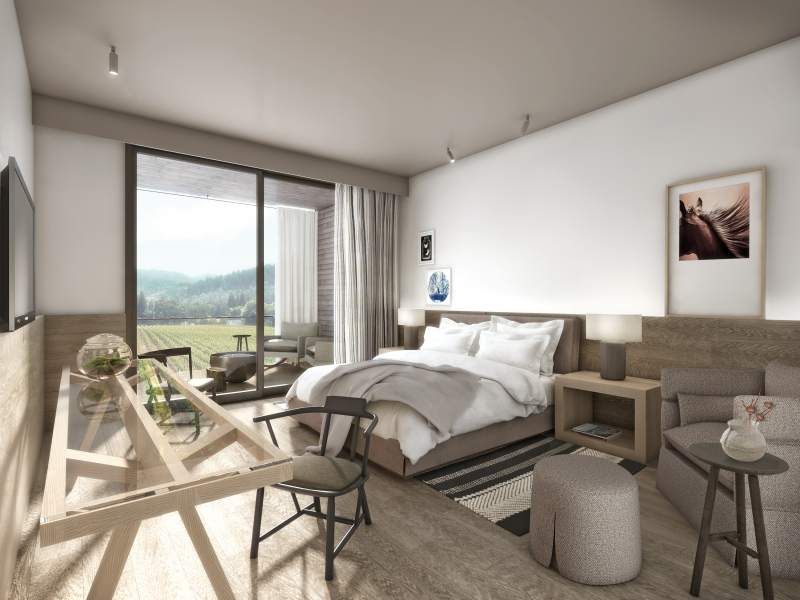
Harvest Inn by Charlie Palmer (www.harvestinn.com/stay/vineyard-view-collection) in St. Helena launched its revamped Vineyard View Collection rooms in September. The new tier of 22 recently renovated guest rooms and suites offer western-facing views of vineyards and the Mayacamas Mountains.
Harvest Inn by Charlie Palmer in St. Helena renovated 22 suites facing the vineyards. (Harvest Inn)
Las Alcobas (www.LasAlcobasNapaValley.com), a Luxury Collection Hotel, will open in St. Helena in late 2016 as a sister property to Las Alcobas in Mexico City. Las Alcobas will feature 68 guest rooms and suites with terraces and outdoor fireplaces; Acacia House, a signature Chris Cosentino restaurant; Atrio, a 3,500 square foot spa; an outdoor swimming pool; and meeting and event facilities.
Las Alcobas in St. Helena is set to open in November. (www.visitnapavalley.com)
Archer Hotel Napa (www.archerhotel.com/napa) in downtown Napa is set to open in spring 2017. The five-story hotel will feature 143-rooms and 40 suites with balconies, 15,000 square feet of indoor and outdoor event space. The rooftop will feature a spa, fitness studio and ledge pool with cabanas and fireplaces.
The 183-room Archer Hotel in downtown Napa is scheduled to open in the spring of 2017.
RESTAURANTS
The Corner Napa restaurant and bar (www.cornerbarnapa.com) opened in downtown Napa in July. The restaurant features a large wine list, craft cocktails, and more than 200 whiskeys. The restaurant features American cuisine and local producers.
The Corner Napa restaurant and bar, stocks more than 200 whiskeys. (The Corner Napa)
Kenzo Tsujimoto (www.kenzoestate.com) will open his authentic Japanese sushi restaurant in downtown Napa on Nov. 16. The restaurant will feature a fixed menu for Kaiseki and sushi featuring fresh fish delivered from world-renowned Tsukiji Fish Market in Tokyo, paired with wines from Kenzo Estate along with an array of Japanese sakes.
The Charter Oak restaurant (www.thecharteroak.com) in St. Helena will open early 2017, owned by Chef Christopher Kostow and Nathaniel Dorn of the Michelin-three starred The Restaurant at Meadowood. The Charter Oak will be centered on a casual dining experience.
Charlie Palmer Steak (www.charliepalmer.com) by chef Charlie Palmer, owner of Harvest Inn and Harvest Table in St. Helena, will open at the upcoming Archer Hotel in downtown Napa in spring 2017. Palmer and team will also oversee the culinary direction of the rooftop bar, poolside and in-room dining, as well as private events for the Archer Hotel.
Miminashi (www.miminashi.com), Napa Valley’s first and only Izakaya-style Japanese pub opened in downtown Napa in May. Chef and owner Curtis Di Fede’s menu features a variety of ramen bowls and a large selection of yakitori. Miminashi offers Japanese beer, local and international wines, a diverse sake selection, and classic cocktails.
Miminashi in downtown Napa offers Japanese beer, local and international wines, a diverse sake selection, and classic cocktails. (Miminashi)Ramen bowls at Miminashi, Napa Valleys first and only Izakaya-style Japanese pub. (Miminashi)
Basalt (www.basaltnapa.com) opened in April in the Riverfront in downtown Napa. Chef Esteban Escobar’s seasonal California cuisine draws influences from the earliest traditions of Mexican and Spanish cooking.
Basalt opened in April in Napa. (www.facebook.com/basaltnapa)
Johnny’s Restaurant & Bar (www.johnnyscalistoga.com) opened in March in the Mount View Hotel & Spa in Calistoga. The new restaurant is loosely modeled after the 1919 restaurant that was originally there. The new Johnny’s is open for breakfast, lunch and dinner.
Johnny’s Restaurant & Bar opened in March in the Mount View Hotel & Spa in Calistoga. (www.yelp.com)
WINERIES
Covert Estate (www.covertestate.com) opened in the Coombsville area of Napa in spring 2016. Covert produces cabernet sauvignon and cabernet franc on its 12-acre estate.
Covert Estate opened in the Coombsville area of Napa in spring 2016. (www.facebook.com/covertestate)
Freemark Abbey (www.freemarkabbey.com), which has been in its original location since 1886, completed an extensive renovation in July, including a revamped patio courtyard. The historic winery building now offers a variety of educational visitor experiences and a new restaurant, Two Birds One Stone, a California-inspired yakitori restaurant by chefs Douglas Keane and Sang Yoon.
Freemark Abbey in St. Helena, which has been in its original location since 1886, completed an extensive renovation in July. (www.facebook.com/freemarkabbey)
RiverHouse by Bespoke Collection (www.bespokecollection.com/riverhouse/) opened in September in downtown Napa with Blackbird Vineyards, Recuerdo, and Resolute wine tastings, and a curated selection of fine art, antiquities and objects by ÆRENA Galleries & Gardens.
RiverHouse by Bespoke Collection opened in September in downtown Napa. (www.yelp.com)
Stewart Cellars’ new tasting salon and café (www.stewartcellars.com) opened in Yountville in August. Arcanum Architecture designed the space and Ken Fulk Inc. designed the interior. Gather Café is a fast-casual eatery with a fresh juice of the day, greens, grains and breakfast.
Stewart Cellars’ new tasting salon and café opened in Yountville in August. (www.yelp.com)
JaM Cellars (www.jamcellars.com/JaMwithUs) opened in downtown Napa in May, offering wine flights, by-the-glass and by-the-bottle for Butter Chardonnay, JaM Cabernet and Toast Sparkling. They are also featuring a number of guest wines and special releases only available at the downtown tasting room.
JaM Cellars opened in downtown Napa in May. (www.yelp.com)
Davis Estates Winery’s (www.DavisEstates.com) tasting room in Calistoga opened in May.
Davis Estates winery in Calistoga opened in May. (Davis Estates)Swinging couches overlook the new Davis Estates winery in Calistoga. (Davis Estates)
Durant & Booth (www.durantandbooth.com), a tasting room located in the restored historic Victorian building adjacent to Oakville Grocery. The wine program highlights blends that incorporate less common varietals, including Friuilian favorite Ribolla Gialla and Rhone varietals Roussanne and Grenache.
Durant & Booth is a tasting room located in the restored historic Victorian building adjacent to Oakville Grocery. (www.yelp.com)
Liana Estates (www.lianaestates.com), from the family behind Peju Province Winery opened Oct. 1 in the Carneros region in south Napa. The winery offers experiences and culinary programming such as “Brunch and Yoga” overlooking the San Pablo Bay.
Liana Estates opened Oct. 1 in the Carneros region in south Napa. (www.facebook.com/lianaestates)
Fieldwork Brewing Company (www.fieldworkbrewing.com) opened a taproom in Napa’s Oxbow Public Market’s main market hall in October, with an ever-changing tap list of new releases.
Fieldwork Brewing Company opened a taproom in Napa’s Oxbow Public Market’s main market hall in October. (www.facebook.com)
Stone Brewing (www.stonebrewing.com) is set to open a downtown Napa Tap Room and Pilot Brewery in the historic Borreo Building in spring 2017. The new tasting room will include a pilot brewing system, restaurant and Stone merchandise.
Stone Brewing is set to open a downtown Napa Tap Room and Pilot Brewery in the historic Borreo Building in spring 2017. (www.facebook.com/stonebrewingco)
NEW THINGS TO SEE AND DO
The Culinary Institute of America at Copia (www.ciaatcopia.com) is opening in stages this fall in downtown Napa with wine tasting, culinary demonstrations and classes, world-class dining, shopping, community events and more.
The Culinary Institute of America at Copia is opening in stages this fall in downtown Napa. (PD file, 2008)Blue Note Napa opened on Oct. 25 offering live music seven days a week in downtown Napa. (www.facebook.com/bluenotenapa)
Blue Note Napa (www.bluenotenapa.com) opened on Oct. 25 offering live music seven days a week in downtown Napa. The club occupies the first floor of the historic Napa Valley Opera House, and will present national and international artists, Bay Area and regional favorites, and the region’s wines, craft brews, cuisine, and classic cocktails.
The Kitchen Collective (www.kitchencollective.club) is a cooking club that is scheduled to open Nov. 1 in downtown Napa. It will provide resources for members to cook meals in a shared kitchen and the intimate environment of a social club to bring people together and share their passion for good food and wine.
Feast it Forward (www.feastitforward.com), the online network and lifestyle brand, will open its headquarters in downtown Napa across from the Oxbow Public Market in early spring 2017. It will offer live studio events with national chefs and musicians. It will feature a cultivated garden and outdoor entertaining in partnership with Sunset Magazine, musical entertainment with Gibson Guitar, a retail lounge, demonstration kitchen, tastings and educational events by 16 wineries.
Baked oysters (choice of classic chipotle BBQ, salsa verde, tasso herb) served with lemon & grilled baguette at the Shuckery in Petaluma. (Photo Courtesy: The Shuckery)
With friends and family gathering during the holiday season, it’s an ideal time to try new and reinvented restaurants. These local spots serve up temptations that run the gamut from haute cuisine to hearty burgers.
Baked oysters (choice of classic chipotle BBQ, salsa verde, tasso herb) served with lemon & grilled baguette at the Shuckery in Petaluma. (Photo Courtesy: The Shuckery)
THE SHUCKERY
A project of the Oyster Girls (sisters Aluxa and Jazmine Lalicker), oysters obviously get top billing at this new Petaluma restaurant, each bivalve hand-shucked behind the bar. Ranging from Humboldt Gold Kumamotos and New Brunswick St. Simons to British Columbia’s Fanny Bay and nearby Tomales Bay Miyagis ($3 each), the menu also includes an amazing ceviche of cod, orange, lemon, lime, cilantro and piquillo pepper coulis ($12). A signature is the relleno ($25), made with a pounded calamari steak, Dungeness crab stuffing and creamed corn. Baja-style fish tacos ($14) are top-notch, and it’s worth saving a little room for the “dueling budinos” ($9), which include dark chocolate and salted caramel going head to head with peanut butter, bacon and banana. Meat-free dishes include tempura avocado tacos and cauliflower “hot wings” ($14). Reservations are strongly recommended, since the space inside the Hotel Petaluma is cozy.
Cronuts, morning bun, croissants, and other pastries from Bright Bear Bakery in Petaluma. (Photo by Heather Irwin)
BRIGHT BEAR BAKERY
The buzz about this incredible little bakery began immediately after it opened, when news of its cream-filled cronuts (a cross between a croissant and a donut that’s too decadent not to eat), morning buns and fresh breads made the rounds. It’s not easy to find, but a pilgrimage is worth the effort, as long as you get there early. The vegan chickpea scramble with sweet potatoes and harissa is great no matter what your dietary requirements, and a breakfast focaccia with ham, egg and cheese is perfect when paired with a chocolate croissant, luxe cream-cheese Danish or a cranberry scone. You’ll go overboard, but when exactly have your co-workers turned up their noses at leftover fresh muffins and coffee?
2620 Lakeville Highway, Suite 350, Petaluma, 707-291-1018, visit on Facebook
Steele & Hops Public House in Santa Rosa. (Photo by Heather Irwin)
STEELE & HOPS PUBLIC HOUSE
This family-friendly Santa Rosa brewpub is off to a good start, with an ever-evolving list of beers and solid pub grub. Best bets include brisket “cigars” (think egg roll with melted cheese and smoked brisket, $7); chicken-fried onion rings with mushroom gravy ($6), and an excellent Caesar salad with boquerones (anchovies) ($9.50). The S& H Signature burger ($13.50) with onion jam, and the fried-chicken sandwich ($11.50) are also excellent. Less wowing: the brick-oven pizzas (even a teenager turned her nose up at the burnt crust) and the hangar steak ($17.50). We’ll be back, though, for the fish and chips ($14) and incredible strawberry shortcake.
Save room for dessert at the Depot Hotel Restaurant in Sonoma. (Photo by Beth Schlanker)
DEPOT HOTEL RESTAURANT
Although rooms haven’t been available since 1922, “hotel” remains in the restaurant’s name. Constructed in 1870, the building’s offthe- plaza location makes it a bit of a sleeper, but it’s worth a visit for the Ghilarducci family’s classic Italian and Wine Country cuisine. Michael Ghilarducci and his wife, Gia, founded a cooking school here in 1987, and now their son, Antonio, is the executive chef of the restaurant. The Depot Hotel is perfect for dining with guests during the holidays, and it sells full trays of lasagna, garlic bread, penne and salads for takeout.
King Salmon, with morel mushrooms, sugar snap peas, and green garlic vinaigrette, by Dry Creek Kitchen executive chef Andrew Wilson. (Photo by Christopher Chung)
DRY CREEK KITCHEN
Charlie Palmer is looking back to move forward at Healdsburg’s Dry Creek Kitchen. After a couple of chef shuffles following the departure of Dustin Valette last year, Palmer Group veteran Scott Romano was tapped as executive chef. In addition to working at five Palmer restaurants, including Aureole in New York City, Romano’s friendship with Palmer spans two decades, giving him an ease with the multi-Michelin-star chef that’s reassuring to continued relevance of the restaurant at Hotel Healdsburg. The two are working to reimagine some of the restaurant’s signature dishes, such as the Oz Family Farm rabbit tortellini, Dry Creek Peach and heirloom tomato salad with Bellwether ricotta, and sauteed sea bass with sweet corn puree. “We’re looking back at iconic dishes from all the restaurants,” said Palmer, who owns 17 locations, with at least one more on the way at the Archer Hotel in Napa (opening 2017). “And we’re adapting them to California.”
The St. Helena Ave. Burger at Superburger in Santa Rosa. (Photo by John Burgess)
SUPERBURGER
For decades, Superburger has been a fixture on Fourth Street in Santa Rosa, eventually expanding to Cotati. A new Superburger has opened next to the Oliver’s Markets store in Windsor, making its beef/lamb/chicken burgers available to northern Sonoma folks. There are fancy burgers as well, including the Montecito Avenue (with Monterey Jack cheese, applewood-smoked bacon and guacamole) and the McDonald Avenue, with blue cheese, garlic mushrooms and “gartichoke” sauce. Dogs, fries, onion rings and shakes, too. Classic.
Update November 18: Revival has unexpectadly, and unfortunately, closed – but might be revived as a series of pop-ups, learn more here.
One of the best reopenings of 2016 is Applewood Inn’s revered restaurant. The newly minted Revival by Applewood is guided by Guerneville hospitality maven Crista Luedtke (Big Bottom Market, boon eat+drink, boon hotel+spa, El Barrio) and chef Ben Spiegel (New York City’s Skal, and The Willows Inn on Lummi Island, Washington). And what a difference a year makes. Since the purchase of the inn by hotelier Ric Pielstick, the gardens have been reclaimed from the weeds, the interior was given a warm, contemporary redesign, and Spiegel has a clear vision for the cuisine. Having spent several years in Scandinavia, he’s a devotee of foraging, hunting and sustainable seafood, passions he brought to Sonoma. Preservation, smoking and pickling are keys to his menus, which change daily based on what’s available. Early dishes include Liberty Duck liver mousse ($11), grilled romano beans with Japanese cucumber and goat’s milk cheese cream ($10), and ricotta dumplings with shiitake and lobster mushrooms and arrowhead spinach ($23).
A food-friendly pinot is the best present for the chef on your list. The typical profile of a pinot that pairs well with food is one with bright, tangy red fruit, coupled with crisp acid. Chefs love to have these bottlings around, whether they’re planning a serious feast, or simply rustling up an impromptu dinner. In either scenario, you’ll have a better chance of being invited if you’re a savvy gift giver. Here are five tasty pinots with chef appeal and most are $25 or under.
Davis Bynum, 2014 Jane’s Vineyard, Russian River Valley, Sonoma County Pinot Noir, 14.5%, $35. A lovely pinot noir with a range of flavors — cherry, plum, cranberry and a touch of toasty oak. Bright acidity, a steal for the quality.
Foursight, 2013 Anderson Valley Unoaked Pinot Noir, 14.1%, $25. This pinot has generous, layered red fruit, bright acid and it finishes dry. It’s bright and refreshing.
River Road, 2014 Stephanie’s Cuvee, Green Valley of Russian River Valley, Sonoma County Pinot Noir, 14.3%, $25. This is a bright and tangy pinot noir has striking red fruit — cherry, raspberry and strawberry jam. It’s also layered with notes of tobacco and cedar. But what makes it a standout at this price point is its pitch perfect balance.
Saint Gregory, 2013 Mendocino County Pinot Noir, 13.5%, $20. This Burgundian styled wine has notes of cherry, plum and toast. Bright acidity. Nice length. Elegant.
La Follette, 2013 North Coast Pinot Noir, 13.8%, $24. Aromas of bright strawberry, give way to concentrated flavors of dried cherry, cracked black pepper and mushroom. This earthy pinot has depth, surprising at this price point.
This article is part of a series called “Hidden Sonoma.” To see the full list of 80+ things to do in Sonoma County, click here.
Petaluma Wildlife Museum. (Photo by Beth Schlanker)
Animal Adventure for Kids: Petaluma Wildlife Museum
Tucked into a quiet neighborhood on the edge of the Petaluma High School campus is a place where giant snakes slither, iguanas prowl and dinosaurs may have once roamed. Kids love the Petaluma Wildlife Museum for its hands-on reptile room and lifelike dioramas featuring lions, wolves and even a polar bear. Normally accessible only to students on field trips, the museum opens to the public on the first and third Saturday of every month, from 11 a.m. to 3 p.m. Don’t miss the T. Rex skull in the fossil room.
Freshest of the Fresh: Green String Farm
Farmers market produce not fresh enough for you? Then go directly to the farm. At Green String Farm, you can see your kale and radishes harvested from the Petaluma soil. Take a free tour of the farm on the first Saturday of each month at noon and learn about its sustainable farming practices, then hit the produce stand for more just-picked fruits and veggies, eggs, cheese, honey and nuts.
Green String Farm, 3571 Old Adobe Road, Petaluma, 707-778-7500, greenstringfarm.com
Green String Farm in Petaluma offers free tours on the first Saturday of each month.
Where the Wild Things Heal: Sonoma County Wildlife Rescue
Atop a hill on Mecham Road sits a ranch house with a million-dollar view and no full-time inhabitants. None that are human, anyway. The former ranch is home to Sonoma County Wildlife Rescue, a nonprofit whose volunteers take in all manner of injured, ill or orphaned mammals and birds, then treat and release them ASAP. Take a tour at noon or 2 p.m. on a Saturday (reservations appreciated) and you’ll be wildly happy you did.
Sonoma County Wildlife Rescue. (Photo by Crista Jeremiason)
Swimming Pools of Our Youth: Morton’s Warm Springs
Remember the public pools when you were a kid? A big lawn, shrieks and splashes, a wading pool for tots, picnic benches where you ate sandwiches you made yourself? That’s Morton’s Warm Springs, an endearing, old-fashioned swimming pool (actually, there are two) fed by mineral springs and set against a backdrop of forested hills. It’s been keeping people cool since 1946. There is also a baseball field, volleyball court and horseshoe pit.
A Kid’s Kind of Fish Shop: Ceasar’s Tropical Fish
No one will mistake it for Sea World, but Caesar’s Tropical Fish in Santa Rosa is nearly as much of a kid thriller as a splash by a killer whale. In darkened display rooms, little ones go eyeball to eyeball through aquarium glass with audaciously hued saltwater exotics, bug-eyed goldfish and a resident Madagascar cichlid that seems to want to nibble at noses.
Hear That Whistle Blowin’: Train Town
TrainTown chugs along on the margins of Sonoma, well off the upscale tourist routes. The quarter-scale steam train and track were built by the late Stanley Frank in 1968. Generations of kids have since thrilled to the 20-minute journey through the trees, over bridges and into tunnels, including a short layover in a miniature town complete with petting zoo. Near the station are more kiddie rides, including a Ferris wheel, carousel and dragon coaster. It’s for the kid in all of us.
Little Shop of Horrors: California Carnivores
California Carnivores is the largest retail carnivorous plant nursery in North America, with Venus flytraps, sundews, butterworts, bladderworts and tropical pitcher plants chowing down on yellow jackets … well, you just have to see it. The nursery is on a side street behind farm plots south of Sebastopol, yet it’s worth the hunt for the fascinating education and the beauty of these natural pest-control plants. The curators are very serious about the plants, but with a wicked sense of humor, so the shop is decorated with skulls and spiders and the occasional severed (rubber, we hope) hand.
Birds and Burros
Odd animals are the attraction at the Bird Exchange and Honkey Donkey Farm, a popular stop for families on Hall Road in Santa Rosa. The Bird Exchange, a bird store and supply shop, has one of the largest selections of exotic avians in Northern California, hundreds at any given time. Next door, the Honkey Donkey Farm is home to more than 100 miniature Sicilian donkeys, pint-sized beasts that grow to an average 30 to 32 inches tall, making them a favorite among young kids who are about the same size.
“I am begging you now, with all my heart, not to let the world forget that he laid his hand upon the hills of California with the biggest writing of all his writing and imagination and wisdom … Just don’t let all who listen and read and run, forget Jack London’s biggest dream.” – Charmian London, December 1916
Jack London and his two daughters, Joan and Becky, 1905. (California State Parks, 2016)
She spent just 13 years with Jack London, yet the wife of one of America’s most beloved writers, bravest adventurers, earliest environmentalists and infatuated lover of Sonoma Valley devoted nearly 40 years, until her death in 1955, to protecting and polishing his legacy. This year marks a century since London’s 1916 death at the young age of 40, and Charmian London would likely be pleased that so much of his Glen Ellen ranch, his accomplishments and his memory have been maintained.
Jack London and Charmian London working together at their Beauty Ranch, a portion of which is now Jack London State Historic Park in Glen Ellen. (California State Parks, 2016)
“Mate Woman,” as London called her, spent decades tending to his copyrights, writings and legacy, a prolific output of more than 50 works of fiction and nonfiction, and hundreds of short stories, essays, newspaper and magazine articles, speeches and letters translated into as many as 70 languages. And with London’s stepsister, Eliza Shepard, she struggled through the Depression and World War II to preserve his beloved mountainside and keep his Beauty Ranch going. ”
Road leading to Jack London State Historic Park in Glen Ellen. (Photo by Erik Castro)
Jack London loved Sonoma, and in an important way he was one of the first people to put Sonoma on the map and in the international imagination,” said Kevin Starr, a state librarian emeritus and author of a book series on California, “Americans and the California Dream.” “He sought the redemptive life on the land in Glen Ellen and as a rancher. Collectively, within the 50-plus books he wrote, are guide maps of Sonoma places that later became famous.”
Jack London has his portrait painted outside Wake Robin Lodge by artist Xavier Martinez. (California State Parks, 2016)
This is a watershed year for Jack London State Historic Park, which occupies a portion of the original Beauty Ranch. The Jack London Park Partners group is dedicated in 2016 to celebrating London’s enduring legacy. Special events and activities kicked off on Jan. 12, London’s birthday, and will culminate Nov. 22 with a memorial at his graveside on the centennial of his death. Fittingly, London died on his ranch and is buried there.
To honor her husband, Charmian London built a sturdy stone lodge she called the House of Happy Walls, a smaller version of the magnificent Wolf House that mysteriously burned to the ground on a hot August night in 1913, weeks before the couple were to have moved in.
Like Wolf House, Happy Walls was designed by eminent Bay Area architect Albert Farr to eventually serve as a Jack London museum. The first public visitors streamed under the portico in 1960, finally fulfilling Charmian’s wishes. Nearly 100,000 people a year now come to Jack London State Historic Park, and he is remembered by readers around the world.
House of Happy Walls in Jack London State Historic Park, Glen Ellen. (Photo by Erik Castro)
Source of Creativity
As a writer, London’s creative fire was stoked by social revolution. Far more than a manly writer of popular adventure stories such as “The Call of the Wild” (1903) and “White Fang” (1906), he also exposed the plight of the underclass and the working poor. His dystopian “The Iron Heel” described the rise of a tyrannical oligarchy that some observers find relevant today. He dressed in rags and lived in the impoverished East End of Lond to research “The People of the Abyss.” His unfettered range took in everything from astral projection to prize fighting to penal reform.
Jack and Charmian London pose for a portrait on Beauty Ranch with their dog, Possum. (California State Parks, 2016)
London scholar Earle Labor, an emeritus professor at Centenary College in Louisiana and author of the recently published “Jack London: An American Life,” recalled meeting a young man from the Congo at a seminar. The man confided that his father had been killed in a jungle village, yet the son later learned to read French and discovered “The Call of the Wild,” which has been in continuous print since it was published. The story of Buck, a tenacious sled dog, inspired the young man’s own survival.
On a winter day in the state park, Tony Holroyde, visiting from England, paused on the porch outside London’s restored cottage and reflected that the rugged American writer lit a fire under him when he was a youth.
Jack London photographed in 1916, shortly before his death. (California State Parks, 2016)
“He brought adventure alive in my imagination,” he said. “I don’t think I otherwise would have left the U.K. and spent two years running around the world. But I didn’t do it on horseback, and I didn’t do it on a leaky ship.”
And yet in the last years of his life, London claimed to produce 1,000 words a day, largely in service to his 1,400 acres overlooking what he romantically referred to as the Valley of the Moon.
The most highly paid writer of his day, London pumped out the prose to pay for Beauty Ranch, his “biggest dream,” which started out as a refuge from urban grime and became a grand experiment in sustainable agriculture. Ridiculed in his time for experiments like the costly piggery dubbed “The Pig Palace, he’s now regarded by many as a visionary.
Mike Benziger, who planted his family vineyard nearby on the same well-drained volcanic soil, said London was struck by the overgrazed and degraded condition of the Hill Ranch when he purchased the first 130 acres in 1905 and set out to make “the dead soil live again.”
“He felt he was in a position to save it. That was his life-altering experience the day he set foot on Beauty Ranch,” Benziger said. “That became literally his mission for the rest of his life, to find respite in this place and make it healthier and make it an example for future generations.”
Jack and Charmian London pose for a portrait on Beauty Ranch with their dog, Possum. (California State Parks, 2016)
Family Preservation Efforts
Credit for London’s enduring legacy goes to the early efforts of his widow and several generations of heirs, including members of the Shepard family, who inherited the ranch from Charmian and made most of it available to the state for parkland, and the offspring of Jack London’s two daughters, Joan and Becky, many of whom share his passion for the outdoors and carry on his commitment to social equality and justice in their own ways.
But London also has been embraced by a multitude of other acolytes and academics who approach him from a kaleidoscope of perspectives. They include literary scholars, historians, agriculturists, preservationists, naturalists, teachers and outdoor enthusiasts who roam the more than 30 miles of trails that crisscross what is now Jack London State Historic Park.”
A photo portrait of a young Jack London hangs in a small room on the second floor of the House of Happy Walls museum at Jack London State Historic Park.
“He wrote books kids used to read and still have to read. That’s how many people get exposed to Jack London, and it’s pretty much all most people know about him,” said Chuck Levine, a director of Jack London Park Partners, which took over management of the park three years ago after the state threatened to close it because of budget constraints.
“The reason we should care about Jack London is that he was deeply concerned about the human condition,” Levine said. “And the fact he was a writer allowed him to express that concern and his views about how the world could be changed to help the state of mankind.”
Jack London was fond of sitting in the shade of a large oak tree that still looms over his writing cottage in Jack London State Historic Park. (Photo by Connor Jay)
A meadow and a screen of trees separate his property from the park, a piece of land sold off decades ago to help keep the ranch going. Levine crosses over almost daily. Since moving to Glen Ellen in 2002, the former Sprint CEO has spent more than 300 hours exploring the park on horseback, just as London did a century earlier. He declares himself a pragmatist but admits, almost apologetically, that when he first crossed a wooden bridge onto what was once London’s land, “in my heart it felt magical.”
Little Changed in 100 Years
Levine is typical of the passionate volunteers who lead nature and historic hikes, give tours, work in the cottage and Happy Walls museum, patrol and maintain the trails, help with special events and staff the parking kiosk. The partners also are launching a $1 million capital campaign to modernize the museum in the House of Happy Walls with more high-tech and multimedia presentations; the exhibit has changed little in decades.
Wolf House ruins, photographed after 1913. (California State Parks, 2016)
If London were to return today, he would have no trouble finding his way around. Aside from the 160 acres that the Shepards held back in a family trust, little has changed in 100 years.
Some 700 feet up the slope of Sonoma Mountain, his ranch still has the old fieldstone barns, the elaborate piggery called the Pig Palace by scornful observers, the concrete-block silos and the picturesque ruins of the Kohler and Frohling winery destroyed in the 1906 earthquake and now the backdrop for the Transcendence Theater Co. At the core of Beauty Ranch is the mid-19th-century cottage where Jack lived with Charmian and wrote in a study outfitted with a Dictaphone, Gramophone and Remington typewriter, high-tech at the time.
Jack London State Historic Park in Glen Ellen. (Photo by Erik Castro)
Above the working farm is wild land thick with oaks, broad-leaf maples, manzanitas and madrones, Douglas fir and redwoods, the eldest a sapling at the birth of Christ. The mountain is etched with canyons and creeks, and the year-round Graham Creek (Wild Water Creek in London’s day) is a spawning ground for steelhead trout. High meadows break out with golden poppies in spring and offer unbroken views of Sonoma Valley and beyond. Bobcats, mountain lions, gray foxes, hawks and falcons scour the mountainside for prey.
At the center of any mention of London is the larger-than-life persona that makes him a magnetic character even now. He was a dashing man’s man with a face for the camera, and courted danger in exotic places, from the Klondike to the South Seas. He was, among many things, a prospector, oyster poacher, seaman and hobo who in the 1890s rode the rails to Washington, D.C., as an idealistic member of the Industrial Army of the Unemployed.”
“The greatest story Jack London ever wrote was the story he lived,” said Matt Atkinson, who led tours for years as a ranger at Jack London State Park. He is now the fire chief of Glen Ellen, where the name of its favorite son carries on with a hotel, saloon and rustic retail center across from what for years was the World of Jack London Bookstore. It’s now a wine-tasting room. London crammed far more living into 40 years than most people would or could in 80 years, said Atkinson.
At the same time, he was a bundle of contradictions. His writing ran from pedantic to brilliant. He was cared for by partially raised by an African-American wet nurse, and yet threaded through his writings are racist tones that make the modern reader wince.
He was the highest-paid American writer of his day, the first to earn $1 million, which he spent as fast as he made it, often in service to his ranch. He lived well while serving as a voice of the proletariat and, like John F. Kennedy, projected a charismatic virility, yet privately suffered from health problems exacerbated by a lifestyle of hard drinking, smoking and poor diet.
In his day, London was an international celebrity, as famous as a movie star. His death of reported uremic poisoning brought on by kidney failure rated front-page notice in the New York Times.
As one journalist wrote in the days after his death, “No writer, unless it were Mark Twain, had a more romantic life than Jack London.”
Neil Shepard’s great-great uncle was Jack London, and he has lived in houses on various parts of the ranch his entire life. (Photo by John Burgess)
“I like to say that if Jack London were alive today he would probably have a reality show, because he really organized his life that way,” said Bay Area filmmaker Chris Million, who is working on a documentary called “Jack London, 20th Century Man.”
“He knew the value of publicity. Once he became a famous writer and had developed a persona, he exploited that persona for all it was worth, and in particular, to help boost his book sales.”
Among London’s most audacious stunts was to promote his book, “Cruise of the Snark.” He and Charmian set sail on the South Seas with crew members who had never sailed before. It resulted in some memorable writing and boosted his star. But along the way London contracted yaws, a hideous tropical infection. Some scholars believe his self-treatment with a mercury-based ointment led to the kidney problems that contributed to his death.
That London was even born is a sort of miracle. The San Francisco Chronicle reported in June 1875 that a pregnant Flora Wellman tried to shoot herself after astrologer William Chaney, with whom she was living, disavowed the baby and tried to force Wellman to have an abortion. She gave birth to Jack six months later. When Jack was an infant, she married Civil War veteran John London and gave him her new husband’s name. London was a young man when he discovered that Chaney was possibly his biological father and sought him out, only to be rejected again.
The facts of his life provide endless fodder for researchers and enthusiasts who comb over writings that were often a mixture of truth and fiction. “Martin Eden” and “John Barleycorn,” an anti-alcohol tract exploited by Prohibitionists, were semi-autobiographical. London had periods on the wagon, but he never gave up the drink for good.
“He’s a very complicated person. He’s got a lot of layers to him. I take him not always at his word,” said Tarnel Abbott, 62, London’s great-granddaughter. Her father, Bohemian longshoreman Bart Abbott, was a social activist in Richmond and the only son of Joan London.
The eldest of Jack’s two daughters, Joan was a radical in her own right who wrote about the plight of farmworkers, fought for labor and aligned herself with Trotsky, activities that brought her under the scrutiny of the FBI. Joan had a complicated relationship with her father, stuck in the middle between two warring parents. Her mother, Bess, embittered that London left her for Charmian, kept her daughters away from Beauty Ranch.
But parsing fact from fiction misses the broader message, Abbott said. “There are things he has said or written that have meaning for me, that make me feel like I do try to carry on the way he might approve.”
Neil Shepard feeds his Clydesdale horses on his property, adjacent to the Jack London State Historic Park. (Photo by John Burgess)
Of London’s seven great-grandchildren, Abbott has emerged as the most outspoken keeper of the London legacy, and last summer presented an adaptation of London’s “The Iron Heel” with music and giant puppets at the state park. Older sister Chaney Delaire — named for her great-grandfather’s absent father — lives in a modest house in Santa Rosa and worked 15 years in planning and community development for the nonprofit Burbank Housing. If there is any common thread through the generations, she said, it’s a deep appreciation of “the earth, the land and how important it is.”
But it fell to the offspring of London’s stepsister, Eliza, to steward the land London declared the most beautiful in California. When Charmian died, she left Beauty Ranch to Irving Shepard, Eliza’s only son. He tried to make a go of it as a guest ranch and dairy farm, but when Irving’s children Milo, Jill and Joy inherited the property, it came with a $1 million tax debt.
Brian Shepard, a Jack London heir, walks through his vines at Jack London State Historic Park. (Archival photo)
Milo, who died in 2010, adapted by planting wine grapes and selling all but 160 acres of Beauty Ranch to the state in 1979.
His son, Brian Shepard, and Shepard’s cousin, Steve Shaffer, oversee the Jack London vineyards for a family trust. The cabernet sauvignon, merlot, zinfandel and syrah grapes have been sold exclusively to Kenwood Vineyards for 40 years.
Brian’s brother, Neil, is the owner and driver of the Jack London Ranch Clydesdales and lives on the ranch, as does Shaffer.
They are committed to the same ethos of sustainability set by their great-uncle 100 years ago. Inspired by the farming practices he saw in the Far East, where farmers managed to keep land productive for centuries, London became an agricultural innovator. He terraced the land to protect the topsoil from washing down the mountain in rainstorms. He made his own compost, running a cable car from his mare barn to a manure pit outfitted with a concrete floor to keep in the nutrients. He tilled by horse, not tractor.
“I just came to wonder at how London landed here, on this truly great piece of property. The soils are really deep and varied,” said Brian Shepard, a laconic, 6-foot-4 man with the weathered hands of a farmer. “I appreciate the foresight, the good luck, whatever, that London realized this was a special place.”
“I’m blessed,” added Shaffer, almost sheepishly. “I didn’t do anything to deserve any of this. I just want to do my best to preserve it.”
London is experiencing a bit of a revival, with a new generation of scholars examining his life and his work, shining a light on a writer who has not always been taken seriously. Some say readers may overlook London because they miss the underlying layers of what appear to be simple adventure stories.
But that was a good measure of his genius: He was able to write stories that were page-turners but also had complexity for those who read deeper. Sonoma Valley educators are trying to engage young readers in Jack London, whose legend is still alive in the Valley of the Moon.
Jack London heir Brian Shepard manages the vineyards at Jack London State Historic Park in Glen Ellen. (Press Democrat archive)
“Students are often surprised he had such modern ideas for being a guy who was ‘back in the day,’” said Alison Manchester, an English teacher at Sonoma Valley High School and a board member of the Jack London Foundation, which sponsors an annual writing contest that draws submissions from young authors from around the world.
“I would call him America’s storyteller,” said Jay Williams, who just completed the second of a three-volume biography of London while on break from his work at the Huntington Library in San Marino, where most of London’s papers are stored.
“That was how he was regarded in his time. We’ve lost that sense of Jack because we’ve been pigeon-holing him as a socialist or a traveler or an adventurer. When you look at him as a storyteller, it encompasses everything he did, and that ultimately will be his legacy.”