

From Bean to Bar: Artisan Sonoma Chocolate a Sweet Treat

Taking their sustainable ethics in a different direction, the Malls embark on a sweet new adventure.


Jeff and Susan Mall were ahead of the Sonoma farm-to-table movement when they opened Zin Restaurant & Wine Bar in Healdsburg in 1999, basing their menu on what they grew and raised on their Eastside Road farm, and what they could procure from nearby ranchers and fishermen.

Such farm-to-fork service is now de rigueur, and the couple, lifelong culinary adventurers, are off on another journey. During a stint cooking at a Baja California Sur resort, they developed a taste for Mexican chocolate, appreciating its intense flavor, distinctive salt and spice notes, and compatibility with savory ingredients. While their year-old VOLO Chocolate business in Windsor keeps the Malls rooted in Sonoma, their ingredients are decidedly not local. And that’s the point.

Cacao pods for VOLO are harvested in the tropical Chiapas region of southern Mexico, where they are wrapped in banana leaves and allowed to ferment naturally. The beans are removed from the pods and shipped, raw, to the Malls’ tiny facility off Shiloh Road, behind Home Depot. Zulka Morena pure-cane sugar, Baja sea salt from Guerrero Negro and Mexican cinnamon complete the south-of-the-border list of base ingredients for their confections.

“The Mexican ingredients, and the way we treat them as chefs rather than bulk producers, make us different as chocolate makers,’ Jeff Mall said, as he operated a Rube Goldberg-like contraption (nicknamed Rubean) that cracks the cacao beans and separates them from their husks. He modified a used Champion juicer purchased on eBay to work with a ShopVac, creating a winnower that would cost $2,000 and up from a candy-making equipment supplier. It helps to be handy when starting a new business.

“Salt is as important to chocolate as it is to baking,” Jeff continued. “If you make cookies, cocoa and sugar alone are one-dimensional. Salt adds dimension. And we add less sugar than many chocolate producers. We think of ours as a chef’s chocolate.”

“We treat it like a food and not a candy,” added Susan, as she picked through raw beans prior to toasting them in a convection oven. “We’re now about products, not restaurants.”

The Malls sold Zin in late 2014, when their business partner wanted out. They had traveled often to Baja and had consulted for and taught cooking classes at Rancho Pescadero, a resort in Todos Santos, 45 miles north of Cabo San Lucas. After selling Zin to Dustin Valette, Jeff and Susan moved to Todos Santos for 18 months, where they managed the resort’s breakfast, lunch, dinner and room services, plus weddings and catering.

“It’s the hardest we’ve ever worked,” Jeff said. “But while we were there, we fell in love with Mexican chocolate and began making it on an experimental basis. When we returned to Healdsburg in 2016, we knew chocolate was our next venture.”

Valette, who left Healdsburg’s Dry Creek Kitchen to buy Zin from the Malls and turned it into what is now Valette, is a fan of VOLO.

“This is the next evolution in artisan chocolates, in my opinion,” he says. “VOLO chocolates are produced by chefs and designed for many uses. I love them for their intensity, lower sugar levels and increased salinity.

“We showcase VOLO by microplaning it on the side of our ItsNota ‘Snickers Bar’ dessert. It makes it fluffy and adds great contrast to the peanut nougatine.”

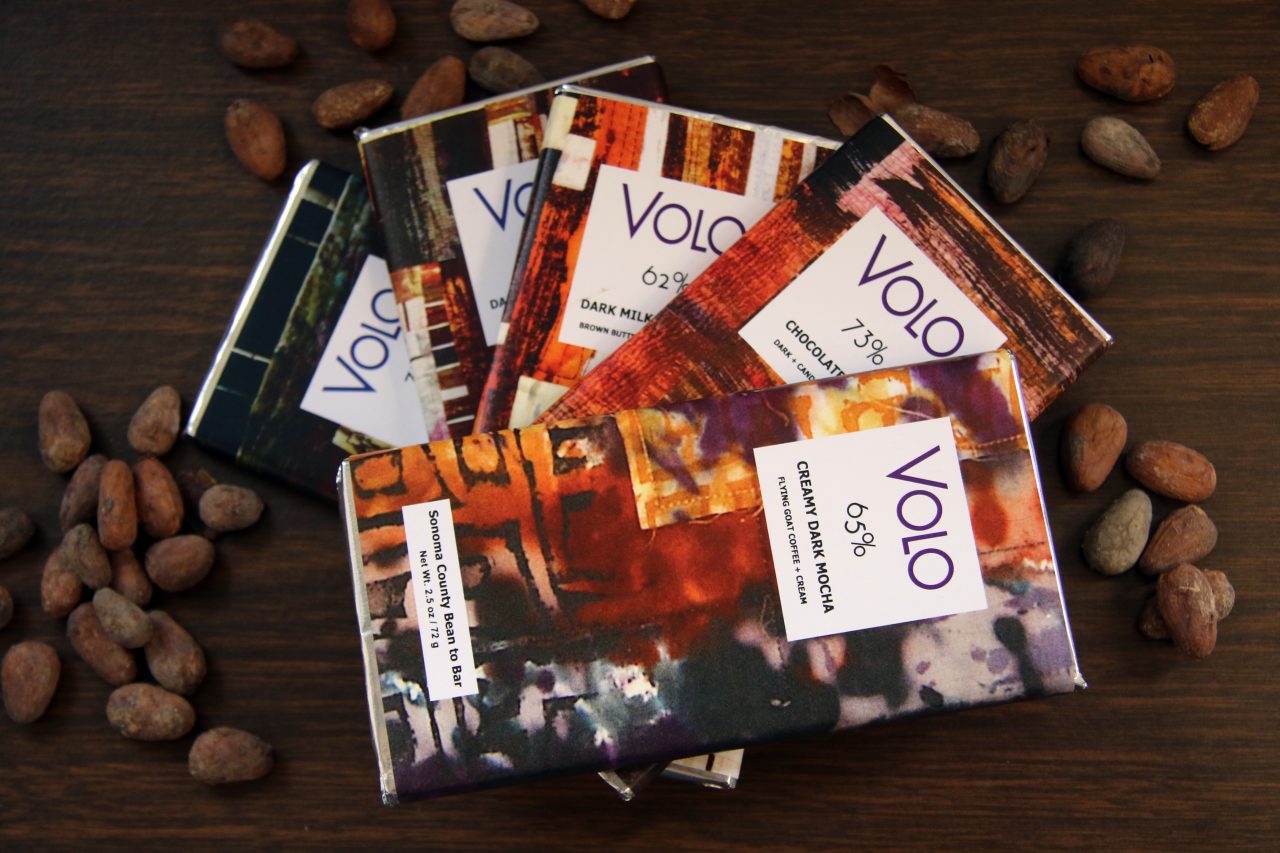
Not all VOLO products have solely Mexican ingredients, though the base bars always have salt, pure-cane sugar and cacao from Mexico. The 73% Chocolate Orange bar includes can- died orange peel; the 62% Dark Milk Chocolate features brown butter and roasted almonds grown on a ranch in Newman, California, where Jeff grew up; the 65% Creamy Dark Mocha bar is made with local Flying Goat Coffee and cream.

There are currently six chocolates available, at $8 per 2.5-ounce bar. VOLO also produces bonbons (the Malls’ version of a peanut butter cup is killer) for pop-up and special events, and solid-chocolate bunnies for Easter, which this year sold faster than the Malls could make them. The couple is playing with olive oil chocolate and the addition of Meyer lemon and other dried fruits to their bars, intent on balancing sweet with savory in each bite.

For now, it’s a two-person operation, carried out by the Malls in a 500-square-foot room. They can produce approximately 1,000 bars a week, though family and friends often help with packaging. Jeff’s aunt, Healdsburg artist Cathy Shanahan, paints and dyes on fabric in bold swaths of color; reproductions of her work wrap around each bar.

Growing their business is not foremost on the Malls’ minds. “We’re taking it one step at a time, testing the waters,” Jeff explained. “You can spend a lot of money really fast in this business, so we’re taking it slow.”

The brand began life as El Jefe — “boss” in Spanish and the closest approximation of “Jeff” in the Spanish language. Yet the world is awash in El Jefe brands, so the Malls settled on VOLO. It’s Latin for “to want, to wish.”

And who doesn’t want more — and more interesting — chocolate?

WHERE TO FIND VOLO
VOLO Chocolate’s Windsor production site is not open to the public, though proprietors Jeff and Susan Mall sell their confections at volochocolate.com and to a handful of winery tasting rooms and retailers, including these:

Bella Vineyards and Wine Caves
9711 W. Dry Creek Road, Healdsburg,
866-572-3552, bellawinery.com

Ferrari-Carano Vineyards and Winery
8761 Dry Creek Road, Healdsburg,
800-831-0381, ferrari-carano.com

Jimtown Store
6706 Highway 128, Healdsburg,
707-433-1212, jimtown.com

Relish Culinary Adventures
14 Matheson St., Healdsburg,
707-431-9999, relishculinary.com

Rodney Strong Vineyards
11455 Old Redwood Highway, Healdsburg,
707-431-1533, rodneystrong.com

Wilson Winery
1960 Dry Creek Road, Healdsburg,
707-433-4355, wilsonwinery.com
 

Liza Hinman: Santa Rosa Chef, Mom, Entrepreneurial Leader

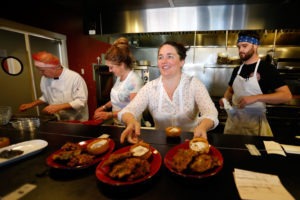
Spinster Sisters chef Liza Hinman, second from right, and her kitchen staff, from left, sous-chef David McDowell, and line cooks Kelli Bailey and Grant Mitchel prepare dishes from chef Joyce Goldstein’s new cookbook The New Mediterranean Jewish Table, during a Book Passage Cooks with Books event at Spinster Sisters in Santa Rosa, California on Wednesday, June 1, 2016. (Alvin Jornada / The Press Democrat)

Spinsters Sisters chef Liza Hinman has been named to the James Beard Foundation’s Women’s Entrepreneurial Leadership Program. As one of the first class of 21 recipients, the program aims to help female chefs and owners grow their businesses by cultivating women’s leadership in the culinary industry.

The Santa Rosa chef and her businesses partners from Spinster Sisters recently purchased Santa Rosa’s Astro Motel, which is going through a $10 million renovation to restore it to it’s mid-century modern glory. She’ll head to Babson College Sept. 10-15 with the rest of the class, which also includes Tanya Holland of Oakland’s Brown Sugar Kitchen.

That women chefs rarely get their due is one of the dirty secrets of the restaurant industry. Well, let’s face it, of a lot of industries. 

“Even years of hard work in the culinary industry didn’t necessarily mean the women got their due,” said Dr. Deborah Harris, who analyzed 2,200 pieces of food media, and conducted in-depth interviews with 33 women chefs for “Taking the Heat: Women Chefs and Gender Inequality in the Professional Kitchen,’’ co-authored with Patti Giuffre. For more on the topic, read Harris’ op-ed on the James Beard Foundation blog: jamesbeard.org/blog/opinion-can-we-finally-address-the-woman-problem-in-the-culinary-industry?

We’re glad to see Liza get tapped, and look forward to her bringing back plenty of wisdom for her sisters in the kitchen.

But what’s with being from Healdsburg, JBF (see below)? Santa Rosa proud!

The first class of 21 WEL recipients from across the country are:

·         Bleu Adams (Black Sheep Cafe, Black Sheep @ Epic Brewing, Provo, UT)
·         Kathleen Blake (The Rusty Spoon, Orlando, FL); Women Chefs and Restaurateur Fellow
·         Amy Brandwein (Centrolina/Chef Amy B, LLC, Washington, DC)
·         Christine Cikowski (Honey Butter Fried Chicken and Sunday Dinner Club, Chicago, IL)
·         Meredith Corey-Disch (Community Loaves, Jacksonville, FL)
·         Kimi Eklund (Kimi’s Chop & Oyster House, Salt Lake City, UT)
·         Gina Gruenewald (Wolf Peach/ Supper, Milwaukee, WI)
·         Liza Hinman (The Spinster Sisters, Healdsburg, CA)
·         Alicia Hinze (The Buttered Tin, St. Paul, MN)
·         Tanya Holland (Brown Sugar Kitchen, Oakland, CA)
·         Sarah Huck (Kos Kaffe, Brooklyn, NY)
·         Carolyn Johnson (80 Thoreau, Cambridge, MA)
·         Vivian Joiner (Sweet Potatoes-a restaurant, Winston-Salem, NC)
·         Guisell Osorio (Sabores Del Sur, Walnut Creek, CA)
·         Nicole Pederson (Found and The Barn, Evanston, IL); Women Chefs and Restaurateur Fellow
·         Marian Romano (Nonna’s Osteria, catering & Potato Palace, booth State Fair, Wasilla, AK)
·         Suzanne Simon (Chaia – Farm to Taco, Washington, DC)
·         Lien Ta (Here’s Looking At You, Los Angeles, CA)
·         Shannan Troncoso (Brookland’s Finest Bar & Kitchen, Washington, DC)
·         Jan Wichayanuparp (Sweet Republic, Phoenix, AZ)
·         Elizabeth Wiley (Meadowlark Restaurant, Wheat Penny Oven and Bar, Dayton, OH)

Mentors for the women chefs include

  • Elizabeth Blau, Founder and CEO, Blau and AssociatesJames Beard Award-Winning Chef Traci Des Jardins
  • Rohini Dey, JBF Trustee and founder/owner of Vermilion Restaurants
  • Ahmass Fakahany, Chief Executive Officer/Owner, Altamarea Group
  • Ruth Gresser, Chef/owner, Pizzeria Paradiso; Women Chefs and Restaurateurs, Past President
  • Carla Hall, Chef and television personality
  • Dr. Deborah Harris, Associate Professor of Sociology, Texas State University
  • Pamela Hinckley, Chief Executive Officer, Tom Douglas Restaurants
  • Josh Kulp, Co-owner, Honey Butter Fried Chicken
  • James Beard Award-Winning Chef Tony Mantuano
  • Jodie W. McLean, Chief Executive Officer, EDENS
  • Cindy McLoughlin, JBF Trustee and Partner with CohnReznick
  • Melissa Musiker, Director, APCO Worldwide
  • Richard Perlman, Chairman, Compass Partners LLC
  • James Beard Award-Winning Chef and JBF Trustee Anne Quatrano
  • Jessamyn Rodriguez, Founder and Chief Executive Officer, Hot Bread Kitchen
  • Juliana Stone, Vice President at The Elliot Group

10 Best Cheap Eats in Sonoma

July 2017

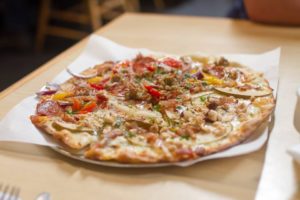
You don’t have to be wealthy to eat well in Sonoma County. Sure, there are high-end restaurants with deep wine lists, $15 cocktails and menu items that include exotic and expensive ingredients. But beyond the gustatory glitz is a smorgasbord of good, honest and affordable eateries and dishes across the region. There are myriad options for delicious indulgence, but only if you know where to go. And we do. Click through the gallery above for cheap eats, Sonoma style.

Sonoma’s “Soil My Undies Challenge” Going Viral

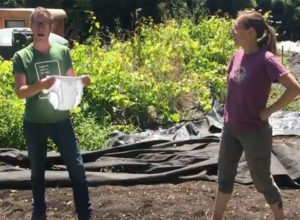
Soil My Undies Challenge from the Farmers Guild of California with Evan Wiig and Singing Frog Farms.

Dirty boxers aren’t usually a good thing, but if you’re a farmer or gardener, they might just say a lot about your soil.

Evan Wiig, executive director of the California Farmers Guild, is challenging green thumb of all stripes to test the quality of their dirt with a simple pair of cotton underwear. If you’re soil is alive and healthy, according to Wiig, you’ll be left with not much more than an elastic waistband within a couple months. If you can wash and still wear the undies? You’ve got some work to do.

“In healthy, natural soil, you’ve got all these millions of tiny creatures—earthworms, fungi, bacteria—all busy eating, decomposing organic matter, transferring nutrients from the soil to the plant. But industrial agriculture decided it doesn’t need the help of these creatures,” said Wiig.

“Cotton is an organic material and breaks down naturally just like anything else you’d put in your compost pile. So if you bury cotton in soil teeming with life, all those creatures will begin to feast. Whereas in lifeless soil, nothing happens,” he said.
How does soil become lifeless? Wiig says that synthetic fertilizers and chemical inputs can make dirt “dead”.

“To those who rely solely on synthetic fertilizers and chemical inputs, the deader the dirt the better,” he says. “But the farmers we work with consider themselves stewards of that underground ecosystem, as farm partners with those tiny creatures. They take pride in active soil biology—and benefit from water retention, protection against pests and even the ability to sequester carbon.”

So far more than a dozen farmers, ranchers and gardeners have taken the #soilmyundies challenge, and the results will be judged and showcased at the September Agrarian Games and Farmer’s Market on September 16 at the Petaluma Fairground.
More details here.

5 Local Canned & Boxed Wines to Drink this Summer

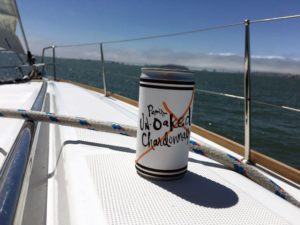
Canned and boxed wines are all the rage this summer. They’re portable – you can pop them in your backpack for a post hike, mountaintop toast or enjoy them at the park or poolside, where glass cups and bottles are not permitted. Even better? Most canned and boxed wines are under 14%, making them great session sippers for a long day in the sun. However, all these perks don’t mean a thing unless what’s inside tastes good. I tasted 15 boxed and canned wines produced in Sonoma, Napa & Mendocino counties – click through the gallery above for my five picks for the best to sip this summer. 

The Brass Rabbit: Julia’s Boeuf Bourguignon and Uni Mousse at Healdsburg Supper Club

Deconstructed fromage blanc cheesecake with summer fruit at the Brass Rabbit in Healdsburg. Heather Irwin/PD

When’s the last time you made Lobster Thermidor or traditional Boeuf Bourguignon? Unless you’re a recipe blogger paying homage to St. Julia Child or you’re an incredibly passionate cook, the answer is probably, well, never.

Though you’ll see them on an occasional menu (sorry, sad beef stews that try to pass themselves off as Bourguignon just aren’t), they’re food anachronisms from the height of the 1960s French cuisine craze that began with Child’s Mastering the Art of French Cooking, then promptly died out along with beef tongue aspic and three-martini lunches. So, dishes like these appearing on a restaurant menu is notable; but even more so in the heart of Healdsburg, where infused foams and microgreens reign supreme.

“We want to pay homage to the classics but understand we are cooking in Sonoma County with…the worlds best produce at our fingertips.”

– Shane McAnelly, The Brass Rabbit

At The Brass Rabbit, Chef Shane McAnelly is all about the bouillabaisse, along with lamb Wellington, shrimp cocktails and crudites as well as the aforementioned Lobster Thermidor and, yes, Julia’s actual Boeuf Bourguignon.

“It’s her recipe,” he says, working the line with his new chef de cuisine, Jared Rogers. “I have always been drawn to the supper club classics, the dishes my grandparents loved.”

“They are celebratory and memorable. And I wanted to offer something different that doesn’t exist in Healdsburg. It just seemed like the perfect fit … and the space really seems perfect for this type of food — small and intimate,” says McAnelly.

If your cholesterol levels are rising just reading this, know that these French comfort classics aren’t the entirety of the menu, but rotating daily specials for those who can appreciate them either for the first time, or once again. But McAnelly is deeply rooted in California cuisine as well, as the celebrated chef at nearby small-plates restaurant Chalkboard. Both restaurants are owned by wine magnate Bill Foley.

Creative dishes like sea urchin parfait with ponzu sauce, grilled quail with figs or Spanish octopus with wheat berries in bacon broth are more contemporary California cuisine.

“We want to pay homage to the classics but understand we are cooking in Sonoma County with an incredible amount of the worlds best produce at our fingertips,” he says.

With access to Chalk Hill Winery’s storied organic culinary gardens, traditional dishes, many of which are on the menu year-round (hence Bourguignon in July) get a fresh farm-to-table facelift.

“I think when you look at restaurants that offer daily specials or “plat du jour” a lot of times you see dishes that are the same year-round,” McAnelly said.

“For the most part we are able to feature what is great from the garden with our daily specials. For example, the Lobster Thermidor last week came with zucchini, Early Girl tomato and grilled porcini mushroom. The duck confit on Sunday came with creamed Brentwood corn and pickled pluots.”

Housed in the former Ralph’s Bistro, known for its own versions of traditional dishes from their iconic sole Meuniere to chicken livers with onions, the space is nearly unrecognizable after months of remodeling. An open kitchen and bar give the restaurant an updated feel, and banquets feel cozy and bistro-like.

Taking full advantage of his 6-foot, made-to-order, Grillworks Argentinian-style wood-burning grill, McAnelly is still experimenting with the menu, and Rogers, named a Rising Star Chef several years ago by the San Francisco Chronicle will put his own mark on the menu as the concept matures.”

“I think as we move forward the menu will continue to evolve as we strive to refine every aspect of the restaurant,” says McAnelly. “I have been cooking small plates for 8 years so it has been a fun departure to have another outlet and style of restaurant.”

Uni mousse at Brass Rabbit in Healdsburg. Heather Irwin/PD

Sea Urchin with Ponzu ($12): As someone who loves uni, making it into a custard seemed almost a sacrilege. But McAnelly says that for the many people eechy about eating the reproductive organs of sea urchin, creating a more approachable dish with bright ponzu and sesame seeds is a win.
“I think a lot of times the reason people struggle with embracing uni comes down to texture. What I am trying to do is present it in a different way in hopes that I can change peoples minds about how they feel about uni. The custard is rich and luxurious but still captures the essence of the ingredient in my opinion,” he says.

Eggs Mimosa, $8: Deviled eggs with a caviar upgrade.

Duck confit croquette with ember-roasted strawberry jam, $10: A standout that hits every note … salty, crispy, with sweet, savory and just a hint of bitter.

Rabbit rillette with carrot sauerkraut on rye, $10: If you don’t appreciate the food pun, this might not be a dish for you. Too bad, because it’s a salty, meaty, luxurious bit of deliciousness.

Sweet corn soup, $14: One of the greatest seasonal dishes I’ve ever eaten was Shane’s chilled English pea soup at Chalkboard. This comes in a close second, and will only get better as corn season peaks.

Spanish octopus, $14: Cephalopods are smart, and their revenge tends to be turning insanely rubbery when cooked. So why bother? With a bit of care, this version is tender and flavorful, swimming in a bacon broth.

Grilled strip loin $35: Make sure to get something cooked on the Argentine grill, because it seems to make meat sing. Served with creamed chard and charcoal-roasted potatoes, it’s not the same old beef dish.

Beef loin with mushrooms and charcoal roasted potato. Heather Irwin/PD

Beef Bourguigon, $29: This is a “totally true to Julia” version, and frankly, it’s wonderful. I tend to like a version that doesn’t use tomato paste (or tomaahto paste as she says), because it almost gets a little ketchupy to me. Your palate may disagree.

Fromage Blanc Cheesecake, $10: Somehow cheesecake is even better broken down into it’s requisite parts, with summer stone fruit, golden balsamic and brioche croutons from pastry chef William Woodward.

Critique: Salt sometimes overpowers dishes, and more isn’t always more on dishes like the burrata, which felt over-dressed and overly complicated.

Takeaway: A great addition to downtown Healdsburg’s continually evolving restaurant scene. McAnelly’s cuisine doesn’t take itself too seriously, giving room for playful changes with the seasons. It offers a deep menu that includes gluten-free and vegetarian options, but isn’t overly precious.

Where: The Brass Rabbit is at 109 Plaza St, Healdsburg, 707-473-8580, thebrassrabbithealdsburg.com

16 Luxury Vacation Rental Pools in Sonoma & Napa

No vacation dream is complete without scenes of lazy descents into cool turquoise waters. Half the pleasure of poolside living can be had out of water, sipping frosty refreshments on shaded terraces while enjoying the calming effects of the bright azure waters. Click through the gallery above for 16 wine country pools that will fuel your aquatic fantasies.