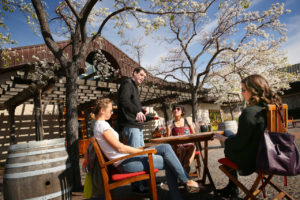
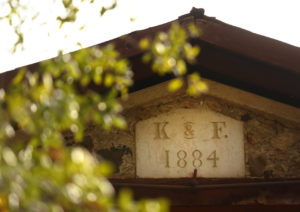
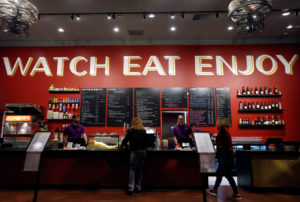
Winter in Wine Country means less crowded rural roads and bright-yellow mustard blossoms starting to unfurl in the vineyards. After ringing in a new year, many wineries see fewer visitors and can offer more personal attention — and, in some cases, significant discounts on wine purchases. Click through the gallery above for local tasting rooms for the post-holiday season. Always call ahead or check websites for the latest information. (Tasting prices are per person.)
Among the untold losses from the North Bay wildfires are priceless cultural and historical landmarks. Santa Rosa’s Round Barn stood prominently on a hillside at the northern approach to the city for 118 years. Paradise Ridge Winery, for nearly a generation, has been one of Santa Rosa’s most cherished gathering spots for the arts and celebrations. Bouverie Audubon Preserve in Glen Ellen is a nature sanctuary and learning center, with historical and important literary connections. And for 70 years, Cloverleaf Ranch was an idyllic summer camp for kids, a riding and boarding stable and rustic events venue — an equestrian haven a short trot north of the Santa Rosa city limits. They are all compelling symbols of our identity, our community and shared heritage.
Guests enjoy wine and music as the sun sets at Paradise Ridge Winery in Santa Rosa, California, on Wednesday, August 9, 2017. (Photo by Alvin Jornada)
Paradise Ridge Winery, Santa Rosa
Walter Byck, who founded Paradise Ridge Winery in 1978 with his late wife, Marijke Byck, was in Denmark on October 9 when the Tubbs fire destroyed the main winery building he had set on an idyllic ridge looking over the Russian River Valley in northeast Santa Rosa.
Winery caretaker Fernando Marquez, who lives nearby, and winemaker Dan Barwick of Healdsburg both rushed to the property, but the roads were already clogged with people trying to evacuate.
“Fernando finally got to the property and opened the gates, and the firetrucks drove up and drove out,” says co-owner Sonia Byck-Barwick. “Within five minutes after that, he took a couple of pictures of the fire coming over the hill, and the front gate had flames 30 or 40 feet high.”
For Byck-Barwick, the biggest emotional loss was the exhibit housed inside the winery that honored Japanese wine pioneer Kanaye Nagasawa of the original Fountain Grove Winery.
“The sword, the Samurai outfit and his tuxedo — it’s all gone,” she says. “And it’s irreplaceable.”
But Byck, who has been a generous patron of the arts and of the community, has obviously generated good karma over the years. All the sculptures on display outdoors at the winery, including permanent works by local artists Bruce Johnson, David Best and the late Robert Ellison, as well as 10 pieces on display in Marijke’s Grove, came through virtually unscathed.
“When we walked the property, it was kind of mind-boggling,” Byck-Barwick says. “It’s amazing that we can’t see any lost art at this point.”
Miraculously, the 15 acres of vineyards planted in front of the winery also escaped the fire’s fury, which means the winery will be able to produce a vintage next year.
“The fences are burned all the way around the vineyard, but the vineyard pretty much looks perfect,” Byck-Barwick says. “That would have been an incredible loss for us.”
The winery, which was voted Best Tasting Room in California by USA Today in 2016, has also gained fame as a wedding venue, which inspired Byck to purchase a large steel sculpture of the words “LOVE” by artist Laura Kimpton of Fairfax.
Now a photograph taken by a family member of the surviving “LOVE” sculpture, surrounded by smoke, is making the rounds of social media as a powerful symbol of resilience.
“It is a beacon of hope for Sonoma County,” Byck-Barwick says. “The high schoolers all have it on their Snapchat pages.”
Communications director Barbara Harris of the Voigt Family Sculpture Foundation, which has curated the winery’s sculpture exhibits for the past five years, says that the “LOVE” sculpture is a perfect example of how art speaks a universal language.
“In the midst of tragedy and devastation and loss, it still touches people’s lives,” she says.
Sonoma Coast artist Bruce Johnson, who lost six out of 16 largescale redwood sculptures at the Luther Burbank Center for the Arts as a result of the same fire, was one of the first sculptors to exhibit at Paradise Ridge Winery more than 20 years ago.
“It’s a loss because it’s a vital, lively venue,” he says. “Walter built a performance space there, and there was a shed he used as a small gallery … and he opened up an area for several artists working in wood.”
The winery has been hosting a Wines and Sunsets event on Wednesday evenings since it opened, and Byck hopes to hold the popular music and food gathering this year at the outdoor performance venue while he rebuilds the winery. He also plans to use the wall space inside of the winery, which once told the story of Nagasawa, to tell a new story: about the fire and the rebuilding of Sonoma County.
“My dad said we’re going to use that wall for the fire because that’s the new history of Sonoma County,” Byck-Barwick says. “He wants to keep moving forward.”
– Diane Peterson
The historic Fountaingrove Round Barn stood above Santa Rosa for 118 years. (Photo by Mark Aronoff)
Round Barn, Santa Rosa
Kanaye Nagasawa, the exotic Japanese winemaker at Fountain Grove Winery, gets credit for “building” the familiar Round Barn that guarded the northern gateway to Santa Rosa for 118 years.
It was, in fact, Nagasawa who hired carpenter John Lindsay in 1899. But the plans he handed him came directly from Thomas Lake Harris, the founder of the Fountaingrove Utopian Community — the “Father and Pivot and Primate and King” of the Brotherhood of the New Life.
Harris had been gone from his Santa Rosa “Eden” for nearly a decade when he ordered the new barn, an example of a popular turn-of-the-century architectural style. Harris was a “student” of unique architecture, believing that he was building the Fountaingrove complex to be taken directly into the “Celestial Sphere” when the end came.
In Gay Nineties Santa Rosa, there was already a classic round barn near the railroad housing Isaac DeTurk’s valuable trotting horses. Through the years, these two buildings brought the town some architectural attention, because most of the round barns were in the Midwest and, so far as can be determined, Santa Rosa was the only town with two.
They were the subjects of good-natured banter among the townspeople, particularly those who might have gathered at the Senate Saloon to exchange witticisms. A favorite, dutifully recorded by scribes of the day, was about the tramp who walked to death looking for a corner in which to relieve himself.
The DeTurk round barn, 20 years older and built of sturdier stuff, was purchased by the city in 1910 and served as the municipal corporation yard for 70 years. It has recently been restored and is a popular venue for civic events.
No such luck for the more rough-hewn Fountaingrove barn. Since the Fountaingrove Ranch was sold in the 1970s, no cattle or horses have fed in a circle on hay tossed from the loft above into one big heap. It sat empty, except for the owls, and pigeons and an occasional transient.
TMI, a teachers’ investment group that was the first of several would-be developers of the ranch, put a bronze plaque near the entrance in memory of Nagasawa. And each new owner, in turn, tried to interest the city in buying it. But it was, let’s face it, just a barn, with single-wall construction that let the air and light and the wind and the rain in between the old boards. It was generally agreed that the public could not be allowed in unless a whole new inner structure was built. So the city said, more than once, “Thank you, but no thank you.”
Ultimately it became the property of the owners of the Hilton Hotel next door, a hostelry that was originally the “Sheraton Round Barn Inn.” But only for a few years.
What it lacked in respect, it made up for in the hearts and minds of Santa Rosans. It was a way to give directions; a unique landmark for motorists, particularly when the Redwood Highway that passed beneath it didn’t have “Old” in its name. There have been numerous attempts of “do something” with the barn, the last one, in 1999, being an abortive effort by a German couple to turn it into a brewpub.
— Gaye LeBaron
Back in 2009, volunteer docent Jim Moir waits for a group of hikers next to an egret sculpture at the Bouverie Preserve in Glen Ellen. (Photo by Mark Aronoff)
Bouverie Audubon Preserve, Glen Ellen
The Bouverie Audubon Preserve, a sanctuary for plants and wildlife set against a flank of the Mayacamas Mountains in Glen Ellen, lost every building and bit of infrastructure when the Nuns fire ripped through the upper Sonoma Valley.
It’s a profound loss for the nonprofit refuge, run by the Audubon Canyon Ranch as a preserve and educational center for schoolchildren and the community. But thanks to the unrelenting efforts of a 28-yearold employee, the historic home of founder and British-born aristocrat David Pleydell-Bouverie, filled with precious antiques, including a letter from George Washington, was spared.
And when the flames died down and the sun rose through a red haze on Monday morning, the famed “Last House” of internationally known author M.F.K. Fisher, who spent her final 21 years on the preserve, also was miraculously still standing.
“She would be so pleased it survived, not because it was her house, but
because it’s a place that can serve as a springboard for Bouverie to come back to life,” says Kennedy Golden, Fisher’s daughter. “It’s going to take time and it’s going to take money, but I’m deeply grateful David’s house and Last House survived.”
She called the forested preserve, once home to more than 130 species of birds, as well as wildflowers and large animals from bobcats to bears, “a beacon of specialness.”
Fresh from a summer spent with a “hot shot” crew out of Redding fighting wildfires, Sasha Berleman, a recently hired fire ecologist for Audubon Canyon Ranch, arrived at the preserve in the middle of the night just after the worst of the damage was done, to see what she could save.
Virtually everything was gone, including Gilman Hall, a beautiful converted barn and educational center filled with art of the flora and fauna of the preserve. Bouverie, who was an architect, designed the barn, with its distinctive end arches and swoopy roof.
Bouverie’s home was still standing but had started to burn. Aided by a retired Cal Fire training chief and a neighbor, she toiled through the night to keep the fire from taking the house, parts of which date back to the 19th century. They knocked down an arbor connecting the house to a burning guesthouse and formed a bucket brigade to douse flames with water from a swimming pool.
Anticipating potential fires, Berleman had ordered a controlled burn on the property earlier last summer, leaving little to burn and threaten Fisher’s small adobe-style home in the middle of a pasture visible from Highway 12. Berleman spent
a fitful night camping on the grounds and putting out spot fires around Fisher’s house, which contained keepsakes, like her typewriter, that had recently been returned to the cottage as part of an ongoing push to restore the house. Author of books like “The Art of Eating” and “How to Cook a Wolf,” Fisher wrote 13 books at Last House before her death in 1992.
The great poet W.H. Auden called Fisher, whose prose was as lush as the food, places and experiences that inspired her writing, “America’s greatest writer.” She broke bread with people like Maya Angelou, Julia Child and Bill Moyers at Last House, which her friend David Bouverie built for her in 1971.
Wendy Coy, a spokeswoman for the preserve, said soon after the fire that Bouverie’s staff and volunteers were both heartsick and heartened. There were signs of wildlife, everything from tiny voles to pings from tagged mountain lions on the other side of the valley. A stone belltower Bouverie had built is still standing. So is a sculpture of a great egret, with wings outstretched, that stood outside Gilman Hall.
“One of its wings is melted metal,” said Coy. “But we look at it and we immediately think, ‘That’s our phoenix.’”
— Meg McConahey
Ginger DeGrange, from left, on horse Hank; Shawna DeGrange on Bill; and Rob DeGrange on Arnie at Cloverleaf Ranch in Santa Rosa, May 8, 2013. (Photo by Crista Jeremiason)
Cloverleaf Ranch, Santa Rosa
Asked where she lives, Shawna De-Grange has for years been prone to answer, “Heaven.”
DeGrange has never taken for granted the gift of having grown up and spent most of her 35 years on the 160-acre horse ranch and idyllic summer camp for kids that rises from Old Redwood Highway just north of the city limits to well up the western flank of Fountaingrove. She stands in reverent awe of Cloverleaf Ranch, founded by her late grandparents 70 years ago and passed to her by her parents in 2010. These days, she beholds as well the enormity of the task to rebuild it.
“Everything’s just melted,” De-Grange says of the ruins left by the Tubbs fire. What hurts most is the destruction of her parents’ home and the ranch’s two great Civil War-era redwood barns, and the deaths of two horses.
Just as she might direct a mount while riding, DeGrange nudges herself to stay on the bright side.
“I’m trying to take it one step at a time and be grateful,” says the 2000 graduate of the former Ursuline High School, located just up Old Redwood Highway.
DeGrange was taking a respite on Maui when the fire roared down from Fountaingrove before dawn on October 9, devouring the nearby Hilton Sonoma Wine Country hotel and the Fountaingrove Inn, then leaping west to the Coffey Park neighborhood. For a time that morning, as she spoke by phone with key Cloverleaf staffer Shayla Wilson, she feared her mother, Ginger DeGrange, had died in the fire.
But Ginger, a renowned Sonoma County equestrian who also grew up on the ranch and for more than 30 years owned and operated it with her husband, Ron, emerged almost untouched. She and Wilson and some angels with horse trailers rounded up and safely moved more than 30 family-owned and boarded horses.
Ginger, who credits Wilson with awakening and saving her and Ron, was on the ranch also for the Hanly fire of 1964, which threatened but didn’t damage Cloverleaf. She says the firestorm of October 9 was a different animal.
“It was coming so fast,” she says. “I have never seen wind like this.”
Though the flames destroyed her house, daughter Shawna’s mobile home, the barns, the camp kitchen, zip line, tack shed, trading post and several other structures and amenities, including some of the camp bunkhouses, it missed a few buildings and the classic Foley & Burke Circus wagons long ago converted to sleeping quarters.
Shawna says with a look of irony, “The (stacked-full) hay barn was left standing, which is wild.”
She and her mother have said separately the most emotional aspect of the fire has been the community response. In addition to all who helped move and board the horses, friends and strangers and former Cloverleaf Ranch campers across the nation and overseas have sent messages of love and support, and offered to help with the reconstruction.
“It’s about the village,” Ginger says. “The blessings have been just unbelievable.”
A crowdfunding appeal for help to rebuild Cloverleaf Ranch has attracted donations of more than $40,000. A second one for Shayla Wilson, who lost everything when the fire burned her unit at the ranch, has received more than $3,000.
More than 100 people have said that when the time comes to go to work creating the new Cloverleaf, they’ll be there.
As heartbreaking as it is for Shawna to walk about the remains of the ranch, being there also helps her accept the reality and extent of the loss. And already she’s pondering what she wants to build, and where.
“The more I’m here, the more it’s helping with the healing,” she says.
A doer who has run Cloverleaf since age 28, she aspires to welcome back campers, as usual, next summer.
A metal scultpure of an egret remains at the Bouverie Preserve in Glen Ellen. (Photo by John Burgess)
Those used to gazing up at the deeply forested mountains framing the Valley of the Moon now look to the east in shock. The Nuns Fire that blowtorched through the upper Sonoma Valley at the end of harvest has transfigured the multimillion dollar views that inspired writers like Jack London and made it one of the most prized destinations in Wine Country.
The firestorm vandalized the landscape, scorching hillsides and leaving haunting bald patches that look like iron burns.
Hummocks, once green and now the color of shale, rise denuded above vineyards. Stands of oak and other deciduous trees still standing wear crowns of brittle burned leaves. Many evergreens are now brown.
More heartrending are the ashen homesites eerily strung like Pompeian ruins along Warm Springs Road and Highway 12, and tucked back on country lanes between Kenwood and Glen Ellen. The loss of some 500 homes in the Sonoma Valley broke up tight-knit neighborhoods and placed a massive strain on a community already shy of affordable housing.
But there are signs of life. With the first fall rains, grass shoots poked through the blackened fields, repainting the landscape as nature began the inevitable process of reparation.
And that has given residents and businesses grieving lost homes and property, and the sight of burned ridge lines, reason to believe that the valley’s scars will eventually fade.
“The contrast between these lush, brilliant green juicy sprouts and the dead black ash on the ground surface is inspiring,” said Caitlin Cornwall, a biologist and research program manager for the Sonoma Ecology Center. Flames came within 100 feet of their offices at Sonoma Developmental Center.
“On one hand it’s very much a visceral, human disaster. We all know people who have lost their homes and just being on these burn sites is shocking,” she lamented. “The smell is bad. There are toxics in the ashes and debris left behind. And it’s been a big hit to the public in terms of the economy and their routines. A lot of us were evacuated and stressed out. But on the other hand, we all know the land has been waiting for and wanting and needing fire ever since European settlers stopped the regular Indian burning that the land is used to.”
Tensions Tamed
Before the fires, as another harvest launched in September, the valley’s biggest challenge centered on the pace of growth in the wine industry, the strain of increasing traffic along the storied Valley of the Moon Scenic Route and the loss of residential housing to vacation rentals for tourists flocking from around the world to take in the region’s charms.
But that seems like another lifetime. While there has been an increase in utility and construction trucks for cleanup and rebuilding, those who depend on the wine economy now worry that tourism will drop. Despite the fact that none of the valley’s wineries suffered major damage, the images of smoke and flame that played out in the national media for weeks are seared into the minds of many people.
“Traffic is down at all of our locations,” said Josie Gay, head of the Heart of the Valley Association, which markets 29 wineries between Kenwood and Glen Ellen.
“The general misconception out there is that everything is destroyed,” said Steve Ledson, whose Gothic “castle” winery barely escaped the inferno. “People are calling and asking, ‘What is the landscape like? I don’t think I can bear to see the destruction.’” He acknowledged the widespread perception that Sonoma Valley “is not a fun place where anyone would want to go on vacation.”
The number of visitors to his Kenwood winery, as well as his hotel and restaurant on the Sonoma Plaza, are down. Damage to vineyards with fruit still on the vine will amount to millions in losses, he added. He said he already has cut the number of wine club events from six to two for 2018 and has all but halted the weddings that were a signature of his winery.
One Glen Ellen resident reflected that a silver lining in the tragedy is that it provided a timeout to the mounting tensions over growth in the tourism industry and the quality of small town, rural life cherished by residents.
“Certainly I wouldn’t want this to happen to anybody but it does make everyone step back a little. I know a lot of people taking VRBO’s off the market and now renting them full-time so people have places to live.”
Ledson was one of them. He said he made two of his vacation rentals available long term to residents.
“In times like this you’ve got to be helping each other,” said Ledson, who before the fire had dropped plans for a new 50,000-case winery off Highway 12 on Frey Road in Kenwood. He added he now plans to make the 18 new homes he’s building on West Spain Street in Sonoma, available as rentals to ease the shortage.
Recovering
As the new year begins, valley residents are showing grit and not giving in to their losses.
Chris and Sofie Dolan spent more than five years turning 10 acres along Highway 12 into the picturesque Flatbed Farm. Their country home and pool house was spared but a 7,200-square-foot barn designed by noted Wine Country architect Howard Backen is in ruins along with fencing and infrastructure.
“To see it in its current state is pretty emotional,” Chris Dolan conceded. “For us and the community it was much more than a barn.” It was, he said, a community gathering spot, and the centerpiece of their business. But he said they’re moving ahead with plans to rebuild and are looking forward to spring, using their vintage truck as a mobile produce stand.
“We won’t have a barn but we’ll be planting our spring crops and taking inventory of what survived in our orchard,” he vowed.
Farther up the highway, Rebecca and Gary Rosenberg also plan to rebuild and replant their lavender farm in Kenwood. Barely a trace of the bucolic spot remains next to Chateau St. Jean Winery where they raised their family along with fragrant fields of purple lavender. They’ve taken emotional refuge for the time being in a temporary rental in San Diego, until initial shock wears away in the valley. But they, too, remain optimistic.
“The character of Sonoma will not change,” Gary said. “The whole community is getting closer and neighbors are cooperating on the fenceline. There’s going to be a wonderful sense of pride. The wineries will always attract people and the natural beauty will be back.”
Bouverie Preserve
When Sasha Berleman surveys the scorched wildlands of Glen Ellen’s Bouverie Audubon Preserve, she doesn’t see devastation, but renewal. The 28-year-old fire ecologist worked through the night of the firestorm with two others to save the historic homes of David Bouverie and writer M.F.K. Fisher. Virtually every other structure on the 535-acre preserve burned to the ground, including a historic barn that served as an educational center.
The fire, she lamented, was “absolutely a human disaster.” But the effect on the landscape is not catastrophic.
Come spring, the fire will deliver an unexpected gift. Fire poppies, which need wildfire to germinate, will paint the meadows. Non-native grasses that suppressed other wildflowers have been burned off, clearing the way for a breathtaking wildflower bloom. The spring will be lush and green.
“This all has a silver lining for me,” she said, “knowing that in a lot of ways, the fire benefited our very loved open space. So even in the face of all the human suffering, you can look to spring and know there is going to be this incredible rebirth process we can all witness and lean on, as a vision of hope in the future.”
“I sleep where I fall,” said Salvador with a weary smile one early evening during the October fires.
He was standing in the doorway of La Luz Center in Sonoma after eating a free dinner of pasta and salad. At dusk, the smoke had lifted for a brighter sunset than the hazy days before. Families came and went around him, carrying free supplies — diapers, canned food and bottled water.
Too embarrassed to go to a shelter, Salvador had been living out of his car for the eight days since the fires started in Sonoma and Napa counties.
“Thank God we have La Luz,” he said. “Here we can eat, thanks to God. This is like home.”
Behind him, mulling over their meal in the dining hall, Glafira and Rodrigo were weighing their next move.
“Three nights ago we were living in the car,” she said. Immediately after the house they were renting in Santa Rosa burned in the Tubbs fire, they lived out of an SUV with their three children — daughters 6-year-old Joatsi and 3-year-old Jade and 8-month-old son Gael. Glafira cleans houses for a living, but the houses of her clients had been destroyed in the fires. Now, they were living in Rodrigo’s mother’s living room.
Along with Salvador and countless others, they are the often forgotten fire victims — those who cleaned the houses that went up in flames, who worked the land that burned, who cooked the food and made the beds in restaurants and hotels that no longer exist — many of whom may never qualify for federal aid because they’re undocumented.
They were living day to day before the fires, and now they’re looking for their next paycheck. The people who landscaped the lawns of those vanished hillside homes are among those wondering how they will pay next month’s rent or move into a new apartment.
For many, La Luz, a community nonprofi t focused on the needs of Mexican immigrants, has been the last resort. “We don’t ask if they’re documented or not —they need the service and we provide the service,” says La Luz board president Marcelo Defreitas, who helped his staff serve free lunches and dinners every day during the fires and after. By early December, they had served 2,000 hot meals to more than 500 families, donated 5 tons of supplies (diapers, clothing and canned goods) and helped more than 250 families with rent assistance totaling over $400,000. By Jan. 15, La Luz is required to spend all of the $750,000 passed on by Redwood Credit Union to the La Luz fund to help with fire victims.
Earlier that same day in October, as more than a hundred people lined up at the weekly free Food Pantry at St. Leo’s Catholic Church in Sonoma, Father James Fredericks explained, “At first there’s fire, OK, but we don’t think about going for days and even weeks afterwards. There’s one complication after another.”
That afternoon at First Congregational Church in Santa Rosa, Augustin, his wife and three children met with Davin Cardenas at North Bay Organizing Project, which has joined with other Sonoma County grassroots organizations to start UndocuFund to raise money for undocumented fire victims.
“My concern is we’re not going to get enough help,” said Augustin, his children sitting at his feet. His family barely escaped their house on Riebli Road before it burned. A carpenter by trade, he hadn’t worked for weeks.
“It’s hard to think, I don’t have nothing,” he said, holding his wife’s hand. “And I don’t have a job. And I don’t know where to start again.”
Turning a Corner
Two weeks later, Glafira returned to La Luz with her daughter Jade for a 10 a.m. appointment with her case manager. Her husband Rodrigo stayed outside in the SUV with their son and older daughter.
“We decided not to go back to our house because we knew there was nothing there,” she said, waiting in the crowded lobby with several other families.
After meeting with Defreitas and case manager Veronica Vences, Glafira received a check for $1,920 to pay for the first month’s rent on a new apartment in Agua Caliente.
“It’s a start,” said Defreitas, giving her a phone number for a woman in Sonoma who needed house-cleaning help, as well as his cellphone number in case she had any questions. He explained that La Luz will likely help out with the following month’s rent, too.
“We’ll see where you are in a month — if you have jobs or not.”
Outside, beside the SUV they once called home, Glafira gave her husband a big hug and told him the good news. Soon they would drive to Petaluma where he was applying for a job at Petaluma Poultry. But first she smiled a smile that had been missing for weeks.
“It’s nice to have hope again,” she said. “It feels good.”
LandPaths will lead a hike along with fire ecologist Sasha Berleman and biologist Peter Leveque through a 72-acre property off Calistoga Rd. that was burned by the Tubbs Fire. (Photo by John Burgess)
Fire destroys, and fire creates. At least that’s true in the parks and wildlands of Sonoma County affected by last fall’s fires. Native plants that evolved for millennia with frequent lowintensity burns aren’t merely equipped to overcome fire. Often, they require it.
Coast live oak trees are considered fire resistors because their evergreen leaves, thick bark and vigorous sprouting allow all but the youngest specimens to survive and recover quickly. Meanwhile, many species of the chaparral shrub Ceanothus, commonly known as California lilac or soap bush, have leaves coated with highly flammable resins and seeds that germinate only under intense heat.
Rare is the opportunity to witness this ecological magic in our own backyard, however, as landmanagement practices and development along the urban-wildland interface — not just here but throughout the West — have resulted in less frequent, more severe wildfires.
To help offer insight into fire’s role in the landscape, Santa Rosa-based conservation group LandPaths will host an intimate, guided walk of one of its preserves in eastern Sonoma County in February. The 72-acre property off Calistoga Road saw spotty, low-intensity burning in October, leaving a checkerboard of greenery and charred ground rich with educational opportunities.
Five weeks after the fire, smoke wafted from holes in the earth as roots slowly smoldered underground, and the first green shoots of winter emerged from the soil where fire hadn’t touched.
By late February even the burned, blackened patches should be blanketed in green, says fire ecologist Sasha Berleman, one of two leaders of the 3-mile hike, which culminates with stunning ridgetop views of Fountaingrove, Sebastopol and beyond. She’ll be joined by esteemed Sonoma County field biologist Peter Leveque.
“In burn areas we’ll expect to see a bit of ferns and irises and soap root popping up, so that’ll be lots of fun,” Berleman says. “And some madrone will probably be here, too.” The ancient process of renewal is underway.
Saturday, February 24, 1 to 4 p.m. Advance registration is free but required, due to limited capacity, at landpaths.org. Exact location and additional details will be provided to registered participants approximately five days before the hike.
Helicopters drop water on a fire on the flanks of Hood Mountain above Leson Winery in the Sonoma Valley on October 14, 2017. (Photo by John Burgess)
To the rest of the world, it briefly appeared that Sonoma’s wine industry had gone up in smoke. Heart-stopping images of a demolished Paradise Ridge Winery in Santa Rosa, video of air tankers dropping retardant on flames raging on the hillside behind Ledson Winery & Vineyards in Kenwood, and early reports that Gundlach Bundschu Winery in Sonoma, one of California’s oldest, had been destroyed, gave outsiders an ominous impression.
But ultimately, surprisingly few Sonoma wineries suffered significant damage when the catastrophic fires ripped through the region in October.
And the local winemaking community begins a new year resolute in their intention to continue honing their craft, to put their talents to work for fire victims and rebuilding efforts, and to make sure the world is well aware that Sonoma is open for business.
The industry did not emergefrom the firestorm unscathed;most notably, the Byck family’s Paradise Ridge buildings were destroyed. But their 15-acre vineyard and metal art sculptures remained intact. Firebreaks and aerial strikes saved Ledson and several otherHighway 12 wineries, and within days of the fires, Jeff Bundschu, president of “Gun Bun,” was enthusiastically welcoming visitors to the winery, tales of its demise proving false (though his parents, Jim and Nancy, lost the family home on the property).
Jeff Kunde evacuated family, horses and dogs from Oakmont to his Kenwood winery, Kunde Family Winery, and hunkered there for nine days. He knew if he left, he wouldn’t be allowed back in.
Family and staff slept in the tasting room, and winemaker Zach Long took advantage of a generator installed in 2016 to keep the fermentations, and the business, going.
Kunde grilled meat from the winery freezer and cooked farm eggs on foil to feed the troops. “It was surreal,” he says, “eating steak and eggs and drinking wine from our cellar, as fire crews battled the flames all around us. Helicopters were a constant, the pilots using our irrigation reservoirs for firefighting.
“It was a fateful decision for me to evacuate to the winery and not Santa Rosa. We saved ourharvest.” A few Kunde vineyard blocks were singed, but as with most Sonoma vineyards, the majority of grapes had alreadybeen harvested — 90 percent, according to Sonoma County Winegrowers president Karissa Kruse — at the time of the fires.
More positive news: The Russian River Valley, Dry Creek Valley and Petaluma Gap wine regions were largely unaffected by the fires, except for smoky skies and evacuation advisories that never became mandatory. Northern Alexander Valley had a few scares, east of Cloverdale and Geyserville, but firefighters kept flames away from homes and wineries.
Vineyards as Firebreaks
An early November drive on Highway 12 from eastern Santa Rosa through Glen Ellen showed scorched hillsides, intact wineries and startlingly alive, green-leafed vines, with only a few rows burned. “Grapevines play a fantastic role in slowing down fires,” explains Santa Rosa’s Rhonda J. Smith, viticulture farm advisor for UC Cooperative Extension.
“There typically is a lack of fuel load in a vineyard, compared to structures and landscaping. Most growers had mowed their vineyard rows down to a stubble after the June rains, leaving no easy fuel for the flames.”
Paradise Ridge co-owner Rene Byck says he will rebuild his Fountaingrove winery, known for its breathtaking views and art installations. He takes heart from the fact that the estate vineyards survived, bottled wines were secure in a warehouse, and that wine sales continue at a satellite tasting room in Kenwood.
On Sonoma Mountain, Bettina Sichel of Laurel Glen Vineyard lost one acre of Cabernet Sauvignon vines to flames, although she found an upside.
“Those vines were planted in the 1970s and suffered from eutypa, a trunk disease,” she says. “We were getting just one ton of grapes from that block and were scheduled to replace the vines at some point. Mother Nature speeded things up for us.”
Sichel and her husband, Brian Dickson, and their two children lost their Soda Canyon home to the Atlas Fire in Napa Valley. She marvels that most of her Sonoma vineyard was saved, and that the
Laurel Glen tasting room in downtown Glen Ellen also escaped damage.
She rues, however, “losing two weeks of the biggest tourism month of the year” while her tasting room was closed. “That’s a cash hole we’ll have to fill.”
That’s a concern shared by many others in the Sonoma wine industry — and the county as a whole. A study commissioned by Sonoma County Winegrowers and Sonoma County Vintners, released in 2014, found that grape-growing, winemaking and related businesses contributed $13.4 billion to the local economy — nearly two-thirds of the county’s gross product.
“If I had just one thing I’d like you to write, it’s that Sonoma remains open for business,” Kunde said in November. “The biggest impact of the fires on us is that people aren’t coming. We’ve had parties cancel their trips. But look around our property and you wouldn’t knowwe had a major fire here a month ago.”
Vintage 2017 in Sonoma is truly “the harvest from hell,” a phrase commonly used in the wine business for difficult years. Yet Kunde remains astonished at how relatively little physical damage was done to his grapevines, his wines and other wineries.
“We have remarkable firefighting efforts to thank,” he says. “And we met neighbors, people we didn’t know before. One woman evacuated from her home wandered in and ended up helping us soak oak barrels so they wouldn’t burn. We made new friends. And the generator I bought last year, which kept the winemaking going for nine days before electricity was restored? I actually got it for fire protection. But it ended up saving our bacon for winemaking, providing the power we needed.”
Fundraising Kicks In
Winery people have always known how to throw a good party for a great cause, and the fires brought out the best in them.
Hamel Family Wines in Glen Ellen, which was threatened by flames on three sides but survived major damage, hosted a concert by Rock & Roll Hall of Famer John Fogarty, raising $1.2 million for fire victims relief. Kelly and Noah Dorrance, owners of Reeve Wines in Dry Creek Valley, raised more than $222,000 in a drawing for vacation stays in Healdsburg, Laguna Beach and Hawaii.
E. & J. Gallo Winery, which owns several North Coast brands — among them Sonoma’s J Vineyards & Winery and MacMurray Estate Vineyards — pledged $1 million, to be shared by the American Red Cross California Wildfires Relief Fund, Community Foundation of Sonoma and Napa Valley Community Foundation. Numerous wineries have waived tasting fees and offered discounts to fire victims, and have promised
percentages of sales to firerelated causes. The John Jordan Foundation and Jordan Winery, in Healdsburg, teamed to donate $25,000 to the Sonoma County Grape Growers Foundation to establish a housing recovery fund for farmworkers and their families displaced by the fires.
Says Noah Dorrance, “It’s been an amazing, heartening silver lining — but not surprising — that our community has rallied, that people are marshalling their resources to try to help out.”
The cellphone, set on vibrate, buzzed insistently 17 times in the middle of the night October 9 before Brittany Rogers-Hanson finally woke up in her newly rented home in Fountaingrove and picked up the message to evacuate.
She had 20 minutes to gather up her husband, Eric, her three kids, her daughter’s friend who was with them for a sleepover, her son’s service dog, her father’s watch and her aunt’s heirloom sapphire ring, and get into the car.
An eerie drive to the bottom of Fountaingrove Parkway, during which they hit a fallen tree, ended at the on-ramp to Highway 101, where they faced another freakish sight — 50 cars headed straight for them scurrying south in the northbound lane. The Fountaingrove Inn and historic Round Barn had not yet burned. Thirty minutes after they left, their own home would be engulfed.
One motorist rolled down his window and shouted “Turn around. The freeway is on fire!”
That’s how Rogers-Hanson’s week began. For the 38-year-old wedding planner there would be no opportunity over the next two weeks to even contemplate her own loss. She had seven weddings to salvage immediately — 27 before the end of the year.
In the two weeks after the fires broke out, Rogers-Hanson and her tiny team from Run Away With Me weddings, including chief wedding planner Kalika Ansel, who was burned out of her townhouse across from the Luther Burbank Center, worked like bats out of hell. They scrambled to move two weddings from Napa and Sonoma to Novato at the last minute as the fires raged, graying the skies with strangling smoke even over areas unaffected by flames.
Hit with three cancellations, Rogers-Hanson’s team of four kicked into gear to salvage what was left and keep any more from canceling. In one day alone she worked the phones to soothe the fears of 37 brides wondering if their weddings were still on. Each canceled event had the potential for setting off a cascade of suffering for the florists, cake bakers, hair stylists, photographers, caterers, musicians and other people whose income depends on Wine Country weddings and events.
In the case of one relocated wedding, the officiant who was supposed to preside over the ceremony lost her home in the fires — so Ansel stepped in and did it herself. And as the relocated and reconfigured events continued in the days that followed, the wedding team continued to come together as smiling couples shared vows and toasted love.
“My team is very powerful,” Rogers-Hanson said. “For some reason survival kicked in, because we’re wedding planners. Our normal job is dealing with chaos. But it’s also keeping us sane. Because once we stop and think about what happened, we’re a mess.”
More information about elopements and wedding packages at runawaywithme.com
A sign made by kids hangs from a fence during a community potluck to thank the Kenwood firefighters at Plaza Park in Kenwood, on Sunday, November 12, 2017. (Photo by Beth Schlanker)
Sonoma always felt like home to me, even before it was actually my home. I grew up in a rural town back east, and Sonoma’s rambling farm culture felt familiar: the neighborhood feed store, the extra pears and persimmons left out on fences for passersby, the goats and horses along Highway 12. Vineyards were new, but I loved their twisting tendrils and regimented, row-by-row design. Even the valley oaks, so different from the year-round green of the pines I’d known, had a scruffy, wise presence in the landscape. I couldn’t get enough.
My family and I moved to Kenwood four years ago, and we think it’s the best small town in the world. Really, truly. Our first friends in the village were fellow beekeepers we met after they helped us give a home to a springtime swarm. We love how preschoolers ride their strider bikes down Los Guilicos to school, how villagers rally for an old-school Fourth of July with nearly as many parade participants as watchers, and how the best part of any day is reading the highly entertaining police blotter in the bimonthly Kenwood Press (bonus points if you can figure out which neighbor called the sheriff on the rowdy vacation rental). Villagers know to give a wave as we pass in our trucks, and we can always tell if someone’s up from the city by the speed they drive on our curvy country roads.
It seems we all know each other at least by sight, and longtime local families are leaders at the school, the community clubs, and our two churches. Many at Kenwood’s volunteer fire district are second- or third-generation firefighters as well as parents at the school. For the 1,200 or so people who live here, the roots really do run deep.
Late that Sunday night, the first night of the fires, it was a crushing fear of the loss of my kids’ school that undid me. We left pretty quickly, and in the disorienting rush of grabbing keepsakes and checking on neighbors, I remember seeing huge flames in the direction of Kenwood School and thinking it had to be gone. Through about a million group texts Monday morning, we started to hear about homes being lost, but we had little other specific Kenwood news until Tuesday, when my husband and I were able to sneak back in for a few hours to check on the chickens and bees and evacuate our bunnies.
But even after seeing blackened fields and thick yellow skies for myself, I still couldn’t wrap my mind around the severity of the fires. I told myself that surely we’d be home in a couple more days.
A few close neighbors stayed in Kenwood after Tuesday, gathering at the Muscardini tasting room to share information and working together to clear debris from the school that could spark another fire. At night, they barbecued steaks from the deep freezers that many of us keep in our sheds (with the power out long-term, everything was about to go bad anyway).
The folks who stayed behind texted us when they could, sending photos of fire lines creeping down from Sugarloaf Ridge State Park toward the valley floor. They cheered the arrival of helicopters and worried for the safety of the firefighters. They asked for diesel, for jugs to water animals, for more planes to help out if they could. A beloved local mechanic found his way into town on a motorcycle to help fix equipment. Vineyard owners helped bulldoze firebreaks. The owners of the feed store handed over the keys so that animals could be fed. And a neighbor spread word that he had both a working well and solar power, and that anyone was welcome for hot food, charging phones and showers.
Neighbors like these are the reason my friends and I can’t imagine ever living anywhere else. So many were willing to help and are helping still, even as we begin to understand how deeply the fires have affected our tiny town. Over 80 percent of Sugarloaf Ridge State Park was impacted by the fires; 35 percent of the acreage in the Kenwood Fire Protection District burned and dozens of homes, including several belonging to school families or staff, were lost. Importantly, Kenwood School came through the fires intact, though it was three weeks before students got back to class. (At least five schools in the county, including Cardinal Newman High School and the Anova School for students on the autism spectrum, lost campus buildings in the fire.)
In the parts of Kenwood that were not affected, residents still stayed away up to two weeks, and those who returned to damaged properties faced long waits for professional restoration. Those bright green Servpro trucks were everywhere you looked.
The focus here in the valley has now turned to recovery, to honoring our first responders and making sure locals can find places to stay during rebuilding. As a dear friend says, if we can’t keep our people here, then the magic is gone — and we can’t imagine that. The fires are both a tragedy and a coming together, a realization of how much our community matters. How much people matter. And how together, our community will come out on the other side.
Fried chicken sandwich at Duke’s Commons in Healdsburg. Courtesy photo from the restaurant.
Healdsburg’s sidewalks are about to roll up a little later thanks to a new late-nite spot featuring global street food and killer cocktails. Amen.
Chef Shane McAnelly (Chalkboard, Brass Rabbit) and the owners of Duke’s Spirited Cocktails will open Duke’s Common in the former Scopa space in early February 2018. The news answers two burning questions we’ve been chewing on all winter — who would take over the tiny-but-mighty Scopa space (the restaurant closed last summer) and what exactly McAnelly was keeping up his sleeves.
The merger of the downtown Plaza neighbors brings together the farm-to-glass cocktails of Duke’s with the culinary prowess McAnelly brings to the table – literally. Tapping into the flood of millennials who are tres charmé with the town, the casual global street food should resonate, including dishes like Disco Fries (a sort of poutine), shrimp skewers, pizza by the slice and sandwiches.
“The menu is meant to be an affordable option on the square to grab a quick bite either on the go or in the space itself,” said McAnelly.
Duke’s Common will serve food daily from 4 to 9p.m., but the entire menu will also be available two doors down at Duke’s Spirited Cocktails from 4 to 11p.m. weeknights and 4-midnight on weekends.
Duke’s Common, opening in February at 109a Plaza St., Healdsburg.
Andrea Ballus, who founded Sift in 2008 and took it to national fame on the Food Network, plans to open a bubbles, wine and small plates gathering spot at 643 Fourth St. in the coming weeks (fingers crossed for February). The menu will feature oysters, cheese, charcuterie and shareable plates along with wine and beer.
Andrea and Jeff Ballus, owners of Sift Dessert Bar, at their Petaluma store in 2014. Other Sift locations are in Napa, San Francisco, Santa Rosa and Cotati. Sift Dessert Bar Christopher Chung
Working with husband Jeff Ballus and managing partner Jeremy Vassey, Ballus said they’re focused on both local and international wines by-the-glass or bottle, along with wine cocktails, coolers, and spritzers. The Jade Room will also have a “Bottle Service” option for bubbly served with fresh fruit purees, herbs and citrus to concoct your own creations.
“The Jade Room was founded as a result of our obsession to create a cool, casual place where folks can gather, share a bottle, share a plate, taste and compare local and international wines, and just have a good time!” said Ballus.
No word whether the Jade Room will serve cupcakes and frosting shooters, but really, why not?