
How a Small but Mighty Team Keeps People Safe on the Sonoma Coast

The beaches, parking lots and roads of the Sonoma Coast were filled with folks hoping to escape a third day of intense heat inland on Monday, September 7, 2020. (Photo by John Burgess/The Press Democrat)

On a busy summer weekend, tens of thousands of visitors are drawn to our Sonoma Coast, a rugged environment of land and sea where a single moment of questionable judgment can quickly evolve into a life-threatening situation.

The job of keeping everyone safe falls to a shockingly small corps of firefighters, sheriff’s deputies, and park rangers operating within a tenuous web of overlapping jurisdictions. Somehow, they manage to keep the summer from descending into chaos.

It was a run-of-the-mill ropes operation on the Sonoma Coast—which is to say it was complicated, technical, and dangerous. A Mendocino County resident had stopped for a bathroom break about 8 miles north of Jenner during a nighttime drive in the summer of 2016, and had tumbled down the rocky cliffs in the dark. Members of the all-volunteer Timber Cove Fire Protection District received the call around 10:12 p.m. and quickly set up a system of ropes and pulleys.

Two firefighters harnessed in and lowered themselves into the void. The victim’s family wasn’t sure exactly where she’d gone over the edge, and it took two hours of drifting and scrambling to locate her. Finally, Timber Cove Fire training officer Nichole Lynn found her huddling in a bush.

“She was a little cold, definitely scared, and (had) just a few minor scrapes to her face and her nose from sliding down the rock,” Lynn told The Press Democrat at the time.

It may be a typical medical call, but we just had to hike a half-mile to the beach to get to it. There’s always another layer of complexity.” – Fire District Captain Justin Fox

The relieved klutz licked the firefighter’s face all the way back to Highway 1. Marshmallow was a 35-pound pit bull puppy with a lot to learn about safe pooping practices. The pet owners resumed their drive home, and the Timber Cove crew added one more happy ending to the vast annals of Sonoma summertime calamities.

The warm months are here again, bringing waves of awed visitors to this spectacular coastline. And with them will come capsized kayaks and grounded boats, road-rashed cyclists and limping hikers, victims of dehydration and cardiac arrest, swimmers caught in riptides, cars deposited onto rocky ledges they were never meant to visit and any number of random mishaps that become all but inevitable when you set loose a horde of carefree revelers in an environment of rugged land and sea.
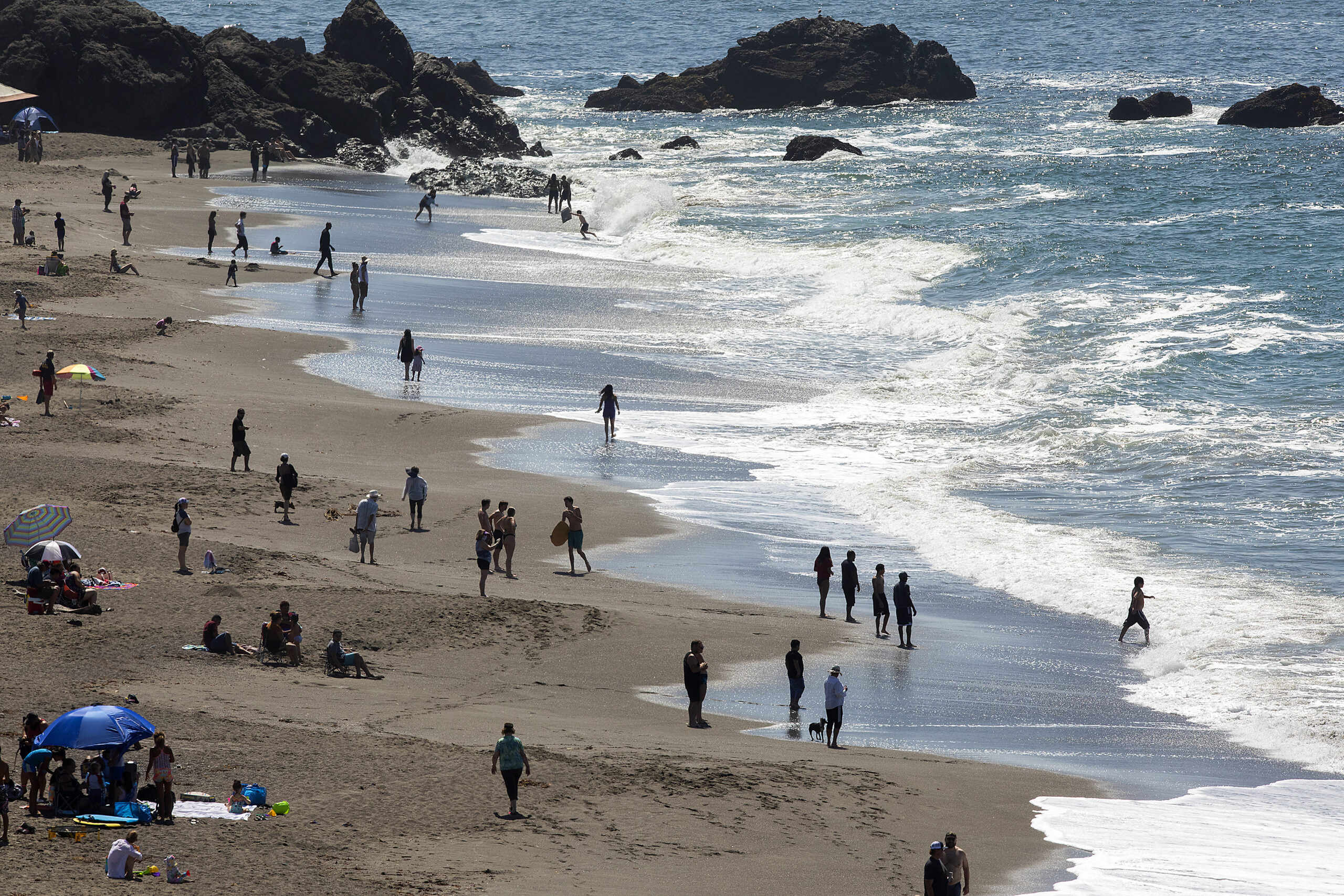
The beaches, parking lots and roads of the Sonoma Coast were filled with folks hoping to escape a third day of intense heat inland on Monday, September 7, 2020. (John Burgess/The Press Democrat)

In 2019, before the Covid pandemic took a bite out of tourism, Sonoma County welcomed 10.2 million overnight and day visitors. Not all of them came between Memorial Day and Labor Day weekends, and not all ventured to the coast. It just felt like it.

“As early as noon sometimes, our lots are maxed out—what we call full visitation,” says Tim Murphy, a ranger at Sonoma Coast State Park.

The job of keeping these thousands of daytrippers safe falls to a shockingly small corps of first responders. At any moment during the summer, the on-duty staff of firefighters, cops, state and regional park rangers, California Highway Patrol officers and Coast Guard personnel patrolling the Sonoma Coast might amount to a few dozen.

They cover a twisting, 50-mile stretch of California Highway 1 that unwinds from Bodega Bay north to Gualala. Their beat is a puzzle of beaches, rocky ledges, muddy bays and estuaries, campgrounds, city streets and seaside hills veined with dirt trails— locations difficult to access. “It may be a typical medical call, but we just had to hike a half-mile to the beach to get to it,” says Justin Fox, a Sonoma County Fire District captain at Station 10 at Bodega Bay. “There’s always another layer of complexity.”

And of course, there is always the undulating power of the Pacific Ocean, which lures you with its beauty but cares little for your safety.

It’s a lot to handle. Summer is its own brand of mayhem at the coast for one major reason: There are so many more bodies to be bruised, scraped, and scorched. In other words, for emergency rescuers at the coast, the wild card is humanity itself.

“You get 5,000 people on a beach—that’s our target hazard,” says Station 10 assistant fire chief Steve Herzberg. The vast majority of calls to the Bodega Bay station, he says, are for illnesses and injuries that could happen anywhere, anytime: heart attacks, pneumonia, slip-and-fall fractures, and the rest of life’s painful embarrassments.

For Erich Lynn, chief of Timber Cove Fire District—and father of Nichole, renowned pit-bull puppy rescuer—the hardest thing about a summer emergency can be getting to it. More than half of his station’s calls, he figures, put his trucks on Highway 1. It’s a curving two-lane route with narrow shoulders and too-few pullouts, and it’s packed in summer.

Lynn says a lot of drivers freak out when they see the flashing lights behind them, and just stop in the middle of the highway, clogging up the response. Don’t get the man started on cyclists. “Bicyclists, they just don’t listen,” Lynn says. “They don’t pull over, they don’t stop. And sometimes you’ve got five or six riding together. Once you pull out to pass, you’re committed to the whole string.”
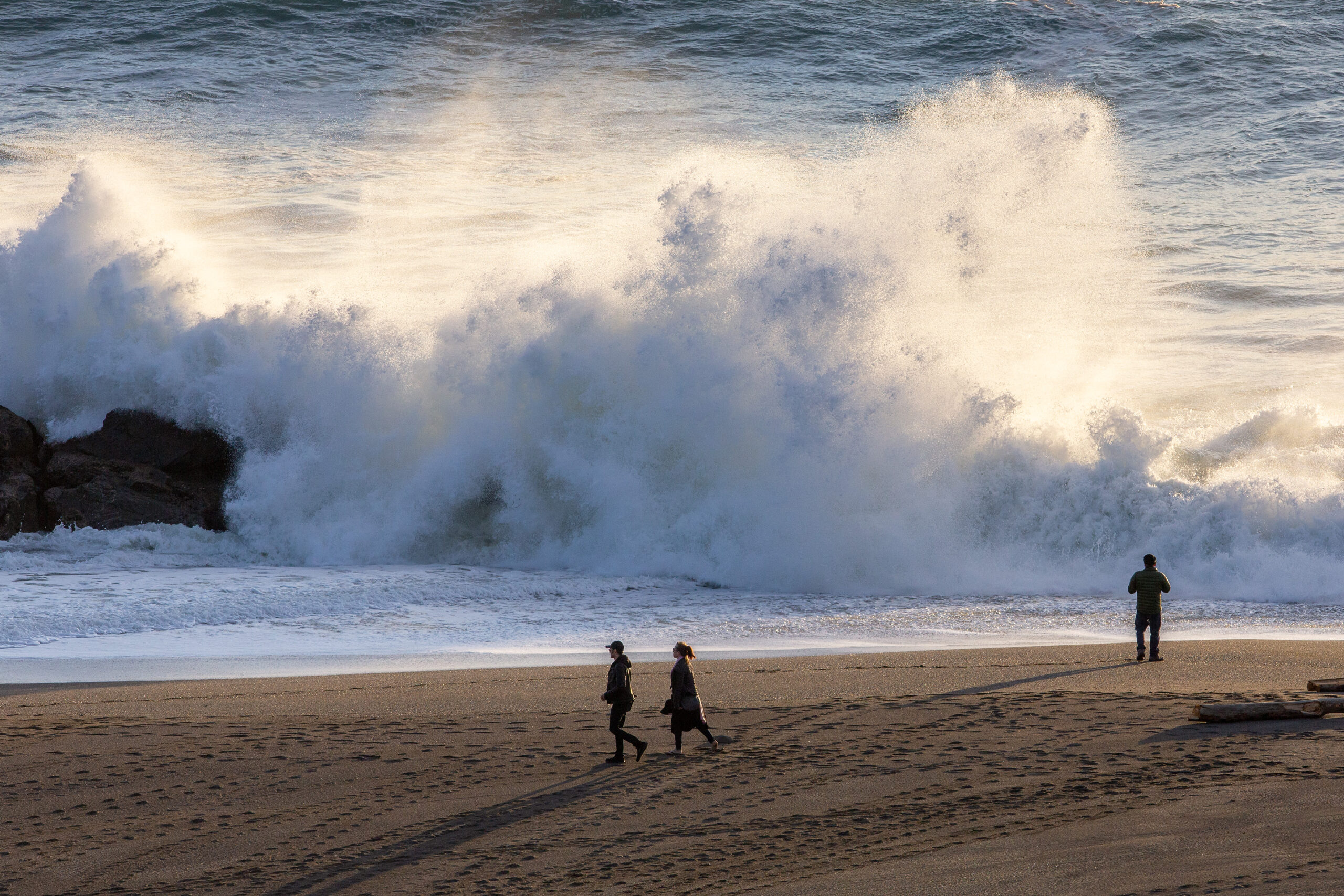
Heavy surf crashes against the rocks at Jenner Beach, near the mouth of the Russian River in Jenner. (Alvin A.H. Jornada / The Press Democrat)

While acknowledging the challenges they encounter, first responders tend to project a similar theme: The system works. These folks have your back, even when you’re floating atop 200 feet of ocean.

The range of “situations” they face regularly is limited only by the imagination and questionable judgment of beachgoers.

Station 10’s Justin Fox recalled an incident a few years ago that seemed almost comical, right up to the moment it turned dire. Firefighters received a call about a citizen in distress. They scoped the ocean with their binoculars, and there he was: a young adult, in shorts and tank top, piloting a pink floatie shaped like a unicorn. He had drifted a halfmile south, and away from the beach. The unicorn was presumably bound for Mexico before they collected him.

In June 2019, a 54-year-old woman drove off a cliff just north of Salmon Creek. Investigators suspected it was a suicide attempt. She survived the crash, crawled out a broken car window before her vehicle burst into flames, and swam out to sea, where she was rescued by a firefighter from Station 10 in Bodega Bay.

In August 2021, a man and his six dogs (including five 4-week-old puppies) were rescued by the Coast Guard near Driftwood Beach, 9 miles south of Bodega Bay, after his boat lost power and he drifted in the ocean for a night. And last June, a driver in a Honda Civic went off the side of Highway 1 and rolled about 25 feet down a cliff just north of Russian Gulch State Beach.

If you’re wondering—yes, alcohol does play a significant role in much of this madness. That’s true anywhere. But it doesn’t help to have approximately a billion liters of available, world-class wine between Santa Rosa and the Sonoma coast.

“I don’t drink, so I can smell alcohol from 10 feet away,” says Timber Cove’s Erich Lynn. “People just get bored when they know the road so well. They get a six-pack in Jenner and head home. And a lot of people camp, drink all weekend and then drive home.”
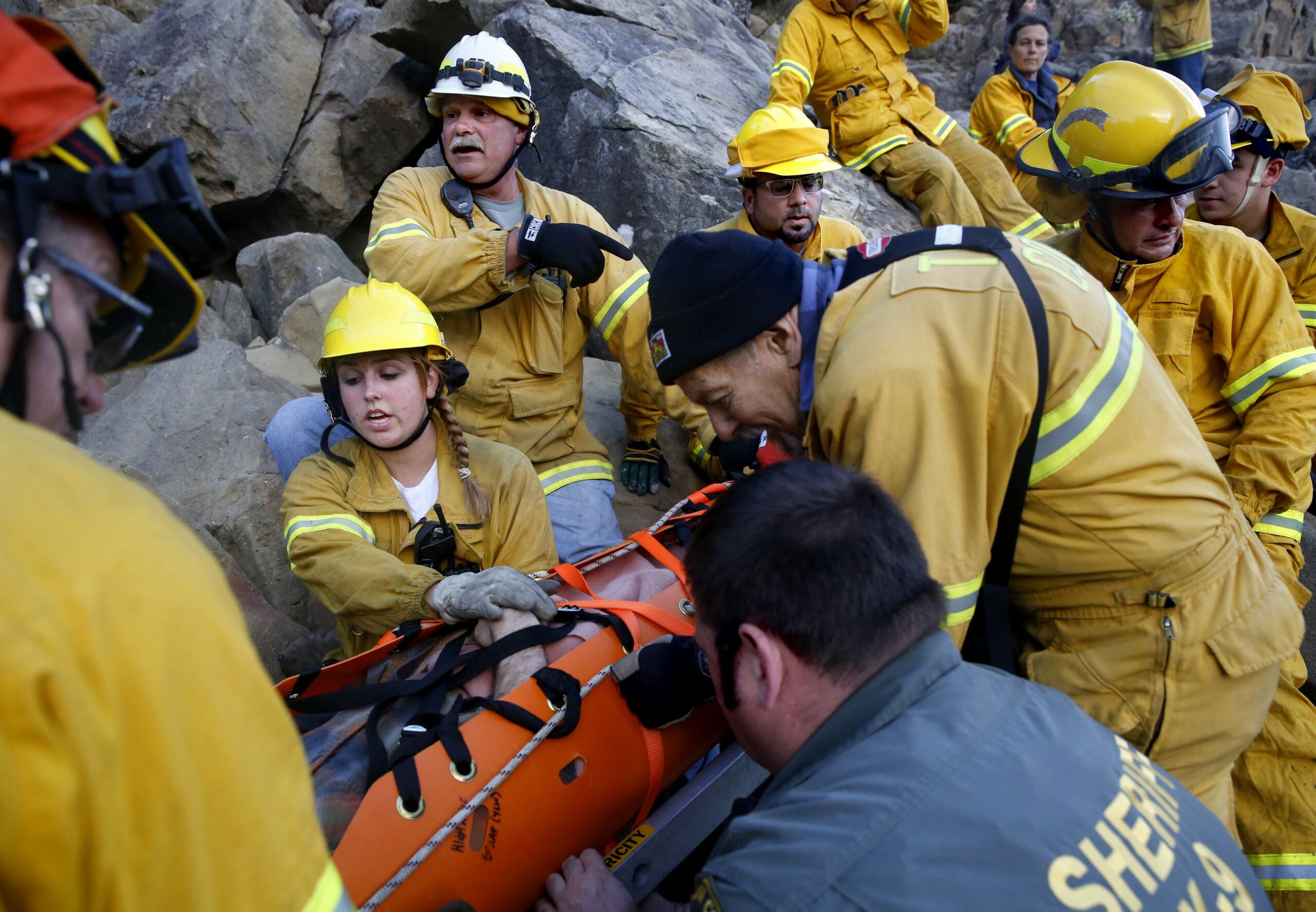
Erich Lynn, center, of the Timber Cove Fire Station leads rescue training. (Beth Schlanker / The Press Democrat)

Faced with such a panoply of unfortunate events, it doesn’t help that the interlocking teams of first responders are getting smaller.

When ranger Tim Murphy transferred from Orange County’s Huntington Beach in 1999, his State Parks division had about 20 sworn officers, he says. Now they’re down to eight, handling a busy jurisdiction that stretches from Bodega Bay north to Salt Point State Park, and inland to Austin Creek, including several campgrounds that must also be monitored. “It does take a toll in terms of a lot of overtime work,” Murphy says. “Call volume has gone up, and we have less officers to cover it.”

Erich Lynn says his fire department in Timber Cove historically had 21 to 23 on-call fire volunteers. He has 18 now.

To meet the coverage challenge, coastal emergency crews throw specialization and territoriality out the window. Agencies here tend to do a little bit of everything, working hand in hand with one another in overlapping jurisdictions.

They certainly do at Station 10. It’s like any other firehouse in America, except this one is perched on a hill with a view of a sliver of Bodega Bay. Visitors are often greeted with the sound of barking seals, carried in on the breeze.

Calling Station 10 a fire department is a bit like referring to George Clooney as a tequila salesman. The description is accurate, but it isn’t necessarily the main thing they do. According to Steve Herzberg, the Bodega Bay firehouse responds to about 20-30 fires a year, compared to 25-40 marine rescue incidents.

That’s thanks in large part to Fox, who helped create the station’s boats program a decade ago.

The Bodega Bay fire crew, a volunteer company until Sonoma County Fire District absorbed it in 2022, was always around the water, of course. Until 2012, however, their jurisdiction more or less ended at the surf line. That didn’t make any sense to Fox, who noted that the commercial fishing fleet anchored at Bodega Bay makes up a big part of the town’s tax revenue. Weren’t the men and women of the local fleet entitled to the same level of care as shop owners?

To meet the coverage challenge, coastal emergency crews throw specialization and territoriality out the window. Agencies do a little bit of everything, working hand in hand across overlapping jurisdictions.

Staffing and maintaining a boat program wasn’t an easy sell for a community-supported volunteer fire department. Why do we need this, residents would ask Sean Grinnell, the station chief at the time. “Because we have an ocean,” Grinnell would answer.

Indeed they do, and it’s a squirrely one. Riptides. Side currents. Sleeper waves. Rocky shoals and sandbars. Drunken boaters. Water temperatures in the mid-50s throughout much of the summer. Beneath that soothing surface lies a video game full of risks.
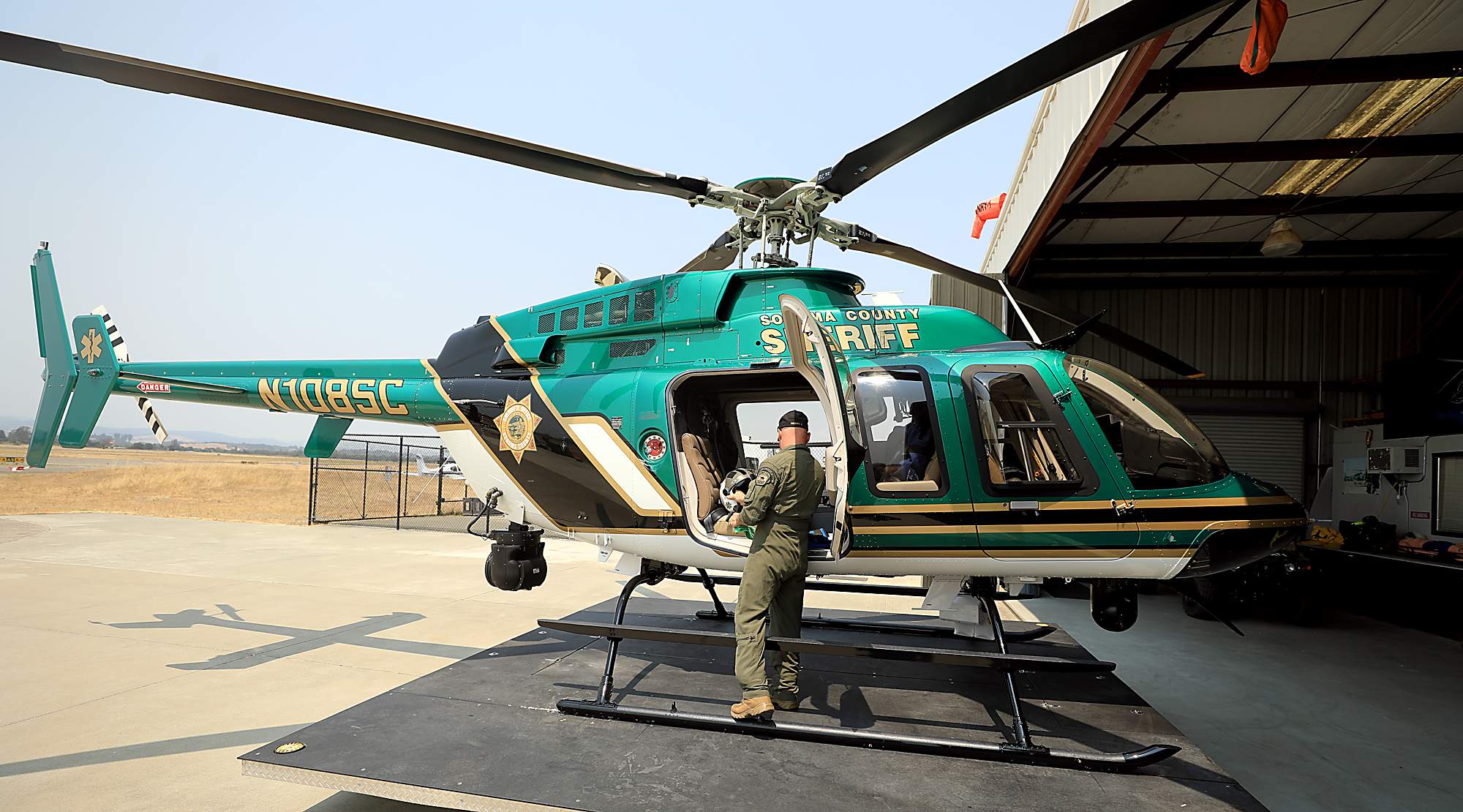
The newest Henry 1 helicopter, used for both training and rescue operations.

Not every visitor answering the siren song of Sonoma’s coast understands the nuances of this stretch of the Pacific. That can be true especially of those escaping 100-degree days in the Sacramento-San Joaquin Delta, or vacationers more used to the smaller waves and gently-sloping shores of Santa Monica or the Eastern seaboard.

“While some spots on the coast are quiet and sort of calm in appearance, as far as the water is concerned, it’s still the Pacific Ocean,” says Sonoma County Sheriff’s Office deputy Rob Dillion. “And our coast can be particularly rough. There are scenarios where the weather is absolutely beautiful, but the swells and the water are turbulent. You’ve got currents moving through. People get themselves in trouble. And the ocean is not forgiving.”

There is a Coast Guard station in Bodega Bay, too. The military post has larger boats, including an 87-foot patrol boat, and takes the lead on search-and-rescue operations. The Coast Guard is also charged with ocean law enforcement, in the rare event it’s necessary.

Station 10’s smaller craft can perform shallow-water operations, and unlike the Coast Guard, Station 10’s rescue crew includes paramedics. The bigger of its two craft, not surprisingly, also has firefighting capabilities. It’s the only technical fireboat between the Golden Gate Bridge and Humboldt/Arcata Bay in Eureka.

Seagoing entities from Station 10 and the Coast Guard are frequently aided by Henry 1, the all-purpose emergency helicopter operated by the Sheriff’s Office.

The chopper is stationed at the Charles Schulz-Sonoma County Airport in Santa Rosa and is responsible for a huge coverage area. But Henry 1, like the rest of us, winds up spending a lot of time at the beach during the summer. In fact, the Sheriff’s crew flies regular patrol runs—west along the Russian River from the airport, down the coast, around Bodega Bay and back.

The Henry 1 pilots, Dillion says, are trained to fly in winds that would ground many helicopter pilots. It’s one of the few air units in the region capable of longline rescues, those made-for-TV operations involving a hovering aircraft and an officer dangling on a rope like a stalled yo-yo.

The Sheriff’s Office also has three deputies assigned to the coast—at points north, central, and south. All three live in their assignment areas, turning their homes into de facto substations, and allowing them to develop an understanding of both the people who live around them, and the vagaries of the coast.

Henry 1 pilots often fly in conditions that would ground other pilots. They’re also trained in longline rescues, those made-for-tv operations involving a hovering aircraft and an officer dangling on a rope like a stalled yo-yo.

“They’re witnessing the rapidly changing power of the ocean—and the cliffs and coastal line, and how it’s always changing,” Dillion says. “They’re seeing the flow of people in and out on the weekend, and how the weather plays a role. If something goes wrong, we have people who have been there.”

State Parks plays a huge role, too. They have one lifeguard tower, at Goat Rock, though it’s rarely staffed outside of holiday weekends, Murphy says. Most of the time, State Park rangers not busy elsewhere cruise along Highway 1 or on one of the three beaches they’re permitted to drive—Salmon Creek, Goat Rock and Wrights. The others are too rocky and impassable.
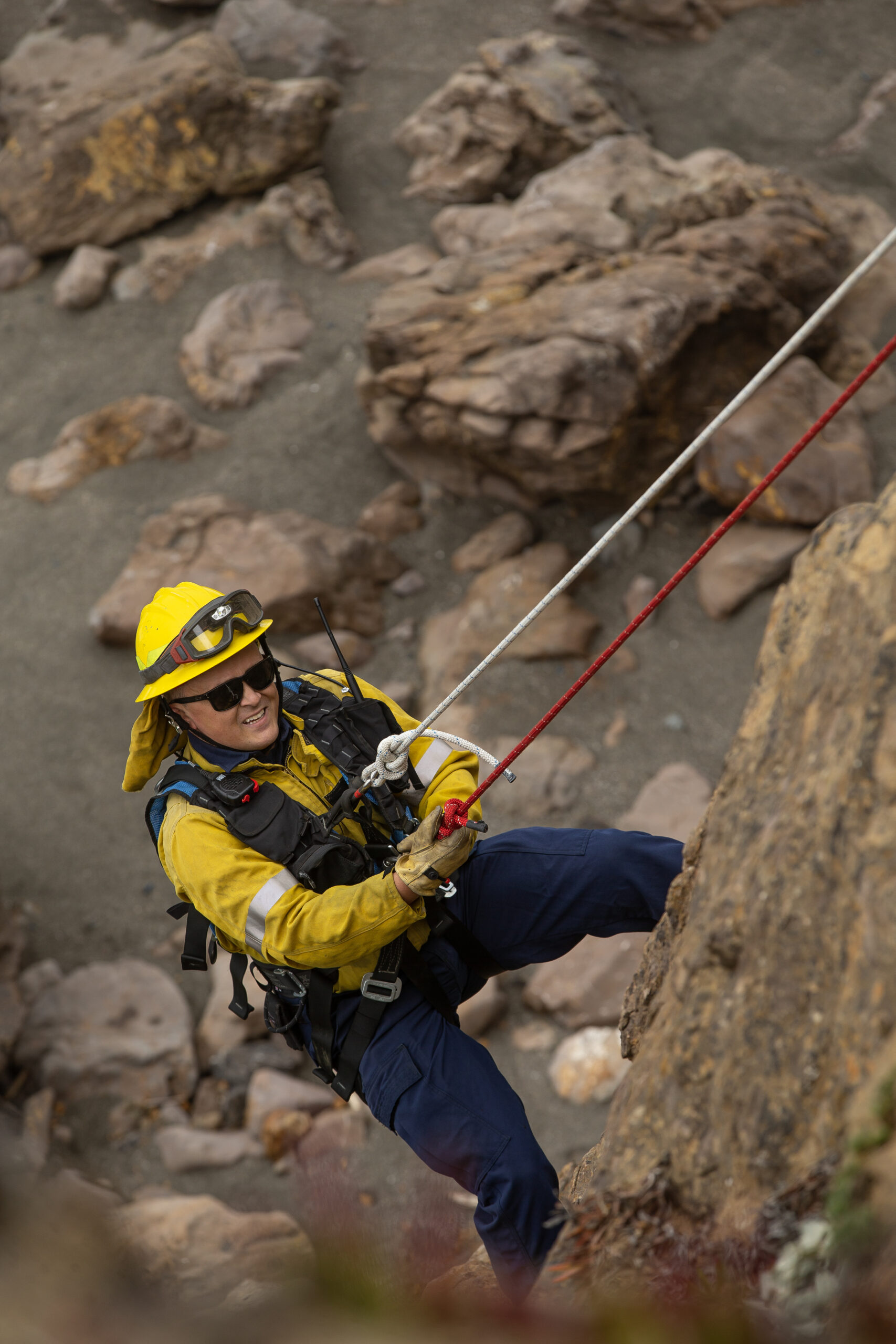
Sonoma County Fire District firefighters from Bodega BayÕs station 10, work on their cliff rescue skills off Coleman Valley Overlook along Hwy 1 during training May 19, 2023. Firefighter Erich Engle makes his way up the cliff to the staging area. (Chad Surmick / The Press Democrat)
Sonoma County Fire District firefighters from Bodega Bay’s station 10, work on their cliff rescue skills. Firefighter Erich Engle makes his way up the cliff to the staging area. (Chad Surmick / The Press Democrat)

A lot of the public safety net at the coast could best be defined as saving us from ourselves. No one begrudges anyone from visiting. On the contrary, the emergency workers share the compulsion to breathe in a little salt air on a hot summer day. But man, can a rescuer get a little help?

If you’re going out in a canoe, maybe tell your family, Murphy says. Read the signs at the beach; they may be telling you about rip currents or the absence of lifeguards. Spend a minute on the National Weather Service’s website or on windy.com before you set sail.

“Even on a calm day, I really caution people not to turn their back to the ocean,” Murphy says. “I know you can take lot of scenic pictures that way, but if you have a large groundswell, you won’t see it when that powerful water rushes up the beach. That’s probably most of our rescues out here.”

Hearing these stories can make you wonder: Why would anyone sign up to do this work? Stretched-tight resources…traffic hazards…terrain that fights you in a hundred different ways…stupid human tricks, performed daily. It must be the worst job in America.

Except these on-call heroes will tell you it’s the best. Herzberg, long before he was an assistant fire chief, was a lawyer. In that job, he says, he frequently brought chaos to peace. Now he brings peace to chaos, a role he cherishes even at 78 years old. And let’s face it, the outdoor “office” where these first responders labor each day probably has a better view than yours.

“It’s still a beautiful place to work,” Murphy says. “On a bad day, depending on what the circumstances are, just going outside and collecting your thoughts, and seeing the beautiful Sonoma Coast can give you some perspective.”
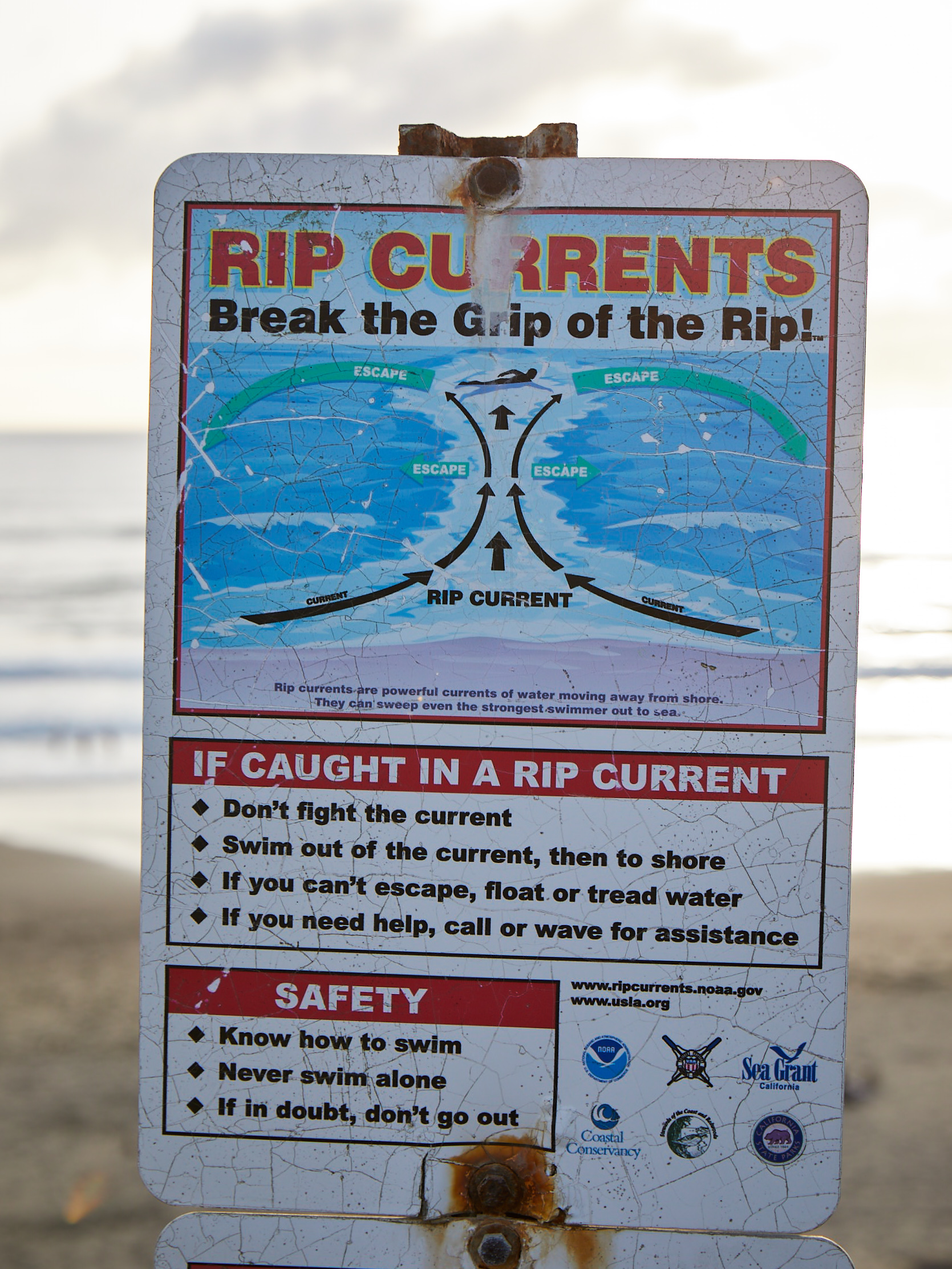
Common coastal calamities — and how to avoid them

Sneaker waves

The cautionary tale: On September 21, 2021, a large wave swept a 28-year-old woman onto the rocks at Goat Rock Beach. She injured her ribs and head, and was airlifted to a Santa Rosa hospital.

Don’t let it happen to you: Large swells can come out of nowhere. You can’t see the monster coming if your back is turned.

Unstable cliffs

The cautionary tale: On July 27, 2019, a man tumbled over a cliff while hiking near Coleman Beach, sustaining severe facial injuries.

Don’t let it happen to you: The rugged Sonoma coastline was formed by erosion. Stay a few feet from the edge, and you won’t become part of the scenery.

Shark attacks

The cautionary tale: While surfing off North Salmon Creek Beach on October 3, 2021, 38-year-old Eric Steinley felt something clamp down on his leg and drag him underwater. He fought off the shark but wound up with a severed nerve that required several surgeries.

Don’t let it happen to you: Despite the terror they evoke, shark attacks remain rare. That said, it’s always a good idea to swim or surf with others nearby.

Rough seas, strong currents 

The cautionary tale: Tragedy struck three boaters, including a child, on July 31, 2021, when their 10-foot aluminum skiff overturned in choppy seas near Salt Point. One adult drowned.

Don’t let it happen to you: Know the ocean currents, check the weather, and make sure you have the experience—and the equipment— for the job.


Much-Anticipated Healdsburg Steakhouse Opens This Week

Goodnight’s Prime Steak + Spirits opens in Healdsburg. (ComePlum)

Sonoma County has never had a love affair with clubby steakhouses — manly, dimly lit, leather-and-cigar-scented temples of aged beef and expensive whiskey. While expensive steaks are certainly on high-end local restaurant menus, local steakhouses are rarer than a properly cooked filet mignon.

This week, Healdsburg bucks the trend with Goodnight’s Prime Steak + Spirits, where a shareable 42-ounce Tomahawk steak will set you back $200, more than 80 brands of whiskey grace the bar menu and high-back tufted leather banquettes create private sanctuaries for diners.

Located on the Healdsburg Plaza, the restaurant is part of an ever-growing list of Foley Entertainment Group eateries backed by wine mogul and entrepreneur Bill Foley including (locally) Duke’s Spirited Cocktails, Chalkboard and the still-in-flux Burdock. The group also owns international restaurants, wineries and hotels, the Vegas Golden Nights hockey league and other entertainment and hospitality assets.

Chef David Lawrence, a familiar San Francisco culinary figure whose projects include Fillmore 1300 and Black Bark BBQ, will head up the culinary program. The steakhouse is a return to a familiar format for the Brit who cut his chops at London steakhouses with his Jamaican-born father.

The menu is inspired by cattle wrangler, Texas Ranger and inventor of the chuck wagon, Charles Goodnight. He was a prominent rancher and herder on the 19th-century Western frontier, the owners said.

“Goodnight played a pivotal role in herding untamed Texas Longhorn cattle in the vast expanse of the Texas panhandle. His rugged toughness, adventurous spirit and inventiveness are expressed throughout the restaurant’s culinary and beverage programs and what can only be defined as Texas-sized hospitality,” said a news release announcing the restaurant’s soft opening on Tuesday, Aug. 1.

The menu will lean heavily on steak (Wagyu, New York strip, rib-eye) but also includes seafood and well-crafted vegetarian options like housemade linguine with ricotta, eggplant, blistered cherry tomatoes and chile crisp oil. Much of the produce will come from Foley’s nearby Chalk Hill Estate Winery. Lobster thermidor — a throwback dish of lobster, cheese and cream made famous in the early 20th century by luxury hotels and restaurants — also appears on the menu.

The wine list is, not surprisingly, heavy with Foley-portfolio wines. Mixologist Devon Espinosa heads the lighthearted cocktail list.

Goodnight’s is at 113 Plaza St. in Healdsburg. Reservations are available online at goodnightsrestaurant.com. Open daily for dinner from 5 to 10 p.m.

Sonoma Wineries, Tourist Attractions Top USA Today Readers’ Choice Awards

The Forbes Travel Guide has honored Montage Resort in Healdsburg with its top five-star luxury rating in 2025. (Montage Healdsburg)

USA Today has announced its annual 10Best Readers’ Choice Travel Awards, highlighting “the best of the best” in the U.S. in categories such as food and drink, lodging and things to do. This year, 14 Sonoma County businesses were among the winners, which were chosen by a panel of experts and then voted on by USA Today readers. Click through the above gallery to see the local winners.

Sofia Englund and Charlie Swanson contributed to this article.

2 Sonoma County Tasting Rooms Named Among 10 Best in the US

The Corner 103 tasting room in downtown Sonoma. (Corner 103)

USA Today has announced its annual 10Best Readers’ Choice Travel Awards, highlighting “the best of the best” in categories such as food and drink, lodging and things to do. Among the winners this year are two Sonoma County tasting rooms.

Sonoma’s Corner 103 and Glen Ellen’s Benziger Family Winery were named among the 10 Best Wine Tasting Rooms of 2023 — Benziger came in at No. 9 and Corner 103 at No. 2.

Nominees within this category, like other 10Best categories, were chosen by a panel of USA Today experts. Readers were then allowed to vote once per category, per day, for four weeks before the contest closed and the top 10 were announced. DAOU Vineyards in Paso Robles took the No. 1 spot this year. Napa Valley’s Turnbull Wine Cellars also made the list, at No. 7.

This is the fourth time Corner 103 makes USA Today’s Best Wine Tasting Room list. Last year, the tasting room on the Sonoma Plaza also took the No. 2 spot. It was named the best tasting room in the U.S. in both 2020 and 2021, topping the USA Today list.

“The staff provides an educational and comfortable tasting experience,” wrote USA Today about Corner 103, founded by Lloyd Davis in 2015. The downtown Sonoma tasting room remains outstanding for its tastings of limited-production wines, such as sparkling rosé, chardonnay, pinot noir, zinfandel and malbec.

Benziger Winery, a popular destination for its eco-friendly estate and its sustainable approach to winemaking, was named among the Best Winery Tours in 2022 by USA Today (it came in at No. 4 on that list).

This year, USA Today wrote that Benziger offers “a tasting experience that goes beyond sipping wine.” Wine expert Ziggy Eschliman described it as “nirvana” and said the tasting room is particularly enjoyable “thanks to a friendly and wine-savvy staff.” Eschliman also mentioned the tasting room’s gift selection that includes “fun cheese and food treats.”

Click through the above gallery for a peek at each tasting room and stay tuned for updates on more local winners of USA Today’s 10Best Readers’ Choice Travel Awards 2023.

16 Sonoma County Restaurants With Spectacular Views

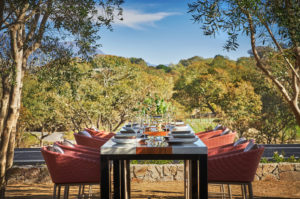
The Olive Terrace at Montage Healdsburg’s Hazel Hill restaurant. (Christian Horan Photography)

There’s something extra delicious about dining with sweeping vineyard views and coastal expanses, especially when the ingredients are hyperlocal. We’ve found more than a dozen restaurants in Sonoma County where you can drink in the view and fill your belly and soul — plus two worth the drive to Marin. Click through the above gallery for details.

Sofia Englund, Dana Rebmann and Carey Sweet contributed to this article. 

Embrace Life in the Slow Lane at Sloth Fundraiser in Petaluma

We humans have a lot to learn from the laid-back sloth. With their sweet, friendly faces and their relaxed approach to life, these adorable tree-dwellers have truly mastered the art of taking it easy.

On August 19, fans of these fascinating creatures are invited to gather at Beaumont Farms in Petaluma for Hanging Out for Sloths, a fundraiser for the Sloth Conservation Foundation (SloCo).

Along with a sloth presentation and silent auction, the event will include locally produced beer, wine and bites, plus live performances by folk music artist Hannah Jern Miller, opera singer Lisa Tenorio, and piano and violin duo Leslie Garman and David Ewart. (Because sloths prefer to spend most of their time hanging motionless from tree branches in Central America and northern South America, the animals themselves will not be in attendance.)

The co-hosts behind this ultra-chill event are leading sloth expert Dr. Becky Cliffe, founder and director of SloCo, and Suzi Eszterhas, an award-winning wildlife photographer based in Petaluma.

Eszterhas became interested in the furry creatures 10 years ago, while shooting a story for BBC Wildlife magazine about a Costa Rican sloth orphanage. When a wild sloth happened to show up at the rescue property, she decided to switch gears and follow the newcomer instead. The organization paired her up with Cliffe, who was doing research on the property, and the duo spent three weeks together observing the female sloth and her baby in the jungle canopy.

“A lot of the time that you’re with sloths is sort of just hanging out, because they spend a lot of time sleeping,” Eszterhas says. While the sloths napped, “Becky regaled me with all these amazing, quirky things about sloths and got me to completely fall in love with them.”

Cliffe also told Eszterhas about the threats sloths face due to loss of habitat. This inspired the photographer to become a sloth conservationist.

“Costa Rica has this ‘green’ image but it’s really getting developed, particularly in the area around the Caribbean where Becky is working,” Eszterhas says. Once a sloth’s jungle habitat becomes fragmented by development, she explains, the animals are forced to come down from the treetops and crawl across roads—making them vulnerable to dogs and traffic.

SloCo aids the sloths by restoring and reconnecting rainforest habitat in Costa Rica, and installing simple rope bridges that allow sloths to safely travel across tree canopies.

Those who attend Hanging Out for Sloths will have a chance to learn more about sloth conservation efforts and hear stories about Eszterhas’ and Cliffe’s adventures tracking and photographing sloths in the jungles of Costa Rica and other countries in Latin America.

“Becky is one of the most entertaining people I know,” says Eszterhas. “She is incredibly quirky and passionate about sloths and sloth conservation. It’s really difficult to be around her and not get excited about sloths.

One of the event’s silent auction items will give the winning bidder the chance to visit wild sloths with Cliffe in Costa Rica. Attendees can also bid on Eszterhas’ wildlife photographs, local wine tasting packages, and more.

“When we first started talking about doing this event,” she says, “I asked Becky, ‘What if Sonoma County doesn’t love sloths as much as we do?’ And she said, ‘That’s impossible, everyone loves sloths.’ And we’re totally finding that people do.”

Hanging Out for Sloths, 3-6 p.m. August 19. Tickets are $75 and include food and drinks. All funds raised will support the Sloth Conservation Foundation. Beaumont Farms, 5580 Red Hill Road, Petaluma, slothconservation.org

Petaluma’s Kapu Bar Launches ‘Hangover Brunch’

The Classic Mai Tai at Kapu Bar, tiki bar and restaurant in Petaluma. (Chad Surmick/The Press Democrat)

If you did Saturday night right, says Kapu’s general manager and tiki cocktail expert, you won’t be hungry until 2 p.m. on Sunday.

At least that’s the idea behind the Petaluma bar and restaurant’s new Hangover Brunch. The Hawaiian-style brunch menu includes rib-sticking Kalua pork hash, a fried rice omelet, acai bowls, fried banana bread, Spam and egg musubi and poke bowls. Brunch starts at 2 p.m. on Sundays only and runs until the food is gone. You snooze, you lose. 132 Keller St., Petaluma; 707-559-3665 or on Instagram @kapu.bar.

From left, Fink Bomb, Classic Mai Tai and the Tropical Itch at Kapu Bar, a tiki bar and restaurant in the heart of downtown Petaluma on Keller Street, Feb. 1, 2023. (Chad Surmick / The Press Democrat)
From Left, Fink Bomb, Classic Mai Tai and the Tropical Itch at Kapu Bar, tiki bar and restaurant in the heart of downtown Petaluma. (Chad Surmick / The Press Democrat)

More dining news

Jalisco’s closes: Readers are mourning the loss of a humble but much-loved neighborhood taqueria, Jalisco’s Mexican Food in Santa Rosa. Located at 1800 Mendocino Ave., it was a family-friendly burrito spot frequented by SRJC-neighborhood residents since the 1980s. The owners could not be reached, and the telephone number to the restaurant has been disconnected.

Acre Pizza Opens Third Location in Sonoma County

Specialty pizza at with broccoli raab, whole milk mozzarella and WM Cofield blue cheese. Heather Irwin/PD
Detroit-style pizza from Acre in Sebastopol with broccoli raab, whole milk mozzarella and WM Cofield blue cheese. (Heather Irwin / Sonoma Magazine)

Acre Pizza has opened a new location, at 8175 Gravenstein Highway in Cotati, after nearly a year of construction.

This is the third store for owner Steve DeCosse, who founded Acre Coffee. DeCosse sold his coffee business in 2020 to Rob Daly, who changed the name to Avid Coffee in 2021.

DeCosse spent several years developing the pizza concept, introducing crispy Detroit-style pizza and hiring pizzaiolo Alastair Hannmann to launch the pizza menu at The Barlow in Sebastopol.

DeCosse said he was inspired by a seminar on pizza making with gluten guru Peter Reinhart (founder of Brother Juniper’s Bread). Decosse went down a rabbit hole of pizza styles before landing on the famous New-York-style thin crust and the trendy Detroit style, a thick-crust pizza baked in a cast-iron square pan with caramelized Wisconsin “brick cheese” (a semisoft cheese sold in a brick shape) as a key component. Acre’s second location, at 1080 Petaluma Blvd. N. in Petaluma, serves the same menu.

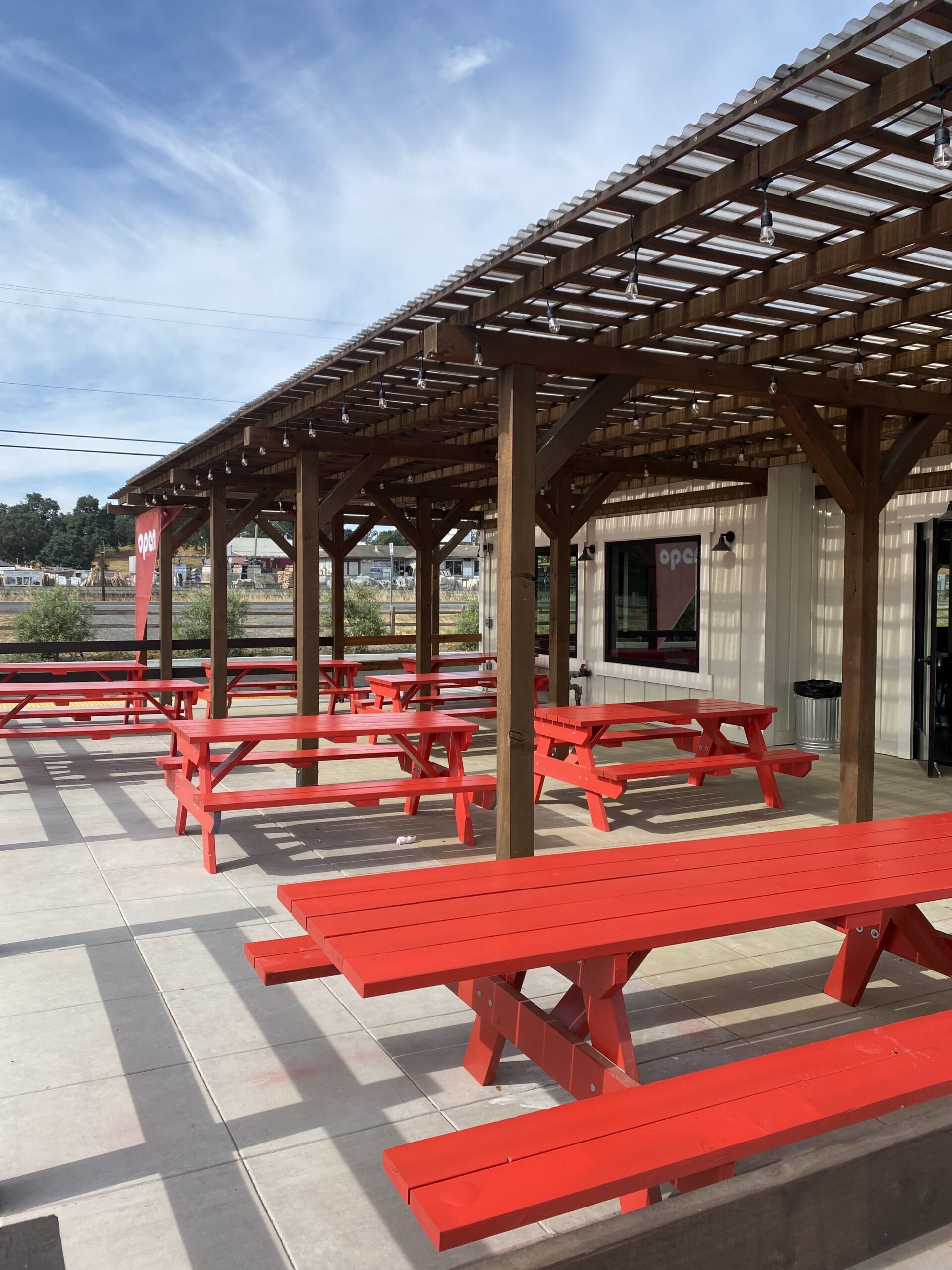
Acre Pizza’s new Cotati location has a large outdoor patio. (Steve DeCosse)
Acre Pizza’s new Cotati location has a large patio. (Steve DeCosse)

Opening in Cotati was a dream for DeCosse, who hopes to continue growing the pizza business.

“I believe this store will become a great destination for our community. It has a large outside seating area with colorful picnic tables, and comfy booths inside. It also features both an interesting selection of on-tap beer and wine,” he said of the new restaurant.

DeCosse said he hopes to add more items soon to the menu of Detroit, New York and Sicilian pizzas, including a focaccia sandwich the baking team is still perfecting. The Cotati location is open 3 – 8 p.m. Monday to Thursday, 11:30 a.m. to 9 p.m. Friday and Saturday and 11:30 a.m. to 8 p.m. Sunday. More details at acrepizza.com, 707-596-7802.

Light-Filled Modern Home in Petaluma’s Waterfront District Asks $1.8 Million

The seating area of the great room is bathed in light thanks to large windows. (Adam Potts)

A three-bedroom, three-bathroom home at 105 G St. in Petaluma’s Waterfront District has hit the market for $1.8 million.

This burgeoning residential area along the Petaluma River, just south of downtown, features historic warehouses and newer residences, with a sprinkling of artisan shops and restaurants in between.

The modern home, designed by the late architect Warren J. Hedgpeth and built in 2004, has an unconventional layout: two three-story towers are connected via a breezeway with an outdoor patio at each level, including a rooftop terrace. There is an additional 132-square-foot studio next to the two-car garage. 

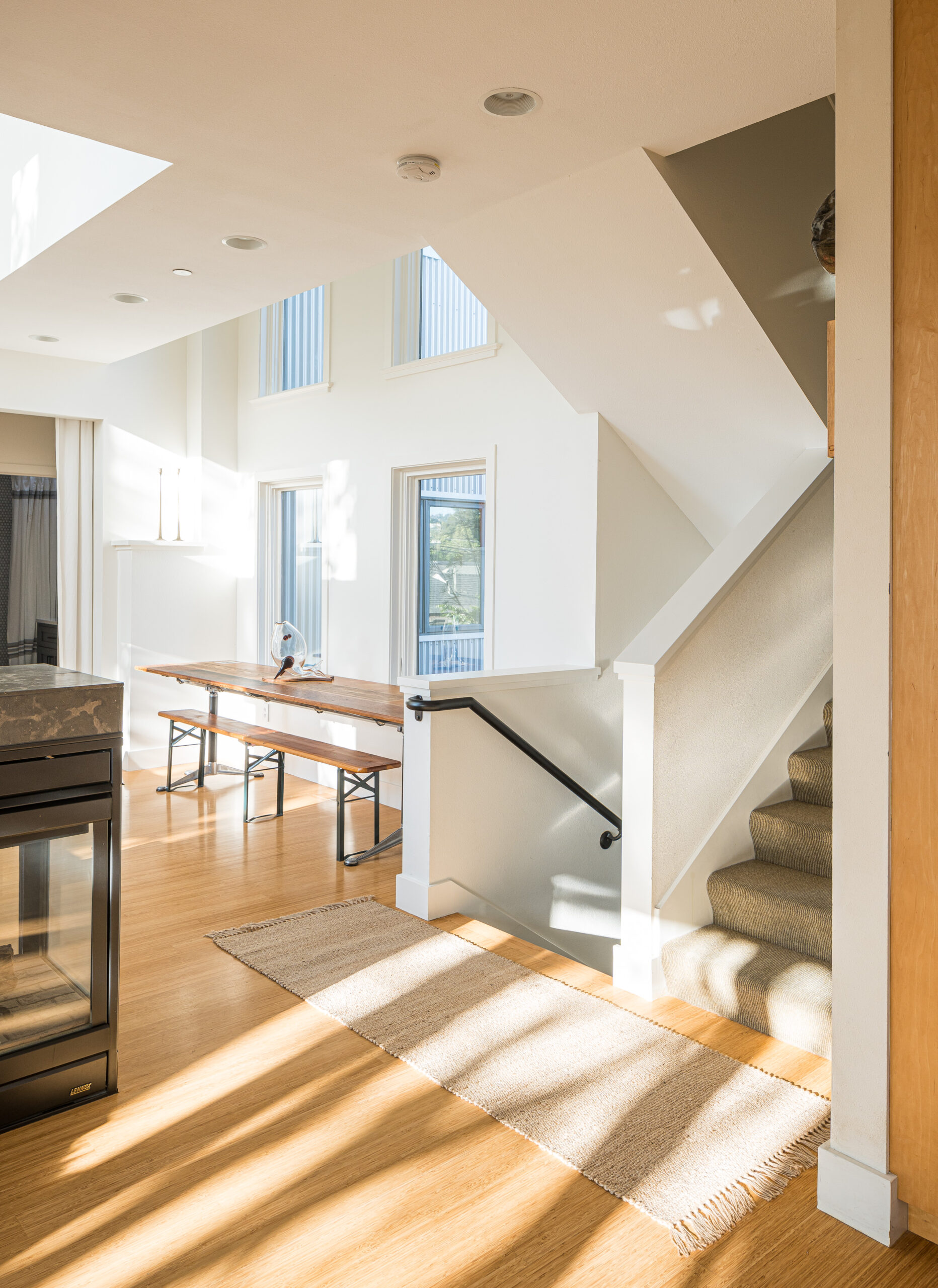
The breezeway and dining area has a three-sided fireplace and 18-foot ceilings. (Adam Potts)

The bottom floor has 380 square feet zoned for an office, a boutique or other business. The workspace includes an entry foyer, laundry nook, pantry storage and a full bathroom.

The 2,047 square feet of living space boasts design details like a three-sided glass fireplace, built-in shelves and plenty of tall windows that flood each room with light. Adding to the sense of spaciousness are 10-foot ceilings and a grand 18-foot cathedral ceiling in the breezeway and dining area.

Homeowners can leave the yard work behind and tend to just a few plants—towering bamboo, shrubs and climbing vines— that keep the patio areas lush and green. The home is designed for flexible and effortless living with easy access to Petaluma’s downtown.

Click through the above gallery for a peek inside the home at 105 G St.

For more information on this listing, contact Rob Sullivan, Vanguard Properties, 707-772-9171, RobSullivanHomes.com