8 Great Sonoma Wineries for Mother’s Day Wine Tasting

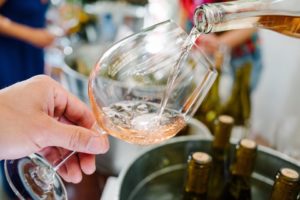
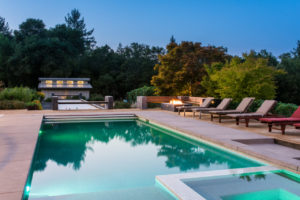
Forget the flowers, the card and the carefully crafted post on social media – this Mother’s Day, treat Mom to something that she could really use: some downtime with a nice glass of wine. We’ve rounded up some of the best Sonoma County wineries for Mother’s Day visits. Click through the above gallery for details.

Santa Rosa Event Offers Behind the Scenes Look at “Angels in America”

“Angels in America,” Tony Kushner’s Pulitzer Prize-winning epic, began with a dream and a poem. It was late 1985, Kushner had recently graduated from NYU’s directing program and the first person that he knew personally had just died of AIDS.

“I had this dream,” Kushner said in a Slate cover story titled “The Oral History of Angels in America.” “Bill is dying…and the ceiling collapsed and this angel comes into the room. And then I wrote a poem. I’m not a poet, but I wrote this thing. It was many pages long. After I finished it, I put it away. No one will ever see it. Its title was “Angels in America.”

Six years later, Kushner’s poem had become a play. It premiered at the Eureka Theater in San Francisco’s Mission District and when it hit Broadway in 1993, The New York Times called it “the most thrilling American play in years.”

Set against the AIDS crisis and Reagan era politics, “Angels in America” surveys a fragmented United States in a time defined by fear. In Kushner’s version, America is a puzzle where the pieces don’t fit together; a mythological melting pot where spirits of the past and of the yet to come hover over people who haven’t quite found a way to melt.

The play, subtitled “A Gay Fantasia on National Themes,” is fiercely political — it portrays the pervasive nature of oppression, prejudice and power struggle — but it also prompts the audience to ask bigger questions: What shapes my identity? Are we the product of immutable circumstance? Or can we shed skin and change?

While “Angels in America” is specifically about the experience of gay men in the mid 1980s, Kushner extends the use of his leitmotif to examine the intersecting topics of sexuality, race, religion, democracy and freedom (among others). Through a series of intimate two-person scenes, he exposes conflicting beliefs and viewpoints and, while he’s at it, reveals both the serious and the humorous implications of those conflicts.

At the center of this spinning wheel of ideology is Roy Cohn, a modern Mephistopheles (or a Scrooge that never turns good) based on the real-life McCarthy aide and defense lawyer by the same name (Roy Cohn was also a lawyer and mentor to Donald Trump).

At once timely and timeless, “Angels in America” has become a cultural blockbuster, adapted on stages around the world and made into an award-winning film. Last year, the play was revived at the National Theater in London. This spring, it returned to Broadway with a cast led by Andrew Garfield and Nathan Lane. (Bay Area theatergoers can see “Angels in America” at the Berkeley Rep through July 22.)

As it turns out, the story behind “Angels in America” is as captivating as the play itself. On the 25th anniversary of its premiere, Slate published “The Oral History of Angels in America” in which Mr. Kushner, directors, producers and actors, tell the story of the play’s “turbulent ascension into the pantheon of great American storytelling.” This collection of stories has now been expanded into a book by authors Isaac Butler and Dan Kois (who both authored the Slate article).

On May 8, at 5:30 p.m., Isaac Butler and members of The Imaginists Theatre Collective will read from “The World Only Spins Forward: The Ascent of Angels in America” at the Astro Motel in Santa Rosa. The event is free and open to the public. (Tickets are required – get them here.)

Mr. Butler is a writer and theater director, most recently of “The Trump Card,” “a meditation on the peculiar rise of Donald Trump.” Below, Butler talks about the story behind his book, his first experience of “Angels in America,” the revival of the play in a time of Trump, and more.

What inspired you to write a book about “Angels in America?”

“When Dan and I started working on the Slate article, it quickly became clear that the history of “Angels in America” was too big for an article. The story was complicated, dramatic, thematically rich and often very funny — much like the play itself — and the people we interviewed, particularly Tony Kushner, were great storytellers [Butler and Kois interviewed some 250 people for the book].

When it came to assembling these stories, the feel we wanted to create was that of an infinite, rollicking cocktail party where everyone has had a couple of drinks and are more honest than they normally would be.”

When did you first see “Angels in America,” and what was your experience?

“It was the early ‘90s, I was a teenager acting in local productions and my parents bought me tickets to “Angels” on Broadway. It was this utterly life changing experience. It felt like the play contained everything that was going on in the world around me — all at once. I remember leaving the theater and feeling like everything had changed: I was walking through Times Square and the neon lights looked different, the air felt different on my skin. I had become a new person and I understood for the first time how my artistic and political inclinations could live together.

When Dan and I started working on this project, it turned out that almost everyone we interviewed — whether they were in the play, taught the play, directed the play, saw the play, read the play — shared a similar experience. This isn’t a play that a lot of people have a casual experience of; people feel transformed by it.”

Do you see any similarities between the America described in the play, and America today?

“In our book, Tony Kushner says: ‘the play doesn’t describe a time of great triumph, it describes a time of great terror, underneath the surface of which seeds of change are beginning to push upward and brew. Apparently nothing good is happening, but good things are happening.’

While the plot mechanics of the AIDS crisis and gay rights don’t have the same immediacy today as they did during the time “Angels” was written — although people are of course still dying from AIDS and there’s still a lot of progress to be made when it comes to gay and lesbian, and especially transgender, rights — the themes of the play have even more immediacy today than they did when it premiered in the early ‘90s.

The themes of ‘are we going to change or are we going to stay the same,’ ‘what kind of America do we want to live in,’ ‘what is a citizen,’ ‘who gets access to the rights of citizenship’ — those questions are very much front and center today. And then, of course, Roy Cohn’s protege is now our president.”

Are there any particular lessons in “Angels in America” worth considering today?

“There are two core things in “Angels” that are important to keep in mind: First, that change is fundamentally a part of the human condition. It is part of being alive, and change cannot be stopped. The idea that you can turn back the time on progress is abhorrent, and it comes at a great cost. Second, the play has encoded in it this strong, implicit argument for the necessity of hope; the belief that hope can be a political force for good even in the darkest time. But it’s not a myopic hope, it’s not a hope born out of denial, it is a furious, hard-won kind of hope.

The play is charging you, very overtly, with its last line: “The Great Work Begins” — that great work is you. It is now your task to drive change and move forward with hope.”


What: Isaac Butler Reads from “The World Only Spins Forward: The Ascent of Angels in America”
When: Tuesday, May 8, at 5:30 p.m.
Where: The Astro Lounge at The Astro Motel, 323 Santa Rosa Avenue, Santa Rosa 95404
Cost: Free (tickets are required as the event is expected to reach capacity). All guests will receive a $10 voucher toward dinner at The Spinster Sisters that evening.
Tickets: eventbrite.com

Slurp All You Want at Ippinn Udon in Santa Rosa

Tofu udon with birds nest veggies, pumpkin, prawn tempura at Ippinn Udon and Tempura in Santa Rosa. Heather Irwin/PD

Move over ramen, it’s udon’s turn in the spotlight.

The thicker, sassier noodle cousin to ramen, udon are chewy, slippery strands of cooked wheat and water that beg to be sauced, souped and slurped. Served hot in winter and cold in the summer, they’ve been a Japanese staple for nearly a thousand years — far longer than the two-hundred or so years since the introduction of ramen from China. Though, to be clear, nobody puts ramen in a corner.

It’s just that this simple homey dish is so, well, simple. While ramen lovers argue over the types of broth particular to the many variations of ramen noodles, how to make the ramen, and the specifics of each prefecture’s style, udon is classically served with dashi broth (a briny broth made with seaweed and shrimp flakes), some scallions and a soy dipping sauce — and that’s it.

Not that we’re exactly udon experts, but a brief lesson from newly-opened Ippinn Udon & Tempura owner Frank Wu helped to dispel some of the mystery of this very Japanese experience. The Mendocino Avenue shop he recently opened with collaborators Teng Yushu and Mason Lin is a sort of upscale cafeteria experience where you order a type of udon — from simple kama udon to cross-over dishes like spicy beef or curry udon noodles — then slide the tray past a variety of tempura, grabbing (with tongs of course) whatever tickles your fancy.

“ People are already familiar with ramen. We wanted to introduce udon to this region,” said Wu who, along with his business partners, hails from China rather than Japan. A businessman through and through, Wu saw the popularity of udon bars in San Francisco and wanted to bring the first to the North Bay. He is already planning a similar fast-casual concept for sushi in the nearby Big Lots shopping center.

Interior at Ippinn Udon and Tempura in Santa Rosa. Heather Irwin/PD

Like all the staff, Wu wears dentist-like face shields to keep things nice and sanitary. It’s like a personal sneeze guard, and more than a little funny when you try to figure out how the contraption stays on.

Ippin Udon & Tempura has been in development for nearly two years, and business partner Teng Yushu spent a month enrolled in “noodle school” in Kagawa, Japan learning the art of udon noodle making.

Part of the instruction is how to keep their $50,000 Yamato udon machine in good repair, since there’s no way to get a quick service call from across the ocean.

Interior at Ippinn Udon and Tempura in Santa Rosa. Heather Irwin/PD

The nondescript appliance sits by the window, quietly chopping noodles for hours.

It’s a fascinating process to observe, as Yushu fires up the noodle maker that does everything from mixing the flour and saltwater mixture to kneading, rolling and cutting the noodles.

In less than 5 minutes, three balls of rested dough (they rest about 18 hours after kneading) have gone through rollers with increasing pressure to get just the right thickness. The dough is carefully folded, then fed through a chopper, where ribbons of udon noodles fall onto a tray.
They’re almost immediately tossed into a vat of boiling water, where Yushu stirs the noodles constantly with a large wooden roller. Watching the noodles twist and turn in the boiling pot is hypnotic.

Udon and Tempura at Ippinn Udon and Tempura in Santa Rosa. Heather Irwin/PD

After about six minutes, he scoops the noodles into a cloth net, shocks them with cold water, swirling the noodles to release starch.

They’re shocked in ice, and twisted into small ropes to later be portioned into bowls.

Wu is carefully monitoring what udon dishes work, like the spicy beef, and which are less approachable. Like California rolls, which are a uniquely American invention, giving traditional recipes a little wiggle room tends to bring more folks to the table.

As the weather warms, they will be serving cold udon noodle dishes as well.

Overall: It’s best to approach Ippinn with a sense of curiosity and enthusiasm because there are things on the menu even seasoned foodies won’t immediately recognize. A welcoming and explanatory staff make the adventure fun, and student-friendly prices make it a quick grub stop that almost anyone can appreciate. Slurping welcome!

Best Bets

Curry Udon, $6.99: A creamy coconut milk broth with bits of beef, noodles and (optional) cilantro. It’s an easy introduction to udon that marries Indian and Japanese cuisine. A favorite.

Kama-Age, $4.99: Served in wooden noodle bowls (kama), this is the most classic udon dish. Noodles, clear broth, grated daikon and a soy-based dipping sauce. Light, bright flavors and super simple.

Tofu udon with birds nest veggies, pumpkin, prawn tempura at Ippinn Udon and Tempura in Santa Rosa. Heather Irwin/PD
Tofu udon at Ippinn Udon and Tempura in Santa Rosa. Heather Irwin/PD

Tofu Udon $5.49: Sweet fried tofu skin, fish cakes, egg and a dashi base. A great lunch bowl.
Tonkatsu Udon, $7.99: Pork belly chashu with pork broth. The most popular udon, it’s super rich and hearty.

Tempura: Udon’s best friend, tempura are frequently dipped into the broth. Selections change daily, but expect things like panko-breaded and fried pumpkin, fish cakes, prawns, potato croquettes, and vegetable nests. They range from .60 to $1.70 for each piece. Pumpkin is our favorite.

Ippinn Udon and Tempura, 1880 Mendocino Ave #D, (near Mombo’s Pizza) Santa Rosa, 707-521-9911, ippinnllc.com

From Fiestas to Tequila Trains: 9 Ways to Celebrate Cinco de Mayo in Sonoma and Napa

Danielle Alvarez, center, toasts to friends and family during a special dinner menu at Mateo’s Cocina Latina in Healdsburg, Calif. Saturday, June 25, 2016. Mateo’s Cocina Latina is beginning to offer sustainable feasts that include every part of the animals butchered for the dinner, including suckling pig brain mousse and pigs tails. (Jeremy Portje / For The Press Democrat)

The first commemoration of Cinco de Mayo took place in California in 1863, one year after a stunning Mexican victory over a much larger invading French army at the Battle of Puebla. 155 years later, Cinco de Mayo continues to be a cause for celebration — and Wine Country serves up a variety of opportunities to enjoy the day with food, fun and, of course, margaritas, cerveza and vino. Check out the gallery above for nine seriously cinco events in Sonoma and Napa, 2018.

Middle East Feast at Petaluma’s Pearl

Smoked trout and house ricotta jar with semolina flatbread at Pearl in Petaluma. Heather Irwin/PD

Hold onto your za’atar, Sonoma County is finally getting some Israeli and North African cuisine worthy of Wine Country.

Chez Panisse alum Brian Leitner has opened a Mediterranean-inspired restaurant with partner Annette Yang at the former Luma space in Petaluma. But where “Mediterranean” often means Italian or Greek, menu-wise, the newly opened Pearl takes inspiration from the exotic, warm-weather cuisines of Spain, Morocco, Southern France and the Middle East.

Open for breakfast and lunch only, the menu includes “Israeli breakfast” of green hummus, labneh (it’s somewhere between yogurt and cream cheese) and fresh pita with olive oil and za’atar (a spice blend of cumin, sumac, thyme, coriander and sesame seeds); smoked trout with house ricotta and semolina flatbread, cassoulet of duck confit and beans; chicken tagine, with yogurt and couscous; lamb tongue fattoush (a salad with toasted pita) and shakshuka, a vivid tomato stew with chickpeas, fresh fava, baked eggs and grilled sheeps milk cheese I can’t get enough of.

We’ll have plenty more to say about this spot in the coming weeks, but one of the biggest surprises was the no tipping policy. Menu prices include all service, rather than having the restaurant automatically tack on a “service charge” or depend on customers to tip staff. Love that.

Prices range from $8 to $20 with both small and larger plates. 500 First St., Petaluma, 707-559-5187, pearlpetaluma.com.

Santa Rosa’s Sprenger’s Taproom Closing

Fans watch and cheer at Sprenger’s Tap Room in downtown Santa Rosa as the Golden State Warriors win their first NBA title in 40 years, Tuesday, June 16, 2015. (CRISTA JEREMIASON / The Press Democrat)

Popular Santa Rosa downtown taproom Sprenger’s is closing in June, according to owner Kevin Sprenger. When the Brickyard spot opened in 2012 with 40 taps, Sprenger claimed to have more beers on tap than any other bar north of San Francisco. With the ballooning of downtown taprooms and breweries (there are now six just in downtown and more than 35 in Santa Rosa), along with ongoing problems with vandalism and downtown parking costs, Sprenger says he’s throwing in the towel.

“It’s been a slow fall for the last 2.5 years,” said Sprenger. “Businesses in downtown Santa Rosa are being impacted,” he added, saying that customers aren’t willing to pay for metered parking. Sprenger also said he was frustrated by security footage of what he believes to be transients in the downtown area vandalizing his taproom. The culprits have broken outdoor television sets and windows at the taproom and frequently urinate and defecate on his patio.

“My family has lived in Santa Rosa for nearly 50 years. I’ve lost everything,” he said.

9 Sonoma Wineries You Didn’t Know Made Sparkling Wine

Sparkling wine houses like Gloria Ferrer, Korbel and Domaine Carneros may rule the roost when it comes to Wine Country bubbles, but there are plenty of awesome sparklers to sip at “regular” wineries too. Sparkling wines made by still wine houses are often small production and may involve unique varietals or vineyard specific creations that one wouldn’t find in the sparkling producers’ repertoires. Pop a bottle of bubbly from one of these nine Sonoma County wineries to taste something new – details in the gallery above.

French Flea Market Brings Paris to Sonoma

Oui! Annual favorite fête the “French Flea Market” returns to Cornerstone Sonoma on May 26 and 27. This year’s market will feature over 30 antique and vintage dealers showcasing handpicked wares sure to fascinate even the fussiest of Francophiles. 

Hosted by Cornerstone’s French-inspired boutique Chateau Sonoma, the weekend aims to transport visitors to a classic Parisian flea market, such as Marché aux Puces de Saint-Ouen. Rummaging flea markets is a tradition for the French who, with Gallic intensity, explore markets in cities and villages to find an overlooked Louis Vuitton suitcase, an undiscovered impressionist painting, delicate table linens, wooden wine openers, or perhaps a gently used little black dress (made by Chanel, preferably!).  

At Cornerstone, French-born musician Michel Saga provides an antique barrel organ soundtrack for a weekend of perusing the creme de la creme of bric-a-brac, exotic curios and antiques on display.

The French Flea Market has been named thee “Best French Flea in America” by French Country Style magazine; its vendors come from throughout the Northwestern United States to barter and bargain their wares, which include trinkets and treasures as varied as clay pots to handcrafted furniture. Prices are reasonable: items are sold at wholesale prices with the hope that everyone leaves avec un petit souvenir.

Realizing that treasure hunting can be energy intensive, the market serves sausages and rosé to quaff with your beret at a rakish tilt. 

The French Flea Market takes place May 26 & 27, 10am-5pm. The market is free. 23588 Arnold Dr., Sonoma. chateausonoma.com

“Just Months After Wildfire Tragedy, Sonoma Remains California’s Most Blissful Holiday Destination”

Mustard, Dry Creek Valley. (photo by John Burgess/The Press Democrat)

A reporter from the Scottish edition of The Sun recently made a trip across the pond for a wine country vacation. She was “in awe” of what she found in the county of Sonoma.

“Just months after [the] wildfire tragedy, Sonoma remains California’s most blissful holiday destination/…/ The Sonoma locals are just as bright and lovely as the California sunshine,” said Heather Lowrie in a travel reportage for The Scottish Sun.

Together with “hubby” Alan, Lowrie sampled Sonoma County gems from east to west and noted that, during the couple’s first trip to “this utterly gorgeous region,” they did not see “one piece of evidence of the infernos which hit some of California’s wine-making regions.”

During their Sonoma sojourn, Lowrie and husband Alan tasted wines at Buena Vista Winery (“think Great Gatsby meets Liberace”), did sightseeing in the town of Sonoma (“it is just picture-postcard small town America”), ordered Pastis-scented steamed mussels at the Girl and the Fig, along with a Sonoma Mountain Beef Burger (“huge, juicy, and mouthwatering, came with another mountain fries. God bless America!”) – and much more.

Click through the gallery above to see what else Heather and Alan got up to during their first Sonoma County visit (their itinerary sounds pretty good to us), and what they recommend to Scottish readers. 

Sonoma Vintner Jean-Charles Boisset Launches Wine-Based Vodkas and Gin

Like a little caviar or truffle with your vodka? Or perhaps a touch of wine with your gin? Then eccentric vintner and ultra-luxury lover Jean-Charles Boisset has an elixir just for you: JCB Spirits.

Boisset’s recently launched line of spirits comprises three vodkas and a gin, all distilled from pinot noir and chardonnay grapes from the Côte d’Or in Burgundy. The new spirits collection includes not only a classic vodka and botanical gin, but also two uber-fancy vodkas: one infused with French caviar, and another with – wait for it – black Périgord truffles.

“JCB Spirits is the culmination of my dream of many years to create the ultimate elixir,” says Boisset, who has worked with master distillers in Burgundy for 15 years to develop the vodkas and gin.

Boisset is the owner of several luxury wine brands, including three local wineries – Buena Vista Winery in Sonoma, DeLoach Vineyards in Santa Rosa, and Raymond Vineyards in St. Helena – as well as the eccentric JCB Lounge in Yountville, which pours still and sparkling French wines from Boisset’s signature JCB brand.

Handpicked, sustainably grown pinot noir and chardonnay grapes are barrel fermented and aged for six months, then distilled five times, in order to create JCB Spirits. The JCB Gin is infused with 44 herbs, spices and biodynamically grown plants, alongside the classic ingredients of juniper, rose, and coriander.

The infused vodkas are meant to be “elegant, but not overpowering.” The truffle vodka has a unique, earthy umami flavor, while the caviar flavor is delicate with a touch of brine. Both aren’t for the faint at heart, everyday happy hour sipper: they retail at $150 a pop (the non-infused vodkas and gin start at $125).

The bottles, in usual Boisset style, are works of art – or over the top. Inspired by Boisset’s collection of antique decanters, they feature diamond cut adornments and look more like glamorous perfume bottles than your regular Tanqueray or Smirnoff. Learn more at jcbcollection.com.