When wildfires whipped through the Sonoma Valley last fall, guests at the luxury Kenwood Inn & Spa fled in the night with no check-out. Alerted by the innkeeper, who had been keeping a wary eye on red skies to the east, many in their haste didn’t even stop to close their doors.
The fire came within a quarter-mile of the boutique hideaway on Highway 12, causing extensive smoke damage and forcing the inn to shut down for months of cleaning and renovation.
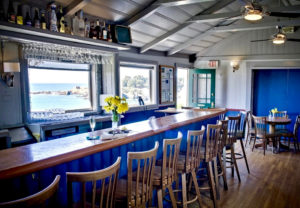
But when it reopened this spring, the 29-room inn hugging a hillside was not only sparkling clean with fresh and more authentic Italian-style plaster. It was showing off a few new features, including an updated reception area with special touches like a custom-milled oak and black marble-topped desk and new limestone fireplace mantels. And at a time when most hotels are going for electronic locks, the Kenwood Inn is dialing back to the Old World, with big brass and tasseled room keys stored in their own wooden key cabinet, all custom made in Italy.
Other subtle interior design details have been incorporated by Salt + Bones, a design studio in Carmel that specializes in hotels and restaurants.
This fall, a whole new spa will be unveiled. Guests coming in for treatments can cozy up to a larger fireplace, relax in a new waiting area and dress in new men’s and women’s locker rooms.
A 12-foot communal walnut trestle table, shipped over from Italy, has been added to the small dining room. And guests, through special package arrangements ordered in advance, may now enjoy a full five-course dinner at the inn, in addition to the small plates that have been available.
Inn General Manager Scarlett Graham says it was difficult after the fire. The hotel was sold out the night the fires broke out, and many people left all their belongings behind.
After a lengthy evacuation, she and the inn’s chief engineer went room to room, meticulously packing up sunglasses, passports, cameras, car keys, and wine purchases and mailing them back to their guests.
The inn is offering a Passport to Spring Package with 20 percent off regular room rates, a $50 spa credit, complimentary bottle of wine, and discounts.
Stephanie Choate and Brian Kish at Arista Winery for “Party at Dan’s” in June 2018. Photo: Allyson Wiley
Winemaker Dan Kosta is used to being asked to donate to charity events. Over the years, his critically acclaimed wines garnered thousands for nonprofits, including celebrity Chef Emeril Lagasse’s charitable foundation in New Orleans.
Dan Kosta’s trailer at Arista. Photo: Allyson Wiley
So when wildfires tore through Sonoma County last October and Kosta was among the thousands who lost homes, Lagasse — a longtime friend and business collaborator — was eager to find a way to give back to his friend and the Wine Country fire victims.
“So many of the winemakers, donors, sponsors, and friends who make the foundation’s fundraising efforts possible were affected by the California fires,” Lagasse said. “My wife, Alden, and I are grateful for their tremendous generosity year after year, and we’re honored to be able to pay it forward and give back to those in need in the Napa Valley and Sonoma regions.
“People just got on the phone and asked Dan to come to New Orleans,” Lagasse added. “Dan has never said no to us, ever, when we asked for his help with charity work. He’s done so much for us, and we take care of each other.”
On a lark, the two decided to auction off a one-night wine and dinner party at the 40-by-40-foot trailer that Kosta lived in for several months. The trailer was recently moved to Arista Winery for the party.
Chef Mark Stark and Chef David Zimmerman (Chef Dustin Valette, far right) prepare a Low Country shrimp boil at Arista Winery for “Party at Dan’s” in June 2018. Photo: Allyson Wiley
Thus was born “Party at Dan’s,” a single auction package that raised a whopping $500,000 for Napa and Sonoma fire relief during Lagasse’s annual Carnivale du Vin in New Orleans last November.
High-dollar donors vied for a coveted spot at the Sonoma event, held last Friday at Arista Winery in Healdsburg. Many of the attendees were from the Gulf Coast, which has also seen its share of natural disasters. In total, the 2017 Carnivale du Vin raised more than $1.5 million for the Emeril Lagasse Foundation, which helps inspire youth through culinary, nutrition and arts education.
Kosta said it took just 10 minutes for attendees at the winter auction to donate half a million dollars to fire relief. “I donated $25,000 and asked people to follow my lead. For anyone who donated, we promised a party this June at Dan’s Trailer,” said Kosta. “They just really stepped up.”
With green hills, cleared rubble and recovery well underway this spring, it seemed time for a celebration, according to Kosta, who invited some of the region’s best chefs and vintners in the name of recovery and philanthropy.
Emeril Lagasse, Antonia Keller, Michael Mina, Brian Kish and Adam Sobel at Arista Winery for “Party at Dan’s” in June 2018. Photo: Allyson Wiley
The lineup included chefs Michael Mina, Dustin Valette (Valette, Healdsburg), Ken Frank (La Toque, Napa), Mark Stark (Stark Reality Restaurants) and Timothy Kaulfers (Arista Winery) along with winemakers from Darioush, Limerick Lane, Three Sticks, The Setting Wine, Riverain, Fleury Estate, Pride Mountain and AldenAlli (a joint venture with Lagasse and Kosta).
Others attending the event included musician Sammy Hagar along with Juliana Martinelli (Martinelli Winery), Michael Haney (Sonoma County Vintners) and Suzanne Pride Bryan (Pride Mountain Winery).
Kosta said he is not planning to rebuild a home in Sonoma County and that losing his home was freeing in some ways.
“It’s humbling. It shakes you up and you know the difference between what you want and what you need,” Kosta said. “You realize that happiness in life is a choice. It offers up perspective.”
At Arista Winery for “Party at Dan’s” in June 2018. Photo: Allyson Wiley
Though the party brought a festive vibe to the trailer last week, Kosta spent a less celebratory three months living in the space with his family. Kosta has since moved to a home in Healdsburg.
He says the time after losing his home changed him, helping him focus on helping others rather than worrying about his own possessions.
“I know that so many people suffered so much loss,” he said. “I’ve never felt so lucky, and I have so much empathy for those who weren’t as lucky,” he said.
Kosta now plans to sell the trailer and is looking forward to a new chapter in his life. “Home is where you’re at,” he said. “I like blowing in the wind right now.”
During Lagasse’s November charity auction, a 2015 The Setting Cabernet Sauvignon sold for $350,000, the most ever paid for a single bottle of wine.
The $500,000 raised by the Emeril Lagasse Foundation was split between the Community Foundation of Sonoma County and the Napa Valley Community Foundation. Both are working toward the long-term efforts of rebuilding communities after the fires. The Community Foundation of Sonoma County was unable to disclose which specific nonprofits received the funding from the Emeril Lagasse Foundation.
“It was my pleasure to help our friends when Sonoma County needed us,” Lagasse said. “We are still recovering from Hurricane Katrina 13 years later,” he added, with a nod to the home he lost in New Orleans. “We know how long it takes.”
Five piece nigiri at Sake 107 in Petaluma. Heather Irwin/PD
You don’t fall in love with sushi at an all-you-can-eat Chinese buffet. Sadly, however, it’s often the first spot many Americans encounter the concept of eating raw fish on a pile of rice.
And no wonder people run screaming from those dried up, horrifying, evil little bits of nastiness. That’s like comparing Little Caesar’s to a fresh wood-fired pizza made with 00 flour, fresh mozzarella and basil by a trained pizzaolo. No contest, because when you start with the bad stuff, there’s little impetus to actually try the good stuff. Strawberry Hill Boone’s Farm ain’t prepping you for the wonders of a single vineyard Flowers chardonnay.
Five piece nigiri at Sake 107 in Petaluma. Heather Irwin/PD
What’s tragic is that a buttery piece of fiercely fresh tuna belly or fresh salmon handled by a trained sushi chef can be an absolute game changer. It’s also very rare and worth seeking out. We’ve found just that at Sake 107 in Petaluma.
Open nearly a year, the buzz has steadily grown for Chef Eiji Ando, a Hana Japanese alum who has dedicated his life to the craft. It’s awe-inspiring to watch the flicking of his hands as he shapes the seasoned rice and fish into a single perfect bite, and perfect isn’t a word we use lightly when it comes to nigiri. God help you if you are gauche enough to dunk it in soy sauce.
Ando watches me instinctively pour soy sauce into a dish, saying everything by saying nothing.
“No soy sauce?” I ask a bit sheepishly. Honestly, I’m a dunker, because I eat a lot of cheap sushi.
“No soy sauce,” he says, gingerly brushing on a special concoction of soy, sake and rice vinegar atop the fish. No bright pink ginger. No wasabi (they actually have real wasabi should you request it).
Tuna tartar on shrimp crackers at Sake 107 in Petaluma. Heather Irwin/PD
The umi masu (bright orange ocean trout from Scotland) is a single perfect bite because of what it isn’t — it isn’t fishy or vinegary; it isn’t overly chewy or drowned in salty soy sauce.
The rice is precisely seasoned, without too much or too little, blending into the background rather than sucker-punching you in the tastebuds.
Instead, this bite of nigiri is a cloud of umami covered in an unctuous ocean breeze, assuming that were even possible, but frankly it should be.
No soy sauce is lesson one. Hatcho miso is lesson two.
Made in Ando’s home prefecture of Aichi (smack dab in the middle of Japan), hatcho miso is a dark fermented paste made only with soybeans. Aged two summers and two winters under literal tons of rocks, its used as a base for soup as well as sauces.
Unlike more familiar miso, hatcho has been made at just two factories in Aichi the same way for 650 years, using 200-year old casks and a whole lot of manpower. It adds a slightly bitter, salty flavor to foods that is unlike other more nuanced miso.
Ando’s signature Miso Katsu and Asari-hatcho miso soup are both stellar representations, and it’s a flavor you won’t soon forget.
The third lesson: Sake shouldn’t set your throat on fire.
Tedorigawa sake at Sake 107 sushi and sake bar in Petaluma. Heather Irwin/PD
We’ve had some really cheap sake and some of the world’s most expensive sake, and the good stuff is worth the price.
At $12 per glass, Tedorigawa Yamahai Junmai is a softly assertive representation that will have you rethinking why you never got more into sake.
With a simple menu focused on fresh fish and produce, along with family and vegetable-foods (shrimp tempura, agedashi tofu, chicken teriyaki, garlic eggplant), Sake 107 doesn’t take itself too seriously.
But don’t let Ando’s easy manner fool you, because he’s a real-deal chef who knows his way around a piece of fish — raw or otherwise.
Best Bets
Five Piece Nigiri, $21: Put yourself in the chef’s hands. Personally, we wish we’d doubled or tripled that. There’s not a stinker in the bunch, but don’t miss the Hokkaido uni, ocean trout (umi masu), sake (salmon) or maguro (big eye tuna).
We want so badly to love saba — a marinated and pressed mackerel — but its a strong flavor that takes some getting used to. If you’re into it, Ando has a special off-menu roll he’ll make for you.
Hamachi Umeshiso Age, $12: A small plate with a sort of yellow tail, pickled plum and shiso sandwich fried in tempura batter. The combo of light fishiness, sour plum and astringent shiso wrapped in crunchy batter is a home run.
Hamachi umeshiso age, yellow tail with pickled plum, shiso tempura and green tea salt at Sake 107 in Petaluma. Heather Irwin/PD
Tuna Lily, $13: A little gimmicky, but a stunning plate of ruby tuna tartare cupped in puffed shrimp crackers.
Miso Katsu, $20: A signature dish and personal favorite of Ando, this is serious comfort food. Kurobuta pork is fried in panko and thinly sliced, with a hatcho miso sauce poured atop the pork, creating a fragrant steam that will have you trying to eat the super hot pork way before its ready for your craw. I have the blisters to prove it (but worth it).
Melts in your mouth roll, $17: Sushi rolls and I don’t get along. I generally find them horrifying, filled with fried nastiness, covered in bad rice and doused with four kinds of sauce. This isn’t that. Daring Ando to overcome that kind of distaste, he threw out a signature roll made with spicy tuna and salmon sitting on a pool of homemade ponzu sauce. I’m still not a spicy tuna fan, but the roll had me at homemade ponzu. This citrusy soy sauce makes what could be cloyingly rich into something with depth and character.
Overall: Seriously awesome sushi and izayaki in downtown Petaluma that reminds us of what great Japanese food can really taste like.
Big changes are coming to MacArthur Place Hotel & Spa in Sonoma – and it all involves an Iron Chef.
The resort, located just a few blocks from the historic Sonoma Plaza, features 64 rooms, a spa, and a western-themed steakhouse, Saddles, which has been serving up prime ribs and martinis to hungry and thirsty locals and wine country visitors for over a decade.
However, it seems that even in Sonoma all good things come to an end and while MacArthur Place is here to stay, the property is about to undergo a major facelift.
In October 2017, MacArthur Place was acquired by Arizona-based IMH Financial Corporation from longtime owner, Sonoma local Suzanne Brangham. After the purchase, IMH declared that changes would be made to the propety and, while the exact nature of those changes remained unclear for some time, the company has now hit the ground running with renovations and a new restaurant concept.
Celebrity chef Geoffrey Zakarian has been called in to update the property’s food and beverage program. Zakarian, who won Next Iron Chef in 2011, has done it all: from earning a Michelin star for his former restaurant, Country, to serving as a judge and show host on the Food Network.
Zakarian, who finds inspiration in fashion, design, media and the arts, will bring his signature style to Sonoma with the introduction of three new food and beverage experiences at MacArthur Place.
The kitschy charm of Saddles Steakhouse will be transformed into something more modern: out with the cowboy boots, saddle bar stools, and creepy horse murals; in with the bright interior, clean lines, and farmhouse garden setting of Mediterranean restaurant Layla.
The old hotel bar, famous for its martini happy hour, will be completely transformed and renamed The Bar at MacArthur. Craft cocktails will be on the menu as well as sports games on two big screen TVs; stylish art deco furniture will create an old-school lounge feel.
Zakarian will also introduce The Porch, a coffee bar and marketplace that will serve coffee and pastries in the morning and agua frescas and fresh ice cream into the evening. Craft products will be sourced locally for the “stock house-style” space.
The hotel rooms at MacArthur Place will also get a new look, featuring warm and monochromatic shades and touches like barn doors, furnishings made with natural materials (wood, leather, stone) and fireplaces.
Finally, resort leadership is also undergoing a transition. Long-time general manager Bill Blum will bid farewell to the property he has managed for 18 years as new general manager Rubén Cambero takes over. Cambero comes from acclaimed hospitality stock: his family owned and operated Hotel El Peregrino in Spain, where his mother was a Michelin-starred chef.
The renovations at MacArthur Place Hotel & Spa are anticipated to be completed by early 2019. macarthurplace.com.
First it was tequila and now it’s beer – it seems the Napa Wine Train keeps getting sidetracked. On June 18, it diverts from its regular wine route as it turns into The Hop Train, taking passengers on a beer-infused trip through Napa Valley. The two-hour experience, hosted by local craft brewery Napa Palisades Beer Company, includes a two-hour “rail tour,” small bites and Palisades brews.
“We’re putting beer before Bordeaux and cans before corks,” says the Hop Train website. Napa Valley Wine Train managing editor Rich Evans says they are “excited to showcase the region’s incredible beer offerings and provide an alternative experience for those interested in trying something new.”
And something new it is. This is the first beer-centric experience offered by the Napa Valley Wine Train and it also features a new addition to the train: an open air car with 360-degree views. The two-hour trip includes tastings of three Napa Palisades beers: Loco IPA (7.5% ABV), 1849 Gold Rush Red Ale (5.7% ABV), and Little Loco Session IPA (4.9% ABV). Pub grub bites, prepared by the train’s culinary crew, will include chipotle chicken tacos, caprese salad, buffalo wings, mushroom toast, and smoked duck sliders.
The Hop Train starts June 18 and runs through October. Tickets start at $75 per person and $50 for locals. napavalleywinetrain.com.
America has its fair share of blockbuster restaurants and Michelin stars but, like everywhere else, the best way to dine out (for those of us with average bank accounts) is to eat like a local. While the hotspot du jour might be appealing, the neighborhood restaurant is where you really get a sense of the local culture and cuisine. The food may not be buzzworthy, but you can count on getting a decent meal.
To help hungry travelers and food enthusiasts navigate to the best neighborhood restaurants in the country, Bon Appétit magazine asked some of the most interesting people they know—chefs, novelists, activists, comedians, NBA players, and more—to let them in on their “most-trusted haunts;” places that “make no claim to be the newest or the trendiest.” Among the top picks is Napa’s Butter Cream Bakery. Although we were a little surprised not to find any Sonoma County restaurants on this list, we were also relieved that our favorite hidden gems were not revealed to the masses.
Click through the gallery above to see some of the best Sonoma County bakeries, and let us know in the comments about your favorite neighborhood restaurants (criteria: where everybody knows your name, and they’re always glad you came…).
My phone started blowing up at 8:30 this morning. Chefs aren’t known for their early morning tweets, but when Anthony Bourdain, the patron saint of offal and raconteur of all things edible is found dead in a French hotel room, news travels fast in Sonoma County.
Bourdain, 61, died after an apparent suicide. Best recognized for his CNN travelogue, “Parts Unknown” and groundbreaking kitchen tell-all, “Kitchen Confidential” the news of his passing reverberated through the culinary world, eliciting farewells from former President Barack Obama, close friend, Chef Eric Ripert, food writer Ruth Reichl and thousands of others in the food world who extolled his rogue approach to eating.
Ari Weisswasser of Glen Ellen Star, who once served Bourdain at Restaurant Daniel in New York, was one of the first in Sonoma County to post his thoughts on Instagram, saying “You told me that when they ban foie gras, you would make sure we always had a source. Rest In Peace brother.”
Ari Weisswasser’s Instagram post
“I got a text from my brother in New York this morning about Bourdain, and I thought it was a prank,” said Weisswasser. He recounts the dinner where he served Bourdain–one filled with exotic ingredients that included wild doves, boar, hare, doves and the legendary ortolan. The tiny bird is eaten whole with a napkin placed on the diner’s head so God won’t see the shameful and decadent thing you’re doing. “They did the whole napkin thing,” said Weisswasser. Seriously.
“After dinner, he came to the kitchen and asked to bum a cigarette. Obviously, he chain-smoked and he had cigarettes with him, but I think it was just a way for him to break the ice and meet the cooks,” said Weisswasser, who was just 23 years old at the time. “We spent a good 30 minutes with him and I think he felt more comfortable with us than all the big names in the room.” With all the fuss about the foie gras ban in California at the time, Bourdain told the cooks that he would always find a supply for the delicacy for them, should they need it. It made an impression on the young cook.
“I think we can all relate to him in some form. On your way up in the kitchen, it’s a grind, it’s never-ending. His books described it perfectly, and I think anyone who has worked in a kitchen like that can relate to the pressure, the heat, the relief after dinner service,” he said. “No one does this for the money, and you need that immediate gratification that puts a smile on your face and brings you back the next day,” Weisswasser said.
Known for his bad boy persona and proud middle finger to anything he found sycophantic, Bourdain rose to the public consciousness in 1999 with a New Yorker essay about the horrors and wonders of a restaurant kitchen. Bourdain was the first back-of-house cook to tell the world what really happened behind the swinging doors with gut-churning descriptions of his time at New York’s Brasserie Les Halles and other restaurants, and trust us, it wasn’t pretty.
Following up with the seamy, un-put-downable Kitchen Confidential: Adventures in the Culinary Underbelly in 2000, Bourdain chastised diners who ordered fish on Monday (it’s been sitting around since Friday, he claimed) or bellied up to a steam table brunch buffet, like rubes (grossing us all out that it was mostly leftovers).
But his candor and punk-rock attitude also inspired a generation of chefs. “Reading Kitchen Confidential as a line cook was a game changer,” said Chef Heather Ames, a longtime chef at Skywalker Ranch who currently works at Cardinal Newman High School.
Bourdain was always the anti-celebrity chef, poking fun at anyone he thought lacked the real chops to be telling the rest of us how to cook. The Food Network’s Guy Fieri and Sandra Lee were favorite targets, though any misstep in the food world was fodder for his sharp wit. Emerging at a kinder, gentler moment when clean-cut faces like Emeril Lagasse, Alton Brown, Rachel Ray and Paula Deen ruled the Food Network, Bourdain ripped open the curtain to show us the bloody entrails behind the scenes.
For Jesse Mallgren, executive chef at the Michelin-starred Madrona Manor in Healdsburg, the news of Bourdain’s death hit especially hard. Bourdain has an 11-year-old daughter who he doted on, but now leaves behind. Mallgren himself lost his father at a similarly young age.
“You never know what demons other people have. As someone who lost his father to suicide, this one hits close to home. So sad…” said Mallgren on his Twitter feed on Friday. Mallgren was a fourth-grader when his father took his own life, causing him years of pain and confusion. “I still don’t understand it,” he said.
“I’m a chef, too, and I can see how someone would want to escape from everything, but being on the other side of it, and seeing personally, I can’t imagine doing that to your kid, to the people you love. It was pretty difficult as a kid to understand why your dad would do that,” he added.
Mallgren’s son, who is the same age he was when his father died, was top of mind Friday morning, “I feel so responsible for my kids I can’t imagine doing that to them. How miserable are you that you would do that?”
Mallgren acknowledged that the kitchen can be a mecca for people who aren’t always comfortable in traditional jobs. “People who don’t always like talking to people gravitate toward the kitchen. You can hide behind the pans and put your head down in the back of the house. Those kinds of likeminded people work with you. There’s a great camaraderie among cooks and they understand each other,” Mallgren said.
“It doesn’t matter how famous you are, we’re all basically the same. We all have our problems,” he added.
Others in Sonoma County recounted inspiration from his books and travelogues. “He was funny, irreverent, roguishly handsome, a great storyteller…I loved his series as it evolved into being more about the people and country with food as the connection,” said Condra Easley, co-owner of Sebastopol’s Patisserie Angelica
In 2010 when Bourdain came to Santa Rosa at the (then) Wells Fargo Center with Eric Ripert, I felt a mix of awe and the impish desire to poke the tobacco-stained, boozy bear, writing:
“I just can’t quit Anthony Bourdain. He’s a smug, foul-mouthed, boozy nihilist. He’s a poster boy for the schticky celebrity chefs he routinely skewers. His kitchen-cred is admittedly questionable, he’s not shy about where women belong, and the whole Quentin Tarantino channeling Hunter S. Thompson gets a little grating after 40 episodes or so.
Yet we, his brooding followers, can never get enough of King Tony’s bad boy antics and alcohol-fueled adventures. As the Patron Saint of Egoist Chefs, Dean of Maliciously Delicious Tweets and Railer Against Food D-Baggery, we eagerly dissect every episode of No Reservations and now, The Layover. We cheer as countless Kitchen Dimwits, Culinary Poseurs, food writers, and, well, most of the Food Network fall upon his sword. Huzzah!”
During public questions at the event, I challenged Bourdain to explain his feelings on the then-foie gras ban in California, a sticky wicket in the food world if there ever was one. What shocked me was his answer. Instead of throwing out some thoughtless quip studded with f-bombs, Bourdain seemed actually frightened about the whole subject. He said that after numerous run-ins with animal activists, some of whom had threatened his family, he felt that maybe it just wasn’t worth fighting about. I nearly fainted with surprise — but honestly, I think that behind the bravado, Bourdain had the same weaknesses and worries as the rest of us.
“The shock is like a punch to the gut. His work was like a rare jewel, Treasured and coveted. His simple style of questioning his hosts about their lives, their joys, their foods is something I share with the culinary classes. Could watch him interview a blank slate and it would interest me. His daughter is the one to be considered in this situation.” – Marie Ganister, instructor and academic coordinator, Windsor High School.
As someone who has worked closely with many folks in the restaurant industry, I know also first-hand the addictions and mental illness that are rife in creative professions. Bourdain made no secret about his mercurial ways and proclivity for hedonism.
“I’m still here — on my third life, or maybe fourth. Who knows? I should’ve died in my 20s. I became successful in my 40s. I became a dad in my 50s. I feel like I’ve stolen a car – a really nice car – and I keep looking in the rearview mirror for flashing lights. But there’s been nothing yet,” he told Biography in 2016.
It’s sad and horrible all around, and the man who cut through all the bullshit of celebrity chef-dom and gave us a window into the steamy life of a kitchen drone is gone. No doubt he’d think all the love letters, back-patting and smarmy goodbyes are ridiculous. But somehow deep down, I think he’d also appreciate how many of us he inspired while running from the lights.
Need help? Reach out. Please.
North Bay Suicide Prevention 24-hour hotline: 855-587-6373
NAMI Sonoma County warmline: 707-527-6655
Sonoma County Psychiatric Emergency Services: 707-576-8181
For information on Sonoma County support groups, call 707-527-6655 or go to namisonomacounty.org
7/7/2013: D1:
PC: The meditation garden at Osmosis Day Spa Sanctuary, in Freestone, on Wednesday, June 26, 2013. (Christopher Chung/ The Press Democrat)
Feeling like you need to get away from it all? Or maybe you’re just looking for a getaway that’s different from the wine country norm. An easy drive is all it takes to feel a world away at Sonoma Valley favorite Gaige House in Glen Ellen. Recently renamed Gaige House + Ryokan, the inn now offers zen seekers a Japanese-inspired experience in a Sonoma County setting.
Built in the 1800s, the historic property (once a butcher shop and country home) featured some Asian inspired touches before the latest redo, but with the official name change comes a new level of Japanese aesthetic, and a number of new amenities inspired by traditional Japanese inns called ryokans.
The property features 23 guestrooms, nine of which have been turned into ryokan-style suites. The suites include the types of things guests have come to expect from high-end hotels, like comfy king beds dressed in soft linens, fireplaces, and private, outdoor patios. But it’s the Japanese touch that makes Gaige House + Ryokan stand out in the crowded field of wine country lodging. In addition to those much-loved Coyuchi robes, guests staying in the inn’s “Ryokan Zen Suites” can don classic yukata kimonos, and geta or zōri slippers while sipping sake and indulging in ice cream mochi, both found in the suite’s refrigerator.
Every Ryokan Zen Suite features a private karesansui rock garden and gurgling fountain that can be viewed from the bed, or while relaxing in a deep granite soaking tub. Traditional Japanese hinoki wood bathing accessories like mats, stools and ladles are within arm’s reach.
A Meditation Deck, tucked into a secluded corner of the property, overlooks Calabazas Creek. Steps away, a large oak tree, decked out with swinging chairs and glowing lanterns, screams zen in an Instagram-worthy kind of way. Pack your swimsuit, there’s also a pool and hot tub.
Gaige House fans can rest easy knowing that many of the things they’ve long loved about the property remain. Fresh baked cookies still appear, like magic, every afternoon. Now, in addition to the likes of chocolate-chocolate chip, you’ll find matcha cookies in the mix. Wine and cheese is served daily from 5pm to 6pm in the sitting room of the main house, and each morning a complimentary breakfast buffet is served, with selections like oatmeal banana pancakes, granola, and fresh orange juice.
Room rates for Ryokan Zen Suites, Creekside, range from $549 to $699 in low season; to $699 to $739 in high. 13540 Arnold Drive, Glen Ellen, 707-935-0237, thegaigehouse.com
Nearby Zen Sonoma County Spots
Chances are, you won’t want to leave those swinging chairs, but there are nearby spots worth a visit to keep the zen-filled getaway momentum flowing.
Quarryhill Botanical Garden features 25-acres of rare and beautiful plants from Asia. Along with Magnolias, dogwoods, and maples, you can see other blooming beauties like roses, lilies, and rhododendrons. Open daily from 9am to 4pm. 12841 Sonoma Highway, Glen Ellen, 707-996-3166.
Ever been forest bathing? The practice of shinrin-yoku, which originated in Japan, is all about unplugging and letting nature help you feel good. (There’s no bathing, by the way, just typically very slow walking.) Sugarloaf Ridge State Park hosts a Forest Therapy Series as part of its Parks RX for Health program the 4th Saturday of each month. The next session is set for June 23, 9:30am to 12:30 pm. 2605 Adobe Canyon Road, Kenwood, 707-833-5712.
When hunger strikes head to Shiso Modern Asian Kitchen in Sonoma for noodles, sushi, and sashimi. 19161 Sonoma Highway, Sonoma, 707-933-9331.
Venture a little further to the west for a meditative spa experience at Osmosis. The Freestone day spa and sanctuary features zen gardens and a series of Japanese treatments, including a signature Cedar Enzyme Bath. 209 Bohemian Hwy, Freestone, 707-823-8231.
There’s no shortage of topnotch places to eat in Sonoma County (here’s our roundup of the 50 best restaurants in 2018). From Sonoma to Sebastopol, Healdsburg to Petaluma, there are so many great restaurants here it is sometimes hard to decide where to have your next meal – especially on an empty stomach. To help hungry people navigate the Santa Rosa dining scene, Yelp has published a collection of top 10 restaurants – based on recent reviews – that updates weekly. Click through the above gallery for the latest picks.
The World Cup may be over and the French have their trophy, but for Nigerian-American Forestville resident Julius Ujeh, soccer is not just a seasonal affair. It is a way of approaching life.
Known as “Chief” to friends and family, the perennial soccer coach and former professional player was initiated to the sport as a young boy, kicking a ball barefoot in his Western Nigerian neighborhood.
In his early teens, a nearby mission school took notice of Ujeh’s athletic talent and granted him a high school scholarship. But on his very first day at school, he was sent home—it was required that all students wear shoes.
“We were poor, most of my friends had no shoes,” said Ujeh. “I remember the only time I got shoes was at Christmas. Every year, I would grow taller and outgrow the shoes, but my dad would say, ‘That’s it. You wait until next Christmas.’ That was the way it was.”
At the mission school, Ujeh remembers being a bit overwhelmed—it was an institution populated by mostly better off students.
“I just brought a sack of rice with me to the boarding house. There were these kids with milk, with sugar, coming with beverages!”
But Ujeh found a way to fit in: he played soccer, volleyball and handball; he joined the track and field team. He soon became known as one of the best athletes in the school.
When a fellow student gave him a pair of soccer shoes, everything changed for Ujeh. Sports became his life. He trained day in and day out. He played soccer professionally from 1980-84. The sixth fastest man in Nigeria, he qualified for the Nigerian track team for the 1984 Olympics in Los Angeles, California.
Unfortunately, his dreams of Olympic competition were not realized: Nigeria was able to take only its top four runners to the United States.
Undeterred by this reversal of fortune, Ujeh gathered every last penny that he and his family could collect and, with his visa already approved, he set out to visit the United States. In America, while sleeping on friends’ couches to get by, he was lucky enough to meet the head soccer coach of Boston University who offered him a full scholarship.
But his transition to the United States and college life proved more difficult than Ujeh anticipated. He failed out of school.
Again, undeterred by misfortune and with “luck and God’s help,” he was offered a fresh start on the soccer team at Salem State University in Massachusetts.
After graduating from college, Ujeh played pro football (soccer) in Denmark for a few years before starting work at Gillette.
When he was offered a job in California, he was confident that the move would be a great fit for him — “I asked the [recruitment] woman, ‘Do they play football [soccer] there?’ and when she said yes, I said ‘I’m good then.”
Ujeh moved to Rohnert Park in 1994 and soon found himself on the soccer field once again, playing with strangers. “That is how I started making a life in California,” said Ujeh.
Monica Rowley, then owner of Sports City, was one of the people he met while playing soccer. Rowley, now one of the owners of the Epicenter sports complex in Santa Rosa, was quick to recognize Ujeh’s kind spirit and work ethic both on and off the field.
“He’s tireless, talented, and he cares so much about others,” she said.
Ujeh grew to love Sonoma County. He moved into a low-income housing project in Forestville in 2006.
“People may look at my house and think it is no big deal. Looking at my background and where I come from, this is my castle,” said Ujeh. “America gave me an education, showed me that if you are worthy, if you are honest, and if you can work, the sky is the limit.”
Ujeh is not a rich man, but he feels strongly about the need to give back. In Healdsburg, he worked to get kids out of gangs through soccer. Over the years, he’s coached numerous soccer teams throughout Sonoma County, and has found fulfillment working with the homeless.
“I would go to homeless shelters, and I would see if any of them could play. Then we train, and we work to move through the obstacles,” said Ujeh.
At the Redwood Gospel Mission in 2006, he discovered a young and struggling Cornelius Bracy Jr, who later went on, with Ujeh’s help, to represent the United States in The Homeless World Cup. (Read the full story here)
In 2013, Ujeh decided to do something for the children of his home country.
“A lot of people who are from impoverished countries, they come here and get comfortable. They don’t want to go back. At first I was fighting it. I thought, ‘God, why are you putting this burden on me? I don’t have money, I don’t have this, I don’t have that.’ But you always have excuses to not do a lot of things.”
How did he plan on giving back? Through soccer, of course.
Ujeh had founded Spitfire Leadership & Sports Academy in 1992 in the US. He returned to his home country to establish a Nigerian version of the program in 2013, and began working with young children. He rented a tractor and with the help of a few friends set about fixing a giant crack which ran through the center of the soccer pitch. He started the first girls soccer teams in his Western Nigerian neighborhood when his wife, whom he’d met upon his return to Nigeria, asked what he was going to do for the future of his two little girls, Lydia and Sophia.
His latest goal? To create a real soccer field for the local youth and build turf fields able to survive the annual floods.
In addition to raising funds, Ujeh spends much of his yearly disposable income on the Spitfire soccer program. Because he doesn’t make enough in Nigeria to finance the entire operation, he returns to his Forestville home during harvest season to work as a weighmaster for Clos Du Bois Winery.
He spends summers in Sonoma County volunteering after work and picking up used jerseys, shoes, and trophies at Salvation Army to bring back to Nigeria.
Monica Rowley, his friend from the soccer field, has donated hundreds of jerseys and shoes over the years through her non-profit, The Goals Foundation. Santa Rosa’s Atletico soccer club donates trophies and medals they’ve won so that Ujeh can bring them back for Spitfire tournaments in Nigeria.
“Football is such a powerful tool that changes people’s lives. When I came here, I saw people playing in Rohnert Park. I didn’t know who they were, and they were speaking Spanish. I didn’t speak Spanish, but we started playing soccer and we understood each other. The language: one ball and we know what it’s for. That is why it’s such a universal game. That is why I want to bring it home,” said Ujeh.
Monica Rowley has set up a fund through The Goals Foundation to support Spitfire in Nigeria. If you are interested in learning more about the program, or contributing to the fund, it can be found here.