

Best Food at the Sonoma County Fair 2018

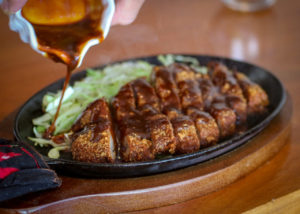
The kalua pork bowl at the 2018 Sonoma County Fair Food. Heather Irwin/PD

The Sonoma County Fair is on, and with it, the delicious fair food we all get super excited about exactly once per year. With good reason, because it would kill you if you ate all that greasy, salty, sugary, luxuriously yummy food more than a few times each year.

This year, however, I found myself less than eager for the challenge of stuffing thousands of calories into my face in 98 degree heat and minimal shade. 

Instead,  I did something far more entertaining and eminently more kind to my fellow fairgoers—I took a bite or two then handed it over to an unsuspecting person to finish. Really. You’d be surprised how many people are willing to eat my leftovers. I know I was. But it seems such a waste to throw away perfectly good fair food, and man, people are stoked to eat free food.

So after two hours of annoying people, spending a whole lot of money and walking around in circles, here’s my lineup of everything I wanted someone else to eat. And a few things I wanted to eat. Mostly in order of awesomeness. (PS read on, because I got Sonoma County Supervisor Shirlee Zane to eat a gold leaf ice cream cone).

The Unicorn Shake at the 2018 Sonoma County Fair Food. Heather Irwin/PD

The Unicorn Shake, $14

A unicorn among unicorns, this is the shining beacon of happiness at this year’s fair. I have no idea what it tastes like, because really, I don’t care. It’s everything that is right and good and happy in this firestorm of a summer. I think it involves a strawberry shake, a whole bunch of candy, marshmallows and actual fairy dust. Look deep into its rainbow mane, golden horn, whipped creamy goodness and multicolored sprinkles and sigh. You’re at the Sonoma County Fair and for a moment, everything is good in the world.

The Handoff: I wanted to give this to a shrieking little girl who would faint with happiness. I got this guy instead. He later fainted with happiness just after sharing it with his young friend and her mom. Find it at OMG Ice Cream.

The Capn' Crunch Fried Chicken Sandwich at the 2018 Sonoma County Fair Food. Heather Irwin/PD
The Capn’ Crunch Fried Chicken Sandwich at the 2018 Sonoma County Fair Food. Heather Irwin/PD

Cap’n Crunch Fried Chicken Sandwich, $13

No. Seriously. This is really good. A little sweet, plenty crunchy, totally yum. I ate half, then put the rest in my purse for later. And later, I actually ate it. The Handoff: Nope. All mine. Sharky’s near the Shade Park Stage.

Chicken teriyaki pineapple bowl at the 2018 Sonoma County Fair Food. Heather Irwin/PD

Chicken Mowie in a Pineapple, $14

Anything in a pineapple is good. Teriyaki chicken in a pineapple with rice is even better. I love this addition, and so does my daughter. She refused to be photographed eating it. I also asked a really cute firefighter to take a picture with his pineapple bowl. That is not a double entendre, but he said no, anyway. So, a beautiful picture of the bowl will have to suffice. The Handoff: My kid destroyed it. I got a bite. Then she got mad that I didn’t have a way to save the leftover pineapple bowl. Kids. Find it near the Shade Park.

The kalua pork bowl at the 2018 Sonoma County Fair Food. Heather Irwin/PD

Kalua Pork Bowl, $13

Slow roasted pulled pork atop brown rice and mixed greens with pineapple mango salsa and mango cream sauce. The presentation was a little off, so I decided to class it up with a shot near the hall of flowers. I dug into this one pretty hard, friends, and would return repeatedly for the Ahi Poke Bowl, Rainbow Bowl (with avocado, beets, carrots and a ginger miso dressing). For heartier appetites, the Loco Moco Bowl has a burger patty, beef gravy, rice and fried egg. Find it at Kalikos Hawaiian Kitchen (Mexican Village). The Handoff: Finger-lickin good, even sans fork. But he was pretty bummed I didn’t offer him a fork.

Peter and the corndog at the 2018 Sonoma County Fair Food. Heather Irwin/PD
Pronto Pup with Jason. 2018 Sonoma County Fair Food. Heather Irwin/PD

The Pronto Pup Corn Dog versus Rocket Dog Corn Dog, Both $10

Peter is my nephew. He loves fair food because his parents are horrible people who feed him very healthy food all of the time. We didn’t tell his parents I fed him this Rocket Dog. Peter was pretty sure it was the best thing he ever ate. Jason is my husband. He refused to go to the fair with us but asked us to bring him back a Pronto Pup. He said it was the best thing he ever ate, especially since his actual dinner was a Hungry Man. I take no responsibility for his food choices. I’m pretty sure the corndogs were exactly the same, but my spiritual beliefs don’t allow for corn dogs so I couldn’t eat one. At least that’s what I tell people because I hate corn dogs. Pronto Pup: Magnolia Ave., Rocket Corn Dog, Shade Park.

The Funnel Cake at the 2018 Sonoma County Fair Food. Heather Irwin/PD

Pennsylvania Dutch Funnel Cake, $9

It’s a funnel cake. With a gel-like raspberry sauce and whipped cream from a can. I still love everything about it even though it is so very wrong. Crispy, crunchy, sweet and lovely that will burn your tongue if it has half the chance. The Handoff: ME: “You look like you could use a funnel cake. But can I take a bite first?” HER: “Sure?” It was a little weird, but she was totally stoked for the free funnel cake. I knew she wanted a funnel cake. I have ESPN. Linwood Avenue.

The Flamin' Hot Cheetos Fries at the 2018 Sonoma County Fair Food. Heather Irwin/PD
The Flamin’ Hot Cheetos Fries at the 2018 Sonoma County Fair Food. Heather Irwin/PD
The Flamin' Hot Cheetos Fries at the 2018 Sonoma County Fair Food. Heather Irwin/PD
The Flamin’ Hot Cheetos Fries at the 2018 Sonoma County Fair Food. Heather Irwin/PD

Flaming Hot Cheetos Cheese Fries, $8

I was hoping for something a lot more horrifying than the meek bowl of fries covered with cheese sauce, a few desiccated slices of jalapeno and exactly six Flaming Hot Cheetos. I’m not even sure they were the real deal. Oh, and a bit of Flaming Hot Cheeto Dust. I’m not saying they were exactly bad, but the whole thing just seemed like it could have been more intestinally volcanic. Paired with Ranch dip. The Handoff: Despite not exactly knowing what she was getting into, our taste-tester dug right in with glee. Which turned to a bit of horror. And then glee again. Sharkey’s Fish Fry, Magnolia South. Apparently, there is also a Flamin’ Cheeto fried onion for your pleasure at Sharky’s Corndogs & Onions.

The Hot Mess Cookie at the 2018 Sonoma County Fair Food. Heather Irwin/PD

Hot Mess Cookie, $6

It’s not hot, which would be so great, but it is a beast filled with M&M’s, chocolate chips, and a bunch of other candy crispies. It is a mess, kind of like me trying to balance four plates of fair food on my arm. Easily sharable with a hungry group who have the munchies. Just saying. The Handoff: We encountered a bit of suspicion with this one, but really, who can deny a cookie? “Yum!” Last seen being pounced on by several friends. This photo in no way implies that the lady eating it is a Hot Mess. She seemed pretty nice, actually.  At Monster Bakery, Kidland inside the carnival.

Bucket O' Soda at the 2018 Sonoma County Fair Food. Heather Irwin/PD
Bucket O’ Soda at the 2018 Sonoma County Fair Food. Heather Irwin/PD

Bucket O’ Soda, $14

No fair food tasting can begin without a solid beverage source of at least 64 ounces, with a cup that can later double as a paint can or small animal transport. Refill it with water, or another $7 worth of soda. Bonus: Just wait until 7-11’s free Slurpee day and you have a heck of a cup to fill. The Handoff: No freaking way. All mine. Various locations around the fair.

The Golden Cone at the 2018 Sonoma County Fair Food. Heather Irwin/PD

Gold Leaf Covered Ice Cream Cone, $8

We ripped Golden Girl and Sonoma County Supervisor Shirlee Zane and her friends away from the fudge counter to experience something a little more regal. Gold-covered chocolate soft serve was just her speed, though we struggled over whether the Oreo Bubble Waffle (waffles filled with cookies, whipped cream and ice cream) was a better choice. Nope. Gold for Shirlee. Gold leaf, she said doesn’t really taste like much. I thought it looked nice with her hair. Doesn’t she look relaxed? I think its the gold. Find it at OMG Ice Cream near the Shade Park. The Handoff: This one was all Shirlee, who said it was delish. You don’t exactly ask a Supervisor for a lick of their ice cream, cause that would be weird.

What are your favorites? Maybe I’ll go back.

California Just Named September 20 the Most California Holiday Ever

Surfing down 4th Street during the 31st annual Sonoma County Pride Festival held Saturday for the first time in downtown Santa Rosa, California at Old Courthouse Square. June 2, 2018 (Photo: Erik Castro/for The Press Democrat)

Forget National Rosé Day. In what is maybe the most chill move in the history of government, this week the California state legislature officially declared September 20 “California Surfing Day.”

According to the resolution, passed Tuesday, the holiday is intended to “celebrate the California surfing lifestyle.”

With some 3.3 million surfers nationwide, the industry — almost exclusively based in California — accounts for more than $6 billion in United States retail sales annually, according to the resolution’s text.

From “Gidget” to the Beach Boys to (love it or hate it) Tom Wolfe’s “The Pump House Gang” to the iconic surf documentary “Endless Summer,” surfing is unquestionably  engrained in California’s fabric. The holiday is intended to make sure it stays that way, honoring the “history, culture and future of surfing” and inspiring future surfers to keep the sport alive.

“California Surfing Day” is not the only surfing-related piece of legislation making its way through Sacramento. Another bill, co-authored by two Southern California assemblymen aims to make surfing the official state sport.

Chefs Bring Comfort to Carr Fire Chaos in Redding and Beyond

Fifteen miles outside of Redding, you start to see the signs. Handwritten posters bright markers thanking first responders and firefighters posted on overpasses: “Firefighters Kick Ash!” “Thank you firefighters!” and “We Love You!” are among the sentiments welcoming incoming workers to the hellish burn zone of Shasta County.

It’s all too reminiscent of October 2017 here in Sonoma County, and after a three-and-a-half hour drive up I-5, visibility has gone from grey haze to a yellow fog that obscures everything farther than a few hundred feet away. Ash covers the car. I’m sobbing uncontrollaby.

After nine months of running a non-profit fire survivor feeding program in Sonoma County, Sonoma Family Meal, I made the decision to head into the fire-ravaged community to help where I could. After talking to a handful of local chefs, including James Vereb of Mosiac Restaurant at the Sheraton Redding Hotel at the Sundial Bridge, I found out I wasn’t alone.

At its height, the Carr Fire raging through Shasta County reached 121,000 acres, with nearly 40,000 people evacuated in a city of just 91,000 residents. More than 700 homes have been lost, and the relatively remote Northern California location is just one of Northern California communities on fire.

From celebrity chef Guy Fieri and Missouri’s Operation Barbecue to Mercy Chefs and Chef Jose Andres’ World Central Kitchen, disaster survivors throughout the world are benefitting from the deep knowledge chefs bring to feeding hundreds — and even thousands of people at a time with limited resources, space and funding.

Traditional relief agencies like the Salvation Army and Red Cross, focus on the most immediate of needs. When thousands of people are streaming into a shelter, a cheese sandwich or a bag of potato chips, or a fast-food hamburger is good enough. But long-term, food is one of the greatest comforts to those experiencing trauma.

And while local chefs and the food community are the key to the long-term recovery of fire victims, in the heat of the moment, the World Central Kitchen may be one of the fastest-growing and most effective chef teams in the world.

I met Jason Collins two glasses of red wine into Tuesday night. We both happened to be outside our hotel in the ashy smoke having a stress cigarette. I know, ironic. Don’t judge us.

His World Central Kitchen T-shirt was the entry to a conversation about the program. He had just come from a WCK recovery kitchen in Kona, Hawaii via Guatemala, where volcanoes were exploding, via Ventura County, where he is a chef who helped serve survivors after a fire raged in his own community.

The organization sets up in disaster zones, paying local purveyors, local kitchens and farmers — stimulating the local economy — and turning out thousands of beautifully made meals in record time. Jason explained that WCK’s Chef Andres has access to a lot of funds, and the 8-year-old nonprofit has fed more than 4.5 million since January 2018. And counting.

The next morning, we met at the downtown Redding kitchen for their first full day of service.

Volunteers with World Central Kitchen

At 8:30a.m., the kitchen was already quietly buzzing with a handful of volunteers, and everyone there was a volunteer — from the chef lead (who lives in Guatemala and flew up with his wife to help) to Collins himself, who runs a catering business in Ventura. “My wife is holding things down,” he said.

The day’s meals were neatly written on a Post-It easel pad. Red Cross would be there at 10:30 a.m. Two easy breezy hours to prep a dozen hotel pans of Mexican Rice, 20 gallons of salsa verde, hundreds of pounds of sausage (purchased from a local purveyor) and an avocado salad with pepitas, cherry tomatoes and tortilla strips that would rival one in any upscale bistro.

World Central Kitchen volunteers unloading

“Presentation counts!” was announced repeatedly, reminder and serious request. For the WCK team, nothing goes out without considering how it looks. “We want it to look like it came from a restaurant,” said one chef. “It has to.”

The team powered through and, at 10:35 a.m., hot boxes filled with beautiful, nourishing, healthy, chef-made — and most importantly, safely made — meals went out to the Red Cross.

Moments later, after a quick picture and round of applause, the team went back to work on the next meal going out in two hours, lunch bags for firefighters. With 300 bags to fill, the volunteers for WCK got back to work, because there were thousands of mouths to feed in the hellish burn zone of Shasta County.

A Watershed Moment: Advocates Join Forces to Save the Russian River

Warnecke Ranch near Windsor. (Chris Hardy / Sonoma Magazine)

It has been a beloved summer destination for generations of Northern California families, and a blue ribbon fishery for steelhead and salmon. It has been mined, diverted, and dammed, tapped for its water and used as a sewer. It has rampaged during torrential winter storms and shrunken to a tepid trickle during drought. And through it all it has remained a central and unifying emblem of Sonoma County. Over the past century, we have loved and ignored it, feared and exploited it. It has been declared moribund, dead even — but it rolls on.

To understand the Russian River of today, you have to understand its previous incarnations. Prior to Euro-American contact, it was, like most of California’s virgin rivers, changeable with the seasons. In winter, it could roar; at high summer, it was often reduced to a gentle stream punctuated by deep, green pools. Stands of ancient redwoods cloaked the banks in its lower reaches, and steep oak uplands gave rise to its headwaters. And of course, it teemed with fish: steelhead trout, coho and king salmon, green and white sturgeon, Pacific lamprey, tule perch, all providing sustenance for the native tribes of the watershed.

With the Gold Rush and the settling of California, the river changed drastically.

Its redwoods were logged to build San Francisco and Oakland. Its benchlands and lower slopes were farmed, first for orchard crops, later for grapes. Its fisheries were exploited, with little if any thought devoted to sustainability. Its bars were mined for aggregate to make concrete, roiling the once pellucid waters with sediment, silting in the gravel and cobble riffles that salmon and steelhead require for successful spawning.

These were the bad times for the river — an era that extended into recent memory. But the river present is not the river past.

The Russian River is showing new signs of life, a renascent vitality, and portents for the future are favorable. We will never regain the river primeval; it will remain a working watershed, overtaxed at times, but it is reasonable to expect that it will be healthier, that its tributaries will be safeguarded, that it will have more fish, and cleaner, clearer water. This transformation is apparent now, the result of dedicated people from differing backgrounds and diverse perspectives working toward a common goal. Collaboration and compromise may be sunk elsewhere, but they’re manifest along the waterway’s serpentine course through Sonoma County.

So here are some stories of the people engaged in shaping the river’s present and forging its future. They don’t always see eye to eye, but the river binds them and all of us together in Sonoma County.

After decades of neglect, exploitation, and environmental decline, advocates have joined forces to forge a better future for the Russian River.
“I’ve become heartened. I’m more than moderately encouraged now – I’m genuinely optimistic.” – Reg Elgin. (Photo by Chris Hardy)

REG ELGIN: Pomo Community Elder

The Pomo people have inhabited the lands that now constitute Sonoma, Lake, Mendocino, Napa, and Marin counties for thousands of years, thriving on the abundant fish, shellfish, game, acorns, tubers, and wild grains. There were 19 bands of Pomo, and the group that now comprises the Dry Creek Rancheria Band of Southern Pomos occupied much of the midcourse and lower reaches of the Russian River.

Moreover, they’re still here. The Dry Creek Rancheria band holds several hundred acres of tribal trust land in and around the Alexander Valley, and operates the River Rock Casino. The 1,150 tribal members are actively working to revive the band’s Pomo dialect, and are preserving and passing on community knowledge in a wide range of disciplines, from religious observances and dances to planting and harvesting the sedges and willows traditionally employed in the Pomos’ exquisite basketry.

Restoration of the Russian River and its tributaries is a priority of the band, says community elder Reg Elgin, whose mild demeanor and droll, slow smile belies both a fierce commitment to the interests of his people and a sharp sense of humor.

“When the reservation was first formed in the early part of the 20th Century, there was language in the authorizing documents stating that the tributaries here had enough fish in them to support the tribe,” Elgin says. “It’s been a long time since that’s been the case, obviously. But the river and its tributaries were once major sources of sustenance for us, and we’re trying to bring them back.”

Part of that work involves participation in a coalition that is restoring fish habitat on Dry Creek, which flows heavy year-round with the supply from Lake Sonoma, the region’s largest reservoir northwest of Healdsburg.

The tribe also is working on rehabilitating Rancheria Creek, a small tributary on tribal lands that was once thought bereft of fish because it dried up each year due to agricultural diversions. But biologists found over-summering populations of steelhead in isolated pools deep in the creek’s narrow, shaded gorge. This remnant population of native fish, tribal members realized, could be bolstered with some money, a lot of labor, and creative engineering.

“We got a grant, and we’ve done a lot of work remediating a landslide, planting trees and shrubs, removing old cars and other junk, and we’re going to build a million-gallon tank above the gorge that will hold highly treated effluent,” says Elgin. “During the summer, we’ll be able to trickle that water down the creek, and it should be enough to enhance and sustain the run.”

The tribe also is aggressively removing heavy thickets of arundo, a noxious, bamboo-like invasive plant that flourishes along much of the Russian’s course, sucking up water like a sponge.

“When we’re finished taking out the arundo, it’ll annually put between 50 to 60 million gallons of water back into the river,” says Elgin. “And that’s just for tribal lands. There are more arundo removal projects going on up and down the river, and I think they’ll make a big difference.”

Elgin has seen a lot of ups and downs on the river in his close to eight decades on the planet. In recent years, he says, “I’ve become heartened. I’m more than moderately encouraged now — I’m genuinely optimistic. Like the river, the Pomo people have gotten the short end of the stick a lot of times. But our working relationships with our various partners are very good these days. I think things are turning around for the river.”

After decades of neglect, exploitation, and environmental decline, advocates have joined forces to forge a better future for the Russian River.
“We’ve completely lost touch with the river, and it’s the most important natural system in Sonoma County – James Gore. (Photo by Chris Hardy)

JAMES GORE: 4th District Supervisor, Sonoma County

Organizing advocates of a river that spans 110 miles across two counties, including Mendocino to the north, can seem an impossible task. But if there’s a person innately suited for the role, it’s James Gore, Sonoma County’s 4th District supervisor, representing the longest swath of the rivercourse in Sonoma County. He was born in Healdsburg and raised in the Alexander Valley, and his father was a founding partner in a vineyard management company. He fished and explored miles of the river as a youth; it was where he hung out with his buddies, and where he went to be alone when he needed time to think and dream.

“So many of my best memories involve the river. Jumping off the pontoon diving board at Memorial Beach, fishing for steelhead – I spent hours, whole days on the water with my friends,” Gore says.

“Healdsburg has changed so much since then, it’s still changing, but the river is like a rock, it’s the foundational anchor for the town.

I still live in Healdsburg, and for me, the watershed starts with the first step out my front door.”

The river, Gore likes to say, was Sonoma County’s first road, the first effective means for moving people and goods into, out, and around the county.

“You still see that reflected in our transportation infrastructure.

There are eight roads named ‘River Road’ in the Russian’s watershed. Land transportation routes naturally conformed to the river’s course. People stayed connected to the river and its tributaries.”

But things abruptly changed with the construction of Highway 101, Gore says.

“The freeway bypassed the towns and largely circumvented the river,” he says. “It essentially walled people off from the river, made it possible — inevitable, even — for them to ignore it. People stopped thinking about it, and it just became a source for the water that comes out of the tap.”

The years that followed took a toll on the river at many turns: heavy-handed gravel mining and water diversions, the collapse of salmon and steelhead runs, the helter-skelter straightening, narrowing, and armoring of the river channel and the degradation of water quality.

“We’ve completely lost touch with the river, and it’s the most important natural system in Sonoma County,” Gore says. “We have to acknowledge its significance, its beauty. In a very real sense, the Russian River is to Sonoma County what Lake Tahoe is to the Sierra.

But we need more than bumper stickers that say ‘Keep the Russian River Healthy.’ That isn’t going to cut it.”

In 2016, Gore, who served as assistant chief of the U.S. Department of Agriculture’s Natural Resources Conservation Service during the Obama administration, kicked off the Russian River Confluence, a colloquium of private groups and public agencies that aims to ensure the Russian River regains its regional luster.

“We’re moving this conversation beyond ‘sustainability,’” Gore says. “We can make this river more than just ‘sustainable.’ We don’t have to keep it at status quo, at a relatively low level of productivity. Stakeholders all along the river are working to establish flows that are sufficient for what fish need not just to survive, but thrive. We’re working to establish setback levees in certain reaches so the river has room to meander during high water events, and that’s going to result in open space that can function as both recreational land and wildlife habitat. We’re working on securing new access points. We’re going to bring the river back, and not just to a better state. We’re going to bring it back to the people of Sonoma County.”

After decades of neglect, exploitation, and environmental decline, advocates have joined forces to forge a better future for the Russian River.
“To me, as a painter, human beings are part of the composition, they’re things on the beach, like the water and sand and trees.” – Mary Robertson (Photo by Chris Hardy)

MARY ROBERTSON: Guerneville Artist

Just west of Guerneville, the Russian River fans out across a riffle below the wood and stone home of Mary and Frank Robertson. The water is low and appears both translucent and emerald green, mirroring the dark hues of steep blackberry- and redwood-cloaked banks. Between them, a common merganser hen, her rust-red crest erect with concern, rides herd on a clutch of ducklings. No people are visible. Painter Mary Robertson has looked at this view, in one form or another, for more than 40 years.

Her gaze has fueled her life’s work as an artist, reflecting the Russian River and the people who visit it. Her canvases are small but powerful, capturing both the natural splendor of the river and the complexity and ambiguity of its habitués. Displayed in the Bay Area and beyond, her works have presented the Russian River to a global audience.

“I love this river,” Robertson says, “and when I first came up here, I was an activist. I hiked all these hills — partly for enjoyment, but also to cruise timber harvest plans. I showed up at all the (state Department of Forestry) meetings. Everybody knows how unstable these hills are, how excessive logging destroys this watershed.”

Her proudest moment as an activist, Robertson recalls, occurred when she hiked a proposed timber harvest site and noticed trees were leaning like jackstraws toward Highway 116.

“It was an active landslide that the forester hadn’t even noticed,” Robertson says. “So we took photos, went to CDF, and got the plan changed.”

Ultimately, Robertson had to pull back from her activism. The fight became too burdensome emotionally, and besides, she says, “I really had to make a living. I had to paint.”

Her oeuvre has earned her wide praise in the art world and acclaim from the American Academy of Arts and Letters. She has been compared to such luminaries as Wayne Thiebaud, whom she knew, and Thomas Eakins.

As Kenneth Baker, the art critic for the San Francisco Chronicle put it in one review, “… Though her images are sunlit and her colors sweet, Robertson’s vision is not falsely cheerful. People in her pictures often are depicted alone against stretches of water and shore, leading us to wonder whether they are alone as they appear…” That assessment rings true for Robertson.

“I don’t try to be cheerful,” she says. “If your paintings are felt, they show it.

To me, as a painter, human beings are part of the composition, they’re things on the beach, like the water and sand and trees.”

Her river paintings somehow subsume all elements, human and natural, into a larger whole, one that speaks first and foremost of place.

”It’s just the greenest, most beautiful place in the world,” says Robertson.

‘So it influences every aspect of your life. … There’s always this sound of water flowing over rocks. We’re hearing the river as well as seeing it.”

She has had to put down her brush in recent months due to illness, but she is recovering her strength and plans to take up again with her oils and watercolors soon. Recently, in her studio, she contemplated a completed study of several canoes pulled up on a Russian River beach. She mentioned her mentor, famed printmaker and painter Gordon Cook.

“Gordon once said that I had a marvelous feel for algae,” Robertson says with a faint smile. “I appreciated that.”

After decades of neglect, exploitation, and environmental decline, advocates have joined forces to forge a better future for the Russian River.

SEAN WHITE: Former Director of the Russian River Flood Control and Water Conservation Improvement District

Sean White led the way through heavy stands of mugwort and willow under the Highway 175 bridge outside Hopland. Quail called from the undergrowth and where the path ended at the water’s edge, the river was a narrow ribbon of green silk flowing between wooded banks.

It’s a beautiful and bucolic spot, but to White, the appearances aren’t necessarily encouraging. “Fifteen ago, you could stand at this point and see the bottom of the river in detail,” he says. “The water was crystal clear.”

White was the director of the Russian River Flood Control and Water Conservation Improvement District until 2015, and currently serves as the director of water and sewer for the City of Ukiah. He is an avid fishermen and kayaker, and his outings on the upper river have honed his understanding of its changing hydrology and ecology.

As White sees it, the main problem bedeviling water quality in this stretch of the Russian is Lake Mendocino, specifically Coyote Valley Dam at its mouth.

“There’s a lot of silt in the lake, and the dam is an old and simple design,” says White. “Warm Springs Dam at Lake Sonoma has several ports – you can release water from various levels along the dam. But Coyote Valley Dam only has one port — right at the bottom, where all the sediment is, and silt is just spewed into the river with the releases.

We could solve most of our sedimentation problems in this reach of the river by retrofitting the dam with multiple ports.”

White has also become an evangelist for a holistic, two-county approach to managing the various demands on the river, instead of the piecemeal system that lumps its resources into an aggregation of legal rights. He has even advised Ukiah to forgo a small contract for river water — a near heretical move in the water-hungry West — noting that the city has far more claim to water than it uses in a year. Not everyone in Ukiah is convinced. But White, a supporter of Supervisor Gore’s efforts with the Russian River Confluence, is unapologetic.

In 2016, “confluence members floated the Russian from its headwaters to the ocean,” recalls White. “I know the river well, but I’d never paddled the whole thing in one trip, and it really confirmed my sense that we need a generational plan that encompasses the entire watershed. And more than that, I think it’s inevitable. We’re heading that way, and I don’t think we’re going back.”

After decades of neglect, exploitation, and environmental decline, advocates have joined forces to forge a better future for the Russian River.

CRAIG ANDERSON: Co-Founder LandPaths

A fifth-generation Californian, Craig Anderson was concerned about protecting the signature landscapes of the Golden State at an early age, an interest that led to graduate studies in ecology at UC Berkeley. But his early work convinced him wildland preservation and restoration depended on getting people to care about the land.

“And the best way to do that is to get them on the land,” says Anderson, a vigorous, animated man in his mid-fifties who surfs and still enjoys skateboarding. “When you establish those bonds, stewardship follows.”

Anderson co-founded Santa Rosa-based LandPaths in 1996. Its mission was and remains simple: fostering connections between people and the landscapes of Sonoma County. Docents and guides lead outings through the county’s open spaces, promote volunteer wildlife habitat projects, tend a large community garden in Roseland, and manage extensive preserves, including a holding of redwoods near the lower Russian River and a forested tract on Fitch Mountain overlooking the river in Healdsburg.

“The Russian River is integral to everything we do,” says Anderson. “It defines our landscape, from the ridgetops to the lowest elevation of the watercourse, from its headwaters to the sea. We interact with the river at every elevation and at every point.”

By the same token, says Anderson, the river’s problems can’t be attributed to any single cause. No overarching villain exists. We all contribute to its ills and its health.

“It’s not just aggregate mining, or diversions for cities or vineyards, or sedimentation. It’s all those things. There used to be deep pools along the river that were formed from cold water seeping up. Hundreds of steelhead would over-summer in them. We’ve lost that, but it’s too easy to say ‘Oh, the vineyards did it.’ There are a lot of reasons, and they all reinforce each other. So we have to approach possible solutions in a way that addresses the whole watershed and all stakeholders, solutions that build on each other.”

The good news, says Anderson, is that rivers are resilient systems. With help, the Russian will bounce back.

“And we are getting serious about removing the insults,” he says. “It can be as dramatic as stopping gravel mining, or as subtle as planting willow whips in the bars and along the banks. We’re finally addressing flows in a serious way. We’re thinking of setback levees and meander belts. I think the Russian River of the future is going to be a much richer, healthier, more biodiverse system.”

The payoffs will go to nature and the people who engage with it, Anderson says.

“I see that in the kids I work with every day,” he says. “Initially, they have no real sense of what’s going on with the land because no one has really taken them out on it before. When they see how a forest is an interconnected web of everything from the bacteria in the duff to a redwood tree, when they see that a river is an aquatic analogue of the same thing, they become engaged. The more they learn, the more they care.”

After decades of neglect, exploitation, and environmental decline, advocates have joined forces to forge a better future for the Russian River.
Russian River Stewards: James Gore Reg Elgin Dan Poirier

DAVID MANNING: Environmental Resources Manager for the Sonoma County Water Agency

Just as the Russian River of old would be unrecognizable to most of us, its largest tributary, Dry Creek, has undergone vast changes over the decades.

A hundred years ago, the meandering creek took up the entire Dry Creek Valley, says David Manning, environmental resources manager for the Sonoma County Water Agency, which supplies Russian River drinking water to 600,000 people in Sonoma and northern Marin counties. “And as its name indicates, it had perennial flows — it was dry much of the year. But there were underflows back then that created deep pools that served as refuges for over-summering fish.”

The creek was harnessed for human needs starting at least 150 years ago, when orchards and vineyards constricted it to a narrow defile. Later, gravel mining cut off the creek from its historic flood plain. When the Warm Springs Dam was finished in the early 1980s — one of the last major dams erected in California — it further upended historic conditions, cutting off miles of spawning territory for steelhead and salmon while providing, clear, cold, and high-volume flows from the reservoir year-round.

In the past decade, with wild steelhead and salmon stocks still in decline, Dry Creek has been a focal point and laboratory for an ambitious publicprivate effort to bolster fish habitat — a $20 million effort to date to redress some of the man-made problems of the river system. It involves various local, state, and federal agencies, but its success is largely dependent on the good will of the valley’s grape growers.

“With 99 percent of the Dry Creek Valley in private hands, restoring healthy populations of salmon and steelhead requires active participation of the landowners,” says Manning, who oversees the project. “We’re lucky the response has been so positive.”

The work involves placing redwood stumps and logs in the creek and carving out side channels that have been lost over decades of human intervention. Up to 70 percent of the Dry Creek Valley’s property owners have bought into the plan, says Manning. About 2 miles of the creek have been rehabilitated to date, and the final number could be double that.

“We need clean gravel for returning fish to spawn on, lots of vegetation along the creek to cool the water, and enough structure and sheltered side channels to provide the nooks and crannies young fish need to hide, rest, and feed,” Manning says. “We’re attacking it in bite-sized pieces, but we’re making real progress.”

The creek already is responding in the best possible way. Thousands of mature king salmon and hundreds of endangered coho are returning to the creek, along with robust runs of steelhead.

“And they’re not just going to the hatchery,” Manning says. “There are some good spawning riffles now, and we’re seeing a lot of redds (nests created by spawning fish) right in the creek. There’s a lot we can do to rehabilitate the Russian River, but under any scenario, Dry Creek is going to be the major engine for fish restoration.”

After decades of neglect, exploitation, and environmental decline, advocates have joined forces to forge a better future for the Russian River.
Russian River steward and fisherman Bruce McDonnell

BRUCE MACDONELL: Project Manager of the Russian River Wild Steelhead Society

Bruce MacDonell’s roots in the lower Russian River go back to his great-grandparents, who bought the Guerneville property where he’s lived since 1986. “I’ve played on and fished this river since Iwas a little kid,” he says. “It’s always been a central part of my life.”

Like many residents of the lower river, MacDonell is somewhat fishbesotted. He is the project manager of the Russian River Wild Steelhead Society, an organization devoted to reviving the fortunes of the Russian River’s once prolific salmonid.

Celebrated for their size, the wild steelhead were imported to New Zealand more than a century ago, where their descendants comprise one of the finest sea-run trout fisheries in the world. In their natal river, things are far grimmer. While as many as 60,000 wild steelhead ran up the Russian River annually through the 1950s, numbers have dropped by more than 90 percent.

“We don’t have any illusions,” MacDonell says. “There’s no silver bullet for bolstering steelhead populations. The idea that we’ll someday have huge numbers of wild steelhead on the river again is probably unrealistic.

No matter how you look at things, the hatcheries will have to play a role in boosting fish populations. But we can manage things better — both in the hatcheries and in the watershed.”

MacDonell is enthused about advances in remote hatchery technology that should allow for a more discerning and successful efforts to prop up the wild runs. “By collecting fish from each little creek and then incubating their eggs in the same creeks, we hatch fish that are more like truly wild fish. They are likely to be tougher, more resilient, and better able to survive and return to spawn,” he says.

MacDonell also is heartened by extensive, multimillion-dollar fish habitat work now underway on Dry Creek, and he says that the Austin Creek watershed on the lower river is both holding its own and would benefit from restoration projects.

“A lot of work has been done on Dry Creek to bring coho salmon back, and they’re having some significant success,” says MacDonell. “Coho are more sensitive than steelhead, so anything that benefits them will also benefit steelhead.”

The future of the river’s once-famed runs depends on adequate flows in the summer and early fall, he says, and riparian vegetation to cool the water and provide shade.

“The great thing about steelhead is that they have the ability to rebound,” says MacDonell. “If we had three more winters [like 2016-2017], for example, they’d skyrocket. We know how to bring them back. We just need the will to do it.”

After decades of neglect, exploitation, and environmental decline, advocates have joined forces to forge a better future for the Russian River.
“The lower Russian River was always central to Kashaya Pomo life, and it remains central to my life.” (Photo by Erik Castro)

SUKI WATERS: Founder Living Classrooms Project

The estuary of the Russian River is home for Suki Waters, just as it was home for generations of her ancestors.

“I went to the one-room school house in Jenner until it closed,” says Waters. “My Uncle Pio was the last farmer to cultivate Penny Island. My great-great-grandmother was born in the Kashaya Pomo village at Goat Rock, and was on the matriarch’s council. The lower Russian River was always central to Kashaya Pomo life, and it remains central to my life.”

Waters grew up along the river and the surrounding headlands, beaches, and forests, often helping her relatives forage for fish, shellfish, and edible plants.

“We caught cabezon and gathered abalone,” Waters recalled. “My uncle grew root crops and greens, and raised chickens and hogs. There were still good salmon and steelhead runs back then. The river provided for us.”

And the river still provides. Waters is the owner of WaterTreks Ecotours, a kayak rental and outfitting company that operates along the lower river.

Revenue from the business supports her other big venture, the Living Classrooms Project, a program that introduces kids to the Russian River’s ecosystems and native fauna and flora.

“Our Living Classrooms Project is particularly important for creating the next generation of advocates and guardians, the people who will continue to do the hard work of protecting the river,” Waters says. “Plus, I’m inspired by their enthusiasm. I love teaching them.”

Waters participates in two citizen watch groups monitoring wildlife and water quality along the Sonoma Coast, and she belongs to Stewards of the Coast and Redwoods, a nonprofit organization that helps manage and interpret numerous State Parks sites along the coast and lower river.

She also serves as an unofficial guardian of the large harbor seal rookery at the river’s mouth.

“Harbor seals need to spend a lot of their time resting to maintain health, and they become extremely stressed if they’re disturbed by human beings or dogs,” Waters said. “I’m pretty proud of the fact that my clients never disturb the seals, and even advise other paddlers about avoiding them. But it really bothers me when I see other people approaching or even harassing them. They’re so vulnerable.”

Waters’ role as an environmental steward has exposed to her to the river’s gravest losses. During her childhood, she recalls, there was more of everything: salmon, crabs, the kelp that sustains a wide array of marine life, from abalone to rockfish.

“And it’s not that there are just fewer fish,” she says. “They’re smaller. I remember catching really big cabezon, and it was common to catch ling cod 3 feet long. And the eels (lampreys) just swarmed up the river. That drove the seals and sea lions crazy — they love to eat them.”

But the lower Russian is still a river of riches. Almost 400 harbor seals now inhabit the rookery, seabirds and waterfowl remain abundant, and big schools of anchovies congregate near the mouth, drawing dolphins and whales.

“I’ve seen humpback and gray whales feeding 30 feet from the beach,” Waters says, “and right now, the shad are running up the river. You’re paddling along, the water is flat and calm, and then these big, silver fish start jumping out of the water. It’s incredibly beautiful.”


Barrels Brews and Bites for Sips and Nibbles in Healdsburg

Taco trio and rose gose at Barrels, Brews and Bites in Healdsburg. Heather Irwin/PD

You’ll find a perfectly-curated boutique wine and brewery lineup along with tasty small plates at Healdsburg’s newest — well, we’re not sure what to call it. Cozier than a tasting room, but not quite a restaurant, owner Saunda Kitchen has created a hybrid that feels just right.

An alum of Eel River Brewing, she’s got a line on the latest releases, like Anderson Valley’s Framboise Rose Gose and the coveted Smith Story pinot noir available by the glass.

The “Trinity” menu features two healthy pours — a beer and a wine — along with a small bite like their “Lil Clucker” deviled eggs, a bitty basket of truffle fries or dark chocolate peanut butter ball for $20.

Explore their hidden gem wines, available by bottle or glass, crafty hyper-local beers along with flights of mimosas, and cheladas (beer and Clamato).  335 Healdsburg Ave., Healdsburg, 707-395-0487, barrelsbrewsandbites.com

Best Back-to-School Fashion Shopping in Santa Rosa When You’re on a Budget

Fashion trends come and go and if you’re a broke college student like me, you can’t always throw down $150 on the newest slingback heels or cough up cash for $280 Versace tees. But fashion trends and shopping on a budget can be synonymous – if you venture outside the mall and get a little creative. Don’t believe me? I’ll prove it to you. I spent some time checking out secondhand and thrift shops in Santa Rosa, and one thing is for sure: there are a lot of fashionable bargains to be made before first day of class. Below are my three favorite stops for back-to-school fashion shopping on a budget – scroll through the above gallery for #dressforless inspo (all courtesy of my three favorite Santa Rosa shops).

Heavenly Treasures: This Santa Rosa secondhand store has an adorable vintage feel. You can find Audrey Hepburn-inspired nightgowns, floral patterned dresses, and denim, denim, denim here. The homey style shop has an entire back section that is only $1. That’s right, every item of clothing is only $1. If that’s not a deal, I don’t know what is. Visit them at 576 Mendocino Ave in Santa Rosa. They are open Tuesday-Saturday 10:00am – 4:00pm and are closed Sunday and Monday. Call them at 707-569-7448.

Goodwill-Redwood Empire: Walking into Goodwill-Redwood Empire is like walking into a gold mine. From the front of the store to the back, there are racks upon racks of clothing organized by style (one long rack for tops, one for dresses, one for work pants, etc.). You can find this thrifty shop on 1300 4th Street, 651 Yolanda Avenue, 2007 Sebastopol Road and 3535 Industrial Drive in Santa Rosa. Their hours are Monday-Sunday 10:00am-6:00pm and you can reach them at 707-527-7922.

Crossing the Jordan: This family-owned shop on 4th Street, founded by Michael and Dana Bryant, pairs “almost new” outfits for women, men and kids with a great purpose: supporting those seeking to overcome abuse, homelessness and addiction. Brands such as Abercrombie & Fitch, American Eagle, Ann Taylor and Banana Republic can be found here, as well as fabulous handbags and other accessories. Find them on 501 4th St, Santa Rosa CA 95401. They are open Monday-Saturday 10:00am-8:00pm and can be reached 707-588-9388.

7 Sonoma County Spots for Stellar Sunset Shots

The Laguna de Santa Rosa drains a 254-square-mile watershed and is the largest freshwater complex on the Northern California coast. This world heritage site is known for its biodiversity, but delivers reliably beautiful sunsets due to the flatness of the land. Walking trails are available to provide a view of the close of the day, but the lagoon itself reflect mirrors the vibrancy of the sky on any given evening. (Kent Porter / The Press Democrat)

Looking for some bright ideas to lighten up your friends’ and followers’ social media feeds? A particular subset of photographers (both amateur and professional) might have just the inspiration you need: it comes in the form of radiant sunsets.

Dubbed “sunset hunters” by Urban Dictionary, these phone-photography pros seek out the best time of day to shoot and share images of the setting sun – on as many platforms as possible. As 189.2 million Instagram posts under the hashtag “sunset” can confirm: photos of incoming twilight are appealing to the masses.

From cotton candy colors to bright, fiery hues, this miracle of nature is (almost) impossible to take a bad picture of.

But what makes for a spectacular sunset shot? Is it an uninterrupted, larger-than-life sunset sky? Is it a coastal nightfall scene, the last light of day emanating from the ocean’s edge? Or is it perhaps a sylvan setting; a descending sun painting vineyards valleys and rolling hills orange and red from behind a distant mountain? That may be impossible to determine. But now’s the time to experiment: autumn and winter sunsets are the most vivid of the year.

“Why is that?” you might ask. If that’s the case, here’s the scientific explanation – and a layman’s version:

Just like the color of the daytime sky, the shade of the sunset is determined by the reflection or refraction of sunlight by small particles in the atmosphere, a process called “scattering.” Light with a shorter wavelength – like blue and purple – is scattered most, which is why we see a blue sky most of the time and especially at noon, when the sun is directly overhead.

At sunset, however, the light from the sun takes a longer path through the atmosphere than during the middle of the day. By the time the light reaches your eye, the blues have already been scattered out, allowing longer wavelength light – like orange and red – to make an appearance.

As the days shorten, wind patterns allow for drier and cleaner air which makes for more brilliant coloration than the sunset-muting summer haze. This is why the approaching autumn and winter seasons are prime for sunset-hunting.

In Sonoma County, we enjoy another sunset-watching perk: there are fewer light-scattering dust and pollution particles in the air than in more populous cities. In other words, there are extra colorful sunsets to capture.

If your expectations are now sky-high, the brightest idea may be to start your sunset-hunting career by selecting one or two sunset spots from the above gallery. This way, you avoid the risk of sun setbacks in your Instagram game. Good luck, and may all your photos be brightly-hued and beautiful.

 (Finally, if you enjoy getting spaced out by science, consider this: seeing sunsets is a subjective experience. Since our eyes are only sensitive to a fraction of the full spectrum of the sun’s wavelengths, we can only actually perceive certain parts of it. And so, when it comes to sunsets and light, there really is more than what meets the eye… or the lens.)

Napa Valley Getaway: A Splurge-Worthy Carneros Stay

(Courtesy photo)

After a long week, sometimes a quick getaway is the best gift you can give yourself. Wine Country has seemingly countless escape options, but recent renovations at Carneros Resort and Spa might be the inspiration needed to get a relaxing staycation on the calendar.

Set on 28-acres in the Carneros region, just across the county border between Sonoma and Napa, the majority of the resort’s accommodations are cottages, making it feel more like a neighborhood (with amazing yards) than a hotel. The resort is currently finishing a multi-million dollar, full renovation of the cottages that includes new bathrooms, lighting and furniture, as well as new tech features like Bluetooth speakers, HD televisions and upgraded Wi-Fi. The long list of amenities also includes fireplaces, indoor-outdoor showers, heated bathroom floors, and private outdoor spaces.

It’d be easy to sleep in and never leave your room, but getting out and about is highly encouraged, and often comes with a view.

The adult-only Hilltop Pool, arguably one of the most photogenic hotel pools in Wine Country, is located steps away from the Spa at Carneros. Fresh off of its own $3.5 million renovation, the spa recently reopened, boasting a new menu of treatments (everything from massages and facials to body wraps) and state of the art technology like zero gravity spa pedicure chairs and an infrared sauna. The nearly 6-thousand square-foot space is light and airy, thanks to high ceilings and plenty of windows. In addition to nine new treatment rooms, the co-ed relaxation area has expanded, offering cozy sitting spots, both indoor and out.

The Hilltop Dining Room, located next to the spa, serves up a selection of light and healthy dishes that can also be enjoyed poolside. For something fun and a bit different at dinner, it’s worth checking in at onsite FARM restaurant to see what’s currently being featured on its single ingredient tasting menu. Every two weeks the ingredient changes. The recent “Tasting of Summer Corn” featured the likes of Brentwood Sweet Corn Custard, Ricotta Gnocchi with corn puree, and a blueberry tart with sweet corn gelato. 4048 Sonoma Highway, Napa, 707-299-4900, carnerosresort.com

Nearby Spots You Won’t Want to Miss this Summer

If you can actually peel yourself off of those poolside lounge chairs, there are a number of other fun spots worth checking out in the neighborhood.

If you’re in the mood for bubbles, Domaine Carneros offers daily tours, tastings and food pairings. Reservations are required but can be booked day of, depending on availability. 1240 Duhig Road, Napa, 800.716.BRUT.

Thanks to a new “No Reservations” policy, drop in visitors are now welcome at the di Rosa Center for Contemporary Art. Located on 217-acres, di Rosa boasts multiple galleries, a sculpture park, and a 35-acre lake. Advance tickets are still recommended for those who wish to take part in a guided tour. Open Wednesday to Sunday, 10am to 4pm. 5200 Sonoma Highway, Napa, 707-226-5991.

Cornerstone Sonoma is home to nine Cornerstone Gardens, as well as the test gardens for Sunset magazine. There’s also a café, distillery, and a handful of tasting rooms and boutique shops. The gardens are open daily from 10am to 4pm. Businesses are open daily from 10am to 5pm. 23570 Arnold Drive, Sonoma, 707-933-3010.

Coming soon..

The Village is getting ready to swing open its doors any day now. In addition to nine tasting rooms, (eight wineries and a brewery) there’s a gourmet grocery, The Village Food & Wine Center, and Vista Collina Resort. 850 Bordeaux Way, Napa, 707-251-3067.

7 Must-Do Events for Sonoma County Cider Week

Suzanne Hagins pours a glass of Hops and Honey hard cider at Horse and Plow winery in Sebastopol, California on Wednesday, July 27, 2016. (Alvin Jornada / The Press Democrat)

Leading up to the Gravenstein Apple Fair (August 11-12), local cidermakers are throwing their own apple-tastic events during Sonoma County Cider Week (August 3-12, 2018).

Things kick off at Sebastopol’s Horse & Plow Cidery with a new cider release, food and live music on August 3, followed by the legendary Txotx Spanish Cider Party at Tilted Shed Ciderworks in Windsor. On August 5, Backyard restaurant hosts a pig roast with flamenco music and a tour of Tilted Shed’s orchard. On August 8, Ethic Ciders’ Ned Lawton hosts a tour of his Apple Bottom Farm, sharing strategies for organic and regenerative orchard management.

Agrestic Cider and Leaky Barrel Cider will release a collaboration cider to benefit fire recovery at Barley & Bine Cafe in Windsor. But wait, there’s more…Handline hosts small plates and ciders benefiting the Just & Resilient Futures Fund on Thursday, from 4 to 7p.m., and Spinster Sisters hosts a pairing of Tilted Shed Ciderworks with small plates or dinner on Saturday. Find out more about all of the events at SonomaCountyCiderWeek.com.

4 Fantastic Food and Wine Stores in Sonoma County

Everything is Awesome: Oliver’s Market—Cotati, Windsor and Santa Rosa 

Local, independent and employee owned. A cheese case that should win a public service award. An in-house taqueria with tasty affordable burritos able to sustain a college student for a year, or four. An impressive deli counter, hot food bar and bakery featuring all the regular favorites as well as a few surprises (from petit fours to teriyaki meatballs). These are some of the many reasons to love Oliver’s.

A few more: a wine and distilled liquor section stocked with local finds and import. Raw local honey from Santa Rosa’s Gipson Golden, for just $6.99/pound. A variety of bulk foods in enormous supply (we’re talking the length of a wall), as well as herbs and other wellness products: skincare, essentials oils, vitamins and more. In short, a perfect blend of regular grocery items and the obscure, extremely local and supremely artisanal – if you can’t find it at Oliver’s, it’s probably not that cool.

Oliver’s Market, 546 East Cotati Ave, Cotati, 707-795-9501, 560 Montecito Center, Santa Rosa, 707-537-7123, 461 Stony Point Rd, Santa Rosa, 707-284-3530, 9230 Old Redwood Highway, Windsor, 707-687-2050, oliversmarket.com

Pantry Prizes: Oakville Grocery Store—Healdsburg

Oakville Grocery Co. is the longest running grocery store in the area – their Napa store dates back to 1881. Among other things, we come here for the pantry superstars, including some of the tastiest preserved foods we’ve ever tried: sumptuous sauces from Petaluma’s Preserve Farm, roasted tomato bruschetta sauce from Oakville Grocery’s own label, infused mustards, olive oils, rubs, relishes and more.

For a quick bite to round out your shopping excursion, there’s a deli section and pizza oven. According to Oakville Grocery’s Facebook page, their wine manager, Susan Straight, is an expert wine writer and wine judge, “but never a wine snob,” who loves helping customers find the perfect bottle.

Oakville Grocery, 124 W Matheson St, Healdsburg, 707-433-3200, oakvillegrocery.com

Sweet Spot: Sonoma’s Best—Sonoma

On the east side of Sonoma, just past the historic square, you’ll find Sonoma’s Best – a “modern mercantile” established in 2010. This cafe-deli-wine-gift shop is definitely the place to go for stocking up on all things Sonoma, and some quaintness. The wine shop sells local wines as well as bottles from around the world. Customers can easily navigate the selection: one whole shelf is devoted to Sonoma, there’s another for $10-and-under bottles, and then there’s the wine bar for tasting, information and conversation.

The cafe features coffees, baked goods (like fun and tasty house-made peanut butter and jelly cookies) and a bar for noshing on sandwiches while gazing out the window. Deli foods are sold in the adjoining room. Additional eating areas (one inside and one out on the back patio) give guests the green light to stay a while to enjoy the setting. The gift shop is stocked with goods that are practical, whimsical and for the foodie-minded. The collection of cheeses, preserves and other foods represent the home team (Sonoma), but also reveal an appreciation for tastes beyond the region.

Sonoma’s Best, 1190 E Napa St, Sonoma, 707-996-7600, sonomas-best.com

Big Little Grocer: Penngrove Market—Penngrove

“She may be little but she is fierce,” is said of the diminutive spurned lover, Hermia, in a Midsummer Night’s Dream. The same could be said of the all-local, small-scale produce case at Penngrove Market, all of which is as pretty as food can be, fairly priced, and stocked for most of your needs.

Dinner puzzles can be solved easily and breezily in this airy space, that stocks minimally but smartly. Some ordinary staples are available here, too, making for even greater one-stop-shopping possibilities. (If you want everything in the world, of course there’s plenty a big box elsewhere – but if you’d like a small selection of good things, this seems like a dream destination.)

A stylish, rustic setting make this new grocery store a good spot to enjoy a cappuccino and croissant (from the cafe) and there’s artisan pizza, too (because grocery shopping is a chore in serious need of an enjoyment upgrade). Meats and wines are well stocked, but not overwhelmingly so. Local is the through-line, like Yanni’s sausages made right in Penngrove. The floral arrangements for sale could turn your table top into solid proof that you are a home design genius. No bulbous displays of mums, carnations and sweetly-stinky lilies – instead, think succulents and thistle, arranged in graphic shapes that are both wild-looking and executed to T.

Penngrove Market, 10070 Main St, Penngrove, 707-753-4974, penngrovemarket.com