
Former Fremont Diner Owners Explain Boxcar Fried Chicken & Biscuits

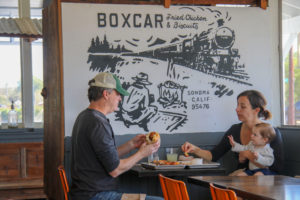
Interior at Boxcar Fried Chicken & Biscuits in Sonoma. Heather Irwin/PD

Over the last couple of months, I’ve been asked a lot about why the Fremont Diner abruptly closed last June and when they will reopen. A lot. You guys are relentless.  So I went straight to the source.

Deviled eggs at Boxcar Fried Chicken & Biscuits in Sonoma. Heather Irwin/PD

What I can tell you for sure is that the restaurant quietly reopened in early September. They’ve entirely revamped the menu and given the spot a new name — Boxcar Fried Chicken & Biscuits and so far the slimmed-down concept focused on fried chicken seems to be working. Yelpers even seem to be (mostly) happy.

After the June closure, owners Erika and Chad Harris said the wildly popular diner on the outskirts of Sonoma had simply been a victim of its own success over the last 10 years.

“It was incredibly successful to those who visited, but the model was hard to sustain,” owners said. With small children at home, ongoing staffing hurdles and long hours, they decided to get back to their roots.

Interior at Boxcar Fried Chicken & Biscuits in Sonoma. Heather Irwin/PD

“Boxcar came from a desire to get back to the beginning. We wanted to scale back our menu and make it more manageable for the kitchen to execute in a consistent and quick fashion,” said Erika Harris, who emailed her thoughts to Biteclub. Though we talked briefly in person and by phone, she said she preferred to send a written statement to explain the changes. 

“We chose to focus on fried chicken because we felt that it was an item that most people didn’t make at home and we just love fried chicken,” she added. Walk-up service has also returned. “As a family with three kids, we appreciate being able to get a meal quickly.”

Hush puppies at Boxcar Fried Chicken & Biscuits in Sonoma. Heather Irwin/PD

For customers, it is certainly a simpler experience — and on an early visit, pretty darn fast. Everything comes in paper or plastic containers neatly arranged on paper-covered aluminum trays. Plastic silverware, paper napkins, and no fuss. Service is walk-up, and they’ll call your name when the order is ready, rather than table service.

Pecan pie at Boxcar Fried Chicken & Biscuits in Sonoma. Heather Irwin/PD

The menu includes Fremont Diner’s top hits of the past with a few new additions. The buttery biscuits and honey are actually better than ever, the hush puppies with remoulade are addictive and they’ve still got the most authentic pimento cheese west of the Rockies (we think). The deviled eggs aren’t ironic here, they’re just delish little noshes with mustard seeds. We got downright weepy at the dab of molasses mixed with butter for a true Southern biscuit experience.

Interior at Boxcar Fried Chicken & Biscuits in Sonoma. Heather Irwin/PD

You can still get fried chicken platters in Nashville Hot, buttermilk or salt and pepper, as well as in sandwich form. The Golden Boy is a standout with juicy fried chicken, pimento cheese and a soft bun. Minor bummers: The fried pies were out when we stopped by and the sweet baked beans weren’t quite as soft as usual. Also, they’re only open weekdays currently but will be expanding weekday hours and adding Saturday service soon. Being an icon takes time, and we’re willing to wait.

2698 Fremont Dr., Hwy 12, Sonoma. Open 11am-3pm weekdays, boxcar-friedchicken.com.
Meet Your Thanksgiving Dinner at Heritage Turkey Sunday Supper

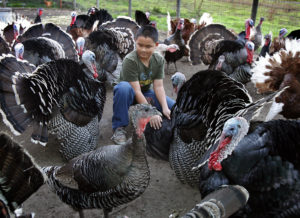
11/20/2009: A1: David Thode, 11, and his brother Zachary have raised 71 turkeys as part of the Sonoma County Heritage Turkey project. David has raised bronze, Bourbon red, Narragansett and Black heritage turkeys in the Sebastopol flock. PC: David Thode, 11, and his brother Zachary have raised 71 turkeys as part of the Sonoma County Heritage Turkey project. David has raised Bronze, Bourbon Red, Narragansett, and Black heritage in the Sebastopol flock.

Why did the turkey cross the road? Because it was a Sonoma-raised heritage Bourbon doing a stage appearance and meet-and-greet at the Heritage Turkey Sunday Supper on Nov. 4.

He’s also trying to win the Chateau Montelena Vertical auction lot, we hear.

PC: The Bourbon Red turkey raised by Willie Benedetti (cq) of Willie Bird Turkeys is smaller and leaner than commercial turkeys that have been bred for their breast meat. FINAL VERSION 11/19/2003: D1: A Bourbon Red heritage turkey takes an extra 12 weeks to raise but is said to be more flavorful and juicier than today's common broad-breasted whites.
PC: The Bourbon Red turkey raised by Willie Benedetti (cq) of Willie Bird Turkeys is smaller and leaner than commercial turkeys that have been bred for their breast meat. FINAL VERSION
11/19/2003: D1: A Bourbon Red heritage turkey takes an extra 12 weeks to raise but is said to be more flavorful and juicier than today’s common broad-breasted whites.

Meet the stars of your Thanksgiving table at Atwood Ranch’s Heritage Turkey Sunday Supper in Glen Ellen. The evening features live turkeys raised by local 4-H/FFA students as part of the Slow Food Russian River’s Heritage Turkey Project. Kids from around the county raise rare historic breeds like Narragansett, Royal Palm and Midget White from poult to, well, plate.

11/20/2009: A1: Narragansett heritage turkey, center, raised by David Thode, 11, and his brother Zachary in Sebastopol as part of the Sonoma County Heritage Turkey project. PC: A Narragansett heritage turkey, center, raised by David Thode, 11, and his brother Zachary in Sebastopol as part of the Sonoma County Heritage Turkey project.
11/20/2009: A1: Narragansett heritage turkey, center, raised by David Thode, 11, and his brother Zachary in Sebastopol as part of the Sonoma County Heritage Turkey project.
PC: A Narragansett heritage turkey, center, raised by David Thode, 11, and his brother Zachary in Sebastopol as part of the Sonoma County Heritage Turkey project.

The evening supper includes dishes from top Sonoma County Chefs Daniel Kedan (Backyard), John Stewart and Duskie Estes (Zazu), Bryan Jones (formerly of St. Francis Winery, Condra Easley (Patisserie Angelica) and Robb Ledesma (Worth Our Weight). Kedan said that some of the menu items included Stemple Creek brisket, smoked Liberty Duck legs with Bee Run Hollow delicata squash, turnip greens, roasted quince and apple jus.

Plus cider, beer and wine, appetizers, silent auction and “Foodie Chap” Liam Mayclem onstage (which is pretty entertaining if you’ve seen him at BottleRock).

All proceeds go to the young farmers who raised the turkeys, Slow Food Russian River programs and Worth Our Weight.

So what’s so great about heritage turkeys? They’re pretty distant cousins to the Broad Breasted Whites that we’re used to seeing on our Thanksgiving table. Bred to have big breasts and quick to mature, Broad Breasted is an industry standard. Turkeys that are more akin to their ancestors — with more traditional musculature (ie: they are able to walk and reproduce naturally) are usually considered “heritage breeds”, and are prized by turkey connoisseurs. It also helps endangered turkey species to once again flourish.

If you’re up for the turkey extravaganza, tickets are $100 per person. Tables of 10 can be purchased for $2,500 with specially curated wines and other goodies. Sponsored tables are also available for the fundraiser. Details at heritageturkeysupper.eventbrite.com or contact Julie Atwood Events at 707-318-7526.

Fall Day Trip: Visit America’s Best Pumpkin Patch

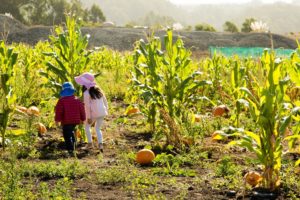
Bob’s Vegetable Stand & Pumpkin Patch, in Half Moon Bay, Calif., is the No. 1 pumpkin patch in America. (Yelp)

Crisp air, piles of colorful leaves, apple cider donuts and ever-divisive pumpkin spice lattes — thoughts of autumn don’t immediately conjure images of California.

But according to a list compiled by Travel + Leisure of America’s 25 best pumpkin patches, the top two are actually right here in the Golden State — both within about two hours of Sonoma County.

The list of America’s top pumpkin patches was created using data from crowdsource review platform Yelp. The patches were ranked according to a number of different factors, including a requirement that visitors be able to pick their own pumpkins.

To be considered, Yelp businesses had to be listed under “farm” or “home and garden,” and also contain the word “pumpkin” in reviews. Businesses also had to have a pick-your-own patch on-site.

Coming in at No. 1 is Bob’s Vegetable Stand & Pumpkin Farm, located in Half Moon Bay.

How can you beat a pumpkin patch with an ocean view? With more than 70 reviews and a rating of 4.5 stars, Yelp visitors praised the patch for its dog-friendly atmosphere, lack of excess attractions like bounce houses or hayrides and its good ol’ fashioned vibes.

Bob’s Vegetable Stand & Pumpkin Farm can be found on Highway 1, about 5 miles south of Highway 92. The patch is open from 9 a.m. to 6 p.m. every day, closing on Oct. 31.

With 4.5 stars and more than 60 reviews, Yelp ranked Sacramento’s Uncle Ray & Uncle Ron’s Pumpkin Patch as the second best pumpkin patch in America.

While the Half Moon Bay patch is continuously praised by Yelp users for its back-to-basics approach to harvesting pumpkins, Uncle Ray & Uncle Ron’s Pumpkin Patch is the exact opposite. The Sacramento patch’s many attractions include a pumpkin cannon, a kids train, hay rides and a weekend petting zoo.

Uncle Ray & Uncle Ron’s is located at 5610 Garden Highway in Sacramento, and is open weekdays from 10 a.m. to 6:30 p.m. and weekends from 9 a.m. to 6:30 p.m. It’s last day is Oct. 31.

What’s your favorite Sonoma County pumpkin patch? Let us know in the comments!


Artisan Pasta Meals in Minutes Thanks to These Sonoma-Made Products

Man cannot live on simple carbs alone, but in moderation, and in the form of artisan Sonoma-made pasta dishes, it’s a truly beautiful thing. Add to that the convenience of these great foods, and it’s time to rejoice. And get dinner on the table fast. Because evening you-time awaits — click through the above gallery for details.

Lioco Wine Company Opens Chic New Tasting Room in Healdsburg

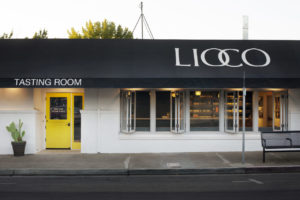
LIOCO Wine Company’s Tasting Room is now open in Healdsburg, just off the square at 125 Matheson Street. (Erik Castro)

After more than a decade of producing small-batch California wines without setting down roots, the team behind LIOCO Wine Company has opened its first tasting room in downtown Healdsburg, just around the corner from the town’s iconic square.

Operated by husband and wife duo Matt and Sara Licklider, the winery’s first tasting room at 125 Matheson Street is housed in a sleek and surprisingly cozy 1,300-square-foot space renovated by New York and Los Angeles-based design firm, Paige Pierce Design.

LIOCO wines, which draw fruit from vineyards in Sonoma, Mendocino and Santa Cruz counties, are produced in a Santa Rosa winemaking cooperative. Their focus is on chardonnay, pinot noir, carignan and the occasional coastal syrah or mid-century planting of valdiguie.

The chic tasting space currently has two flight options, as well as a seasonal menu of wines by the glass — and soon will offer a curated list of small plates, featuring local ingredients.

The Lickliders also plan to host a rotating list of events, including industry nights, guest chef pop-ups, live music and more.

LIOCO’s Healdsburg outpost is open daily from 11 a.m. to 7 p.m. Reservations, including access to private tastings, are available here.

‘Helping Other People Helps Me, This Is What Community Is All About:’ One Year Later, Stories from The Fires

On the anniversary of the firestorm, Sonoma Magazine shines a light on those who fought through our region’s darkest hours. During the month of October, we’ll introduce you to some of our neighbors who sought to make a positive difference. 

Out of the ashes, heroes emerged: firefighters, paramedics and police officers; friends and strangers. Chefs cooked and distributed food. Neighbors took us into their homes and shared clothes, housewares and compassion. Caped crusaders entertained children in shelters. Mental health professionals gave counseling. Artists sought to make sense of the catastrophe, console and inspire.

Piece by piece, kindness by kindness, shingle by shingle, we came together to help our community on that long road back to normalcy. This is a part of the story we should remember as vividly as the fires themselves—the sense of hope borne out of acts of compassion.

Melissa Barnett, 54, Santa Rosa, Community Health Worker Petaluma Health Foundation
“I was renting a two-bedroom apartment in Larkfield when the fires hit, but I wasn’t home; I was helping a friend in Mendocino County. While I was there, I discovered my place had burned up. I came back to try and get back in but the police wouldn’t let me. I didn’t see the site for maybe 30 days. It was a few months until I registered with FEMA. By January they had given me an RV trailer at the county fairground. People here lovingly call the place, ‘FEMAville.’ That’s where I am today. The trailer is small, it has an area for a bed, a couch, a table with benches, and a little kitchenette. There’s a tiny bathroom, too. When I moved here there were 270 units. Now there are about 70. Within a few months, I was getting to know my neighbors and realized that food scarcity was an issue for a lot of them. I was volunteering with some community organizations and knew there were ways to bring in some extra food. So I started up a white-tent produce stand right outside of my trailer where people in the camp could get food without having to go someplace else. Now every week I bring in food from the local food bank and from local gleaning programs. It’s mostly produce—apples, potatoes, leeks, greens, zucchini. The kind of stuff you’d find at a seasonal farmers’ market. People are so appreciative. They get fresh produce for free. Food is a great way to start conversations about other resources someone might need. As I pass out zucchini, I can ask, ‘Have you checked out case management resources?’ Helping other people helps me. This is what community is all about.”

Neil Pacheco, 38, Windsor, Latin Events Coordinator Graton Resort & Casino
“The day after the fires came through, I got a call from one of my friends. He told me a bunch of Latino families who lost their homes were heading to the coast. These people were not documented. They were not in the country legally, but they all had jobs here and families here. And they were good people. My friend told me they wanted to go to shelters but that they didn’t feel safe; that authorities would deport them. So I went out to them; to Dillon Beach. There were about 200 people there. They were staying in their cars. They were staying in tents. They were afraid. It was like they had gone through trauma. There was not enough communication. The communication that existed was all in English. I couldn’t believe my eyes. I got on the phone with the sheriff’s department and Supervisor Lynda Hopkins. Everyone assured me these people would be safe at the shelters. Everyone promised nothing would happen to them. After three or four days, with the help of others, I finally convinced these people to leave the coast and go to the shelters. As a human being and as a Latino, I wanted to help. These people didn’t have the resources to look for help. They weren’t comfortable getting the help that was available to them. They needed to feel comfortable. I believe strongly in diversity. I loved how the Latino community and the Anglo community came together during the fire and became one big family.”

Lauren Bodsworth, 30, Santa Rosa, General Manager The Sandman Hotel
“I’m usually off on Sundays and I wasn’t working the day of the fire. That changed quickly. I went to sleep around 11 p.m., and started getting calls from employees around 2 a.m. At that point, I realized it was very close and headed to the hotel. Heading north on the 101, I was forced to get off at Bicentennial. That’s when I realized it was close to the hotel. I got in and our night auditor had started sending guests to evacuation centers. The wind was blowing embers everywhere. I felt like I had no time to waste. I started going door-to-door, telling everybody they needed to leave. A lot of people were confused as to what was happening. It was crazy. From the second floor of our middle building I could see across the freeway that the [Hilton Sonoma Wine Country], the Fountaingrove Inn and the Round Barn had burned up. I worked the front desk at the Fountaingrove Inn for nine years before coming to the Sandman. It was very emotional to see my old hotel on fire. Anyway, I was at the hotel for about an hour getting everyone out. When the power went out, I locked up the hotel. I have to be honest: when I left, I did not expect to come back to a standing hotel. The whole experience was one of those moments where I didn’t even think—I just acted. My fiancé asked me that night, ‘What were you thinking going up there?’ I wasn’t thinking. This is my hotel. I wanted to protect the guests. I wanted to make sure I tried everything I could.”

Kathryn Hecht, 45, Cloverdale, Executive Director Alexander Valley Film Society
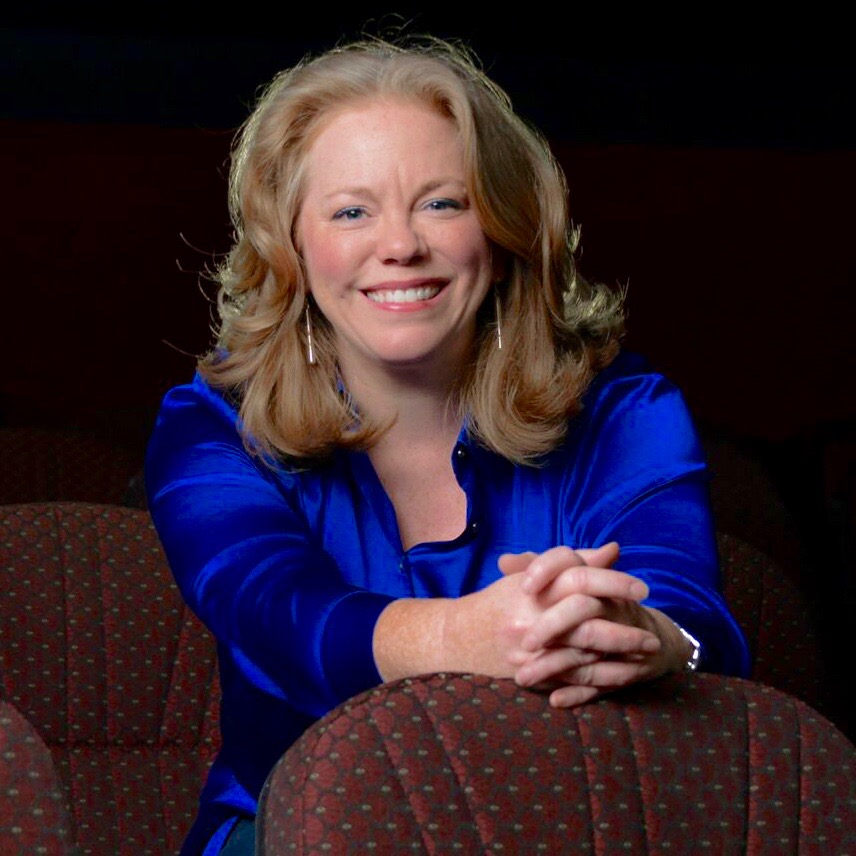
“Last year’s Alexander Valley Film Festival was scheduled to take place nine days after the fire. The first day of the fires, most of us were evacuated. By day two, we started to address what we were going to do. By day three, we knew that we wanted to do something that benefitted the community. It would have been inappropriate, given the nightmare that was happening just a few miles south, to pop a bottle of champagne and use the festival as a celebration of any kind. At the same time, we had put in eight or nine months of work to create the event. We felt the show had to go on. We decided to use what we had and strip it of anything fancy and make it an opportunity for people to get together and throw spare change into tip jars so we could donate the money to the community. The show went on. And it was a miracle for all kinds of reasons. People had something actionable to do. They had a place to put their bodies. They had a place to put their money. Our neighbor screening turned into a potluck. It turned out that seeing a movie and talking about it with friends was a good thing. In the end, we raised tens of thousands of dollars. It was more than we expected. If I had any question about the generosity and resilience of the community, it was answered tenfold. What we did was the right thing to do.”

The fourth-annual Alexander Valley Film Festival will be held Oct. 18-21 at various locations in Cloverdale, Geyserville, and Healdsburg. For more information or tickets, visit avfilmsociety.org.

Michael Barnes, 32, Santa Rosa, Food Runner St. Francis Winery (center in photo)
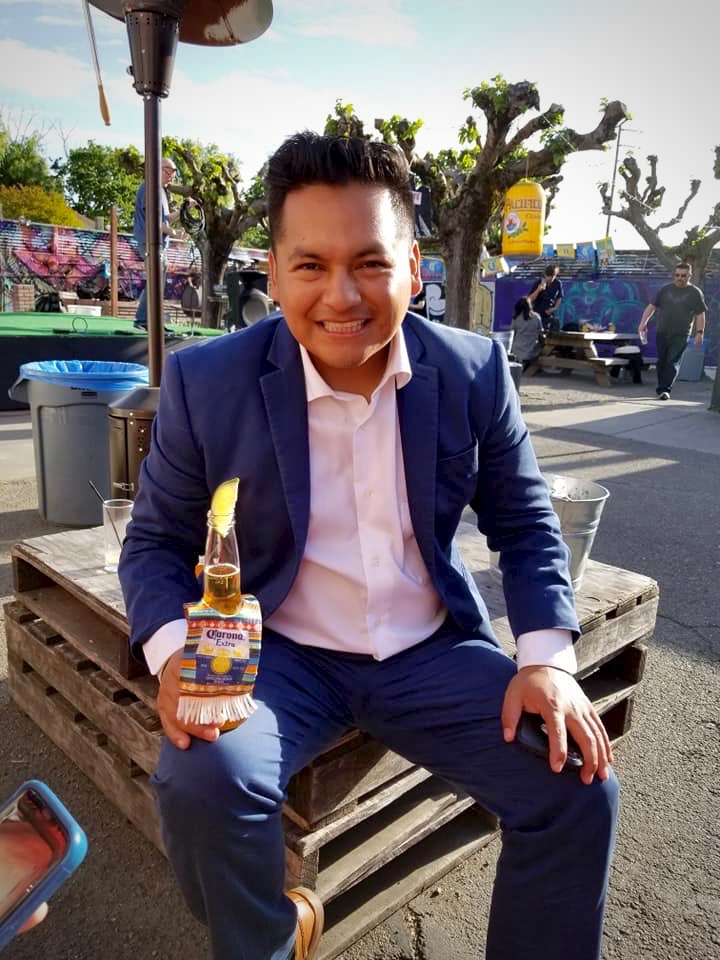
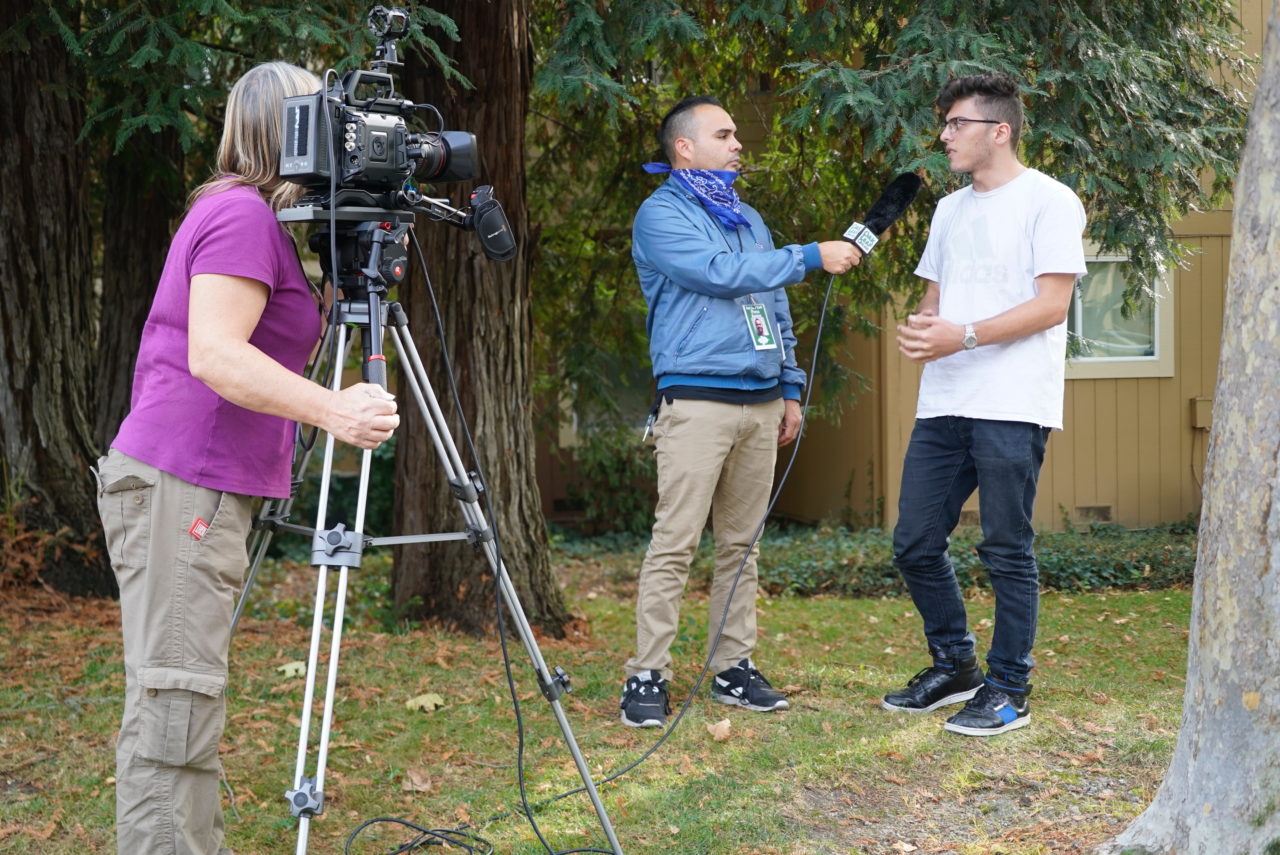
“At the time of the fires I was a student at Santa Rosa Junior College, working on The Oak Leaf, the student newspaper. It was new to me to cover something that was that big of a deal, but all of us just knew what we needed to do. A group of us were drawn back to the newsroom. There were eight of us, as well as our advisor, Anne Belden. One of the first nights, campus police came in and told us we couldn’t be there because the campus had been shut down. So we moved the newsroom to Anne’s house in Sebastopol; that became our headquarters. We created these handmade press passes and they worked! We went out in pairs and figured out what to cover. We felt like we were chasing flames. Sometimes we didn’t understand how close we should get to the fire or how close we were allowed to get. I felt scared every day. It was surreal to be out there and see people going through this. I learned on the fly about being tactful and respectful and understanding what it takes to get what you need out of a source. The experience taught me a lot about how to approach people and how to see them as human beings. I’m not a native to this area but I appreciated how much the community came together as a result of these fires.”

The Oak Leaf won multiple awards for its coverage of the 2017 firestorm. To read the paper’s fire coverage, visit oakleafnews.com/fire.

Read last week’s profiles here

KOSHO: Japanese Comfort Food in Sebastopol, From Sushi to Pancakes

Japanese pancake at Sushi Kosho in Sebastopol. Heather Irwin/PD

The seemingly simple act of making sushi is anything but. In Japan, apprentices sometimes spend decades perfecting things as mundane as washing the short grain rice properly and knowing the right proportion of vinegar to add to the warm-but-not-too-hot rice. And that’s before chefs can even think about touching a knife to fish.

Snapper sushi at Sushi Kosho in Sebastopol. Heather Irwin/PD

So when Chef Jake Rand of Sushi Kosho restaurant scoops a deft hand into a wooden cask of red-vinegared sushi rice, it’s impossible not to ask how long it’s taken him to perfect his Tokyo-style version.

“I’ll let you know,” says Rand, who has worked in top sushi restaurants for much of his life and studied in Japan as a young “gaijin” (the Japanese word for “foreigner”). With practiced moves, he pushes the brown-tinted rice into the palm of his hand, flicks his wrists with feather-light pressure and a one-bite piece of nigiri magically appears.

Wagyu short ribs with potatoes and Korean bbq sauce at Sushi Kosho in Sebastopol. Heather Irwin/PD

It’s a quest for perfection that anyone who’s seen the ornery, but arguably world’s best sushi chef, Jiro Takashi, explain in the documentary “Jiro Dreams of Sushi.” For a sushi fan, it’s impossible not to nerd out on the process. For everyone else, it’s just good sushi, and for Rand, that’s just fine.

With a menu that ranges from simple nigiri, sashimi and rolls to Wagyu beef shortribs and okonomiyaki (a savory Japanese pancake), Sebastopol’s Kosho is far above industrial-grade all-you-can-eat sushi bars but less formal than white napkin Japanese restaurants. Somewhere in between, Rand wants Kosho to be a weeknight kind of place rather than a special occasion eatery.

Chicken meatball charcoal-grilled skewers at Sushi Kosho in Sebastopol. Heather Irwin/PD

Named for a ubiquitous condiment found in Japanese cooking, kosho is a combination of red chiles and yuzu (a tart Japanese citrus that merges lemon, orange and grapefruit) fermented into a paste. The spicy, sour, salty condiment plays a part in many of Rand’s dishes, as does shiso, soy and sesame — lending plenty of savory umami.

Housed in the former Vignette pizzeria, the airy Barlow space is a stone’s throw from the burgeoning craft brew scene all around it. Sit at the sushi bar for a front-row seat to the action in the quiet open kitchen. For sushi beginners, it’s a safe space to explore. For pros, savor some of the best-made nigiri and sashimi in Sonoma County, along with other Japanese comfort classics — at the right price.

Best Bets

Shishito peppers at Sushi Kosho in Sebastopol. Heather Irwin/PD

Blackened Shishito Peppers ($9): Blistered peppers get a kick from Japanese seven-spice and lime kosho. Sweet heat unless you get the one-in-10 hot shishito pepper that will have you reaching for water. Think of it as dining roulette.

Seaweed Salad ($11): Rather than the usual slippery green seaweed in most salads, Rand mixes red, green and white seaweeds together, giving a variety of bumpy, lumpy and tickly textures. Marinated in orange yuzu vinaigrette, avocado and fresh cherry tomatoes add a California touch.

Charcoal-Grilled Chicken Meatball ($9): Served on a skewer, these oval meatballs are crispy on the outside, and juicy on the inside, gently seasoned and served with a raw egg and soy dipping sauce. Yes, it’s a raw egg. If you’re not into that, just ask for the soy sauce. But you’re missing out.

Sake at Sushi Kosho in Sebastopol. (Photo by Heather Irwin)
Sake at Sushi Kosho in Sebastopol. Heather Irwin/PD

Kanpachi Chili Sashimi ($17): Impossibly thin slices of radish and serrano chili atop what’s also known as amberjack fish. With a dot of yuzu citrus, the flavors of earth and sea, citrus and heat come together in a perfect bite. Sushi here isn’t cheap, but Rand sources impeccably from around the world to get fish that’s worth savoring with minimal fussery.

Okonomiyaki ($13): This rib-sticker is more like an omelet than a pancake, filled with mushrooms, bacon or seafood and topped with ribbons of mayonnaise. It’s sweet-salty and should be shared rather than trying to eat it on your own.

Seaweed salad at Sushi Kosho in Sebastopol. Heather Irwin/PD

Wagyu Short Ribs ($22): A steal of a deal that features Snake River Farms wagyu atop crispy smashed fingerlings and a Korean bbq sauce that’s all about the garlic, soy and sweet brown sugar.

Sushi and Sashimi ($6 to $15 for two pieces): Most of the fish is fairly mild, with fatty tuna, New Zealand king salmon, bright orange ocean trout, halibut and red snapper. Saba, a Japanese mackerel, is one of the few strongly flavored fishes. Sushi meals are $31 for a nine-piece nigiri and maki, $34 for a sashimi dinner and $32 for chirashi (sashimi over rice).

Yuzu granita, lemon curd panna cotta at Sushi Kosho in Sebastopol. Heather Irwin/PD

Rolls ($12-$17): Not really my jam, but they have a handful that seem less offensive than most mayonnaise covered horrors.

Yuzu granita and Lemon Curd Panna Cotta ($6): Oh, my God. Tart, tart, tart, creamy amazement.

Overall: Approachable Japanese, impeccably sourced with high-end flavors in a casual environment.

Open for dinner daily from 5-9p.m., 6750 McKinley St., Sebastopol, 707-827-6373, koshosushi.com.

Still Standing: Owners of Fountaingrove Homes That Survived the Firestorm Share Their Stories

They are the lucky few: those whose homes were spared; the owners of the only structures that remain in the burn areas of Fountaingrove hill.

Yet for these residents, the survivor experience is fraught with guilt, anxiety, and red tape.

There is guilt that their homes survived when many others lost everything. There are anxieties—about safety, about environmental dangers. Then there are the enervating and time consuming processes: the repair and remediation efforts, the red tape pertaining to insurance claims, the permits for home improvement.

“These fires have brought different challenges for everyone,” says Lisa Mattson, whose home was one of the only houses on her street left standing. “What we’ve learned is that we need to stick together.”

Mattson has tried to play an active role in strengthening the community.

She and her husband were vacationing in Europe when the fires of October 2017 ravaged Santa Rosa. They assumed their house was one of the many burned in the fire. Thankfully, they were wrong. Their detached garage and three cars were destroyed, but their home was saved by ten firefighters from three different Sonoma County stations. 

Two weeks later, the Mattsons were back in Santa Rosa, standing in their house with masks and gloves, sifting through the things that remained.

A neighbor knocked on the door, introducing herself by saying her house had also survived. Immediately, the neighbor and Mattson found themselves commiserating about their new reality.

“We bonded instantly,” says Mattson, who is communications director at Jordan Winery in Healdsburg. “Our situation sucked, but it was nice having someone going through the same thing who was willing to talk.”

The conversation gave Mattson an idea: Why not create a support group? Over the next week, she collected email addresses and leveraged data from Nextdoor to launch Fountaingrove Homes Still Standing. She organized a get-together. Many residents of the neighborhood whose homes had survived attended.

Together, they shared stories from the fire, aired frustrations about the rebuilding process, exchanged tips about managing contractors, and shared feelings about being spared by the flames. There were tears and hugs. New friendships were made. The experience was cathartic.   

“We’d all lived in the same neighborhood for years, but in most cases none of us had met,” says Mattson, who expects to move back into her house in April. “While it was nice to have a place to talk about our experiences [as survivors], it was even nicer to make new friends and build a new sense of community in this time of horrible loss.”

Zarina DeCastro was the neighbor who approached Mattson that morning. For her the grieving process continues.

DeCastro was scheduled to start a new job at the front desk of the Hilton Sonoma Wine Country the morning after the fire. Instead, she and her husband and two sons evacuated to San Francisco around midnight. They were convinced that their house would be destroyed. Later that day, a friend texted a picture confirming that the structure of their house had been spared. They couldn’t believe their eyes. Then began a true roller-coaster of emotions.

Upon returning to their house twelve days after the fire, the DeCastros confronted the immensity of the devastation in the neighborhood. They found themselves both scared by the present and uncertain about their next steps. “How could we move back into a house with nothing around it? Was it safe? Would it feel weird?” These thoughts nagged at Zarina, heightening her anxiety and her sense of discomfort.

But then the DeCastros began attending to the myriad details attendant to the repair of the damaged house: new stucco, new electrical system, new landscaping, new paint, and more.

“I’m not going to lie, I asked myself, ‘Are we better off this way?’” she admitted.

Six months after the fires, Zarina and her husband moved back into their home and began getting reacquainted with the house they knew and loved. They redecorated the best they could. They strung up outdoor lights to make it look pretty. They reminded themselves that, while their block was a veritable ghost town, everything would return in time.

“Somebody had to be the first,” she said of the family’s return. “We bought this house because we loved it and we loved the neighborhood. The house is still here. The neighborhood will come back soon enough.”

Rob and Sallie Morris, Fountaingrove residents whose house also survived the fire, have a similar perspective.

As Rob describes it, the fire came right up to every doorway, but miraculously did not take the house. He and Sallie have spent months trying to understand why other houses burned and theirs survived. They believe their windows helped— the panes of the double-paned windows held and prevented the inside of the house from catching fire.

Rob says additionally that a water pipe also may have melted; the leaking water helping to douse the fire.

The Morrises moved back in April after repairs and renovations. They now wait patiently for the rest of the block to come back to life.

“Normally when you take out the garbage every week, you look down the street and see lots of garbage cans,” says Sallie. “These days I look up the street and our garbage cans are the only ones. That’s not necessarily something you become immune to. Every time that happens, every time we drive in, it’s like, ‘Oh right.’ But this is home. It’ll be home. We know a sense of normalcy will return soon.”

Acclaimed LGBTQ+ Films to Screen at New Santa Rosa Festival

Miss Major Griffin-Gracy has been fighting for the rights of trans women of color for more than 40 years.

A veteran of the Stonewall riots, a former sex worker, and a formerly incarcerated inmate, Griffin-Gracy has spent her life raising up trans youth and fighting intolerance. Now, Sonoma County residents will get a chance to see that life in documentary form at the Bay Area Arts Fest, a festival of documentaries, feature films, live music, activists and comic artists that takes place October 13-16.

The 2015 documentary “Major!” is set to screen at 7 p.m. Saturday at Santa Rosa’s Arlene Francis Center as part of the opening night of the festival. The film received the Audience Award and Special Jury Mention at Outfest in Los Angeles and the Audience Award for Best Documentary at Insideout Toronto.

The screening will be followed by a performance from Oakland-based singer and composer Ah Mer Ah Su, who contributed music for the film and whose EP “Rebecca” was named one of KQED’s “10 Best Bay Area Albums of 2017.”

The opening night is presented by the Arlene Francis Center and United Against Sexual Oppression North Bay, and is a fundraiser for San Francisco’s Saint James Infirmary, a peer-based health and safety clinic for sex workers. Tickets are on a sliding scale from $10-20, and can be purchased here.

Day two of the Bay Area Arts Fest, October 14, will feature Emmy award-winning documentary “Screaming Queens,” which tells the story of the 1966 Compton’s Cafeteria riot in San Francisco – one of the first collective acts of militant resistance against the social oppression of queer people in the United States.

The screening will take place at Brew Coffee & Beer in Santa Rosa and will be followed by a talk by Janetta Louise Johnson, Executive Director at TGI Justice Project and co-founder of the Comptons Transgender Cultural District, the first transgender cultural district in the country. Tickets can be purchased here.

The festival will close on October 16 with a screening of Tangerine, an acclaimed comedy-drama directed by Sean Baker. The film follows transgender sex worker Sin-Dee Rella who, upon hearing that her pimp boyfriend has been unfaithful to her while she was in prison, embarks on a mission with her best friend Alexandra to get to the bottom of the rumor. Their “rip-roaring odyssey” leads them through various Los Angeles subcultures.

Tangerine premiered at the Sundance Film Festival and received glowing reviews from film critics. Alex Star, author of the webcomic Tittybar Tales, will give a talk before the screening. Tickets to day three of the festival can be found here.