
Great Local Cheeses To Try, According to Madame de Fromage

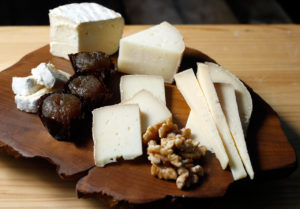
A cheese plate featuring (from left to right) Pennyroyal Farm Bollie’s Mollies, Amexia D’Elvas Convento de Serra natural preserved plums, Bleating Heart Cheese Fat Bottom Girl, raw local almonds, and Point Reyes Cheese Company Gouda, aged two years, assembled by cheese monger Omar Mueller of Freestone Artisan Cheese, in Freestone, California on Tuesday, November 29, 2016. (Alvin Jornada / The Press Democrat)

Colette Hatch – aka Madame de Fromage – has worked as a cheesemonger at Oliver’s for more than a decade. Click through the gallery for some of her favorite local cheeses.

Madame de Fromage doesn’t take cheese lightly. Literally.

Balancing a large wooden board nearly the size of her petite torso, she’s snatching up wedges of all her favorite local cheeses from the refrigerated cases of Oliver’s Market in Windsor.

Most of us only know her by her nom de guerre, Madame de Fromage. She has worked for Oliver’s for more than a decade as cheesemonger and buyer and knows all the ins and outs of the local cheese trade. She is a tireless champion or opinionated critic of every slice that comes under her experienced nose.
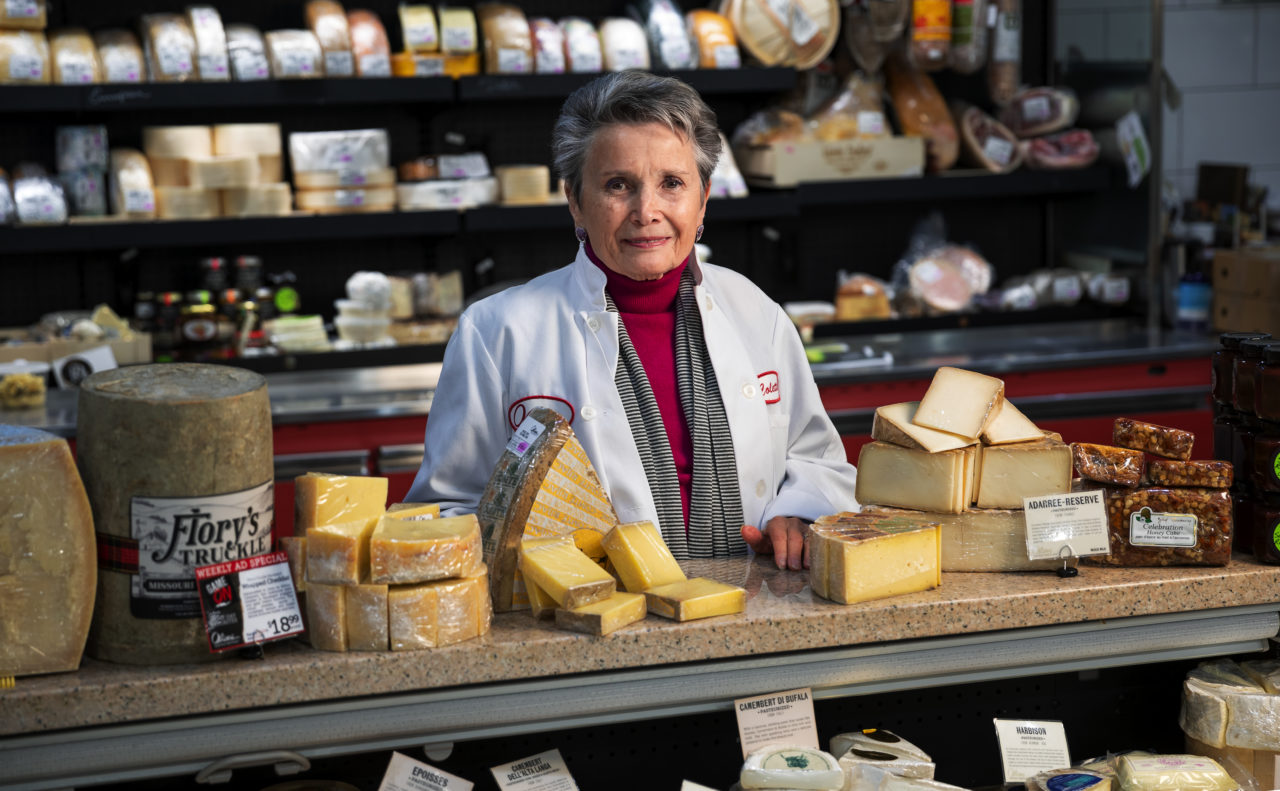
Collette Hatch the Cheese monger at Oliver’s market

The whole mass of samples is threatening to topple onto the floor as Madame — whose name is Colette Hatch — walks and talks about everything from mascarpone to mozzarella in a fast-paced, thick French accent. With Madame you either keep up or get out of the way.

Undaunted by the pile, she continues pulling cheese, looking for one particular wedge.

“The one with the bloomy rind?” she says to one of her white-coated cheese department staff, sifting through the piles of triple cream brie, Camembert, goat cheese, sheep’s milk cheese, fresh cheese, and aged cheeses. The way Hatch says it sounds more like “zee wan wis zee blumay wind.”

It’s entertaining just to watch Hatch poke deft fingers through the hundreds of varieties and pull out her favorites. We’re about to go on a tasting expedition together, with Hatch explaining some of her current favorites.

“You’ve had this one, of course,” she points to a wedge of Joe Matos St. George cheese, an aged raw cow’s milk cheese that’s been a local favorite since the family set up business in Sonoma County in 1979. It’s a nutty, hard cheese that along with Sonoma’s Vella Jack and Laura Chenel’s goat cheeses set the stage for artisan cheesemakers in the region. It’s also a familiar flavor, so she passes over it and continues the search for more obscure favorites.

In the nearly three decades since Hatch came to Sonoma County, the local cheesemaking scene has leapt into the national consciousness. First there was Chenel, who brought goat cheese to American plates from her Sonoma County dairy in the 1980s. Then came Redwood Hill Goat Cheese, Bellwether Farms, Marin French Cheese, and perhaps one of the largest success stories of all, Cowgirl Creamery — whose Red Hawk and Mt Tam are dairy darlings.

Not to mention the dozens of tiny artisan cheesemakers whose small-batch creations grace dozens of local restaurant cheeseboards.
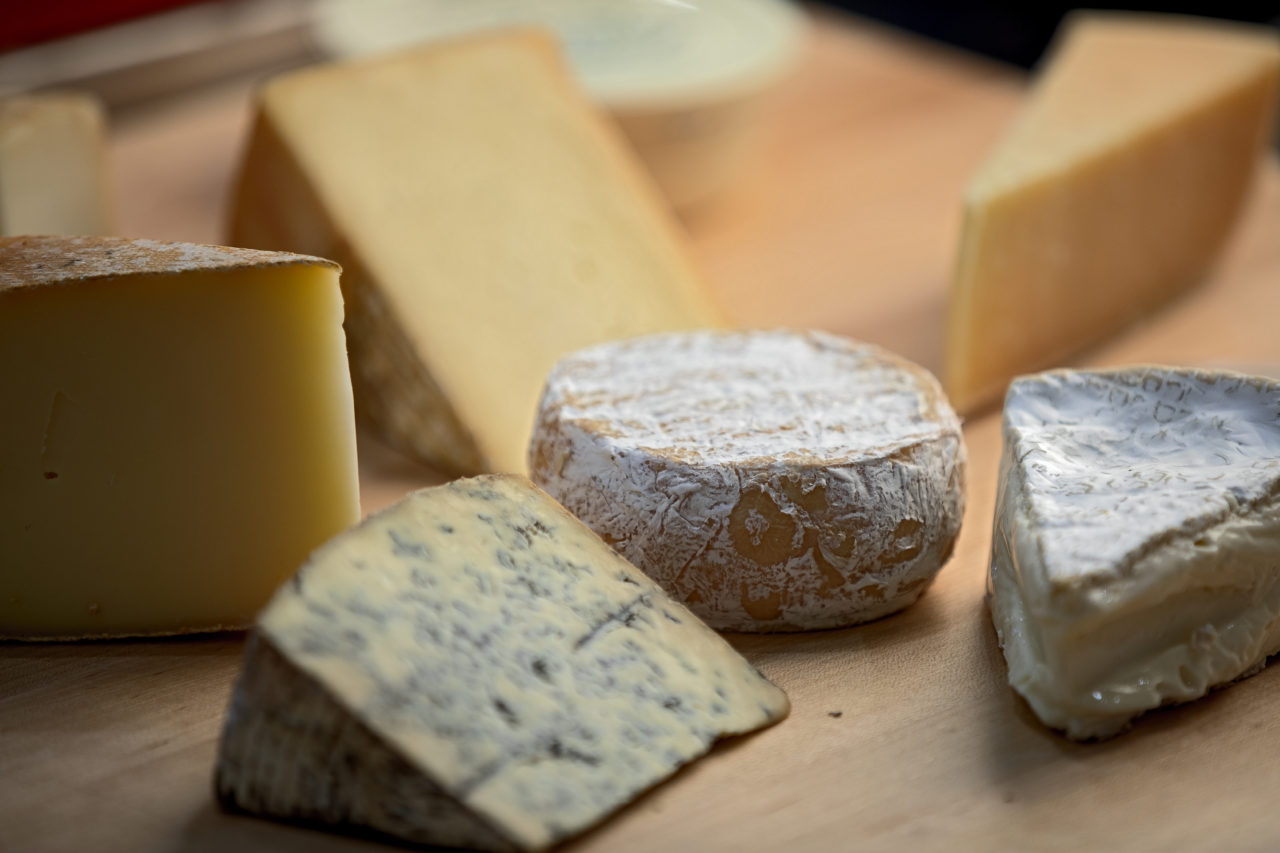
Left to right: Cowgirl Hopalong, Grazin' Girl Blue, Tomino Nicasio and Locarno Nicasio cheeses. (Photo by Chris Hardy)
Colette Hatch sources a broad variety of local artisan cheeses from producers in Marin, Sonoma, and Mendocino counties. (Photo by Chris Hardy)

“Cheese is very creative. Every day the cheesemaker has to worry about the milk. It’s a living thing. You have to be in touch with every element of the terroir,” Hatch says of the weather, seasons, and natural influences on sheep, goat, and cow’s milk. That’s why geographic boundaries — Marin, Sonoma, Mendocino — fall to the wayside when discussing local cheeses.

Because from Point Reyes to northern Boonville, it’s more about seasons and styles than the permeable borders between dairies. “Cheese is like wine. It changes every time it’s made. Some may change from season to season with what the animals are eating, using different cultures. You have to know your milk,” she says.

“But it’s also like a child. You have to constantly take care of it.”

What may have most defined the local cheesemaking business in the last five years, Hatch says, is a significant consolidation that brought in international ownership, something she is ambivalent about.

“When Sue and Peggy sold, I was devastated,” says Hatch of the sale of Point Reyes-based Cowgirl Creamery by founders Sue Conley and Peggy Smith to Swiss dairy processor Emmi in 2016. “We all started at the same time,” says Hatch, wistfully. Six months prior to the Cowgirl sale, local goat dairy Redwood Hill Farms sold to Emmi as well. But two years later, Hatch sees opportunity in the corporate cash infusion.

“Now there is more opportunity to make more cheese. There’s more equipment they couldn’t have bought to make cheese locally with good milk,” says Hatch, pulling out Cowgirl Creamery’s newest cheese, called Hop Along. The young, cider-washed rind is creamy and rich with a hint of tart cider flavor.

Some smaller cheesemakers have suffered as milk prices have gone up, spaces available for cheesemaking have become harder to find, and the very real challenges of artisan cheesemaking have come to light.

“Regulations are tougher, finding space is difficult, and it’s a lot of work for very little money in a very competitive market,” says Vivien Straus, the creator of the California Cheese Trail (cheesetrail.org), which promotes artisan cheesemakers and family farmers. Straus, who grew up on her family’s dairy farm in the rural Marin town of Marshall, sees hope, though. “Some will survive and some won’t. God, it’s a lot of work, but people keep trying. All the cheeses here are so different and so amazing. The whole world looks to us for our cheese.”

Along with Wisconsin and Vermont, Northern California — specifically Sonoma and Marin — are the big leagues of cheesemaking, says Keith Adams, partner and cheesemaker at Sebastopol’s Wm. Colfield Cheesemakers. “We’re persistent and we believe in what we’re doing. You have to operate at a very high level to compete with those who’ve been here a lot longer,” says Adams, who still considers himself a newcomer after two years in business.

Artisan cheesemaker Sheana Davis, whose Delice de la Vallee fresh cheese is a favorite with renowned chef Thomas Keller, agrees. “Some of the smaller producers are struggling to find a marketplace for their cheeses, based on price point, as it is hard to compete with the larger companies.”

In the end, however, places like Oliver’s and the Petaluma Market continue to be champions for local cheesemakers, offering up a wide variety of sheep, cow, goat, and even buffalo milk cheeses at a variety of prices.

“Artisan cheese is expensive, and not everyone can try it,” says Hatch, who believes that great cheese should be accessible to as many people as possible. “I look at what is most exciting,” she says of cheeses that she puts on sale at Oliver’s each month. “I want to give everyone an opportunity. I might be opinionated, but I know what I give you is the best thing for the best price.”

To learn more about all of these amazing cheeses, and for a chance to taste them all in one spot, check out the 13th Annual California Artisan Cheese Festival, March 23-24, 2019. The Festival events happen throughout Sonoma County, including Farm Tours, Seminars at the Flamingo Conference Resort and Spa, Cheese, Bites & Booze! at the Jackson Family Wines Hangar at Sonoma Jet Center, and the popular Artisan Cheese Tasting & Marketplace at the Sonoma County Fairgrounds with over 22 artisan cheesemakers under one roof!
Barber Shops Are Booming in Sonoma County

Steve DuBois cuts hair in his one seat Plaza Barber shop in Healdsburg. (JOHN BURGESS / The Press Democrat)

The lone upholstered chair at the Plaza Barber Shop on Center Street in Healdsburg was occupied by a regular named Larry, who was probably exaggerating when he complained that his eyebrows were so overgrown they were interfering with his backswing.

Steve DuBois, the proprietor, trimmed the bramble-like brows of Larry while explaining to a visitor why barber shops across the republic are experiencing a boom. “Beards are back. Men’s grooming, and grooming products, have just become part of the culture. I mean, guys are getting their ears waxed.”

“I didn’t know you did ear waxing,” remarked a wiseacre waiting his turn in one of the shop’s vintage Candlestick Park folding chairs. (DuBois doesn’t. Yet.)

With their memorabilia, lather machines, and Rockwellian poles, barber shops offer both nostalgia and a hipness factor best described as “lumbersexual.” That’s helped drive a tonsorial renaissance evident around the county, but especially in Healdsburg, which supports not one, but two thriving one-chair shops.

At his eponymous operation on Healdsburg Avenue, Erik Wagner has been cutting hair for 17 years. Four years ago, he switched to an appointments-only model, giving him more control over his schedule, and allowing him “to see more of my kids’ games.”

Barbering, he notes, has provided him with more than a mere livelihood. “If I just had a desk job somewhere, I wouldn’t have the relationships that I have. I wouldn’t be so close to the community.”

Nodding in agreement was 30-something Joseph, whose neckline Wagner was cleaning up with a straight razor. He’d nodded earlier, upon first settling into the chair, when Wagner posed the eternal barber’s question: “The usual?”

Plaza Barber Shop, 319 Center St., Healdsburg, 707-433-9833, plazabarberhealdsburg.com; Erik’s Barber Shop, 433 Healdsburg Ave., #A, 707-433-7466

Scandinavian Farmer Creates Chicken Paradise in Sonoma

After two decades of fast-paced city life and a bustling photography career, Tania Soderman packed up her family and left San Francisco for Sonoma, where she envisioned giving her children a more humble, down-to-earth existence.

In creating this new life for her family, she sought to create a “slice of Norway” — where she was born and raised — by creating a small farm on her 3-acre property on the outskirts of the city of Sonoma. Now her farm has approximately four dozen chickens, along with ducks, quail, rabbits, geese, and a herding dog named Ollie.

Walking into Soderman’s farm, which she has named Sonoma Chicks, is like walking into what one can only imagine is a chicken’s idea of paradise. Beautiful red and white coops with artistic accents are strategically placed for the chickens to be able to easily roam among them, flowers line the fenced areas where the animals are kept at night, and chickens of all colors, sizes, and breeds are spread throughout the property.

All of the structures are customized by Soderman, who takes basic frames or older coops and refurbishes them into charming homes for her animals. Everything from the sanding to the painting is done by hand, and she outsources only for heavy-duty items like roofing (for which she uses local vendors). The theme of red and white is consistent from the coops to the red and white roses to custom name plaques that indicate which animals are in the different coops.

There is one large coop in the center of the yard, adorned with a vibrant barn door. Smaller coops built to look like small houses are attached to the central coop, with electric doors that automatically open for chickens to pass from the main areas to the specific nesting areas (each with a small, hand-painted name plaque for chickens incubating eggs).

Soderman estimates she has roughly 30 breeds of chickens, if not more. She has gradually added chickens over the last four years, some coming from eggs shipped from around the world that she incubated and some coming to her as rescues, including several that arrived after the 2017 Wine Country wildfires. One of her goals is to have a wide variety of different colored eggs, as each breed lays different shades.

Soderman currently allows some visitors to her farm — primarily through word-of-mouth and local schools visiting for class field trips. In the springtime, Sonoma Chicks is blooming with flowers and surrounded by greenery, which is Soderman’s favorite time to entertain visitors. To learn more about Sonoma Chicks or contact Soderman for a visit to the farm, check out her Instagram at @SonomaChicks.

Best Sonoma Wineries to Visit This Spring

March 2019

Vineyards are bursting with new growth, rain is mostly over for the season, and so it’s time to plan your tasting room adventures for spring. Annual events kick into gear in March and April, starting with the two-weekend, wine-intensive Wine Road Barrel Tasting (March 1-3 and 8-10). At least 40 wineries also participate in Passport to Dry Creek Valley (April 27-28), celebrated for its food-and-wine pairings and entertainment. Click through the gallery for Sonoma County wineries to visit this spring.

Your Guide To a Desert Getaway, An Easy Flight from Sonoma County Airport STS

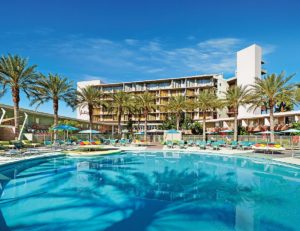
Pool at Hotel Valley Ho in Scottsdale, Arizona

Some travelers think the best airports in the world are shiny and big with amenities like yoga rooms and luxury department stores. They’ve obviously never flown out of Charles M. Schulz – Sonoma County Airport (STS).

Traveling from STS is a breeze compared to SFO and Oakland International Airport. Leave the car at home, take Uber/Lyft or SMART train to the airport, and be greeted by Lucy’s colorful help desk along with some of the shortest security lines you’ll ever see. Daily nonstop flights take off to destinations like Los Angeles, Orange County, San Diego, Portland, Seattle, Denver (beginning March 8) and Phoenix. There are seasonal flights to Minnesota and Las Vegas and in June, Dallas gets added to the departure list.

With so many options, where should you jet to next? To help you decide, we’re putting together getaway guides on where to eat, sleep, and play at each destination.

Just in time for spring training (and maybe to escape the rain), here’s our take on how to do the desert in style in Scottsdale, Arizona. From hot air ballooning to kayaking in the company of wild mustangs, there’s so much to do here even die hard baseball fans might find themselves thinking about skipping a game.

Sweet T’s Makes a Sweet Return After Burning Down in Tubbs Fire

Sweet T’s George Ah Chin talks with customers, Monday, March 4, 2019 during a soft opening of the restaurant’s new location in Windsor. Sweet T’s was destroyed during the Tubb’s fire as it roared over Fountaingrove and in to Santa Rosa. (Kent Porter / The Press Democrat) 2018

As Dennis and Ann Tussey sifted through the burned wreckage of their Fountaingrove restaurant after the 2017 wildfires, the one thing they knew for sure — maybe the only thing — was that they’d reopen. 

When and where were still up in the air, but the dream of welcoming longtime customers, friends and family back to their restaurant, Sweet T’s, would become their driving force over the last 17 months.

After more than $1 million in renovations to a former Denny’s in Windsor, their restaurant will finally reopen Thursday (March 7) in its new home.

“It took us a couple months just to get our minds around what we could do, but it was never a question in our mind that we would reopen,” Dennis Tussey said Friday as hundreds of well-wishers poured into the space for a preview. 

The couple secured a lease in a shopping center on Brooks Road South in Windsor soon after the fires. Though the opening date was pushed back several times from summer 2018 to fall, and finally to March, the preview was both a homecoming and closure to many painful memories of the fire. 

 “Tonight was like a family reunion rather than opening a restaurant,” said Tussey. “These are customers who helped us rebuild. Now, we finally get to see them again in a normal environment.” 

Lines queued around Tussey throughout the night as he gave hugs and handshakes to fans of the original restaurant. As he made his way through the room, he pointed out myriad features of the new space — the smoker, the wrap-around porch and the hundreds of small details he and Ann had carefully considered in the rebuild.

Insurance money from the fires covered the cost of renovating the 3,700-square-foot restaurant in Windsor, according to Tussey. The large bar area, spacious tables and enclosed outdoor dining space make it feel larger, though Tussey said the footprint is exactly the same as the Fountaingrove location. 

“It took us a little longer than we imagined. The remodel was much more extensive than we understood,” said Tussey. “I think it’s going to be a better location. (Fountaingrove) was special, but for visibility this is better. It’s new, the decor is even more attractive.”

Of the handful of restaurants that were destroyed in the wildfires, Tussey’s is the first to reopen, a fact he’s proud of. Willi’s Wine Bar, which also perished in the 2017 fires, is slated to reopen in the Town & Country Shopping Center in east Santa Rosa in early May. Others do not yet have timelines or will not reopen.

Longtime customer Joyce Coletti, who lost her home on Vintage Circle in the fires, was emotional when discussing why she and her husband Ed attended the preview. 

 “We came by a couple weeks ago and Ann (Tussey) was here. It felt like ‘Oh, it’s okay now,’” she said, gently touching her hands to her heart and smiling. “She knows what it’s like for us.” 

 “It was a mutual love fest,” said her husband. He added that their dog, Sam, was probably the one who most missed the old restaurant. “George used to feed him scraps,” he said of the longtime Sweet T’s pitmaster. The couple relocated to a quiet cul-de-sac in the Junior College neighborhood, but still miss what they refer to as their “home” just behind the old restaurant.

Wes Shirley sat with his wife and other regulars in a booth with nibbles of new and old menu items piled on the table including pork nachos, tri tip, mac and cheese and fried chicken sliders. Shirley, who said he visited the old restaurant two to three times a week, also lost a home in the fires. 

 “We ate everything off the old menu because it was comforting,” he said. “Thank goodness they are back.”

Tussey said that customers demanded they keep the Southern-inspired menu the same, with richly smoked and barbecued meats, creamy mac and cheese, shrimp grits, fried chicken and key lime pie. Additions to the menu include beef sliders.

 “I’m so beyond excited for the two of them who have worked so hard to put this back together,” said Dennis Tussey’s daughter, Jennifer Tussey, who attended the opening with her husband. “Seeing photos of them (Dennis and Ann) viewing the old property shows how affected they were. There was a lot of thought, and they considered quite a few different directions.”

Kenneth Minton said he celebrated several birthdays and special occasions at the former location and was planning to bring his sister, who lives out of town, to the new restaurant for her favorite fried chicken sandwich. “Windsor is really gaining something. We had my sister’s farewell dinner here because she wanted their fried chicken. She’s already told me her order when she comes back home,” said Minton, who lives in Windsor.

As someone who knows the heartbreak of losing a restaurant, Tussey said restaurateurs in the Barlow and west Sonoma County who lost their businesses in last week’s flood face a difficult road ahead. 

 “My heart just goes out to them. If you have the wherewithal just get back open,” he said.

 When the restaurant originally opened in 2009, not everyone thought rich, Southern comfort food would appeal to Sonoma County residents. Lily Akimoff of Santa Rosa, who is also an investor in the restaurant, said she originally thought the Tusseys were crazy for having a restaurant in a food culture “where everyone eats rabbit food.” 

 “To see their success has blown us away. It seems like a sad thing has turned into a beautiful thing. They’ve gotten even better, and the number of people here tonight is a testament to that,” Akimoff said Friday.

Get Gardening with These Sonoma Finds

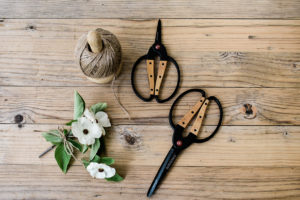
In Sonoma, ambitious green thumbs can garden year round. But, for the rest of us, the end of winter rains and signs of early spring is usually what gets us going. If you feel like you want to get in on the growing action this season, we’ve lined up a few gardening items to make things easier, more fun, and much more beautiful. Click through the gallery for details.

Small Sonoma Home Makes Big Splash in Design World

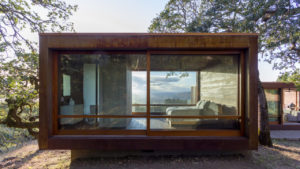
prefabricated, modular home designed by Alchemy Architects

Photography by Alchemy

A tiny house on Sonoma Mountain is getting big accolades from the design world, an achievement all the more surprising considering it was made in a factory.

The Sonoma weeHouse is just 640 square feet, the size of many rooms in some of the Wine Country’s awesome estates. But BJ Siegel, who had the little house built for his family as a rural getaway, understands that artistry comes in all sizes.

Siegel, who is the director of store design for Apple, wasn’t looking for opulence — just a little shelter with incredible views, which is, after all, what drew the San Francisco resident to the wilds of the mountain in the first place.

The corrugated Cor-Ten steel box with 9-foot sliding glass walls is set on a concrete plinth that cantilevers a deck 10 feet out into the oak-studded landscape. A matching, even more miniature, guesthouse, half the size at 330 square feet, is connected to the main house with a short walkway and stairs.

The ultra-minimalist home, designed in Minnesota by Alchemy Architects, built in an Oregon factory, and trucked to a mountain above Santa Rosa, has been featured by many design writers including Dwell Magazine. In June it was honored with a Small Project Award from the American Institute of Architects.

The awards, conferred on projects throughout the country, singled out another Sonoma County project — Sonoma Academy’s Janet Durgin Guild and Commons, for its sustainable design. Designed by WRNS Studio, with offices in San Francisco, the space incorporates maker/digital classrooms, and kitchen and dining areas on two sweeping floors with a living roof and tiered planters that filter storm and graywater, among numerous other green features.

Judges called the Sonoma weeHouse, “beautifully done,” with a “compact footprint and minimal site impact.”

Alchemy, which specializes in high-design modular buildings, describes Siegel’s mountain retreat as a “celebration of the luxury of less.”

“We did a lot of research to see what was out there. There are a lot of prefabricated systems and architects,” Siegel says. “I tried to find the simplest and most straightforward design I could find and then tried to find that person who was willing to collaborate and play around and let me be a part of it with him.”

He wound up with Geoffrey Warner, founder of Alchemy Architects. The Minnesota-based firm first attracted notice 15 years ago with its first weeHouse, designed and built for a violinist with the Minnesota Orchestra on a shoestring budget.

Warner says the woman put so much money into purchasing her Wisconsin property that she didn’t have much left to spend on a house. They settled on a tiny 350-square-foot jewel box with no bathroom that Alchemy built in a month and a half in their warehouse.

The minimalist modular structure proved appealing, coming at a time when a handful of other visionary architects, like the Bay Area’s Michelle Kaufmann, were being celebrated for creating elegant factory-built homes that challenged the public’s dim view of prefab buildings. It also came when the idea of eco-design and the “not-so-small house” was just entering the lexicon. Small prefab fit with the philosophy that “the greenest square foot is one you don’t build.”

Now, 15 years later, the design world is getting closer to a point where customized prefabricated homes will become commonplace as technology eases the process, Warner says. The improved economy means more venture capital going into factory-built construction, he observes. Alchemy has since delivered more than 40 weeHouses, including one in Ukiah.

For his weekend retreat, Siegel picked a 4-acre parcel far up Sonoma Mountain Road. It is part of Cooper’s Grove, a cluster of four parcels surrounded by 226 acres protected by the Sonoma County Agriculture and Open Space District.

“We stumbled on it on an internet listing,” he says. “We felt it was perfect because it was so close to our San Francisco home.”

Siegel worked with Warner to customize the basic weeHouse design to his own aesthetic and needs, including materials.

“There are only three materials in the house working inside and outside, and on the floors, and walls and ceiling,” Siegel says.

The outside is corten, a steel alloy meant to rust that becomes a protectant as well as a natural finish, Siegel says. The interior walls and ceilings and floors are ipe, a Brazilian hardwood.

The main house reflects an intriguing use of space. It features a whitewashed oak bed box in the middle that serves to set off a kitchen, dining, and living room on one side and a bathroom on the other.

“The logical thing when you have a longer box is to put a bedroom at one side and a bathroom at the other end. But moving this bed box into the middle and pushing out a very open shower and bath-toilet room on the end wall, we could really embrace the openness in a different way,” Warner says.

After the Flood: How to Help Restaurants at The Barlow, West County Now

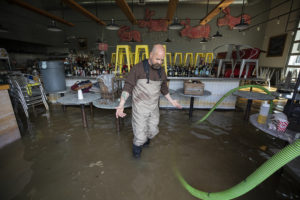
John Stewart uses pumps to remove the water from Zazu Kitchen + Farm in the Barlow business district in Sebastopol. (photo by John Burgess/The Press Democrat)

UPDATE: Information on how to contribute to the GoFundMe accounts of many Barlow restaurants is below. They are hoping to raise money for rebuilding and paying staff.

Several restaurants in West County and at Sebastopol’s the Barlow have suffered flood damage following torrential rains on February 26. This article provides continuously updated information on how to best support local restaurants impacted by the recent floods. The best thing we can do at this moment is to try to think long term while also keeping in mind that employees and business owners are suffering right now. Please visit impacted restaurants that are now open, and see information below on how to support those that remain closed. 

OPEN

Sebastopol

  • Ramen Gaijin
  • Fern Bar
  • Patisserie Angelica
  • BBQ Smokehouse
  • Rocker Oysterfellers
  • Backyard
  • Coffee Catz
  • Taylor Lane

Guerneville

  • Boon Eat + Drink
  • Big Bottom Market

CLOSED FOR NOW

FUNDRAISERS
Community Market Worker Relief

Please send me an email if you have more information about how to support a specific restaurant that has been impacted by the floods.