
Colorful Succulents Bring Beauty to Fountaingrove Garden Rebuilt After Tubbs Fire

On one hand, Damon and Lisa Mattson were among the lucky ones. Though their Fountaingrove home suffered significant damage in the catastrophic 2017 wildfires, it was not completely lost. Instead, the fire scorched the couple’s formerly tree-studded property, destroying the restful backyard retreat the pair had created.

The high cost of rebuilding their garage and fixing the home (they had to take the house “pretty much down to the studs” because of smoke and water damage, Lisa says), meant the couple put their skills and sweat equity to work.

Lisa and Damon went for a radically different look for the garden rebuild. It’s become a stunning, high-desert landscape of cactus and succulents that bloom from beds of finely-ground decomposed granite. They say the style makes them feel like they’re on vacation: Both are originally from the Midwest, and, at this point in their lives, they’re confirmed heat-seekers.

“We like to go to Vegas for vacations. We like to go to Mexico—anywhere that is a tropical or desert climate,” says Lisa, who works in marketing at Jordan Vineyard & Winery.
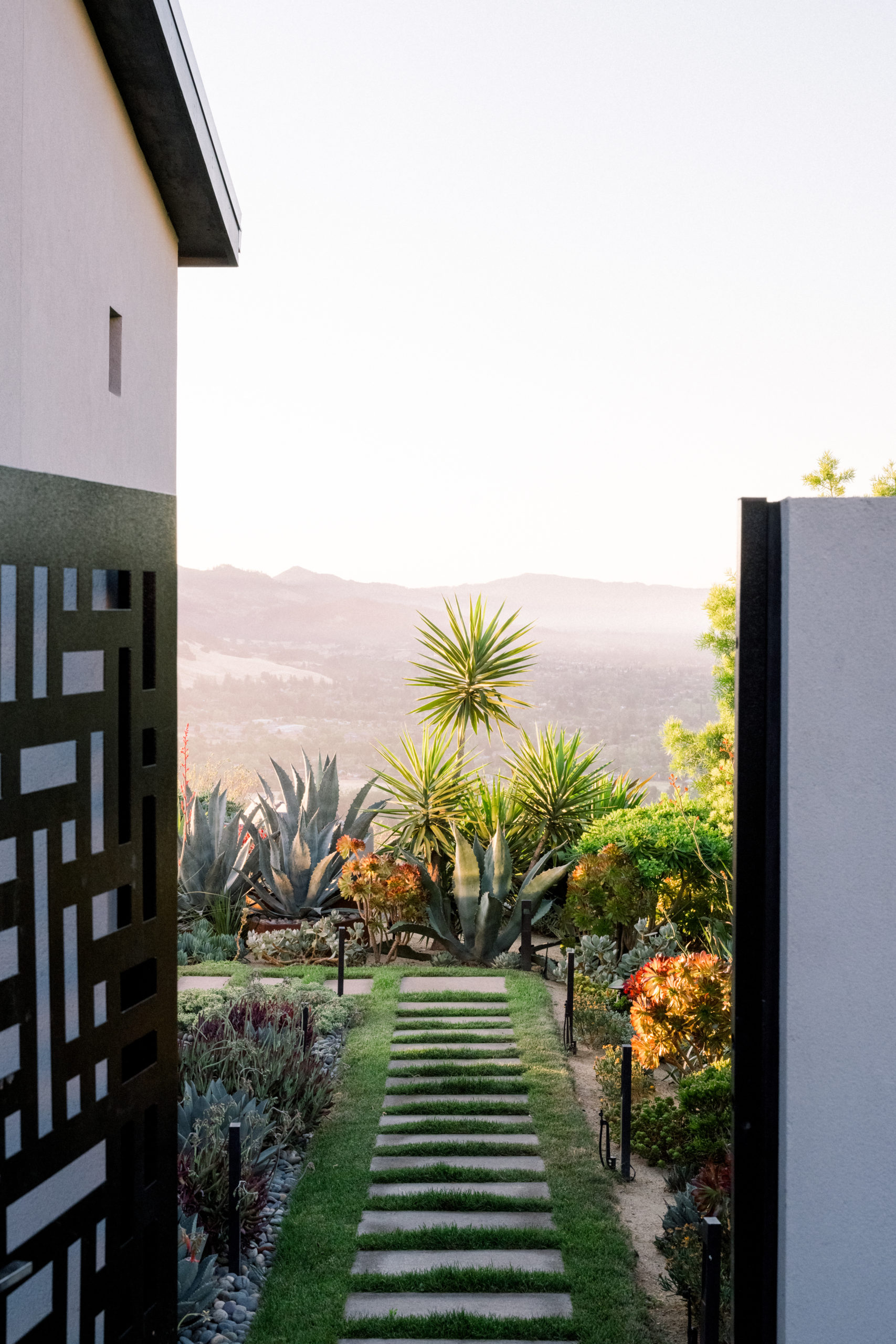
A path of affordable preformed concrete stepping stones leads to the large garden in back. The textural mix of plants includes agaves, echeverias, cordylines, and dracaenas. (Eileen Roche)
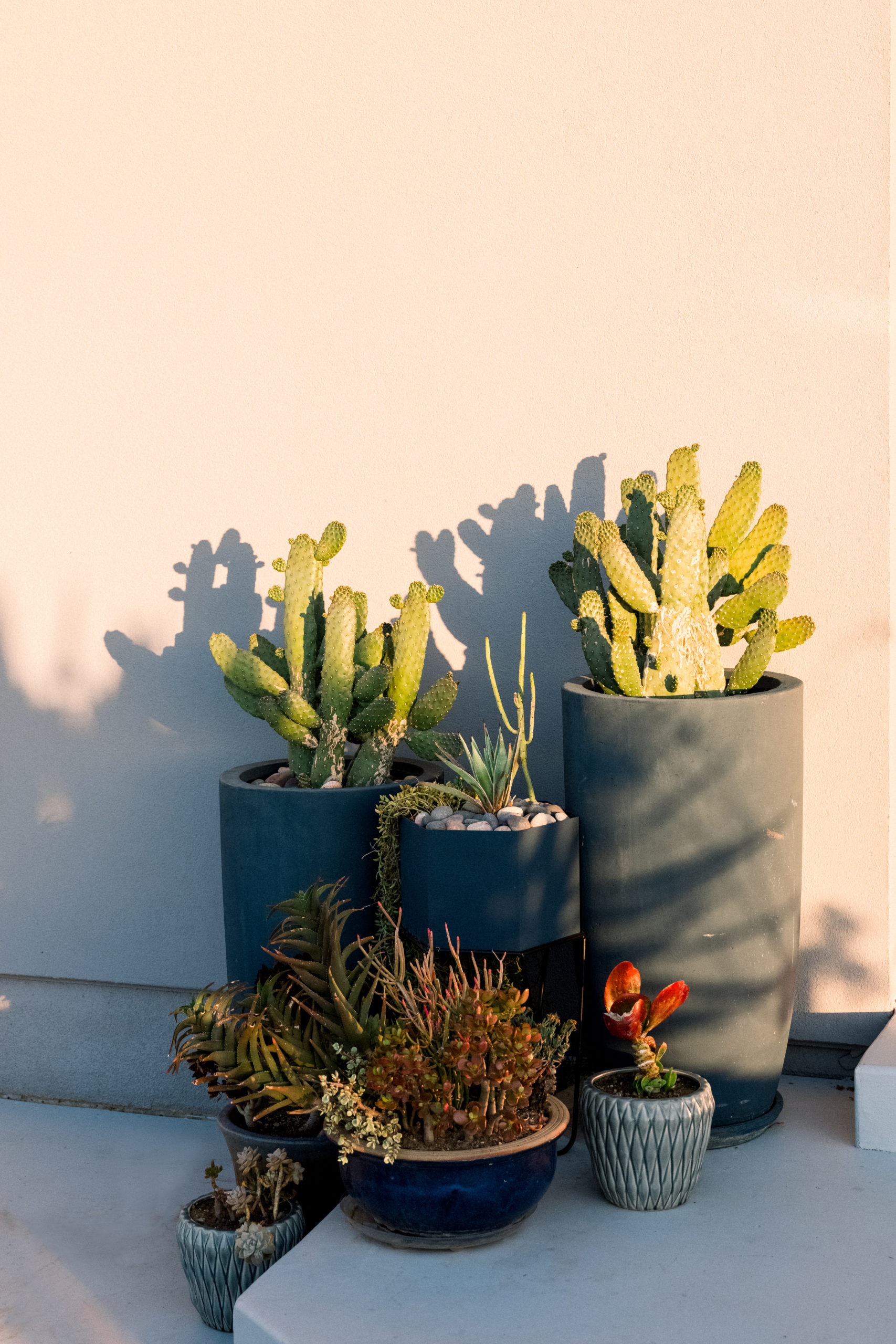
A cluster of potted succulents on the back deck, receive morning sun from the east. (Eileen Roche)
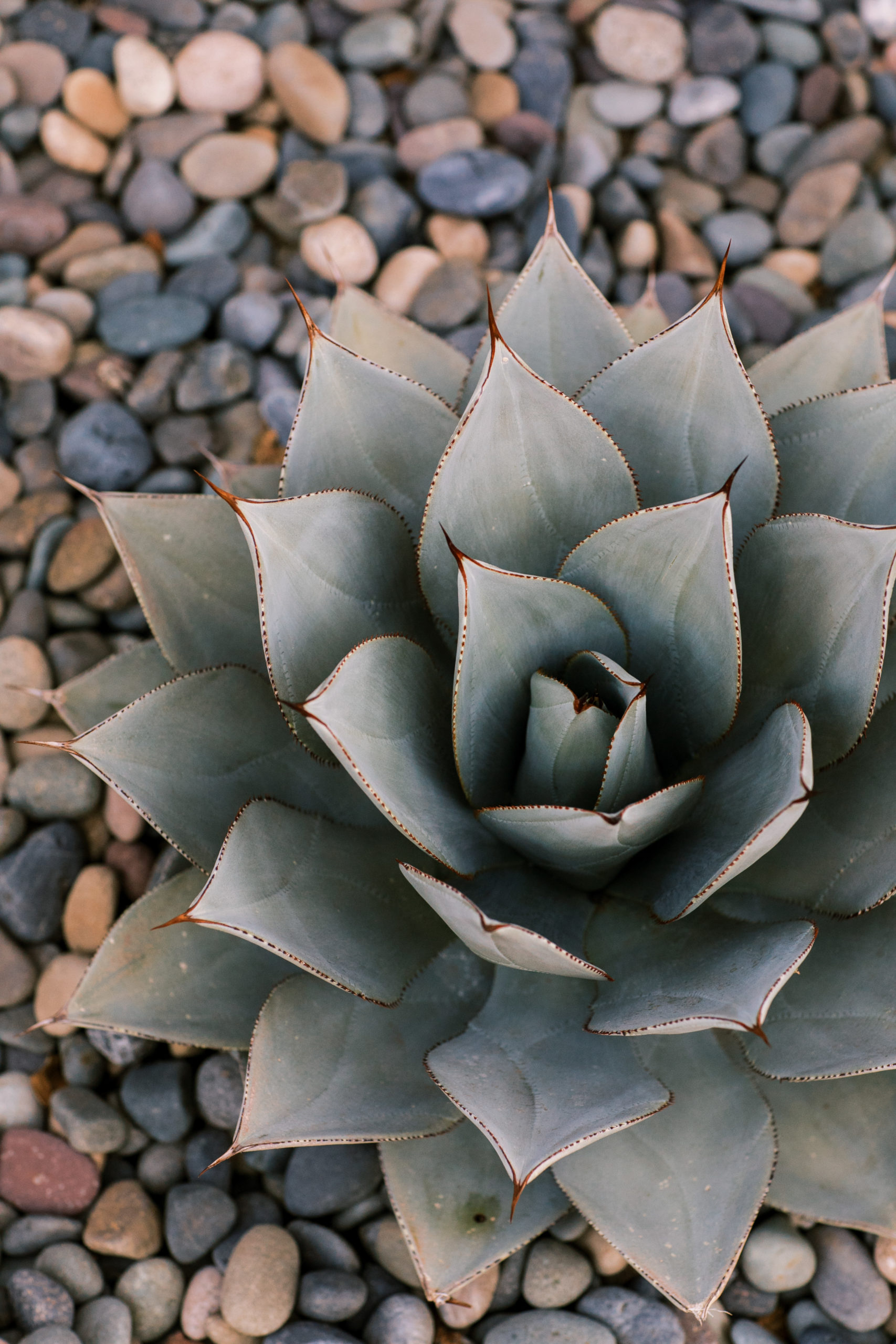
A single agave specimen, photographed from above, shows off the plant’s gorgeous symmetry. The Mattsons chose tumbled stones for groundcover along the side of the house for fire safety. (Eileen Roche)

A changed landscape

Before the fire, Lisa and Damon lived in a shady site, protected from wind and tucked below grade at the top of the ridge, with a landscape of mature oaks, native grasses, and New Zealand flax. But very little of that made it through the firestorm. The couple lost over 50 trees, including many heritage oaks and bays. Only three cordylines, woody flowering plants native to Australia and New Zealand, and a few lowgrowing succulents called chalksticks remained. Coming back to the property for the first time two weeks after the fire moved through, Lisa says the yard, “looked like a moonscape.”

Rebuilding with succulents offered the couple the chance to be more water-wise — and to build a stronger defense against future fires. A firefighter from Geyserville who helped save the home in 2017, and whom Lisa later tracked down to thank, told them that during the firefight, the original wood mulch had caught on fire. “He said the mulch was like lighter fluid, and that was what caused a lot of our damage. So it was, like, ‘I’m never putting mulch back down,’” says Lisa.

The sand-like decomposed granite Lisa sourced for the new yard was a more expensive choice for ground covering, but also helps resist fire. So does the colorful plant palette of aeoniums, agaves, yuccas, euphorbias, and other succulents. Once established, succulents need much less irrigation and are resistant to heat, sun, and wind.
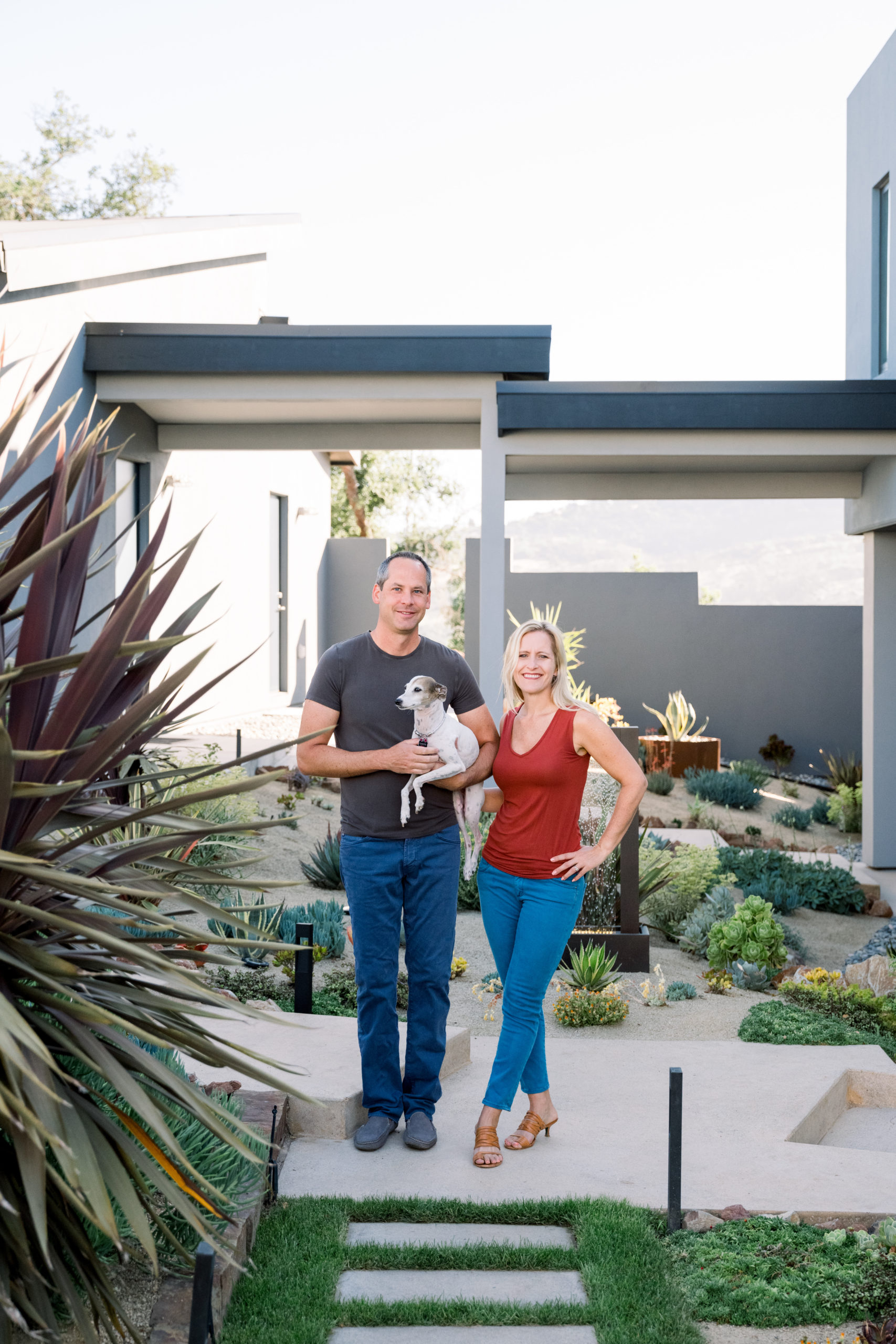
Damon and Lisa Mattson by their Fountaingrove home. (Eileen Roche)
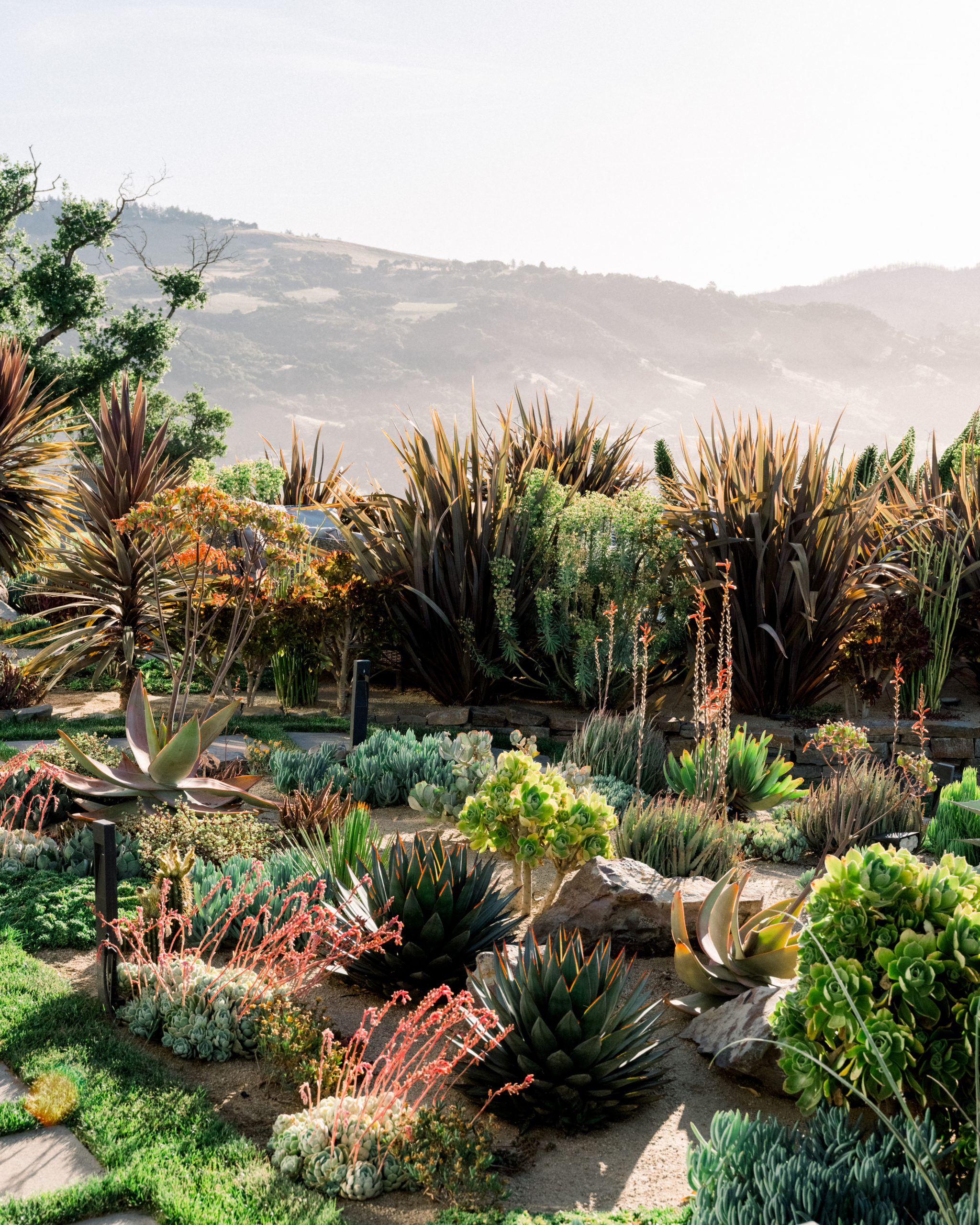
Damon and Lisa Mattson’s Fountaingrove garden. (Eileen Roche)

Santa Barbara inspiration

Starting pretty much from scratch wasn’t easy. And it was emotionally painful, too. The couple bought the home in 2011, and over time, Damon, who works at a medical device company, had built a beautiful firepit and gazebo—even an outdoor bed for napping. The process of designing and rebuilding what was lost took about two years.

Lisa had never designed a landscape before. But she was able to harness a strong creative aesthetic and a longtime love of plants, a passion she developed while in hospitality school in Florida in her early 20s. She started by drawing up outlines of the front and back yards on graph paper and marking any plants that remained. “I’d just get a piece of paper and draw out the aerial version, start with my focal points, and go from there,” she explains.

Lisa knew she wanted to base the design around succulents after walking through an old mission garden in Santa Barbara five years ago, and seeing an aeonium specimen the size of a person’s head. “I fell in love with the plants in Santa Barbara on that trip, and that’s what inspired me—that, and knowing I was going to have a full-sun yard,” she explains. “I just had this hope and vision that it could work.”

Containing costs

The garden was a ton of work, the majority of it squeezed into off-hours over a period of six months. “We would come and work here before work, lunch hours, after work, weekends,” Damon says. “It was ridiculous,” Lisa adds, laughing.

At one point, Lisa injured her shoulder digging out a walkway. But the couple persisted. Damon installed an underground drip system with multiple zones to deliver just the right amount of water to diverse plants, from the succulent beds and fruit trees to the grasses and African fern pines planted along one side of the property.

The couple was always looking for ways to shave costs without cutting quality. Before the fire, the home’s walkways were flagstone. The second time around, Lisa and Damon opted for preformed cement blocks that cost only a few dollars apiece. They planted hardy turf grass between the blocks, which provide a soft resting place for the eye. (They used the grass sparingly, because of water demands.) They had their hearts set on using Cor-Ten, a weathered steel, for a garden feature near their hot tub. But it would have cost $2,000 to custom order a Cor-Ten planter box. Instead, Lisa found rustic firewood log racks online for less than $200 each, which they cut up, turned on their side, and dug into the ground in tiers.

Lisa stockpiled plants for over a year, buying them small and bringing them up to planting size in her own little nursery. Now that the backyard has grown in, she continues to take cuttings and propagate additional plants. “That’s the thing with succulents— the way the root systems are, it’s really easy to move them,” Lisa explains. This past spring, after they finished rebuilding the garage, they were able to populate the front garden entirely with offshoots from more established plants in back.
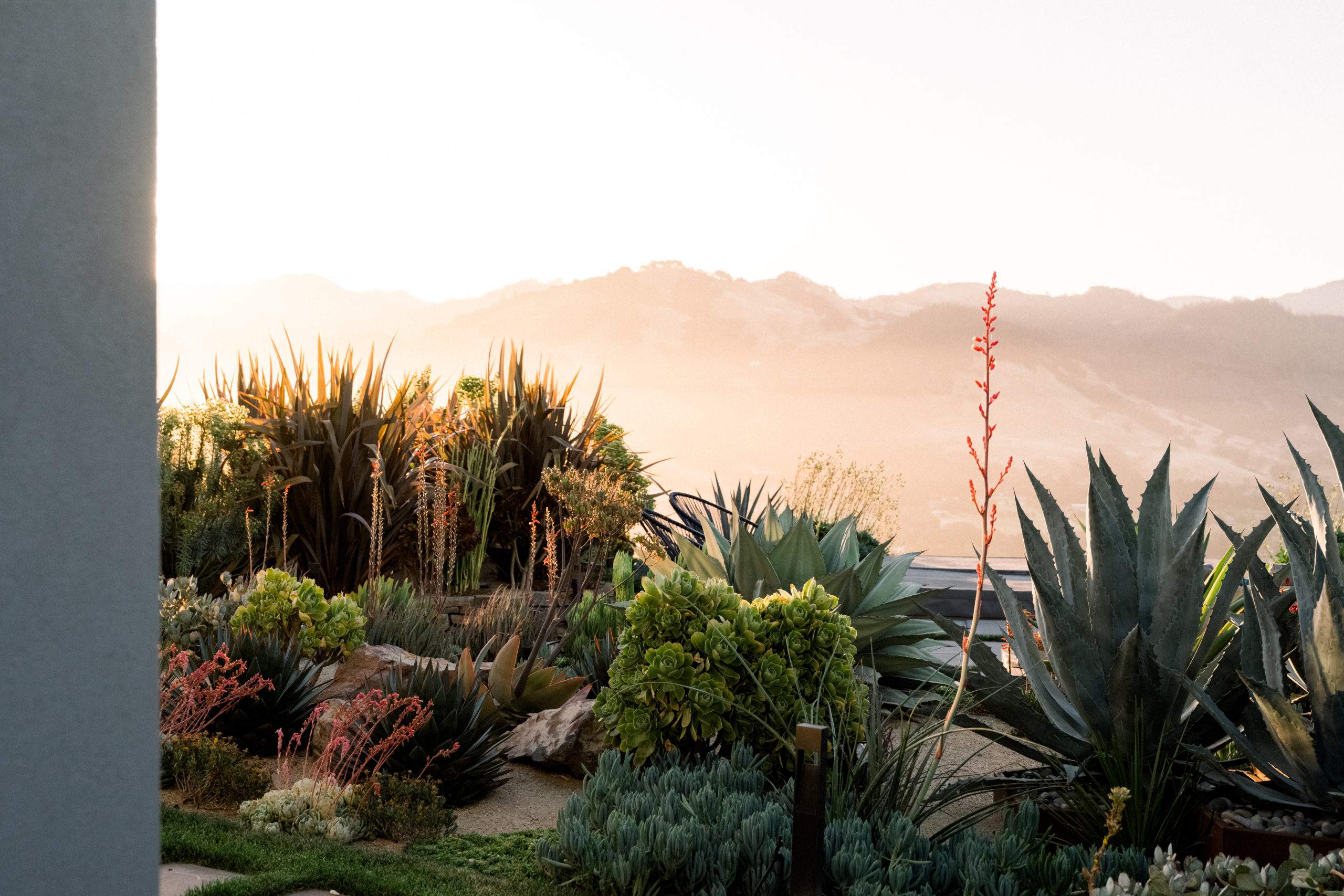
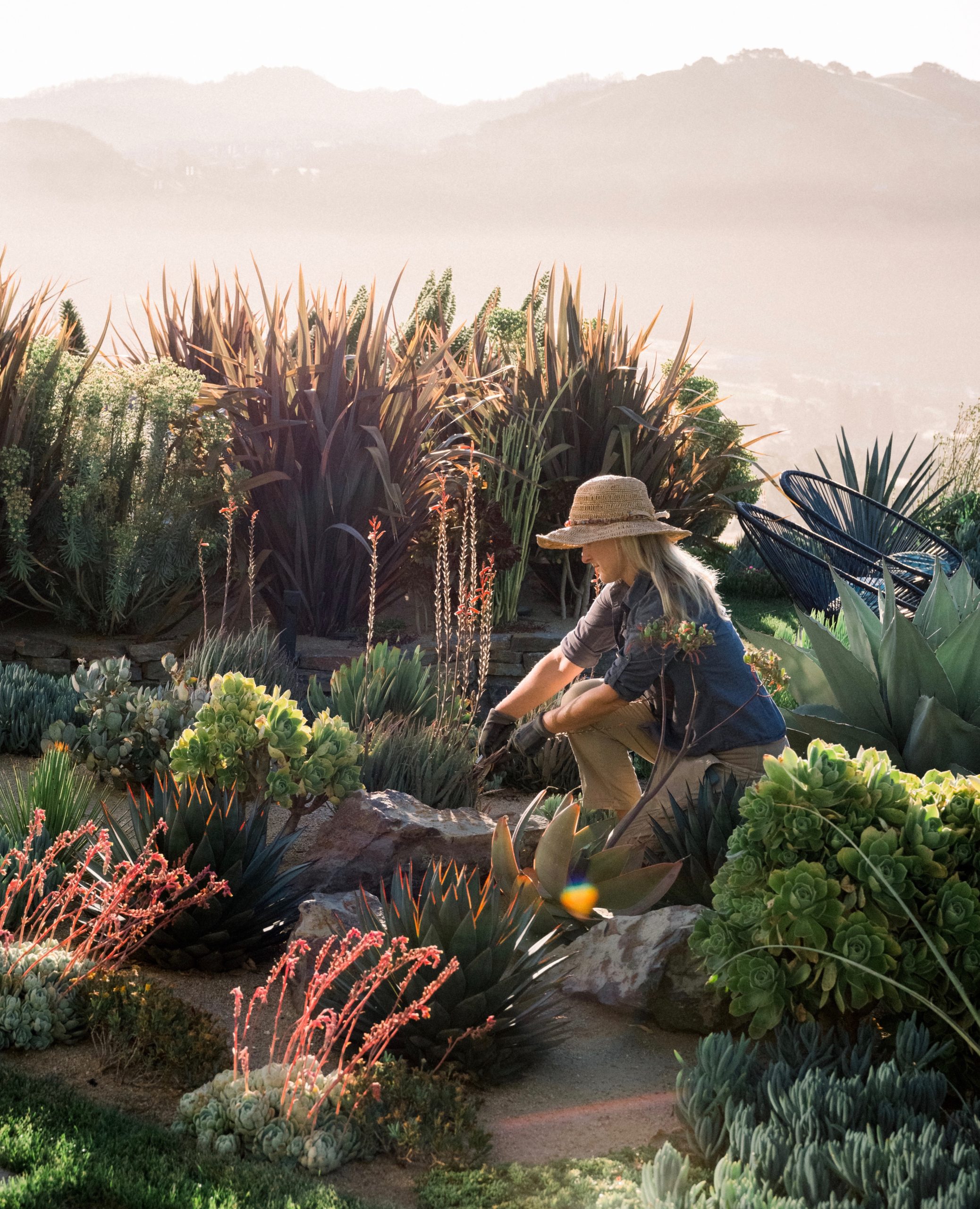
The back garden glows in the early morning, says Lisa, who often tries to fit in a few minutes of pruning and deadheading before work. (Eileen Roche)
Lisa in her garden. (Eileen Roche)

Coming home

After relocating while damaged sections of the house were rebuilt, the couple is thrilled to be back and enjoy their revamped outdoor space, in all different seasons and at all different times of the day. For all its seeming aridity, the garden is now a lush, year-round magnet for birds, particularly hummingbirds. Crows, yellow warblers, and white-throated swifts have returned, and Lisa and Damon even installed a new birdbath.

They orchestrated the design so there is something in bloom all through spring and summer. From February through April there are the coral and blue elf aloe, Echeveria, and kangaroo paws, followed in May and June by lady’s slippers, cannas, and red yucca. By July and August, there are fewer blooms, but the garden retains interest with a variety of shapes and colors.

“I loved doing it, and I love the plants and how everything turned out,” says Lisa. “We’re happy. We love the house more than before the fire—the colors, the yard and all of that—but, you know, it’s just what it took to get there.” With the hard tasks behind them, Damon and Lisa can take time to relax. “It’s turned out great considering what we were given,” says Damon. “It’s not something I ever wanted to do, but now that it’s done, it’s really nice. It turned out way better than I thought.”
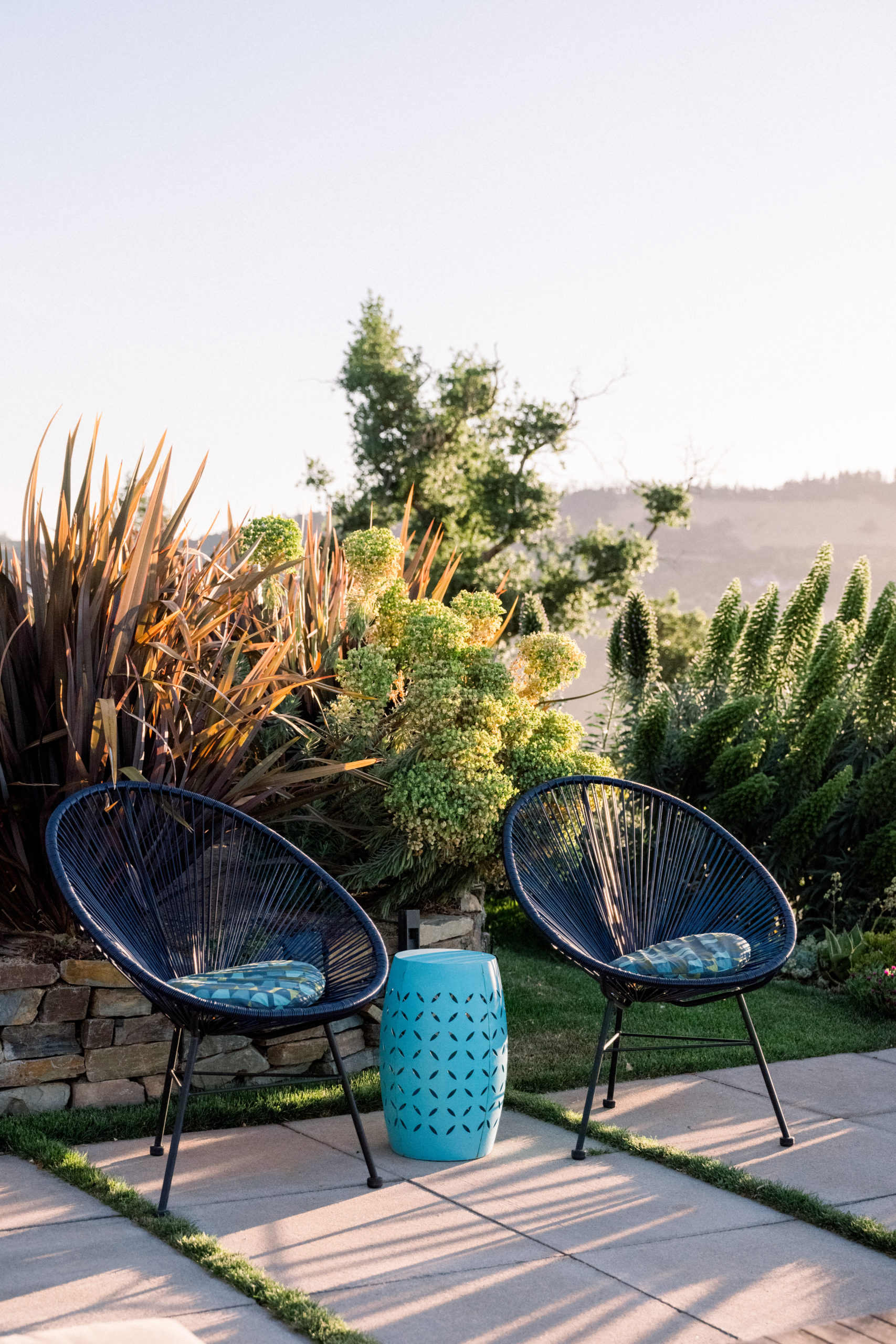
Backyard seating. (Eileen Roche)
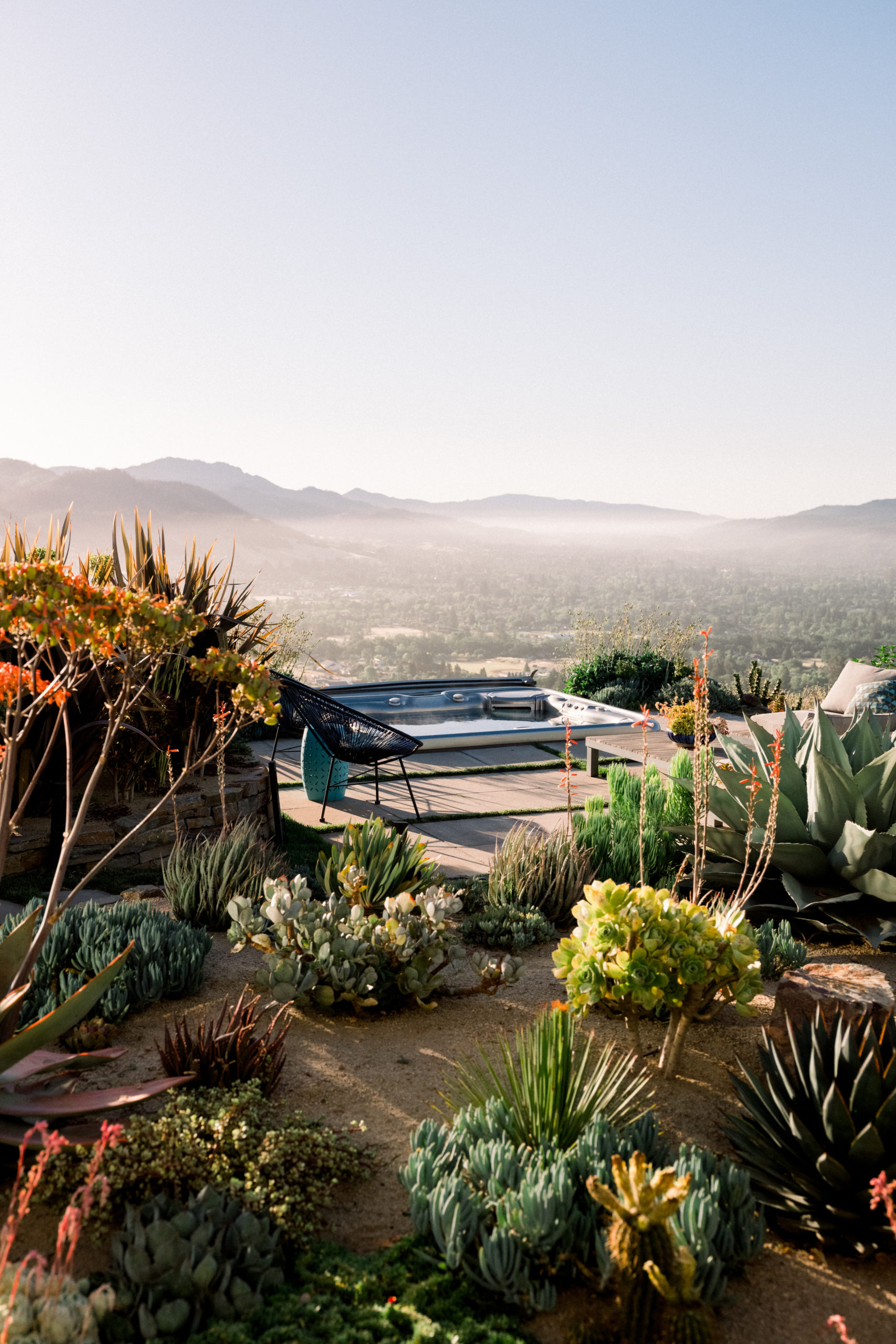
A hot tub with a view. (Eileen Roche)

Keys to Succulent Success

Lisa Mattson has a clear passion for succulents. She propagates young offshoots, called pups, and uses them to fill in new areas of her garden or to give to friends and neighbors. “I have rooting powder, and I root my own succulents,” she says. “And it’s cool because they become gifts you can take to people.” Here are a few of her best tips.

Seek out local sources. Lisa’s go-to spots in Santa Rosa include King’s Nursery (they recently expanded their succulent selection, she notes), Urban Tree Farm, and Friedman’s. She has also ordered specimens from PlantsExpress.com and from Etsy.

Order a special soil. Cactus and succulents need well-draining soil. Lisa orders cactus planting mix from Santa Rosa landscape supply company Wheeler Zamaroni. They also carry the decomposed granite Lisa and Damon used as a fire-resistant groundcover.

Work with focal points. A tree, a grouping of boulders, or a planter provides structure. Then, sketch your design from above and the side, to plan for different heights, shapes, and colors. “I’m a visual person, so drawing it out works for me,” says Lisa.

Mix textures and forms. Lisa likes to vary spiky plants (agave, blue elf aloe, flax) with non-spiky ones like chalkstick, Echeveria, fan aloe, Euphorbia, and ice plant. Her favorite trees to mix with succulents include Dracaena draco (dragon tree), Cordyline australis ‘Red Star,’ ponytail palm, yucca, and Podocarpus (fern pine).
A Reimagined Sonoma Home, Inspired by Swedish Simplicity

For architect Gustave Carlson and and his wife, artist Caroline Seckinger, the past eight years have meant a series of transformations.

In 2012, the couple bought a modest plot of land in a rural neighborhood near downtown Sonoma, envisioning a home where the family could make art together and their two children could spend more time in the outdoors. Because the family had a home in Berkeley, where the kids attended school, plans for the Sonoma home evolved in stages. Building took two and a half years.

“It was kind of like, gather the money up and put in the doors, gather money up and put in the deck, put in the windows—bit by bit,” explains Gustave.

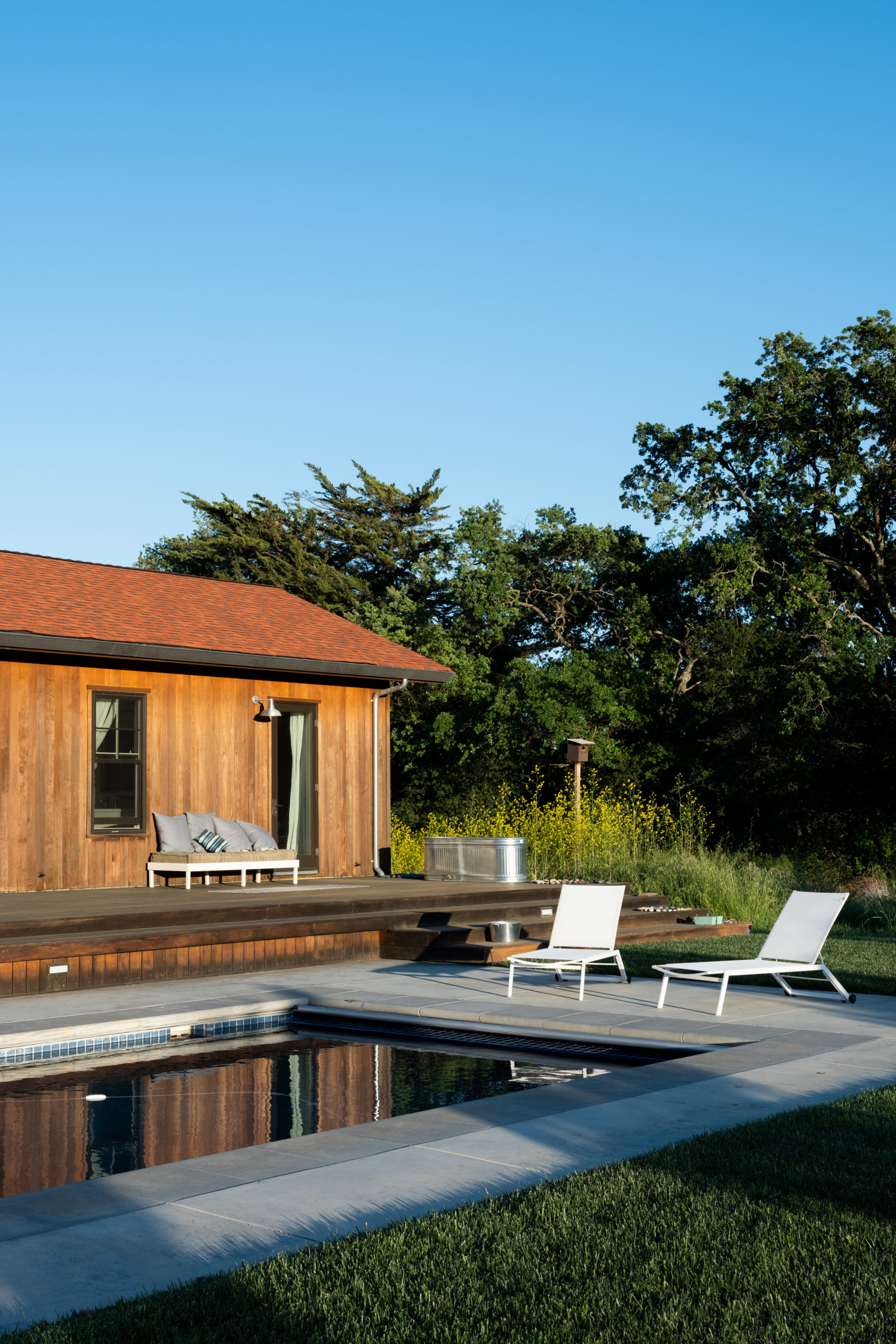
Gustave, whose family has roots in Sweden, says the modest design was inspired by a Swedish longhouse—a simple gabled structure, pared down to essentials, with one main room and bedrooms off a single corridor. Large windows on both sides of the home connect the living area to large decks, and smaller bedrooms, each with a door to the outside, emphasize the connection to nature. “You see through the house; it’s a bit like an observatory,” explains Gustave. “It feels like we’re floating in the landscape.”

Gustave Carlson and Caroline Seckinger’s Sonoma home. (Eileen Roche)
he traditional white clapboard of Caroline’s art studio contrasts with the natural cedar exterior of the main home. (Eileen Roche)

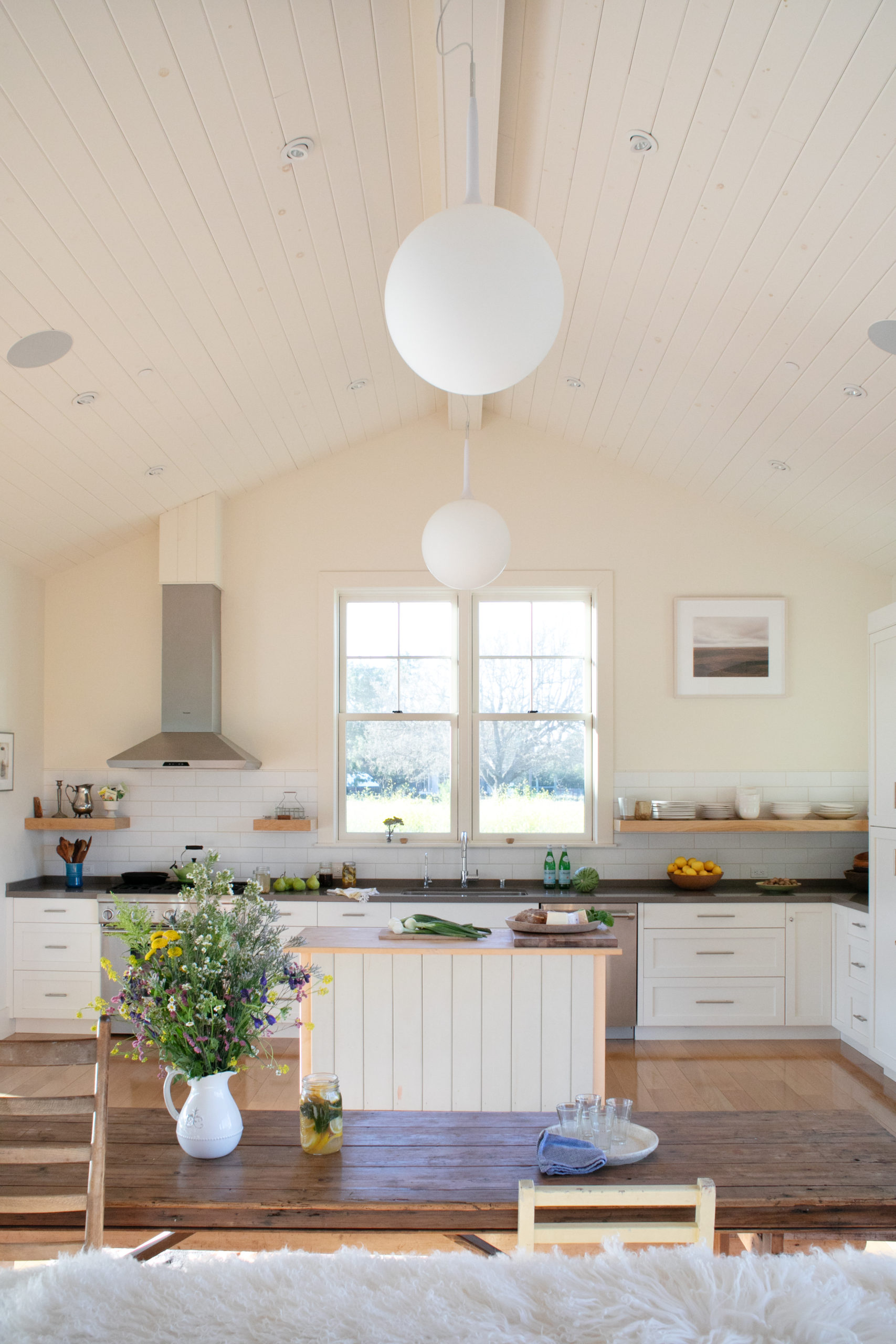
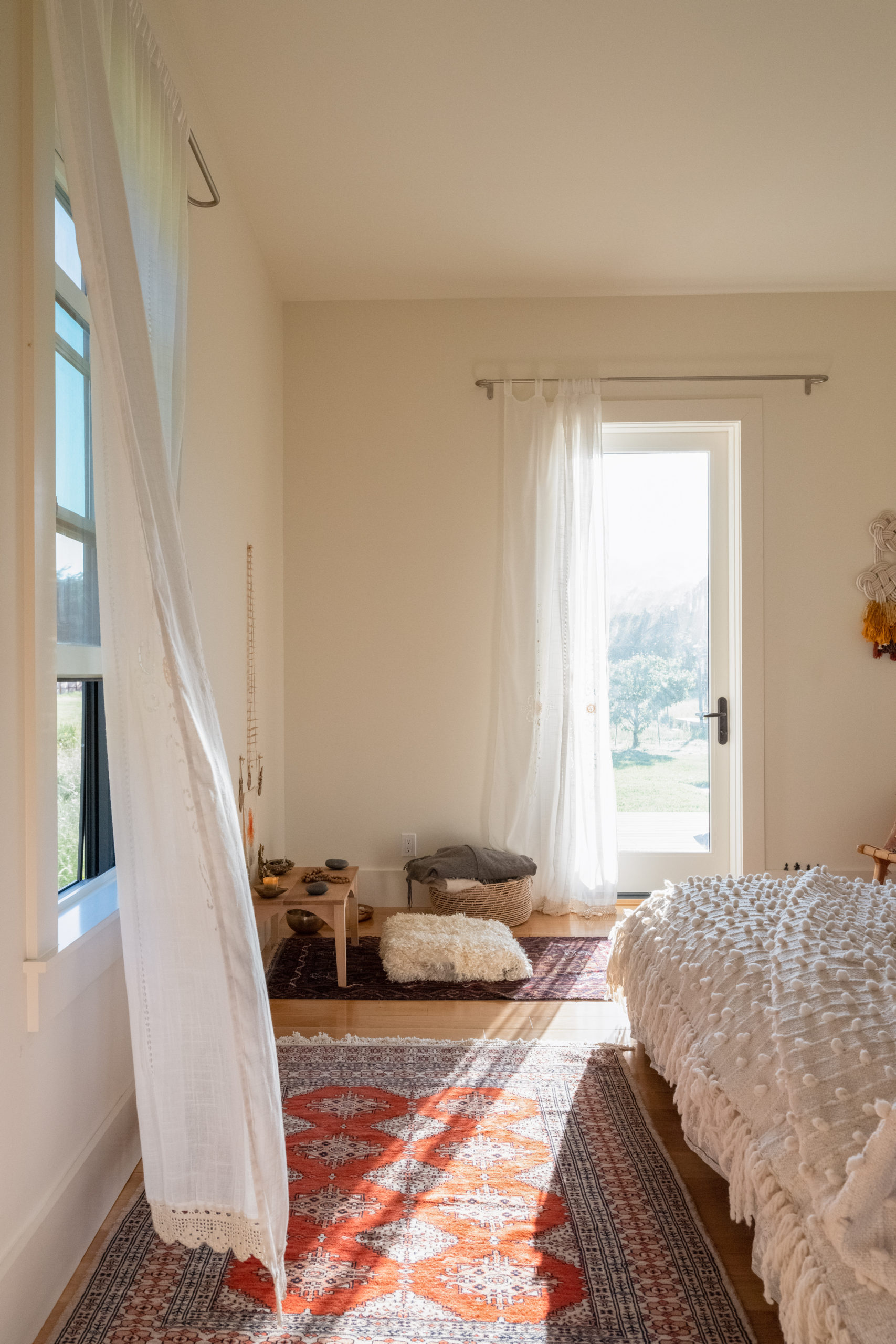
Gustave designed both the kitchen and the main bedroom with windows on three sides. The bedroom windows look out to oak trees and a grove of Monterey cypress that frame a small meadow. Nearby is one of two owl boxes the couple installed, from which baby owls fledge in spring.

In the kitchen, the window over the sink centers on a mature walnut tree, which, for Caroline, has become a way of marking the seasons and the wildlife. “The years that there’s a big harvest of walnuts on the ground, there are more ground squirrels, which means we have more coyotes, which means a fox comes, and then the mountain lion or the bobcat,” Caroline explains. “So we watch this full cycle — and I love being able to witness that.”

The kitchen. (Eileen Roche)

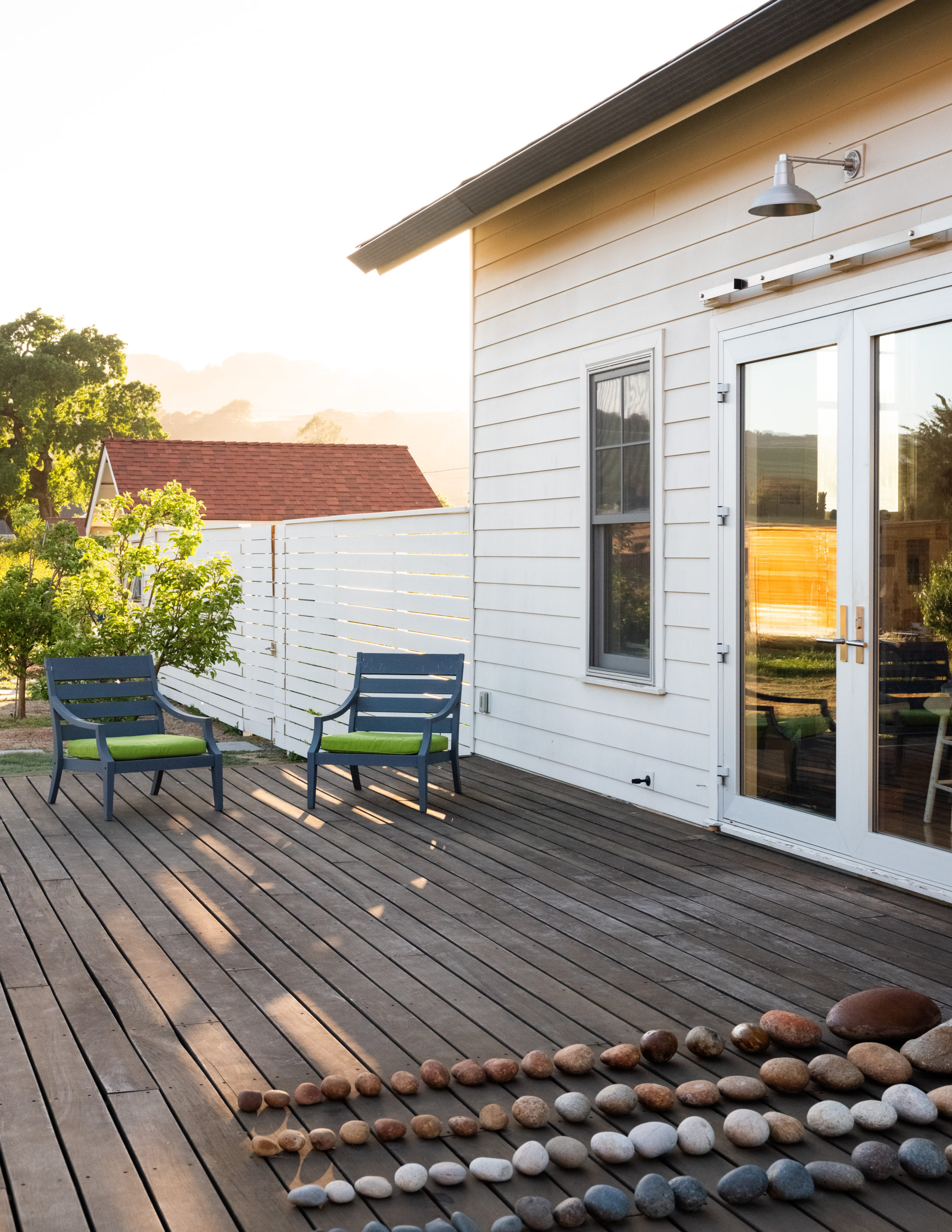
Broad decks on both sides of the house connect to Caroline’s adjacent art studio and allow space for yoga and meditation, for relaxing and eating, for painting projects and displaying collections—even for sleeping outdoors.

“When our son was younger, he and his friends would just bring their sleeping bags and sleep under the stars, have that whole experience,” says Gustave. “They’d set up a slip-and- slide outside by the pool and run back and forth from their skate ramp to the water all day… And it was crazy, but it worked. We always were like, ‘as long as you’re outside.’”

Bedroom. (Eileen Roche)
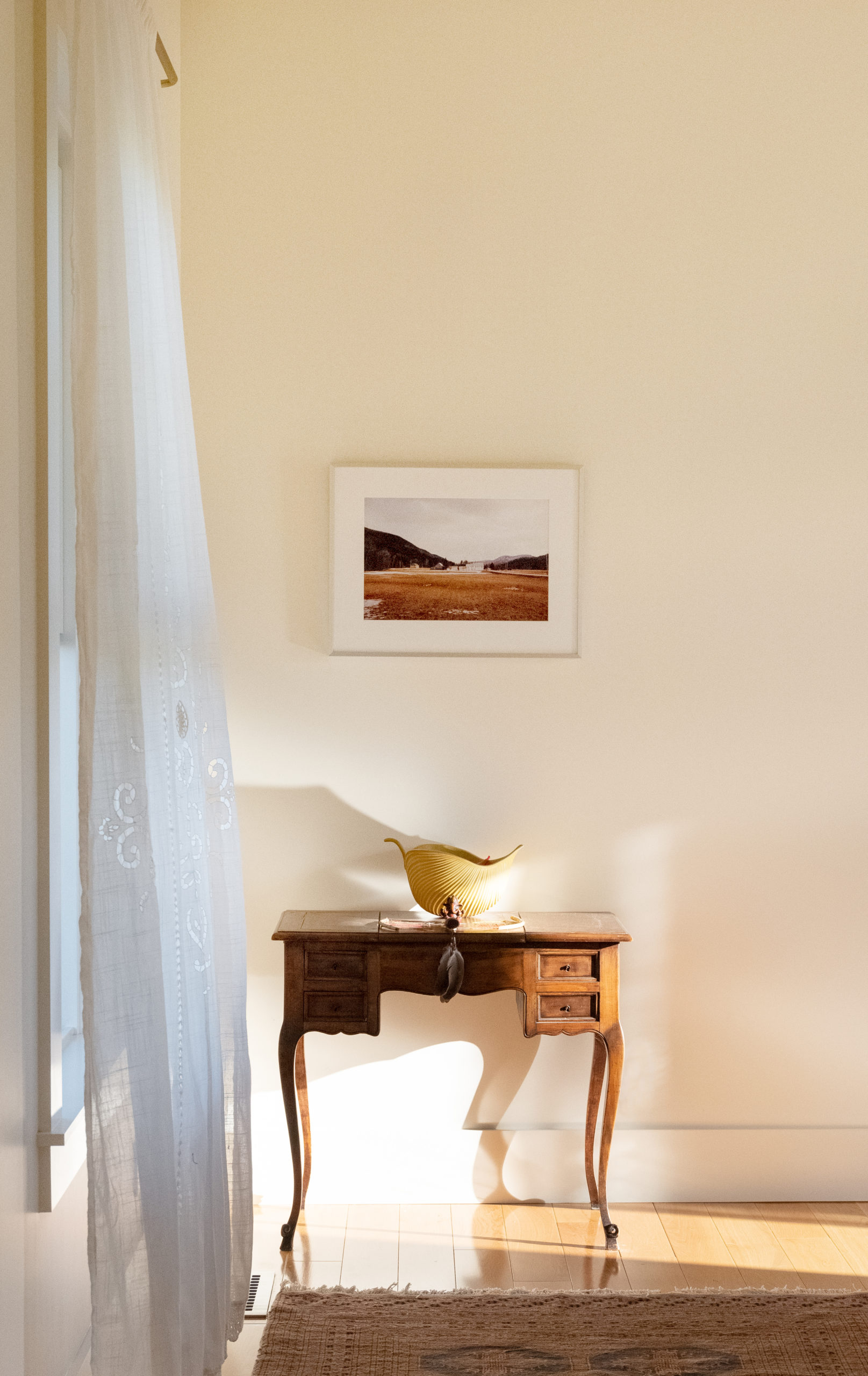
Writing desk. (Eileen Roche)

These days, the home that nurtured the kids and their friends as teenagers has become a full-time home for Gustave and Caroline. The couple are recent empty nesters—their son, now 19 years old, is away this summer and off to college soon to study art, while their 24-year-old daughter is working as a photographer in New York.

Earlier this spring, the couple made the choice to move Gustave’s architecture practice and Caroline’s art studio to Sonoma permanently. “The time here just became more and more precious. The more we were here, we became more resonant with it. It’s like our understanding of the web of life just really expanded and grounded us here. And now we’re so lucky that we’re staying here,” says Caroline.

The couple has made changes inside the house to accommodate the next stage of life. “I think what’s really fascinating in all my projects is that you really do grow,” explains Gustave. “When your kids are little, you have a kitchen island with stools, but you might not necessarily sit there anymore when your kids are gone.”

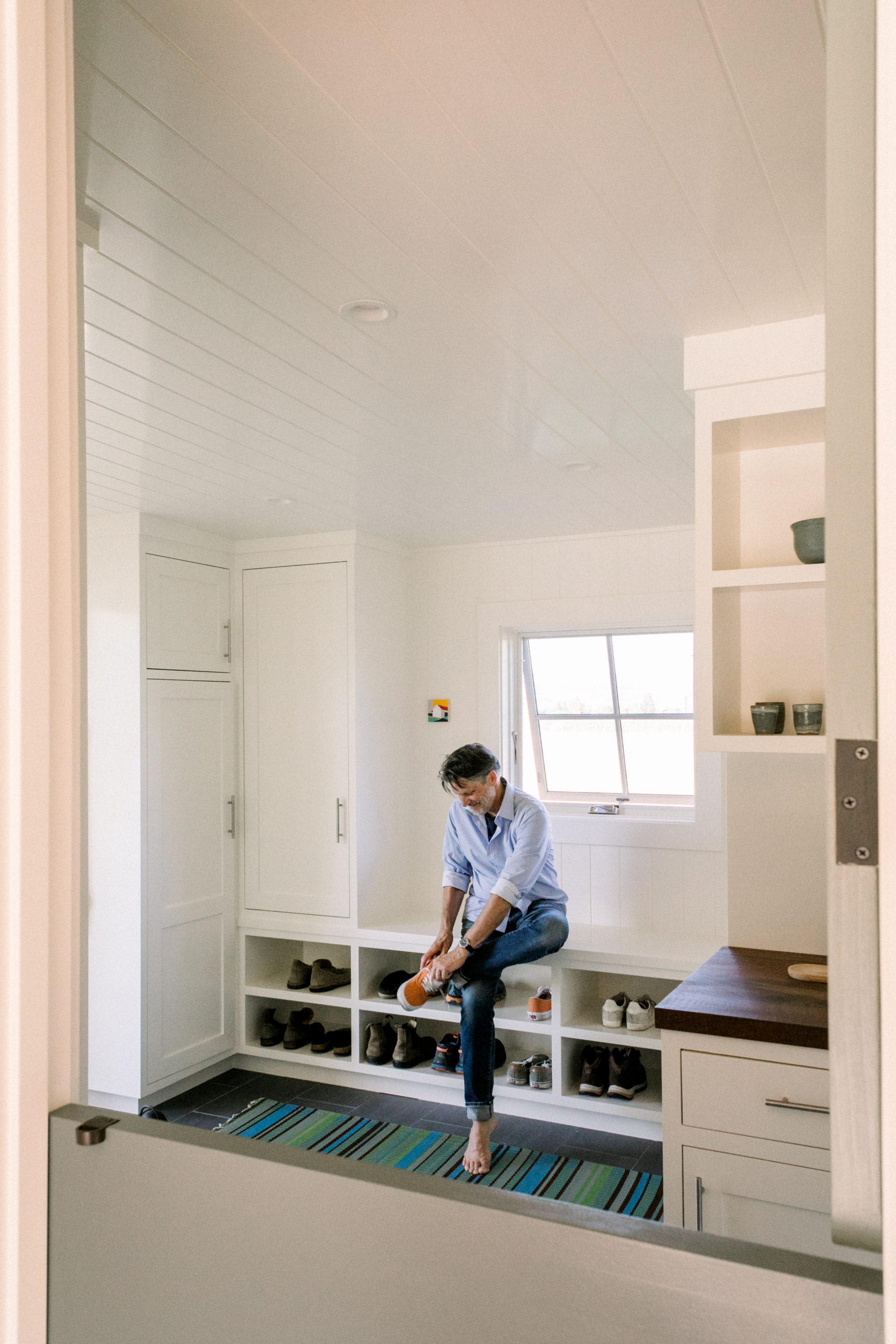
Gustave in the new mudroom. (Eileen Roche)

This past spring, to adapt the house to full-time living, the couple added a new mudroom and pantry off the kitchen, with a durable tile floor and a Dutch door to close off the space but keep it connected to the main room.

It’s a practical room with space for big bags of dog food, a charging station for a laptop, and cubbies for work boots and tools and all the other things that accumulate when a part-time home becomes a full-time one. In a way, explains Gustave, the mudroom functions like a lock for a boat moving through a channel—a place to stop and put things away before transitioning to the main part of the house.

Plans are in the works, too, for a small barn where the couple can preserve more of the food they grow and store tools for outdoor projects, maybe even park a small tractor. And they’d like to expand the vegetable garden, grow a few cut flowers, and make cider from the fruit of the apple trees they planted. The apples — Granny Smith, Fuji, and Pink Lady — are good for baking, and Gustave invested in a new cider press last fall, which they are eager to put to use.

Caroline, who previously worked as an art director for films, has been inspired to work on a series of cast brass talismans meant to be carried or worn as symbols of strength and connection.

“The repetitiveness of women’s craft and labor is a form of meditation. And then when we’re practicing these things—canning, knitting, crocheting—we’re in communication with our ancestors, our grandmothers who did those same tasks,” she explains.

Her studio is filled with turkey feathers, stones, and other objects she’s collected on the property, along with tools for working with fiber and metal. “My art practice right now is to remind people that there are other systems, ways, beings that are older than what we’re witnessing right now, that are holding us up,” she says.

Gustave is spending more time painting in a small prefab studio they added this spring. “Caroline and the kids are such makers—the kids would be stitching, embroidering, taking photos—and it was like ‘please, join the gang,’” he says.

Last year, for his birthday, Caroline gave Gustave a red toolbox to hold paints and supplies, and he’s been working on a series depicting local barns and farmhouses. The couple remain inspired by their surroundings, by the evolving look of the seasonal landscape and the themes of change and sustainability that form the core of life here. Caroline explains their art is buoyed by the resilience of the land: “Even the things we can’t see are sustaining us, and that’s truly comforting,” she says.

And the draw of the memories the couple made with their two children continues to inform their days. They anticipate their son and daughter will still come to Sonoma—“circling back home,” as Caroline puts it. “Even though your kids go, there are layers of them all about. So it becomes about how you transition with the layers of the life that was, and what’s becoming.”

Resources

Architect: Gustave Carlson Design, Sonoma, gustavecarlsondesign.com

Art: Caroline Seckinger, Sonoma, carolineseckinger.com

Builder: Finn-Port Construction, Mill Valley, 415-819-4730

Landscape: David Sawyer Landscapes, Santa Rosa, sawyerlandscapes.com

Santa Rosa Interior Designer Shares DIY Tips on YouTube

Santa Rosa-based interior designer Cesar Chavez started his career as a 16-year-old by planning a remodel of his family’s Stockton home. Chavez, who had learned basic design principles by watching HGTV, had plenty of ideas for how the family home could be improved, including removing a wall to create more space and adding an eat-in counter, which he designed for the kitchen.

The remodel was a success and Chavez, encouraged by the experience, headed off to study interior design at San Francisco’s Academy of Art University a few years later. After graduation, he gained further experience at a design firm in Marin County and he also started a YouTube channel with DIY design tips.

By closely monitoring the analytics for his YouTube channel, which measure amount of views for each video, Chavez learned what people were interested in and he created more of that kind of content. Some of his videos now have thousands of views; one video, “DIY faux beams with wood grain tool,” has over 270,000 views.

Now, a principal designer at Salt Shed Studio in Sonoma and at his own Cesar Chavez Design Studio, Chavez has developed his own unique style and design preferences. He likes simple and modern design but also appreciates a mix of styles.

The Santa Rosa designers main goal when working with clients is to translate their preferences into a cohesive look, which helps tell their story. For a client who loves to travel, for example, he incorporated a Moroccan motif into the interior design by using tile the client had brought back from a trip to the North African country. Other clients, who had lost their home in the Tubbs fire, wanted a replica of their old home’s original door — a 1990s design with sidelights. After a long search, Chavez managed to find just the right door and make it work with the overall look of the new home.

Chavez also likes to design with practicality in mind. Many clients may love the look of marble countertops, for example, but for those who like to bake, it’s not the best choice because of how the stone wears over time. In those cases, quartz is better. He also likes to suggest plain-faced kitchen cabinet doors to clients who would like to avoid having to regularly wipe down surfaces — these cabinet doors collect less dust than the framing of Shaker-style cabinets. If you’re worried that your kitchen might look too plain, interesting light fixtures can add instant style and can also be a great way to mix traditional and modern design.

“Many times clients have an inner designer,” says Chavez and mentions how many know more about interior design and decoration, thanks to TV shows and the internet. His aim is to help them navigate all their different ideas and preferences.

Working closely with clients, Chavez is always happy when he receives updates and photos from their new or remodeled homes or invitations to housewarming parties. He says it’s been particularly humbling to work with people who’ve lost their homes to wildfires; to try to incorporate some of their memories and stories into their new homes.

“I appreciated every client meeting to hear their story,” says Chavez. “The process was difficult for them because of what happened. I’m very grateful that I was able to create something beautiful for them.”

For more information about Cesar Chavez’s design work, visit cesarchavezdesign.net and Salt Shed Design Build, saltshed.com

Affordable Housing Development Breaks Ground in Healdsburg

Sonoma County’s booming housing market set another record in July. The median sale price of a single-family home reached $825,000, signaling “a continued frenzy in the housing market emerging from the pandemic that has exacerbated affordability for middle-class families striving to become homeowners,” according to The Press Democrat.

In Healdsburg, one of the most expensive places to live in Sonoma County, affordable housing options are few and far between, especially in the wake of the pandemic, which has made high-earning urbanites able to relocate to larger homes in less-populated areas as they continue to work from home.

Aligning with the goal to expand workforce housing in one of the North Bay’s most expensive markets, a new housing development in Healdsburg will feature 41 low-income rentals available to Healdsburg residents and workers. The housing development, named The Exchange, will offer affordable units to those earning below 50% of the annual median income — $58,150 for a family of four and about $40,000 for an individual.

The Exchange will be part of the $500 million Mill District mixed-use development that will include luxury condominiums. The project recently broke ground on the site of a former lumber mill property just off the Healdsburg Plaza.

“These units are critical. I also think it’s a good opportunity for people to live in mixed-income units,” said Stephen Sotomayor, Healdsburg’s housing administrator, in an interview with The Press Democrat in November 2020. “Studies show a mix of incomes in different areas, including affordable housing units, makes for a more healthy community, instead of clustering certain incomes in a certain area.”

Replay Destinations, a Vancouver-based real estate developer, is in charge of turning the former lumber mill property into Mill District, which, in addition to luxury residences, will feature a retail and commercial space, a boutique hotel and a public park. The company has partnered with Eden Housing of Hayward, an affordable housing developer, to create the affordable apartments that will make up The Exchange.

The 41 affordable units, designed by Oakland-based Pyatok Architecture + Urban Design, will feature modern interiors, new energy-efficient appliances and will have central heating and air-conditioning. Common outdoor areas will have barbecues and 21 raised garden beds available to residents.

The luxury residences will be designed by Seattle-based architect Olson Kundig. The interiors will have a “restrained modern aesthetic” with open-concept floor plans, appliances by Miele, wine fridges and sliding and fixed glass walls that will connect indoor and outdoor spaces.

At a recent groundbreaking event, spirits were high as developers, investors and local leaders came together to celebrate the beginning of the new mixed-use development. The projected completion date for the Mill District is September 2022. Healdsburg council member Ariel Kelley mentioned at the event that those interested in living at The Exchange can prepare for eligibility now by working on improving their credit scores and filing income taxes.

To apply for an affordable unit, join the interest list here: edenhousing.org/properties/mill-district-affordable-apartments

To become a  reservation holder for a luxury unit, connect here: milldistricthealdsburg.com/residences

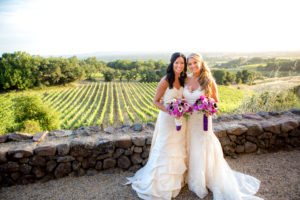
16 Sonoma Spots for Gorgeous Engagement and Wedding Photos

As pandemic restrictions loosen, many couples who previously had to cancel their wedding ceremonies are preparing to tie the knot. And no wedding is complete without lots and lots of photos.

We reached out to a few local photographers to ask which Sonoma County spots are the best locations for wedding or engagement shots. Whether you’d like to use the natural beauty of the Sonoma Coast as your backdrop or you prefer some romantic vineyard scenery, there’s no reason your photos with your partner shouldn’t be just as special as your relationship.

Click through the gallery above to discover 16 Sonoma County locations perfect for a wedding photo op. Still planning your big day? Here are a few favorite wedding venues in Sonoma County.

Petaluma’s Central Market Continues to Impress

Chasing the newest, hottest restaurant openings in Sonoma County can be exciting for a writer, but it can come at a significant cost — overlooking the restaurants that succeed year after year, the chefs that perfect their dishes month after month and the dining rooms that become part of our lives day after day.

The more I think about the overall food landscape of our county, the more obvious it is that long-standing restaurants like Central Market in Petaluma (and many others) are so beloved and so iconic that it’s a serious lapse to not showcase what’s taken years to perfect. In Central Market’s case, that is 18 years of chef/owner Tony Najiola’s life.

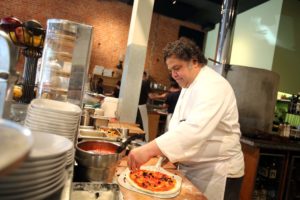
Dressed in his chef’s coat, Najiola looms large over the dining room — watching every dish go out, visiting every table to ensure his patrons are happy — but he never imposes. The open kitchen, dining room and bar feel airy, with full views of the wood-fired oven and the line. But it’s the food, frequently sourced from Najiiola’s Muleheart Farm, that really does the talking here: Instead of foams and potions and powders, the food is just, well, food.

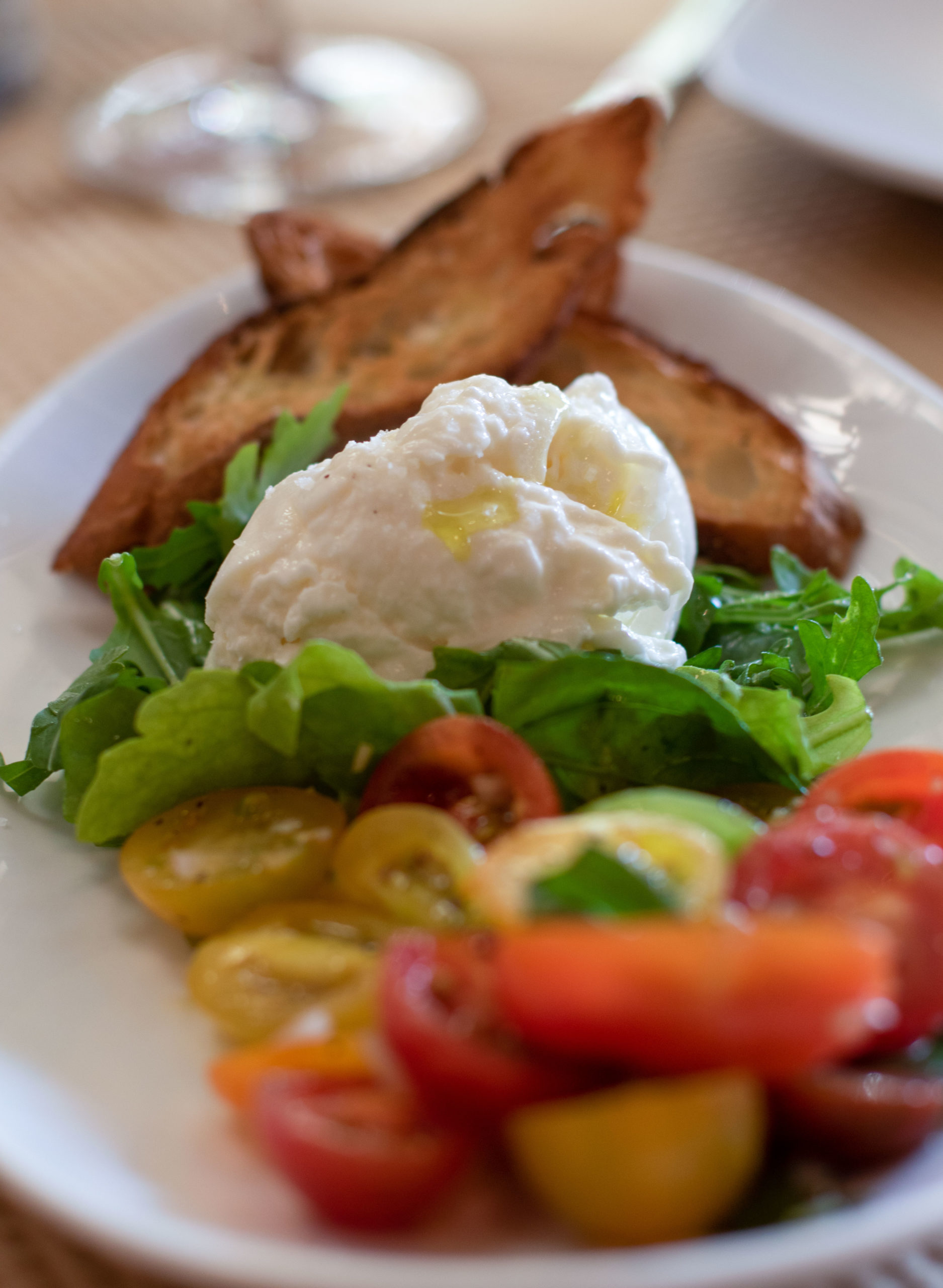
Burrata with cherry tomatoes, capers and crostini at Central Market in Petaluma. (Heather Irwin/The Press Democrat)

Fresh Burrata ($16) is so simple it’s ridiculous, with fresh and buttery cream-stuffed mozzarella, cherry tomatoes, capers and crostini. The flavor comes from gently dressed tomatoes and the authenticity of each ingredient. Batter-fried Alaskan Halibut ($18.50) are pieces of delicately fried whitefish nestled into butter lettuce cups with fresh herbs and gribiche (a vinegary sauce with hard-boiled eggs) and eaten in a couple dainty bites.

The same simplicity and deliciousness goes for every dish. Take the Slow Roasted Beet Salad ($14), which tastes like fresh beets (not pickled within an inch of their lives) with earthy baked goat cheese and spicy greens.

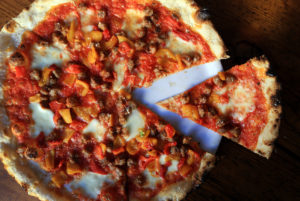
If you order the wood-fired pizza, which you should, the Fungi ($20) is a best bet with button mushrooms, nutty Fontina, salty Parmesan and creamy leek confit.

The signature entree is Najiola’s slow-cooked Angus Short Ribs ($32) that fall to pieces at a mere touch of the horseradish gremolata and leek potato gratin.

Leave room for dessert, because the Meyer Lemon Pudding Cake ($9.50) is a heavenly mix of tart lemon curd and sponge that’s as memorable as a first kiss.

The menu changes frequently, so you’ll likely see some alterations as the seasons pass. Just don’t wait 18 years to get there.

Central Market, 42 Petaluma Blvd. N., Petaluma, 707-778-9900, centralmarketpetaluma.com

6 Favorite Restaurants for Summer Dining in Sonoma County

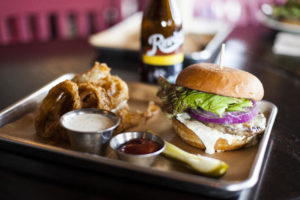
Roasted garlic ranch burger at Americana Restaurant in Santa Rosa’s Railroad Square. (Kelsey Joy Photography)

Dining editor Heather Irwin picks some favorite spots for summer dining in Sonoma County. Click through the above gallery for dishes to order. 

Folktable

Let’s not mince words. Cornerstone Sonoma has long sought, and sometimes failed, to find an audience. It’s a lovely spot with sculpture gardens, tasting rooms, and aspirational design shops.

But the glue necessary to bind it together was never there, as restaurants quietly came and went without adding to the cohesion of a larger whole.

Until now. Folktable — a project from “Top Chef” finalist Casey Thompson and executive sous chef Melanie Wilkerson — is transforming meh into magnificent. After an extended ramp-up, Folktable has spread its wings with an expanded menu, dine-in seating, and patio service in the magnificent gardens. With flowers blooming, warm sun shining, and a bustling brunch set packing the place, it’s safe to say this spot is one of summer’s big hits.

Sitting under a sprawling olive tree, we couldn’t imagine a lovelier meal: fried chicken, tater tots smothered in Kewpie mayo and bonito flakes, and a big farm salad, each dish better than the last. Folktable also has a menu for dogs (of course), coffee and pastries from an outdoor kiosk, and the Best Buttermilk Carrot Cake, which lives up to its name.

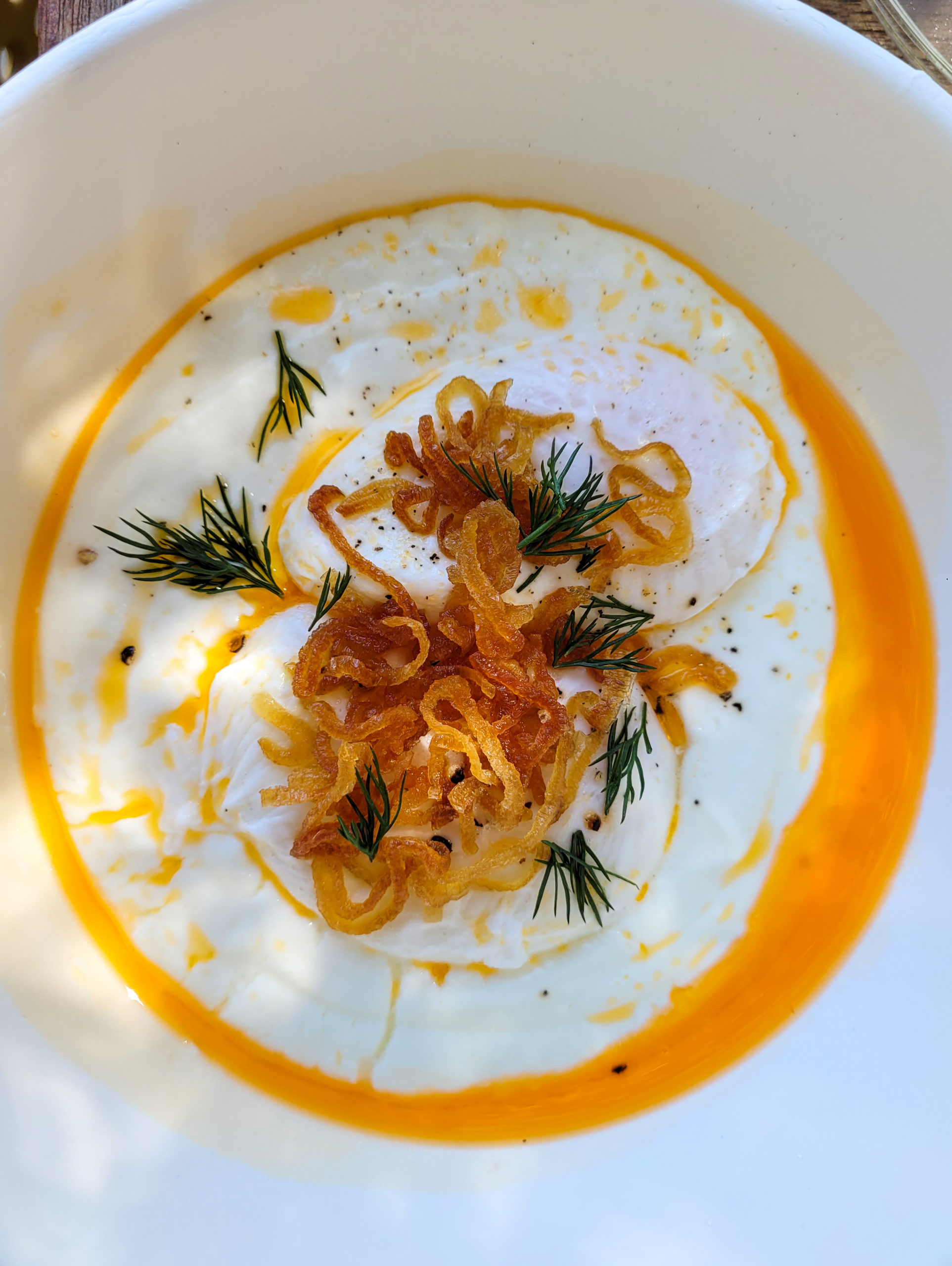
Turkish eggs at Folktable in Sonoma. Photo: Heather Irwin, Press Democrat.
Turkish eggs at Folktable in Sonoma. (Heather Irwin/Sonoma Magazine)

Best Bets

Fried Chicken Goujons, $18: This is just a fancy name for chicken fingers — juicy breast meat pieces covered in sticky chile-honey sauce and served with sweet, milk-washed Hawaiian rolls, pickles, and jalapeño dipping sauce.

Turkish Eggs, $13: This dish is a beauty. Poached eggs top warm Greek yogurt punctuated by Aleppo chile butter and crunchy shallots. Dip in crusty slices of sourdough for a satisfying breakfast or brunch.

Okonomiyaki Tots, $13: Here’s a riff on the savory Japanese pancake dish, topped with creamy Kewpie mayo, sweet barbecue sauce, scallions, and bonito flakes.

Open Wednesday through Sunday. 23584 Arnold Drive, Sonoma, 707-356-3569, folktable.com

Casino Bar & Grill – The Holly and Tali Show

The Casino Bar & Grill is a place to discover accidentally and then love unconditionally. As visitors crane their necks to see the steeple of the Saint Teresa of Avila church, made famous in Alfred Hitchcock’s “The Birds,” they tend to overlook an old wooden building that leans into the road at the center of town. For more than 100 years, the nondescript structure — with its neon red “CASINO” sign out front — has stood as a simple roadhouse. (It’s never been an actual casino.) Inside, the space is dark and woody, with creaking floors and an old jukebox in the corner. It’s not a place begging for attention from hipsters for its lineup of craft brews.

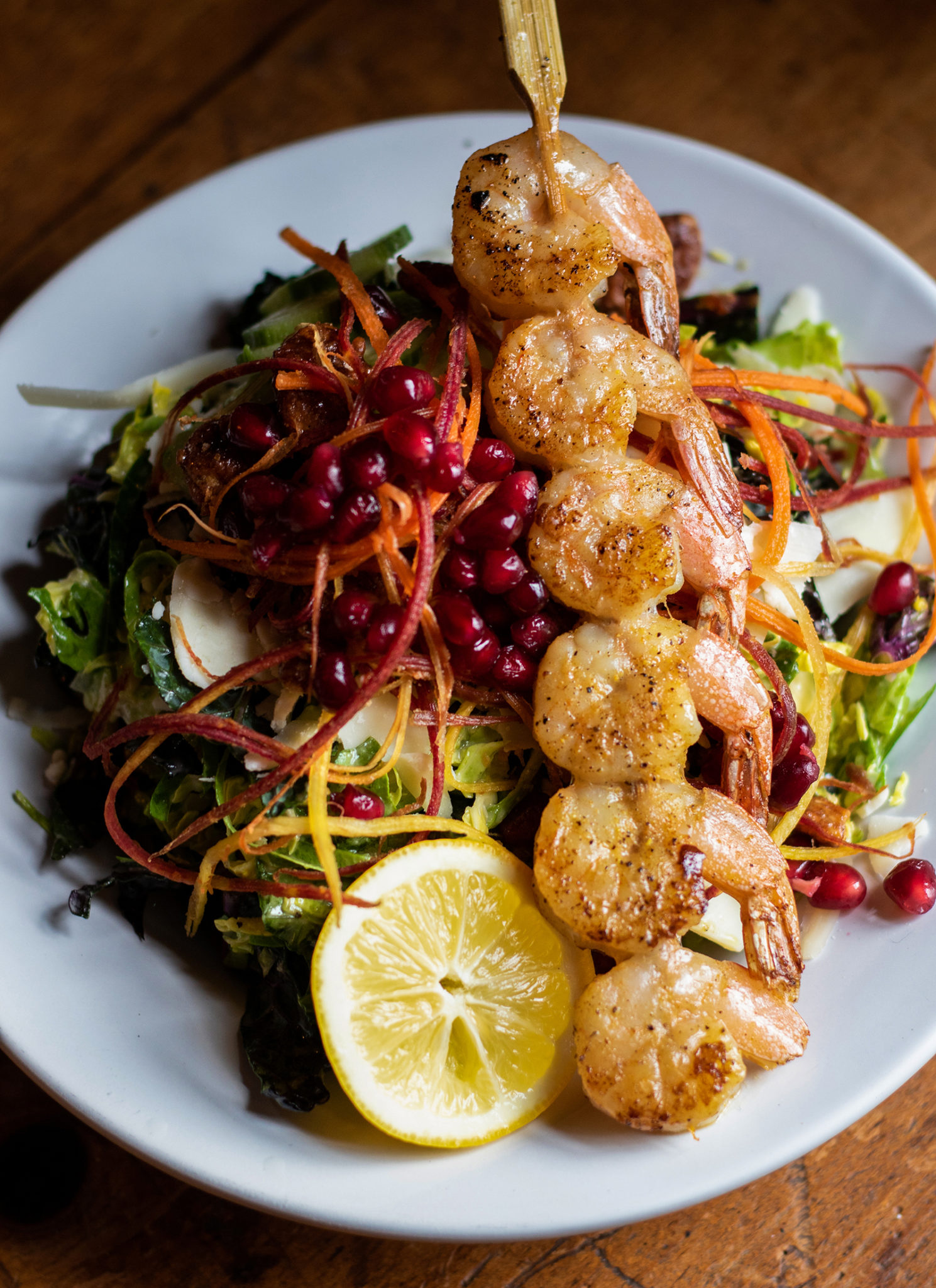
Salad with shrimp at The Holly and Tali Show at The Casino Bar and Grill in Bodega. (Heather Irwin / Sonoma Magazine)
Salad with shrimp at The Holly and Tali Show at The Casino Bar and Grill in Bodega. (Heather Irwin/Sonoma Magazine)

On Monday through Thursday nights, local chefs and caterers Holly Carter and Tali Aiona put on the Holly and Tali Show at the Casino, preparing dinner menus reflecting the surrounding fields, farms, and fisheries.To call it a pop-up isn’t quite fair, because the duo have been creating destination-worthy food here for nearly six years — in a kitchen barely larger than its twoburner stove.

Recent menus included Panizzera sausage and brisket lasagna; orange-olive oil upside-down cake (their baked goods are incredible); Dungeness crab mac and cheese that beats every version I’ve ever had; kale and Brussels sprouts salad with prawns; tikka masala; and cider-brined pork chops with red lentils.

Don’t go in with any preconceived ideas. Just let Holly and Tali cook for you.

Open for dinner Monday through Thursday. 17000 Bodega Highway, Bodega. Order in advance; nightly menus are posted on Instagram @thehollyandtalishow. More details at thehollyandtalishow.com

Nimble & Finn’s

Guerneville’s legendary ice creamery has quietly opened a Santa Rosa outpost in Railroad Square with seasonal flavors like front porch mint chip, lavender honeycomb, and whiskey butterscotch. There are also boozy ice cream floats: We love the Permanent Holiday, featuring creamy Meyer lemon ice cream, Lo Fi sweet vermouth and Goat Rock rosé cider, and the summery Strawberry Letter, which combines strawberry sorbet, vermouth, elderflower, and Champagne. Either goes great with one of their gourmet grilled cheese sandwiches.

Open Thursday-Sunday. 123 Fourth St., Santa Rosa, 707-666-9590, nimbleandfinns.com

Handmade organic ice cream from Nimble & Finn's in Guerneville. (Nimble & Finn's)
Handmade organic ice cream from Nimble & Finn’s. (Courtesy of Nimble & Finn’s Ice Cream)

Americana

The opening of Americana is a dream come true for Samantha and Ryan Ramey.

The owners of Estero Cafe in Valley Ford saved for years with the hopes of bringing their field-to-fork diner fare to Santa Rosa. After simmering on a back burner during the pandemic, the restaurant is all ready for summer, with odes to classic American comfort food—think 1950s favorites like burgers, fried chicken, and onion rings with a side of the best pie you’ve ever had, all sourced from local farms and ranches.

Even in its infancy, Americana is the kind of uncomplicated, from-the-heart food that speaks to the moment. Best bets include the burger with blue cheese, mushrooms, and bacon—a mouthful of a meal on a Village Bakery bun—plus a fried chicken sandwich with coleslaw for extra crunch, a classic Cobb salad, and thick milkshakes with Straus ice cream. Americana’s holy grail French fries are cooked in beef tallow, just like original McDonald’s fries. Frying fat comes from Stemple Creek Ranch (as does the beef for the burgers) and is rendered in-house. It’s not a simple process, but the results are undeniable.

Open Thursday- Sunday. 205 Fifth St., Santa Rosa, 707-755-1548, americanasr.com

Cafe Citti

After a long renovation of the former Whole Pie location in Santa Rosa, the iconic Kenwood Italian restaurant best loved for its Caesar salad, lasagna, and crave-worthy pasta sauces is once again in business – with a twist.

Owners Luca and Linda Citti are now focused on takeout (though there are a handful of coveted seats on the outdoor deck). Pizzas, pasta, salads and sandwiches are queued up with amazing efficiency and ready to shuttle home to your table. There’s a lot of mix-and-matching on the menu, pairing sauces with pastas or polenta, which we love. Don’t miss the fried polenta with mushroom sauce or the pollo affumicato, a smoked chicken with tomato, and lemon cream sauce that’s perfect on anything.

Open Tuesday- Saturday. 2792 Fourth St., Santa Rosa, 707-523-2690, cafecitti.com

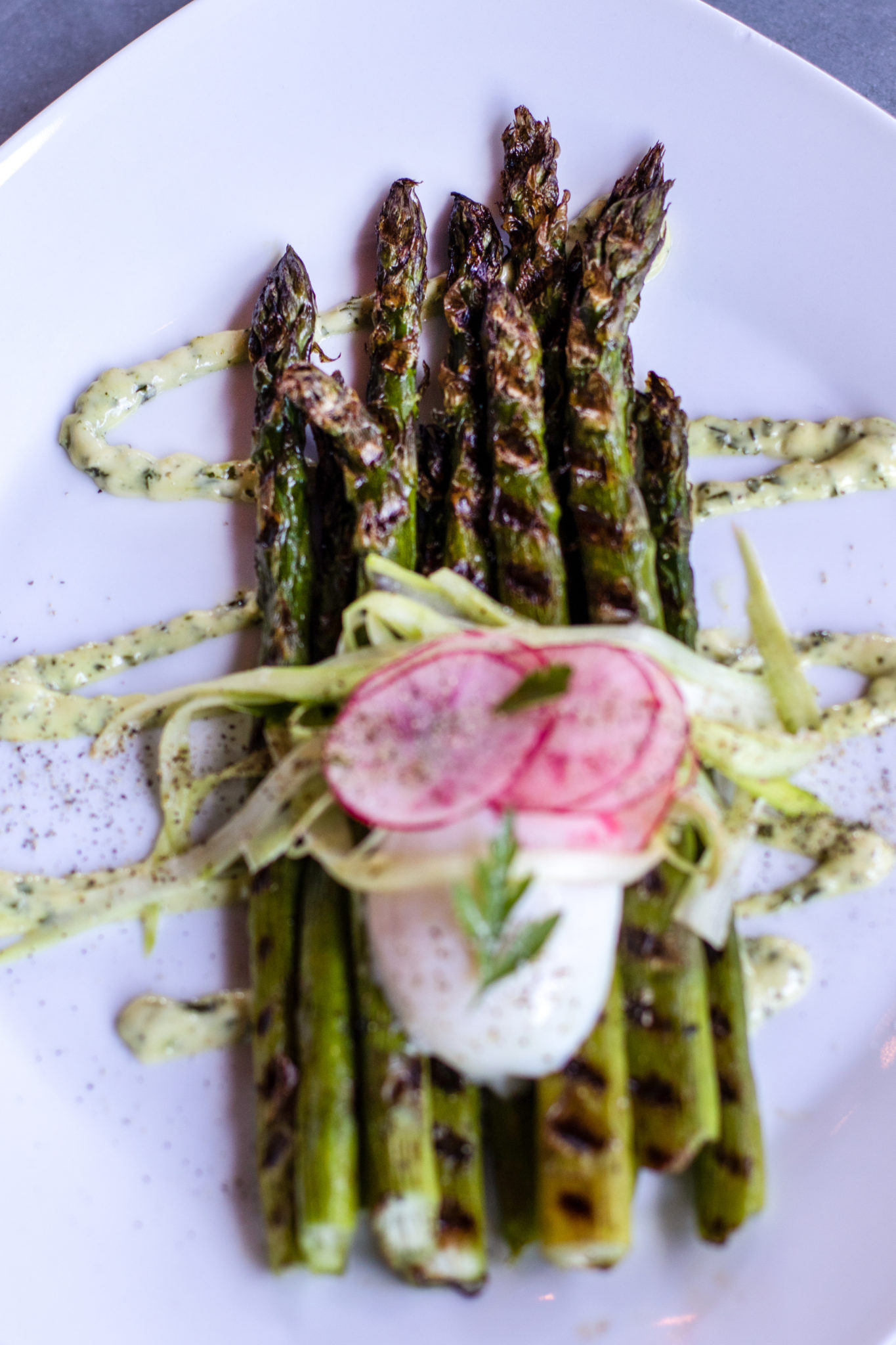
Warm asparagus salad at Coyote Sonoma in Healdsburg. (Heather Irwin / The Press Democrat)
Warm asparagus salad at Coyote Sonoma in Healdsburg. (Heather Irwin/Sonoma Magazine)
Red wine arancini at Coyote Sonoma in Healdsburg. (Heather Irwin / The Press Democrat)
Red wine arancini at Coyote Sonoma in Healdsburg. (Heather Irwin/Sonoma Magazine)

Coyote Sonoma

“Beverly Healdsburg,” as locals sometimes call the once-sleepy ranch hamlet, is not known for its beer and chicken wings scene. But the one thing Healdsburg cannot abide, more than big-screen televisions the size of small trucks? Uninspired food. That’s why we’re smitten with Coyote Sonoma, in a hidden space in downtown’s Mill District. The spot’s Wednesday night trivia nights are becoming legendary, and the place feels like old times, when we could laugh and play games and shout out answers together.

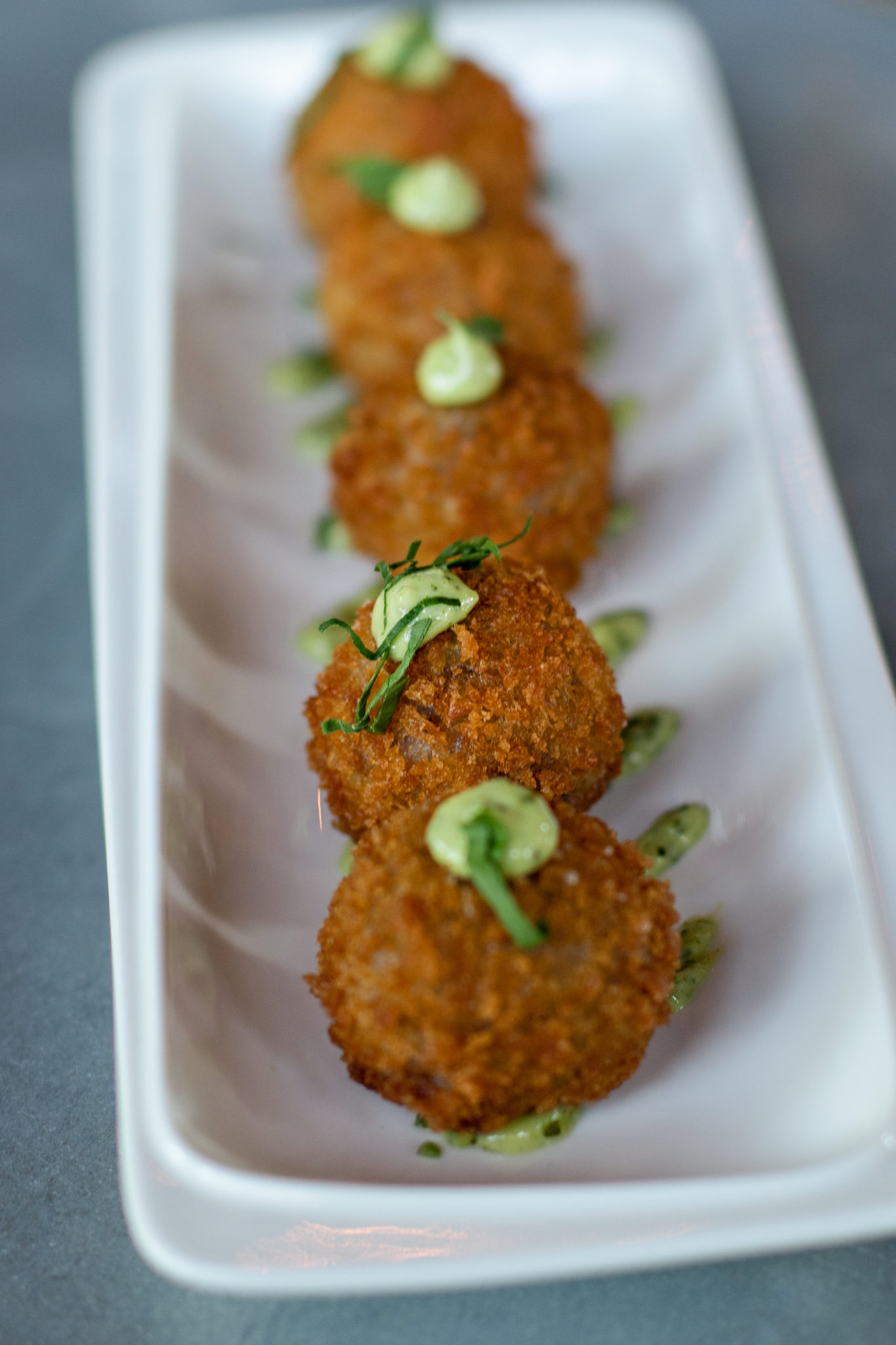
Chef Tim Vallery has turned a ho-hum menu into something worthwhile: Reuben sandwiches with melted Gruyere; red wine arancini; and Pitman Farms chicken wings with housemade blue cheese dressing. Coyote Sonoma is just what we need right now: the familiar flavors of fun with a deft hand in the kitchen.

Open Wednesday – Saturday. 44F Mill St., Healdsburg, 707-433-4444, coyotesonoma.com

22 Favorite Hotel Pools in Napa Valley

As summer temperatures continue to soar, we are all searching for ways to stay cool. How about beating the heat with an overnight stay or day pass at one of the many splashy hotel properties in the area? Sonoma County has plenty of sparkling pools perfect for a hot day. As does Napa. Click through the above gallery for some of our favorites. Did we miss your favorite? Let us know in a comment below.

Outdoor Brunch at Ferrari-Carano Winery Is a Summer Dream

Ferrari-Carano Vineyards and Winery in Healdsburg. (Courtesy of Ferrari-Carano Vineyards and Winery)

The everyday roar of life can be deafening. Even in relative quiet, phones chime, dogs bark, the refrigerator hums and meetings beckon. Ferrari-Carano Vineyards and Winery, deep in the Dry Creek Valley, is a place to reclaim that inner quiet with a series of Sunday brunches running through October.

The Italian-inspired winery estate, Villa Fiore, is encircled by exquisite gardens, including an enclosed meditative garden with a footbridge and chef’s garden, as well as a spectacular fountain that splashes in the background.

Outdoor gardens at Ferrari Carano Winery. Heather Irwin
In the gardens at Ferrari-Carano Vineyards and Winery in Healdsburg. (Heather Irwin/Sonoma Magazine)

Through October, you can enjoy a delicious brunch and wine tasting on the patio with just a handful of other guests. It’s a lovely affair that includes dishes like Prosciutto Benedict with estate eggs, Hollandaise sauce and Italian prosciutto; a Brunch Pizza with Journeyman bacon or the delicious Porchetta Sandwich with herbed pork, truffle aioli and pecorino cheese on a ciabatta.

Seatings from 10:30 a.m. to 1:30 p.m. Sunday. Reservations are required. $85 per person ($68 for wine club members). 8761 Dry Creek Road, Healdsburg. Details at ferrari-carano.com