
Dustin Valette’s 231-Seat Healdsburg Restaurant Is ‘The Opportunity of a Lifetime’

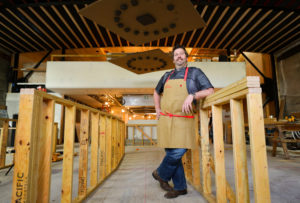
Dustin Valette is opening his new restaurant, The Matheson, on Healdsburg Square in late May to early June. (Christopher Chung/ The Press Democrat)

With The Matheson, Healdsburg’s homegrown star chef is trading on his family’s deep roots, reclaiming a 110-year-old building once used as a bakery by his great-grandfather— and betting that Wine Country’s hottest food town has room for ‘the opportunity of a lifetime.’

Dustin Valette was smiling, cracking wise, smoothing things over with a contractor whom he’d asked to tear down a 9-foot section of wall that was 6 inches out of place. It was mid-March, and the two men were talking on the second floor of The Matheson, Valette’s soon-to-be finished restaurant facing Healdsburg’s storied downtown plaza. The two shared a laugh, although nobody was laughing a few days earlier when Valette caught the mistake.

So why the near perma-smile on Valette these days?

Having accomplished much in the pedigreed restaurant world of Healdsburg, this homegrown star chef is wading into a risky pool with his new venture: a trilevel, 231-seat restaurant with two bars, a mezzanine dining loft, and an outdoor patio with an airy view of downtown. It will open blocks from his namesake restaurant, Valette, the rustic eatery he has owned and operated with his brother Aaron Garzini since 2015.

And the past year has not been kind to restaurants, new or long established.

“We’ve never lost so much capital, to be honest,” said Valette of his existing eatery, hit hard — like restaurants everywhere — by on-again, off-again health orders meant to keep people safe. A loyal customer base, combined with a creative takeout menu and a variety of business loans helped keep the place afloat, avoiding furloughs for the majority of the 37-member staff.

Even as he scrambled to ensure the survival of his first restaurant, Valette was putting in 18-hour days preparing for the opening of his second, a self-described “crazy vision” designed to preserve and pump life into a historic building at the heart of the city his family has called home for five generations.

Valette is co-owner of The Matheson along with his business partner, longtime Silicon Valley executive Craig Ramsey. Their brainchild is a multistory mélange of two restaurants, anchored on the ground floor by a craft cocktail bar and primary dining room, with more casual rooftop dining, including a sushi bar, above. A third story, comprising two 1,900-square-foot condos, sits well back from the street. The complex will also feature two ground level retail stores: Plaza Gourmet and Copperfield’s Books. First scheduled to open in January of 2020, The Matheson’s eagerly awaited debut has been pushed back 15 months during the pandemic.

Yet there was Valette, grinning, upbeat, bordering on exuberant while giving a tour of the new place, which he regards, in a way, as the old place.
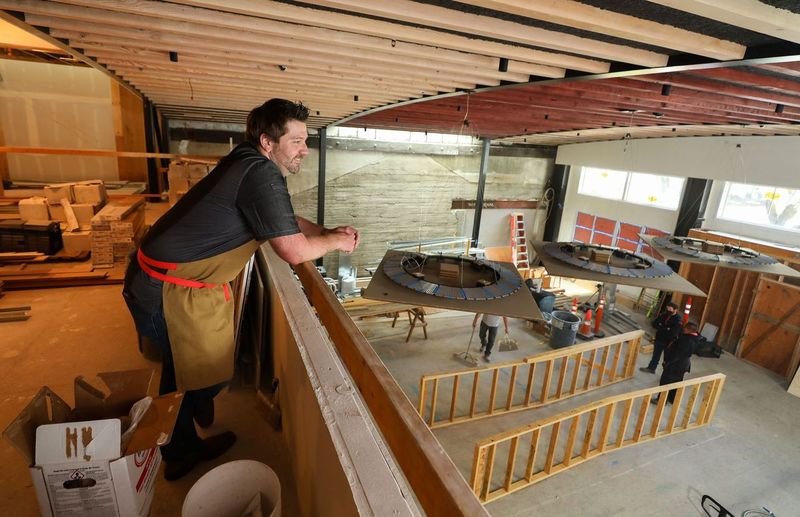
Valette is overseeing the renovations of his restaurant ahead of its debut on downtown Healdsburg’s food scene.

The 41-year-old Valette and his wife, Johanna, have two girls, 5 and 4. He is currently running on four hours of sleep, but not to worry: He just downed a double espresso. Also, operating on scant rest is something of an inherited trait, passed down from his father, Bob, a longtime Cal Fire pilot whose air tanker runs have for decades arced over local skies during wildfire season. One of those flights is depicted in a large mural, painted by San Francisco artist Jay Mercado, that will hang in the new restaurant. Another of Mercado’s paintings depicts a man baking bread in a woodfired furnace. This is Dustin’s great-grandfather, Honoré Valette, who a century ago owned a bakery in this very building.

Built in 1911, the structure has been subjected to countless alterations in the intervening decades. “Few if any characterdefining features remain,” noted an architect’s report prepared for city hall on The Matheson project. Still, it was vital to Valette that the structure be renovated, rather than demolished. Such is his personal connection to the building and the town.

But that work was nowhere near complete in mid-March, as men in hard hats bustled among sawhorses, ladders and stacks of plywood. The opening date had been pushed back yet again, this time until June, as the pandemic gave some ground but still clung stubbornly to the region, clouding the outlook for any new business in the vulnerable hospitality sector.

Asked if it felt as if he was walking on a tightrope with no net, Valette again laughed.

“Well, let’s see: I have one restaurant, and I’m trying to open a second restaurant during a pandemic. What kind of f—— question is that?”

It’s not just that there’s no net, he said. “There’s a pit down there with jagged rocks, and alligators. But this is what I want.”

“This” is the most ambitious thing Valette has taken on since venturing into the hyper-competitive Healdsburg dining scene. The Matheson project includes two distinct restaurant spaces. Downstairs is a more highbrow experience. Valette and Ken Tominaga, the sushi-whispering owner of Rohnert Park’s Hana Japanese Restaurant, will work their magic in an open kitchen. Guests can belly up to the bar or serve themselves at an 88-bottle self-serve wine wall.

The upper level, named Roof 106, will offer a more relaxed vibe — along with a rooftop cocktail bar, outdoor patio and garden lounge with plaza views. The workhorse there will be the Mugnaini wood-fired pizza oven, custom-made at that company’s Healdsburg plant. “This to me is the holy grail,” says Valette, patting the 3,800-pound beast. “I’ve always wanted one but could never afford it.”

Valette comes from modest means and has turned that into a running joke: “I’ve got a lot of money,” he says, “it’s just all red, with a little minus sign next to it.” That became less of an issue when he partnered with the deep-pocketed Ramsey, a longtime employee of Oracle who founded the cloud software company Vlocity. A Healdsburg local and frequent diner at Valette, his conversations with Dustin led to a friendship, then a business partnership. Remarking on his good fortune, Valette describes himself as “the luckiest SOB in the world.”

But if the project’s upside is huge, so is the risk he’s taking. While Ramsey is writing the checks — neither partner would share the total cost of the renovation so far — there’s more at stake than money. From his days mastering Charlie Palmer’s “American Progressive” cuisine at Dry Creek Kitchen to his runaway success at Valette, Dustin has emerged, both in Healdsburg and the wider Wine Country food scene, as a gleaming success story. That aura could quickly evaporate, should The Matheson flop.

That scenario strikes Kyle Connaughton as unlikely. He is co-owner and head chef at the 5-year-old SingleThread, the county’s only three-star Michelin restaurant — but just one of Healdsburg’s top-notch eateries, an all-star cast that also includes Spoonbar, Chalkboard, Barndiva, and Bravas Bar de Tapas, to name a handful. Asked if he thought there was room, or the need, for a 231-seat restaurant – by far the biggest around the plaza – Connaughton answered with an emphatic yes, pushing back against the suggestion that the town’s restaurant scene had reached a point of saturation.

With the permanent closure of several Healdsburg restaurants during the pandemic, diners “are looking for more variety,” says Connaughton. He’s also a fan of The Matheson’s versatility – its appeal to both Healdsburg locals and those visiting. “You can sit downstairs and have more of Dustin’s cuisine” – a nice piece of halibut, for instance, done with olive oil snow, Niçoise olives, and sunchokes – or repair to the rooftop “and have a more casual experience,” Connaughton explains. Tominaga’s sushi counter has the feel, he adds, of “a restaurant within a restaurant.”
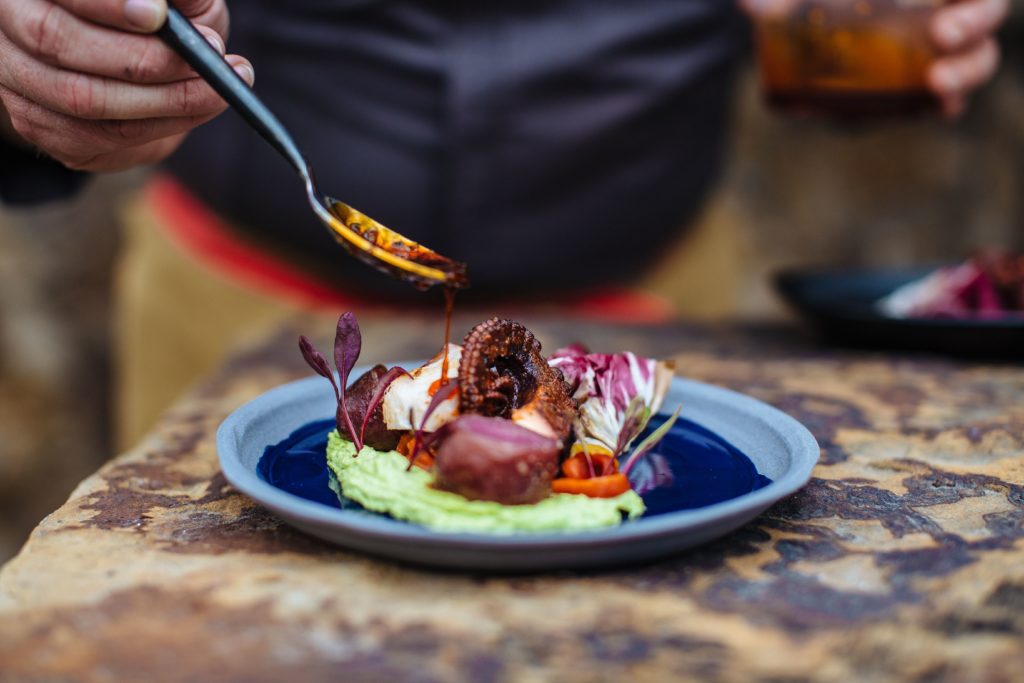
Dustin Valette tests a recipe for charred octopus with saffron rouille and smoked fennel, slated for the menu at The Matheson’s rooftop restaurant.

The Matheson is “an ambitious project” says Charlie Palmer, “but I think the town can absorb it.” In the two decades since Palmer opened Dry Creek Kitchen, he notes, Healdsburg has become a “world class” restaurant town. “I love that it’s grown from within, in a lot of ways,” Palmer says. “[Valette] worked here, and now [he’s] gonna do his own thing here. Not go off somewhere else and do it. It makes our restaurant and food community that much stronger.”

The Matheson made a big, if not entirely welcome, splash when the project was announced in 2018. The prospect of a large, modernist restaurant abutting Healdsburg’s beloved town square stoked anger and fear in a town that is perpetually grappling with questions about its evolving identity— and blowback over its devotion to high-dollar tourism. Healdsburg’s median home price, the highest in the county, soared amid the pandemic, reaching over $880,000.

The project faced stiff opposition from citizens who believed its sheer size would be out of scale with surrounding buildings. “It was like we were opening a Cheesecake Factory,” says Valette, recalling some of that incoming flak. Critics pointed to language in Healdsburg’s general plan, recommending that the city “promote uses that are harmonious with the special character of the Plaza, that are small-scale in nature.”

Over the course of several meetings with the Planning Commission, Valette and Ramsey agreed to shrink the number of seats, and to set back the rooftop trellis and condos, to ensure the building would not appear to loom over the plaza. When the Planning Commission approved the revised project in early 2019, former Healdsburg mayor Brigette Mansell promptly filed an appeal, signed by dozens of like-minded residents and business owners. “Dustin’s a good guy, and he knows I support his restaurant,” says Mansell, whose appeal was rejected by a unanimous City Council. “But we just didn’t think it was in line with the code [calling] for businesses to be small-scale.”

A retired teacher, Mansell expresses dismay at the rivers of “new money” flowing into Healdsburg. “We’re putting up huge buildings, big houses, creating so many changes,” she laments. “And it’s not really serving the very people that give Healdsburg its authenticity, its small-town charm.”

But part of reason he’s building a big eatery, Valette explains, is that a higher volume of customers enables him to charge less. Affordability is a key issue for many residents of Healdsburg, and often arose on the campaign trail last November, says attorney Ariel Kelley, who won a seat on the City Council. “One of the things I heard loud and clear, was that they felt our city restaurant options were not affordable to locals,” she says. Valette is determined to keep prices at the Matheson reasonable, “so I feel good about that,” says Kelley. The Matheson, with its mixed-use housing and retail stores, is far more likely to enliven and invigorate the plaza, Kelley adds, than to overcrowd and overwhelm it.

“The community bucked us at first,” Valette acknowledges. “But I never got upset. It drove me to work harder, to refine the vision even more.”

“You’ve gotta have a vision,” he adds, “something that’s bigger than yourself, that wakes you up in the morning, that makes you say, ‘God, I’m tired. But I need to get my ass out of bed and go work on this dream.’”

“I’d get up in the morning, and Dustin would already be in the kitchen, cooking,” recalls Bob Valette. “At 10 years old he was making breakfast for the family, and I’m not talking about a bowl of cereal. Breakfast was eggs, bacon, wild pork sausage, potatoes, onions, you name it. He wasn’t much on cleanup, but he sure did the meal right.”

Dustin’s parents were both professional pilots. His mother, Carol Toney, flew an air ambulance. Bob flies for Cal Fire, piloting a specialized S-2 tanker that carries up to 1,200 gallons of retardant. One of the homes the family lived in was an old hunting cabin on the grounds of what is now the Hawkeye Ranch, near the top of Geysers Road as it winds up the Mayacamas Mountains overlooking Healdsburg Bob had graded an airstrip behind the house. When it was time for the Valette kids to go to school, “I’d throw ‘em all in the airplane” — a small Cessna — “zip out of there and drop ‘em off at my cousin’s in Alexander Valley, right on Highway 128.” From there, they would catch a bus to school.

Some mornings, “if the cop wasn’t there,” says Bob, “I’d turn the plane around right there on Highway 128.”

Growing up, Dustin always heard stories about his paternal great-grandfather, a baker from the town of Decazeville in southern France. Honoré Valette and his wife immigrated to America in the early 1900s. After being processed at Ellis Island, they came by train to San Francisco, where he opened a bakery. The 1906 earthquake “knocked everything down and burned everything up,” says Bob, whose grandfather eventually made his way to Healdsburg.

At some point Honoré lived outside of town, off Mill Creek, where a road was named after him. His “Home Bakery” was located on the site now occupied by Valette. And his “Snowflake Bakery” stood within the footprint of what’s now The Matheson.
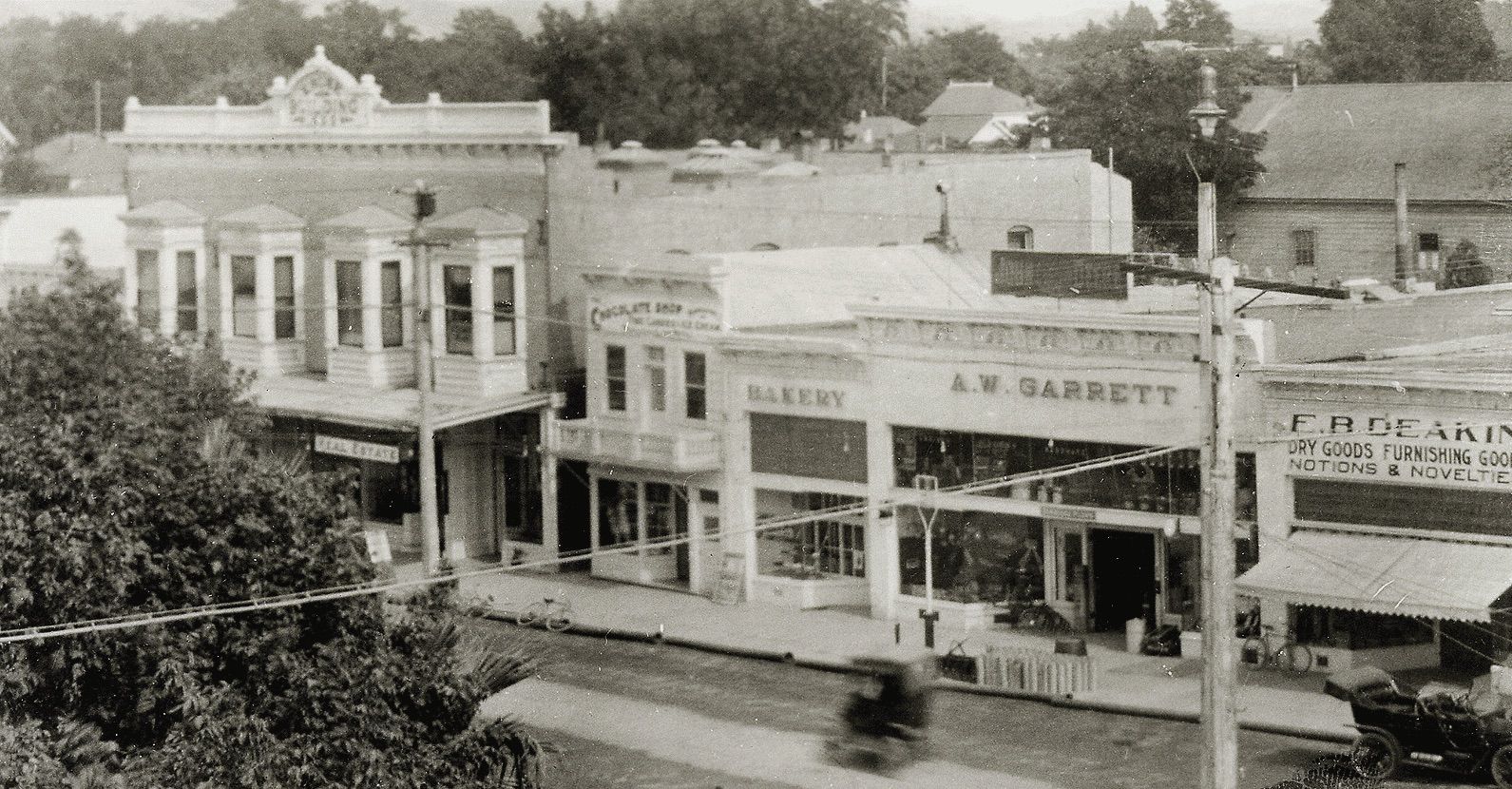
A circa 1920 view of Healdsburg Plaza showing Honoré Valette’s Snowflake Bakery and the A.W. Garrett hardware store, now the site of Dustin Valette’s The Matheson. (Courtesy of Valette)

In Valette’s understanding of his family’s local roots, Honoré looms large. “I always heard the stories about this guy who left the old country with nothing in his pocket, to pursue the American dream,” he says.

While he never wanted for essentials, Valette’s family was not well off. Through high school, Valette often worked 40 hours a week. If he wanted new shoes, it was on him to earn the money to buy them. The family also seldom took vacations, so travel was a novelty when Valette embarked on his career as a chef. His job gave him a ticket to walk into a restaurant in any given city and announce: “I’m here, what can I do?”

Valette’s dedication also has roots in a more deep-seated longing. “Around 10 or 11,” he says, “my mom and dad split up.”

One of things he says he missed was sitting around the table as a family. “I liked cooking, I liked food, but I was always, from a young age, missing those days when we would sit together, breaking bread, enjoying each other’s company.

“I think that’s what got me into this industry, because now I’m able to share the thing I loved so much.”

After five years at Charlie Palmer’s Dry Creek Kitchen, Valette gave his one-year notice. It was time, he told Palmer, “to do my own thing.” Lacking the capital to buy a place himself, he had to line up investors. Three times, with three different buildings, his plans fell through.

The third time it happened “was rough,” recalls Valette.

That third deal went sideways on a Sunday. The next day, he walked past the restaurant Zin, on Center Street. Chatting with the owners, Jeff and Susan Mall, he mentioned the latest setback. They asked him to have coffee the next day, where they told him they’d decided to sell Zin, after a 15-year run. Was he interested in buying?

Valette was. “It took about 5 minutes to negotiate the purchase,” he says. Zin became Valette, the restaurant Dustin and Aaron, by then a highly regarded server and sommelier, had long dreamed of opening. The debut was a kind of homecoming: it stood on the site of Honoré Valette’s second Healdsburg bakery.

The brothers worked hard, and Valette prospered. Dustin started looking for “a way to expand this vision we had.”

“We wanted to stay in Healdsburg, but there wasn’t a lot of opportunity.”

By kismet or coincidence, another building that loomed large in his family’s past then emerged as, possibly, an even bigger part of his future.

The first Healdsburg bakery opened by Honoré around 1911 stood at 106 Matheson Street. Old-timers remember that address as home to Garrett Hardware, then Jacob Horner Restaurant, then Italian restaurant Felix & Louie’s. In 2017, amid rumors it would be torn down to make way for another large hotel project, the building was purchased by Ramsey, who had different plans.

Ramsey was a frequent diner at Valette. A bachelor at the time, he often sat solo at the bar, where he took his dinner. Nothing if not gregarious, Valette would often sidle over and chat him up.

“We developed a friendship,” says Ramsey.

“I liked him so much, and I liked his food so much, I started thinking it might be nice to do something with him.”

Before buying the Matheson Street building, Ramsey asked Valette if he’d be interested in a partnership, “and he said, ‘Absolutely,’” Ramsey recalls. It was only after that exchange that Valette explained his family’s connection to the property, “which to me was just great,” says Ramsey.
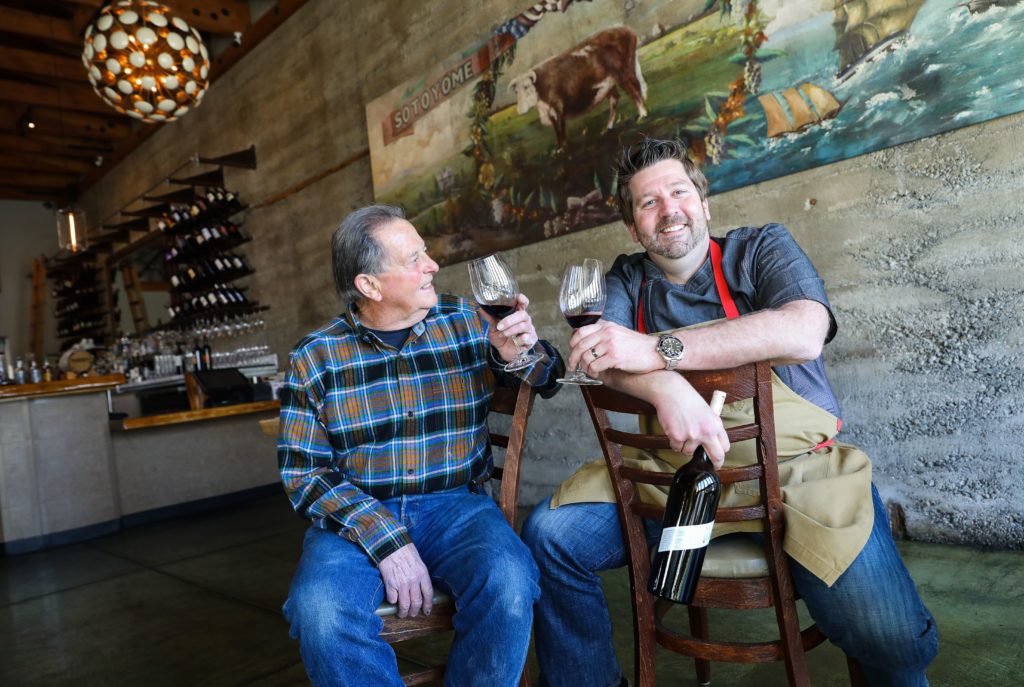
Dustin Valette, pictured with his father, Bob Valette, is opening a new restaurant, The Matheson, two blocks away from his restaurant, Valette, in Healdsburg. (Christopher Chung / The Press Democrat)

He sees in Valette a creative chef and a man of “great energy” and work ethic, with no blind spot for marketing and sales.

“Everybody loves him,” Ramsey says. “You go into his restaurant, it feels like a family, and he’s your best friend.

“I trusted the man and believed in him. And I loved the idea of getting him into the building his great-grandfather was in.”

“My father saved four people’s lives,” says Dustin. “I cook steak.”

He and his father were recounting Bob’s heroics during a wildfire that menaced a family trapped by flames in the combustible fall of 2017, when much of Sonoma County and the surrounding region was ablaze. The fire was “north of Clear Lake, south of the Sacramento Valley,” Bob remembers. The driver of a car was trying to make his way down a dirt road, to safety, but the flames were too close.

“I don’t know how the hell they ever got in there,” says Bob, now 80, who from his cockpit on that flight could see the family — two parents, at least two children — waving and screaming for help.

Flying lower than usual — at greater risk to himself — he made six precisely targeted “little drops,” each batch of retardant making another hundred or so yards of the road passable. When he finished, the tanker was empty, but the driver was able to make his way down the dirt road to a larger, paved road, and to safety.

“Am I saving anyone’s life? No,” says Dustin, who points out in the next breath what he is doing: “Building something that will hopefully be there for my kids, and their kids; giving workers opportunities, and helping revitalize the square.”

It’s clear he sees this opportunity, to reinvigorate downtown Healdsburg while honoring his family name, as a kind of professional apotheosis — the most important work he’ll ever do.

With a crew from San Leandro installing the elevator, Valette bounds up the backstairs to Roof 106. Envisioned as an “escapist perch” over the plaza, the rooftop lounge will feature planters, fire-pits, and eclectic furniture — none of which are in sight on this March afternoon. Standing on a plywood floor — the large stone tiles have yet to be set down — he gazes out on the plaza, recalling his days at Dry Creek Kitchen. “I used to have Tuesdays off, and would sit on the grass and read a book or listen to music. And my ass would get wet.”

He’s long dreamed of giving folks the chance to experience the plaza from this vantage – without soaking their backsides.

After three and a half years of hard work, that vision is coming to life before his eyes. “To be this close,” he says, “it’s crazy, dude.” “Would I like to be getting more sleep right now? Yes. Do I miss my family? Yes.

But there are moments in life where you sit back and say, ‘This thing is bigger than me.’”
2 New Sonoma County Restaurants We’re Excited About

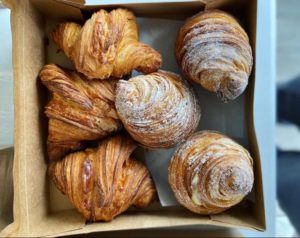
Croissants from Quail and Condor in Healdsburg. (Courtesy of Quail and Condor)

Dining editor Heather Irwin shares a couple of favorite dining destinations to check out right now. Click through the above gallery for photos of must-order dishes.

Khom Loi

Dozens of woven bamboo lanterns float high above the outdoor-indoor dining patio flanked by two-story sliding glass shoji walls. Inside, water gently tinkles into a charming concrete pond filled with aquatic plants. Khom Loi, located inside the former Peter Lowell’s in downtown Sebastopol, is an homage to the global cuisine of Chiang Mai and nearby Laos, with nods to central and southern Thailand.

There’s nothing demure about the spicy, sweet, sour, and bitter flavors in every one of the dishes. “It’s about having fun,” Williams said. “Our dishes are like what you would find in Thailand.” What do you do with the piles of lettuce, basil, and mint that come with several dishes? You wrap up morsels in them, or take a bite of one thing, then a bite of another. For me, being an outsider to this style of eating is what’s so enjoyable, especially when I can’t travel to far-flung places.

It’s about making that effort to engage, learn something new, and make a few awkward mistakes along the way. Or just go to Khom Loi to eat really good Pad Thai. Your call.

Must-order dishes

Gai Tod (lemongrass fried chicken), $10: The smell of lemongrass and fried lime leaves, plus a sharp black pepper and chile sauce ( nam jim) and two-bite fried chicken pieces make this dish almost impossible to share.

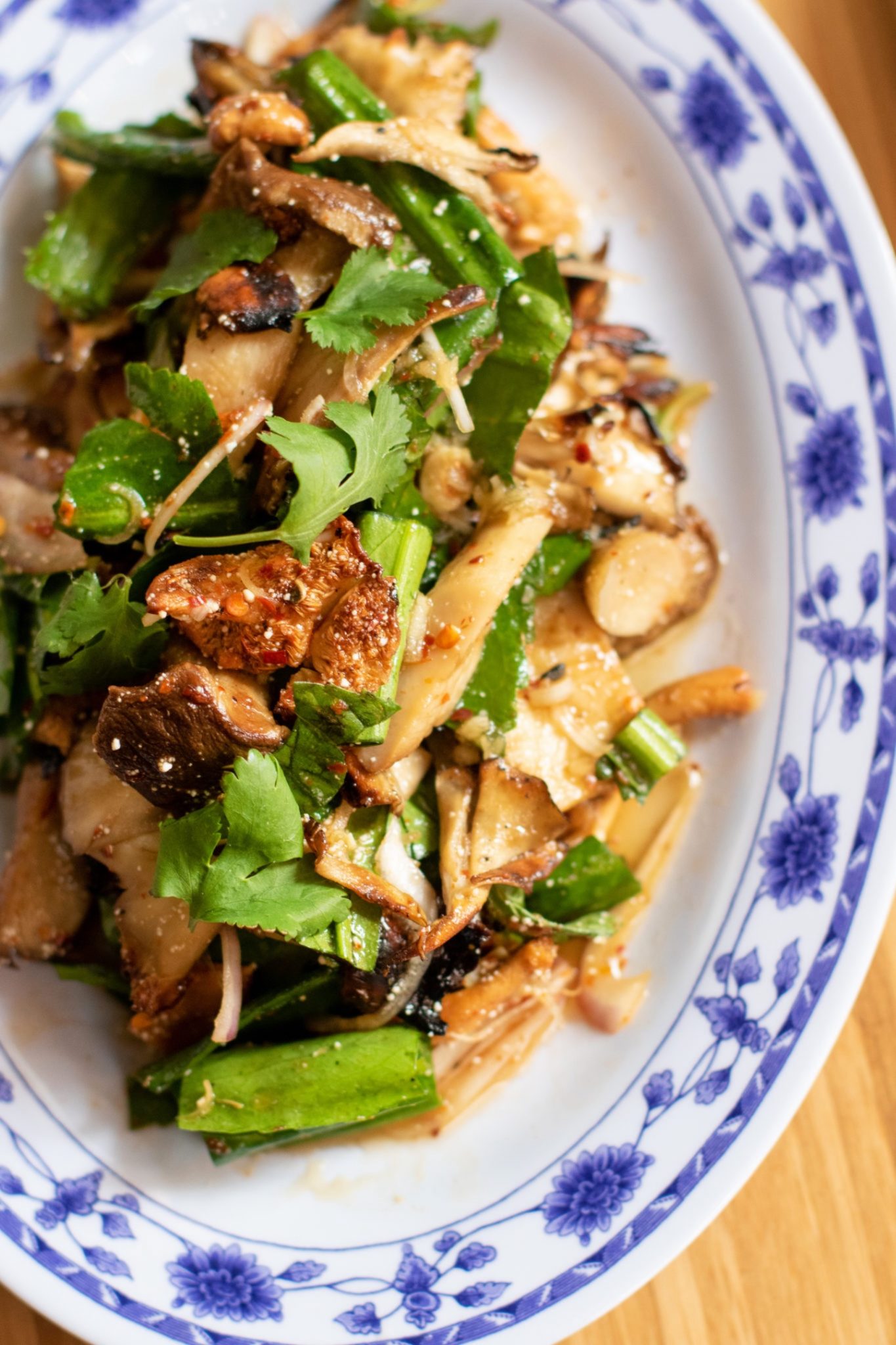
Het Paa Naam Tok: Charcoal-grilled mushroom salad with toasted rice powder, basil and mint. (Heather Irwin / The Press Democrat)

Som Tam Pu (green papaya salad), $12: Dried shrimp and fish sauce are two of my favorite things about Thai food, but sometimes it’s difficult to find either of these salty, fishy flavors that pump up the volume of green papaya salad. Here, unripe papaya is a crunchy carrier for a tart-sweet lime fish sauce I could literally drink with a straw.

Bpet Yang (charcoal-grilled Liberty Duck breast), $18 (half) or $35 (whole): Another local-meets-Thai dish with a crispy charred exterior and buttery-soft, rare interior, just like it should be. The fun is in mixing and matching the duck with bites of lettuce, pumpkin, long beans, and a green chile sauce.

Quail & Condor

Bakery superstars Melissa Yanc and Sean McGaughey have quietly opened a small storefront in Healdsburg. The couple are known for their wild yeast sourdough and hearty dark loaves (walnut persimmon is our fave), but their sweet pastries, including sourdough and pistachio croissants, and filled Danish, are worth the trip alone. The bakery also features Black Oak coffee and espresso. Open Thursday through Sunday, 9 a.m. to 3 p.m. 149 Healdsburg Ave., Healdsburg.

707-473-8254, quailandcondor.com

This Petaluma Company, Featured on TV, Creates Beautiful Furniture from Reclaimed Wood

When it comes to home design trends, what’s old is new again. Perfectly decorated “matchy-matchy” interiors and fresh-out-of-the-factory-furniture is out, replaced by a “collected look” that includes treasured pieces, vintage decor and repurposed materials.

This new emphasis on making the most with what you’ve got and adding carefully selected antique, vintage or secondhand pieces to your home signals a shift from “fast furniture” (Americans throw out 12 million tons of furniture each year) to a more sustainable approach to home decor. According to a recent article in Fast Company magazine, used furniture is about to become a $16.6 billion business.

If you’d like to give your space new life by adding something old into the mix, consider crafting a piece of furniture from salvaged wood. Heritage Salvage, a full service reclaimed building materials and custom design facility just south of downtown Petaluma, is a great spot for finding a storied piece of wood. The business, owned by the affable Michael “Bug” Deakin, offers design services and has a three-acre lumber yard and a skilled crew.

Deakin founded Heritage Salvage in 2003 and brought decades of building experience and a passion for lumber and trees to his company. While growing up in British Columbia, his father would bring home lumber discards from his work at Kootenay Forest Company; Deakin built his first home out of reclaimed materials in 1970. As an adult, he continues to save old pieces of wood from the landfill.

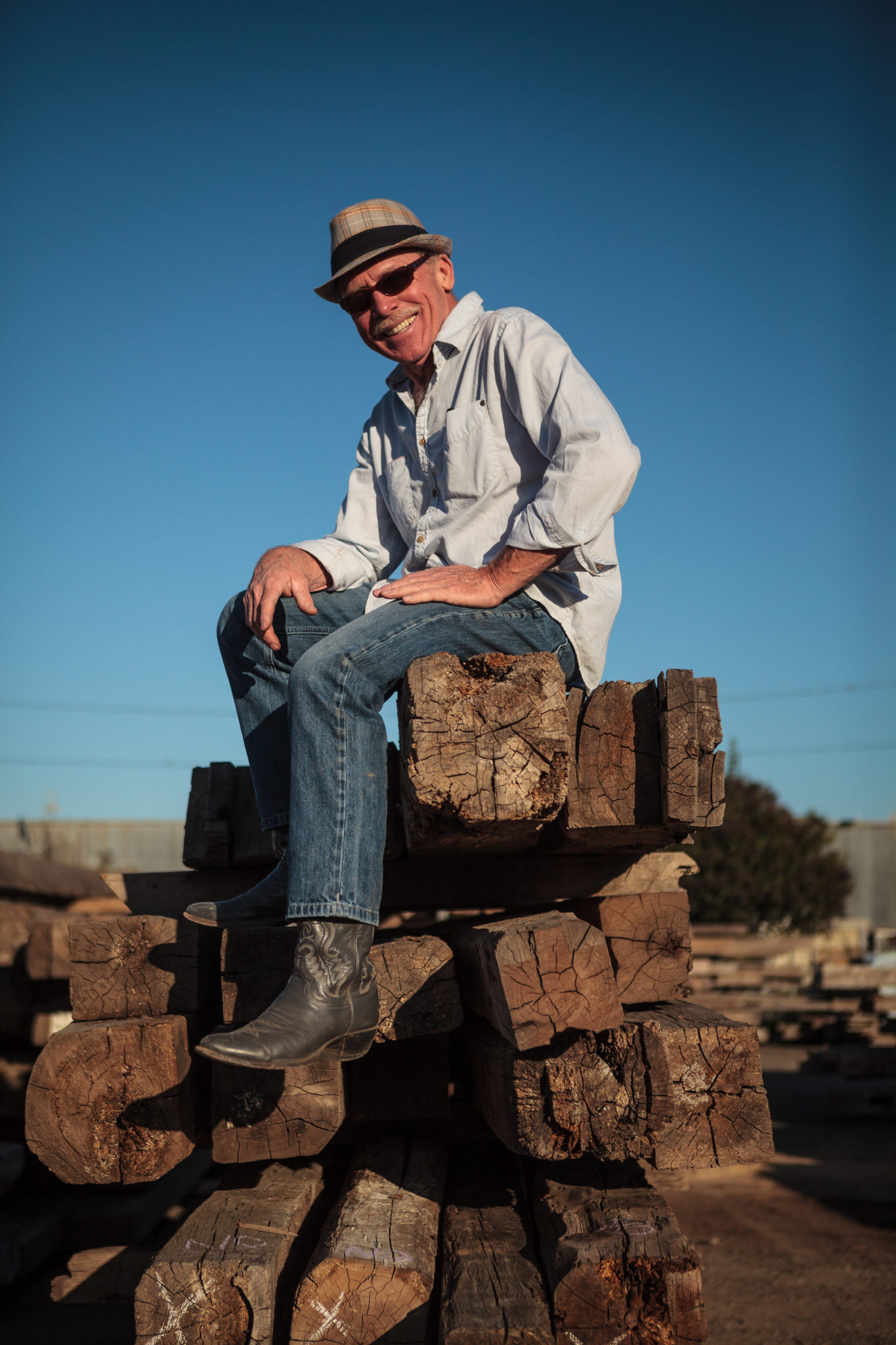
Michael “Bug” Deakin, founder of Heritage Salvage. (Chris Hardy)
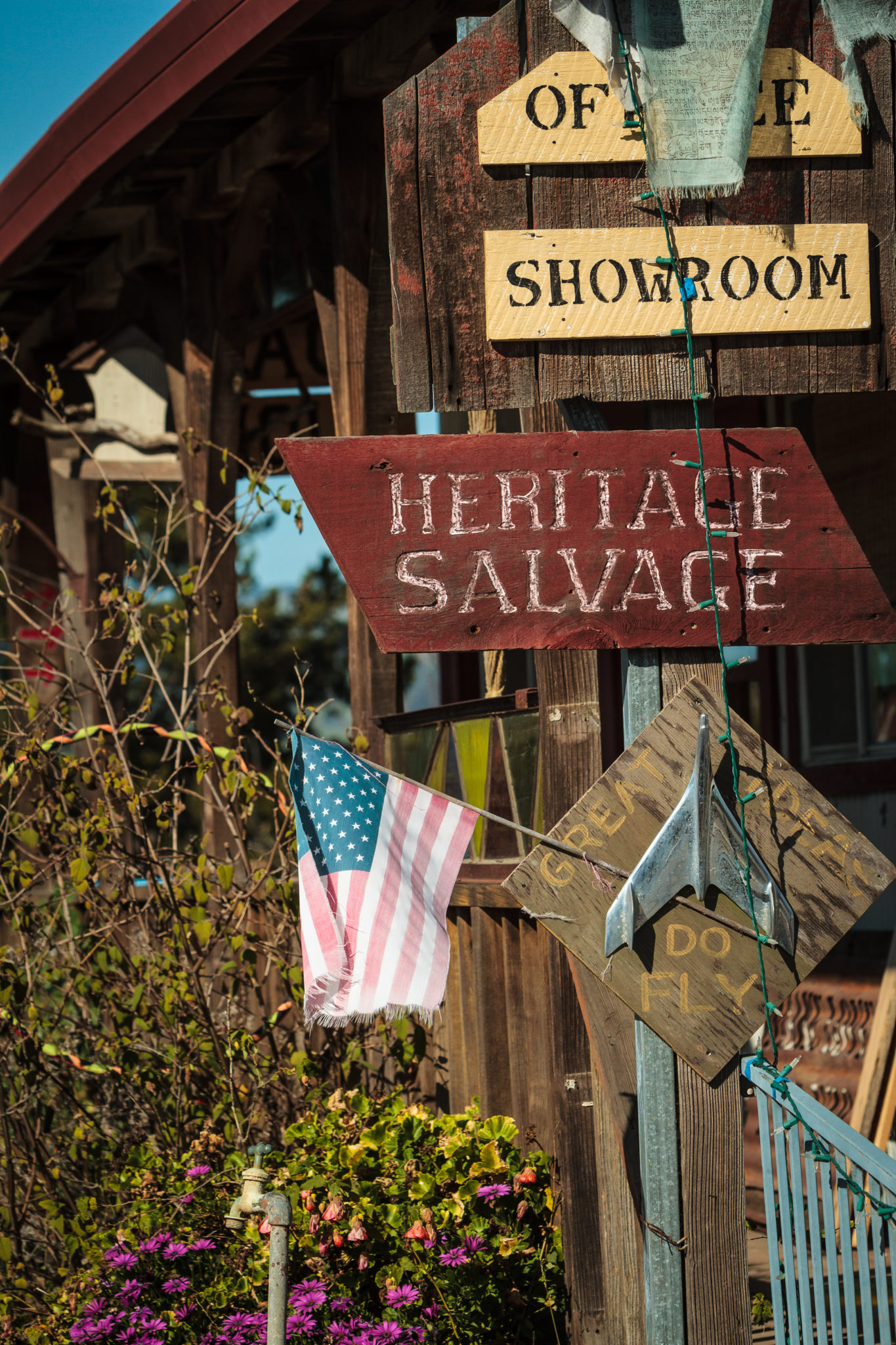
Heritage Salvage in Petaluma. (Chris Hardy)

The Heritage Salvage team sources and refurbishes wood from all over the world — from a Penngrove chicken coop to a Costa Rica cashew tree — and sells it directly to customers or refashions it into stylish furniture pieces for homes and businesses, including over a hundred restaurants across the country. The Petaluma company has made a bar from bleacher boards for HopMonk Sonoma, a panel siding for Sonoma Academy from Oregon cedar logs, and a tabletop for a Windsor family from wood sourced from Mare Island Naval Shipyard in Vallejo.

Deakin likes to remind people of how great trees are — to him, “the art of giving new life to old wood is all about the stories.” In 2018, he got to share some of his stories and his passion for trees with a larger audience when, along with the Heritage Salvage team, he starred in a six-episode season of “Heritage Hunters” on the DiY Network.

“You buy the wood but get the story for free. Or you can pay for the story and get the wood for free,” said Deakin in one of the episodes. The season, filmed in various locations, including Petaluma, is available on Amazon Prime and is a must-watch for design and architecture buffs and those who appreciate beautiful pieces of wood.

While the team at Heritage Salvage tackles more intricate and large-scale projects on the TV show, they also sell pieces of wood at the lumber yard to customers who have smaller home improvements in mind.

No matter the scale of a customer’s project, working with reclaimed wood is an opportunity to learn how to appreciate “the beauty in what is here” and to share “stories of the past,” according to Deakin. Perhaps that’s the greatest benefit of incorporating old materials and pieces of furniture in your home decor — that there’s a story behind each individual piece of furniture and a little bit more personality in each room.

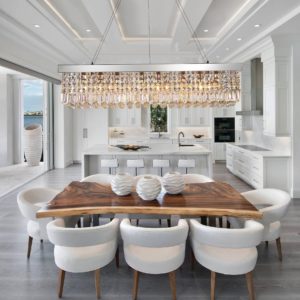
Click through the above gallery to see furniture made by Heritage Salvage. 

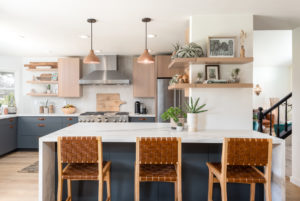
Midcentury Modern Meets Boho Chic in This Windsor Kitchen

Bohemian or boho style continues to be one of the biggest trends in fashion and home decor. We see it everywhere — in outfits (floppy hats, floral dresses, layered jewelry), in hairstyles (messy braids and curls) and in homes (eclectic vintage furniture, macrame wall hangings, textiles sourced from around the world).

One place that hasn’t seen as much of the boho trend, however, is the kitchen. That’s why we are excited about a kitchen remodel in Windsor that blends beautifully with the rest of the boho chic home, which also incorporates a midcentury modern look.

In true Wine Country fashion, the plan for the kitchen remodel was conceived over a bottle of wine. Homeowners Sarah and Chad Law wanted to spruce up their kitchen but wanted to keep costs down. They were prepared to do most of the work themselves, but needed a little bit of guidance, so they consulted their friend Natasha Stocker, a designer and the owner of Inspired Spaces in Santa Rosa. A bottle of bubbly later, and the three had the initial sketches ready.

“The Laws needed a kitchen that was not only beautiful, but durable,” said Stocker, who recommended the couple install Fenix cabinets in their new kitchen. The innovative laminate surfaces of the cabinets are made of a sustainable blend of water-resistant paper and resin, which is highly resistant to scratches, abrasion and other mishaps that might occur in the kitchen. Minor scratches and marks can be “healed” with the heat from a clothes iron.

Sarah, an administrator at The Healdsburg School who loves DIY projects, was the remodel visionary, while Chad, a San Francisco fire captain, installed most of the new kitchen with the help of his 84-year-old father.

“He’s such a good sport,” said Sarah of Chad, while describing her ambitious, over-the-top design ideas with a hint of self-mockery: “Let’s add some sconces to that wall and install a sliding barn door; let’s make a climbing feature for our chickens; let’s crane a vintage AirStream into our backyard and turn it into a cool living space.”

Among the favorite elements in the new kitchen is a “waterfall countertop,” which is made out of marble and extends all the way down to the floor. The spacious layout of the countertop allows the couple’s three boys to sit together in a spot where family and friends also like to gather.

Drawer pulls made out of leather is another interesting design pick, adding a witty and rustic look that is echoed in the woven leather bar chairs. White rectangle tiles — from Clé Tile in San Rafael — have been turned vertically, providing a fresh take on the kitchen backsplash. A bold patterned wallpaper backs a Pinterest-worthy bar area and open shelves are styled with oh-so-boho air plants and handcrafted cutting boards, as well as cookbooks.

The living room, next to the kitchen, embraces a neutral and rustic color scheme with a leather sofa and dark, woven accent cushions. Ornamented Moroccan sconces and matching teal arm chairs offer a pretty and colorful counterpoint.

Installing the kitchen themselves allowed the Laws to stay within their budget. It also turned the kitchen renovation into a more meaningful experience.

“It was such a sweet process (for Chad and his father), and it makes us appreciate our kitchen even more,” said Sarah.

Click through the above gallery for photos. 

inspiredspacesdesign.com

Johnny Doughnuts Opens in Santa Rosa

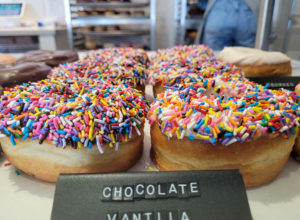
Sprinkle doughnuts at Johnny Doughnuts in Santa Rosa. (Heather Irwin / Sonoma Magazine)

Do mom a favor and get her a salted caramel chocolate old-fashioned doughnut from Johnny Doughnuts for Mother’s Day.  Then go away and leave her alone to enjoy it in peace. If she’s on the funky side, make it a Raspberry Bismark or brown butter glazed. Personally, I don’t think you can ever go wrong with sprinkles — basically, glitter for food.

That’s a long way of saying that Johnny Doughnuts opens Saturday, May 8 in Santa Rosa, replacing City Garden Doughnuts at 1200 Fourth Street, AND it’s a public service announcement to remind you that Sunday is Mother’s Day. You’re welcome.

Read more about Johnny Doughnuts here.

Acme Burger and Falafel Hut Coming to Santa Rosa

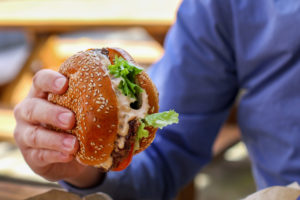
Acme Burger at Acme Burger in Cotati. (Heather Irwin/Sonoma Magazine)

Acme Burger, the doubly-delish Cotati restaurant from Chef Todd Kniess, is slated to open a second location in the former Union Hotel space on College Avenue in Santa Rosa. Kniess, who spent years in upscale Bay Area dining spots, opened Acme Burger in 2019, bringing his experience with local ingredients and sophisticated flavors to a fast-casual concept. Don’t worry, Union Hotel fans, the Occidental restaurant and Santa Rosa location on Mission Boulevard will remain open. More details as opening gets closer. The original Acme Burger is at 550 East Cotati Ave., Cotati, 707-665-5620, acmeburgerco.com.

Falafel Hut opening in downtown Santa Rosa: I’ve always felt a little disappointed that Sonoma County doesn’t have more fast-casual spots for falafel, shawarma, kebab, gyro, tabbouleh and all the accompaniments. The flavors of grilled meat, mint, cucumber, yogurt and tomatoes are among my favorites, and the simplicity of a great hummus or baba ganoush are so underrated. Good news! San Rafael’s Falafel Hut will be opening in the former Gerard’s Paella space on Fourth Street (hopefully) this summer, with all of the above. If you’re missing Gerard and his giant pans of paella, he’s on the move, serving at Old Caz Brewing in Rohnert Park as well as at the Novato and Fairfax Farmers Markets.

Kendall-Jackson Summer Series Returns: This series of farm-to-table dinners among rows of tomatoes, lettuces and peppers is one of the things I took for granted in the halcyon days before the pandemic. Now that it has returned, it continues to be a so-worth-it adventure with food prepared by the stellar Jackson Family Wines’ culinary staff (led by Justin Wangler) and plenty of wine. Four acres of gardens are the backdrop for this al fresco showcase of Sonoma County’s best produce and ingredients. Adding to the mix, Chef Tracey Shepos Cenami will add a tasty cheese component to each dinner. On June 12, guest purveyors will include Costarella Seafood and Chevoo Cheese, followed by Snake River Farms Beef and Valley Ford Creamery on July 10, Liberty Ducks and Dry Creek Peach on Aug. 14 and a vegetarian dinner featuring Mycopia Mushrooms and Nicasio Cheese on Sept. 11. In October, Ward Ranch Beef and Pt. Reyes Farmstead Cheese Co. will be the guest purveyors. Sign up early; dinners tend to sell out fast. Details at kj.com/events/farm-table-dinner-series

Coyote Sonoma Serves Up Food with a Side of Fun

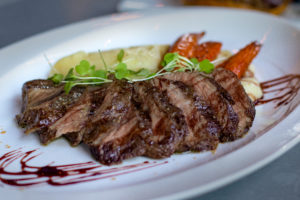
Steak at Coyote Sonoma in Healdsburg. (Heather Irwin/Sonoma Magazine)

Beverly Healdsburg, as locals sometimes like to call the once-sleepy ranch hamlet that now regularly welcomes celebrities and other well-heeled visitors, is not known for its beer and chicken wings scene. It thumbs its nose at play-along trivia nights on a patio full of rowdy dogs and rowdier families.

But what’s the one thing Healdsburg cannot abide, more than big screen televisions the size of small trucks or karaoke nights? Uninspired food.

That’s why we’re smitten with Coyote Sonoma, in a hidden-away space that once housed Sonoma Cider. Tim Vallery of Peleton Catering, the recently-installed chef who has turned a ho-hum menu into something worthwhile, brings together casual fun and simple but impressive eats that so rarely go together in Wine Country.

After being purchased by Wilson Winery in 2018 and turned into a tasting room, the venue lost its luster despite having a large indoor-outdoor space that’s perfect for music, food and entertainment. Frankly, it languished until Vallery took over the kitchen earlier this year and resuscitated it.

The tasting room and restaurant, located in downtown Healdsburg’s Mill District, is still finding its footing in the gaps between bar food and upscale dining, but we like the idea of Red Wine Arancini ($8) instead of frozen mozzarella sticks or a warm asparagus salad with lemon-thyme vinaigrette, pickled onions and a soft-boiled egg ($13) next to burgers and panini.

Part of that dynamic has to do with the audience. On a Wednesday night, Vallery warns us that the trivia night players will descend en masse around 6 p.m., all ordering food at the same time. His kitchen crew are at the ready as tables fill up, exactly as expected. Sandwiches headed for the panini press are lined up in formation, roasted cauliflower hummus dip stands at attention and chicken wings are prepped for annihilation.

Even socially distanced, the place feels like old times, when we could laugh and play games and shout trivia answers together. It’s a spot to grab a beer or four with vaccinated friends and family and just enjoy each other rather than obsessing about each bite.

Coyote Sonoma is just what Healdsburgers — and the rest of us — need right now: the familiar flavors of fun with a deft hand in the kitchen.

Best Bets

Warm Asparagus Salad, $13: With the prime time for asparagus cresting, it’s worth diving into this seasonal salad. Gently poached spears are married with lemon-thyme vinaigrette, dried apricot, pickled onions, a soft-boiled egg, tarragon aioli, radish and Italian parsley. What could end up heavy and gloppy is light and refreshing with each note — tart, bitter, creamy, vegetal — distinguished beautifully.

Coyote Burger, $16: I love a burger that’s just slightly larger than the bun, thick enough to be taken seriously but not so overdressed to be ridiculous. This version — though I could have enjoyed it a bit more rare — sits between two soft Costeaux Bakery brioche buns (kudos on the local choice) with onion relish, Sonoma Schmear (we’ll call it Thousand Island-ish) and Gruyere cheese.

Reuben, $14: Another big winner, though purists might disagree. A reasonable amount of salty pastrami (not piles of the stuff) with melted Gruyere (Swiss cheese’s classier cousin), sauerkraut and Russian dressing on light rye. It’s all about balance, people.

Flat Iron Steak, $27: Vallery keeps this steak, one of just two fancier entrees on the menu, super simple. I like my meat rare, with a little char on the edges, and this steak was perfectly cooked. It comes with a nice pile of Yukon Gold potatoes with horseradish puree and perfect honey-glazed carrots. I make the world’s best glazed carrots, so that’s high praise.

Roasted Cauliflower Hummus, $7: Start healthy, then work your way toward dessert. This is a nice foil to the wall of beer taps.

Pitman Farms Chicken Wings, $10/$18: Roasted, not fried, then doused in Buffalo or red wine barbecue sauce. Think of them as the high-low kind of food that Vallery has excelled at on this menu. The house-made blue cheese dressing is addictive.

Red Wine Arancini, $8: The fried balls of red wine-soaked arancini have gooey smoked mozzarella, salami (which I couldn’t exactly see, but could taste) and herb aioli. The crumb breading didn’t wow me, but otherwise this dish was solid.

Also on the menu: Food writers are allowed to have a few food phobias, and among others, sausage is mine. I just don’t love the stuff. Maybe it was too many hot dogs forced on me as a kid. But Coyote Sonoma’s menu features some amazing Yanni Sausages and a Beer Brat Hoagie that sausage fans will love.

Drinks: The wine list includes a variety of Wilson wine brands — Wilson, Mazzacco, deLorimier, Matrix, Coyote and Pezzi King among others — by the bottle and by the glass. There’s also a huge list of wines on tap, including Healdsburg Brewing Co.’s Golden Ale, an insanely drinkable beer.

44 Mill St., Healdsburg, 707-433-4444, coyotesonoma.com

Drink Wine, Ride Horses and Fly in a Plane with These Sonoma Vineyard Experiences

Before wineries turned their ingenuity knobs to 11 to connect with consumers in new ways during the pandemic, some Sonoma producers already offered outside-the-box visitor “experiences” that were just that: adventures with a side of wine.

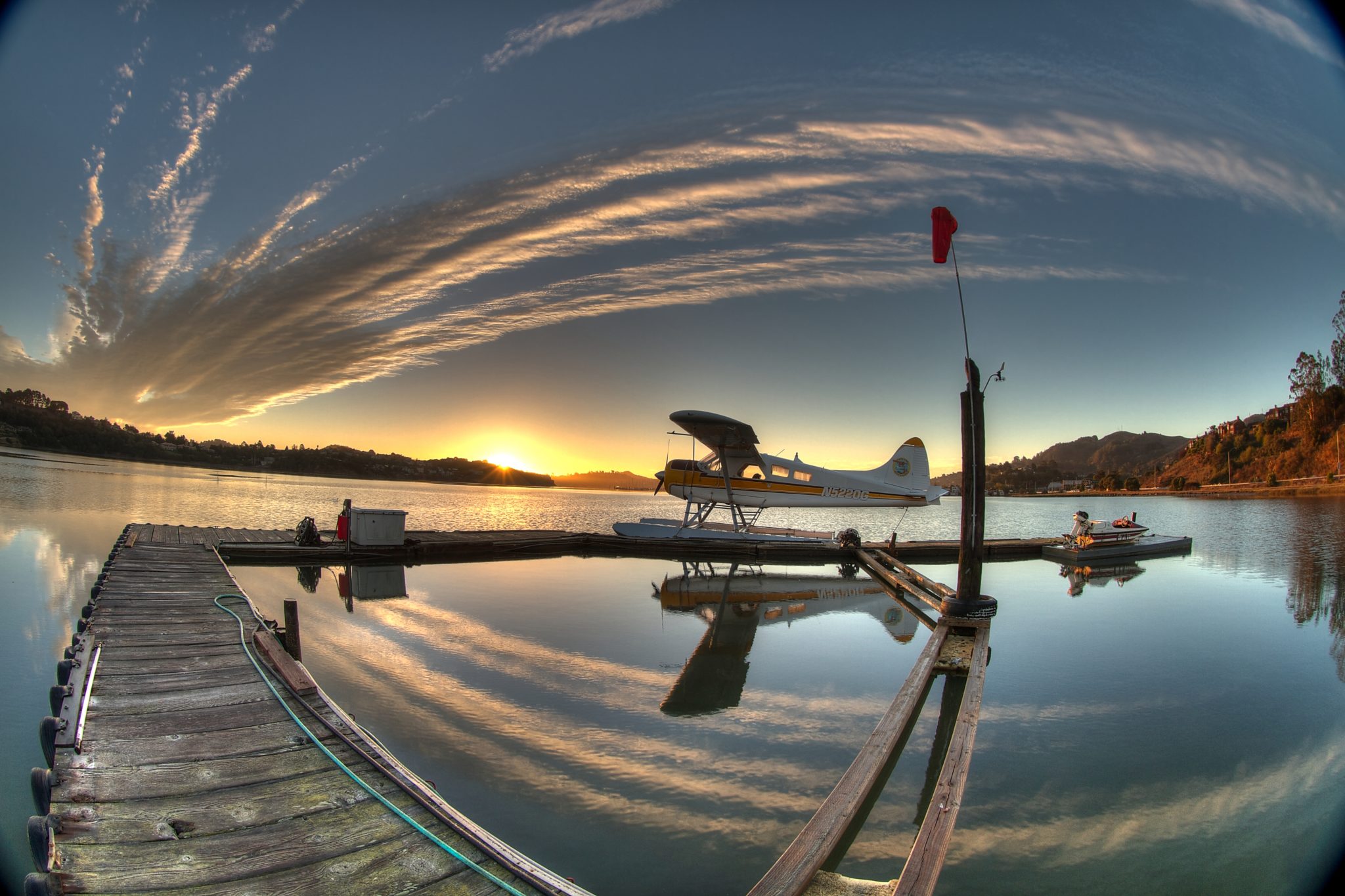
Among these forward-thinking wineries is Obsidian Wine Co., based in Sonoma and with wine-related excursions that include a seaplane flight over the Mayacamas Mountains, touching down on Clear Lake. (Obsidian’s Seaplane Wine Flight was recently named one of  “the most extreme wine tastings around the world” by Food & Wine magazine)

In Alexander Valley, Sutro Wine Co. founder and winemaker Alice Warnecke Sutro has long led nature hikes on her family’s ranch and vineyard, giving guests an up-close sense of how volcanic-ash soils and moderating influences of the Russian River form the character of her wines.

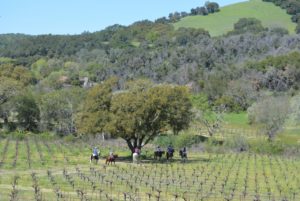
Sonoma Valley’s treasured Bartholomew Park, for decades a favorite place to hike before tasting at the winery on the grounds, now offers guided horseback rides through the vineyards of the new winery on the property, Bartholomew Estate Vineyards and Winery.

And in Sebastopol, Region is offering a new take on Sonoma wine tasting by introducing guests to independent winemakers via their self-serve wine bar and weeklong experiences with small wineries without tasting rooms, such as Bucher Wines in Russian River Valley.

The Obsidian Sea Plane. (Courtesy of
The Obsidian Seaplane. (Courtesy of Obsidian Wine Co.)

The most ambitious outings, without question, are those provided by Obsidian Wine Co. Founders Arpad and Peter Molnar (brothers) and Michael Terrien (winemaker) have a tasting room at Cornerstone Sonoma, a production facility nearby and vineyards in Napa Carneros and Kelseyville in Lake County — volcano country. They also share a zest for life and embrace the outdoors, blending fun with enology and pouring it out for wine lovers of like minds.

“COVID inspired wineries to create new experiences, though we’d already been doing them, calling them adventures,” Arpad Molnar said. “It’s part of our lives, to spend time outdoors, and we like to share it with others. We love flying, boating and hiking, and our adventures are meant to educate at the same time. It’s why we take people outdoors; it’s not a party thing.”

In addition to the Seaplane Wine Flight from Sausalito to the company’s Lake County vineyard, Obsidian Ridge, the Molnars and Terrien lead small-group tours of an oyster farm on Tomales Bay, Hog Island Oyster Co., finishing with gulping down just-harvested bivalves and Obsidian wines.

There are also hikes, without the seaplane flight, at Obsidian Ridge Vineyard, where volcanic lava flows 300,000 years ago turned into solid, razor-sharp obsidian, which has a dramatic and distinctive impact on the cabernet sauvignons Terrien produces. Saffron harvests, schooner outings on San Francisco Bay, horseback rides through Poseidon Vineyard in Carneros and garden walks are also on the menu.

Such intensive experiences are not inexpensive (seaplane flights are $150 per person), but there are other, less pricey options for those wishing to experience Obsidian winery and wines. Educational videos on winemaking and viticulture are free to view on the winery’s website. Standard (outdoors, of course) tastings at Cornerstone Sonoma are available by appointment, and a new tasting feature, Down the Rabbit Hole, introduces guests to unusual grape varieties, experimental winemaking methods and one-off versions of sparkling wines and cider blends.

“We want to be accessible to a broad range of people,” Arpad Molnar said. “We want to change the overall climate of wine, to educate on nature, the outdoors and food sources.”

As with all experiences mentioned here, reservations are required and the number of participants is limited. Visit company websites for details, dates and fees.

Obsidian Wine Co., 23568 Arnold Drive, Sonoma (at Cornerstone Sonoma), 707-255-4929, obsidianwineco.com

Bartholomew Estate Vineyards and Winery

Saddle up and sip, though not at the same time, at this northeastern Sonoma winery. In conjunction with Sonoma Valley Trail Rides, “Bart Estate” offers 45-minute horseback rides through its vineyards and estate on relatively flat trails and with each horse expertly matched to the personality and experience of the rider. Horse wranglers sub in for tasting room staff to share enological, viticultural and equine knowledge along the way. The experience ($140) includes one bottle of the winery’s sauvignon blanc or zinfandel to take home. As an option, visitors can book, separately, tastings at the winery’s Oak Knoll and Courtyard Patio spaces and enjoy the Sonoma Plein Air art gallery on site.

This “new” winery opened its doors in 2019, in the middle of the 375-acre, nonprofit Bartholomew Park. Previously called Bartholomew Park Winery and managed by Gundlach Bundschu, the renamed wine estate is now operated by Frank H. Bartholomew Foundation trustee Anna Pope and winemaker Kevin Holt. It continues to honor Frank and Antonia Bartholomew, who bought the land in 1943 and founded Hacienda Winery on a site where Hungarian-born Agoston Haraszthy in 1857 planted some of the first European vine cuttings in California.

1000 Vineyard Lane, Sonoma, 707-509-0549, bartestate.com/visit. The website directs those interested in the horseback rides to reserve at sonomavalleytrailrides.com

Region

Russian River Valley grapegrowers Diane and John Bucher and their winemaker, Adam Lee, don’t have their own winery or tasting room, yet their racy sauvignon blanc, sumptuous pinot noirs and a spicy red blend that’s mostly zinfandel — all estate-grown — are served and sold at Region, a cooperative tasting venue that opened at The Barlow in Sebastopol in July 2020.

Bucher’s “featured winery” week at Region is May 17-23, with each day offering a different experience. Among them are May 17, Magnum Monday and library selections; May 18, favorite Bucher cheeses and chocolates paired with wine; May 19, Happy Hour with Adam Lee and May 22, taste new Bucher wines, rosé and sauvignon blanc. The wines available for tasting throughout the week include sauvignon blanc, rosé of pinot noir, Sonoma Rossa red blend, Rosemary After Dinner Zinfandel and four still pinot noirs.

Region is distinctive in that it recruited two dozen small, independent, mostly Sonoma wineries to showcase their wines in sample and by-the-glass portions; guests serve themselves with a push of a button at dispensing stations. With ample outdoor seating and the option to order food from several Barlow restaurants, the site gives consumers a chance to taste and buy hard-to-get bottles, meet the winemakers and make a meal of their visit. Other upcoming featured wineries include Eric Kent Winery, Chenoweth Wines and Calluna Vineyards.

Region, 180 Morris St., Suite 170, Sebastopol (at The Barlow), 707-329-6724, bucher.wine/tasteatregion. Bucher direct: 707-484-5162, bucher.wine

Sutro Wine Co.

Alice Warnecke Sutro is the founder and winemaker for this Alexander Valley brand. Grapes for her sauvignon blancs, merlots and cabernet sauvignons, which she began producing in 2012, are grown on Warnecke Ranch & Vineyard, east of Healdsburg on Chalk Hill Road. With no tasting venue and small-production volume, Sutro figured sharing her love of the land — its oak forests and calming beauty along the Russian River and the volcanic Mayacamas Mountain soils that produce excellent Bordeaux varietal grapes — could best be done with guided hikes through the vineyard followed by a tasting of the wines.

Sutro’s ancestors established the ranch in 1911. In the late 1960s, 80 of its eventual 265 acres were planted to wine grapes. There, in 1983, her grandfather, accomplished architect John Carl Warnecke, established Warnecke Institute of Art and Architecture. Armed with bachelor’s and master’s degrees in art history and fine art, Alice and her husband, architect Eliot Sutro, moved to the ranch, where she helped her aunt, Margo Warnecke Merck, manage the vineyard and the artist residencies on the property. Alice buys her grapes from the family, making Sutro Wine Co. a separate business, yet with ties that bind.

The guided hikes (45 minutes, $45) continue today and conclude with a tasting of the three wines at neighboring Medlock Ames, where Sutro makes them. The hike terrain is packed dirt and gravel, with one steep incline. Wear comfortable shoes and sun protection, and bring your dog — leashed — to accompany the Sutros’ pooch, Hatch.

“I always talk about the intersection of art, agriculture and wine while I’m hiking,” Alice Sutro said. “It’s the foundation and motivation of what I do.”

For a detailed story on Warnecke Ranch, visit sonomamag.com/maintaining-vision.

13301 Chalk Hill Road, Healdsburg, 707-509-9695, sutrowine.com

Best Sonoma Getaways for Moms Who Need a Break

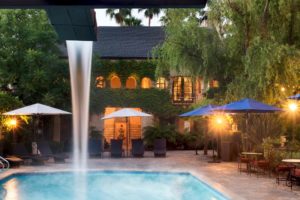
(Note: Kenwood Inn pool might not have water feature anymore.)

Moms have had a particularly stressful time since the outbreak of the coronavirus pandemic in early 2020. According to a Kaiser Foundation survey, 69 percent of mothers said they’ve experienced adverse health effects from the stress and worry of the pandemic. In addition to juggling their children’s home schooling, schedules and activities, in addition to their own work, they have continued to do more of the household chores than their (male) spouse or partner, says a Pew Research survey.

If you’re a mom, you don’t need research to confirm what you most likely already know — that many moms are burned out. What moms may need however — not just on Mother’s Day but every day of the year — is some extra appreciation and pampering. For some time out alone or with friends, we’ve got a few getaway ideas for moms who need a break. Click through the gallery above for details.

Our Favorite Winery Gardens in Sonoma

Scribe Winery in Sonoma. (Leo Patrone)

Make no mistake: We love our grapes. But area winery folks also apply their green thumbs to growing a whole lot more. Whether you’re looking to learn more about organic veggie gardening, wonder at otherworldly proteas, or hike oak-studded hills, these winery gardens are our best bets for early summer. 

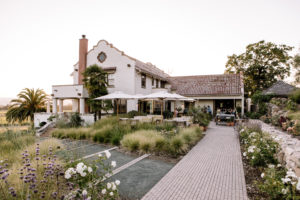
Quintessential California: A line of towering palms marks the drive up to Sonoma’s Scribe Winery. This is classic vintage California, from the adobe hacienda (built in the 1850s, once a speakeasy) surrounded by a tapestry of wavy grasses and stately succulents, to the bountiful edible garden, run by Stephen Carter — one of the world’s premier chicory farmers. Call for updated tasting information. 2100 Denmark Street, Sonoma. 707-939-1858, scribewinery.com.

Protecting Pollinators: The team at Jordan Vineyard & Winery never does anything halfway, with majestic vine-covered stone buildings and the one-acre vegetable patch which yields 100 varieties of produce, including exquisite fraises des bois strawberries. New this year is a pollinator garden for bees and migrating monarch butterflies. Reserve ahead for garden tour. 1474 Alexander Valley Road, Healdsburg. 707-431-5250, jordanwinery.com.

A Vineyard Education: Learn as you taste at Dry Creek Valley’s Quivira Vineyards, where a sample block is dedicated to identifying all of the varietals grown on the estate and raised beds showcase organic gardening practices. Sing in the herb garden, complete with (yes!) parsley, sage, rosemary, and thyme, then visit the chickens, whose names are sheer poetry—Buff Japanese Black Cochins, Cuckoo Marans, Silver-Laced Wyandottes. Reserve in advance. 4900 West Dry Creek Road, Healdsburg. 707-431-8333, quivirawine.com.

Unusual Finds: Tucked into the Petaluma Gap just high enough to skirt the fog, McEvoy Ranch is an idyll with acres and acres of olive groves and rolling vineyards. But the property is also home to myriad unusual plants, including striking purple cerinthe and wacky Buddha’s Hand citrus. For a splurge, book a tasting in one of the new private hideaways by the pond. Reserve walking tours and hideaways in advance. 5935 Red Hill Road, Petaluma. 866-617-6779, mcevoyranch.com

Rustic Rural Gem: When they’re not busy making wine, the folks at Medlock Ames love nothing more than to pore over seed catalogs and tinker with new varieties. At the winery’s stunning rural vineyards at Bell Mountain Ranch, beds explode with zinnias, sunflowers, and Queen Anne’s lace (a second tasting room on Alexander Valley Road has a small but lovely olive grove). Open by appointment. 13414 Chalk Hill Road, Healdsburg. 707-431-8845, medlockames.com.

Hike the Sonoma Hills: History is the watchword at Bartholomew Estate Vineyards and Winery in Sonoma Valley, founded on the very land where California viticulture was born. The winery anchors 375-acre Bartholomew Park; save time to wander the trails that lace the oak- and madrone-studded hills. Picnic grounds and hiking trails open to the public; reserve ahead for tasting. 1000 Vineyard Lane, Sonoma. 707-509-0540, bartholomewestate.com.

Proteas on the Coast: In a nod to the owners’ native South Africa, a vast collection of rare proteas takes pride of place at coastal Fort Ross Vineyard & Winery. Look for the ‘Pink Mink’—pink flowers with black feathery tips—and the ‘Scarlet Ribbon’ Pincushion, a bright-red bloom with orange spikes. Reserve in advance. 15725 Meyers Grade Road, Jenner. 707-847-3460, fortrossvineyard.com.