Thanksgiving is around the corner and you have a decision to make: are you going to cook or let someone else do the work?
If the latter is your choice, you have plenty of options whether you decide to celebrate your gratitude with your family at home (with a hearty meal you picked up for take away) or at a favorite restaurant. Here are some great local picks for Thanksgiving in Sonoma County.
Remember: most require reservations, so act now to reserve your meal or seat.
PICK UP
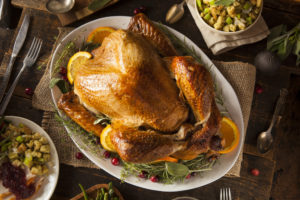
Sauced: Get sauced with a Southern-style meal to feed 6-8 people ($199). The meal includes smoke turkey, mashed potatoes, sweet potato casserole, cornbread stuffing, cornbread, cranberry sauce, and pumpkin pie. Order by November 20. (707) 410-4400, 151 Petaluma Blvd. #129, Petaluma, saucedbbqandspirits.com.
SHED: Build your own Thanksgiving meal from the Larder at SHED. The one caveat – you need to cook your own turkey. Options include BN Heritage Turkey, potato gratin, stuffing, smoked sweet potatoes, wild mushrooms, fairytale pumpkin gratin, Roman baked gnocchi, leaf lard tart, Sibley squash pie, roasted pumpkin soup, cranberry sauce, pomegranate salsa and a large selection of biscuits, rolls, cheese, appetizers, and desserts. You can also pick up poultry stock and a turkey brining kit. Order by November 19. (707) 431-7433, 25 North St., Healdsburg, healdsburgshed.com.
RESTAURANTS
Bay View Restaurant & Lounge in Bodega Bay is offering an a la carte menu including Dungeness crab cakes, pumpkin ravioli, clam chowder, seafood lasagna, branzino, pork osso bucco, filet mignon, roasted turkey and a the restaurant’s signature grilled filet Hitchcock (named after the filmmaker) – a filet mignon stuffed with Dungeness crab, demi-glace and béarnaise sauce. Traditional desserts are offered, too. 1PM-8PM, (707) 875-2751, 800 Highway 1, Bodega Bay, innatthetides.com.
Black Point Grill at Sea Ranch offers a 4-course Thanksgiving meal with ocean views. First course offers wild mushroom spring rolls or clams & mussels steamers. Second course offers Moroccan roasted butternut squash soup or winter organic baby greens. Entrees include roasted heritage turkey, pan seared salmon, seared day boat scallops, roasted yam ricotta strudel (vegetarian), and a braised pork shank. Desserts served include pumpkin pie, a chocolate espresso torte, and almond ricotta cheesecake. $55 for adults, $30 for children. 1PM-8PM, (707) 785-4811, inside Sea Ranch Lodge, 60 Sea Walk Dr., Sea Ranch, searanchlodge.com.
Central Market is offering a four-course meal with numerous options, including a wine pairing, including Dungeness Crab Chowder, House Smoked McFarland Springs Steelhead Trout, Local Heritage Breed Turkey, Suckling Guinea Hog Porchetta, and plenty of desserts. $65 for adults, $100 with wine, $20 for children. (707) 778-9900, 42 Petaluma Blvd N., Petaluma, centralmarketpetaluma.com.
Coast Kitchen offers a 3-course menu with ocean views guaranteed. Appetizers include butternut squash ravioli, beet salad and pumpkin soup. Second course offers roasted turkey dinner, grilled bone-in Kurobuta pork chop and pan seared salmon. Last course offers up pumpkin pie, chocolate crème brûlee, and apple fritters. $79 for adults, $30 for children. (707) 847-3231, inside Timber Cove Inn, 21780 Highway 1, Jenner, coastkitchensonoma.com.
Depot Hotel is offering a 4-course menu starting with corn chowder and a salad. Entrees include slow-roasted Mary’s Free Range Turkey, poached filet of salmon, spinach and ricotta ravioli (vegetarian), or boneless beef short ribs. For dessert, select cheesecake from Scandia bakery, pumpkin pie, or a chocolate torte. $50 for adults, $25 for children. 12PM-7PM, (707) 938-2980, 241 1st St. W., Sonoma, depotsonoma.com.
Dry Creek Kitchen‘s Chef Scott Romano will serve a 3-course menu. Starters include Chef Gerry Hayden’s Fluke Crudo, Hidden Pond Farm Beet Salad, cavatelli & braised veal, lentil soup, and a butterhead lettuce salad. Main courses include Classic B&N Ranch Turkey, caramelized diver scallops, sauteed arctic char, roasted lamb leg with Bellwether Ricotta Gnudi, and 48-hour pork short ribs. Three dessert options are available alongside local cheese, sorbet and ice creams. $72 for adults, $35 for children. (707) 431-0330, 317 Healdsburg Ave., Healdsburg, drycreekkitchen.com.
El Dorado Kitchen offers their annual 3-course Thanksgiving menu. Many options are available, including vegetarian and vegan options. Starters include octopus carpaccio, gulf prawn cocktail, ginger carrot soup, beet terrine, salmon rillet, salads and cheese. Entrees include roasted free-range turkey breast, seared scallops, butternut squash risotto (vegan), and braised beef short rib. Desserts are lemon pudding cake and profiteroles. $65 for adults, $35 for children. 1PM-7PM, (707) 996-3030, 405 1st St. W., Sonoma, eldoradosonoma.com.
Farmhouse Inn‘s Chef Steve Litke keeps the new tradition of an annual Thanksgiving dinner at the Farmhouse Inn featuring turkeys raised by co-owner Joe Bartolomei. The 3-course, sample menu includes starters of Kombu cured hamachi, Fuyu persimmon salad, Dungeness crab causa rellena, butternut squash shellfish soup, and Swiss chard ricotta tortellini. The main course offers two options: Oz Family Farms Heritage Turkey and Wild Pacific corvina. Pumpkin pie, ice cream, and soufflés are offered for dessert. $119 with optional wine pairing. 4PM-8PM, (707) 887-3300, 7871 River Rd., Forestville. farmhouseinn.com.
the fig café is offering a 3-course prix fixe menu. Starters include fried Brussels sprout salad, pumpkin soup and fig & arugula salad (a standard at the fig). Main course options are roasted turkey breast, prime rib, pan-seared flounder, and roasted cauliflower with braised leek & brioche bread pudding and mushroom gravy (vegetarian). Dessert options are profiteroles or butterscotch pot de creme. Bring your own wine because there is no corkage. $45 for adults, $20 for children. 707-933-3000 x 13, 13690 Arnold Dr., Glen Ellen, thefigcafe.com.
the girl & the fig is serving a multi-course Thanksgiving meal, including an amuse bouche. Starters include cheese & charcuterie, pumpkin soup, and salads. Entrees include roast turkey breast, sauteed flounder, braised short ribs and mushroom risotto (vegetarian). There are four dessert options: a nut tart, chocolate budino, profiteroles and pumpkin pie. $57 for adults with a $18 wine pairing option and $20 for children. (707) 938-3634, 110 W Spain St., Sonoma, thegirlandthefig.com.
Gravenstein Grill is serving a 3-course feast with butternut squash, salad, Willie Bird turkey, classic sides, pumpkin pie and Bob’s Famous Rum Cake. $55 for adults. (707) 634-6142, 8050 Bodega Ave., Sebastopol, gravensteingrill.com.
John Ash & Co. Executive Chef Tom Schmidt has created a 3-course menu with a plethora of options, including for vegan, vegetarian and gluten free eaters. First course includes carrot and parsnip soup, Tom’s French onion soup, Liberty Duck terrine, spicy ahi tuna tartare, and salads. For the main course, guests can select butternut squash risotto, grilled marinated portobello mushroom, diver scallops with gulf prawns, oven roasted BN Ranch heritage turkey, sea bass, Devil’s Gulch Langley Pork Chop, and a grilled filet mignon. Pastry Chef Casey Stone will serve his mom’s chocolate cake, pumpkin tarts, and apple crumble. $68 for adults, $34 for children. 800-421-2584, 4350 Barnes Rd., Santa Rosa, vintnersinn.com.
Madrona Manor‘s restaurant is offering a hyper-fall focused 6-course meal with Dungeness crab soup, truffle risotto, roasted white turkey meat with cippolini onions, black truffles, celery root, chevril and pain perdu, a confit dark meat of turkey with juniper, potato puree, sage and turkey bordelaise, and a “Flavors of Thanksgiving” dessert. $150 for adults with optional $80 wine pairing. (707) 433-4231, 1001 Westside Rd., Healdsburg, madronamanor.com.
Oakmont Golf Club will serve a Thanksgiving Day Buffet with salads, crab stuffed deviled eggs, peel & eat shrimp, crab cakes, turkey, ham, rib roast, and all the sides and desserts. Guests also receive a complimentary glass of champagne upon arrival. $35 for adults, $18 for children. 11 AM, (707) 537-3671, 7035 Oakmont Dr., Santa Rosa, oakmontgc.com.
Quail Run Buffet at River Rock Casino will serve a special Thanksgiving buffet. The menu includes roast turkey, prime rib, herbed stuffing, pies, cakes, chocolate dipped strawberries and more. $24.99 for adults, $12.99 for children. 11AM-9PM, 3250 Highway 128, Geyserville, riverrockcasino.com.
Saddles Steakhouse is hosting a 3-course Thanksgiving meal, including an amuse bouche starter (Panna cotta and oysters). First course is squash bisque and the second course is bitter greens with pear and Point Reyes blue. For entrées, options include pan seared turkey tenderloin, Black Angus filet mignon, a vegetarian sweet potato gnocchi with Swiss chard, or diver scallops. Desserts include praline and pumpkin creme brulee, maple bombe, and gelato. $80 for adults, $40 for children. 2PM-7PM, (707) 933-3191, inside MacArthur Place, 29 E. MacArthur Pl., Sonoma, macarthurplace.com.
Santé will host their decadent, annual Thanksgiving buffet, complete with ice sculptures and live music. The buffet includes shrimp cocktail, “foie gras,” vegetarian tartlets, Ahi tuna tartare, charcuterie, antipasti, caviar, a carving station with Diestel turkey and Mishima Ranch American Wagyu sirloin, pumpkin ravioli, Ora King salmon, Niman Ranch pork belly, and Oysters Rockefeller. Oh, and ton of sides and desserts. $135 for adults, $67.50 for children, free for children 4 and under. (707) 939-2407, Inside the Fairmont Sonoma Mission Inn, 100 Boyes Blvd., Sonoma, santediningroom.com.
Spoonbar offers a 4-course meal will be served, including sweet corn chowder, butternut squash risotto, turkey and pecan pie. Vegetarian and vegan options are available. $65 for adults, $35 for children. (707) 433-7222, 219 Healdsburg Ave., Healdsburg, spoonbar.com.
Sonoma Grille will be open with their regular menu on Thanksgiving day with an additional, extended prix fixe menu with Thanksgiving favorites. A nice option for those seeking to dine out while skipping the turkey. 11:30AM-9:00PM, (707) 938-7542, 165 W. Napa St., Sonoma, sonomagrilleandbar.com.
MARKETS
Lucky’s: The most affordable option this holiday, Lucky offers à la carte options including every turkey option available (Mary’s, Diestel, Butterball, Jennie O etc.), rib roast and hams and turkey and ham meals, with dessert, to serve 6-8 people starting at an astoundingly low price of $49.99. luckysupermarkets.com
Oliver’s Market: Offers à la carte protein and a full meal option for 6-8 ($129.99), which includes a California-raised Diestel turkey, stuffing, mashed potatoes, veggies, cranberry sauce, rolls, pie and more. À la carte options include Diestel turkey, Boar’s Head ham, USDA prime rib, and a vegan roast, with sides available, too. oliversmarket.com
Raley’s: Offer’s à la carte (pick up cooked turkeys and ham or sides) and full meals to serve 6-8 (starting at $69.99). They offer Sonora-raised Diestel and Butterball turkeys and hams. Meals come with protein, gravy, cranberry sauce and your choice of three sides. raleys.com
Sonoma Market & Glen Ellen Village Market: Offer traditional Thanksgiving meals to serve from 4-10 people (starting at $99.99) served with your choice of Diestel turkey or Llano Seco ham with sides. They also offer a “contemporary” holiday meal for 4-10 people (starting at $119.99) where you can select herb crusted beef filet option served with bread pudding, scalloped potatoes, cider-glazed carrots and brussels sprouts, and more. sonomamarket.net
Whole Foods: Offers à la carte (pick up a pre-cooked or raw turkey or freshly made lump-free mashed potatoes) or order a full meal to feed 4-12, including Diestel turkeys (raised in Sonora near Yosemite), ham and prime rib options. Though not cheap (an organic turkey meal for 8 can cost $160), they serve up humanely raised proteins and organic veggies. wholefoodsmarket.com