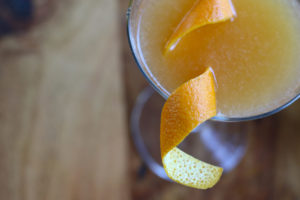
Dr. Cocktail #7 at Spoonbar restaurant in Healdsburg, California. Heather Irwin, Press Democrat
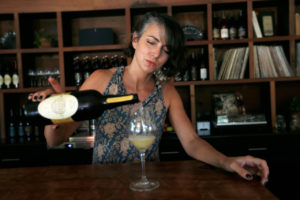
Oh, the wine is so very fine, but Sonoma is also a great place to have a cocktail. Local artisans continue to expand their food and drink wizardry into the mixology realm, and here are a few items to inspire some classic cocktail-making. And since the “signature drink” is all the rage, draw from these finds to mix your own creation – click through the above gallery for details.
12/31/2009: B1:
PC: The Sonoma County Coast looking towards Goat Rock from Highway 1, Thursday May 14, 2009. From Jenner north past Fort Ross, a plan to harness wave power is in the works as an alternative to producing electricity. Another site would be just south of Gualala. (Kent Porter / The Press Democrat)2009
Highway 1 stretches for 655 miles along the California Coast, running through Sonoma County for about 56 of those miles. Bodega Bay, Jenner, Fort Ross and Sea Ranch are a few of the towns you’ll pass through when you are making your way along the spectacular North Coast.
Whether you have out-of-town guests and want to show them the view, or you’re just looking for a close-to-home scenic escape, browse the gallery above to see where to go and what to do when you’re on a classic Highway 1 road trip.
Suzanne Hagins pours a glass of Hops and Honey hard cider at Horse and Plow winery in Sebastopol, California on Wednesday, July 27, 2016. (Alvin Jornada / The Press Democrat)
What crop is at the heart of Sonoma County? In the last few decades, grapes have been all the rage. But look a little closer at local history, and you’ll discover a diversity of plants. Botanist and horticulturist Luther Burbank famously experimented with hundreds of varieties of fruit at his Santa Rosa home – from potatoes and tomatoes, to cherries and plums. In 1890, Burbank became instrumental in bringing another crop to the area when he advised local farmer Nathaniel Griffith on planting Sebastopol’s first Gravenstein orchard.
The Gravenstein, derived from Europe and named after a Danish palace, soon transformed west Sonoma County into one of the world’s premier apple growing regions. In the 1940s, nearly 15,000 acres in the county were planted with apples. In 2016, that number had declined to just over 2,000. Nevertheless, apples remain one of the county’s million-dollar crops.
Today, some local orchards grow Gravenstein, Granny Smith, Pink Lady and other apple cultivars to use in fermented, alcoholic ciders. With some 10 cideries and a growing number of taprooms, Sonoma County’s cider scene is reviving the local apple industry. In time for the Apple Blossom Festival on April 21 and 22, sample the legendary local fruit – in its liquid, golden state. Click through the gallery above for the best places to sip locally made hard ciders in Sebastopol.
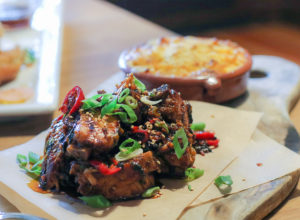
Shortribs at the Geyserville Gun Club in Geyserville. (Heather Irwin/Sonoma Magazine)
The most beautiful woman in the world is looking at my sad, soggy state of rumpledness with judgment in her eyes.
Wine Country’s spring rains have turned into a torrent of misery that has frizzled my hair, turned my makeup into runny streaks of color and transformed my already-compromised running shoes into floppy sponges that squeak and squish with every step.
Actress Sophia Loren at the Geyserville Gun Club in Geyserville. Heather Irwin/PD
Fortunately, I’ve found a pair of fuzzy slippers in the detritus of my car, and slipped them onto my pruney feet. They refuse, however, to stay on my feet properly due to the fact they are two sizes too small.
From her perch at the Geyserville Gun Club, Sophia Loren watches my sad shuffle. My plastic soles smack on the floor like sarcastic applause, echoing through the nearly empty room.
With her kohl-rimmed eyes, the Italian actress watches me across an ocean of time where she is forever young, forever beautiful in a movie still of the 1955 Italian film, “Woman of the River.”
Right now, I am Woman of the Soggy Slippers, and I need a drink and a plate of lumpia, stat.
The Geyserville Gun Clubis a Fellini-esque watering hole that’s almost too absurdly wonderful to be true. Brought to life by Chef Dino Bugica, it’s the flipside of his more tourist-friendly Diavola Pizzeria and Salumeria.
And by flipside, we mean a Pepto-pink bathroom with a stuffed ram’s head peering down at you while you do your business. Sophia, with her legs askew, gazes from an exposed brick wall overseeing the bar, a sort of Madonna of the Manhattan.
Spicy tuna rolls at the Geyserville Gun Club in Geyserville. Heather Irwin/PD
Smokey and the Bandit plays silently on a television screen while the Moody Blues croon from speakers.
It takes a minute for your eyes to adjust to the dim interior, with a backlit bar stocked with every artisan libation imaginable. A crystal elk antler chandelier illuminates the doorway, overseen by a taxidermy stag’s head that stares blankly into the room. Once used as an underground shooting range by boozy locals, the basement of the building is the inspiration for the name, according to chef-owner Dino Bugica.
The historic Odd Fellows building is conjoined to Bugica’s next door pizzeria/salumeria, Diavola, by a kitchen, the Gun Club is a combination bar, lounge and live music venue that’s been under the radar for several years — especially when it comes to the food. Located in the tiny hamlet of Geyserville, it’s an out-of-the-way spot that’s a favorite of late-nighters, afternoon-drinkers, pre-Diavola diners and local music junkies.
Billing itself as “a true working man’s bar,” at 1 p.m. on Friday, there are already a handful of day-drinkers snuggled up with their beers. The kitchen opens early today (most days the bar opens at 4 p.m.), and we’re ready to dig into what Bugica calls his “fetish cooking” from the Gun Club menu.
“The menu is everything I love to eat and cook,” he said in a text from Hong Kong, where he’s on a food adventure. That means an ever-changing menu that’s focused on Asian street food — from ramen and lumpia to spicy tuna hand rolls and nightly raw crudo that recently included live uni. They’re perfect foils for cheeky drinks like the Thai Fighter with Old Forester 100 Bourbon, gum syrup, black Thai Tea, Fernet Branca, allspice dram and sweetened condensed milk. Sweet and prickled with exotic spice, it’s and Thai iced tea’s complicated and brooding older brother.
Lumpia at the Geyserville Gun Club in Geyserville. Heather Irwin/PD
Equally impish are dishes like the Tijuana dog, a hot dog stuffed with cheese, topped with bacon and jalapeno, pico de gallo and “secret sauce”. It’s also supposed to include fried onions and pickled pineapple, but ours didn’t, and frankly didn’t suffer to terribly for the omission. This is the dish Bugica could never get away with serving next door, where stricter codes of chefdom overrule bacon hot dogs, and why Bugica relishes the opportunity to play with his food at the Geyserville Gun Club.
And the pink bathroom? It’s an ode to grandmothers everywhere, who stubbornly held onto their 1950s pastel pink potties and matching sinks for far longer than they should have. Bless their hearts. “It’s your time when you go in the bathroom. You kind of get lost and feel a change,” said Bugica. That and he really likes pink toilets. “It was a fun project to design,” he said.
Overall: Expect serious bar bites that will lay a solid foundation for a long night of drinking. With chef-driven dishes, Geyserville Gun Club has plenty of secret sauce, paying homage to the average Joe, but keeping irreverence and absurdity on tap.
Best Bets
Cocktail at the Geyserville Gun Club in Geyserville. Heather Irwin/PD
Lumpia, $12: Maybe the best lumpia ever, stuffed with meaty sausage and shrimp rather than too many veggies. Fried to perfection. Little bits of sliced veggies decorate the plate, and would be a delightful accompaniment if they were pickled.
Korean short ribs with red curry mac: Fall-off-the-bone short ribs in a whoa Nelly spicy sauce studded with birds eye chilis. Creamy mac douses the fire in your face.
GGC Burger, $14: I am a bit of a cretin when it comes to hamburger. I don’t love the slightly gamey flavor of some grassfed beef. I grew up in the Midwest where the poor cows only saw feedlots and corn.
This burger has an honest grassfed flavor, topped brilliantly with American cheese (so daring, so delicious!), caramelized onions and secret sauce. Next time, we’ll try it with the Impossible Burger, a vegetarian ground beef substitute.
Mmmmaybe:
Spicy Tuna Handroll, $8: What look like giant threads of saffron stick to spicy tuna in Japanese Kewpie mayo. If you like the salad-dressing style mayo, you’ll love this. If not, you’ll want to pass.
Egg fried rice, $ : Big chunks of pork, with homey stir-fried rice. Maybe a little too homey, because it lacked the smokey wok hay we like to see on fried rice. On the super plus side: Crunchy bits of bottom-of-the-pot rice were a surprising addition.
Spring Alchemy cocktail, $11: Quaffable almost to a fault.
Antler chandelier at the Geyserville Gun Club in Geyserville. Heather Irwin/PD
Next Time: Most of the crudos weren’t on the menu when we visited and dishes were very carne-centric. Previous menus have included a mezze plate, spicy Brussels sprouts and macro bowls. Bummed we couldn’t get the ramen at lunch, which is a Bugica staple. The good news is that the menu changes frequently, so you’ll always have something new to try.
Stephen and Laura Havlek, proprietors of the Sign of the Bear kitchenware and tableware shop, in front of their First Street West location. (Photo by Robbi Pengelly/Index-Tribune)
It makes sense that a place as foodie-riffic as Sonoma would have the tools to make magic out of the region’s well-farmed foods. And because man cannot live on boutique eatery meals alone, the home cook can find the supplies to become a master in his or her own right (and home). We’ve picked out a few favorite kitchen stores that stock pretty much everything but the kitchen sink.
Family and Food Traditions: I Leoni, Petaluma
Nancy Leoni, owner of I Leoni in Petaluma, fondly remembers her grandmother cooking “a pot of sauce on Sundays.” Leoni developed a passion for food and cooking as a child, while joining her grandmother to select and buy produce at Sacramento farmers markets.
Opening her kitchen and housewares store 14 years ago on Kentucky Street in Petaluma was the realization of “a lifelong dream” that Leoni “finally had time for” when her youngest of four children was in high school, says Regina Leoni, Nancy’s daughter.
Regina, a licensed attorney who helps out with her mother’s business, says “(Nancy) loves to gather and nourish people” and can make a flower arrangement that looks like “a still life.”
Nancy, who majored in Home Economics at Sacramento State, has stocked her store to reflect her skills and interests: fine linens and serveware in the front and kitchen supplies in the back.
Leoni believes Sonoma County is “lucky to have such wonderful resources for our food,” and that a good meal can be made with basic tools and just “a few good ingredients,” a sentiment she tries to convey to customers, especially young couples beginning to stock their kitchens.
Nancy says she cherishes the smells and flavors of her childhood and that when she needs to “step back,” cooking a meal from scratch helps “reboot” her. “The house smells so good,” she says.
The Sign of the Bear kitchen store has been in the Sonoma Square since 1972, a time with “more cows and less grapes” according to current owner and longtime Sonoma resident Stephen Havlek. Havlek has owned the store since 1992 with his wife, Laura, a lifelong Sonoma resident herself, who says, “we are so grateful for this valley,” citing the heroic acts of fellow Sonomans during the fires.
The 2000 square feet Sign of the Bear retail space is heavily stocked with kitchen necessities (about 16,000 skus worth) that range from All-Clad and quality knives to novelty items like dish towels and mugs printed with “oddball sayings that make you laugh,” says Stephen. Fun is a focus for the couple, whose aim is to meet the kitchen needs of their Sonoma Valley customers, many of whom they know by name.
“We try not to leave the kitchen,” says Stephen about the store’s inventory, which is less focused on linens and the accoutrements of fine dining than it is on top notch cookware, utensils and tools. He describes the Sonoma style of entertaining as “opening a bottle of wine and putting out cheese and crackers.”
“How lucky we are,” says Laura of what she calls “a very ordinary career” that gives her great satisfaction. “You get to help people delight the people they love.”
Laura adds that “the company (they) keep” is a big part of their success. Sonoma’s beauty, “the remarkable food and unfussy daily life are the gems here,” along with “the open heartedness of the people in our town.”
Plaza Gourmet Healdsburg has become something of an institution at its Healdsburg Square storefront, where it’s been open for business for nearly 40 years according to current owner Darlene Powell. The full service kitchen shop has everything from linens to appliances to The Cheese Knife. This “drafted”-blade, non-sharp knife cuts anything from soft cheese, fudge and cheesecake and is the top seller of all 6000 items stocked.
The store sells top lines like All-Clad and Le Creuset to locals, including chefs, and to tourists who often decide on wine barrel lazy susans or “Healdsburg”-inscribed aprons and totes, logical keepsakes from a wine, food and boutique mecca like Healdsburg – without souvenir shops.
A visit to Haridisty’s, with its rows of the latest kitchen appliances, wouldn’t make you think that the store has its roots deep in Santa Rosa’s history. But the modern-looking store on Farmer’s Lane had its beginnings in Santa Rosa as far back as 1898, when it was known as the Continental Tea & Crockery Company.
Fourth generation owner, Steve Hardisty, attributes the store’s longevity to “good old fashioned customer service.” The store is not only stocked with big name appliances, but also has a factory authorized service department for Kitchen Aid, Braun and Oral B, and can service food processors and espresso machines.
Well-stocked shelves of old standby and new kitchen gadgets, and a sales staff with an enthusiasm for their products, give Hardisty’s a toy store vibe – that is for people who love to cook.
1513 Farmers Ln, Santa Rosa, 707-867-0827, hardistys.com
Wedding season is kicking into a high gear, so we’ve picked out some Sonoma finds for the bride- or groom-to-be. “To have and to hold from this day forward,” goes the ceremony, and here those words have inspired some must-haves for the time before, during and after the wedding – click through the gallery above for details.
From environmentalists to activists, school children to gardeners, scientists to winemakers, millions of people around the world will celebrate Earth Day on Sunday, April 22.
Founded in 1970 in response to a massive oil spill in Santa Barbara, Earth Day started as a series of demonstrations promoting a sustainable, healthy environment. Today, it is celebrated in 192 countries. In Sonoma County, celebrations range from wildflower hikes, to family fun, wine tasting, and farm-to-table meals. Click through the gallery above to discover 9 events to celebrate Earth Day in Sonoma County.
Sign from Willi’s Wine Bar taken down from its original location. Photo: Terri Stark
Before the ashes of Willi’s Wine Bar had cooled last October, restaurateurs Mark and Terri Stark knew they faced a difficult decision — whether or not to rebuild their iconic Santa Rosa restaurant.
In the six months since the fires, it’s been an unrelenting question posed to the couple by friends, family, employees and loyal fans of the 16-year-old restaurant. Until two weeks ago, Stark said she wasn’t sure what the answer would be. But in late March, Terri posted a cryptic picture of the scorched Willi’s Wine Bar sign disassembled on the ground to her personal Facebook page. “What goes up, must come down, and go up again. Right?”
A flood of responses to the post overwhelmed the couple. “It was just huge, I don’t know how many hundreds of messages I got. People were calling our home phone and leaving voicemails,” she said.
Though she remained mum on the exact details of the post for more than a week, Stark has now confirmed that a new Willi’s Wine Bar will open in Santa Rosa next fall. They hope to open on Oct. 8, exactly one year since the wildfires began. The decision to reopen wasn’t an easy or quick one, she said.
“For a while it was ‘Oh poor us, Willi’s is gone’. I couldn’t envision a location that would be right for Willi’s to reopen, and we knew it would never be the same, but then Mark and I got kind of angry and decided we really weren’t done with Willi’s,” she said.
“We went through all the stages of death with the restaurant,” she said of the shock, denial, anger and finally acceptance that the first restaurant the couple had opened was really gone. “There was such an outpouring of support from people all over. People were sending checks, and it’s unbelievable the number of people who hand wrote letters about how special the restaurant was to them. I could only take so much of that. I said, ‘We have to bring it back’.”
Stark would not say where the new location would be, but confirmed that it would not be in their former Old Redwood Highway property and that they would be renovating an existing space. “Opportunities presented themselves,” she said.
It’s still hard for Stark to think about the quirky wine bar where she and Mark spent every day together when they opened in 2002. “It was our dream, me in the front of the house and him in the kitchen. That was the only one of our six restaurants where we were able to do that. We got money to open it from anyone who would answer the phone. It was kind of like a breakout role for an actor, a foundation that allowed us to continue forward and open six places,” she said. The Starks opened Willi’s Seafood in Healdsburg fifteen months later, then Monti’s, Stark’s Steak and Seafood, Bravas Bar de Tapas and most recently Bird and Bottle, which Terri said would be their last restaurant when it opened in 2015.
Staff displaced by the closure have been absorbed into the Stark’s other restaurants, but Terri said that many of the Willi’s staff had been at the restaurant for more than a decade and are ready to reunite. She also said that the restaurant was insured and the money they received after the fire will cover the cost of rebuilding. Nothing, however, from Willi’s survived the fire aside from two propane tanks from outdoor patio heaters, the sign and a special horseshoe that once hung over the back door.
“It was there when we moved into the space. it was never even really attached to the building,” said Stark. “We went over after the fire, and we were just walking through the debris. I didn’t know Mark was looking for it. But he picked it up and said, ‘Okay we can go now.’
“Willi’s was the perfect little nugget of a restaurant,” said Stark. “A new restaurant will never be the same, be we’re excited for Willi’s Part 2,” she said.
The Starks have also announced plans to open a Jewish-style deli called Grossmans Jewish Noshery in early 2019. The name pays homage to Terri’s heritage and maiden name, Gross. The couple have long wanted to create a delicatessen in the region inspired by those in New York that serve everything from chicken liver to bagels and schmears. They’ll make their own challah, rye bread, and bagels, but Stark calls it Jewish, since it won’t be strictly kosher. “I want to be able to have bacon and not get in trouble,” she said.
Located on the 400-acre Salmon Creek Ranch in Bodega, Eagle’s Nest Treehouse features a wraparound deck, queen bed, bathroom and modern amenities. (Salmon Creek Ranch)
With miles of redwood forests, there are plenty of camping spots in Sonoma County that make for fantastic weekend getaways for fans of foliage. But you don’t have to settle for a tent in the woods. For an overnight experience – high above the hard ground – click through the gallery above for custom treehouses, available for rent.
A lazy summer day on the Russian River in Monte Rio, Thursday Aug. 27, 2015. (Kent Porter / Press Democrat) 2015
Redwoods, river-beach vibes, and Russian River Valley wines. West Sonoma County can sometimes feel like a different world to the rest of the county – and this makes it a perfect staycation spot for locals looking to get away from it all. Spend a weekend exploring the river towns of Guerneville, Monte Rio and Duncans Mills, just miles away from the Pacific Ocean. When you live in Sonoma County, there’s no need to travel far – click through the above gallery for some getaway ideas in your own backyard.