10 of the Best Sushi Spots in Sonoma County

Five piece nigiri at Sake 107 in Petaluma. Heather Irwin/PD

Sushi is the one food I think I could eat every single day and never get tired of. Raw fish atop vinegared rice is the pinnacle of simplicity, but one of the most difficult things to make well. I tend to be fairly forgiving, however. Click through the above gallery for 10 of my favorite sushi haunts — some upscale, some moderate, some very affordable. Because you never know when a sushi craving will hit! (Click here for zen gardens and places to stay in Sonoma County).

What are some of your favorite sushi spots? Let me know in the comments below.

Tyler Florence’s ‘Uncrushable’ Captures the Fire’s Aftermath in Poignant, Painful Movie

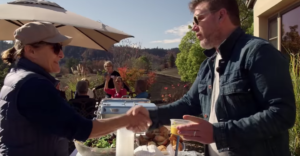
Tyler Florence at a neighborhood gathering after the fires. Still from ‘Uncrushable’ by Tyler Florence.

Capturing the most intimate moments of despair and heroism during the 2017 wildfires, celebrity chef Tyler Florence’s ‘Uncrushable’ looks unflinchingly at a cross-section of Sonoma and Napa disaster survivors bonded by loss. 

Shot over three weeks as Wine Country still smoldered, it’s a time capsule of the shock and grief that was just beginning for so many.  It’s a movie we all wish never had to be made, but a year later, it’s a poignant memoir of survival that Wine Country, and specifically Sonoma County, can be proud of.

Grateful Table setup Still from 'Uncrushable' by Tyler Florence.
Grateful Table setup Still from ‘Uncrushable’ by Tyler Florence.

Though most of us are more familiar with Florence’s upbeat persona on Food Network shows like “The Great Food Truck Race” and “How to Boil Water, the one-time “sexiest chef alive” was able to pull off a film with gravitas, courage and hope.

Financially backed by Visit California, the state’s tourism publicity machine, Florence was tapped to direct and shoot the entire documentary in late October and early November while simultaneously coordinating a fundraiser dinner for 300 on the Napa-Sonoma county line. No sweat.

“I wanted to tell the story about what was happening while it was still going on,” said Florence, who screened the film for several hundred Sonoma County residents Oct. 19.

Tyler Florence at a neighborhood gathering after the fires. Still from 'Uncrushable' by Tyler Florence.
Tyler Florence at a neighborhood gathering after the fires. Still from ‘Uncrushable’ by Tyler Florence.

A Marin resident for the past decade, Florence was deeply moved at the situation affecting so many of his neighbors. The movie culminates in Florence’s Grateful Table dinner.

“I made this movie for our neighbors here in California. I wanted to tell a story about the community, about hope, and those that rose above it and pulled themselves up from the ashes,” Florence said.

“Everyone loves Sonoma. Everyone loves Napa. I wanted to tell a beautiful story.”

At the screening earlier this month, muffled sniffles and sobs from the audience spoke to the rawness still felt by so many.

“Uncrushable” is being screened in various cities, and has already shown in New York and Toronto to sold-out audiences according to Florence. The documentary will be shown twice during the Napa Valley Film Festival (Nov. 7-12), and Florence will host a VIP dinner and screening at Robert Mondavi Winery on Nov. 9 with proceeds going to ongoing rebuilding charities.

Still from 'Uncrushable' by Tyler Florence.
Still from ‘Uncrushable’ by Tyler Florence.

“As someone who talks for a living, I got a chance to just listen. It was harrowing and breathtaking at the same time. Now, 365 of days of putting that disaster in the rearview mirror, hopefully, we’re in the position where we’re healing,” he said.

Among those Florence interviewed for the movie was Peter Lang, owner of Safari West. Lang is credited with saving more than a thousand animals at the preserve with little more than garden hoses.

With flames encircling him, and his own home burning, Lang, 76, is a natural storyteller and steals the show with his unbelievable tale.

“Bravery was the biggest takeaway. You realize how difficult it is, what’s important when you have nothing left. I just wish we could have interviewed more people,” said Florence.

Note: The trailer to ‘Uncrushable’ may be extremely triggering. California Hope and many other agencies provide free counseling to anyone affected by the wildfires.


With only a handful of homes rebuilt, hundreds of families continue to live in trailers, RV’s, tiny apartments or vacation rentals. Many have moved three or more times, with rebuilt homes a year or more away — if at all. Sonoma Family Meal continues to serve more than 80 of these families 1200 chef-made meals each week. Please consider supporting our ongoing work with a donation

Counter Culture: Great Sonoma Restaurants With a Casual Vibe

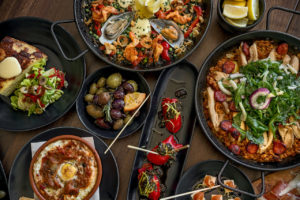
Fancy Fast Food story Gerard’s Paella Senorita Rosa, El Pescador,

Fine dining goes fast-casual at Sonoma County’s best order-at-the-counter joints. Click through the above gallery for the (drool-inducing) details. 

You’ve been dreaming of your sophisticated supper all day. And now, it’s before you, in all its locally sourced, handcrafted glory. First is a platter laden with Sonoma Rosso Old World-style dry salame flecked with red wine, pepper, and fennel; black and white truffle salame; and heritage breed pork sausage laced with creamy ribbons of Sonoma County cheeses. The polished wood board is finished with assorted homemade pickles, boutique cheeses, and a just-picked rosemary sprig from the eatery’s own bushes.

Next up is a wood-fired, bubbly crust pizza smothered in roasted leeks, handcrafted honey-chile bacon, and farm egg. That’s followed by a juicy steak presented on a fancy wood plate with peppery arugula, Parmigano-Reggiano, grilled bread, and oven-roasted organic vegetables plucked from the garden that morning. The estate Angus beef, the menu explains, was open-pasture-raised on a Sonoma County family farm.

Wow, wonderful, you tell the cashier. Then you hand over your credit card and take your food to a low-slung, stone and metal table — because you’re dining at Journeyman Meat Company, a tiny meat shop, cafe, and wine tasting bar in downtown Healdsburg.

It may seem surprising, but increasingly in Wine Country, fine dining is no longer restricted to white-tablecloth, posh-service restaurants. Instead, we’re flocking to order-at-the-counter destinations like Journeyman where every ingredient is meticulously sourced and the decor is chic — with rich wood walls, white marble counters, and just a handful of tables in the charcoal-paint and animal-print-accented lounge.

And why not? Most of us know the difference between artisanal and mass-produced foods, and we expect the best whenever we eat out. Yet time-pressed, especially during the holiday season, we’re not able — or willing — to spend three hours on a meal. For that, we’ve become happy giving up luxuries like table service.

The trend first sprouted in 2010, when Karen Taylor Waikiki opened her El Molino Central in Boyes Hot Springs near downtown Sonoma. We immediately converged on the teal-tin-and-red-tile-trimmed taqueria, for top chef-caliber signatures like tortillas made from hand-ground organic heirloom corn masa, local halibut ceviche, and Mary’s chicken enchiladas with homemade Oaxacan red mole and Rancho Gordo heritage beans. We happily marched our plates through the kitchen to the parking lot picnic tables, grabbing beer or wine from the fridge on the way.

The same year welcomed the French-themed and still enormously popular fine-casual Water Street Bistro in Petaluma, followed the next year by Healdsburg’s The Wurst artisanal sausage bar. The Italian-themed counter-service Pizzando debuted in Hotel Healdsburg in 2012, and then we welcomed the Cal-Med-themed Franchetti’s in Santa Rosa in 2016, from classically European trained chefs John and Gesine Franchetti.

The list has boomed over the past year or so, as talented chefs look for greater simplicity in their operations. The common thread among all the successes are top-notch ingredients, chef-driven menus with seasonal salutes, food-savvy staff behind the counter, striking decor, and, in most cases, boutique wine and beer offerings.

Affordable prices make the equation even more attractive. So let’s dig in.

Lowell’s: After a Decade, Sebastopol’s Hidden Gem is Even Better

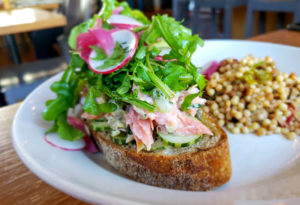
Mt. Lassen trout, cucumber, garlic aioli, arugula, radish,
Mt. Lassen trout, cucumber, garlic aioli, arugula, radish, pickled onion, Revolution country bread at Lowell’s in Sebastopol. Heather Irwin/PD

When Peter Lowell’s opened 11 years ago it was something of a novelty. Chef Daniel Kedan (of Backyard) and owner Lowell Sheldon brought a farm-to-plate ethic to Sebastopol that far surpassed the lip service of many restaurants and took seriously its vegan and vegetarian menu … and it was excellent.

Over the years, several chefs came and went, putting their own stamps on the menu. Some good, some not as good, but the restaurant (now simply named Lowell’s) settled in as a solid neighborhood spot.

Baked cheese with Revolution Bread at Lowell's in Sebastopol. Heather Irwin/PD
Baked cheese with Revolution Bread at Lowell’s in Sebastopol. Heather Irwin/PD

As a destination, however, the restaurant has recently been overshadowed by Sheldon’s newer project, Handline, which opened in 2016. With a budget-friendly price point, quick walk-up service, soft-serve ice cream and one of the best restaurant patios in Wine Country, there’s a lot to love.

So, on the cusp of Sheldon’s opening of a third Sebastopol business, Fernbar, in the Barlow, it seemed like a good time to get back to basics and see exactly where Lowell’s stands today. The answer: It’s better than ever.

Cauliflower with raisins at Lowell's in Sebastopol. Heather Irwin/PD
Cauliflower with raisins at Lowell’s in Sebastopol. Heather Irwin/PD

Ten years is a magical number for restaurants and one that few ever see. The fact that it’s impossible to even find accurate figures for the percentage of restaurants that survive a decade is proof enough. Roughly 30 percent of restaurants fail in a year (not the much-quoted 90 percent). Of those, about 60 percent will fail within five years, and 70 percent will be gone by 10 years, according to a joint study from Cornell and Michigan State University. That’s some pretty rarified air.

Eggs Benedict with roasted potatoes at Lowell's in Sebastopol. Heather Irwin/PD
Eggs Benedict with roasted potatoes at Lowell’s in Sebastopol. Heather Irwin/PD

Sheldon and his collaborators, however, have bucked trends seen as impervious to success — like buying higher-cost, farm-driven local ingredients and charging customers what they feel is a fair amount for their food costs. They work tirelessly on the restaurant’s farm, Two Belly Acres, which provides unparalleled seasonal ingredients to the restaurant.

King salmon with 'Farrotto', beet, fennel, cucumber, herbed yogurt at Lowell's in Sebastopol. Heather Irwin/PD
King salmon with ‘Farrotto’, beet, fennel, cucumber, herbed yogurt at Lowell’s in Sebastopol. Heather Irwin/PD

Perhaps most controversially, Sheldon has instituted a 20 percent automatic gratuity policy, something that has failed miserably for some restaurateurs, but helps pay staff a higher wage and offer health care.

“We enter our second decade with a more subtle understanding of our purpose,” says Sheldon. Sitting at the bar of Lowell’s on a Monday morning, he’s clearly proud of what the little Sebastopol space has accomplished and looking forward to what comes next. With a bit of gray now showing in his beard, Sheldon has weathered many storms over the last 10 years, now looking at life through the lens of a father and partner to Handline (and life) collaborator Natalie Goble. With Fernbar just months from opening, a collaboration between Sheldon and Chef Joe Zobel and Sam Levy of The Restaurant at Meadowood, he’s also become reflective of the restaurant that started the whole adventure.

Lowell Sheldon with partner Natalie Goble.

“We at Lowell’s have always been forward-looking. As change becomes the norm in our town, we look to embrace and influence that change by keeping true to our agrarian roots,” said Sheldon. “We are a farming town. We dedicate ourselves to an awareness of the value that farms bring and to a continued commitment to support their existence. We are humbled by our history and inspired by our future.”

Best Bets

Lowell’s is a laboratory of seasonality, so things change frequently. What remains are the staples — a mushroom pasta may become a butternut squash pasta. Braised greens may get the addition of squash, and tomatoes may all but disappear as winter advances.

Also, Lowell’s has recently moved to an all-day brunch menu with favorites from breakfast and lunch along with a few newcomers, like a scone plate and ricotta pancakes.

Currently, chef Tim Payne and sous chef Jillian Druzgala head the kitchen at Lowell’s, and we’ll be seeing some additional menu changes coming soon.

Antipasti platter at Lowell's in Sebastopol. Heather Irwin/PD
Antipasti platter at Lowell’s in Sebastopol. Heather Irwin/PD

Antipasti Platter, $18: Yep, we almost choked, too, at the price for some seasonal veggies and cheese. Until a heavily laden board of roasted corn, spicy greens, a whole roasted garlic, potatoes, farro salad, farm cheese, beets and goat cheese, a slice of frittata, Revolution bread and lush bean dip was placed in front of us. Oh. Yeah, worth every penny. Easily a small meal or large appetizer for two or three.

Smoked Trout Tartine, $16: If you’re not a . Mt. Lassen trout fan, you will be. Mild pink fish atop an open-faced sandwich with cucumber, garlic aioli, arugula, radish and pickled onion on Revolution country bread. Fork and knife required, but its a fresh, light luncheon dish that’s not easily forgotten.

Pizza Mela, $18: Woodfired pizzas are a signature, lacking the bitter carbonization of other crusts. Chewy and light, we love the apple, bacon, caramelized onion pie with pungent Gruyere, prickly arugula and Parmesan.

Mt. Lassen trout, cucumber, garlic aioli, arugula, radish,
pickled onion, Revolution country bread at Lowell’s in Sebastopol. Heather Irwin/PD

Bruschetta Uovo, $16: Lemony Hollandaise, Revolution toast, poached organic eggs and roasted tomato. Getting hungry thinking about this bad boy, with roasted potatoes and homemade ketchup.

Macrobowl, $17: Since opening, this vegan(ish) bowl has been on the menu. For what it is — red rice, heirloom beans, braised greens, root and fermented veggies — it’s good.

You can top it with an egg or short ribs, along with miso ginger sauce. Frankly, there are so many things I like better on the menu, but the rippingly hot stone bowl filled with such healthy goodies is pretty persuasive.

Scone plate at Lowell's in Sebastopol. Heather Irwin/PD
Scone plate at Lowell’s in Sebastopol. Heather Irwin/PD

Tagliatelle, $20: Depending on the night, you’ll get a variety of ingredients, but diving into little “boats” of pasta with roasted tomatoes, duck confit, herbs and breadcrumbs is intensely satisfying.

King Salmon, $32: Farrotto with beet, fennel, cucumber and herbed yogurt.

Overall: This longtime Sebastopol favorite is worth a return, having spent a decade perfecting their farm-to-plate classics that rarely fail to impress.

Lowell’s is located at 7385 Healdsburg Ave., Sebastopol, 707-829-1077, lowellssebastopol.com.

‘Don’t Worry, We’re Going to Rebuild:’ One Year Later, Stories from The Fires

On the anniversary of the firestorm, Sonoma Magazine shines a light on those who fought through our region’s darkest hours. During the month of October, we’ll introduce you to some of our neighbors who sought to make a positive difference. 

Out of the ashes, heroes emerged: firefighters, paramedics and police officers; friends and strangers. Chefs cooked and distributed food. Neighbors took us into their homes and shared clothes, housewares and compassion. Caped crusaders entertained children in shelters. Mental health professionals gave counseling. Artists sought to make sense of the catastrophe, console and inspire.

Piece by piece, kindness by kindness, shingle by shingle, we came together to help our community on that long road back to normalcy. This is a part of the story we should remember as vividly as the fires themselves—the sense of hope borne out of acts of compassion.

OLYMPUS DIGITAL CAMERA

John Roney, 56, Santa Rosa, Park Manager, Sugarloaf Ridge State Park
“The night of the fires I was home, preparing for a trip to the East Coast the next day. I got a call from the park around 10 p.m. saying there was a tree down in the canyon with power lines in it. When I called dispatch, they said they were dealing with fires and didn’t know when they could get to the tree. I realized I needed to take care of the tree myself. As I was driving to the park, I got a notification on my phone that there were fires in Kenwood. By the time I got to Adobe Canyon Road [to get up to the park], there were fires on either side. It was a full-on evacuation by then. Nobody had any idea there were houses up Adobe Canyon so I went up there and knocked door-to-door to wake people up and get them out. I had a bullhorn. I stopped at each house honking. I must have hit at least 20 houses. Some places there was fire all around. I finally evacuated around 5 a.m. Months later, in December, we started with trail rehab. We finished the last major rehab project—a large bridge—on the fire anniversary. We still have three small bridges left, but for the most part reconstruction is done. We literally couldn’t have done all that work without volunteers. For me that’s the lasting impression: the community coming together to support the park. As part of the rehab, we had to carry three 20-foot redwoods a half-mile by hand. They weighed 650 pounds each. Four people on each side carrying them along. We’re still coordinating volunteers to help with rehab at sugarloafpark.org. Without these people I’m not sure where we’d be right now.”

Sonia Byck-Barwick, 50, Healdsburg, Co-Owner Paradise Ridge Winery
“We heard about the fire from our facilities manager, who lived in Fountaingrove. My husband, who is our winemaker, left our house in Healdsburg and went to the winery. By the time he got close, the fire was jumping the freeway. There was nothing we could do. We finally got up there on the morning of Oct. 10, 2017—two days after the fire. It was total devastation. Everything was a disaster. You looked around and it was chaos. I was really upset. Feeling very down. Then we talked to my Dad, who said, ‘Don’t worry, we’re going to rebuild.’ He didn’t even hesitate. There was no question for him—that’s what we were doing. I didn’t realize it at the time, but I needed to hear that. The place was his dream. He was determined to bring it back. In the days that followed, the story of the LOVE sign was one of the things that kept me going. It was not destroyed in the fire and became such a symbol of strength. My brother had taken a picture of it and shared it and unbeknownst to me that picture was everywhere. People shared it. People made it their profile picture. I got a text from someone I went to high school with; she lost her home in the fire but the picture of the LOVE sign was on her kids’ Facebook page. The fact that it was a sign of hope for so many people was moving. Art will continue to be a huge part of what we do at Paradise Ridge. We broke ground on rebuilding earlier this month and that project means a lot to us and the community. I feel lucky knowing how many people are behind us and cheering us on.”

James Gore, 40, Healdsburg, Supervisor, 4th District, Sonoma County
“When we had those bad floods a few years ago, I was doing video updates, and people were interested in that. When this disaster happened, I knew the messaging was something I needed to do even better. I also was frustrated with sitting in county’s center with a bunch of elected officials when I knew that videos were what people wanted. So I went out into the field, found the right people to interview for the latest information and presented that information to people on my Facebook page. I shot the videos guerilla-style. These interviews weren’t about me; they were about people I was interviewing. I have access and I have an ability to communicate with people. That was all I needed to get this done. The process was interactive; people were commenting on the videos and asking me to do updates on certain areas. I would read them and go and bird-dog what they asked. I became an investigator more than anything. I’d take questions, ask the questions, and incorporate the answers into my videos. About three days in, I realized I wasn’t doing anything in Spanish. So I started doing that at night. The responses were amazing. My normal posts get a few hundred likes. These started around 1,000 likes and the next day they would jump to 10,000. The comments jumped from 100 to 450. Some were shared tens of thousands of times, in cases far beyond our community. It was inspiring to use social media for real news in a time when it’s so often affiliated with hate and trolls. The whole experience proves that it’s not really about the tool you use, but how you use it.”

Caitlin Childs, 34, Santa Rosa, Director of Communications, Community Foundation Sonoma County
“I’m from Santa Rosa but was living in Oakland last year on the day of the fires. I was there for graduate school. I woke up that morning to about 15 text messages asking if my parents were OK. I immediately texted them and called and texted all my friends. My great uncle lived at Varenna [near Fountaingrove], and we didn’t know where he was for 24 hours but found him at an evacuation site. I ended up coming back to Santa Rosa the next day and volunteered at the Community Foundation. They were starting to put together the resilience fund. I helped them start thinking through how they might want to talk about what they’re fundraising for. Officially, I joined the organization in January. A lot of what we’ve been doing over this last year is continuing to fundraise for long-term fire recovery. We’re looking at creating fundraising and grantmaking programs that will last for at least the next five years. We’ve raised $14.5 million dollars. We’ve granted $1.8 million so far. We’re looking at making another round of grants at the end of this year in December. We have come up with three core areas to focus our giving: helping individuals impacted by fires, healing the longterm effects of trauma, and housing. We’ve done grants for the first two. Housing is our next round of grants. It’s really exciting to be able to help the recovery by awarding this money. I quit grad school to do this. It felt like the right thing to do and I don’t regret the decision. It’s not often you get a call to action as clear as this was for me.”

Greg Sarris, 66, Penngrove, Chairman, Federated Indians of Graton Rancheria
“I live up on Sonoma Mountain and got a call from a neighbor around 2 a.m. The neighbor told me Santa Rosa was on fire and the mountain was, too. To be honest, I panicked, thought only of the manuscript I was working on, grabbed it and three pairs of underwear, and ran out the door. I live facing west toward the casino and Rohnert Park, and as I came down the hill, I saw Santa Rosa ablaze. I knew then: I had to get the casino. The place was packed with people who had evacuated. More were coming. Our goal became making them feel comfortable. By 4 or 5 a.m., we got a bunch of coffee machines and things to eat and put them in the marketplace for people who would be coming in. They were totally free. By 8 a.m., the hotel lobby started filling up with people who were displaced. One of the sights I’ll never forget was a group of elderly people who were evacuated from a convalescent home nearby. There were 20 to 30 hospice-care patients on oxygen camped out in our lobby. They had nowhere to go. We let them stay a while. As we learned how many of our employees were affected, we opened up as many hotel rooms as we could, freeing about 120 of them and providing accommodations for 104 team members and their families. Most of them stayed the whole week. Some ended up staying three weeks. The last big thing we did on the day of the fires was donate $1 million to the Redwood Credit Union fund. That was our way of giving to everybody we couldn’t reach or help. We just wanted to do whatever we could to help.”

‘Uncrushable’ is Painful to Watch, But A Heartfelt Love Letter to Wine Country

Grateful Table setup Still from ‘Uncrushable’ by Tyler Florence.

Capturing the most intimate moments of despair and heroism during the 2017 wildfires, celebrity chef Tyler Florence’s ‘Uncrushable’ looks unflinchingly at a cross-section of Sonoma and Napa disaster survivors bonded by loss. 

Shot over three weeks as Wine Country still smoldered, it’s a time capsule of the shock and grief that was just beginning for so many.  It’s a movie we all wish never had to be made, but a year later, it’s a poignant memoir of survival that Wine Country, and specifically Sonoma County, can be proud of.

Grateful Table setup Still from 'Uncrushable' by Tyler Florence.
Grateful Table setup Still from ‘Uncrushable’ by Tyler Florence.

Though most of us are more familiar with Florence’s upbeat persona on Food Network shows like “The Great Food Truck Race” and “How to Boil Water, the one-time “sexiest chef alive” was able to pull off a film with gravitas, courage and hope.

Financially backed by Visit California, the state’s tourism publicity machine, Florence was tapped to direct and shoot the entire documentary in late October and early November while simultaneously coordinating a fundraiser dinner for 300 on the Napa-Sonoma county line. No sweat.

“I wanted to tell the story about what was happening while it was still going on,” said Florence, who screened the film for several hundred Sonoma County residents Oct. 19.

Tyler Florence at a neighborhood gathering after the fires. Still from 'Uncrushable' by Tyler Florence.
Tyler Florence at a neighborhood gathering after the fires. Still from ‘Uncrushable’ by Tyler Florence.

A Marin resident for the past decade, Florence was deeply moved at the situation affecting so many of his neighbors. The movie culminates in Florence’s Grateful Table dinner.

“I made this movie for our neighbors here in California. I wanted to tell a story about the community, about hope, and those that rose above it and pulled themselves up from the ashes,” Florence said.

“Everyone loves Sonoma. Everyone loves Napa. I wanted to tell a beautiful story.”

At the screening earlier this month, muffled sniffles and sobs from the audience spoke to the rawness still felt by so many.

“Uncrushable” is being screened in various cities, and has already shown in New York and Toronto to sold-out audiences according to Florence. The documentary will be shown twice during the Napa Valley Film Festival (Nov. 7-12), and Florence will host a VIP dinner and screening at Robert Mondavi Winery on Nov. 9 with proceeds going to ongoing rebuilding charities.

Still from 'Uncrushable' by Tyler Florence.
Still from ‘Uncrushable’ by Tyler Florence.

“As someone who talks for a living, I got a chance to just listen. It was harrowing and breathtaking at the same time. Now, 365 of days of putting that disaster in the rearview mirror, hopefully, we’re in the position where we’re healing,” he said.

Among those Florence interviewed for the movie was Peter Lang, owner of Safari West. Lang is credited with saving more than a thousand animals at the preserve with little more than garden hoses.

With flames encircling him, and his own home burning, Lang, 76, is a natural storyteller and steals the show with his unbelievable tale.

“Bravery was the biggest takeaway. You realize how difficult it is, what’s important when you have nothing left. I just wish we could have interviewed more people,” said Florence.

Note: The trailer to ‘Uncrushable’ may be extremely triggering. California Hope and many other agencies provide free counseling to anyone affected by the wildfires.


Sonoma Restaurants: 5 Things We’re Excited About Right Now

Bollywood Bar & Clay Oven. Courtesy photo: Facebook

I loved eating my way through October. With new restaurants popping up throughout the county, it’s been a fun month for Sebastopol sushi, Santa Rosa’s newest pizza, and Indian cuisine, plus a surprisingly great burger in Sonoma.

Click through the above gallery for five food-related news Biteclub is particularly excited about this month. Want Sonoma restaurant news straight in your inbox? Sign up for our newsletter

Fire Survivors Continue to Receive Free Therapy and Yoga Through Local Mental Health Collaborative

Threats to life. Debilitating fear. Feelings of utter chaos and complete helplessness.

These were some of the emotions North Bay residents experienced during last October’s firestorm. These very same emotions also comprise the American Psychiatric Association’s definition for PTSD, or Post Traumatic Stress Disorder.

To help fire survivors work through the complex set of emotions that invariably follow large scale disasters, a group of Sonoma County mental health professionals have banded together to form the Wildfire Mental Health Collaborative (WMHC).

The group aims to provide mental health services to survivors while at the same time studying what kinds of treatments work best in addressing the lasting effects of trauma. Ultimately, according to Debbie Mason, CEO of the Healthcare Foundation of Northern Sonoma County, data from this initiative could revolutionize the way communities and mental health providers respond to the lingering effects of natural disasters.

“If people don’t take care of their mental health, nothing else really matters,” she says. “Part of being ‘strong’ at a time like this is being strong enough to ask for help. The whole point of this initiative is to come together in a loving embrace to support each other in our healing.”

Mason’s organization is spearheading the initiative, along with participants from the National Association for Mental Illness Sonoma County, the Redwood Psychological Association, the Redwood Empire chapter of the California Association of Marriage and Family Therapists and independent psychologists and researchers. To date, the $1.3-million initiative comprises a variety of programs, each designed to address a different—and important—aspect of mental health.

The newest of these programs, Sonoma Rises, is an English-language app for fire survivors which debuted earlier this month. The app helps connect survivors with services across the region, and provides customized, evidence-informed tools to help cope with stress, heal from loss, prioritize self-care, connect with others, manage anger, and track moods using validated assessments over time. The app includes a special section geared for teens; a Spanish-language version is expected soon.

Dr. Adrienne Heinz, a clinical and research psychologist at the VA National Center for PTSD helped develop the app.

“We felt like an app was the perfect medium because people are on their phones all the time anyway,” Dr. Heinz explains. “Someone might have a stigma about going to see a therapist, but the same person wouldn’t think twice about interacting with doctors and other experts through an app.”

Another technology-oriented effort is the bilingual website mysonomastrong.com. The site provides resources for self-care and for finding free professional therapy in Sonoma County. It also offers tools for users to track moods, and it provides interactive suggestions for relaxing in moments of heightened stress.

In the eight weeks before launch (and with no promotion), the site attracted nearly 1,700 visitors. After a regional ad campaign began on the one-year anniversary of the fires, those numbers have increased exponentially.

Other WMHC initiatives have focused on different aspects of wellness.

In the area of mental health, WMHC affiliates have worked with the FEMA-supported California HOPE Program to set up two groups of fire survivors for ongoing (and free) weekly group counseling.

WMHC team members have also run workshops and webinars to train more than 300 mental health professionals in Skills for Psychological Recovery (SPR), a modular intervention therapy specifically designed to help survivors gain skills to manage distress and cope with post-disaster adversity.

Dr. Josef Ruzek, co-director of the Center for M Squared Health at Palo Alto University and an adjunct professor in the Department of Psychiatry and Behavioral Sciences at Stanford University, was part of the team that helped create the SPR protocols. He notes that these trainings are based on an understanding that disaster survivors will experience a broad range of reactions over differing periods of time.

“We want [therapists] to put patients in the best position to get through all of this,” says Dr. Ruzek.

Once providers complete the training, the WMHC encourages them to offer fire victim clients up to five therapy sessions for free. Dr. Christine Naber, a neuropsychologist in the Neurology department at Kaiser Santa Rosa and president of the Redwood Psychological Association, adds that a critical part of the SPR training is preparing therapists to offer clients “booster” sessions that correlate to milestone anniversaries or other potential triggers.

“Generally short-term treatment is effective, but when there’s trauma involved, people might need a longer-term approach,” says Dr. Naber. “That’s what makes an initiative like this so important.”

The WMHC initiative also addresses physical wellness through yoga. The program currently sponsors a dozen free yoga classes across Sonoma County, and has trained more than 60 yoga instructors in a special type of yoga designed to help people experiencing PTSD.

David Leal, a certified yoga instructor, lost his Coffey Park home in the Tubbs Fire. After the fire, he received “trauma-informed” yoga training through the WMHC initiative and describes this version of yoga as particularly meditative.

Leal says that by slowing everything down, participants are forced to relax their bodies and minds. There’s deep breathing. There’s self-massage. There’s lots of time to think.

“Anything that’s going to calm the breath cycle so that the body’s parasympathetic nervous system can kick back in and relax and release the tension,” says Leal. “People don’t realize how important that is.”

The WMHC group’s goal is to train a total of 500 mental health professionals in SPR; there are a number of workshops left to teach. Yoga training will continue through the winter as well; WMHC officials would like to train 100 yoga instructors by early next year.

Long term, WMHC leadership hopes their efforts will help to establish new data on how people grapple with mental health in the wake of natural disasters. Central to this effort will be reports that patients administer themselves—they’ll answer brief questionnaires about their well-being before and after each session.

Researchers from Stanford and other institutions will then review the responses for possible future application of the data in the field. Eventually, this data could be used to respond to natural disasters in other cities all over the world.

Mason, from the Healthcare Foundation, says she and her colleagues will judge the success of the initiative by how many people it helps. At the same time, she adds, the potential for an even larger impact is undeniable.

“Between the connectivity, peer-to-peer teaching, and networking we’ve seen with this effort, the possibilities for what we can learn and how we can change our responses to natural disasters are pretty incredible,” she says. “We did this to take care of our little community. In the process, we just might end up changing the national conversation about the best way to approach post-disaster mental health.”

The WMHC initiative is aimed for anyone who feels that they need help and coping skills since the fires. Sonoma County residents who are looking for wildfire mental health support services, such as individual or group counseling, trauma-informed yoga, or other support services, may visit mysonomastrong.com; or call or text NAMI (confidentially) at 1-866-960-6264.

To support these services, please contact the Healthcare Foundation at (707) 473-0583 or info@healthcarefoundation.net.


 

Welcome Back: Refreshed House of Happy Walls Returns to Jack London State Historic Park

After three years of renovations, and thanks to nearly $1 million raised by private donors, the House of Happy Walls museum reopens in November at Jack London State Historic Park. With 22 modernized and interactive exhibits, the museum will bring to life the many inspiring adventures of famed author Jack London and his wife Charmian, who were both trailblazers, humanitarians, innovators and so much more.

An extensive renovation was long overdue, as most of the museum’s exhibits hadn’t been updated since the 1960s.

“They lacked that state-of-the art quality, the new technology that appeals to younger audiences and essentially, it had a 1960s, old-fashioned look and feel,” said Tjiska Van Wyk, Executive Director of Jack London State Historic Park. “The exhibits were not organized to tell the story of the Londons in a way that inspired people or helped them understand that there was a lot more to Jack London than his books.”

The first floor of House of Happy Walls 2.0 is dedicated to the life and times of Jack London — one exhibit, for instance, focuses on his documentary photography of the Korean War, poverty in East London, the 1906 earthquake and more — while the second floor is all about Charmian.

“We believe her story is as remarkable as his,” said Van Wyk. “At the turn of the century, she was really breaking the mold. She did not buy into societal expectations of women at that time. She was the epitome of the progressive women.”

As an example, the “Charmian the Trailblazer” exhibit delves into her progressive push for women to ride their horse astride, rather than sidesaddle. Deemed appropriate for ladies, Charmian believed riding sidesaddle was also incredibly uncomfortable and unproductive. At the center of the exhibit is a moving saddle, which visitors can ride astride and imagine they’re Charmian.

Jack London’s words about his Sonoma County Beauty Ranch come alive in this centennial tribute to the American writer. (Video by Joshua Dylan Mellars)

The Grand Reopening Weekend, scheduled for November 10-11, is jam-packed with free, family-friendly activities such as storytelling, kite flying, face painting, horse-drawn carriage rides, a community picnic, fencing demonstration and arts-and-crafts.

Admission to House of Happy Walls will always be complimentary with the $10 park entrance fee, but for an extra cost on opening weekend, guests can sign up for a horseback ride through the heart of wine country, a tour of Beauty Ranch with a tasting of wines made from grapes exclusively grown within the park, and a special tour of the Wolf House, London’s dream mansion that burned down in 1913, before the couple was able to move in.

“We want visitors to come to this museum, learn about their story and be inspired by it to live their life to the fullest. Jack London was a true rags to riches story. He was born in near poverty, had little education, yet he broke away from that and became the highest paid author of his time. He was the first person to start an animal rights campaign; he was probably the first organic farmer in California,” said Van Wyk.

“We want people to see all of that and go, ‘I can do that. I’m going to pursue my dream. I’m going to make something happen that I didn’t think I could do.'”

jacklondonpark.com