


Okay, so we all know that Reeses and Milky Ways and Snickers rock. There’s no question that the Hershey’s Miniatures have a place in our hearts. But what about the stuff that you HATE. The nasty, questionable, inedible, turn-up-your-nose-even-if-it’s-free candy?
Every Halloween some lug nut has to give out pennies. Some well-meaning granny gives you linty gummy bears, the neighborhood do-gooder gives out tooth brushes and the dude who spends most of his time smoking on the front porch digs up last year’s Easter goodies and hands ’em out between puffs. Ick.
What are you LEAST favorite Halloween treats? Vote now and let ’em know we’re not gonna take those Airheads anymore!
[polldaddy poll=”3995179″]
A Plate of Strange Bedfellows

Pickles, cheese, and chocolate: Three ingredients, three possible pair-wise combinations, two really good and interesting tastes, and one impossibly disgusting mouthful of gag reflex. If I like cheese with pickles, and (somewhat surprisingly) I like chocolate with cheese, then why don’t I like chocolate with pickles? I mean, other than the painfully obvious – in point of fact, it tastes even worse than it sounds – why the apparent lack of transitivity?
As an amateur cook and a professional economist, I find the logical inconsistency of the human palate fascinating. If you ever signed up for an econ course – or, like my family, found yourself living with an economist – then one of the very first things you learned was how economists think about consumer choice, what it means to assume that people behave rationally, and the behavioral implications of that basic assumption. If you study economics for long enough, you’ll find that a few, simple, first-semester models form the bedrock for pretty much everything that follows, from the ubiquitous demand curve to sophisticated models of the macroeconomy. Grouped under the catch-all heading of “choice theory“, these models are simple, elegant, and powerful. However, just like the Brooklyn Bridge, Newtonian physics, and portfolios of residential mortgage backed securities, they tend to fracture if you tinker too much with the underlying assumptions.
Newton needed his Three Laws of Motion: Bodies at rest tend to stay at rest; for every application of force, there is an equal and opposite reaction; and of course, the simple little formula that put man on the moon, Force Equals Mass Times Acceleration. That bridges generally remain standing and astronauts usually return to earth constitutes a powerful argument in favor of Sir Isaac; less so, the big banks: To nearly everyone’s (although, importantly, not absolutely everyone’s) surprise, home prices actually could go down as well as up, the Upper West Side and Upper East Side of Manhattan, despite the fact that New Yorkers think you need a visa to travel between them, were not, in fact, two uncorrelated real estate markets separated by a big lawn, and – this being one of the Big Lessons of the past two years – if you violate these two basic assumptions, then a multi-trillion-dollar edifice will collapse on your collective heads like the crescendo of a James Cameron movie.
Economists, for their part, require “reflexivity” (if items A and good B are identical, I will be indifferent between them), “monotonicity” (if I like A, then I prefer more A to less), “completeness” (faced with a choice of what to consume, I am capable of making a decision), and – the centerpiece of today’s conundrum – “transitivity” (if I like A more than B, and B more than C, then I also like A more than C). Transitivity, at least, seems not to apply to the sensation of taste. But why? I recently read a review of The Flavor Thesaurus by Niki Segnit, who breaks down as many foods as possible into 99 distinct components (grassy; fruity; earthy; zesty…), and then considers, on a molecular level, why some of the 4,851 possible combinations thereof taste good, while some – like chocolate and pickles – make you wish, and I now know this from bitter, personal experience, that you were sucking on a day-old sock, or worse. I believe her idea is to provide a molecular basis for food pairings and, in the process, explain the classics and encourage new and interesting things to try together, with a more scientific roadmap than my usual home-cook’s idea closet, filled as it is with ideas spun from too much wine and half-remembered meals prepared by chefs of “cutting edge” status, or some such.
I can’t say whether the intransitivity of taste will ultimately figure prominently in the theoretical foundations of classical microeconomic theory, or whether we could have avoided the mortgage meltdown simply by acknowledging that pickles and chocolate really suck when you put them in your mouth at the same time. Sociologists and psychologists (and – increasingly – behavioral economists as well) will debate the appropriateness of the “rationality” assumption, and – increasingly – it seems to me that they have the data on their side. Certainly, I’ve come across legions of irrational fools in my life, and that is only speaking from direct, personal experience; I’ve not entered so much as a footnote for broader historical record of human folly. I can say, however, that I would like to know a bit more about how our sense of taste works, and why I nearly vomited cheese, chocolate and pickles all over the butcher’s block. I’m hoping that the book is really cool and I get to do a bit more of this.
Just Three Ingredients, and the Intransitivity of Taste: Pickles, Cheese, and Chocolate
- Secure a few chunks of bitter chocolate (I used 85% cacao), something very dark, with no milk – dairy is a different cup of tea entirely.
- Choose a stinky, wash-rind cheese (I used French Raclette).
- Slice up a good dill pickle (I used Alexander Valley Gourmet’s Spicy Bread and Butter pickles – the sweet, hot, vinegar-y tastes made the results literally pop on your tongue).
- First try the two combinations with cheese (doesn’t matter which, but cleanse your palate in between). The stinky cheese and pickle is just awesome – the acidic, sugary crunch of the pickle really contrasts nicely with the musty, creamy cheese. Now try the pickle-and-chocolate. Sounds weird, but really it isn’t (even somewhat “conventional” – here is a blog that describes a whole “tasting” of cheese, chocolate, and wine at a well respected restaurant); the bitter, earthy chocolate fits nicely with barnyard impression from the cheese. Finally, steel yourself, and take a bite of the pickle and chocolate together.
Tov Tofu | Santa Rosa
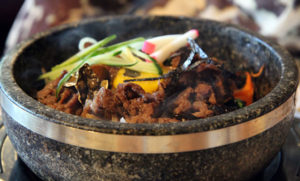

Way back in December of 2009, I wasn’t alone in predicting the rise of Korean food in the national consciousness. Always the bridesmaid, but never the culinary bride, we were ready for a culinary love affair fueled by a passion for all things pickled and fermented (kimchi) and our collective ennui with Thai food (which has become all too ubiquitous). It was time for a spicy change.
So we waited. And waited. And just when we all figured that crave-worthy bibimbap was out of our reach, Tov Tofu opened its doors with the sizzle and pop we’d been hoping to hear.
The food is unapologetically and authentically Korean, focused on soft tofu soups and crackling stone bowls of rice, bbq and vegetables (bibimbap). Entrees include grilled short ribs and stir fried squid and octopus, along with Korean noodle soups and ox bone soups pepper the otherwise spare menu.
Banchan are a preview to the sweet, salty, briny, hot, tart flavors of the meal to come — two-bite bowls of kimchi, fish cakes, soy beans, cabbage, daikon and soy glazed potatoes meant for sharing. Like a personal bowl of rice, they’re part of the meal, so embrace their arrival.

Best Bets: Mung bean pancakes ($8.50); soft tofu ($9.95), a roiling, boiling pot of silken tofu with a combination of veggies and meats (try the combination with beef, shrimps and clams) all topped with raw egg (it cooks in the soup); bbq beef and vegetable bibimbap ($12.95) a surface-of-the-sun hot bowl filled with rice and a heap of goodies that pops, squeaks and steams a bit disconcertingly for several minutes (the prize is crunchy cooked rice at the bottom); Kal Bi (grilled beef short ribs).
If you’re new to Korean cuisine, don’t be a hero. Aim for mild or medium spice, because things can quickly go atomic. Bring a sense of adventure, as well. Korean dining can present some textures (gelatinous) and flavors (spicy, fermented, hot) that are challenging to newcomers, but quickly become part of your culinary repertoire. Oh, and enjoy the sanitary-wrapped spoons.
Charming red apron-ed staff are all too willing, however, to walk you through the menu and give helpful guidance as they rush across the dining room bringing plate after plate of hissing, steaming bowls to your fellow happy eaters.
Tov Tofu, 1169 Yulupa Ave (near Whole Foods), Santa Rosa, 566-9469. Open Tuesday through Sunday 11am to 2pm, 5-9pm. Closed Monday.
SF Michelin Stars for 2011
 Michelin has awarded its stars for 2011 and there are some major announcements for North Bay restaurants…
THREE STARS (exceptional cuisine, worth a special journey)
The French Laundry
The Restaurant at Meadowood (N)
Golden boy Christopher Kostow gets his much-sought after third star, bumping him up into the same category as the French Laundry. I soooo called that two years ago.
TWO STARS (excellent cuisine, worth a detour)
Coi
Cyrus
Manresa
Healdsburg’s Cyrus remains a serious contender in the haute cuisine category, but misses hitting that three-star mark.
ONE STAR (a very good restaurant in its category)
Acquerello
Alexander’s Steakhouse (N)
Ame
Applewood (N)
Auberge de Soleil
Aziza
Baumé (N)
Bouchon
Boulevard
Campton Place (N)
Chez TJ
Commis
The Dining Room at the Ritz Carlton
Dio Deka (N)
étoile
Farmhouse Inn & Restaurant
Fleur de Lys
Frances (N)
Gary Danko
La Folie
La Toque
Luce
Madera (N)
Madrona Manor
Masa’s
Mirepoix (N)
Murray Circle
One Market
Plumed Horse
Quince
Redd
Saison (N)
Santé
Solbar
Spruce (N)
Terra
Ubuntu
The Village Pub
Wakuriya (N)
Of the newcomers, Applewood Inn and Mirepoix are long overdue. It’s nice to see these restaurants getting their due. Mirepoix changed up its menu to reflect a more upscale dining experience after opening the it’s cafe-eats sibling, Bistro M last year. Michelin stars have long been in Matthew Bousquet’s eyes, so it’s nice to see him get credit. Applewood’s Bruce Frieseke has long been under the radar, but also is well-deserving of the applause.
And losing its only star? Chez Panisse. Ouch.
North Bay Food Trucks 2.0
Street Eatz & La Texanita (Santa Rosa)
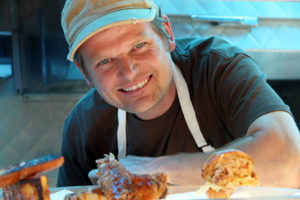
More than a taco truck, less than a restaurant, the Street Eatz mobile kitchen is leading Sonoma County’s food truck brigade with globally-inspired dishes (agedashi, tacos, pulled pork, curry, chile rellenos and the unbeatable Carne Asada fries). Biz partners Jillian Dorman and Alma Mendez (of La Texanita) collaborated on the popular truck, which has been a mainstay at local events throughout the spring and summer. Street Eatz is also a frequent participant in some of San Francisco’s bustling street-food events, including Off the Grid. The truck makes lunchtime stops throughout the week (Tesconi Circle, Aviation Blvd., Revolution Moto) and has recently been granted permits for Friday and Saturday nights (6pm to late) at Santa Rosa’s Courthouse Square. You can find their complete schedule at street-eatz.com or follow them on Twitter or Facebook at StreetEatz.
The Street Eatz sister truck from La Texanita has begun rolling out as well, including most of the items you’ll find at Alma’s much-loved restaurant (Guy Fieri is a huge fan): Tacos, burritos and flautas with homemade tortillas and tasty meats like tongue and cabeza. The truck’s been parking at the corner of 116 and Lynch Road in Sebastopol for lunch and dinner and sharing the Friday and Saturday night spot with Street-Eatz.

Fork Catering (Santa Rosa, Sebastopol, Occidental)
Fork, run by caterer Sarah Piccolo out of Sebastopol, embraces the local farm-to-table vibe, serving up Stornetta beef burgers on whole wheat buns; a quinoa garbanzo bean burger, green chili mac and cheese, and salads bursting with veggies plucked from local patches.The converted Mother’s cookie truck has been outfitted with a impressive kitchen and espresso set-up. You can find Sarah and her truck at a variety of public and private events (she’s often at bicycle-related events), including stints at the Occidental Farmer’s market and Dutton-Goldfield winery, though she prefers to stay within 90 miles of her home turf in Sebastopol. Find the most recent locations on her Facebook page: Fork Catering.
Chicago Style Hot Dogs
Wieners are the original street food, so its no wonder that a growing contingency of mobile doggeries are on the roll. Jeff Tyler is the guy you’ve seen tucked away on Je Ju Way (near Russian River brewery) on weekdays and most recently doing a brisk late-nite biz in Courthouse Square. He also hangs out on Wednesdays at Paradise Ridge winery, where from time to time he makes his special Pinot Dog — with wine-soaked mushroom onions and garlic. Using only Chicago-style Vienna dogs on poppy seed buns, Tyler says his dogs are tops. Facebook: Chicago Style Hot Dogs; Twitter: Dogsfromchicago.
Taste of a Gyro (Sonoma)
Chef Sondra Bernstein of the Girl and The Fig in Sonoma gives the heads up on Dominic Sammarco’s mobile gyro trolley near the Sonoma town square. He does traditional lamb as well as chicken gyros, but the secret’s in the sauce. In addition to tzatziki (a yogurt cucumber sauce), he douses his $6 hand’wiches with a selection sauces that go from mild to wild: ranch feta, jalapeno feta, habanero feta or the mouth-searing super fire hot red sauce (jalapenos, sirrano, habenero and body-numbing ghost peppers). “It’s all about creating your own taste,” he said. You’ll find business and construction folks rubbing elbows with a few adventurous high schoolers from 10am to 4pm Monday through Saturday at the Sonoma Skate Shop (1001 Sonoma Ave., Sonoma) or Tuesday evenings at Sonoma’s farmer’s market.
Napa has an especially vibrant food scene that’s spawned several trucks in just a few weeks. They’re already planning several “group” events, one of which happened on Friday near the Oxbow Market, so its worth signing up for mailing lists to keep abreast of pop-up dinners and collaborative get-togethers.

Dim Sum Charlie’s (Napa)
Working out of a converted Airstream trailer, this mobile dum sum-ery is all the buzz in Napa. The lengthy list of steamed and baked goodies includes pork sui mai dumplings, shrimp and pea sprout dumplings, mushroom and water chestnut dumplings, honey baked pork buns, lobster shrimp and sea bass dumplings and sticky ricked stuffed with pork sausage. The temporary-space near the Oxbow Market (pretty much a construction zone), has several picnic tables with canvas awnings, so it’s worth sticking around and having a tower of steamers delivered tableside. The crew includes Andrew Siegel (the founder) and Chef Clayton Lewis, who have plans for Bay Area domination with more Dim Sum Charlie’s trucks in the works. Do yourself a favor and start off with the “Ten Dolla Make You Holla” which includes a little taste of several dumplings and buns. When the dumpling cravings will drive you back for more (and trust me, you’ll get them), you can find the Napa truck open from 6pm to 1am Wednesday and Thursday, and until 2am on Friday. Saturday noon to 2am and Sunday noon to 10pm. So who’s eating dumplings at 2am in Napa? Industry folks (chefs, cooks and bartenders) are some of their most loyal customers. More details at dimsumcharlies.com.

Crossroad Chicken (Napa)
Follow your nose to the smell of a wood-fired oven on wheels. Kevin Simonson is another trained chef who’s finding a new kind of calling behind the wheel of a Snap-On truck turned mobile cucina. The unique vehicle, which he found on Craigslist, has a built in wood-fired oven that he’s using to toast up top-notch sandwiches using air-chilled chickens, local produce, fresh mozzarella and his own pulled pork. A special favorite: Rancho Gordo bean chili. Most days you can find Kevin from 11am to 2pm at 1050 Soscol Ferry Road (not far from the Napa Airport), but if you want to order ahead, find out other locations or just see what’s on the menu, email crossroadchix@aol.com.
Mark’s the Spot (Napa)
Mark Raymond is the real deal. With cooking credentials throughout the North Bay, he’s the king of mobile sliders “prepared slow, served fast.” His lunch menu is a revolving lineup of three-bite sandwiches served on brioche buns: Buttermilk fried chicken with pepper aoili and slaw; baby Nieman ranch burgers; bacon, basil and brie with red onion jam or Long Meadow Ranch beef hot dogs with chili. Other goodies on his overhauled Chinese food truck include Salmon Creek organic duck wings with spicy plum sauce or french toast cubes sprinkled with chili salt and drizzled with maple syrup. The slider sampler of three sliders for $10 is the best deal. Just three weeks old, Mark’s still looking to find a regular spot, but he’s easily findable (from 11am to 2pm) by calling or texting 226.Spot, MarksSpotTruck on Twitter or MarksThe SpotTruck on Facebook.
Phat Salads and Wraps (Napa)
“Have you been to Gia’s?” is the question everyone asks when the issue of Napa’s emerging food truck scene comes up. The owner of Phat Salads and Wraps, Gia Sempronio’s built up a loyal lunchtime following since arriving on the Napa scene several years ago. The breakfast and lunch menus are simple wraps filled with grilled chicken or steak, lettuce and a variety of add-ons including. Her most popular: The New Yorker with steak, avocado, crispy fried onions and gorgonzola vinaigrette. Gia is typically parked on California Blvd. near the Healthquest Fitness Center. For more details, call 363-9658 or visit phatsalads.com.
Cold Food for Hot Mamas

As most any mom will tell you, there is a world of difference between “cooking for moms” and “cooking for moms”: The noun implies more of her time spent over a cooktop, while the verb at least suggests the possibility that she might end up on the receiving end of the culinary goodie bag for a change. I would typically err on the side of the latter, figuring the benefits of flattery to be well in excess of the costs of telling my wife what to cook me for dinner, but Friday was a lock regardless, because my wife put in a special request for the Moms’ Night Out she was hosting at Wine Country Dance Space: A small cadre of mamacitas sans kids and husbands; a professional dance instructor; and several bottles of pink Champagne, all on a Friday night…

Planning a menu is a bit like going to the tailor in that parties, like body types, are different and menus, like suits, should be cut accordingly: Are we going to sit down to eat, or stand up and mingle? Will we want to use flatware and big plates, or fingers and napkins? Now, I may not be the most perceptive guy around, but I’m pretty sure that when a bunch of moms get together to shake their booties and spill champagne on a Friday night, they’re not looking to spend much time on kitchen prep, so the easy call was to restrict the menu to finger-friendly food that could all be made in advance and served more or less whenever. I was similarly undaunted by their chosen pink poison, because sparkling wines offend almost nothing and make a lot of otherwise truculent foods behave remarkably well, particularly stuff on the salty, fatty end of the spectrum, where my palate likes to hang out.
Yes, you say, but what about The Chick Factor, and I agree, there’s the risk. While I remain unconvinced of their zealotry for cheap beer and professional sports, I’m pretty damn certain that women like fine steaks, bacon, and deep-fried-anything just as much as men, presumably due to some piece of shared genetic code that remembers how the people who ate lots of fat and salt during winter always seemed to have the best shot at walking out of the cave come spring. But theory and practice are distinct, and I figured the whole Buffalo Wing/Baby Back Rib kind of program just wasn’t going to float many of these ladies’ particular boats. When in doubt, stick with the classics, and of the list of foods that unequivocally kick culinary ass when paired with rose Champagne, caviar and smoked salmon occupy rarefied territory near the top. Ideally, I’d put the stuff on blinis, but they don’t hold; toast points work fine, but then I saw these really nice Yukon Gold potatoes at the market, and it got me thinking, why not make the “bread” out of sauteed potato slices? It’s a starch, potatoes pair especially well with salmon and with caviar – and dig 0n that gluten-free option.

Last up, my usual inventory of leftovers, which yielded some of last week’s Date Night special, Salty Vodka Whipped Cream, a pack of prosciutto, and the end of this summer’s fig harvest, in the form of a black-olive-and-fig tapenade (my homemade riff on the outstanding condiment sold by the nice folks over at the Jimtown Store; theirs is awesome, but mine is cheaper and, with respect, I think even better – I’ll get around to the recipe later this week). The Vodka and whipped cream flavors would do wonders for the briny tang of the salmon roe, and the Jimtown kitchen proves daily that the sweet-salty of figs and olives plays nicely off the sharp bite of bleu cheese and the sweetness of prosciutto. (For the record, I have neither ego nor reservation about boosting other, better cooks’ ideas for my personal consumption.)
Three Champagne-Friendly Finger Foods
- Salmon Roe, Salty Vodka Whipped Cream, & Dill on Yukon Gold Potato. Peel and slice the potatoes uniformly, about 1/8 inch thick, dropping them into cold water as you work; pat dray, season w/ white pepper and kosher salt and sautee on both sides in butter; reserve. Spoon some of the whipped cream on each, pile a few eggs on top, and garnish with lemon zest and a sprig of dill.
- Smoked Wild Salmon, Lemon Creme Fraiche, & Chives on Yukon Gold Potato. Same deal on the potatoes (do them all at once). Cut the smoked salmon into even shapes. You could dress the spud slices with the same whipped cream, or season some creme fraiche w/ lemon juice, salt, and white pepper. Lay a piece of salmon over each and garnish with chives.
- Prosciutto, Fig-Olive Tapenade, Pt Reyes Bleu, & Rosemary Blossoms on Costeaux Sweet French. Slice a sweet French baguette into uniform slices, 1/4 to 1/2 inch thick, depending on the density of the bread. Spread each slice w/ the Fig-Olive Tapenade (buy it from Jimtown or make your own; recipe coming soon), top with a little pile of prosciutto, spoon on a crumble of cheese, and garnish with rosemary blossoms (the rosemary isn’t essential, but the dish really needs some color, and the blossoms add a nicely subtle rosemary flavor that works well.)
My Big, Fat, Alexander Valley Chardonnay (Part 3 of 3)
For a brief and ill-advised moment, I considered describing the luscious and outrageously good Chardonnays being crafted over in the Alexander Valley as phat rather than fat, mainly because pretty hot and tasty summarily describes the better ones, but also because I’m hopelessly ignorant when it comes to the etymology and demographic appropriateness of modern slang. (If only my kids were a little older, they’d have warned me off such a disastrously dated bit of idiomatic faux pas, but as it stands, I’m just thankful for the folks over at UrbanDictionary for the heads-up…) The other issue, insofar as wine-geek vernacular is concerned, is that ‘fat’ can carry with it negative connotations more properly associated with the descriptor ‘flabby’, and which are not at all how I would characterize the big, rich, concentrated white wines of my AV neighbors.
Although I’ve written about Chardonnay in the parent posts to this thread (here and here), I’ve yet to get around to the most important bit, which is to say actually drinking the stuff; unless we’re batting in the DD spot, the PK staff has never been much for the whole swirl/taste/spit approach to wine-tasting, preferring instead to have our wine and drink it too, which is why the only logical conclusion to this thread is a visit to the wineries along Highway 128 . The catch: With so many good wineries, neither my liver, wallet, nor editorial guidelines allowed for a comprehensive tasting, so I capriciously chose just three (actually four, but we’ll get to that in a moment) of my favorite winemakers, each of of whom makes a 100% Chardonnay wine, from estate vineyards in the Alexander Valley AVA, and at roughly comparable cost: Stuhlmuller, Robert Young Estate, and Stonestreet.
Most of these are ‘luxury’ wines, with price and quality to match, and not the sort that I normally drink or write about (I’ve always been skeptical of the challenge, much less the practical application, in finding great wines at high prices). But I broke my usual rule for two reasons: I wanted to taste the purest, most expressive examples of whatever it is that constitutes the AV terroir; and I wanted ammunition for my assertion that the finest AV Chards can stand toe to toe with any of the big-name New World Chards, including the media darlings from folks like Turley, Kongsgaard, Aubain and Kistler that often sell for several times the price of their AV equivalents.
- Robert Young Estate Winery: 2008 Chardonnays, “Alexander Valley” ($40), “Area 27” ($44), and “Barrel Select” ($49). For me, RYEW is the benchmark for AV wines generally, and Chardonnay in particular – after all, the Youngs have farmed grapes from AV soils for a half-century at this point, and the principal clones in the Valley (#17 and #26) are actually called “Robert Young clones”, no matter where they grow. And talk about stacking the odds: The Robert Young vineyards include some 150 acres of Chardonnay, of which only the best 7 or so – less than 5% of the total – make it into the estate bottling. Despite wine-making differences (e.g., 100% new French oak on the Barrel Select; early harvest and neutral barrels on the Area 27), all three wines showcase the hallmarks of great AV Chard with remarkable consistency, loads of bright tropical fruit laced with smoky vanilla, garnished with toasted coconut, almonds and hazelnuts, all delivered with a sinfully rich and creamy mouth-feel. Put the Barrel Select in a blind tasting against the baddest boys over in Napa or out by the Coast; my money says it will hold its own, and then some.
- Stuhlmuller Vineyards: 2008 Chardonnays, “Estate” ($24) and “Reserve” ($38). Winemaker Leo Hansen – a burly, blond Dane of few words, intense focus, and, I suspect, the heartthrob of cellar rats from Geyserville to Chalk Hill – is making terrific wines from grapes grown in the side of the Valley opposite Robert Young. Creamy, toasty, and full-bodied, Leo’s Chards are an adult-beverage moral equivalent of Meyer lemon creme brulee, voluptuous and balanced at the same time. That the vines themselves are predominantly Robert Young Clone 17 provides another great example of AV terroir: To paraphrase Leo, it’s the right vine in the right place, and it shows in the glass. I particularly like the “Estate” bottling at 2/3 the price of the “Reserve” designation: It shows off a bit of everything its bigger sister has going on, but not quite as concentrated and in-your-face, and provides a terrific and much more affordable example of what these wines are all about. Highly recommended. (Note: When I was at the winery, they had the 2007 “Reserve” designation on sale for $30, an absolute steal for the quality and the vintage.)
- Stonestreet Winery: 2008 Chardonnays, “Alexander Mountain Estate” ($29, $26 at BevMo), “Upper Barn” ($55), “Broken Road” ($55). Stonestreet is an interesting story, the pet project of Jess Jackson and supported by seemingly unlimited resources. Most of the grapes are grown on the remote slopes and ridge tops in the Geysers area, high above the valley floor, and showcase the unique sites from which they come; they are by far the most distinctly different of the wines I tasted. Interestingly – and I suppose this makes sense – the oldest vines at the highest elevation, the “Upper Barn” vineyard, produce the least typical example of the “Alexander Valley” style, an admirable demonstration of a winemaker showcasing a particular patch of dirt with distinct micro-climate and soil; it is also the most “Burgundian” of all the wines I tasted, if that is your cup of tea. The “Estate” bottling, at about half the price of the vineyard-designates, was actually one of my favorites of the bunch, and once again flaunts the trademark balance of lushness, acidity, oak and fruit that seem to mark all of the wines I sampled.
- Chateau St. Jean: 2008 Chardonnay, “Robert Young Vineyard” ($22 club price, less another 5% by the half-case, at Safeway). With apologies, I didn’t make it to Chateau St. Jean, but I wanted to include this wine because it represents a vastly more affordable version of Robert Young. Different winery, different winemaker, and different vineyard blocks, but you can quite easily taste the essential Robert Young flavor profile (Robert Young supplies the grapes, from the same clones amongst their Estate vineyards). Taste this wine next to its much more expensive cousins, and I think you’ll be surprised how many common threads they share, another great example of the stylistic consistency produced by the vines. $20 isn’t a table wine, at least not in our house, but this is really solid stuff, and a great value for what it is (as are all of the Chateau St. Jean AV vineyard-designate Chardonnays, in fact).
If you like your whites hard, steely, and angular, these wines are not for you; if you’re all about cool-climate, crisp, citrus-fruit flavors, these wines are not for you; but if you love rich, creamy, concentrated Chardonnay – all baked pears and lemon custard, buttered toast and spiced nuts – then give these gems a try.
Another 3-Ingredient Dinner (Stovetop Rib Eye w/ Mac-n-Cheese & Onion Marmalade)
 A clear violation of the spirit if not the letter of The Rules for cooking with just three ingredients, using leftovers like this, but one of the principal advantages of blogging, and self-imposed rules generally, lies rooted in the simple fact that one may ultimately do whatever one wishes. Of course, your readers may kvetch, and they’d have a point, but that’s part of the game; the most important bit, as ever, remains the food.
I could drape my transgression with pearls of wisdom and wit, or I could look for purchase in my earlier arguments (e.g., here, and here) that leftovers play a fundamental role in the kitchen (the avoidance of waste, the efficiency of leveraging time already invested, the enforced discipline of making something new out of something old), but the simple truth is that I cooked for company last Saturday night and one of the invited couples was a late-day no-show. Ergo, come Sunday, I had a spare rib eye from Painted Hills (who, while not local to me, really do things right) and several cubic meters of seriously high-density Mac-n-Cheese (recipe forthcoming from the thread started here). I was also pretty sure I had some more of my spiced onion marmalade somewhere on an upper deck, and a plan came together, an elusive trifecta of zero prep, zero shopping, and a single pan.
Stove-top Rib Eye with Spiced Onions and Mac-n-Cheese
- Get a good rib eye. Make sure it’s thick – less than an inch and you’ll struggle to get a crust on the outside and keep it rare and juicy on the inside. Try to get one that was grass fed, humanely raised, nicely marbled. Or buy whatever you want, I’m not a zealot about it, but it will taste better, be better for you, and let you sleep easier knowing your cow had a nice life before being brutally slaughtered for your dinner.
- Take the mac-n-cheese out of the fridge cold, and cut it into cylinders using a biscuit cutter. Warm them – SLOWLY, or the cheese sauce will break – in the oven. Maybe 250? Or, horror of horros, nuke ’em on low power. Warm the onions (and yes, a microwave is perfectly acceptable for this task, just be sure to stir them afterward).
- While the pasta is warming, get a cast iron pan good and hot (the rarer you like your meat, the hotter), and season both sides of the steak liberally with kosher salt and pepper. Put a knob of butter in the pan and add the stead as soon as the butter foams. Toss a few sprigs of rosemary and thyme and a couple cloves of whole, peeled cloves of garlic in the pan while the steak is cooking – this will smell incredibly good, and adds a subtle but impossibly good aroma and background flavor to the meat. Once you turn the steak, baste it repeatedly with the herb-infused butter and fat in the pan. (See picture inset at right ->)

- Do not, not, NOT overcook the steak – it will taste crap, and it’s an insult to the animal that died for your pleasure. Also, remember that it will continue to cook as it rests (and it must rest – good discussion here). Please try to avoid the temptation to cut the damn thing to see what it looks like; use a probe if you must but, if you’re going to cook steaks, you need to get over the temperature thing and just go by the feel of it when you press down gently (you can gauge the done-ness of most proteins by comparing how it responds to pressure to the flesh of your thumb muscle, or whatever that muscle is called, as shown here, although you’ll have to tweak those guidelines to your own hand and musculature).
- Plate it up: After the steak has rested, slice thinly and layer on the plate, alongside a mac-n-cheese cylinder and a quenelle of the warmed onion marmalade.

Pugh leaves Downtown Market
 Longtime market director Tracey Pugh is stepping down from the Santa Rosa Downtown Market (aka Wednesday Night Market). Her departure is the third in series of Sonoma County market shakeups which have included the recent dismissal of Santa Rosa’s Original Farm Market manager Paula Downing and months-long arguments over the future direction of the Sonoma Farmer’s Market under the leadership of Hilda Schwartz.
Pugh is leaving the seasonal market after heading its direction for 13 years to work with her husband, Russ Pugh, who heads the Vineman triathalon. “I’m ready for a new adventure. I love the market and I only want good things for it,” she said in a phone interview Tuesday.
The downtown market, which typically runs from May through September, has been a popular evening venue during the summer, with a mix of farmers, downtown merchants, food vendors and entertainment. Funding for the independent non-profit comes from a combination of vendor stall fees and sponsorships, both of which were down this year due in part to the cool weather and economic downturn, according to Pugh. The market receives no cash funding from the city, but does receive significant “in-kind” assistance, according to Pugh, in the form of police, parking services and other city services. With continued city cuts, Pugh said she worries about the city’s ability to continue to support the event.
Currently there are no candidates in line for the position, and Pugh said the board would be seeking a replacement in the coming months. She will remain involved in operations through the end of the year.
“This has always been more than just a farmer’s market, this is a community event. We need to continue to create a place where people can come together and see their neighbors and friends,” Pugh said.
Michelin 2011: Bay Area Bib Gourmand’s Released

Though chefs pretend not to care, the arrival of Michelin’s little red book each year is a Big Deal. It’s closely guarded critics rank Bay Area restaurants each year, doling out stars to the cream of the crop. And though there’s always plenty of Monday-morning quarterbacking among fooderati, a Michelin nod can mean serious cred for a kitchen. Losing a star can empty a restaurant faster than a mouse turd in the vichyssoise, and chefs have even been known to take it a little too seriously.
While toques sweat it out for the official announcements (scheduled for Oct. 26, 2010), the guide has pre-released it’s Bib Gourmand winners — tasty hidden gems where the price is right. (Officially, “the restaurant is an inspector’s favorite for good value. For $40 or less, you can enjoy two courses and a glass of wine or dessert (not including tax and gratuity)”.)
Winners were feted by Michelin staff tagging their sidewalks with a happy Michelin man (in chalk) — see photos.
Congrats to the following Sonoma and Napa winners:
- Bistro 29 (NEW), Santa Rosa
- Cucina Paradiso, Petaluma
- K&L Bistro, Sebastopol
- Monti’s Rotisserie, Santa Rosa
- Risibisi, Petaluma
- Santi, Santa Rosa
- girl and the fig
 Willi’s Wine Bar
- Market
- BarbersQ
- Bistro Jeanty
- Bottega
- C Casa
- Cook St. Helena
- Oenotri
Gone from last year’s Bib Gourmand lineup: Angele, Cena Luna (closed), Mirepoix (which has significantly changed their menu to reflect a more upscale experience since the opening of Bistro M), and Zazu.