Need something besides the newspaper (or your daily to-do list) to read at lunch? Chipotle’s got you covered.
In clever, hipster style, the ubiquitous Mexican grill is printing original essays, quotes and humorous thoughts by 10 “thought leaders” on its cups and bags, starting this week. With, of course, Etsy-esque artwork that’ll make Starbucks green with envy.
Who, might you ask, would be influential enough to tap for this project? Turns out its a who’s who of intelligencia including Jonathan Safran Foer, Pulitzer prize winning reporter Sheri Fink, Malcolm Gladwell, experimental psychologist Steve Pinker, Toni Morrison and a few less, well, erudite (but equally entertaining and thought-provoking) Hollywood types including Judd Apatow, Bill Hader, and (BiteClub fave) Sarah Silverman.
One of my favorites “thoughts: is by Bill Saunders: “Hope that, in future, all is well, everyone eats free, no one must work, all just sit around feeling love for one another.” Eating free is especially tempting!
Hey, at least its a little more entertaining than the quotes on the bottom of In ‘N Out cups. (Cue thunder striking me down).
Louis Maldonado is the Executive Chef at Spoonbar in Healdsburg. (BETH SCHLANKER/ The Press Democrat)
While other kids were reading comic books or graphic novels, Louis Maldonado was busy thumbing through his mother’s cookbooks.
“My mom had the ‘Better Homes and Gardens’ cookbooks and I would always read those,” he says. “I just liked looking at all the pictures of food.”
The research paid off. After studying at the California Culinary Academy, Maldonado, now 32, landed his first kitchen gig at One Market restaurant in San Francisco. He quickly scaled the Bay Area culinary ladder, cooking at the French Laundry, Aziza, Café Majestic and Cortez, which earned a Michelin star.
Now, as the executive chef at Spoonbar and Pizzando in Healdsburg, Maldonado’s mission is for diners to walk away and say, “It was almost too flavorful for me to eat,” he says.
The country knows him as the comeback kid on Bravo’s “Top Chef” reality TV show. He was the one who wouldn’t go away, winning a record eight “Last Chance Kitchen” elimination challenges. But at home he’s just Dad, a karate black belt, ultramarathoner and surprisingly, not the guy who cooks at family gatherings anymore.
THEN: Raised in Antioch and Pittsburg, Calif.; moved to Ukiah at age 17.
NOW: Healdsburg, with his wife, Sarah, and 5-year-old son, Benjamin
MUSIC ON THE WAY TO WORK: House, techno or Kanye West, basically “something loud and fast that has some bass in it.”
AFTER WORK: Otis Redding
MOST EXPENSIVE BLADE: $2,000 Suisun sushi knife
FAVORITE HEALDSBURG HANGOUT: Bergamot Alley
GO-TO DISH AT HOME: Tacos or quesadillas
SPOONBAR DISH OF WHICH HE’S MOST PROUD: Rice porridge finished with ground prawn and served with a miso puree
KITCHEN CATASTROPHE: “One Thanksgiving, I lit the turkey on fire. I basically coated it in butter and then I was going to slow-roast it and cook it in the barbecue. But the drip pan fell over and ignited the entire barbecue. Now, it’s not even spoken of; nobody even asks if I’ll cook.”
HOW LIFE WOULD BE DIFFERENT IF HE’D WON “TOP CHEF”: “Aside from the money, I don’t think I would have changed that much. I just had a conversation with (finalists) Nick (Elmi) and Nina (Compton) and I’m just as busy as they are; actually, I think I’m doing more than they are right now.”
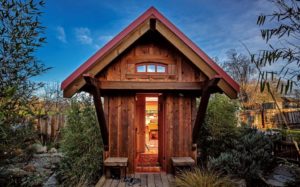
Jay Shafer’s Tiny House in Graton. (photography by Chris Hardy)
Ella Jenkins wakes up nearly every morning in a 120-square-foot Cypress 18 Tumbleweed Tiny House that she built herself on the Sonoma Coast.
“It feels amazing, absolutely delightful,” she said of the space she shares with her boyfriend and their dog, a 55-pound mutt they rescued a few months ago. “I’ve always loved small spaces, and in a tiny house everything is so close. I burn fewer dinners and I don’t lose things.”
But what about clothes and shoes? Do you have to eschew fashion to live in such a small space?
“I was the kind of person who would buy something and then not wear it,” she said. “Now I have none of the guilt of buying too much. I only have things I need and love.”
She has three pairs of shoes: two pairs of boots for daily wear and one pair of high-heeled boots.
The 23-year-old harpist paid for her house by busking (playing in public spaces) in Scotland. Her harp is the first thing she sees when she walks into her little home, with a view of the ocean beyond it. She still busks for tips, though cautiously, because many local ordinances prohibit it.
Her coastal house fully paid for, Jenkins works just two weekends a month, conducting workshops for Tumbleweed Tiny House Co. The rest of her time is spent knitting, making jewelry, drawing, painting and playing music. Time — the way you spend it and the way you think of it — shifts when you don’t have a monthly mortgage or rent payment.
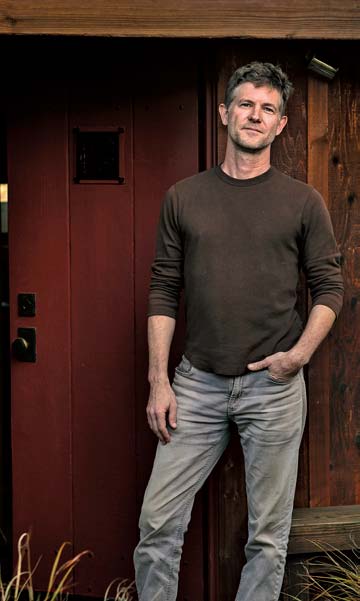
Jay Shafer in front of the wee domicile.
Jay Shafer, the visionary who founded Tumbleweed Tiny House in Sebastopol the late 1990s, explained that a tiny house isn’t so much small as it is essential.
“It is simply a well-designed home, with all of the unnecessary parts edited out,” he said. “Everything is boiled down to its essence.”
For Shafer, that essence is a convergence of necessity and beauty. As the scale of a structure shrinks, he said, the significance of everything is magnified. The alignment of each element, even the smallest of details, must serve the overall vision and purpose, which is to create a home that is every bit as wonderful, comfortable and nourishing, if not more so, than a much larger house.
But there’s something else, too: a touch, perhaps, of magic, a reflection of Shafer’s passion for meaning.
“I was working on a house that had 145 square feet of space,” he offered by way of explanation. Local building codes required a minimum of 150 square feet, yet to add 5 square feet to his design would destroy its overall economy and alchemy. He solved the problem by putting the house on wheels, as building codes apply to structures, not vehicles.
Over the years, Shafer has honed his design skills in unusual ways. He’s stood in public bathroom stalls, pondering the feasibility of installing a functional kitchen in such a small space. To perfect sleeping lofts in his houses, he’s spent time sitting under tables to assess the feel of the headroom.
He also thinks a lot about downsizing, about what items and objects people need, what they think they need and what is hardest to give up. Shafer lives in a 125-square-foot house in Graton; in front of the little abode is a 500-square-foot structure he calls the bunk house, where he, his wife and their two young sons sleep.
Not quite two years ago, Shafer sold Tumbleweed to a partner, Steve Weissmann. Their design aesthetics were diverging, he said, and he was focusing on new designs and projects.
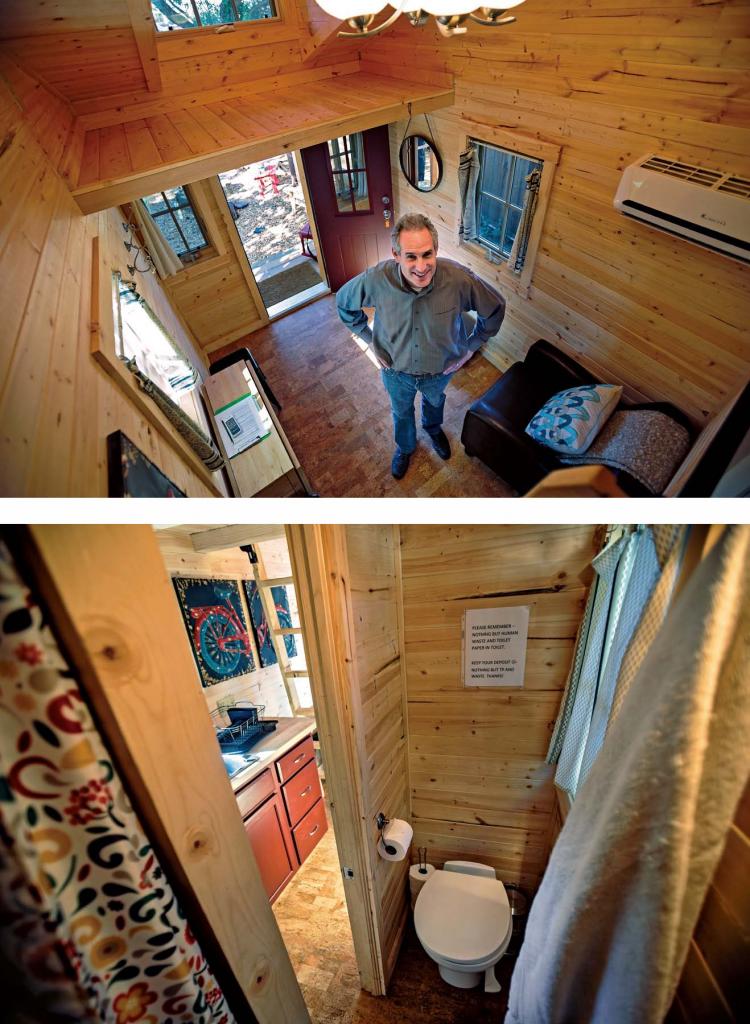
Tumbleweed Tiny House president Steve Weissmann in a 131-square-foot Tumbleweed in Sonoma that is available as a vacation rental (top), and the rental’s bathroom (bottom).
During Shafer’s time at Tumbleweed, the company developed plans for several styles of tiny houses and sold them to do-it-yourselfers. He built a few houses, but mostly worked with those who wanted to construct their own. Many started blogs about the process and it didn’t take long before “Tumbleweed” became the generic term for tiny houses throughout the country.
“We seem to be the Kleenex of the tiny-house movement,” said Debby Richman, marketing director for Tumbleweed, referring to the use of the best-known manufacturer’s brand name for all facial tissues.
Weissmann moved the company’s offices to Sonoma, not far from the town plaza, and began to expand the business, especially its construction side. An Amish family in Colorado Springs, Colo., now manufactures the homes. In the first year after the sale, Tumbleweed delivered more than two dozen little houses and this year expects to move 100. It also sells plans and holds seminars nationwide.
An in-house architect, Meg Stephens, has added new designs to the original Tumbleweeds and lives in one in Sonoma that she and her husband built last winter. The company has incorporated a number of requests into its design options and codified many of them, such as stairs instead of a ladder to get to the sleeping loft and dormers in the loft itself to make it more spacious without altering the home’s overall footprint.
As Tumbleweed has expanded, it has attracted a huge array of people looking for something other than a primary residence, though there is plenty of interest in living in tiny houses, too. Individuals are attracted to the mobility of the homes, their small ecological footprint and the freedom of not having a mortgage. At the same time, traditional homeowners are interested in tiny houses as vacation homes, guest houses, caregiver homes, home offices, art studios and backyard hideaways for youngsters.
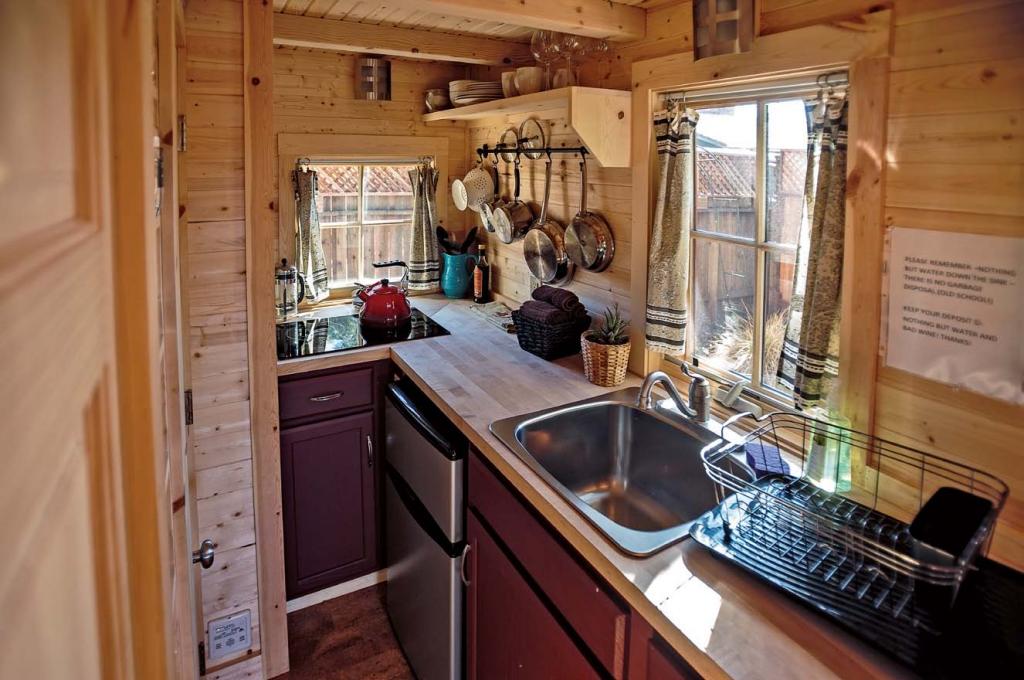
The Tumbleweed rental’s kitchen.
Not far from the company’s office is a 131-square-foot Tumbleweed that can be rented for the night by vacationers and prospective tiny-house buyers. For those who want a Tumbleweed of their own, base prices range from $57,000 for 18-foot models to $66,000 for 24-foot models.
Today, nearly all tiny houses are constructed on wheels, with permanent trailer hitches. Tumbleweed houses have a small air conditioning and heating unit attached above the trailer hitch which, when it is not connected to a vehicle, can hold a propane tank.
Shafer, whose new company is Four Lights, builds all of his new designs on wheels, too.
One of the benefits of wheels instead of cement foundations is that the structures are classified as recreational vehicles, which provides a range of benefits, from financing and insurance to zoning. Although some communities restrict how long an RV can remain parked at a specific location, cities are reconsidering such restrictions. In Sonoma, for example, it is now legal to have a tiny house on wheels year-round if a caregiver lives in it.
Tiny houses aren’t just mobile, they’re durable and efficient.
Tumbleweed makes its houses to last a minimum of 50 years. They need power and water, of course, and there are several options. A tiny house can tap into the grid with electrical, water and sewer or septic hookups, or can be entirely self-contained, using propane, a composting toilet, water tank and, in a long-term location, solar panels adjacent to the house.
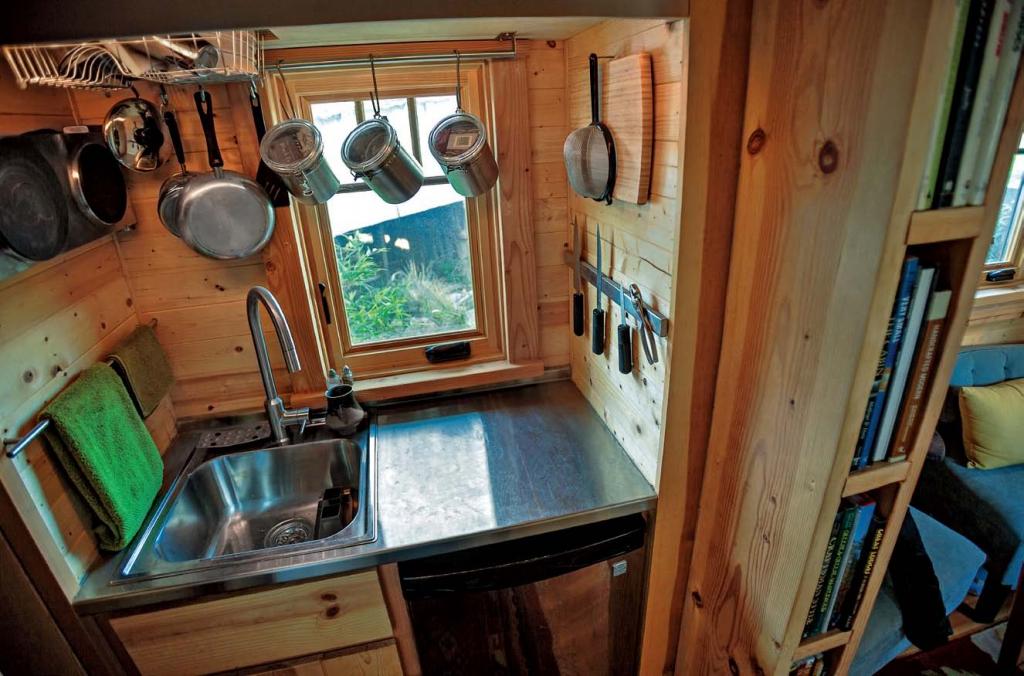
All the essentials are close at hand in the compact kitchen of Jay Shafer’s tiny Graton home.
Shafer’s new company features six designs for tiny houses. He’s expanded to offer ready-made houses and hopes manufacturing will begin sometime this year, by a company in New Hampshire. He’s not yet established the final price of his manufactured Four Lights houses; materials estimates for do-it-yourselfers range from $8,450 to $30,400 and include heaters, appliances and other components.
Shafer has also developed plans for a village of tiny houses called the Napoleon Complex, which he jokingly refers to as co-housing for the anti-social, though really, he’s simply focused on perfectly designed private spaces combined with an opportunity to share certain necessities.
“You can share resources like washers, dryers and lawn mowers,” he said, adding that this is not traditional co-housing. “There will be no community meetings,” he emphasized.
Although Shafer envisions 16 to 22 tiny houses per acre, he likely will begin with a community of eight to 16 houses, for a total of 20 residents. People will own their own houses and the little plots of land they sit on, and share the expense of the common area.
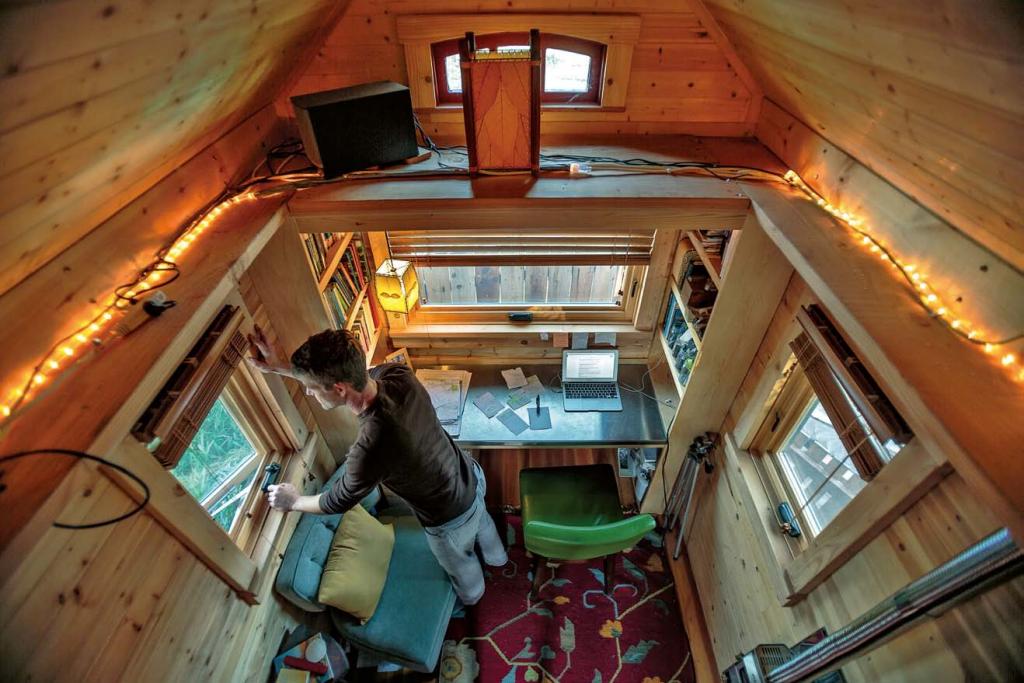
Plenty of windows offer fresh air and light for Shafer’s tidy office nook.
Tiny houses have broken through to the mainstream. One sees them in the Deep South, where they began to appear after Hurricane Katrina, though they tend to be most popular where high housing prices intersect with innovative thinking.
There are movements in Portland, Ore., and Boston, with requests for seminars coming from all over the country. Yet Sonoma remains the nexus of the little-house movement.
“Tiny-house proselytizers tend to be from Sonoma County,” Tumbleweed’s Richman said, calling its residents thought leaders and early adopters.
For them, living in a small space is living large.
MFK Fisher (PD File). The Art of Eating will be held at the Bouverie Preserve May 18
MFK Fisher (PD File). The Art of Eating will be held at the Bouverie Preserve May 18
Bouverie Preserve’s Art of Eating Picnic: Inspired by the life of culinary author M.F.K. Fisher, this annual picnic presented by the Audubon Canyon Ranch invites guests to the limited-access Glen Ellen Reserve for a day of eating, drinking and exploring. Benefitting the Ranch’s Nature Education Programs for schoolchildren, the Art of Eating event runs from 12:30pm to 4:30p.m. on Sunday, May 18 with chefs from Brown Sugar Kitchen, Rivoli Restaurant and Taste Catering providing the meals. Tickets are $150 per person. Info at egret.org/art_of_eating .
This is the annual food and wine event that pretty-much sums up what it is to live in Sonoma County. Held at the Summerfield Waldorf School’s breathtaking biodynamic farm, top Bay Area chefs and vintners come together (many of whom are alums or have children at the school), to feast and toast under the stars. Among the feast-makers: Traci Des Jardins of Jarndiniere, Jon Stewart and Duskie Estates of Zazu restaurant and farm, Nick Peyton of HBG (and formerly of Cyrus), Lowell Sheldon of Peter Lowell’s and the schools’ own chef, Mat Petersen. Vintners pouring include Claypool Cellars, Coturri, Davis Family Vineyards, Littorai, Truett Hurst, Roederer, Small Vines Wines, Porter Bass and Martinelli Winery. Saturday, May 17, 3:30pm to 10:30pm, $90 per person, benefitting the school’s scholarship program. Tickets at farmtofeast.org.
Rendez Vous Bistro in Santa Rosa will become Flip A Crepe this summer. File photo
Rendez Vous Bistro in Santa Rosa will become Flip A Crepe this summer. File photo
The owners of Rendez Vous Bistro in downtown Santa Rosa (as well as Flipside Burgers, Flipside Steakhouse and Sports Bar, Lakeside Grill) are planning a “fresh market concept” in the former Rendez Vous Bistro in Courthouse, which judging by the name, Flip A Crepe, will include, uh, crepes?
Reps are talking yet, but it’s slated to open this summer, along with Flipside Brewhosue in Rohnert Park, which was formerly Latitude Island Grill.
Meanwhile, Lakeside Grill, the outdoor restaurant that opened last year in Spring Lake Park, will open with a limited menu on Saturdays and Sundays from May 17 through Memorial Day, then offer weekend breakfast and brunch, daily lunch and dinner, and a happy hour starting at 2p.m. all summer long. Hours are 10:30 AM until the park closes at sunset.
Pork Ramen at Shige Sushi in Cotati. photo heather irwin.
Pork Ramen at Shige Sushi in Cotati. photo heather irwin.
Ever since Doug Keane shuttered Shiso, the Northbay has suffered an appalling lack of decent ramen.
There is, of course, Hana Japanese (101 Golf Course Dr., Rohnert Park). But we’re talking casual, slurp at the table, take a doggy bag home kind of street ramen.
Alas, we’ve finally found it: Pork style.
Shige Sushi in Cotati is the absolute real deal. The tiny Japanese kitchen simmers pork bone, chicken and dashi stock over several days, concentrating the flavors into a cloudy, deeply pork-flavored broth. Slices of pork, a soft-boiled egg, strips of mushroom and green onions and chewy ramen noodles, served piping hot (with a dash or two of tobiko) make this a sinus-cleansing, soul-warming meal. Ramen isn’t available every day, so call ahead to make sure they’ve got it.
If not, you’re still covered. Shige’s sushi, sashimi and homestyle dishes (like karaage, or Japanese fried chicken) easily stand up to Rohnert Park’s Hana Japanese, Hiro in Petaluma and Bennett Valley’s Yao Kiku (Sam’s authentic dishes—which are often off menu—have made BiteClub’s head swim in the past).
8235 Old Redwood Hwy, Cotati, 795-9753. Open Tuesday through Friday, closed Monday
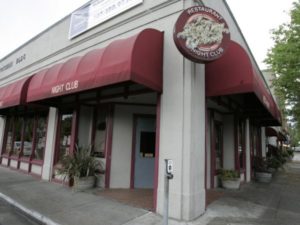
The long-shuttered Last Day Saloon may come back to life, albeit in a new guise, in 2015.
BiteClub has gotten word that a local family of restaurateurs are hoping to rehab the historic building on Fifth St. in Santa Rosa’s historic Railroad Square. With a working name of Monsoon, the concept is an “upscale Indian/fusion restaurant and performance venue”.
Just don’t call it a nightclub.
The developers say they’ll have an outdoor patio, long bar in the music and performance space along with wine-pairing and “approachable” Indian cuisine in the restaurant area.
The plan goes to the City May 7 , 2014 and BiteClub will have more details in the coming weeks.
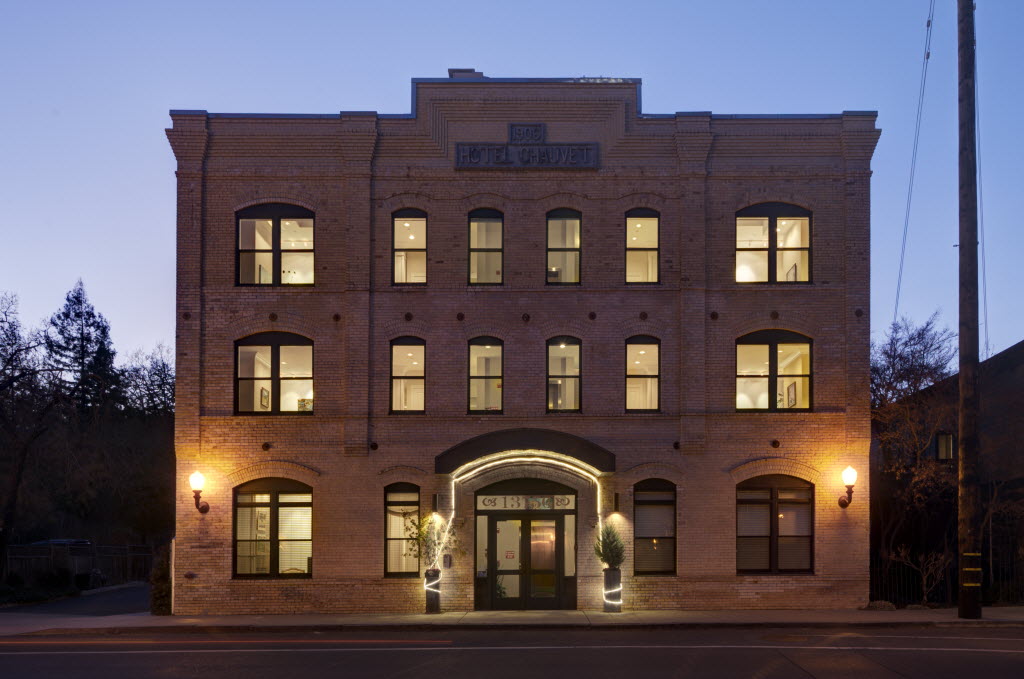
Hotel Chauvet has graced the village of Glen Ellen for more than 100 years and is once again so grand that its guests pay a handsome sum to experience its historic luxury. Joshua Chauvet, who established this and other businesses in the bustling burg of yore, would be proud that his 1906-vintage hotel has dodged the wrecking ball.
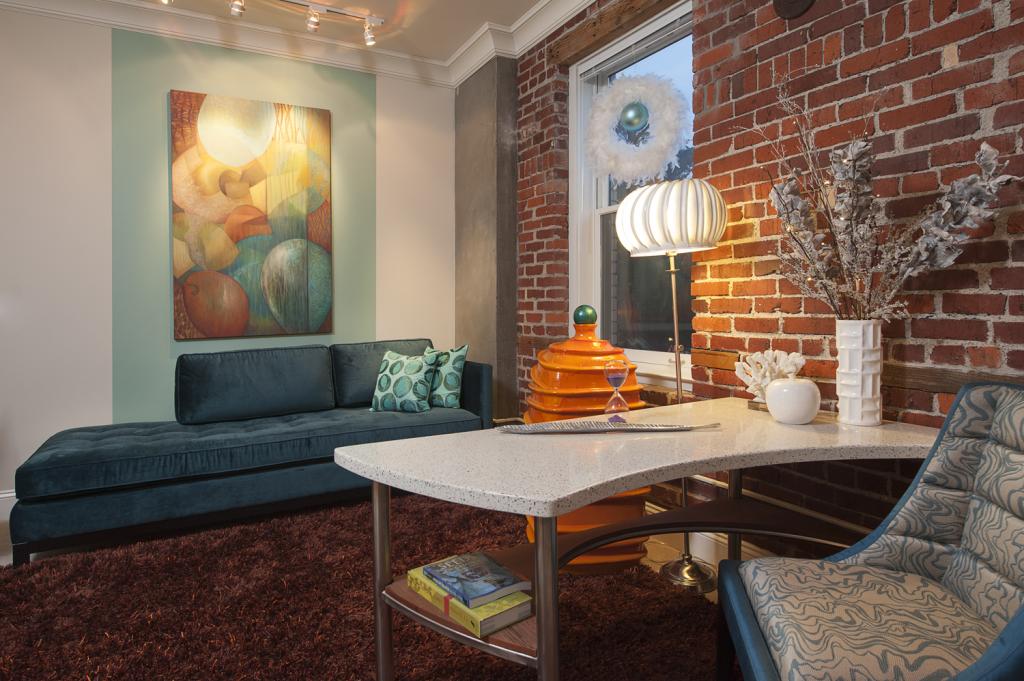
Today this National Register of Historic Places landmark, now called The Chauvet, is a six-condominium vacation rental venue housed within the mostly original exterior. Each 2,000-square-foot, three-bedroom, two-bath condo whispers of its past with exposed brick walls and repurposed tie-rod plates covering old flue vents. The kitchens shimmer with stainless steel and granite, while gas fireplaces warm the living rooms, each furnished with a contemporary flair. An inviting pool long enough for lap swimming has been added amid a gorgeous lounge-chair-laced garden.
Frequented by weekend escapists, wine tasters and wedding parties, The Chauvet, which once had a top-floor ballroom and ground-level tavern frequented by famed author Jack London, has returned to life, attracting people from places as diverse as San Francisco, Florida and France. Marketed mainly online, its charms entice those looking for the modern pop of orange armchairs nestled in a stately edifice that’s welcomed generations of visitors.
The rebirth of The Chauvet is a saga of financial challenges, permit hurdles and a collapsed roof that nearly doomed the project. Yet the outcome is heritage preserved and a building that is now bliss.
“The building ultimately has its own spirit and it speaks for itself,” said Christine Hansson, the manager and a principal owner. “It is still here because it wanted to be. It really is a special place and we are just the caretakers.”
Hansson and her husband, Hans, along with project architect Larry Paul and other investors, purchased the boarded-up property on Arnold Drive in 1996 as an investment. “We were supposed to be in and out in two years and we’re still here,” she said, noting that the current owners are herself, Hans, and the project’s general contractor, Mike Allen. “We could have given up the ghost, but we didn’t.”
They acquired the abandoned property from George Siebert, who had operated George’s Three Nations restaurant, bar and arcade at the site from 1971 until 1987, when the eclectic spot that offered 42 beers on tap closed for good. The structure, begun before the 1906 San Francisco earthquake and completed in 1907, became a hazardous eyesore.
“The county wanted to tear it down,” Hansson said. She and her team bought the building with a plan of turning it into condos and immediately selling them. “It was always our intention to save it.”
After many months in the planning and permit process, they were given permission to renovate, only to discover they could not secure financing. “Construction costs were escalating faster than property values at the time,” Hansson said. “Everybody was afraid of it. It was unreinforced masonry and all the seismic requirements were kicking in.”
Dreams dashed, the investors launched a new scheme to return The Chauvet to its true roots, as a hotel. They purchased the adjoining property to the south, which was originally part of the Hotel Chauvet site, and drew renderings that added two additional wings, resulting in a blueprint for 45 rooms.
“The county didn’t say no to a hotel. They were looking at it in a positive light. They didn’t slam the door on us,” Hansson said. But many Glen Ellen residents were not on board, concerned about the size of the hotel, parking and traffic. “I understood where they were coming from and I didn’t have the stomach for a fight,” she explained. “With community opposition, it makes it tough.”
While the partners needed a large number of rooms for the project to make financial sense, they also didn’t want to change the character of Glen Ellen. In 2004, eight years after they purchased the building they revisited the condo plan, found financing, paid off the original investors and renewed the building permits for the current six-unit venue.
Two weeks before construction began, an old beam broke and the entire roof caved onto the third floor, pushing out the south wall. Arnold Drive was closed in front of the building for four days. “I was outside on the street listening to people say, ‘They should take it down,’” Hansson recalled. Still, she knew that somehow it would survive. A stabilization team shored it up and removed the debris. Once the weight was removed, the bowed wall shifted back inward, making it possible to repair it and save the building from demolition.
Hansson made it her mission to salvage as much as possible, and with help from her two sons, hand-washed 3,000 bricks that ultimately went back into The Chauvet along with the tie rods and some fir beams that had fallen.
The condos were completed in 2007, just as the real estate downturn began. Priced at $1.1 to $1.3 million, they didn’t draw any buyers. Hansson and her husband purchased unit 2B to jump-start interest, an idea that failed. They then tried to sell the condos at auction, which was canceled when registered buyers failed to show.
Christine Hansson
The vacation rentals began in summer 2008. The Chauvet finally opened its doors to guests again, calling itself “Sonoma Wine Country’s Most Unique Lodging Experience.” The Chauvet is now a hot spot with a high occupancy rate, commanding $645 a night for a three-night minimum and $3,850 a week.
For Hansson, who learned along the way that she shares a birthday, July 20, with Joshua Chauvet, the building is now part of her soul. She loves catering to her guests, adorning the rooms with fresh flowers, local wine, chocolates and homemade cookies. She encourages them to use the Glen Ellen Village Market across the street and shares tips for visiting nearby restaurants and wineries.
Two of the condos are now back on the market, but Hansson, who splits her time between a home in San Francisco and The Chauvet, said she will never sell 2B. “There’s too much of me in this building. I’m attached.”
Without her, The Chauvet would not be historic. It would be history.
Tucker Taylor Director of Culinary Gardens and vegetable garden at Kendall-Jackson vineyard. (photo by
Chris Hardy)
Christian Dake was barely in elementary school when he asked his parents if they could start growing food and edible flowers.
“We started planting basil and tomatoes, and my first flower was a green zinnia,” said the St. Helena native. “We had three-quarters of an acre in front of the house, and I had an honor farmstand.”
More recently, the 32-year-old gardener grew tomatoes with “Tomato Guy” Brad Gates of Napa’s Wild Boar Farms, raised 2,000 heirloom squash and melons for Gere Gettle of Baker Creek Heirloom Seeds of Petaluma, and started working with seed savers around the globe to preserve and produce heirloom seed.
So when the Culinary Institute of America at Greystone came knocking on his garden gate last spring, looking for a culinary gardener for its new Farm-to-Table Cooking program, Dake jumped in with both boots.
“We’re training these chefs to work closely with a garden or create their own garden,” Dake said. “If they can see what’s possible here, they know it’s possible for them.”
The farm-to-table students care for the garden and harvest the fruits of their labor under the guidance of Larry Forgione, a legendary chef who pioneered seasonal, local American cooking in the 1980s.
With Forgione’s help, they also create a prix-fixe, five-course menu they serve on weekends at The Conservatory, a pop-up restaurant on the St. Helena campus.
“If you don’t start with great ingredients, you’re not going to have great food,” Forgione said, summing up his farm-to-fork philosophy.
Although the Napa Valley was originally planted to grain, nut and fruit trees, most of those food crops disappeared long ago in favor of wine grapes.
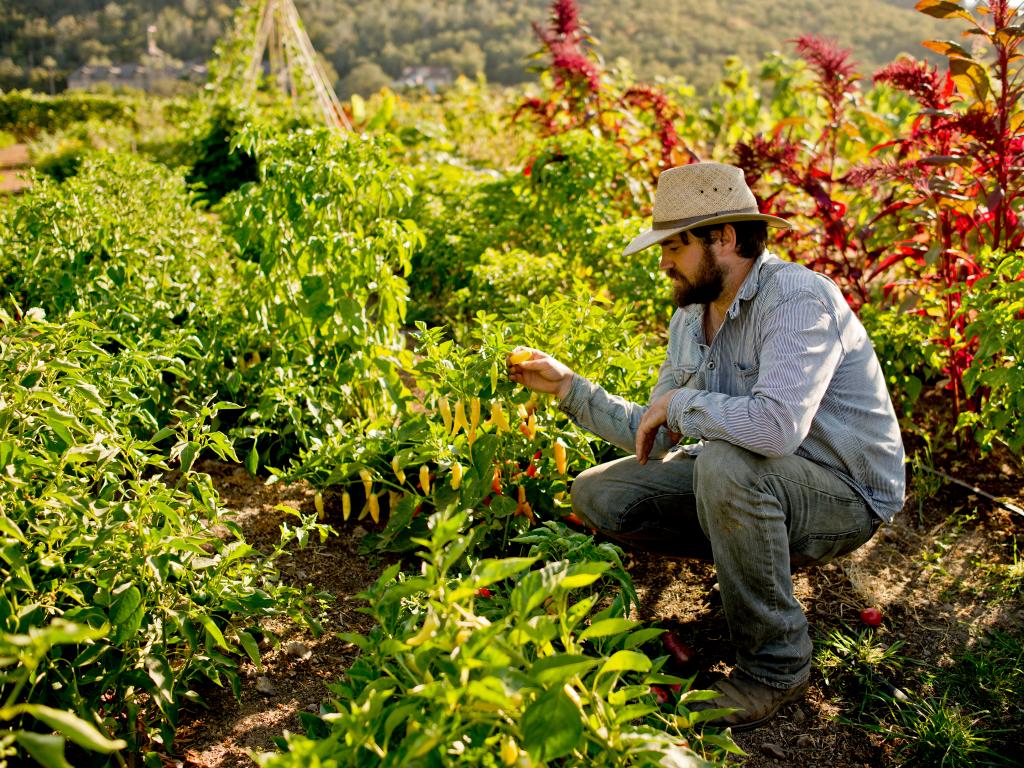
Culinary Institute of America Farm Manager Christian Dake picks an aji limo pepper at the CIA farm at Charles Krug Winery. (Alvin Jornada / The Press Democrat)
For Dake, who has a botany degree from Humboldt State University, growing grapes was not an option. Instead, he always dreamed of creating the most beautiful garden in Napa Valley. With the 6-plus acres provided by Charles Krug Winery across from the CIA campus, that dream has become a reality.
The production garden, which supplies the restaurants and the teaching kitchen on campus, doubles as a demonstration garden for Charles Krug Winery. It’s also a model of sustainability throughout the valley.
“I hope a lot of vineyards will do this as well,” Dake said. “Napa Valley is a wonderful place to grow a wide range of crops, especially fall-ripening crops like tomatoes.”
Dake came onboard in April 2013 and hit the ground running. Luckily, he already had seedlings started in a Calistoga greenhouse.
“I had all the plants ready to go,” he said. “The first year was a whirlwind.”
After clearing the soil of rocks and cement, Dake and the students amended it with compost and set about growing zinnias and calendulas, heirloom tomatoes and cucumbers, eggplant and New Zealand spinach.
He also created an experimental garden planted with aromatic herbs such as lemon verbena, subtropical fruits like lemon guava, and extreme chile peppers including the Diablo Grande from Oaxaca, Mexico.
“Peppers are my big thing: chocolate habaneros, aji amarillo and aji limo,” he said. “The students make a lot of hot sauce.”
But tomatoes also tug at his heart, especially heirlooms such as the Amos Coli paste tomato and the Blue Beauty tomato developed by Gates.
“The blues take a longer time to ripen,” he said. “But they have a thick skin and they keep well.”
This season at the garden, Dake has built a plastic greenhouse with retractable roof panels that will allow the students to grow crops year-round. He also is excited about the garden’s new fields of grain, having planted 3 acres to Sonora and Blue Tinge Ethiopian wheats.
“We’re going to thresh it and grind it at the Bale Grist Mill, to be used in breads and pasta,” Dake said. “The Sonoran wheat has high gluten, but it’s more digestible, and it makes incredible pastries.”
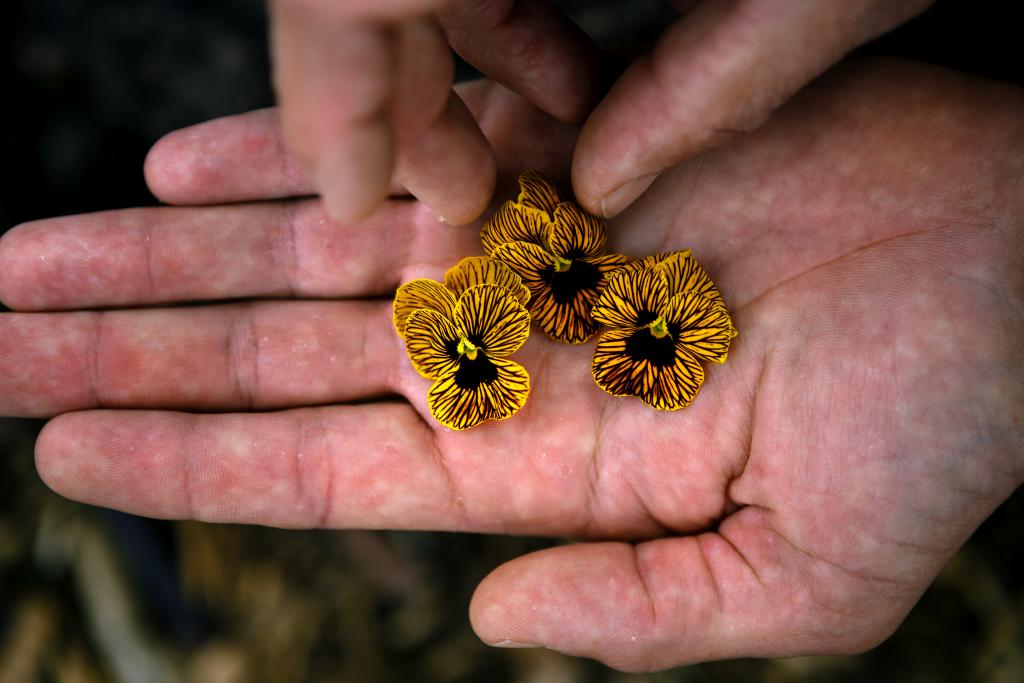
Tucker Taylor holds violas, edible flowers, in his hands at Kendall-Jackson vineyard. (photo by Chris Hardy)
Along with a flock of Silver Spangled Hamburg chickens, the garden also welcomed four Red Wattle sows.
The chickens will fertilize the garden, and the pigs will eat excess from the farm and campus. Like people, the animals are smart. They know a sweet, vine-ripened tomato when they taste one.
“It’s hilarious to see the pigs eating,” Dake said.
K-J gardener grows into new role A straw-hatted Tucker Taylor surveys the tidy rows of winter vegetables growing at the Kendall-Jackson Wine Estate and Gardens, then moves into the warm, slanting rays of late afternoon.
It’s obvious that the shy, laconic farmer is more comfortable in the sun than the spotlight. Still, he relishes his role as ambassador for the Santa Rosa-based winery, which has unusually deep roots in the soil.
“My focus is to educate our guests, and hopefully inspire our guests, to expand their own gardens or just become aware of the local food movement,” the estate’s culinary gardener said. “The beauty of Sonoma is how diverse it is agriculturally.”
Taylor worked at organic farms across the country before spending five years as culinary gardener for The French Laundry restaurant in Yountville.
“I’ve always had an intimate relationship with chefs,” he said. “That’s the exciting part, entertaining their ideas and needs and bringing my own experience to the table.”
Justin Wangler, executive chef at Kendall-Jackson, describes Taylor as incredibly detail-oriented with a deep knowledge of gardening and food.
“The quality of the stuff he grows is ridiculous,” said Wangler, who showcases the pristine produce in food-and-wine pairings at the winery and at Partake eatery in Healdsburg. “He’s very sincere about his vegetables and food, and about the people in his relationships.”
Tomatoes, fresh squash, mozzarella and squash blossoms are served at the Kendall-Jackson Wine Center. (photo by Conner Jay)
Since he was hired in April 2013, Taylor, 43, has been busy upgrading the 3-acre vegetable garden, launching a redesign that promises to yield more produce and pleasure.
After amending the soil, Taylor rotated crops, eliminated pathways, widened the beds and introduced an intensive style of gardening that requires hand tools rather than tractors.
“It gave the garden more balance, created more sun and a nice pathway,” Taylor said. “Intensive gardening increases the productivity. … There is less weed pressure, less evaporation.”
The central pathway through the garden, which will be lined with golden decomposed granite, will serve as a gathering spot for alfresco dinners.
“The trees will be lit up, and a long table down the center of the garden will sit 600 people,” Taylor said. “We have a lifestyle and a wine and food culture here.”
This year, Wangler said, the winery plans to offer garden tours that include harvesting with Taylor, a cooking class and a meal. Produce from the estate is served at local restaurants such as the Farmhouse Inn in Forestville. A new wine and food club in the works will allow guests to take vegetables home, along with recipes from Wangler.
In addition to the winery garden, Taylor is redesigning the 8-acre farm at the Jackson family estate in Alexander Valley. After that, the sky’s the limit, as he turns his artistic eye to the company’s other estates in Oregon, France, Italy, Australia and Chile.
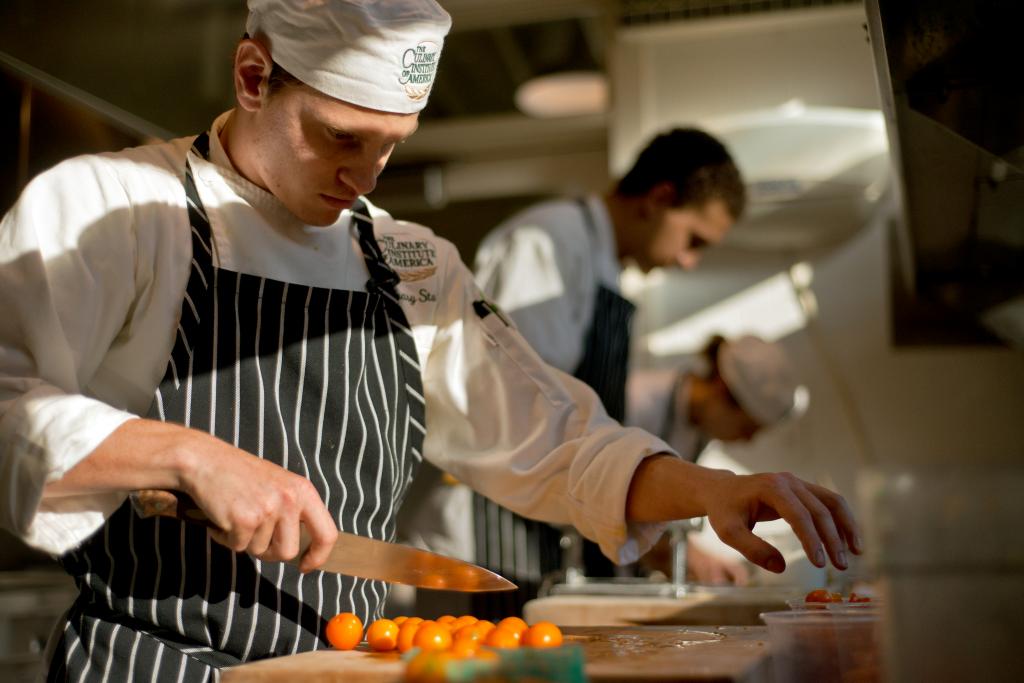
Zachary Stoller prepares tomatoes to be used in a tomato-cucumber green salad with gooseberry vinagrette at the Culinary Institue of America’s The Conservatory at Greystone, in St. Helena. (photo by Alvin Jornada)
It’s an impressive trajectory for a Southern boy from Jacksonville, Fla., who first sank his hands into the dirt in his family’s summer garden.
Taylor got a degree in business administration at the University of Florida but decided that working in a bank was not for him. So he went back to school for another degree in environmental horticulture.
After graduating in 1998, he started an organic farm outside of Portland, Ore., then managed an organic farm in Athens, Ga., for six years, where he fine-tuned the art of growing for chefs.
Borrowing ideas from mentors such as farmer, author and educator Eliot Coleman of Maine, Taylor is building three plastic greenhouses, known as hoop houses, for year-round harvesting at the Kendall-Jackson gardens.
“We can do an early crop of tomatoes, growing them vertically up strings,” he said. “Same with seedless cucumbers, peppers and eggplants.”
For the past two years, Taylor has shared his intimate views of gardens with 40,000 followers by posting daily photos on Instagram, a feat that has made him “Instafamous.”
Although reluctant at first, his success at social media has allowed Taylor to connect with chefs and farmers around the world he never would have met otherwise.
“I didn’t get into gardening for my love of communication,” he said. “But a picture speaks a thousand words.”



 Need something besides the newspaper (or your daily to-do list) to read at lunch? Chipotle’s got you covered.