19 Best Sonoma Wineries to Visit This Spring

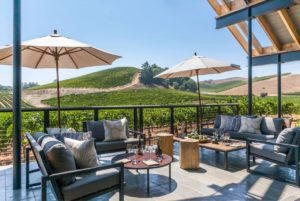
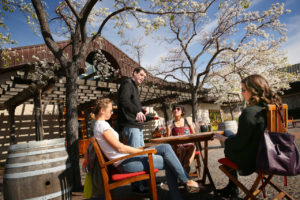
MacRostie Winery in Healdsburg, California
Outdoor tasting area at MacRostie Winery in the Russian River Valley. (MacRostie Winery)

Bud break is in full swing in the vineyards, and the days are growing longer. In some tasting rooms, the coming of spring ushers in barrel sampling and new releases. Special annual events include the Wine Road Barrel Tasting (March 2-4 and 9-11) and the Savor Sonoma Valley barrel tasting on March 17-18, focusing on wineries in Glen Ellen and Kenwood. Signature Sonoma Valley, an “immersive” wine experience sponsored by the Sonoma Valley Vintners & Growers Alliance, is set for April 6-8. Closing out that month is Passport to Dry Creek Valley (April 28-29), which showcases wine, food and fun at more than 40 wineries. Click through the gallery above for tasting rooms to visit right now. Call or check their websites for the latest information.

A Secret Meal Is on the Menu at Duke’s Common in Healdsburg

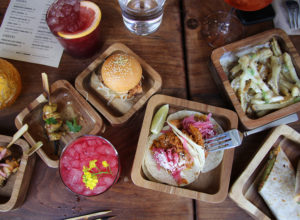
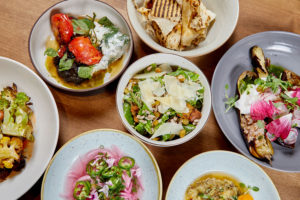
Snacks and sticks from Duke’s Common in Healdsburg. Heather Irwin/PD

“Are you serious?” is about the only thing to say when a very undignified plastic container of shrimp and grits is inexplicably plopped in front of me at Healdsburg’s newest dining hotspot, Duke’s Common. I’m feigning indignity quite well after a couple glasses of rosé.

This flimsy plastic tub — albeit brimming with buttery Southern grits with lobster sauce and fiery little shrimp — is the kind you’d find stuffed into a doggie bag or filled with fruit salad. Not exactly the bespoke earthenware stoically dotting starched white tablecloths around the rest of the Square.

Snacks and sticks from Duke’s Common in Healdsburg. Heather Irwin/PD

Then I get the joke. It’s a riff on “family meal”, a secret dish found at every restaurant, but not available on any menu. Humble, but nourishing, it’s a members-only experience for restaurant staff, made with a hodge-podge of kitchen leftovers and served from a communal pot. When family meal is set out, everyone from servers and dishwashers to executive chefs and line cooks come running — usually with a plastic take-out container — for this behind-closed-doors ritual.

“We all thought it would be a fun tongue-in-cheek menu item,” said Chef Shane Mcanelly (Brass Rabbit, Chalkboard), who collaborated on the project with Duke’s Spirited Cocktails owners Steven Maduro, Laura Sanfilippo, Tara Heffernon and Cappy Sorentino. “It’s been fun for me to take ideas that we might do for family meal and elevate them slightly,” said Mcanelly.

Five Dot Ranch corn dogs with stadium mustard. Heather Irwin/PD

Bridging that gap between front of house and back of house, restaurant or bar, lofty versus unpretentious, Duke’s Common is the halfway point—literally and figuratively—between the classic American cafe dining of Brass Rabbit (109 Plaza St.) and unfiltered farm-to-table booziness of Duke’s Spirited Cocktails (111 Plaza St.). Housed in the former Scopa space, the goal of the casual commisary is to be, “A high-spirited place to gather with friends to enjoy a quick bite and drink in the heart of downtown Healdsburg,” say owners.

At the Common, thirty-somethings balance toddlers on their hips, while sipping Prosecco, the pre-dinner crowd can grab quick nibble and glass of wine, and after-hours revelers can stuff down some Disco Fries before boogying home to bed.

Menu at Duke’s Common in Healdsburg. Heather Irwin/PD

Keeping in that unruffled spirit of hale and hearty bites like fries doused with gravy and tubs of shrimp and grits, it’s clear to see that Duke’s Common doesn’t take itself the least bit seriously. There’s a brief but eclectic lineup of things on skewers (mushrooms, chicken, corn dogs), small bites like the insanely popular McChicken sandwich and slightly larger bites that include slices of pizza for $4 or a burrito stuffed with falafel, along with cocktails, wine, and beer. Nothing on the menu is more than $10. We ordered just about the entire menu for under $100, much to our surprise.

Duke’s Common has arrived in the right place at the right time—a place for all of us to gather, whether we’re plastic dish or white tablecloth kinds of diners.

Best Bets

McChicken Sandwich ($6): Exactly nothing like its namesake–except for being fried, doused in mayo and highly addictive. A top-seller for a reason.

McChicken Sandwich with spicy mayo, cabbage slaw at Duke’s Common in Healdsburg. Heather Irwin/PD

Marinated Shrooms ($6): Surf and turf without the beef. The earthbound flavors of mushrooms meet briny furikake seasoning and seaweed. Kewpie mayo dots keep the dish on-trend for you know, people who like Kewpie mayo.

Little Pork Tacos ($7): Yucatan-roasted pork shoulder with habanero marinated onions and lime. You can get ‘em just as good elsewhere in Healdsburg, but having a Carmela Anthony cocktail ($10, vodka, lemongrass, ginger and prickly pear) in your hand concurrently trumps any Michelada.

Maple Bacon Donut ($3): Donut may oversell what’s more of a maple-glazed beignet. Big flavors make up for the tiny size. Recommended: Catch all bacon and glaze crumbs into waxed paper, then upturn into your open mouth. Refuse to acknowledge you just did that.

BBQ Pork Banh Mi ($8): Sub out pork for black pepper tofu topped with pickled carrot, daikon, cilantro, pate and jalapeno mayo, and you’ve got a killer veggie ‘wich.

Five Dot Ranch Corn Dogs ($6): Doll-sized bites of corn dog with spicy stadium mustard. They’re just so darned cute.

Maple bacon donut at Duke’s Commons in Healdsburg. Heather Irwin/PD
Maple bacon donut at Duke’s Common in Healdsburg. Heather Irwin/PD

Falafel-Ritto ($9): We recently had a similar bite at Zoftig, but the tiny size of this version was more cocktail-hour appropriate and packs a powerful flavor one-two punch with tzatziki, falafel and pickled onion.

Swing and a Miss

Pork Satay ($7): Lemongrass and ginger flavor petite skewers of pork. More peanut sauce would be advisable.

Disco Fries ($6): Though our fries seemed to have peaked before even hitting the dance floor, this concept gives Saturday Night Fever to poutine (gravy and cheese curds), adding mozzarella and Bechamel to the mushroom gravy. We like a crispier base, or the whole thing falls like a dropped disco ball. 

Duke’s Common is located 109A Plaza St., in Healdsburg. For information, call 707-431-1105 for visit dukescommon.com.

Models and Dogs to Take the Catwalk During Sonoma Trashion Fashion Week

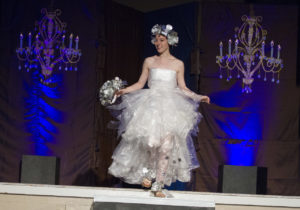
The Sonoma Community Center’s Seventh Annual Trashion Fashion Runway Show was held on Saturday, March 25. Designers and models once again thrilled the crowd with their creative costumes made from recyclables. (Photo by Robbi Pengelly/Index-TribuneO

When Sonoma County’s Fashion Trashion Show organizer Margaret Hatcher puts items in the trash, she often thinks about what kind of fashion potential they have.

For seven years, amateur designers of all ages have transformed their garbage into wearable treasures (“landfill couture”?) at the yearly Trashion Fashion Show sponsored by the Sonoma County Community Center. This year’s show will take place at the Sonoma Veteran’s Hall on April 14 as part of Fashion Trashion Week.

“It’s certainly a way of bringing attention to all the waste we throw away,” Hatcher says.

Some participants, Hatcher says, transform their throwaways into outfits that are “fun and meaningful to them.” One year a woman fashioned “her insulin pump delivery packaging into a very chic cocktail dress.”

Besides the environmental lesson and the artistic challenge the event brings, Trashion Fashion provides the confidence-building opportunity for children to create and present their works before an audience. Sonoma Community Center has a partnership with Stand By Me Mentoring Alliance, and kids and their mentors work together to create designs for the show. Several students from Mare Island Fitness Elementary’s STEAM program will participate as well.

Fashion Trashion Week will kick off with the opening of Barbie Rescued and Reinvented, an exhibit and auction of reworked Barbies (a non-recyclable, non-resalable ubiquity) on display in Gallery 212 at the Sonoma Community Center. Last year’s exhibition included Barbies dressed as birds, hula dancers and wearing “pussy hats.”

Dogs on the Catwalk, for canine fashionistas, will take place on April 8 on the patio at the community center.

Proceeds from Trashion Fashion Week events will support summer arts programs for kids. including fiber arts, sewing camp and plein air curriculum.

Trashion Fashion Show. April 8 at 1 p.m. and 4 p.m. (Sonoma Veteran’s Memorial Theater, 126 First Street West, Sonoma. Tickets $20-$80: svbo.org or 707-938-4626 x1)

Barbie Rescued and Reinvented. April 7-15. Dogs on the Catwalk. April 8. (Sonoma Community Center, 276 E Napa St., Sonoma. trashionfashionsonoma.org)

Passover: Where to Find Jewish Comfort Food in Sonoma County

My Matzoh Ball Soup recipe is worn and yellowed with a scrawl of notes penned in the margins, delectable adaptations, and that curious scent of lingering schmaltz is telling me it’s time.

This tattered recipe is nudging me to make my 48-hour soup in time for the Jewish holiday of Passover, which begins Friday.

Over the years Wine Country chefs have weighed in so the recipe has gone through countless iterations. I now make Matzoh Balls with fresh ginger in the mix, and I sauté onions, scallions and carrots to give the soup a hint of caramel. What’s more, I make a broth with schmaltz, that impossibly rich and textured chicken fat that makes this soup a pot of comfort, a steam bath of aromas; it completely soothes that part of you that needs a respite from the race, the howling deadlines of life.

I’m well aware that a 48-hour soup is not cost effective, from boiling the chicken to making artisan Matzoh Balls, but that doesn’t stop me from searching for the best Jewish comfort food on the market. I did a little research in Sonoma County, and if you’re hungry for comfort, here are some tasty dishes not-to-be missed. One caveat. Observant Jews wouldn’t consider some of these dishes suitable for Passover, but they are within reach and can be enjoyed throughout the year.

Matzoh Ball Soup at Bird & the Bottle

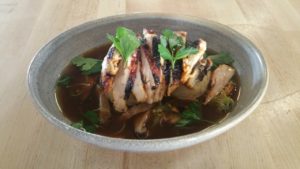
The Matzoh Ball Soup at this restaurant is exotic comfort with barbecue chicken and a Ramen broth.

“With Ramen being a big craze we combined those flavors with a traditional Matzoh Ball, made with homemade schmaltz and Korean grilled chicken,” said executive chef Mark Stark. “Chef Eric (Foster) loves Korean food, and I am intrigued by the underappreciated Jewish cuisine. Makes perfect sense.”

The $10 soup has become a signature dish, one you can always find on the menu, popular with Millennials and boomers and everyone in-between.

“I’m a big fan of food memories,” Stark said. “My first great steak, eating Tapas with my wife in Spain, sitting in a crab shack on the Chesapeake Bay eating Bluepoint Oysters and crisp soft shell crab sandwiches. Our daily goal is to recreate those memories for our guests. That’s comfort food.”

(www.birdandthebottle.com, 707-568-4000; 1055 4th St, Santa Rosa, CA 95404)

Hot Pastrami Sandwich at Mac’s Deli & Cafe

At this casual deli in downtown Santa Rosa, a hot pastrami and Swiss cheese on grilled Rye is a regular on the menu. And owner Toraj Soltani knows just how to dish up comfort.

“We slice the pastrami thin and hold it in a steam box, so the fat generally melts and it gets juicy,” he said. “We get our corned beef and pastrami from Chicago and we feel it’s the best in town.”

The sandwich, priced at $9.95, is a hit with a generous slab of hot pastrami stacked high and a kosher pickle on the side.

(www.macsdeliandcafe.com, (707) 545-3785, 630 4th St, Santa Rosa, CA 95404.

Latke at Forestville’s Backyard

You can step inside this Forestville restaurant and taste a latke with a Sonoma County twist, a unique creation that sidesteps that traditional starchy potato.

“Sometimes we do an heirloom carrot and celery root latke,” said chef Daniel Kedan. “But other times, like in the summertime when there’s an abundance of summer squash, we have a summer squash latke.”

The Backyard version of latkes, at $12, supports the local farms of Sonoma County, Kedan said. The chef sources local vegetables, and instead of serving the dish with a traditional dollop of sour cream, he opts for preserved fruit like Gravenstein apples.

“I don’t always have brisket or Matzoh Ball soup on the menu but I always have latkes on it every day,” he said.

The chef said latkes are a favorite because these scrumptious pucks of flavor bring back great memories from his childhood in Trumbull, Conn.

“When I was in elementary school, my mom would make latkes for my first and second grade class, and that was always fun,” he said.

Crafting latkes from a revolving door of ingredients – carrots, squash, etc. –  is a great way to highlight a vegetable in a unique way, he said.

“It allows us to hold true to where we came from,” Kedan said, “and also highlight where we are now — Sonoma County.”

(www.backyardforestville.com, 707-820-8445, 6566 Front St, Forestville, CA 95436)

Babka at Pop Up at Farmers Markets

For the past few years Les Goodman has been a POP UP artist, one who occasionally showed up at Farmers Markets in Sonoma County, wowing the crowd with his rendition of Chocolate Babka.

“Babka is made from a dough similar to brioche, an eggy sweet dough, rolled and braided,” Goodman said.

The chef said he fancies Jewish comfort food even when it’s unfussy like his mother’s version of brisket made with a packet of French onion soup.

“Brisket goes back to Eastern Europe,” he said. “It was an inexpensive cut of meat, but that’s not the case anymore … my version is with dried cranberries and caramelized onions.”

Goodman is now the chef/manager of the food program for Sonoma Academy, but he said he may do another POP UP at a Farmers Market this summer.

“I had a good mix, a lot of regulars, a lot who were Jewish,” Goodman said. “I think Jewish comfort food is made with love … it reminds people of how they grew up.”

Peg’s Matzoh Ball Soup recipe from the California Kosher cookbook, with tweaks from Wine Country chefs.

Ingredients:

Whole chicken

3 ½ quarts water

1 onion

2 shallots

1 leek

2 carrots

2 parsnips

2 whole celery stocks

Small bunch of parsley

A crisp, New Zealand-styled sauvignon blanc with bright acidity.

Matzoh Balls

2 tablespoon schmaltz or chicken fat

3 eggs lightly beaten

½ cup matzoh meal

1 teaspoon salt

2 tablespoons kosher club soda

1 tablespoon parsley, finely minced.

2 tablespoons shredded ginger

Matzoh Balls

Mix the schmaltz and the eggs. Add Matzoh meal, ginger and salt. Blend well. Then add kosher club soda and parsley. Put mixture in a Tupperware container and place in the refrigerator overnight.

Soup

Put chicken in pot with cold water. Bring to a boil, skimming off the foam. After the chicken is cooked thoroughly (about an hour), pull out the chicken and cut it into short strips to add to the soup later.

Keep the schmaltz in the pot for now and set aside. Then sauté the carrots, shallots, onion, leek and parsnips to give the soup rich texture and hint of caramel.

Put the pot back on the stove to boil after adding 2 quarts of water and that bottle of sauvignon blanc with bright acidity. After 30 minutes, add in the sautéed ingredients.

Matzoh Balls — the final magic

Pull the matzoh ball mixture out of the refrigerator, and bring a three-quart pot of salted water to rapid boil. Make walnut-sized balls by rolling batter in your hands, using water to moisten your palms. Drop them into boiling water. Lower heat and cover pot, tilting cover slightly, and cook for 30 to 40 minutes.


 

We Found the Impossible Burger!

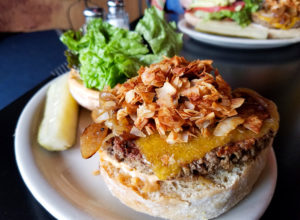
The Impossible Burger at Gaia’s Garden in Santa Rosa looks, tastes and eats like a beef burger. Mostly. Heather Irwin/PD
The Impossible Burger at Gaia’s Garden in Santa Rosa looks, tastes and eats like a beef burger. Mostly. (Photo by Heather Irwin)

A vegan burger that even the staunchest carnivores can sink their teeth into has arrived in Santa Rosa.

Gaia’s Garden (1899 Mendocino Ave., Santa Rosa) is featuring the much-hullabalooed Impossible Burger, an engineered faux-beef patty years in the making as scientists studied what exactly made a great burger, well, a great burger.

Embraced by some of the highest-end Bay Area chefs including Traci des Jardins (Jardiniere), meat-evangelist Chris Cosentino (Napa’s Acacia House) and St. Helena’s Harvest Table and even Gott’s Roadside in Napa, this isn’t your usual veggie burger. 

Inside of the Impossible Burger. Heather Irwin/PD


What’s the big deal? First off, there’s no dry, gritty flavor of beans, mushrooms, grains, and nuts that have made most of us run screaming from the mere thought of a “vegan” burger.
If we’re getting down to brass tacks, what makes the Impossible Burger unique is that it actually “bleeds” like cooked ground beef.  Sounds yucky, but that’s the truth. More importantly, it also tastes and chews like the meaty version. Mostly. 

The science behind the Impossible Burger is the result of a relentless search for a better burger that was more sustainable for the planet but would be appealing to carnivores. Funded by millions from venture capitalists like Bill Gates, the breakthrough was the connection between“heme”, an iron-containing molecule found in plants and animals. It’s what makes meat taste like meat, but the compound isn’t limited to animal products.

In the case of the Impossible Burger, soy leghemoglobin is the catalyst, which when cooked becomes “heme”, giving this vegan patty the flavor, look and mouthfeel of beef. Weird, right?

The taste test: We’re sold, especially since Gaia’s Garden does the Impossible up fancy with a load of mix and match toppings including caramelized onions, mushrooms, avocado, vegetarian mayo, dairy or non-dairy cheese, lettuce, tomato and all the usual toppings on a soft, herbed whole wheat bun. On a whim we opted for coconut “bacon”, which is nothing like bacon, but gives a delightfully smoky crunch. 

Impossible Burger with avocado and coconut bacon. Heather Irwin/PD

It’s a beast, and ours was overcooked a titch, but, unlike a beef burger, we were full but not full of regret an hour later. Easier on the gut. Easier on the planet. Win-win.

There are competitors to the Impossible Burger already entering the meatless burger market, notably the Beyond Burger, made with pea proteins and beets (for the “bleed”) which we also sampled at a food show and found entirely delicious as well.

We’re a long way from moving away from ground beef as an American food staple, but with vegetable-based products that can satisfy our heme-tooth in a sustainable and delicious way, it’s a huge step in the right direction.

Gaia’s Garden is at 1899 Mendocino Ave, Santa Rosa, 707-544-2491, gaiasgardenonline.com.

So Close: Sonoma County Restaurants Opening This Spring

We’ve had a few big openings in the last few months, from Zoftig and Perch and Plow in Santa Rosa to Duke’s Commons in Healdsburg. But that doesn’t mean we’re not still obsessively following the construction and permitting of several others throwing open their doors in the coming months. Here are some updates on what’s coming (photos in the gallery above). 

Les Pascals, Mid-March OPEN!
This French pastry cafe in Glen Ellen brings together husband and wife team Pascal and Pascale Merle’s patisserie skills with Sean Perry’s bread baking finesse. The cherished “Yellow Building” at 13758 Arnold Drive is slated to open in the next week or so, depending on final inspections, according to building owner Christine Hansson.

Parish Cafe, March OPEN!
Robb Lippincott’s wildly popular New Orleans restaurant is close to opening in downtown Santa Rosa, featuring all the po’ boys, beignets and cafe au lait you can shake a Louisiana gater at. The exterior looks fantastic, and fingers are crossed that they’ll get the final go-ahead to open in the coming weeks. 703 Fourth St., Santa Rosa.

Stockhome: Estimated End of April: Oh, we are so excited about this one. The owners of SF Swedish restaurant Plaj will soon open a more casual street food restaurant in Petaluma. They’re doing some pop-up preview dinners in San Francisco, teasing our taste buds with dishes like chicken shwarma with falafel, saffron basmati rice and garlic yogurt, Greek salad with halloumi cheese and Swedish kabob. Why so much Middle Eastern-inspired food? The many cultural influences in the Nordic country include large populations of Greek, Turkish, Israeli, Syrian and Lebanese immigrants whose food has become integrated into the country’s gastro fabric. Stockhome will also offer Lordagsgodis — Saturday candy — which is also a tradition in Sweden where kids load up on sugar for the week. 220 Western Ave., Petaluma.

Jade Room: May
Sift Dessert Bar founder Andrea Ballus is planning a bubbly and small plate spot at 643 Fourth St. in downtown Santa Rosa. Permitting has come through, but they’re a bit behind their much-hoped-for February launch. We say, worth the wait.

Look Up: Astronomical Events in 2018 and How to See Them in Sonoma County

Sonoma residents got moony over this winter’s big celestial event, the “super blue blood moon” that graced the skies in the wee hours of January 31. This kind of eclipse — of the second full moon of the month while on its closest approach of orbit to Earth — last occurred in 1982, and won’t happen again until 2037. But there’s plenty of reason to keep your eyes peeled between now and then.

Two local astronomers — SSU professor Scott Severson and SRJC instructor Keith Waxman — shared the night sky events visible from Sonoma County they’re looking forward to most in 2018. Click through the gallery above for dates and details.

Fine Spot for Pinot: Visit Sonoma’s Newest Wine Appellation in Petaluma

2/5/2014: D1: Adam Gaines, second from left, pours Keller Estate wines for, from left, Casey Burke, Lisa Nourse and Stephanie Simunovich of San Francisco. Keller Estate is one of the vineyards in the Petaluma Gap, an area where the Pacific winds blow through a break in the coastal range southeast to the San Francisco Bay. It is known for producing grapes with powerful flavors. PC: Adam Gaines, second from the left, pours samples of wine from the Keller Estate Winery for, starting from left, Casey Burke, Lisa Nourse and Stephanie Simunovich of San Francisco in Petaluma on Sunday, January 26, 2014. (Conner Jay/The Press Democrat)

This past November, the federal government recognized the Petaluma Gap as the newest American Viticultural Area (AVA), giving Sonoma County its 18th such wine appellation and providing another reminder or its vast diversity of grape growing throughout the region.

The Treasury Department’s Alcohol and Tobacco Tax and Trade Bureau’s ruling allows wineries that use grapes from the area to put the “Petaluma Gap” designation on their bottle labels in an effort to differentiate themselves in the competitive $34 billion marketplace for California wines.

The Gap covers 4,000 acres of vineyards in an overall 200,000-acre region in southern Sonoma County and northern Marin County. About 75 percent of the acreage is planted to Pinot Noir, which is the most expensive wine grape in the county. The rest is mostly composed of Chardonnay and Syrah.

Much of the new AVA is already covered under the enormous Sonoma Coast appellation, but Petaluma Gap proponents noted their area was different because of the afternoon wind and fog that come from Bodega Bay and pass through the hills and into San Pablo Bay, cooling the fruit and allowing a longer hang time to give it more flavor.

“It (the wind) helps cool down the grape and slow down the ripening,” says Rickey Trombetta, who chairs the Petaluma Winegrowers Alliance and is owner of Trombetta Family Wines in Forestville, which sources grapes from the area. “When the wine is part of a meal, it doesn’t overshadow and it doesn’t disappear.”

The region already has some advantages, especially its winegrowers alliance, which was founded in 2005. In addition, notable vintners such as David Ramey and Ana Keller source fruit from Petaluma Gap, and Bill Price’s Gap’s Crown vineyard has received tremendous accolades for the Pinot Noir grapes it produces for such wineries as Sebastopol’s Kosta Browne and Sonoma’s Walt Wines.

Long-Shuttered Sonoma Winery is Back in Business

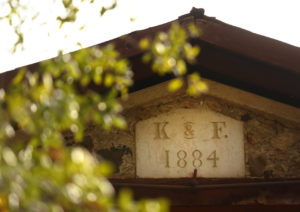
12/11/2013:D1: An old sign for Kohler and Frohling winery above the sherry-making building that was later converted into a barn at the park. PC: An old sign for Kohler and Frohling winery remains above the sherry-making building that was later converted into a barn at Jack London State Park in Glen Ellen on Tuesday, November 26, 2013. (Conner Jay/The Press Democrat)

One of California’s oldest and most successful wineries — that you’ve likely never heard of — is back. And its rich historical roots lie mostly in Sonoma County.

Established in 1854, Kohler & Frohling sourced some of its earliest grapes from Glen Ellen’s Tokay vineyard and in 1874 bought that vineyard and built a winemaking facility in what is now Jack London State Historic Park. Notably, the ruins of that winery have been home to Transcendence Theatre Company’s “Broadway Under the Stars” shows since 2011.

At its peak, Kohler & Frohling had a 400,000-gallon facility in San Francisco (established in 1857) and a tasting room at the Transamerica Pyramid’s current location. It was a household name nationwide. Then Prohibition closed its doors.

Today, a passion for family and history has inspired Bert Sandman, the great-great-grandson of Charles Kohler (partner with John Frohling), to recreate the business. And he hopes his grandchildren will someday choose to carry it on.

Sandman’s goals are to slowly regrow the label and to preserve Kohler’s legacy. “He brought quality to California wines,” says Sandman, who has partnered with winemaker Jim Mirowski, co-founder and winemaker at Treasure Island Wines. “I’m making the Kohler & Frohling wine with a nod to its original practices, but updated for modern tastes,” says Mirowski.

Its first release, 50 cases of 2011 Sonoma Mountain Zinfandel, was in March 2017. It’s currently expanding to 300 to 400 cases, with a 2017 Pine Mountain-Cloverdale Peak Sauvignon Blanc to be released this March.

In 2019, releases will include Pinot Noir sourced from Balletto Vineyards, Chalk Hill Zinfandel and possibly a claret blend. “We hope to grow to about 3,000 to 4,000 cases within a few years,” says Mirowski. And both he and Sandman are convinced it’s happening in the right place and for the right reasons. “It’s all coming full circle now,” says Mirowski.

kohlerfrohlingwines.com, tiwines.net