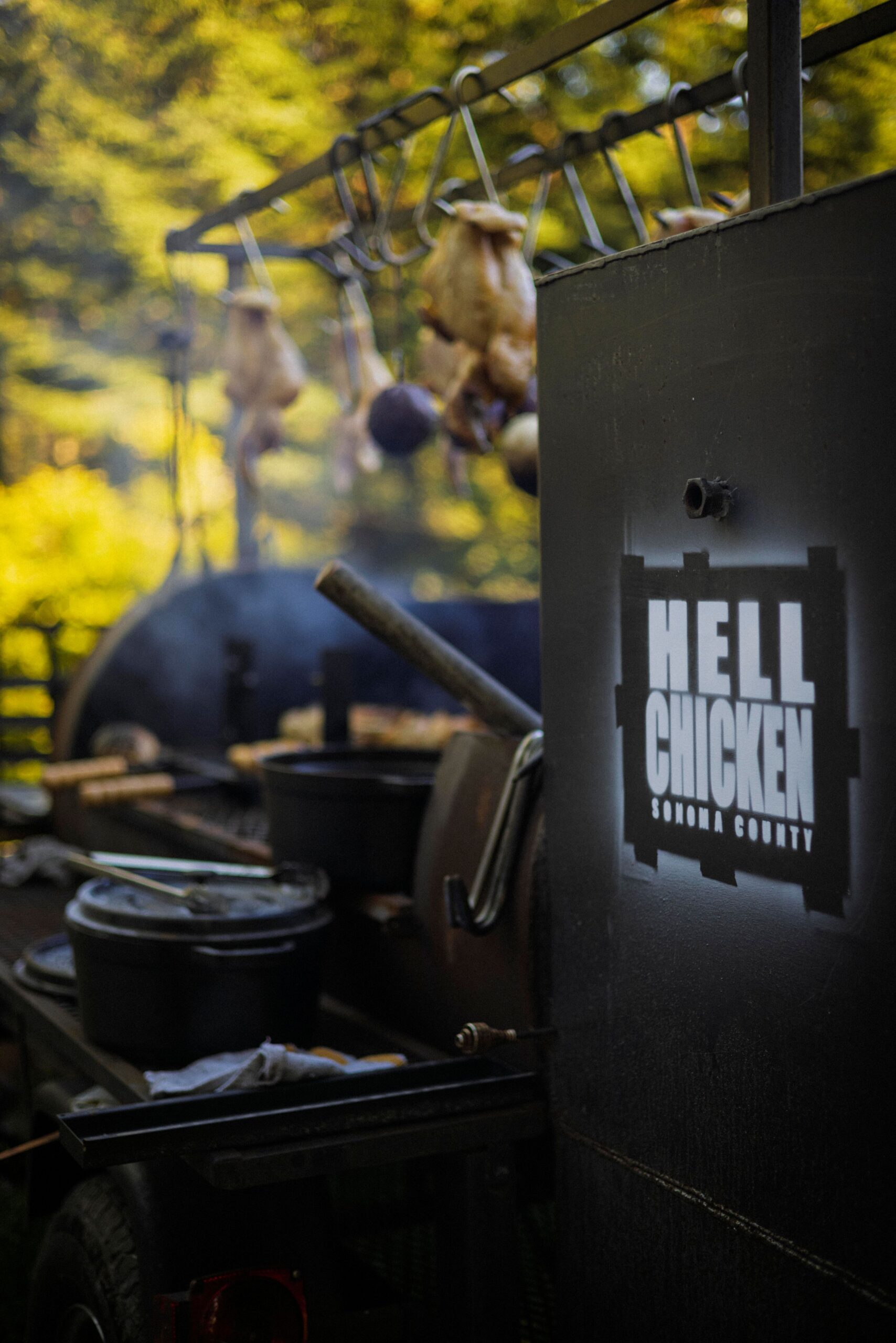




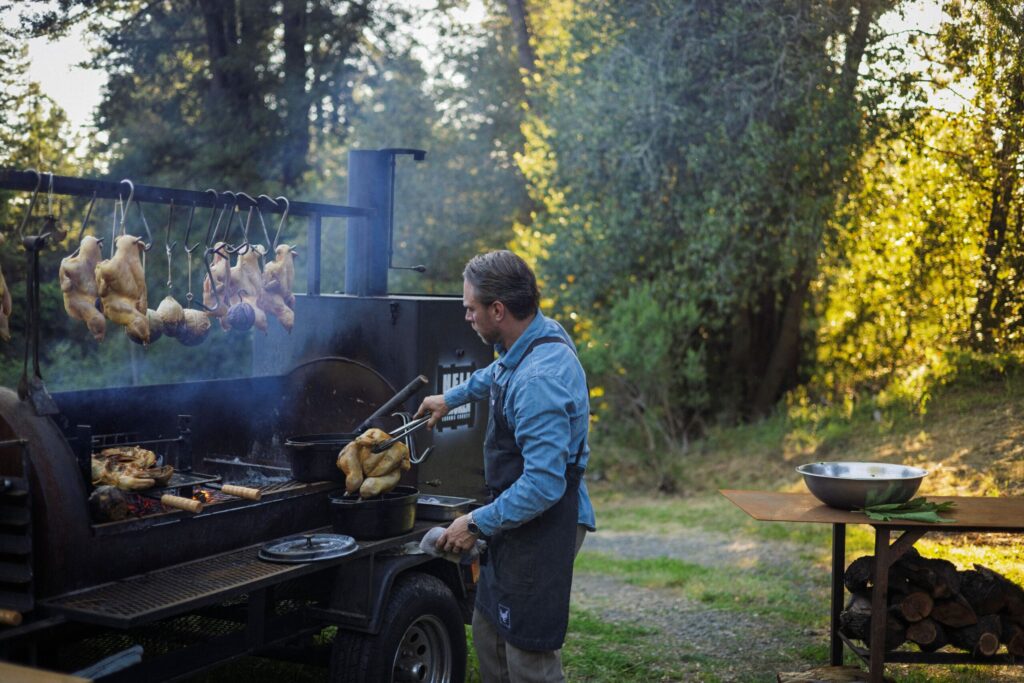
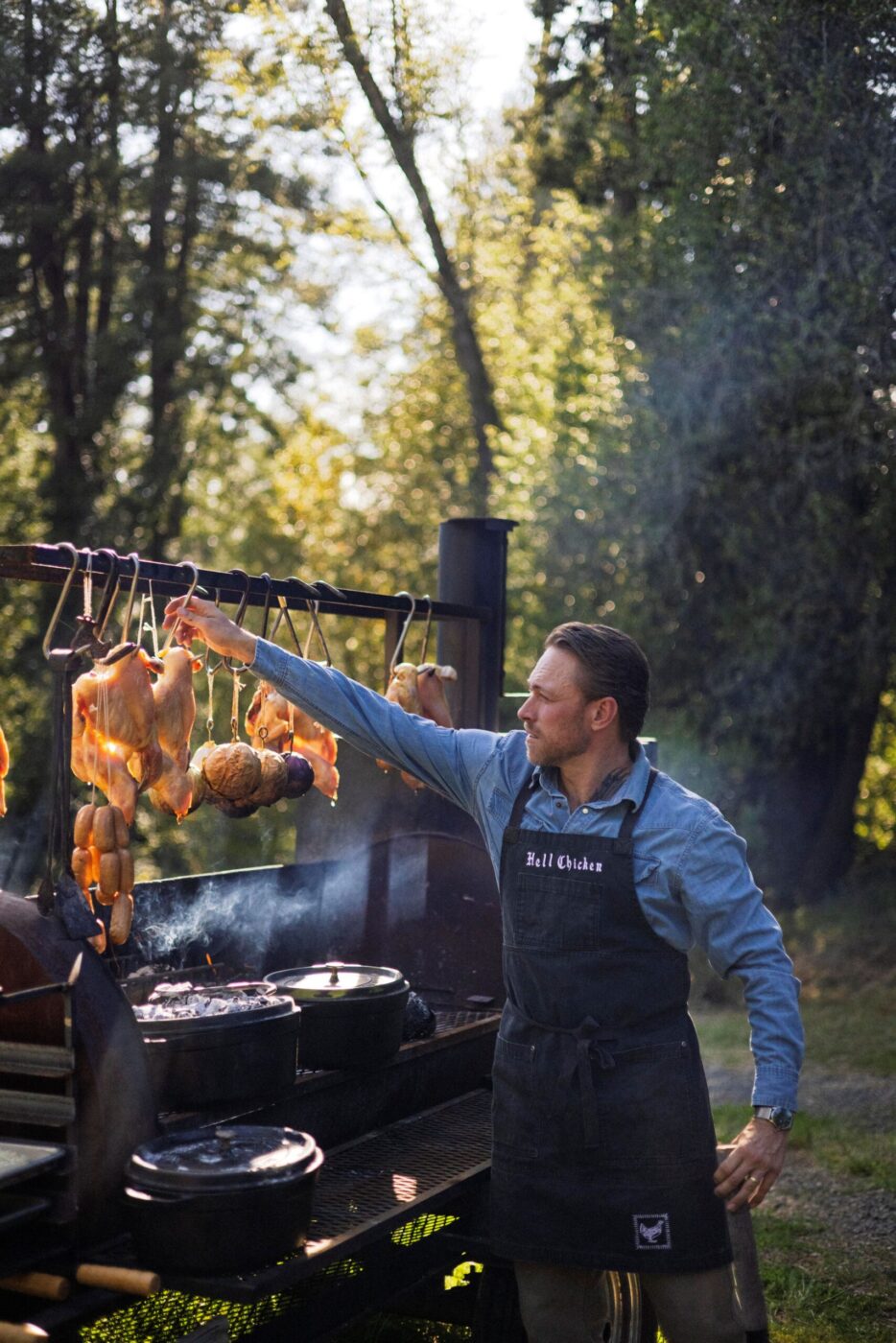
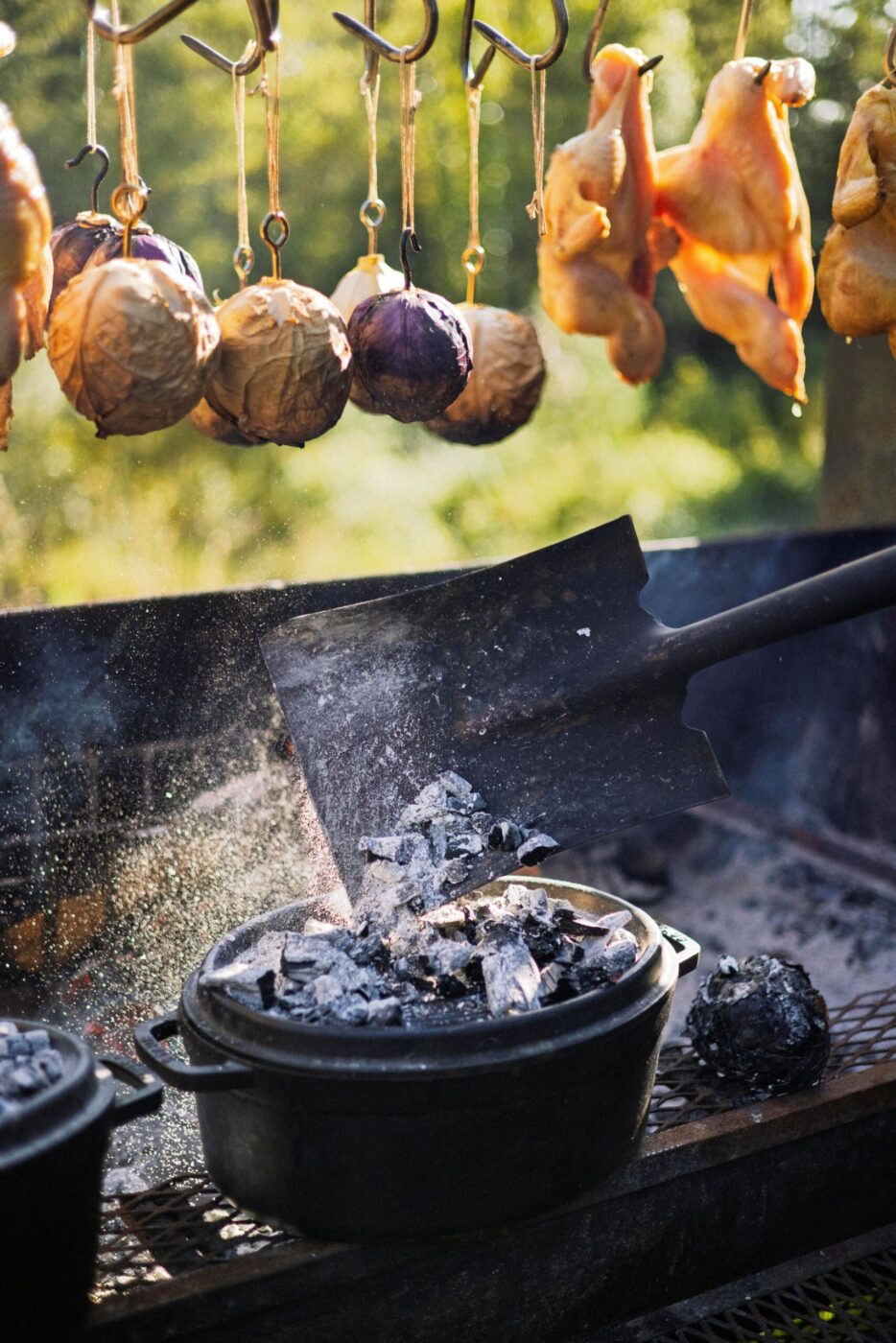
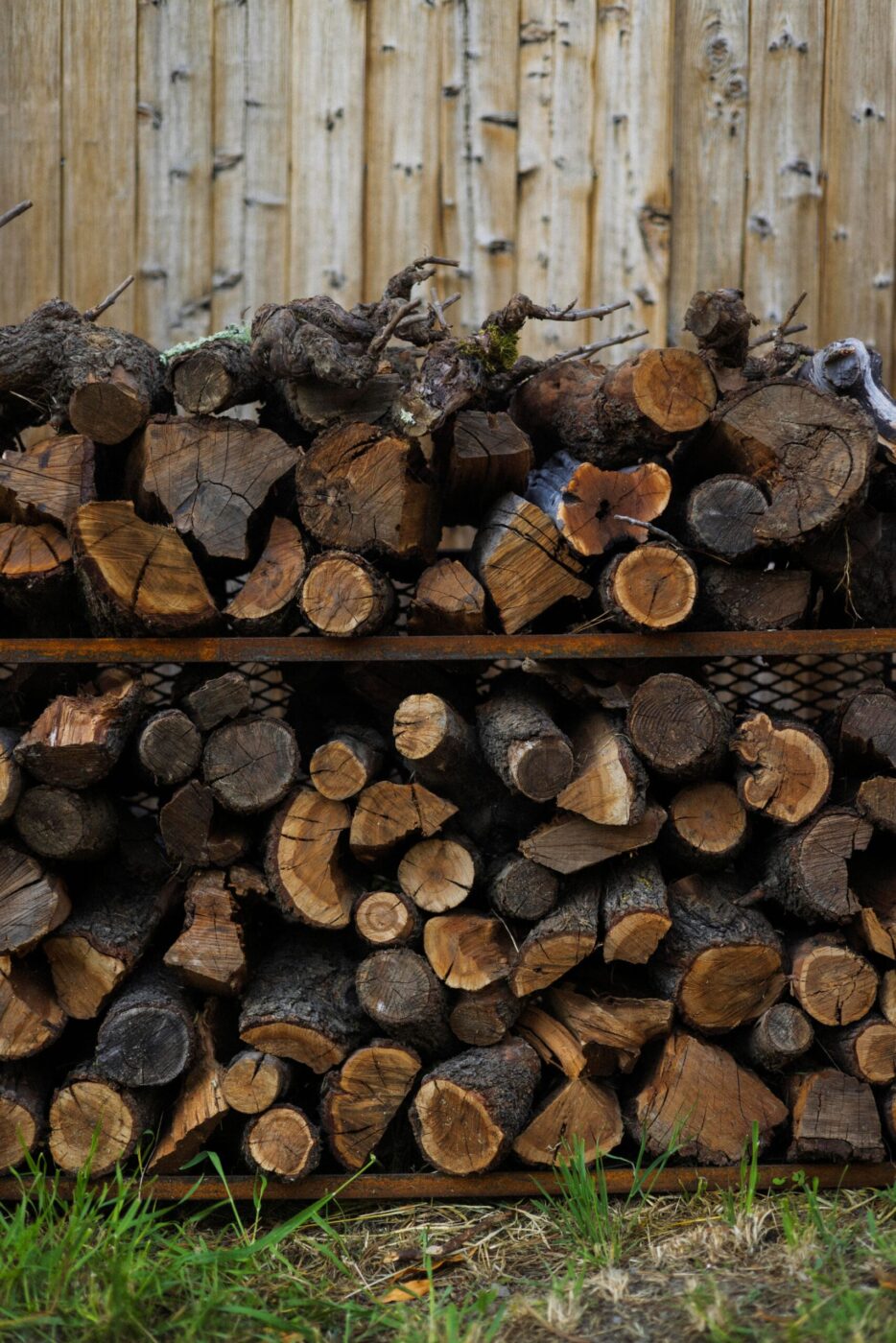
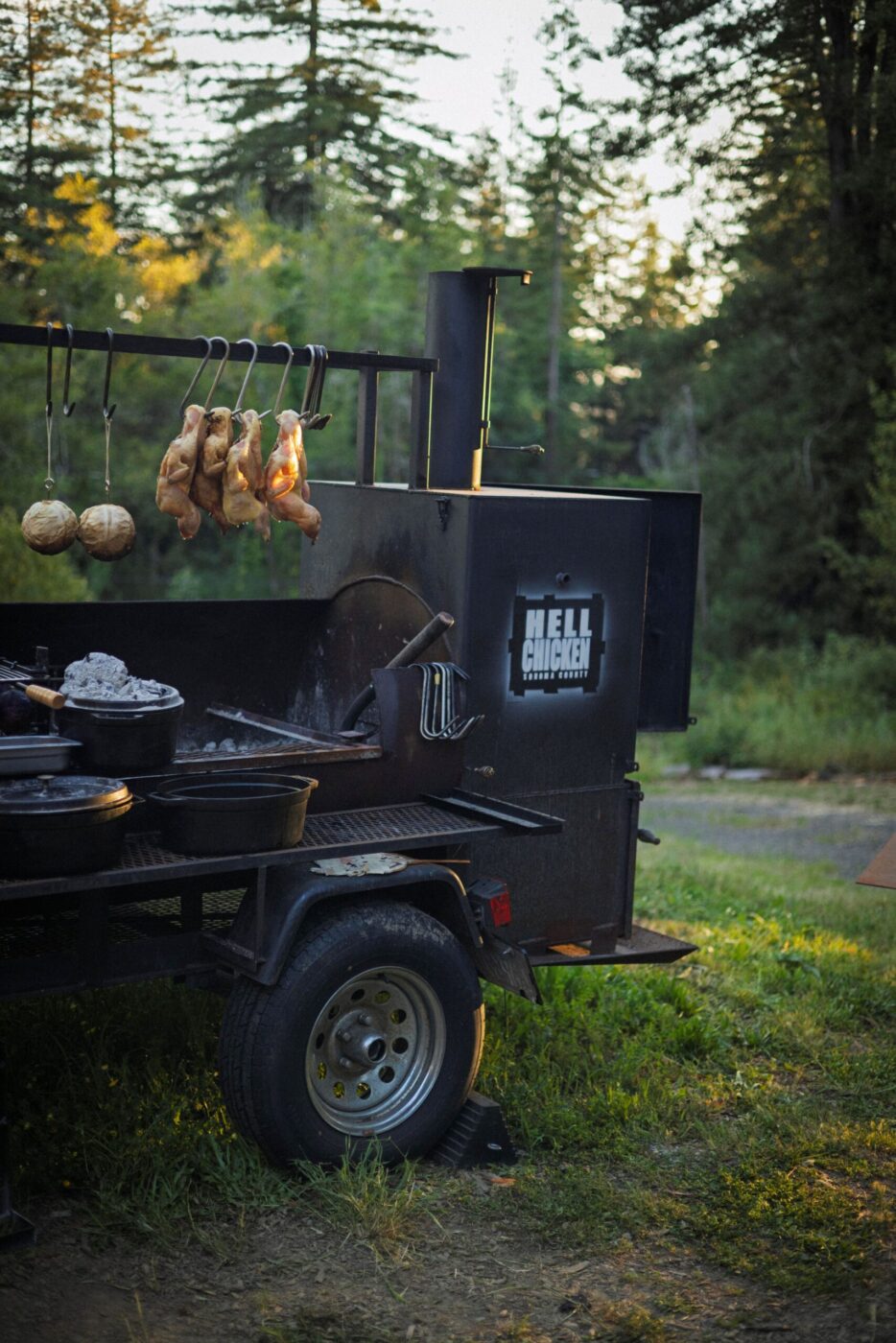
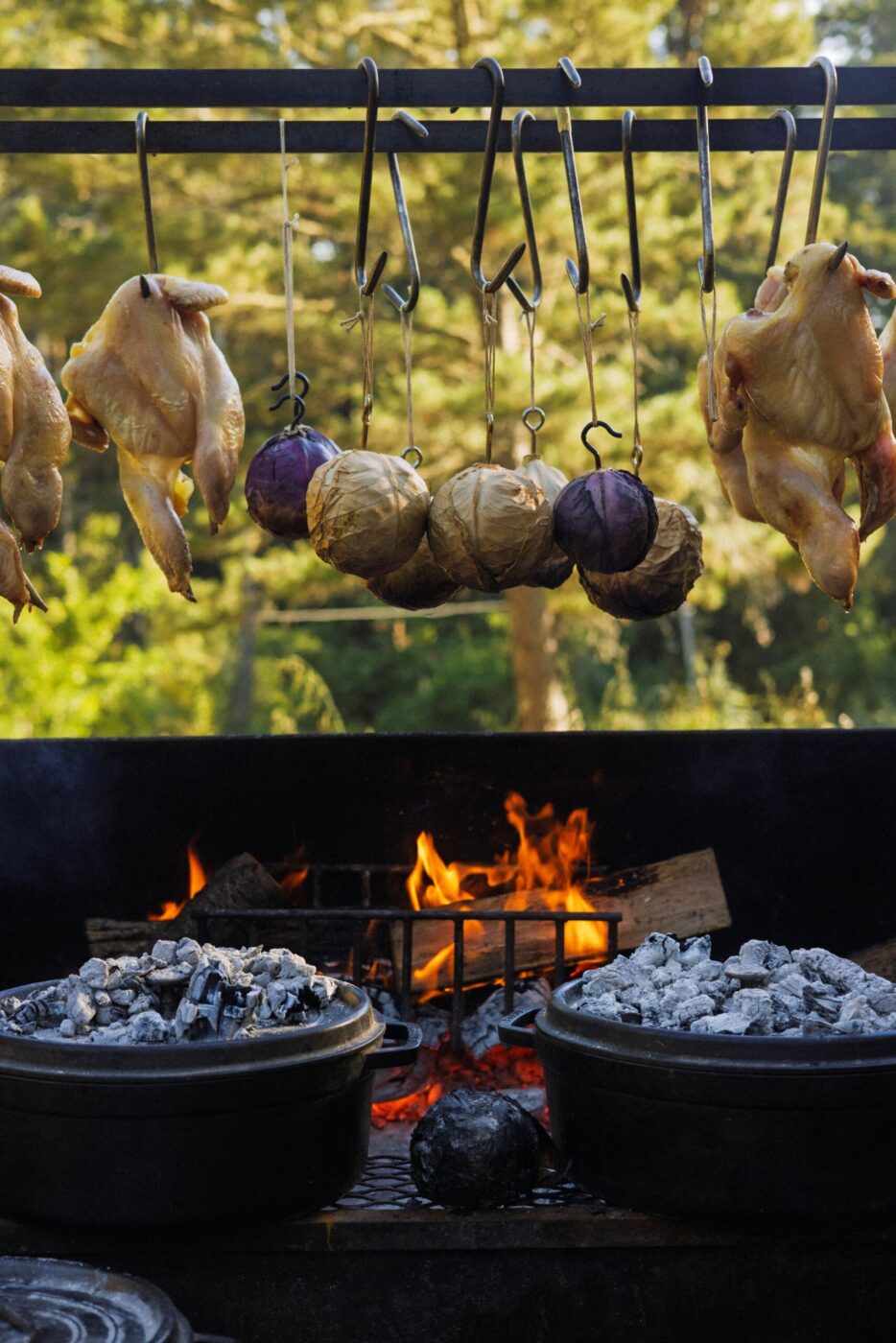
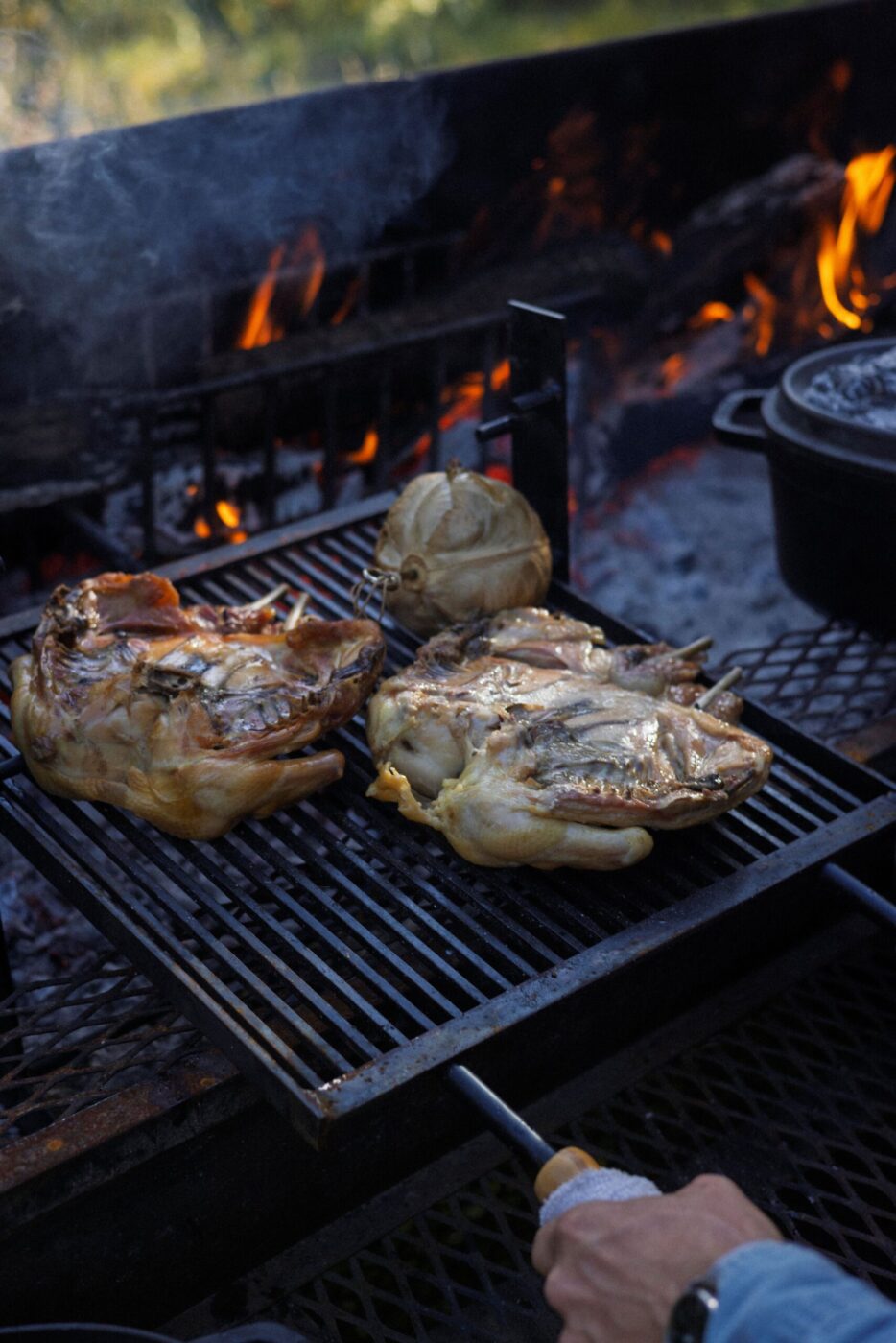
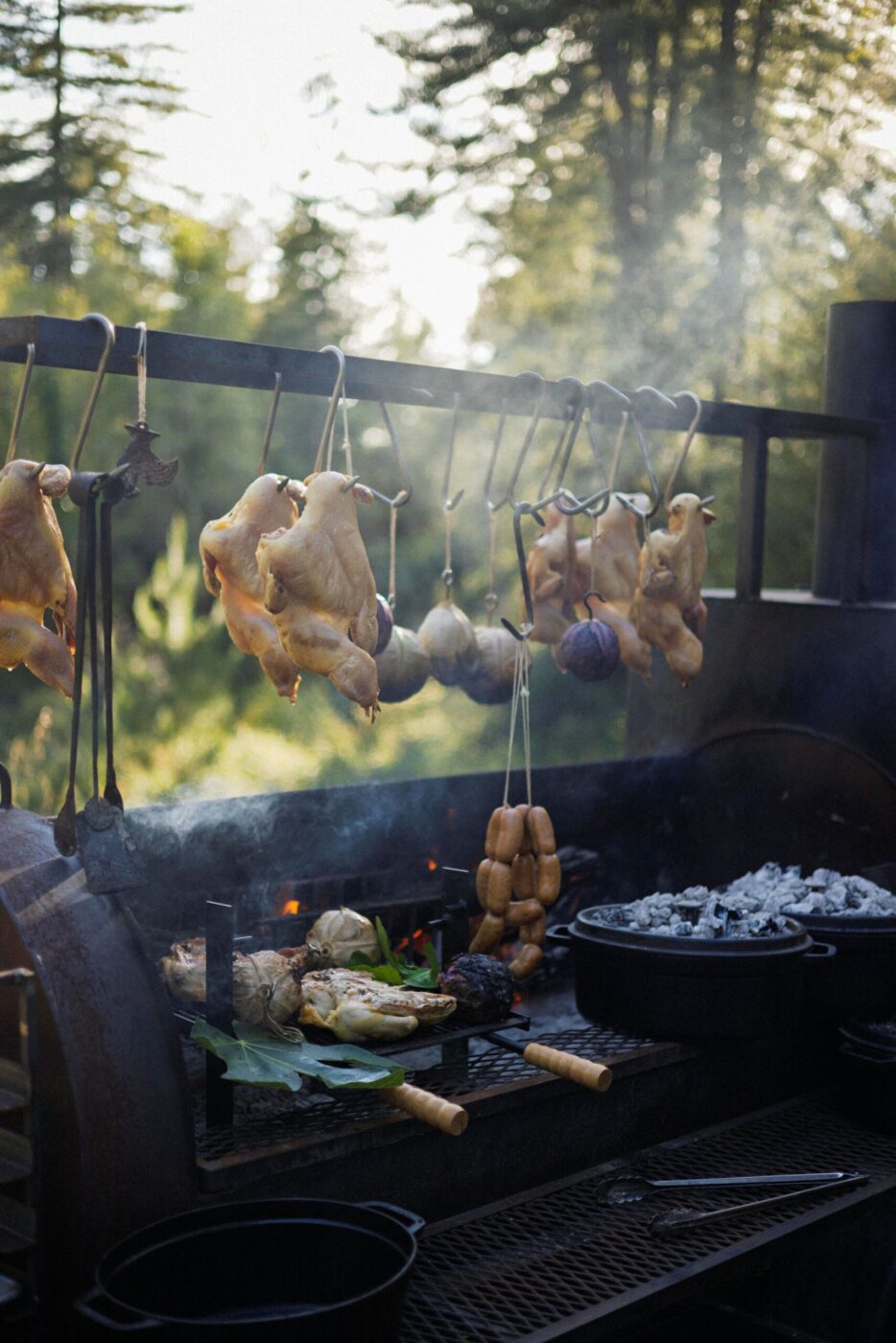
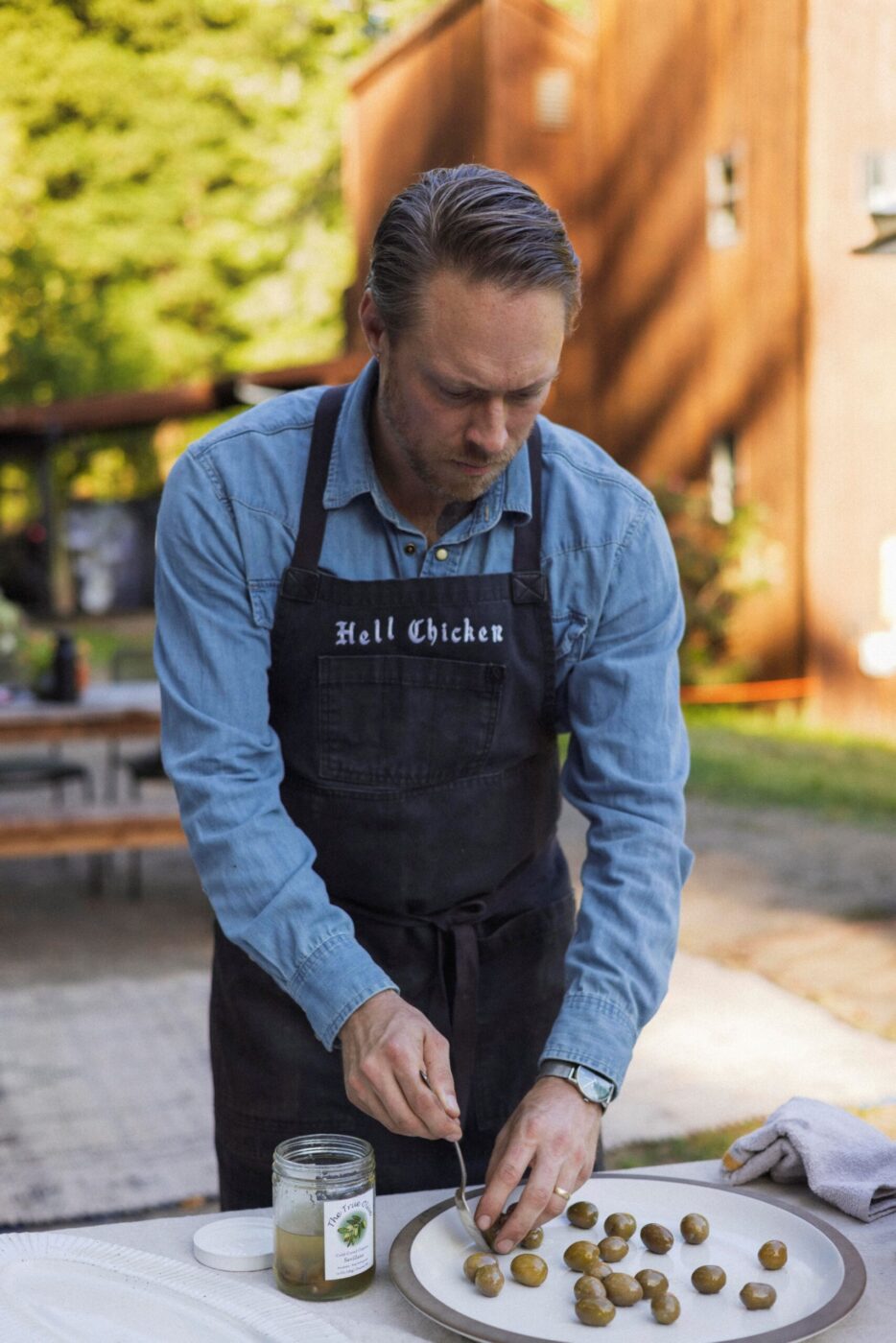
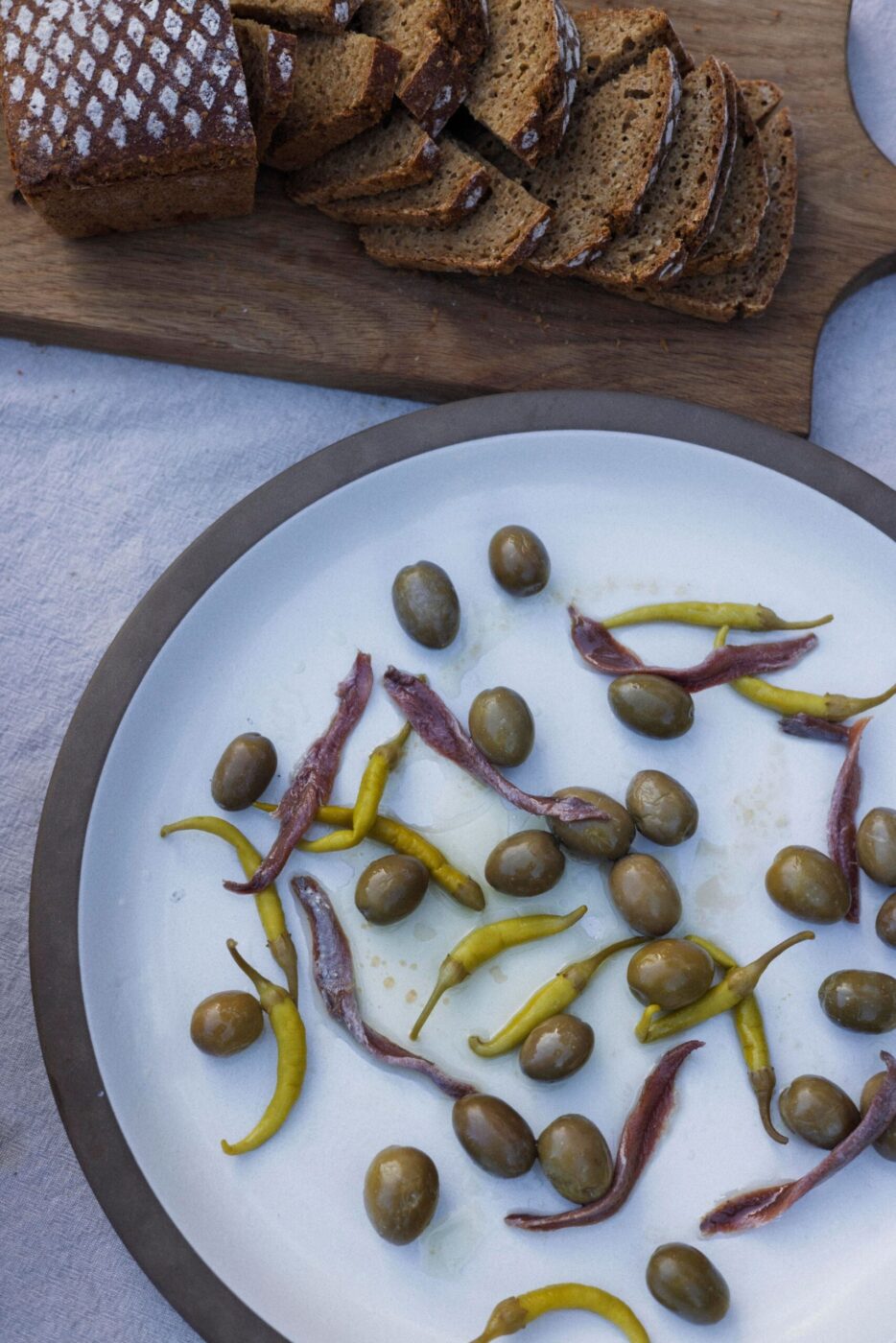
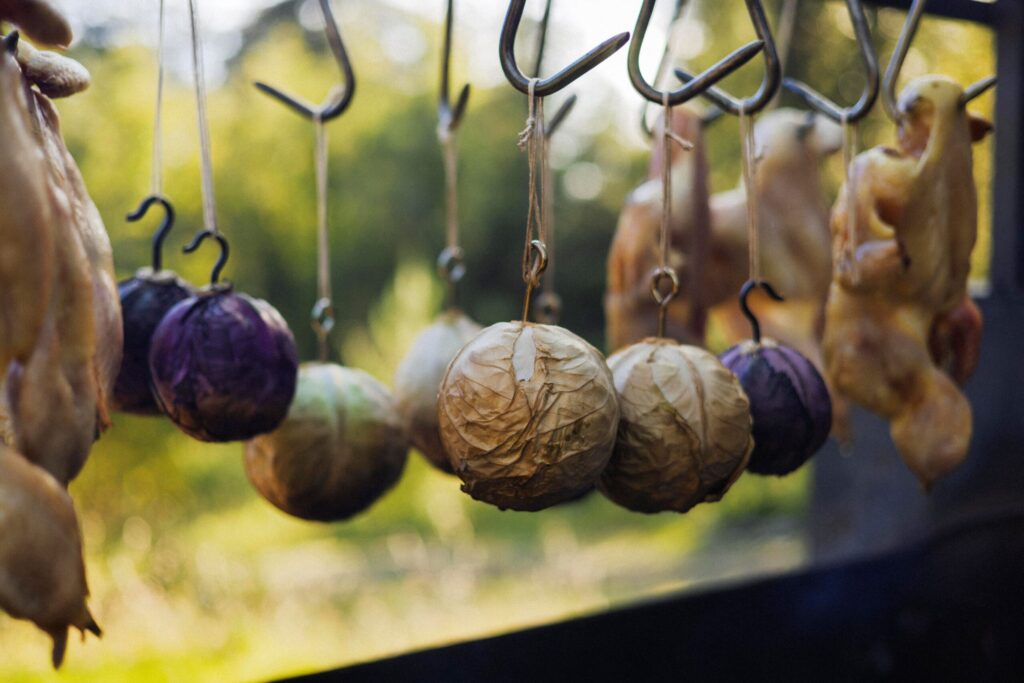
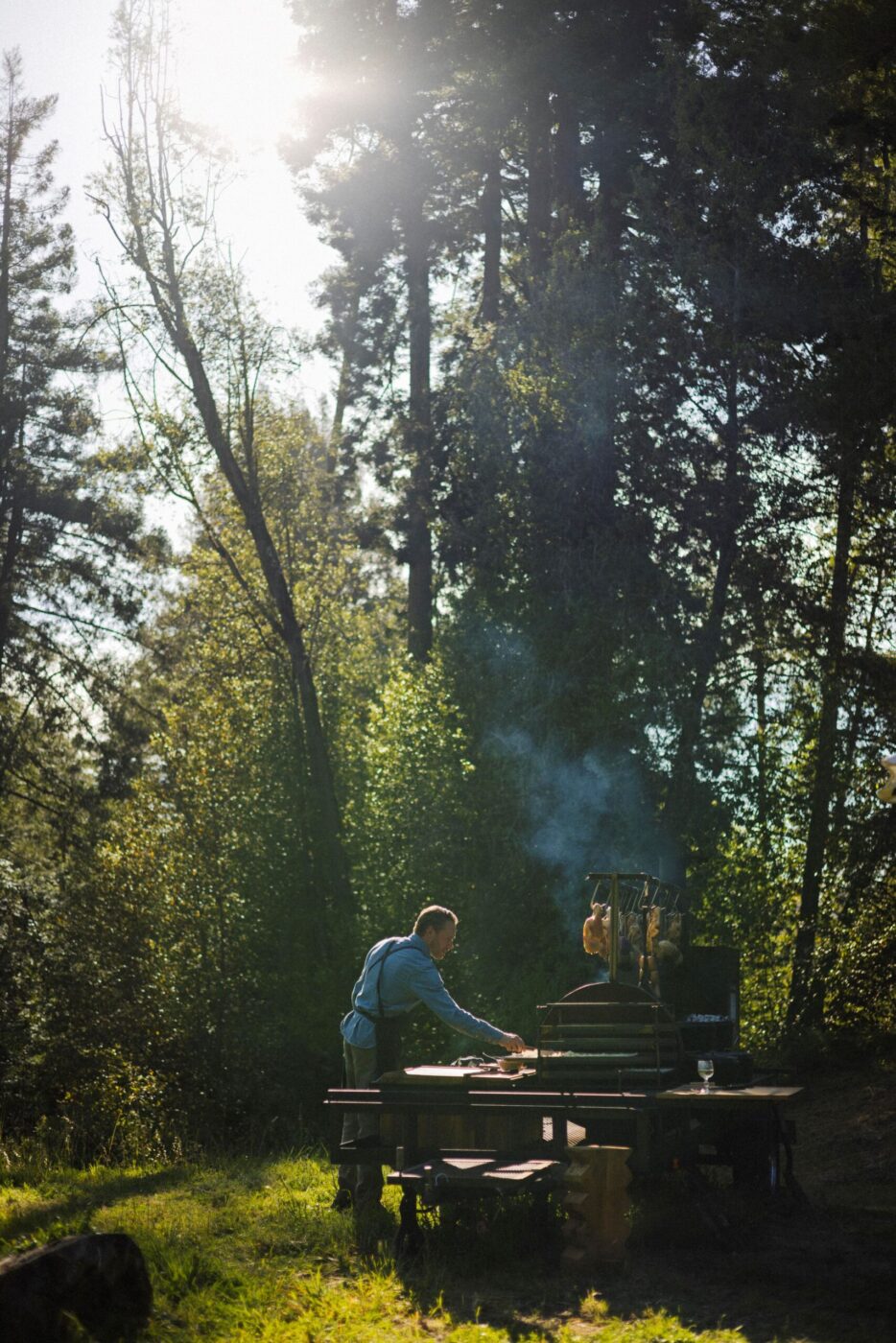
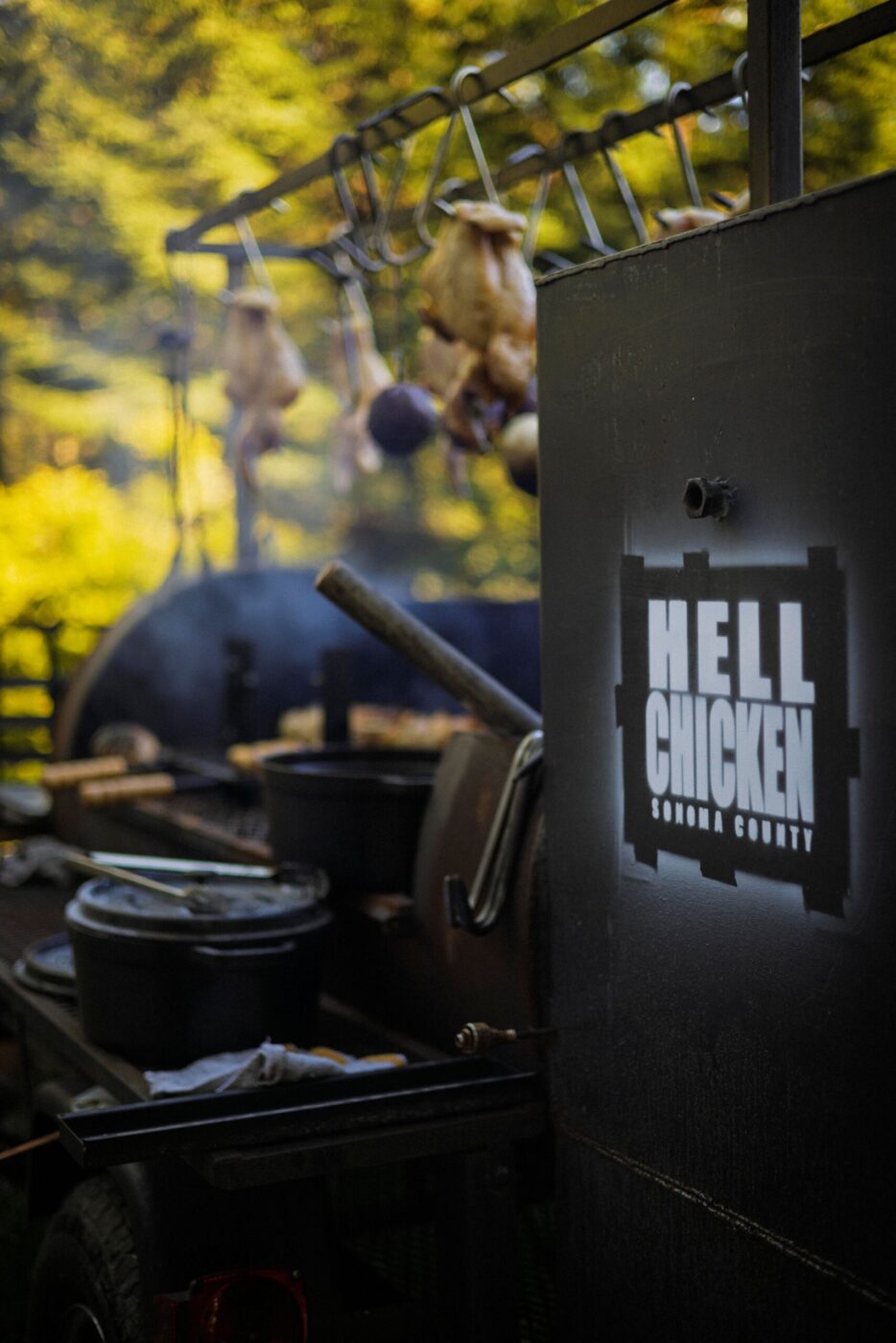
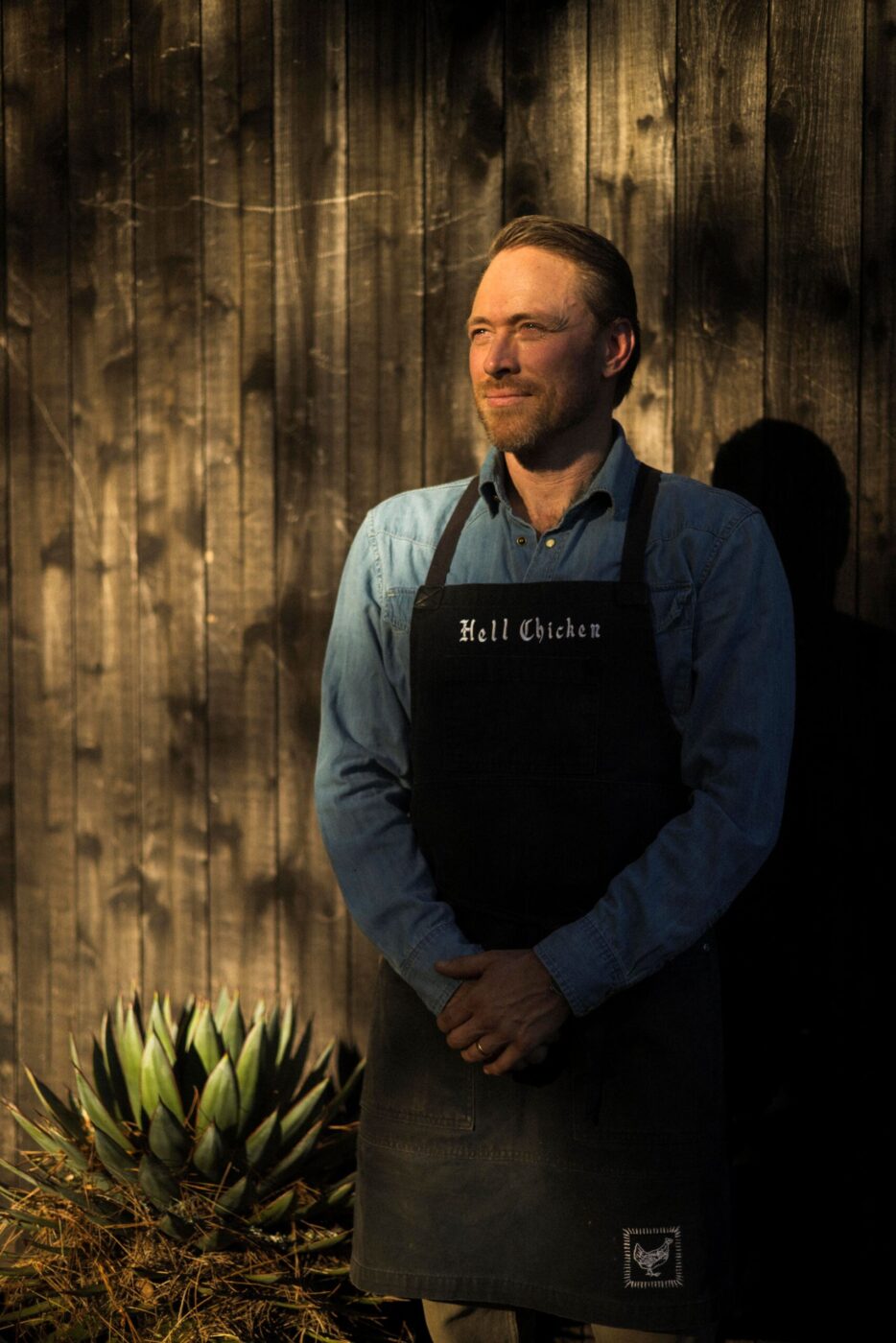

Deep in the redwoods of west county, almond and oak smoke curls around the field kitchen chef Lee Desrosiers has parked at the end of his gravel driveway. The converted pig smoker is an amalgamation of grates, pipes, bricks, meat hooks, cast iron, and steel welded into a Frankencooker built for one very specific purpose: making his signature Hell Chicken.
Named for pollo alla diavola, the Italian name for an aggressively seasoned, spatchcocked chicken cooked over screaming-high heat, the title is more joke than homage—though the chickens might disagree.
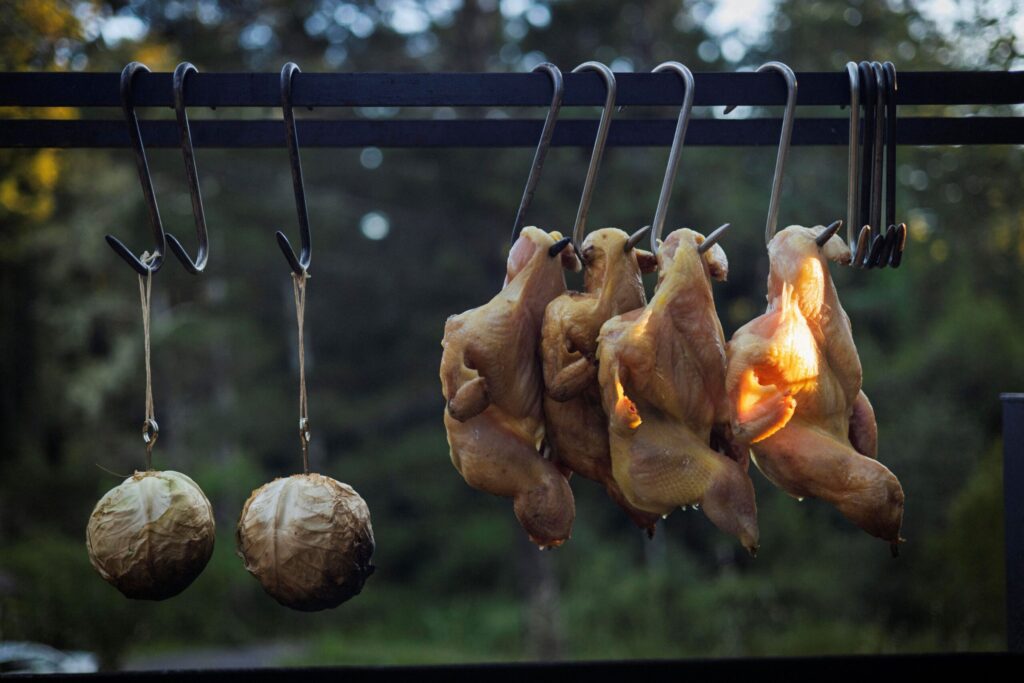
Above hellfire-hot embers, whole birds hang from curved metal hooks, roasting slowly in a process powered by little more than salt, smoke, heat, and time. Desrosiers has spent more than a decade perfecting it, first on the East Coast and now in Sonoma County, where he’s made his home. What began as a weekend lark on a Brooklyn sidewalk has become a mission for the 42-year-old chef.
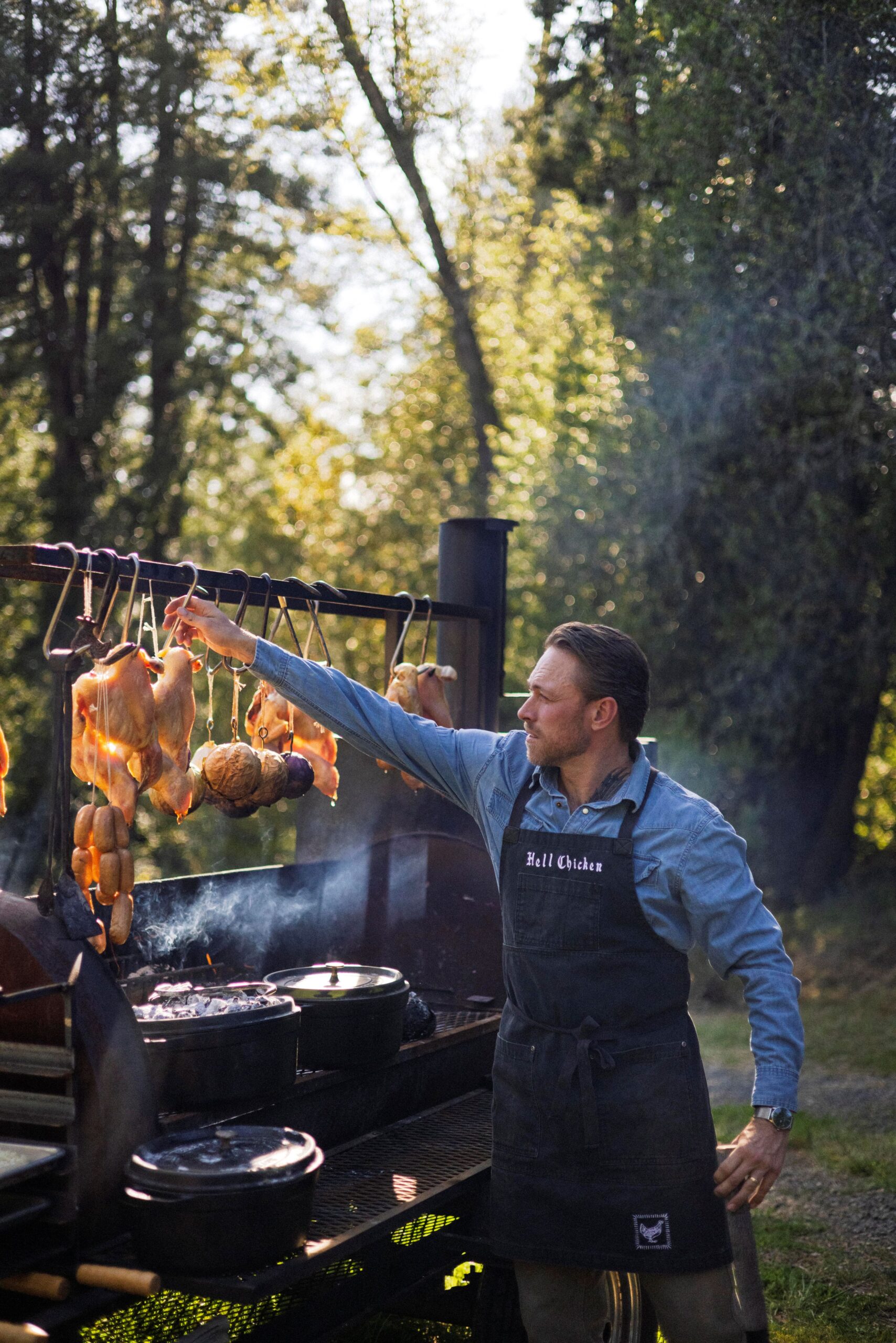
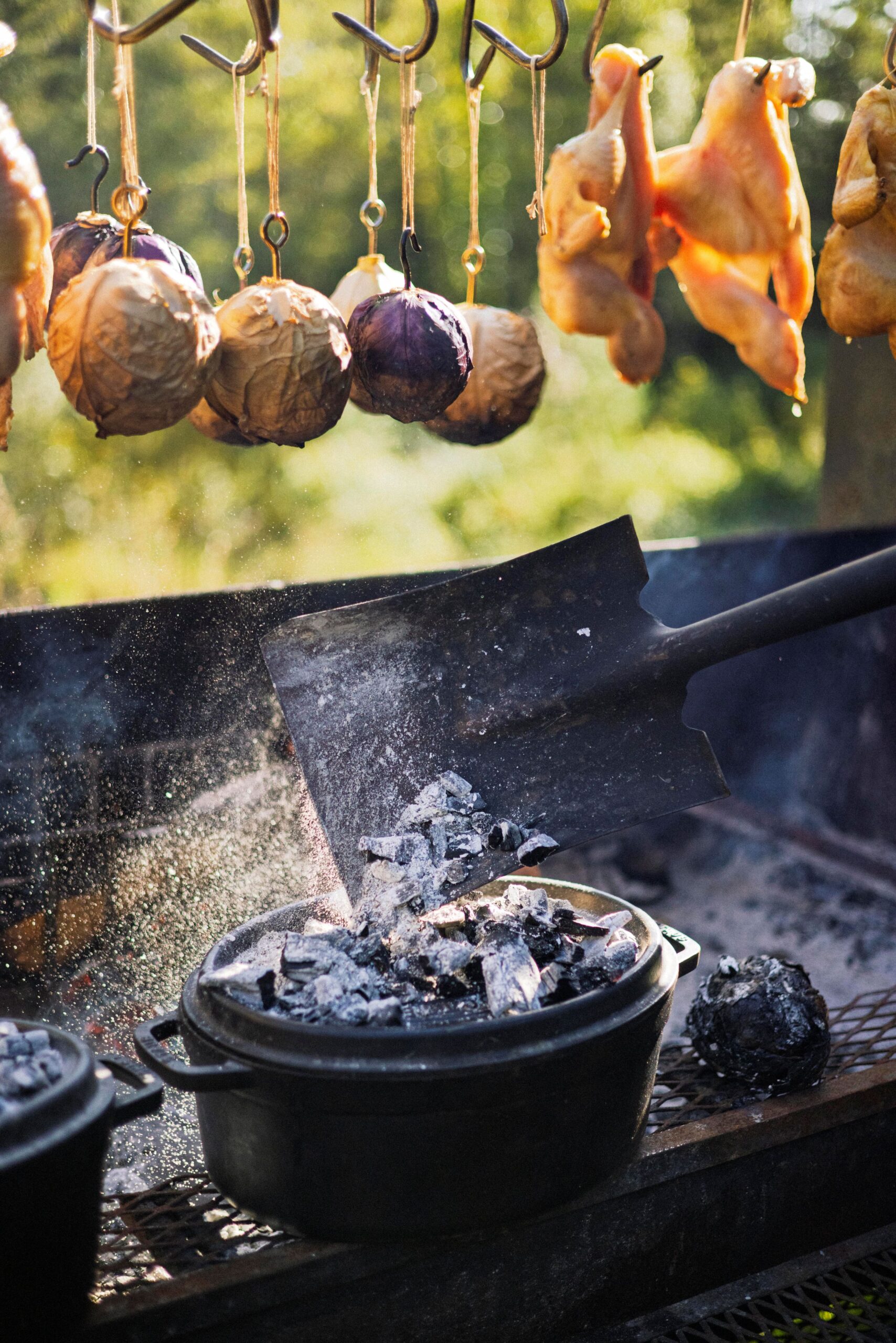
As fat renders and smoke drifts into the trees, Desrosiers works mostly by instinct, checking the coals and watching for the moment the skin tightens against the meat. Timing matters, but feel matters more.
His black Lab-Pit Bull mix, Frankie, knows the routine, circling the grill in hopes that gravity and good fortune might deliver an errant scrap, until a rustle in the tall grass sends her trotting into the weeds. Priorities.
She knows by smell that the chicken is nearly ready. What she doesn’t know is that I’m about to lose all objectivity over what may be the best chicken I’ll ever eat.
Brooklyn was where Desrosiers’ obsession with live-fire cooking first took shape. Already an accomplished chef, he landed there just as the borough’s artisanal food scene was exploding, fueled by the farm-to-table ethos of restaurants like Blue Hill, Superfine, and Marlow & Sons. He haunted farmers markets, learned to break down whole animals, and cooked in the stripped-down, ingredient-driven style that redefined dining from Austin to the Bay Area.
He spent a year working as a butcher at Achilles Heel, the Greenpoint gastropub where he’d eventually launch Hell Chicken, which gave him an intimate understanding of how muscle, fat, and connective tissue behave over heat, whether braised, grilled, or smoked.
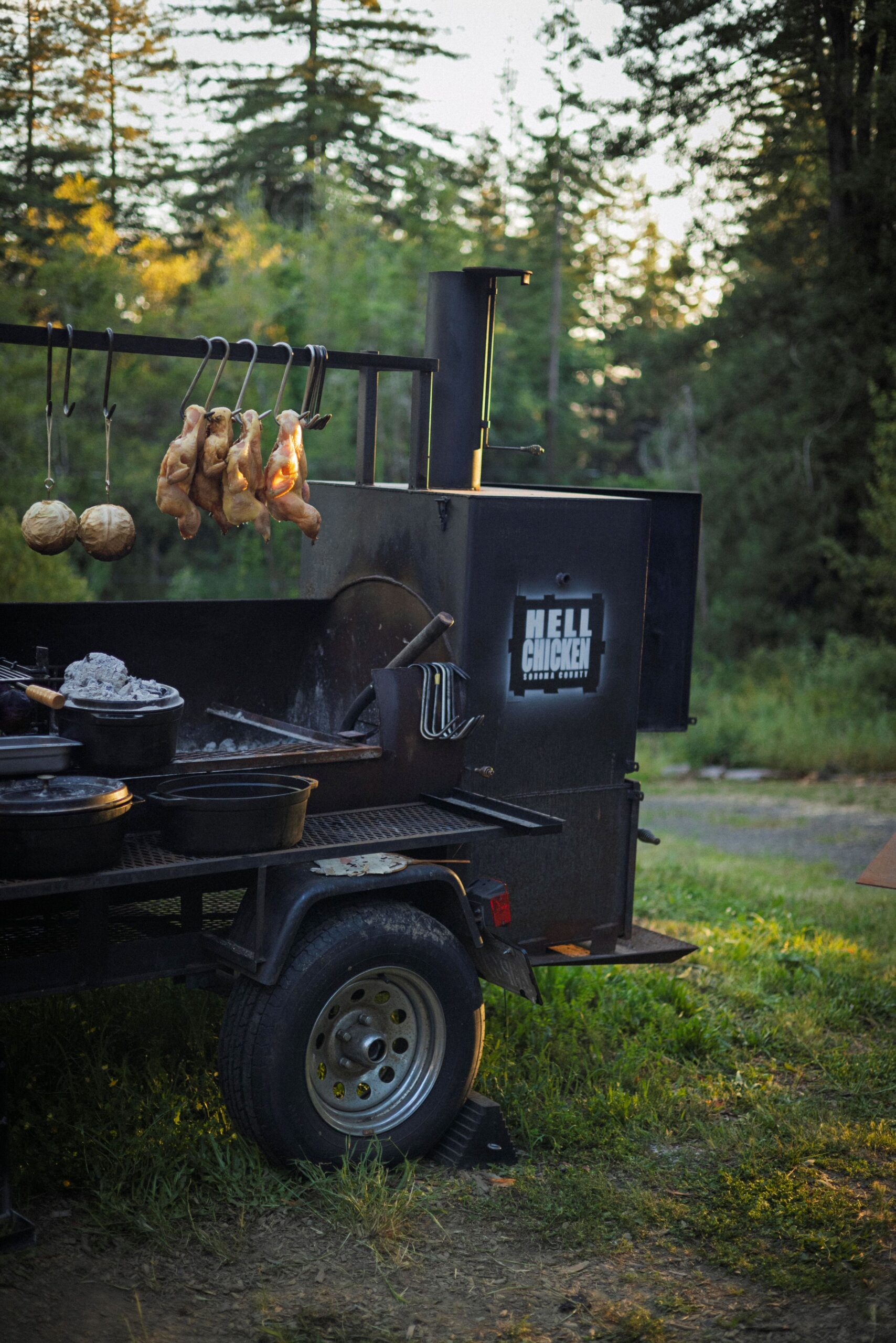
On weekends, he would drag a grill into an empty parking space, first cooking chickens directly over hot coals before gradually jerry-rigging a setup that could smoke and braise them, too. Served half or whole with a simple salad, the dish felt ridiculously uncomplicated.
He kept refining the rig and fine tuning the bird, then in October 2016, The New York Times took notice. Suddenly, Desrosiers had an overnight poultry phenomenon on his hands.
“You are given forks and knives, but it’s hard to resist pulling off morsels of the golden skin with your fingers as if you were standing around in the kitchen at home,” critic Oliver Strand wrote. Within days, Desrosiers could barely cook fast enough to feed the crowds.
But California soon came calling. In 2018, he traded coasts after Scribe Winery offered him a job on its culinary team. Northern California wasn’t entirely new territory, however, and in some ways, it felt like a return.
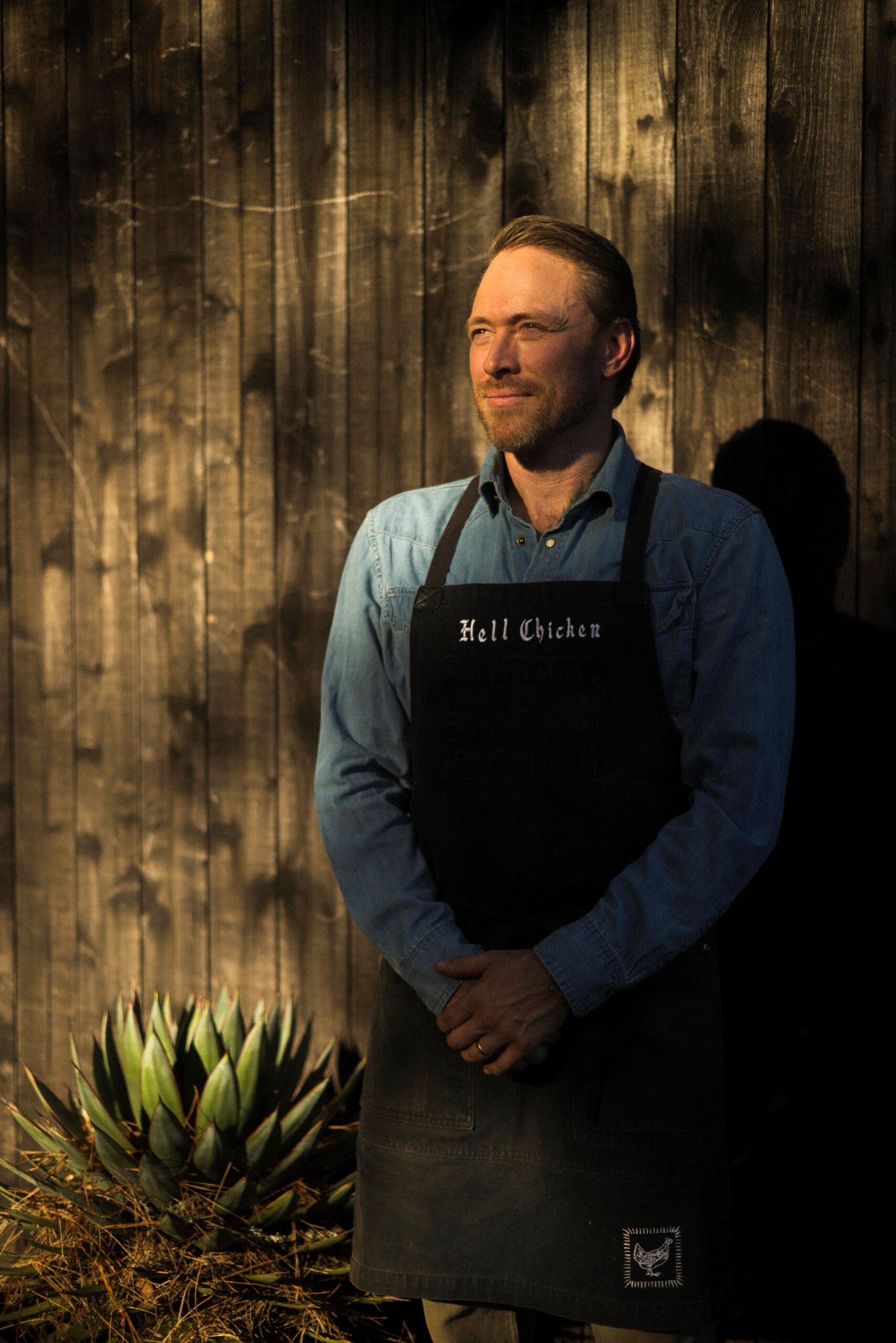
“I happened upon Northern California on a post-college journey west, equal parts Kerouac and Bob Dylan, searching for some kind of gold, I guess,” says Desrosiers. “Half adventure, half accident, like so many Californians before me. Sonoma County has been that golden place for me.”
It was Sebastopol that won him over: a funky, rural pocket filled with orchards, towering redwoods, ocean air, and the kind of wide-open spaces a cramped Brooklyn parking spot could never offer. Having San Francisco’s eclectic restaurant scene just down the road didn’t hurt either.
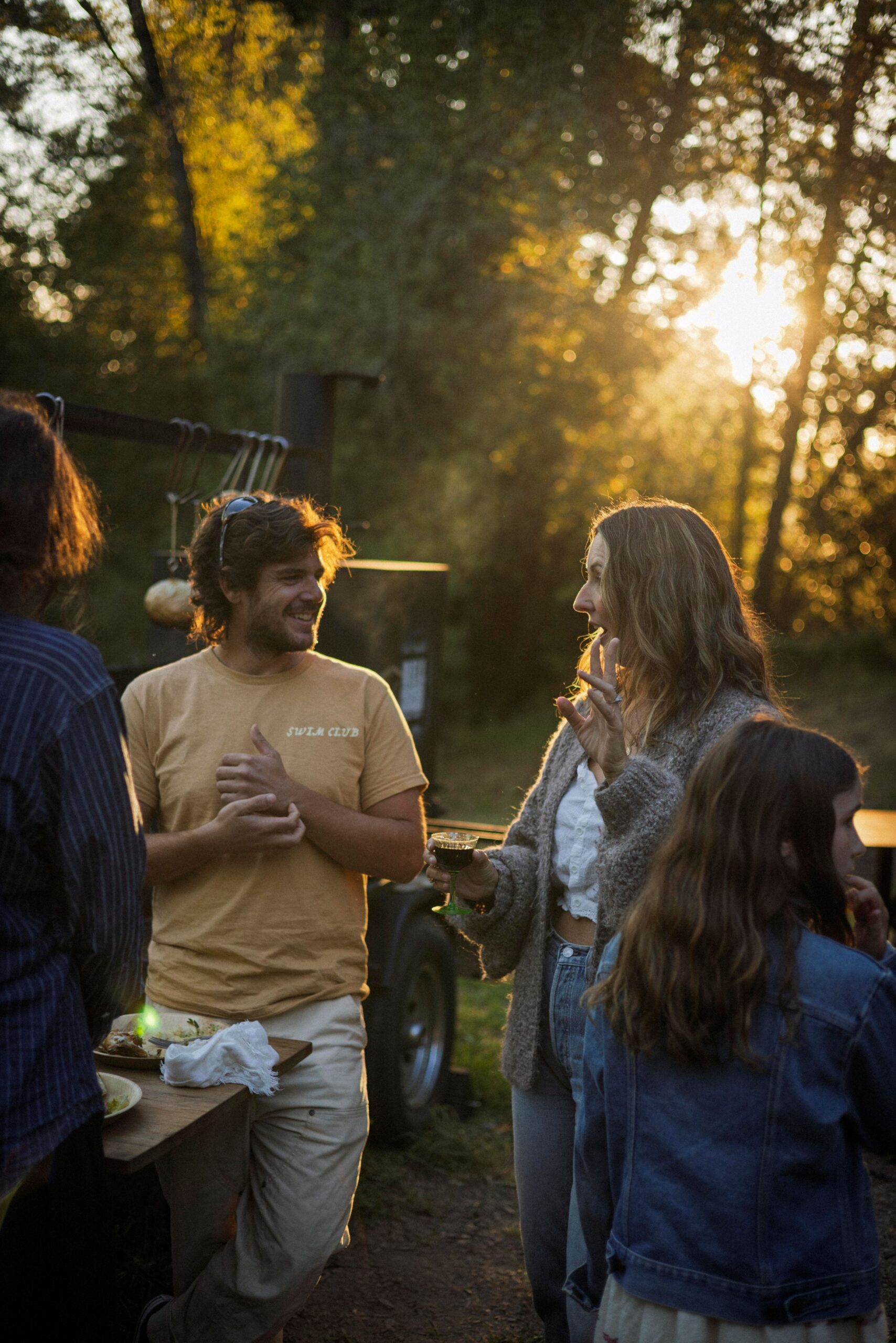
The move gave Desrosiers room to evolve beyond the constraints of restaurant kitchens and parking space grilling. These days, he’s focused almost entirely on private events and live-fire cooking experiences, though he hints there may be more pop-ups in other cities ahead. His summer calendar is packed with birthdays, weddings, private dinners, and ticketed events across Sonoma County. At a single event, he may cook anywhere from a few dozen to more than 100 birds over a showstopper of a rig that resembles a Ferris wheel: Two towering 5-foot rings are connected by crossbars, enabling him to suspend chickens over an open fire pit like some kind of poultry carnival ride.
“It invites people into the cooking process,” he says. “The visual aspect of the whole thing is arresting and enchanting. Cooking usually happens behind closed doors. This provides connection.”
When it comes to what makes Desrosiers’ Hell Chicken so mind-blowingly delicious, the devil, as the saying goes, is in the details. He starts with Mary’s organic chicken, specifically the Freedom Ranger, a slower-growing bird than typical commercial broilers that are bred for oversized breasts and harvested at six-to-eight weeks. These birds have more balanced bodies and get nine-to-12 weeks to develop a fuller flavor, which Desrosiers says makes them especially suited to live-fire cooking.
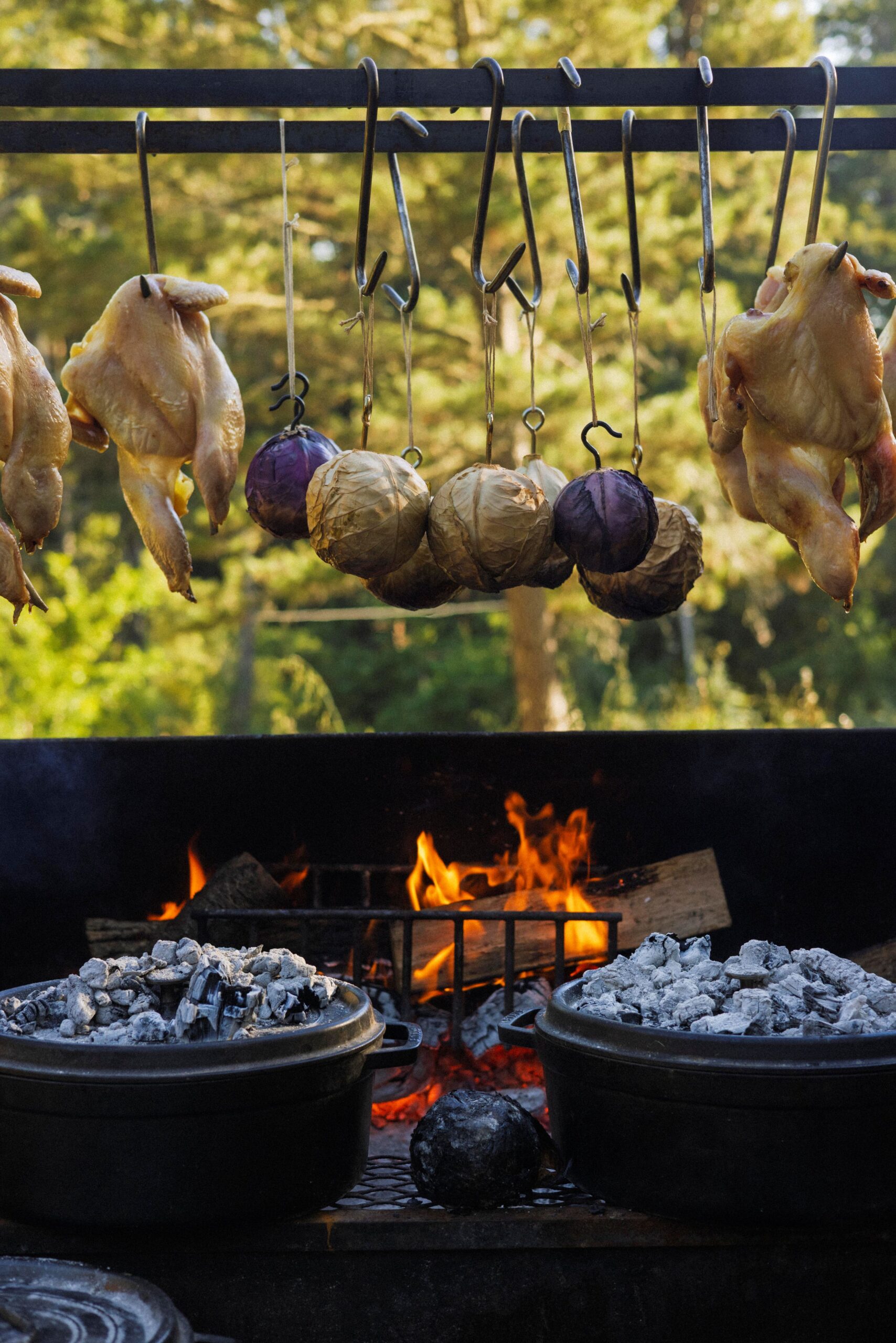
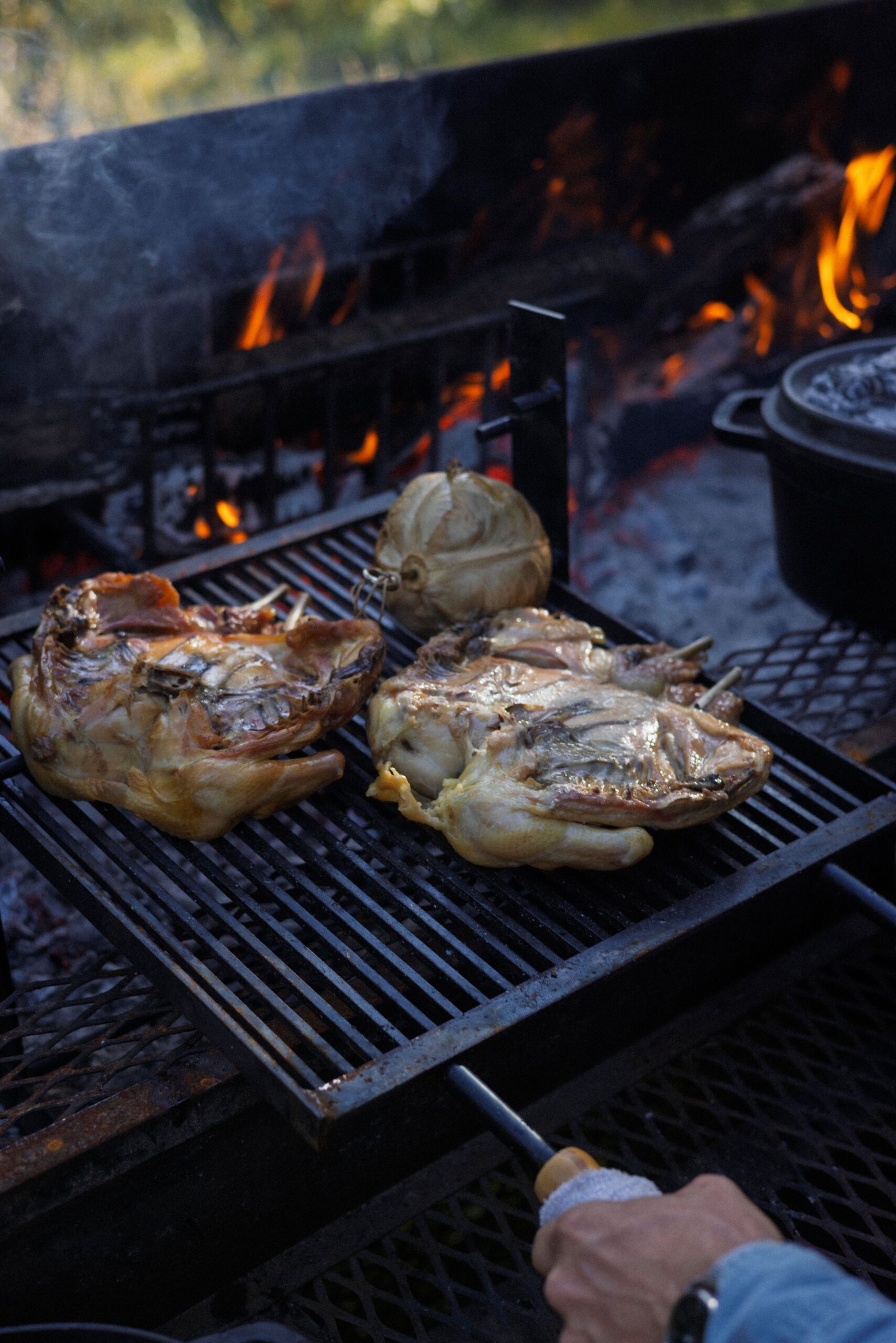
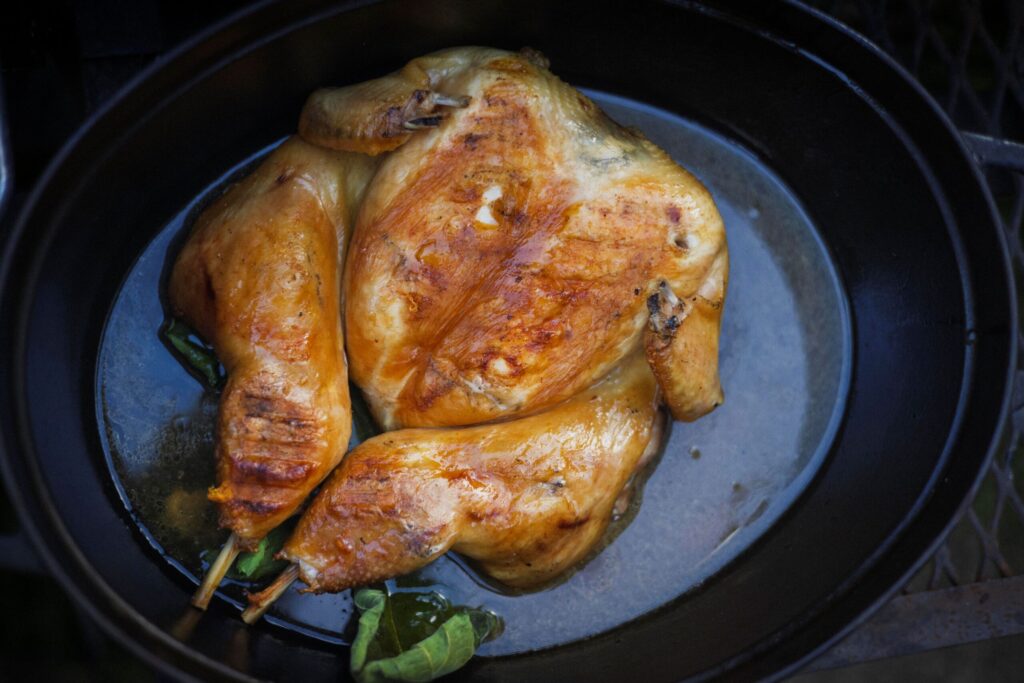
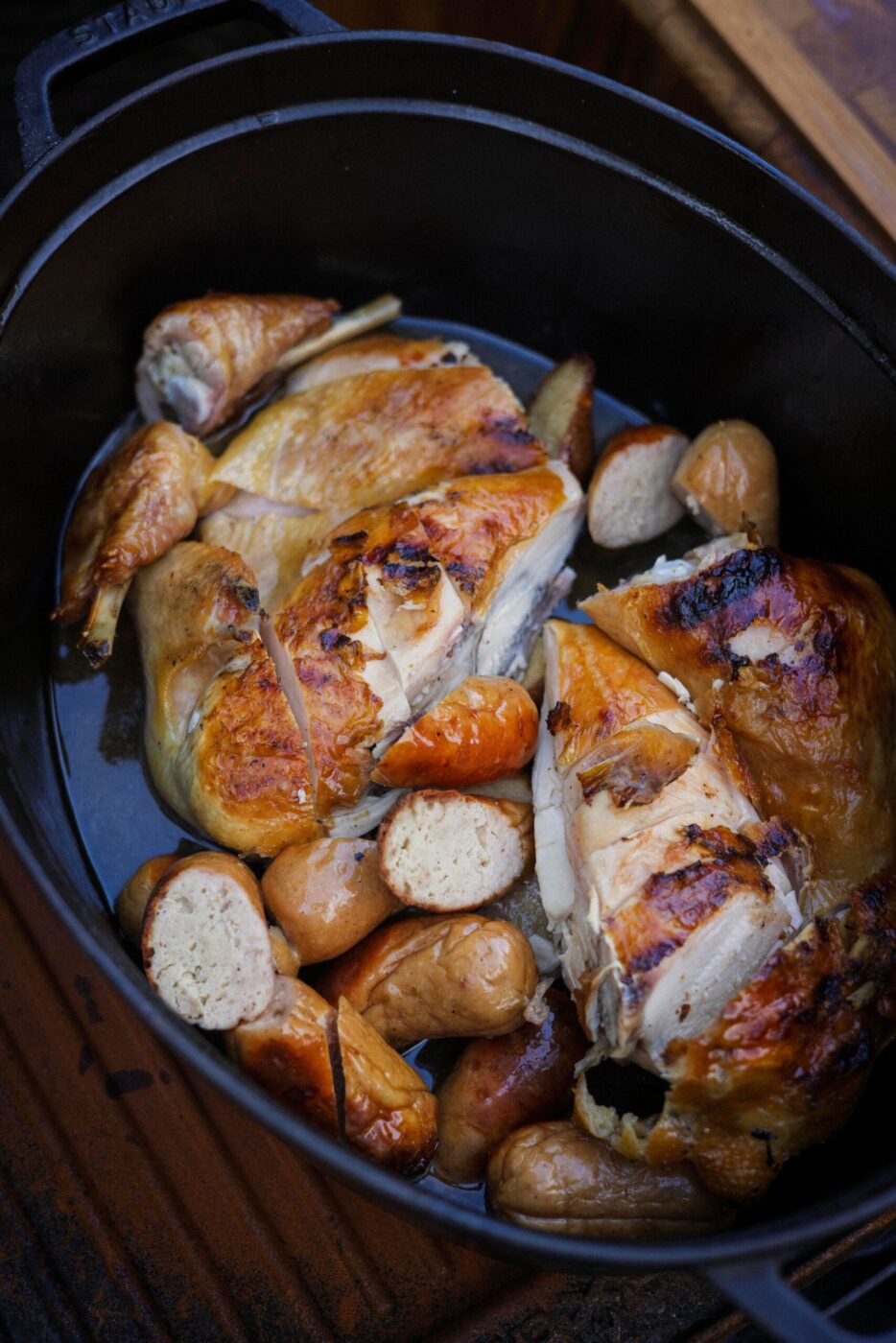
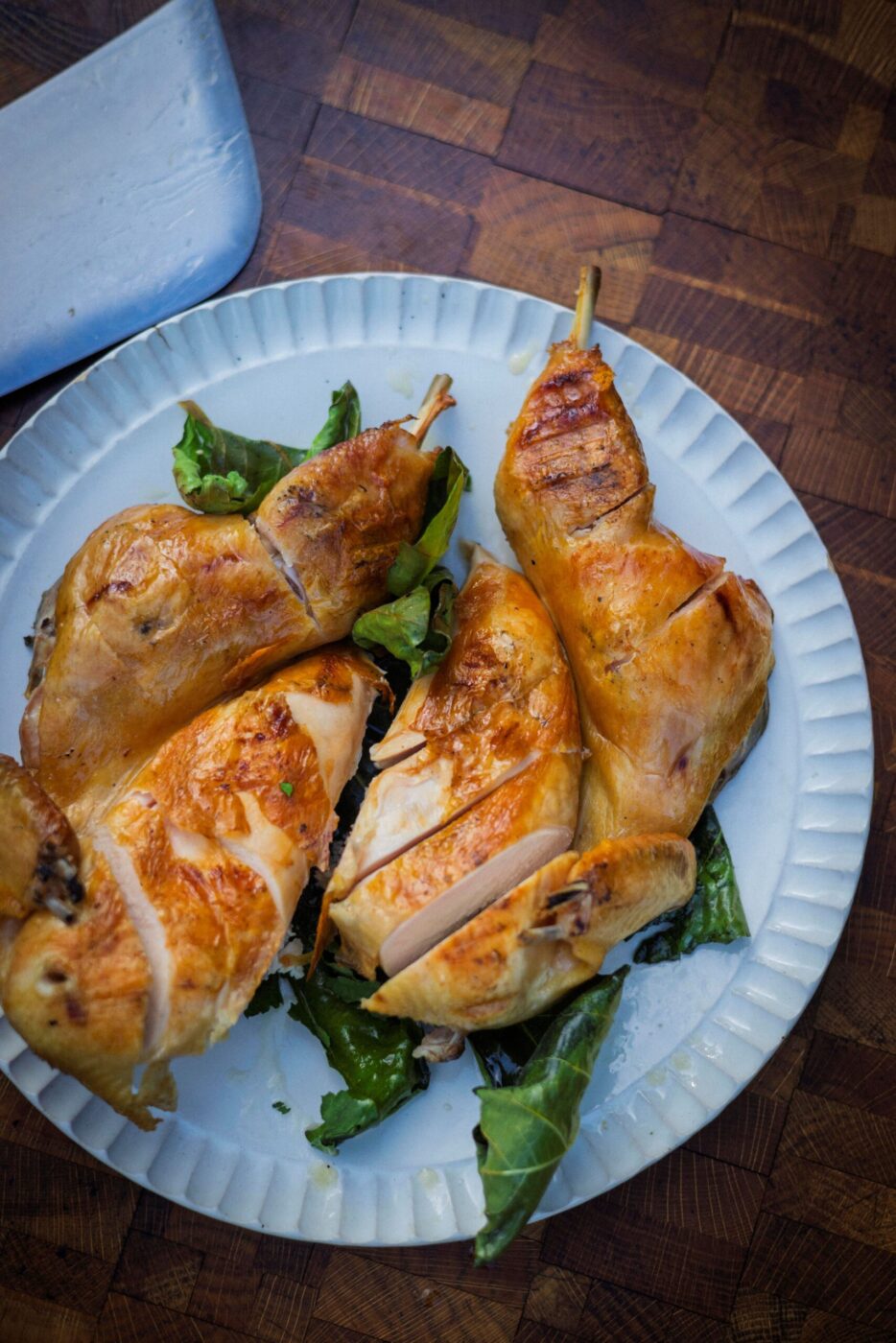
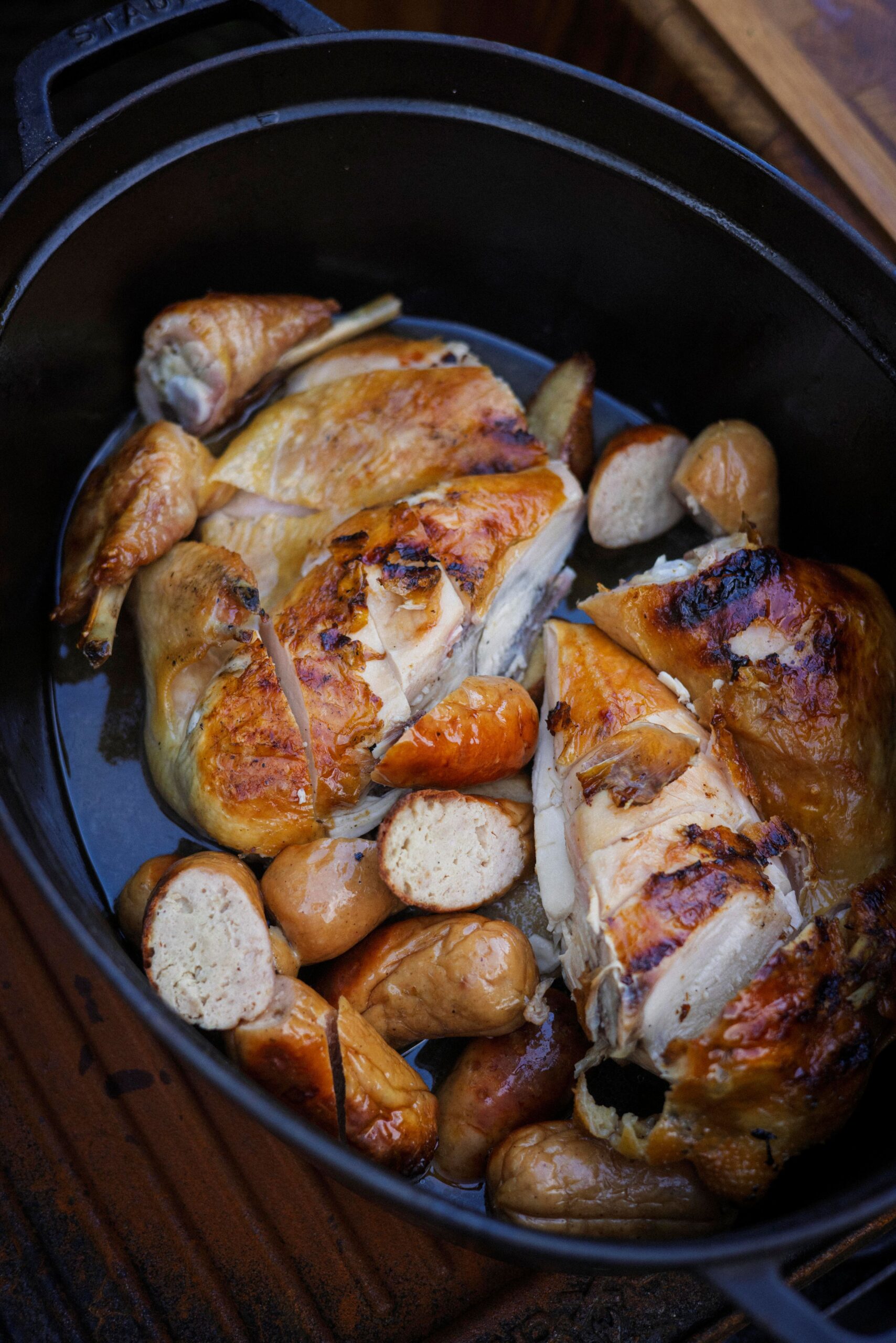
The night before cooking, he dry rubs each bird—no secret seasonings— just salt, which results in juicy, deeply seasoned meat with extra-crispy skin. The next day, he hangs the chickens over embers until the skin tightens—usually 90 minutes to two hours—then transfers them to a Dutch oven banked with coals to braise in their own jus before moving them back to the grill to get crackling skin. It’s served with a squeeze of lemon and a pour of the concentrated braising juices, a sort of liquid gold that should probably be bottled and sold.
It all seems so utterly simple. Those hours of labor seem to evaporate the minute the meat hits the plate. Which is part of the point.
The drive to Desrosiers’ place is its own adventure, complete with GPS wrong turns, dirt roads, and wildlife darting through the brush. By the time I pull up, the smoke still perfumes the air. He’s set aside a private meal for us on the patio, beneath trees rustling in the afternoon wind. A still-warm chicken waits in a Dutch oven. Desrosiers hands me a spoon and gestures toward the jus beneath the bird, a glossy puddle of rendered fat and juices. It’s salty, concentrated, and oh-so-easy to eat straight from the pot.
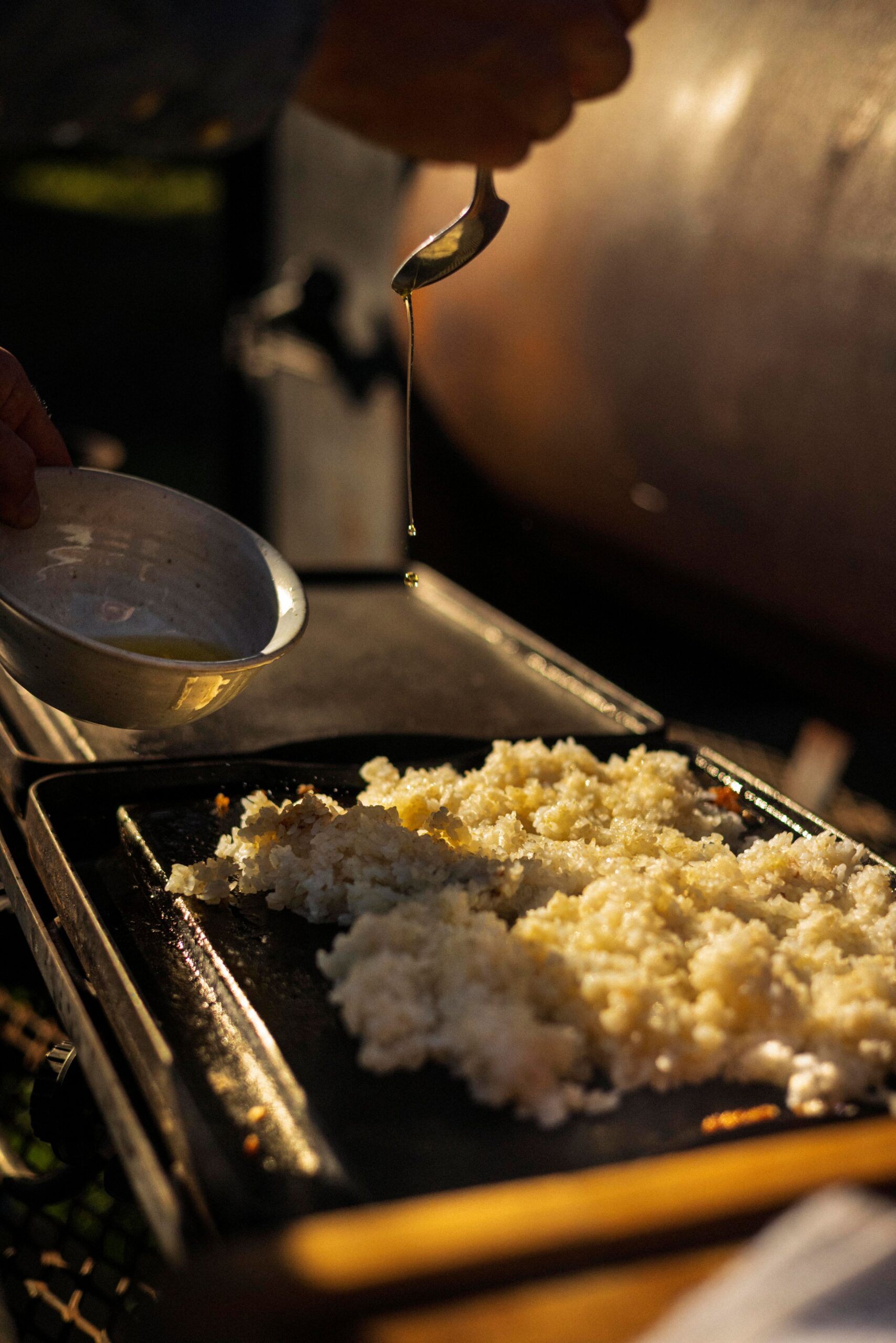
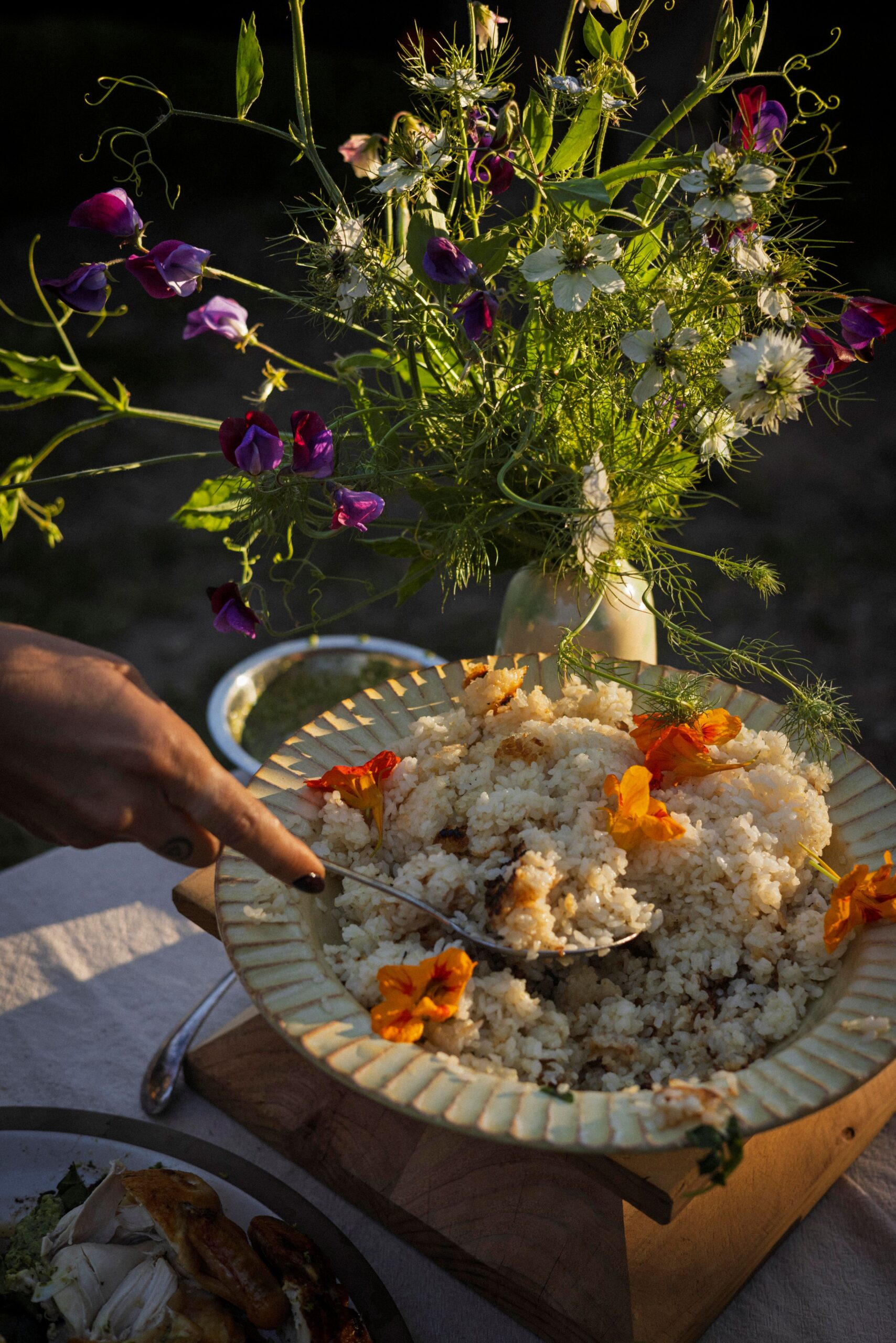
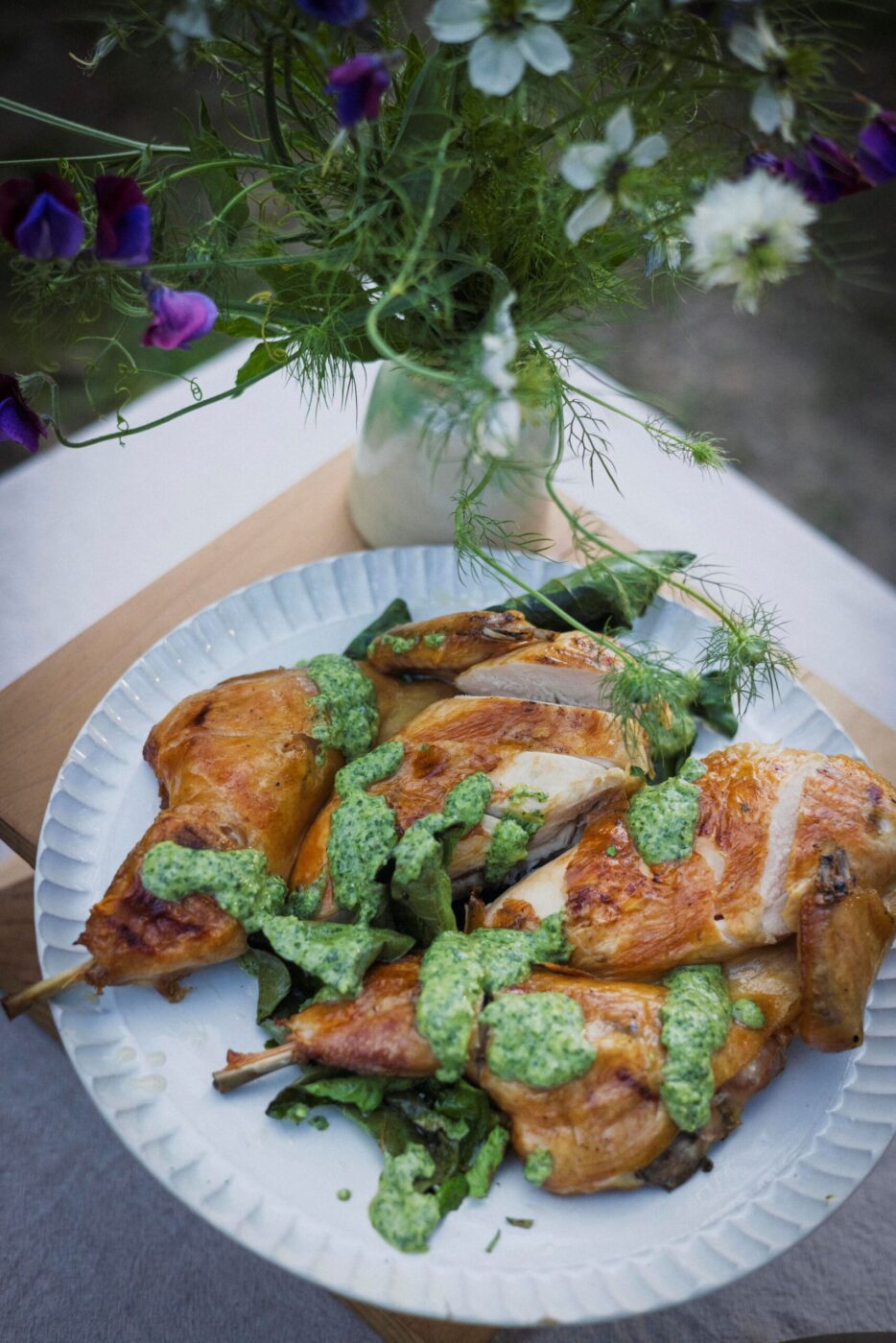
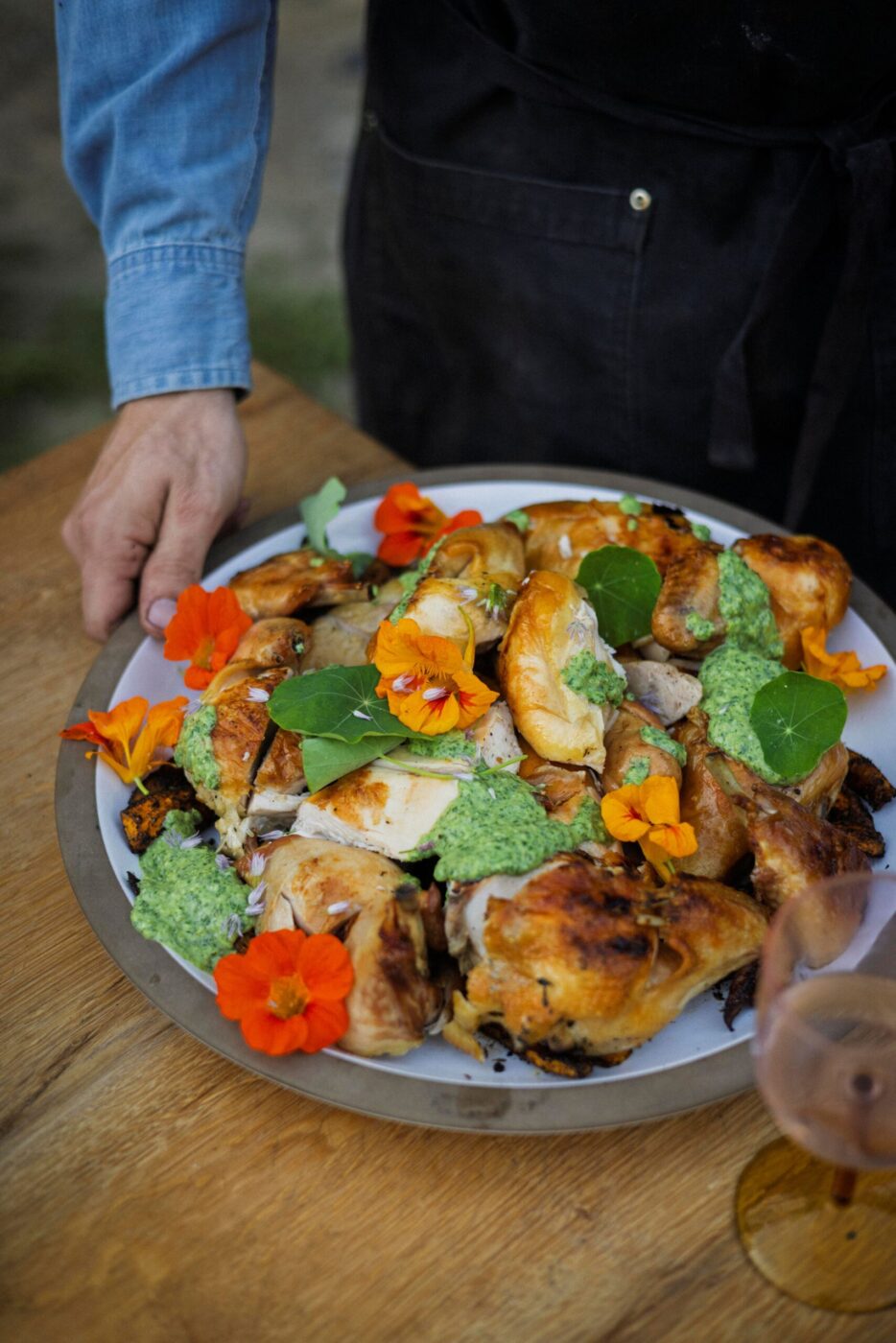
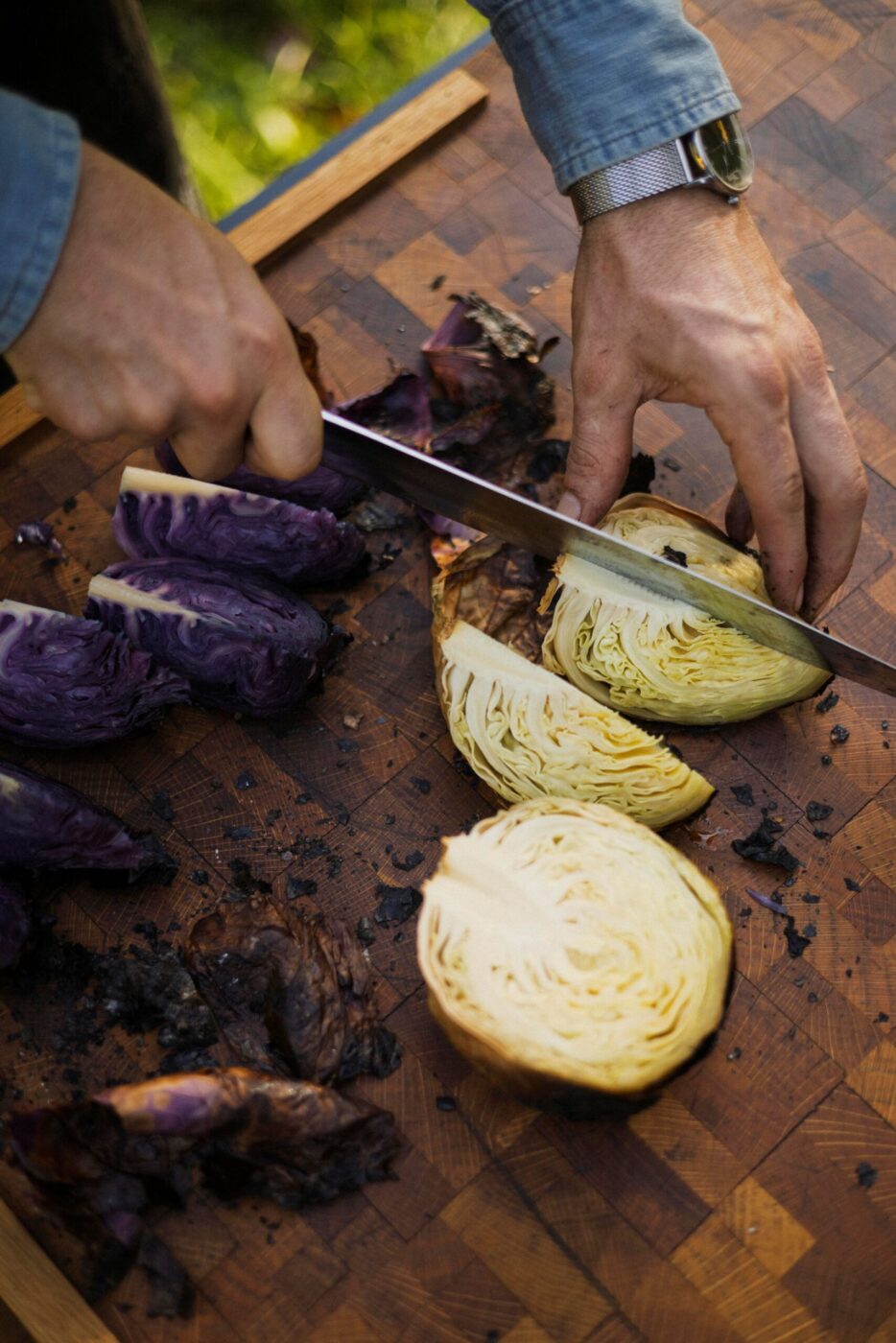
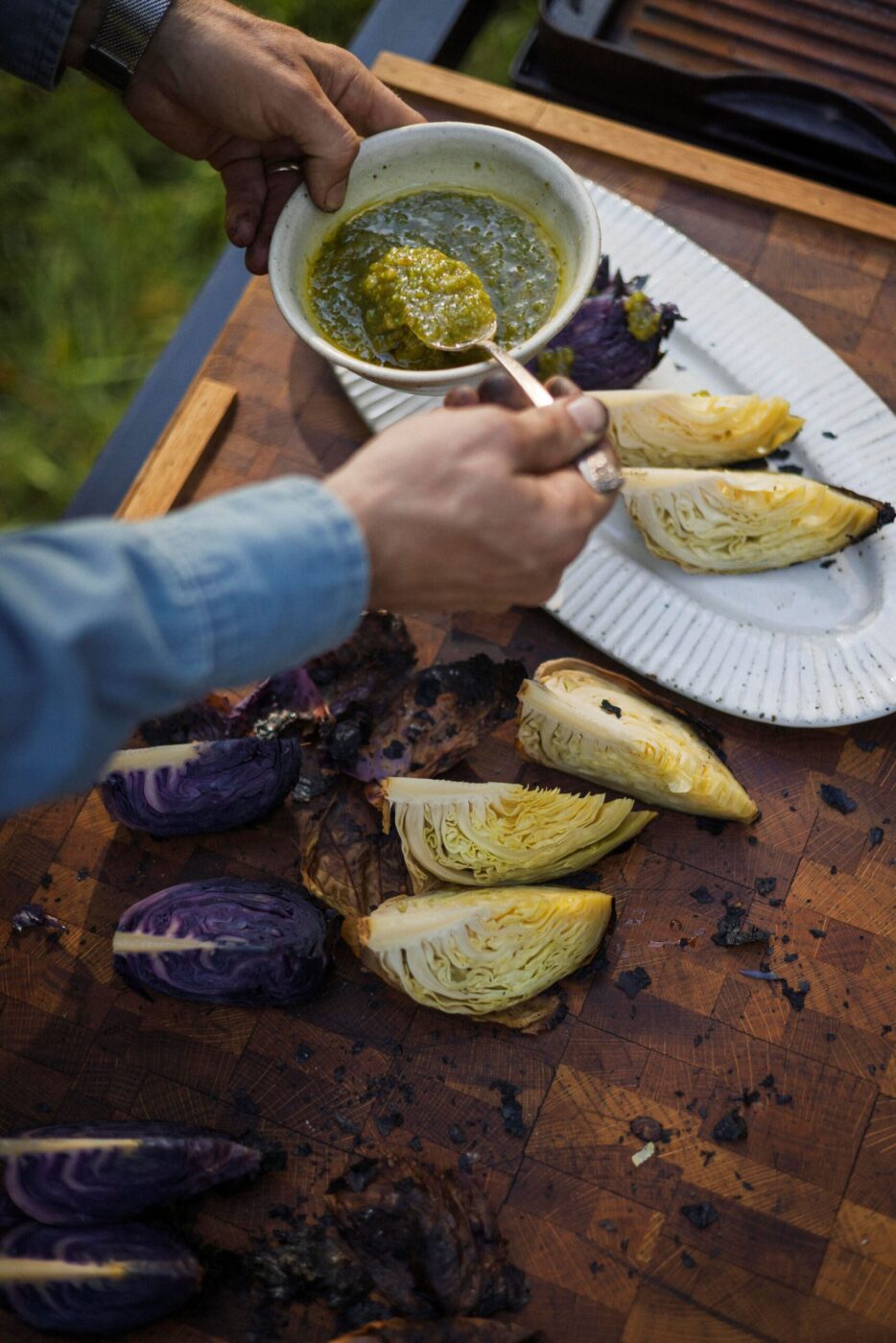
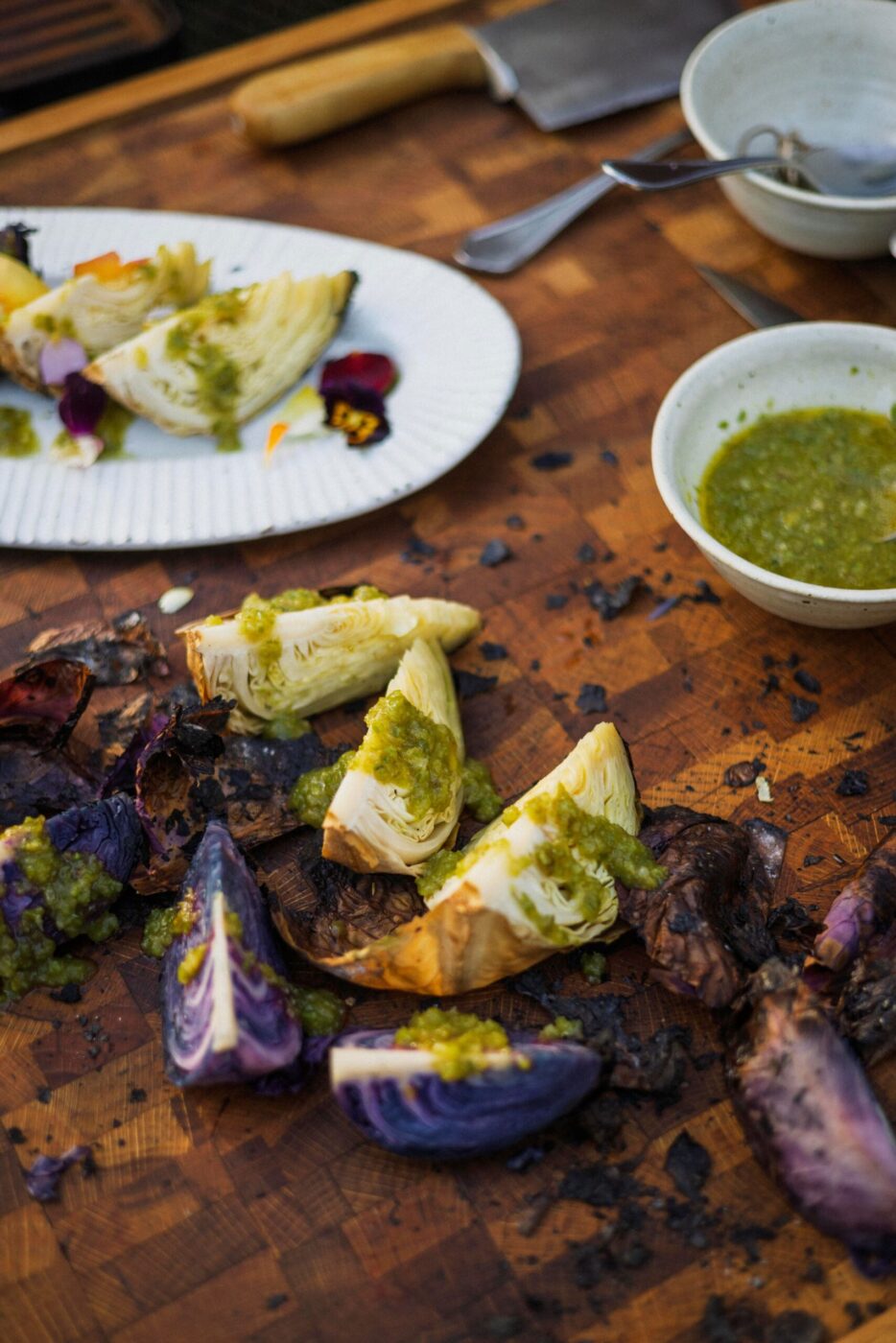
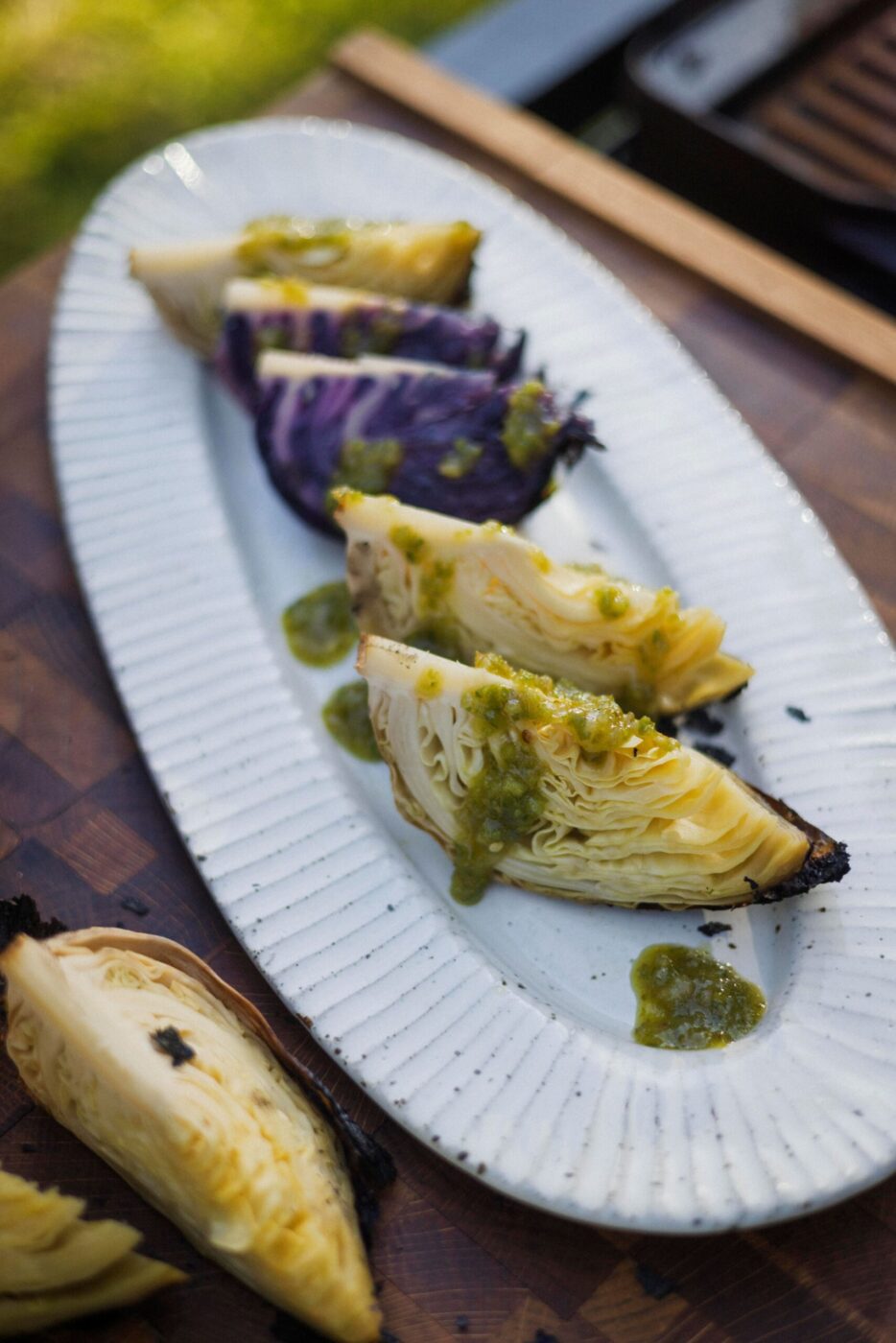
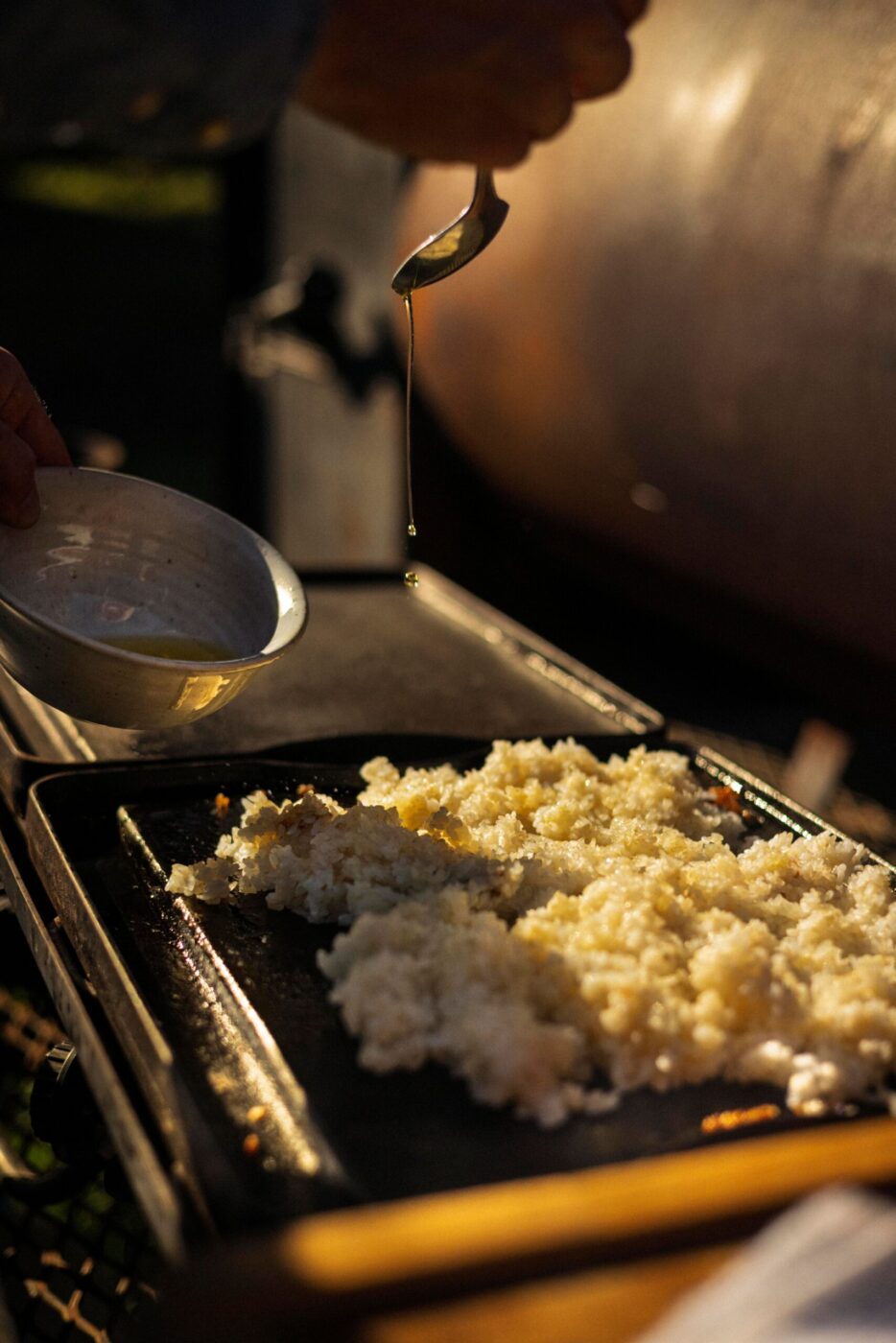
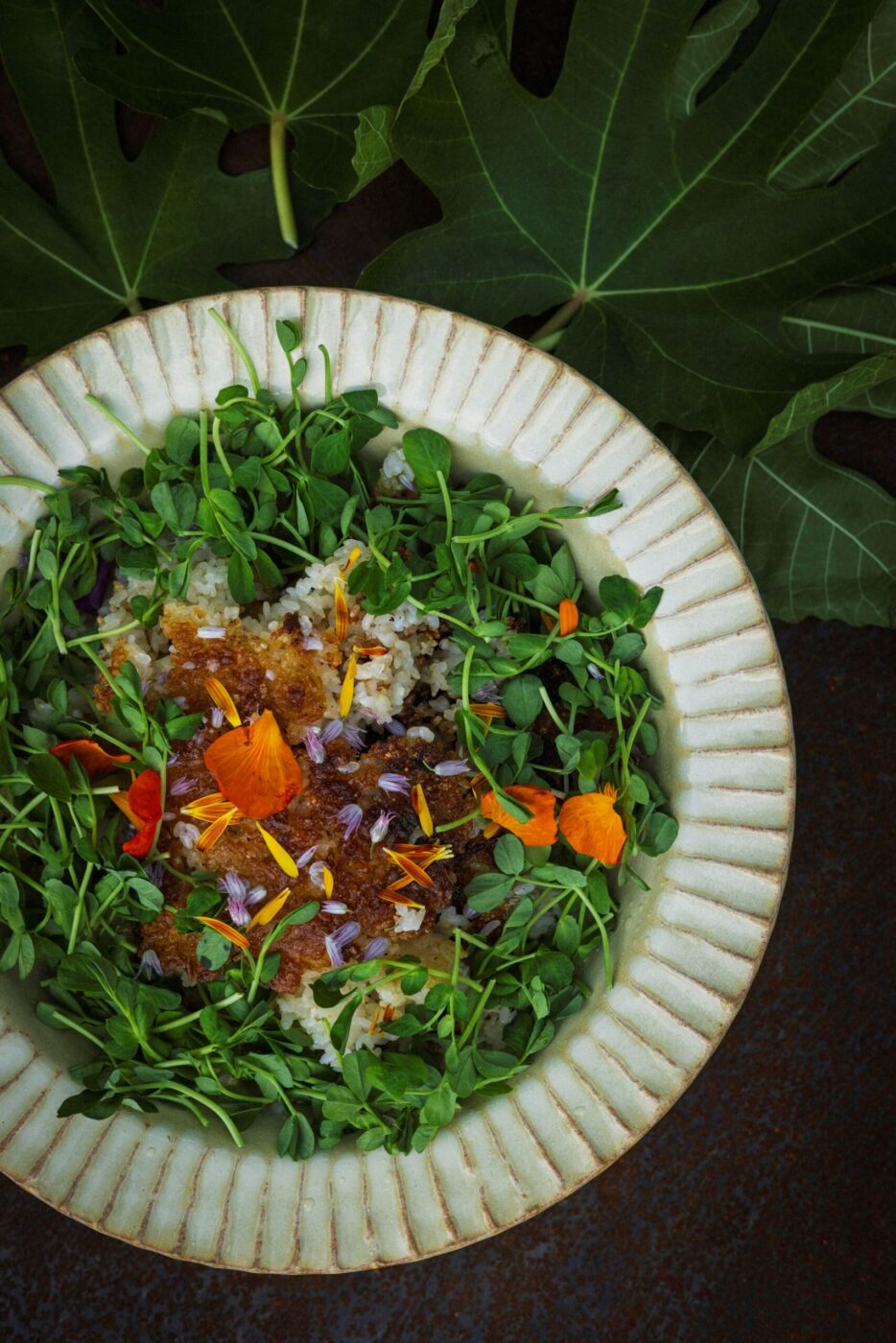
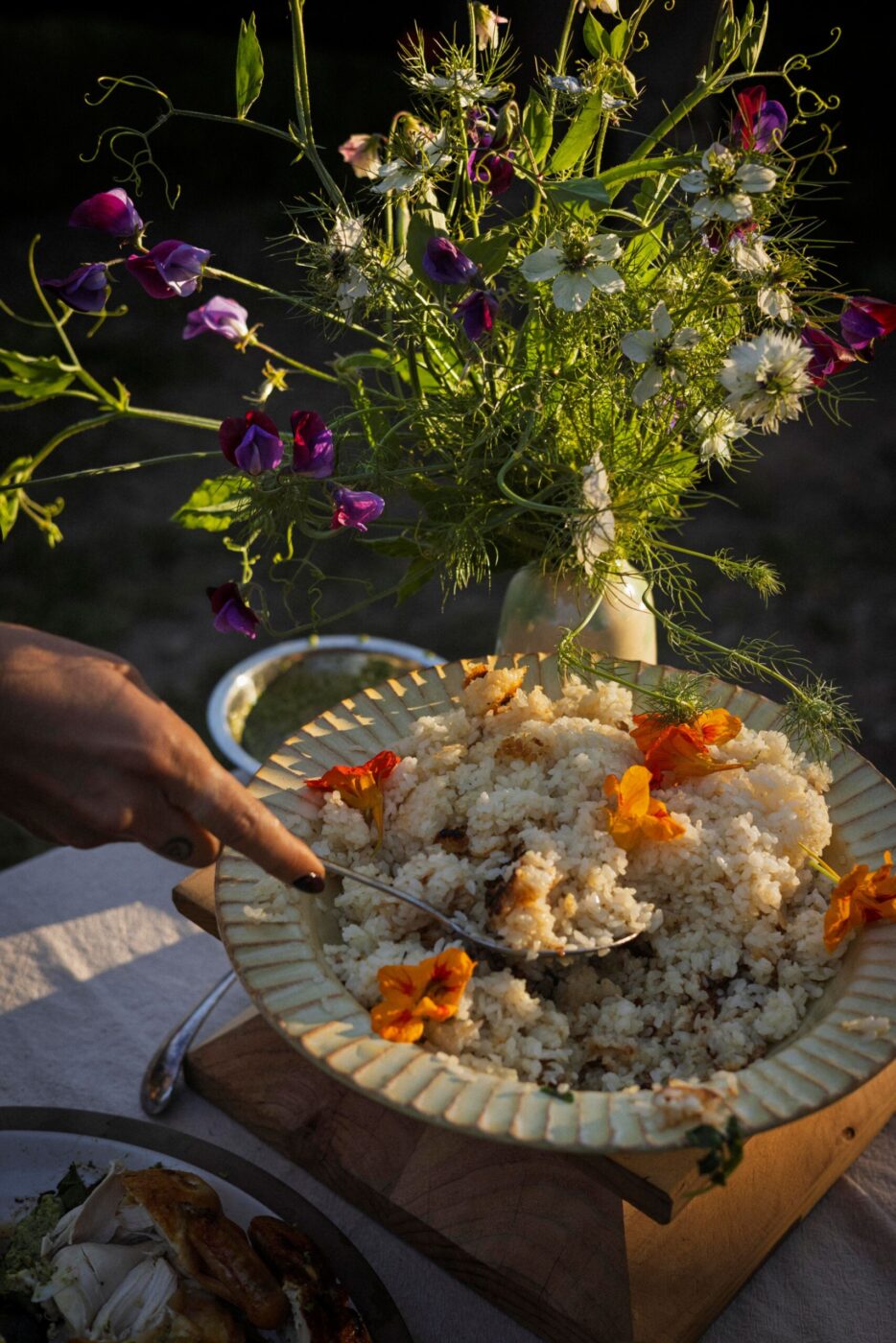
A skillet of rice cooked in schmaltz arrives brown and crunchy at the edges, alongside charred cabbage with butter beans dressed in sauce made with green chile and preserved lemon that lands somewhere between pesto and chimichurri, but with more swagger than either. Slices of chicken, skin still glistening, come with broth to ladle over the top.
Flavors unfold gently with each bite: salt, umami, buttery skin, a flicker of char, a quiet note of smoke in the background. This is what chicken should taste like in a perfect world. And right now, that world feels pretty close.
Sitting at the table with Desrosiers has its own quiet magic. He’s humble and generous giving advice for his method, while knowing this is a meal mere mortals could never quite pull off at home. Somehow it feels deeply familiar, the kind of food that nudges at memories you’re not even sure belong to you. Frankie circles the table, tail wagging, still hoping for a bite. I’m happy to oblige, because some meals are better shared.
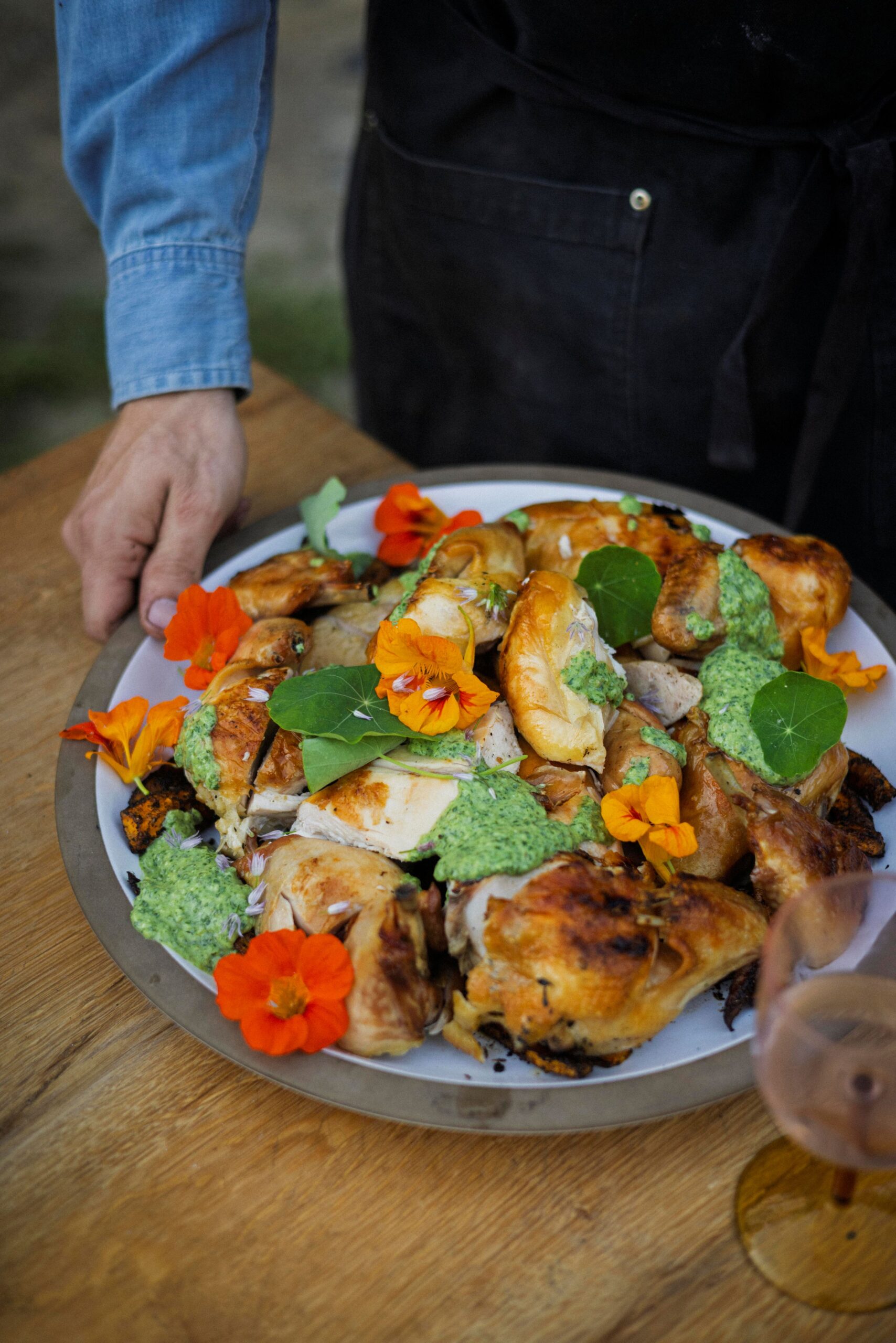
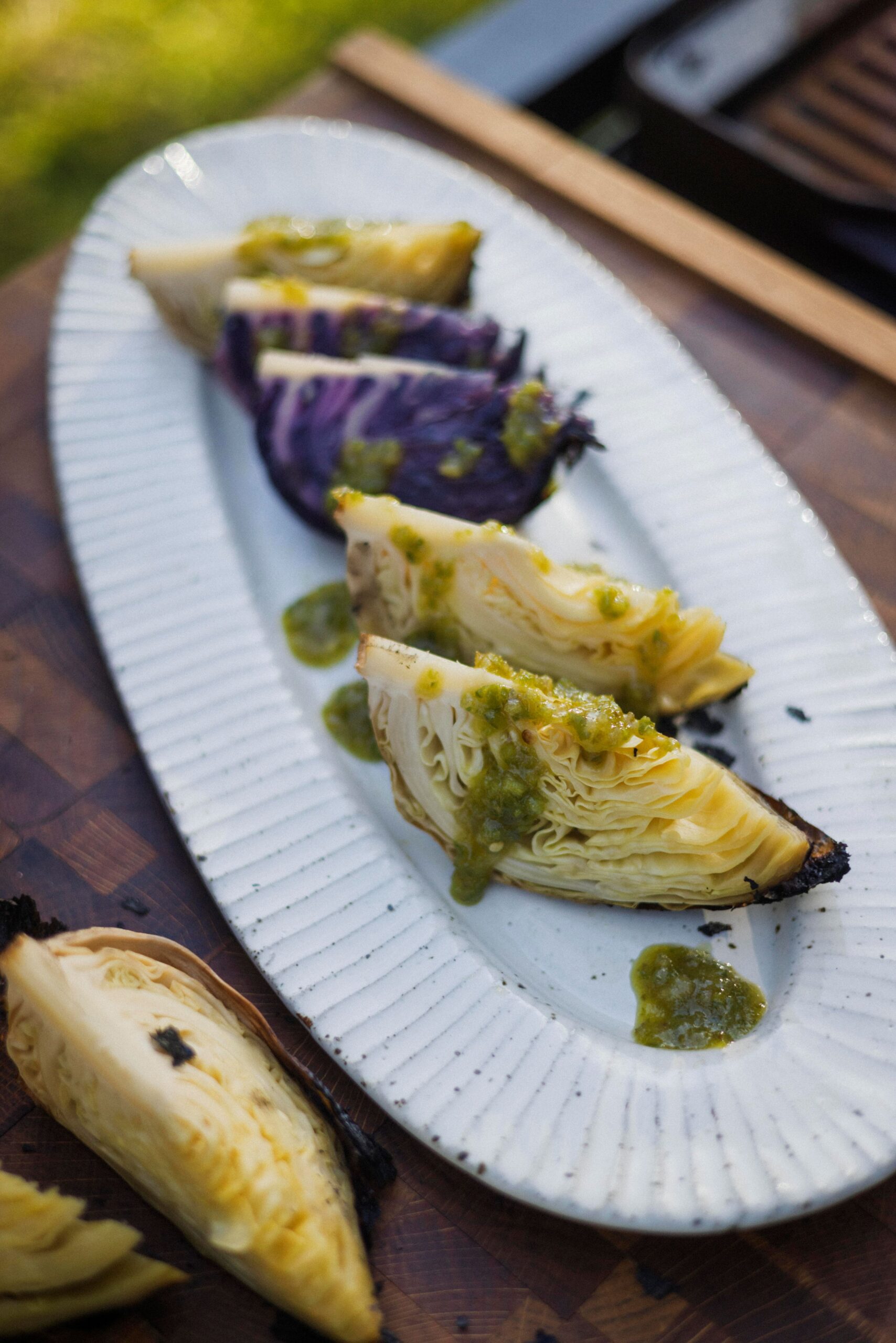
Hell Chicken might not be in every cook’s wheelhouse, but Lee Desrosiers’ recipe for grilled cabbage is an ideal, carefree side dish for grilling nights. It will pair well with most any protein you feel like making.
Grilled Cabbage with Preserved Lime and Chile
Makes 4 servings
- 1 head of cabbage, see note
- 1 tbsp. avocado oil
- Kosher salt
For the sauce:
- 2 serrano chiles, seeded and diced
- 1/2 preserved lime (lemon also works well), rinsed and seeds removed
- 1 tbsp. Colatura (anchovy sauce, or substitute fish sauce)
- Juice of 2 limes (or lemons)
- 1 tsp. white wine vinegar
- 3 tbsp. olive oil
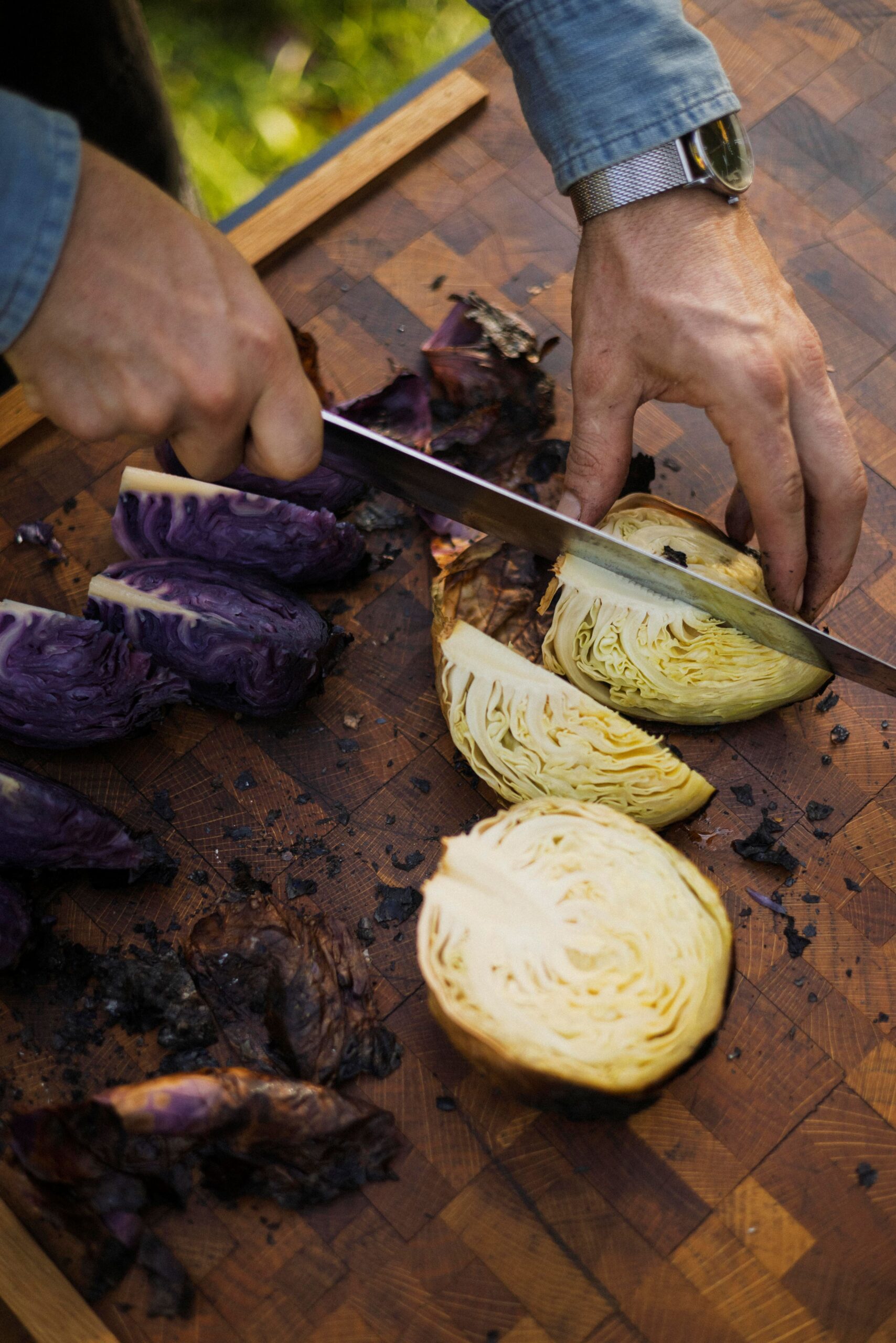
Cut the cabbage into quarters and set aside.
While grill heats, make the sauce.
In a food processor combine chiles, preserved lime, anchovy sauce, lime juice, and vinegar. Pulse a few times, and then with the motor running, drizzle in the olive oil until the mixture emulsifies. Alternatively, you can make the sauce in a bowl by finely dicing the chiles and preserved lime, then whisking in the remaining ingredients. Set sauce aside until it’s time to serve.
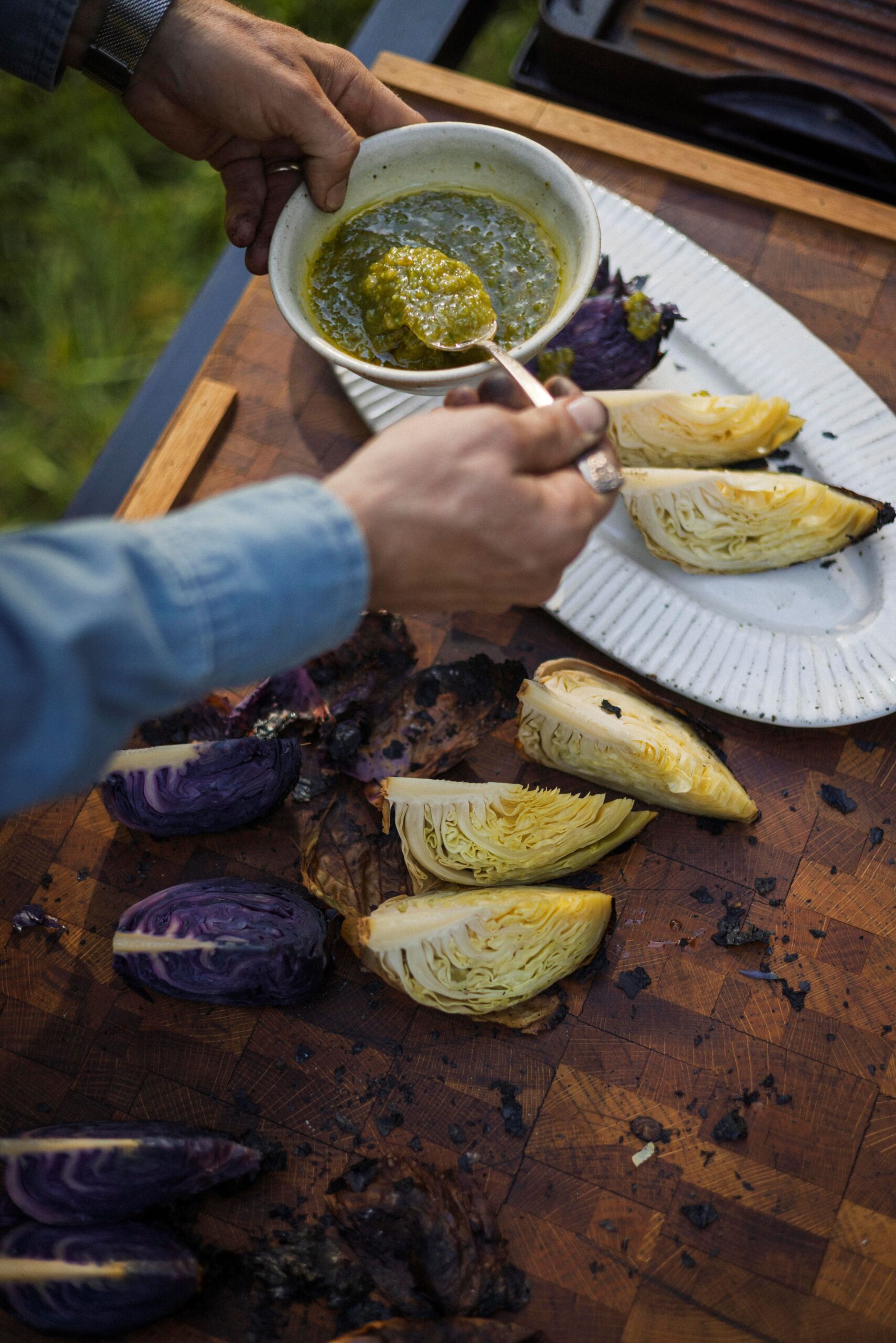
Meanwhile, toss the cabbage with the avocado oil and season with a healthy pinch of salt. Place cabbage cut side down on the grill, and grill over hot coals, or if using propane, over medium-high heat. Sear until the cabbage begins to caramelize and soften. Remove cabbage to a serving platter and spoon the sauce over it. Serve at once with your favorite grilled protein.
Note: Plan on 1/4 of a cabbage per person. The type of cabbage you use also determines how you should cook it. If using a tight head of cabbage, such as common red or green grocery store varieties, blanch the cabbage quarters in a pot of boiling water first. Remove from the pot, pat dry, and continue with the recipe. Loose-leaf cabbages like Savoy or the cone-shaped Caraflex can go straight on the grill.