









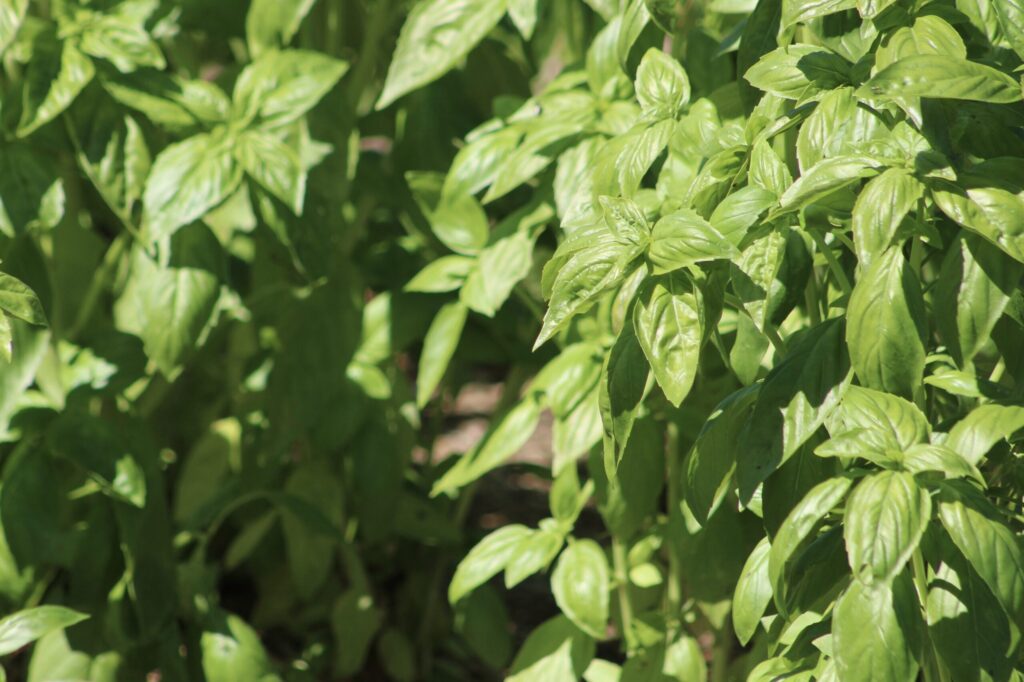

Basil is a signal creature of summer, a robust herb that flourishes in the hot sun. Genovese basil—sometimes called big leaf basil, sweet basil, or true basil—is the very scent of the season, with sweet, heady aromas evocative of clove, anise, lemon zest, and licorice root. Tear a single leaf and you are enveloped in the essence of summer. Basil tastes refreshingly green.
Frédérique Lavoipierre, author of “Garden Allies” and a former longtime resident of Sebastopol, offered advice that made her then-young son blush.
“Basil should not be planted until you can lie on the ground naked,” she told customers at her diminutive Shoestring Nursery.
Plant basil in May, when the ground is indeed warm, and begin harvesting in June. Three to six plants, depending on how many you typically feed, should keep you in delicious basil and its classic sauce, pesto, until the first heavy rain or freeze. And then you should forget about it, as basil is meant to be enjoyed in hot weather, not in colder months.
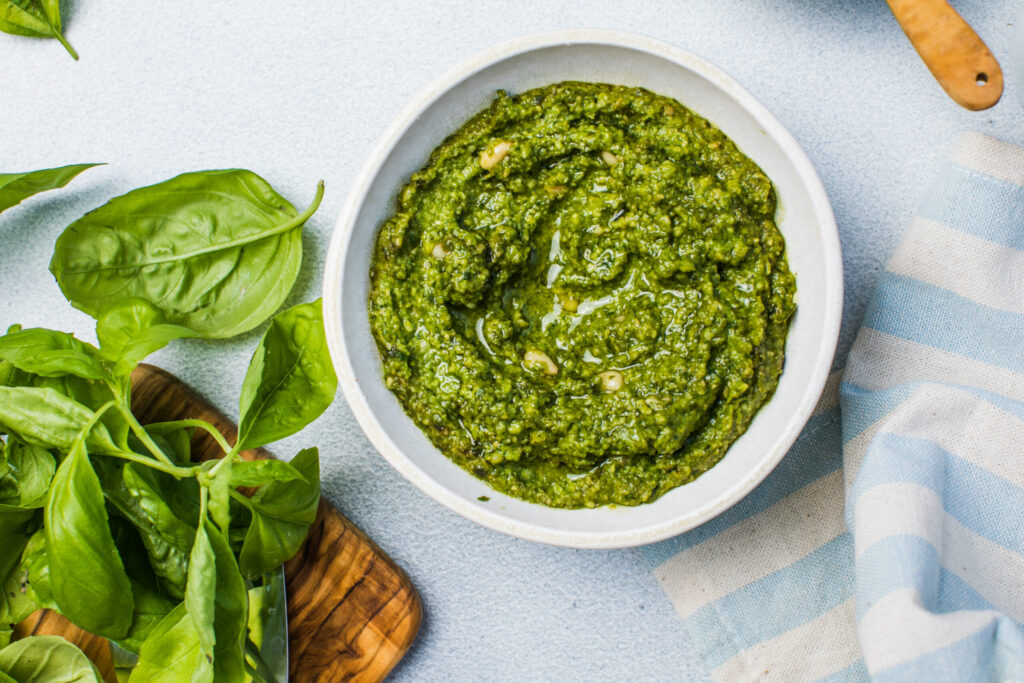
The very best pesto is made by hand with mortar and pestle (or the similar Japanese suribachi), but time being what it is today, there is an easy alternative: grinding the garlic, basil, and parsley in a food processor and folding in the other ingredients by hand. Pesto should not be a smooth pureé; it should have some texture and this technique provides some. Just before using, stir in a tablespoon or two of hot water to loosen the pesto and make it easily spreadable.
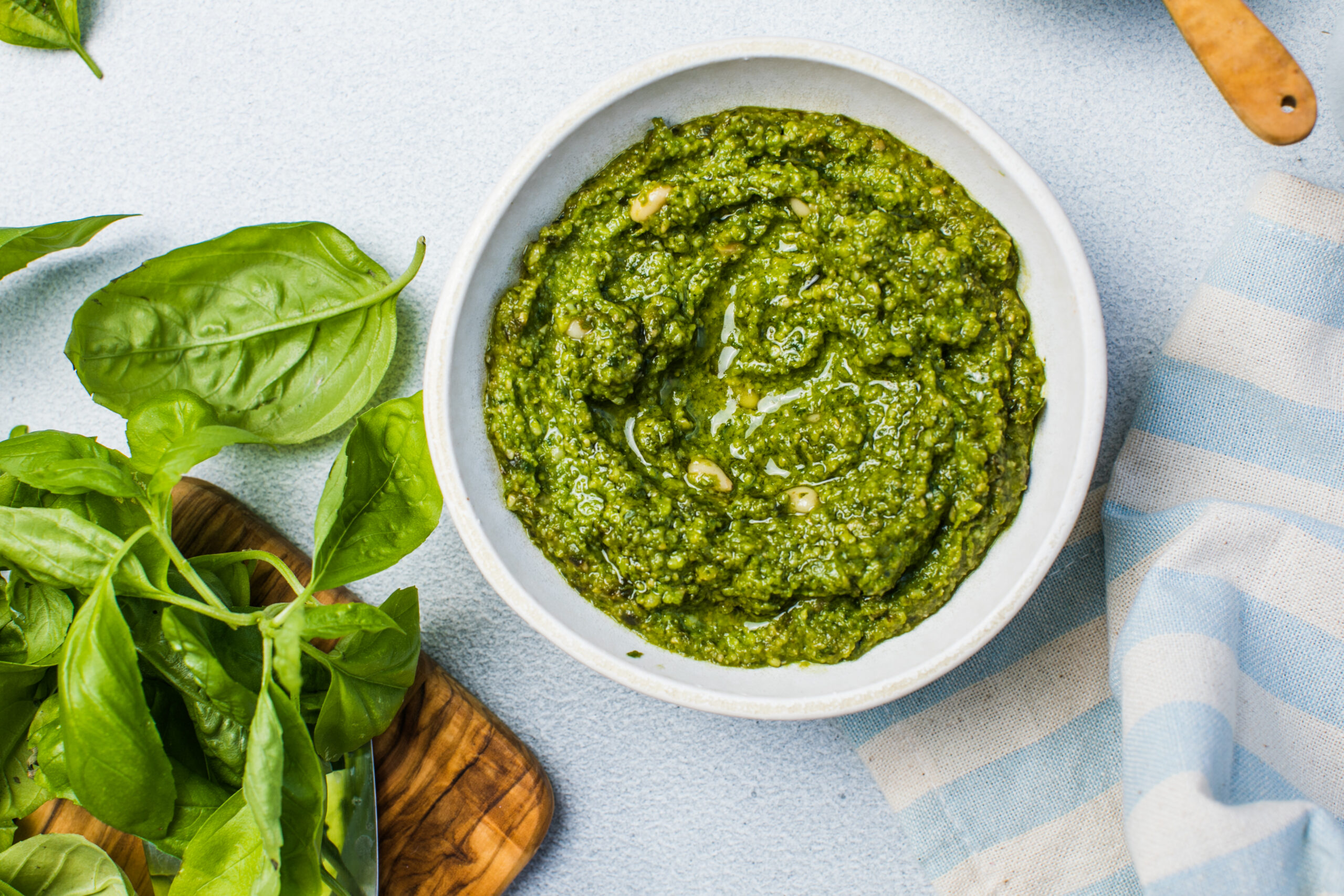
Traditional Summer Pesto
Serves 4 to 6
• 1 large bunch fresh Genovese basil (about 4 cups of leaves), loosely packed
• 1/4 cup fresh flat-leaf parsley
• 6 garlic cloves, peeled and crushed
• Kosher salt, to taste
• 1/2 cup shelled walnuts, lightly toasted and chopped into small pieces (see note below)
• 3 ounces (about 3/4 cup) Parmigiano-Reggiano, grated
• 2 tbsp. butter, at room temperature
• 1/2 cup extra-virgin olive oil
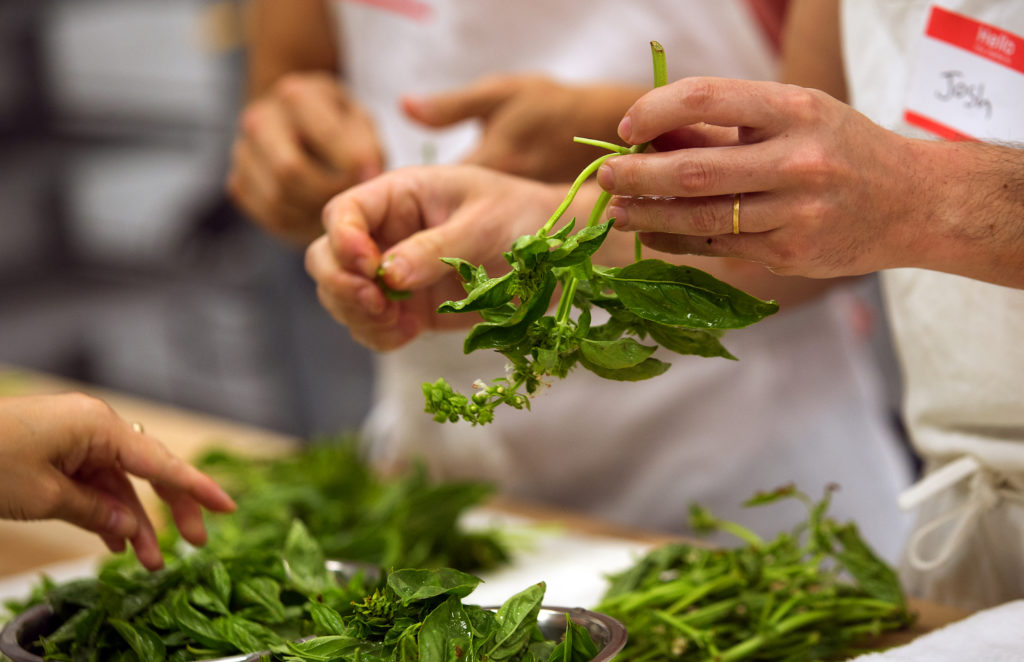
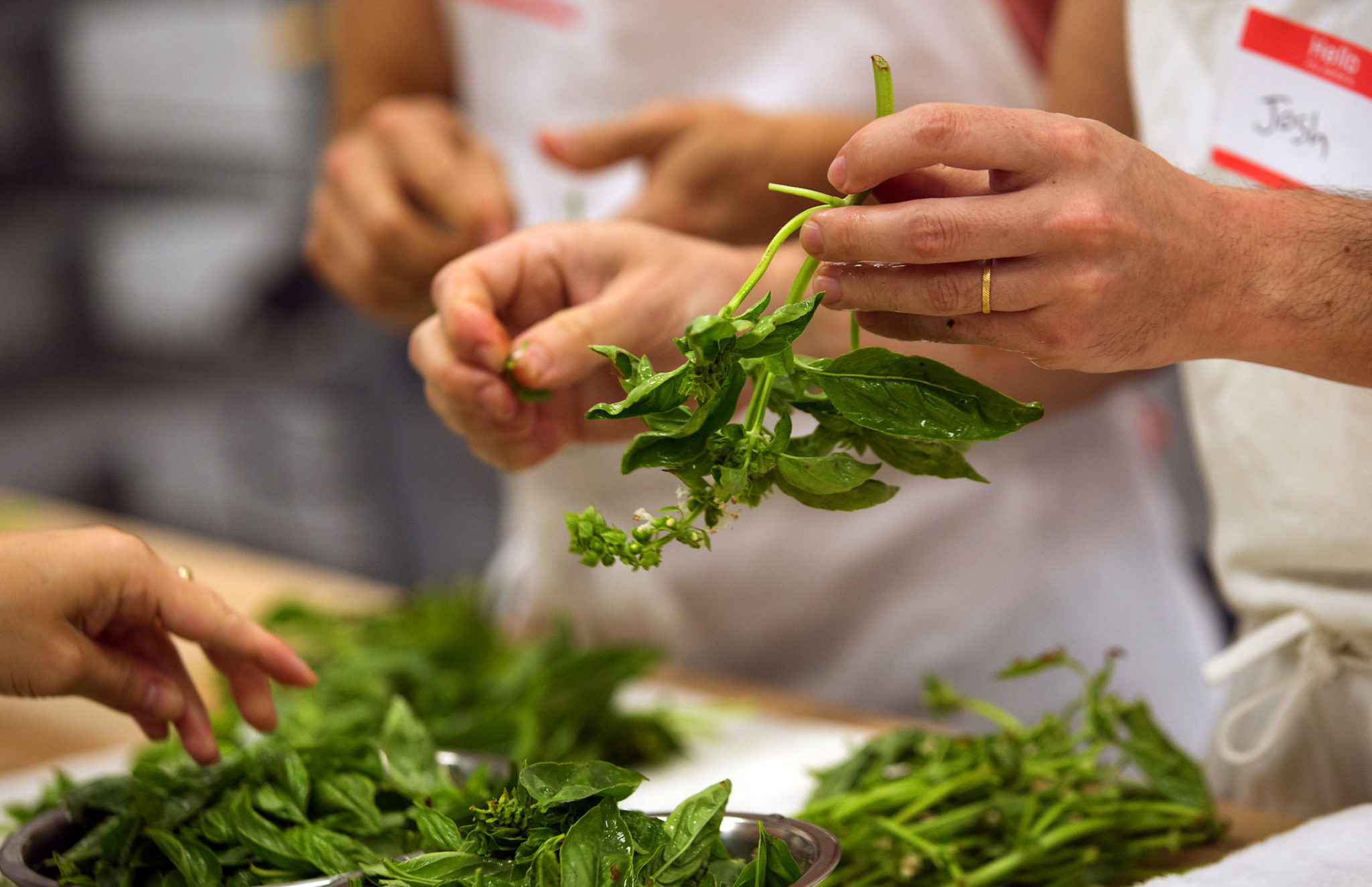
Do not wash the basil. Instead, brush off any dust or dirt that clings to the leaves. If you have not already done so, remove and discard the stems. Tear or chop the basil and parsley coarsely; set aside.
Put the garlic into the work bowl of a food processor, sprinkle generously with salt, and pulse several times until the garlic is reduced to a smooth paste, scraping the sides of the work bowl as necessary.
Add the chopped leaves and pulse several times, stopping before the leaves are pureed; they should retain some texture. Scrape the mixture into a mixing bowl.
Fold in the walnuts, cheese, and butter. Slowly drizzle in the olive oil while mixing with a rubber spatula. Taste and correct for salt.
Cover and set aside until ready to use. The pesto will keep, refrigerated, for 2 to 3 days. Bring to room temperature before enjoying tossed with pasta or new potatoes; spread over bruschetta or pizza; spooned over tomatoes, grilled vegetables, or polenta; or stirred into soup or risotto.
Note: Although pine nuts are traditional in pesto, they can be both expensive and vary widely in quality. Walnuts are a delicious, inexpensive alternative.