
Weekend Stays

Visitors to the Madrona Manor can expect a tasty breakfast buffet including fresh-squeezed orange juice. Shot on Thursday, June 27, 2013 at the Madrona Manor in Healdsburg, Calif. (Photo by Charlie Gesell )

Is there anything better than getting away in the cool days of early winter to spend some well-earned down time curled up in front of a fire? (And maybe having someone bring breakfast, or drinks?) Explore these walkable towns or take a short drive into the surrounding countryside and let the beauty of the coast, vineyards and blustery skies restore your soul.

Healdsburg

It’s a slam dunk to make Healdsburg your weekend destination, from its blocks of creative shops and highly rated restaurants to the garden-inspired bars and tasting rooms rimming the town’s central plaza. A quick drive out of town leads to the gorgeous landscapes of the Russian River, Dry Creek and Alexander valleys, and wineries galore.

Where to stay

Duchamp Hotel
Off the plaza a few blocks and down a small alley, the Duchamp is a bit of a hidden gem, offering six cottages with fireplaces and private terraces around a pool, Jacuzzi spa and lovely gardens dotted with olive trees. It’s quiet, and also features personalized concierge services, making it the ideal getaway from the fray. Sparkling wine from the Duchamp Estate Winery, continental breakfast and free Wi-Fi round out the deal. $350-$425/night. 421 Foss St., 800-431-1300, duchamphotel.com.

H2hotel
Want to be closer to the action? You can’t get much closer than h2, with 36 “eco-chic” rooms with private balconies/patios and the fabulous Spoonbar downstairs, a restaurant, bar and lounge/lobby area with a hip vibe. The creekside pool and onsite spa will keep you there; the bicycles on loan (and four suggested itineraries) will send you off on two-wheeled adventures in and around town. $300 and up/night. 219 Healdsburg Ave., 707-922-5251, h2hotel.com.

Where to eat

Campo Fina
For lunch, dinner or drinks, it doesn’t get more comfortably delicious – or local – than Campo Fina, the second restaurant of Scopa restaurant’s chef, Ari Rosen. In a narrow, brick-walled space with high ceilings – leading to the spacious patio (with heat lamps) and bocce courts out back – Campo Fina delights with gourmet, seasonally driven comfort food, from cold and hot sandwiches (the “Sunny Side of Life” is a favorite) to dinnertime pizzas and grilled meats. It also offers an all-day menu (oysters, spicy peppers, meatballs and such) and is open seven days a week, making it a prime destination on Mondays, when so many other spots are closed. 330 Healdsburg Ave., 707-395-4640, campo-fina.com.

Madrona Manor
This elegant hotel-restaurant estate, grandly sited among lush gardens above the Dry Creek Valley, makes for a worthy bucket-list visit any time of year. But it’s particularly decked out in wintertime when the Victorian mansion goes Dickens, offering five-course meals around traditional beef Wellington, with costumed carolers in fine voice. The Michelin-starred menu created by longtime chef Jesse Mallgren is modern, the setting and service old-school, lit by candle and romantically cozy. Menus are presented in themes, such as Clean and Crisp (caviar, crudo, okra), Soft and Delicate (sea urchin, slow-cooked eggs) and Meaty (rabbit, squab, strip loin), changing with the seasons. The Manor’s tableside cheese cart is legendary. 1001 Westside Rd., 800-258-4003, madronamanor.com.

Not to miss

Bergamot Alley
An urban, brick-adorned bar stocked with rare local and European wines and beers by the glass and minimalist nibbles (you are also welcome to bring in your own noshings). Don’t miss Bergamot’s “Porn Room,” where the really good bottles can be perused for purchase. 328A Healdsburg Ave., 707-433-8720, bergamotalley.com.

Great shops

Bella
A favorite with locals and visitors, the Bella boutique has vintage hats, jewelry, clothes, Cosabella lingerie, shoes and baby gifts, as well as a sterling reputation for service. 302 Center St., 707-431-2910, facebook.com/pages/Bella-All-Things-Beautiful/213745808639493.

Copperfield’s Books
Sonoma County’s favorite independent bookstore, the Healdsburg outpost is particularly well-appointed, stocked full of books, magazines and gifts, many centered around food, wine and travel. 106 Matheson St., 707-433-9270, copperfieldsbooks.com.


Mendocino

The tiny seaside hamlet of Mendocino doesn’t offer a central plaza or square like Healdsburg or Sonoma, but is small enough to walk around. Many of its prime destinations are in view of the wild coast or otherwise worthy of a short drive, which makes it a rugged and romantic place to park oneself in winter.

Where to stay

The Inn at Cobbler’s Walk Mendocino
A bed and breakfast with its own trailhead leading to an ocean-bluff walk, this is a new, chic overnight destination owned by the Glendeven Inn folks, who run a farmstead and provide eggs and other fresh goodies to this inn as well. Three-course hot breakfasts are served in your room, which you might not want to leave, thanks to the fireplace and jetted tubs. Farm-to-table dinners area served on a regular basis here, too. $150-$295. 8200 North Highway One, Little River, 707-937-0088, cobblerswalkmendocino.com.

MacCallum House Inn & Restaurant
It doesn’t get much more elegant than the spacious MacCallum, with six rooms in the main house and seven private cottages (including one in a water tower), with made-to-order breakfast, in-room massage, fine-dining restaurant and bar, flower garden and romantic fireplaces and wood stoves. The sister MacCallum Suites is a nearby four-star luxury mansion overlooking the ocean. $149-$349. 45020 Albion St., 800-609-0492, maccallumhouse.com.

Where to eat

Café Beaujolais
This longstanding eatery is legendary for a reason, and no visit to Mendocino would be complete without sampling its fine fare, a mix of French and California cuisines inspired by organic, local ingredients. Begin with a house aperitif like a Kir Royale made with Roederer Estate Brut sparkling wine, and linger over seared scallops, bouillabaisse, crepes and filet mignon. 961 Ukiah St., 707-937-5614, cafebeaujolais.com

Frankie’s Mendocino
Pizza, ice cream and much more is how Frankie’s touts itself, and locals love it for its fresh, organic take on the simple pie, even offering a gluten-free pizza for long-suffering fans. Try the Navarro with housemade basil pesto, free-range chicken, mozzarella and caramelized onions. There’s a lot of local beer, cider and wine, too. 44951 Ukiah St., 707-937-2436, frankiesmendocino.com.

Not to miss

Mendocino Coast Botanical Gardens
Located due north of Mendocino in Fort Bragg, this unusual coastal garden is a lovely way to meander through a day, taking in coastal pines, ferns, heaths and heathers, camellias, rhododendrons and other beauties in view of the mighty Pacific. $14/general admission. 18220 North Highway One, Fort Bragg, 707-964-4352, gardenbythesea.org.

Great shops

The World of Suzi Long Gallery
Mendocino is not lacking in art galleries, but this one is worth a particular peek, as the photos and paintings are all inspired by the beauty of the region. Long calls the work  “MendoScenery;” the gallery is set in a historic water tower. 611 Albion St., 707-937-5664, suzilong.com.


Sonoma

Historic and family-friendly, Sonoma’s central plaza is about double the size of Healdsburg’s and a similar focal point for the city, with yummy restaurants, bars, distinctive shops and tasting rooms lined all around. Bigger hotels and wineries are an easy walk or drive from there.

Where to stay

Bungalows 313
A small luxury inn a few blocks off the Sonoma Plaza near Depot Park, the Bungalows is a series of Italian-villa-inspired private suites – six in all, one as large as 1,200 square feet and with a full kitchen, fireplace and private patio. Modern with an old-world feel, this is the place to be with a larger group or family. There’s a courtyard that accommodates up to 100 people, and the inn is in easy walking distance of restaurants and shops. $160-$499 with weekly rates also available. 313 First St. East, 707-996-8091, bungalows313.com.

The Lodge at Sonoma Renaissance Resort & Spa
A simple walk from the plaza, The Lodge is luxurious without being over the top and has a restaurant, as well as the Bean & Bottle wine bar. Through the end of the year, it’s featuring in-depth tastings with its in-house sommeliers, who will select local libations and take you on a tour of a nearby distillery. From $329/night. 1325 Broadway, 707-935-6600, the lodgeatsonoma.com.

Where to eat

The Red Grape
With pizza, pasta, salads, soups, Sonoma wine and beer on tap and sports on TV, this is a bustling, kid-friendly spot with very good food for lunch or dinner in a casual setting. Or also take a pie to go and enjoy in the plaza. Locals swear it’s the best pizza in town. 529 First St., 707-996-4103, theredgrape.com.

Santé at the Fairmont Sonoma Mission Inn
With a well-earned Michelin star, Santé is Sonoma’s most luxurious place to dine, sequestered within the walls of the tony Fairmont hotel. It relies on copious fresh, local produce and meats, composing it to unexpected heights and accompanied by one of the town’s finest wine lists, full of options from Sonoma and Napa. Look for its schedule of winemaker dinners. 100 Boyes Blvd., 707-939-2415, fairmont.com/sonoma.

Not to miss

HelloCello/Prohibition Spirits
Fred and Amy Groth opened this, Sonoma’s first and only post-Prohibition distillery, to make HelloCello, their succulent, locally sourced Limoncello di Sonoma. (They make liqueurs from figs and blood oranges as well.) Adding to their reputation, they now make the sought-after Hooker’s House Bourbon and Rye, Sugar Daddy Rum and Solano Vodka, too. Take a distillery tour and learn how it’s all made. 707-721-6390, prohibition-spirits.com.

Great shops

The Epicurean Connection
Sonoma local Sheana Davis knows cheese and shares her knowledge and her best selections at this aromatic shop, café, beer and wine bar just off the plaza. Try Davis’ own Delice de la Vallée, a fresh triple-cream cow and goat cheese that has won many awards. 122 West Napa St., 707-935-7960, theepicureanconnection.com.
The Finish: Caryl Hart

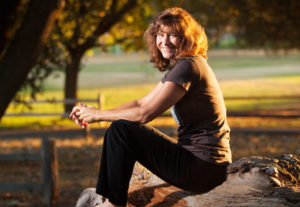
Sonoma County Regional Parks Director Caryl Hart sits for a portrait in Sebastopol’s Ragle Ranch Regional Park. (photo by Charlie Gesell)

Caryl Hart, 55, Director of Sonoma County Regional Parks, has a grand goal: to create a world-class park system. “We have the basics in the county’s natural resources,” she says, “but it’s also about connecting everything together and providing access to everyone.”

Then: Born in Los Angeles, grew up in Santa Ynez Valley

Now: Lives in Occidental

Morning ritual: “I wake up at 6 a.m. and work out with an elliptical trainer, videos and apps until about 7 a.m., and then I drink a Vitamix that I bought at the fair this year. Every year I get some weird thing at the fair.”

Biggest challenges: “The most immediate was I walked into a 25 percent budget cut for the department, on top of a 20 percent cut the year before.”

Parks fundraising during her three-year tenure: More than $1 million.

How she met her husband, Grateful Dead drummer Mickey Hart: “Mickey was collaborating on a recording called ‘Voices of the Rainforest.’ I got involved through a mutual friend who introduced us, to help him promote it in the environmental community. That was 1990. I’d been to zero Grateful Dead shows at that point.”

Favorite Grateful Dead song: “Eyes of the World.”

Academia: Law degree at University of San Francisco; Ph.D. at University of California Berkeley in environmental science, policy and management.

Past life: Public defender in San Francisco and Marin County.

Favorite Sonoma County trail: “Right now it has to be the Hood Mountain trail off Los Alamos Road that we just reopened.”

Go-to snack on the trail: Nuts. “Although I have a bad habit of going on hikes without food or water.”

Guilty pleasure: Watching “Homeland” on a Kindle while backpacking along the Lost Coast.

Best advice: “Somebody told me when I was 23 or 24 that ‘You get older and you grow in experience, but you always want to feel the same as when you were young.’ Having that energy and motivation of a young person with that experience and wisdom of someone older is the key.'”

Personal philosophy: “I never look at things as restrictions. I always look at what the possibilities are.”

Sonoma County Meat Company coming soon

socomeatRian Rinn, who’s done stints at Healdsburg’s Shed and Relish Culinary Adventures, is slated to open his own butcher shop on Sebastopol Avenue in January.  Called the Sonoma County Meat Company, it’s just part of the ongoing Sonoma County obsession with artisan meats and salumis. Rinn’s space will be a USDA meat processing facility (rare around these parts, and a stumbling block for many producers) featuring steaks, pork, charcuterie and other meaty goodies.

Pig Anyway You Want It, Just the Way You Want It

[sh-slideshow-post id=”28011″]

A quick hit on the new Zazu Restaurant at the Barlow. If you haven’t been over since their summer opening, its worth putting on your to-do list. The expansive dining room and outdoor seating area have been custom-built to owner Duskie Estes and John Stewart’s growing needs, with 30-foot ceilings, lots of nouveau-barn and brushed steel details and a giant pink pig head (made of recycled oil cans and other refuse, natch) by local artist Patrick Amiot overseeing the operation. Because what else would you expect from the nationally recognized King and Queen of Pork.

The menu and hours have also expanded, with the couple now serving lunch, weekend brunches and dinner with an all-star lineup of everything but the squeal, including plenty of salumi and bacon from Stewarts’ Black Pig Meat Company. For noshing, don’t miss the bacon caramel popcorn or chicharrones flavored with apple cider vinegar or rosemary.

We missed out on the pig face “poutine” (fries slathered with piggy parts, Tabasco gravy and blue cheese), and pig heart side, but loved the pimento macaroni and cheese with bacon salt and truffled salumi. The dinner menu expands out to include more meaty slabs of meat like pork belly, beef shank and lamb, along with roasted bone marrow and a “snout to tail sampler”.

Between 3 and 6p.m., you can crab a happy hour drink and a mini bacon burger or pizza, or hit “after hours” from 10p.m. to midnight on Friday and Saturday for “wings and waffles” or salumi and pickles and cocktails from the full bar…like the “bacon and eggs”, a honey whiskey sour with bacon bourbon and an egg. Now that’s a midnight tipple I can get behind. Open for lunch and dinner Wednesday through Sunday, brunch from 9a.m. on Saturday and Sunday, and dinner only on Monday. Closed Tuesdays. 6770 McKinley #150, Sebastopol, 707-523-4814.

Dickens Holiday Crafts Fair

If anyone knew how to honor Christmas, it was Ebenezer Scrooge, the miser-turned-philanthropist hero of Charles Dickens’ “A Christmas Carol.” Get in the spirit by perusing the handmade wares of more than 70 local artists. Look for jewelry, glass art, ceramics, wreaths, paintings, woodwork and more, as well as lots of good things to eat. 9 a.m.-5 p.m. Dec. 7, and 10 a.m.-4 p.m. Dec. 8, at Finley Community Center, 2060 W. College Ave., Santa Rosa. $2; children 12 and under free. 707-543-3737, ci.santa-rosa.ca.us/departments/recreationandparks.

Calistoga Lighted Tractor Parade

Lara Flynn of Calistoga makes sure the line of her “train”, a dozen barrels with wheels, doesn’t get tangled as she participates with her 30’s era Farmall tractor in the Napa Valley Tractor Parade on Calistoga’s Main Street. (photo by Kent Porter) 2006

Who needs a one-horse open sleigh when there are tractors, antique trucks and construction equipment all lit up for the holidays? This down-home procession moves down Lincoln Avenue in downtown Calistoga at 7 p.m. Warning: People start lining up early in the morning for a viewing spot, and some even put out their chairs the night before to save their place. Free. 707-942-6333, visitcalistoga.com.

Festival of Lights

“Let there be light!” at Trentadue Winery’s bright holiday event. (photo by Alvin Jornada)

November 30: Festival of Lights

At Trentadue Winery in Geyserville, the holiday motto is “Let there be light!” And there are thousands of lights all over the buildings and grounds. This popular event ran for 15 years before taking a long hiatus. Last year it returned, drawing an enthusiastic crowd of 500. Again this year, the event benefits the Healdsburg Food Pantry. Expect wine, food, live music, dance and children’s activities, from 2 p.m. to 7 p.m. Adult admission is $20, which includes wine tasting; $5 for designated drivers. Kids are free. 707-433-3294, trentadue.com.

Table Mates

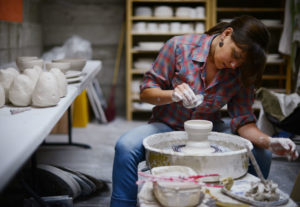
Ceramics artist Amy Halko working in her home studio near Lake Sonoma. (photo by Erik Castro)

Thoughtfully arranged atop the hand-woven table runner are curved wooden salad servers, a soft cotton towel and a hand-glazed tea cup. This setting is the work of three local artisans, women who work individually yet join together to showcase their wares.

When they met about three years ago at a crafts fair and farmers market, Amy Halko, a ceramic artist; Holly Jordan, a woodworker; and Marilyn Webster, a weaver, quickly understood they had similar sensibilities, an artistic alchemy. All loved cooking and all expressed their passion in handcrafted items for the kitchen and dining room, treasures that were lovely on their own but that took on a deeper allure and beauty together.

Soon, “Clay Wood Cloth, for Gracious Cooking and Dining” was born. It is a simple collaboration that hosts a few sales each year, sometimes with just the three of them and sometimes at larger events. On Dec. 7, they will hold a holiday sale at Stark Wine Company in Healdsburg.

Upon request, Halko, Jordan and Webster also arrange special group sales and donate a portion of their proceeds to a local nonprofit. Typically, the host chooses the beneficiary; local animal shelters and educational organizations have been recipients in the past. When it’s their choice, the women like to support Ceres Community Project in Sebastopol. Ten percent of the proceeds of the December sale will benefit Ceres, which teaches teens how to grow and prepare healthy meals, and also feed those in need.

Ceramics artist Amy Halko working in her home studio near Lake Sonoma. October 6, 2013 (Photo: Erik Castro/for The Press Democrat)
Ceramics artist Amy Halko working in her home studio near Lake Sonoma. (photo by Erik Castro)

Clay

“I love cooking,” says Amy Halko, who lives off Skaggs Springs Road northwest of Healdsburg, of her ceramics, with shapes inspired by function – a spouted bowl that pours perfectly, for example.

Her handmade pieces are elegant, graceful and sensual, with supple curves and voluptuous lines that in turn inspire the designs that adorn them. Halko is also influenced by Japanese block prints.

Glazes are delicate and minimalist, with fine tight lines and loose, dripping splashes of color against a pearly white background. Small unglazed spots offer a compelling tactile quality and the undersides of lids and bottoms that are glazed and decorated to contribute surprise.

Halko’s delicate line work, sometime punctuated by small dots of white gold, is particularly effective in the way it contrasts with and thus accents the curves. Colors are muted and smoky. Small round holes add an ethereal lightness to some pieces.

She makes individual pieces, everything from salt and pepper sets, tiny creamers and sugar bowls, to dinner plates, bowls, tall graceful pitchers and full sets of dinnerware.

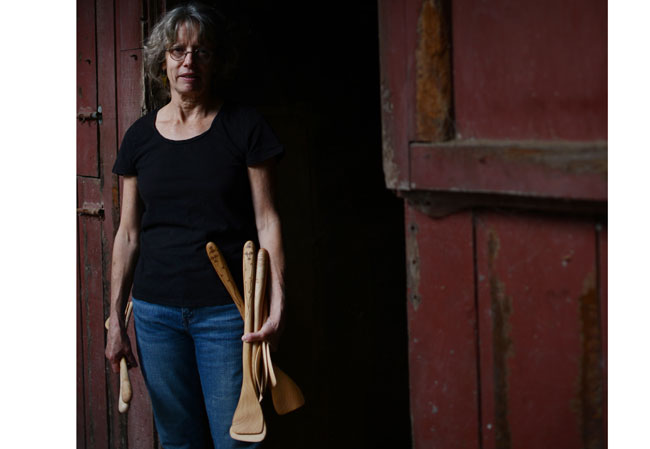
Woodcarver Holly Jordan with a variety of her hand made spatulas at her home workshop in Healdsburg, California. September 20, 2013 (Photo: Erik Castro/for The Press Democrat)
Woodcarver Holly Jordan with a variety of her hand made spatulas at her home workshop in Healdsburg, California.  (photo by Erik Castro)

Wood

Holly Jordan has a bachelor’s degree in fine arts from the California College of the Arts and has been a woodworker for more than three decades. She’s designed furniture inspired by the Memphis Movement of the 1980s, crafted reproductions of antiques, and currently designs components for businesses and wooden arbors.

Her work has always produced a lot of scrap, so many years ago she began carving from it kitchen implements for herself and her friends. Now she is the “Wood” of Clay Wood Cloth. Long-handled polenta spoons, spatulas and wooden spoons, pie servers, salad servers and cutting boards are among her specialties.

Many of Jordan’s implements are embellished, too, using the old American folk-art technique of pyro-carving. It employs a metal carver with temperature control and tips of various sizes, allowing her to work on both softer and very hard woods and to design delicate, ethereal images, such as damselflies, dragonflies and bees in midflight, inspired by her love of garden insects. A signature design that she calls “carrot folks” — carrots with compelling faces — adorn graceful curving handles, adding an element of subtle fun. All the implements emphasize the wood’s natural beauty that blossoms with age and use.

Most of the kitchen implements are made from eastern white maple, a very hard wood from the same tree that gives us maple syrup.

“It is important to use woods that do not transfer flavors,” Jordan says, explaining that walnut, for example, imparts a bitter taste. White maple leaches a subtle sweetness but eventually seals itself naturally. Jordan also works with cherry, oak, ash and cherry wood, and old wine barrels, often given to her by friends.

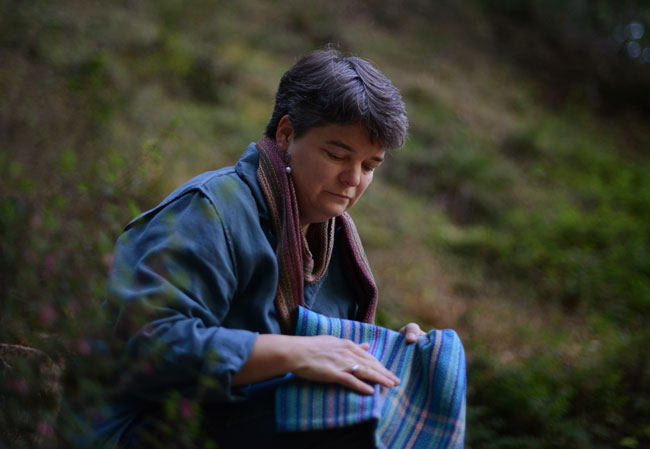
Marilyn Webster with some of her handwoven cloths at her home in Forestville, California. September 26, 2013 (Photo: Erik Castro/for The Press Democrat)
Marilyn Webster with some of her handwoven cloths at her home in Forestville, California.  (photo by Erik Castro)

Cloth

Marilyn Webster has sold her hand-woven kitchen towels, napkins and table runners since 2007, yet fiber is a lifelong passion. She learned to knit at age 6, mastered embroidery, macramé and tatting as a teenager, and picked up the Continental style of knitting (with the yarn in the left hand) in college.

Finally, she learned weaving, and as of June 2013, she had sold some 1,000 kitchen towels.

Webster starts a new batch on Mondays, setting up her loom with a carefully arranged pattern of 100 percent unmercerized cotton threads. If she works daily, she has 10 to 12 finished towels by Friday. She averages about 400 towels a year.

Her inspiration comes from the natural world, from things she sees when she walks her dog or strolls the beach, from fused glass, clothing she admires and more. She begins each project with a planned design, but there is also an element of discovery and surprise.

She says the process is more like small-dot pointillism than painting brushstrokes in the way the patterns emerge.

Webster names her designs, too, understanding that customers love a story. “August Walks” resonates with the beautiful browns and golds of our landscape in midsummer. “101 North 2” evokes our dry hills punctuated by trees. “Island Blue 2,” inspired by a photograph of a door in Havana, Cuba, shimmers with intense blue and periwinkle accented by a slash of magenta.

The towels, which soften with use, are as durable as they are beautiful. Webster is still using towels she wove in 2006.

“Other towels tend to get pushed to the back of the drawer,’ she says. They are incredibly absorbent and take on a beautiful sheen as they age.

Webster also weaves napkins, table runners and a few scarves.

“People expect hand-woven scarves,” she says, “and I have one that I love. But my heart is in the kitchen and the dining room.”

Paul Hobbs: The Lightning Rod

Winemaker Paul Hobbs poses for a portrait in the barrel room of the Paul Hobbs Winery in Sebastopol, Calif., on March 8, 2013. (photo by Alvin Jornada)

Paul Hobbs trots the globe from Sonoma County to France to Armenia to Latin America, making wine and advising other winemakers.

The 60-year-old Sebastopol resident is one of the world’s most influential wine consultants, according to Robert M. Parker Jr., the world’s most prominent wine critic.

A New York native who grew up on a farm near Lake Ontario, Hobbs quit his medical studies at the University of Notre Dame after he fell in love with wine. He moved west to study winemaking at UC Davis, graduating in 1978.

Today, Paul Hobbs Winery farms 25 acres of grapes in Sonoma County and 63 acres in Napa County, and Hobbs is a partner in an Argentina winery, Viña Cobos. He crafts Cabernet Sauvignons, Chardonnays, Pinot Noirs, Merlots and Malbecs that sell from $20 to upwards of $300 a bottle and win him fame and admiration.

“He’s probably one of the most talented winemakers in the world,” said John Balletto, president of Balletto Vineyards & Winery and a respected leader in the local wine-grape industry.

But when Sonoma vintners talk about Hobbs, it’s not always because of his world-class wines. He has become a lightning rod for controversy amid robust public condemnation for how he has treated his land. Hobbs has infuriated officials, neighbors and industry peers by clear-cutting trees and, most recently, ripping out the intricate network of bushes and brambles that filter dirt from creeks and prevent soil erosion. Three times the county ordered him to halt work on his land.

Hobbs declined several requests for interviews for this story, saying he was busy with the grape harvest.

The public outcry over Hobbs’ actions further unsettles a wine industry already nervous about perceptions that it is too powerful and that vineyards have become too pervasive. Some grape growers fear the actions of one man will trigger a backlash of stricter regulations for all.
“The outsider looking in, a non-agrarian, sees this as an indication of what’s wrong with the entire industry and all growers must be behaving like this,” said Duff Bevill, founder of Bevill Vineyard Management, who farms about 1,000 acres of grapes.

“That is just not the case, it’s not even close,” Bevill added. “Something like this is insidious to the entire industry. It’s one incident with one person.”

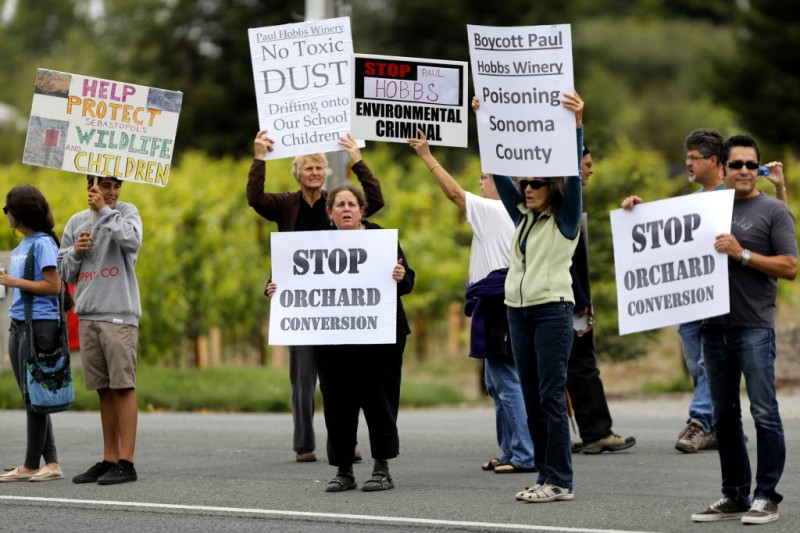
This year, Hobbs was pilloried for efforts to convert an apple orchard to vineyards next to a Sebastopol elementary school. Parents who feared their children would be exposed to vineyard toxins demonstrated at his Paul Hobbs Winery, built in 2003 in Sebastopol.

Then, once he had permission to start the work, his crews ripped out hundreds of yards of blackberry and bay laurel growing along a stream bank. The action was illegal. And because erosion-protection measures weren’t put in place, sediment slid into a creek — another violation. Sonoma County officials hastily slapped Hobbs with a stop-work order.

But Hobbs’ actions triggered more demonstrations and anger, as well as calls for a moratorium on new vineyards in the county or, at the least, tighter rules.

In the wine industry, “There is some concern that these sorts of incidents bring negative attention to the program we have worked so hard to build,” said the county’s agricultural commissioner, Tony Linegar, referring to Sonoma’s vineyard ordinance adopted in 2000.
Those rules were imposed in reaction to the environmental damage by another grower, Ken Wilson, who captured public attention. The planting of vineyards, which until then had been largely unregulated, was put under county scrutiny and regulation.

In 1998 Wilson, a Healdsburg grape grower, failed to install adequate erosion control at a vineyard development on Stewarts Point-Skaggs Springs Road; nearly 2,000 cubic yards of sediment washed into a stream.

Wilson was fined $50,000 and given a 90-day suspended jail term, and the incident spurred that vineyard ordinance, which prevented planting on the steepest hillsides. Grape growers at first resisted and then helped to craft what they say are adequate regulations.

“One individual in that particular case was, ‘I’ll do as I please,’ and we all paid the price for it,” said Bevill, a Sonoma County Winegrape Commission director. “I just don’t want more regulations when it’s one incident with the one person.”

Protesters of the Watertrough Rd orchard conversion picket outside Paul Hobbs Winery in Sebastopol, California on Monday, July 29, 2013. (BETH SCHLANKER/ The Press Democrat)
Protesters of the Watertrough Road orchard conversion picket outside Paul Hobbs Winery in Sebastopol, California on Monday, July 29, 2013. (photo by Beth Schlanker)

Even the most politic of men, former Sonoma County Winegrowers President Nick Frey, drew a clear distinction between Hobbs’ actions and the larger grape-grower community. “It’s not reflective of the industry in general. It’s a conscientious industry,” the soft-spoken Frey said.
When Hobbs’ name comes up in conversation, it is as an example of “how not to do things, how not to get along in the grape-growing community,” said industry doyenne Saralee Kunde, a longtime Russian River Valley grower.

“For the rest of us who are trying to do things right and be good stewards of the land, it doesn’t do a lot for us,” Kunde said.
Hobbs’ environmental missteps at his Watertrough Road property in Sebastopol are under investigation by the District Attorney’s Office. That conflict with county officials and residents was not his first.

In 2011, Hobbs came under fire three times for clear-cutting trees: on a Sebastopol Christmas tree farm, in Graton on land he bought at a fire-sale price after winning a court case against a neighbor, and on property on Pocket Canyon Road near Guerneville. He had proper permits in two of those cases, and blamed faulty advice for the third. But critics accused him of skirting regulations and also of disregarding environmental concerns.

The charges stung the vintner, whose website characterizes his wineries’ role as being “custodians of the earth.”

“That’s a defamation of our good reputation and I think there’s been too much of that,” he said in 2011, responding to charges that he was behaving arrogantly and causing “environmental harm.”

For a man who has misstepped so publicly in recent years, Hobbs has a reputation as hands-on to the last detail, keeping a watchful eye on every bit of work done in his name.

Forbes Magazine this year dubbed him “the Steve Jobs of wine” for his devotion to detail and quality. That characteristic can make for sometimes prickly relationships, former associates said.

“It was both a pleasure and a pain in the ass at times,” said Scott Morrison, Hobbs’ assistant winemaker from 2008 to 2012, who was promoted to winemaker of Hobbs’ Crossbarn label in early 2012.

“He is very, very demanding. He is very picky, as with anybody who gets to those very high levels. He knows what he wants to do and how to do it,” said Morrison, who is now chief winemaker at William Harrison Vineyards and Winery in St. Helena.

Hobbs was contrite following this summer’s orchard-conversion project, after which Linegar, in unusually strong terms, said, “Hobbs let everyone down here.”

“I feel bad for putting the county through this,” Hobbs said after the stop-work order was issued. “I take full responsibility for this and I’m going to make the changes I need to make to fix it.”

He changed vineyard management firms and sat down with a group of Sonoma County winemakers and grape growers, including Balletto, who asked to meet with him.

“We shared our concerns and shared our values of how much we value Sonoma County as a community and how important it is that as farmers and growers we need to protect our land and sustain it for future generations,” said Balletto. “We’ve worked really hard to have a good relationship with our politicians and county government and we don’t want to mess that up. That’s how important this is to the grower community.”

The meeting went well, he and others in attendance said.

“He seemed genuinely concerned about what he’s done and trying to make it right,” said Douglas Mcllroy, director of winegrowing at Rodney Strong Wine Estates in Healdsburg.

In August, the stop-work order was lifted and Hobbs resumed work on his 48-acre vineyard conversion project. He declined to be interviewed at the time but his publicist issued a statement saying the winery had hired experts in the field, and was planting native vegetation. The conversion would be “thoughtful and undisruptive” to the community, the statement said.

“We at Paul Hobbs Winery have worked diligently with the county to prepare the land for a vineyard conversion that is environmentally sound,” it said.

In other worlds, Hobbs has earned a reputation as a generous community supporter, making sizeable contributions to causes like education and parks.

“It was among the largest grants we’ve received since I’ve been here,” Sonoma County Regional Parks Director Caryl Hart said of Hobbs’ donation, which is used to improve hiking trails, camping sites and parking areas. Neither she nor Hobbs would disclose the amount of the gift.
In October, county supervisors accepted an offer Hobbs made in 2010 of a conservation easement to permanently protect 117 wooded acres on the Pocket Canyon property. He also agreed to make a $175,750 endowment to cover the cost of managing the land.

The board accepted the offer despite critics’ worries that it would influence future decisions about Hobbs’ vineyard developments.
The donation “hopefully will be a first step in rehabilitating what some in the public think about Paul,” his attorney John Holdredge, said to the supervisors. “Clearly some mistakes were made out there. This is a first step in rectifying those mistakes.”

It’s too soon to tell whether Hobbs’ mitigation efforts, both for the land and his relationships with other growers, will be enough.

“I think he’s gotten the message now that you can’t just do stuff,” Balletto said. “You have to remember that you’re not just affecting yourself when you make a mistake of this magnitude, you’re affecting the whole industry and also the community. Let’s not forget our neighbors.”
It also remains to be seen how much that matters to the Steve Jobs of wine.

“I don’t think he runs from controversy,” said Morrison, his former winemaker. “Sometimes, I guess, he doesn’t do a lot to avoid it.”

Jeremy Hay is a staff writer. He can be reached at jeremy.hay@pressdemocrat.com

Gingerbread Contest

Elias Fotou, 13, of Petaluma makes a gingerbread house at the Gingerbread Doghouse Workshop at the Charles M. Schulz Museum in Santa Rosa, California. (photo by Ramin Rahimian, 2011)

December 1-31, Sonoma Valley Winery Gingerbread Contest

The traditional gingerbread house goes way upscale, with architectural confections constructed from fondant, marzipan and an amazing variety of candies. Wine tasting takes on a holiday flavor in this friendly, annual contest, with participating wineries competing against each other. Sample some of Sonoma Valley’s finest wines, pick up gifts and vote for your favorite gingerbread creation. Ballots are available at each winery; every time you vote, you’re entered in a drawing to win a case of wine. 707-935-0803, sonomavalleywine.com.