Cashew nut chicken at Little Thai and Sushi in Santa Rosa. (Heather Irwin/Sonoma Magazine)
It’s Thai food. It’s sushi. It’s both? We’re rarely fans of disparate cuisines trying to be all things to all people, but we’re willing to be a bit flexible in the case of Little Thai and Sushi because it’s a takeout dream for picky families. The food is solid, if not stunning, as long as they put the hot entrees in a different bag than the cold sushi for your takeout or delivery order. Because no one likes a melted California roll.
Best bets include Basil Chicken ($12.95) with anise-flavor Thai basil and oyster sauce; Cashew Nut Chicken ($12.95) that has fried chicken bits and a generous amount of cashews; and Pineapple Fried Rice ($12.95) with chunks of pineapple, cashews and raisins.
Nigiri and hand rolls don’t fare well during delivery, but the California Roll ($7.95) and Super Crunch Roll ($13.95) with shrimp tempura, mayo and unagi sauce were tasty.
Papaya Salad Laos Style ($13.95) is divisive. Made with a fermented Laotian crab and fish sauce, it’s an intensely stinky, muddy-colored mess with crunchy green papaya, green beans and lime sauce. Unlike Thai green papaya salad, which primarily uses a lighter, saltier fish sauce, this version will arm-wrestle your taste buds and perfume your refrigerator for weeks.
The extensive menu includes poke bowls, stir-fried noodles, grilled pork, egg rolls, tempura, Tom Yum soup, stir fries, curry, ramen and wackier rolls, making it hard to decide. We suggest sticking to more straightforward items, especially for takeout and delivery.
1791 Marlow Road, Unit 4, Santa Rosa, 707-541-6242.
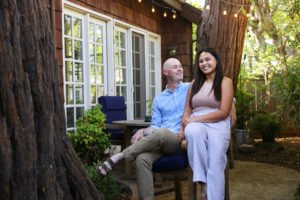
Colin and Rizza Celio were considering relocating to Sonoma County for a few years. When the pandemic hit, and remote work became a viable option, the couple found a house to rent in Santa Rosa. They hope to eventually buy a home in the area and raise a family. Click through the gallery for more stories. (Christopher Chung/The Press Democrat)
Inside a crowded auditorium in southwest Santa Rosa, Greg Basurto heard his name called and stepped up to a raffle drum filled with hundreds of numbered cards. The stakes were high. In all likelihood, his selection would determine whether he and his wife, Stephanie, could finally afford to set down roots in Sonoma County, or if they would have to pick up and move their young family away from their hometown of Healdsburg.
It was October 2019, and the couple was living with relatives on the west side of town after being priced out of an apartment in Rohnert Park years earlier. Greg was working in the warehouse at the Russian River Brewing Company, while Stephanie was enrolled at Santa Rosa Junior College and held down a job at O’Reilly Auto Parts.
With a six-month-old daughter, Shelby, and a son, Erich, approaching elementary school age, the couple was ready for a home of their own. But rising housing costs kept that plan out of reach. They considered moving out of state — Montana, or maybe Oregon — though Stephanie hated the thought of leaving behind the kids’ grandma and their aunts and uncles.
At the auditorium, Greg needed to pull a 48 or lower—the number of affordable townhomes planned for an empty plot of land south of Roseland in Santa Rosa. If he did, one of the properties was his to buy. He picked a card and immediately called Stephanie.
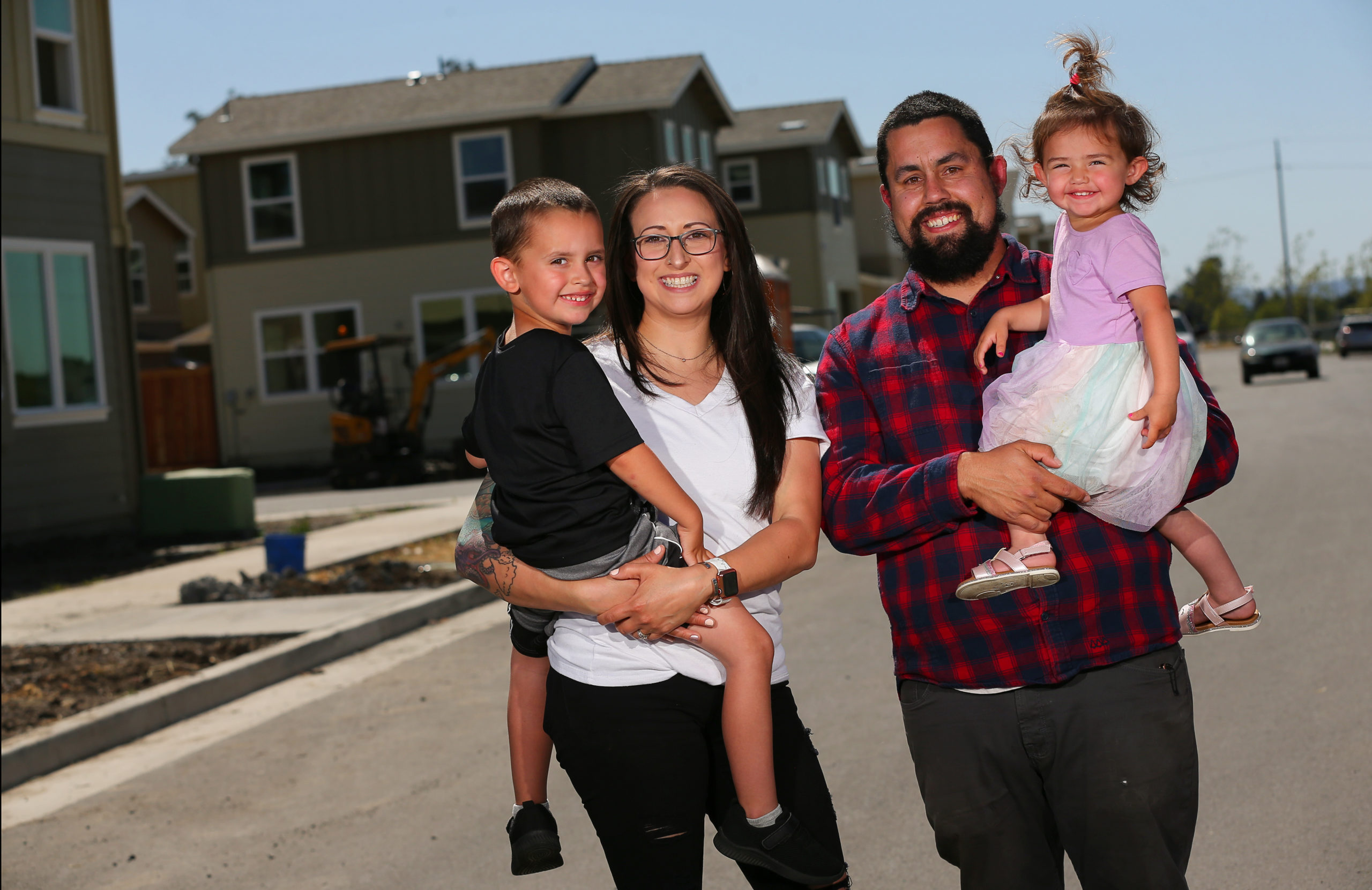
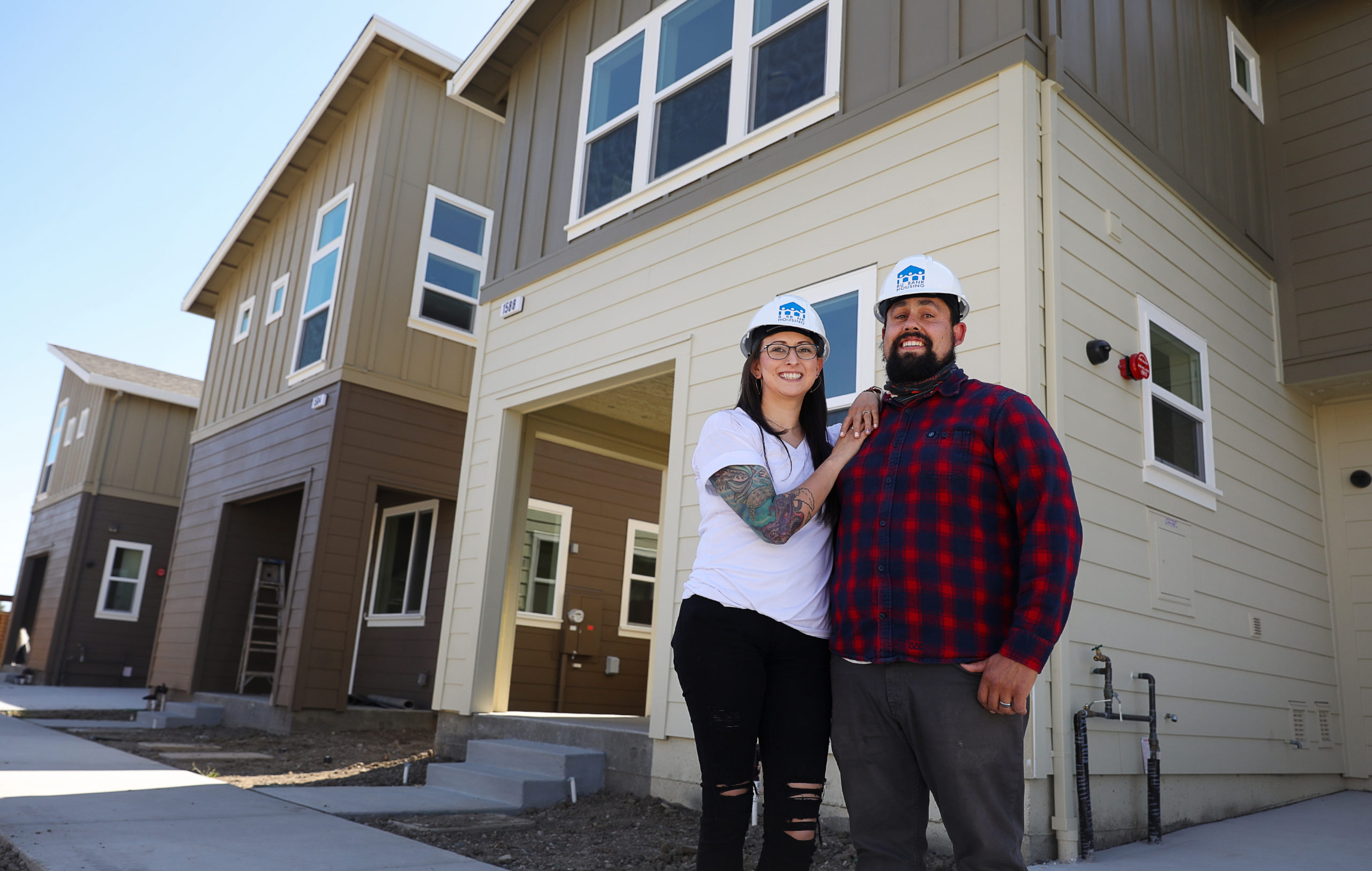
Stephanie and Greg Basurto, with their children Erich, 4, and Sheby, 2, purchased a duet style single family home at the Lantana Homes community by Burbank Housing Development Corporation in Santa Rosa. (Christopher Chung/The Press Democrat)
When the coronavirus pandemic upended everyday life in early 2020, scores of residents from across the Bay Area and California, now liberated from the office by remote work, eyed more living space and a retreat from costly urban centers. Sonoma County — with its natural beauty, slower pace of life, and relatively cheaper real estate prices — proved a prime destination. By summertime, a wave of new residents began pouring into Wine Country, sending home values soaring.
That heavier pressure on the local market has only grown as the pandemic drags on, exacerbating the county’s long-standing housing shortage as it continues to rebuild after a string of devastating wildfire seasons. And it has called into question whether the county can again be a place where working families like the Basurtos are able to afford to own a home, or whether they find themselves squeezed out.
“We’ve had an affordability crisis in the North Bay now for some time, and the pandemic is making it worse,” says Larry Florin, CEO of Santa Rosa nonprofit developer Burbank Housing. “It’s putting home ownership further out of reach for the workforce in Sonoma County.”
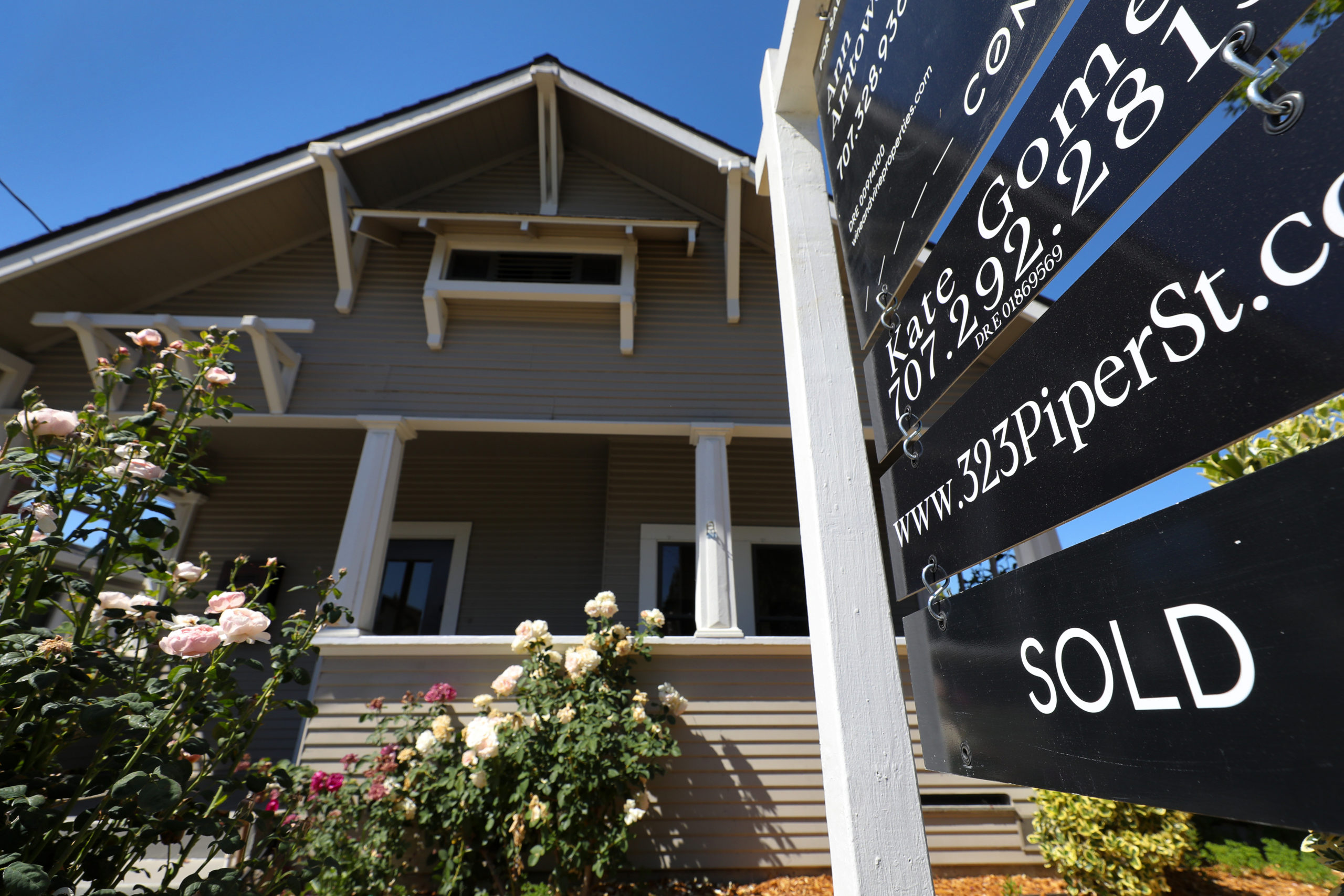
In March 2021, the median price of a single-family home in Sonoma County hit $767,000, according to data from real estate agent Rick Laws. That represents a 13% spike from $678,910 in March 2020, the last month before the pandemic took full hold in the region. By May 2021, it was up to $780,000.
At the same time, local rents stayed relatively flat last year, suggesting new homebuyers outpaced arriving renters. But the county’s rental market may not be spared for long, as listings have begun to tick up in price in 2021. In May, the monthly cost of a two-bedroom apartment reached $2,010, a 3% increase since January, according to rental site Apartment List.
Early migration data, meanwhile, sheds light on the scope of the influx of new arrivals to Sonoma County. Last year, nearly 13,200 new households moved here, while around 9,900 households moved out, a net increase of about 3,330 families or individuals. That’s an almost 300% jump over 2019, according to change-of-address figures from the US Postal Service. Still, the influx came in the third straight year of overall population decline in Sonoma County following the 2017 fires — an unprecedented swing for the region.
Robert Eyler, an economist with Sonoma State University who compiled the data, found that Marin, San Francisco, San Mateo, Los Angeles, and Contra Costa, respectively, were the top counties from which people moved to Sonoma County in 2020.
The new households make up just a fraction of the 189,000 in total in the county, Eyler noted. But if that influx continues years beyond the pandemic, he says, it could have profound impacts on the region’s population and workforce. Census reports coming next year could begin to illuminate those potential demographic shifts.
“Are we losing service workers and gaining professional workers, who’ve got a master’s degree and are coming here to work from home?” Eyler says. “Even if we knew who these people are, we don’t know what their intentions are — whether they are workers, or retirees, or people with kids.”
Colin and Rizza Celio had been considering a move to Sonoma County for a few years by the time the pandemic hit. The couple, both in their early 30s, was living in a cramped apartment in Burlingame, south of San Francisco, near their jobs in the tech industry. Once it seemed likely that remote work was here to stay, Rizza scoured Zillow and found a two-bedroom house for rent in the stately McDonald Avenue neighborhood in Santa Rosa.
The couple was instantly taken by the home’s extra space and the neighborhood’s historic charm. On top of that, it was listed for thousands of dollars less than similar properties in Burlingame. They moved in last July, furnishing the home with antiques found on trips to Healdsburg and Sebastopol.
“The apartment wasn’t home — it was just, this is where we are,” Colin says. “This has become much more of a home.”
Colin grew up in the northern Napa Valley region, where his parents still live. He remembers coming to Santa Rosa for birthday parties at Snoopy’s Home Ice skating rink and trips to Goat Rock Beach on the Sonoma Coast. Rizza, who was born in the Philippines and grew up mainly in San Francisco, fell in love with the area after she and Colin started dating.
“I used to be a city girl, just gallivanting around San Francisco, being close to everything,” she says. “And then when we met, he was like, let’s go hiking, let’s explore. So we ventured out a lot in the North Bay. …It was like, okay, he’s easing me into the country life. Now, I’m like, do we have to go to San Francisco?”
The pair hopes to eventually purchase a house and start a family in the county, though they know they could be up against a crowded field of buyers like themselves.
David Rendino, a real estate agent in Cotati, says he’s never seen the local home market in such turmoil. Record low interest rates, combined with a severe lack of available properties and well-heeled buyers willing to pay hundreds of thousands of dollars above the asking price are fueling an ever-intensifying rush for homes.
“There’s a lot of anxiety in the real-estate community right now,” Rendino says. “Agents feel it coming from their clients, and they internalize it … Buyers get to the point where they’re going to just write an offer on the next property, sight unseen — they don’t really care about value. They just want to be done. They want to be in their home.”
With the work-from-home revolution appearing permanent, Rendino sees few signs the area’s home market will stabilize any time soon. And he expects the higher sale prices may well be here to stay.
The Celios are willing to wait and see. For now, they’re enjoying getting to know their new neighborhood, going for drinks at Willi’s Wine Bar and taking walks along the wide streets lined with ginkgo trees that turn a brilliant yellow in fall. Colin recently joined a bocce league in St. Helena with his dad, and Rizza has made friends at the recently reopened Cal Skate rink in Rohnert Park, her new “pandemic hobby.” Once they do set down roots, the couple looks forward to their children calling Sonoma County home.
“I feel like you have a community up here that’s a little bit closer-knit than you get in certain areas of the Bay Area, where it’s so widespread, and everyone’s doing their own thing,” Colin says. “You don’t really get that feeling as much [elsewhere], and I like that small-town feeling.”
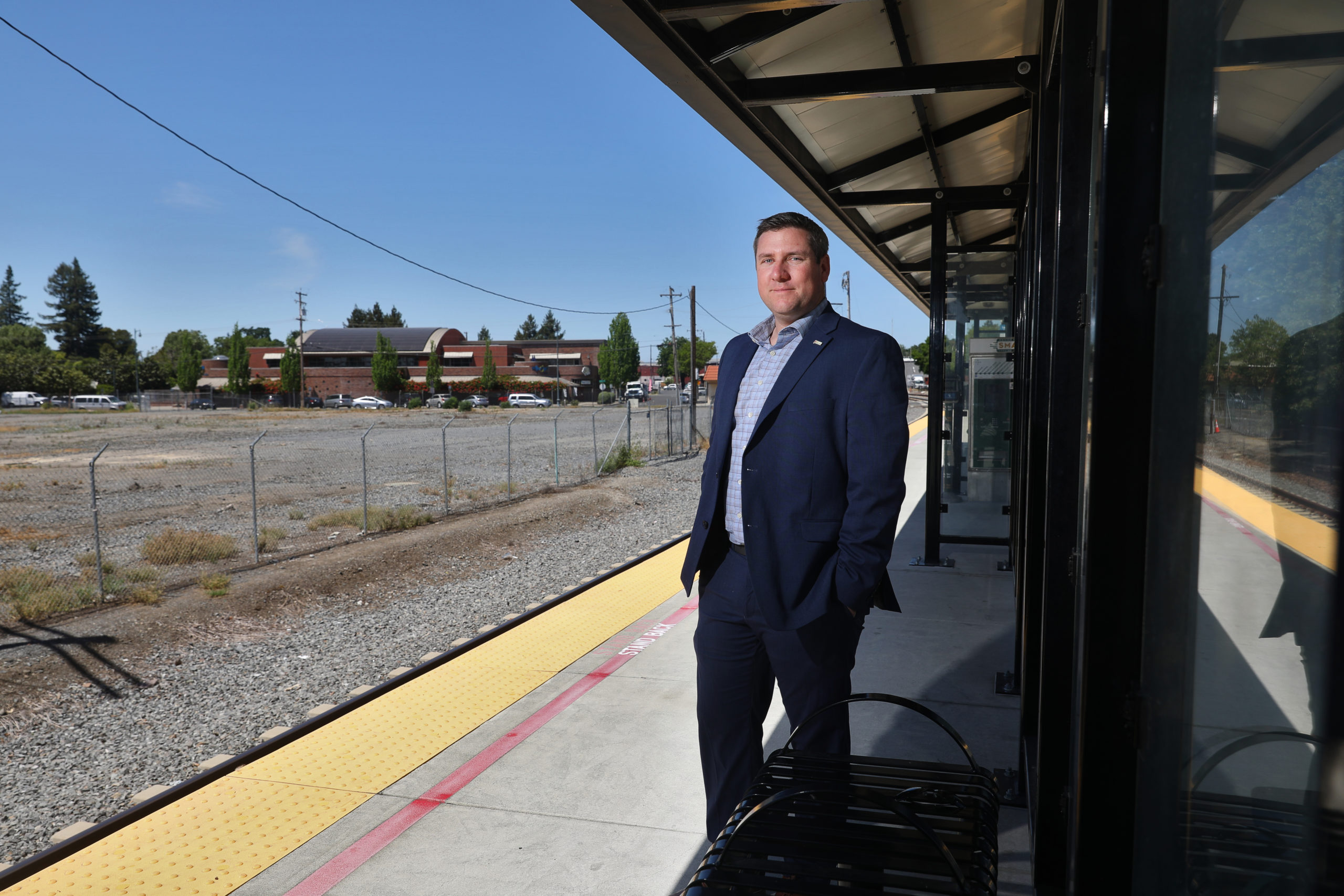
Santa Rosa Mayor Chris Rogers aims to put a dent in the region’s housing shortage by reimagining that small-town atmosphere for his city’s downtown. Since he was elected to the City Council in 2016, Rogers, 33, has become a leading local voice calling for more home construction. In Santa Rosa, that includes throwing his support behind a half-dozen proposed multi-story apartment buildings, amounting to nearly 700 new units in the downtown area.
Rogers foresees these developments as home to a diverse community of young professionals, who can meet for dinner after work, then walk to a nearby art exhibit or concert. It’s a future that could be accelerated by the pandemic, he says, as companies embrace remote work and those in their 20s and 30s seek out a more affordable alternative to North Beach or the Mission District.
Santa Rosa Mayor Chris Rogers stands on the SMART platform in Railroad Square. SMART has sold the land on the west side of the tracks for future housing development. (Christopher Chung/The Press Democrat)
“Santa Rosa is very well-positioned to catch many of those tech employees that can’t afford to live in San Francisco, or want a higher quality of living coming out to an area where they’re a stone’s throw away from both the beach and some of the best hiking trails,” Rogers says. “I think if I can use one word to describe what we’re looking for, it’s vibrancy. We’re trying to create vibrancy and attract people into our community.”
Walking from Old Courthouse Square down Mendocino Avenue one afternoon in early May, Rogers pointed out a few of the projects that could remake the city’s modest skyline, including a proposed 8-story, retail and residential development planned for a city-owned parking lot just off Mendocino Avenue.
Rogers is quick to use wonky jargon like “catalytic project” and “adaptive reuse,” to advocate for the need for environmentally-friendly developments and building near public transportation. He highlighted a handful of projects slated to go up near the SMART tracks by the city’s historic Railroad Square neighborhood, as well as Catholic Charities’ Caritas Village development, which will include 128 affordable units and a multiservice homeless center to serve the city’s roughly 1,500 unsheltered residents.
I think if I can use one word to describe what we’re looking for, it’s vibrancy. We’re trying to create vibrancy and attract people into our community. — Santa Rosa Mayor Chris Rogers
To realize the more urban vision of the city’s future, Rogers says, officials first need to do their part to make it easier for developers to build. Last year, the city council aimed to do that by loosening height restrictions in the downtown area, allowing additional units on a single lot. The city council also put $48 million in federal disaster aid and PG&E wildfire settlement funds toward housing construction.
California developers have complained for years about the challenges of getting a project across the finish line, citing the burden of permitting fees, the high cost of labor and materials, limited available land and stringent environmental reviews.
In the North Bay, that means it can be difficult to find investors who believe they can make a project “pencil out” — developer-speak for turning a profit. The problem for Sonoma County is also one of the main draws for new residents fleeing from costlier parts of the Bay Area — home prices and rents here are well below much of the rest of the region, and financers stand to see lower returns after recouping building costs. Instead, they might turn to downtown Oakland or Mountain View.
“We’re in competition with the rest of the Bay Area that’s hungry for housing,” says Keith Woods, chief executive of the North Coast Builders Exchange, a Santa Rosa-based trade group.
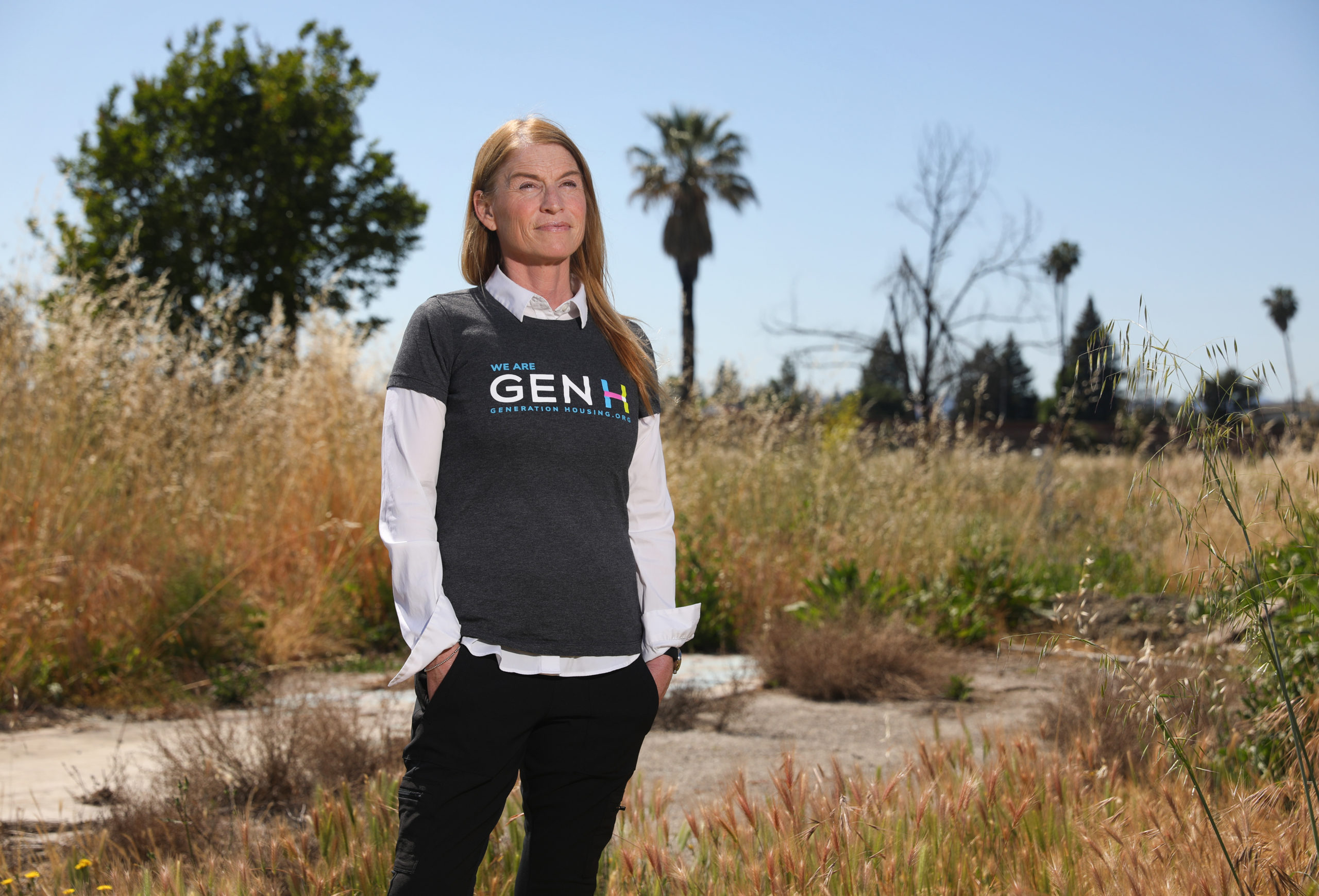
Neighborhood opposition to new development is arguably an even taller obstacle to home-building in Sonoma County. Enter Generation Housing, a fledgling advocacy group with the goal of convincing local leaders and residents that more housing, even in their own backyards, is in everyone’s best interest. “People show up at city council meetings and supervisors’ meetings to say no to things. People show up when they’re upset,” says Jen Klose, Generation Housing’s executive director and a former Santa Rosa City Schools trustee. “People don’t often show up to say yes.”
The nonprofit aims to replace entrenched narratives about housing construction, such as concerns about urban sprawl and preserving neighborhood character, with arguments for green projects that teachers, nurses, firefighters and farmworkers — the backbone of the local community — can actually afford. The group works to survey various local industries, create pro-growth marketing campaigns, and put pressure on elected officials to adopt its policy recommendations and follow through on housing goals.
“I think most of our elected and appointed leaders are with us; I think they understand the importance of this,” Klose says. “But they do need political cover, they need folks backing them up and making decisions that might be unpopular with a particular loud group of people.”
One metric Klose keeps a close eye on is Sonoma County’s housing construction targets under a state framework which requires each municipality to permit a certain number of units for different income levels by 2023. According to an online tracker created by Generation Housing, just three of the county’s nine cities — Healdsburg, Petaluma and Rohnert Park — have so far met their upcoming permitting goals.
Jen Klose, executive director of Generation Housing, stands at the site of the former Journey’s End mobile home park, which will be developed into affordable housing. (Christopher Chung/The Press Democrat)
As most of the county has fallen behind reaching those targets, Rohnert Park in particular has pushed even further ahead, permitting a mix of nearly 1,500 new affordable and marketrate units, about 65% above its goal. A large chunk of that development has come in Rohnert Park’s University District, which is slated for 1,645 new homes and apartments by 2025.
In that expanding neighborhood, on former farmland east of Sonoma State University, Rohnert Park’s largest affordable housing project is under construction — a 218-unit complex with rents starting at $1,149 for a two-bedroom apartment. Just down Petaluma Hill Road, signs tucked among still-empty fields of mustard grass advertise rows upon rows of future single-family home developments.
“We have been really working hard to make sure that every single angle of our community is represented,” says Rohnert Park Vice Mayor Jackie Elward on the city’s push for housing. “I want other cities to look into what Rohnert Park is doing and take it as an example.”
Single family homes in the Live Oak development by KB Home in Rohnert Park.(Christopher Chung/The Press Democrat)
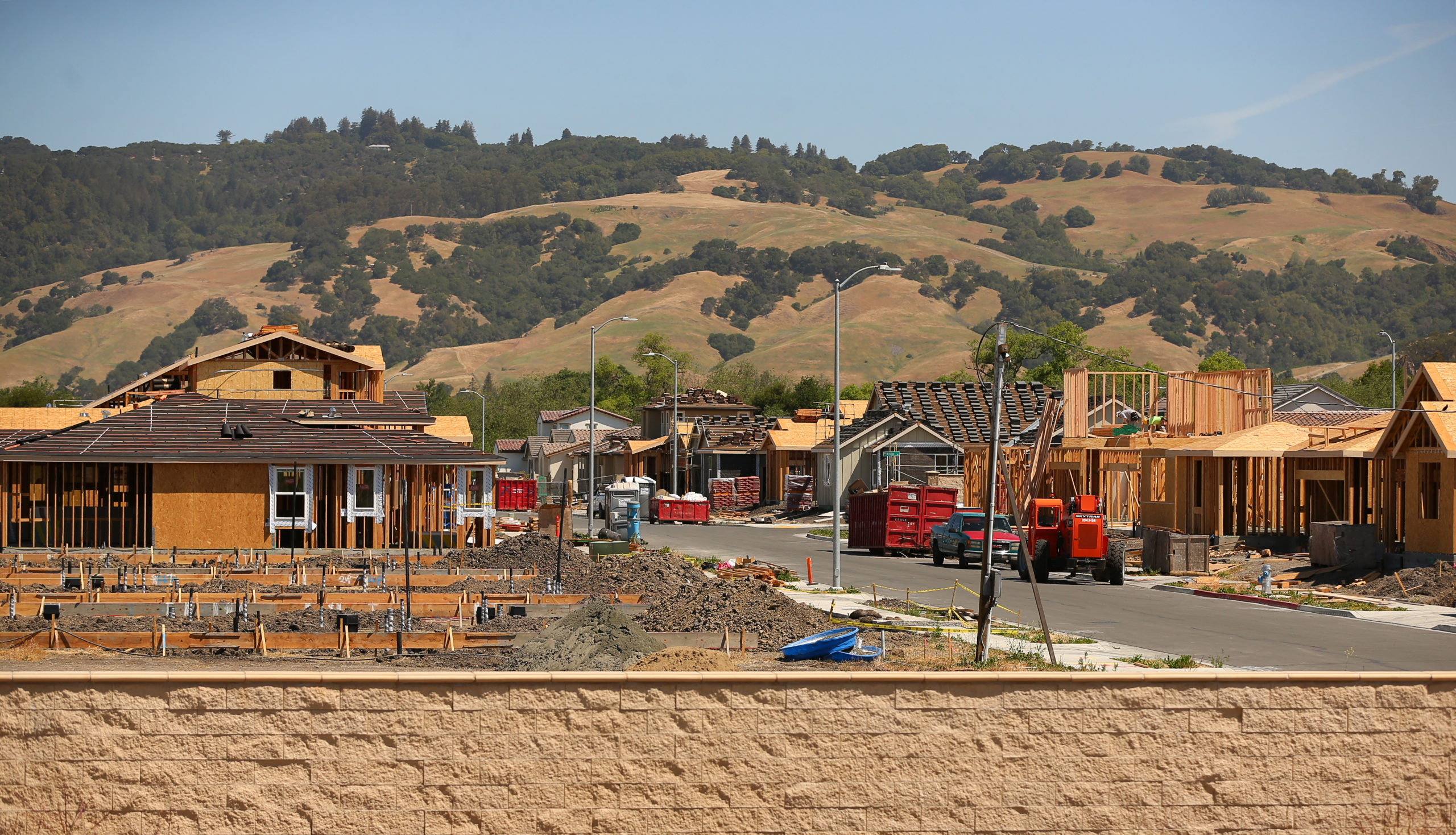
Santa Rosa’s newest residential blocks, meanwhile, are taking shape in the city’s southwest corner, in the form of 48 affordable “duet-style” townhomes on a small network of freshly-laid cul-de-sacs.
Greg and Stephanie Basurto first learned of the Lantana Homes project after hearing about an affordable home program by Burbank Housing, the nonprofit developer behind Lantana and many other income-limited projects in the county. The Basurtos found they met the income requirements to enter a lottery for the right to put a down payment on one of the units. Each of the 3-bedroom, 1,200-square-foot homes would be offered for around $250,000 to $350,000, less than half the cost of most properties in Sonoma County.
“The average home price is way out of our price range,” Greg says. “You can buy something that’s kind of reasonable, but then you can drop all this money just to fix it up.”
Latino homeownership rates continue to lag behind whites here in Sonoma County. And that is important because homeownership has been the single most important vehicle to build wealth. — Oscar Chavez, Chairman of Sonoma County’s Community Development Commission
Burbank Housing finances its affordable developments — projects whose renters or buyers typically make less than 60% of the North Bay’s median income — through a mix of federal tax credits and other public grants or subsidies. Its developments are currently home to almost 10,000 people spread across more than 70 rental communities and 1,000 townhomes in Napa and Sonoma counties. But many more homes are needed, as surging demand has forced the developer to cap its rental waiting list at 15,000 applications.
“There just simply isn’t enough funding,” says Larry Florin, Burbank’s chief executive. “And it doesn’t go as far when it costs more to build a single unit,” which can average $500,000 in Sonoma County, he said.
Roseland, the predominantly Latino neighborhood just to the north of Lantana Homes, has in recent years seen growing numbers of new and planned projects, including many homes and apartments for lower income workers. Oscar Chavez, Sonoma County’s assistant director of human services and chairman of the county’s Community Development Commission, the chief local housing agency, says those kinds of affordable projects, particularly homes for families, are needed for communities of color in the North Bay.
“Latino homeownership rates continue to lag behind whites here in Sonoma County,” Chavez says. “And that is important because homeownership has been the single most important vehicle to build wealth.”
Even so, new development in Roseland has sparked fears of gentrification for some. It has also raised concerns about why more affordable developments aren’t being built throughout the region.
Stephanie Manieri, director of programs at the nonprofit Latino Service Providers, says people who move into price-restricted homes in poorer parts of the county can end up locked into those living situations. As housing costs continue to rise, those residents often aren’t able to build enough equity to eventually move to areas with more opportunity, creating “pockets of poverty in neighborhoods that are already economically impacted for a lot of different reasons,” Manieri says.
The Basurtos felt they didn’t have the luxury to consider such long-term implications. Time was running out to find a home in Sonoma County.
“We just knew that if we didn’t get one of these homes, that we would have to have a serious talk as to where we were going to move our family,” Stephanie says. “And that would be a struggle, because my lifeline is here.”
Stephanie and Greg Basurto were able to purchase a duet style single family home in the Lantana Homes community by the Burbank Housing Development Corporation in Santa Rosa. (Christopher Chung/The Press Democrat)
The struggle of growing numbers of local families seeking to buy homes, and the steady stream of work-from-home émigrés flocking to the North Bay, could serve as powerful motivation for officials to approve more housing of all kinds throughout the county. But just how much is needed remains an open question.
County officials have in the past put that number at 30,000 units between 2018 and 2025, while the state is ready to set the county’s next housing goal at 14,500 units from 2021 to 2031.
Generation Housing estimates the county needs at least 58,000 more units over the next 10 years, a seemingly daunting benchmark the group acknowledges would likely require widespread changes to current housing policy and significantly more funding to achieve.
We just knew that if we didn’t get one of these homes, that we would have to have a serious talk as to where we were going to move our family. And that would be a struggle, because my lifeline is here. — Stephanie Basurto, new homeowner
Jesús Guzmán, policy and advocacy director with Generation Housing, remains optimistic, pointing to the historic local building sprees in the ‘70s and ‘80s despite periods of inflation and stagnant economic growth. “It’s been done; we have a precedent set,” Guzmán says, noting he’d prefer to see denser, greener projects than those from decades ago.
Rogers, the Santa Rosa mayor, is confident builders will increasingly line up behind developments once the large-scale projects planned for the city’s downtown start to come online. But he was unable to say for certain whether such a flurry would meaningfully bring down housing costs across the board.
He points to disaster-relief funds earmarked for affordable developments, low-income unit requirements on new projects, and permitting changes making it easier to build in-law units as markers of progress on affordability. And he says he and his fellow council members are open to other ideas to spur cheaper housing options, such as potentially allowing duplexes in areas currently zoned for single-family homes.
“On the city council, you have seven voices that are really showing the political will of needing to build housing, needing to be welcoming to folks who are not currently in our community, and finding a way for the people who want to stay in our community to stay in our community,” Rogers says.
When Stephanie Basurto picked up her husband’s call after the housing lottery, she knew he wasn’t being serious when he said that he had “some bad news.” She told him to cut the act, and Greg informed her they were actually one of the 48 households out of more than 400 applicants who had won the right to buy a townhome at Lantana. “I mean, I was stoked,” Greg says.
With the Sonoma County housing market heating up during the pandemic, some of the Basurtos’ friends and relatives are now thinking of moving out of Healdsburg and other parts of the county. The couple counts themselves fortunate they won’t have to make that same choice. “It’s just a huge relief,” Stephanie says.
Florin with Burbank Housing stresses that townhomes like Lantana, which are cheaper to build and allow for much more density than single-family homes, are but one tool to address the local affordable housing shortage. He also sees options like in-law units and prefab, modular construction techniques as key potential solutions. But he admits it’s hard to overstate the impact of handing over the keys to the owners of a new townhome, most of whom are North Bay locals.
“People will start crying, and they’ll say things like, ‘I never in my wildest imagination believed I could own a home in this community,’” Florin says.
The Basurtos are set to move into their new home in July. They’re excited to enjoy the small backyard and happy that their kids each get to have their own bedrooms. Just as important, they’ll get to stay close to family, who will be on hand for move-in day.
“Get a barbecue and a big bottle of beer from work, three liters — everybody can have some,” Greg says.
“We’ll have somebody out here cooking up steaks or something, as a thank-you for helping us move in,” Stephanie says. “We’ll break it in right there.”
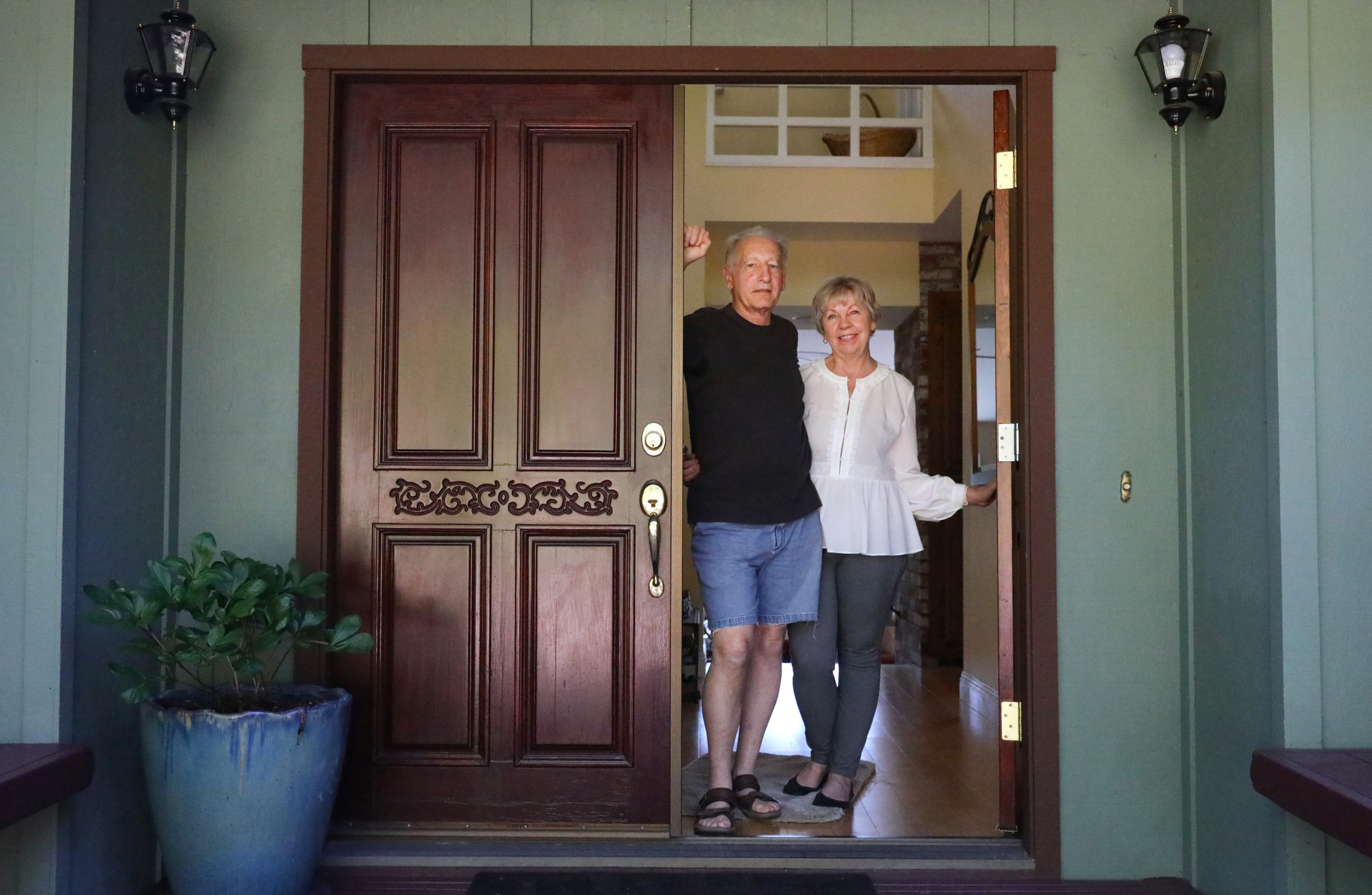
Rich Steiner and Jan Cregan are selling their Santa Rosa home to move to Tennessee, due to wildfire danger and the high cost of living in Sonoma County. Steiner has lived in Sonoma County for 46 years, and Cregan has been here for 31 years. (Christopher Chung/The Press Democrat)
Leaving Sonoma County — and California
Jan Cregan lived in Sonoma County for nearly three decades before she ever considered leaving. Then came the 2017 blazes. Two of her daughters lost homes in the Tubbs fire, which also destroyed about two dozen houses in her own neighborhood above Rincon Valley in east Santa Rosa.
Even then, Cregan, who’s 67, counted it as a freak disaster. But 2019 brought the Kincade fire, forcing her to evacuate with her husband, Rich Steiner, 72. The next year, she was at home painting when a news report came on about yet another blaze that had ignited in Napa County and could be headed her way.
“I’m sitting here thinking about that and how we may have to evacuate again in the next day or two,” Cregan says of the 2020 Glass fire. “And it just kind of got to me that I don’t know as we age, that I have the stamina to be worried about that every year.”
Before peak wildfire season arrives this year, Cregan has convinced her husband to put their home on the market. They plan to move to Tennessee, where real estate is cheap and fire risk is low. But the couple is saddened to leave their friends and to sell the three-bedroom home, which overlooks acres of vineyards at the north end of Sonoma Valley. “I thought this was going to be my last house,” Steiner says.
In the wake of the 2017 North Bay fires, which destroyed some 5,300 homes in Sonoma County, the region’s population has fallen into a multiyear decline. That’s in large part due to those fed up with yearly evacuations and smoke-filled skies, as well as fire refugees whose homes were destroyed. Of the roughly 6,000 homes leveled by fire in the county since 2017, only about half have been rebuilt. That’s left a continued drag on the local housing supply, while also raising concerns about the risk of rebuilding in fire-prone areas.
In 2020, Sonoma County’s population again fell, this time by 1.5%, according to latest estimates, reflecting a broader trend throughout California. But officials cautioned last year’s dip could be an outlier, reflecting excess deaths and lower birth rates during the pandemic, rather than a mass outward migration.
Still, as interest in moving to Sonoma County is at a high, there remain plenty of people wanting out. Cregan says leaving for the South, where she was raised, will make it easier to afford retirement. She hopes her three kids and ten grandchildren in the North Bay will eventually join her in Nashville. On top of worsening fires exacerbated by climate change, she’s worried that California’s cost of living will only increase for future generations.
“It’s almost some kind of stroke of fortune that you can buy a house, and I don’t want that for the grandkids,” she says. “I want them to be able to go to school, get a job and buy a house like it’s normal. And it’s not here — it’s a feat.”
In few other North Bay cities is it costlier to buy a home than in Healdsburg, where the median price of a single-family house hit $1.45 million in May 2021. (Christopher Chung/The Press Democrat)
Too charming for its own good?
In few other North Bay cities is it costlier to buy a home than in Healdsburg, where the median price of a single-family house hit $1.45 million in May 2021. Situated at the heart of three of the region’s premier wine-growing regions, Healdsburg has long attracted moneyed visitors. But now, without an office to report to, many are happy to make the Wine Country destination a permanent home.
Jim Heid, owner of CraftWork Healdsburg, a new coworking space just north of the Healdsburg Plaza, says about a third of his customers since reopening under coronavirus restrictions are newcomers to the area. At CraftWork, many of these ex-urban professionals have found a flexible office not unlike the ones they left behind in the city.
On a Thursday afternoon in late April, around a dozen “solopreneurs” sat before laptops across a semi-open floor plan with tastefully minimalist decor. A small kitchen was stocked with a healthy selection of canned sparkling water, while an outdoor backyard accented by strings of patio lights sat ready for happy hour.
Heid, a landscape architect who has advised the city on municipal development projects, said the newcomers have brought a new energy to the city as it recovers from the pandemic. He highlighted new shops moving into once-empty storefronts along the leafy downtown plaza, as well as an upcoming dining and events center backed by upscale farm-totable restaurant SingleThread and the owners of San Francisco arts incubator Saint Joseph’s Arts Society.
“Young, entrepreneurial people are fixing the homes up, they’re taking an investment in the community and bringing in fresh ideas and energy,” Heid says. “I joke about what I call my barometer stroller index — how many strollers are on the street on a daily basis, and it’s just phenomenal. We see strollers, skateboards, electric bikes; it has a very European feel.”
Stephen Sotomayor, Healdsburg’s housing administrator, is quick to acknowledge opportunities for economic development as new demographics move to the area. But he says an increasing pressure on the local home market may be unavoidable, especially in light of a voter-approved ordinance limiting market-rate development to 90 total units every three years.
A remote-work future could also further drive demand for vacation rentals and second homes in the area. That in turn may incentivize property owners to take more homes off the market and potentially spur a run on the few available properties by outside investors, concerns raised by residents and officials in other North Bay cities that have become tourist hot spots, including Sonoma.
“One of the things that can be challenging for a town like Healdsburg is that you can almost become a ghost town in the sense that the charm that made you a destination is also pricing out the locals that live there,” Sotomayor says.
Cookies and sweets for sale at Plank Coffee in Cloverdale. (Beth Schlanker/The Press Democrat)
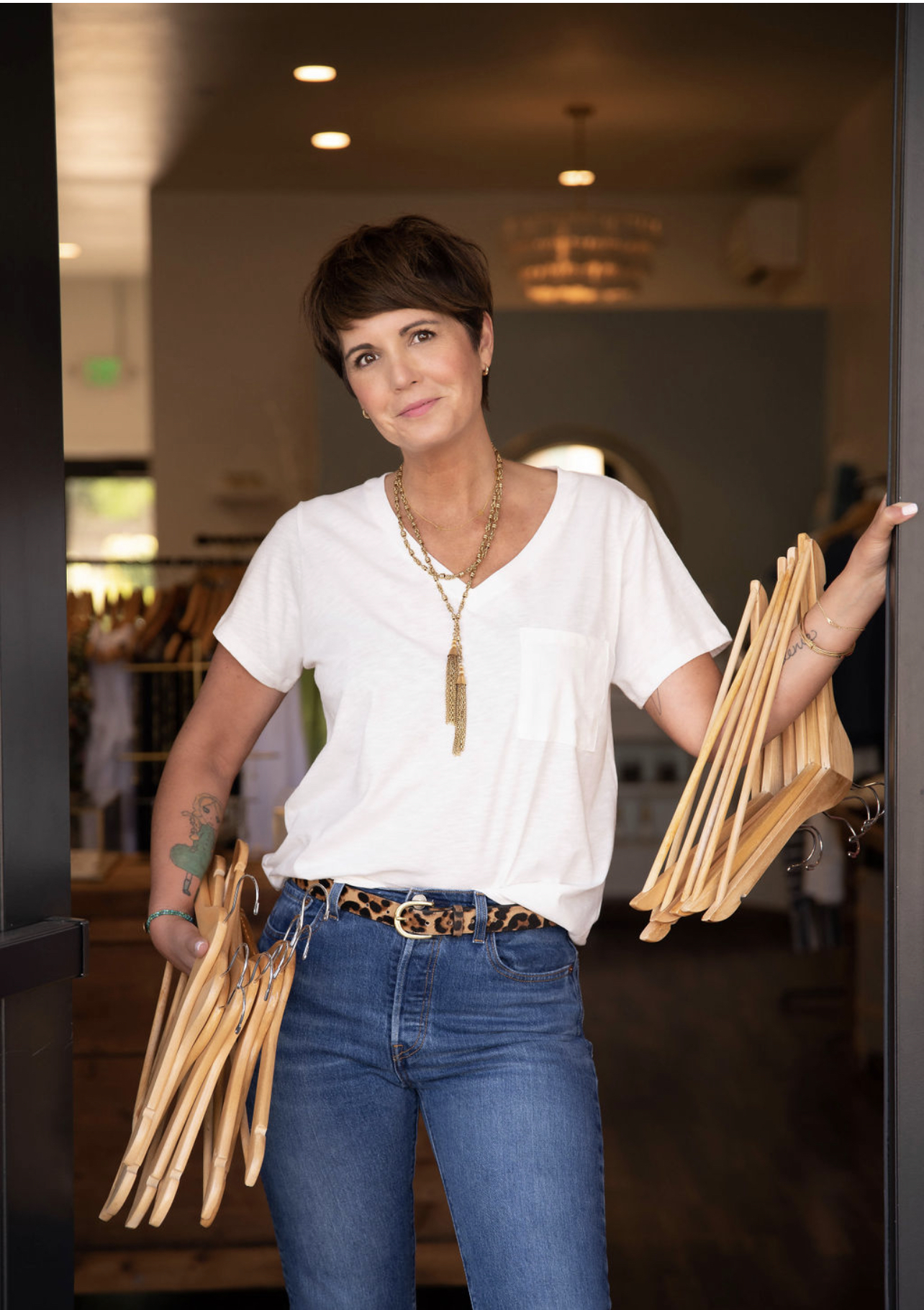
Erin Mavis owns two Cloverdale Boutiques: Erin Mavis Clothing, which focuses on independent small-batch clothing brands, and Heart City, a cheery shop with gifts, candy, and Mrs. Grossman’s stickers.
Mavis, who worked in “big retail” in Los Angeles and New York and co-owned Ethical Clothing in Petaluma for years, says she’s found her true home in Cloverdale. Mavis often starts the day sipping tea in the gardens of the circa-1862 Gould-Shaw House, a Gothic-Revival Victorian that’s home to the town’s historical society. “It’s absolutely the most special spot,” she says.
Stylist Erin Mavis. (Yvette Wendt Photography)
With all the tiny-town quaintness, one can forget Cloverdale also boasts easy access to the Russian River, plus jumping off points for both Anderson Valley and Alexander Valley wineries.
Tuesdays are farmer’s market days, and summers boast Friday Night Live music concerts. Being a bit smaller than other Sonoma destination towns has perks, like the casual vibe of people gathering on the single downtown street. Click through the above gallery for Mavis’s favorite spots in Cloverdale.
When Kelsey and Mike Sheofsky dreamed up their business nearly a decade ago, “glamping” wasn’t quite the buzzword that it is today. “It was kind of still getting its legs here in the U.S.,” Kelsey remembers. The couple, who also run Shelter Co., a group that stages elaborate camping events for weddings and retreats, recently expanded to offer a new line of camping gear and accessories called The Get Out.
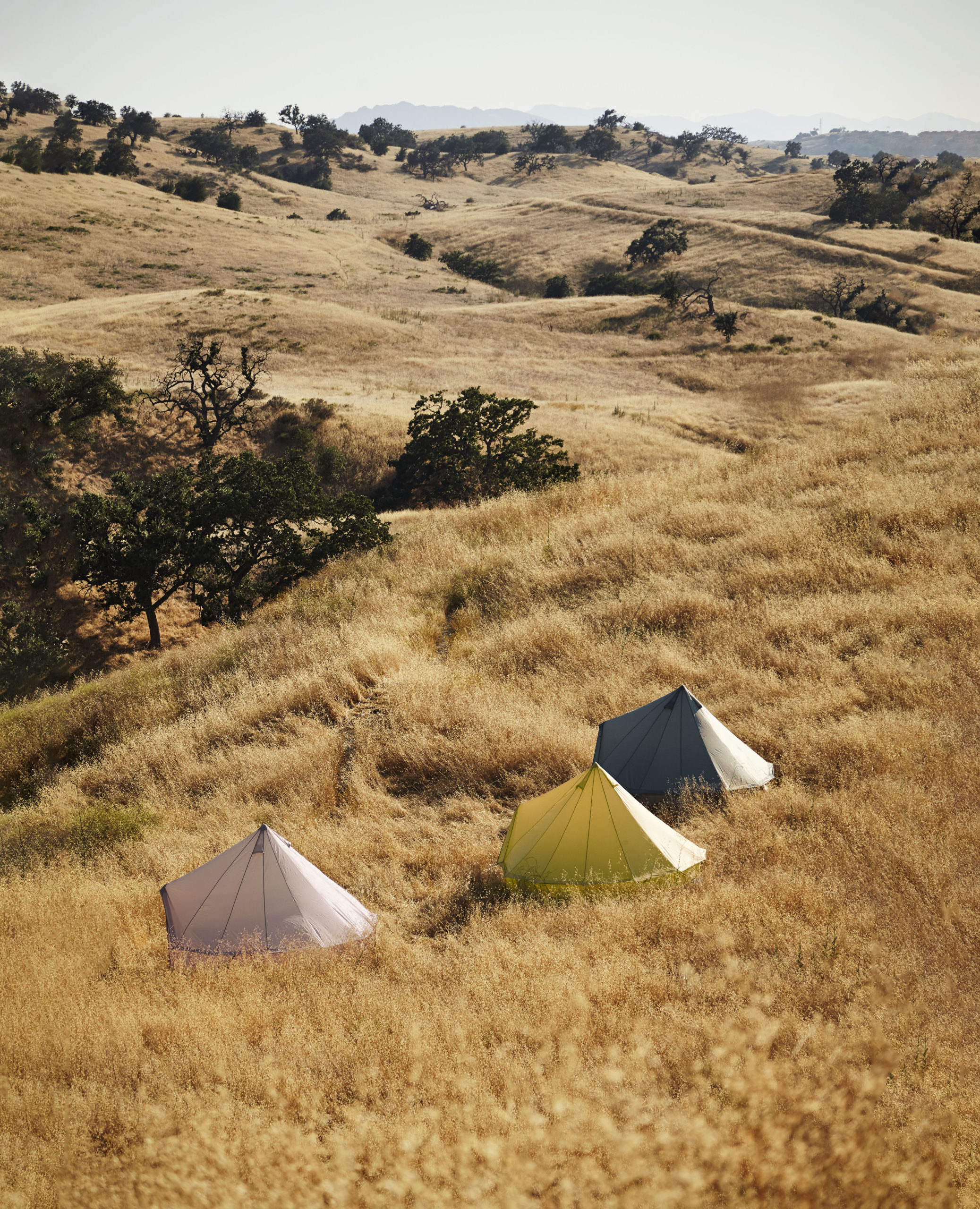
Kelsey and Mike, who moved with their children from San Francisco to rural Sebastopol just as the pandemic started, found they were bored with the technically oriented, heavy-on-the-orange tent designs already on the market. Instead, they’ve found their niche in updated color palettes and elegant shapes based on traditional walled canvas tents. The Get Out’s 13-foot diameter Lite Bell Tent ($650) comes in moss, pink, mustard, and fog. The standard Bell Tent ($1195), at 16 feet in diameter, trends more prairie- schooner chic in khaki or cream canvas. Throw in the Anywhere Rug ($120) and one of the company’s Turkish towels ($45) and the only thing missing is an outdoor shower dangling over a tree branch.
Sebastopol-based The Get Out offers its Lite Bell Tent in an unexpected array of colors, including pink and mustard yellow. (Rob Williamson)
“This idea that you’re not a true outdoor lover unless you’re suffering is a sad angle to come from,” explains Kelsey. “Why not throw your down comforter in your car when you’re going to a campground you can drive to?” The Get Out, thegetout.shop, or on Instagram @thegetout.
Designer Kelsey Sheofsky’s favorite camping spots
Salmon Creek Ranch, Bodega: “Book the redwood camp. It’s nestled in a redwood grove and is super-private, with a short walk to the seasonal creek.”hipcamp.com
Bullfrog Pond Campground, Austin Creek State Recreation Area: “It’s closed from the fire still but hopefully will reopen soon. We try to snag all three sites across the pond for an epic group site which is near the restrooms, too.”parks. ca.gov, hipcamp.com
Parker’s Resort, Guerneville: “It’s right on the river and close to town. This spot is not only great for small family campouts, but you can also buy out the whole resort for larger groups.”
Flower farmer Meagan Major understands the art of beauty. Last year, the one-time makeup artist took over the former Aztec Dahlias outside Petaluma, changing the name of the four-acre property to The Happy Dahlia Farm, and planting 25,000 new blooms this year in anticipation of creating a summer wonderland. “I’m the owner and the crazy visionary lady,” Major says excitedly.
Major knows the personalities of each of the different varieties and talks about them almost as if they’re people. ‘Café Au Lait,’ with its large, ruffled, pale peachy-pink blooms, is by far the most popular with the farm’s visitors. “She’s a total diva,” says Major. Other favorites include ‘Break Out,’ a soft, romantic pale pink, and the vibrant, dark-purple ‘Ivanetti.’ The operation is a family affair.
Major and her husband, Tony, share the daily chores, often enlisting the help of their two young daughters. “It’s like our little utopia,” she says.
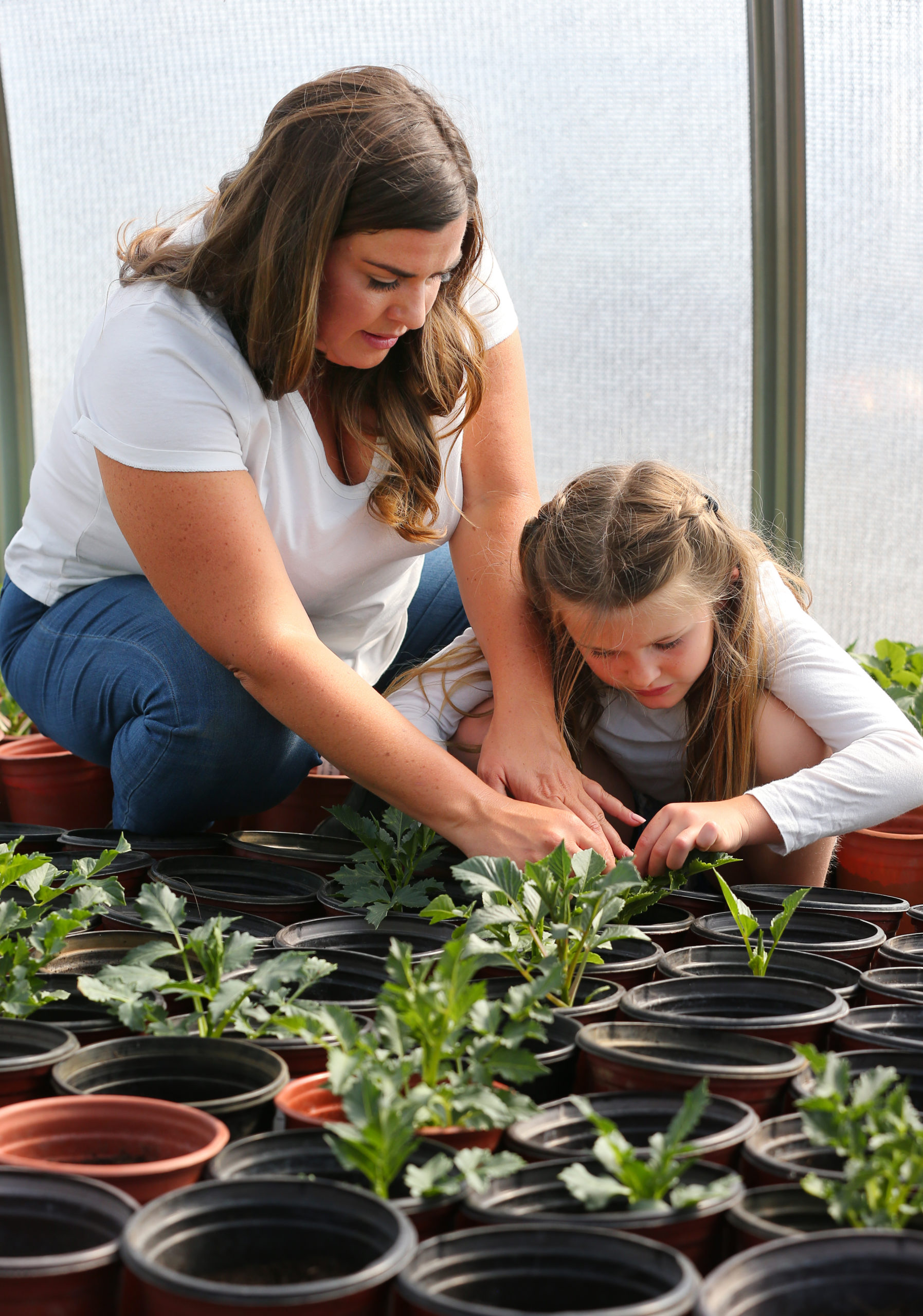
Dahlias at The Happy Dahlia Farm in Petaluma. (Courtesy of The Happy Dahlia Farm)Meagan Major shows her daughter, Georgia, 6, how to tend to a dahlia plant at The Happy Dahlia Farm in Petaluma. (Christopher Chung/The Press Democrat)
A day on the farm
5:00 a.m. In bloom season, Major arrives at the farm before dawn, puts on her headlamp, and gets to work. Harvesting solo is Major’s favorite part of the day. “I get to get intimate with each bloom, and that’s when I get to look at all of them.” As the sun rises, Major says she’s often compelled to stop what she’s doing and take pictures, because the early-morning blooms are so beautiful.
7:00 a.m. The rest of the farm crew arrives. Major continues harvesting until all the sale buckets are filled with dahlias—in rainbow order. The growing fields are divided up by color. “I’m usually more drawn to the pinks and the purples, so my favorites are all on the right side of the field. But my cousin Poppy, who does the farmer’s market, loves the yellows and the oranges. When we go out to harvest, she always loves to go to the left side of the field.”
10:00 a.m. The farm opens for visitors, some stopping at the coffee station, others heading straight out into the fields to wander around.
Shoppers can choose from containers of cut flowers at the farmstand or walk the rows and choose from the growing beds, though staff members do the actual cutting of the flowers.
12:00 p.m. Time for lunch, often a takeout farro salad from Lunchette. If she’s not too dirty, Major likes to head to Cucina Paradiso. “It’s my favorite restaurant in all the land,” she says. “I love the fish, and the gnocchi is out of this world.”
1:00 p.m. There are buckets to replenish with blooms, and more flowers to cut for guests walking the fields. “I always say to look around and enjoy everything first, and then pick your flowers before you go home. The dahlias don’t like to be left out in the sun once they’ve been cut,” Major says. As visitors wander the fields, they’ll notice basil and other smaller plants interplanted with the dahlias—a way of attracting ladybugs, lacewings, and other beneficial insects. “I have seen so many ladybugs this year and I’m really excited,” says Major.
4:00 p.m. The farm closes, and Major’s team turns to getting ready for the next day’s farmers markets, sorting blooms by color so people can look through the buckets and choose from complementary textures and styles. After 12-plus hours in the field, Major winds down the day with dinner and family time, before an early night to get ready for the next day’s harvest.
When you go: “We want this to be a magical place,” says Major. In addition to cut flowers, The Happy Dahlia Farm also offers picnic tables, live music, activities for kids, and full-moon ceremonies. The dahlias begin blooming in July, peak in August, and continue through early October. Visit the website for updated bloom-season hours.
Here’s something most of us can agree on: Plants make a beautiful addition to any home. But keeping plants alive and thriving can be a challenge. If you’re pining for some botanical decor but lack the time and focus that caring for plants require, consider “forever florals.” These dried floral arrangements are trending right now and come with the same beautifying qualities as their living counterparts, while being very low maintenance. Sonoma florists have embraced this trend. Click through the above gallery to see what’s on offer.
Back to school means back to business, but also back to busyness. And while we appreciate the focus routines offer, jam-packed schedules can be daunting. In order to tackle these busy days more effectively, we found a few finds from Sonoma stores that might facilitate your routine at home before school and after school. Click through the above gallery for details.
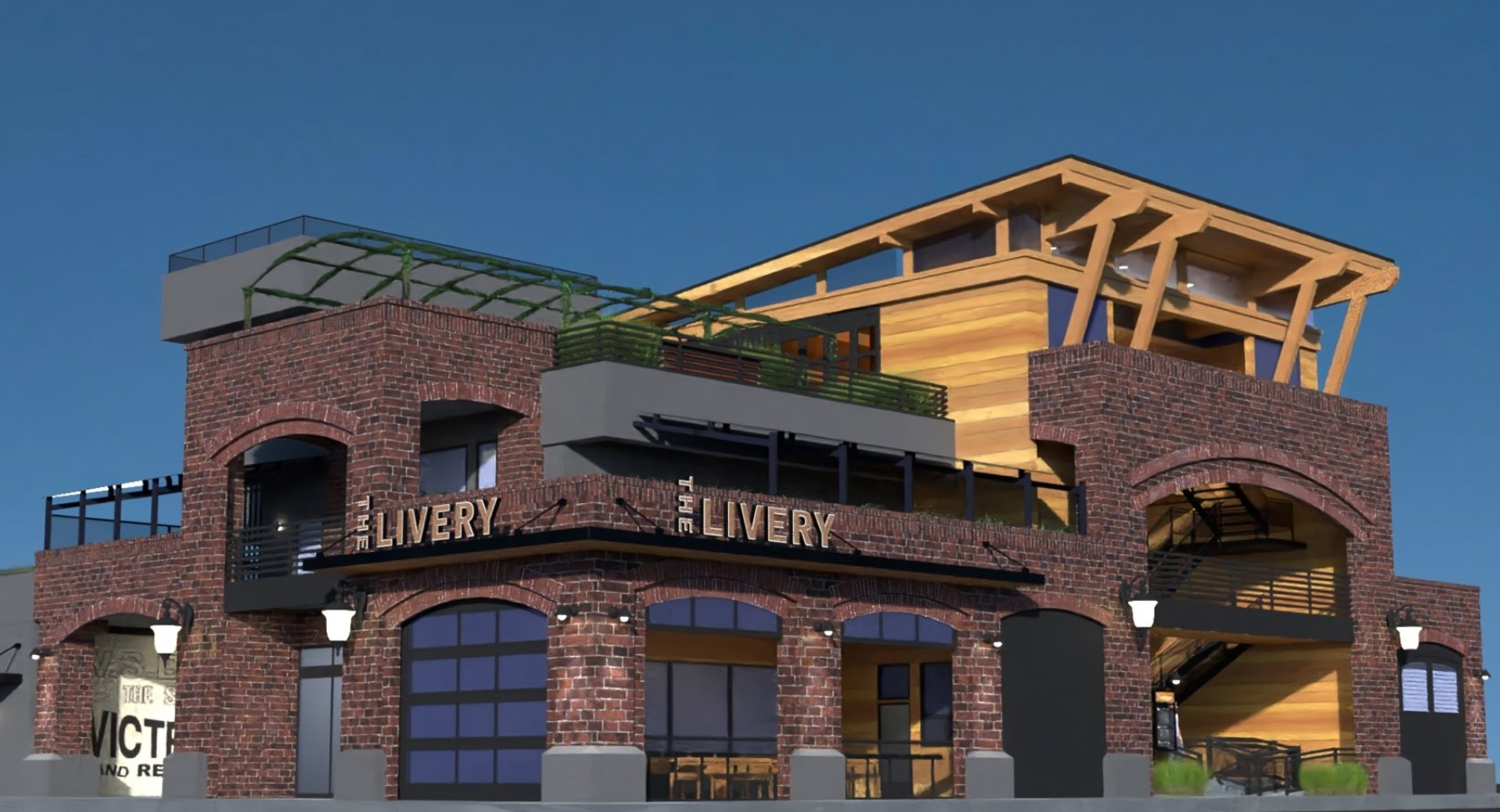
The Livery on Main, a forthcoming 22,000-square-foot food and arts hub in downtown Sebastopol, is coming into focus as culinary heavy hitters like Village Bakery sign on for a space in the building’s food hall.
Slated for a late 2022 opening, the modern three-story space will take shape on a large parcel of unused real estate at 135 South Main St., next to K&L Bistro and across the street from Retrograde Coffee Roasters. The name refers to a livery, or stable, that once was on the property.
The food hall will be located on the first floor, called The Stables, and will feature food from a variety of small local restaurants, including vegan dishes from Santa Rosa’s Cozy Plum Bistro, burgers from the Lunch Box Sonoma County pop-up, Mexican-style mariscos (seafood dishes) from Santa Rosa’s El Charro Negro food truck and Greek food from Taverna Lithi, a new restaurant from Dino’s food truck owner and chef Dino Moniodis. Village Bakery, with two locations in Santa Rosa, will be making its return to Sebastopol in the food hall after losing its retail shop and production kitchen in The Barlow during the flooding in 2019.
An artist rendering of The Livery on Main, taking shape in Sebastopol. (Courtesy of The Beale Group)
Farm to Coast Collective, a “public benefit corporation” owned by Sebastopol company The Beale Group, will operate The Livery on Main and will provide on-site management, staffing and marketing to the food hall vendors in return for licensing fees (30% of gross revenue from food hall vendors). It’s a business model that, in different configurations, has gained traction in cities like New York and San Francisco with its lower startup costs compared to opening a stand-alone restaurant, plus other perks such as shared expenses and more consistent foot traffic.
“Restaurant startup and operational costs are expensive. We believe that our comprehensive shared services food hall model is the sustainable future of the (food and beverage) industry,” said Gregory Beale, founder of The Beale Group. As local restaurateurs continue to grapple with labor shortages and rising rents, the food hall concept can help address those challenges, The Beale Group said in a news release.
In addition to the food hall, The Livery on Main will be home to shared work spaces on its second floor, called The Loft, along with a speakeasy lounge called Farriers that will serve local beer, wine and spirits. The upper floor, The Rafters, will be dedicated to an event space and rooftop garden.
To finance The Farm to Coast Collective, The Beale Group has launched a campaign on WeFunder, a crowdfunding site that connects startups with investors. So far, $7,000 has been raised toward the $50,000 goal. According to the fundraising campaign, construction will begin in September 2021. Find more details at livery135.com.
Miyoko’s Creamery founder and CEO Miyoko Schinner (courtesy of Miyokoís Creamery)
“Vegan dairy” is no longer an oxymoron but rather a $5 billion industry that’s outgrown its hippy origins and become an artisan darling of the plant-based food movement.
Using ingredients like oats, coconut oil, nuts and vegetable proteins instead of animal products to mimic the taste, texture and mouthfeel of real dairy, two of the industry’s fastest-growing players, Sonoma County-based Miyoko’s Creamery and Wild Creamery, are gaining traction both nationally and internationally for their nondairy cheeses, buttery cream cheese, sour cream and dips.
As anyone who suffered through the early phases of the evolution of vegan cheese can attest, vegan dairy products weren’t always noteworthy — more vegan statement (a la Tofurkey) than party appetizer. But as diets change to include more mainstream meatless options — for better health, to reduce carbon footprints or over concern about animal welfare — diners are demanding quality alternatives like the Impossible Burger, Amy’s Drive Thru’s nondairy chocolate shake or a plant-based butter that spreads, melts and tastes like real butter.
With science, patience and fermentation wizardry, the inconceivable is becoming not just accessible but actually pretty tasty.
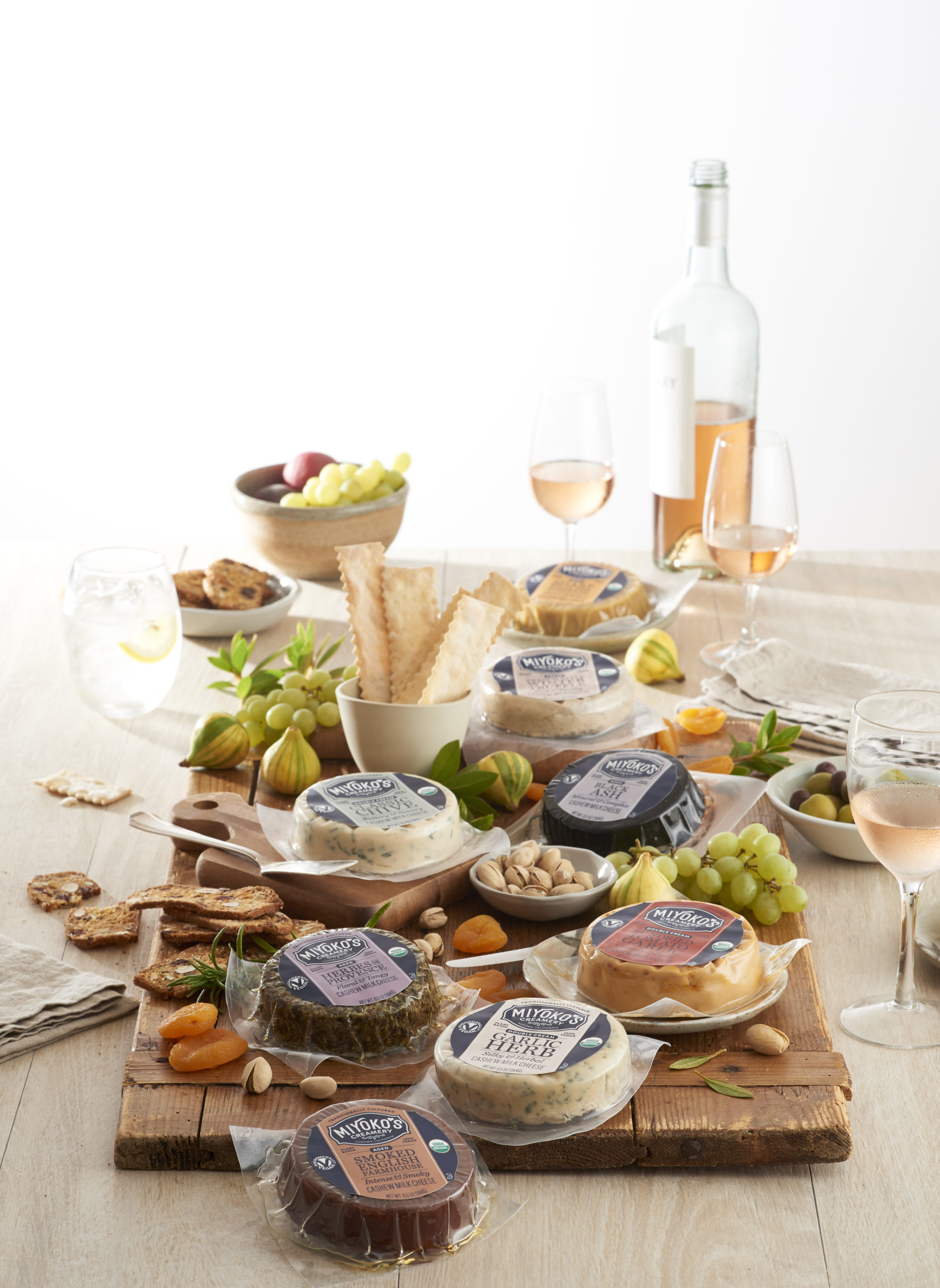
Miyoko’s Creamery sells an assortment of vegan products such as plant-based cheeses and “butter.” (Courtesy of Miyoko’s Creamery)
The upstart
For Wild Creamery owners Rick Goldberg and Chris Glad, the key to vegan dairy’s growth is something called lactobacillus.
Officially launched this year, Wild Creamery is an offshoot company of Wild Brine, makers of sauerkraut, kimchi, fermented salsas and sriracha. Based in Santa Rosa (the fermenter facility is in Windsor), the two companies are well-versed in this strain of lactic acid, required for fermentation such as pickling vegetables or making cheese and butter. Lactobacillus is also a natural preservative that gives tartness to sauerkraut or European-style butter. Existing naturally in the wild, it breaks down complex food molecules into simpler forms and changes their flavor and structure.
“There’s such a beauty in fermentation and the flavor profiles it offers,” Goldberg said. It’s that fermentation knowledge that gives their products a depth of flavor that’s both creamy and tart, more like actual dairy products.
Wild Brine cultivates its lactobacillus primarily from cabbage leaves, efficient carriers of the wild bacteria. It seemed natural to try to ferment plant-based dairy, using sauerkraut juice as their culture.
“Everyone else uses the same foundation,” Glad said. The ingredients in their products include coconut oil, sunflower oil, cashews, oats, cabbage and other vegetables. “But we don’t come at this as scientists. We come at it as food people. We want it to have that same creamy mouthfeel, but it’s all plant-based,” he added.
“You notice what we want you to notice in the flavors because they’re very different,” Glad said.
Serial food business entrepreneurs, Glad and Goldberg started the Creamery for a new challenge, doing all the research and development themselves. Though the pandemic put them back a year, they’ve released a Brie-style cheese, butter, cream cheese and sour cream alternatives in addition to dips like French onion and chipotle lime.
Goldberg and Glad are continuing their research and development, hoping to create plant-based butter and cheese 2.0, a next-generation product. Moving beyond nuts (which people can be allergic to), they hope to incorporate oats and quinoa to find a “magic bullet” to mimic the proteins in milk — basically, to make a more cheese-like cheese.
“People now are plant-based not just because they’re vegan, but because they care about the planet, sustainability and animal welfare,” Goldberg said. “They’re consumers with a cause, and they want to know who’s making it. The vegans may have started this industry, but it’s vegans and flexitarians now.”
Though Wild Brine and Wild Creamery declined to give annual sales numbers, they said they’re the largest natural food fermenters in the country, purchasing 10 million pounds of fresh produce per year.
The duo has big plans for more vegan products in the coming months, including roasted garlic butter, but said their ultimate goals are far ahead.
“We’re always looking forward and not back,” Glad said. “I think success is when someone randomly buys your product and brings it to a party and wants to share it.”
The activist
Miyoko Schinner believes that, like the horse and buggy or kerosene lamp, plant-based eating is a necessary transition and evolution of the food industry.
The founder of Miyoko’s Creamery, a 30-year vegan and animal sanctuary founder has tapped into a consumer zeitgeist of concern for animal welfare, sustainability and plant-based eating over conventional food production.
“Consumers are ready and want to participate in driving changes. They want to be part of the solution, and food choices are a way to vote for sustainability and animals,” she said. “It’s part of our own human evolution to become more humane, sustainable beings. That’s our responsibility on our planet to take care of it.”
As a chef and cookbook author, she created her vegan butter recipe out of necessity.
“There were spreads like margarine, but nothing I would have considered butter. I create foods that I crave myself,” Schinner said.
That’s translated into serious wins for a company grown from a niche vegan cheese seller launched in 2014 to an international socially-conscious brand of nondairy products, including cultured plant-based butter, plant-based cheeses, cream cheese and cheese dip. Miyoko’s Creamery recently received a $52 million cash infusion and expanded to a 29,000 square foot facility in Petaluma. Trader Joe’s carries her plant-based butter.
Although her products use oats, cashews, sunflower and coconut oil and are dairy-free, they are marketed as “butter” and sit next to traditional dairy butters, sour cream, and cheeses, the result of a hard-fought victory for Schinner and the vegan dairy industry.
Vegan butter is Miyoko’s bestselling product and has boosted company sales by more than 160%. Recently, the company prevailed against state regulators who challenged its right to use the word “butter” and other dairy-related terms in its advertising. Represented by the Animal Legal Defense Fund, the First Amendment lawsuit against the California Department of Food and Agriculture was a bellwether for what the state’s $6.4 billion dairy industry is up against.
That’s rubbed the local dairy industry the wrong way.
“I disagree with the decision,” said Tawny Tesconi, executive director for the Sonoma County Farm Bureau. “It’s not that I disagree with the idea of having cashew nut spread or nut juice, but I believe that when you look up the definition of milk is that it’s a white product from mammals,” she said.
Hoping to entice animal farmers to transition to plant farming, Schinner said the company is dedicated to financially supporting a dairy farm willing to convert to growing crops like legumes, hemp, oats or potatoes used at Miyoko’s Creamery.
“Consolidation is the biggest threat to small family farms. We recognize that and have empathy for these farmers, and we would like to help,” she said.
The company has also launched a local tourism campaign to bring together sustainable, inclusive, animal-friendly artisan wine and food producers for specialty experiences. Charter members include El Dorado Hotel & Kitchen, Renegade Foods, Green String Farm, Out in the Vineyard and Miyoko’s Rancho Compasión in Nicasio.
“We want to continue to lead, become change-makers not just with our products, but to pave a path for a more sustainable, compassionate food system. We want to become the leading global brand in premium plant-based dairy, and that’s a big goal,” Schinner said.
Soak up the sun while sipping on some excellent wine. Here are six favorite picks for wine tasting in Sonoma County.
Featured Winery: Lynmar Estate Winery
Lynmar Estate Winery has four distinct vineyards and an environmentally-friendly and gentle-on-the-grapes gravity-flow winery. Owners Lynn and Anisya Fritz bottle three tiers of wines, mostly Pinot Noir and Chardonnay, but also a few blends. New this summer? A renovation of the outdoor tasting areas, which are now perfect for enjoying new vintages of the summery Rosé of Pinot Noir and Sonoma Coast Chardonnay.
“Lynmar’s beautiful outdoor area has expanded with several new covered spaces where our guests can enjoy the natural setting in an elegant and safe manner,” says the winery’s Andrea Alcaro.
“On Your Own” tastings include a private lunch pairing with a gourmet meal for two created by estate chef David Frakes, and a half-bottle each of Chardonnay and Pinot ($110). The wine flight spotlights four or five estate-grown wines ($60), served with Lynmar’s house special: salty-smoked popcorn.
3909 Frei Rd., Sebastopol, 707-829-3374, lynmarestate.com. By appointment; call for reservations
4th Street Cellars
This is the only tasting room in Railroad Square, at the heart of a buzz-worthy dining scene. Guests can have restaurant food delivered to tables as they taste, and there’s also live acoustic music on Friday and Saturday nights. The tasting room features wines from Opal Moon, Bonneau, and Egret, and tastings run four pours for $20. “This summer we’ll likely be pouring the 2017 and 2018 vintages of our Bonneau Chardonnay and the 2017 Bonneau Pinot Noir, both made with fruit from the Los Carneros AVA,” says manager Erin McVicar.
Karah is an excellent choice to get to know wines from the county’s newest AVA, Petaluma Gap. Choose from three tasting options, each $20: a reds-only experience; whites and rosé; or a mix of rosé, Chardonnay, and three Pinots. “This summer we’ll be pouring several estate-grown Pinots, as well as two rosé of Pinot selections, and also a sparkling wine,” says manager Karima Karah.
A local collective representing ten boutique producers. “We always have rosé from the Kitfox and Peterson labels, and also all sorts of esoteric whites,” says the shop’s Patrick Llerena-Cruz. Tastings here are complimentary. “We haven’t charged for tasting in 19 years,” he says, “and we’re not about to start now.”
With annual production of about 1,000 cases, Sosie makes Cabernet Franc and Pinot Noir, as well as Roussanne from Bennett Valley AVA vineyards. “Our 100 percent Roussanne has been popular, as it’s very much a northern Rhône style,” explains owner and winemaker Scott MacFiggen.
“We call it our ‘Goldilocks’ wine, because it has the richness of Chardonnay and the minerality of a Sauvignon Blanc. It’s a nice balance between the two. We don’t produce Chardonnays or big Napa Cabernets. We definitely try to do things differently.” A tasting of five wines — “and sometimes others,” adds MacFiggen — is $30.
Winemaker Scott Lindstrom-Dake founded this small artisan producer. “We specialize in reds such as Cabernet, and our flagship wine is Cabernet Franc,” says assistant manager Angie Malinski. “We’ve also added a new chilled red called Valdiguié, which is an uncommon varietal, especially for Dry Creek Valley, but our customers are really liking it.” Tastings ($20 for 75 minutes) typically include four wines from a list of eight. “We also provide a complimentary cheese plate and a vegan option with tastings, even for walk-in guests.”