





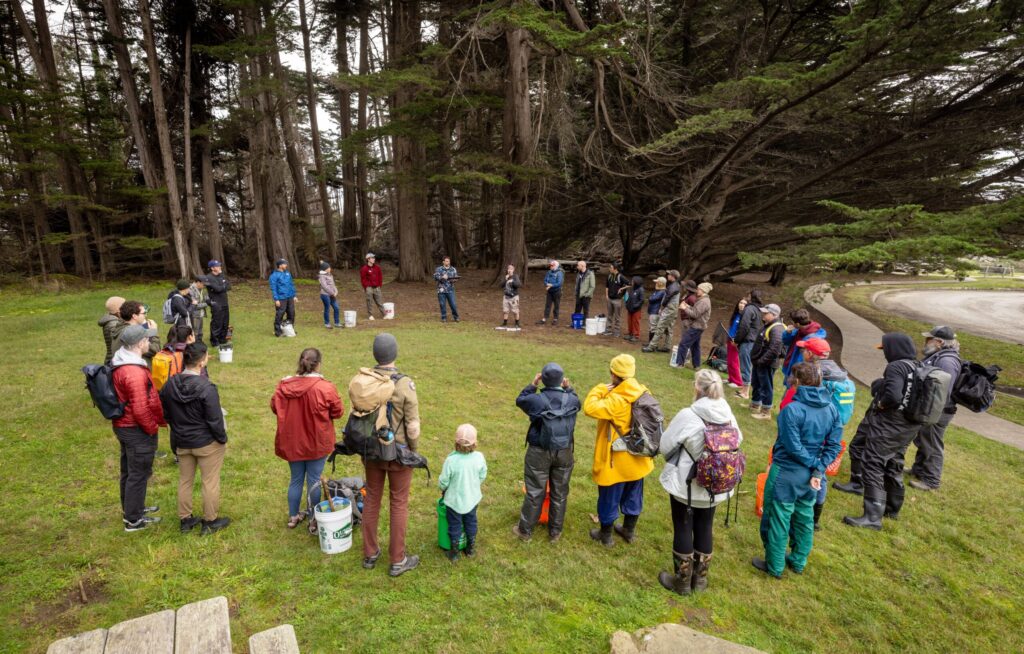
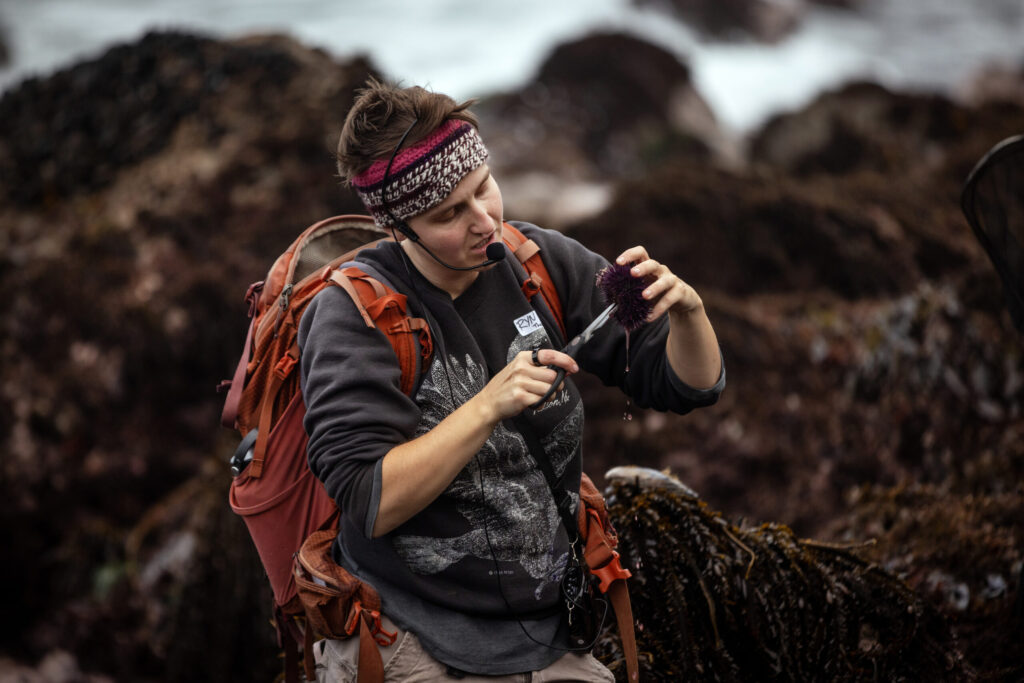

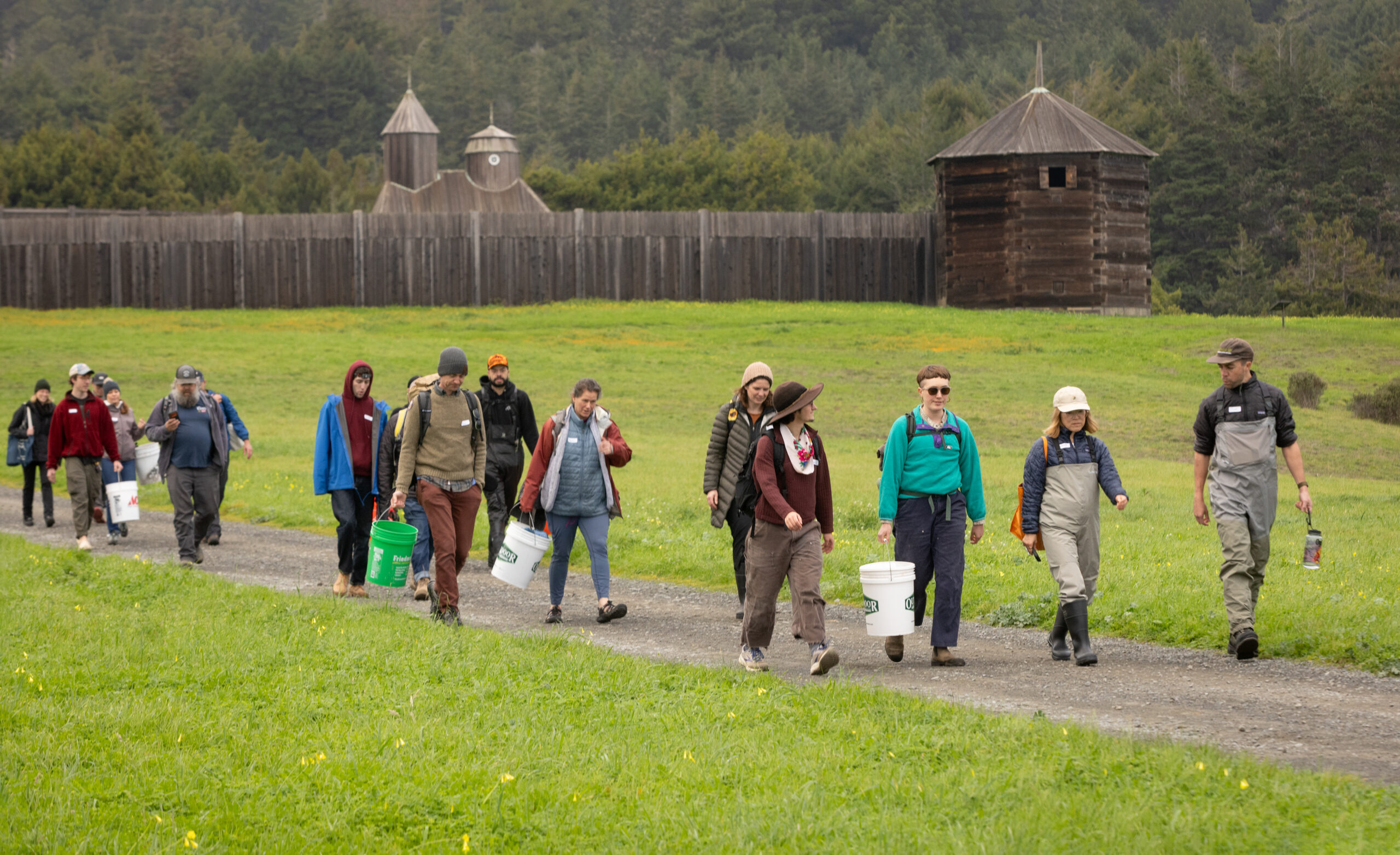
At first glance, it hardly looks like the beginning of a sea-urchin foraging expedition: a circle of 40 people on the grass pretending to be kelp, feet rooted to the ocean floor, swaying from the knees up in the current, arms elastic like stalks, heads bobbing. It could be a flash mob reviving the ’60s dance sensation “The Swim.”
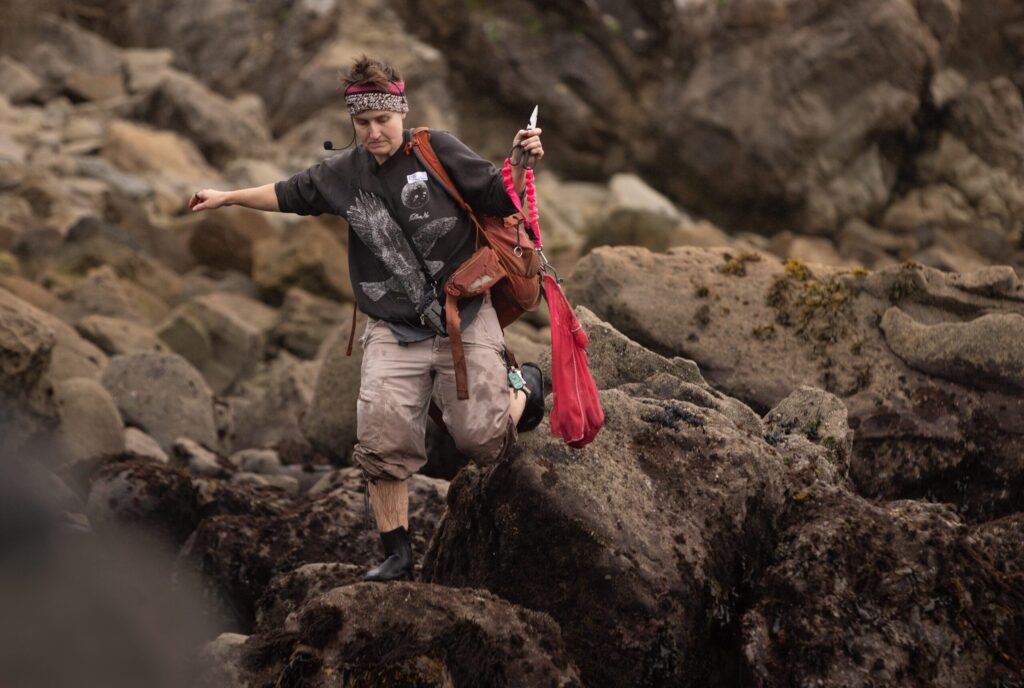
“Wave your kelpy arms all around as your back warms up and your arms warm up,” says teacher Ryn Sullivan, who, along with colleague Ricardo Romero Gianoli, leads curious landlubbers into the ocean for Fork in the Path, a Berkeley-based company that curates wild-food foraging adventures throughout the Bay Area.
It’s a late Thursday afternoon alongside the Fort Ross State Historic Park parking lot, not far from a sheltered cove where briny treasure awaits at low tide. “Now we are sea urchins,” Sullivan beckons, encouraging everyone to squat down on the sea floor of grass.
Earlier, a puzzled park ranger stopped by to take in the scene. “You guys have a pretty big group—what’s going on?” he asked a would-be forager.
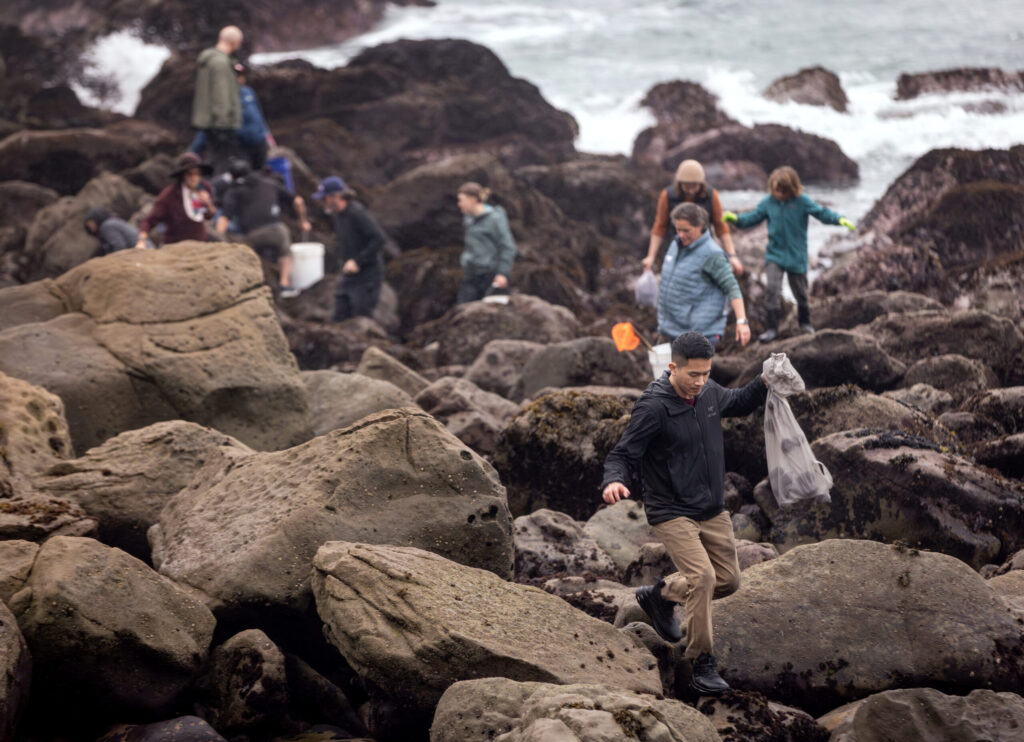
They’ve come from miles around—some as far as Connecticut and Los Angeles, others as close as Occidental and Sebastopol—a ragtag band of foragers all in search of the notorious purple sea urchin. Martin Wobig drove over an hour from Santa Rosa to learn to harvest a creature he’s never actually tasted, although he’s seen uni on the menu many times at sushi restaurants. “I’m curious to see what they taste like. I mean, they’re gonads, so that’s the initial thought,” he says, grimacing slightly. “But they’re supposed to be a delicacy.”
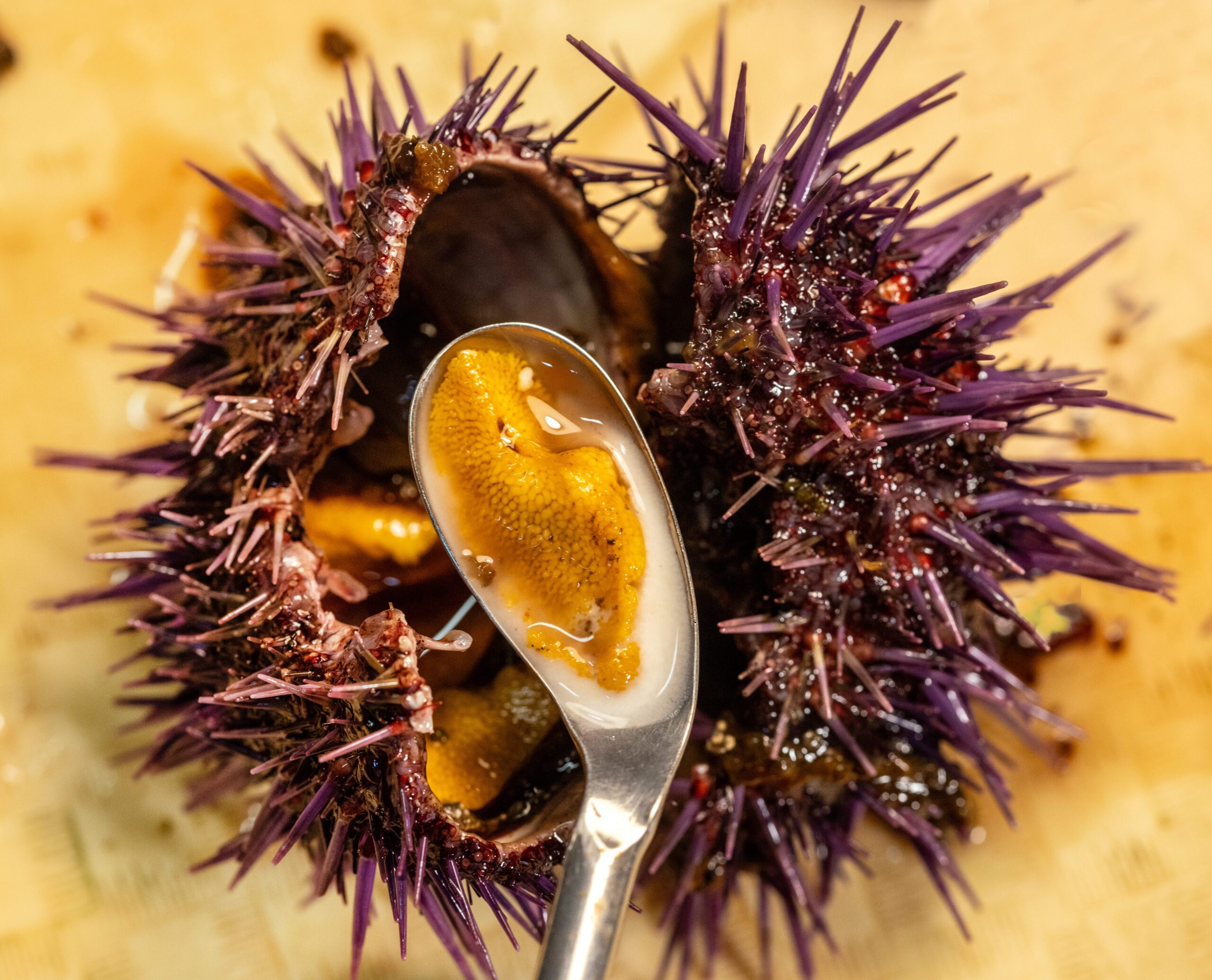
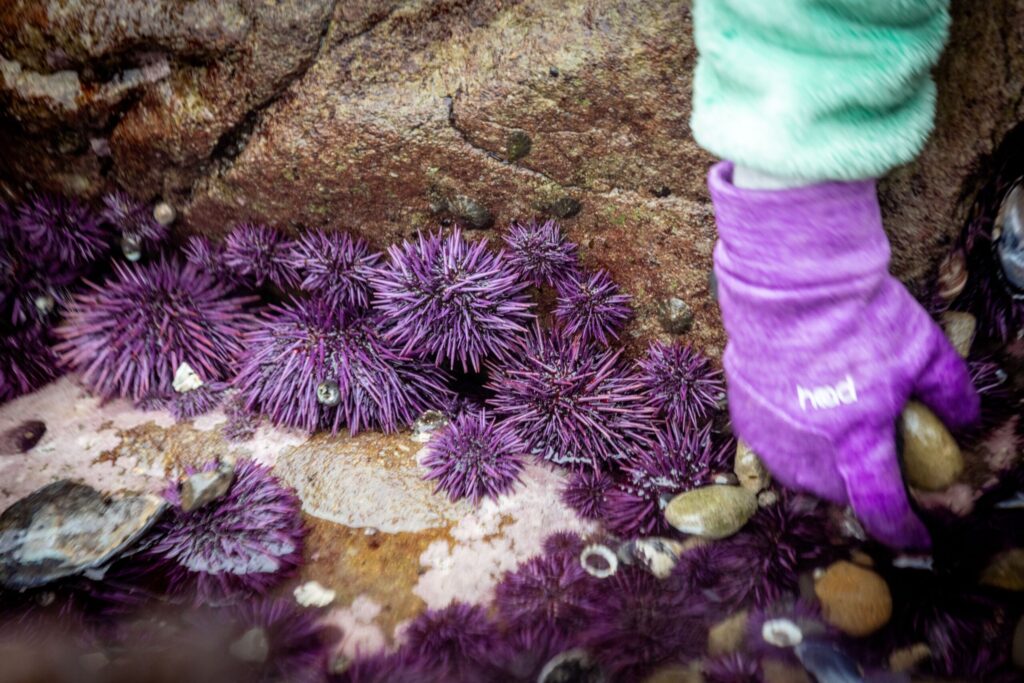
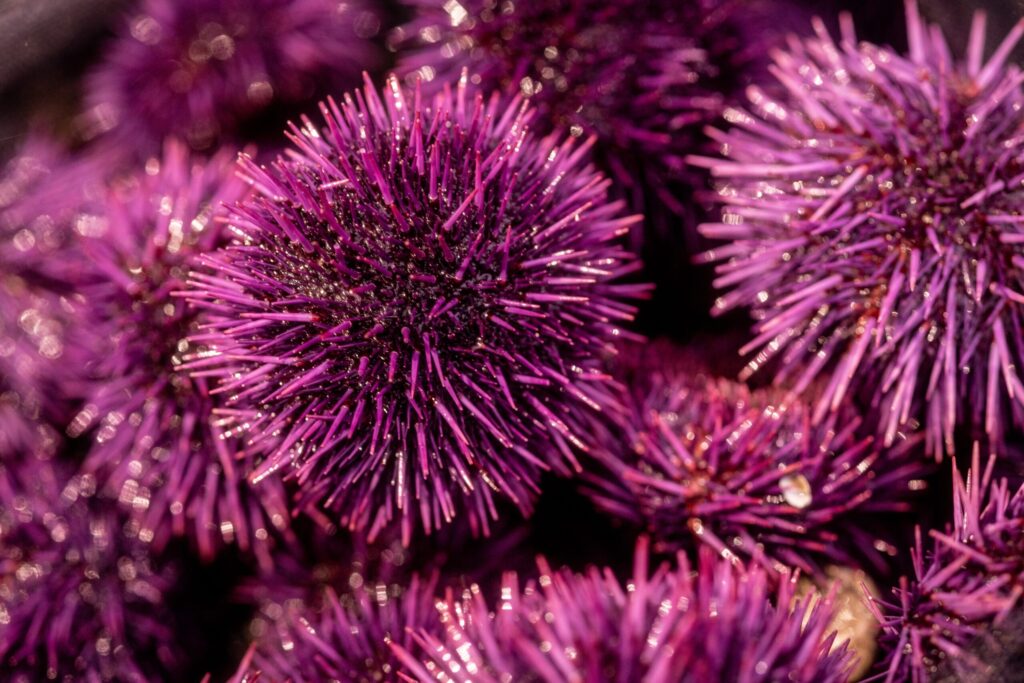
There’s something about the spiny, round marine invertebrate that draws people in. Maybe it’s the forbidding exterior or the salty sweet interior that is the roe. Or maybe it’s the hard-to-fathom stories of how this seemingly innocuous little creature is directly responsible for the destruction of more than 95% of the kelp forest along the North Coast. It turns out climate change and the centuries-long mass hunting of sea otters have left the hungry sea urchins without any natural predators. To convey the impact, Sullivan asks people to imagine a similar outcome on land. “What if the redwood forests just disappeared overnight? That’s kind of what happened with the kelp forest. But people can’t see beneath the water, so we’re trying to give them that same kind of scale and understanding.”
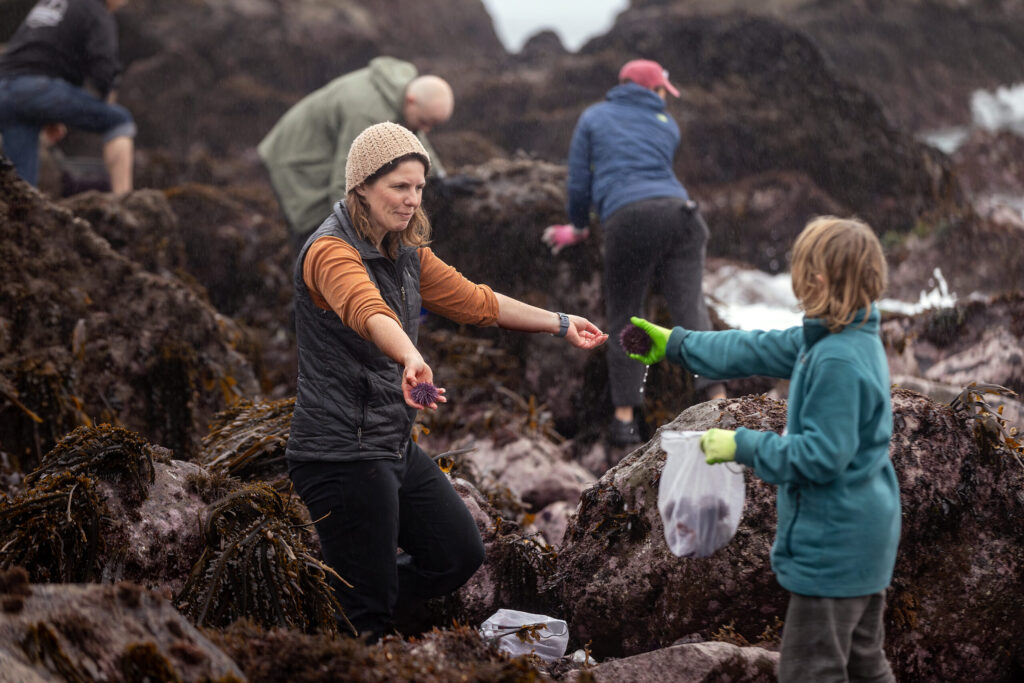
The marching orders are clear as Sullivan, who uses gender neutral pronouns, tells everyone, “We can take 35 sea urchins per person today. All together in our 40-person class, that is 1,400 urchins removed from this tidal ecosystem, which takes some pressure off the reef.” Their hope is that starving urchins off the coast, where the kelp once grew, will come in and fill the void, and the next round of foragers will remove them, creating a continuous cycle of population reduction.
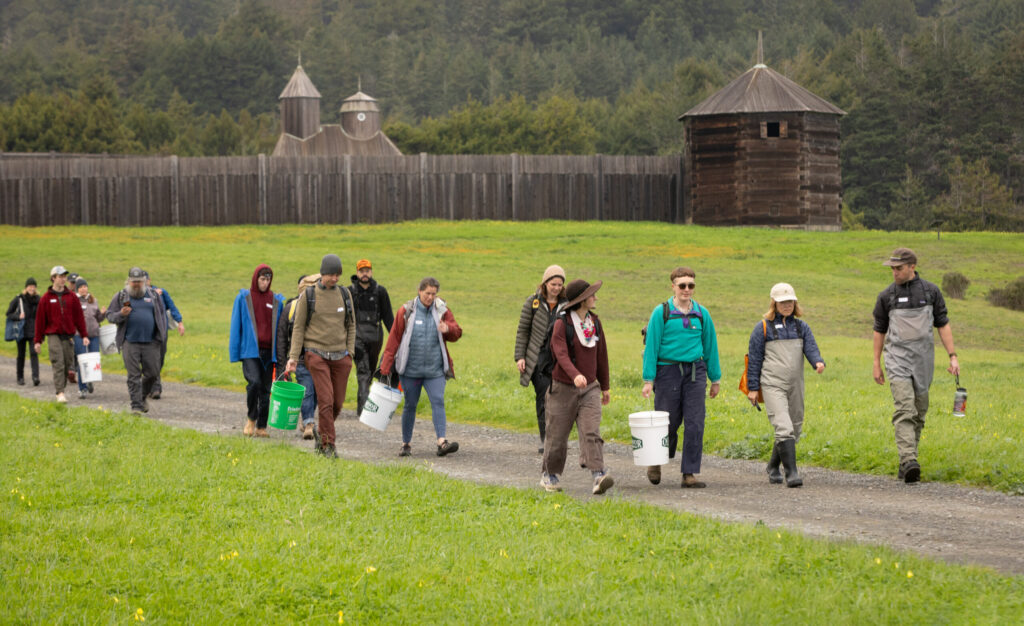
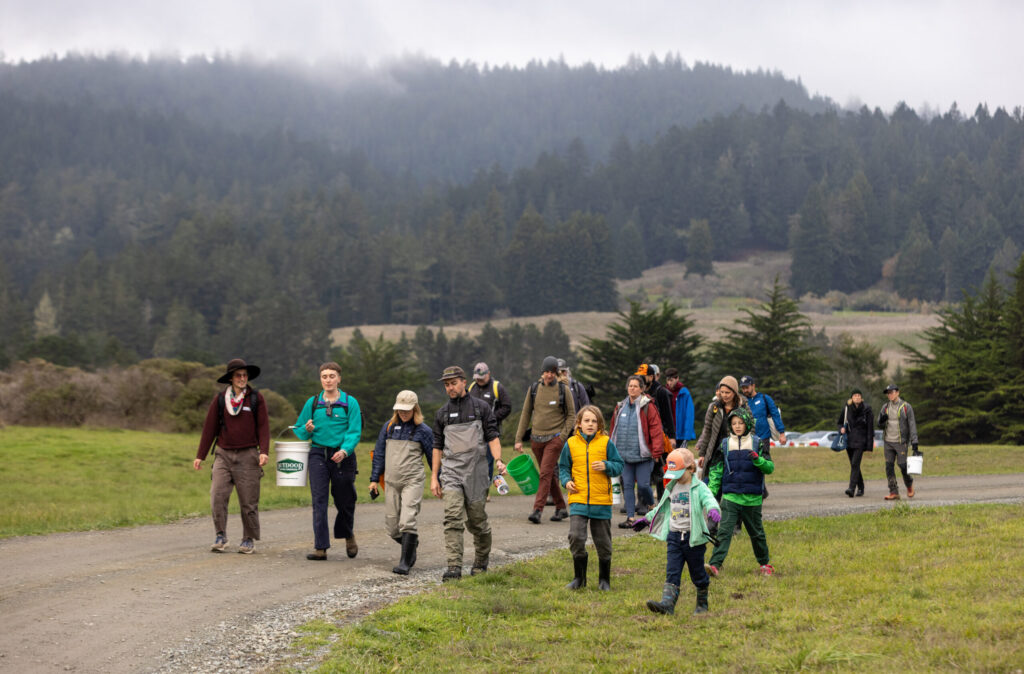
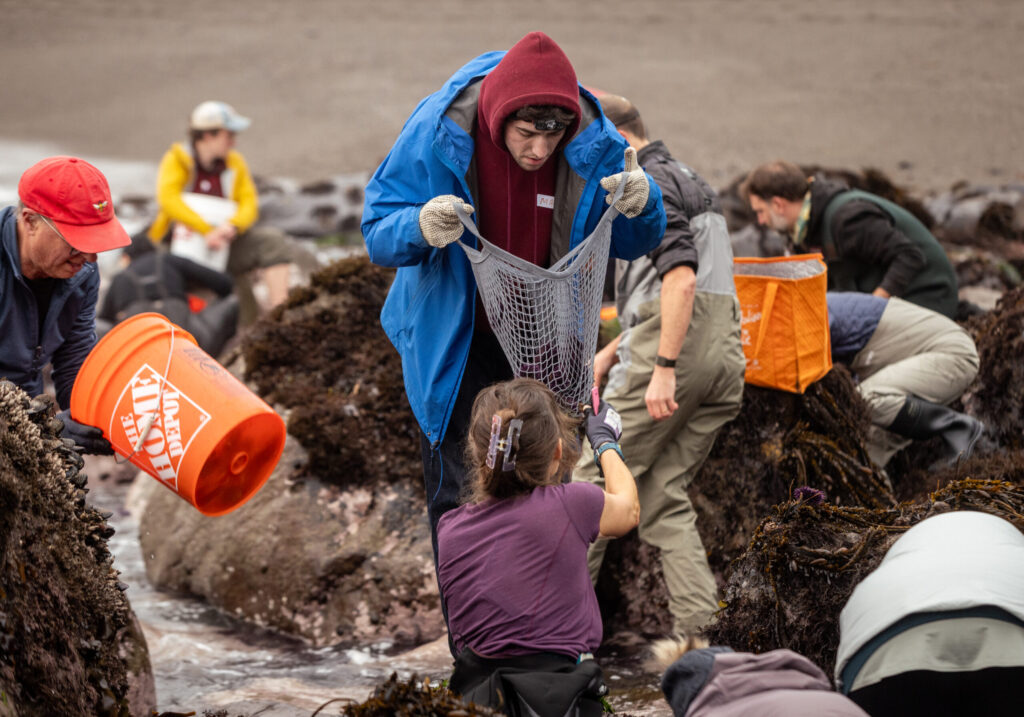
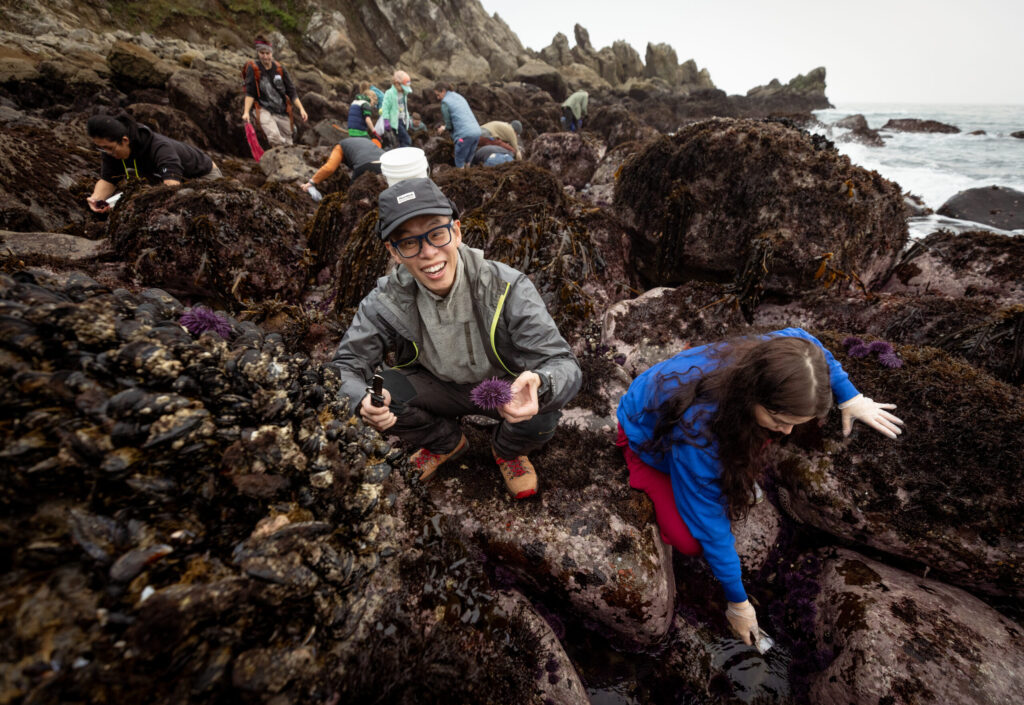
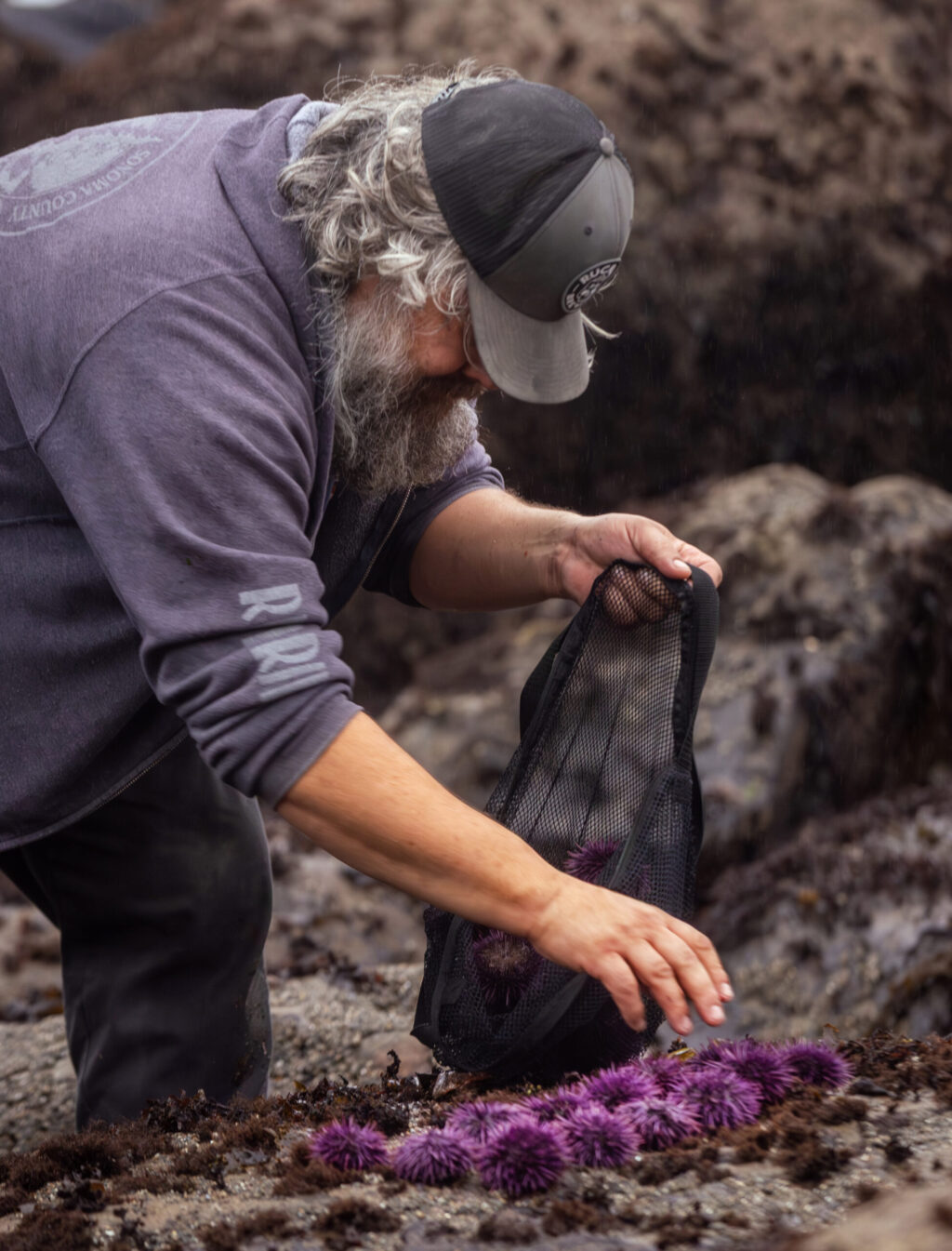
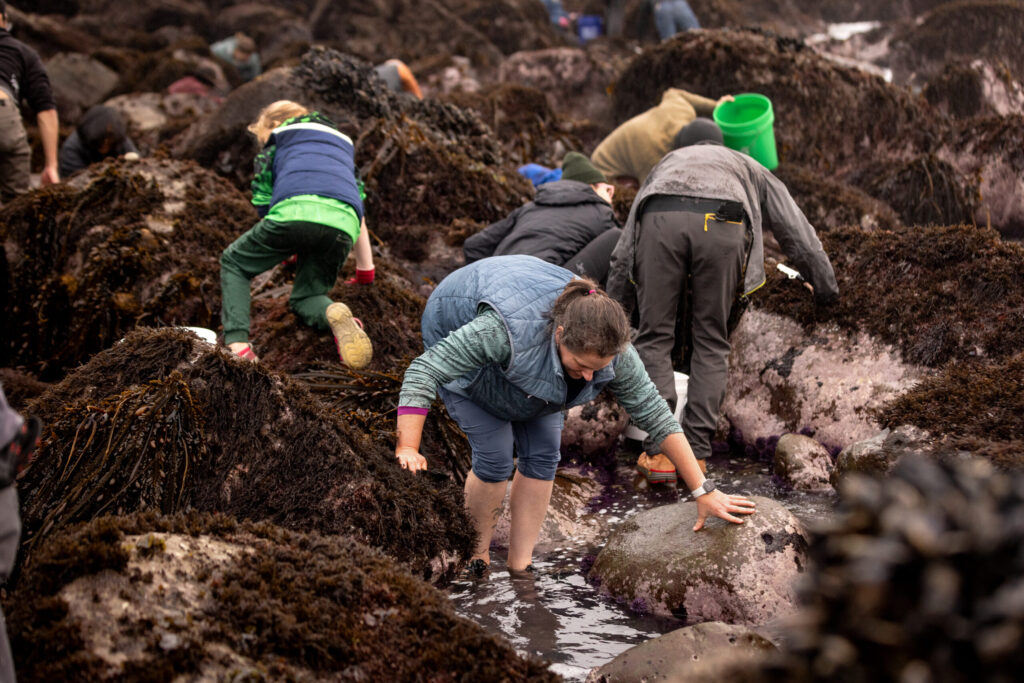
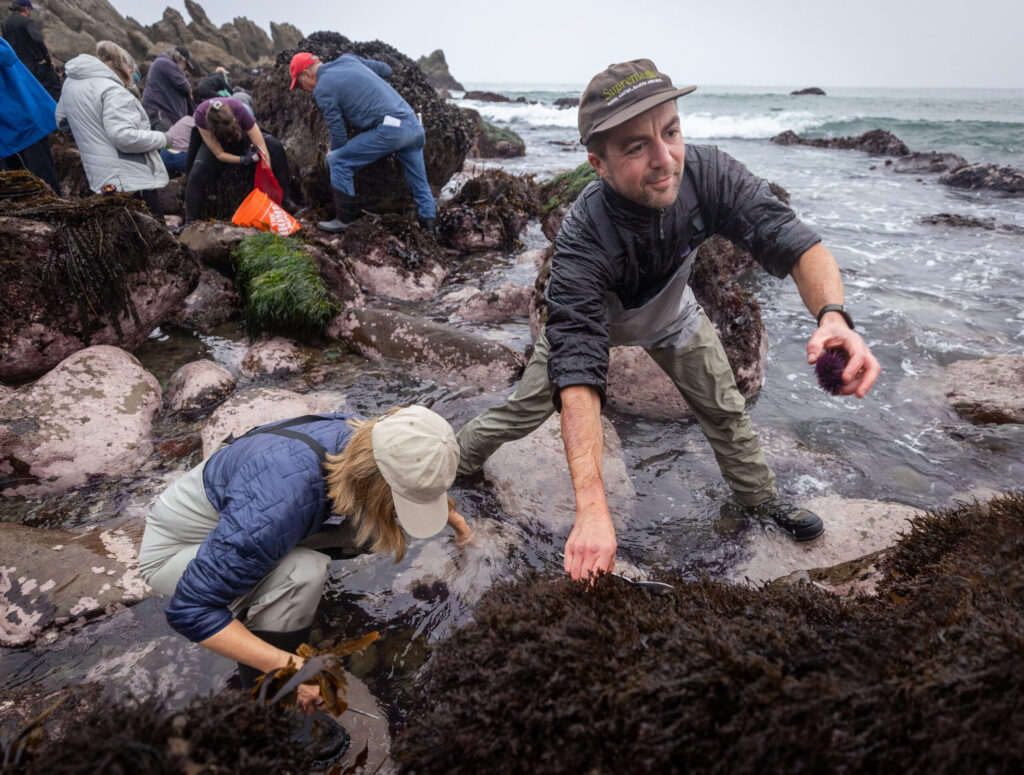
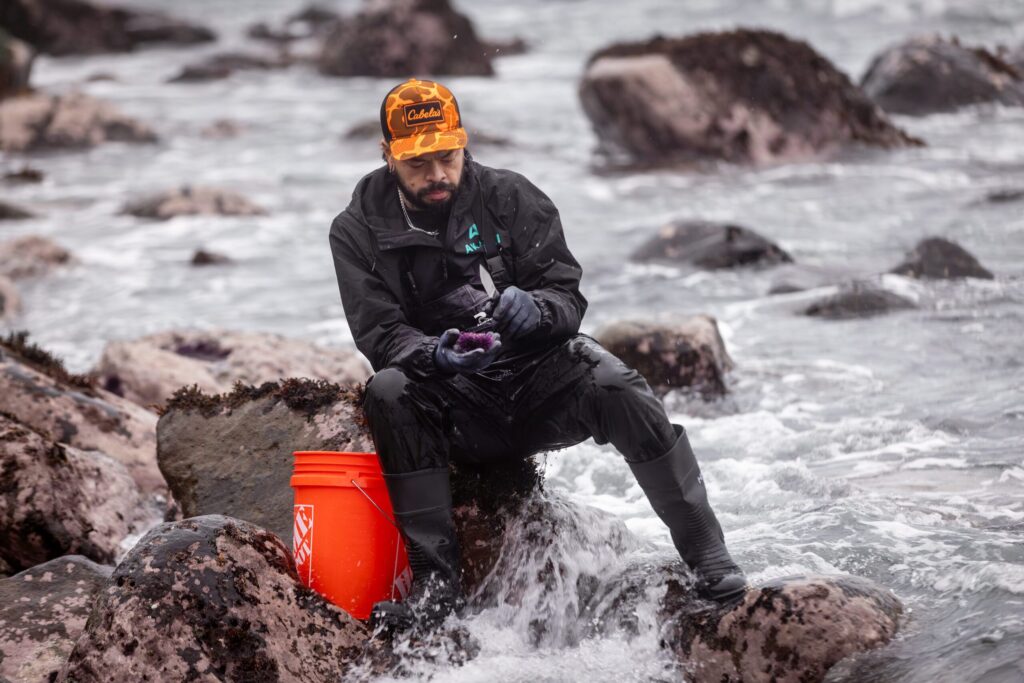
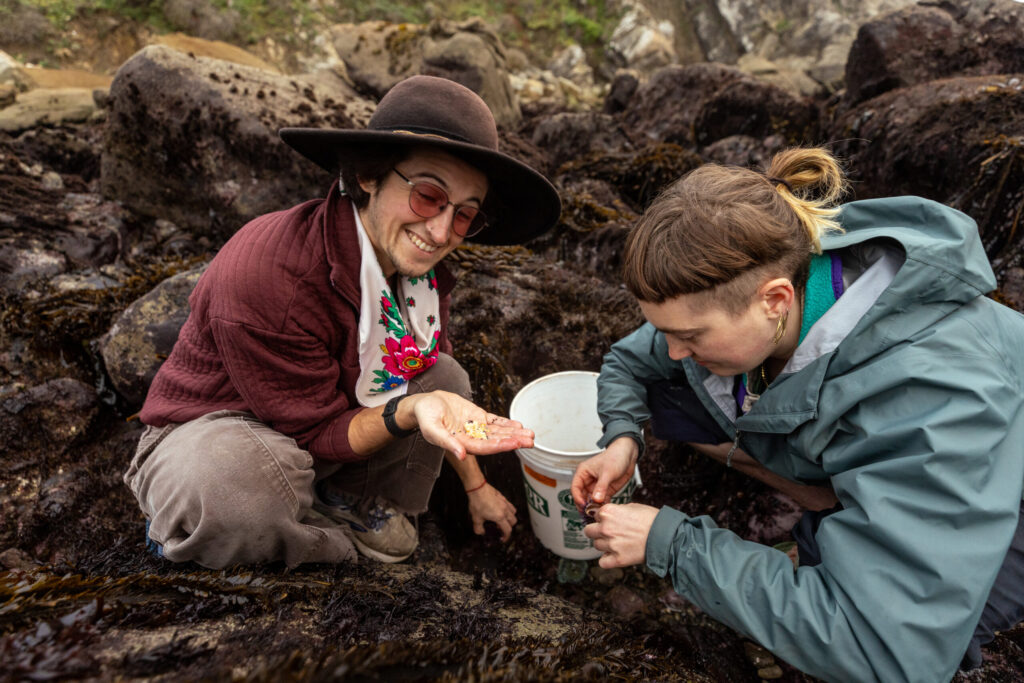
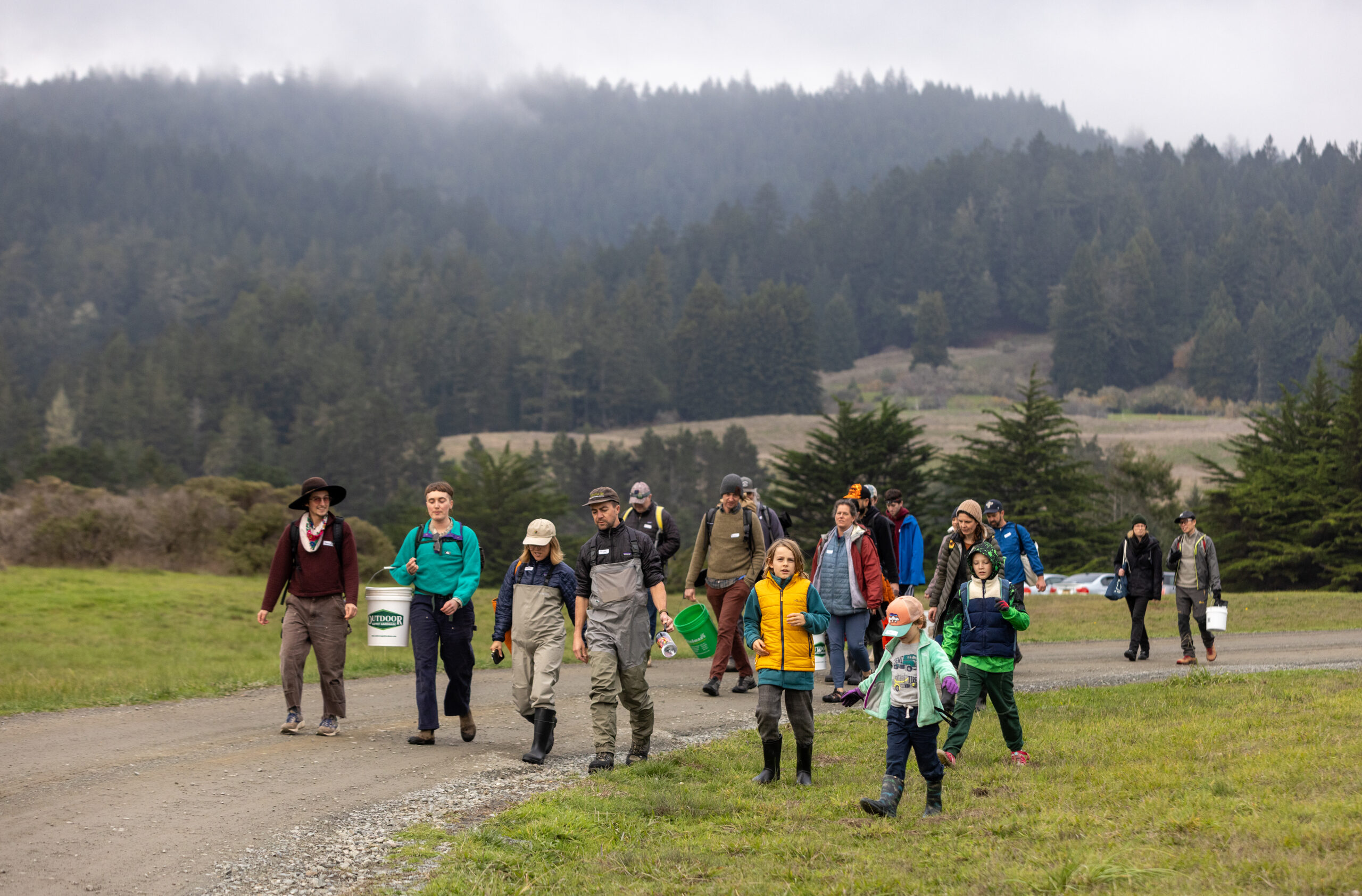
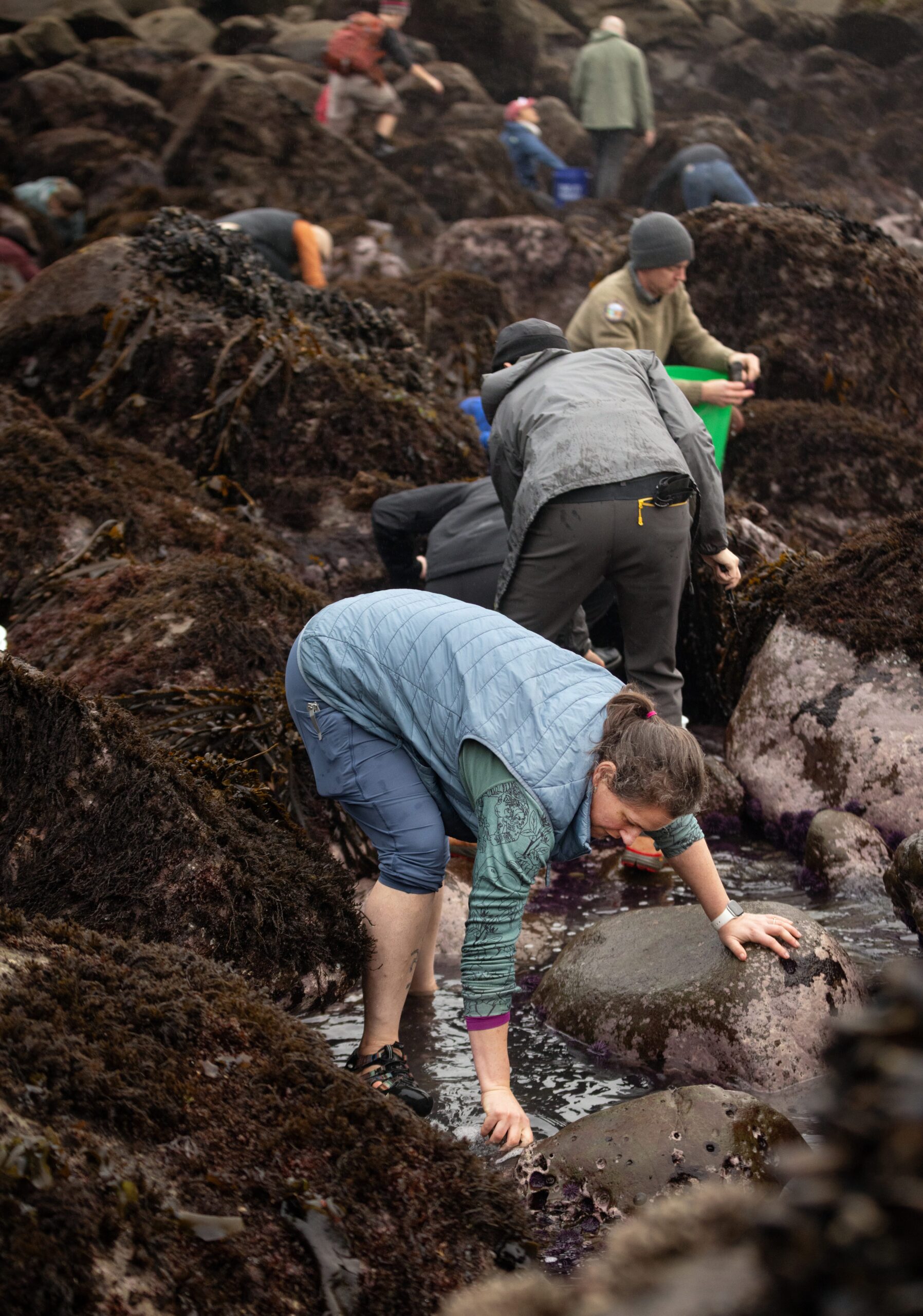
On a mission, the harvesters—some decked out in expensive waterproof gear from head to toe, others in jeans and hiking boots—gather their bags and makeshift tools, and off they go, hiking down to a cove where a minus tide has exposed glistening tide pools rich with aquatic life.
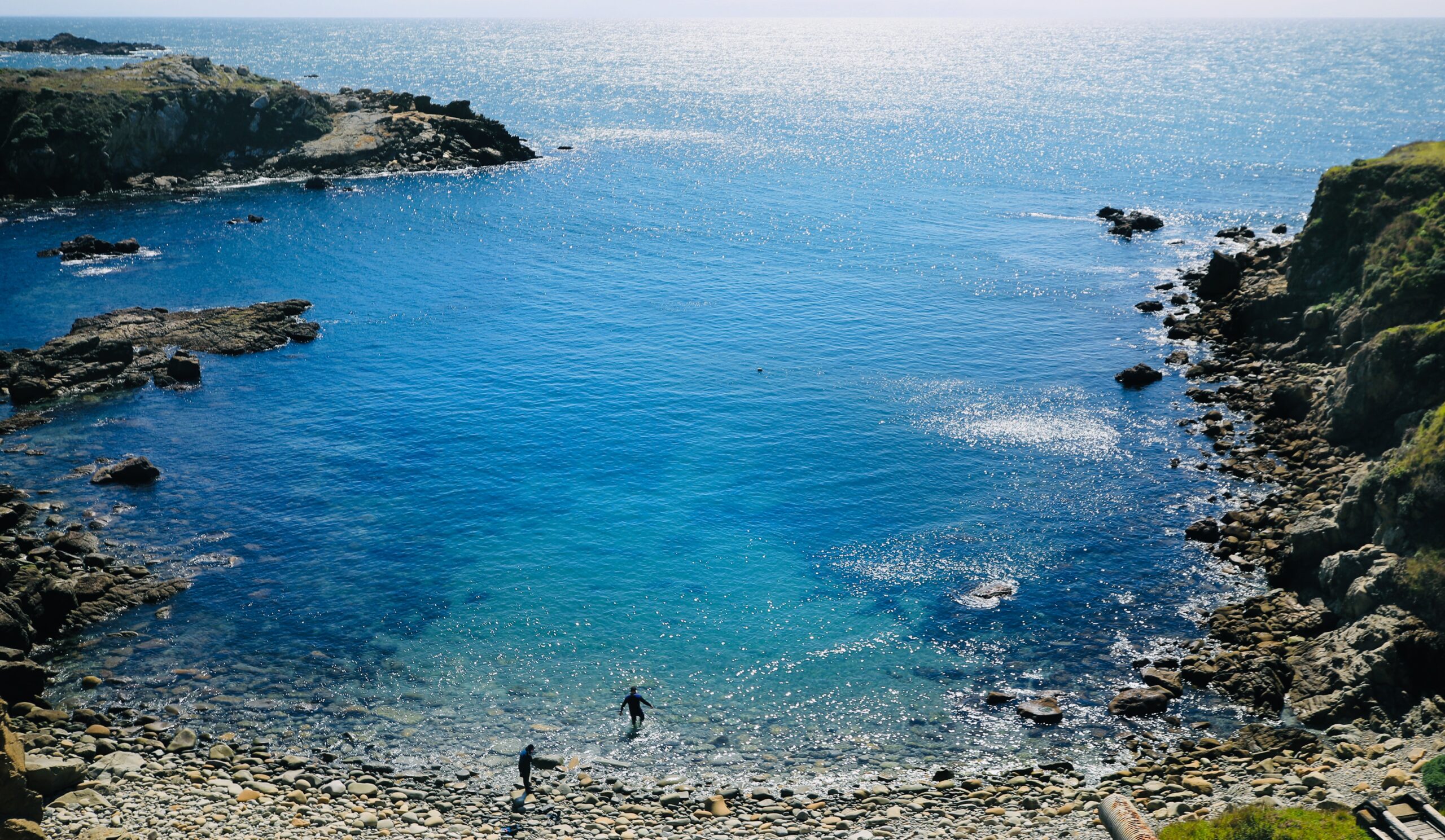
Long before the Russians ran aground in this same inlet in the late 1700s, later building Fort Ross trading post in 1812, the Kashia Pomo harvested sea urchin and abalone here for as long as anyone can remember. Their nearby village of Metini moved every few years so they didn’t deplete natural resources in one area. At the time the Russians settled, Metini was a little to the east of the fort, closer to Highway 1.
“For Kashia, we are from the ocean,” says Anthony Macias, Cultural and Tribal Preservation Officer for the Kashia Band of Pomo Indians of the Stewarts Point Rancheria. “We have a lot of contact with the ocean. It’s been with us since the beginning, you know, since Creator made us.”
Most often, they ate sea urchin raw. Occasionally, they would dry it by curing the roe over a fire and saving it for a snack later. They also used urchin roe in fish traps made from willow branches.
But that all changed when the Russians arrived. Driven by greed and an endless demand for hats and coats, fur traders nearly wiped out the entire North Coast population of sea otters by the end of the 19th century. According to tribal lore, the Pomo tried to warn them about driving the sea otter to regional extinction. “To this day, everything we have said has come true,” says Macias.
As a boy he pulled abalone from the sea, many more than a foot long. “Now we can’t hunt our abalone because of what happened to the ocean—how it got depleted, how we lost the kelp forest, how we’re even losing seaweed.”
In 2015, when the Kashia Pomo regained nearly 700 acres of their ancestral land near Stewarts Point, it was the year after what many scientists call “a perfect storm” was set in motion. In 2014, an El Niño heat wave raised water temperatures around 10 degrees above average. Soon after, a lethal bacteria began infecting sea stars—especially the sunflower sea star, the only other major predator of sea urchins after the sea otter. The sea star wasting disease spread quickly, from Mexico to Alaska, destroying around 99% of the sunflower sea star population in Sonoma County. Left unchecked and without predators, purple sea urchin populations exploded, increasing to around 60 times their average number, voraciously devouring more than 95% of the bull kelp forest along the Northern California coast.
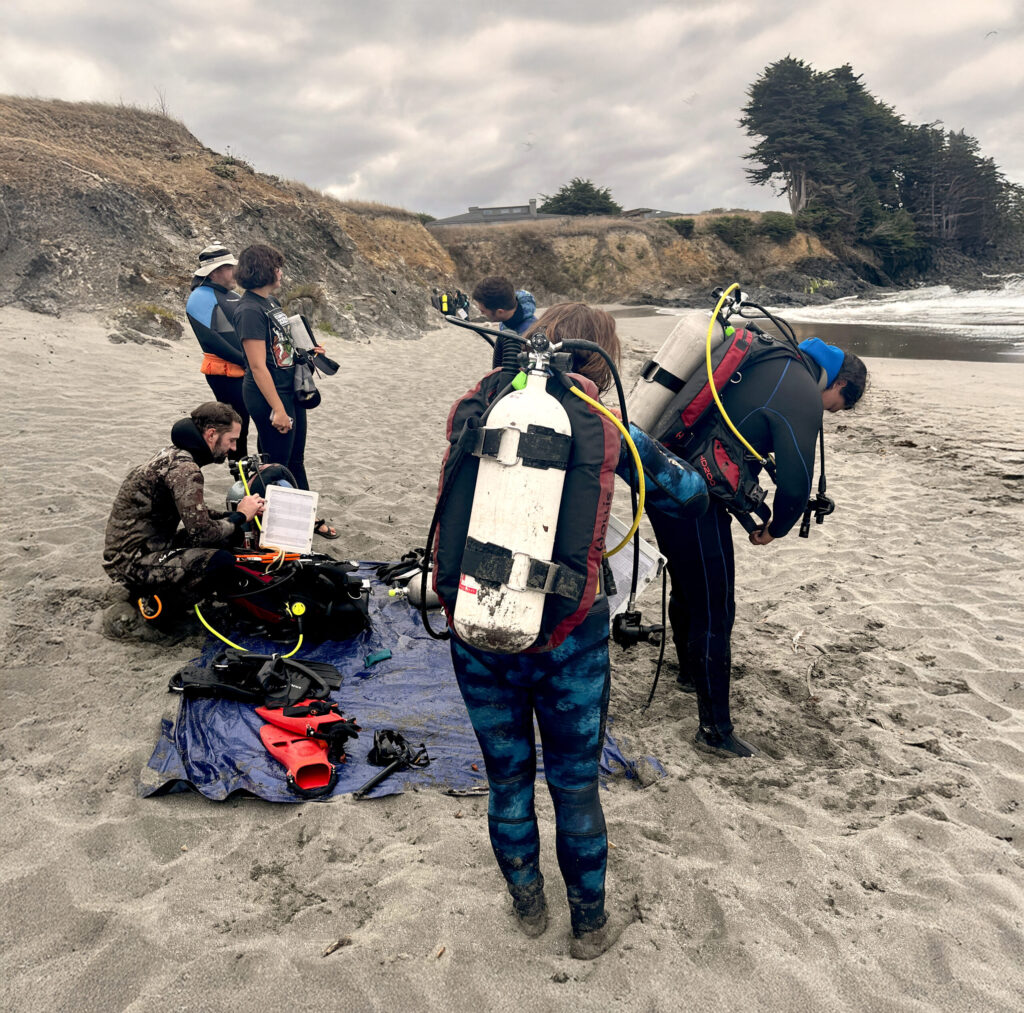
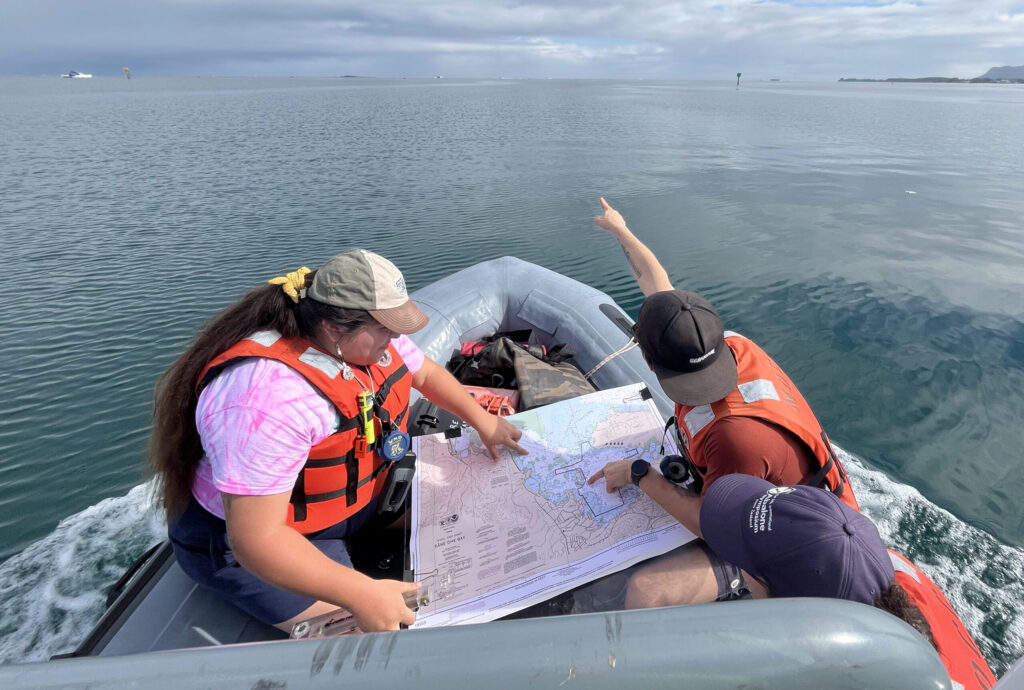
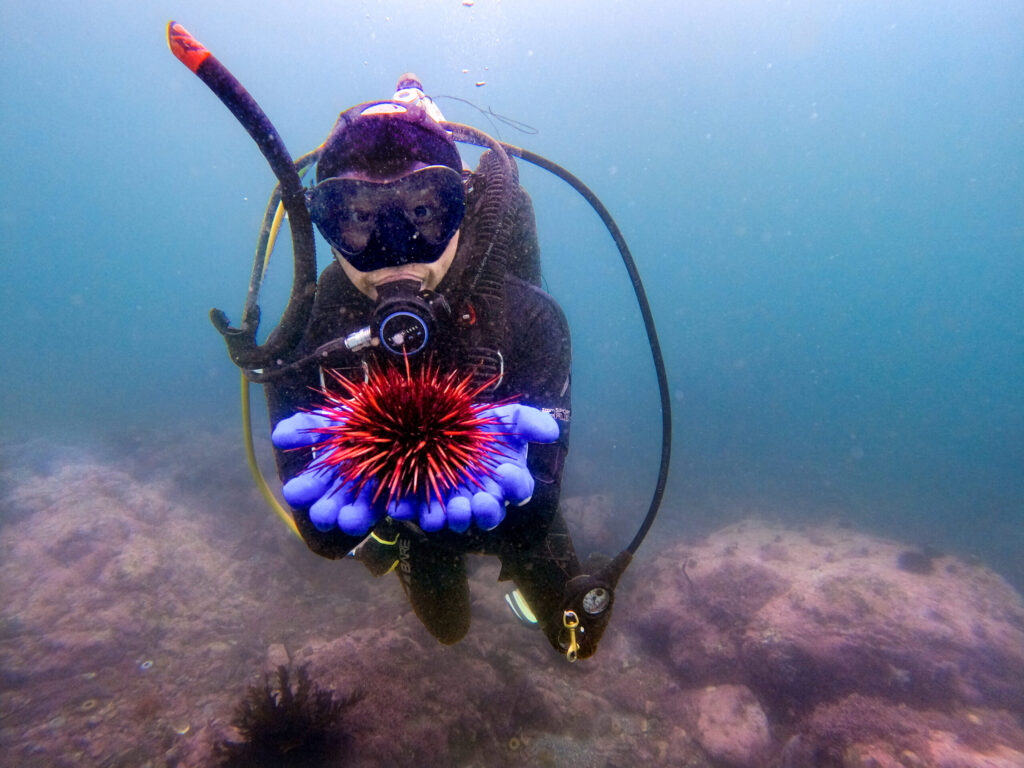
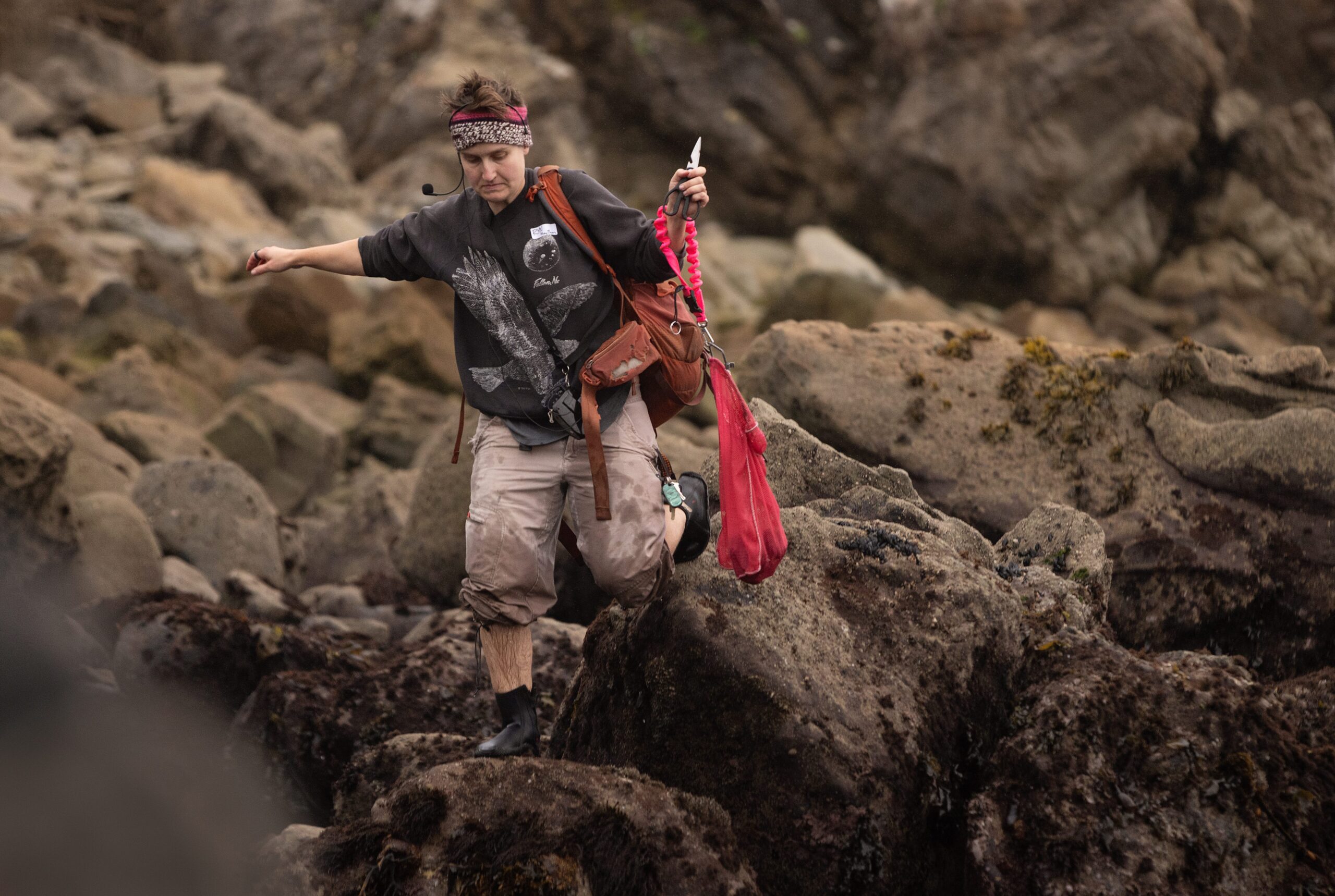
Over the past decade, myriad volunteer groups have taken to the ocean to try to curtail the rampant spread of urchins. Sullivan, the Fork in the Path guide, volunteers with the Purple Urchin Removal Project (PURP), free diving to collect and remove urchins in Stillwater Cove, 4 miles north of Fort Ross. And Gianoli is a member of the Caspar Cove Project, a team of divers who have an emergency permit to destroy purple sea urchins in designated waters off the Mendocino coast.
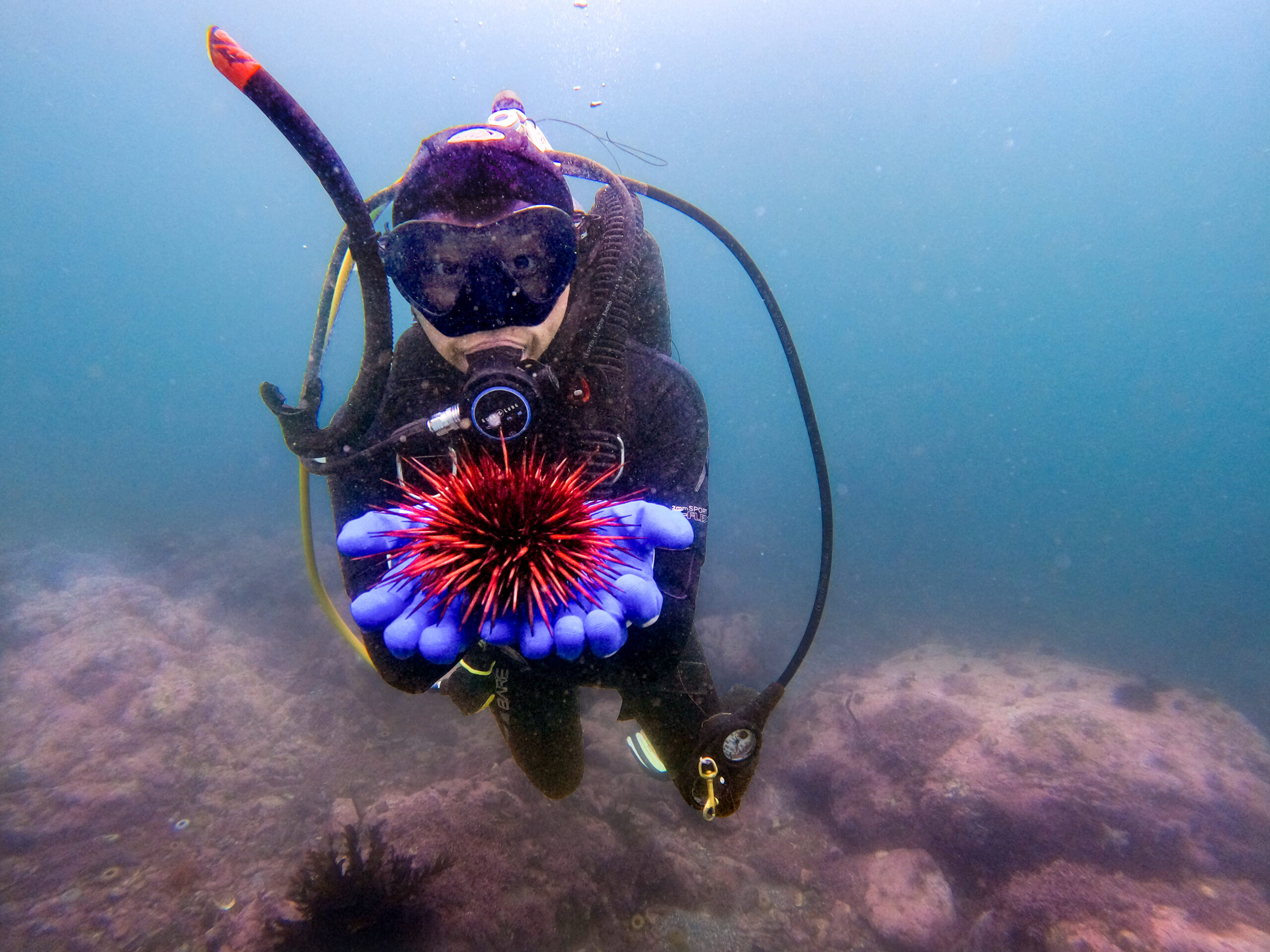
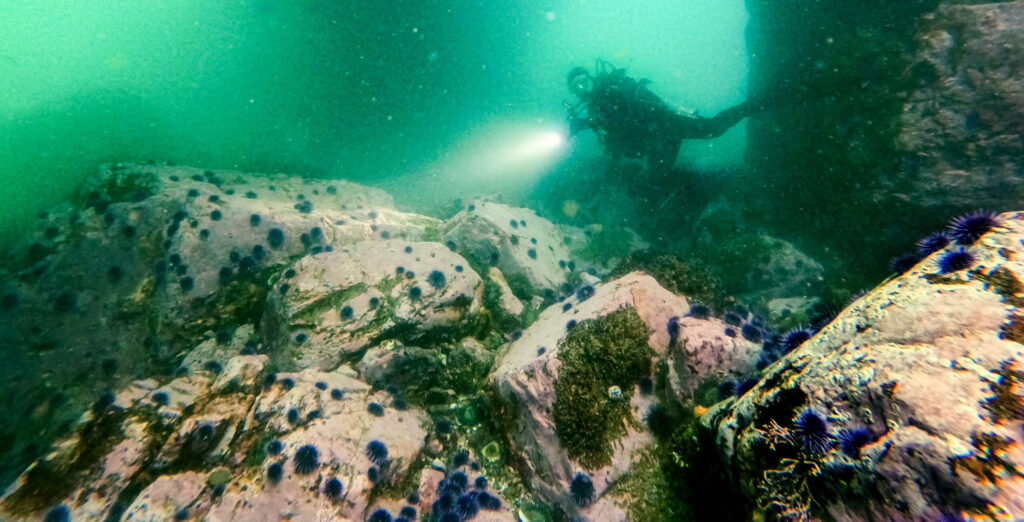
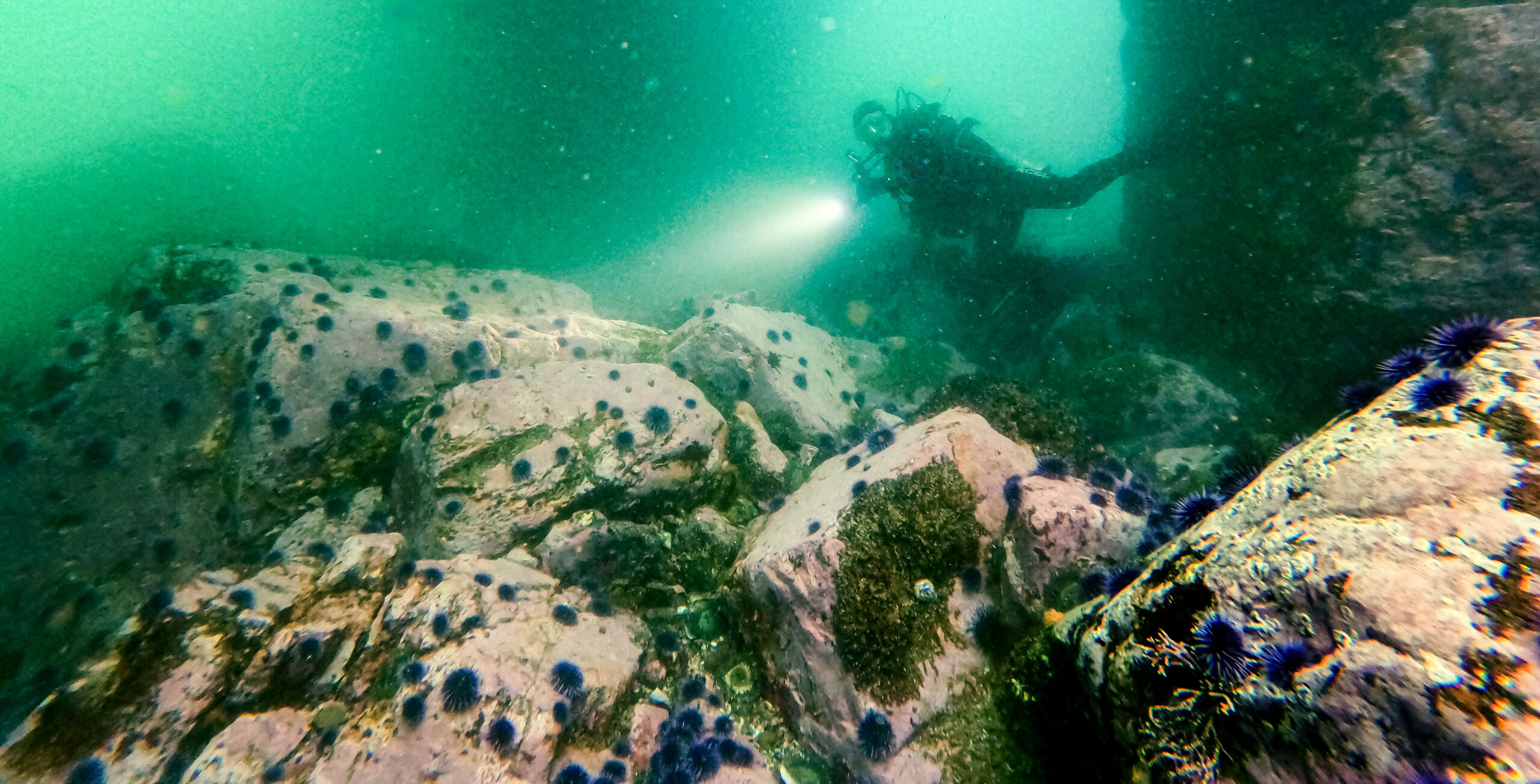
“Diving underwater, all you see is just this barren landscape like Mars or like a deforested plain,” says Maya Munstermann, a marine ecologist working toward her Ph.D. while studying purple sea urchins and kelp forest restoration at the UC Davis Bodega Marine Laboratory. “It’s weird because there’s no shade. The bull kelp provided all the shade. Now, under this wide-open bright light, you see urchins all over the ground, all these purple spines and nothing else.”
Urchins typically gnaw away at the kelp’s base, the holdfast that roots its long trunk or stipe (often 100-150 feet long) to the seafloor. Once detached, kelp plants drift away to die, leaving vast urchin barrens covered with starving “zombie urchins,” barely sustained by algae and seaborne nutrients. Without much food, their roe shrivels up—to the point where unlucky harvesters crack open the shell to find hardly any food inside.
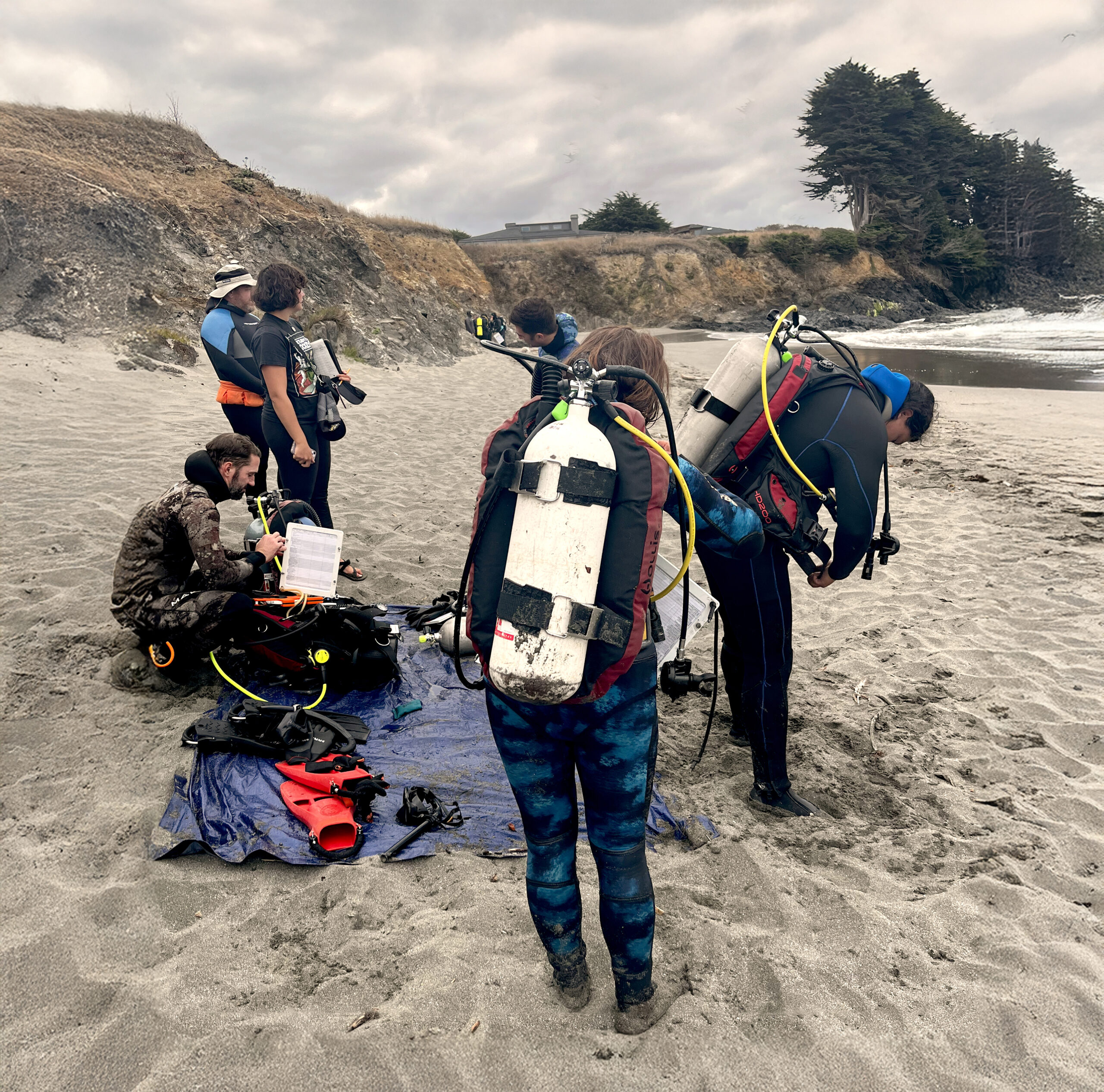
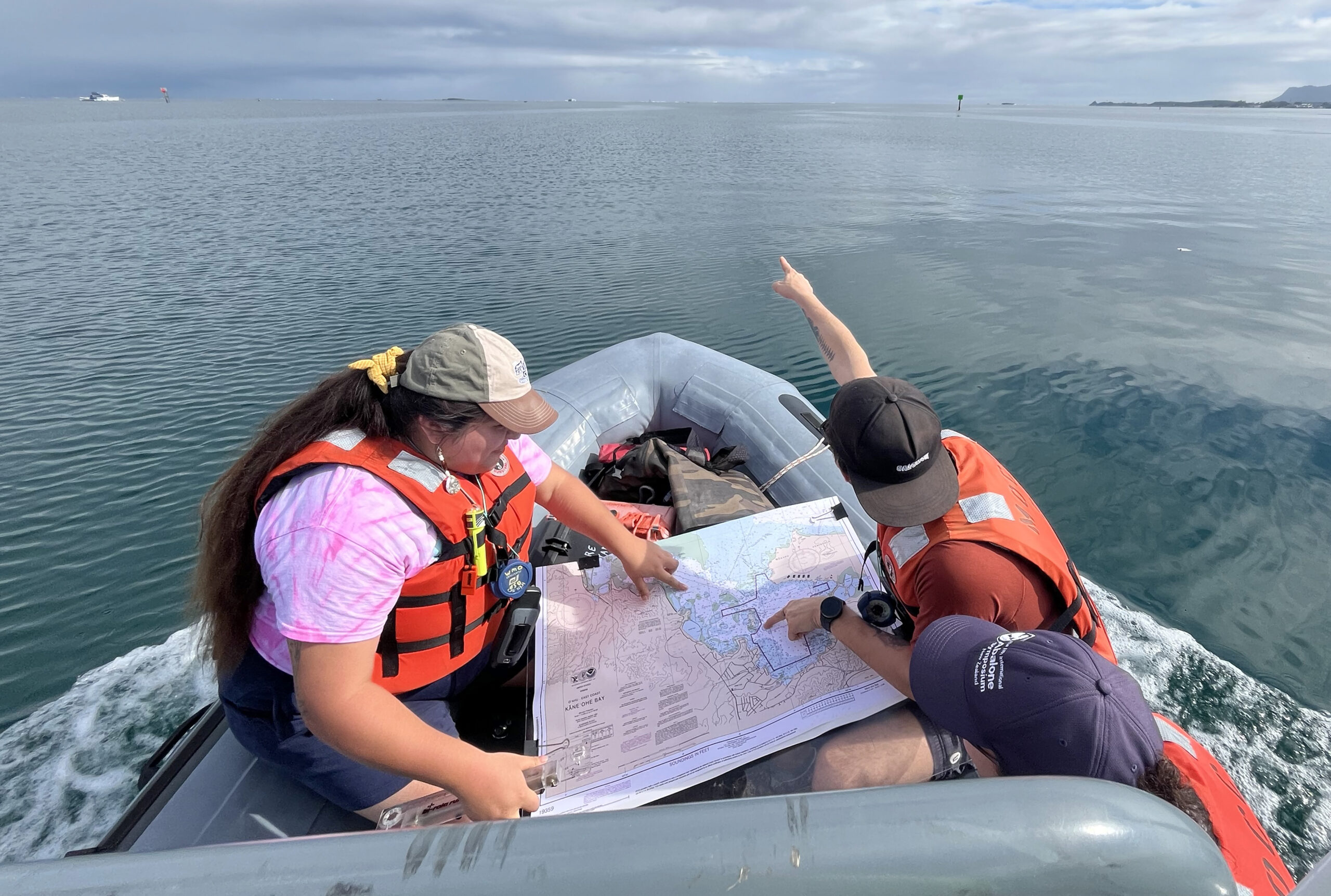
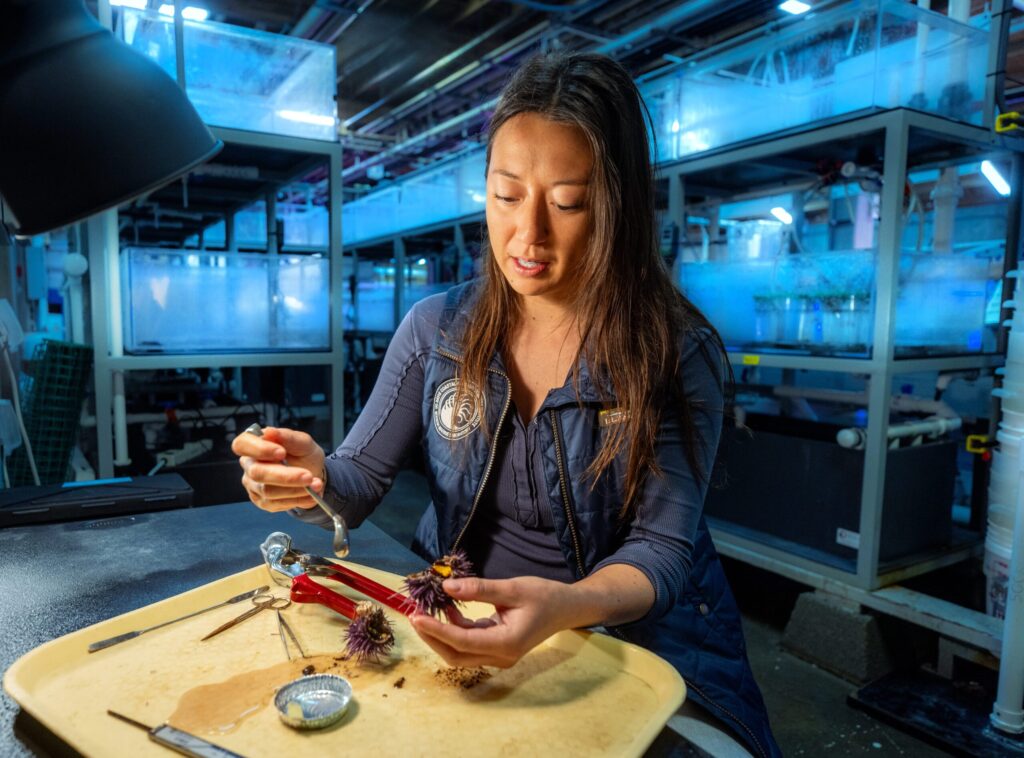
But Munstermann is working with fellow marine ecologist Dr. Dan Swezey on an “urchin ranching” project that will hopefully create a rich uni pipeline for restaurants and provide jobs for the Kashia Pomo, a non-gaming tribe. Last year, as part of a grant to restore the kelp forest, the tribe teamed up with commercial divers and several marine science organizations to remove tons of sea urchins off the coast near Shell Beach in The Sea Ranch. A team of Pomo divers is currently in training. For now, they’re turning the high-calcium urchin remains into compost for farmers. But, by next year, they hope to have an aquaculture facility in place to farm both urchins and abalone—a shellfish of great cultural and spiritual importance to the Pomo. Eventually, the goal is for tribal divers to collect tons of empty, starving urchins from kelp forest restoration sites, fatten them up in about two months with a special diet (including kale, carrots, and cabbage), then sell them to local chefs.
“The big vision is for it to support the ocean restoration and to also be that critical piece that’s missing, which is traditional food,” says Swezey, director of oceans and aquaculture for the Kashia Pomo. “This is something that is valuable to the people. If we’re going to be removing tens of thousands or hundreds of thousands of urchins year after year to restore kelp forest, the tribe feels a lot better about making use of that resource for food rather than just compost.”
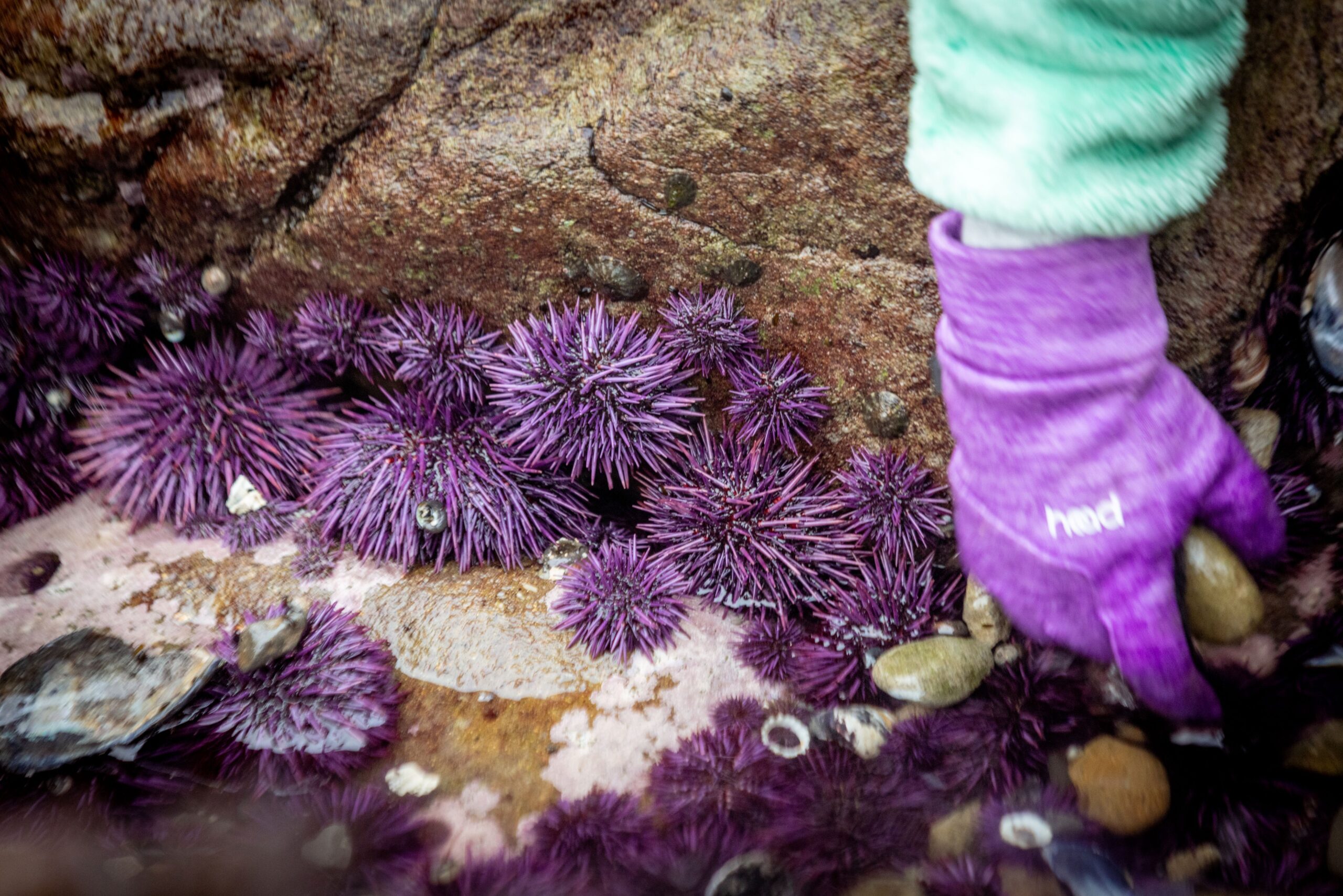
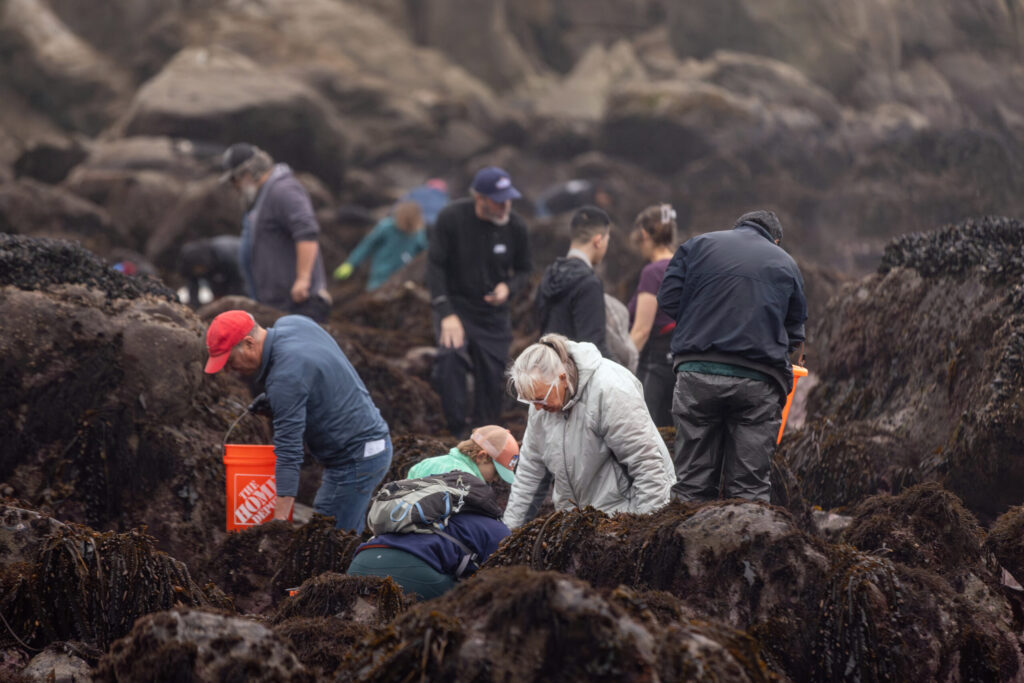
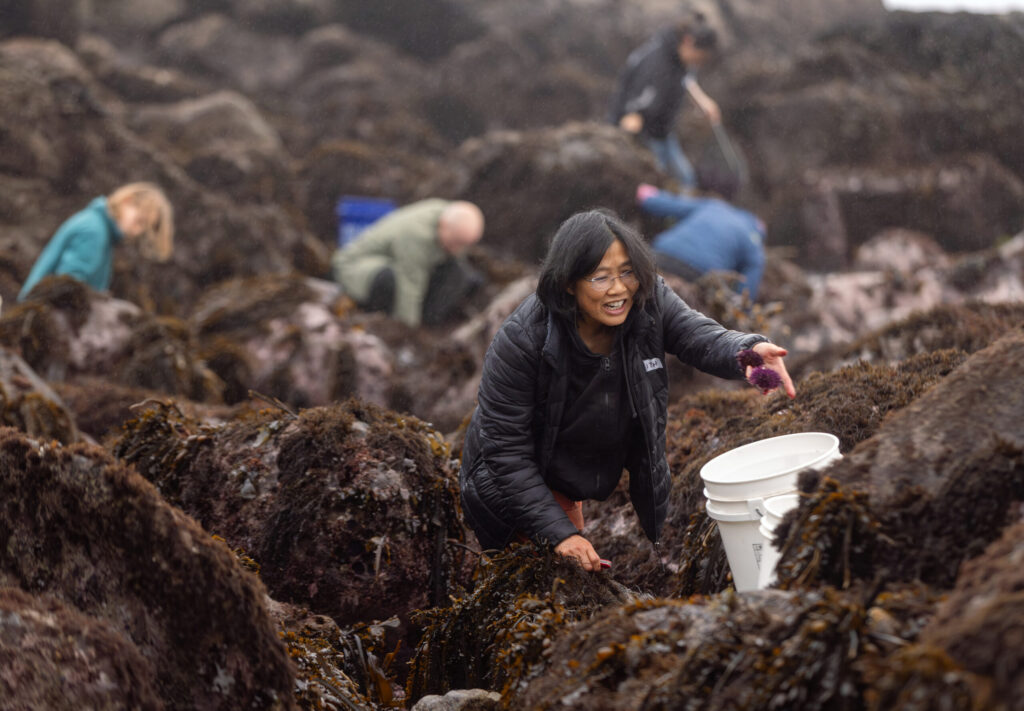
Back in the Fort Ross tide pools, the class of newbie urchin wranglers are trying to do their small part in the restoration process, hoping to reach their limit in the last hour of daylight. Sullivan’s advice to “sneak attack” the urchins and come at them from the side, seems to be working. “You want to twist,” they tell everyone. “You don’t want to pull it off. You want to push to the side. Straight off is how they’ll suction themselves back to the rock.”
Adam De La Montanya, of Healdsburg, makes the most of a stainless steel frosting spatula to pry urchins off the rocks. “I snagged it without my wife knowing,” he says, later explaining how one of his daughters wrote a long letter to the California Department of Fish and Wildlife encouraging them to focus more on reintroducing sea otters along the North Coast.
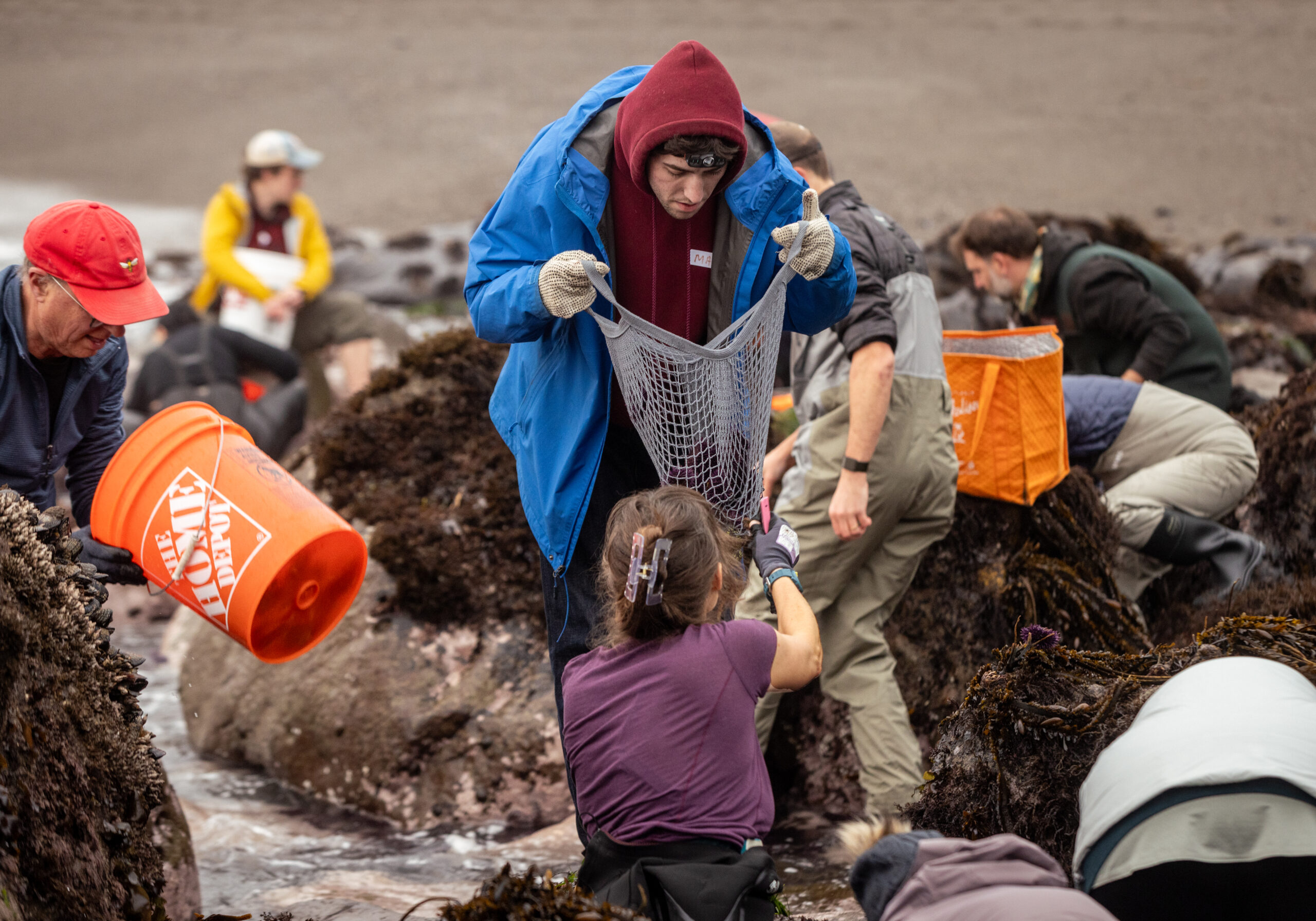
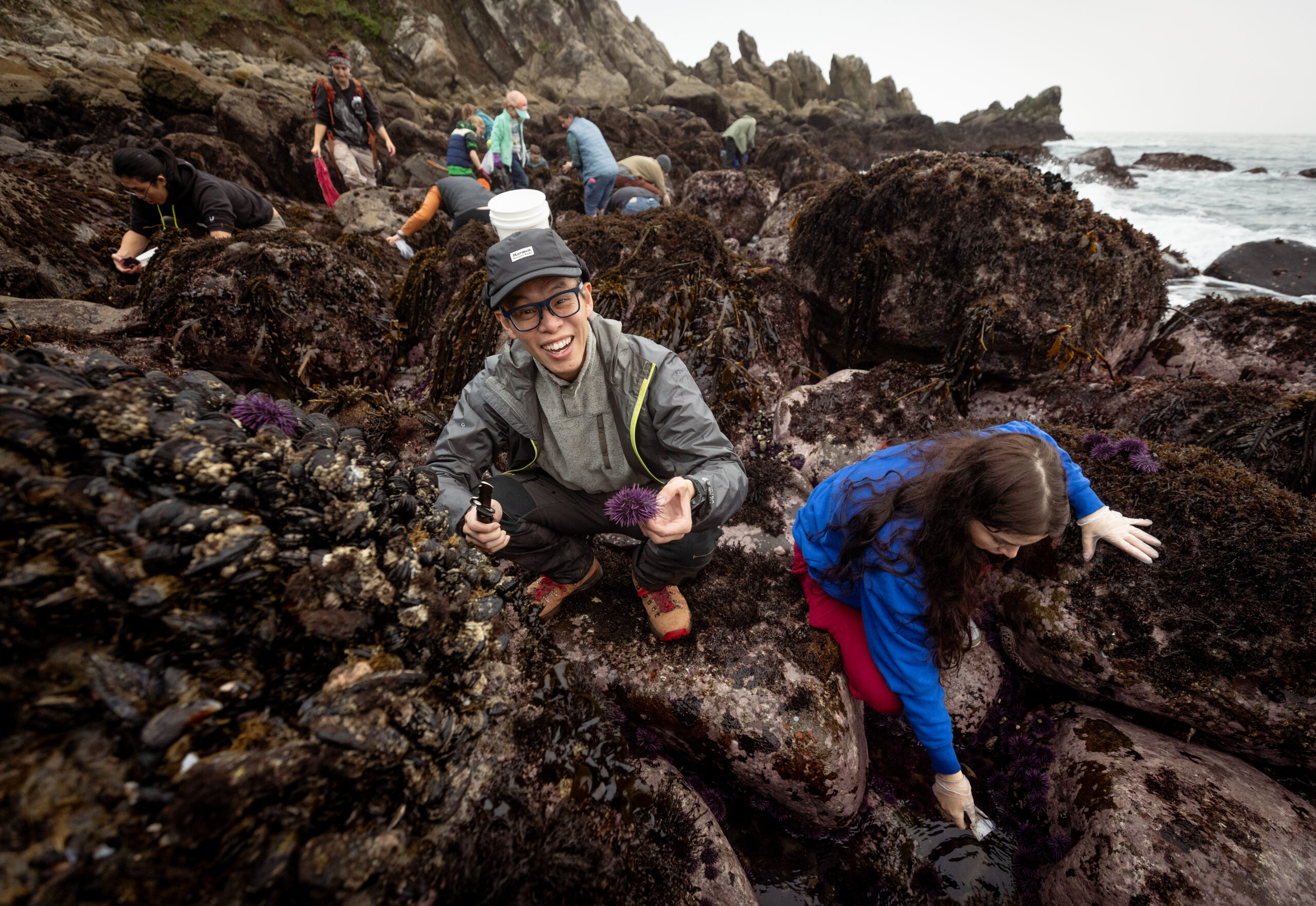
Nearby, Serena Ingre is using a three-pronged garden rake to claw urchins from the rocks. She drove up from Berkeley with her husband, Sean Gibson, who has memories of melt-in-your-mouth uni in Tokyo sushi bars. But after tasting one mid-harvest, he declares, “It’s best fresh out of the ocean.”
How would he describe it for the uninitiated?
“Silky, a little buttery, but also salty at the same time.”
But Kenny Guay from San Francisco isn’t so sure. “It’s not as strong as I thought it would be coming right out of the ocean,” he says, after cracking open an urchin.
His girlfriend, Jen Goza, seems unfazed. This day has been on her bucket list for years. “Honestly, I started eating more purple sea urchins because of the overpopulation,” she says. Goza is hoping to raise awareness by sharing tales of her adventure. “I’m telling everyone, ‘Look what I did. It’s fresh from the California coast.’ This is a way to be more mindful of our surrounding habitat and how we as humans can try to help.”
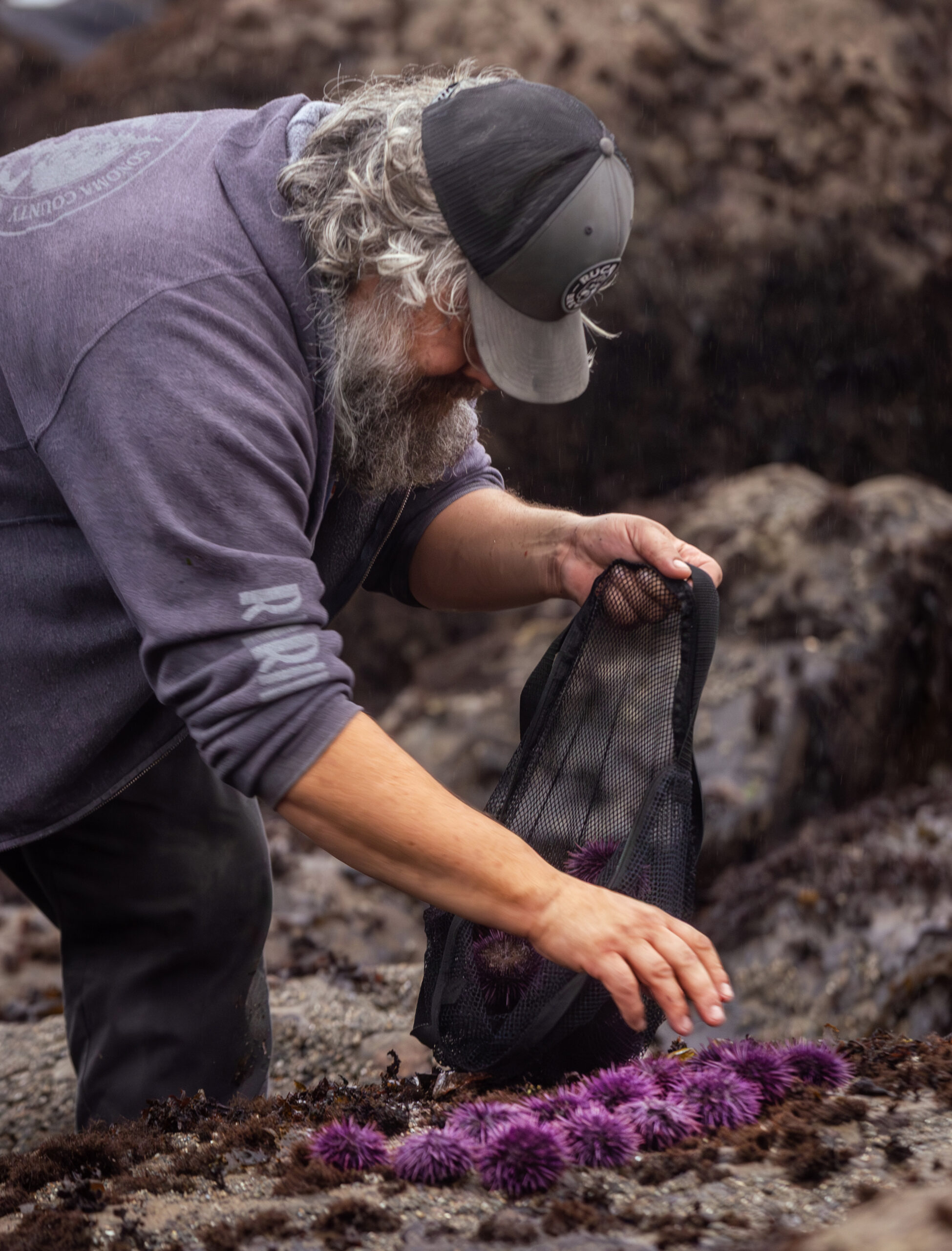
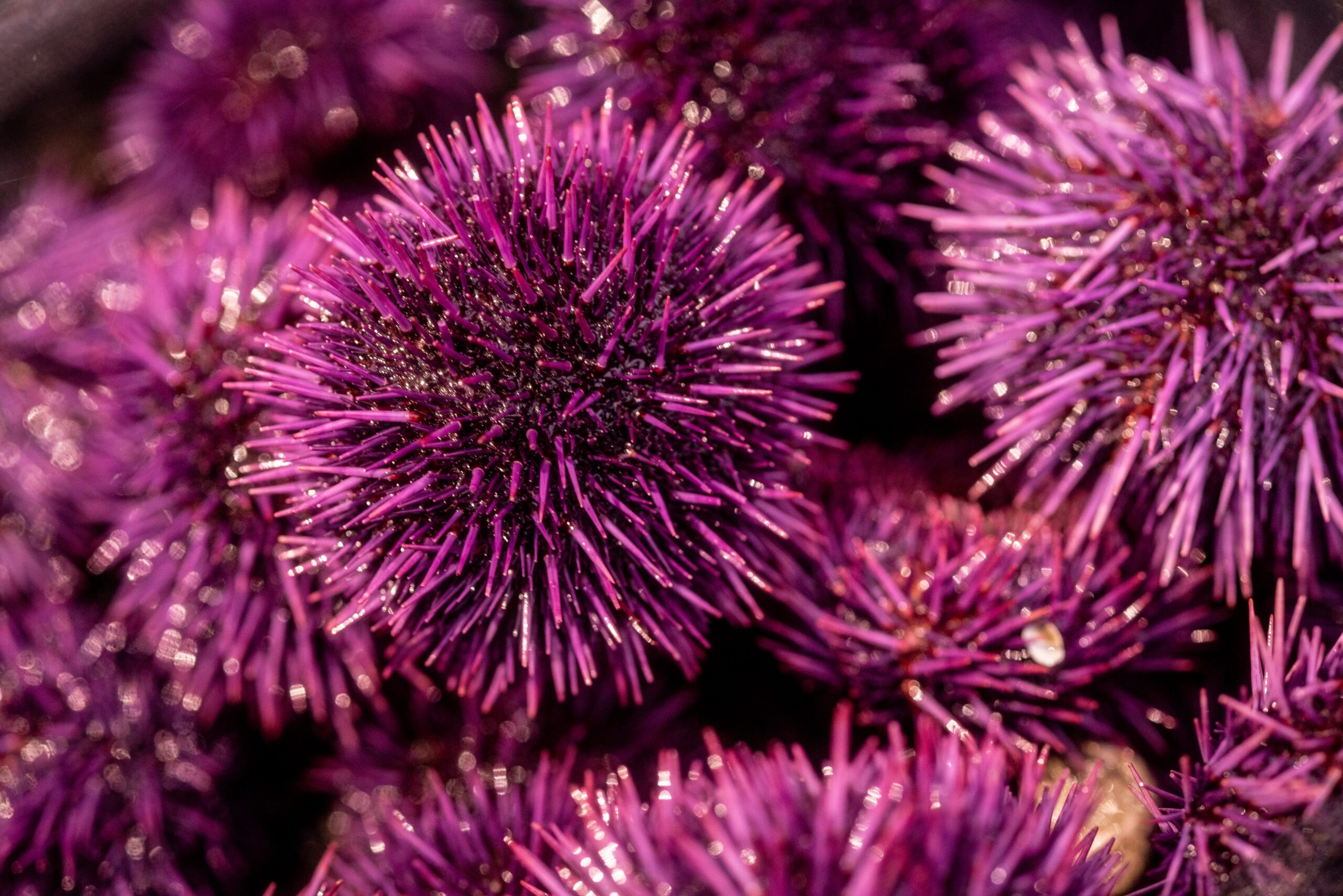
It’s the same philosophy that inspired the Mendocino County Purple Urchin Festival. A conscious effort to rebalance the coastal ecosystem is also behind everything from branded Urchinite marbled table- and countertops made from crushed sea urchins to fabric workshops, titled “Help the Kelp: Create Natural Dye with Sea Urchins,” led by artist Margaret Seelie.
Also trying to do their part, local chefs up and down the North Coast often forage for purple sea urchin to bring back to the kitchen, or specifically order purple instead of red urchins from their seafood distributors. Traditionally, the prized uni at sushi restaurants—which can fetch more than $200 for an extravagant uni rice bowl at fish markets in Japan—comes from the red sea urchin, not the purple. But there’s been a push over the past decade to get the purple urchin on local menus. Part of the trick is finding chefs willing to tell the story and come up with creative ways to encourage their guests to try it.
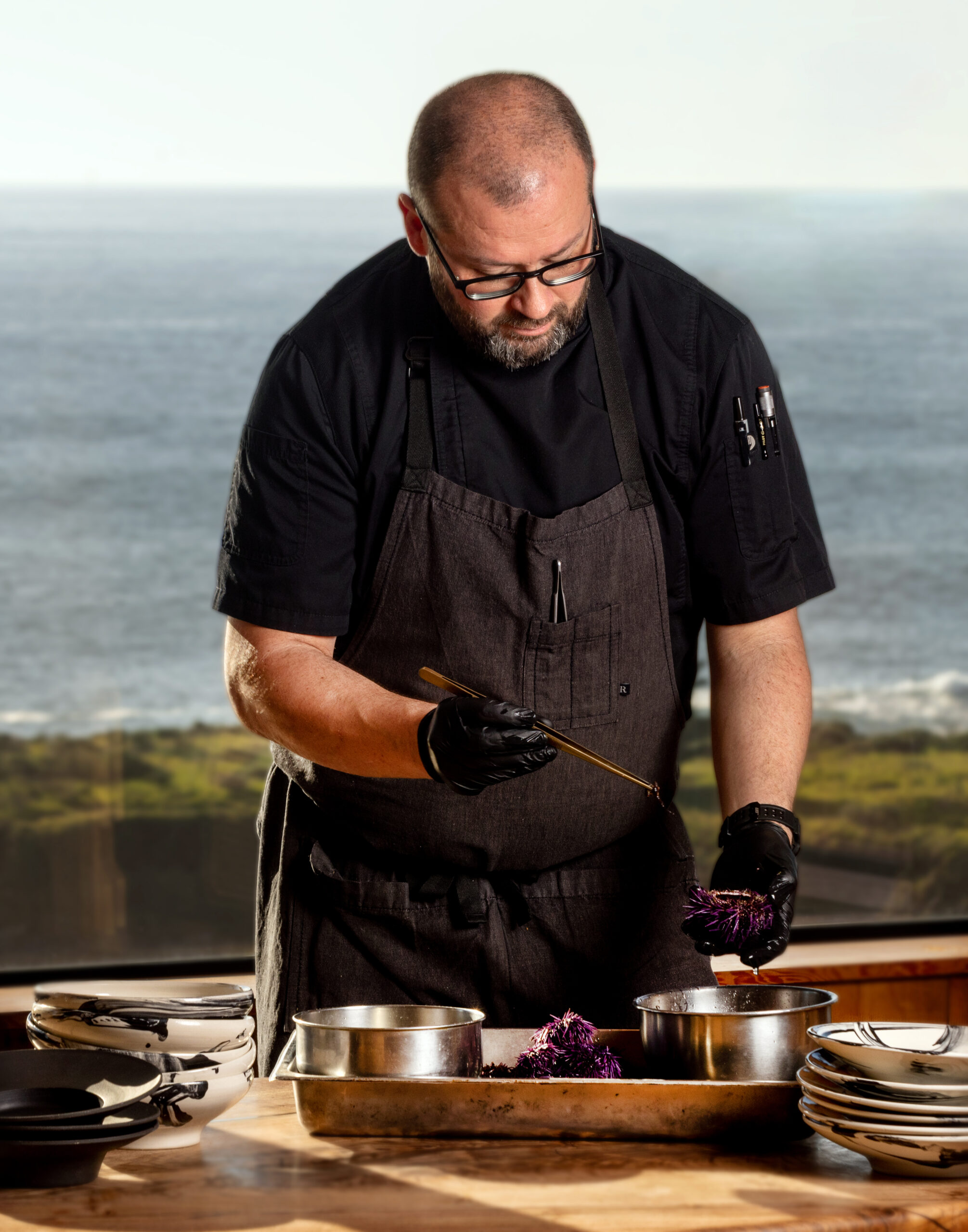
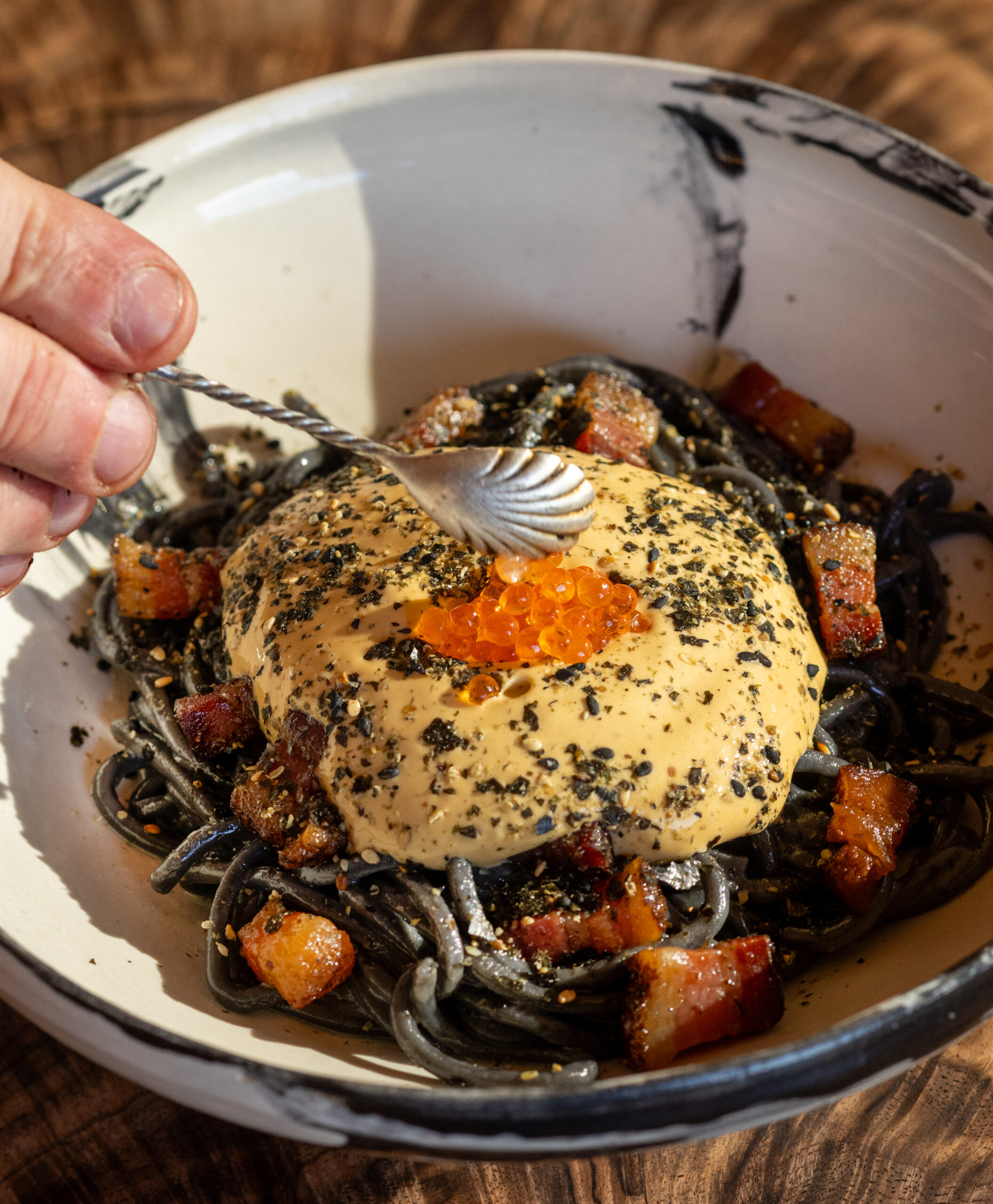
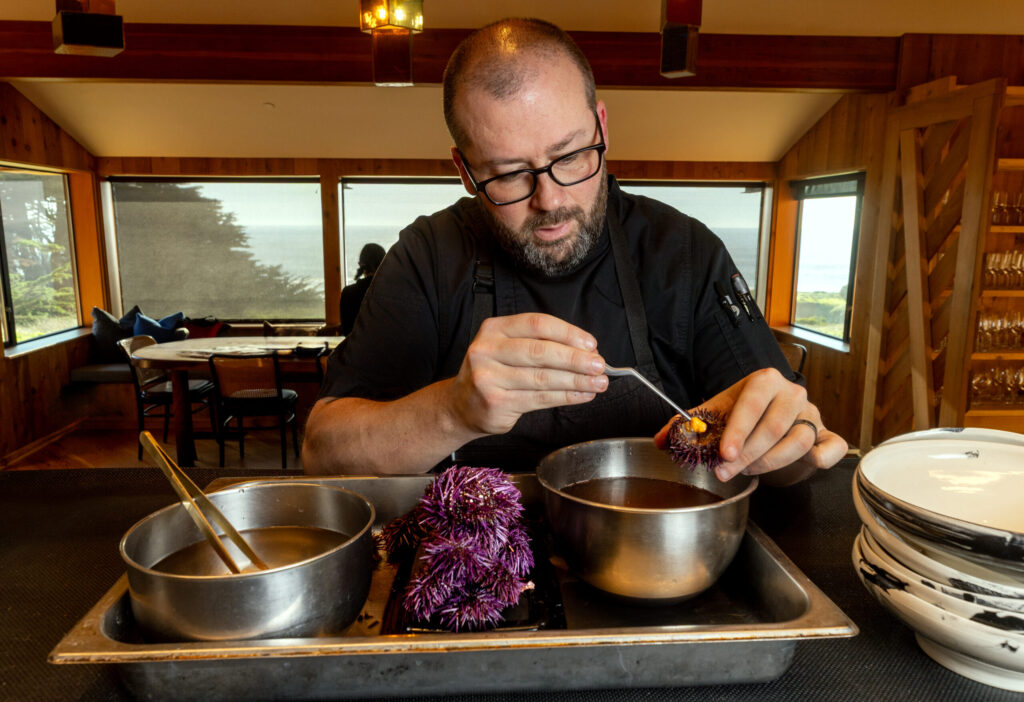
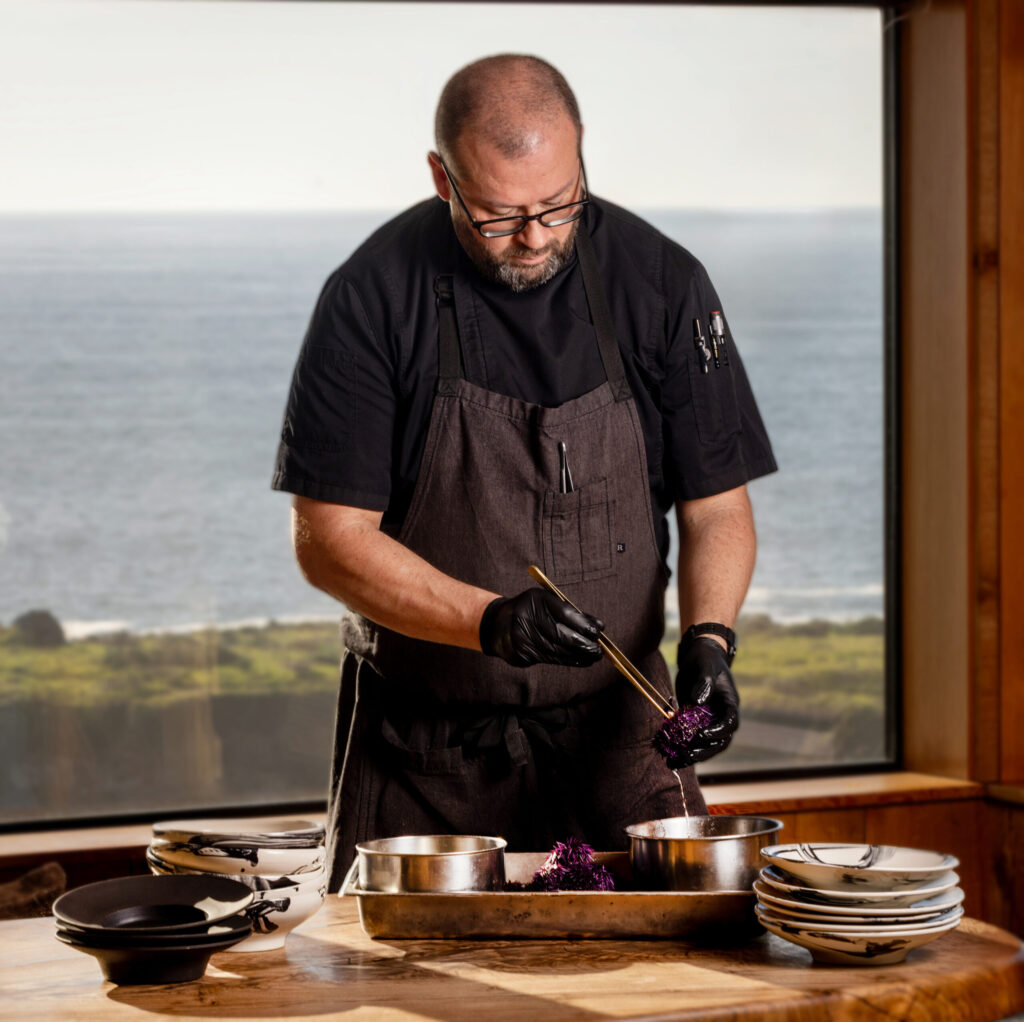
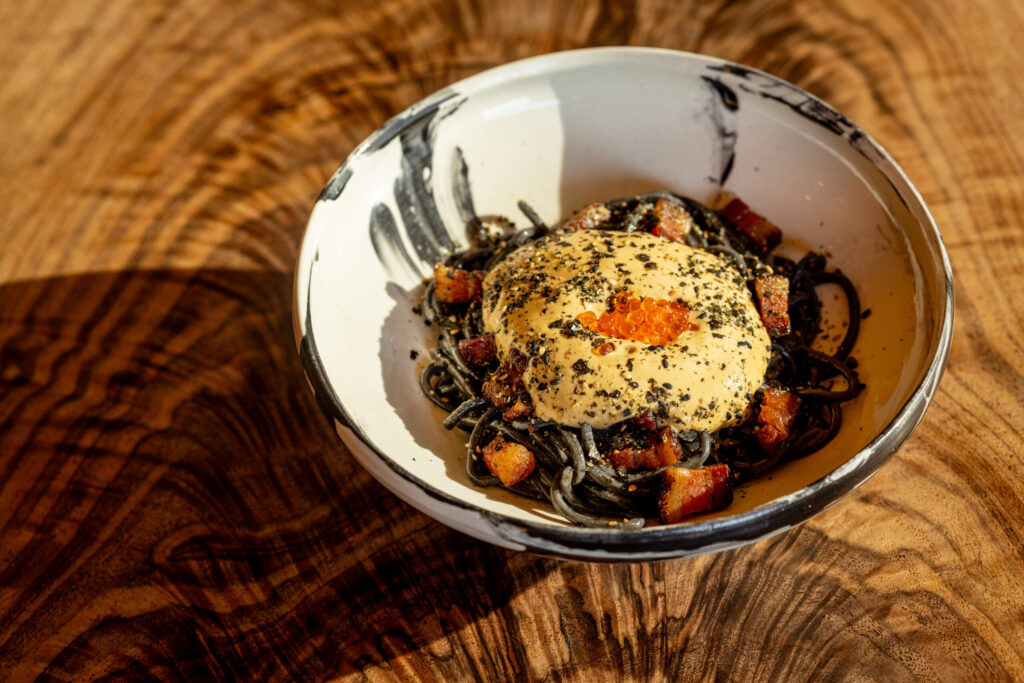
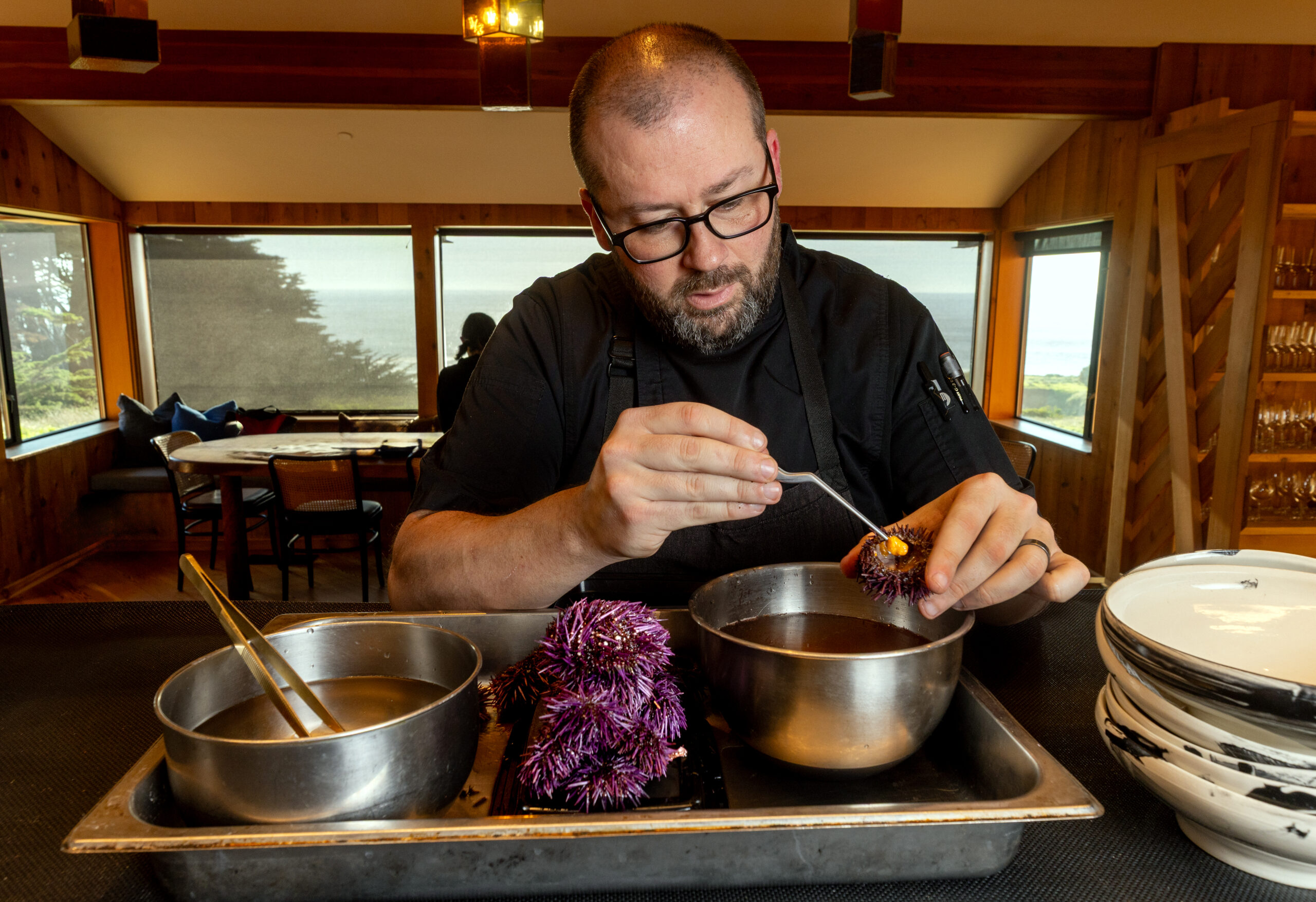
At The Sea Ranch Lodge, not far from Shell Beach where the Kashia Pomo are hauling out urchins by the ton, executive chef Ryan Seal makes a popular uni carbonara with purple sea urchin foam, pancetta, and squid ink pasta sprinkled with katsuobushi (skipjack tuna flakes). The kitchen goes through nearly a pound of uni roe—around 60-80 urchins—every night it’s on the menu.
“We’re not using it because it’s weird. We’re using it because we should and need to, to keep the other sea life around us growing and happy,” says Seal, who foraged for purple urchin when he was cooking at the now-closed Sacred Rock Inn in Elk. A mile down the coast, chef Matthew Kammerer has been known to pluck urchin from local waters for his two-Michelin-starred Harbor House Inn, making tempura-fried maitake mushrooms and fried crispy mustard leaves topped with purple sea urchin roe.
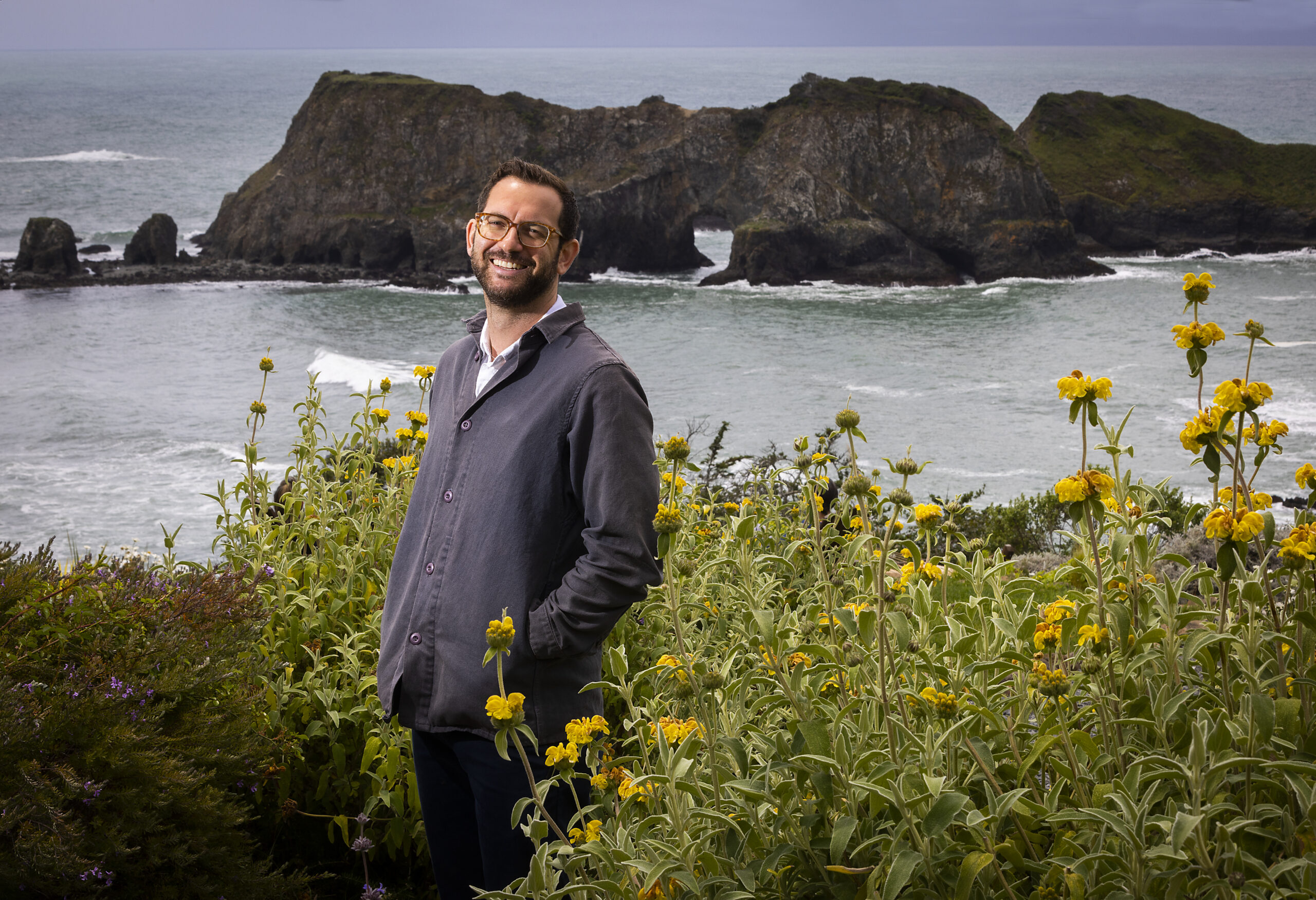
But Seal might win the prize for most creative and unlikely urchin dish: Behold “the Banuni”—a surprise starter with roasted banana sorbet, conjuring notes of caramel, but also slightly savory, similar to a plantain, topped off with what he describes as “the fresh ocean taste” of uni.
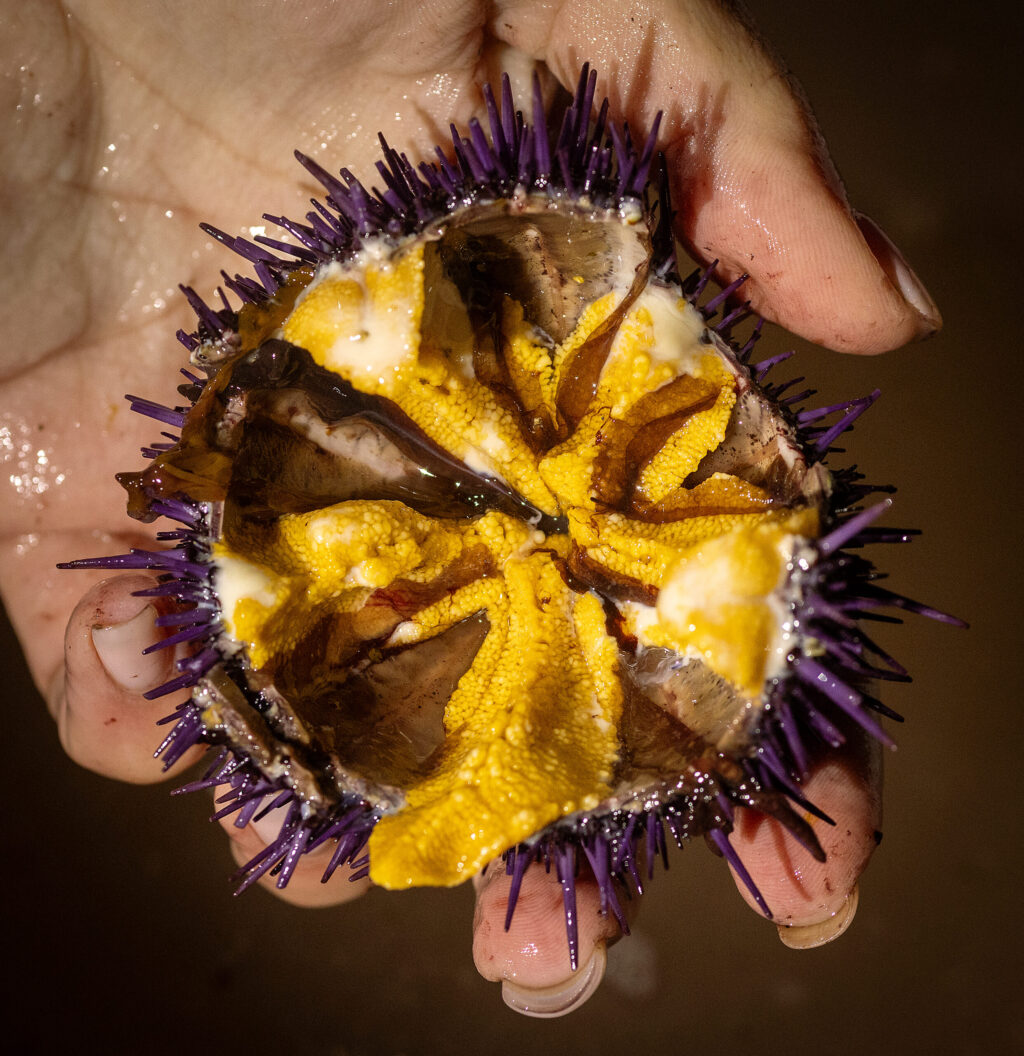
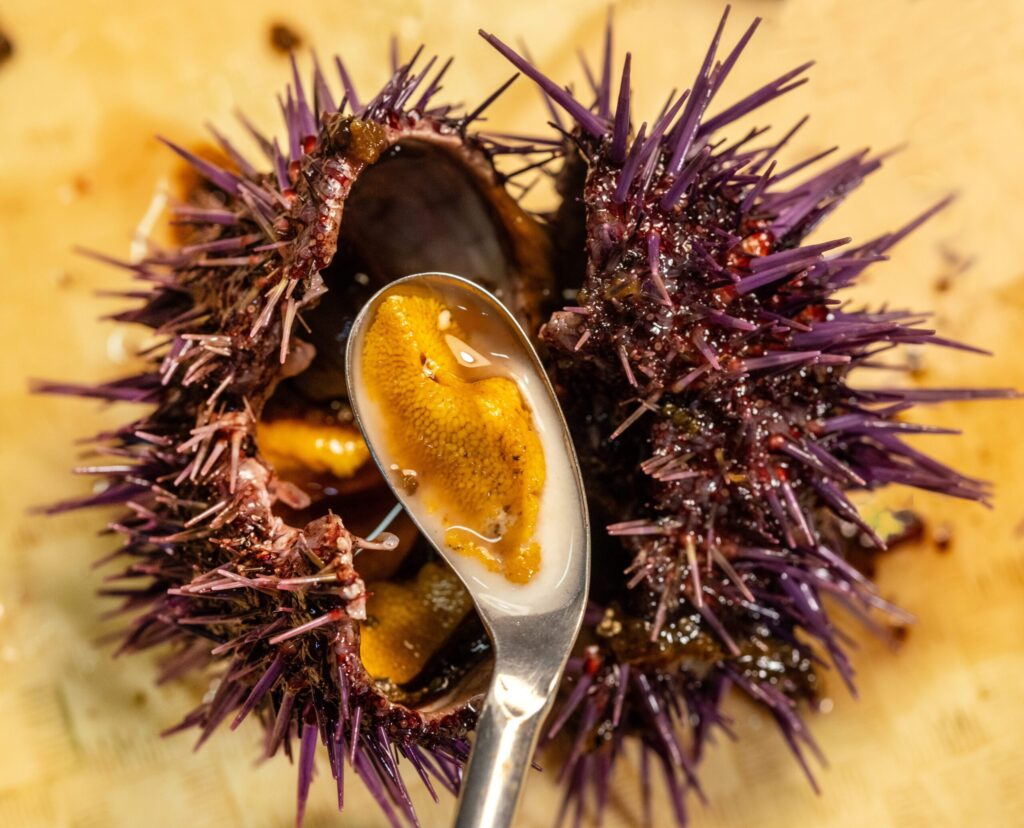
At a recent conference in San Francisco, Swezey talked with seafood industry experts about challenges they face marketing purple urchin to new customers. “Many people think it tastes sweeter,” he says. “But the market sort of wants this mango, yellow-orange color and purple urchin roe sometimes looks like that, depending on what they’re eating, but it also looks a little bit different sometimes.”
Purple urchin can display more of a light yellow, he says, and sometimes less desirable “gray twinges” depending on diet. Red urchin are also more meaty and larger in size on average, and hold their shape a little better.
“If we can kind of get over this size thing—like maybe you could combine a couple gonads from a purple urchin and make a bigger piece that is as appealing—the flavor is there,” Swezey says.
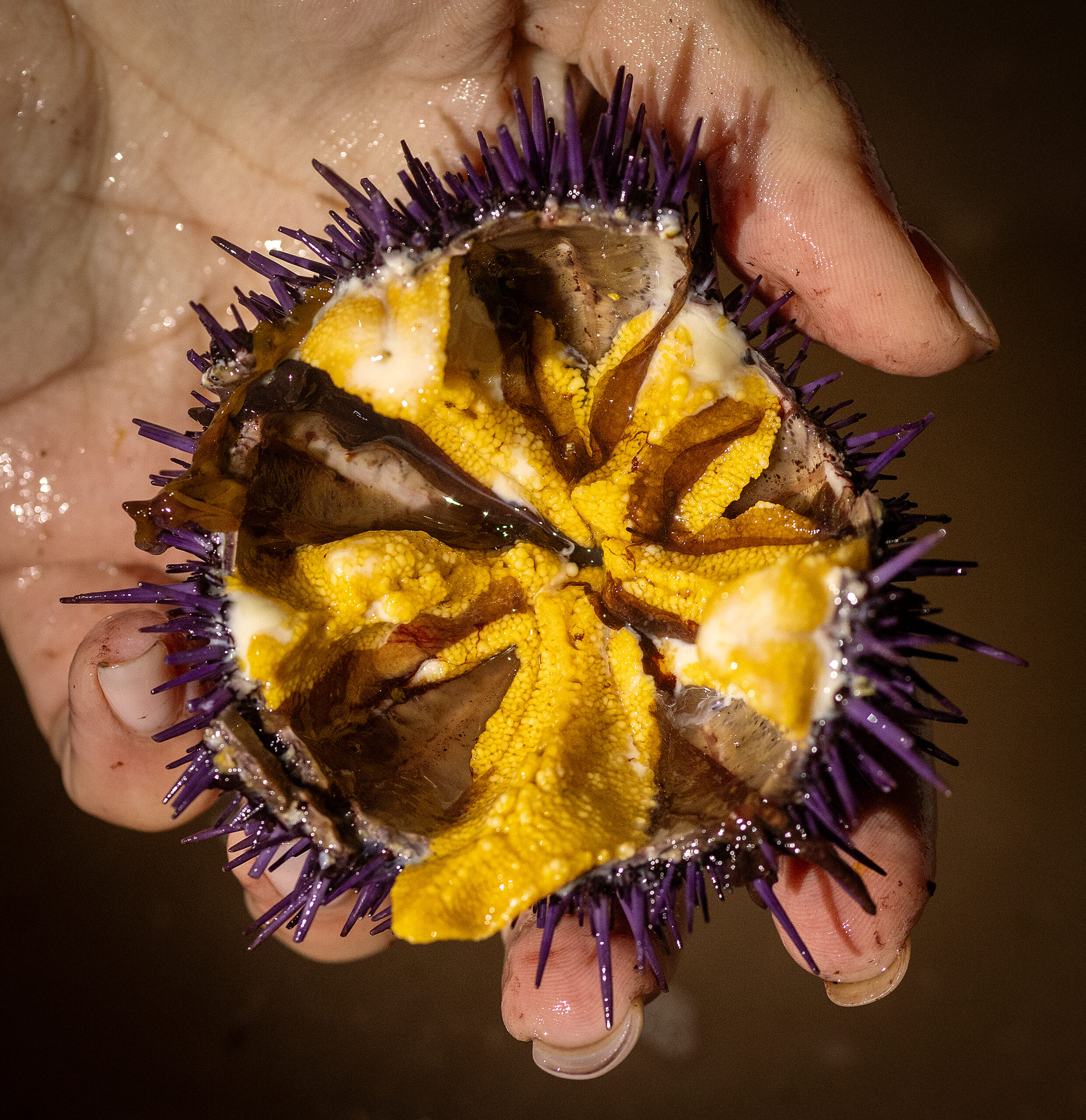
When David Hopps, chef and owner of Izakaya Gama in Point Arena, gets a batch of purples with less than perfect roe, he often uses the uni as a thickening agent in pasta sauce, blitzing it down with cream and shallots and serving it over thicker noodles sprinkled with chives.
When he’s not serving it raw as sashimi, Hopps likes to wrap it in a shiso leaf, fry it in tempura batter, and serve it with a dipping sauce. But his favorite uni dish might be layered on top of chawanmushi, a savory egg custard. “It’s the counterbalance of the sweet umami to a really savory umami of the egg custard itself,” says Hopps, who tries to keep purple urchin on the menu about half the year.
The problem with foraging, he says, is the often unpredictable yield. “I’ve had great days where you go out and get like 50 sea urchin and you crack them and they’re all perfect,” says Hopps. On other days he says he can crack 100 and get less than what he could purchase from a seafood purveyor with much smaller investment of time. Occasionally, he wanders down to the Point Arena pier when a dive boat is offloading excess urchins and they’re giving them away.
“When you do get great purple sea urchin, I think it’s just as good, if not better, than the red sea urchin. It’s sweeter,” says Hopps, who often fields questions from tourists curious about the latest news on purple urchin and the local ecosystem.
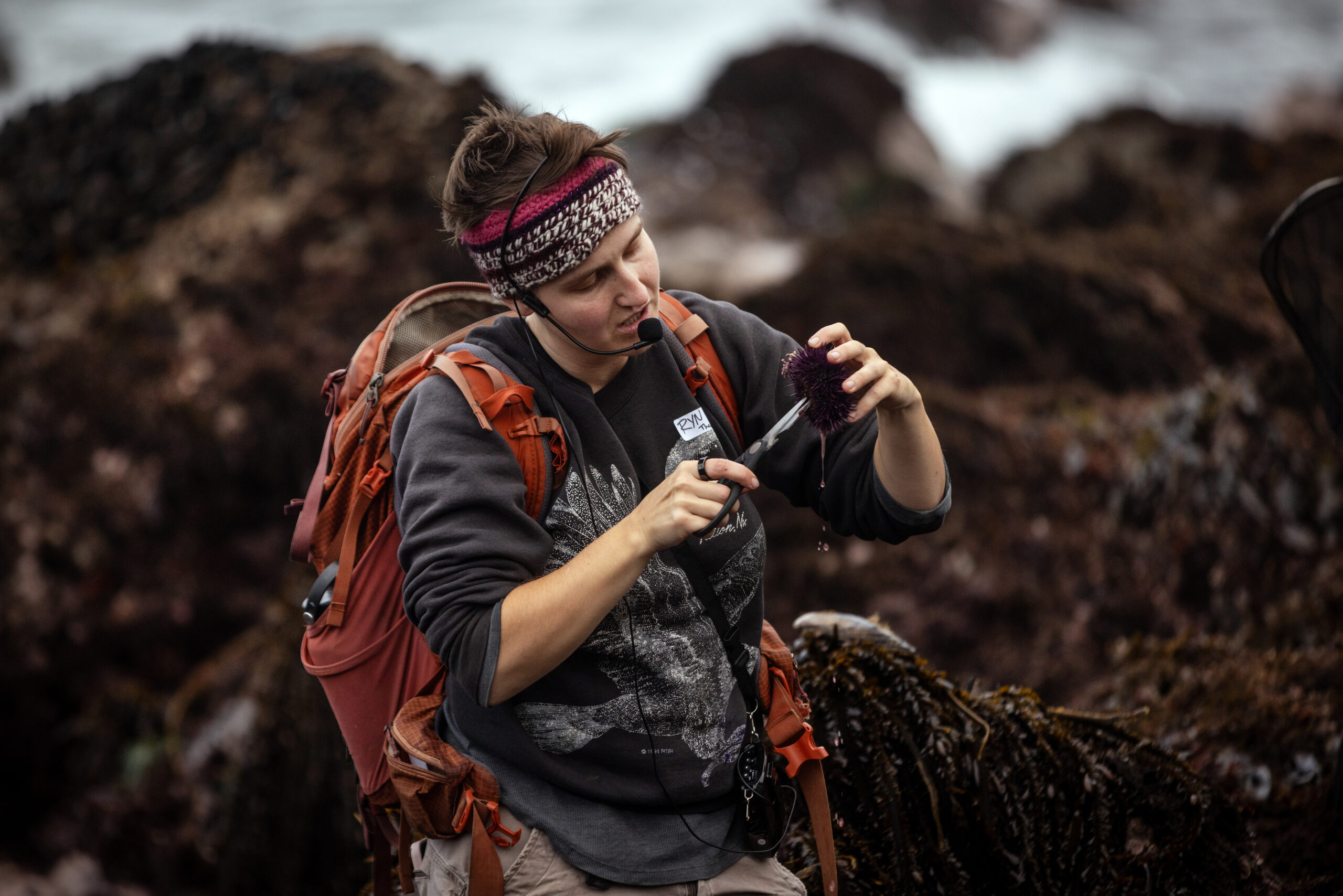
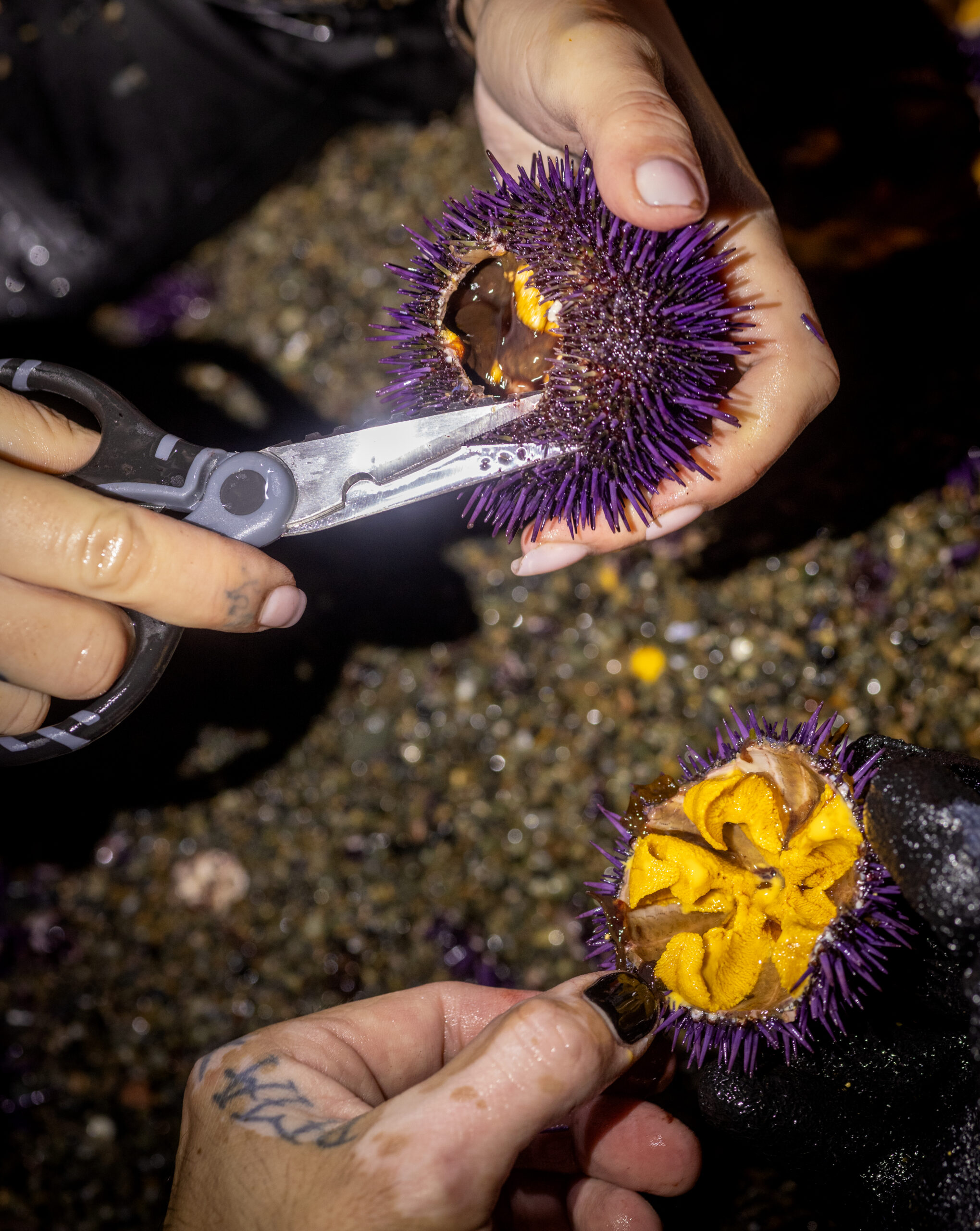
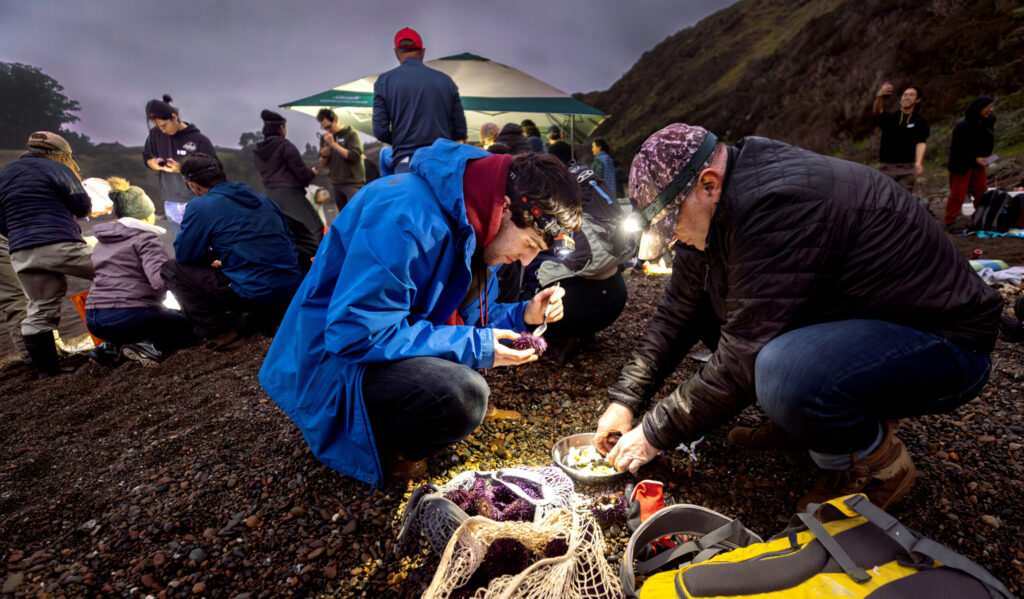
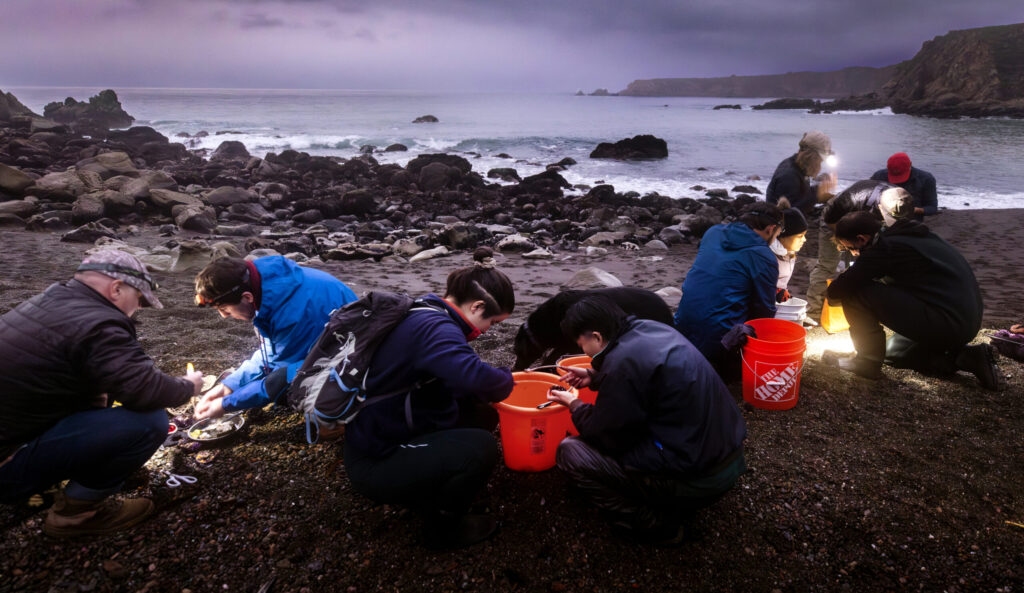
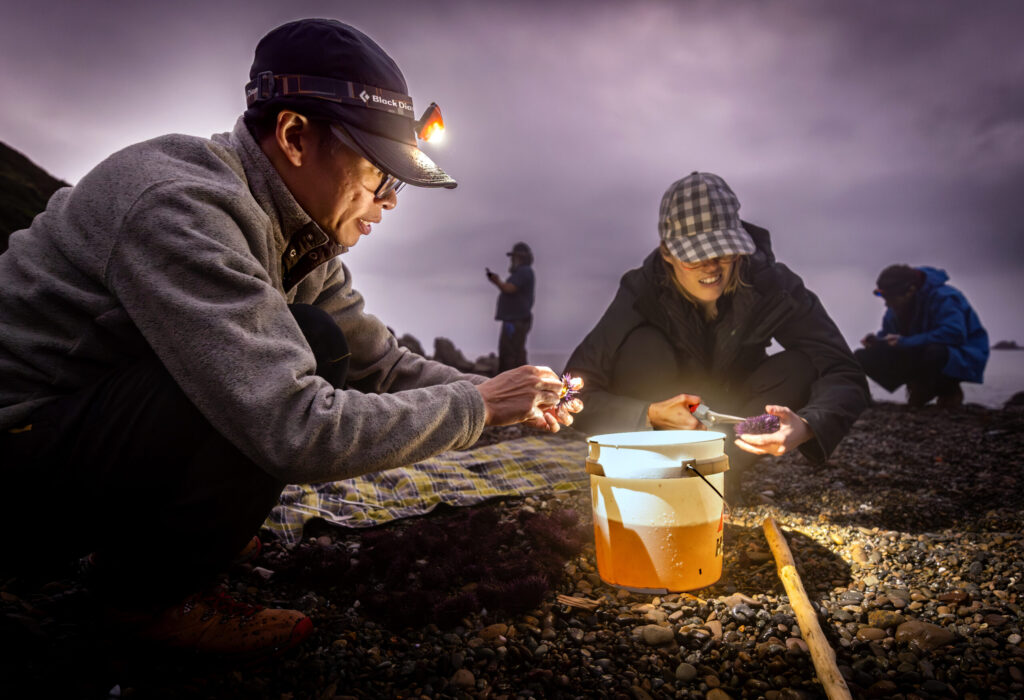
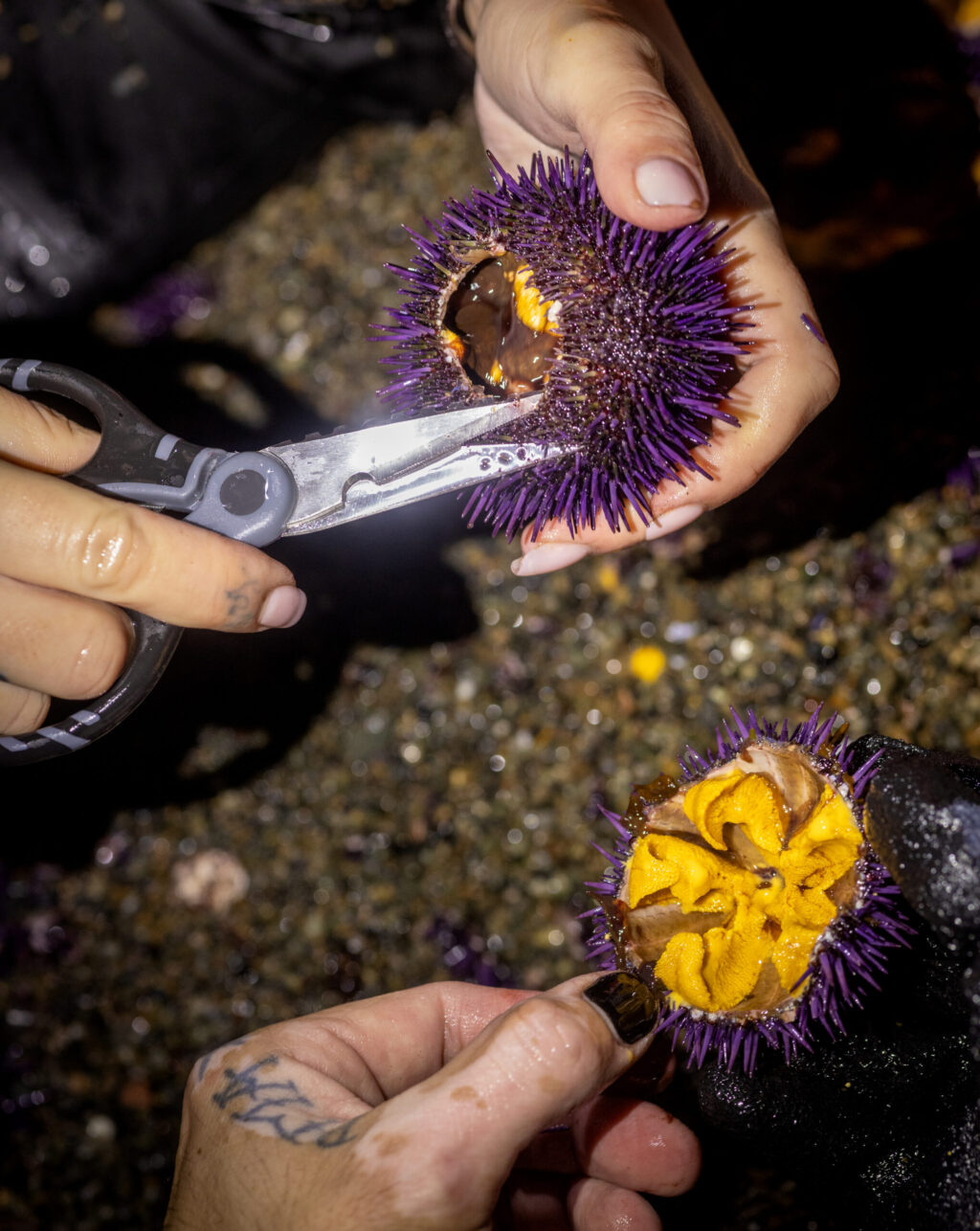
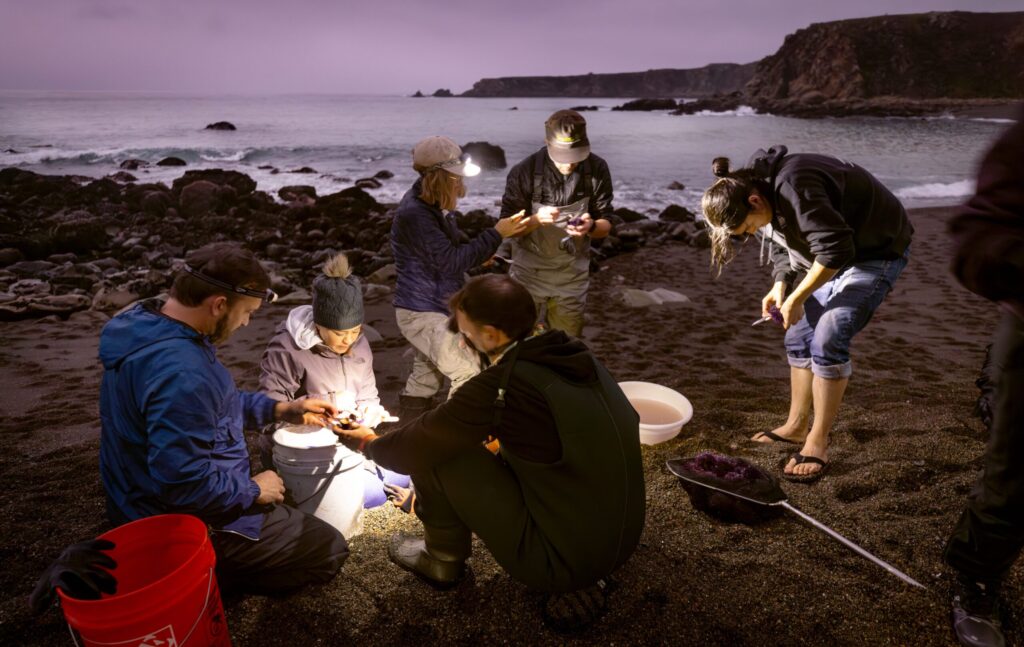
As night falls on the cove near Fort Ross, the class gathers on the beach beneath the spotlight glow of headlamps to learn how to clean their urchins. Gianoli teaches them to use small scissors to remove the hard five-toothed mouth on the bottom, known as Aristotle’s Lantern, to gain access to precious urchin innards. Then he demonstrates how to run a finger along the inside lip of the shell to dislodge any other teeth gripping the uni flesh. After making a smaller, circular cut around the opening of the shell, and a little more finger prying, he dunks it in a small bath of seawater, then shakes the uni into his hand—something that’s easier said than done.
Under a beach tent, the instructors fire up a hearty miso soup over a gas burner, chopping green onions to sprinkle on top. They offer handrolls of seaweed and rice so guests can top it with fresh uni, and Sullivan explains how to make uni butter at home.
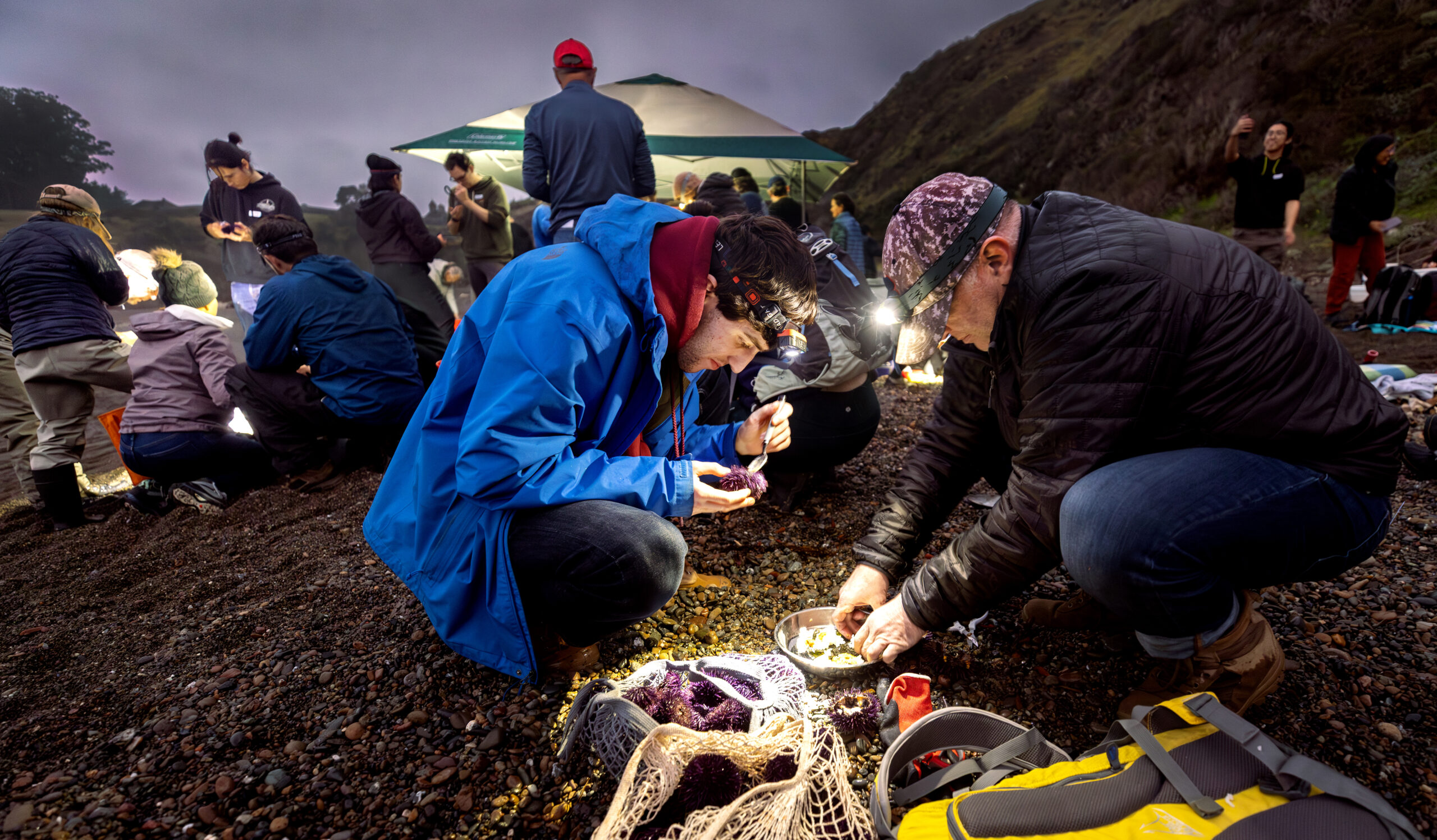
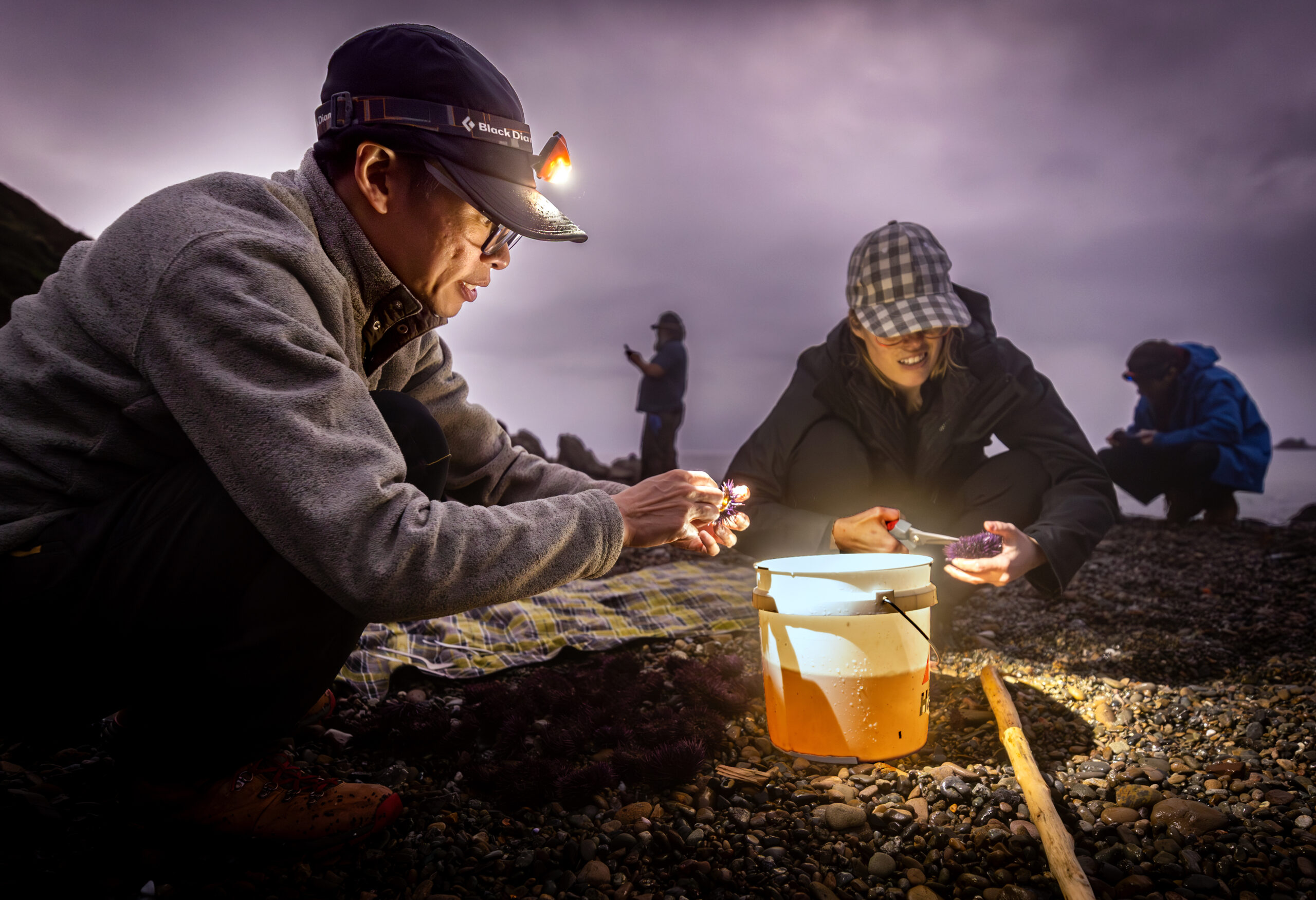
Amid sounds of cracking and grunting, people try their best to wrestle open the brittle shells and unearth the gooey prize. Finally, the moment of truth—the first slurp everyone has been working toward. But not everyone agrees on the taste.
“It’s interesting, but I’m not sure I would go, ‘Wow!’” says Martin Wobig, a first-time harvester and taster from Santa Rosa. He compares it to a soft cheese, more sweet than salty.
A few feet away, Max Aukes is celebrating his 6th birthday with his family. After straining to “take out the mouthpiece” and open the shell, how would he sum up the taste?
“Slimy, yet satisfying,” he says with a big grin.
Another way to size it up: “It’s salty, ocean-flavored butter,” says Keeley Waite, who drove up from Sausalito for the day. “But if you don’t like oysters, you’re not gonna like this.”
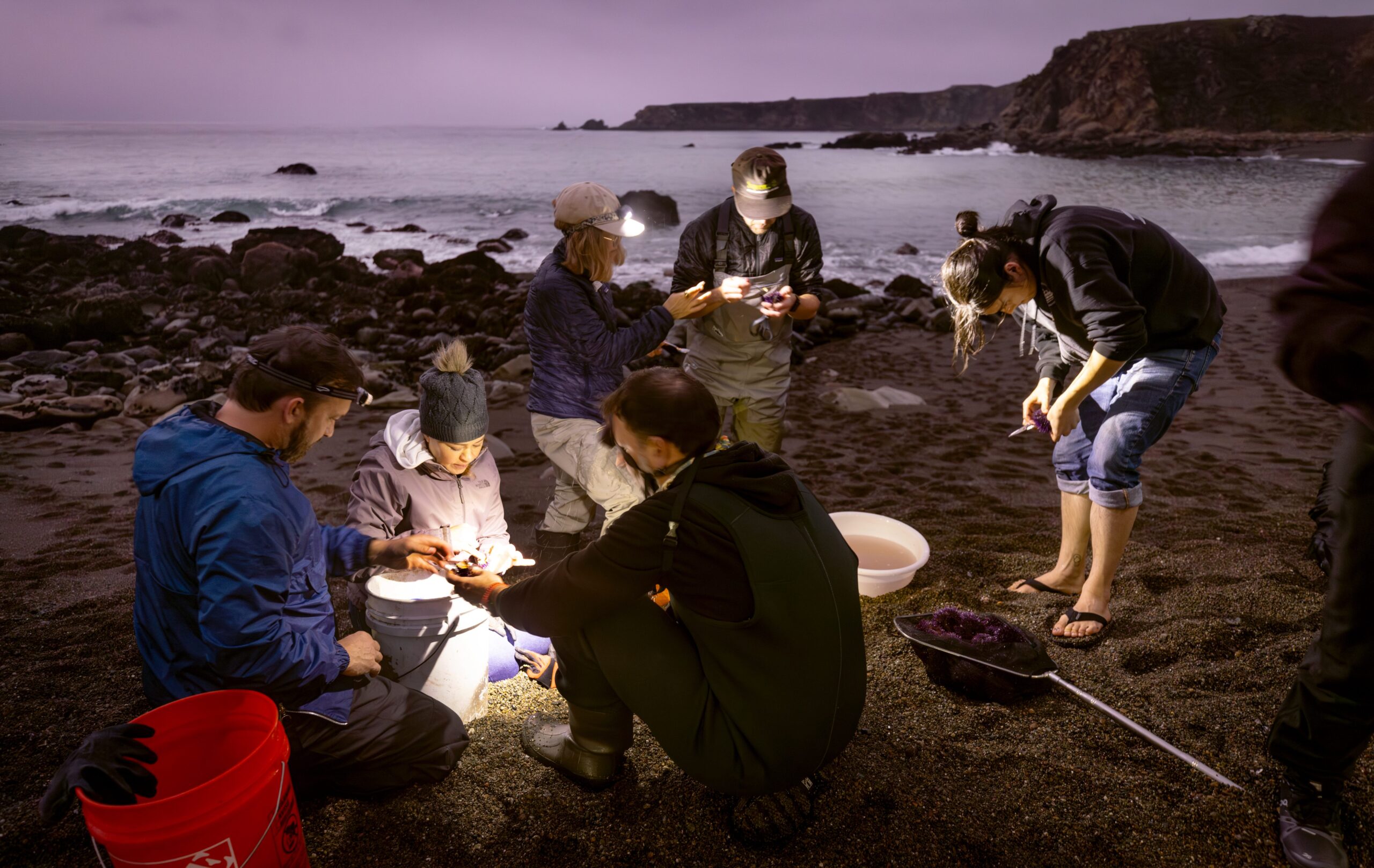
No matter what they think about the taste, everyone in the class can agree on one thing: The cautionary tale of the sea urchin, the sea star, and the kelp forest is impossible to ignore. It makes you want to join in and lend a hand, even if it’s just pulling three dozen sea urchins from the millions of spiny invertebrates blanketing the ocean floor.
“It’s nice to engage in a way that doesn’t feel extractive,” says Vanessa Wilbourn. The singer and bass player in the popular folk-rock trio Rainbow Girls is back for her second time, bringing along a friend visiting from Connecticut. “I feel like we’re actually working to bring some measure of balance, or at least that’s what I hope is happening.”