



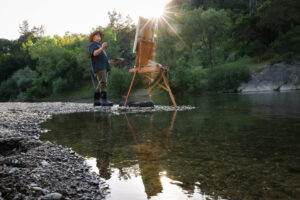


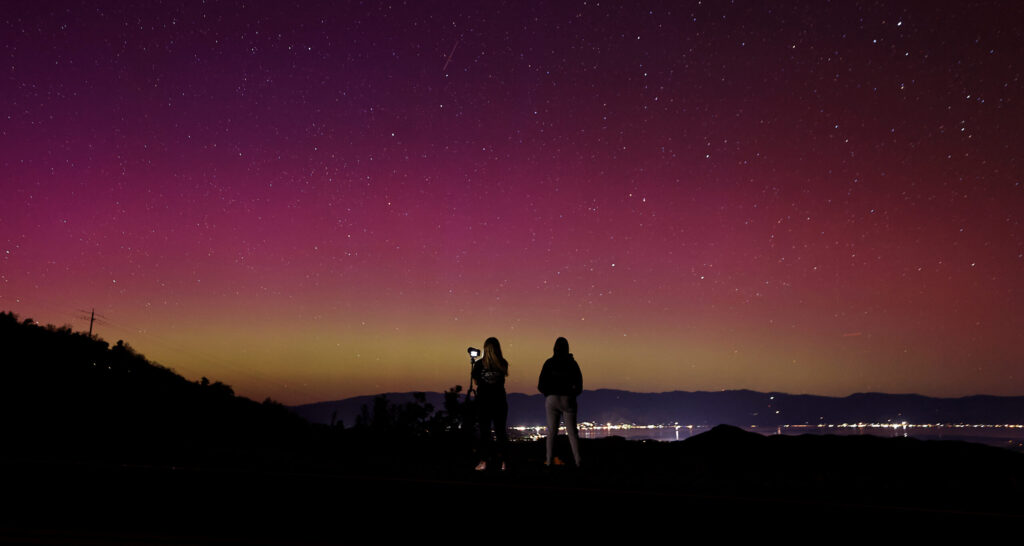
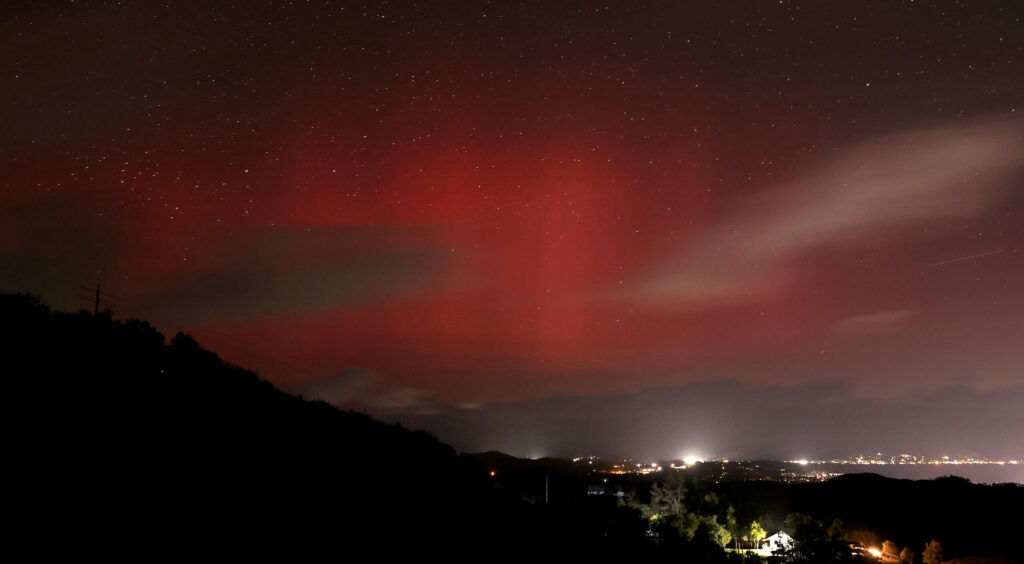
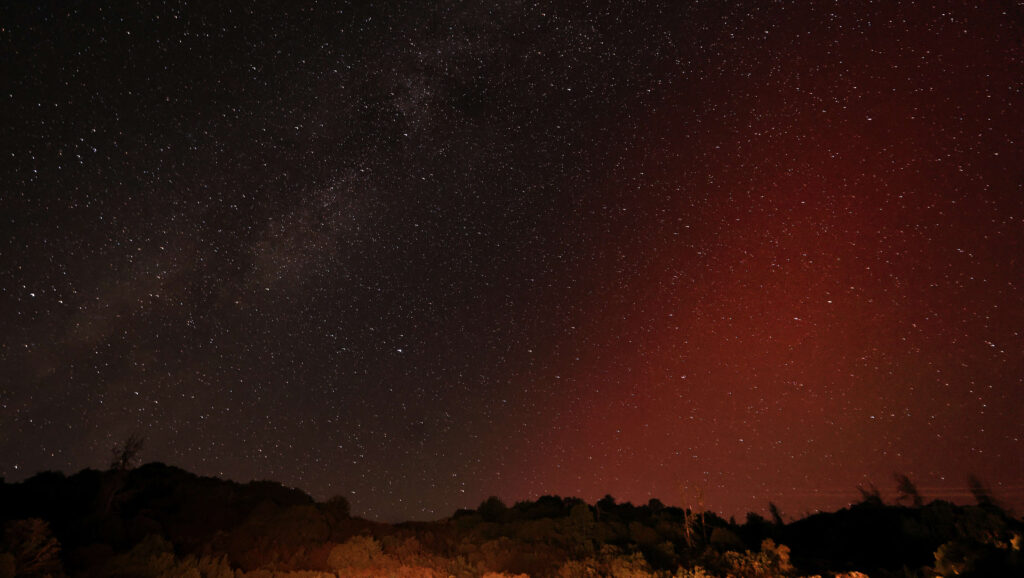

From our earliest years, stories, poems, and lullabies guide our eyes heavenward to wonder and wish upon stars and find comfort in the gentle glow of the moon ushering us into slumber. For photographer Kent Porter, the hushed twinkle of the night skies are a creative and quiet respite from the rigors of covering the news for The Press Democrat.
“When I get really stressed out — even during disasters — I’ll wait around till everyone’s gone home and shoot night pictures,” says Porter.
There are times at twilight when the lunar ascent is so arresting we feel compelled to pull a phone from our pockets and snap some shots, which often confirm that taking a great photo of the heavens is more skill than happenstance. While Porter freely admits there is some luck involved in his evening endeavors, his most captivating images have been earned through years of practice and patience and learned in the self-guided study of astronomy, which provides certain epiphanies.
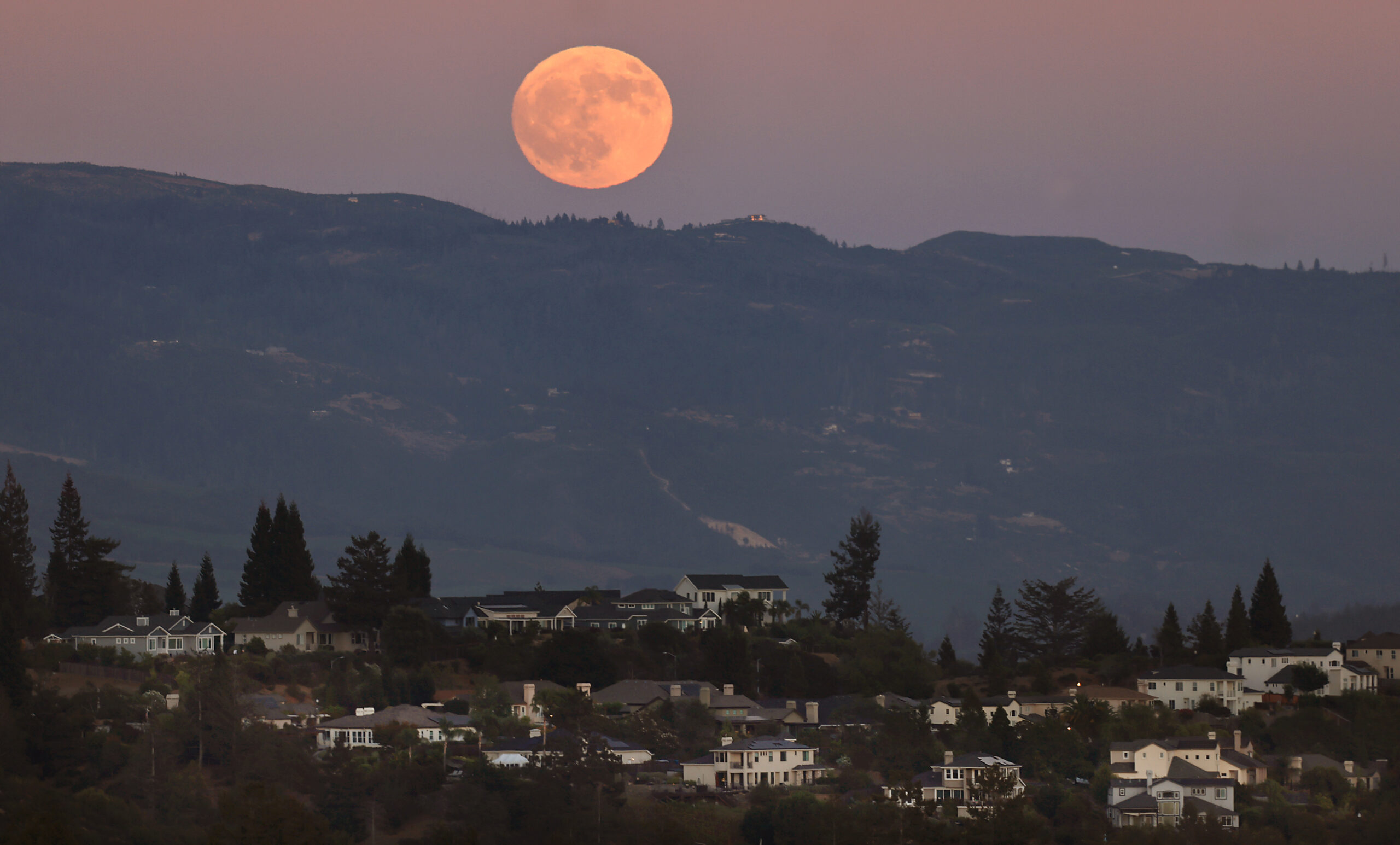
“The moon is daylight,” he says. “It’s just reflecting the sun. It’s a different shade of daylight.”
Though he receives invitations to set up on private land to capture his images of streaking comets and rippling auroras, Porter prefers to make his photos in public spaces. It’s proof, he says, of what’s available to all of us “with a little bit of effort and a little bit of driving.” The drives take him far from city lights, tramping across fields, scrambling up hills, and leaping over ditches until he finds exactly the right spot where he can feel the firmament’s magic.
“It’s like the stars are sitting on you,” he says. “They look like they’re dropping right on you. Trying to re-create that in a photo is my main goal.”
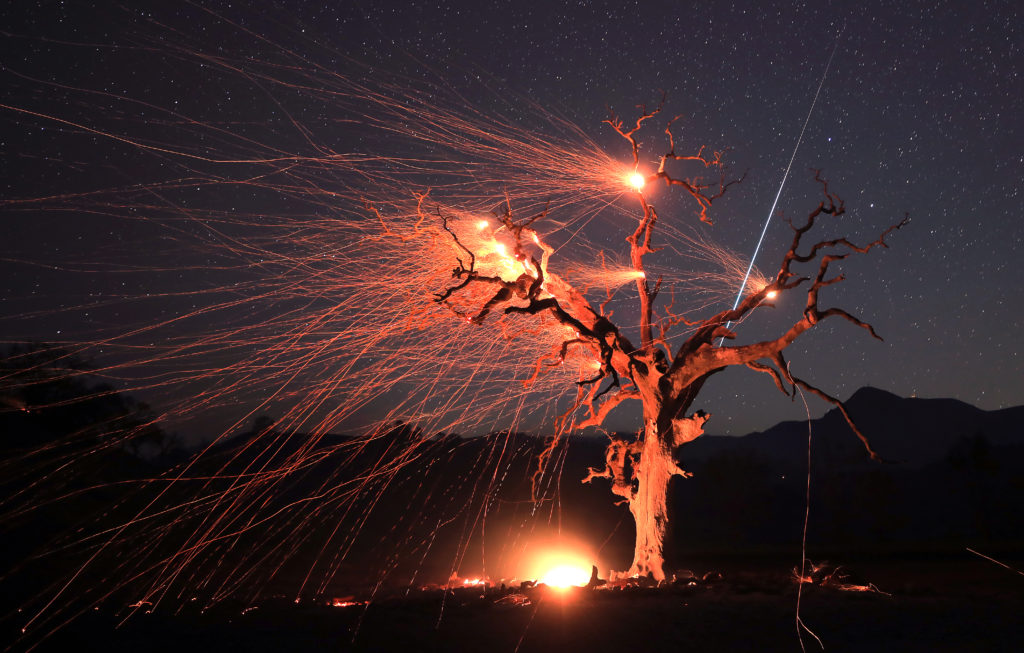
Knights Valley, October 2019
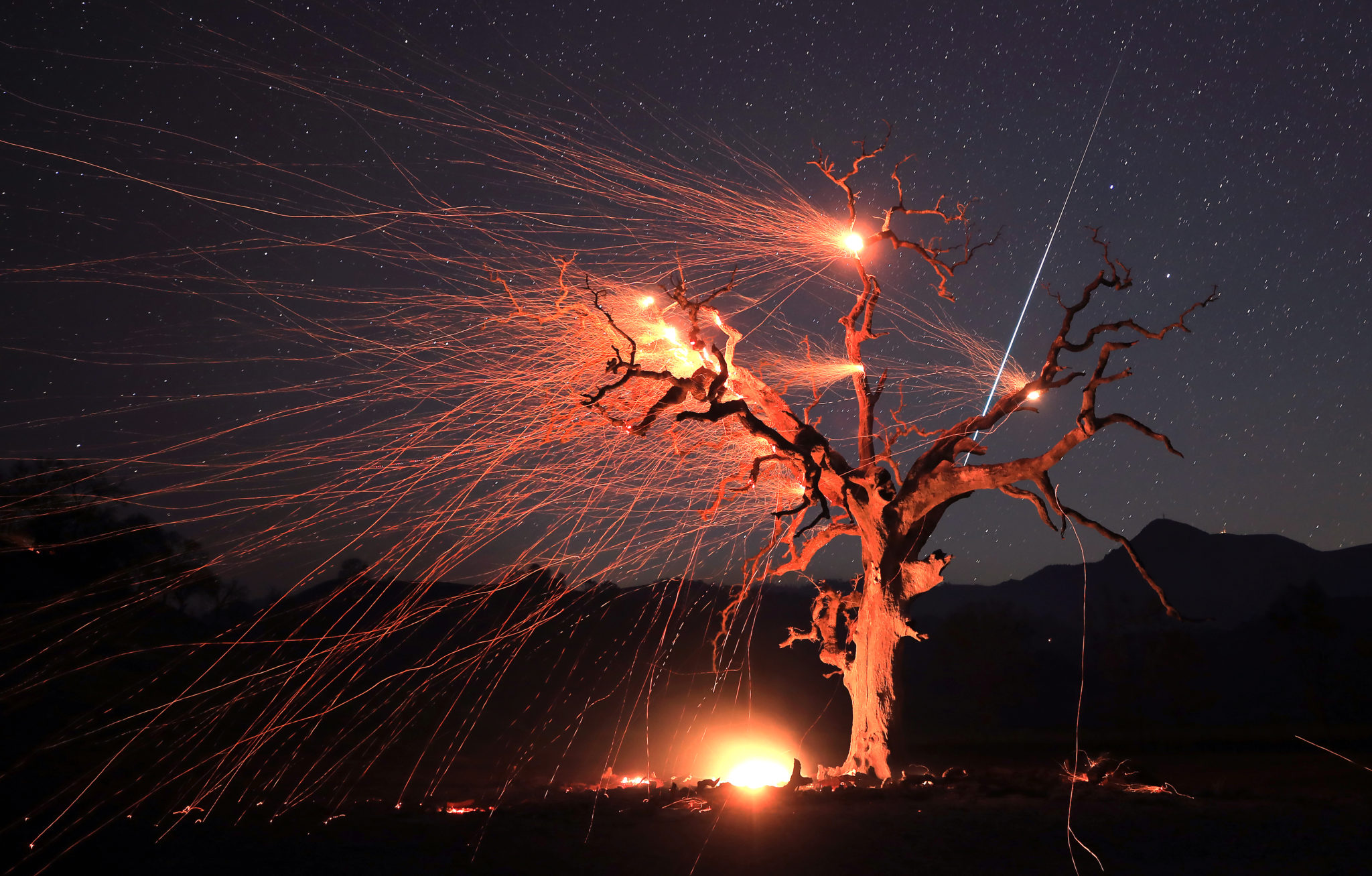
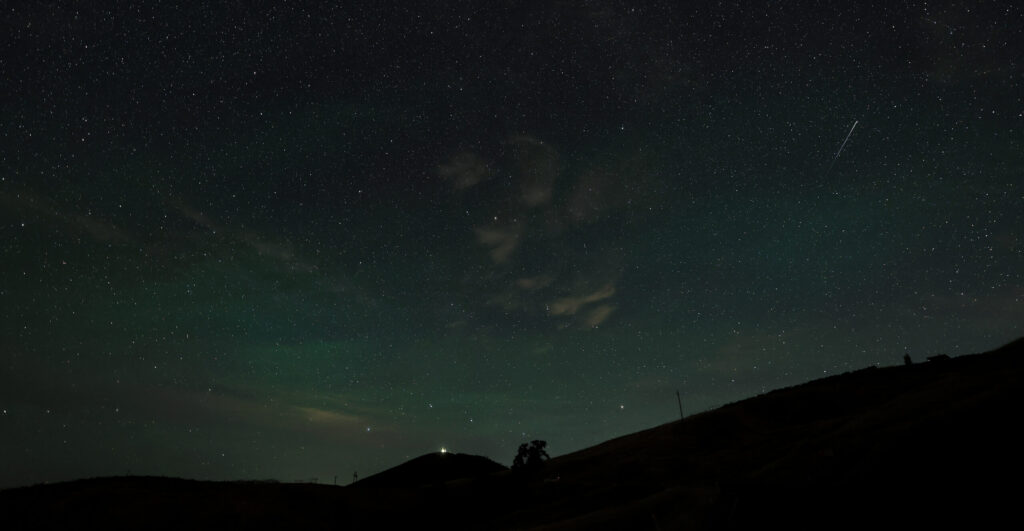
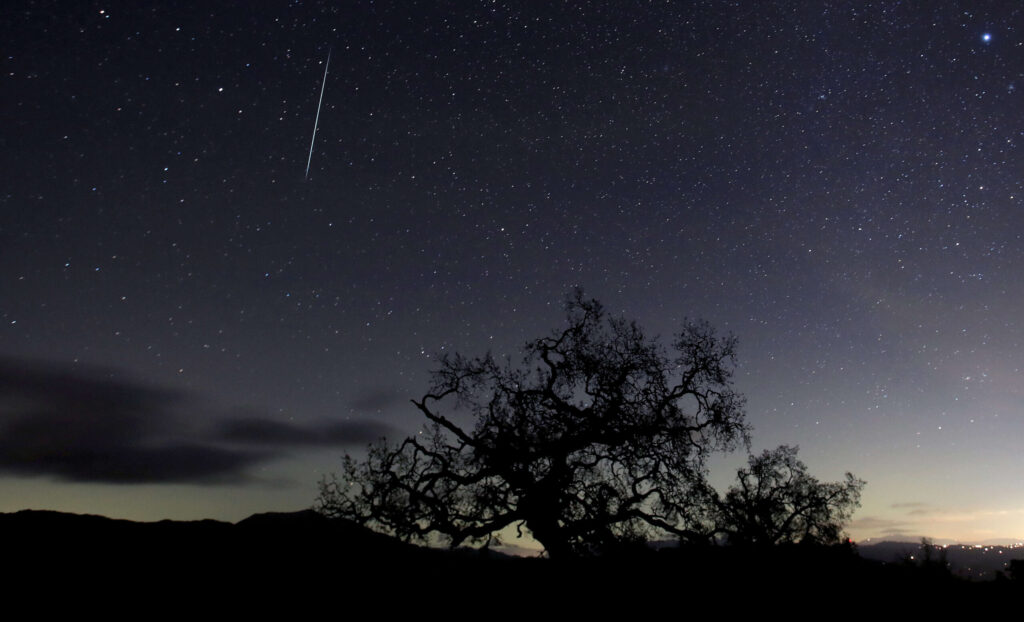
During the second week of the Kincade Fire, flames swept through Knights Valley, igniting a lone Valley Oak that threw off embers in the breeze. Having passed by it once and noticing how many photographers were making images of the tree, I decided I wasn’t going to make the same photograph. When I passed by it again, only one photographer remained. About a mile down the road, I made a 180. I decided to take a different approach by changing the angle to include Mount St. Helena. I made 10 different frames of the scene, the tenth being the best when the meteorite flashed during the long exposure. Lucky.
Canon R5 camera, 35 mm lens, F4.5 at ISO 800, 12-second exposure
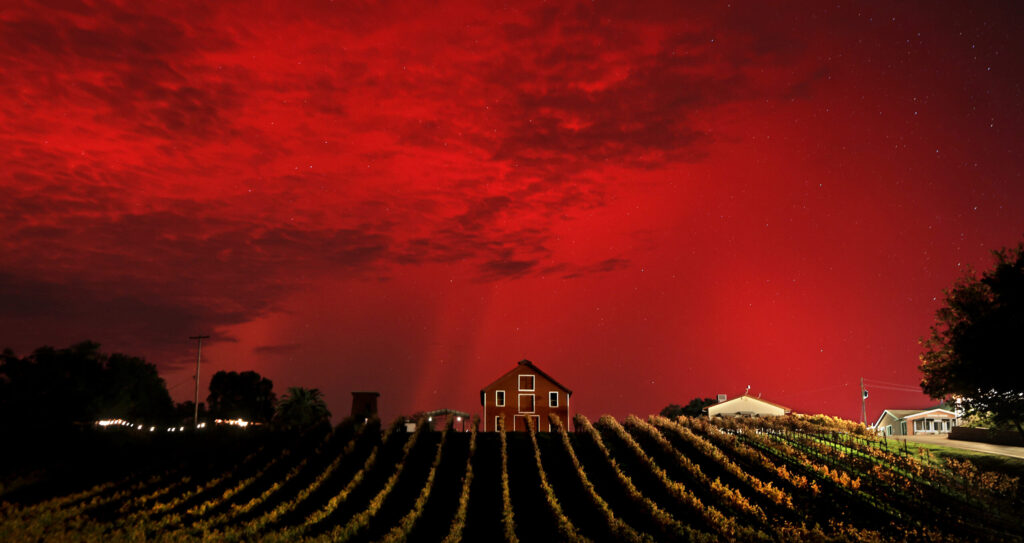
Healdsburg, November 2025
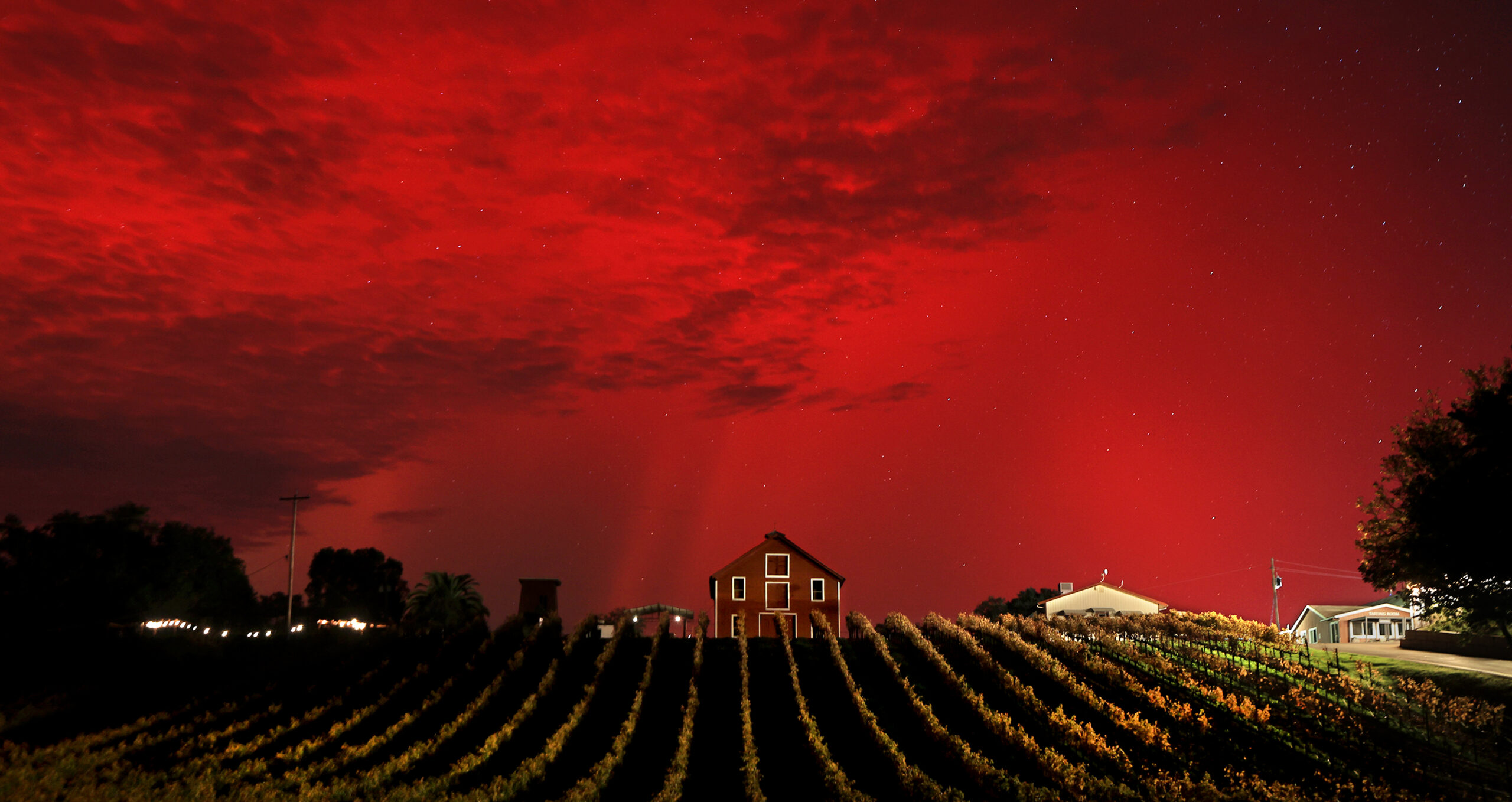
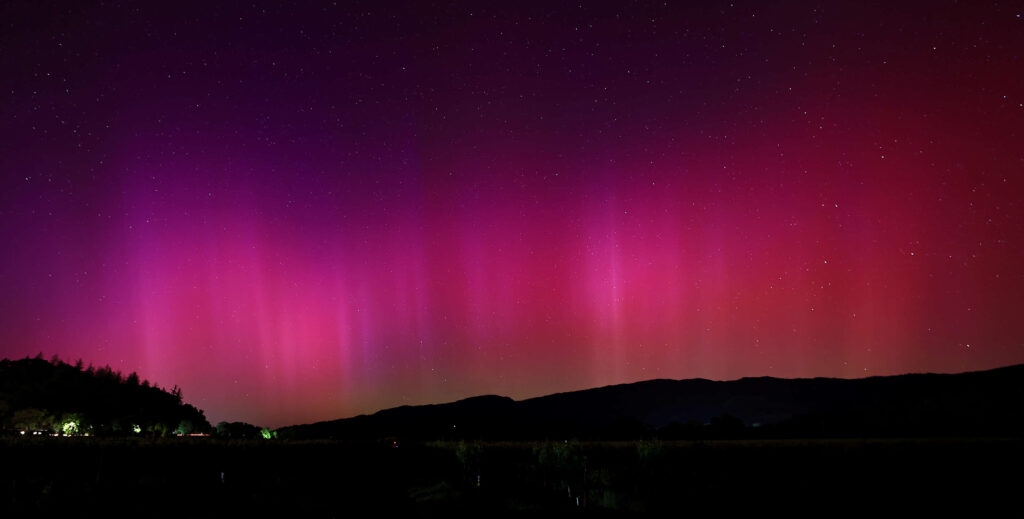
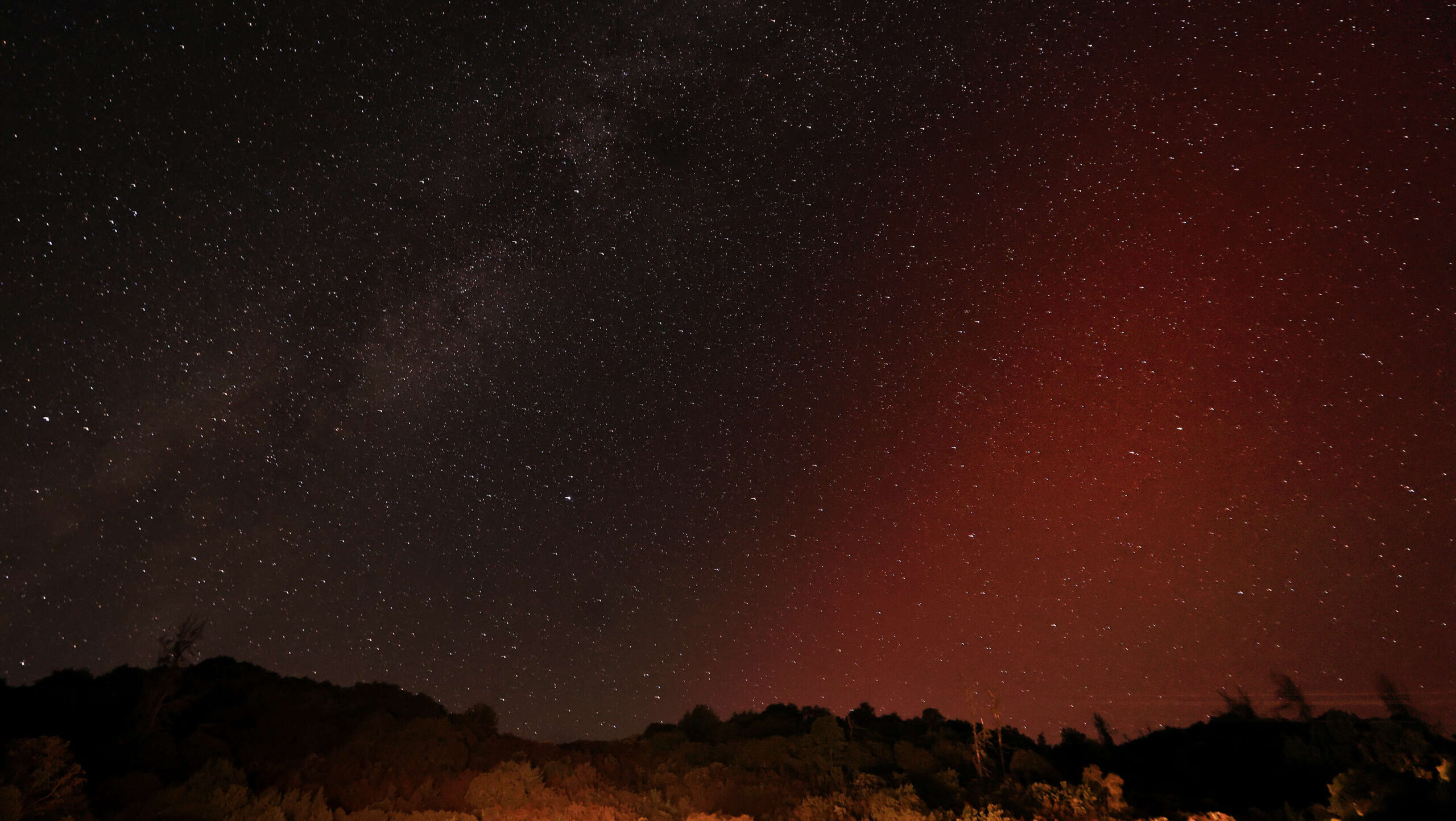
Those who can’t afford a trip to view the Northern Lights keep a close watch on Coronal Mass Ejections, or CMEs, bursts of plasma hurled toward Earth from the sun. The last several years, the sun has been in a solar maximum, raising the possibility Northern Lights could be viewable in the lower 48 states. Tracking the space weather forecast last November, I headed out soon after sunset. As night fell, cloudy skies obstructed the horizon, but I realized the cloud cover wouldn’t dampen the colors. Sensing a near-historic display, I headed from my perch in The Geysers to Dry Creek Road, ending up at Timber Crest Farms with artificial light illuminating the scene. Watching the pillars shimmer across the night sky, I got goosebumps witnessing something so alien and beautiful take shape in the viewfinder.
Canon R5 camera, 35 mm lens, F4.0 at ISO 800, 13-second exposure
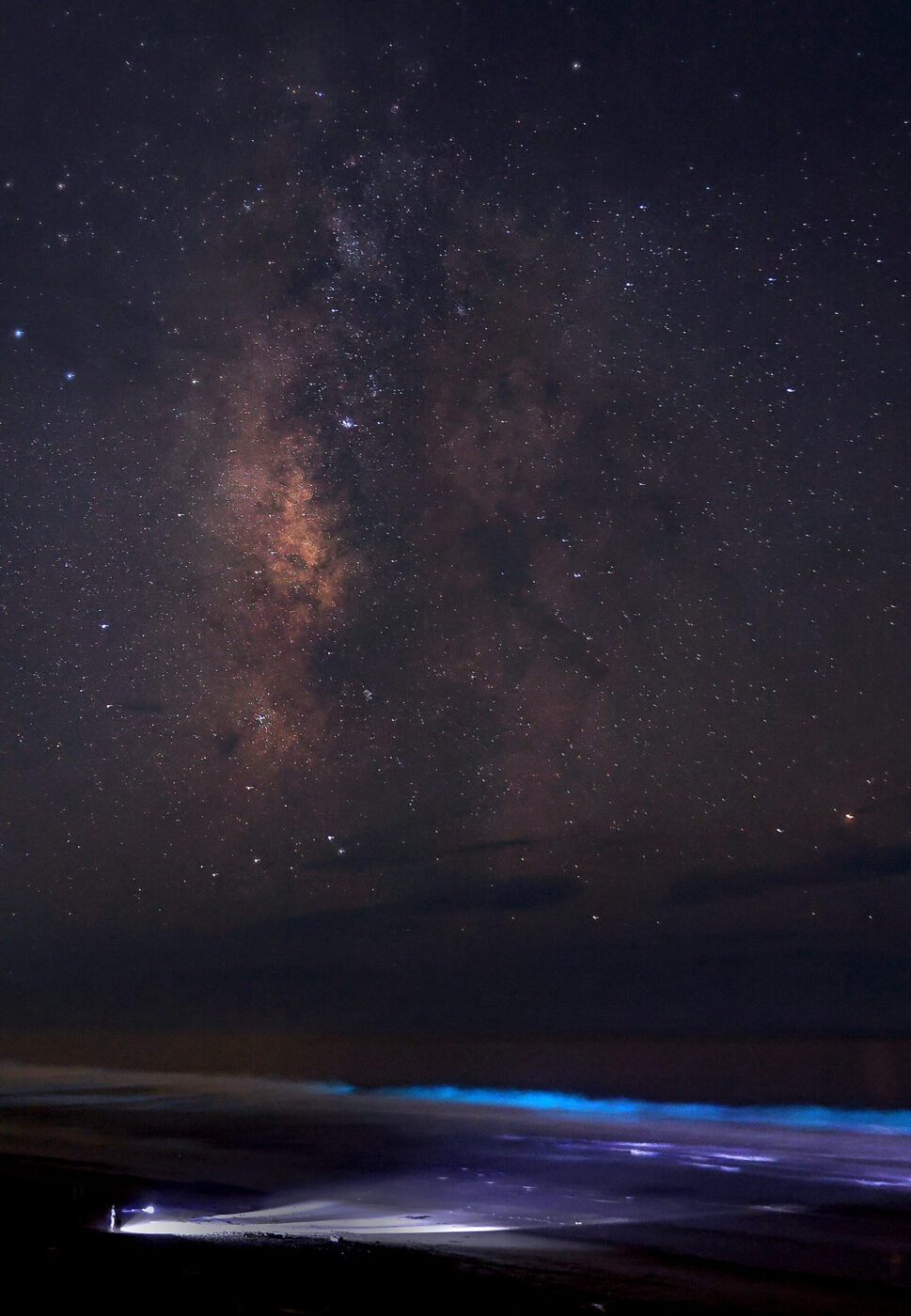
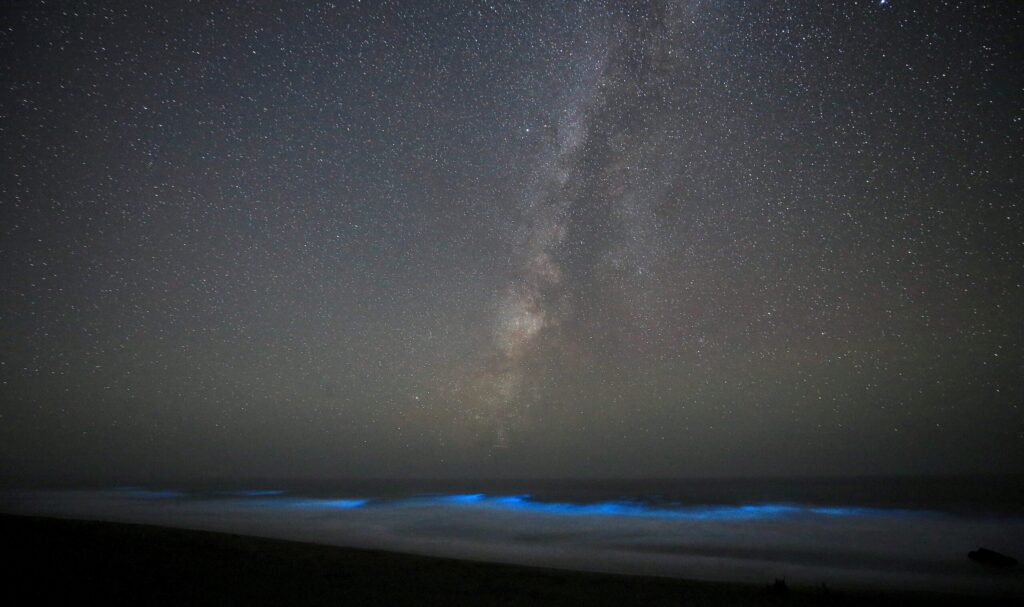
Bodega Bay, September 2025
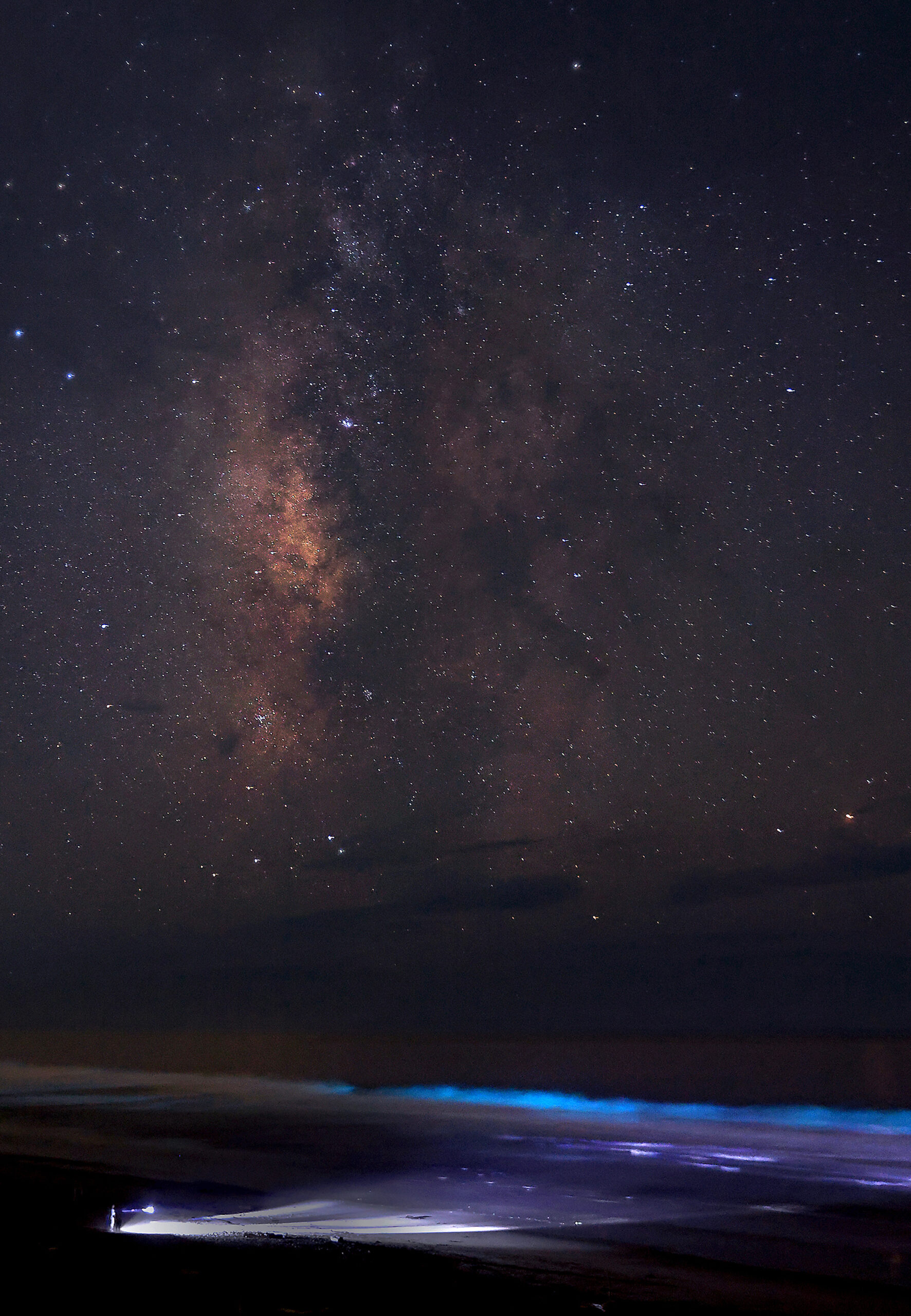
During the fall months, Porter heads to the coast on dark, moonless nights to check out seasonal bioluminescence. As waves crash ashore, the surf turns electric blue, stirring millions of dinoflagellates when a chemical reaction takes place.
“The Milky Way was a plus, and even more unanticipated was the person on the beach with a headlamp, giving the photograph a layered view of the surroundings,” says Porter.
Canon R5 camera, 31 mm lens, F4.0 at ISO 5,000, 15-second exposure
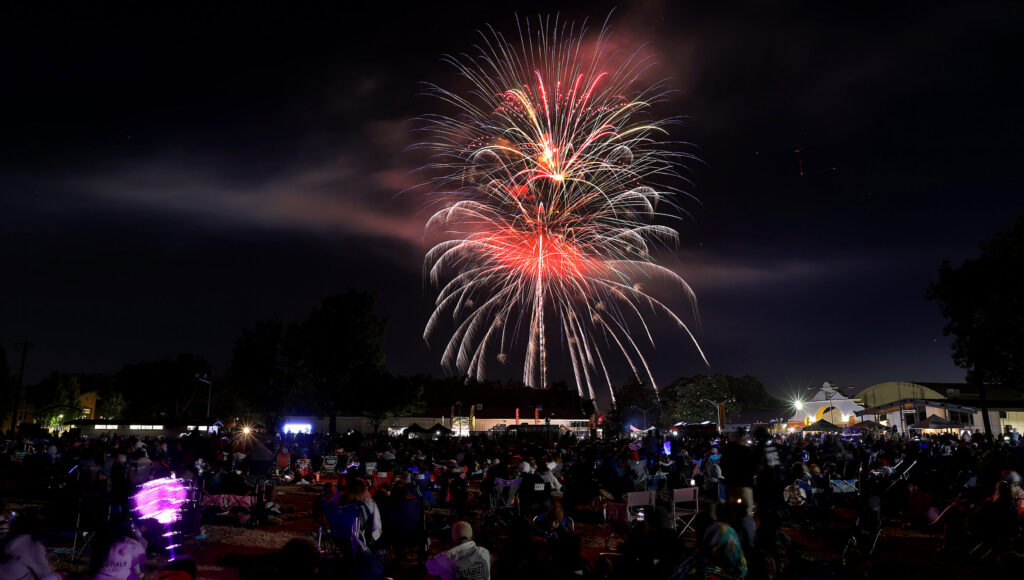
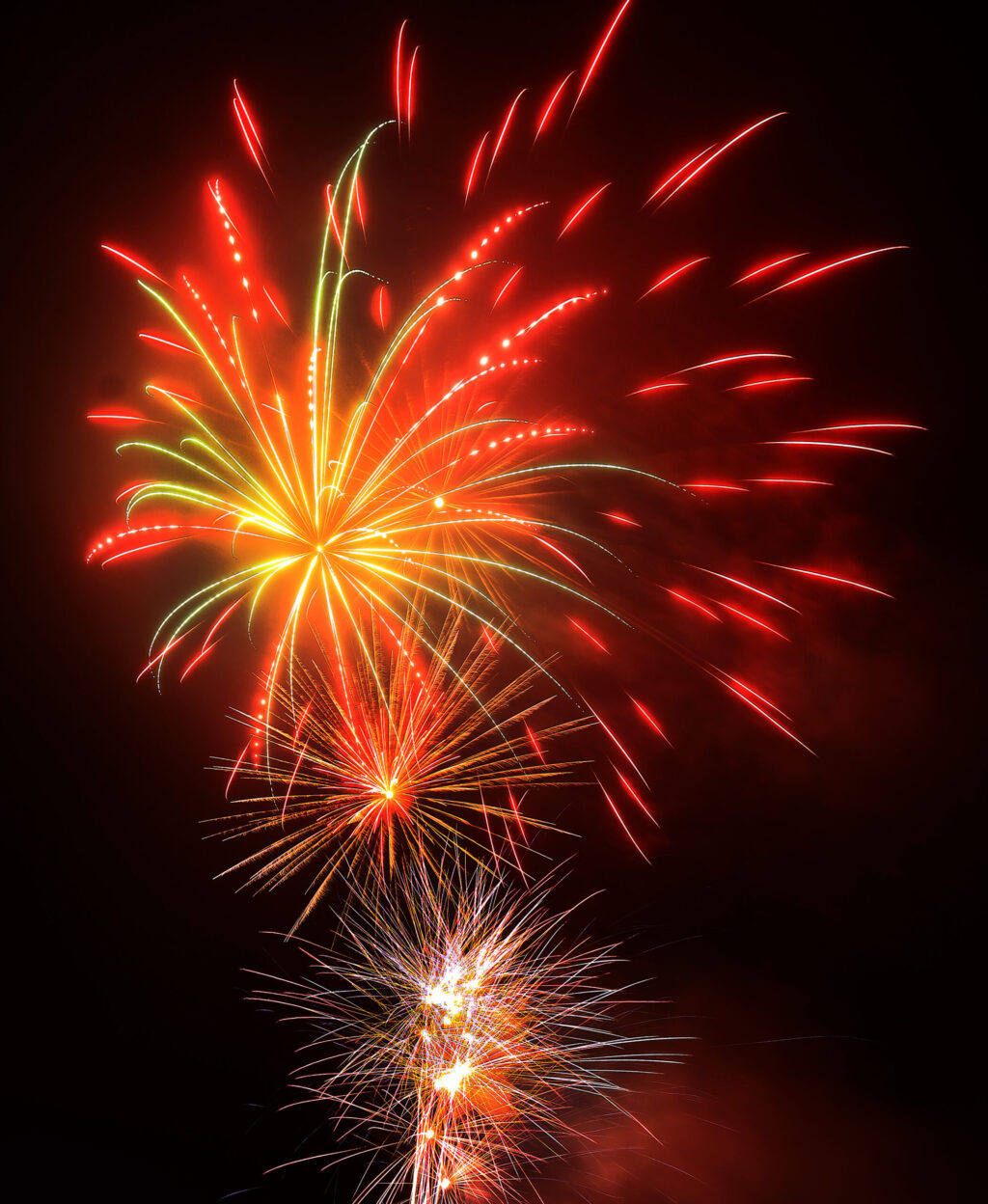
Santa Rosa, July 2025
“Fireworks used to give me fits,” Porter says of film cameras. With those he ended up with more unusable photos than good ones. Digital cameras allow photographers to adjust shutter speeds and F-stops as they go.
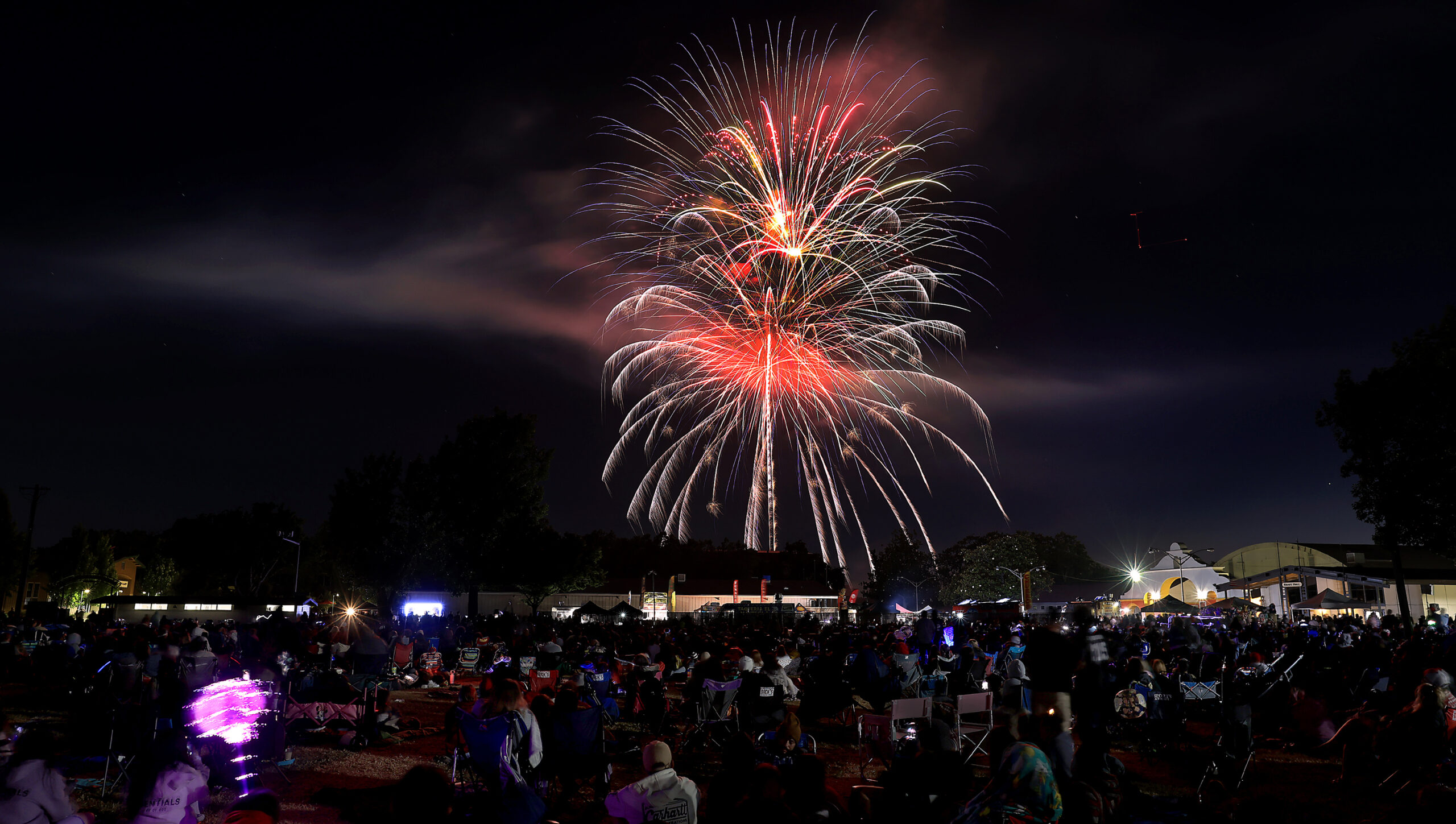
“My advice is this: Arrive early, stake out a spot, and stick with it. Then, after realizing the spot you picked out really bites for foreground and maximum burst potential, move in a hurry, trip over several people in the dark, block a few others, and finally pick an area which looks OK through a dark camera and be surprised the first spot was probably much better after all,” says Porter with his dry sense of humor.
Another pro-tip? “The finale never looks good through a camera. Photojournalists don’t stack images, so the final frenzy is almost always too bright with too much smoke.”
Canon R5 camera, 23 mm lens, F10.0 at ISO 100, 30-second exposure
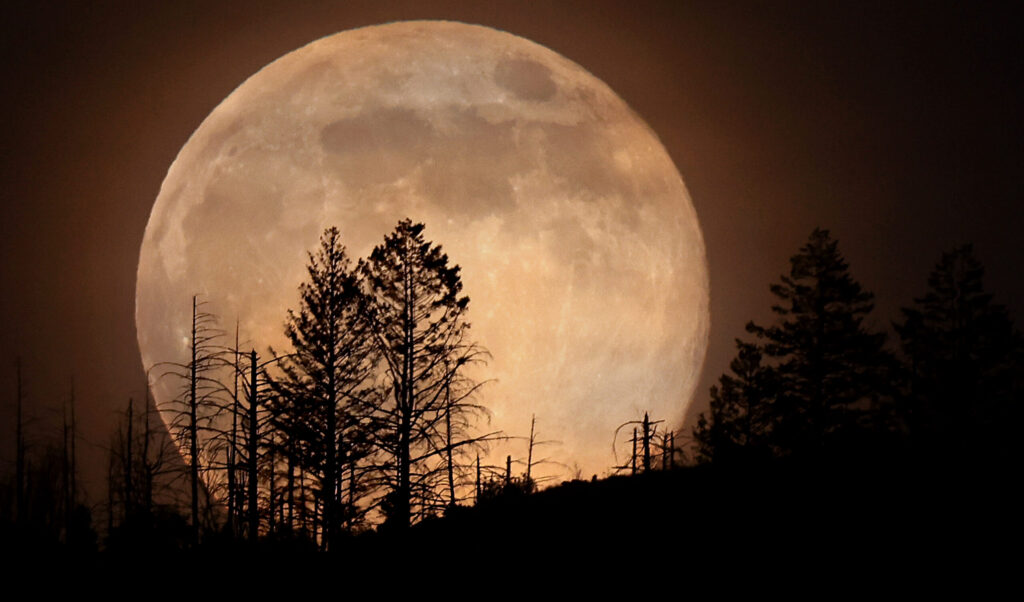
Glen Ellen, December 2024
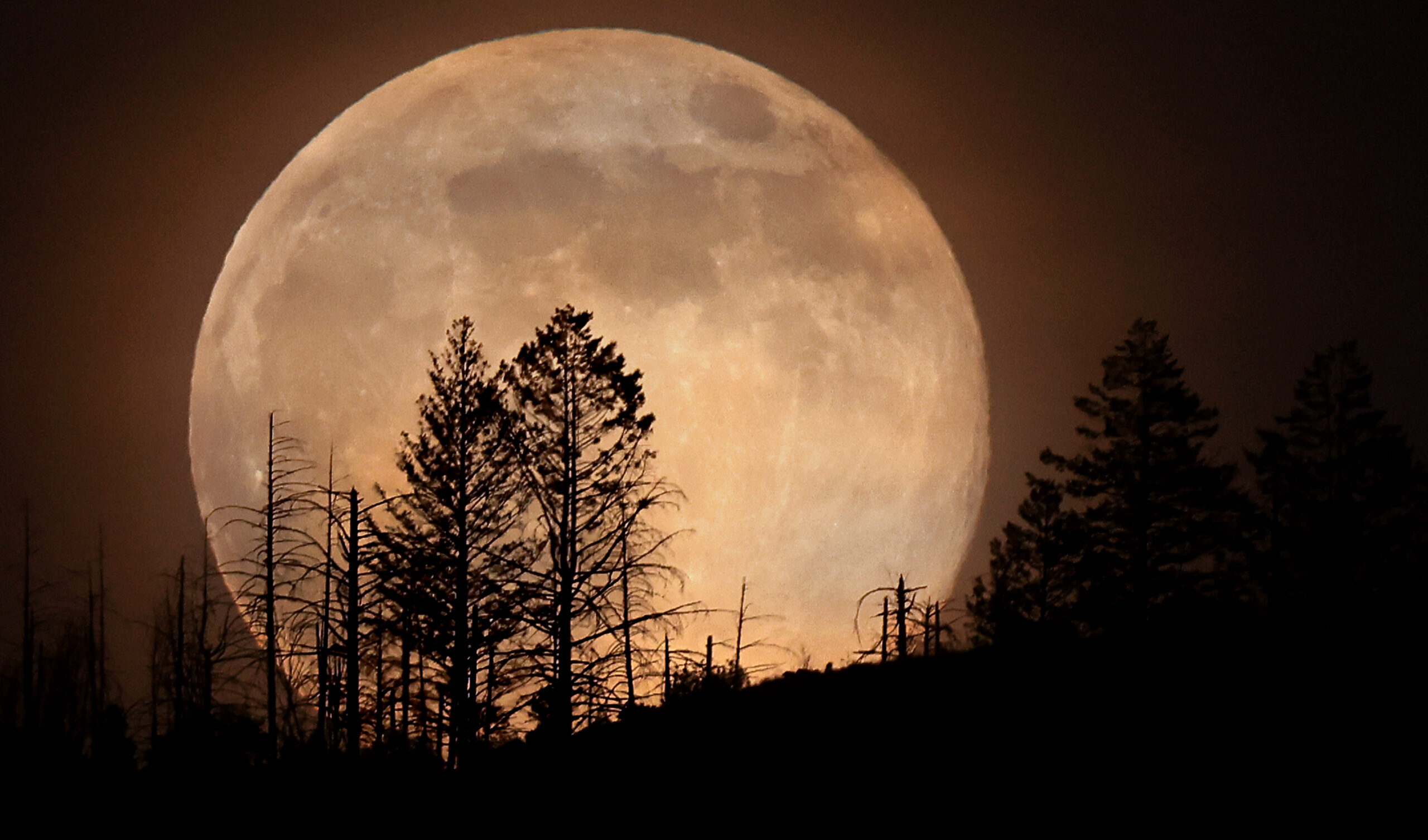
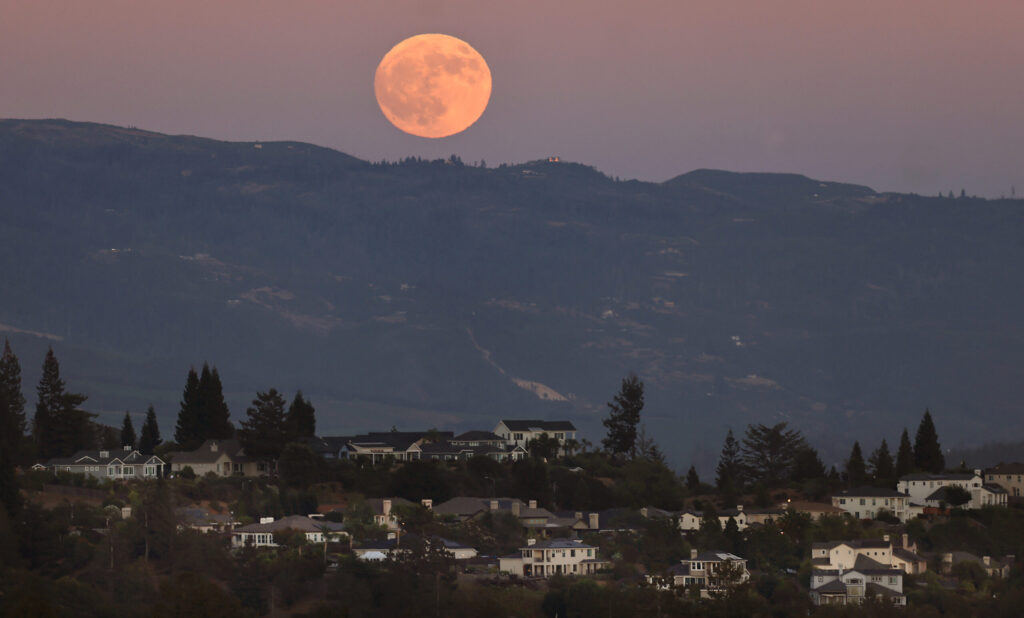
The Super Cold Moon in December 2024 called for a different location than the other full moon locations Porter uses.
“I had a good understanding of what I wanted in the foreground after a hike I made several years prior at Sonoma Valley Regional Park,” says Porter, who noticed how stark the landscape was with the denuded vegetation on the trees left after the Nuns Fire.
“We don’t have many identifiable landmarks in Sonoma County, such as the Golden Gate or Bay bridges or the Transamerica building. Finding a foreground where the moon is at its largest can be daunting, so I settle for mountains and trees.”
Canon R5, 560 mm lens, F4.0 at ISO 800, 1/320th of a second exposure
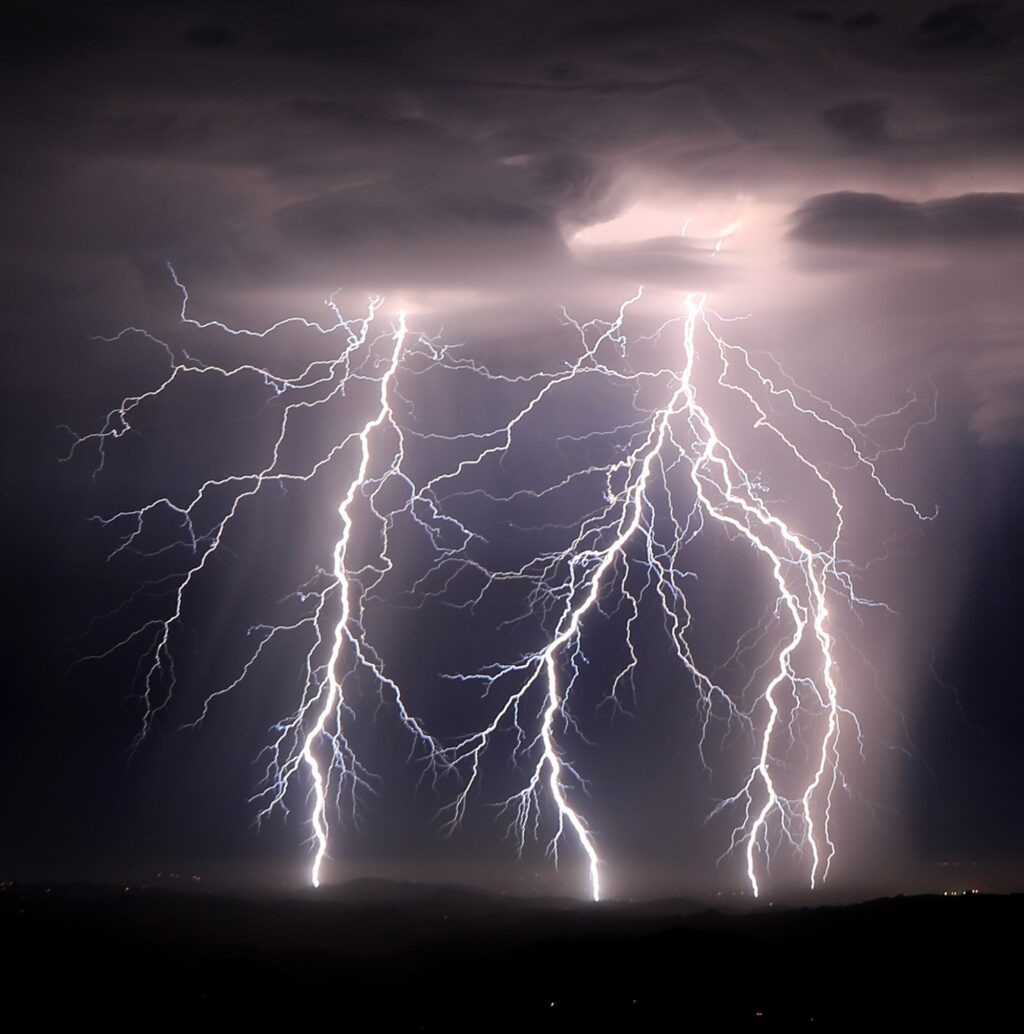
The Geysers, August 2020
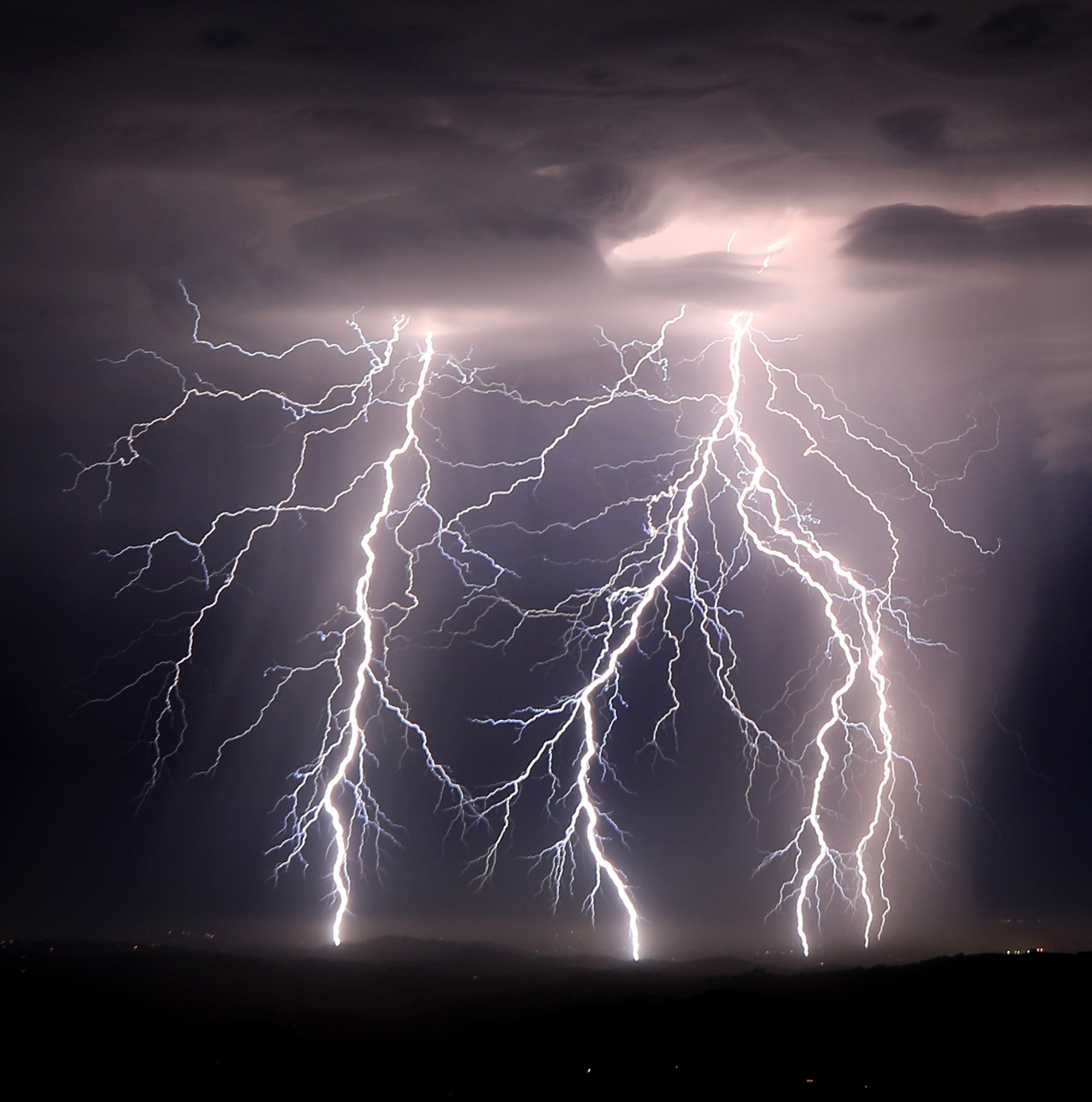
A dry lightning outbreak hammered Northern California resulting in fires that burned more than 2.5 million acres within a 75-mile radius of Sonoma County. The weather forecast hinted at a lightning bust (a weather phenomenon referring to an electric storm that ignites a large number of wildfires simultaneously), but even seasoned weather forecasters were surprised by the ferocity of the storm.
Being in position early was critical to making a storytelling image. Along with lightning, there were several heat bursts associated with the early morning outbreak. At my position in The Geysers, the temperature spiked at 96 degrees, making the surreal scene more impressive. All five strikes in the image occurred at the same time.
Canon 5D Mark IV camera, 70 mm lens, F4.5 at ISO 100, 20-second exposure
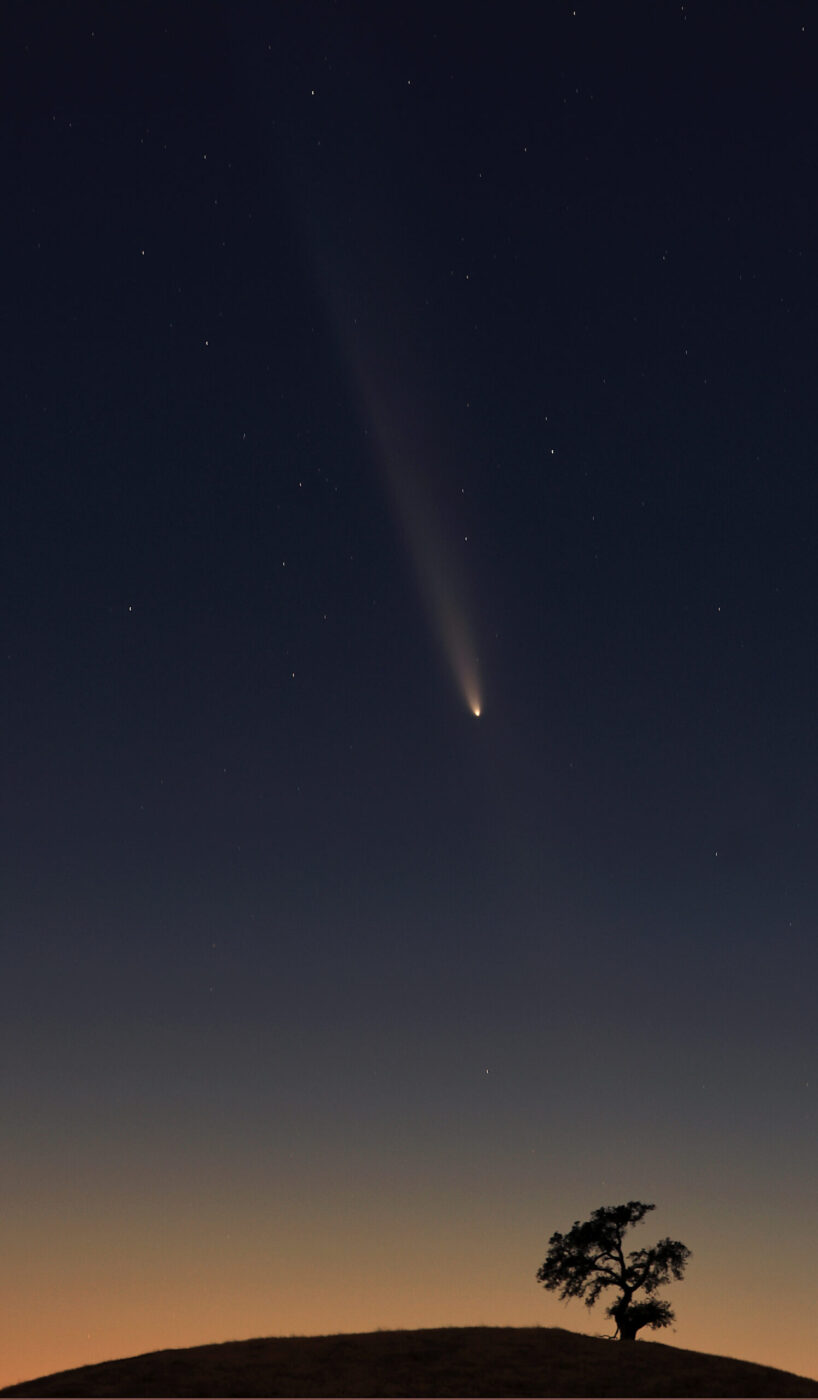
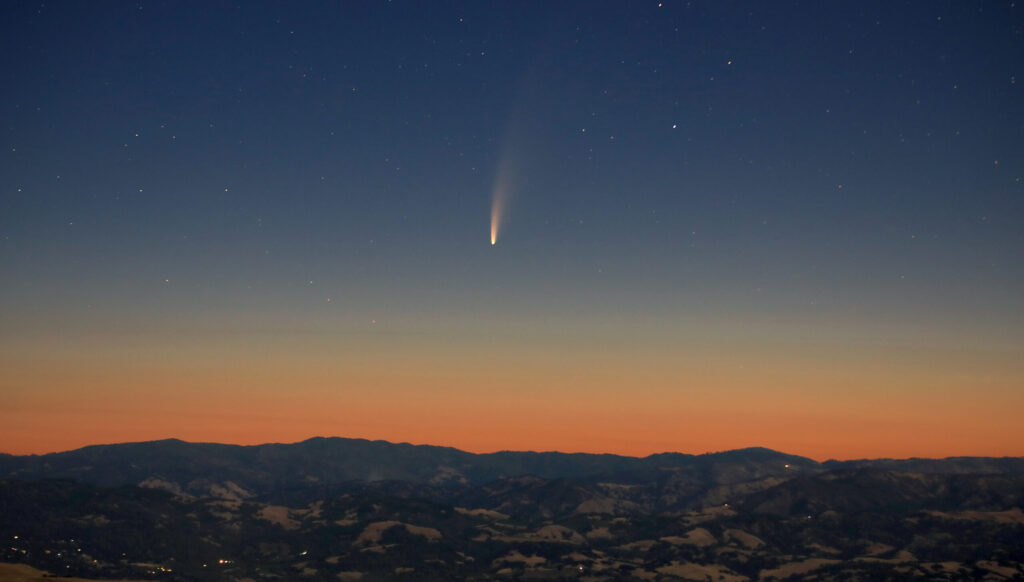
Near The Geysers, October 2024
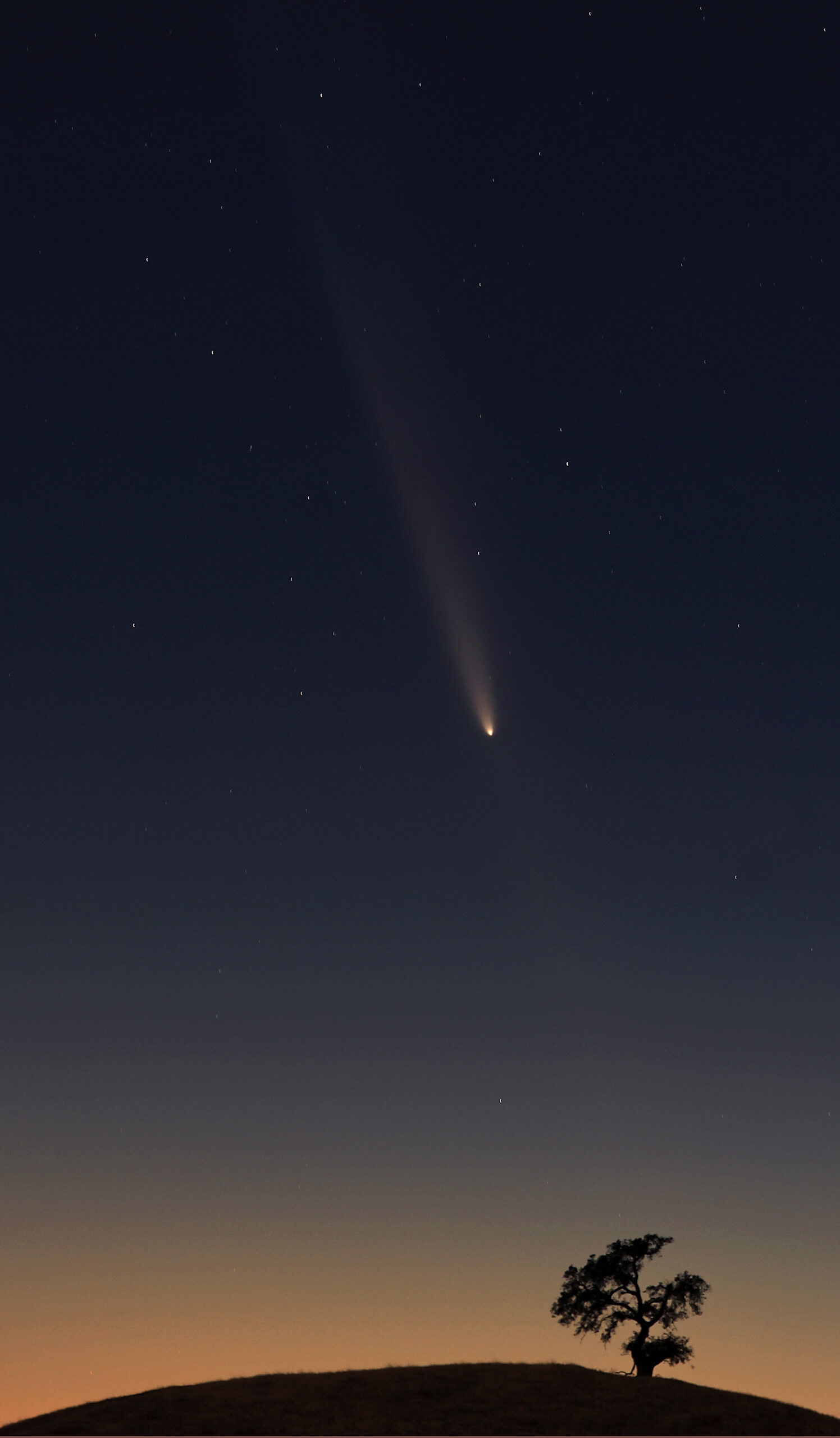
I did a test shoot of comet C/2023 A3 Tsuchinshan-ATLAS of this scene and failed miserably. I was up too far, wrong lens, wrong exposure, and too late to get any glow of the sunset.
So, I arrived early the next evening, hiked down a steep ravine with two cameras, lenses, and a tripod. I wanted the oak tree in the frame, so it might give a sense of place, and descended deeper down the mountainside. I lined everything up perfectly for a deep vertical image. The only thing I forgot was a headlamp to navigate back up the hill, twisting my ankles in deep cow hoof indentations in the dry, crusty soil. This photograph remains one of my favorite images due to the planning involved.
Canon R5 camera, 100 mm lens, F5.0 at ISO 400, eight-second exposure
Healdsburg, April 2026
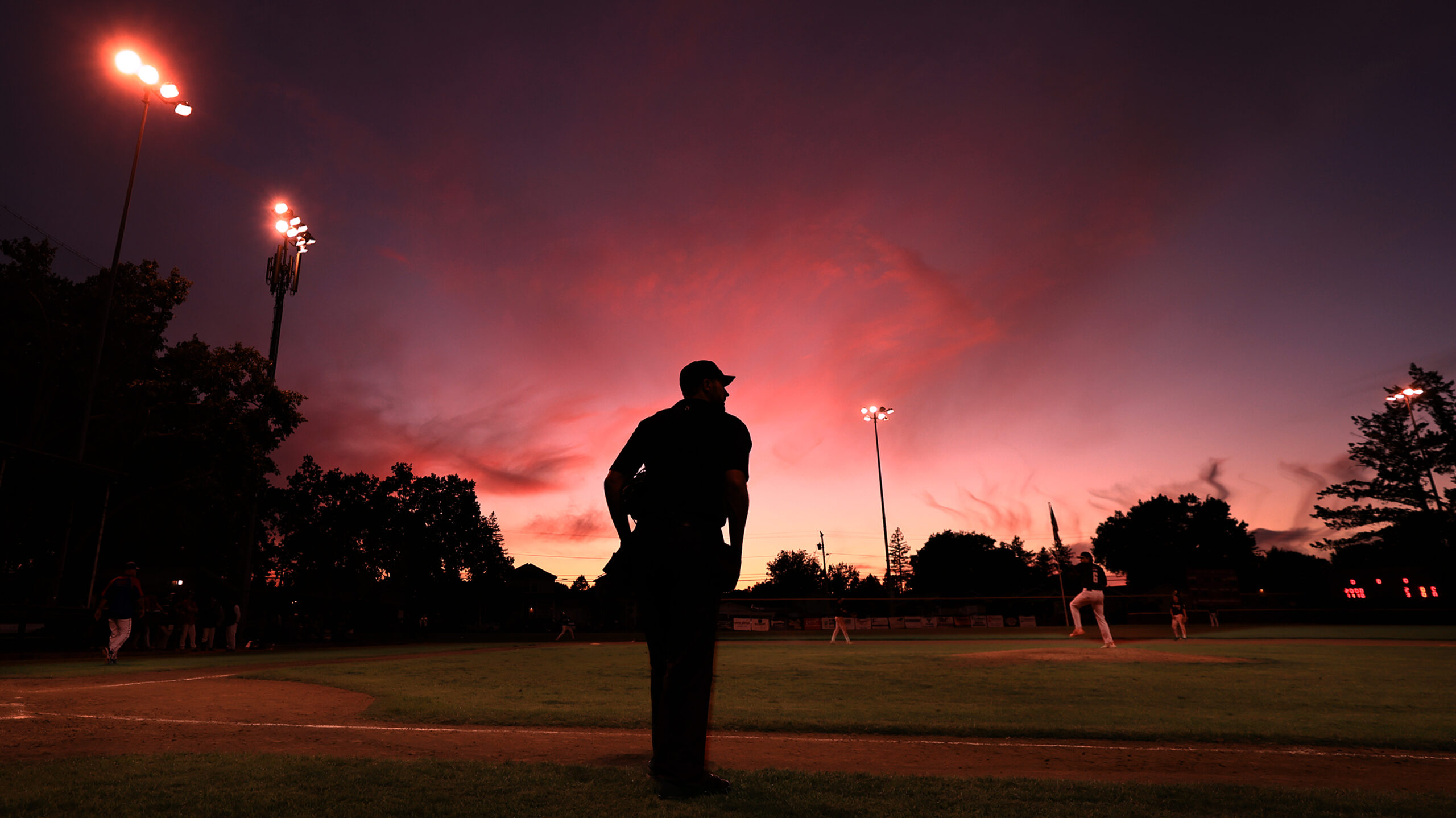
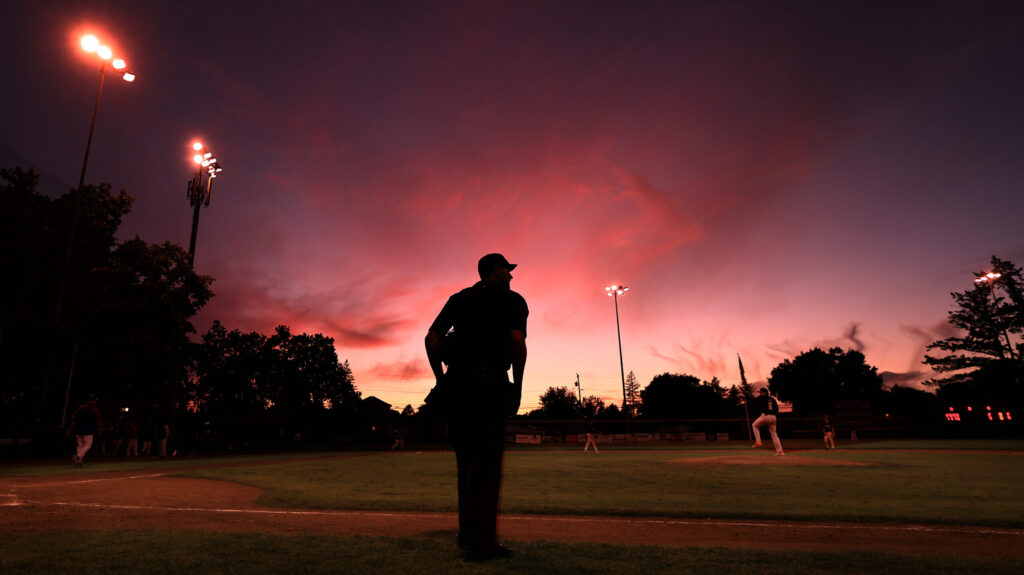
I’m always looking to the sky and the clouds to gauge the quality of a sunset. During transition months, when stormy weather and high pressure systems meet, the result is spectacular sunsets, like the one at this varsity baseball game between Analy and Healdsburg high schools. Having a few seconds between innings to get a sunset image with a foreground, the umpire stood in the right place to give me a semblance of composition.
Canon R5 camera, 15 mm lens, F3.2, at ISO 100, 1/100th-second exposure