






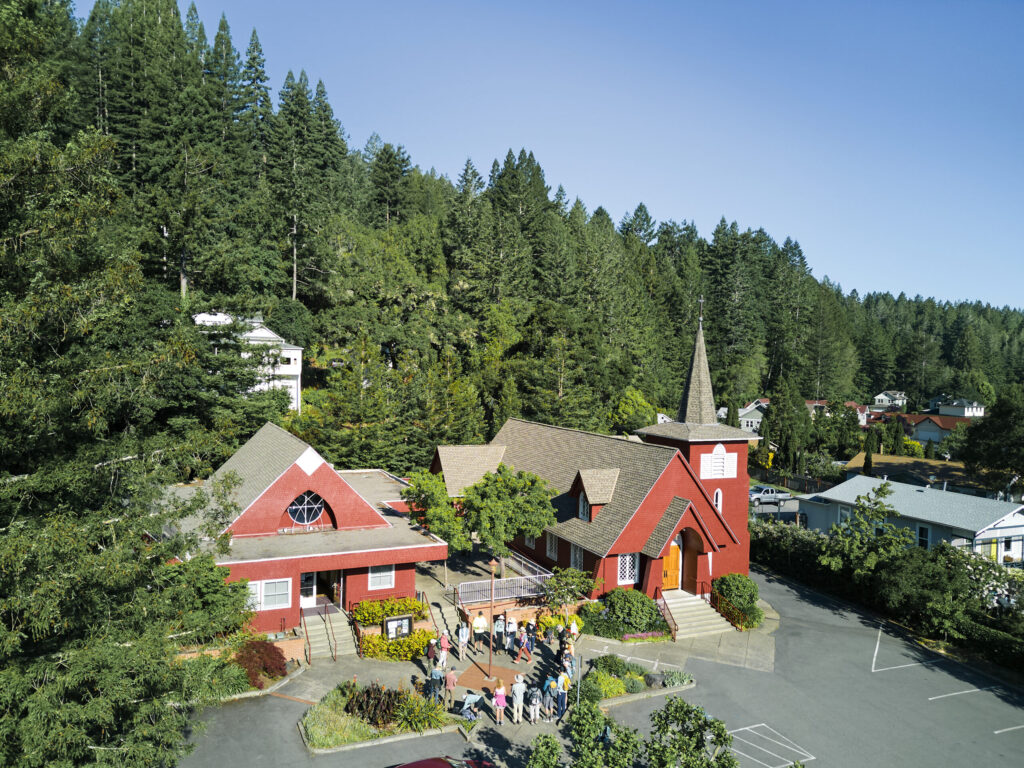
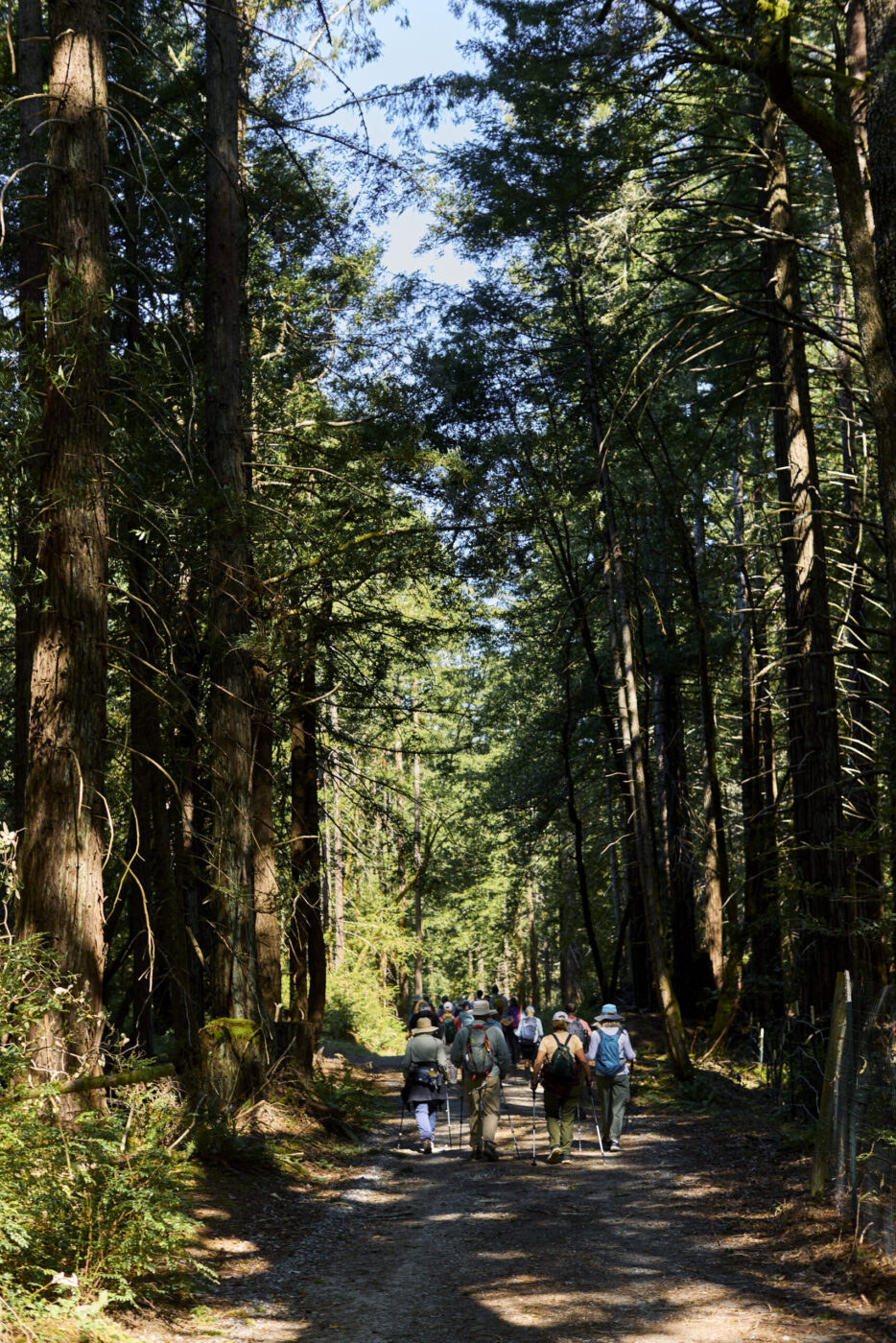
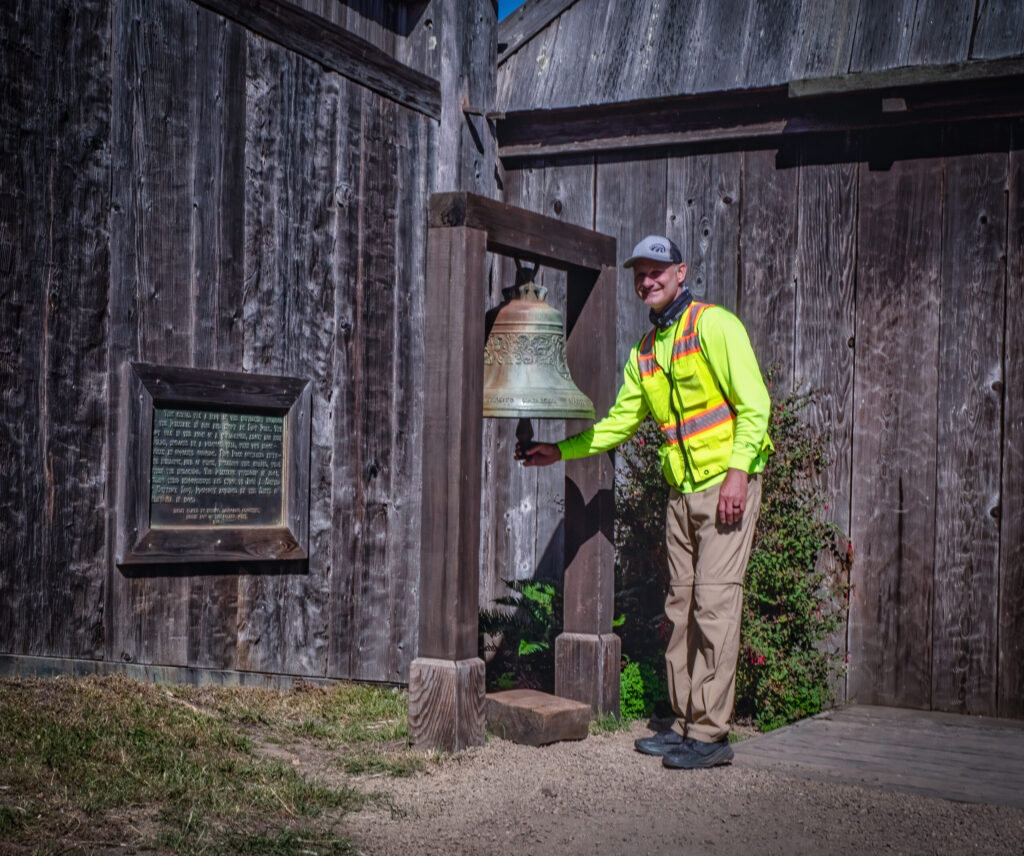

Steven Winter, known to some as Steven the Elder, is the first to mention Billy Goat Hill.
“I thought I was gonna die,” he tells me less than five minutes after I park my car, ready to embark upon my first-ever Camino de Sonoma, a six-stage, 85-mile spiritual walk from the mission in Sonoma to Fort Ross on the coast. “I think there was one part I prayed to die, like take me now,” Winter, a trail volunteer and retired Sonoma State kinesiology professor, remembers thinking during his first Camino de Sonoma experience. “I’ve lived a good 60 years. I do not want to finish this hill.”
I’d heard stories about pilgrims suffering along the ancient Camino de Santiago in Europe, but what exactly was I getting into?
“We don’t do interviews, we do walks,” Camino de Sonoma co-founder Adam Peacocke told me from the beginning. A pastor who followed in his father’s footsteps, both in the pulpit and on the football field, he has a very pragmatic way of building the trail narrative one “intentional step” at a time.
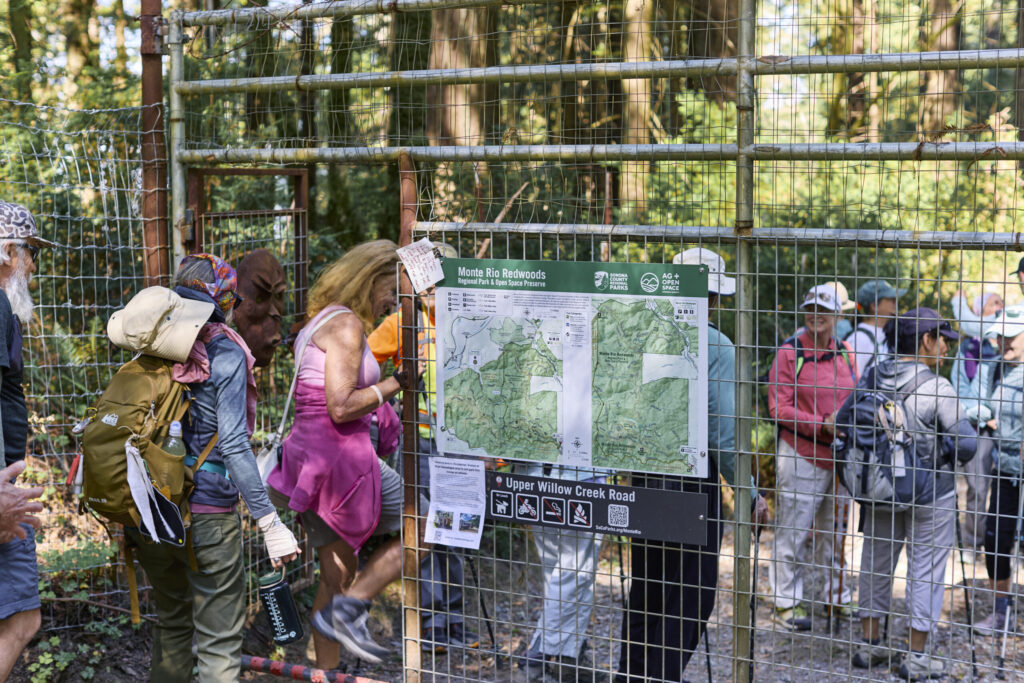
So I committed to walking Stage 1 from Sonoma to Kenwood, and planned to catch up with the group five days later at Stage 6 for the final 13.5-mile climb from Jenner to Fort Ross, which included the infamous Billy Goat Hill.
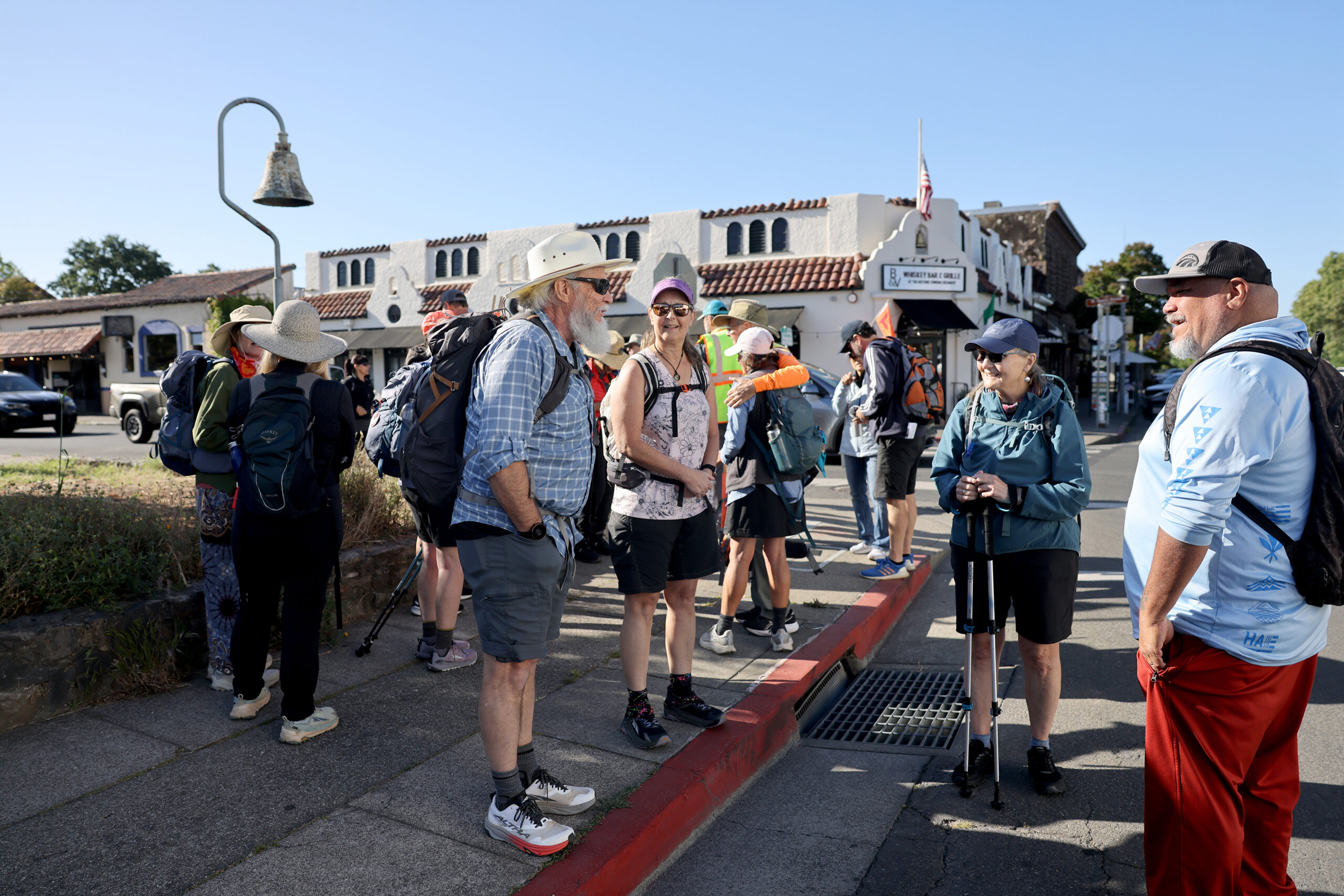
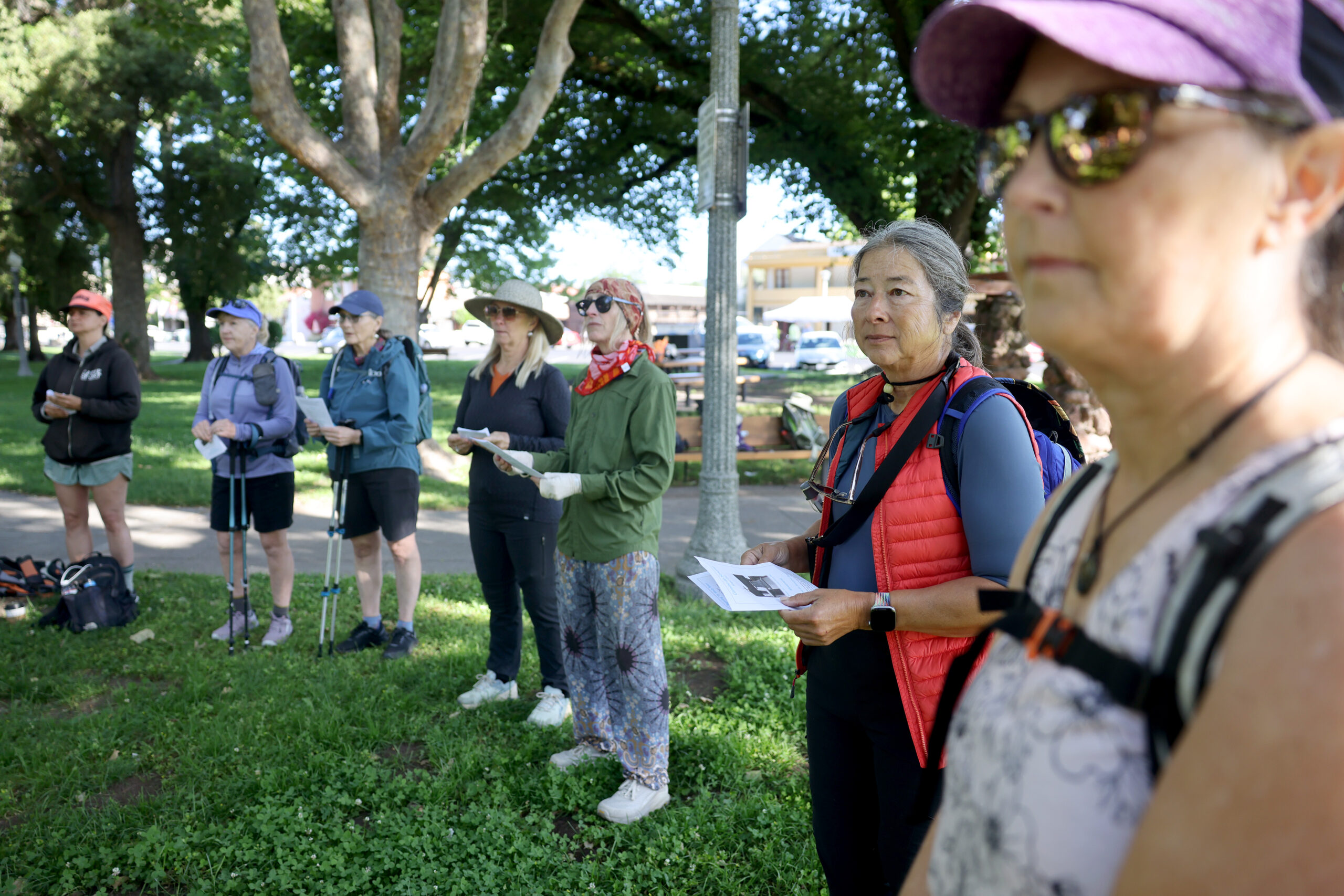
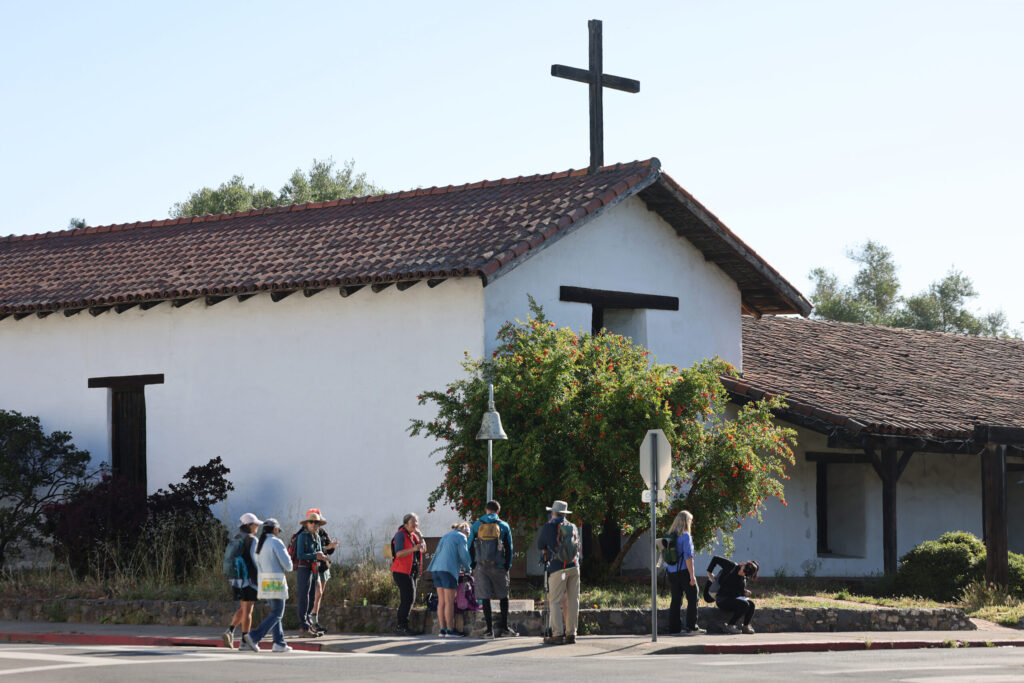
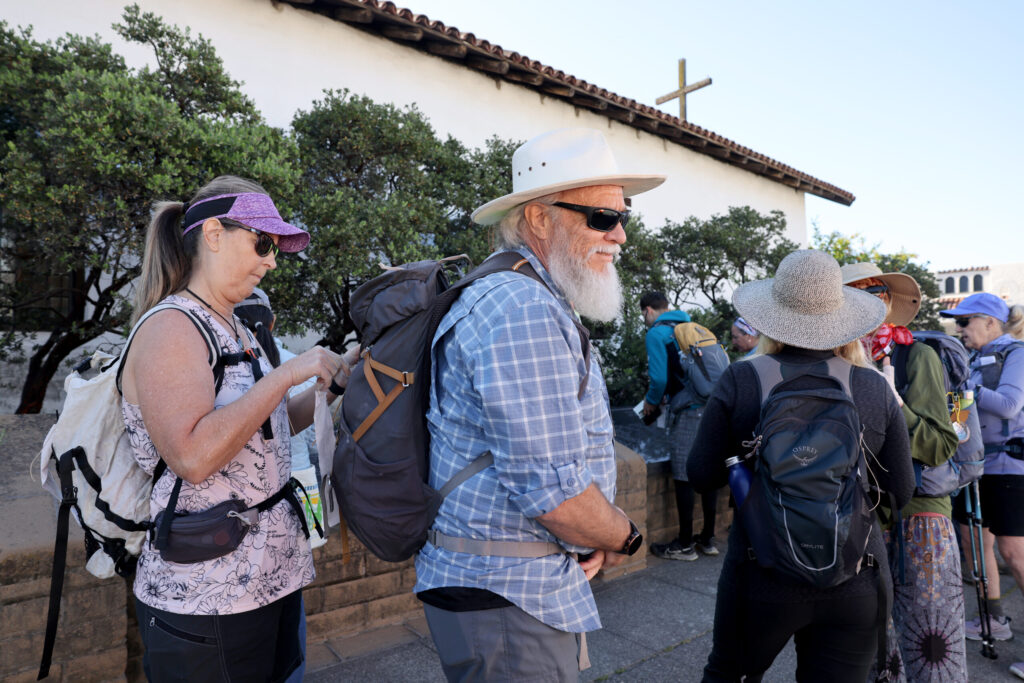
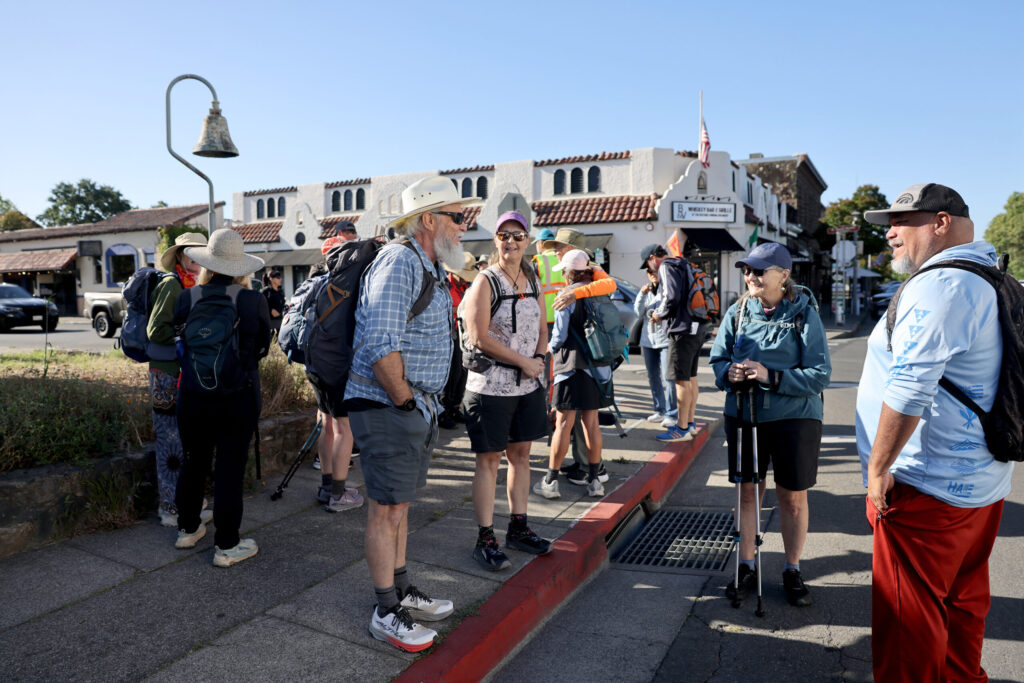
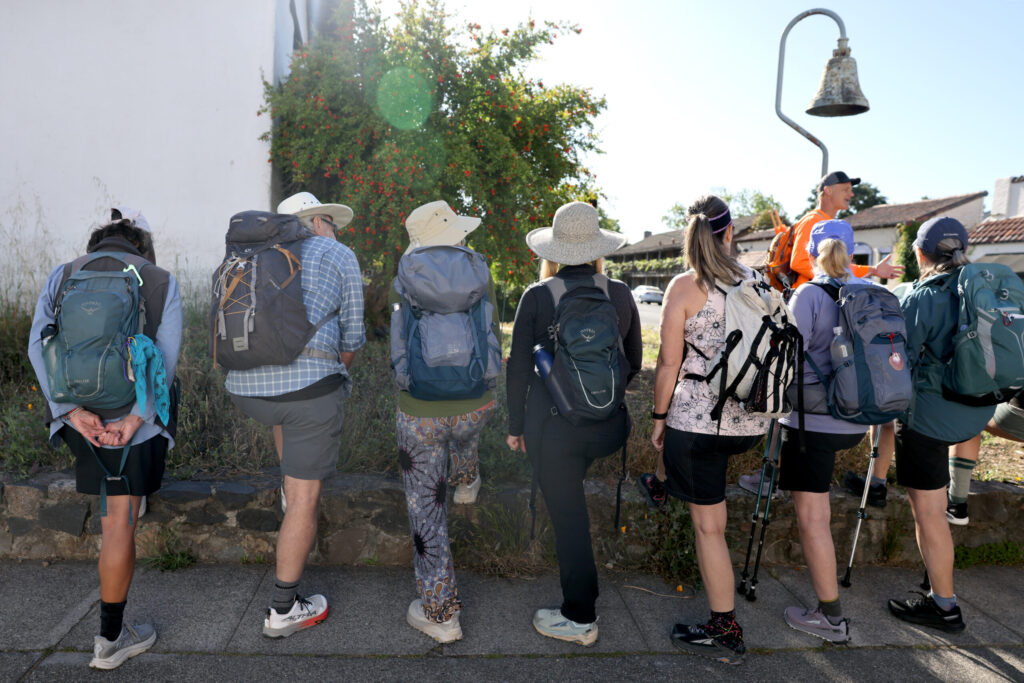
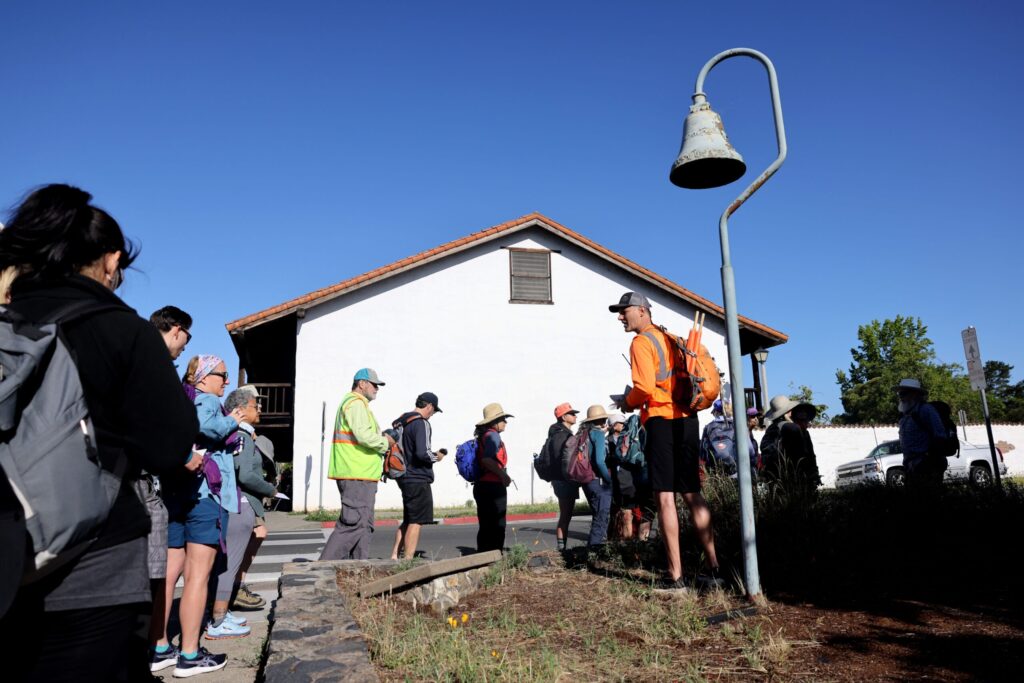
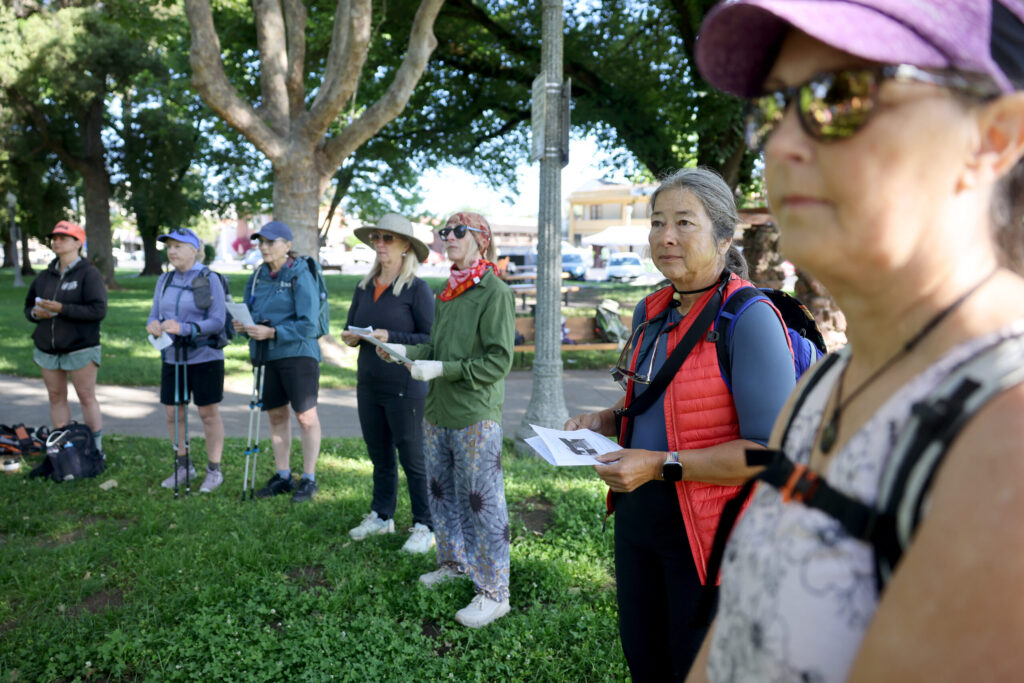
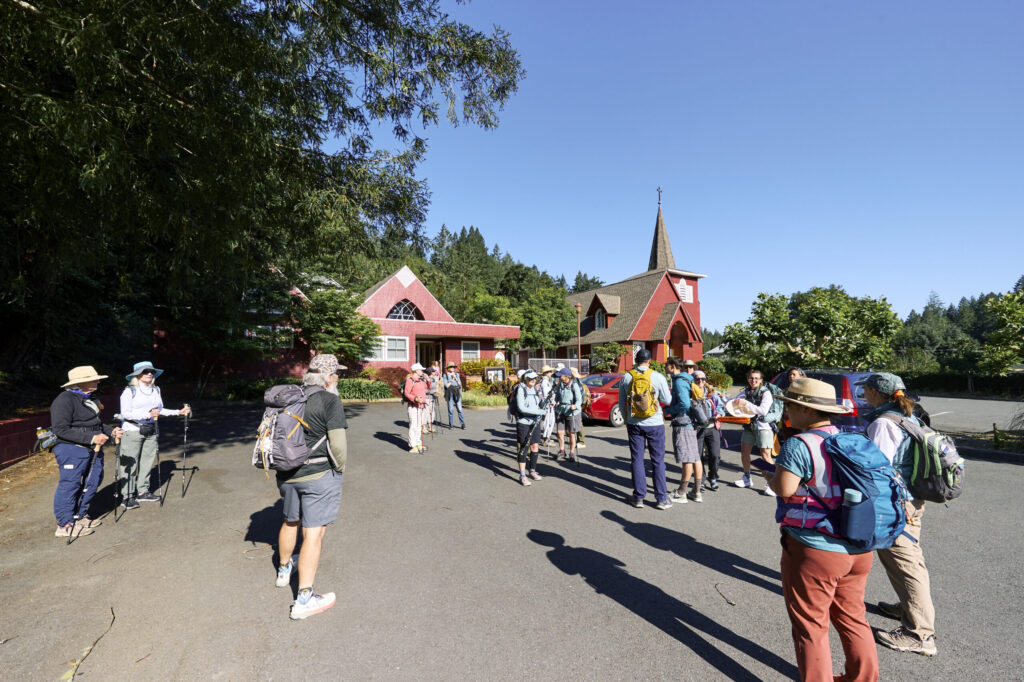
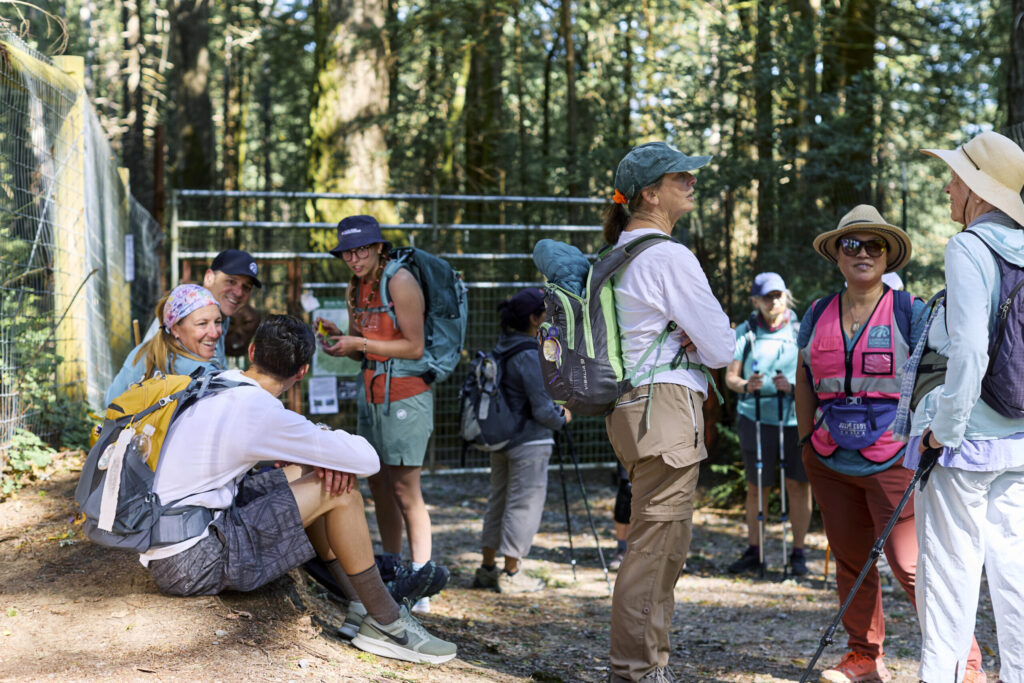
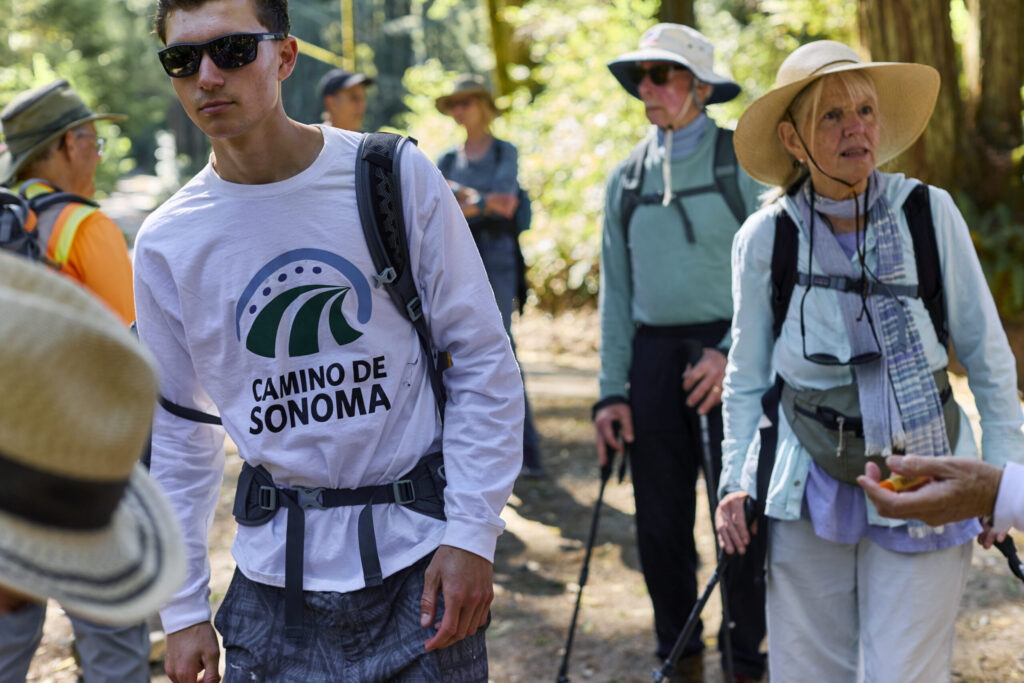
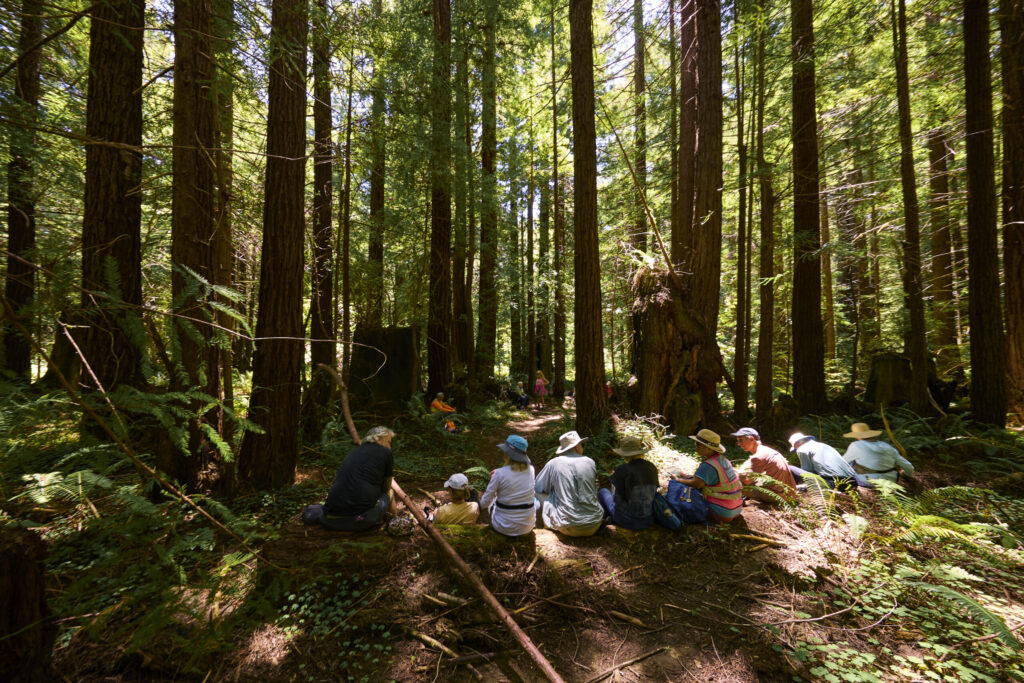
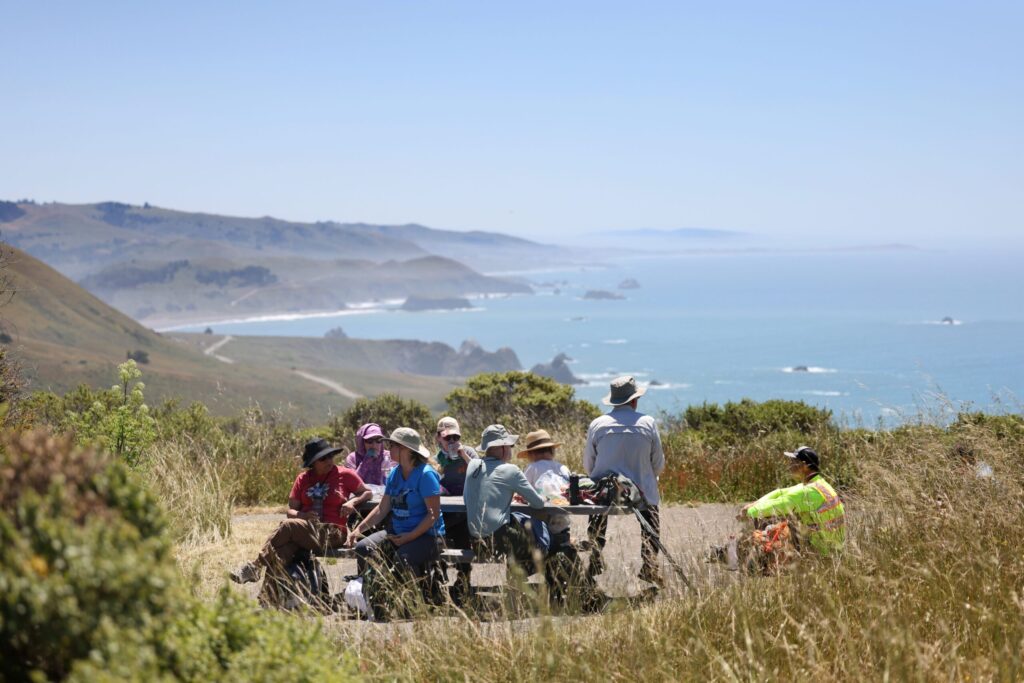
Soon after meeting Steven the Elder and co-founder Tony “Camino” McCormick, who has completed the circuit so many times (41 and counting) he took on the name of the trail, we gather in a circle in Sonoma Plaza and introduce ourselves. Dino Franklin Jr., a former tribal chairman for the Kashia Band of Pomo Indians and Camino board member, quickly sets the tone. “It’s hard for me to be in this area right here,” he says, admonishing the group of more than 20 bright-eyed, eager hikers.
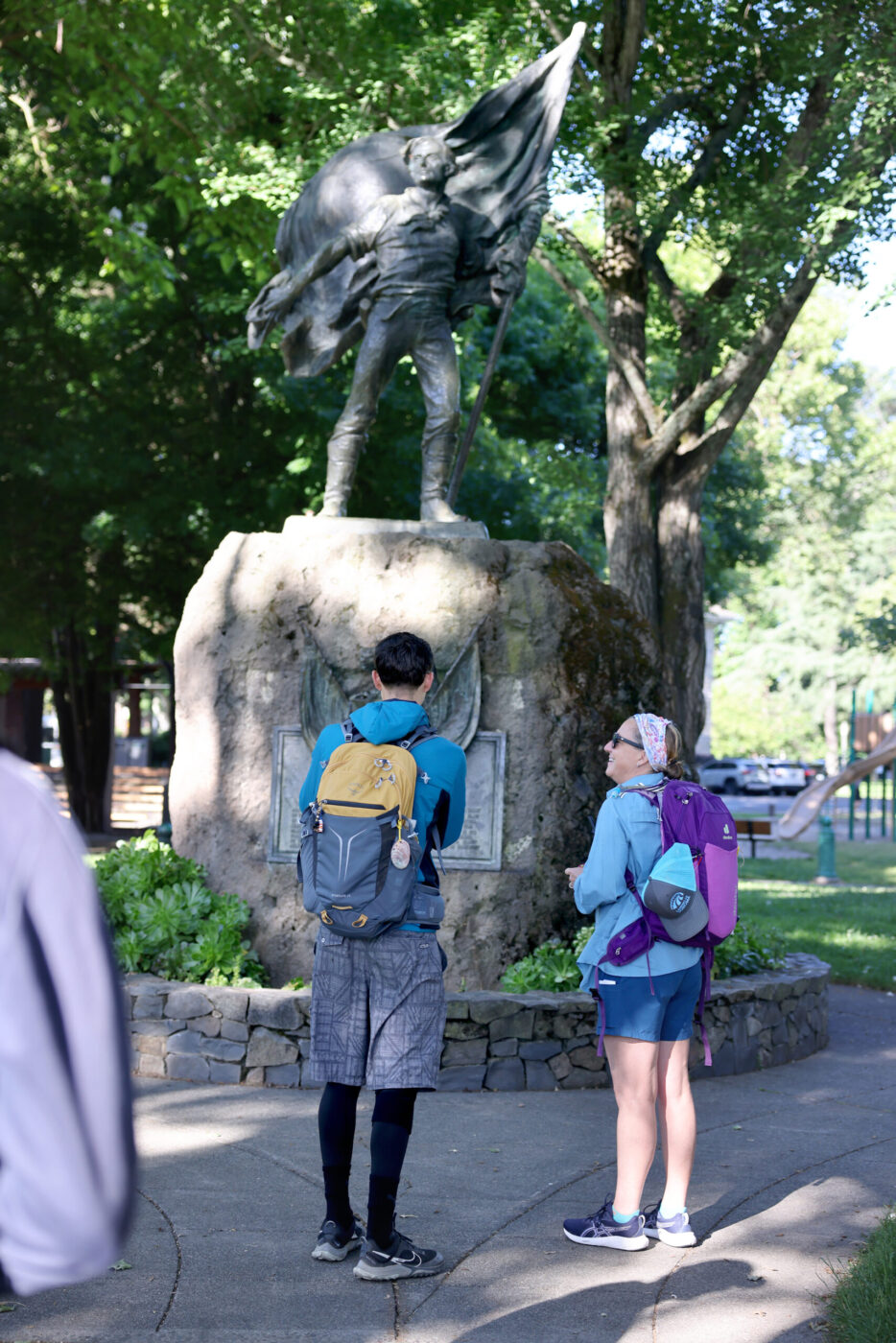
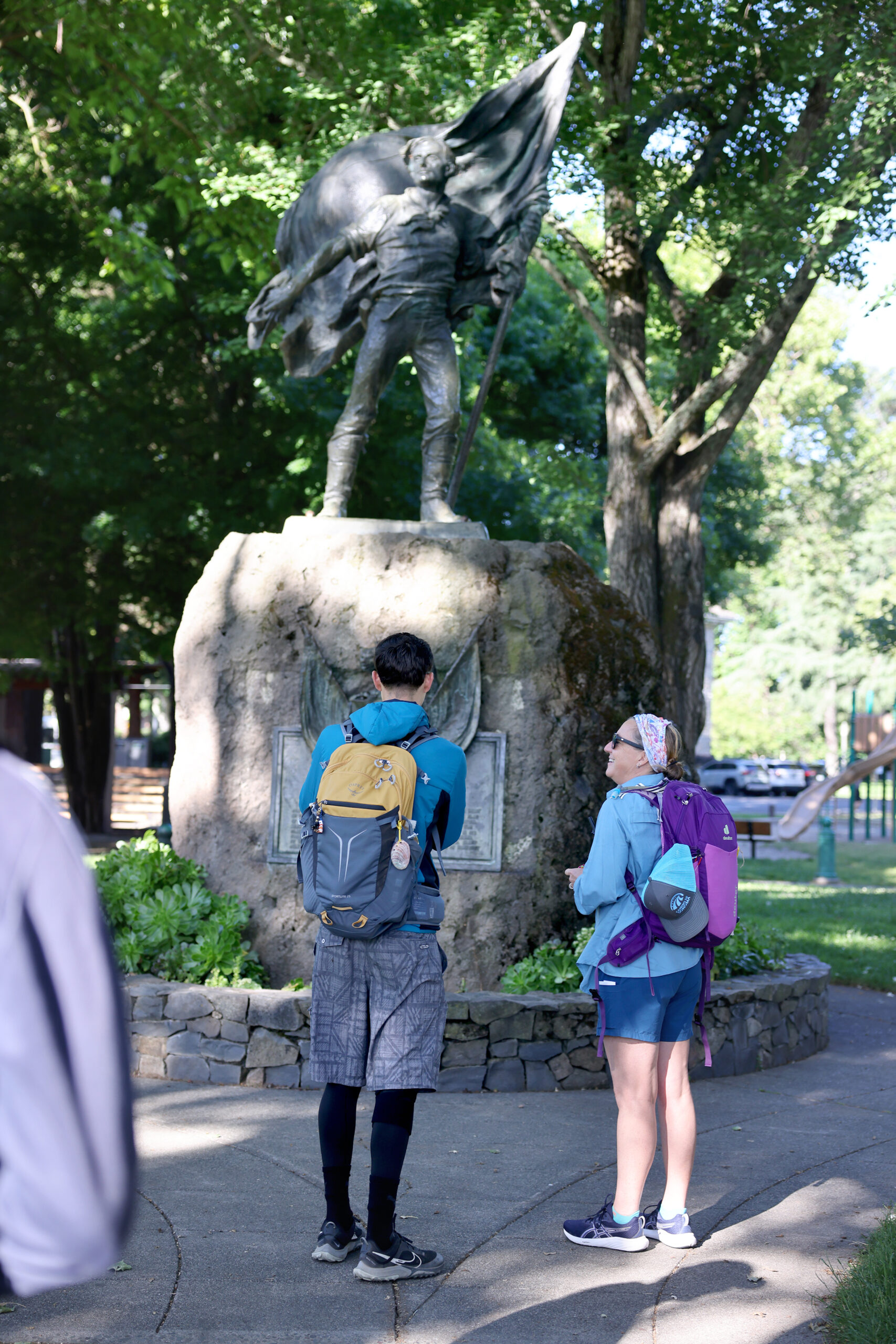
The bronze Bear Flag Monument towers behind us, and just across the street lies Mission San Francisco Solano. “I know for you guys, you get to see how beautiful this town is. But for me, I’m reminded about what’s in the ground, the blood, the babies, all that was shed for that little place right here to be built,” Franklin says, gesturing toward the whitewashed adobe chapel.
That painfully honest history is something that will come up again and again, in murals, markers, and trailside stories over the next week. Peacocke often describes the Camino as a work of archaeology.
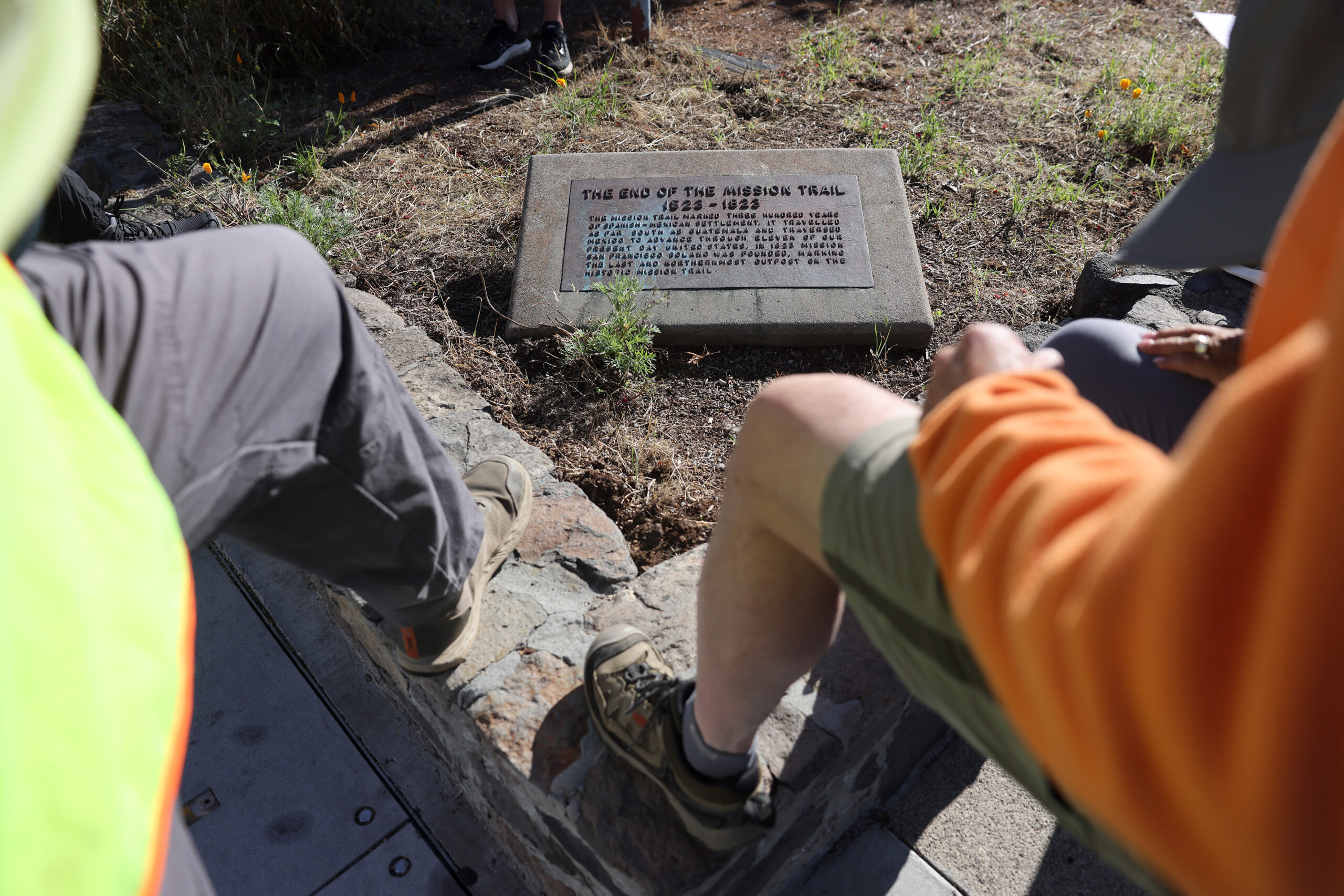
“There’s no way to be honest with it without looking at the impacts of colonization, and looking at what happened to the tribes,” he says.
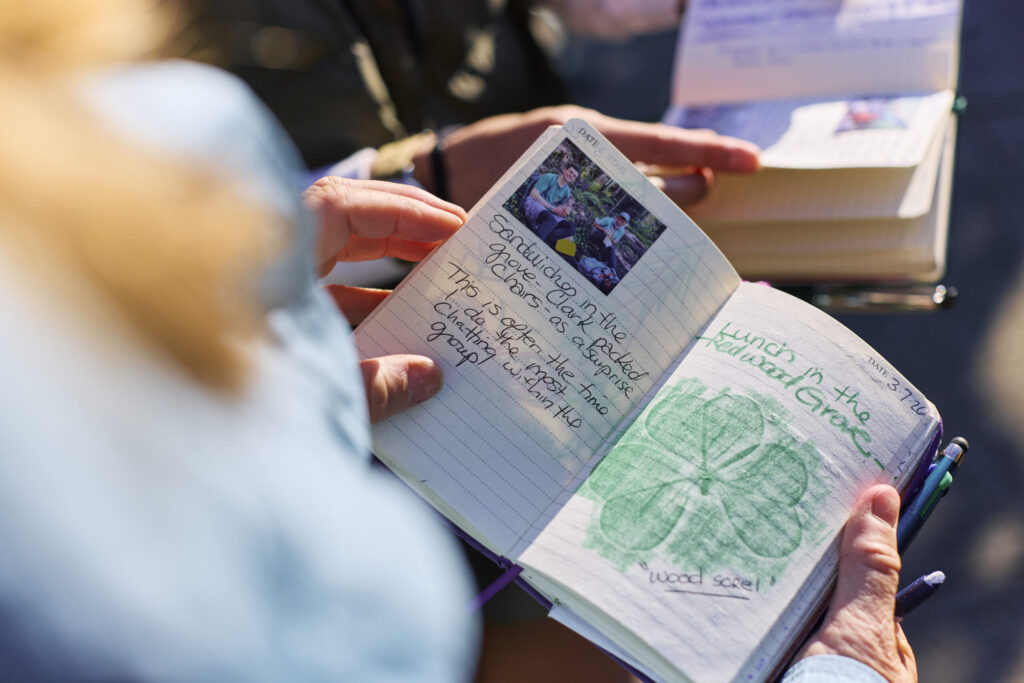
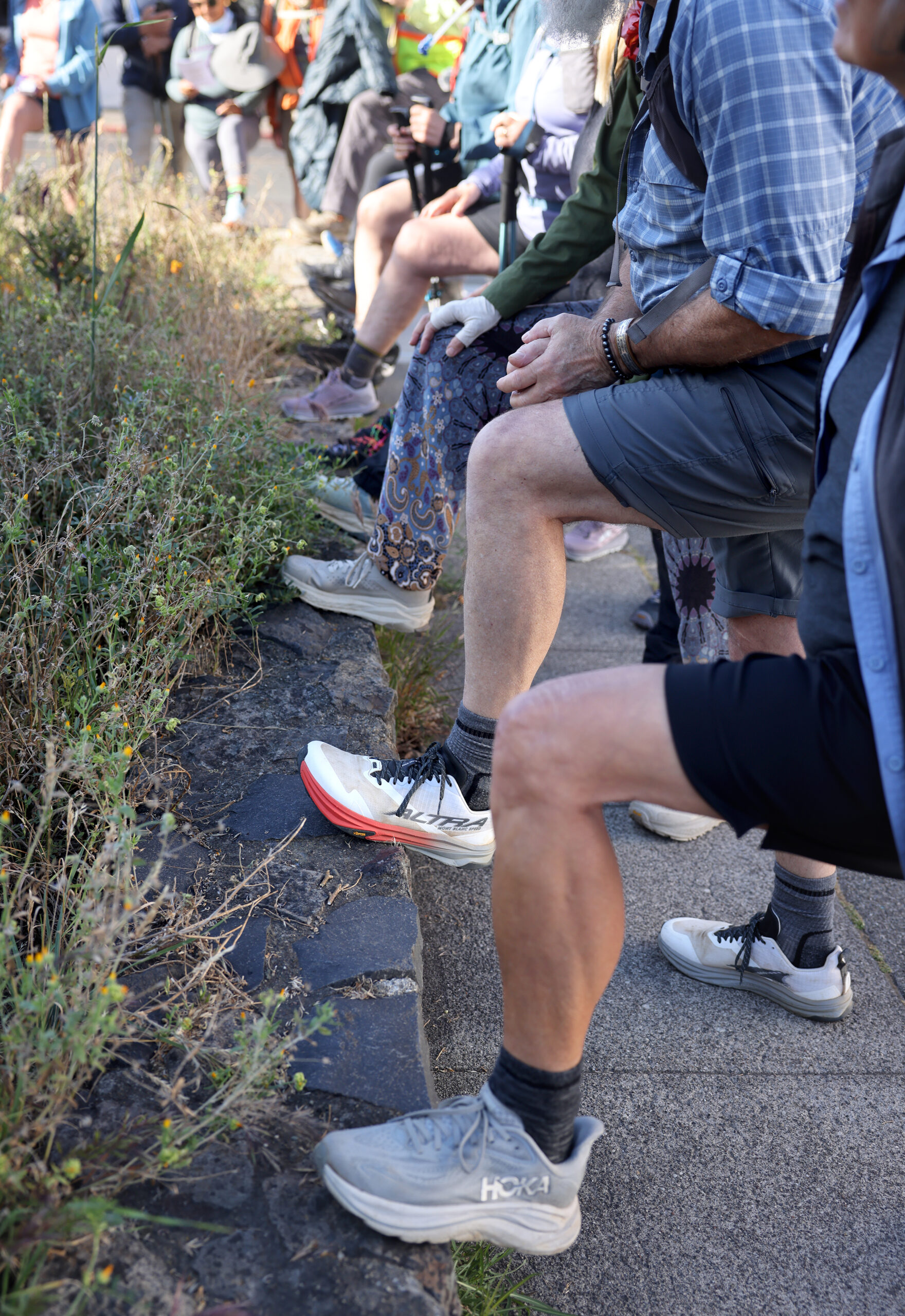
There is personal pain, here, too. Around the circle, people take turns sharing who they are “keeping in their heart” as they walk. For some, it’s a loved one who died or a parent with Alzheimer’s disease. One person mentions a loyal dog who died, another is walking for a sedentary brother who chooses not to exercise. Franklin teaches us to say “Oh!” in unison after each person shares, a solemn chant of recognition to be repeated hundreds of times over the next six days.
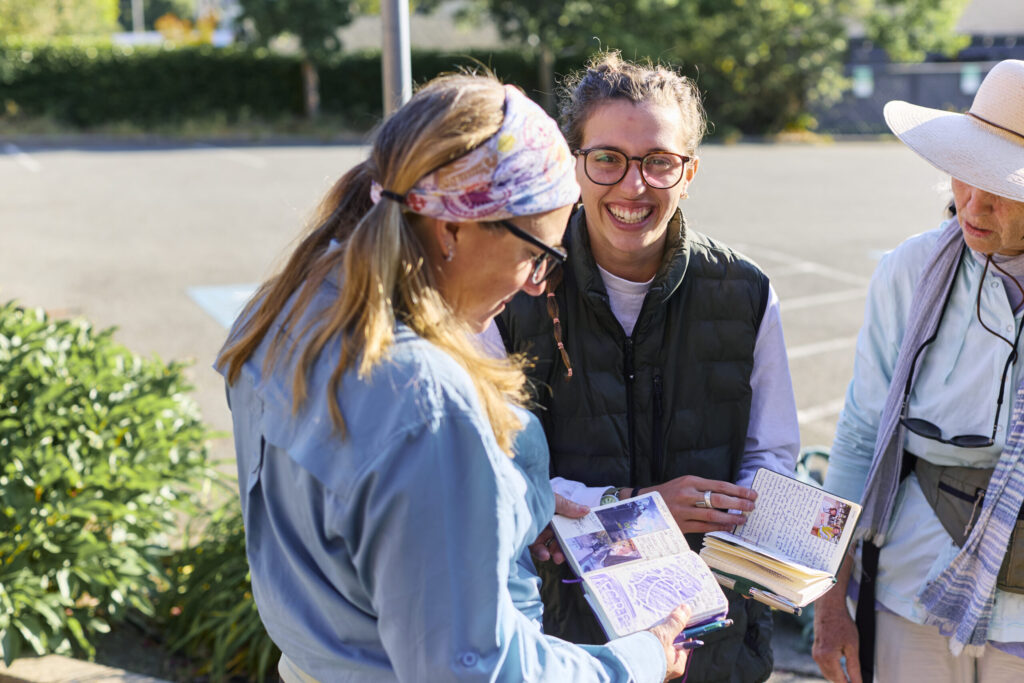
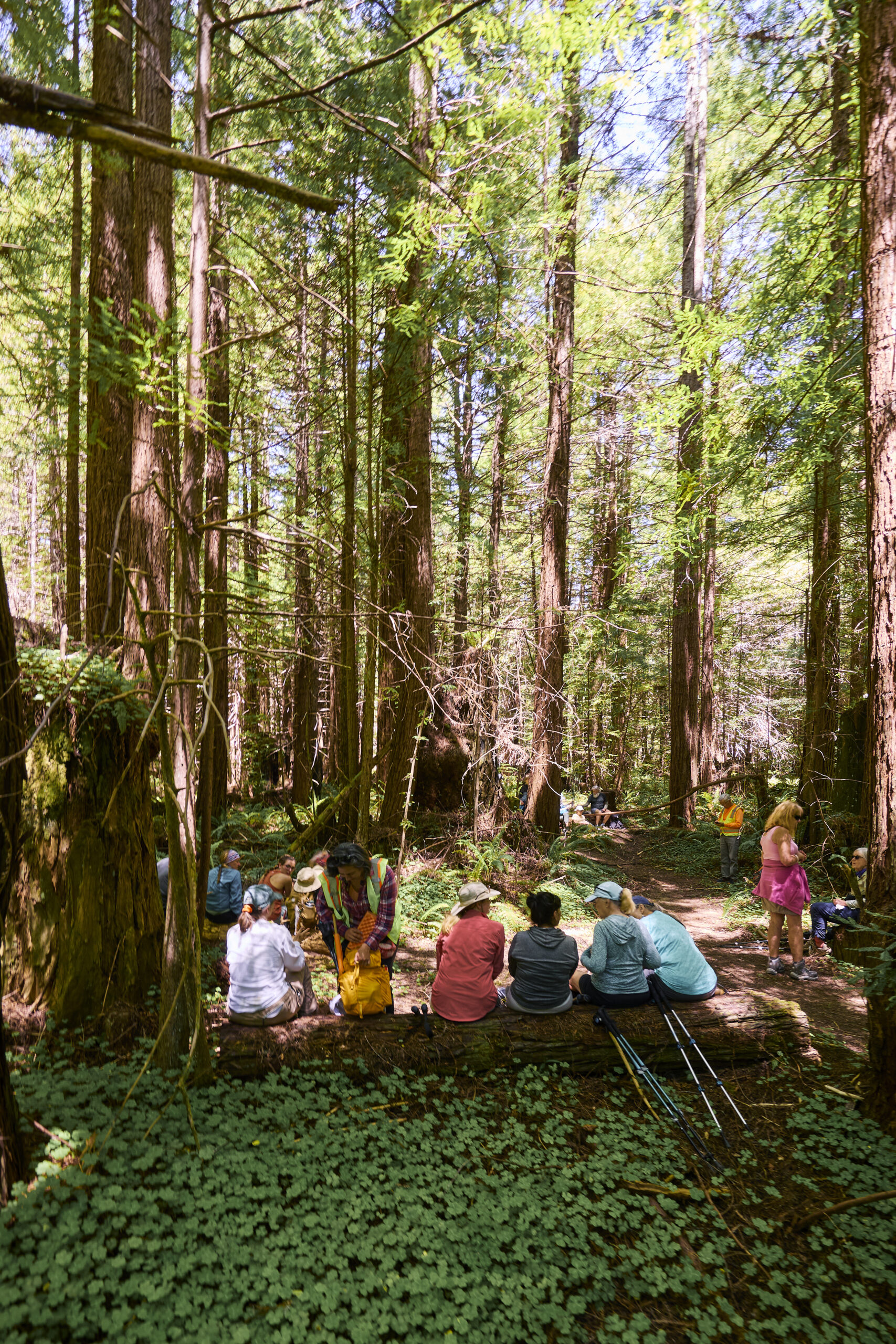
Once we get out on the Camino, strolling through suburbia toward Boyes Hot Springs, different pairings and groups take shape. There’s a mother-son team embarking on a “trip of a lifetime,” as Shelly Howe puts it. A veteran of multiple marathons and Iron Man competitions, she’s a seamstress. Her son Clark, 21, is a welder who fabricates winery signs and is by far the youngest in the group. Sam and Marcie Mills are a married couple from Cloverdale. Longtime friends Jo Arney and Robin Wendlandt flew from Portland. Wendlandt has walked over 1,600 miles along different legs of the Camino de Santiago in Spain.
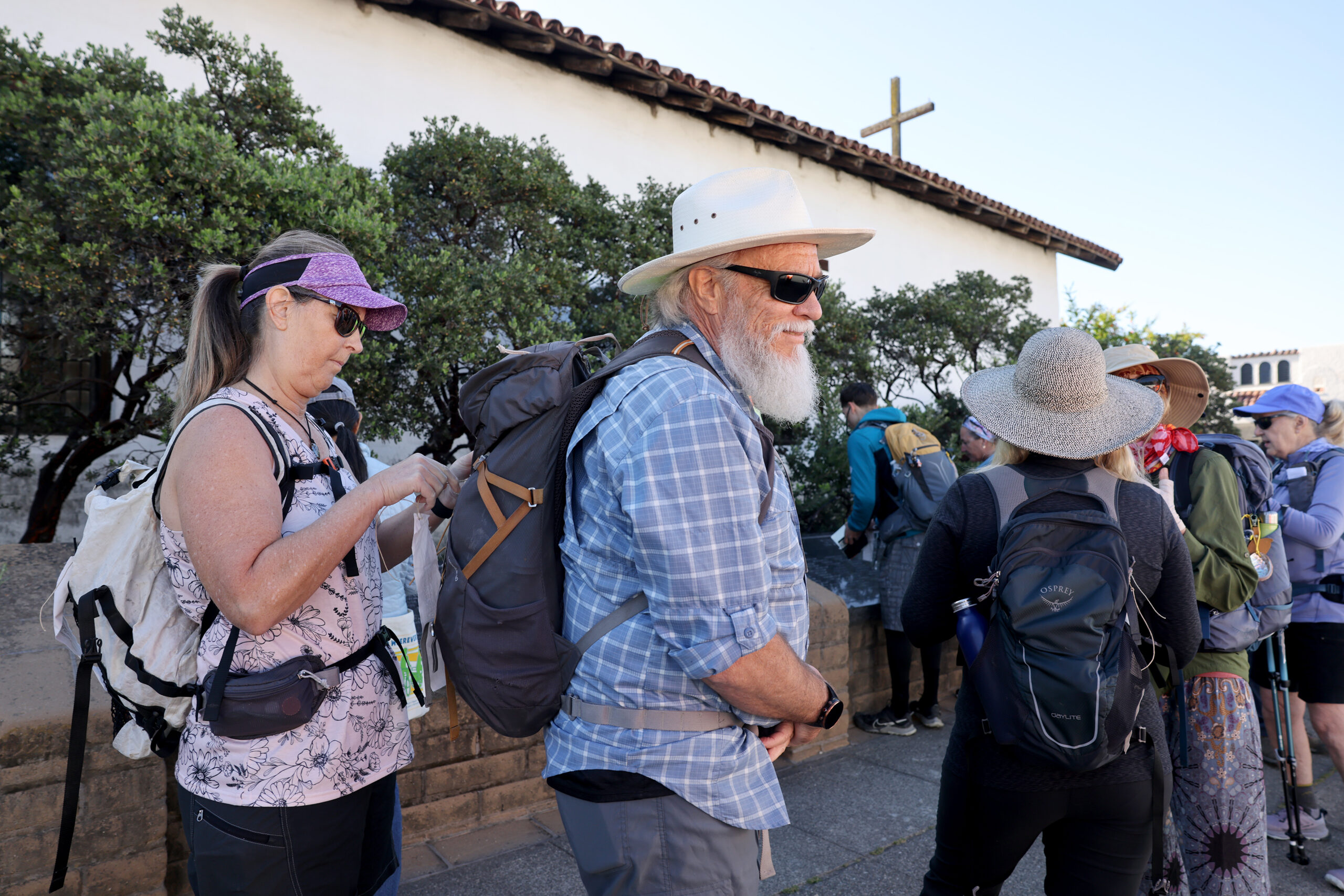
Another pair of friends, Liz Olsen and Bridget Gray, drove from Sacramento. “I came in cold turkey,” says Olsen, explaining she was “in crisis” when Gray told her, “You need a Camino.”
It sounded therapeutic, like the way someone might say you need an Advil or a shot of whiskey, so Olsen agreed to come. “I don’t know what I’m doing,” she says, “But I’m all in.”
This morning, she’s walking for her black Labrador Gemma, who died in her arms after suffering a heart attack on a hilly trail. Also in her heart is her mother-in-law who died in February.
Other returning pilgrims are dropping in for a stage or two. Franklin Jr. is walking just the first stage, sharing tribal lore along with his personal history of overcoming gang life and drug addiction.
At 69, Olga Barnes has completed the Camino seven times. When the Petaluma resident reaches the tenth, she plans to celebrate with a tattoo of the Camino logo on her leg.
Adelina Aramburo, a retired San Francisco kindergarten teacher, finished stage 6 in February, two months after her husband of 39 years died of leukemia. She says she’s still touched by Peacocke’s words to her on that last day. “Adam said, ‘We prayed for you. We know about your trials.’ It was just very gentle, and it just really opened me up.” She temporarily placed her husband’s memorial card in the chapel at Fort Ross. “He was of Russian descent, a Russian Jew, so it felt like he had come full circle.”
Retired Sebastopol electronics and software engineer John Foley is walking the Camino de Sonoma for the first time. He has traveled all over the world, hiking parts of the Camino de Santiago and taking remote journeys in Papua New Guinea, Africa, and Indonesia. At lunch, he says he feels something powerful taking shape here. “It’s like a living thing—all those people walking the same trail have imbued it with an undeniable energy and you can’t help but tap into that.”
One of the first things to know about the Camino is the terminology: The acronym “OCD” stands for “Obsessive Camino Disorder,” describing the intrepid trekkers who find the experience so invigorating they return many times over. In the beginning, it’s said you’re getting your “Camino legs,” and by the end you’re soaring on “Camino wings.”
“Camino coincidences” crop up in the unlikeliest of moments, like when two people walking on the same day discover they’re both there to commemorate a late parent’s 107th birthday. At the slightest hint of serendipity, pilgrims will say, “The Camino provides” in a zen-like cadence that hangs in the air like “the Dude abides” in the cult film “The Big Lebowski.”
The earliest religious pilgrimages to the Holy Land predate written history, going back to the dawn of organized religion. Every year, spiritual pilgrims retrace well-worn paths all around the world, testing their physical endurance along the Camino de Santiago in Europe, Abraham’s Path in the Middle East, Kumano Kodo in Japan, and the Inca Trail in Peru.
In 2017, during a transitional period of his life, Peacocke set out on a walkabout while on a trip to New Zealand where his wife was born. Learning about the rich history of the land and the Maori people had a profound effect on him. “I went 6,000 miles away from home to get inspired about how we might be able to meaningfully engage the beauty and the story of Sonoma County,” he says.
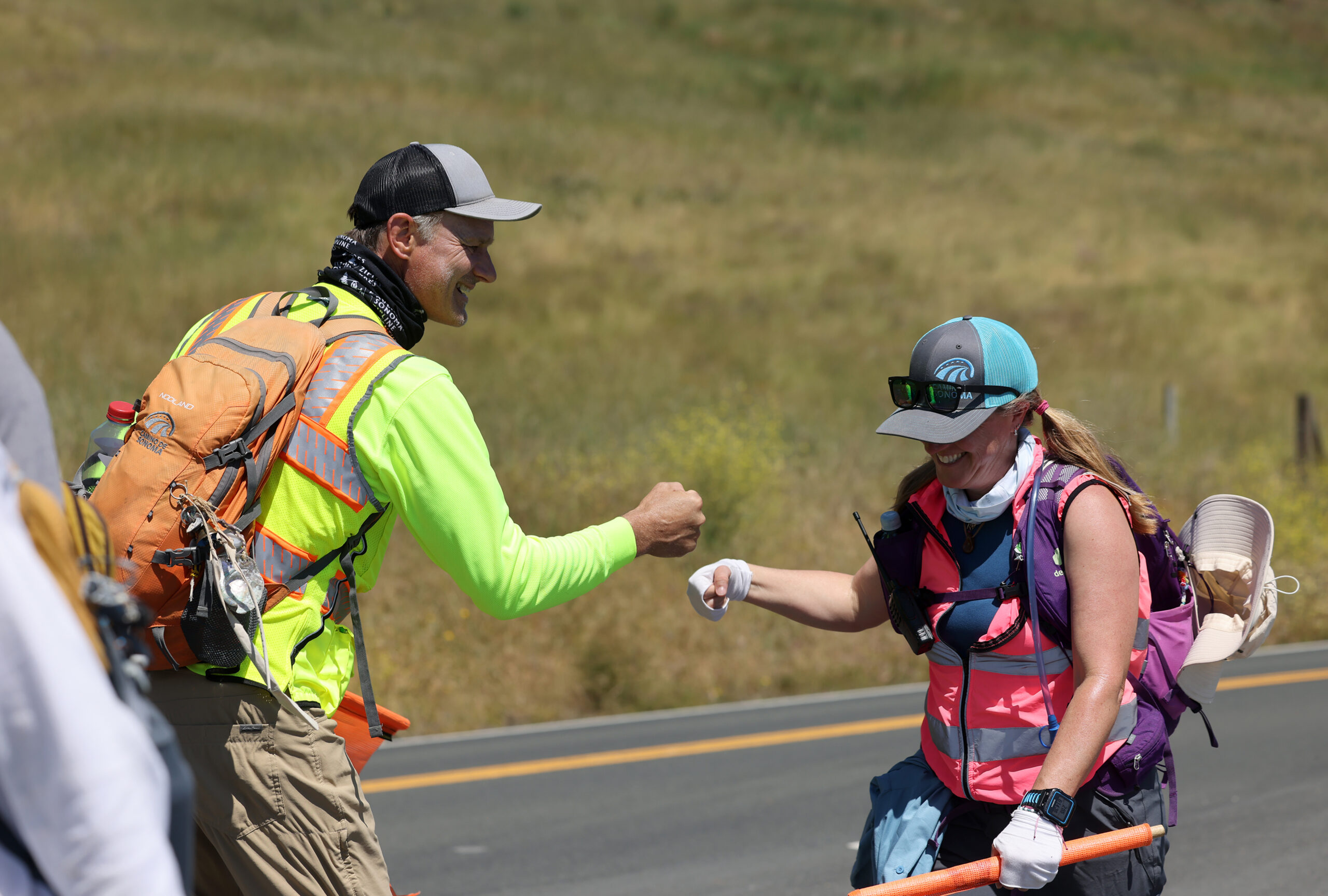
Back home, he pitched the idea to longtime friend McCormick, known to most these days as “Tony Camino.” More than a decade before, they had founded the nonprofit Hope Works to help people who have been incarcerated find meaningful employment after prison. Born in Texas, McCormick grew up in Southern California where his family often camped with no tents, sleeping under the stars. After more than 30 years as an electrician for Hewlett-Packard, he retired and was ready to walk the earth.
The two began hiking all over Sonoma County, trying to connect a network of trails and stories from Sonoma to Fort Ross, until one day in 2019, they found the missing piece in what is now Stage 6. “We stopped at these two cypress trees, and just looked at each other, and we said, ‘This is tangible,’ McCormick remembers. “And we just started crying. We just got overwhelmed.”
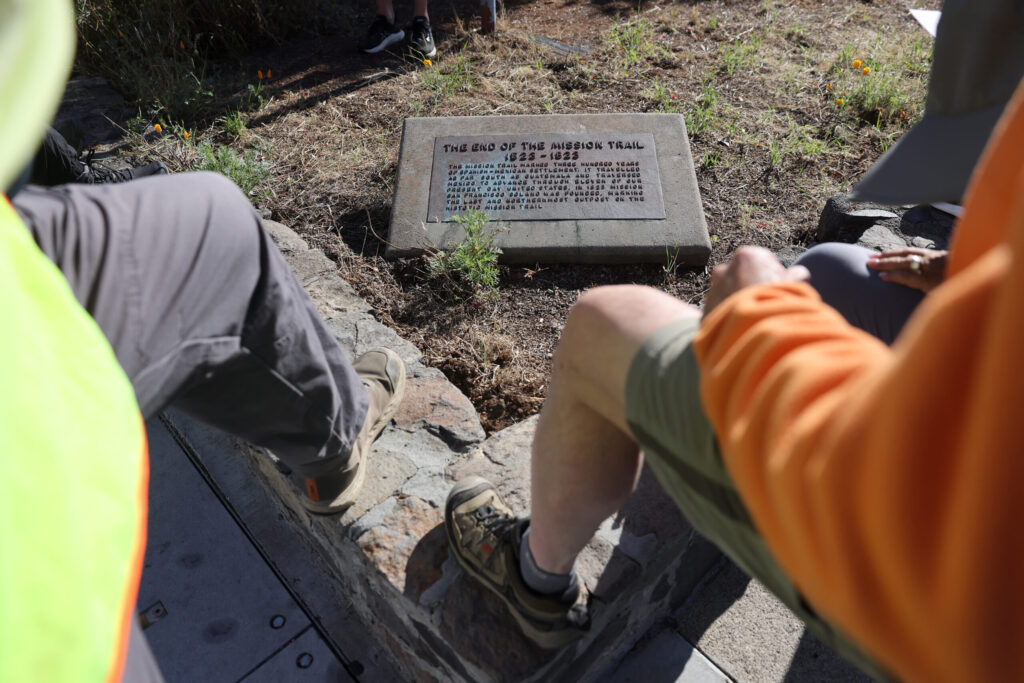
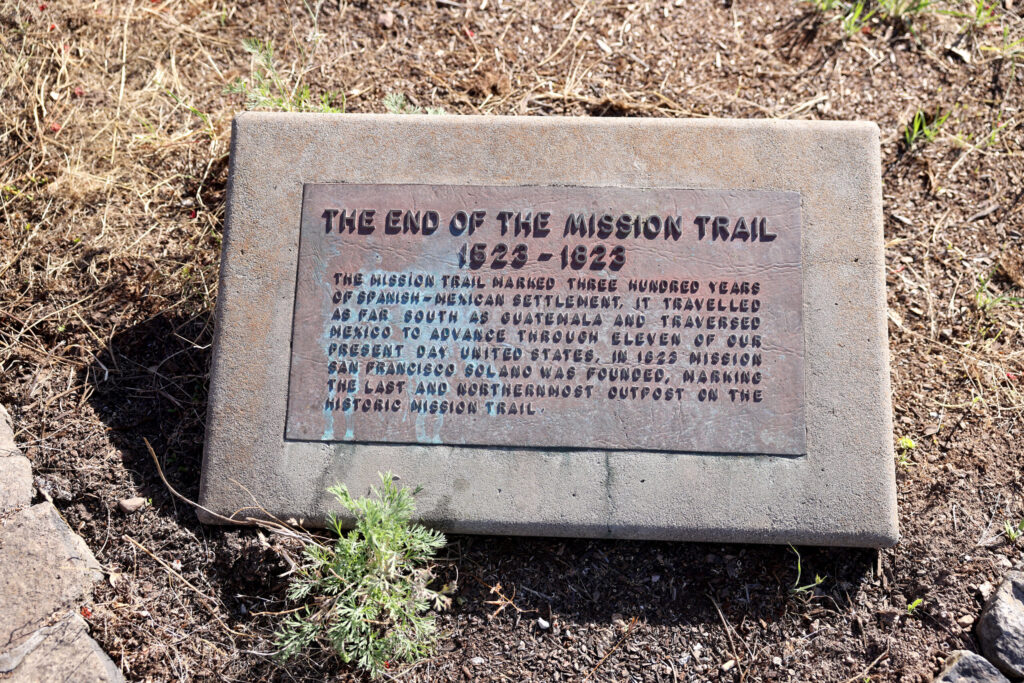
Not long after, 11 pilgrims hiked the first Camino de Sonoma. Today, around 650 people have traveled the route. They expect to hit 100 million steps along the path next year. Pilgrims pay nothing to walk the Camino; the endeavor is funded entirely by donations and guides are volunteers.
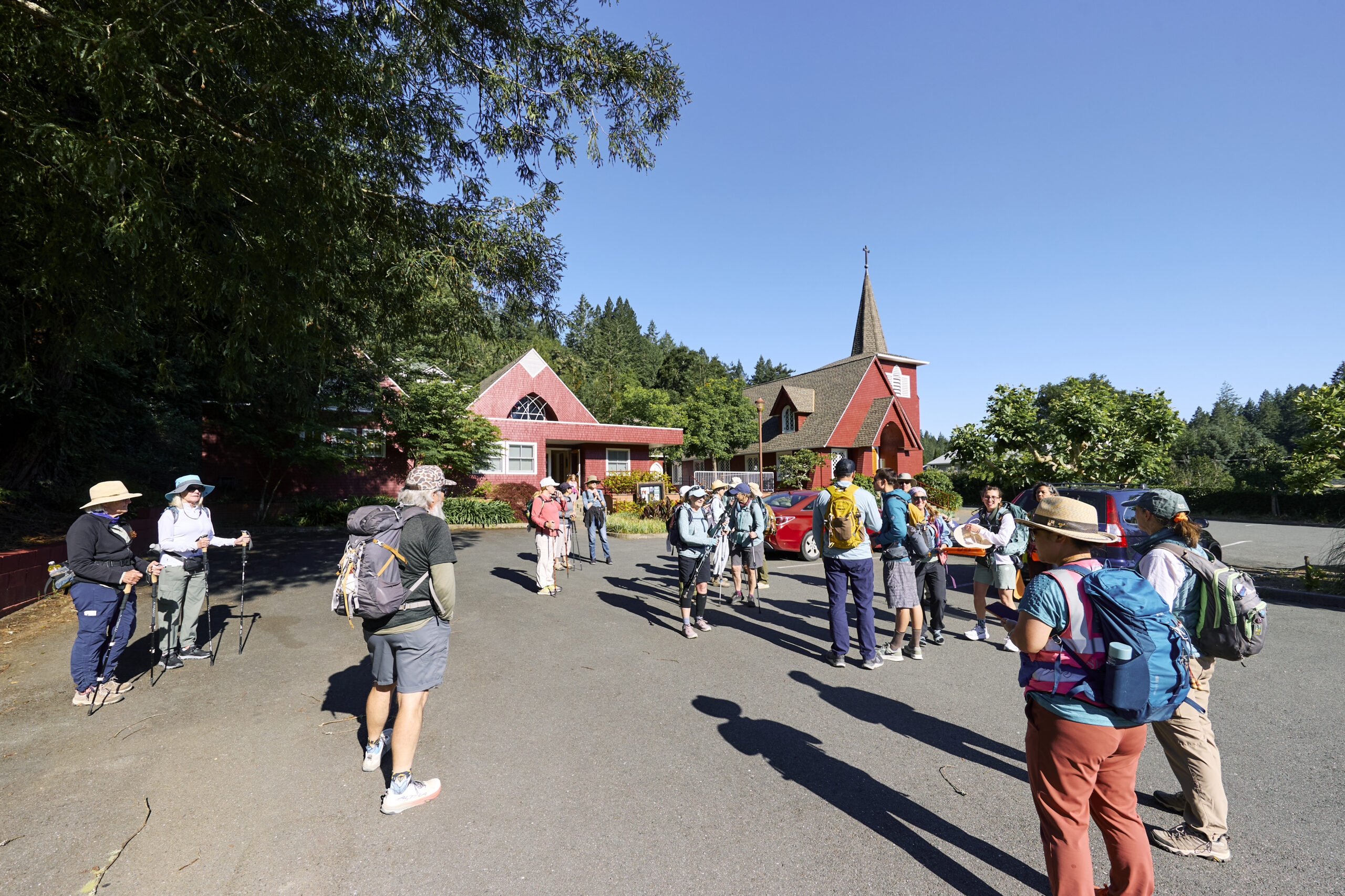
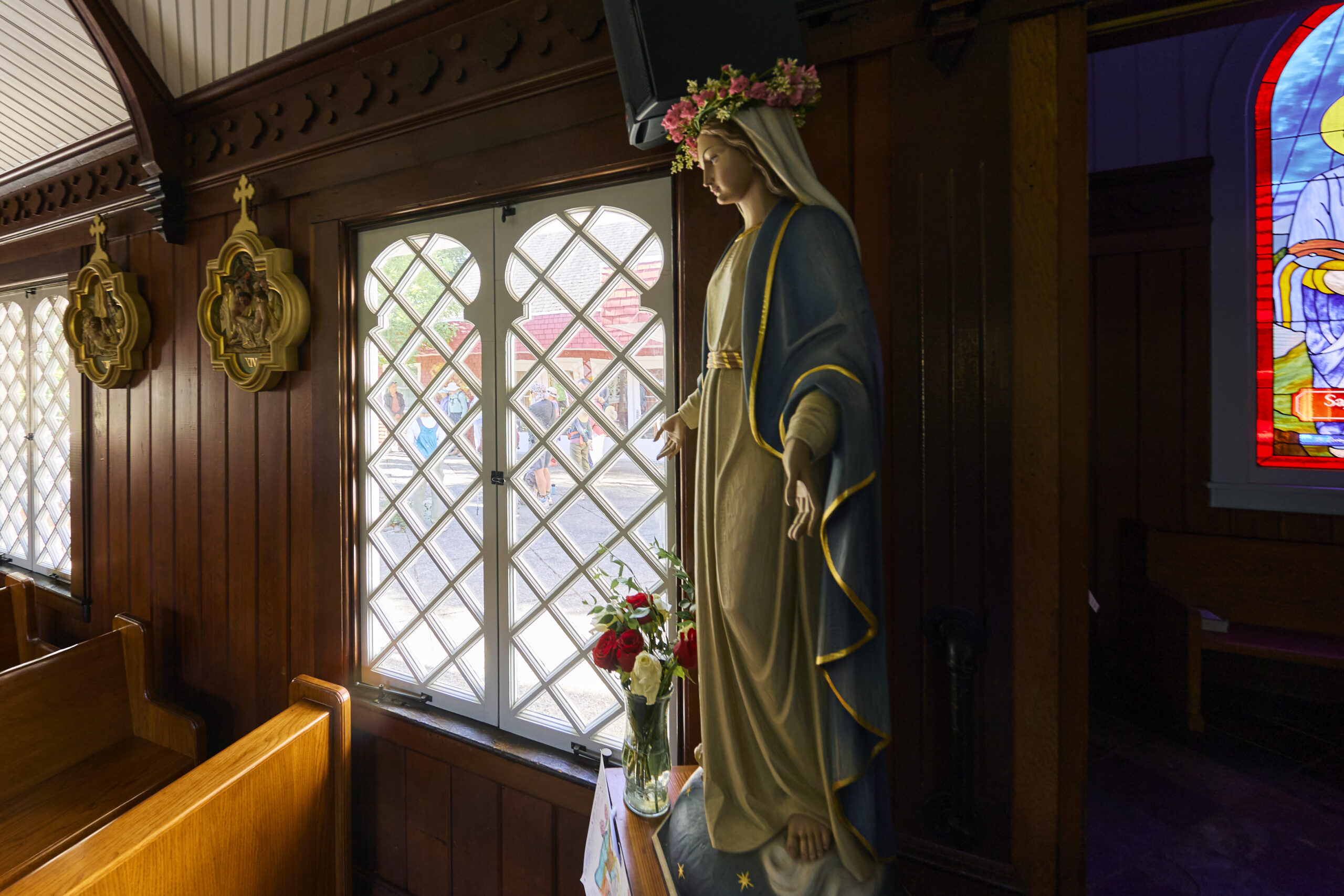
There is an element of Christian spirituality to the pilgrimage. Peacocke and McCormick often talk about “walking with intention along the healing path.” Each stage is curated with scripture and inspirational quotes read from a pamphlet they pass out to pilgrims, but they make it clear no one needs to subscribe to their beliefs in order to walk.
Clark Howe, the 21-year-old welder, didn’t grow up going to church and isn’t religious. “It’s never really been my sort of thing,” he says. “But the way that they approach it, it’s not in your face. They say, ‘Here’s what’s important to us, and I think you might take something from it.’”
Volunteer guide Christine Matsumoto-Deveaux is a practicing Buddhist and has seen all walks of life set foot on the trail. “A pilgrim is someone who’s in search of finding what they need at that time in their life, whether it be spirituality or not. That’s actually the beauty of the Camino—we don’t care what faith you are,” she says. “You’re one of us, we’re a family, and everyone is here for a different reason.”
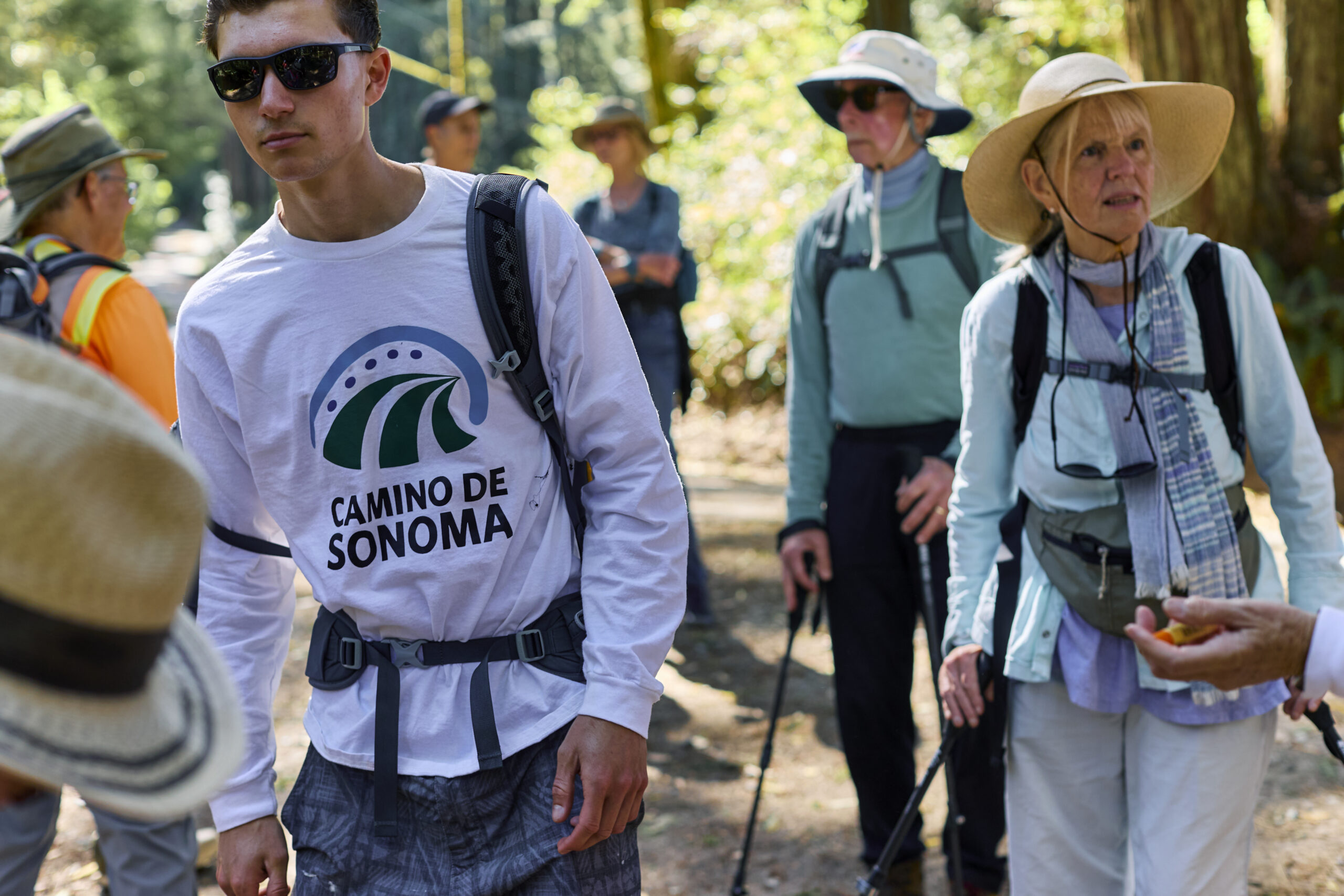
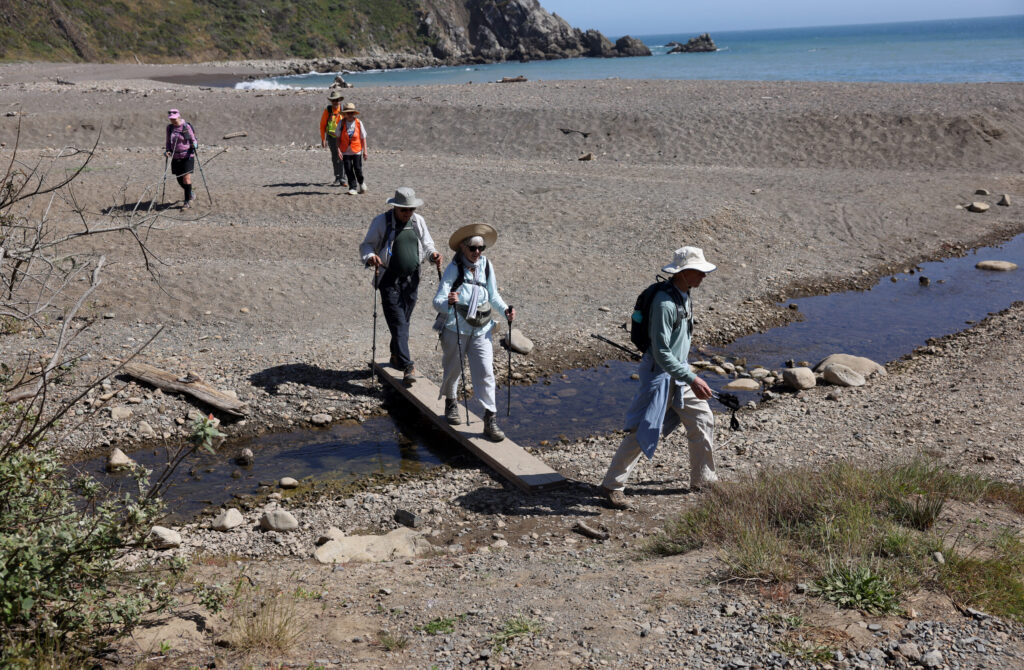
Over the next four days, hikers send texts and photos as they walk through Santa Rosa, Sebastopol, Occidental, and beyond. They stop at a backroad lemonade stand, buying up every ounce of juice much to the surprise of the two young kids running it. Shelly Howe sends photos of the group pouring water from their canteens into Willow Creek near Occidental, a trickle they will reunite with as it flows into the Russian River and the Pacific Ocean at Jenner.
“Fatigue on the feet is real at this point,” she writes after Stage 4. “A lot of hills ahead, but we’ve got this! The group is strong for sure!”
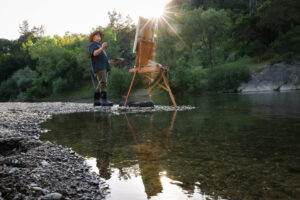
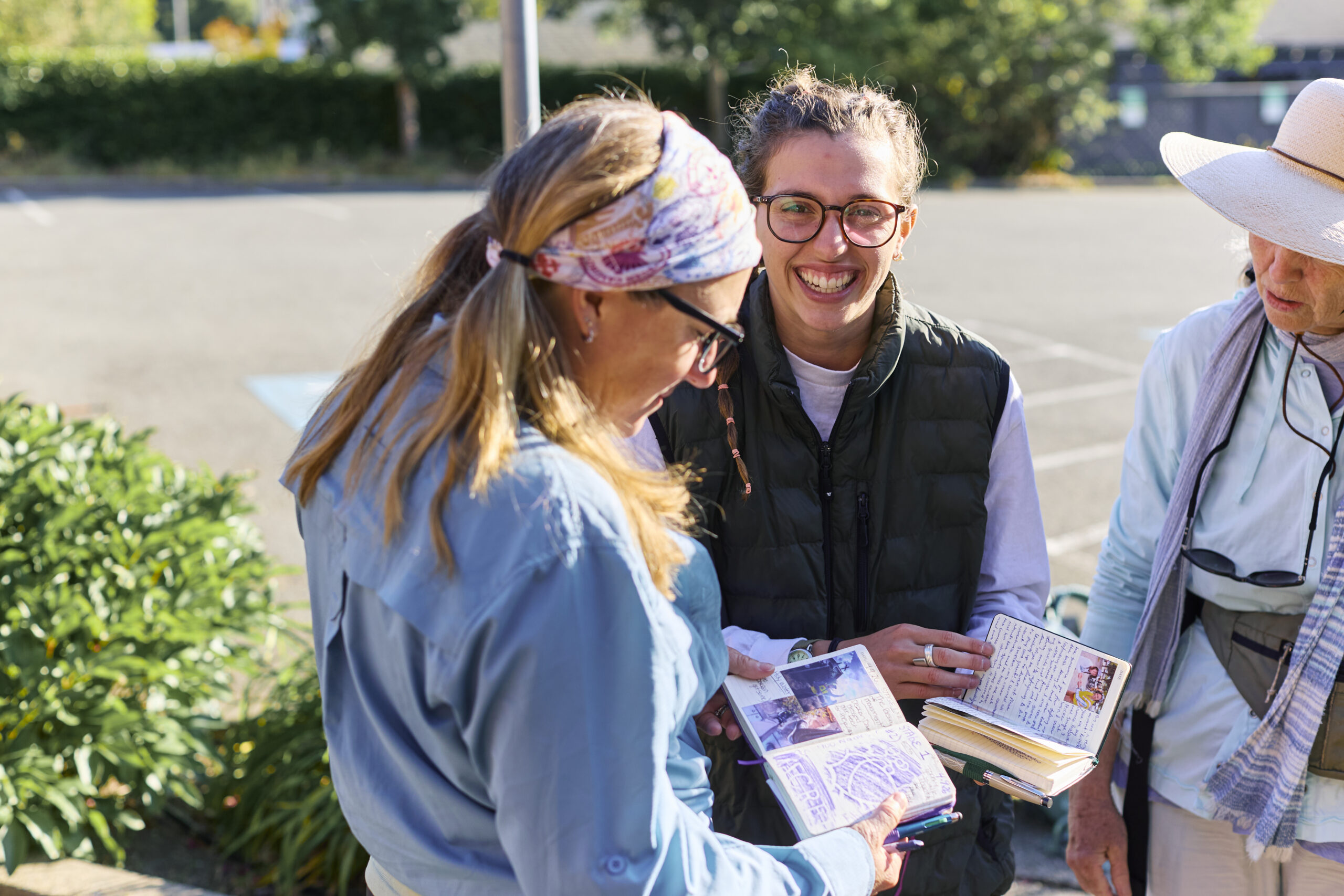
Foley, the retired Sebastopol engineer, was only planning to do Stage 1, but he enjoyed the first day so much, he committed to seeing it through to Fort Ross. On the Sebastopol-Occidental leg, his artist son, Owen Foley, met the group at Analy High School where he painted the Japanese internment camp mural and shared his inspiration and creative process with them. For everyone, it’s the highlight of Stage 4.
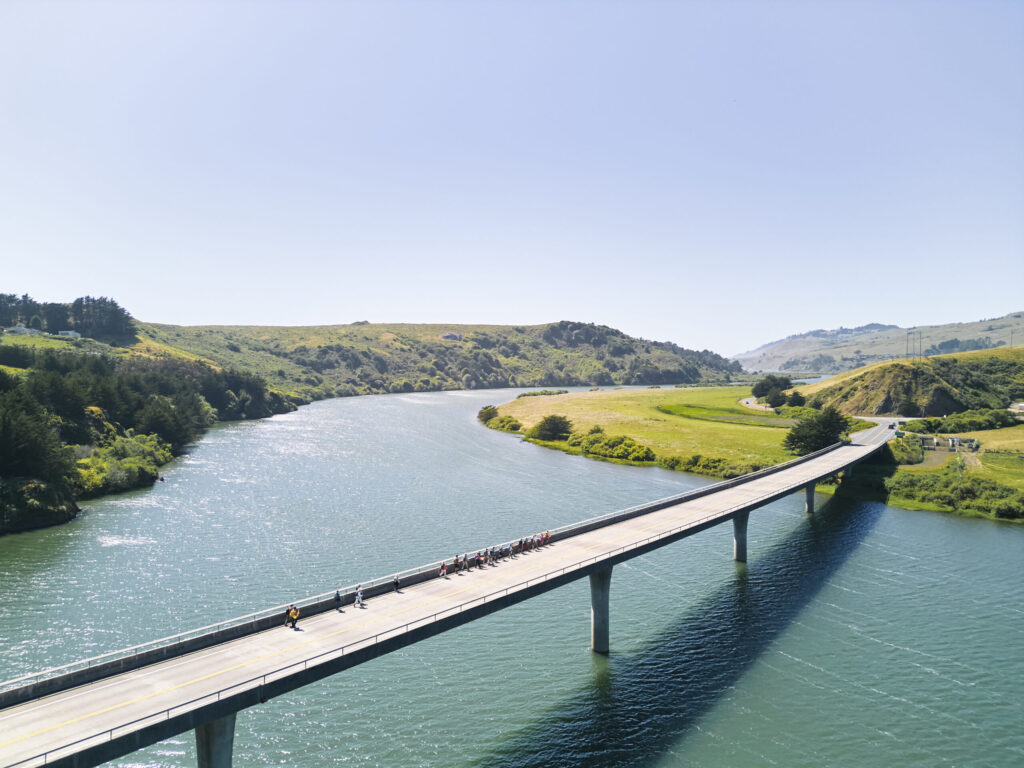
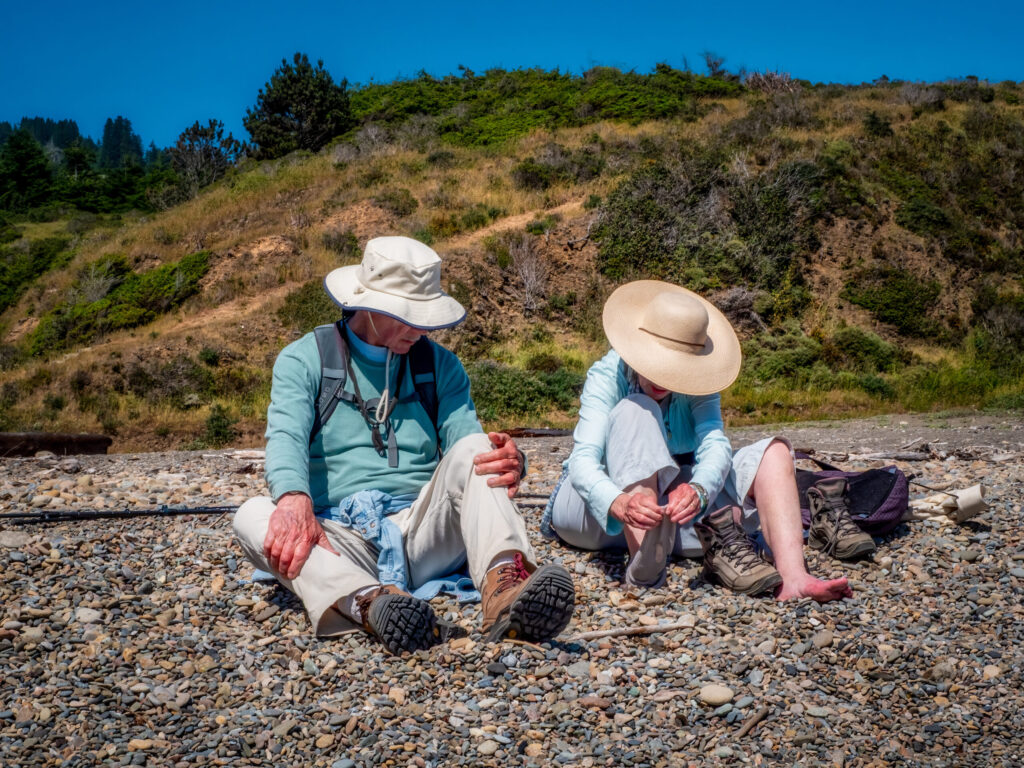
By the dawn of day six, the eight pilgrims who have been on the trail since Stage 1 are all exhausted, nursing blisters, sore arches, and stiff muscles. Huddled in the Jenner Visitor’s Center parking lot at daybreak, they’re excited to set out for Fort Ross more than 13 miles up the coast.
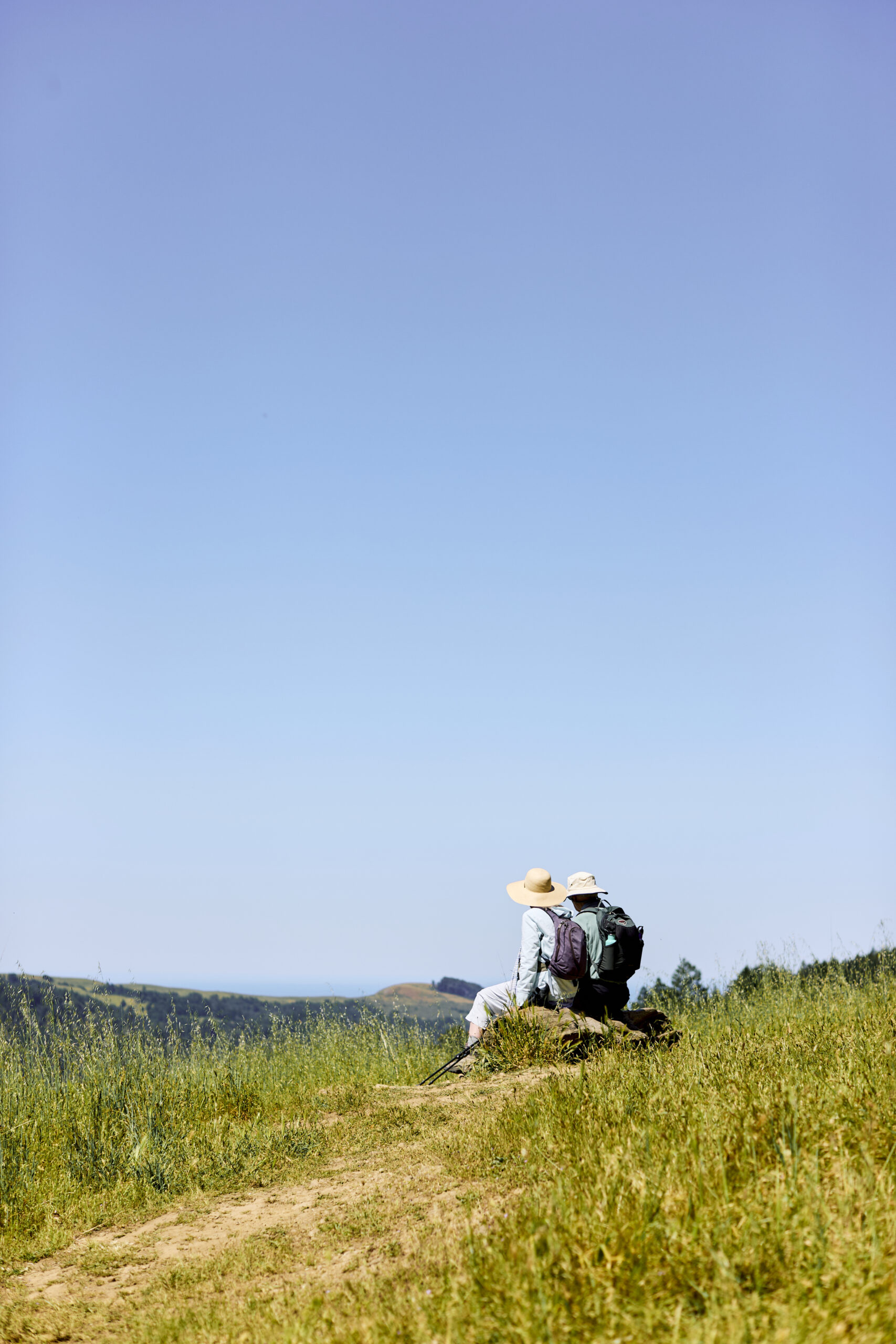
Along the trail, Clark Howe found a lucky golf ball he’s been using to massage his feet. His mother, Shelly, has been promoted to the role of guide today, an honor that brings tears to her eyes. Several new faces have joined the group. One, wearing a floppy white sun hat, is John Dickinson. He’s celebrating his 80th birthday, four years after being diagnosed with Parkinson’s disease. His devoted wife, Sally Denman, helps him navigate every step. More than a year ago, the longtime Petaluma residents first set foot on the Camino, tackling it stage by stage, and today is their final leg.
As we gather in a circle, Dickinson tells the group how he “appreciates being with you, and talking with you, and learning your stories.” His wife shares how she’s “really grateful our bodies can still do this.”
Everyone chimes “Oh!” in perfect unison, a trail-worn harmony earned over the past five days.
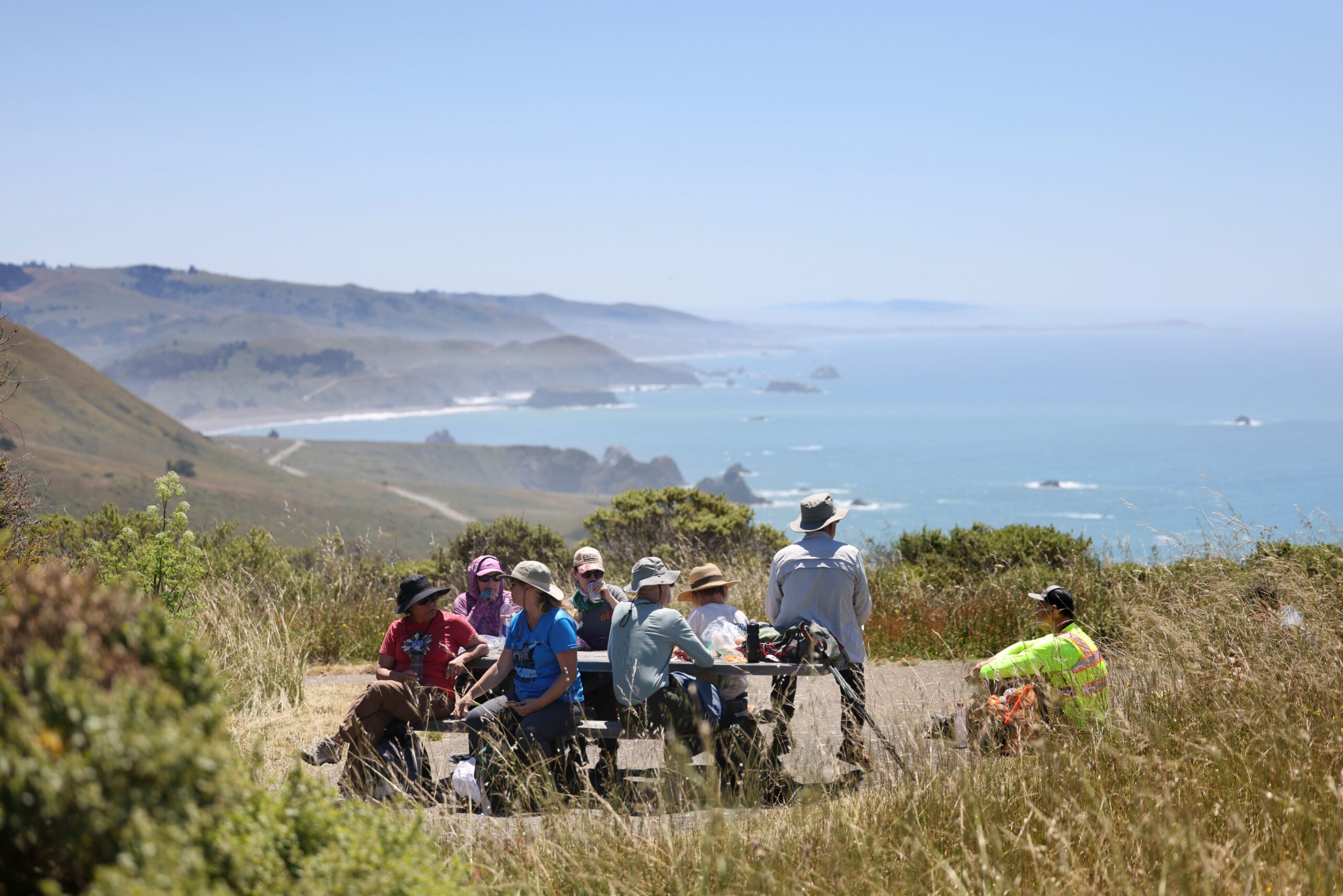
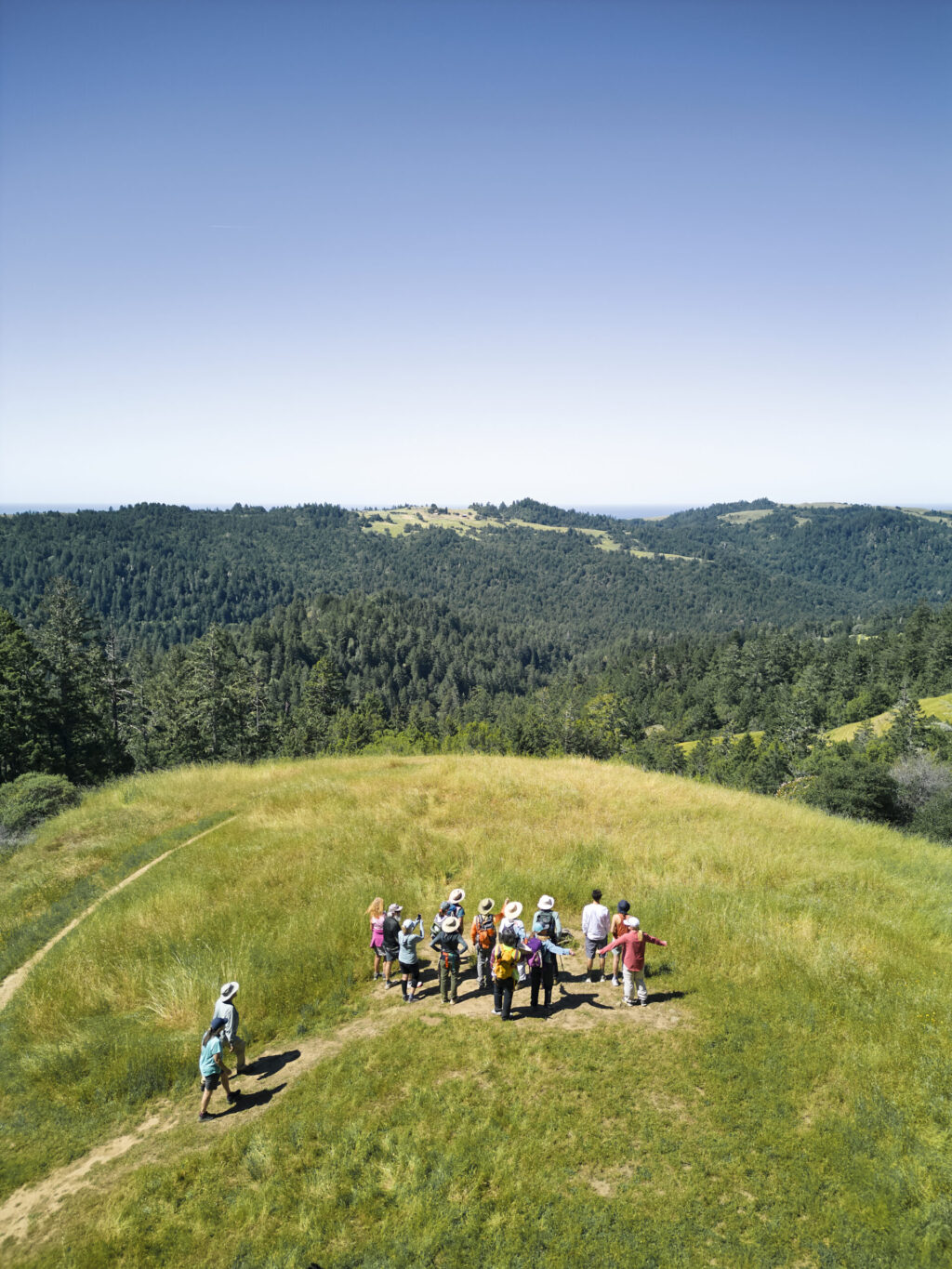
We find a back gate into Jenner Headlands Preserve and wind our way uphill, stopping one-by-one to peek into a shady sanctuary of trees surrounding an outcropping of rocks. A few miles in, Dickinson falls behind. By the time we reach Russian Gulch, he is suffering from heat exhaustion. When the photographer documenting this story arrives, Tony Camino asks if she can give Dickinson a ride to the lunch stop a few miles up the road. The photographer is now “a certified trail angel,” says Matsumoto-Deveaux.
With her husband safe in an air-conditioned car, Denman pushes onward. “The path provided,” she says. “John was offered a ride.”
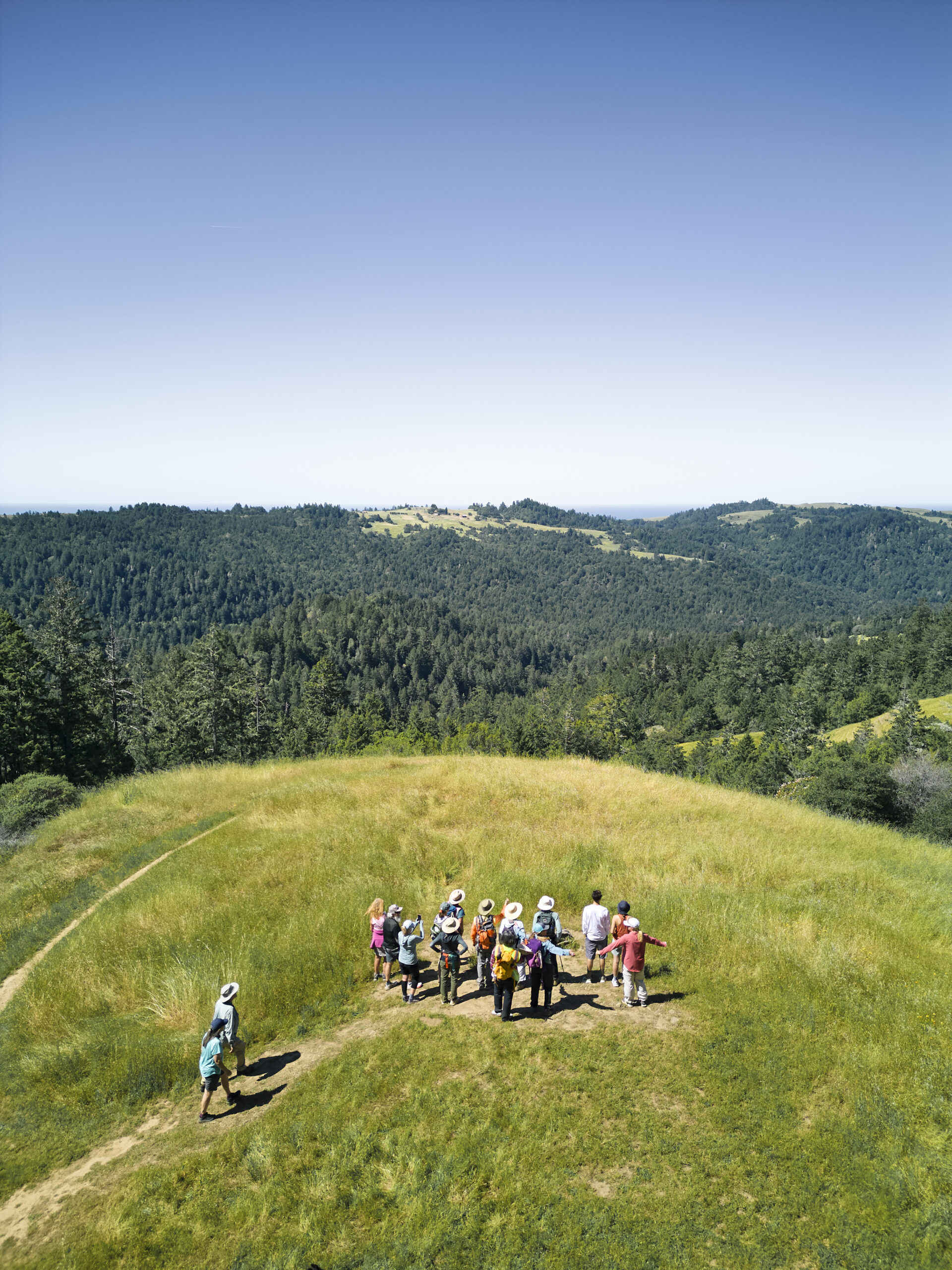
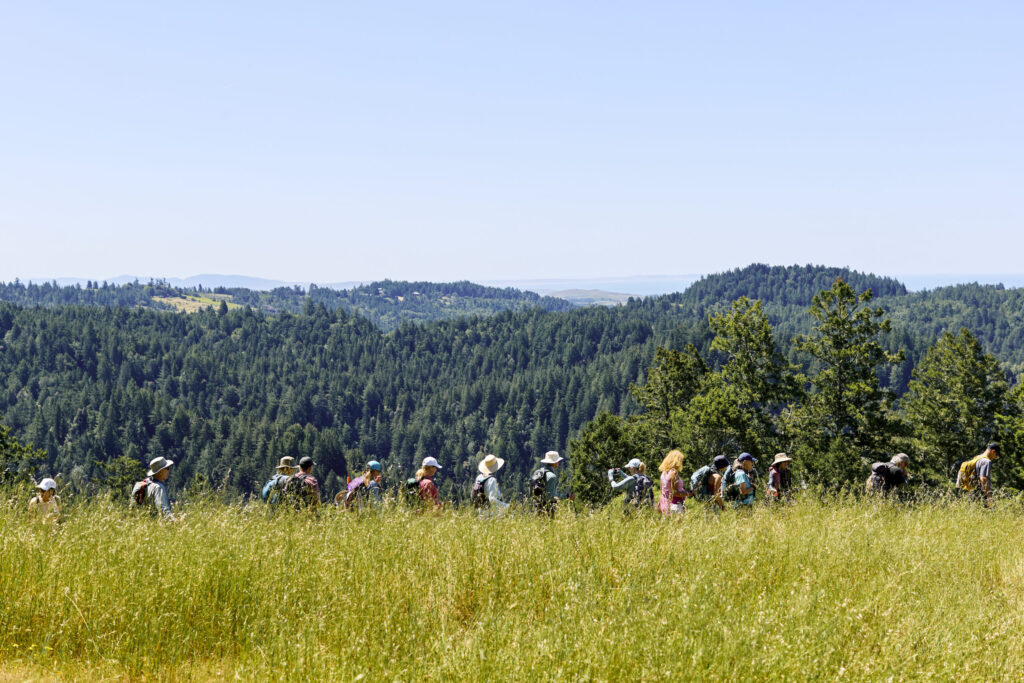
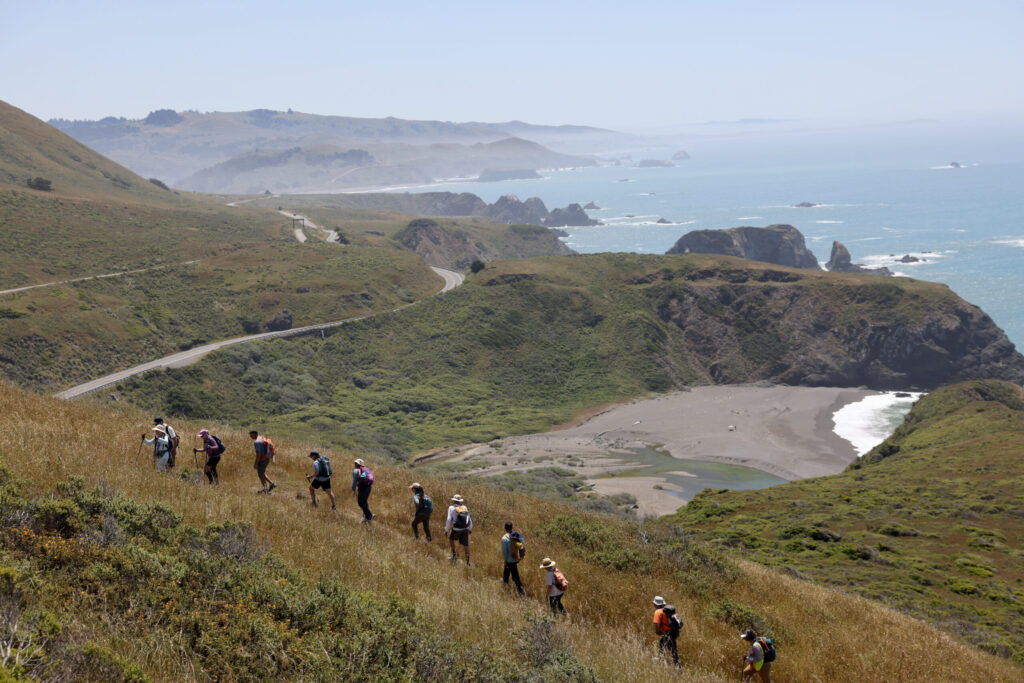
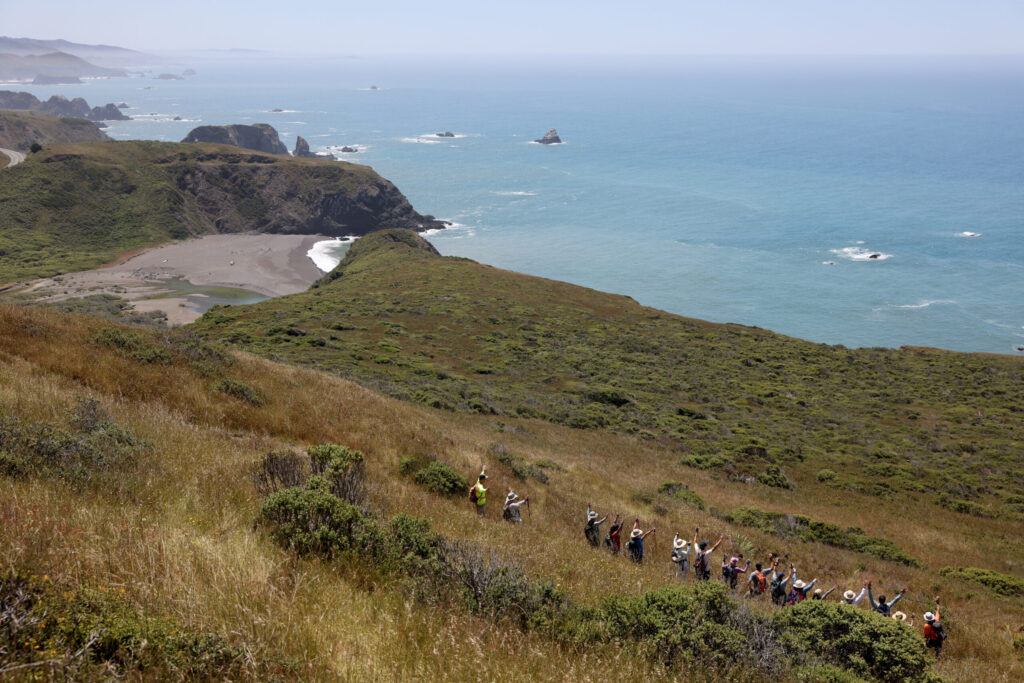
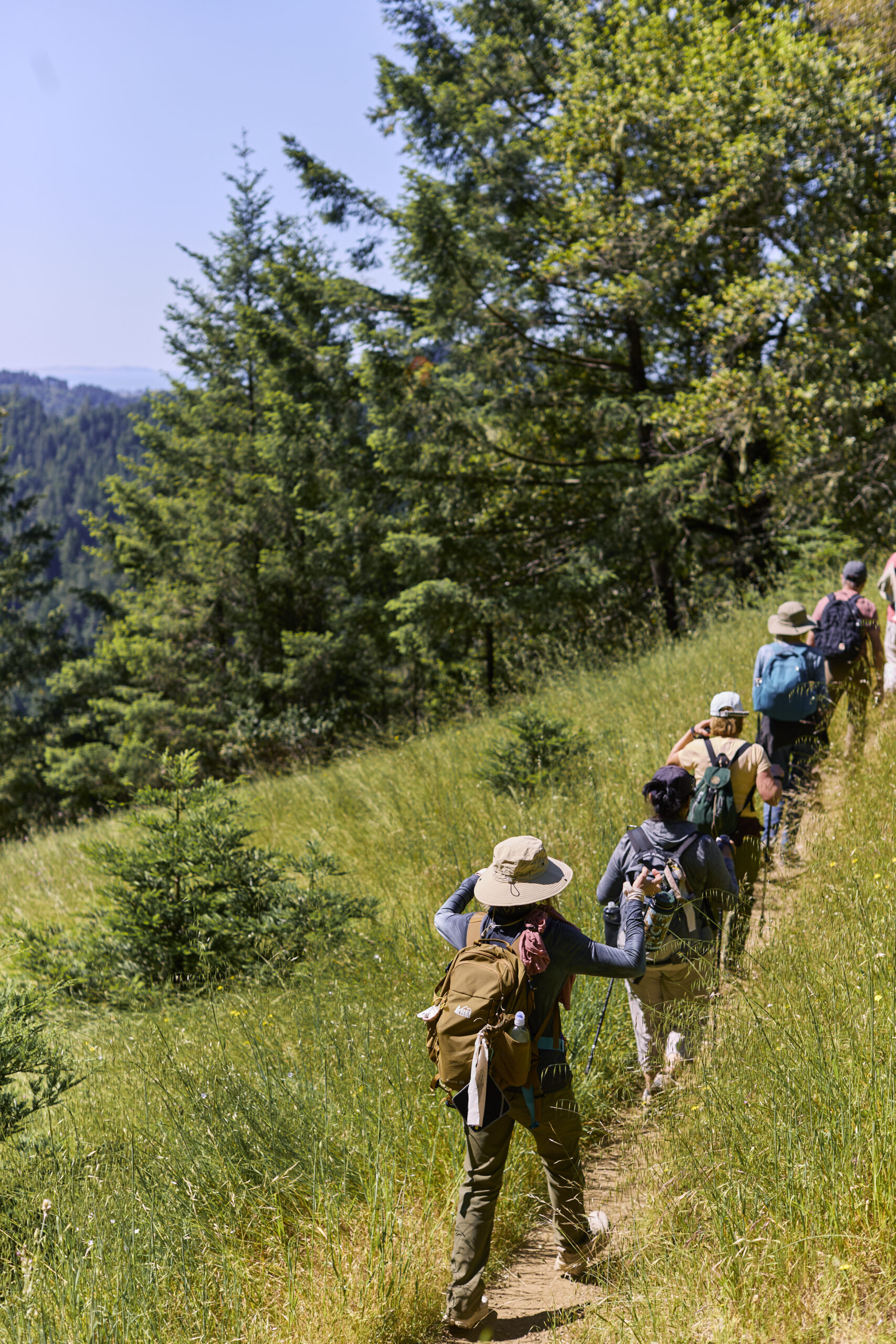
Next, we navigate a narrow, canopied trail, ringed with poison oak, nicknamed the Hobbit Hole. As it opens into a golden coastal prairie, we arrive at the base of Billy Goat Hill.
Several hundred feet above, truck engines roar along Highway 1 near Sonoma Coast Overlook Park, where we’re headed. Below us, the spell of waves in a blue abyss.
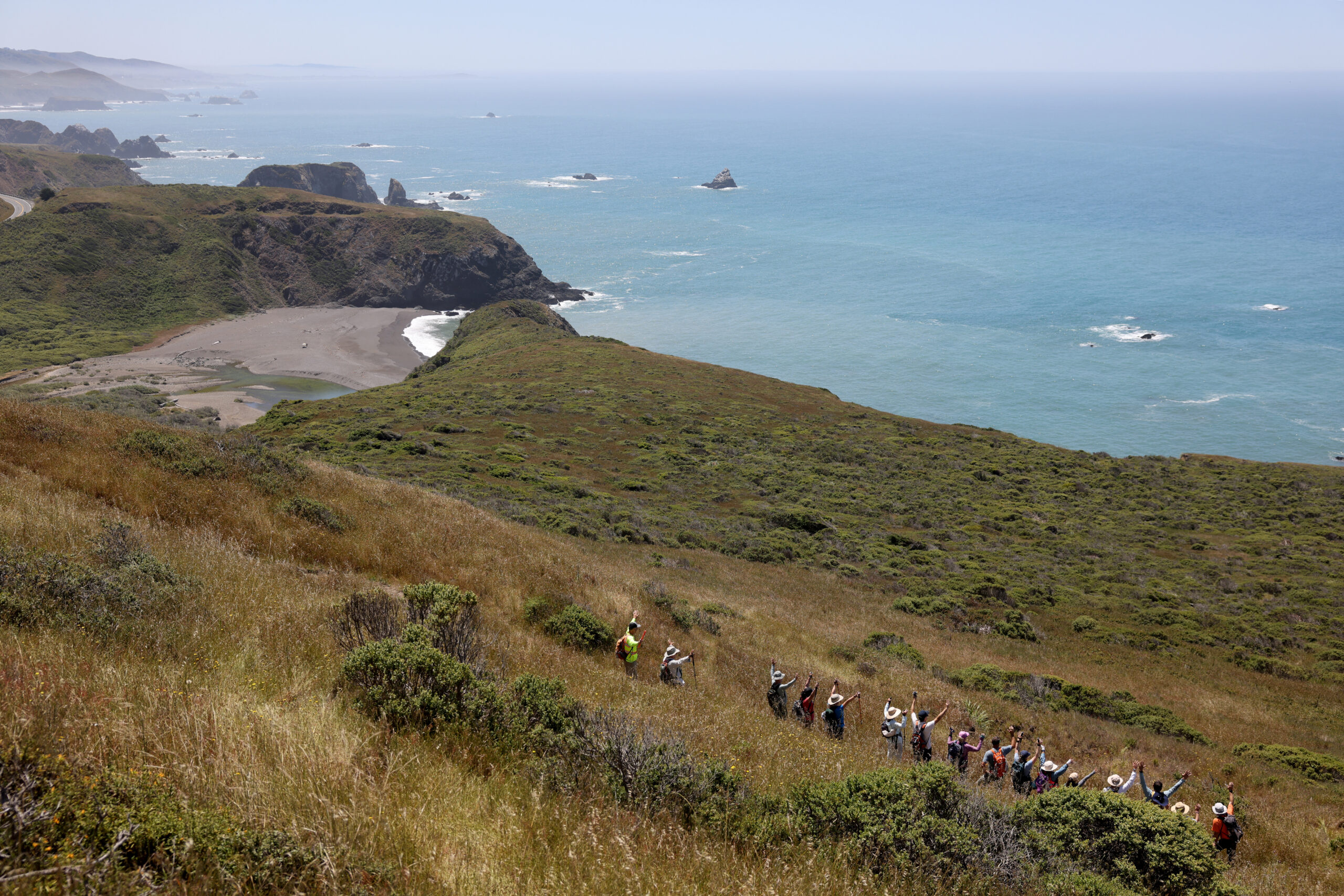
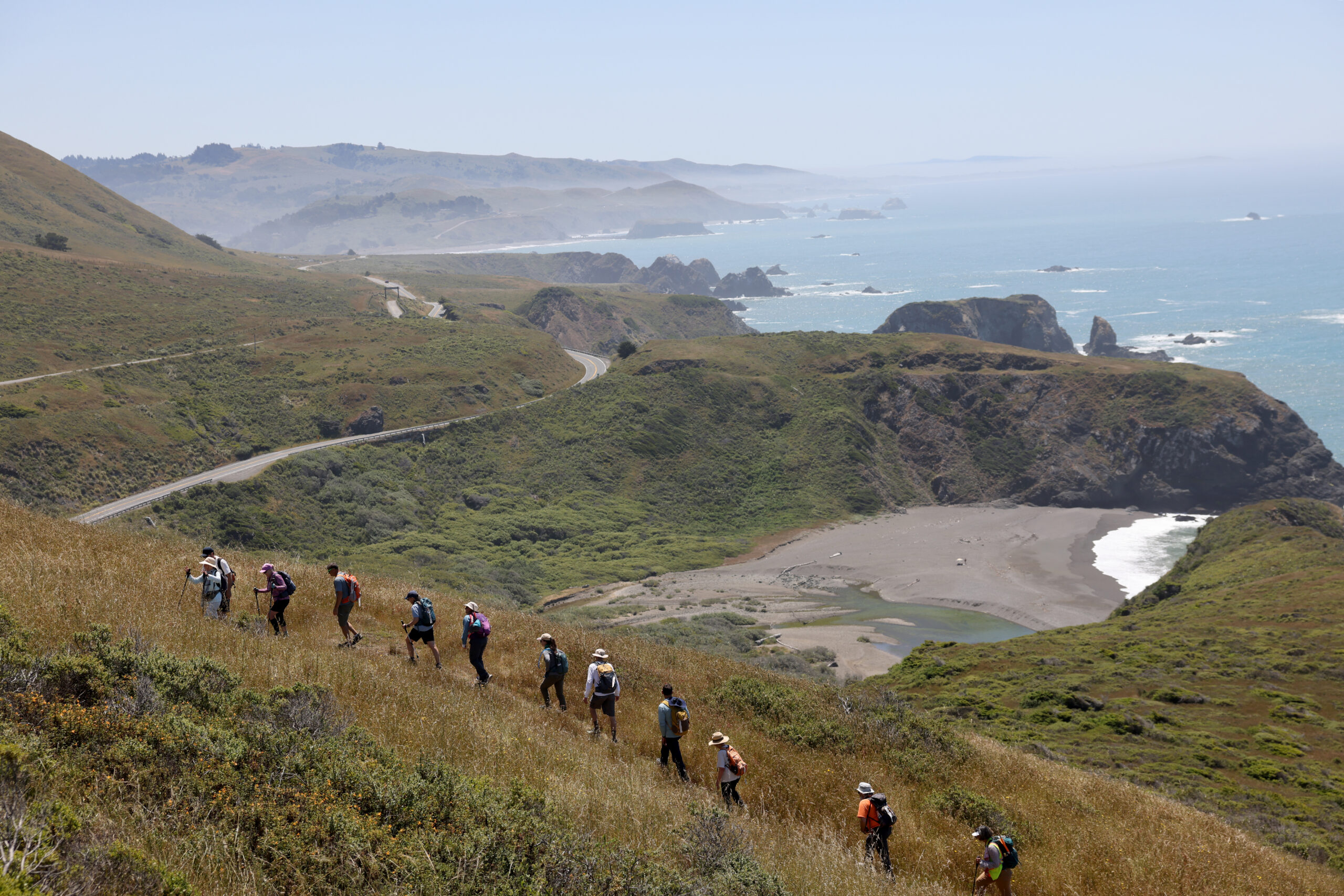
“This is not a race,” Peacocke warns. “So find your pace that works for you.”
This is where Olga Barnes wept uncontrollably the first time she faced the sheer incline; where Steven the Elder wanted to die; and where volunteer Matsumoto-Deveaux repressed the memory of a climb so treacherous that she forgot it existed on her second trek.
Denman digs her hiking boots into the dusty earth. It’s not so much a trail as a series of tiny divots cut into the hillside by deer hooves. She slips, but regains her footing and tells me she and her husband are “Christian and Buddhist, and everything in between.” Between breaths, I ask her why suffering is such an integral part of spirituality around the world. The key to both the Camino and to life, she explains, is “to be open to holding joy and pain in the same moment.”
Stopping to catch our breath at the top, we stumble onto a stakeout, as a pair of state Fish and Wildlife officers hide behind camouflage cover, taking photos of a pair of suspected mussel poachers hauling out heavy bags filled with bivalves, likely well beyond the 10-pound limit. It gives truth to the trail adage, “No two Caminos are ever the same.”
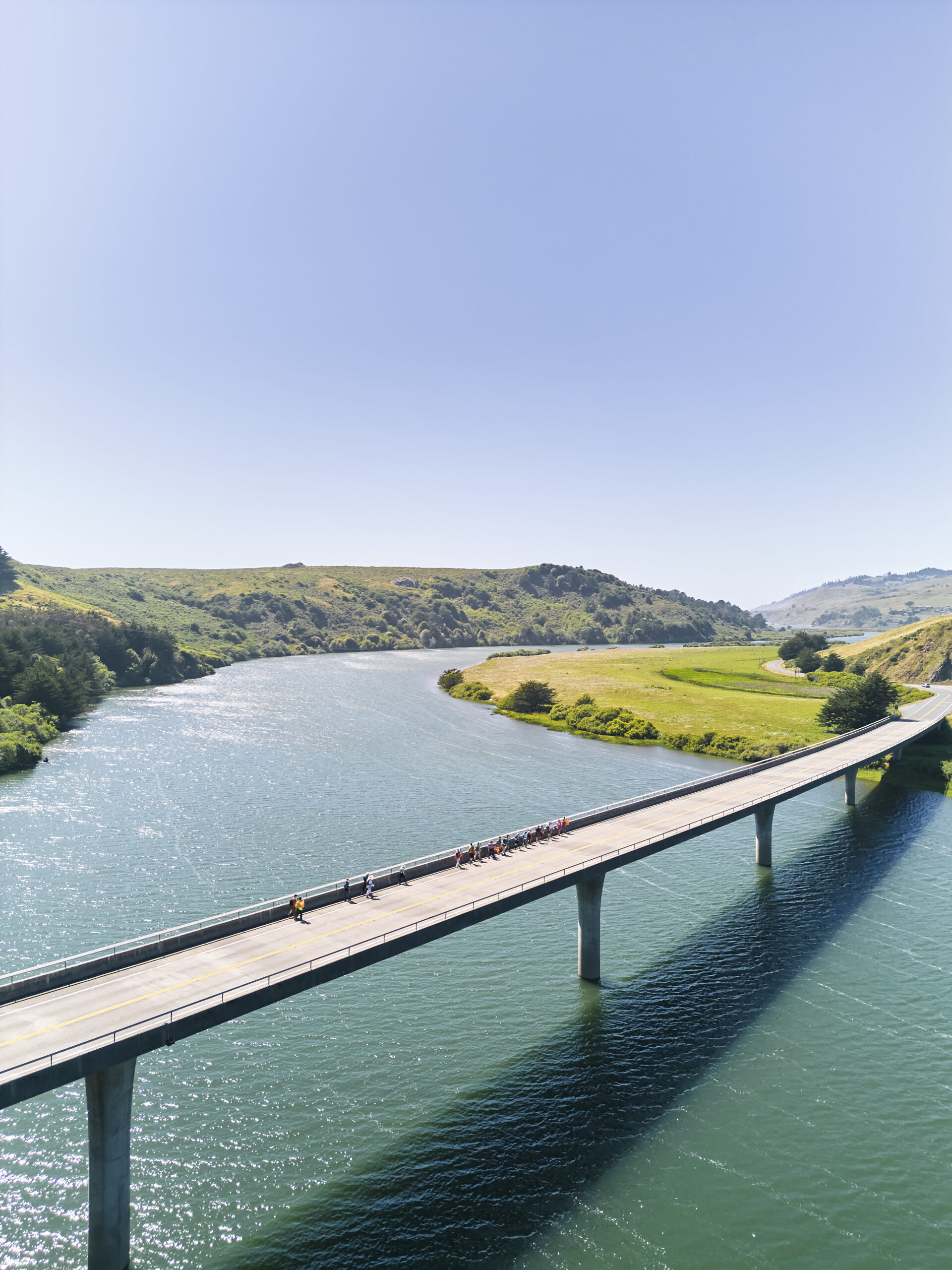
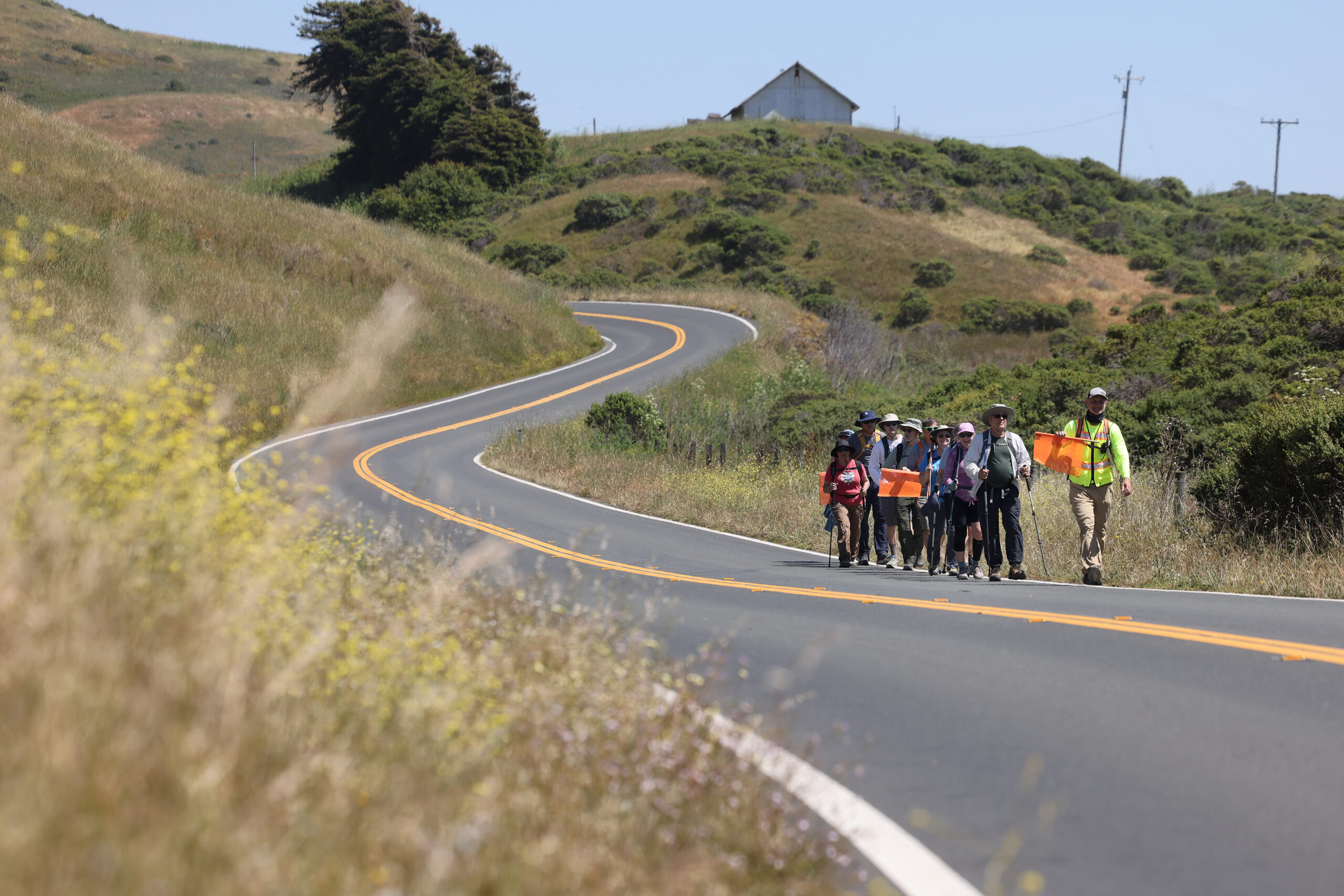
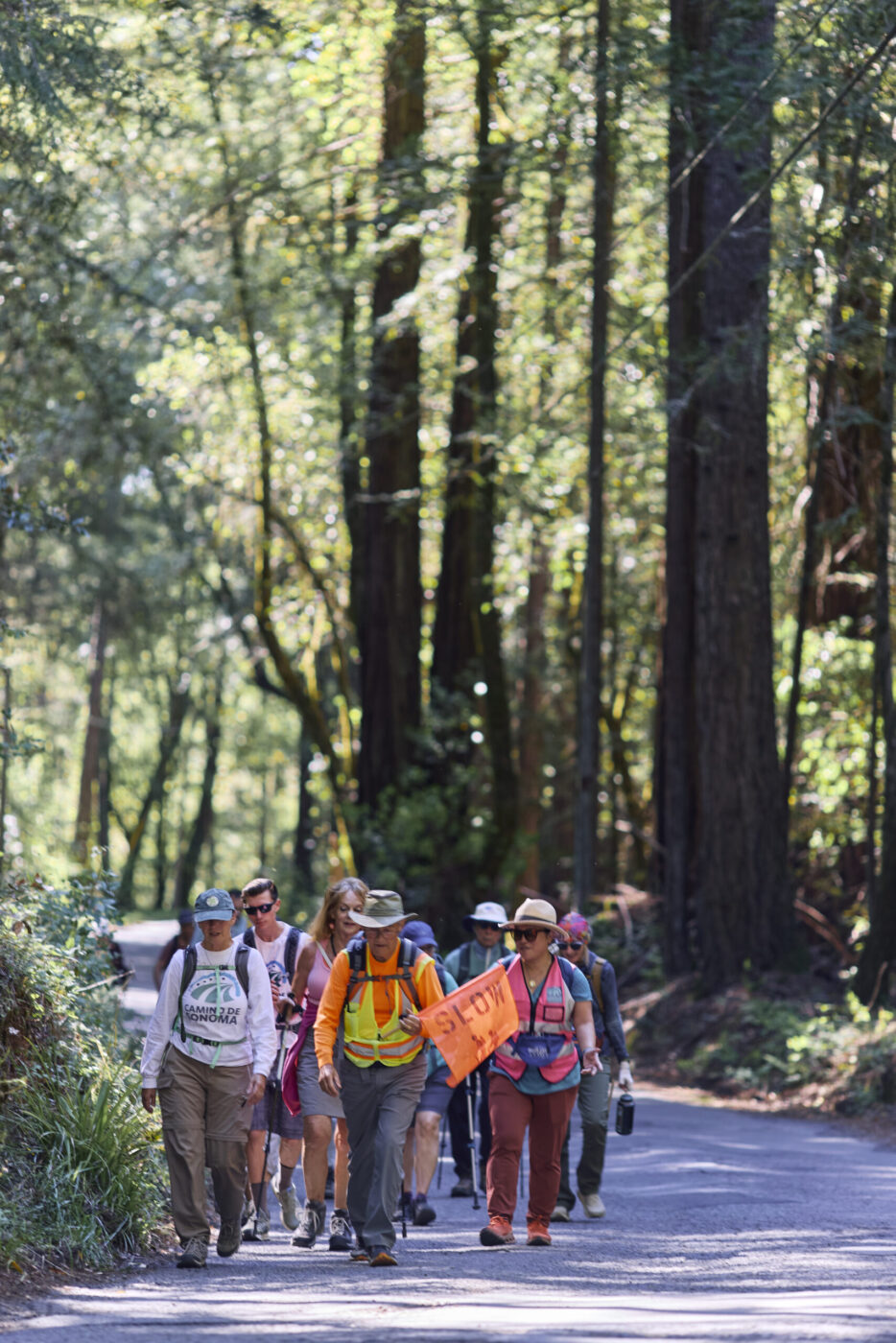
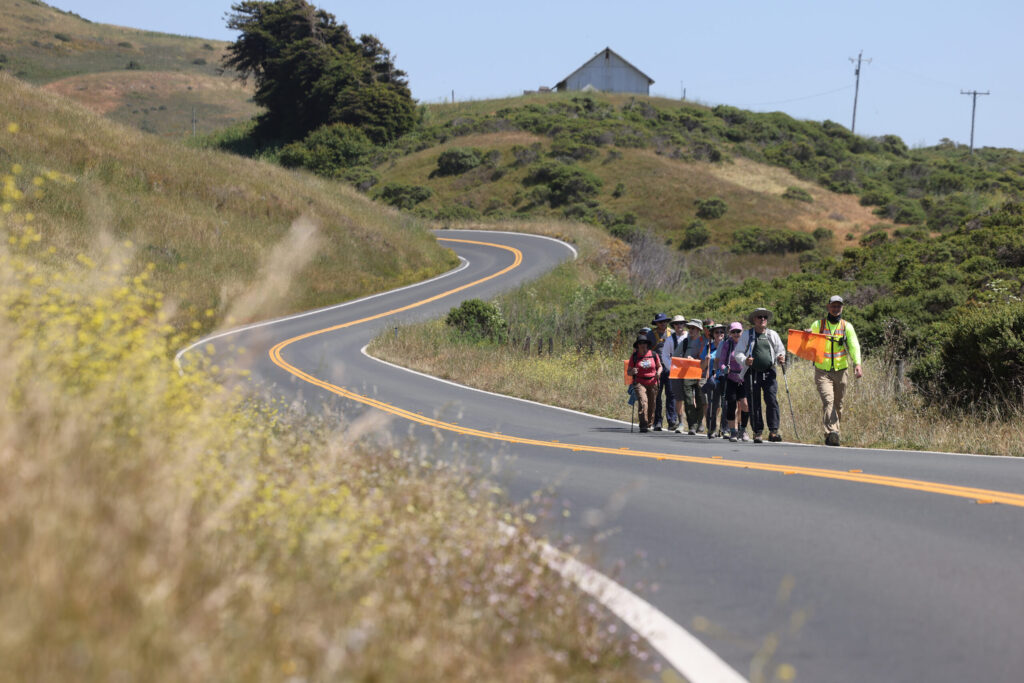
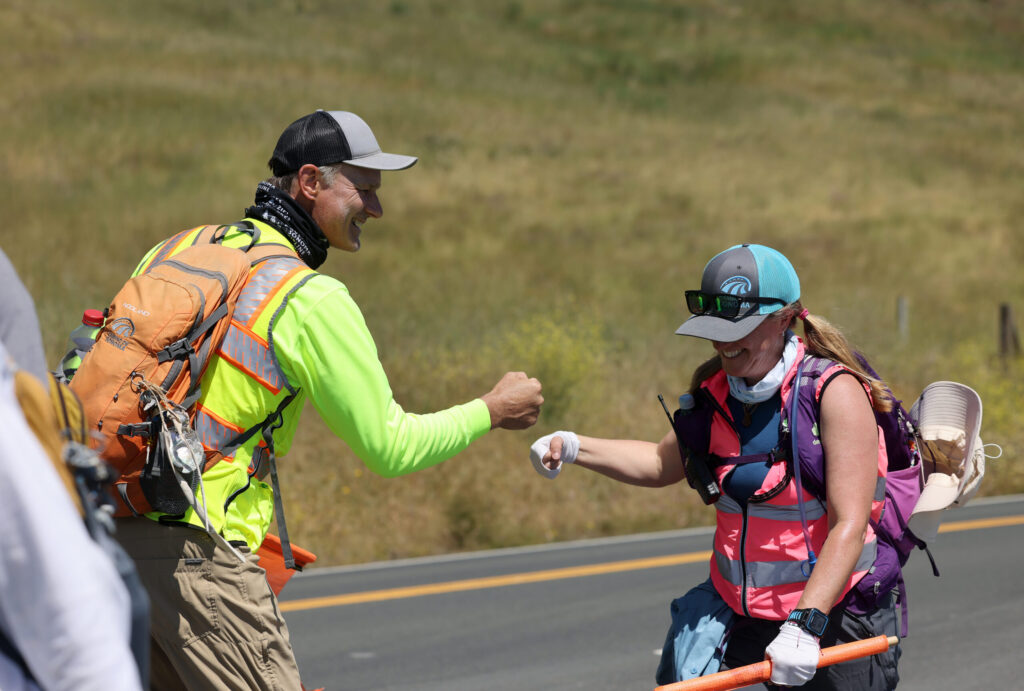
For the next few miles, we teeter on the edge of the narrow highway, guardrails offering the only protection between radiant-hot asphalt and a 300-foot drop. Our guides wave orange flags to warn drivers along the stretch of windy road, which includes crossing a cattle guard, giving new meaning to “walking with intention.” Dickinson, who rejoined the group after lunch, falls behind again, and gets another ride, this time to the finish line.
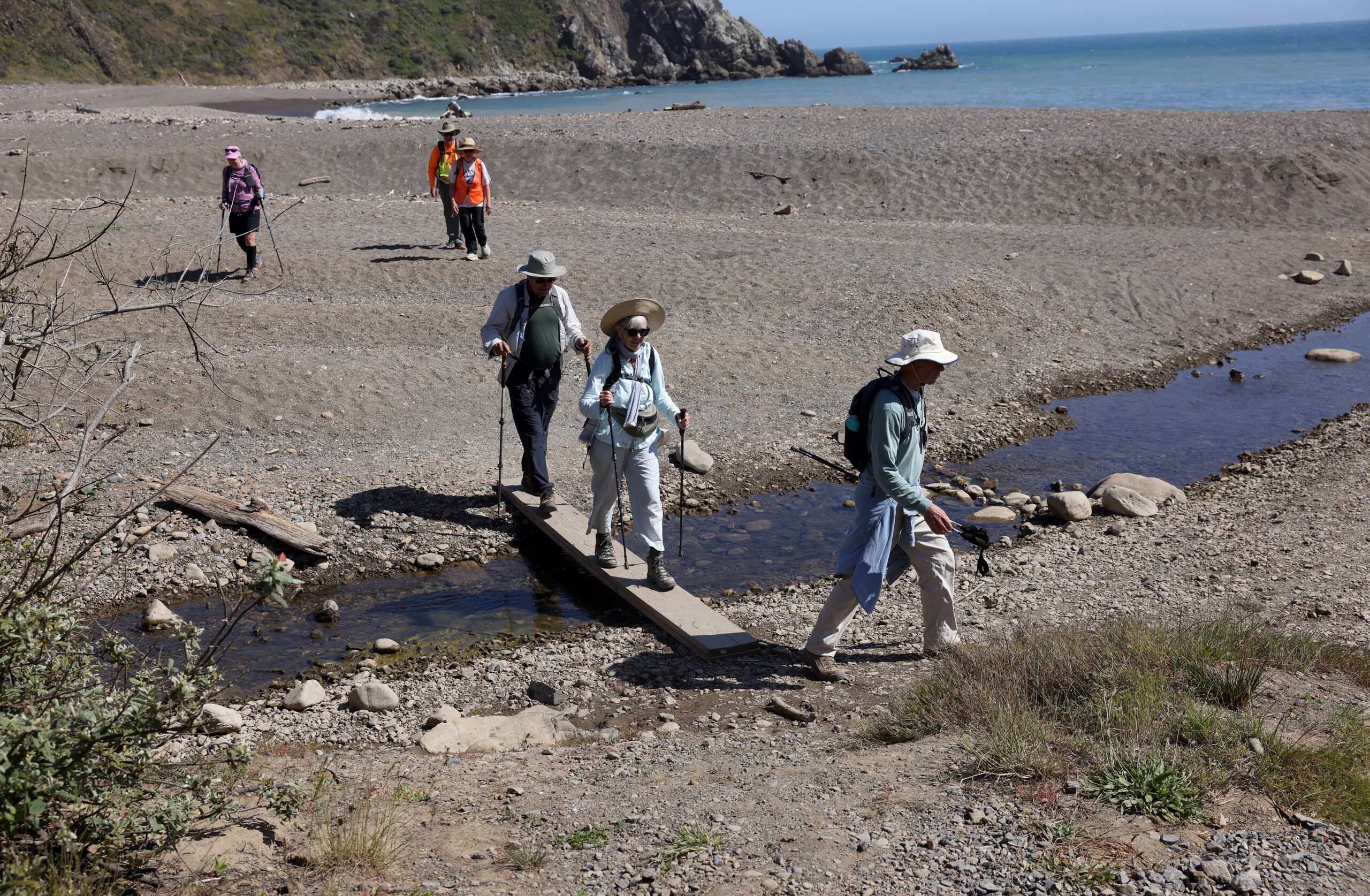
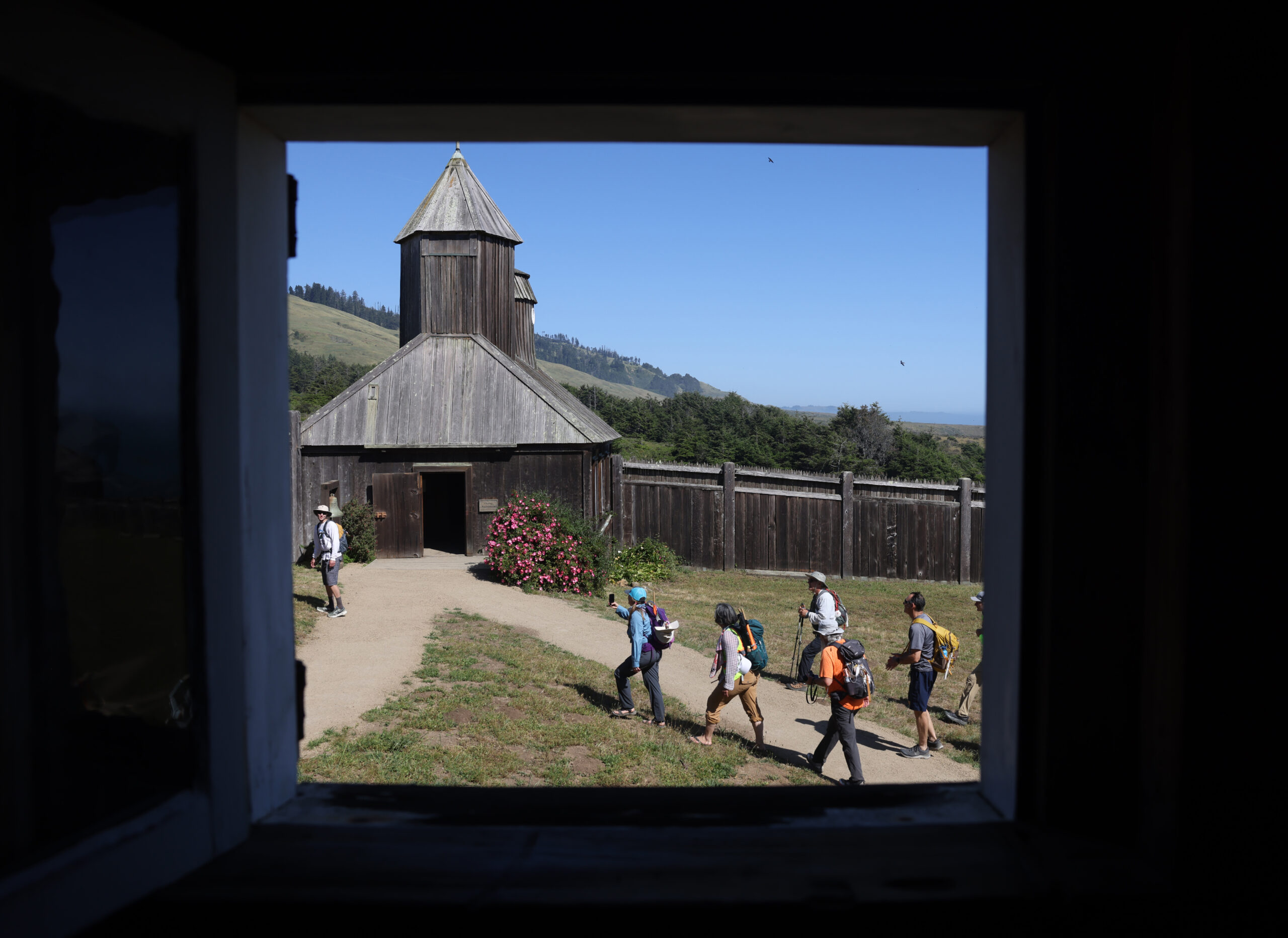
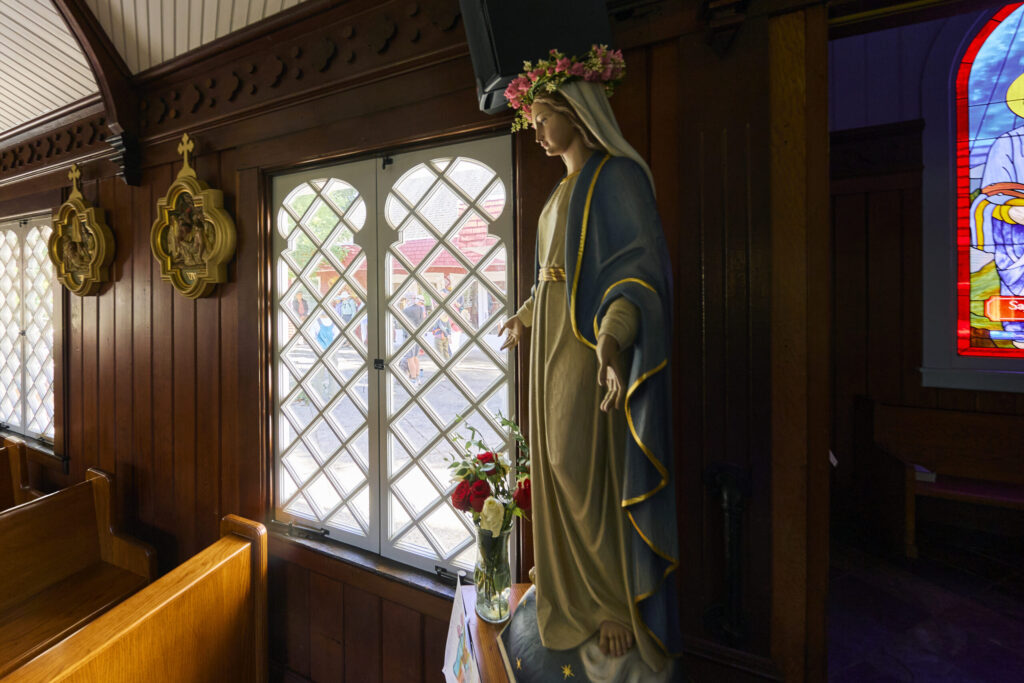
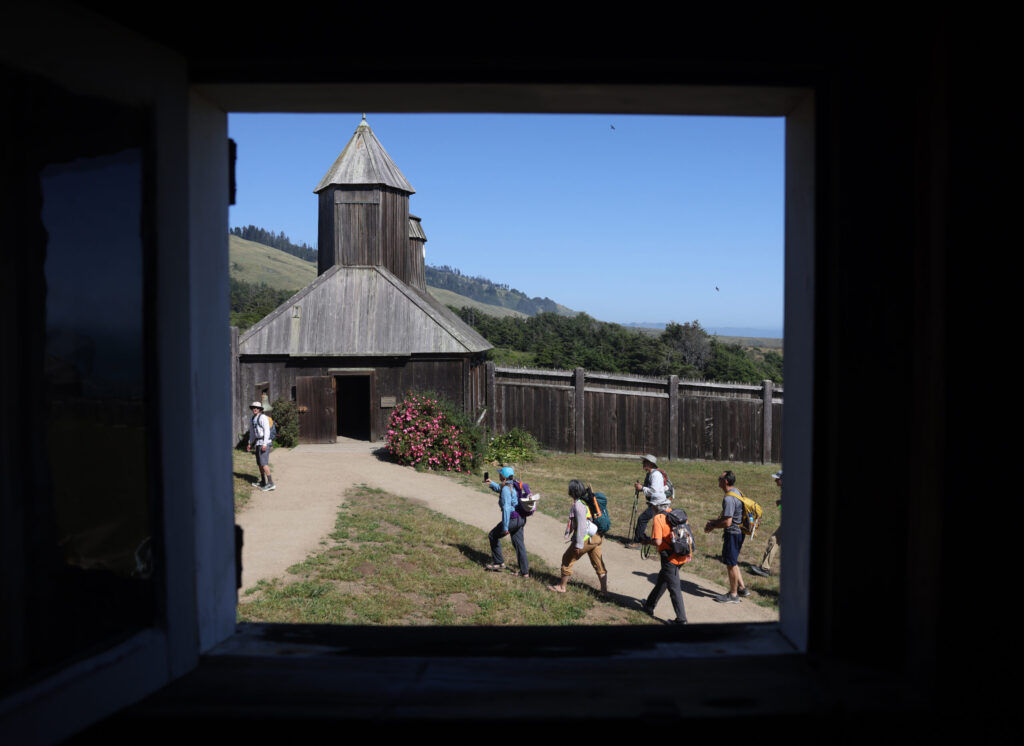
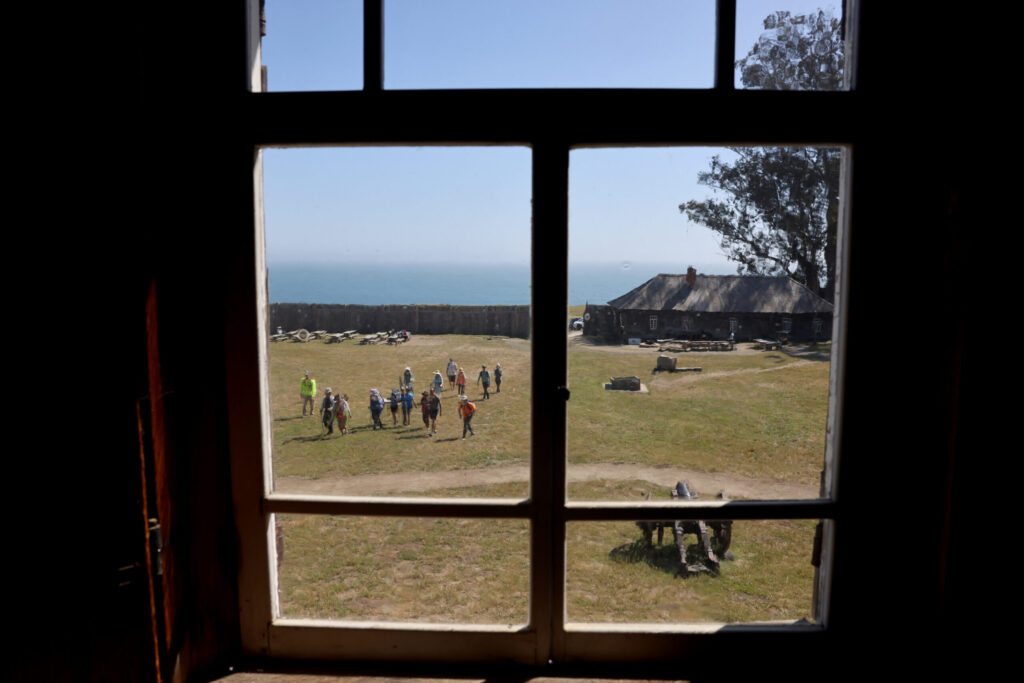
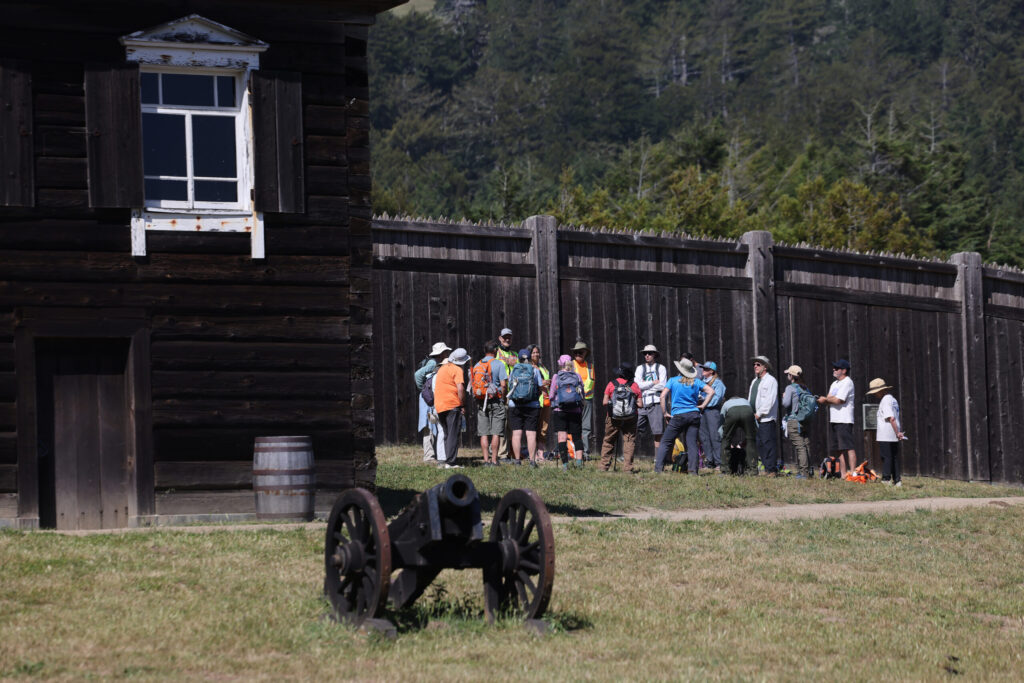
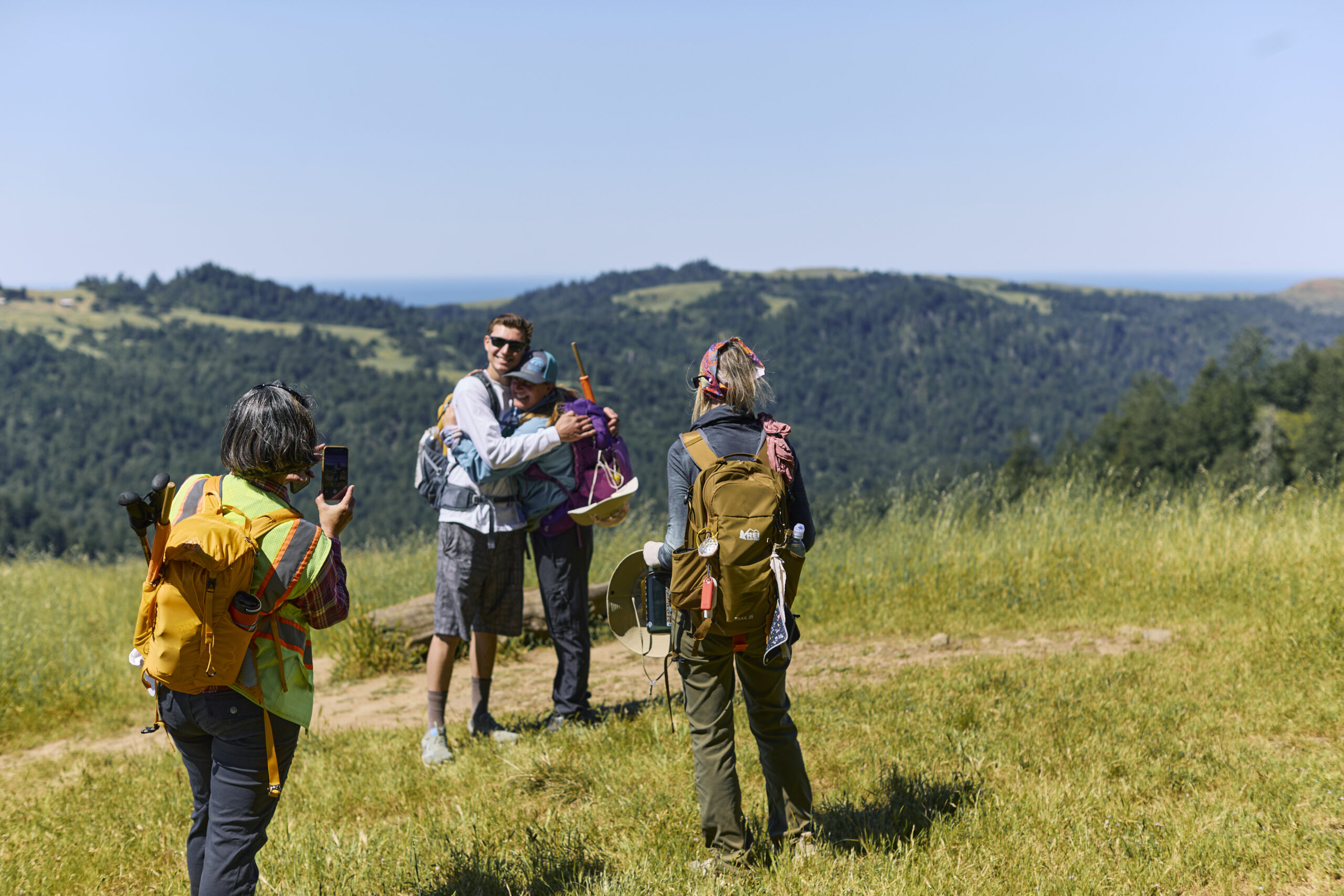
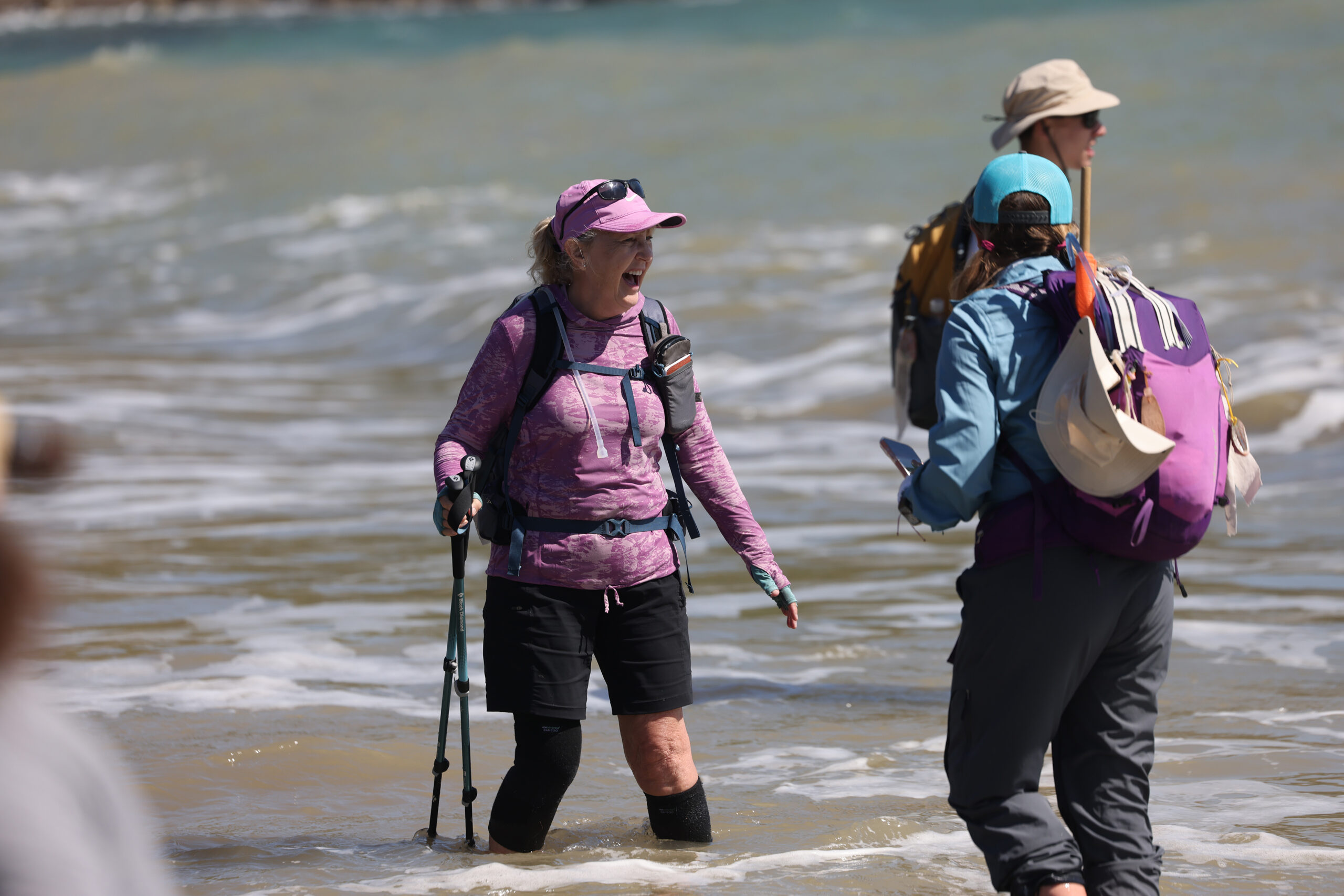
When we finally arrive at Sandy Cove at Fort Ross, Peacocke is there to high-five every pilgrim at the bottom of the stairs, greeting us with “Welcome to Metini,” an acknowledgment of the original Kashia Pomo village that existed long before the Russians arrived. As the group walks through the replica wooden gate of Fort Ross, it feels like a scene out of “The Amazing Race” reality TV show. Walking up to the chapel, Shelly Howe and her son Clark can’t hold back the tears. “I told myself I wasn’t gonna do this!” he says. His mom is so choked up, she can hardly talk.
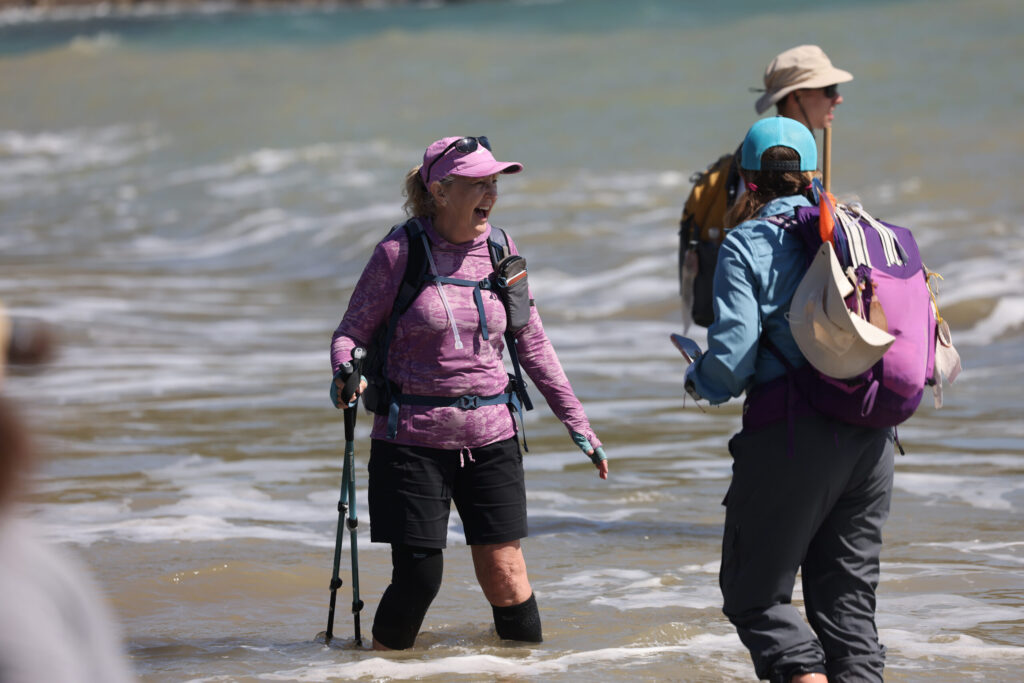
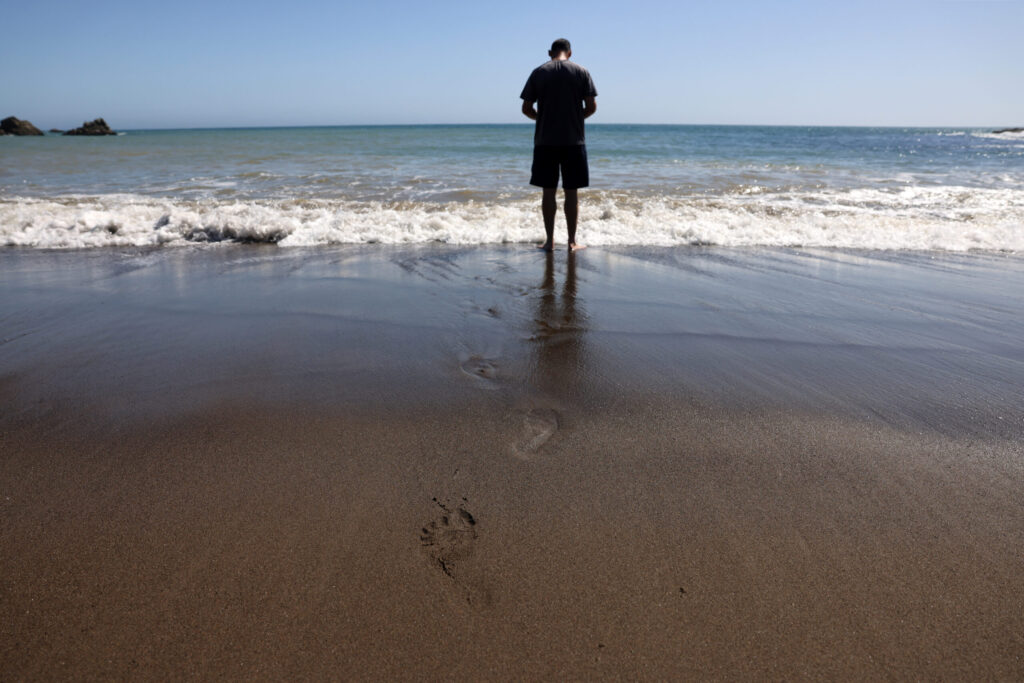
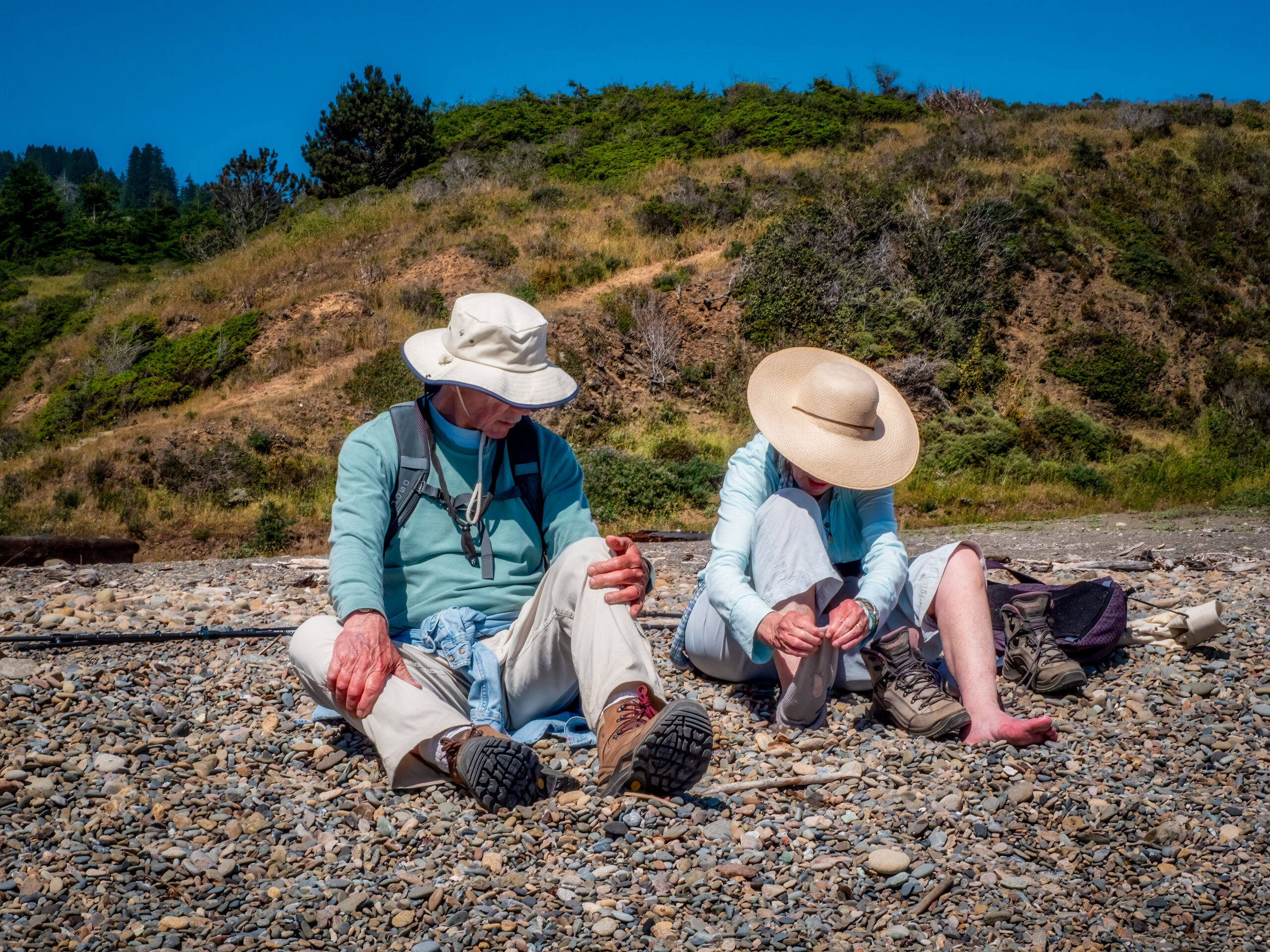
Many take off their well-worn shoes and stretch out in the sand. Clark and his father, Darren, who joined the last two stages, splash in the cold Pacific waters. We gather for a closing ceremony, and everyone who completed all six stages receives a ceremonial purple cord. A slow grin spreads across John Dickinson’s face as he receives his symbolic string. It reminds me of something his wife said halfway up Billy Goat Hill: “You need to grab everything in life, because tomorrow is never promised.”
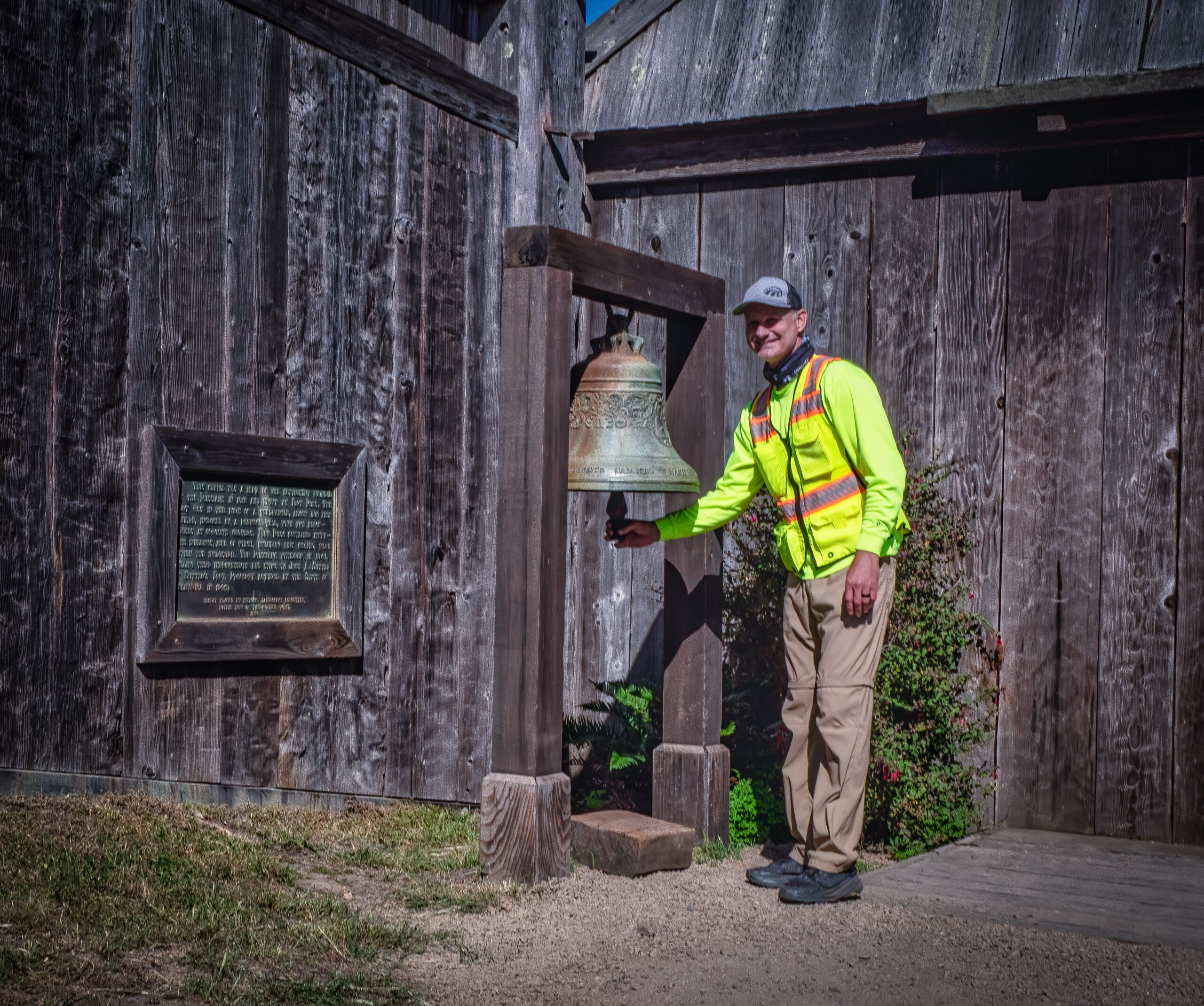
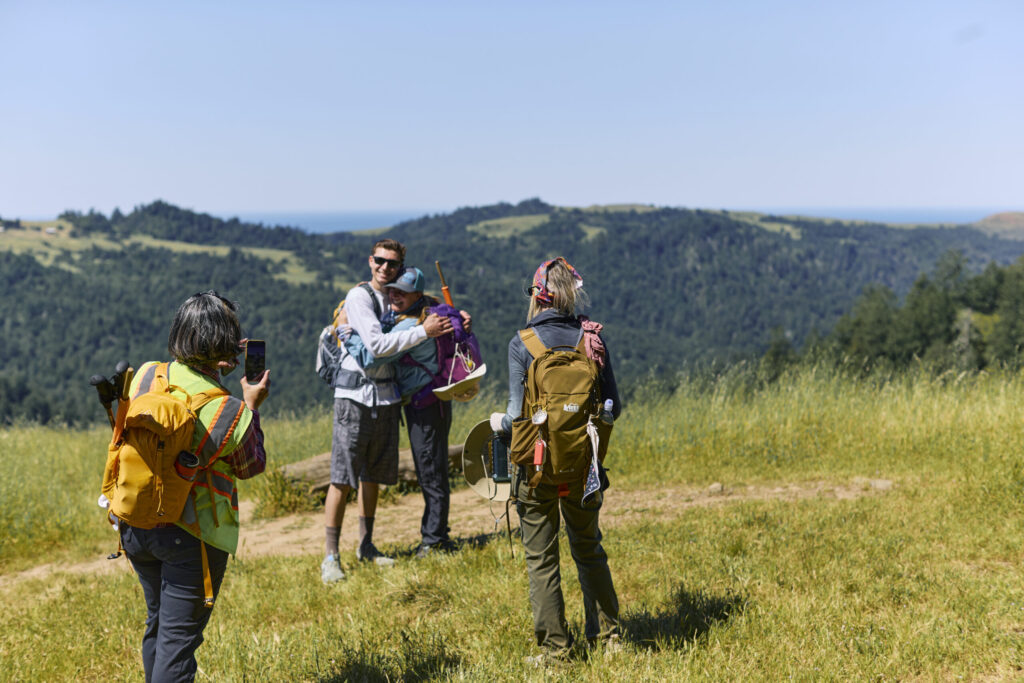
Everyone shares a final thought punctuated by the group’s conclusive, resonant “Oh!” After taking turns ringing the chapel bell, there are refreshments, then they go their separate ways, but not before sharing hugs, phone numbers, and new text chains.
“Let’s do the Camino de Santiago next year!” Robin Wendlandt tells Shelly Howe.
A few days later, Howe sends a text after uploading trail data from her watch. A total of 85.2 miles, 25 hours of walking, and a total elevation gain of 8,353 feet—2,500 of those on the final day. Impressive numbers, to be sure, but they’re only part of the story. “If we let the Camino bring us what we need, we will find it. I did find it,” she writes, confirming one of the mantras repeated along the miles.
The Camino provides.