








Blue skies are bandied about in song lyrics from artists such as Irving Berlin, Louis Armstrong, and Electric Light Orchestra. They’re the subject of small talk on a cloudless, sun-drenched Sonoma County afternoon.
And then you meet Healdsburg artist Christopher Leith Evans, and realize how inadequate the word “blue” is for describing something as expansive and ever-changing as the sky.
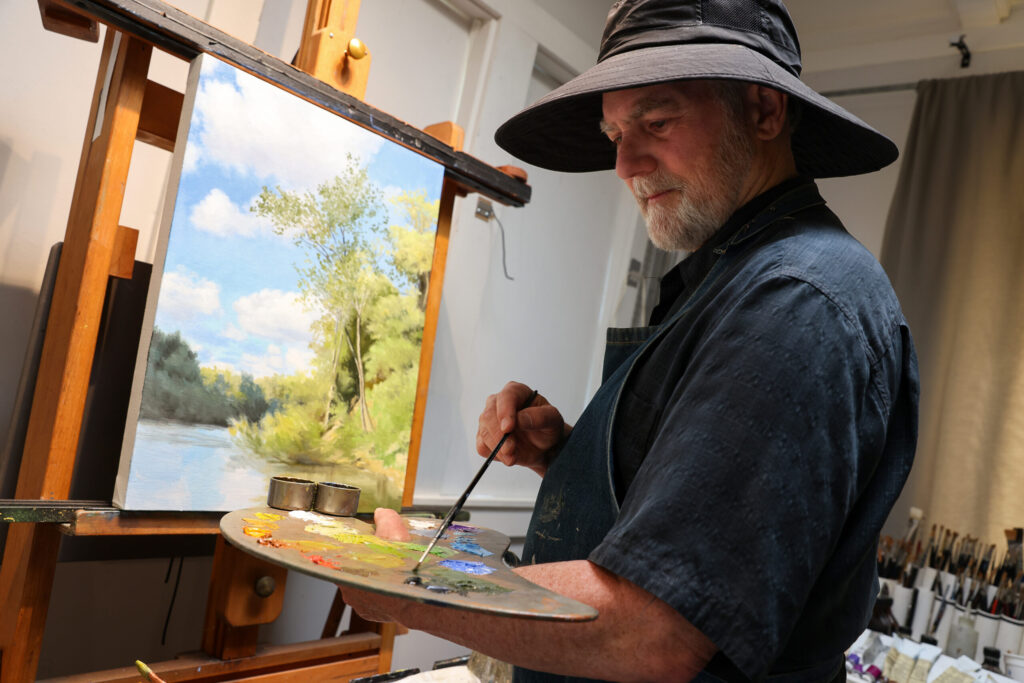
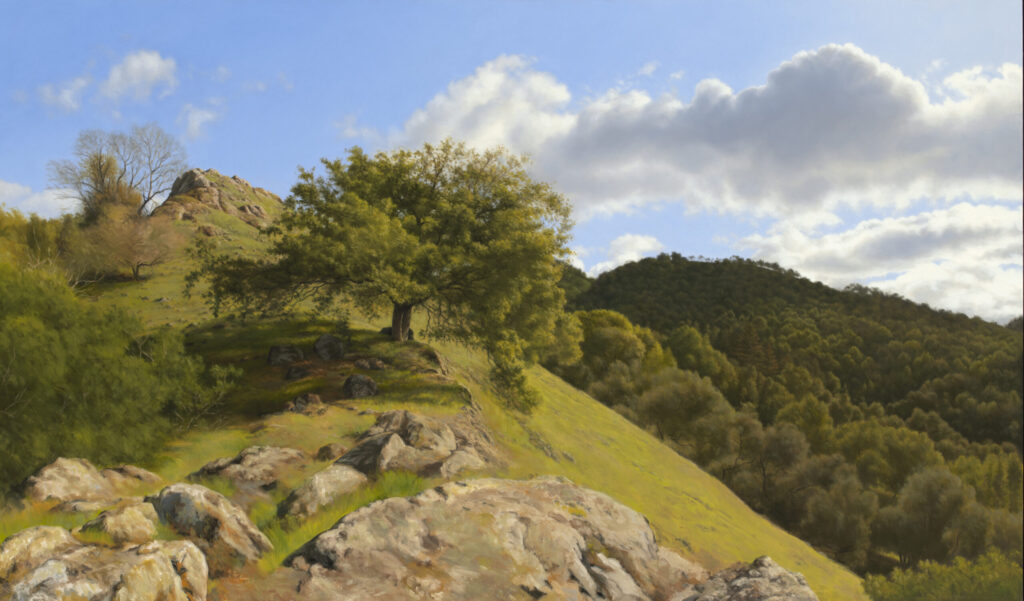
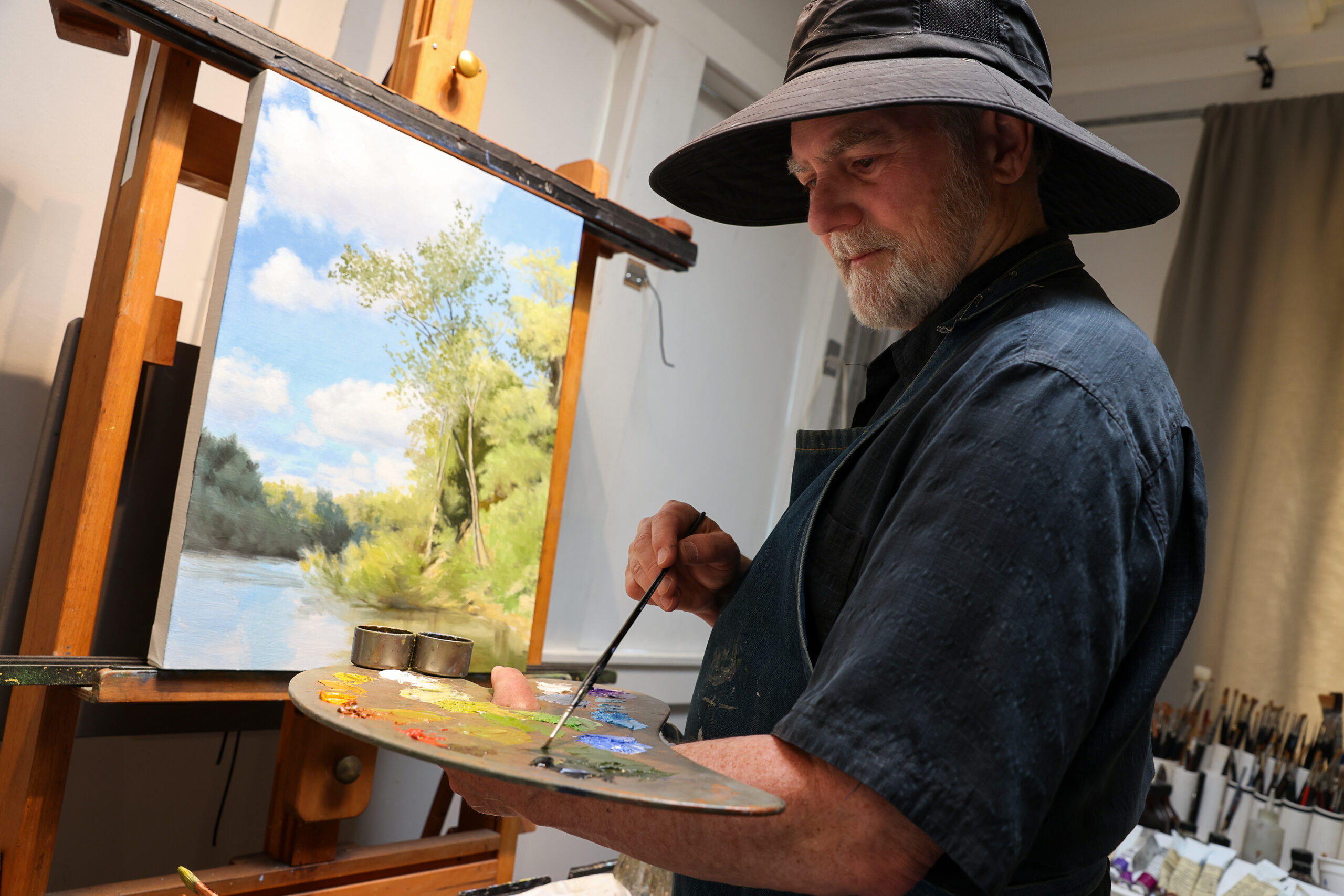
“I’ve spent a lifetime contemplating the color of the sky,” says Evans, who begins each of his light-filled landscape oil paintings with the sky itself. “It gives you a sense of the lighting. Getting that right and getting that smooth is always a challenge.”
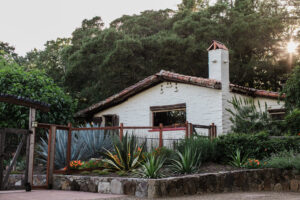
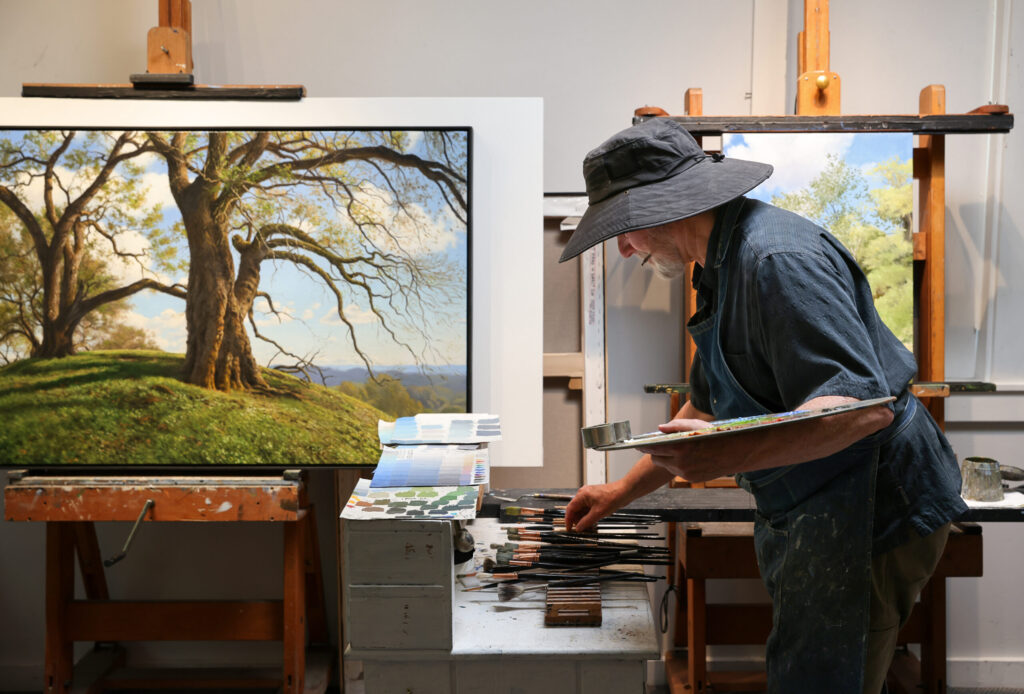
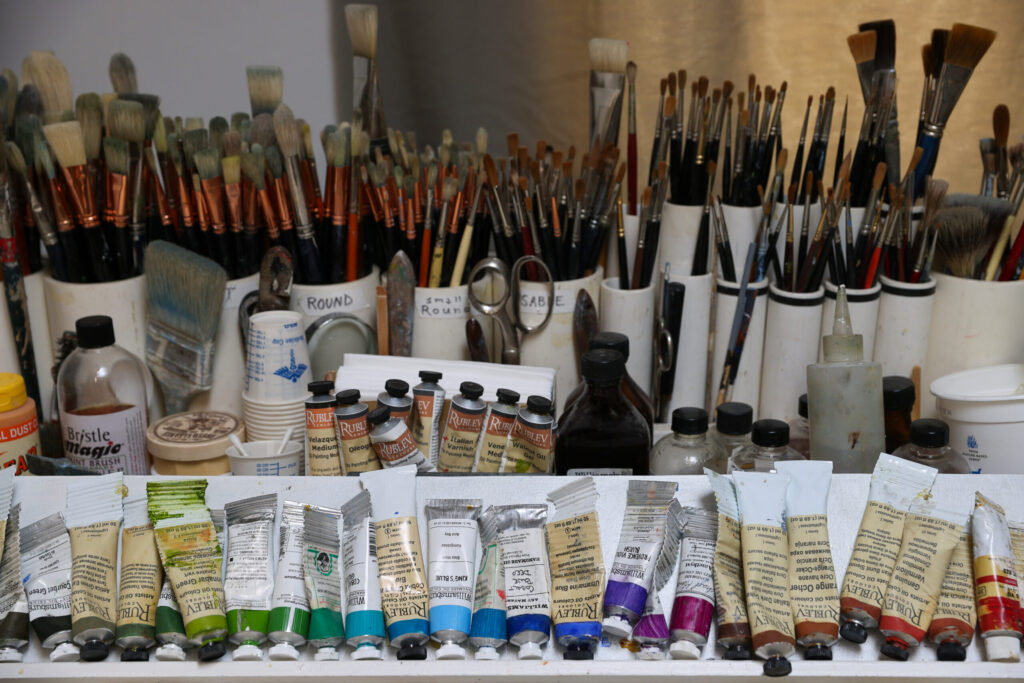
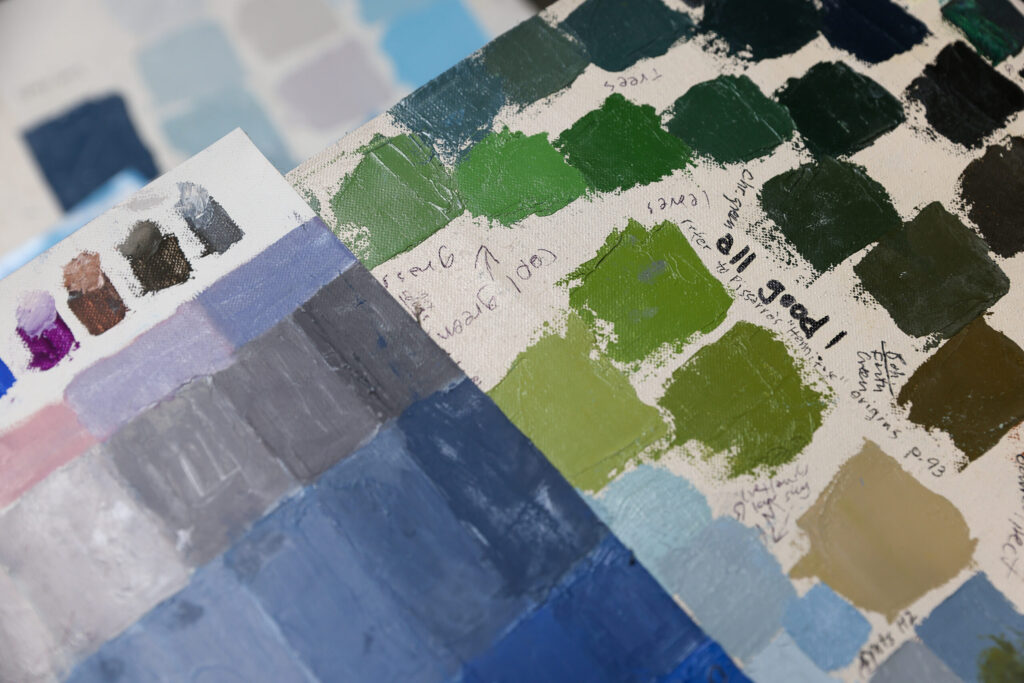
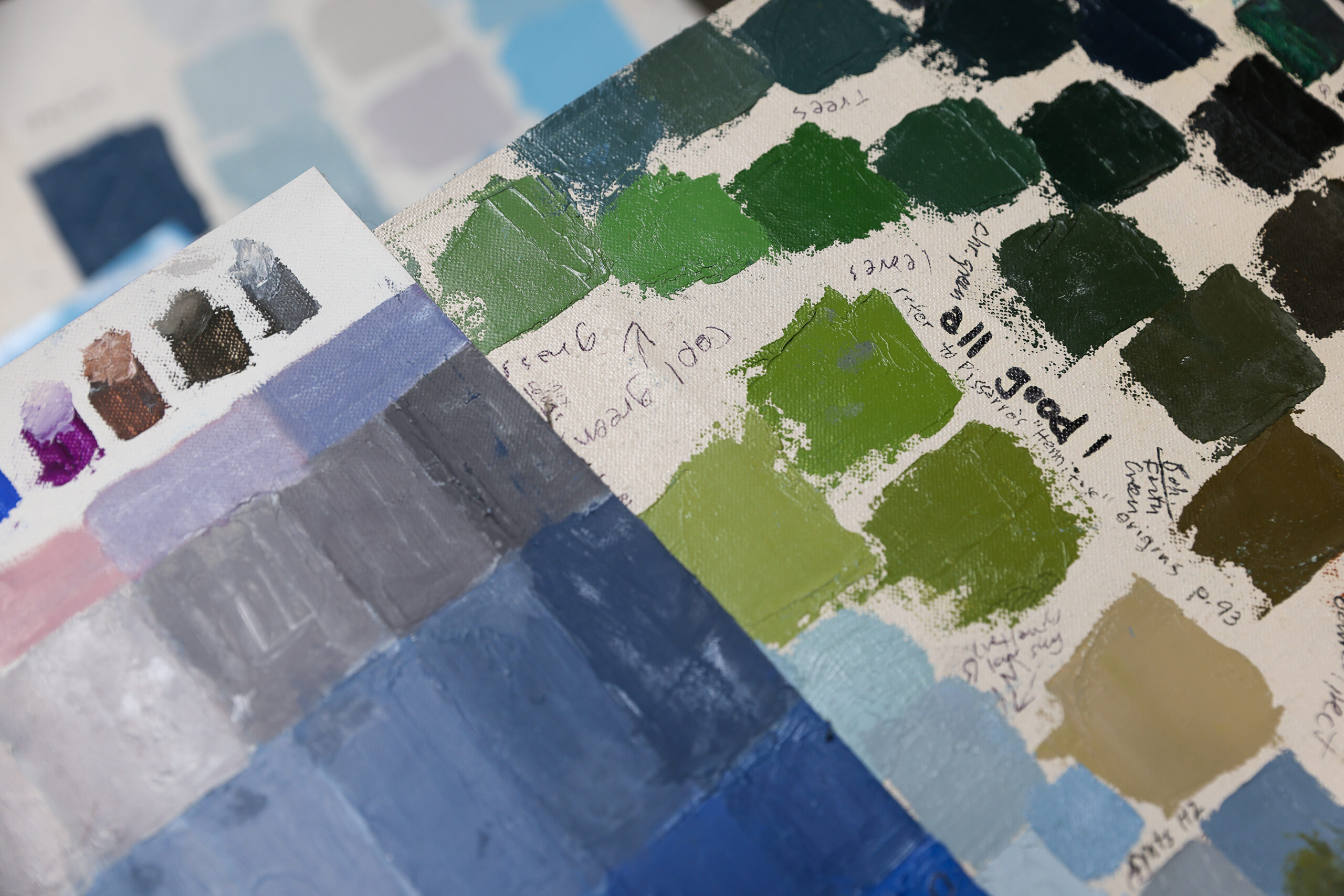
In his home studio in a two-story cottage perched above the Russian River, Evans keeps close at hand an array of blue pigments — cerulean, manganese, cobalt, Provence violet, and lapis lazuli, the vibrant hue used by painters of the Middle Ages and the Renaissance. He has made countless studies of the sky at different times of day, blending those blues with white, black, yellows, pinks, and greens — a discipline that lends his paintings such startling realism that they can appear photographic at first glance.
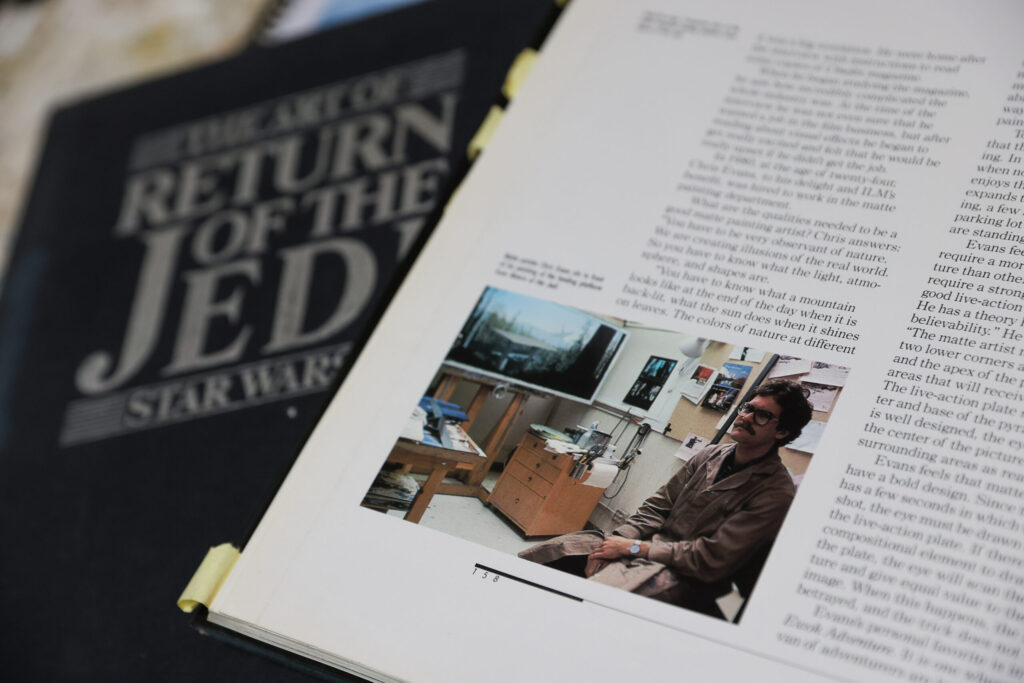
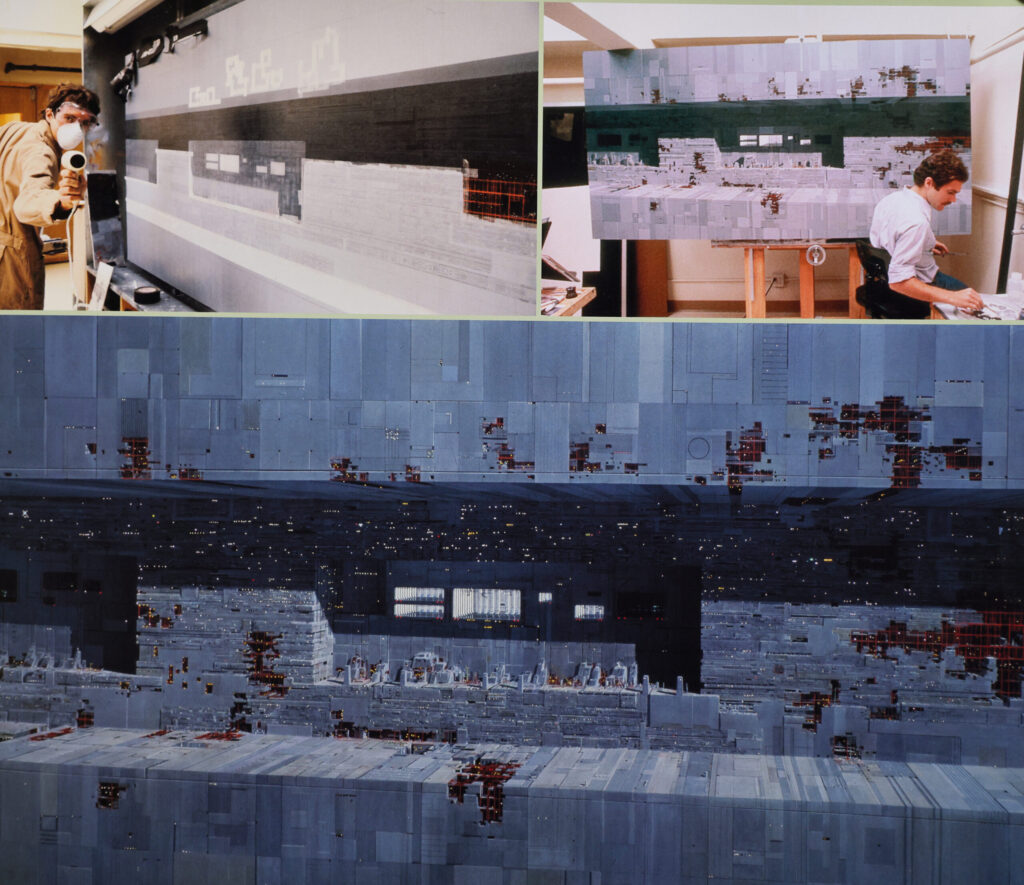
Evans’ gift for rendering these scenes so lifelike may be partly instinctive, but it is also the product of long discipline. During the 1980s, he often spent 10-hour days painting film backgrounds for Industrial Light & Magic, the visual effects company founded by George Lucas. “My years working for George Lucas helped me hone my skills for getting color and light really accurate,” says Evans, who worked on films such as “Return of the Jedi,” “E.T.,” and “Indiana Jones and the Temple of Doom.” He won a Primetime Emmy Award for Outstanding Special Visual Effects for the televised film “The Ewok Adventure” and received an Academy Award nomination for “Willow,” for which he supervised matte paintings including a slow pullback revealing the Russian River in the film’s final scene.
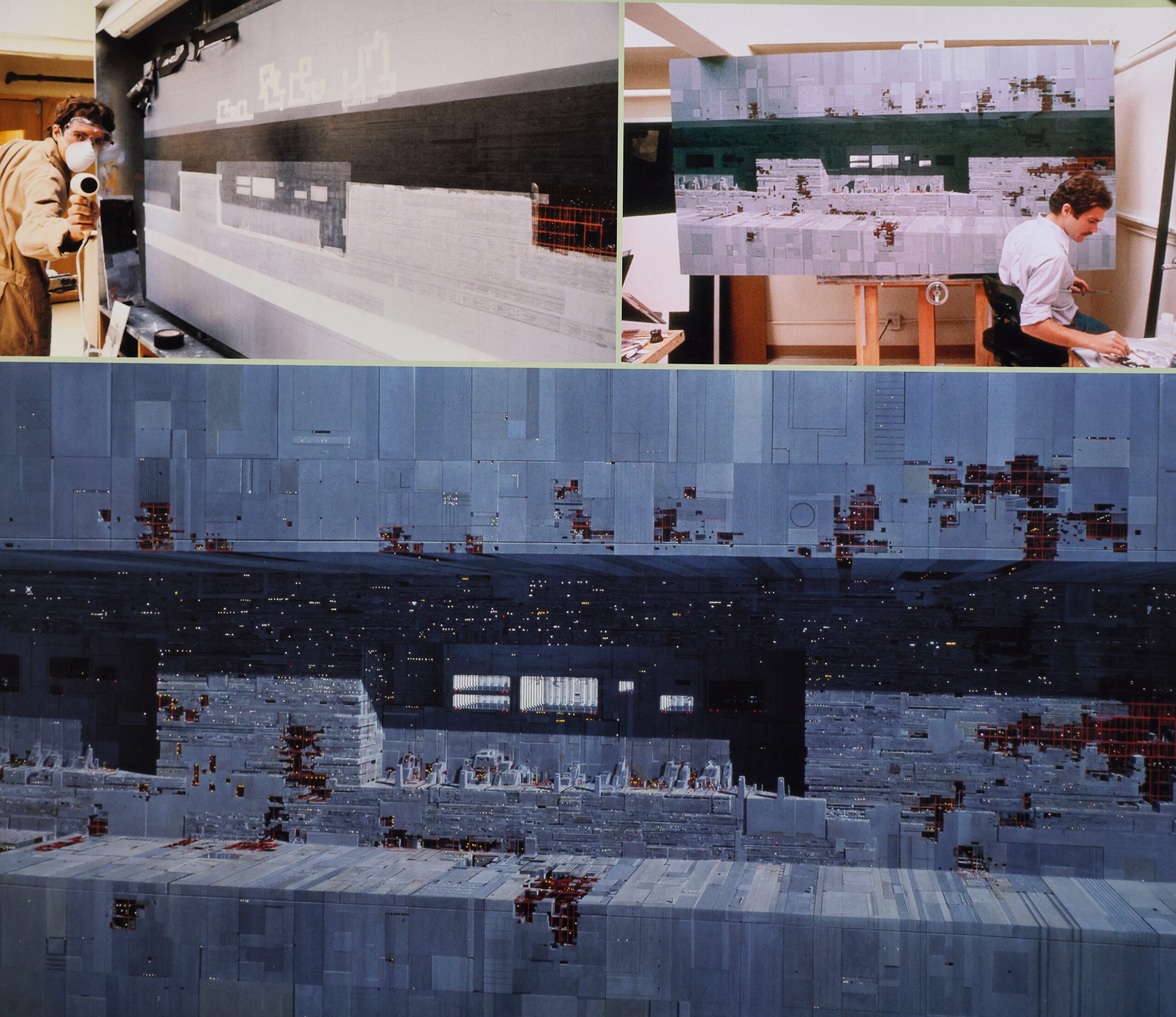
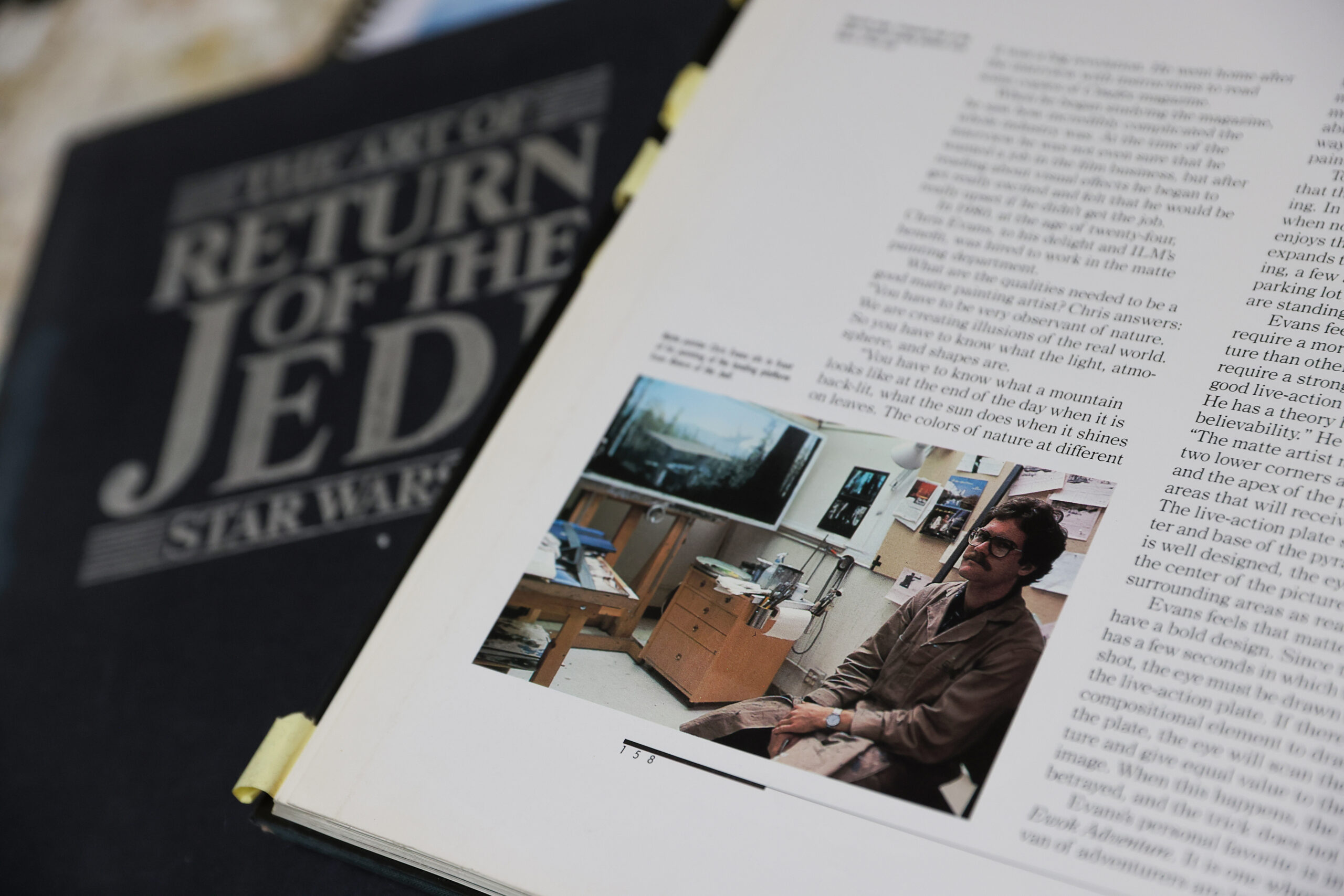
The long hours and peculiar demands of the work eventually wore on him. Matte painting, the process Evans used in films, involves painting scenes on glass while leaving empty spaces for live action. Over time, it led him to a realization: “I have to do paintings that don’t have holes in them.”
A co-worker suggested he open a gallery, and so he quit. “It’s difficult when you have a prestigious, good-paying job and you walk away from it,” he says.
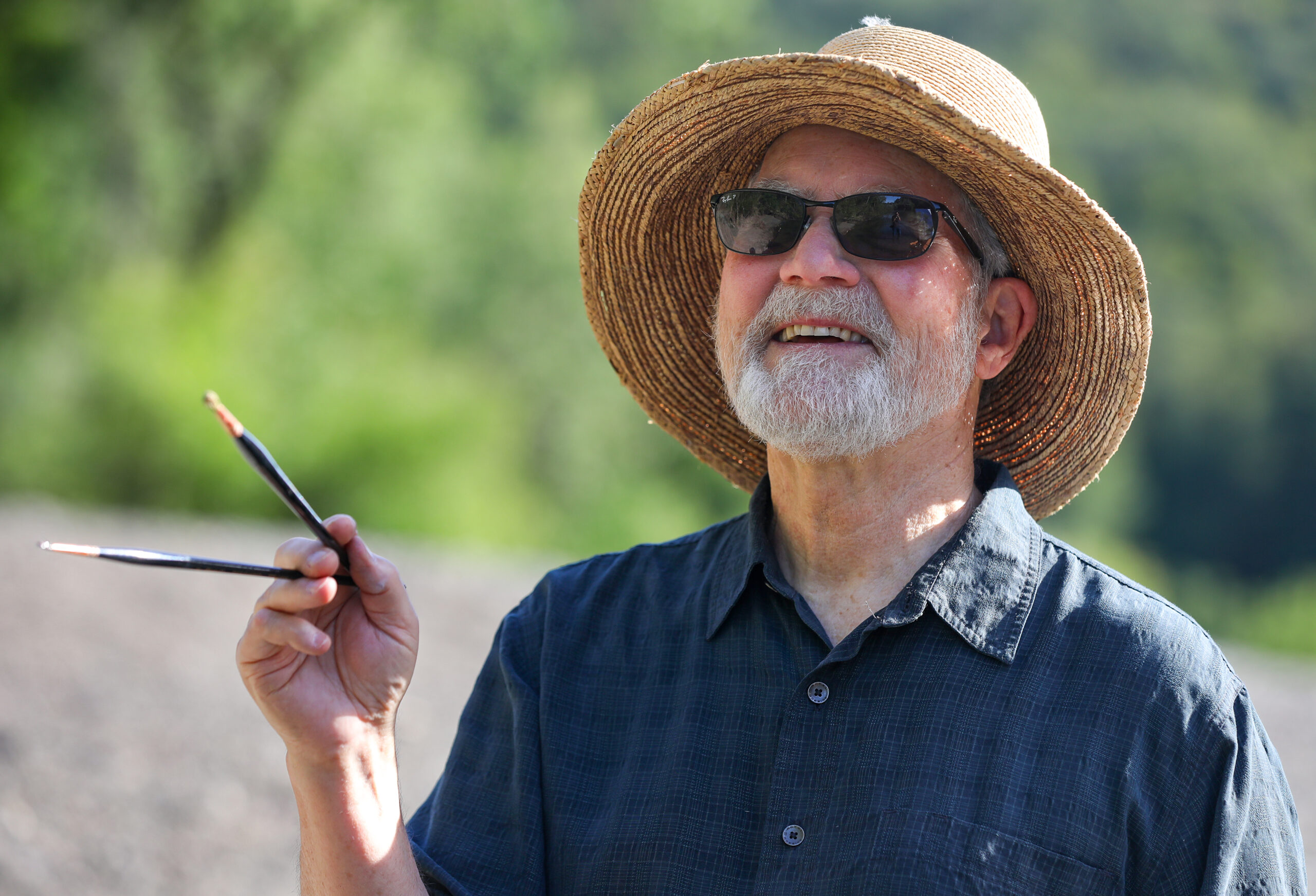
Evans moved to Healdsburg in 1990 and Sonoma County’s landscapes have occupied much of his attention since. As he paints, he meditates not only on color but also on the shapes of rocks and leaves, and the dual nature of water as both a window to the world beneath the surface and a mirror to the life above. “It flips the world upside down, and there’s something beautiful about that,” he says.
From the back deck of his home, a mile or so downstream from the Del Rio Woods Regional Park beach access, the river can sometimes be lively with kayakers, paddle boarders, and tubers drifting through its cool, gentle flow. But early on a weekday morning, with no one in sight except a family of geese gliding below, a Violet-green swallow swooping overhead, and a pair of watchful scrub jays guarding their nest nearby, Evans lowered his voice almost to a whisper. “You can hear the water.”
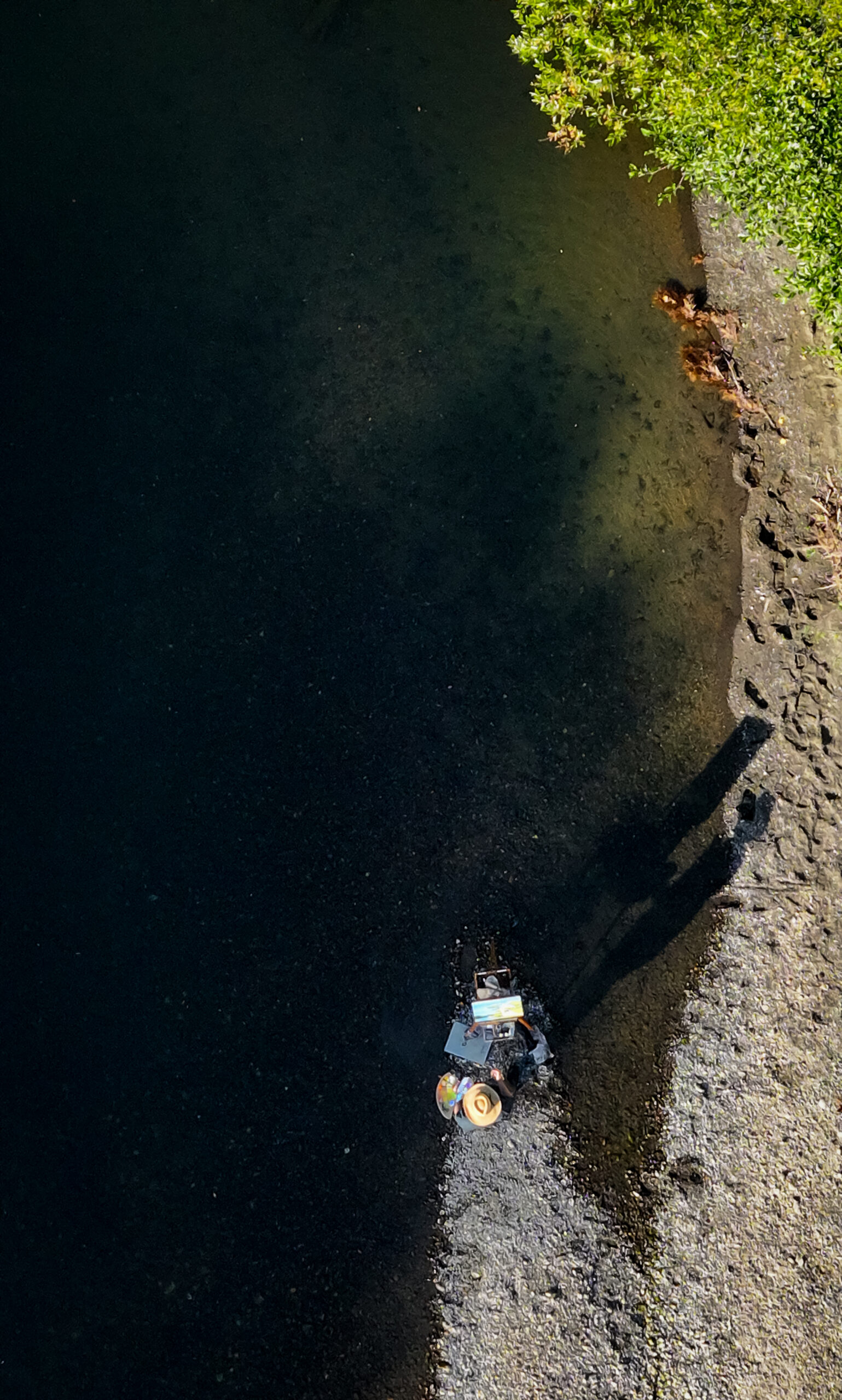
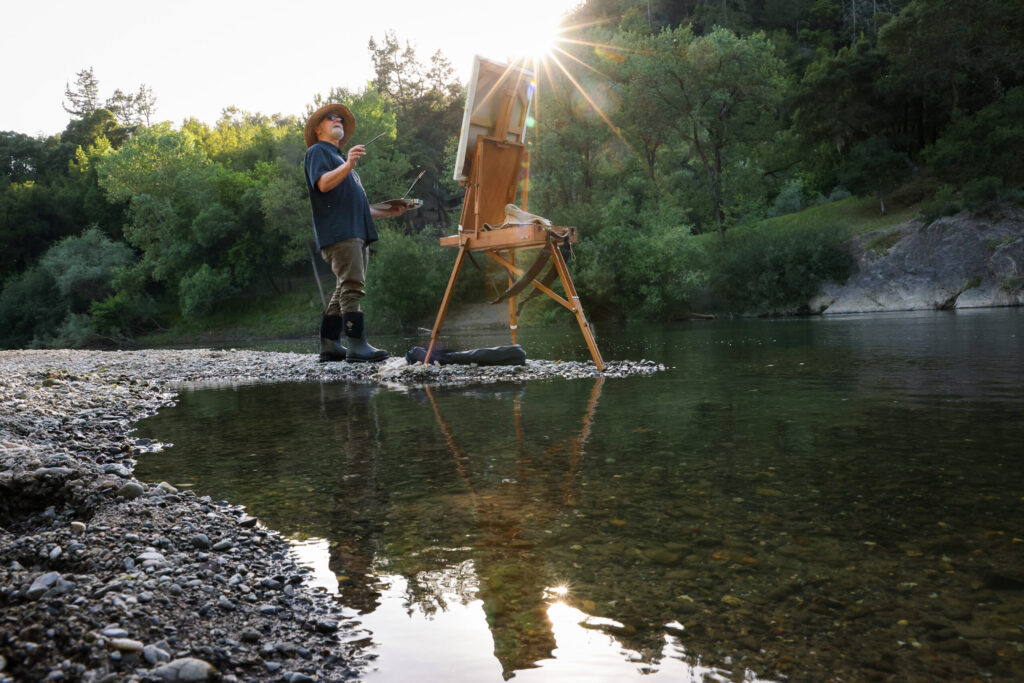
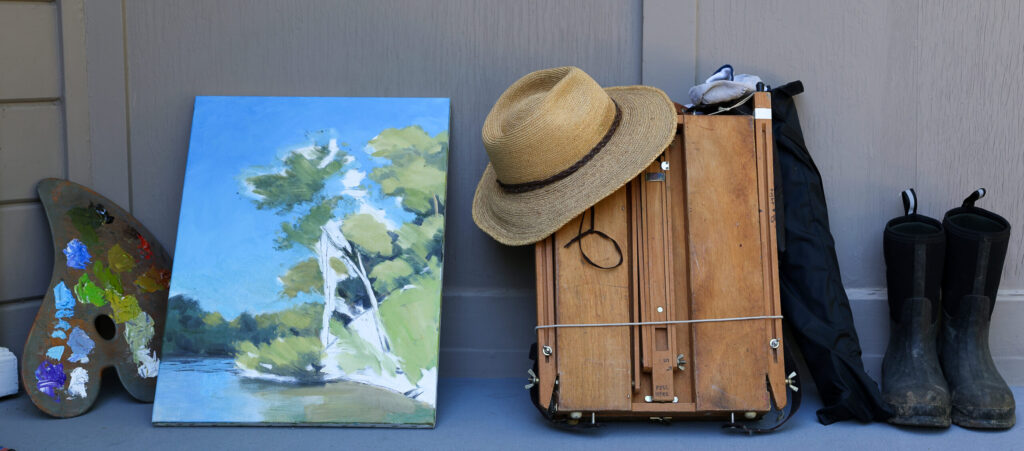
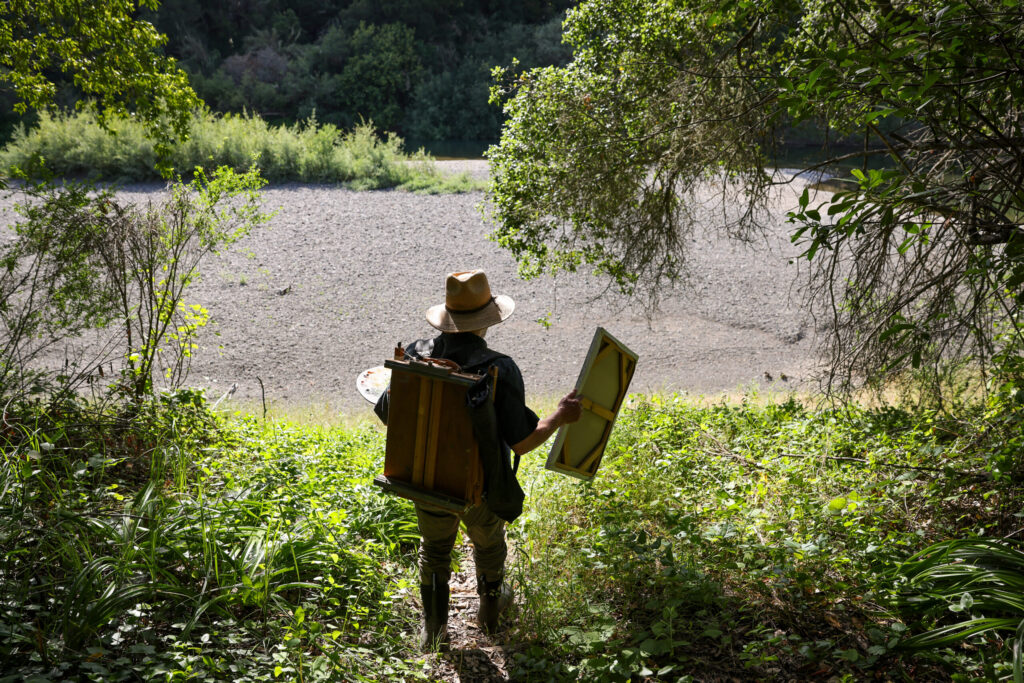
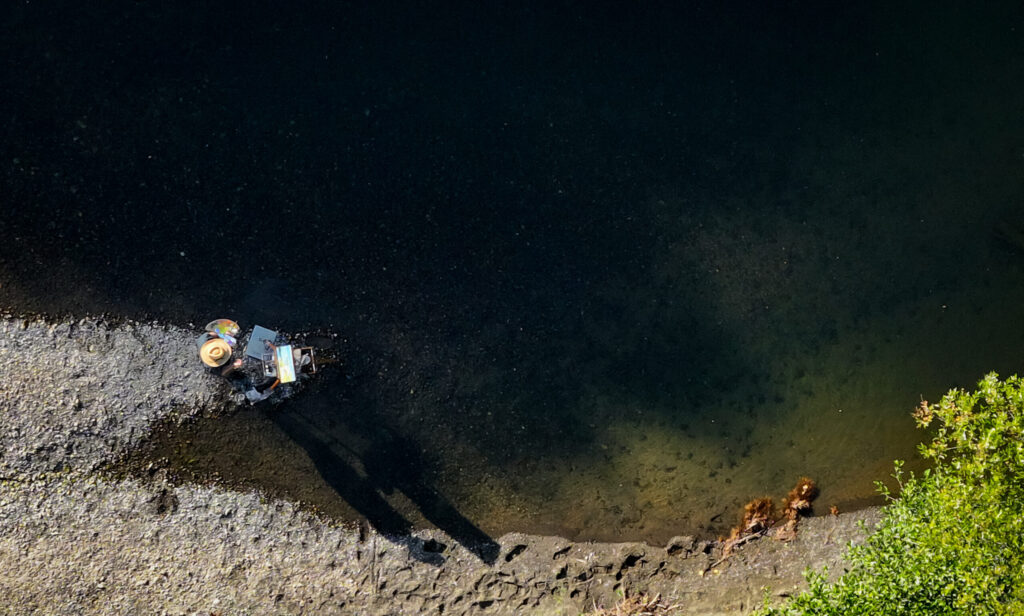
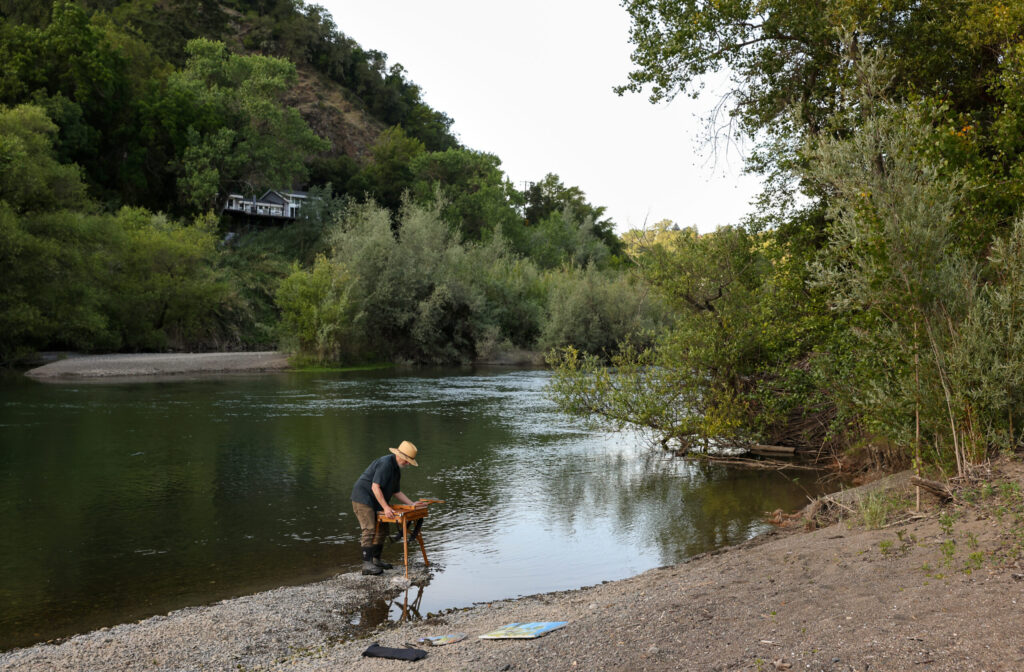
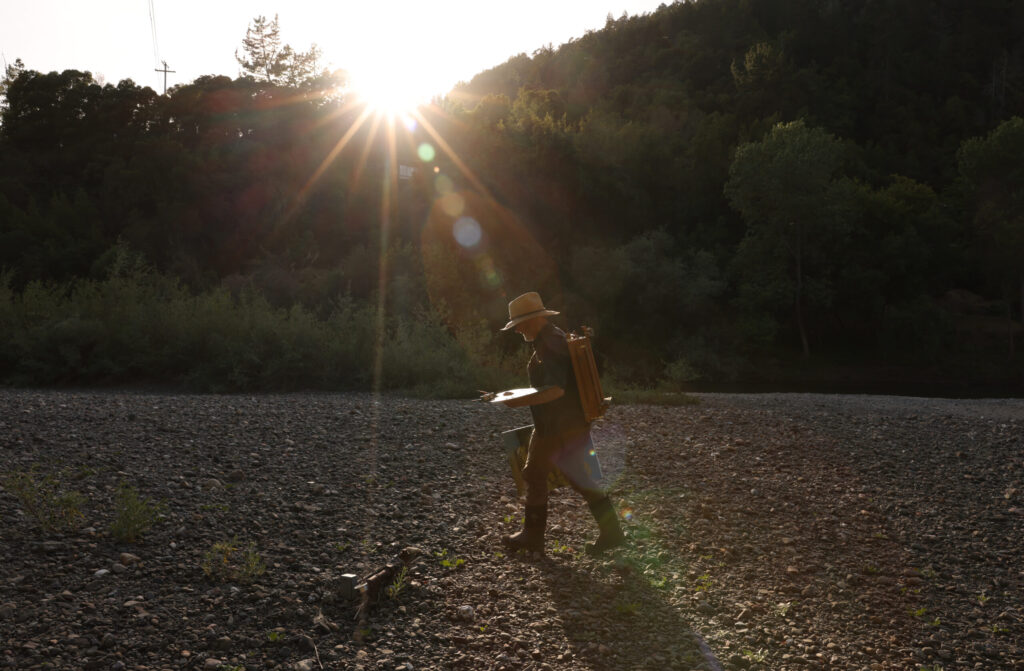
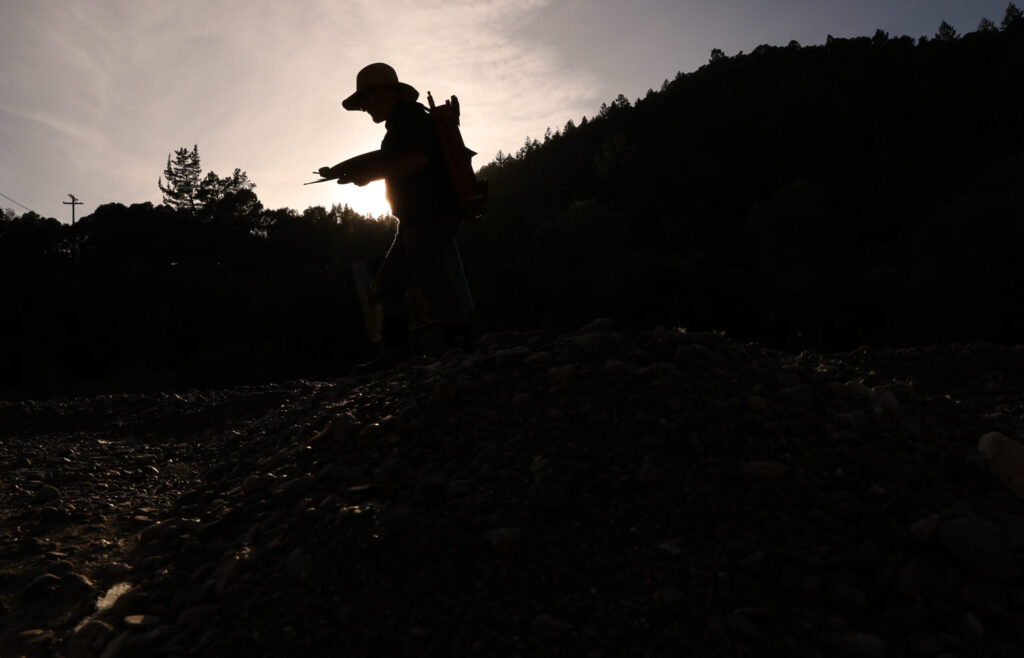
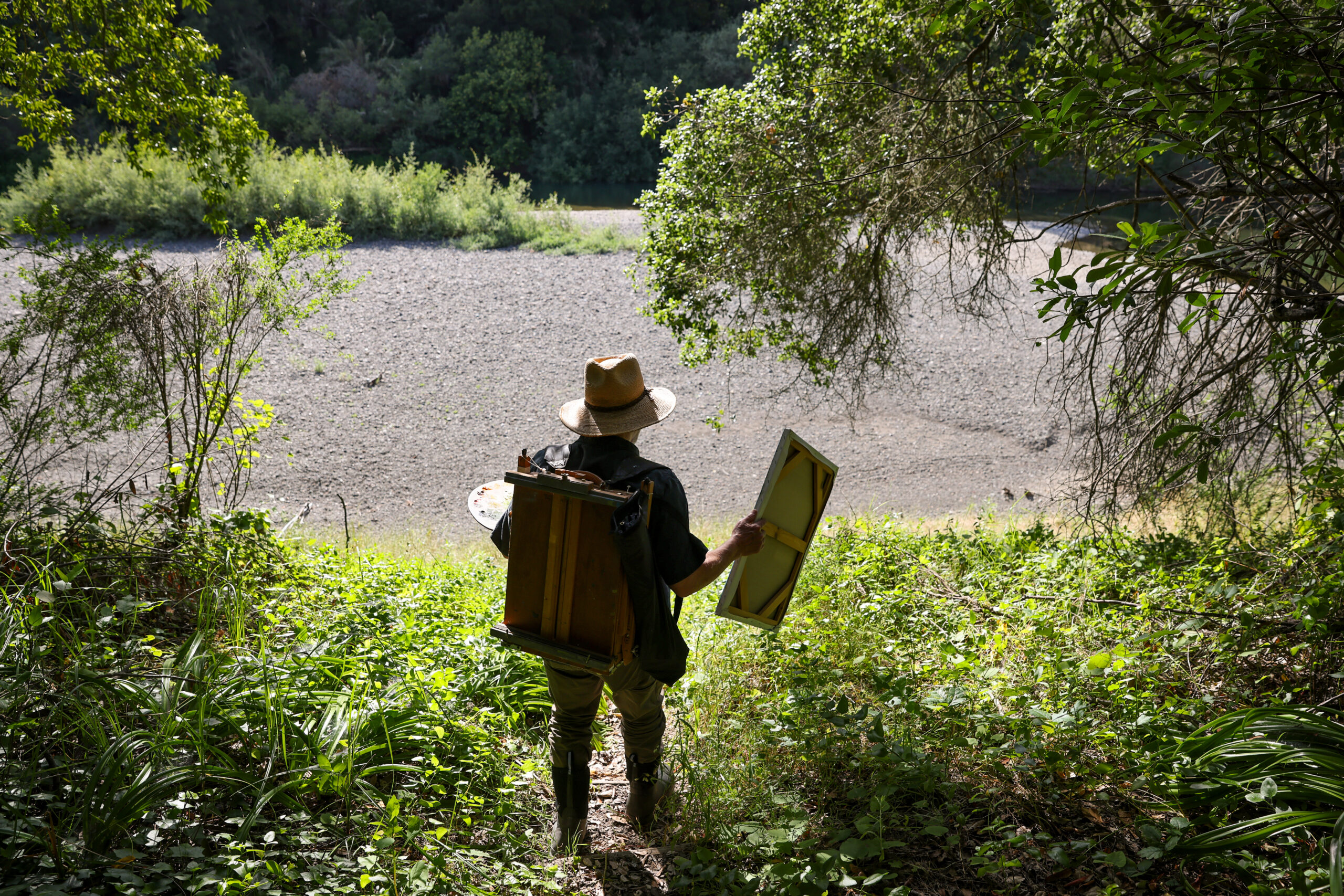
Painting, for him, engages more than sight. He notices the sound of water rippling over rocks, the calls of birds and even the smell of willows as he ducks beneath them while walking to the river with a French easel strapped to his back to paint en plein air. There, standing calf-deep in the water, he searches for the precise angle from which to capture a cottonwood on the bank upstream and the colors of the late-afternoon sky.
There’s a natural kinship between his art and his environmental sensibility. “As you observe, you think. You become a naturalist and a conservationist,” he says. “When you love something, you want to protect it.”
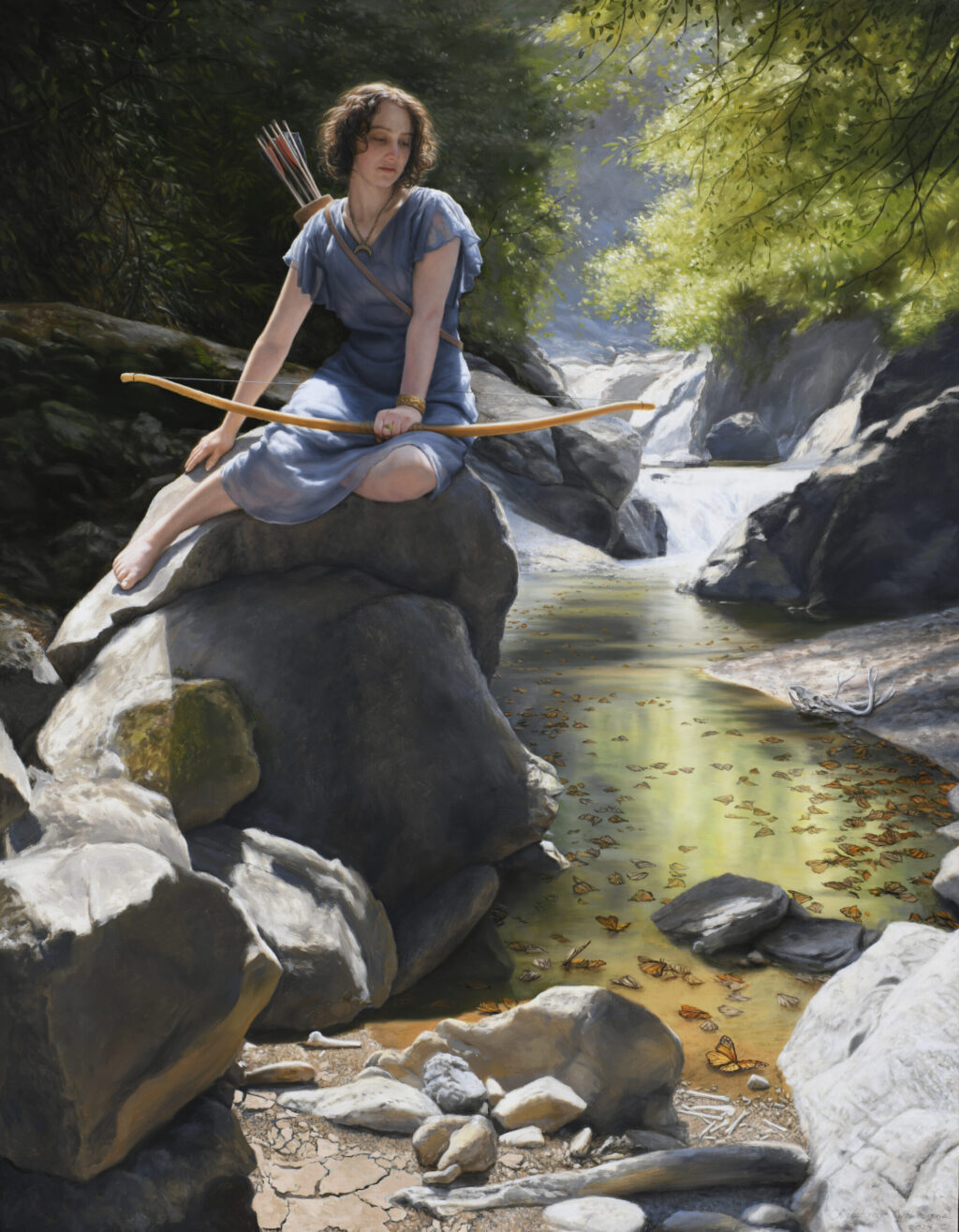
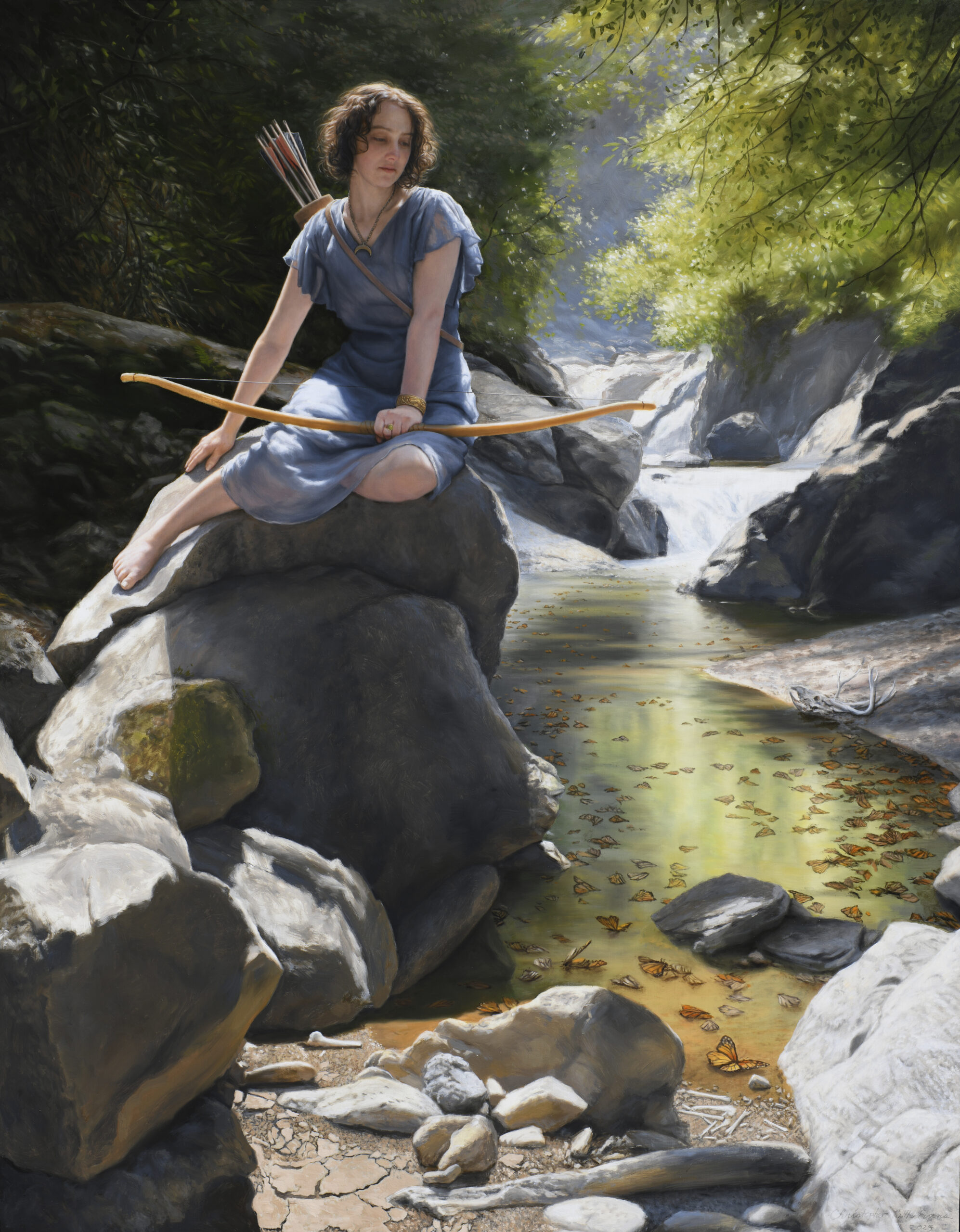
Evans also paints figurative works. His recent painting, “Artemis Alone at the River of Extinction,” depicting the goddess of the forest gazing into a pool of dying monarch butterflies, offers a quiet reflection on ecological loss. This spring, it received the top prize for social commentary in the Art Renewal Center’s 18th annual Salon Competition, among the world’s most prestigious competitions devoted to realist art, according to its website. The painting appeared in an exhibition and auction at Sotheby’s in New York in July. For Evans, the honor was an unexpected recognition. “It blew my mind when I got that,” he says.
Born on the West Coast and raised in New York, Evans grew up in what he calls “an art-oriented family.” His grandfather, an amateur artist, taught him to paint and draw at an early age. As a teenager, Evans spent hours studying Old Master paintings at The Frick Collection on Manhattan’s Upper East Side, just steps from Central Park. In high school, he made a fateful choice to end his misery in physics and switch to an art class, a change he likens to “throwing an otter into a swimming pool.” He began his studies at the University of California, Los Angeles, as an art history major, considering it the more practical path, but passion prevailed, and he eventually changed to studio art.
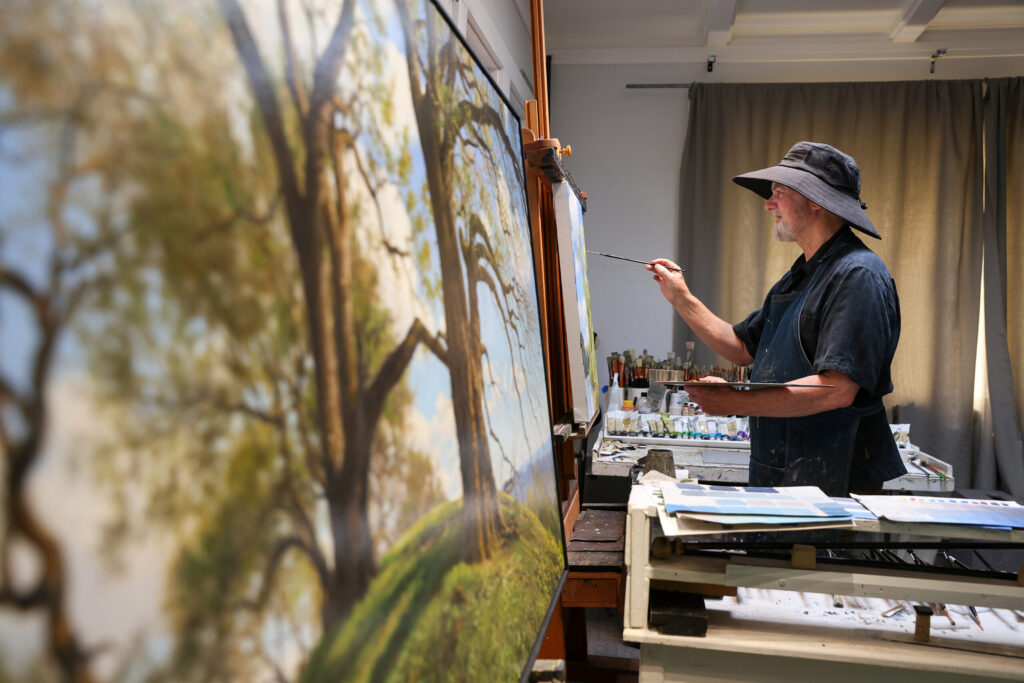
Though he loves the outdoors — particularly the trails around Lake Sonoma and Pepperwood Preserve, where he served as artist in residence in 2017 shortly before the Tubbs Fire — Evans says it is more practical to paint indoors. While some of his smaller works are portable, many of his canvases are measured in feet rather than inches.
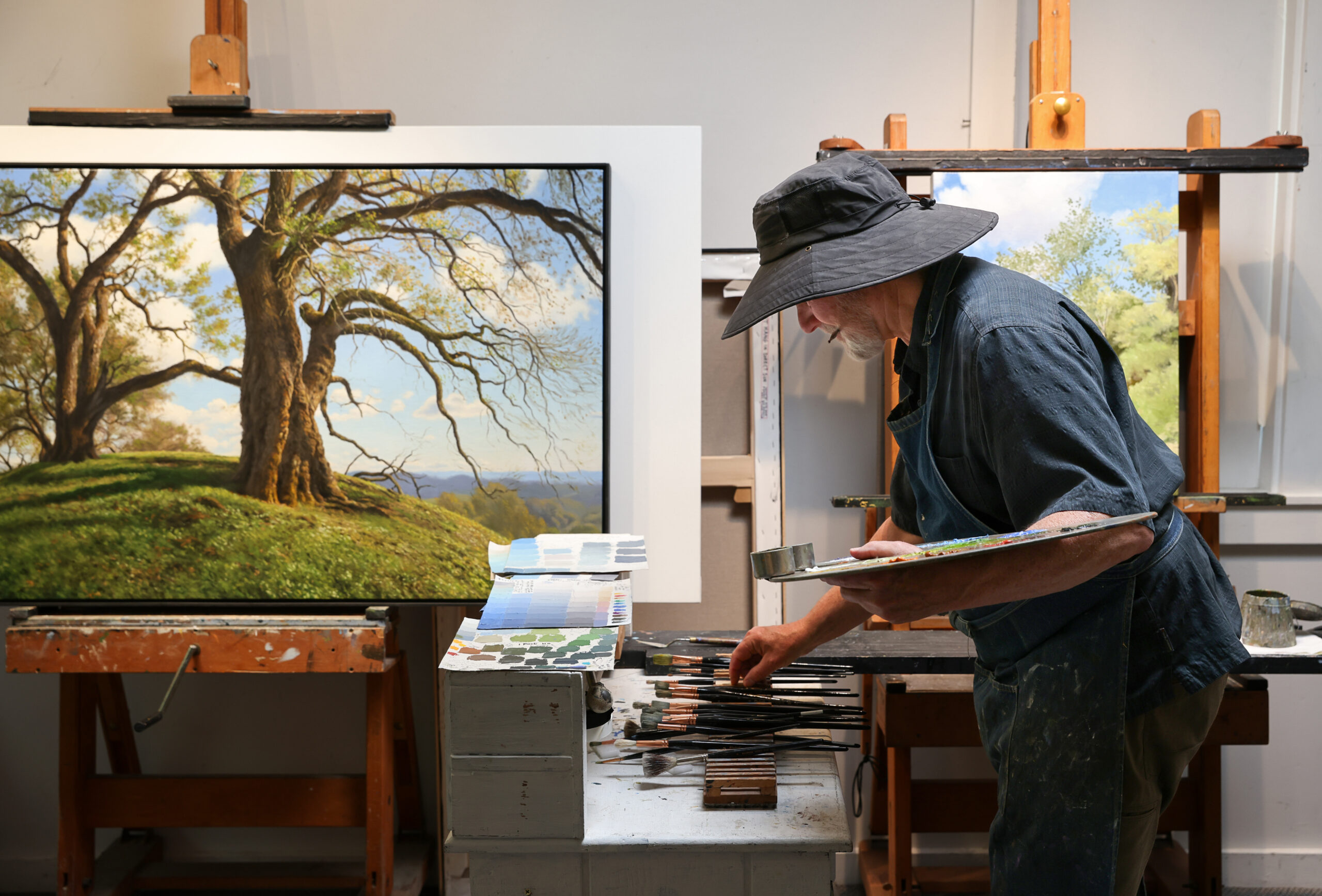
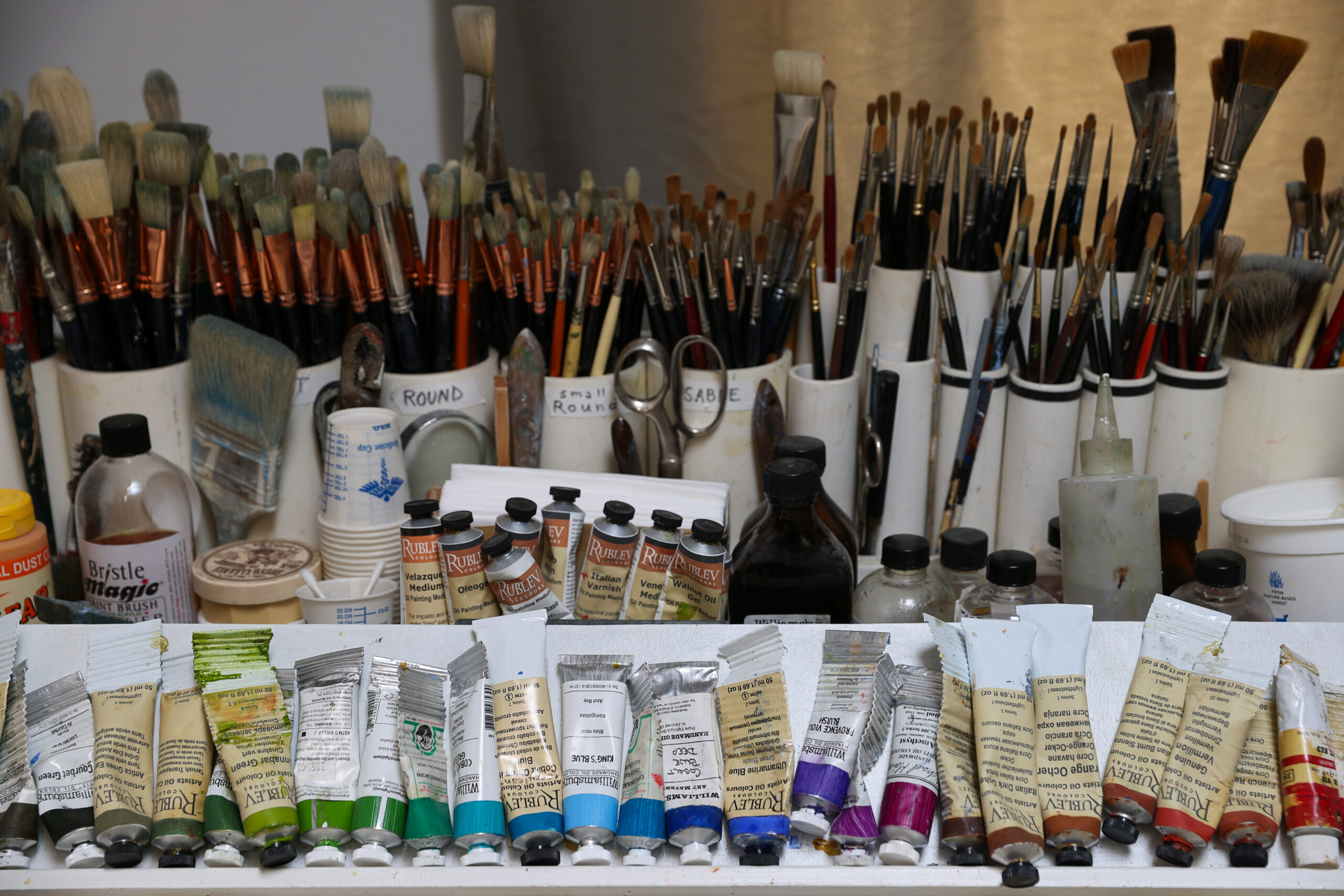
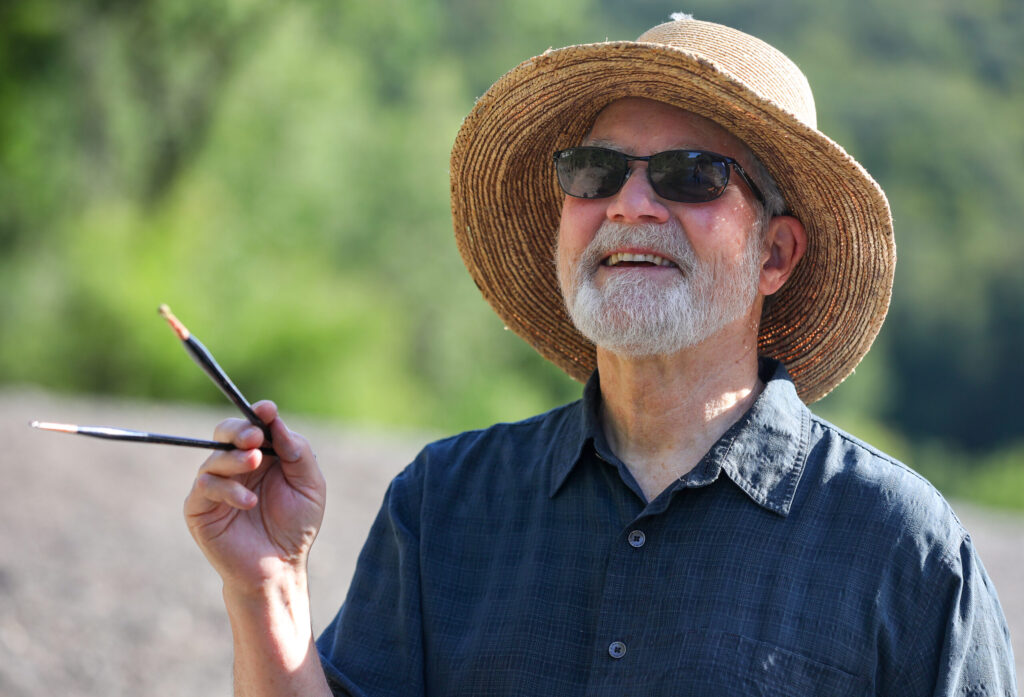
Even his tools evoke the natural world. He keeps brushes made from sable, boar, and badger hair, favoring badger for blending the colors in his skies. One brush he fashioned himself by attaching a natural sponge to a stick that he uses to paint tree leaves, a technique he learned while working for George Lucas.
Still, Evans spends as much time outside as possible, searching for moments such as when the light and the clouds, the curve of the earth, and the arch of a stately oak seem to harmonize. “I try to capture the overall feeling of the forms as they interrelate to each other,” he says. He paddles stretches of the river by kayak or drives toward the coast in pursuit of shifting clouds. “I’ve earned this kind of freedom. I’m 71. I’ve spent a lot of time in dark rooms, in warehouses, working on movies,” he says. “I feel a little guilty just getting in my car, but I feel like I’ve earned it. And I share it.”
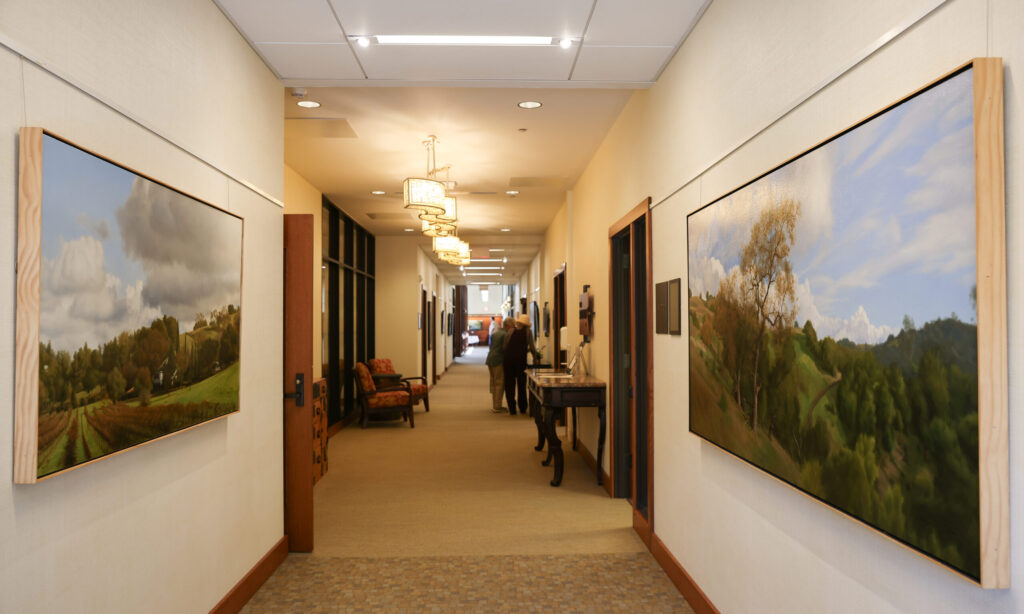
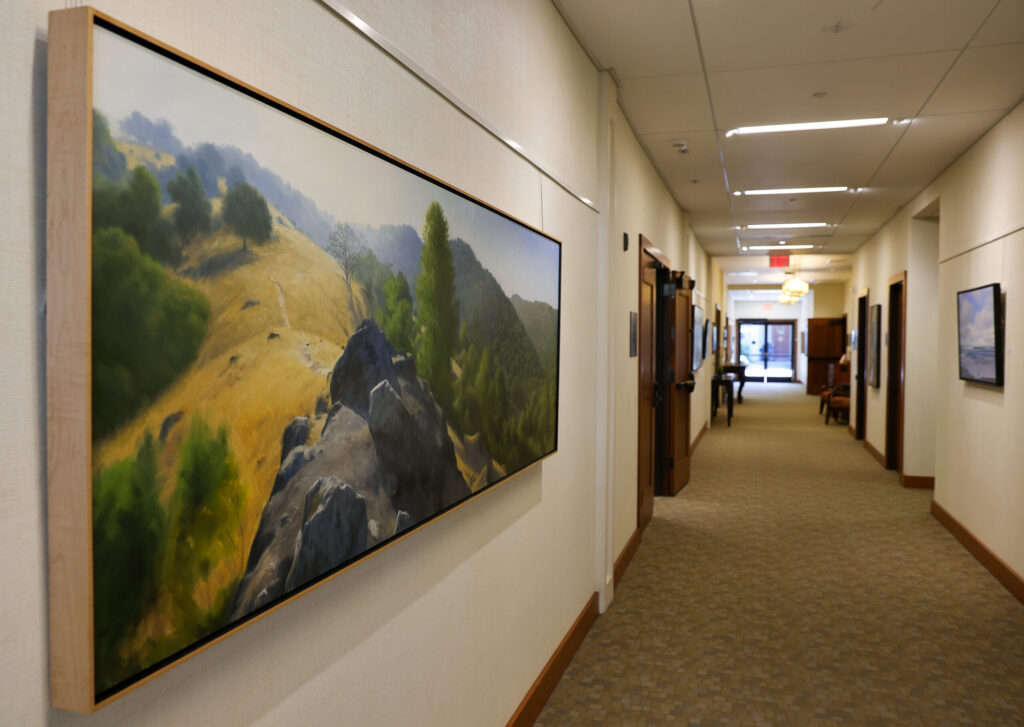
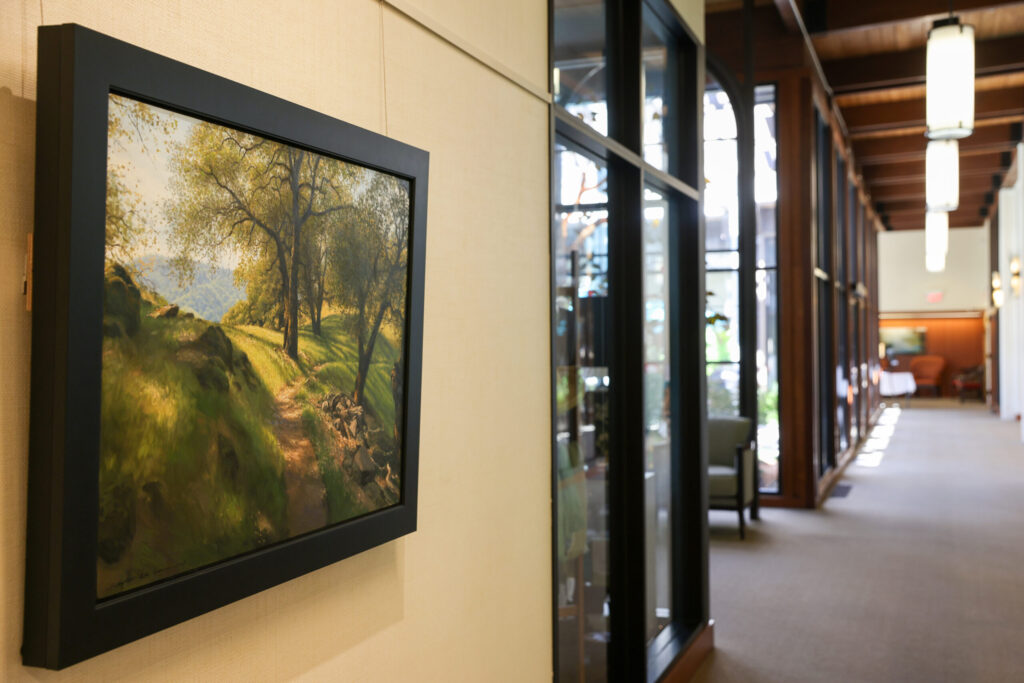
He recently exhibited work at Spring Lake Village in Santa Rosa, and two of his paintings are on view at the Lori Austin Gallery in Healdsburg. Evans also maintains a private viewing space in downtown Healdsburg that’s open by appointment.
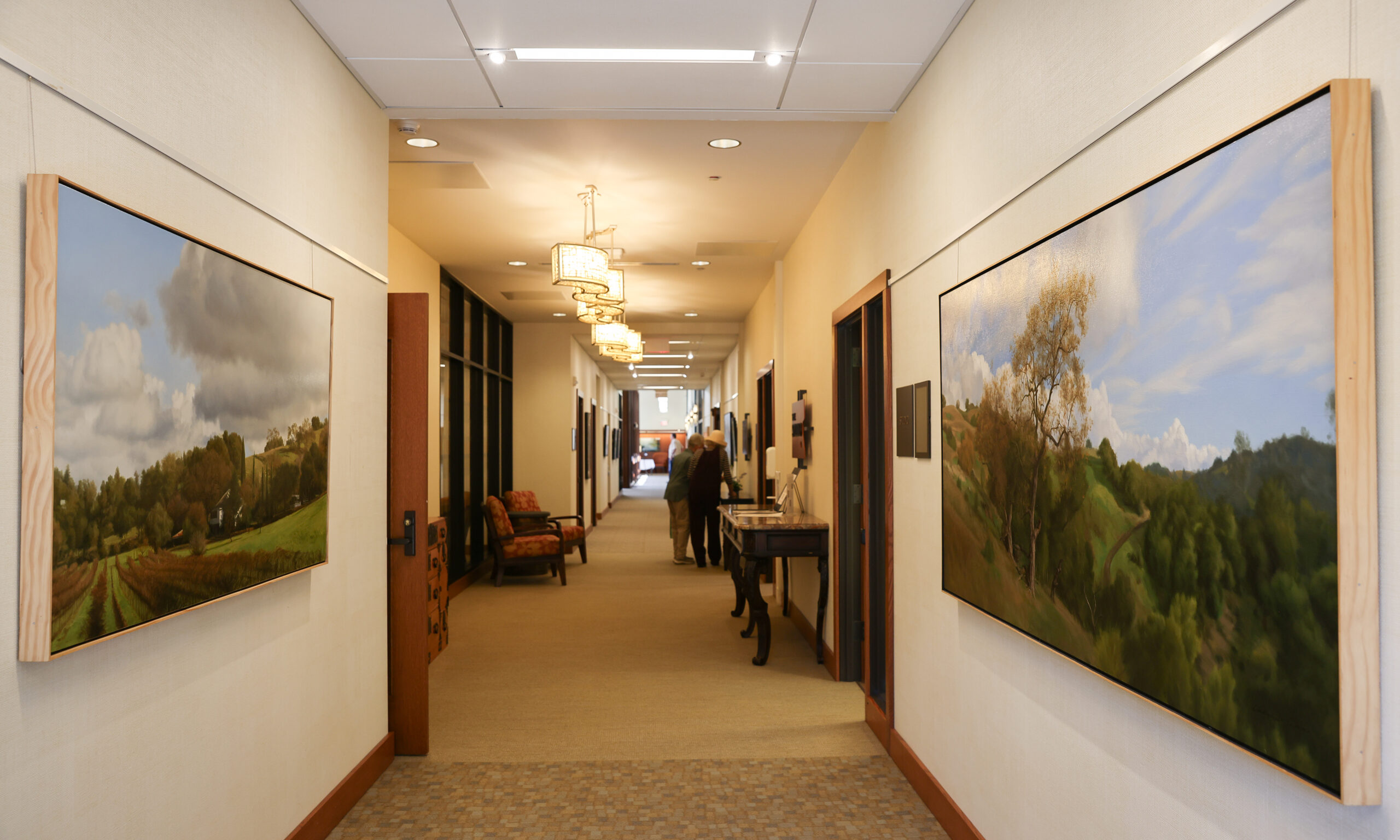
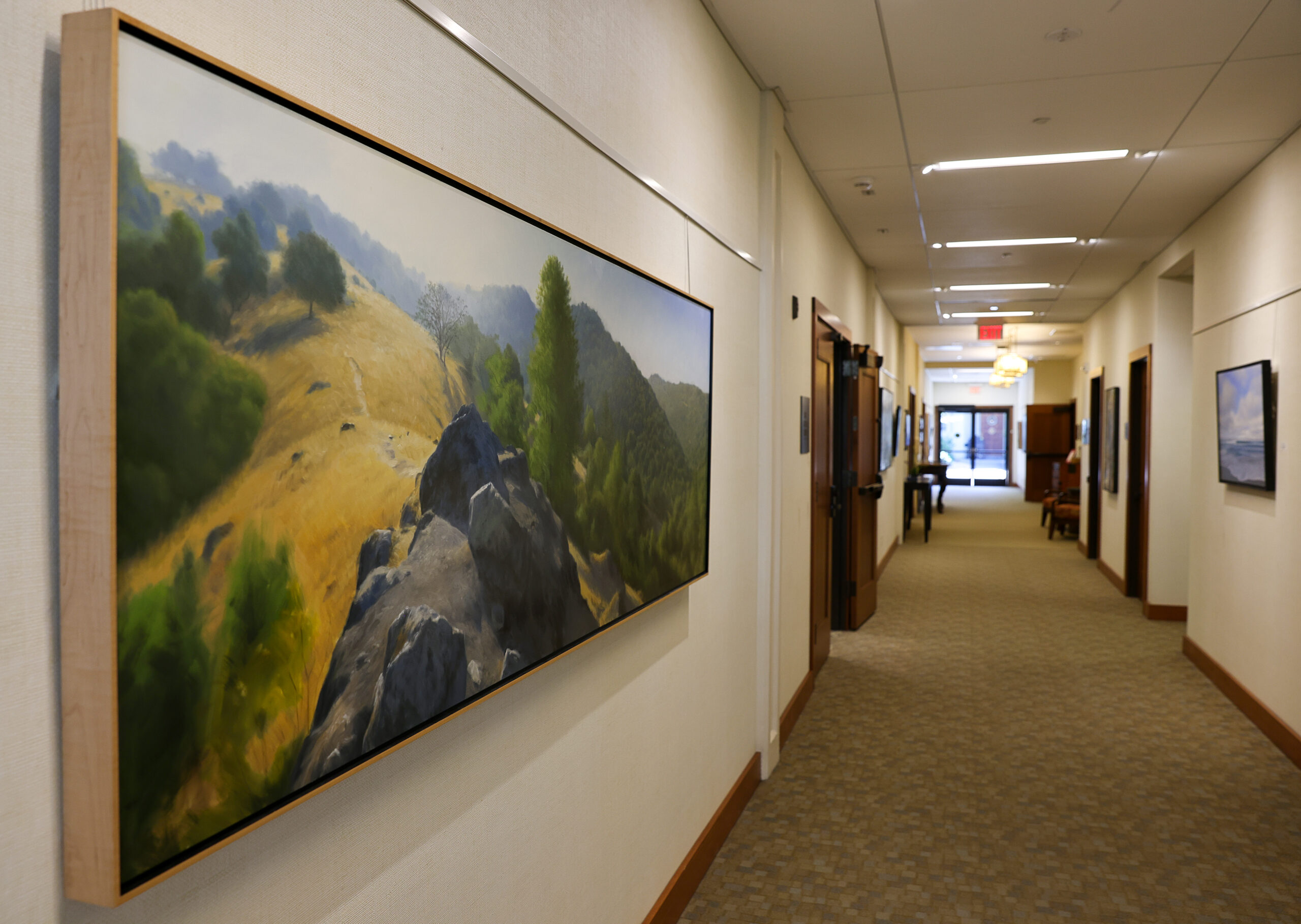
“My goal with landscape painting is that people will appreciate what I have appreciated,” he says, comparing his paintings to a window that invites the eye to linger and then wander further.
“I sometimes think of myself as a view farmer,” Evans says. “I’m harvesting and cultivating these beautiful views of nature we have here.”
Find Christopher Leith Evans’ Art
Gallery 433
Private exhibition space. By appointment only.
707-326-1551, christopherleithevans.com
Lori Austin Gallery
105 Plaza St., Healdsburg
707-395-4661, loriaustingallery.com