



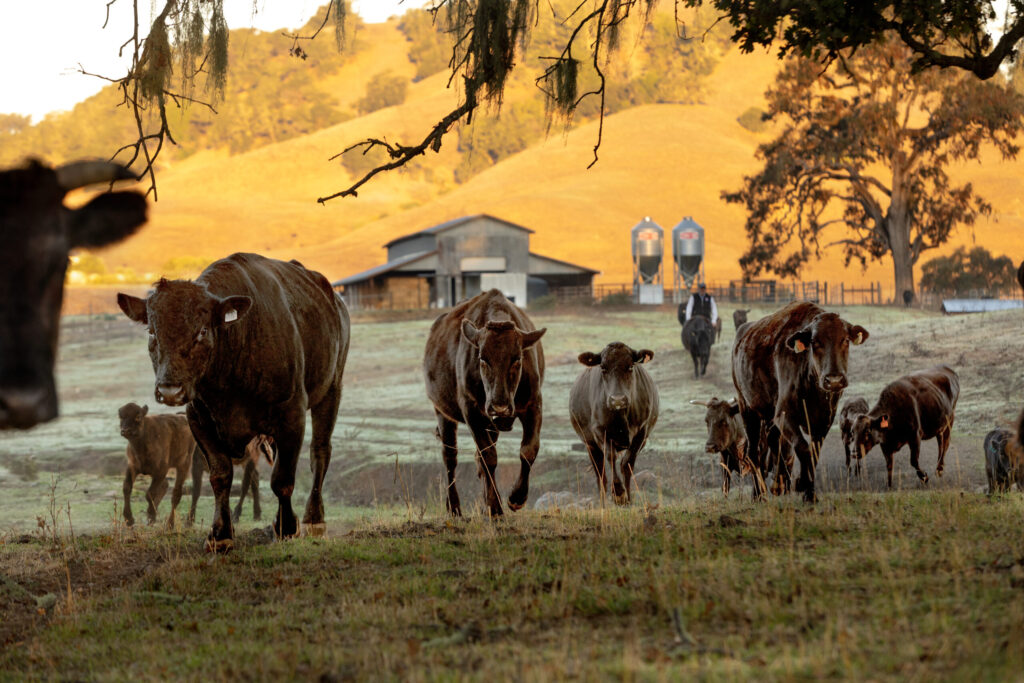
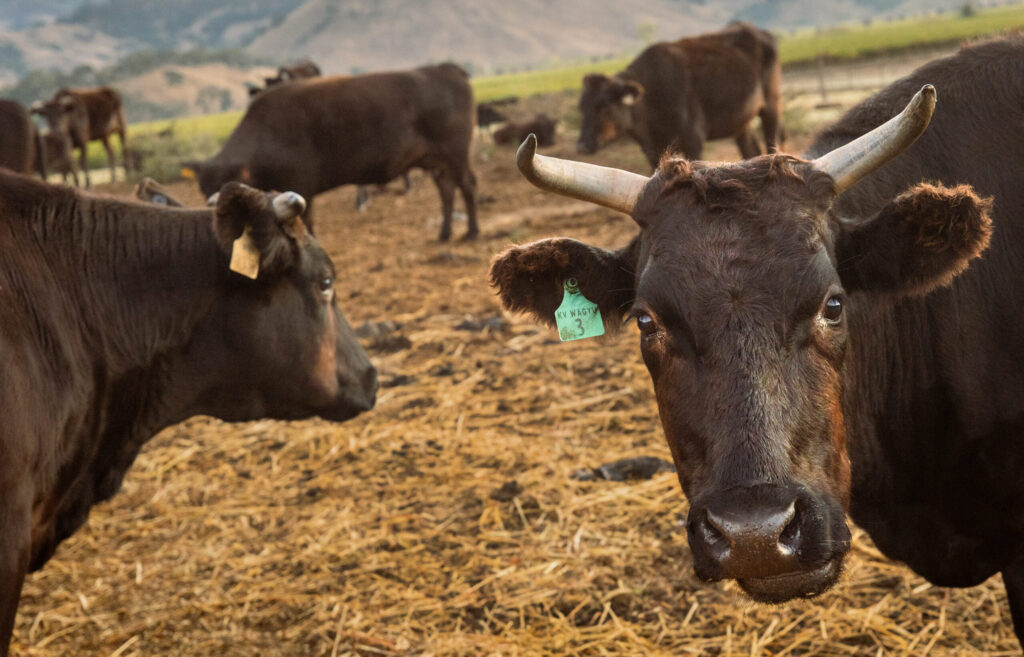
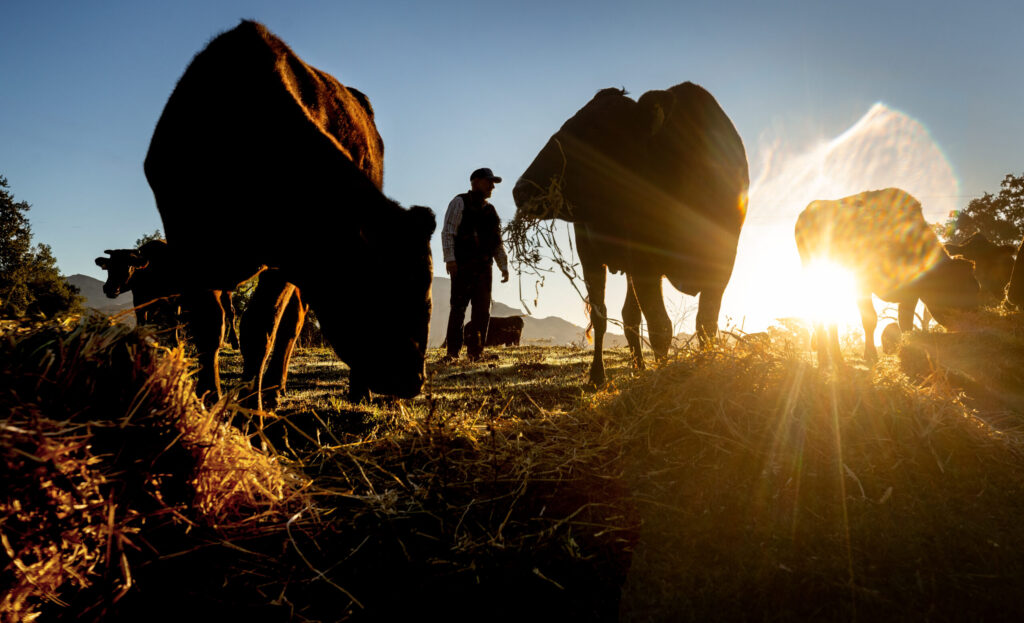


Not long after Adam Gordon opens the gate to his cow pasture, a bow-legged calf trots toward him, pausing to cock its head, ear tag wagging, before awkwardly circling back to its mother.
All around, Knights Valley resonates like a quiet spell. Aside from towering ridgetop oaks and vast farmlands and vineyards, the first thing you notice is a lingering silence.
“You can hear yourself think out here,” says Gordon, surrounded by a docile herd of 100% champion Wagyu cattle near a cluster of oak trees. “You can breathe again.”
With no shops or restaurants or hotels, the tiny valley is known more as a passage between Healdsburg and Calistoga than a destination. It’s where the road finally straightens after winding through sharp turns from either direction.
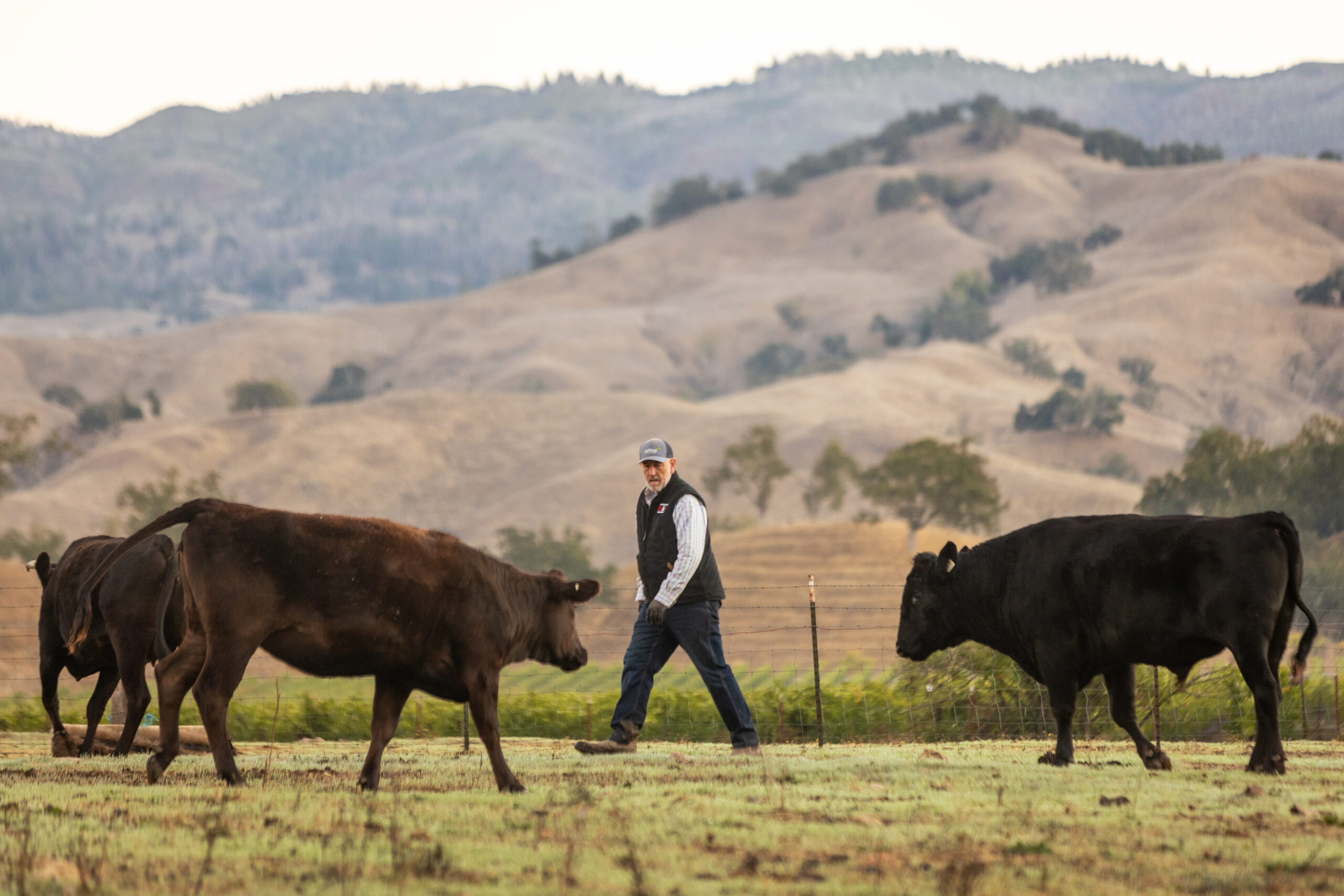
In the distance, wildfire smoke rings Mount St. Helena, a reminder of the flames that raced through Knights Valley back in 2019. It’s also a lesson in how cattle grazing can create essential fire breaks. “Grazing reduces the fuel load,” he says. “Our cows mimic what bison once did, keeping grasslands in balance.”
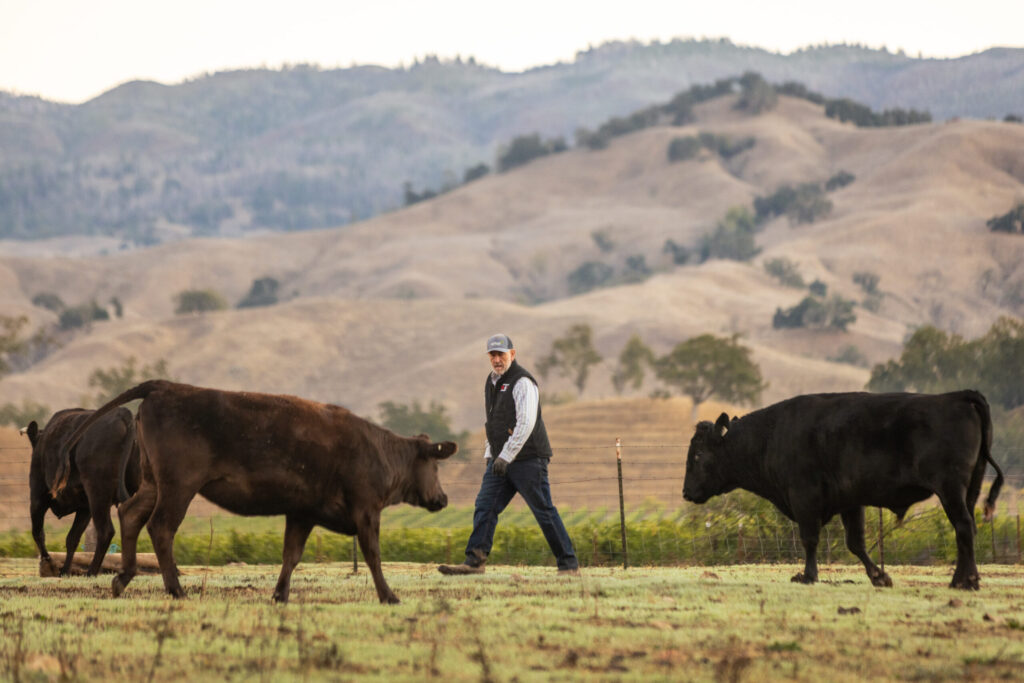
An Ohio native who made his mark in the New York City real estate market, Gordon likes to say, “I’m the least likely rancher you know.”
Instead of boots and Wranglers, he’s wearing Hokas with purple socks and running shorts after a long Sunday morning walk.
Together with his wife, Kristina O’Neal, who designs the interiors of world-class restaurants, they found Shangri-La in one of the last remote corners of Sonoma County. Knights Valley is where they escape the fast-paced hustle of Manhattan, if only for a few months of the year.
Fifteen years ago, when they bought the 227-acre spread, they christened it Ghost Donkey Ranch after seeing “spectral and elusive” wild donkeys wander onto the ranch and then disappear, apparently refugees from an old rescue farm.
They set out to design and build their own house, and in keeping with the ranch theme, they adopted a pair of pet donkeys, Sugimoto and Jinx, who occasionally hang out in their living room and live year-round on the property.
It’s a familiar story — wealthy outsiders discover Sonoma County and put down roots — or at least buy a second or third home. But what sets Gordon and O’Neal apart is how they connected with the land and the local culinary scene.
“I knew we didn’t want to plant a vineyard,” says Gordon, wary of contributing to the glut and monoculture of grapes in Northern California.
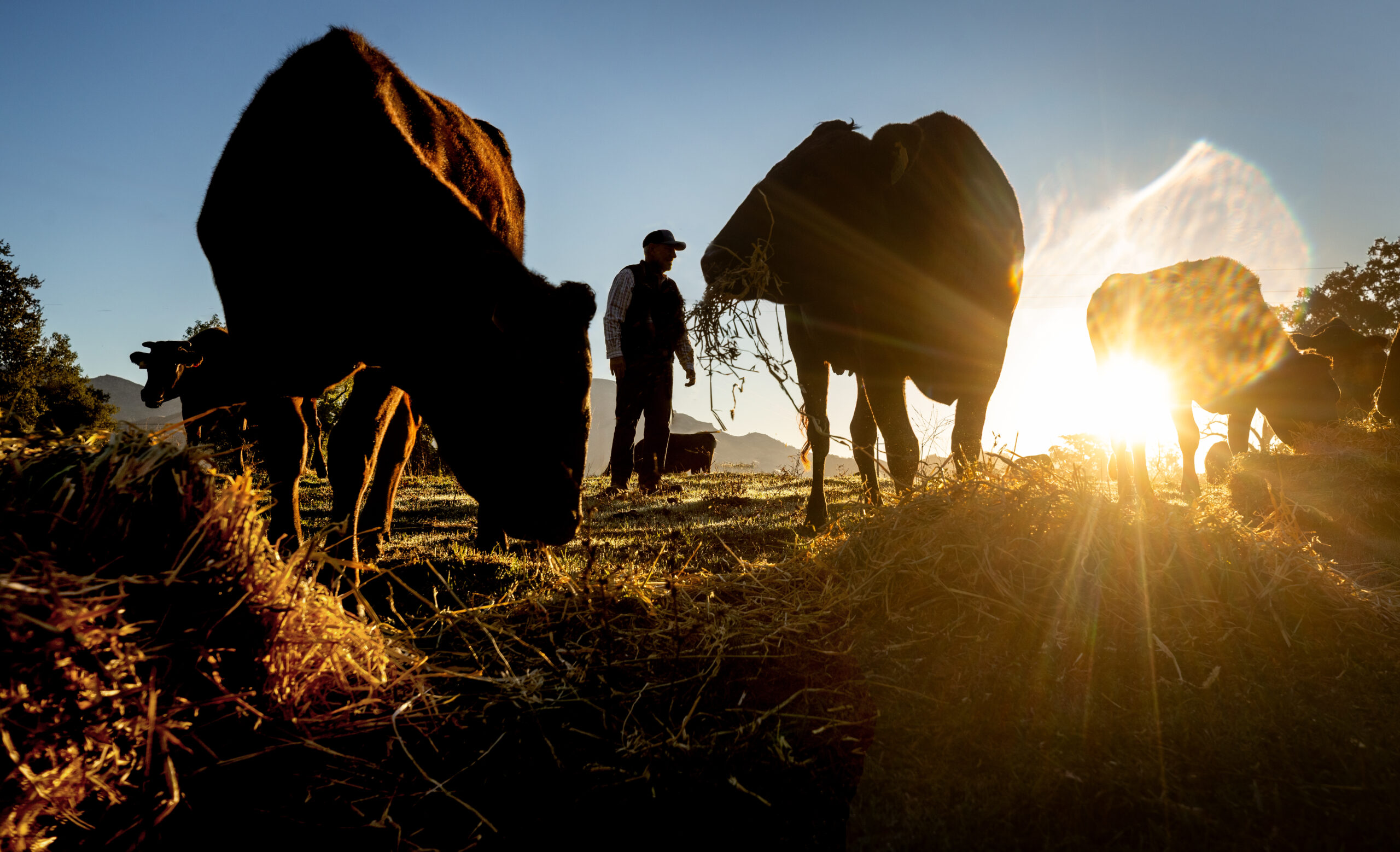
A well-studied environmentalist who dreamed of being a marine biologist as a kid — breeding fish in seven aquariums in his bedroom and later serving on the director’s council of the Scripps Institution of Oceanography — Gordon is a strong believer that cattle play an important role in the greater ecosystem around them. “They aerate soil with their hooves, fertilize with manure, stimulate plant growth by grazing. Managed right, cattle restore more than they take. They’re not an imposition; they’re continuity.”
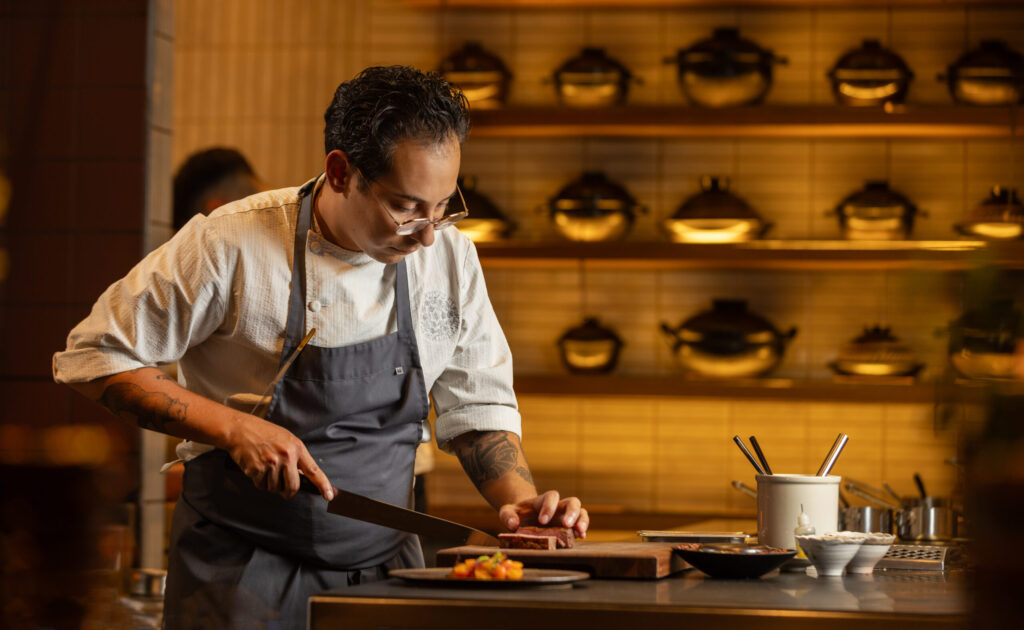
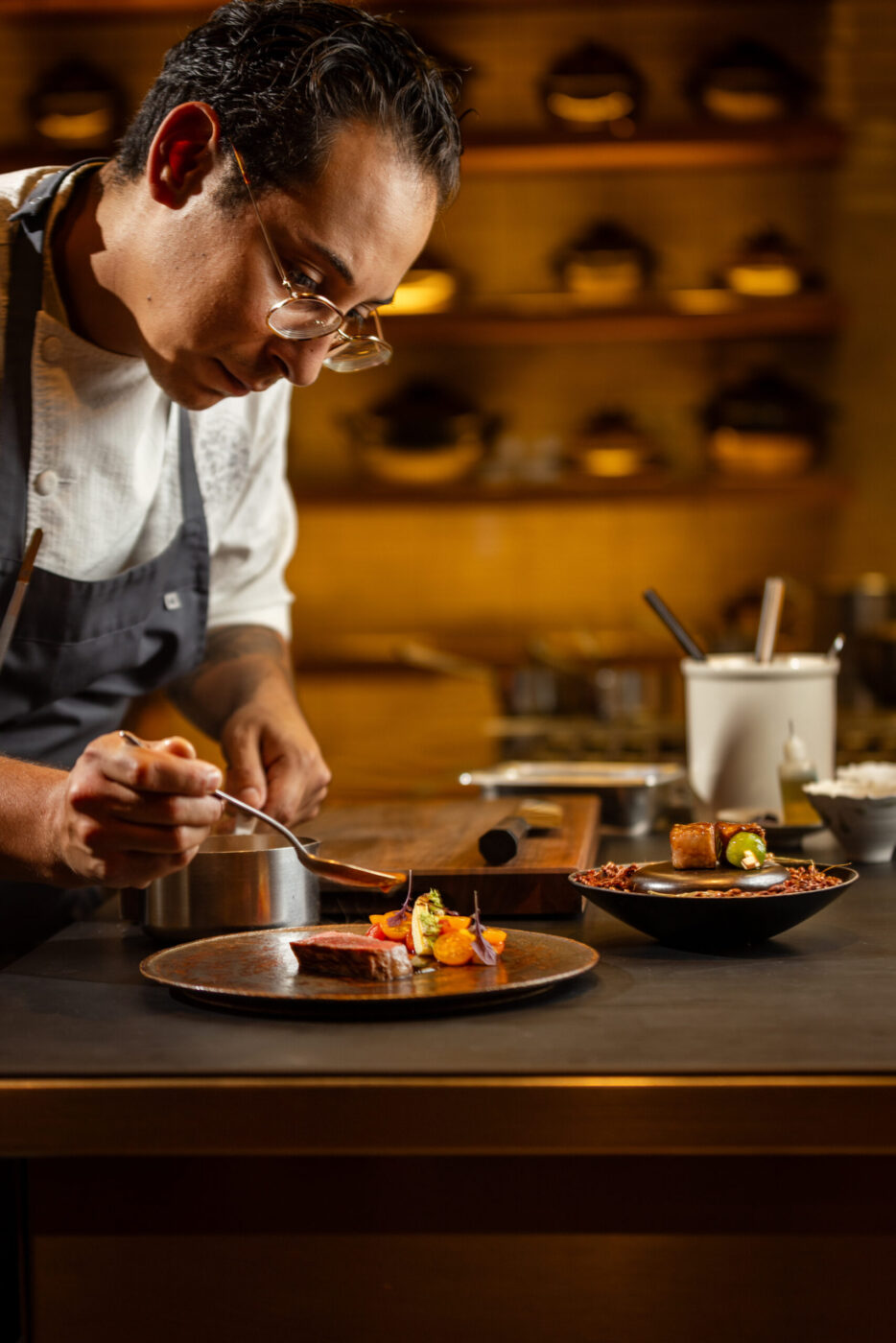
He was inspired by a conversation with SingleThread chef Kyle Connaughton, a family friend ever since O’Neal’s firm AvroKO designed the interior of the three-star Michelin restaurant in Healdsburg. Connaughton described how nearly every ingredient he brings into his kitchen is harvested within a roughly 40-mile radius — except some fish and prized A5 (the highest grade) Wagyu beef flown in at least every other week from Japan. Connaughton had sampled American Wagyu beef, but it wasn’t up to his standards. He also couldn’t trust that it was always 100% Wagyu.
“I was struck when Kyle told me (American) Wagyu felt inconsistent, too rich and fatty, more lardo than beef, and that what he wanted was something leaner, something you could serve as a main portion instead of a tiny sashimi-sized bite,” remembers Gordon, who doesn’t consider himself a big beef eater.
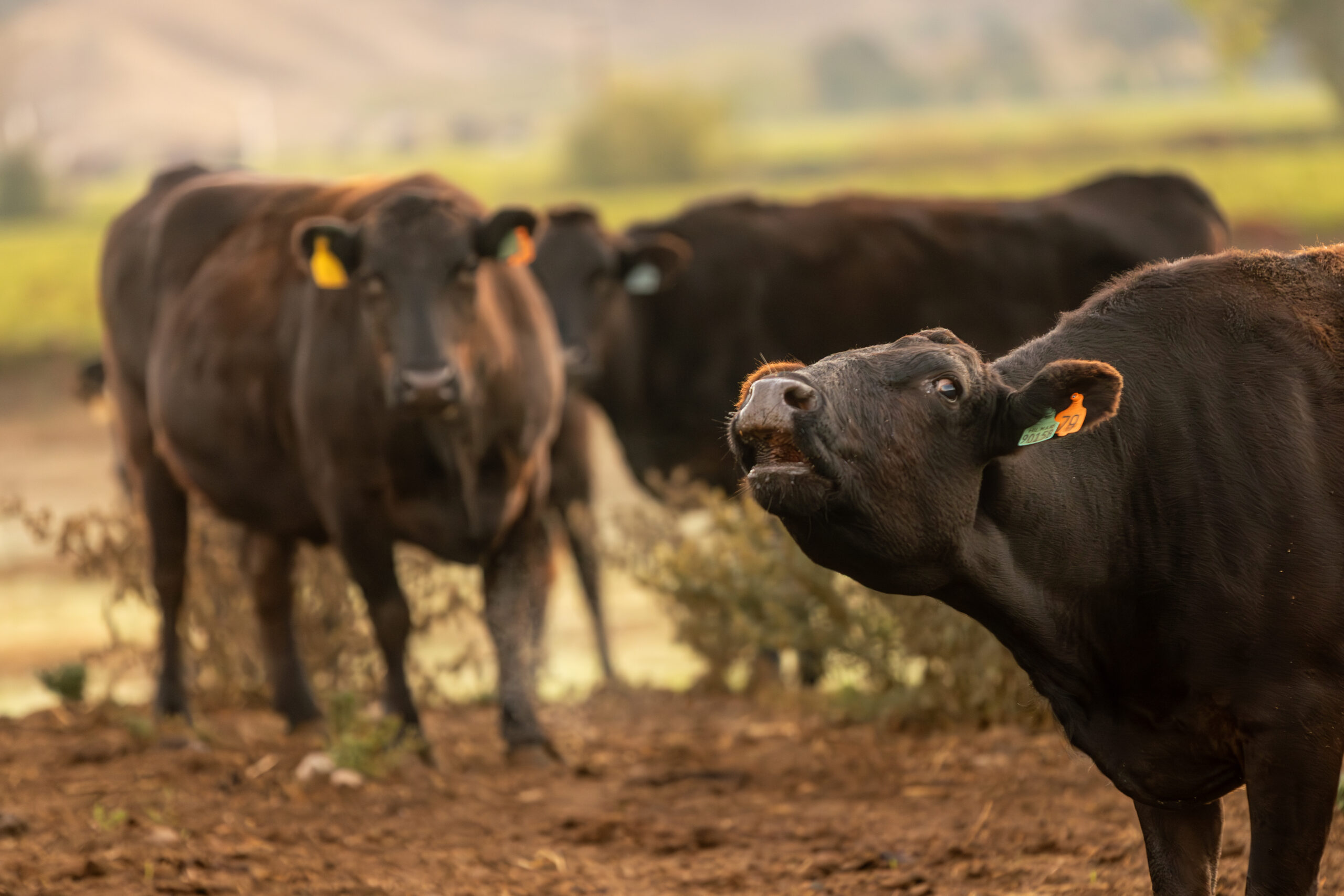
“That challenge stayed with me. I began researching, and over time grew convinced that with the right land, genetics, and care — and by letting our cattle roam freely — we could create a happier herd and a more consistent, flavorful product.”
Gordon approached local fourth-generation rancher, Will Densberger, who had been leasing property at Ghost Donkey Ranch to raise Black Angus, and together they founded Knights Valley Wagyu in 2018, starting with 100% full-blood champion genetics.
“The vision was simple,” Gordon says. “Raise the very best Wagyu we could, and share it only with chefs we admired, within bicycling distance of the ranch.”
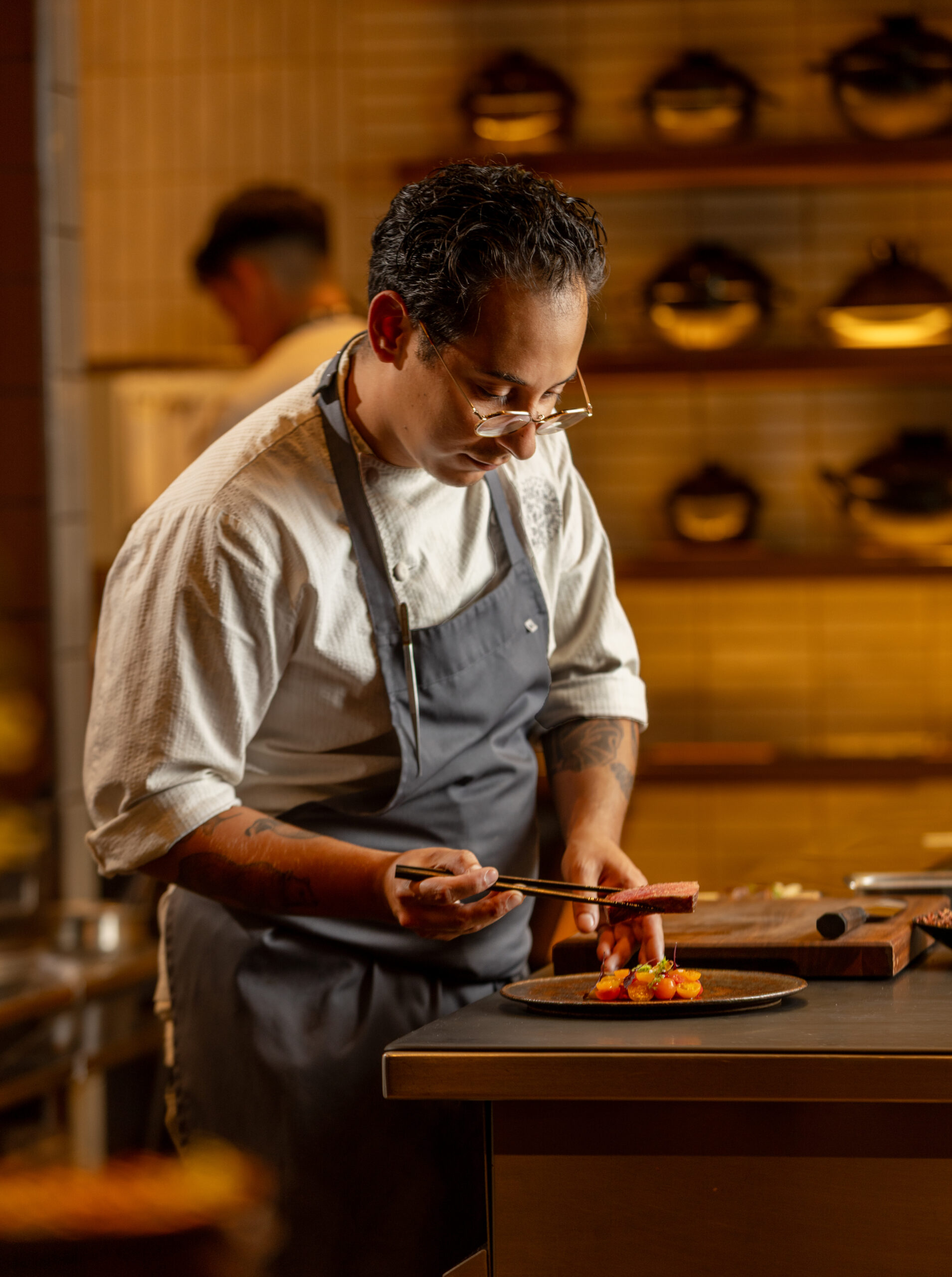
Starting with Connaughton, they assembled an all-star coterie of local chefs, including Matthew Kammerer at Harbor House Inn in Elk, Sean and Melissa McGaughey at Troubadour Bread and Bistro in Healdsburg, Elliot Bell at Charlie’s in St. Helena, and David Hopps at Izakaya Gama in Point Arena. Instead of working with celebrity chefs who lend their names to countless franchise operations, he says, “I wanted to work with chefs who still work in their own kitchens. These are chefs who have devoted their lives to their craft, and we want to help them. We want to restore that relationship with the local food community.”
The exclusive invitation to experiment with local Wagyu was irresistible. Wagyu has always carried a certain mystique, an edible status symbol with A5 Wagyu on the same level as caviar and truffles, selling for as high as several hundred dollars for a 6-ounce cut. The first taste is often a near-religious experience. Sean McGaughey’s initiation was a slice of Miyazaki A5 at a Charlie Trotter restaurant in Las Vegas.
“I remember how two or three bites in, it gets your cheeks watering and endorphins going, and your smile happens just because of the caveman in you,” says the Troubadour chef.
Then there’s the buttery, textural mouth feel that comes from super-rich intramuscular fat that marbles like no other beef in the world.”
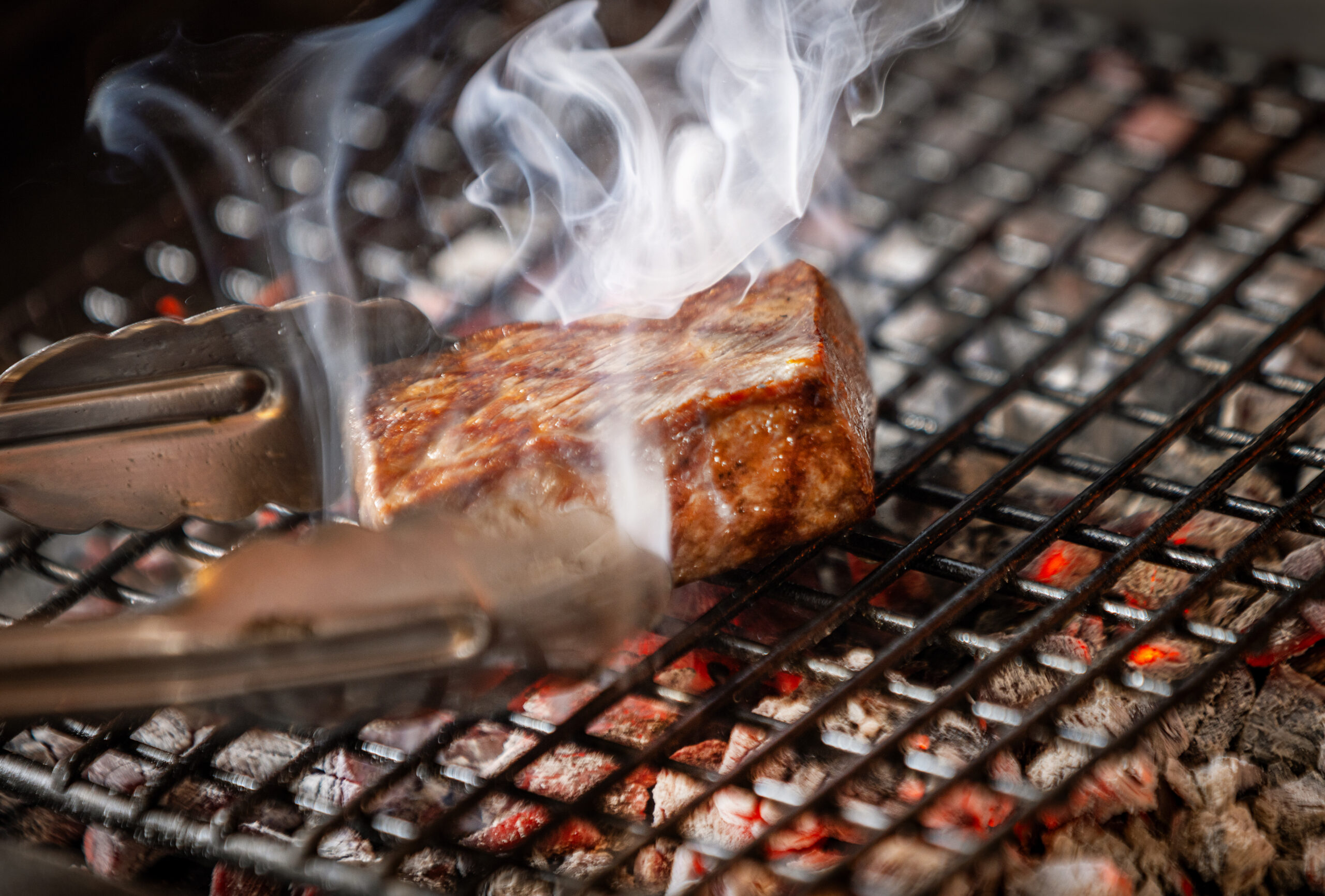
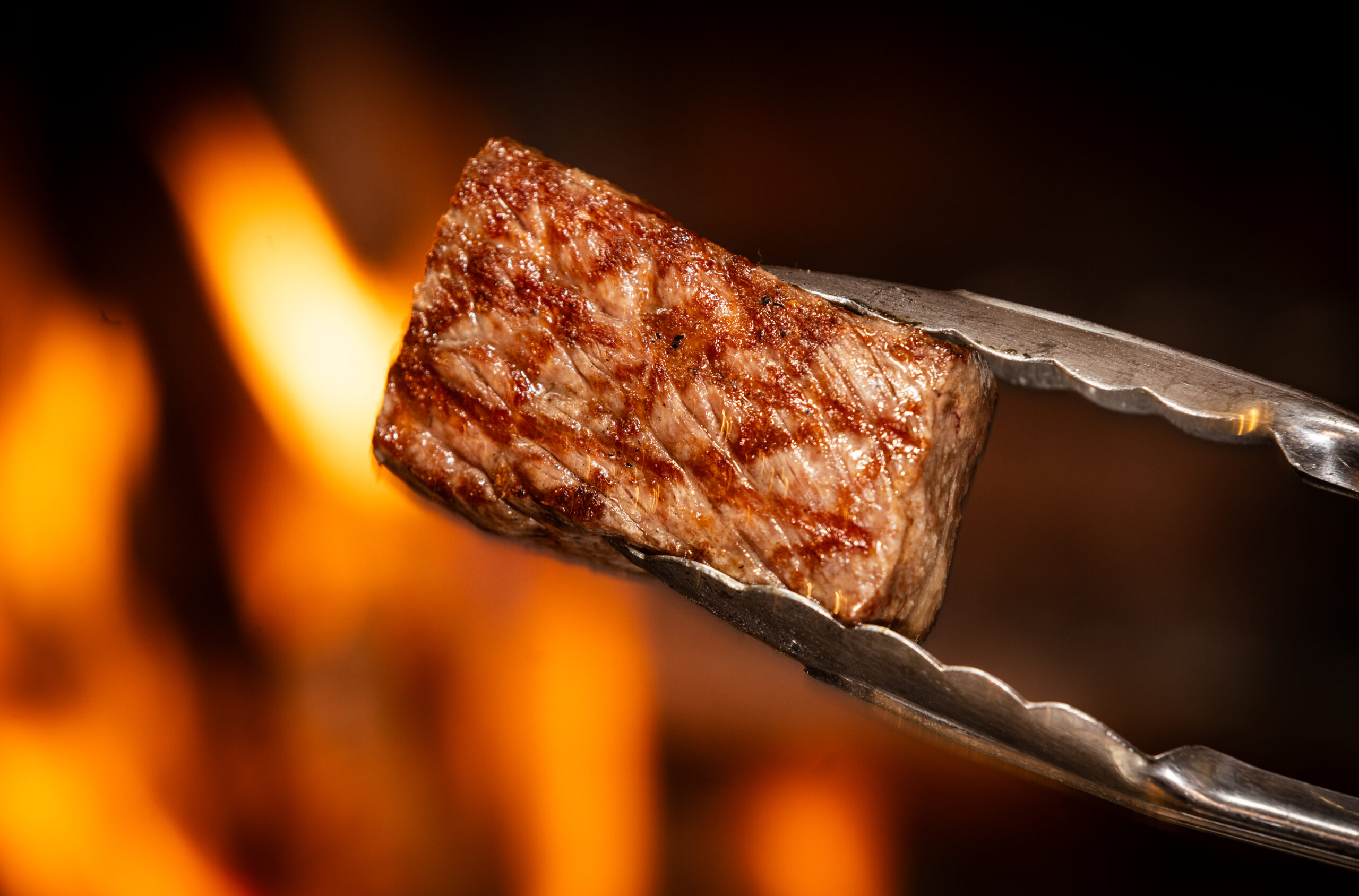
“I feel like the term ‘melt in your mouth’ gets thrown around a lot in the culinary scene, and it’s very rare that it actually melts in your mouth,” says Hopps, who found it to be accurate when he first tasted Wagyu at a sushi restaurant in Salt Lake City. “It’s just so tender because the way the beef is marbled. It’s like chewing on butter almost.”
Part of the exclusivity is by design. The history of Wagyu beef runs deep in Japan, going back thousands of years to original bloodlines. The word “Wagyu” literally means “Japanese cow.”
By 1910, the country’s government had banned cross-breeding with Wagyu. Since 1966, the “Wagyu Olympics” has been held every five years to decide champion cattle based on genetics and meat quality. In 1997, Japan finally banned the export of Wagyu cattle, declaring it a national treasure. Since then, there have been cautionary tales about Wagyu semen smugglers, black-market egg and embryo sales, and knockoff crossbred beef trying to pass as 100% Wagyu. In America, Australia, and New Zealand, Wagyu has been raised with varying success.
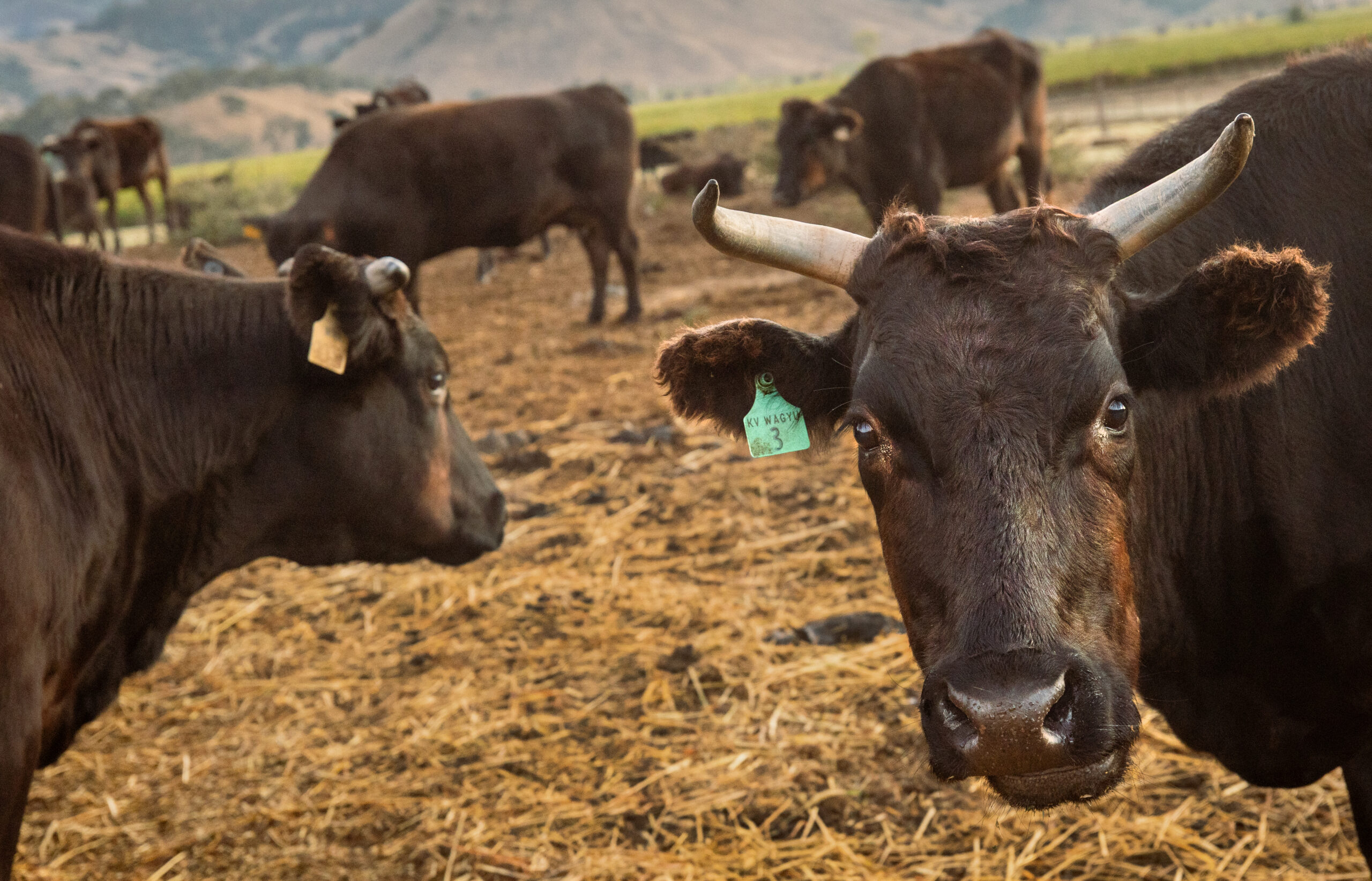
At Knights Valley, Gordon consulted a Wagyu nutritionist from Texas, who helped them start with 10 full-blood heifers, 10 full-blood yearling steers, and a young bull. For Densberger, who had never raised Wagyu cattle, the holistic approach was an extension of what he learned from his grandfather, who ran cattle on the St. Helena’s Connolly Polled Hereford Ranch, where Will was born.
“My grandfather didn’t own a horse and didn’t throw a rope. Everything was done super-stress-free,” says Densberger, who also works in real estate, selling larger ranches, vineyards, and farms.
With the Knights Valley Wagyu, Densberger applies the same methods. “I don’t throw a rope either. I don’t own a hot shot. I don’t ever try to introduce stress to the cattle because they’re much more difficult to handle, and the adrenaline runs through their system. I don’t think it is particularly healthy, especially for cattle that we’re going to be consuming at some point.”
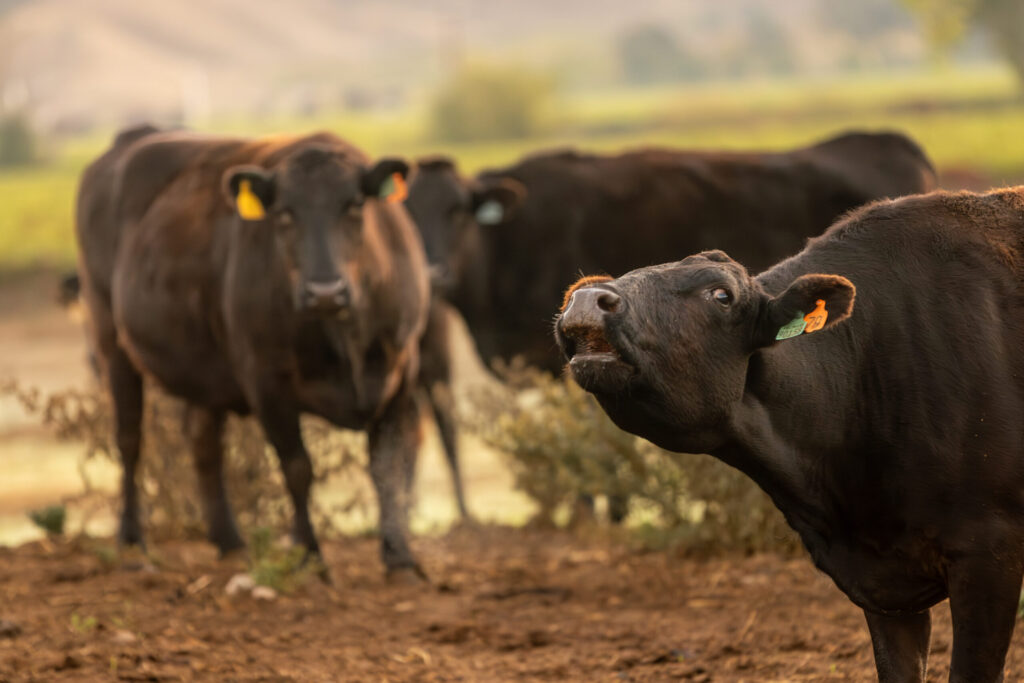
In Japan, where land is limited, Wagyu are more likely to be penned or restricted in tight spaces for most of their lives, rather than roaming wide-open spaces. They’re often fed a heavy grain diet to boost fat content. In Knights Valley, Wagyu cows are grass-fed, with a small herd of around 80 roaming freely across more than 200 acres.

Five years ago, after the first of the Knights Valley herd was harvested, SingleThread held a blind Wagyu beef tasting for a handful of chefs. Connaughton fired up the whole hearth on a Saturday morning as the rest of the staff prepped for dinner that night. The contenders included Wagyu beef raised in Japan, Australia, New Zealand, and two American offerings — Knights Valley Wagyu and Snake River Farms Wagyu from Idaho. They sampled all rib-eyes, looking closely at different slices, the various marbling, and talking about texture and mouth feel.
By the end, the decision was unanimous, Gordon says. “All the chefs preferred all of our cuts.”
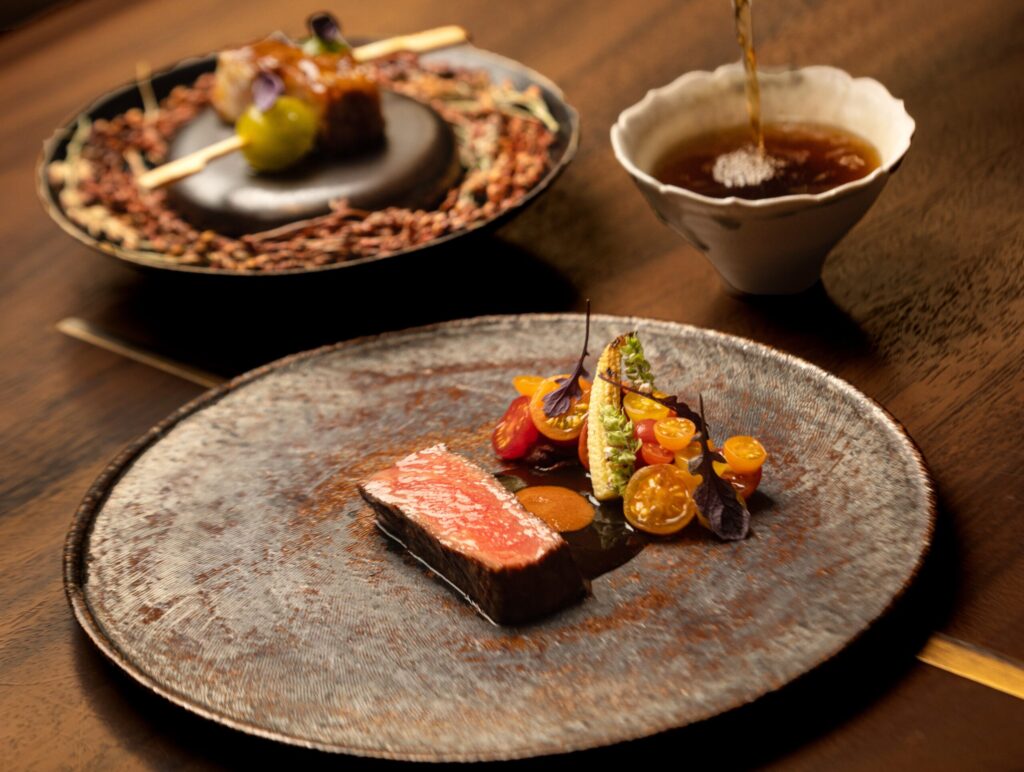
It might not go down as the Judgment of Healdsburg, but it was definitely a sign they were on to something. For Connaughton, Knights Valley Wagyu cuts were leaner, less fatty, and more distinctive. “The flavor is so much higher, the beautiful beef flavor that really comes with the grass feeding,” he says. “I think that is the true flavor of the animal. And then you obviously notice that it’s still quite rich and marbled.”
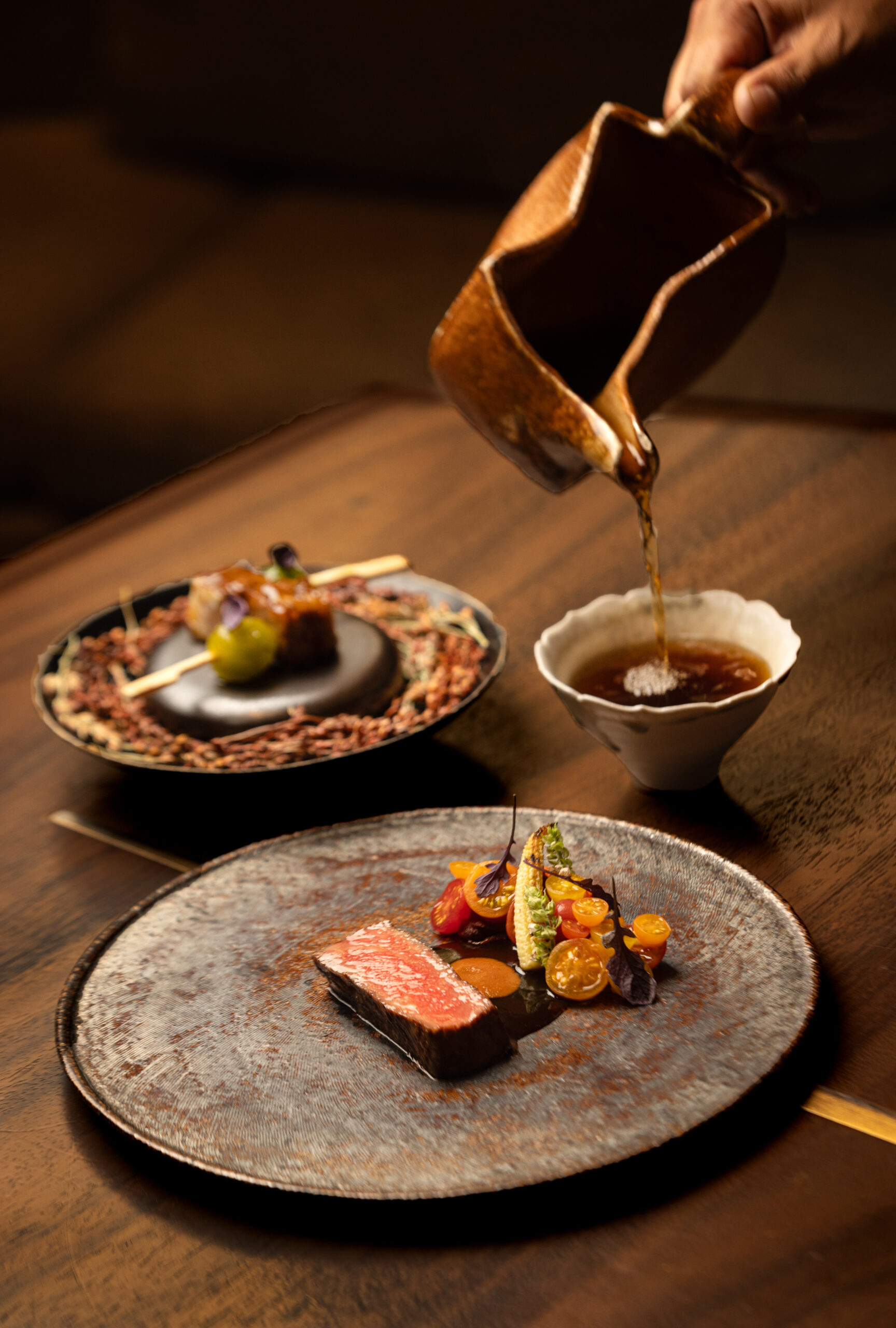
For guests accustomed to the super-rich, “melt in your mouth” experience of A5 Wagyu, the locally raised version is a different experience and requires some education. “If you tell someone this is 100% Wagyu and you stop there, and they have experiences with it, they’ll say, ‘But this is not very good beef. This is not rich, melt-in-my-mouth, fatty A5 goodness.’ So, it’s our job to tell the story properly and accurately,” says Connaughton. “And I find when I talk to guests and I say, ‘This is what we do, and this is what the result is,’ and then they have it in a dish, they’re like, ‘Oh, I love that. That was really delicious, but it wasn’t so greasy and rich.’”
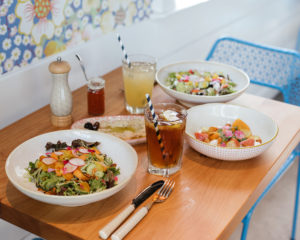
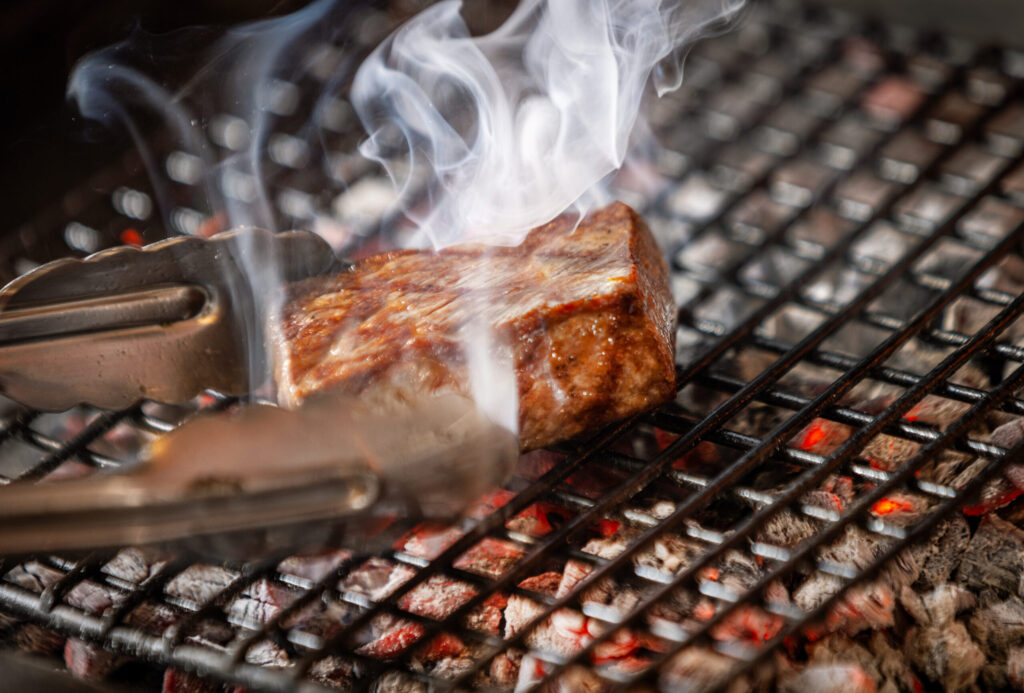
Seven years after launching, Gordon and Densberger aren’t looking to scale much further beyond 20 mother cows. One-to-two animals are harvested each month and are shared among the chefs who each receive designated cuts. At SingleThread, Connaughton often grills rib cuts simply in the hearth, sometimes braising short ribs and roasting the marrow as part of a rice porridge. Other times, he’ll use the tenderloin for a Wagyu shabu-shabu hot pot, the thin slices of beef cooked in boiling broth at the table. At Troubadour, McGaughey gets three cases a month of mostly top, bottom, and eye rounds from the legs, roasting the meat for two days to make roast beef sandwiches, sometimes topped off with a banh mi garnish, other times serving it Chicago Italian beef-style. At Izakaya Gama, Hopps gets mostly organs, like hearts and tongues, that he grills on bamboo skewers over a high heat Kushiyaki-style, serving them with Karashi mustard. Leaving nothing to waste, he uses the bones to make a gyukotsu ramen broth.
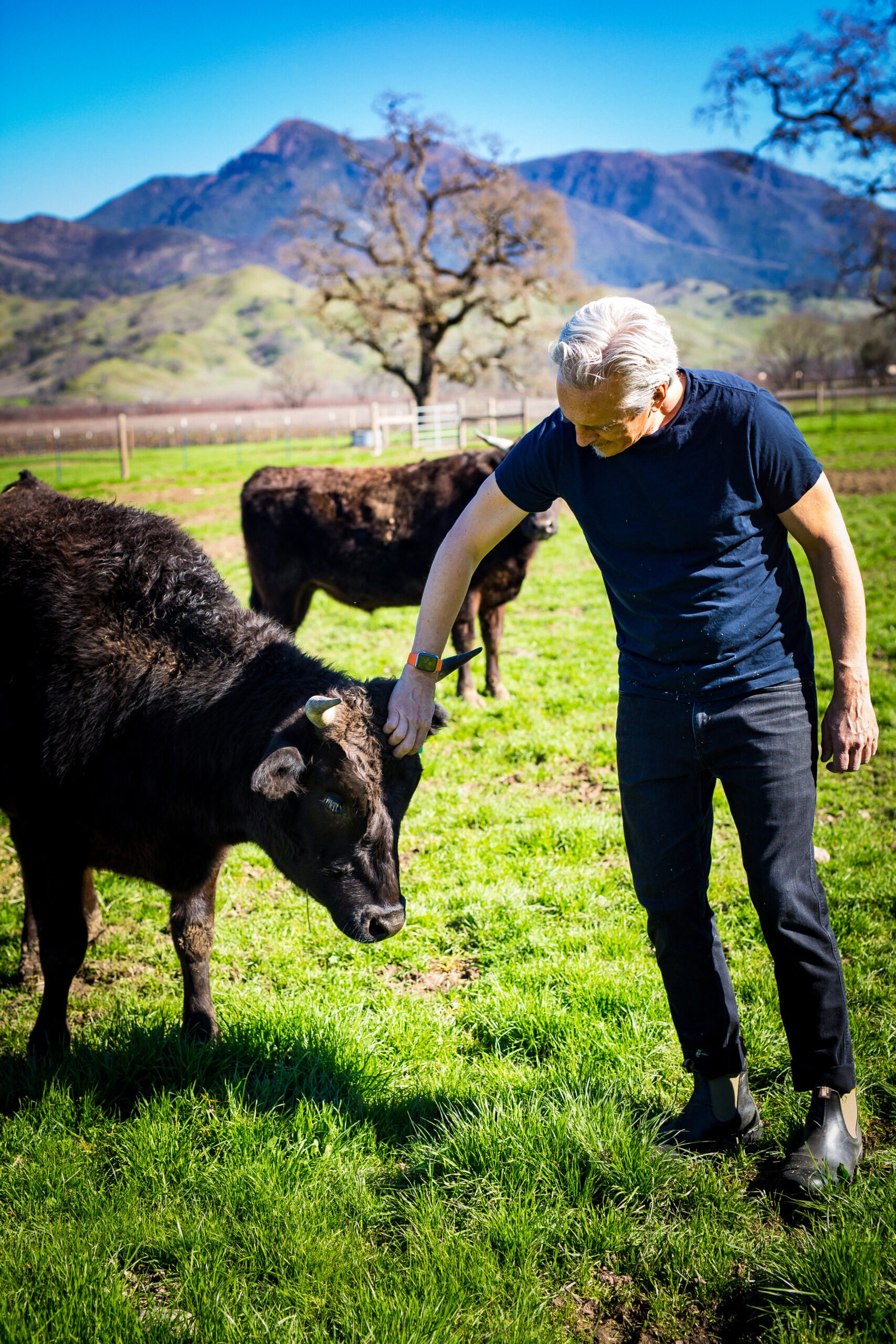
Near the end of his walk around the ranch, Gordon points out recent owl and otter sightings, and where his pet donkeys live year-round, then starts to think about what awaits him when he returns to New York. His business partner, Robert De Niro, is currently filming “Meet the Fockers 4” at Wildflower Studios. The state-of-the-art film complex in Queens is a project Gordon collaborated on from concept to completion as managing partner at Wildflower Ltd. The company, which also creates e-commerce logistics centers and EV charging stations, has a solar footprint generating 1.2 million kilowatt-hours of power annually.
For a kid who grew up in Dayton, Ohio, interning at the Audubon Center in middle school, and later working at a museum of natural history — it’s been quite a journey.
When people find out “the least likely rancher” they know is raising American Wagyu, they often ask to try a cut. “One of my oldest friends just texted me. He’s like, ‘I’m in the Hamptons, would you send me some Wagyu?’ I said, no, you have to come out and visit.”
Gordon points out it’s not a mail-order company and was never intended to be. “Every day we have to support our local chefs,” he says.
So when De Niro asked for a taste not long ago, he didn’t consider making an exception?
“No. Because if you open the door a crack, then everybody wants in.”