








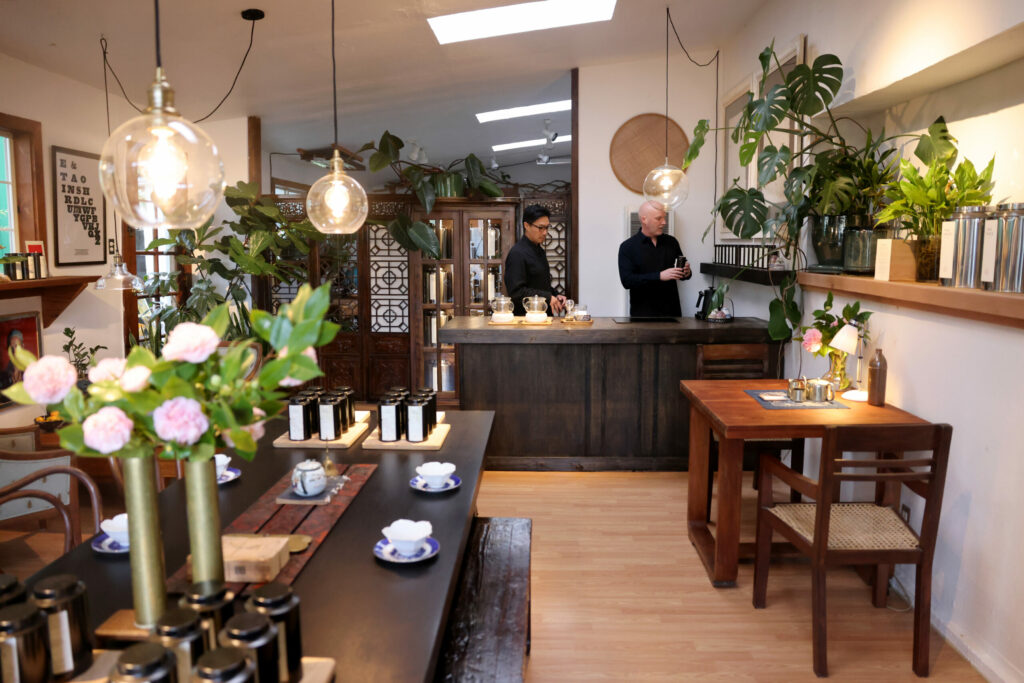
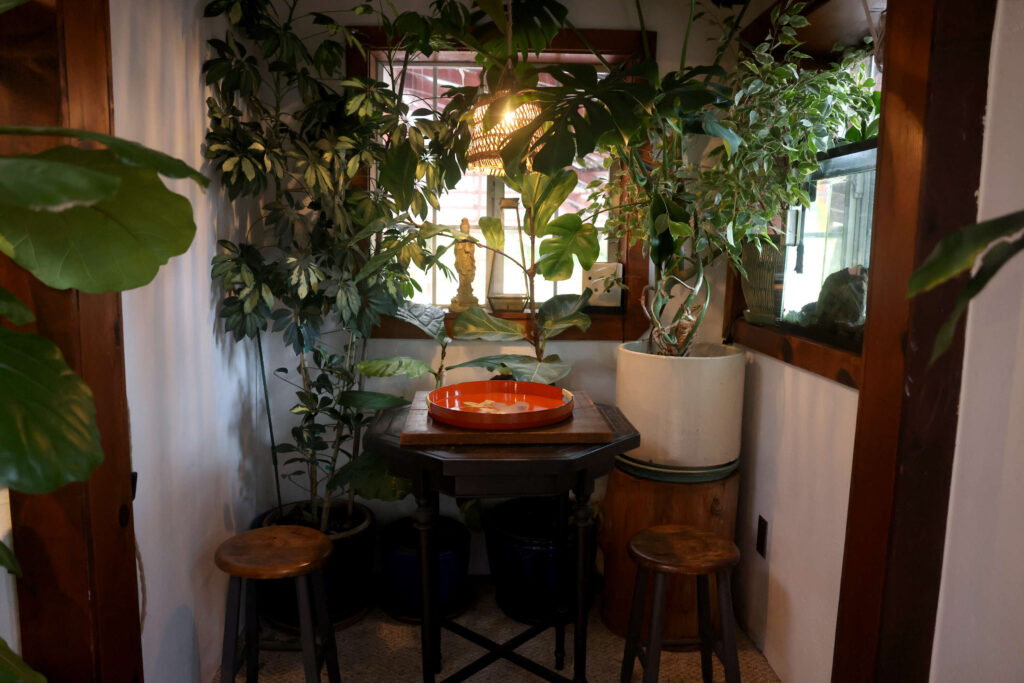
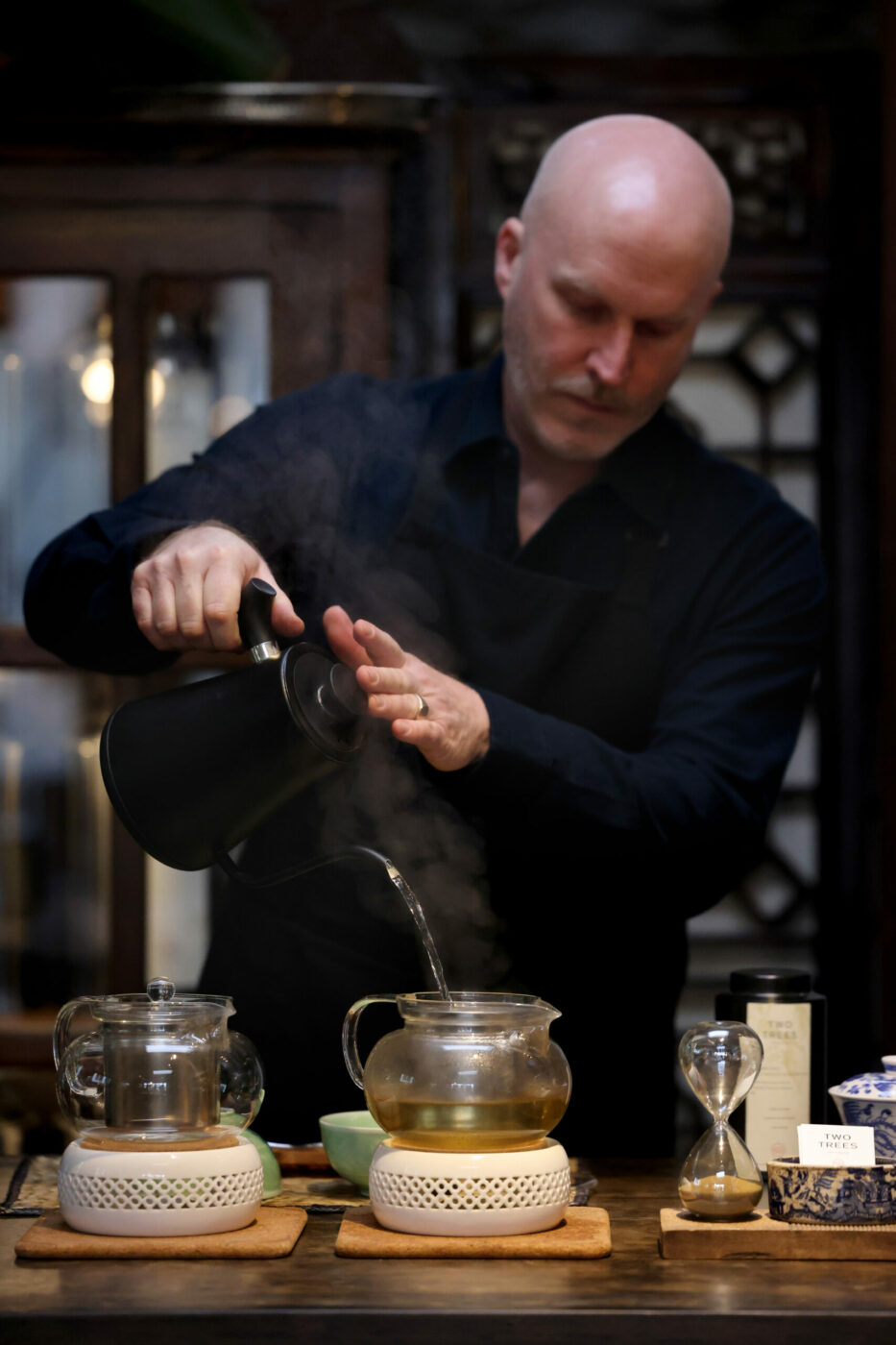


Two Trees Tea House in Occidental isn’t so much a destination as an invitation. Tucked beneath towering redwoods at the edge of town, it’s a place where time is measured in empty cups.
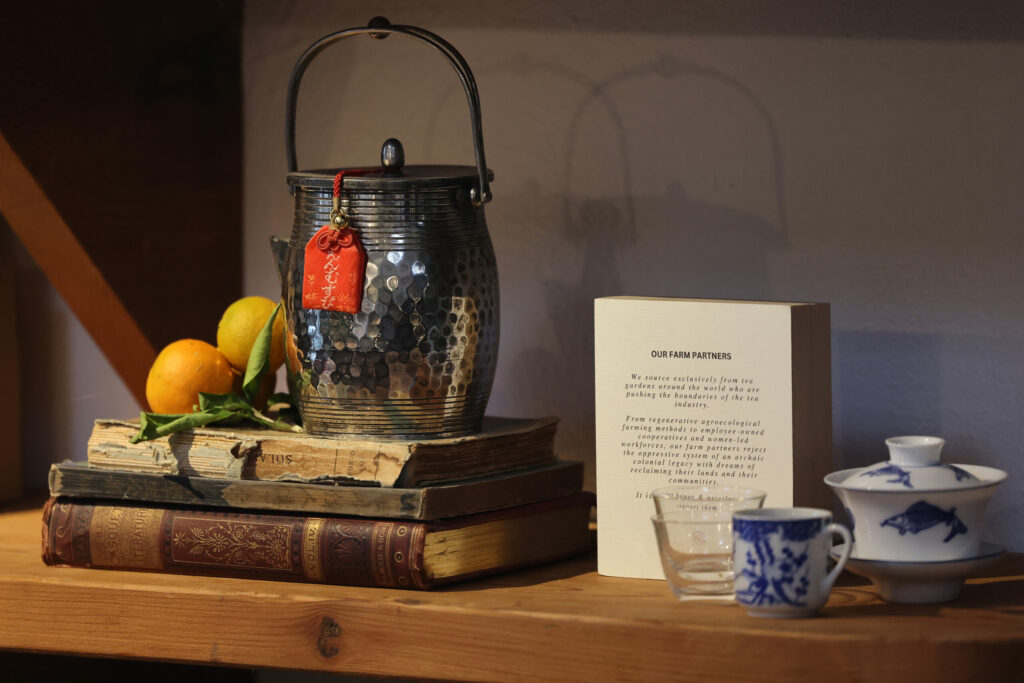
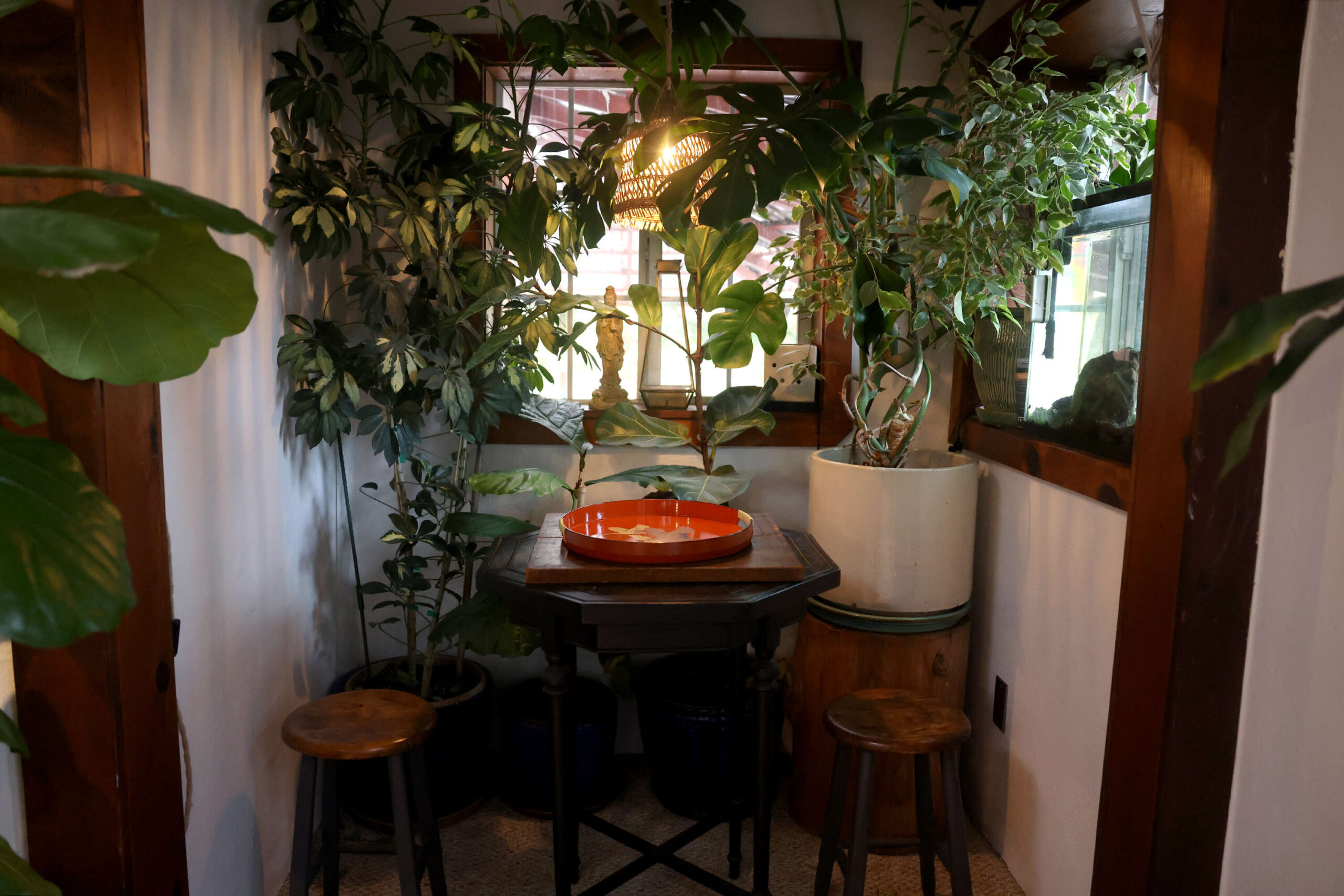
Filled with tins of tea, stacked porcelain teacups and time-worn wood and bamboo furniture, the space mirrors the intentional aesthetic of owners Chris Lewis and Adrian Chang, who’ve distilled years of global travel and a shared passion for tea into just 500 square feet.
After years in high-pressure jobs — Lewis as a creative director in the international division of British department store Harrods, Chang in fashion design — the couple were ready for a change. Designing tea rooms for Britain’s most prominent tea merchants brought Lewis face-to-face with the troubled legacy of colonialism in the tea trade. For Chang, tea offered a way to reconnect with his Chinese heritage. Together, those experiences prompted the couple to take a fresh look at what tea could represent.
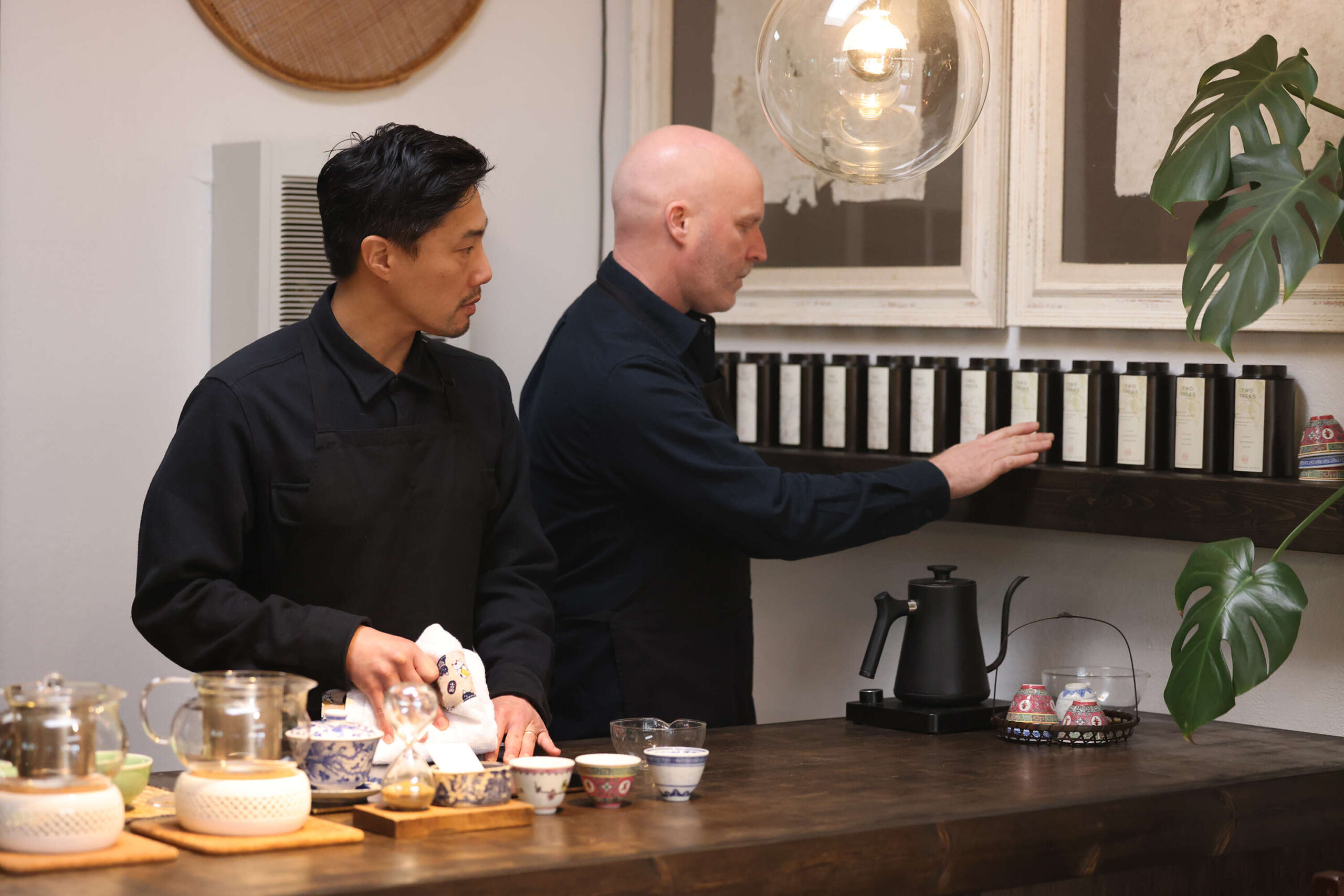
Rooted in that philosophy, the pair have made it their mission to bring ethically sourced, single-origin teas to their adopted community, without pretense or pressure.
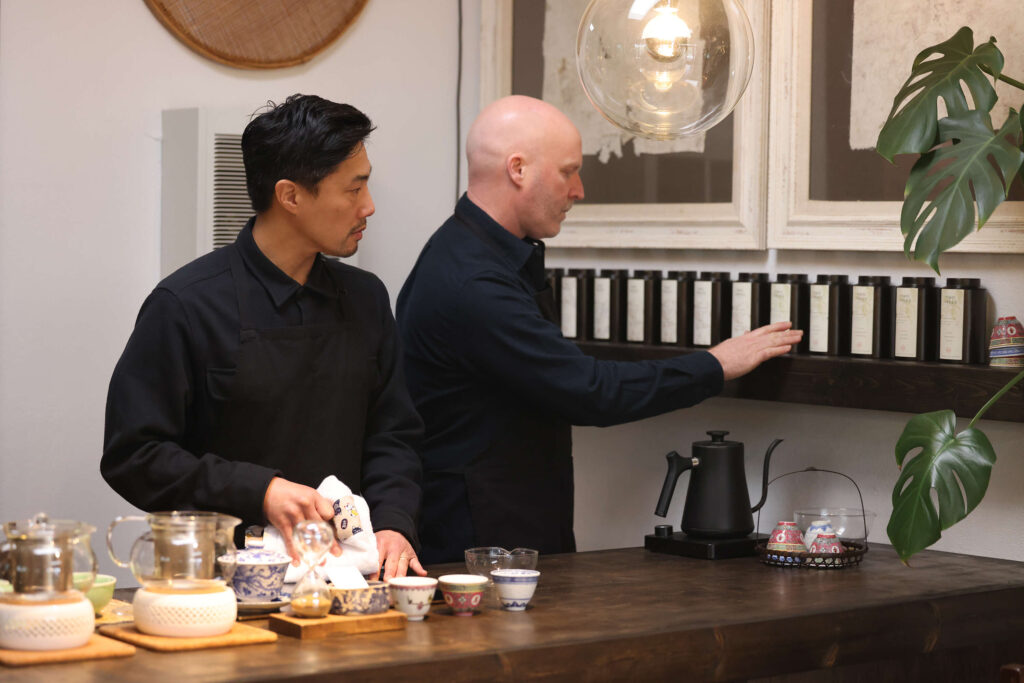
“Tea is for everyone,” Chang said, pouring hot water over curled leaves on a rainy winter day.
Taking time for tea
There’s a simple pleasure in ignoring text alerts and to-do lists to stare at the bloom of color as water warms the tea leaves. Oolong loosens tongues as easily as whiskey and 20 minutes becomes two hours as shoulders relax, backs unkink and conversation replaces small talk.
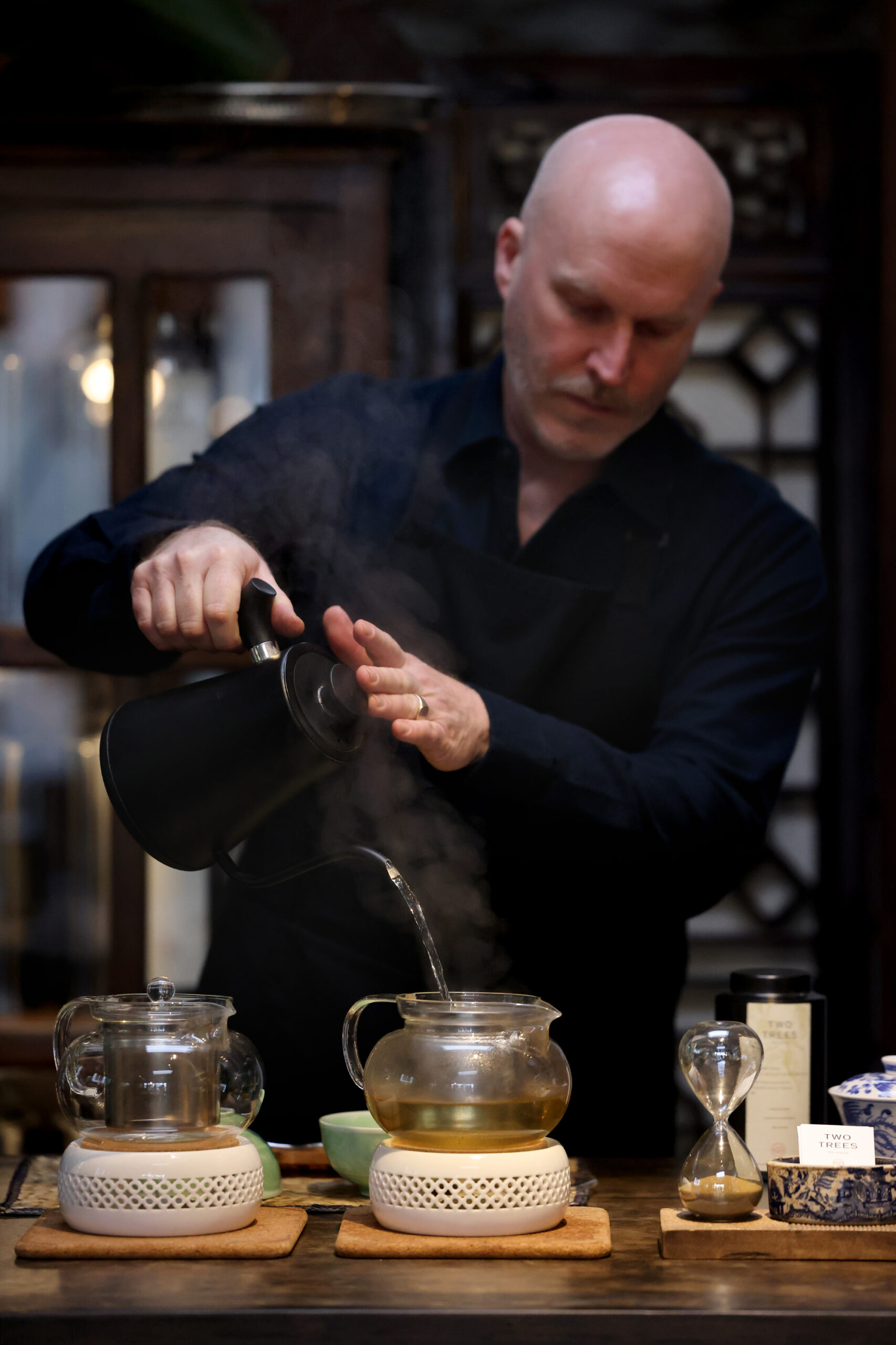

“Time doesn’t exist here,” said Chang, which is precisely the point. Tea resists being rushed. Leaves need time to steep, unfurl and show what they’re made of. Today, ritual has often given way to convenience. Despite its long history, tea is usually treated much like coffee: a quick vehicle for caffeine. Drop a bag in hot water, move on.
Chang notes that some commercially bagged teas are mostly sift left over from whole leaves, stripped of structure and character — a commodity rather than an act of hospitality.
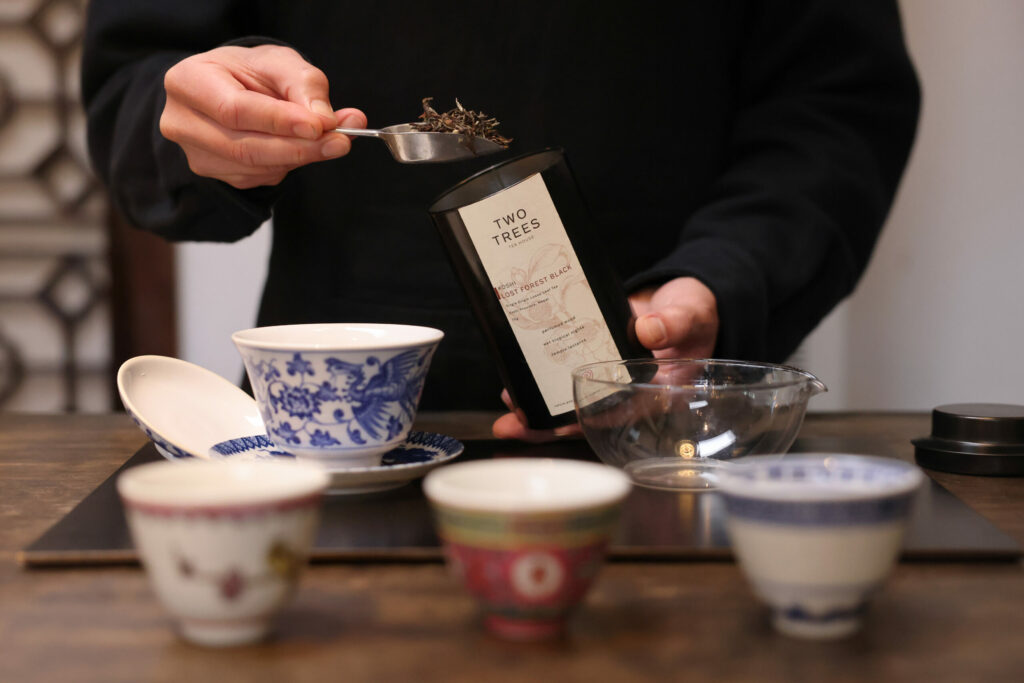
At Two Trees, whole, rolled leaves tumble into porcelain cups with a soft plink, each one intact and recognizable. The dried teas carry herbal and floral notes, sourced from farms Chang and Lewis have visited themselves. It is there that the stories take shape.
The experience
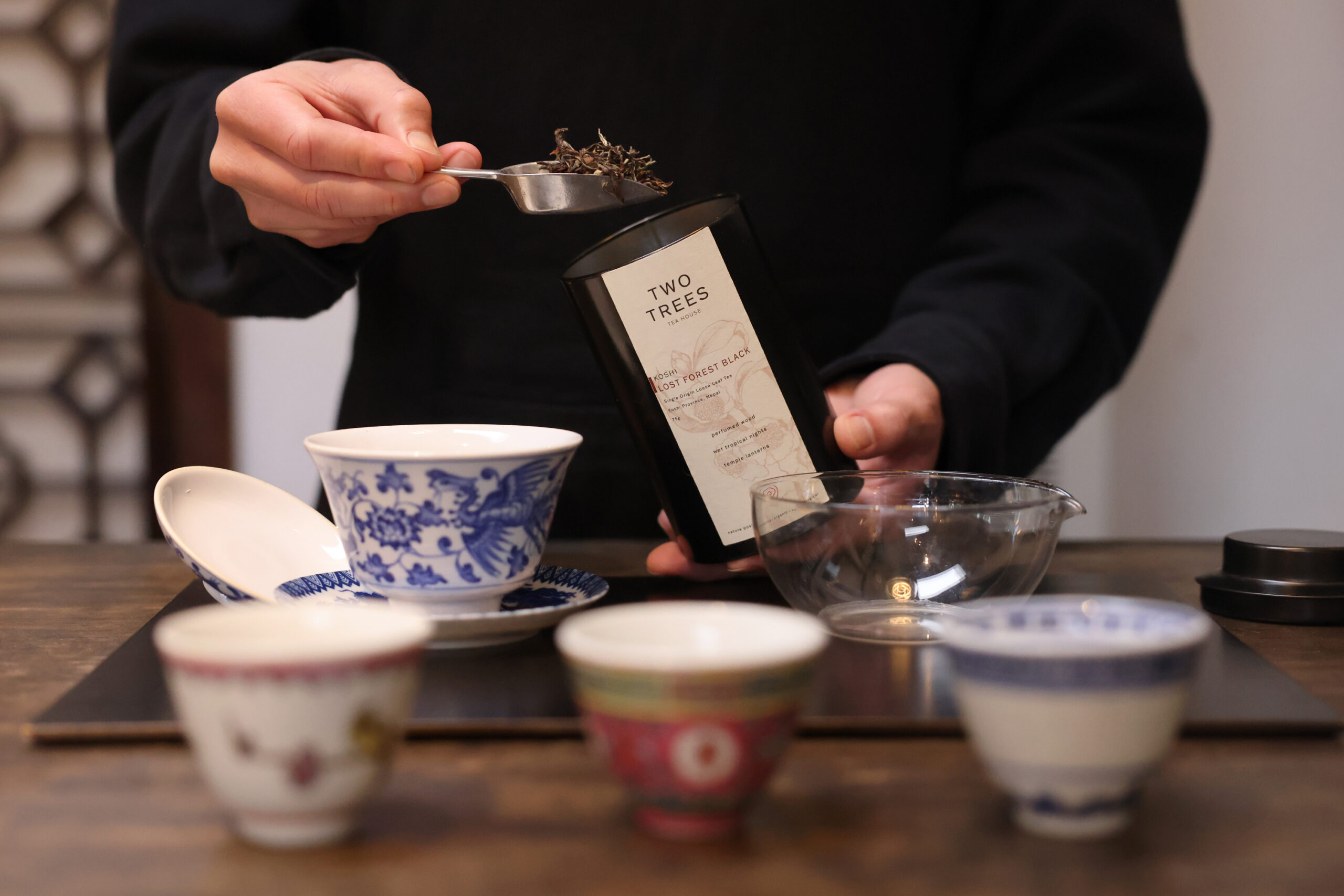
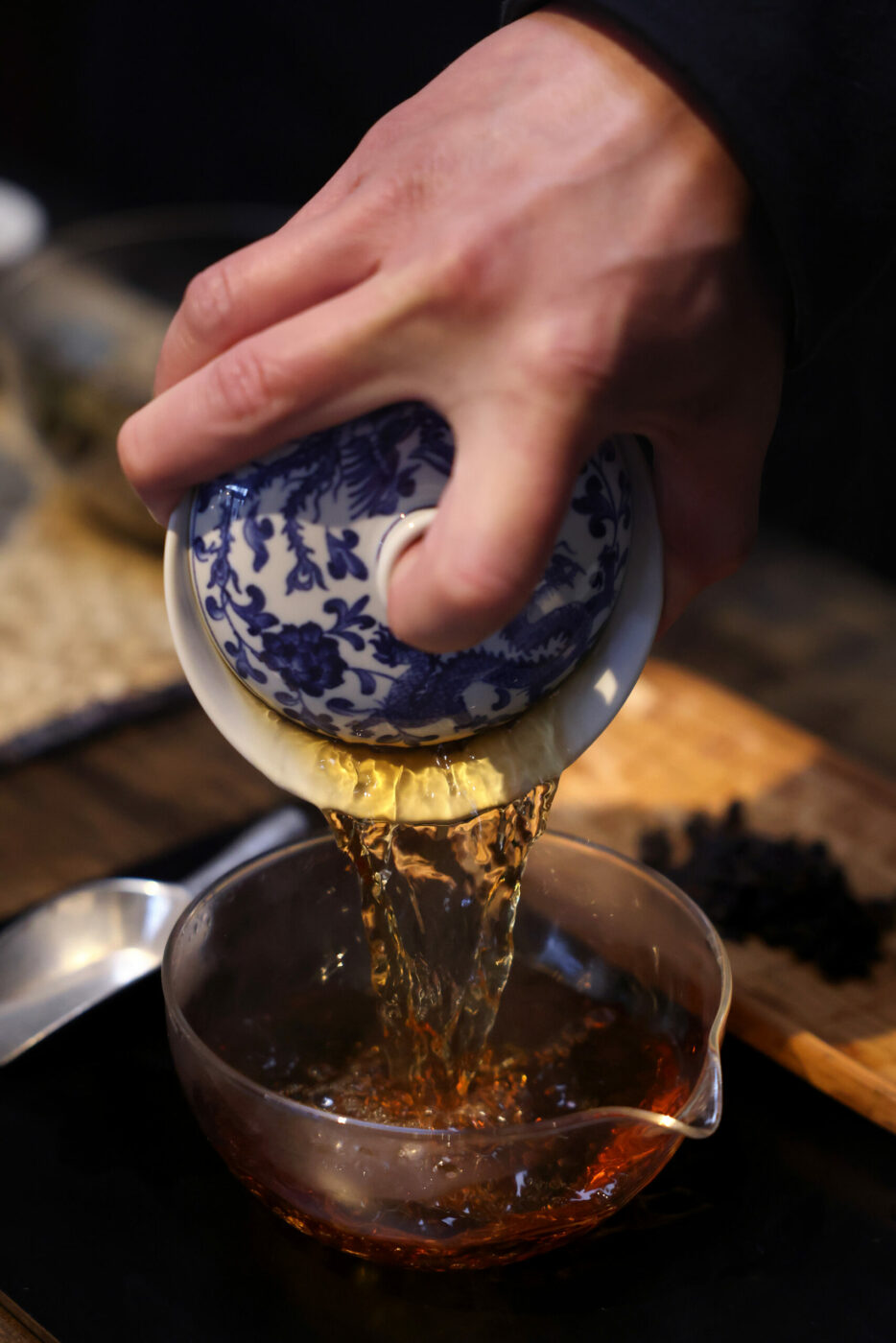
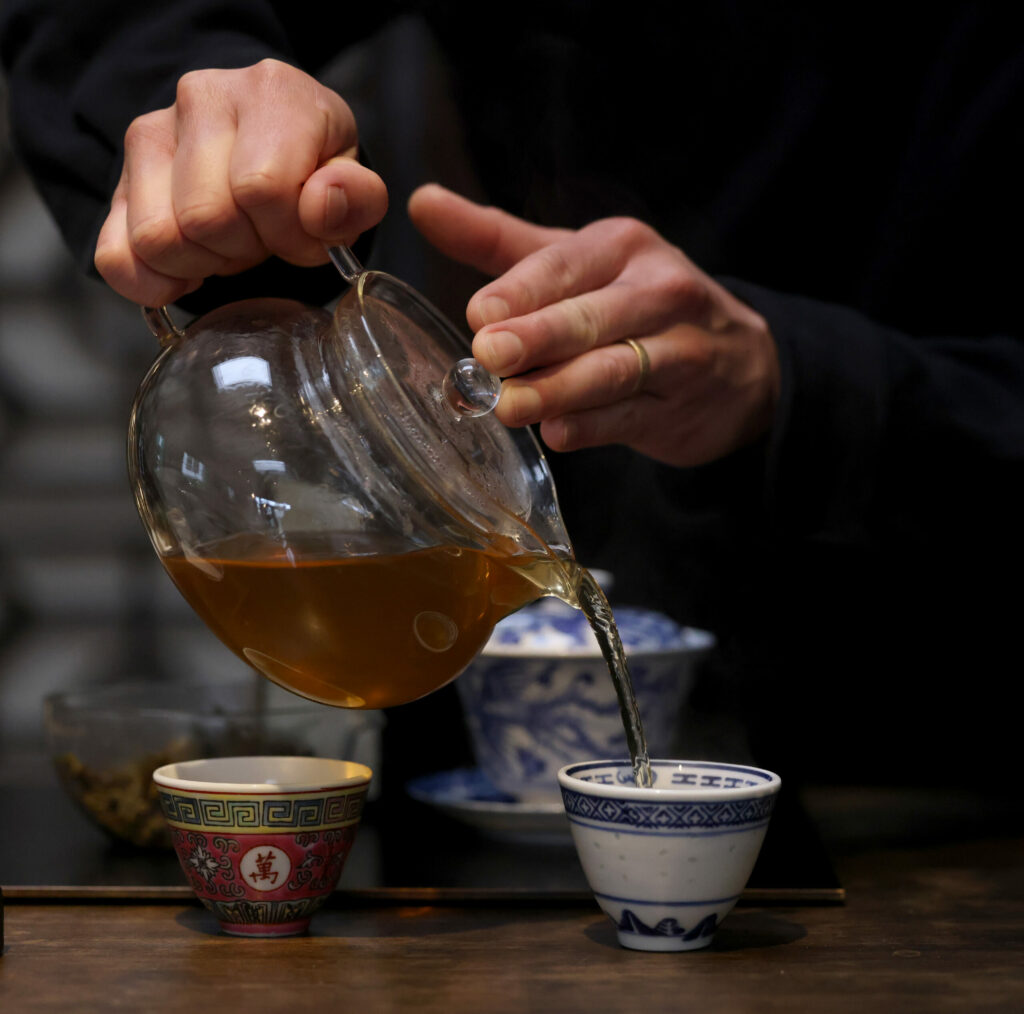
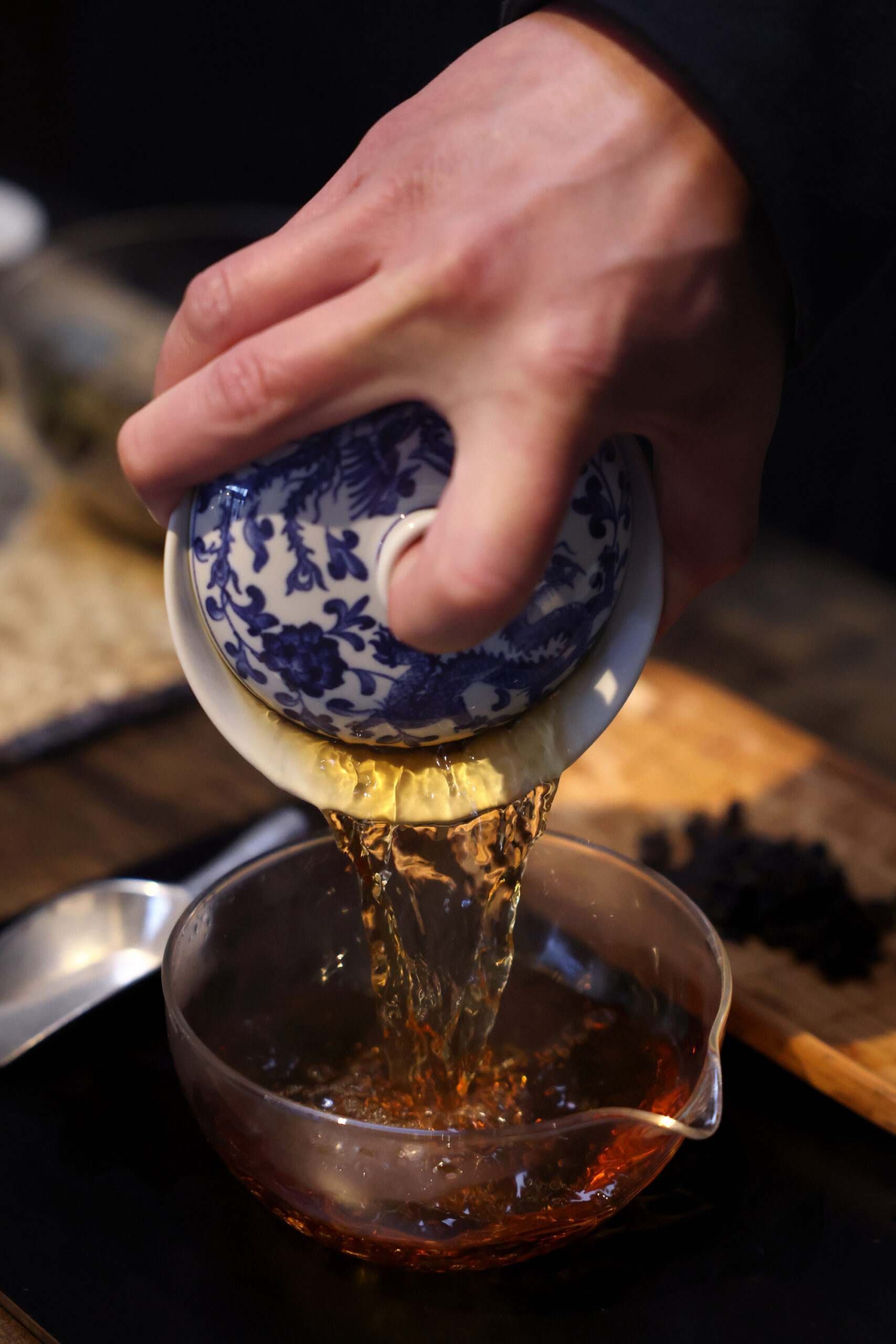
While a simple pot is a lovely starting point, Two Trees’ guided tea service is worth the time (a donation is suggested). Chang’s guided five-tea Gong Fu tasting unfolds like quiet theater, paced by a sand hourglass, with tales of Two Trees’ tea partners woven into slow, meditative pours. It’s hard not to fall a little in love, not just with the tea but with the people and places behind each leaf.
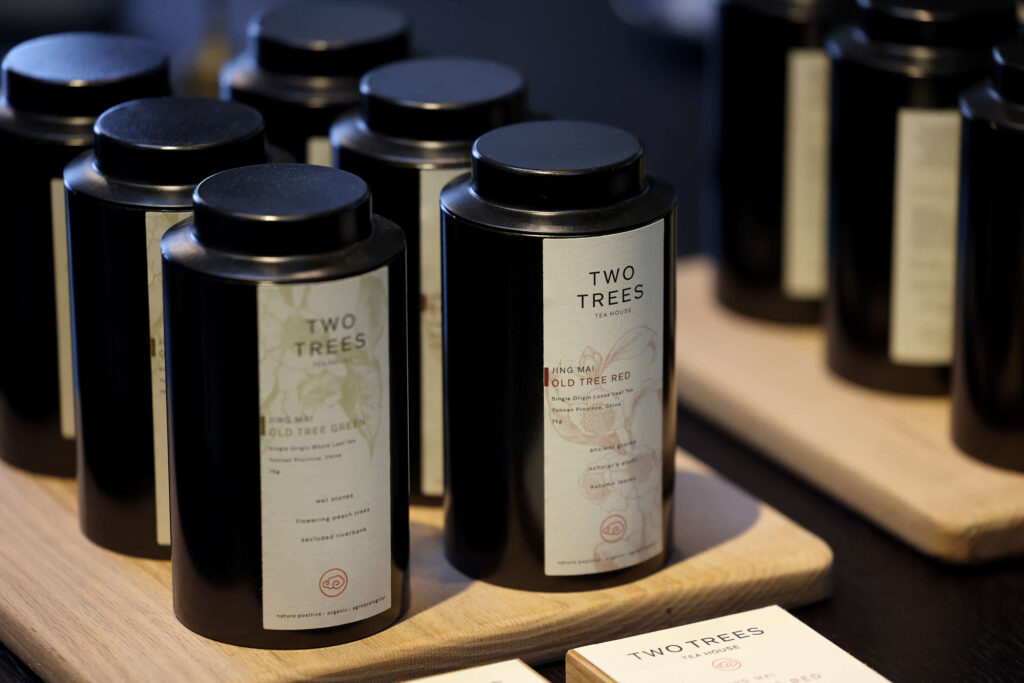
Jing Mai Ancestor Red tea is farmed on a mist-wrapped mountain in China’s Yunnan province, near the borders of Laos, Myanmar and Vietnam. The ancient tea forests have been cultivated for more than a thousand years, with tea plants (Camellia sinensis) growing up to 50 feet. The Dai and Bulang people harvest the tea, continuing a millennia-long practice.
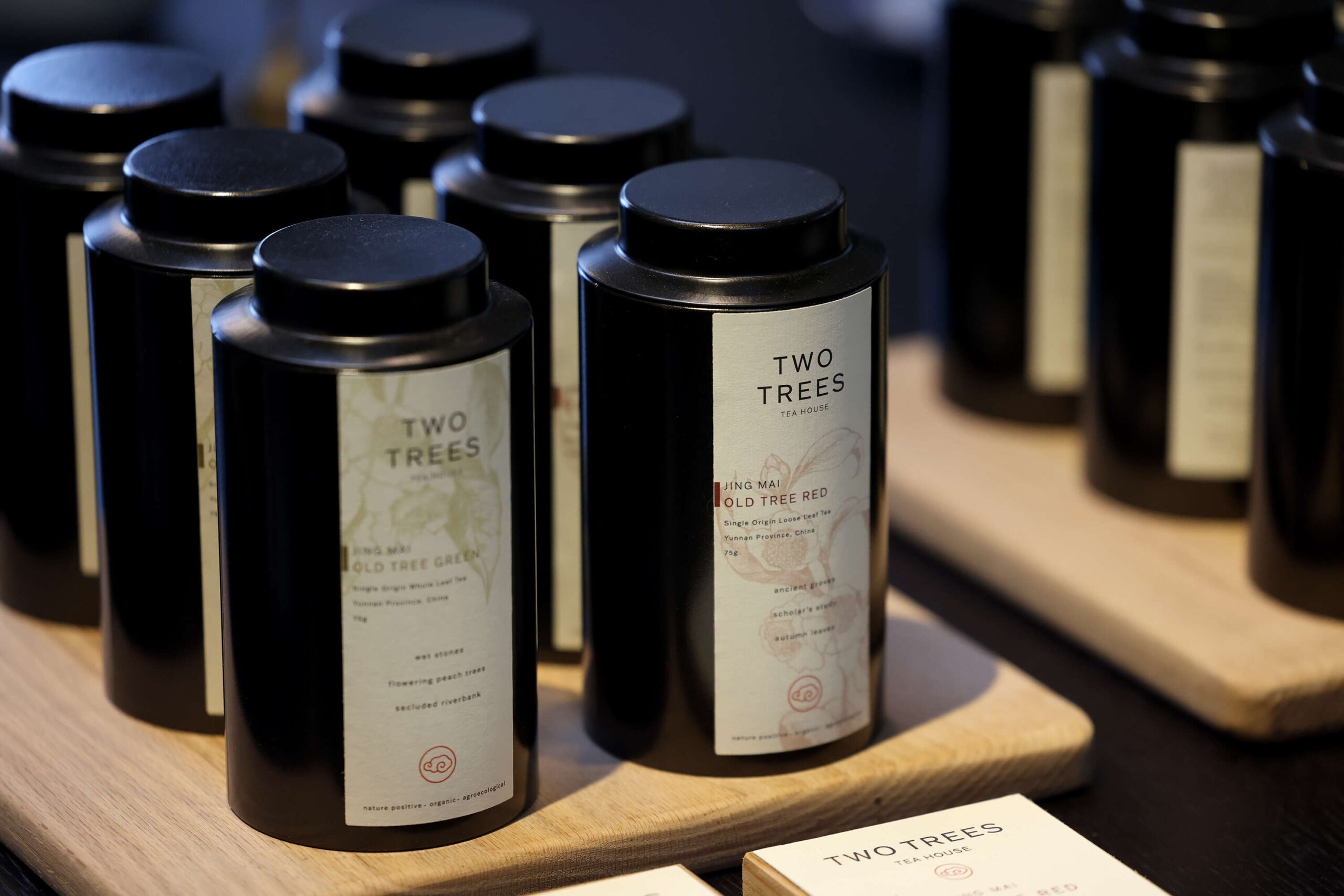
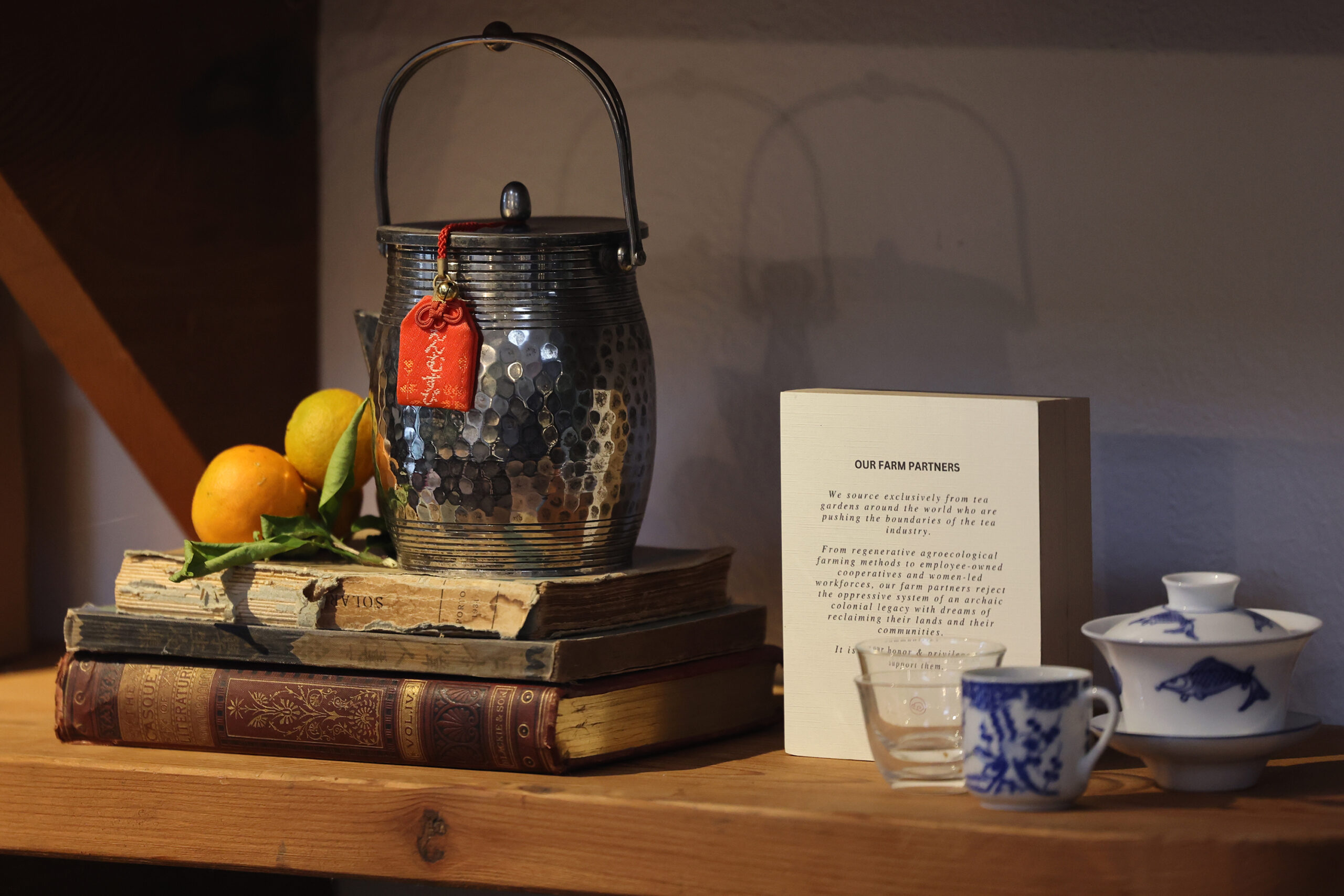
Or consider the Ilam tea district of Nepal, which sits at 7,600 feet, one of the highest altitudes for growing tea. Here, local women seeking refuge from oppression are paid living wages to pick delicate white tea made from the earliest spring leaves.
Woven into each of these stories is a profound awareness of history. Lewis approaches Two Trees’ sourcing with a focus on relationships and responsibility, acknowledging the people and places behind the leaves too often written out of history.
“Tea is unifying, disarming and human. It’s about what it does to you and how it makes you feel,” said Chang, heating another pot of water for whoever comes in next.
Open from noon to 5 p.m. Thursday to Sunday. Reservations are required for guided tastings, but anyone is welcome to stop by for a pot of their blended tea regardless of ability to pay.
3597 Bohemian Highway, Occidental, 707-504-8685, twotreesteahouse.com