
Luma | Petaluma

Luma was destined to be a neighborhood restaurant even before there was a neighborhood.
Newly minted restaurateur Tim Tatum (who developed several multi-story loft houses along G Street in Petaluma’s warehouse district) always envisioned this cozy corner as a gathering spot for the 150-plus new residences along this once-stark industrial stretch along the Petaluma River . (Three Twins Ice Cream and Cowgirl Creamery have warehouses across the street and the wildly popular Aqus Cafe and Sonoma Portworks are just a block away).
“We want it to have that moth-to-flame feel at night,” says Tatum, pointing to the neon sign LUMA sign that flickers on at dusk. With warm interior lights, clink of glasses and drifting scent of pizza spilling onto the sidewalks, its starting to feel that way, he says.
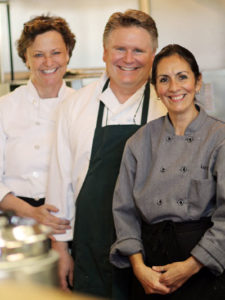
Over the last several months, Tatum has been building out the space and gathering up local talent to make this more than a watering hole, but a solid eatery as approachable to loft-dwellers and those in nearby established neighborhoods bordering the burgeoning warehouse district.

Open for lunch and dinner, Luma’s menu is a shifting landscape of small plates, afternoon sandwiches, pizzas and heartier Wine Country-Italian fare for dinner. Nothing’s overly precious, though there are drizzles and shavings here and there that remind you that you’re in Sonoma County. And though the wood-oven is a centerpiece of the kitchen, Tatum’s careful not to call Luma a pizzeria. Exec chef Jen Solomon (District, AsiaSF) masterminds the menu while Elizabeth Takuchi-Krist serves (Rubicon, Wine Spectrum) is bar and wine consultant, which means a cleverly-thought out wine list featuring some very unusual suspects (Slovenian furmint?) at weeknight-out prices.
The kitchen’s still perfecting flavors and techniques while the menu settles in, but early best bets include: Oven roasted pear, mache and blue cheese crostone with Marshall’s Farm honey drizzle ($9.50), Satan’s Kiss pizza, $15 (roasted cherry peppers, suasage, mozzarella, ricotta, leeks and bit of sweet heat); Korean bbq chicken banh mi with pickled daikon, carrots, cilantro, jalapeno and sriracha mayo wrapped up with a side of slaw ($11). Sandwiches disappear in the evening, replaced by larger-plate dishes including ancho-rubbed skirt steak with chimichurri, filo-wrapped salmon and a pasta or risotto of the night. Don’t miss: For dessert the chocolate pot de creme is an outrageously tasty splurge.
Luma, 500 First Street, Petaluma, 658.1940. Monday – Saturday: 11:30 a.m. – 9:00 p.m. Closed on Sunday. lumapetaluma.com

Meat, Braise, Love

Beef Short Ribs in a Zinfandel Chili Braise
Short Ribs in a Zinfandel-Ancho Chili Braise

Producing a braise in your own kitchen is a bit like making porn in your own bed: It rewards practice, because when you get it just right, it’s the best you’ll ever see, and all the times you don’t, it’s still a very long way from sucking. Similarly, there is just so much to love about the braise: Purely from a gastronomic perspective, no other cooking technique so easily employed by the home cook comes close to creating the depth and concentration of flavor than does the properly executed braise. It rewards economy:  The intelligent use of cheaper cuts, transformed as if by magic; the stuff otherwise too tough to chew transmogrified into fork-tender nuggets of gustatory gold by the application of little more than water, heat, and patience. It produces exceptional sauces and gravies almost as afterthoughts. The braise accommodates proteins, starches, and vegetables all in one pot, which can then be served family style in the cooking vessel itself, or re-plated and dressed up in style, depending. And, provided one follows some basic principles, an effective braise provides the cook with an exceptional amount of interpretive girth, requires no careful measurements, no indentured servitude to recipes and cookbooks, all of which amounts to solid structural engineering for the way I like to cook.
As to the title of this thread, just for the record, I’ve neither read the book, seen the movie, nor, for that matter, given any serious consideration to doing either, as I’m reasonably certain that I’d be repulsed but, like the ubiquitous fender-bender on the 101, find it impossible to look away; I strongly suspect that the experience would be very much like being force-fed Indian desserts while attending one of those made-for-TV mega-church Sunday sermons: Cloyingly sweet and offensively preachy all at the same time, a sort of psychological gavage. (Maybe that’s grossly unfair but, as with meals, I can only consume so many books, and I aim to make them all count.) Truth be told, I’m just trying to cross-stitch the title onto the longer thread, because braising, unlike snippy reviews of books I’ve not read or Julia Roberts’ teeth, will be a recurring theme in my kitchen and on this site, because a good braise is the sort of food that you smell all day long, that makes you want to open your best bottle of red wine and eat in your PJs at the same time, that can make a girl’s toes curl. For better or worse, and likely both, my wife doesn’t really eat land animals, so my best shot at getting a toe-curling endorsement, inasmuch as cooking is concerned, is probably mac-n-cheese (the subject of another ongoing thread), but today I’ve got braising on the brain and, more specifically, the braising of big hunks of prehistoric-looking meat, wrapped in butcher’s paper, studded with large bones, and replete with the potential to disturb small children.
Braised lamb with chocolate, rosemary, and preserved lemons
Braised Lamb with Chocolate, Rosemary, & Preserved Lemons

So what is braising? Larousse describes a braise as “a moist cooking method using a little liquid that barely simmers…” and goes on to point out that the classical technique involves first browning the meat in a little hot fat and then arranging it on a bed of cooked vegetables, partially covered in cooking liquid, and allowed to simmer slowly in a tightly covered pan so as not to lose moisture its (and, therefore, flavor and texture) due to excessive evaporation. That pretty much sums it up, although there are some other basic guidelines – use a cut with some connective tissue in order to create body in the sauce; be sure to have some acid in the liquid to break it all down and balance out the richness; generally, add some aromatics to the broth; finish the sauce at the end, while the meat rests; and always, try to have a general sense of how all the flavors will ultimately work together, and in proportions suited to the pot – which, when followed – invariably improve the final result. I recently noticed that McGee, in his essential On Food and Cooking, further advises that the meat be kept in relatively large pieces; that the initial browning kills microbes in addition to creating flavor; and – in a departure from almost every other cookbook I’ve read – recommends starting the pot in a cold oven and restricting the final cooking temperature to around 200F, which is considerably cooler than most recipes you’ll find. I have, in the past, used a pre-heated oven at a temperature of anywhere from 250-375F, depending on the particulars of the cut the dish is based upon. However, I make a general rule of listening to McGee -the guy is a scientist and does not mess around – so I’m going to do another one soon using his particular technique.
I’m not going to provide recipes in this post – I’ve got lots of favorites, some mine, some not, and I’ll put a bunch of them up over time – because I’m already over my daily word-count, and all I really hoped for was to inspire anyone who hasn’t braised to do so forthwith, and as to everybody else, to do it better, and more often.
(Click anywhere on the Foodista widget below for a step-by-step of the basic technique)
Producing a braise in your own kitchen is a bit like making porn in your own bed: It rewards practice, because when you get it just right, it's the best you'll ever see, and all the times you don't, it's still a very long way from sucking. Similarly, there is just so much to love about the braise: Purely from a gastronomic perspective, no other cooking technique so easily employed by the home cook comes close to creating the depth and concentration of flavor than does the properly executed braise.BraisingProducing a braise in your own kitchen is a bit like making porn in your own bed: It rewards practice, because when you get it just right, it's the best you'll ever see, and all the times you don't, it's still a very long way from sucking. Similarly, there is just so much to love about the braise: Purely from a gastronomic perspective, no other cooking technique so easily employed by the home cook comes close to creating the depth and concentration of flavor than does the properly executed braise.Producing a braise in your own kitchen is a bit like making porn in your own bed: It rewards practice, because when you get it just right, it's the best you'll ever see, and all the times you don't, it's still a very long way from sucking. Similarly, there is just so much to love about the braise: Purely from a gastronomic perspective, no other cooking technique so easily employed by the home cook comes close to creating the depth and concentration of flavor than does the properly executed braise.

The Caffeine Addict: Hooked, Locally

Freshly roasted, freshly ground, freshly brewed

Although I recently admitted to my failings as a true coffee connoisseur, my palate remains resolute in its hatred of oxidation. Or, having puzzled over the chemical processes involved, I should say that I hate the change in flavors and aromas caused by reduction-oxidation, but that takes too long, and efficiency matters in the kitchen. Furthermore, while my math skills may be passable and I find physics fascinating, chemistry has, at least since the 7th grade, given me a headache: Something about all that rote memorization and what I always took to be an unhealthy and mind-numbing emphasis on the “what” at the expense of the “how”.
In any case, suffice it to say that the taste and smell of  a food (for the avoidance of doubt, coffee is closer to the bottom than the top of the Food Pyramid, at least in my kitchen) changes by virtue of the food’s contact with the air we breathe, and most of these changes are not for the better. Oxidation creates that nasty metallic taste, the perception of acridness and overcooked-ness. This process is particularly acute in two of my favorite beverages, wine and coffee; fortunately, water, by my accounting the only other liquid truly essential to the sustenance of life, seems a bit more stable when left to its own devices.
In the case of coffee, the important thing to know is that the process of oxidation begins immediately, and the engine for this process is heat, although it is also deleteriously influenced by the piercing of the shell of the bean (the excellent if slightly more technical discussion I base this on may be found here): As soon as the bean is roasted, its taste and smell begins to degrade, in ways both subtle and profound: The compounds responsible for “good” flavors fade away, and the concentration of those responsible for “bad” flavors increases. The good news is that Mother Nature is also a coffee lover and, as is her wont, designed the bean in a particularly clever way: First, the external structure of the bean itself traps and protects many of the desirable features of coffee’s flavor profile inside; second, even after grinding, some of the aromatics remain inside the coffee by virtue of the bean’s naturally occurring oils and waxes known as lipids.
So what’s a deeply entrenched caffeine addict to do?

  1. Buy your beans in smaller amounts, as frequently as practical, and as close as possible to the date on which the beans were actually roasted. Clearly, this gives a huge edge to your local micro-roaster, and not because it’s “free trade”, or “local”, or even because they buy better beans (all of which may, or may not, matter to you), but because the chemistry itself dictates that locally roasted coffee will taste better. Funny how often this basic lesson seems to come up so frequently in food and cooking, and how much better suited to good eating (albeit more time consuming) is the old-school model of grocery shopping, in which we would buy our daily bread from a baker, our vegetables from the produce stand of a farmer who grew them, the fish from a fishmonger who just caught it. Easy rule: If you can’t figure out when it was roasted, you probably don’t want to buy it.
  2. If you’re going to store your beans for any length of time (and we do this as a matter of course – there is idealism, and there is keeping the family sane and the parents well-fueled at all times), try to get them in vacuum packs (to reduce air contact), and store them in the freezer (to mitigate the deleterious effects of temperature).
  3. Grind it when you’re going to drink it, and only brew what you’re going to drink. I don’t know about you, but I just don’t buy the argument that grinding your own beans is messy and time-consuming; and since the actual science tells me that I can drink better coffee simply by grinding my own, that seems to me a pretty cheap and easy way to consume a superior product. If you must brew a larger quantity first thing in the morning, then at least transfer it to an airtight carafe or thermos or whatever in order to slow down the nasty effects of heat and air on your beverage.

There is, as ever in the kitchen, an object lesson in all this: Simply by buying my coffee fresh and close to home, by preparing it when I actually want to drink it, and by only making the quantity that I actually want to drink, I will drink better coffee.

Sex, Lies, and Tomatoes: The Recipes

tomato and pesto on cranberry semolina bread
Super simple tomato sandwiches

The good news, as of this writing (a reprint from my previous website, if you’re wondering about the timeline), is that our local tomato spring truly has sprung. Not exactly on-time, however – more like, finally. As in, Finally, it’s about [expletive] time, because I live alongside some of the finest tomato plants in the known universe, and it’s just plain wrong to make me wait until late August to get my fix. In fairness, to live in Sonoma County is hardly akin to the forced deprivation of an extended tour on a nuclear submarine or offshore oil rig; sufficiently desperate for Solanum lycopersicum, I could purchase the irredeemable supermarket facsimile year-round. However, as I’ve already tried to explain, I won’t – I can’t – subject my family’s taste buds to such effrontery, and neither should you to yours. But here and now, the farmer’s market is literally teeming with tomatoes, at the stalls of the dedicated specialists (e.g, Dan Magnuson’s Soda Rock Farms), as well those of the many other outstanding growers I’m lucky enough to shop with (Preston Vineyards, Foggy River and Early Bird Farms, to name but a few); I’m even getting regular contributions from my own garden, and I really suck at growing tomatoes.
I’ll cook all sorts of things with tomatoes over the next couple of months, and once in a while I may even get a little cutesy and dress them up (for years I’ve been tempted, but failed to muster the courage, to mount an assault on Alain Passard’s legendary tomate farcie confit aux douze saveurs, still, as I understand it, a fixture of the menu at L’Arpege). Still and all, I typically treat tomatoes much the way I’d treat a peach, erring on the side of simplicity over complexity, part of my ongoing effort simply not to screw up a thing that began as nearly perfect before I got involved. However, unlike a peach – the peach being one of those rare foods that seems almost impossible to improve either by fiddling with or adorning it – the tomato is a remarkably versatile foil, tolerating temperatures from hot to cold, equally content as condiment and centerpiece, visually arresting whether highly processed or nearly naked, an unimpeachable accompaniment for seafood, steak, and cheese alike. The first tomatoes of the season, however, deserve a special respect, a period of honest assessment and contemplation, and this – more than a little like the first night back with your spouse after a long business trip or following an exaggerated bitchfest about something neither of you can even remember – seems best done naked, or at least nearly so.
Thus, as we continue eat our way through the first few batches of ripe little gems from our own garden, the dominant themes resonate around salads and sandwiches. The variations are truly limitless, but I really liked the most recent incarnation, as pictured at the top of this post, so here you go (the recipe for pesto follows at the end):
Heirloom Tomato Sandwiches on Cranberry-Semolina with Pesto, Olive Oil, and Salt
You could use virtually any tomatoes here, and – ideally – I think you’d serve a few different ones, both for variety of color and flavor. A red-toned beauty (Purple Cherokee, Pink Lady, or Early Girl), a yellow (Tangerine or Lemon Boy), and a green (Green Zebra) would provide a gorgeous array of color as well as a distinctive breadth of flavors, sweetness, and acidity. Similarly with the bread, you could use anything, really, but a lightly toasted, crusty sourdough works particularly well. I hadn’t planned it ahead of time, and I would not have thought of a fruit-laced bread had it not been lying around, but the almost impossibly good Cranberry-Semolina from the Full Circle Bakery in Penngrove worked exceedingly well, with the chewy, sweet-tart bite of the cranberries adding just the right ballast against the acidic tomatoes and the licorice notes in the pesto.

  1. Toast some slices of the bread, preferably a crusty sourdough with a baked-in dried fruit (cranberries, apricots… nuts in the bread, for some reason, sound unpleasant to me, although I can’t say why, because nuts and fruits go well together, there are already nuts in pesto… hmmmm… maybe next time?)
  2. Top each slice of bread with a thick slice of tomato – ideally, slices of a few different colors, although my garden wasn’t cooperating on that front – and then top each slice of tomato with a small quenelle of pesto. (Why bother with a quenelle? Because it takes almost zero effort and the uniform shape will look nice against the slightly irregular backdrop of the heirloom tomato and crusty bread, and because it will show off the effort you put into your pesto.)
  3. Sprinkle with fleur de sel and drizzle the plate with olive oil, preferably from Dry Creek, such as that from Preston or the pricier, but exceptional, Da Vero.

Classic Pesto (from M Hazan)
I’ve talked at length about pesto and its Mediterranean cousin, pistou here, and I like all sorts of variations, and many have a particular place (with cheese; without cheese; for fish; for pasta Genovese), but nothing – and I’ve made and consumed many hundreds in my life – is ever quite the equal of the classic Italian variety, and no version seems quite so perfect as the simple food-processor method of M Hazan’s, described accurately, along with some pretty decent comments and observations, here, in case you don’t have the book (Essentials of Classic Italian Cooking, which, by the way, is one of my few “must have” cookbooks, certainly a Top 10, maybe a Top 5).
Hazan’s is so easy, and so perfect, that I can not possibly add anything without also diluting it. However, I will emphasize that, if you’re going to make pesto, in addition to following Ms Hazan to the letter, you must heed a few basic rules (these are, of course, common to all cooking, but the simplicity and intensity of pesto offers even less slack than usual):

  • Use good basil. You really ought to grow your own – it’s cheap and easy, even for a challenged gardener like me. Make sure it’s the Genovese varietal: There are many basils, but you only want to make classic pesto with the particularly aromatic Genovese basil and its distinctive note of licorice.
  • Use good olive oil (it needn’t be your best – Costco’s organic extra virgin is just fine, and in fact better and cheaper than most), and probably an oil that leans more toward the grassy than the buttery end of the spectrum.
  • Use only freshly grated Parmigiano Reggiano and Pecorino Romano cheeses. Seriously, don’t buy the waxy, shrink-wrapped, Swiss-cheese-tasting crap from the market, don’t buy it pre-grated in tubs from Trader Joe’s, and never, not ever, shall you pour grated cheese from a shiny green can – not for any reason, but specifically not into your pesto.
  • Be careful about your garlic: First, try to find a grower that offers more than one kind, and that can describe the difference. Some are just way too hot and spicy. Rose de Lautrec is my go-to garlic if I can only have one, but obviously whatever the Italians classically use for pesto would be fine (I buy Rocambole from Bernier Farms, in the possibly misguided belief that this is what I would get in Italy). But be careful, because different garlics are not at all equivalent, and this extends to measurements: What, precisely, is a “clove” of garlic? The same bulb could have cloves varying in size by a factor of 4; and different types of garlic could have their heat vary by a factor of 4; so you could have a recipe calling for “2 cloves” and it could mean 2 or 32, from one extreme to the other. There is no way to deal with this uncertainty except to learn to do it by taste, to learn the garlic you use, to learn how much for your pesto.
  • Don’t forget to season it, but don’t risk over-salting until all the cheeses are incorporated, as Romano in particular is very salty.

Major shakeup at Santa Rosa Certified Farmers’ Market

Longtime Santa Rosa Certified Farmer’s Market manager Paula Downing has been removed from her position by the six-member market board of directors.
News of the seemingly sudden dismissal from the popular Veteran’s Hall market was sent by letter to the 111 members of the SRCFM — mostly producers and farmers who sell at the Wednesday and Saturday markets — on October 4. Downing has not been at the market since Sept. 30.
According to the letter, obtained by BiteClub, the board decided not to renew Downing’s agreement to manage the market under the terms Downing demanded. “Although we are not able to discuss all the reasons the decision was made due to our concern for Ms. Downing’s privacy, we assure you that our decision not to renew her agreement was warranted under the circumstances.”
Kathleen Miller of Beyers-Costin, attorney for the market and spokesperson for the board said, “Paula Downing had an independent contractor agreement with the market. She was seeking additional compensation and in the process of renegotiation she wanted more money than the market could pay her. The board made her an offer that included additional compensation, but it was not as much as she wanted. The board didn’t believe it was in the best interest of the market to give her as much as she was asking.”
Board members declined to speak publicly about the dismissal but stated in their letter to members that “Downing and her supporters have chosen to vilify and harass the board members as a result of our decision.”
Downing, when reached for comment today, said “It was not my decision to leave. I would never have put the market in this position by leaving at the height of the season. I feel guilty about the farmers get this kind of publicity, this is people’s livelihood.” She declined to elaborate further citing legal actions, but clarified that she was “asked to leave”.
Downing has been at the Santa Rosa Certified Farmer’s Market for eight years. She will continue to manage the Sebastopol Farmer’s market. In the interim, the board has announced that market veterans Susan Nystrom and Ellen Roberts will be acting as interim managers for the Saturday and Wednesday market respectively.
Nothing about the market is changing except for the Management,” reads the letter to members. “The Board of Directors is working overtime to ensure a stable, healthy, vibrant Farmers’ Market, now and in the future.”
The shakeup comes on the heels of a months-long kerfuffle at the Tuesday night Sonoma Farmer’s Market. After a number of high-tension public meetings and votes, the city has required longtime manager Hilda Schwartz to submit a proposal to continue managing the Tuesday night market on the city plaza. The RFP process, in which anyone can submit a plan for the market, continues until November.

The Caffeine Addict: Palate Fail

Blue Bottle Coffee Tasting
Blue Bottle, freshly pressed.

I have a Coffee Mea Culpa and it is this: I like bad coffee. Not awful coffee – I care not at all for the taste of two-day-old-and-tasting-of-burnt-gym-socks coffee, of low-grade beans apparently canned sometime during the early days of the Cold War, of Dunkin’ Donuts or McDonald’s drive-through “Cafes” – but coffee that is, in some objective sense, not ideal.
I know this because I have a competent palate, as far as it goes: Not that of a professional cook’s, but the ability to perceive, in a broadly objective sense, whether or not a dish tastes “right” – whether it’s properly seasoned, exhibits balance, consists of flavors that work well or poorly together, that sort of thing; and the flip side of tasting objectively (OK, fine, “objective taste” may be conceptually oxymoronic, but I’m sticking to my guns on this one: There is such a thing as objective quality with respect to food, and no matter how many shades of subjective gray might litter the middle of the spectrum, the “good” and “bad” extremes remain unequivocal) is that one must – eventually and, more likely, frequently – face the fact that what is good and what one likes do not always coincide in one’s mouth. Case in point and back on-thread: Coffee.
I’ve written elsewhere about the merits of locally-based “micro” roasters, and specifically why freshness – of both the roast and its subsequent percolation – has such a dramatic impact on the flavor of this uniquely stimulative and life-sustaining elixir. The thing is, once you understand why the flavor of coffee goes bad (it’s all about the reduction-oxidation process, as explained by the Specialty Coffee Association people here), you must also accept that most popular, commercially available “fresh” beans are overcooked: Heat is ultimately an enemy of coffee aromatics, so really hard roasting, at least as practiced by industry leaders Starbucks and Peets, inevitably raises the proportion of “bad” flavors and degrades the proportion of many “good” ones. But I do love my Peets, my Badass Coffee Co’s French Roast, my syrupy cup of liquid amphetamine midnight of whatever provenance. (Starbucks may be a godsend in an airport or the middle of Interstate 5, but otherwise, you can keep your SBUX.) Seriously – all those bitter, smoky, dark-chocolate flavors in a good cup of Peet’s? If the price is that I lose some subtlety, that I buy more blends than “single origins”, that there is just a hint of burnt? I will happily settle up on those terms, because everything else strikes me as watery or, worse, dirty.
That being said, I can also recognize when I’m wrong, and in this case, I’m wrong – in an objective sense, Peets et. al. uniformly roast their beans too hot, for too long, or both – I’m not sure which – in order to get their exceptionally dark roast. So, while I love it, I also accept it for what it is, and more importantly, what it isn’t: If I really cared about the terroir of coffee the way I do about wine, I would buy it from somebody like Blue Bottle or, more probably, our own local roaster, the Flying Goat: Both (amongst many others that I’m ignorant of) specialize in fair-trade, organic beans of the highest quality, emphasize the importance of individual terroirs, and – in order to express this specialization – both roast to a significantly lesser degree than Peets or any of their ilk. Case in point: I hadn’t heard of Blue Bottle until recently when La Familia B (who, by any definition, count amongst the ranks of the unrepentant foodie) gifted us the baggie pictured northwesterly. Provenance of the roast? Date-stamped 72 hours prior, somewhere in the East Bay. So my wife and I dutifully brewed up this little baggie of buzz: We dutifully let the water come off the boil; we patiently awaited the French press and tolerated its inevitable lacing of sludge; in short, we gave this coffee whatever chance we could to show off its true colors. The result? Pretty damned good, if you like it in all its medium-roasted, slightly dirty glory. I can accept it as more balanced, more complex, more unique than my crude-oil version. But still and all, I’m sorry, it just wasn’t to my personal taste: Scorched though it may be, give me the black-as-night, stain-your-teeth brew any day. I know I’m wrong, but I just like it that way.

Fresh by Lisa Hemenway: PIX

BiteClub’s been reporting on Lisa Hemenway’s new venture, Fresh, for several months now. But last night was the first time I’ve seen the market/restaurant in full swing since opening in late September.
It’s been a work-in-progress for a few weeks as staff were trained, shelves stocked and the in-store restaurant worked out. But on a bustling Wednesday night, the restaurant was at capacity, with locals munching on wood-fired pizzas, ravioli and salads. It’s a unique concept for the area — housing a wine bar and casual resto (where BiteClub saw several local culinary heavy-hitters enjoying dinner) in the midst of a market where folks are picking out their zucchini and crab cakes. But it works, making for a nice community space where neighbors picking up milk can say hello to friends in the dining room.
Fresh, open 8am to 9pm daily, 5755 Mountain Hawk Way, Santa Rosa.
Here are some interior photos…

Help Starts in the Kitchen

Local chef Josh Silvers and his wife/business partner Regina are spearheading a campaign to help out the local YWCA’s therapeutic preschool program for children who’ve experienced abuse or neglect.
Not surprisingly, that help starts in the kitchen. The center offers free meals to the through USDA program to the children, but is in serious need of upgrades. “For some, this school provides the only  safe place for children to be children and for others the only place they recieve a healthy meal,” pleads Regina.  Local  businesses are already getting in on the action, with appliance donations from TeeVax, countertops from local restaurant designer Neva B and cabinets from winery-owner (and former cabinet man) Ray D’Argenzio.
They’re now looking to the community to help out — but offering a few carrots for your donations.
Jackson’s Bar and Oven will be selling raffle tickets for $5 each (or 5 for $20) through the end of the month. The winner will receive dinner for 4 (up to $150) at the restaurant and a reservation (never taken at the restaurant). D’Argenzio is offering a complimentary wine tasting for everyone who buys a ticket.
Tickets can be purchased at Jackson’s Bar and Oven (135 4th St., Santa Rosa,), Syrah Bistro (205 5th St, Santa Rosa) or at D’Argenzio Winery (1301 Cleveland Avenue,
Santa Rosa). You can make an online donation to the YWCA at ywca.org/sonomacounty.

Fish Story | Napa


Fish Story Lobster Roll

Forget everything you know about fish and chips. Because you’ve never actually had them until you’ve eaten them at Fish Story.
Imagine, if you will, angel wings of beer batter and flour gently floating over moist, flaky local rock cod. Take it for a salty, vinegary dunk. Cram it all into your mouth until your tongue sizzles and burns. Finish with a soul-satisfying crunch against your back molars. Kennebec french fries soak up wayward morsels of oil and fish and batter, all the more delightful for their service.
Best. Ever. And that’s no fish story.
Perched at the edge of the Napa River in the enviably cool Riverfront development (home to Morimoto and the soon-to-open Tyler Florence eatery, Rotisserie & Wine), this Lark Creek Restaurant Group (Bradley Ogden & crew) opening is a biggie.
At the helm is Chef Steven Barber who left BarbersQ to open the restaurant. A restaurant veteran of MECCA and Bambu in SF, he’s long been on the critic’s radar and will likely get plenty of nods for his this new venture.
With daily menu updates, the restaurant sources fish and shellfish according to the notoriously strict sustainability guidelines of the Monterey Bay Aquarium Seafood Watch program and Barber’s using the former Copia gardens to farm herbs and produce. So don’t expect to see swordfish on the menu anytime soon.
Here’s the fork-11.
The Food: It’s a lengthy menu broken down in to Raw Bar, Soups & Salads, Starters, Rolls & Burgers, Features, Today’s Fish and Seasonal Sides.
You’re here for fish, so don’t miss the freshest flavors of the sea in their simplest form. Fish Story is bringing in seafood from around the US (and beyond), so you’ll find Massachusetts clams, Florida Shrimp, Hawaiian ahi tuna tartar (yes a usually yawn-worth menu inclusion, but given an incredible prep with hazelnut oil, avocado mousse and Fresno chili, $14). Fish Towers are date-impressers in three sizes (Keeper, $36; Whopper, $68 and Moby Dick, $99) showcasing a variety of shellfish. Of course bigger is always better.
Fried Monterey Bay Calamari ($10.5)and Fried Ipswich Full Belly Clams ($14) are getting high marks, but there’s no denying Fish Story’s take on the East Coast “Roll” — Bay Shrimp, Maine Lobster or Dungeness Crab. Its a wedge of soft bread stuffed with huge chunks of (in my case) lobster gently dressed with mayo and spices ($21).
Opening entrees include Chili Roasted Dungeness Crab ($18.5 for half/$34 whole), North Bay Cioppino ($26), pan-roasted Halibut and Grilled Idaho Trout ($18.5), along with the Rock Cod Fish & Chips (made with house-brewed Fish Story Ale, $16.5), and Shrimp and Grits ($19). There are, of course, several non-seafood options for abstainers. But come on, really?
Today’s Fish is similar in concept to what’s done over at Go Fish — a selection of daily fish prepared simply with a choice of sides, salsa verde or citrus butter ($17 to $39). Sometimes simplicity is best. And for dessert, don’t miss a cup of the Lark Creek group’s signature butterscotch pudding.
The Drinks: Wines on tap are a nice touch, and the Fish Story Ale on draft is currently “arriving soon” though other beers and speciality cocktails are available. A fresh blended lemonade ($3.95) and other mocktails make for a less tipsy indulgence.

A bright interior overlooks the river

The Vibe: The dining room isn’t huge, and even at lunch can fill up as eaters gawk at the live lobster tanks and spectacular riverside views. If you’re reservation-less, pull up to the bar, where service is polished and you can gab with your neighbors. Don’t feel the need to dress up, this is strictly casual. There’s a kids’ menu, so the nippers are welcome as well.
The Outlook: Things seem to be going swimmingly for Fish Story, a much-needed seafood-centric eatery that lets its fish do the talking. Beyond fresh and local, Fish Story walks the walk with serious sustainability as well.
Fish Story: 790 Main Street, Napa, 251-5600. Open M-F for lunch 11:30 to 2:30pm, Dinner Sun-Th, 5:30 to 9:30pm, Fri/Sat 5:30 to 10pm.

Martini House Sold

After a rumor popped up this morning in Napa that Pat Kuleto was selling Martini House in Napa, SF Eater has confirmed that the restaurant will, in fact, shutter on October 30 — at least in its current form. The purchasers of the restaurant are Paul Fleming and Brian Bennett. Fleming is best known as owner of P.F. Chang’s, Fleming’s Prime Steakhouse & Wine Bar and Paul Martin’s American Bistro. Because of a moratorium on chain restaurants in St. Helena, according to ThirstyReader, it isn’t likely that the restaurant will be reopened with giant Chinese warriors standing guard outside