La Rosa Tequileria & Grille | Santa Rosa

Cantina was always the margarita, chips and chimichanga restaurant I wanted to love, but never could. The chips were stale, the margaritas syrupy and the food, well, was only a step above Taco Bell. On a good night. Don’t even get me started on the subway-station bathrooms.

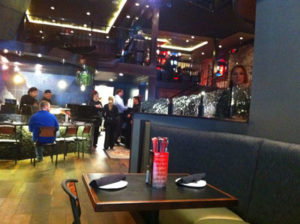
Which is why it’s heartening to see the spacious downtown Santa Rosa cucina reincarnated as La Rosa Tequileria and Grille. Without trying to reinvent the wheel, the new owners have given the restaurant a stylish makeover (beautiful mural, new banquettes and chairs, new bathrooms and a bright open bar), a solidly tasty updated menu, a kick-ass tequila lineup and a more upbeat vibe without taking away it’s approachability, affordability or “let’s go get a margarita and chips” vibe.

Special features include tequila flights and tastings, along with real-deal margaritas — housemaid sweet and sour, rather than the stuff that comes in 20 gallon drums.

Here are some don’t miss eats and drinks:
– The Smokey: Made with Mescal and tequila (with a bit of cranberry), this is a sneak attack of a cocktail that’s rich and smoky and delicious.

The Smokey
The Smokey

– the Diablo: Strawberry meets jalapeno in this saucy little margarita.
– The Cucumber ‘rita: Fresh cucumbers and tequila. ‘Nuff said.
– Scallop ceviche: Not overcooked, not undercooked, with bits of chorizo (better than it sounds) and peppers.
– Killer guac, salsa and chips
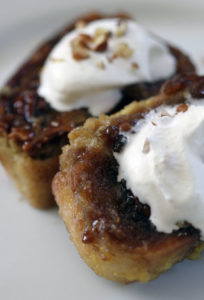
– Caramelized plantains with ice cream: Shut up. Just shut up.
– Mini carne asada tacos with pineapple: Sweet, spicy, mini. Can’t eat just one
– Fish tacos: Ahí ahí tacos with bits of fresh orange, cabbage, cilantro and guacamole. Takes me back to Baja.

In short, it finally feels like the place we always wished Cantina could be, but never was. See you on the patio.

La Rosa Tequileria and Grille, 500 Fourth St., Santa Rosa. Open Mon-Thu 11am-10pm; Fri-Sun 11am-2am


Farmhouse vs. Farmhouse

Farmhouse Restaurant in Santa Rosa serves 72 different kinds of omelets, giant plates of hash browns, five-inch tall burgers and milkshakes. Forestville’s Farmhouse Inn is better known for foie gras, rabbit three ways, French Sauternes and having a 2011 Michelin star.

Now you wouldn’t think most folks would confuse the two, but a series of coupons issued by the Santa Rosa diner-style eatery has more than a few thrift-seeking gastronomes trying to cash in at Catherine Bartolomei’s Forestville restaurant.

It started several weeks ago when Bartolomei said she started getting calls from people wanting to use the other Farmhouse’s Buy One Get One 1/2 Price Entree coupons for dinner at her place.

Things escalated when another coupon ran on BiteClub, and Bartolomei said she was bombarded with calls from guests looking to take advantage of what they thought were fire sale prices at the haute Forestville eatery. Adding to the confusion, she says regulars kept asking when she decided to open a diner in Santa Rosa.

Admittedly, I too was taken by surprise when seeing the ads for the first time as well. For a good 15 minutes, I Googled the two, trying to figure out if they were related. You’ll end up with results for both if you type in “Farmhouse” and “Santa Rosa”.  In fact, the Farmhouse Restaurant in Santa Rosa is owned by Carol Ferrari and Mike Berges who’ve owned the similarly-named Farm House restaurant in Sebastopol for 19 years.

If you’re keeping score, that’s three farm houses in a 25 mile radius.

For most of us, it’s mostly a giggle. But how the whole name game will play out is still anyone’s guess. Meanwhile, consider yourself warned that you won’t be able to pay for that glass of small production Russian River pinot and day boat scallops at the Farmhouse Inn with your coupon for a free beverage from the Farmhouse Restaurant.

Then again, sometimes all you want is a Coke and a cheeseburger. And I’d bet you there’s a coupon around somewhere for that.

Farmhouse Inn, 7871 River Road, Forestville, 887-3300
Farmhouse Restaurant, 3020 Santa Rosa Avenue, Santa Rosa, 595-1484
Farm House Restaurant, 7824 Covert Lane, Sebastopol, 823-2088

Persnickety Pudding

I spent this week at home with my youngest daughter, the poor thing a cuddly little ball of misery and sick. If childhood illness were a professional sport, she’d have been a lottery pick: ear ache, fever, gravelly cough, the inevitable avalanche of snot – like a highly regarded point guard, she had the complete package. The good news is, she’s feeling much better, and we spent lots of time together. Principally, this meant that I watched her, while she watched cartoons – I’m still trying to extract an ear worm from Dora the Explorer – but it also meant that we got to cook together. When you’re a sick kid, you need comfort, and what’s more comforting than pudding? Unfortunately, ours sucked like the Federal government at tax time, so we’re asking BiteClubbers for help.

But first, let’s talk about pudding. It may be unrepentantly trashy, but personally, I can’t get enough of the stuff, especially the old-fashioned, glossy, starch- and gelatin-based sort. Growing up, my absolute favorite treat was the original Snack Pack – are you old enough to remember those stubby little beer cans full of pudding, the ones with the highly questionable pop-top design? (Really, who puts metal pop-tops on a kid’s snack? The 1970s, that’s who.) For all I know, that pudding actually tasted like the synthetic, gelatinous goo it probably was, but get enough drinks in me, and I’ll still wax lyrical about a plastic vat of Kozy Shack to this very day.

In any case, the inimitable Miss M. and I decided to try our hand at home-made pudding, a sort of toddler-friendly version of chicken soup. It’s important that you know that I don’t, as a rule, do desserts; with the notable exception of my wife’s pies, I just don’t care for sweets, and more fundamentally, pastry, broadly construed, is ill-suited to my kitchen: I like to measure by handfuls and pinches, and I follow recipes like I drive, fast and with only the vaguest sense of direction, either of which would sink a pastry chef faster than a bag of rocks.

So, knowing the odds were against us, we dutifully cross-referenced the Joy of Cooking with American Cookery, we dropped by Wyeth Acres for fresh eggs and milk, we scraped seeds from whole vanilla beans, and we cobbled together a make-shift bain-Marie. We tempered our eggs; we stirred ceaselessly over a bare simmer. And for all of that, we ended up with a beautifully-flavored, but thoroughly inedible mess. As my wife succinctly noted, “it looks like Cream of Wheat”, and she was right: our sadsack pudding was a thick, grainy sludge, with a cloying sweetness and an oppressive texture, an entirely flawed and altogether disgusting dessert.

How could we take something so deceptively simple, follow the rules so seemingly carefully, using such good ingredients, and end up with such swill? If you have a tried-and-true recipe for old-fashioned pudding, please send it in, my daughter and I will cook it, and I’ll post the results right here on Bite Club.

Restaurant Mirepoix closed until June 2011

Windsor restaurant Mirepoix has announced on its webpage that it will close from April through June to “make the Mirepoix experience more exciting than ever, and handle some much needed building maintenance.”  The restaurant, owned by husband and wife team Matthew and Bryan Bousquet evolved from classic French bistro fare to a more haute cuisine prix-fixe menu, received a 2011 Michelin star in February.  The restaurant is slated to reopen on June 7.

The Bousquets also own Bistro M, which opened in 2010.

In recent months, Windsor has seen a flurry of openings and closings around the Town Green, with DePaoli’s shuttering in March, the opening of Himalayan Restaurant in the former Truc Lihn

On the east side of the freeway, Skillet Cafe is slated to open in the former SoCo Cafe space at 8776 Lakewood Dr., Windsor, 838-0451.

Food Truck Thursday in Sebastopol

When a door closes, a window opens, right? For the Eat Fleet mobile food convoy, there will be three walk-up windows and an umbrella opening at O’Reilly Media in Sebastopol each Thursday afternoon beginning April 14, 2011.

According to Fork Catering’s Sarah Piccolo, her truck, along with Street Eatz, Dogs from Chicago and Karma Bistro have been given the green light for a Sebastopol stop from 11:30 to 2pm at 1005 Gravenstein Hwy North (O’Reilly headquarters).

Piccolo plans to donate 10% of the day’s proceeds to a local non-profit and hopes to rotate in a new truck each week –and you better believe there are plenty of new trucks in the wings.  On BiteClub’s radar: Foxy Cupcakes, Black Market BBQ from Petaluma, a sustainable mobile barbecue and mobile creperie, Ultra Crepes spotted around Sebastopol the last few weeks.

Downtown Restaurant Assocation seeks leadership

The recent flap between Santa Rosa restaurateurs and mobile food vendors has sparked the formal organization of the Downtown Santa Rosa Restaurant Association. The group aims to be a resource that “helps our members keep the doors open and tables set” by sharing  information, cost savings, marketing and education, according to Rendez Vous Bistro owner Nino Rabba.

Rabba has spearheaded the fledgling organization over the last several weeks and hopes to combine efforts of the immediate downtown business owners and those of nearby Railroad Square, which have long been separate entities. Potential benefits to members would include newsletters, seminars, group purchasing, energy management, publicity and special events and networking.

Still officially leaderless, DSRRA meets April 6, 2011 in its last open discussion meeting before electing its leadership committee on April 20. In past meetings, those interested in forming the organization — which includes many of the downtown restaurants owners according to Rabba — outlined the group’s mission and membership qualifications. “We want to build a more positive future for the downtown restaurant community,” said Rabba. “There are good people here who have really good ideas,” he said.

Though the need for a cohesive downtown restaurant organization has long been discussed in the restaurant community, the sudden arrival of lunchtime food trucks to an off-square location in Santa Rosa united many restaurateurs to take action to defend their businesses and create a better line of communication between themselves and the city.

For more information about the organization, which is open to the food service industry in downtown Santa Rosa, contact info@dsrra.org.

Chefs of Tomorrow

Keenly competitive, dozens of gastro-minded teens have prepped for weeks – even months for Thursday’s Wine Country Chefs of Tomorrow competition – and county’s top showcase of young culinary talent. Dressed in crisp chef’s whites and serving up locally-sourced dishes of the restaurant-caliber quality, high schoolers from seven local schools will participate in the showdown. And make no mistake, they take winning very seriously.

This is no glorified home-ec demonstration, but a competition for aspiring cooks. Paired with executive chefs from throughout the county the students hone prize-winning appetizers for a hungry crowd of nearly 300 at the Vintners Inn, hoping to win either the People’s Choice Award or nods from several “celebrity” judges who rank their dishes.

The Event: Chefs of Tomorrow features appetizers prepared by the students along with a dinner by Josh Ash & Co.’s Thomas Schmidt, a live and silent auction and featuring food personality Clark Wolf. April 7, 2011, 5:30pm, Sonoma Vintners Inn, hosted by the Sonoma County Lodging Association. Tickets $80 per person, chefsoftomrrow.org or 523.3728.
Mini Chefs of Tomorrow : High schools aren’t the only places you’ll find budding chefs in the county. At Rincon Valley Middle School, eighth graders can take a year-long culinary elective class and teacher Sally McComas also holds special classes for the campus’ sixth graders at the Rinconc Valley Accelerated Charter School. Eighth graders spend an hour each day learning basic cooking from muffins to homemade pasta, reaping their edible rewards. With an almost equal mix of boys and girls, the class is one of the school’s most popular electives. The students have recently published their own cookbook, Delicious Delectable Delights, with 287 recipes. It is available for $20 at Rincon Valley Middle School beginning in mid-April, or by ordering it at http://tinyurl.com/4hwuoz7.


Though bragging rights are a perk, schools divide funds raised by the event equally. Last year, each of the participating schools received about $1,500 for their culinary programs from the Sonoma Lodging Association, which hosts the event.

This year’s theme challenges students to explore dishes from the heritage and backgrounds of the participating executive chefs – meaning everything from Midwestern home cooking to German and Asian influences.

Chef Richard Whipple of Hyatt Vineyard Creek/Brasserie, who is paired with culinary students from Windsor High School, looked to his grandmother’s chicken and dumplings for inspiration. “They were inspired by me learning to cook with her,” he said. Other dishes the students from Windsor will be serving are equally comforting: Asparagus with cheese and butterscotch pudding.

At Maria Carrillo, culinary teacher Mary Schiller is keeping things under wraps. Working with Chef Rene Jakushak of Santa Rosa’s Hilton/Nectar Restaurant, they were inspired by Jakushak’s German heritage. “My kids are very competitive,” she said. Maria Carillo has won the People’s Choice Award five times.

Also competing this year are: Casa Grande High School with Sheraton/Tolay Restaurant Chef Danny Mai; El Molino High School with Bodega Bay Lodge/Duck Club Chef Jeff Reilly; Healdsburg High School with Hotel Healdsburg/Dry Creek Kitchen Chef Dustin Valette; Piner High School with Applewood Inn and Restaurant Chef Bruce Frieseke; and Sonoma Valley High School with Fairmont Sonoma Mission Inn/Sante Chef Robert Champagne.

Since 1996, Sonoma County has offered career-focused culinary training at high schools, reflecting the area’s focus on hospitality and high end dining. An evolution of outmoded home economics classes that focused more on home cooking, the new breed of culinary programs are training students everything from kitchen chemistry to sanitation, food safety, knife skills and even real-life catering gigs as a technical career pathway to students seeking future employment in restaurants or hospitality.

The goal: A ServSafe certificate (certifying them a food handlers able to begin work at restaurants) or continued secondary training at advanced culinary programs like Santa Rosa Junior College’s Culinary program, the Culinary Institute of America or even the prestigious Johnson and Wales. Students also matriculate to hospitality and management programs, though not all students in the classes go on to culinary careers.

Despite difficult economic time for the restaurant industry recently, over the last decade, interest in classes has continued to increase exponentially, according to Stephen Jackson, Director of Career Development and Workforce Preparation Services at the Sonoma County Office of Education. About $500,000 of the office’s $3.8 million career technical education fund goes to culinary programs each year. Other programs include career training in automotive, construction, biotech, healthcare, energy or other technical trades.

“For our county and the student body here, I think it culinary programs highlight and celebrates one of the biggest industries in our county,” said Jackson. “And I think kids just like to cook. It’s a super hands on experience for young people to see results right away.”

Maria Carrillo High School offers one of the most rigorous culinary programs, including it’s own catering business that in 2010 served 6,000 meals doing crab feeds, retirements, weddings and non-profit events. Culinary teacher and catering director Mary Schiller said it’s a great opportunity for the students to learn how to cook and serve in a real world environment on evenings and weekends. She asks for a minimum $300 donation plus the cost of the food, booking one to two events each week. Though she doesn’t ask for it, the students often receive tips in addition to the work experience, netting the program about $7,000 each year.

“Our teachers in all the programs spend a lot of time with the students and serve as great mentors and someone the kids can talk to.  Being in culinary programs in high school is both fun and pretty intense because you are putting out food for the public to consume,” said Nancy Miller, Director of Career Pathways and Community Outreach, which funds the Santa Rosa City Schools culinary programs. “These classes are so valuable for the next generation of kids going into our county’s workforce.”

The Heirloom Bean Project: Cannellini Hummus Recipe

Welcome blogger Scott Kerson to BiteClub. The author of local recipe and food blog Proximal Kitchen, Scott can definitely cook.

I turned a year older last week. One of those numbers on the far side of “half” that at times seems more natural to deny than to celebrate. But still and all, I got to drink too much good wine, I slept in luxuriously late, and I opened presents, and who doesn’t love presents?

My favorite sort of present is the one that I didn’t know I needed, like a good book by an undiscovered author, or a sneaky back road that neatly shortcuts the to and fro of school drop-off. Or, in point of fact, the sampler pack of heirloom beans, from local bean guru and sustainable farming advocate Steve Sando and his Rancho Gordo project, that my dad gave me for my big day. Like a crater-like pothole on a road not normally traveled, it never occurred to me that what my kitchen was missing most were heirloom beans. But one taste of this velvety, richly flavored hummus – made from an ancient strain of runner cannellini bean, and very little else – and you’ll never look at the humble dried legume the same way.

There are probably lots of arguments for cooking with heirloom beans – not least, that they require very little work to cook; produce cheap, healthy meals with leftovers; and are friendly to the planet – but the main thing, at least from my perspective, is how damn good they taste. I’ve never spent much time thinking about beans, but a couple of weeks into my sampler pack, and I’m already converted; I simply never appreciated how much depth of flavor beans were capable of! By now, I’ve used Steve’s beans in my black bean soup, my refried beans, my baked beans, even as a bed for roast cod with clams and bacon, but nothing showcases the dense pleasure of high quality beans better than a simple hummus.

Hummus, with Heirloom Runner Cannellini Beans

A true hummus depends on chickpeas and tahini, but I use the term much more loosely to mean almost any puree of light-colored beans, and my wife, who has a more sensitive palate than I, insists that these particular beans are better served in a simple Mediterranean-style puree without the tahini; on the other hand, my kids prefer the added flavor and texture of the hummus. Me, I just like to eat.

Ingredients:

  1. 8oz dried runner cannellini beans (available from specialist purveyors like Rancho Gordo), soaked overnight.
  2. Juice of 1 lemon
  3. 1/4-1/2 cup sesami tahini
  4. 1/4-1/2 cup good quality olive oil (preferably from Dry Creek, if you’re into the hyper-local thing, but Costco sells a terrific organic oil from Italy at a great price)
  5. Clove of garlic, mashed to a paste (I use almost exclusively rose du lautrec garlic, which you can get from local farmers, but any good garlic that is not overpowering will be fine)
  6. 1 bouquet garni (any nice herbs to season the pot will do, but with cannelini beans, you really want to use a big sprig of rosemary right from the garden, maybe alongside peppercorns, fresh parsley, and thyme)
  7. Optional herbs for garnish: Parsley (for classic hummus), rosemary (for an Italian puree), crushed chili flakes, fleur de sel, etc.

Method:

  1. Boil the soaked beans, with their soaking water and the bouquet garni, until fully tender – 1.5-2 hours (don’t worry about splitting, as you’ll puree them anyway). Drain, reserving 0.5C or so of the pot liquor.
  2. Puree the beans in a food processor or blender, along with the garlic, half the lemon juice, half the olive oil, a little of the pot liquor, a big pinch of salt, and half the tahini, if using. Continue blending until uniformly smooth.
  3. Adjust the seasonings to taste: I found that I needed more salt, and close the full amounts of olive oil and lemon juice, but it really depends how you like your hummus.
  4. Serve in a bowl, drizzled with olive oil and fresh herbs and crushed chili flakes. Pita chips, crusty sourdough toast points, or grissini (those plain, salty Italian breadsticks) would all be welcome.


The Uncompromising Restaurant at Meadowood

Crispy goat cheese pillow from the Restaurant at Meadowood.

Ce n’est pas une pipe, and this is not a restaurant review.Magritte Pipe It could be a story about Christopher Kostow, the 3rd-youngest chef, and only the 2nd American-born, ever to earn 3 Michelin stars; it could also be a story about giggling over amuse-bouches like Harold & Kumar with a locked-and-loaded bong, or about the first – and, considering my embarrassment, I hope the only – time that I leaked tears over a bite of food. Ultimately, however, a meal at The Restaurant is about much more, and also much less, than all that: it’s a story about uncompromising vision, about what can be accomplished when a man embraces the impossible yardstick of perfection as the measure of his work.

Nowhere is the treachery of images more insidious than in the case of food: How to convey the sensation of biting into a warm, crispy “pillow”, garnished with a tiny, jewel-like flower and served on a “real” pillow of silk, filled with a tangy mousse of fromage blanc, so exquisitely delicate and yet unexpectedly piquant as it bursts across the tongue…
Restaurant Meadowood Cheese Pillow…or a “crudite” of baby carrots and radishes the size of my babies’ fingers, served in a bowl of lettuce cream and buried under an airy, crystalline pile of perfectly white tomato “snow”, whimsically transforming pot-luck snack food into haute cuisine?

And that was only the first wave of amuse-bouches, the stuff that had my wife I giggling like schoolgirls before we finished ordering. The rest of the meal was considerably more complex, often technically virtuosic, occasionally even jarring – an unpleasantly stringy garnish distracting from my wife’s otherwise delicious soup of green garlic and almond milk – but, always, built on a seamlessly integrated foundation of flavors: The savory cigar of rolled hamachi and veal tongue sous vide, accented by caviar and a tendon suc, like some sushi chef’s hallucinatory riff on vitello tonnato; the impossibly tasty, individually fried leaves of a brussel sprout accenting an egg poached so gently it had the texture of soft custard; or the intricately composed cheese course, punctuated by a perfectly rectangular slice of whipped Stilton “cheese cake” with a frosting of port wine gelee.

But these are mere examples, particular moments, random flashbacks; they explain the medium, but not necessarily the message. For me, the evening my wife and I spent at The Restaurant, as good as the food tasted – to be sure, it all tasted very, very good – was less about eating per se, and more about hitching a ride with Mr. Kostow and his staff, sharing their journey down the road of uncompromising commitment:

httpv://www.youtube.com/watch?v=FPpfLl6pd5w

Commitment does not always guarantee success, which is why, despite my inherent skepticism of management-speak, I like Dave Cheketts’ line – success builds character, failure reveals it – and, with all due respect to their otherwise impeccable service, it was perhaps the staff’s one mistake that said the most about their character: A slight misstep, the clatter of a crashing bowl piercing the hushed atmosphere like a cowbell in a church choir, and our neighboring diner was wearing his soup, instead of eating it, a swath of white linen, plush carpet, and the poor guy’s jacket looked like an electric-green Jackson Pollack.

A tiny mistake, really, in any other context. But when I spoke about it with a staff member the next day, this was quelle scandale for Mr. Kostow and his team, requiring a day of staff meetings to discuss what it means to perform every task correctly, to remain disciplined, and above all, to ensure that it never happened again. As the staff member explained it, you have a bowl of soup in your hand; you have a table in front of you; there is nothing in between. Therefore, there is never an excuse for failing to get the soup from your hand to the table. Never. Now, take that deceptively simple precept, and apply it to every aspect of a restaurant – ingredients, technique, service – and you will have a sense of what The Restaurant is about. Uncompromising.Wagu tartar from the restaurant at Meadowood.Inevitably, someone will ask if it’s all worth it, “only” $115 for four courses, or a tasting menu with wine pairings that pushes dinner for two with tax and tip to a crushing $900 – why even bother writing about restaurants that most mortal folk will never even consider going to? Restaurant critic Michael Bauer has his answer, and it’s only fair to point out that The Restaurant is priced competitively with, say, two-star Cyrus in Healdsburg and three-star Le Bernardin in New York City, and is substantially cheaper than The French Laundry and most three-star establishments in Europe and Japan. But quite frankly, I find that whole line of debate uninteresting. Who cares whether or not I can afford to eat there, or whether a meal is worth your mortgage payment? All we, as consumers, can reasonably ask is that we get what we pay for; us to decide whether or not to pay. Absolute commitment of any sort comes at a heavy price, and Mr. Kostow and his staff are, if nothing else, absolutely committed.

[photo credits: Wikipedia & Meadowood Resort]

Wine Country Recipe Challenge FAQ

Welcome to the inaugural month of a year-long Best Wine Country Recipe Challenge. From April through March 2012, BiteClub is on the hunt for great cooks from Sonoma, Napa, Mendocino, Lake and all of the Northbay to submit your Wine Country recipes each month.

The Idea: Each month BiteClub will ask readers to submit original recipes in one of 11 categories — from eggs to beef — that use at least ONE local ingredient and showcase your originality, creativity and good taste. I’ll recipe test the most promising submissions and pick one winner each month whose recipe reigns supreme. At the end of the year, we’ll host a cook-off between the winners (but don’t be surprised if a few runners-up show up as well) for the Best Wine Country Recipe.

Best Recipes each month will be eligible for prizes — including restaurant gift certificates and having your dish show up on a local restaurant menu!