Can Gleason Ranch be saved?


The clock is running out on Gleason Ranch.

In just days, owners Nancy Prebilich and her sister Cindy Holland may be facing foreclosure on the ranch that has been in their family for generations. Popular with chefs, Prebilich gained national acclaim for her sustainably raised chickens, pork and lamb. But a year of devastating loss has put the operation in immediate jeopardy, and it Prebilich is reaching out to the local food community to help her keep the lights on — literally.

In the short-term, Gleason is hoping to raise about $13,000 to keep the ranch operating for another 60 days. Things like electricity and mortgage payments are in serious arrears, and the ranch hopes to convince restaurants to pre-pay meat purchases for the year in order to raise some quick capital. Supporters like Mark and Terri Stark have helped to fund Prebilich’s operation in past months by paying for chicken, goat and pork for Stark’s Steakhouse and Monti’s in advance. Oliver’s Markets is also helping by purchasing pork from Gleason for its sausage.

Over the next five years, Prebilich has plans to raise about $500,000 in capital by making Gleason Ranch an LLC holding company with investors and a board of directors. She has been working with financial veterans like Dan Smith, who owns French Garden and organized a board to help save Palm Drive Hospital in Sebastopol, along with a number of other ranchers and farmers to help create a viable longterm business plan. Though she’s confident she can find up to twenty investors to help with the capital over the next few years, it may be too little too late if she can’t pony up some immediate cash to keep the ranch afloat over the coming months.

The problem stack up to what Prebilich calls a “perfect storm of unanticipated events over the last year. Both her mother and father died this year within six months of each other, halving the operational manpower of the farm and creating a experiential vacuum, since Prebilich’s father was a the heart of the ranch’s meat operations. The ranch also lost thousands of chicks during a heat wave last year, then was double whammied by rains that forced them to keep many of the remaining chickens inside and reduce additional operations to control overcrowding. They’ve yet to recover fully. Compounding the problems, the ranch was asked to leave both the Santa Rosa and Sebastopol farmers’ markets after ongoing disputes with market manager Paula Downing, which Prebilich said amounted to about $100,000 in sales each year. Prebilich is currently in litigation over the expulsion. After problems with their distributor, Prebilich also got recent news that the money lender who lent Prebilich’s mother $675,00 against their mortgage has called in the loan and is threatening foreclosure.

Already, many in the food community are coming together to help stem the financial blood flow and aid in immediate needs. Two fundraising dinners are being organized on behalf of Gleason Ranch. Additionally, Prebilich has sent out a letter to potential investors explaining the longterm opportunities.  Over the last months, Gleason has sold to CSA members, at the Healdsburg Market and through Preferred Meats in Oakland, in addition to selling to a handful of local restaurants committed to helping Gleason.

“For the last 2+ years, my sister and I have been working tirelessly to transform Gleason Ranch into a financially viable business and a model of local, sustainable ranching. In our world of industrialized agriculture and competitive markets, this would be a challenging endeavor in any circumstance. But we have built up a sustainable ranching operation, established a great brand, and attracted a loyal following of supporters and individual and wholesale customers,” said Prebilich.

Sustainability, it seems, is only viable as long as the ranchers can sustainably support themselves.

If you’re interested in helping…
A Day of Artisan Butchery, Oct. 15. A benefit for Slow Food Solano’s school gardens project, the Farmer-Veteran-Coalition, and Gleason Ranch.
– If you’d like a copy of the investor letter, please email Nancy.
– Ask your local restaurants to carry Gleason Ranch meats or patronize restaurants like h2hotel’s spoonbar, Oliver’s Markets or the Stark’s restaurants who have demonstrated a commitment to Gleason Ranch.
– If you’re a chef interested in carrying Gleason Ranch meat, please contact Gleason Ranch

Mamma Drama in Windsor

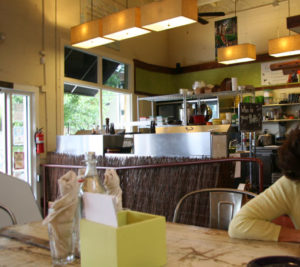
Mamma Pig Windsor interior

What in the world is going on with Mamma Pigs? Since the Windsor barbecue restaurant’s July opening there’s been some serious Mamma drama. Over the weekend, however, a “New Ownership” sign went up on the smokehouse we may have a few more answers. Just leave a trail of breadcrumbs to find your way around this explanation… Mamma Pig Windsor interior

The short version is that Creative Consultant Gary Finnan, who helped to open the restaurant with the Bousquets, is now the sole proprietor. The Bousquets have left the smokehouse and aren’t part of the business any longer.

The longer version takes a bit more explanation...

Last spring restaurateurs Matthew and Bryan Bousquet quietly closed their Michelin-starred Windsor restaurant, Mirepoix, with plans to transform the critically-acclaimed but money-losing French restaurant into a barbecue, burgers and beer joint. In July, Mamma Pigs opened with plenty of fanfare, and seemingly solid ‘que with the help of Finnan and Matthew Riveras of Sonoma Essence LLC aka “The Piggy Pack”.

On the surface, things seemed to be going well until the Bousquets suddenly closed their second Windsor restaurant, Bistro M, just weeks after the Mamma Pigs opening. Citing refrigeration issues, there was no official word of the closing until a week or so after when several staffers leaked that they’d been unceremoniously axed and the mysterious refrigeration issues never got resolved.

Adding to the confusion, the couple went missing from the barbecue restaurant without explanation and a handful of cryptic Facebook posts citing family issues. Phone calls weren’t returned and the two had seemingly vanished without any forwarding address. Employees refused to say what was happening, and patrons were left scratching our heads.

In early September, word made it through the restaurant scene that Matthew had resurfaced in Napa (at Bistro Jeanty, which had been looking for a new exec chef since May) and Bryan was devoting more time to motherhood. Speculation about the couple’s departure was confirmed, while complaints about Mamma Pigs were stacking up as consistency and quality seemed to take a nosedive without the couple at the helm.

What only recently came to light, however, was that the Bousquets were merely tenants in the new barbecue spot hired as “hospitality consultants” with the possibility of becoming franchisees if the restaurant was successful.

The most recent twist in the saga is a “New Ownership” sign that went up in the last days of September. Finnan issued a press release explaining that he is now sole proprietor with the consulting support of Riveras. The two aim to get the restaurant back on track and continue to operate a spot for burgers, bacon, barbecue and beer in line with the original vision.

“We look forward to serving our community and building a brand that shares the bounty of Sonoma County,” said Finnan.

Whether the restaurant can hold onto the affection of locals is yet to be seen, but with the explosion of barbecue spots around Santa Rosa and Sonoma County, it’s clear that there’s a hunger for ‘que around these parts. Minus the mamma drama.

Homestead at Handcar Regatta 2011


The Society for Homestead Preservation at the 2011 Handcar Regatta was six hours of cheese making, beer making, butchery, fermentation stomping, pie-eating, apple-pressing, butter-churning, preserve-making, kombucha drinking, coffee-roasting and spice-sniffing amazement.

The newest addition to the Handcar Regatta, the Homestead brought together more than a dozen of Sonoma County’s best culinary artisans for a massive collection of DIY demos of the grandma arts — a throwback to the slower, time-honored ways of eating, drinking and savoring the best of what life has to offer.

In a drive-thru world, there’s something to be said for re-learning the skills that sustained the human race, and that most of us have either forgotten, or never learned at all.

Here’s a sampling of what was on the menu:
– Sourdough starter: The Real San Francisco starter and how to do it at home
– Whole Hog Breakdown: How to use every part of the pig
– Rabbit Butchery: A lesser-known meat, but easy to raise at home
– Coffee Roasting: How to roast your own beans for better coffee
– Spicing it Up: Using fresh spices to make tastier meals
– Poultry Butchering: Skip the breasts and DIY the bird yourself.
– Porchetta de Testa: Whole Head Hog Salumi
– Kombucha: Know your SCOBE? Why fermented drinks are great for your gut
– Fermentation 101: Cabbage stomping to kraut, learning all about fermentation
– Fresh Pies: Sassy gals making homemade pies from scratch
– Cheese making: Fresh cheese to cultured ones, how to start with a gallon of milk and end up with a great cheese
– Beer Making: Sud-making at home
– Preserves: From strawberries to marmalade, how to cook up a quick batch of summer’s best
– Ask A Vegan: Want to go meatless? Learning how to use less and taste more
– Apple Pressing: Using some good old elbow grease to make the season’s best cider

Missed the event? There are many opportunities in Sonoma County for classes, products and other DIY arts.

Beverage People
Courtway Catering
Savory Spice
Testa Duro Salumi
Meat Revolution

Epicurean Connection
Preston Vineyards
McEvoy Ranch
Medlock Ames
Revive Kombucha
Hat Creek Coffee Roasting

This was a six-month project by BiteClub to bring Sonoma County’s homestead arts to a large audience. A million thank yous to everyone who was part of the Regatta Homestead on Sunday. Culinary props to Nancy from Gleason Ranch for EVERYTHING, Meloni Courtway and the Pie Hole Girls, Revive Kombucha, Christopher Hanson, Jason Azevedo, Berry Smith Salinas, Savory Spice, Roger Martial Praplan, Sean Thorniley, Hat Creek Coffee, Lou Preston, Merrilee Olson, Medlock Ames, McEvoy Ranch, Sheana Davis, Beverage People, Mary Bergin, my amazing family, Ty Jones, Spring Maxfield, Handcar Regatta, Nan Sea Love and the compassionate vegans, Josh Stithem, Amy and anyone I forgot.
WARNING. These pictures include butchered animals. If that offends you, don’t look.

Burbank inspires pop-up dinners

Luther Burbank
Luther Burbank
Luther Burbank

When you eat your next bag of potato chips or fast food fries, you can thank Luther Burbank. Responsible for the ubiquitous Russet Burbank potato, as well as the lesser-known Freestone peach, plumcot, Santa Rosa plum and nearly 800 other different fruits, flowers, grains, grasses and vegetables, the 19th century horticulturist looms large on our collective plates. It’s not a stretch to say that Burbank, who made his home in Santa Rosa, helped to put Sonoma County on the food map.

Despite his tasty legacy, Burbank is too often a dusty history lesson foisted on schoolchildren and garden clubs.  Reintroducing the rogue botanist and his many achievements to our modern senses, a series of dinners called Chosen Spot celebrate Burbank through taste and place. Using fruits and vegetables developed by Burbank in historically significant spaces around the county, the dinners are six-course meals served up with a side of history.

The first dinner is slated for Sept. 24 at the Crane Melon Barn in Santa Rosa — where the luscious local melons are grown. The dinner will include watermelon and beet salads, a St. George’s cheese fonduta, Trout with bacon and zucchini succotash and basil chicken. Chefs include organizers John Lyle (Space XXV, Lisa Hemenway’s); Les Goodman (John Ash & Co, Dry Creek Kitchen), Aaron Short (Affronit) and Holly Messing (Jack and Tony’s), along with the help of volunteer SRJC Culinary Students. Farms participating in Chosen Spot will be The Victorian Farmstead, Bloomefield Farms and Beet Generation.  Most of the farmers will be in attendance.

“I realize Sonoma County is making a huge impact in the culinary world in America and if you really look at Luther Burbank’s contributions he’s made an impact on the world.  This [project] is to show people that what we do here on our farms and in our restaurants has an impact.  When you read his and the whole idea “the chosen spot” you realize that we are choosing this spot and it just makes sense,” said Lyle. The named “Chosen Spot” was in reference to an 1875 quote by Burbank about Sonoma County. “I firmly believe, from what I have seen, that this is the chosen spot of all this earth as far as Nature is concerned,” he said.

Additional dinners will be held on October 15 (a surprise location to be announced) and Saturday, November 12 at The Victorian Farmstead.

Each of the dinners is $55 per person, with 100% of profits going to three local projects: The Tree Restoration Project, The School Education Program at Gold Ridge and The Luther Burbank School Orchard Project.

For more details and reservations check out Chosen Spot on Facebook or email chosenspotsonomacounty@gmail.com.

A reprieve for Reggie

Seated at a reclaimed wooden table in Healdsburg cafe, rays of summer sun streaming in like spotlights, three Sonoma County women have come together to save the life of a 50 pound pig whose imminent destination is my dinner table. After a volley of emails, we’ve agreed to meet here. It’s immediately clear that they’re not leaving without at least guilting me into rethinking my carnivorous ways. But their ultimate mission is safe haven for the Hampshire I’ve named Reggie Bacon.

Several weeks ago, I publicly announced that the pig in question would be the poster swine for a personal adventure in getting personal with my pork. He was to be raised compassionately (eating plenty of acorns and Gravenstein apples) at a Sonoma County farm, slaughtered by my own hands in the last days of summer, butchered and consumed in a farm-to-table experiment. The aim was to live out he urgent calls of food activists like Michael Pollan and Alice Waters to curtail our factory-farming dependancies and better understand the imprint of our own eating habits. The whole thing seemed like a good idea.

But as I wrote about the fate of Reggie, the passions of animal rights advocates and vegans were stirred in a very vocal way. Many were outraged, Facebook groups were mobilized and letter-writing campaigns ensued. How could I possibly live with myself after putting poor Reggie on a dinner plate. It was easy to dismiss much of the well-meaning, but sometimes misguided rhetoric and in a few cases off-the-rails ranting. My question to each of these activists was, “Why me?” Why attack someone who was actually in agreement that the commercial meat industry wasn’t in humanity’s best interest? Why attack an individual who was trying to better understand and embrace the inherent brutality of meat eating by experiencing it personally rather than mindlessly buying neatly packaged, faceless cuts of meat in a supermarket? I’m not a pet-eating monster, as many opined. I’m merely an avid consumer of bacon, ham, sausage and salumi trying to get personally involved with the process.

A few emails, however, caught my attention. In particular a plea by local vegan Dian Hardy, who merely wanted to talk about her experiences as a vegan. She wanted to raise the funds to purchase Reggie from the farm and send him to a no-kill sanctuary. I agreed with the plan in concept. So a few days later, here I was, eating dehydrated grains and nibbling a raw, meatless lunch at Cafe Gratitude with Hardy, Nan Sea Love and Eileen Harrington, all who shared their reasons for coming to veganism and involvement with a local organization called Compassionate Living Outreach.  Formed in 2008, the group encompasses both a passion for animal rights as well as the vegan lifestyle, embracing Sonoma County vegans with potlucks and nutrition information.

Reggie at Farm Sanctuary

They’re not alone. It’s estimated that about 23 million American follow a vegetarian diet — eating no meat, but including milk products and eggs in their diet. The same study, conducted  by Harris Interactive in 2009, concluded that about 7.3 million are vegans, excluding dairy and eggs as well as meat. And with increased concern about health issues, the environment and animal welfare, as well as a number of celebrities adopting a meat-free lifestyle (former President Clinton, Alicia Silverstone, Ed Begley, Jr., Woody Harrelson, Ellen DeGeneres, Brad Pitt and Alice Walker have adopted vegan diets) that number is growing.

Hardy, who has been a longtime activist in the local animal rights movement agrees. “There are no ‘others’ even for animals,” she said. For Hardy, Sea Love and many vegans, compassion for the suffering of animals is their primary driver for eschewing meat. They rattle off anecdotes of inhumane treatment, the brutal treatment of animals in factory farms and are often very emotional about their feelings. Hardy, who lives in West County, was an early member of Sonoma’s People for Animal Rights, an often outspoken group promoting animal rights.

Harrington, who came to veganism several years ago, has a more pragmatic take on her choices, initially moving into vegetarianism for health and environmental reasons, ultimately becoming a vegan. She’s contrite about the difficulties of maintaining the lifestyle. “I have to be compassionate with myself sometimes,” said Harrington. “Our group is about making progress. Eating meat is not sustainable for the earth. We have to take one step at a time, and it’s time to take it to the next step,” she said. “We all make mistakes and we learn from them.”

“But being holier than though is a big turn off. Sometimes vegans get a bad rap and deservedly so. I can see how (veganism) can be see as ‘we’re better than you’. But we’re all trying,” said Sea Love. “There are the ones you hear, and there are quiet ones all around you doing the gentle work,” she added.

I’m moved. We agree that if they can raise $200 to pay the rancher for Reggie and find him a good home, he’ll get my personal pardon. I inform them that I’m still going to carry out my plan, however, with another pig. They agree that this is “my journey” and despite their own reservations agree that Reggie saving Reggie is their journey. Two days later, after another flurry of emails, the funds have been raised and Farm Sanctuary in Orland, California has agreed to give Reggie a home for life. The 300-acre shelter hosts dozens of animals and offers tours and even overnight accommodations for animal-lovers. They’ve rescued countless animals from factory farms, slaughterhouses and auctions. Again, I’m moved.

So on a warm September morning, we gather in the parking lot of Western Farm Supply in Santa Rosa. Reggie in the back of a pick-up is secured in a wire cage but panting and grunting. Harrington, along with Santa Rosa vegan Caren Stanley (who has donated the money) meet us with the driver from Farm Sanctuary.

It takes four of us to hustle the uncooperative pig into a dilapidated crate that threatened to collapse with his weight. “It’s like he won the lottery,” said Harrington. I can’t argue. “I love you,” said Stanley, as he snorted and sniffed inside the Sanctuary van, “I love you, Reggie.”

As Reggie drives off to his new home, there’s a moment where Prebilich, the vegans and I share a moment of good vibes. “We’re not about being anti-farm. We are trying to give people another path,” said Harrington. “We want people to move toward a more compassionate world.”

Several days later, a picture arrives in my inbox. It’s of Reggie in a field of flowers at his new home. It’s adorable.

But here’s the thing. I’m still a carnivore. After my adventure with the vegans, maybe I’m a more thoughtful carnivore. I’m more willing to think about the animals I eat (which was sort of the original point, anyway) and reconsider if I really need to eat that roast beef sandwich, or if a veggie special might do instead. I’m more aware of the animal life which I’ll take this week as I continue this journey. My new vegan friends, I’m sure will be praying for us both. And I’ll be thinking of them, and the compassion and love they’ve shown not only to animals but to me.

“It’s a big tent. We can all come inside,” said Hardy.

Regatta 2011

Biteclub is sending you a hand-engraved invitation to be a part of the Handcar Regatta Homestead Society on Sunday, September 25.

If you’ve somehow missed the last three years of this event, let me bring you up to speed on this multi-faceted spectacle that’s become the coolest ticket in town and is slated to attract more than 8,000 folks downtown next week.  Think Jules Verne meets Mad Max meets Dr.Kellogg and you’re starting to get the idea. This exposition of mechanical wonders features wondrous hand-built contraptions racing on the rails; performers (and participants) in bustles, bustiers and bowlers; wondrous art and science arcades; delicious food and drink; buskers and other intrepid musicians.

New this year, is a vibrant display of homesteading featuring everything from butchering demonstrations to fermenting tips and tricks, a kombucha bar, beer and cheese making, a spice bazaar, coffee-roasting, pie-making, apple pressing, preserves and a live animal or two.

As ringleader of this cooperative culinary society, BiteClub’s aim is to inform, delight and astound the minds and souls of participants. Featured Sonoma County homesteaders include intrepid fermenter Lou Preston from Preston Winery, Courtway Catering (aka The Pie Hole); Savory Spice; The Beverage People, Sheana Davis, Medlock Ames, Revive Kombucha, Merrilee Olson, Gleason Ranch and many others.

Oh, and of course there will be all manner of other incredible oddities and events — the handcar races, contraptions galore, ladies and gents in all their finery, beer, wine, steampunk styles and food, glorious food. But you knew all that.

So mark your calendar, and we’ll see you at Regatta. Sept. 25, 11am to 6pm in Santa Rosa’s Railroad Square. Tickets $8 online until Sept. 24, $10 day of event. VIP tickets $100.

Cocina Latina opens

Mateo Granados’ new restaurant, Cocina Latina opens Sept. 16 for dinner!

After months of work, the Healdsburg restaurant will open its doors for dinner on Friday night, followed by lunch service starting Sept. 19 and brunch starting Sept. 23. Dinner hours are Friday, Saturday from 5:30 to 11pm and Sunday through Thursday from 5:30 to 10pm.

Drinkmaster Scott Beattie has consulted on a tequila cocktail menu.

214 Healdsburg Ave., Healdsburg

Sushi Pop-Up at Shimo

Sushi master Ken Tominaga is bringing his knives to Healdsburg’s Shimo for a limited (?) engagement inside Chef Douglas Keane’s Japanese steakhouse.

Keane and Tominaga are teaming up on Thursday nights throughout October (and possibly November) to test the sushi waters. The Hana Japanese chef will work out of Keane’s kitchen, offering up his own sushi menu to compliment the usual Shimo menu.

It’s a chef bromance that’s been a longtime in the making. Keane, who is lead toque for Cyrus and co-owns Healdsburg Bar and Grill, opened Shimo Modern Steakhouse to showcase his love for Japanese cooking. Tominaga’s Rohnert Park restaurant is an institution where the Bay Area’s best chefs sup on sushi.

“Ken has wanted to come up to Healdsburg for a long time. He has a lot of clients up here, and frankly, all the chefs go down there for sushi. We’re both big fans of each other,” said Keane.

Until August, Tominaga was part of Cindy Pawlcyn’s Go Fish restaurant in St. Helena. Pawylcn changed the format of the restaurant from seafood and sushi to rustic Italian after joining forces with the Monterey Bay Aquarium’s sustainable seafood program, leaving little question that the partnership with Tominaga was over.

Will this be a permanent partnership for Keane and Tominaga? It’s too early to say, but signs point to a possible relationship if demand for Tominaga’s stellar sushi is high enough. Healdsburg’s only other sushi spot, currently, is Gary Chu’s Sake’O.

Keane has continued to tweak Shimo, which opened last winter. Focus has dropped off high-priced steaks (though he still has a few) and is instead on more wallet-friendly offerings including authentic ramen and soba noodle bar ($7.95) and Sunday night prime rib dinners. Keane also dropped corkage fees in a surprising move for a Wine Country restaurant. Sushi has been a long-time desire, but Keane said he’s been hesitant to do it unless someone could really do it right.

Stay tuned for a full sushi menu coming soon.

Heirloom Expo: Last Day


What started as a groundswell of interest in heirloom seeds, homesteading, organic foods and a return to the simple and delicious ideals of a bygone time has become a tidal wave.

Thousands have flooded into the National Heirloom Expo, held over three days at the Sonoma County Fairgrounds, to embrace the old-is-new food movement espoused by Baker Creek Heirloom Seed owner Jeremiah “Jere” Gettle and held dear by so many of us in Sonoma County.

And there’s one remaining day to experience this event.

Far beyond a garden show or food event, the Heirloom Expo has brought together more than 250 vendors (including many local companies to showcase everything from Della Fattoria bread, Sonoma Chocolatiers, Sonomic Balsamic Vinegars, Farmtrails and Amy’s Kitchen to Clover Stornetta, Straus Creamery, the Petaluma Seed bank, Sonoma Community Market and dozens of others along with nationally renowned speakers (Alice Waters, Vandana Shiva, Jeffrey Smith) and eye-popping produce displays from local farmers. Area food trucks including Fork Catering and mobile vendors Pizza Politano, The Farmer’s Wife, Michoacan Ice Cream serve up food throughout the day. There’s a mobile bee hive, school garden demonstrations, a wicked wonderful pumpkin tower and chef demos throughout the day.

Though we weren’t sure what to expect from this fledgling event, BiteClub’s collection of Sonoma County fermenters at the Fermentation Nation has been mobbed with passionate enthusiasts and curious newcomers who’ve thronged our booth during demonstrations on Sourdough Bread starters (Courtway Catering), Kombucha-making (Jennifer Harris), Pickles and Sauerkraut (Alexander Valley Gourmet), Cheese-making (Sheana Davis and Beverage People), Ginger Ale and Mead-making (Marley Peifer), Fermented Soybeans (Natto) with Japan Traditional Foods, Chocolate (Sonoma Chocolatiers) and one-on-one sessions in our “living room” about at-home fermenting. Today we’ll feature additional sessions from Jill Nussinow (The Veggie Queen) as well as more kombucha, mead, soda and sourdough-making. I can’t wait to share more about what I’ve learned from these amazing people.

The Expo runs from 11am to 9pm tonight. Admission is $10 for adults (kids are free) and all proceeds go to school gardening programs.

Speakers today include Dave Henson from Occidental Arts and Ecology Center, Wendy Krupnick of Santa Rosa Junior College, events at the mobile bee observatory, Bob Cannard, Chef Jeremy Fox, the producers of the movie Vanishing of the Bees, Jere Gettle, Jeff and Susan Mall from Zin Restaurant and Farm and tonight’s keynote speaker, Dr. Vandana Shiva.

So whether you’re a hard-core food activist or just someone who eats — and I think that includes most of us — I can’t stress enough how worth it this event is. Come for the pickles and pumpkins. Stay for all of our food futures.

See you there!

Death of A Pig


Hesitation has no place at the slaughter. The kill must be quick, the hand swift and the mind resolved. Nervously lifting my condemned pig off the back of Sonoma rancher Nancy Prebilich’s pickup truck, I feel none of these things. The 50-pound black and white Hampshire prances and sniffs from inside his metal cage unaware that the handful of clover we’ve tossed inside will be its last meal.

“Do you want to do it?” asks Prebilich, pointing to a .22 rifle. She knows I’m ambivalent. Firearms aren’t in my repertoire, and we agreed earlier it wouldn’t be fair to the animal should my aim and inexperience falter. I’m sure the wane look on my face confirms the choice. But it feels like a failure on my part not to do the deed I’d promised to do six weeks ago when this adventure began.

In August, I purchased a piglet from Gleason Ranch with plans to raise, kill and eat it. The idea was simply get to know my meat—to break down the walls most carnivores prefer never to look behind. But the process isn’t without peril. Few ranchers are willing to publicly open their barn doors to the process of harvesting animals, and even fewer of us really want to know that our bacon had a face. Learning of my intentions, several local vegans vocally plead for the life of my first pig (which we’d named Reggie Bacon), ultimately securing my consent and the resources to send him to a no-kill farm sanctuary in Orland. Their compassionate perspectives on meat-eating became an integral part of the story, strengthening my resolve as a carnivore to stop taking my pork chops for granted.

So, in late September, another pig from Reggie Bacon’s litter was purchased without chance of reprieve. After wrestling the squirming, muscular creature into a cage and driving through rural West County to a backyard processing facility, his moment had finally arrived. Heart-racing, I feel queasy and unsure about the inevitable process about to unfold.

Lost in my own dread, however, it happened. There is no place for my hesitation here, and the trigger is pulled. With a ping that sounded more like a BB gun than a rifle, the bullet hits its mark. The pig’s legs instantly buckle and it collapses. Brain function has ceased. We’ve called upon a more seasoned butcher at the facility to grab the animal from its cage and quickly cut the jugular vein. He has a deft assuredness a butcher who knows every inch of the animal’s anatomy. Kneeling, he makes a single cut and blood pumps from the neck, a necessary step to keep the meat from spoiling. As it blooms onto the wet concrete, my hand instinctively lifts to cover my mouth, my eyes widen. The animal continues to have jolting, reflexive movements for several minutes. I won’t pretend it isn’t shocking to watch. I am grateful when it is over.

The roar of a propane-fueled torch explodes the silence. The carcass is lifted onto a hook, and from here the process becomes more scientific than emotional. We lower the pig into heated water using a motorized hoist. The torch heats the water in moments, and after about 90 seconds, we remove the pig only to discover we’ve accidentally boiled the creature. It then becomes an arduous process of rubbing, shaving and scraping to remove the hair and we give up more than once. I remove the toenails as a distraction. But in the September heat, there’s no time for wasting as flies gather around the head.

Removing the internal organs is the next step, and it is a remarkably delicate process. If the knife nicks the spleen or intestines, the meat will be ruined. With a few quick flicks of a razor sharp blade, the skin gives way. It is a live biology lesson to see the kidney, liver, heart, lungs and stomach emerge and we remove them in a bloodless, blue-grey mass. Handling the carcass is intensely intimate. I am aware that this is no pork chop, but an animal that minutes ago was alive. I spend a long minute touching the ears and long eyelashes, pressing the soft cartilage of the nose curiously.

We constantly spray the pig with water to keep eager flies away. Bees swarm around a bucket filled with the internal organs we won’t use (in this case, the stomach, spleen and intestines). This is hot, messy and difficult work. It is easy to see why efficient and sanitary facilities are necessary for commercial meat processing and appreciate the strength of our ancestors, for whom this was a frequent task. Though the pig is for personal consumption (hence why we’re not at a USDA-regulated facility required for commercial processing), we’re all a little worried about getting the pig on ice. After a final spray down, a thorough cleaning of the ears and a last pass of the razor, we lift the carcass into an ice chest, placing with it a chicken and rabbit that we’ve also harvested. I’ve nicked the spleen on both, confirming that my butchering skills still need considerable work.

Several days later, all of the animals are broken down into smaller pieces at a butchering demonstration. A crowd gathers to watch as chefs wield huge knives, dissecting the animals into more familiar dinner-sized pieces. Here is a loin, ribs, a leg for ham. Faces range from enraptured to disgust. That is exactly the point. Our audience is getting personal with their food as well.

A heavy plastic tub holds the remaining pieces, and our pig becomes a communal feast. The cheeks and ears are wrapped around the belly to create a porchetta di testa; the legs will be smoked to become hams. Shoulders are brined and slow cooked. A chef friend boils the head to make a gelatinous head cheese, and the ribs somehow disappear after the event (though no doubt ending up on someone’s grill). Nothing is wasted, nothing pushed aside uneaten.

But this pig is not an easy meal for me. With every bite, I’m reminded of the process, making my tongue feel rubbery and my mouth dry. The meat is leaner, less manufactured, a hint gamier. The loin of the young pig is barely longer than my index finger—not the arm-length piece of meat you’d get at the store. The skin I’ve crisped in the oven has a few hairs, and is slightly burnt. It’s not perfect, but as I chew, I am again grateful. I can say without hesitation that I’ve gotten personal with my dinner, looked it straight in the eye and taken part in bringing it to the table. Can you?

Previously:

Getting to Know Reggie Bacon (Part 1)
A Reprieve for Reggie (Part 2)