Who doesn’t want a new bike for Christmas — especially one outfitted with a 350-watt electric motor that kicks in for steep climbs and can carry up to 300 pounds of rider, kids and cargo?
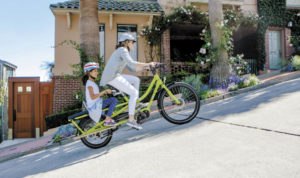
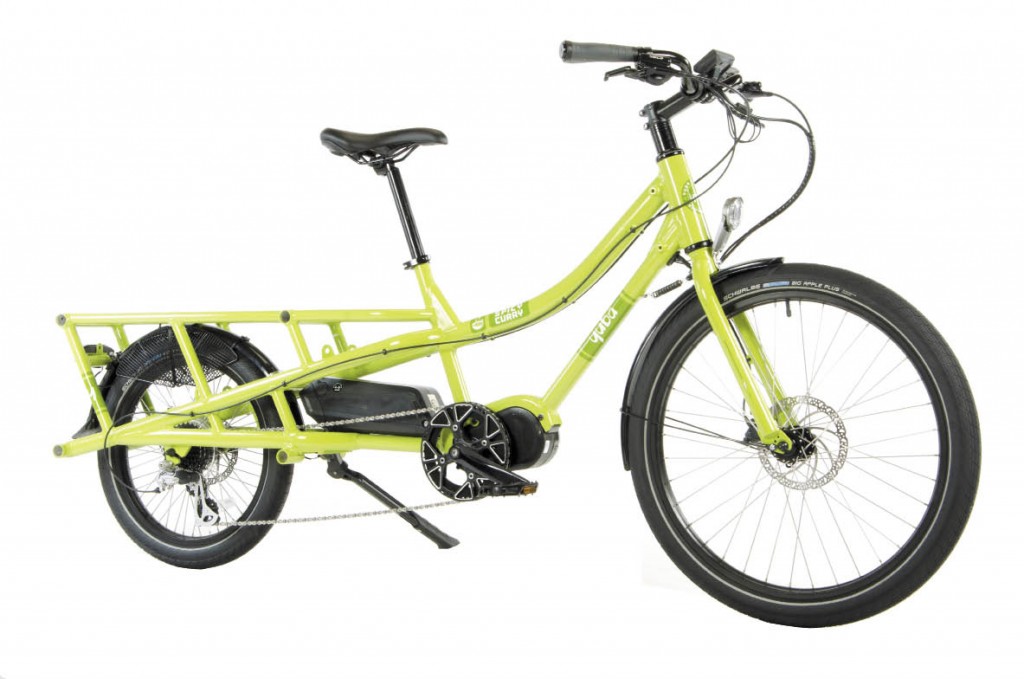
The Spicy Curry model from Petaluma’s Yuba Bicycles is such a machine, capable of carrying loads at speeds up to 20 mph. A press on the pedals allows riders to get ahead of traffic; tap the hydraulic disc brakes to decelerate quickly. Sturdy and stable, Spicy Curry is ideal for commuting to work, running errands and taking on family outings.
The Spicy Curry
The bike, which won a gold medal at the 2015 Eurobike Show in Germany, will set Santa back $4,500, although Yuba Bikes offers other electric-assisted cargo bikes from $2,600 to $3,500, and cargo-carrying models without motors.
Yuba Bikes founder Benjamin Sarrazin joined with Currie Technologies in Simi Valley to design the Spicy Curry, which has a battery life of approximately three hours, or 25 to 45 miles, depending on the power demand. It comes in just one color, eye-catching avocado, according to company specs, but the similarity to spicy green curry sauce cannot be ignored.
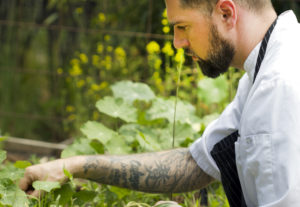
Applewood Inn and Restaurant yellowtail crudo with radish blossoms by Chef Jamil Peden. Photo: Heather Irwin
Chef Jamil Peden tells BiteClub that Applewood Inn Restaurant in Guerneville will close Nov. 21, 2015 just eight months into his impressive kitchen takeover. Despite high critical praise for his haute California cuisine inspired by the restaurant garden, the West County Inn’s owner has decided to close the restaurant.
“We brought to restaurant to a great point over the last few months on our own, and without any marketing. I really love what I did there, ” he said.Peden had high hopes when he took over the kitchen in April 2015, and was lauded by foodies for his attempts to recapture some of the restaurant’s former glory.However, the task may have been too Herculean after several years of chef shuffles and sagging reviews that drove most of its former fans elsewhere.
“I was really surprised, but it is a decision that had to be made,” he added.
The once-stellar Michelin-starred restaurant had been an incubator for a number of outstanding young chefs including SF Chef Brian Gerritsen, David Frakes (Lynmar), Brian Anderson (Bistro 29) and Bruce Frieseke (Bella Vineyards). Frieseke captured a Michelin star for the restaurant in 2011 and 2012, but lost it soon after his departure.
The good news is that Peden plans to begin work on his own restaurant concept, which he’s calling Medjool, immediately, and is looking for backing. Meanwhile, he plans to keep busy doing pop-ups and other gigs around the county while working to “fulfill my dream.”
The Inn remains open, and a new restaurant concept is slated for May.
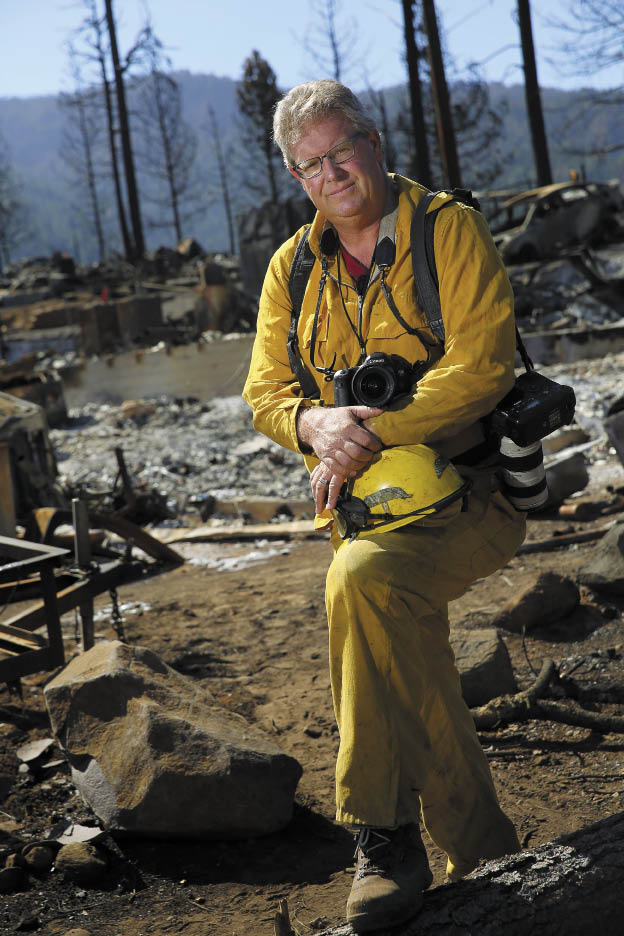
Profile on Press Democrat Photographer Kent Porter
Kent Porter in his personal fire suit. (Photo by Christopher Chung)
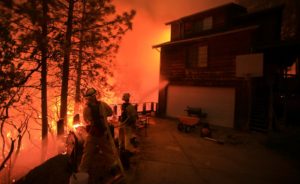
When the New York Times used the word “heroic” to describe The Press Democrat’s coverage of the Valley fire in Lake County, it was talking in large part about photographer Kent Porter.
The Santa Rosa newspaper’s master of disaster photography for 28 years, Porter has covered floods, mudslides, earthquakes and too many fires to count. This time, he was the first photographer on the scene in September, as a fire on Cobb Mountain began tearing across the drought-parched mountain and Middletown, overwhelming firefighters and sending thousands fleeing from their homes.
A few hours before, Porter, a 6-foot-5 giant of a man, had been relaxing at home in Windsor. When several air-tankers flew overhead, he checked his Twitter feed and scanners before racing northeast to the familiar rugged terrain of Lake County, where he grew up.
Porter would spend the next month documenting the flames’ unforgiving path of destruction, as well as the barren aftermath as thousands of residents returned home to only ashes. His photos ran worldwide, including the cover of the Times and dozens of TV programs and websites, as the fire scorched more than 175,000 acres and destroyed 1,050-plus structures.
Age: 53
BEEN THERE: 1987 Saragosa tornado in Texas, 1989 Loma Prieta earthquake in the Bay Area, 1991 Oakland Hills fire, 1994 Northridge earthquake, 1998 Rio Nido mudslide.
FIRST FIRE PHOTO: Age 8, armed with a Kodak Hawkeye 126 Instamatic, “I remember standing with my father, taking photos of the Aurora Marina in Nice (in Lake County) as it burned to the ground.”
CLOSEST CALL DURING VALLEY FIRE: Driving out of Middletown on Highway 175, “There were flames on both sides, the wind is blowing across the road, big sticks are coming at me on fire, trees are dropping everywhere, there are boulders on the road… . It was probably the most scared I’ve been.”
THE MUSIC OF FIRE: “Some people say it’s like a freight train, but I don’t get that. It’s like standing next to a giant waterfall. And sometimes when it goes through trees and brush, it sounds like sizzling bacon hitting a really hot grill.”
MENTOR: John LeBaron, the late Press Democrat photo chief and Santa Rosa Junior College instructor.
HIS WIFE’S TAKE: “She tells people, ‘I’m a fire widow,’ meaning she doesn’t see me much this time of year.”
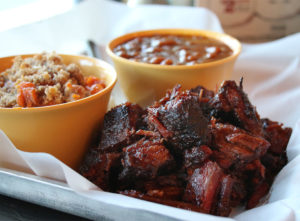
Burnt Ends at Sauced Barbecue Smokehouse in Petaluma, California. Heather Irwin.
Barbecue Brisket from Rossi’s 1906 in Sonoma, California. The new menu features Cal-Tex bbq from chef Ari Weisswasser. Photo Heather Irwin
The new Sonoma aroma might just be wood-smoke and brisket.
Throughout Sonoma County, barbecue restaurants are popping up like gophers on a golf course. Turn around and another chef is touting his burnt ends and secret sauce. It’s become something of an obsession in a county where grilling has traditionally meant ahi burgers and tri-tip.
Part of the reason: Live-fire cooking is a hot trend, along with American comfort food and, maybe most of all, it’s the opposite of tweezer-perfect haute cuisine that has ruled Wine Country for years.
Ribs from Terry’s Southern Style Fish and BBQ in Rohnert Park. Heather Irwin for the Press Democrat.
“Barbecue comes from a humble place,” said Brad Barmore, co-owner of KINSmoke, which recently opened in Healdsburg. “You can live high on the hog at lots of places around here, but what about the humble cuts? That’s what barbecue is about.”
But are they getting it right?
That’s the question we asked when sampling a handful of newcomers, along with some of the tried-and-true standbys. The results were mixed, because true ’cue is both art and science, and notoriously difficult to do in a restaurant environment with fixed costs, the need for accurate timing and space constraints for large smokers (not to mention expensive equipment to deal with air pollutions from the smoke). Barbecue waits for no man on a warming table, and spending 16-plus hours on a single brisket isn’t the height of efficiency in a restaurant environment.
So, with sauce on our faces and ribs stuck in our teeth, we’ve picked the best of the bunch and one stand-out fave for Sonoma County BBQ.
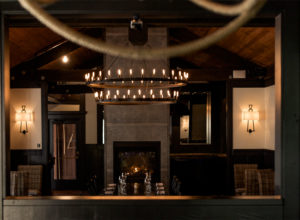
Interior of KINSmoke BBQ in Healdsburg, California. Photo: Heather Irwin
With a “non-denominational” approach to regional barbecue, Barmore’s new restaurant features everything from St. Louis style pork ribs and Texas links to Alabama white sauce, Carolina mustard sauce and Texas brisket. But what makes his restaurant (co-owned with business partner JC Adams) unique? It’s all good, including the sides, probably the best in the county with lines out the door.
Barmore ate his way through Texas barbecue spots before opening KinSmoke, stopping at Franklin BBQ in Austin, the mecca of barbecue-dom. His wife’s family owned a barbecue restaurant for generations in Oklahoma, which is where he got the recipe for his secret sweet sauce. The potato salad is a Pennsylvania-Dutch recipe from a server at Barmore and Adams’ Windsor bistro, KIN.
“I’ve wanted to do this forever,” said Barmore, sitting at a thick wooden table topped with a roll of brown paper towels and a six-pack container of the restaurant’s five signature sauces. The sauces represent the United States of barbecue, from Alabama’s mayo-based white to South Carolina mustard, North Carolina vinegar, KC sweet and a California-inspired espresso barbecue sauce. Texans, of course, would rather eat their 10-gallon hats than slather sauce on a good piece of beef.
What sealed the deal: When ordering brisket at the walk-up counter, there’s a choice of lean or fatty. Too often local brisket is far too lean, missing the unctuous reason for eating it in the first place. That and the ribs are never boiled (a restaurant trick to cook the meat faster), but smoked for hours and hours and hours.
Brussels sprouts at Rossis 1906 in Sonoma, California
“Barbecue can’t be based solely on time,” said Barmore. It’s done when it’s done.
A few hints, if you go: One of the best things about KINSmoke is also the worst. Owners aren’t afraid to run out of the daily allotment of barbecue. Rather than over-preparing and leaving the meat to dry out all day, you’ll have to make another choice when brisket runs out . So go early, and be willing to make a compromise.
Grilled items include a coffee-rubbed porterhouse ($30) or coffee-rubbed KIN Burger ($11). Go light on the sides (most are $3-$9), and get a single serving to try as many as possible: mayo-y potato salad, Granny Smith apple horseradish slaw, macaroni salad, baked mac and pale ale hush puppies with cajun remoulade, sauteed sprouts, spiced sweet potato tater tots and stellar sweet cornbread ($1.25 each). They’re all excellent.
Barbecue Brisket from Rossi’s 1906 in Sonoma, California. The new menu features Cal-Tex bbq from chef Ari Weisswasser. Photo Heather Irwin
Tables are mostly community-style, but (here’s a worst kept secret), you can also eat at the bar. No desserts, but a stellar beer and wine list that runs a full page, from PBR to MacPhail pinot noir and Seghesio zinfandel. 304 Center St., Healdsburg, 473-8440, kinsmoke.com, open daily for lunch and dinner.
Burnt Ends at Sauced Barbecue Smokehouse in Petaluma, California. Heather Irwin.
Sauced
Burnt ends are the unicorns of West Coast barbecue. They’re nearly impossible to find, but if you ever do, hold on for dear life (and don’t tell anyone else). They’re a small cut from the point of a smoked brisket and are cooked within an inch of their life to render out the fat and collagen. Tender, crispy, wonderful. Most local spots don’t make enough brisket or use a slightly different cut (or tri-tip), making them so rare. Sauced has burnt ends so tender you don’t need teeth. Not to mention you can also get them in a sandwich (in limited quantities, $14.99) We’re also in love the loaded sweet potato with pulled pork, bacon, sour cream, chives and pretty much the kitchen sink of other goodies ($17.99-$19.99) and hush puppies with peach chutney, honey butter and bacon ($9.99). Plus beer, wine and plenty of whiskey for washing it all down. 151 Petaluma Blvd. South, Petaluma, 410-4400, saucedbbqandsprits.com.
You might also like…
BBQ Smokehouse: Excellent southern barbecue from a well-studied master. Great roadhouse location, 6811 Laguna Park Way, Sebastopol, 829-3277.
Pack Jack: This old-school barbecue restaurant was resurrected from the ashes several years ago and remains a favorite. 3963 Gravenstein Highway South, Sebastopol, 827-3665.
John Franchetti and Kevin Cronin of Rosso Pizzerias will go in different directions.
Big news in the restaurant scene as business partners Kevin Cronin and John Franchetti of the Rosso restaurants in Santa Rosa and Petaluma announce that they’re going in different directions. The duo have been behind the successful wood-fired Cal-Ital pizzerias since 2009.
The Rosso brand (Santa Rosa’s Rosso Pizzeria + Wine Bar and Petaluma’s Rosso Pizzeria + Mozzarella Bar) will continue under Cronin’s leadership, with the same wood-fired pizzas, burrata and all the other farm-to-fork Rosso dishes we’ve come to know and love. Cronin says he’s also planning some updates to the Santa Rosa space, and has a new project up his sleeve. Rosso’s notable wine list, classes and, of course, football (aka soccer) are here to stay, he said.
Chef Franchetti, who’s been focused on the company’s expanding restaurant, event and catering business (Rosso Eventi + Rosticerria) on Dutton Ave. will rebrand the space as Franchetti’s Wood Fire Kitchen, Catering and Events. Franchetti and his wife, Gesine, recently started dinner service at the restaurant, adding to their breakfast and lunch walk-up menu. The rotisserie is gone, making room for an expanded menu of pizzas, sandwiches, small plates and entrees including Harvest Fair Winner, Chetti’s (pronounced kety’s) spicy chicken and salsa verde, slow roasted pork shoulder with fingerling potatoes, veal and pork meatballs, and the chetti hash with every kind of veggie goodness, mozzarella, baked eggs and bacon. And yes, there will be dessert, with Dominique Sweets’ pastries.
Chef John and Gesine Franchetti will open Franchetti’s Wood-Fired Oven, Events and Catering.
Franchetti, says he’s excited about the new menu and plans and even more expanded selection after the holidays, as well as this new chapter of his life, working closely with Gesine.
Cronin, for his part, says the timing was right for the business to evolve, as both the catering and brick-and-mortar businesses have found their audiences. “It’s just a perfect time or both of us” Cronin says.
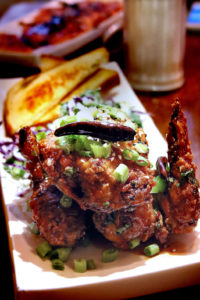
KFC (Korean Fried Crack) at Dick Blomster’s Korean Diner, a pop-up restaurant in Santa Rosa, at Don Taylor’s Omelette Express. Photo: Heather Irwin/The Press Democrat.
BiteClub was the first customer at the opening night of Dick Blomsters Korean Diner, a pop-up restaurant Wednesday through Sunday nights in Santa Rosa’s Railroad Square. Ok, maybe it’s because I was there an hour early. But even so…this is seriously fun stuff.
If you’ve been to the original diner in Guerneville, you know the fun vibe that owner David Blomster created when he took over Pat’s Diner — you know pop rocks and fried PB&Js, Seoul fries, “knockoff” filet mignon and Kobe beef hot dogs with a slew of Korean-style sides. Noms.
This isn’t your regular brick and mortar, but a stealth diner you’ve gotta look for. The sign for the Korean Diner goes up at 5p.m. at Don Taylor’s Omelette Express (112 Fourth St., Santa Rosa) after the pancakes and burgers are put away for the day. The close, well, when they close (between 10 and 11pm, mostly).
We’re in love with the funky smell of kimchee and the awesomeness that emanates from this traveling mis en place filled with pickled beets, exotic sauces and Asian-fusion goodness. The rice cooker clicks on at 4:30 p.m., and dishes like the signature KFC (Korean Fried Crack) chicken are travel-worthy.
Wed-Sunday at Omelette Express in Railroad Square (112 Fourth St., Santa Rosa).
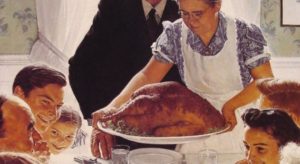
This time of year I get a lot of questions about what to eat at Thanksgiving in Sonoma County. IF you’re not eating at home. Which I highly recommend.
See, several years ago, my family decided we were done with cooking Thanksgiving dinner.
The gals spent days shopping, cooking and toiling away, ending up exhausted and definitely NOT in the holiday mood by supper time on the day of thanks. It’s a personal choice, but one that’s resulted in a lot more family harmony and time spent truly together (and more energy for Black Friday) rather than a bunch of pooped out, grumpy kitchen staff.
We still bake a few pies and make some traditional additions to the meal, but we all agree it was one of the best decisions we ever made.
So, in that spirit, here are some great local picks for Thanksgiving in Sonoma County, should you decide to let someone else do the cooking. From restaurants to entire meals ready for pick-up, it might just be your family’s kitchen staff (usually mom) who’s doing getting some thanks (and a well-needed break) this Thanksgiving.
Keep in mind that most require reservations, so don’t delay.
This Petaluma barbecue spot that’s been getting some good buzz has a terrific way to Southern-up your holiday feast: A smoked turkey Thanksgiving. Feed up to 8 with a 14-16 pound smoked turkey, cornbread, mac and cheese, squash casserole, sweet potato casserole, pumpkin banana pudding and chipotle cranberry sauce. Brilliant. Order online. Sauced Petaluma, 151 Petaluma Blvd. South, #129, Petaluma.
Restaurants
Willie Bird’s Restaurant: Family-favorite serving up local Willie Birds. Full holiday turkey dinner along with other menu items. Reservations required and most are nailed down well in advance, but some walk-ins accepted. Open until 8pm. 1150 Santa Rosa Ave., Santa Rosa, (707) 542-0861. Can’t get in for Thanksgiving: Grab a turkey Monte Cristo on Black Friday.
John Ash and Co.: Three-course holiday menu includes acorn squash soup, brown butter pumpkin gnocchi, roasted turkey, grilled filet of dry aged angus beef, harvest pumpkin tart and caramel apple bread pudding. $65 per adult, $35 kids under 12. Call for reservations. 350 Barnes Rd., Santa Rosa, (707) 527-7687.
Dry Creek Kitchen: Three course menu includes mushroom risotto, butternut squash soup, classic BN ranch turkey, truffle quinoa and apple millefeuille. $65 per person, $25 for children under 12. Served 2-7pm; 317 Healdsburg Ave., Healdsburg, (866) 458-7224
Cocina Latina: Thanksgiving Yucateca-style. Mateo Granados’ restaurant serves up a three course meal including Pear salad, Relleno Blanco de Pavo (Diestel Family Farm turkey with hard boiled egg centered embutido), “Cochinita Pibil” (Roasted Ritual Farm Suckling Pig) and sticky bun flan. $60 per person, $20 children under 12. Serving 3 p.m. to 7:30 p.m. Reservations recommended, (707) 433-1520 or on Opentable.
Spoonbar: A casual four courses include scallion bisquits, slow roasted turkey, bread pudding, roasted scallop with brussel sprouts and passion fruit consommé. $60 for adults and $25 for children. 219 Healdsburg Ave., Healdsburg, (707) 922-5426.
Carneros Bistro and Bar at Lodge at Sonoma: Chef Andrew Wilson prepares a three-course menu of Cauliflower, Pear and Fennel Soup, Turkey a la Brasa, Cider-Glazed Slow Roasted Pork Loin, Red Skinned Truffle Mash Potatoes, pumpkin and pecan pie. Thanksgiving dinner will be served on Thursday, November 22 for $65 per person and $25 for children. 1325 Broadway St., Sonoma,(707) 935-6600.
girl and the fig: Four course menu including fig and arugula salad, roasted squash salad, pan-seared turkey breast with confit stuffing, black pepper pasta, sautéed flounder and profiteroles. $57 per person. 110 West Spain St., Sonoma, (707) 938-3634.
Depot Hotel: Four courses at a favorite Sonoma bistro features corn chowder, roast turkey with sage stuffing. Other entrees: poached salmon, orecchiette pasta with butternut squash, veal picatta or beef shortribs. Cheesecake, pumpkin pie or chocolate decadence with mango sauce. $37 $45pp, seatings from noon to 7pm; 241 First St., West, Sonoma, (707) 938-2980.
La Gare: This year La Gare will be open on Thanksgiving from 3 – 8 p.m. Prix fixe menu includes choice of four entrees: traditional oven-roasted turkey feast, Angus Prime Rib, Wild Alaskan Salmon or Eggplant Parmesan with Butternut Squash, Ravioli with brown butter and, crispy sage (vegetarian). $35-$45pp, includes soup, salad, dessert. Call 707-528-4355 for reservations. 208 Wilson St., Santa Rosa.
Farmhouse Inn: Three course meal with wine pairing, $179 +20%+tax. 7871 River Rd., Forestville.
Pullman Kitchen: Menu includes: Maple Brined Turkey, Sourdough Stuffing, Garlic Mashed Potatoes, Roasted Fennel, & more. $30/person. Seating at 2, 4 & 6pm. 205 Fifth St., Santa Rosa.
Sante: An epic Thanksgiving buffet that puts all other buffets to shame. The highlight reel: Butternut squash with creme fraiche, shrimp cocktail, assorted charcuteries, artisan cheeses served by the Maitre Fromager, smoked salmon and caviar, classic Caesar, ricotta tortellini salad. Carving stations of Diestel turkey with brioche and sage stuffing, filet mignon, but wait there’s more…pumpkin ravioli, sea bass, lamb, mashed potatoes, Brussels sprouts, artisan breads, pumpkin pie, chocolate Bourbon tart, pumpkin cheesecake, cherry macaroons, pear and ginger financier, gingerbread and so much more. $99pp, (707) 939-2415.
Inn at the Tides: Bay View Restaurant features a feast of roasted turkey, pumpkin ravioli, Grilled Tenderloin of Beef, Stuffed Sole, Plymouth Clam Pie and more from 1 to 8p.m., 800 Highway One, Bodega Bay, (707) 875-2669.
Petaluma Central Market: Always a favorite in Petaluma, Chef Ton Najiola celebrates his annual Thanksgiving dinner with four luscious courses. $60pp, $84 with wine. Kids under 12, $20. 42 Petaluma Blvd N., Petaluma, (707) 778-9900.
She totally bought that at Oliver’s Markets.
Pick It Up
Thanksgiving by Whole Foods: Recently I saw a chef literally cringe when he heard the words .99 cents per pound and turkey. People, even though you’re only eating it once a year, have enough respect for your taste buds (if not the turkey) to commit to something that’s humanely-raised, organic (if possible) and for heaven’s sake tastes good. I’m a huge fan of Diestel turkeys, raised in Sonora. They taste delicious, especially when someone else roasts them to perfection and your only job is to reheat it on Thanksgiving morning. Along with pre-cooked (and non-precooked) turkey, they have gravy (sans lumps), sides, pies, and other desserts in a mix-and-match combination you can order online. Details at the Whole Foods website.
OLIVER’S: At Oliver’s market, you can order the whole Thanksgiving dinner for $109.99. It includes Medium Diestel Turkey (10-12 lbs), Traditional Stuffing, Mashed Potatoes with Chives, Vegetable Medley, Cranberry Sauce, Turkey Gravy, Pull-a-Part Rolls to feed 6-8 people. Store open 7a.m. to 4p.m.
G+G Market: Complete dinners will run you between $79.99 (for a 12 lb turkey) to $129.99 for a gourmet dinner that includes brandy-marinated cranberry sauce, a free range Willie Bird turkey and white truffle mashed potatoes. Santa Rosa 546-6877 , Petaluma 765-1198.
Get your local geese and turkeys (details at farmtrails.org)
Green Goose Farm- Petaluma
Olufs Ranches- Windsor
Open Field Farm- Petaluma
Tara Firma Farms/Victorian Farmstead Meat Co.- Sebastopol
It’s that time of year again: The Holiday Cookie Recipe Contest!
And that means that BiteClub is seeking out the BEST cookie recipes in Sonoma County.
The rules are simple. Submit an original recipe (meaning, don’t steal it out of a cookbook) for what you think is the best holiday cookie recipe ever. And by holiday cookie recipe, we mean pretty much any cookie recipe.
I also want to hear about why the cookie is special to you or your family. This part matters, because a great family recipe is worth its weight in gold, and comes with a whole lot of happy memories. (See the results from previous years here).
PRIZE FOR 2015: $100 Oliver’s Markets Gift Certificate
HOW TO ENTER (CHOOSE ONE)
1. You can leave your recipe in the comments below…
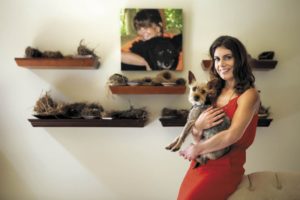
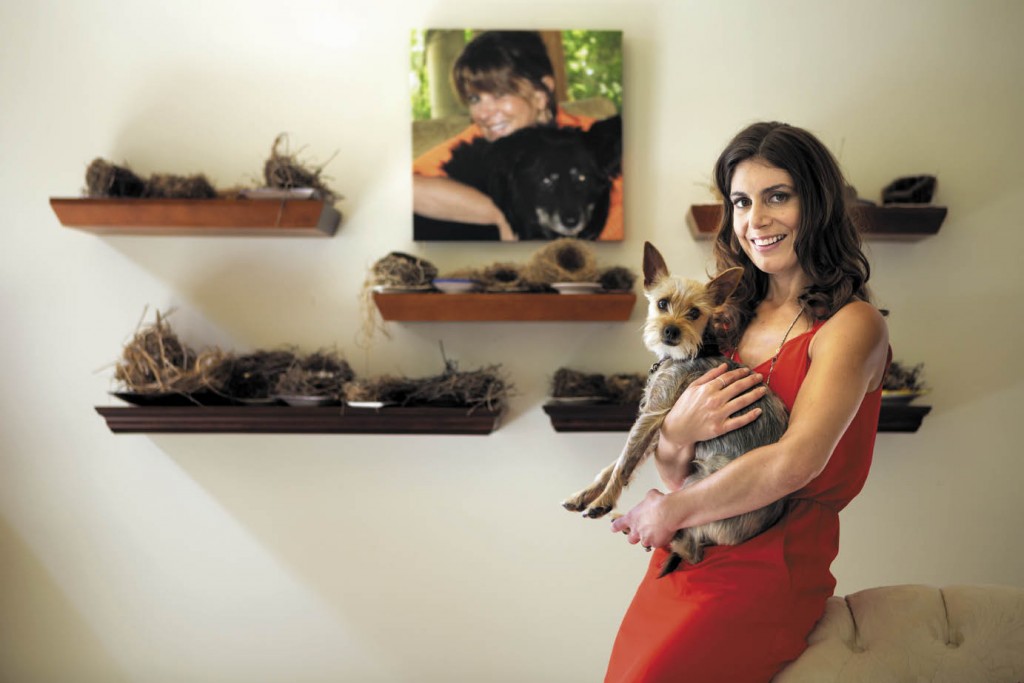
Daniela Tempesta holds Vico, a rescue dog that belonged to her mother. The photo on the wall behind them is of Bonnie Lynn, a devoted animal lover, with one of her favorite rescue pooches. Boncora Biscotti still donates part of the proceeds from cookie sales to Pets Lifeline in Sonoma.
It seems like the stuff of sweet dreams: almond biscotti, hand-dipped in a custom blend of Guittard milk and semisweet chocolate. Yet for Daniela Tempesta, the classic Italian cookie posed a challenge, prompting what would almost overnight become a life-changing decision.
The only child of biscotti pioneer Bonnie Lynn Tempesta keeps her mother’s dream alive. (Photos by Chris Hardy)
Just over a year ago, Tempesta lost her mother, Boncora Biscotti founder Bonnie Lynn Tempesta, who died suddenly from breast cancer. At the time, Daniela Tempesta was pursuing her dream of being a licensed psychotherapist. Suddenly, she was faced with a critical decision: follow her beloved career, or take over her mom’s thriving Sonoma business that at one time was the largest biscotti maker in America.
“My mom started the (original) company when I was 3, so I grew up in a cookie factory,” said Tempesta, 34. “But when people would ask if I wanted to go into the business, I always said, ‘Not a chance.’ It just wasn’t my gig.”
Bonnie Lynn’s cancer came out of nowhere for the family, discovered while Tempesta was on her honeymoon with her husband, Jeff Wycoff, in 2014. With her marriage had come a full house of four stepchildren, and she was also juggling a quickly growing private mental health practice. Her mother died just two months later, at 61.
“My whole world turned upside down,” Tempesta said. “I had no formal training in the food industry. But what could I do? Close it down?”
After taking a few months to consider her situation, she did what made cookie lovers across the nation cheer: She decided to not only maintain the business, but grow it. It was a blessed choice, it seems, as in the first six months of 2015, Tempesta more than doubled the number of retail accounts selling her biscotti, including gourmet groceries, cafes and coffeehouses. She estimates her Kenwood bakery produces about 9,000 cookies a month in slower times, surging up to 25,000 biscotti a month in the busy season of September through December.
The daughter of Italian cookie pioneer preserves her mom’s dream.
“My heart kept pulling me back to biscotti,” she said. “Now, I think I am coping with my grief by keeping her legacy alive.”
When Bonnie Lynn started her company in her home kitchen in San Mateo in 1983, it was a labor of love with her own mother, Italian-born Aurora Marcheschi. Originally called La Tempesta Bakery Confections, the shop used a treasured family recipe, courtesy of Bonnie Lynn’s Florentine aunt, Isa Romoli. The first customer was a fancy chocolate shop in San Francisco, where Bonnie Lynn worked making coffee.
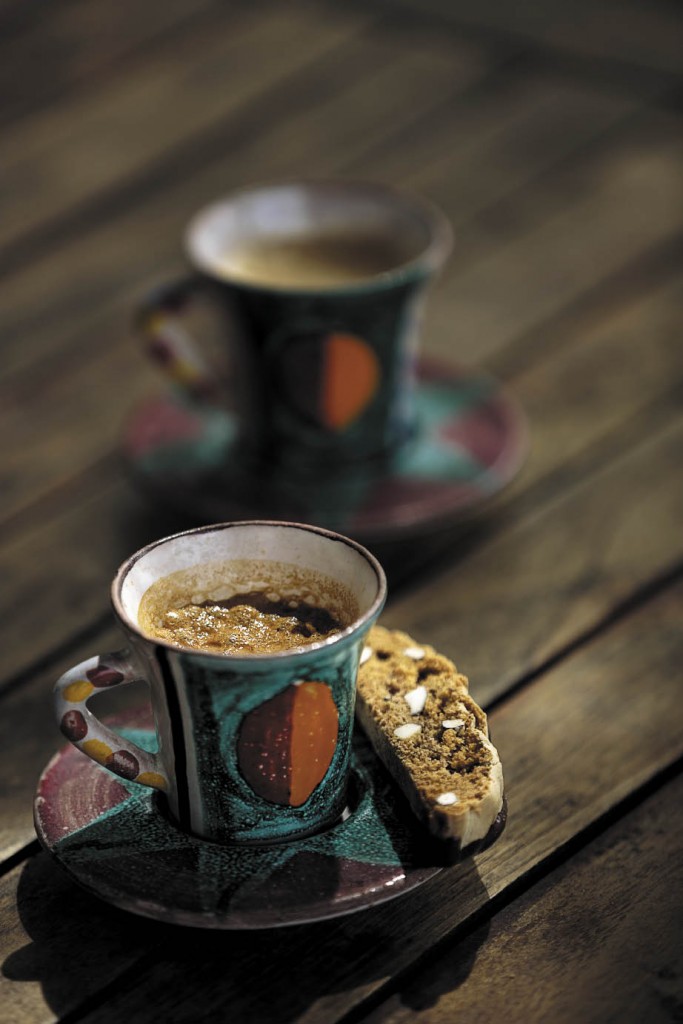
Nobody was producing local biscotti for sale at the time, but she had little idea of what passion the treats would ignite, introducing legions of fans to the flat, crunchy, twice-baked cookies that Italians love to dunk in vin santo wine or espresso.
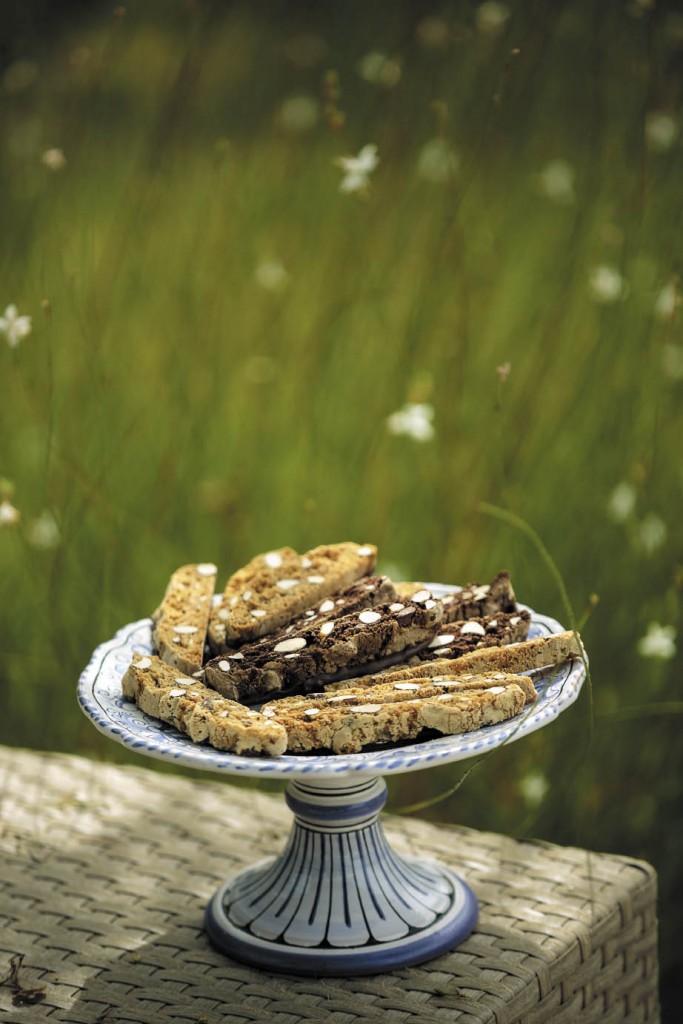
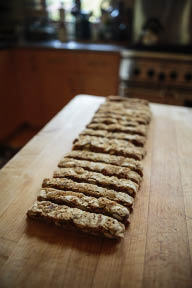
Tempesta’s handmade, hand-cut cookies are different from most biscotti Americans have tasted. Rather than thick, heavy, sometimes tasteless mass-produced slabs, these biscotti are ethereally crisp and light in the biscotti di Prato style of Prato, Italy. Flavor sings in each bite, the cookies studded with crunchy Northern California almonds and optionally dipped in chocolate, or a new Boncora triple-chocolate creation. The secret was, and remains, the second bake. For the first oven go-round, the dough is rolled into logs and baked until firm. The logs are sliced on a slight diagonal and rebaked at a bit lower temperature to dry them out for an excellent, delicate crunch.
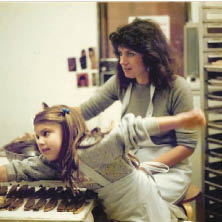
In 1984, Daniela Tempesta proved an enthusiastic helper to her mom, Bonnie Lynn, in the kitchen at La Tempesta biscotti bakery.
And because the biscotti di Prato, unlike most other cookies, don’t contain butter or shortening, they stay fresh longer and can be savored slowly. They’re versatile as well, delicious when coarsely ground and sprinkled on top of custard, ice cream, tiramisu and whipped cream, or used as a cheesecake crust.
La Tempesta expanded from San Mateo to a commercial kitchen in South San Francisco. At the company’s height in 1995, the bakery produced 300,000 cookies daily and was credited by the media for effectively starting the national biscotti craze. Then, in 1997, Bonnie Lynn, the “biscotti queen,” retired her crown, selling La Tempesta to Horizon Food Group of San Francisco. Not bad for an undertaking she started on a whim, as a single mother looking for ways to make ends meet.
Yet the baker still had biscotti in her blood, and in 2012, Bonnie Lynn started a small baking company in Kenwood, Boncora (Bon for Bonnie and cora from ancora, which means encore or more in Italian).
She kept her ingredients simple and natural, using white flour, almonds, sugar, vanilla and the optional chocolate. But at this new shop, Bonnie Lynn added spelt flour for a nutty flavor, making the cookies a bit more rustic and less sweet. She never stinted on the toasted almonds, with 21 pounds of nuts in each 40-pound batch of biscotti dough.
“My mom started the company when I was 3, so I grew up in a cookie factory”
“It was more of a hobby,” Tempesta said of her mother’s new business. “We didn’t know about the cancer, but she would have obviously been sick then, and was very tired all the time.”
Since taking over, Tempesta is now owner, package designer for the 100 percent recyclable sacks, salesperson, human resource director and in charge of anything else that needs to be done. She has changed nothing about the tiny production bakery located at Kenwood Village. She commutes between her San Francisco home and the bakery, often staying over at her mother’s former house in Sonoma. The recipes — and the staff of three bakers — remain the same.
“It’s kind of ironic, but all the employees are moms, too,” said Tempesta, who does not offer retail sales at the bakery. “I think they like the flexibility of working here, and the support. If someone needs time to take care of a child, or go to a kid’s game, it’s fine. That’s how my mom always was, and it’s important.”
In another curious twist of fate, taking over Boncora has enhanced Tempesta’s still-strong love of psychotherapy. Her emphasis had been in counseling millennials on how to find and embrace their life purpose and work focus, and this year she revived her practice to one day a week, finding deeper perspective from her own recent experience.
“For me, everything I knew changed on a dime,” she said. “Thinking of this allows me to better help others, while giving a voice to my mom’s story.”
It’s a story that’s hers now, too, to explore and nurture.
“I eat, drink, breathe and dream biscotti,” Tempesta said. “And I love it. I guess you just never know where life will take you.”
To purchase online and see a list of retail shops that carry Boncora biscotti, visit boncorabiscotti.com
Daniela Tempesta holds Vico, a rescue dog that belonged to her mother. The photo on the wall behind them is of Bonnie Lynn, a devoted animal lover, with one of her favorite rescue pooches. Boncora Biscotti still donates part of the proceeds from cookie sales to Pets Lifeline in Sonoma.