








When Jennifer Becker bought a run-down 5 ½-acre property in rural Sebastopol seven years ago, she envisioned creating a co-housing compound with room for friends and family to live cooperatively.
There was an existing cabin on the site, a tiny one-bedroom built in 1946. Her first inclination was to rebuild it as an accessory dwelling and build a larger new house elsewhere on the property, which offered numerous possibilities for additional structures.
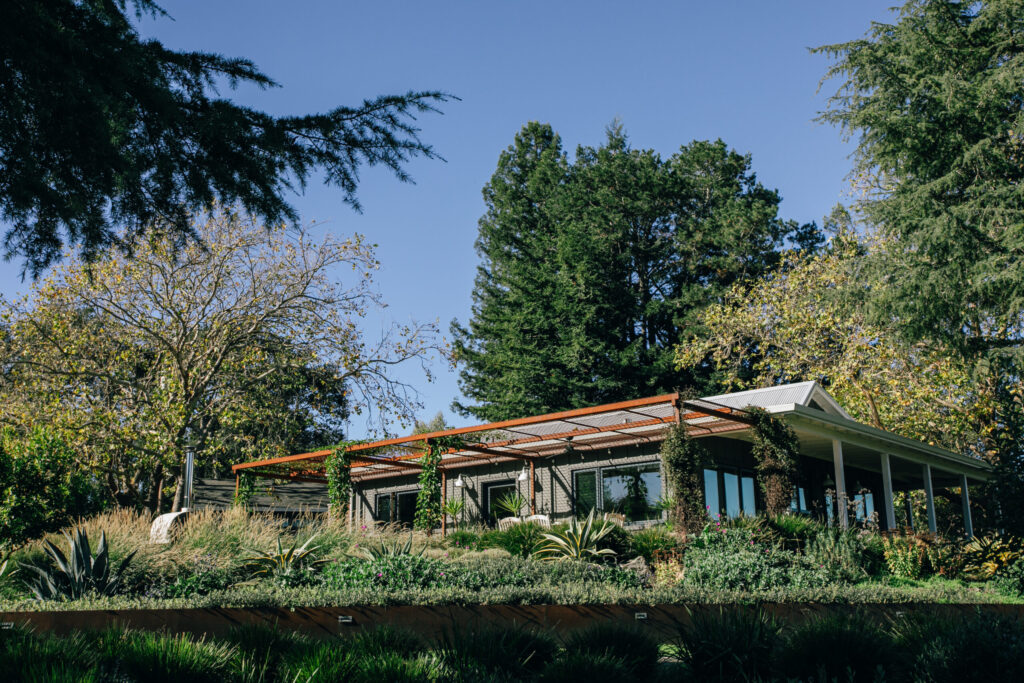
But as she started collaborating with architect Lars Langberg, who had been recommended by several acquaintances, another idea emerged: Create a new home on the footprint of the old cabin that incorporated carefully thought-out design to make it feel more spacious without more square footage.
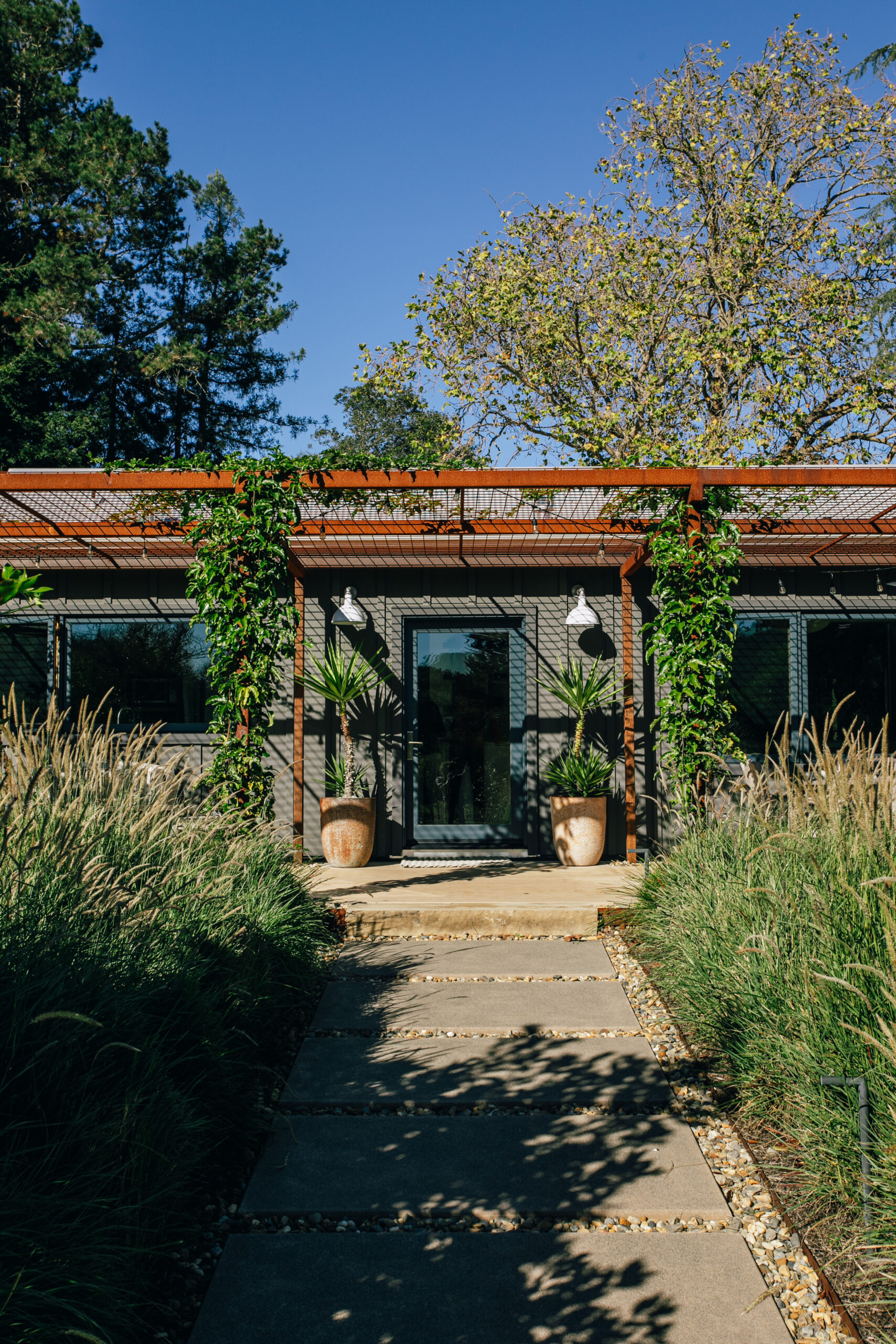
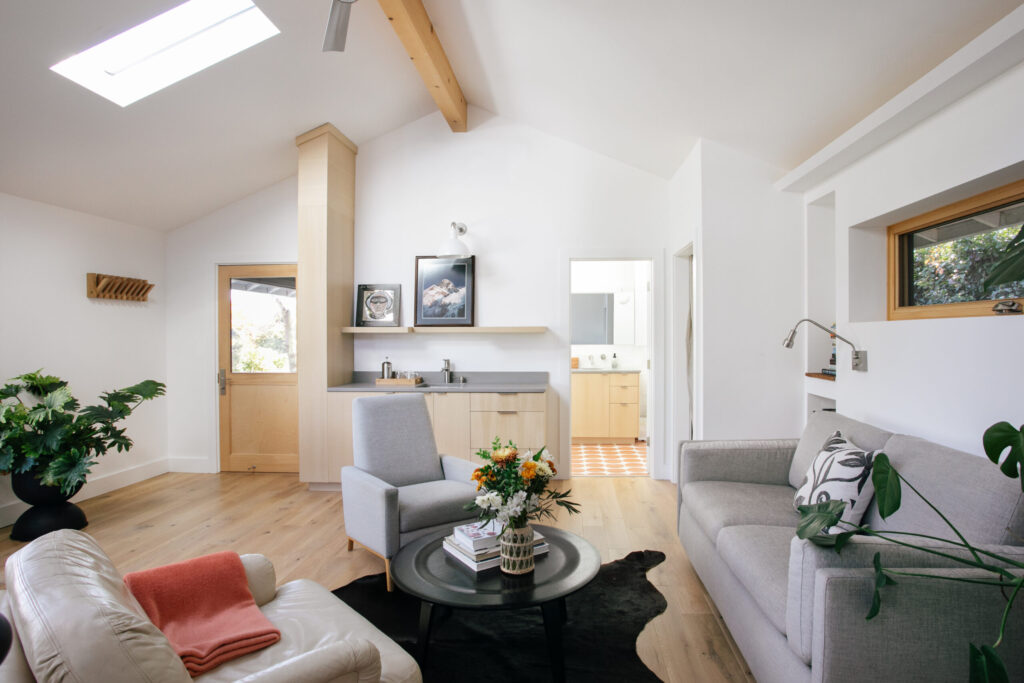
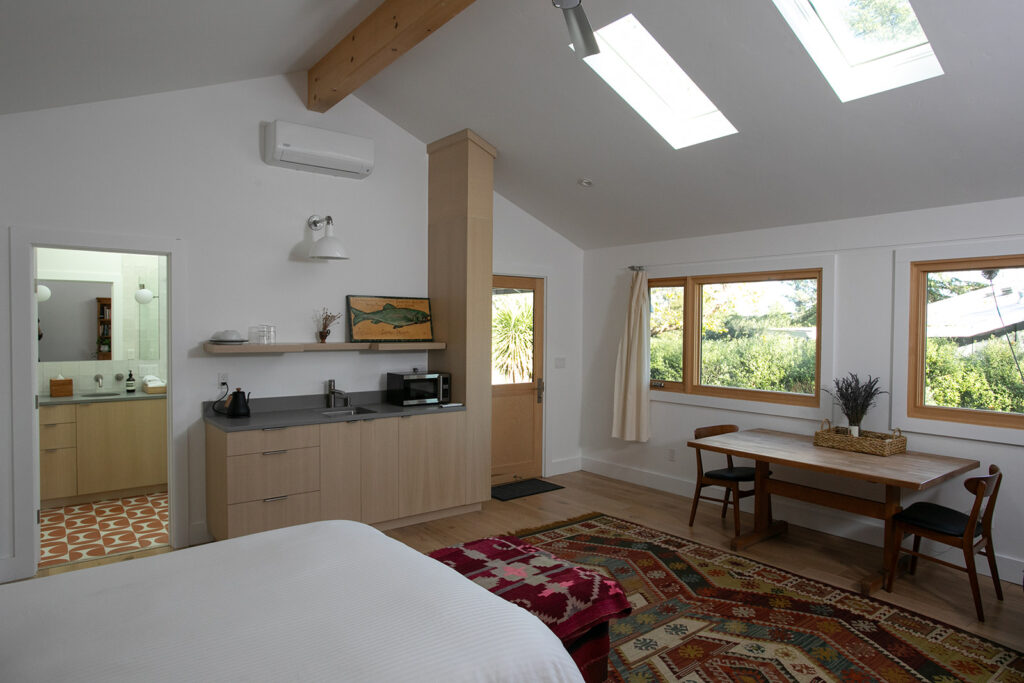
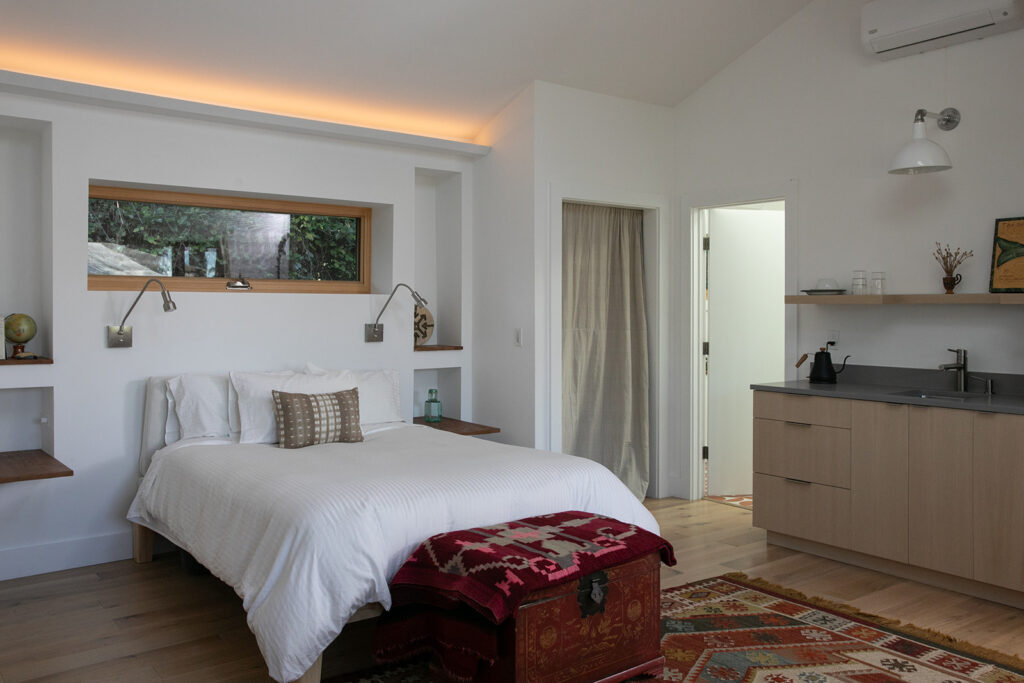
Over time, the collaborators became a couple, and now they are living out their happily-ever-after together in a compact yet comfortable home with living spaces that stretch to the outdoors. They’ve also created two separate studios from a ramshackle duplex a short walk from the main house for their three adult children to stay for both shorter and longer stints.
The modest home that Becker set out to build after losing a big five-bedroom house in the 2017 Tubbs Fire proved to be a literal labor of love for these empty nesters.
“There was a romance that developed as part of the project,” Becker says with a twinkle in her eyes. As their affections heated up, things came to a head.
Langberg recalls sitting at a table in the old house, offering his client different options, when she cut to the chase. “Well, are you ever going to live here?”
The project became a shared vision for a downsized life in a 1,200-square-foot, one-bedroom cottage that offers everything they need for the good life. By cleverly and efficiently reusing what already was there, they created something fresh and functional. Much of the valuable redwood from the old house and barn was reworked into the new construction.
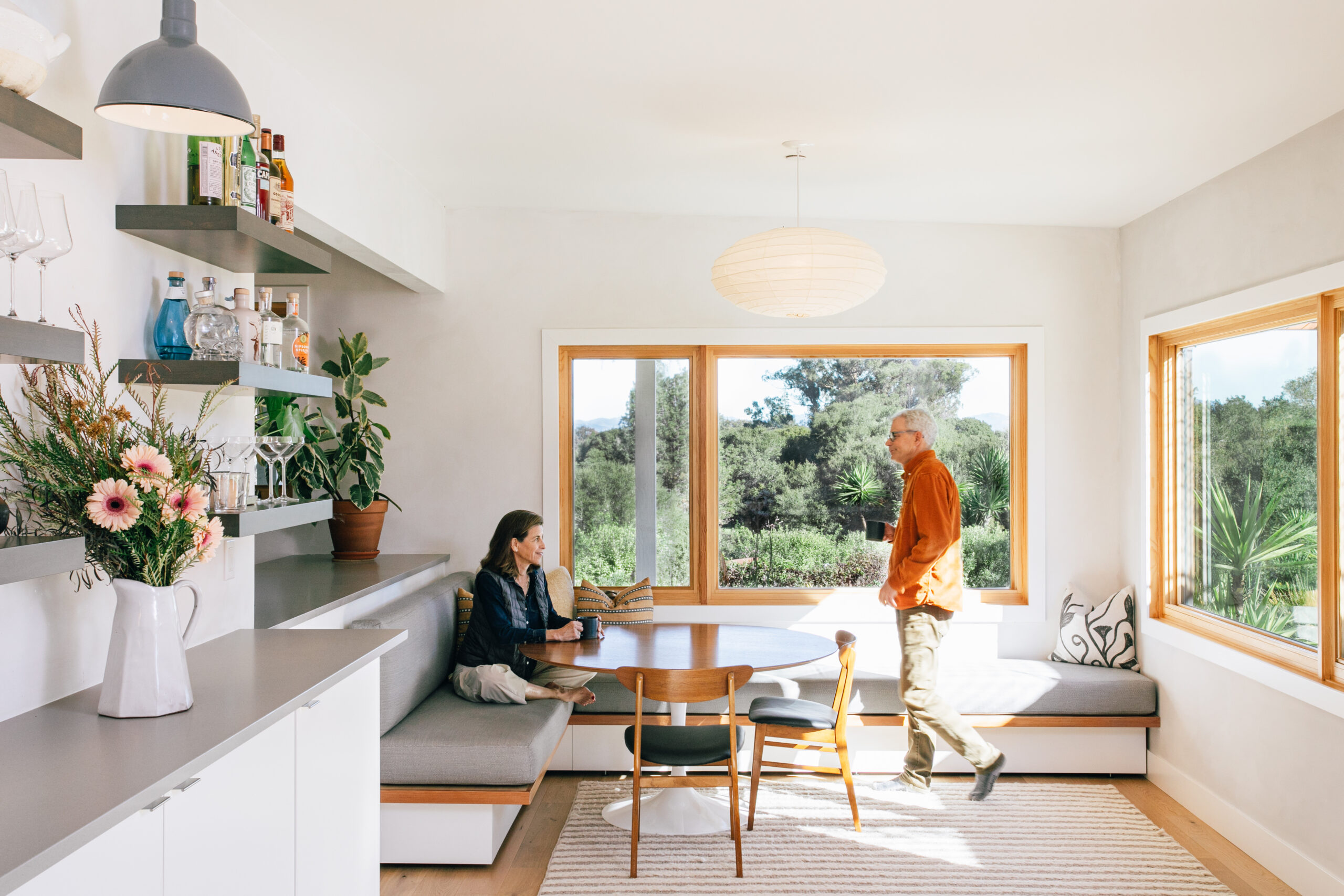
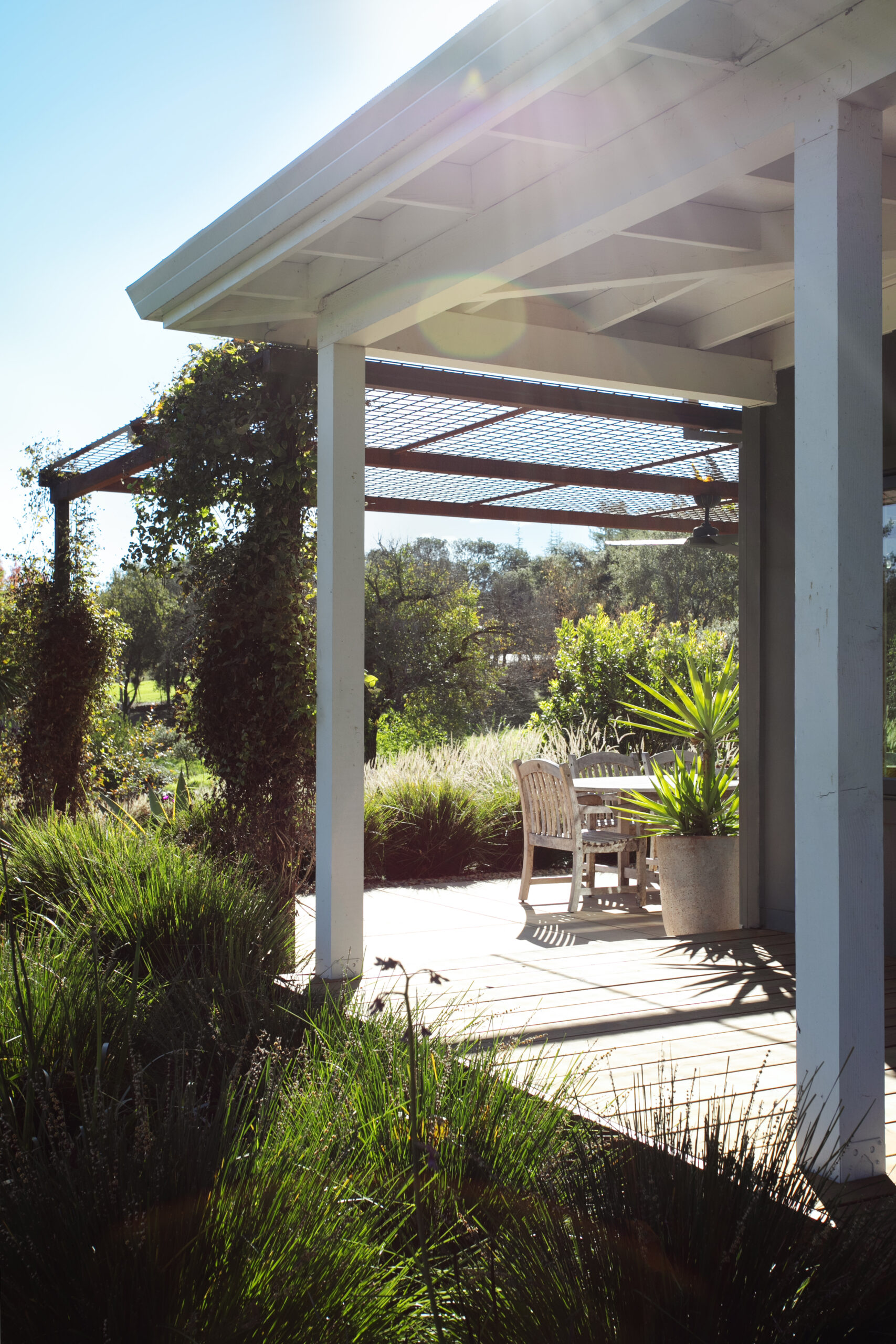
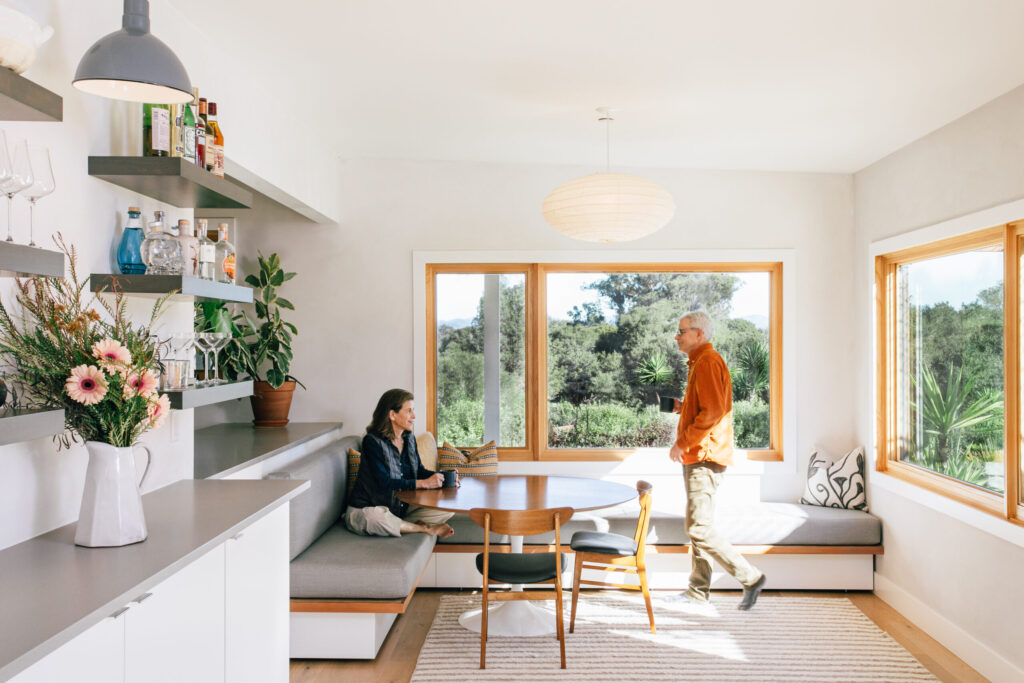
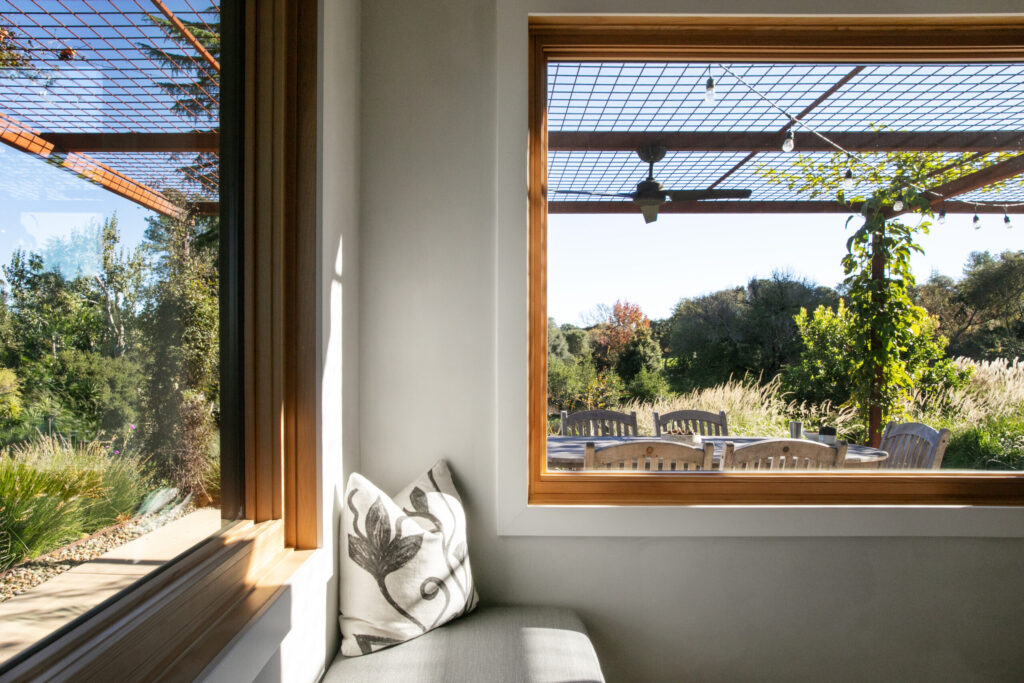
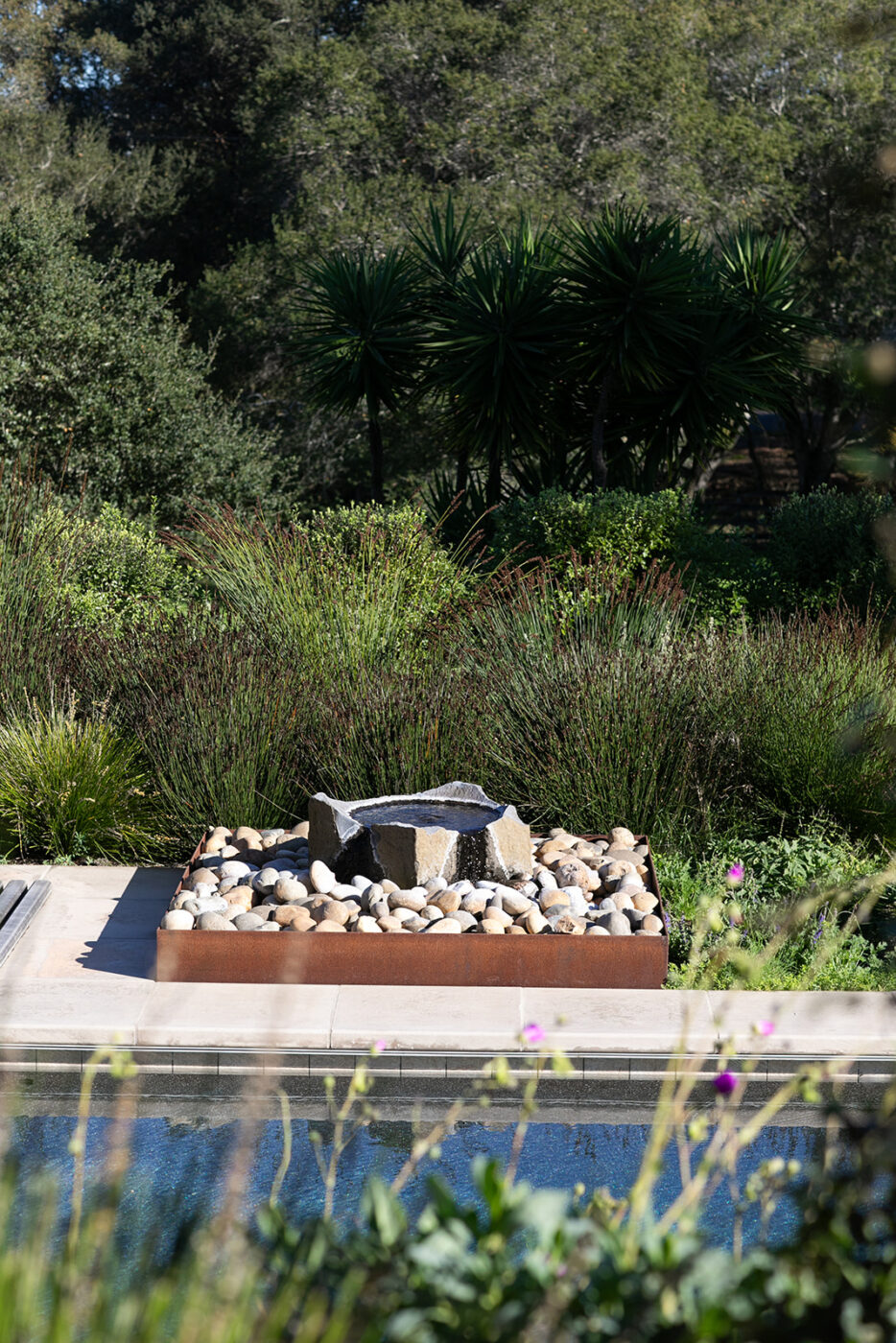
“We did really extensive site planning exercises and landed here. We took the house completely down to the foundation and built back up,” Langberg says from a corner banquette in his dining area. It is a favorite all-purpose gathering spot and entertaining center for the couple, set beside a big window that looks out onto a densely layered landscape of native plants and agaves. Designed by Michael Erskine of Integrated Design Studio and installed by Creative Environments, the landscape, even in the cool season, is electric with many shades of green and the striking yellow spears of winter-blooming Mahonia.
Even though the existing structure was unsalvageable, Langberg soon realized there was a reason it was built where it was.
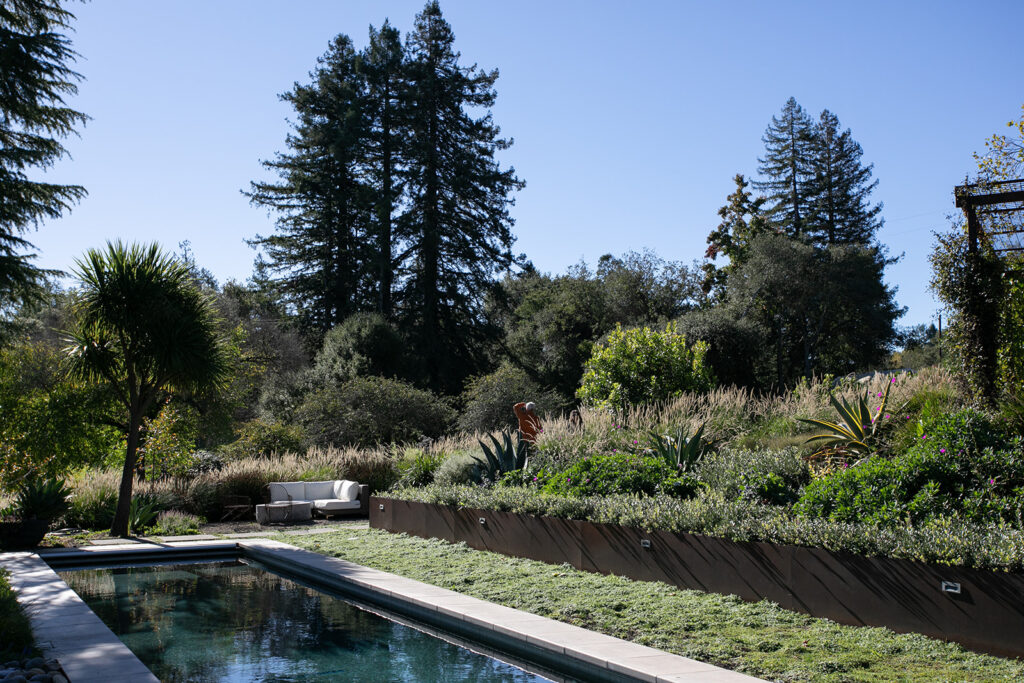
“When someone developed this property years and years ago, why did they choose to locate a house here? There was a good reason for it,” he says, pointing to the north and east through a clearing in the nearby trees. “It’s just so beautifully perched up here. You can view all the way to Geyser Peak and Hood Mountain. You get a little view of Mount St. Helena from the pool area. It just has an expansive feel.”
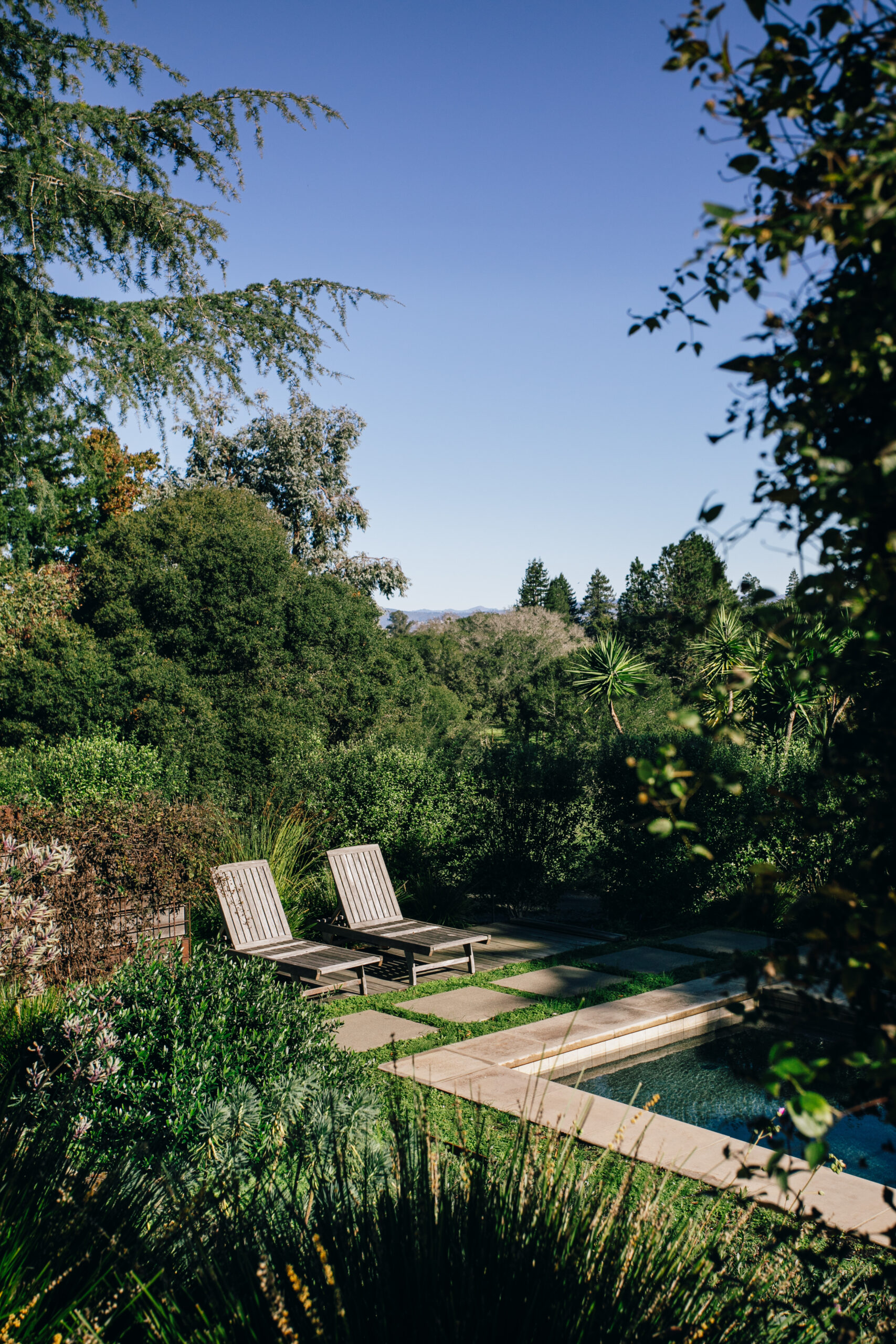
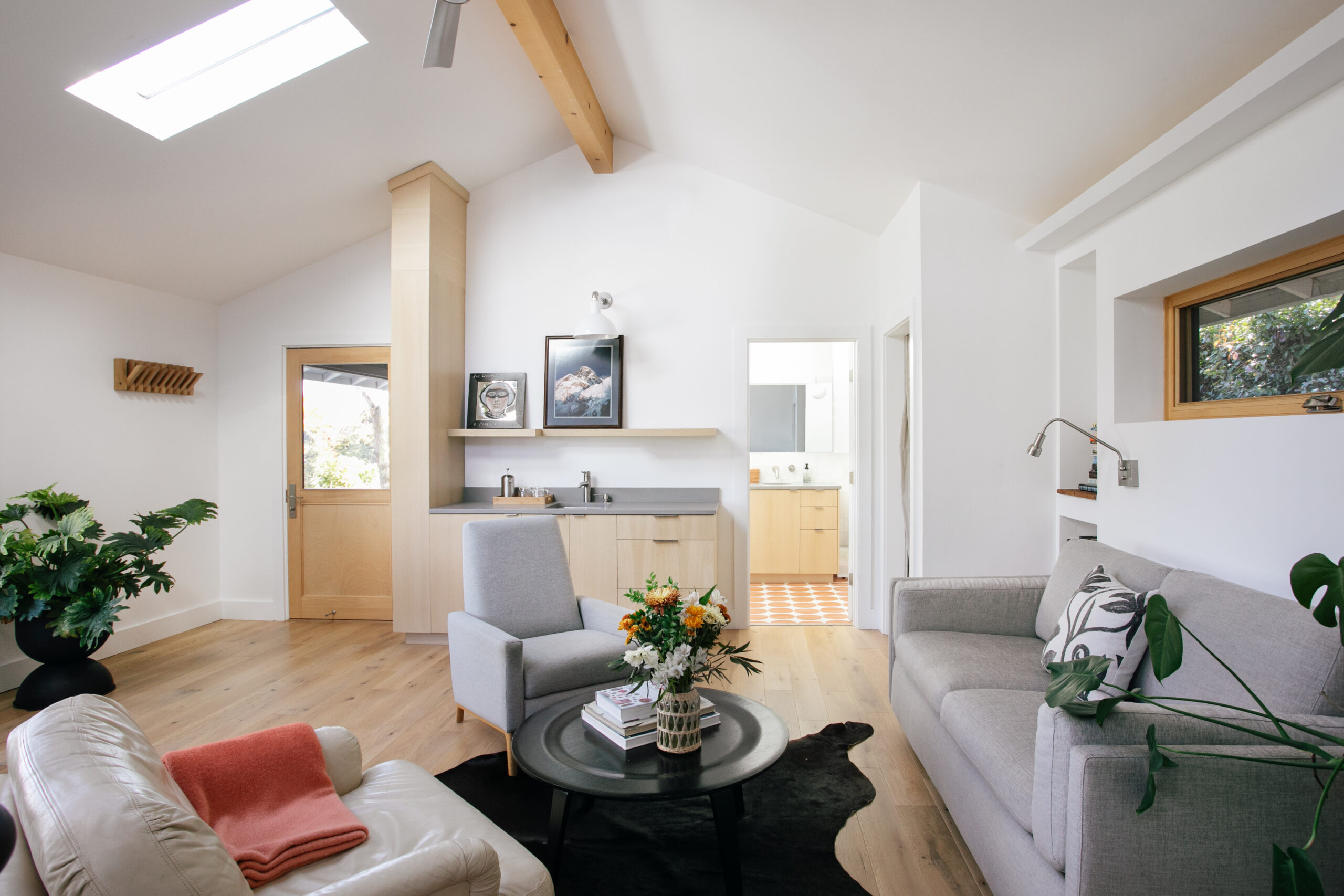
Working within the original footprint, he adds, also made economic sense by making use of the existing infrastructure and driveway. The old house had enclosed porches on two sides that they incorporated into the inside space, expanding the original tiny living area. Langberg raised the roof and created a series of interior transom windows to bring in light and give the space an open, airy feeling. The transoms are a number of subtle surprises built into the minimalist design, like the asymmetrical ceiling and uplighting on the blond wood cross beams over the living room that bathe the room in a soft glow.
“I love it so much I don’t think about it being compact. And we just have all these little zones any time we need privacy,” Becker says.
One of those zones is a nook set off from the main living area perfect for wintertime activities like watching TV or reading. Another corner has a tiny built-in office concealed within cabinetry.
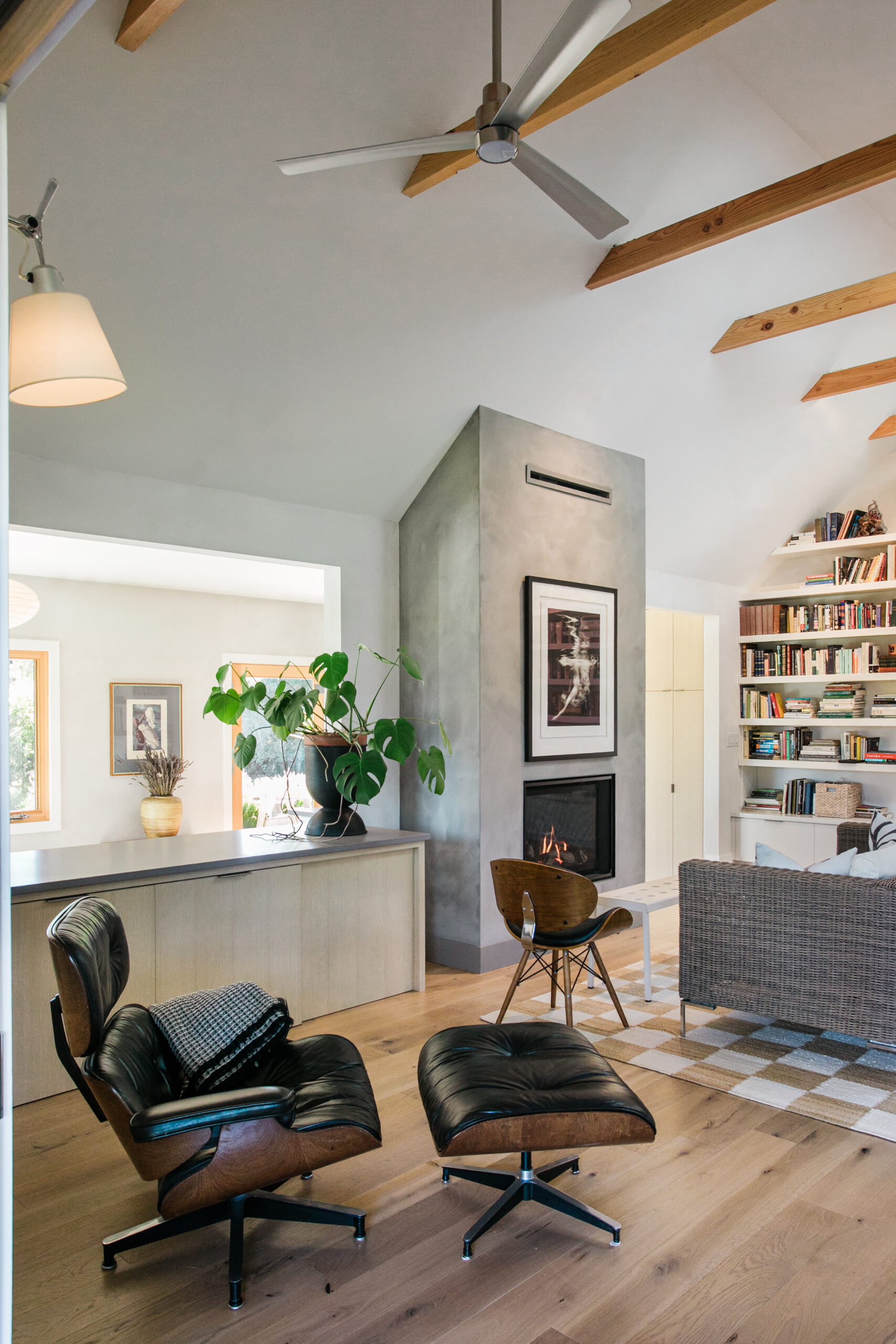
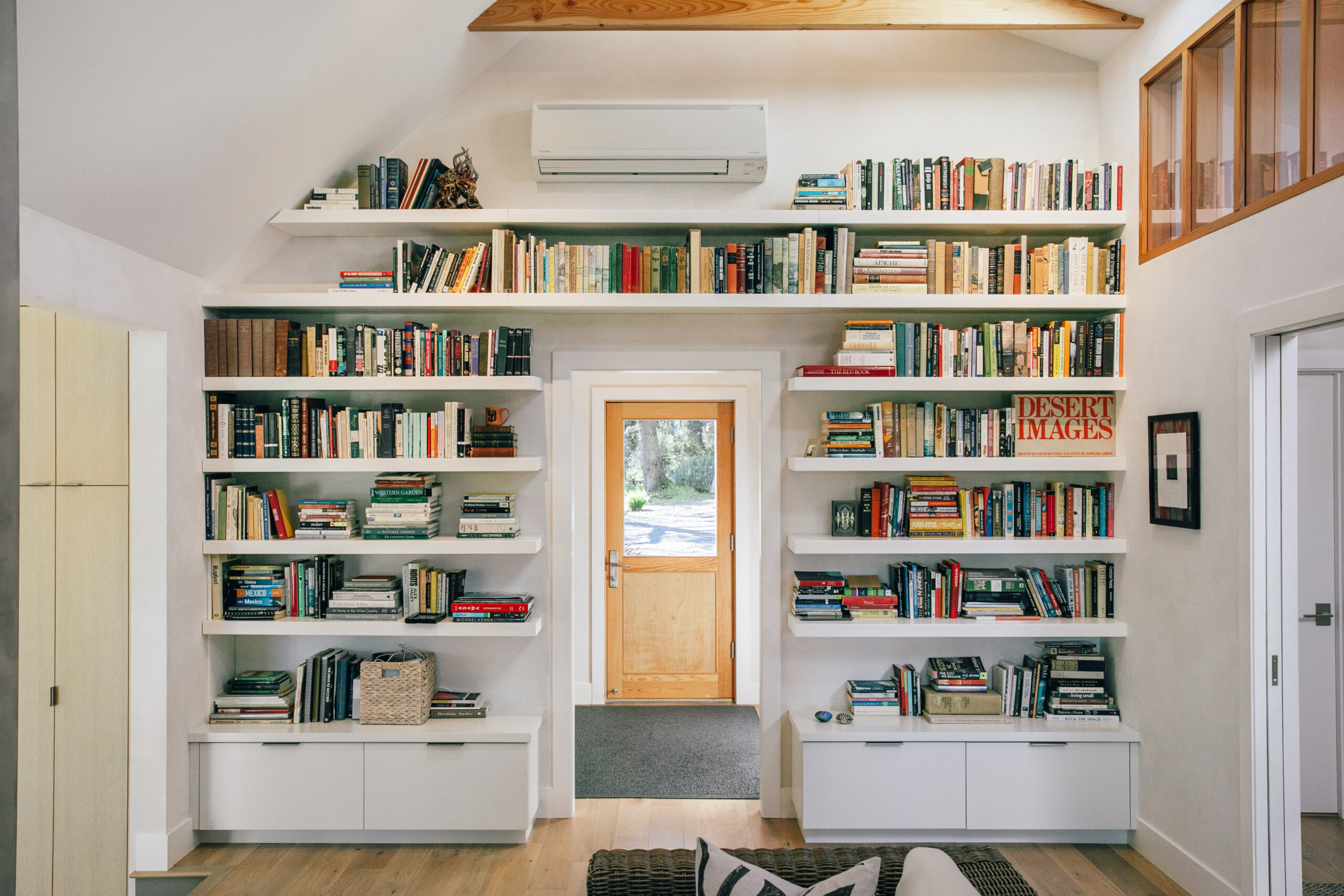
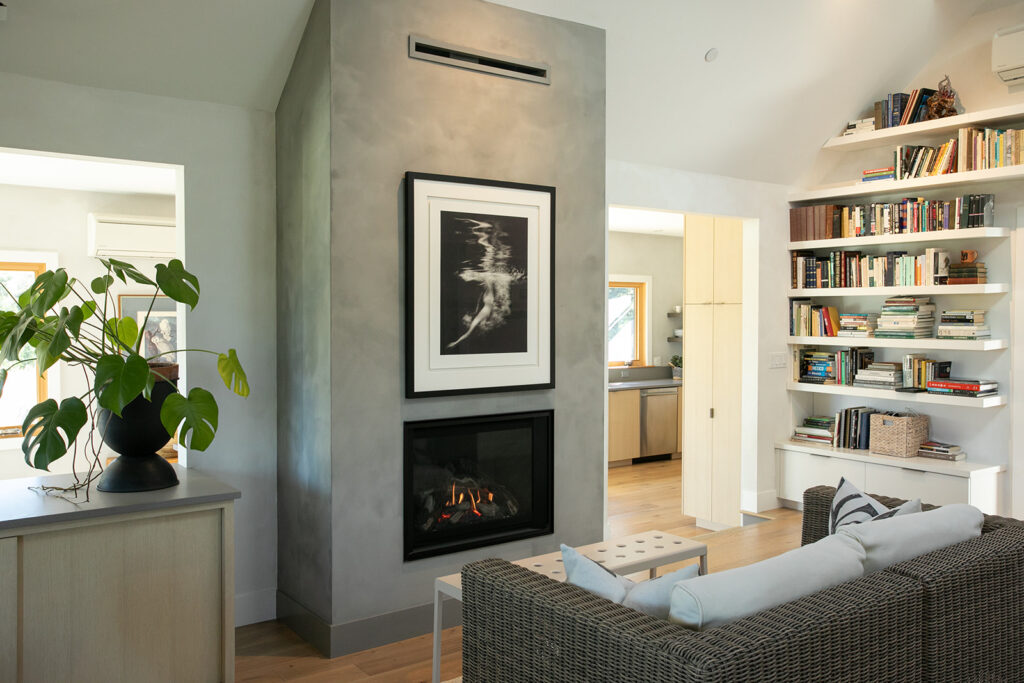
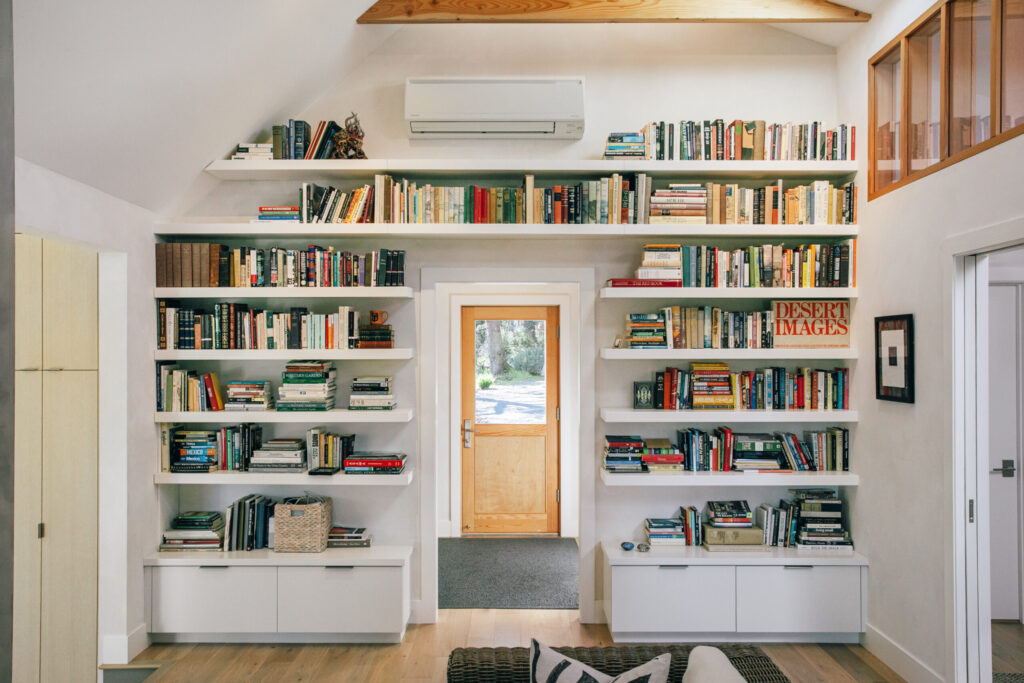
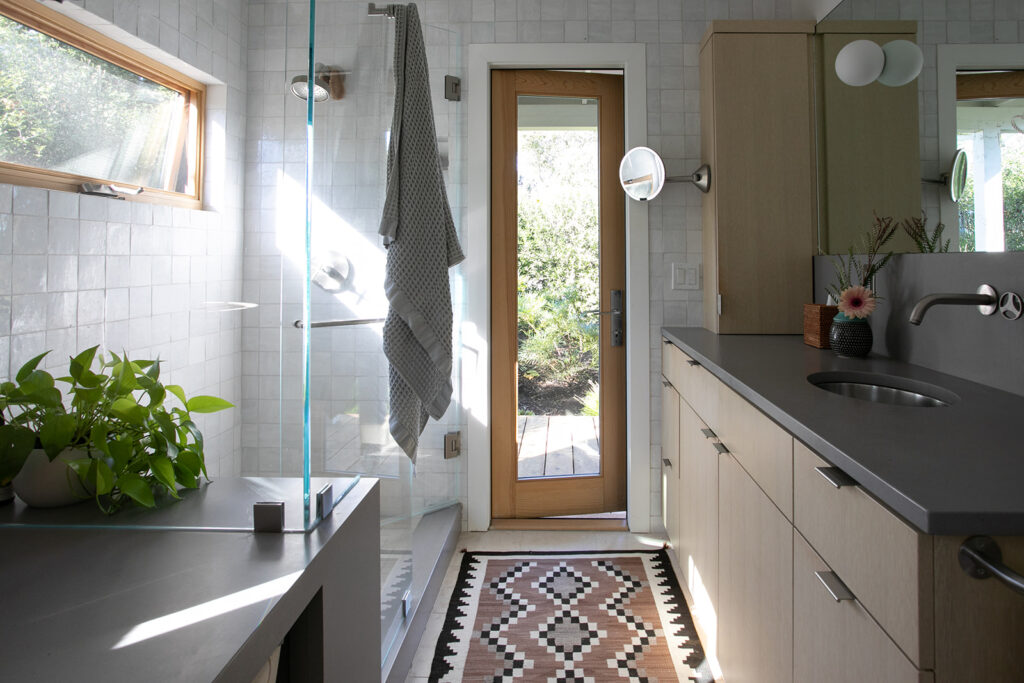
Becker loves to curl up by the fireplace on cold days in a living room where books take pride of place. Floor-to-ceiling bookshelves frame a doorway, creating a portal to a utility room and bathroom carved from one of the old porches.
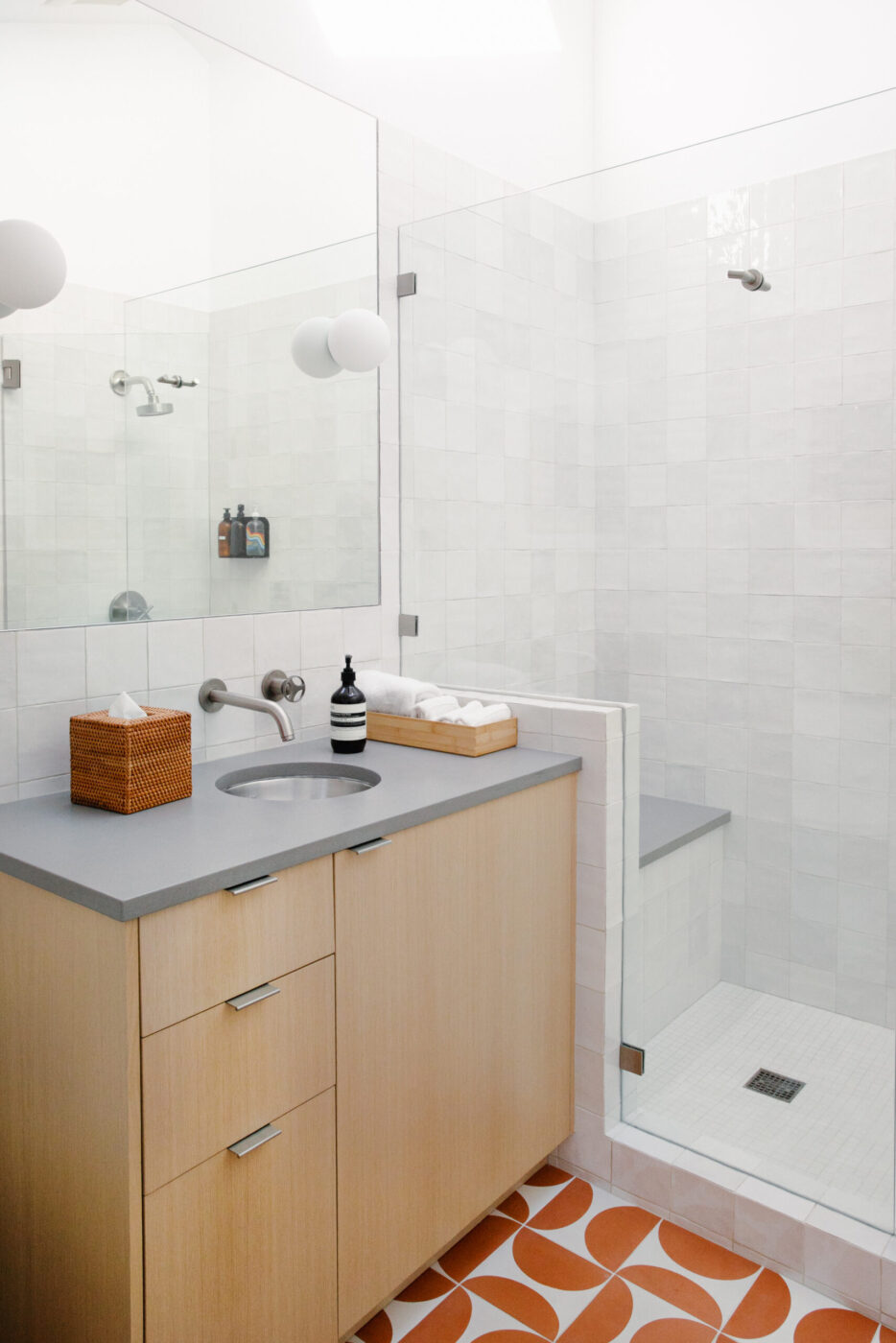
When one or the other needs a little privacy or alone time, they can also make the short walk uphill to one of the studios equipped with kitchenettes and bathrooms. They are simple but uplifted with cool design touches like boldly patterned rugs and cement tiles.
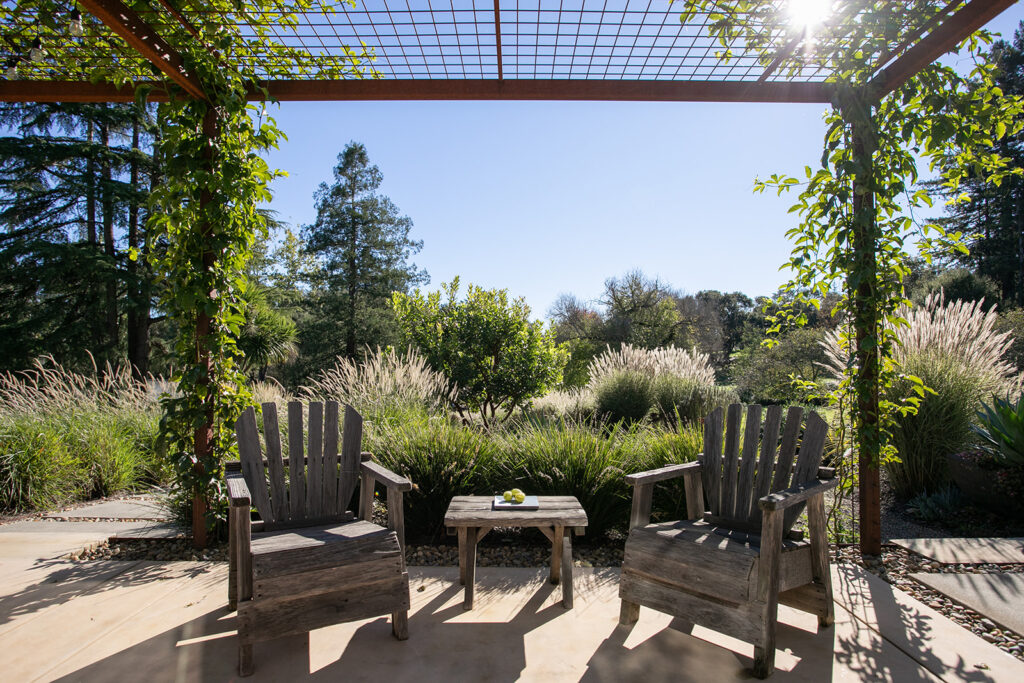
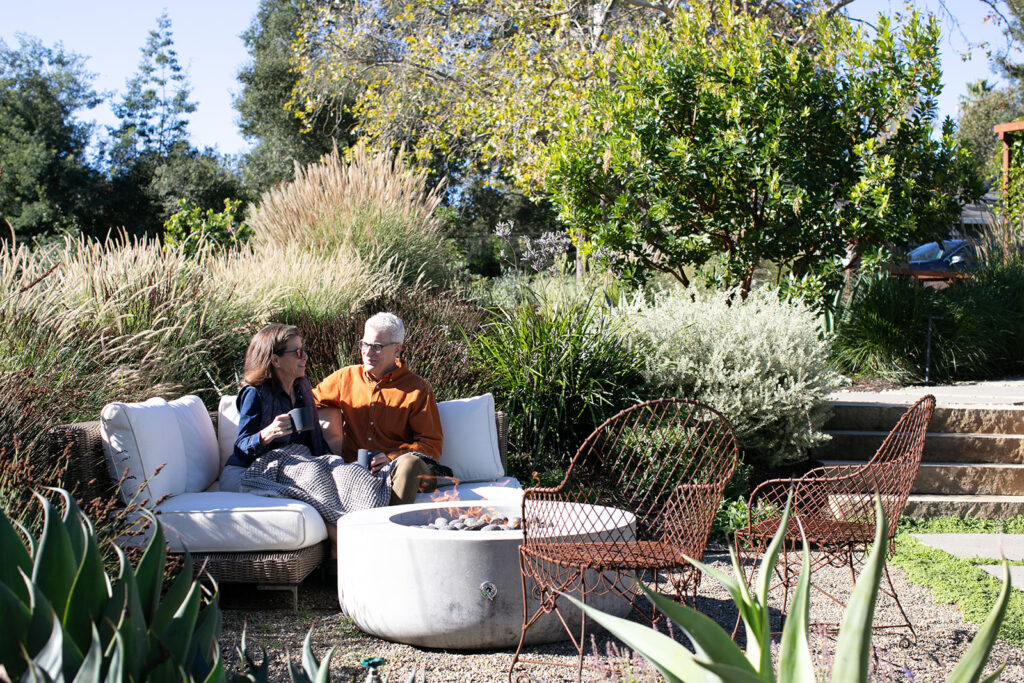
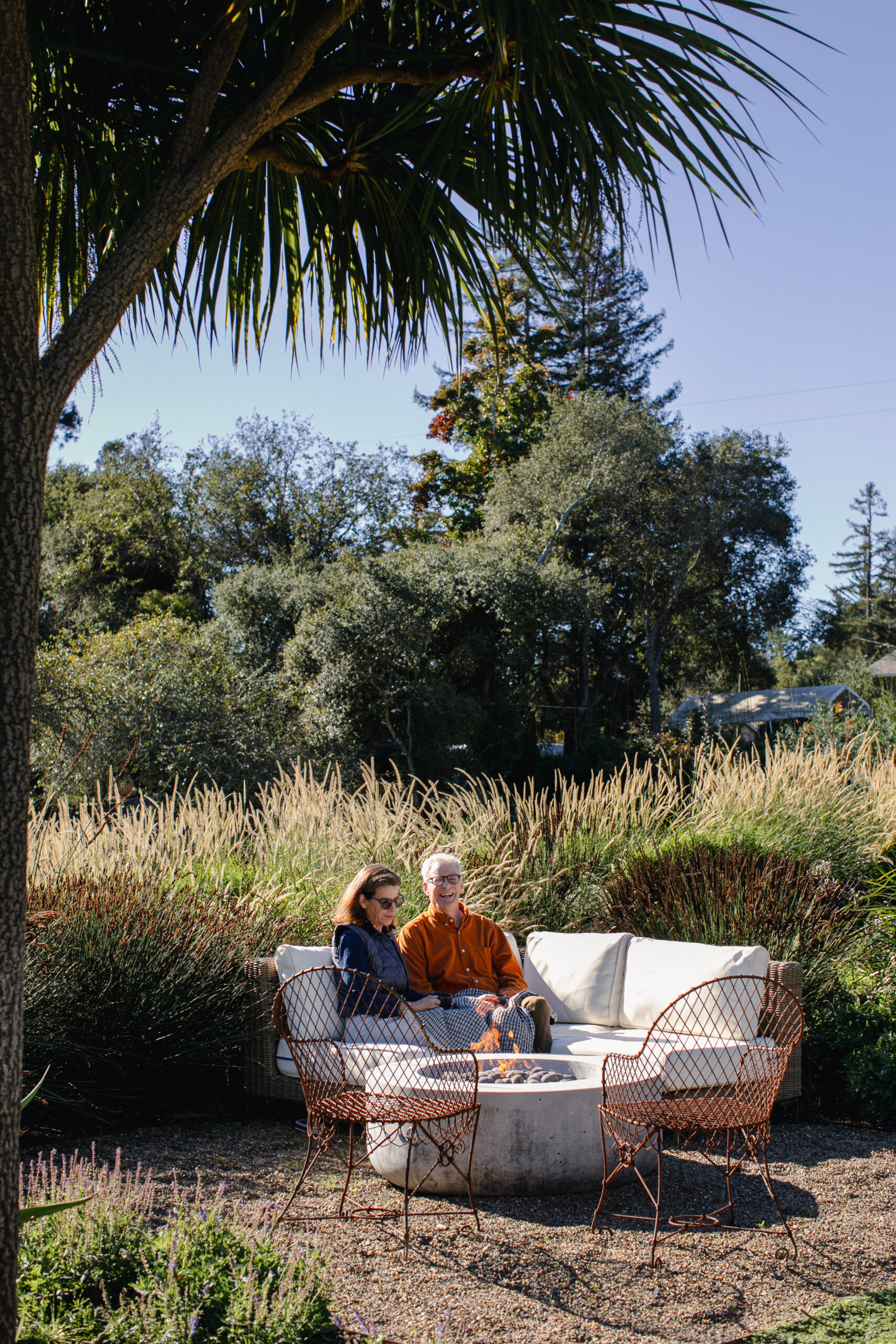
Outdoor living is integrated into the design. Even in winter on a clear night they can gather around a firepit by the pool.
“My favorite thing is being in the garden and the orchard,” says Becker. “I love to have time every day at least doing something there, whether it’s pulling out a bed, or planting or picking flowers.”
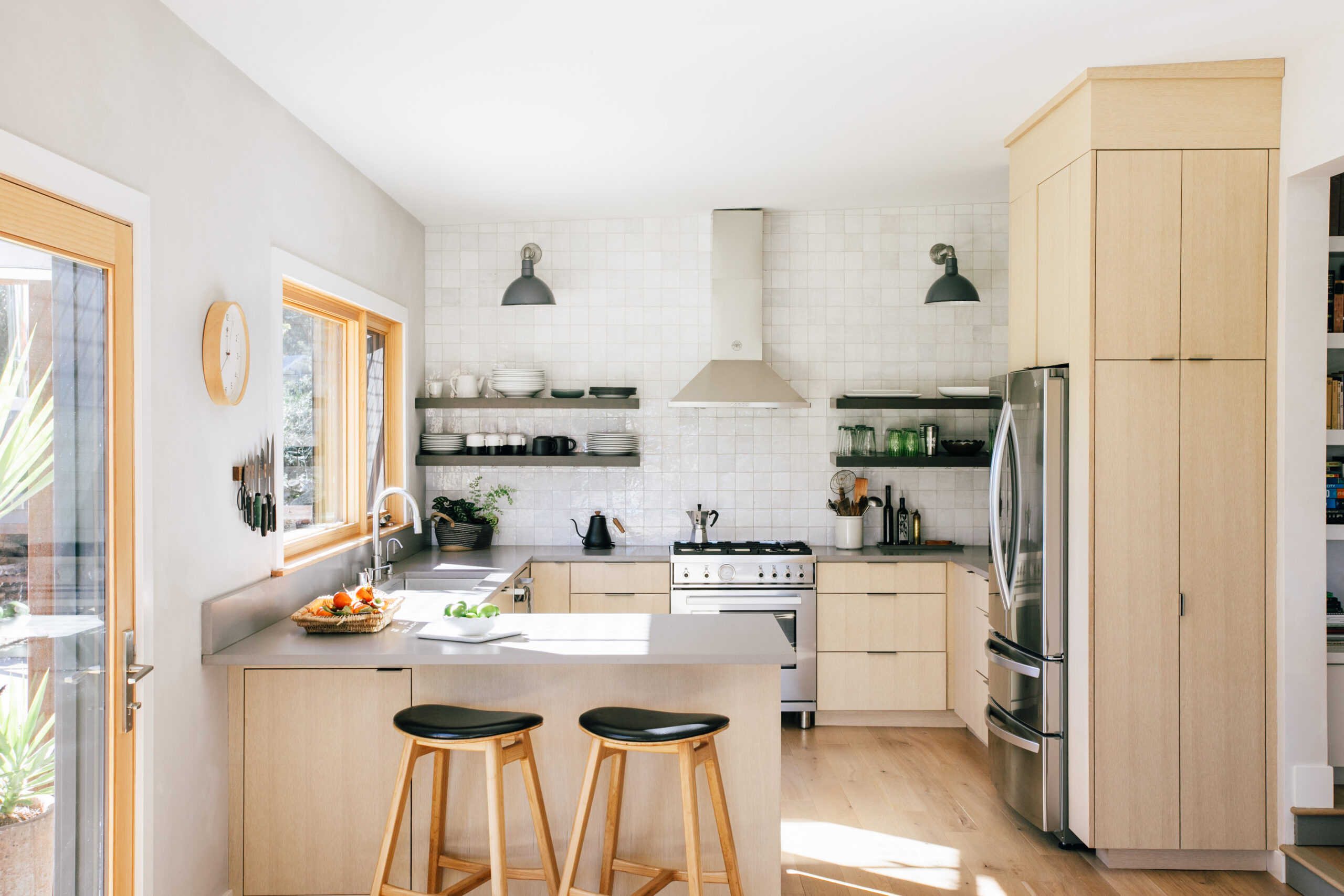
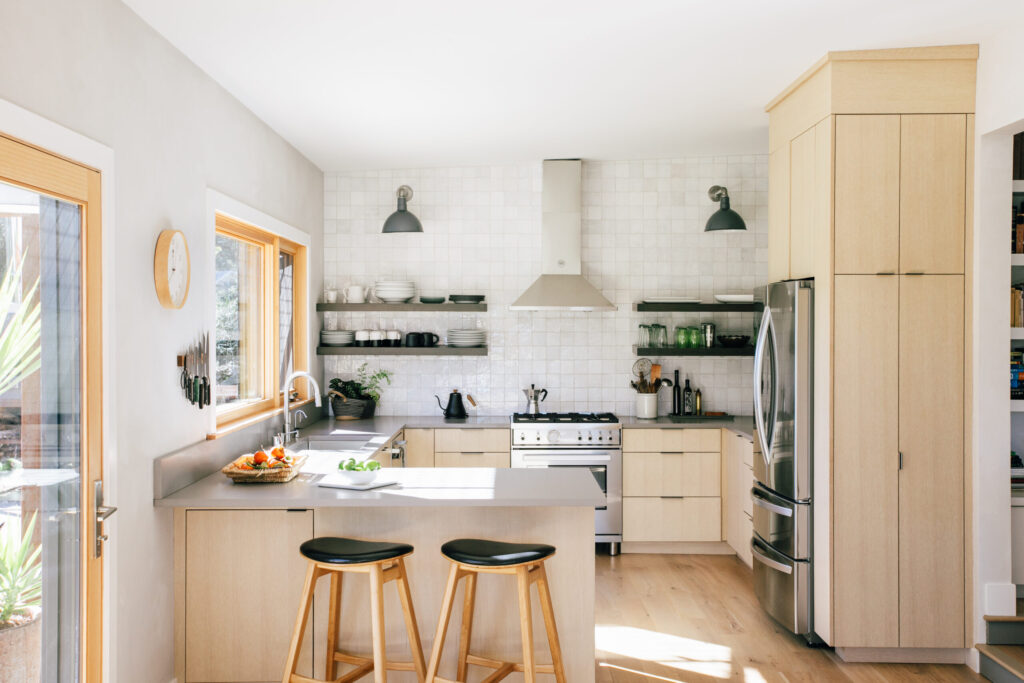
Eighteen trees deliver a bounty of fruit — from figs and plums, to peaches, apricots, pears, and apples. In winter, there is an abundance of citrus; two vegetable garden beds produce cauliflower, winter squash, and kale — enough to keep Becker, a committed cook, supplied with fresh ingredients for a kitchen she kept purposely modest, including a simple four-burner analog stove. Along with a freezer full of pasture-raised meat purchased from friends, they rarely have to go out shopping.
Becker hasn’t completely given up her dream of a compound. It was inspired, in part, by her son after he took a course in permaculture — a holistic approach to land management and growing food — at Occidental Arts & Ecology Center. The center, which has classes, retreats, and programs promoting an eco-conscious and regenerative way of living, was founded 32 years ago as an intentional community by a group of friends who wanted to experiment with living and working cooperatively. In fact, Langberg designed a modern meeting hall and guest housing at the 80-acre site, which helped convince Becker he was the right architect for her vision.
Becker had a long career in marketing in the wine industry, heading up her own agency for 20 years. Now she’s shifted her passions to climate action and regenerative agriculture, something she practices on her property. She’s heavily involved with the One Block Challenge, an initiative aimed at encouraging grapegrowers to employ three regenerative growing practices into at least one block of vineyard. Supported by a cohort of other growers, it provides a no-cost, low-risk on-ramp into experimenting with a more eco-friendly form of viticulture, she explains.
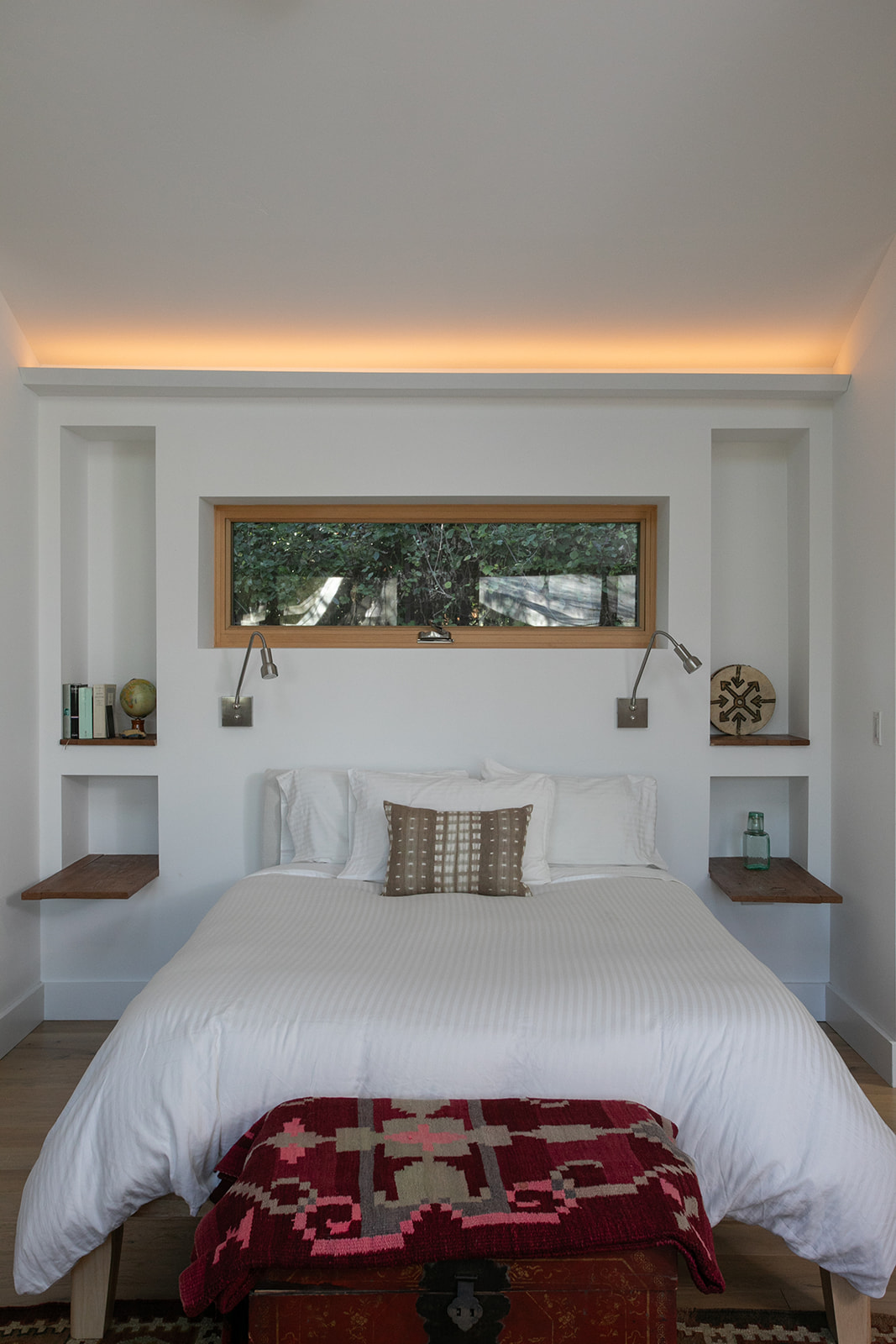
While setting up an intentional community on her own property proved too fraught with complexity, Becker and Langberg foresee a time when one or more of their children might build a home on the site. And they take comfort knowing the studios could one day house a caregiver as they age.
Living smaller and more communally, says Becker, allows for sharing resources, work, and costs.
“It makes more sense. It probably is how we evolved as human beings. We weren’t living in these different subdivisions,” she says. “All the investments in the long term can be enjoyed by more people who share the burden of it as well as the responsibility.”