Lots of folks asking me about “Heritage Public House”, which is actually the renamed Hopyard at Vintner’s Square.
The new space features a revolving lineup of California craft brews Thursday through Sunday (ie: Moylan’s Kilt Lifter, Ruth McGowan’s Monster Brown Ale, Triple Voo Doo Brewing Inception). They’ll also be hosting comedy, music and open-mic nights and have local food trucks serving up food . The name flip happened after owner Dino D’Argenzio discovered the Hopyard name was copyrighted by a Pleasanton brewery. Heritage Public House better reflects “paying homage to the history of the craft brewing industry of our Golden State.” said D’Argenzio.
Vintner’s Square is a rehabbed retail center thats evolved into a self-contained winemaking center housing D’Argenzio, Krutz and Sheldon wines along with Squires Cigar Shop and Lounge and the Wineyard Tasting Room.
Hours: Thursday-Saturday, 4-10pm; Sunday noon to 6pm. 1305-A Cleveland Ave., Santa Rosa.
St. Helena’s Goose and Gander, in the former Martini House location, opened Tuesday (4/24/12)— earlier than expected (a rarity in the restaurant world). In the kitchen is Kelly McCown, a Martini House vet. Bar manager and mixologist Scott Beattie, who recently departed Healdsburg’s Spoonbar, continues his love affair with seasonal, artisanal cocktails at the new venue. Early word on the menu is American comfort, with braised meatballs, duck confit and bone marrow as apps; a burger with duck fat fries, ricotta gnocchi and pork chops for entrees, and a precious lineup of soups, sides and salads. 1245 Spring St., St. Helena.
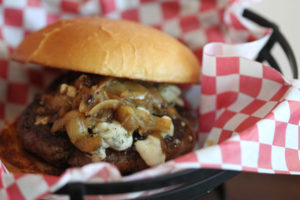
Part burgers, part bar, Flipside Bar & Burger opened in April 2012 to much Santa Rosa ado. The space was under construction for what seemed like years by local restaurateur Nino Rabbaa (Rendez Vous Bistro). After the novelty of opening, the consensus is that the burgers are good (if not great), but the breezy, indoor-outdoor location and strong drinks are the what gives it staying power.
– On the menu: Burgers from simple to exotic (fried egg, Gruyere, etc), using top shelf Angus beef and sustainably sourced ingredients for between $8 and $10.
– In addition to burgers, we tried a rack of sweet and savory ribs with a tower of onion rings and probably the best mac and cheese (dressed up with truffle oil and mushrooms) we’ve had in years.
– Appetizers and sides we tried included spicy jalepenos stuffed with bacon cream cheese, a chili and cheese filled potato skin and thin-cut fries. Rabbaa expects to add a lineup of sauces and aiolis to mix and match.
– Dessert: Handmade shakes (banana, strawberry, cookies and cream, vanilla) and an apple crumble with housemade vanilla gelato were inspired.
– Full bar plus beer and wine
– A sexy outdoor lounge seats 40 and includes a fire pit
– Open for breakfast (serving Illy coffee), lunch and dinner.
– Patrick Tafoya, formerly of P/30, Peloton Catering and The Duck Club has taken over as food and beverage manager for Flipside and Rendez Vous. He’s also been tapped to help build the expanding Rabbaa “empire” (including the former Space XXV and whispers of a French bakery to come). Chef de cuisine for Flipside is Joshua Dellwo.
Word is out on the forthcoming Spinster Sisters, a collaboration between Prune NYC’s Eric Anderson (a Santa Rosa native) and wine insider Giovanni Cerrone. The restaurant is slated for a mid-June opening in the bustling South A St. Arts District in Santa Rosa.
Already tapped to head up the kitchen: Former Santi exec chef Liza Hinman, who’s been consulting and doing stints at Sur La Table, along with motherhood, since leaving Santi before it closed in 2011. The menu will be California cuisine mixed with global influences to match the focus on emerging wines.
A host of other Santa Rosa luminaries have been tapped to bring their unique influence to the restaurant, including Roy Gattinella (music).
Cerrone said the idea of the restaurant — something he and Anderson have been kicking around for several years — is to bring together the arts, music and theater communities and provide a neighborhood gathering spot.
“We want The Spinster Sisters to have a strong tie to the artistic community around it and aim to have bi-monthly visual art exhibits as well as other community based spoken word events. The goal is to have the neighborhood gather at our large rectangular redwood bar with seats on all 4 sides and catch up,” said Cerrone.
And the name? The building at 410A St. was built in the 1920s and housed the Cannavari deli for several years. Cerrone said two of the five Cannavari daughters lived unmarried in second story apartments, lending the restaurant its name.
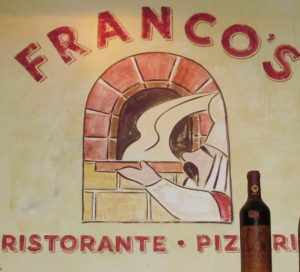
Franco’s Ristorante (505 Mendocino Ave, Santa Rosa) has shuttered — at least temporarily. The restaurant’s alcohol license was suspended on April 4, 2012 according to the ABC, doors have been closed for more than a week and an answering machine message states that the restaurant is “closed until further notice). Franco’s opened in the former 505/Acapulco space in March 2010.
Also closed: Aioli Deli in Forestville. The quaint eatery served up killer crabcakes and made-to-order sandwiches, made by Chef Autumn Opitz. They’ll be missed.
It’s time to get alfresco with your dinner. Rolling to the rescue: A fleet of rolling kitchens serving everything from falafel to fish and chips. With temperatures rising, area food trucks are again rolling out in force, this season with a few new faces in tow.
Now in their second “official” season in Sonoma County, a handful of enterprising food entrepreneurs have outfitted former delivery trucks, trailers and even a trolley into compact canteens appearing in parks, at office buildings, wineries and event venues for only a few hours. And then they’re gone.
It’s a bit of a cat and mouse to find them, which is part of the fun. Fans follow their routes on Facebook or Twitter, using social media to hook up with their favorites. But finding bigger audiences in numbers, many of the trucks form impromptu outdoor food courts on specific days.
If you’re a food truck vet, you’ll know the fun of wandering from window to window, ordering a jerk chicken taco here, macaroni and cheese there and a grass fed burger at another truck. If you’re new to the scene, you’ll quickly find out that this food goes well beyond simple burritos. Many of the trucks feature tried-and-true chefs and restaurateurs cooking up a world of flavors.
Street-Eatz: Global cuisine favorites include carne asada fries, jerk chicken tacos, coconut curry, agedashi. Chef John Lyle of Chosen Spot will be adding upcoming specials (umami grilled cheese). street-eatz.com
Chicago Style Hot Dogs: Gourmet and classic hot dogs range from a curry vindaloo dog to straight up Chicago dogs with celery salt, green relish and the works. Don’t ask for ketchup, though. Twitter: @DogsFromChicago
La Texanita: Burritos, tacos and Mexican foods from the owner of La Texanita in Roseland. latexanita.com.
Matchbox Diner: BBQ, burgers and fries, sliders. thematchboxdiner.com
Charlie Bruno’s Chuckwagon:Comfort classics include mac and cheese, pulled pork, sweet potato fries, calamari, milkshakes. brunoschuckwagon.com
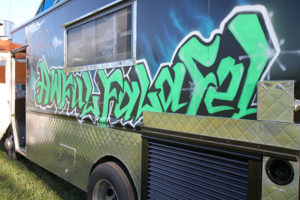
Ultra Crepes:Sweet and savory crepes made to order. ultracrepes.comNewcomers Awful Falafel: Crispy falafel, pita, schwarma, hummus and other Lebanese classics. @Awfultruck or facebook.com/awfultruck
Fish On: Former Karma Bistro has returned as a fish and chips truck featuring, well, fish and chips, curry fries, coleslaw. facebook.com/findkarma
Rolling Soon Yum Yum Trolley: A real-life antique trolley turned food mobile is slated to roll out in early May. Owner Sharina Arevalos is still finalizing the menu but is planning to have sliders and plenty of stuff younger truck eaters will like. yumyumtrolley.com.
Here’s where to get your food truck hook-up over the next few months:
Wheel Food and Family Fun, Third Thursdays (next May 17)
Finley Park, 5-7:30pm near the gazebos
West College Ave. and Stony Point Road
Awful Falafel, Street Eatz, Fork, Bruno’s Chuckwagon, Fish On!
Park-n-Eat
Tuesdays @ Spring Lake Boat Ramp, 4:30-7:30pm.
Wednesday @ County Admin Ctr. (Ventura and Administration Dr., Santa Rosa), 11:30am to 1:30pm.
Yum Yum Trolley, Ultra Crepes, Charlie Bruno’s Chuckwagon, Fish On, Fork, Street-Eatz.
Sebastopol Totally Trucking Thursdays
Each Thursday from 11:30 am to 1:30pm
1005 Gravenstein N., O’Reilly Campus
Matchbox Diner, Fish On!, Fork, Street-Eatz
Wine Down Thursdays
D’Argenzio Winery, 5-9pm
1301 Cleveland Avenue, Santa Rosa
Heritage Public House
1305A Cleveland Ave, Santa Rosa
Friday-Sunday nights
Downtown Santa Rosa
Jeff Tyler’s Chicago Style Hot Dogs is a frequent late night feature of the weekend bar scene. Awful Falafel plans to “freestyle”, roaming the streets 30 minutes at a time (the legal amount of time they’re allowed to park the truck within city limits without a permit) late night.
Coming This Summer, watch for trucks at the Downtown Market Wednesday nights in Santa Rosa; Great Russian River Race, May 12; Healdsburg Water Carnival, July 14; Rootstock, July 21; Levi Leipheiemer’s GranFondo, Sept 29. Also, for upcoming summer events at Rodney Strong and Iron Horse Wineries.
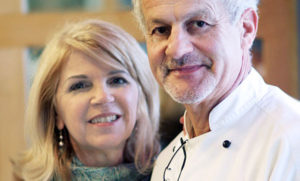
After 40 years in the kitchen, Josef Keller just can’t take retirement seriously.
Keller closed Josef’s at the La Rose Hotel in April 2010 after decades of running Santa Rosa restaurants. Six months later, the 58-year-old was revamping the menus of the county’s largest meal-provider, Meals on Wheels. After a brief retirement, he’s back in the kitchens again.
Perhaps his biggest project to date: Taking over Pearson & Company’s four locations. The popular Sonoma County cafe and catering biz formerly owned by Mike and Kendra McCoy operates cafe outposts of their central Fourth St. kitchen on Mendocino Ave., and at Kaiser Permanente and a private business catering service. The Fourth St. location has also expanded into the former McCoy’s kitchen shop.
It’s a mighty task for Keller and his business-partner and wife, Jill Keller-Peters. But standing in the bustling commercial kitchen, it’s apparent that Keller is in his element. Beginning at 4am, the kitchen hums to life to fill the deli cases with salads, entrees, desserts and soups. Bringing in his own recipes for dishes like Curried Chicken, Crab Macaroni and Cheese, wild mushroom and tomato soups, Grilled Asparagus with aioli and other seasonal favorites (Swiss Chili, his own signature mashup is also popular) has been top priorities. But Pearson’s favorites like meatloaf, deli sandwiches and Chinese chicken salad also remain on the menu. Desserts have been expanded to include his signature chocolate mousse, white chocolate tapioca pudding, raspberry creme Anglaise and a chocolate caramel Macadamia bar.
Keller’s still in the moving-in stage, but already his touch his evident. The couple are working to stock a specialty food section with Sonoma-made condiments, oils and other goodies. He’ll continue with the catering biz, though says the focus will be on the cafes.
It’s a delicious renewal for the take-out cafes. At a recent sandwich competition featuring 20 local chefs, Keller’s pulled pork sandwich and roasted vegetables were judged award-winning.
And the ever-present Pearson & Co. goose logo? Consider her retired.
Pearson and Co: 2759 Fourth St., Santa Rosa and 2500 Mendocino Ave., Santa Rosa.
Since Traverso’s closed last November, finding a decent prosciutto sandwich has been a challenging proposition.
Not that you can’t find one. You can. But without soul. Too much bread. Rubbery mozzarella. Watery tomatoes. Unholy basil.
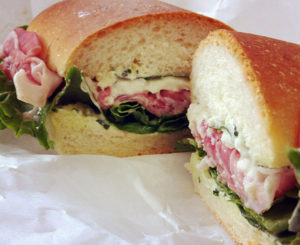
Consider the resurrection of the Traverso’s Caprese Sandwich a spring miracle. Sliced-to-order Italian prosciutto with a salty, nutty flavor. Fresh whole milk mozzarella. Basil aioli with lettuce, tomatoes and torn basil on freshly baked bread($7.99).
Brought back to life by two former employees of the Italian deli, it’s one of several familiar sandwiches on the menu of Bill and Deb’s Downtown Deli.
Also on the menu: The Papa Rico ($5.99). Thin slices of salami with mayo, mustard, peppers, Swiss and tomatoes. Or The Hoagie with Mortadella, salami and ham with mozzarella, provolone and Italian dressing ($7.99). Sound familiar?
Let me say they may even be better than the original.
Behind the counter, sandwich vets Bill Thompson (10 years at Traverso’s) and Debbie Schulze (6 years) recently took over Mom & Pop’s Sandwich Shop (formerly known as Mr. Pickles). They’re eager to make some changes to the downtown deli that’s seen plenty of turnover — bringing in fresh ravioli, potato salad and Italian salami. But to keep everyone happy, they’re also sticking with some of former owners’ sandwiches along with a “Make Your Own” sandwich menu. And cookies still come complimentary with every order.
Though it will take decades to come even close to Traverso’s ground-into-the-floorboards history, it’s nice to know a little part of the legacy lives on.
Bill and Debbie’s Downtown Deli, 621 4th St., Santa Rosa, (707) 636-2200
Though the accepted fact that 90 percent of restaurants fail within the first year may be overstated, only about 30 percent of restaurants last for ten years or more, according to research. Here in Sonoma County, especially after the devastation of the recession, there do seem to be fewer and fewer toques still standing.
But what about the restaurants that keep chugging on, year after year, decade after decade? They quietly simmer away becoming our go-tos for weeknight dinners, birthdays and anniversaries, regardless of our momentary dalliances with flashy new eateries. Ingrained in our hearts and communities, they’re comfortable constants. Pity the chef who takes a favorite dish off the menu or tries to reinvent himself.
Ever-present, here are ten restaurants that have stood strong for a decade (or more), weathering ups and downs, reminding us year after year that they’re still around for a reason — and what it’s taken to keep themselves on top.
Jimtown Store, opened 1991
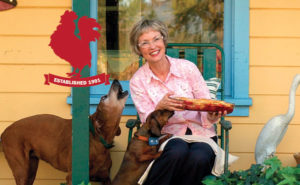
Carrie Brown had to drink a whole lot of inventory before Jimtown found its niche. “We had all these great ideas about what we wanted to do, but we knew from the get go that the customers would figure it out for us,” said Brown, who opened the Alexander Valley outpost with her late husband, John Werner on a warm Memorial Day more than 20 years ago. That meant trying to sell wine from France and fancy cheese — something locals didn’t immediately embrace. “We wound up drinking all the wine. All that beautiful cheese languished,” she said. Transforming from a deli into a cafe and grocery, and ultimately a Wine Country icon, Brown’s most loyal following has always been from the locals who watched as the New York couple renovated the dilapidated grounds and eagerly adopting the store as their “clubhouse”. “They’ve just been overwhelming in the support and love,” said Brown. “They really saved me,” she said of the difficult time after her husband died. Living on the grounds, however, sometimes makes for close quarters and exotic trips make for fresh inspiration. “I like to travel and see the wider world, then bring what I’ve learned back to Jimtown,” she said. 6706 California 128, Healdsburg.
Jeff Mall of Zin (Kent Porter/PD)
Zin Bistro, opened 1999
Chef-owner Jeff Mall was doing farm-to-table long before it had the kind of foodie buzz it gets today. Now a favorite spot for new American comfort food — from grits and fried chicken to Mexican beer-batted green beans — Mall knew early on that a kitchen garden was key to great dining. “I wanted to grow my own food,” said Mall, who owns Eastside Farm, a source for much of the restaurant’s produce. But fans may also find it interesting to know that it was wasabi that first flavored his vision. A former chef at SF’s Asian-fusion powerhouse, Hawthorne Lane, Mall said he used to sprinkle the Japanese horseradish on nearly everything. “We haven’t done that at Zin for ten years,” he laughs. What he learned the hard way? “At 29 you really don’t know anything about running a restaurant,” Mall said, of the tender age he opened Zin. “I would tell myself to listen –listen to what your customers like and don’t like. Just because you like something, doesn’t mean the public will.” What he’d tell aspiring restaurateurs: “Don’t be intimidated by projects that seem too big or daunting.” Moving from buying bread from bakeries to doing all their bread in-house was a major hurdle he overcame several years ago, but how he says, “It is better than any we had ever bought in the past.” 344 Center Street, Healdsburg.
Zazu, opened 2001
Chef-owners John Stewart and Duskie Estes accidentally hit on three of the biggest trends in food over the last five years: raising their own food, curing meats and making bacon. As trend-setters, they’ve been courted for adverts for California tourism, on the Food Network (multiple times), national morning shows and reigned as The King and Queen of Pork after winning Cochon 555’s pork olympics in 2011. “We got lucky moving to Sonoma County. We had chickens in the backyard, a gateway into urban farming that led to sheep, turkeys and pigs and growing as much as we could to get a better product,” said Stewart. Inspired by those tastes, the couple were inspired to work with local ranchers, using the whole animal and ultimately making their own salumi. Salumi (and a stint with Mario Batali) led Stewart to found Black Pig Bacon — artisanal bacon that ships throughout the West at a rate of 5,000 pounds per month. But it isn’t all luck that keeps their restaurants popular. Instrumental in redefining modern Sonoma County cuisine, they’re respected by the food community for their farm-to-table walk and talk. Plus, there’s never a dull menu at their constantly evolving restaurant. 3535 Guerneville Road, Santa Rosa.
The Girl and the Fig, opened 1997
“Be careful what you wish for,” is the advice of chef-owner Sondra Bernstein, whose small cafe has turned into a mini-empire of three restaurants, a catering operation, two cookbooks and a line of fig condiments. The original cafe in Glen Ellen moved to Sonoma in 2000, but continues to show up on “best of” lists as a top spot for typified Wine Country casual cuisine and Rhone-only wine list. Her newest restaurant, Estate, let’ Bernstein and exec chef John Toulze explore their Italian side with house cured meats, pasta and local produce. Their next adventure: A Kickstarter.com-funded mixed-used space called Suite D that will offer classes, tastings, coking classes and private dinners. 10 West Spain Street, Sonoma.
La Gare, opened 1979
Roger Praplan relishes the fact that he’s serving the grandchildren of some of La Gare’s early customers. Praplan’s parents were early entrepreneurs in Santa Rosa’s Railroad Square, purchasing their lot for $25,000 in 1977. Though dining trends have come and gone during the restaurant’s 30-plus years, Praplan stays laser-focused on the traditional French cuisine that’s made the restaurant a popular birthday, anniversary and holiday restaurant for decades. “People always want to reinvent. Just readjust, and stick to your vision,” said Praplan. 208 Wilson St., Santa Rosa.
(Petite) Syrah, opened 1999
Last year chef-owner Josh Silvers took a leap of faith, reinventing his longtime restaurant into a small plates eatery. Though critically successful, the public didn’t embrace it. “People were having a hard time understanding the concept of what we were trying to do,” said Silvers. An adept adapter, Silvers is now bringing back his entrees and tasting menus. “Our job is to make people happy. We’re selling an experience,” he said. For years, that experience was as a spot for rare duck breast, foie gras and Dungeness crab cakes, classic Wine Country fare he felt he just couldn’t take off the menu. The new menu brings together favorites from the new and old menus — duck breast to a 63-degree egg salad. Meanwhile, his wood-fired oven and bar restaurant, Jackson’s, lets Silvers and his staff continue to innovate with more casual cuisine. 205 5th Street, Santa Rosa.
Willi’s Wine Bar, opened 2002
“I was a late bloomer,” said Mark Stark, chef-owner of Willi’s Wine Bar. Working in kitchens large and small for nearly 17 years, including as catering chef for Lulu’s, the potential pitfalls weren’t lost on him. “That’s the scary part. I knew what I was getting into,” said the now-owner of four restaurants (with a fifth in development). His own evolution has been from complicated ingredients to letting the food shine. “Simplicity comes to mind a lot. My style in the beginning was to throw more ingredients at things. But now, the excitement is how simple I can make a plate and make people really enjoy it,” he said. Bravas, opening this summer, exemplifies the move toward simple Spanish flavors. What he’d do if he were starting out today: “Work in a big kitchen and learn the business systems. If you can take the work out of that part, you can focus on food and the part you love to do.” That, and ignore mean Web chatter about themselves. “Bloggers can cut so deep. People have no idea how hard it is to do what we do.” 4404 Old Redwood Highway, Santa Rosa.
Restaurant at Madrona Manor, opened 1981
As Healdsburg has grown up, so has once-unassuming restaurant inside this Victorian bed and breakfast. In 1999, when Bill and Trudi Konrad purchased the property, they hired Chef Jesse Mallgren. An alum of Gary Danko’s at Chateau Souverain and SF’s legendary Stars, Mallgren grew up in Sonoma County. Though he defines his cuisine as first and foremost local and seasonally-inspired, about 10 years ago Mallgren began pushing boundaries with molecular gastronomy techniques that include using liquid nitrogen to make ice cream. “We use the best techniques with the best products,” he said. What he credits with the restaurant’s continued success: Creative control in the kitchen. Free of financial and time constraints of many other chefs, Mallgren can channel his energy into a showcase tasting menu. 1001 Westside Road, Healdsburg.
John Ash & Co, opened 1980
It’s impossible to talk about Sonoma’s longstanding food scene without paying homage to its patriarch, John Ash. What began as an idea became a revolution — using nearby produce, meats and cheeses to create wholesome, ethical, lush food and pairing it with great local wines. Though it seems almost quaint now, Ash was an early pioneer at his Montgomery Village restaurant. Though Ash is no longer in the kitchen of his eponymous restaurant, some of the top chefs and winemakers (Jeffrey Madura, Dan Kosta, Michael Browne) are alums of the historic eatery. Now headed by Chef Tom Schmidt, the restaurant still holds close its original vision. 4330 Barnes Road, Santa Rosa.
Hana Japanese, opened 1990
Tokyo native Ken Tominaga brings a knowledge of authentic Japanese cuisine to Sonoma County. At his Rohnert Park restaurant, you’ll find fish flown in from Japan, along with native seafood and hard-to-find delicacies. A strict aesthetic precision infuses every dish — from tempura and steamed egg custards to steaming dashi and lush nigiri. Having grown up between Santa Rosa and Tokyo, Tominaga brings aspects of both cultures to his food, making it a favorite of local chefs, visiting Japanese and local foodies. 101 Golf Course Drive, Rohnert Park.
K & L Bistro, opened 2001
Chef-owners Karen and Lucas Martin were among the first Bay Area restaurateurs to receive a Michelin star when the guidebooks made their debut in 2006, then big news for the tiny Sebastopol bistro. Through economic ups an downs, the menu has remained focused on classic French favorites including onion soup gratinee, duck leg confit, sole meuniere and their much-loved French fries. 119 South Main Street, Sebastopol
Underwood/Willow Wood, opened 1995, 2002
Everyone thought Matthew Greenbaum was crazy to open the cozy Willow Wood cafe in sleepy Graton — a town better known for the restaurants that closed there than opened. But the rustic eatery charmed its way into national magazines and critical acclaim serving up hearty country fare (polenta, roast chicken and breakfast scrambles, fresh-baked bread) with big city panache. In 2002, Greenbaum and his partner opened the boho-Parisian cafe, Underwood directly across the street seven years later. The tapas-style menu, paired wines from his Green Valley neighbors, continues to make Graton a food-destination for locals and tourists. 9113 Graton Rd., 9020 Graton Rd., Graton.
Farmhouse Inn, re-opened 2001
Siblings Joe and Catherine Bartolomei began revamping this historic Forestville property more than 10 years ago, and are still at it. Longtime chef Steve Litke made Rabbit, Rabbit, Rabbit his trademark, but in March 2011 turned the menu on its ear by offering a luxe prix fixe (ie: langoustines with yuzu, miso glazed bone marrow) with wine pairings from master sommelier Geoffrey Kruth. Looking forward, the restaurant is branching out into making its own wine (available in May) with buzzy Ryme Cellars and growing much of their own produce on the property. 7871 River Road, Forestville.
More restaurants that have stood the test of time… Cafe Europe, 1992
Chef-owner Herbert Zacher, who started his local career at Little Bavaria in 1982, has the market cornered on traditional German food in Santa Rosa. Comforting spatzle, schnitzel and wild boar make for a loyal clientele. 104 Calistoga Road, Santa Rosa.
Bistro Ralph, opened 1992; Cricklewood, opened 1976; Omelette Express, opened 1978; Union Hotel, opened 1879.
Have some old favorites you want to add? Continue the conversation in the comments below…
Joel Salatin of Polyface Farms at Tara Firma Farms brunch, April 15
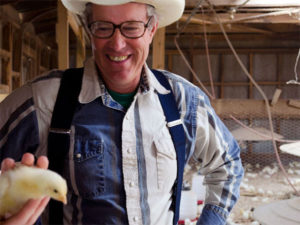
Joel Salatin, the internationally renowned guru of Beyond Organic Local Sustainable Farming is coming to speak about the importance of diverse, beyond organic farms that also feature education!! Yes, the Joel Salatin of Polyface Farms from Food Inc. and Omnivores Dilemma fame, author of Folks, This Ain’t Normal, You Can Farm, and Salad Bar Beef.
This event is a fundraiser launching Tara Firma Farms Institute, a nonprofit organization to further the mission of education regarding Real Food Farming, here at Tara Firma Farms. Please take this opportunity to support the growth of knowledge/action in our communities through classes, events and programs for all ages.
You will be served a beautiful brunch consisting of Tara Firma Farms eggs, meat, vegetables- as well as some side dishes provided by local sponsors.
Joel will speak during brunch and regular ticket holders will have an opportunity to take a farm tour after the brunch.
Special Thanks to our Sponsors -Good Earth Natural Foods, Summit Bank, Petaluma Hills Brewing Company, West Marin Edible Adventures, AgLocal, Buddha Belly Honey, and Clover Organic Farms.
Food Sponsors include Petaluma Hills Brewing Company, Buddha Belly Honey, Nana’s All Natural Granola, Mc Evoy Olive Oil, and Clover Organic Farms.
There is another event being held by Marin Organic for Joel’s newest book. http://marinorganic.org/events.php
If you are interested in sponsoring this event, sitting at Joel’s table and walking with Joel and Tara on the farm after the talk, we need a good handful of donors in the $500, $1,000 or $2,500. If someone donates $2,500 they will be sitting next to Joel Salatin at brunch!
If you would like to be a sponsor and make a tax-deductible donation to support the work of Tara Firma Farms Institute please contact-pam@tarafirmafarms.com