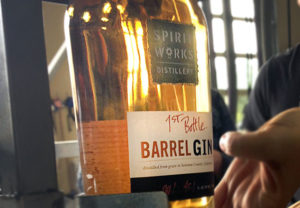
Spiritworks Distillery in Sebastopol recently released a barrel-aged gin
On a recent tour of the Barlow’s SpirtWorks Distillery (6790 McKinley St #100, Sebastopol) BiteClub fell a little in love.
Partly with owners Timo and Ashby Marshall’s Boston Terrier, Bandit, and mostly with their newly-released barrel aged gin.
Made from their Red Winter Wheat gin, it’s aged in new White oak (giving it a more intense, toasty flavor), imparting a rich amber hue, with lots of vanilla, butterscotch, cardamom and orange and a perfect winter sipper. Try it mixed with a little eggnog or straight up by the fire.
Want to see the distillery for yourself? Guided tours are available Friday through Sunday for $15 per person, with reservations required. And while you’re at it, pick up a bottle of their vodka, rye whisky and sloe gin (a specialty of Timo’s family for generations).
Available at Oliver’s Markets, Bottle Barn and Bevmo, around $50.
Chris Long is the roving bartender of Libations Unlimited in Wine Country.
Chris Long is the roving bartender of Libations Unlimited in Wine Country.
Libations Unlimited
It doesn’t get much cooler than this, cocktailians.
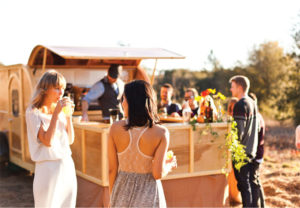
From his vintage-style teardrop trailer, bartender Christopher Long (Spoonbar,Campo Fina) roams Napa and Sonoma serving up artisan cocktails (aka liquid alchemy) at outdoor dinners, weddings and other Wine Country gatherings.
Libations Unlimitedoffers bespoke drinks for each event, including kegged cocktails, a beer tap and customized espresso machine along with locally-grown edible flowers, fruit and herbs.
So much classier than your brother pouring warm wine, for sure.
You can hire Christopher (yes, he has a beard and wears a vest like any good bartender) for your event at libationsunlimited.com or by calling 707-328-2132.
El Barrio Mexican Modern Cocktail Bar will open in Guerneville in September
El Barrio Mexican Modern Cocktail Bar will open in Guerneville in September
Guerneville’s food and drink renaissance continues with the soon-to-open El Barrio cocktail lounge on September 27, 2014. It’s the next in a series of food and drink projects by Crista Luedtke, who also owns big bottom market, boon eat+drink and boon hotel+spa.
The “Mexican modern cocktail lounge” will focus on spirits–bourbon, tequila and mezcal–rather than food, with a robust drink program developed by SF bartender and consultant Christina Cabrera (Novela, Range, Marlow, Michael Mina). Luedtke says the name, which translates as ‘the neighborhood’ is also a play on words “bar” and “rio”, or river bar.
The lounge replaces Whitetail Winebar, and the revamped interior includes custom made Talavera tile and a graffiti wall installation by ‘the Apexer’, a SF based artists.
It’s one of my favorite events all year (and not just because I get to be a Chef Challenge Judge), but because of the nearly 200 varieties of heirloom tomatoes available for tasting, 50 restaurants serving tasty bites of everything from pizza to fried green tomatoes, and of course the wine. $95,
Kendall Jackson Wine Center, Fulton Road, Fulton. Proceeds benefit the Ceres Community Project.
Steve Garner, John Ash, Marcy Smothers and Clark Wolf of KSRO’s Saturday food lineup.
Steve Garner, John Ash, Marcy Smothers and Clark Wolf of KSRO’s Saturday food lineup.
Saturdays get even tastier on local news station, KSRO (1350AM, 103.5FM) with the debut of “At the Table with Wolf & Smothers” on Oct. 4, 2014.
Wine Country food fanatics Clark Wolf and Marcy Smotherswill dish each week on food news and personalities with guests including Ruth Reichl, Emeril Lagasse, Bruce Aidells, Martin Yan and Top Chef Master’s Douglas Keane.
The dynamic duo’s first show airs live from the Sonoma County Fairgrounds during the Harvest Fair, and will on KSRO each Saturday from 1 to 3p.m. followingThe Good Food Hour with John Ashfrom 11am to noon and On the Wine Road with Jeff Davis from noon to 1p.m. Delicious!
BiteClub, of course, hits the local food beat on local radio station KZST (100.1FM) each Thursday morning from 7:40a.m. to 9a.m. with Brent Farris. Yeah, I just tooted my own horn. (And, PS…I’m truly sorry to those of you who have to hear me at Kaiser or your dentist’s chair.)
Sad news in Montgomery Village. Chef Jennifer McMurray has announced that her popular cafe, Viola Pastry Boutique and Cafe (709 Village Court, Santa Rosa) will shutter on Sept. 27.
The good news, however, is that her homey cooking (and her hostess/mom, Vickie) are continuing their culinary journey. McMurray will continue catering private parties and events and is looking for a new location for her restaurant. Stay tuned.
Sarah Piccolo of Fork Catering will take over the Bodega Hwy roadhouse this fal.
The adorable little roadhouse at 9890 Bodega Highway that’s seen a number of restaurants come and go in the last several years is being taken over once again, this time by the highly successful Fork Catering.
Owner Sarah Piccolo says she’ll use the spot for a variety of uses, including her catering kitchen, offering a breakfast and lunch eatery, food truck parking by the side patio for a “quick casual bite” and offering special event space.
Piccolo hopes to be open by November and plans to expand to weekend brunches, dinners and special events in the future. “The concept will be casual, approachable, family friendly, and will definitely support our local farmers, bread bakers, and community,” she said.
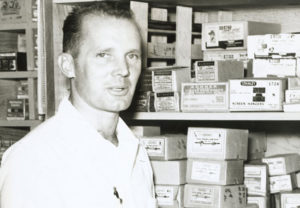
Chuck Williams in 1956. A Williams-Sonoma store will open in Sonoma in October 2014.
Chuck Williams in 1956. A Williams-Sonoma store will open in Sonoma in October 2014.
After several years of planning, permitting and building, kitchen outfitter Williams-Sonoma will be returning to its roots in Sonoma. In celebration of founder Chuck William’s 99th birthday, the store will open in early October at its original Broadway location on the Sonoma Square.
There will be a small cooking school and historic display, in addition to cookware and kitchen gadgets.
The landmark store opened in 1956, when a prescient Williams decided Americans might appreciate European-quality cookware. Just a few years later, Julia Childs’ Mastering the Art of French Cooking kindled a firestorm of interest in his high-end copper pots, pans and knives. utensils. Ironically, Sonoma County has’t had a Williams-Sonoma store since Williams moved his operation to San Francisco in the late 1950s.
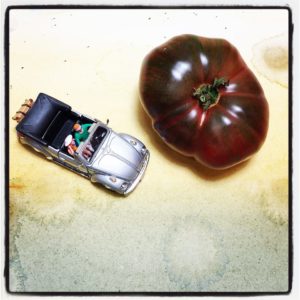
You Say Tomato: There’s no doubt its the very pinnacle of tomato season. In fact, when Biteclub ran into a certain grocery store tycoon recently, he arched a doubtful eyebrow when we suggested great heirloom tomatoes might be available until the end of September.
If you’re gonna get ‘em, get ‘em right now. Aside from local grocers and farm markets (don’t forget the burrata), you can take the easier route and let a pro help. We’re loving:
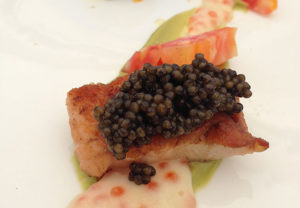
Salt cod with tomato jam and Bodega Red potatoes, Backyard, 6566 Front St, Forestville.
SunFed Ranch Burger, thick slab of heirloom tomato marinated in balsamic and garlic, mozzerella, pesto aioli, The Breakaway Cafe, 19101 Sonoma Hwy, Sonoma.
BLT’s with Panache: Green Grocer (Original Santa Rosa Market), Twist Eatery (6535 Front St., Forestville), Jack and Tony’s (115 Fourth St., Santa Rosa).
Brown sugar tomato jam, housemade burrata and heirloom tomatoes: Epicurean Connection (122 W. Napa St., Sonoma).
Tomato and chevre gallette: Patisserie Angelica (6821 Laguna Park Way, Sebastopol).
Potato and cheddar-stuffed chiles Rellenos on a bed of heirloom tomatoes: Undercover Baking Agency (463 Sebastopol Ave., Santa Rosa).
Keep in mind these are seasonal dishes, so if you have your heart set on something, check first.
Home of Sam and Robin Sebastiani. (photos by Chris Hardy)
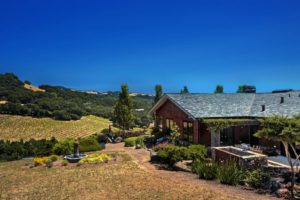
On the oak-studded hillside behind Sam Sebastiani’s Sonoma home, a rocky path winds uphill, just a stone’s throw from the house itself. Is it a deer trail? A forgotten hiking path?
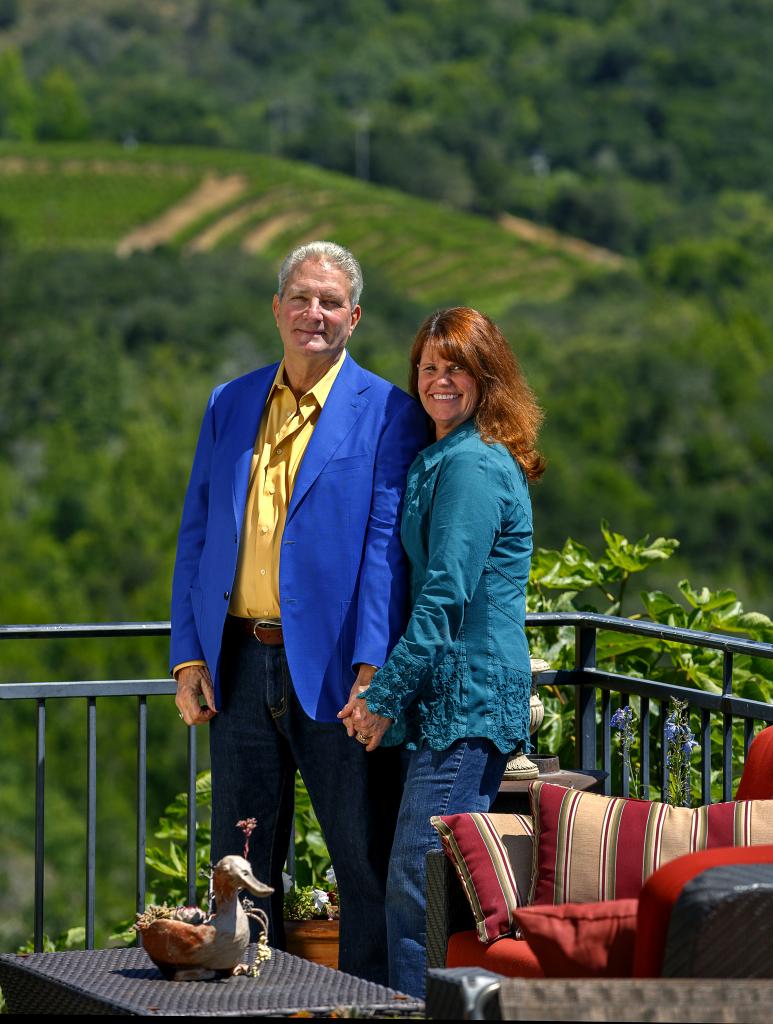
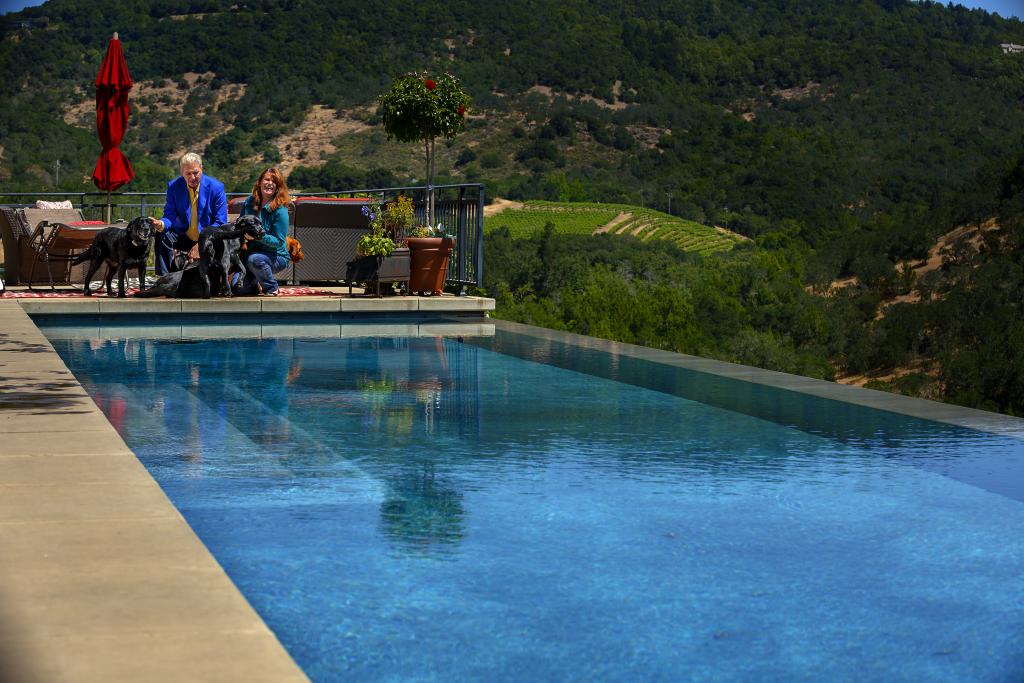
Sam and Robin Sebastiani at their home.
It’s actually the rustic road that Sam’s grandfather, Samuele Sebastiani, traversed many times a day more than a century ago while hauling cobblestones from the hilltop quarry down to Sonoma Creek for transport to San Francisco. Working at the quarry enabled Samuele to save enough money to build his landmark Sonoma winery, Sebastiani Vineyards, in 1904.
It’s fitting, and eerily coincidental, that 11 decades later, Samuele’s grandson now lives alongside that old quarry road and produces a line of small-batch wines dedicated to the memory of his grandfather.
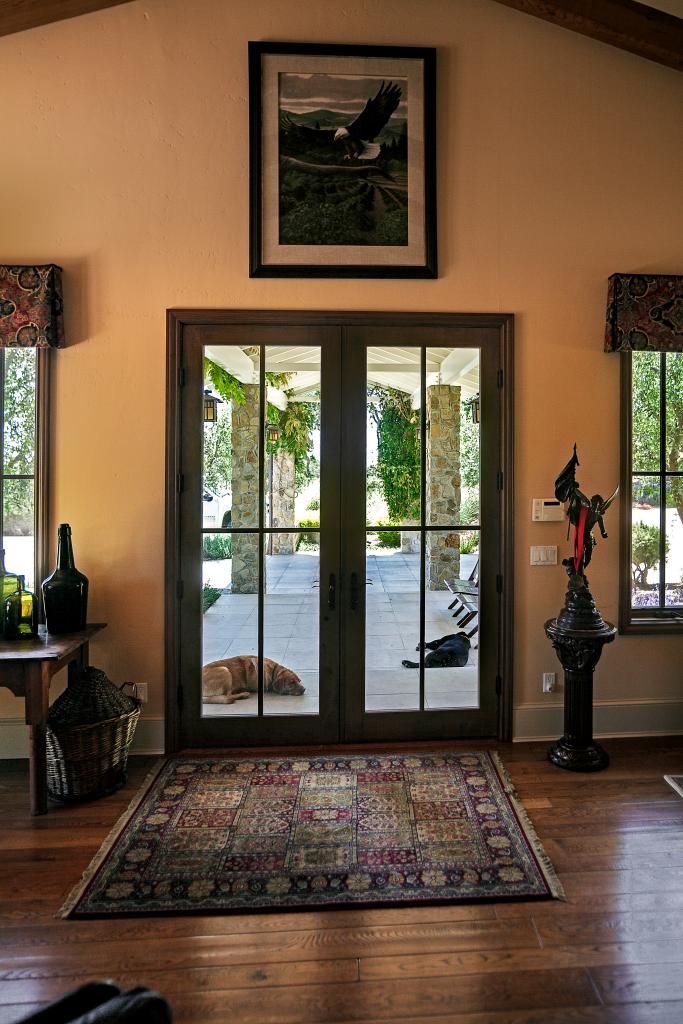
Sam Sebastiani’s affection for his Italian roots and his wine heritage runs deep, and he revels in surrounding himself with memories of where it all began. Not only is his sprawling home ideally located atop Quarry Hill, but family memorabilia pervades the residence that he, his wife, Robin, and their four dogs have called home since 2008.
Before Sebastiani set eyes on the house, he had recurrent dreams about it. In each of the dreams, he was horseback riding in the hills of his childhood and would come across the house. He was speechless when his real estate agent drove him up to what was — quite literally — the house of his dreams.
Sam and Robin’s dogs sleeping outside the living room.
“I wanted tranquility, and I wanted privacy,” Sebastiani said. He got it, in spades. The large, single-story Craftsman-style residence was a spec home, so the couple were able to put their own touches on it.
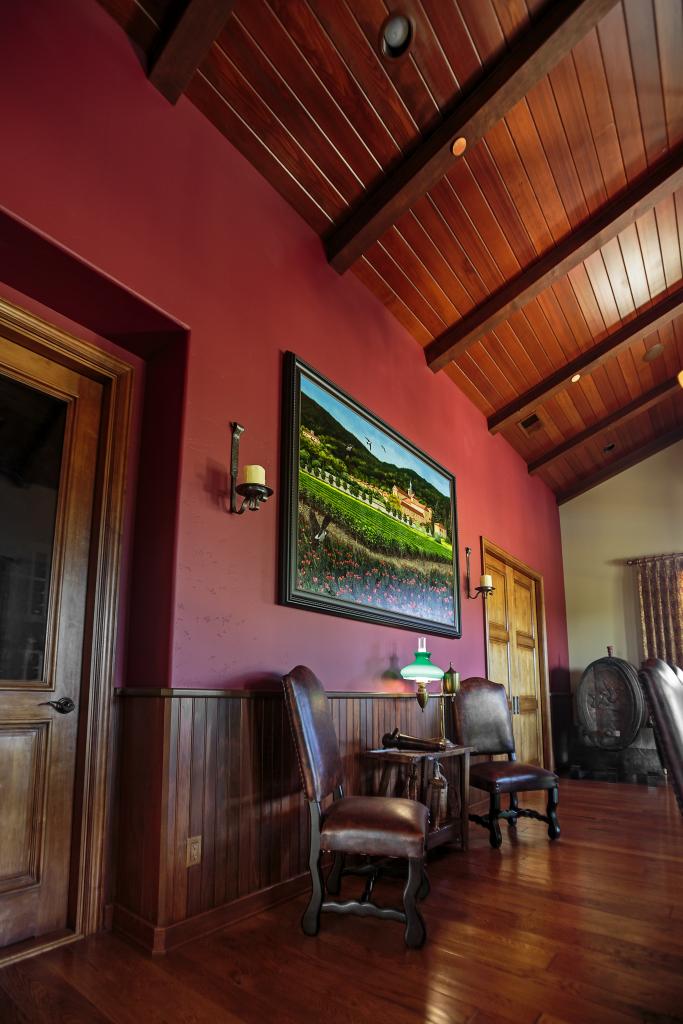
Ceiling panels in the dining room, along with wainscoting throughout the house, are crafted from Sebastiani’s grandfather’s redwood wine barrels. There are paintings of the monastery where Samuele learned to make wine. Hand-carved cask heads from Sebastiani Vineyards flank the dining room window with its spectacular views of Gehricke Canyon.
Since the Sebastianis enjoy cooking — he is renowned in the family for his split-pea soup — there’s a large open kitchen complete with a rack of antique copper pots. Glass pendants collected during a vacation in Venice hang over the island, and the kitchen also features paneling made from Samuele’s wine barrels. The overall effect is that of an Old World Italian kitchen, yet with a touch Samuele could not have seen coming: a dishwasher exclusively for glassware.
The home’s furnishings are eclectic, a mix of American and Italian heritage pieces. Viticultural touches are everywhere, from the grape cluster lines hammered into the copper wet-bar sink to grape-accent tiles in the wine cellar off the dining room.
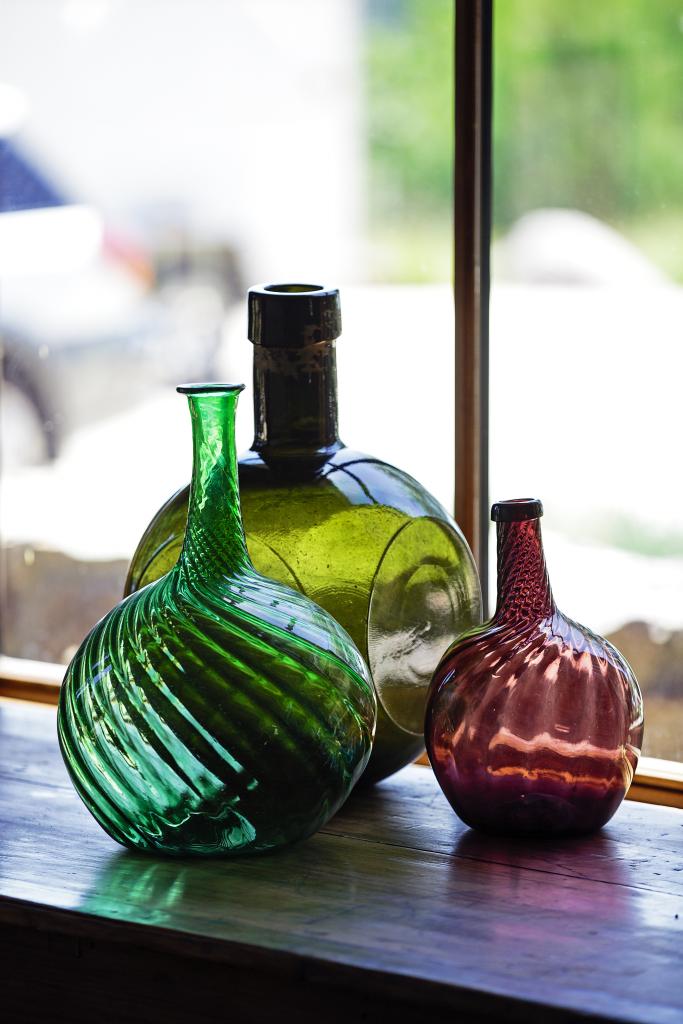
Antique hand made wine bottles.
The home is filled with the hand-blown Italian glass bottles Sebastiani, 73, has long fancied, along with his extensive duck decoy collection. On one wall is his certificate of knighthood from the Italian government, in recognition of his work to promote Italian grape varieties. Just across from it are his framed Boy Scout merit badges and his Eagle Scout memorabilia. Around the corner are two life-size suits of armor.
Surrounding the home are olive, avocado, citrus and fig trees, Italian cypress and stone pines. Wisteria, clematis and jasmine scramble over arbors and soothing lavender scents waft around the bubbling fountains. Beyond the garden is the hill where the Sebastianis hike with some of their 15 grandchildren.
It’s the same hill, of course, where he spent his boyhood days, when he wasn’t helping out at the family winery, hosing off floors and rolling barrels.
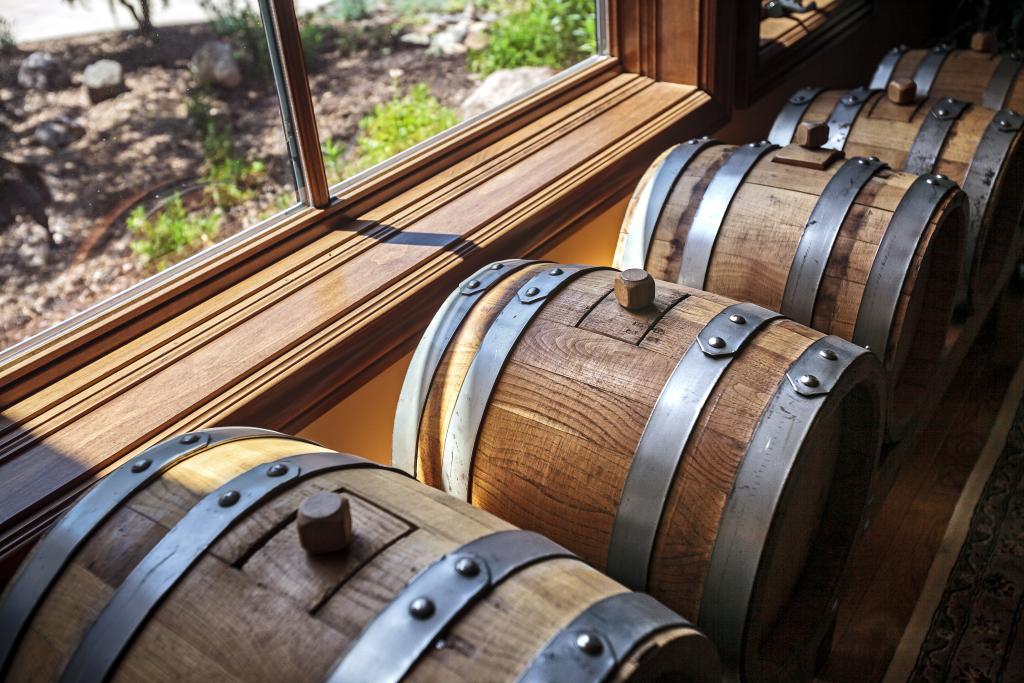
Old balsamic vinegar barrels in the dining room.
“We lived 200 yards away,” Sebastiani recalled with a chuckle. “I was raised by the old Italians. As soon as you could stay out of trouble, they had you working. Our family code was that if you’re going to give orders, you better have done it.”
When he joined Sebastiani Vineyards full time in 1967, after completing an undergraduate degree and an MBA from Santa Clara University and a two-year stint in the Army, the industry had begun a radical transformation.
“In the 1960s, there was a small movement with a few wine writers,” Sebastiani recalled. “They wanted something to talk about, and it wasn’t jug wines. They were seeking wineries that were making wines with vintage dates and varietal designations.”
So Sebastiani Vineyards joined the Wentes of Livermore, Louis Martini in Sonoma and Napa, and a few others and began the shift away from jug wines. “If you stayed with the Burgundy, Chablis and rosé thing, you were gonna die,” he explained.
After his father, August, died in 1980, Sebastiani assumed the reins at the winery. His mission was to improve quality dramatically. “There was a need to be a standout, not just a player,” he said.
Premium grapes were key, and Sebastiani began his quest with longtime friends and grapegrowers Bob and Fred Kunde in Kenwood. “I negotiated a new contract with quality standards for each part of the ranch,” Sebastiani said. “We put quality standards on each of the varietals. I was ultimately buying every grape off the ranch.”
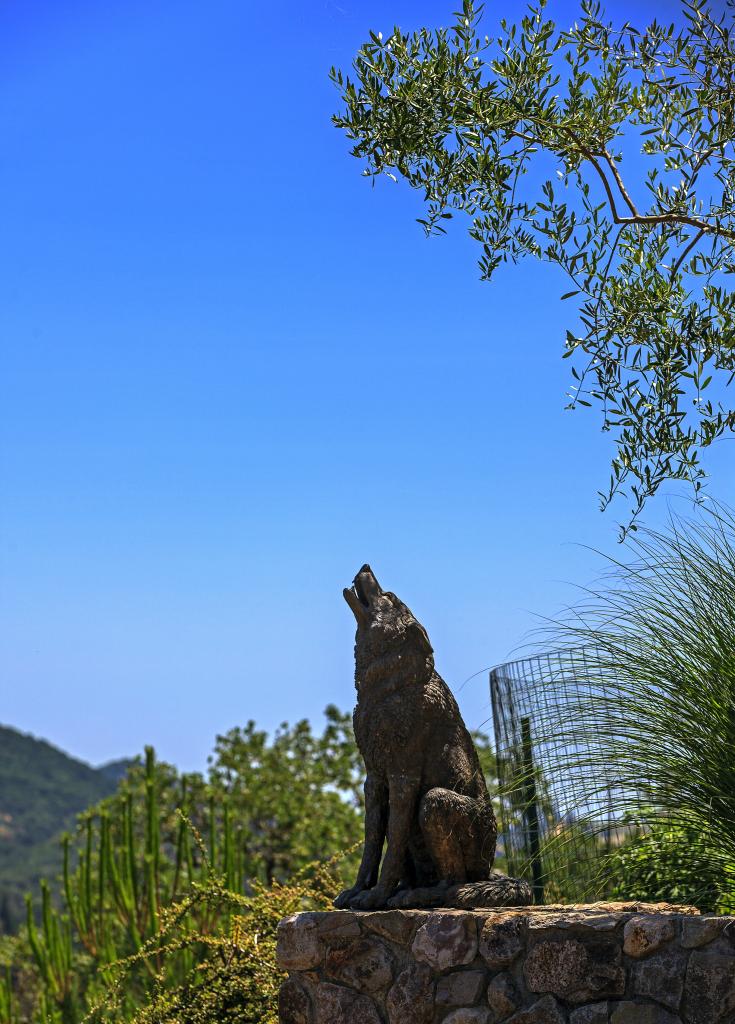
Coyote bronze statue in the backyard.
He also grew his enology staff and bought new equipment. “We proceeded to make some awfully good wines,” he said. “In 1984 and 1985, we won more awards than any winery in America.”
There was friendly rivalry with other winemakers. “Bob Mondavi was one of the greatest competitors in anything he did,” Sebastiani recalled. “He and I got to be good friends because we realized there was room for both valleys and both families. Bob had a knack for surrounding himself with great people.”
Things came to a screeching halt when his mother, Sylvia, abruptly removed him from his position as winery president in 1985, citing concerns about expenditures that Sebastiani deemed necessary.
“I got word that they weren’t happy,” he said simply.
Departing was difficult, but creating a new winery that would embody his vision alone was a tempting alternative. After a long search to find the ideal winery site, Sebastiani and his then-wife, Vicki, opened Viansa Winery & Italian Marketplace in 1989 on a Carneros hilltop south of Sonoma.
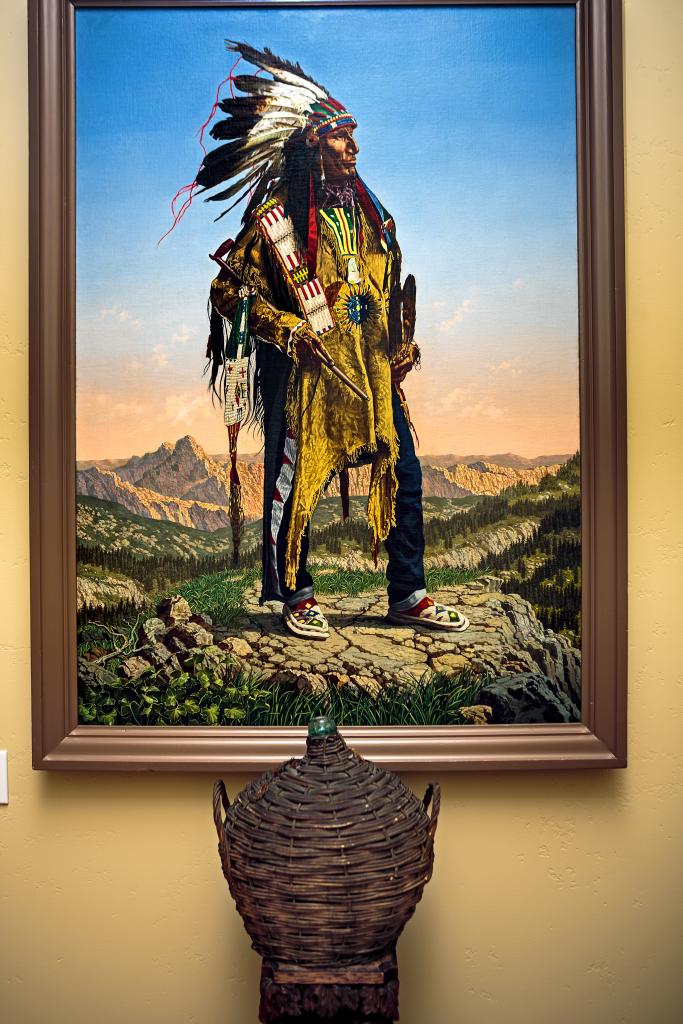
American Indian painting and antique wine bottle in the entry way of the Sebastiani home.
“I used to say at Sebastiani that I was trying to create a racehorse out of an elephant,” he explained. “At Viansa, I got to raise a colt to be a racehorse.”
Tapping into his heritage, Sebastiani focused on Italian grape varieties and introduced direct-to-consumer sales and a wine club, rare at the time. He also restored Viansa’s wetlands and created an acclaimed waterfowl preserve — a passion he continues today at Winemaker’s Island, his ranch in Nebraska.
Life was good. “It was a lot of fun,” Sebastiani said. “It didn’t hurt that Italian — quote, unquote — was popular in America. We had an elegant culture to wrap ourselves around.”
Around 2004, as Sebastiani prepared to retire and pass winery duties to his children, a problem arose. Consultants hired by the family said not all the children shared his vision for Viansa’s future. Ultimately, the decision was made to sell the winery.
Dining room with ceiling and wainscoting made from old redwood barrels from the Sebastiani winery.
Walking away from a second winery, one into which he’d poured his heart and soul, was doubly bitter.
“You build it up and then you have to leave it. You start to believe that you’ve got a shadow following you around. If I didn’t have religion, I’d probably be sucking my thumb in a corner somewhere,” he said with a wry laugh.
After picking himself up, Sebastiani realized that he now had an opportunity to be free from the demands of a popular tourist stop like Viansa. “My dream was always to have a small winery where your (goal) was to make the best wine,” he said. “For the first time in my life, I was not stuck with anything. I could get my grapes anywhere.”
For what he calls his “swan song,” Sebastiani returned to the Kunde Ranch, now run by Bob’s son, Keith, for Chardonnay and Sangiovese grapes, and found three great spots in Amador County for Zinfandel, Primitivo and Syrah.
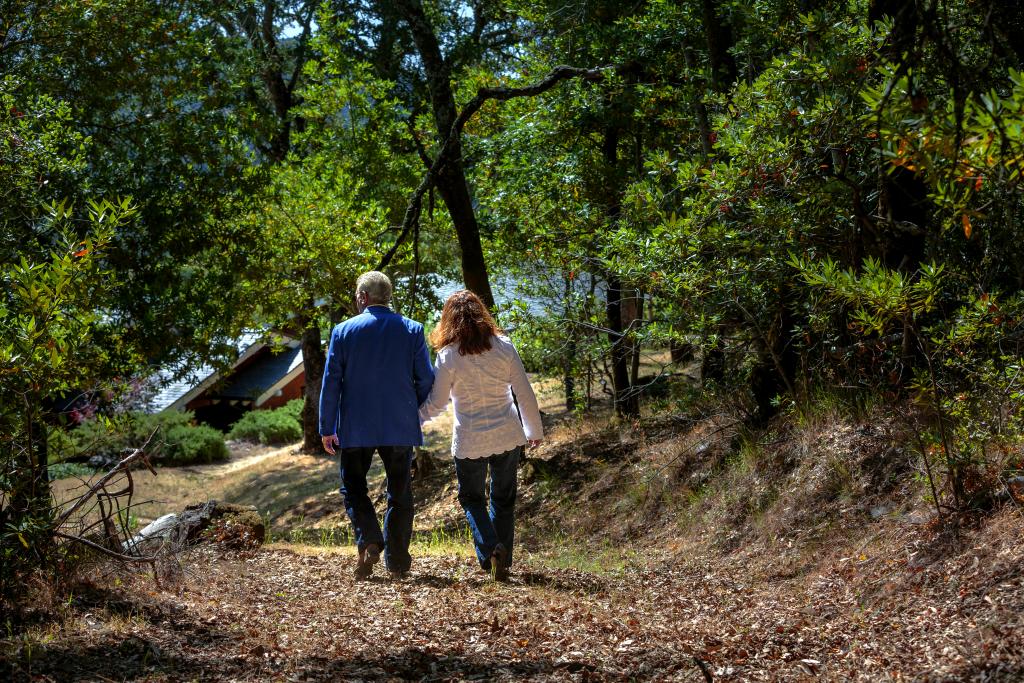
Sam and Robin Sebastiani walk down the old quarry road that runs through the backyard to their home.
In collaboration with his former Viansa winemaker, Derek Irwin, Sebastiani created his line of La Chertosa wines, limited to around 1,200 cases a year. The wines are named for the monastery in Farneta, Italy, where Samuele learned the art of winemaking. It’s a respectful nod to the grandfather who walked that quarry road so long ago.
It’s also a fitting finale to a life well lived, one spent celebrating family and heritage. In his memento-filled home, Sebastiani is content and at peace. “I live life day to day,” he said. “I’ve stopped thinking about the future and stopped worrying about the past.”